“The works of the LORD are great, Studied by all who have pleasure in them.” (Psalms 111:2 NKJV)
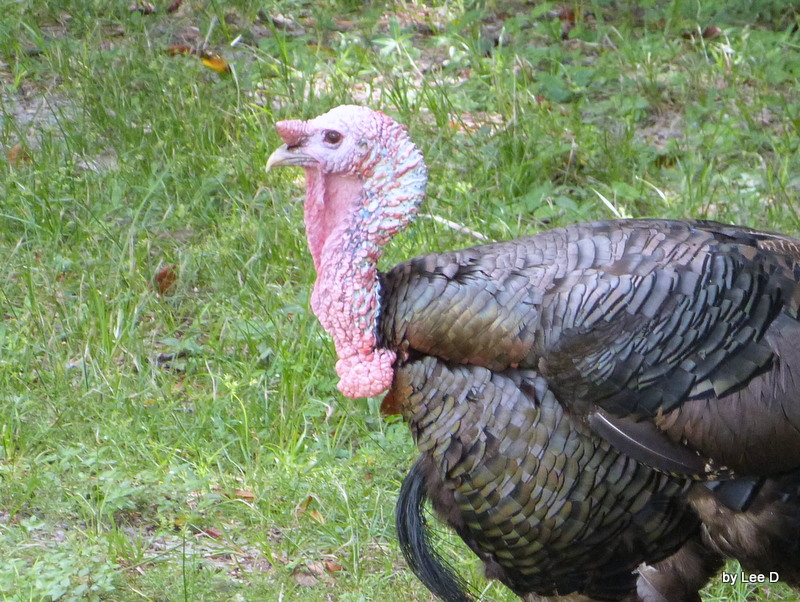
While updating our passes at Lowry Park Zoo last week, I found this startled “Turkey” insisting that he was not a “Turkey”
Startled Non-Turkey at Lowry Park Zoo (cropped)
To me, he had wattles like a turkey!
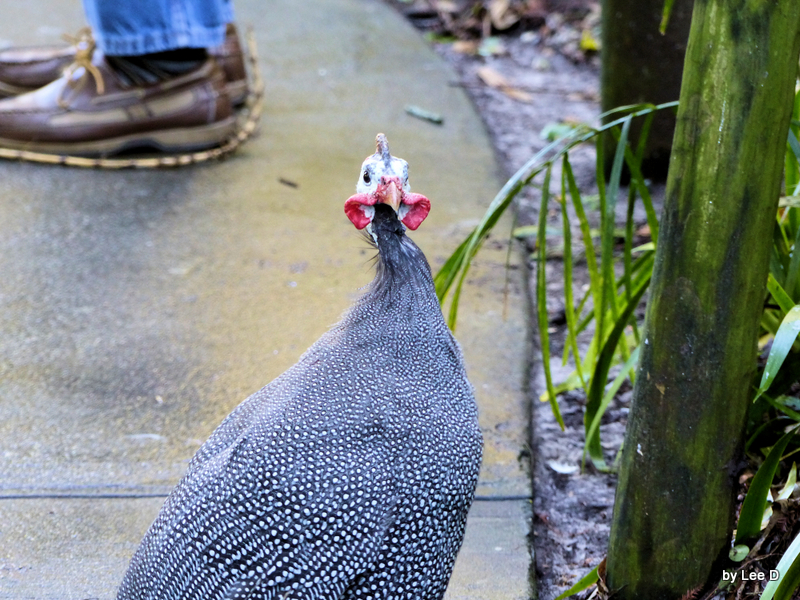
Well, maybe it’s not a turkey after all. It is actually is a Guineafowl. Plus, they are not even in the same family.
Helmeted Guineafowl (Numida meleagris) at Lowry Park Zoo
Turkeys have to keep a low profile during the Christmas season as you have learned from several of Emma’s stories about the Commander Turkey. Reginald, Turkey Commander
“Now the birth of Jesus Christ was as follows: After His mother Mary was betrothed to Joseph, before they came together, she was found with child of the Holy Spirit.” (Matthew 1:18 NKJV)
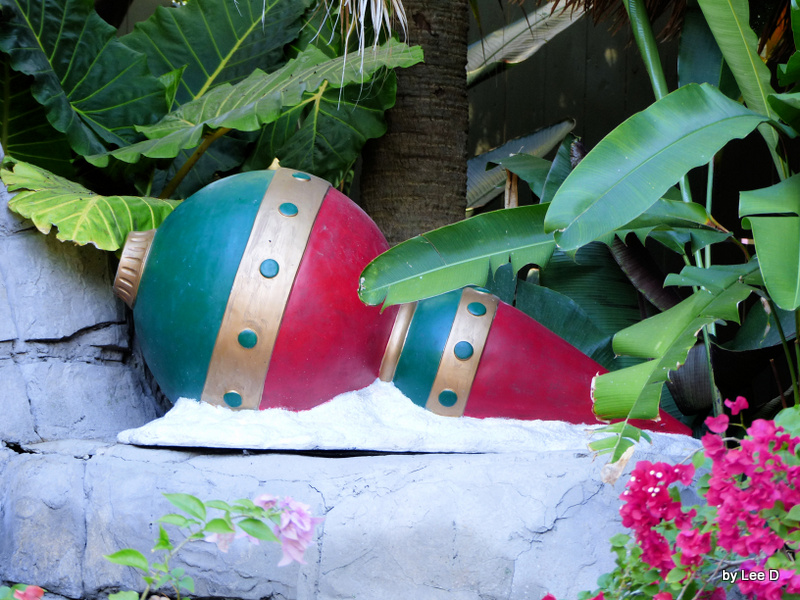
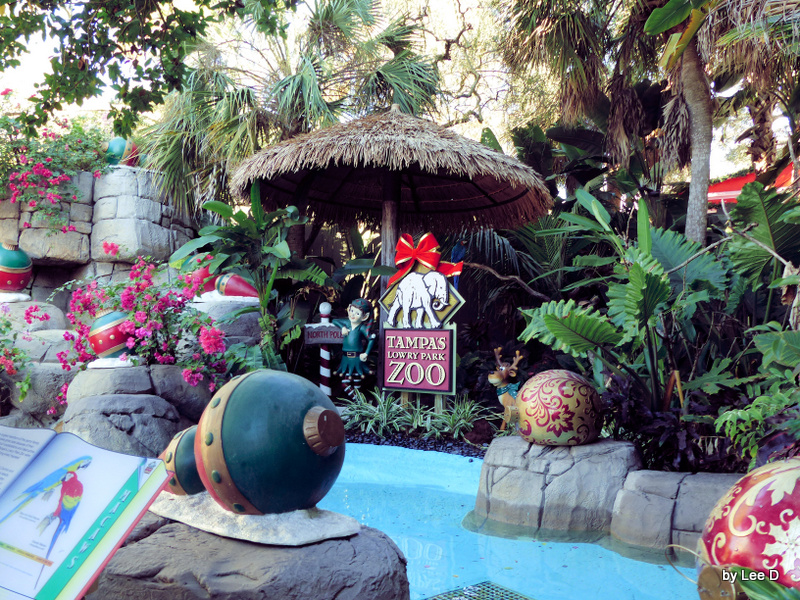
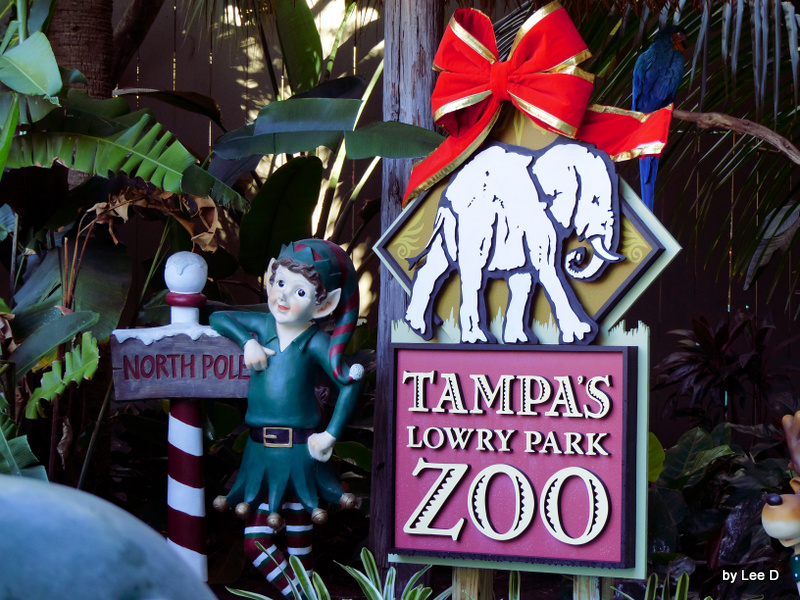
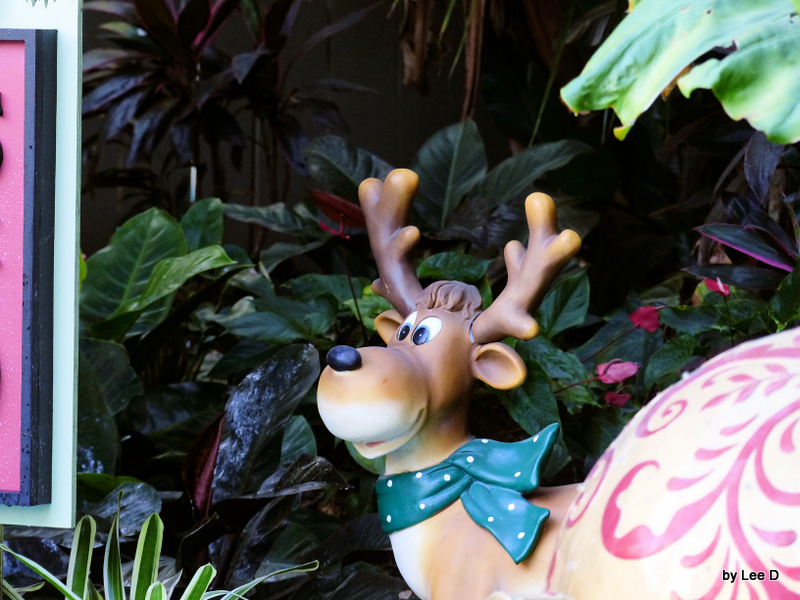
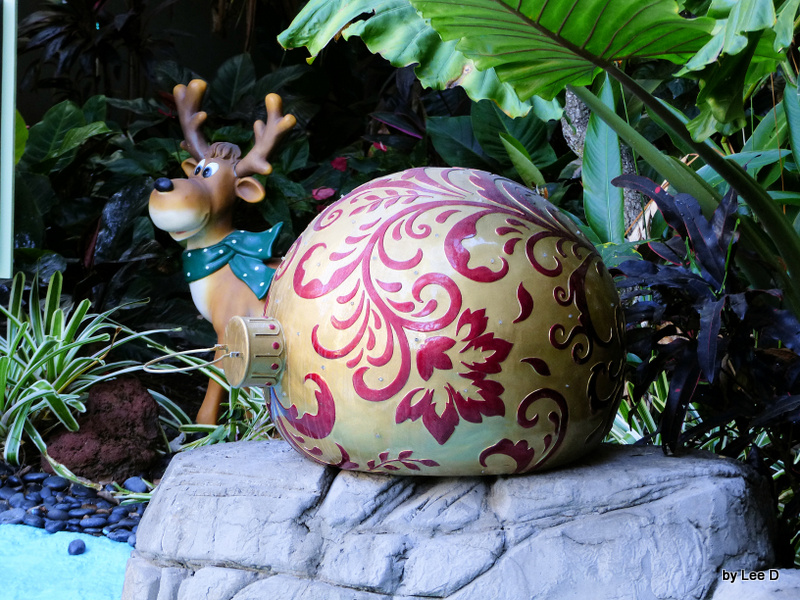
Here are some of the decorations as you enter the zoo:
“And God saw every thing that he had made, and, behold, it was very good.” (Genesis 1:31a)
Evolutionists and creationists alike enjoy gazing upon the elegant seahorse swimming lazily about the aquarium. However, only creationists are able to see that the seahorse bears the unmistakable stamp of design – all the way from the top of its horse-shaped head to the tip of its unique square tail.
Researchers found that the tail’s square segments created more contact points with the surface that it is gripping when compared to a tail with round segments. Credit: Michael Porter/Clemson University
Researchers found that the tail’s square segments created more contact points with the surface that it is gripping when compared to a tail with round segments. Yes, I said square tail. This striking design makes the seahorse considerably better at gripping and grasping than if it had curved sections in its tail. When you look closely, you will see that the tail is made up of about 36 square-like segments that progressively taper off in size along the length of the tail. By using a 3D printer to duplicate the tail and submitting it to crushing tests, an international team of researchers has now discovered that the squared sections also provide the seahorse with much better armor than a cylindrical tail.
“Almost all animal tails have circular or oval cross-sections – but not the seahorse’s,” said Michael Porter, lead investigator and assistant professor in mechanical engineering at Clemson University. Porter’s research group is now using 3D printing to help them develop new structures and robotic systems.
Although evolutionists will tell you that the seahorse’s unique tail only appears to be designed, they act as if the tail really was designed! After all, how intelligent would it be for them to pursue new technologies based on the tail of a seahorse that has no intelligence behind it at all?
Prayer: Heavenly Father, it is so obvious to me that creatures like the seahorse were designed by You. I pray that You will use me to make others aware that all of creation points directly to You! In Jesus’ Name. Amen.
Notes:
Phys.org, “Why the seahorse’s tail is square,” 7/2/15. http://phys.org/news/2015-07-seahorse-tail-square.html#jCp. Photo: Researchers found that the tail’s square segments created more contact points with the surface that it is gripping when compared to a tail with round segments. Credit: Michael Porter/Clemson University. (Fair Use)
But the fruit of the Spirit is love, joy, peace, longsuffering, kindness, goodness, faithfulness, gentleness, self-control. Against such there is no law. (Galatians 5:22-23 NKJV)
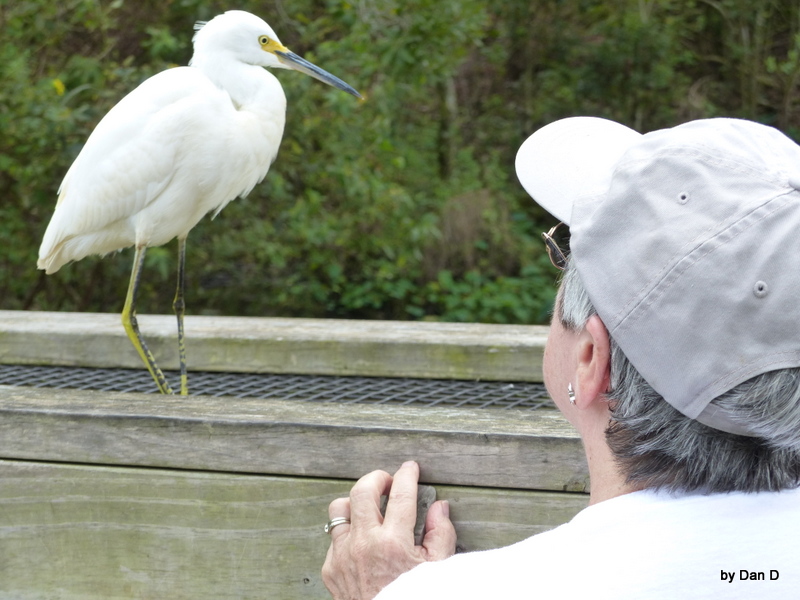
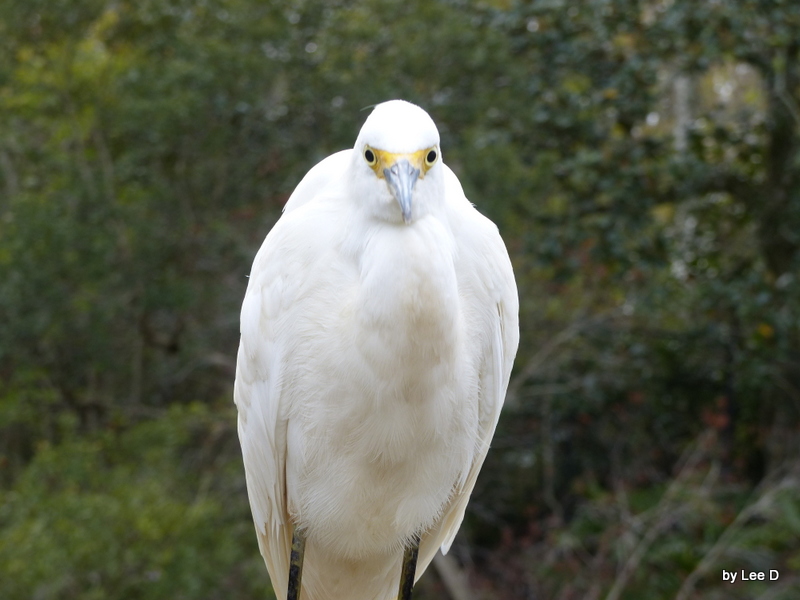
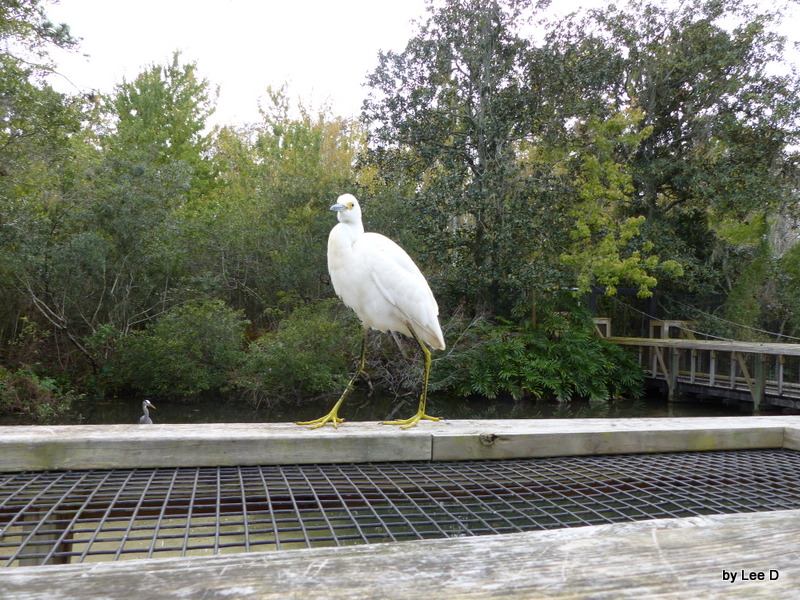
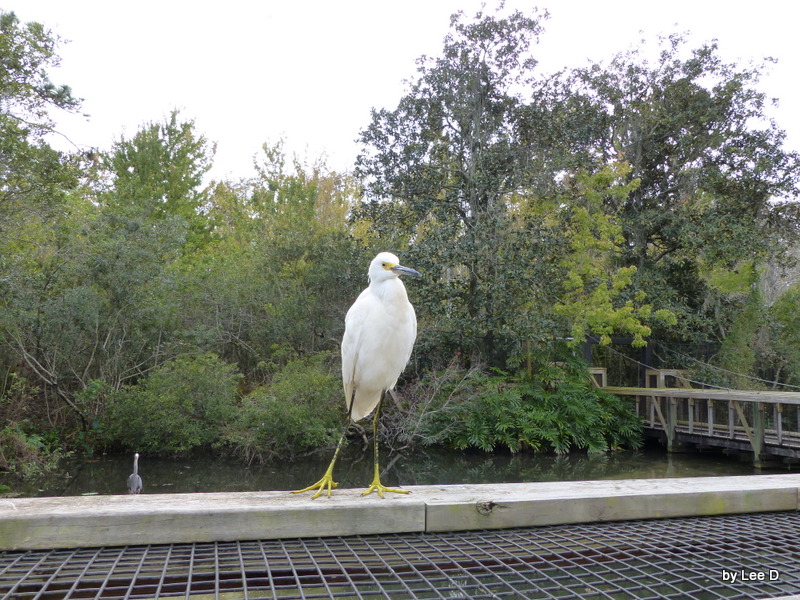
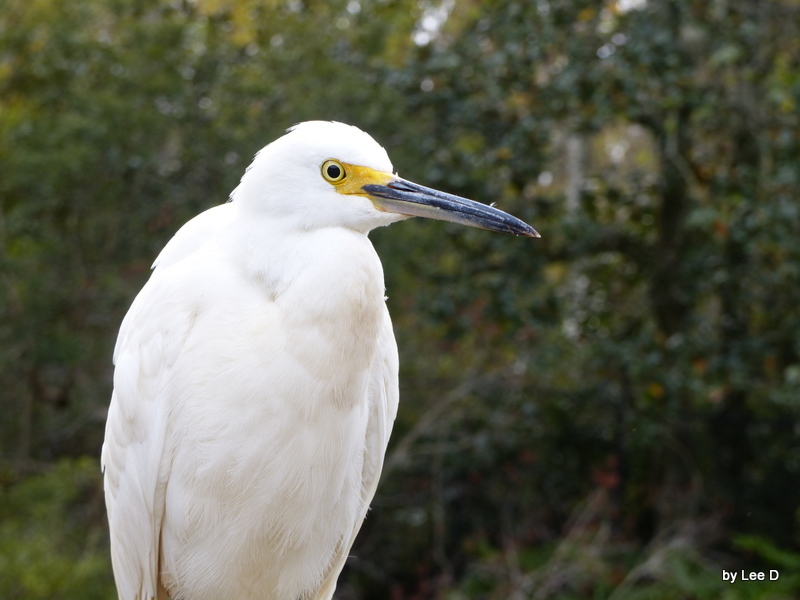
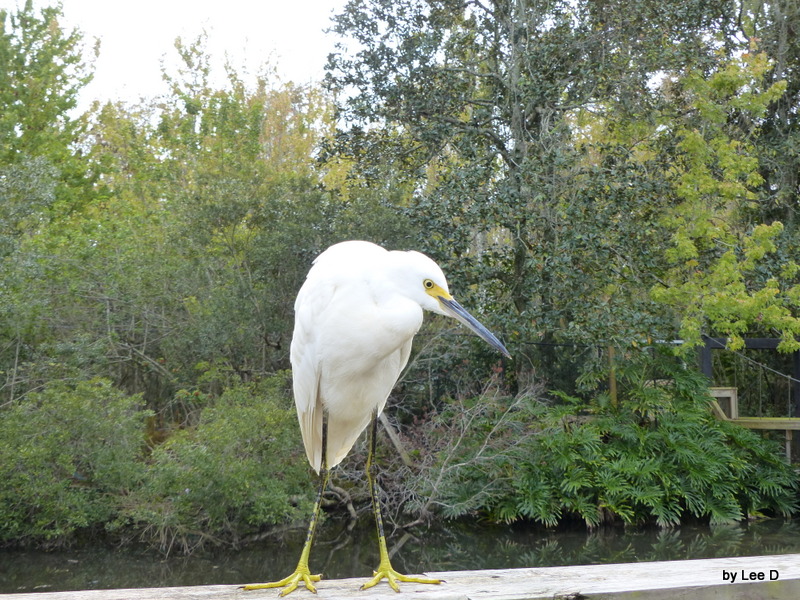
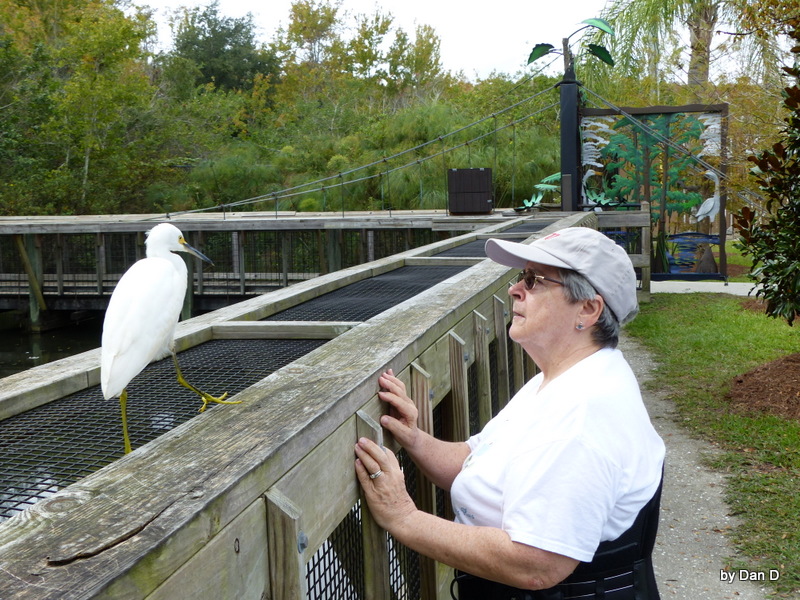
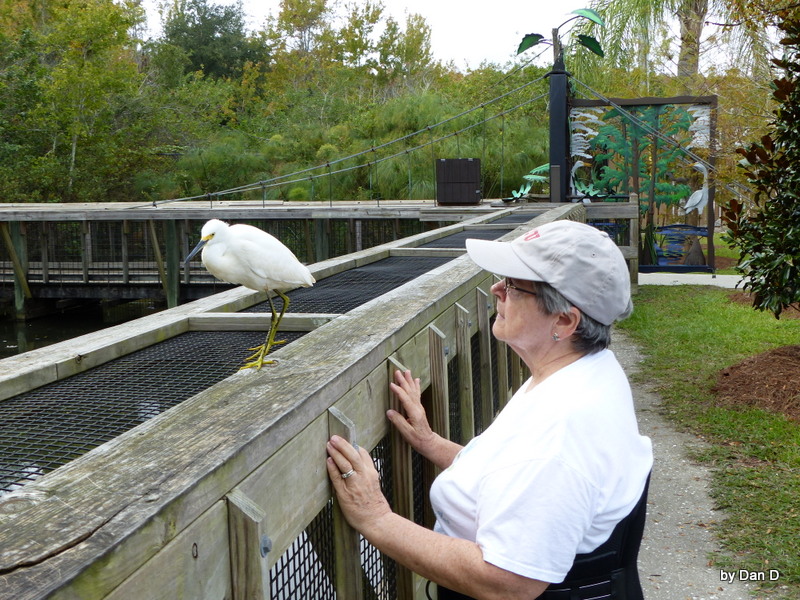
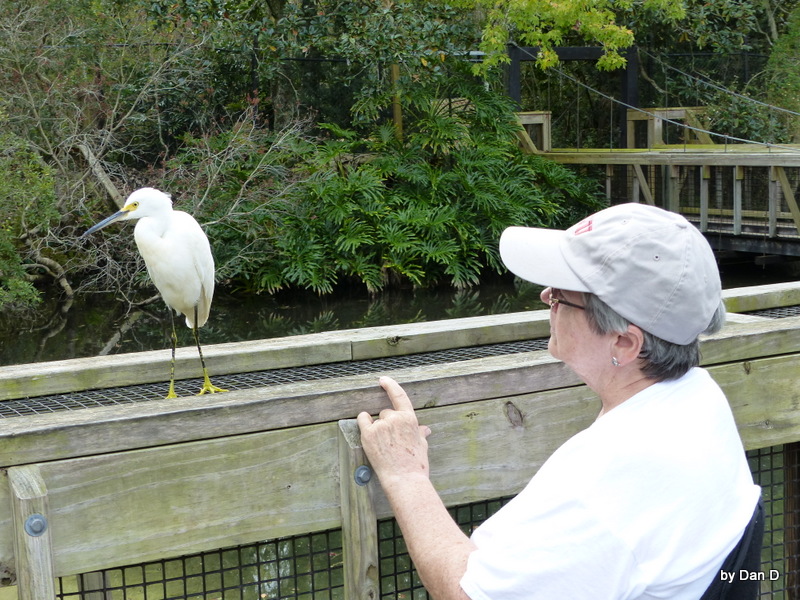
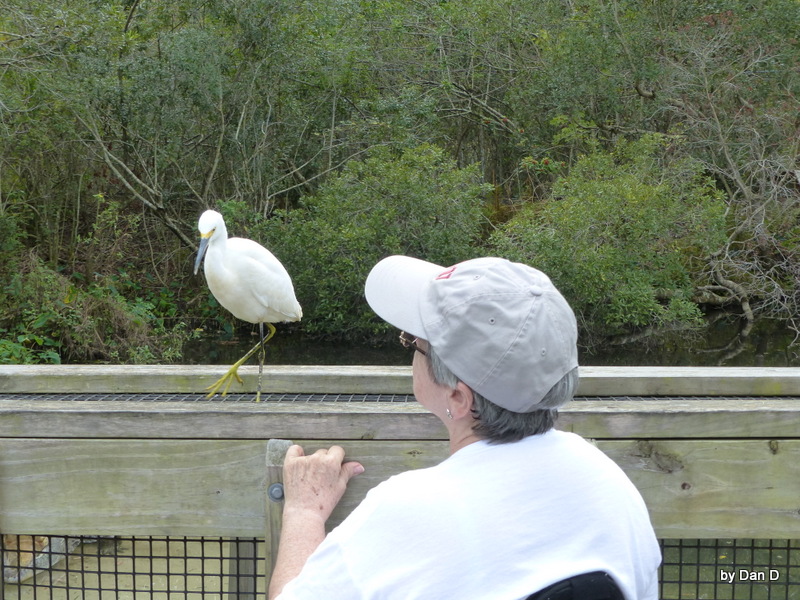
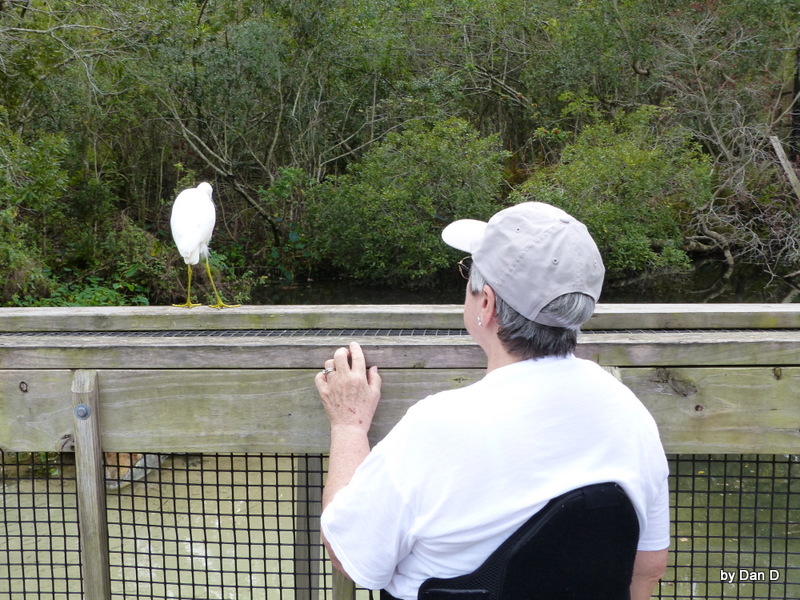
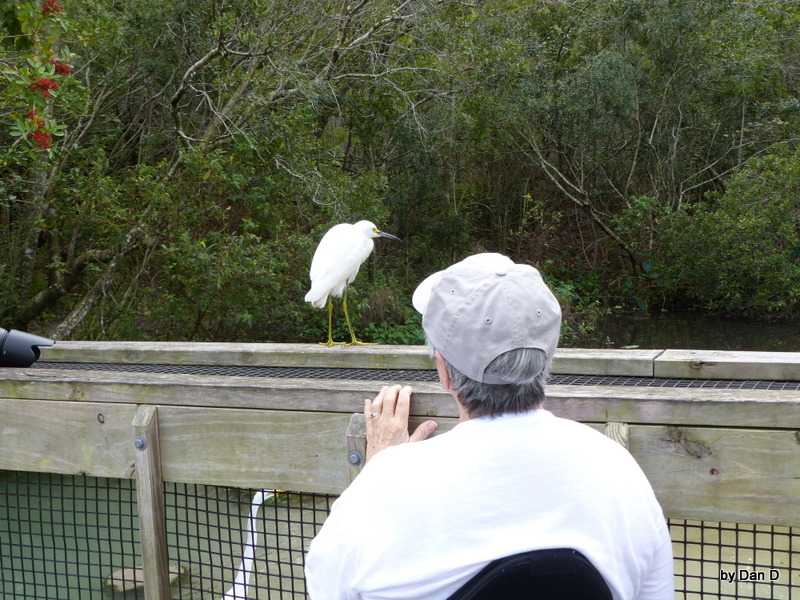
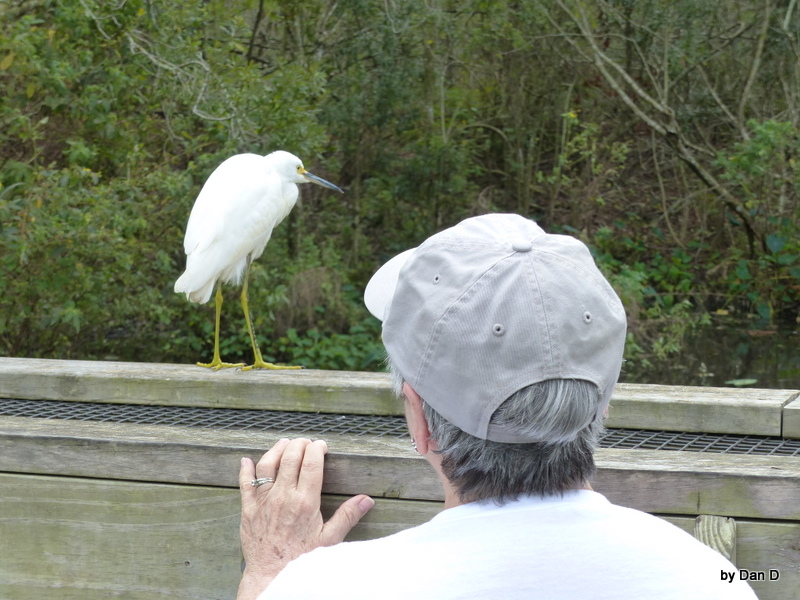
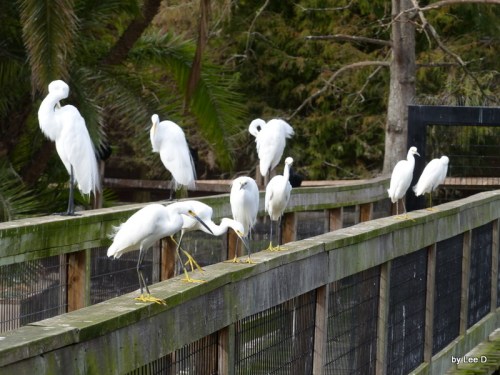
While we were at Gatorland, I had the delight to be able to get really close to a Snowy Egret. I was taking a photo of him when he got so close I couldn’t focus the camera. I backed the zoom out and realized just how close we were.
Snowy Egret stepped so close it blurred my shot.
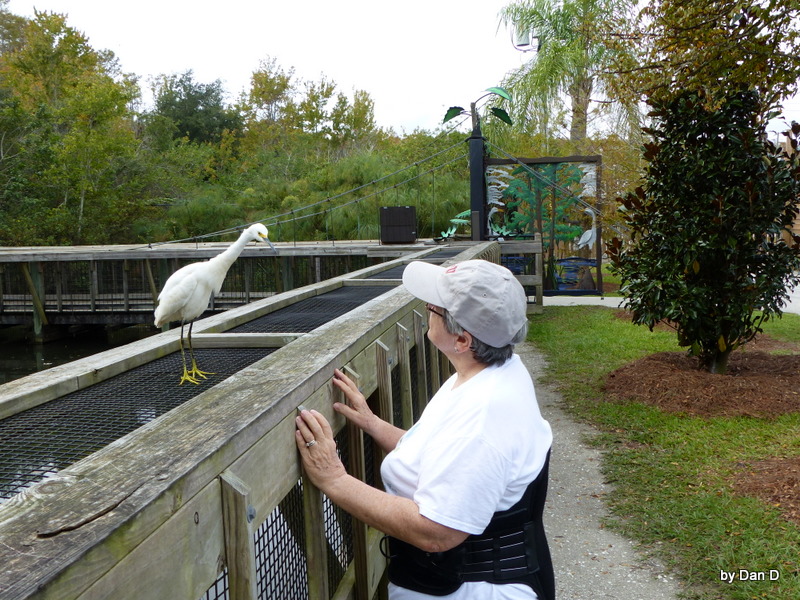
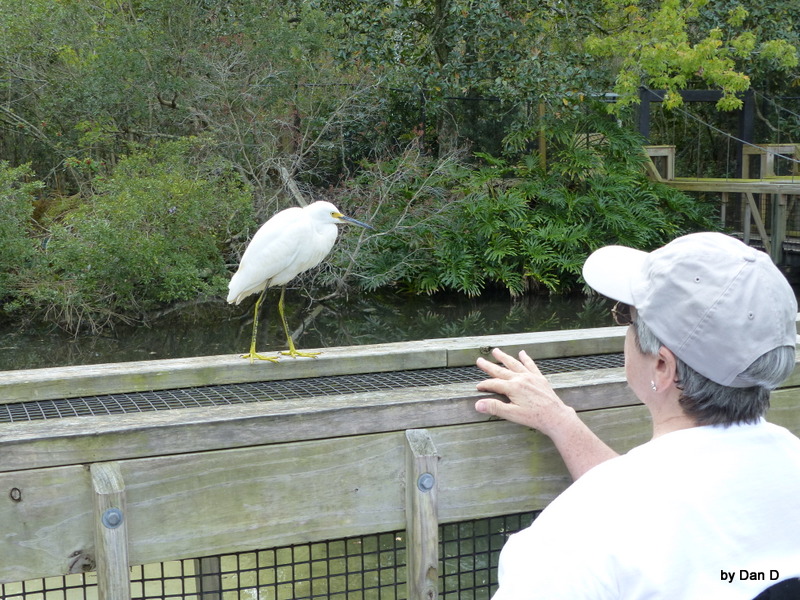
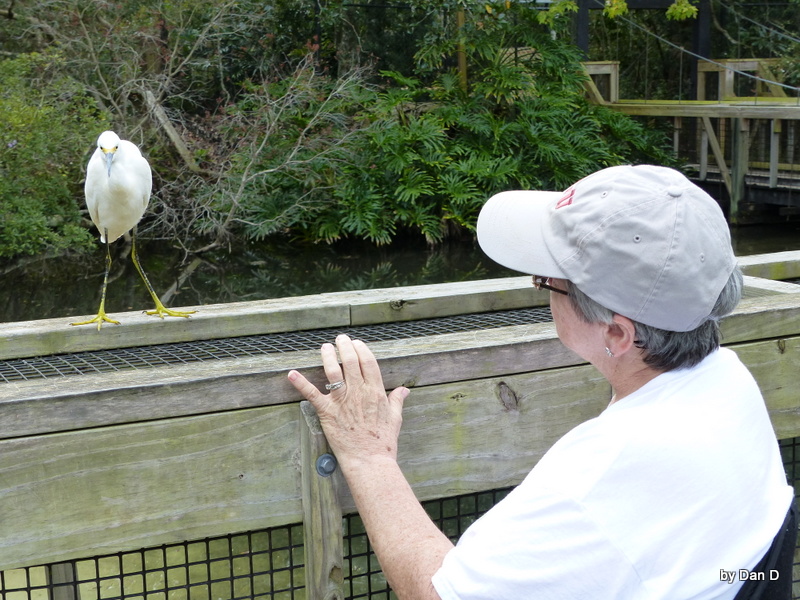
I tried to give my camera to Dan to get a photo of me and the Snowy. That spooked him and he flew off a few yards. I coached him back and thankful he came.
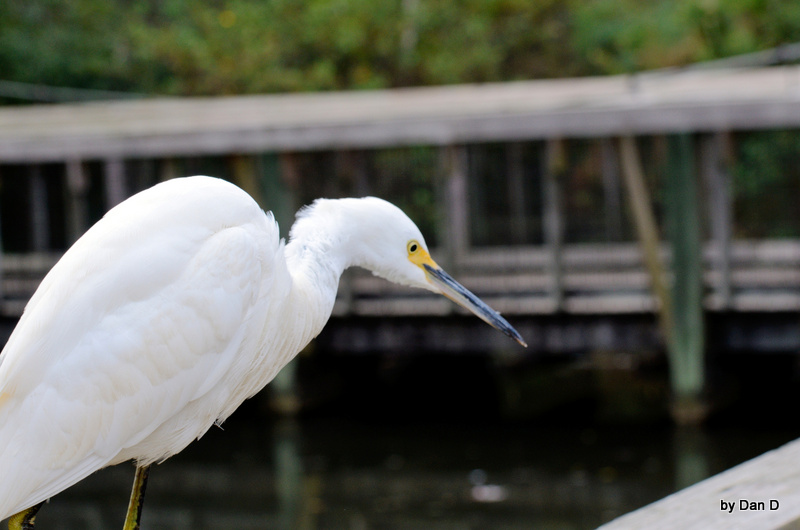
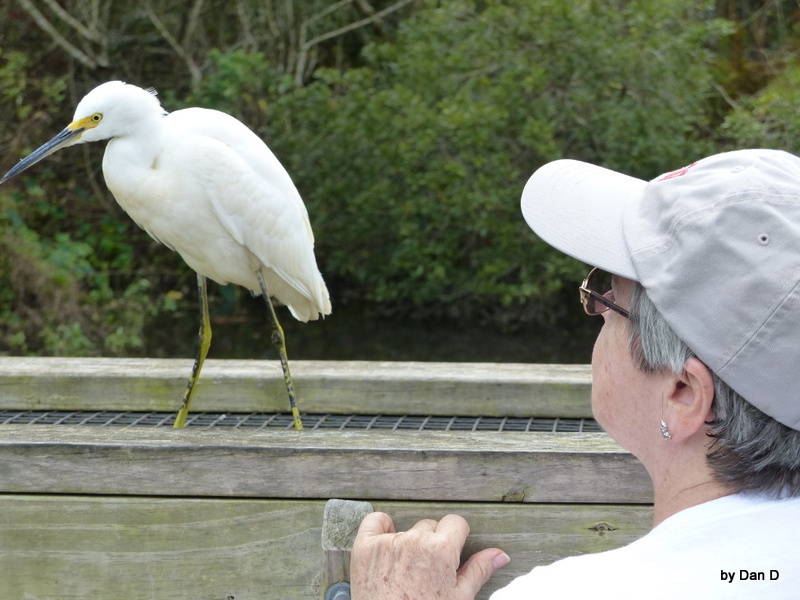
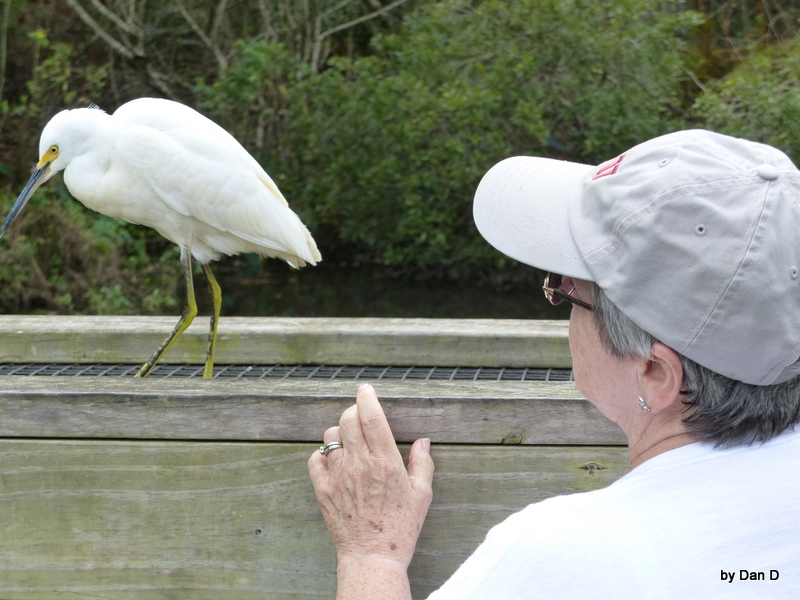
This time I handed Dan my camera down low and he stayed put. The following photos are what Dan took of the close encounter with my Snowy Egret friend. I could have touched the bird, if I had wanted, but have you ever seen that beak up close? Looked like a sharp needle from my point of view.
I am very thankful that the Lord created such a neat bird and helped him not be afraid of me. I am glad the Lord lets us have joy from just watching His critters.
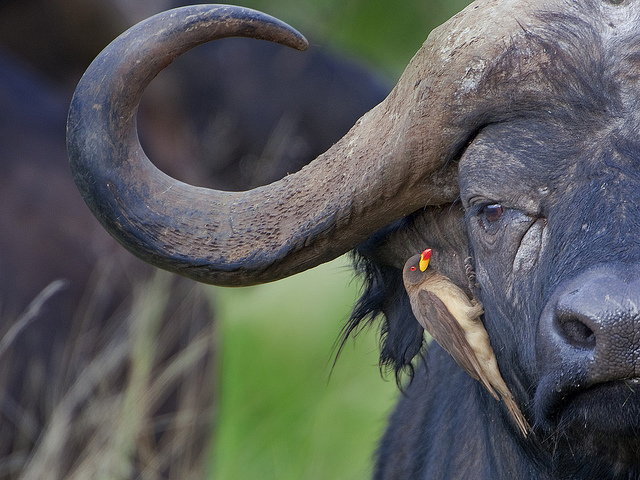
Red-billed Oxpecker (Buphagus erythrorynchus) by Africaddict
Then He answered them, saying, “Which of you, having a donkey or an ox that has fallen into a pit, will not immediately pull him out on the Sabbath day?” (Luke 14:5 NKJV)
This Sunday’s continuation of the Passerines (Songbirds) bring us to two more families, one small with only 2 species of Oxpeckers and the other, the large Thrush family with 167 members.
The oxpeckers are two species of bird which make up the family Buphagidae. Oxpeckers are endemic to the savanna of Sub-Saharan Africa. Both the English and scientific names arise from their habit of perching on large mammals (both wild and domesticated) such as cattle or rhinoceroses, and eating ticks, botfly larvae, and other parasites.
Oxpeckers feed exclusively on the backs of large mammals. Certain species are seemingly preferred, whereas others, like the Lichtenstein’s hartebeest or Topi are generally avoided. Smaller antelope such as lechwe, duikers and reedbuck are also avoided, the smallest regularly used species is the Impala, probably because of the heavy tick load and social nature of that species. In many parts of their range they now feed on cattle, but avoid camels. They feed on ectoparasites, particularly ticks, as well as insects infecting wounds and the flesh and blood of some wounds as well. (Info from Wikipedia)
Thrushes are medium-sized mostly insectivorous or omnivorous birds. The genus, Turdus,is the largest genus of the thrush family, Turdidae.
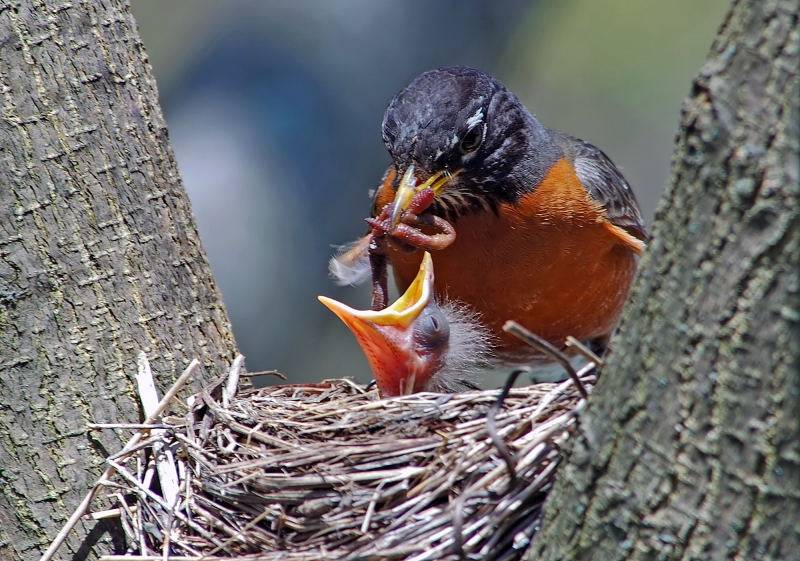
The Turdus genus has a cosmopolitan distribution, with species in the Americas, Europe, Asia, Africa and Australia. Several species have also colonized some oceanic islands, and two species have been introduced to New Zealand. Some New World species are called robins, the most famous of which is the American robin. Several species are migratory.
American Robin (Turdus migratorius)with youngsters by Raymond Barlow
They are insectivorous, but most species also eat worms, land snails, and fruit. Many species are permanently resident in warm climes, while others migrate to higher latitudes during summer, often over considerable distances.
Thrushes build cup-shaped nests, sometimes lining them with mud. They lay two to five speckled eggs, sometimes laying two or more clutches per year. Both parents help in raising the young.
The songs of some species, including members of the genera Catharus, Myadestes, and Turdus, are considered to be among the most beautiful in the avian world. (Info from Wikipedia)
This slideshow requires JavaScript.
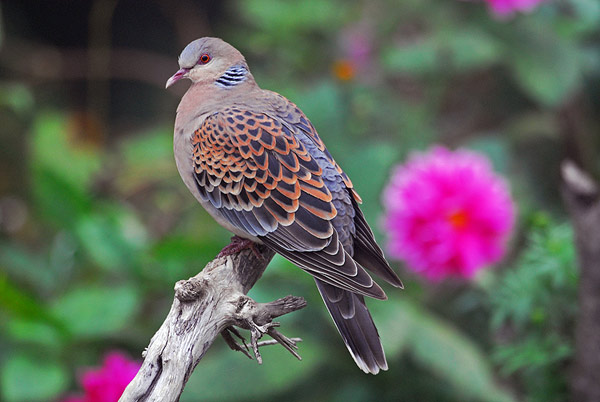
“Even the stork in the sky Knows her seasons; And the turtledove and the swift and the thrush Observe the time of their migration; But My people do not know The ordinance of the LORD. (Jeremiah 8:7 NASB)
“I Heard The Bells With Peace On Earth” – with Jessie Padgett, Angel Long and the FX Girls
*
Faith Baptist has just recently started posting our services on YouTube. Here is last Sunday’s Message (Dec 6, 2015) if you would like to watch it. We have a great pastor and church. He is doing a Christmas theme during December.
Thought you might enjoy watching Black-capped Chickadees being fed by hand. Video from LesleytheBirdNerd. It is one of the YouTube birders I follow. I like the music also.
Behold the fowls of the air: for they sow not, neither do they reap, nor gather into barns; yet your heavenly Father feedeth them. Are ye not much better than they? (Matthew 6:26 KJV)
Who has measured the waters in the hollow of His hand, Measured heaven with a span And calculated the dust of the earth in a measure? Weighed the mountains in scales And the hills in a balance? Who has directed the Spirit of the LORD, Or as His counselor has taught Him? (Isaiah 40:12-13 NKJV)
“He that sitteth in the heavens shall laugh: the Lord shall have them in derision.”
“I think that evolution is absolutely the death knell of Christianity.” No, those aren’t my words. These words were spoken by atheist Frank Zindler, and they make it very clear what the origins debate is really all about. It is nothing less than the front line in the battle between two incompatible faiths.
In step-by-step fashion, Zindler described how he reached that conclusion. “The most devastating thing that biology did to Christianity,” he said, “was the discovery of biological evolution.” In other words, he starts out by declaring that evolution has been proven, which, as you know, is very far from the truth.
He goes on to say that evolution means that Adam and Eve never really existed. In his own words, “Now that we know that Adam and Eve never were real people, the central myth of Christianity is destroyed.”
And why is that? He continues, and I quote: “If there never was an Adam and Eve, there never was an original sin. If there never was an original sin, there is no need of salvation. If there is no need of salvation, there is no need of a savior. And I submit that puts Jesus, historical or otherwise, into the ranks of the unemployed.”
Yes, atheists foolishly think that evolution is the death knell of Christianity. In reality, biology – with its established fact that life comes only from life – points directly to our Creator. Biology is actually the death knell of atheism and evolution.
Prayer: “Lord Jesus, I pray that You will use me to he lp others see that life comes only from life and that the original Life that started it all was You! Amen.”
Notes:
Frank Zindler quote taken from debate with William Lane Craig held in 1993 at Willow Creek Community Church. Photo: American atheist Frank Zindler.
That is very interesting. I can’t believe how they (evolutionist) just say something is true and that’s it. It is settled, as far as they are concerned. No evidence, no proof, just declare it’s true. My Bible says that God created it and He says He is truth. Science shows many evidences of the Universal Flood and a catastrophe, but evolutionist won’t believe it, because they have “declared” that God doesn’t exist.
The big question for all of us, is who are you going to believe?
And ye shall know the truth, and the truth shall make you free. (John 8:32 KJV)
And I will pray the Father, and He will give you another Helper, that He may abide with you forever— the Spirit of truth, whom the world cannot receive, because it neither sees Him nor knows Him; but you know Him, for He dwells with you and will be in you. (John 14:16-17 NKJV)
Because that which may be known of God is manifest in them; for God hath shewed it unto them. For the invisible things of him from the creation of the world are clearly seen, being understood by the things that are made, even his eternal power and Godhead; so that they are without excuse: Because that, when they knew God, they glorified him not as God, neither were thankful; but became vain in their imaginations, and their foolish heart was darkened. Professing themselves to be wise, they became fools, And changed the glory of the uncorruptible God into an image made like to corruptible man, and to birds, and fourfooted beasts, and creeping things. Wherefore God also gave them up to uncleanness through the lusts of their own hearts, to dishonour their own bodies between themselves: Who changed the truth of God into a lie, and worshipped and served the creature more than the Creator, who is blessed for ever. Amen. (Romans 1:19-25 KJV)
“I set My rainbow in the cloud, and it shall be for the sign of the covenant between Me and the earth.” (Genesis 9:13 NKJV)
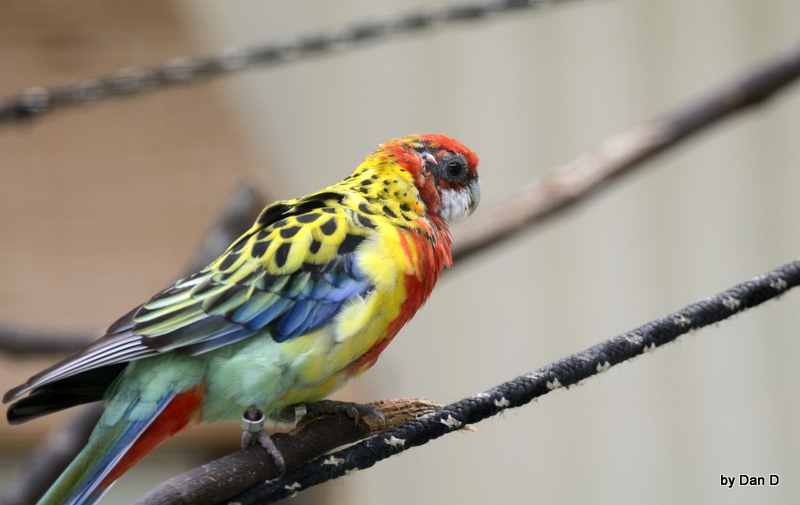
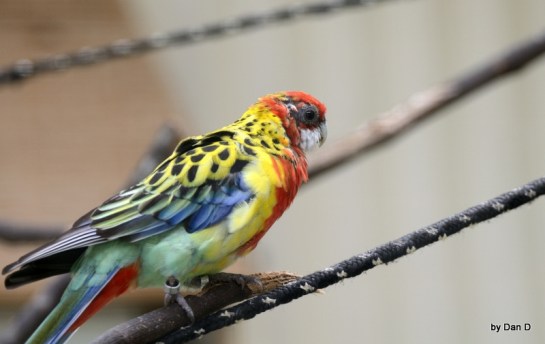
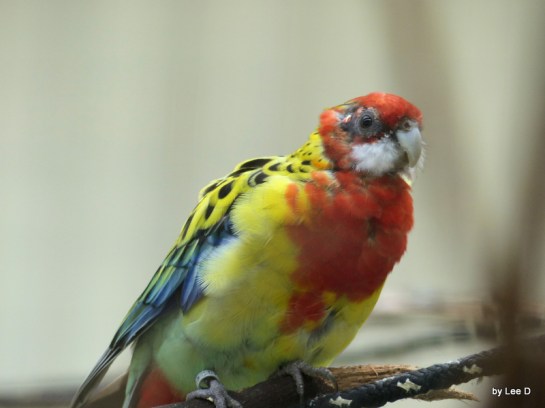
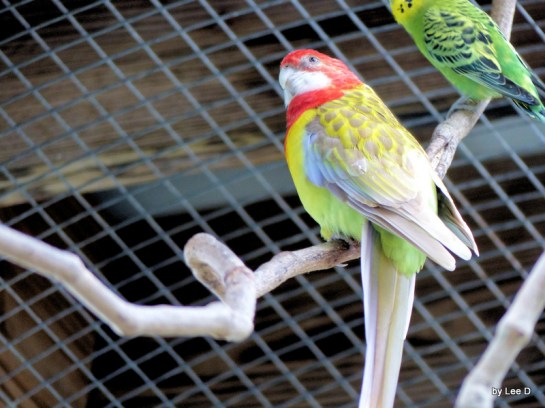
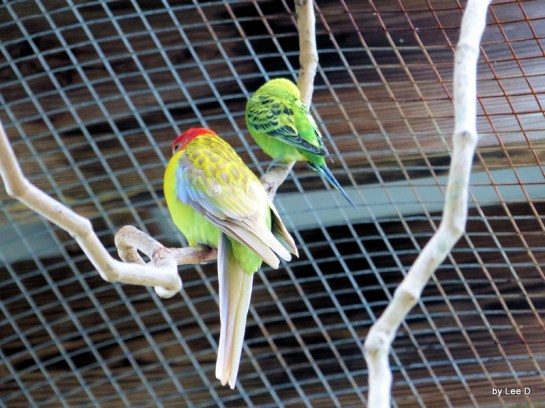
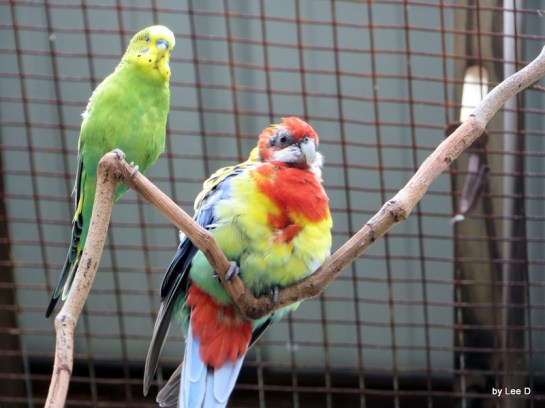
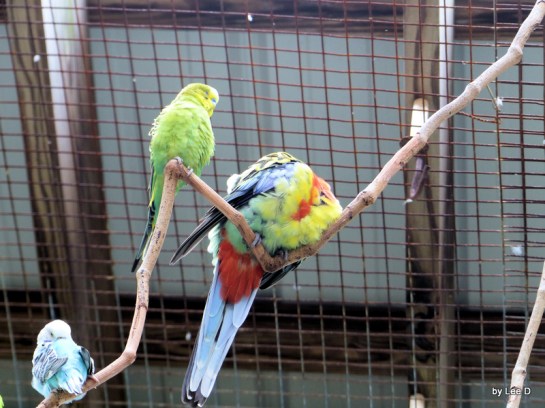
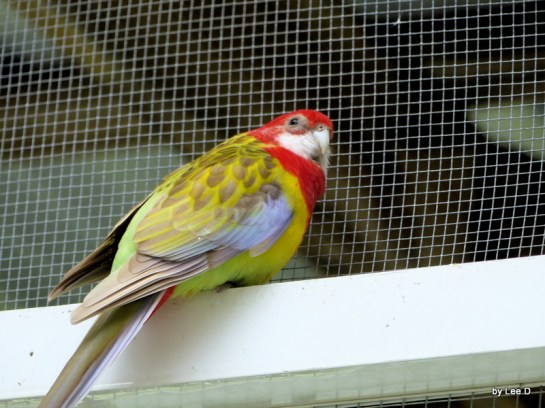
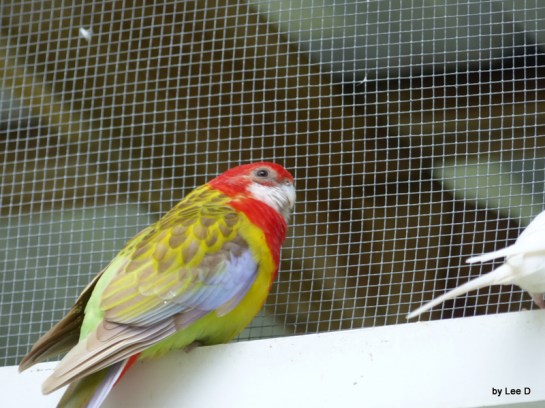
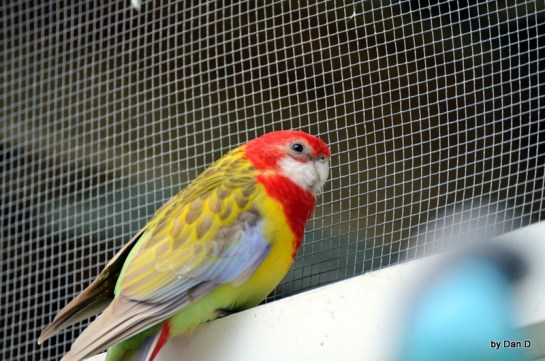
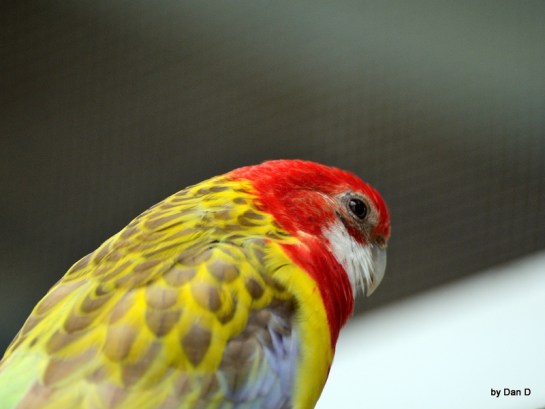
What a delight for me to find two Eastern Rosellas in the little free-flight aviary at Gatorland last week. We have been there two other times, but not when the aviary was open.
Because of Ian’s Bird of the Week articles about the Rosella, these two caught my eye. Never did get a decent photo of them, but never the less, we enjoyed seeing them in person. Dan’s photos were better, of course. They seem quite pale compared to Ian’s photo of one in the wild.
Eastern Rosella (Platycercus eximius) by Ian
“The rainbow shall be in the cloud, and I will look on it to remember the everlasting covenant between God and every living creature of all flesh that is on the earth.” (Genesis 9:16 NKJV)
This Rosella reminds me of the colors of a rainbow. Maybe the Lord gave us this beautiful bird to remind us of his promise, even on a non-rainy day.
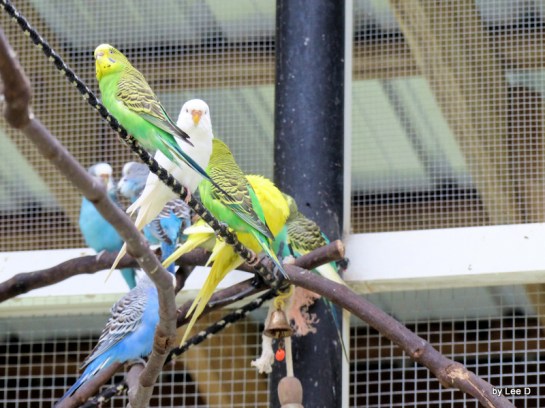
Here are just a few photos from the aviary:
Eastern Rosella Gatorland by Dan
Eastern Rosella from outside aviary
at Gatorland
Eastern Rosella (Platycercus eximius)
at Gatorland by Lee
Eastern Rosella and Budgerigar at Gatorland
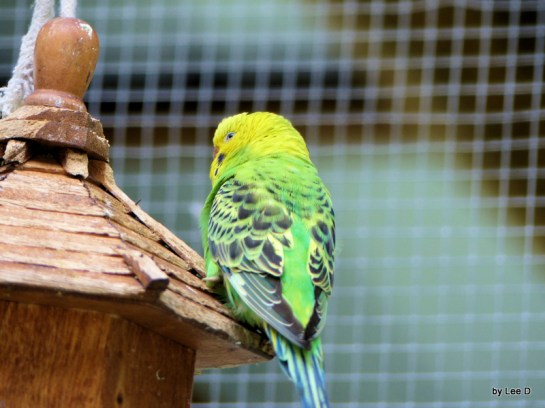
Budgerigar at Gatorland by Lee
Eastern Rosella (Platycercus eximius)
at Gatorland
Eastern Rosella (Platycercus eximius)
at Gatorland
Eastern Rosella (Platycercus eximius)
at Gatorland
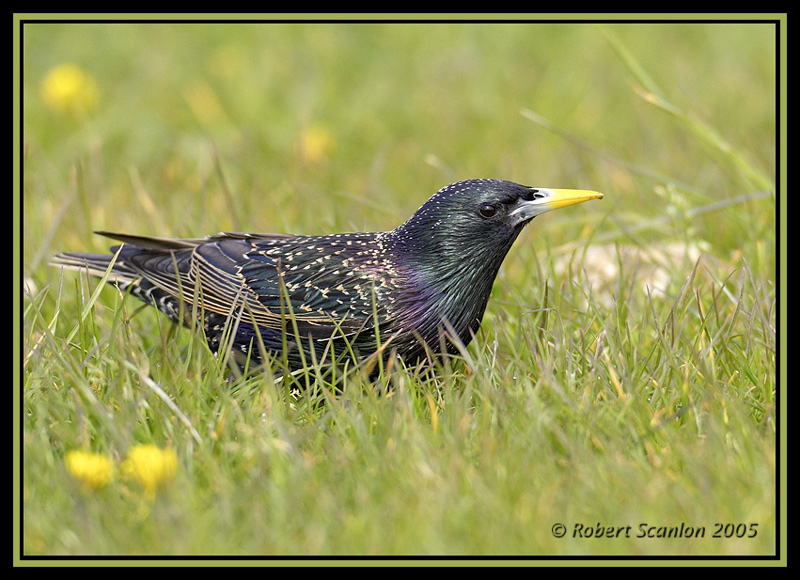
Common Starling (Sturnus vulgaris) by Robert Scanlon
I know all the birds of the mountains, And the wild beasts of the field are Mine. (Psalms 50:11 NKJV)
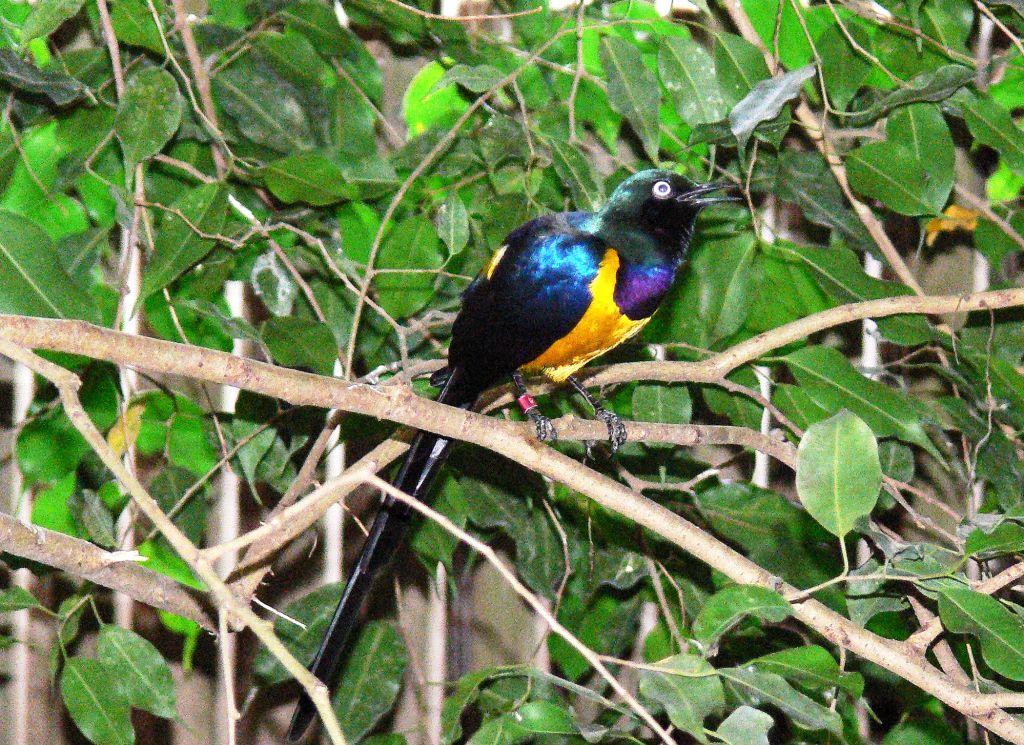
This weeks Sturnidae Family is rather large with 123 species presently. (Twenty-three are Mynas; three are Rhabdornis; one Coleto and the rest are Starlings.) Here in the U. S., when we think of a Starling it is a very the plain Common (European) Starling. Yet other Starlings are very colorful and beautiful creations from our Lord.
Golden-breasted Starling at National Aviary by Lee
The name “Sturnidae” comes from the Latin word for starling, sturnus. Many Asian species, particularly the larger ones, are called mynas, and many African species are known as glossy starlings because of their iridescent plumage. Starlings are native to the Old World, from Europe, Asia and Africa, to northern Australia and the islands of the tropical Pacific. Several European and Asian species have been introduced to these areas as well as North America, Hawaii and New Zealand, where they generally compete for habitats with native birds and are considered to be invasive species. The starling species familiar to most people in Europe and North America is the common starling, and throughout much of Asia and the Pacific, the common myna is indeed common.
Bali Myna (Leucopsar rothschildi Palm Beach Zoo by Lee
Starlings have strong feet, their flight is strong and direct, and they are very gregarious. Their preferred habitat is fairly open country, and they eat insects and fruit. Several species live around human habitation and are effectively omnivores. Many species search for prey such as grubs by “open-bill probing”, that is, forcefully opening the bill after inserting it into a crevice, thus expanding the hole and exposing the prey; this behaviour is referred to by the German verb zirkeln (pronounced [ˈtsɪʁkəln]).
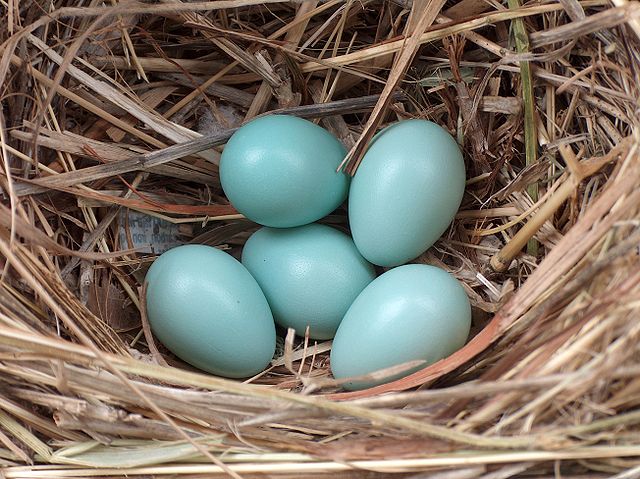
Plumage of many species is typically dark with a metallic sheen. Most species nest in holes and lay blue or white eggs.
Metallic Starling (Aplonis metallica) by Ian
Starlings have diverse and complex vocalizations and have been known to embed sounds from their surroundings into their own calls, including car alarms and human speech patterns. The birds can recognize particular individuals by their calls and are currently the subject of research into the evolution of human language.
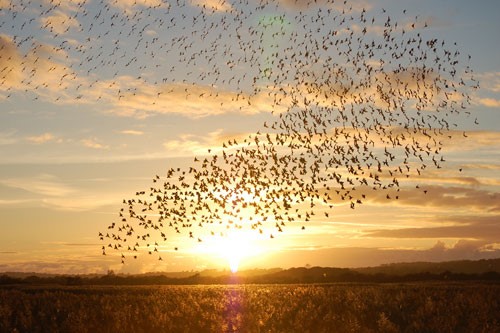
James J. S. Johnson just wrote about the murmuration of the Starlings in Choreographed Choir on the Wing: Birds of a Feather Flock Together. “The starlings are generally a highly social family. Most species associate in flocks of varying sizes throughout the year. A flock of starlings is called a murmuration. These flocks may include other species of starlings and sometimes species from other families. This sociality is particularly evident in their roosting behavior; in the non-breeding season some roosts can number in the thousands of birds.” (Most information from Wikipedia)
Starling Murmuration
*
Many of the family members in random order:
This slideshow requires JavaScript.
*
“Once Upon A Tree” ~ Choir – and – “Sing To Jesus” ~ Angel Long & Jessie Padgett
Therefore I love thy commandments above gold; yea, above fine gold. (Psalms 119:127 KJV)
On Tuesday, Dan and I took a ride over to Gatorland in Orlando. Just wanted to share a sequence of photos of some Blue-and-yellow Macaws (Ara ararauna) I took. One allowed me to get a nice view of him (or her) and then walked over to its friend. (Click on photos to enlarge)
Blue-and-yellow Macaw (Ara ararauna)
Okay, I through posing.
You still watching me?
Going over to talk to friend.
Talking.
Talking
Hang on a minute. We have someone watching.
I already gave you a photo, now go away and leave us alone.
Blue-and-yellow Macaws are also known as Blue-and-golds.
They are all plain to him that understandeth, and right to them that find knowledge. Receive my instruction, and not silver; and knowledge rather than choice gold. For wisdom is better than rubies; and all the things that may be desired are not to be compared to it. (Proverbs 8:9-11 KJV)