Chats and Old World Flycatchers III

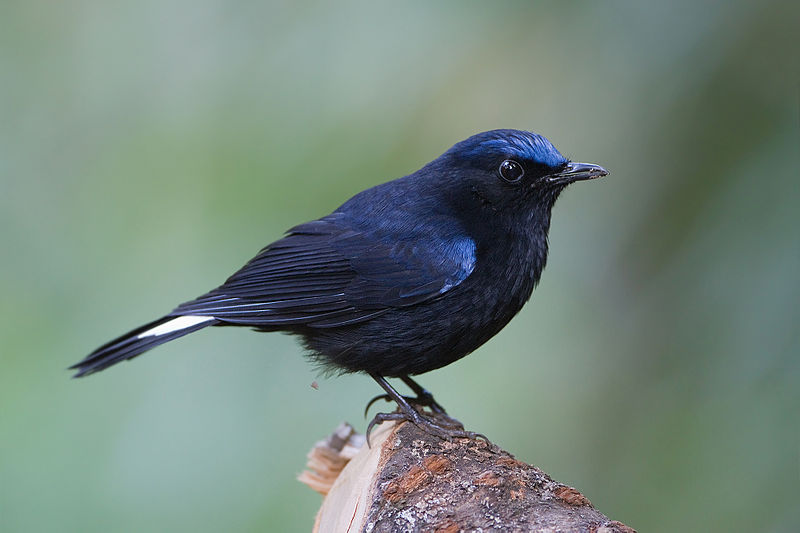
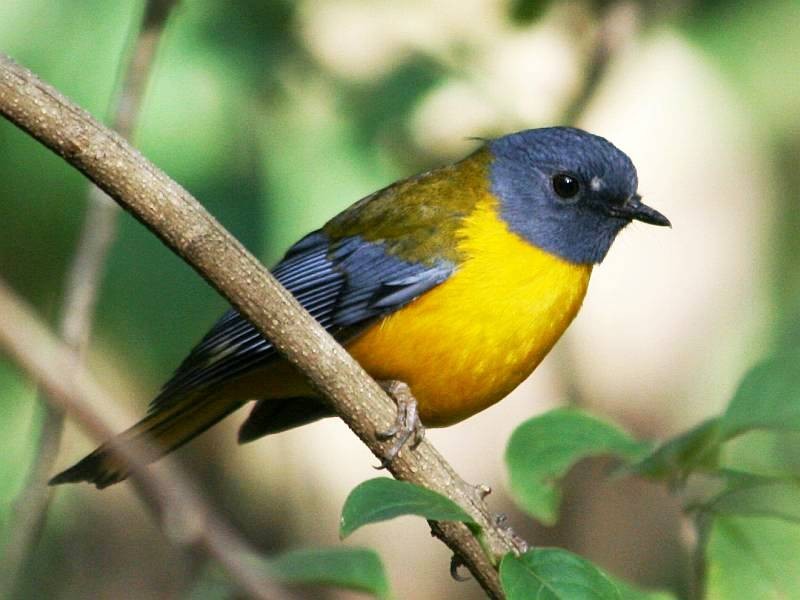
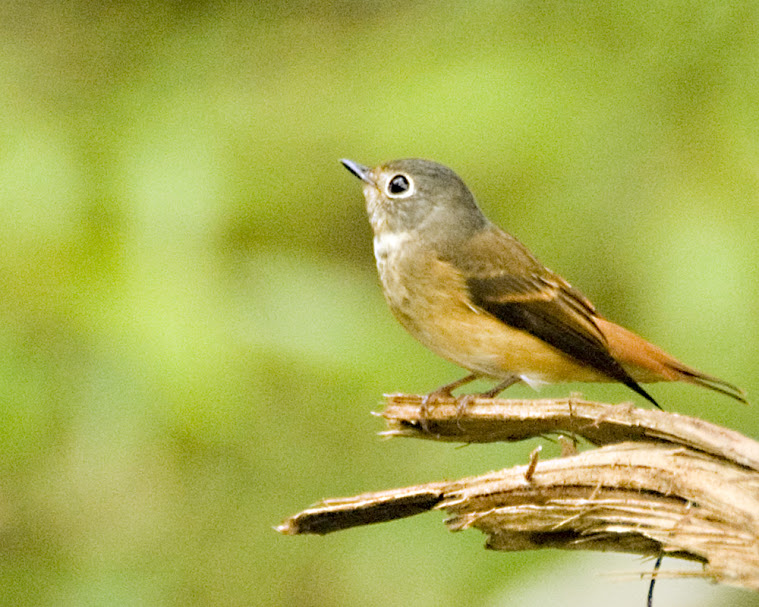
White-tailed Robin (Myiomela leucura) ©WikiC

White-tailed Robin (Myiomela leucura) ©WikiC

This third part of the Muscicapidae – Chats, Old World Flycatchers family starts with the White-tailed Robin (Myiomela leucura). What an amazing group of avian wonders from Our Lord, their Creator.

Part I and Part II of the Sunday Inspiration covered over half of the 321 member Chat and Old World Flycatcher family. This week, we should be able to finish up. Meagan Fee came back for the Christmas break (she was our summer intern at Faith) and played a fantastic violin piece for our offering last Sunday. It is fantastic and long enough, I hope, to cover the slideshow. :0)

Back to the flycatchers. The Genera covered this week are the Myiomela, Tarsiger, Enicurus, Myophonus, Cinclidium, Ficedula, Muscicapella, Phoenicurus, Monticola, Saxicola, Campicoloides, Emarginata, Pinarochroa, Thamnolaea, Myrmecocichla, Oenanthe, Pinarornis, Namibornis and Humblotia.

Old World flycatchers live in almost every environment with a suitable supply of trees, from dense forest to open scrub, and even the montane woodland of the Himalayas. The more northerly species migrate south in winter, ensuring a continuous diet of insects.

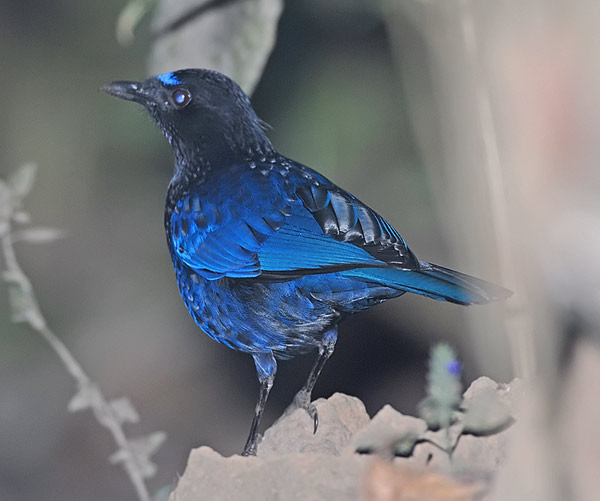
Malabar Whistling Thrush (Myophonus horsfieldii) by Nikhil Devasar

Malabar Whistling Thrush (Myophonus horsfieldii) by Nikhil Devasar

“I will whistle for them to gather them together, For I have redeemed them; And they will be as numerous as they were before. (Zechariah 10:8 NASB)

Whistling thrushes are mostly seen in hilly areas except during winter when they may descend to streams near the plains. They specialize in feeding on snails and their strong hooked bills are used to deal with them. They may choose a particular rock on which they crack the shells.

The whistling of a Malabar Whistling Thrush from xeno-canto by David Farrow.

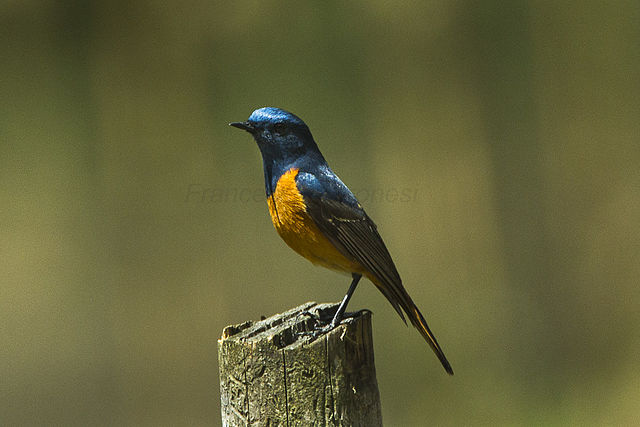
Blue-fronted Robin (Cinclidium frontale) ©WikiC

Blue-fronted Robin (Cinclidium frontale) ©WikiC

The Blue-fronted Robin (Cinclidium frontale) is a species of bird in the family Muscicapidae. It is the only species in the monotypic genus Cinclidium. It is found in Bhutan, China, India, Laos, Thailand, Vietnam, and possibly Nepal. Its natural habitat is temperate forests.

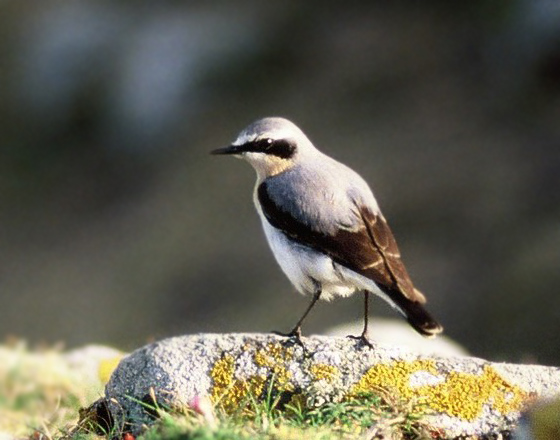
Northern Wheatear (Oenanthe oenanthe) Breeding male ©WikiC

Northern Wheatear (Oenanthe oenanthe) Breeding male ©WikiC

The Wheatears, Oenanthe, have characteristic black and white or red and white markings on their rumps or their long tails. Most species are strongly sexually dimorphic; only the male has the striking plumage patterns characteristic of the genus, though the females share the white or red rump patches.

This slideshow requires JavaScript.

Like a crane or a swallow, so did I chatter: I did mourn as a dove: mine eyes fail with looking upward: O LORD, I am oppressed; undertake for me. (Isaiah 38:14 KJV)

“O Come, O Come Emmanuel”  by Meagan Fee on Violin and Jill Foster accompanying

*

Sunday Inspiration – Chats and Old World Flycatchers I
Sunday Inspiration – Chats and Old World Flycatchers II
Muscicapidae – Chats, Old World Flycatchers

Gideon

*

2015 in review

The WordPress.com stats helper monkeys prepared a 2015 annual report for this blog.

Here’s an excerpt:

The Louvre Museum has 8.5 million visitors per year. This blog was viewed about 220,000 times in 2015. If it were an exhibit at the Louvre Museum, it would take about 9 days for that many people to see it.

Click here to see the complete report.

Thanks again for all of you who have made 2015 such a great blogging year by dropping in to reading our posts. We here at the blog are trusting the Lord that He will give us another great year in 2016, giving credit and praising the Creator of all these neat birds in the world.

Happy New Year and Lord’s Greatest Blessings to you all.

Birds of the Bible – Nebuchadnezzar and Birds

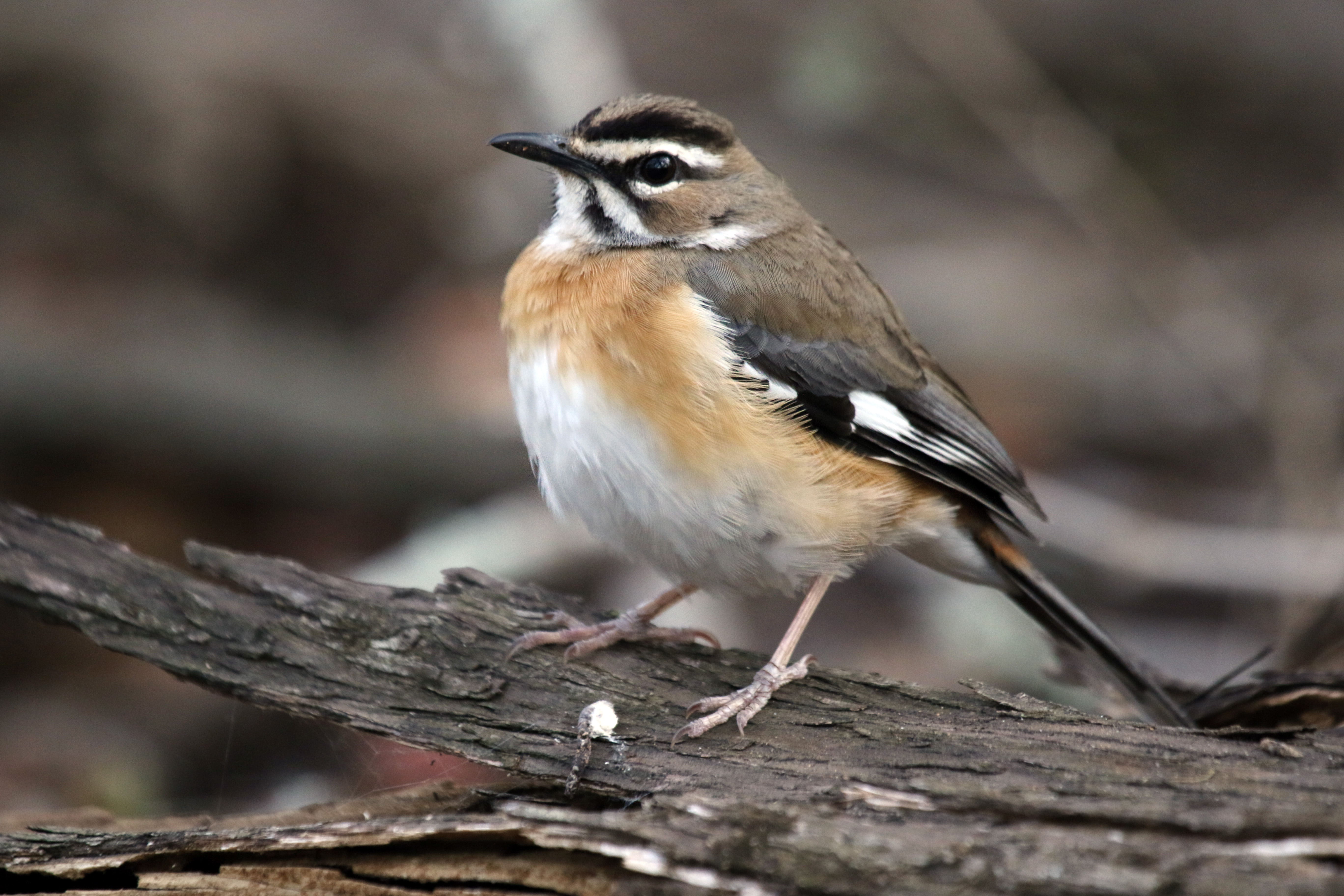
Bearded Scrub Robin (Cercotrichas quadrivirgata) ©WikiC

Bearded Scrub Robin (Cercotrichas quadrivirgata) ©WikiC

While reading Daniel chapter 2 today in the Bible, I was captivated by a passage that mentions birds. Here is that passage:

“This was the dream; now we will tell its interpretation before the king. “You, O king, are the king of kings, to whom the God of heaven has given the kingdom, the power, the strength and the glory; and wherever the sons of men dwell, or the beasts of the field, or the birds of the sky, He has given them into your hand and has caused you to rule over them all. You are the head of gold.” (Daniel 2:36-38 NASB) (emphasis mine)

Wow! Men, I can understand, but the birds being put under Nebuchadnezzar’s hand? This calls for some investigation.

First, if you are familiar with the book of Daniel, especially the first few chapters, you will recall that Daniel had been taken captive to Babylon when Nebuchadnezzer had captured Jerusalem. (Daniel 1) In Babylon, where Daniel was now one of the wise men, he was threatened with death unless the King’s dream could be interpreted. (Daniel 2:1-18) After praying with his three friend, the God of heaven reveals the dream and the interpretation to Daniel. Daniel tells him his dream and then gives the interpretation, where our verses above are found. Daniel 2:19-45)

Snowy Egret by Lee

Snowy Egret by Lee

Bible Knowledge Commentary – “Nebuchadnezzar’s rule was viewed as a worldwide empire, in which he ruled over all mankind as well as over beasts and birds. At the time of Creation the right to rule over the earth was given man who was to have dominion over it and all the creatures in it (Gen-1:26). Here Nebuchadnezzar by divine appointment was helping fulfill what God had planned for man.”

Cambridge – “the beasts of the field] i.e. wild animals (cf. in Heb. e.g. Exo 23:11; Exo 23:29). These and the birds are mentioned in order to represent Nebuchadnezzar’s rule as being as absolute as possible; the former are borrowed, no doubt, from Jer 27:6; Jer 28:14.”

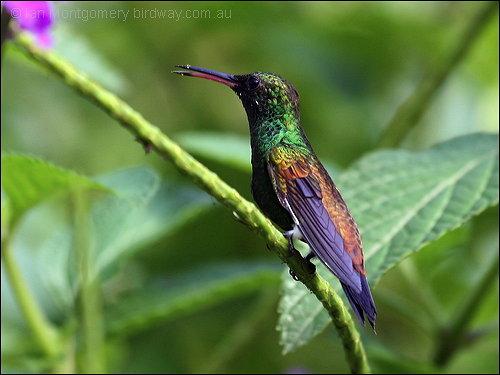
Copper-rumped Hummingbird (Amazilia tobaci) by Ian

Copper-rumped Hummingbird (Amazilia tobaci) by Ian

John Gill – “the beasts of the field, and the fowls of the heaven, hath he given into thine hand; all parks, chases, and forests (so that none might hunt or hawk without his permission), as well as the persons and habitations of men, were at his dispose; showing the despotic power and sovereign sway he had over his subjects:

and hath made thee ruler over all: men, beasts, and fowl: he not only conquered the Egyptians, Tyrians, and Jews, and other nations about them; but, according to Megasthenes (l) he exceeded Hercules in strength, and conquered Lybia and Iberia, and carried colonies of them into Pontus; and, as Strabo (m) says, carried his arms as far as the pillars of Hercules:
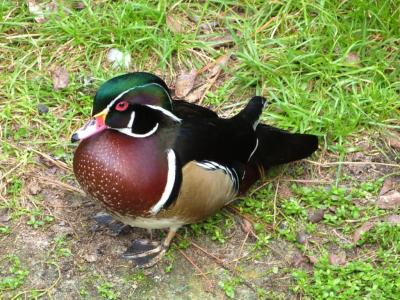
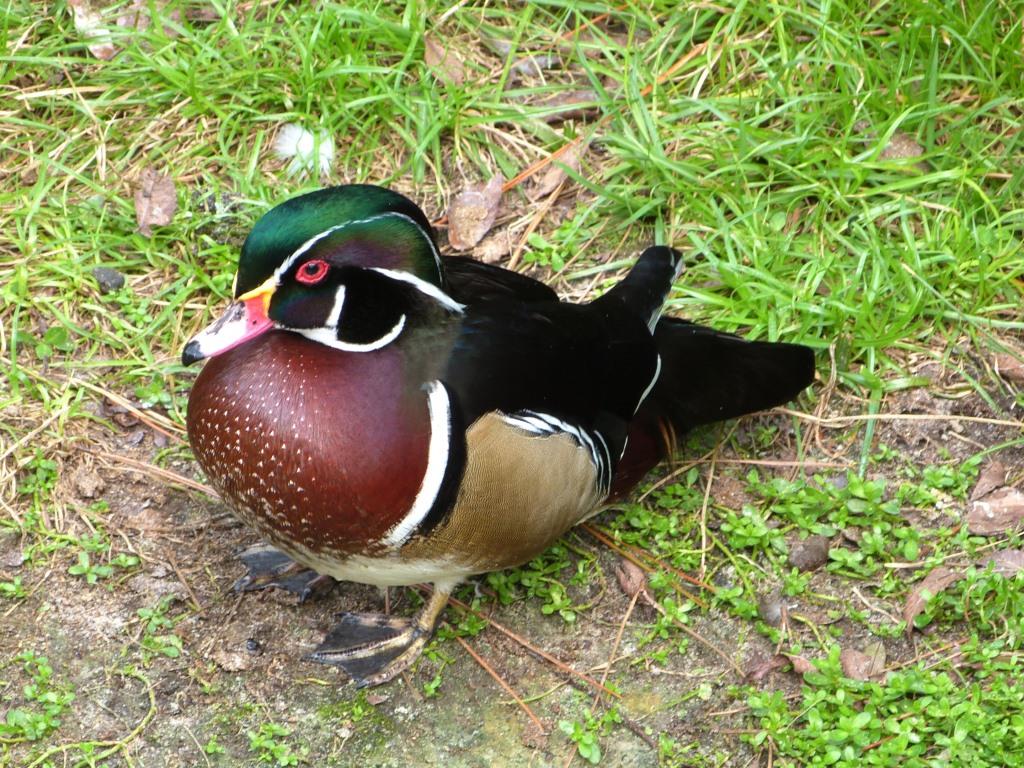
Wood Duck Brevard Zoo

Wood Duck Brevard Zoo by Lee

Henry – “The extent of his dominion is set forth (Dan 2:38), that wheresoever the children of men dwell, in all the nations of that part of the world, he was ruler over them all, over them and all that belonged to them, all their cattle, not only those which they had a property in, but those that were ferae naturae – wild, the beasts of the field and the fowls of the heaven. He was lord of all the woods, forests, and chases, and none were allowed to hunt or fowl without his leave.”

JFB – men … beasts … fowls — the dominion originally designed for man (Gen 1:28; Gen 2:19, Gen 2:20), forfeited by sin; temporarily delegated to Nebuchadnezzar and the world powers; but, as they abuse the trust for self, instead of for God, to be taken from them by the Son of man, who will exercise it for God, restoring in His person to man the lost inheritance (Psa 8:4-6).

Wesley – “Daniel 2:38  “Made thee ruler – He hath given thee absolute dominion of all creatures, men and beasts within the bounds of thy vast kingdom. Thou – He was first in order, as the head is before the other parts, and the vision began in him, and descended downwards to the other three monarchies. He was the head of gold, because of the vast riches wherein this monarchy abounded, and because it stood longest, five hundred years, and was fortunate and flourishing to the last.”
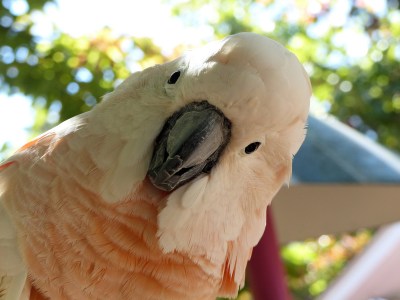
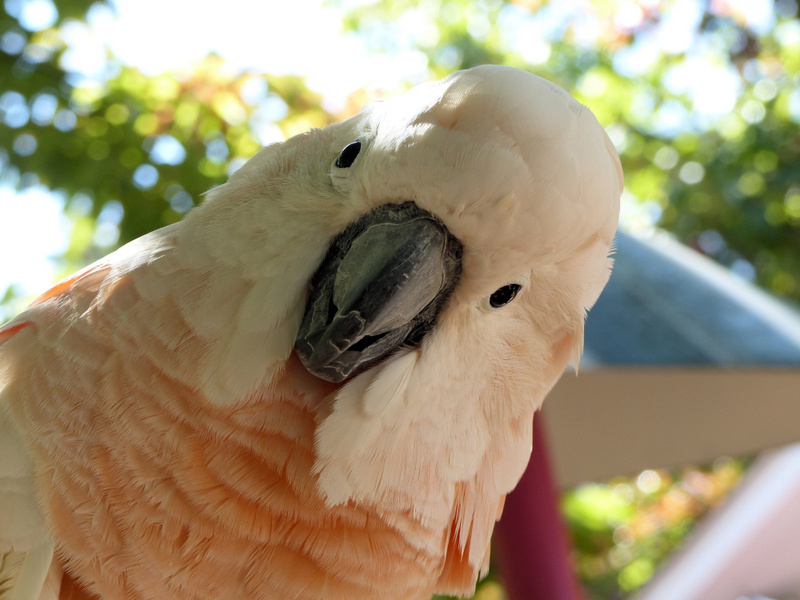
 Salmon-crested Cockatoo (Cacatua moluccensis) at Parrot Mtn by Lee

Salmon-crested Cockatoo (Cacatua moluccensis) at Parrot Mtn by Lee

Reading those commentaries, from my e-Sword, it appears from some that some are saying Nebuchadnezzer had all control of the birds as to when they could be hunted or hawked, etc. Others are saying that he was to be over the original dominion mandate given to man for the beast and birds which had been corrupted by man.
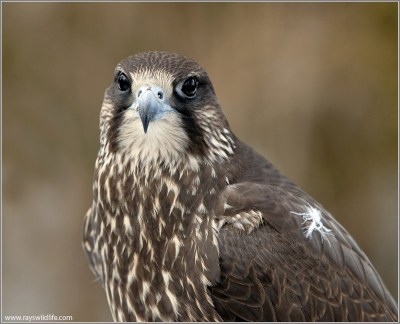
Peregrine Falcon (Falco peregrinus) by Ray

Peregrine Falcon (Falco peregrinus) by Ray

It is an interesting statement and trust you found it informing. I did. For me, I try to respect and help the birds when I can. Many are researching and finding ways to help the birds, even when making preserves to protect their habitat. The Lord created them and we should do what we can to help them. We can even help the birds when some teach they evolved, by countering that lie with the truth of God’s Word.

So God created great sea creatures and every living thing that moves, with which the waters abounded, according to their kind, and every winged bird according to its kind. And God saw that it was good. (Genesis 1:21 NKJV)

*

Birds of the Bible

Who Paints The Leaves?

*

Lord’s Avian Wonders – Gnatcatcher Preening

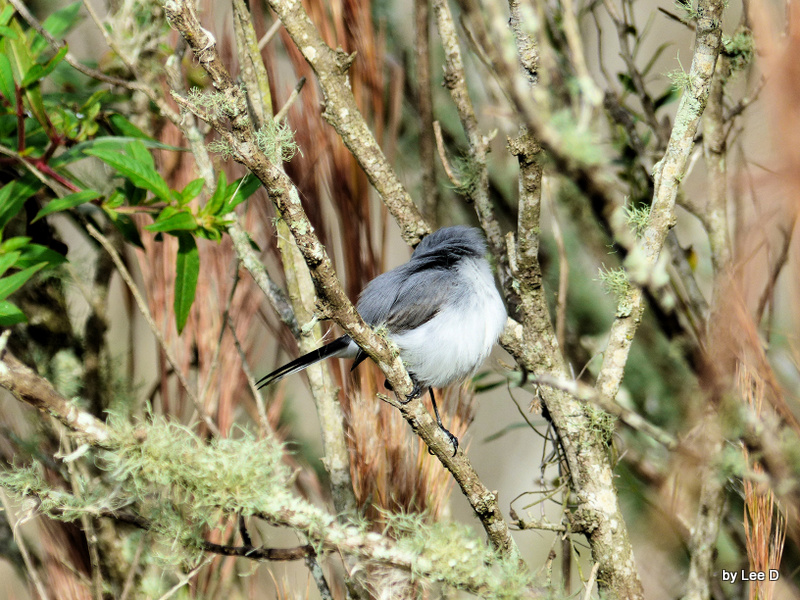
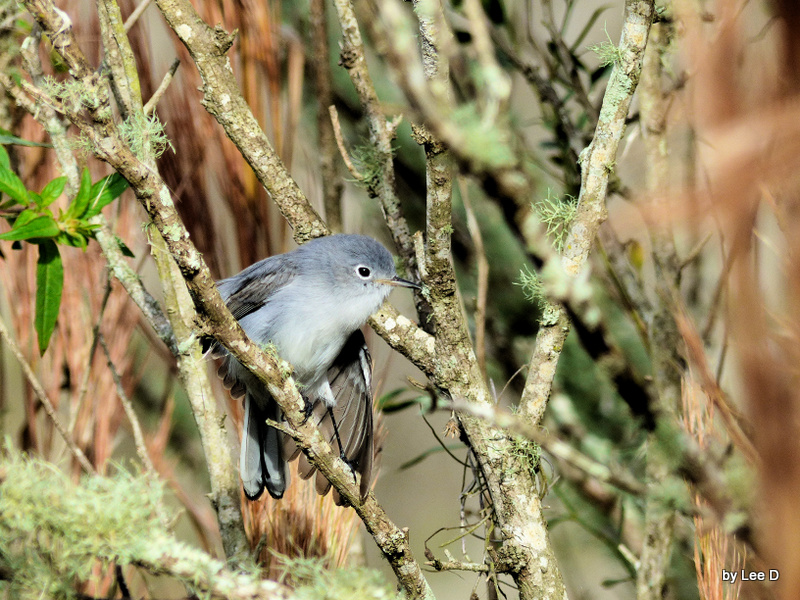
Blue-gray Gnatcatcher preening at Circle B by Lee

Blue-grey Gnatcatcher preening at Circle B by Lee

“Be dressed in readiness, and keep your lamps lit. (Luke 12:35 NASB)

A visit to Circle B Bar Reserve last week provide a great opportunity to watch a Blue-grey Gnatcatcher (Polioptila caerulea) preening. Normally, they are flitting from here to there and never stay put long enough to catch a photo, let along some video.

To preen: personal grooming of a bird’s feathers especially by using its beak. Nice article at About Birding – What is Preening.

They are a very small songbird, 10–13 cm (3.9–5.1 in) in length and weighing only 5–7 g (0.18–0.25 oz). Adult males are blue-grey on the upperparts with white underparts, have a slender dark bill, and a long black tail edged in white. Females are less blue. Both sexes have a white eye ring.

The blue-grey gnatcatcher’s breeding habitat includes open deciduous woods and shrublands in southern Ontario, the eastern and southwestern United States, and Mexico. Though gnatcatcher species are common and increasing in number while expanding to the northeast,[4] it is the only one to breed in Eastern North America. They build a cone-like nest on a horizontal tree branch. The incubation period is 13 days for both sexes. Both parents construct the nest and feed the young; they may raise two broods in a season.

These birds migrate to the southern United States, Mexico, northern Central America – (Belize, Guatemala, and Honduras), Cuba, Bahamas, Turks and Caicos Islands, and the Cayman Islands. Yeah! They come to Circle B in the winter!

Blue-gray Gnatcatcher preening at Circle B by Lee

Blue-grey Gnatcatcher preening at Circle B by Lee

They forage actively in trees or shrubs, mainly eating insects, insect eggs and spiders. They may hover over foliage (gleaning), or fly to catch insects in flight (hawking). The tail is often held upright while defending territory or searching for food.

The songs (and calls) are often heard on breeding grounds, (usually away from nest) and occasionally heard other times of the year. Calls: “zkreee, zkreee, zkreee”, Songs: “szpree zpree spreeeeey spree spre sprzrreeeee”

Your adornment must not be merely external–braiding the hair, and wearing gold jewelry, or putting on dresses; but let it be the hidden person of the heart, with the imperishable quality of a gentle and quiet spirit, which is precious in the sight of God. (1 Peter 3:3-4 NASB)

Birdwatching Trips 

Circle B Bar Reserve, FL

Wordless Birds – with Hummingbirds

*

Sunday Inspiration – Chats and Old World Flycatchers II

Rufous-bellied Niltava (Niltava sundara) by Nikhil Devasar

Rufous-bellied Niltava (Niltava sundara) by Nikhil Devasar

Out of the ground the LORD God formed every beast of the field and every bird of the sky, and brought them to the man to see what he would call them; and whatever the man called a living creature, that was its name. (Genesis 2:19 NASB)

Last week’s Sunday Inspiration – Chats and Old World Flycatchers covered the first part of the Muscicapidae Family. This week, we will show the some more of the Family. There are 321 Members that make up the Muscicapidae Family. What great looking birds from their Creator.

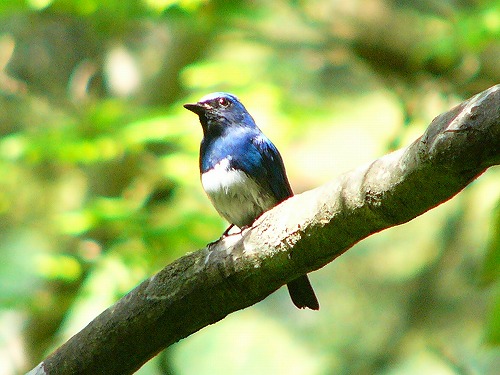
Blue-and-white Flycatcher (Cyanoptila cyanomelana) ©WikiC

Blue-and-white Flycatcher (Cyanoptila cyanomelana) ©WikiC

Chats (formerly sometimes known as “chat-thrushes”) are a group of small Old World insectivorous birds formerly classified as members of the thrush family Turdidae, but now are considered Old World flycatchers. The name is normally applied to the more robust ground-feeding flycatchers found in Europe and Asia and most northern species are strong migrants.

The Old World flycatchers, the Muscicapidae, are small passerine birds mostly restricted to the Old World (Europe, Africa and Asia). These are mainly small arboreal insectivores, many of which, as the name implies, take their prey on the wing.

White-starred Robin (Pogonocichla stellata) WikiC

White-starred Robin (Pogonocichla stellata) ©WikiC

The appearance of these birds is very varied, but they mostly have weak songs and harsh calls. They are small to medium birds, ranging from 9 to 22 cm in length. Many species are dull brown in colour, but the plumage of some can be much brighter, especially in the males. Most have broad, flattened bills suited to catching insects in flight, although the few ground-foraging species typically have finer bills.

Old World flycatchers live in almost every environment with a suitable supply of trees, from dense forest to open scrub, and even the montane woodland of the Himalayas. The more northerly species migrate south in winter, ensuring a continuous diet of insects.

Depending on the species, their nests are either well-constructed cups placed in a tree or cliff ledge, or simply lining in a pre-existing tree hole. The hole-nesting species tend to lay larger clutches, with an average of eight eggs, rather than just two to five.

White-browed Robin-Chat (Cossypha heuglini) by Daves BirdingPix

White-browed Robin-Chat (Cossypha heuglini) by Daves BirdingPix

Because this Muscicapidae family is so large, this week’s Sunday Inspiration and last week’s were divided. The reason for this is so the slideshow will not be too long. This divides them in taxonomic order in to several groups. I was going to divide this family in half, but there are so many photos available that I would have to find a symphony to provide enough music to show them all at once. ☺♪♫☺

Last week, the first 97-98 members were shown from these genera: Alethe, Cercotrichas, Copsychus, Fraseria, Myioparus, Melaenornis, Empidornis, Muscicapa, Anthipes, Cyornis.

This Slideshow of Muscicapidae in taxonomic order – Second Part (includes the genera- Niltava, Cyanoptila, Eumyias, Erithacus, Pseudalethe, Cossyphicula, Cossypha, Swynnertonia, Pogonocichla, Stiphrornis, Sheppardia, Cichladusa, Heinrichia, Leonardina, Heteroxenicus, Brachypteryx , Vauriella, Larvivora, Luscinia, Irania and Calliope.) 75 Species

Start with Niltava 

This slideshow requires JavaScript.

Let this mind be in you which was also in Christ Jesus, who, being in the form of God, did not consider it robbery to be equal with God, but made Himself of no reputation, taking the form of a bondservant, and coming in the likeness of men. And being found in appearance as a man, He humbled Himself and became obedient to the point of death, even the death of the cross. Therefore God also has highly exalted Him and given Him the name which is above every name, that at the name of Jesus every knee should bow, of those in heaven, and of those on earth, and of those under the earth, and that every tongue should confess that Jesus Christ is Lord, to the glory of God the Father. (Philippians 2:5-11 NKJV)

“The Birthday of a King” ~ by Dr. Richard Gregory, now in Glory.

*
Sunday Inspiration – Chats and Old World Flycatchers I

More Sunday Inspirations

Muscicapidae – Chats and Old World Flycatchers

Faith Baptist Church

Gospel Presentation

*

Good One – An Email

Peek-a-boo ©Flickr Kathy

Peek-a-boo ©Flickr Kathy

GOOD ONE
We were the only family with children in the restaurant. I sat Erik in a high chair and noticed everyone was quietly sitting and talking. Suddenly, Erik squealed with glee and said, ‘Hi.’ He pounded his fat baby hands on the high chair tray. His eyes were crinkled in laughter and his mouth was bared in a toothless grin, as he wriggled and giggled with merriment.
I looked around and saw the source of his merriment. It was a man whose pants were baggy with a zipper at half-mast and his toes poked out of would-be shoes. His shirt was dirty and his hair was uncombed and unwashed. His whiskers were too short to be called a beard and his nose was so varicose it looked like a road map.
We were too far from him to smell, but I was sure he smelled.. His hands waved and flapped on loose wrists.. ‘Hi there, baby; hi there, big boy. I see ya, buster,’ the man said to Erik.
My husband and I exchanged looks, ‘What do we do?’
Erik continued to laugh and answer, ‘Hi.’
Everyone in the restaurant noticed and looked at us and then at the man. The old geezer was creating a nuisance with my beautiful baby. Our meal came and the man began shouting from across the room, ‘Do ya patty cake? Do you know peek-a-boo? Hey, look, he knows peek- a-boo.’
Nobody thought the old man was cute. He was obviously drunk. My husband and I were embarrassed. We ate in silence; all except for Erik, who was running through his repertoire for the admiring skid-row bum, who in turn, reciprocated with his cute comments.
We finally got through the meal and headed for the door. My husband went to pay the check and told me to meet him in the parking lot. The old man sat poised between me and the door. ‘Lord, just let me out of here before he speaks to me or Erik,’ I prayed. As I drew closer to the man, I turned my back trying to sidestep him and avoid any air he might be breathing. As I did, Erik leaned over my arm, reaching with both arms in a baby’s ‘pick-me-up’ position. Before I could stop him, Erik had propelled himself from my arms to the man.
Suddenly a very old smelly man and a very young baby consummated their love and kinship. Erik in an act of total trust, love, and submission laid his tiny head upon the man’s ragged shoulder. The man’s eyes closed, and I saw tears hover beneath his lashes. His aged hands full of grime, pain, and hard labor, cradled my baby’s bottom and stroked his back. No two beings have ever loved so deeply for so short a time.
I stood awestruck. The old man rocked and cradled Erik in his arms and his eyes opened and set squarely on mine. He said in a firm commanding voice, ‘You take care of this baby.’
Somehow I managed, ‘I will,’ from a throat that contained a stone.
He pried Erik from his chest, lovingly and longingly, as though he were in pain. I received my baby, and the man said, ‘God bless you, ma’am, you’ve given me my Christmas gift.’
I said nothing more than a muttered thanks. With Erik in my arms, I ran for the car. My husband was wondering why I was crying and holding Erik so tightly, and why I was saying, ‘My God, my God, forgive me.’
I had just witnessed Christ’s love shown through the innocence of a tiny child who saw no sin, who made no judgment; a child who saw a soul, and a mother who saw a suit of clothes. I was a Christian who was blind, holding a child who was not.. I felt it was God asking, ‘Are you willing to share your son for a moment?’ when He shared His for all eternity. How did God feel when he put his baby in our arms 2000 years ago.
The ragged old man, unwittingly, had reminded me, ‘To enter the Kingdom of God , we must become as little children.’
If this has blessed you, please bless others by sending it on. Sometimes, it takes a child to remind us of what is really important. We must always remember who we are, where we came from and, most importantly, how we feel about others. The clothes on your back or the car that you drive or the house that you live in does not define you at all; it is how you treat your fellow man that identifies who you are.
This one is a keeper.
‘It is better to be liked for the true you, than to be loved for who people think you are……'(Amen! )
Old man and baby ©Flickr Gustavo Devito

Old man and baby ©Flickr Gustavo Devito

(Author Unknown)
*

Merry Christmas 2015

Merry Christmas

That which was from the beginning, which we have heard, which we have seen with our eyes, which we have looked upon, and our hands have handled, of the Word of life; (For the life was manifested, and we have seen it, and bear witness, and shew unto you that eternal life, which was with the Father, and was manifested unto us;) That which we have seen and heard declare we unto you, that ye also may have fellowship with us: and truly our fellowship is with the Father, and with his Son Jesus Christ. And these things write we unto you, that your joy may be full. (1 John 1:1-4 KJV)

I would like to share with you our Christmas Cantata presented on December 13, 2015 at Faith Baptist Church in Winter Haven, Florida. They all did fantastic and thought you would enjoy it also.

It was entitled, “Lord of Glory” Christmas Cantata

May the Lord bless you as you share Christmas with family and friends. Dan and I would both like to wish you a great Christmas day full of blessings from the Lord.

*


Lord’s Avian Wonders – Sunbittern saying, “Where is It?”

At Lowry Park Zoo recently, we observed a Sunbittern rearranging the area. The bird keeper came by and put it all back in. He said, it is a normal occurrence.

To me, it reminds me of those of you who will be opening presents for Christmas. Invariably, some piece of a toy or something gets mixed in with all the discarded wrapping paper and the search begins. Merry Christmas.

“Or what woman, if she has ten silver coins and loses one coin, does not light a lamp and sweep the house and search carefully until she finds it? “When she has found it, she calls together her friends and neighbors, saying, ‘Rejoice with me, for I have found the coin which I had lost!’ “In the same way, I tell you, there is joy in the presence of the angels of God over one sinner who repents.” (Luke 15:8-10 NASB)

Bonus: A Bali Myna was singing away at the newly remodeled entry aviary. This is just as you enter the Main Aviary at Lowry.

Birds in Christmas Hymns – Review

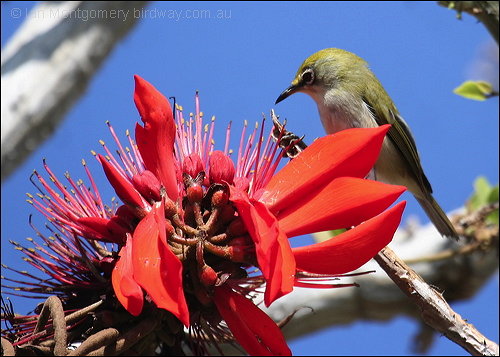
Christmas Island White-eye (Zosterops natalis) by Ian

Christmas Island White-eye (Zosterops natalis) by Ian

Birds in Christmas Hymns

Birds in Christmas Hymns

And when they had sung an hymn, they went out… (Mark 14:26a KJV)

Here are the Birds in Christmas Hymns from the Birds in Hymns Page. Many writers of these hymns must have enjoyed our beautiful created birds and included them in these Christmas Hymns.

Carol of Birds (Bird, Nightingale, Sparrow, Finch, Partridge, Nest), (Australian Birds)
Christmas Brings Joy To Every Heart – (Birds, Perch, Sparrow, Dove)
Hail to the Lord’s Anointed (Eagle, Dove, Wing, Pinion)
I Wonder As I Wander (Bird)
Joyful, Joyful, We Adore Thee – (Singing bird)
The Day The Christ-Child’s Tender Eyes – (Birds, Feather)
The Friendly Beasts – (Dove)
The Worcester Christmas Carol – (Bird)
This Endris Night – (Bird)
Thou Didst Leave Thy Throne –  (Bird, Nest)
Welcome To Christmas – (Dove, Wing)

*

O Holy Night – Card

That which was from the beginning, which we have heard, which we have seen with our eyes, which we have looked upon, and our hands have handled, of the Word of life; (1 John 1:1 KJV)

Please Click Here To See The Card

Here is the video they used with it:

*

A friend sent this to me and I trust you also are as moved by it as I am. Tears are still flowing as I type this.

Yes, I know the Wise Men showed up later, but enjoy the video.

Sunday Inspiration – Chats and Old World Flycatchers I

Bearded Scrub Robin (Cercotrichas quadrivirgata) ©WikiC

Bearded Scrub Robin (Cercotrichas quadrivirgata) ©WikiC

In all labor there is profit, But idle chatter leads only to poverty. (Proverbs 14:23 NKJV)

The Old World flycatchers are a large family (321 Members), the Muscicapidae, of small passerine birds mostly restricted to the Old World (Europe, Africa and Asia). These are mainly small arboreal insectivores, many of which, as the name implies, take their prey on the wing.

The appearance of these birds is very varied, but they mostly have weak songs and harsh calls. They are small to medium birds, ranging from 9 to 22 cm in length. Many species are dull brown in color, but the plumage of some can be much brighter, especially in the males. Most have broad, flattened bills suited to catching insects in flight, although the few ground-foraging species typically have finer bills.

Old World flycatchers live in almost every environment with a suitable supply of trees, from dense forest to open scrub, and even the montane woodland of the Himalayas. The more northerly species migrate south in winter, ensuring a continuous diet of insects.
Depending on the species, their nests are either well-constructed cups placed in a tree or cliff ledge, or simply lining in a pre-existing tree hole. The hole-nesting species tend to lay larger clutches, with an average of eight eggs, rather than just two to five.

Ferruginous Flycatcher (Muscicapa ferruginea) by MAMuin

Ferruginous Flycatcher (Muscicapa ferruginea) by MAMuin

“For the wisdom of this world is foolishness with God. For it is written, “HE CATCHES THE WISE IN THEIR OWN CRAFTINESS”; (1 Corinthians 3:19 NKJV)

Because this Muscicapidae family is so large, this Sunday Inspiration and next week’s will be divided. The reason for this is so the slideshow is not too long. This will divide them in taxonomic order about half way.

Slideshow of Muscicapidae in taxonomic order – First Half

This slideshow requires JavaScript.

Now when Jesus was born in Bethlehem of Judaea in the days of Herod the king, behold, there came wise men from the east to Jerusalem, Saying, Where is he that is born King of the Jews? for we have seen his star in the east, and are come to worship him. (Matthew 2:1-2 KJV)

“Wise Men Still Seek Him” – Trio and Choir

*

“Heaven’s Announcement” – message by Pastor Osborne last Sunday. About the birth of Christ.

Shepherd ©Flickr

Shepherd ©Flickr

More Sunday Inspirations

Muscicapidae – Chats and Old World Flycatchers

Faith Baptist Church

*


Birds of the Bible – At the Lord’s Dedication

Oriental Turtle Dove (Streptopelia orientalis) by Nikhil

Oriental Turtle Dove (Streptopelia orientalis) by Nikhil

And when eight days were accomplished for the circumcision of the child, his name was called JESUS, which was so named of the angel before he was conceived in the womb. And when the days of her purification according to the law of Moses were accomplished, they brought him to Jerusalem, to present him to the Lord; (As it is written in the law of the Lord, Every male that openeth the womb shall be called holy to the Lord;) And to offer a sacrifice according to that which is said in the law of the Lord, A pair of turtledoves, or two young pigeons. (Luke 2:21-24 KJV) (emphasis mine)

When hearing about the “Christmas Story.” as some call it, most of the time it is quoted from Luke 2. Remember that chapter also mentions Christ’s circumcision and dedication. The sacrifice to be offered for that occasion was a lamb or either a pair of turtle doves, or two young pigeons.

European Turtle Dove (Streptopelia turtur) ©WikiC

European Turtle Dove (Streptopelia turtur) ©WikiC

Mary and Joseph were not wealthy and they were allowed to bring “A pair of turtle-doves, or two young pigeons. The proper offering was a lamb for a burnt offering, and a pigeon or dove for a sin offering; but for the poor an alternative was allowed instead of the more costly present of a lamb, a second pigeon or dove might be brought. The deep poverty of Mary and Joseph is shown in this offering. They would never have put the sanctuary off with the humbler had the richer gift been in their power.” (Pulpit Commentary – emphasis mine)

Common Wood Pigeon (Columba palumbus) with newly hatched young ©WikiC

Common Wood Pigeon (Columba palumbus) with newly hatched young ©WikiC

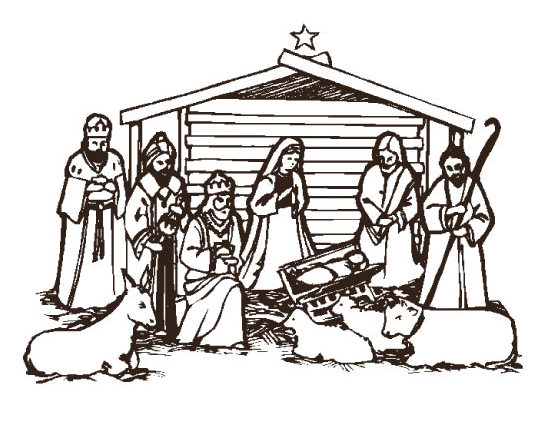
The fact that Joseph and Mary brought a pair of birds instead of a lamb shows that they were very poor. The gifts of the wise men were after this.” (People’s New Testament Commentary) At the nativity scene, many place the wise men, yet, Christ was a young child, not an infant when they, the wise men, arrived. It would have taken time for them to get there.

And when they were come into the house, they saw the young child with Mary his mother, and fell down, and worshipped him: and when they had opened their treasures, they presented unto him gifts; gold, and frankincense, and myrrh. (Matthew 2:11 KJV)

More could be said about the birth of Christ here, but for today, our Birds of the Bible are these two birds from the Columbidae Family. If I were Emma Foster or my author friend Sandra Conner, you would hear a tale from the birds point of view. But the best that comes to mind would be them having a conversation about the privilege of being the ones used as a sacrifice for the Son of God, in the flesh, who was their Creator. Of all the doves and turtle dove used as sacrifices over the many years, these two, if a bird could, felt very blessed.

For unto you is born this day in the city of David a Saviour, which is Christ the Lord. And this shall be a sign unto you; Ye shall find the babe wrapped in swaddling clothes, lying in a manger. And suddenly there was with the angel a multitude of the heavenly host praising God, and saying, Glory to God in the highest, and on earth peace, good will toward men. And it came to pass, as the angels were gone away from them into heaven, the shepherds said one to another, Let us now go even unto Bethlehem, and see this thing which is come to pass, which the Lord hath made known unto us. And they came with haste, and found Mary, and Joseph, and the babe lying in a manger. (Luke 2:11-16 KJV)

*

Pigeons and Doves of Israel today:

Birds of the Bible

Columbidae Family

Emma Foster

Sandra Conner

Gospel Presentation

*