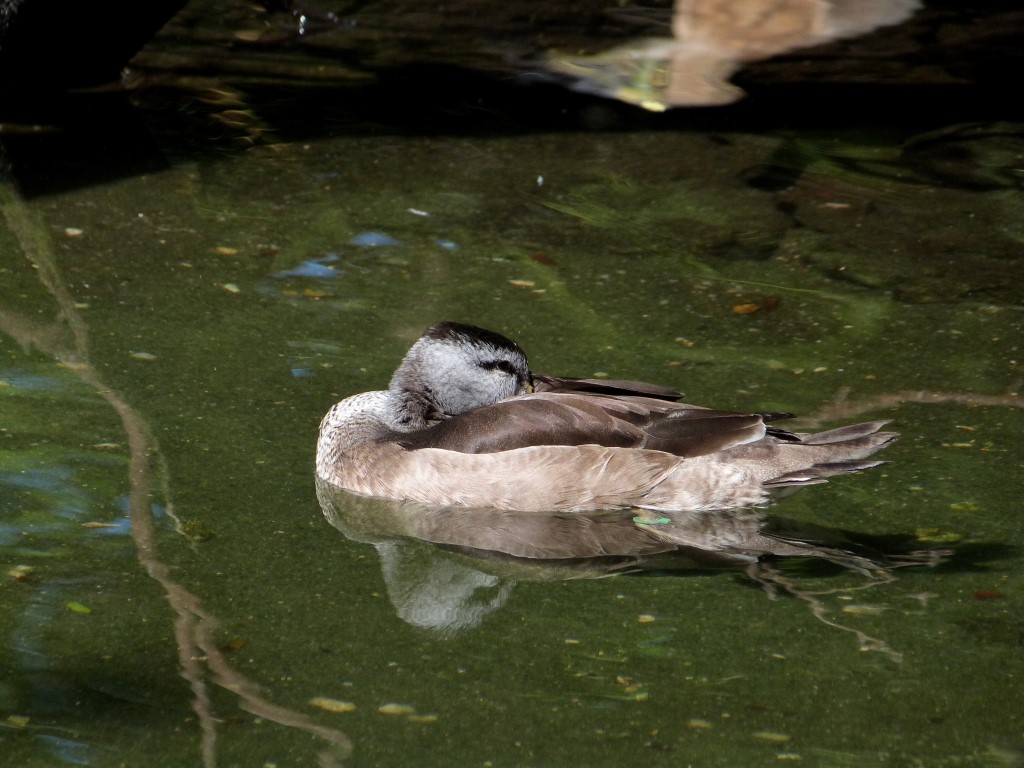
Cotton Pygmy Goose (Nettapus coromandelianus) at Wings of Asia by Lee
And he spake of trees, from the cedar tree that is in Lebanon even unto the hyssop that springeth out of the wall: he spake also of beasts, and of fowl, and of creeping things, and of fishes. (1 Kings 4:33 KJV)
Let me introduce you to another interesting avian friend from His Creator’s Hand. This is the Cotton Pygmy Goose or Cotton Teal (Nettapus coromandelianus) which is a small perching duck that breeds in Pakistan, India, Bangladesh, southeast Asia and south to northern Australia.
Small individuals of this species are the smallest waterfowl on earth, at as little as 5.6 oz (160 g) and 10 in (26 cm). White predominates in this bird’s plumage. Bill short, deep at base, and goose-like.
Cotton Pygmy Goose (Nettapus coromandelianus) PB Zoo by Lee
Male in breeding plumage is glossy blackish green crown, with white head, neck, and underparts; a prominent black collar and white wing-bar. Rounded head and short legs. In flight, the wings are green with a white band, making the male conspicuous even amongst the huge flying flocks of the lesser whistling duck, which share the habitat. Female paler, without either black collar and only a narrow or nonexistent strip of white wing-bar. In non-breeding plumage (eclipse) male resembles female except for his white wing-bar. Flocks on water bodies (jheels), etc.
The call is a peculiar clucking, uttered in flight
It is largely resident, apart from dispersion in the wet season, but Chinese birds make long-distance migrations to winter further south. It nests in tree holes, laying 8–15 eggs. The nesting season is July to September (SW. monsoon). Its nest is a natural hollow in a tree-trunk standing in or near water, sometimes lined with grass, rubbish and feathers. The eggs, are ivory white.
Cotton Pygmy Goose (Nettapus coromandelianus) at Wings of Asia by Lee
This is an abundant species in Asia, although the slightly larger Australian race appears to be declining in numbers.
Found on all still freshwater lakes (jheels), rain-filled ditches, inundated paddy fields, irrigation tanks, etc. Becomes very tame on village tanks wherever it is unmolested and has become inured to human proximity. Swift on the wing, and can dive creditably on occasion.[citation needed] Found in ponds and lakes in southern Pakistan . However numbers are declining and it is definitely endangered.
Its food is chiefly seeds and vegetable matter, especially water lilies; also insects, crustaceans, etc. (From Wikipedia with editing)
I enjoyed watching this female Pygmy Goose floating and took a short video of her.
I just made a page for Zoo Miami and the Wings of Asia under the Birdwatching Trips. There are most of the articles that have been written about our visits to the Zoo, but especially to the Wings of Asia Aviary. That is where we spend most of our time. This last trip was our fourth visit down to Miami to see those amazing birds.
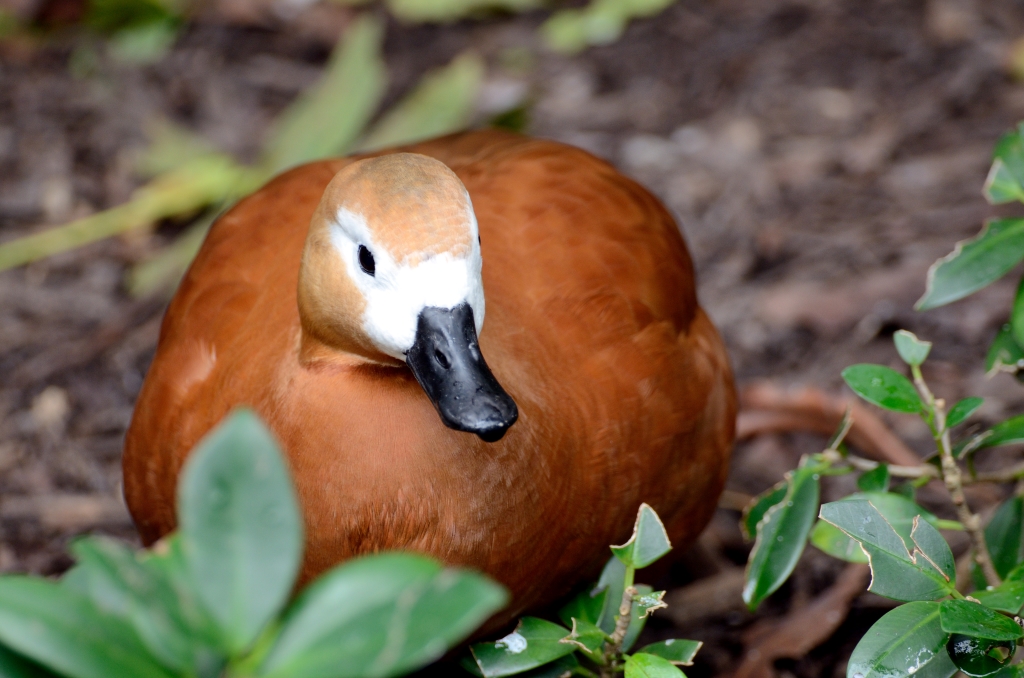
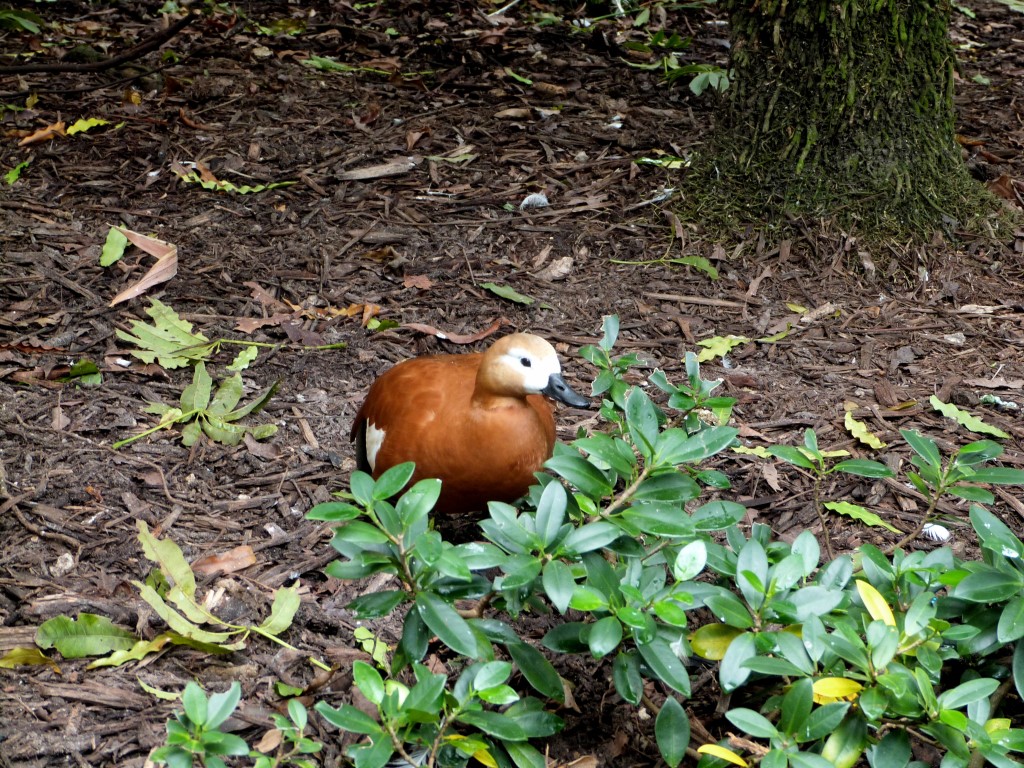
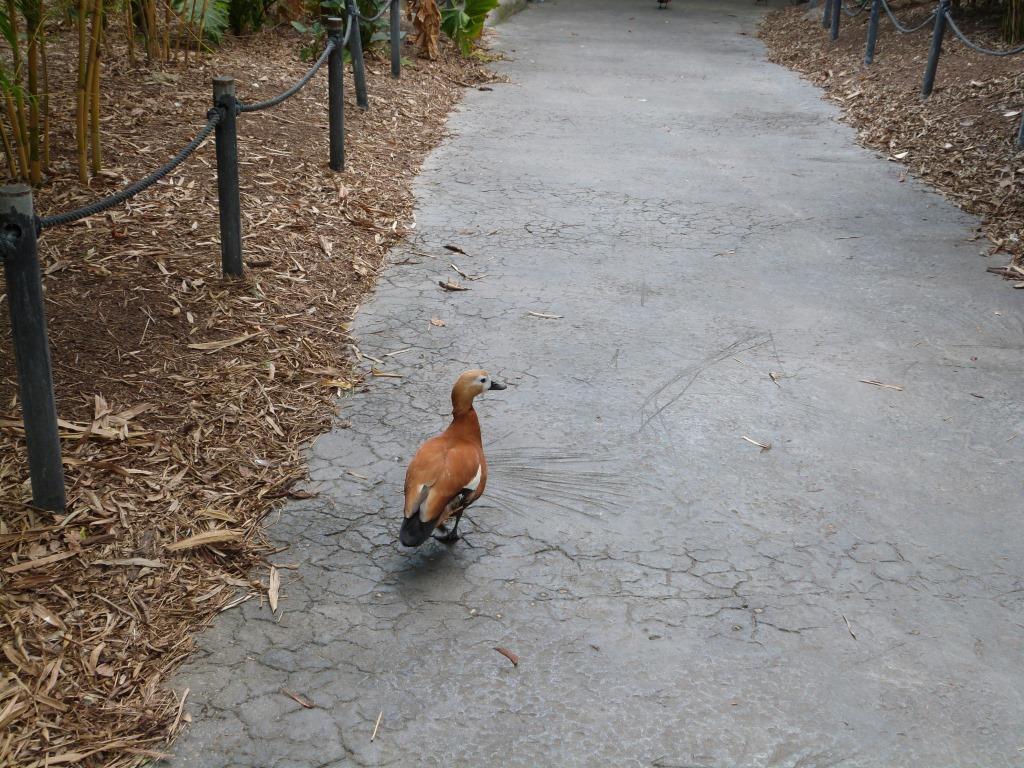
Ruddy Shelduck (Tadorna ferruginea) at Wings of Asia by Dan
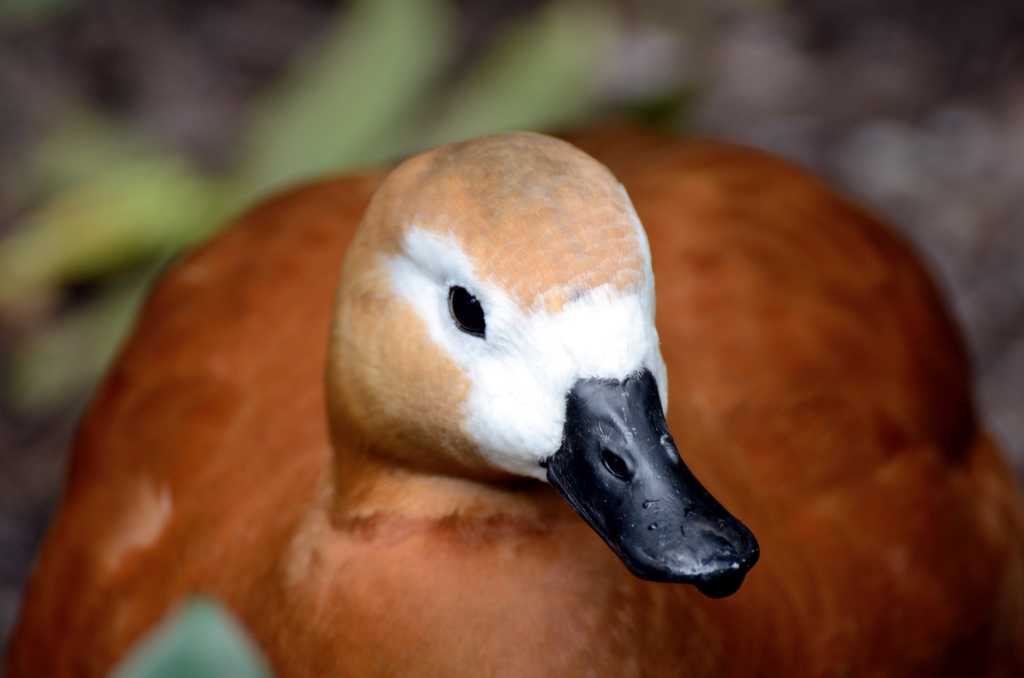
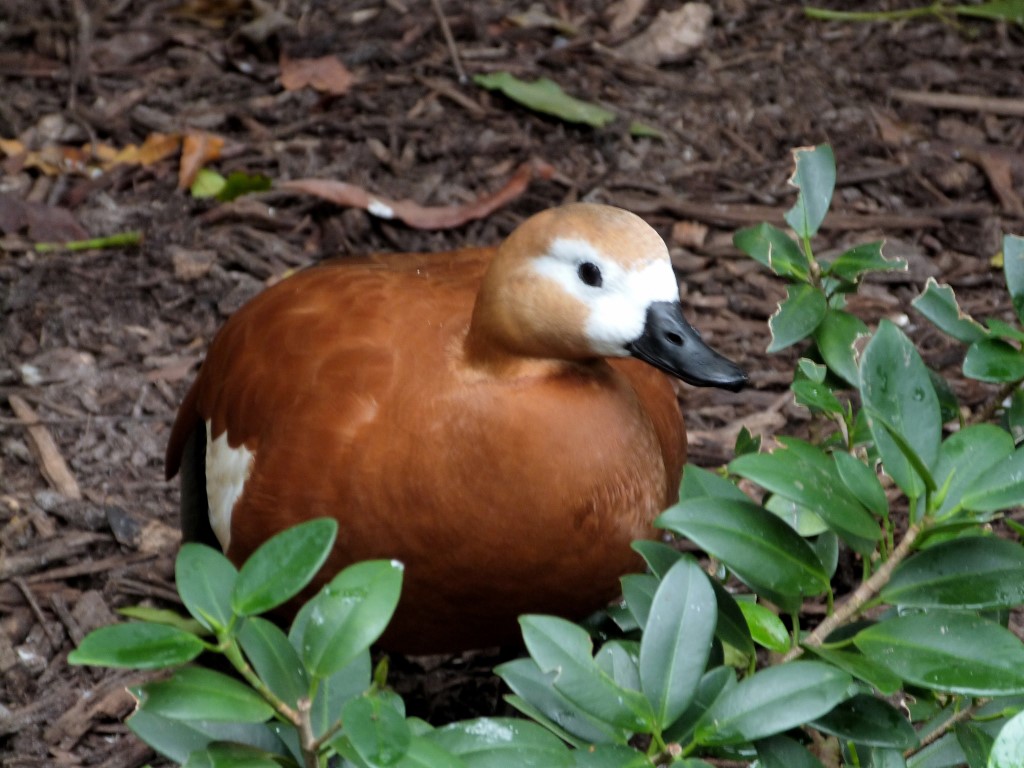
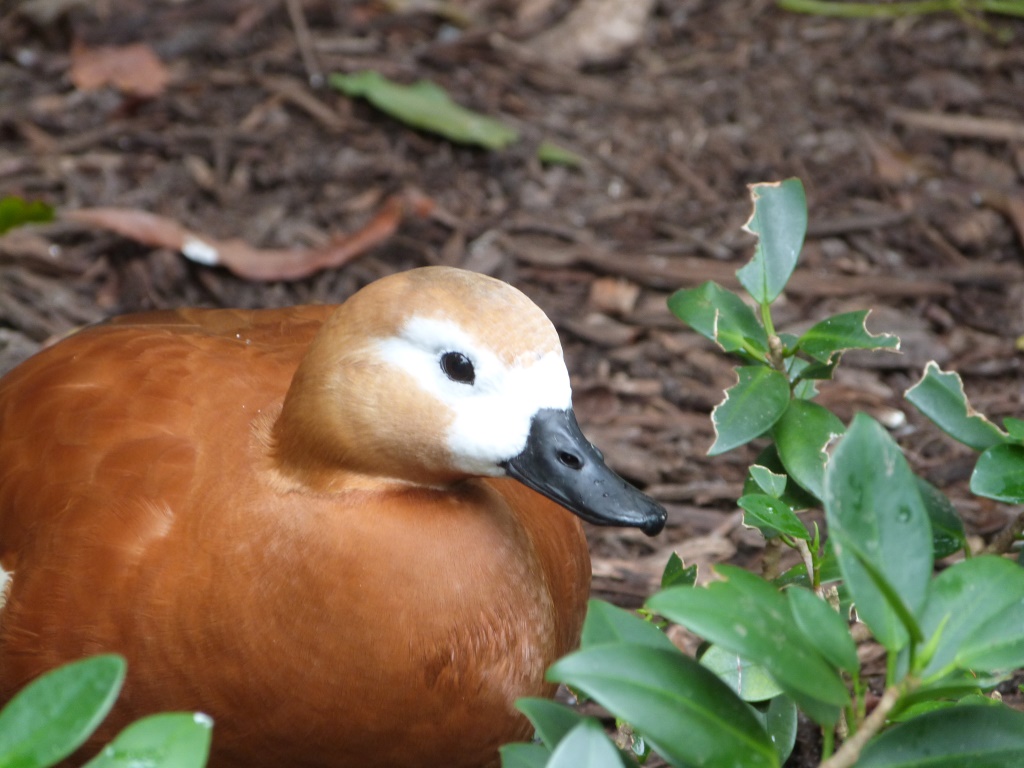
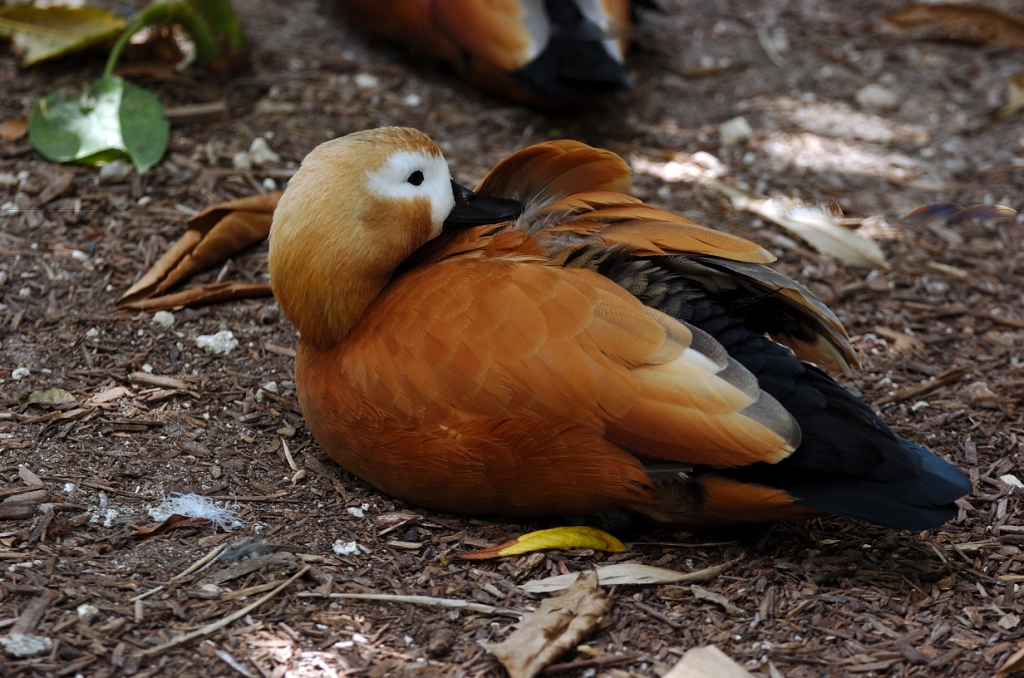
We enjoyed our latest birdwatching adventure to Zoo Miami. Caught video of the Ruddy Shelducks discussing something. So this time we will share the two species of Shelducks at the Wings of Asia aviary. The Ruddy Shelduck (Tadorna ferruginea) and the Raja Shelduck (Tadorna radjah) are members of the duck, goose and swan family Anatidae – Ducks, Geese and Swans. They are in the shelduck subfamily Tadorninae. There are seven species in the Tadorninae subfamily. Wings of Asia has the Ruddy and Raja Shelducks.
Bless the LORD, O my soul. O LORD my God, thou art very great; thou art clothed with honour and majesty. (Psalms 104:1 KJV)
The Lord has provided for the Shelducks, as He does for all His critters. They are designed for the conditions they live in, in this case swimming, feeding and migrating, with beaks, feet, wings, and coloration to help them survive.
Ruddy Shelduck (Tadorna ferruginea) at ZM
Ruddy – There are very small resident populations of this species in north west Africa and Ethiopia, but the main breeding area of this species is from southeast Europe across central Asia to Southeast Asia. These birds are mostly migratory, wintering in the Indian Subcontinent.
Facts:
They are sometimes called Brahminy Ducks.
Can be seen in many Zoos in America.
In Tibet and Mongolia, Ruddy Shelduck is considered sacred by the Buddhists. It is also a sacred animal in Slavic mythology.
Although becoming quite rare in southeast Europe and southern Spain, the ruddy shelduck is still common across much of its Asian range. It may be this population which gives rise to vagrants as far west as Iceland, Great Britain and Ireland. However, since the European population is declining, it is likely that most occurrences in western Europe in recent decades are escapes or feral birds. Although this bird is observed in the wild from time to time in eastern North America, no evidence of a genuine vagrant has been found.
This is a bird of open country, and it will breed on cliffs, in burrows, tree holes or crevices distant from water, laying 6-16 creamy-white eggs, incubated for 30 days. The both shelduck is usually found in pairs or small groups and rarely forms large flocks. However, moulting and wintering gatherings on chosen lakes or slow rivers can be very large.
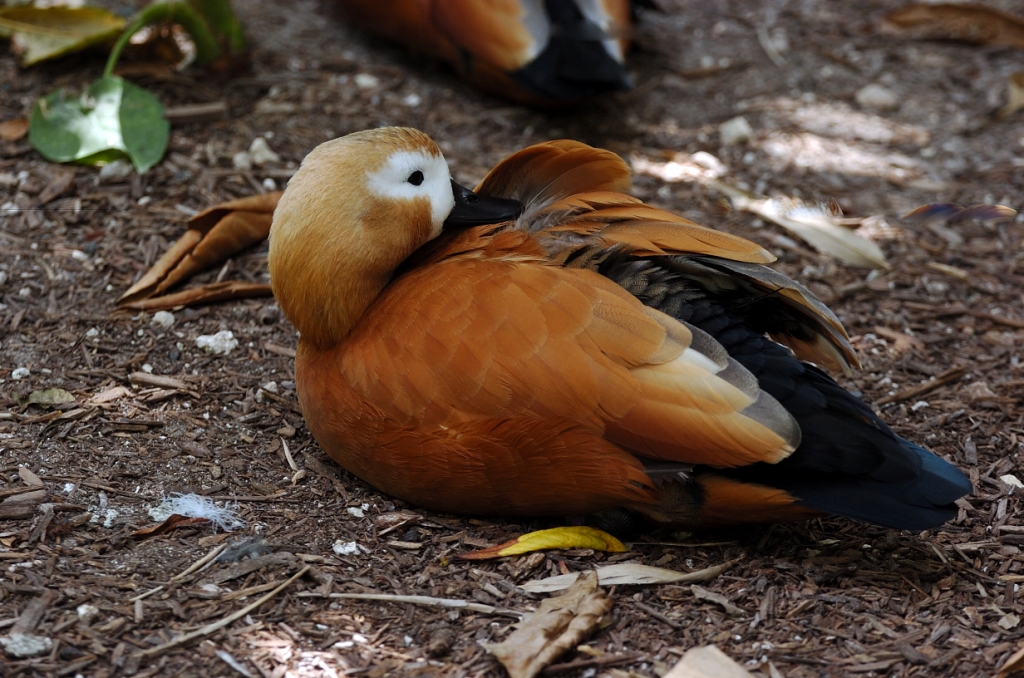
The ruddy shelduck is a distinctive species, 22.8-27.5 in (58-70) cm long with a 43-53 in (110–135 cm) wingspan. It has orange-brown body plumage and a paler head. The wings are white with black flight feathers. It swims well, and in flight looks heavy, more like a goose than a duck. The sexes of this striking species are similar, but the male has a black ring at the bottom of the neck in the breeding season summer, and the female often has a white face patch. The call is a loud wild honking.
Not sure what these Ruddy’s were debating about, but it seems the single one lost the discussion and left.
The ruddy shelduck is a common winter visitor in India. This bird is found in large wetlands, rivers with mud flats and shingle banks. Found in large congregation on lakes and reservoirs. It breeds in high altitude lakes and swamps in Jammu & Kashmir. Arrives in north India by October and departs by April. The genus name Tadorna comes from Celtic roots and means “pied waterfowl”, essentially the same as the English “shelduck”.
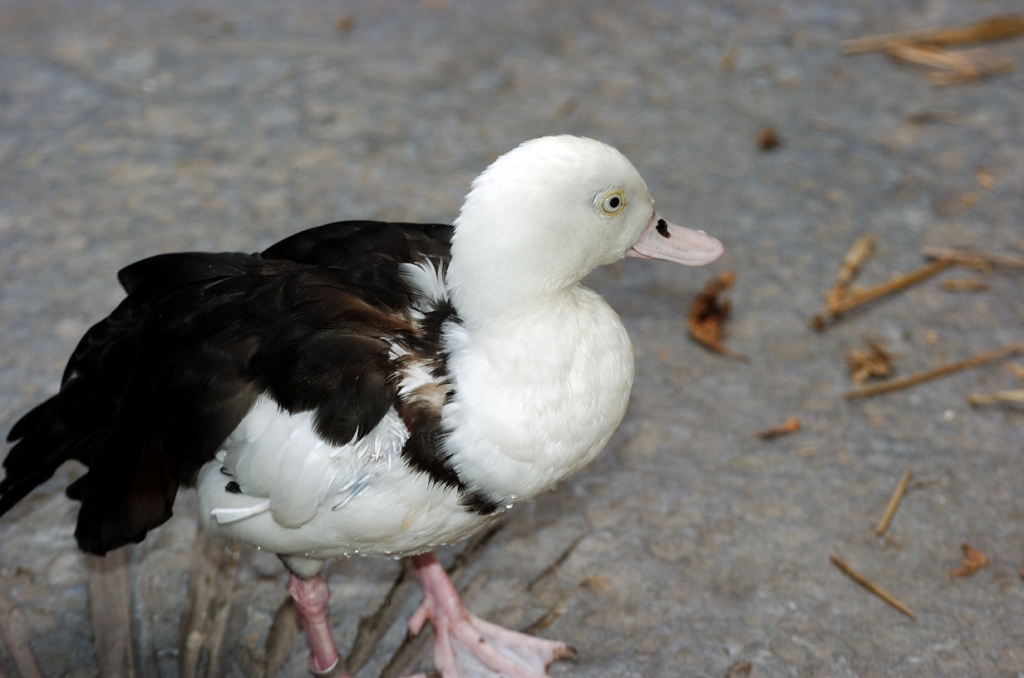
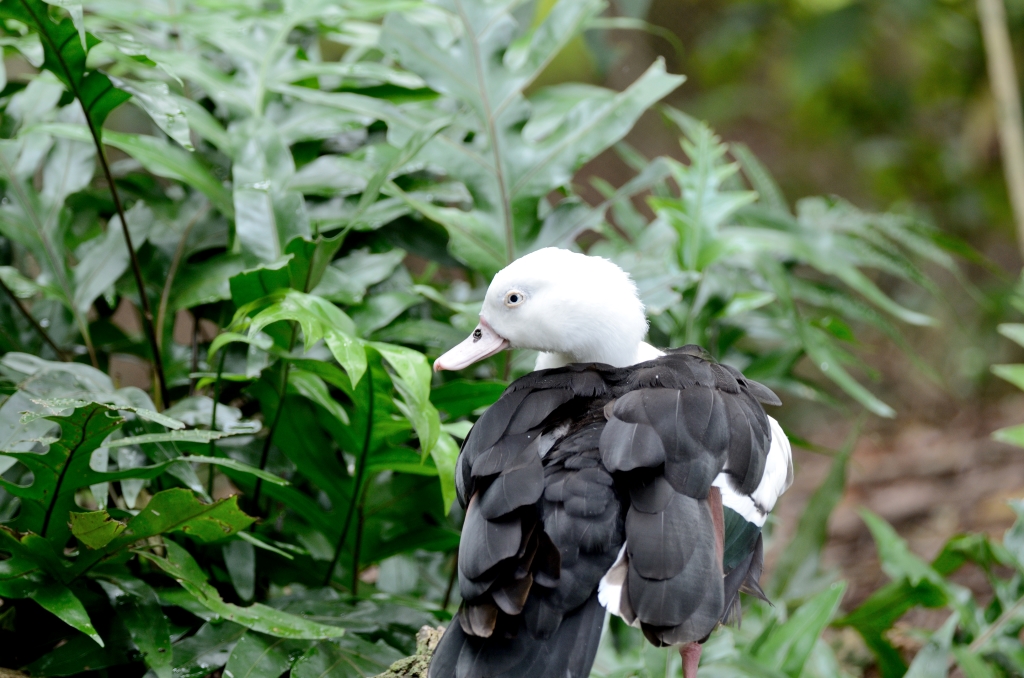
Raja Shelduck (Tadorna radjah) at Wing of Asia by Dan
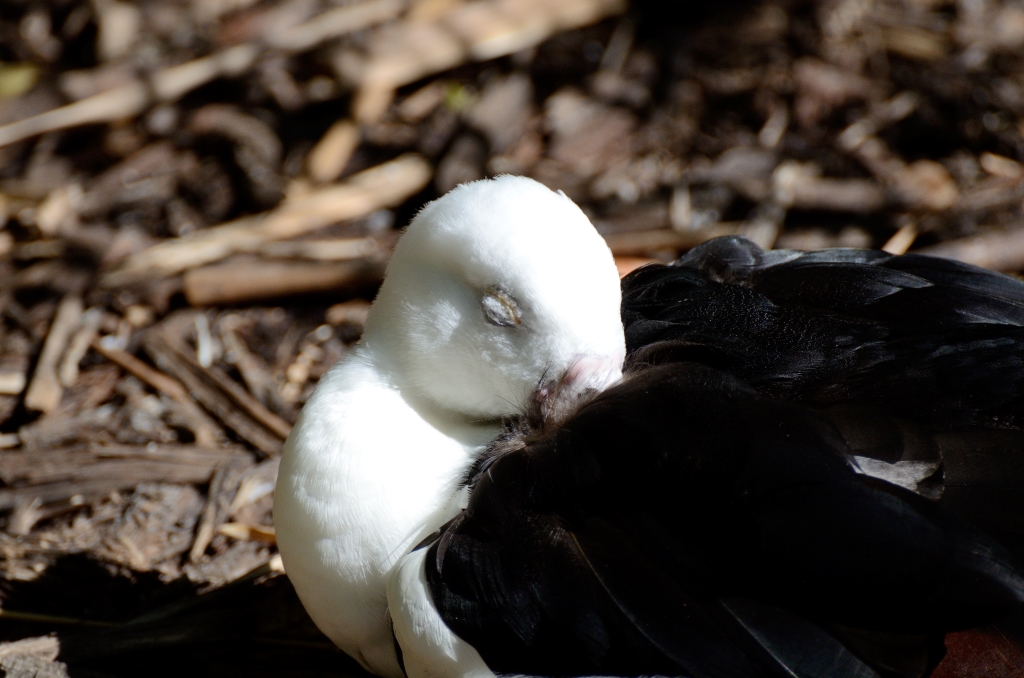
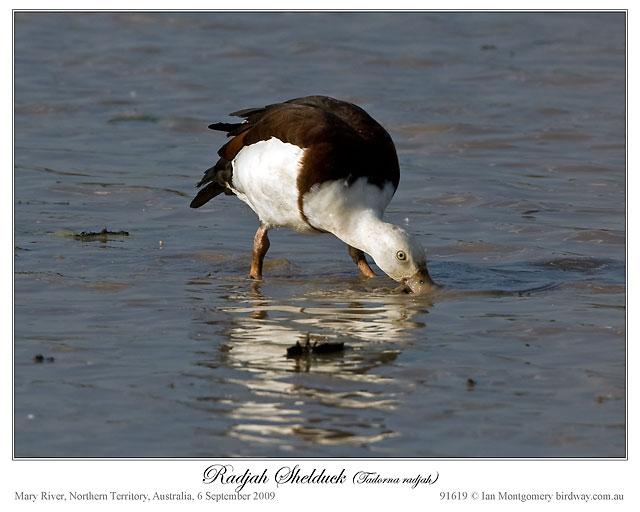
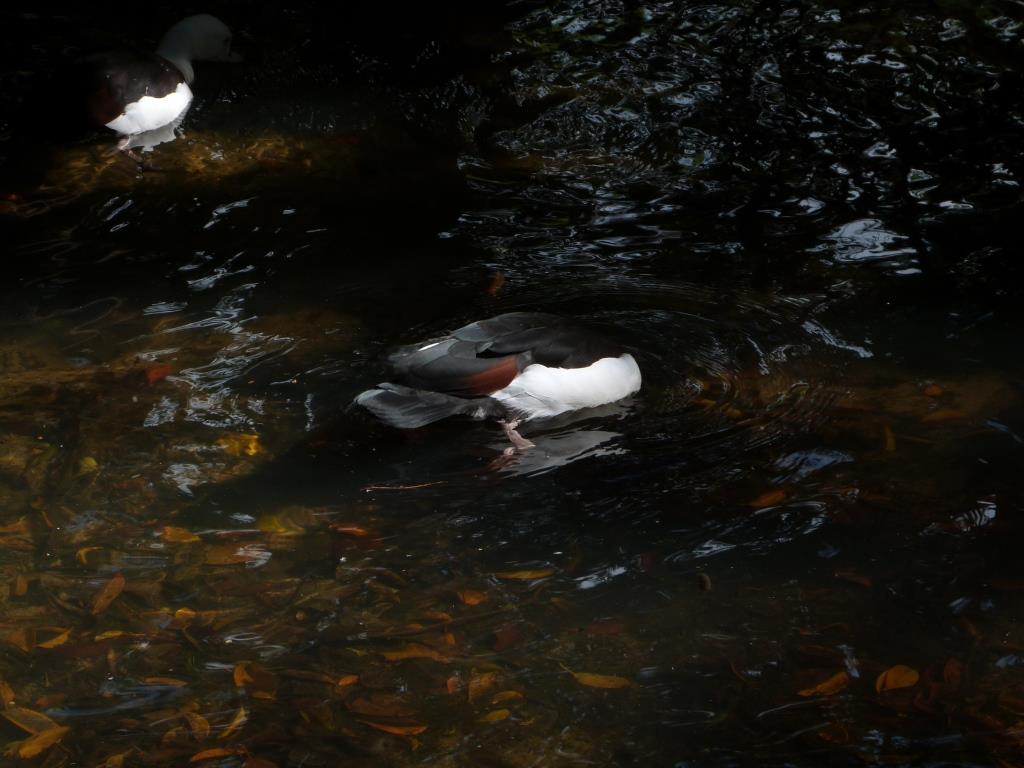
Raja Shelduck – The Radjah Shelduck (Tadorna radjah), is a species of shelduck found mostly in New Guinea and Australia, and also on some of the Moluccas. It is known alternatively as the raja shelduck (IOC Name), black-backed shelduck, or in Australia as the Burdekin duck.
The Raja Shelduck forms long-term pair-bonds, and is usually encountered in lone pairs or small flocks. During the wet season the males commonly become very irritable, and have been observed attacking their mates.
The diet consists mainly of mollusks, insects, sedge materials and algae. Pairs start searching for nesting sites during the months of January and February. They nest close to their primary food source, often in the hollow limbs of trees, which makes habitat destruction a particular issue.
Raja Shelduck (Tadorna radjah) by Dan at Zoo Miami
The radjah shelduck does not use nesting materials except for some self-supplied down feathers. Egg-laying is usually done by May or June, but depends on the extent of the wet season. The clutches range from 6 to 12 eggs. Incubation time is about 30 days. (Wikipedia edited)
Here are photos of both Shelducks. Some of the photos are from other trips and some from Ian. (PBZ is Palm Beach Zoo)
Ruddy Shelduck (Tadorna ferruginea) at Wings of Asia by Dan
Ruddy Shelduck (Tadorna ferruginea) at Wings of Asia by Dan
Ruddy Shelduck (Tadorna ferruginea) at Wings of Asia by Lee
Ruddy Shelduck (Tadorna ferruginea) at Wings of Asia by Lee
Ruddy Shelduck (Tadorna ferruginea) at Wings of Asia by Dan
Ruddy Shelduck (Tadorna ferruginea) by Dan at Zoo Miami
Ruddy Shelduck (Tadorna ferruginea) Zoo Miami by Lee
Ruddy Shelduck (Tadorna ferruginea) at Wings of Asia by Lee
Ruddy Shelduck (Tadorna ferruginea) by Lee ZM
Raja Shelduck (Tadorna radjah) by Dan at Zoo Miami
Raja Shelduck (Tadorna radjah) at Wing of Asia by Dan
Raja Shelduck (Tadorna radjah) at Wing of Asia by Dan
Raja Shelduck (Tadorna radjah) at Wing of Asia by Dan
Every day brought newcomers to the Old Orchard, and early in the morning there were so many voices to be heard that perhaps it is no wonder if for some time Peter Rabbit failed to miss that of one of his very good friends. Most unexpectedly he was reminded of this as very early one morning he scampered, lipperty-lipperty-lip, across a little bridge over the Laughing Brook.
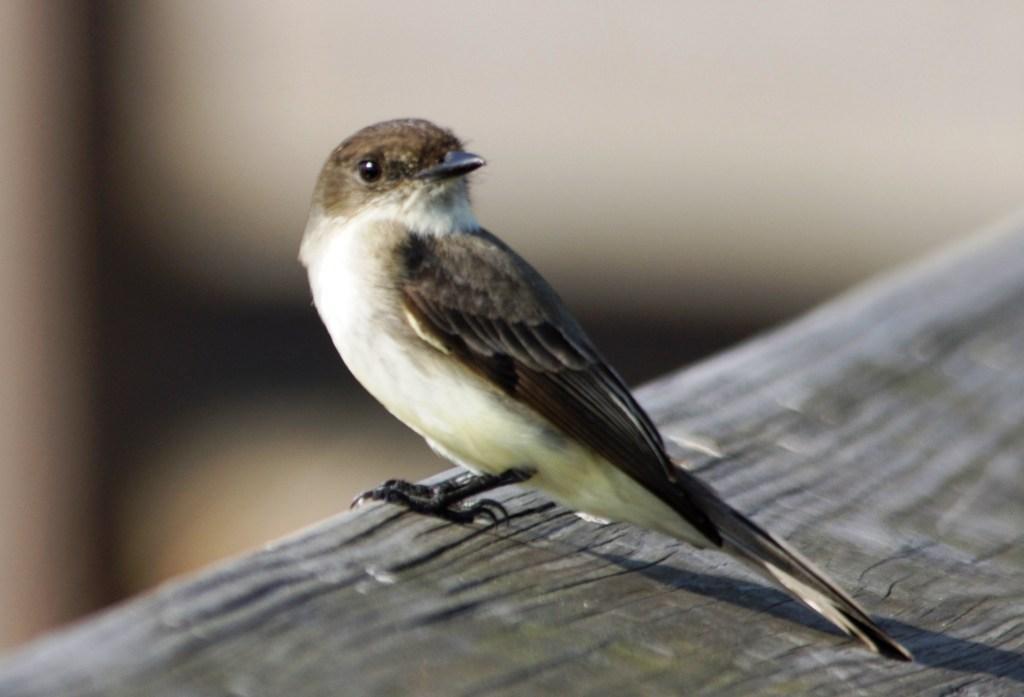
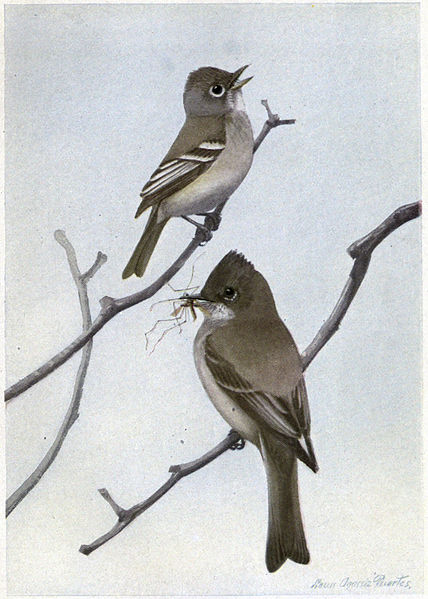
“Dear me! Dear me! Dear me!” cried rather a plaintive voice. Peter stopped so suddenly that he all but fell heels over head. Sitting on the top of a tall, dead, mullein stalk was a very soberly dressed but rather trim little fellow, a very little larger than Bully the English Sparrow. Above, his coat was of a dull olive-brown, while underneath he was of a grayish-white, with faint tinges of yellow in places. His head was dark, and his bill black. The feathers on his head were lifted just enough to make the tiniest kind of crest. His wings and tail were dusky, little bars of white showing very faintly on his wings, while the outer edges of his tail were distinctly white. He sat with his tail hanging straight down, as if he hadn’t strength enough to hold it up.
“Hello, Dear Me!” cried Peter joyously. “What are you doing way down here? I haven’t seen you since you first arrived, just after Winsome Bluebird got here.” Peter started to say that he had wondered what had become of Dear Me, but checked himself, for Peter is very honest and he realized now that in the excitement of greeting so many friends he hadn’t missed Dear Me at all.
Dear Me the Phoebe did not reply at once, but darted out into the air, and Peter heard a sharp click of that little black bill. Making a short circle, Dear Me alighted on the mullein stalk again.
“Did you catch a fly then?” asked Peter.
“Dear me! Dear me! Of course I did,” was the prompt reply. And with each word there was a jerk of that long hanging tail. Peter almost wondered if in some way Dear Me’s tongue and tail were connected. “I suppose,” said he, “that it is the habit of catching flies and bugs in the air that has given your family the name of Flycatchers.”
Dear Me nodded and almost at once started into the air again. Once more Peter heard the click of that little black bill, then Dear Me was back on his perch. Peter asked again what he was doing down there.
“Mrs. Phoebe and I are living down here,” replied Dear Me. “We’ve made our home down here and we like it very much.”
Peter looked all around, this way, that way, every way, with the funniest expression on his face. He didn’t see anything of Mrs. Phoebe and he didn’t see any place in which he could imagine Mr. and Mrs. Phoebe building a nest. “What are you looking for?” asked Dear Me.
“For Mrs. Phoebe and your home,” declared Peter quite frankly. “I didn’t suppose you and Mrs. Phoebe ever built a nest on the ground, and I don’t see any other place around here for one.”
Dear Me chuckled. “I wouldn’t tell any one but you, Peter,” said he, “but I’ve known you so long that I’m going to let you into a little secret. Mrs. Phoebe and our home are under the very bridge you are sitting on.”
“I don’t believe it!” cried Peter.
But Dear Me knew from the way Peter said it that he really didn’t mean that. “Look and see for yourself,” said Dear Me.
So Peter lay flat on his stomach and tried to stretch his head over the edge of the bridge so as to see under it. But his neck wasn’t long enough, or else he was afraid to lean over as far as he might have. Finally he gave up and at Mr. Phoebe’s suggestion crept down the bank to the very edge of the Laughing Brook. Dear Me darted out to catch another fly, then flew right in under the bridge and alighted on a little ledge of stone just beneath the floor. There, sure enough, was a nest, and Peter could see Mrs. Phoebe’s bill and the top of her head above the edge of it. It was a nest with a foundation of mud covered with moss and lined with feathers.
“That’s perfectly splendid!” cried Peter, as Dear Me resumed his perch on the old mullein stalk. “How did you ever come to think of such a place? And why did you leave the shed up at Farmer Brown’s where you have build your home for the last two or three years?”
“Oh,” replied Dear Me, “we Phoebes always have been fond of building under bridges. You see a place like this is quite safe. Then, too, we like to be near water. Always there are many insects flying around where there is water, so it is an easy matter to get plenty to eat. I left the shed at Farmer Brown’s because that pesky cat up there discovered our nest last year, and we had a dreadful time keeping our babies out of her clutches. She hasn’t found us down here, and she wouldn’t be able to trouble us if she should find us.”
“I suppose,” said Peter, “that as usual you were the first of your family to arrive.”
“Certainly. Of course,” replied Dear Me. “We always are the first. Mrs. Phoebe and I don’t go as far south in winter as the other members of the family do. They go clear down into the Tropics, but we manage to pick up a pretty good living without going as far as that. So we get back here before the rest of them, and usually have begun housekeeping by the time they arrive. My cousin, Chebec the Least Flycatcher, should be here by this time. Haven’t you heard anything of him up in the Old Orchard?”
“No,” replied Peter, “but to tell the truth I haven’t looked for him. I’m on my way to the Old Orchard now, and I certainly shall keep my ears and eyes open for Chebec. I’ll tell you if I find him. Good-by.”
“Dear me! Dear me! Good-by Peter. Dear me!” replied Mr. Phoebe as Peter started off for the Old Orchard.
Perhaps it was because Peter was thinking of him that almost the first voice he heard when he reached the Old Orchard was that of Chebec, repeating his own name over and over as if he loved the sound of it. It didn’t take Peter long to find him. He was sitting out on the up of one of the upper branches of an apple-tree where he could watch for flies and other winged insects. He looked so much like Mr. Phoebe, save that he was smaller, that any one would have know they were cousins. “Chebec! Chebec! Chebec!” he repeated over and over, and with every note jerked his tail. Now and then he would dart out into the air and snap up something so small that Peter, looking up from the ground, couldn’t see it at all.
Least Flycatcher (Empidonax minimus) by Raymond Barlow
“Hello, Chebec!” cried Peter. “I’m glad to see you back again. Are you going to build in the Old Orchard this year?”
“Of course I am,” replied Chebec promptly. “Mrs. Chebec and I have built here for the last two or three years, and we wouldn’t think of going anywhere else. Mrs. Chebec is looking for a place now. I suppose I ought to be helping her, but I learned a long time ago, Peter Rabbit, that in matters of this kind it is just as well not to have any opinion at all. When Mrs. Chebec has picked out just the place she wants, I’ll help her build the nest. It certainly is good to be back here in the Old Orchard and planning a home once more. We’ve made a terribly long journey, and I for one am glad it’s over.”
“I just saw your cousins, Mr. and Mrs. Phoebe, and they already have a nest and eggs,” said Peter.
“The Phoebes are a funny lot,” replied Chebec. “They are the only members of the family that can stand cold weather. What pleasure they get out of it I don’t understand. They are queer anyway, for they never build their nests in trees as the rest of us do.”
“Are you the smallest in the family?” asked Peter, for it had suddenly struck him that Chebec was a very little fellow indeed.
Chebec nodded. “I’m the smallest,” said he. “That’s why they call me Least Flycatcher. I may be least in size, but I can tell you one thing, Peter Rabbit, and that is that I can catch just as many bugs and flies as any of them.” Suiting action to the word, he darted out into the air. His little bill snapped and with a quick turn he was back on his former perch, jerking his tail and uttering his sharp little cry of, “Chebec! Chebec! Chebec!” until Peter began to wonder which he was the most fond of, catching flies, or the sound of his own voice.
Presently they both heard Mrs. Chebec calling from somewhere in the middle of the Old Orchard. “Excuse me, Peter,” said Chebec, “I must go at once. Mrs. Chebec says she has found just the place for our nest, and now we’ve got a busy time ahead of us. We are very particular how we build a nest.”
“Do you start it with mud the way Welcome Robin and your cousins, the Phoebes, do?” asked Peter.
“Mud!” cried Chebec scornfully. “Mud! I should say not! I would have you understand, Peter, that we are very particular about what we use in our nest. We use only the finest of rootlets, strips of soft bark, fibers of plants, the brown cotton that grows on ferns, and perhaps a little hair when we can find it. We make a dainty nest, if I do say it, and we fasten it securely in the fork made by two or three upright little branches. Now I must go because Mrs. Chebec is getting impatient. Come see me when I’m not so busy Peter.”
Lee’s Addition:
The family that the Phoebe and the Least Flycatcher belong to is the Tyrant Flycatchers – TyrannidaeFamily. It is a very large family, but most do not live here in North America.
How does the story describe Dear Me the Phoebe?
What does he like to eat?
Where is his nest?
What is the nest made out of?
Why did he get back before the others in his family?
The Least Flycatcher is called Chebec. Do you know why?
Why did he get back later than Dear Me?
How is Chebec’s nest different from Dear Me’s?
Chebec is the largest or smallest member of the Flycatcher family?
*
The birds of the air have their resting-places by them (trees), and make their song among the branches. (Psalms 104:12 BBE)
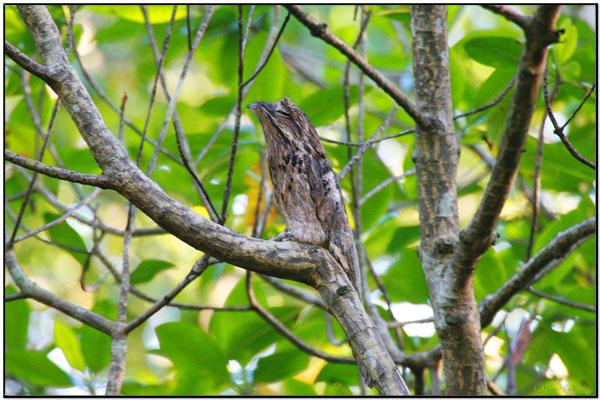
Common Potoo (Nyctibius griseus) by Daves BirdingPix
“For he will hide me in his shelter in the day of trouble; he will conceal me under the cover of his tent; he will lift me high upon a rock. (Psalms 27:5 ESV)
Considering yesterday’s blog, the song, “Hide Thou Me” came to mind. This song was used before, but it is so appropriate. Today’s Inspiration features the birds in the Frogmouth and Potoo families. You will see how the Lord has provided for them to HIDE through their behavior and coloration He has given them.
He who can no longer pause to wonder and stand rapt in awe is as good as dead; his eyes are closed. ~Albert Einstein
*
And God saw every thing that he had made, and, behold, it was very good. And the evening and the morning were the sixth day. (Genesis 1:31 KJV)
We will not hide them from their children, shewing to the generation to come the praises of the LORD, and his strength, and his wonderful works that he hath done. (Psalms 78:4 KJV)
This slideshow requires JavaScript.
*
But the LORD has been my defense, And my God the rock of my refuge. (Psalms 94:22 NKJV)
“Hide not thy face from me in the day when I am in trouble; incline thine ear unto me: in the day when I call answer me speedily. (Psalms 102:2 KJV)
Dan and I just returned from a three-day birdwatching adventure. With almost 1,000 photos and videos to sort, name, and clean-up, I’ll have plenty to post.
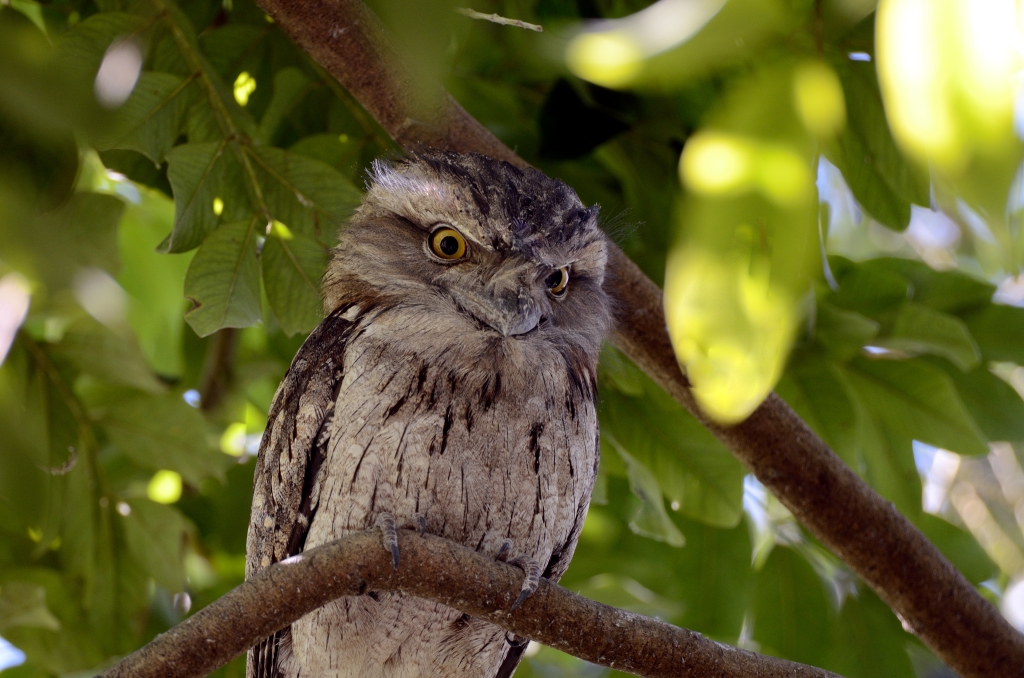
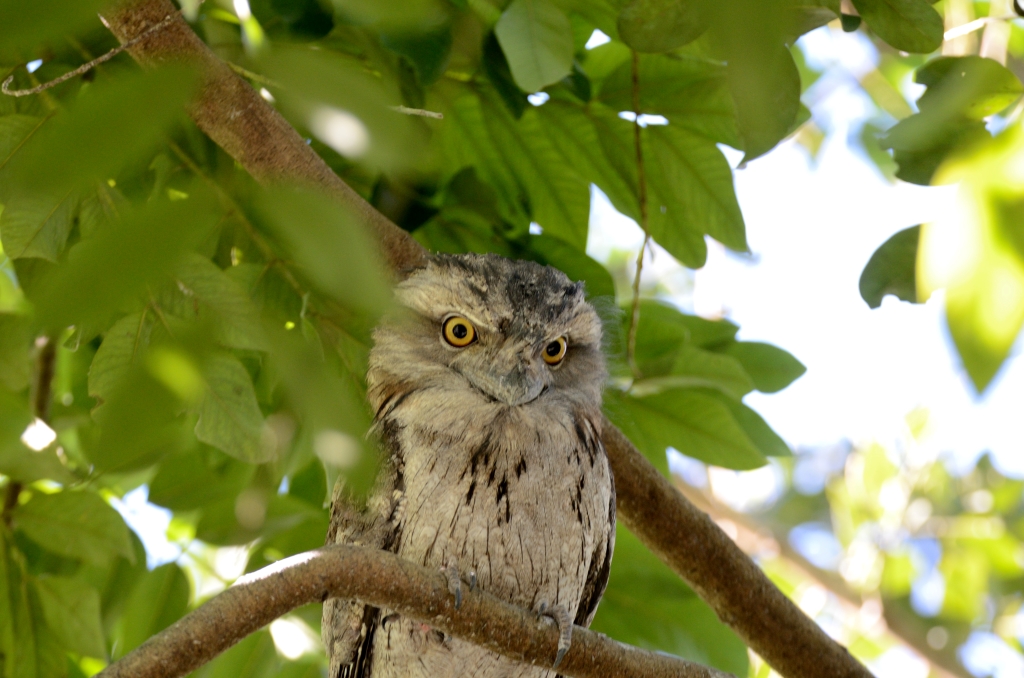
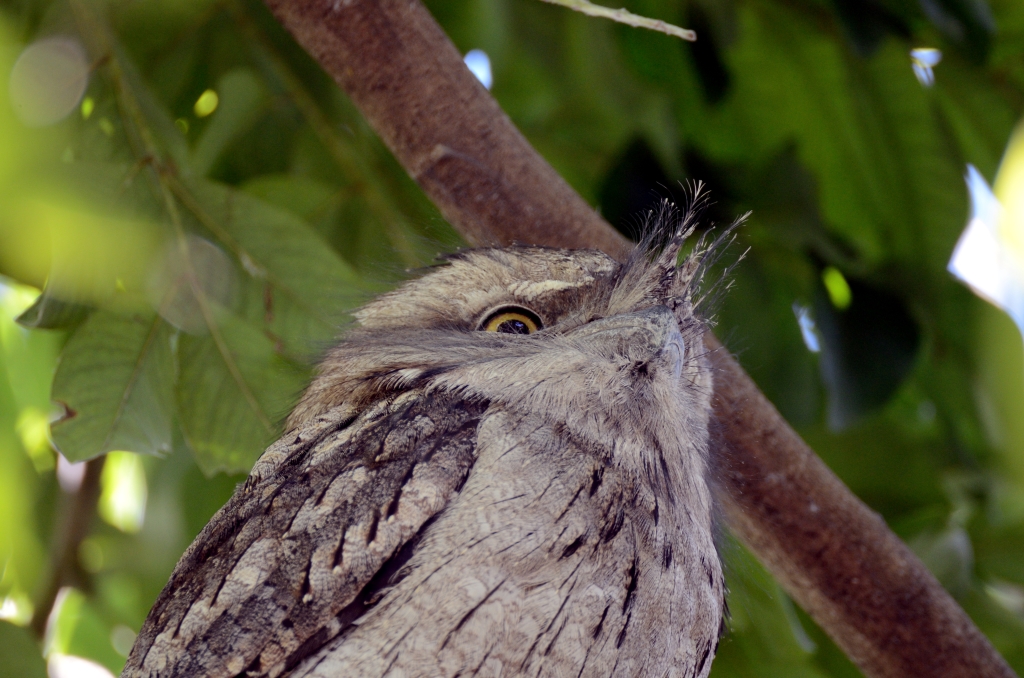
The Tawny Frogmouth (Podargus strigoides) is becoming a favorite of mine, because they are so hard to find. The Lord has given them such camouflage and an ability to freeze when threatened, they are a challenge. We were fortunate this time while visiting the Wings of Asia aviary at Zoo Miami. By following the feeder, that enjoys the birds as much as just working there, he helped us find the new Tawny Frogmouth. They now have two of them. This new one is more active and alert. Could it be that the feeder had a cup with 4 mice in it?
Tawny Frogmouth at Wings of Asia by Dan
We actually saw Tawny with his eyes open and I even got a short video of him opening that mouth that gives them their name.
“Masters of Camouflage Related to Oilbirds, Whip-poor-wills, and Nighthawks, the Tawny Frogmouth’s excellent camouflage covering makes it look like dried leaves. When frightened, the bird freezes in plosition and, with its cryptic colorations, looks like broken bramches.” (Amazing Bird Facts and Trivia, p 135) Isn’t the Lord’s Wisdom fantastic?
Tawny Frogmouth at Wings of Asia by Dan
Another book, (National Geographic, Bird Coloration, p 150-151). says this: “Some birds hide not by being hard to discern, but by appearing not to be birds. The birds that best mimic inanimate objects are found in two groups of distantly related nightjars, the potoos in the Neotropics and the frogmouths in tropical Asia and Australia. Species in both of these groups hunt flying insects at night and rest during the day. Potoos and frogmouths use a strategy to hide during the day that differs … They hide conspicuously in view. The strategy…is to look exactly like an extension of a branch on which the bird sit.”
“Deliver me, O LORD, from mine enemies: I flee unto thee to hide me. (Psalms 143:9 KJV)
Tawny Frogmouth at Wings of Asia by Dan
“They are named for their large flattened hooked bills and huge frog-like gape, which they use to capture insects. Their flight is weak. Their longer bristles which may exist to protect the eyes from insect prey. Tawny frogmouths are large, big-headed birds that can measure from 13 to 21 in (34 to 53 cm) long….stocky and compact with rounded wings and short legs. They have wide, heavy olive-grey to blackish bills that are hooked at the tip and topped with distinctive tufts of bristles.Their eyes are large, yellow, and frontally placed, a trait shared by owls” (Wikipedia)
This slideshow requires JavaScript.
*
This video is of two segments. The keeper tried to get him to come down and then we came back a second time. Several photographers were waiting to get a photo of him coming down, but I guess this calls for another excuse to visit the Wings of Asia.
“Speaking to yourselves in psalms and hymns and spiritual songs, singing and making melody in your heart to the Lord; Giving thanks always for all things unto God and the Father in the name of our Lord Jesus Christ; (Ephesians 5:19-20 KJV)
Another year has gone by and how thankful have we been for the events and things that have happened? Trust you spend some time thanking and praising the Lord for His blessings and watch care for you.
Things are not always pleasant as we go through them, but we can still have a good attitude. This year has had some challenges, but many, many blessings. Learn to look on the positive side of things. Look around! Realize God is in control, He knows our needs, and He gives us so many blessings that way out-number our challenges.
“Giving thanks always for all things unto God and the Father in the name of our Lord Jesus Christ; (Ephesians 5:20 KJV)
While you are looking up to praise the Lord you just might see a bird flying by. When we considered His beauty all around us, especially in the variety of the birds and their fantastic color and care provided for them, how can we not know that He cares for us?
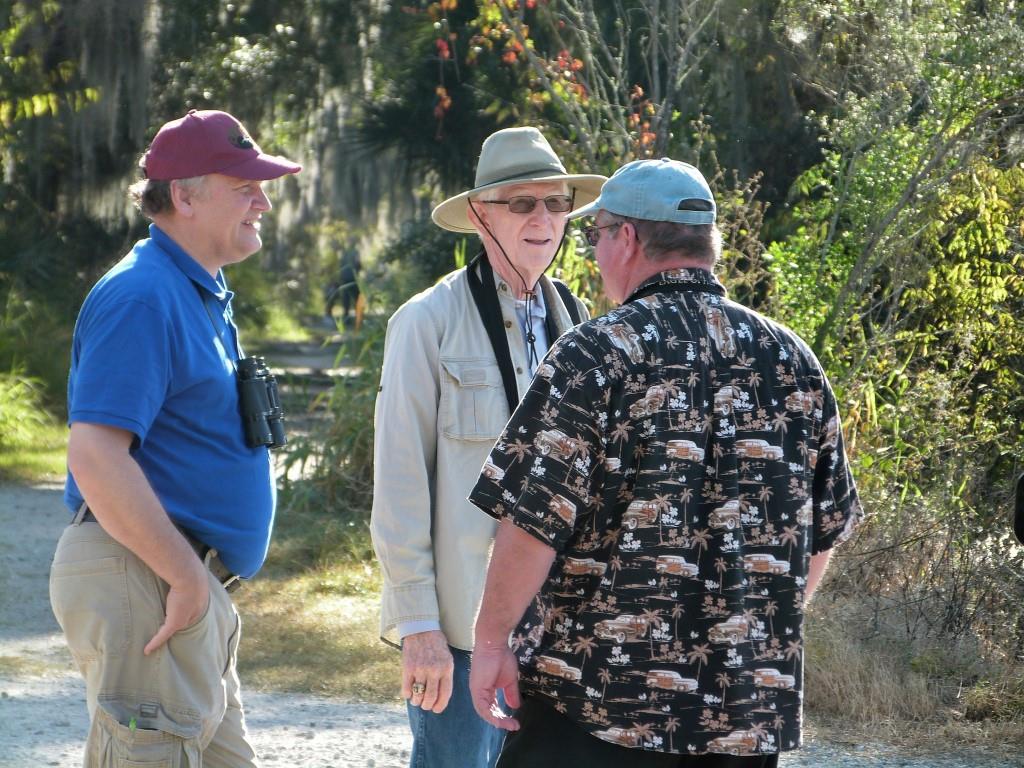
A great blessing was a few weeks ago when Dan and I got to go birding with Dr. Jim (James) and Golden Eagle (Baron). They both have added greatly to the blog, for which I am very thankful. Fantastic Week-end
The Birders at Circle B Bar Reserve c)
During this last year, the Sunday Inspiration was introduced. It’s hard to believe over 40 have them have been produced. Many of you have left comments of being blessed and thankful for them. Thank you for the encouragement to keep doing it.
I am also thankful for another year (51st) with my husband, Dan, who is my second love. Sorry, Dan, but the Lord is first. He knows that because I am in number two place also. I am thankful for Dan who has the Lord also as number One.
My church, Faith Baptist Church, is something we are very thankful. We have a great pastor and pastoral staff, plus great people who attend and serve there.
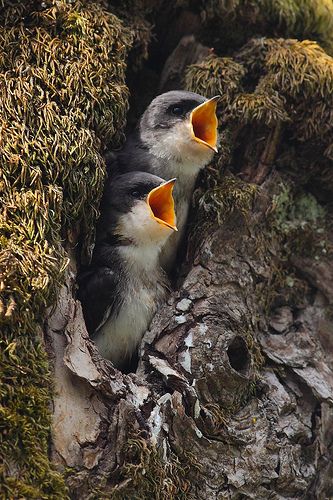
Tree Swallows Ridgefield National Wildlife Refuge by jeremyjonkman on Flickr From Pinterest
“Being enriched in every thing to all bountifulness, which causeth through us thanksgiving to God. (2 Corinthians 9:11 KJV)
While thinking about a post for this Thanksgiving, I looked back to see what had been written in the past. Wow! Had forgotten so many have been posted. From way back in 2008, the first year of the blog until last year when I got wound up and posted several. So, today, the day before Thanksgiving, it’s time to bring those back out to review. Part of Thanksgiving is remembering all our blessings from the past.
Happy Thanksgivingwas written in 2008. (I actually still had some color in my hair.) :))
I can see I am going to be challenged to come up with something for tomorrow. But the following verse assures me, there are still many blessings to recount. Your visits to the blog are a great blessings.
Through the LORD’s mercies we are not consumed, Because His compassions fail not. They are new every morning; Great is Your faithfulness. (Lamentations 3:22-23 NKJV)
Give thanks unto the LORD, call upon his name, make known his deeds among the people. Sing unto him, sing psalms unto him, talk ye of all his wondrous works. (1 Chronicles 16:8-9 KJV)
O give thanks unto the LORD; for he is good; for his mercy endureth for ever. (1 Chronicles 16:34 KJV)
As we enter into the Thanksgiving Holiday week, with visits with family and friends, meals to prepare and eat, parades and games to watch, don’t forget to be thankful for our Creator of all this. He is Worthy of our Thanksgiving and Worship.
I am thankful for all the fantastic friends we have met through this blog (you, the readers). I am also thankful for those that contribute to the blog, like James J. S. Johnson (Dr. Jim) and Golden Eagle (Baron Brown) with which we recently went on a birdwatching adventure. Thankful for our other contributors as well.
Finally cleaned up the photos from that adventure and many are in the slideshow. Definitely thankful for all the birds the Lord gave us. He is “Worthy of Worship”
This slideshow requires JavaScript.
“Worthy of Worship” ~ Faith Baptist Orchestra
WORTHY OF WORSHIP
(York/Blankenship)
Worthy of Worship, worthy of praise,
Worthy of honor and glory,
Worthy of all the glad songs we can sing,
Worthy of all of the offerings we bring.
You are worthy, Father, Creator.
You are worthy, Savior, Sustainer.
You are worthy, worthy and wonderful;
Worthy of worship and praise.
Worthy of reverence, worthy of fear,
Worthy of love and devotion;
Worthy of bowing and bending of knees,
Worthy of all this, and added to these…
You are worthy, Father, Creator.
You are worthy, Savior, Sustainer.
You are worthy, worthy and wonderful;
Worthy of worship and praise.
Almighty Father, Master, and Lord,
King of all kings and Redeemer,
Wonderful Counselor, Comforter, Friend,
Savior and Source of our life without end.
You are worthy, Father, Creator.
You are worthy, Savior, Sustainer.
You are worthy, worthy and wonderful;
Worthy of worship and praise.
CHAPTER 5. Peter Learns Something He Hadn’t Guessed.
Running over to the Old Orchard very early in the morning for a little gossip with Jenny Wren and his other friends there had become a regular thing with Peter Rabbit. He was learning a great many things, and some of them were most surprising.
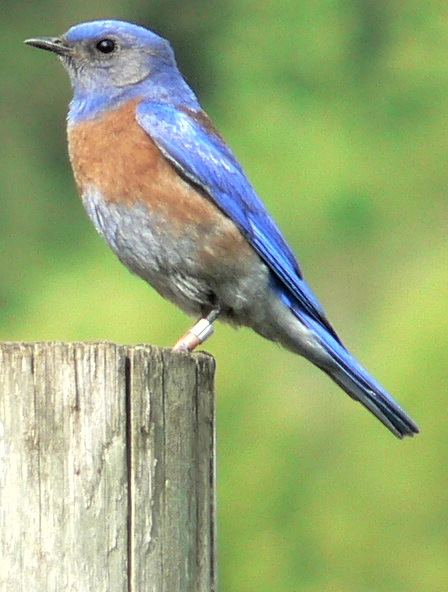
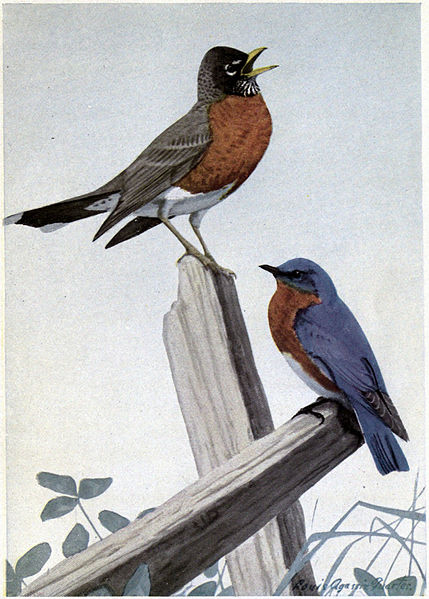
Now two of Peter’s oldest and best friends in the Old Orchard were Winsome Bluebird and Welcome Robin. Every spring they arrived pretty nearly together, though Winsome Bluebird usually was a few days ahead of Welcome Robin. This year Winsome had arrived while the snow still lingered in patches. He was, as he always is, the herald of sweet Mistress Spring. And when Peter had heard for the first time Winsome’s soft, sweet whistle, which seemed to come from nowhere in particular and from everywhere in general, he had kicked up his long hind legs from pure joy. Then, when a few days later he had heard Welcome Robin’s joyous message of “Cheer-up! Cheer-up! Cheer-up! Cheer-up! Cheer!” from the tiptop of a tall tree, he had known that Mistress Spring really had arrived.
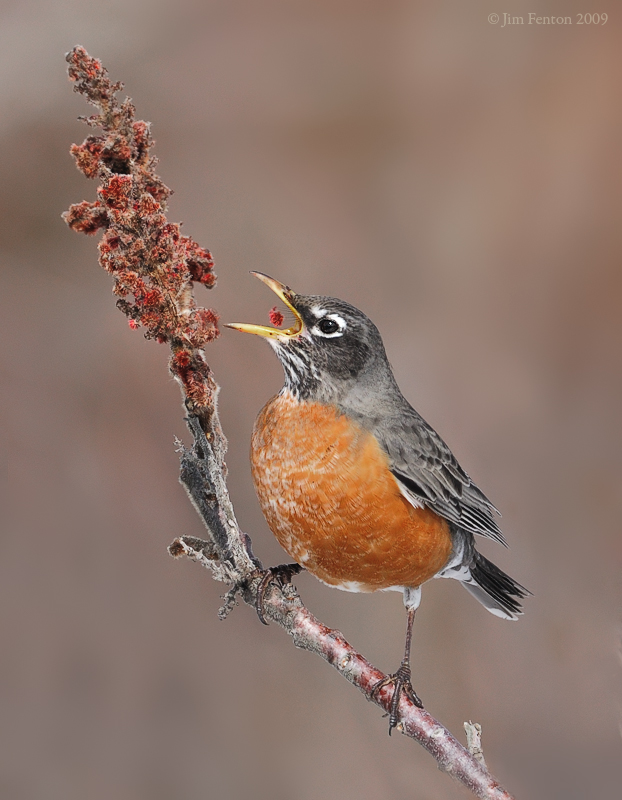
Robin Eating by Jim Fenton
Peter loves Winsome Bluebird and Welcome Robin, just as everybody else does, and he had known them so long and so well that he thought he knew all there was to know about them. He would have been very indignant had anybody told him he didn’t.
“Those cousins don’t look much alike, do they?” remarked Jenny Wren, as she poked her head out of her house to gossip with Peter.
“What cousins?” demanded Peter, staring very hard in the direction in which Jenny Wren was looking.
“Those two sitting on the fence over there. Where are your eyes, Peter?” replied Jenny rather sharply.
Peter stared harder than ever. On one post sat Winsome Bluebird, and on another post sat Welcome Robin. “I don’t see anybody but Winsome and Welcome, and they are not even related,” replied Peter with a little puzzled frown.
“Tut, tut, tut, tut, tut, Peter!” exclaimed Jenny Wren. “Tut, tut, tut, tut, tut! Who told you any such nonsense as that? Of course they are related. They are cousins. I thought everybody knew that. They belong to the same family that Melody the Thrush and all the other Thrushes belong to. That makes them all cousins.”
“What?” exclaimed Peter, looking as if he didn’t believe a word of what Jenny Wren had said. Jenny repeated, and still Peter looked doubtful.
Then Jenny lost her temper, a thing she does very easily. “If you don’t believe me, go ask one of them,” she snapped, and disappeared inside her house, where Peter could hear her scolding away to herself.
The more he thought of it, the more this struck Peter as good advice. So he hopped over to the foot of the fence post on which Winsome Bluebird was sitting. “Jenny Wren says that you and Welcome Robin are cousins. She doesn’t know what she is talking about, does she?” asked Peter.
Winsome chuckled. It was a soft, gentle chuckle. “Yes,” said he, nodding his head, “we are. You can trust that little busybody to know what she is talking about, every time. I sometimes think she knows more about other people’s affairs than about her own. Welcome and I may not look much alike, but we are cousins just the same. Don’t you think Welcome is looking unusually fine this spring?”
“Not a bit finer than you are yourself, Winsome,” replied Peter politely. “I just love that sky-blue coat of yours. What is the reason that Mrs. Bluebird doesn’t wear as bright a coat as you do?”
“Go ask Jenny Wren,” chuckled Winsome Bluebird, and before Peter could say another word he flew over to the roof of Farmer Brown’s house.
Back scampered Peter to tell Jenny Wren that he was sorry he had doubted her and that he never would again. Then he begged Jenny to tell him why it was that Mrs. Bluebird was not as brightly dressed as was Winsome.
“Mrs. Bluebird, like most mothers, is altogether too busy to spend much time taking care of her clothes; and fine clothes need a lot of care,” replied Jenny. “Besides, when Winsome is about he attracts all the attention and that gives her a chance to slip in and out of her nest without being noticed. I don’t believe you know, Peter Rabbit, where Winsome’s nest is.”
Peter had to admit that he didn’t, although he had tried his best to find out by watching Winsome. “I think it’s over in that little house put up by Farmer Brown’s boy,” he ventured. “I saw both Mr. and Mrs. Bluebird go in it when they first came, and I’ve seen Winsome around it a great deal since, so I guess it is there.”
“So you guess it is there!” mimicked Jenny Wren. “Well, your guess is quite wrong, Peter; quite wrong. As a matter of fact, it is in one of those old fence posts. But just which one I am not going to tell you. I will leave that for you to find out. Mrs. Bluebird certainly shows good sense. She knows a good house when she sees it. The hole in that post is one of the best holes anywhere around here. If I had arrived here early enough I would have taken it myself. But Mrs. Bluebird already had her nest built in it and four eggs there, so there was nothing for me to do but come here. Just between you and me, Peter, I think the Bluebirds show more sense in nest building than do their cousins the Robins. There is nothing like a house with stout walls and a doorway just big enough to get in and out of comfortably.”
Peter nodded quite as if he understood all about the advantages of a house with walls. “That reminds me,” said he. “The other day I saw Welcome Robin getting mud and carrying it away. Pretty soon he was joined by Mrs. Robin, and she did the same thing. They kept it up till I got tired of watching them. What were they doing with that mud?”
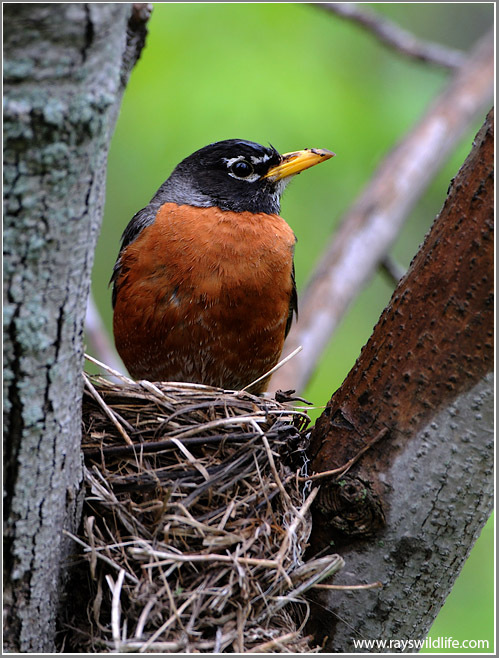
American Robin (Turdus migratorius) in nest by Ray
“Building their nest, of course, stupid,” retorted Jenny. “Welcome Robin, with that black head, beautiful russet breast, black and white throat and yellow bill, not to mention the proud way in which he carries himself, certainly is a handsome fellow, and Mrs. Robin is only a little less handsome. How they can be content to build the kind of home they do is more than I can understand. People think that Mr. Wren and I use a lot of trash in our nest. Perhaps we do, but I can tell you one thing, and that is it is clean trash. It is just sticks and clean straws, and before I lay my eggs I see to it that my nest is lined with feathers. More than this, there isn’t any cleaner housekeeper than I am, if I do say it.
“Welcome Robin is a fine looker and a fine singer, and everybody loves him. But when it comes to housekeeping, he and Mrs. Robin are just plain dirty. They make the foundation of their nest of mud,—plain, common, ordinary mud. They cover this with dead grass, and sometimes there is mighty little of this over the inside walls of mud. I know because I’ve seen the inside of their nest often. Anybody with any eyes at all can find their nest. More than once I’ve known them to have their nest washed away in a heavy rain, or have it blown down in a high wind. Nothing like that ever happens to Winsome Bluebird or to me.”
Jenny disappeared inside her house, and Peter waited for her to come out again. Welcome Robin flew down on the ground, ran a few steps, and then stood still with his head on one side as if listening. Then he reached down and tugged at something, and presently out of the ground came a long, wriggling angleworm. Welcome gulped it down and ran on a few steps, then once more paused to listen. This time he turned and ran three or four steps to the right, where he pulled another worm out of the ground.
“He acts as if he heard those worms in the ground,” said Peter, speaking aloud without thinking.
“He does,” said Jenny Wren, poking her head out of her doorway just as Peter spoke. “How do you suppose he would find them when they are in the ground if he didn’t hear them?”
“Can you hear them?” asked Peter.
“I’ve never tried, and I don’t intend to waste my time trying,” retorted Jenny. “Welcome Robin may enjoy eating them, but for my part I want something smaller and daintier, young grasshoppers, tender young beetles, small caterpillars, bugs and spiders.”
Peter had to turn his head aside to hide the wry face he just had to make at the mention of such things as food. “Is that all Welcome Robin eats?” he asked innocently.
“I should say not,” laughed Jenny. “He eats a lot of other kinds of worms, and he just dearly loves fruit like strawberries and cherries and all sorts of small berries. Well, I can’t stop here talking any longer. I’m going to tell you a secret, Peter, if you’ll promise not to tell.”
Of course Peter promised, and Jenny leaned so far down that Peter wondered how she could keep from falling as she whispered, “I’ve got seven eggs in my nest, so if you don’t see much of me for the next week or more, you’ll know why. I’ve just got to sit on those eggs and keep them warm.”
*
*
What bird family do the Bluebird and Robin belong to?
Why is it good that Mrs. Bluebird isn’t brightly dressed?
When the Robin runs and then stops, what is he doing? What might he find to eat?
What colors are the Robin’s head, breast, throat and bill?
What does the Robin’s song sound like?
Should we have an attitude like the Robin’s Song?
“Is anyone among you suffering? Then he must pray. Is anyone cheerful? He is to sing praises. (James 5:13 NASB)
“A joyful heart makes a cheerful face, But when the heart is sad, the spirit is broken. (Proverbs 15:13 NASB)
“Even the stork in the sky Knows her seasons; And the turtledove and the swift and the thrush Observe the time of their migration; But My people do not know The ordinance of the LORD. (Jeremiah 8:7 NASB)
The photos this week are from the Pin It (Pinterest) website. Thought sharing some of their great variety of bird photos would be enjoyable to watch. The ones selected do not even begin to show the photos they have in the various topics.
As mentioned in the latest article by Emma Foster, the Lord gives varying gifts, just as the Lord created the birds with such variety. May we use our varied talents to serve our Fantastic Lord and Creator.
“For through the grace given to me I say to everyone among you not to think more highly of himself than he ought to think; but to think so as to have sound judgment, as God has allotted to each a measure of faith. For just as we have many members in one body and all the members do not have the same function, so we, who are many, are one body in Christ, and individually members one of another. Since we have gifts that differ according to the grace given to us, each of us is to exercise them accordingly: if prophecy, according to the proportion of his faith; if service, in his serving; or he who teaches, in his teaching; or he who exhorts, in his exhortation; he who gives, with liberality; he who leads, with diligence; he who shows mercy, with cheerfulness.” (Romans 12:3-8 NASB)
This slideshow requires JavaScript.
“For who makes you differ from another? And what do you have that you did not receive? Now if you did indeed receive it, why do you boast as if you had not received it? (1 Corinthians 4:7 NKJV)
While working on the latest I.O.C. Version 4.4 update (which is now complete), this bird caught my attention.
Wikipedia has this in their article about this neat bird: “The swallow-tailed cotinga (Phibalura flavirostris) is a species of passerine bird. As suggested by its common name, it has traditionally been considered a member of the cotinga family. Following the recent removal of several members from this family (now placed in Tityridae), the placement of this aberrant species is unclear. It is therefore considered incertae sedis by SACC.”
What this means that in a recent previous update, they took this bird out of the Cotinga family and placed it in an Uncertain Family holding place “Incertae Sedis” by itself. Now with this update, they put this one back in with the Cotingas, but have given it the “Phibalura” genus name. (Okay, so what is so interesting about that?)
Continuing Wikipedia: “Currently, it is monotypic within the genus Phibalura, but it has been suggested that the taxon boliviana should be considered a separate species, the Bolivian swallow-tailed cotinga or Palkachupa cotinga (P. boliviana). The nominate taxon (P. f. flavirostris) is found in Atlantic forest in south-eastern Brazil, eastern Paraguay and Argentina (Misiones only). The taxon boliviana, which only was rediscovered in 2000 (after 98 years without any records), is restricted to the vicinity of Apolo in Bolivia. Both populations are threatened by habitat loss.”
“Eighty percent of the Palkachupa Cotinga’s habitat has been destroyed by clearing and burning forest for firewood and pasture; unfortunately, this destruction is ongoing. Parts of the cotinga’s former range are now completely treeless. Nesting success in remaining habitat is low; predation by jays and severe weather are the biggest causes of breeding failure.” (American Bird Conservancy)
It appears that the sub-species of the Swallow-tailed, the now added Palkachupa disappeared from sight for over 98 years. I find that amazing, but considering where it lives, is understandable. That brings to mind some promises from these bird’s Creator.
1) He promised to provide for them. The Lord takes care of many things without man’s help.
Also, to every beast of the earth, to every bird of the air, and to everything that creeps on the earth, in which there is life, I have given every green herb for food”; and it was so. (Genesis 1:30 NKJV)
And I will send grass in your fields for your livestock, that you may eat and be filled.’ (Deuteronomy 11:15 NKJV)
They give drink to every beast of the field; The wild donkeys quench their thirst. By them the birds of the heavens have their home; They sing among the branches. He waters the hills from His upper chambers; The earth is satisfied with the fruit of Your works. (Psalms 104:11-13 NKJV)
Jesus Christ is the same yesterday, today, and forever. (Hebrews 13:8 NKJV)
2) We can learn from them – to trust their Creator who knows exactly where they are. We or the bird may be out of sight of man, but never from God. The Bible says the Lord will never leave us.
Who teaches us more than the beasts of the earth, And makes us wiser than the birds of heaven?’ (Job 35:11 NKJV)
Let your conversation be without covetousness; and be content with such things as ye have: for he hath said, I will never leave thee, nor forsake thee. (Hebrews 13:5 KJV)
“You are worthy, O Lord, To receive glory and honor and power; For You created all things, And by Your will they exist and were created.”(Revelation 4:11 NKJV)
“He taketh the wise in their own craftiness: and the counsel of the froward is carried headlong.” Job 5:13
Why do giraffes have long necks or kangaroos have pouches? Evolutionists answer that natural selection has favored the development of certain characteristics while discouraging and eliminating other features. But if this is what happened, we who believe in creation have a few questions.
Giraffe skeleton on exhibit at The Museum of Osteology, Oklahoma City, Oklahoma. (PD)
Giraffes have long necks, say evolutionists, because conditions favored the development of long-necked creatures that could feed on higher parts of the tree. But then many other grazing animals live side by side with giraffes and manage to get by. The horse, according to evolutionary explanations, has crowned teeth in order to survive in its environment. And yet the cow, with its uncrowned teeth, survives quite well in the same environment.
Some evolutionists say that plants developed berries so that their seeds, inside the berries, would be carried far and wide by hungry birds, thus ensuring the plants’ survival. Why then did some plants develop poisonous berries? And if the maternal instinct evolved to preserve the next generation, why do creatures like the stickleback fish, seahorse, and midwife toad, to name a few, leave total care of the young to the male?
The truth is that natural selection does not offer a clear and consistent explanation for the living world. The diversity of the created world does not bear witness to evolutionary principles, but to the artistry of our Creator God.
Prayer:
Dear Father, You confound those who are wise in their own hearts and give wisdom and clear vision to those Whom You have made pure through the blood of Christ. Let the wisdom and vision I seek be that which You provide. In Jesus’ Name. Amen.



















 Lee's Birdwatching Adventures Plus