***
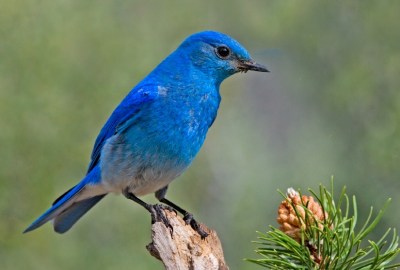
Mountain Bluebird (Sialia currucoides) ©Elaine R Wilson WikiC
WHICH WERE CLOTHED WITH BLUE
***
“Which were clothed with blue, captains and rulers, all of them desirable young men, horsemen riding upon horses.” (Ezekiel 23:6 KJV)
*
Mountain Bluebird (Sialia currucoides) ©Elaine R Wilson WikiC
“Which were clothed with blue, captains and rulers, all of them desirable young men, horsemen riding upon horses.” (Ezekiel 23:6 KJV)
*
“I love the LORD, because he hath heard my voice and my supplications.” (Psalms 116:1 KJV)
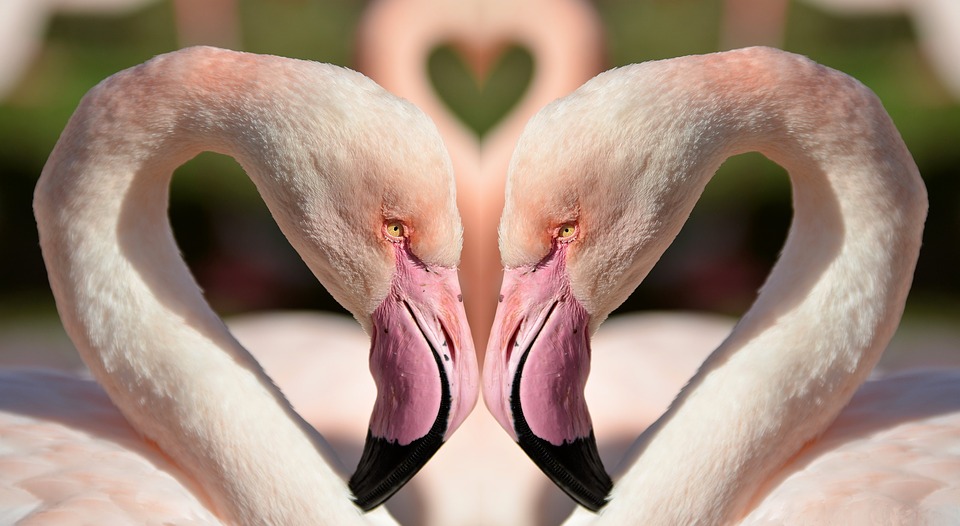
Flamingos In Love ©Pixabay
*
*
Barreleyes (Opisthoproctus soleatus) ©WikiC
“Behold, I am the LORD, the God of all flesh: is there any thing too hard for me?” (Jeremiah 32:27)
Almost all sighted animals that aren’t insects see with eyeballs. But that is not true of a fish named barreleyes, and that’s for a good reason.
Barreleyes has that name because instead of eyeballs, the fish sees through tubes. The fish live a third of a mile below the surface, so studying them in detail was not possible until the last few decades. Barreleyes can move its eyetubes in different directions, depending on what it wants to look at. Even stranger, the eyetubes are inside the forehead and do not come into contact with the water at all. How can it see if its vision organs are inside its head? It has a transparent forehead filled with transparent liquid. What is the purpose of such a strange arrangement? Scientists believe that barreleyes eat siphonophores, which are jellyfish-like creatures that sting. The transparent forehead protects its eyes from getting stung.
Barreleyes’ uniquely designed eyes are impossible to explain with gradual evolutionary modifications of regular fish eyes. Yet, they are well designed for barreleye’s unusual way of making a living. As Scripture reminds us several times, nothing is too hard for God. As we read Scripture’s record of what God has done in the past and what He has promised He still will do, especially for His people, this reminder is a comfort.
Prayer:
Father, when I read of what You have promised me, remind me that nothing is too hard for You. Amen.
Notes:
Susan Millius, “Barreleye peers at the world like a fighter pilot does through a windshield.”
©Creation Moments 2016
Lee’s Addition:

Barreleye Fish ©Bit.ly
Is that amazing or what? Here is a YouTube I found for you to see this amazingly created critter from our Fabulous Creator:
*
“I know all the birds of the mountains, And the wild beasts of the field are Mine.” (Psalms 50:11 NKJV)
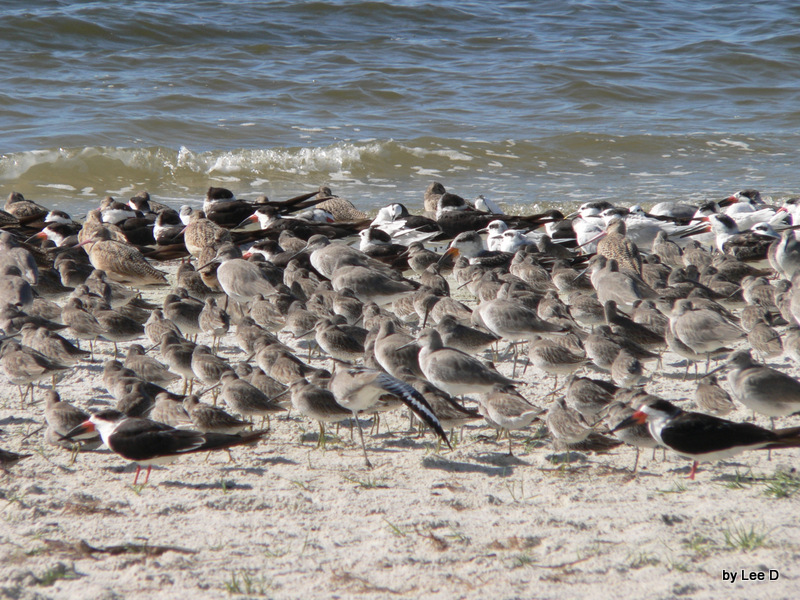
Watching Birds at MacDill AFB Shore by Lee
*
*
“But the fruit of the Spirit is love, joy, peace, longsuffering, gentleness, goodness, faith, Meekness, temperance: against such there is no law.” (Galatians 5:22-23 KJV)
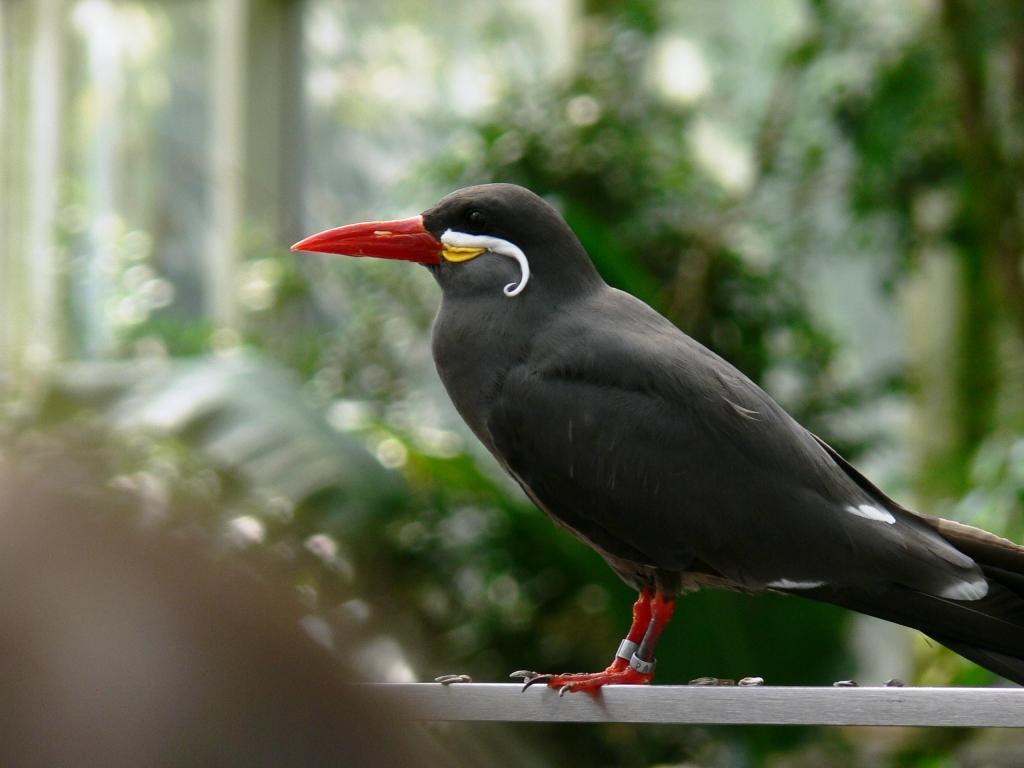
Inca Tern (Larosterna inca) waiting for fish. The others were rushing the trainer. By Lee at National Aviary
*
*
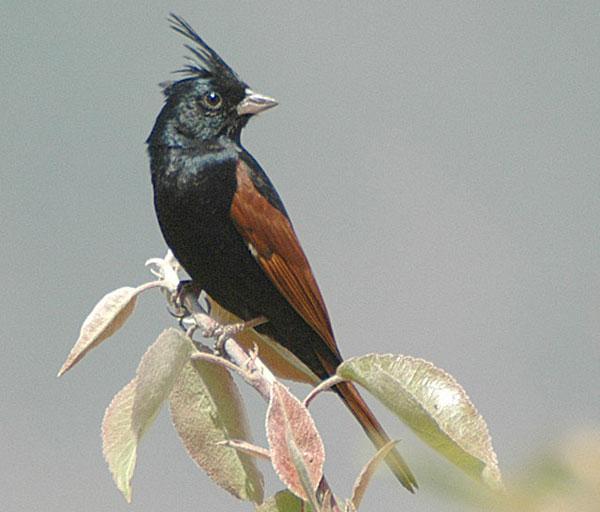
Crested Bunting (Emberiza lathami) by Nikhil Devasar
The flowers appear on the earth; the time of the singing of birds is come, and the voice of the turtle is heard in our land; (Song of Solomon 2:12 KJV)
Our new family we start today is the Emberizidae – Buntings, New World Sparrows and allies. Since there are 181 species in the family, today we will introduce you to the Emberiza genus. It contains 42 Buntings and one Yellowhammer. These are small sparrow-sized birds with conical bills that gives the power to crack open many kinds of seeds. Seeds being their favorite food.

Golden-breasted Bunting (Emberiza flaviventris) ©WikiC
There is one more bunting, the Lark Bunting, that follows next after the Emberiza genus. “Lark buntings are small songbirds, with a short, thick, bluish bill. There is a large patch of white on the wings and they have a relatively short tail with white tips at the end of the feathers. Breeding males have an all black body with a large white patch on the upper part of the wing. Non-breeding males and females look similar and are grayish brown with white stripes.” (Wikipedia)

Lark Bunting (Calamospiza melanocorys) ©WikiC
There are many of these “Emberizidae buntings are boldly patterned on the face and head, or have colorful underparts.” (National Geographic Birds of the World,, p. 356) You will meet the other members of this family later. The Sparrows and others will be very familiar, many referred to as “little brown jobs”
*
“That he might present it to himself a glorious church, not having spot, or wrinkle, or any such thing; but that it should be holy and without blemish.” (Ephesians 5:27 KJV)
“Triumphantly The Church Will Rise” ~ Faith Baptist Men’s Quintet
“That the God of our Lord Jesus Christ, the Father of glory, may give unto you the spirit of wisdom and revelation in the knowledge of him: The eyes of your understanding being enlightened; that ye may know what is the hope of his calling, and what the riches of the glory of his inheritance in the saints, And what is the exceeding greatness of his power to us-ward who believe, according to the working of his mighty power, Which he wrought in Christ, when he raised him from the dead, and set him at his own right hand in the heavenly places, Far above all principality, and power, and might, and dominion, and every name that is named, not only in this world, but also in that which is to come: And hath put all things under his feet, and gave him to be the head over all things to the church, Which is his body, the fulness of him that filleth all in all.” (Ephesians 1:17-23 KJV)
Emberizidae – Buntings, New World Sparrows & Allies
*
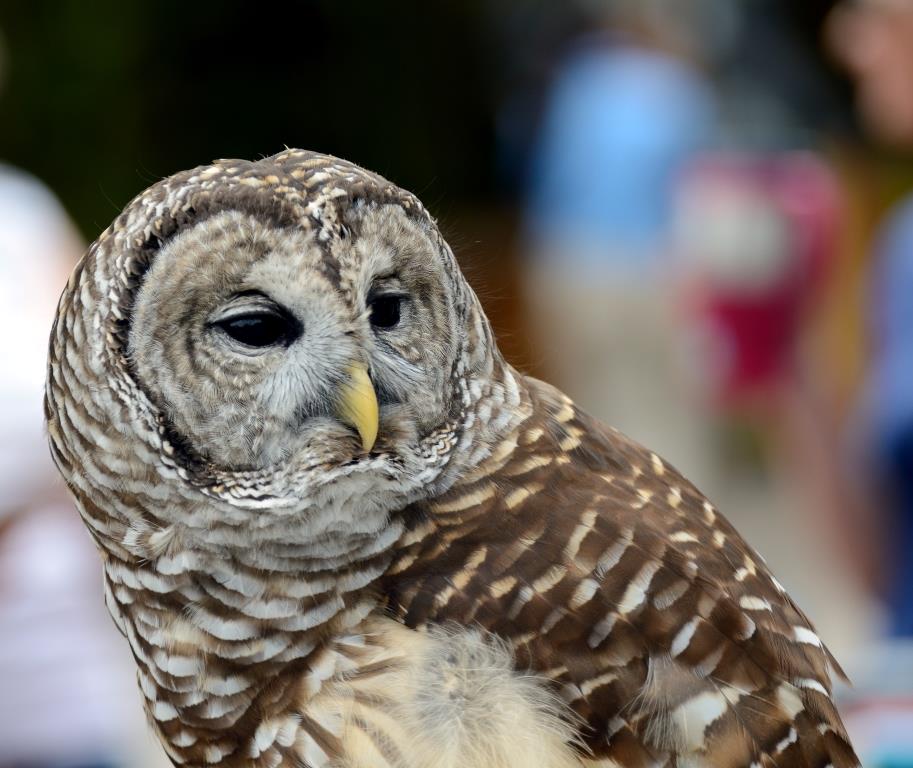
Northern Barred Owl (Strix varia) Lowry Park Zoo by Dan 2014
CAN THERE BE DESIGN WITHOUT A DESIGNER?
“For the invisible things of him from the creation of the world are clearly seen, being understood by the things that are made, even his eternal power and Godhead…” (Romans 1:20a)
 A new science called biomimetics is making news. In the past we have talked about how some of man’s designs are often similar to God’s which do the same job. However, in biomimetics, researchers actively seek to study the creation to learn of designs that will solve engineering problems.
Can There Be Design Without a Designer?We are all familiar with the story of how thistle seeds inspired Velcro. Engineers have used the design of the owl’s wing to make the structures that carry electrical current to trains. The result is a much quieter ride. The moth’s eyes’ ability not to reflect light helps make it harder to be spotted by birds. The same design has now been used to make a nonreflective film. The result is a film that can be used to help prevent windows from reflecting light. This film will soon be available commercially. Many dyes are toxic, yet many creatures manage to show off bright colors without using toxic substances. Materials engineers studied how the jewel beetle produces its color. The result is a film that seems to change color depending on the angle from which you view it.
No scientist can offer a rational explanation for how so many thoughtful and efficient designs could be generated in a mindless universe. These designs are fingerprints God left all over the creation so that man might seek Him out.
Prayer:
I thank and praise You, dear Father, for the excellence and wonder You have left as fingerprints in the creation. Amen.
Notes:
Nikkei Weekly, 2/22/10, p. 17, “Biomimetics yields life-inspired products.”
*
*

“I opened my mouth wide and panted, For I longed for Your commandments.” (Psalms 119:131 NASB)
Australian Pipit (Anthus australis) ©WikiC chicks
*
*

“Oh magnify the LORD with me, and let us exalt his name together.” (Psalms 34:3)
Malayan Peacock-Pheasant Feathers @WikiC
*
*
“But the fruit of the Spirit is love, joy, peace, longsuffering, gentleness, goodness, faith, Meekness, temperance: against such there is no law.” (Galatians 5:22-23 KJV)
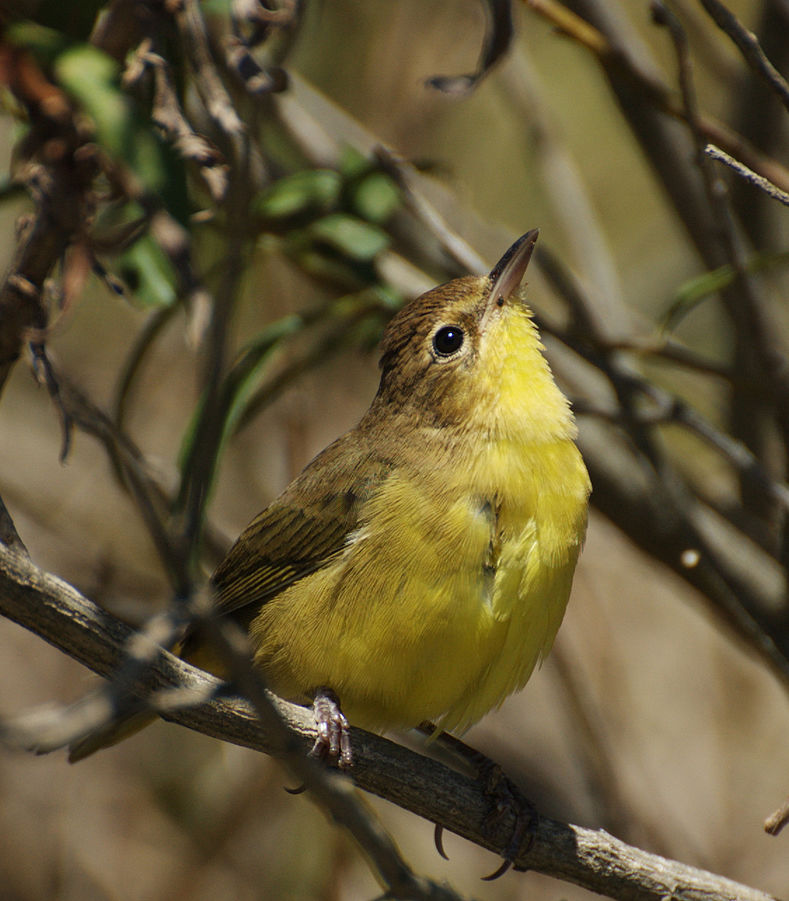
Southern Yellowthroat (Geothlypis velata) ©WikiC
*
*
“And to know the love of Christ, which passeth knowledge, that ye might be filled with all the fulness of God.” (Ephesians 3:19 KJV)
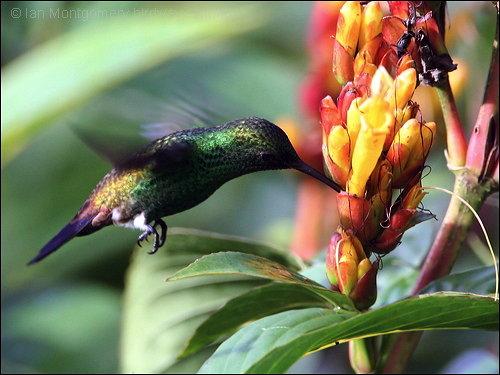
Copper-rumped Hummingbird (Amazilia tobaci) by Ian
*
*
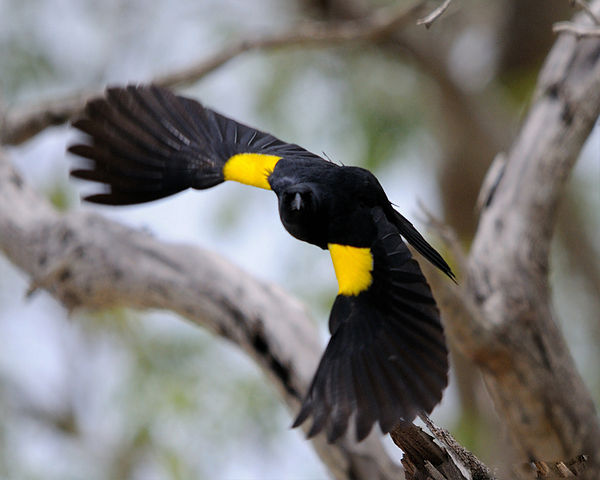
Yellow-shouldered Blackbird (Agelaius xanthomus) ©WikiC
All flesh is not the same flesh: but there is one kind of flesh of men, another flesh of beasts, another of fishes, and another of birds. (1 Corinthians 15:39 KJV)
Today we finish up the Icteridae Family of New World blackbirds, New World orioles, the Bobolink, Meadowlarks, Grackles, Cowbirds, Oropendolas and Caciques, plus. Trust you enjoyed seeing the first two parts of the family. (Part I, Part II)
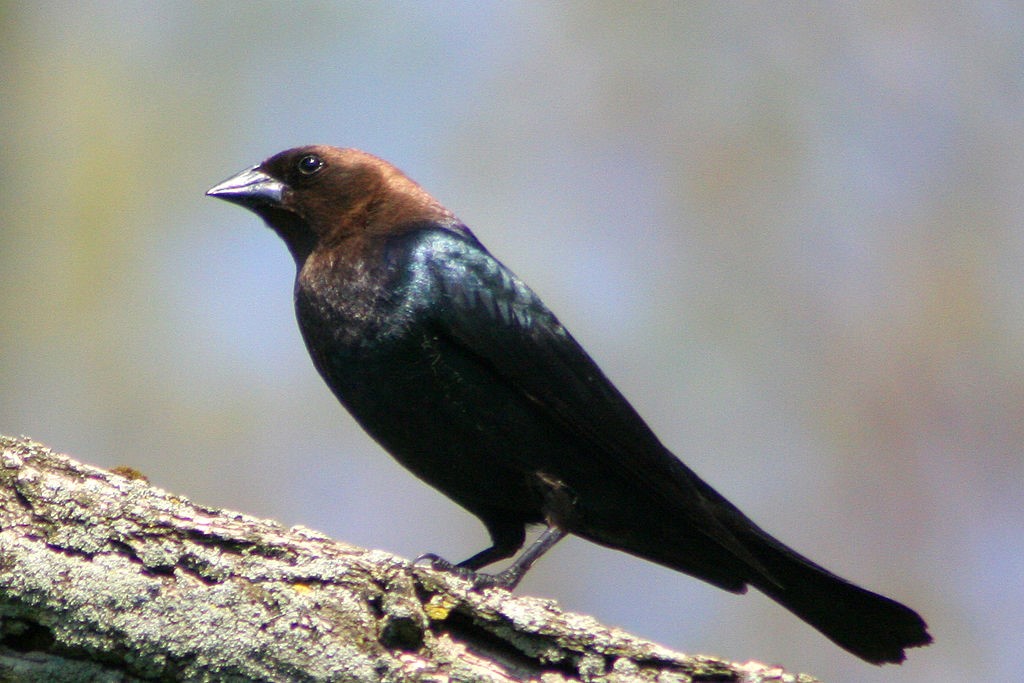
Brown-headed Cowbird (Molothrus ater) ©WikiC
“All flesh is not the same flesh: but there is one kind of flesh of men, another flesh of beasts, another of fishes, and another of birds.” (1 Corinthians 15:39 KJV)
The last 64 members of the family come from numerous Genus; the Nesopsar, Agelaius, Molothrus, Dives,Ptiloxena, Euphagus, Quiscalus, Hypopyrrhus, Lampropsar, Gymnomystax, Macroagelaius, Macroagelaius, Curaeus, Amblyramphus, Anumara, Gnorimopsar, Oreopsar, Agelaioides, Chrysomus, Xanthopsar and the Pseudoleistes. Some have only one species per genus. For many of you, the genus names mean little, but, if we mention Cowbirds, Grackles, Blackbirds, Baywings and Marshbirds, then you would recognize them that way.
Blessed be the LORD, who hath not given us as a prey to their teeth. Our soul is escaped as a bird out of the snare of the fowlers: the snare is broken, and we are escaped. Our help is in the name of the LORD, who made heaven and earth. (Psalms 124:6-8 KJV)
“Stay Close To Me” ~ ©Hyssongs
*
Sunday Inspiration – Icteridae Family I
Sunday Inspiration – Icteridae Family II
Icteridae – Oropendolas, Orioles & Blackbirds Family
Icterid – Wikipedia
*

 Lee's Birdwatching Adventures Plus