Christmas Bird from the Christmas Islands

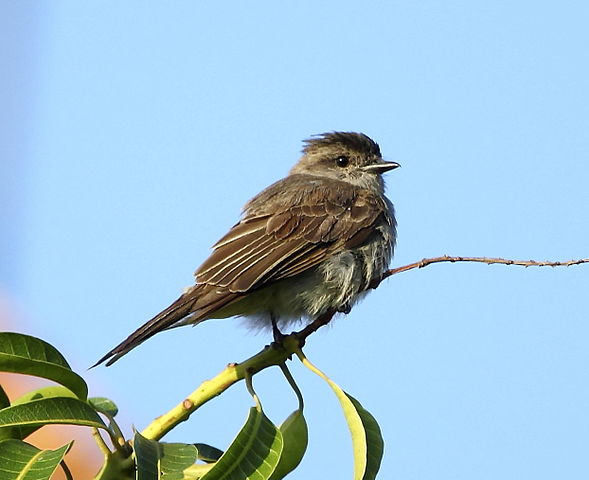
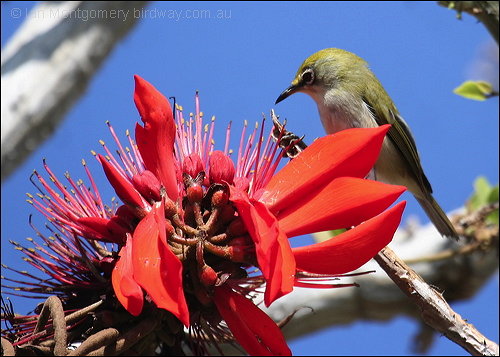
Christmas Island White-eye (Zosterops natalis) by Ian

Christmas Island White-eye (Zosterops natalis) by Ian

“For unto you is born this day in the city of David a Saviour, which is Christ the Lord. And this shall be a sign unto you; Ye shall find the babe wrapped in swaddling clothes, lying in a manger.” (Luke 2:11-12 KJV)

MERRY CHRISTMAS from Dan and I, and from our writers, who add so much to this blog. James J. S. Johnson, Emma Foster, and Ian Montgomery are the other authors currently. We have produced quite a few articles about “Christmas Birds,” yet not much about the birds named “Christmas.” Here is a brief description of them, with links to other “Christmas Bird” articles over the years.
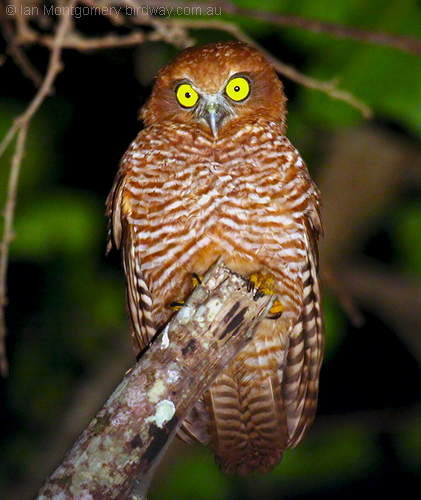
Christmas Boobook (Ninox natalis) by Ian

Christmas Boobook (Ninox natalis) by Ian

The Christmas Boobook (Ninox natalis), also known more specifically as the Christmas Island hawk-owlis a species of owl in the family Strigidae. Closely related to the hawk owls of Southeast Asia and Australia. N. natalis was first classified at species level by J.J.Lister in 1888. It was not until 1998 however that DNA testing confirmed its status as a separate species from other owls.

The Christmas Island Hawk Owl is a small, rufous-brown hawk-owl with a barred breast, dark chestnut facial mask, whitish brow, lores and throat, yellow eyes, legs and feet. It is approximately 26–29 cm in length and 130-190 grams in weight with the female slightly larger than the male. The double-noted hoot, boo-book, has a clucking quality with the second note usually lower in pitch. The begging call of juveniles is a high-pitched trill.
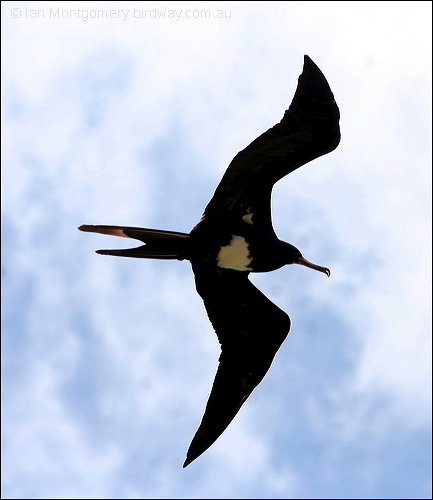
Christmas Frigatebird (Fregata andrewsi) by Ian

Christmas Frigatebird (Fregata andrewsi) by Ian

Christmas Frigatebird (Fregata andrewsi) or Christmas Island Frigatebird (Fregata andrewsi) is a seabird of the frigatebird family Fregatidae which is endemic to Christmas Island in the Indian Ocean. The Christmas frigatebird is a large lightly built seabird with brownish-black plumage, long narrow wings and a deeply forked tail. It has a wingspan of around 2.15 m (7.1 ft). The male has an egg shaped white patch on its belly and a striking red gular sac which it inflates to attract a mate. The female is slightly larger than the male and has a white breast and belly. They feed on fish taken in flight from the ocean’s surface (mostly flying fish), and sometimes indulge in kleptoparasitism, harassing other birds to force them to regurgitate their food.
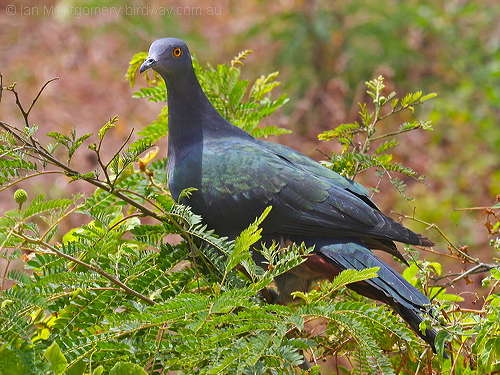
Christmas Island Imperial-Pigeon (Ducula whartoni) by Ian

Christmas Island Imperial-Pigeon (Ducula whartoni) by Ian

Christmas Imperial Pigeon (Ducula whartoni), is a large (39 cm in length, 450-700 g in weight) pigeon, mainly dark grey in colour with an iridescent sheen. Fruit from forest trees with occasional buds and leaves are it main diet. It builds a platform nest of twigs high in a forest tree. It utters a deep booming call.

See: Ian’s Bird of the Week – Christmas Imperial Pigeon
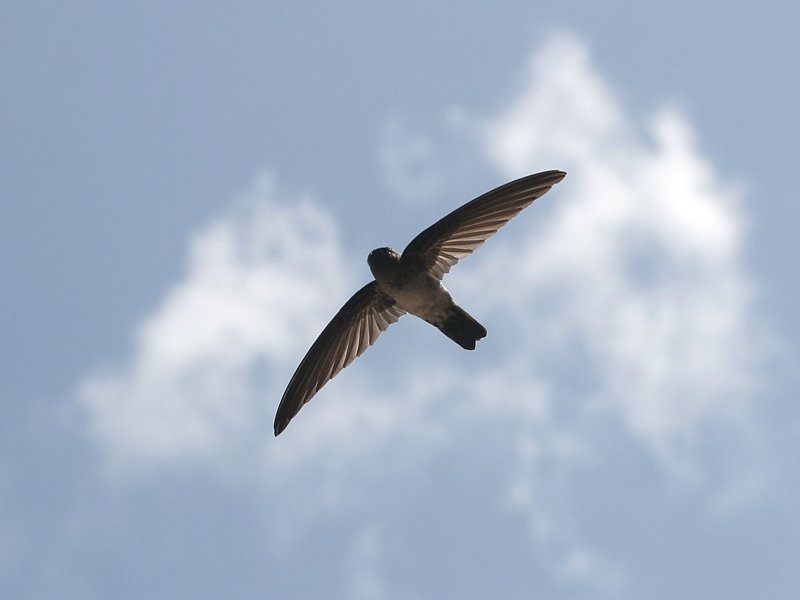
Christmas Island Swiftlet (Collocalia natalis) ©Christmas IS Wildlife

Christmas Island Swiftlet (Collocalia natalis), also known as the Christmas glossy swiftlet or the Christmas cave swiftlet, is a small bird in the swift family Apodidae. It is endemic to Christmas Island, an Australian territory in the eastern Indian Ocean. It was formerly commonly treated as a subspecies of the glossy swiftlet.

Christmas Shearwater (Puffinus nativitatis) ©WikiC 2 FK Starr

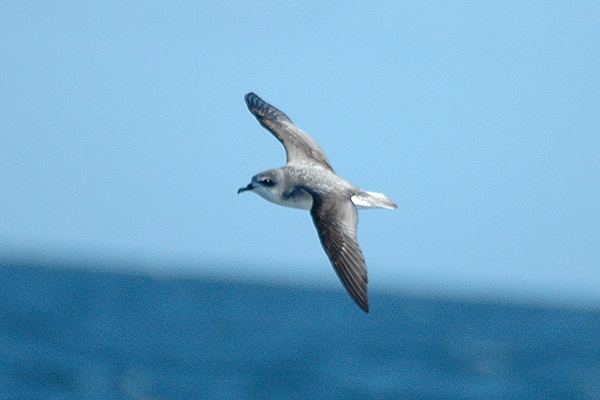
Christmas Shearwater (Puffinus nativitatis) is a medium-sized shearwater of the tropical Central Pacific. It is a poorly known species due to its remote nesting habits, and it has not been extensively studied at sea either.

The Christmas Shearwater nests on remote islands of the Central Pacific: the Northwestern Hawaiian Islands, Tuamotu, the Marshall Islands, Kiritimati (for which the species is named) and Sala-y-Gómez. It has become locally extinct on a number of islands, including Wake Island. Outside of the breeding season it ranges across the Pacific, having been recorded off the coast of Mexico and Guatemala in the east, and Bonin Islands in the west. Further south it is rare, having been recorded off Fiji only twice (one time in early to mid-May).

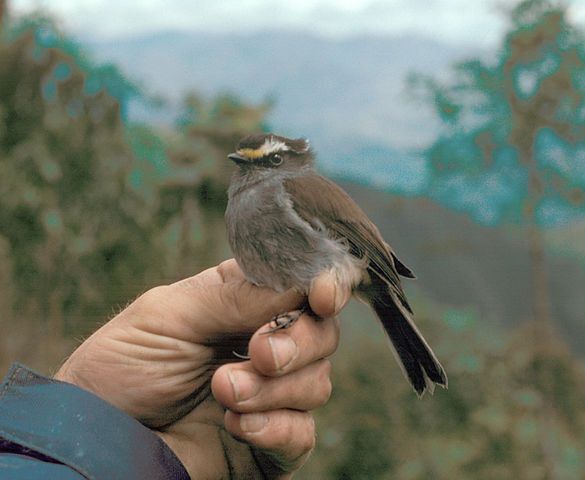
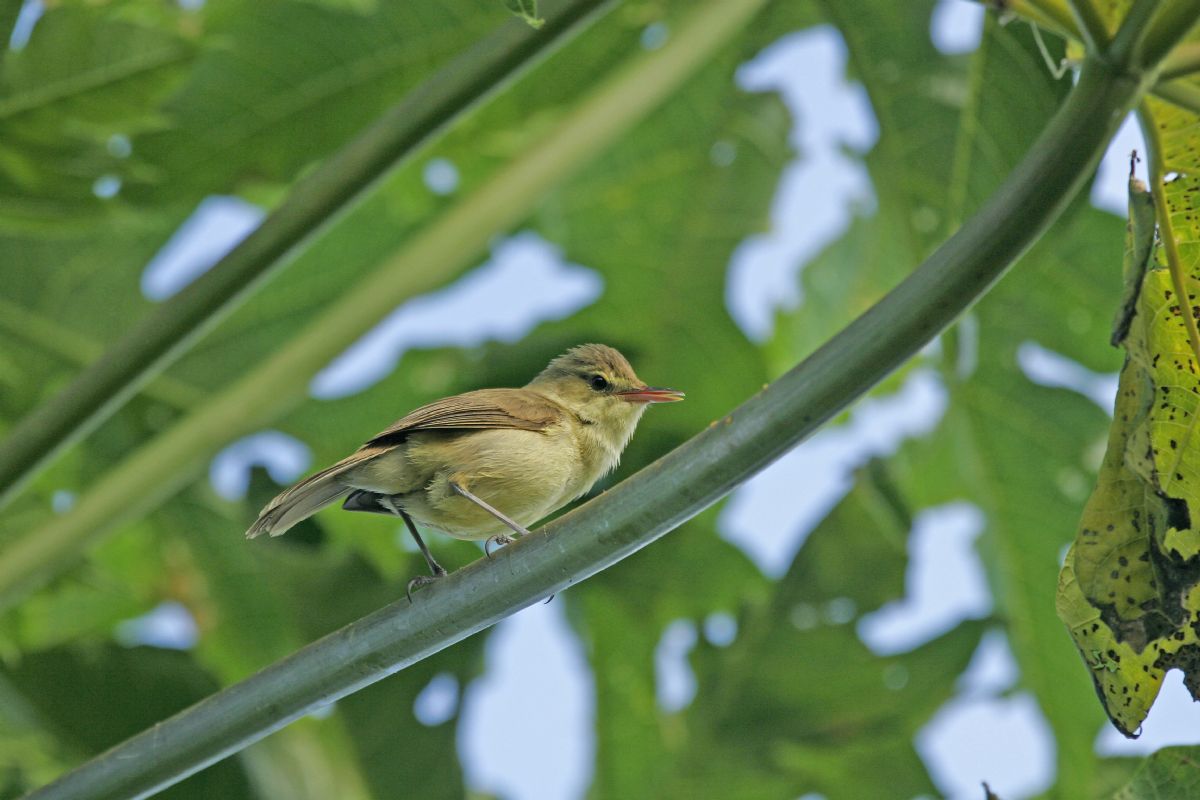
Christmas White-eye (Zosterops natalis) by Ian

Christmas White-eye (Zosterops natalis) by Ian

The Christmas White-eye (Zosterops natalis) is a species of bird in the family Zosteropidae. It is endemic to Christmas Island. Its natural habitats are subtropical or tropical moist lowland forests and subtropical or tropical moist shrubland. It is threatened by habitat loss.

See also: Ian’s Bird of the Week – Christmas Island White-eye

It is always refreshing to take a look back at other Christmas Blogs. Just as we are all looking back to the first “Christmas” event, when the Saviour of the World, took on human flesh, as a baby. Totally human, totally God. It is difficult for us to wrap our thoughts around that truth.

Some Christmas Birds (Re-posted)

The Christmas Birds Series in 2013

In 2014 – Sunday Inspiration – Christmas Birds  Please watch the video near the end.

MAY YOUR CHRISTMAS BE FILLED WITH BLESSINGS AS YOU REMEMBER THE REASONS FOR CELEBRATING OUR SAVIOUR’S BIRTH.

Grey Parrot at Gatorland – December 2017

The Grey Parrot today at Gatorland looked quite bright-eyed. This was taken straight from the camera, no editing, and loaded up on my Flickr Site. This is an experiment. Since so many photos disappeared off of WordPress, I am trying to see how placing them on Flickr might be a new option. [One problem: Can’t seem to center the photo. Stays on left.]
Grey Parrot (Psittacus erithacus)

“The lamp of the body is the eye. Therefore, when your eye is good, your whole body also is full of light. But when your eye is bad, your body also is full of darkness. Therefore take heed that the light which is in you is not darkness. If then your whole body is full of light, having no part dark, the whole body will be full of light, as when the bright shining of a lamp gives you light.” (Luke 11:34-36 NKJV)

The Grey Parrot or African grey parrot (Psittacus erithacus) is an Old World parrot in the family Psittacidae. This article describes the Congo grey parrot. The Timneh parrot (Psittacus timneh) was earlier treated as conspecific but has since been split as a full species.

Grey parrots are monogamous breeders which nest in tree cavities. Each couple of parrots needs its own tree to nest. The hen lays three to five eggs, which she incubates for 30 days while being fed by her mate. The adults defend their nesting sites.  Both parents help take care of the chicks until they can go off on their own. Grey parrot chicks require feeding and care from their parents in the nest. The parents take care of them until four or five weeks after they are fledged. Young leave the nest at the age of 12 weeks. Little is known about the courtship behavior of this species in the wild. They weigh between 12 and 14 g at hatching and between 372 and 526 g when they leave their parents.

They are mostly frugivorous; most of their diet consists of fruit, nuts, and seeds. The species prefers oil palm fruit and also eat flowers and tree bark, as well as insects and snails. In the wild, the grey is partly a ground feeder. In captivity, it can eat sunflower seeds, bird pellets, a variety of fruits such as pears, orange, pomegranate, apple, and banana, and vegetables such as carrots, cooked sweet potato, celery, fresh kale, peas, and green beans. They also need a source of calcium. [Wikipedia with editing]

Yeah! We did a little birdwatching today!

Gatorland

Here was another bright-eyed Parrot today.

Parrot at Gatorland 12-21-17


Birds of the Bible – Return of the Hoopoe Video

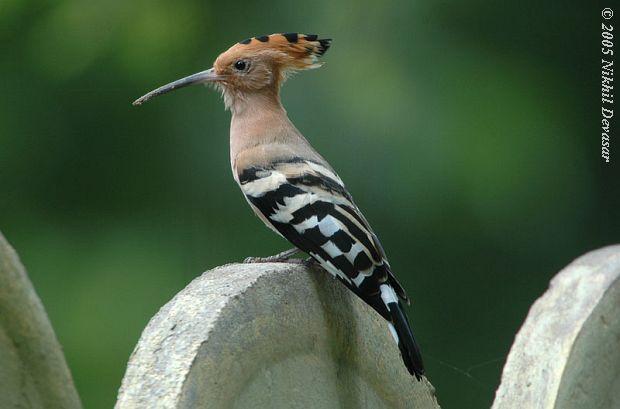
Eurasian Hoopoe (Upupa epops) by Nikhil

Updated 2/20/18 The original video is no longer online. Here is a cute Hoopoe chick sticking its head out to see the world.

This is a very interesting video about a Hoopoe parent and chick. It is worth the watch. I have always enjoyed looking at their beauty. The Creator really put a special touch on the Hoopoe. Also, they are one of the Birds of the Bible.

“‘And these you shall regard as an abomination among the birds; they shall not be eaten, they are an abomination: the eagle, the vulture, the buzzard, the kite, and the falcon after its kind; every raven after its kind, the ostrich, the short-eared owl, the sea gull, and the hawk after its kind; the little owl, the fisher owl, and the screech owl; the white owl, the jackdaw, and the carrion vulture; the stork, the heron after its kind, the hoopoe, and the bat.” (Leviticus 11:13-19 NKJV)

Birds of the Bible

Birds of the Bible – Hoopoe

Other articles:

*

Mandarin Duck Pair at Zoo Miami

While working on the Life List of All the Birds We Have Seen, I came across this video and decided to share it. We were at the Wings of Asia Aviary at Zoo Miami.

“When I consider thy heavens, the work of thy fingers, the moon and the stars, which thou hast ordained; What is man, that thou art mindful of him? and the son of man, that thou visitest him? For thou hast made him a little lower than the angels, and hast crowned him with glory and honour.” (Psalms 8:3-5 KJV)

“The Mandarin Duck (Aix galericulata) is a perching duck species found in East Asia. It is medium-sized, at 41–49 cm (16–19 in) long with a 65–75 cm (26–30 in) wingspan. It is closely related to the North American wood duck, the only other member of the genus Aix. Aix is an Ancient Greek word which was used by Aristotle to refer to an unknown diving bird, and galericulata is the Latin for a wig, derived from galerum, a cap or bonnet.

The adult male has a red bill, large white crescent above the eye and reddish face and “whiskers”. The breast is purple with two vertical white bars, and the flanks ruddy, with two orange “sails” at the back. The female is similar to female wood duck, with a white eye-ring and stripe running back from the eye, but is paler below, has a small white flank stripe, and a pale tip to its bill.

Both the males and females have crests, but the crest is more pronounced on the male.

Like many other species of ducks, the male undergoes a moult after the mating season into eclipse plumage. When in eclipse plumage, the male looks similar to the female, but can be told apart by their bright yellow-orange beak, lack of any crest, and a less-pronounced eye-stripe.”[Wikipedia]

Life List of All the Birds We Have Seen – Part I

Life List of All the Birds We Have Seen

Avian And Attributes – Elegant

Elegant Euphonia - Panama_H8O1931

Elegant Euphonia

“Then Herod and his soldiers ridiculed and mocked him. Dressing him in an elegant robe, they sent him back to Pilate.” (Luke 23:11 NIV)

“And Herod with his men of war set him at nought, and mocked him, and arrayed him in a gorgeous robe, and sent him again to Pilate.” (Luke 23:11 KJV)

Christ wore an elegant or gorgeous robe. They were mocking him, yet, he was very worthy of wearing an elegant robe.


Avian and Attributes – Elegant

EL’EGANT, a. [L. elegans.] Polished; polite; refined; graceful; pleasing to good taste; as elegant manners.
1. Polished, neat; pure; rich in expressions; correct in arrangement; as an elegant style or composition.
2. Uttering or delivering elegant language with propriety and grace; as an elegant speaker.
3. Symmetrical; regular; well formed in its parts, proportions and distribution; as an elegant structure.
5. Beautiful in form and colors; pleasing; as an elegant flower.
6. Rich; costly and ornamental; as elegant furniture or equipage.


Our Creator and Savior knew about creating Elegant beauty, especially in the avian creations. Here is a list of birds that birdwatchers have place the word, Elegant, in their first names:

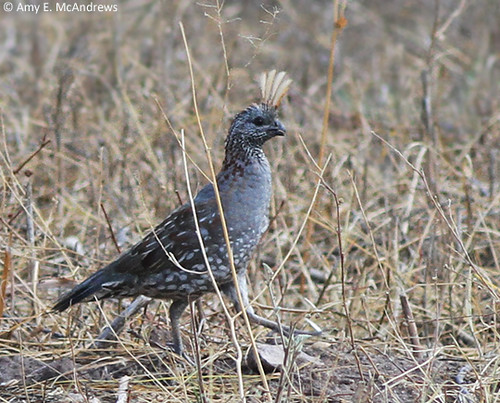
Elegant Quail (Callipepla douglasii) Male ©WikiC

Elegant Crescentchest 1

Elegant Crescentchest (from Flickr)

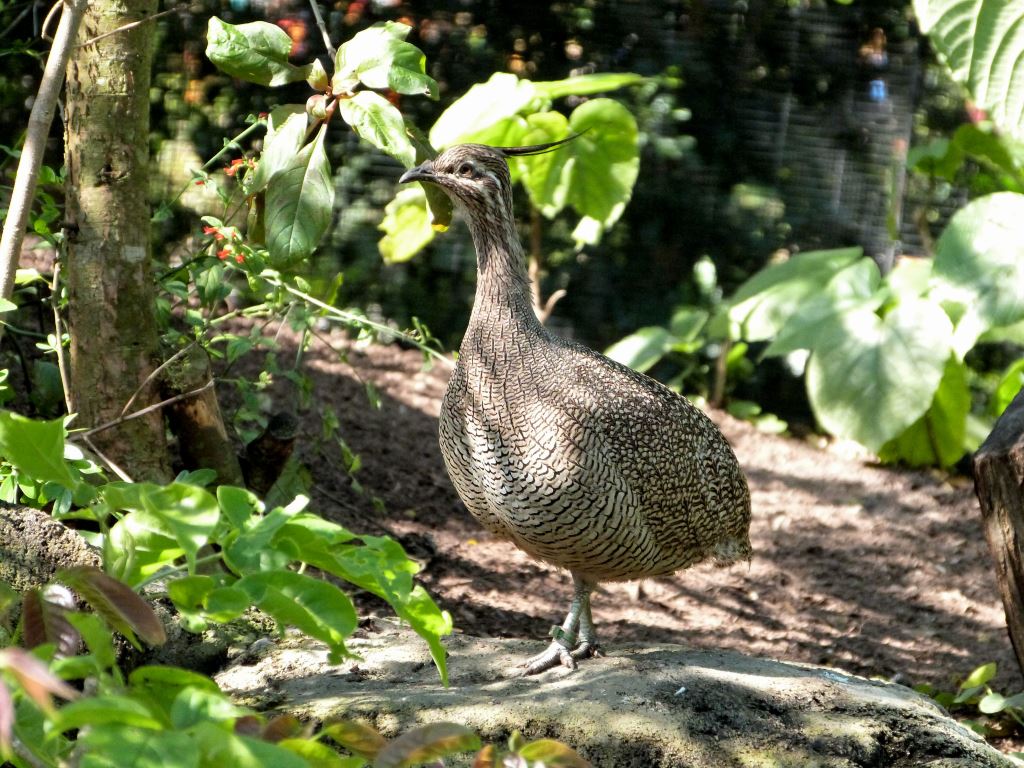
Elegant Crested Tinamou (Eudromia elegans) Cloud Forest at Zoo Miami by Lee

Elegant Crested Tinamou (Eudromia elegans) Cloud Forest at Zoo Miami by Lee

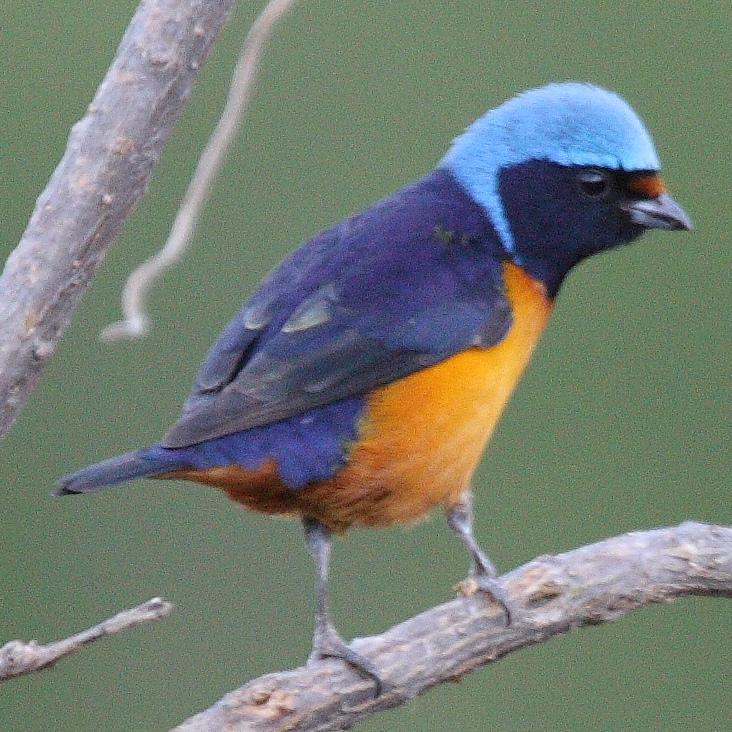
Elegant Euphonia (Euphonia elegantissima) ©WikiC

Links to: Elegant Honeyeater, and  Elegant Imperial Pigeon,

Elegant Parrot (Neophema elegans) WikiC

Elegant Parrot (Neophema elegans) WikiC

Elegant Tern by Ian Montgomery

Elegant Tern by Ian Montgomery

Link to Elegant Pitta

Elegant Quail

Elegant Quail (from Flickr)

Links to Elegant SunbirdElegant Tit,

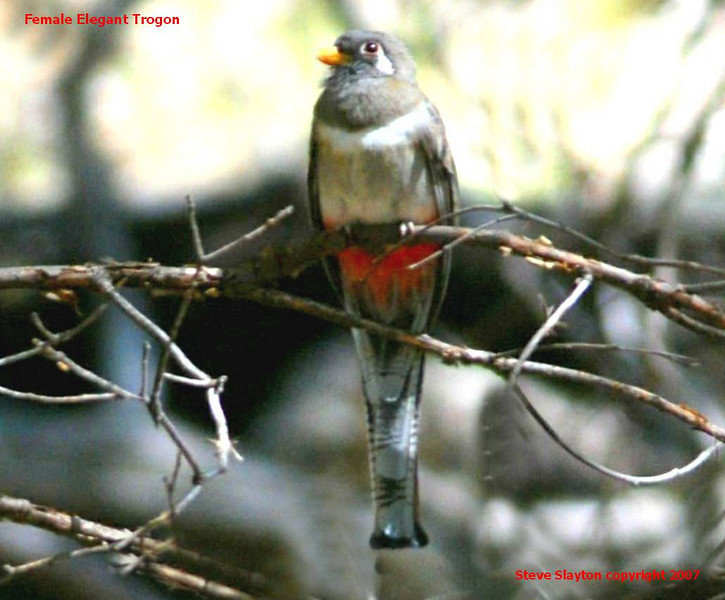
Elegant Trogon (Trogon elegans) by S Slayton

Elegant Trogon (Trogon elegans) by S Slayton

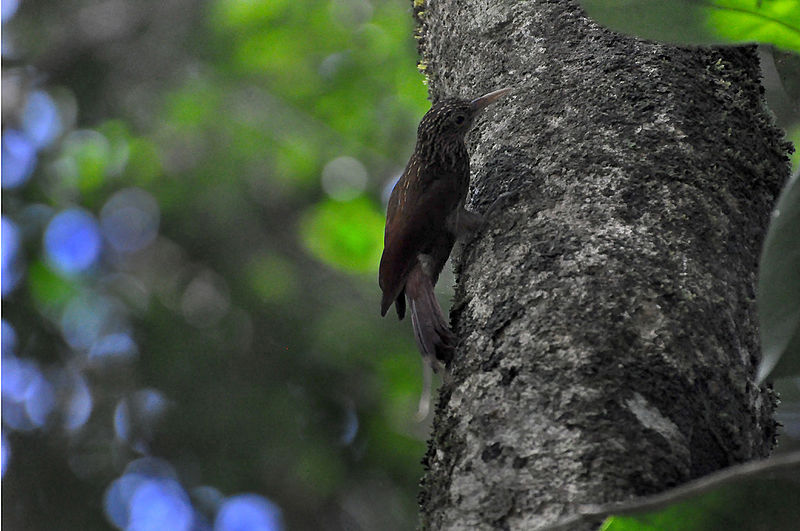
Elegant Woodcreeper (Xiphorhynchus elegans) ©WikiC


More Avian and Attributes

Birds whose first name start with “E”

Good News

*
[Definitions from Webster’s Dictionary of American English (1828), unless noted. Bird info from Wikipedia plus. Edited]

Avian And Attributes – Diamond

Diamond Dove (Geopelia cuneata) by Ian 1

“Thou hast been in Eden the garden of God; every precious stone was thy covering, the sardius, topaz, and the diamond, the beryl, the onyx, and the jasper, the sapphire, the emerald, and the carbuncle, and gold: the workmanship of thy tabrets and of thy pipes was prepared in thee in the day that thou wast created.” (Ezekiel 28:13 KJV)

“In the beginning was the Word, and the Word was with God, and the Word was God. The same was in the beginning with God. All things were made by him; and without him was not any thing made that was made.” (John 1:1-3 KJV)


Avian and Attributes – Diamond

Diamond, n. Dimond. [L., Gr. See Adamant.]
1. A mineral, gem or precious stone, of the most valuable kind, remarkable for its hardness, as it scratches all other minerals. When pure, the diamond is usually clear and transparent, but it is sometimes colored. In its rough state, it is commonly in the form of a roundish pebble, or of octahedral crystals. It consists of carbon, and when heated to 14 degrees Wedgewood, and exposed to a current of air, it is gradually, but completely combustible. When pure and transparent, it is said to be of the first water.
2. A very small printing letter.
3. A figure, otherwise called a rhombus.
DIAMOND, a. Resembling a diamond, as a diamond color; or consisting of diamonds, as a diamond chain.


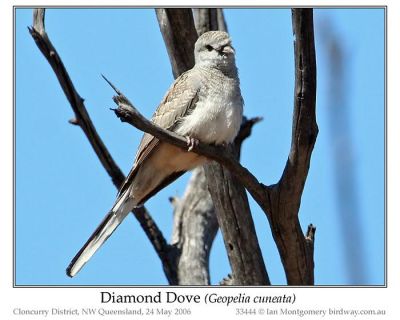
Diamond Dove (Geopelia cuneata) by Ian

Diamond Dove (Geopelia cuneata) by Ian

The Diamond Dove (Geopelia cuneata) is a resident bird in Australia. The dove predominantly exists in areas near water but which are lightly arid or semi-arid in nature, being Central, West and Northern Australia. They are one of Australia’s smallest pigeons along with the peaceful dove. They have been spotted occasionally in Southern Australia in parks and gardens when the centre of Australia is very dry.

Diamond Firetail (Stagonopleura guttata) by Ian

The Diamond Firetail (Stagonopleura guttata) is a species of estrildid finch that is endemic to Australia. The diamond firetail is a finch that has a fiery red bill, eyes, and rump. Just below the throat, it has a thick black band that extends horizontally until it reaches the lower part of the wings which are also black with white spots. There is also a black eye band that starts at the beak and ends right at the eye. The bird’s tail is also black. The rest of the wings are a slightly tan, light brown colour. Its head and back is light grey and its belly and chin are white. The colour of the egg is also white. This bird is considered one of the smallest of the finches.


More Avian and Attributes

Birds whose first or last name start with “D”

Good News

*
[Definitions from Webster’s Dictionary of American English (1828), unless noted. Bird info from Wikipedia plus.]

Life List of All the Birds We Have Seen – Part I

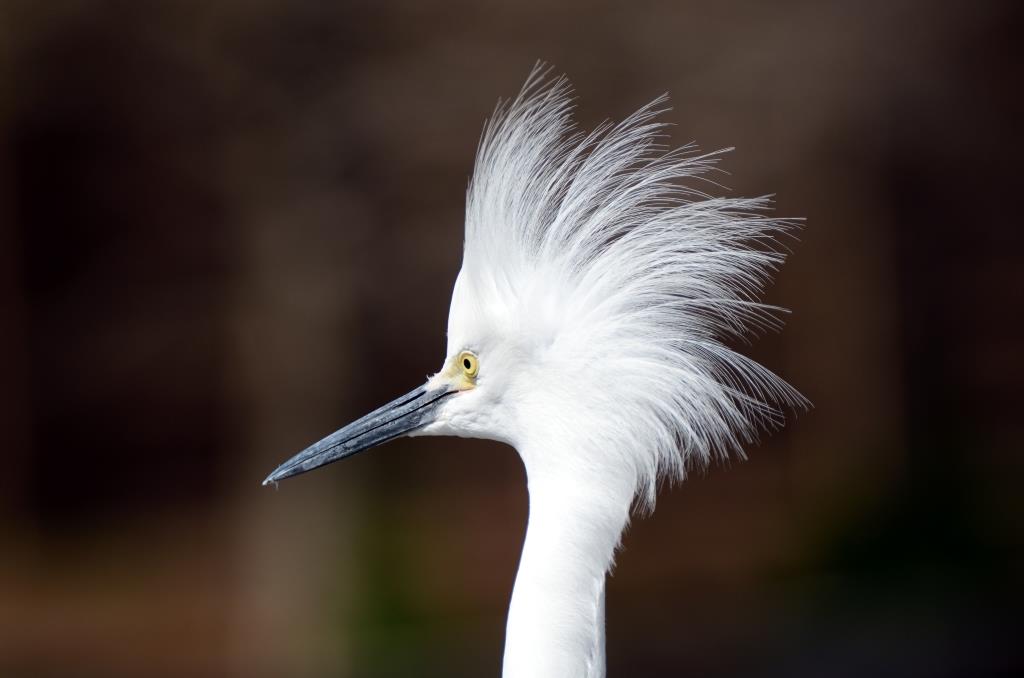
Snowy Egret in Breeding Plumage at Gatorland by Dan

Snowy Egret in Breeding Plumage at Gatorland by Dan

There is a Page on this blog called Life List of All the Birds We Have Seen. It has needed to be updated, plus with all the broken links that I have been repairing, this is going to be the main emphasis for a while. The Avian and Attributes articles will continue to be produced also. As the links are fixed and updated, the Parts will grow longer.

There is a reason for using the Life List of All the Birds We Have Seen, because it has the Families of the Birds of the World in Taxonomic order. As I find the birds we have seen, I will also be fixing the broken links on the Family pages. [So far, almost 1/3 to 1/2 of the family member page has broken links. It is becoming more obvious that the site WAS hacked.] This helps to fix each Family page in order, without jumping around.

Most of the page is self-explanatory. This is a list of ALL birds we, Dan and I, have SEEN. With photos where possible, because we did not take a picture of EVERY bird. Whether out in the wild, or in a zoo or similar place, THEY COUNT as far as this list is concerned. [Most bird counts are only for wild/free birds.]

**************** Life List of All the Birds We Have Seen ************

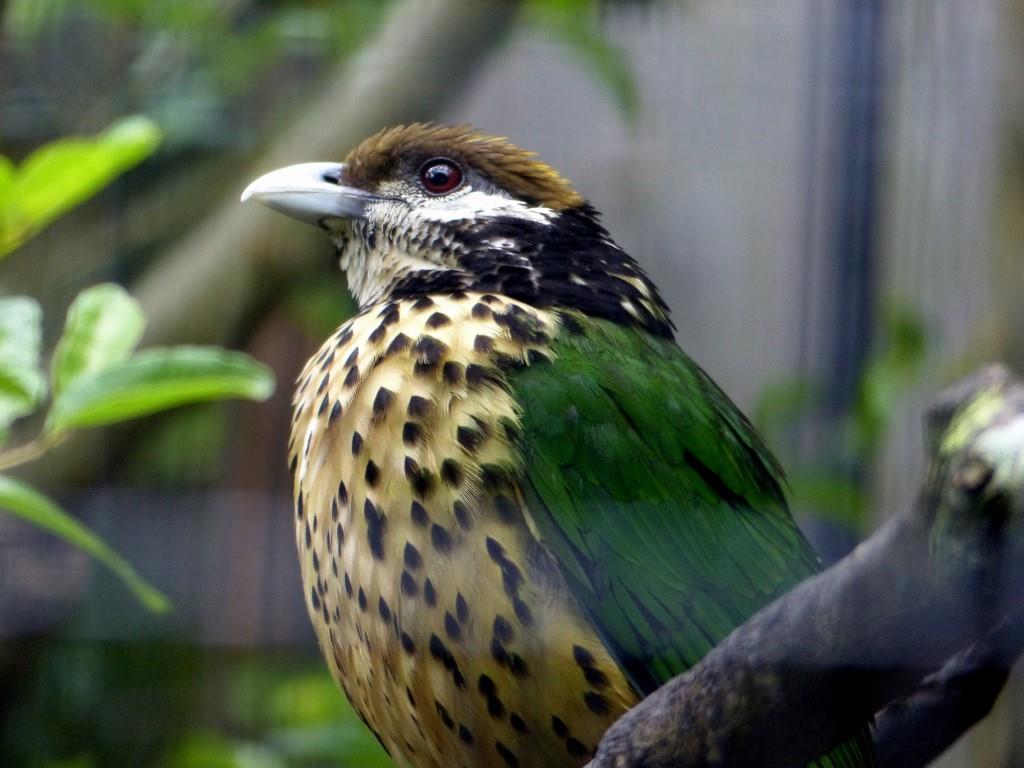
White-eared Catbird (Ailuroedus buccoides) Houston Zoo by Lee

“And God blessed the seventh day, and sanctified it: because that in it he had rested from all his work which God created and made.” (Genesis 2:3 KJV)

Under Construction – Still Finding Our Pictures to put with the Birds

[The best photos are at Dan’s Photo Site USNDANSPIX or just Dan’s Pix]

I’ve decided to not only include wild birds we have seen, but also birds we have seen in zoos also. Most lists don’t let you include them, but still, I have seen them in person, so, they count to me. Going to put these in Taxonomic order and use the IOC names.

The ones we have seen in the wild (264 species[edit]) have a “*”  and the ones we saw at zoos are marked with the following code. A name in parenthesis is what they call them. The two numbers in brackets [ total birds in family –  our count ]

Zoo Abbreviations (BZ=Brevard Zoo, CZ=Cincinnati Zoo, HZ=Houston Zoo, LPZ=Lowry Park Zoo, JZ=Jacksonville Zoo, NA=National Aviary, NZ=National Zoo, MZ=Memphis Zoo, PB=Palm Beach Zoo, RZ=Riverbanks Zoo (SC), SAZ=San Antonio Zoo, SDZ=San Diego Zoo, TBF=Titusville Birding Festival, WA=Wings of Asia (at MetroZoo before Hurricane Andrew and new Wings of Asia at Zoo Miami or ZM=Zoo Miami),

Names with an extra name in (parenthesis) are what the Zoos calls them. Listed by Families:

Ostriches – Struthionidae [2-2]
Common Ostrich (Struthio camelus) MZ RZ
Somali Ostrich (Struthio molybdophanes) SDZ

Rheas – Rheidae [2-0 ]

Kiwis – Apterygidae [5-0]

Cassowaries, Emus – Casuariidae [4- ]
Southern Cassowary (Casuarius casuarius) BZ by Lee HZ
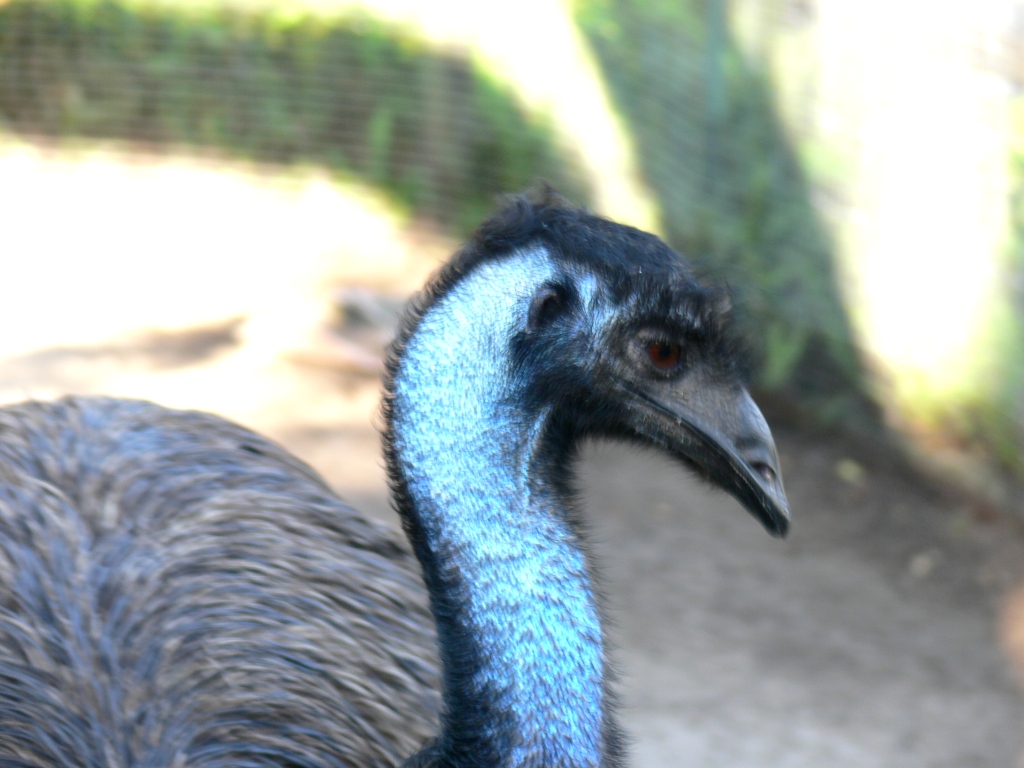
Emu Photos (Dromaius novaehollandiae) LPZ by Lee, BZ by Dan

Tinamous – Tinamidae [47-1]
Elegant Crested Tinamou (Eudromia elegans) ZM by Dan, by Lee,  HZ by Lee

Screamers – Anhimidae [3-1]

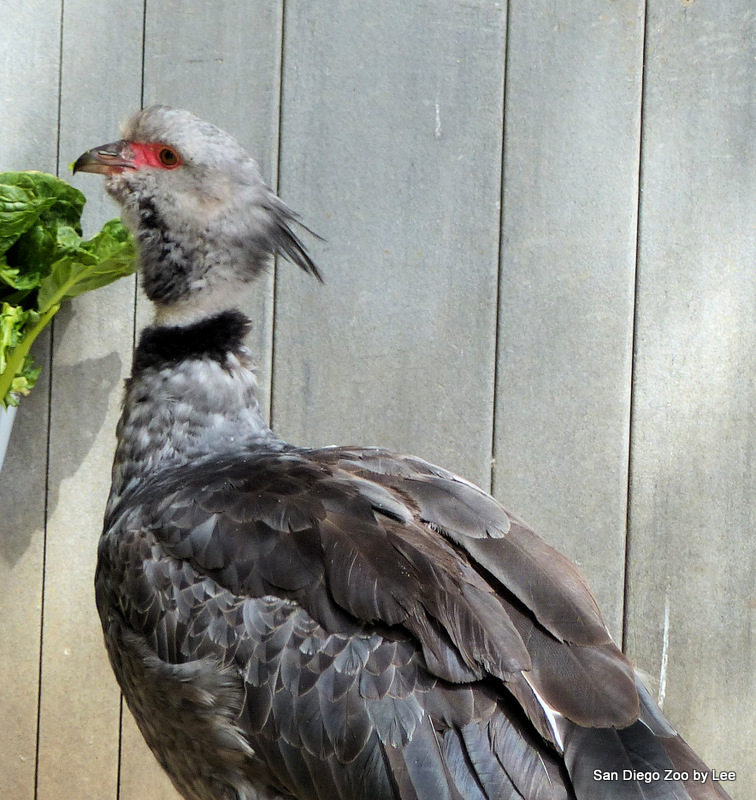
Southern Screamer (Chauna torquata) San Diego Zoo by Lee

Magpie Goose – Anseranatidae [1-1]

Magpie Goose (Anseranas semipalmata) by Lee LPZ

Magpie Goose (Anseranas semipalmata) by Lee Lowry Park Zoo

************ To Be Continued ***********

Ducks, Geese and Swans – Anatidae [173- ]

Megapodes (Family Megapodiidae)  [21- ]
Australian Brushturkey (Alectura lathami) NA
Wattled Brushturkey (Aepypodius arfakianus) WA

To see the rest of this page, Life List of All the Birds We Have Seen

Avian And Attributes – Diademed

Diademed Sandpiper-Plover (Phegornis mitchellii) ©Drawing WikiC

“Thou shalt also be a crown of glory in the hand of the LORD, and a royal diadem in the hand of thy God.” (Isaiah 62:3 KJV)

“You shall also be [so beautiful and prosperous as to be thought of as] a crown of glory and honor in the hand of the Lord, and a royal diadem [exceedingly beautiful] in the hand of your God.” (Isaiah 62:3 AMP)


Avian and Attributes – Diademed

Diademed
DIADEMED, a. Adorned with a diadem; crowned; ornamented.

“Diadem. What the “diadem” of the Jews was, we know not. That of other nations of antiquity was a fillet of silk, two inches broad, bound round the head and tied behind. Its invention is attributed to Liber. Its color was generally white, sometimes, however, it was of blue, like that of Darius; and it was sown with pearls or other gems, Zec_9:16, and enriched with gold. Rev_9:7.
It was peculiarly the mark of Oriental sovereigns. In Est_1:11; Est_2:17, we have cether for the turban worn by the Persian king, queen or other eminent persons to whom it was conceded as a special favor. The diadem of the king differed from that of others in having an erect triangular peak. The words in Eze_23:15 mean long and flowing turbans of gorgeous colors. See Crown.” [Smith’s Bible Dictionary]

See also: Avian and Attributes – Diadem


Diademed Amazon (Amazona diadema)

Diademed Amazon (Amazona diadema) ©WikiC

Diademed Amazon (Amazona diadema) is a parrot in the Psittacidae – African and New World Parrot Family, formerly considered conspecific with the Red-lored Amazon (Amazona autumnalia).

“Both adults in general green, with black edging to feathers of crown to mantle and breast; green crown to nape, hindneck green margined with mauve; red feathered cere and forehead; yellow/green with less yellow upper cheeks to ear coverts; secondaries 1-5 red at bases, the remainder green; green tail. Eye ring pale yellow, eye orange. Bill dark grey.” (World Parrot Trust)

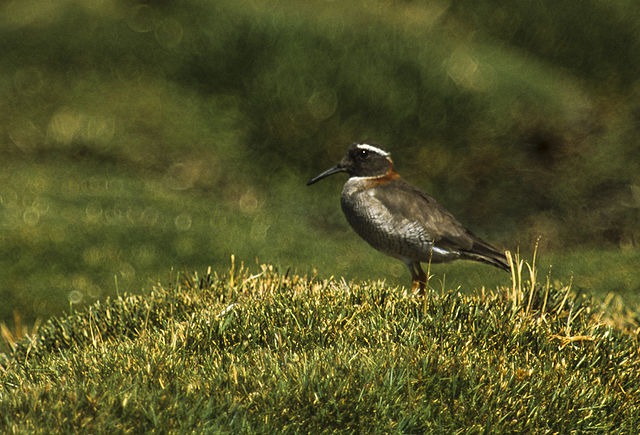
Diademed Sandpiper-Plover (Phegornis mitchellii)

Diademed Sandpiper-Plover (Phegornis mitchellii) ©WikiC

Diademed Sandpiper-Plover (Phegornis mitchelliior diademed plover (Phegornis mitchellii) is a species of bird in the plover family Charadriidae. It is monotypic within the genus Phegornis. The relationship of this species to other plovers is uncertain, a 2010 study suggested it may be related to the Australian dottrells.

The species is found in the Puna grassland ecozone of the Andes Mountains from Argentina and Chile, through Bolivia to Peru. In this habitat it prefers mossy tundra, high-altitude grassland, bogs and swamps. It is an altitudinal migrant, breeding between 3,500–5,000 m (11,500–16,400 ft) above sea-level, but wintering at 2,000 m (6,600 ft)

The diademed sand-piper-plover is a small compact plover, 16.5–19 cm (6.5–7.5 in) in length and weighing 28–46 g (0.99–1.62 oz). It has a black head with a white stripe above the eye meeting at the crown, a chestnut neck, a white throat and chest barred in black, and grey upperparts. The wings are short and the flight undulating. The sexes are alike and the juvenile has a grey head, less distinct barring on the front and brown upperparts.

They breed in the summer months, laying two eggs, olive-grey with black spots, in a circular nest of grasses. The downy chicks are dark brown, marbled with black above and lighter below. Member of the Charadriidae – Plovers Family

Diademed Tapaculo (Scytalopus schulenbergi)

Diademed Tapaculo (Scytalopus schulenbergi) ©Neotropical Birds

Diademed Tapaculo (Scytalopus schulenbergi) is a species of bird in the Rhinocryptidae – Tapaculos Family. It is found in Bolivia and Peru. Fairly newly named species, therefore information scant. See – Neotropical Birds article.


More Avian and Attributes

Birds whose first name start with “D”

Good News

*
[Definitions from Webster’s Dictionary of American English (1828), unless noted. Bird info from Wikipedia plus.]

Avian And Attributes – David’s

David’s Fulvetta (Alcippe davidi) ©Planet of Birds

“The book of the generation of Jesus Christ, the son of David, the son of Abraham.” (Matthew 1:1 KJV)

“While the Pharisees were gathered together, Jesus asked them, Saying, What think ye of Christ? whose son is he? They say unto him, The Son of David. He saith unto them, How then doth David in spirit call him Lord, saying, The LORD said unto my Lord, Sit thou on my right hand, till I make thine enemies thy footstool? If David then call him Lord, how is he his son? And no man was able to answer him a word, neither durst any man from that day forth ask him any more questions.” (Matthew 22:41-46 KJV)


Avian and Attributes – David’s

Ruth 4:22 (c) He is a type of the Christian and of CHRIST who lives for GOD in his youth, is persecuted and rejected by his brethren, is tempted in the wilderness, but finally is exalted on the throne. [Wilson’s Dictionary of Bible Types]


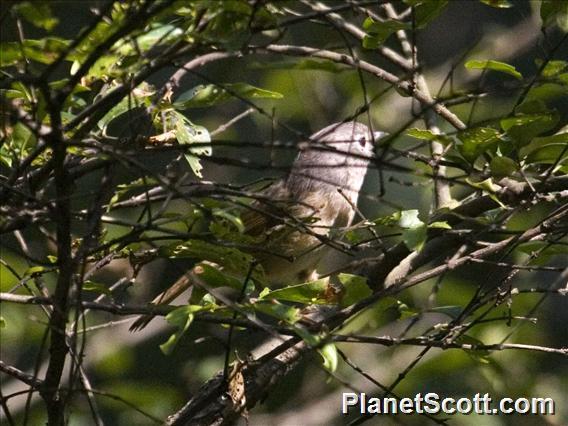
David’s Fulvetta (Alcippe davidi) ©Planetscott.com

David’s Fulvetta (Alcippe davidi) is a species of bird in the Pellorneidae – Fulvettas, Ground Babblers Family. It is endemic to southern China and northern Vietnam. This species was recently raised from a subspecies of the Grey-cheeked Fulvetta.

Its natural habitat is subtropical or tropical moist montane forests. Broadleaf evergreen forest, secondary forest, bamboo and scrub. Oriental Region : Southcentral, South China to Northwest Vietnam

Breeding season from March to July in China, April to August in Taiwan, February to July in SE Asia. The nest is a compact strong cup made of bark, leaf skeletons, moss and spider web. It’s placed in a low bush and lays 2 – 4 eggs. Multibrooded.

Feeds on small insects, seeds and berries. Often in noisy groups, sometimes in mixed flocks together with other species. Often mobs raptors and owls. [Wikipedia and Planet of Birds]


More Avian and Attributes

Birds whose first or last name start with “D”

Good News

*
[Definitions from Webster’s Dictionary of American English (1828), unless noted. Bird info from Wikipedia plus.]

Avian And Attributes – Crowned II

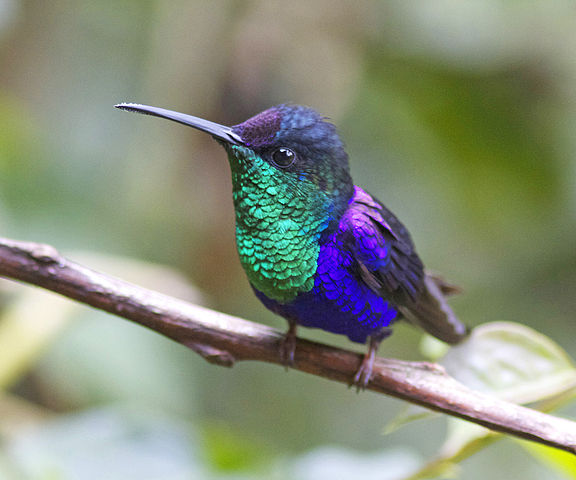
(Violet-) Crowned Woodnymph (Thalurania colombica) ©WikiC

“And when they had platted a crown of thorns, they put it upon his head, and a reed in his right hand: and they bowed the knee before him, and mocked him, saying, Hail, King of the Jews!” (Matthew 27:29 KJV)

“And they clothed him with purple, and platted a crown of thorns, and put it about his head,” (Mark 15:17 KJV)

“And the soldiers platted a crown of thorns, and put it on his head, and they put on him a purple robe, And said, Hail, King of the Jews! and they smote him with their hands.” (John 19:2-3 KJV)


Avian and Attributes – Crowned/Crown

Crowned Continued:

Crowned
(1): (p. p. & a.) Great; excessive; supreme.
(2): (p. p. & a.) Having or wearing a crown; surmounted, invested, or adorned, with a crown, wreath, garland, etc.; honored; rewarded; completed; consummated; perfected.
(3): (imp. & p. p.) of Crown

[From Webster 1913 Dictionary]

“Behold, I come quickly: hold that fast which thou hast, that no man take thy crown.” (Revelation 3:11 KJV)


Crowned II’s birds – Today we finish up with the last four “Crowned” birds:

Crowned Lapwing (Vanellus coronatus)

Crowned Lapwing (Vanellus coronatus) ©WikiC


The Crowned Lapwing (Vanellus coronatus),, or crowned plover, is a bird of the lapwing subfamily that occurs contiguously from the Red Sea coast of Somalia to southern and southwestern Africa. It is an adaptable and numerous species, with bold and noisy habits. It is related to the more localized black-winged and Senegal lapwings, with which it shares some plumage characteristics.

Crowned lapwings prefer short, dry grassland which may be overgrazed or burnt, but avoid mountains. In higher-rainfall areas such as parts of Zambia and Zimbabwe, they occur mainly as dry-season visitors. In dry regions of northern Botswana, however, they are attracted in large numbers when good rainfall occurs. In southern Africa their highest concentrations are to be found in the dry central Kalahari region. They are members of the Charadriidae – Plovers Family

Crowned Sandgrouse (Pterocles coronatus)

Crowned Sandgrouse (Pterocles coronatus) ©WikiC


The Crowned Sandgrouse (Pterocles coronatus) occurs in North Africa and south Asia and is found from Mauritania in the west through the Middle East to Pakistan. A fairly small sandgrouse which appears rather uniformy coloured from a distance except for darker flight feathers, the wholly dark flight fetahers being the best feature to identify Crowned Sandgrouse from the similar Spotted Sandgrouse. The dark flight feathers contrast with the sandy upper wing coverts and the creamy underwing coverts.

The crowned sandgrouse is a bird of deserts, preferring stony deserts rather than sandy ones. In North Africa breeds among dark red sandstone which matches its plumage colour. Avoids areas with too much vegetation. They are members of the Pteroclidae – Sandgrouse Family.

Crowned Slaty Flycatcher (Griseotyrannus aurantioatrocristatus)

Crowned Slaty Flycatcher (Griseotyrannus aurantioatrocristatus) ©WikiC

The Crowned Slaty Flycatcher (Griseotyrannus aurantioatrocristatus) is a species of bird in the family Tyrannidae, the tyrant flycatchers. It was formerly united in the genus Empidonomus with the variegated flycatcher, but is now considered the only species of Griseotyrannus. The name Griseotyrannus aurantioatrocristatus means “orange-black crested gray Tyrannus”. Its binomial is the longest of any bird species, fifteen syllables when spoken aloud.

It is found in Argentina, Bolivia, Brazil, Colombia, Ecuador, Paraguay, Peru, Uruguay, and Venezuela. Its natural habitats are subtropical or tropical dry forests and subtropical or tropical moist lowland forests.

The crowned slaty flycatcher migrates into the mostly western and central Amazon basin as a non-breeding resident, except in the southeast bordering the Cerrado and Pantanal, where it is resident in much of the western cerrado and southwards; the migration occurs during the austral winter. Members of the Tyrannidae – Tyrant Flycatchers Family.

Crowned Woodnymph (Thalurania colombica)

Crowned Woodnymph (Thalurania colombica) by RScanlon

Crowned Woodnymph (Thalurania colombica) by RScanlon

Crowned Woodnymph (Thalurania colombica)

The Crowned Woodnymph is a species of hummingbird in the Trochilidae – Hummingbirds Family. It is found in Belize and Guatemala to northern Peru. Its natural habitats are subtropical or tropical moist lowland forests, subtropical or tropical moist montane forests, and heavily degraded former forest.

Taxonomically, the species is confusing. The AOU currently lumps the violet-crowned woodnymph and the green-crowned woodnymph together here. It also includes the taxon hypochlora (emerald-bellied woodnymph) from south-western Ecuador and adjacent Peru here. All are sometimes considered distinct by other taxonomists.

It also formerly included the Mexican woodnymph as subspecies.

See Part I – Avian and Attributes – Crowned I

Also: Sunday Inspiration – Crown Birds


More Avian and Attributes

Birds whose first or last name start with “C”

Good News

*
[Definitions from Webster’s Dictionary of American English (1828), unless noted. Bird info from Wikipedia plus. (with editing)]

Avian And Attributes – Crowned I

Crowned Chat-Tyrant (Silvicultrix frontalis) ©WikiC

“For unto the angels hath he not put in subjection the world to come, whereof we speak. But one in a certain place testified, saying, What is man, that thou art mindful of him? or the son of man, that thou visitest him? Thou madest him a little lower than the angels; thou crownedst him with glory and honour, and didst set him over the works of thy hands: Thou hast put all things in subjection under his feet. For in that he put all in subjection under him, he left nothing that is not put under him. But now we see not yet all things put under him. But we see Jesus, who was made a little lower than the angels for the suffering of death, crowned with glory and honour; that he by the grace of God should taste death for every man.” (Hebrews 2:5-9 KJV)


Avian and Attributes – Crowned

CROWNED, pp. Invested with a crown, or with regal power and dignity; honored; dignified; rewarded with a crown, wreath, garland or distinction; recompensed; terminated; completed; perfected.

CROWN, v.t.
1. To invest with a crown or regal ornament. Hence, to invest with regal dignity and power.
2. To cover, as with a crown; to cover the top.
3. To honor; to dignify; to adorn.
Thou hast crowned him with glory and honor. Psa 8.
4. To reward; to bestow an honorary reward or distinction on; as the victor crowned with laurel.
5. To reward; to recompense.
6. To terminate or finish; to complete; to perfect.
7. To terminate and reward; as, our efforts were crowned with success.


Crowned Birds – There are eight bird species whose names start with “Crowned.” There are many others who are “-crowned” and these may be used later. Today, you are introduced to four Crowned birds. Tomorrow, Lord willing, you will find the other four.

Crowned Chat-Tyrant (Silvicultrix frontalis)

Crowned Chat-Tyrant (Silvicultrix frontalis) ©WikiC

The Crowned Chat-Tyrant (Silvicultrix frontalis) is a species of bird in the tyrant flycatcher family. It is found in Bolivia, Colombia, Ecuador, and Peru. Its natural habitat is subtropical or tropical moist montane forests. Tyrannidae – Tyrant Flycatchers Family member. 

Crowned Cormorant (Microcarbo coronatus)

Crowned Cormorant (Microcarbo coronatus) ©WikiC

The Crowned Cormorant (Microcarbo coronatus) is a small cormorant that is endemic to the waters of the cold Benguela Current of southern Africa. It is an exclusively coastal species and is not found more than 10 km (6 mi) away from land. This species is related to the reed cormorant, and was formerly considered to the same species. Phalacrocoracidae – Cormorants, Shags Family member.

Crowned Eagle (Stephanoaetus coronatus)

Crowned Eagle (Stephanoaetus coronatus) ©Wiki

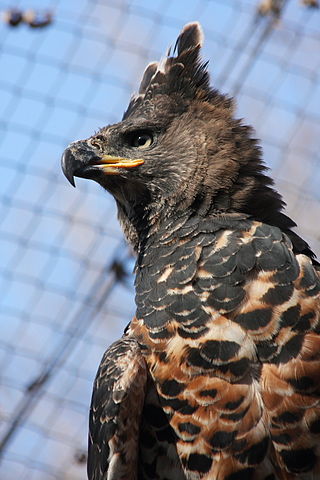
The Crowned Eagle, also known as the African crowned eagle or the crowned hawk-eagle (Stephanoaetus coronatus) is a large bird of prey found in sub-Saharan Africa; in Southern Africa it is restricted to eastern areas. Its preferred habitats are principally riparian woodlands and various forests. The crowned eagle is the only extant member of the genus Stephanoaetus. A second species, the Malagasy crowned eagle (Stephanoaetus mahery) became extinct after humans settled on Madagascar. Accipitridae – Kites, Hawks and Eagles Family member.

Crowned Hornbill (Lophoceros alboterminatus)

Crowned Hornbill (Lophoceros alboterminatus) ©WikiC

The Crowned Hornbill is an African hornbillIt is a medium-sized bird, 50–54 centimetres (20–21 in) in length, and is characterized by its white belly and black back and wings. The tips of the long tail feathers are white. The eyes are yellow; the beak is red and presents a stocky casque on the upper mandible. In females, the casque is smaller. The crowned hornbill can be distinguished from the similar Bradfield’s hornbill by its shorter beak.

The crowned hornbill is a common resident of the coastal and riverine forests of southern (only the eastern coast) to northeastern Africa. Bucerotidae – Hornbills Family member.

Crowned II’s birds – Crowned Lapwing (Vanellus coronatus), Crowned Sandgrouse (Pterocles coronatus), Crowned Slaty Flycatcher (Griseotyrannus aurantioatrocristatus), Crowned Woodnymph (Thalurania colombica)

Part II – Avian and Attributes – Crowned II

Also: Sunday Inspiration – Crown Birds


** Are you enjoying learning about these Avian and Attributes? Please leave a comment. Sometimes I push it a bit, but it is desired that you are finding these articles interesting and a blessing. **

More Avian and Attributes

Birds whose first or last name start with “C”

Good News

*
[Definitions from Webster’s Dictionary of American English (1828), unless noted. Bird info from Wikipedia plus.]

Avian And Attributes – Cook

Cook’s Petrel (Pterodroma cookii) ©WikiC

“As soon then as they were come to land, they saw a fire of coals there, and fish laid thereon, and bread. (John 21:9 KJV)

“Jesus saith unto them, Come and dine. And none of the disciples durst ask him, Who art thou? knowing that it was the Lord. Jesus then cometh, and taketh bread, and giveth them, and fish likewise. This is now the third time that Jesus shewed himself to his disciples, after that he was risen from the dead.” (John 21:12-14 KJV)


Avian and Attributes – Cook

From the above verses, it appears our Lord was also a good Cook.

Cook
(1): (v. i.) To prepare food for the table.
(3): (v. t.) To prepare, as food, by boiling, roasting, baking, broiling, etc.; to make suitable for eating, by the agency of fire or heat.
(6): (n.) One whose occupation is to prepare food for the table; one who dresses or cooks meat or vegetables for eating.
(7): (v. t.) To throw.


Cook Reed Warbler (Acrocephalus kerearako) ©IGoTerra

Cook Reed Warbler (Acrocephalus kerearako)

The Cook Reed Warbler or Cook Islands reed warbler (Acrocephalus kerearako) is a species of Old World warbler in the Acrocephalidae Family. It is found only in the Cook Islands. Its natural habitats are subtropical or tropical dry forests, swamps, and rural gardens. It is threatened by habitat loss.

Cook’s Petrel (Pterodroma cookii) ©Flickr Duncan

Cook’s Petrel (Pterodroma cookii)

The Cook’s petrel (blue-footed petrel) (Pterodroma cookii), is a Procellariform seabird. It is a member of the gadfly petrels and part of the subgroup known as Cookilaria petrels, which includes the very similar Stejneger’s petrel. One of the smallest petrels, Cook’s petrel is typically 25–30 cm (9.8–11.8 in) in length with a 65–66 cm (26–26 in) wingspan and a weight of around 200 g (7.1 oz). Its colouration is typical of gadfly petrels: pale grey upperparts with a dark grey “M” on the wings and white underparts.

The bill is long and black with tubular nostrils on both sides. As in all members of the order Procellariiformes, this nostril configuration enables an exceptionally acute sense of smell, which the birds use to locate food and nest sites in the dark. In the  Procellariidae – Petrels, Shearwaters Family.

Cook’s petrel breeds only in New Zealand on three small islands: Little Barrier Island, Great Barrier Island, and Codfish Island. The breeding season is the southern summer, October–May. It nests in burrows and rock crevices, preferring sites on thickly forested ridges.

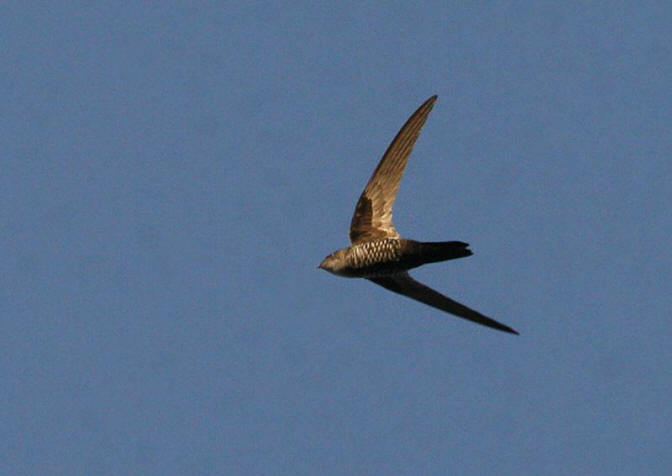
Cook’s Swift (Apus cooki) ©Peter Ericsson

Cook’s Swift (Apus cooki)

The Cook’s Swift (Apus cooki), is a small bird, superficially similar to a house martin. It is, however, completely unrelated to those passerine species, since swifts are in the order Apodiformes. These birds have very short legs which they use only for clinging to vertical surfaces. The scientific name comes from the Greek απους, apous, meaning “without feet”. They never settle voluntarily on the ground. Blyth’s swifts spend most of their lives in the air, living on the insects they catch in their beaks.

Cook’s swifts breed in limestone caves of Thailand, Myanmar and Indochina. The species has a green iridescence, a shallow tail fork and is a short distance migrant. In the Apodidae – Swift Family


More Avian and Attributes

Birds whose first or last name start with “C”

Good News

*
[Definitions from Webster’s Dictionary of American English (1828), unless noted. Bird info from Wikipedia plus. With Editing]