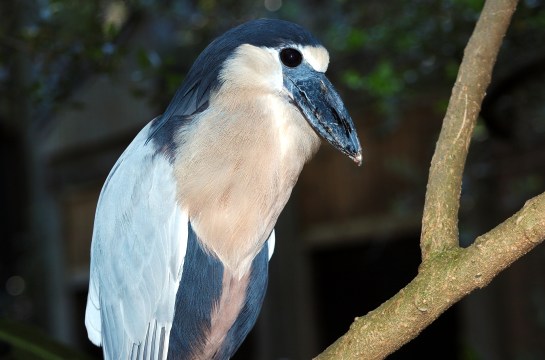
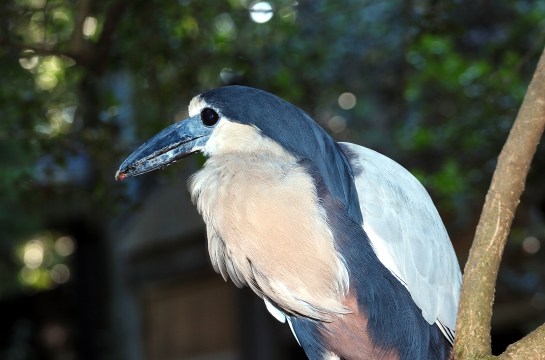
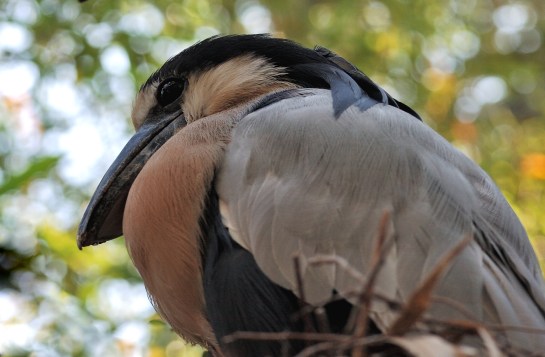
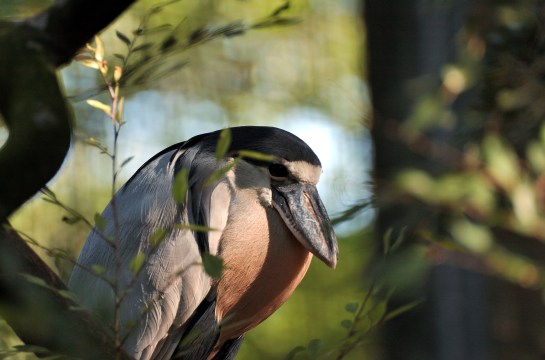
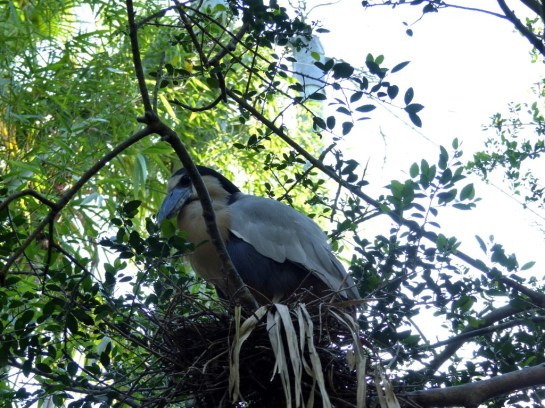
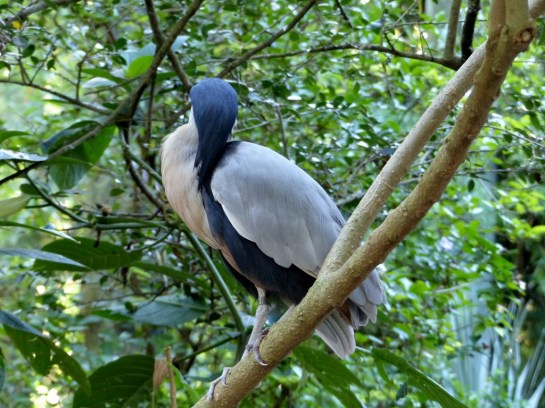
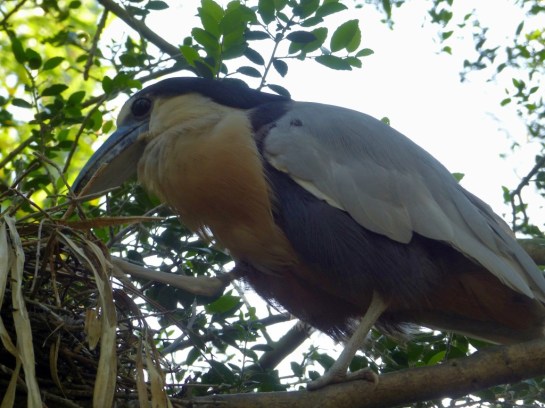
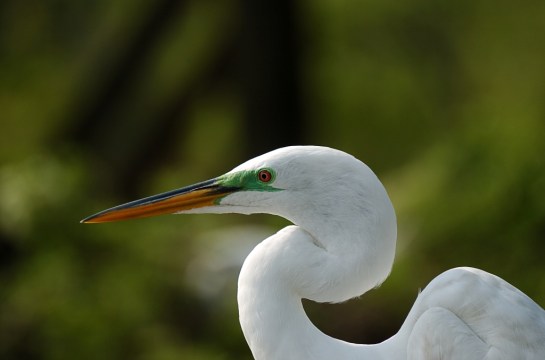
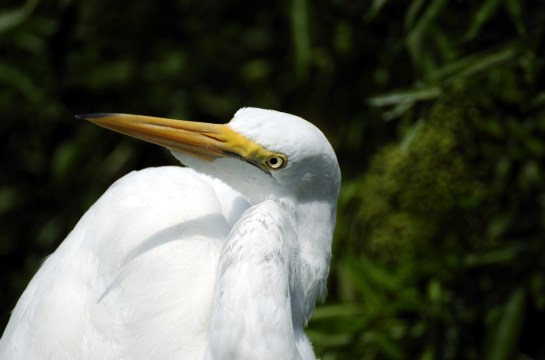
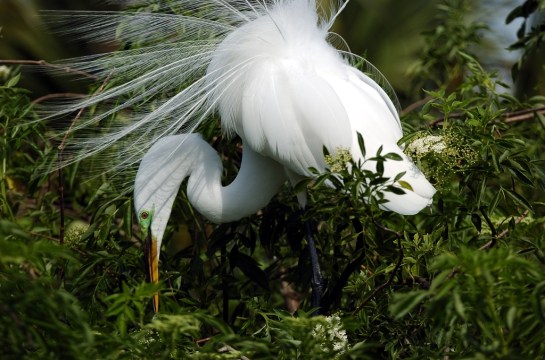
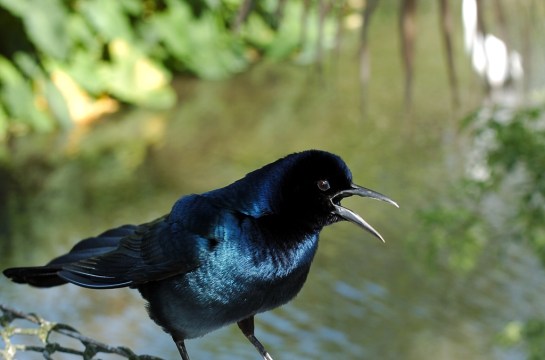
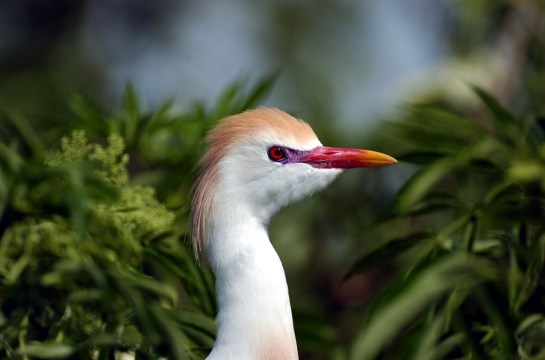
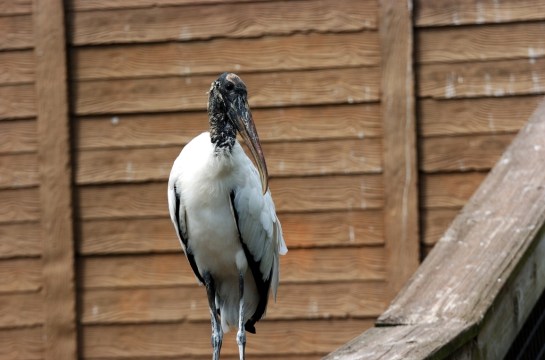
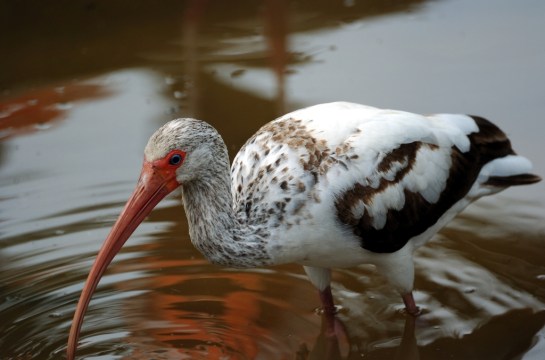
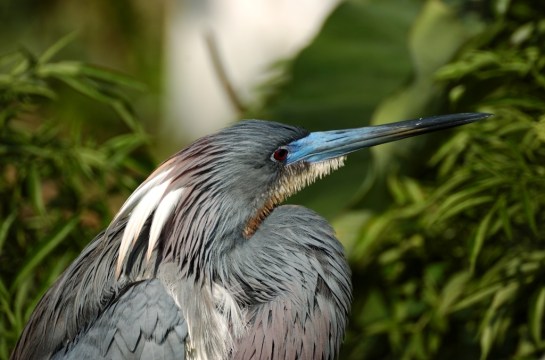
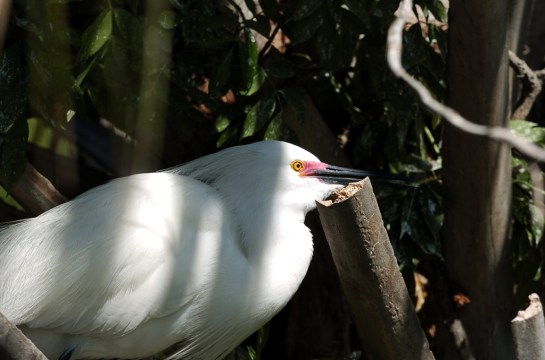
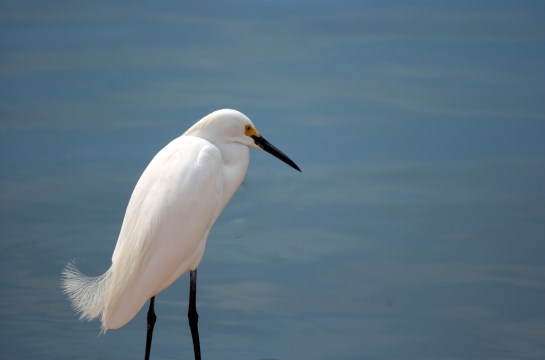
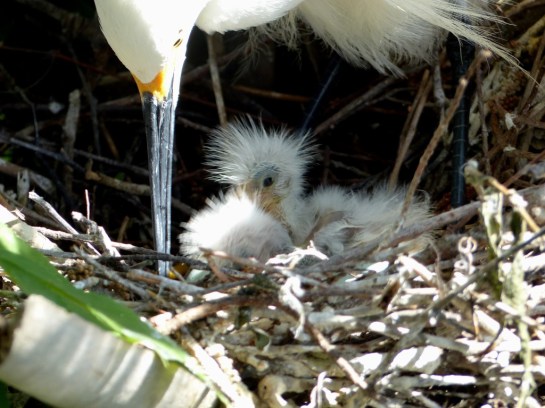
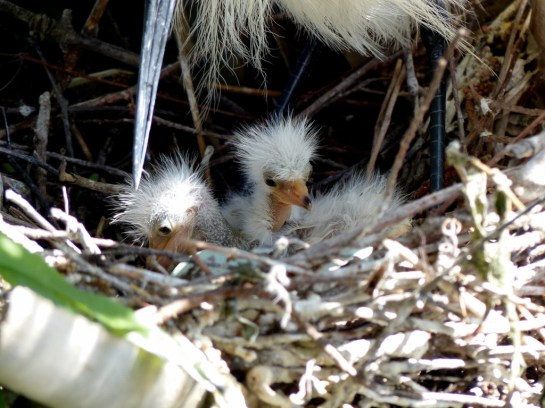
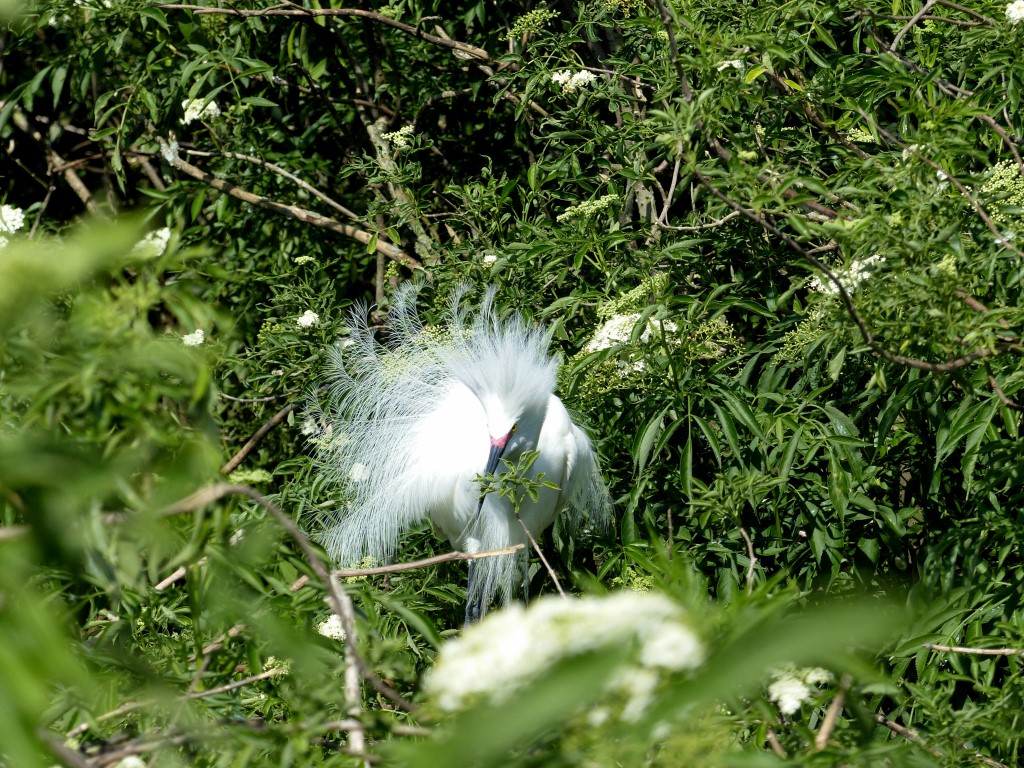
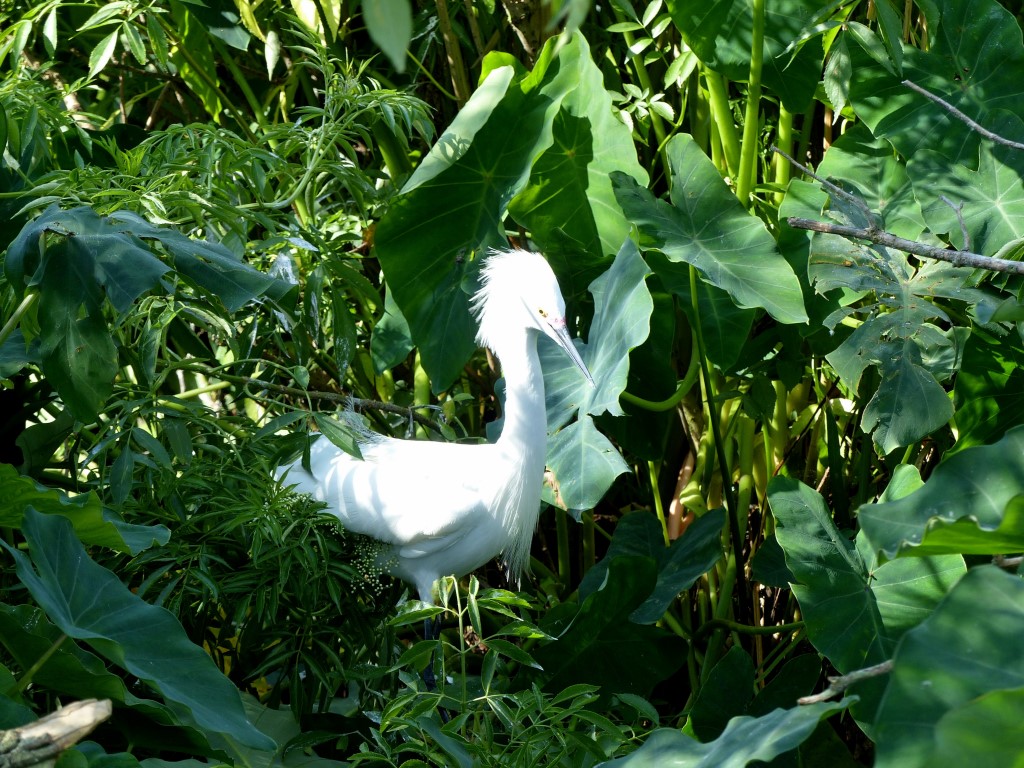
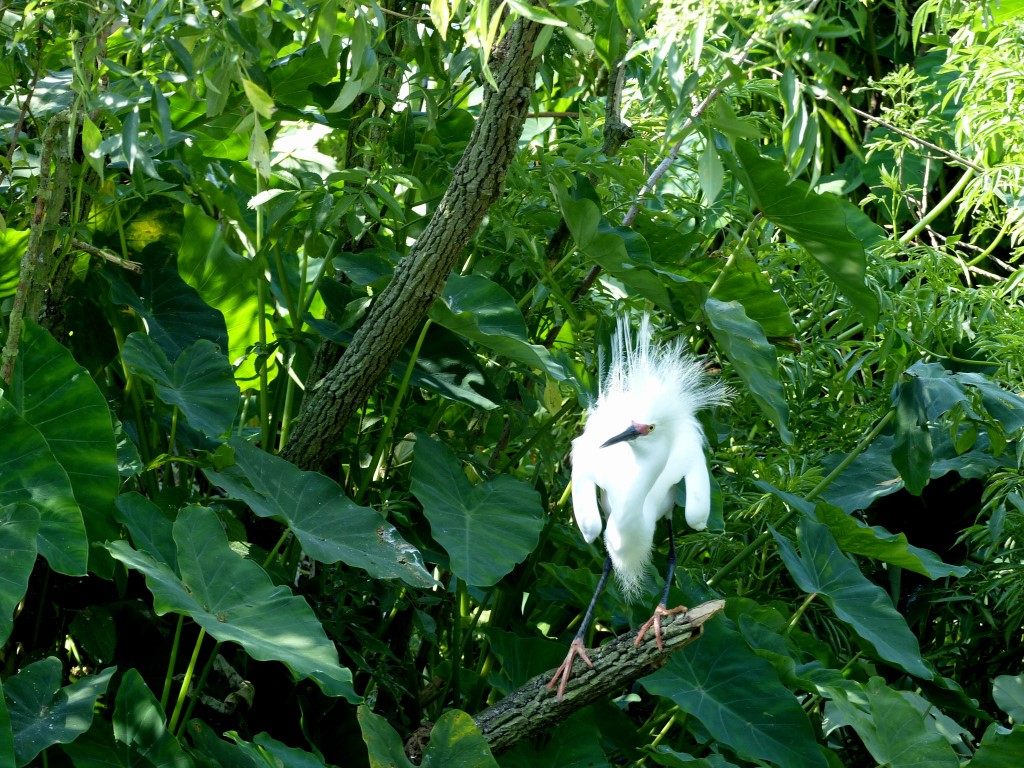
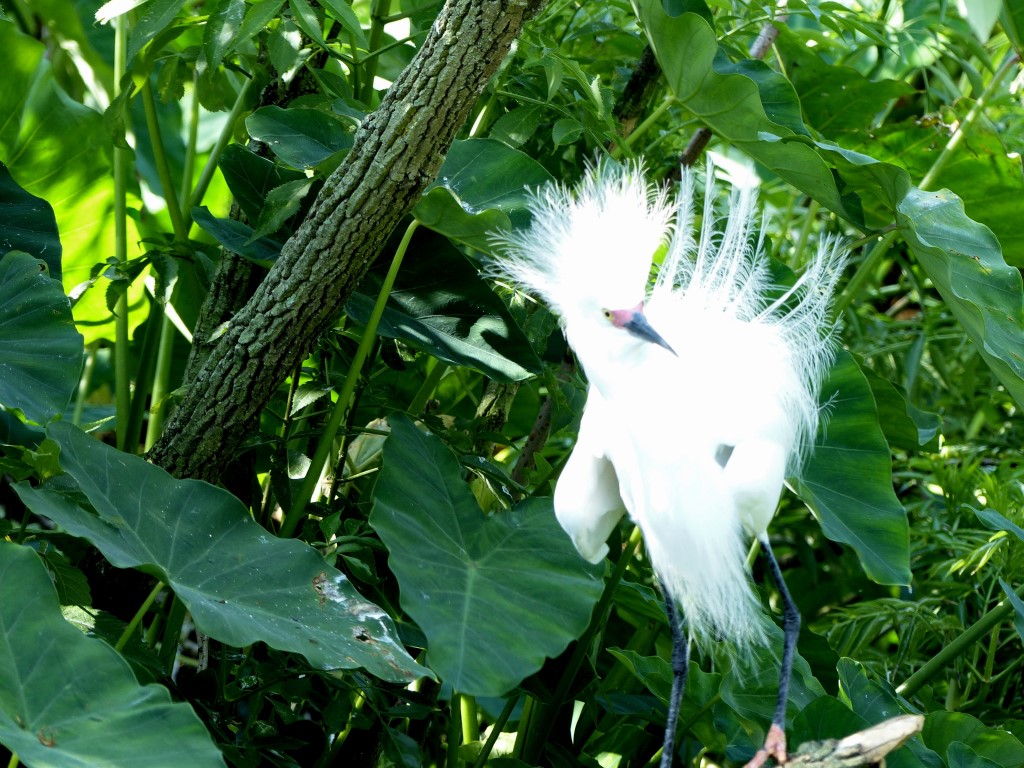
Boat-billed Heron at Lowry Park Zoo

Boat-billed Heron Lowry Park Zoo by Dan

Boat-billed Heron Lowry Park Zoo by Dan

For every beast of the forest is Mine, and the cattle upon a thousand hills or upon the mountains where thousands are. I know and am acquainted with all the birds of the mountains, and the wild animals of the field are Mine and are with Me, in My mind. (Psalms 50:10-11 AMP)

We went to Lowry Park Zoo recently because they opened up early for a special event for the kids. We headed to the aviary to get there while they were feeding the birds. Usually, that happens before the zoo opens. Besides that, most people were at the event and we had the aviary to us and the birds. Yeah!

One of my favorite birds in there is the Boat-billed Heron. I think they are just cute. Two of them like to sit just above or to the side of the walkway. (In fact, one of them managed to plaster Dan and his camera on a previous visit. Yuk!) This time they behaved and was able to shoot a video right up under one of my avian friends. They are adorable, to me.

Here is the video I took of our friendly Boat-bill Heron (of course my mouth was running in amazement) :

We have had other articles on this bird, but just had to share this latest Birdwatching Adventure.

Who Paints The Leaves?

*

Tickle Me Tuesday – Squirrels and Bird Feeders

Squirrel at a park in Daytona

Squirrel at a park in Daytona by Lee

Not sure how many have heard of the “Squirrel Proof” bird feeders, but Droll Yankees make a line of them. I am not selling them, but just want you to enjoy some of the antics of squirrels trying to feed from them. Also, there is a video of someone who put Vaseline on a pole and how a determined squirrel tries to get up the pole to the feed.

The Lord sure gave the squirrels a determined spirit. Enjoy and get “tickled”!

A time to weep, and a time to laugh; … (Ecclesiastes 3:4a KJV)

Let me hear joy and gladness;… (Psalms 51:8a ESV)

From Droll Yankee:

Mr Squirrel’s Wild Ride:

Squirrel taking a spin on a Yankee Flipper:

*

Other Tickle Me Tuesday’s I

Wordless Birds


*

“Flag That Bird!” (Part 2)

“Flag those birds!”  (Part 2)

And Moses built an altar and called the name of it Jehovah-nissi [i.e., the LORD is my banner]. (Exodus 17:15)

Luzon Bleeding-heart by Dan

Orni-Theology

In Flag that Bird! (Part 1)”, we considered 4 “banner birds”  –  besides globally popular eagles  –  that appear on national flags:  Belgium’s Wallonian Chicken (Gallus gallus domesticus); Portugal’s Northern Goshawk (Accipiter gentilis); Burma’s Green Peafowl (Pavo muticus); and Dominica’s Sisserou Parrot (Amazona imperialis).

As promised, this mini-series will continue with more “flagged birds”, namely, British Antarctic Territory (penguin);  Saint Helena, British crown colony in the southeastern Atlantic Ocean (Saint Helena Plover, a/k/a “wirebird”);  Kiribati (frigatebird);  Papua New Guinea (bird of paradise);  Fiji, as well as the royal standard of Tonga (dove);  Australian state of Western Australia (black swan);  Australian state of South Australia (iping shrike);  Bolivia (condor);  and Uganda (crested crane).

In this particular installment, 2 more (of those just listed) will be introduced.

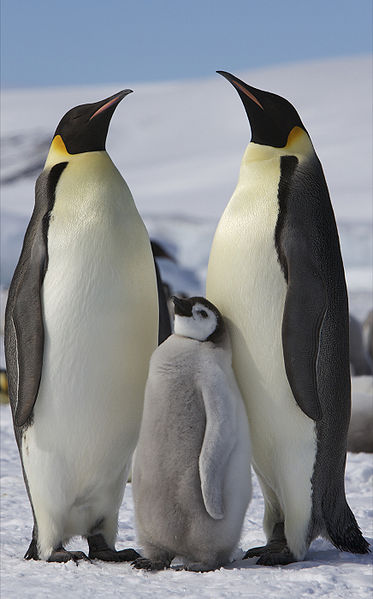
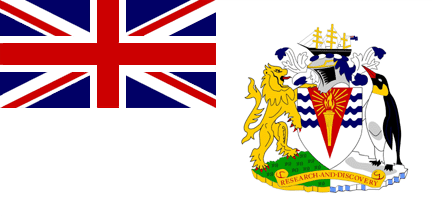
So now, consider the penguin – avian icon of the British Antarctic Territory.

Emperor Penguin (Aptenodytes forsteri) ©WikiC


Emperor Penguin (Aptenodytes forsteri).  There are a variety of penguins that live in the Antarctic regions, yet it is the Emperor Penguin featured on the official coat-of-arms of the British Antarctic Territory, and that coat-of-arms is what appears on the territory’s official flag, next to the Union Jack (on a white background).

British Antarctic Territory - Union Jack with Emperor Penguin ©PD

British Antarctic Territory – Union Jack with Emperor Penguin ©PD

The British explorers of the Antarctic regions include Captain Robert Falcon Scott and Ernest Shackleton, who led an expedition using their research ship RRS Discovery (AD1901-AD1904), a symbol of which ship appears on the heraldic crest of that territory’s coat-of-arms.

Captain Scott’s second expedition (using the Terra Nova, AD1910-AD1913), to explore Antarctica, was disappointing for two reasons: (1) Roald Amundsen’s Norwegian exploration party had just “beat” the Brits to the South Pole, on 14 December of AD1911; and (2) Scott’s expedition party died in the wild weather of Antarctica near the end of March that year, on the Ross Ice Shelf, about 150 miles from their base camp.

Of interest to Biblical creationists, Captain Scott collected about 35 pounds of plant fossils in Antarctica, proving that Antarctica was previously forested (obviously under milder climate conditions!).  Regarding the importance of forests in Antarctica, see Buddy Davis’s article “Forest in Antarctica After the Flood?”, citing National Science Foundation Press Release (8-4-2008), “Antarctic Fossils Paint a Picture of a Much Warmer Continent”.

Ironically, the Discovery and Terra Nova research ventures were both intended to support Darwin’s theory of evolution, but the evidence refused to cooperate!  This surprise (to the evolutionists) is summarized by a BBC reporter, Megan Lane (in BBC News magazine, 2 November, 2011), as follows: “Of the 2,000 specimens of animals collected by Scott and his team – 400 of which were newly discovered – the jewel in the crown was a trio of Emperor penguin eggs.  It was hoped [by Darwinism supporters] that these would provide long-awaited proof of Darwin’s theory of evolution.  At the time, it was thought [by evolutionists that] an embryo passed through all [“phylogenetic”] stages of its species’ evolution as it developed.  And as the [British evolutionists] assumed the flightless Emperor penguin to be the world’s most primitive bird, they hoped the embryos in these eggs would show the link between dinosaurs and birds.  The birds had been seen before, but never with their eggs.  ‘It was the greatest [sic] biological quest of its day,’ says polar historian David Wilson, whose great-uncle, Edward Wilson, was Scott’s naturalist. ‘Then they collected the eggs, and all the theories turned out to be wrong’.”  [Quoting BBC’s Megan Lane.]  Amazingly, the “dinosaur-morphs-into-modern-birds” fairy tale is still being fabricated today, through science fiction movies (like Jurassic Park) and via dinosaur DNA evidence spoliation.  [Regarding how dinosaur DNA evidence is being censored, in academic/research circles, to avoid spoiling evolutionist mythology, see the multi-authored ICR article posted at www.icr.org/article/4947 .]

The next bird on this list is the Saint Helena Plover, locally nicknamed the “wirebird” (due to its wiry-thin legs).

St. Helena Plover (Charadrius sanctaehelenae) ©WikiC

St. Helena Plover (Charadrius sanctaehelenae) ©WikiC

Saint Helena Plover (Charadrius sanctaehelenae).

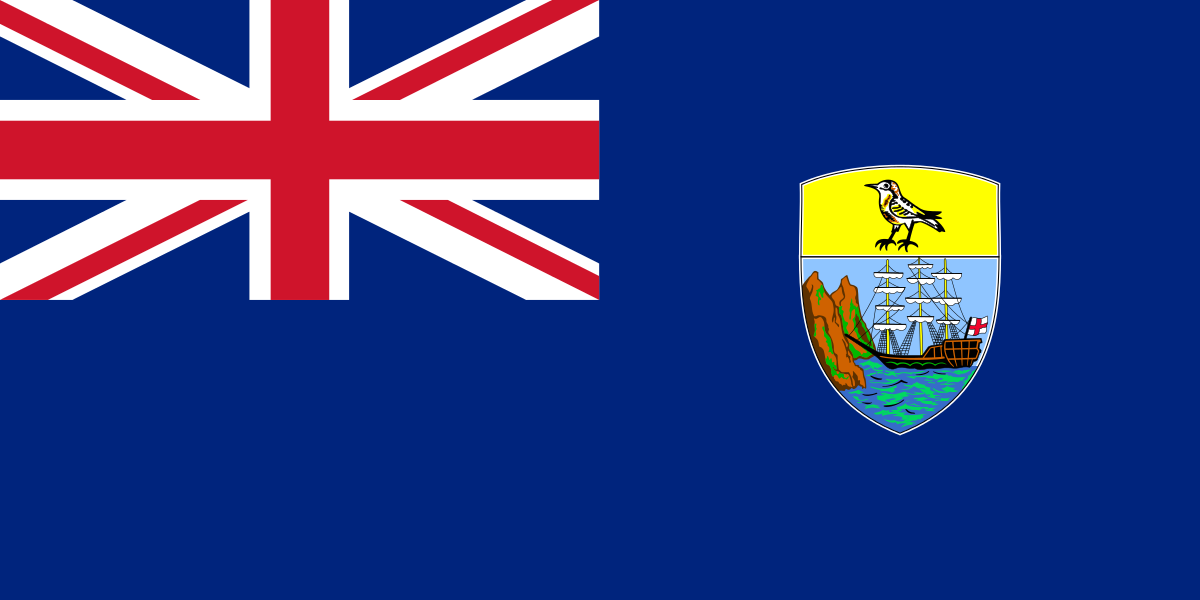
The Saint Helena Plover appears on the flag of Saint Helena, as well as on that small nation’s official coat-of-arms.  The plover is Saint Helena’s national bird as well.  Saint Helena is an island territory  —   in the South Atlantic Ocean (about midway between South America’s Brazil and Africa’s Angola) — administered by the United Kingdom, having been formally claimed by Great Britain when Oliver Cromwell (in AD1657) granted a charter to the East India Company, to settle the South Atlantic island.  Politically speaking, Saint Helena is grouped with Ascension and Tristan da Cunha, as a British overseas territory (formerly known as “Saint Helena and Dependencies”).

Flag of Saint Helena with Saint Henea Plover ©PD

Flag of Saint Helena with Saint Henea Plover ©PD

This little plover is a year-round resident, endemic to this island (although it is similar to other plovers).  This endemic invertebrate-consuming landbird is a small “wader”’, i.e., a shorebird capable of wading in coastal tidewaters, yet it mostly habituates other open areas of the island, such as pasture-like grasslands.  Its eggs are mostly light-brown in color, with dark-speckled mottling.  Its populations are declining, according to monitoring (which includes motion-sensor ultraviolet cameras positioned near nesting grounds), apparently due to predation (by rodents or feral cats) or due to other kinds of nest disturbances (such as sheep that step on plover nests). Conservation efforts are underway, in hopes of restoring the population growth of this island’s humble symbol.

Stay tuned!  God willing, the next installment in this mini-series will cover more of these “banner birds”, now that a penguin and a plover – both of which birds live only in the Southern Hemisphere, are properly “flagged” and accounted for.

*

“Flag That Bird!”  (Part 1)

More Articles by James J. S. Johnson

Orni-Theology

*

Sunday Inspiration – Variety II

We have come to some Passerine Families that only have a few members in them. You will get to see quite a few families in order to have enough birds to make a slideshow. As you know, the Lord loves variety and He gives us each different talents to use for His service. Sometimes many can do the same thing, but there are times when only a few can do a certain task. So it is with our Avian Friends today. They each have their niches to fill.

 Australian Logrunner (Orthonyx temminckii) by Tom Tarrant

Australian Logrunner (Orthonyx temminckii) by Tom Tarrant

Orthonychidae – Logrunners – The logrunners (Orthonyx) are a clade of birds which comprises three species of passerine birds endemic to Australia and New Guinea. Some authorities consider the Australian family Cinclosomatidae to be part of the Orthonychidae. The three species use their stiffened tails to brace themselves when feeding.

Crested Satinbird ©Jerry Oldenettel

Crested Satinbird ©Jerry Oldenettel

Cnemophilidae – Satinbirds – The satinbirds or Cnemophilines, Cnemophilidae are a group of passerine birds which consists of three species found in the mountain forests of New Guinea. They were originally thought to be part of the birds of paradise family Paradisaeidae until genetic research suggested that the birds are not closely related to birds of paradise at all and are perhaps closer to Melanocharitidae. The current evidence suggests that their closest relatives may be the cuckoo-shrikes [Campephagidae

Obscure Berrypecker (Melanocharis arfakiana) CC maholyoak

Obscure Berrypecker (Melanocharis arfakiana) CC maholyoak

Melanocharitidae – Berrypeckers, longbills The Melanocharitidae, the berrypeckers and longbills, is a small bird family restricted to the forests of New Guinea. The family contains ten species in four (sometimes three) genera. They are small songbirds with generally dull plumage but a range of body shapes.

Crested Berrypecker (Paramythia montium) ©WikiC

Crested Berrypecker (Paramythia montium) ©WikiC

Paramythiidae – Painted Berrypeckers – The painted berrypeckers, Paramythiidae, are a very small bird family restricted to the mountain forests of New Guinea. The family comprises two species in two genera: the Tit Berrypecker (Oreocharis arfaki) and the Crested Berrypecker (Paramythia montium).

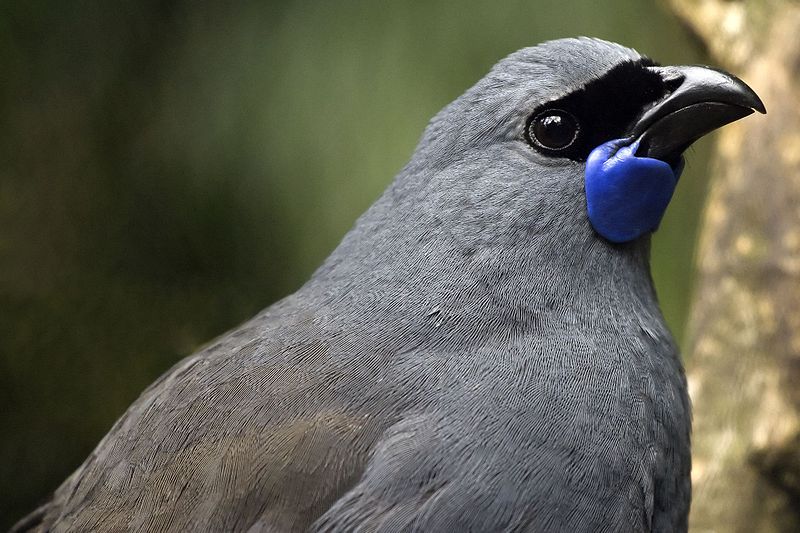
South Island Kokako (Callaeas cinereus) ©Wiki

South Island Kokako (Callaeas cinereus) ©Wiki

Callaeidae – New Zealand Wattlebirds – The small bird family Callaeidae (also named in some sources as Callaeatidae) is endemic to New Zealand. It contains three monotypic genera; of the three species in the family, only two survive and both of them, the Kokako and the Saddleback, are endangered species, threatened primarily by the predations of introduced mammalian species such as rats, mustelids and possums. A third, the Huia became extinct early in the 20th century.

Stitchbird (Notiomystis cincta) by Tom Tarrant

Stitchbird (Notiomystis cincta) by Tom Tarrant

Notiomystidae – Stitchbird – The Stitchbird or Hihi (Notiomystis cincta) is a rare honeyeater-like bird endemic to the North Island and adjacent offshore islands of New Zealand. It became extirpated everywhere except Little Barrier Island but has been reintroduced to three other island sanctuaries and two locations on the North Island mainland. Their relationships have long puzzled ornithologists, but it is now classed as the only member of its own family, the Notiomystidae.

(Family notes from Wikipedia, with editing)
.

This slideshow requires JavaScript.

“Just A Little Talk With Jesus” – Vegter Six – Together for Vi’s 90th Birthday (This was sung by some of Vi’s children and grandchildren. They had 11 children and lots and lots of grandchildren and greats, almost all of them active in church.)

Now it came to pass, as He was praying in a certain place, when He ceased, that one of His disciples said to Him, “Lord, teach us to pray, as John also taught his disciples.” (Luke 11:1 NKJV)

For the eyes of the Lord are over the righteous, and his ears are open unto their prayers: but the face of the Lord is against them that do evil.
(1 Peter 3:12 KJV)

*

(Personal note – As many of you know I spent a week in the hospital recently, for which I am thankful for your prayers for me. On that Sunday afternoon, after Dan had left, I used my Kindle or Ipad to go to my blog. I brought up the page for the all the Sunday Inspirations. I started going through them watching the bird slideshows while listening to the music. Oh, what a blessing I had watching the Lord’s Creations and listening to music about Him. I never knew when those were put together, that they in turn would be such a blessing and peaceful to me. My prayer is that when you are in need of some encouragement or just a blessing, that those blogs will bless you as much as they did me. Our Lord loves to give us peace in the midst of our problems.)

*

Sunday Inspirations

Birds of the World

Good News

*

Videos From Gatorland

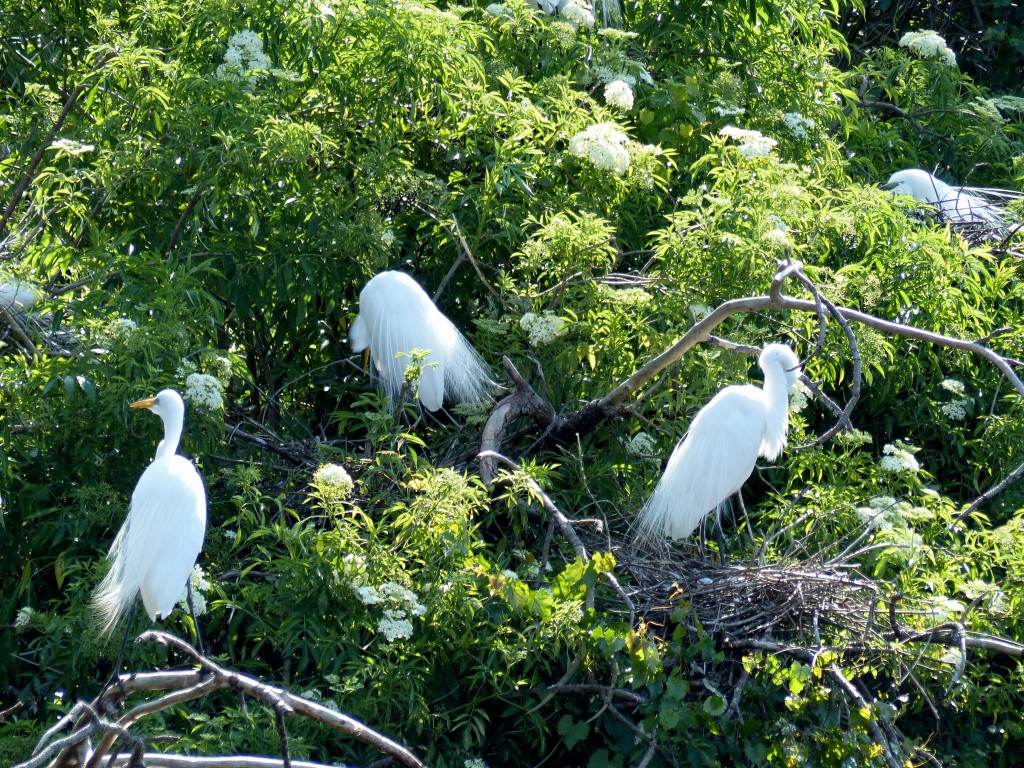
Great Egret by Dan at Gatorland (3)Below is a combination of ten short videos from Gatorland. There are several of the Great Egrets on the nest, and one Great Egret displaying. There were three Snowy Egrets youngsters in a nest and other happenings along the boardwalk.

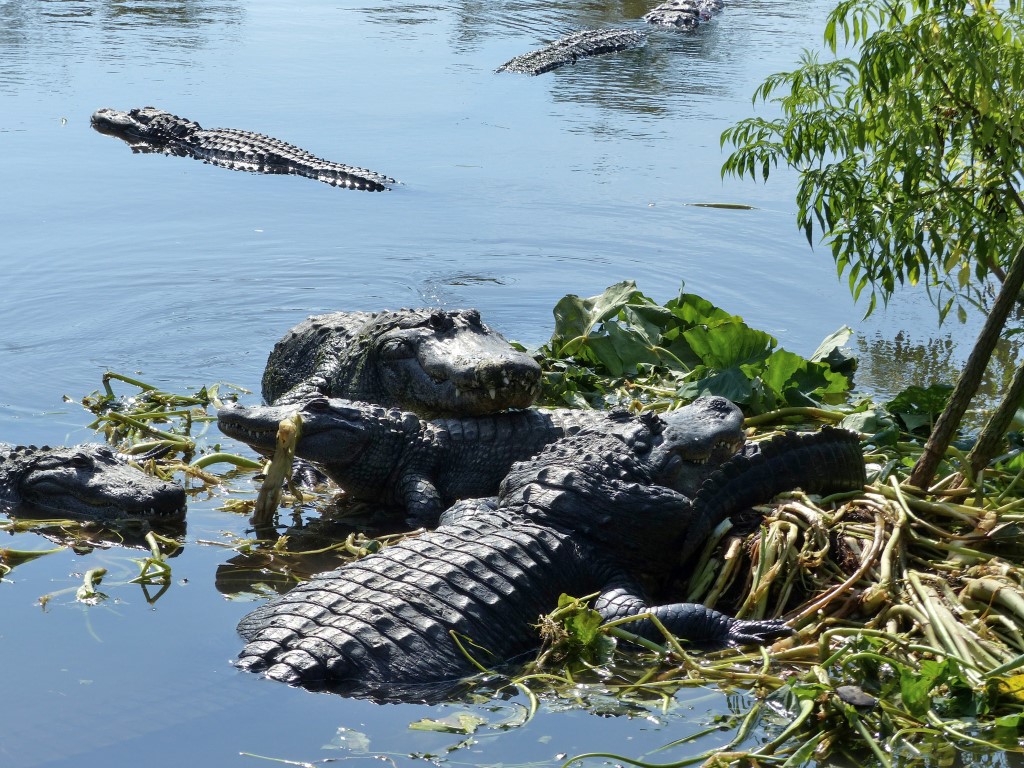
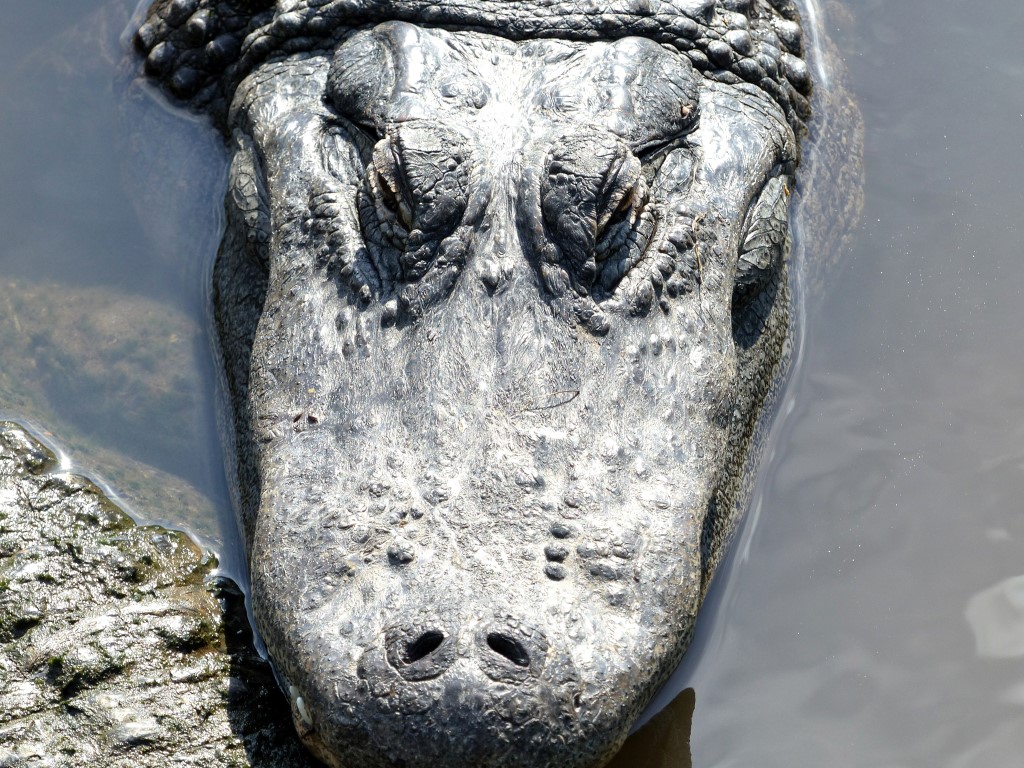
There is also a video of the Flamingo and Parrot areas. Then you will see two gators that I was watching that kept trying to get into position to see each other “eye to eye.” They seem to be sweet on each other. (my interpretation)

You alone are the LORD; You have made heaven, The heaven of heavens, with all their host, The earth and everything on it, The seas and all that is in them, And You preserve them all. The host of heaven worships You. (Nehemiah 9:6 NKJV)

Here are also some of the photos taken by Dan that Day:

We trust you enjoy the photos and video. This is just a few of the photos taken.

See:

Wordless Birds

*

Baby Snowy Egrets at Gatorland

Snowy Egret in Nest by Lee

Snowy Egret in Nest by Lee

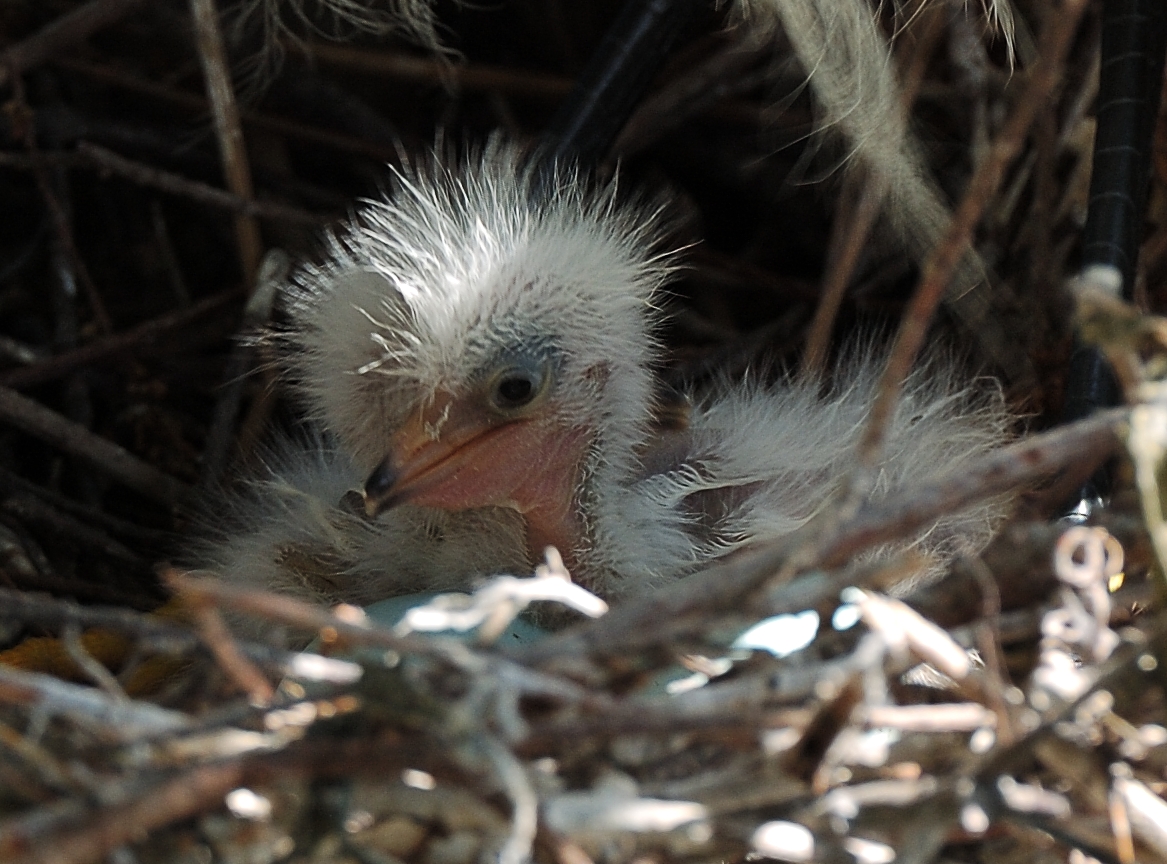
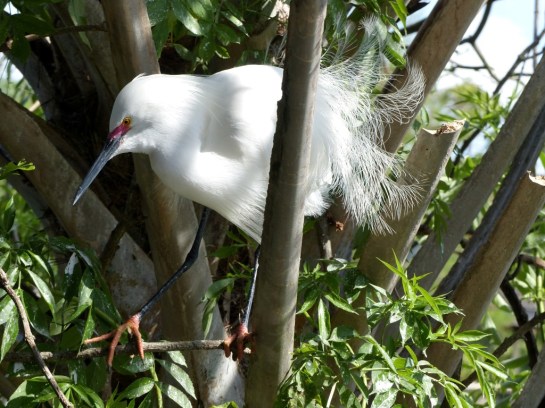
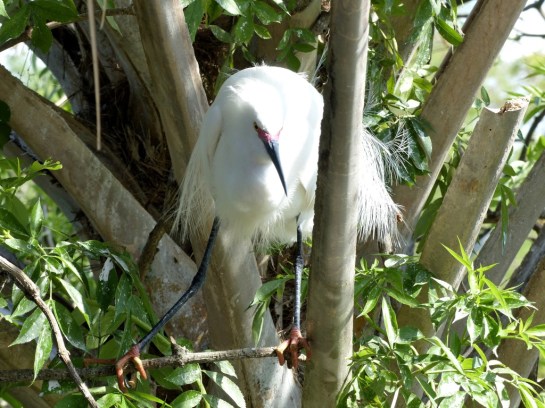
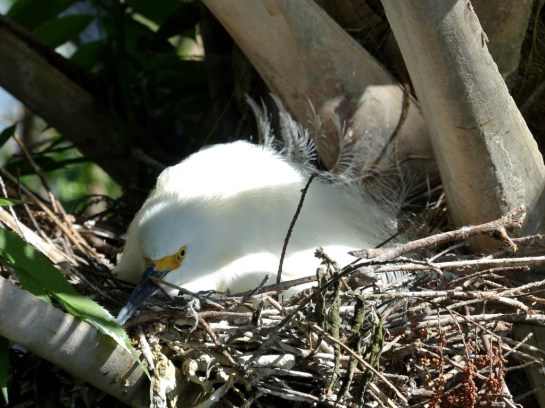
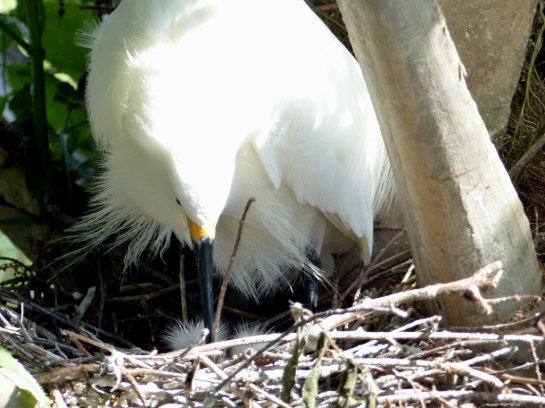
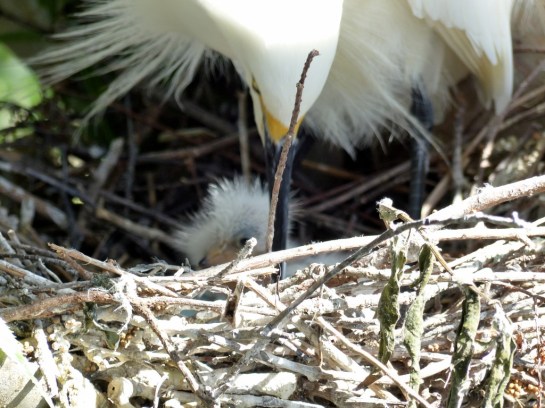
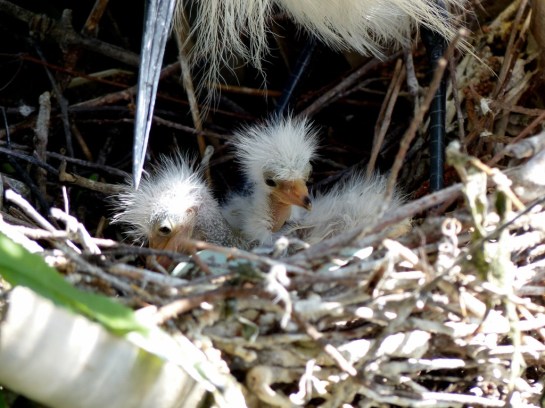
While walking around the rookery at Gatorland, we were able to view some Snowy Egrets at their nest. Dad was watching from above while mom was tending to the two baby “Snowies”.

Snowy Egret Dat at Nest by Lee

Snowy Egret Dat at Nest by Lee

Mom was keeping an eye on the little ones. (This is from my perspective – I could just see the tops of their heads)

Snowy Egret in Nest with babies by Lee

Snowy Egret in Nest with babies by Lee

Dan came along and I handed him my camera (to get a better view-he’s taller) Here is one of the babies on his camera:

Snowy Egret Baby by Dan

Snowy Egret Baby by Dan

and these are the ones we took with my camera and those with his:

As you view the chicks you will notice there is still an egg in there. That makes me think that these little “snowies” are maybe one or two days old at maximum.

Snowy Egrets are Birds of the Bible in the Heron family Ardeidae – Herons, Bitterns  and are on the “do not eat” list. Who would want to eat these cuties?

the stork, the heron after its kind, the hoopoe, and the bat. (Leviticus 11:19 NKJV)

the stork, the heron after its kind, and the hoopoe and the bat. (Deuteronomy 14:18 NKJV)

We also shot some video to share with you. The first part is by me and a photographer was beside me shooting in “burst” mode. Then Dan shot the second part and you can see in the nest better. – I’m short :)

*

Ardeidae – Herons, Bitterns

Birds of the Bible – Herons

Gatorland, FL

Sharing The Gospel

*

“Flag That Bird!” (Part 1)

“Flag That Bird!”  (Part 1)

We will rejoice in thy salvation, and in the name of our God we will set up our banners; may the Lord fulfil all thy petitions.   (Psalms 20:5 — numbered as 20:6 in Hebrew Bible)
Luzon Bleeding-heart by Dan

Orni-Theology

“Flags” and “banners” herald symbolic messages and institutions, such as a nationality, a dynasty, a military force, or some other kind of organization.  In holy Scripture, the term “flag” (in the KJV) refers to riparian or lacustrine wetland plants, which somewhat resemble banners in their physical appearance (see Job 8:11; Exodus 2:3,5; Isaiah 19:6). The term “banner” denotes the word “flag” as it is commonly used today (see Exodus 17:15; Song of Solomon 2:4 & 6:4,10; Psalms 20:5 & 60:4; Isaiah 13:2).

Bald Eagle and a flag

Whenever birds are featured on a national flag (or on its “armorial banner” version, or on a national province or department), the odds heavily favor the banner-bird being an eagle.   Flags affiliated with American showcase the bald eagle; other nations usually present a golden eagle, like Mexico, or sometimes a mythical “double-headed” eagle, like Mount Athos.

ag of Mexico ©WikiC

flag of Mexico ©WikiC

Consider  –  for just a few representative examples  –  the eagles that appear on the flags  –  some present, some past  —  of these national and state/provincial flags:  Albania;  American Samoa;  Austria (armorial flag);  Brandenburg, Germany;  Ecuador (armorial banner);  Egypt;  Geneva, Switzerland;  Germany (armorial flag );  Iowa;  Italian president’s flag (AD1880-AD1946);  Jordan (armorial banner);  Mexico;  North Dakota;  Oregon (front side of state flag);  Pennsylvania;  Poland (armorial flag);  Prussia (armorial banner, AD1819-AD1850); (Moldova;  Mount Athos (autonomous Greek protectorate);  Russian Czar’s banner (18th century A.D.);  Serbia (during AD1882-AD1918); Silesia (until absorption by Prussia in AD1742 – parts of Silesia now lay within Poland, Germany, and the Czech Republic);  United States Coast Guard and Marine Corps;  Utah;  Virgin Islands (of the USA);  Zambia; etc.

So what about the other birds?  Do any other birds get to show off their plumage on a national flag?  Yes, but just a select few.  Although this listing is likely incomplete (and it will be presented as a mini-series, God willing), herebelow are some non-eagle birds that appear on the official flags of some countries of the world.

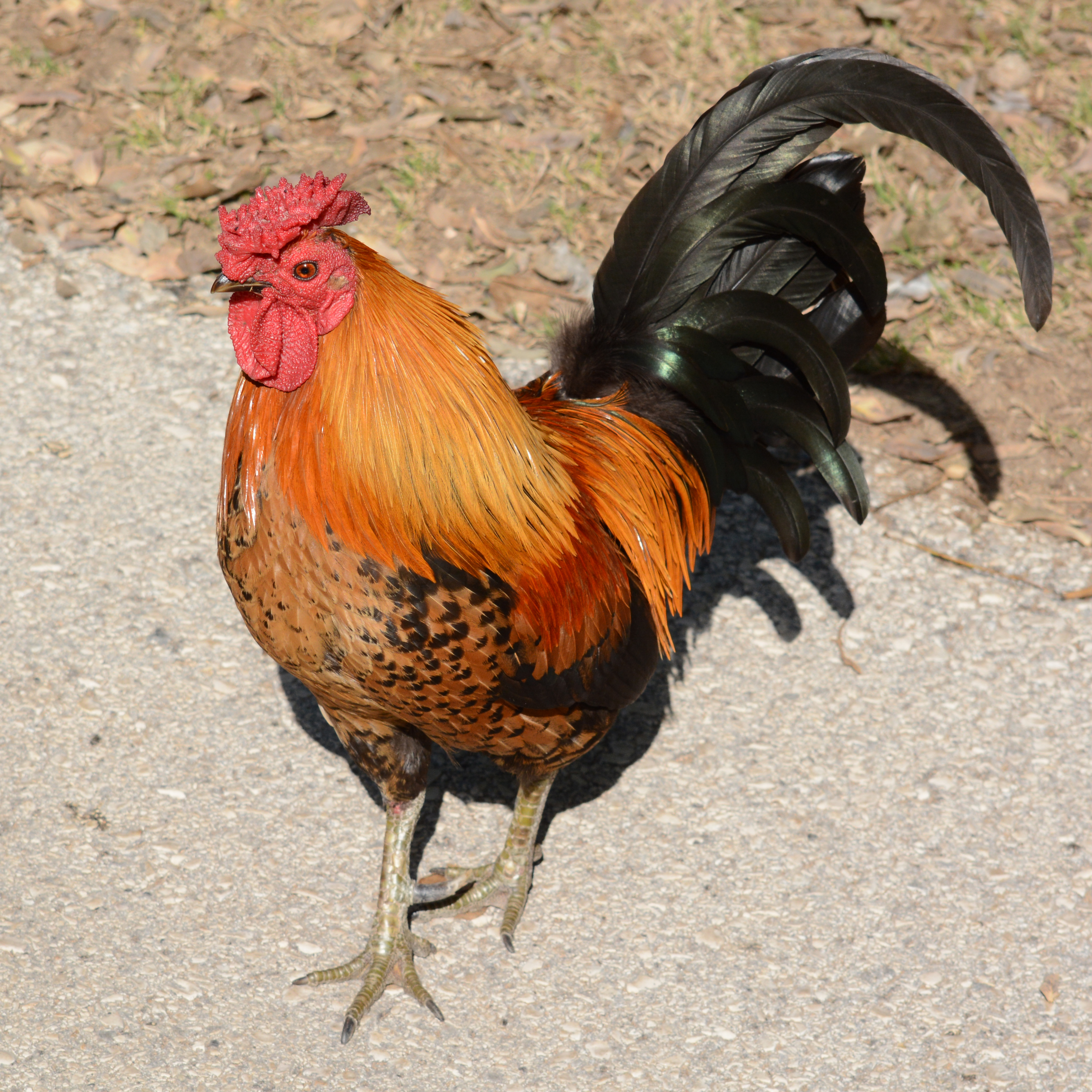
For starters, consider the common – yet ubiquitously valuable – Chicken.
Gallic Chicken (Gallus gallus domesticus) ©WikiC

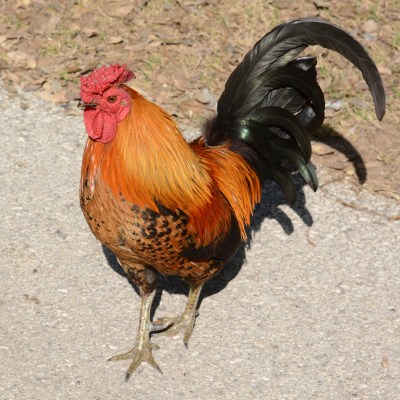
Gallic Chicken (Gallus gallus domesticus) ©WikiC

Gallic Chicken (Gallus gallus domesticus).

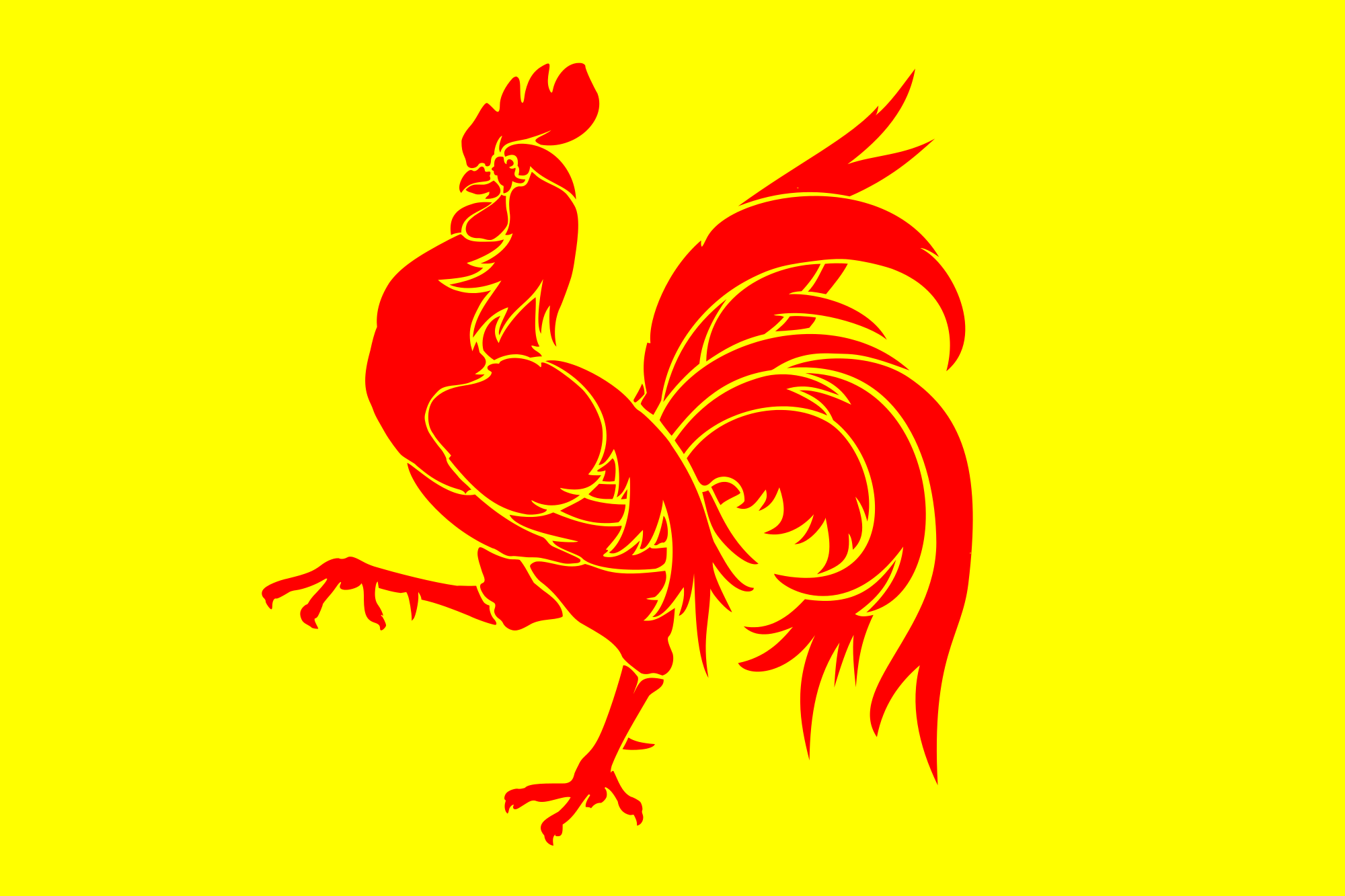
The Gallic Chicken appears on the flag of Wallonia, Belgium.

Wallonia is a region of Belgium, where French is the language usually spoken.  (In Flanders, however, Flemish is spoken; Brussels is bilingual.)  The “Walloon Cock” (i.e., rooster of Wallonia) marches prominently at the center of the regional flag of Wallonia, Belgium.
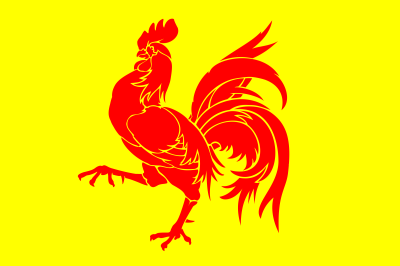
Flag of Wallonia

Flag of Wallonia

During New testament times the country of France (and additional lands that border it) was called “Gaul”, and the symbol of Gaul was the “Gallic cock” (Gallus gallus domestic), i.e., a strutting rooster  –  the adult male of the domestic Chicken, deemed a subspecies of the Red Jungle-fowl (Gallus gallus).  “The cock is a traditional Gallic [i.e., Gaelic/Celtic] emblem and [it] recalls Wallonia’s linguistic and cultural ties with France.”  [Quoting Alfred Znamierowski, The World Encyclopedia of Flags (London: Hermes House, 2002), page 146.]  Chickens are bred and eaten all over the world  –  they even roam the streets of Key West, Florida!   Can you imagine life without chicken?  – think of the almost endless variety of culinary uses of chicken meat and chicken eggs!  Vive le poulet!

The next bird on this list is “bird hawk”, i.e., an accipiter hawk.

Among the birds of prey (“raptors”), there are two main categories of “hawks”:  (1) eagle-or-buzzard-like “buteos” (famous for snatching rodents, lizards, fish, and snakes); (2) and smaller forest-frequenting “accipiters” (famous for snatching birds).  Some would “lump” falcons with accipiters; other do not.  Other groups within the greater “hawk family” include eagles, kites, harriers, vultures, and various “buzzards”.

Buteos include such birds as Red-tailed Hawk, Swainson’s Hawk (which also eats insects), Ferruginous Hawk, Eurasian Buzzard, Broad-winged Hawk, and Osprey.

Accipiters are the smaller category of hawk-like birds  —  the “true hawks”  —  which include the likes of Cooper’s Hawk, Northern Goshawk, Eurasian Sparrowhawk, Sharp-shinned Hawk, etc.  “Accipiters are woodland, bird-catching hawks.  They rely on surprise and a blurring burst of speed to overtake prey.  Short, broad wings provide great acceleration, and slim bodies create little drag.”  [Quoting  Jack L. Griggs, All the Birds of North America (HarperCollins, 1997), page 66 .]  The smaller size of accipiters is a more fitting design for darting in between and around tree branches and shrubbery.  “An accipiter, like the Cooper’s hawk, can chase a songbird through a maze of trees without seeming to slow down, using its long tail as a rudder to help maneuver.  If a songbird does escape the initial attack, it is likely to survive the encounter, for accipiters are sprinters … [who] seldom engage in prolonged tail chases.”  [Again quoting Griggs, All the Birds of North America, page 66.]
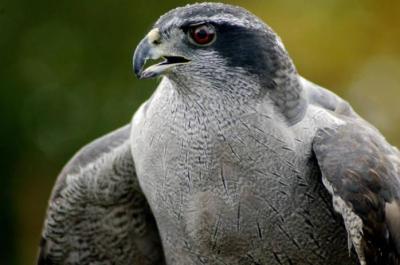
Northern Goshawk (Accipiter gentilis) ©USFWS

Northern Goshawk (Accipiter gentilis) ©USFWS

Northern Goshawk (Accipiter gentilis).

The Northern Goshawk appears on the flag of the Azores, an Atlantic Ocean-surrounded archipelago.  These volcanic islands, located southwest of the European continent, arose from the Mid-Atlantic Ridge, constitute an autonomous protectorate of Portugal.

Portuguese Flag (PD)

Portuguese Flag (PD)

The word “Azores’ derives from açor, the Portuguese word for “goshawk” (which means “goose-hawk”).  Yet it is ironic that both the name and flag of the Azores feature the Northern Goshawk (an accipiter common in continental Europe), because many historians doubt that the Northern Goshawk was a common resident of there, when the Azores were discovered by Portuguese sailors during the AD1400s.  Many think that a local variety of the Eurasian Common Eurasian (Buteo buteo) was mistaken for the Northern Goshawk (Accipiter gentilis) – yet nonetheless the name “Azores” (meaning “goshawks”) stuck.  Accordingly, the depiction of a goshawk, matching the archipelago’s name, was superimposed onto the Azores’ territorial flag.)

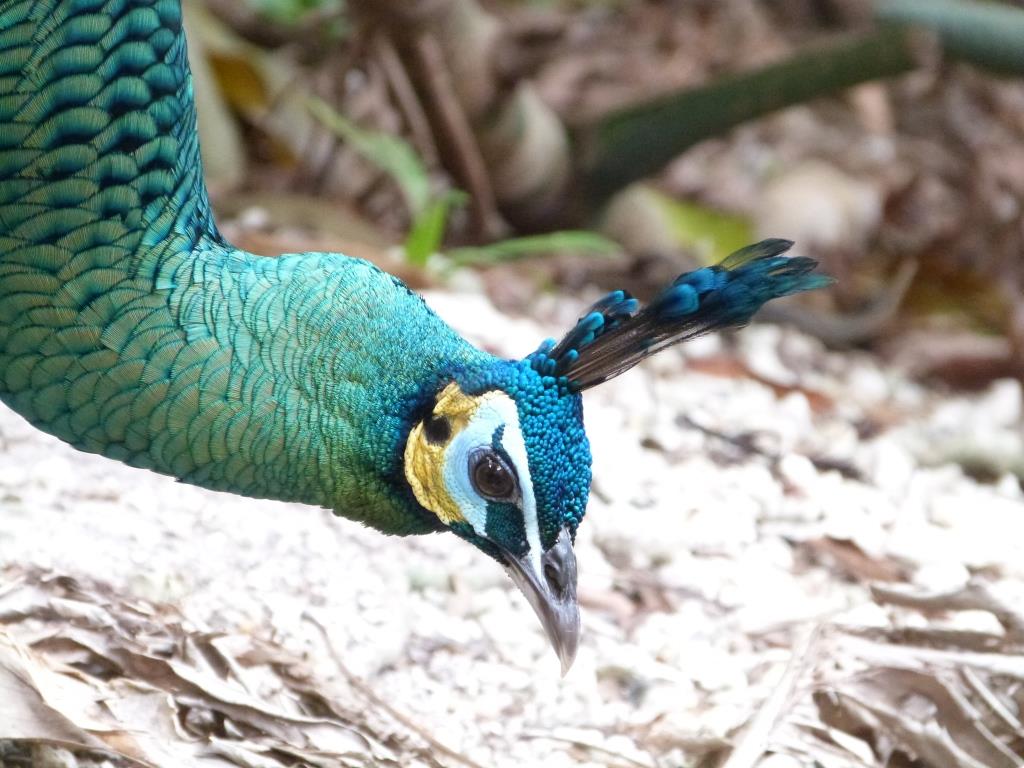
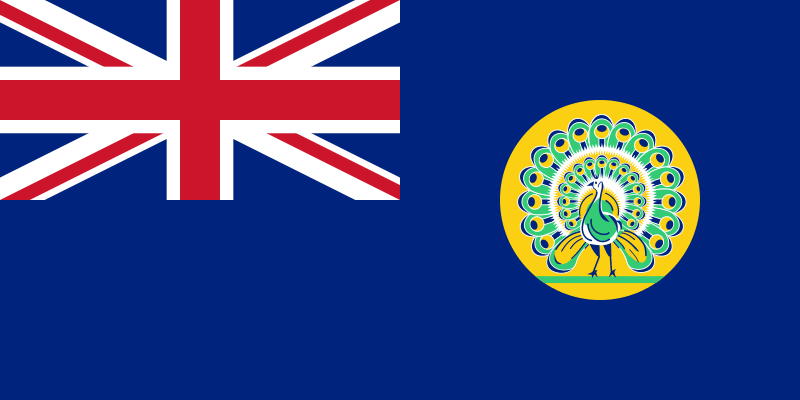
The next flag-featured bird is a spectacularly colored fowl, famous for its fan-like display of extravagant covert plumage, the Peafowl.   Many call this iridescence-decorated fowl the “peacock”, although it is only the male that is appropriately called “peacock”; the female is a “peahen” and the young are “peachicks”.  There are three types of peafowl:  (1) the Blue Peafowl (a/k/a “Indian Peafowl”) of India and Ceylon; (2) the Green Peafowl of southeastern Asia (native to Burma, Indochina, and the Indonesian island of Java); and (3) the Congo Peafowl (native to the Congo River’s drainage basin in Africa).
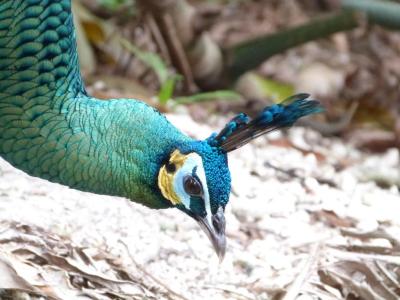
(Javan) Green Peafowl (Pavo muticus muticus) by Lee at Zoo Miami

(Javan) Green Peafowl (Pavo muticus muticus) by Lee at Zoo Miami

Green Peafowl (Pavo muticus).

The Green Peafowl appeared, briefly (AD1939-AD1941), on the British territorial flag of “British Burma” – then a British Commonwealth colony.  (Burma is now called “Myanmar”.)   That colonial flag contained a Green Peafowl prominently displaying its famous covert feathers.
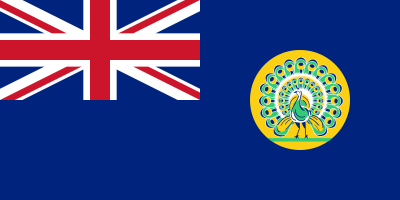
Flag of the Third Burmese Empire

Flag of the Third Burmese Empire (PD)

The Green Peafowl, historically, had symbolized pre-colonial regimes of Burma.

For example, the flag of the “Third Burmese Empire” (Konbaung Dynasty, AD1752-AD1885 – a/k/a “Alompra Dynasty”, which ultimately lost the Anglo-Burmese Wars  –  after persecuting the Great Commission efforts of Baptist missionary Adoniram Judson, who translated the Holy Bible into Burmese), consisted of a fan-tailed Green Peafowl, superimposed on a white background.

Peafowl on Flag of the Third Burmese Empire (PD)

Peafowl on Flag of the Third Burmese Empire (PD)

One more non-eagle bird, displayed on a national flag, will be included, below.  (The remainder must arrive on this blogsite another day, God willing.)  The next bird we will “flag” is a parrot.
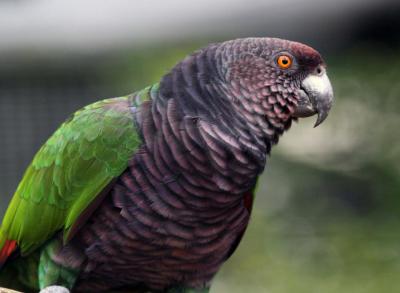
Sisserou Parrot {Imperial Amazon} The national bird of Dominica (PD)

Sisserou Parrot (Amazona imperialis), a/k/a Imperial Amazon Parrot.

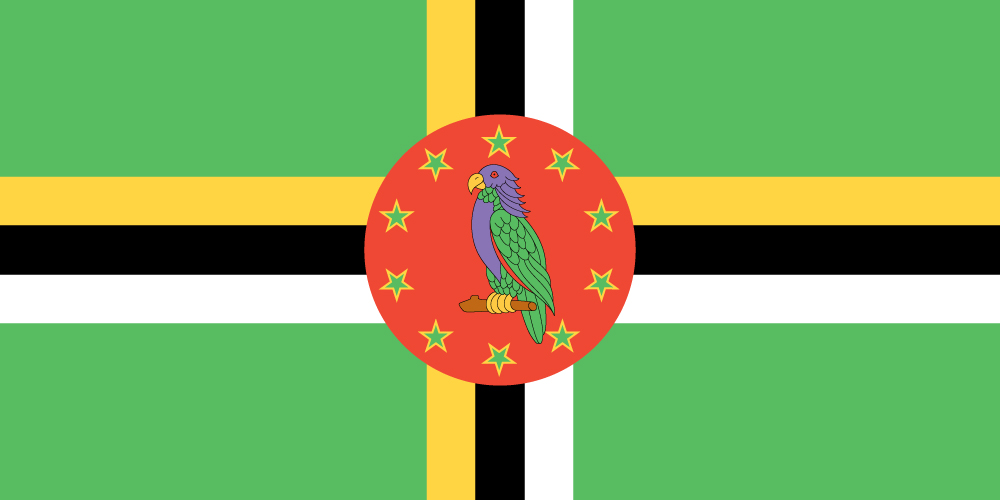
The Sisserou Parrot is a montane rainforest-dwelling parrot “endemic” to the Caribbean island nation of Dominica (not to be confused with another Caribbean country, Dominican Republic).  The term “endemic” means limited to that one location, so the Sisserou Parrot is native only to the island nation of Dominica.  And what a beautiful parrot it is!  As the national bird of Dominica, it is showcased “center-stage” on Dominica’s flag.

Dominican-Flag ©WikiC

Dominica’s-Flag ©WikiC

Sisserou Parrot Insert (Amazonaon Dominic )Flag ©Flickr-

Sisserou Parrot Insert (Amazonaon Dominic) Flag ©Flickr-

The flag’s depiction of the parrot is dominated by green and purple, with the beak and talons presented as yellow.  This coloring approximates the real parrot, though the “real thing” is obviously more beautiful!  The Sisserou is known to keep company with other parrots of Dominica, including the also-endemic Dominican Blue-faced Amazon Parrot (Amazona arausiaca, a/k/a “Red-necked Amazon”  –  no jokes about “rednecks”, please!)

There are more official birds to “flag”:   British Antarctic Territory (penguin);  Saint Helena, British crown colony in the southeastern Atlantic Ocean (Saint Helena Plover, a/k/a “wirebird”);  Fiji (dove);  Kiribati (frigatebird);  Papua New Guinea (bird of paradise);  Australian state of Western Australia (black swan);  Australian state of South Australia (piping shrike, n/k/a white-backed Australian magpie);  royal standard flag of Tonga (dove);  Bolivia (condor);  and Uganda (crested crane).

Till this mini-series continues, “flag those Jehovah-nissi birds!”  Yet more importantly, keep in mind that the Creator of all birds, flagged or otherwise, is JEHOVAH-NISSI (“the LORD our banner”), the One to Whom we pledge our ultimate allegiance!

And Moses built an altar and called the name of it Jehovah-nissi. (Exodus 17:15)

*

More Articles by James J. S. Johnson

*

Tickle Me Tuesday Bonus- 4/7/15

Another video caught my funny bone. Did not want to wait until next Tuesday.

Finally, brethren, whatsoever things are true, whatsoever things are honest, whatsoever things are just, whatsoever things are pure, whatsoever things are lovely, whatsoever things are of good report; if there be any virtue, and if there be any praise, think on these things. (Philippians 4:8 KJV)

Today’s regular “Tickle”
Tickle Me Tuesday – American Woodcock

All The Tickle Me Tuesdays

*
Tickle Me Tuesday – American Woodcock

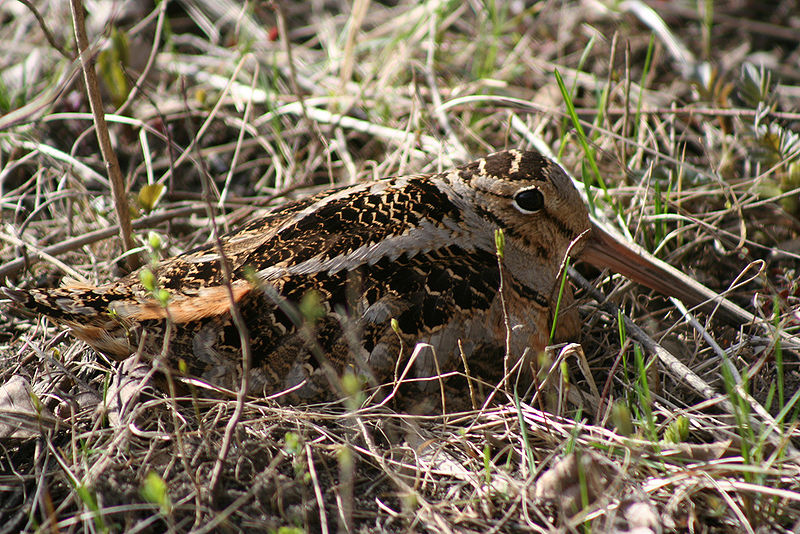
American Woodcock (Scolopax minor) ©WikiC

American Woodcock (Scolopax minor) ©WikiC

From my friend on Facebook:

“Ok Lee, help me out on this one, is this for real? Is there a bird that really walks like that?
The music they put to this video is perfect, but it’s distracting because I can’t decide if there’s a bird that really does this or not!
Either way, This is a very cute video!”

The answer is Yes! That is an American Woodcock They do that to help make worms move around so they can probe with their beak to find them.

*
Here’s another video of a Woodcock Display using a sound they make:

*
And yet two more videos of one doing the dance minus the music.

So, what is an American Woodcock? They are members of the Scolopacidae – Sandpipers, Snipes Family.

An interesting fact from All About Birds – “The American Woodcock probes the soil with its bill to search for earthworms, using its flexible bill tip to capture prey. The bird walks slowly and sometimes rocks its body back and forth, stepping heavily with its front foot. This action may make worms move around in the soil, increasing their detectablity.

A very wise creator gave these birds good coloration, courtship displays and a very practical “heavy-footed” walk.

Look at the birds of the air, for they neither sow nor reap nor gather into barns; yet your heavenly Father feeds them. Are you not of more value than they? (Matthew 6:26 NKJV)

*
All About Birds – American Woodcock

American Woodcock – Wikipedia

Scolopacidae – Sandpipers, Snipes Family

Articles here about the American Woodcock:

Tickle Me Tuesday – Nesting Falcon

All The Tickle Me Tuesdays

Wordless Birds

*

Bad Hair (Feather) Day at Gatorland

Gatorland 4-2-15 by Lee

Snowy Egret – Gatorland 4-2-15 by Lee

We went over to Gatorland on Thursday last week to see what was happening in the rookery section. We have been trying all year to get there. I was able to take over 300 photos, but haven’t had the energy to work on them. After my stay in the hospital, I do things and then wear down quickly. So, I just keep doing and draining, and collecting photos.

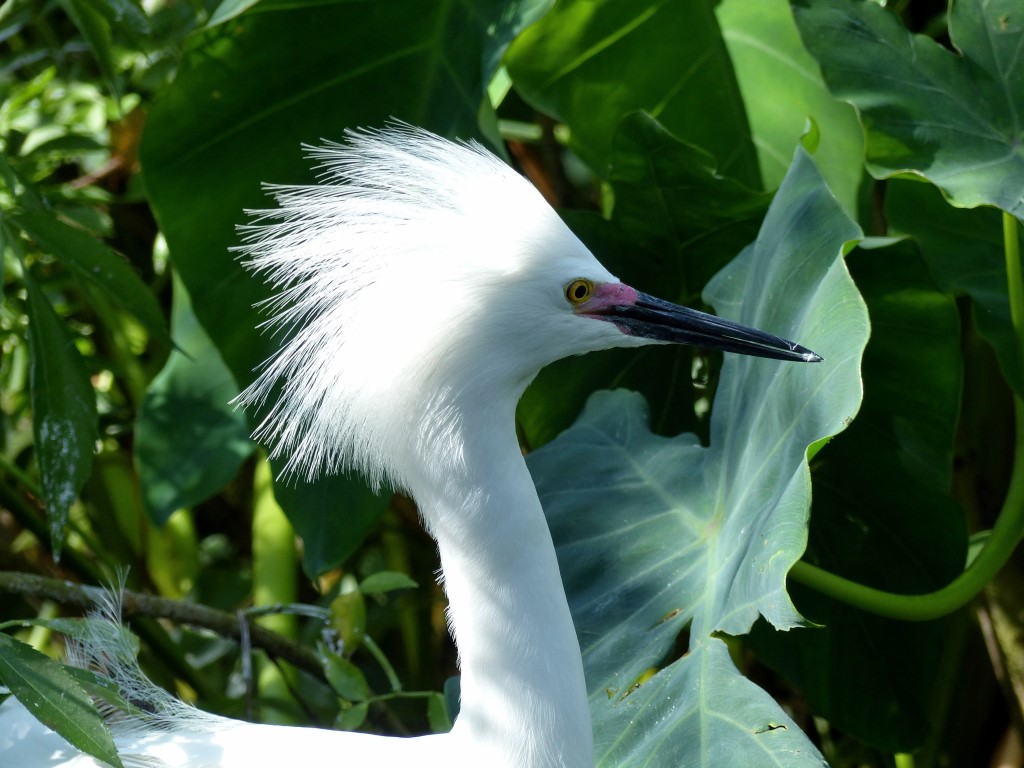
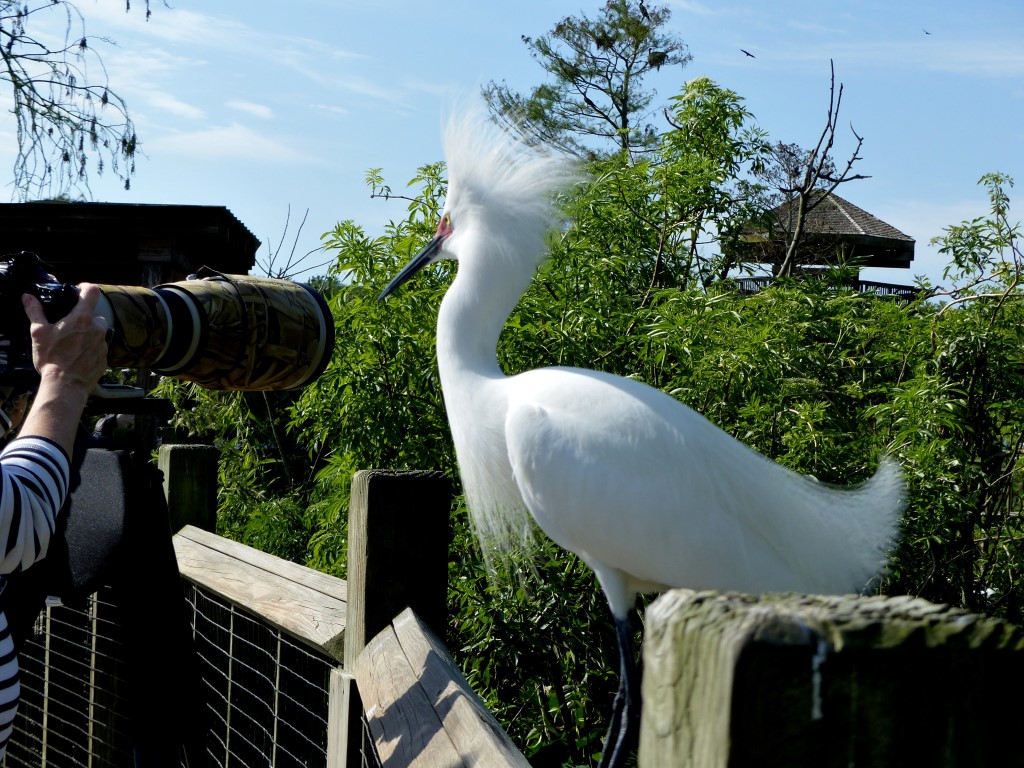
Anyway, just wanted to get something up and share some Snowy Egrets in breeding plumage that look like they are having a bad hair day. The photographers were all around and I had a Snowy land on the rail between me and a photographer.

Snowy Egret on Rail at Gatorland by Lee

Snowy Egret on Rail at Gatorland by Lee

Here is a slideshow of just entering Gatorland and then where you start the boardwalk along the rookery. Actually, the Alligators are the main attraction of course, but they patrol those ponds. That gives protection to the birds to make nest and raise their babies, because land critters choose not to deal with the Gators. Unfortunately, an occasional chick falls and the gators get a “small” snack. I have plenty more photos to share, but that will be later. Even have video of two, 1 or 2 day old, Snowy Egrets.

It was a great visit getting to see more of the Lord’s Creation up close and doing what they were told to do. Reproduce.

Bring out with you every living thing of all flesh that is with you: birds and cattle and every creeping thing that creeps on the earth, so that they may abound on the earth, and be fruitful and multiply on the earth.” (Genesis 8:17 NKJV)

*

Other Birdwatching Trips to Gatorland

Gatorland – March 2014 ~ I
Gatorland’s Snowy Egrets
Tricolored Herons at Gatorland
Gatorland, FL
Gatorland II – Great Egrets at the Nest>
Gatorland II – Great Egret Chick
Wood Storks at Gatorland

Gideon


The Crow and the Screwdriver

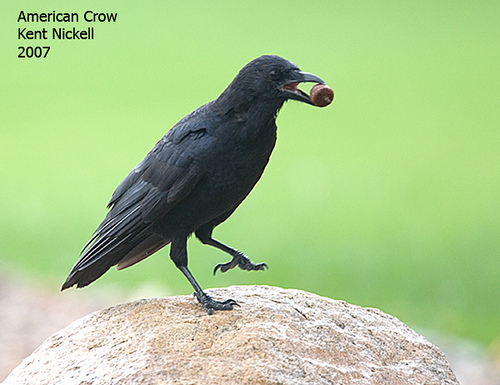
American Crow (Corvus brachyrhynchos) by Kent Nickell

American Crow (Corvus brachyrhynchos) by Kent Nickell

The Crow and the Screwdriver

by Emma Foster

(This is Emma’s Updated version of an article here – Birds of the Bible – Gifts From Birds)

~

Once there was a crow named Albert who would come to the front yard of a young girl’s house with other crows every day. They came daily because the girl would wait for the crows and feed them bread. This went on every day until the crows decided to bring her a gift in return for the bread.

One by one the crows started bringing little gifts for the girl. One crow found a nickel in a gutter, another found two paperclips by the side of the road, and a third found a shiny gum wrapper by a trashcan.

Albert wanted to bring something to the girl who was very special. Every day after the girl fed all the crows their bread, Albert would start his search. It couldn’t be just anything.

Albert didn’t know it, but a few days before, the girl’s father had been driving down a rough and bumpy road. The girl’s father worked at a construction company so all of his tools were in a toolbox in the passenger seat. The window had been open when the girl’s father went down the rough road so the screwdriver had fallen out the window after the truck had hit a small hole.

Crow at Flamingo Gardens by Lee (210)

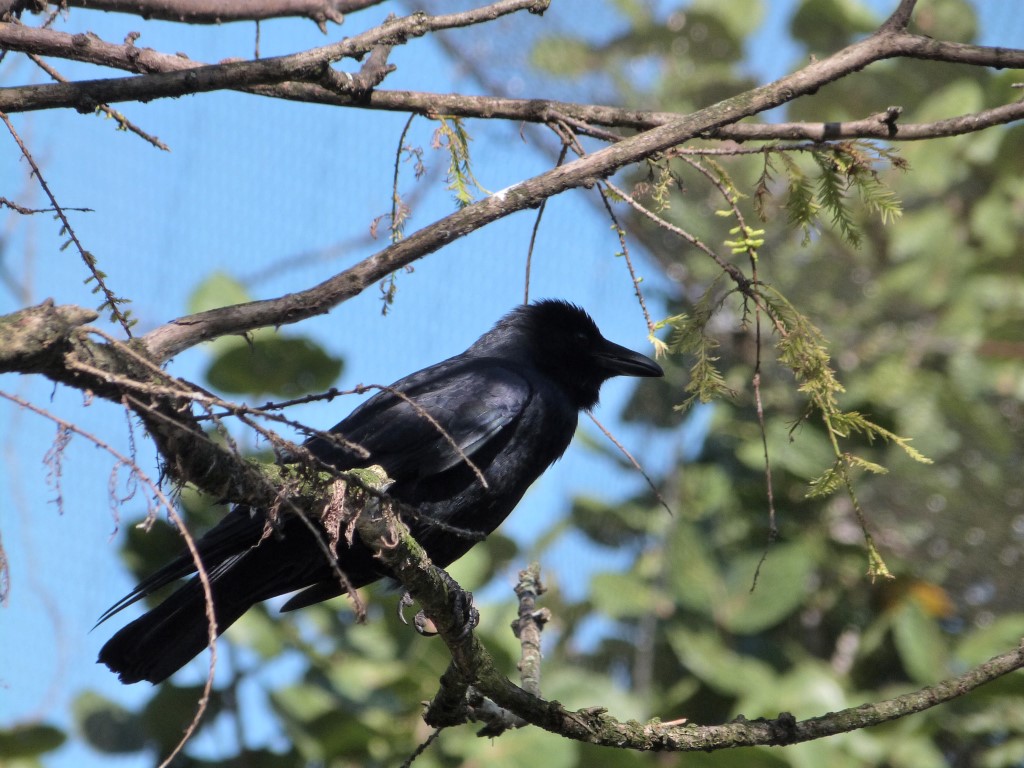
Crow

Albert had been flying past that road when he noticed something shiny. Swooping down, Albert found the screwdriver and decided to bring it back to the girl.

It took a while for Albert to get the screwdriver in his beak to carry because it was very heavy, but Albert eventually was able to fly off the ground a few feet.

Screwdriver Found ©WikiC

Screwdriver Found ©WikiC

It took even longer to get back to the girl’s house, but when Albert flew to the front yard, the girl walked out to find Albert sitting there with the screwdriver next to him. The girl and her father were happy to see the screwdriver because the girl’s father had been looking for it and he needed it for construction. It was the only screwdriver that he owned.

From then on, the girl was sure to give Albert an extra big crumb of bread whenever he came to her front yard.

The End

And when she has found it, she calls her friends and neighbors together, saying, ‘Rejoice with me, for I have found the piece which I lost!’
(Luke 15:9 NKJV)

Another fine tale from our developing young writer, Emma. Thanks again, Emma. We can all learn from caring about other, even when it quite a struggle to help.

The original post – Birds of the Bible – Gifts From Birds

More articles by Emma Foster:

Wordless Birds

*

Tickle Me Tuesday – Nesting Falcon

Barred Forest Falcon (Micrastur ruficollis) ©WikiC

Barred Forest Falcon (Micrastur ruficollis) ©WikiC

That path no bird knows, Nor has the falcon’s eye seen it. (Job 28:7 NKJV)

My brother-in-law sent me this photo recently. Had seen it before, but thought I would share it for a “tickle”.

For those of you who may not be familiar with our automobiles, the Falcon was quite popular, in its time.

Nesting Falcon

 Let the field be joyful, and all that is in it. Then all the trees of the woods will rejoice before the LORD. (Psalms 96:12 NKJV)

Other Tickle Me Tuesday’s