In the recent article, The Old Orchard Bully – Chapter 2, the whole group of birds united to chase off the Black Cat. That is called, “mobbing.”
Some ask why don’t the bigger birds fight back? Here are a few quotes from various sources:
“This behavior – like calling your family for help – is used by many bird species. The best time to observe mobbing is spring and early summer, when breeding birds are trying to protect their nests and young. Birds including swallows, blackbirds, and even these American Crows, seen here mobbing a Red-tailed Hawk, know that there is strength and power in numbers. And they’ve learned to join forces to protect themselves. Be sure to watch the video!”
Quote from Why Don’t Hawks Fight Back? :All agreed that if a red-tailed hawk reached out and grabbed a crow with its talons, that would be the end of the crow. Or as one of the professionals put it, in scientific terms, “the crow would be toast.” But although large raptors have the necessary weapons, the energy cost of pursuing or otherwise attempting to catch a crow is normally not worth it. Crows are agile creatures and would be very difficult to catch in flight. So a hawk typically ignores the crows or flies away.”
A Great Horned Owl being mobbed!
*
Just as the Lord helps His Created critters, the Lord gives us promises about seeking His help:
But the LORD your God you shall fear; and He will deliver you from the hand of all your enemies.” (2 Kings 17:39 NKJV)
Give us help from trouble, For the help of man is useless. Through God we will do valiantly, For it is He who shall tread down our enemies. (Psalms 60:11-12 NKJV)
I have pursued my enemies and overtaken them; Neither did I turn back again till they were destroyed. (Psalms 18:37 NKJV)
O my God, I trust in You; Let me not be ashamed; Let not my enemies triumph over me. (Psalms 25:2 NKJV)
My times are in Your hand; Deliver me from the hand of my enemies, And from those who persecute me. (Psalms 31:15 NKJV)
For I will not trust in my bow, Nor shall my sword save me. But You have saved us from our enemies, And have put to shame those who hated us. In God we boast all day long, And praise Your name forever. Selah (Psalms 44:6-8 NKJV)
Many, O LORD my God, are the wonders which You have done, And Your thoughts toward us; There is none to compare with You. If I would declare and speak of them, They would be too numerous to count. (Psalms 40:5 NASB)
We finally took some time to go see what birds were at Lake Howard. I was a little disappointed that the winter birds haven’t started arriving yet. It is either that, or the fact that they have been re-working the shoreline at the park. They are making it more “people-friendly,” but seem to be making it less “bird-friendly.” Trust that is not going to keep our Wood Ducks, Ring-neck Ducks and Ruddies away. None of them were present.
I really didn’t check the whole lake though. I have been having some leg issues and haven’t been birdwatching lately. In fact, I only crossed the street and birded right there by the shore. You might keep me in your prayers. Had a Doctor appointment today with encouraging word, especially that surgery most like can be avoided on my feet. Friday, another appointment to start some physical therapy for my left leg. It has been weak and causing me to “waddle” like the ducks. Never heard of a “Lee Duck” have you? Hope not.
Here are some of the photos taken Saturday by the shore of Lake Morton. There are still some swans in the pens after the recent yearly round-up of the swans. They gave them all vaccinations. Rounded up well over a hundred of them.
Mute Swan in pen at Lake Morton by Lee
And the swan, and the pelican, and the gier eagle, (Leviticus 11:18 KJV)
I found this very interesting video from YouTube when they did the round-up in 2010.
*
This link is to this year’s story about the Swan Round-up. (It has some neat photos)
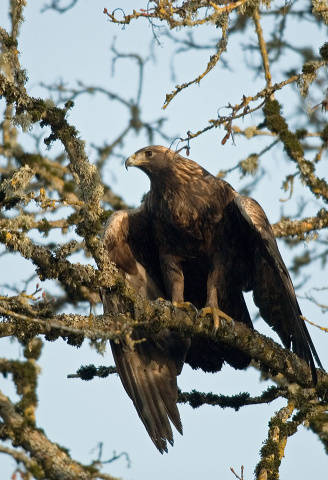
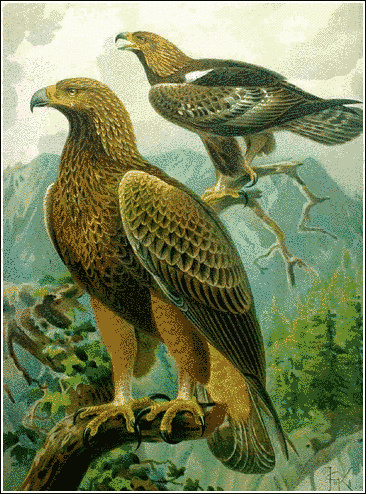
Hey, boys and girls, Golden Eagle here. How have you been since last time? Do you ever wonder why the Universe is here? Why is the Earth here? Why are we alive? Is there something after death? Will I see my departed loved ones again? What is my purpose for existence? Where did my conscience come from? Questions are great and never be afraid to ask your parents or teachers the hard questions.
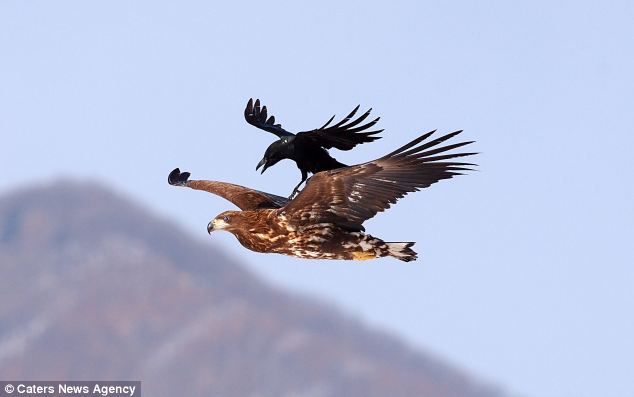
I am not a parrot! I am a high-flying eagle, but I am a little bit familiar with the Bible, the Word of God. In Revelation 4:11 the Bible says that Jesus “hast created ALL THINGS, and for thy pleasure they are and were created.” Even the animals can teach us things if we want to learn. Do you know, a small feathered fowl just landed on my perch? I’ll be back in a minute. I need to send my feathered friend on a mission, in order to reclaim my perch.
“But ask now the beasts (animals), and they shall teach thee; and the fowls of the air (the birds), and they shall teach thee. Or speak to the earth, and it shall teach thee; and the fishes of the sea shall declare unto thee.” What will these things teach us? WHO KNOWETH NOT IN ALL THESE THAT THE HAND OF THE LORD HATH WROUGHT THIS? IN WHOSE HAND IS THE SOUL OF EVERY LIVING THING, AND THE BREATH OF ALL MANKIND.” Jesus Christ has created everything.
From the colors of the rainbow to the spots on a ladybug, Jesus created it all! Some of you have watched Disney’s Tinker Bell movies. They have water fairies, and color fairies, and Spring fairies, etc. But did you know?
Fairies are not real, but God’s angels are real!
There are Angels for the wind. (Revelation 7:1) “I saw four angels standing on the four corners of the earth, holding the four winds of the earth…”
“And I heard the angel of the waters say…” There is a water angel!
“And the fourth angel poured out his vial upon the sun…” (Revelation 16:8)
Jesus Christ created visible and invisible things! In every blade of grass, there is a lesson about photosynthesis. Our DNA is packed full of information from God. Your DNA had the information for the color of your eyes, the color of your hair, the thickness of your bones, and how tall you will eventually reach.
Water floats when it freezes! Did you ever wonder why? Most things, when they change from a liquid to a solid get heavier, but not water. Water gets lighter, and ice floats in your glass! Why? Because Jesus designed it that way, so in the winter the lakes don’t freeze solid! The ice freezes on top of the lake and fish and plants can continue to live in the winter time.
Every snowflake is different. Did you ever wonder why? “Hast thou entered into the treasures of the snow? or hast thou seen the treasures of the hail, which I have reserved against the time of trouble, against the day of battle and war?” (Job 38:22-23) You know, snow helped George Washington in the battle for America’s Independence from England. Napoleon was turned back from Russia because of the cold and snow.
You see, there are so many things to learn. The greatest of all is the learn about the Lord Jesus Christ. He is the One-true Living God. Everything was made for Him! He wants you to get saved, and then to live for Him. When you do that, you will begin to fulfil the purpose God intended you to have.
Us birds, we have our place in God’s economy! And boys and girls, you have your place. Read the Bible every day to find out more. Sometimes, birds are smarter than you think. Maybe, if someone calls you a “bird-brain” in the future, that might be a compliment!
Peter Rabbit’s eyes twinkled when Jenny Wren said that she must look her old house over to see if it was fit to live in. “I can save you that trouble,” said he.
“What do you mean?” Jenny’s voice was very sharp.
“Only that our old house is already occupied,” replied Peter. “Bully the English Sparrow has been living in it for the last two months. In fact, he already has a good-sized family there.”
“What?” screamed Jenny and Mr. Wren together. Then without even saying good-by to Peter, they flew in a great rage to see if he had told them the truth. Presently he heard them scolding as fast as their tongues could go, and this is very fast indeed.
“Much good that will do them,” chuckled Peter. “They will have to find a new house this year. All the sharp tongues in the world couldn’t budge Bully the English sparrow. My, my, my, my, just hear that racket! I think I’ll go over and see what is going on.”
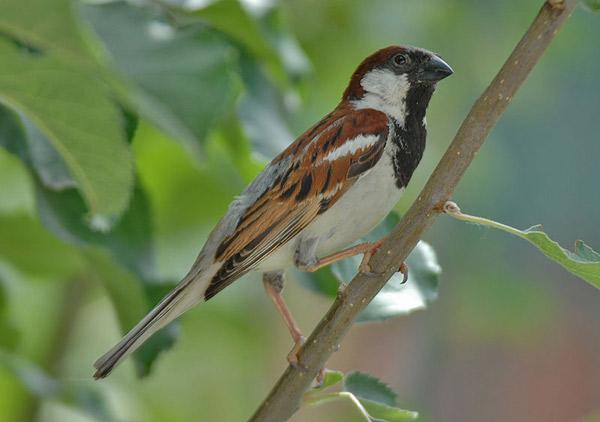
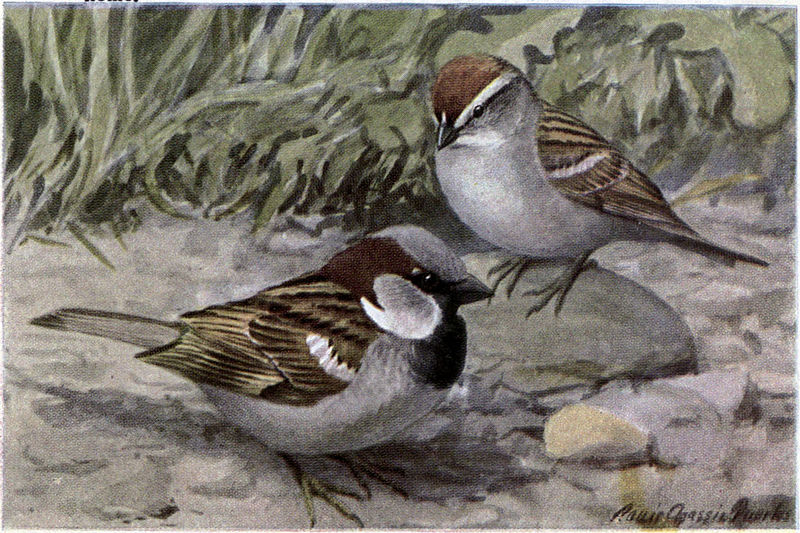
So Peter hopped to a place where he could get a good view of Jenny Wren’s old home and still not be too far from the safety of the old stone wall. Jenny Wren’s old home had been in a hole in one of the old apple-trees. Looking over to it, Peter could see Mrs. Bully sitting in the little round doorway and quite filling it. She was shrieking excitedly. Hopping and flitting from twig to twig close by were Jenny and Mr. Wren, their tails pointing almost straight up to the sky, and scolding as fast as they could make their tongues go. Flying savagely at one and then at the other, and almost drowning their voices with his own harsh cries, was Bully himself. He was perhaps one fourth larger than Mr. Wren, although he looked half again as big. But for the fact that his new spring suit was very dirty, due to his fondness for taking dust baths and the fact that he cares nothing about his personal appearance and takes no care of himself, he would have been a fairly good-looking fellow. His back was more or less of an ashy color with black and chestnut stripes. His wings were brown with a white bar on each. His throat and breast were black, and below that he was of a dirty white. The sides of his throat were white and the back of his neck chestnut.
By ruffling up his feathers and raising his wings slightly as he hopped about, he managed to make himself appear much bigger than he really was. He looked like a regular little fighting savage. The noise had brought all the other birds in the Old Orchard to see what was going on, and every one of them was screaming and urging Jenny and Mr. Wren to stand up for their rights. Not one of them had a good word for Bully and his wife. It certainly was a disgraceful neighborhood squabble.
Bully the English Sparrow is a born fighter. He never is happier than when he is in the midst of a fight or a fuss of some kind. The fact that all his neighbors were against him didn’t bother Bully in the least.
Jenny and Mr. Wren are no cowards, but the two together were no match for Bully. In fact, Bully did not hesitate to fly fiercely at any of the onlookers who came near enough, not even when they were twice his own size. They could have driven him from the Old Orchard had they set out to, but just by his boldness and appearance he made them afraid to try.
All the time Mrs. Bully sat in the little round doorway, encouraging him. She knew that as long as she sat there it would be impossible for either Jenny or Mr. Wren to get in. Truth to tell, she was enjoying it all, for she is as quarrelsome and as fond of fighting as is Bully himself.
“You’re a sneak! You’re a robber! That’s my house, and the sooner you get out of it the better!” shrieked Jenny Wren, jerking her tail with every word as she hopped about just out of reach of Bully.
“It may have been your house once, but it is mine now, you little snip-of-nothing!” cried Bully, rushing at her like a little fury. “Just try to put us out if you dare! You didn’t make this house in the first place, and you deserted it when you went south last fall. It’s mine now, and there isn’t anybody in the Old Orchard who can put me out.”
Peter Rabbit nodded. “He’s right there,” muttered Peter. “I don’t like him and never will, but it is true that he has a perfect right to that house. People who go off and leave things for half a year shouldn’t expect to find them just as they left them. My, my, my what a dreadful noise! Why don’t they all get together and drive Bully and Mrs. Bully out of the Old Orchard? If they don’t I’m afraid he will drive them out. No one likes to live with such quarrelsome neighbors. They don’t belong over in this country, anyway, and we would be a lot better off if they were not here. But I must say I do have to admire their spunk.”
All the time Bully was darting savagely at this one and that one and having a thoroughly good time, which is more than could be said of any one else, except Mrs. Bully.
“I’ll teach you folks to know that I am in the Old Orchard to stay!” shrieked Bully. “If you don’t like it, why don’t you fight? I am not afraid of any of you or all of you together.” This was boasting, plain boasting, but it was effective. He actually made the other birds believe it. Not one of them dared stand up to him and fight. They were content to call him a bully and all the bad names they could think of, but that did nothing to help Jenny and Mr. Wren recover their house. Calling another bad names never hurts him. Brave deeds and not brave words are what count.
How long that disgraceful squabble in the Old Orchard would have lasted had it not been for something which happened, no one knows. Right in the midst of it some one discovered Black Kitty, the cat who lives in Farmer Brown’s house, stealing up through the Old Orchard, her tail twitching and her yellow eyes glaring eagerly. She had heard that dreadful racket and suspected that in the midst of such excitement she might have a chance to catch one of the feathered folks. You can always trust Black Kitty to be on hand at a time like that.
No sooner was she discovered than everything else was forgotten. With Bully in the lead, and Jenny and Mr. Wren close behind him, all the birds turned their attention to Black Kitty. She was the enemy of all, and they straightway forgot their own quarrel. Only Mrs. Bully remained where she was, in the little round doorway of her house. She intended to take no chances, but she added her voice to the general racket. How those birds did shriek and scream! They darted down almost into the face of Black Kitty, and none went nearer than Bully the English Sparrow and Jenny Wren.
Now Black Kitty hates to be the center of so much attention. She knew that, now she had been discovered, there wasn’t a chance in the world for her to catch one of those Old Orchard folks. So, with tail still twitching angrily, she turned and, with such dignity as she could, left the Old Orchard. Clear to the edge of it the birds followed, shrieking, screaming, calling her bad names, and threatening to do all sorts of dreadful things to her, quite as if they really could.
When finally she disappeared towards Farmer Brown’s barn, those angry voices changed. It was such a funny change that Peter Rabbit laughed right out. Instead of anger there was triumph in every note as everybody returned to attend to his own affairs. Jenny and Mr. Wren seemed to have forgotten all about Bully and his wife in their old house. They flew to another part of the Old Orchard, there to talk it all over and rest and get their breath. Peter Rabbit waited to see if they would not come over near enough to him for a little more gossip. But they didn’t, and finally Peter started for his home in the dear Old Briar-patch. All the way there he chuckled as he thought of the spunky way in which Jenny and Mr. Wren had stood up for their rights.
A soft answer turns away wrath, But a harsh word stirs up anger. The tongue of the wise uses knowledge rightly, But the mouth of fools pours forth foolishness. The eyes of the LORD are in every place, Keeping watch on the evil and the good. A wholesome tongue is a tree of life, But perverseness in it breaks the spirit. (Proverbs 15:1-4 NKJV)
*
What caused all the fuss between the Sparrows and the Wrens?
Why did Bully have a right to the house?
Where had the Wrens gone?
When the cat came by, do you know what it is called when birds attack like that? It is called – Mobbing. (A simple definition of mobbing is an group of individuals around a potentially dangerous predator (the cat).
Are we suppose to get angry when things don’t go our way?
Sparrows are listed in the Bible several times and usually with a promise of God taking care of them.
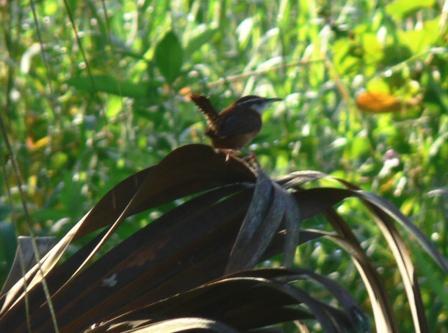
Wrens are really nice birds that sing often and do raise their tail frequently.
Carolina Wren by Lee at Circle B
“Are not five sparrows sold for two copper coins? And not one of them is forgotten before God. But the very hairs of your head are all numbered. Do not fear therefore; you are of more value than many sparrows. (Luke 12:6-7 NKJV)
Lipperty-lipperty-lip scampered Peter Rabbit behind the tumble-down stone wall along one side of the Old Orchard. It was early in the morning, very early in the morning. In fact, jolly, bright Mr. Sun had hardly begun his daily climb up in the blue, blue sky. It was nothing unusual for Peter to see jolly Mr. Sun get up in the morning. It would be more unusual for Peter not to see him, for you know Peter is a great hand to stay out all night and not go back to the dear Old Briar-patch, where his home is, until the hour when most folks are just getting out of bed.
Peter had been out all night this time, but he wasn’t sleepy, not the least teeny, weeny bit. You see, sweet Mistress Spring had arrived, and there was so much happening on every side, and Peter was so afraid he would miss something, that he wouldn’t have slept at all if he could have helped it. Peter had come over to the Old Orchard so early this morning to see if there had been any new arrivals the day before.
“Birds are funny creatures,” said Peter, as he hopped over a low place in the old stone wall and was fairly in the Old Orchard.
“Tut, tut, tut, tut, tut!” cried a rather sharp scolding voice. “Tut, tut, tut, tut, tut! You don’t know what you are talking about, Peter Rabbit. They are not funny creatures at all. They are the most sensible folks in all the wide world.”
Peter cut a long hop short right in the middle, to sit up with shining eyes. “Oh, Jenny Wren, I’m so glad to see you! When did you arrive?” he cried.
“Mr. Wren and I have just arrived, and thank goodness we are here at last,” replied Jenny Wren, fussing about, as only she can, in a branch above Peter. “I never was more thankful in my life to see a place than
I am right this minute to see the Old Orchard once more. It seems ages and ages since we left it.”
“Well, if you are so fond of it what did you leave it for?” demanded Peter. “It is just as I said before—you birds are funny creatures. You never stay put; at least a lot of you don’t. Sammy Jay and Tommy Tit the Chickadee and Drummer the Woodpecker and a few others have a little sense; they don’t go off on long, foolish journeys. But the rest of you—”
“Tut, tut, tut, tut, tut!” interrupted Jenny Wren. “You don’t know what you are talking about, and no one sounds so silly as one who tries to talk about something he knows nothing about.”
Peter chuckled. “That tongue of yours is just as sharp as ever,” said he. “But just the same it is good to hear it. We certainly would miss it. I was beginning to be a little worried for fear something might have happened to you so that you wouldn’t be back here this summer. You know me well enough, Jenny Wren, to know that you can’t hurt me with your tongue, sharp as it is, so you may as well save your breath to tell me a few things I want to know. Now if you are as fond of the Old Orchard as you pretend to be, why did you ever leave it?”
Jenny Wren’s bright eyes snapped. “Why do you eat?” she asked tartly.
“Because I’m hungry,” replied Peter promptly.
“What would you eat if there were nothing to eat?” snapped Jenny.
“That’s a silly question,” retorted Peter.
“No more silly than asking me why I leave the Old Orchard,” replied Jenny. “Do give us birds credit for a little common sense, Peter. We can’t live without eating any more than you can, and in winter there is no food at all here for most of us, so we go where there is food. Those who are lucky enough to eat the kinds of food that can be found here in winter stay here. They are lucky. That’s what they are—lucky. Still—” Jenny Wren paused.
“Still what?” prompted Peter.
“I wonder sometimes if you folks who are at home all the time know just what a blessed place home is,” replied Jenny. “It is only six months since we went south, but I said it seems ages, and it does. The best part of going away is coming home. I don’t care if that does sound rather mixed; it is true just the same. It isn’t home down there in the sunny South, even if we do spend as much time there as we do here. THIS is home, and there’s no place like it! What’s that, Mr. Wren? I haven’t seen all the Great World? Perhaps I haven’t, but I’ve seen enough of it, let me tell you that! Anyone who travels a thousand miles twice a year as we do has a right to express an opinion, especially if they have used their eyes as I have mine. There is no place like home, and you needn’t try to tease me by pretending that there is. My dear, I know you; you are just as tickled to be back here as I am.”
House Wren (Troglodytes aedon) by Ian
“He sings as if he were,” said Peter, for all the time Mr. Wren was singing with all his might.
Jenny Wren looked over at Mr. Wren fondly. “Isn’t he a dear to sing to me like that? And isn’t it a perfectly beautiful spring song?” said she. Then, without waiting for Peter to reply, her tongue rattled on. “I do wish he would be careful. Sometimes I am afraid he will overdo. Just look at him now! He is singing so hard that he is shaking all over. He always is that way. There is one thing true about us Wrens, and this is that when we do things we do them with all our might. When we work we work with all our might. When Mr. Wren sings he sings with all his might.”
“And, when you scold you scold with all your might,” interrupted Peter mischievously.
Jenny Wren opened her mouth for a sharp reply, but laughed instead. “I suppose I do scold a good deal,” said she, “but if I didn’t goodness knows who wouldn’t impose on us. I can’t bear to be imposed on.”
“Did you have a pleasant journey up from the sunny South?” asked Peter.
“Fairly pleasant,” replied Jenny. “We took it rather easily, Some birds hurry right through without stopping, but I should think they would be tired to death when they arrive. We rest whenever we are tired, and just follow along behind Mistress Spring, keeping far enough behind so that if she has to turn back we will not get caught by Jack Frost. It gives us time to get our new suits on the way. You know everybody expects you to have new things when you return home. How do you like my new suit, Peter?” Jenny bobbed and twisted and turned to show it off. It was plain to see that she was very proud of it.
“Very much,” replied Peter. “I am very fond of brown. Brown and gray are my favorite colors.” You know Peter’s own coat is brown and gray.
“That is one of the most sensible things I have heard you say,” chattered Jenny Wren. “The more I see of bright colors the better I like brown. It always is in good taste. It goes well with almost everything. It is neat and it is useful. If there is need of getting out of sight in a hurry you can do it if you wear brown. But if you wear bright colors it isn’t so easy. I never envy anybody who happens to have brighter clothes than mine. I’ve seen dreadful things happen all because of wearing bright colors.”
“What?” demanded Peter.
“I’d rather not talk about them,” declared Jenny in a very emphatic way. “‘Way down where we spent the winter some of the feathered folks who live there all the year round wear the brightest and most beautiful suits I’ve ever seen. They are simply gorgeous. But I’ve noticed that in times of danger these are the folks dreadful things happen to. You see they simply can’t get out of sight. For my part I would far rather be simply and neatly dressed and feel safe than to wear wonderful clothes and never know a minute’s peace. Why, there are some families I know of which, because of their beautiful suits, have been so hunted by men that hardly any are left. But gracious, Peter Rabbit, I can’t sit here all day talking to you! I must find out who else has arrived in the Old Orchard and must look my old house over to see if it is fit to live in.”
*
Why did Jenny and Peter Wren leave? Do you know what that is called?
How far did they travel?
What color are they and why does Jenny like it?
What kind of tongue did Jenny have? How is your tongue?
Even the stork in the sky Knows her seasons; And the turtledove and the swift and the thrush Observe the time of their migration; But My people do not know The ordinance of the LORD. (Jeremiah 8:7 NASB)
TO THE CHILDREN AND THE BIRDS OF AMERICA THAT THE BONDS OF LOVE AND FRIENDSHIP BETWEEN THEM MAY BE STRENGTHENED THIS BOOK IS DEDICATED
PREFACE
This book was written to supply a definite need. Its preparation was undertaken at the urgent request of booksellers and others who have felt the lack of a satisfactory medium of introduction to bird life for little children. As such, and in no sense whatever as a competitor with the many excellent books on this subject, but rather to supplement these, this volume has been written.
Its primary purpose is to interest the little child in, and to make him acquainted with, those feathered friends he is most likely to see. Because there is no method of approach to the child mind equal to the story, this method of conveying information has been adopted. So far as I am aware the book is unique in this respect. In its preparation an earnest effort has been made to present as far as possible the important facts regarding the appearance, habits and characteristics of our feathered neighbors. It is intended to be at once a story book and an authoritative handbook. While it is intended for little children, it is hoped that children of larger growth may find in it much of both interest and helpfulness.
Mr. Louis Agassiz Fuertes, artist and naturalist, has marvelously supplemented such value as may be in the text by his wonderful drawings in full color. They were made especially for this volume and are so accurate, so true to life, that study of them will enable any one to identify the species shown. I am greatly indebted to Mr. Fuertes for his cooperation in the endeavor to make this book of real assistance to the beginner in the study of our native birds.
It is offered to the reader without apologies of any sort. It was written as a labor of love—love for little children and love for the birds. If as a result of it even a few children are led to a keener interest in and better understanding of our feathered friends, its purpose will have been accomplished.
Some Homes in the Green Forest. – The Crow, the Oven Bird and the Red-tailed Hawk.
A Maker of Thunder and a Friend in Black. – The Ruffed Grouse and the Crow Blackbird.
A Fisherman Robbed. – The Osprey and the Bald-headed Eagle.
A Fishing Party. – The Great Blue Heron and the Kingfisher.
Some Feathered Diggers. – The Bank Swallow, the Kingfisher and the Sparrow Hawk.
Some Big Mouths. – The Nighthawk, the Whip-poor-will and Chuck-wills-widow.
The Warblers Arrive. – The Redstart and the Yellow Warbler.
Three Cousins Quite Unlike. – The Black and White Warbler, the Maryland Yellow-Throat and the Yellow-breasted Chat.
Peter Gets a Lame Neck. – The Parula, Myrtle and Magnolia Warblers.
A New Friend and an Old One. – The Cardinal and the Catbird.
Peter Sees Rosebreast and Finds Redcoat. – The Rose-breasted Grosbeak and the Scarlet Tanager.
The Constant Singers. – The Red-eyed, Warbling and Yellow-throated Vireos.
Jenny Wren’s Cousins. – The Brown Thrasher and the Mockingbird.
Voices of the Dusk. – The Wood, Hermit and Wilson’s Thrushes.
Peter Saves a Friend and Learns Something. – The Towhee and the Indigo Bunting.
A Royal Dresser and a Late Nester. – The Purple Linnet and the Goldfinch.
Mourner the Dove and Cuckoo. – The Mourning Dove and the Yellow-billed Cuckoo.
A Butcher and a Hummer. – The Shrike and the Ruby-throated Hummingbird.
A Stranger and a Dandy. – The English Starling and the Cedar Waxwing.
Farewells and Welcomes. – The Chickadee.
Honker and Dippy Arrive. – The Canada Goose and the Loon.
Peter Discovers Two Old Friends. – The White-breasted Nuthatch and the Brown Creeper.
Some Merry Seed-Eaters. – The Tree Sparrow and the Junco.
More Friends Come With the Snow. – The Snow Bunting and the Horned Lark.
Peter Learns Something About Spooky. – The Screech Owl.
Queer Feet and a Queerer Bill. – The Ruffed Grouse and the Crossbills.
More Folks in Red. – The Pine Grosbeak and the Redpoll.
Peter Sees Two Terrible Feathered Hunters. – The Goshawk and the Great Horned Owl.
Lee’s Addition:
I think you will greatly enjoy this book. Birds and their behaviors are presented in a story, but many birdwatching truths are introduced. Look for questions and Christian principle at the end of the chapters. These are also a good way to read and teach your child or grandchild. Enjoy!
(P.S. – Just found a source for audio for these chapters. They will be attached.)
(The first chapter is being released today)
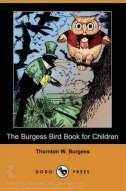
The Project Gutenberg EBook of The Burgess Bird Book for Children, by Thornton W. Burgess
This eBook is for the use of anyone anywhere at no cost and with almost no restrictions whatsoever. You may copy it, give it away or re-use it under the terms of the Project Gutenberg License included with this eBook or online at http://www.gutenberg.org
And these you shall regard as an abomination among the birds; they shall not be eaten, they are an abomination: the eagle, the vulture, the buzzard, (Leviticus 11:13 NKJV)
Christian Standard Bible (CSB) “but these are the ones you may not eat: eagles, bearded vultures, black vultures,
Complete Jewish Bible (CJB) “but these you are not to eat: eagles, vultures, ospreys,
Easy-to-Read Version (ERV) “But don’t eat any of these birds: eagles, vultures, buzzards,
English Standard Version (ESV) “But these are the ones that you shall not eat: the eagle, the bearded vulture, the black vulture,
Expanded Bible (EXB) “But do not eat these birds: eagles, vultures, black vultures, 13 red kites, falcons, any kind of kite,
GOD’S WORD Translation (GW) “But here are the birds that you should never eat: eagles, bearded vultures, black vultures,
International Children’s Bible (ICB) “But do not eat these birds: eagles, vultures, black vultures,
International Standard Version (ISV) “You may eat all clean birds, 12 but you must not eat any of these: the eagle, vulture, osprey, 13 buzzard, any kind of kite,
Names of God Bible (NOG) “But here are the birds that you should never eat: eagles, bearded vultures, black vultures,
New English Translation (NET) “But do not eat these birds: eagles, vultures, black vultures,
New International Reader’s Version (NIRV) “But there are many birds you can’t eat. They include eagles, vultures, and black vultures.
Leviticus 11:18 and Deuteronomy 14:17 (NKJV) mention a carrion vulture. Jeremiah 12:9 mentions a speckled vulture.
All of these verses give us several different kinds of vultures.
I am sure if I checked all of the translation available in BibleGateway, I would find some other type of Vulture. That might be a project you could do.
“A vulture is a scavenging bird of prey. The two types of vultures are the New World vultures, including the Californian and Andean condors, and the Old World vultures, including the birds that are seen scavenging on carcasses of dead animals on African plains. Some traditional Old World vultures (including the bearded vulture) are not closely related to the others, which is why the vultures are to be subdivided into three taxa rather than two. New World vultures are found in North and South America; Old World vultures are found in Europe, Africa, and Asia, meaning that between the two groups, vultures are found on every continent except Australia and Antarctica.”
From that description, again, you can see why those birds aren’t eaten. Eating something they just killed would be bad enough, but to eat things that had already died. That is not the kind of bird you would want to eat at Thanksgiving.
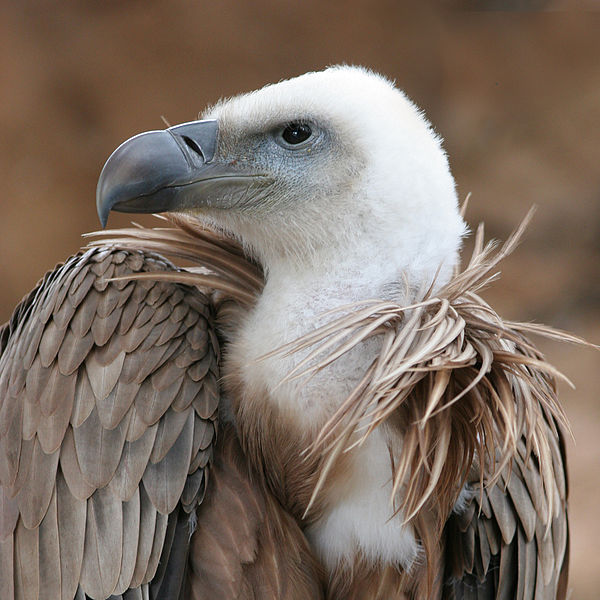
Here are some of the Vultures from around the world:
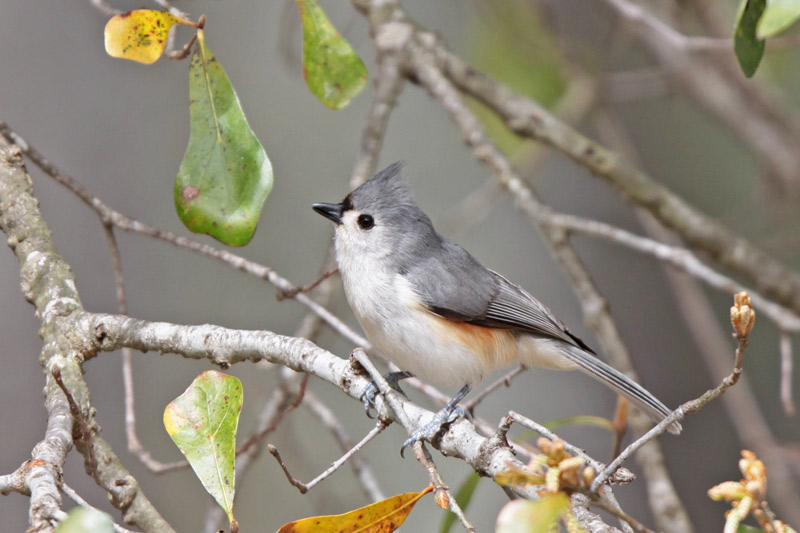
Tufted Titmouse (Baeolophus bicolor) by Margaret Sloan
But I have trusted in thy mercy; my heart shall rejoice in thy salvation. I will sing unto the LORD, because he hath dealt bountifully with me. (Psalms 13:5-6 KJV)
The birds trust the Lord because they know He provides for them. We can have Jesus as a Friend that is even closer and provides our needs, especially Salvation.
****
This slideshow requires JavaScript.
“I’ll Be A Friend To Jesus” – Faith Baptist Quartet 2011
They tried my Lord and Master,
With no one to defend;
Within the halls of Pilate
He stood without a friend.
Refrain:
I’ll be a friend to Jesus,
My life for Him I’ll spend;
I’ll be a friend to Jesus,
Until my years shall end.
The world may turn against Him,
I’ll love Him to the end,
And while on earth I’m living,
My Lord shall have a friend.
I’ll do what He may bid me;
I’ll go where He may send;
I’ll try each flying moment
To prove that I’m His friend.
To all who need a Savior,
My Friend I’ll recommend;
Because He brought salvation,
Is why I am His friend.
May you enjoy your day, rejoicing in the Lord’s Great Salvation, and His beautiful birds He has created for His pleasure and our enjoyment.
If you haven’t received his salvation, remember:
John 3:14-19 KJV (14) And as Moses lifted up the serpent in the wilderness, even so must the Son of man be lifted up: (15) That whosoever believeth in him should not perish, but have eternal life. (16) For God so loved the world, that he gave his only begotten Son, that whosoever believeth in him should not perish, but have everlasting life. (17) For God sent not his Son into the world to condemn the world; but that the world through him might be saved. (18) He that believeth on him is not condemned: but he that believeth not is condemned already, because he hath not believed in the name of the only begotten Son of God. (19) And this is the condemnation, that light is come into the world, and men loved darkness rather than light, because their deeds were evil.
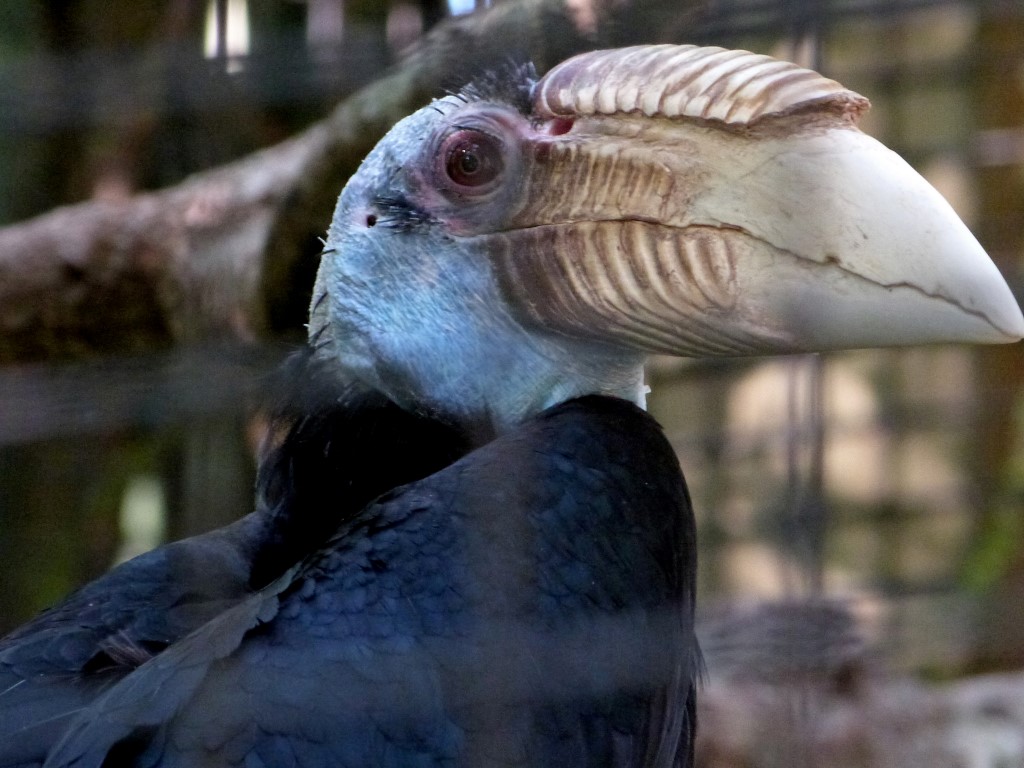
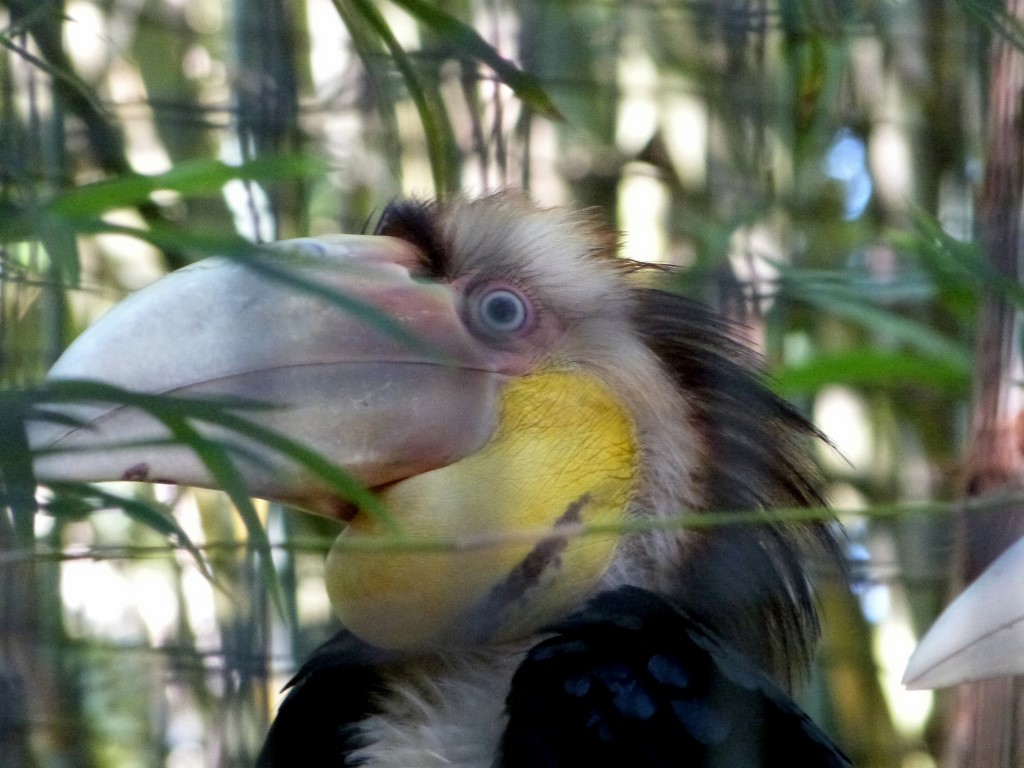
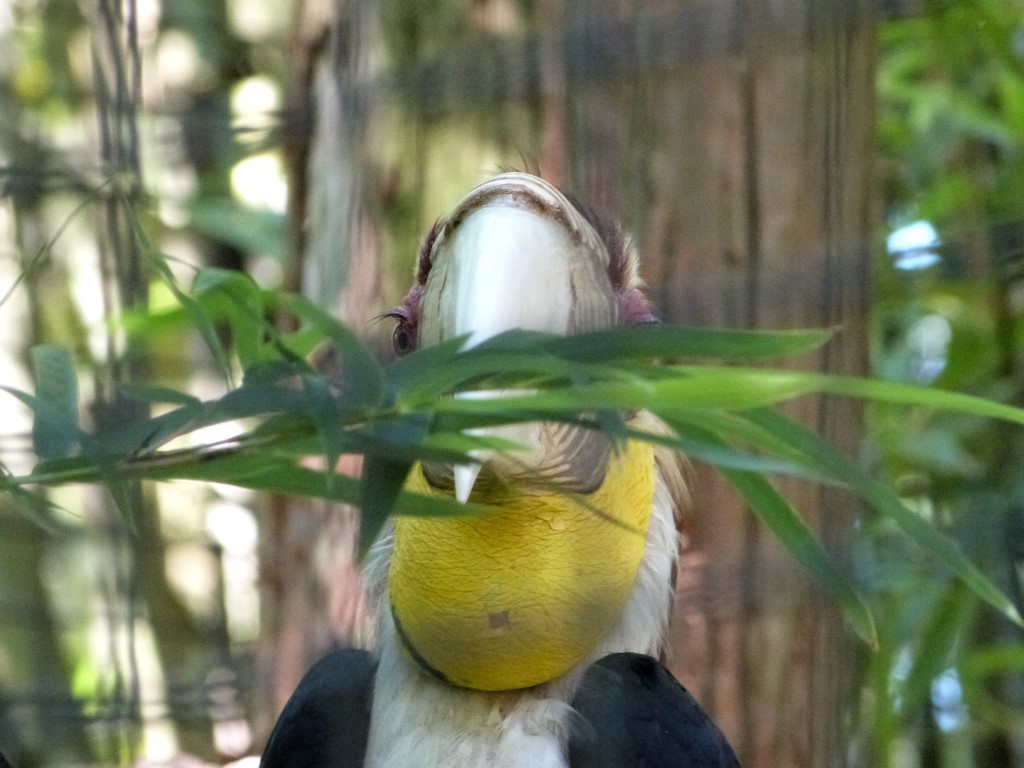
Wreathed Hornbill (Rhyticeros undulatus) Female Central Florida Zoo by Lee
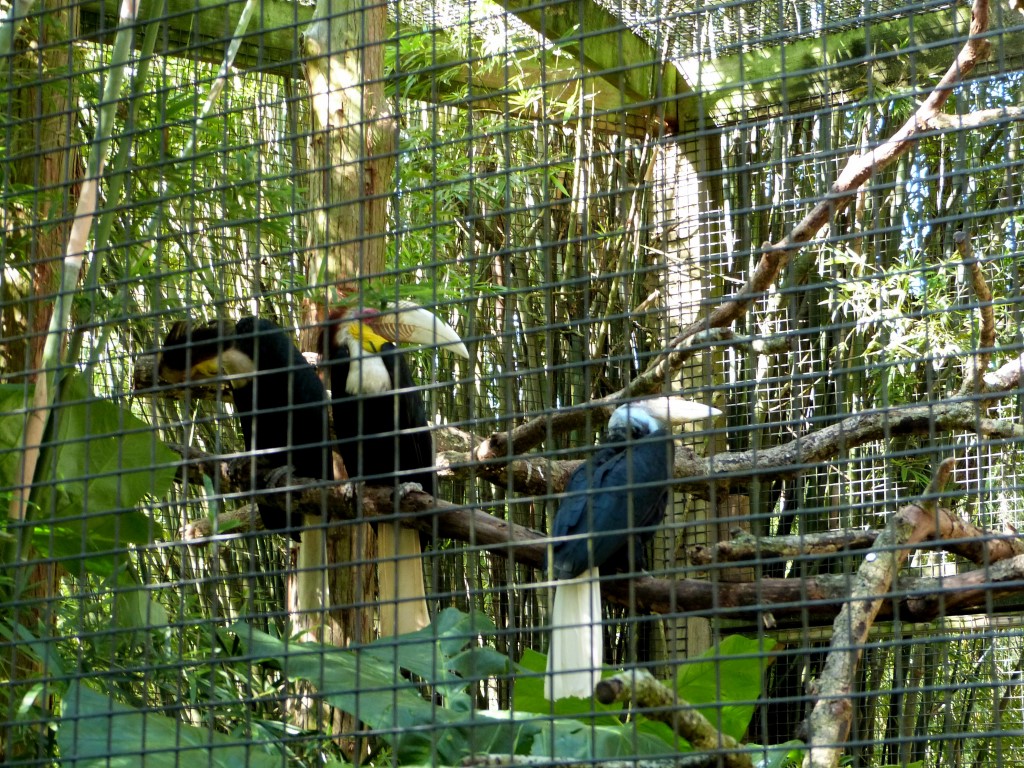
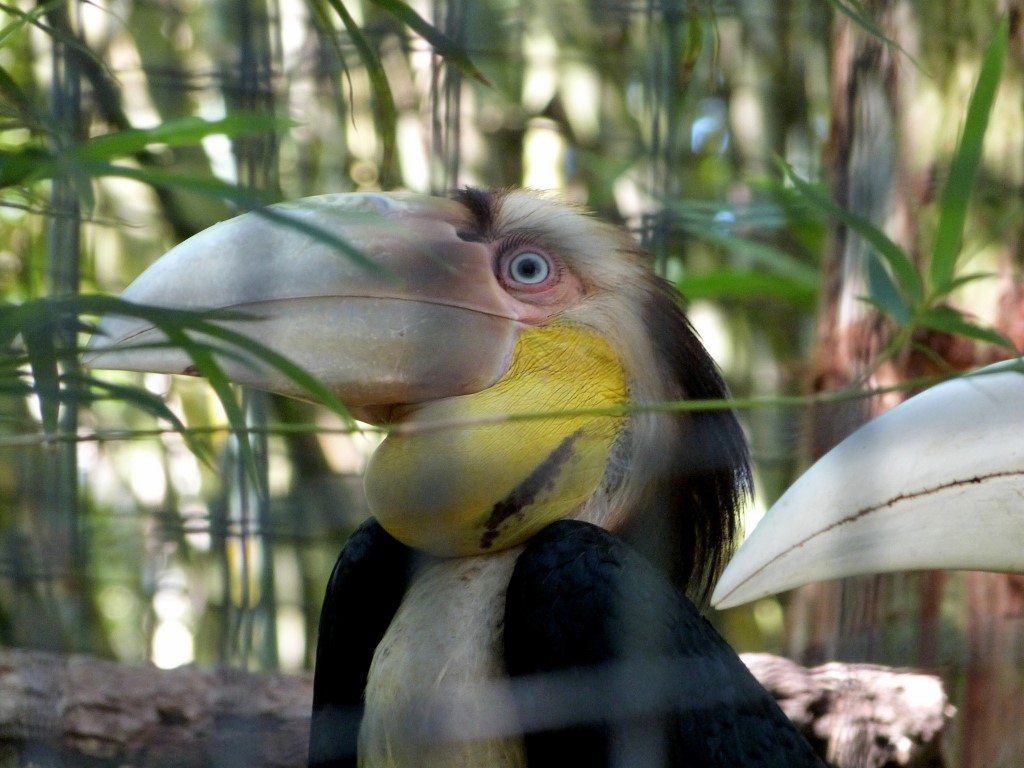
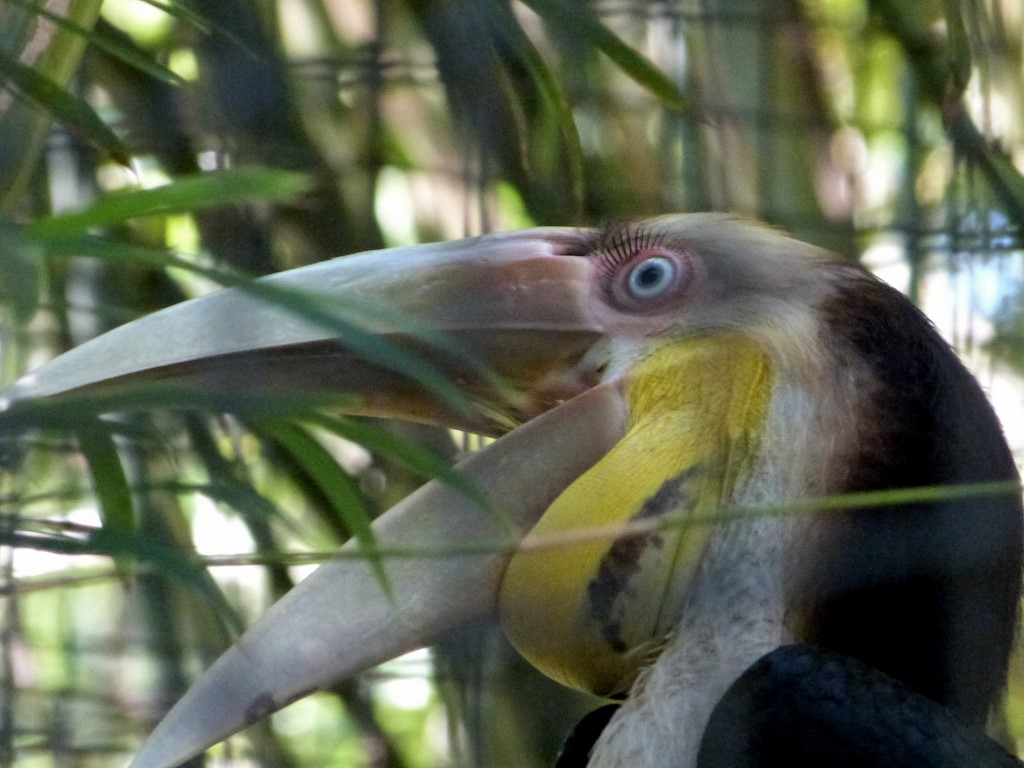
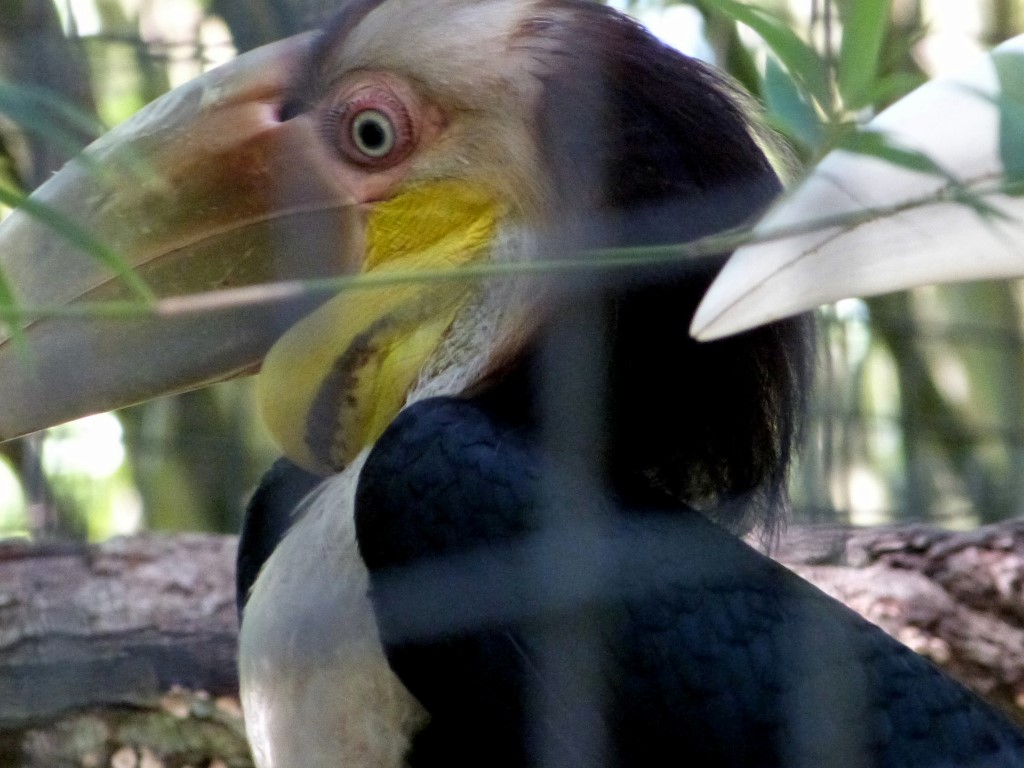
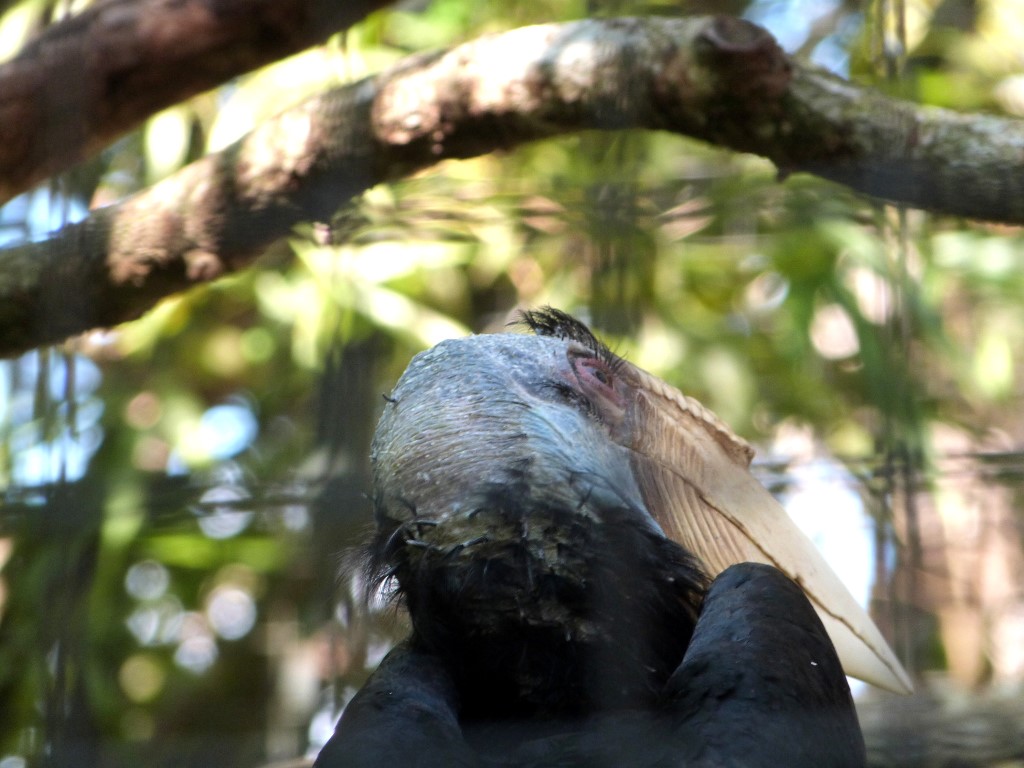
Last week on the way over to the retreat in Daytona Beach, we stopped by the Central Florida Zoo & Botanical Gardens. There were several interesting birds, especially the Wreathed Hornbill (Rhyticeros undulatus). There was a male, female and a juvenile male there. More unique creations from our Creator.
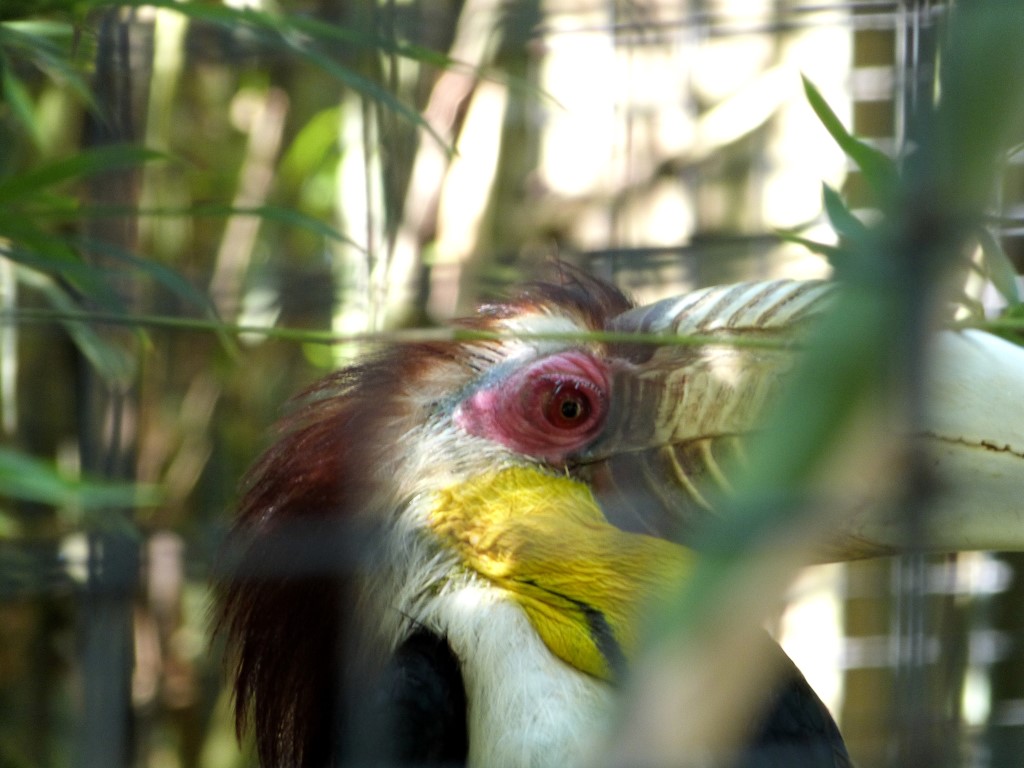
The Hornbill names can be confusing because there is a Wrinkled, Writhed, and the Wreathed Hornbills along with the others. The one here at Central Florida Zoo was the Wreathed..It was hard to get a decent photo because of the size of the fencing/wires on the cages. So, the photos were about a good as I could get shooting in Program mode. I tossed quite a few photos because of the fencing. :))
Wreathed Hornbill (Rhyticeros undulatus) Adult Male Central Florida Zoo by Lee
The Wreathed Hornbill (Rhyticeros undulatus), also known as the Bar-pouched Wreathed Hornbill because of the black line on the pouch or chin. It is a species of hornbill found in forests from far north-eastern India and Bhutan, east and south through mainland Southeast Asia and the Greater Sundas, except Sulawesi. It is 75–100 cm (30–39 in) long. Males weigh from 4.0 lb (1.8 kg) to 8.0 lb (3.65 kg), and females weigh from 3.0 lb (1.36 kg) to 6.0 lb (2.7 kg). Both sexes are similar to the respective sexes of the closely related plain-pouched hornbill, but the wreathed hornbill can be recognized by the dark bar on the lower throat (hence the alternative common name, bar-pouched). Though commonly considered monotypic, evidence suggests some geographical variation in the appearance. (Wikipedia with editing)
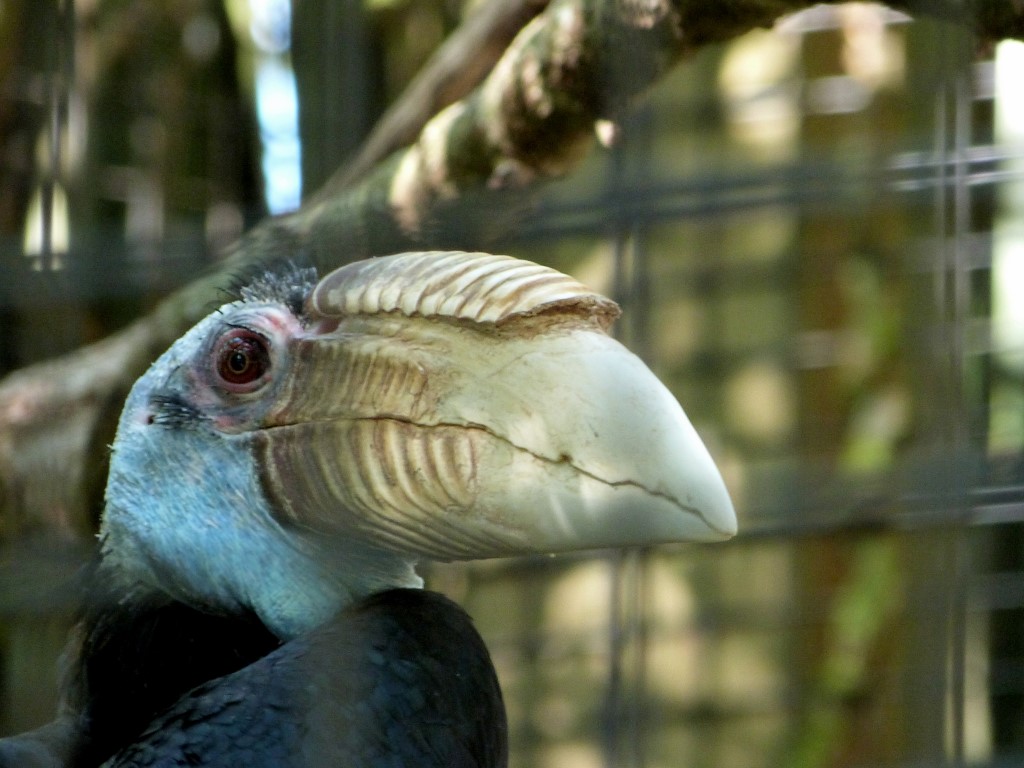
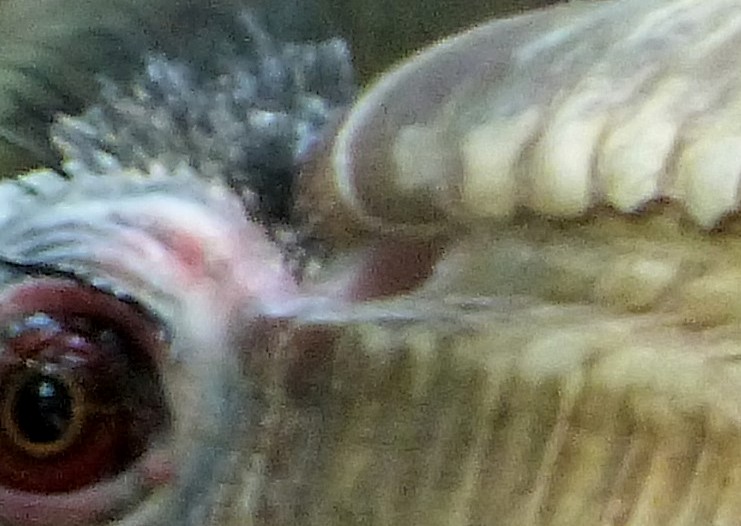
They belong to the Bucerotidae – HornbillsFamily which has 59 species. “These birds have large down-curved bills and many have a large growth on the upper bill called a casque. These bills come in many striking shapes and colors. They also have what appears to be eyelashes, but they are not made of hair, they are small feathers that serve the same function.” (Central FL Zoo)
Males can be easily distinguished from females by the color of their throats. The male’s throat skin is yellow; the female’s is blue. – Males and females pair for life. – The specialized knobs on the tops of the birds’ beaks are known as casques. These are believed to function as signals of dominance and gender.
You shall take with you of every clean animal by sevens, a male and his female; and of the animals that are not clean two, a male and his female; also of the birds of the sky, by sevens, male and female, to keep offspring alive on the face of all the earth. (Genesis 7:2-3 NASB)
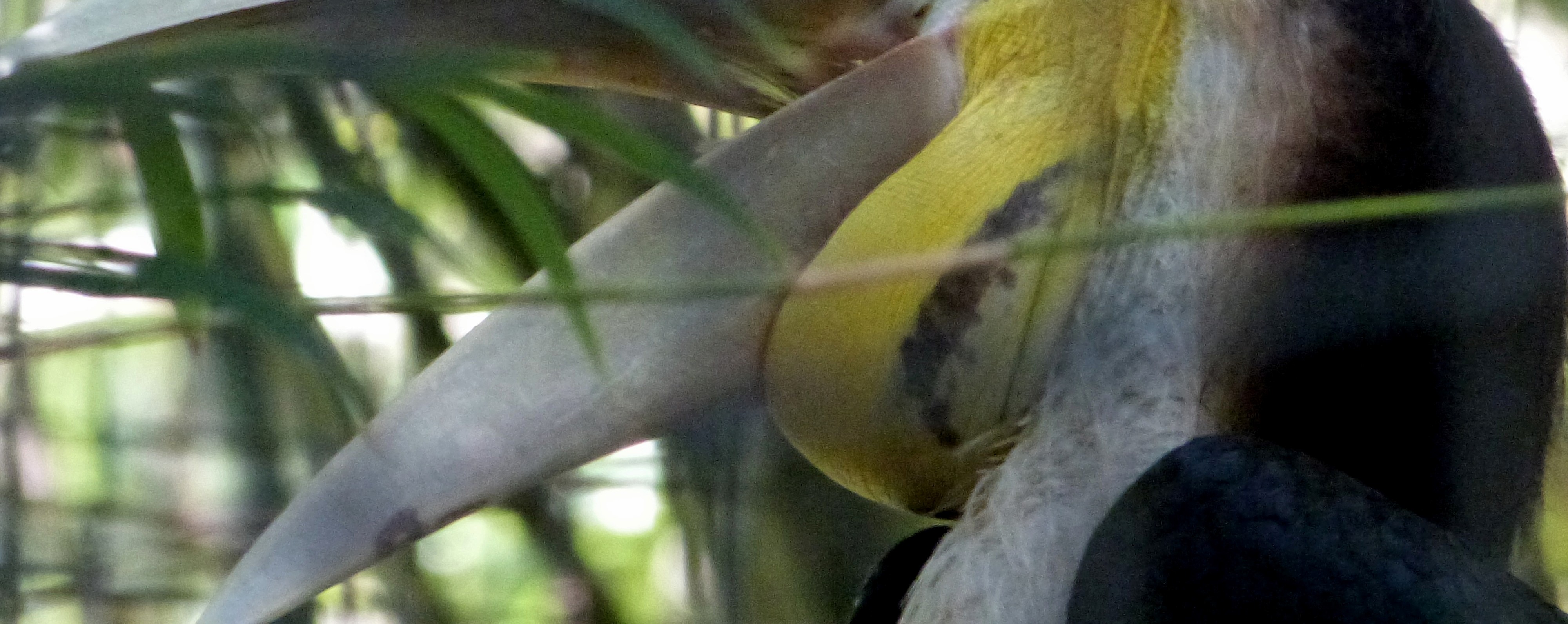
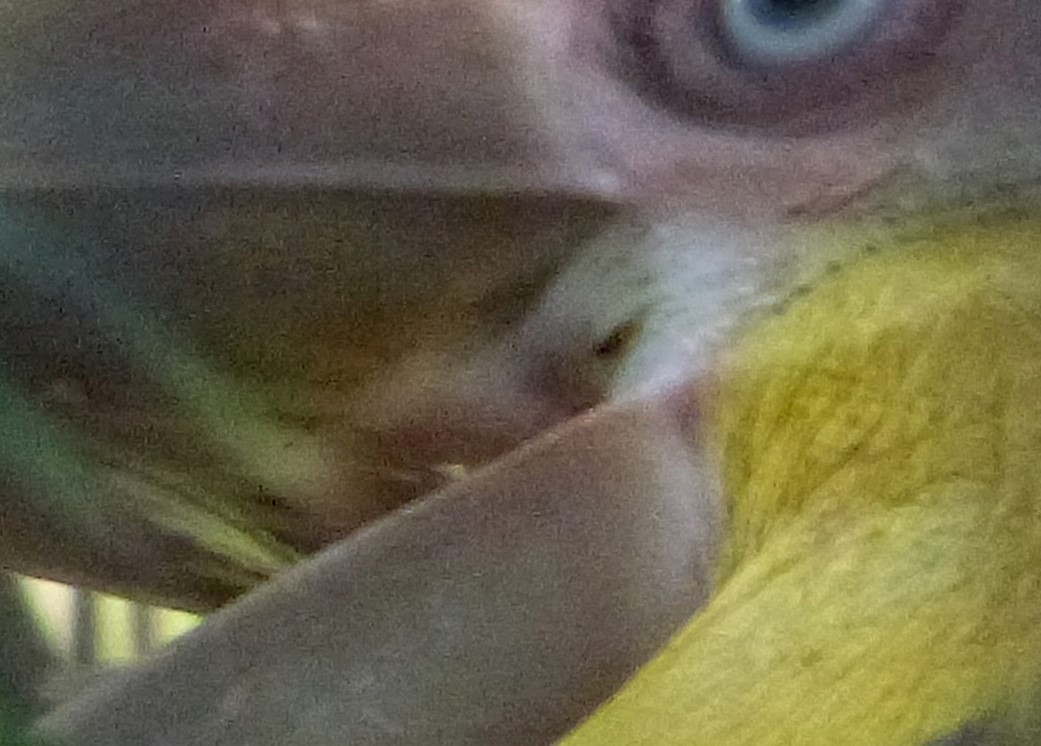
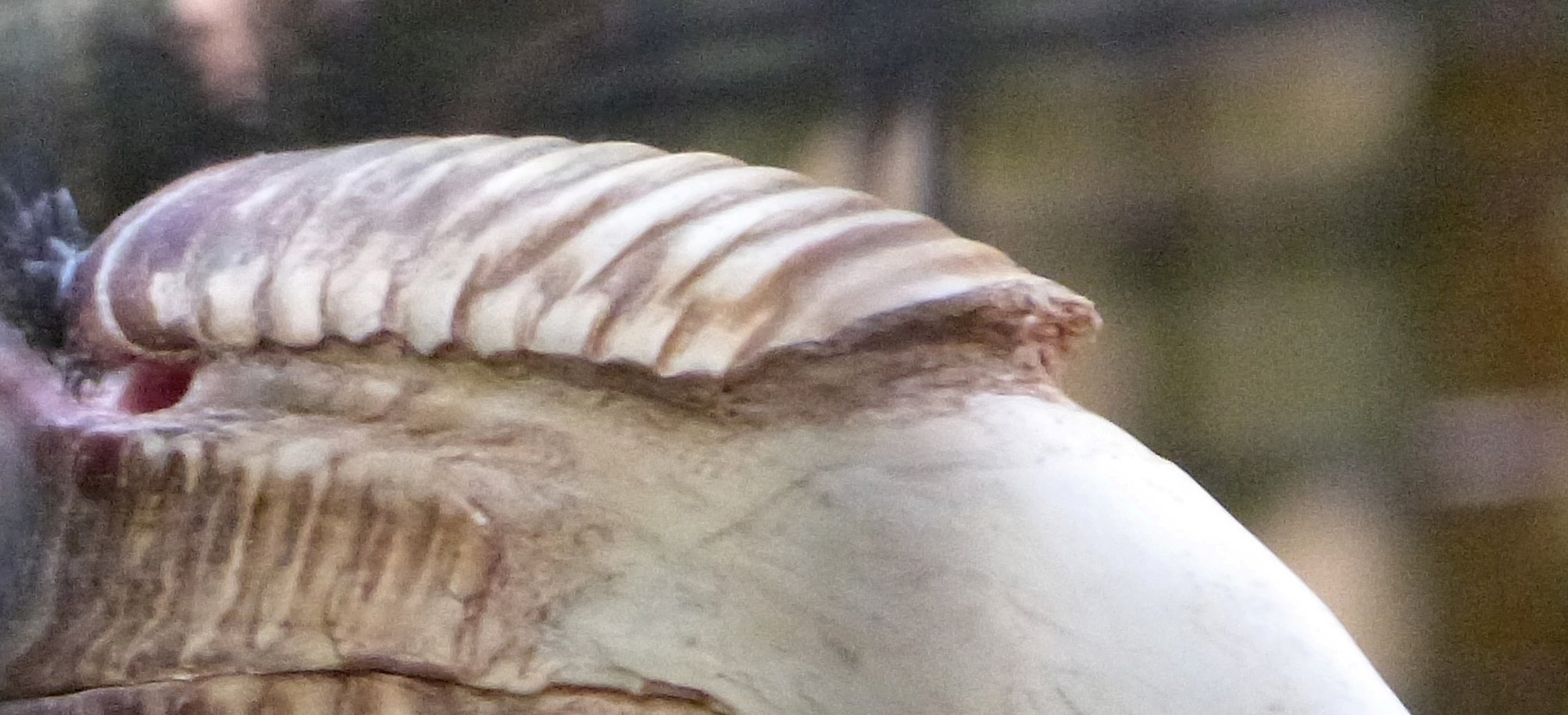
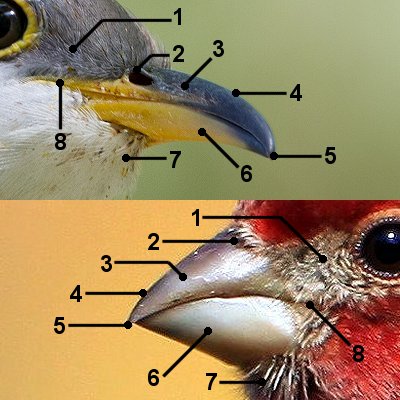
I find their beak so interesting. In light of yesterday’s article, Birdwatching Terms – About’s Bird Bill Parts, I have included some cropped photos pointing out the different parts of the beak. Also, I like their eyelashes which are actually feathers, but act like our eyelashes.
Wreathed Hornbill (Rhyticeros undulatus) Sign CF Zoo by Lee
Wreathed Hornbill (Rhyticeros undulatus) Central Florida Zoo by Lee
Wreathed Hornbill (Rhyticeros undulatus) Central Florida Zoo by Lee
Wreathed Hornbill Adult Male Central Florida Zoo by Lee
Wreathed Hornbill (Rhyticeros undulatus) Adult Female Central Florida Zoo by Lee
Wreathed Hornbill (Rhyticeros undulatus) Female CF Zoo by Lee
Wreathed Hornbill Juvenile Male Central Florida Zoo by Lee
Wreathed Hornbill Juvenile Male CF Zoo by Lee
Wreathed Hornbill Juvenile Male CF Zoo by Lee
Wreathed Hornbill (Rhyticeros undulatus) Central Florida Zoo by Lee
Wreathed Hornbill (Rhyticeros undulatus) Male Central Florida Zoo by Lee
Wreathed Hornbill (Rhyticeros undulatus) Central Florida Zoo by Lee
Wreathed Hornbill Juvenile Male CF Zoo by Lee
Wreathed Hornbill (Rhyticeros undulatus) Adult Male CF Zoo by Lee
Wreathed Hornbill Female CF Zoo by Lee
Wreathed Hornbill (Rhyticeros undulatus) Adult Male Central Florida Zoo by Lee
Wreathed Hornbill – 1 – Lore
Wreathed Hornbill – 2 Nares
Wreathed Hornbill – 3 Maxilla or Upper Mandible
Wreathed Hornbill – 5 – Tip
Wreathed Hornbill – 6 – Mandible or Lower half of bill
Wreathed Hornbill – 7 – Chin
Wreathed Hornbill – 8 – Gape or fleshly area where upper and lower bills meet
Wreathed Hornbill – Casque – not all birds have these
The dove came to him toward evening, and behold, in her beak was a freshly picked olive leaf. So Noah knew that the water was abated from the earth. (Genesis 8:11 NASB)
A bird’s bill, also called a beak, is a critical piece of its anatomy, not only for foraging, defense, singing and other behaviors, but also for birders to make a proper identification. Depending on the bird, a bill can provide clues to far more than species: age, gender, diet and foraging behaviors can all be learned by studying a bill. By knowing the basic parts of a bill and the bird’s face and head immediately adjacent to the bill, birders can be better prepared to look for the subtle clues bills can reveal about every bird.
What an amazing part of the bird from its Creator.
Overall Bill Features
Some of the most important aspects of a bird’s bill are not specific features, but the general jizz of the bill. When first studying bird bills, look for…
Size: How large does the bill appear in proportion to the bird’s head? Check for length as compared to the length of the head as well as the width of the bill and how that width may change along the bill’s length.
Shape: Bill shapes vary widely, from delicate triangles or thin, needle-like bills to thick, bulbous bills to sharply curved bills to radical shapes that include spoon-like tips or horny casques. When the shape is very unique, that can be a diagnostic clue for a bird’s identity even if other field marks cannot be seen.
Color: The color of a bill can be a clue for species, gender or age. Note the overall color as well as any specific markings, such as a colored tip or base, subterminal band or color differences between the top and bottom of the bill.
Specific Bill Parts
When birders can get a good look at a bill, there are a number of different parts that can yield clues about the bird’s identity, such as…
Lores: While not part of the bill itself, the lores are the space between the base of a bird’s bill and the forward edge of its eyes. This area may be a different color or show a smudge or eye line that can be an identification clue.
Nares: More commonly called the nostrils, the position of the nares as well as their size and shape are important to note for bird’s identities. In some types of birds, such as raptors, the nares are covered by a fleshy cere, while in others, such as many seabirds, elongated tube-like nares help filter seawater.
Maxilla: Also called the upper mandible, the maxilla is the top half of a bird’s bill. Size, length and shape will vary, and some birds have knobs, fleshy wattles or other features that distinguish the maxilla.
Culmen: Difficult to see on many bird species, the culmen is the center line drawn down the length of a bird’s maxilla. In some species, this can be a very distinct peak that divides the sides of the bill, while it may not be noticeable in other species.
Tip: The tip of a bird’s bill may be different shapes, such as blunt or sharply pointed, depending on the bird’s general diet. Hooks are common at the tip of carnivorous birds’ bills, while many waterfowl have small bumps, called nails, on the tip of the maxilla.
Mandible: The lower half of a bird’s bill is called the mandible or lower mandible. The color may vary from the maxilla either along the entire length or just at one end, and can be a great clue for identification. Some birds, such as many gulls, may show spots or other markings just on the mandible.
Chin: Not directly part of the bill, the chin is the area of feathers immediately adjacent to the base of a bird’s mandible. In some species, the color of the chin may vary from the throat or face, providing a valuable identification clue.
Gape: This is a fleshy area at the base of the bill where the upper and lower mandibles meet. In young birds, it is often enlarged or may seem so because the birds have not developed their mature feathers to help conceal it, and it may be brightly colored so their mouths are more noticeable when they beg for food. On some species, such as the bananaquit, the gape remains colorful on adult birds.
Bananaquit (Coereba flaveola) by Raymond Barlow
It can be difficult to see many of the subtle details of a bird’s bill, but understanding the different bill parts is a great way for birders to refine their identification skills and learn more about every bird they see.
The list of all the Birds of the Worldare updated about every four months. Which we try to keep up with their (I.O.C.) newest lists.
You are probably wondering why you would need it. Let me share some things about it and then give you some ideas how it my be handy for one of your school projects.
The I.O.C. is actually the International Ornithological Committee. “Ornithological” basically means those who study birds or bird related. They maintain a list of all the birds around the world. They set standards of how to name them, what scientific classification to place the birds in, and divide them into Orders and Families, etc.
They are needed because we may call a bird by one name, yet someone in a different country or area may call it by a different name. They realize that those two names belong to the same bird. It is a very hard task to keep track of all those 10,000 plus birds, but that is what they try to do.
They give every bird an English name as a standard. Then they also want every one to spell the words the same. For instance, some people spell the “Grey” or “Gray” to mean the same color. To keep things simple, all the birds are spelled as “Grey.” That is just one example.
There are committees all over the world working on the birds of the area they live in, then those committees get together to combine all the list to make one big list. That is what was just updated.
On our Birds of the World section, you will find the birds listed by Orders (40 main classifications), then by Families (240 groups of closely related birds). The reason all of that is not duplicated here would be very time-consuming. There are hundreds of pages and thousands of photos on that site.
Wood Duck (Aix sponsa) by Dan
Projects for school or your own information:
You know the name of a bird’s name, but need to find the Species name, Go to the Species Index to find these choices:
When you find your bird in the right family, almost every bird has a link to a photo or video.
I will share more tips on how to use those indexes in another article.
Another reason is because we believe the Lord created all the beautiful birds and He should get all the credit.
In the beginning God created the heavens and the earth. (Genesis 1:1 NKJV)
So God created great sea creatures and every living thing that moves, with which the waters abounded, according to their kind, and every winged bird according to its kind. And God saw that it was good. (Genesis 1:21 NKJV)
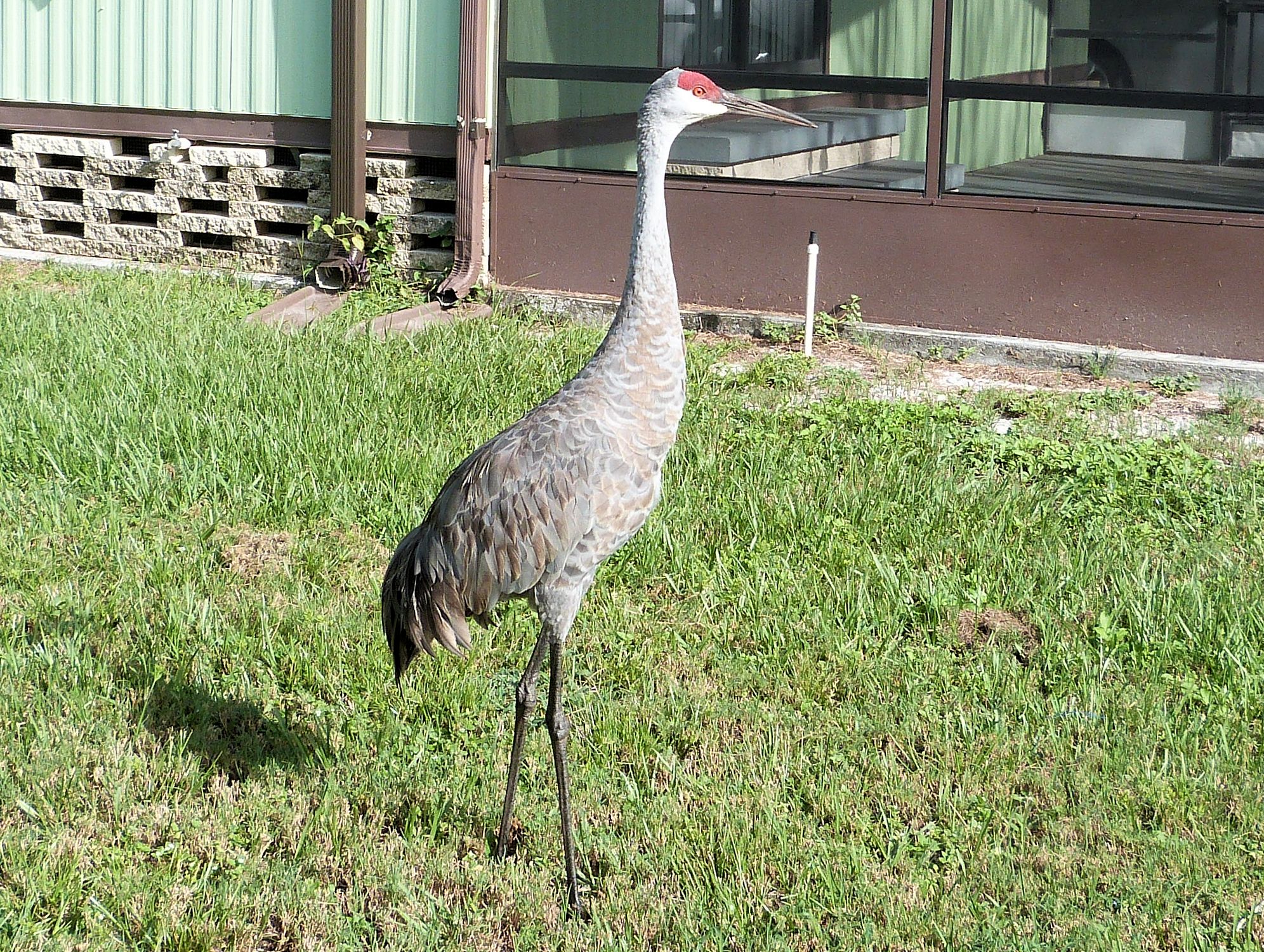
Today, when we looked out in our side yard, we were greeted by two Sandhill Cranes walking around. Grabbed the camera and here are some of the photos that I took. I have been so busy working on the blog, that we haven’t taken the time to go birdwatching. So, our great Lord just sent me some of His beauties.
O taste and see that the LORD is good: blessed is the man that trusteth in him. (Psalms 34:8 KJV)
Sandhill Standing Guard Crop
They stroll through here from time to time, but haven’t seen them for a while. As usual, one stands guard, while one eats. Some how our flat feeder came off the hook and they found it. :))
Sandhill Cranes in side yard
He, the guard came over and was trying to encourage her to finish up.
Sandhill Cranes in side yard
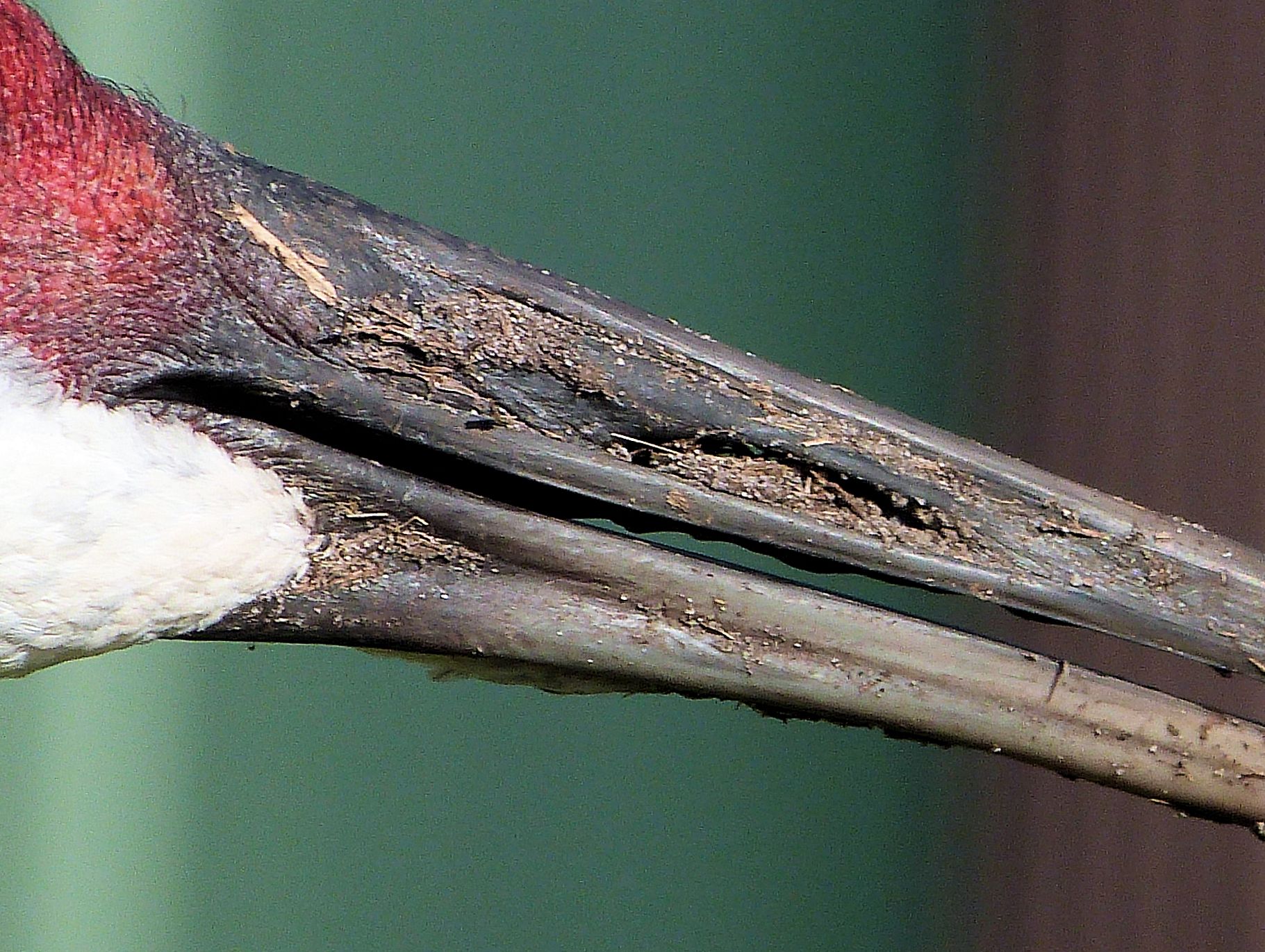
Zoomed in on his beak and was surprised to find so much dirt in it. They do a lot of probing in people’s yards and are considered pests by some. Not me, I love them coming to visit. They can probe all they want, just as long as they let me take their photo.
Sandhill Crane Beak Crop
Here are the photos that were taken this morning.
This slideshow requires JavaScript.
Like a crane or a swallow, so did I chatter: I did mourn as a dove: mine eyes fail with looking upward: O LORD, I am oppressed; undertake for me. (Isaiah 38:14 KJV)
Yea, the stork in the heaven knoweth her appointed times; and the turtle and the crane and the swallow observe the time of their coming; but my people know not the judgment of the LORD. (Jeremiah 8:7 KJV)


























 Lee's Birdwatching Adventures Plus