Updated The Birdwatching Page 8/8/13

The Birdwatching Page was updated to add this video and links to photos of the birds shown. Here is the video and the photo links are on the Birdwatching Page.

And out of the ground the Lord God formed every [wild] beast and living creature of the field and every bird of the air and brought them to Adam to see what he would call them; and whatever Adam called every living creature, that was its name. (Genesis 2:19 AMP)

*

*

Birdwatching Tips – Herons, Egrets, Bitterns

Little Blue Heron at Lake Hollingsworth

Little Blue Heron at Lake Hollingsworth

Lev 11:19  And the stork, the heron after her kind, and the lapwing, and the bat.

Peterson’s Field Guide Videos have great information about how to identify birds in the Heron, Egrets and Bittern Family. This is a very good video.
*

*

See the other video in this series:

Peterson Field Guide-Videos

*

Ardeidae- Herons, Bitterns

Birds of the Bible – Herons

Wordless Birds

*

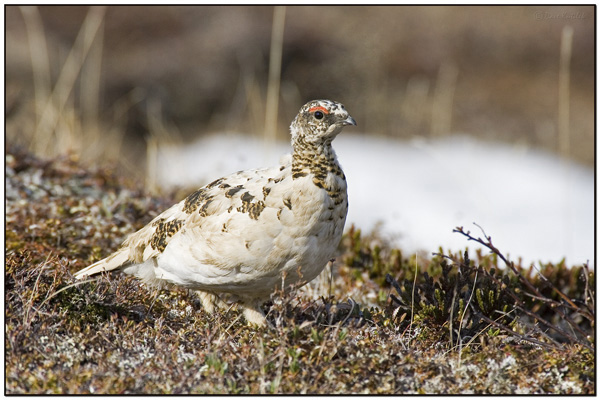
The Rock Ptarmigan – The Crown

Rock Ptarmigan (Lagopus muta) by Daves BirdingPix

Rock Ptarmigan (Lagopus muta) by Daves BirdingPix

The Rock Ptarmigan – The Crown ~ by a j mithra

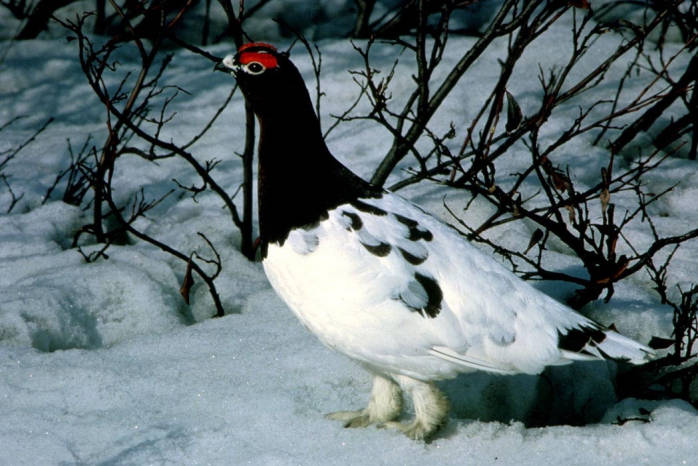
The Rock Ptarmigan is seasonally camouflaged; its feathers moult from white in winter to brown in spring or summer. The breeding male has greyish upper parts with white wings and under parts. In winter, its plumage becomes completely white except for the black tail. It can be distinguished from the winter Willow Ptarmigan (Willow Ptarmigan in North America) by habitat—the Rock Ptarmigan prefers higher elevations and more barren habitat; it is also smaller with a more delicate bill.

Willow Ptarmigan (Lagopus lagopus) ©USFWS

Willow Ptarmigan (Lagopus lagopus) ©USFWS

A bird that is smaller and with more delicate bill prefers higher elevation…

Interesting isn’t it?

It is when we become smaller, subdued and humble that God takes us to higher elevation.

He brought me up also out of a horrible pit, out of the miry clay, and set my feet upon a rock, and established my goings. (Psalm 40:2)

The higher elevation maybe more barren and it may have delicate bills but still this bird prefers higher elevation…

Most of us judge ourselves by what we have, failing to understand that in our weakness

“And he said unto me, My grace is sufficient for thee: for my strength is made perfect in weakness. Most gladly therefore will I rather glory in my infirmities, that the power of Christ may rest upon me.” (2 Corinthians 12:9)

His strength is complete and that is the reason He chooses the weak.
So that His name shall be glorified

  • Not in strength but in weakness’
  • Not in abundance but in want..
  • Not through the wise but through the fools.

But God has chosen the foolish things of the world to confound the wise; and God has chosen the weak things of the world to confound the things which are mighty; (1 Corinthians 1:27)

Rock Ptarmigan (Lagopus Muta) in winter plumage ©WikiC

Rock Ptarmigan (Lagopus Muta) in winter plumage ©WikiC

The small population living on Franz Josef Land in the Russian High Arctic, overwinter during the polar night, and survives by feeding on rich vegetation on and underneath high cliffs where seabird colonies are located in summer. The Rock Ptarmigan feeds primarily on birch and willow buds and catkins when available. It will also eat various seeds, leaves, flowers and berries of other plant species. Insects are eaten by the developing young.

Apart from the comb, the male Rock Ptarmigan has no ornaments or displays that are typical for grouses in temperate regions. Studies on other grouses have shown that much variation in comb size and colour exists
between the species, and that the comb is used in courtship display and aggressive interactions between males.

This reminds us of how the colorful garment of Jesus was stripped, torn into twelve pieces and shared among the soldiers right under the cross, even as the Rock was grieving in pain for our sins..

Jesus did not have any ornaments or displays on the cross except the crown of thorns.

He bore not the crown of thorns but bore the brunt of mockery to give us the crown of eternal life isn’t it?

And after twisting together a crown of thorns, they put it on His head, and a reed in His right hand; and they knelt down before Him and mocked Him, saying, “Hail, King of the Jews!” (Matthew 27:29)

Rock Ptarmigan (Lagopus Muta) ©Wiki

Rock Ptarmigan (Lagopus Muta) ©Wiki

Many studies have shown that there is a strong correlation between the comb size and the level of testosterone in males; one report from 1981 showed that the amount of testosterone is correlated to aggressiveness against other males. The male’s comb has been the focus of studies regarding sexual selection. Studies of a population of male Rock Ptarmigans in Scarpa Lake, Nunavut, have shown that during the first year, mating success among males was influenced by comb size and condition, and bigamous males had larger combs than monogamous males. The correlation to size disappeared after the first year, but the correlation to comb
condition remained.

This is consistent with another study of the same population of L. muta that showed that mating success overall is correlated to comb condition. Exceptions were first-time breeders, in which the size of the comb influenced mating success. The mating success is correlated to comb condition..

There is a strong correlation between the life we live for Christ and the crown that God has kept for us.

  • We need to receive a crown not just to show off but to live eternally with the King..
  • Our King wore a crown of thorns so that His Queen, the Church shall wear the Crown of Life and reign with Him forever and ever.

What kind of a crown would God give us?

Here are a those five crowns that God had kept for us..

God has got an “IMPERISHABLE CROWN” for those who run a faithful, unselfish race, crucifying all their earthly desires and focusing on just the cross.

Did Jesus asked us to carry our cross for this?

Know ye not that they which run in a race run all, but one receiveth the prize? So run, that ye may obtain. And every man that striveth for the mastery is temperate in all things. Now they do it to obtain a corruptible crown; but we an incorruptible. (1 Corinthians 9:24-25)

“THE CROWN OF JOY” is there for those who bring souls into His kingdom. Working towards standing as a living testimony for others to follow Christ through our selfless Christ-like lifestyle…

Are we working selflessly to bring souls to His kingdom?

For what is our hope, or joy, or crown of rejoicing? Are not even ye in the presence of our Lord Jesus Christ at his coming? For ye are our glory and joy. (1 Thessalonians 2:19-20)

Here is another crown that awaits us, that is the “THE CROWN OF RIGHTEOUSNESS”

Are you waiting anxiously for the Lord? In that case you will surely receive this crown, when Jesus, the King returns.

  • How are we waiting?
  • Patiently?
  • Diligently?
  • Anxiously?

Henceforth there is laid up for me a crown of righteousness, which the Lord, the righteous judge, shall give me at that day: and not to me only, but unto all them also that love his appearing. (2 Timothy 4:8)

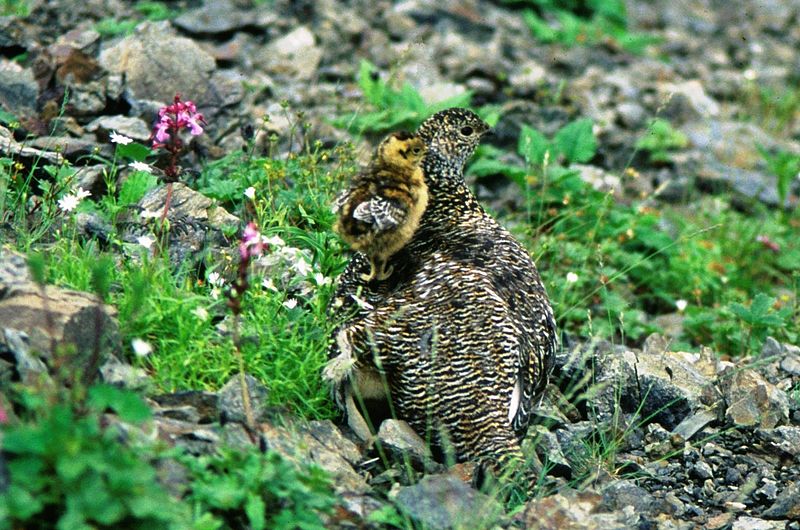
Rock Ptarmigan (Lagopus Muta) ©WikiC mother and chick

Rock Ptarmigan (Lagopus Muta) ©WikiC mother and chick

There is another crown for us, “THE CROWN OF LIFE”.

It is for those who endure temptations, trials, pain and agony for the sake of the Lord.

  • People around you may live a life of luxury and abundance.
  • But we are called to overcome earthly desires.
  • Do we deserve this crown?

Blessed is the man that endureth temptation: for when he is tried, he shall receive the crown of life, which the Lord hath promised to them that love him. (James 1:12)

This crown, “THR CROWN OF GLORY” has a long price tag.

Pay and receive. Here is the bill..

The elders which are among you I exhort, who am also an elder, and a witness of the sufferings of Christ, and also a partaker of the glory that shall be revealed:
Feed the flock of God which is among you, taking the oversight thereof, not by constraint, but willingly; not for filthy lucre, but of a ready mind;
Neither as being lords over God’s heritage, but being examples to the flock.
And when the chief Shepherd shall appear, ye shall receive a crown of glory that fadeth not away. (1 Peter 5:1-4)

Now, it’s time for us to switch on our search lights to see what kind of crown do we deserve..

Have a blessed day!
Yours in YESHUA,
a j mithra

Please visit us at:
CrossTree

ajmithra21

Seeing Pink at Circle B Bar Reserve – Gallery

Because the slideshow won’t allow larger photos, here are the photos for the Seeing Pink at Circle B Bar Reserve article in the Gallery format. Clicking any photo will begin an Image Gallery Carousel.

*

Seeing Pink at Circle B Bar Reserve

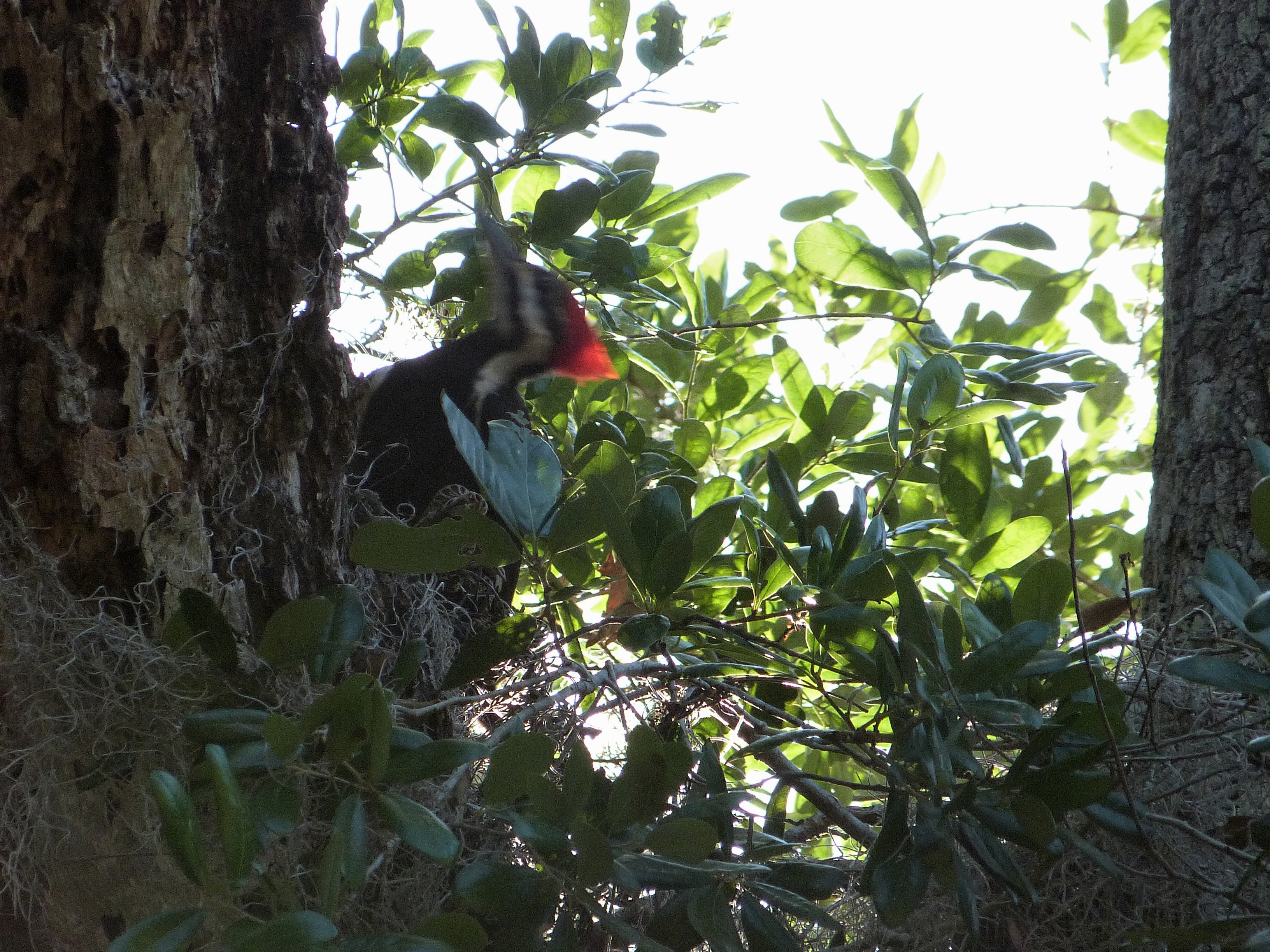
Pileated Woodpecker by Lee at Circle B

Pileated Woodpecker by Lee at Circle B 4-9-2013

Then God said, “Let the waters abound with an abundance of living creatures, and let birds fly above the earth across the face of the firmament of the heavens.” So God created great sea creatures and every living thing that moves, with which the waters abounded, according to their kind, and every winged bird according to its kind. And God saw that it was good. And God blessed them, saying, “Be fruitful and multiply, and fill the waters in the seas, and let birds multiply on the earth.” (Genesis 1:20-22 NKJV)

We spent  a short time at Circle B Bar Reserve today and thought it would be the same old-same old. Well, it wasn’t. A lady we ran into said the same thing I was thinking, “I wasn’t expecting much today.”

When we got out of the car, I spotted a bird landing in the tree nearby which turned out to be a Pileated Woodpecker. That got me excited  right away.

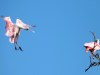
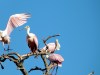
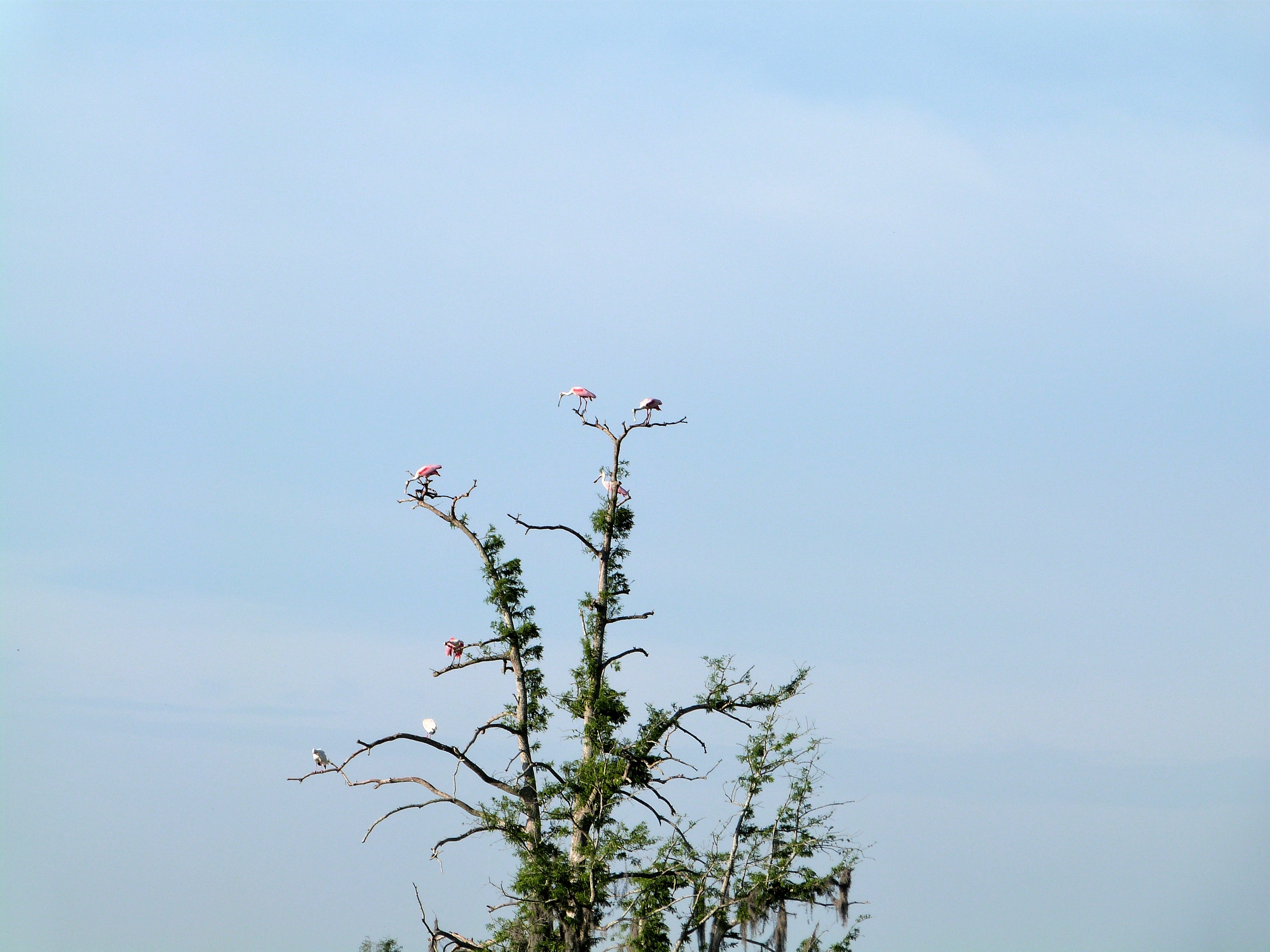
As soon as we turned the corner to head to the marsh, which is extremely dry because there has not had much rain all winter, I saw “Pink.”

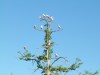
Roseate Spoonbill Tree

Roseate Spoonbill Tree

I am putting a Slideshow here so you can see why I got so excited. It turned out to be a fantastic birdwatching adventure today. Ignore some of the blurred photos, but were inserted to help tell the story of this adventure. The Roseate Spoonbills are spotted out there, but I have never seen so many and so close as today. They kept landing on that tree as you will see and it built up until there were 15 of them in that tree.

Not only did we see the Pileated Woodpecker and the Roseate Spoonbills, but we saw quite a few others also. They are included in the slideshow also. Enjoy!

This slideshow requires JavaScript.

To See these photos in a Gallery – Click Here

Other Birdwatching Trips

*

New Project – Our Birdwatching Photos

Wood Duck - Lake Morton by Lee

Wood Duck – Lake Morton by Lee

O LORD, how manifold are thy works! in wisdom hast thou made them all: the earth is full of thy riches. (Psalms 104:24 KJV)

While working on Family pages, it dawned on me that very few of our photos have been used. We, Dan and I, do take quite a few photos while on our birdwatching adventures into the wild and at the zoos. Actually, I take about 4-5 more than he does on each adventure (more like 10-1). He spends his time trying to compose his shots and do all that sort of stuff. Me, I have a Program mode Panasonic Lumix that I shoot, shoot, shoot. Of course, his photos are always better and he knows how to prep them better, but I get more “action” photos. I have action of the bird moving (blurred), flying off (blurred), turning around (blurred), behind a fence (bird-blurred, fence-clear), in a tree (bird-blurred, branch with leaves-clear). Every once in a while I get a nice photo that isn’t too blurred that could be shared with you.

Another thing he has tried to teach me is the 1/3rd thing. Me, I want that bird right in the middle of my shot so that when I get home I can try to find it behind those clear fences and branches. To me, my photos are for “proof” that the bird was seen and also to try to figure out what it really was. You see, I am a “birdwatcher” and he is a “photographer.” There is a difference! You can blend the two, but there IS a different attitude at work here.

Yesterday the Our Birdwatching Photos page was created and a new tab was placed up at the top. Now, I am working on creating pages, by families, of our photos. Most will be mine, because I take more and he already has a website for his photos at Dan’s Pix. I will be copying some of his over here of course and maybe I can get some of his “unpublished” ones also.

Elegant Crested Tinamou (Eudromia elegans) Cloud Forest at Zoo Miami by Lee

Elegant Crested Tinamou (Eudromia elegans) at Zoo Miami by Lee

Don’t expect the greatest photos, because I am not a great photographer, but I enjoy “watching” the birds. The Lord has created so many birds that are just so beautiful and unique. The variety is amazing. The colors are  breathtaking at times. The birds are adorable, cute, ugly, big, little, tall, short, evasive, calm, fidgety, graceful, etc. They sing some of the most beautiful songs and some have terrible tunes, but don’t you just enjoy watching and listening to them?

O Lord, how many and varied are Your works! In wisdom have You made them all; the earth is full of Your riches and Your creatures. (Psalms 104:24 AMP)

O the depth of the riches both of the wisdom and knowledge of God! how unsearchable are his judgments, and his ways past finding out! (Romans 11:33 KJV)

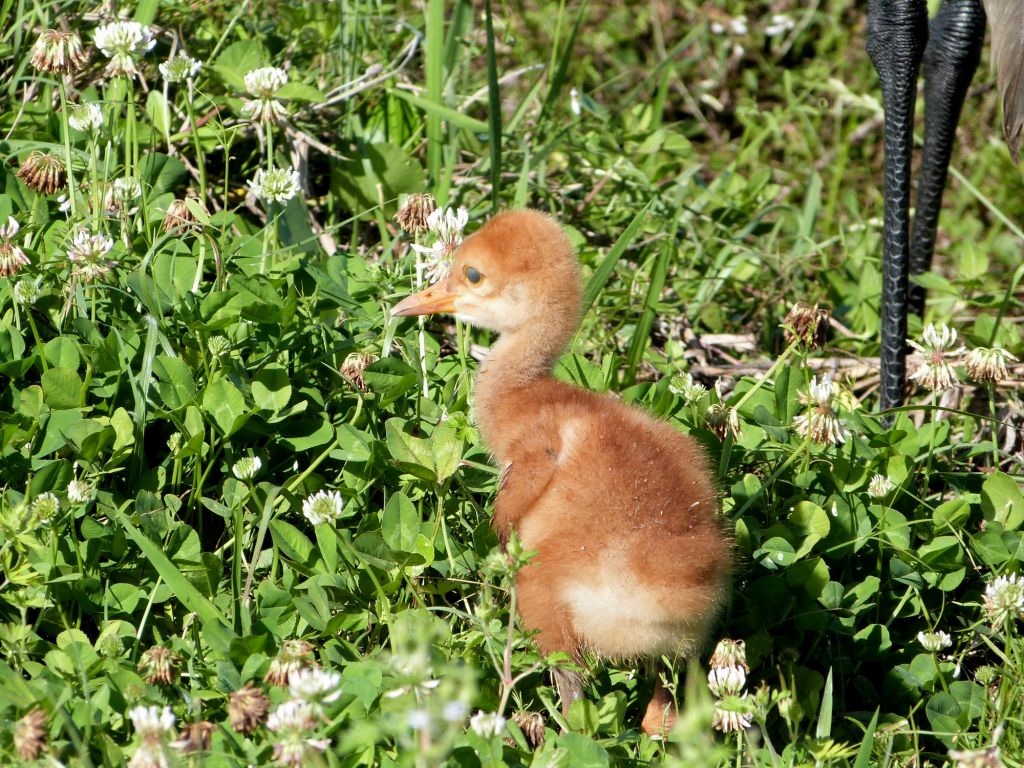
Blurred, but isn't it cute?

Sandhill Crane Chick at Circle B by Lee – Blurred, but isn’t it cute?

*

Our Birdwatching Photos

Dan’s Pix

*

Bible Birds – Swallow Introduction

Red-rumped Swallow (Cecropis daurica) by Nikhil Devasar

Red-rumped Swallow (Cecropis daurica) by Nikhil Devasar

Even the stork in the heavens Knows her appointed times; And the turtledove, the swift, and the swallow Observe the time of their coming. But My people do not know the judgment of the LORD. (Jeremiah 8:7 NKJV)

Previously, we introduced the Thrush and used the above verse. Today, we will look at that same verse, but from a different version of Scripture that translates the bird as a Swallow. Here is the same little Greek study for you: The Greek word (the OT was written mostly in Greek) gives the word (H5693) עגוּר -or – ‛âgûr (aw-goor’) An unused root meaning to twitter; probably the swallow: – swallow. Translations using the word Swallow, have more than one verse that refers to the bird. The New King James Version has these other verses:

Even the sparrow has found a home, And the swallow a nest for herself, Where she may lay her young— Even Your altars, O LORD of hosts, My King and my God. (Psalms 84:3 NKJV) Like a flitting sparrow, like a flying swallow, So a curse without cause shall not alight. (Proverbs 26:2 NKJV) Like a crane or a swallow, so I chattered; I mourned like a dove; My eyes fail from looking upward. O LORD, I am oppressed; Undertake for me! (Isaiah 38:14 NKJV)

So there are at least four verses with the Swallow listed. The Swallows belong to the Hirundinidae – Swallows, martins Family. There are 88 members in the family at present. Many times in the Bible they mention a bird‘s name and then say “after its kind.” For now, let’s just same that it means all of those species in that family. The Swallows also have Saw-wings and Martins in the family. They live on all the continents except Antarctica.

This family is known for their aerial feeding. taking flying insects on the wing. Swallows hunt insects on the wing because they were designed with a slender, streamlined body and long pointed wings, which allow great maneuverability and endurance, as well as frequent periods of gliding. Their body shape allows for very efficient flight, which costs 50-75% less for swallows than equivalent passerines of the same size. Swallows usually forage at around 18.6-25 mph (30–40 km/h), although they are capable of reaching speeds of between 31-40 mph (50–65 km/h) when traveling.

The legs are short, and their feet were created for perching rather than walking, as the front toes are partially joined at the base. Swallows are capable of walking and even running, but they do so with a shuffling, waddling gait. The leg muscles of the river martins (Pseudochelidon) are stronger and more robust than those of other swallows.

The most common plumage is glossy dark blue or green above and plain or streaked underparts, often white or rufous. Species which burrow or live in dry or mountainous areas are often matte brown above (e.g. Sand Martin and Crag Martin). The typical song of swallows is a simple, sometimes musical twittering.

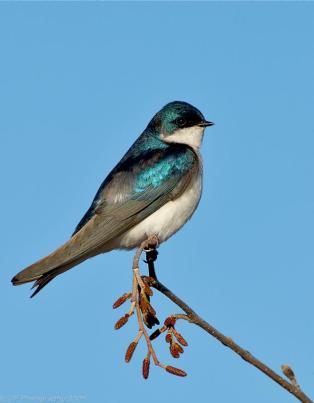
Tree Swallow (Tachycineta bicolor) by J Fenton

Tree Swallow (Tachycineta bicolor) by J Fenton

Our verse above mentions the birds and how they KNOW when it is time to migrate, but what about the end of the verse? The Lord uses birds and other critters as an example, BUT He is mainly trying to teach us something.

Let’s see what some of the different versions say about what we are supposed to learn from these birds.

(HCSB)  ”are aware of their migration, but My people do not know the requirements of the LORD.”

(MSG) …know when it’s time to move south for winter… know when it’s time to come back again. But my people? My people know nothing, not the first thing of GOD and his rule.

(NET) …knows when it is time to move on…recognize the normal times for their migration. But my people pay no attention to what I, the LORD, require of them.

Do you know what the Lord wants you to do? Do you know Him as your Savior? If you do, are you doing what the Bible tells us we should do? Are you obeying your parents? And doing what the Lord wants you to do?.

The Lord loves us, just as your parents do. When you obey them you are happier and blessed. When you do not obey, are you happy or sad? The same is true with obeying the Word that the Lord has given us through His Word, the Bible.

See:

*

Birdwatching at the Jacksonville Zoo by Dan’s Pix

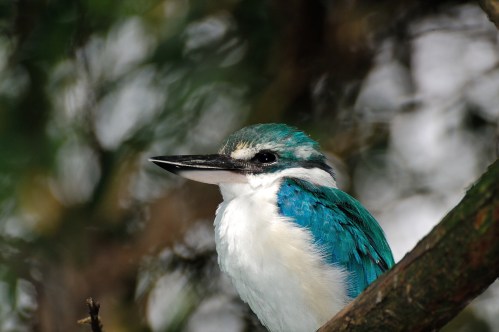
 White-collared Kingfisher by Dan's Pix

Collared Kingfisher by Dan’s Pix

As soon then as they were come to land, they saw a fire of coals there, and fish laid thereon, and bread. Jesus saith unto them, Bring of the fish which ye have now caught. Jesus saith unto them, Come and dine. And none of the disciples durst ask him, Who art thou? knowing that it was the Lord. (John 21:9-12 KJV)

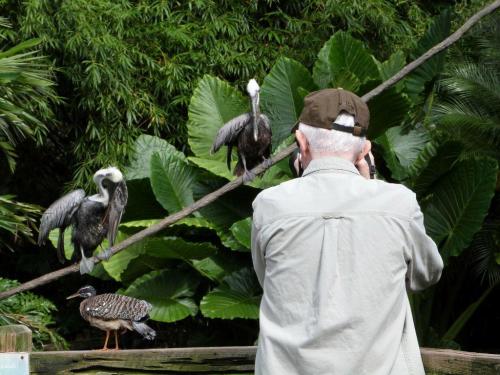
We went on a trip last year and we stopped by the Jacksonville Zoo on the way. Dan recently posted his favorite photos of the zoo on his webpage, Dan’s Pix. I place my photos up on line right away, but he takes time to get them just right before they are posted. That is why his are so much better and the fact that he uses much better photography gear than I do.

I trust you will enjoy them.

Dan at Work at Jacksonville Zoo

Dan at Work at Jacksonville Zoo

Feel free to check out his other great photos – Dan’s Pix home page.

*

Birdwatching – American Coot

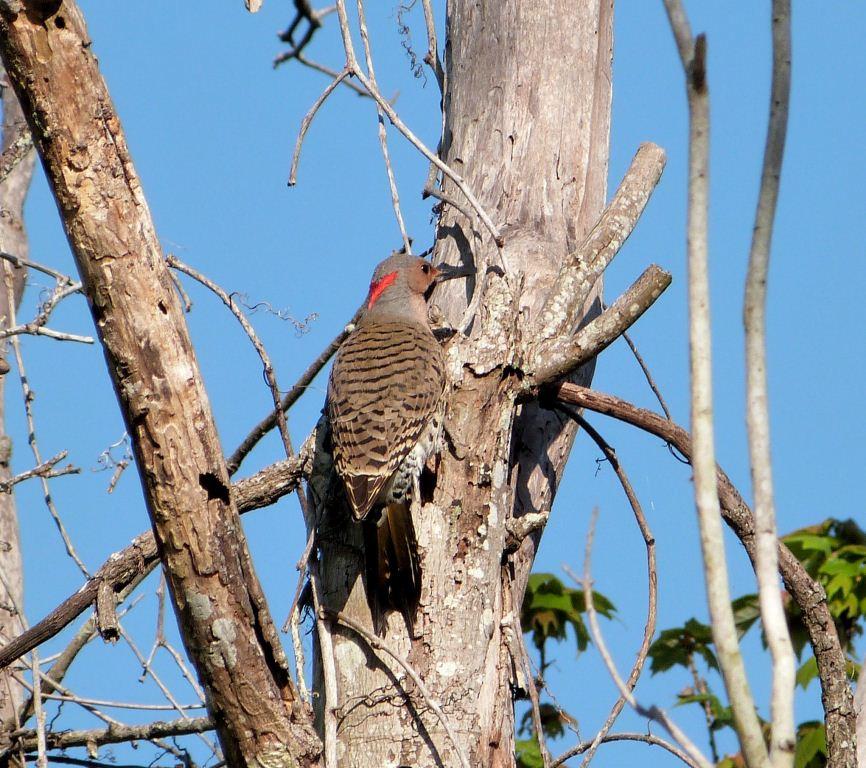
Northern Flicker cropped

Northern Flicker at S. Lake Howard by Lee

Dan and I went birdwatching last week at South Lake Howard Nature Park here in Winter Haven. We just stopped by on the way home from an errand. Captured a Northern Flicker with the camera, but the video is of the Coot’s feet. I have trying to get a photo of them because they are so different from other bird’s feet. Their feet are not webbed, but sort of flattened out. We only see them down here in the winter. See the Wikipedia information below. Apparently it helps them walk on the land, but it seems that a soft soil just under the water would be “squishy” and that may help their footing. Isn’t it neat how the Lord, in Him wisdom, provided for them in such a way.

O LORD, how manifold are your works! In wisdom have you made them all; the earth is full of your creatures. (Psalms 104:24 ESV)

The American Coot (Fulica americana) is a bird of the Rallidae – Rails, Crakes & Coots Family. Though commonly mistaken to be ducks, American Coots come from a distinct family. Unlike ducks, Coots have broad lobes of skin that fold back with each step in order to facilitate walking on dry land. They live near water, typically inhabiting wetlands and open water bodies in North America. Groups of these black-feathered, white-billed birds are called covers or rafts. The oldest known Coot lived to be 22 years old.

The American coot is a migratory bird that occupies most of North American. They live in the Southwestern United States, Mexico, and the pacific coast year round, and only occupy the northeastern regions during the summer breeding season. In the winter they can be found as far south as Panama. They generally build floating nests and lay 8-12 eggs per clutch. American coots eat primarily algae and other aquatic plants but they do eat animals (both vertebrates and invertebrates) when available.

Much research has been done on the breeding habits of American Coots. Studies have found that mothers will preferentially feed offspring with the brightest plume feathers, a characteristic known as chick ornaments. American coots are also susceptible to conspecific brood parasitism, and identify which offspring are theirs and which are from parasitic females.

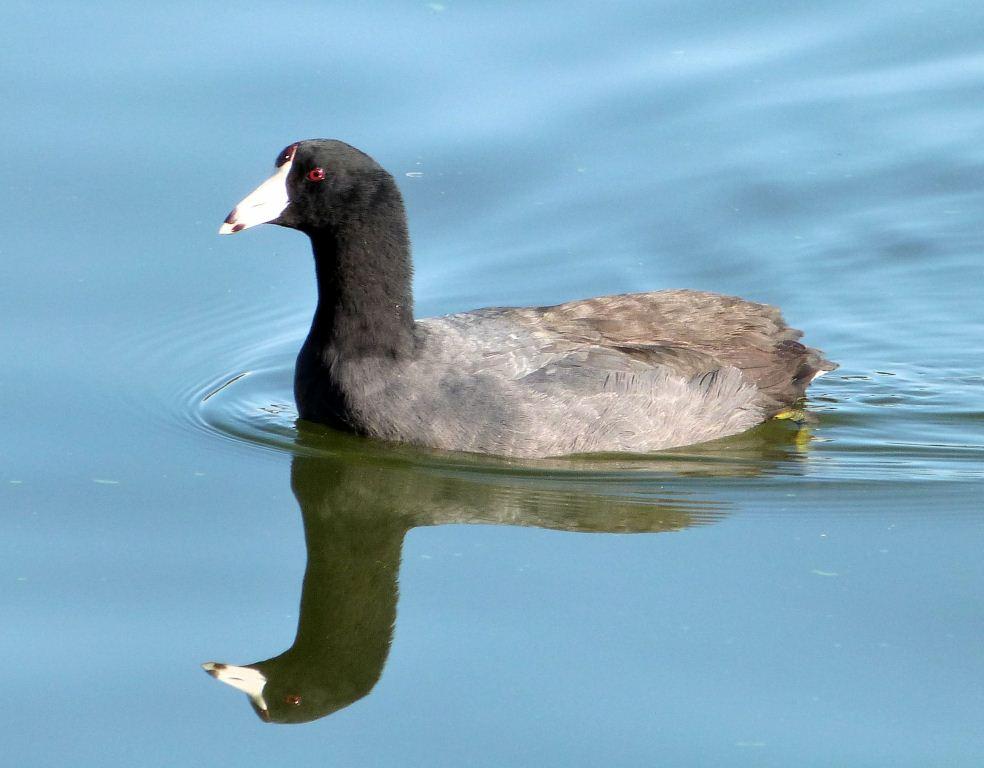
The American Coot measures 13–17 in (34–43 cm) in length and 23–28 in (58–71 cm) across the wings. Adults have a short thick white bill and white frontal shield, which usually has a reddish-brown spot near the top of the bill between the eyes. Males and females look alike, but females are smaller. Juvenile birds have olive-brown crowns and a gray body. They become adult-colored around 4 months of age

The American Coot has a variety of repeated calls and sounds. Male and female Coots make different types of calls to similar situations. Male alarm calls are “puhlk” while female alarm calls are “poonk”. Also, stressed males go “puhk-cowah” or “pow-ur” while females call “cooah”

See the Sounds page of All About Birds for the American Coot.

American Coots are found near water—reed-ringed lakes and ponds, open marshes, and sluggish rivers. They prefer freshwater environments, but may temporarily live in saltwater environments during the winter months.

The American Coot’s breeding habitat extends from marshes in southern Quebec to the Pacific coast of North America and as far south as northern South America. Birds from temperate North America east of the Rocky Mountains migrate to the southern United States and southern British Columbia. It is often a year-round resident where water remains open in winter. The number of birds that stay year-round near the northern limit of the species’ range seems to be increasing.

Autumn migration occurs from August to December, with males and non-breeders moving south before the females and juveniles. Spring migration to breeding ranges occurs from large February to mid-May, with males and older birds moving North first. There has been evidence of birds travelling as far north as Greenland and Iceland. It is a rare but regular vagrant to Europe. The American Coot is a highly gregarious species, particularly in the winter, when its flocks can number in the thousands. The picture below is just of one group of hundreds at Viera Wetlands that day (2012)
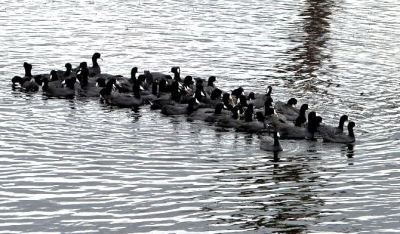
American Coot (Fulica americana) at Viera Wetlands by Lee

American Coot (Fulica americana) at Viera Wetlands by Lee

The American Coot can dive for food but can also forage and scavenge on land. It is omnivorous, eating plant material, arthropods, fish, and other aquatic animals. Its principal source of food is aquatic vegetation, especially algae. During breeding season, Coots are more likely to eat aquatic insects and mollusks—which constitute the majority of a chick’s diet.

The American Coot is a prolific builder and will create multiple structures during a single breeding season. It nests in well-concealed locations in tall reeds. There are three general types of structures: display platforms, egg nests and brood nests. Egg nests are typically 12 inches in diameter with a 12-15 inch ramp that allows the parents to enter and exit without tearing the sides of the nests. Coots will often build multiple egg nests before selecting one to lay their eggs in. Brood nests are nests that are either newly constructed or have simply been converted from old egg nests after the eggs hatch. They are simply larger egg nests. Egg and brood nests are actually elaborate rafts, and must be constantly added to in order to stay afloat. Females typically do the most work while building.

Females deposit one egg a day until the clutch is complete. Eggs are usually deposited between sunset and midnight. Typically, early season and first clutches average two more eggs than second nesting and late season clutches. Early season nests see an average of 9.0 eggs per clutch while late clutches see an average of 6.4 eggs per clutch. There is an inverse relationship between egg weights and laying sequence, wherein earlier eggs are larger than eggs laid later in the sequence. It is possible to induce a female Coot to lay more eggs than normal by either removing all or part of her clutch. Sometimes, a female may abandon the clutch if enough eggs are removed. Coots, however, do not respond to experimental addition of eggs by laying fewer eggs.

Incubation start time in the American Coot is variable, and can begin anywhere from the deposition of the first egg to after the clutch is fully deposited. Starting incubation before the entire clutch has been laid is an uncommon practice among birds. Once incubation starts it continues without interruption. Male and female Coots share incubation responsibility, but males do most of the work during the 21-day incubation period. Females will begin to re-nest clutches in an average of six days if clutches are destroyed during incubation.

Hatch order usually follows the same sequence as laying order. Regardless of clutch size, eight is the typical maximum size of a brood. Egg desertion is a frequent occurrence among Coots because females will often deposit more than eight eggs. Brood size limits incubation time, and when a certain number of chicks have hatched the remaining eggs are abandoned. The mechanism for egg abandonment has not yet been discovered. Food resource constraints may limit the number of eggs parents let hatch, or the remaining eggs may not provide enough visual or tactile stimulation to elicit incubation behavior. An American Coot can be forced to hatch more eggs than are normally laid. These additional offspring, however, suffer higher mortality rates due to inadequacy in brooding or feeding ability.
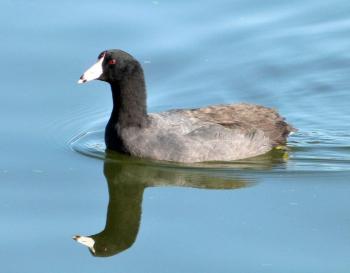
American Coot (Fulica americana) by Lee at Lk Morton

American Coot (Fulica americana) by Lee at Lk Morton

The American Coot, unlike other parasitized species, has the ability to recognize and reject conspecific parasitic chicks from their brood. Parents aggressively reject parasite chicks by pecking them vigorously, drowning them, preventing them from entering the nest, etc. They learn to recognize their own chicks by imprinting on cues from the first chick that hatches. The first-hatched chick is a reference to which parents discriminate between later-hatched chicks. Chicks that do not match the imprinted cues are then recognized as parasite chicks and are rejected.

Chick recognition reduces the costs associated with parasitism, and Coots are one of only three bird species in which this behavior has been observed. This is because hatching order is predictable in parasitized Coots—host eggs will reliably hatch before parasite eggs. In other species where hatching order is not as reliable, there is a risk of misimprinting on a parasite chick first and then rejecting their own chicks. In these species, the cost of accidentally misimprinting is greater than the benefits of rejecting parasite chicks.

The first evidence for parental selection of exaggerated, ornamental traits in offspring was found in American Coots. Black American Coot chicks have conspicuously orange-tipped ornamental plumes covering the front half of their body that are known as “chick ornaments” that eventually get bleached out after six days. This brightly colored, exaggerated trait makes Coot chicks more susceptible to predation and does not aid in thermoregulation, but remains selected for by parental choice. These plumes are not necessary for chick viability, but increased chick ornamentation increases the likelihood that a chick will be chosen as a favorite by the parents. Experimental manipulation of chick ornamentation by clipping the bright plumes have shown that parents show clear preferences for ornamented chicks over non-ornamented ones.

The American Coot is fairly aggressive in defense of its eggs and, in combination with their protected nesting habitat, undoubtedly helps reduce losses of eggs and young to all but the most determined and effective predators. American Crows, Black-billed Magpies and Forster’s Tern can sometime take eggs. Mammalian predators (including red foxes, coyotes, skunks and raccoons) are even less likely to predate coot nests, though nests are regularly destroyed in usurpation by muskrats. Conversely, the bold behavior of immature and adult coots leads to them falling prey with relative regularity once out of the breeding season. Regular, non-nesting-season predators include Great Horned Owls, Northern Harriers, Bald Eagles, Golden Eagles, American alligators, bobcats, Great Black-backed and California Gulls. In fact, Coots may locally comprise more than 80% of the Bald Eagle diet.

In culture – On the Louisiana coast, the Cajun word for coot is pouldeau, from French for “coot”, poule d’eau – literally “water hen”. Coot can be used for cooking; it is somewhat popular in Cajun cuisine, for instance as an ingredient for gumbos cooked at home by duck hunters.

(From Wikipedia and All About Birds with editing)

See also:

Birdwatching Trips

Rallidae – Rails, Crakes & Coots Family

American Coot – What Bird

American Coot – All About Birds

American Coot – Wikipedia

Birds of the World

*

Birdwatching Behavior – Illustration

American Robin (Turdus migratorius) eating by Jim Fenton

American Robin (Turdus migratorius) eating by Jim Fenton

“A few years ago my mom began feeding the birds on a regular basis in our backyard. At first, some of the birds were greedy. They weren’t sure if there would be enough food to go around. The starlings were especially mean, which doesn’t surprise anyone familiar with birds. They would attack the robins, cardinals, and sparrows that came to get a taste. This situation continued for several months until one day there was a noticeable change in the bird’s behavior.

After years of regular feeding from the unlimited supply, the birds appeared to be less greedy with the food. Now they were feeding at their leisure—realizing there would be more food when their current supply was finished. Then, last month, something even more remarkable happened. After all these months of hording, greed, and then cautiously enjoying, the birds began to demonstrate a nobler characteristic. They began calling for one another at mealtime.

Today, when the seed is spread for the birds, one will call for the others to share what they’ve discovered. The greed is less frequent. The jealous pecking is rare. The trees seem fuller these days with the joy of satisfaction from birds that have learned to share. The music of multiple species fills the air. Now they know the supply is unlimited. And as far as their appetite is concerned, it’s inexhaustible.

Just this morning, I noticed a sparrow feeding right beside a starling. Miracles never cease.

Why can’t this happen in the church?

God’s grace is inexhaustible and we ought to be calling other sinners to the fount where we’ve found refreshment and renewal.”

Charles K. Grant (An Illustration from SermonCentral.com)

All the earth will worship You, And will sing praises to You; They will sing praises to Your name.” Selah. Come and see the works of God, Who is awesome in His deeds toward the sons of men. (Psalms 66:4-5 NASB)

*

Bible Birds – Cranes I

Sarus Crane (Grus antigone) by Lee at Wings of Asia

Sarus Crane (Grus antigone) by Lee at Wings of Asia

The 15 species of Cranes worldwide are: Black Crowned, Black-necked, Brolga, Demoiselle, Eurasian, Grey Crowned, Hooded, Red-Crowned, Sandhill, Sarus(tallest flying bird-6’ tall), Siberian, Wattled, White-naped, and the Whooping Crane (tallest N. American flying bird-5’ tall). The Cranes belong to the Gruidae – Cranes Family.

Cranes are tall birds from 3 to 6 feet tall, with wingspans over 6 feet. The tallest Crane is the Sarus and the shortest is the Demoiselle. They fly with their neck straight out and their long legs trailing. They chatter and call when flying. We have plenty of Sandhill Cranes here in Central Florida walking around the neighborhoods. They seem pretty tame sometimes and will eat out of your hand. They were bringing a small flock of Whooping Cranes to Florida every fall that followed an Ultra Light Aircraft from Wisconsin. We have a few non-migratory Whooping Cranes in the area that I have seen in a cow field off US 27.

Sandhill Cranes and Babies in yard

Sandhill Cranes and Babies in yard

There are only two verses in the Bible that mention the Crane.

Cranes migrate by following known paths taught them by their parents, or substitutes. Migrating birds know when and where to go and when to come. When God created them, He put that information in them.

Like a crane or a swallow, so did I chatter: I did mourn as a dove: mine eyes fail with looking upward: O LORD, I am oppressed; undertake for me. (Isaiah 38:14 KJV)

“So did I chatter – … The idea here is doubtless that of pain that was expressed in sounds resembling that made by birds – a broken, unmeaning unintelligible sighing; or quick breathing, and moaning. ” Barnes Commentary

Yea, the stork in the heaven knoweth her appointed times; and the turtle and the crane and the swallow observe the time of their coming; but my people know not the judgment of the LORD. (Jeremiah 8:7 KJV)

“The instinct of the migratory birds leads them with unfailing regularity to return every spring from their winter abodes in summer climes (Song of Solomon 2:12); but God’s people will not return to Him even when the winter of His wrath is past, and He invites them back to the spring of His favor.” Jameison, Faussett, and Brown Commentary

As you watch the following video notice that the two Bible verses are being demonstrated. Notice the chattering as they fly about and also that they are heading out for their migration to warmer climates. Migration means travel to another area. Usually here in America, the birds go south in the winter and then return north in the spring as it warms back up. This is God’s way of protecting birds that cannot survive in the cold.

Sandhill Cranes(grey) at the Plate River and some Whooping Cranes (white)

See:

On Our Main Site See:

*

Birds of the Bible – The Common Ostrich


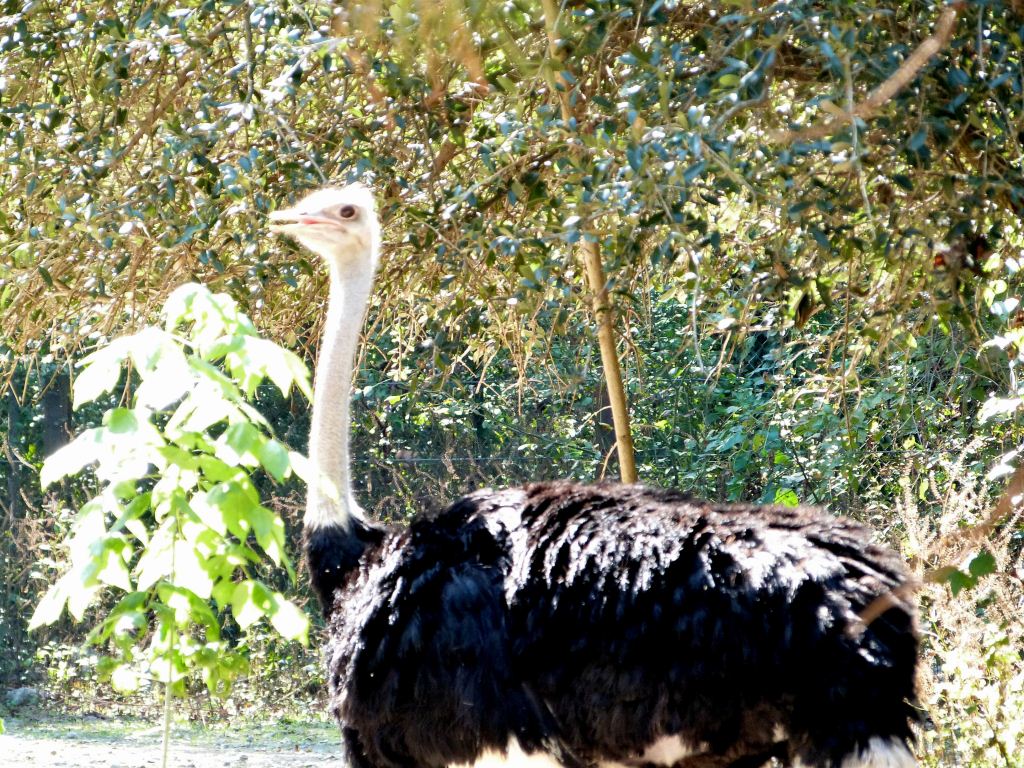
Common Ostrich (Struthio camelus) at Riverbanks Zoo SC by Lee

Common Ostrich (Struthio camelus) at Riverbanks Zoo SC by Lee

Dan and I just recently were on vacation and stopped by the Riverbanks Zoo and Gardens in Columbia, SC. I have see Ostriches before, but it has been awhile. We see the Emus at Zoo Tampa often, but they are not nearly as tall as the Ostrich. I had forgotten that the Lord had created such a huge bird.

The wings of the ostrich wave proudly, But are her wings and pinions like the kindly stork’s? For she leaves her eggs on the ground, And warms them in the dust; She forgets that a foot may crush them, Or that a wild beast may break them. She treats her young harshly, as though they were not hers; Her labor is in vain, without concern, Because God deprived her of wisdom, And did not endow her with understanding. When she lifts herself on high, She scorns the horse and its rider. (Job 39:13-18 NKJV)

The Ostrich does belong to the Struthionidae Family. Currently there are two; the Common Ostrich (Struthio camelus) and the Somali Ostrich (Struthio molybdophanes). The one we saw was the Common. The Ostrich is the largest bird in the world! They are omnivorous flightless birds but make up for their inability to fly with the powerful legs they possess. These birds were built for speed. That is why the reference to the horse and rider. Ostriches can give a horse competition for at least a burst of speed.

Common Ostrich (Struthio camelus) Foot at Riverbanks Zoo SC by Lee

Common Ostrich (Struthio camelus) Foot back at Riverbanks Zoo SC by Lee

“Ostriches usually weigh from 140–320 lb (63 to 145 kilograms), Ostriches of the East African race (S. c. massaicus) averaged 250 lb (115 kg) in males and 220 lb (100 kg) in females, while the nominate subspecies was found to average 240 lb (111 kg) in unsexed adults. At sexual maturity (two to four years), male ostriches can be from 6 ft 11 in to 9 ft 2 in (2.1 to 2.8 m) in height, while female ostriches range from 5 ft 7 in to 6 ft 7 in (1.7 to 2 m) tall. New chicks are fawn with dark brown spots. During the first year of life, chicks grow about 10 in (25 cm) per month. At one year of age, ostriches weigh around 100 lb (45 kilograms). Their lifespan is up to 40 or 45 years.” (Wikipedia with editing)

Common Ostrich (Struthio camelus) Foot at Riverbanks Zoo SC by Lee

Common Ostrich (Struthio camelus) Foot front at Riverbanks Zoo SC by Lee

I am not sure how tall these were, but they had to be close to 8 feet. As I was observing them, I was trying to remember all that the verses said about them. That is one reason I took pictures of their feet. I knew that their feet and legs helped  them run, but also that those same feet were a danger to their young ones. They do have big feet and with an interesting shape as you can see from the photos.

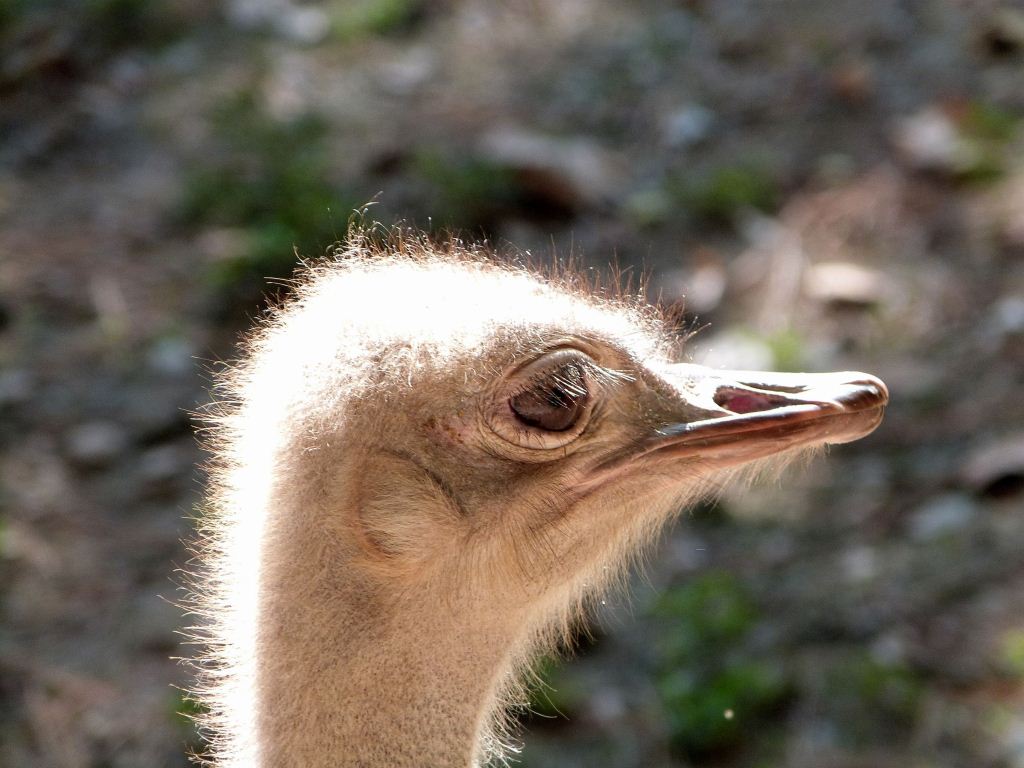
If you notice the size of their head to their body, maybe that is how the Lord “did not endow her with understanding.” The head is interesting though because they are one of the few birds that have eyelashes. They have acute eyesight and hearing, the long neck and legs keep their head up to 9 ft (2.8 m) above the ground, and their eyes are said to be the largest of any land vertebrate – 2.0 in (50 mm) in diameter; they can therefore perceive predators at a great distance. The eyes are shaded from sun light falling from above. However, the head and bill are relatively small for the birds’ huge size”

Common Ostrich (Struthio camelus) Head at Riverbanks Zoo SC by Lee

Common Ostrich (Struthio camelus) Head at Riverbanks Zoo SC by Lee

Oh, sing to the LORD a new song! Sing to the LORD, all the earth. Sing to the LORD, bless His name; Proclaim the good news of His salvation from day to day. Declare His glory among the nations, His wonders among all peoples. For the LORD is great and greatly to be praised; He is to be feared above all gods. (Psalms 96:1-4 NKJV)

Links:

Birds of the Bible – Ostrich

Bible Birds – Ostrich

Struthionidae – Ostriches

Ostrich – Creation Wiki

Ostrich – Wikipedia

Ostrich – The Largest Bird with the Biggest Eyes

*