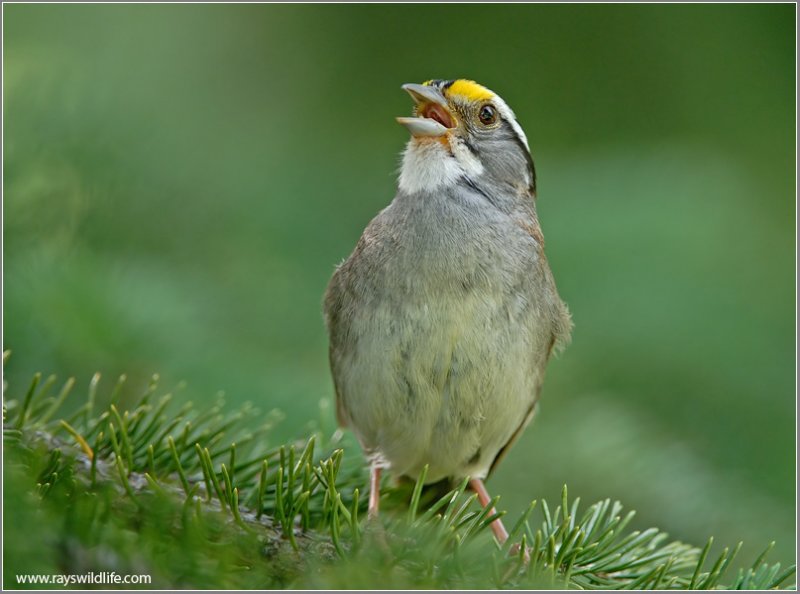
Jenny Wren Arrives – Chapter 1

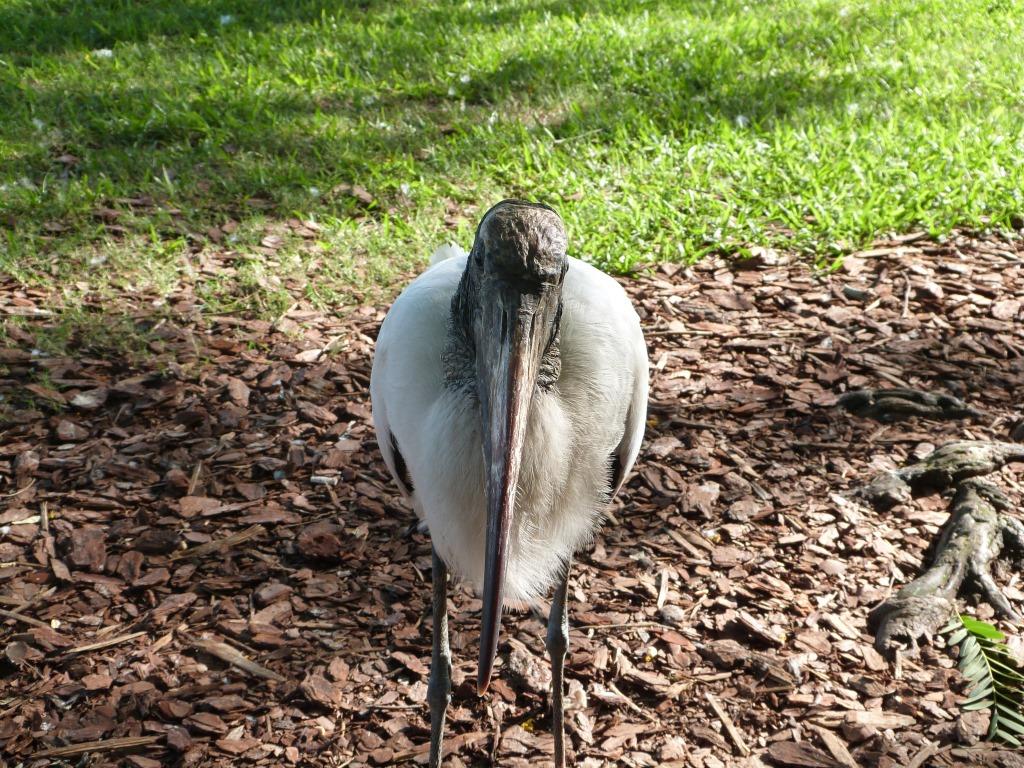
House Wren (Troglodytes aedon) by Ray

House Wren (Troglodytes aedon) by Ray

Jenny Wren Arrives

Introducing the House Wren

The Burgess Bird Book For Children

*
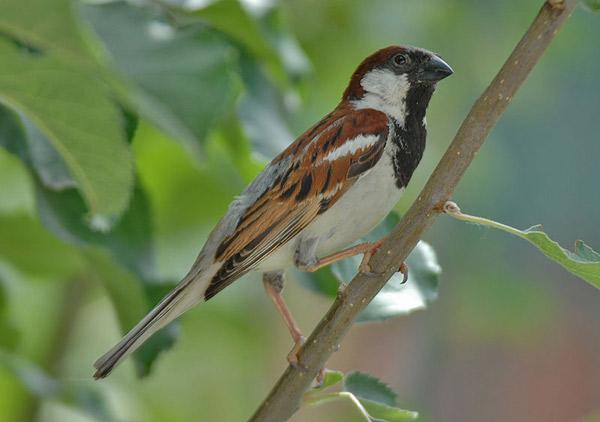
CHAPTER I. Jenny Wren Arrives.

*

Listen to the story read.

Lipperty-lipperty-lip scampered Peter Rabbit behind the tumble-down stone wall along one side of the Old Orchard. It was early in the morning, very early in the morning. In fact, jolly, bright Mr. Sun had hardly begun his daily climb up in the blue, blue sky. It was nothing unusual for Peter to see jolly Mr. Sun get up in the morning. It would be more unusual for Peter not to see him, for you know Peter is a great hand to stay out all night and not go back to the dear Old Briar-patch, where his home is, until the hour when most folks are just getting out of bed.

Peter had been out all night this time, but he wasn’t sleepy, not the least teeny, weeny bit. You see, sweet Mistress Spring had arrived, and there was so much happening on every side, and Peter was so afraid he would miss something, that he wouldn’t have slept at all if he could have helped it. Peter had come over to the Old Orchard so early this morning to see if there had been any new arrivals the day before.

“Birds are funny creatures,” said Peter, as he hopped over a low place in the old stone wall and was fairly in the Old Orchard.

Jenny Wren - Burgess Bird Book ©©

Jenny Wren – Burgess Bird Book ©©

“Tut, tut, tut, tut, tut!” cried a rather sharp scolding voice. “Tut, tut, tut, tut, tut! You don’t know what you are talking about, Peter Rabbit. They are not funny creatures at all. They are the most sensible folks in all the wide world.”

Peter cut a long hop short right in the middle, to sit up with shining eyes. “Oh, Jenny Wren, I’m so glad to see you! When did you arrive?” he cried.

“Mr. Wren and I have just arrived, and thank goodness we are here at last,” replied Jenny Wren, fussing about, as only she can, in a branch above Peter. “I never was more thankful in my life to see a place than

I am right this minute to see the Old Orchard once more. It seems ages and ages since we left it.”

“Well, if you are so fond of it what did you leave it for?” demanded Peter. “It is just as I said before—you birds are funny creatures. You never stay put; at least a lot of you don’t. Sammy Jay and Tommy Tit the Chickadee and Drummer the Woodpecker and a few others have a little sense; they don’t go off on long, foolish journeys. But the rest of you—”

“Tut, tut, tut, tut, tut!” interrupted Jenny Wren. “You don’t know what you are talking about, and no one sounds so silly as one who tries to talk about something he knows nothing about.”

Peter chuckled. “That tongue of yours is just as sharp as ever,” said he. “But just the same it is good to hear it. We certainly would miss it. I was beginning to be a little worried for fear something might have happened to you so that you wouldn’t be back here this summer. You know me well enough, Jenny Wren, to know that you can’t hurt me with your tongue, sharp as it is, so you may as well save your breath to tell me a few things I want to know. Now if you are as fond of the Old Orchard as you pretend to be, why did you ever leave it?”

Jenny Wren’s bright eyes snapped. “Why do you eat?” she asked tartly.

“Because I’m hungry,” replied Peter promptly.

“What would you eat if there were nothing to eat?” snapped Jenny.

“That’s a silly question,” retorted Peter.

“No more silly than asking me why I leave the Old Orchard,” replied Jenny. “Do give us birds credit for a little common sense, Peter. We can’t live without eating any more than you can, and in winter there is no food at all here for most of us, so we go where there is food. Those who are lucky enough to eat the kinds of food that can be found here in winter stay here. They are lucky. That’s what they are—lucky. Still—” Jenny Wren paused.

“Still what?” prompted Peter.

“I wonder sometimes if you folks who are at home all the time know just what a blessed place home is,” replied Jenny. “It is only six months since we went south, but I said it seems ages, and it does. The best part of going away is coming home. I don’t care if that does sound rather mixed; it is true just the same. It isn’t home down there in the sunny South, even if we do spend as much time there as we do here. THIS is home, and there’s no place like it! What’s that, Mr. Wren? I haven’t seen all the Great World? Perhaps I haven’t, but I’ve seen enough of it, let me tell you that! Anyone who travels a thousand miles twice a year as we do has a right to express an opinion, especially if they have used their eyes as I have mine. There is no place like home, and you needn’t try to tease me by pretending that there is. My dear, I know you; you are just as tickled to be back here as I am.”

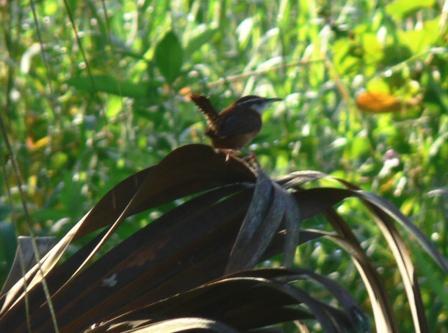
House Wren (Troglodytes aedon) by Ian

House Wren (Troglodytes aedon) by Ian

“He sings as if he were,” said Peter, for all the time Mr. Wren was singing with all his might.

Jenny Wren looked over at Mr. Wren fondly. “Isn’t he a dear to sing to me like that? And isn’t it a perfectly beautiful spring song?” said she. Then, without waiting for Peter to reply, her tongue rattled on. “I do wish he would be careful. Sometimes I am afraid he will overdo. Just look at him now! He is singing so hard that he is shaking all over. He always is that way. There is one thing true about us Wrens, and this is that when we do things we do them with all our might. When we work we work with all our might. When Mr. Wren sings he sings with all his might.”

“And, when you scold you scold with all your might,” interrupted Peter mischievously.

Jenny Wren opened her mouth for a sharp reply, but laughed instead. “I suppose I do scold a good deal,” said she, “but if I didn’t goodness knows who wouldn’t impose on us. I can’t bear to be imposed on.”

“Did you have a pleasant journey up from the sunny South?” asked Peter.

“Fairly pleasant,” replied Jenny. “We took it rather easily, Some birds hurry right through without stopping, but I should think they would be tired to death when they arrive. We rest whenever we are tired, and just follow along behind Mistress Spring, keeping far enough behind so that if she has to turn back we will not get caught by Jack Frost. It gives us time to get our new suits on the way. You know everybody expects you to have new things when you return home. How do you like my new suit, Peter?” Jenny bobbed and twisted and turned to show it off. It was plain to see that she was very proud of it.

“Very much,” replied Peter. “I am very fond of brown. Brown and gray are my favorite colors.” You know Peter’s own coat is brown and gray.

“That is one of the most sensible things I have heard you say,” chattered Jenny Wren. “The more I see of bright colors the better I like brown. It always is in good taste. It goes well with almost everything. It is neat and it is useful. If there is need of getting out of sight in a hurry you can do it if you wear brown. But if you wear bright colors it isn’t so easy. I never envy anybody who happens to have brighter clothes than mine. I’ve seen dreadful things happen all because of wearing bright colors.”

“What?” demanded Peter.

“I’d rather not talk about them,” declared Jenny in a very emphatic way. “‘Way down where we spent the winter some of the feathered folks who live there all the year round wear the brightest and most beautiful suits I’ve ever seen. They are simply gorgeous. But I’ve noticed that in times of danger these are the folks dreadful things happen to. You see they simply can’t get out of sight. For my part I would far rather be simply and neatly dressed and feel safe than to wear wonderful clothes and never know a minute’s peace. Why, there are some families I know of which, because of their beautiful suits, have been so hunted by men that hardly any are left. But gracious, Peter Rabbit, I can’t sit here all day talking to you! I must find out who else has arrived in the Old Orchard and must look my old house over to see if it is fit to live in.”

*

Why did Jenny and Peter Wren leave? Do you know what that is called?

How far did they travel?

What color are they and why does Jenny like it?

What kind of tongue did Jenny have? How is your tongue?

Even the stork in the sky Knows her seasons; And the turtledove and the swift and the thrush Observe the time of their migration; But My people do not know The ordinance of the LORD. (Jeremiah 8:7 NASB)

*

Links:
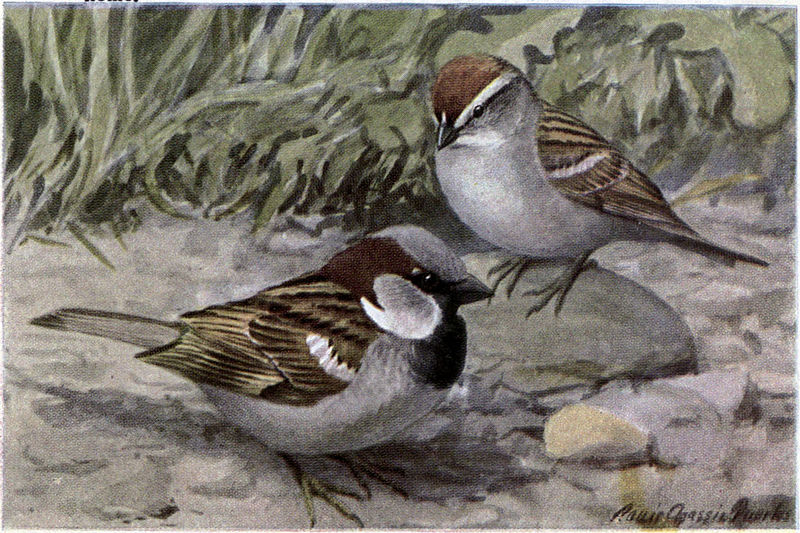
Bully the English Sparrow, Chippy the Chipping Sparrow - Burgess Bird Book ©©
  Next Chapter – The Old Orchard Bully
Burgess-Bird-Book-for-Children
  Burgess-Bird-Book-for-Children
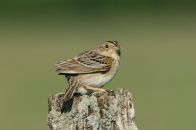
Grasshopper Sparrow (Ammodramus savannarum) ©WikiC    Wordless Birds
*

The Burgess Bird Book For Children – Introduction

House Wren (Troglodytes aedon) by Ian

House Wren (Troglodytes aedon) by Ian

The Burgess Bird Book For Children

By Thornton W. Burgess

TO THE CHILDREN AND THE BIRDS OF AMERICA THAT THE BONDS OF LOVE AND FRIENDSHIP BETWEEN THEM MAY BE STRENGTHENED THIS BOOK IS DEDICATED


PREFACE

This book was written to supply a definite need. Its preparation was undertaken at the urgent request of booksellers and others who have felt the lack of a satisfactory medium of introduction to bird life for little children. As such, and in no sense whatever as a competitor with the many excellent books on this subject, but rather to supplement these, this volume has been written.

Its primary purpose is to interest the little child in, and to make him acquainted with, those feathered friends he is most likely to see. Because there is no method of approach to the child mind equal to the story, this method of conveying information has been adopted. So far as I am aware the book is unique in this respect. In its preparation an earnest effort has been made to present as far as possible the important facts regarding the appearance, habits and characteristics of our feathered neighbors. It is intended to be at once a story book and an authoritative handbook. While it is intended for little children, it is hoped that children of larger growth may find in it much of both interest and helpfulness.

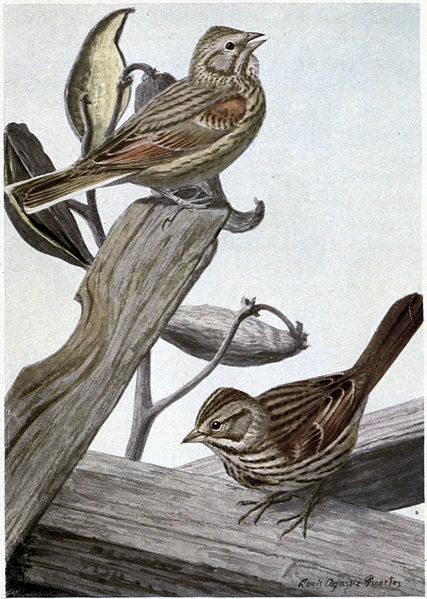
Mr. Louis Agassiz Fuertes, artist and naturalist, has marvelously supplemented such value as may be in the text by his wonderful drawings in full color. They were made especially for this volume and are so accurate, so true to life, that study of them will enable any one to identify the species shown. I am greatly indebted to Mr. Fuertes for his cooperation in the endeavor to make this book of real assistance to the beginner in the study of our native birds.

It is offered to the reader without apologies of any sort. It was written as a labor of love—love for little children and love for the birds. If as a result of it even a few children are led to a keener interest in and better understanding of our feathered friends, its purpose will have been accomplished.

THORNTON W. BURGESS

CONTENTS

Introduction

  1. Jenny Wren Arrives.  – Introducing the House Wren
  2. The Old Orchard Bully. – The English or House Sparrow.
  3. Jenny Has a Good Word for Some Sparrows. – The Song, White-throated and Fox Sparrows.
  4. Chippy, Sweetvoice, and Dotty. – The Chipping, Vesper and Tree Sparrows.
  5. Peter Learns Something He Hadn’t Guessed. – The Bluebird and the Robin.
  6. An Old Friend In a New Home. – The Phoebe and the Least Flycatcher.
  7. The Watchman of the Old Orchard. – The Kingbird and the Great Crested Flycatcher.
  8. Old Clothes and Old Houses. – The Wood Peewee and Some Nesting Places.
  9. Longbill and Teeter. – The Woodcock and the Spotted Sandpiper.
  10. Redwing and Yellow Wing. – The Red-winged Blackbird and the Golden-winged Flicker.
  11. Drummers and Carpenters. – The Downy, Hairy and Red-headed Woodpeckers.
  12. Some Unlikely Relatives. – The Cowbird and the Baltimore Oriole.
  13. More of the Blackbird Family. – The Orchard Oriole and the Bobolink.
  14. Bob White and Carol the Meadow Lark. – The So-called Quail and the Meadow Lark.
  15. A Swallow and One Who Isn’t. The Tree Swallow and the Chimney Swift.
  16. A Robber in the Old Orchard. – The Purple Martin and the Barn Swallow.
  17. More Robbers. – The Crow and the Blue Jay.
  18. Some Homes in the Green Forest. – The Crow, the Oven Bird and the Red-tailed Hawk.
  19. A Maker of Thunder and a Friend in Black. – The Ruffed Grouse and the Crow Blackbird.
  20. A Fisherman Robbed. – The Osprey and the Bald-headed Eagle.
  21. A Fishing Party. – The Great Blue Heron and the Kingfisher.
  22. Some Feathered Diggers. – The Bank Swallow, the Kingfisher and the Sparrow Hawk.
  23. Some Big Mouths. – The Nighthawk, the Whip-poor-will and Chuck-wills-widow.
  24. The Warblers Arrive. – The Redstart and the Yellow Warbler.
  25. Three Cousins Quite Unlike. – The Black and White Warbler, the Maryland Yellow-Throat and the Yellow-breasted Chat.
  26. Peter Gets a Lame Neck. – The Parula, Myrtle and Magnolia Warblers.
  27. A New Friend and an Old One. – The Cardinal and the Catbird.
  28. Peter Sees Rosebreast and Finds Redcoat. – The Rose-breasted Grosbeak and the Scarlet Tanager.
  29. The Constant Singers. – The Red-eyed, Warbling and Yellow-throated Vireos.
  30. Jenny Wren’s Cousins. – The Brown Thrasher and the Mockingbird.
  31. Voices of the Dusk. – The Wood, Hermit and Wilson’s Thrushes.
  32. Peter Saves a Friend and Learns Something. – The Towhee and the Indigo Bunting.
  33. A Royal Dresser and a Late Nester. – The Purple Linnet and the Goldfinch.
  34. Mourner the Dove and Cuckoo. – The Mourning Dove and the Yellow-billed Cuckoo.
  35. A Butcher and a Hummer. – The Shrike and the Ruby-throated Hummingbird.
  36. A Stranger and a Dandy. – The English Starling and the Cedar Waxwing.
  37. Farewells and Welcomes. – The Chickadee.
  38. Honker and Dippy Arrive. – The Canada Goose and the Loon.
  39. Peter Discovers Two Old Friends. – The White-breasted Nuthatch and the Brown Creeper.
  40. Some Merry Seed-Eaters. – The Tree Sparrow and the Junco.
  41. More Friends Come With the Snow. – The Snow Bunting and the Horned Lark.
  42. Peter Learns Something About Spooky. – The Screech Owl.
  43. Queer Feet and a Queerer Bill. – The Ruffed Grouse and the Crossbills.
  44. More Folks in Red. – The Pine Grosbeak and the Redpoll.
  45. Peter Sees Two Terrible Feathered Hunters. – The Goshawk and the Great Horned Owl.

Lee’s Addition:

I think you will greatly enjoy this book. Birds and their behaviors are presented in a story, but many birdwatching truths are introduced. Look for questions and Christian principle at the end of the chapters. These are also a good way to read and teach your child or grandchild. Enjoy!

(P.S. – Just found a source for audio for these chapters. They will be attached.)

(The first chapter is being released today)


The Project Gutenberg EBook of The Burgess Bird Book for Children, by Thornton W. Burgess

This eBook is for the use of anyone anywhere at no cost and with almost no restrictions whatsoever. You may copy it, give it away or re-use it under the terms of the Project Gutenberg License included with this eBook or online at http://www.gutenberg.org

Burgess-Bird-Book-for-Children


 Burgess-Bird-Book-for-Children


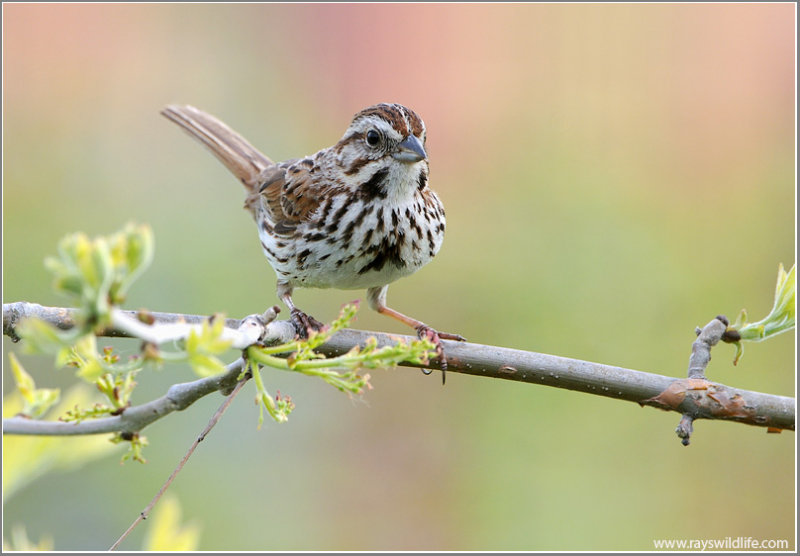
Savannah Sparrow by Ray    Wordless Birds


Bible Birds – Vulture Introduction

Vulture Introduction

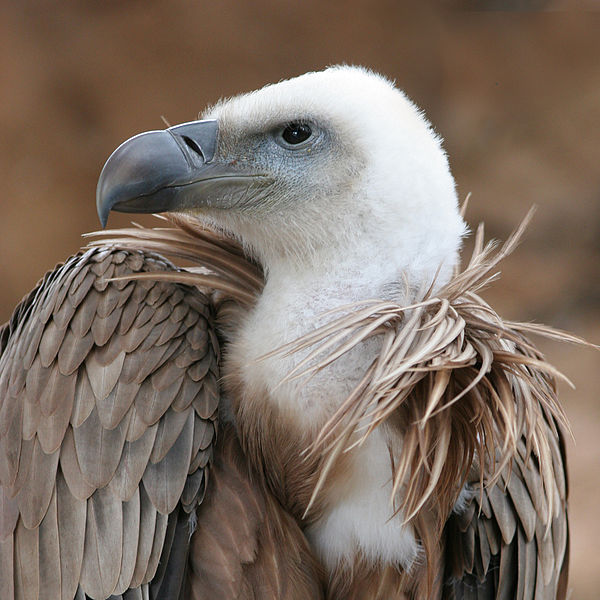
Griffon Vulture (Gyps fulvus) WikiC

Griffon Vulture (Gyps fulvus) WikiC

And these you shall regard as an abomination among the birds; they shall not be eaten, they are an abomination: the eagle, the vulture, the buzzard, (Leviticus 11:13 NKJV)

  • Christian Standard Bible (CSB) “but these are the ones you may not eat: eagles, bearded vultures, black vultures,
  • Complete Jewish Bible (CJB) “but these you are not to eat: eagles, vultures, ospreys,
  • Easy-to-Read Version (ERV) “But don’t eat any of these birds: eagles, vultures, buzzards,
  • English Standard Version (ESV) “But these are the ones that you shall not eat: the eagle, the bearded vulture, the black vulture,
  • Expanded Bible (EXB) “But do not eat these birds: eagles, vultures, black vultures, 13 red kites, falcons, any kind of kite,
  • GOD’S WORD Translation (GW) “But here are the birds that you should never eat: eagles, bearded vultures, black vultures,
  • International Children’s Bible (ICB)  “But do not eat these birds: eagles, vultures, black vultures,
  • International Standard Version (ISV) “You may eat all clean birds, 12 but you must not eat any of these: the eagle, vulture, osprey, 13 buzzard, any kind of kite,
  • Names of God Bible (NOG) “But here are the birds that you should never eat: eagles, bearded vultures, black vultures,
  • New English Translation (NET) “But do not eat these birds: eagles, vultures, black vultures,
  • New International Reader’s Version (NIRV) “But there are many birds you can’t eat. They include eagles, vultures, and black vultures.
Leviticus 11:18 and Deuteronomy 14:17 (NKJV) mention a carrion vulture. Jeremiah 12:9 mentions a speckled vulture.
 
All of these verses give us several different kinds of vultures.
vulture
bearded vulture – covered in Bible Birds – Ossifrage
black vulture
carrion vulture
speckled vulture
 
I am sure if I checked all of the translation available in BibleGateway, I would find some other type of Vulture. That might be a project you could do.
 
The vultures belong to the same family as the Buzzards recently written about. Accipitridae – Kites, Hawks & Eagles Family.
 
“A vulture is a scavenging bird of prey. The two types of vultures are the New World vultures, including the Californian and Andean condors, and the Old World vultures, including the birds that are seen scavenging on carcasses of dead animals on African plains. Some traditional Old World vultures (including the bearded vulture) are not closely related to the others, which is why the vultures are to be subdivided into three taxa rather than two. New World vultures are found in North and South America; Old World vultures are found in Europe, Africa, and Asia, meaning that between the two groups, vultures are found on every continent except Australia and Antarctica.”

White-backed Vultures (Gyps_africanus) on zebra carcass ©WikiC

From that description, again, you can see why those birds aren’t eaten. Eating something they just killed would be bad enough, but to eat things that had already died. That is not the kind of bird you would want to eat at Thanksgiving.
 
Here are some of the Vultures from around the world:

ABC’s of the Gospel


Sunday Inspiration – I’ll Be A Friend

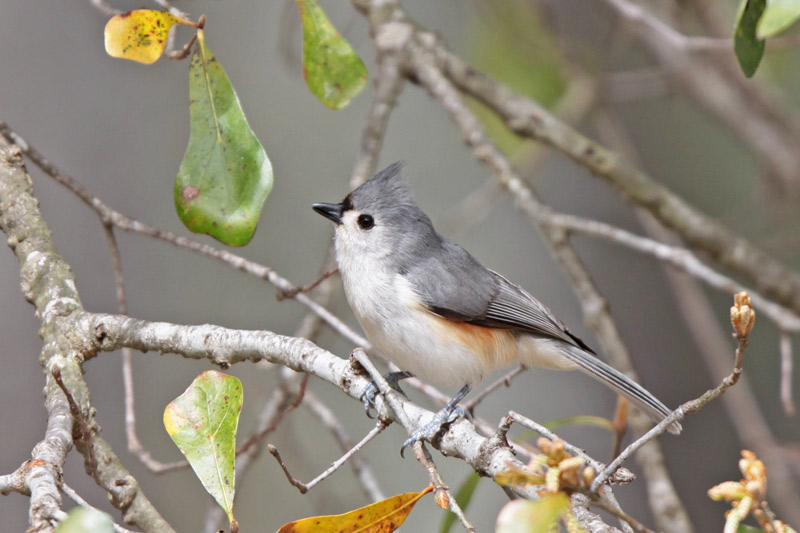
Tufted Titmouse (Baeolophus bicolor) by Margaret Sloan

Tufted Titmouse (Baeolophus bicolor) by Margaret Sloan

But I have trusted in thy mercy; my heart shall rejoice in thy salvation. I will sing unto the LORD, because he hath dealt bountifully with me. (Psalms 13:5-6 KJV)

The birds trust the Lord because they know He provides for them. We can have Jesus as a Friend that is even closer and provides our needs, especially Salvation.

****

This slideshow requires JavaScript.

“I’ll Be A Friend To Jesus” – Faith Baptist Quartet 2011

  1. They tried my Lord and Master,
    With no one to defend;
    Within the halls of Pilate
    He stood without a friend.

    • Refrain:
      I’ll be a friend to Jesus,
      My life for Him I’ll spend;
      I’ll be a friend to Jesus,
      Until my years shall end.
  2. The world may turn against Him,
    I’ll love Him to the end,
    And while on earth I’m living,
    My Lord shall have a friend.
  3. I’ll do what He may bid me;
    I’ll go where He may send;
    I’ll try each flying moment
    To prove that I’m His friend.
  4. To all who need a Savior,
    My Friend I’ll recommend;
    Because He brought salvation,
    Is why I am His friend.

May you enjoy your day, rejoicing in the Lord’s Great Salvation, and His beautiful birds He has created for His pleasure and our enjoyment.

If you haven’t received his salvation, remember:

John 3:14-19 KJV
(14) And as Moses lifted up the serpent in the wilderness, even so must the Son of man be lifted up:
(15) That whosoever believeth in him should not perish, but have eternal life.
(16) For God so loved the world, that he gave his only begotten Son, that whosoever believeth in him should not perish, but have everlasting life.
(17) For God sent not his Son into the world to condemn the world; but that the world through him might be saved.
(18) He that believeth on him is not condemned: but he that believeth not is condemned already, because he hath not believed in the name of the only begotten Son of God.
(19) And this is the condemnation, that light is come into the world, and men loved darkness rather than light, because their deeds were evil.

Gospel Message

More Sunday Inspirations

*


Thought For The Day…. How much do we notice?

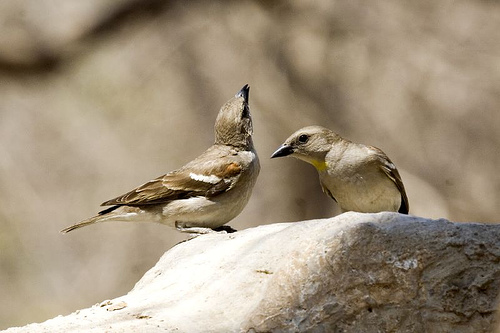
Yellow-throated Sparrow (Gymnoris xanthocollis) ©WikiC

Yellow-throated Sparrow (Gymnoris xanthocollis) ©WikiC

THOUGHT FOR THE DAY….  

How much do we notice as we go through a day?????

Lisa Beamer on Good Morning America – If you remember, she’s the wife of Todd Beamer who said ‘Let’s Roll!’ and helped take down the plane over Pennsylvania that was heading for Washington, DC back on 9/11.

She said it’s the little things that she misses most about Todd, such as hearing the garage door open as he came Home, and her children running to meet him.

Lisa recalled this story: “I had a very special teacher in high school many years ago whose husband died suddenly of a heart attack. About a week after his death, she shared some of her insight with a classroom of students. As the late afternoon sunlight came streaming in through the classroom windows and the class was nearly over, she moved a few things aside on the edge of her desk and sat down there.

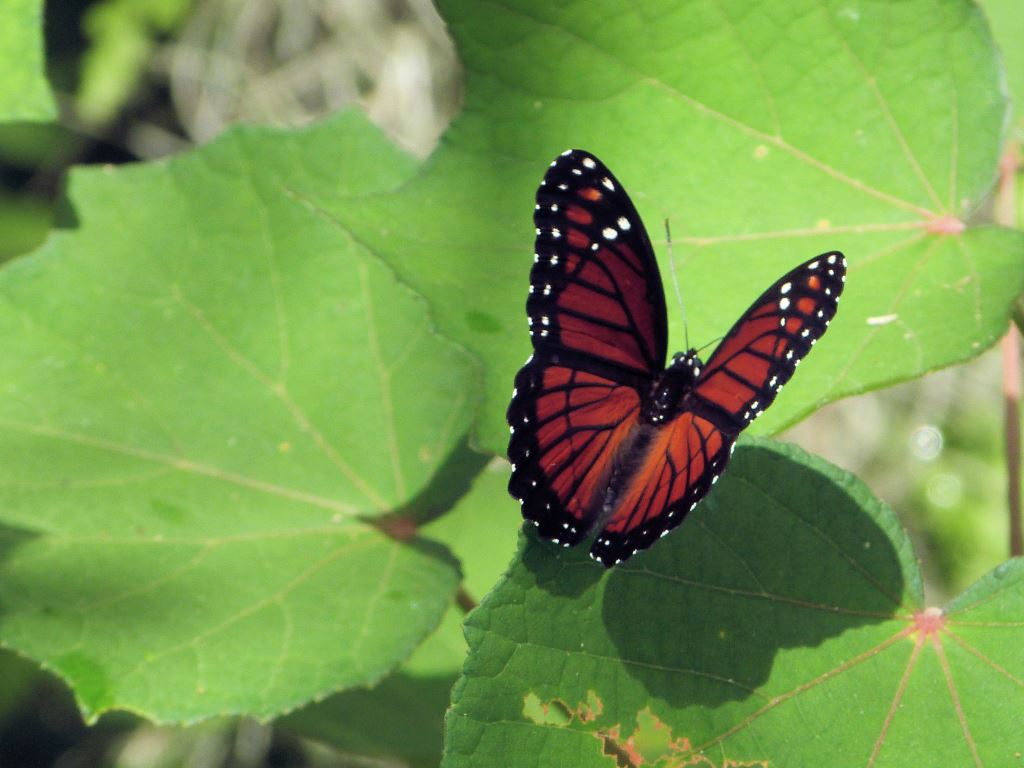
Butterfly Circle B by Lee 7-16-14

Butterfly Circle B by Lee 7-16-14

With a gentle look of reflection on her face, she paused and said, ‘Class is over, I would like to share with all of you, a thought that is unrelated to class, but which I feel is very important. Each of us is put here on earth to learn, share, love, appreciate and give of ourselves. None of us knows when this fantastic experience will end. It can be taken away at any moment.

Perhaps this is God’s way of telling us that we must make the most out of every single day. Her eyes, beginning to water, she went on, ‘So I would like you all to make me a promise. From now on, on your way to school, or on your way home, find something beautiful to notice.

Squirrel at a park in Daytona

Squirrel at a park in Daytona

It doesn’t have to be something you see, it could be a scent, perhaps of freshly baked bread wafting out of someone’s house, or it could be the sound of the breeze slightly rustling the leaves in the trees, or the way the morning light catches one autumn leaf as it falls gently to the ground. Please look for these things, and cherish them. For, although it may sound trite to some, these things are the “stuff” of life. The little things we are put here on earth to enjoy. The things we often take for granted.

The class was completely quiet. We all picked up our books and filed out of the room silently. That afternoon, I noticed more things on my way home from school than I had that whole semester. Every once in a while, I think of that teacher and remember what an impression she made on all of us, and I try to appreciate all of those things that sometimes we all overlook.

Take notice of something special you see on your lunch hour today. Go barefoot. Or walk on the beach at sunset. Stop off on the way home tonight to get a double dip ice cream cone. For as we get older, it is not the things we did that we often regret, but the things we didn’t do.

If you like this, please pass it on to a friend, If not just delete it and go on with your life!

Life is not measured by the number of breaths we take, but by the moments that take our breath away.”

Sunrise over Dayton Beach

Sunrise over Dayton Beach

HAVE A GREAT DAY!

GOD Bless you every day of your life.

The nicest place to be is in someone’s thoughts,

The safest place to be is in someone’s prayers,

and the very best place to be is….

In the hands of God.

(This was received in an email and thought I’d share it and add some photos.)

Who Paints The Leaves?

*

ABC’s of the Gospel

ABC Blocks

ABC’s of the Gospel

The ABC’s of the Gospel:


  • All have sinned and come short of the glory of God (Romans 6:23)
  • But God commendeth His love toward us, in that while we were yet sinners, Christ died for us. (Romans 5:8; John 1:29)
  • Call upon the name of the Lord (Romans 10:13; Isaiah 1:18)

Lead in the sinner’s prayer.

  • Dear God, I know I’m a sinner…
  • I ask you to forgive my sins right now…
  • I believe that Jesus died to save me…
  • I receive Him now as my Savior…
  • In Jesus’ name I pray, Amen

(Adopted from Pastor Jerry Smith’s – Dealing With Children)

Use A Simple Plan – Above

Obtain permission from parents for baptism if they accept the Lord.

*

More Good News

*

Sunday Inspiration – Passerines

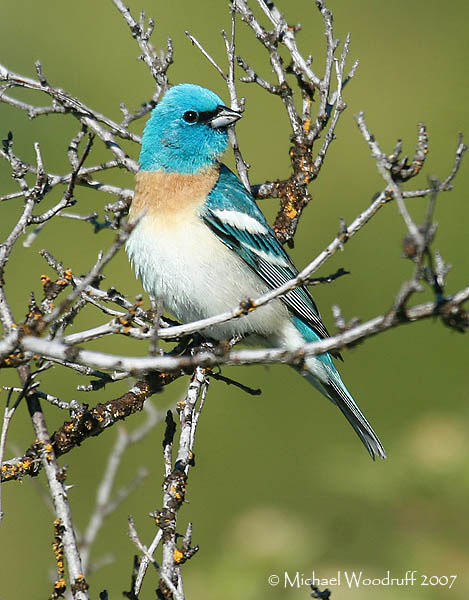
Lazuli Bunting (Passerina amoena) by Michael Woodruff

Lazuli Bunting (Passerina amoena) by Michael Woodruff

By them the birds of the heavens have their home; They sing among the branches. He waters the hills from His upper chambers; The earth is satisfied with the fruit of Your works. He causes the grass to grow for the cattle, And vegetation for the service of man, That he may bring forth food from the earth, (Psalms 104:12-14 NKJV)

A passerine is any bird of the order Passeriformes, which includes more than half of all bird species. A notable feature of passerines is the arrangement of their toes (three pointing forward and one back) which facilitates perching. Sometimes known as perching birds or, less accurately, as songbirds, the passerines form one of the most diverse terrestrial vertebrate orders, with over 5,000 identified species. It has roughly twice as many species as the largest of the mammal orders, the Rodentia. It contains more than 110 families, the second-most of any order of tetrapods (after Squamata, the scaled reptiles).

The names “passerines” and “Passeriformes” are derived from Passer domesticus, the scientific name of the eponymous species (the house sparrow) and ultimately from the Latin term passer for Passer sparrows and similar small birds.

This slideshow requires JavaScript.

*

“Sweet Hour of Prayer” by Sean Fielder (Faith Baptist)

Enjoy God’s creation as you watch and listen to Sean play. May we all pray and thank the Lord for all He has given from His Hand.

The LORD will command His lovingkindness in the daytime, And in the night His song shall be with me— A prayer to the God of my life. (Psalms 42:8 NKJV)

Be anxious for nothing, but in everything by prayer and supplication, with thanksgiving, let your requests be made known to God; (Philippians 4:6 NKJV)

*

Sunday Inspiration

PASSERIFORMES – Passerines

Sharing The Gospel

*

Peterson’s Field Guide Videos Updated

Peregrine Falcon (Falco peregrinus) by Ray

Peregrine Falcon (Falco peregrinus) by Ray

Give instruction to a wise man, and he will be yet wiser: teach a just man, and he will increase in learning. (Proverbs 9:9 KJV)

Peterson Field Guide-Videos

Finished updating the missing videos for the Peterson Field Guide videos. The Vodpod company stopped supporting its videos, which was unknown to me. All of these videos were on YouTube and are now working properly again.

They are very interesting and if you haven’t seen them or at least for a while, they are worth checking out. Here are some of the titles:

How-to Videos:

Give instruction to a wise man, and he will be yet wiser: teach a just man, and he will increase in learning. (Proverbs 9:9 KJV)

How to Identify Birds
Topography (Parts of the Bird)
Bird Songs and Sounds
Range Maps

Bird Families:

Common Loon
Atlantic Puffin
Ducks, Geese, Swans
Wood Duck
Shorebirds Overview
Shorebirds ID
Gulls and Terns
Heron, Egrets, Bitterns – Updated
Wild Turkey
Raptors Overview
Raptors ID
Bald Eagle
Peregrine Falcon
Owls
Greater Roadrunner
Hummingbirds
Woodpeckers
Red-Headed Woodpecker
Flycatchers
Northern Mockingbird
Thrushes
American Robin
Warblers
Meadowlarks
Finches
Northern Cardinal
Sparrows

Enjoy! Dust is still flying as I’m still searching for other broken Vodpod videos.

*


Interesting Things – A Noisy, Bird Brained Harem

Comb-crested Jacana (Irediparra gallinacea)  ©WikiC

Comb-crested Jacana (Irediparra gallinacea) ©WikiC

A NOISY, BIRD BRAINED HAREM

“Whence then cometh wisdom? and where is the place of understanding? Seeing it is hid from the eyes of all living, and kept close from the fowls of the air.” (Job 28:20-21)

SmileyCentral.comScripture frequently makes reference to the fact that birds are not very smart compared to human beings. The tropical wetland bird called the jacana shows that you don’t have to be very smart to be deceptive. The jacana is noteworthy for several reasons. It is one of only 20 species of birds in the world where the female Comb-crested jacana, sometimes referred to as Jesus birdsleaves the care of the young to the males. One flock in southern India was made up of about 50 birds. The males staked out their territory on floating vegetation, often getting into violent fights with other males. Then the females, which are about 60 percent larger than the males, fought with each other for exclusive rights to up to four male territories. Once territories were established, the females would visit each of the males in her territory, mating with each.

Once the eggs are laid in each male’s nest, the female shows no more interest in her offspring. The male will care for the eggs and youngsters once they hatch, until the time they are ready to leave home. But the smaller males have their own strategy for dealing with their situation. They yell. Researchers say a yelling male is really blackmailing the larger female into giving him some attention. A yelling male attracts the attention of other nearby females who might want to take him into her own harem, so his mate comes running to pay attention to him. Sometimes males will even fake an emergency which brings his mate in a hurry. God is the source of all wisdom, and He gave each of His creatures enough wisdom to conduct their lives.

Prayer:
Father, I thank You for Your wisdom in Holy Scripture. Grant me understanding as I read Your Word. Amen.

Notes:
S. Milius, Science News, March 6, 1999, v. 155, p. 149. Photo: Comb-crested jacana, sometimes referred to as Jesus birds. Courtesy of John Hill. Licensed under the Creative Commons Attribution-Share Alike 3.0 Unported license.

Used with permission: ©Creation Moments 2014


Comb-crested Jacana (Irediparra gallinacea) by Ian

Comb-crested Jacana (Irediparra gallinacea) by Ian

Lee’s Addition:

Now in the fourth watch of the night Jesus went to them, walking on the sea. And when the disciples saw Him walking on the sea, they were troubled, saying, “It is a ghost!” And they cried out for fear. But immediately Jesus spoke to them, saying, “Be of good cheer! It is I; do not be afraid.” (Matthew 14:25-27 NKJV)

What an interesting behavior from these Jacanas. Never cease to be amazed at how the Lord created His critters and their way of doing things. Did you notice how their feet were designed to support their weight? That habit of “walking on water” is why some call them the “Jesus” Bird.

The Comb-crested Jacanas are members of the Jacanidae – Jacanas Family.

Comb-crested Jacana (Irediparra gallinacea) by Ian's Birdway

Comb-crested Jacana (Irediparra gallinacea) by Ian’s Birdway

More Interesting Things

Creation Moments

Jacanidae – Jacanas Family

Ian’s Bird of the Week – Comb-crested Jacana

*


Eagles and Ravens

Bald Eagle (Haliaeetus leucocephalus) by PattiKru

Bald Eagle (Haliaeetus leucocephalus) by PattiKru

EAGLES AND RAVENS

He is Very Brave

He is Very Brave


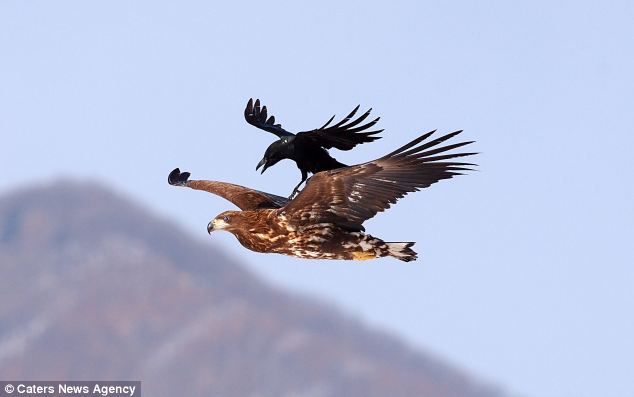
“Some white-tailed eagles were boasting one day of their bravery,” commenced daddy. “They were also saying how fine they were in every way and that their very name meant something splendid and free and strong.

“As a matter of fact, though the white-tailed eagles won’t admit it, they are less brave than any of the eagle families.
“The ravens are not kindly at all and they love to fight. They had often thought it would be great sport to have those ‘silly white-tailed eagles,’ as they called them, admit that they were not brave and have their leader beg for mercy from General Raven.
“And, as you can imagine, when Brother Black Raven heard the eagles boasting he knew it was high time to begin and frighten them.
“So he called all the ravens together. Some of them were having their naps, but as soon as Brother Black Raven called them, up they got in a great hurry, spread their wings and drilled a little bit just like soldiers. Only instead of marching they flew.
“As General Raven came near the nest of the white-tailed eagles, he said in a very queer, croaking sort of voice:
“‘Good-morning!’ That was rather mean of him to say, for, of course, he didn’t really wish them a ‘Good-morning.’
“‘Do you want to fight?’ asked General Raven.
“Still not a sound from the eagles. There was a slight fluster and trembling, which the ravens could hear and which made them grin with delight, but the eagles never said a word. They didn’t even look at the ravens! For they were so frightened they didn’t dare look at them, and they kept thinking, ‘Oh, won’t those awful ravens and their ugly old general go away?’ The eagles, of course, thought the ravens were very ugly because they were so afraid of them.
“‘For the last time, do you want to fight us, eh?’ asked General Raven. And still the eagles said not a word—nor made a sound. ‘Well, let me say then for all of us,’ said General Raven, ‘that we think you’re very cowardly, and we heard you talking before we came of your bravery. We wouldn’t fight you because you’re afraid of us, but you’ll have to admit it after this,’ and with a deep chuckle off went General Raven and his followers.
“The eagles did not go on boasting, but they were very contented that the ravens had gone away!”

Northern Raven (Corvus corax) by Kent Nickell

Northern Raven (Corvus corax) by Kent Nickell

Lee’s Addition:

For I say, through the grace given to me, to everyone who is among you, not to think of himself more highly than he ought to think, but to think soberly, as God has dealt to each one a measure of faith. (Romans 12:3 NKJV)

By pride comes nothing but strife, But with the well-advised is wisdom. (Proverbs 13:10 NKJV)

We should be careful not to think too much or ourselves or boast. We can have confidence through Christ, but should never get “proud.”

*

From Daddy’s Bedtime Bird Stories – Gutenberg ebooks By Mary Graham Bonner With four illustrations in color by Florence Choate and Elizabeth CurtisDaddys Bedtime Story ImagesThese stories first appeared in the American Press Association Service and the Western Newspaper Union.


Many of the sketches in this volume are the work of Rebecca McCann, creator of the “Cheerful Cherub,” etc.Daddy's Bedtime Bird Stories by Mary Graham Bonner - 1917Daddy’s Bedtime Bird Stories by Mary Graham Bonner – 1917

*

Links:

Painted Bunting (Passerina ciris) ©©Flickr


  Bird Tales


  Daddy’s Bedtime Bird Stories


Spanish Sparrow (Passer Hispaniolensis) female ©WikiC


  Wordless Birds


*

Sunday Inspiration – Batis and Wattle-eye

Brown-throated Wattle-eye (Platysteira cyanea) ©WikiC

Brown-throated Wattle-eye (Platysteira cyanea) Male ©WikiC


Behold, the eye of the LORD is upon them that fear him, upon them that hope in his mercy; (Psalms 33:18 KJV)

Open thou mine eyes, that I may behold wondrous things out of thy law. (Psalms 119:18 KJV)

The eyes of the LORD are in every place, beholding the evil and the good. (Proverbs 15:3 KJV)

Lift up your eyes on high, and behold who hath created these things, that bringeth out their host by number: he calleth them all by names by the greatness of his might, for that he is strong in power; not one faileth. (Isaiah 40:26 KJV)

The Platysteiridae Family has these neat little Wattle-eyes and Batis, plus two Shrike-flycatchers and a Shrike. The family has a total of 33 species. I spotted these while working on the update and decided to share them. Their eyes are what draws your attention to them. They are cute little birds that show again the Creator’s variety.

The Platysteiridae are small to medium sized passerines. They have short legs and an upright stance while perched. The tail length is variable, with the Dyaphorophyia wattle-eyes and batises having short tails and the Platysteria wattle-eyes and shrike-flycatchers possessing longish tails. The bill is flat and hooked at the end, and generally wide with well-developed rictal bristles. With the exception of a few batises the plumage of the family is sexually dimorphic. Overall the family has white undersides and dark, speckled upperparts, with many species sporting a band across the chest. A few wattle-eyes depart from this pattern and possess brightly coloured plumage. The plumage on the back of some genera are erectile, giving the family the alternative name of puffback flycatchers. The iris of the batises and the black-and-white shrike-flycatcher is brightly coloured and used in communication, becoming more brightly coloured when the adults are excited. In the wattle-eyes the supra-orbital wattles above the eyes, which give them their name, are used for communication. In addition the family is highly vocal, giving a range of whistles, harsh calls and duets. (Wikipedia)


This slideshow requires JavaScript.

“There Shall Be Showers of Blessing”. Hymn – at Faith Baptist Church

*

Platysteiridae – Wattle-eyes, Batises

Sunday Inspiration

Birds of the World – Families

4 Things God Wants You to Know

*

IOC Version 4.3 Update Complete

Blue-capped Ifrita (Ifrita kowaldi) cc jerryoldenettle

Blue-capped Ifrita (Ifrita kowaldi) cc jerryoldenettle

My son, fear thou the LORD and the king: and meddle not with them that are given to change: (Proverbs 24:21 KJV)

The update to IOC Version 4.3 is now completed. Along with the spelling changes shown in Working On IOC 4.3 Version – Name Changes, here are some more of the changes that were made.

They added 7 new birds, most raised from a Subspecies to a Species and 3 deleted, which were lowered to a Subspecies.

Lineated Woodcreeper (Lepidocolaptes albolineatus) ©Taenos

Lineated Woodcreeper (Lepidocolaptes albolineatus) ©Taenos

The Lineated Woodcreeper had 3 subspecies raised to species. They are:

Duida Woodcreeper (Lepidocolaptes duidae) ©Taenos

Duida Woodcreeper (Lepidocolaptes duidae) ©Taenos

Duida Woodcreeper (Lepidocolaptes duidae)

Rondonia Woodcreeper (Lepidocolaptes fuscicapillus) ©Taenos

Rondonia Woodcreeper (Lepidocolaptes fuscicapillus) ©Taenos

Rondonia Woodcreeper (Lepidocolaptes fuscicapillus)

Layard's Woodcreeper (Lepidocolaptes layardi) ©Taenos

Layard’s Woodcreeper (Lepidocolaptes layardi) ©Taenos

Layard’s Woodcreeper (Lepidocolaptes layardi)

The Inambari Woodcreeper (Lepidocolaptes fatimalimae) is one of the 15 new species discovered in Amazonia (IBC).

Here is a link to a photo of the Inambari Woodcreeper.

Seychelles Black Parrot (Coracopsis barklyi) (photo) was a subspecies of the Black Parrot.

Another new species discovered in  the Amazonia is the Inambari Gnatcatcher (Polioptila attenboroughi). (See 15 new species discovered in Amazonia)

Click to see photo of Inambari Gnatcatcher. (IBC)

Sorry about not being able to place the photos here, but some are so new, that the photos available are copyright protected.

The Deletions were the Lepe Cisticola (Cisticola lepe), Kimberley Pipit (Anthus pseudosimilis) and Long-tailed Pipit (Anthus longicaudatus).

What took the most time updating was moving birds from one family to another and adding some new Families in the Passerformes Order.

Lesser Melampitta (Melampitta lugubris) ©WikiC Drawing

Melampittidae – Melamampittas is a new family with the Lesser Melampitta.

Blue-capped Ifrita (Ifrita kowaldi) cc jerryoldenettle

Blue-capped Ifrita (Ifrita kowaldi) ©© jerryoldenettle

Ifritidae – Ifrita used to be one of the unknown families. It has the Blue-capped Ifrit.


Plus they took the Icteridae – Oropendolas, Orioles & Blackbirds family  and threw it up in the air and resuffled the whole bunch of them.

Almost forgot there is also another new family, the Oreoicidae – Australo-Papuan Bellbirds Family.

For any other update information, check out IOC’s update page. Click here.

*

Birds of the World

Wordless Birds

*