Garfield – Early Bird Gets the Worm

American Robin (Turdus migratorius)with youngsters by Raymond Barlow

One of the birds that, I personally have seen, dig worms out the ground is the American Robin. When we lived in Indiana, there were many Robin available to watch. Down here in central Florida, we very seldom see any. Mostly in the winter, a few Robins migrate through here. They do not stay for the winter, but keep heading further down the state.

Eastern Bluebird (Sialia sialis) by S Slayton

Eastern Bluebird (Sialia sialis) by S Slayton

Many other birds like worms also, including Bluebirds.

Yet, it seems that Garfield met a very interesting Bluebird that has a problem feeding her little ones:

” A merry heart does good, like medicine, But a broken spirit dries the bones.”  Proverbs 17:22

Have a Merry Hearted Day!!

I shared this on the Birds of the Bible For Kids blog today. We all need a Merry Hearted Day!!

Wordless Birds

Isaiah’s Eagle – A Promise For Us

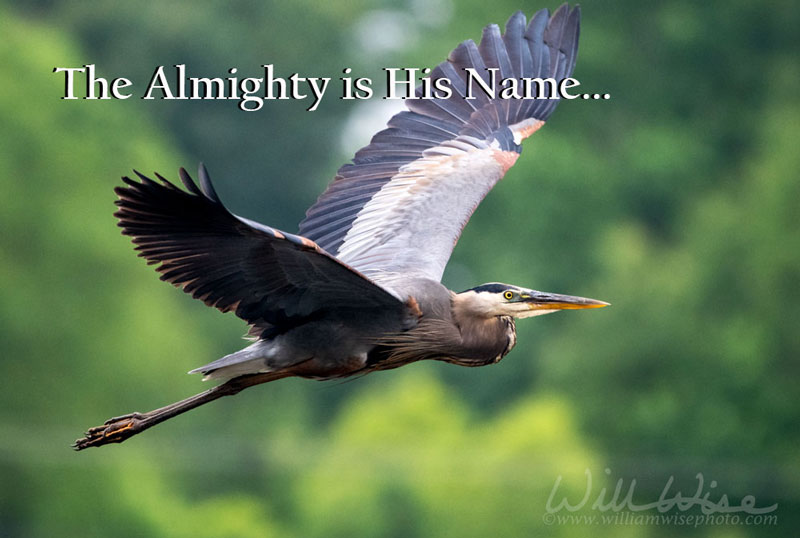
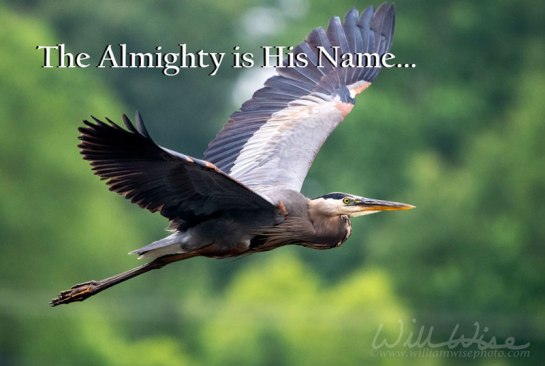
Great Blue Heron; Walton County, Georgia birding photogaphy blog by williamwisephoto.com

Last week, William Wise posted his great photo and post, Almighty Is His Name. And all week, I desired to post the scripture verses in Isaiah 40, that we read the next day. Somehow lately, time seems to get away from me. Not going birding, or having but few birds visiting the back yard, . . . . . .

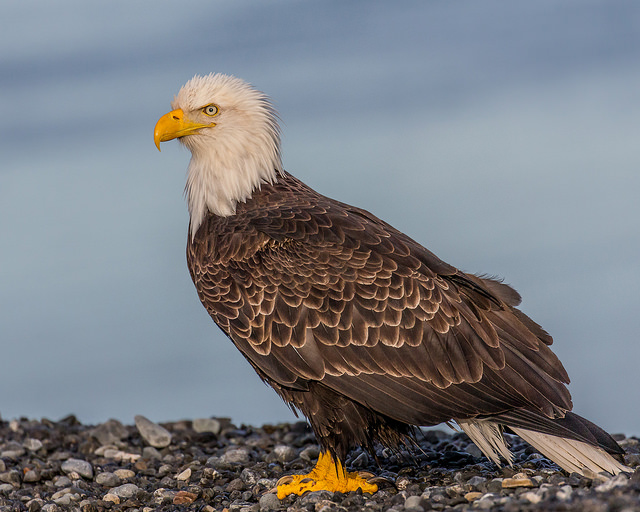
Bald Eagle (Haliaeetus leucocephalus) Resting ©Flickr Andy Morffew

“Have you not known? Have you not heard?”

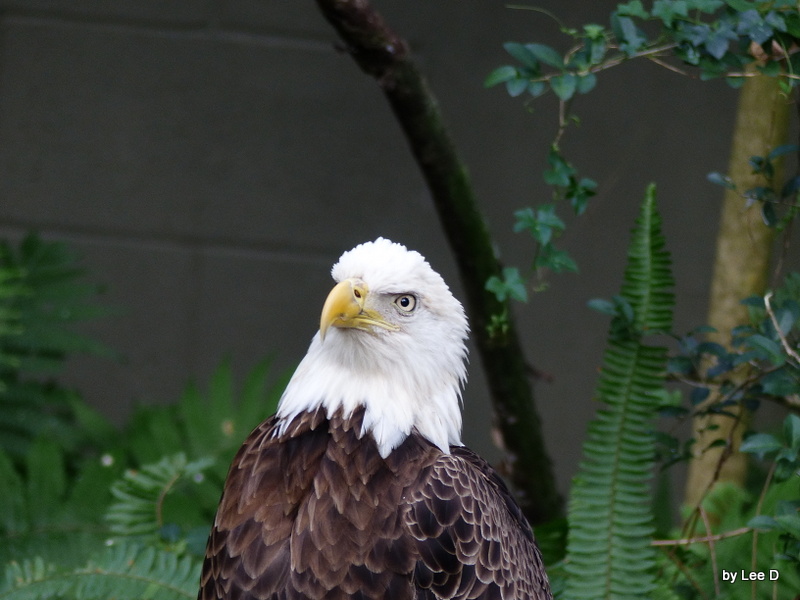
Bald Eagle Lowry Park Zoo 12-31-15 by Lee

“The everlasting God, the LORD, The Creator of the ends of the earth, Neither faints nor is weary. His understanding is unsearchable.“

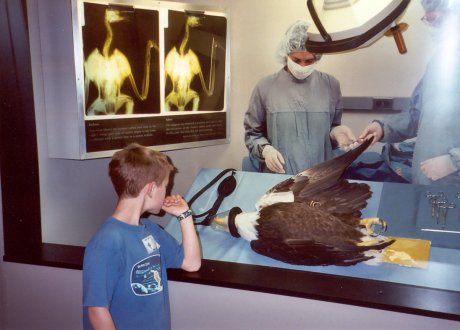
Eye Surgery on an Eagle ©phillipdthomas

“He gives power to the weak, And to those who have no might He increases strength.“

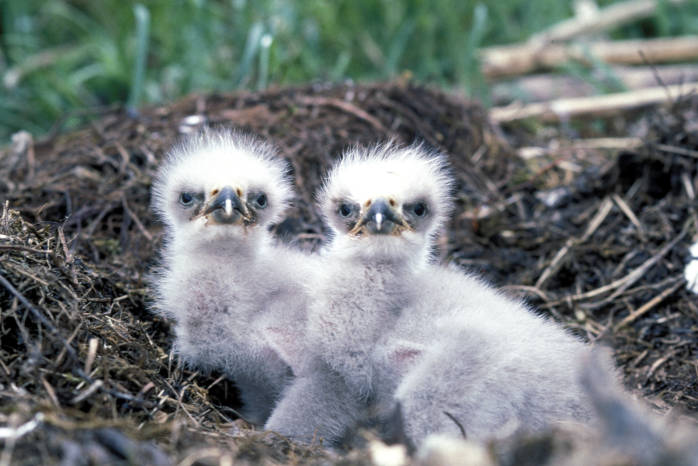
Bald Eagle (Haliaeetus leucocephalus) chicks ©USFWS

“Even the youths shall faint and be weary, And the young men shall utterly fall,”

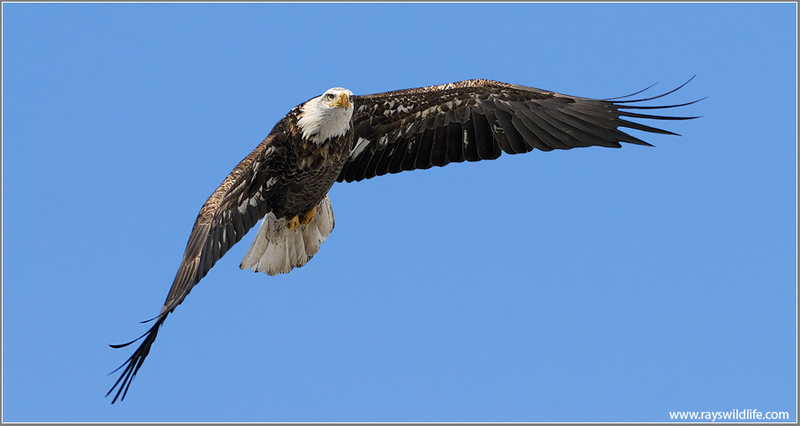
Bald Eagle (Haliaeetus leucocephalus) by Ray

Bald Eagle (Haliaeetus leucocephalus) by Ray

“But those who wait on the LORD Shall renew their strength; They shall mount up with wings like eagles, They shall run and not be weary, They shall walk and not faint.” (Isaiah 40:28-31 NKJV)

Almighty is His Name

Great Blue Heron in flight; Walton County, Georgia. June 8, 2020 birding photography ©www.williamwisephoto.com.

He who appoints the sun to shine by day,

who decrees the moon and stars to shine by night,

who stirs up the sea so that its waves roar

— the Lord Almighty is his name:

Jeremiah 31:35


Hi, I’m wildlife photographer and nature writer William Wise. I was saved under a campus ministry while studying wildlife biology at the University of Georgia. My love of the outdoors quickly turned into a love for the Creator and His works. I’m currently an animal shelter director and live in Athens, Georgia with my wife and two teenage daughters, who are all also actively involved in ministry. Creation Speaks is my teaching ministry that glorifies our Creator and teaches the truth of creation.  — “What a wildly wonderful world, God! You made it all, with Wisdom at Your side, made earth overflow with your wonderful creations.” Psalms 104, The Message.

Sparrow Frozen To A Fence – DoDo

Another interesting video from “the dodo” channel.

“Bird Frozen To Metal Fence Rescued by Kind Man | This little bird landed on a fence that was so cold, his feet froze to it and he couldn’t fly away. But luckily the nicest guy came along and knew exactly what to do.”

Not sure if this bird prayed like this, but it would apply to us if we were in such a predicament as this.

“Be pleased, O LORD, to deliver me: O LORD, make haste to help me.” (Psalms 40:13 KJV)

P.S. This wouldn’t happen here in Central Florida. :)

See more from “the dodo” channel.

Fighting the Reflection

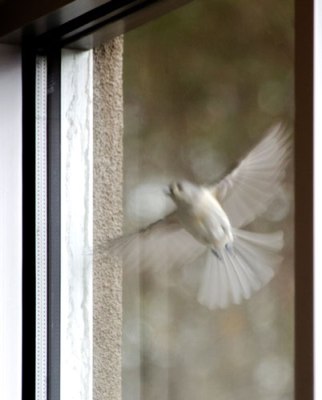
Like a bird fighting its reflection in a window, we too can fight our true reflection as revealed by the Word of God…

“But be ye doers of the word, and not hearers only, deceiving your own selves. For if any be a hearer of the word, and not a doer, he is like unto a man beholding his natural face in a glass: for he beholdeth himself, and goeth his way, and straightway forgetteth what manner of man he was.” James 1:23-24

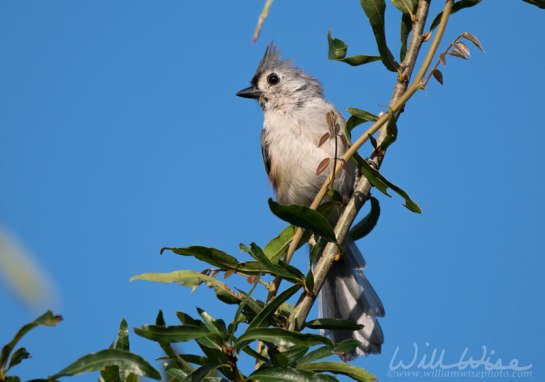
Tufted Titmouse; Walton County, Georgia. September 2, 2020. ©www.williamwisephoto.com. Please don’t steal my images. Legally download this image here.

As I sit listening to the Sunday morning sermon, I’m distracted by a feisty little Tufted Titmouse flying up to the window attacking his reflection. He believes the image in the glass to be a rival interloper invading his territory. Because the bird doesn’t like what he sees, he decides to fight the reflection.

While I watched this aggravated avian, my pastor continued to preach from the book of James. In the letter, James describes the Word of God as a mirror that reflects what manner of men we are. We have our own self-image, but our image of ourselves is always quite different than how God sees us. And the Bible has a way of revealing who we really are; a true reflection, as in a mirror.

Tufted Titmouse fighting its reflection; Athens, Georgia. www.williamwisephoto.com.

Often, as the mirror’s image comes into clear focus, we don’t like the image that we see, and like the Titmouse, we fight against that reflection.

  • When the mirror of the Word reflects our true, impatient self (James 1:4), we fight against the reflection and declare ourselves to have “the patience of Job.”
  • When the mirror reflects our poor decisions and “lack of wisdom” (James 1:5), we fight the reflection and declare the Bible outdated.
  • When the mirror of the Word reflects our true, double-minded nature (James 1:8), we fight the reflection and posit our focused faithfulness to God alone.
  • When the mirror of the Word reflects our own sinful nature as the fault of our falling to temptation (James 1:13), we fight the reflection declaring “this is how God created me.”
  • When the mirror of the Word of God reflects our hot temper (James 1:19), we fight the reflection, take up a rock and smash the mirror!

When we see our true reflection in the mirror of the Word of God, let us not fight against it as the church Titmouse. Let us not walk away and “forget what manner of men we are.” But let us be doers of the Word, and as Today’s English Version translates, let us “submit to God and accept the Word that He plants in our hearts” (James 1:21 TEV). Another lesson learned if we will listen to what creation speaks!


Hi, I’m wildlife photographer and nature writer William Wise. I was saved under a campus ministry while studying wildlife biology at the University of Georgia. My love of the outdoors quickly turned into a love for the Creator and His works. I’m currently an animal shelter director and live in Athens, Georgia with my wife and two teenage daughters, who are all also actively involved in ministry. Creation Speaks is my teaching ministry that glorifies our Creator and teaches the truth of creation.  — “What a wildly wonderful world, God! You made it all, with Wisdom at Your side, made earth overflow with your wonderful creations.” Psalms 104, The Message.

Millions of Years Old DNA? – Creation Moments

 Timothy 6:20
“O Timothy, keep that which is committed to thy trust, avoiding profane and vain babblings, and oppositions of science falsely so called…”

While even many Christians feel obligated to accept millions of evolutionary years, evidence continues to build for a young creation. The evidence has mounted to the point that even many evolutionists feel they must find some explanation for it.

In a previous Creation Moments program, we talked about DNA and other cell material found unfossilized in what was otherwise a fossilized T. rex. Since then, a hadrosaur leg bone with intact blood cells has also been found. Then there is the mummified hadrosaur that was the subject of a television special. Even its internal organs were intact. According to evolutionists, we are supposed to believe that this mummy had not crumbled to dust in 77 million years. That claim is not credible, given our experience with the best preserved Egyptian mummies that are only a few thousand years old. Segments of DNA have also been found from Neanderthals, supposedly prehistoric mammals, plants and even bacteria. According to evolutionary dating, these samples range in age from 40,000 to 250 million years. Yet, we know that DNA is totally decayed in 10,000 years. Enough color pigment cells remain in a fossilized feather that you can still see the color pattern. Yet, it is supposedly more than 100 million years old.

While evolutionists have tried some explanations for this evidence, the simplest explanation is that they are young.

Prayer: Father, fill me with a greater hunger for Your Word so that, taught by You, I will not be misled by falsehood. Amen.

 Author: Paul A. Bartz

Ref: Acts & Facts, 6/09, p. 17, Brian Thomas, “Fossilized Biomaterials Must Be Young.” Photo: Corythosaurus casuarius skeleton a type of hadrosaur. (PD)

© 2020 Creation Moments.  All rights reserved.

Other articles about DNA

Mute Swans – From AviBirds

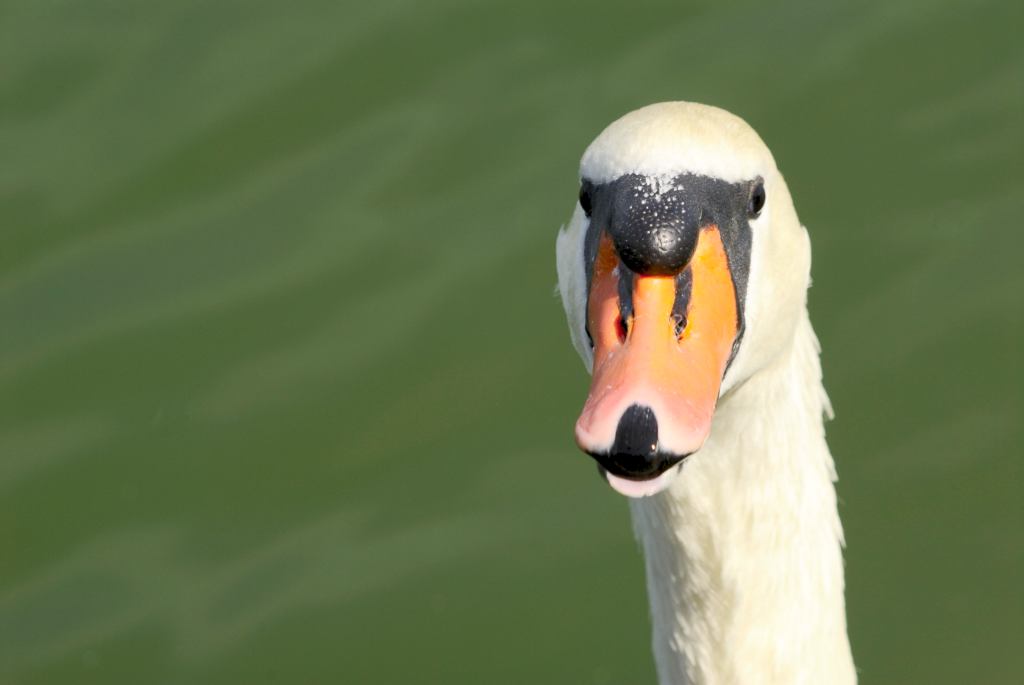
Mark, from AviBirds, has given us the privledge of viewing the various videos that they produce. Here is the one about the Mute Swan (Cygnus Olor).

We are fortunate to see the Mute on several of the Lakes over in Lakeland, Florida. Plus, other places around here, but we have birded Lake Morton and Lake Hollingsworth many times over the years. Here are a few of those sightings:

Why you looking at my foot – Mute Swan at Lake Morton

Mute Swan (Cygnus olor) (close up) at Lake Morton, Lakeland, FL By Dan’sPix

Mute Swan on Nest at Lake Morton

Mute Swan on Nest at Lake Morton by Dan

“And the swan, and the pelican, and the gier eagle,” (Leviticus 11:18 KJV) From the “Do Not Eat List”

Stop by AviBirds for all of their videos, or stay tuned for more postings here.

Birds of the Bible – Swans

Good News

Ducks “Social Distancing”

Black-bellied Whistling Ducks by Lee 3-15-20

Recently we were visited by a small flock of Black-bellied Whistling Ducks. Not sure who told them to “Social Distance,” but they seem to be doing it.

A few years ago, we were at the shore where these birds were not practicing this. Then again, who had ever heard of “Social Distancing” until recently?

Crowded Shore at MacDill by Lee

These shorebirds definitely are NOT “Social Distanced.” We are trusting and praying that you are staying safe and finding things to do while staying home. Check the links along the sides of this page. There are many things and birds you can read about.

Remember that the Lord never wants us to “Social distance” from Him.

“But it is good for me to draw near to God; I have put my trust in the Lord GOD, That I may declare all Your works.” (Psalms 73:28 NKJV)

Spend some of your time at home checking out these topics:

Indecisive Black-bellied Whistling-Ducks

Bible Birds – Whistling Ducks

Bible Birds

Scriptural Alphabet

Watching Birds

Golden Eagle

Bird Tales

Orni-Theology

Wordless Birds


Parental Care

I gazed in awe all spring long as I watched avian parents make run after run to their nests with beaks’ full of bugs for their babies. At times, there were only a few minutes between visits. I marveled how they had the endurance for such toil and labor and still cared for themselves. At least the entire bird parental process only lasts a few weeks, while for us humans it lasts eighteen or more years!

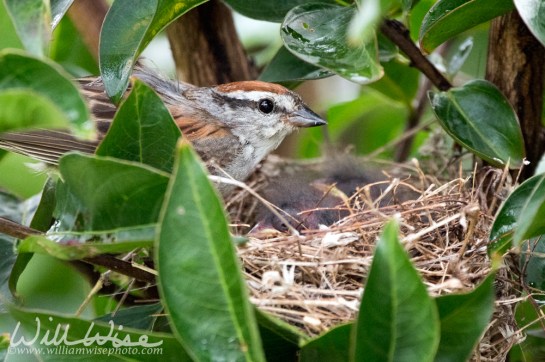
Baby Chipping Sparrows awaiting parental care. Clarke County, Georgia. July 24, 2018. ©www.williamwisephoto.com.

But “parental care” took a new definition for me as I answered a call back home these last few weeks. My aging father, who so diligently cared for me as an often ungrateful youngster, could no longer live on his own. I regret that being over 800 miles away and involved in the ministry, we couldn’t provide that care personally, but found a wonderful, brand new assisted living complex for him. At least my wife and I know he is being cared for.

While the phenomenon of children caring for parents isn’t seen in the bird species, it is a Biblical concept and obligation. In a time of trouble and distress, we read of King David providing for the care of his parents.

And David said unto the king of Moab, Let my father and my mother, I pray thee, come forth, and be with you, till I know what God will do for me. And he brought them before the king of Moab: and they dwelt with him all the while that David was in the hold. I Samuel 22:3-4

Chipping Sparrow feeding three nestlings. Clarke County, GA. July 24, 2018. ©www.williamwisephoto.com.

Even so, isn’t it just natural to care for those who raised us with such tender love and care until they go into everlasting care with our eternal Father?


Hi, I’m wildlife photographer and nature writer William Wise. I was saved under a campus ministry while studying wildlife biology at the University of Georgia. My love of the outdoors quickly turned into a love for the Creator and His works. I’m currently an animal shelter director and live in Athens, Georgia with my wife and two teenage daughters, who are all also actively involved in ministry. Creation Speaks is my teaching ministry that glorifies our Creator and teaches the truth of creation.  — “What a wildly wonderful world, God! You made it all, with Wisdom at Your side, made earth overflow with your wonderful creations.” Psalms 104, The Message.

Not Deer or Bovine, So It Must Be An ‘Antelope’

Bibleworld Adventures has chosen to close down his website, due to a very busy schedule with work and his church ministries. We have decided to move his articles here. Baron has written articles here as Golden Eagle. This will preserve his and Dr. Johnson’s articles for us to enjoy. They are not about birds, but are all very interesting. Most are about a variety of our Creator’s amazing animals. [Will have a link to these pages in the sidebar as Bible World Adventures.]

Originally posted 2017/12/19

NOT DEER OR BOVINE, SO IT MUST BE AN ‘ANTELOPE’

Dr. James J. S. Johnson

The hart, and the roebuck, and the fallow deer, and the wild goat, and the pygarg [dîshōn], and the wild ox, and the chamois.   (Deuteronomy 14:5)

Addax-Morocco.Haytem93-photo

ADDAX male [photo credit: Haytem93]

Most likely the “Pygarg” [dîshōn] is what today is called an ADDAX.  An ADDAX is a desert-dwelling member of the ANTELOPE family.  [See George Cansdale, ALL THE ANIMALS OF THE BIBLE LANDS (Zondervan, 1976), page 85, saying “Among several quaint animal names found only in the AV [i.e., KJV] is the Pygarg, from Heb. dishon; this is merely a transliteration of the [LXX] Gr. Word meaning ‘white-rumped’, by which [Greeks] had long ago described an antelope. … [The reference in Deuteronomy 14:5] between two animals that are probably desert species, coupled with a long-standing tradition, suggests that this is the Addax, Addax nasomaculatus, a desert antelope classified between the oryx and hartebeests”.]antelope-family.jjsj-PPTslide

But, what is an antelope?

Antelope, and antelope-like animals, live in many different parts of the world—except not in Australia or Antarctica. For examples, pronghorns live mostly in America’s Western prairie states. The oryx live in Israel and many of the Arabian deserts.  The Dorcas gazelle lives in the top half of Africa.  Impalas live in eastern and southern Africa.

Serengeti-migraton-wildebeest-zebra.ZambesiSafari-photo

Wildebeests and Zebras migrate through Serengeti  /  Zambesi Safari photo

The blue wildebeest (also called “gnu”) are famous for their huge migratory herds, that often mix with zebras, that seasonally travel through Tanzania’s Serengeti.  Tibetan antelope, of course, live in Tibet, as well as in neighboring parts of Asia.  The Indian antelope (also called “blackbuck”) lives in India, Pakistan, and Nepal.

GreatMigration-Serengeti.Pinterest

Great Migration (Serengeti & Masai Mara)  image credit: Pinterest

These plant-eating mammals (animals that give mother’s milk to their babies) are different from other four-legged mammals – such as deer, cattle, horses, camels, sheep, goats, pigs, cats, and dogs.

In many ways antelope (and antelope-like animals, like the pronghorns of America’s prairies) are like deer. But unlike deer, which have antlers (that grow and shed each year, then regrow the next year, and are later shed, etc.), antelopes have horns (like cattle, bison, sheep, and goats), which continue to slowly grow out from their heads, anchored to bony roots.

Impala-w-oxpecker.jjsj-PPTslide

Antelopes often live in flat grasslands (such as the grassy prairies of America’s West), where their plant-food is plentiful. However, in grasslands there are usually very few trees, so antelopes cannot hide in forests from other animals (such as mountain lions or wolves), so it is good that God made them to have great speed for running across flat land.  And that is what antelopes (and pronghorns, which are antelope-like animals) often do–with great speed!–when they run away from predators at high speeds—sometimes as fast as 55 miles/hour for a mile, or 42 miles/hour for 2 miles, or 35 miles/hour for 3 miles.Gazelle-foraging.jjsj-PPTslide

Dorcas is the Greek word for a gazelle, which is a member of the antelope family. Because gazelles are graceful and beautiful animals it is unsurprising that girl babies have been named Dorcas, including one who is mentioned in Scripture, in Acts chapter 9.Dorcas-philology.jjsj-PPTslide

Dorcas-Acts-chapter9.jjsj-PPTslide

In North America the primary antelope-like mammal is the PRONGHORN. To learn about this beautiful, graceful, and extremely speedy animals, see “Geography Matters, Illustrated by Pronghorns, Mountain Goats, and Old Testament Warfare”, posted at https://bibleworldadventures.com/2016/08/17/geography-matters-illustrated-by-pronghorns-mountain-goats-and-old-testament-warfare/ .

pronghorn-coming-fast.closeup-turning

When we see beauty, grace, strength, and speed — displayed in antelope (and antelope-like pronghorns) — we are reminded, by these living exhibits of God’s making, that God Himself is amazingly beautiful, graceful, strong, and quick, beyond our comprehension.

Bearded Vulture Visits England’s Oldest National Park

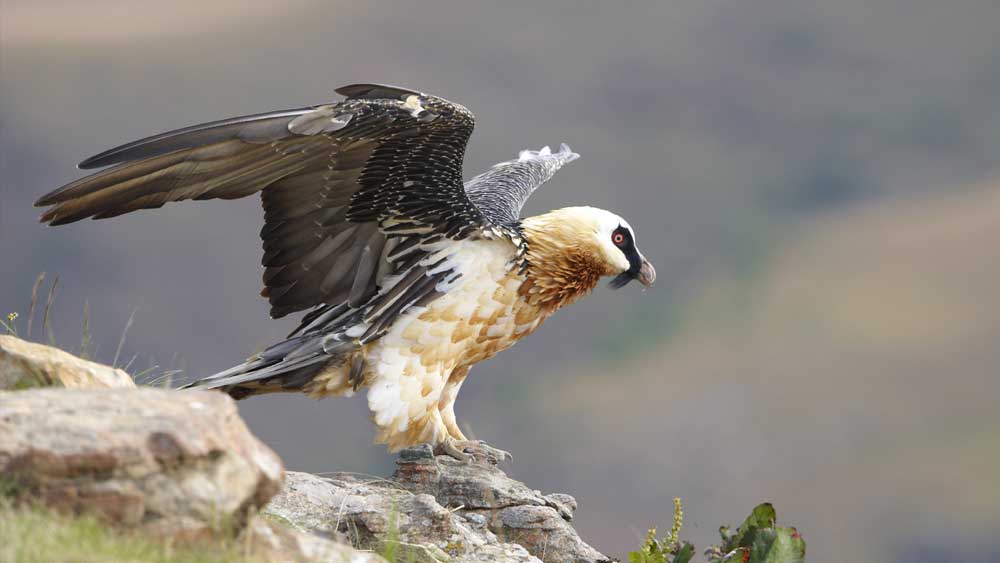
Bearded Vulture Visits England’s Oldest National Park

The only other British sighting of a Bearded Vulture occurred back in 2016 in Monmouthshire.2

This bird of prey has a commanding presence—it’s huge and hairy-looking! The bearded vulture is large: 3-4 feet long with a wingspan of 7-9 feet. It can weigh 10-17 pounds, with females being slightly larger than males. Unlike other vultures, the bearded vulture is not “bald-headed.” In fact, bristles under its chin look like a raggedly “beard,” hence the bird’s name.3

Birdwatchers have flocked to the moors to see the bearded vulture, which has only been seen once before in the UK, the Derbyshire Wildlife Trust said. But the trust’s Tim Birch said it “couldn’t have come to a worse spot in terms of bird of prey persecution”. … Mr Birch said as it was coming up to grouse shooting season, there were fears the rare raptor could be intentionally poisoned or shot. … However Richard Bailey, gamekeeper and co-ordinator of the Peak District Moorland Group, said “suggestions that this vulture is at risk from attack by gamekeepers” were wrong.1

Admittedly, the bearded vulture has a rough, if not thuggish, reputation. In Germany it is called lammergeier, meaning “lamb-hawk,” due to its habit of preying on lambs—not a positive reputation in agricultural communities. Also called “ossifrage” (meaning bone-breaker), about 80% of the bearded vulture’s diet is animal bone marrow, mostly from mammal bones, but also from bird bones.3,4

[Derbyshire Wildlife Trust’s] Birch said the bearded vulture fed mainly on bones from carcasses, very rarely on live prey, and could swallow bones whole, which were dissolved in its stomach.1

Although scavenging can provide needed food, especially during the breeding season, these vultures often attack live prey, such as hares, rock hyraxes, marmots, and even monitor lizards. More so than predatory hawks or eagles, bearded vultures often attack larger mammals, such as sheep or goats, which are dropped from heights onto rocky surfaces to break their bones. Bearded vultures also grab turtles and drop them from heights to crack open their shells.3,5

Meanwhile, to say this mountain-dwelling bird is rare—only the second time ever observed in Great Britain—is an understatement.

Birdwatcher Indy Kiemel Greene, 15, who photographed the bearded vulture on Sunday, shared the trust’s fears for its safety. He said: “Unfortunately this bird is at great risk because the location that it’s at in the Derbyshire Peaks is well-known for raptor persecution….”1

Its preferred habitat is a high-altitude mix of rocky crags, cliffs, canyons, and montane gorges. So what is it now doing in England’s Peak District anyway?

[Tim Birch] said it was thought the raptor had come from the French or Swiss Alps, where the endangered species is being reintroduced. About 500 birdwatchers have come to catch a glimpse of the bird from all over the UK, as well as France, Spain and the Netherlands. … It is thought the bird could stay in the area for a couple of weeks if it has found food before eventually returning to the Alps.1

For birdwatchers (and videographers) who can visit the Peak District National Park, this could be the opportunity of a lifetime. But if you visit the park with a pet poodle, keep your pet leashed and very close to you. No need to take a chance.

References
1. Burman, H. Fears for Bearded Vulture Spotted in the Peak District. BBC News. Posted on bbc.com July 14, 2020, accessed July 16, 2020.
2. Staff writer. Bearded Vulture Spotted Near Severn Bridge. BBC News. Posted on bbc.com May 17, 2016, accessed July 16, 2020.
3. Jonsson, L. 1993. Birds of Europe, with North Africa and the Middle East. Princeton, NJ: Princeton University Press (transl. by David Christie), page 124. See also Clark, W. S. 1999. A Field Guide to the Raptors of Europe, the Middle east, and North Africa. Oxford, UK: Oxford University Pres, pages 56-60 & 302-303, plus Plate 12.
4. Obviously, bearded vultures are not the only predators adept at cracking and crushing bones of their prey—lions have earned a similar reputation (Daniel 6:24).
5. Other large-winged birds of prey are noted for dropping their victims in order to prepare them for ingestion. For example, near Jerusalem, eagles soar while scouting for mammals or reptiles; these same eagles are known to snatch tortoises, and to “kill [them] by dropping and smashing [the tortoises] on rocks from high in the air” (Quoting Noel and Helen Snyder. 1991. Birds of Prey. Stillwater, MN: Voyageur Press, 164).

*Dr. Johnson is Associate Professor of Apologetics and Chief Academic Officer at the Institute for Creation Research.

JAMES J. S. JOHNSON, J.D., TH.D. *  |

[Re-posted from ICR article at https://www.icr.org/article/bearded-vulture-visit-england-oldest-national-park ]

Reposted here with Dr. Jim’s permission and at his request. (Lee)


See Also:

James J. S. Johnson’s other articles here

Birds of the Bible – Name Study ~ Ossifrage

Birds of the Bible – Gathering of Vultures or Eagles

Reflections and A House Ornament

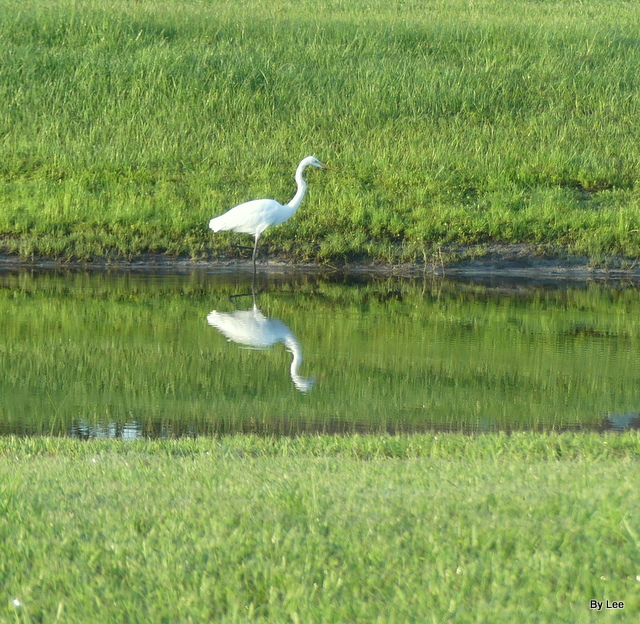
Great Egret Reflecting off the pond by Lee

Great Egret Reflecting off the pond by Lee

“Iron sharpens iron, So one man sharpens another. He who tends the fig tree will eat its fruit, And he who cares for his master will be honored. As in water face reflects face, So the heart of man reflects man.” (Proverbs 27:17-19 NASB)

“When I saw, I reflected upon it; I looked, and received instruction.” (Proverbs 24:32 NASB)

As you know, we have not been birding, or really going anywhere much lately. So, breakfast birding is becoming our birding adventures. Lately, when we go in and out of our housing addition, we have noticed quite frequently, a Great Blue Heron sitting on some houses. Of course, I have never had a camera ready or even in the car.

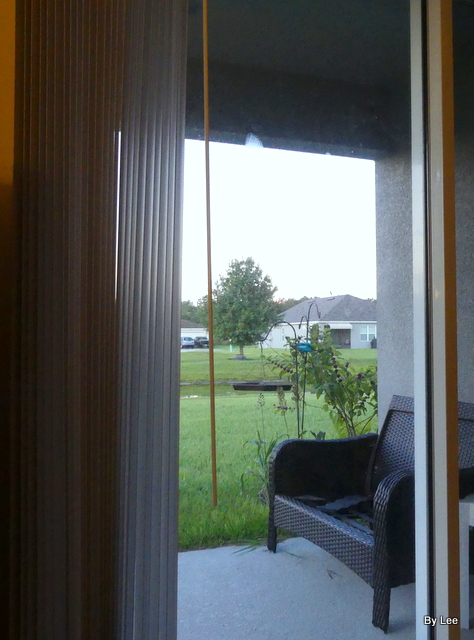
BUT, when we looked out, from the breakfast table, the other morning, this is what I saw. I grabbed the camera and took these photos:

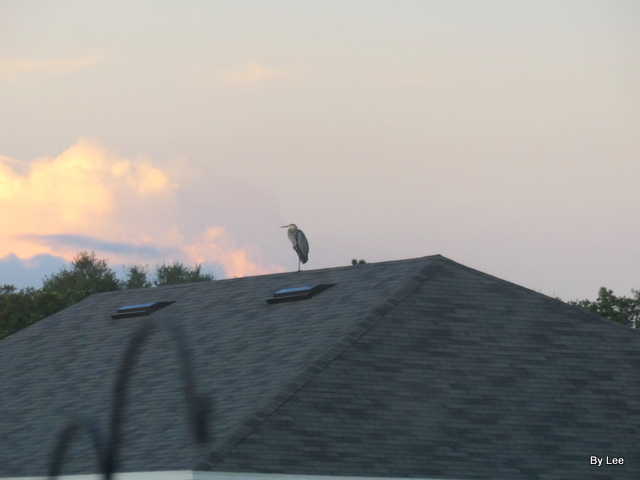
Great Blue Heron on Housetop by Lee

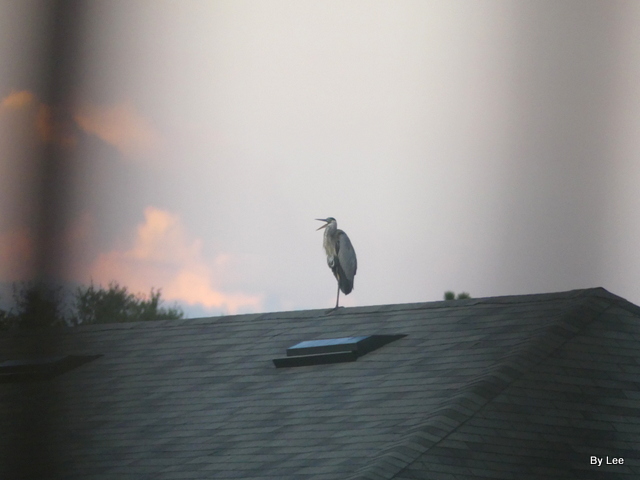
Great Blue Heron on Housetop from breakfast table by Lee

I zoomed in closer, and sure enough, there the Great Blue Heron was on my neighbors house. Back in the “old days” we used to have hood ornaments on car hoods.

Hood Ornament on a Packard (Library of Congress PD)

Hood Ornament on a Packard (Library of Congress PD)

This Heron is making a great “House Ornament.”

Great Blue Heron on Housetop by Lee

Great Blue Heron on Housetop by Lee

Great Blue Heron of Housetop by Lee

Great Blue Heron of Housetop by Lee

“For there is nothing covered, that shall not be revealed; neither hid, that shall not be known. Therefore whatsoever ye have spoken in darkness shall be heard in the light; and that which ye have spoken in the ear in closets shall be proclaimed upon the housetops.” (Luke 12:2-3 KJV)

Well, it’s back to relaxing until the next Breakfast bird/birds show up to entertain us. In the mean time, I have been working on my Geneology.

LEE’S ANCESTRY ADVENTURES

Wordless Birds – With Hummingbirds