Baya Weaver (Ploceus philippinus) by Nikhil Devasar
Where the birds make their nests; (Psalms 104:17a NKJV)
This week’s birds have interesting names. Weavers do exactly what the name implies. The Lord created them with the ability to take grasses plus other material and weave their nest. Some can be quite a masterpiece. Also in the family of 109 species are the Malimbus, Quelea, Fody, Bishops, and the Widowbird. When A J Mithra was writing for the blog, before he went on to be with the Lord, he wrote four devotionals about these birds. (See Below)
This family’s species “are seed-eating birds with rounded conical bills, most of which are from Sub-Saharan Africa, with fewer species in tropical Asia. A few species have been introduced outside their native range. The weaver group is divided into the buffalo, sparrow, typical, and widow weavers. The males of many species are brightly coloured, usually in red or yellow and black, some species show variation in colour only in the breeding season.” (Wikipedia)
Them hath he filled with wisdom of heart, to work all manner of work, of the engraver, and of the cunning workman, and of the embroiderer, in blue, and in purple, in scarlet, and in fine linen, and of the weaver, even of them that do any work, and of those that devise cunning work. (Exodus 35:35 KJV) (bolding mine)
That verse tells about the abilities that the Lord gave those who were going to work on the Tabernacle. They had been filled with wisdom that the Lord had put in their hearts. The same great Creator gave these Weaver birds a wisdom to do this weaving. What a Great God We Serve.
This slideshow requires JavaScript.
“Jesus What A Might Name” – Pastor Jerry w/Choir and Orchestra
Also, to every beast of the earth, to every bird of the air, and to everything that creeps on the earth, in which there is life, I have given every green herb for food”; and it was so. (Genesis 1:30 NKJV)
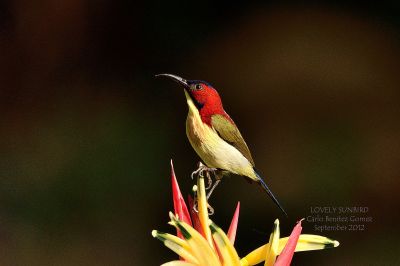
The 143 Nectariniidae – Sunbird Family members are beautiful birds from their Creator’s Hand, who has equipped them to be perfectly suited for their habitat and food sources.
The sunbirds and spiderhunters make up a family, Nectariniidae, of passerine birds. They are small, slender passerines from Old World, with long, usually decurved bill and some species with long tail; many brightly coloured, most with some iridescence, particularly in male. They are living from Africa to Australia, across Madagascar, Egypt, Iran, Yemen, Southern China, Indian subcontinent, Indochinese peninsulas, Philippines, Southeast Asian to nearby Pacific Islands and just reaches northern Australia. The number of species is greater in equatorial and tropical areas.
Most sunbirds feed largely on nectar, but also take insects and spiders, especially when feeding young. Flower tubes that bar access to nectar because of their shape, are simply punctured at the base near the nectaries. Fruit is also part of the diet of some species. Their flight is fast and direct on their short wings.
The sunbirds have counterparts in two very distantly related groups: the hummingbirds of the Americas and the honeyeaters of Australia. The resemblances are due to convergent evolution brought about by a similar nectar-feeding lifestyle.[1] Some sunbird species can take nectar by hovering like a hummingbird, but they usually perch to feed.
The spiderhunters, of the genus Arachnothera, are distinct in appearance from the other members of the family. They are typically larger than the other sunbirds, with drab brown plumage that is the same for both sexes, and long, down-curved beaks. (Wikipedia – Sunbird with editing)
I am going to risk having the video for you to hear this beautiful music, fearing you will watch her more than the birds. :) This is so beautiful and amazing by such a young harpist.
This slideshow requires JavaScript.
He does great things past finding out, Yes, wonders without number.
(Job 9:10 NKJV)
Oh, the depth of the riches both of the wisdom and knowledge of God! How unsearchable are His judgments and His ways past finding out! (Romans 11:33 NKJV)
*
“The Fountain” Harp — 9-year-old Alisa Sadikova is an incredibly talented harpist. But hearing her play ‘The Fountain’ is enough to transport you to Heaven! Her gift is truly from the Lord and playing this she sounds like an angel! (from GodVine.com)
This week we have birds running around in the water, another family of birds that are mostly green and a group that loves nectar. Which ones are they?
Let’s start with the Cinclidae – Dippers family. There are only five members in the Cinclus genus. They get their name from their bobbing or dipping movements. They are unique among passerines for their ability to dive and swim underwater. What an ability the Lord gave this family of dippers. Watch!
***
Orange-bellied Leafbird (Chloropsis hardwickii) by W Kwong
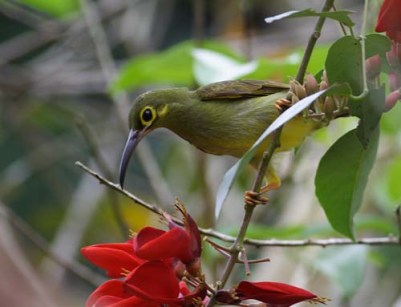
Our next group belong to the Chloropseidae – Leafbirds Family and they have 11 species with many subspecies. They are small birds found in India, Sri Lanka and Southeast Asia. They are one of only three bird families that are entirely endemic to the Indomalayan ecozone.
Scarlet-backed Flowerpecker (Dicaeum cruentatum) by Peter Ericsson
The flowers appear on the earth; The time of singing has come (Song of Solomon 2:12a NKJV)
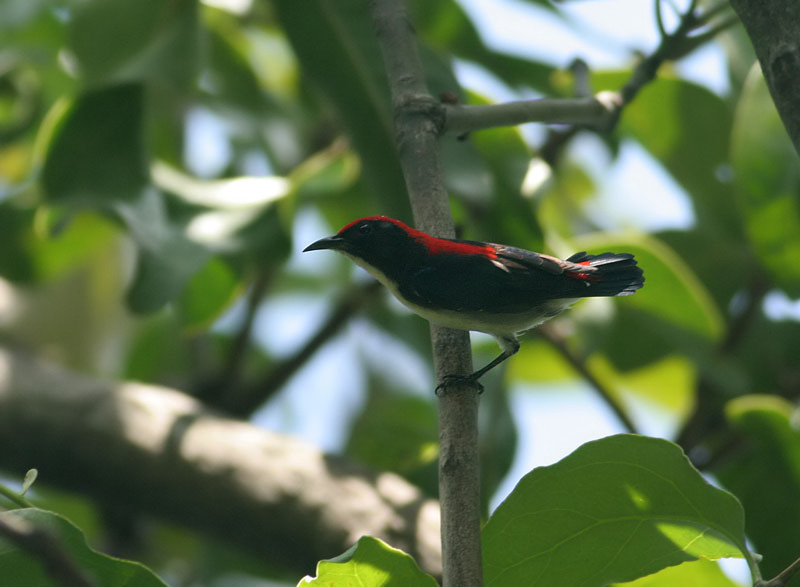
This last family, Dicaeidae – Flowerpeckers, has 48 species. The family is distributed through tropical southern Asia and Australasia from India east to the Philippines and south to Australia. The family is catholic in its habitat preferences, occupying a wide range of environments from sea level to montane habitats. Some species, such as the Mistletoebird of Australia, are recorded as being highly nomadic over parts of their range.
Nectar forms part of the diet, although they also take berries, spiders and insects. Mistletoes of 21 species in 12 genera have been found to be part of the diet of flowerpeckers, and it is thought that all species have adaptations (Creative design) to eat these berries and dispose of them quickly. (Wikipedia with modification)
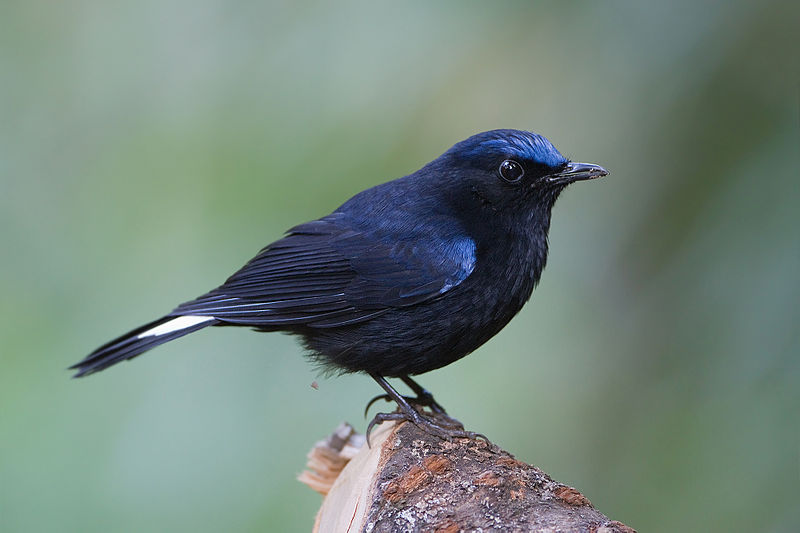
This third part of the Muscicapidae – Chats, Old World Flycatchers family starts with the White-tailed Robin (Myiomela leucura). What an amazing group of avian wonders from Our Lord, their Creator.
Part I and Part II of the Sunday Inspiration covered over half of the 321 member Chat and Old World Flycatcher family. This week, we should be able to finish up. Meagan Fee came back for the Christmas break (she was our summer intern at Faith) and played a fantastic violin piece for our offering last Sunday. It is fantastic and long enough, I hope, to cover the slideshow. :0)
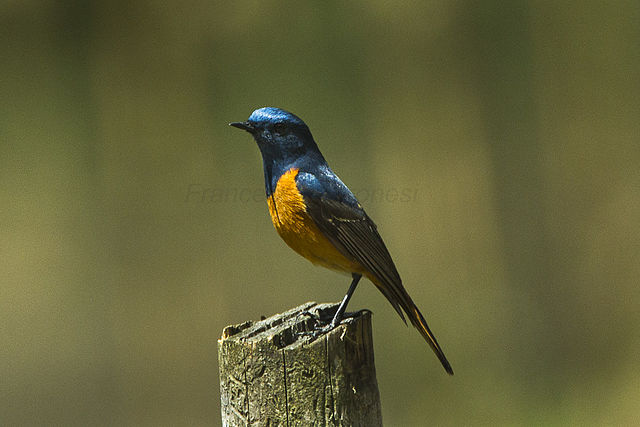
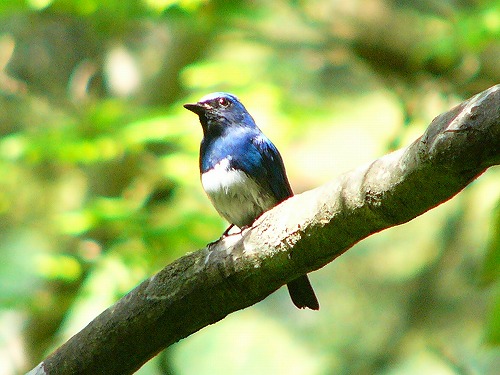
Back to the flycatchers. The Genera covered this week are the Myiomela, Tarsiger, Enicurus, Myophonus, Cinclidium, Ficedula, Muscicapella, Phoenicurus, Monticola, Saxicola, Campicoloides, Emarginata, Pinarochroa, Thamnolaea, Myrmecocichla, Oenanthe, Pinarornis, Namibornis and Humblotia.
Old World flycatchers live in almost every environment with a suitable supply of trees, from dense forest to open scrub, and even the montane woodland of the Himalayas. The more northerly species migrate south in winter, ensuring a continuous diet of insects.
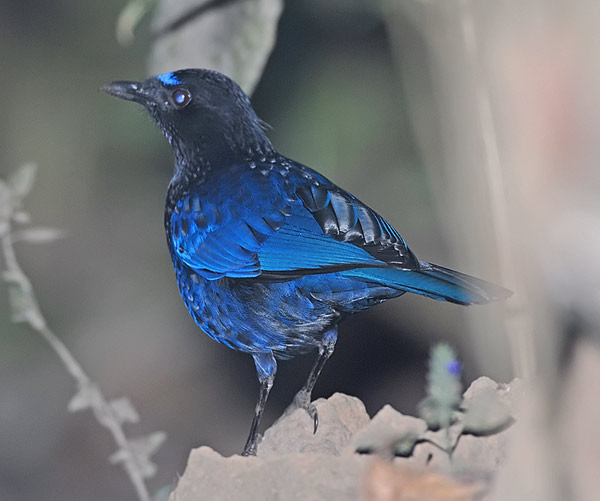
Malabar Whistling Thrush (Myophonus horsfieldii) by Nikhil Devasar
“I will whistle for them to gather them together, For I have redeemed them; And they will be as numerous as they were before. (Zechariah 10:8 NASB)
Whistling thrushes are mostly seen in hilly areas except during winter when they may descend to streams near the plains. They specialize in feeding on snails and their strong hooked bills are used to deal with them. They may choose a particular rock on which they crack the shells.
The whistling of a Malabar Whistling Thrush from xeno-canto by David Farrow.
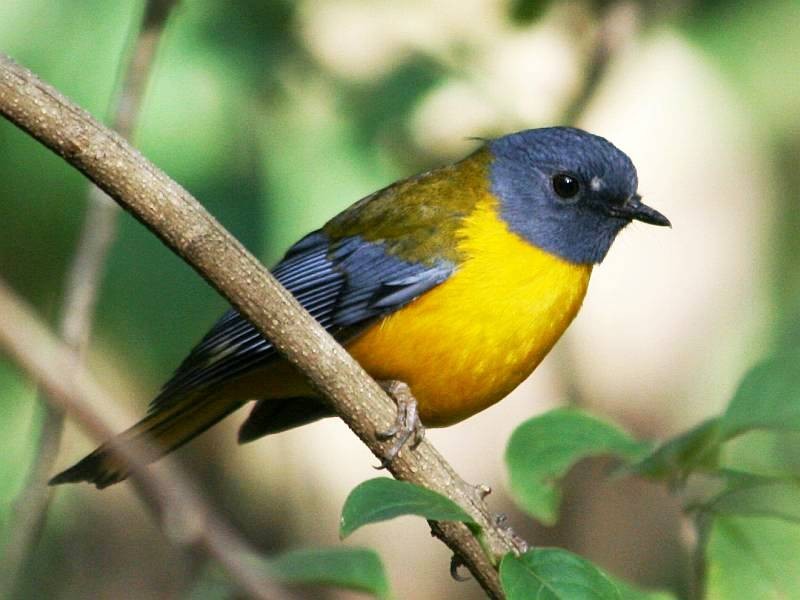
The Blue-fronted Robin (Cinclidium frontale) is a species of bird in the family Muscicapidae. It is the only species in the monotypic genus Cinclidium. It is found in Bhutan, China, India, Laos, Thailand, Vietnam, and possibly Nepal. Its natural habitat is temperate forests.
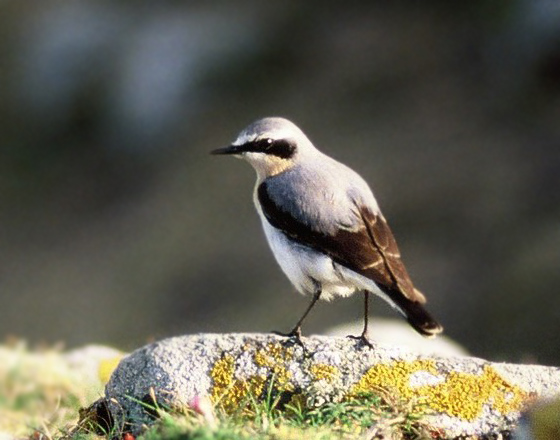
The Wheatears, Oenanthe, have characteristic black and white or red and white markings on their rumps or their long tails. Most species are strongly sexually dimorphic; only the male has the striking plumage patterns characteristic of the genus, though the females share the white or red rump patches.
This slideshow requires JavaScript.
Like a crane or a swallow, so did I chatter: I did mourn as a dove: mine eyes fail with looking upward: O LORD, I am oppressed; undertake for me. (Isaiah 38:14 KJV)
“O Come, O Come Emmanuel” by Meagan Fee on Violin and Jill Foster accompanying
The WordPress.com stats helper monkeys prepared a 2015 annual report for this blog.
Here’s an excerpt:
The Louvre Museum has 8.5 million visitors per year. This blog was viewed about 220,000 times in 2015. If it were an exhibit at the Louvre Museum, it would take about 9 days for that many people to see it.
Thanks again for all of you who have made 2015 such a great blogging year by dropping in to reading our posts. We here at the blog are trusting the Lord that He will give us another great year in 2016, giving credit and praising the Creator of all these neat birds in the world.
Happy New Year and Lord’s Greatest Blessings to you all.
Rufous-bellied Niltava (Niltava sundara) by Nikhil Devasar
Out of the ground the LORD God formed every beast of the field and every bird of the sky, and brought them to the man to see what he would call them; and whatever the man called a living creature, that was its name. (Genesis 2:19 NASB)
Last week’s Sunday Inspiration – Chats and Old World Flycatchers covered the first part of the Muscicapidae Family. This week, we will show the some more of the Family. There are 321 Members that make up the Muscicapidae Family. What great looking birds from their Creator.
Chats (formerly sometimes known as “chat-thrushes”) are a group of small Old World insectivorous birds formerly classified as members of the thrush family Turdidae, but now are considered Old World flycatchers. The name is normally applied to the more robust ground-feeding flycatchers found in Europe and Asia and most northern species are strong migrants.
The Old World flycatchers, the Muscicapidae, are small passerine birds mostly restricted to the Old World (Europe, Africa and Asia). These are mainly small arboreal insectivores, many of which, as the name implies, take their prey on the wing.
The appearance of these birds is very varied, but they mostly have weak songs and harsh calls. They are small to medium birds, ranging from 9 to 22 cm in length. Many species are dull brown in colour, but the plumage of some can be much brighter, especially in the males. Most have broad, flattened bills suited to catching insects in flight, although the few ground-foraging species typically have finer bills.
Old World flycatchers live in almost every environment with a suitable supply of trees, from dense forest to open scrub, and even the montane woodland of the Himalayas. The more northerly species migrate south in winter, ensuring a continuous diet of insects.
Depending on the species, their nests are either well-constructed cups placed in a tree or cliff ledge, or simply lining in a pre-existing tree hole. The hole-nesting species tend to lay larger clutches, with an average of eight eggs, rather than just two to five.
White-browed Robin-Chat (Cossypha heuglini) by Daves BirdingPix
Because this Muscicapidae family is so large, this week’s Sunday Inspiration and last week’s were divided. The reason for this is so the slideshow will not be too long. This divides them in taxonomic order in to several groups. I was going to divide this family in half, but there are so many photos available that I would have to find a symphony to provide enough music to show them all at once.☺♪♫☺
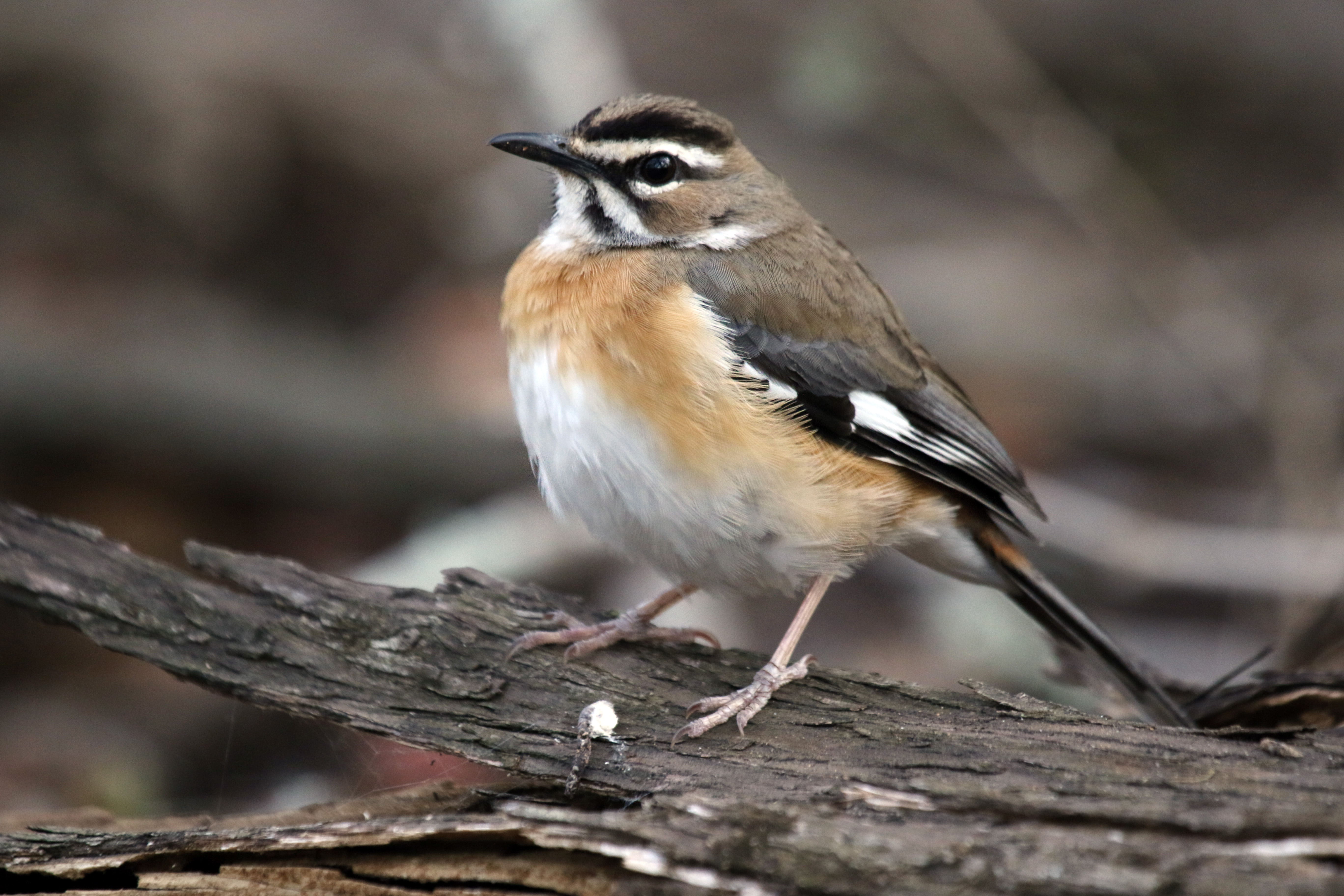
Last week, the first 97-98 members were shown from these genera: Alethe, Cercotrichas, Copsychus, Fraseria, Myioparus, Melaenornis, Empidornis, Muscicapa, Anthipes, Cyornis.
This Slideshow of Muscicapidae in taxonomic order – Second Part (includes the genera- Niltava, Cyanoptila, Eumyias, Erithacus, Pseudalethe, Cossyphicula, Cossypha, Swynnertonia, Pogonocichla, Stiphrornis, Sheppardia, Cichladusa, Heinrichia, Leonardina, Heteroxenicus, Brachypteryx , Vauriella, Larvivora, Luscinia, Irania and Calliope.) 75 Species
Start with Niltava
This slideshow requires JavaScript.
Let this mind be in you which was also in Christ Jesus, who, being in the form of God, did not consider it robbery to be equal with God, but made Himself of no reputation, taking the form of a bondservant, and coming in the likeness of men. And being found in appearance as a man, He humbled Himself and became obedient to the point of death, even the death of the cross. Therefore God also has highly exalted Him and given Him the name which is above every name, that at the name of Jesus every knee should bow, of those in heaven, and of those on earth, and of those under the earth, and that every tongue should confess that Jesus Christ is Lord, to the glory of God the Father. (Philippians 2:5-11 NKJV)
“The Birthday of a King” ~ by Dr. Richard Gregory, now in Glory.
In all labor there is profit, But idle chatter leads only to poverty. (Proverbs 14:23 NKJV)
The Old World flycatchers are a large family (321 Members), the Muscicapidae, of small passerine birds mostly restricted to the Old World (Europe, Africa and Asia). These are mainly small arboreal insectivores, many of which, as the name implies, take their prey on the wing.
The appearance of these birds is very varied, but they mostly have weak songs and harsh calls. They are small to medium birds, ranging from 9 to 22 cm in length. Many species are dull brown in color, but the plumage of some can be much brighter, especially in the males. Most have broad, flattened bills suited to catching insects in flight, although the few ground-foraging species typically have finer bills.
Old World flycatchers live in almost every environment with a suitable supply of trees, from dense forest to open scrub, and even the montane woodland of the Himalayas. The more northerly species migrate south in winter, ensuring a continuous diet of insects.
Depending on the species, their nests are either well-constructed cups placed in a tree or cliff ledge, or simply lining in a pre-existing tree hole. The hole-nesting species tend to lay larger clutches, with an average of eight eggs, rather than just two to five.
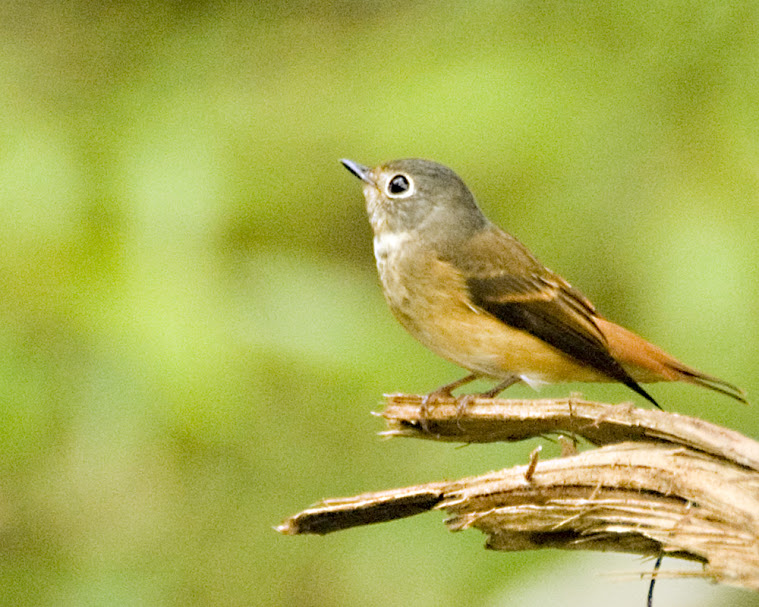
Ferruginous Flycatcher (Muscicapa ferruginea) by MAMuin
“For the wisdom of this world is foolishness with God. For it is written, “HE CATCHES THE WISE IN THEIR OWN CRAFTINESS”; (1 Corinthians 3:19 NKJV)
Because this Muscicapidae family is so large, this Sunday Inspiration and next week’s will be divided. The reason for this is so the slideshow is not too long. This will divide them in taxonomic order about half way.
Slideshow of Muscicapidae in taxonomic order – First Half
This slideshow requires JavaScript.
Now when Jesus was born in Bethlehem of Judaea in the days of Herod the king, behold, there came wise men from the east to Jerusalem, Saying, Where is he that is born King of the Jews? for we have seen his star in the east, and are come to worship him. (Matthew 2:1-2 KJV)
“Wise Men Still Seek Him” – Trio and Choir
*
“Heaven’s Announcement” – message by Pastor Osborne last Sunday. About the birth of Christ.
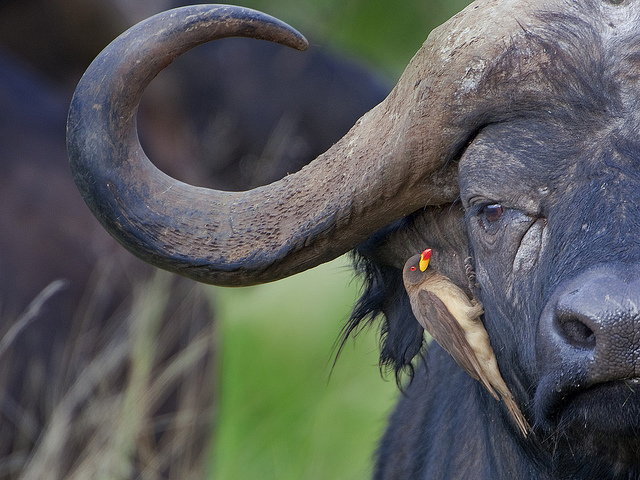
Red-billed Oxpecker (Buphagus erythrorynchus) by Africaddict
Then He answered them, saying, “Which of you, having a donkey or an ox that has fallen into a pit, will not immediately pull him out on the Sabbath day?” (Luke 14:5 NKJV)
This Sunday’s continuation of the Passerines (Songbirds) bring us to two more families, one small with only 2 species of Oxpeckers and the other, the large Thrush family with 167 members.
The oxpeckers are two species of bird which make up the family Buphagidae. Oxpeckers are endemic to the savanna of Sub-Saharan Africa. Both the English and scientific names arise from their habit of perching on large mammals (both wild and domesticated) such as cattle or rhinoceroses, and eating ticks, botfly larvae, and other parasites.
Oxpeckers feed exclusively on the backs of large mammals. Certain species are seemingly preferred, whereas others, like the Lichtenstein’s hartebeest or Topi are generally avoided. Smaller antelope such as lechwe, duikers and reedbuck are also avoided, the smallest regularly used species is the Impala, probably because of the heavy tick load and social nature of that species. In many parts of their range they now feed on cattle, but avoid camels. They feed on ectoparasites, particularly ticks, as well as insects infecting wounds and the flesh and blood of some wounds as well. (Info from Wikipedia)
Thrushes are medium-sized mostly insectivorous or omnivorous birds. The genus, Turdus,is the largest genus of the thrush family, Turdidae.
The Turdus genus has a cosmopolitan distribution, with species in the Americas, Europe, Asia, Africa and Australia. Several species have also colonized some oceanic islands, and two species have been introduced to New Zealand. Some New World species are called robins, the most famous of which is the American robin. Several species are migratory.
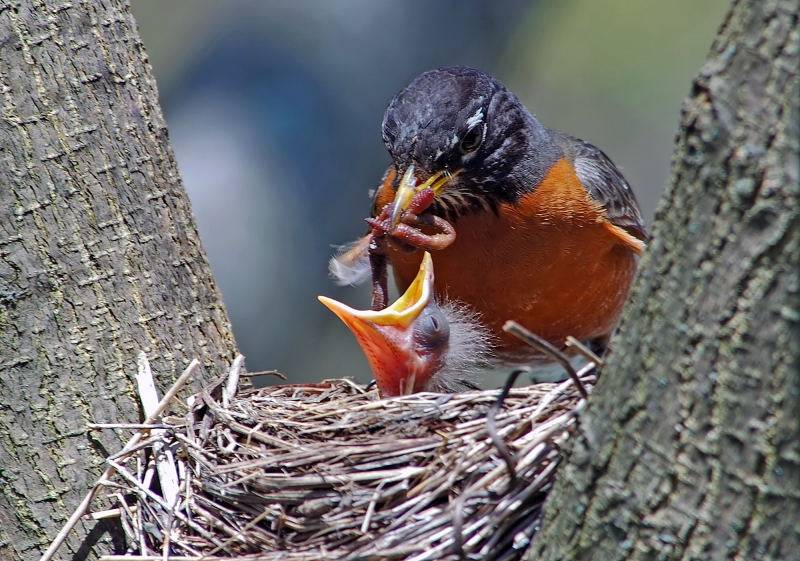
American Robin (Turdus migratorius)with youngsters by Raymond Barlow
They are insectivorous, but most species also eat worms, land snails, and fruit. Many species are permanently resident in warm climes, while others migrate to higher latitudes during summer, often over considerable distances.
Thrushes build cup-shaped nests, sometimes lining them with mud. They lay two to five speckled eggs, sometimes laying two or more clutches per year. Both parents help in raising the young.
The songs of some species, including members of the genera Catharus, Myadestes, and Turdus, are considered to be among the most beautiful in the avian world. (Info from Wikipedia)
This slideshow requires JavaScript.
“Even the stork in the sky Knows her seasons; And the turtledove and the swift and the thrush Observe the time of their migration; But My people do not know The ordinance of the LORD. (Jeremiah 8:7 NASB)
“I Heard The Bells With Peace On Earth” – with Jessie Padgett, Angel Long and the FX Girls
*
Faith Baptist has just recently started posting our services on YouTube. Here is last Sunday’s Message (Dec 6, 2015) if you would like to watch it. We have a great pastor and church. He is doing a Christmas theme during December.
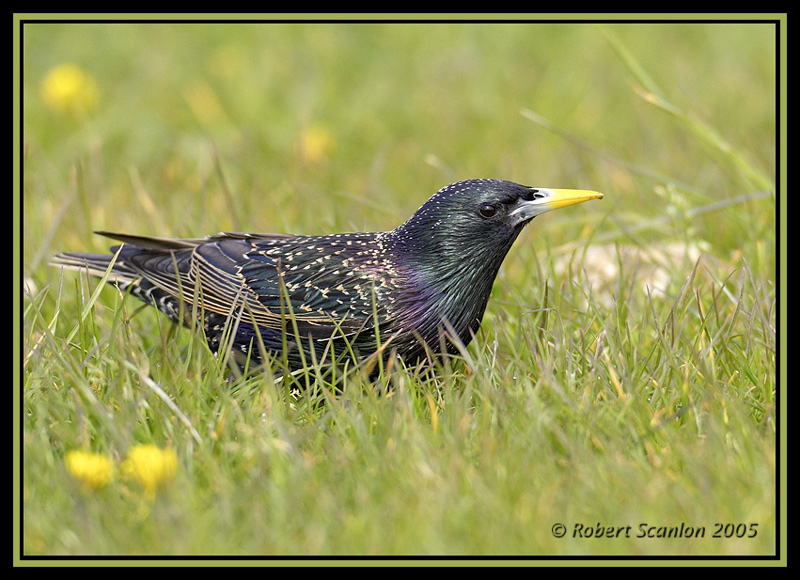
Common Starling (Sturnus vulgaris) by Robert Scanlon
I know all the birds of the mountains, And the wild beasts of the field are Mine. (Psalms 50:11 NKJV)
This weeks Sturnidae Family is rather large with 123 species presently. (Twenty-three are Mynas; three are Rhabdornis; one Coleto and the rest are Starlings.) Here in the U. S., when we think of a Starling it is a very the plain Common (European) Starling. Yet other Starlings are very colorful and beautiful creations from our Lord.
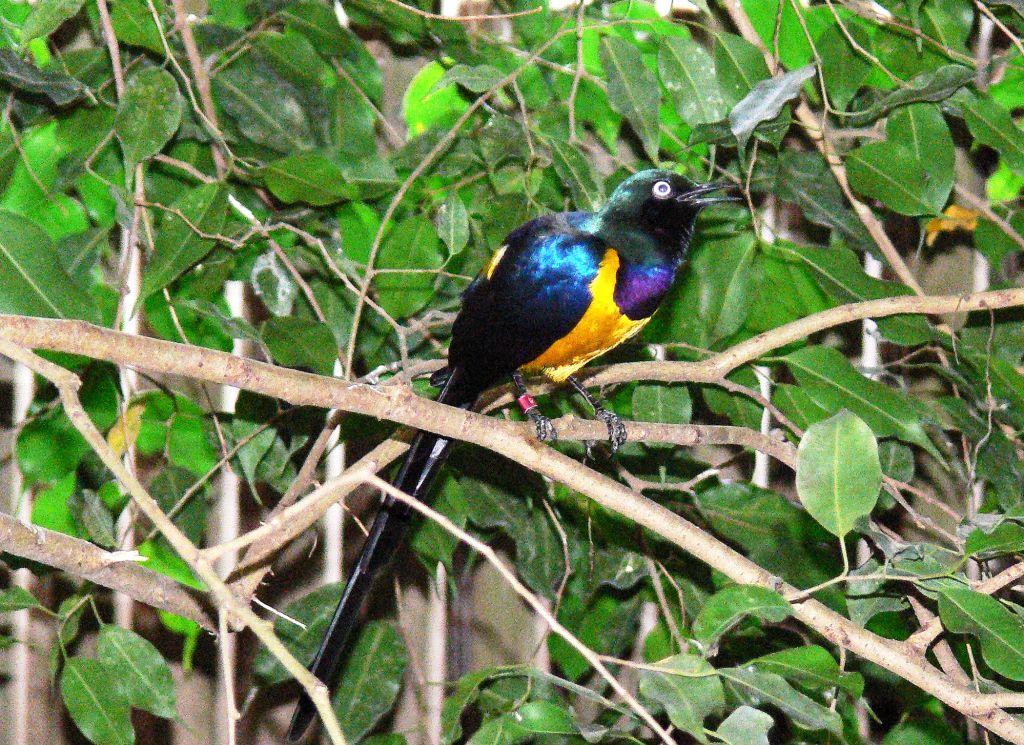
Golden-breasted Starling at National Aviary by Lee
The name “Sturnidae” comes from the Latin word for starling, sturnus. Many Asian species, particularly the larger ones, are called mynas, and many African species are known as glossy starlings because of their iridescent plumage. Starlings are native to the Old World, from Europe, Asia and Africa, to northern Australia and the islands of the tropical Pacific. Several European and Asian species have been introduced to these areas as well as North America, Hawaii and New Zealand, where they generally compete for habitats with native birds and are considered to be invasive species. The starling species familiar to most people in Europe and North America is the common starling, and throughout much of Asia and the Pacific, the common myna is indeed common.
Bali Myna (Leucopsar rothschildi Palm Beach Zoo by Lee
Starlings have strong feet, their flight is strong and direct, and they are very gregarious. Their preferred habitat is fairly open country, and they eat insects and fruit. Several species live around human habitation and are effectively omnivores. Many species search for prey such as grubs by “open-bill probing”, that is, forcefully opening the bill after inserting it into a crevice, thus expanding the hole and exposing the prey; this behaviour is referred to by the German verb zirkeln (pronounced [ˈtsɪʁkəln]).
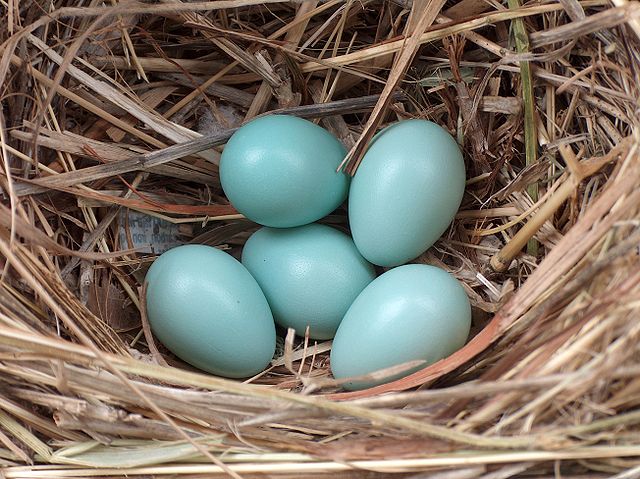
Plumage of many species is typically dark with a metallic sheen. Most species nest in holes and lay blue or white eggs.
Metallic Starling (Aplonis metallica) by Ian
Starlings have diverse and complex vocalizations and have been known to embed sounds from their surroundings into their own calls, including car alarms and human speech patterns. The birds can recognize particular individuals by their calls and are currently the subject of research into the evolution of human language.
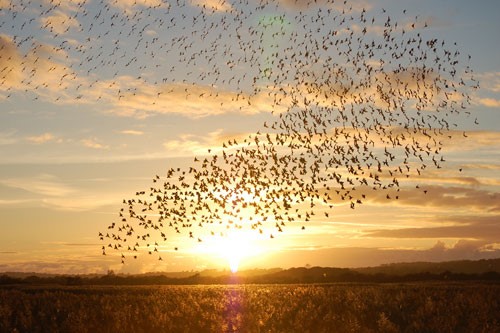
James J. S. Johnson just wrote about the murmuration of the Starlings in Choreographed Choir on the Wing: Birds of a Feather Flock Together. “The starlings are generally a highly social family. Most species associate in flocks of varying sizes throughout the year. A flock of starlings is called a murmuration. These flocks may include other species of starlings and sometimes species from other families. This sociality is particularly evident in their roosting behavior; in the non-breeding season some roosts can number in the thousands of birds.” (Most information from Wikipedia)
Starling Murmuration
*
Many of the family members in random order:
This slideshow requires JavaScript.
*
“Once Upon A Tree” ~ Choir – and – “Sing To Jesus” ~ Angel Long & Jessie Padgett
Every animal, every creeping thing, every bird, and whatever creeps on the earth, according to their families, went out of the ark. (Genesis 8:19 NKJV)
The Lord has created more little avian wonders in these three next families:
Red-breasted Nuthatch (Sitta canadensis) by Daves BirdingPix
The 28 Nuthatches constitute a genus, Sitta, of small passerine birds belonging to the family Sittidae. Characterised by large heads, short tails, and powerful bills and feet, nuthatches advertise their territory using loud, simple songs. Most species exhibit grey or bluish upperparts and a black eye stripe.
Most nuthatches breed in the temperate or montane woodlands of the Northern Hemisphere, although two species have adapted to rocky habitats in the warmer and drier regions of Eurasia. However, the greatest diversity is in Southern Asia, and similarities between the species have made it difficult to identify distinct species. All members of this genus nest in holes or crevices. Most species are non-migratory and live in their habitat year-round, although the North American Red-breasted Nuthatch migrates to warmer regions during the winter.
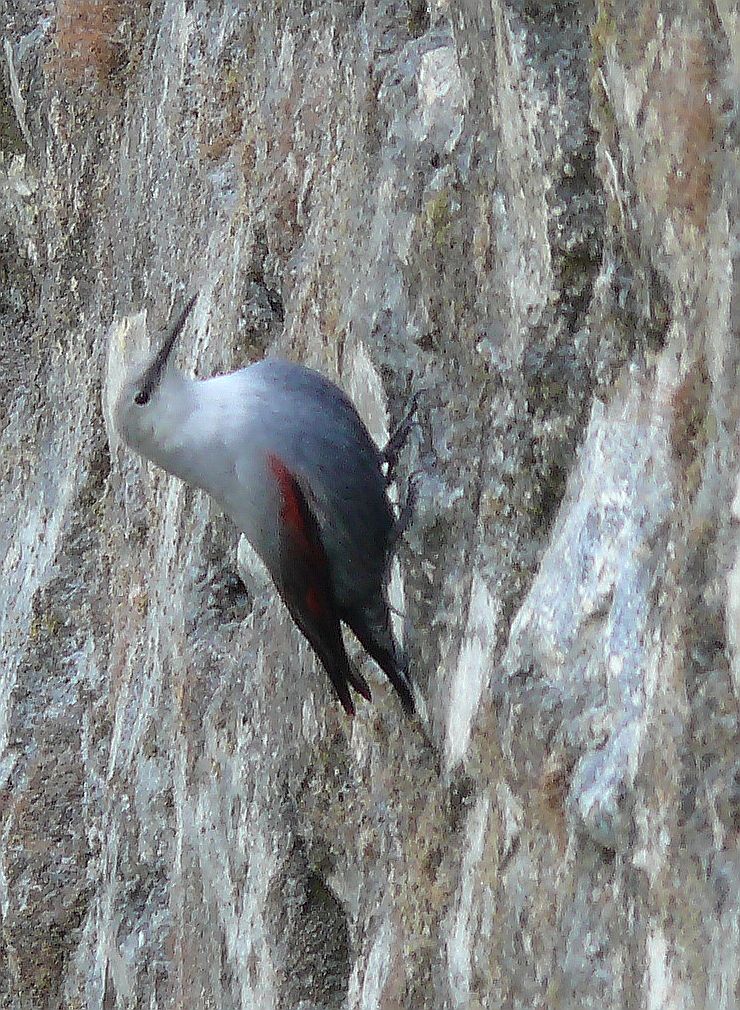
Wallcreeper (Tichodroma muraria) by Nikhil Devasar
The Wallcreeper (Tichodroma muraria) is a small passerine bird found throughout the high mountains of Eurasia. It is the only member of the genus Tichodroma. (Wikipedia)
The 11 Treecreepers are a family, Certhiidae, of small passerine birds, widespread in wooded regions of the Northern Hemisphere and sub-Saharan Africa. The family contains ten species in two genera, Certhia and Salpornis. Their plumage is dull-coloured, and as their name implies, they climb over the surface of trees in search of food.
This slideshow requires JavaScript.
Also, to every beast of the earth, to every bird of the air, and to everything that creeps on the earth, in which there is life, I have given every green herb for food”; and it was so. Then God saw everything that He had made, and indeed it was very good. So the evening and the morning were the sixth day. (Genesis 1:30-31 NKJV)
“How Deep Is Your Love?” – Played by Jill Foster (Faith Baptist)
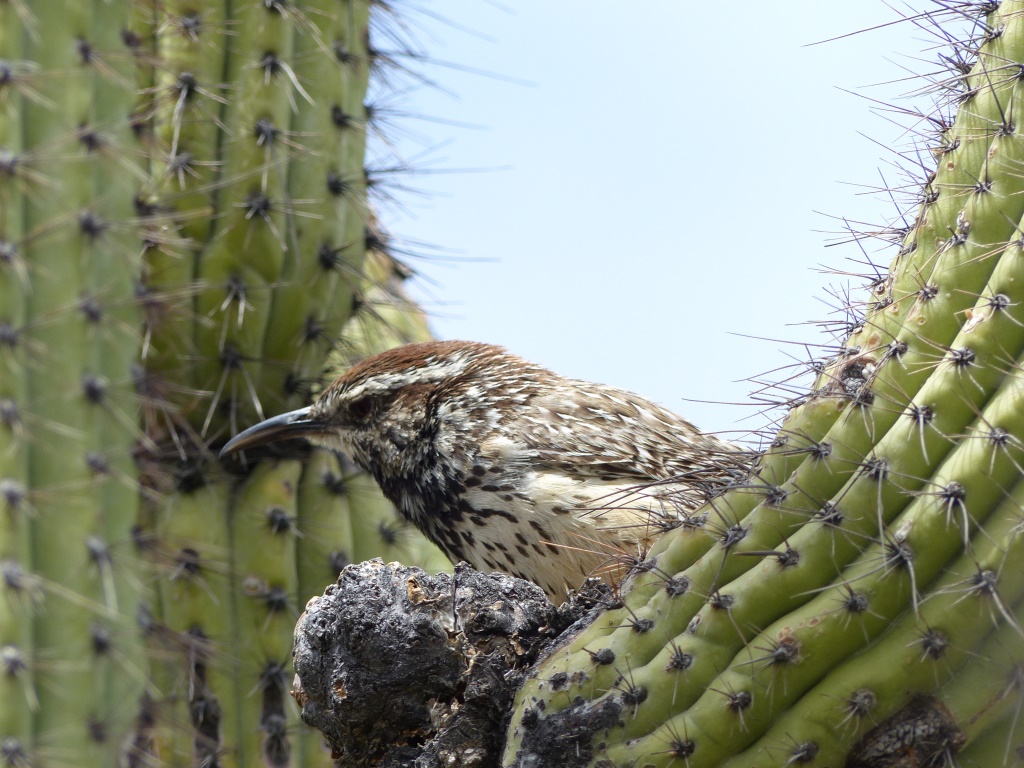
Cactus Wren (Campylorhynchus brunneicapillus) by Lee
God, who made the world and everything in it, since He is Lord of heaven and earth, does not dwell in temples made with hands. (Acts 17:24 NKJV)
The Troglodytidae – Wrens Family was the one skipped over in the Sunday Inspiration last week. There are 84 species in the family, so they deserve their own blog. The family name Troglodytidae is derived from troglodyte, which means “cave-dweller”, and the wrens get their scientific name from the tendency of some species to forage in dark crevices.
Rufous-naped Wren (Campylorhynchus rufinucha) by Raymond Barlow
Wrens are medium-small to very small birds. The Eurasian wren is among the smallest birds in its range, while the smaller species from the Americas are among the smallest passerines in that part of the world. They range in size from the white-bellied wren, which averages under 10 cm (3.9 in) and 9 g (0.32 oz), to the giant wren, which averages about 22 cm (8.7 in) and weighs almost 50 g (1.8 oz). The dominating colors of their plumage are generally drab, composed of gray, brown, black, and white, and most species show some barring, especially to tail and/or wings. No sexual dimorphism is seen in the plumage of wrens, and little difference exists between young birds and adults. All have fairly long, straight to marginally decurved bills.
Bewick’s Wren (Thryomanes bewickii) by Daves BirdingPix
Wrens have loud and often complex songs, sometimes given in duet by a pair. The song of members of the genera Cyphorhinus and Microcerculus have been considered especially pleasant to the human ear, leading to common names such as song wren, musician wren, flutist wren, and southern nightingale-wren.
Then God saw everything that He had made, and indeed it was very good. So the evening and the morning were the sixth day. (Genesis 1:31 NKJV)
This slideshow requires JavaScript.
“He is Everything To Me” – Men’s Ensemble – Faith Baptist
As we continue through our Passerines, we come to seven families that have very few members in them. Just because their numbers are few, their Creator has not failed to give each a niche to fill and the ability and design to do so. They are all small birds, like the song, “His Eye Is On The Sparrow,” these bird are no less ignored by the Lord.
I am weary with my crying; My throat is dry; My eyes fail while I wait for my God. (Psalms 69:3 NKJV)
The Dapple-throat and allies – Modulatricidae family only has three species; Spot-throat, Dapple-throat and the Grey-chested Babbler. Internet says they are from Africa and that its natural habitat is subtropical or tropical moist montane forests. That is about the only information given.
More to be desired are they than gold, Yea, than much fine gold; Sweeter also than honey and the honeycomb. (Psalms 19:10 NKJV)
The Sugarbirds make up a small family, Promeropidae, of passerine birds which are restricted to southern Africa. The two species of sugarbird make up one of only two bird families restricted entirely to southern Africa, the other being the rock-jumpers Chaetopidae. In general appearance as well as habits they resemble large long-tailed sunbirds, but are possibly more closely related to the Australian honeyeaters. They have brownish plumage, the long downcurved bill typical of passerine nectar feeders, and long tail feathers.
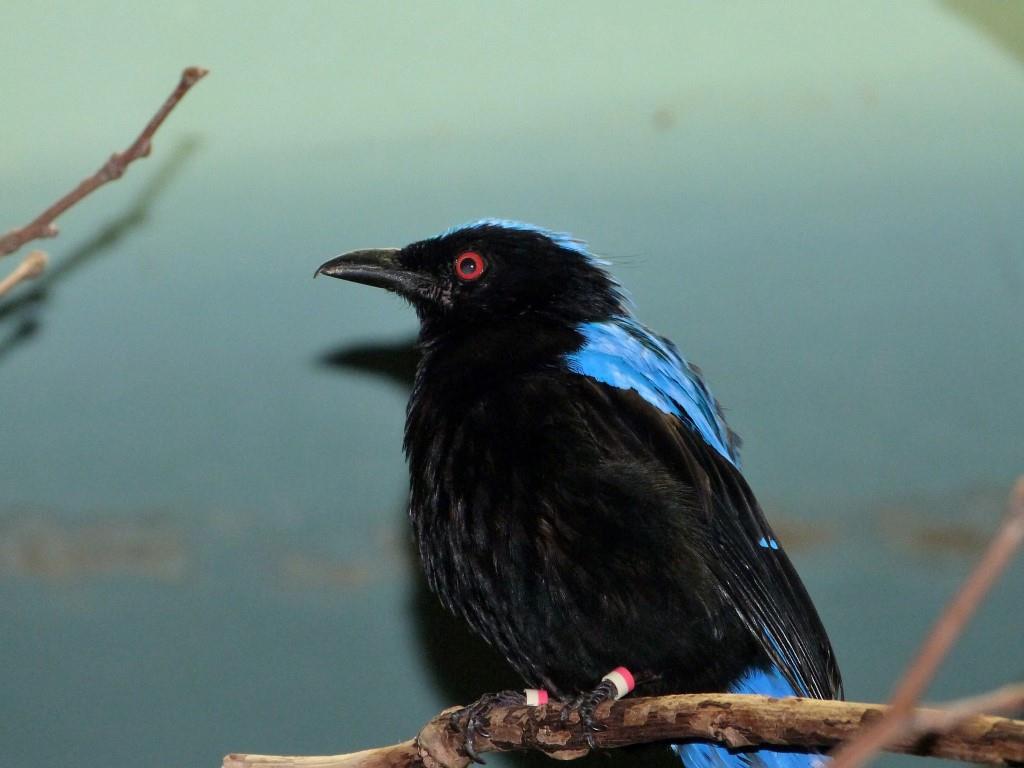
Asian Fairy-bluebird (Irena puella) at Cincinnati Zoo by Lee
“You shall make the robe of the ephod all of blue.” (Exodus 28:31 NKJV)
The two Fairy-bluebirds are small passerine bird species found in forests and plantations in tropical southern Asia and the Philippines. They are the sole members of the genus Irena and family Irenidae, and are related to the ioras and leafbirds.
These are bulbul-like birds of open forest or thorn scrub, but whereas that group tends to be drab in colouration, fairy-bluebirds are sexually dimorphic, with the males being dark blue in plumage, and the females duller green.
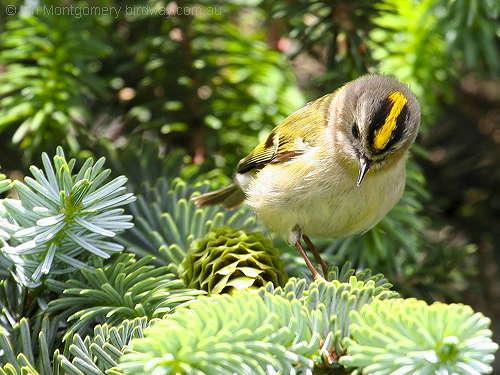
Goldcrest (Regulus regulus) by Ian
And thou shalt overlay it with pure gold, and make thereto a crown of gold round about. (Exodus 25:24 KJV)
Regulidae – Goldcrests, kingletsfamily has only six members. The kinglets or crests are a small group of birds sometimes included in the Old World warblers, but are frequently given family status because they also resemble the titmice. The scientific name Regulidae is derived from the Latin word regulus for “petty king” or prince, and comes from the coloured crowns of adult birds. This family has representatives in North America and Eurasia.
The Spotted Elachura (Elachura formosa (Elachuridae) is the only bird in its family they discovered recently through DNA studies. It is found in Bangladesh, Bhutan, China, India, Laos, Myanmar, Nepal, and Vietnam. Its natural habitat is subtropical or tropical moist montane forests. This species is found in undergrowth and dense thickets of this type of forest, with a preference for thick fern ground cover, mossy rocks and decaying trunks of fallen trees and brushwood (often near stream or creek) long grass and scrub.
Hyliotidae – Hyliota found in Angola, Cameroon, Democratic Republic of the Congo, Kenya, Malawi, Mozambique, South Africa, Tanzania, Uganda, Zambia, and Zimbabwe. Its natural habitats are subtropical or tropical moist lowland forests, subtropical or tropical moist montane forests, and plantations. It is threatened by habitat loss.
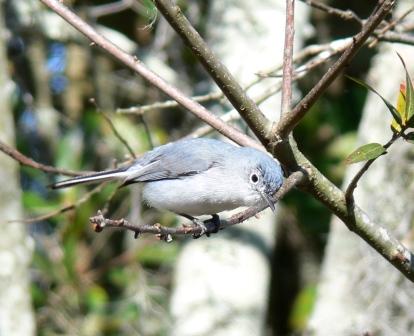
Blue-Gray Gnatcatcher at Circle B Reserve by Lee
Lift up your eyes to the heavens, and look upon the earth beneath; for the heavens shall be dissolved and vanish away like smoke, and the earth shall wax old like a garment, and they that dwell therein shall die in like manner [like gnats]. But My salvation shall be forever, and My rightness and justice [and faithfully fulfilled promise] shall not be abolished. [Matt. 24:35; Heb. 1:11; II Pet. 3:10.] (Isaiah 51:6 AMP)
(Wrens skipped until next week ) Our last group of very small birds are from the Polioptilidae – Gnatcatchers. The 18 species of small passerine birds in the gnatcatcher family occur in North and South America (except far south and high Andean regions). Most species of this mainly tropical and subtropical group are resident, but the Blue-gray Gnatcatcher of the USA and southern Canada migrates south in winter. They are close relatives of the wrens. (Wikipedia)





















 Lee's Birdwatching Adventures Plus