How The Seahorse Got Its Square Tail – Re-post

Seahorse at Lowry Park Zoo by Lee

Seahorse at Lowry Park Zoo by Lee

HOW THE SEAHORSE GOT ITS SQUARE TAIL

©Creation Moments

“And God saw every thing that he had made, and, behold, it was very good.” (Genesis 1:31a)

Evolutionists and creationists alike enjoy gazing upon the elegant seahorse swimming lazily about the aquarium. However, only creationists are able to see that the seahorse bears the unmistakable stamp of design – all the way from the top of its horse-shaped head to the tip of its unique square tail.

Researchers found that the tail’s square segments created more contact points with the surface that it is gripping when compared to a tail with round segments. Credit: Michael Porter/Clemson University

Researchers found that the tail's square segments created more contact points with the surface that it is gripping when compared to a tail with round segments. Credit: Michael Porter/Clemson University

Researchers found that the tail’s square segments created more contact points with the surface that it is gripping when compared to a tail with round segments. Credit: Michael Porter/Clemson University

Read more at: http://phys.org/news/2015-07-seahorse-tail-square.html#jCp

Researchers found that the tail’s square segments created more contact points with the surface that it is gripping when compared to a tail with round segments. Yes, I said square tail. This striking design makes the seahorse considerably better at gripping and grasping than if it had curved sections in its tail. When you look closely, you will see that the tail is made up of about 36 square-like segments that progressively taper off in size along the length of the tail. By using a 3D printer to duplicate the tail and submitting it to crushing tests, an international team of researchers has now discovered that the squared sections also provide the seahorse with much better armor than a cylindrical tail.

“Almost all animal tails have circular or oval cross-sections – but not the seahorse’s,” said Michael Porter, lead investigator and assistant professor in mechanical engineering at Clemson University. Porter’s research group is now using 3D printing to help them develop new structures and robotic systems.

Although evolutionists will tell you that the seahorse’s unique tail only appears to be designed, they act as if the tail really was designed! After all, how intelligent would it be for them to pursue new technologies based on the tail of a seahorse that has no intelligence behind it at all?

Prayer:
Heavenly Father, it is so obvious to me that creatures like the seahorse were designed by You. I pray that You will use me to make others aware that all of creation points directly to You! In Jesus’ Name. Amen.

Notes:
Phys.org, “Why the seahorse’s tail is square,” 7/2/15. http://phys.org/news/2015-07-seahorse-tail-square.html#jCp. Photo: Researchers found that the tail’s square segments created more contact points with the surface that it is gripping when compared to a tail with round segments. Credit: Michael Porter/Clemson University. (Fair Use)


Seahorse Skeleton Macro ©WikiC

Seahorse Skeleton Macro ©WikiC

Lee’s Addition:

Oh, that men would give thanks to the LORD for His goodness, And for His wonderful works to the children of men! (Psalms 107:8 NKJV)

He has made His wonderful works to be remembered; The LORD is gracious and full of compassion. (Psalms 111:4 NKJV)

I am always amazed when discovery’s like these are discovered. Yet the deniers of His Creation fail to give credit where credit is due.

*

Creation Moments

Interesting Things

*

Sunday Inspiration – Oxpeckers and Thrushes

Red-billed Oxpecker (Buphagus erythrorynchus) by Africaddict

Red-billed Oxpecker (Buphagus erythrorynchus) by Africaddict

Then He answered them, saying, “Which of you, having a donkey or an ox that has fallen into a pit, will not immediately pull him out on the Sabbath day?” (Luke 14:5 NKJV)

This Sunday’s continuation of the Passerines (Songbirds) bring us to two more families, one small with only 2 species of Oxpeckers and the other, the large Thrush family with 167 members.

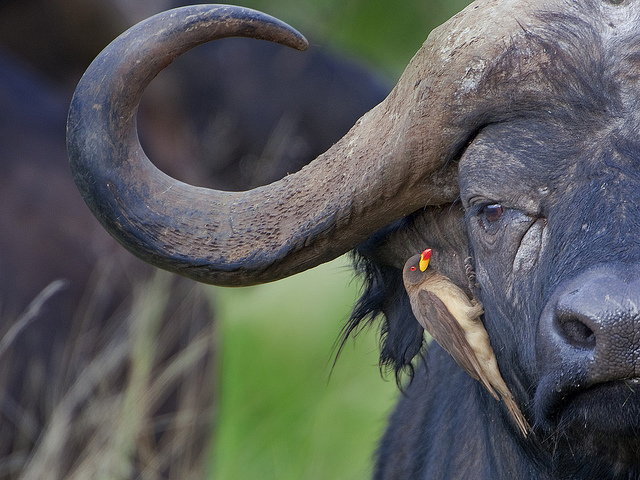
Yellow-billed Oxpecker with Water Buffalo ©©

Yellow-billed Oxpecker with Water Buffalo ©©

The oxpeckers are two species of bird which make up the family Buphagidae. Oxpeckers are endemic to the savanna of Sub-Saharan Africa. Both the English and scientific names arise from their habit of perching on large mammals (both wild and domesticated) such as cattle or rhinoceroses, and eating ticks, botfly larvae, and other parasites.

Oxpeckers feed exclusively on the backs of large mammals. Certain species are seemingly preferred, whereas others, like the Lichtenstein’s hartebeest or Topi are generally avoided. Smaller antelope such as lechwe, duikers and reedbuck are also avoided, the smallest regularly used species is the Impala, probably because of the heavy tick load and social nature of that species. In many parts of their range they now feed on cattle, but avoid camels. They feed on ectoparasites, particularly ticks, as well as insects infecting wounds and the flesh and blood of some wounds as well. (Info from Wikipedia)

Orange-headed Thrush (Geokichla citrina) ©WikiC

Orange-headed Thrush (Geokichla citrina) ©WikiC

Thrushes are medium-sized mostly insectivorous or omnivorous birds. The genus, Turdus, is the largest genus of the thrush family, Turdidae.

The Turdus genus has a cosmopolitan distribution, with species in the Americas, Europe, Asia, Africa and Australia. Several species have also colonized some oceanic islands, and two species have been introduced to New Zealand. Some New World species are called robins, the most famous of which is the American robin. Several species are migratory.

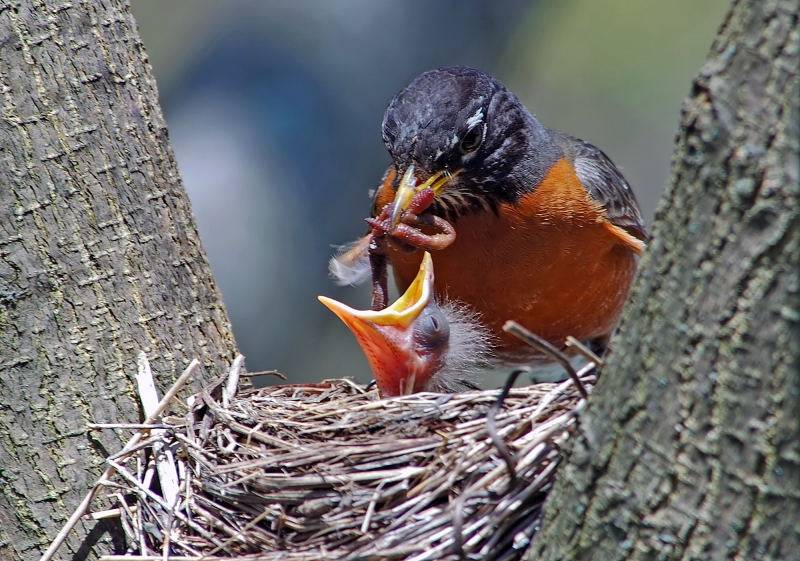
American Robin (Turdus migratorius)with youngsters by Raymond Barlow

American Robin (Turdus migratorius)with youngsters by Raymond Barlow

They are insectivorous, but most species also eat worms, land snails, and fruit. Many species are permanently resident in warm climes, while others migrate to higher latitudes during summer, often over considerable distances.

Thrushes build cup-shaped nests, sometimes lining them with mud. They lay two to five speckled eggs, sometimes laying two or more clutches per year. Both parents help in raising the young.

The songs of some species, including members of the genera Catharus, Myadestes, and Turdus, are considered to be among the most beautiful in the avian world. (Info from Wikipedia)

This slideshow requires JavaScript.

“Even the stork in the sky Knows her seasons; And the turtledove and the swift and the thrush Observe the time of their migration; But My people do not know The ordinance of the LORD. (Jeremiah 8:7 NASB)

“I Heard The Bells With Peace On Earth” – with Jessie Padgett, Angel Long and the FX Girls

*

Faith Baptist has just recently started posting our services on YouTube. Here is last Sunday’s Message (Dec 6, 2015) if you would like to watch it. We have a great pastor and church. He is doing a Christmas theme during December.

*

Sunday Inspirations

Buphagidae – Oxpeckers Family

Turdidae – Thrushes Family

PASSERIFORMES Order

Birds of the Bible – Thrushes

Birds of the Bible – Bluebirds

*


FBT Little Quartet – Christmas Carols

A friend sent me this and thought I would share it.

O let the nations be glad and sing for joy: for thou shalt judge the people righteously, and govern the nations upon earth. Selah.
(Psalms 67:4 KJV)

The Death Knell of Christianity? (Re-post)

THE DEATH KNELL OF CHRISTIANITY?

“He that sitteth in the heavens shall laugh: the Lord shall have them in derision.”

“I think that evolution is absolutely the death knell of Christianity.” No, those aren’t my words. These words were spoken by atheist Frank Zindler, and they make it very clear what the origins debate is really all about. It is nothing less than the front line in the battle between two incompatible faiths.

American atheist Frank ZindlerIn step-by-step fashion, Zindler described how he reached that conclusion. “The most devastating thing that biology did to Christianity,” he said, “was the discovery of biological evolution.” In other words, he starts out by declaring that evolution has been proven, which, as you know, is very far from the truth.

He goes on to say that evolution means that Adam and Eve never really existed. In his own words, “Now that we know that Adam and Eve never were real people, the central myth of Christianity is destroyed.

And why is that? He continues, and I quote: “If there never was an Adam and Eve, there never was an original sin. If there never was an original sin, there is no need of salvation. If there is no need of salvation, there is no need of a savior. And I submit that puts Jesus, historical or otherwise, into the ranks of the unemployed.

Yes, atheists foolishly think that evolution is the death knell of Christianity. In reality, biology – with its established fact that life comes only from life – points directly to our Creator. Biology is actually the death knell of atheism and evolution.

Prayer:
“Lord Jesus, I pray that You will use me to he lp others see that life comes only from life and that the original Life that started it all was You! Amen.”

Notes:

Frank Zindler quote taken from debate with William Lane Craig held in 1993 at Willow Creek Community Church. Photo: American atheist Frank Zindler.

©Creation Moments 2015 (with permission)
*

That is very interesting. I can’t believe how they (evolutionist) just say something is true and that’s it. It is settled, as far as they are concerned. No evidence, no proof, just declare it’s true. My Bible says that God created it and He says He is truth. Science shows many evidences of the Universal Flood and a catastrophe, but evolutionist won’t believe it, because they have “declared” that God doesn’t exist.

The big question for all of us, is who are you going to believe?

And ye shall know the truth, and the truth shall make you free. (John 8:32 KJV)

And I will pray the Father, and He will give you another Helper, that He may abide with you forever— the Spirit of truth, whom the world cannot receive, because it neither sees Him nor knows Him; but you know Him, for He dwells with you and will be in you. (John 14:16-17 NKJV)

Because that which may be known of God is manifest in them; for God hath shewed it unto them. For the invisible things of him from the creation of the world are clearly seen, being understood by the things that are made, even his eternal power and Godhead; so that they are without excuse: Because that, when they knew God, they glorified him not as God, neither were thankful; but became vain in their imaginations, and their foolish heart was darkened. Professing themselves to be wise, they became fools, And changed the glory of the uncorruptible God into an image made like to corruptible man, and to birds, and fourfooted beasts, and creeping things. Wherefore God also gave them up to uncleanness through the lusts of their own hearts, to dishonour their own bodies between themselves: Who changed the truth of God into a lie, and worshipped and served the creature more than the Creator, who is blessed for ever. Amen. (Romans 1:19-25 KJV)

*

Sunday Inspiration – Starlings, Mynas and Rhabdornis

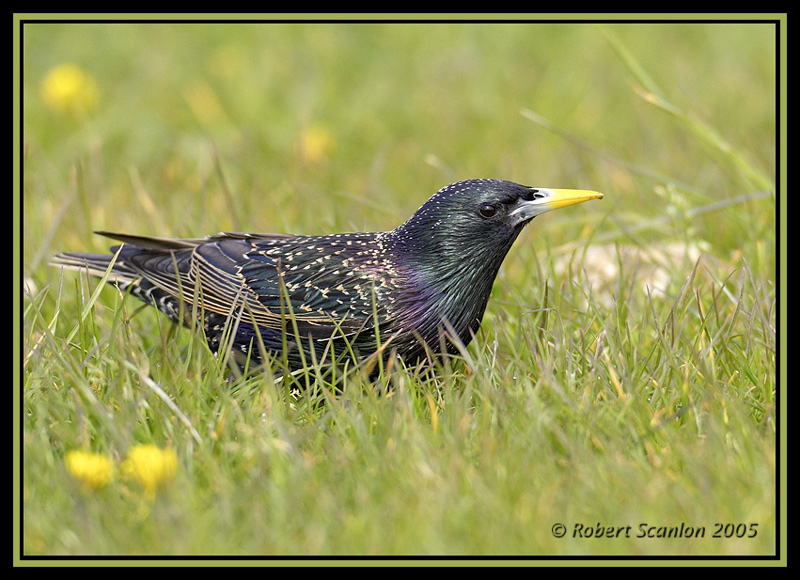
Common Starling (Sturnus vulgaris) by Robert Scanlon

Common Starling (Sturnus vulgaris) by Robert Scanlon

I know all the birds of the mountains, And the wild beasts of the field are Mine. (Psalms 50:11 NKJV)

This weeks Sturnidae Family is rather large with 123 species presently. (Twenty-three are Mynas; three are Rhabdornis; one Coleto and the rest are Starlings.) Here in the U. S., when we think of a Starling it is a very the plain Common (European) Starling. Yet other Starlings are very colorful and beautiful creations from our Lord.

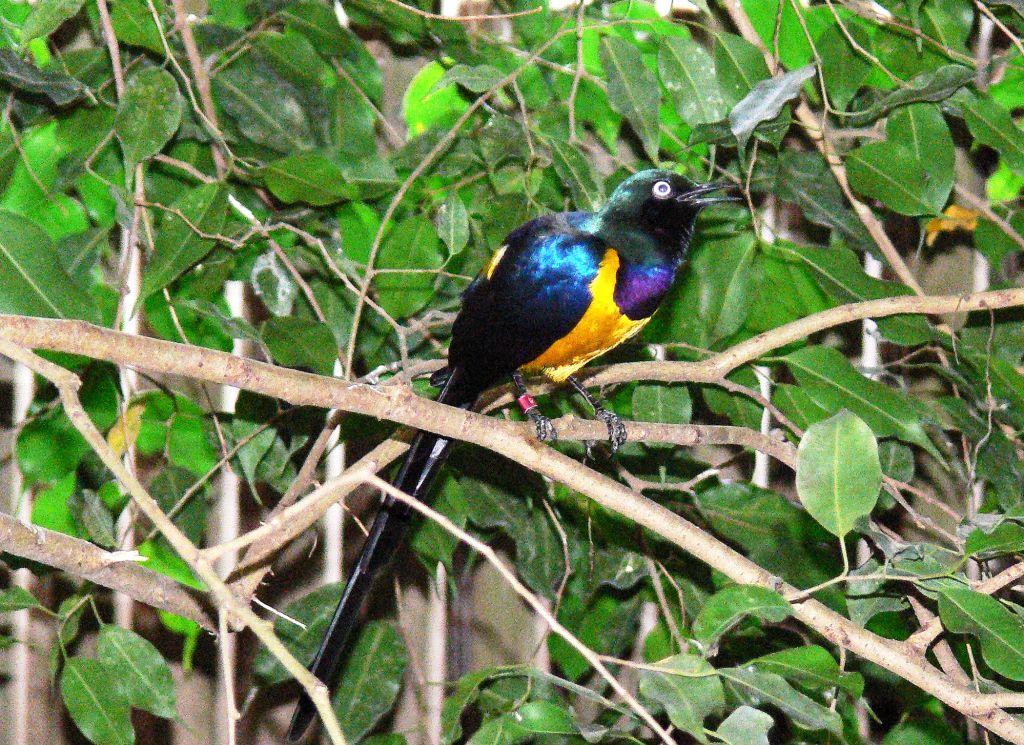
Golden-breasted Starling at NA

Golden-breasted Starling at National Aviary by Lee

The name “Sturnidae” comes from the Latin word for starling, sturnus. Many Asian species, particularly the larger ones, are called mynas, and many African species are known as glossy starlings because of their iridescent plumage. Starlings are native to the Old World, from Europe, Asia and Africa, to northern Australia and the islands of the tropical Pacific. Several European and Asian species have been introduced to these areas as well as North America, Hawaii and New Zealand, where they generally compete for habitats with native birds and are considered to be invasive species. The starling species familiar to most people in Europe and North America is the common starling, and throughout much of Asia and the Pacific, the common myna is indeed common.

Bali Myna (Leucopsar rothschildi Palm Beach Zoo by Lee

Bali Myna (Leucopsar rothschildi Palm Beach Zoo by Lee

Starlings have strong feet, their flight is strong and direct, and they are very gregarious. Their preferred habitat is fairly open country, and they eat insects and fruit. Several species live around human habitation and are effectively omnivores. Many species search for prey such as grubs by “open-bill probing”, that is, forcefully opening the bill after inserting it into a crevice, thus expanding the hole and exposing the prey; this behaviour is referred to by the German verb zirkeln (pronounced [ˈtsɪʁkəln]).

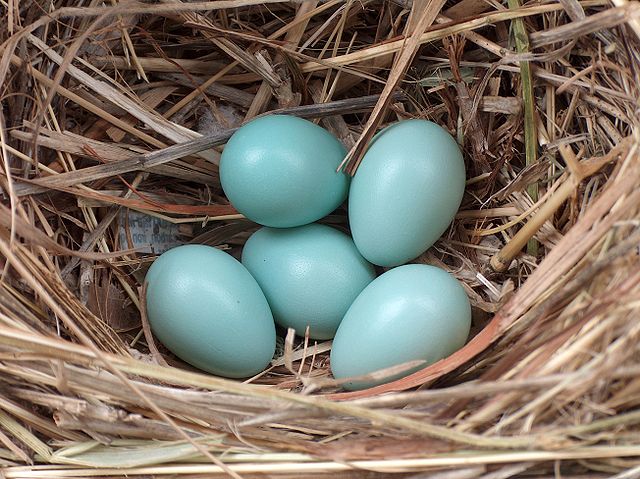
Common Starling (Sturnus vulgaris) Eggs ©WikiC

Common Starling (Sturnus vulgaris) Eggs ©WikiC

Plumage of many species is typically dark with a metallic sheen. Most species nest in holes and lay blue or white eggs.

Metallic Starling (Aplonis metallica) by Ian

Metallic Starling (Aplonis metallica) by Ian

Starlings have diverse and complex vocalizations and have been known to embed sounds from their surroundings into their own calls, including car alarms and human speech patterns. The birds can recognize particular individuals by their calls and are currently the subject of research into the evolution of human language.

Stripe-headed Rhabdornis (Rhabdornis mystacalis) ©©

Stripe-headed Rhabdornis (Rhabdornis mystacalis) ©©

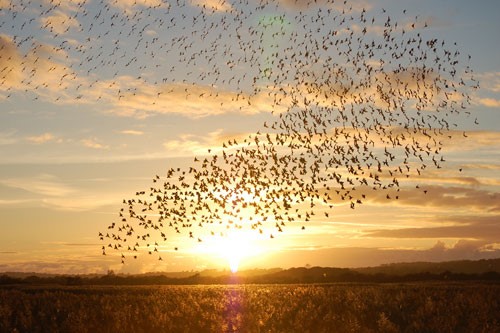
James J. S. Johnson just wrote about the murmuration of the Starlings in Choreographed Choir on the Wing: Birds of a Feather Flock Together. “The starlings are generally a highly social family. Most species associate in flocks of varying sizes throughout the year. A flock of starlings is called a murmuration. These flocks may include other species of starlings and sometimes species from other families. This sociality is particularly evident in their roosting behavior; in the non-breeding season some roosts can number in the thousands of birds.” (Most information from Wikipedia)

Starling Murmuration

Starling Murmuration

*

Many of the family members in random order:

This slideshow requires JavaScript.

*

“Once Upon A Tree” ~ Choir – and – “Sing To Jesus” ~ Angel Long & Jessie Padgett

More Sunday Inspirations

Sturnidae – Starlings, Rhabdornis

Ian’s Bird of the Week – Metallic Starling

Starling – Wikipedia

Wages or a Gift


Sparrow Quote from The Life Project

House Sparrows visiting National Aviary Parrot Show by Lee

House Sparrows visiting National Aviary by Lee

The Life Project by Don Merritt is a blog I follow. Here is an interesting quote from Jesus and His relationship with the Disciples:

Jesus wraps up this thought with the example of a sparrow. Who watches out for sparrows? Actually, we could ask something like: Who cares at all about sparrows?

Jesus gives us an answer: His Father in heaven cares about each and every single insignificant sparrow on the planet, and nothing happens to a single little sparrow that He doesn’t know about.

That is a staggering thought…

Read the whole article….

*

Are not two sparrows sold for a farthing? and one of them shall not fall on the ground without your Father. (Matthew 10:29 KJV)

The Life Project

Jesus and His relationship with the Disciples

Birds of the Bible – Sparrows

*

Endemic Treasures of the Cook Islands: Atiu Swiftlet and ‘Gospel Day’ Holidays

Endemic Treasures of the Cook Islands: 

Atiu Swiftlet and ‘Gospel Day’ Holidays

James J. S. Johnson

I thank my God upon every remembrance of you, always in every prayer of mine for you all making request with joy, for your fellowship in the Gospel from the first day until now, being confident of this very thing, that He Who has begun a good work in you will perform it until the day of Jesus Christ.  (Philippians 1:3-6)

Fair Use photo credit: https://en.wikipedia.org/wiki/Atiu_swiftlet#/media/File:Kopeka_bird.jpg

Atiu Swiftlet (Aerodramus sawtelli, a/k/a Kopeka) ©WikiC

The Atiu Swiftlet (Aerodramus sawtelli, a/k/a Sawtelli’s Swift), known locally as the “Kopeka”, is a small member of the swift family, only known to dwell on the Pacific island of Atiu, one of the Cook Islands.

Like other swifts it is sooty-brown in color, with its upper side being darker than its lower side.  Those who have studied the Atiu Swiftlet report that it nests in limestone caves, yet ranges over farmed lands and areas dominated by ferns.

Because it appears to only reside in one place, in the wild, it is said to be “endemic”, i.e., endemic to the island of Atiu.  However, some taxonomists think the Atiu Swiftlet is only an inbred variety of swift that is conspecific with  the Polynesian Swiftlet (Aerodramus leucophaeus, a/k/a Tahitian Swiftlet), the White-rumped Swiftlet (Aerodramus spodiopygius), and maybe even the Australian Swiftlet (Aerodramus terraereginae).  Regardless of taxonomic “lumping” or “splitting”, the Atiu Swiftlet is mainly distinguished from  other swifts by its troglodyte nesting habits and its limited range.)  But for now we may assume that the Atiu Swiftlet, as a separate “species” or as an endemic “subspecies”, is unique to the Cook Islands.  Most who read these sentences, before today, had never heard of an “Atiu Swiftlet” – but the Atiu Swiftlets are not worried  about their relative obscurity, because God’s caring providence is what they need (Matthew 5:26), not acclaim or fame from folks around the world.

In fact, the Cook Islands host another unusual, not-so-famous, “endemic” treasure – a set of “Gospel Day” holidays, commemorating how God provided the Gospel of Christ (via British missionaries) unto that group of islands in the South Pacific.

Fair Use credit_www.pacificresort.com_national-gospel-day-public-holiday-pacific-resort-rarotonga.jpeg

In particular, the Cook Islands – for many years – have officially celebrated, with pageantry and gratitude to God, the arrival of Bible-based Christianity (in the early AD1800s), with the various component islands having specific days for recognizing “Gospel Day” as a memorial of the British missionary outreach that blessed their respective islands.Cooks Island Map

Here are the days that have been (historically) celebrated as “Gospel Day” in the Cook Islands archipelago:  March 13th (Penrhyn Gospel Day); May 25th (Palmerston Gospel Day); June 15th (Mangaia Gospel Day); July 19th (Atiu Gospel Day, Mitiaro Gospel Day, and Mauke Gospel Day); August 8th (Manihiki Gospel Day), August 15th (Rakahanga Gospel Day); October 26th (Aitutaki Gospel Day); December 6th (Pukapuka Gospel Day); — plus there is a “National Gospel Day” collectively celebrated in the Cook Islands on October 27th.

Wow!  What godly tradition!  What other nations show such respect for Christ?

As part of celebrating Gospel Day, in the Cook Islands, elaborate and expressive “nuku” dramas are acted out, by actors wearing colorful costumes who dramatize mankind’s opportunity to be redeemed, in Christ, from sin (sometimes even enacting New York City’s 9/11 Twin Towers disaster, to illustrate the global war between good and evil).  Hymn singing – and lots of it! – and dancing and music-making dominate much of the day, as well as feasting (coconut, arrowroot, pawpaw fruit, chicken, salt-meat, etc.), prayer, and interactive Bible-based worship activities.

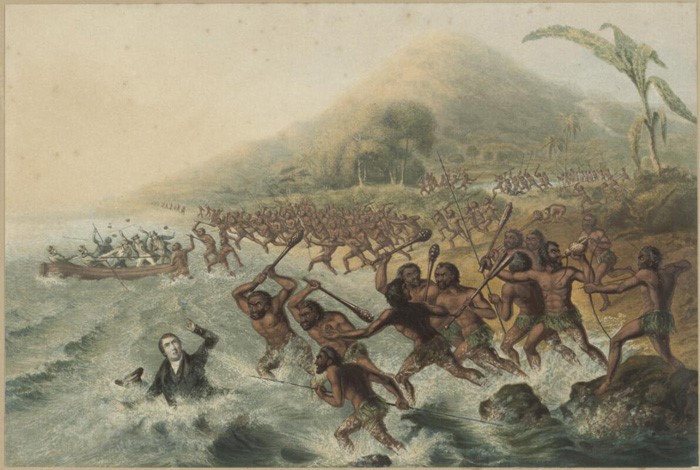
The missionary efforts of John Williams

The missionary efforts of John Williams (“Apostle of the South Seas”, born near London), an English missionary to the Pacific, is recalled with thanksgiving, as well as the historic themes of Christianity.  John Williams (of the London Missionary Society) was murdered (and cannibalized) in AD1839 on the beach at Erromango, in Vanuatu, after a fruitful season of faithful missionary outreach to South Pacific islanders.

gospeldays 2

[For more details on how Gospel Day is celebrated in the Cook Islands, see http://www.cookislands.org.uk/gospelday.html and, especially for diary-like details, see youtube clip:  https://www.youtube.com/watch?v=IN9S9m1pNes .]

gospeldays 3

The tradition continues, although the calendaring aspects of this multi-island tradition have changed, in recent times, due to a governmental effort to standardize the holiday (for the Sunday closest to the original Gospel Day, for each island), and to coordinate with  a new public holiday called “Ra O Te Ui Airki” (on July 6th), according to a news report (dated October 19, 2011) saying:

“From next year, October 26 will be the only public holiday to celebrate Gospel Day as all individual outer island gospel days, including that of Rarotonga, will be celebrated on the closest Sunday to the date of Christianity arriving to the respective islands. The change in the public holiday status of the island Gospel Days is due to a new public holiday on July 6 to be known as the Ra O Te Ui Ariki out of respect for the countrys aronga mana, its ui ariki, ui mataiapo, ui rantagira and taunga [whatever that means!].  Next year churches will have the opportunity once again put their Bible story telling skills on display again when the nuku is organised to commemorate the national Gospel Day.”   [Quoting from http://www.cookislandsnews.com/item/32483-no-nuku-on-gospel-day/32483-no-nuku-on-gospel-day ].

Regardless of whatever day the arrival of the Christian Gospel is celebrated in each of the Cook Islands (as well as the historic day when each one of us, individually, received the Gospel), every day should be a day of appreciating the precious Gospel truth  —  and a time of joy (Luke 10:20) in knowing that God cares to reach and to forgive us, in His Son, the Lord Jesus (Philippians 1:3-6), if we willingly receive Him (John 1:12).   ><>  JJSJ

gospeldays 4

*
Photo Credits:

[ Fair Use photo credit:  https://en.wikipedia.org/wiki/Atiu_swiftlet#/media/File:Kopeka_bird.jpg ]

[Fair Use credit: http://www.pacificresort.com/Images/WhatsOn/national-gospel-day-public-holiday-pacific-resort-rarotonga.jpeg]

[Fair Use image credit: http://www.cookislands.org.uk/image/gospeldays-CORRECTED.jpg]

*

More:

*

What Has Evolution Given To The World? – Creation Moments – Re-posted

WHAT HAS EVOLUTION GIVEN TO THE WORLD?

“I have seen all the works that are done under the sun; and, behold, all is vanity and vexation of spirit.” (Ecclesiastes 1:14)


We get lots of interesting letters and e-mails here at Creation Moments. Most of them are positive, but occasionally we hear from someone who disagrees with us. One such writer told us that there are, and I quote, “thousands upon thousands of articles written in medical journals about how evolution has been of enormous benefit in medicine.”

Magnetic resonance imaging scanner, invented by creationist Raymond Vahan Damadian.Want to hear how we responded? We began like this:

Interesting Things from Smiley CentralHow many of those thousands of articles have you read? We’ve read some, and the references to evolution appear to have been added without thought or reason. Evolution has had absolutely nothing to do with medicine. In fact, Bible-believing surgeons in the past learned from the Bible how to wash their hands under running water. Evolution had nothing to do with the development of antiseptics. Actually, that comes from Joseph Lister, a Bible-believing scientist. Evolution had nothing to do with X-rays or Magnetic Resonance Imaging. Actually, it was a Bible-believing Christian who invented the MRI.

Evolution has played no part in the science that has given us modern technology, medicine and so much more. Evolution didn’t even have anything to do with putting a man on the moon. In fact, it was a combination of applied scientists and engineers who accomplished this.

So what has evolution given mankind? Well, it has given us thousands of scientists who make their living writing about evolution and teaching it. Yes, it has created quite an industry for itself. But it has advanced science not one inch.

Prayer:
Heavenly Father, I pray that You will help millions to realize that Darwin is an emperor with no clothes. Reveal to them that they have been foolish for believing that there’s any truth in evolution. Amen.
_
Notes:
Magnetic resonance imaging scanner, invented by creationist Raymond Vahan Damadian. Courtesy of Jan Ainali. (CC BY 3.0)
©Creation Moments 2015
_
Lee’s Addition:

Have you not known? Have you not heard? The everlasting God, the LORD, The Creator of the ends of the earth, Neither faints nor is weary. His understanding is unsearchable. (Isaiah 40:28 NKJV)

Birds of the Bible – Foundation #3 Updated

Mourning Dove (Zenaida macroura) by Quy Tran

Mourning Dove (Zenaida macroura) by Quy Tran

We will continue on with the Birds of the Bible – Foundation series.

If you have not read the previous blogs:
Foundation #1 Updated
Foundation #2 Updated

In the last blog the “Fall” of Adam and Eve was mentioned and because of that, the “Curse” is now on them and all of God’s creation. Death comes on the scene, mankind now has sinned and now each person is born as a sinner. The ground is cursed and thorns and thistle now appear.

By Genesis Chapter 6, God has had it with the sins of man.

And GOD saw that the wickedness of man was great in the earth, and that every imagination of the thoughts of his heart was only evil continually. And it repented the LORD that he had made man on the earth, and it grieved him at his heart. And the LORD said, I will destroy man whom I have created from the face of the earth; both man, and beast, and the creeping thing, and the fowls of the air; for it repenteth me that I have made them. (Genesis 6:5-7 KJV)

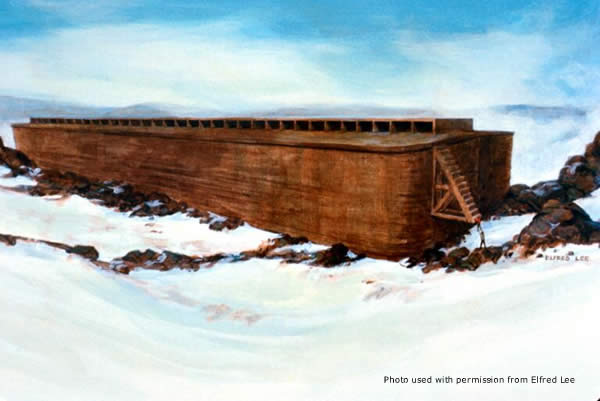
The Ark by Elfred Lee

The Ark by Elfred Lee

All is not lost because, “But Noah found grace in the eyes of the LORD.” (Genesis 6:8 KJV) Because of the grace found by Noah, the LORD gives him instructions about how to build an ark including the size, materials to use, who and what will be on board, and why the ark will be needed. God makes a covenant with Noah and tells him to come in with his wife and his sons and his son’s wives.

And of every living thing of all flesh, two of every sort shalt thou bring into the ark, to keep them alive with thee; they shall be male and female. Of fowls after their kind, and of cattle after their kind, of every creeping thing of the earth after his kind, two of every sort shall come unto thee, to keep them alive. (Genesis 6:19-20 KJV)

He was also to provide food for all of them. And Noah obeyed all that he was told. Noah spent over 100 years preparing the ark and trying to warn others of the coming judgment. There was plenty of room on the ark for more than the 8 people who boarded the ark. The others refused to repent.

Noah's Ark ©©Flickr elmada

Noah’s Ark ©©Flickr elmada

When we get to Chapter 7, the boarding of the ark takes place and the rain and flood begins. “And the LORD said unto Noah, Come thou and all thy house into the ark; for thee have I seen righteous before me in this generation. Of every clean beast thou shalt take to thee by sevens, the male and his female: and of beasts that are not clean by two, the male and his female. Of fowls also of the air by sevens, the male and the female; to keep seed alive upon the face of all the earth. For yet seven days, and I will cause it to rain upon the earth forty days and forty nights; and every living substance that I have made will I destroy from off the face of the earth. And Noah did according unto all that the LORD commanded him.” (Genesis 7:1-5)

Noah did not have to round up the animals, they came to him. Because not every animal we see today came on board but the main kinds (for instance the “bird kinds” may have had a “warbler kind” but not have black and white warblers, yellow-rumped warblers, hooded warbler, etc.), which ever ones they were, there was plenty of room for them. I have an idea that because the LORD sent the animals, birds, and critters, that their DNA’s were of the highest quality. (That is my opinion)

Dove in Israel

Doves in Israel

If you read the rest of Genesis 7, you will see that the global flood came and covered everything and only those who were in the ark survived, plus some of those that live in the water.

And all flesh died that moved upon the earth, both of fowl, and of cattle, and of beast, and of every creeping thing that creepeth upon the earth, and every man: All in whose nostrils was the breath of life, of all that was in the dry land, died. And every living substance was destroyed which was upon the face of the ground, both man, and cattle, and the creeping things, and the fowl of the heaven; and they were destroyed from the earth: and Noah only remained alive, and they that were with him in the ark. (Genesis 7:21-23)

In Foundation #4 we will find out about what the birds go through as they come off the ark and after.

Gospel Presentation

*

Sunday Inspiration – Mockingbirds and Thrashers

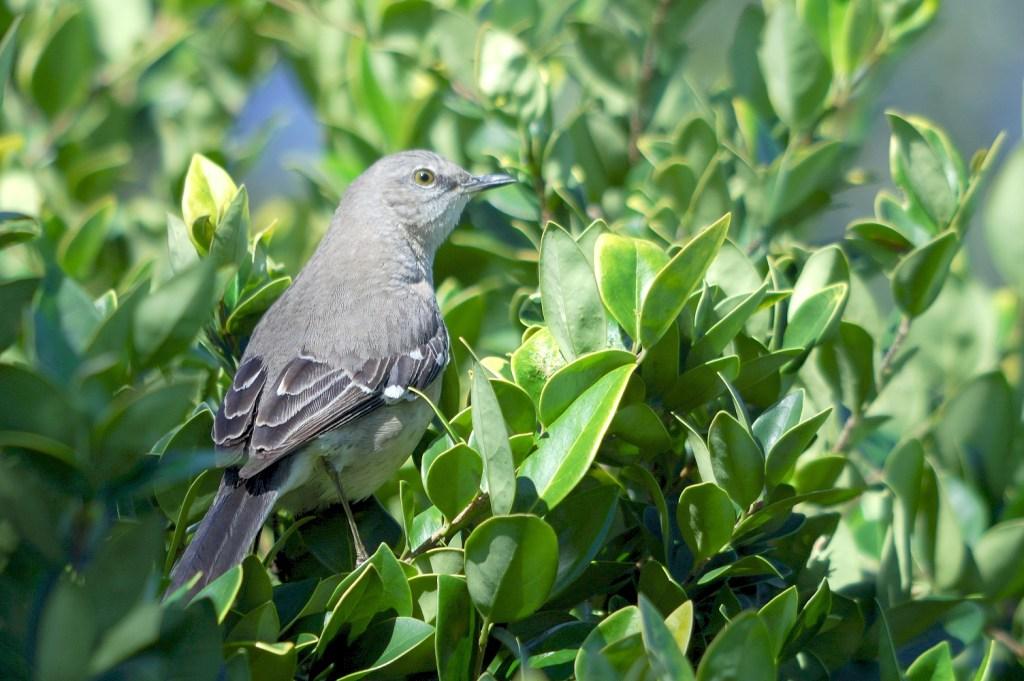
Northern Mockingbird (Mimus polyglottos) By Dan'sPix

Northern Mockingbird (Mimus polyglottos) By Dan (Dan’sPix)

“Do not curse the king, even in your thought; Do not curse the rich, even in your bedroom; For a bird of the air may carry your voice, And a bird in flight may tell the matter.” (Ecclesiastes 10:20 NKJV)

Mockingbirds have been one of my favorite birds. They used to nest in a bush outside our bedroom when we lived in Fort Lauderdale, FL. He used to sing, sing, and sing when they had their young. Only problem was sometimes he sang at 2 or 3 in the morning (outside our bedroom). Those are the times when you wished birds observed “quite hours.”

When the doors are shut in the streets, And the sound of grinding is low; When one rises up at the sound of a bird, And all the daughters of music are brought low. (Ecclesiastes 12:4 NKJV)

Brown Thrasher (Toxostoma rufum) By Dan'sPix

Brown Thrasher (Toxostoma rufum) By Dan’sPix

That said, let’s look at our bird family this week. The Mimidae are the New World family of passerine birds that includes thrashers, mockingbirds, tremblers, and the New World catbirds. As their name (Latin for “mimic”) suggests, these birds are notable for their vocalization, especially some species’ remarkable ability to mimic a wide variety of birds and other sounds heard outdoors.

Brown Trembler (Cinclocerthia ruficauda) ©WikiC

Brown Trembler (Cinclocerthia ruficauda) ©WikiC

There are 34 birds in this family which includes thrashers, mockingbirds, tremblers, and the New World catbirds. They tend towards dull grays and browns in their appearance, though a few are black or blue-gray, and many have red, yellow, or white irises. Many mimids have a rather thrush-like pattern: brown above, pale with dark streaks or spots below. They tend to have longer tails than thrushes (or the bigger wrens, which they also resemble) and longer bills that in many species curve downward.

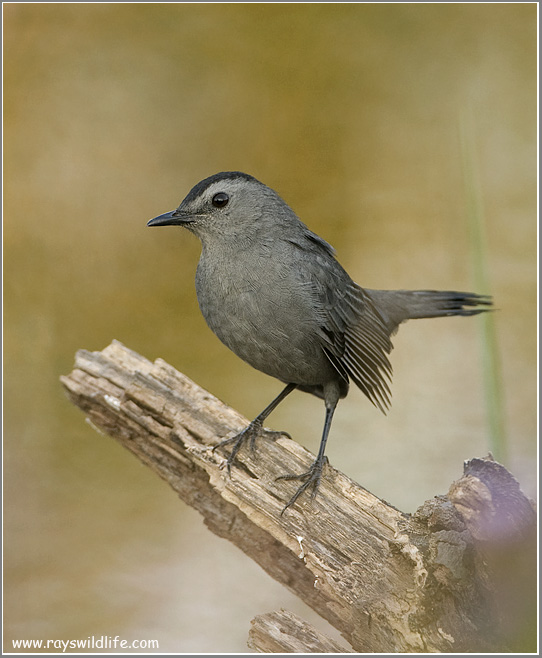
Grey Catbird (Dumetella carolinensis) by Raymond Barlow

Grey Catbird (Dumetella carolinensis) by Raymond Barlow

They have long, strong legs (for passerines) with which many species hop through undergrowth searching for arthropods and fruits to eat. Their habitat varies from forest undergrowth to scrub, high-altitude grasslands, and deserts. The two tremblers live in the atypical habitat of rain forests in the Lesser Antilles, and the Brown Trembler has the particularly atypical behavior of foraging while clinging to tree trunks. (With information from Wikipedia)

This slideshow requires JavaScript.

At that day ye shall know that I am in my Father, and ye in me, and I in you. He that hath my commandments, and keepeth them, he it is that loveth me: and he that loveth me shall be loved of my Father, and I will love him, and will manifest myself to him. (John 14:20-21 KJV)

“I Am Loved” ~ Faith Baptist Orchestra

More Sunday Inspirations

Mimidae – Mockingbirds, Thrashers

Sharing The Gospel

*

Enter Into His Gates With Thanksgiving

Enter into His gates with thanksgiving

James J. S. Johnson

Make a joyful noise unto the Lord, all ye lands.  Serve the Lord with gladness; come before His presence with singing.  Know ye that the Lord He is God; it is He Who hath made us, and not we ourselves; we are His people, and the sheep of His pasture.  Enter into His gates with thanksgiving, and into His courts with praise; be thankful unto Him, and bless His name.  For the Lord is good; His mercy is everlasting; and His truth endureth to all generations.  (Psalm 100)

Sometimes what you expect to find, is not what you find.  This is true of Grenada’s official bird, if you assume it matches Grenada’s official coat of arms.  This is also true if you imagine that the Thanksgiving holiday, as it is celebrated in Grenada, is like the Thanksgiving holiday as it is celebrated in America.
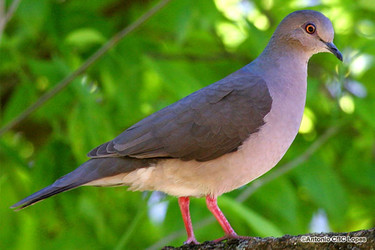
Fair Use credit: http://tolweb.org/tree/ToLimages/217681451_7e4971beab_o.250a.jpg

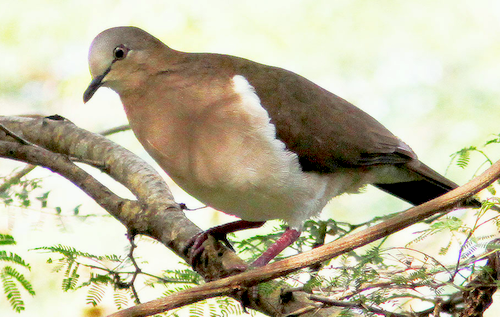
Grenada’s official coat of arms includes an Armadillo and a Grenada Dove (Leptotila wells  —  a/k/a Well’s dove or pea dove), positioned above the motto “Ever conscious of God, we aspire, build, and advance as one people.”   The Grenada Dove is endemic to Grenada – i.e., only on the island of Grenada is the Grenada Dove found in the wild, and even there it is critically “endangered” (i.e., close to extinction).   The dove’s coloring, as depicted on the Grenada coat of arms, however, does not closely match the actual coloring of the real bird.
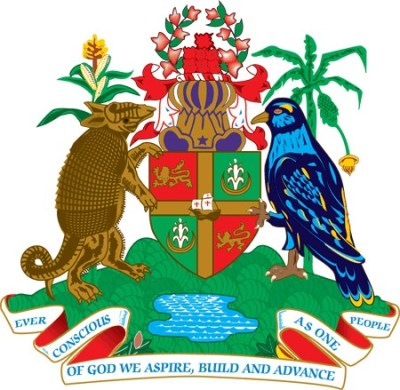
(Grenada coat of arms – public domain)

(Grenada coat of arms – public domain)

The dove’s coloring, as depicted on the Grenada coat of arms, however, does not closely match the actual coloring of the real bird.  The actual Grenada Dove has little blue to it (depending on the lighting used to view it)  –  rather, brown and buff dominate its overall coloring.  One wonders why, therefore, the heraldic depiction shows indigo-blue and azure, with yellow highlighting.  Consider the more realistic depictions before, as shown by photographic and postage images.

Fair use credit:  grenada national archiveshttps://grenadanationalarchives.wordpress.com/tag/leptotila-wellis/ (from the website of the National Archives of Grenada)

(Grenada postage stamp issued in February of AD1974 – public domain)

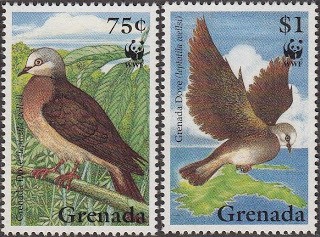
Consider also these special World Wildlife Fund-logo Grenada postage stamps,  showing Grenada Doves.
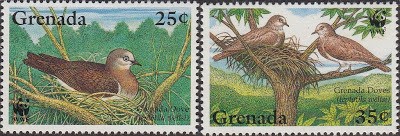
Grenada stamps 1

Grenada stamps 2

(Grenda postage stamps issued in January AD1995 – public domain)

The lesson here, apparently, is that heraldic coat-of-arms depictions of birds can (sometimes) be quite unrealistic – or else the artist might be depicting the wrong bird!

But Grenada’s coat of arms is not the only surprise in its national symbols.

Consider now the holiday we call “Thanksgiving”.

In the United States of America, for a contrasting example, the holiday of “Thanksgiving” (celebrated on the fourth Thursday in November) commemorates the gratitude of Plymouth Pilgrims, as pioneer survivors, who thanked God at harvest time in AD1621, for His providence — see “Strangers and Pilgrims (and the American Turkey)”, posted at https://leesbird.com/2014/11/25/strangers-and-pilgrims/ .  The Pilgrims’ survival and early successes, due to God’s providence, are also celebrated in the Netherlands, in Leiden, to commemorate how the Pilgrims lived in Holland during AD1609-AD1620.  A special Thanksgiving worship service is conducted, there, on the morning of America’s Thanksgiving, in Pieterskerk [“Peter’s church”], a Gothic church that was originally Roman Catholic (from its architectural beginning in AD1390), yet became Protestant during the Dutch Reformation, and became the burial site for John Robinson, pastor of the Pilgrims prior to their migratory journey to America.

Canadians observe a similar holiday, called l’Action de grâce in French, on the second Monday in October.

Norfolk Island, an external territory of Australia, celebrates Thanksgiving on the last Wednesday of November, so that Norfolk Island’s celebration of Thanksgiving occcurs either the day before, or six days after, the day when Americans celebrate Thanksgiving.

Saint Lucia, an island nation on the eastern edge of the Caribbean Sea, celebrates Thanksgiving on the first Monday in October.

Christians in Germany have a similar harvest-thanksgiving holiday, Erntedankfest, in early October, at about the same time that its Bavarians are celebrating Oktoberfest.

Thanksgiving is supposed to be focused on thanking God —  even the name of the holiday suggests as much.  However, although gratitude to God  –-  for harvest blessings  —  was the original reason for most harvest festival-oriented “thanksgiving” holidays, many Thanksgiving traditions have forgotten the historic importance of thanking God for His caring providences, by focusing more on distractive parades (e.g., Macy’s, IKEA’s, McDonald’s), football games, and feasting  —  with such festive celebrations discounted in slang as “Turkey Day”. (British Laird Bill Cooper was quite disappointed to learn of this trivialized secularization of what was originally a holy day/holiday.)

But how is Thanksgiving celebrated in Grenada, and why ?

First, consider where Grenada is located – Grenada is an island nation situated slightly east of South America, north of Venezuela.  Politically speaking, the nation of Grenada actually includes the main island (called “Grenada”) plus a few smaller islands, some but not all of “the Grenadines”, which are situated north of the Martinique Channel – with several of the other Grenadine islands (located south of the Martinique Channel) jurisdictionally belonging to the Caribbean nation called “St. Vincent and the Grenadines”.
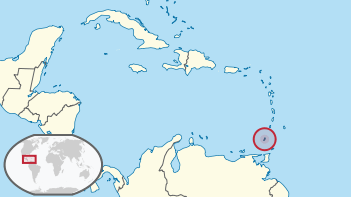
grenada map

In AD1498 the main island of Grenada was visited by Christopher Columbus, who named it “Concepcion”.

Grenada was later visited by Britons, then French; it was eventually settled by French colonists. Later, as part of the Treaty of Paris (in AD1763), Grenada became a British colony.  Grenada shed its colonial status, however, in AD1974, as it then became officially independent of the United Kingdom, although it remained an affiliate of the British Commonwealth.

So far so good, it seemed, until AD1983, when a Communist military takeover occurred on the island, led by General Hudson Austin (who was politically backed by Cuba, and aided by Cuban soldiers), actually seized control from a prior Communist takeover (i.e., one Communist regime killed off the leadership of a prior Communist dictatorship).  American students were put in jeopardy so President Ronald Reagan authorized a military rescue operation, which included defeating the “New Jewel Movement” (i.e., the second Communist dictatorship).

Thus, beginning on October 25th of AD1983, the “New Jewel Movement” Communists, who had seized the country, were soon opposed by a coalition of rescue forces, comprised of the United States and several Caribbean allies (from six Caribbean nations, including Jamaica and Barbados), in a complicated military effort called “Operation Urgent Fury” – which included U.S. Army Rangers, U.S. Marines, Delta Force, 82nd Airborne paratroopers, and U.S. Navy SEALs.  Because the rescue operation was so successful – and peace was restored to Grenada (with the Cuban soldiers being expelled) a holiday of gratitude was established – October 25th became Thanksgiving Day for Grenada.

Operation Urgent Fury photograph

Operation Urgent Fury photograph (public domain, AD1983) M102 howitzers (320th Field Artillery Regiment) firing on Grenada island.

Bottom line:   we all  –  whether Americans or Grenadians or anyone else for whom Christ died  —  have a lot to be thankful for, on whatever day that we celebrate Thanksgiving (and on every other day of the year!).

In accord with Psalm 100 we should, daily, “enter into His gates with thanksgiving, and into His courts with praise; be thankful unto Him, and bless His name”.


Birds of the Bible – Foundation #2 Updated

We will continue with the Foundation from the Word of God (the Bible) about the creation of birds.

If you have not read “Birds of the Bible – Foundation #1 Updated Click Here

By the end of Genesis Chapter 1 the birds (fowls of the air):

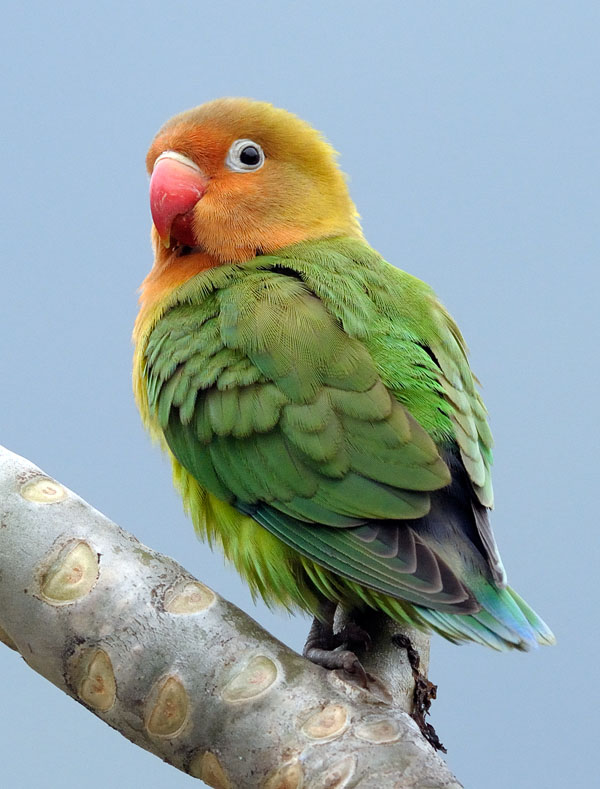
Fischers Lovebird by Phil Kwong

Fischers Lovebird by Phil Kwong

  • Created by the Lord on Day 5
  • Each according to its kind
  • Told to multiply and fill the earth
  • Were given every green herb for food (vegetarians)
  • Placed under the dominion of man
  • “God saw everything that He had made, and indeed it was very good.”

In Chapter 2, the birds are named by Adam. (v 19-20)

At this point, we know that the birds were at their best, they were eating fruits, seeds, herbs and not each other.  The birds had been named according to their kinds by Adam, who was created on Day 6. Their colors and features were at their grandest showing the Glory of God’s wisdom and omnipotence. They must have been fantastic to behold.

BUT WE COME TO GENESIS CHAPTER 3

When the serpent tempted Eve and caused her to question the Word of God, she not only questioned, but added to the Word of God.

Now the serpent was more subtle than any beast of the field which the LORD God had made. And he said unto the woman, Yea, hath God said, Ye shall not eat of every tree of the garden? And the woman said unto the serpent, We may eat of the fruit of the trees of the garden: But of the fruit of the tree which is in the midst of the garden, God hath said, Ye shall not eat of it, neither shall ye touch it, lest ye die. (Genesis 3:1-3 KJV

Most of you know the rest of what happened:

  • Eve ate of the tree of the knowledge of good and evil and gave Adam some also.
  • They were caught and tried to pass the blame.
  • The serpent was cursed. Adam and Eve become sinners and pass sin on to their offspring (us).
  • All God’s creation was cursed (Genesis 3:15-19)
  • Death (spiritual and physical) is now present, which had not been before.
  • Because of Adam’s sin, an animal had to die to make “coats of skins, and clothed them”, “God clothes them with a garment which covers their nakedness, a garment which had its origin in death (the death of another), which had come in, but which hid the effects of the sin that had introduced it.” (Darby’s Synopsis)
  • Sacrifices of the blood of animals and birds for man’s sin is begun. Not until the Lord Jesus Christ became the perfect sacrifice (Hebrews 9:12-14) did the need for those sacrifices end.

For God so loved the world, that he gave his only begotten Son, that whosoever believeth in him should not perish, but have everlasting life. For God sent not his Son into the world to condemn the world; but that the world through him might be saved. He that believeth on him is not condemned: but he that believeth not is condemned already, because he hath not believed in the name of the only begotten Son of God. And this is the condemnation, that light is come into the world, and men loved darkness rather than light, because their deeds were evil. For every one that doeth evil hateth the light, neither cometh to the light, lest his deeds should be reproved. But he that doeth truth cometh to the light, that his deeds may be made manifest, that they are wrought in God. (John 3:16-21)

Somewhere between the Fall of Adam and Eve and the cursing of them and all of creation, the birds, animals,  earth, man, etc. all begin to have changes in their behavior from God’s proclaiming that all was “very good.” By the time of the Flood (Foundation #3), that, “very good” is no longer true.

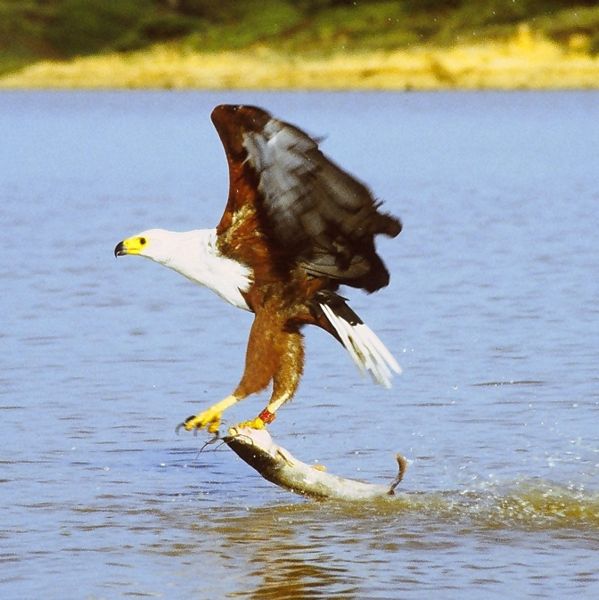
African Fish Eagle (Haliaeetus vocifer) ©WikiC

African Fish Eagle (Haliaeetus vocifer) ©WikiC

Several very interesting articles:

Different Kinds of Flesh, by Paul A. Bartz

Even Strange Animals Fit into Kinds, by Paul A. Bartz

Why Does God’s Creation Include Death & Suffering?, by Tommy Mitchell, January 31, 2008, From “The New Answers Book”, Answers in Genesis

How Did Defense/Attack Structures Come About?, by Andy McIntosh & Bodie Hodge, December 27, 2007, From “The New Answers Book”, Answers in Genesis

Why Did God Create Such Terrible Teeth? by Brian Thomas, M.S., Institute for Creation Research

Did Lions Roam the Garden of Eden? by Nathaniel T. Jeanson, Ph.D., Institute for Creation Research

*

*