Are You Entangled?

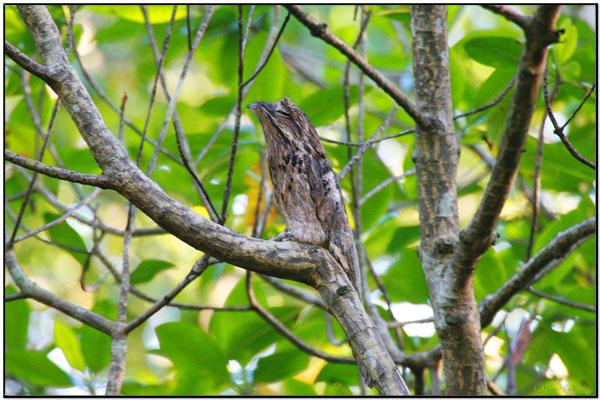
Common Potoo (Nyctibius griseus) ©Jullan Iondono

Common Potoo (Nyctibius griseus) ©Jullan Iondono

Luzon Bleeding-heart by Dan

Orni-Theology

I came across this photo again yesterday and it reminded me of a recent devotional, blog or sermon I heard. It had to do with how Christians become entangled with the world. This Common Potoo is so blended into its surroundings that it is hard to spot.

Do we as Christians so entangle ourselves with the world that we act no different from the unsaved?

The Lord warns us through His Word to not become re-entangled with the yoke of bondage.

Stand fast therefore in the liberty by which Christ has made us free, and do not be entangled again with a yoke of bondage. (Galatians 5:1 NKJV)

Common Potoo (Nyctibius griseus) ©Jullan Iondono

Common Potoo (Nyctibius griseus) ©Jullan Iondono

For if, after they have escaped the pollutions of the world through the knowledge of the Lord and Savior Jesus Christ, they are again entangled in them and overcome, the latter end is worse for them than the beginning. (2 Peter 2:20 NKJV)

Common Potoo (Nyctibius griseus) by Daves BirdingPix

Common Potoo (Nyctibius griseus) by Daves BirdingPix

For this reason it says, “Awake, sleeper, And arise from the dead, And Christ will shine on you.” Therefore be careful how you walk, not as unwise men but as wise, making the most of your time, because the days are evil. So then do not be foolish, but understand what the will of the Lord is. (Ephesians 5:14-17 NASB)

Common Potoo (Nyctibius griseus) by Dario Sanches

Common Potoo (Nyctibius griseus) by Dario Sanches

*
Nyctibiidae – Potoos

Orni-theology

Falling Plates

*


How Can a Mechanical ‘Cardinal’ Make ‘Selections’?

How Can a Mechanical ‘Cardinal’ Make ‘Selections’?

For we are made a spectacle unto the world, and to angels, and to men. (1st Corinthians 4:9b)

But what about birds: can they be spectators?

What about fake birds:  can they “select” when to sing?
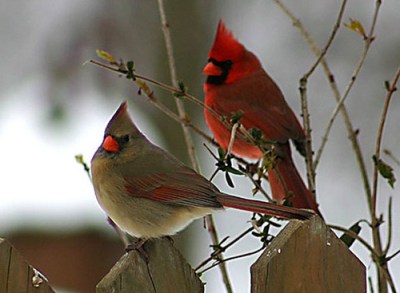
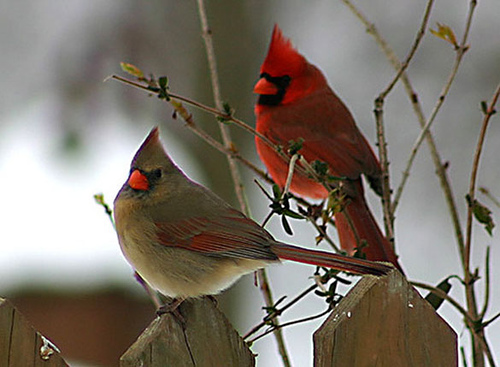
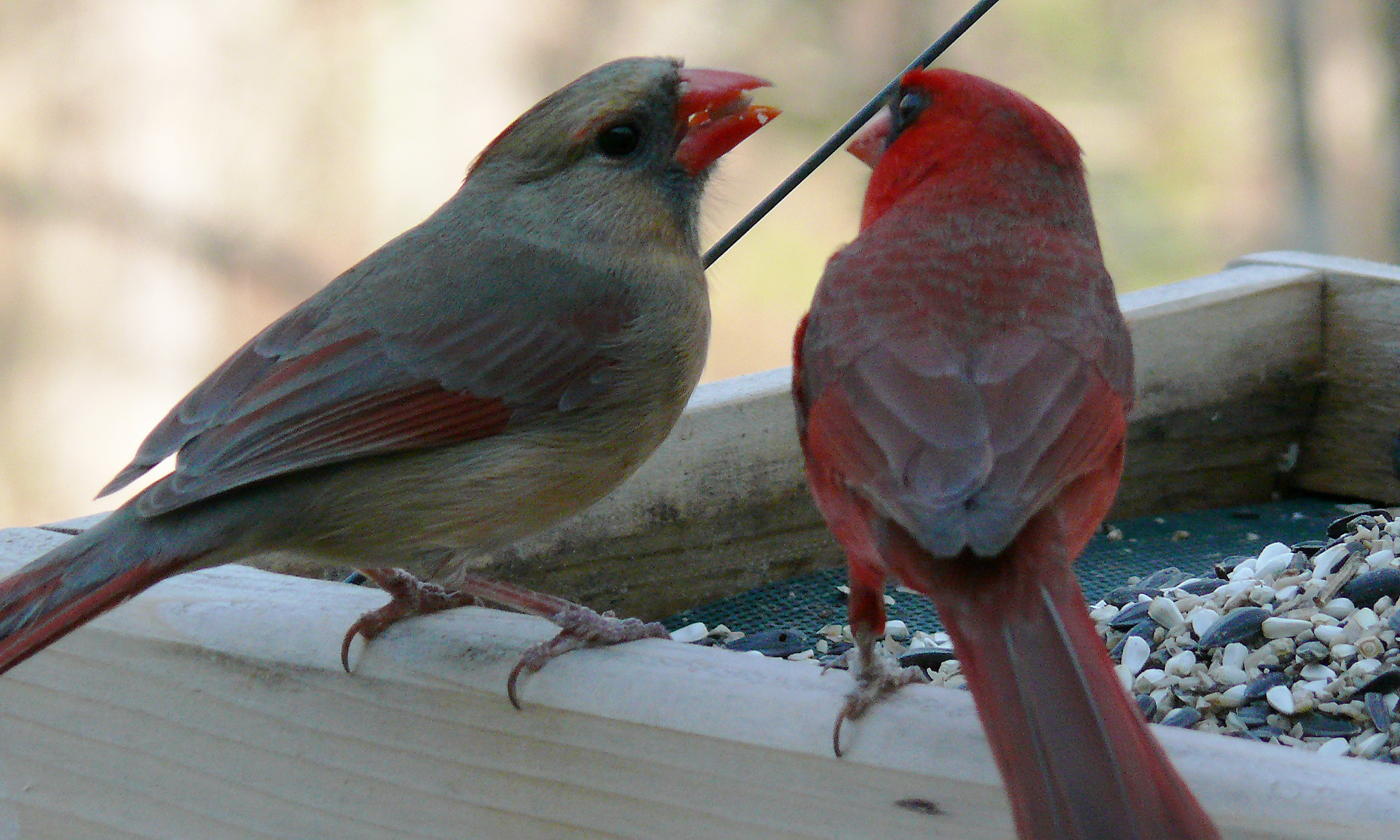
Northern Cardinal (Cardinalis cardinalis) Male and Female ©WikiC

Northern Cardinal (Cardinalis cardinalis) Male and Female ©WikiC

This unusual bird-watching report begins with a “no-brainer” observation that most birders already know well:  we humans like to watch birds!
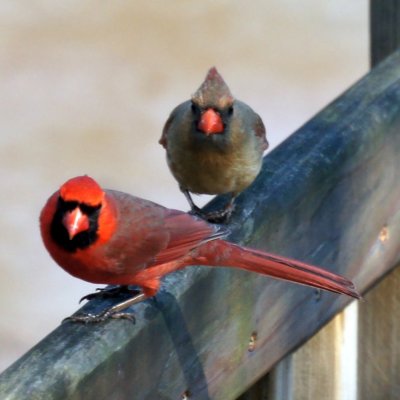
Northern Cardinal (Cardinalis cardinalis) Male and Female ©WikiC
Northern Cardinal (Cardinalis cardinalis) Male and Female ©WikiC

Luzon Bleeding-heart by Dan

Orni-Theology

In fact, it seems (based on a survey done by wildlife ecologists in Maryland) that we humans like to watch birds — moreso than any other kind of wildlife.  People love birds, and well they should!  Specifically, according to a U.S. Fish & Wildlife Service officer, birds are the main attraction when it comes to people viewing wildlife.  “The 2011 National Survey of Fishing, Hunting and Wildlife-Associated Recreation noted that 71.8 million American participated in some kind of wildlife-watching recreation, including observing, feeding or photographing [wildlife].  Birds attract the biggest following of all U.S. wildlife.  Approximately 46.7 million people observed birds around the house and on trips in 2001.  A large majority, 88 percent (41.3 million), observed wild birds around the home, while 38 percent (17.8 million) took trips away from home to observe wild birds.  Home birders averaged 119 days, while away-from-home birders averaged 13 days.”  (Quoting from Kathy Reshetiloff, “Services Provided by Migratory Birds Don’t Come Cheaply”, Chesapeake Bay Journal, 24(3):1 (May 2014).  As noted previously, birds often don’t notice when we are watching them – and that is when we see them acting true to character. [See https://leesbird.com/2014/10/06/busy-hummingbirds-oblivious-to-spectators/  ]

A plastic “toy” cardinal can make you wonder about motion sensitivity.  (More on that below.)
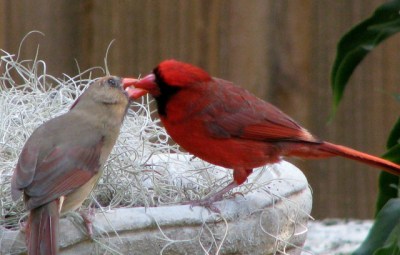
Northern Cardinal (Cardinalis cardinalis) Male and Female ©WikiC

Northern Cardinal (Cardinalis cardinalis) Male and Female ©WikiC

The Northern Cardinal (Cardinalis cardinalis), a/k/a “redbird” is a beauty to behold – and to hear.  Cardinals are so highly appreciated that seven states claim it as their official state bird:  Illinois, Indiana, Kentucky, North Carolina, Ohio, Virginia, and West Virginia!

Cardinals are songbirds that are easily seen (especially the males), due to their colored plumage contrasting with the green foliage of spring and summer, — or with the bright white of winter snow.
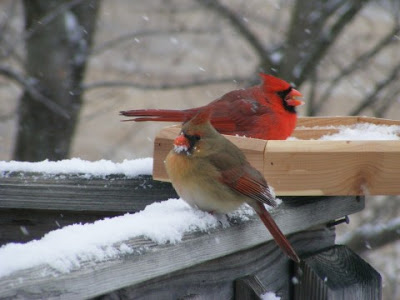
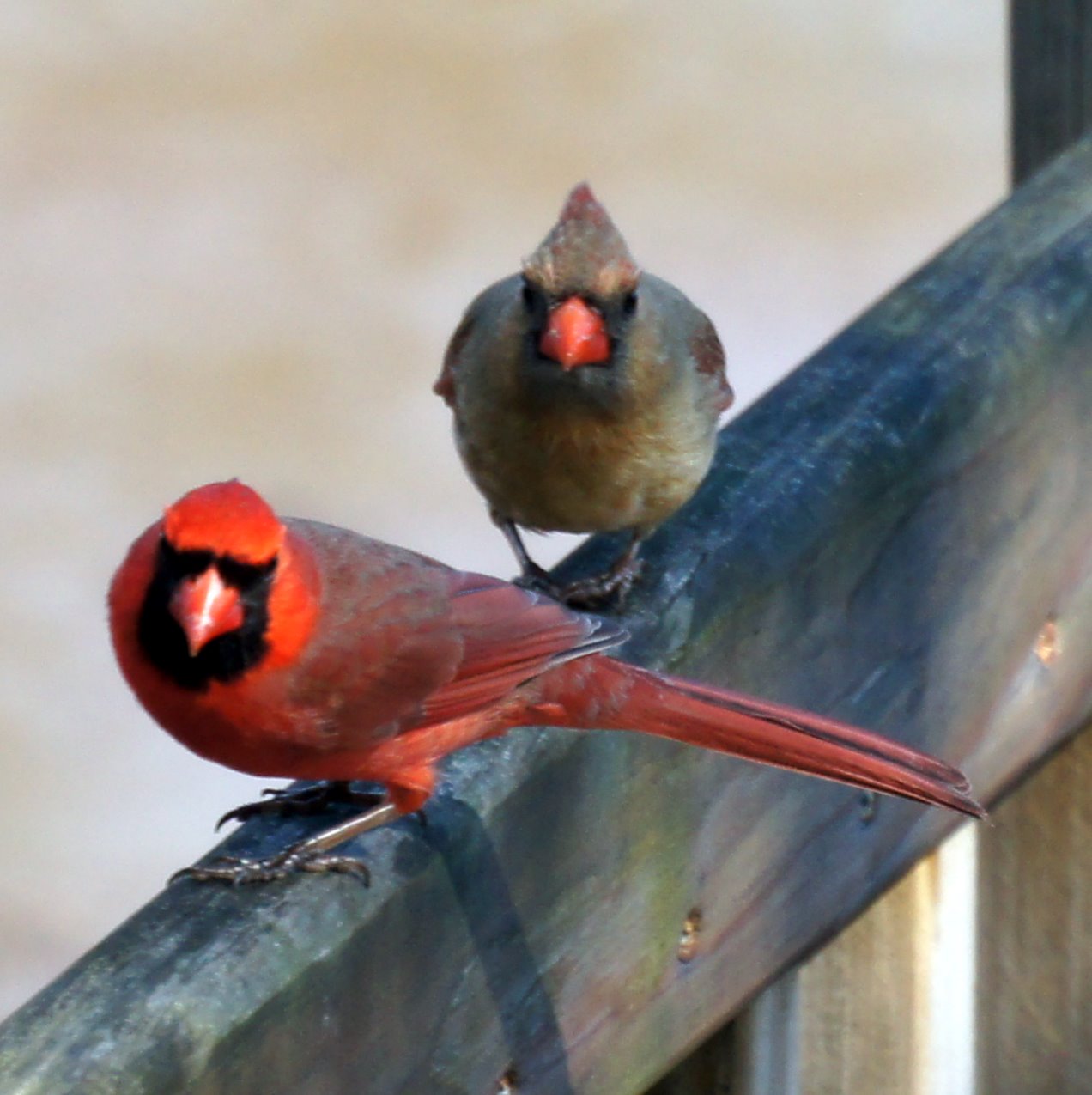
Northern Cardinal (Cardinalis cardinalis) Male and Female ©Zanawer

Northern Cardinal (Cardinalis cardinalis) Male and Female ©Zanawer

Surely a view of cardinals, eating safflower and sunflower seeds (or other cracked corn, peanuts, or even raisins!), will make you wonder at God’s creative genius and love of beauty, when He chose to make (see Genesis 1:21) the male and female of that beautiful songbird species!
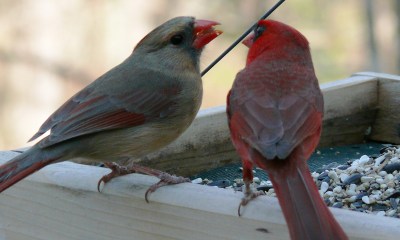
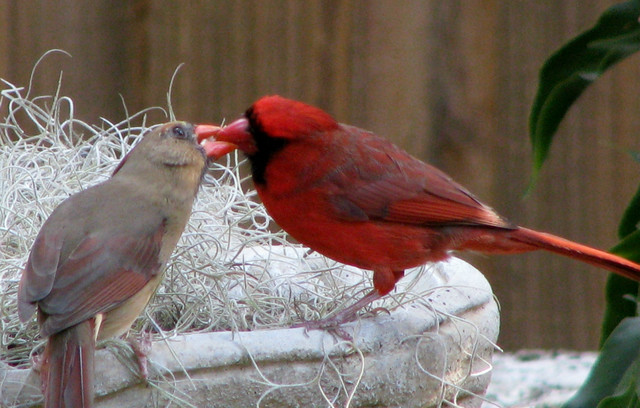
Northern Cardinal (Cardinalis cardinalis) Male and Female ©WikiC

Northern Cardinal (Cardinalis cardinalis) Male and Female ©WikiC

“The cardinal is a favorite bird of many people and it’s easy to see why.  The brilliant scarlet plumage of the male and the subtle shades of the female, combined with their clear melodic song, make them enjoyable to watch (and to listen to] in any season.”  [Quoting from Donald Stokes & Lillian Stokes, A Guide to Bird Behavior, Volume II (Little, Brown & Co., 1983), page 247.]

But, could it be that birds also like to watch humans?  And could it even be that mechanical “birds” appreciate humans who move around in front of them?
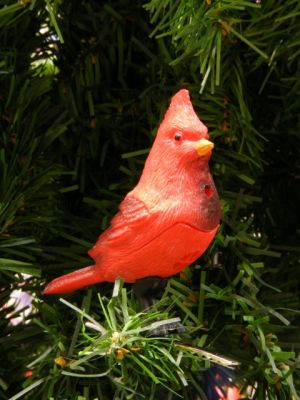
http://www.ebay.com/itm/like/251378388026?lpid=82&chn=ps

Plastic Cardinal from ebay.com

[ plastic cardinal image  from  http://www.ebay.com/itm/like/251378388026?lpid=82&chn=ps ]

Lately my wife have been having fun at my expenses, using a “toy” cardinal.  The cardinal was given to her by Marcia Webel (of Florida, wife of Chaplain Bob Webel).  It is a smaller than life-sized bird shaped and colored like a male cardinal, and it can make “vocal” noises like one, too.  But it is a “motion-activated” machine.  In other words, it is “selective” in when it “chooses” to sound off its recorded chirping sounds (which do sound like a real cardinal).  But it’s not really making decisions about when to chirp; it’s just a programmed machine that is designed with receptor features that sense motion nearby, and the inventor designed the machine to “trigger” its recorded sounds whenever its receptors “recognize” such motions.

So far, so good.

But here is the puzzle:  my wife moves in front of the “cardinal” and he chirps for her, just like the toy’s inventor designed him to do.  Then I dance (not in public, of course, — just in the privacy of our kitchen) in front of the “cardinal” and he is silent.  Silent!  So I dance again.  Silent, silent!  So I try a few Tae Kwon Do maneuvers (kicking, punching, whirling, bowing) – and he is still silent. If proving my body’s mobility was dependent upon the “cardinal” chirping I would be diagnosed as paralyzed or unconscious.

It seems like the “cardinal” is “selective” regarding which human he is “willing” to chirp for.  But that can’t be, you say, and you are right.

A lifeless machine – even one that looks like and sounds like a male cardinal – cannot really “select” anything.

The very idea that anything lifeless can “select” anyone or anything is silly, because the English word “select” necessarily includes the actions of thinking and choosing.  (Of course, the preprogrammed actions of the machine do reveal the thought and choices of the machine’s inventor.)

By now I’m sure you see the parallel to God our Creator, Who programmed all of creation to perform according to how He invented His creatures and the world that He put them in.  (He made the planning and programming choices needed to invent all the birds, and ourselves, and everything else  —   God did it, not “nature”.)

It is both silly and deceptive to use the phrase “natural selection” to imply that nonliving substances (like sunlight, wind, rain, snow, lightning bolts, etc.) are a kind of “natural selection” that orders “nature”.   In fact, the phrase “natural selection” is a science-fiction example of “bait-and-switch” [See “Bait and Switch”, at http://www.icr.org/article/bait-switch-trick-used-by-both-anglerfish ]

Yet that very misleading phrase (“natural selection”) is spun as a secular God-substitute, to explain the origin of species that inhabit our fine-tuned planet.  [See “DNA and RNA:  Providential Coding to ‘Revere’ God”, at http://www.icr.org/article/dna-rna-providential-coding-revere ]  Obviously, the mechanical “cardinal”, with its puzzling actions that “react” to some (but not all) motions, was invented by a clever inventor.  How much moreso is our Creator-God a clever inventor!  It is God Who selected how to make our bodies, to eat food (Acts 14:17) and to grow (Psalm 139) and to do so many other amazing things during our earthly lives.  And He also invented the real cardinals!  (And sometimes real cardinals watch me, so there!)

Maybe I don’t have the kind of “walk” that causes a mechanical cardinal to “sing”.  As we all know, you need to have the “walk”, not just the “talk”.

So who do you watch?  If you only sang a song if and when someone walked in front of you, but not if he (or she) merely talked, who would you sing for?

The best sermons are role-modeled – those who “walk” their “talk” are truly the best communicators!  When we consider the “talk” and “walk” of other Christians, as we do without consciously trying, we are evaluating which Christians we think are moving in step with God’s Word.  Some are.   Others aren’t.  (And some we can’t be too sure about – see 1st Timothy 5:24.)

Meanwhile, as we move through this world, from day to day, are our own lives worth watching?

Let your light so shine before men, that they may see your good works, and glorify your Father which is in heaven.  (Matthew 5:16)

*

Orni-Theology

James J. S. Johnson

Cardinalidae – Cardinals, Grosbeaks and allies

*

WHEN BEING “WRONG” IS RIGHT (Re-blog)

This just happened accorrding to Evolutionist   Wood Duck by Dan

This just happened according to evolution.
Wood Duck by Dan

“The fear of the LORD is the beginning of knowledge: but fools despise wisdom and instruction.” Proverbs 1:7

How smart are Americans when it comes to science? That’s what the National Science Foundation attempts to find out every two years. The results of their 2014 survey – which included more than 2,200 adults – gave Americans a rather poor grade. But are Americans really less knowledgeable about science or is the NSF’s survey biased against the many Bible-believing Christians in America?  Let’s take a look.

National Science Foundation building in Arlington, VA.While the survey included such questions as “Does the Earth go around the Sun or does the Sun go around the Earth?”, the survey also included questions like: “True or false: the universe began with a huge explosion.” And true or false: “Human beings, as we know them today, developed from earlier species of animals.” For people who believe what the Bible has to say, their answers were scored as “wrong” by the NSF survey.
Interestingly, more than 60 percent of Americans gave the so-called “wrong” answers to these questions. They simply do not accept the Big Bang theory despite what they were taught in school. And more than 50 percent of Americans disagreed with the NSF when it comes to evolution. According to the Atlantic Online, “This seems to indicate that many Americans are familiar with the theories of evolution and the Big Bang; they simply don’t believe they’re true.”

What the unbelieving world views as right is often wrong in light of what God tells us in the Bible. For Christians, the Bible is the ultimate authority – not what we’re told by Bible-denying evolutionists.

Prayer:
Heavenly Father, I pray that You will strengthen me whenever I am pressured by the world to choose wrong over right. Make me be willing to be thought a fool in the world’s eyes. In Jesus’ Name. Amen.

Notes:
http://www.theatlantic.com/education/archive/2014/02/what-americans-dont-know-about-science/283864/. “What Americans Don’t Know About Science”. Atlantic online. 2/15/14 Photo: National Science Foundation building in Arlington, VA.

©Creation Moments 2015

*

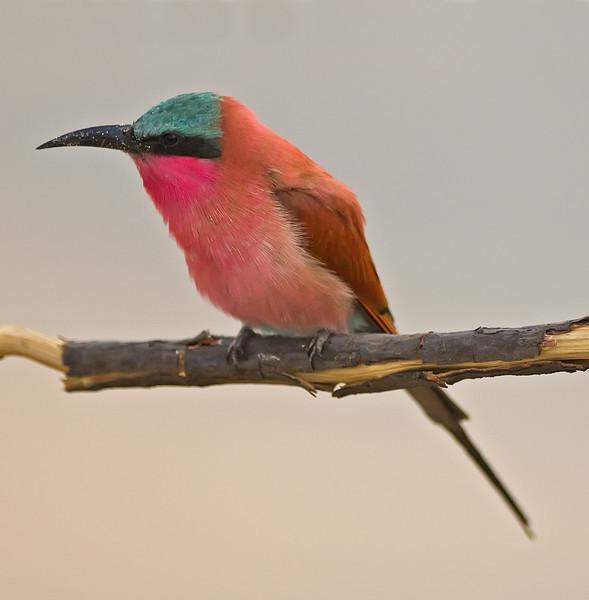
Southern Carmine Bee-eater (Merops nubicus) by Marc at Africaddict

There is a Creator! Southern Carmine Bee-eater (Merops nubicus) by Marc at Africaddict

Good News

*

Sunday Inspiration – There Is A Redeemer

For I know that my redeemer liveth, and that he shall stand at the latter day upon the earth: (Job 19:25 KJV)

Last week’s Sunday Inspiration – Give Thanks introduced many of you to the Cotinga Family and the Manakin Family. Now you can check out some more of the Lord’s created avian wonders that are in the Tityridae – Tityras, Becards (45), Menuridae – Lyrebirds (2), and Atrichornithidae – Scrubbirds (2).
Masked Tityra (Tityra semifasciata) ©WikiC

Masked Tityra (Tityra semifasciata) ©WikiC

Tityridae is a family of suboscine passerine birds found in forest and woodland in the Neotropics. The approximately 45 species in this family were formerly spread over the families Tyrannidae, Pipridae and Cotingidae (see Taxonomy). As yet, no widely accepted common name exists for the family, although tityras and allies and tityras, mourners and allies have been used. They are small to medium-sized birds. Under current classification, the family ranges in size from the buff-throated purpletuft, at 9.5 cm (3.75 in) and 10 grams (0.35 oz), to the masked tityra, at up to 22 cm (8.7 in) and 88 grams (3.1 oz). Most have relatively short tails and large heads.

Superb Lyrebird #2

Superb Lyrebird by Ian

A Lyrebird is either of two species of ground-dwelling Australian birds, that form the family Menuridae. They are most notable for their superb ability to mimic natural and artificial sounds from their environment. As well as their extraordinary mimicking ability, lyrebirds are notable because of the striking beauty of the male bird’s huge tail when it is fanned out in display; and also because of their courtship display. Lyrebirds have unique plumes of neutral-coloured tailfeathers and are among Australia’s best-known native birds.

The lyrebirds are large passerine birds, amongst the largest in the order. They are ground living birds with strong legs and feet and short rounded wings. They are generally poor fliers and rarely take to the air except for periods of downhill gliding. The superb lyrebird is the larger of the two species. Females are 74–84 cm long, and the males are a larger 80–98 cm long—making them the third-largest passerine bird after the thick-billed raven and the common raven. Albert’s lyrebird is slightly smaller at a maximum of 90 cm (male) and 84 cm (female) (around 30–35 inches) They have smaller, less spectacular lyrate feathers than the superb lyrebird, but are otherwise similar.

Rufous Scrubbird (Atrichornis rufescens) ©Kleran Palmer Flickr

Rufous Scrubbird (Atrichornis rufescens) ©Kleran Palmer Flickr

Scrubbirds are shy, secretive, ground-dwelling birds of the family Atrichornithidae. There are just two species. The rufous scrubbird is rare and very restricted in its range, and the noisy scrubbird is so rare that until 1961 it was thought to be extinct. Both are native to Australia. The scrubbird family is ancient and is understood to be most closely related to the lyrebirds, and probably also the bowerbirds and treecreepers.

Birds of both species are about the same size as a common starling and cryptically coloured in drab browns and blacks. They occupy dense undergrowth and are adept at scuttling mouse-like under cover to avoid notice. They run fast, but their flight is feeble.
The males’ calls, however, are powerful: ringing and metallic, with a ventriloquial quality, so loud as to be heard from a long distance in heavy scrub and almost painful at close range. Females build a domed nest close to the ground and take sole responsibility for raising the young.

Also recently, this site was updated to the I.O.C. Version 5.1.

This slideshow requires JavaScript.

Let the words of my mouth, and the meditation of my heart, be acceptable in thy sight, O LORD, my strength, and my redeemer. (Psalms 19:14 KJV)

Watch and listen to a piano solo, “There is a Redeemer,” played by Nell Reese (I think) at Faith Baptist Church last Sunday.

And they remembered that God was their rock, and the high God their redeemer. (Psalms 78:35 KJV)

Also:

*

Sunday Inspiration – Give Thanks

Spangled Cotinga (Cotinga cayana) ©WikiC CinZoo Photo by Greg Hume

Spangled Cotinga (Cotinga cayana) ©WikiC CinZoo Photo by Greg Hume

To the end that my glory may sing praise to thee, and not be silent. O LORD my God, I will give thanks unto thee for ever. (Psalms 30:12 KJV)

As we continue through the Passerine Families, today we arrive at Cotingidae – Cotingas Family which has 66 members and the Pipridae – Manakins Family has 52 species.

As you watch the birds you can listen to Mark Quijano sing “Give Thanks.” Mark is a newer follower of this blog and I am following his, now that we have been made aware of the each other’s blog. Our mutual draw is Our Lord Jesus Christ. I find the Lord’s Family enjoyable, wherever they may be. Mark lives in Saga City, Japan. Please check out his site “Travel Diary.”

If you have a large screen, you can do both at the same time, else, watch the birds as you listen to Mark. Or you can watch Mark sing and then start it again and listen as you watch the birds. Oh, the options I have given you today to enjoy Our Lord’s Creation and “Give Thanks” through music and birds.

This slideshow requires JavaScript.

“Give Thanks” ~ sung by Mark Quijano, his YouTube Channel

*

Sunday Inspirations

Cotingidae – Cotingas Family

Pipridae – Manakins Family

Travel Diary

Good News

*

Birds of the Bible – Gifts From Birds

Fish Crow (Corvus ossifragus) at Lake Morton By Dan'sPix

Fish Crow (Corvus ossifragus) at Lake Morton By Dan’sPix

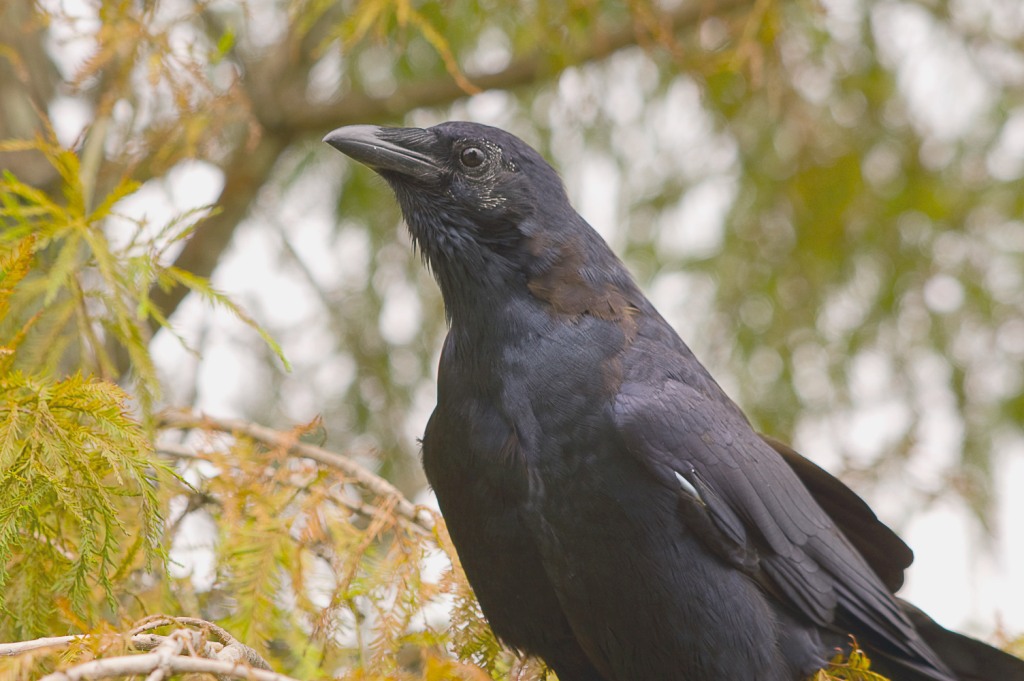
Birds of the Bible articles have been written about Raven’s before. James J S Johnson sent a link to a news story in the BBC News Magazine about Crows that is similar to the Ravens in the Bible.

First the story. A young girl, Gabi Mann, feeds Crows and they bring her “gifts.” (nutshell version). See The girl who gets gifts from birds.

It started when she got out of the car and dropped food from her lap. The Crows grabbed it and each time she came home, they watched for her. It went from that to Gabi and her mother feeding them on a regular basis. Then, the crows started leaving various items, that could fit in their mouths, as “gifts.” Here are some of those items.

Things brought by the crows

Things brought by the crows

*

Things brought by the crows

Things brought by the crows

Does the story bring to mind a similar situation, but with Ravens bringing something to someone?

In I Kings 17, we read about the prophet Elijah who was told by the LORD to get away and hide by the Brook Cherith.

And it will be that you shall drink from the brook, and I have commanded the ravens to feed you there.” So he went and did according to the word of the LORD, for he went and stayed by the Brook Cherith, which flows into the Jordan. The ravens brought him bread and meat in the morning, and bread and meat in the evening; and he drank from the brook. (1 Kings 17:4-6 NKJV)

Ravens and Crows are both in the same family, Corvidae – Crows, Jays, Ravens, which has 130 species presently. “They are considered the most intelligent of the birds, and among the most intelligent of all animals” (Corvidae-Wikipedia).

In the Bible, our passage in I Kings says that the ravens brought him food. Checking the different translations, all the translations, except two, call them Ravens. Those two call them Crows. The ABP+ uses G2876, which Strong says:

G2876

κόραξ
korax
kor’-ax
Perhaps from G2880; a crow (from its voracity): – raven.
Total KJV occurrences: 1

The other, ISV, says, “Crows would bring him bread and meat both in the morning and in the evening, and he would drink from the brook.”

Either way, the point is, the LORD used birds from a very intelligent avian family, that He Created, to feed his prophet. Critics like to find everything they can to disprove the Bible. Yet, the Lord gives us all kinds of reasons to believe his Word, if we just open our eyes.

Those birds could have brought bits of food as well as “trinkets.”

Because that which may be known of God is manifest in them; for God hath shewed it unto them. For the invisible things of him from the creation of the world are clearly seen, being understood by the things that are made, even his eternal power and Godhead; so that they are without excuse: (Romans 1:19-20 KJV)

Fan-tailed Raven (Corvus rhipidurus) ©WikiC

Fan-tailed Raven (Corvus rhipidurus) ©WikiC

*

The girl who gets gifts from birds.

Corvidae – Crows, Jays, Ravens

Birds of the Bible – Ravens

Raven – Wikipedia

Corvidae – Wikipedia

Wordless Birds

*


Seventh Anniversary

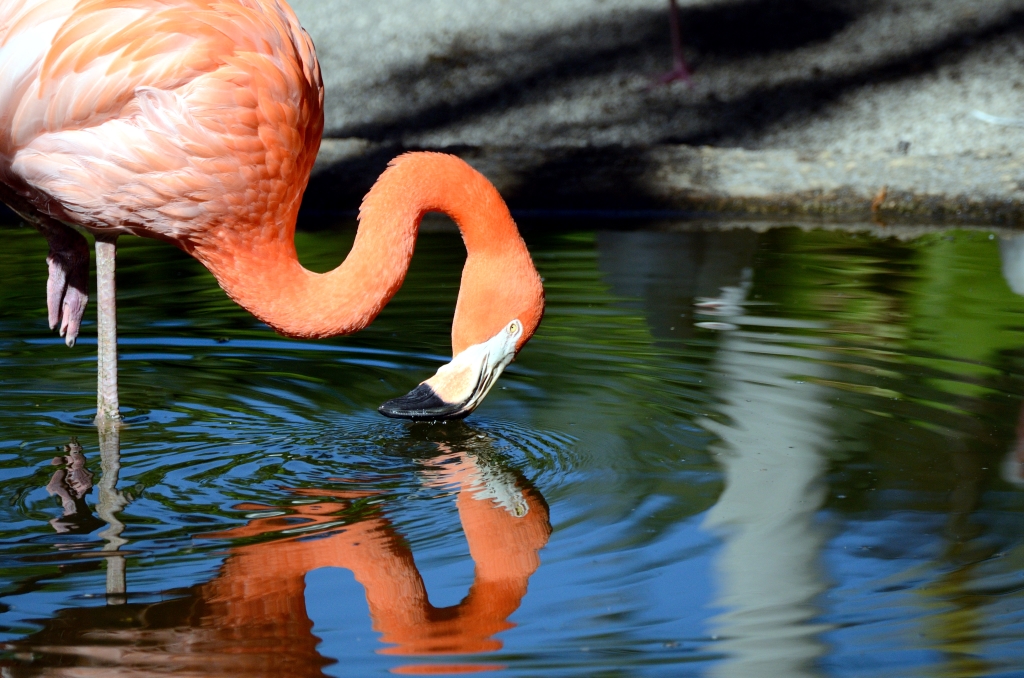
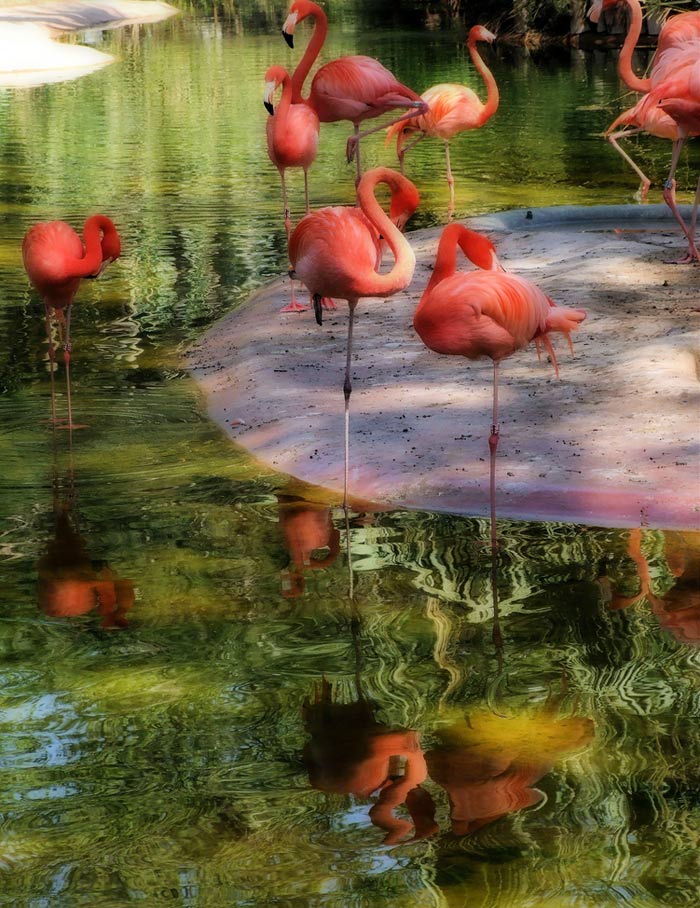
Flamingo by Dan' at Flamingo Gardens

Flamingo by Dan’ at Flamingo Gardens

Wow! Has it now been seven years since I started writing the Birds of the Bible articles? February 2008 is the original beginning month of the blog. It was started using Blogspot, but moved here to WordPress in July of that year. If you take a look at the articles below you will see how the Lord has been blessing over these years.

Today with almost 1.3 million visits (with WordPress), over 1,100 followers and 216 Flags of countries that you have visited from, I am amazed. Here is a quote from the 1st Anniversary blog:

Our pastor just reminded us of a quote by William Carey, an English Missionary to India:

Expect great things from God, attempt great things for God.

Great Blue Heron by Dan

I am not sure this was attempted as a “great thing,” but it was attempted to honor the Lord. That is a very great thing, and God has turned that attempt into a blog that has been visited over 10,000 times just since July. Many of those visits have come from around the world. Thank all of you for your visits.

Carey also said, “If I begin a thing I must go through with it!” This blog has been started and we trust we will continue to keep writing about God’s wonderful creation, especially His birds, and the joy of observing all God’s marvelous handiwork.

Because of this blog many you have become great friends that most we have never met personally, and you are from around the world, where Dan and I will never visit. Yet many of you will be sharing eternity with us and we will meet as we share the presence of Our Saviour. What a thought!

Thanks to the many writers that have added greatly to the blog; Ian, Dottie, Emma, Golden Eagle (Baron), James J S Johnson, Stephen, and others.

Thank you for your visits! Thank you for your friendships! Especially THANK YOU LORD!

I would like to use Paul’s words to express my feelings:

Grace to you and peace from God our Father and the Lord Jesus Christ. I thank my God upon every remembrance of you, always in every prayer of mine making request for you all with joy, for your fellowship in the gospel from the first day until now, being confident of this very thing, that He who has begun a good work in you will complete it until the day of Jesus Christ; (Philippians 1:2-6 NKJV)

Yes, I do pray for many of you even by name. I especially pray for those of you who do not know the peace of knowing my Savior and the Creator of these fantastic birds.

Some of the previous articles about the anniversaries:

*

Tickle Me Tuesday – For the Birds

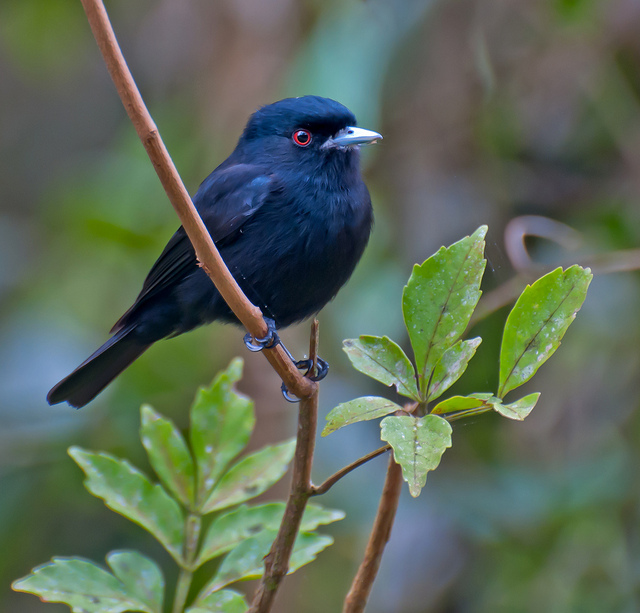
Blue-billed Black Tyrant (Knipolegus cyanirostris) by Dario Sanches

Blue-billed Black Tyrant (Knipolegus cyanirostris) by Dario Sanches

But the fruit of the Spirit is love, joy, peace, longsuffering, kindness, goodness, faithfulness, gentleness, self-control. Against such there is no law. (Galatians 5:22-23 NKJV)

I cannot help but post this video. Made aware of it several years ago. The “music was made for a school project. A Pixar video with audio created by David Redinha”

The verses that come to my mind have to do with being kind and not making fun of someone. This video of shows what might happen when both not being kind and making fun of someone appear at the same time. Enjoy!

Let all bitterness, and wrath, and anger, and clamour, and evil speaking, be put away from you, with all malice: And be ye kind one to another, tenderhearted, forgiving one another, even as God for Christ’s sake hath forgiven you. (Ephesians 4:31-32 KJV)

*

Tickle Me Tuesday – Bird of Paradise

Tickle Me Tuesday – Top Funny Bird Video

Tickle Me Tuesday,” Challenge by Sandra Connor

Wordless Birds

*


Sunday Inspiration – Flycatchers

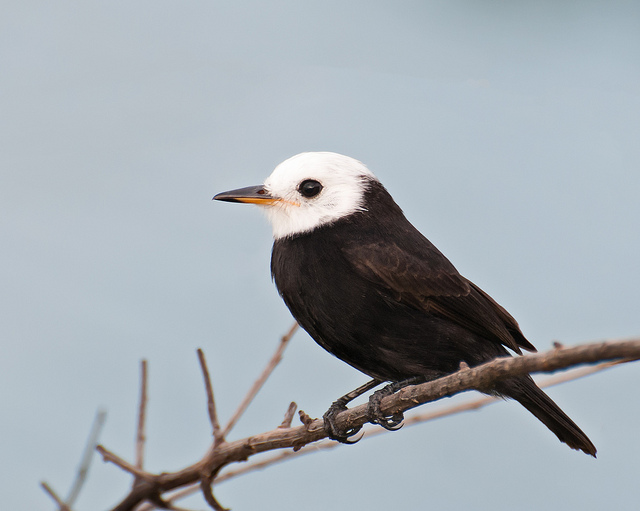
White-headed Marsh Tyrant (Arundinicola leucocephala) Male ©©Dario Sanches

White-headed Marsh Tyrant (Arundinicola leucocephala) Male ©©Dario Sanches

Where the birds build their nests, And the stork, whose home is the fir trees. (Psalms 104:17 NASB)

Last week we saw some of the Tyrant Flycatcher family. This time, with over 400 species, just this family of birds will be featured.

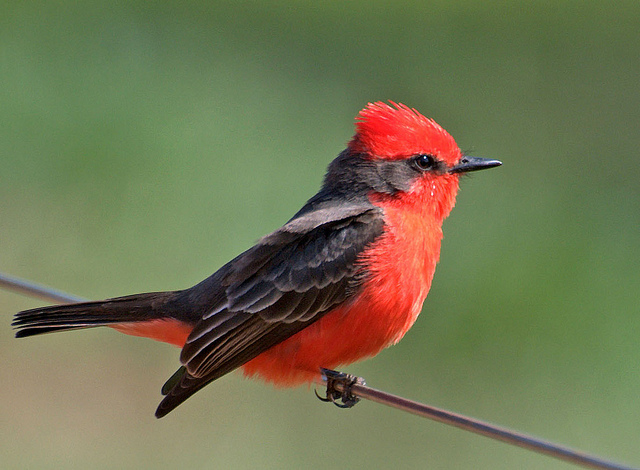
The tyrant flycatchers are birds which occur throughout North and South America. They are considered the largest family of birds, with more than 400 species. They are the most diverse avian family in every country in the Americas, except for the United States and Canada. As could be expected from a family this large, the members vary greatly in shape, patterns, size and colors. Most, but not all, species are rather plain, with various hues of brown, gray and white commonplace. Obvious exceptions include the bright red vermilion flycatcher, blue, black, white and yellow many-colored rush-tyrant and some species of tody-flycatchers or tyrants, which are often yellow, black, white and/or rufous.

Vermilion Flycatcher (Pyrocephalus rubinus) by Dario Sanches

Vermilion Flycatcher (Pyrocephalus rubinus) by Dario Sanches

The smallest family members are the closely related short-tailed pygmy tyrant and black-capped pygmy tyrant. These species reach a total length of 6.5–7 cm (2.5–2.8 in) and a weight of 4–5 grams. By length, they are the smallest passerines on earth, although some species of Old World warblers apparently rival them in their minuscule mean body masses if not in total length. The minuscule size and very short tail of the Myiornis pygmy tyrants often lend them a resemblance to a tiny ball or insect. The largest tyrant flycatcher is the great shrike-tyrant at 29 cm (11.5 in) and 99.2 grams (3.5 oz).

Please enjoy watching a slideshow of some more of the Lord’s neatly created birds as you listen our orchestra and then the choir sing.

This slideshow requires JavaScript.

*

Click to listen:

“Amazing Grace” – Orchestra and “I Love You, Written in Red” – Choir (Faith Baptist Church)

(Because there are so many birds there are two inspirations. More of this bird family were shown in Sunday Inspiration – Everlasting God)

*

Sunday Inspirations
Tyrannidae – Tyrant Flycatchers Family
Good News

*

Winter Willow Ptarmigan

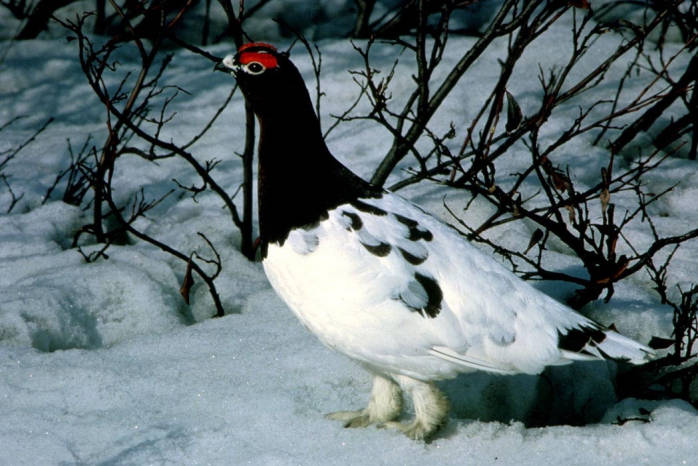
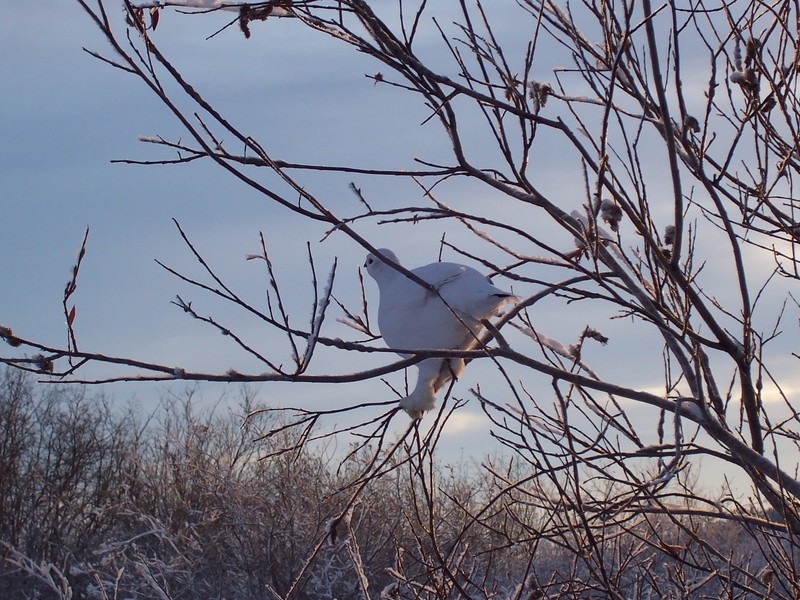
Willow Ptarmigan (Lagopus lagopus) ©USFWS

Willow Ptarmigan (Lagopus lagopus) ©USFWS

He gives snow like wool; He scatters the frost like ashes; (Psalms 147:16 NKJV)

Let them praise the name of the LORD, For He commanded and they were created. He also established them forever and ever; He made a decree which shall not pass away. Praise the LORD from the earth, You great sea creatures and all the depths; Fire and hail, snow and clouds; Stormy wind, fulfilling His word; (Psalms 148:5-8 NKJV)

Since so much of North America is having such a cold and snowy winter, thought that you might like watching a Willow Ptarmigan in its winter outfit.

Lesley the Bird Nerd produced this YouTube and thought you might enjoy watching how the Lord has prepared this bird to survive in winter.

We are going to drop down to freezing the for a few nights here in Central Florida, but nothing like what many of you are experiencing. Stay warm and enjoy the Lord’s Creations.

God thunders marvelously with His voice; He does great things which we cannot comprehend. For He says to the snow, ‘Fall on the earth’; Likewise to the gentle rain and the heavy rain of His strength. He seals the hand of every man, That all men may know His work. (Job 37:5-7 NKJV)

The willow ptarmigan (Lagopus lagopus) is a bird in the grouse subfamily Tetraoninae of the pheasant family Phasianidae. It is also known as the willow grouse and in the British Isles, where it was previously believed to be a separate species, as the red grouse. It is a sedentary species, breeding in birch and other forests and moorlands in northern Europe, the tundra of Scandinavia, Siberia, Alaska and northern Canada, in particular in the provinces of Newfoundland and Labrador. It is the state bird of Alaska. In the summer the birds are largely brown, with dappled plumage, but in the winter they are white with some black feathers in their tails (British populations do not adopt a winter plumage). Nesting takes place in the spring when clutches of four to ten eggs are laid in a scrape on the ground. The chicks are precocial and soon leave the nest and while they are young, both parents play a part in caring for them. The chicks eat insects and young plant growth while the adults are completely herbivorous, eating leaves, flowers, buds, seeds and berries during the summer and largely subsisting on the buds and twigs of willow and other dwarf shrubs and trees during the winter. (Wikipedia)

*

Willow Ptarmigan (Lagopus lagopus)  Winter ©WikiC

Willow Ptarmigan (Lagopus lagopus) Winter ©WikiC

Willow Ptarmigan – State of Alaska with videos

Willow Ptarmigan – All About Birds

Willow Ptarmigan – Wikipedia

Willow Ptarmigan – Kidzone

Phasianidae – Pheasants, Fowl & Allies Family

Wordless Birds

*

Color That Man Did Not (Could Not) Create

Wood Duck and Mandarin Duck

COLOR THAT MAN DID NOT (COULD NOT) CREATE… ONLY THE MASTER CREATOR COULD

Received this in an email and thought I would share it. Not sure of the source of the photos, but absolutely know who the Master Creator was.

So God created great sea creatures and every living thing that moves, with which the waters abounded, according to their kind, and every winged bird according to its kind. And God saw that it was good. And God blessed them, saying, “Be fruitful and multiply, and fill the waters in the seas, and let birds multiply on the earth.” So the evening and the morning were the fifth day. (Genesis 1:21-23 NKJV)

Click any photo to start the Gallery

Who Paints The Leaves?

*

Sunday Inspiration – Everlasting God

Before the mountains were brought forth, or ever thou hadst formed the earth and the world, even from everlasting to everlasting, thou art God. (Psalms 90:2 KJV)

Hast thou not known? hast thou not heard, that the everlasting God, the LORD, the Creator of the ends of the earth, fainteth not, neither is weary? there is no searching of his understanding. (Isaiah 40:28 KJV)

Since I have been going down the list of Passerines, might as well keep going. Today’s birds are from Gnateaters (Conopophagidae), Tapaculos (Rhinocryptidae),  Crescentchests (Melanopareiidae) and part of the Tyrant Flycatchers (Tyrannidae). There are over 400 members in the last family, so will add more later.

As you can see, most of these are fairly small birds and rather non-descript. Their Creator has given them a nice look, but has them protected by letting them blend in with their surroundings. Another show of love for His creation.

Rufous Gnateater (Conopophaga lineata) ©WikiC

Rufous Gnateater (Conopophaga lineata) ©WikiC

The gnateaters are a bird family, consisting of ten small passerine species in two genera, which occur in South and Central America. The members of this family are very closely related to the antbirds and less closely to the antpittas and tapaculos. Due to their remote and dim habitat, gnateaters are a little-studied and poorly known family of birds. They are round, short-tailed, and long-legged birds, about 12–19 cm (5–7½ inches) in length. They are quite upright when standing. Most Conopophaga species have a white tuft behind the eye.

Ocellated Tapaculo (Acropternis orthonyx) ©WikiC

Ocellated Tapaculo (Acropternis orthonyx) ©WikiC

The tapaculos (pronounced ta-pa-COO-lo) are found mainly in South America and with the highest diversity in the Andean regions. Three species (Chocó, Tacarcuna, and the silvery-fronted) are found in southern Central America. Tapaculos are small to medium-sized birds, with a total length ranging from 10–24 cm (4–9½ in). These are terrestrial species that fly only poorly on their short wings. They have strong legs, well-suited to their habitat of grassland or forest undergrowth. The tail is cocked and pointed towards the head, and the name tapaculo possibly derives from Spanish for “cover your behind”.

Collared Crescentchest (Melanopareia torquata) ©Arthur Grosset

Collared Crescentchest (Melanopareia torquata) ©Arthur Grosset

The crescentchests are birds from South America. The crescentchests range in length from 14 to 16 cm (5.5–6.3 in), in weight from 16 to 23 g (0.56–0.81 oz) and have relatively long tails compared to the tapaculos. The plumage is striking with a distinctive band across the chest that gives the group their name.

Scale-crested Pygmy Tyrant (Lophotriccus pileatus) by Michael Woodruff

Scale-crested Pygmy Tyrant (Lophotriccus pileatus) by Michael Woodruff

The tyrant flycatchers are birds which occur throughout North and South America. They are considered the largest family of birds, with more than 400 species. They are the most diverse avian family in every country in the Americas, except for the United States and Canada. As could be expected from a family this large, the members vary greatly in shape, patterns, size and colors. Most, but not all, species are rather plain, with various hues of brown, gray and white commonplace. Obvious exceptions include the bright red vermilion flycatcher, blue, black, white and yellow many-colored rush-tyrant and some species of tody-flycatchers or tyrants, which are often yellow, black, white and/or rufous.

The smallest family members are the closely related short-tailed pygmy tyrant and black-capped pygmy tyrant. These species reach a total length of 6.5–7 cm (2.5–2.8 in) and a weight of 4–5 grams. By length, they are the smallest passerines on earth, although some species of Old World warblers apparently rival them in their minuscule mean body masses if not in total length. The minuscule size and very short tail of the Myiornis pygmy tyrants often lend them a resemblance to a tiny ball or insect. The largest tyrant flycatcher is the great shrike-tyrant at 29 cm (11.5 in) and 99.2 grams (3.5 oz).

This slideshow requires JavaScript.

Now to him that is of power to stablish you according to my gospel, and the preaching of Jesus Christ, according to the revelation of the mystery, which was kept secret since the world began, But now is made manifest, and by the scriptures of the prophets, according to the commandment of the everlasting God, made known to all nations for the obedience of faith: To God only wise, be glory through Jesus Christ for ever. Amen. Written to the Romans from Corinthus, and sent by Phebe servant of the church at Cenchrea. (Romans 16:25-27 KJV)

Click to listen:

“Everlasting God” – Pastor Jerry, Reagan Osborne, Caleb & Jessie Padgett

This was another song presented the day Pastor Jerry Smith retired from our Music Ministry at Faith Baptist Church.

*

Gnateaters (Conopophagidae)

Tapaculos (Rhinocryptidae)

Crescentchests (Melanopareiidae)

Tyrant Flycatchers (Tyrannidae)

Sharing the Gospel

*