Interesting Things – A Few Questions For Evolutionists

Interesting Things from Smiley Central

“He taketh the wise in their own craftiness: and the counsel of the froward is carried headlong.” Job 5:13

Why do giraffes have long necks or kangaroos have pouches? Evolutionists answer that natural selection has favored the development of certain characteristics while discouraging and eliminating other features. But if this is what happened, we who believe in creation have a few questions.

Giraffe skeleton on exhibit at The Museum of Osteology, Oklahoma City, Oklahoma. (PD)

Giraffe skeleton on exhibit at The Museum of Osteology, Oklahoma City, Oklahoma. (PD)

Giraffes have long necks, say evolutionists, because conditions favored the development of long-necked creatures that could feed on higher parts of the tree. But then many other grazing animals live side by side with giraffes and manage to get by. The horse, according to evolutionary explanations, has crowned teeth in order to survive in its environment. And yet the cow, with its uncrowned teeth, survives quite well in the same environment.

Some evolutionists say that plants developed berries so that their seeds, inside the berries, would be carried far and wide by hungry birds, thus ensuring the plants’ survival. Why then did some plants develop poisonous berries? And if the maternal instinct evolved to preserve the next generation, why do creatures like the stickleback fish, seahorse, and midwife toad, to name a few, leave total care of the young to the male?

The truth is that natural selection does not offer a clear and consistent explanation for the living world. The diversity of the created world does not bear witness to evolutionary principles, but to the artistry of our Creator God.

Prayer:

Dear Father, You confound those who are wise in their own hearts and give wisdom and clear vision to those Whom You have made pure through the blood of Christ. Let the wisdom and vision I seek be that which You provide. In Jesus’ Name. Amen.

Notes:
Photo: Giraffe skeleton on exhibit at The Museum of Osteology, Oklahoma City, Oklahoma. (PD)
©Creation Moments 2014

Listen to this article from Creation Moments

*

Fantastic Week-end

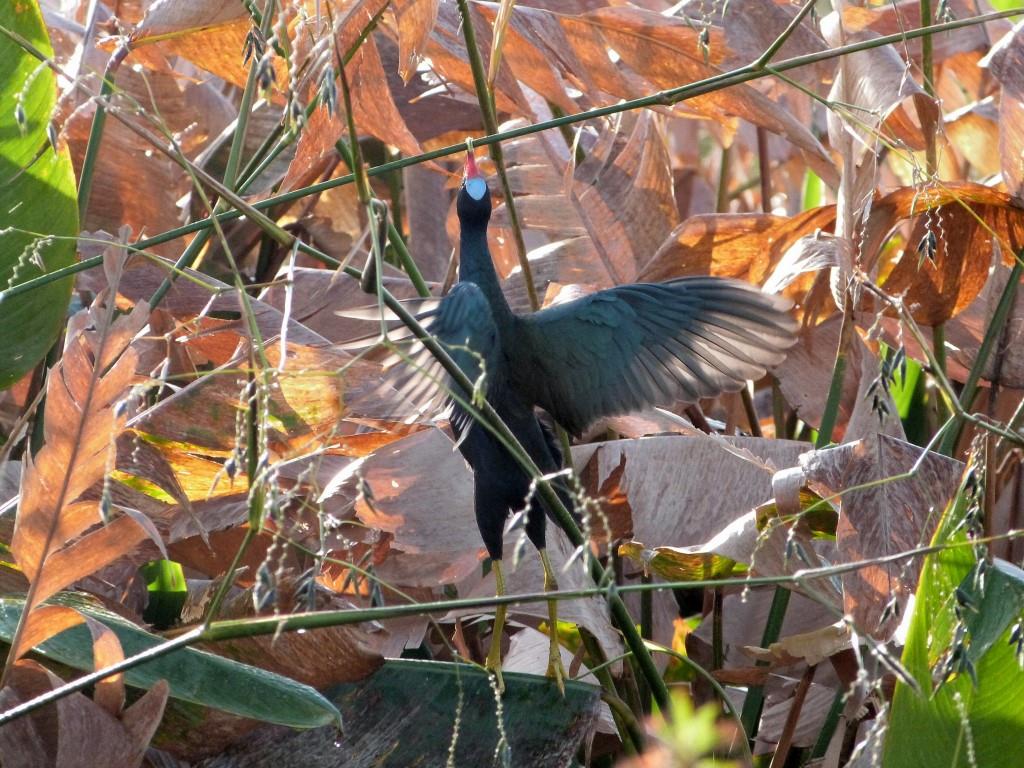
Purple Gallinule Reaching Circle B

Purple Gallinule Reaching Circle B

We greatly enjoyed this past week-end. Dr. James J. S. Johnson, from Institute For Creation Research, who writes for this blog, came to speak at our church. We had not met him personally and so this was a time of getting to know him.

Dan and I, Dr. Jim (my name for him) and Golden Eagle (Baron) went birdwatching on Saturday. We took him to our favorite birding spot here, Circle B Bar Reserve. We saw 31 species, several “life birds” for him and one “life bird” for me, an Orange-crowned Warbler.

The Birders at Circle B Bar Reserve

The Birders at Circle B Bar Reserve

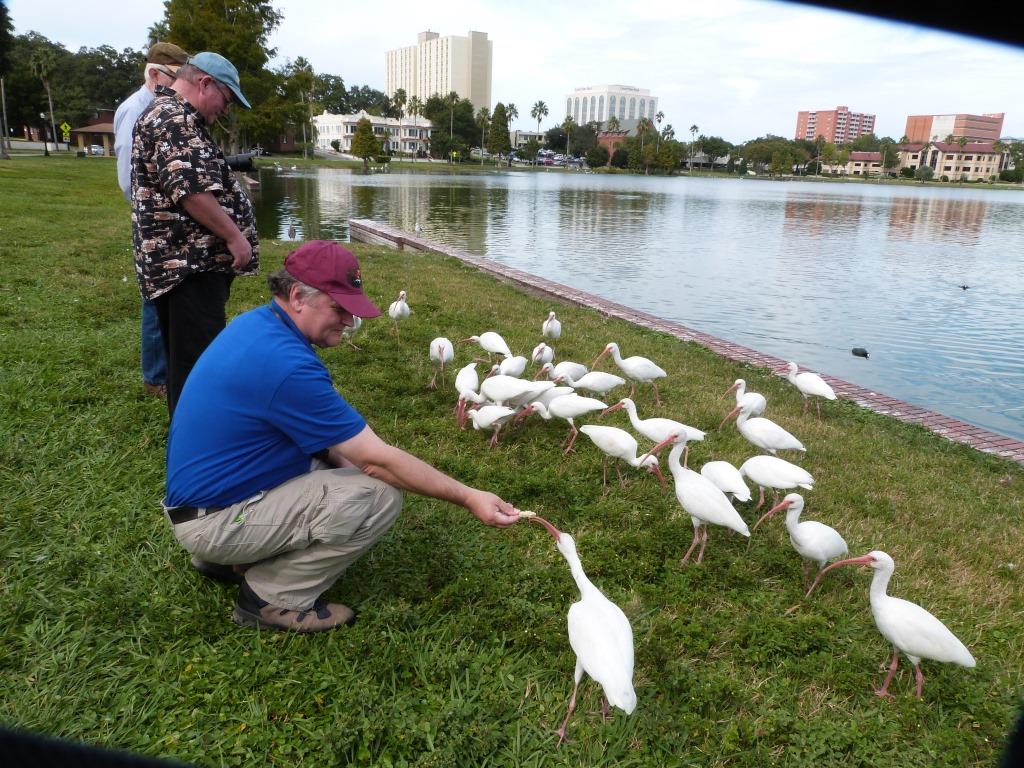
After we left there, we went to Lake Morton. I wanted two things to happen, but it didn’t. Was hoping to let them feed the Wood Stork over there and see a Wood Duck. Not to be. We saw one Wood Stork, but he must have already been fed. We did get to feed some of our other friends there. All total, we saw at least 19 species there. Also, the Lord prepared a great day for us. (Rained good part of Sunday, but Saturday was beautiful.)
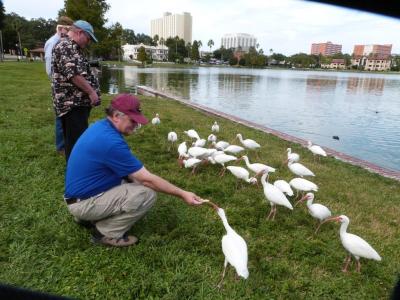
Feeding White Ibises at Lake Morton

Dr Jim Feeding White Ibises at Lake Morton

While describing our trip later, I misused the word “boring” which got mistaken. What I meant was that compared other visits to those two places, the number of species were less than normal. Birdwatching adventures are never “boring.” How can they when you are out enjoying the Lord’s great creation? Amazing! Fabulous! Superb! Those are better words.

“But now ask the beasts, and they will teach you; And the birds of the air, and they will tell you; (Job 12:7 NKJV)

“You are worthy, O Lord, To receive glory and honor and power; For You created all things, And by Your will they exist and were created.” (Revelation 4:11 NKJV)

As Dr. James told us in his presentations, the Lord uses so much variety, provision, and design in each of His created beings, humans included. If we just slow down, God’s hand can clearly be seen. (my paraphrase) Just with the birds, the wing structure, specialized beaks, programmed travels, interconnection between bird and plant, and on and on. Oh, Praise the Lord!
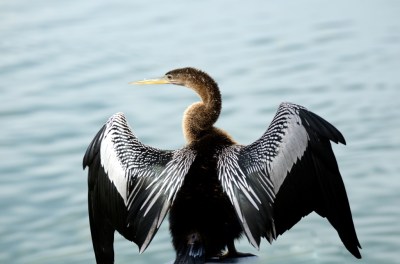
Anhinga Lake Morton by Dan

Anhinga Lake Morton by Dan


I am including the list of birds seen at both places. Also, a short video of a Snowy Egret using his foot to stir up something to eat. Wonder how that habit came about? Could it be that the Lord programmed that in it because of promising to provide for them?

“Consider the ravens, for they neither sow nor reap, which have neither storehouse nor barn; and God feeds them. Of how much more value are you than the birds? (Luke 12:24 NKJV)

Also, Dr. Johnson’s talks showed slides with examples of these points. (From an excerpt)

Witnesses for God’s Truth – “This presentation reviews 5 different kinds of witnesses for God’s truth, each of which takes away excuses from anyone who pretends to have no witness of God and His glory:  (1) the physical creation, including our own physical bodies; (2) the uniqueness of humanity; (3) Scripture; (4) Christ’s incarnation; and (5) one more witness that we all are accountable for, and this one is quite scary!”

Lessons from the Zoo –  “Did you know that the animal kingdom, in all of its diversity, reveals God’s creative genius and glory in uncountable ways?  Why does God like and create variety in creation? How do the various animals living today, as well as other animals (like dinosaurs) which lived in earlier times, confirm the Bible’s account of creation – and refute Darwin’s evolutionary “natural selection” idea? This presentation provides a series of examples of big and little animals that display God’s handiwork in amazing ways. Mammals, reptiles, insects, spiders, fish, shellfish, jellyfish, and more!
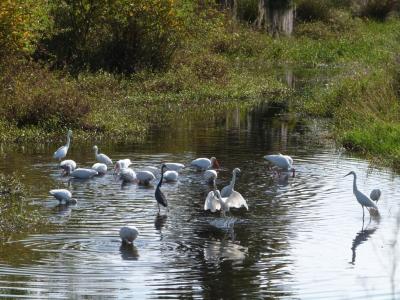
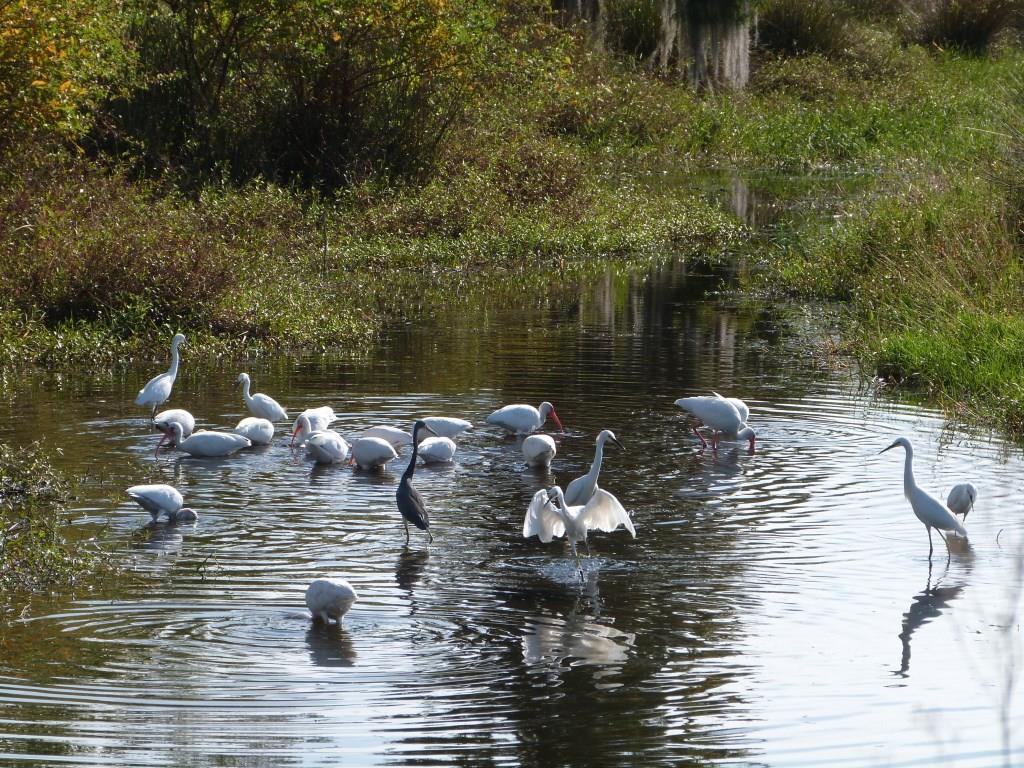
Tricolored-Snowy-Great Egret-White Ibis at Circle B

Tricolored-Snowy-Great Egret-White Ibis at Circle B

Circle B Bar Reserve, Polk, US-FL
Nov 8, 2014 8:00 AM – 10:00 AM
Us, Dr J and Baron – 31 species

Pied-billed Grebe
Double-crested Cormorant
Anhinga
Great Blue Heron
Great Egret
Snowy Egret
Little Blue Heron
Tricolored Heron
White Ibis
Glossy Ibis
Roseate Spoonbill  6
Black Vulture  50
Turkey Vulture  50
Osprey
Bald Eagle
Red-shouldered Hawk
Purple Gallinule
Common Gallinule
Stilt Sandpiper
Red-bellied Woodpecker
Pileated Woodpecker
Eastern Phoebe
Carolina Wren
Blue-gray Gnatcatcher
Gray Catbird
Orange-crowned Warbler
Palm Warbler
Yellow-rumped Warbler
Northern Cardinal
Red-winged Blackbird
Boat-tailed Grackle

Lake Morton, Polk, US-FL
Nov 8, 2014 10:30 AM – 11:15 AM
Us, Dr J. and Baron – 18 species (+1 other taxa)

Mute Swan
Black Swan
Black-necked Swan
Muscovy Duck (Established Feral)
Mallard (Domestic type)
Blue-winged Teal
Ring-necked Duck
Anhinga
Great Blue Heron
Great Egret
Snowy Egret
White Ibis
Common Gallinule
American Coot
Laughing Gull
Rock Pigeon (Feral Pigeon)
Blue Jay
Palm Warbler
Boat-tailed Grackle

*

*

Working On The New Update to I.O.C.

Sulawesi Hornbill (Penelopides exarhatus) LPZoo 3-8-12 by Lee

Sulawesi Hornbill (Penelopides exarhatus)LPZoo by Lee

They have come out with the latest Update and I am again working on updating the blog. This time they added only 13 new species, deleted 2, and made 3 changes to names. But, as lately, they threw another family up in the air to rearrange it. This time it was the Hornbill-Bucerotidae family. It was really reshuffled and they changed some of the genus around.

Here are the new additions:

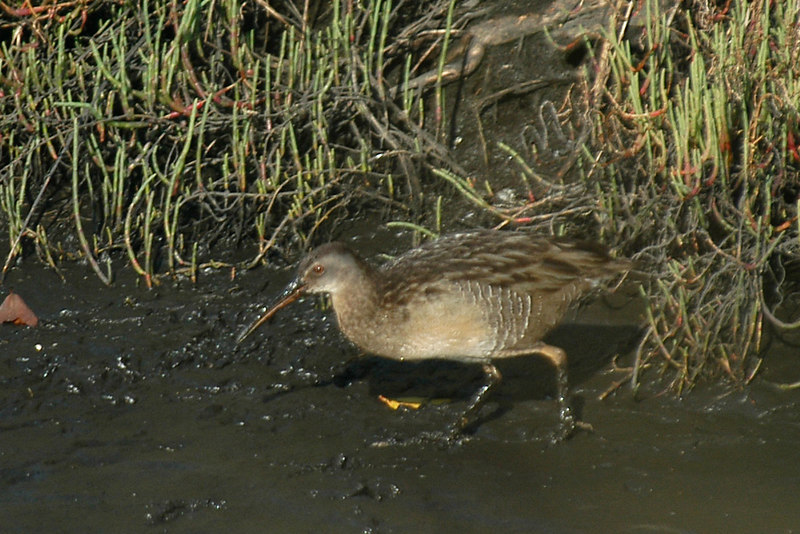
  • Aztec Rail (Rallus tenuirostris) – Was Subspecies of King Rail
  • Mangrove Rail (Rallus longirostris) – The Old Clapper Rail
  • Clapper Rail (Rallus crepitans) – New Clapper Rail
  • Ridgway’s Rail (Rallus obsoletus) – Formerly California Clapper
  • Sooty Barbet (Caloramphus hayii)- Was Subspecies
  • Blue-eared Barbet (Megalaima duvaucelii) – Removed M. d. australis Subspecies
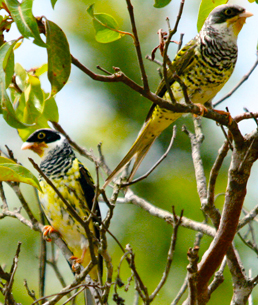
  • Palkachupa Cotinga (Phibalura boliviana) – Was Subspecies of Swallow-tailed Cotinga
  • Riparian Antbird (Cercomacra fuscicauda)- Was Subspecies
  • Bougainville Whistler (Pachycephala richardsi) – Was Subspecies
  • Black-eared Warbler (Basileuterus melanotis) – Was Subspecies
  • Tacarcuna Warbler (Basileuterus tacarcunae) – Was Subspecies
  • Yungas Warbler (Basileuterus punctipectus)- Was Subspecies
  • Roraiman Warbler (Myiothlypis roraimae)- Was Subspecies
  • Pale Baywing (Agelaioides fringillarius)- Was Subspecies

Deleted:

  • Norfolk Ground Dove
  • White-throated Whistler

Hard to find data yet on these because sites are being updated, just as this one is. Will update when all the 4.4 Version is complete.

Also: Sorry there has not been as many articles lately, but have been dealing with several health issues. The Bronchitis is almost over, now have stitches from skin cancer removal. Physical Therapy is helping. Praise the Lord, it could be a lot worse. It is just that everything came close together. Also, Praise the Lord for the way He created the human body.

I will praise You, for I am fearfully and wonderfully made; Marvelous are Your works, And that my soul knows very well. (Psalms 139:14 NKJV)

Birds of the World

Hornbill-Bucerotidae Family

*

Barn Swallows, a Nostalgic Reminder of Home

Barn Swallow (same)

Barn Swallow (same)

Barn Swallows, a Nostalgic Reminder of Home

by James J. S. Johnson

Whereas ye know not what shall be on the morrow. For what is your life? It is even a vapour, that appeareth for a little time, and then vanisheth away.  For that ye ought to say, If the Lord will, we shall live, and do this, or that.  (James 4:14-15).

Luzon Bleeding-heart by Dan

Orni-Theology

As daylight slid slowly into nighttime darkness, one warm summer evening in Sweden, I thought I recognized the sleek silhouettes of swallows, flitting and zooming here and there, like aerial fighter pilots, catching hapless insects in the air.  It was too dark, and they were too fast, to positively confirm them as Barn Swallows, but surely that’s what they were.  Little hatchlings, waiting hungrily in mud-nests nearby, likewise appreciated the aerial insect-grabbing of their caring parents.  The day would come, in time, when the hungry nestlings would do the same for their progeny.

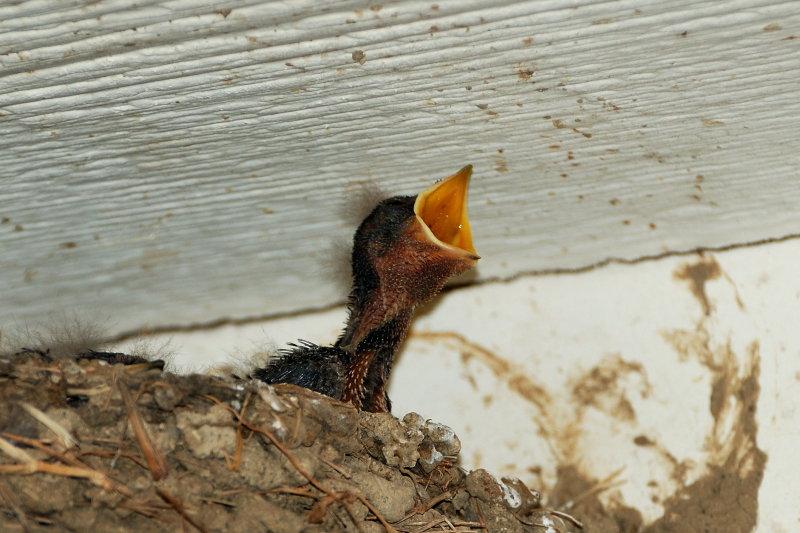
Barn Swallow (Hirundo rustica) baby by Neal Addy Gallery

Barn Swallow (Hirundo rustica) baby by Neal Addy Gallery

In Europe one of the common summer migrants is the Swallow (Hirunda rustica), known in America as the Barn Swallow, due to their habit of nesting colonies near the roofs of barns, stables, and other wooden buildings.  Barn swallows are easily recognized by their long tail streamers, narrow and pointed wings, iridescent blue-black upper feather coat, contrasting with a white underside sporting a rusty orange forehead and chin-throat bib.  (The sexes are similar except that the female has shorter tail streamers.)   Like other swallows, the barn swallow is mostly insectivorous, catching bugs on the fly, as it darts and arcs with graceful flight patterns, powered by deep wing-beats.  [See Jürgen Nicolai, Detlef  Singer, & Konrad Wothe, Birds of Britain and Europe (Harper Collins, AD1994; translated by Ian Dawson), page 170.]

One of the most nostalgic folk songs of Scandinavia (especially Sweden) is Hälsa dem därhemma  (“Greet those at Home” – audio and bilingual lyrics at http://treasures2.weebly.com/haumllsa-dem-daumlrhemma.html ), a song about a young sailor aboard a ship, as night falls, homesick for his family and homeland, who sees a flight of migratory swallows.  In song the homesick sailor asks the little swallows (“lilla svala”) to give greetings to “those at home”, including his father, mother, and little brother – and even the green fields that the sailor left behind.  To those of us who have heard it sung, many times and in many places, the emotional recall of days (and homes) gone by pull at our hearts and memories, as we too can think of loved ones we have left behind, one way or another, as we have traveled our life journeys in this busy world.

If swallows could transmit greetings, from us to loved ones now out of reach, what greetings would that be?  The New Testament epistle of James reminds us that we have no control on the day that unfolds us, much less on the many tomorrows that approach our horizons.  But the future is not “up for grabs” – it belongs to God.  It is good to know that our great God sovereignly rules the world — and us therein.

Whereas ye know not what shall be on the morrow. For what is your life? It is even a vapour, that appeareth for a little time, and then vanisheth away.  For that ye ought to say, If the Lord will, we shall live, and do this, or that.  (James 4:14-15).

Barn Swallow (Hirundo rustica) baby by Neal Addy Gallery

Barn Swallow (Hirundo rustica) baby by Neal Addy Gallery

Life has many changes.  Homes come and go.  People come and go  —  even loved ones.

But God is always there and He changes not (Malachi 3:6).  And He prepares a place for us, as a permanent and perfect Home, for that day appointed for our Earth-leaving, which is the day of our true Home-going/Home-coming.  And yet, we are already Home, now, if we belong to the Lord Jesus Christ, because God Himself is our permanent home.  What a wonderful privilege it is to be created by Him, redeemed by Him, and to belong to Him (and to His loved ones) now and forever.

It’s okay to be homesick,  —  and to appreciate the migratory swallows that go “home” each year,  — but our true home awaits us, in Christ, and there are many mansions there (John 14:2-3).  Heaven is a prepared place for a prepared people.  ><> JJSJ

*

Orni-Theology

Hirundinidae – Swallows, Martins

Birds of the Bible – Swallows

Gospel Message

*

Sunday Inspiration – “One Day Too Late”

Our Men’s Quartet added an extra voice last Sunday night and sung a very powerful song.

Before I say more about that, an interesting application can be made. The voices of a quartet, any singing group or a choir are made up of a variety of voices. Some sing base, tenor, alto, baritone, soprano, but those like me, “off-key”, don’t join them. But notice how they blend to make such beautiful music.

Likewise our birds the Creator gave us come in much variety, each with different looks, heights, purposes, habitat they dwell in, and voices. Yet, when you walk through a park, woods, or other place you go birdwatching, they seem to blend together to make music. Most times it is very pleasing, but there are times, some of those “off-key” birds sound off.

We all come in a variety of talents, voices, gifts, personalities, yet when we use them for the Lord’s service, they come together to make great “music” That all is true as long as we know the Lord as our Savior. Please listen to the words of the song, and I pray that you will not be “One Day Too Late.”

This slideshow requires JavaScript.

“Marvel not that I said unto thee, Ye must be born again.” (John 3:7 KJV)

“One Day Too Late.” – Men’s Quartet + 1 – Faith Baptist Church

“For God so loved the world, that he gave his only begotten Son, that whosoever believeth in him should not perish, but have everlasting life. For God sent not his Son into the world to condemn the world; but that the world through him might be saved.

He that believeth on him is not condemned: but he that believeth not is condemned already, because he hath not believed in the name of the only begotten Son of God.

And this is the condemnation, that light is come into the world, and men loved darkness rather than light, because their deeds were evil. For every one that doeth evil hateth the light, neither cometh to the light, lest his deeds should be reproved.

But he that doeth truth cometh to the light, that his deeds may be made manifest, that they are wrought in God.” (John 3:16-21 KJV)

And they sung a new song, saying, Thou art worthy to take the book, and to open the seals thereof: for thou wast slain, and hast redeemed us to God by thy blood out of every kindred, and tongue, and people, and nation; (Revelation 5:9 KJV)

*

Sunday Inspirations

Gospel Presentation

ABCs of the Gospel

Good News

*


Fantastic Close-up – Wow!

A friend just posted this to my Facebook and I have to share it. It is from Imgur.

I don’t even need six words. Only one will do.

Wow!!!

“Thou art the God that doest wonders: thou hast declared thy strength among the people.
(Psalms 77:14 KJV)

Green-Crowned Brilliant photographed by Chris Morgan


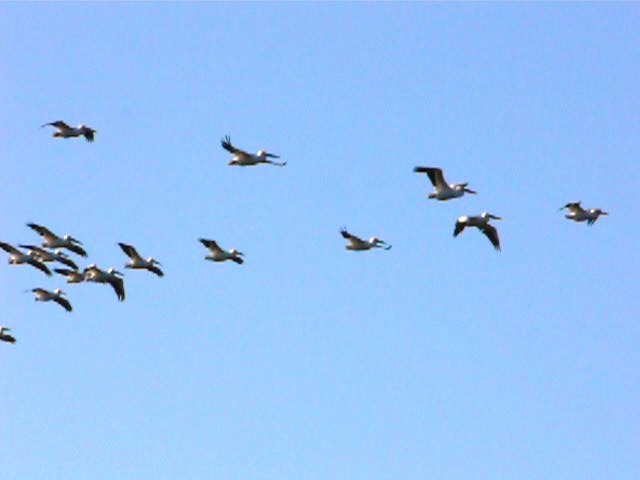
Six Word Birds – The “V”

American White Pelican (Pelecanus erythrorhynchos) by Lee

White Pelicans on the Wing at Circle B Bar Reserve by Lee

Their Creator Gave Them The “V”

*

*

Another Video at Birdwatching at Circle B Bar Reserve – 12/23/09

Birds of the Bible

Birds of the World

Wordless Birds

*

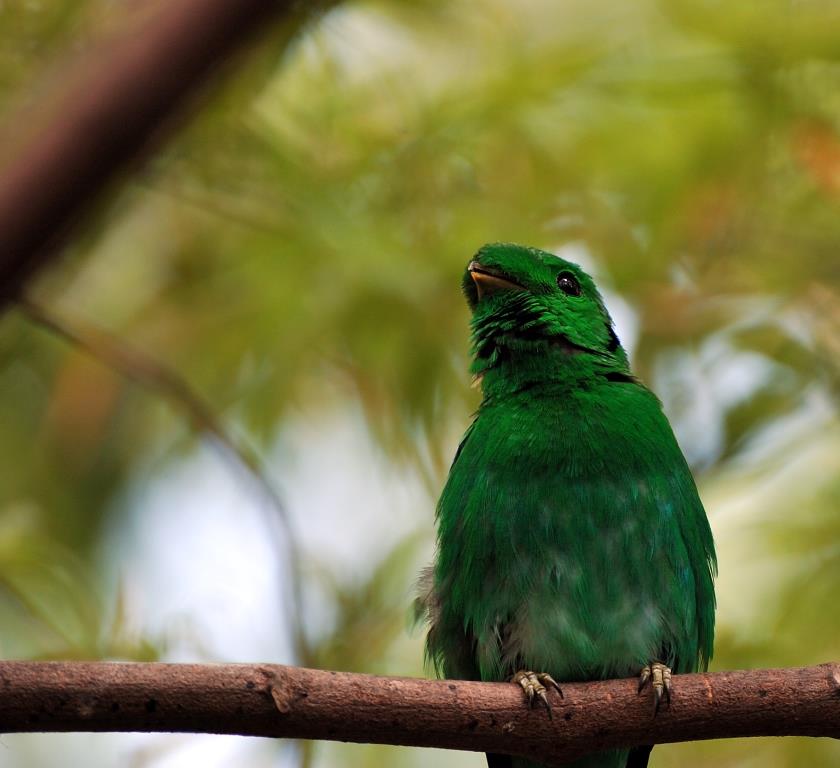
Sunday Inspiration – Broadbills


Green Broadbill by Dan at Zoo Miami

Green Broadbill by Dan at Zoo Miami

“He brought me out into a broad place; he rescued me, because he delighted in me. (Psalms 18:19 ESV)

“I will rejoice and be glad in your steadfast love, because you have seen my affliction; you have known the distress of my soul, and you have not delivered me into the hand of the enemy; you have set my feet in a broad place. (Psalms 31:7-8 ESV)

Broadbills are one of my favorite birds. To me, they are adorable. So far, we have only seen the Green Broadbill and the Long-tailed Broadbill. Both have been at zoos.

Notice their eyes. They always look so alert and expressive.

This slideshow requires JavaScript.

“Jesus Loves Me” by Bonnie Standifer

This piece was written and played by Bonnie Standifer. Played at our Orchestra Concert in March of 2013 at Faith Baptist Church. You have never heard it played this way before. Bonnie is a very gifted arranger and pianist. (I’ve used her song before, but it is so fantastic.)

*

Sunday Inspirations

Formed By Him – Broadbills

Eurylaimidae – Broadbills

Broadbill – Wikipedia

Gideon

*

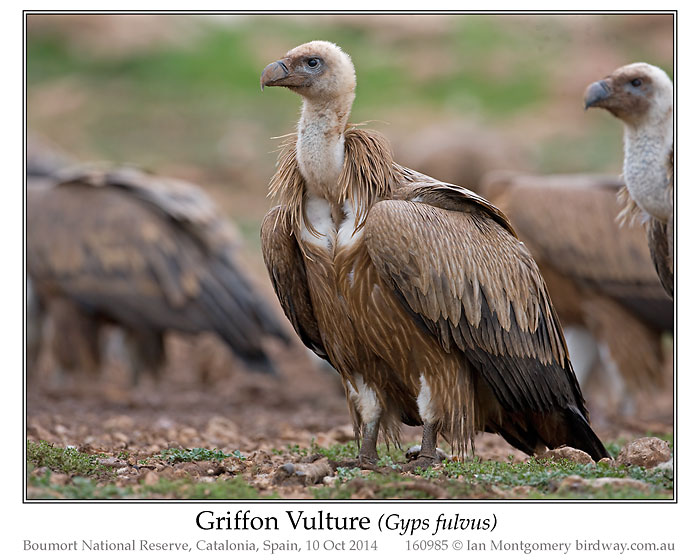
Ian’s Bird of the Week – Griffon Vulture

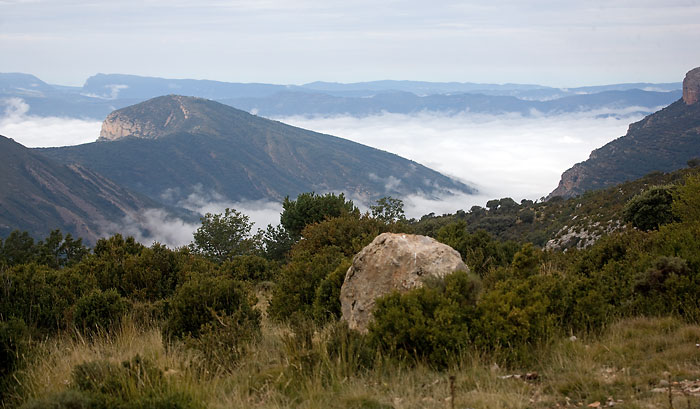
Boumort National Reserve

Boumort National Reserve

The first photo shows part of Boumort National Reserve in the foothills of the Pyrenees in Catalonia about 40km southwest of Andorra. A reserve since 1991, It has an area of 13,000 hectares and is of special importance as one of the only places in Europe where all four European species of vultures breed. Three occur naturally, while the fourth, the Eurasian Black or Cinereous Vulture has been reintroduced, after becoming extinct in the Pyrenees in recent decades. I made arrangements to visit it through Steve West of Birding in Spain, including getting the necessary permit to photograph these birds, accommodation and transport.

As part of the conservation effort, the vultures are fed three times a week and I was taken to the feeding site by two rangers who had collected carcasses and meat off-cuts from farmers in the vicinity. The site is equipped with a spacious and comfortable hide, complete with toilet, and I was left there alone for the day after they had spread out the meat and carcasses in front of the hide. When we arrived there were already between one and two hundred vultures, almost all Griffons, soaring high above. I had been briefed beforehand that the first arrivals would be Griffons, with Eurasian Blacks arriving later in the morning when the crowds thinned, while the iconic Lammergeier could be expected, probably, in small numbers in the middle of the afternoon. The fourth species, the Egyptian Vulture is a summer visitor and had already departed for Africa.

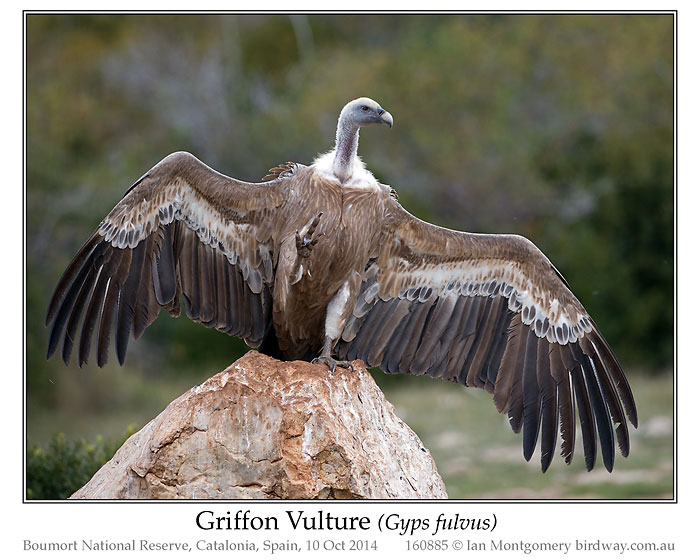
Griffon Vulture (Gyps fulvus) by Ian

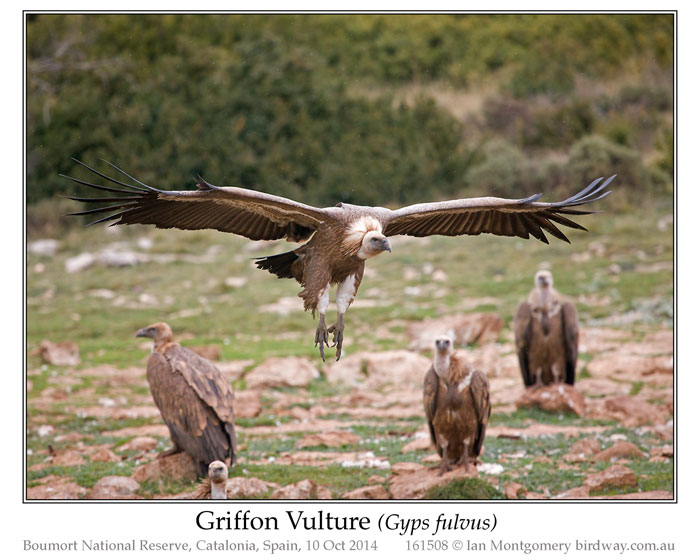
Sure enough, as soon as the rangers left, large numbers of Griffons glided in and squabbled noisily over the food. Griffons feed mainly on muscles and viscera and attacked the carcasses and pieces of meat with great gusto. The bird in the second photo showing its skill at balancing on a rock on one foot and waving the other is an adult, recognisable by its white ruff, horn-coloured bill and pale wing coverts. The one in the third photo is a juvenile, with grey bill, coffee-coloured ruff and darker wings. Juveniles generally had a covering of short plumage on the head and neck, while the adults often had relatively bare necks.

The breeding range of the Griffon Vulture extends from Portugal in the west to northeastern India and southwestern Kazakhstan in the east. Spain is its main stronghold in the west with about 8,000 pairs and the species is not considered under threat.

Griffon Vulture (Gyps fulvus) by Ian

These birds are huge and it was wonderful to observe them up close. The black bird in the fourth photo sneaking a mouthful from under the watchful eye of a Griffon is a Common Raven. This is the largest passerine in the world, with a length of up to 67cm/26in and wingspan of up to 130cm/51in, larger than a Common Buzzard, but completely dwarfed by the vulture. Griffons are up to 110cm/43in in length, with a wingspan of up to 280cm/110in and weighting up to 11kg/24lbs.

Griffon Vulture (Gyps fulvus) by Ian

In the air, they glide effortlessly and powerfully and the enormous wings make the body appear quite small by comparison. They come into land looking like parachutists under square canopies but with the ponderous, unwavering stability of a large aircraft like a B747 or an A380. Look how elegantly and precisely the toes are arranged with all the poise of an Olympic diver, fifth photo.

Griffon Vulture (Gyps fulvus) by Ian

It really was an extraordinary experience watching the spectacle of these amazing birds, even if their table manners left much to be desired. The large amount of food disappeared at a great rate and the crowds started to disperse, leaving the scene, one hoped, for the later, rarer and more picky species. To be continued…

Greetings
Ian


Lee’s Addition:

Another neat adventure for Ian. Not sure I would want to be left all day by myself. Then again, Ian, is quite an adventurous birdwatcher and photographer. Patience is something he definitely has.

Thanks again, Ian, for sharing your adventure. I have a feeling you will soon tell us about some of those other Vultures that came to feed.

“There is a path which no fowl knoweth, and which the vulture’s eye hath not seen: (Job 28:7 KJV)

The Griffon Vulture is a Bird of the Bible as Vultures are mentioned. One version of the Bible lists a Griffon.

“Of birds these are they which you must not eat, and which are to be avoided by you: The eagle, and the griffon, and the osprey.” (Leviticus 11:13 DRB)

*

*


Angry (Mocking) Bird

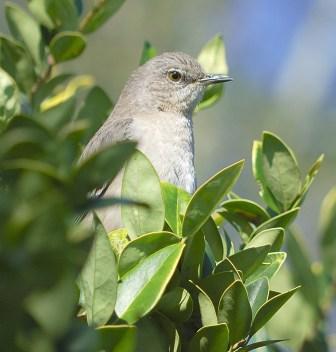
Northern Mockingbird (Mimus polyglottos) by Dan

Northern Mockingbird (Mimus polyglottos) by Dan

Luzon Bleeding-heart by Dan

Orni-Theology

We have been attacked repeatedly lately by an Angry Bird. A Northern Mockingbird has decided that he has a rival inside our windows. As the sun shines on different windows during the day, he attacks those windows with vigor.

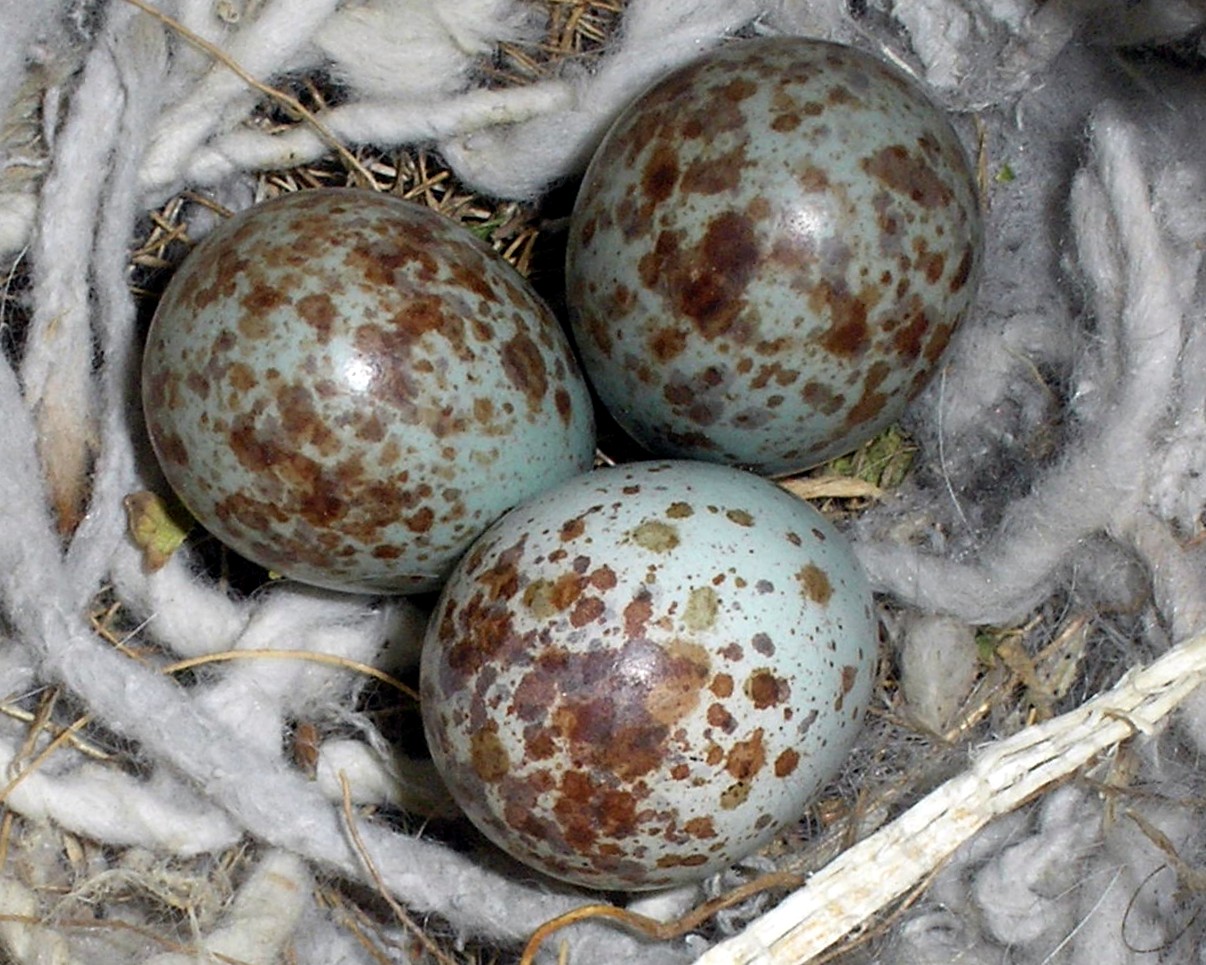
Northern Mockingbird (Mimus polyglottos) eggs ©WikiC

Northern Mockingbird (Mimus polyglottos) eggs ©WikiC

Apparently he has been thinking about starting another family and is trying to clear the area of competitors. He starts at early light and attacks the bird (his imaginary enemy) at one of the two bedroom windows. Then he goes out front and sits in the palm tree by the Florida room windows. Lo and behold, his enemy arrives and he starts attacking that window. It even has a screen on it. Later in the day, about mid-morning his “enemy” shows up in the side window of our living room.

I put some stick-on Christmas tree decorations on the back window, but he still sees his enemy and bangs on the windows. You just have to chuckle.

©©Bing

Angry Bird ©©Bing

As most of you already know, our Northern Mockingbird is seeing his own reflection in the windows. I told Dan yesterday that the Angry Bird is “His own worst enemy!” He is causing his own problems. If he would just relax, (and stay away from the windows) things would be okay.

But be doers of the word, and not hearers only, deceiving yourselves. For if anyone is a hearer of the word and not a doer, he is like a man observing his natural face in a mirror; for he observes himself, goes away, and immediately forgets what kind of man he was. (James 1:22-24 NKJV)

Northern Mockingbird (Mimus polyglottos) Juvenile ©WikiC

Northern Mockingbird (Mimus polyglottos) Juvenile ©WikiC

How many times are we “our own worst enemy?” We make big “to-dos” about nothing. Or we think we have an issue when we really don’t have one. Sometimes we cause our own problems.

But seek first the kingdom of God and His righteousness, and all these things shall be added to you. Therefore do not worry about tomorrow, for tomorrow will worry about its own things. Sufficient for the day is its own trouble. (Matthew 6:33-34 NKJV)

One of the passages that mentions “face to face” that I like is:

“When I was a child, I spoke as a child, I understood as a child, I thought as a child; but when I became a man, I put away childish things. For now we see in a mirror, dimly, but then face to face. Now I know in part, but then I shall know just as I also am known. And now abide faith, hope, love, these three; but the greatest of these is love. (1 Corinthians 13:11-13 NKJV)

Our angry Mockingbird is definitely not showing love.

Have a great day and remember to put your trust in the Lord and not in things you think you see.

*
Songs In The Night From The Mockingbird

Mimidae – Mockingbirds, Thrashers

Northern Mockingbird

Eye of the Beholder – Mockingbird

Orni-Theology

*

Sunday Inspiration – Vacation 2014

Peacock at Magnolia Plantation by Dan

Peacock at Magnolia Plantation by Dan


A Psalm. A Song for the Sabbath Day. It is good to give thanks to the LORD, And to sing praises to Your name, O Most High; To declare Your lovingkindness in the morning, And Your faithfulness every night,  (Psalms 92:1-2 NKJV)

Even though our vacation didn’t go according to “our” schedule, the Lord gave us some great blessings. He, the Lord, had a way of placing the right people in our path to help us. Only He could orchestrate those encounters. May we never forget to give the Lord credit for his blessings to us.

We were able to still see Patriots Point and Magnolia Plantation in Charleston, Merritt Island NWR, Brevard Zoo and the Viera Wetlands and the nearby Click Ponds. The slide show has some photos from those places.

** Some how I forgot to finish this Sunday Inspiration. We took our vacation several months ago. The song Sean is playing, “It Is Well With My Soul” seems to be even more appropriate today. I have been dealing with a walking and now pain issue. I start two days a week of physical therapy next week for almost two months. As I told the therapist Friday, “even though I am dealing with all this, I am trying to maintain a good attitude.” How can I do that? Because, It Is Well With My Soul.” I know the forgiveness for my sins because of the Lord Jesus Christ’s death on the cross for my sins and yours. Have you asked for His forgiveness? Please keep me in your prayers and Sean, also. He needs it more as he is dealing with Lymphoma.

“For God so loved the world, that he gave his only begotten Son, that whosoever believeth in him should not perish, but have everlasting life. For God sent not his Son into the world to condemn the world; but that the world through him might be saved.” (John 3:16-17 KJV)

This slideshow requires JavaScript.

“It Is Well With My Soul” by Sean Fielder

*

More Sunday Inspirations

Gideon

*

Birdwatching Term – Mobbing

Crow on Eagles Back ©©

Maybe A Little Too Close – Crow on Eagles Back ©©

Birdwatching Term – Mobbing

In the recent article, The Old Orchard Bully – Chapter 2, the whole group of birds united to chase off the Black Cat. That is called, “mobbing.”

Some ask why don’t the bigger birds fight back? Here are a few quotes from various sources:

“This behavior – like calling your family for help – is used by many bird species. The best time to observe mobbing is spring and early summer, when breeding birds are trying to protect their nests and young. Birds including swallows, blackbirds, and even these American Crows, seen here mobbing a Red-tailed Hawk, know that there is strength and power in numbers. And they’ve learned to join forces to protect themselves. Be sure to watch the video!”

Quote from Why Don’t Hawks Fight Back? :All agreed that if a red-tailed hawk reached out and grabbed a crow with its talons, that would be the end of the crow. Or as one of the professionals put it, in scientific terms, “the crow would be toast.” But although large raptors have the necessary weapons, the energy cost of pursuing or otherwise attempting to catch a crow is normally not worth it. Crows are agile creatures and would be very difficult to catch in flight. So a hawk typically ignores the crows or flies away.”

A Great Horned Owl being mobbed!

*

Just as the Lord helps His Created critters, the Lord gives us promises about seeking His help:

But the LORD your God you shall fear; and He will deliver you from the hand of all your enemies.” (2 Kings 17:39 NKJV)

Give us help from trouble, For the help of man is useless. Through God we will do valiantly, For it is He who shall tread down our enemies. (Psalms 60:11-12 NKJV)

I have pursued my enemies and overtaken them; Neither did I turn back again till they were destroyed. (Psalms 18:37 NKJV)

O my God, I trust in You; Let me not be ashamed; Let not my enemies triumph over me. (Psalms 25:2 NKJV)

My times are in Your hand; Deliver me from the hand of my enemies, And from those who persecute me. (Psalms 31:15 NKJV)

For I will not trust in my bow, Nor shall my sword save me. But You have saved us from our enemies, And have put to shame those who hated us. In God we boast all day long, And praise Your name forever. Selah (Psalms 44:6-8 NKJV)

Some interesting links about mobbing:

Small Birds Mob Big Ones – Bird Note, with audio

Mobbing – RSPB

The Superb Fairywren – The Corporate Mob ~ by a j mithra

Birdwatching Terms

Birdwatching Tips 

Watching Birds

Wordless Birds

*