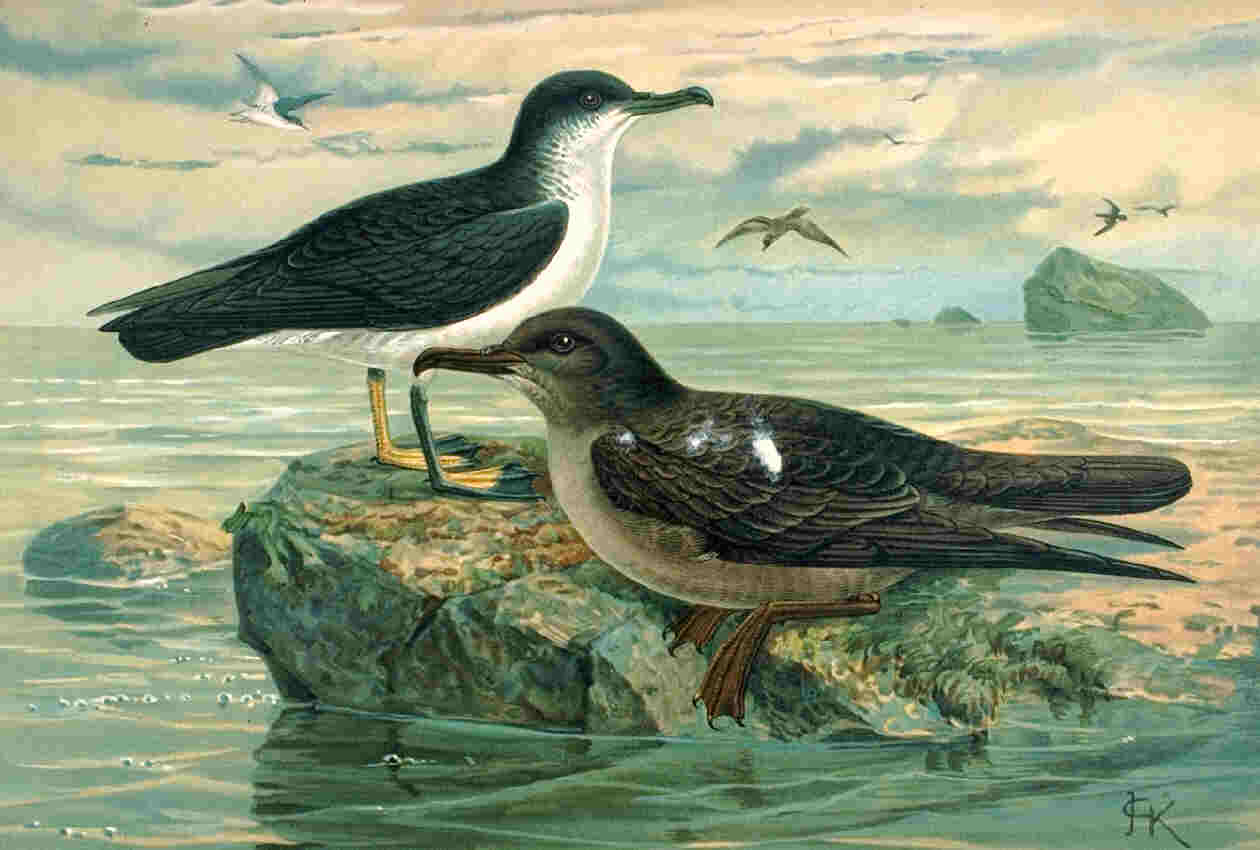
Harriet Newell Cook – Scripture Alphabet of Animals

Scripture Alphabet of Animals

Harriet Newell Cook (1814-1843) – author of Scripture Alphabet of Animals

Baudet Donkey - Shaky and Brown

Baudet Donkey – Shaky and Brown

While looking for the quoted thoughts by G. D. Watson, “Others May, You Cannot,” I found the Christian Articles Website. It is loaded with articles by numerous pastors and preachers, but also other Christian writers. That is where I found Harriet N. Cook’s “Scripture Alphabet of Animals.” Her works and the others on that website are in the public domain and usable. I have decided to use her as a guest writer and produce the bird sections (finished) she wrote about. The other sections are being done also. They are listed below. Also, her books are available on Google Books and can be read on the computer or one of the eBook readers.
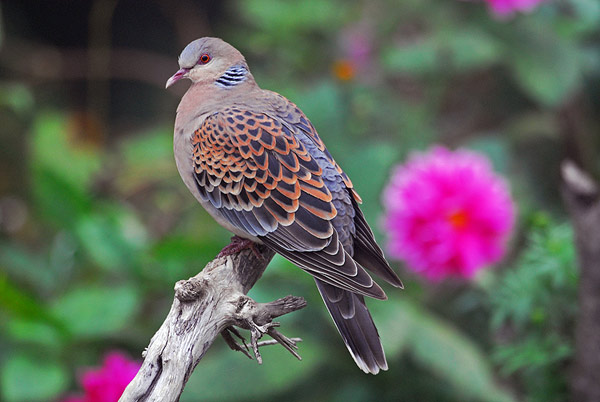
Oriental Turtle Dove (Streptopelia orientalis) by Nikhil

Oriental Turtle Dove (Streptopelia orientalis) by Nikhil

Harriet Newell Cook was born in 1814 and died in 1843. In her short 29 years of life she wrote several juvenile books and thought I would share parts of them here. “Her first volume for the young was one of Natural History, calculated to illustrate portions of the Bible, for the young, and entitled, “The Scripture Alphabet of Animals.” Nearly thirty thousand copies of the work have been printed in its English dress, and eight thousand of the German translation. The style of this work is eminently lucid…”

Her last very interesting work for the young —“The Trees, Flowers and Fruits of the Bible“– she was not permitted to finish, by reason of her death. It was completed by Miss F. M. Caulkins…” (From Memoir of Mrs. Harriet Newell Cook By Lydia Howard Sigourney, at Google Books)

Beasts, and all cattle; creeping things, and flying fowl: Kings of the earth, and all people; princes, and all judges of the earth: Both young men, and maidens; old men, and children: Let them praise the name of the LORD: for his name alone is excellent; his glory is above the earth and heaven. (Psalms 148:10-13 KJV)

It was difficult finding information about her personally. Also, I couldn’t find a picture of her. One thing was for certain, she appears to have loved the Lord greatly and wanted to serve Him through her writing.

See Also:

Scripture Alphabet of Animals: The Ant
Scripture Alphabet of Animals: The Ass (Donkey)
Scripture Alphabet of Animals: The Bear
Scripture Alphabet of Animals: The Bee
Scripture Alphabet of Animals: The Camel
Scripture Alphabet of Animals: The Dog
Scripture Alphabet of Animals: The Eagle
Scripture Alphabet of Animals: The Fox or Jackal
Scripture Alphabet of Animals: The Goat
Scripture Alphabet of Animals: The Hart and Hind
Scripture Alphabet of Animals: The Horse
Scripture Alphabet of Animals: The Ibex or the Wild Goat
Scripture Alphabet of Animals: The Jerboa or Mouse
Scripture Alphabet of Animals: The Kite
Scripture Alphabet of Animals: The Leopard
Scripture Alphabet of Animals: The Lion
Scripture Alphabet of Animals: The Locust
Scripture Alphabet of Animals: The Mole
Scripture Alphabet of Animals: The Night-Hawk
Scripture Alphabet of Animals: The Ostrich
Scripture Alphabet of Animals: The Peacock
Scripture Alphabet of Animals: The Quail
Scripture Alphabet of Animals: The Raven
Scripture Alphabet of Animals: The Roe or Gazelle
Scripture Alphabet of Animals: The Scorpion
Scripture Alphabet of Animals: The Sheep
Scripture Alphabet of Animals: The Stork
Scripture Alphabet of Animals: The Turtle-Dove
Scripture Alphabet of Animals: The Unicorn
Scripture Alphabet of Animals: The Vulture
Scripture Alphabet of Animals: The Whale
Scripture Alphabet of Animals: The Wolf

See:

Bible Birds

Birds of the Bible

Wordless Birds

*

Birds of the Bible – Names of Birds II

White-tailed Hawk (Buteo albicaudatus) by Daves BirdingPix

White-tailed Hawk (Buteo albicaudatus) by Daves BirdingPix

In the first Names of Birds, I covered the English names of birds. This time the scientific names are going to be looked at, especially the second one. (The first part of the scientific name is the bird’s genus or group) “Birds normally have a scientific name and a common name. The scientific name is usually Latin-bases and is agreed upon by biologists across the world. The common name will vary by region, culture, and language.” (birding.com) No matter what the bird is called in different countries or by different ornithology groups, the scientific name refers to one specific bird. Birds do migrate many miles and spend time in many countries. This naming system helps keep from having the same bird counted numerous times in lists.

As I have worked with the list of the Birds of the World, I have observed similarities in the naming of the birds. For instance, “alba” is the second part of all of these birds–Western Great Egret, White Cockatoo, Sanderling, White Tern, White Wagtail, African Spoonbill, Phoenix Petrel, Western Barn Owl. Could you figure out what color they all are?

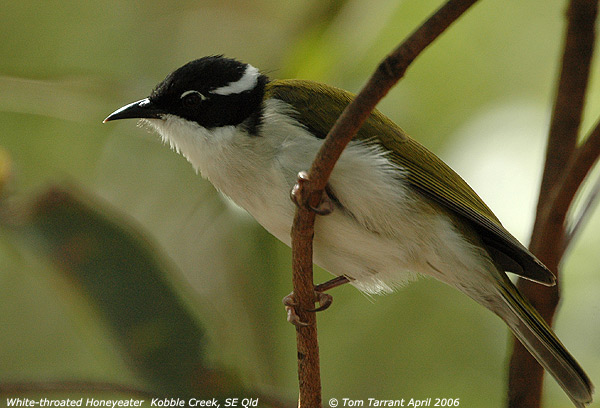
White-throated Honeyeater (Melithreptus albogularis) by Tom Tarrant

White-throated Honeyeater (Melithreptus albogularis) by Tom Tarrant

How about “albicauda“–White-tailed Shrike-Tyrant, White-tailed Blue Flycatcher, White-tailed Lark, White-tailed Hawk? Or “albogularis“–White-throated Jacamar, Rufous-banded Honeyeater, White-throated Pewee, White-throated Canary, White-throated Laughingthrush, White-throated Screech Owl, White-throated Honeyeater, White-throated Francolin, White-throated Caracara, White-throated Treerunner, White-spotted Fantail, White-throated Seedeater, White-throated Kingbird, White-chested White-eye? That last group was not all “white-throated,” in name, but they have white throats.

We know that Adam named the birds and other critters as the Scripture tells us:

Out of the ground the LORD God formed every beast of the field and every bird of the air, and brought them to Adam to see what he would call them. And whatever Adam called each living creature, that was its name. So Adam gave names to all cattle, to the birds of the air, and to every beast of the field. But for Adam there was not found a helper comparable to him. (Genesis 2:19-20 NKJV)

Blue-throated Bee-eater (Merops viridis) by Ray

Blue-throated Bee-eater (Merops viridis) by Ray

Did Adam use scientific names? I doubt it. Adam didn’t have to go though all this. Today the ornithologist (those who study birds) use this method of naming along with a common name in whatever language they speak.

Thought you might find it interesting to see some of the species’ second scientific names:
Colors:
albus/alba, white; cf albino, ater/atra, matt black, brachy-, short (Greek), brunne-, brown, caeruleus, blue, canus, grey, chloro-, green or yellow (Greek), cinerea-, grey or ash-coloured; cf cinders, crocus, cyan, blue, erythro-, red (Greek), flava, yellow, fuscus/fusca, dusky, guttatus, speckled or spotted, haema-, blood-red (Greek); cf haemoglobin, leuco-, white (Greek), lineatus, lined or striped, livia, blue-grey, longi-, long, luteus/lutea, yellow, major, greater, mega-, great (Greek), melas, black (Greek); cf melanistic, minor, lesser, niger/nigra, glossy black; cf negro, punctatus, spotted; cf punctuation, pusilla, tiny, rosea, rosy, ruber, red, rufus/rufa, red, striatus/striata, striped, versicolor, many-collored, varied, viridis, green, albogularis – White-throated
Countries:
abyssinicus, africana, americana, angolensis, antarctica,
Characteristics:
cauda, tail, –cephalus, head (Greek), –ceps, capped, headed, cilla, tail, collis, neck,  cristatus, crested, dactyl, finger or toe (Greek), frons, front, i.e. forehead, –gularis, throat, –ops, eye, –opsis, face, ptera, wing (Greek), –rhynchos, bill (Greek), –rostris, bill, torquatus, collared

Names are important and have meaning. Christ was named long before He was born. It was foretold.

Now all this was done, that it might be fulfilled which was spoken of the Lord by the prophet, saying, Behold, a virgin shall be with child, and shall bring forth a son, and they shall call his name Emmanuel, which being interpreted is, God with us. (Matthew 1:22-23 KJV)
After this manner therefore pray ye: Our Father which art in heaven, Hallowed be thy name.  (Matthew 6:9 KJV)
And in his name shall the Gentiles trust. (Matthew 12:21 KJV)
And Jesus came and spake unto them, saying, All power is given unto me in heaven and in earth. Go ye therefore, and teach all nations, baptizing them in the name of the Father, and of the Son, and of the Holy Ghost: Teaching them to observe all things whatsoever I have commanded you: and, lo, I am with you alway, even unto the end of the world. Amen.
(Matthew 28:18-20 KJV)

(Some information from Scientific bird names explained)

When The Robins Came – by Dorothy (Dot) Belle Malcolm

When The Robins Came – by Dorothy (Dot) Belle Malcolm

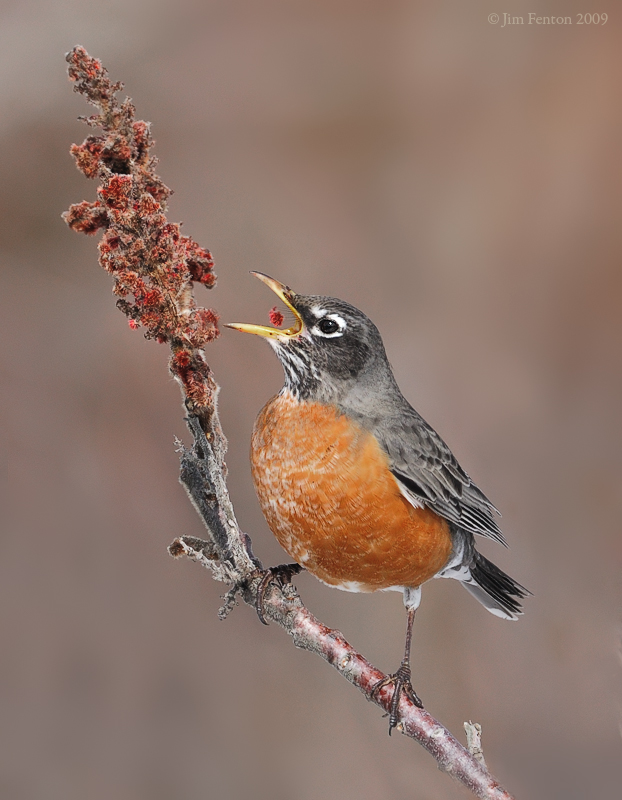
Robin Eating by Jim Fenton

Robin Eating by Jim Fenton

They came one day – loudly – uninvited – wildly flying thru the branches of the neighbor’s camphor tree, and were scattered over the ground as if it were a race to see who could eat the most. But primarily they were in the tree.

For days their noisy, frantic activity continued, usually in the mornings. Then when it seemed they had moved on to somewhere else, I saw they were back again.

Only this time in a tree near where I was cleaning up from the effects of winter’s cold. And they were oh so loud and gave no heed to me. I felt they were having much fun. They delighted in flicking decaying leaves around in search of wormy treasures.

In their colors of black and orange and yellow bills, they appeared fresh, strong, and each feather perfect. In their foraging, they would skitter, bob, stop still, stand proudly, with heads held up. They looked like strong healthy sentinels.

What joy seemed to be theirs, scattering leaves over the stone pathways. At first, I blamed the squirrels for the mess, but soon realized that was a wrong assumption. When they left, and I observed the mess, I thought they had not been taught good manners. After all they were visitors – shouldn’t they have cleaned up after themselves?

When I saw no more for a few days, I was sorry to have thought badly of their manners. After all, did I not greatly enjoy their antics? For you see, I had much to savor until they hopefully return next Spring.

Imagine how let down I felt by their supposed absence. I recalled their wild flights, beautiful fresh colors, proud looks and flicking up of the leaves. Oh how happy I was in a few days to be rewarded by the sight of a lone robin and hear it’s voice. Was it left behind I wondered – why did it appear to be alone? No, no, not at all, for in a couple days a goodly group appeared. I knew they were not here to stay though. When they return next year they will have an open invitation to my yard, trees, leaves, and all the rest. Let them be loud, wild, and messy. I shall not speak of bad manners again.

You will show me the path of life; In Your presence is fullness of joy; At Your right hand are pleasures forevermore. (Psalms 16:11 NKJV)
Look at the birds of the air: they neither sow nor reap nor gather into barns, and yet your heavenly Father feeds them. Are you not of more value than they? (Matthew 6:26 ESV)

Dorothy, Dottie as we know her at church, is a friend who likes to garden and provide for the needs of birds. When she told me of this true story, I had asked her if I could produce it here. Thanks, Dottie, I hope the readers enjoy it as much as I do and look forward to more observations of yours to share.

See her – Return of the Robins

*

Birds of the Bible – Pleasant to the Sight

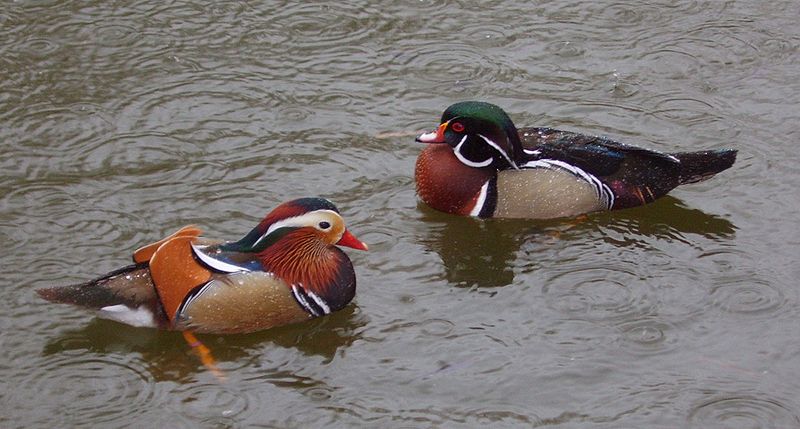
ANS-Anat Wood Duck and Mandarin Duck

And out of the ground made the LORD God to grow every tree that is pleasant to the sight, and good for food; the tree of life also in the midst of the garden, and the tree of knowledge of good and evil. (Genesis 2:9 KJV)

While searching for articles about birds I came across this article. The quote below is also appropriate for birds. I believe many of them definitely qualify as “pleasant to the sight.”

“The answer that came to my mind was suggested by Genesis 2:9, where we read that God created fruit trees not only good for food but also “pleasant to the sight.” We normally expect to find aspects of beauty as well as utility in the artifacts of human creation; how much more should we expect beauty to abound in the handiwork of God! Even creationists seem to forget that God is not only the Great Engineer, but the Great Artist as well.

Unfortunately, just like the engineering marvels of God have been corrupted by mutations and other effects of the bondage to corruption occasioned by our sin (Romans 8:18-20), so its beauty has been marred. The God whose faithful care daily sustains what He has made will not leave it so. But with the creation that “groaneth in travail,” we also wait for that time when “they shall not hurt nor destroy in all my holy mountain, but the earth shall be full of the knowledge of the Lord as the waters cover the sea” (Isaiah 6:11).” (From, Nature’s Challenge to Evolutionary Theory, by Gary Parker, Ed.D., ICR)

Thought you might enjoy seeing some “Pleasant to the Sight” birds. It was hard to narrow the choices down. These are from the Non-Passerines. Used the Passerines last week.

*

This slideshow requires JavaScript.

*

Birds of the Bible – Names of Birds

Out of the ground the LORD God formed every beast of the field and every bird of the air, and brought them to Adam to see what he would call them. And whatever Adam called each living creature, that was its name. So Adam gave names to all cattle, to the birds of the air, and to every beast of the field… (Genesis 2:19-20a NKJV)

Common Kingfisher by Phil Kwong

It would be nice to know which birds Adam named and what he named them. Today, the birds we see around the world are variations from those original bird kinds. The names that they now have are different, but, if Adam were to name the birds living today, do you think he might use these current names on the birds?

Below are some bird names that have caught my attention and you can almost visualize something about them:

A  – Amazon, Antbird, Antpitta, Antshrike, Antvireo, Antwren, Apostlebird, Awlbill
B  – Babbler, Bamboowren, Barbtail, Barbthroat, Bare-eye, Barwing, Baywing, Bee-eater, Bellbird, Berryeater, Berrypecker, Bird-of-paradise, Bishop, Blackbird, Blackcap, Blackeye, Black-headed, Blackstart, Blackthroat, Bleeding-heart, Bluebill, Bluewing, Bluebird, Bluebonnet, Bluetail, Bluethroat, Boatbill, Bowerbird, Brilliant, Bristlebill, Bristlebird, Broadbill, Bronzewing, Brushrunner, Bushbird, Bush-hen

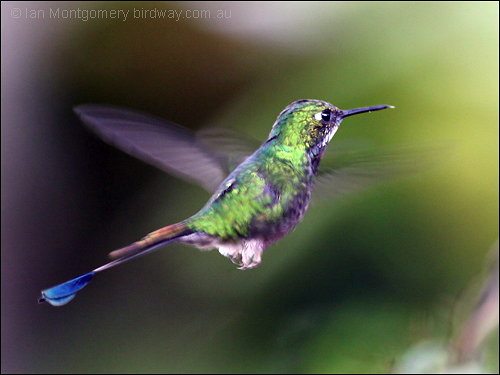
Booted Racket-tail (Ocreatus underwoodii) by Ian

Booted Racket-tail (Ocreatus underwoodii) by Ian

C  – Canvasback, Cardinal, Catbird, Chat, Chatterer, Cicadabird, Comet, Conebill, Cowbird, Creeper, Crestentchest, Crimsonwing, Crossbill, Cuckoo
D  – Darkeye, Darter, Dipper, Dollarbird, Dove
E  – Earthcreeper, Emerald
F  – Fairy, Fairy-bluebird, Fairywren, Fantail, Fieldwren, Figbird, Finfoot, Fireback, Firecrest, Firecrown, Fire-eye, Firefinch, Firetail, Firethroat, Flamecrest, Flatbill, Flicker, Flowerpecker, Flowerpiecer, Flufftail, Flycatcher, Foliage-gleaner, Forktail, Friarbird, Frigatebird, Frogmouth, Fruitcrow, Fruiteater, Fruithunter
G  – Gnatcatcher, Gnatwren, Go-away-bird, Goldcrest, Goldenback, Goldeneye, Goldenthroat, Goldfinch, Grassbird, Grassquit, Grasswren, Greytail, Groundcreeper, Groundpecker, Guineafowl

Carmine BeeEater by Marc at Africaddict

Carmine BeeEater (Merops nubicus or nubicoides) by Marc at Africaddict

H  – Hardhead, Helmetcrest, Helmetshrike, Hermit, Hillstar, Hobby, Honeybird, Honeycreeper, Honeyeater, Honeyguide, Hookbill, Hornbill, Hummingbird
J  – Jewel-babbler, Jewelfront, Junglefowl
K  – Kingbird, Kingfisher, Kite, Knot,
L  – Laughingthrush, Leafbird, Leaftosser, Longbill, Longclaw, Longtail, Lovebird
M  – Marshbird, Metaltail, Mockingbird, Monarch, Morepork, Mountaingem, Mourner, Mousebird, Mudnester
N  – Needletail, Nighthawk, Nunbird, Nutcracker, Nuthatch
O  – Oilbird, Openbill, Ovenbird, Oxpecker, Oystercatcher
P  – Palmchat, Palmcreeper, Pewee, Pilotbird, Pintail, Prickletail, Puffback, Puffbird, Puffleg
R  – Racket-tail, Rail, Razorbill, Recurvebill, Redhead, Redwing, Rockfinch, Rockfowl, Rockjumper, Rockrunner, Rockwarbler, Rockwren, Roller, Rushbird
S  – Sabrewing, Saddleback, Sanderling, Sandgrouse, Sandpiper, Sapphire, Sapphirewing, Sapsucker, Screamer, Screech, Scrubbird, Scrubfowl, Scrubtit, Scrubwren, Secretarybird, Seedcracker, Seedeater, Sheathbill, Shieldbill, Shoebill, Shortwing, Shoveler, Sicklebill, Silktail, Silverbird, Skimmer, Snowcock, Snowfinch, Softtail, Solitaire, Spadebill, Spatuletail, Spiderhunter, Spinebill, Spinetail, Spoonbill, Standardwing, Starfrontlet, Starthroat, Stilt, Stichbird, Straightbill, Streamcreeper, Streamertail, Stubtail, Sugarbird, Sunangel, Sunbeam, Sunbird, Sunbittern, Sungem, Surfbird, Swift
T  – Tailorbird, Tattler, Thicketbird, Thick-knee, Thistletail, Thornbill, Tinkerbird, Trainbearer, Treecreeper, Treehunter, Treepie, Treerunner, Treeswift, Trembler, Triller, Tropicbird, Trumpeter, Tuftedcheek, Tyrant
U  – Umbrellabird
V  – Violetear, Visorbearer
W  – Wagtail, Wallcreeper, Warbler, Waxbill, Waxwing, Weaver, Weebill, Wheatear, Whipbird, Whistler, White-eye, Whiteface, Whitethroat, Whitetip, Widowbird, Winter, Wiretail, Woodcock, Woodcreeper, Woodhen, Woodhaunter, Woodpecker, Woodstar
Y  – Yellowbrow, Yellowhammer, Yellowlegs, Yellowthroat

The slide show has just some of the Passerines (Song Birds) whose names might have been easy. I’ll save the non-Passerines for later. Tried not to use too many colors because that is also for other blogs.

*

This slideshow requires JavaScript.

*


See Also:
Bird Name Challenges
Variation within Created Kinds
Species and Kinds
Explaining Diversity within Created Kinds

*

Interesting Things – Dragonflies II

Thinking

Globe-Skimmer

Globe-Skimmer

Interesting Things – Dragonfly gave a lot of detail about the Dragonflies. Now the researchers have produced some very interesting details about their migration.  According to the “Mail Online”, they have longest migration by insects. They “fly 11,000 mile round-trip over ocean.” and the “BCC-Earth News” also has an article about their incredible journey.

From the BBC Earth News: “Every year, millions of dragonflies fly thousands of kilometres (11,000 miles) across the sea from southern India to Africa.

So says a biologist in the Maldives, who claims to have discovered the longest migration of any insect.

If confirmed, the mass exodus would be the first known insect migration across open ocean water.”

They go on to mention the Monarch Butterfly’s migration is much less lengthy, only traveling around 8,600 miles round-trip.

Round-trip of Dragonfly

Round-trip of Dragonfly from Mail Online

What an amazing feat these dragonflies perform. Below are the links to the articles, but what a fantastic Creator we have. As you read the articles, you cannot but be amazed by the way they were programmed to sense the weather patterns, knowing when the rains would be there, etc. There is no way this just happened without a designer.

O LORD, how many are Your works! In wisdom You have made them all; The earth is full of Your possessions. (Psalms 104:24 NASB)


Longest insect migration revealed by BBC Earth News”

Longest insect migration ever as dragonflies fly 11,000-mile round-trip over ocean” by Mail Online

Other Interesting Things

Interesting Things – Amazing Bird Migration

Interesting Things from Smiley Central
Here is a Video from Creation Moments about bird migration that you might find interesting. Our amazing Creator continues to show His marvelous Omniscience.

Here’s Wikipedia’s information about the Manx Shearwater

Manx Shearwaters

Manx Shearwaters

See More “Interesting Things”

*

Deuteronomy 14:11-18 Visualized

I trust you like my effort to use the Slideshow this way.


This slideshow requires JavaScript.

KJV

Most photos were provided by permission of the photographers in the sidebar.


Deuteronomy 14:11-18 KJV
(11) Of all clean birds ye shall eat.
(12) But these are they of which ye shall not eat: the eagle, and the ossifrage, and the ospray,
(13) And the glede, and the kite, and the vulture after his kind,
(14) And every raven after his kind,
(15) And the owl, and the night hawk, and the cuckow, and the hawk after his kind,
(16) The little owl, and the great owl, and the swan,
(17) And the pelican, and the gier eagle, and the cormorant,
(18) And the stork, and the heron after her kind, and the lapwing, and the bat.

Wordless Birds

*

Interesting Things – Communication

Interesting Things from Smiley Central
Some more interesting articles from Creation Moments:

Do Birds Truly Make Music?
Dueling Birdsongs
How to Speak Crow
Listening to Plant

Hornbills That Understand Monkey
Learn to Speak Bee

For more articles from Creation Moments, go to the Radio Transcript Archives and enter the word, “communication,” for more.

Updated: Aug 4

Bird School – Creation Moments

Interesting Things from Smiley Central
Here’s a link to another Creation Moment’s daily article that just came today. This time it is about how birds learn their songs from their parents. Interesting! Listen to, or read it at:
Bird School
Along the side you will see a Creation Moments link for other articles.