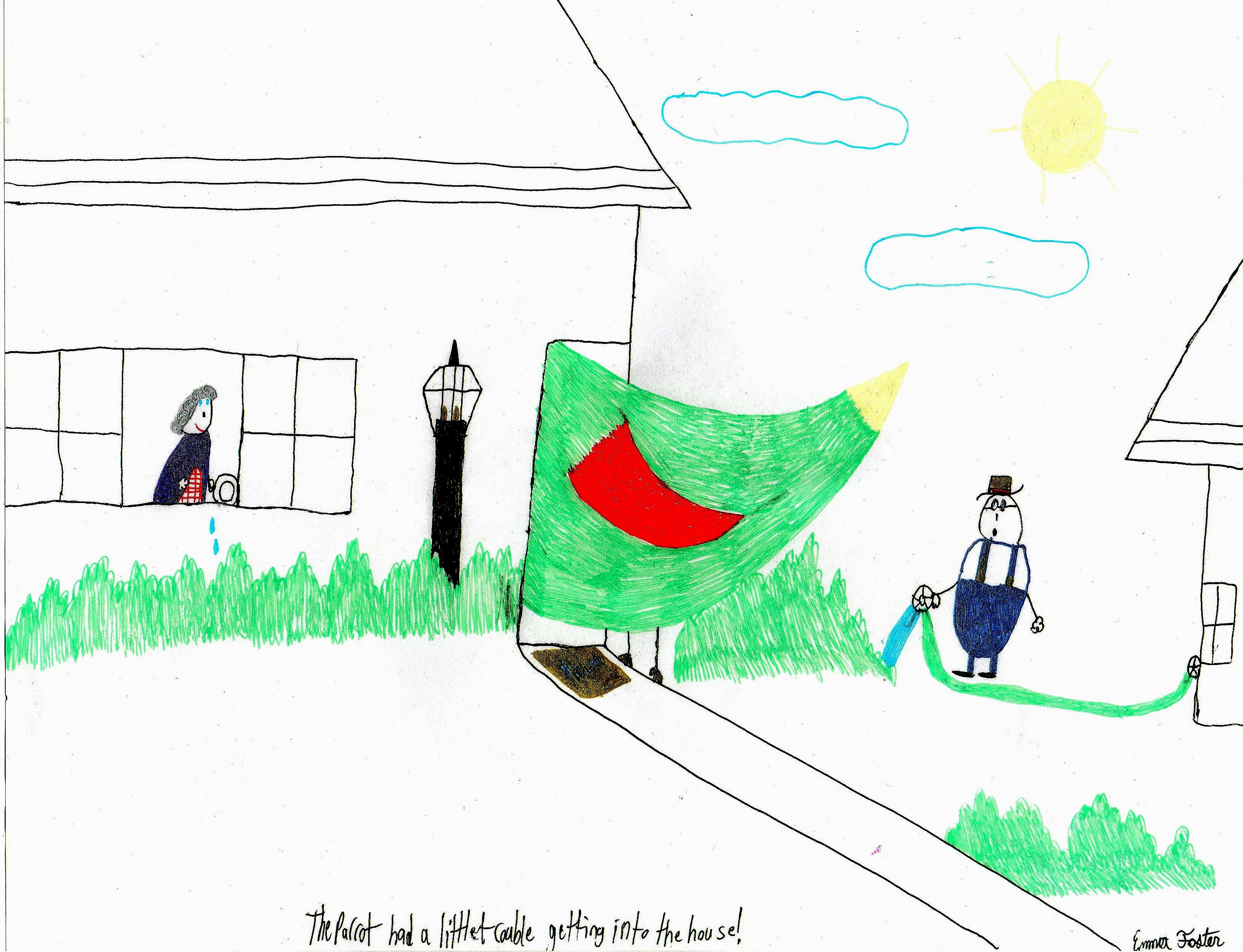
Mrs. Patterson’s Parrot – by Emma Foster


Parrot Had A Little Trouble Getting Into The House by Emma Foster

Parrot Had A Little Trouble Getting Into The House by Emma Foster

One day an old lady named Mrs. Patterson decided that she should have more company around. She traveled down to her local pet store and parked her car. Mrs. Patterson was guided by one of the workers through the store. When they came to the section where the birds were, Mrs. Patterson stopped at an enormous parrot. The parrot had red wings, green all over his body, a blue ring around his neck and a yellow spot on his tail. Mrs. Patterson wanted him for her bird.

It took awhile before the parrot could fit through the door! The parrot was so big that he had to wear a leash that Mrs. Patterson held through the window of her car and soar above it. The parrot had a little trouble getting in the house! When he got into the house, Mrs. Patterson named him Bob.

But one day a visitor came to the door and addressed himself as Mr. Field. He explained that Bob was his parrot that he had lost long ago. After saying goodbye, Bob left with Mr. Field, wearing a leash, and flew away above Mr. Field’s truck.

The next day Mr. Field came back with Bob! Mr. Field said that he worked at a circus with Bob, but Bob could not remember any of his tricks so he had to bring him back. Mrs. Patterson thanked him and sat down in a chair with Bob. She knew he would always be her parrot.

The End

(I did no editing of the article. Click the photo to enlarge it.)


Lee’s Addition:

Emma was 12 years old and Home Schooled when this was first posted. She attends our church and likes to draw and write. I told her that if she wrote about a bird, I would publish it here on the blog. Above is her story and drawing of Bob the enormous Parrot. I trust you enjoy it as well as I did. She was in the 7th Grade at the time. [She is now in college] If you enjoy it, please click the Like button as that will be an encouragement to her.

Train up a child in the way he should go; even when he is old he will not depart from it. (Proverbs 22:6 ESV)

P.S. Emma is the Granddaughter of another of our Guest Writers, Dot Malcolm. She has written three articles for us.

The Joy of Awareness

When the Robins Came

Return of the Robins

plus more

*

*** As I am bringing back the Kids articles, thought you might enjoy re-reading these tales.

If you would like to send in a Bird Tale that you have written, send it to Lee@Leesbird.com to be considered. It can be written by a younger writer or written with the young readers in mind. ***

Birds Vol 1 #1 – The Golden Pheasant

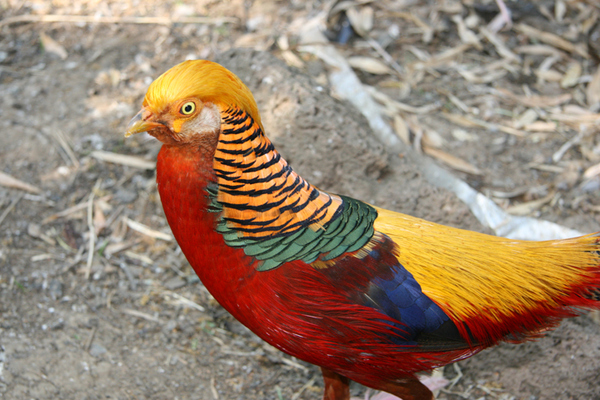
Golden Pheasant (Chrysolophus pictus)

Golden Pheasant (Chrysolophus pictus)

Birds Illustrated by Color Photography – Revisited

Vol 1. January, 1897 No. 1

*

THE GOLDEN PHEASANT

They call me the Golden Pheasant, because I have a golden crest. It is like a king’s crown. Don’t you think my dress is beautiful enough for a king?

See the large ruff around my neck. I can raise and lower it as I please.

I am a very large bird. I am fourteen inches tall and twenty-eight inches long. I can step right over your little robins and meadow larks and blue jays and not touch them.

Sometimes people get some of our eggs and put them under an old hen. By and by little pheasants hatch out, and the hen is very good to them. She watches over them and feeds them, but they do not wish to stay with her; they like their wild life. If they are not well fed they will fly away.

I have a wife. Her feathers are beginning to grow like mine. In a few years she will look as I do. We like to have our nests by a fallen tree.

Golden Pheasant (Chrysolophus pictus) WikiC

Golden Pheasant (Chrysolophus pictus) WikiC


imgt

HE well-known Chinese Pheasant, which we have named the Golden Pheasant, as well as its more sober-colored cousin, the Silver Pheasant, has its home in Eastern Asia.

China is pre-eminently the land of Pheasants; for, besides those just mentioned, several other species of the same family are found there. Japan comes next to China as a pheasant country and there are some in India.

In China the Golden Pheasant is a great favorite, not only for its splendid plumage and elegant form, but for the excellence of its flesh, which is said to surpass even that of the common pheasant. It has been introduced into Europe, but is fitted only for the aviary.

For purposes of the table it is not likely to come into general use, as there are great difficulties in the way of breeding it in sufficient numbers, and one feels a natural repugnance to the killing of so beautiful a bird for the sake of eating it. The magnificent colors belong only to the male, the female being reddish brown, spotted and marked with a darker hue. The tail of the female is short. The statement is made, however, that some hens kept for six years by Lady Essex gradually assumed an attire like that of the males.

Fly-fishers highly esteem the crest and feathers on the back of the neck of the male, as many of the artificial baits owe their chief beauty to the Golden Pheasant.

According to Latham, it is called by the Chinese Keuki, or Keukee, a word which means gold flower fowl.

Golden Pheasant (Chrysolophus pictus) Male ©© NotMicroButSoft

Golden Pheasant (Chrysolophus pictus) Male ©© NotMicroButSoft


“A merry welcome to thee, glittering bird!
Lover of summer flowers and sunny things!
A night hath passed since my young buds have heard
The music of thy rainbow-colored wings—
Wings that flash spangles out where’er they quiver,
Like sunlight rushing o’er a river.”


Lee’s Addition:

What a beautiful bird. I am glad in 2012 that birds are not used for their feathers as much as they were back in the 1800’s. I’ve noticed in the first articles how the birds mentioned are either caged, captive, eaten or their feathers used for hats and other uses. Man was given dominion over the animals and are allowed to eat them, but I still like to see them out and about freely flying.

For You meet him with the blessings of goodness; You set a crown of pure gold upon his head. (Psalms 21:3 NKJV)

Now when He had taken the scroll, the four living creatures and the twenty-four elders fell down before the Lamb, each having a harp, and golden bowls full of incense, which are the prayers of the saints. (Revelation 5:8 NKJV)

The Golden Pheasant or “Chinese Pheasant”, (Chrysolophus pictus) is a gamebird of the order Galliformes (gallinaceous birds) and the family Phasianidae. It is native to forests in mountainous areas of western China but feral populations have been established in the United Kingdom and elsewhere.

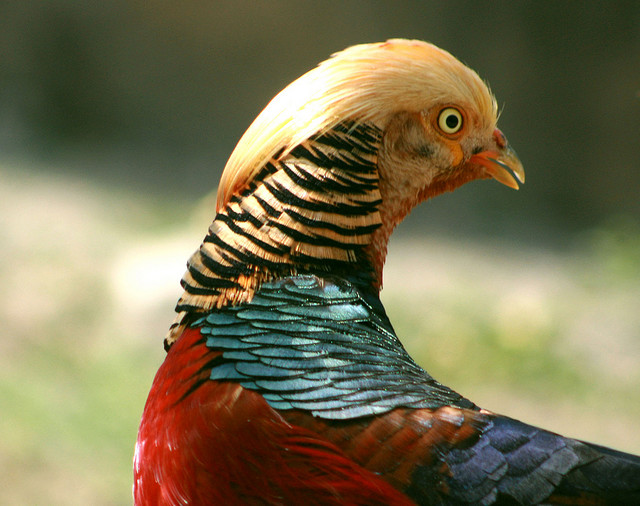
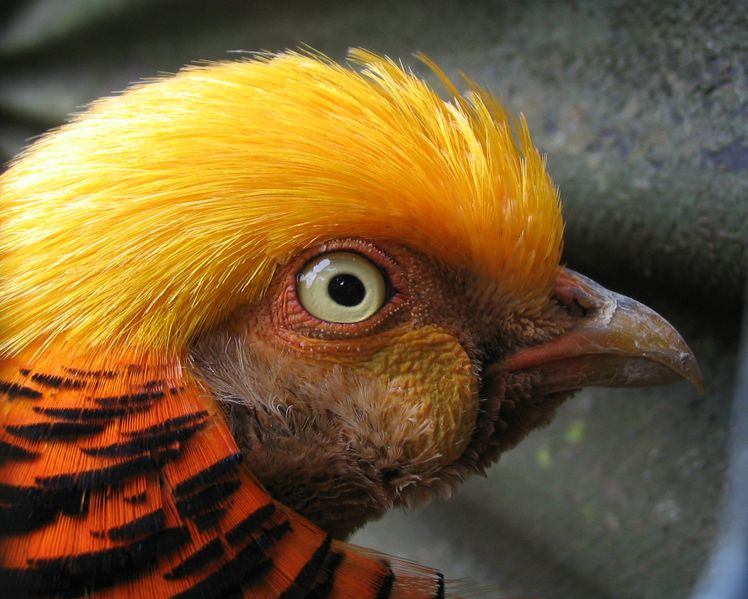
The adult male is 35.4-41.3 in (90–105 cm) in length, its tail accounting for two-thirds of the total length. It is unmistakable with its golden crest and rump and bright red body. The deep orange “cape” can be spread in display, appearing as an alternating black and orange fan that covers all of the face except its bright yellow eye, with a pinpoint black pupil.

Golden Pheasant (Chrysolophus pictus) ©WikiC

Golden Pheasant (Chrysolophus pictus) ©WikiC

Males have a golden-yellow crest with a hint of red at the tip. The face, throat, chin, and the sides of neck are rusty tan. The wattles and orbital skin are both yellow in colour, and the ruff or cape is light orange. The upper back is green and the rest of the back and rump are golden-yellow in colour. The tertiaries are blue whereas the scapulars are dark red. Another characteristic of the male plumage is the central tail feathers which are black spotted with cinnamon as well as the tip of the tail being a cinnamon buff. The upper tail coverts are the same colour as the central tail feathers. Males also have a scarlet breast, and scarlet and light chestnut flanks and underparts. Lower legs and feet are a dull yellow.

The female (hen) is much less showy, with a duller mottled brown plumage similar to that of the female Common Pheasant. She is darker and more slender than the hen of that species, with a proportionately longer tail (half her 60–80 cm length). The female’s breast and sides are barred buff and blackish brown, and the abdomen is plain buff. She has a buff face and throat. Some abnormal females may later in their lifetime get some male plumage. Lower legs and feet are a dull yellow.

Both males and females have yellow legs and yellow bills.

Despite the male’s showy appearance, these hardy birds are very difficult to see in their natural habitat, which is dense, dark young conifer forests with sparse undergrowth. Consequently, little is known of their behaviour in the wild.

They feed on the ground on grain, leaves and invertebrates, but roost in trees at night. While they can fly, they prefer to run: but if startled they can suddenly burst upwards at great speed, with a distinctive wing sound.

The Golden Pheasant is commonly found in zoos and aviaries, but often as impure specimens that have the similar Lady Amherst’s Pheasant in their lineage. (Wikipedia)

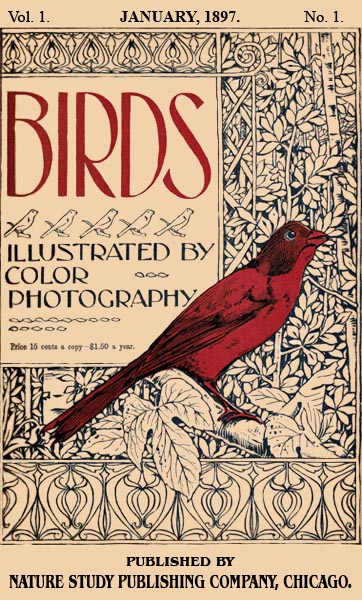
Birds Illustrated by Color Photograhy Vol 1 January 1897 No 1 - Cover

Birds Illustrated by Color Photography – Revisited  – Introduction

The above article is the third article in the monthly serial that was started in January 1897 “designed to promote Knowledge of Bird-Live.” These include Color Photography, as they call them, today they are drawings. There are at least three Volumes that have been digitized by Project Gutenberg.

To see the whole series of – Birds Illustrated by Color Photography – Revisited 

*

(Information from Wikipedia and other internet sources)

Next Article – The Australian Grass Parrakeet

Previous Article – Mandarin Duck

Links:

Phasianidae – Pheasants, Fowl & Allies
Galliformes Order
Golden Pheasant – Wikipedia
Golden Pheasant – ARKive

Gospel Presentation

*

The Joy of Awareness – by Dot Malcolm

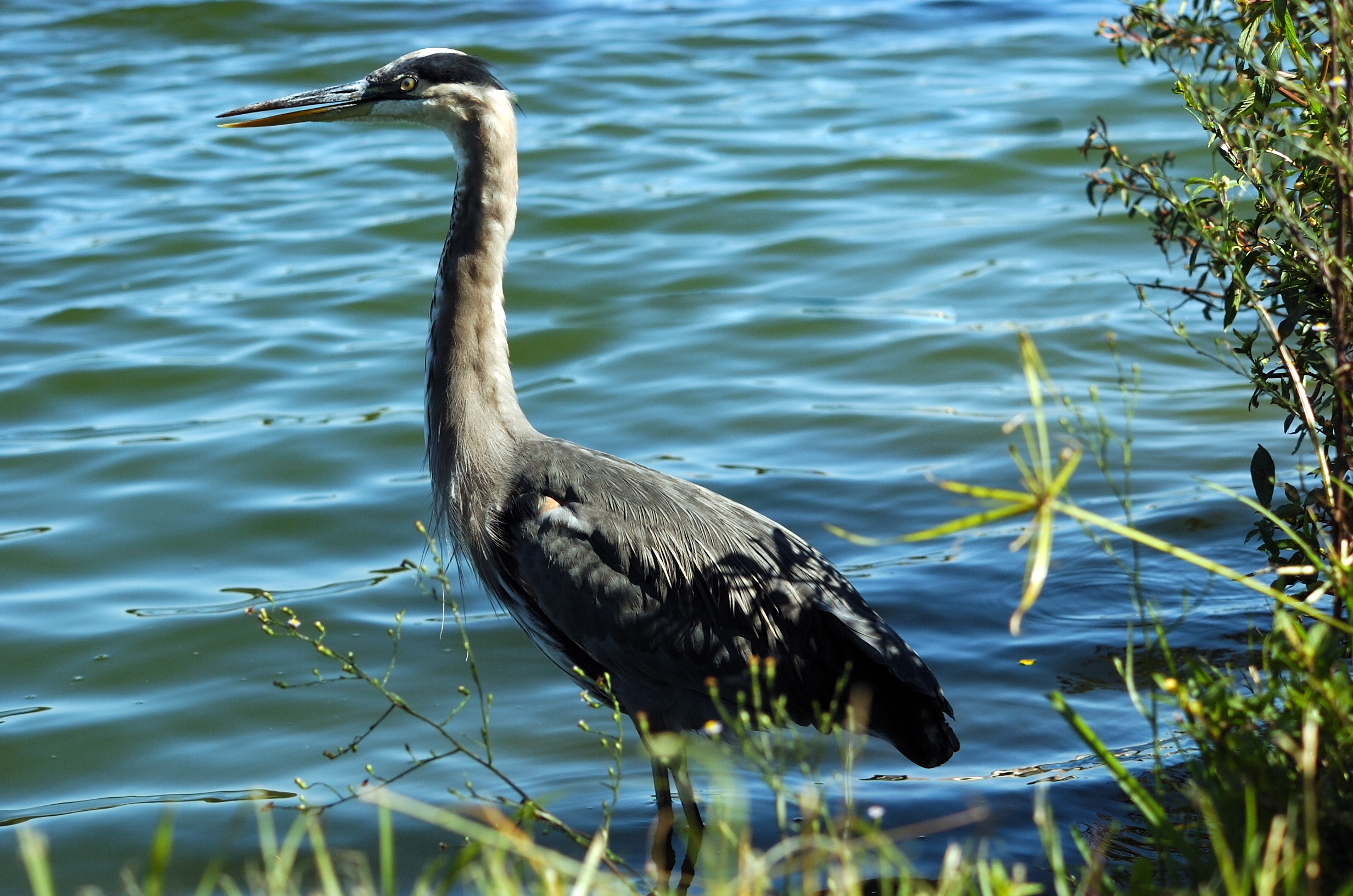
Great Blue Heron (Ardea herodias) by Dan at Lake Morton

Great Blue Heron (Ardea herodias) by Dan at Lake Morton

Since I was a child there has been an awareness of God’s creation and great enjoyment in it. At the age of 11 or 12 years, I saved my allowance and bought a book on Birds of America. It was real special to see a Heron fly over the farm headed for a swampy area.

My grandparents lived a short walking distance from us, and I liked going to her house. Her kitchen always smelled of toast. Also special was looking out the south kitchen window to see the wrens flying in and out of their houses which hung at eye level.

Carolina Wren (Thryothorus ludovicianus) by Lee at Circle B

Carolina Wren (Thryothorus ludovicianus) by Lee at Circle B

I no longer live in the north, but in the south and am now a grandma. Birds, butterflies and gardens are still high on my list of favorite things. Even tho’ the seasonal changes are not as evident as in the north, still I look forward to my special feathered friends coming and going.

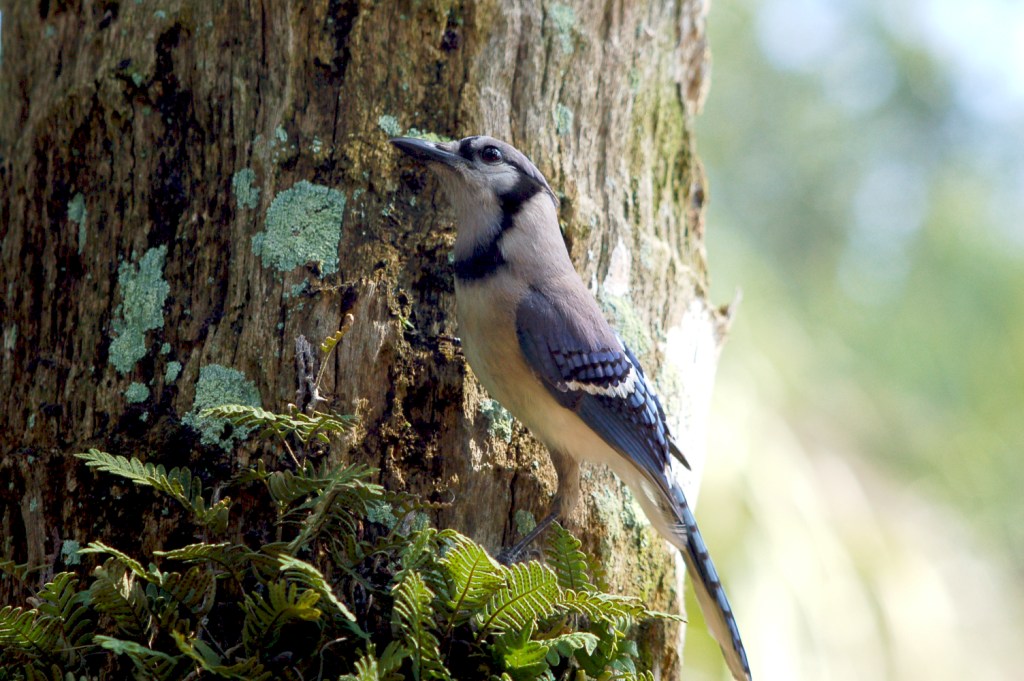
Blue Jay (Cyanocitta cristata) at Bok Tower By Dan'sPix

Blue Jay (Cyanocitta cristata) at Bok Tower By Dan’sPix

The Blue Jays are always present and they let me know before I see it, when the neighborhood Red-shouldered Hawk is around. They “Yell” enough to discourage even me if their frenzy of cries and wild flying were directed at me!

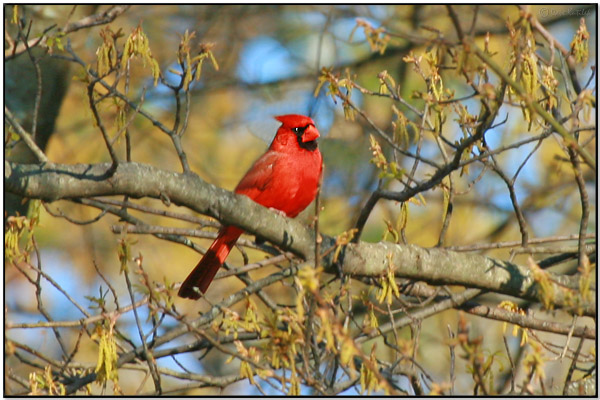
Northern Cardinal (Cardinalis cardinalis) by Daves BirdingPix

Northern Cardinal (Cardinalis cardinalis) by Daves BirdingPix

A pair of Cardinals come about the beginning of November, and I hear them before I see them. Also, in the winter months small chirpy birds can be heard which makes me look out the window for them. Today, I’m sitting on the patio swing having put out a cushion for myself and my sweet doggy companion, Ruby. When not claiming her seat, she stays busy with squirrel patrol.

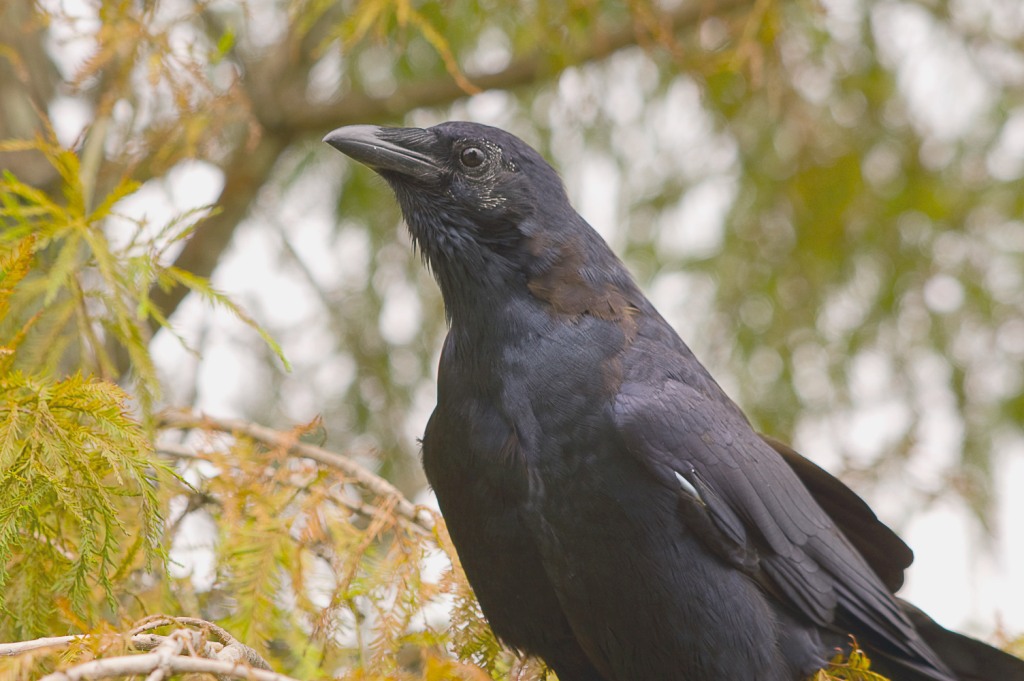
Fish Crow (Corvus ossifragus) at Lake Morton By Dan'sPix

Fish Crow (Corvus ossifragus) at Lake Morton By Dan’sPix

While working on the coming Sunday School lesson, I heard them – Crows. Some people find them irritating, but not me. Looking up I see black flying bodies against a blue sky dotted with white-dumpling clouds.

White Pelicans in Flight - Circle B Bar by Dan

White Pelicans in Flight – Circle B Bar

There are also the usual Vultures beautifully soaring overhead, and a single Pelican, and four unidentifiable ducks.

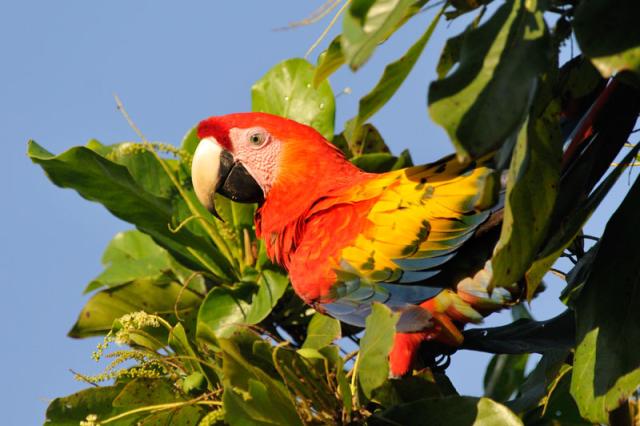
Scarlet Macaw (Ara macao) Reinier Munguia

Scarlet Macaw (Ara macao) Reinier Munguia

I should also mention of the neighbors Macaw (very noisy) who only makes me smile when he talks or laughs. They also have chickens that are very pleasant to listen to.

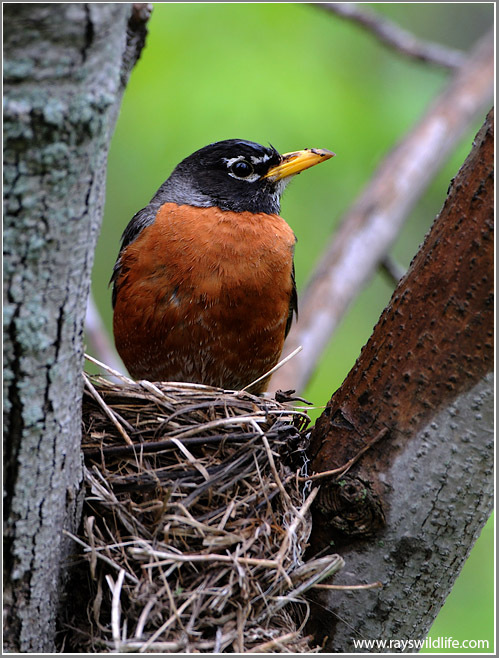
American Robin (Turdus migratorius) in nest by Ray

American Robin (Turdus migratorius) in nest by Ray

Admittedly the best will be if the Robins return. In the 5th grade our teacher had all of us draw a picture of a Robin. She then hung them around the room above the blackboards. Oh, Robins, please come back. Remember I promised not to mention your bad manners to anyone. I will gladly welcome you and you can be noisy, toss leaves, eat all the worms you want and anything else that suits you fancy.

Dot Malcolm, 12/30/11

Then God saw everything that He had made, and indeed it was very good. So the evening and the morning were the sixth day. (Genesis 1:31 NKJV)

See Dot’s other articles:

When The Robins Came – May 23, 2010

Return Of The Robins – March 14, 2011

*

Thanks, Dottie, for another interesting article. What a delight to read your love and awareness of birds. When the Robins come back, we will expect another article. You kept me busy finding photos for your many birds. Keep it up.

Dorothy is a charter member of our church, Faith Baptist, and a great friend.

*

Birds Vol 1 #1 – The Mandarin Duck

Mandarin Duck

Mandarin Duck

Birds Illustrated by Color Photography – Revisited

Vol 1. January, 1897 No. 1

*

THE MANDARIN DUCK.

A Letter from China.

Quack! Quack! I got in just in time.

I came as fast as I could, as I was afraid of being whipped. You see I live in a boat with a great many other ducks.

My master and his family live in the boat too. Isn’t that a funny place to live in?

We stay in all night. Waking up early in the morning, we cry Quack! Quack! until we wake the master.

He gets up and opens the gate for us and out we tumble into the water. We are in such a hurry that we fall over each other. We swim about awhile and then we go to shore for breakfast.

There are wet places near the shore where we find worms, grubs, and roots. When evening comes the master blows a whistle. Then we know it is time to come home.

We start as soon as we hear it, and hurry, because the last duck in gets a whipping. It does not hurt much but we do not like it, so we all try to get home first.

I have web feet, but I perch like other birds on the branches of the trees near the river.

My feathers are beautiful in the sunlight. My wife always sits near me. Her dress is not like mine. It is brown and grey.

From May to August I lose my bright feathers, then I put on a dress like my wife’s.

My master’s family are Chinese, and they are very queer. They would not sell me for anything, as they would not like to have me leave China.

Sometimes a pair of us are put in a gay cage and carried to a wedding. After the wedding we are given to the bride and groom.

I hear the master’s whistle again. He wants me to come in and go to bed. Quack! Quack! Good bye!

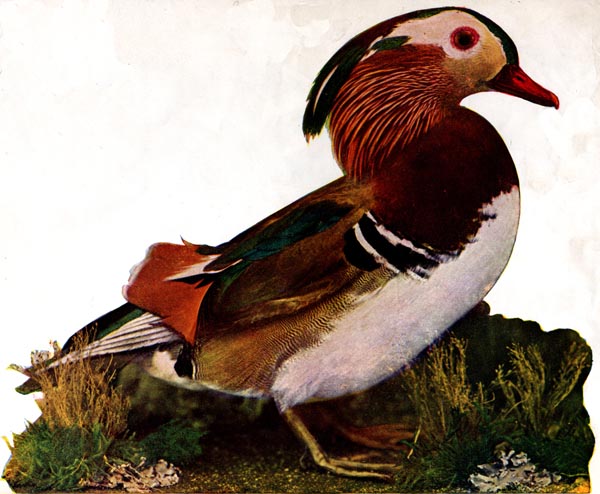
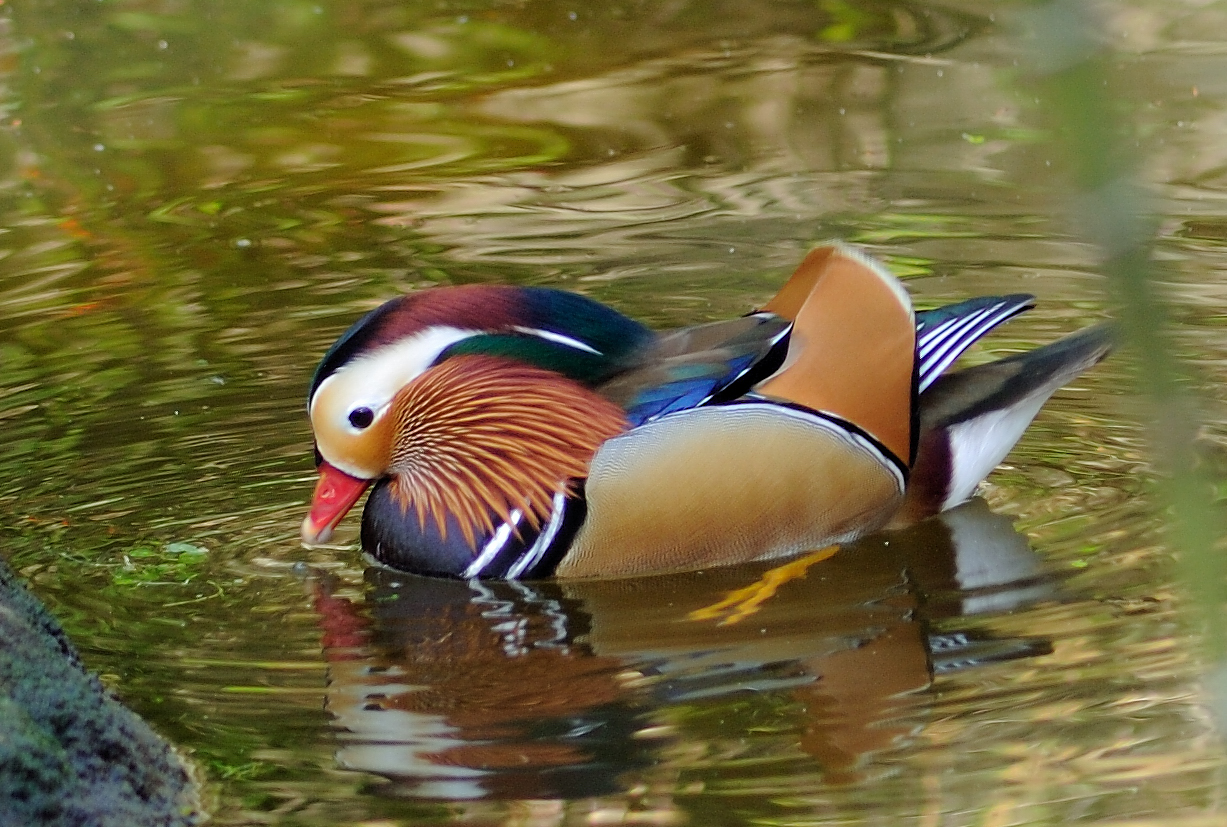
Mandarin Duck (Aix galericulata) by S Slayton

Mandarin Duck (Aix galericulata) by S Slayton

THE MANDARIN DUCK.

imga1

MORE magnificently clothed bird,” says Wood, “than the male Chinese Mandarin Duck, can hardly be found, when in health and full nuptial plumage. They are natives of China and Japan, and are held in such high esteem by the Chinese that they can hardly be obtained at any price, the natives having a singular dislike to seeing the birds pass into the possession of Europeans.”

Though web-footed, the birds have the power of perching and it is a curious sight to watch them on the branches of trees overhanging the pond in which they live, the male and female being always close together, the one gorgeous in purple, green, white, and chestnut, and the other soberly appareled in brown and grey. This handsome plumage the male loses during four months of the year, from May to August, when he throws off his fine crest, his wing-fans, and all his brilliant colors, assuming the sober tinted dress of his mate. The Summer Duck of America bears a close resemblance to the Mandarin Duck, both in plumage and manners, and at certain times of the year is hardly to be distinguished from that bird.

The foreign duck has been successfully reared in Zoological Gardens, some being hatched under the parent bird and others under a domestic hen, the latter hatching the eggs three days in advance of the former.

“The Chinese,” says Dr. Bennett, “highly esteem the Mandarin Duck, which exhibits, as they think, a most striking example of conjugal attachment and fidelity. A pair of them are frequently placed in a gaily decorated cage and carried in their marriage processions, to be presented to the bride and groom as worthy objects of emulation.”

“I could more easily,” wrote a friend of Dr. Bennett’s in China to whom he had expressed his desire for a pair of these birds, “send you two live Mandarins than a pair of Mandarin Ducks.”

Concerning their attachment and fidelity to one another, Dr. Bennett recites the following:

“Mr. Beale’s aviary at Maceo one day was broken open and the male bird stolen from the side of its mate. She refused to be comforted, and, retiring to the farthest part of the aviary, sat disconsolate, rarely partaking of food, and giving no attention to her soiled and rumpled plumage. In vain did another handsome drake endeavor to console her for her loss. After some time the stolen bird was found in the quarters of a miserable Chinaman, and at once restored to its mate. As soon as he recognized his abode he began to flap his wings and quack vehemently. She heard his voice and almost quacked to screaming with ecstasy, both expressing their joy by crossing necks and quacking in concert. The next morning he fell upon the unfortunate drake who had made consolatory advances to his mate, pecked out his eyes and so injured him that the poor fellow died in the course of a few days.”

According to Schrenck, this species appears in the countries watered by the Amoor about May, and departs again at the end of August; at this season it is always met with in small or large flocks, which are so extremely shy that they rarely come within gunshot. Whilst on the wing these parties crowd closely together in front, the birds in the rear occupying a comparatively free space.

Mandarin Duck (Aix galericulata) LPZoo by Dan

Mandarin Duck (Aix galericulata) LPZoo by Dan


Lee’s Addition:

The Mandarin Duck is in the Anatidae – Ducks, Geese & Swans Family of the Answeriformes Order.  Along with the Wood Duck, these ducks just amaze me in their creation. When the Lord created them, He must have had a very neat paint brush. They are so gorgeous! Every time I see them they almost bring tears to my eyes.

The Mandarin Duck (Aix galericulata), or just Mandarin, is a medium-sized perching duck, closely related to the North American Wood Duck. It is 16-19 in (41–49 cm) long with a 25.5-29.5 in (65–75 cm) wingspan.

The adult male is a striking and unmistakable bird. It has a red bill, large white crescent above the eye and reddish face and “whiskers”. The breast is purple with two vertical white bars, and the flanks ruddy, with two orange “sails” at the back. The female is similar to female Wood Duck, with a white eye-ring and stripe running back from the eye, but is paler below, has a small white flank stripe, and a pale tip to its bill. The Mandarin ducklings are almost identical in look to Wood ducklings, and appear very similar to Mallard ducklings. The ducklings can be distinguished from Mallard ducklings because the eye-stripe of Mandarin ducklings (and Wood ducklings) stops at the eye, while in Mallard ducklings it reaches all the way to the bill.

Unlike other species of ducks, most Mandarin drakes reunite with the hens they mated with along with their offsprings after the eggs have hatched and even share scout duties in watching the ducklings closely. However, even with both parents securing the ducklings, most of them do not survive to adulthood.

Mandarins may form small flocks in winter.

Mandarin Ducks, which are referred to by the Chinese as Yuan-yang (simplified Chinese: 鸳鸯; traditional Chinese: 鴛鴦; pinyin: yuān yāng), where yuan() and yang() respectively stand for male and female Mandarin Ducks.

In traditional Chinese culture, Mandarin Ducks represent a life-time couple, unlike many other species of ducks. Hence they are frequently featured in Chinese art and are regarded as a symbol of conjugal affection and fidelity.

But now ask the beasts, and they will teach you; And the birds of the air, and they will tell you; (Job 12:7 NKJV)

A Chinese proverb for loving couples uses the Mandarin Duck as a metaphor: “Two mandarin ducks playing in water” (simplified Chinese: 鸳鸯戏水; traditional Chinese: 鴛鴦戲水; pinyin: yuān yāng xì shuǐ). The Mandarin Duck symbol is also used in Chinese weddings, because in traditional Chinese lore they symbolize wedded bliss and fidelity.

Because the male and female plumages of the Mandarin Duck are so unalike, yuan-yang is frequently used colloquially in Cantonese to mean an “odd couple” or “unlikely pair” – a mixture of two different types of same category. For example,yuanyang (drink) and yuan-yang fried rice.

Birds Illustrated by Color Photograhy Vol 1 January 1897 No 1 - Cover

Birds Illustrated by Color Photography – Revisited – Introduction

The above article is the third article in the monthly serial that was started in January 1897 “designed to promote Knowledge of Bird-Live.” These include Color Photography, as they call them, today they are drawings. There are at least three Volumes that have been digitized by Project Gutenberg.

To see the whole series of – Birds Illustrated by Color Photography – Revisited

*

(Information from Wikipedia and other internet sources)

Next Article – The Golden Pheasant

Previous Article – The Resplendent Trogon (Quetzal)

Links:

Photos of Mandarin Ducks

Mandarin Duck – Wikipedia

Birds of the World – Anatidae – Ducks, Geese & Swans

Wordless Birds

*


Birds Vol 1 #1 – The Resplendent Trogon (Quetzal)

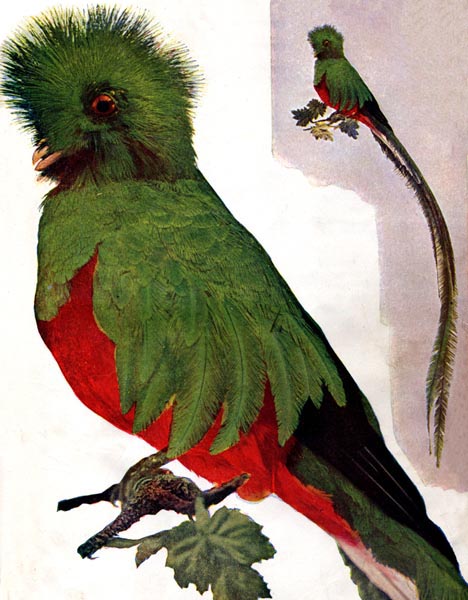
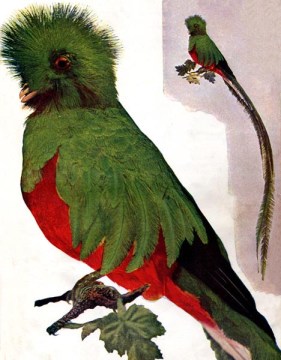
Resplendent (Trogon) Quetzal (Pharomachrus mocinno)

Resplendent (Trogon) Quetzal (Pharomachrus mocinno)

Birds Illustrated by Color Photography – Revisited

Vol 1. January, 1897 No. 1

*

THE RESPLENDENT TROGON

A Letter to Little Boys and Girls of the United States.

Is it cold where you live, little boys and girls? It is not where I live. Don’t you think my feathers grew in the bright sunshine?

My home is way down where the big oceans almost meet. The sun is almost straight overhead every noon.

I live in the woods, way back where the trees are tall and thick. I don’t fly around much, but sit on a limb of a tree way up high.

Don’t you think my red breast looks pretty among the green leaves?

When I see a fly or a berry I dart down after it. My long tail streams out behind like four ribbons. I wish you could see me. My tail never gets in the way.

Wouldn’t you like to have me sit on your shoulder, little boy? You see my tail would reach almost to the ground.

If you went out into the street with me on your shoulder, I would call whe-oowhe-oo, the way I do in the woods.

All the little boys and girls playing near would look around and say, “What is that noise?” Then they would see you and me and run up fast and say, “Where did you get that bird?”

The little girls would want to pull out my tail feathers to put around their hats. You would not let them, would you?

I have a mate. I think she is very nice. Her tail is not so long as mine. Would you like to see her too? She lays eggs every year, and sits on them till little birds hatch out. They are just like us, but they have to grow and get dressed in the pretty feathers like ours. They look like little dumplings when they come out of the eggs.

But they are all right. They get very hungry and we carry them lots of things to eat, so they can grow fast.

Your friend,
R. T.

Resplendent Quetzal (Pharomachrus mocinno) Reinier Munguia

Resplendent Quetzal (Pharomachrus mocinno) Reinier Munguia

THE RESPLENDENT TROGON

imgrESPLENDENT Trogons (Quetzals) are natives of Central America. There are fifty kinds, and this is the largest. A systematic account of the superb tribe has been given by Mr. Gould, the only naturalist who has made himself fully acquainted with them.

Of all birds there are few which excite so much admiration as the Resplendent Trogon.

The skin is so singularly thin that it has been not inaptly compared to wet blotting paper, and the plumage has so light a hold upon the skin that when the bird is shot the feathers are plentifully struck from their sockets by its fall and the blows which it receives from the branches as it comes to the ground.

Its eggs, of a pale bluish-green, were first procured by Mr. Robert Owen. Its chief home is in the mountains near Coban in Vera Paz, but it also inhabits forests in other parts of Guatemala at an elevation of from 6,000 to 9,000 feet.

From Mr. Salvin’s account of his shooting in Vera Paz we extract the following hunting story:

“My companions are ahead and Filipe comes back to say that they have heard a quesal (Resplendent Trogon). Of course, being anxious to watch as well as to shoot one of these birds myself, I immediately hurry to the spot. I have not to wait long. A distant clattering noise indicates that the bird is on the wing. He settles—a splendid male—on the bough of a tree not seventy yards from where we are hidden. It sits almost motionless on its perch, the body remaining in the same position, the head only moving from side to side. The tail does not hang quite perpendicularly, the angle between the true tail and the vertical being perhaps as much as fifteen or twenty degrees. The tail is occasionally jerked open and closed again, and now and then slightly raised, causing the long tail coverts to vibrate gracefully. I have not seen all. A ripe fruit catches the quesal’s eye and he darts from his perch, plucks the berry, and returns to his former position. This is done with a degree of elegance that defies description. A low whistle from Capriano calls the bird near, and a moment afterward it is in my hand—the first quesal I have seen (…).”

The above anecdote is very beautiful and graphic, but we read the last sentence with pain. We wish to go on record with this our first number as being unreconciled to the ruthless killing of the birds. He who said, not a sparrow “shall fall on the ground without your Father,” did not intend such birds to be killed, but to beautify the earth.

The cries of the quesal are various. They consist principally of a low note, whe-oowhe-oo, which the bird repeats, whistling it softly at first, then gradually swelling it into a loud and not unmelodious cry. This is often succeeded by a long note, which begins low and after swelling dies away as it began. Other cries are harsh and discordant. The flight of the Trogon is rapid and straight. The long tail feathers, which never seem to be in the way, stream after him. The bird is never found except in forests of the loftiest trees, the lower branches of which, being high above the ground, seem to be its favorite resort. Its food consists principally of fruit, but occasionally a caterpillar is found in its stomach.
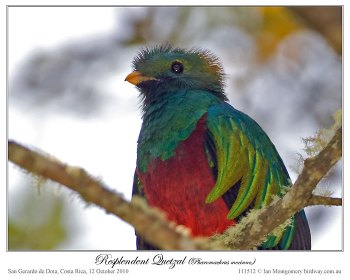
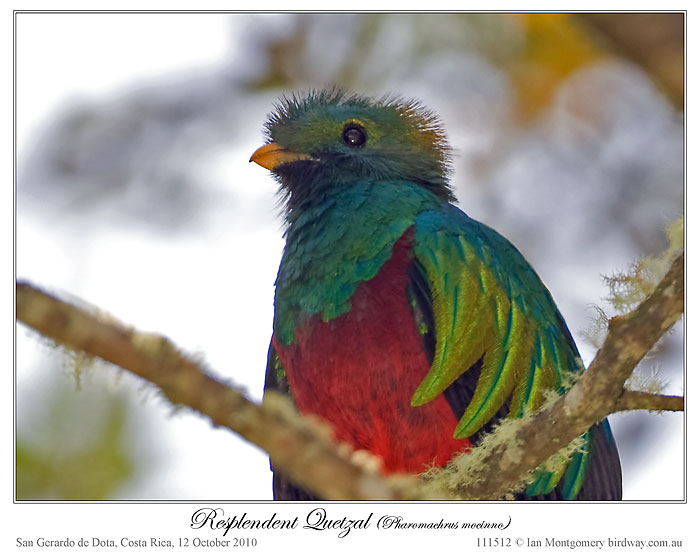
Resplendent Quetzal (Pharomachrus mocinno) by Ian

Resplendent Quetzal (Pharomachrus mocinno) by Ian


Lee’s Addition:

The Resplendent is in the Trogan Family, but today it is called the Resplendent Quetzal (Pharomachrus mocinno). Along with the writer, needless killing of birds is uncalled for, but back in 1897 the ladies liked feathers in their hats. Thankfully, that practice has been stopped for the most part, but how many birds have become extinct or near extinct because of it? What a fantastic bird the Lord created with these long tails.

For man also does not know his time: Like fish taken in a cruel net, Like birds caught in a snare, So the sons of men are snared in an evil time, When it falls suddenly upon them. (Ecclesiastes 9:12 NKJV)
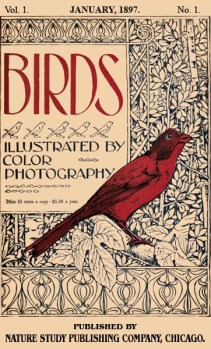
Birds Illustrated by Color Photograhy Vol 1 January 1897 No 1 - Cover

Birds Illustrated by Color Photograhy Vol 1 January 1897 No 1 – Cover

Birds Illustrated by Color Photography – Revisited – Introduction

The above article is the second article in the monthly serial that was started in January 1897 “designed to promote Knowledge of Bird-Live.” These include Color Photography, as they call them, today they are drawings. There are at least three Volumes that have been digitized by Project Gutenberg.

To see the whole series of – Birds Illustrated by Color Photography – Revisited

*

The Resplendent Quetzal is one of 43 species in the Trogonidae – Trogons Family in the Trogoniformes Order. Of the 7 Genus, only two have Quetzals and the other five have Trogons.

The word “trogon” is Greek for “nibbling” and refers to the fact that these birds gnaw holes in trees to make their nests.

The Resplendent Quetzal, Pharomachrus mocinno, is a bird in the trogon family. It is found from southern Mexico to western Panama (unlike the other quetzals of the genus Pharomachrus, which are found in South America and eastern Panama). It is well known for its colorful plumage. There are two subspecies, P. m. mocinno and P. m. costaricensis.

This species is 36–40 cm (14–16 in) long, plus up to 65 cm (26 in) of tail streamer for the male, and weighs about 210 g (7 oz). It is the largest representative of the trogon order. The subspecies costaricensis is slightly smaller than the nominate race and has shorter narrower tail plumes.

This quetzal plays an important role in Mesoamerican mythologies. The Resplendent Quetzal is Guatemala’s national bird, and an image of it is on the flag and coat of arms of Guatemala. It is also the name of the local currency (abbreviation GTQ).

1989 Half Quetzal

1989 Half Quetzal

Trogons are residents of tropical forests worldwide, with the greatest diversity in the Neotropics. The genus Apaloderma contains the three African species, Harpactes and Apalharpactes are Asian, and the remaining four genera are found in Central and South America.

They feed on insects and fruit, and their broad bills and weak legs reflect their diet and arboreal habits. Although their flight is fast, they are reluctant to fly any distance. Trogons are generally not migratory, although some species undertake partial local movements.

Trogons have soft, often colourful, feathers with distinctive male and female plumage. They are the only type of animal with a heterodactyl toe arrangement.

The trogons are insectivorous, usually hunting from a perch. They nest in holes dug into trees or termite nests, laying 2-4 white or pastel-coloured eggs.

The majority of trogons are birds of tropical and subtropical forests. They have a cosmopolitan distribution in the worlds wet tropics, being found in the Americas, Africa and Asia. A few species are distributed into the temperate zone, with one species, the Elegant Trogon, reaching the south of the United States specifically southern Arizona and the surrounding area. Some species, particularly the quetzals, are adapted to cooler montane forest.

The trogons as a family are fairly uniform in appearance, they have compact bodies with long tails (very long in the case of the quetzals), and short necks. Trogons range in size from the 23 cm, 40 gram Scarlet-rumped Trogon to the 40 cm, 210 gram Resplendent Quetzal (not including the male quetzal’s 3-foot-long (0.91 m) tail streamers). Their legs and feet are weak and short, and trogons are essentially unable to walk beyond a very occasional shuffle along a branch. They are even incapable of turning around on a branch without using their wings. The ratio of leg muscle to body weight in trogons is only 3 percent, the lowest known ratio of any bird.

(Information from Wikipedia and other internet sources)

Next Article – The Mandarin Duck

Previous Article – The Nonpareil – Painted Bunting

Wordless Birds

Links:

Ian’s Bird of the Week – Resplendent Quetzal
Ian’s Bird of the Week – Violaceous Trogon
Trogons & Quetzel Photos – Ian’s Birdway
Resplendent Quetzal Photos on Aves – Wikipedia
Resplendent Quetzal Wikipedia
Trogon Family – Wikipedia
Birds of the World – Trogonidae

*
Birds Illustrated by Color Photography – Revisited – Introduction

While searching for e-books for my reader, I came across the Birds Illustrated by Color Photograpy. It was a monthly serial started in 1897 “Designed to Promote Knowledge of Bird-Life.”  There are at least 3 volumes that have been digitized by the Project Gutenberg and these are all in the Public Domain.

The Drawings, “Photography,” are very good and the stories and details about the different birds are interesting. So, starting today, those pages from the past will be “Revisited” with updates to current names and more information about the birds. They will be released as they are completed.

Below is a copy of the Birds Illustrated by Color Photography – Revisited page.


Under Construction

Vol. 1. No. 1. JANUARY, 1897. PRICE 15 CENTS: $1.50 A YEAR.

ONCE A MONTH.

Birds Illustrated by Color Photograhy Vol 1 January 1897 No 1 - Cover

Birds Illustrated by Color Photograhy Vol 1 January 1897 No 1 – Cover

Nature Study Publishing Company OFFICE: FISHER BUILDING CHICAGO

 BIRDS

ILLUSTRATED BY COLOR PHOTOGRAPHY

A MONTHLY SERIAL

DESIGNED TO PROMOTE

KNOWLEDGE OF BIRD-LIFE


“With cheerful hop from perch to spray, They sport along the meads; In social bliss together stray, Where love or fancy leads.

Through spring’s gay scenes each happy pair Their fluttering joys pursue; Its various charms and produce share, Forever kind and true.”


CHICAGO, U. S. A. Nature Study Publishing Company, Publishers 1896

PREFACE.

It has become a universal custom to obtain and preserve the likenesses of one’s friends. Photographs are the most popular form of these likenesses, as they give the true exterior outlines and appearance, (except coloring) of the subjects. But how much more popular and useful does photography become, when it can be used as a means of securing plates from which to print photographs in a regular printing press, and, what is more astonishing and delightful, to produce the real colors of nature as shown in the subject, no matter how brilliant or varied.

We quote from the December number of the Ladies’ Home Journal: “An excellent suggestion was recently made by the Department of Agriculture at Washington that the public schools of the country shall have a new holiday, to be known as Bird Day. Three cities have already adopted the suggestion, and it is likely that others will quickly follow. Of course, Bird Day will differ from its successful predecessor, Arbor Day. We can plant trees but not birds. It is suggested that Bird Day take the form of bird exhibitions, of bird exercises, of bird studies—any form of entertainment, in fact, which will bring children closer to their little brethren of the air, and in more intelligent sympathy with their life and ways. There is a wonderful story in bird life, and but few of our children know it. Few of our elders do, for that matter. A whole day of a year can well and profitably be given over to the birds. Than such study, nothing can be more interesting. The cultivation of an intimate acquaintanceship with our feathered friends is a source of genuine pleasure. We are under greater obligations to the birds than we dream of. Without them the world would be more barren than we imagine. Consequently, we have some duties which we owe them. What these duties are only a few of us know or have ever taken the trouble to find out. Our children should not be allowed to grow to maturity without this knowledge. The more they know of the birds the better men and women they will be. We can hardly encourage such studies too much.” Of all animated nature, birds are the most beautiful in coloring, most graceful in form and action, swiftest in motion and most perfect emblems of freedom. They are withal, very intelligent and have many remarkable traits, so that their habits and characteristics make a delightful study for all lovers of nature. In view of the facts, we feel that we are doing a useful work for the young, and one that will be appreciated by progressive parents, in placing within the easy possession of children in the homes these beautiful photographs of birds. The text is prepared with the view of giving the children as clear an idea as possible, of haunts, habits, characteristics and such other information as will lead them to love the birds and delight in their study and acquaintance. NATURE STUDY PUBLISHING CO.

Copyrighted, 1896.

Lee’s Addition:

Above is the Cover Photo and Preface to a monthly magazine written about Birds. The different birds are illustrated with a lovely Colorful Illustration and then details about the individual bird. Some of the birds have poems and stories also included. The Birds, Illustrated by Color Photography was begun in January of 1897 and went until at least February 1898. Why produce these pages? For one, they are very interesting and as birdwatchers, reading about the various birds that were so beautifully created, is enjoyable. The writers back in 1897 and 1898 spent many hours preparing this magazine, so why not re-visit their work. Just because time moves on does not mean everything from the past should be forgotten.

Remove not the ancient landmark, which thy fathers have set. (Proverbs 22:28 KJV)

Yea, whereto might the strength of their hands profit me, in whom old age was perished? (Job 30:2 KJV)

I remember the days of old; I meditate on all thy works; I muse on the work of thy hands. (Psalms 143:5 KJV)

These will be produced with updates to today and current photos also. Some of the names have been changed since then and that will be shown. Also, current links to more information will be provided, like our Birds of the Bible and Birds of the World, plus others. Some editing will happen, as I have already found one incident to remove because it was offensive to a people group. This book was digitized by the great people at the Project Gutenberg and this is in the Public Domain, including the Illustrations.

Most articles have two parts. The first is geared to the reading level for children and the other part for more mature readers. I trust you enjoy reading and learning about the birds.

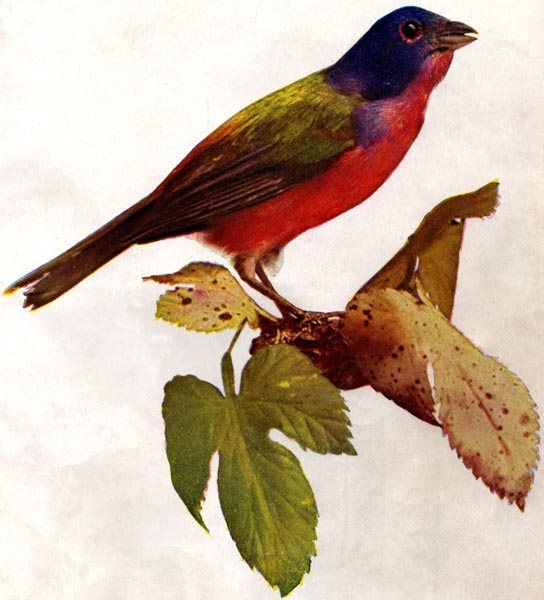
Painted Bunting (Passerina ciris) - Drawing

Nonpareil – Painted Bunting (Passerina ciris) – Drawing

Volume 1, Number 1, January 1987 (Articles will be activated as they are published here.)

The Nonpareil – Painted Bunting
The Resplendent Trogon
The Mandarin Duck
The Golden Pheasant
The Australian Grass Parrakeet
The Cock-Of-The-Rock
The Red Bird Of Paradise
The Yellow Throated Toucan
The Red-Rumped Tanager
The Golden Oriole

Volume 1, Number 2, February 1897

The Blue Jay
The Swallow-Tailed Indian Roller
The Red Headed Woodpecker and The Drummer Bird
Mexican Mot Mot
King Parrot Or King Lory
The American Robin – The Bird Of The Morning
The Kingfisher – The Lone Fisherman
The Red Wing Black Bird – The Bird Of Society
Blue Mountain Lory
The American Red Bird

Volume 1, Number 3, March 1897

Little Boy Blue – The Blue Bird
The Swallow
The Brown Thrush
The Japan Pheasant
The Flicker
The Bobolink
The Crow and The Common Crow
The Return Of The Birds
The Black Tern
The Meadow Lark
The Long-Eared Owl (Great Horned)

Volume 1, Number 4, April 1897

The Rose-Breasted Grosbeak
The Canada Jay
The Purple Gallinule
Smith’s Painted Longspur
The American Cross Bill and The Legend 
Bird Day In The Schools
The California Woodpecker
The Piedbill Grebe
The Bohemian Wax-Wing
The Marsh Wren
The Arizona Green Jay
Amateur Photography

Volume 1, Number 5, May 1897.

Nesting Time
National Council of Women
The Screech Owl
The Orchard Oriole
The Marsh Hawk
The Black-Capped Chickadee
The Scissor-Tailed Flycatcher
The Prothonotary Yellow Warblers
The Indigo Bunting
The Night Hawk
The Wood Thrush
The American Catbird

Volume 1, Number 6, June 1897

Bird Song
The Yellow-Throated Vireo
The Mocking Bird
The Mocking Bird
June
The Black-Crowned Night Heron
The Ring-Billed Gull
The Loggerhead Shrike
The Baltimore Oriole
The Snowy Owl
Birds And Farmers
The Scarlet Tanager
The Ruffed Grouse
The Black And White Creeping Warbler

Volume 2, Number 1, July 1897

Bird Song
The Bald-Headed Eagle
The Semi-Palmated Ring Plover
The Mallard Duck
The American Avocet
The Canvas-Back Duck
The Wood Duck
The Anhinga Or Snake Bird
The American Woodcock
The American Scoter
Old Abe
The Snowy Heron

Volume 2, Number 2, August 1897

Bird Song
The American Osprey
The Sora Rail
The Kentucky Warbler
The Red Breasted Merganser
The Yellow Legs
The Skylark
Wilson’s Phalarope
The Evening Grosbeak
The Turkey Vulture
To A Water-Fowl
Gambel’s Partridge

Volume 2, Number 3, September 1897

Bird Song
The Yellow Warbler
The Hermit Thrush
The Song Sparrow
The Cuckoo
The Ruby-Throated Humming Bird
The House Wren
The Phoebe
The Ruby-Crowned Kinglet
The Mourning Dove
How The Birds Secured Their Rights
The Captive’s Escape
The White-Breasted Nuthatch

Volume 2, Number 4, October 1897

Birds In Captivity
The Blackburnian Warbler
The Lost Mate
The American Goldfinch
The Chimney Swift
Shore Lark
The Yellow-Bellied Sapsucker
The Warbling Vireo
The Sapsucker
The Wood Pewee
The Snowflake
The Slate-Colored Junco
The Kingbird

Volume 2, Number 5, November 1897

John James Audubon
The Summer Tanager
The American White-Fronted Goose
The Turnstone
Snowbirds
Birds Of Passage
The Belted Piping Plover
The Wild Turkey
The Cerulean Warbler
The Yellow-Billed Tropic Bird
The European Kingfisher
The Vermilion Fly-Catcher
Bird Miscellany
The Lazuli Bunting

Volume 2, Number 6, December 1897

The Ornithological Congress
The Mountain Bluebird
The English Sparrow
Allen’s Humming Bird
The Green-Winged Teal
The Black Grouse
The American Flamingo
The Birds Of Bethlehem
The Bird’s Story
The Verdin
The Bronzed Grackle
The Ring-Necked Pheasant
Bird Miscellany
The Yellow-Breasted Chat

*

Wordless Birds

*
Birds Vol 1 #1 – Nonpareil – Painted Bunting

Painted Bunting (Passerina ciris) - Drawing

Painted Bunting (Passerina ciris) – Drawing

Birds Illustrated by Color Photography – Revisited

Vol 1. January, 1897 No. 1

*

THE NONPAREIL

I am called the Nonpareil because there is no other bird equal to me.

I have many names. Some call me the “Painted Finch” or “Painted Bunting.” Others call me “The Pope,” because I wear a purple hood.

I live in a cage, eat seeds, and am very fond of flies and spiders.

Sometimes they let me out of the cage and I fly about the room and catch flies. I like to catch them while they are flying.

When I am tired I stop and sing. There is a vase of flowers in front of the mirror.

I fly to this vase where I can see myself in the glass. Then I sing as loud as I can. They like to hear me sing.

I take a bath every day and how I do make the water fly!

I used to live in the woods where there were many birds like me. We built our nests in bushes, hedges, and low trees. How happy we were.

My cage is pretty but I wish I could go back to my home in the woods.

*

“Sweet warblers of the sunny hours,
Forever on the wing,
I love thee as I love the flowers,
The sunlight and the spring.

They come like pleasant memories
In summer’s joyous time,
And sing their gushing melodies,
As I would sing a rhyme.

In the green and quiet places,
Where the golden sunlight falls,
We sit with smiling faces
To list their silver calls.

And when their holy anthems
Come pealing through the air,
Our hearts leap forth to meet them
With a blessing and a prayer.

Amid the morning’s fragrant dew,
Amid the mists of even,
They warble on as if they drew
Their music down from heaven.

How sweetly sounds each mellow note
Beneath the moon’s pale ray,
When dying zephyrs rise and float
Like lovers’ sighs away!”

Painted Bunting (Passerina ciris) ©©Flickr

Painted Bunting (Passerina ciris) ©©Flickr

*

THE NONPAREIL.

So full of fight is this little bird, that the bird trappers take advantage of his disposition to make him a prisoner. They place a decoy bird on a cage trap in the attitude of defense, and when it is discovered by the bird an attack at once follows, and the fighter soon finds himself caught.

They are a great favorite for the cage, being preferred by many to the Canary. Whatever he may lack as a songster he more than makes up by his wonderful beauty. These birds are very easily tamed, the female, even in the wild state, being so gentle that she allows herself to be lifted from the nest. They are also called the “Painted Finch” or “Painted Bunting”. They are found in our Southern States and Mexico. They are very numerous in the State of Louisiana and especially about the City of New Orleans, where they are greatly admired by the French inhabitants, who, true to their native instincts, admire anything with gay colors. As the first name indicates, he has no equal, perhaps, among the songsters for beauty of dress. On account of this purple hood, he is called by the French “Le Pape”, meaning The Pope.

The bird makes its appearance in the Southern States the last of April and, during the breeding season, which lasts until July, two broods are raised. The nests are made of fine grass and rest in the crotches of twigs of the low bushes and hedges. The eggs have a dull or pearly-white ground and are marked with blotches and dots of purplish and reddish brown.

It is very pleasing to watch the numerous changes which the feathers undergo before the male bird attains his full beauty of color. The young birds of both sexes during the first season are of a fine olive green color on the upper parts and a pale yellow below. The female undergoes no material change in color except becoming darker as she grows older. The male, on the contrary, is three seasons in obtaining his full variety of colors. In the second season the blue begins to show on his head and the red also makes its appearance in spots on the breast. The third year he attains his full beauty.

Their favorite resorts are small thickets of low trees and bushes, and when singing they select the highest branches of the bush. They are passionately fond of flies and insects and also eat seeds and rice.

Thousands of these birds are trapped for the cage, and sold annually to our northern people and also in Europe. They are comparatively cheap, even in our northern bird markets, as most of them are exchanged for our Canaries and imported birds that cannot be sent directly to the south on account of climatic conditions.

Many a northern lady, while visiting the orange groves of Florida, becomes enchanted with the Nonpareil in his wild state.

imgsWEET warblers of the sunny hours,

Forever on the wing,
I love thee as I love the flowers,
The sunlight and the spring.

They come like pleasant memories
In summer’s joyous time,
And sing their gushing melodies,
As I would sing a rhyme.

In the green and quiet places,
Where the golden sunlight falls,
We sit with smiling faces
To list their silver calls.

And when their holy anthems
Come pealing through the air,
Our hearts leap forth to meet them
With a blessing and a prayer.

Amid the morning’s fragrant dew,
Amid the mists of even,
They warble on as if they drew
Their music down from heaven.

How sweetly sounds each mellow note
Beneath the moon’s pale ray,
When dying zephyrs rise and float
Like lovers’ sighs away!”

Painted Bunting (Passerina ciris) ©WikiC

Painted Bunting (Passerina ciris) ©WikiC


Lee’s Addition:

The Painted Bunting (Passerina ciris), as it is called today, is in the Cardinalidae – Grosbeaks, Saltators & Allies Family of the Passeriformes or Songbirds Order. My first encounter with one was while I was sitting at my computer and looking out the window and a male Painted Bunting was on my feeder. I did a double-take. I have loved this bird every since. It is one of my favorites. Their colors remind me of our promise of the rainbow.

I set My rainbow in the cloud, and it shall be for the sign of the covenant between Me and the earth. It shall be, when I bring a cloud over the earth, that the rainbow shall be seen in the cloud; and I will remember My covenant which is between Me and you and every living creature of all flesh; the waters shall never again become a flood to destroy all flesh. The rainbow shall be in the cloud, and I will look on it to remember the everlasting covenant between God and every living creature of all flesh that is on the earth.” (Genesis 9:13-16 NKJV)

*

Birds Illustrated by Color Photograhy Vol 1 January 1897 No 1 - Cover

Birds Illustrated by Color Photograhy Vol 1 January 1897 No 1 – Cover

Birds Illustrated by Color Photography – Revisited – Introduction

The above article is the first article in the monthly serial that was started in January 1897 “designed to promote Knowledge of Bird-Live.” These include Color Photography, as they call them, today they are drawings. There are at least three Volumes that have been digitized by Project Gutenberg.

To see the whole series of – Birds Illustrated by Color Photography – Revisited

An index of all the birds and the links will become active as the articles are “Revisited” here.

Next article – The Resplendent Trogon (Quetzel)

Wordless Birds

Links

Painted Bunting Species Account – Cornell Lab of Ornithology
Painted Bunting – Passerina ciris – USGS Patuxent Bird Identification InfoCenter
Painted Bunting – Wikipedia
Painted Bunting Information – South Dakota Birds and Birding

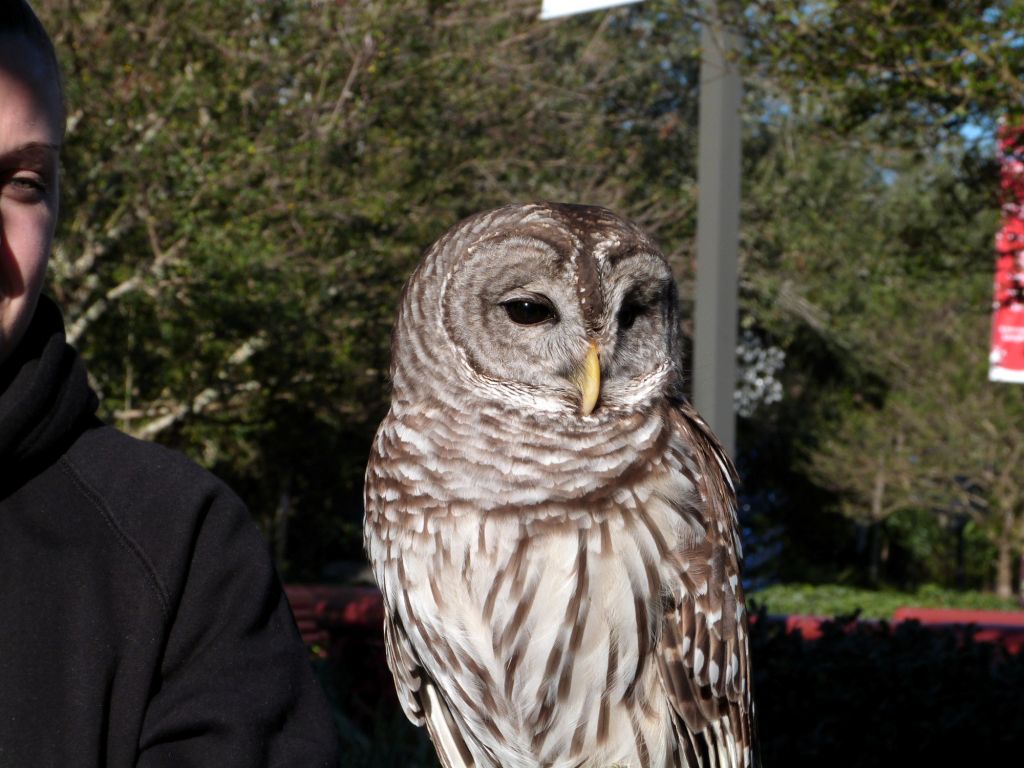
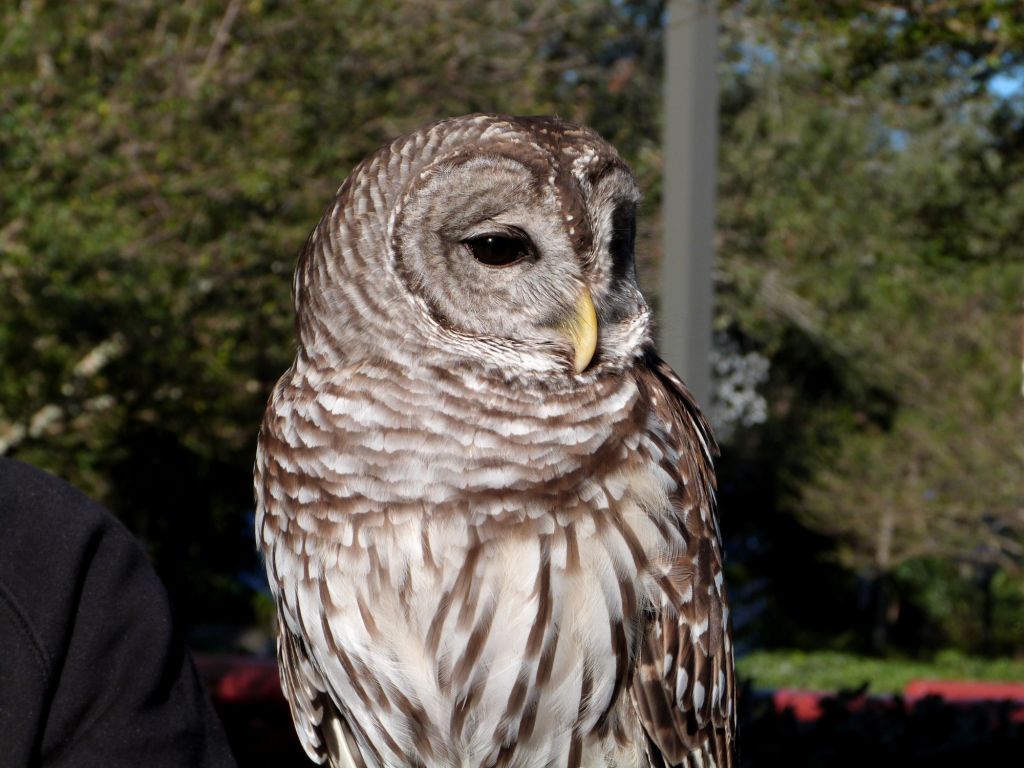
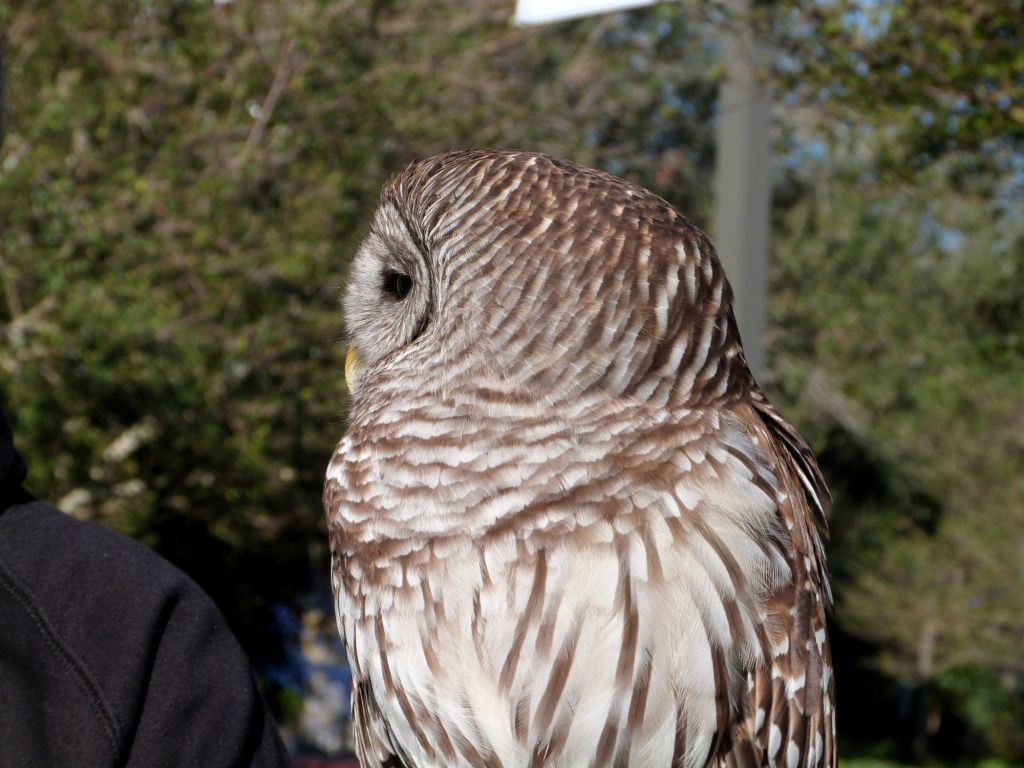
Barred Owl at Lowry Park Zoo Today

Northern Barred Owl (Strix varia) LPZ by Dan 2014

Northern Barred Owl (Strix varia) LPZ by Dan 2014

Northern Barred Owl (Strix varia) LPZ by Lee

Northern Barred Owl (Strix varia) LPZ by Lee

And thorns shall come up in her palaces, nettles and brambles in the fortresses thereof: and it shall be an habitation of dragons, and a court for owls. (Isaiah 34:13 KJV)

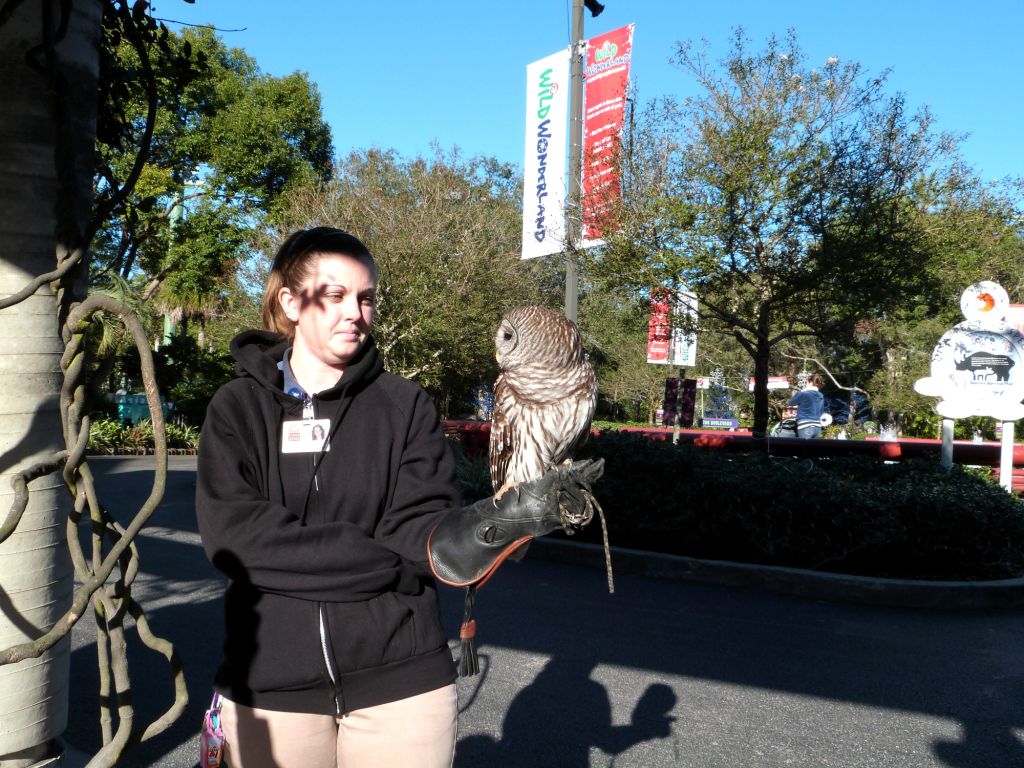
Dan and I went over to the Lowry Park Zoo/Zoo Tampa in Tampa again today. I was wanting to check out my Christmas present of a new camera. Enjoying learning to use it and retaking a lot of photos of birds to compare the old ones with the new ones on this camera. (It is still a point-and-shoot, but it has an improved “program mode.” Dan is our good photographer.)

But when we entered the zoo, we were met by one of the zookeepers holding a beautiful Barred Owl. We had not encountered this Owl in our previous trips. While sharing some of the photos, I thought you might like to learn a little about them.

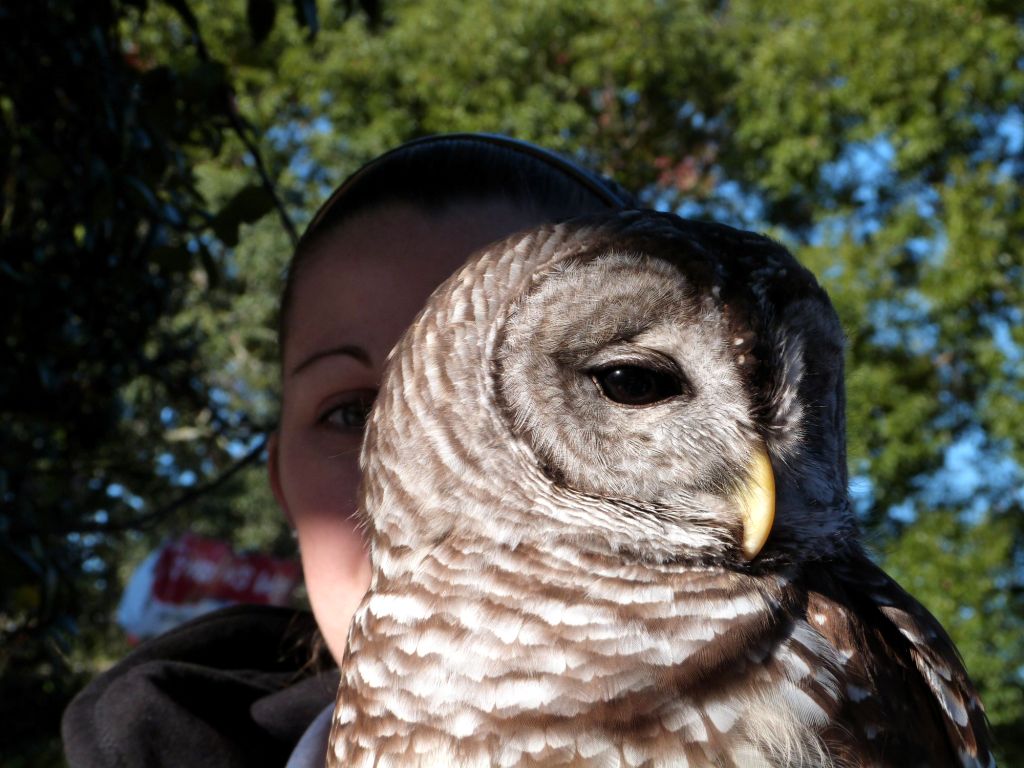
Northern Barred Owl (Strix varia) LPZ by Lee

Northern Barred Owl (Strix varia) LPZ by Lee

Facts from the U.S. Geological Service

Identification Tips:

  • Length: 17 inches Wingspan: 44 inches
  • Sexes similar
  • Rather large owl
  • Dark eyes and yellow bill
  • Back brown, mottled with pale spots and dark bars
  • Underparts pale with long, brown streaks
  • Chest pale with brown barring
  • Face pale with dark concentric rings surrounding eye

Similar species:

The Spotted Owl is most similar, but can be separated with attention to its barred, not streaked, underpart coloration. Short-eared Owl is similar in size, but is not barred on the chest nor is as heavily streaked below, does not share the concentric rings in the facial disks, has yellow eyes and a dark bill, and is found in quite different habitat. Great Gray Owl is superficially similar, but much larger, gray rather than brown below, and has differently patterned underparts.”

Northern Barred Owl (Strix varia) LPZ by Lee

Northern Barred Owl (Strix varia) LPZ by Lee

“The Barred Owl (Strix varia) is a large typical owl native to North America. It goes by many other names, including Eight HooterRain OwlWood Owl, and Striped Owl, but is probably best known as the Hoot Owl based on its call.

The usual call is a series of eight accented hoots ending in oo-aw, with a downward pitch at the end. The most common mnemonic device for remembering the call is “Who cooks for you, who cooks for you all.” It is noisy in most seasons. When agitated, this species will make a buzzy, rasping hiss. While calls are most common at night, the birds do call during the day as well.” (Wikipedia)

(From xeno-canto.org)

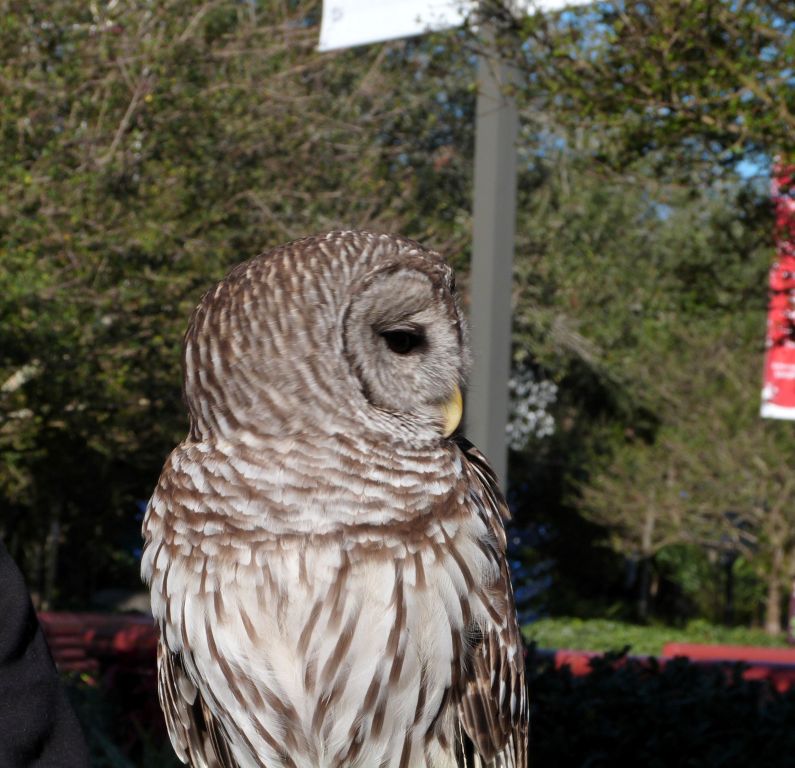
Northern Barred Owl (Strix varia) LPZ by Lee

Northern Barred Owl (Strix varia) LPZoo by Lee

Looking the other way. No, they cannot turn their heads all the way around. Notice also that this owl does not have ear tufts like some owls.

Northern Barred Owl (Strix varia) LPZ by Lee - Side of head

Northern Barred Owl (Strix varia) LPZ by Lee – Side of head

“Breeding habitats are dense woods across Canada, the eastern United States, and south to Mexico; in recent years it has spread to the western United States. Recent studies show suburban neighborhoods can be ideal habitat for barred owls. Using transmitters, scientists found that populations increased faster in the suburban settings than in old growth forest. The main danger to owls in suburban settings is from cars. The increased offspring offset the death rate due to impacts from cars and disease.”

The Barred Owl’s nest is often in a tree cavity, often ones created by pileated woodpeckers; it may also take over an old nesting site made previously by a red-shouldered hawk, cooper’s hawk, crow, or squirrel. It is a permanent resident, but may wander after the nesting season. If a nest site has proved suitable in the past they will often reuse it as the birds are non-migratory. In the United States, eggs are laid from early-January in southern Florida to mid-April in northern Maine, and consist of 2 to 4 eggs per clutch. Eggs are brooded by the female with hatching taking place approximately 4 weeks later. Young owls fledge four to five weeks after hatching. These owls have few predators, but young, unwary owls may be taken by cats. The most significant predator of Barred Owls is the Great Horned Owl. The Barred Owl has been known to live up to 10 years in the wild and 23 years in captivity.” (Wikipedia)

Northern Barred Owl (Strix varia) LPZ by Lee

Northern Barred Owl (Strix varia) LPZ by Lee

“Owl” is mentioned 8 times in the King James Bible and “Owls” is mentioned 6 times. So that makes our friend here a “Bird of the Bible” and of course a “Bird of the World.” Owls are another of the Lord’s great creations.

It was a great birdwatching day at the Zoo. Cool, but the sun was bright and no clouds. I had some other great finds today, but will save them for later.

References to check out:

*

Birds of the Bible – Bird Egg Facts

Common Ostrich (Struthio camelus) by Bob-Nan

Common Ostrich (Struthio camelus) by Bob-Nan

Eggs

Gavest thou the goodly wings unto the peacocks? or wings and feathers unto the ostrich? Which leaveth her eggs in the earth, and warmeth them in dust, And forgetteth that the foot may crush them, or that the wild beast may break them. (Job 39:13-15 KJV)

The largest bird egg is from the Ostrich Sturthio camelus. The egg measures 15 – 20 cm long, 10 – 15 cm in diameter and weighs 1 – 1.78 kg.
Largest egg ~ Ostrich  ~ measuring 17.8 by 14 cm (7 by 4.5 in)
Smallest egg laid relative to body weight ~ Ostrich egg ~ at 1.5%

Ostrich Egg ©WikiC

Ostrich Egg ©WikiC

An ostrich egg needs to be boiled for 2 hours to get a hard-boiled egg.

Can that which is unsavoury be eaten without salt? or is there any taste in the white of an egg? (Job 6:6 KJV)

Thinking

Largest Egg – living ~ Ostrich
Largest Egg – ever ~ Elephant Bird Aepyornis maximus From Madagascar 39cm/15.4in long = 12 litres/2.6 gallons, 220 chicken eggs, egg weighed 27 pounds.

Superb Lyrebird (Menura novaehollandiae) by Ian

Superb Lyrebird (Menura novaehollandiae) by Ian

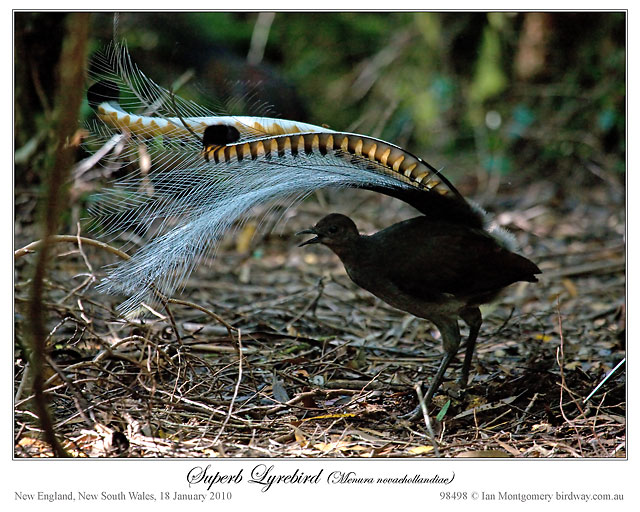
Largest egg laid by a passerine ~ 5 7 g (2 oz) by Australian Lyrebirds
Largest egg laid relative to body weight ~ Little Spotted Kiwi at 26%

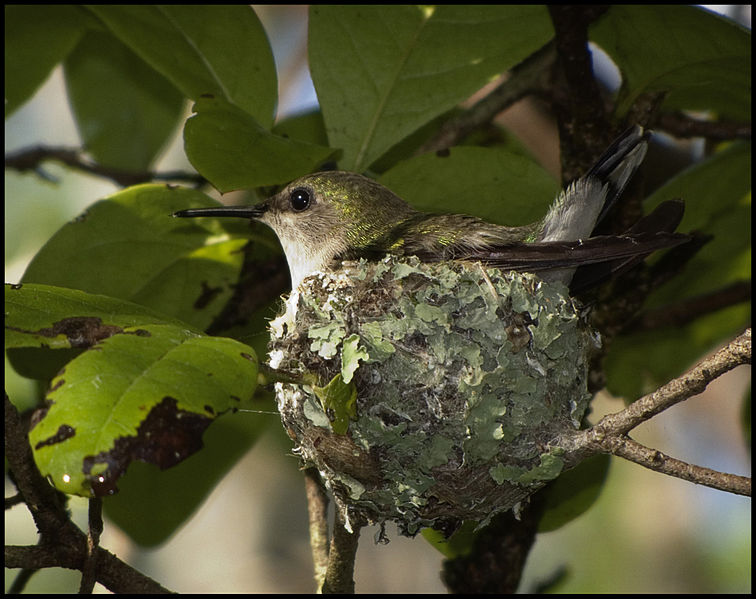
Vervain Hummingbird (Mellisuga minima) ©WikiC

Vervain Hummingbird (Mellisuga minima) ©WikiC

Smallest known egg ~ the Vervain Hummingbird Mellisuga minima of Jamacia and nearby islets. The egg is barely the size of a pea and measures less than 10 mm in length and weighs 0.356 g.
You could put 4700 bee hummingbird eggs inside one ostrich egg. The Bee Hummingbird egg is the size of a small pea and weighs .02 ounces. World’s Smallest Bird
Smallest egg ~ West Indian Vervain Hummingbird ~ at 10 mm (0.39 in) in length and 0.375 g (0.0132 oz)
Smallest Egg – living ~ Vervain Hummingbird Mellisuga minima ~ the size of pea

Or if he shall ask an egg, will he offer him a scorpion? If ye then, being evil, know how to give good gifts unto your children: how much more shall your heavenly Father give the Holy Spirit to them that ask him? (Luke 11:12-13 KJV)

Shape

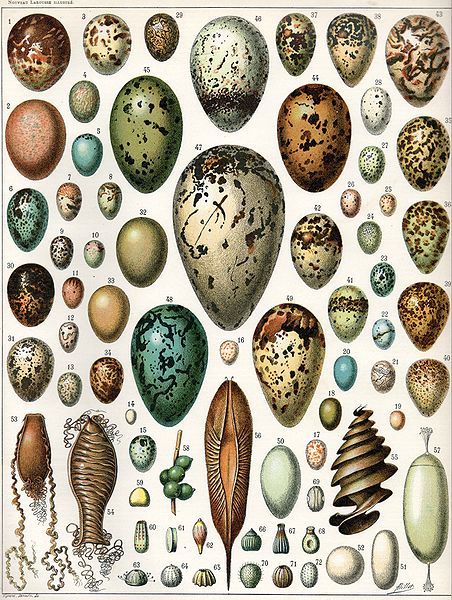
Different Eggs- Birds and Others - from Wikipedia

Different Eggs- Birds and Others – from Wikipedia

The majority of avian eggs match the shape of chicken eggs, but there are some exceptions.

  • Budgies, for instance, tend to lay very round eggs.
  • Fast-flying, stream-lined birds like swifts and swallows lay long, elliptical eggs.
  • Owls tend to lay very spherical eggs.
  • Roundest eggs ~ Owls, Tinamous
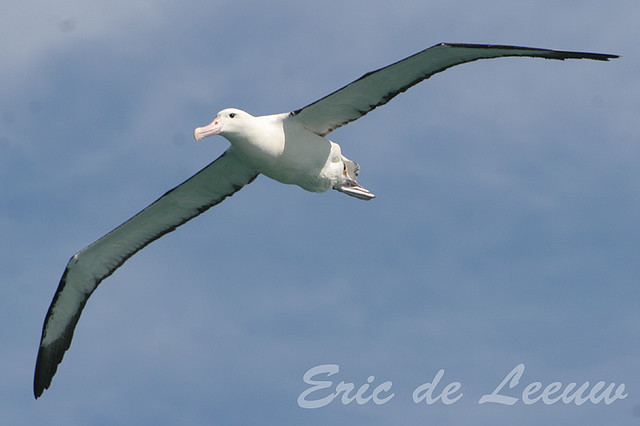
Northern Royal Albatross (Diomedea sanfordi) ©©Flickr

Northern Royal Albatross (Diomedea sanfordi) ©©Flickr

The Royal Albatross’ eggs take 79 days to hatch.
Precocial birds like chickens, ostriches, ducks, and seagulls hatch ready to move around. They come from eggs with bigger yolks than altricial birds like owls, woodpeckers, and most small songbirds that need a lot of care from parents in order to survive.

Maleo (Macrocephalon maleo) egg ©©Wong Dermayu

Maleo (Macrocephalon maleo) egg ©©Wong Dermayu

Longest interval between eggs laid ~ Maleo ~ at 1012 day intervals

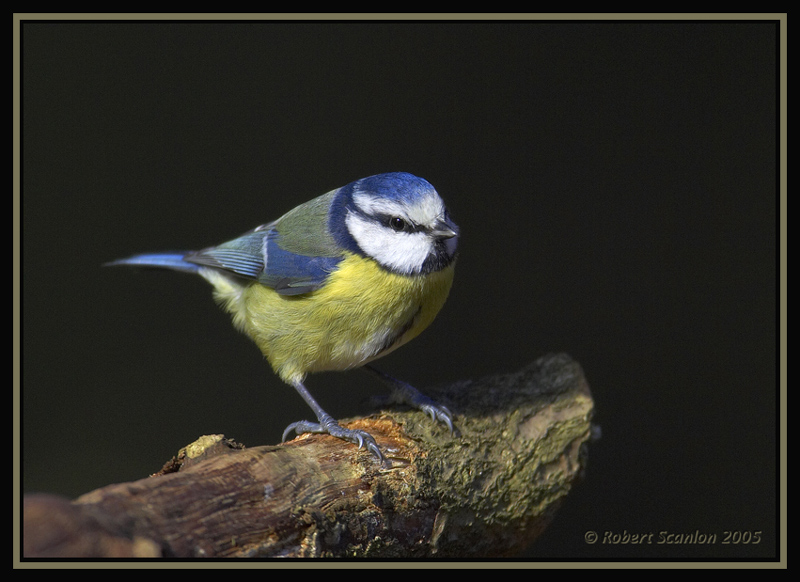
Eurasian Blue Tit (Cyanistes caeruleus) by Robert Scanlon by Robert Scanlon

Eurasian Blue Tit (Cyanistes caeruleus) by Robert Scanlon by Robert Scanlon

Largest clutch laid by a nidicolous species ~ 19 eggs laid by a European Blue Tit
Largest clutch laid by a nidifugous species ~ 28 by a Bobwhite Quail
Largest average clutch size ~ 15-19 by a Gray Partridge
Smallest clutch size ~ 1 egg laid every 2 years by Albatrosses

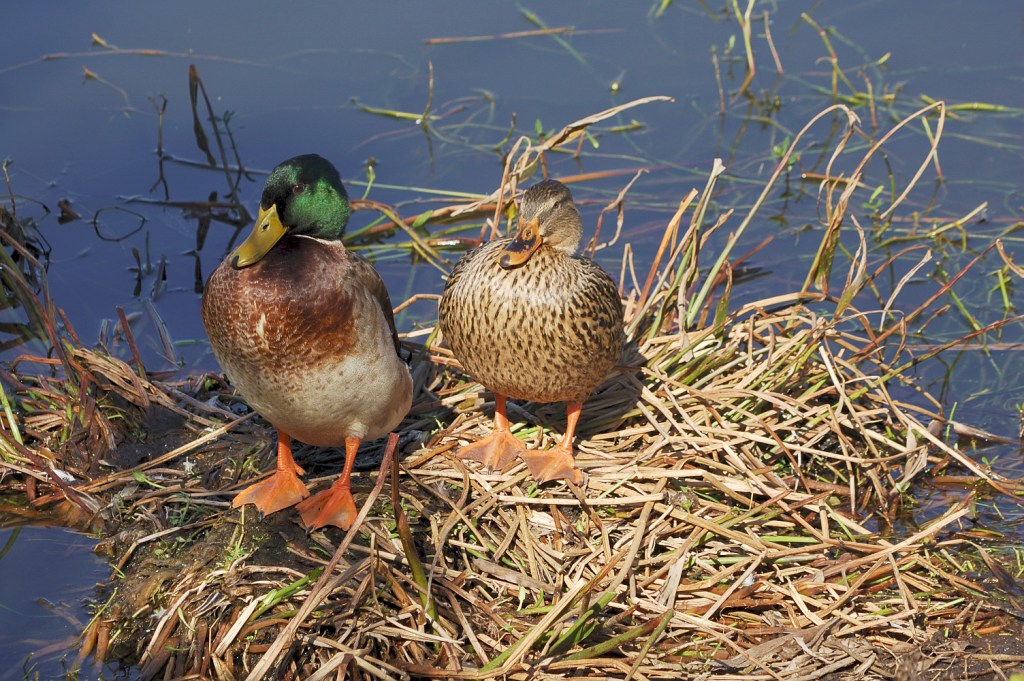
Mallard (Anas platyrhynchos) By Dan'sPix

Mallard (Anas platyrhynchos) By Dan’sPix at Lake Hollingsworth

Greatest number of eggs laid consecutively ~ 146 by a Mallard
Most valuable bird ~ 8 billion domestic chickens ~ produce 562 billion eggs annually
Highest price paid for an egg ~ 1,000 British pounds for an egg of extinct Aepyornis maximus

And my hand hath found as a nest the riches of the people: and as one gathereth eggs that are left, have I gathered all the earth; and there was none that moved the wing, or opened the mouth, or peeped. (Isaiah 10:14 KJV)

Shell

Bird eggshells are diverse. For example:

  • Cormorant eggs are rough and chalky
  • Tinamou eggs are shiny
  • Duck eggs are oily and waterproof
  • Cassowary eggs are heavily pitted

Tiny pores in bird eggshells allow the embryo to breathe. The domestic hen’s egg has around 7500 pores.

The most yolks ever found in a single chicken’s egg is nine.

Nests

Mallee Fowl Mound ©©

Largest individual nest ~ Mallee Fowl Australia Leipoa ocellata ~ builds a mound 5 m (16.5ft) high and 11 metres (36ft) wide. A mound this size means the bird moved 250 cubic metres of vegetation and 300 tons of soil.
Smallest nest ~

  • many seabirds do not make a nest at all, nest on ground or
  • in case of Fairy Tern on a branch of a tree
  • The prize goes to the Hummingbirds for their thimble sized (1cm squared) nests.

The largest nest was built by a pair of Bald Eagles Haliaeetus leucocephalus was 2.9 m wide and 6 m deep.

Rhinoceros Auklet (Cerorhinca monocerata) ©WikiC

Rhinoceros Auklet (Cerorhinca monocerata) ©WikiC

The Rhinoceros Auklet Cerorhinca monocerata which measures 35 cm and nests on islands in the North Pacific excavates a burrow of 2 – 3 m in length. Burrows up to 6 m are not uncommon and 8 m burrows have also been found.

The only species of parrot that builds a nest is the Quaker Parrot. The Quakers link their nests together to form structures akin to “bird condominiums”. These nests can reach weights greater than 200 lbs.

Largest recorded nesting bird colony: 136 million Passenger Pigeon nesting in an area in Wisconsin covering 1,942 sq km (750 sq mi)

Isn’t it amazing how the Lord created each bird’s egg to help it survive and for it to do His command to:

And God blessed them, saying, “Be fruitful and multiply, and fill the waters in the seas, and let birds multiply on the earth.” (Genesis 1:22 NKJV)

(Various internet resources used and Wikipedia)

See Also:

Formed By Him – Bird Eggs
Macrocephalon Maleo – The Mute Missionary…
When I Consider – Guillemot
Egg And Nest Identification
Bird Eggs Photo Search
Hummingbird Nest & Eggs

*

Being and Doing as God Enables – by A. W. Tozer

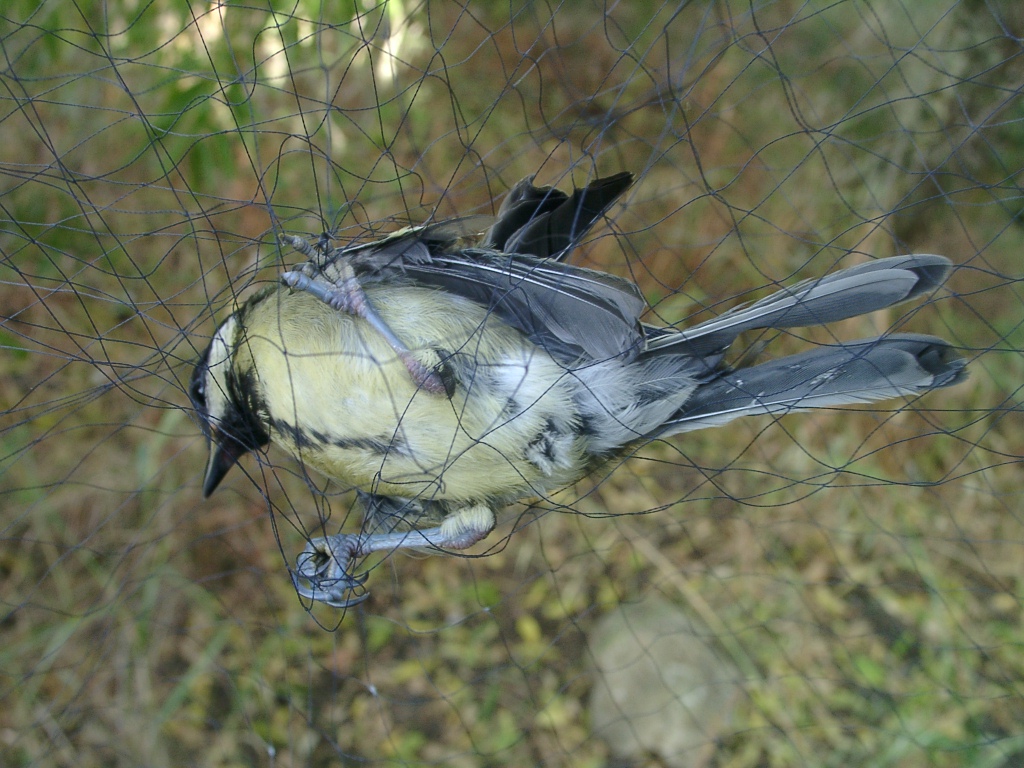
Bird caught in a net

Bird caught in a net

Being and Doing as God Enables – By A.W. Tozer  
(Guest Writer from the Past)

Surely in vain the net is spread in the sight of any bird. (Proverbs 1:17 KJV)

Failing to get ready in time for eternity, and failing to get ready now for the great then that lies out yonder, is a trap in plain sight. There is an odd saying in the Old Testament, “How useless to spread a net in full view of all the birds” (Proverbs 1:17).

When the man of God wrote that, he gave the birds a little credit. It would be silly for a bird watching me set the trap to conveniently fly down and get into it. Yet there are people doing that all the time. People who have to live for eternity fall into that trap set for them in plain sight. It is folly to put off to a tomorrow because you may never see the things that you should do now. It is an act of inexcusable folly to count on help that will never come. It is foolish to ignore God’s help now offered us. Many are guilty of ignoring the help that is presently being extended to them, all the while waiting for help that will never come from others. There is not much that can be said in favor of lazy or careless Christians. God never told anyone to do anything that he or she could not do. Jesus said to the man with the paralyzed arm that hung at his side like a limp piece of flesh, “Stretch out your hand” (Matthew 12:13a). And the man, believing that Jesus was the Christ, stretched out his hand and was healed instantly. God has never asked anyone yet to do anything that He was not enabling the person to do.

See  A.W. Tozer index.

A.W. Tozer (1897 – 1963)

A 20th-century prophet” they called him even in his lifetime. For 31 years he was pastor of Southside Alliance Church in Chicago, where his reputation as a man of God was citywide. Concurrently he became editor of Alliance Life, a responsibility he fulfilled until his death in 1963.

His greatest legacy to the Christian world has been his 30 books. Because A.W. Tozer lived in the presence of God he saw clearly and he spoke as a prophet to the church. He sought for God’s honor with the zeal of Elijah and mourned with Jeremiah at the apostasy of God’s people.

But he was not a prophet of despair. His writings are messages of concern. They expose the weaknesses of the church and denounce compromise. They warn and exhort. But they are messages of hope as well, for God is always there, ever faithful to restore and to fulfill His Word to those who hear and obey.

The Pursuit of God by A. W. Tozer – ebook

A. W. Tozer – Wikipedia

Birds of the Bible – Bird Catcher

Wordless Birds

*

Ian’s Bird of the Week – White-streaked Honeyeater

White-streaked Honeyeater (Trichodere cockerelli) by Ian #1

Ian’s Bird of the Week – White-streaked Honeyeater ~ by Ian Montgomery (Australia)

Newsletter ~ 09/23/11

Of the 4 species at the top of my wanted list on the trip to Iron Range, this one, the White-streaked Honeyeater, took the most effort to find and I found it only at the last possible location on the way home. Many Honeyeaters, including this one, are nomadic in search of flowering shrubs and trees so visiting a known site is no guarantee of success.

The White-streaked Honeyeater occurs only on Cape York Peninsula, north of about Cooktown. So, when I left Daintree village, rather than go the usual route via Julatten, I headed north through Cape Tribulation to Cooktown along the 4WD Bloomfield track, spent a couple of nights near Cooktown and then drove to Laura along Battlecamp Road to join the main Peninsula Development Road. Apart from the attraction of of a route I hadn’t travelled on before, both White-streaked Honeyeaters and Tropical Scrubwrens had been seen in July at a couple of river crossings along the way. Near Cooktown, I did a glimpse and an unflattering rear-view shot of the southern race (dubius) of the Tropical Scrubwren, but the Honeyeaters seemed to have moved on.

White-streaked Honeyeater (Trichodere cockerelli) by Ian #2

Their preferred habitats are heathland, open woodland and riverine forest so they don’t occur in the rainforest at Iron Range. A usually reliable site for them is the heathland at Tozer’s Gap on the way in but this time an orange grevillea was flowering everywhere in abundance, so the birds could have been anywhere. Happily, I caught up with some friends of mine who had just seen the honeyeater in paperbarks and bottlebrushes at the Wenlock River crossing on the same road. This is a 4 or 5 hour round trip from Iron Range, so I decided to risk waiting until my final departure and then I stopped for lunch at the crossing.

White-streaked Honeyeater (Trichodere cockerelli) by Ian #3

When I got there, the paperbarks had finished flowering but the bottlebrushes were still putting on a fine display. Even so, it took some diligent searching before I finally found a couple of White-streaked among the commoner Honeyeaters, mainly Dusky and Graceful. They seemed shy and preferred to remain hidden in the foliage, so I sat on a sandy bank in the river until they showed themselves. They are unusual honeyeaters with no close relatives and the sole member of the genus Trichodere (a ‘monotypic’ genus). ‘Trich’ comes from the Greek word for ‘hair’ and refers, as does ‘white-streaked’ to the bristle-like feathers on the breast (cf Trichoglossus – ‘hairy tongue’ – referring to the brush-like, nectar-licking tongues of Rainbow Lorikeets). Adults have yellow lines below the eye, a yellow ear tuft and a blue gape (photos 1 and 2). They also have yellow wings and tail: easier to see in the third photo of a juvenile which lacks the blue gape and has only a single yellow feather on the head but is beginning to develop the bristle-like breast feathers, also characteristic of adults.
In the second photo, the nest-like material below the bird is flood debris – a clear reminder that this part of the Cape York Peninsula is accessible by road only in the dry-season. The photo below shows the crossing at Wenlock River.
Crossing at Wenlock River by Ian #4

Crossing at Wenlock River by Ian #4

Misión completa, as my guide told me when we found the Resplendent Quetzals in Costa Rica.

Best wishes
Ian


Ian Montgomery, Birdway Pty Ltd,
454 Forestry Road, Bluewater, Qld 4818
Phone: 0411 602 737 +61-411 602 737
Preferred Email: ian@birdway.com.au
Website: http://birdway.com.au


Lee’s Addition:

My son, eat thou honey, because it is good; and the honeycomb, which is sweet to thy taste: (Proverbs 24:13 KJV)

Ian sure has persistence and patience. Ian, thanks again for sharing your birding trips with us.

As Ian mentioned, the Honeyeater is in a genus, Trichodere of the Meliphagidae – Honeyeaters Family. That family has 183 members at present. The family has not only Honeyeaters, but also Friarbirds, Wattlebirds, Bellbirds, Melidectes, Myzas, Myzomela, Straighbills, Spinebills, Chats, and a Gibberbird and others. Roughly half of the family live in Australia.

All 170 species of honeyeaters have a unique adaptation:  a long tongue with a brush-like tip that they use to get nectar from flowers. The tongue can be extended into the nectar about 10 times per second!

See also:
Formed By Him – Plants and Pollinator Birds
Ian’s bird of the Week:
Yellow-spotted Honeyeater
Striped Honeyeater
Banded Honeyeater
Eastern Spinebill
Silver-crowned Friarbird
Helmeted Friarbird
Bar-breasted Honeyeater
Rufous-banded Honeyeater
*

Return Of The Robins – by Dorothy (Dot) Belle Malcolm

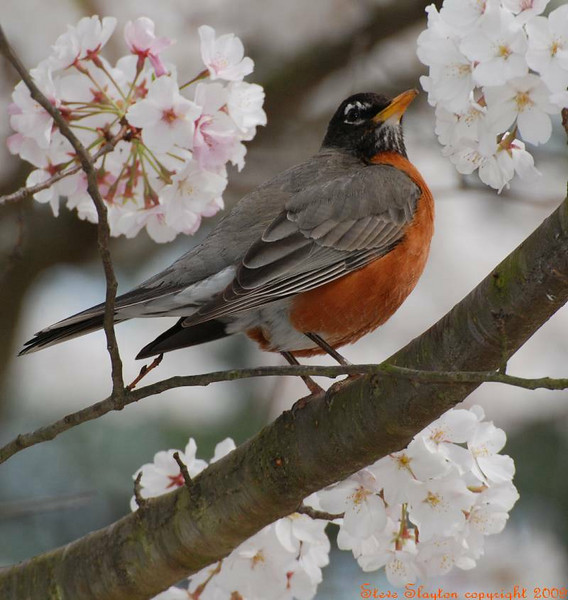
American Robin (Turdus migratorius) by S Slayton

American Robin (Turdus migratorius) by S Slayton

Return Of The Robins by Dorothy (Dot) Belle Malcolm – on February 27, 2011

On the way to church I thought I saw them; however, they flew so fast back and forth I wasn’t sure. The next day I was sure! The Robins had returned. Only a few were in my trees. At first I was disappointed, but at least I could hear lots of them in my neighborhood. I sent them many invitations in my thoughts as I worked in the yard, but they did not come.

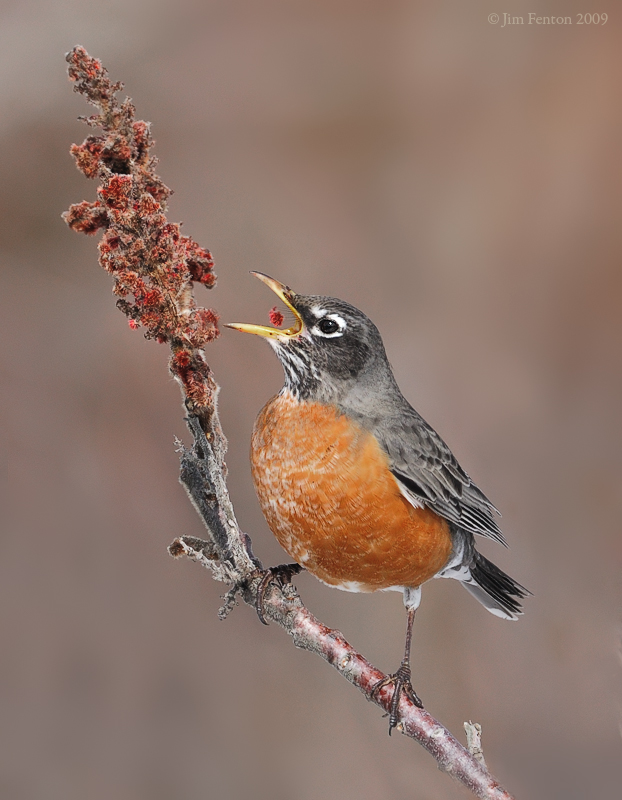
Robin Eating by Jim Fenton

Robin Eating by Jim Fenton

As I worked, I began to hear very high sweet sounds coming from some medium sized black birds. How thankful I was for their “music.” Then it ceased and I realized why when I saw the shadow of the Cooper’s Hawk come across the yard. He frequents our area almost daily, and I now realize why I have fewer birds come to my feeders. He is a beautiful specimen but my heart does not welcome him.

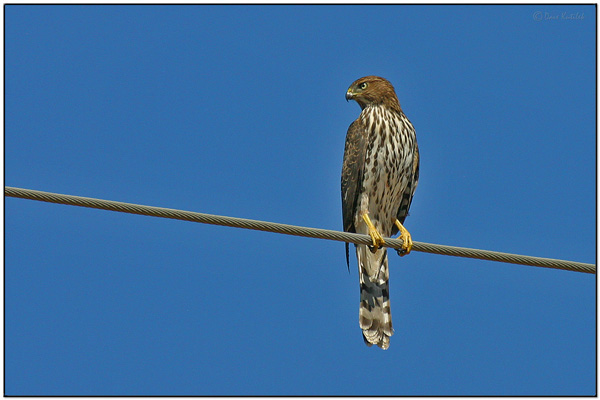
 Cooper's Hawk (Accipiter cooperii) by Daves BirdingPix

Cooper’s Hawk (Accipiter cooperii) by Daves BirdingPix

Well I promised last year I would not speak again of the Robin’s bad manners, so this year I shall not fault them for a lack of a good showing. They had a very good reason. I shall remain satisfied they were around and be thankful for that.

By Dorothy Belle Malcolm

See her article from last year – When The Robins Came


Lee’s Addition:

Even the stork in the sky Knows her seasons; And the turtledove and the swift and the thrush Observe the time of their migration; But My people do not know The ordinance of the LORD. (Jeremiah 8:7 NASB)

Listen to the – American Robin’s song -from xeno-canto.com

The American Robin (Turdus migratorius) is a member of the Thrush – Turdidae Family. As Dorothy (“Dottie” to me) knows, they only pass through on their migration journey. This time of the year, they are on their way north.

“The American Robin is widely distributed throughout North America, wintering south of Canada from Florida to central Mexico and along the Pacific Coast. The American Robin is active mostly during the day, and on its winter grounds it assembles in large flocks at night to roost in trees in secluded swamps or dense vegetation. The flocks break up during the day when the birds feed on fruits and berries in smaller groups. During the summer, the American Robin defends a breeding territory and is less social. It is the state bird of Connecticut, Michigan, and Wisconsin.” (Wikipedia)
*