Frank’s Driving Lesson – by Emma Foster


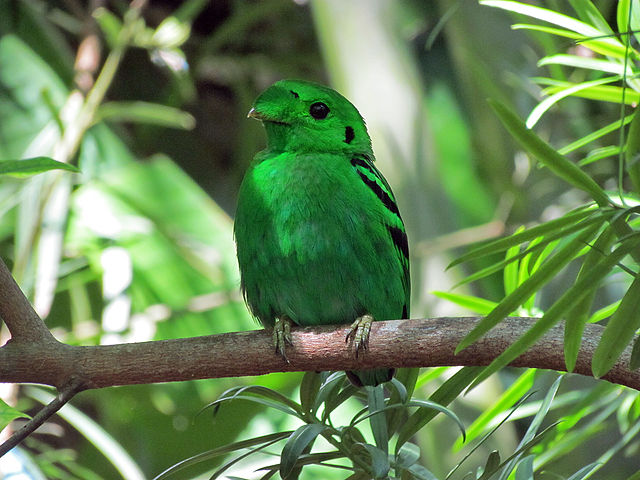
Green Broadbill (Calyptomena viridis) by Peter Ericsson

Green Broadbill (Calyptomena viridis) by Peter Ericsson

“A man’s pride shall bring him low: but honour shall uphold the humble in spirit.” (Proverbs 29:23 KJV)

Once there was a small bird who lived in the Lincoln Park Zoo in Chicago. His name was Frank. Frank was a Green Broadbill, and originally Frank had lived in Asia before being taken to the zoo. Frank was happy because he was kept in an exhibit with many interesting birds just like himself. Because he had such a bright green color, people would often find him interesting to search for in the exhibit.

Frank would often watch the different people who came to the zoo. Many times people would take pictures of him because they had never seen a bird like him before. Frank enjoyed it when people noticed him. Most of the time he would fly around the exhibit to different high spots for people to capture nice shots of him. Other times Frank would fly really close to the people.

But sometimes Frank became tired of flying around. He thought that maybe there could be another way for him to get about.

One day Frank was sitting on a branch high up in the exhibit so he could see a large part of the zoo. He watched one of the workers carefully drive a golf cart with buckets of food to feed the animals. Frank suddenly had an idea. If he were to drive the golf cart around, people were bound to notice him even more than they did already.

Green Broadbill (Calyptomena viridis) lesser ©©coracii

Green Broadbill (Calyptomena viridis) lesser ©©coracii

Frank watched carefully as the worker stopped the golf cart in front of his exhibit. He waited until after the worker had fed all of the birds and watched as the worker started the golf cart up again and drove away. It seemed simple enough to drive.

The next day Frank waited patiently as the worker came back to feed the birds once again. Once Frank was sure the worker wasn’t looking, he flew over to the golf cart and twisted the keys the way he had seen the worker do the day before. He flew down and pressed the pedal to the right like he had seen. The golf cart shot forward a little bit. Frank began flying back and forth rapidly in order to steer and press the pedal. Unfortunately, he didn’t get very far before the worker noticed the golf cart had begun to drift forward. The worker stopped the cart and shooed Frank out. Frank flew back to his branch. His plan hadn’t worked very well.

Green Broadbill (Calyptomena viridis) ©WikiC

Green Broadbill (Calyptomena viridis) ©WikiC

However the next day Frank woke up to see many different people gathering around him. They were all incredibly excited and were taking multiple pictures of him. A news reporter was filming footage of the entire spectacle explaining to the camera how Frank had been seen driving a golf cart around the zoo. The news reporter explained that someone had taken a picture of Frank driving the cart and had sent it to the local newspaper. The news reporters had discovered it and decided to do a story on it.

After hearing the reporter, Frank understood what was going on and was extremely happy. He was famous.

But eventually the crowds stopped coming. Frank realized, however, that even after the big story the same people would still come to watch him. He decided he was appreciated no matter what. From then on, Frank wouldn’t try to do anything unusual so people would notice him, especially driving golf carts.


Lee’s Addition:

“Not that I speak in respect of want: for I have learned, in whatsoever state I am, therewith to be content.” (Philippians 4:11 KJV)

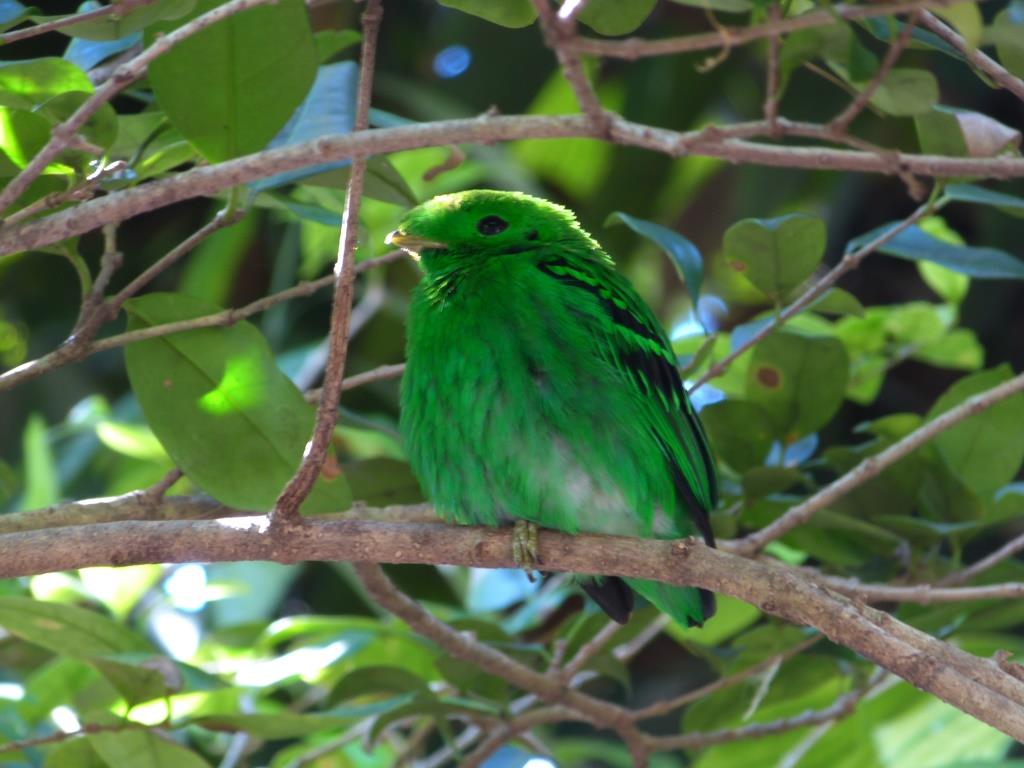
Well, Emma, you have done it again. What a delightful story, especially, because Broadbills are some of my most favorite birds. We saw a Green Broadbill in the Wings of Asia at Zoo Miami. He was very friendly, like your Frank. Set right out near us. We weren’t in a golf cart, but maybe he was watching our cameras. Maybe he was thinking that taking pictures would be easier than driving.

Green Broadbill (Calyptomena viridis) by Lee at ZM 2014

Green Broadbill (Calyptomena viridis) by Lee at ZM 2014

*

More of Emma Foster’s Bird Tales

*

One Of Evolution’s Best-kept Secrets – Creation Moments

“Like as a lion that is greedy of his prey, and as it were a young lion lurking in secret places. Arise, O LORD, disappoint him, cast him down: deliver my soul from the wicked, which is thy sword:” (Psalm 17:12-13)

Though the title of today’s program is “One of evolution’s best-kept secrets,” Creation Moments could bring you hundreds of broadcasts with the same title. While evolutionists are filling science textbooks, Hollywood films, science magazines and natural history museums with their favorite evidences of evolution, they routinely fail to mention the evidences that call evolution into question.

Flamingo (Phoenicoparrus croizeti) Fossil ©WikiC

Flamingo (Phoenicoparrus croizeti) Fossil ©WikiC

For example, evolutionists tell us that dinosaurs – after millions of years of gradual change – evolved into birds. But they don’t mention that fossils of many modern birds have been found in the very same rock layers where dinosaurs are found!

As Dr. Carl Werner points out in his book and DVD, Living Fossils, “Every time you see a T-rex or a Triceratops in a museum display, you should also see ducks, loons, flamingos or some of these other modern birds that have been found in the same rock layers as these dinosaurs, but this is not the case.”

Pacific Loon(Gavia pacifica) ©USFWS

Pacific Loon(Gavia pacifica) ©USFWS

To see if this was an innocent omission or deliberate deception, Dr. Werner traveled to 60 natural history museums and 10 dinosaur dig sights in seven different countries. His interviews with paleontologists revealed that they were well aware of the modern birds living alongside dinosaurs. And yet only one museum gave any hint that dinosaurs and modern birds lived at the same time.

What else aren’t you being told about evolution? Keep on listening to Creation Moments because we will expose more of evolution’s best-kept secrets on future broadcasts.

Prayer:
Heavenly Father, if evolution were true, evolutionists wouldn’t have anything to hide. I pray that the many of evolution’s darkest secrets will come to light! In Jesus’ Name. Amen.

Notes:
Dr. Don Batten, “Modern birds found with dinosaurs: Are museums misleading the public?”, Creation 34(3), 2012. Photo: Flamingo fossil. Courtesy of Ghedoghedo. (CC BY-SA 4.0)

©Creation Moments 2016

**

[The bolding in the article is by me.]

Here is the link to the ‘dinos and ducks together’ Creation magazine story.

*

Creation Moments Article

Modern birds found with dinosaurs

*

Avian Kinds on the Ark – Birds Embarking

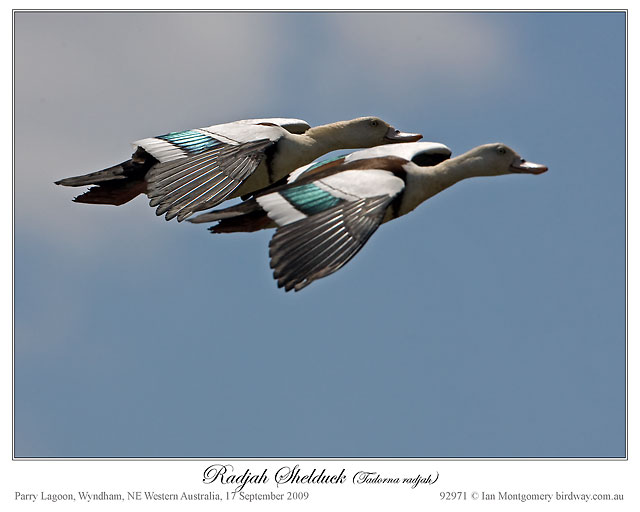
Pair of Raja Shelduck by Ian

In this second article in this series, Avian Kinds on the Ark – What is a Kind?, I am introducing you to some of the studies by Dr. Jean Lightner. She and others are trying to figure out how many “kinds” of birds would have enter the ark.  This study is worthwhile as a stand-alone research project — yet its importance is now accented by the “Ark Encounter”, a full-sized replica of the Noah’s Ark (produced and hosted by ANSWERS IN GENESIS ministry in Kentucky). The Ark Encounter team are trying to be as close to the Bible as possible in filling the ark with critters and especially avian kinds.

Since that article, I have found some more interesting data and quotes that I’d like to share. First, I made this quote in that article.

“In Birds of the Bible – Foundation #3 Updated, ” I made this remark “Noah did not have to round up the animals, they came to him. Because not every animal we see today came on board but the main kinds (for instance the “bird kinds” may have had a “warbler kind” but not have black and white warblers, yellow-rumped warblers, hooded warbler, etc.), which ever ones they were, there was plenty of room for them. I have an idea that because the LORD sent the animals, birds, and critters, that their DNAs [i.e., their specific genes  — DNA-based genotypes) were of the highest quality. (That is my opinion)”

I want to expand on that this time. I have thinking about the birds that came to Noah. Did they come to Noah?  —  or did Noah have to go round them up? No, Noah did not have to go searching for the animals. After re-reading Genesis 7-9, it seems clear that they came to Noah. God sent them, by pairs of seven for each “kind” of birds. Dr. Lightner basically places the kinds equal with families in most cases.

Of every clean beast thou shalt take to thee by sevens, the male and his female: and of beasts that are not clean by two, the male and his female. Of fowls also of the air by sevens, the male and the female [notice!  —  of the bird kinds, the “sevens” exception was applied, regardless of whether the bird kinds were “clean” or “unclean”]; to keep seed alive upon the face of all the earth. (Genesis 7:2-3 KJV)

Great Frigatebird (Fregata minor) pair ©Flickr Len Blumin

Great Frigatebird (Fregata minor) pair ©Flickr Len Blumin

And Noah went in, and his sons, and his wife, and his sons’ wives with him, into the Ark, because of the waters of the flood. Of clean beasts, and of beasts that are not clean, and of fowls, and of every thing that creepeth upon the earth, There went in two and two unto Noah into the ark, the male and the female, as God had commanded Noah. And it came to pass after seven days, that the waters of the flood were upon the earth. (Genesis 7:7-10 KJV)

In the selfsame day entered Noah, and Shem, and Ham, and Japheth, the sons of Noah, and Noah’s wife, and the three wives of his sons with them, into the ark; They, and every beast after his kind, and all the cattle after their kind, and every creeping thing that creepeth upon the earth after his kind, and every fowl after his kind, every bird of every sort. And they went in unto Noah into the ark, two and two of all flesh, wherein is the breath of life. (Genesis 7:13-15 KJV)

Bring forth with thee every living thing that is with thee, of all flesh, both of fowl, and of cattle, and of every creeping thing that creepeth upon the earth; that they may breed abundantly in the earth, and be fruitful, and multiply upon the earth. (Genesis 8:17 KJV)

Every beast, every creeping thing, and every fowl, and whatsoever creepeth upon the earth, after their kinds, went forth out of the ark. And Noah builded an altar unto the LORD; and took of every clean beast, and of every clean fowl, and offered burnt offerings on the altar. (Genesis 8:19-20 KJV)
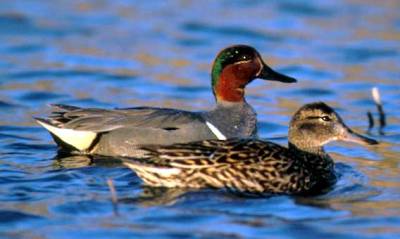
Green-winged Teal (Anas carolinensis) Pair ©WikiC

Green-winged Teal (Anas carolinensis) Pair ©WikiC

That is quite a bit of Scripture, and the bolding is to help with some points to I would like to make. First, notice that all the cattle or land animals are coming in pairs. The male and his female  — that pair is deemed as “one” animal unit, because that is how God planned and made these animals in the first place. Critters that are not birds (i.e., land beasts like cattle, elephants, horses, etc.) are coming in by seven pairs if their kind is deemed “clean”, or by one pair if “unclean”.  Yet the birds (fowls) are not coming in by clean or unclean. They are all coming in by seven pairs, according to their kind.  [Notice how this shows a special favoritism that God has for birds!  In a sense, therefore, it is a godly trait to regard birds as favorite animals! :) ]

Also notice that Noah and his family entered the Ark first, then the critters came in. “There went in two and two unto Noah into the ark” (7:9), and “in the selfsame day entered Noah” (7:13), then,  “they went in unto Noah into the ark” (7:15).  If I am reading the Word correctly, Noah was in the Ark when the land animals, birds and creeping things came in. Personally, I think that the Lord rounded up the critters that He wanted to be in the Ark to be preserved. If the Lord can make ravens to feed Elijah, ” I have commanded the ravens to feed thee there ” (1 Kings 17:4), can He not command the exact critters to come to Noah? Their DNA must have been the near perfect for their kinds, especially for conserving and transmitting the biodiversity that God Himself wanted to be provided to the post-Flood world. Just as all the diverse humans in the world (today) come from the eight humans on board the Ark, their DNA was and is diverse enough to produce all the different physical characteristics (skin colors, hair types, body sizes, etc.) that we see today.  [In a sense, God preserved and transmitted all the molecular biology “hardware” and DNA/RNA “software” needed for all the phenotype “applications” we have today.]

Another point about the quoted verses. In Genesis 8 we see that it didn’t rain until seven days later. Could that be to give Noah and his family time to place all the animals in their stalls, pens, cages, or whatever containers were used for the long voyage ahead? What do you put “creeping things” in? :)

When they came off the Ark, after the Flood was over, not a single animal has perished because they came off in pairs,: one pair of unclean land animals (and “creeping things”), seven pairs of clean land animals, and seven pair of every “kind” of genetically defined bird category. Noah gives an offering to the Lord and uses one pair from the clean critters. Now we have six pairs of clean animals with which to breed abundantly in the earth, and be fruitful, and multiply upon the earth.
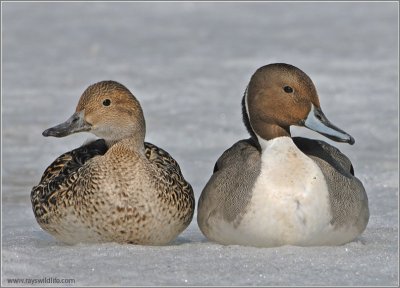
Northern Pintail (Anas acuta) pair by Ray

Northern Pintail (Anas acuta) pair by Ray

As was said before, the avian taxonomy of the birds (which is ultimately a mix of common sense, careful observations, plus some arbitrariness) is in flux. As Dr. Jean Lightner indicated there is much shuffling going on trying to figure out which bird belongs “where” [i.e., belongs to this group or that group, based ultimately on genetic compatibility — which is demonstrated by breedability). Here are a few quotes I thought interesting about this situation. Of course, these are from those who believe in evolution, but they are shaking their heads trying to figure which family and genus birds belong to.

Here is a quote from DNA Reveals New Bird Species by Current Results. “Examining the differences in the genetic bar code among birds leads scientists to suspect that 15 unidentified species of birds breed on the North American continent. At the same time, analysis of 643 bird species finds that 42 of these should actually be lumped as 17 species.” [Seems they keep narrowing down the species toward the kinds.]  Here’s more interesting quotes from the same article.

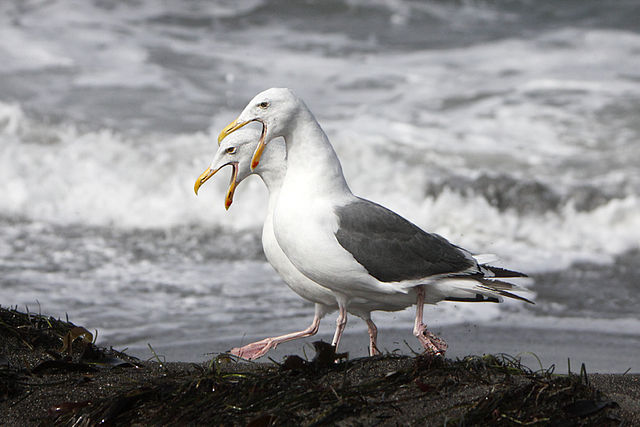
Western Gull (Larus occidentalis) Pair ©WikiC

Western Gull (Larus occidentalis) Pair ©WikiC

“Can’t tell apart all those large, white-headed gulls lingering along the west coast seashore? Well apparently neither does the mitrochondiral DNA for eight species such as glaucous and herring gulls. Other birds that mitrochondrial DNA cannot distinguish are American from northwestern crows and red-naped from red-breasted sapsuckers. Most of these species with overlapping DNA are known to hybridize [i.e., they can successfully breed together].”

“Figuring out who is truly related to whom in modern bird families has been an ongoing problem, says Shannon Hackett. A biologist at the Field Museum in Chicago, she did not work on the new study. Part of the problem, she explains, is that at some point in the distant past, there was an explosion in the number of bird species. This rapid increase has made it difficult for scientists to decode the history of birds from fossils.” [Could that be when they were created?]

“In 2008, Hackett’s team studied 19 different segments of DNA from 169 bird species. Their tree of life suggested that falcons and hawks, and grebes and ducks, were only distantly related. Those surprises were confirmed by the new study.” [No surprise to Bible-believing creationists! Must be different kinds, maybe?]

African Hawk-Eagle (Aquila spilogaster) Pair ©WikiC

African Hawk-Eagle (Aquila spilogaster) Pair ©WikiC

Answers In Genesis has many articles on this subject, but again, I want to share a few quotes. These are from Bird Speciation From the Flood to the Present by Dr. David W Boyd, Jr.  In answer to how all those birds fit on the ark, he said, “Does that mean that Noah had two (or seven) of all 10,380 extant bird species (more if you count extinct species)? If a biblical kind and a species were equivalent, then yes. But they are not the same; many species are categorized under each biblical kind.”

“To help answer that question, we are aware that evolutionary scientists have recently compiled genetic and fossil evidence to suggest that flying birds originated from a group of dinosaurs in South America about 95 million years ago.6 Using their data, the scientists suggested that flying birds began radiating and diversifying over the world after a huge meteor struck near the Yucatan Peninsula 66 million years ago. The subsequent disaster of that meteor has been suggested as the main cause for the extinction of dinosaurs. Using this model, evolutionary scientists attempt to demonstrate that all birds in existence today descended from one common ancestor of the dinosaur lineage.”

“Scientists who accept the biblical account of creation and the worldwide Flood compile evidence from Scripture, genetics, the fossil record, hybridization data, and morphological characteristics to suggest that God created many kinds of birds that began radiating and diversifying over the world after the worldwide Flood destroyed the earth about 4,500 years ago. These birds included both flying and non-flying birds. The two answers given by evolutionary scientists and creation scientists are so far apart from one another that it seems almost impossible to think that they are looking at the same data.”
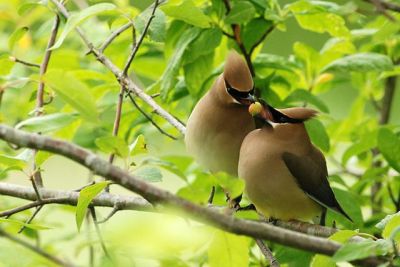
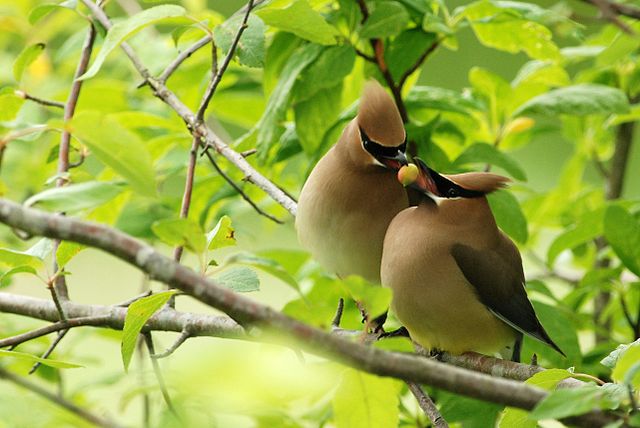
Cedar Waxwing (Bombycilla cedrorum) Passing Berries ©WikiC

Cedar Waxwing (Bombycilla cedrorum) Passing Berries ©WikiC

“A scientist with a biblical worldview has to account for the different species of birds found today in each created bird kind from the Flood to the present. Models of speciation and radiation for those events would only need thousands of years.”

Here is my most favorite quote from his article: “Dr. Jean Lightner has conservatively estimated that birds are comprised of about 196 created kinds.7 If we round that up to 200 bird kinds, we could account for all 10,380 extant species by each species diverging into two species just once every 750 yearsjust six times (200 to 400 to 800 to 1,600 to 3,200 to 6,400 to 12,800). That would even give us 2,420 more bird species to account for some extinction events. That is a very simplistic view and does not account for many variables, but it does provide us with a quick way to estimate if simple speciation (doubling) could account for all the birds we have today.

Here is a link to a very interesting chart I found on Pantasthumb. It shows the different birds grouped, by genera, within each family, in a tree format. Very interesting to look at. It might help make some of this article make a little more sense. Of course this is from an evolutionary perspective, but the evidence is shares by both sides.  TO SEE CHART The article this chart came from is “Update on the Tree of Birds“.

That is enough to think about for now. More later in another Avian Kinds on the Ark. Actually, this series is a sub-series for Birds of the Bible.

*

Avian Kinds on the Ark – Introduction

Avian Kinds on the Ark – What is a Kind?

DNA Reveals New Bird Species by Current Results.

Bird Speciation From the Flood to the Present by Dr. David W Boyd, Jr

Birds of the Bible – Foundation – The Ark

Birds of the Bible – Foundation #3 Updated

An Initial Estimate of Avian Ark Kinds,

Birds of the Bible – Seven By Seven

*

Avian Kinds on the Ark – What Is A Kind?

Green-winged Teal (Anas carolinensis) Pair ©WikiC

They Came By Pairs – Green-winged Teal (Anas carolinensis) ©WikiC

And of every living thing of all flesh, two of every sort shalt thou bring into the ark, to keep them alive with thee; they shall be male and female. Of fowls after their kind, and of cattle after their kind, of every creeping thing of the earth after his kind, two of every sort shall come unto thee, to keep them alive. And take thou unto thee of all food that is eaten, and thou shalt gather it to thee; and it shall be for food for thee, and for them. Thus did Noah; according to all that God commanded him, so did he. (Genesis 6:19-22 KJV)

When Noah was preparing the Ark, he was informed that the animals and birds (fowls) after their kinds would come to him to keep them alive. Again, notice in Genesis 7:1-3 that the clean beast and the birds (fowls) all come by sevens (pairs) also. Clean or unclean, the birds came by seven pairs. There is no distinction made with them.

And the LORD said unto Noah, Come thou and all thy house into the ark; for thee have I seen righteous before me in this generation. Of every clean beast thou shalt take to thee by sevens, the male and his female: and of beasts that are not clean by two, the male and his female. Of fowls also of the air by sevens, the male and the female; to keep seed alive upon the face of all the earth. (Genesis 7:1-3 KJV)

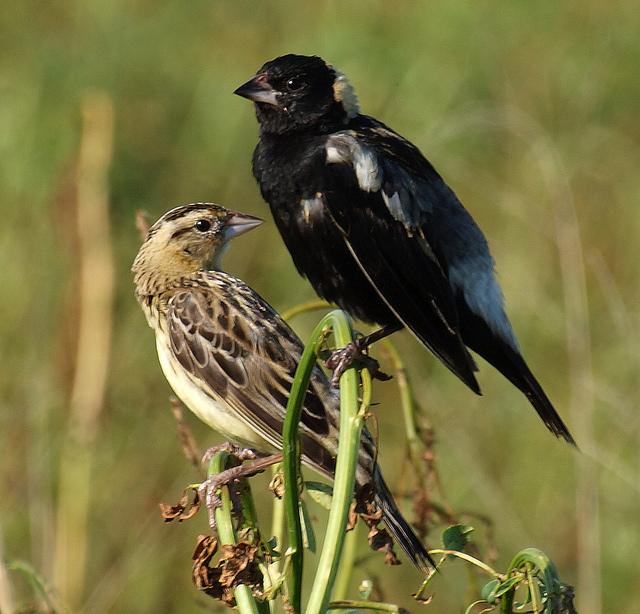
Bobolink (Dolichonyx oryzivorus) CC Pair ramendan

Bobolink (Dolichonyx oryzivorus) ©© Pair ramendan

In Birds of the Bible – Foundation #3 Updated, I made this remark “Noah did not have to round up the animals, they came to him. Because not every animal we see today came on board but the main kinds (for instance the “bird kinds” may have had a “warbler kind” but not have black and white warblers, yellow-rumped warblers, hooded warbler, etc.), which ever ones they were, there was plenty of room for them. I have an idea that because the LORD sent the animals, birds, and critters, that their DNA’s were of the highest quality. (That is my opinion)”

At the time that comment was made, I was not aware of this article from Dr. Jean Lightner, about the Avian Ark Kinds. This series is based on her’s and other’s research into the Avian Kinds that came on board the ark.

“Kinds” or created kinds are called “baramins” and they used different methods to try to find the original kinds. This part of her article is rather technical, and honestly, I don’t understand some of the terms and methods discussed. Yet, the findings, is what I would like to share with you. Those, we can understand. (You can read her article HERE)

Most of us are aware that the many variety of dogs we see today came from an original “dog kind.” No matter how much interbreeding they do, the results are still dog kinds. Cats and dogs don’t interbreed, so no evolution is involved. Variation within the dog kind has occurred, just as it has in the “bird kinds”. In the Bird Kinds, they have come up with approximately 196 putative bird kinds and most of those break down to our modern-day Families in our taxonomy. Yet, in the I.O.C. their are 239 families and two Incertae Sedis families which make 241 families. The next articles will show how those Families compare to today’s families.

By the way, my math was off in that first article. I forgot the two Incertae Sedis Families. That makes for 45 extra families to account for.

Mountain Bluebird, male (R) & female (L) ©Mickey Barnes / from Birds & Blooms

Mountain Bluebird, male (R)- female (L) ©Mickey Barnes / from Birds & Blooms

Two quotes from Dr. Lighner’s article: “There is tremendous variety seen today in animal life as creatures have multiplied and filled the earth since the Flood (Genesis 8:17). In order to identify which modern species are related, being descendants of a single kind, interspecific hybrid data is utilized. When hybrid data is lacking, a cognitum approach is preferred; this identifies natural groupings based on human cognitive senses. Generally the cognitum at the family level (which is usually fairly strong) is preferred when hybrid data is lacking, though obvious cognita surrounding this level are noted.” (emphasis mine)

“As in mammals and amphibians, the state of avian taxonomy is in flux. Despite the ideal of neatly nested hierarchies in taxonomy, it seems groups of birds are repeatedly “changing nests.” This is partially because where an animal is placed depends on which characteristics one chooses to consider. While many had thought that molecular data would resolve these issues, in some cases it has exacerbated them.”

One thing we can see from all this. We will never know exactly who, what, or which one belongs to this family or that order or kind until we reach heaven and ask their Creator.

Let them praise the name of the LORD: for he commanded, and they were created. (Psalms 148:5 KJV)

*

Avian Kinds on the Ark – Introduction

Birds of the Bible – Foundation – The Ark

Birds of the Bible – Foundation #3 Updated

An Initial Estimate of Avian Ark Kinds,

Birds of the Bible – Seven By Seven

*

Georgina Goes on Summer Vacation – by Emma Foster

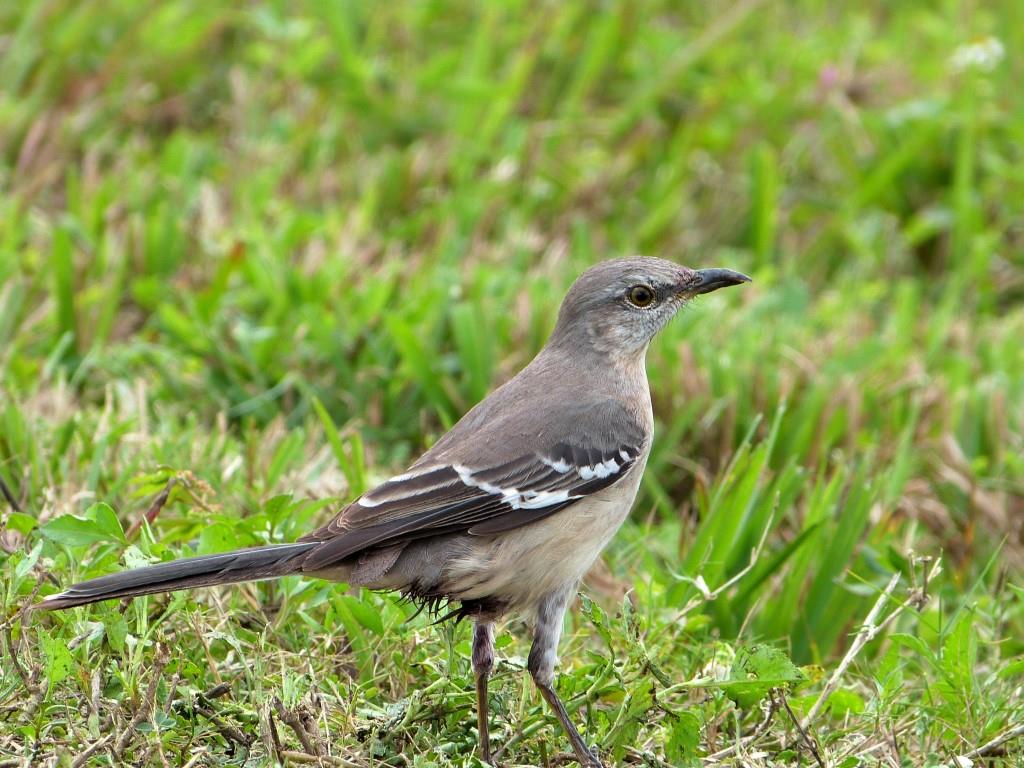
Northern Mockingbird Viera Wetlands

Northern Mockingbird Viera Wetlands

Georgina Goes on Summer Vacation

~ by Emma Foster

There once was a Mockingbird named Georgina who lived in a large bustling city in the south. She had built her nest on top of a street light in the middle of a busy street. Every day, Georgina would watch the busy cars drive by as they beeped their horns. The scenery was nice during the winter, which was always mild, but Georgina never liked the city during the summertime. It was too hot and crowded for her.

Every day, since Georgina was a mockingbird, she would try to mimic the sounds that she heard in the city all of the time. But the hotter it became, the more Georgina grew tired of all the noises in the city and the hard work of mimicking them.

It was on one very busy, very hot day that Georgina decided that she needed a vacation. She decided that it would have to be somewhere cool and near the ocean. First she needed a map.

Georgina was flying around one day when she found a quarter that someone had dropped on the sidewalk. Georgina picked it up in her beak and used to it buy a map by the newspaper stand.

When Georgina flew back to her nest above the busy street, she searched the map looking for a place that seemed like a good vacation spot. Eventually she decided that she needed to fly north because it was colder up north no matter what time of the year.

Georgina left the busy city early one morning to fly north. She decided that she would come back in a few weeks when it was sure to not be as hot. For now, it was cool because it was early in the morning.

Georgina guessed that if she followed the map she would be able to travel farther up north in the direction she wanted to fly. She would stop when it became cold enough.

Northern Mockingbird (Mimus polyglottos) At Sunset Beach NC ©WikiC

Northern Mockingbird (Mimus polyglottos) At Sunset Beach NC ©WikiC

After a few days, the weather was still hot, but it was nice because Georgina was flying close to a beach. Georgina settled on top of a tall palm tree and made her nest out of broken sticks and twigs. She watched the waves ripple back and forth. Seagulls flew in all directions and the palm trees swayed. Georgina liked the peace and quiet. This was much better than the city.

But after a while, Georgina began to become uncomfortable. She had gone on vacation to get away from the noises of the city, but the ocean was pretty noisy too. Georgina mimicked a lot of the noises of the beach, but she eventually began to get tired of it. It was really hot near the beach as well. She didn’t remember mockingbirds ever going to the beach, and the heat was probably why. Georgina began to miss the city and all of its noises.

Northern Mockingbird (Mimus polyglottos) In Flight ©Flickr Tom Wicker

Northern Mockingbird (Mimus polyglottos) In Flight ©Flickr Tom Wicker

Georgina decided it was time to fly back to the city. As she began traveling back, the weather didn’t seem as hot as she remembered it to be. When she flew back to her nest on top of the street light, the weather already felt cooler in the city.

Georgina decided she would never go back to the beach. She would always be content where she was. Even if the summer was a little uncomfortable in the city with all the people, Georgina would stay all year round. And the next time she decided to travel, Georgina would buy a travel magazine.

THE END


Lee’s Addition:

Not that I speak in respect of want: for I have learned, in whatsoever state I am, therewith to be content. (Philippians 4:11 KJV)

Great story, Emma. Many times humans act like Georgina and become discouraged with how things are. They think like the cattle. They think the “grass is greener on the other side.” Maybe a nest in a tree rather than on a street light. Keep up the great stories. We are all enjoying them.

See more of Emma’s stories along with some of our other guest writers.

*

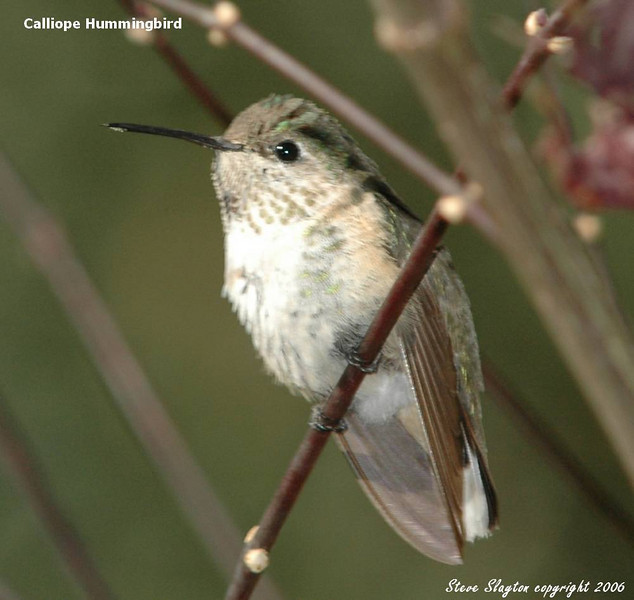
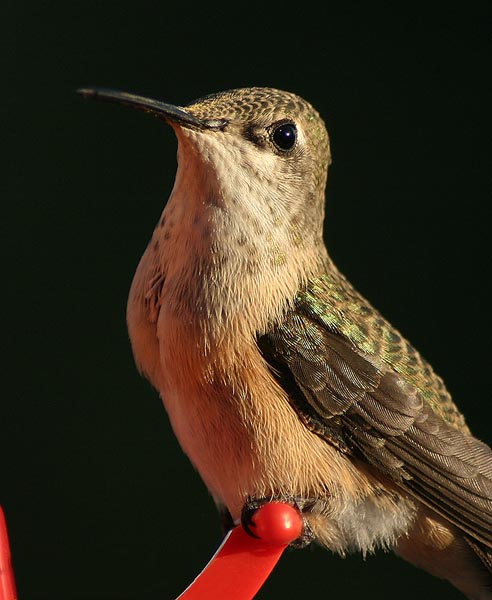
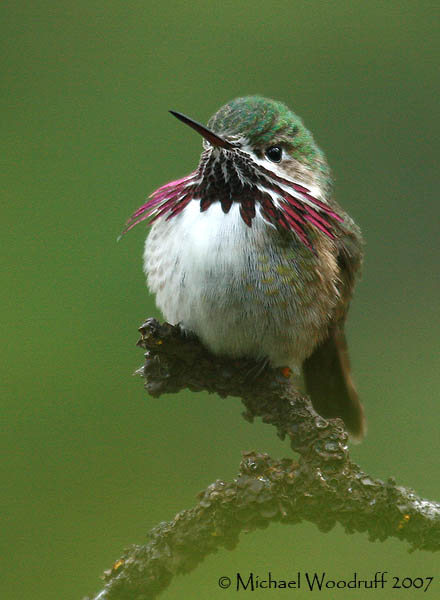
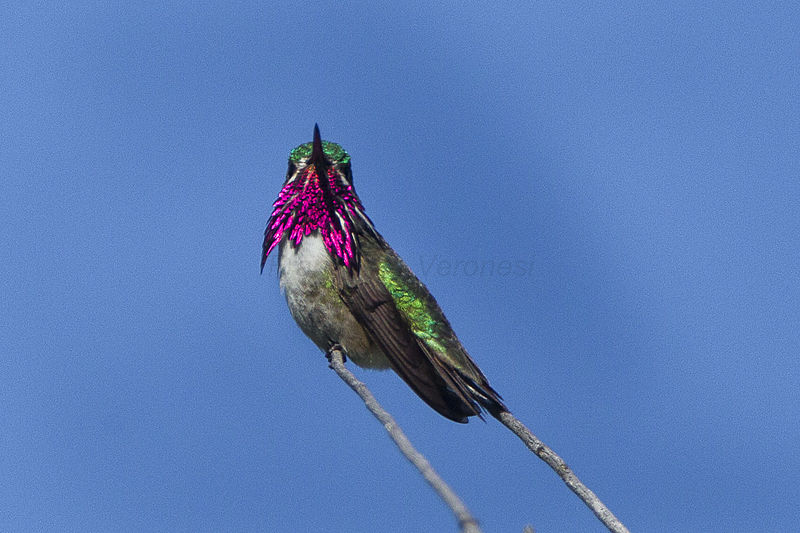
Calliope Hummingbirds – North America’s Smallest

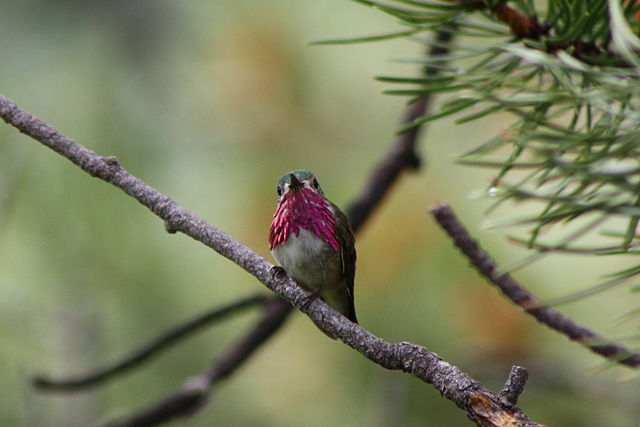
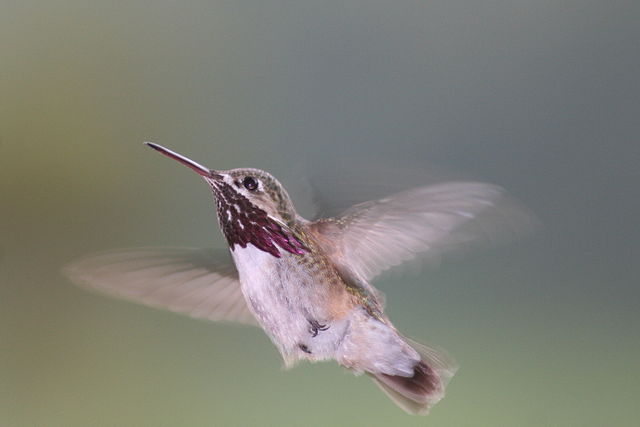
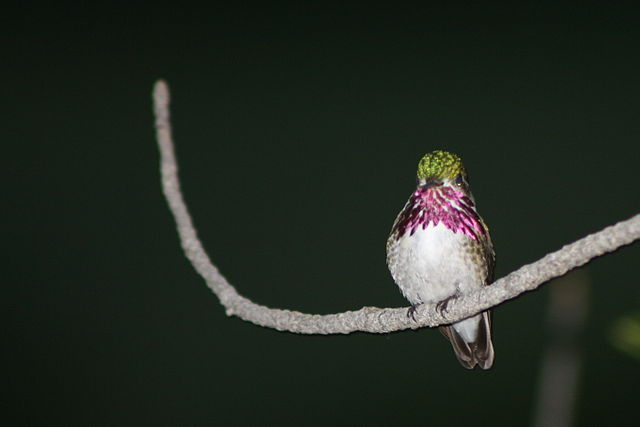
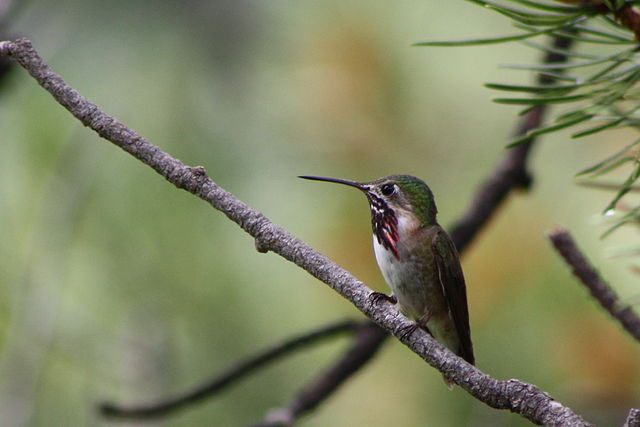
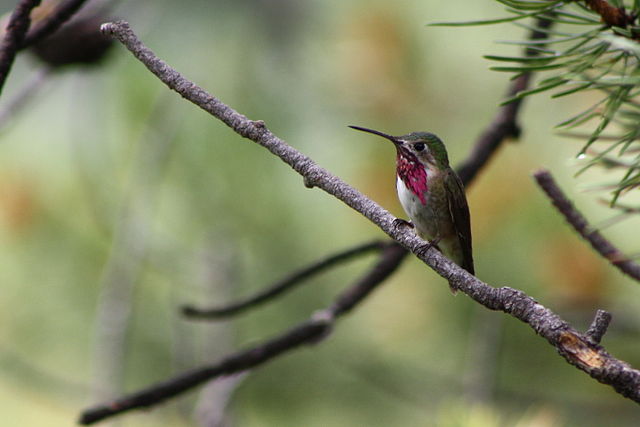
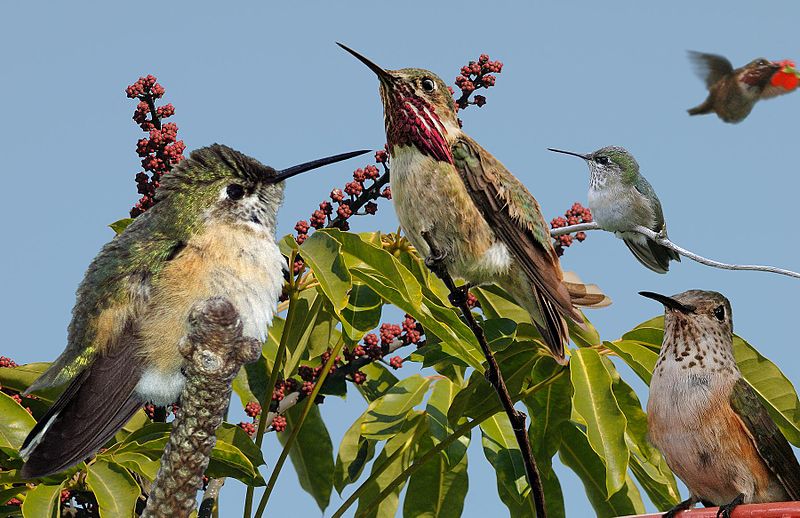
Calliope Hummingbird (Stellula calliope) Full Gorget ©WikiC

“He will bless them that fear the LORD, both small and great.” (Psalms 115:13 KJV)

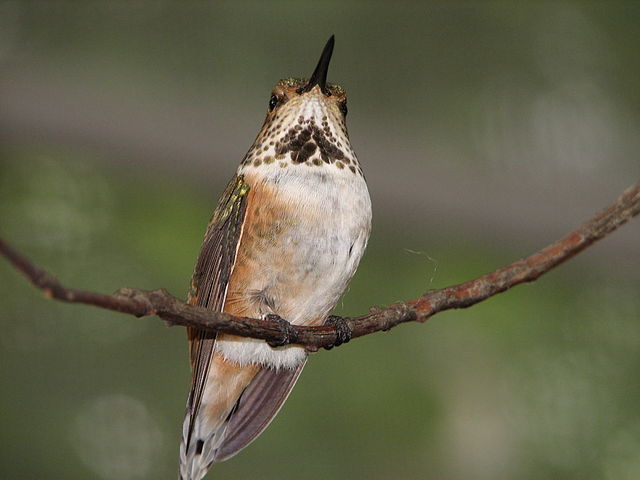
Just finished reading an article in this month’s Bird Watcher’s Digest the “Calliope Hummingbird: Tiny Muse”, (July/August ’16). They are so tiny,

“a mere 2.75 to 3 inches in lenght and weighing less than a penny — and it is also the smallest long-distant avian migrant in the world. Some travel up to 5,600 miles anually.”

Can you image something that small flying that far?

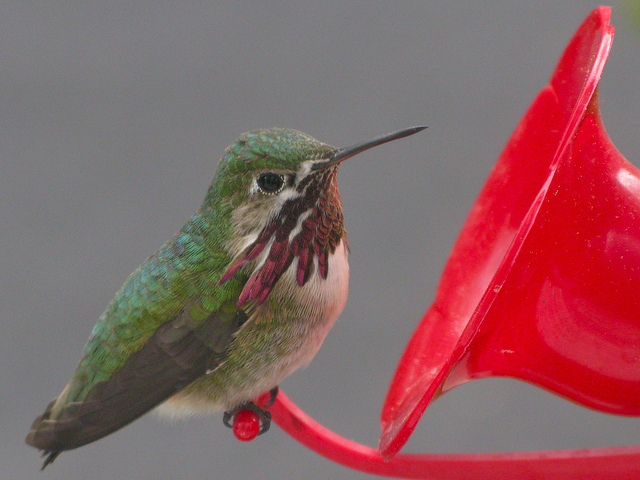
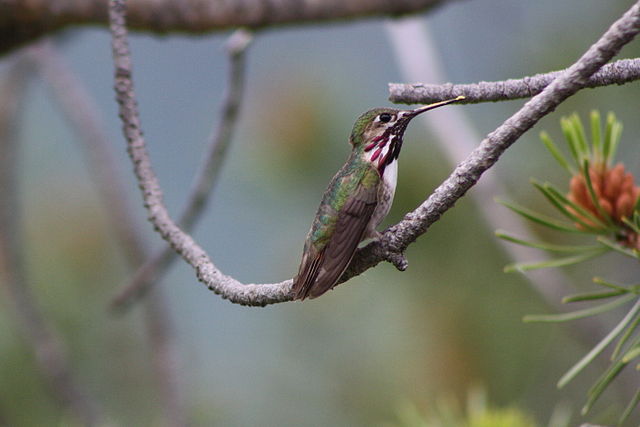
Calliope Hummingbird (Stellula calliope) ©Wiki

Calliope Hummingbird (Stellula calliope) ©Wiki

Thought you might like to see another one of the Lord’s amazing avian wonders.

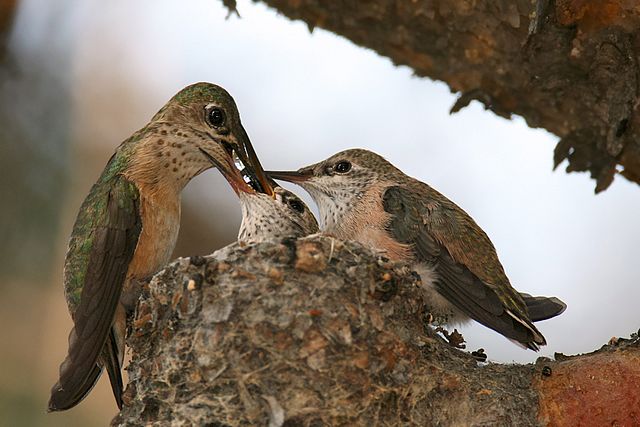
“This is the smallest breeding bird found in Canada and the United States. The only smaller species ever found in the U.S. is the bumblebee hummingbird, an accidental vagrant from Mexico. An adult calliope hummingbird can measure 7–10 cm (2.8–3.9 in) in length, span 11 cm (4.3 in) across the wings and weigh 2 to 3 g (0.071 to 0.106 oz). These birds have glossy green on the back and crown with white underparts. Their bill and tail are relatively short. The adult male has wine-red streaks on the throat, green flanks and a dark tail. Females and immatures have a pinkish wash on the flanks, dark streaks on the throat and a dark tail with white tips. The only similar birds are the rufous hummingbird and the Allen’s hummingbird, but these birds are larger with more distinct and contrasting rufous markings on tail and flanks, and longer central tail feathers.” (Wikipedia)

“And a voice came out of the throne, saying, Praise our God, all ye his servants, and ye that fear him, both small and great.” (Revelation 19:5 KJV)

*

Trochilidae – Hummingbirds Family

Calliope Hummingbird – All About Birds

Calliope Hummingbird – What Bird

Calliope Hummingbird – Bird Web

Calliope Hummingbird – Audubon

Calliope Hummingbird – Wikipedia

Wordless Birds – With Hummingbirds
*

“Young Blood” by Creation Moments

YOUNG BLOOD by Creation Moments

“His heart is as firm as a stone; yea, as hard as a piece of the nether millstone.” (Job 41:24)

Interesting Things from Smiley CentralAs dinosaur bones containing blood vessels and blood cells are continually being found, more and more laboratories are assigning dates to these bones in the thousands, not millions, of years. This makes evolutionists just like the patient who goes to his doctor, convinced that he is dead. After failing to convince the patient he is alive, the doctor pricks the man’s finger, causing it to bleed. “See?” the doctor says. You must be alive because dead men don’t bleed.” And the patient replies: “Imagine that! Dead men do bleed after all!”

Blood vessels found in a supposedly 80-million-year-old hadrosaur fossil. Evolutionists know full well that dinosaur bones that are millions of years old should not have blood and blood vessels in them. To defend their position, they usually say the bones were contaminated, throwing off the dating. But North Carolina State University said that their researchers “have confirmed that blood vessel-like structures found in an 80 million-year-old hadrosaur fossil are original to the animal, and not biofilm or other contaminants.”

But like the patient who kept thinking he was dead, the university went on to say that their findings “add to the growing body of evidence that structures like blood vessels and cells can persist over millions of years.”

Photo Blood vessels found in a supposedly 80-million-year-old hadrosaur fossil. Courtesy of North Carolina State University. (Fair Use)

Photo Blood vessels found in a supposedly 80-million-year-old hadrosaur fossil. Courtesy of North Carolina State University. (Fair Use)

Evolutionists just won’t admit that their evolutionary dating of dinosaurs has finally been falsified. After all, that would be like admitting that the Bible is right, and this is something that atheistic evolutionists will never do.

Prayer:
Heavenly Father, without You opening the eyes of evolutionists, I know it is impossible for me to get them to believe. Open their eyes to the truths found in Your infallible Word, I pray. Amen.
Notes:
“Researchers Confirm Original Blood Vessels in 80 Million-Year-Old Fossil,” NC State News, 12/1/15.
*

More Interesting Things

Sunday Inspiration – Emberizidae Family Allies II

Ochre-breasted Brushfinch (Atlapetes semirufus) ©WikiC

That ye might walk worthy of the Lord unto all pleasing, being fruitful in every good work, and increasing in the knowledge of God; (Colossians 1:10 KJV)

We finally come to the last birds in the Emberizidae –  Buntings, New World Sparrows & Allies Family. This is the first family that we split up into four articles. With 181 species in this very common family, this gave you a chance to see more of them.

So, today, we will finish up the family by showing you last group of the “allies.” There is a Large-footed Finch in the Peropetes genus, the only one in the genus actually. Then the Atlapetes genus will be the bulk of the birds (31) and they are all Brushfinches, two finches from the Pselliophorus genus, a Yellow Cardinal from the Gubernatrix, and finish it off with 9 Bush Tanagers in the Chlorospingus genus. Forty-four amazing avian wonders from their Creator for us to enjoy.

Large-footed Finch (Pezopetes capitalis) ©WikiC

Large-footed Finch (Pezopetes capitalis) ©WikiC

The Large-footed Finch is found in the undergrowth of mountain forests, second growth, bamboo clumps, and scrubby pastures from 2150 m altitude to the scrubby páramo at 3350 m. It has a slender bill, a modestly sized tail and very large and powerful feet and legs.

White-naped Brushfinch (Atlapetes albinucha) by Kent Nickell

White-naped Brushfinch (Atlapetes albinucha) by Kent Nickell

The next genus, the Atlapetes with their Brushfinches are rather interesting and colorful. Most are found in forest in subtropical or tropical areas. The range from Mexico, Central America and throughout South America.

White-rimmed Brushfinch (Atlapetes leucopis) ©Dusan M Brinkhuizen

White-rimmed Brushfinch (Atlapetes leucopis)
©Dusan M Brinkhuizen

Looks like the Lord created that White-rimmed Brushfinch with glasses, which it is not wearing. I’m sure it has very good eyesight.

Yellow-thighed Finch (Pselliophorus tibialis) by Ian

Yellow-thighed Finch (Pselliophorus tibialis) by Ian

The Yellow-thighed Finch and the Yellow-green Finch of the Pselliophorus genus look like they are wearing short leggings on the top of their legs.

Yellow Cardinal (Gubernatrix cristata) ©WikiC

Yellow Cardinal (Gubernatrix cristata) ©WikiC

The Yellow Cardinal is another neat avian creation, Looks just like our Northern Cardinal, but is yellow and in a different family altogether.

Sooty-capped Bush Tanager (Chlorospingus pileatus) by Ian

Sooty-capped Bush Tanager (Chlorospingus pileatus) by Ian

The last genus in this family, is the Chlorospingus and contains 9 Bush Tanagers. With this last group, we finish up the Emberizidae Family. Trust you enjoyed seeing most of the 181 members over the last few weeks.

This slideshow requires JavaScript.

Thou art worthy, O Lord, to receive glory and honour and power: for thou hast created all things, and for thy pleasure they are and were created. (Revelation 4:11 KJV)

“Worthy The Lamb” ~ Choir and Orchestra at Faith Baptist Church (May 15, 1916)
*

More Sunday Inspirations

Sunday Inspiration – Emberizidae’s – Buntings – #1

Sunday Inspiration – Emberizidae – Part II – #2

Sunday Inspiration – Emberizidae Family Allies I – #3

Emberizidae –  Buntings, New World Sparrows & Allies Family

Gideon

*
Sunday Inspiration – Emberizidae Family Allies I

Chestnut-capped Brushfinch (Arremon brunneinucha) ©WikiC

Chestnut-capped Brushfinch (Arremon brunneinucha) ©WikiC

Yea, the sparrow hath found an house, and the swallow a nest for herself, where she may lay her young, even thine altars, O LORD of hosts, my King, and my God. (Psalms 84:3 KJV)

Sunday is here again, and it’s time to continue with the Emberizidae Family of Buntings, New World Sparrows and their allies.  First, aren’t we thankful that the Lord has created the world and set up a seven day week. He set the pattern for us to rest after six days of work. He was tired, nor has he stopped working, He was just setting an example, because the human body needs rest. He ought to know, He created us.

“Thus the heavens and the earth were finished, and all the host of them. And on the seventh day God ended his work which he had made; and he rested on the seventh day from all his work which he had made. And God blessed the seventh day, and sanctified it: because that in it he had rested from all his work which God created and made.” (Genesis 2:1-3 KJV) (emphasis mine)

I for one look forward to Sundays. We rest and attend church, eat and fellowship with our friends, and attend the evening service and rest some more. These Sunday Inspirations, which have been going on for some time now, take several hours to put together, and then are scheduled for 1 or 2 minutes after midnight Sunday morning. When WordPress puts them up, I will already be resting in bed and enjoying the start of my Day of Rest. Enough of the personal information, let’s see what these birds are up to this week.

The first Sunday, we showed the Buntings in this family, last week, we showed most of the New World Sparrows in this Emberizidae family, so, let’s see who these “allies” are.

Eastern Towhee (Pipilo erythrophthalmus) by Ray

Eastern Towhee (Pipilo erythrophthalmus) by Ray

Towhees typically have longer tails than other emberizids. Most species tend to avoid humans, so they are not well known, though the eastern towhee P. erythrophthalmus is bolder. This species, and some others, may be seen in urban parks and gardens. Also, in with the Melozone genus are four Ground Sparrows.

Prevost's Ground Sparrow (Melozone biarcuata) ©Flickr Richard Gibbons

Prevost’s Ground Sparrow (Melozone biarcuata) ©Flickr Richard Gibbons

Arremon is a genus of neotropical birds in the Emberizidae family. With the exception of the green-striped brush finch, which is endemic to Mexico, all species are found in South America, with a few reaching Central America.

Chestnut-capped Brushfinch (Arremon brunneinucha) ©Flickr Amy McAndrews

  • (Wikipedia with editing)

This slideshow requires JavaScript.

“Where there is no vision, the people perish: but he that keepeth the law, happy is he.” (Proverbs 29:18 KJV)

“Be Thou My Vision” ~ by Ladies and Girls Choir on Mother’s Day

*

More Sunday Inspirations

Sunday Inspiration – Emberizidae’s – Buntings

Sunday Inspiration – Emberizidae – Part II

Emberizidae –  Buntings, New World Sparrows & Allies

Gospel Message

*

Birds of the Bible – Long-eared Owl

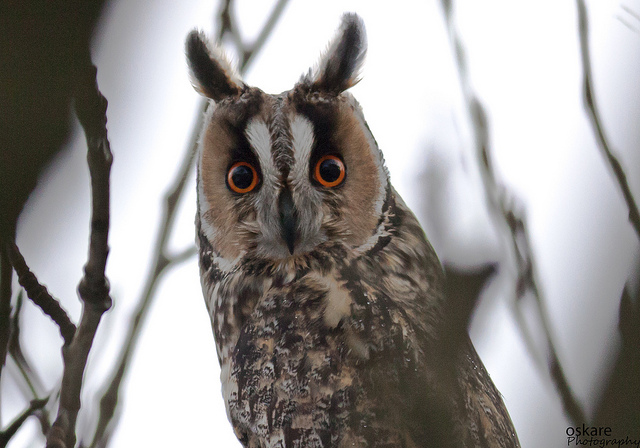
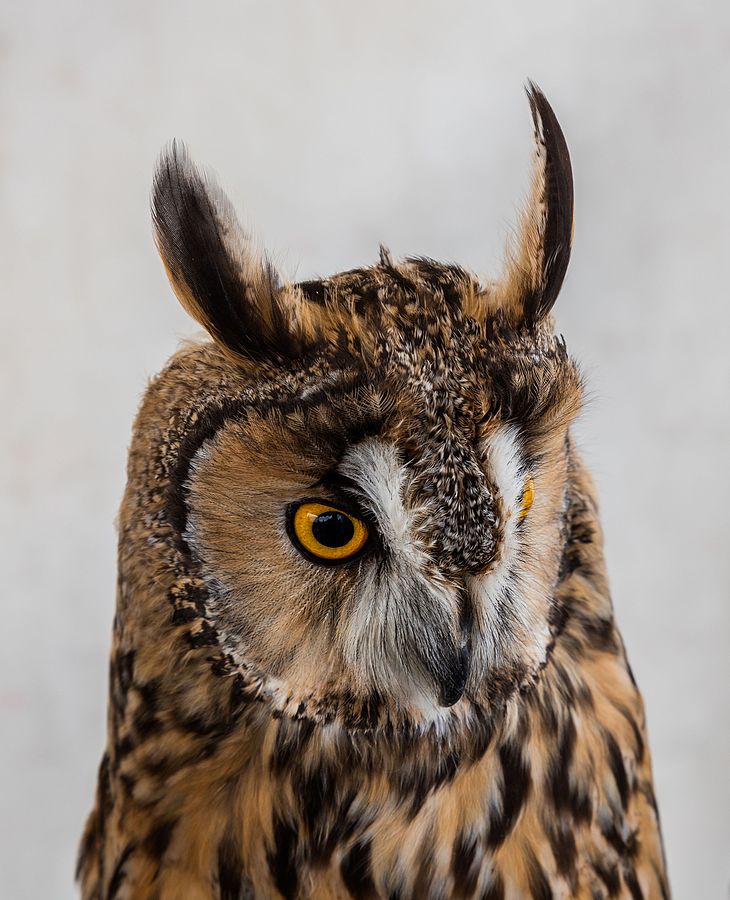
Long-eared Owl (Asio otus) ©Flickr Slgurossom

Long-eared Owl (Asio otus) ©Flickr Slgurossom

“And the owl, and the night hawk, and the cuckow, and the hawk after his kind, And the little owl, and the cormorant, and the great owl,” (Leviticus 11:16-17 KJV)

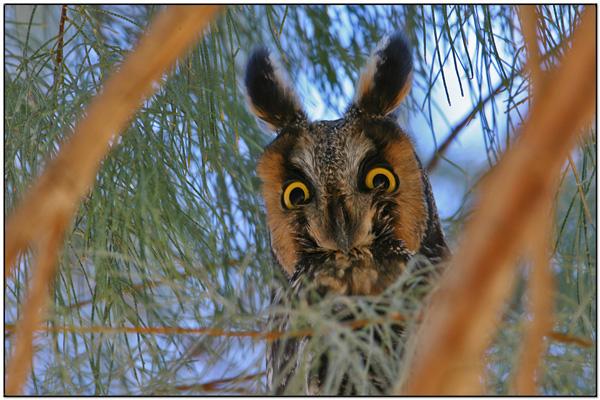
I trust you liked the Long-eared Owl that was on this morning’s Four Word Thursday. That was a Northern Long-eared Owl, but now just called Long-eared Owl. Owls are Birds of the Bible and mentioned several times. The “Long-eared Owl” is not named specifically, but that does not mean the verses do not include this beautifully expressive owl.

Northern Long-eared Owl

Northern Long-eared Owl (Asio otus, previously Strix otus)

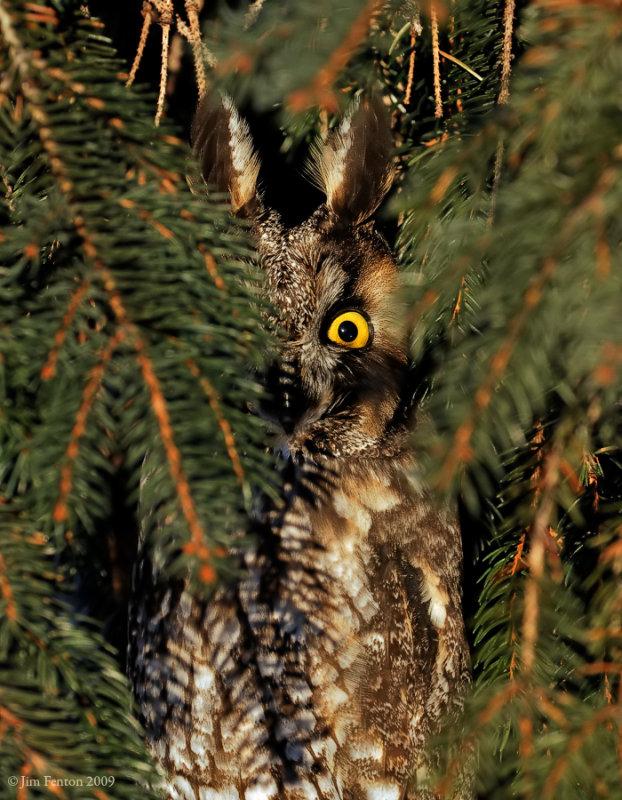
“Long-eared Owls are lanky owls that often seem to wear a surprised expression thanks to long ear tufts that typically point straight up like exclamation marks. These nocturnal hunters roost in dense foliage, where their camouflage makes them hard to find, and forage over grasslands for small mammals. Long-eared Owls are nimble flyers, with hearing so acute they can snatch prey in complete darkness. In spring and summer, listen for their low, breathy hoots and strange barking calls in the night.” (1)

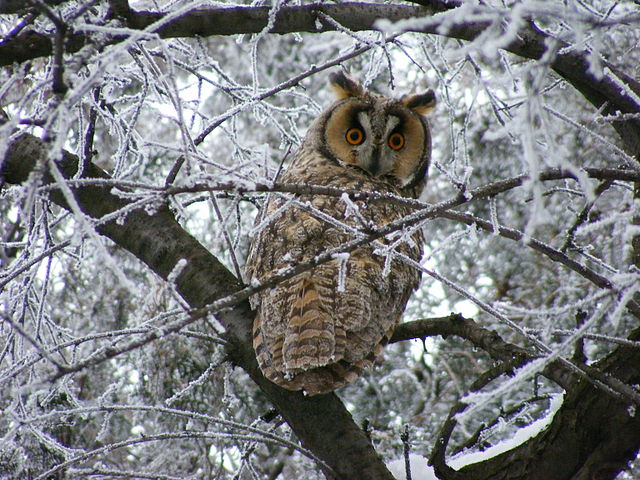
Long-eared Owl (Asio otus) by J Fenton

Long-eared Owl (Asio otus) by J Fenton

Subspecies; Related Species

Five subspecies generally recognized:

  • Asio o. otus (Eurasia, Azores, nw. Africa)
  • A. o. canariensis (Canary Is.)
  • A. o. graueri (Zaire, Uganda, Kenya)
  • A. o. wilsonianus (e. North America)
  • A. o. tuftsi (w. North America)

A. o. abyssinicus (highlands of Ethiopia) is now moved to full species status. Now called the Abyssinian Owl (Asio abyssinicus)

Sibley and Monroe (1990) combine A. o. graueri and A. o. abyssinicus into 1 species, Abyssinian Owl (A. abyssinicus). [This they did] Population endemic to Madagascar usually treated as full species, Madagascar Long-eared Owl (A. madagascariensis; Amadon and Bull 1988, but see Sibley and Monroe 1990).

Closest relative to otus is probably madagascariensis; Amadon and Bull (1988) suggest they are allospecies. Data from protein electrophoresis indicate that for congeners, genetic distance between Long-eared and Short-eared owls is “unusually large” (Randi et al. 1991). Hybridization not known to occur. (2) [with editing]

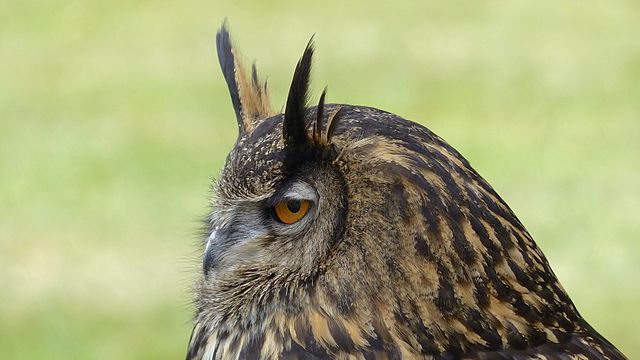
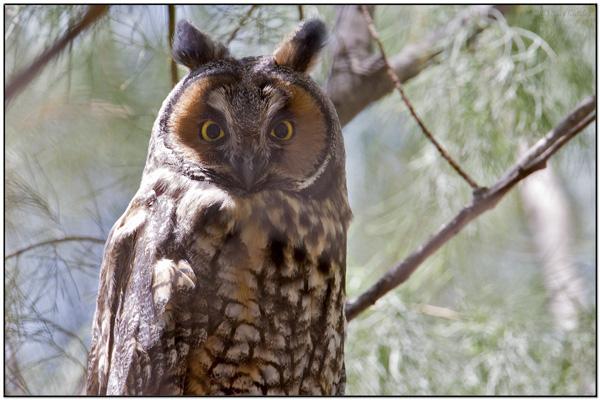
Long-eared Owl (Asio otus) ©WikiC

Long-eared Owl (Asio otus) ©WikiC

Here in the U.S. we would encounter  the tuffsi and wilsonianus supspecies. I am not sure which these photos represent other than they are some of the fantastic creations from their Creator, the Lord Jesus Christ. We have present several of the Birds of the Bible – Owl articles, which can be see by clicking Birds of the Bible – Owls.

These words for “Owl” are in the Scripture in Leviticus 11:16, 17:

“And the owl[H3284], and the night hawk, and the cuckow, and the hawk after his kind, And the little owl[H3563], and the cormorant, and the great owl[H3244],” (Leviticus 11:16-17 KJV)

H3284 – יענה – ya‛ănâh – yah-an-aw

Feminine of H3283, and meaning the same: – + owl.

H3563 – כּוס – kôs – koce

From an unused root meaning to hold together; a cup (as a container), often figuratively a lot (as if a potion); also some unclean bird, probably an owl (perhaps from the cup like cavity of its eye): – cup, (small) owl. Compare H3599.

H3244 – ינשׁוף ינשׁוּף – yanshûph – yanshôph – yan-shoof’, yan-shofe’

Apparently from H4398; an unclean (aquatic) bird; probably the heron (perhaps from its blowing cry, or because the night heron is meant (compare H5399)): – (great) owl.

Just thought I would give you some photos of this amazing owl, and throw in a little Bible Study. The Hebrew words are from the Strong’s Hebrew and Greek Dictionaries on my e-Sword (a free Bible program).

******Credits:

(1) Introduction to Long-eared Owl from All About Birds

(2) Marks, J. S., D. L. Evans and D. W. Holt. 1994. Long-eared Owl (Asio otus), The Birds of North America Online (A. Poole, Ed.). Ithaca: Cornell Lab of Ornithology; Retrieved from the Birds of North America Online: http://bna.birds.cornell.edu/bna/species/133 and doi:10.2173/bna.133

*

Birds of the Bible – Owls

*

Hummingbird and a Dog

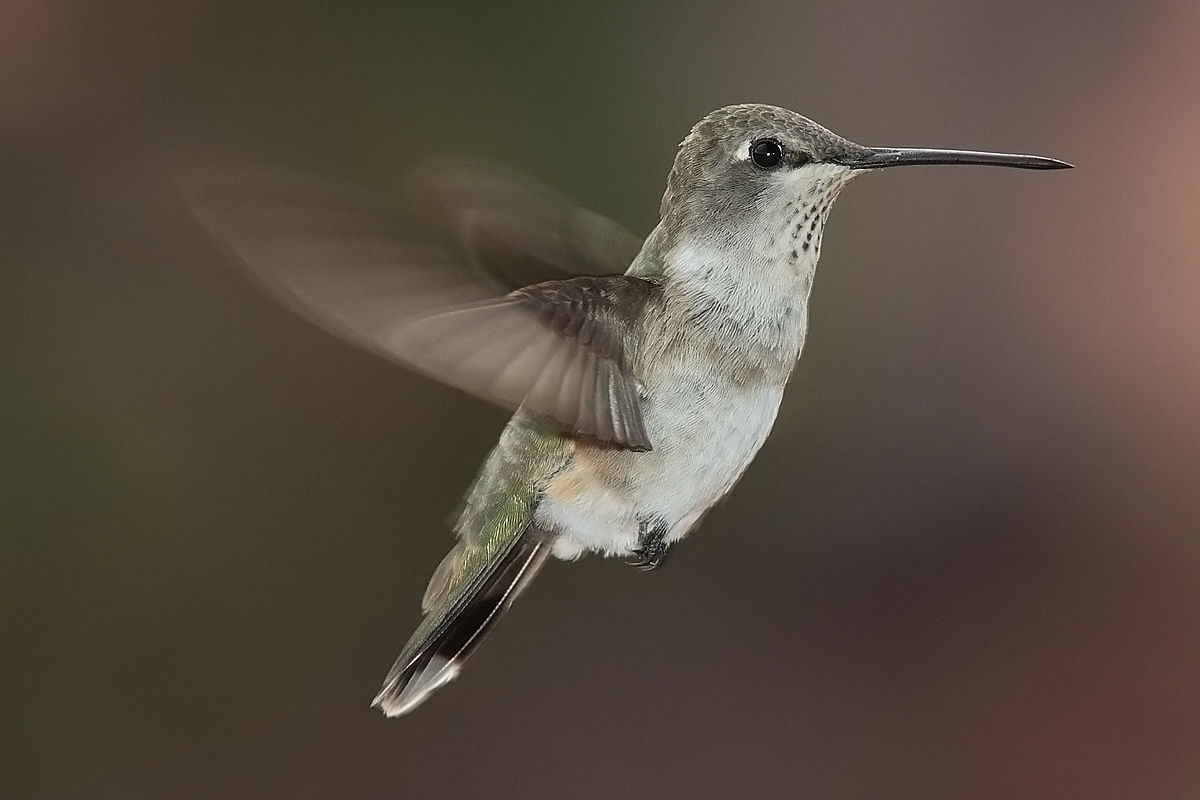
Black-chinned Hummingbird (Archilochus alexandri) ©WikiC

Black-chinned Hummingbird (Archilochus alexandri) ©WikiC

“The wolf and the lamb shall feed together, and the lion shall eat straw like the bullock: and dust shall be the serpent’s meat. They shall not hurt nor destroy in all my holy mountain, saith the LORD.” (Isaiah 65:25 KJV) (emphasis mine)

Here are two very interesting videos about a hummingbird and a dog getting along very well. It reminded me of these verses.

“And out of the ground the LORD God formed every beast of the field, and every fowl of the air; and brought them unto Adam to see what he would call them: and whatsoever Adam called every living creature, that was the name thereof. And Adam gave names to all cattle, and to the fowl of the air, and to every beast of the field; but for Adam there was not found an help meet for him.” (Genesis 2:19-20 KJV)

“The wolf also shall dwell with the lamb, The leopard shall lie down with the young goat, The calf and the young lion and the fatling together; And a little child shall lead them. The cow and the bear shall graze; Their young ones shall lie down together; And the lion shall eat straw like the ox. The nursing child shall play by the cobra’s hole, And the weaned child shall put his hand in the viper’s den.” (Isaiah 11:6-8 NKJV)

*

Wordless Birds – With Hummingbirds

*

Cher Ami’s Story for Memorial Day

Thought I would repost Cher Ami’s story in honor of Memorial Day. Thank all of you who have served our country or your country to help preserve peace.

To grant us that we, Being delivered from the hand of our enemies, Might serve Him without fear, (Luke 1:74 NKJV)

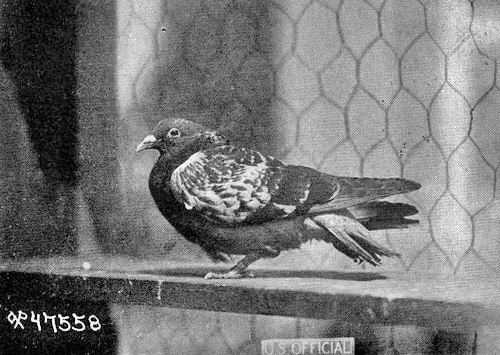
Cher Ami - Homing Pigeon Hero

Cher Ami – Homing Pigeon Hero

Cher Ami – WW1 Hero

While researching for a hero for an article on our church blog, I tried to find out about my father, who was in WW1. Being as he died when I was four years old, it is hard to find out a lot of details. All I knew is that he was in the trenches where they were poisoned with mustard gas and that it took years, but he died as a result of that gassing. Talking to my family, I also found out that he was at the Meuse-Argonne Offensive (Argonne Forrest) in which 117,000 of our American troops gave their lives and that he was in a company that had few survivors. Also found that he had fought hand-to-hand with bayonets. But the actual details are still a mystery. So, my dad and all of our men that fought in WW1 are my heroes.What I did find is a hero of the avian kind. His name was Cher Ami and he was a homing pigeonc which had been donated by the pigeon fanciers of Britain for use by the U.S. Army Signal Corps in France during World War I and had been trained by American pigeoneers. He helped save the Lost Battalion of the 77th Division in the battle of the Argonne, October 1918.

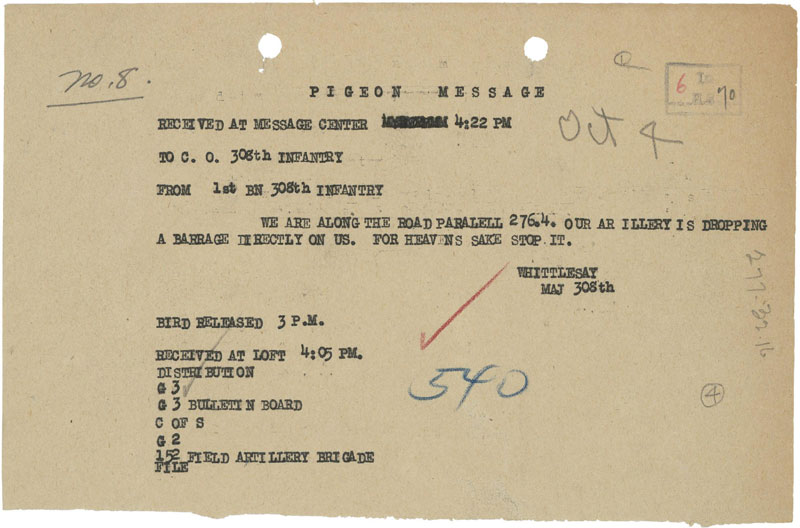
On October 3, 1918, Charles Whittlesey and more than 500 men were trapped in a small depression on the side of the hill behind enemy lines without food or ammunition. They were also beginning to receive friendly fire from allied troops who did not know their location. Surrounded by the Germans, many were killed and wounded in the first day and by the second day, only a little more than 200 men were still alive. Whittlesey dispatched messages by pigeon. The pigeon carrying the first message (“Many wounded. We cannot evacuate.”) was shot down. A second bird was sent with the message, “Men are suffering. Can support be sent?” That pigeon also was shot down. Only one homing pigeon was left: ‘Cher Ami’. He was dispatched with a note in a canister on his left leg,

“We are along the road parallel to 276.4. Our own artillery is dropping a barrage directly on us. For heaven’s sake, stop it!”

Actual Message Sent

Actual Message Sent

As Cher Ami tried to fly back home, the Germans saw him rising out of the brush and opened fire and for several minutes, bullets zipped through the air all around him.The men of the Lost Battalion saw Cher Ami tragically shot down, but miraculously, he was airborne again soon. He managed to arrive back at his loft at division headquarters 25 miles to the rear in just 25 minutes, helping to save the lives of the 194 survivors. In this last mission, Cher Ami had delivered the message despite having been shot through the breast, blinded in one eye, covered in blood and with a leg hanging only by a tendon.

Cher Ami had become the hero of the 77th Infantry Division, so army medics worked long and hard to save his life. They were unable to save his leg, so they carved a small wooden one for him. When he recovered enough to travel, the little one-legged hero was put on a boat to the United States, with General John J. Pershing personally seeing Cher Ami off as he departed France.

Upon return to America, Cher Ami became the mascot of the Department of Service. The pigeon was awarded the Croix de Guerre Medal with a palm Oak Leaf Cluster for his heroic service in delivering 12 important messages in Verdun. He died at Fort Monmouth, New Jersey, on June 13, 1919 from the wounds he received in battle and was later inducted into the Racing Pigeon Hall of Fame in 1931. He also received a gold medal from the Organized Bodies of American Racing Pigeon Fanciers in recognition of his extraordinary service during World War I.

Cher Ami - WWI Homing Pigeon Hero

Cher Ami – WWI Homing Pigeon Hero – WikiC

Cher Ami was as well-known as any human World War I heroes. Cher Ami was later mounted by a taxidermist and donated to the Smithsonian where he is enshrined in the Smithsonian Institution, and is currently on display with Sergeant Stubby in the National Museum of American History’s “Price of Freedom” exhibit.

Who are these who fly like a cloud, And like doves to their roosts? (Isa 60:8)

Pigeons and Doves are in the Columbidae Family of the Columbiformes Order.

(Wikipedia and other internet sources)

*

*