And I said unto them, If ye think good, give me my price; and if not, forbear. So they weighed for my price thirty pieces of silver. And the LORD said unto me, Cast it unto the potter: a goodly price that I was prised at of them. And I took the thirty pieces of silver, and cast them to the potter in the house of the LORD. (Zechariah 11:12-13 KJV)
“Then one of the twelve, called Judas Iscariot, went unto the chief priests, And said unto them, What will ye give me, and I will deliver him unto you? And they covenanted with him for thirty pieces of silver. And from that time he sought opportunity to betray him.” (Matthew 26:14-16 KJV)
“Then Judas, which had betrayed him, when he saw that he was condemned, repented himself, and brought again the thirty pieces of silver to the chief priests and elders, Saying, I have sinned in that I have betrayed the innocent blood. And they said, What is that to us? see thou to that. And he cast down the pieces of silver in the temple, and departed, and went and hanged himself. And the chief priests took the silver pieces, and said, It is not lawful for to put them into the treasury, because it is the price of blood. And they took counsel, and bought with them the potter’s field, to bury strangers in. Wherefore that field was called, The field of blood, unto this day.” (Matthew 27:3-8 KJV)
Quotation of Zechariah 11:12-13 which prophesied that the Messiah will be sold out for thirty pieces of silver. Further reading of Messiah Factor, (especially point #3) has some more interesting facts about the 30 pieces of silver.
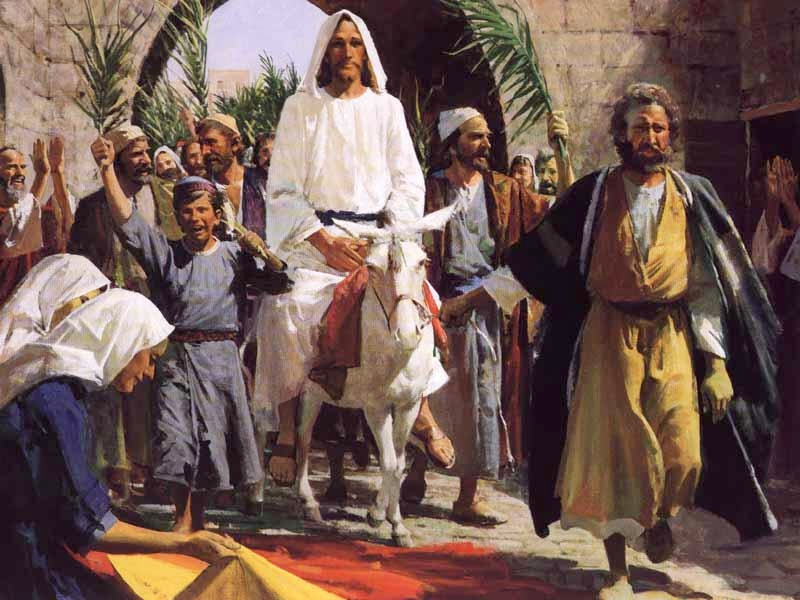
“Rejoice greatly, O daughter of Zion! Shout, O daughter of Jerusalem! Behold, your King is coming to you; He is just and having salvation, Lowly and riding on a donkey, A colt, the foal of a donkey. (Zechariah 9:9 NKJV)
Jesus Riding on a Donkey Colt
Now when they drew near Jerusalem, and came to Bethphage, at the Mount of Olives, then Jesus sent two disciples, saying to them, “Go into the village opposite you, and immediately you will find a donkey tied, and a colt with her. Loose them and bring them to Me. And if anyone says anything to you, you shall say, ‘The Lord has need of them,’ and immediately he will send them.” All this was done that it might be fulfilled which was spoken by the prophet, saying: “TELL THE DAUGHTER OF ZION, ‘BEHOLD, YOUR KING IS COMING TO YOU, LOWLY, AND SITTING ON A DONKEY, A COLT, THE FOAL OF A DONKEY.’ ” So the disciples went and did as Jesus commanded them. They brought the donkey and the colt, laid their clothes on them, and set Him on them. And a very great multitude spread their clothes on the road; others cut down branches from the trees and spread them on the road. Then the multitudes who went before and those who followed cried out, saying: “Hosanna to the Son of David! ‘BLESSED IS HE WHO COMES IN THE NAME OF THE LORD!’ Hosanna in the highest!” (Matthew 21:1-9 NKJV)
“The fulfillment of this prophecy is found in the Gospels of the New Testament in the Triumphal Entry of Jesus into Jerusalem at the beginning of the last week of his life (Matthew 21:1-11). This marked His official presentation as the Messianic King. Jesus intructs His disciples to go to Bethphage and find a colt which had never been ridden before. The miraculous aspect of this should not be missed. By nature, the animal should have bucked Jesus off the moment He got on, but instead of throwing Him, it submitted to Him.” (Messianic Christology, by Arnold Fruchtenbaum, p.65)
During this week, I’ll be showing the Word of the Lord in both the Old Testament and how it was fulfilled in the New Testament. When the Messiah came to earth, many rejected Him as their Messiah, yet He fulfilled God’s Word in many verses. Satan loves to blind people to the truth, so they will continue in their unbelief.
I’ll give you 2 seconds to get off me or I’m calling Mom.
Just thought you might need a smile for today. Received this link for the video in an e-mail. The Lord sure created some of the neatest critters. How can you not love these Pandas.
“For every kind of beast and bird, of reptile and creature of the sea, is tamed and has been tamed by mankind.” (James 3:7 NKJV)
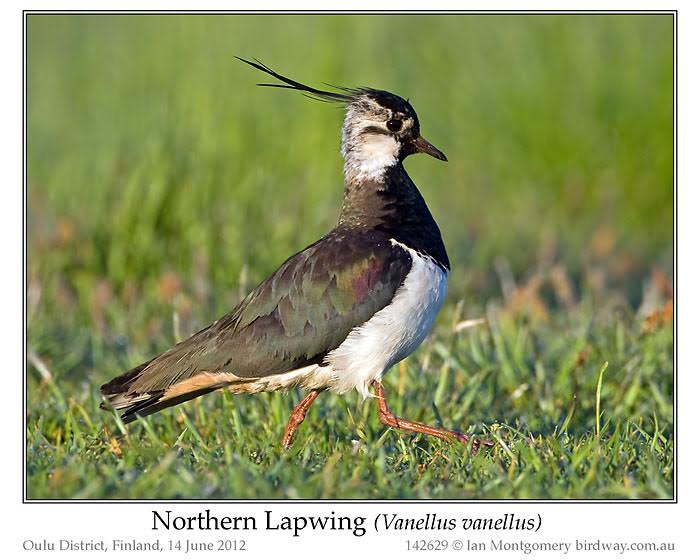
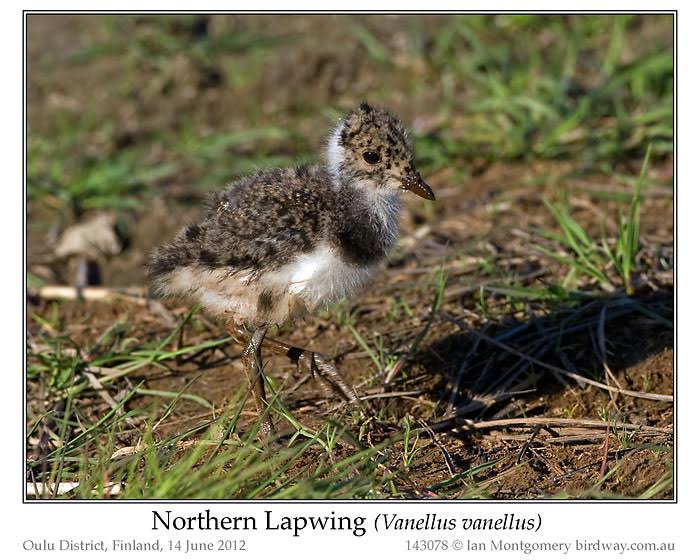
Ian’s Bird of the Week – Northern Lapwing ~ Ian Montgomery
Newsletter – 3/14/16
I’m wading through all the non-Australian galleries on the website making them ‘mobile-friendly’, and I came across what is for me an iconic species. It brought back memories of when I first saw Northern Lapwings in September 1961 on the way back from summer holidays in Co. Kerry. The Lapwings were gathered in large flocks with Golden Plover on the Curragh in Co. Kildare, a large grassy plain west of Dublin probably better known for its race track. I was very struck by the crests of the Lapwings – they seemed very exotic by Irish standards – and I was motivated to find out what they were.
I was 14 then and already interested in wildlife but birds hadn’t previously attracted my attention until several interesting sightings that year which included, in addition to the Lapwings, a good view of a Common Kingfisher and a mysterious sandpiper on a golf course in Co. Kerry, probably a Common Redshank Anyway, my parents responded to my interest and gave me, when we got home, a copy of the classic Peterson et al. Field Guide to the Birds of Britain and Europe. At Christmas 1961, a pair of binoculars came my way, and the rest, as they say, is history.
Northern Lapwings are a characteristic bird of farmland and marshes in Europe, occurring on both arable land and pasture. They breed throughout Britain and Ireland and their numbers are augment in winter by migrants from northern Europe. The bird in the first two photos is a male in breeding plumage. Breeding males have longer crests and more black on the face and throat than females. When I photographed these I was in a hide in Finland at the lek where Ruffs were displaying, but birds of other species came from time to time. The Lapwings were nesting and this young fledgling was wandering around the hide.
In non-breeding plumage, the crests are shorter, the throat is white and there are buffish fringes on the feathers covering the wings (fourth photo). This one is feeding in the estuary of the River Boyne downstream from Drogheda.
I’m making good progress with website. I’ve finished more than 1,100 galleries and have less than 400 to go. I hope to finish them off in a few weeks, and maybe you’ll get the bird of the week more regularly then!
“And the stork, the heron after her kind, and the lapwing, and the bat.” (Lev 11:19 KJV)
Ian, thanks for all your hard work on the website. It can be very time-consuming when working behind the scenes. (I know from experience.) When you finish, we will be here waiting on the great Bird of the Week articles you share with us. Lapwings have become one of my favorite birds to watch at the zoos. Though, I don’t think I have seen the Northern one.
“Of fowls after their kind, and of cattle after their kind, of every creeping thing of the earth after his kind, two of every sort shall come unto thee, to keep them alive.” Genesis 6:20
Most spiders use their silk to make webs to catch prey. But there’s one spider that spins its silk to make a virtually waterproof sack and fills it with air bubbles so it can survive underwater for hours at a time. In fact, the air-filled sack is so efficient, it allows this air-breathing spider to live virtually its whole life a few inches below the water’s surface.
The Spider That Thinks It’s a Scuba Diver
Scientists have known about the diving bell spider for a long time. But a few years ago they discovered that this silken sack is actually able to produce its own air supply. Acting much like a fish’s gills, the finely woven sack draws oxygen from the water while letting nitrogen exit the diving bell.
Evolutionists can’t explain how the spider learned how to scuba dive and produce silk that makes the diving bell virtually waterproof. Oh, they will say what they always say – natural selection and mutations over millions of years. But creationists have no need of such far-fetched explanations.
The Creator showed His fondness for this spider by giving it what it needs to avoid predators above the water while feeding upon underwater creatures. Now, think about how much more our Creator loves each one of us. He gave us the gift of His Son, who lived a sinless life and then died as a spotless sacrifice on our behalf so we would be found holy and blameless in God’s sight through faith in Christ.
Prayer:
Heavenly Father, thank You for providing such a great gift that cost You so much! I don’t deserve such a gift, but I humbly accept the love You poured out on me through Jesus Christ. Amen.
Recently, I have been taking some on-line courses through the School of Biblical Apologetics with the Institute for Creation Research. Some of the lessons have been about how the Lord used parables to teach many lessons. Jesses seemed to use some of them like object lessons, where you use something currently in sight. So, here is my attempt to use a parable with birds as the object.
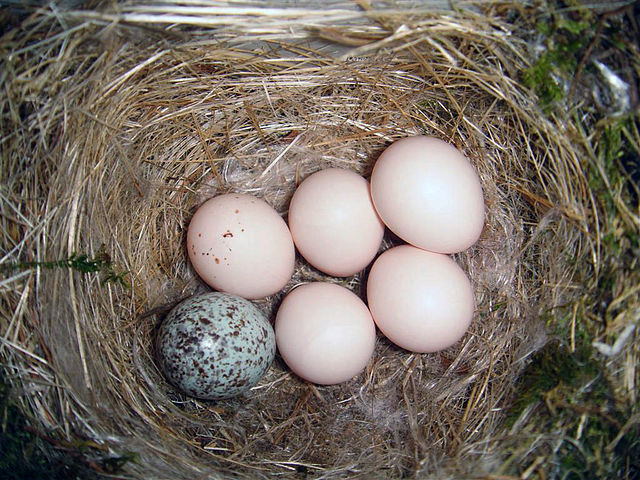
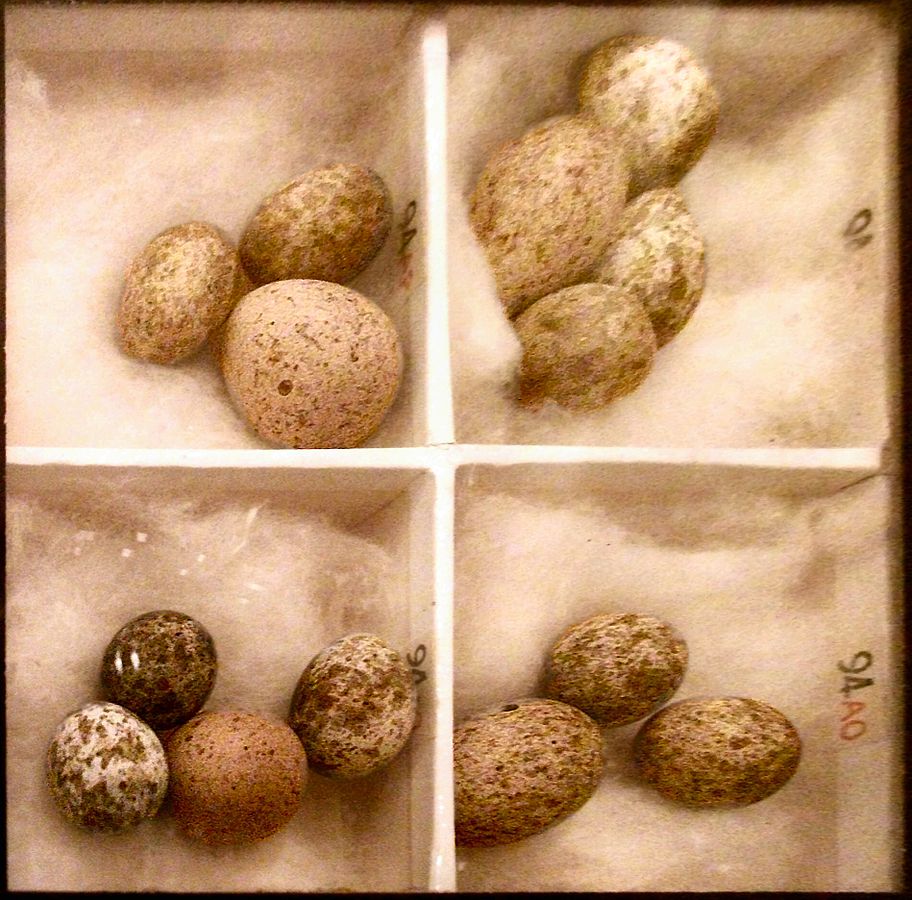
When you observe a bird’s nest with eggs in it and they all look alike, do you assume they are all from the same bird parents? In the picture above, it is obvious that there is a “false member of the family” in the nests.
Sometimes, they really do look the same, but there is a “Brood parasite” in among them. They look so similar that you hardly notice them. Therefore the parents accept them, sit on them, and all is well for a while.
But, when the eggs begin to hatch, several things can happen:
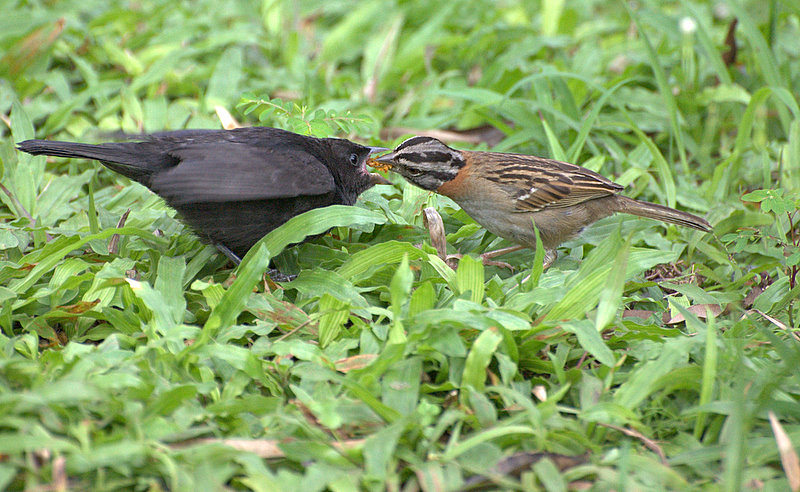
Sometimes, while the chick is in the egg, it hears its adopted parents and will actually make sounds like these parents. Therefore the parents feed them, just like its own.
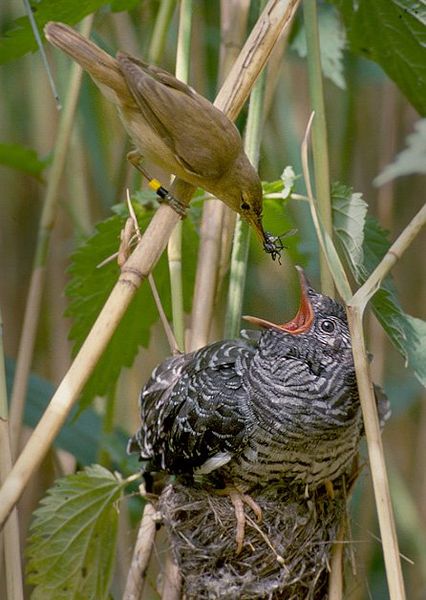
Sometimes, they are so determined, that they actually shove the hosts eggs or the nestlings out of the nest.
“But there were also false prophets among the people, even as there will be false teachers among you, who will secretly bring in destructive heresies, even denying the Lord who bought them, and bring on themselves swift destruction. And many will follow their destructive ways, because of whom the way of truth will be blasphemed.” (2 Peter 2:1-2 NKJV) (emphasis mine)
Some deny the Creation and the Creator of Genesis. Yet, they “accept” the other parts of the Bible. Many other truths of God’s Word are also changed or watered-down to fit the needs of the false teachers.
Those of us who are Christians, should be on our guard for false believers, who may learn to “talk the talk” and may “sound like us,” but they are actually bending or perverting the truth.
“These were more fair-minded than those in Thessalonica, in that they received the word with all readiness, and searched the Scriptures daily to find out whether these things were so. ” (Acts 17:11 NKJV)
“These six things the LORD hates, Yes, seven are an abomination to Him: A proud look, A lying tongue, Hands that shed innocent blood, A heart that devises wicked plans, Feet that are swift in running to evil, A false witness who speaks lies, And one who sows discord among brethren.…” (Proverbs 6:16-19 NKJV)
“Because narrow is the gate and difficult is the way which leads to life, and there are few who find it. “Beware of false prophets, who come to you in sheep’s clothing, but inwardly they are ravenous wolves.” (Matthew 7:14-15 NKJV)
“For false christs and false prophets will rise and show signs and wonders to deceive, if possible, even the elect.” (Mark 13:22 NKJV)
Let God’s Word speak for itself. The answers are in the Word of God, if one just searches for these truths.
“The fear of the LORD is the beginning of knowledge, But fools despise wisdom and instruction.” (Proverbs 1:7 NKJV)
“Cease listening to instruction, my son, And you will stray from the words of knowledge.” (Proverbs 19:27 NKJV)
This GOLD reminds us of Heaven. The Bible tells us Heaven has a street of gold! But the best part about Heaven is that God, who created you and me, lives there. The Bible, God’s Word, says: “God so loved the world that He gave His only begotten Son, that whosoever believeth in Him should not perish but have everlasting life.” — John 3:16 Jesus, God the Son, is in Heaven preparing a place for all who put their trust in Him. (John 14:2-3) God is holy and perfect. He cannot allow anything in Heaven that is less than perfect, so there’s one thing that can never be in Heaven. Can you think of what that might be?
Black/Dark – Sin
It is sin! That is what this DARK reminds us of. Sin is anything you think, say, or do that does not please God, like lying, cheating, being selfish, or hurting others. The Bible says: “All have sinned and come short of the glory of God.” — Romans 3:23 That means everyone, big or little, young or old! No matter where you live or who you are, you have sinned. Everyone is born with a “want to” to do wrong. God says that sin must be punished (Romans 6:23), and the punishment for sin is to be separated from God forever in a place of suffering….a place called Hell. But God has a wonderful plan so that you will not have to be punished for your sin!
Red – Jesus’ Blood
God sent Jesus Christ, His perfect Son, to be born as a little baby. Jesus lived a perfect life….He never sinned. When He was grown, wicked men nailed Him to a cross. The bird’s RED reminds us of Jesus’ blood. The Bible says that without the giving of blood there can be no forgiveness of sin (Hebrews 9:22). So Jesus Christ willingly died to take your sin punishment. “…Christ died for our sins according to the Scriptures; and that He was buried, and that He rose again the third day, according to the Scriptures.“— 1 Corinthians 15:3-4 Now, because of what Jesus has done for you, you can have your sins forgiven. Read on to see how!
White – Heaven
The Bible says: “As many as received Him, to them gave He power to become the sons of God, even to them that believed on His name.” — John 1:12 The WHITE reminds us of a CLEAN heart. How can you have a clean heart? A = Admit to God you are a sinner and want to turn away from those sins. B = Believe in Jesus Christ, that He is God’s perfect Son who died for your sin, was buried, and rose again. C = Call on Him to save you from your sin. Would you like to do that right now? He has promised to hear, and once you are His child, He will never leave you (Hebrews 13:5). Take a moment and talk to God right now. It will change your life forever. Only one more color! What can it mean?
Green – Grow
The GREEN stands for things that grow. When you ask God to forgive you and save you, you become His child. God wants you to get to know Him better and to grow to become more like Him. These four things will help you grow:
1. PRAY (talk to God every day)
2. READ & OBEY THE BIBLE (to know what He says, then do it)
3. TELL OTHERS ABOUT JESUS
4. GO TO A BIBLE-BELIEVING CHURCH (where you can learn more about pleasing Him)
As a child of God, if you should sin again, stop and tell Him about it. He promises in His Word… “If we confess our sins, He is faithful and just to forgive us our sins and to cleanse us from all unrighteousness.” — 1 John 1:9 Ask God to help you live a life to please Him! Share the Good News of this story with someone else.
The Wordless Book has been used for many years by CEF (Child Evangelism Fellowship). These words are from CEF.
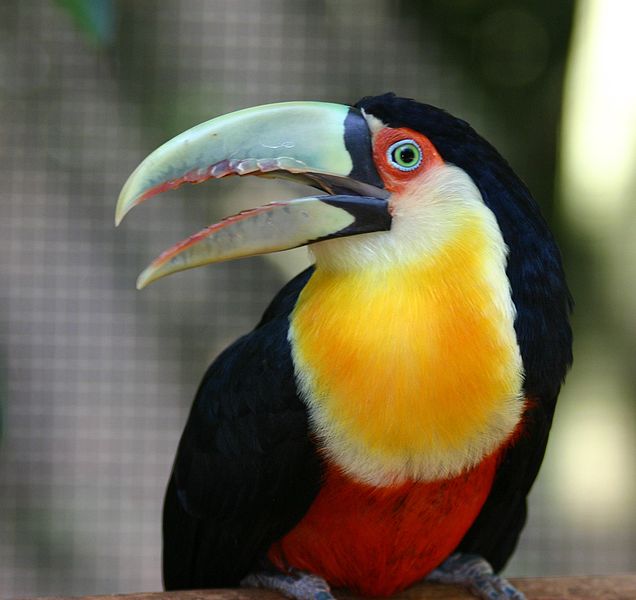
Our Wordless Toucan
*
Green-billed Toucan (Ramphastos dicolorus) by Dario Sanches
*
A friend shared with me about someone who uses the Toucan to teach the “Wordless Book.”
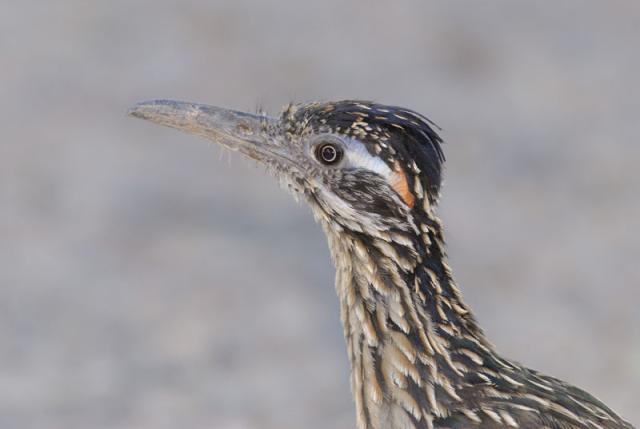
In the desert far away, there lived a group of roadrunners. Each of the roadrunners lived in a cactus that he had neatly decorated for himself. One of the roadrunners was named Harold, and he was the smallest roadrunner of all.
Every year, all of the roadrunners would gather together and plan when they would have their special race. This was usually in the third month of the year. This race was incredibly important to all the roadrunners because it was the longest race they ran each year.
Harold usually wasn’t allowed to be in the race because he was so small. This year, however, he decided he was going to prove himself.
When all of the older roadrunners decided on a date for the race, they were sure to tell all of the other roadrunners in their region of the desert. It was a couple of weeks before the race, so Harold decided to start training himself.
Harold ran as fast and as far as he could for two weeks. Every day he would go a little farther and a little faster. Finally, Harold was sure he was ready for the race, but he still didn’t know if he would win because he had seen the other roadrunners run, and they all had longer legs.
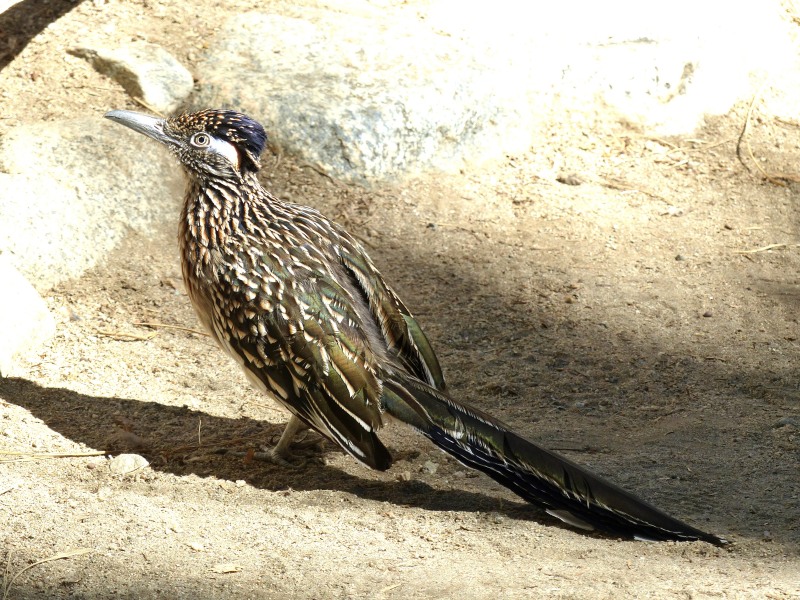
Greater Roadrunner (Geococcyx californianus) by Daves BirdingPix
On the day of the race, all of the roadrunners gathered around to watch the race. Most of the roadrunners disapproved of Harold being in the race because of his size and how small he was, but Harold still took his place at the starting line. Each of the roadrunners were given a number to wear during the race. One of the roadrunners stood to the side and blew a whistle.
Harold started running as fast as he could. He was actually surprised to see that he was passing other roadrunners. One of the fastest roadrunners was still ahead of him. They were both reaching the halfway point of the race. All of the roadrunners on the sidelines were cheering them on.
Harold was steadily gaining on the other roadrunner. He was getting tired, but he wasn’t about to give up.
The finish line was approaching. In a few minutes Harold and the opposing roadrunner would cross the finish line.
Harold ran as fast as he could. He pushed himself harder as they neared the finish line. The other roadrunner began to pass behind him. The finish line was getting closer. Everyone was cheering. Harold crossed the finish line and all of the roadrunners gathered around to congratulate him.
From that year on, Harold entered the race every year, and he became one of the fastest roadrunners in the desert as he grew up.
And as Jesus passed forth from thence, he saw a man, named Matthew, sitting at the receipt of custom: and he saith unto him, “Follow me!” And he arose, and followed him. (Matthew 9:9 KJV)
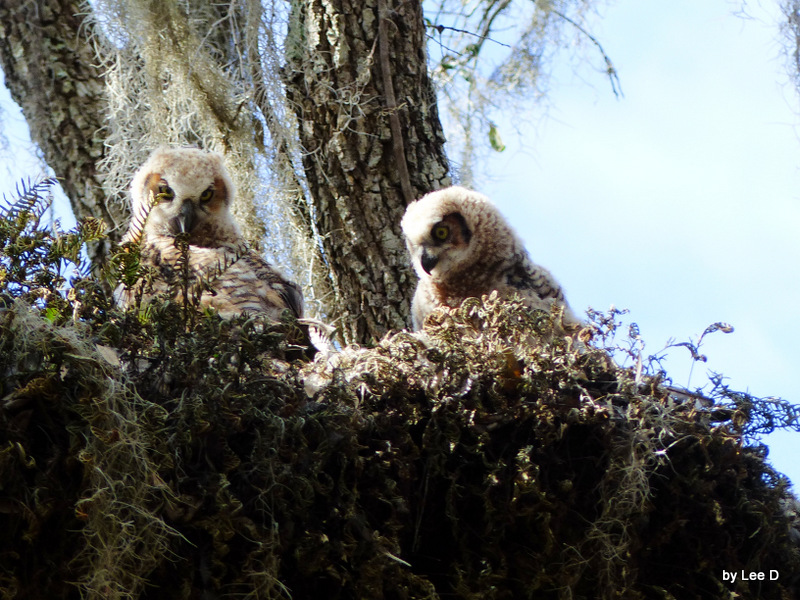
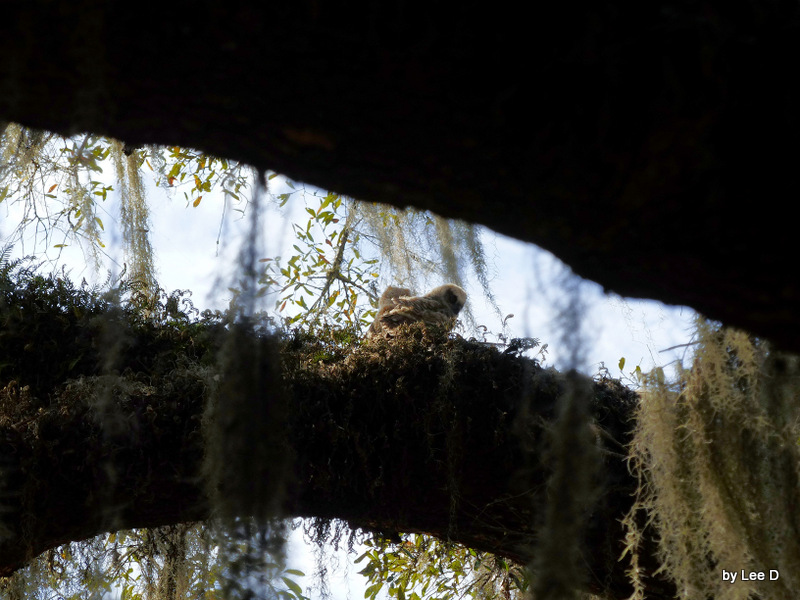
Great Horned Owl Youngsters at Circle B Bar Reserve by Lee
“And the little owl, and the cormorant, and the great owl,” (Leviticus 11:17 KJV)
This afternoon we were able to go to the Circle B Bar Reserve and watch the latest talk of the birders. Yesterday, our birding friends at church told us about these two youngsters that were stealing all the attention at the park.
It was easy to find the area, because it is roped off to keep everyone at a safe distance from the youngsters. An array of onlookers with binoculars and lots of cameras were watching and waiting for the youngsters to wake up from their naps.
Great Horned Owl Youngsters at Circle B Bar Reserve by Lee
Finally, a fuzzy ball appeared, and then a head popped up. Eventually, two heads were visible.
Notice how their Creator gave them just the right kind of feathers to blend in with their surroundings. Another example of the Lord’s Care for His creation.
Great Horned Owl Youngsters at Circle B Bar Reserve by Lee
Trust you will enjoy these glimpses of them. It was hard trying to catch a decent photo because they were quite a way from us. Trying to hold a zoomed in, hand-held, camera in “program mode” is a challenge. But, I am so thankful for the Lord allowing us to see some of his wonderfully created Great Horn Owl youngsters. These were my first GHO youngsters seen in the wild.
Do You See Them
Let Me Zoo In Some More. .. Do You See Them Now?
Zoomed In More…Do You See Them Now!
Here is a slide show of the photos in fairly decent order of how they were taken.
This slideshow requires JavaScript.
I was able to shoot some video, but again, it’s a little shaky. Enjoy.
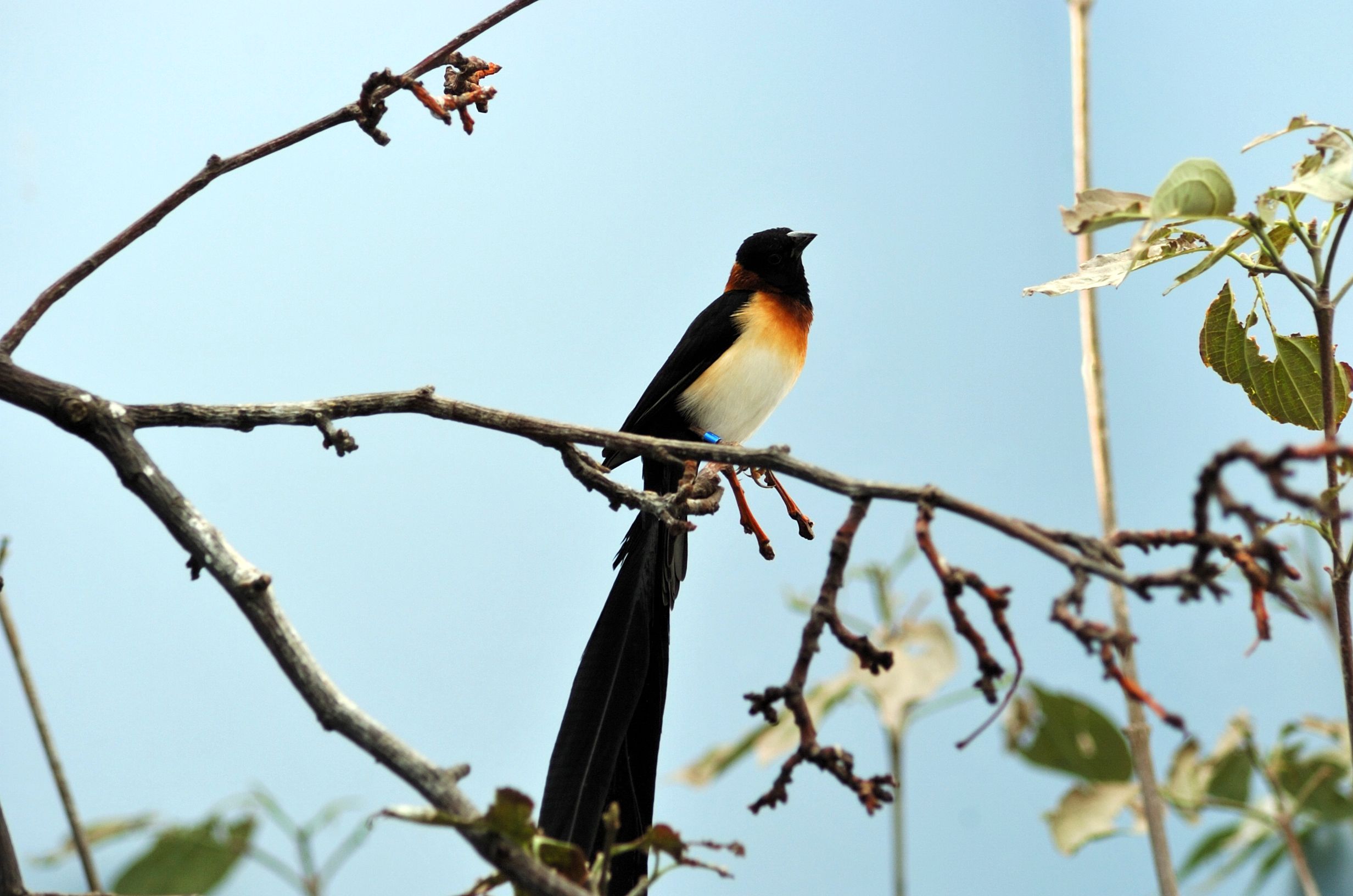
Long-tailed Paradise Whydah by Dan at the National Aviary
Better is little with the fear of the LORD than great treasure and trouble therewith. (Proverbs 15:16 KJV)
Our next families in our Passeriformes Order are small families. Because they are small in number does not mean they are small in beauty. I love the song, “Little Is Much When God Is In It.” Maybe because I am short. :) Sometimes these small groups are a result of the ornithologists not being sure which family to include them. As they (ornithologists) keep doing DNA studies, more shuffling in families will occur.
Our largest family, Viduidae, today has twenty species of Indigobirds, Whydahs, and a Cuckoo-finch. We saw our first Whydah at the National Aviary in Pittsburg, PA. It is appropriately called a Long-tailed Paradise Whydah. You can see its long tail, worn by males, in the photo. These are finch-like birds which usually have black or indigo predominating in their plumage.
All are brood parasites, which lay their eggs in the nests of estrildid finch species; most indigobirds use fire-finches as hosts, whereas the paradise whydahs chose pytilias. Unlike the cuckoo, the indigobirds and whydahs do not destroy the host’s eggs.
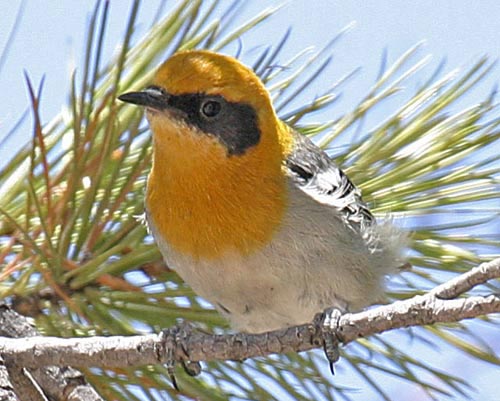
The Olive Warbler is the solo member of his family, (Peucedramidae), but there are several sub-species. This species breeds from southern Arizona and New Mexico, USA, south through Mexico to Nicaragua. It is the only bird family endemic to North America (including Central America).
It is an insectivorous species of coniferous forests. Though it is often said to be non-migratory,[3] most New Mexican birds leave the state from November to late February. It lays 3–4 eggs in a tree nest”. (Wikipedia)
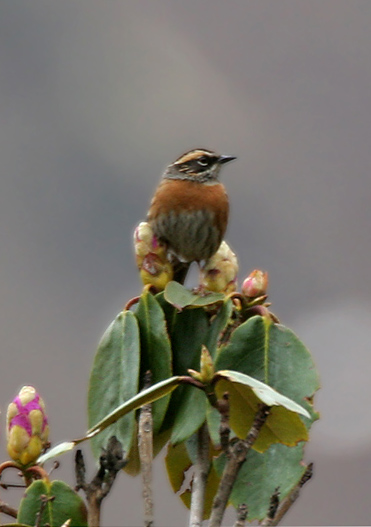
The Prunellidae – Accentors Family has thirteen members named Accentors and one Dunnock, of the genus, Prunella. All but the Dunnock and the Japanese Accentor are inhabitants of the mountainous regions of Europe and Asia; these two also occur in lowland areas, as does the Siberian Accentor in the far north of Siberia. This genus is not strongly migratory, but they will leave the coldest parts of their range in winter, and make altitudinal movements.
Their typical habitat is mountainous regions in an area far above the tree-line, but below the snow-line. The Himalayan accentor can be found as high as 17,000 ft above sea level when breeding, however, most accentors breed in scrub vegetation at lower levels. Most species migrate downwards to spend the winter, with only some being hardy enough to remain. Accentors spend the majority of their time in the undergrowth and even when flushed, stay low to the ground until reaching cover. (Wikipedia)
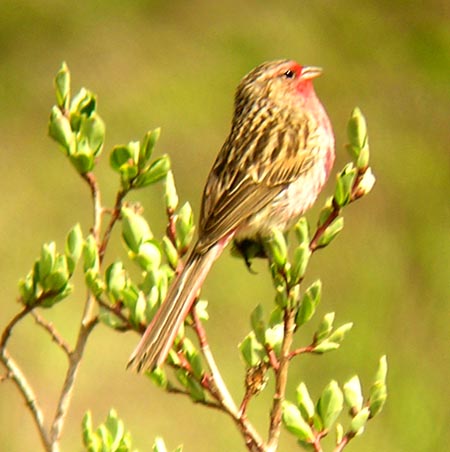
Skipping over the Wagtails and Pipits (covered next week), our last bird, the Przevalski’s Finch (Urocynchramus pylzowi), is again in a family by itself.
The Przevalski’s Finch or Przewalski’s Finch (Urocynchramus pylzowi) is an unusual passerine bird from the mountains of central-west China. The species is named for Nikolai Przhevalsky, the Russian explorer who described it. Its taxonomic affinities were unclear for a long time, giving rise to other common names, the Pink-tailed Bunting and the Przewalski’s Rosefinch. In 2000 it was proposed that it should in fact be regarded neither as a finch nor a bunting, but as the only member of the family Urocynchramidae,
Przewalski’s Finch is a small bird similar in appearance to the Long-tailed Rosefinch. The tail is long and – quite unlike in typical finches – graduated, with the outer feathers much shorter than the central ones. The sexes are sexually dimorphic, with the males having bright pink on the throat, breast and belly. Both sexes have brown streaked plumage on the back and wings. The bill is thinner than those of the rosefinches. (Wikipedia)
This slideshow requires JavaScript.
But Jesus said, Suffer little children, and forbid them not, to come unto me: for of such is the kingdom of heaven. (Matthew 19:14 KJV)