Once there was a girl who owned a pet flamingo named Mandy. The girl’s name was Sarah and she lived in a big house with the rest of her family. One day her parents took her to a pet store across town where she saw a flamingo sitting in a bird-cage. Sarah was allowed to pick out one pet and she decided to pick out this flamingo. She named it Mandy. Mandy had one feather on her wing that was black and Sarah thought that was one of the reasons why Mandy was so special.
Today Mandy was sitting on Sarah’s father’s favorite recliner in the middle of the big family room. Mandy always loved sitting there because she had a good view out of one of the big windows. Sarah didn’t have any idea why she was sitting in the chair, but it was funny to see the cleaning lady come in with her duster and faint when she saw Mandy.
On this day the biggest window in the family room was wide open because it was a nice day outside and a small wind was blowing.
Mandy was sitting in Sarah’s father’s favorite recliner watching the sky when she saw birds fly by. Mandy decided to follow them and before Sarah could stop her, Mandy flew out of the window and out of sight. Sarah had never been sadder.
Sarah and her parents put up fliers around town looking for Mandy.
It was a week before Sarah passed by the zoo putting out fliers when she saw the flamingo exhibit. Inside the exhibit was Mandy! Sarah could tell because she had one black feather.
Sarah was happy to see Mandy again, but she noticed that Mandy looked really happy with all the other flamingos. Sarah decided that Mandy should stay at the zoo with her new friends.
So, from then on, Sarah was sure to see Mandy the flamingo every day at the zoo.
The End
Lee’s Addition:
Thanks, Emma, for another bird tale. Mandy sounds like a nice pet, but sure she is enjoying being back with her friends. I could see why the cleaning lady would be shocked. Not many people have Flamingo as pets. But the Bible says:
For every kind of beast and bird, of reptile and creature of the sea, is tamed and has been tamed by mankind. But no man can tame the tongue. It is an unruly evil, full of deadly poison. With it we bless our God and Father, and with it we curse men, who have been made in the similitude of God. Out of the same mouth proceed blessing and cursing. My brethren, these things ought not to be so. (James 3:7-10 NKJV)
Now the parable is this: The seed is the word of God. (Luke 8:11)
Being born again, not of corruptible seed, but of incorruptible, by the word of God, which liveth and abideth forever. (1st Peter 1:23)
Orni-Theology
God’s Word is like good seed – it transmits God’s very thoughts into new life.
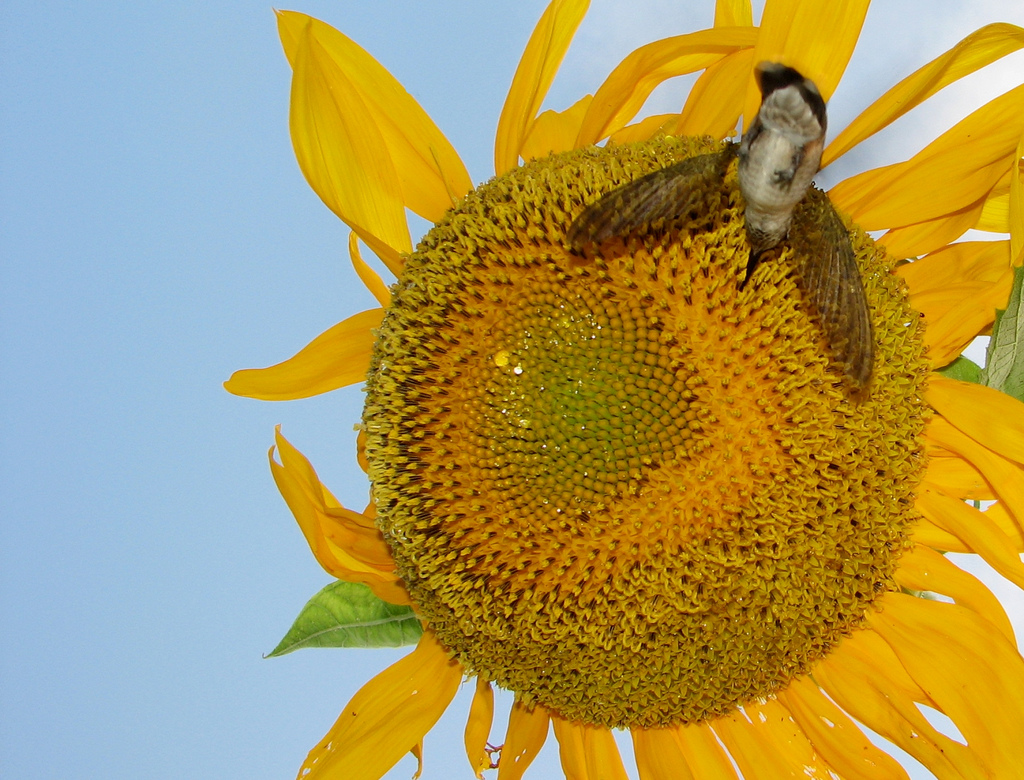
If we have eyes to see it, the whole process of seed germination (in a sunflower, or in a human life) is a providential God-glorifying miracle, every time new life germinates.
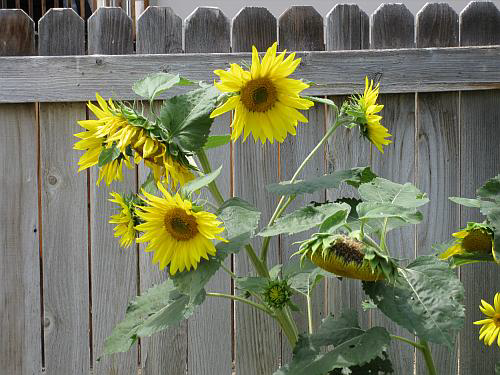
Sunflowers [public domain]
When I see sunflowers growing in farm-fields, or elsewhere, I often recall how God sometimes uses “accidental” plantings, caused by birds who occasionally drop sunflower seeds, thereby planting a new generation of bright yellow sunflowers.
To illustrate, consider this poem, written almost 20 years ago.
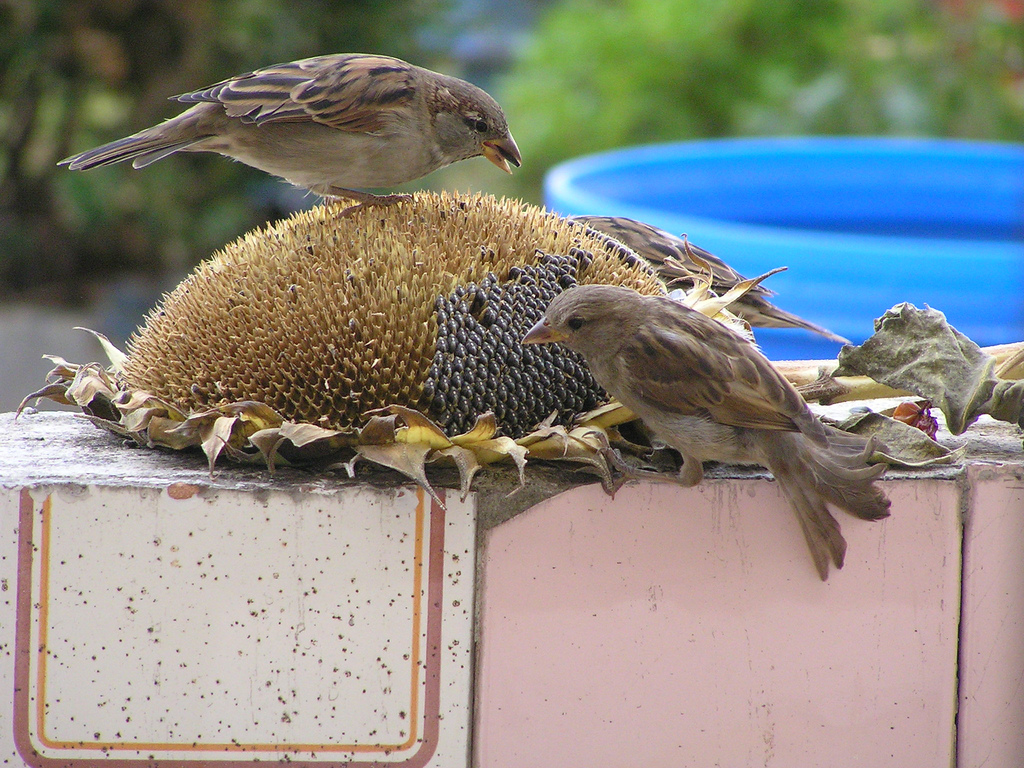
Seeing hungry backyard birds I filled a tray with seeds; Sparrows, juncos dined in “herds”, and jays arrived to feed; Even cardinals, flashing red: they came, they saw, they fed.
Bills gulped! seed-hulls popped! Some seeds spilled! some seeds dropped! Overhead, as some bird flew, sunflower seeds did fall; From green vines, they later grew, seedlings, green and small.
Then out popped golden faces Coloring grassy spaces; Like baby suns of yellow, Grinning — saying “hello”! On green stalks they climb, aiming to greet the sky; Seed-packed in their prime, picked by birds, going by.
Thus reaps my yard what jays did sow, New seeds, from old, sunflowers grow.
Watch I, and think on what God made How He designed such “mutual aid”… In my backyard, I must surmise: The Lord, Who did this, He is wise!
This poem was written when I lived in Carrollton, Texas, where I grew sunflowers by our backyard’s western fence, with the help of blue jay “planters” – but, of course, God gave the increase (1st Corinthians 3:7). (Those were the days, now like a faded dream gone by, when I taught ornithology and avian conservation at Dallas Christian College.)
So, when you see bright-colored sunflowers — and the hungry birds who eat them, just remember this: those same birds, or their parents, may have “accidently” planted the very seeds that germinated into the full-grown sunflowers that the birds now eat from!
Also, remember this also: God shows His wisdom and goodness, everywhere you look, — if you have the eyes to see it.
Furthermore, even more important, of course, is this: that “incorruptible seed” (to use the apostle Peter’s phrase) — that we call the Holy Bible – is the eternal Word of God, and He uses its truth to give us regenerated life in our Lord Jesus Christ (Who is Himself the Messiah, the promised “Seed of Woman”, prophesied of in Genesis3:15)!
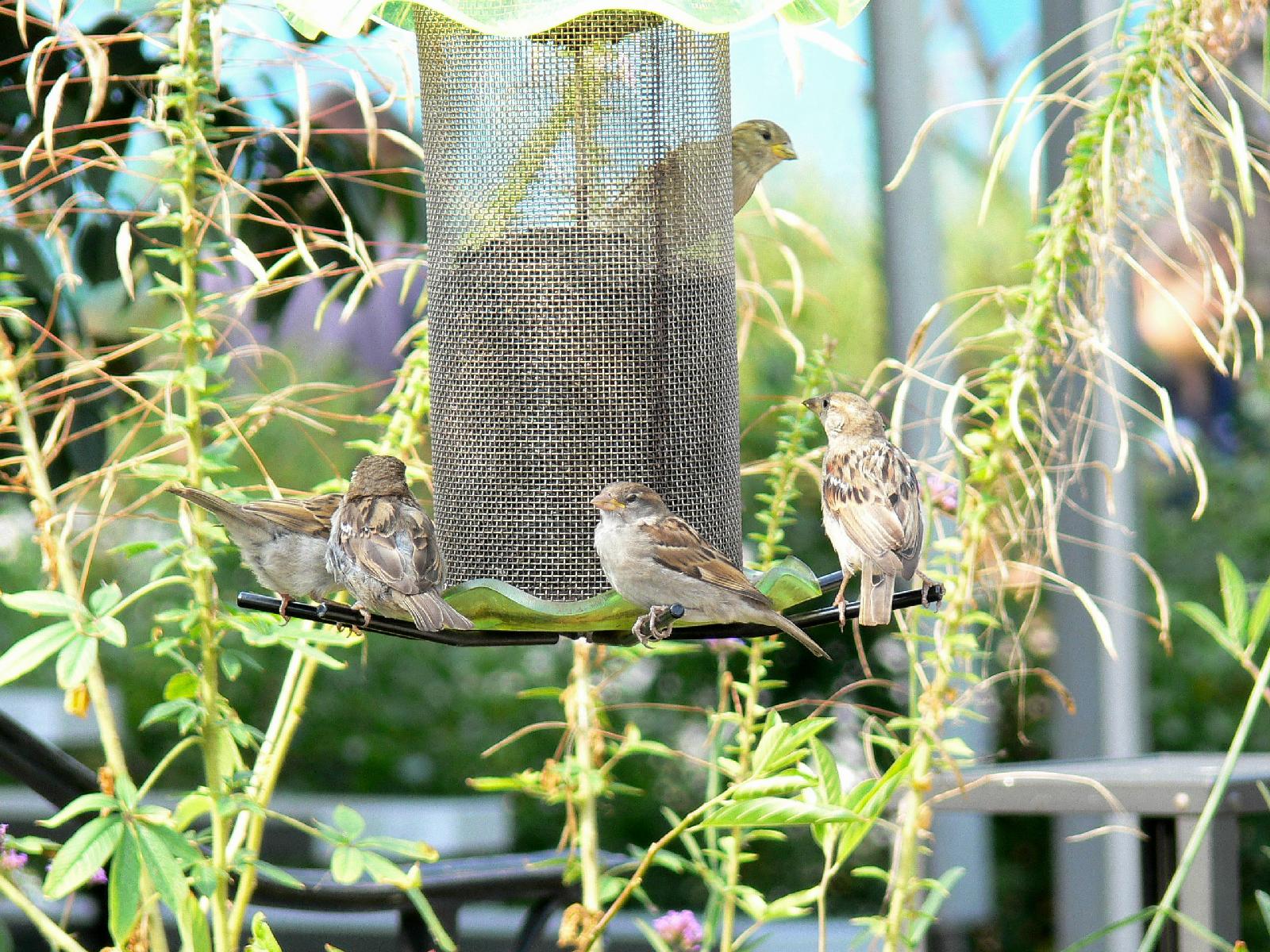
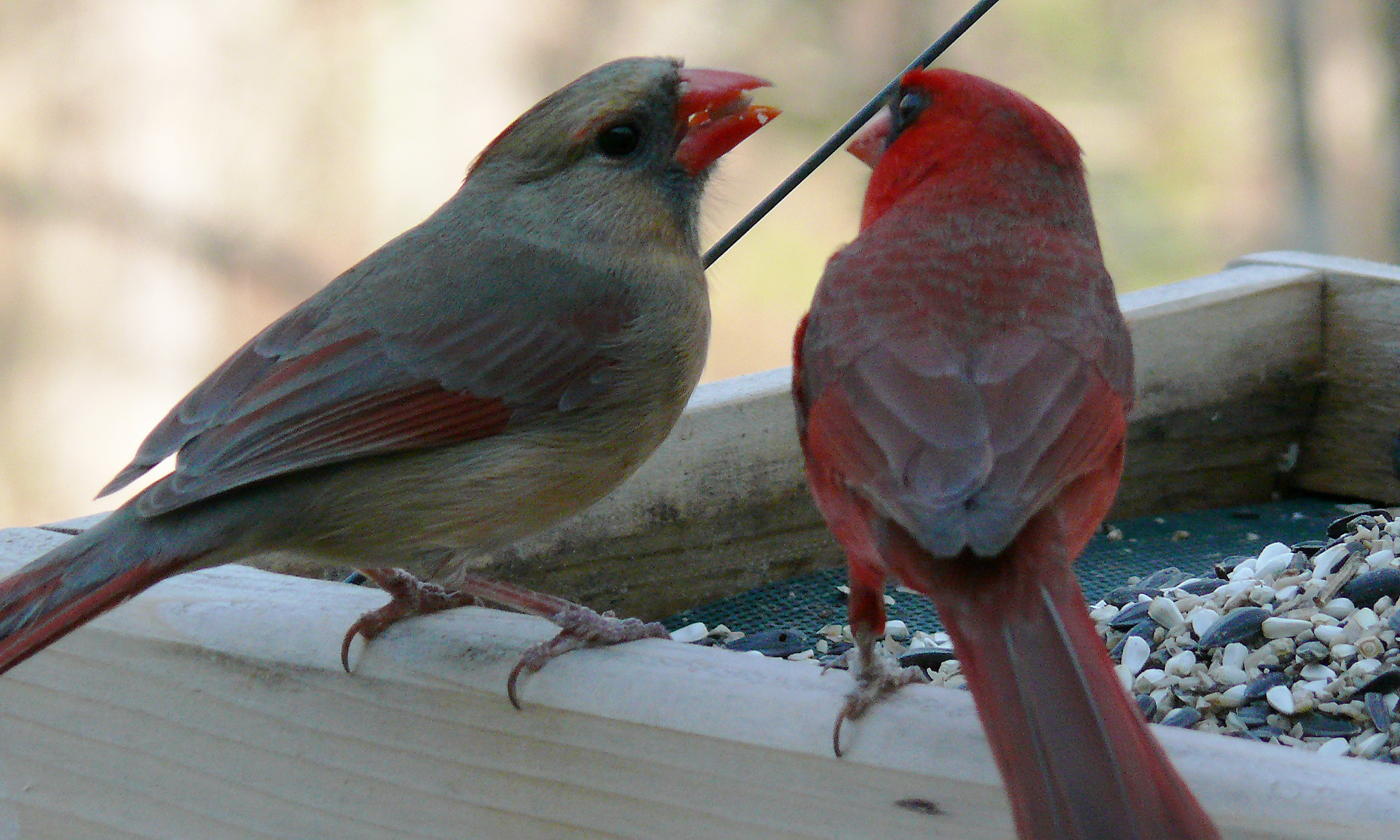
Thanks again, Dr. Jim. Enjoyed your poem and the application. In fact, there is a stalk or two of corn growing under my feeder because of the birds. Had a Sunflower or two last summer growing under the feeders.
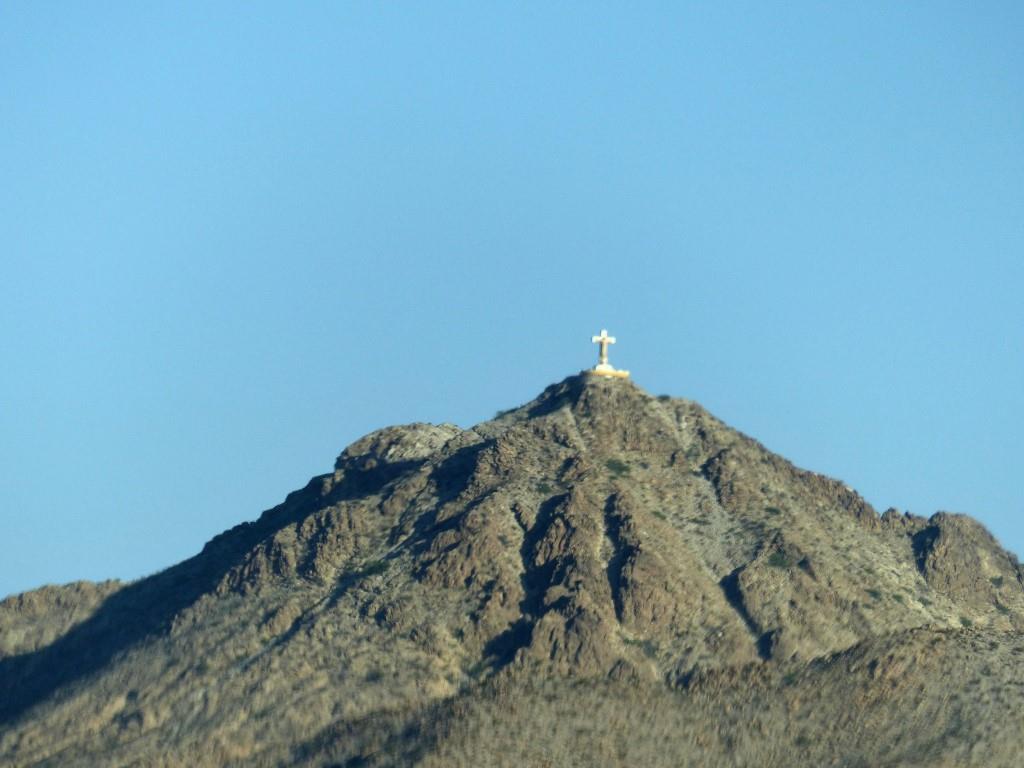
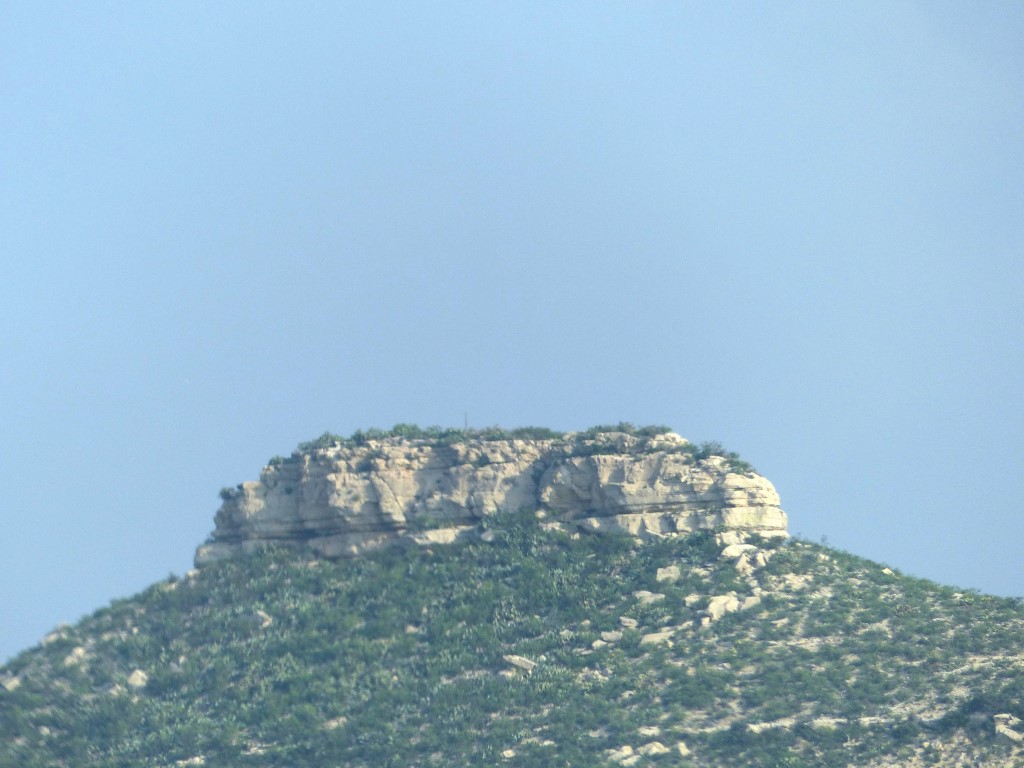
We finally arrived in El Paso, Texas, (May 9th) spent the night and then headed to New Mexico. On the way out of El Paso, I was just taking a few photos when we saw a cross on top of a mountain.
Cross on a mountain – El Paso, Texas (Bird Flying By)
For the preaching of the cross is to them that perish foolishness; but unto us which are saved it is the power of God. (1 Corinthians 1:18 KJV)
That caught my eye and then we started wondering how they got it way up there.
Cross on a mountain – El Paso, Texas
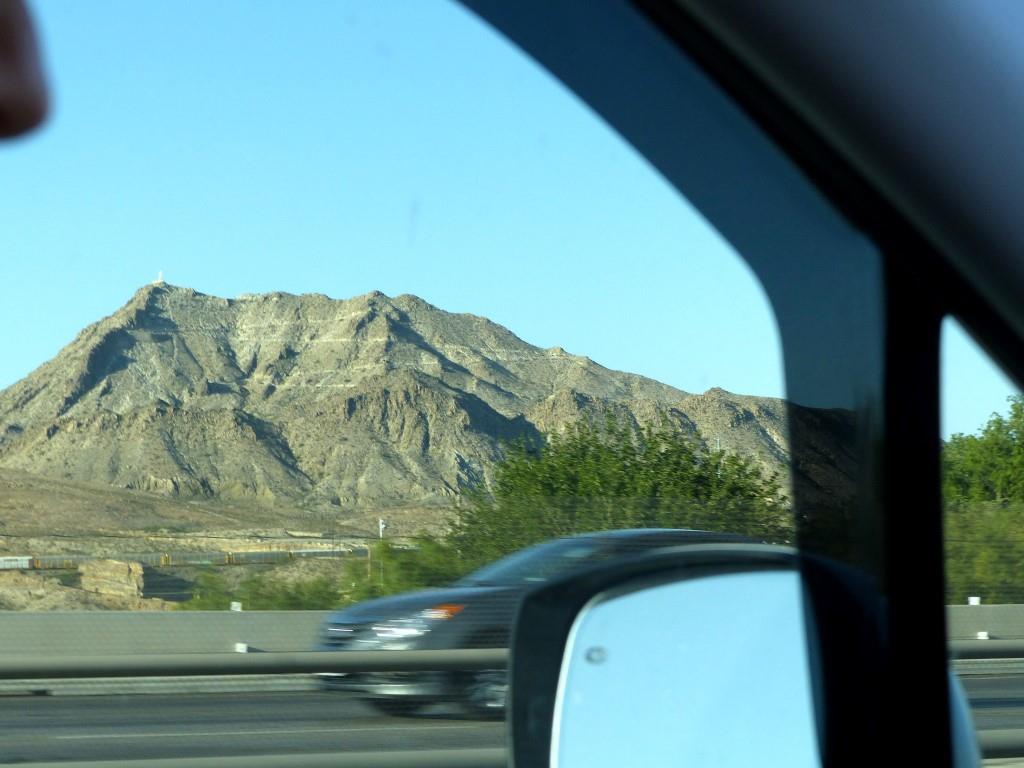
As we continued on I-10, we came to the spot where we saw the answer to that. It is not the best photo, but can you see the back and forth road up the side? Would not want to be the one who built that “road.”
Road up mountain
And then zoomed in:
Road up mountain – cropped
What I didn’t know until this article was being written is that the cross is more than what it appeared to us. It is actually a cross with a statue of Jesus Christ on it. It is also in New Mexico, not Texas as we thought, though we were seeing it from Texas. (El Paso is at the western tip of Texas where New Mexico and Mexico all meet.) Also, these facts have changed this blog from scenery to about an interesting site.
“Summary: At the top, there is a statue of Jesus Crist. It is the largest such statue in the world. At 42.5 feet, it is larger than the one in the Andes Mountains by 1 foot. The project was begun on 29 Oct 1933, and completed 6 years later on 29 Oct 1939.” (From)
“One of the most iconic images in El Paso is the statue of Mount Cristo Rey — the Christ of the Rockies. The magnificent monument overlooks three states and two nations”
But God forbid that I should glory, save in the cross of our Lord Jesus Christ, by whom the world is crucified unto me, and I unto the world. For in Christ Jesus neither circumcision availeth any thing, nor uncircumcision, but a new creature. (Galatians 6:14-15 KJV)
Looking unto Jesus the author and finisher of our faith; who for the joy that was set before him endured the cross, despising the shame, and is set down at the right hand of the throne of God. (Hebrews 12:2 KJV)
I am so glad that Christ is no longer on the cross, but died, resurrected Himself and is now with the Father interceding for those of us who have accepted Him as our Personal Savior.
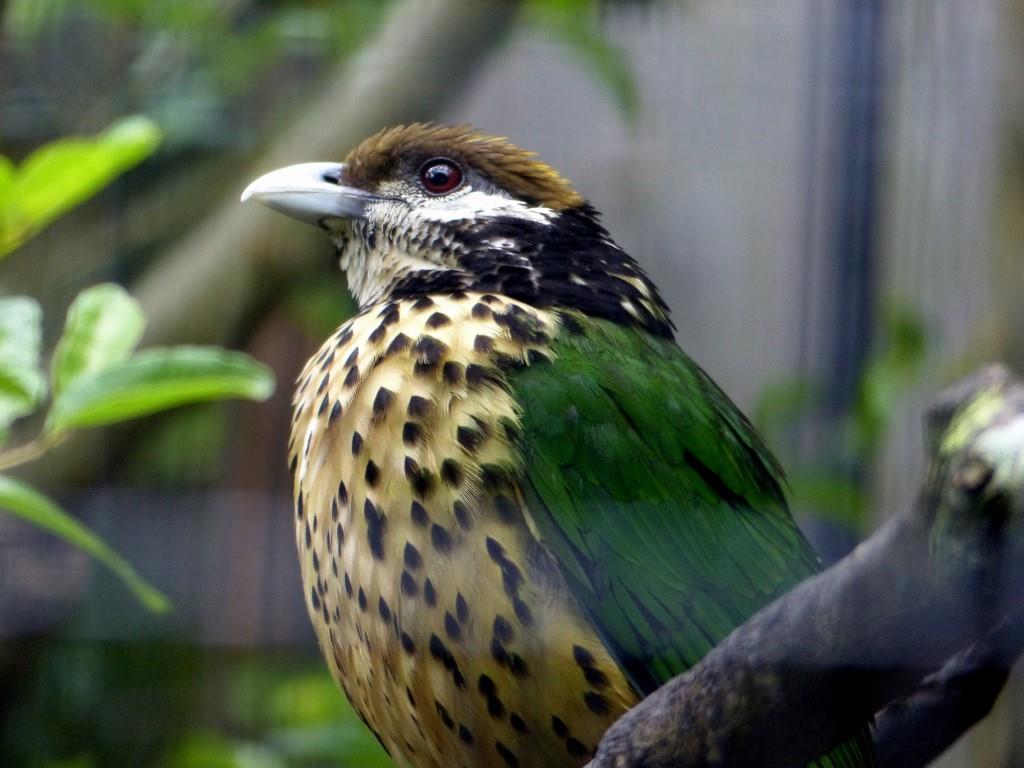
White-eared Catbird (Ailuroedus buccoides) Houston Zoo by Lee
We have many more Houston Zoo photos to share, but for now, let’s move on with our vacation. In Birdwatching Along the Way, the last statement was “Vacation Goal #1 – Met.” We had arrived at Houston and visited with my niece and went to the Houston Zoo.
On Thursday of that week, May 7th, we were suppose to drive up to Dallas. On Friday, we were to visit James J S Johnson, who writes on this blog, at the Institute for Creation Research. Also, I was looking forward to meeting Ernesto E. Carrasco, and seeing his Noah’s Ark Model. (Ernesto and I follow each other’s blog.). This was to be “Vacation Goal #2”.
During the month of May, Dallas had tremendously bad weather. They had tornadoes and flood warnings most of that month. The weather was turning bad even in Houston, so, with a call to Dr. Jim, we all agreed that it would be best to not come up to Dallas, at least at this time. Vacation Goal #2 – NOT Met!
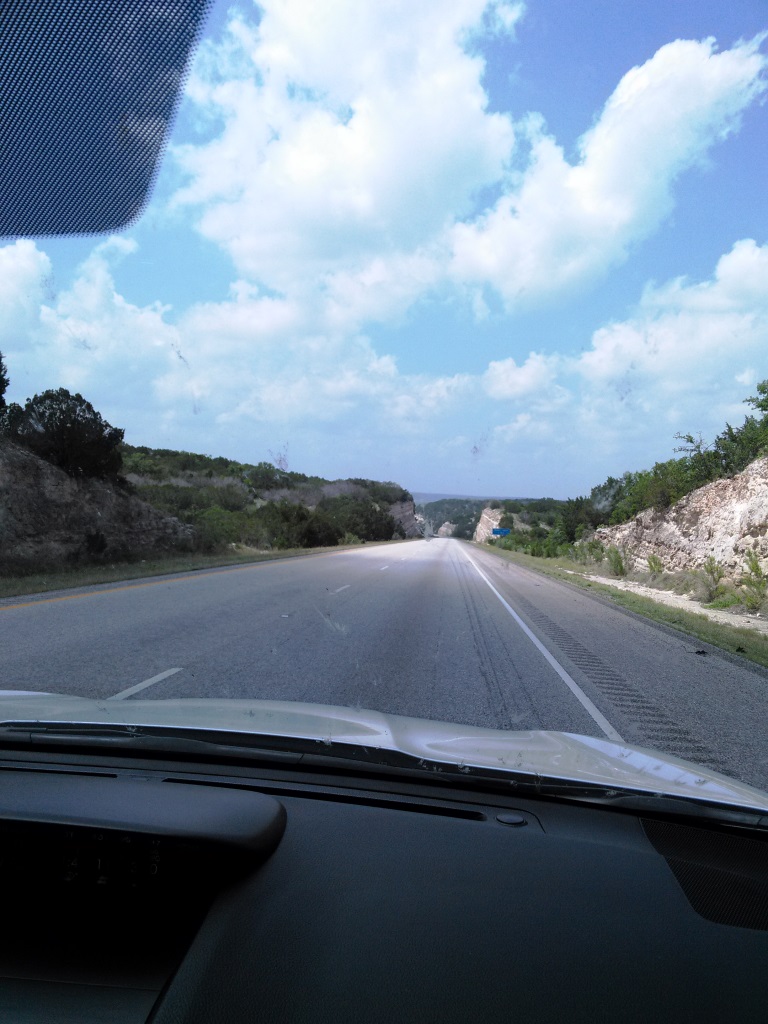
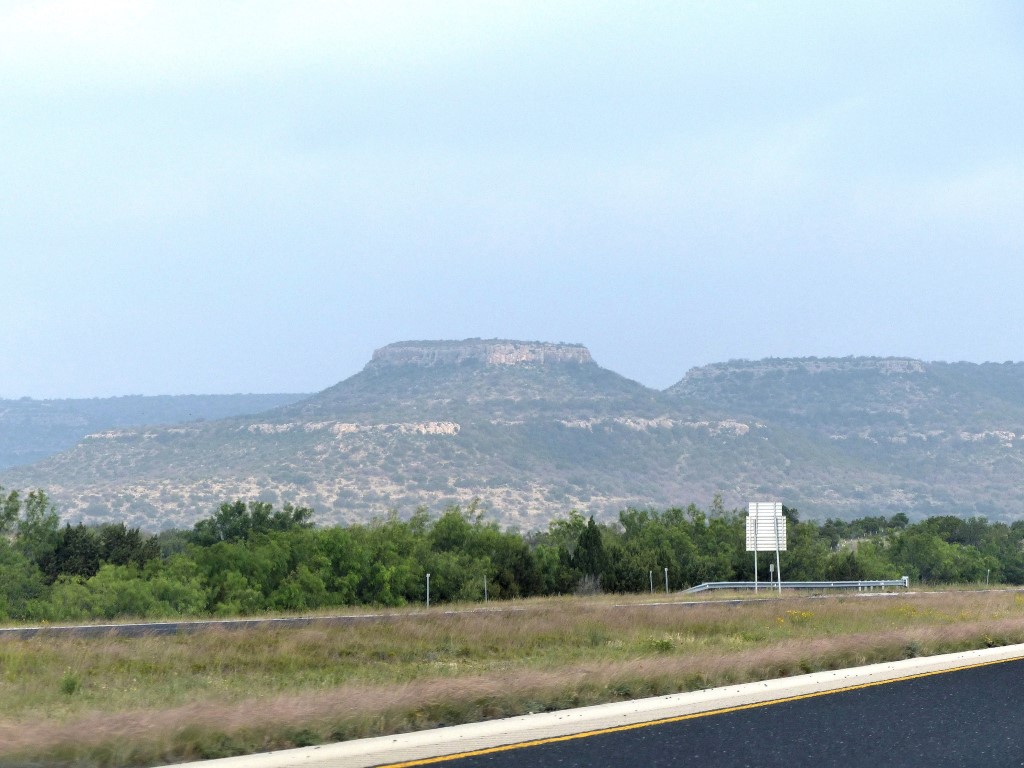
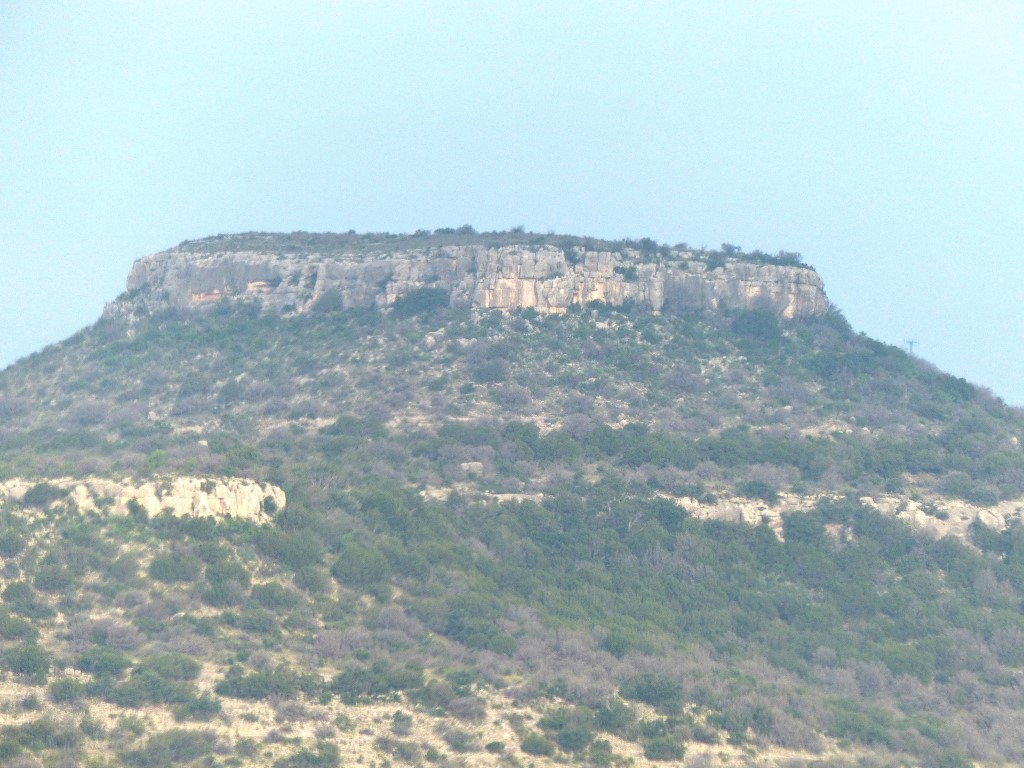
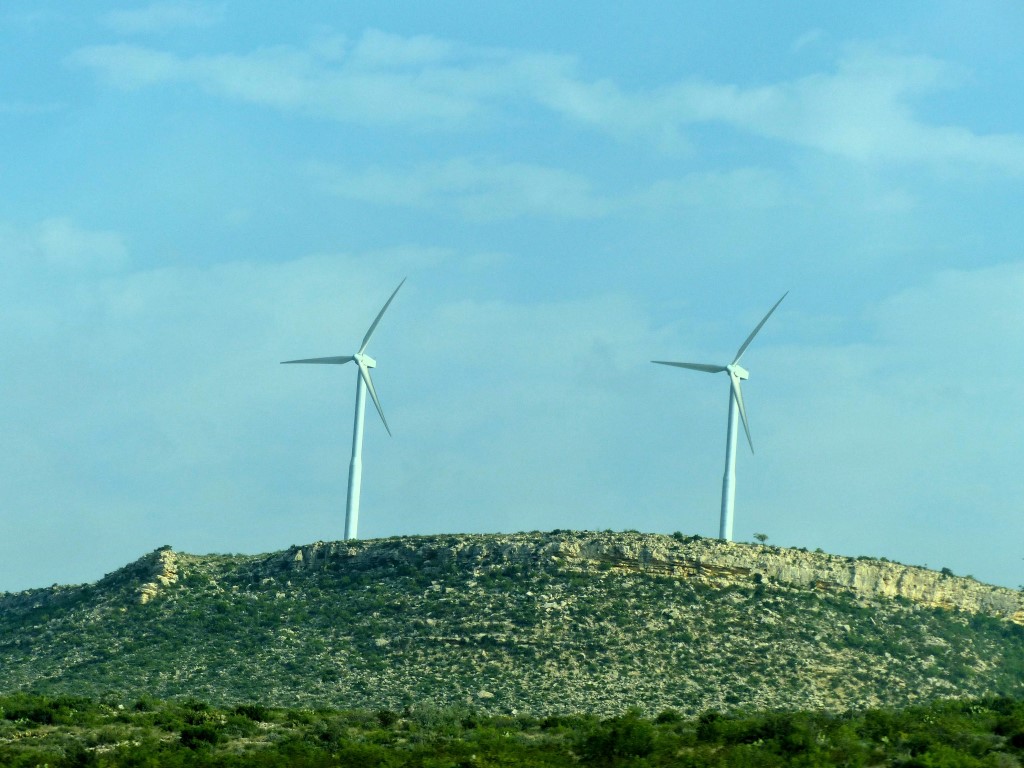
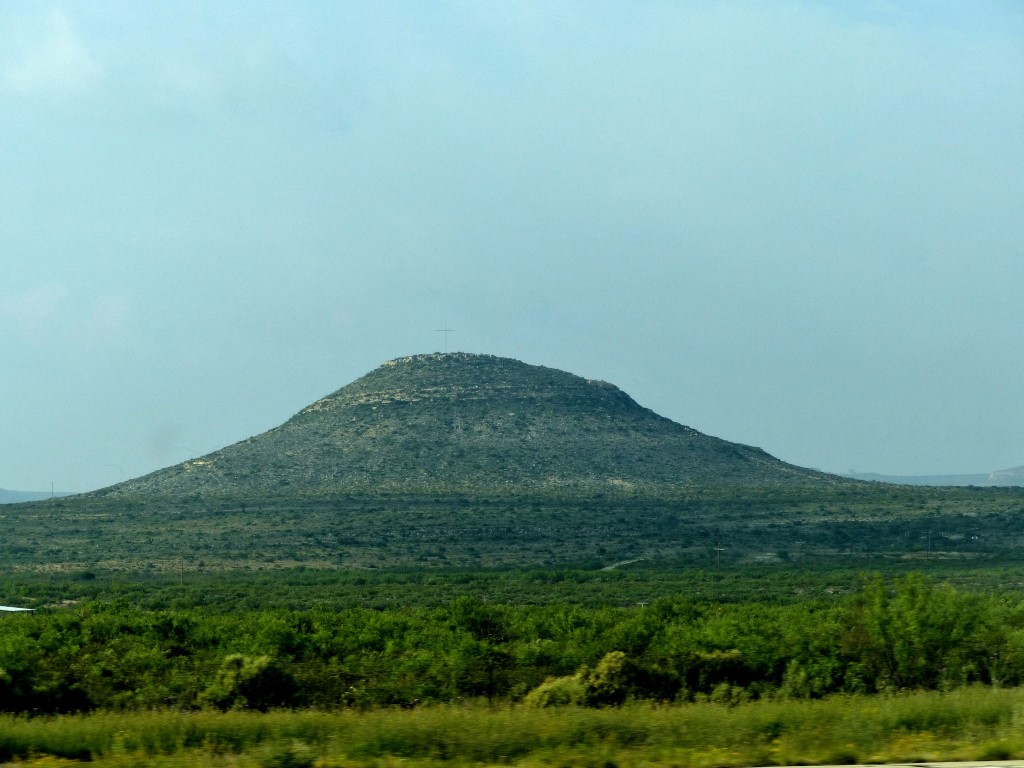
West Texas from phone camera 5-7-15
The mountains shall bring peace to the people, and the little hills, by righteousness. (Psalms 72:3 KJV)
Ye are the light of the world. A city that is set on an hill cannot be hid. (Matthew 5:14 KJV)
Dan and I decided to continue on west, taking the lower Interstate 10 route through west Texas and maybe try to get to Dallas on our return trip. We never did make it to Dallas. We were challenged coming back through lower Texas on our return trip because of the storms and flooding. Whoops! I’m getting ahead of myself. More about that later.
Let me tell you, Texas is one long state! I-10 across Texas, according to Wikipedia is – Length: 878.6 mi (1,414.0 km). You do not scoot across it in one day!
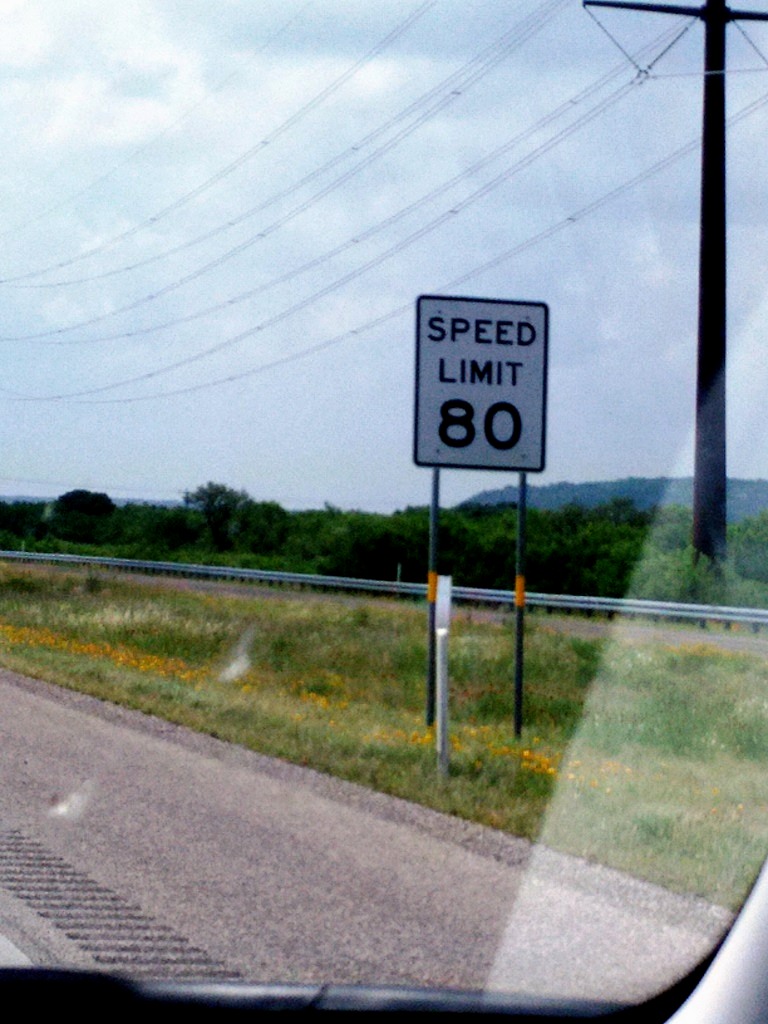
West Texas Speed Limit sign from phone camera 5-7-15
We were surprised to see this speed limit sign at 80 MPH. Never seen one that high. 70 or 75 maybe, but 80, not seen before. Forgot to put the camera up front, but grabbed the phone.
We ran 70, but, considering that there are miles and miles of open area, it is understandable why Texas has it this high out here. We got as far as Sonora, Texas and then on Friday we had some interesting things to investigate.
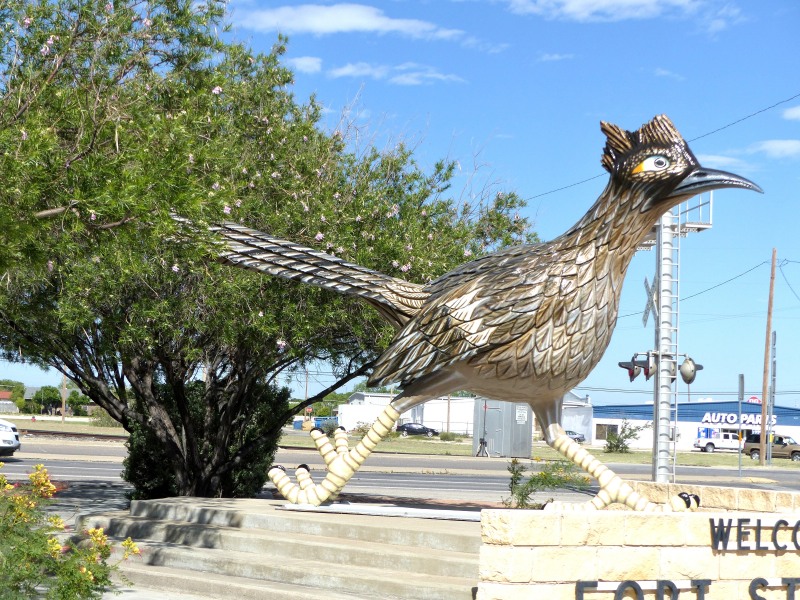
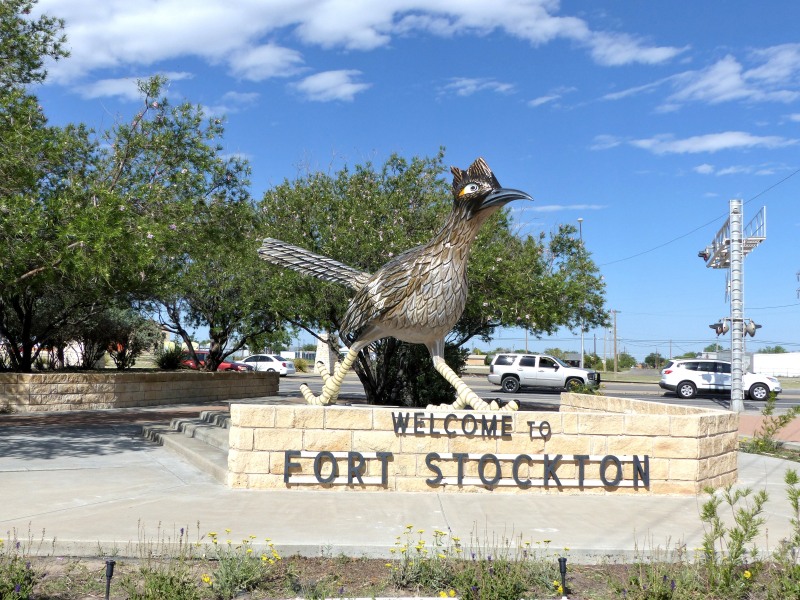
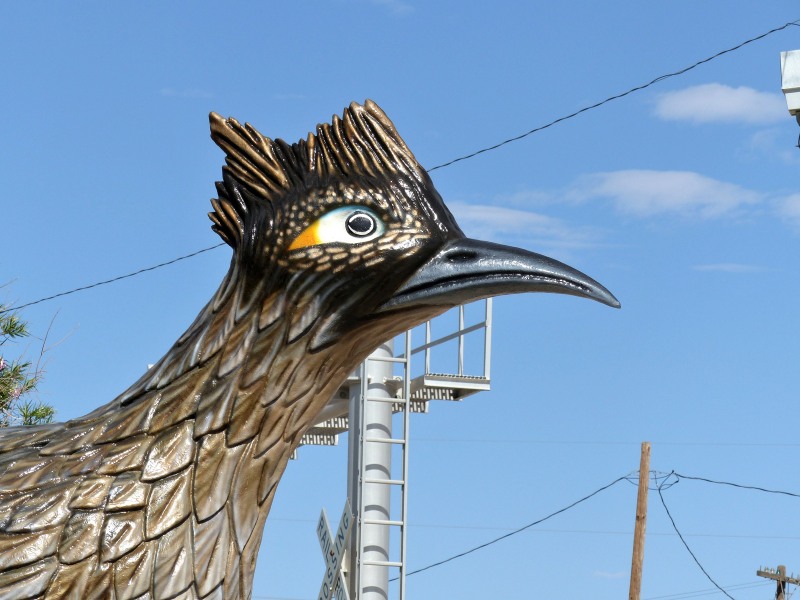
Roadrunner in Ft Stockton TX by Lee
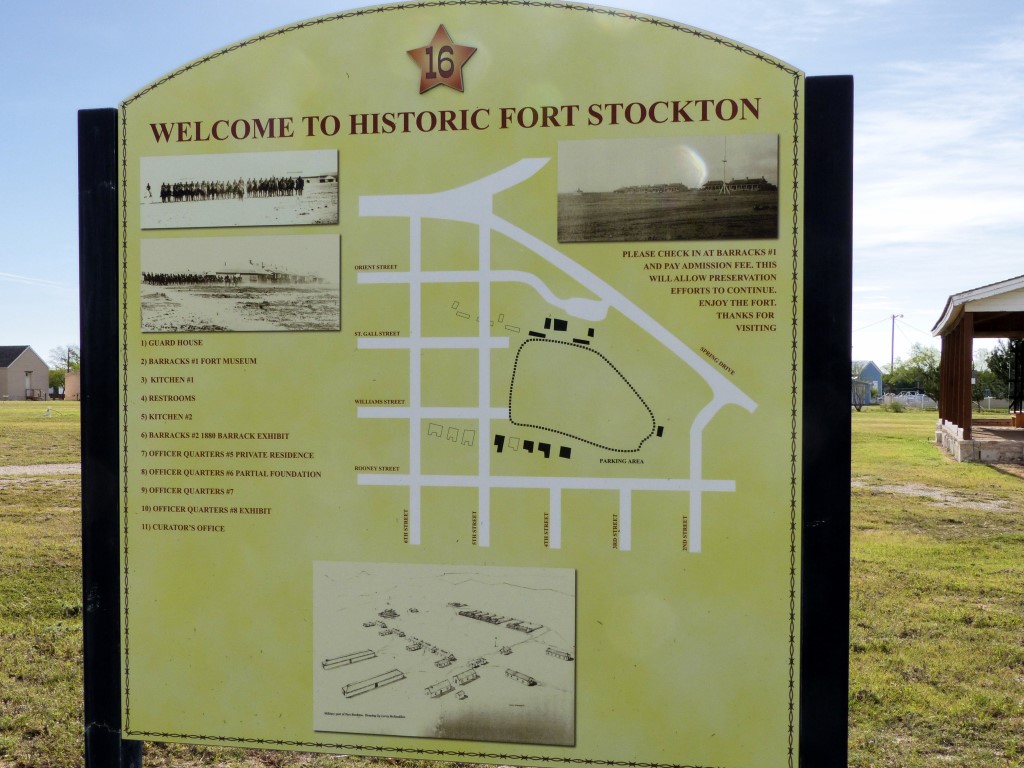
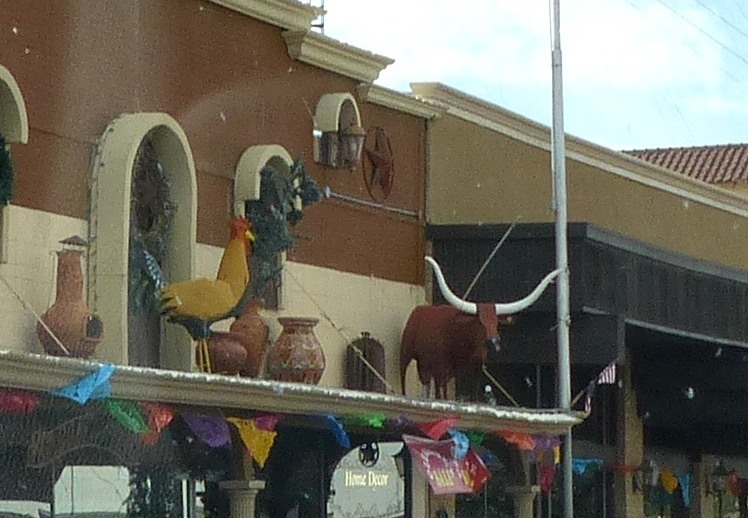
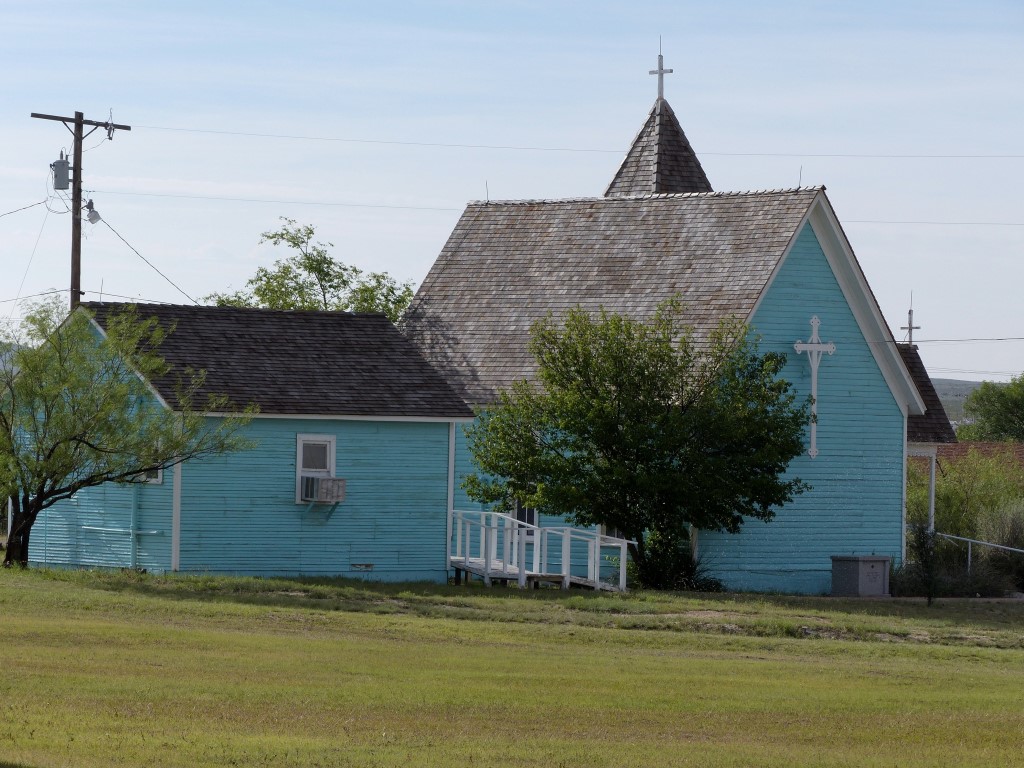
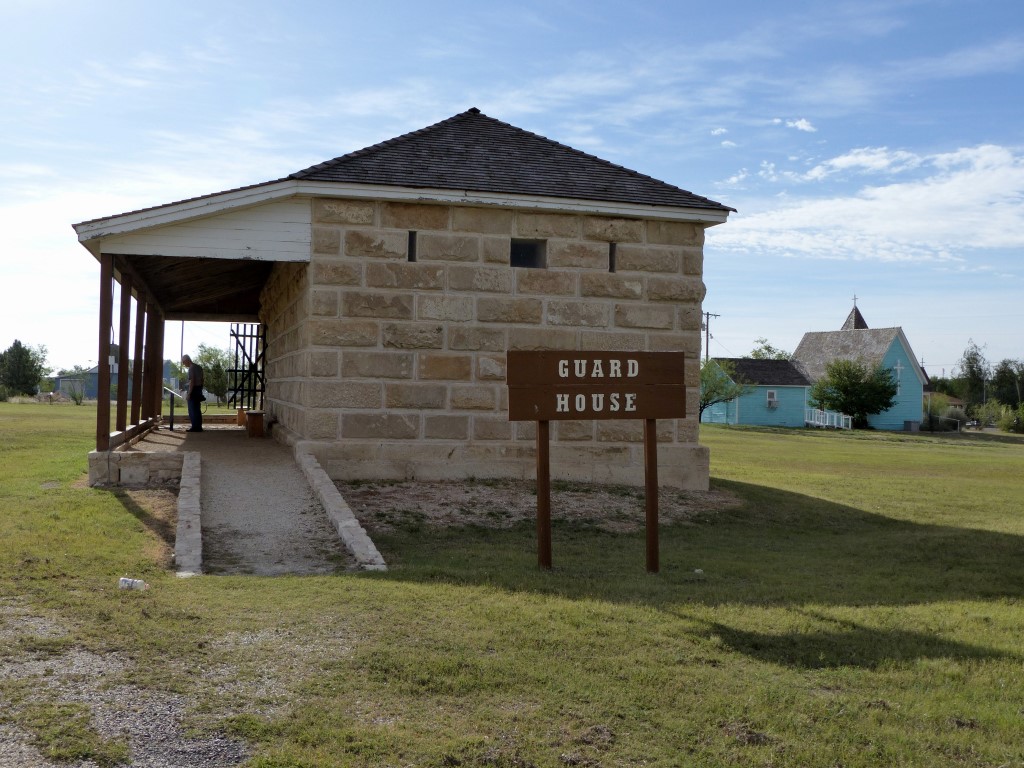
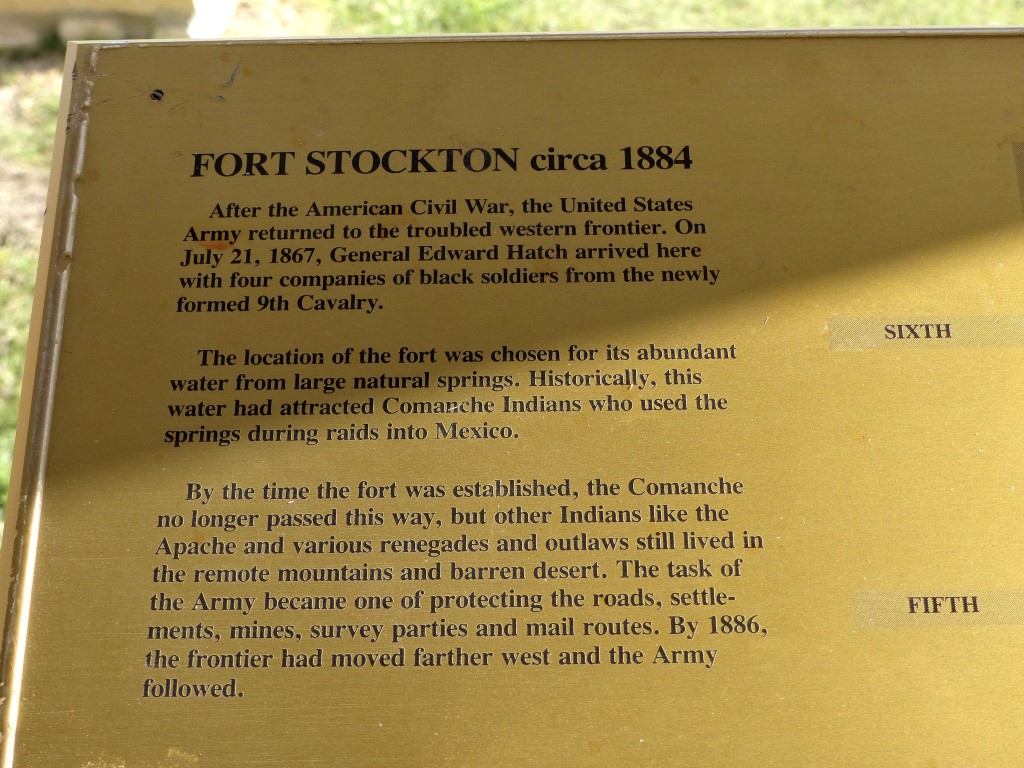
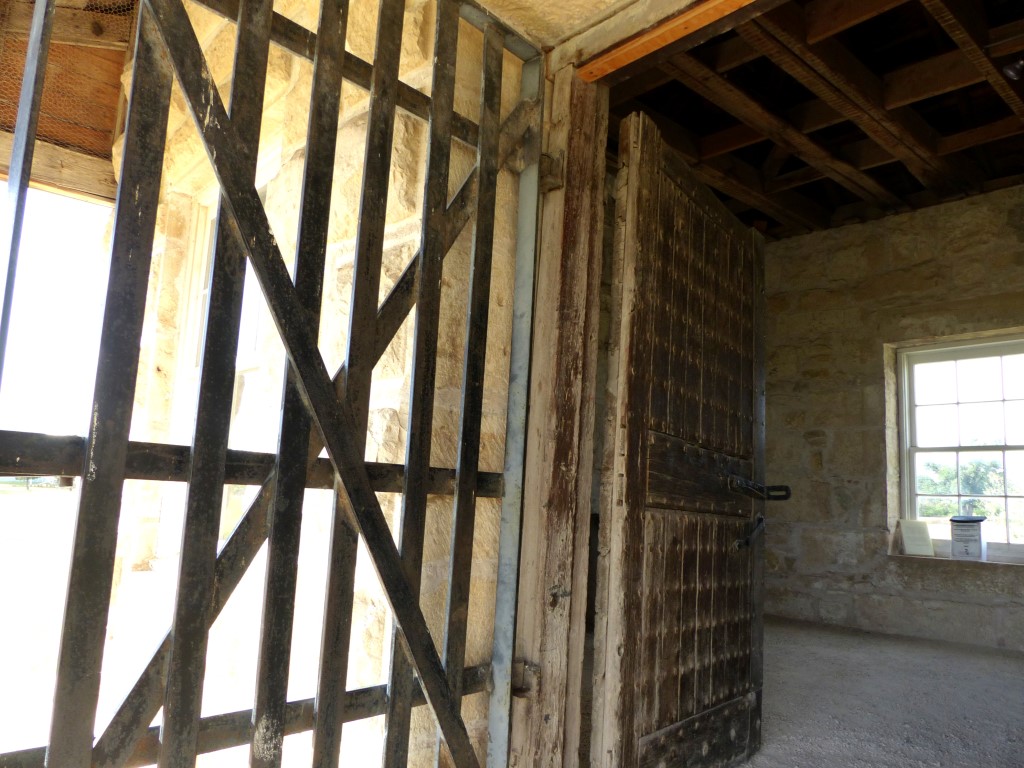
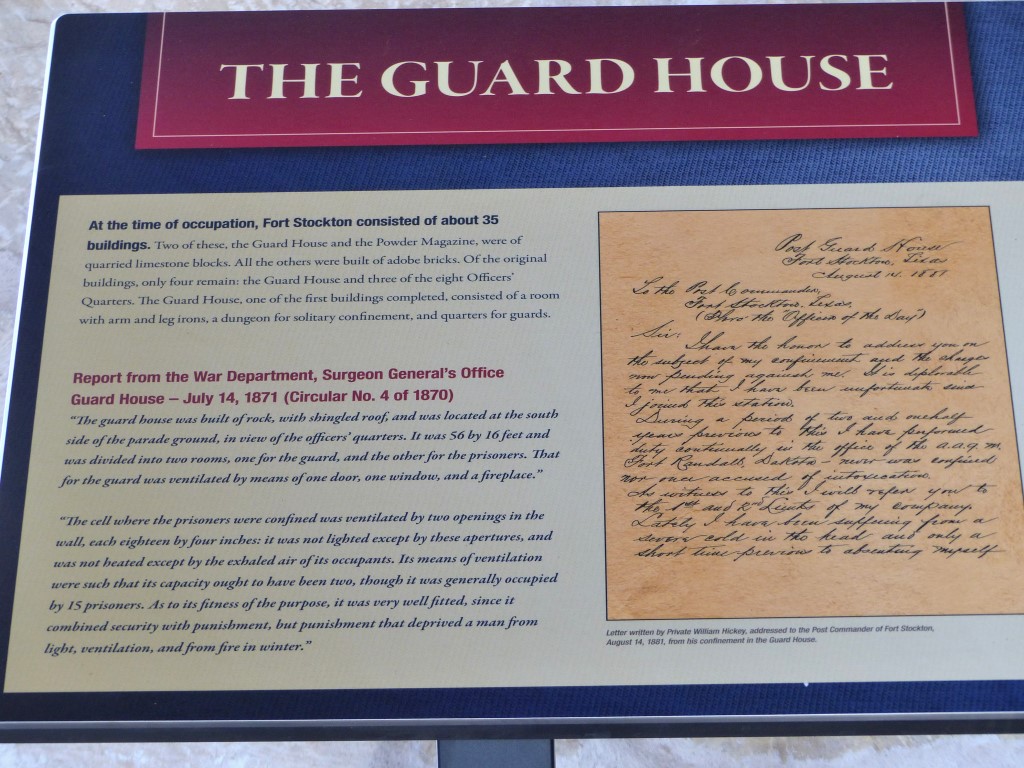
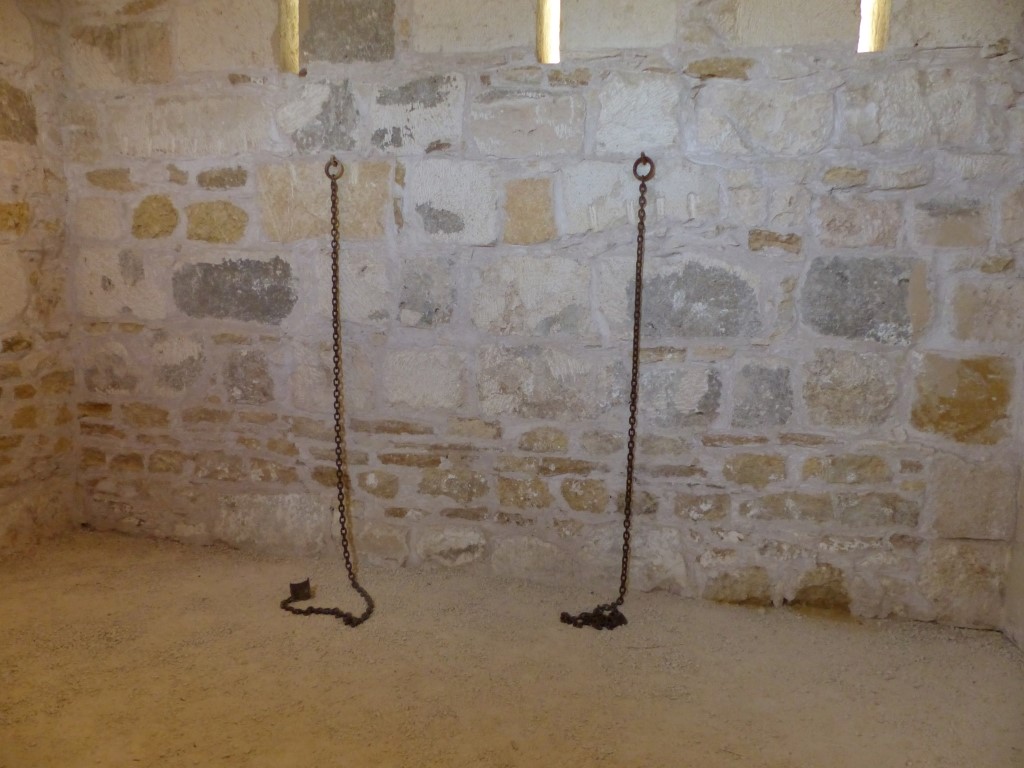
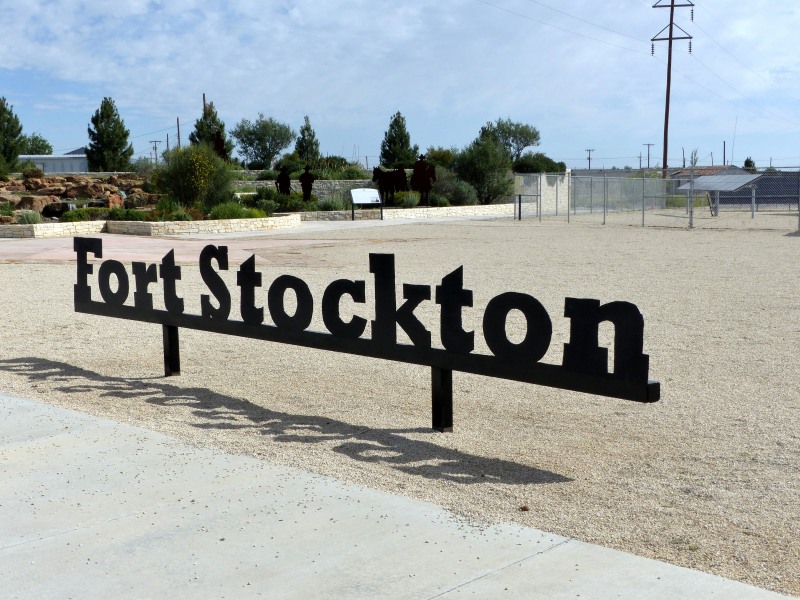
I’ve already written about My Western Greater Roadrunners that we saw in Fort Stockton. That was on Friday, May 8th. At Fort Stockton, there is actually an old fort that was originally called Camp Stockton, now Fort Stockton.
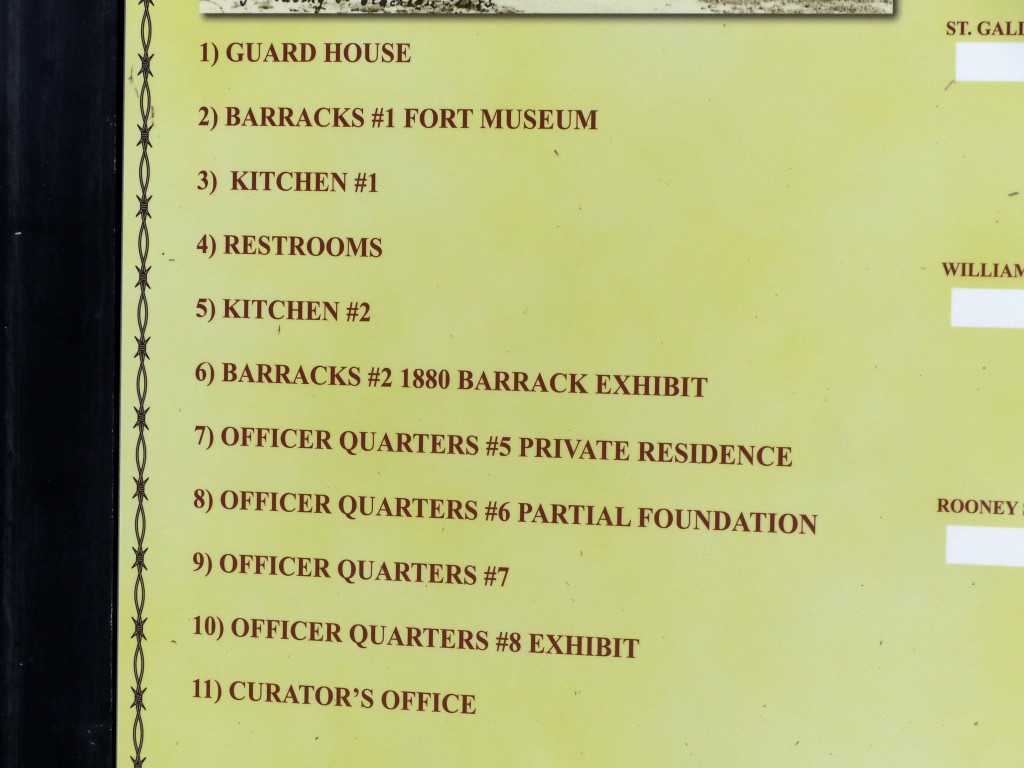
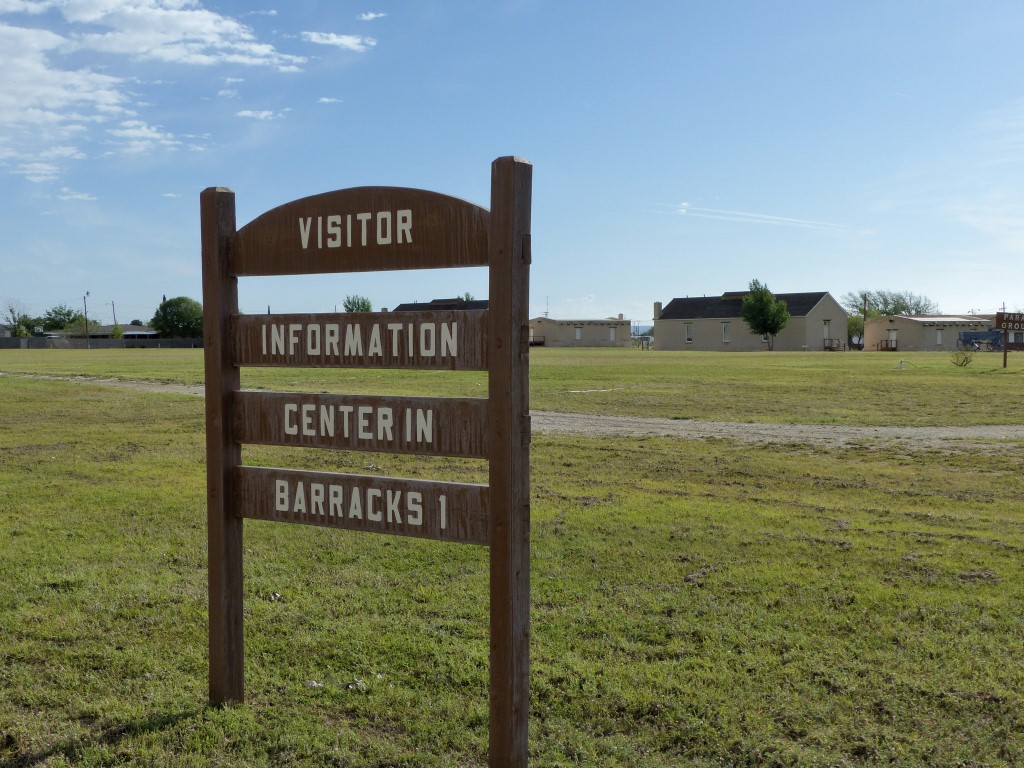
Welcome to Historic Fort Stockton
“Military presence began here with the establishment of Camp Stockton in 1858 by troops of the 1st and 8th Infantry, US Army. It was named for Commodore Robert Field Stockton, a naval officer who distinguished himself during the Mexican War. This first site was southwest of the present location, near the present Courthouse.
The post protected travelers and settlers on the numerous roads and trails that made use of the abundant water supply of Comanche Springs. It was here that these trails crossed the Comanche War Trail.”
Below are some photos from Sonora and Fort Stockton. More tales to come before we leave Texas headed West. Next “Vacation Goal” – San Diego, California. On the way!
Thou art worthy, O Lord, to receive glory and honour and power: for thou hast created all things, and for thy pleasure they are and were created. (Revelation 4:11 KJV)
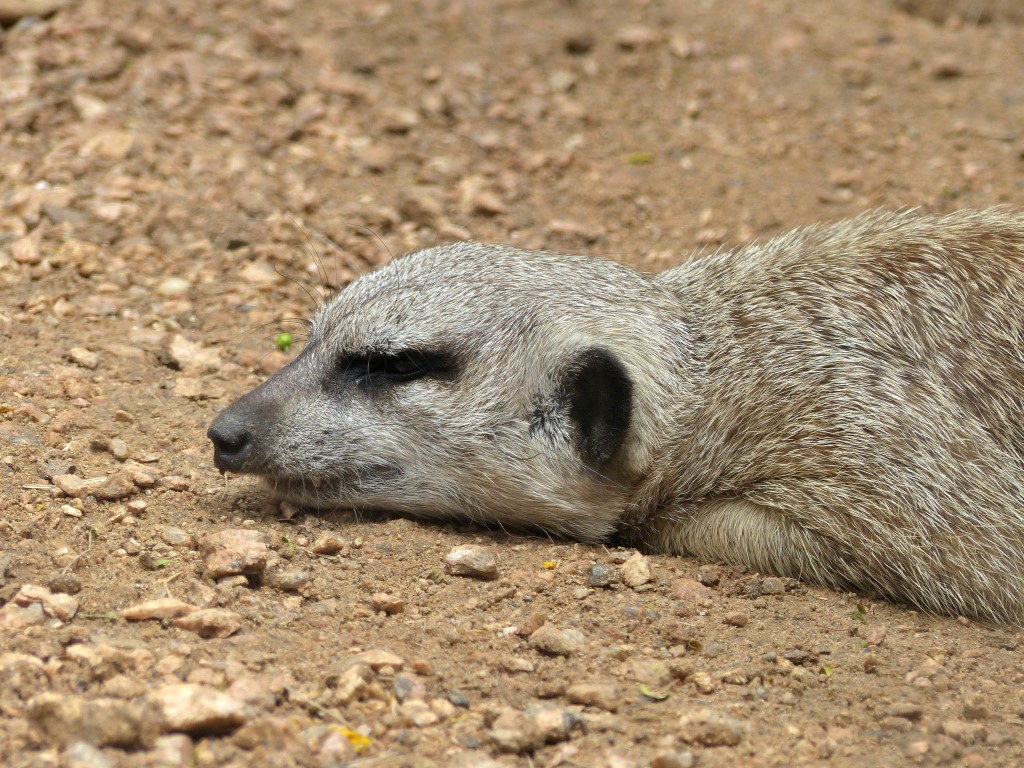
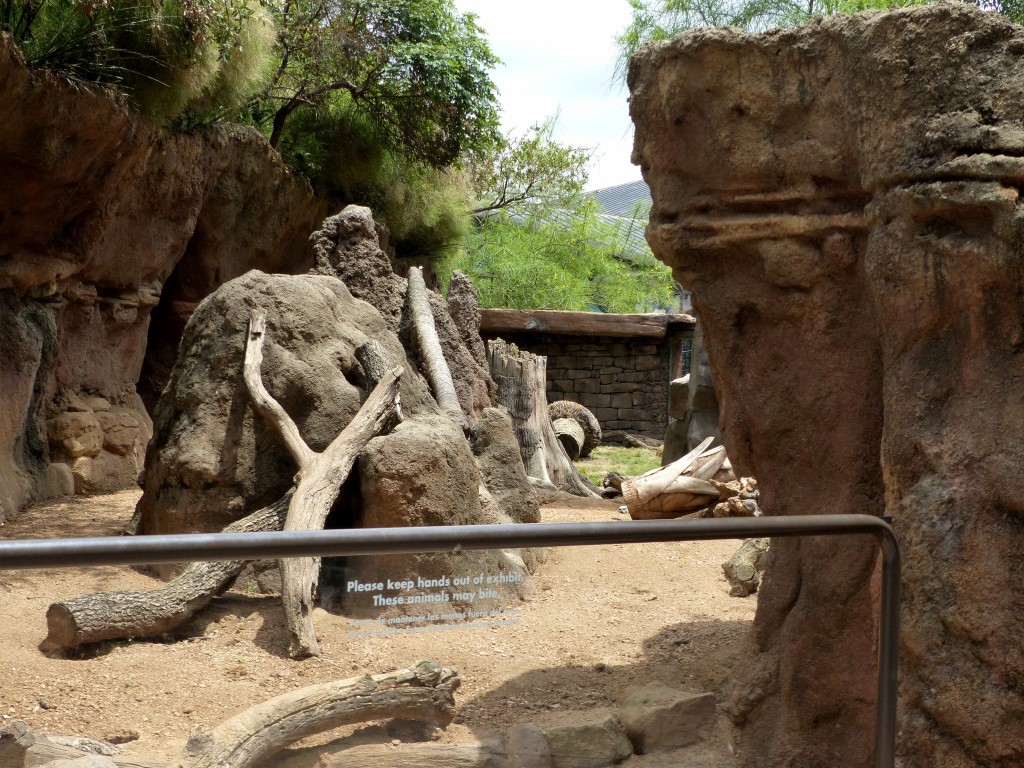
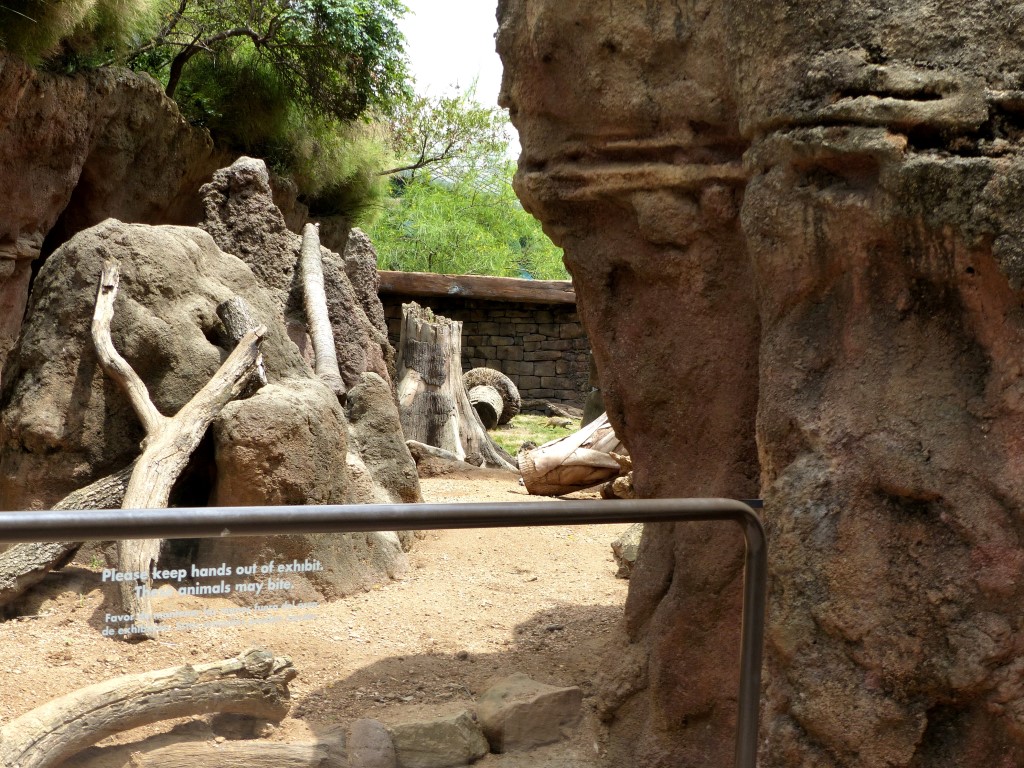
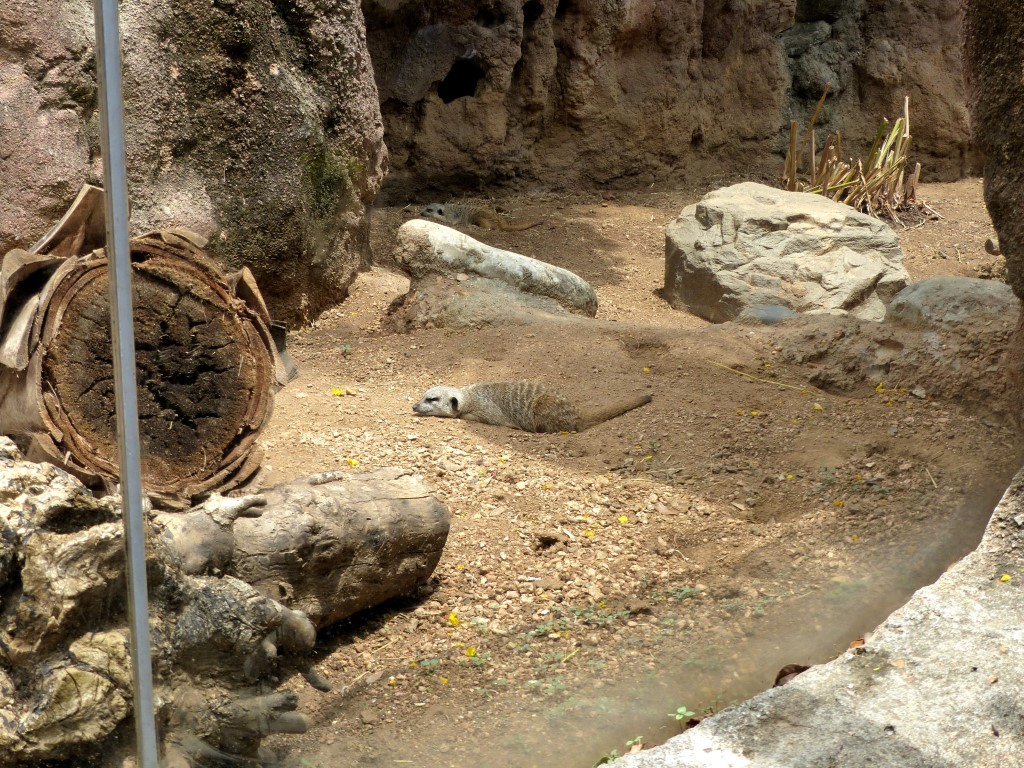
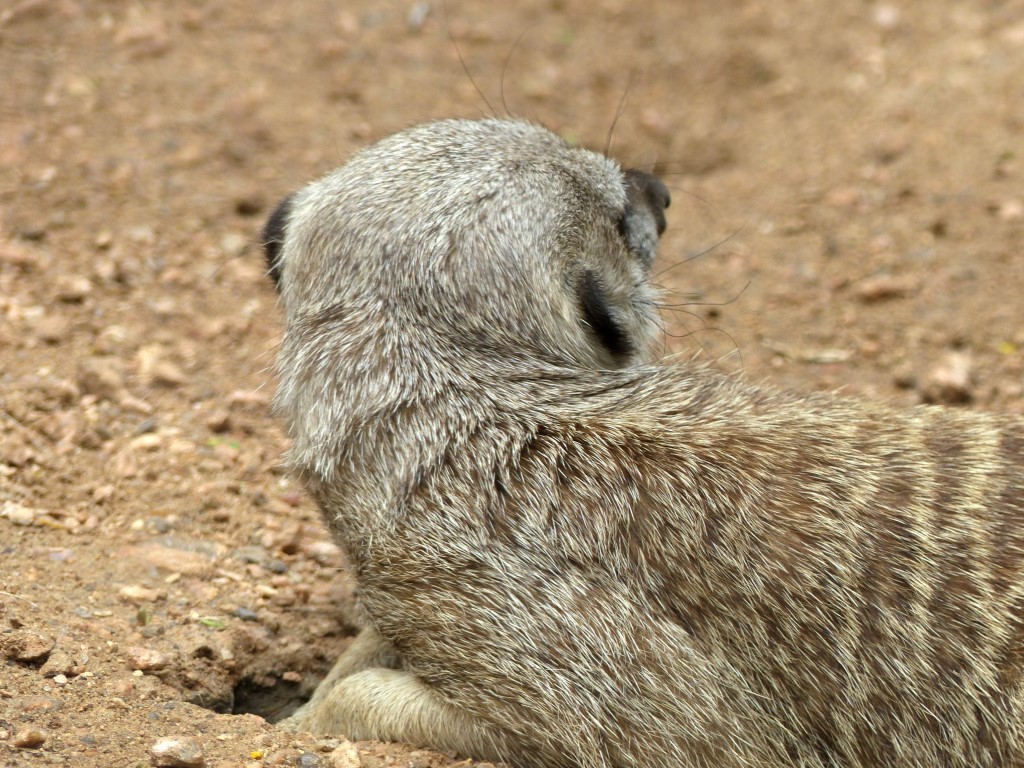
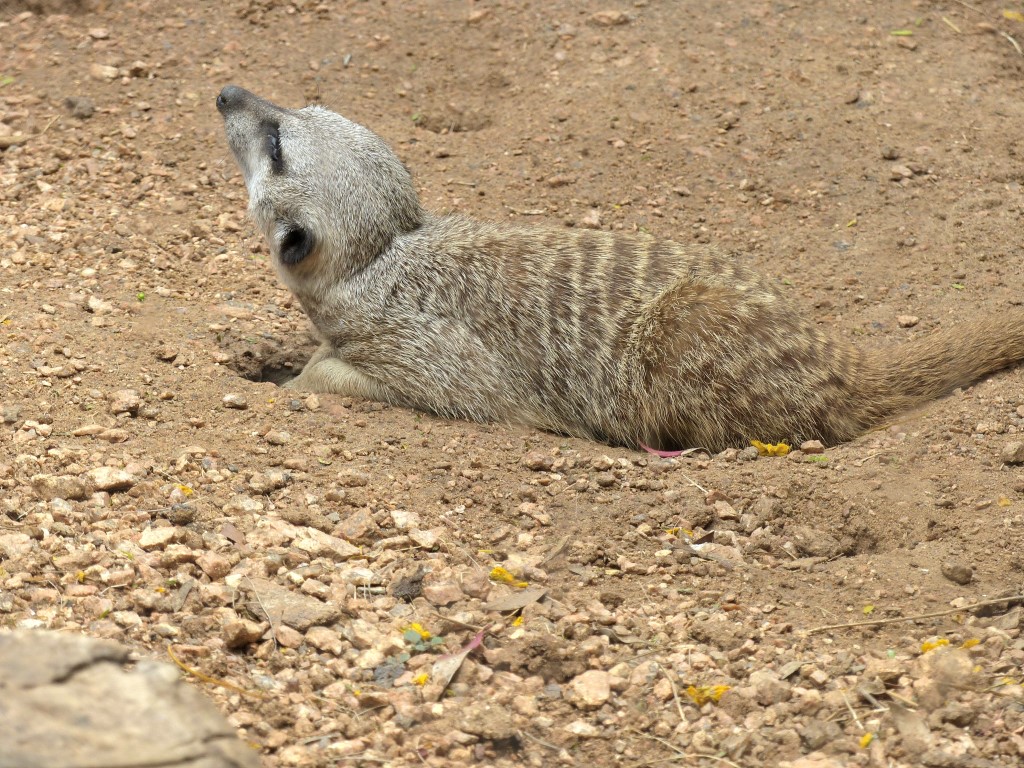
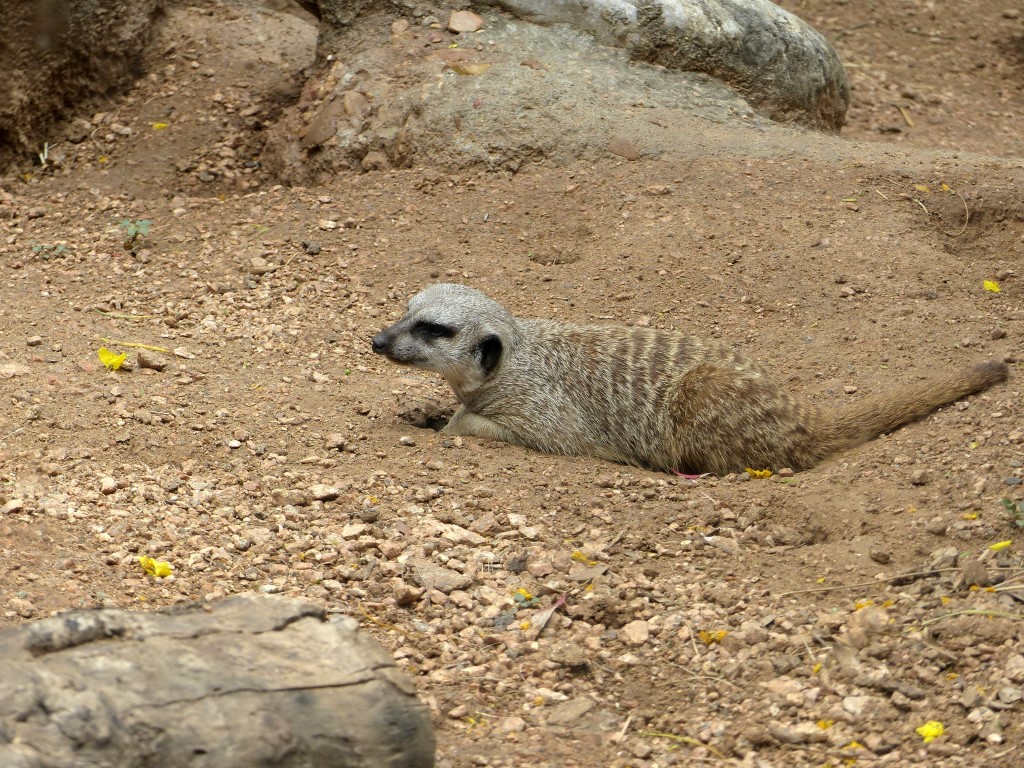
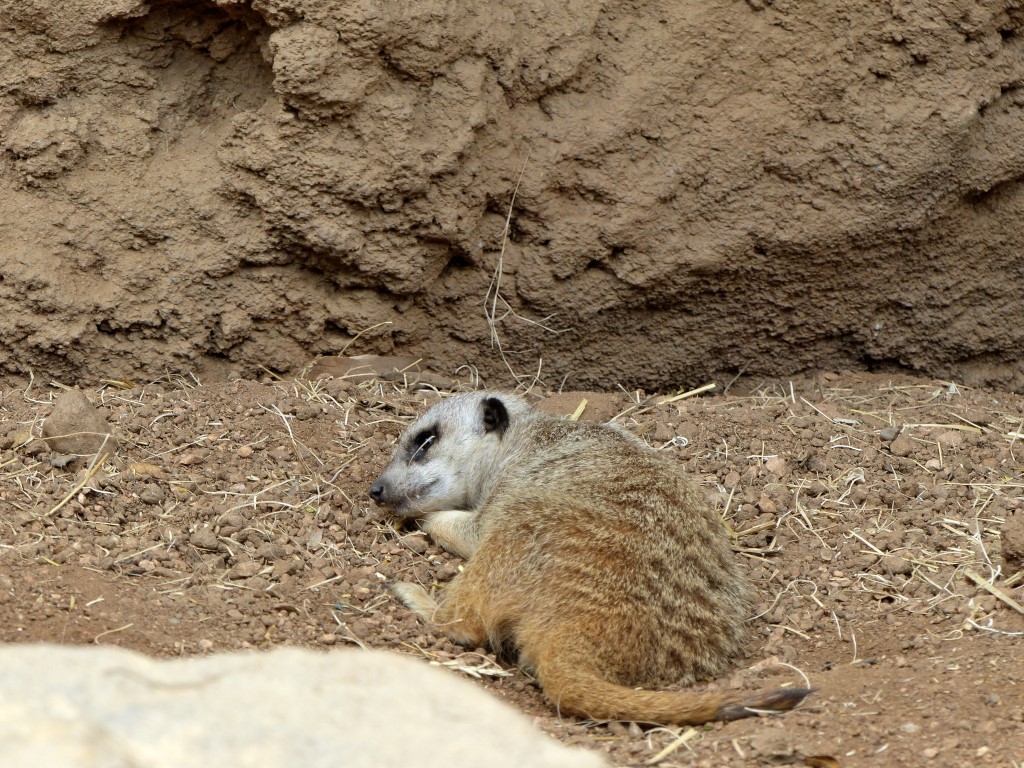
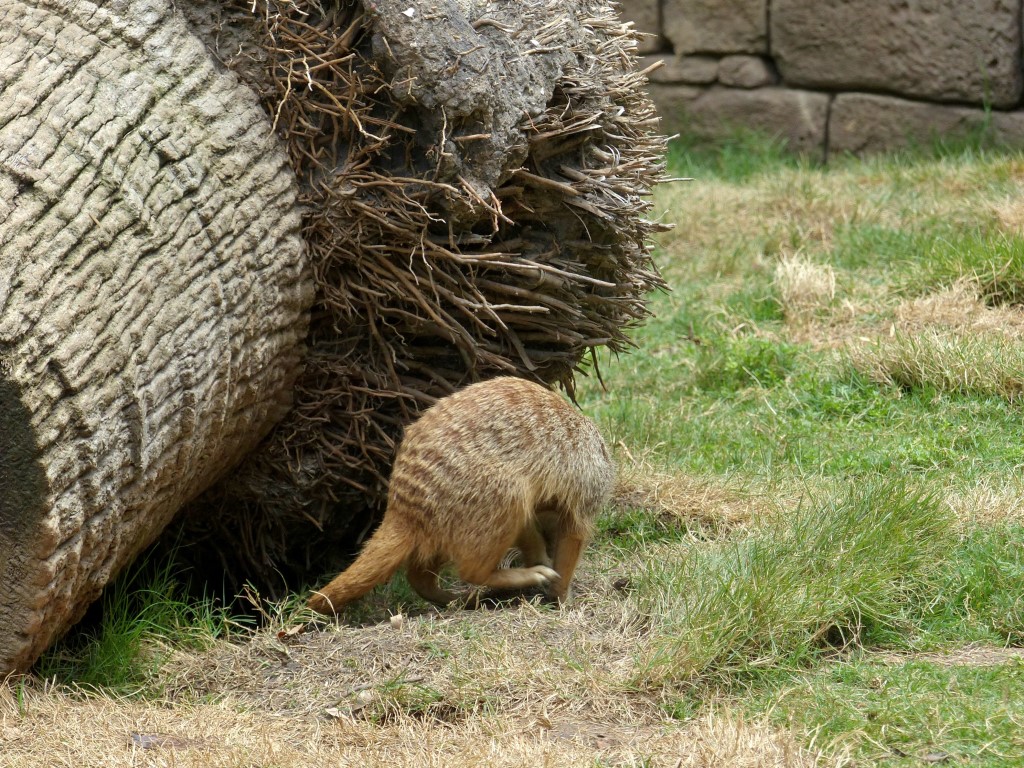
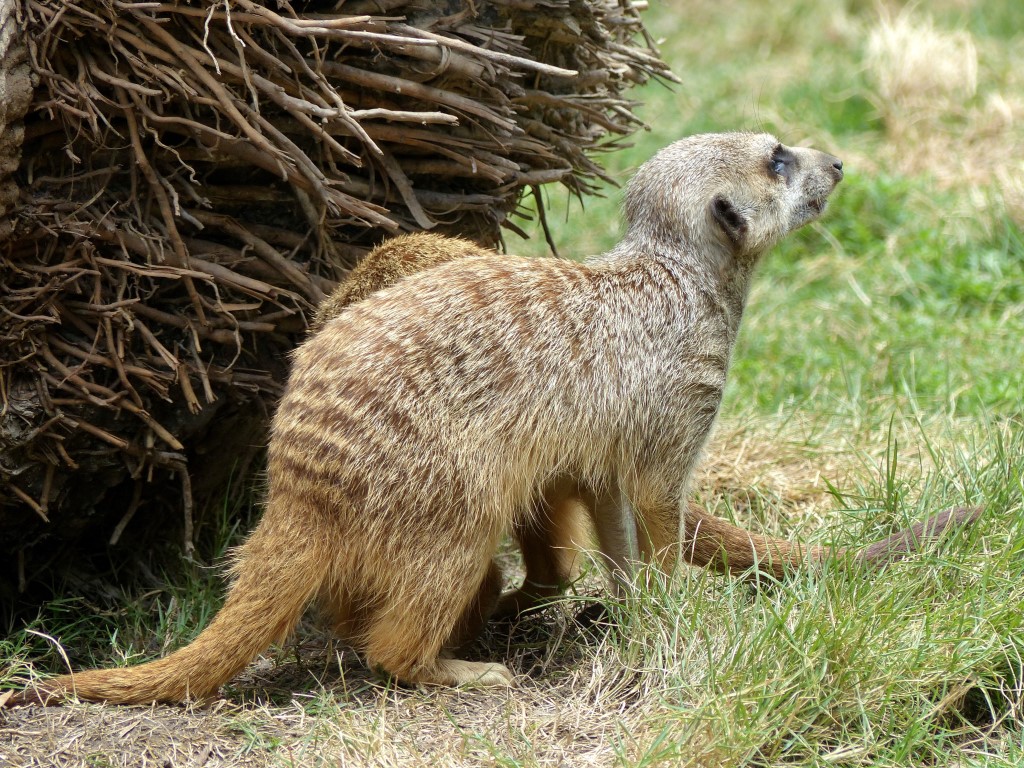
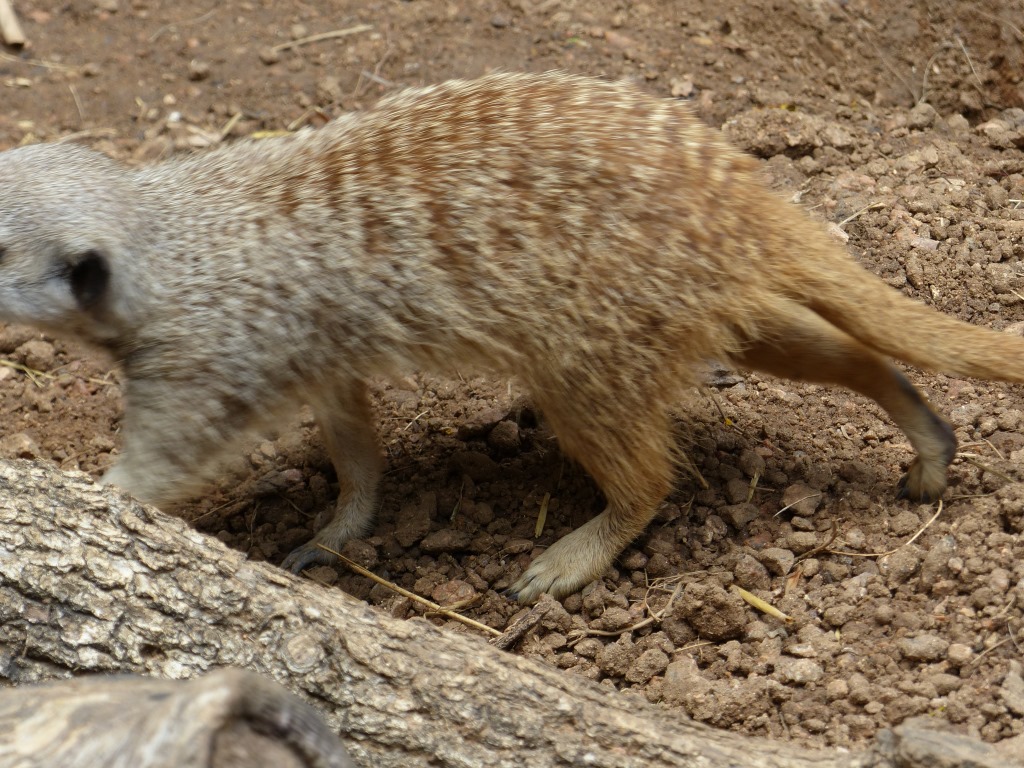
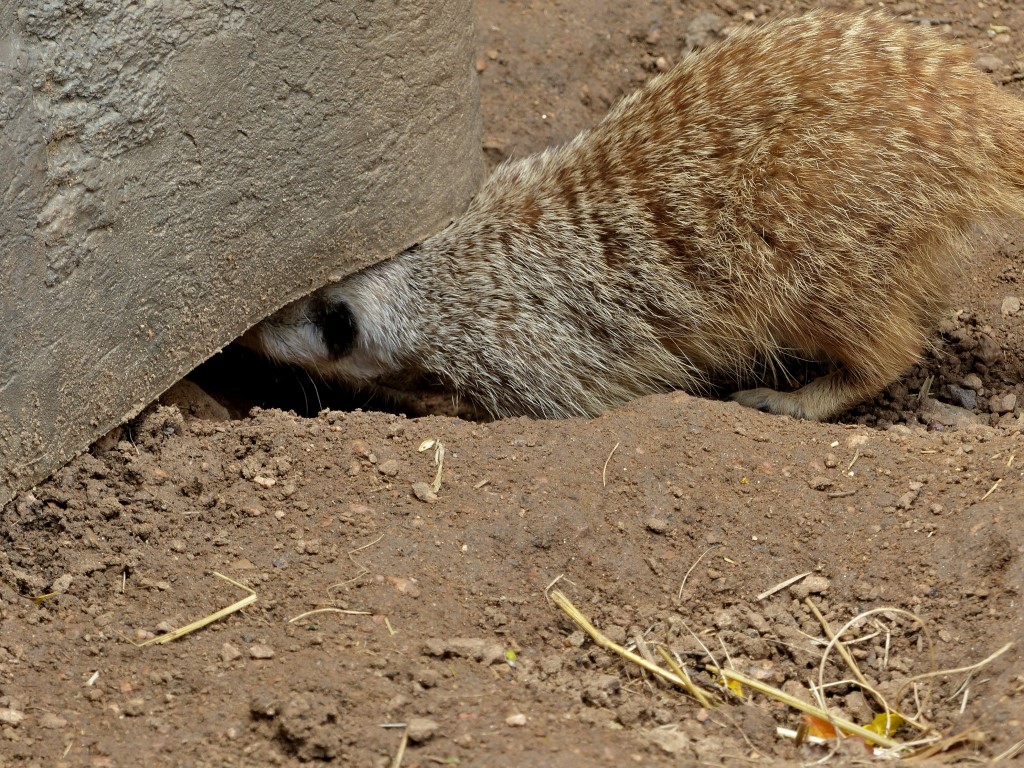
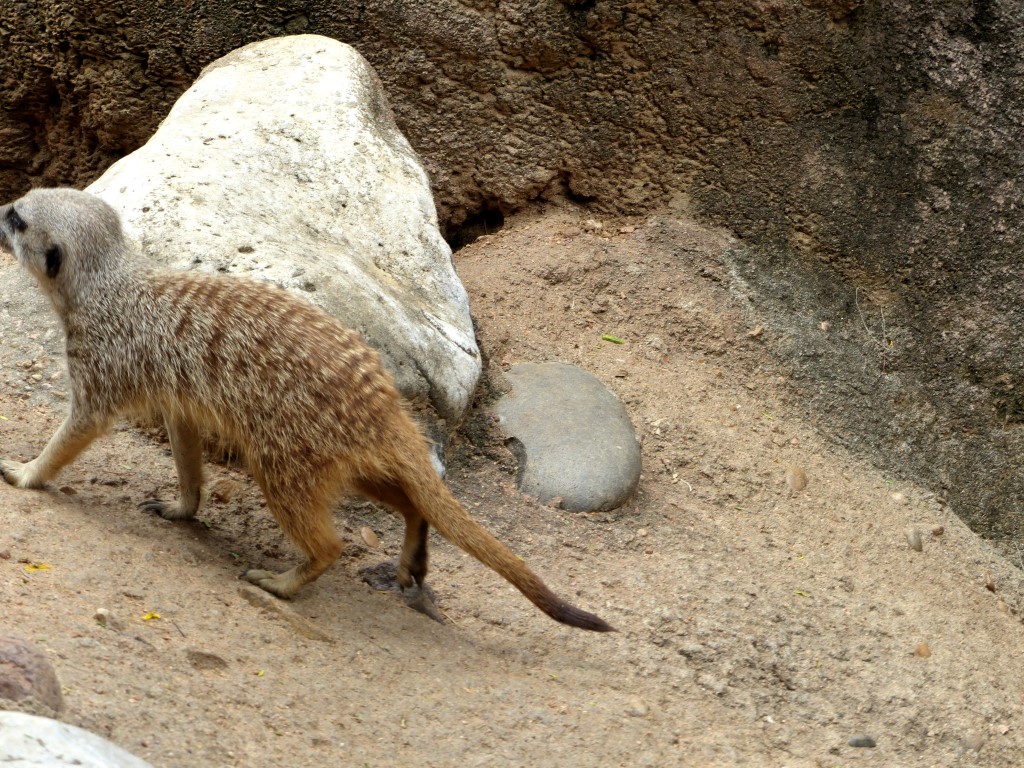
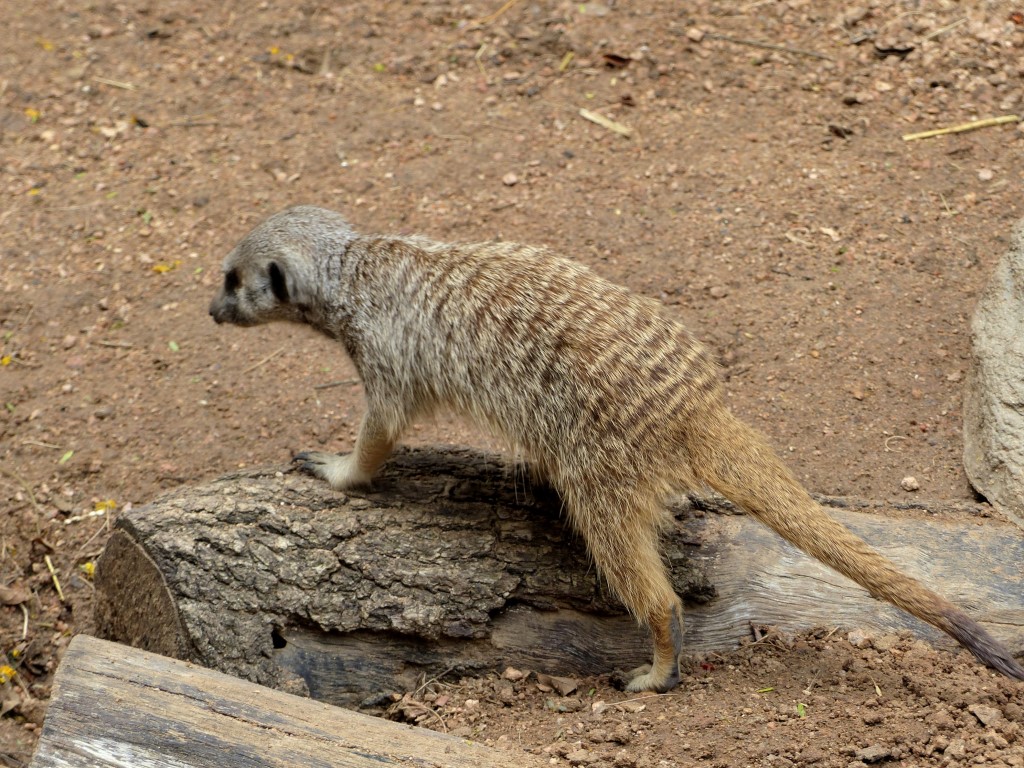
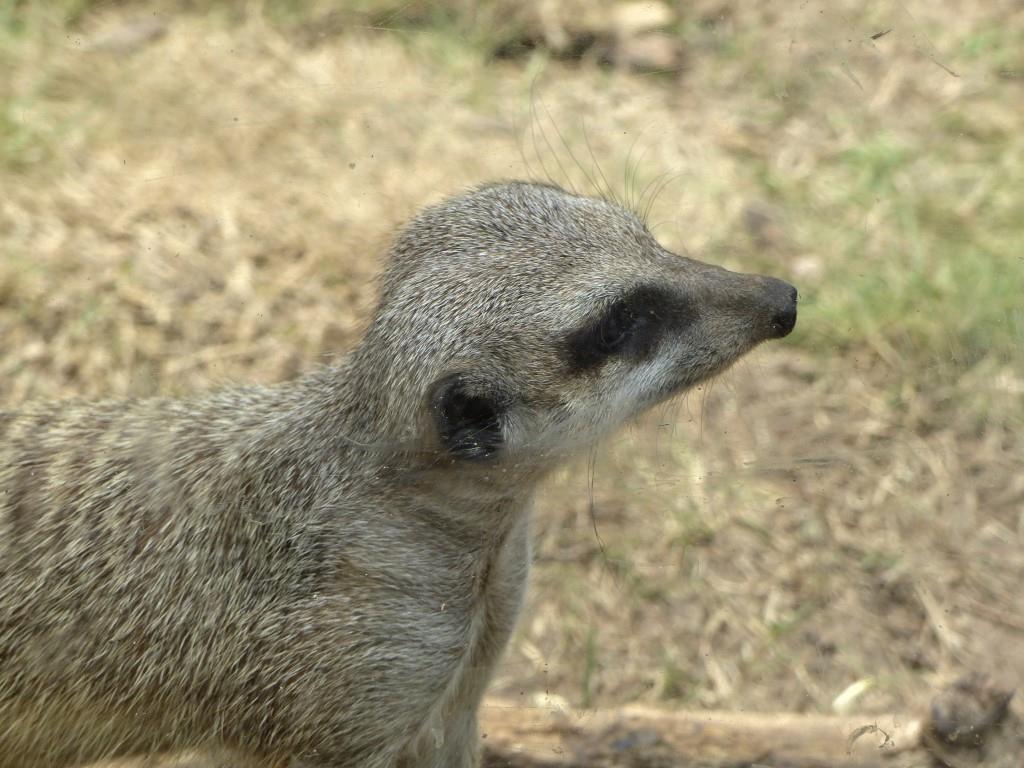
I know this blog is about birds, but the “Plus” in the name lets me show other critters. Every since the Meerkats where on the Animal Planet TV series several years back, they have been another favorite of mine. (I have LOTS of favorites) The enclosure for the Meerkats at the Houston Zoo was one of the nicer ones we have seen. They seemed to be right comfortable with their surroundings.
We were able to watch them through a glass wall, which gave great views of them. They were created to blend in with their habitat and they do it quite well. What care the Lord provides for His critters and their protection.
Meerkats belong to the mongoose family and are also known as slender-tailed mongooses. These animals have a tolerance for venom, which is why they can eat scorpions and venomous snakes.
Scientific Name:Suricata suricatta
Range: Angola, Botswana, South Africa, and Namibia
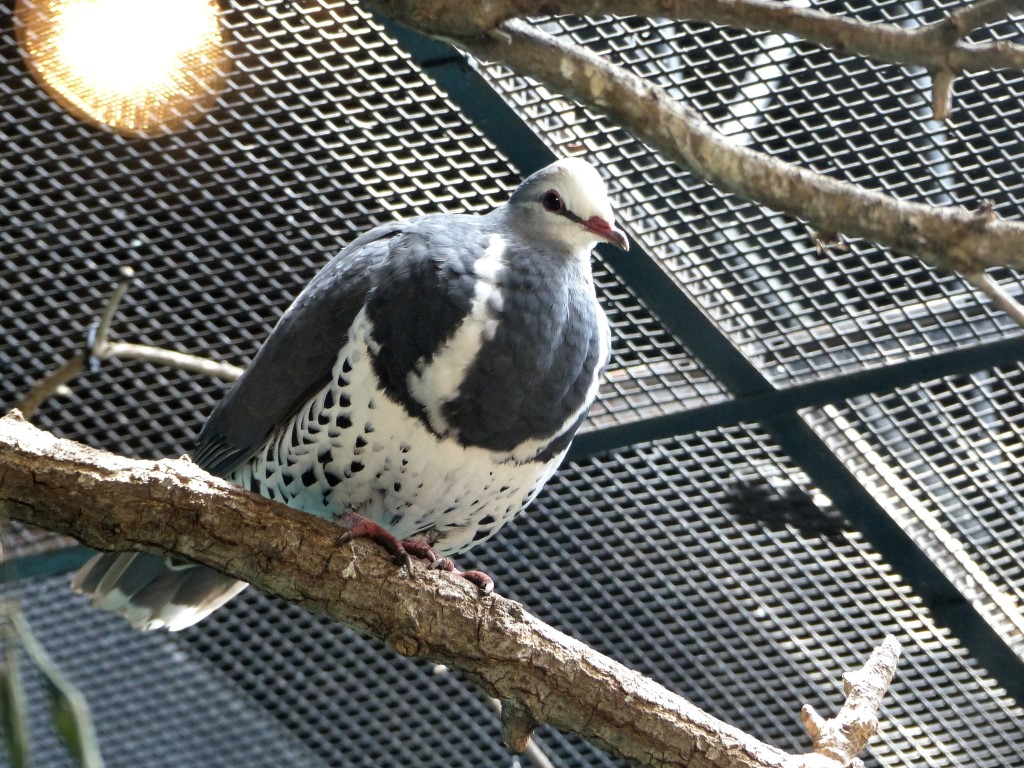
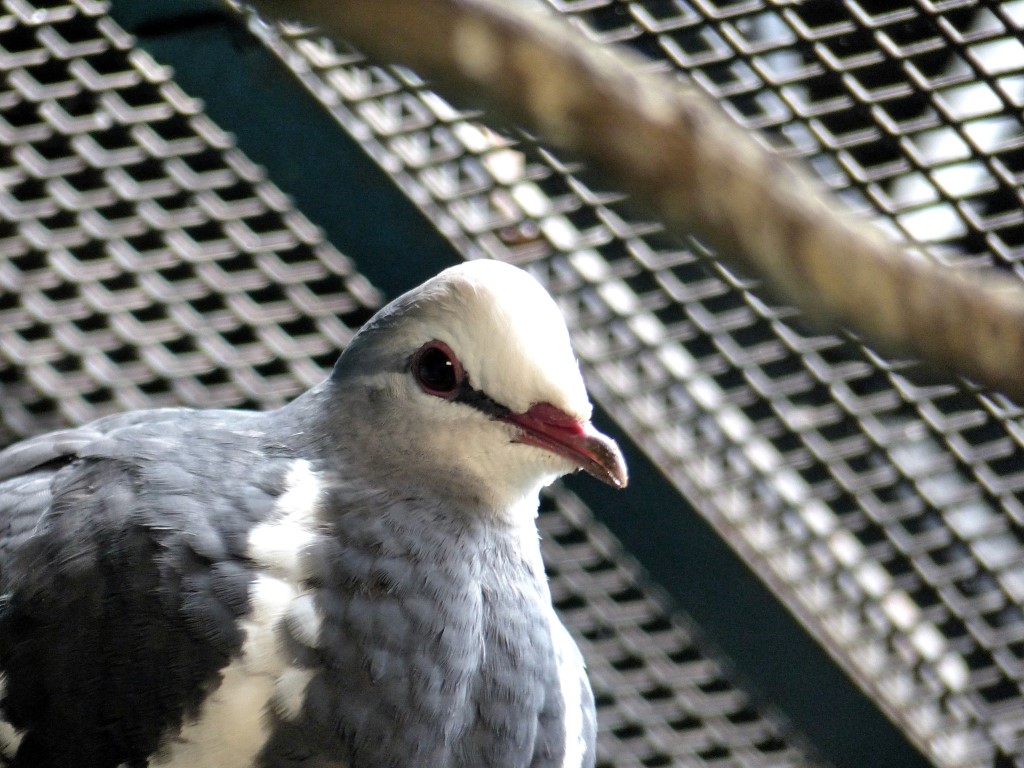
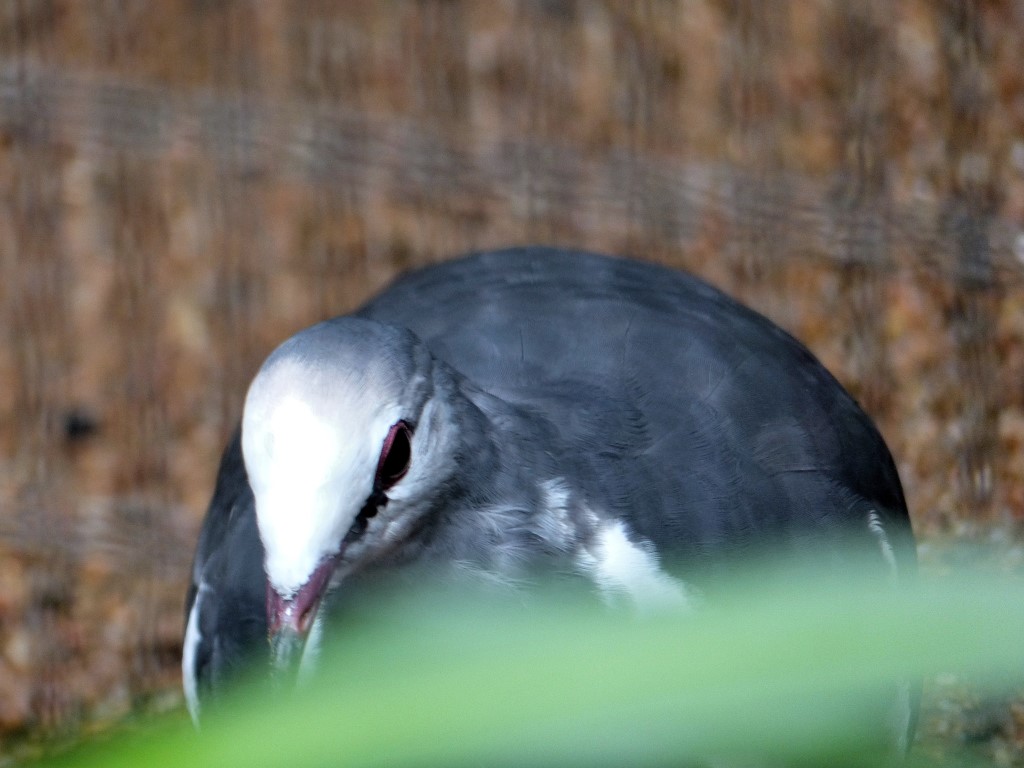
Wonga Pigeon (Leucosarcia melanoleuca) Houston Zoo by Lee
And I said, Oh that I had wings like a dove! for then would I fly away, and be at rest. (Psalms 55:6 KJV)
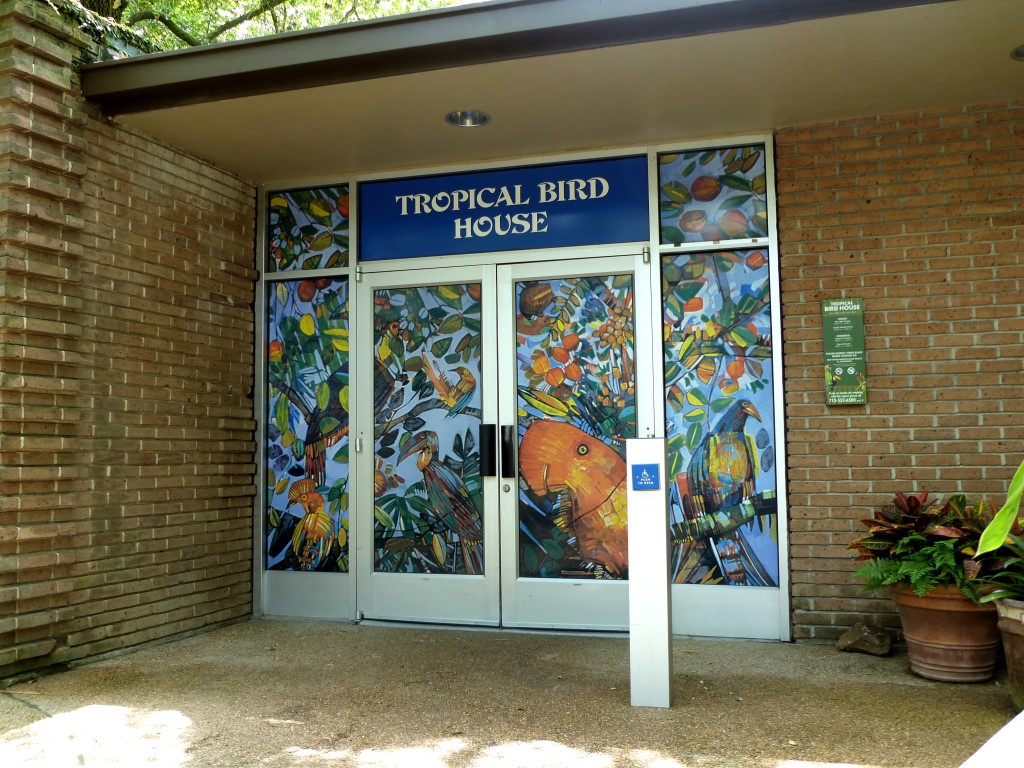
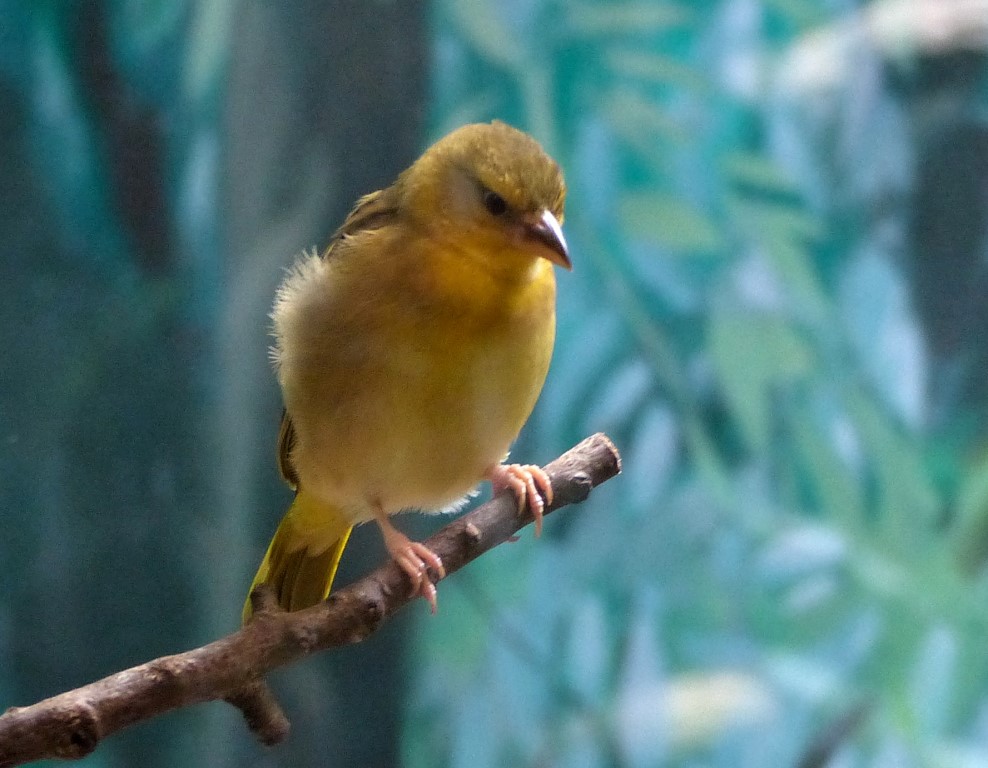
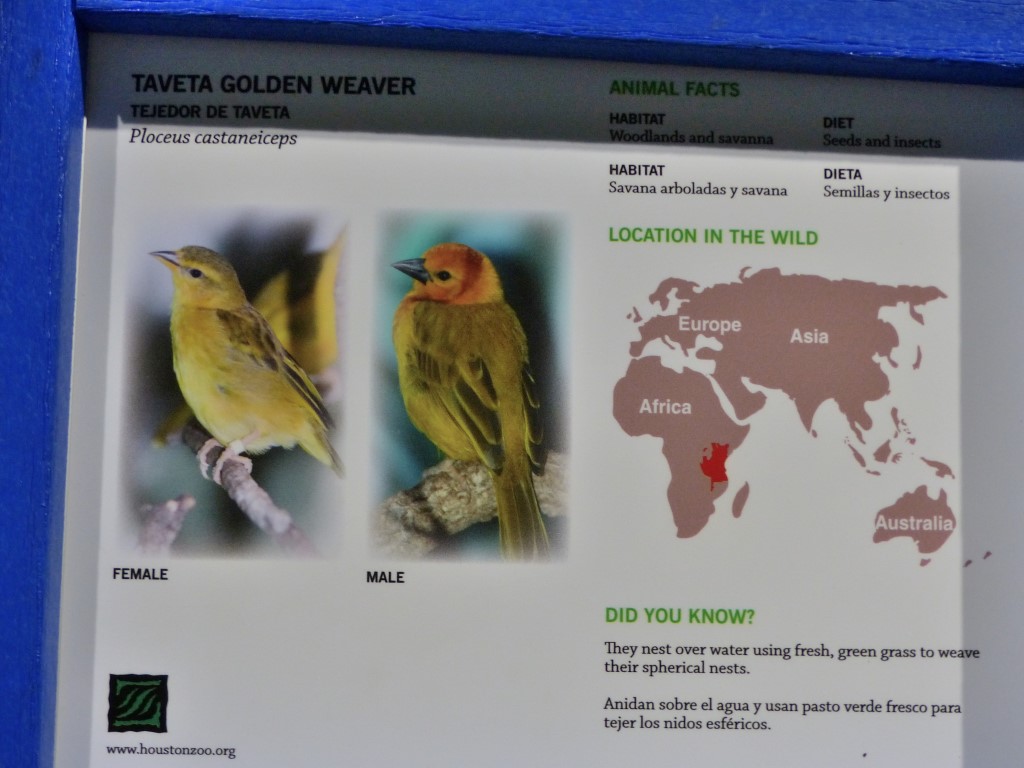
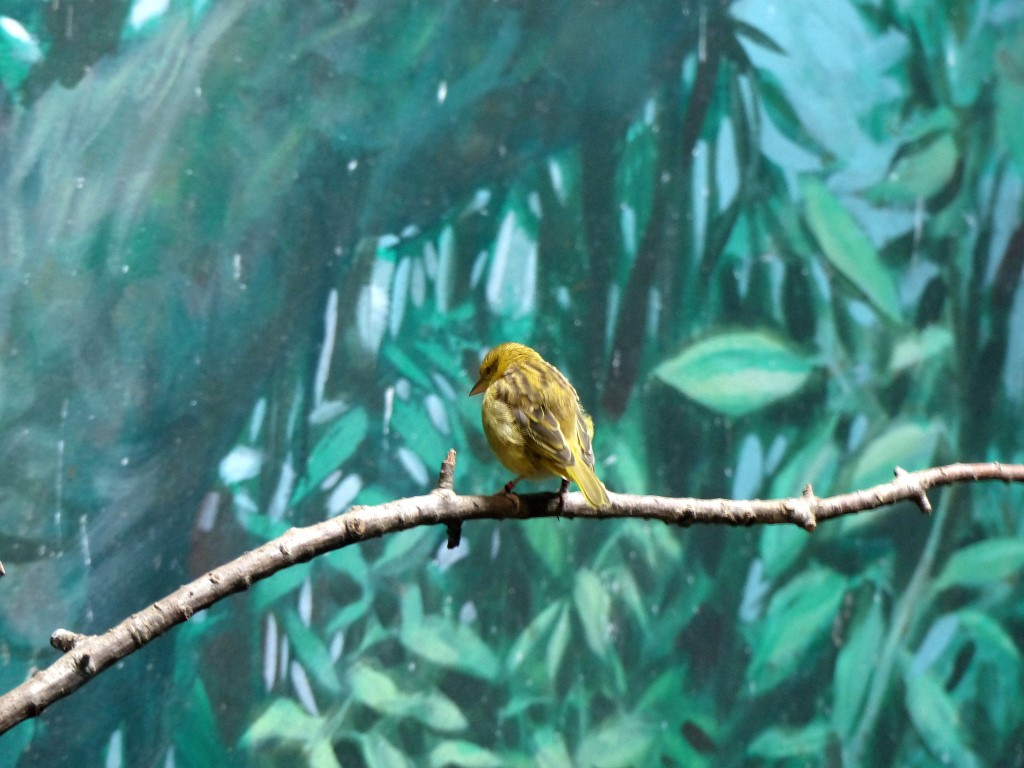
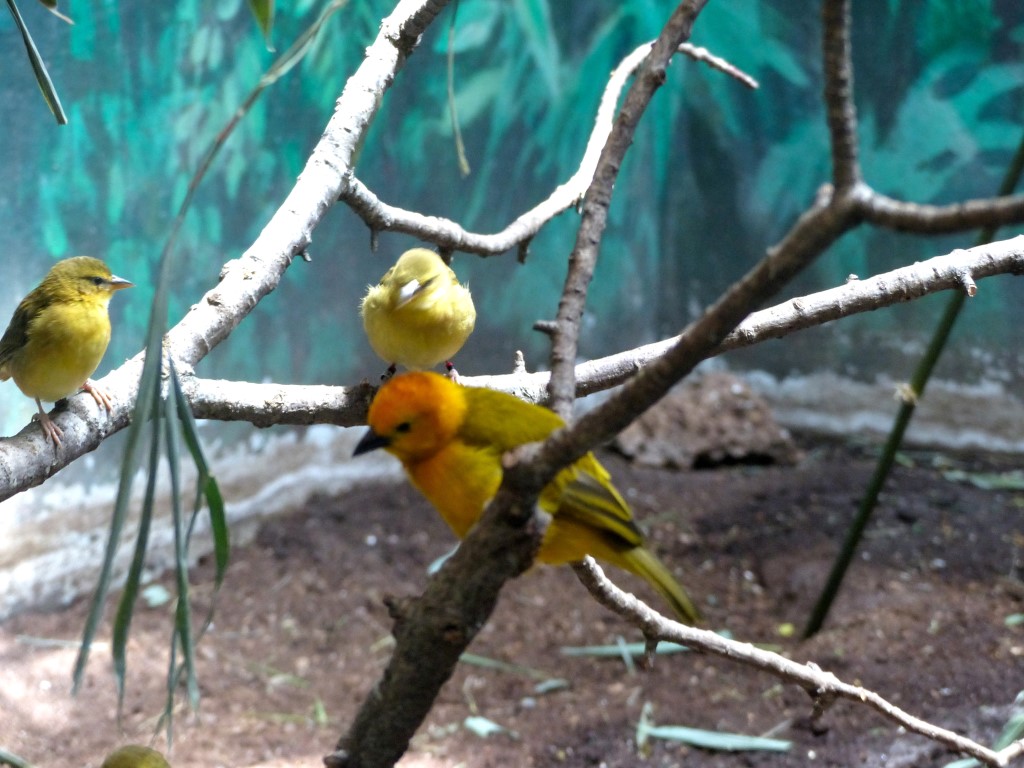
Thought I’d share two videos and some photos of the Wonga Dove and the Taveta Weavers. They were in the Tropical Bird House which had enclosures with a glass in front of them and not a cage (YEAH!)
Tropical Bird House Houston Zoo by Lee
The Wonga Dove was calling and could be heard everywhere in the Bird House. One video is of the dove calling and the weavers next door. You will hear the sound of the dove even while videoing the weavers.
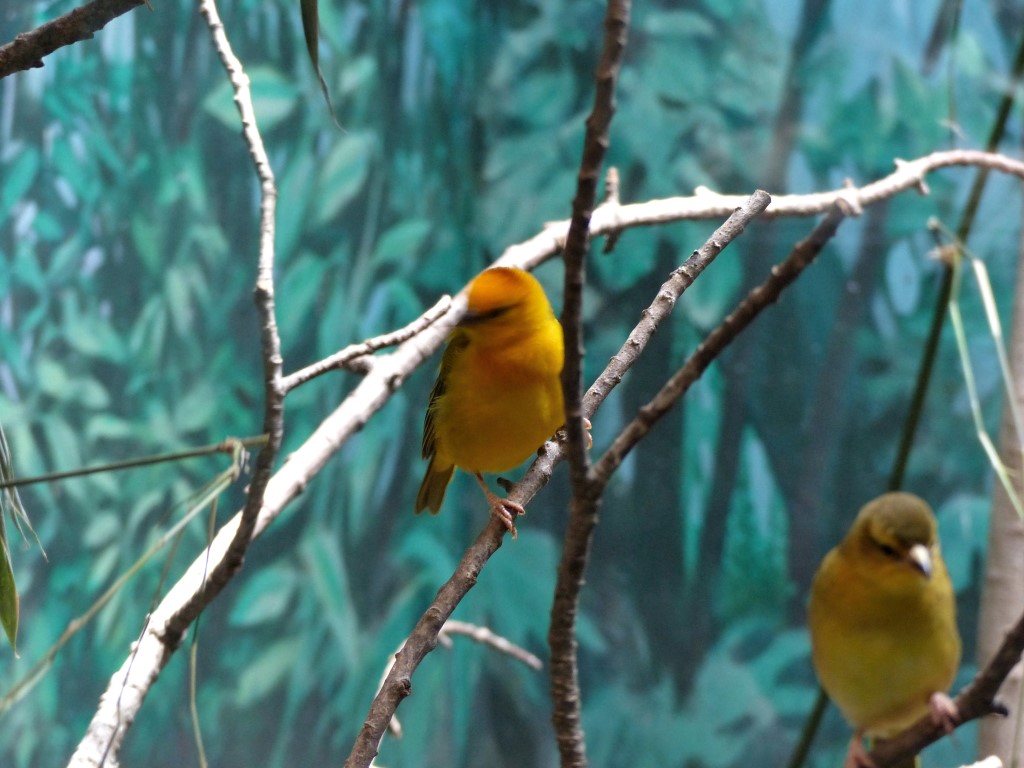
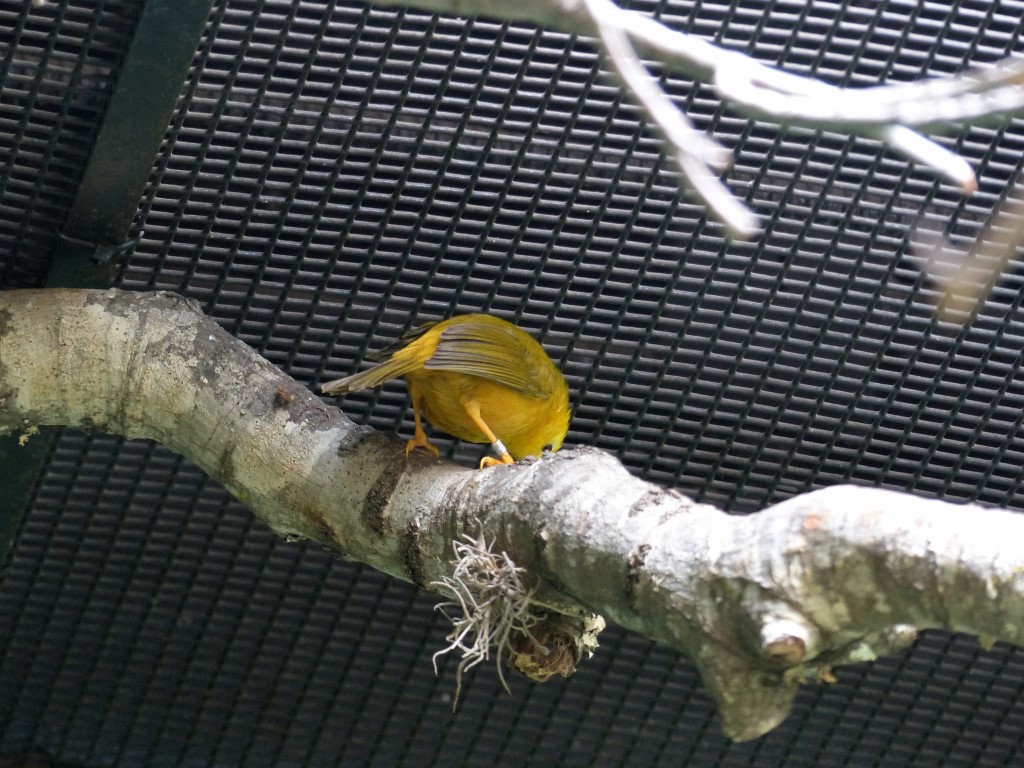
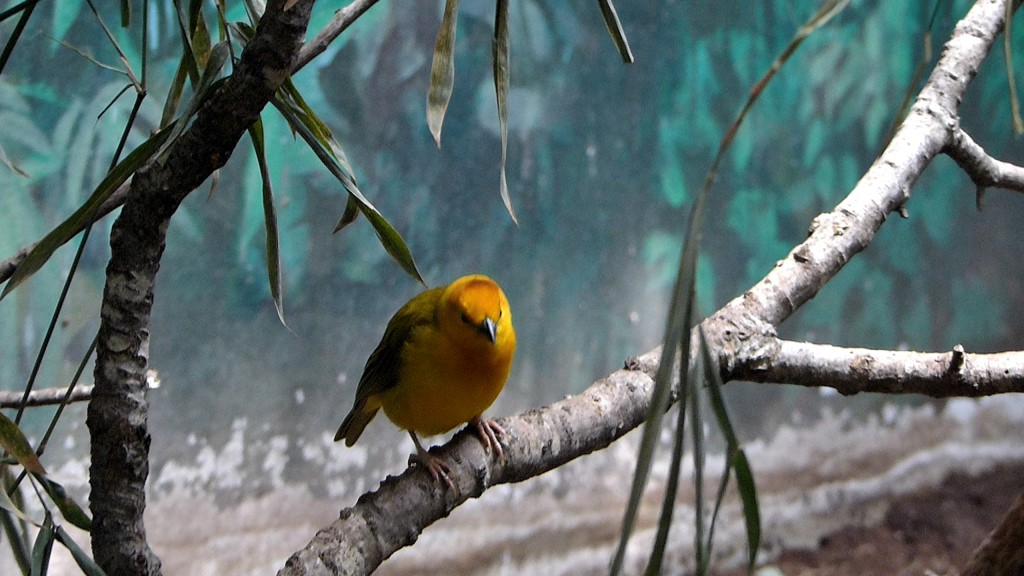
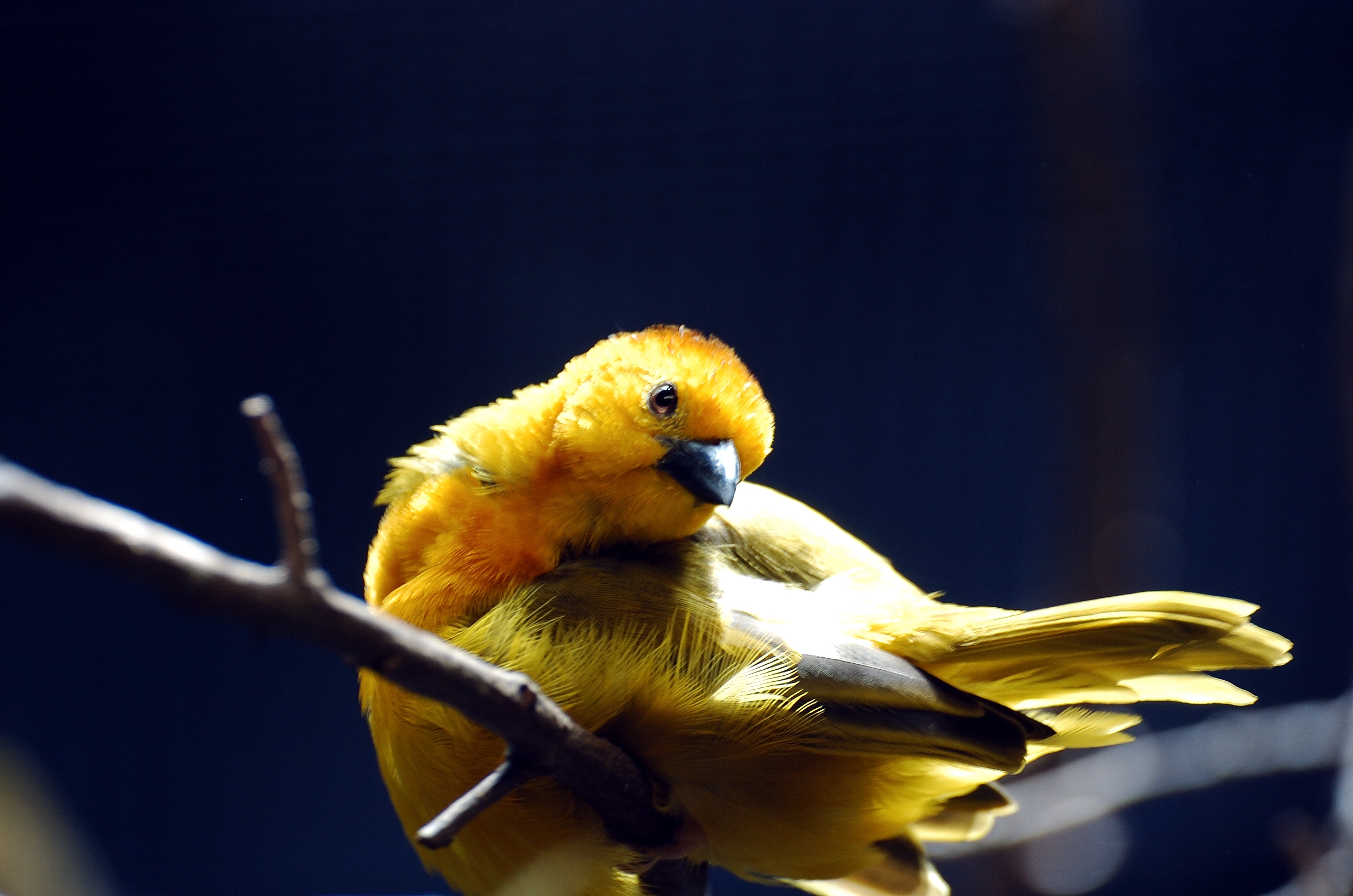
Taveta Weaver (Ploceus castaneiceps) Houston Zoo by Lee
Like a crane or a swallow, so did I chatter: I did mourn as a dove: mine eyes fail with looking upward: O LORD, I am oppressed; undertake for me. (Isaiah 38:14 KJV)
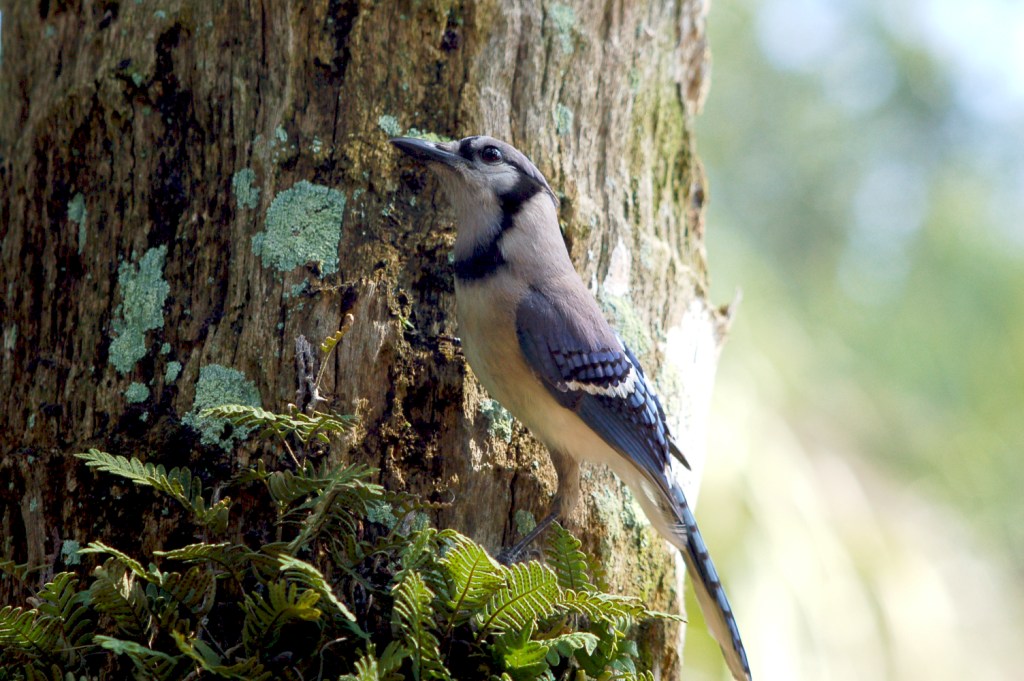
Blue Jay (Cyanocitta cristata) at Bok Tower By Dan’sPix
More Robbers
The Crow and the Blue Jay.
The Burgess Bird Book For Children
*
Listen to the story read.
CHAPTER 17. More Robbers.
By the sounds of rejoicing among the feathered folks of the Old Orchard Johnny Chuck knew that it was quite safe for him to come out. He was eager to tell Skimmer the Tree Swallow how glad he was that Mr. Blacksnake had been driven away before he could get Skimmer’s eggs. As he poked his head out of his doorway he became aware that something was still wrong in the Old Orchard. Into the glad chorus there broke a note of distress and sorrow. Johnny instantly recognized the voices of Welcome Robin and Mrs. Robin. There is not one among his feathered neighbors who can so express worry and sorrow as can the Robins.
Johnny was just in time to see all the birds hurrying over to that part of the Old Orchard where the Robins had built their home. The rejoicing suddenly gave way to cries of indignation and anger, and Johnny caught the words, “Robber! Thief! Wretch!” It appeared that there was just as much excitement over there as there had been when Mr. Blacksnake had been discovered trying to rob Skimmer and Mrs. Skimmer. It couldn’t be Mr. Blacksnake again, because Farmer Brown’s boy had chased him in quite another direction.
“What is it now?” asked Johnny of Skimmer, who was still excitedly discussing with Mrs. Skimmer their recent fright.
“I don’t know, but I’m going to find out,” replied Skimmer and darted away.
Johnny Chuck waited patiently. The excitement among the birds seemed to increase, and the chattering and angry cries grew louder. Only the voices of Welcome and Mrs. Robin were not angry. They were mournful, as if Welcome and Mrs. Robin were heartbroken. Presently Skimmer came back to tell Mrs. Skimmer the news.
“The Robins have lost their eggs!” he cried excitedly. “All four have been broken and eaten. Mrs. Robin left them to come over here to help drive away Mr. Blacksnake, and while she was here some one ate those eggs. Nobody knows who it could have been, because all the birds of the Old Orchard were over here at that time. It might leave been Chatterer the Red Squirrel, or it might have been Sammy Jay, or it might have been Creaker the Grackle, or it might have been Blacky the Crow. Whoever it was just took that chance to sneak over there and rob that nest when there was no one to see him.”
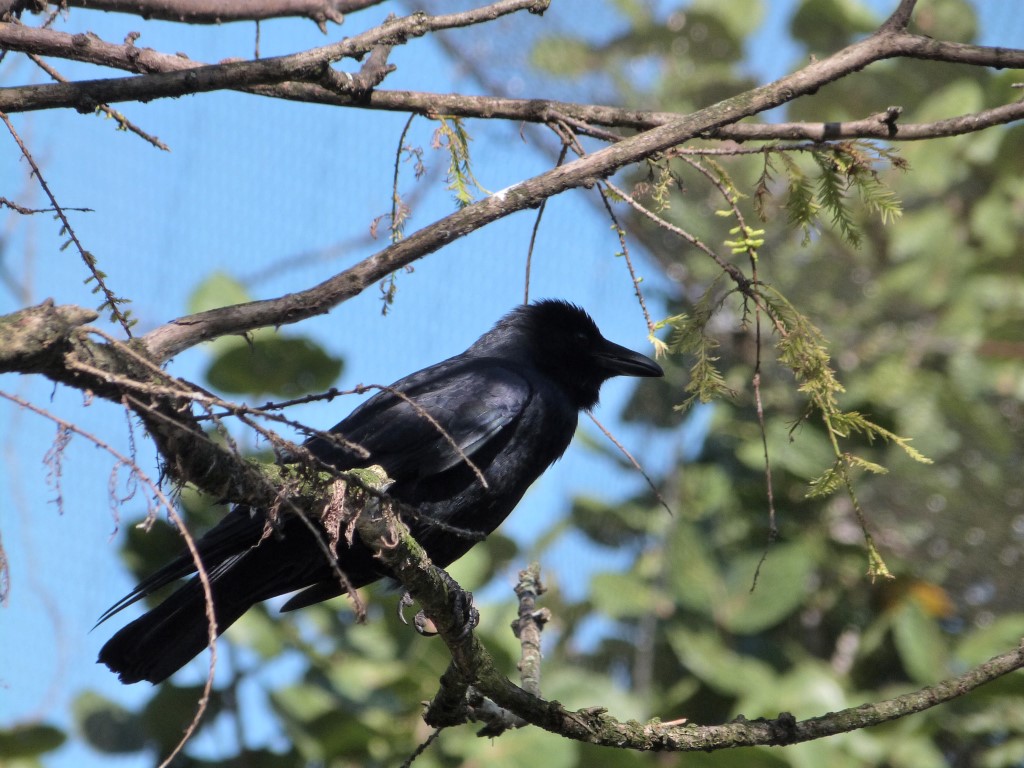
Crow at Flamingo Gardens by Lee
Just then from over towards the Green Forest sounded a mocking “Caw, caw, caw!” Instantly the noise in the Old Orchard ceased for a moment. Then it broke out afresh. There wasn’t a doubt now in any one’s mind. Blacky the Crow was the robber. How those tongues did go! There was nothing too bad to say about Blacky. And such dreadful things as those birds promised to do to Blacky the Crow if ever they should catch him in the Old Orchard.
“Caw, caw, caw!” shouted Blacky from the distance, and his voice sounded very much as if he thought he had done something very smart. It was quite clear that at least he was not sorry for what he had done.
All the birds were so excited and so angry, as they gathered around Welcome and Mrs. Robin trying to comfort them, that it was some time before their indignation meeting broke up and they returned to their own homes and duties. Almost at once there was another cry of distress. Mr. and Mrs. Chebec had been robbed of their eggs! While they had been attending the indignation meeting at the home of the Robins, a thief had taken the chance to steal their eggs and get away.
Of course right away all the birds hurried over to sympathize with the Chebecs and to repeat against the unknown thief all the threats they had made against Blacky the Crow. They knew it couldn’t have been Blacky this time because they had heard Blacky cawing over on the edge of the Green Forest. In the midst of the excited discussion as to who the thief was, Weaver the Orchard Oriole spied a blue and white feather on the ground just below Chebec’s nest.
“It was Sammy Jay! There is no doubt about it, it was Sammy Jay!” he cried.
At the sight of that telltale feather all the birds knew that Weaver was right, and led by Scrapper the Kingbird they began a noisy search of the Old Orchard for the sly robber. But Sammy wasn’t to be found, and they soon gave up the search, none daring to stay longer away from his own home lest something should happen there. Welcome and Mrs. Robin continued to cry mournfully, but little Mr. and Mrs. Chebec bore their trouble almost silently.
“There is one thing about it,” said Mr. Chebec to his sorrowful little wife, “that egg of Sally Sly’s went with the rest, and we won’t have to raise that bothersome orphan.”
“That’s true,” said she. “There is no use crying over what can’t be helped. It is a waste of time to sit around crying. Come on, Chebec, let’s look for a place to build another nest. Next time I won’t leave the eggs unwatched for a minute.”
Meanwhile Jenny Wren’s tongue was fairly flying as she chattered to Peter Rabbit, who had come up in the midst of the excitement and of course had to know all about it.
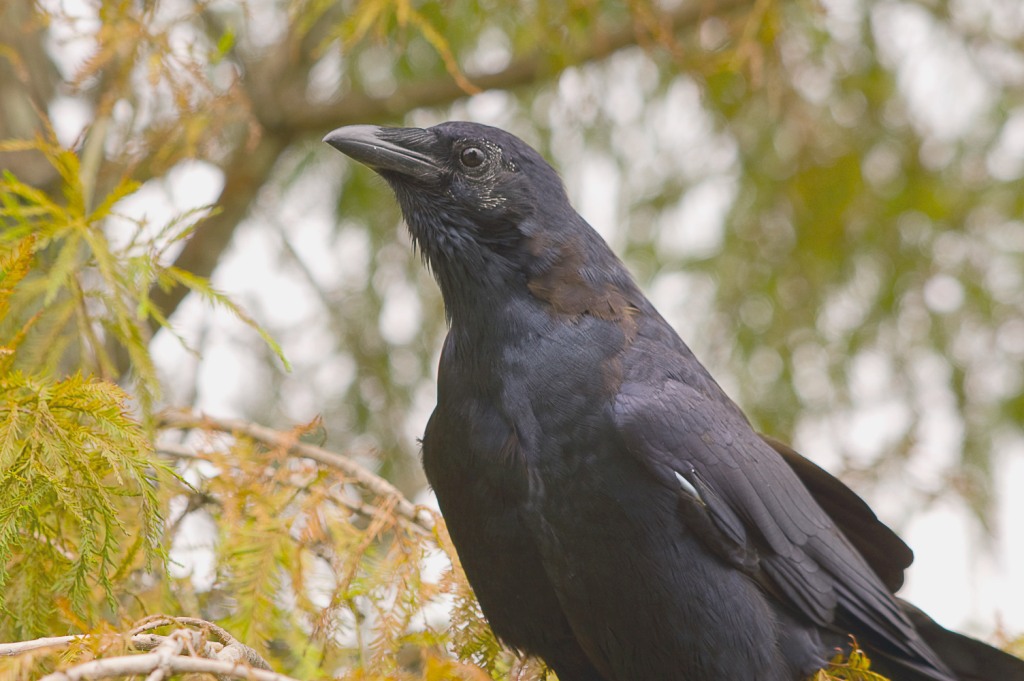
Fish Crow (Corvus ossifragus) at Lake Morton By Dan’sPix
“Blacky the Crow has a heart as black as his coat, and his cousin Sammy Jay isn’t much better,” declared Jenny. “They belong to a family of robbers.”
“Wait a minute,” cried Peter. “Do you mean to say that Blacky the Crow and Sammy Jay are cousins?”
“For goodness’ sake, Peter!” exclaimed Jenny, “do you mean to say that you don’t know that? Of course they’re cousins. They don’t look much alike, but they belong to the same family. I would expect almost anything bad of any one as black as Blacky the Crow. But how such a handsome fellow as Sammy Jay can do such dreadful things I don’t understand. He isn’t as bad as Blacky, because he does do a lot of good. He destroys a lot of caterpillars and other pests.
“There are no sharper eyes anywhere than those of Sammy Jay, and I’ll have to say this for him, that whenever he discovers any danger he always gives us warning. He has saved the lives of a good many of us feathered folks in this way. If it wasn’t for this habit of stealing our eggs I wouldn’t have a word to say against him, but at that, he isn’t as bad as Blacky the Crow. They say Blacky does some good by destroying white grubs and some other harmful pests, but he’s a regular cannibal, for he is just as fond of young birds as he is of eggs, and the harm he does in this way is more than the good he does in other ways. He’s bold, black, and bad, if you ask me.”
Remembering her household duties, Jenny Wren disappeared inside her house in her usual abrupt fashion. Peter hung around for a while but finding no one who would take the time to talk to him he suddenly decided to go over to the Green Forest to look for some of his friends there. He had gone but a little way in the Green Forest when he caught a glimpse of a blue form stealing away through the trees. He knew it in an instant, for there is no one with such a coat but Sammy Jay. Peter glanced up in the tree from which Sammy had flown and there he saw a nest in a crotch halfway up. “I wonder,” thought Peter, “if Sammy was stealing eggs there, or if that is his own nest.” Then he started after Sammy as fast as he could go, lipperty-lipperty-lip. As he ran he happened to look back and was just in time to see Mrs. Jay slip on to the nest. Then Peter knew that he had discovered Sammy’s home. He chuckled as he ran.
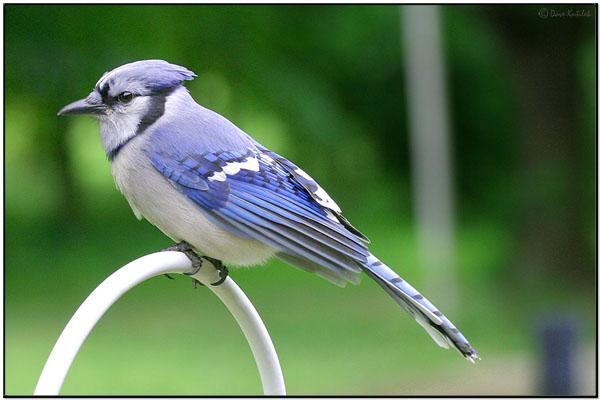
Blue Jay (Cyanocitta cristata) by Daves BirdingPix
“I’ve found out your secret, Sammy Jay!” cried Peter when at last he caught up with Sammy.
“Then I hope you’ll be gentleman enough to keep it,” grumbled Sammy, looking not at all pleased.
“Certainly,” replied Peter with dignity. “I wouldn’t think of telling any one. My, what a handsome fellow you are, Sammy.”
Sammy looked pleased. He is a little bit vain, is Sammy Jay. There is no denying that he is handsome. He is just a bit bigger than Welcome Robin. His back is grayish-blue. His tail is a bright blue crossed with little black bars and edged with white. His wings are blue with white and black bars. His throat and breast are a soft grayish-white, and he wears a collar of black. On his head he wears a pointed cap, a very convenient cap, for at times he draws it down so that it is not pointed at all.
“Why did you steal Mrs. Chebec’s eggs?” demanded Peter abruptly.
Sammy didn’t look the least bit put out. “Because I like eggs,” he replied promptly. “If people will leave their eggs unguarded they must expect to lose them. How did you know I took those eggs?”
“Never mind, Sammy; never mind. A little bird told me,” retorted Peter mischievously.
Sammy opened his mouth for a sharp reply, but instead he uttered a cry of warning. “Run, Peter! Run! Here comes Reddy Fox!” he cried.
Peter dived headlong under a great pile of brush. There he was quite safe. While he waited for Reddy Fox to go away he thought about Sammy Jay. “It’s funny,” he mused, “how so much good and so much bad can be mixed together. Sammy Jay stole Chebec’s eggs, and then he saved my life. I just know he would have done as much for Mr. and Mrs. Chebec, or for any other feathered neighbor. He can only steal eggs for a little while in the spring. I guess on the whole he does more good than harm. I’m going to think so anyway.”
Peter was quite right. Sammy Jay does do more good than harm.
*
When they found the feather, a verse comes to mind:
… and be sure your sin will find you out. (Numbers 32:23b NKJV)
*
Why were Welcome Robin and Mrs. Robin upset?
Which bird was the one who destroyed the eggs?
What did their friends try to do to help the Robins?
Should we do that for our friends also?
Who was the next robber?
How did they know it was him?
Both the Crow and the Blue Jay are cousins. Why?
Why did Peter decide that Sammy Blue Jay was okay?
Can we sin just a little and then do lots of good? Does that make it right?
Therefore comfort each other and edify one another, just as you also are doing. (1 Thessalonians 5:11 NKJV)
Then God said, “Let the waters abound with an abundance of living creatures, and let birds fly above the earth across the face of the firmament of the heavens.” (Genesis 1:20 NKJV)
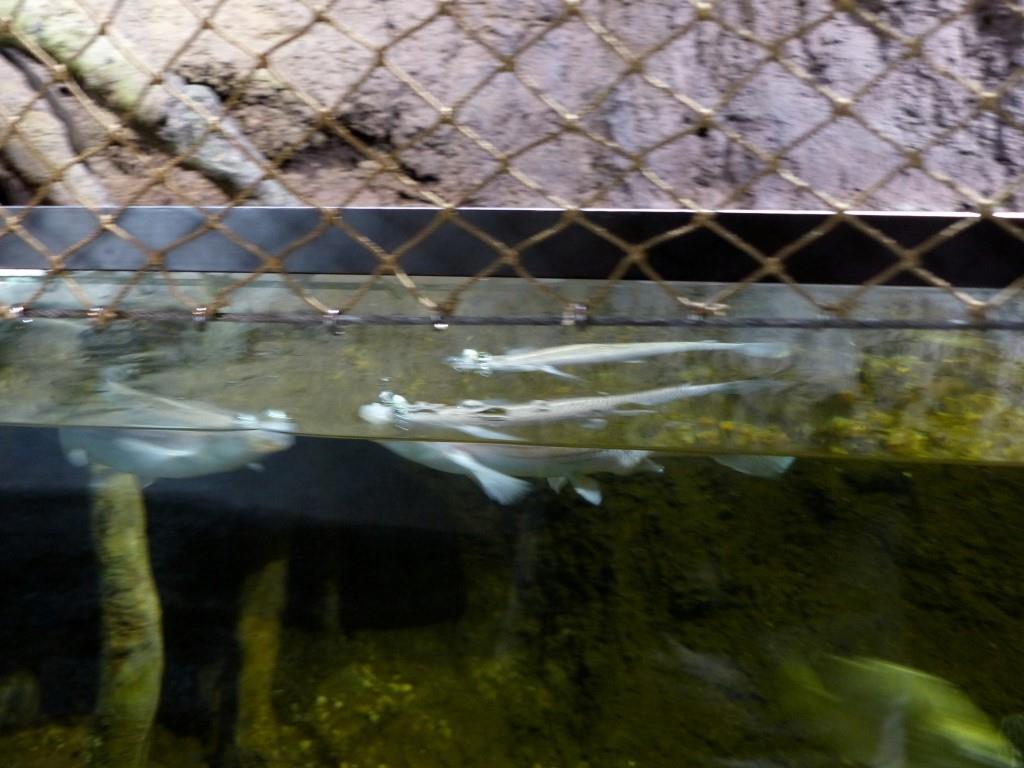
I tried so hard to get a decent photo of the most amazing fish that I’ve ever heard of. Talk about a fantastic Creator. These fish have Four Eyes (actually pupils), thus they are called the Four-eyed Fish or Cuatro Ojos. They were at the Houston Zoo. (again a chain-link fence was in the way)
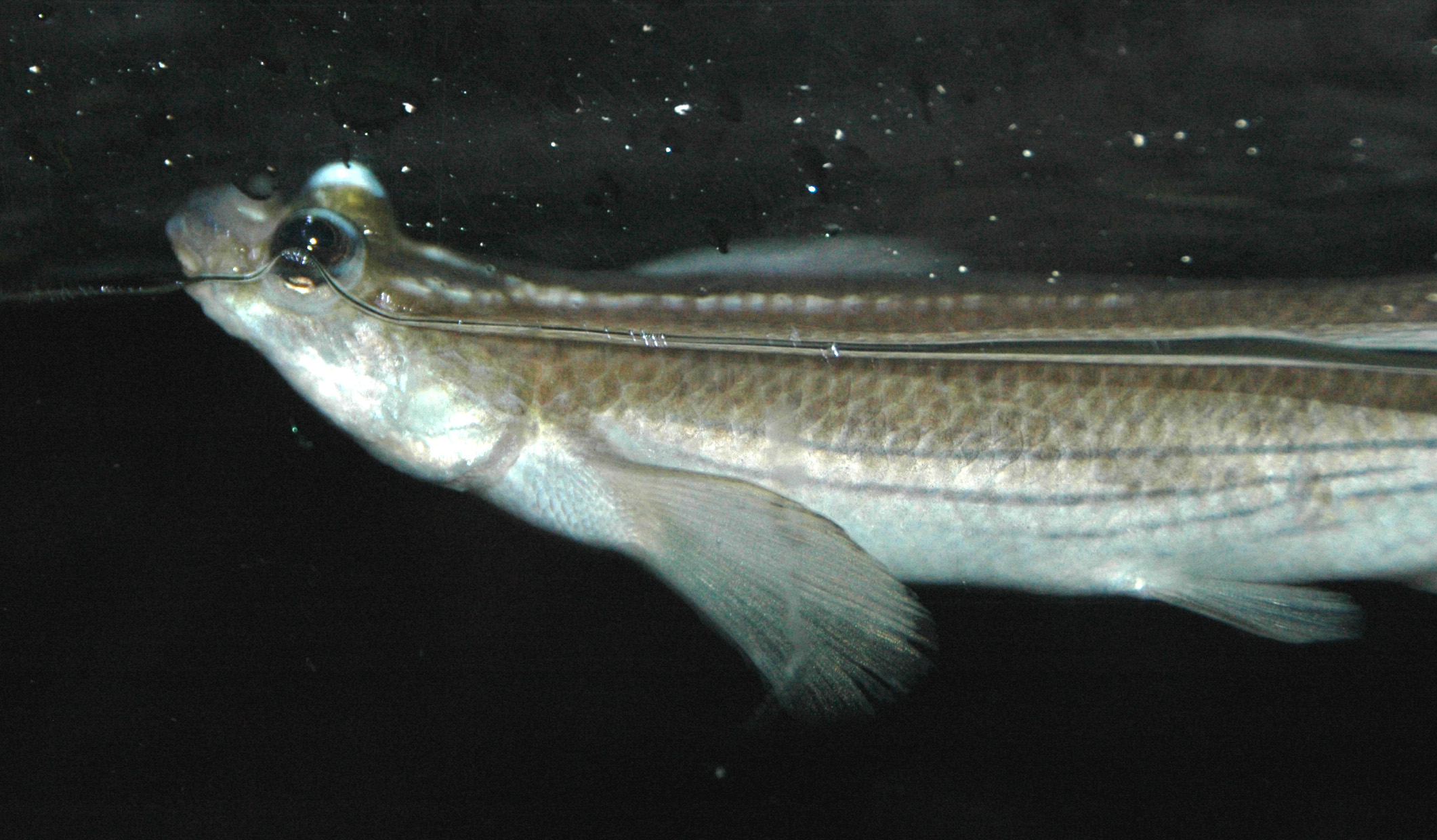
The best article found about these comes from Creation Ministries. “One of the strangest fish in the world is Anableps anableps,commonly called the ‘four-eyed fish’ because of the unique configuration of its eyes. These are large and bulging, like those of a frog, and are located on the top of its head so that it swims with its eyes half in and half out of the water.”
The Four-eyed fish eye. 1.Underwater retina 2.Lens 3. Air pupil 4. Tissue band 5. Iris 6. Underwater pupil 7. Air retina 8. Optic nerve
“Four-eyed fish have only two eyes, but the eyes are specially adapted for their surface-dwelling lifestyle. The eyes are positioned on the top of the head, and the fish floats at the water surface with only the lower half of each eye underwater. The two halves are divided by a band of tissue and the eye has two pupils, connected by part of the iris. The upper half of the eye is adapted for vision in air, the lower half for vision in water.The lens of the eye also changes in thickness top to bottom to account for the difference in the refractive indices of air versus water.”
Just had to share these amazing fish. Trust you find these informative also.
Have you not known? Have you not heard? The everlasting God, the LORD, The Creator of the ends of the earth, Neither faints nor is weary. His understanding is unsearchable. (Isaiah 40:28 NKJV)
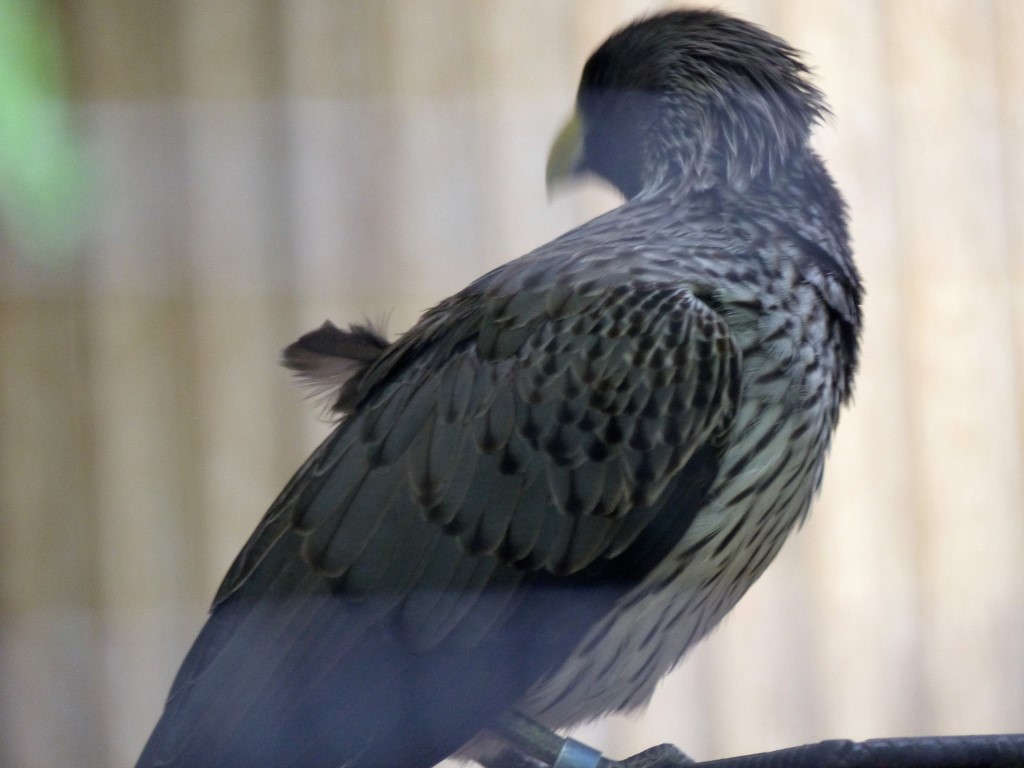
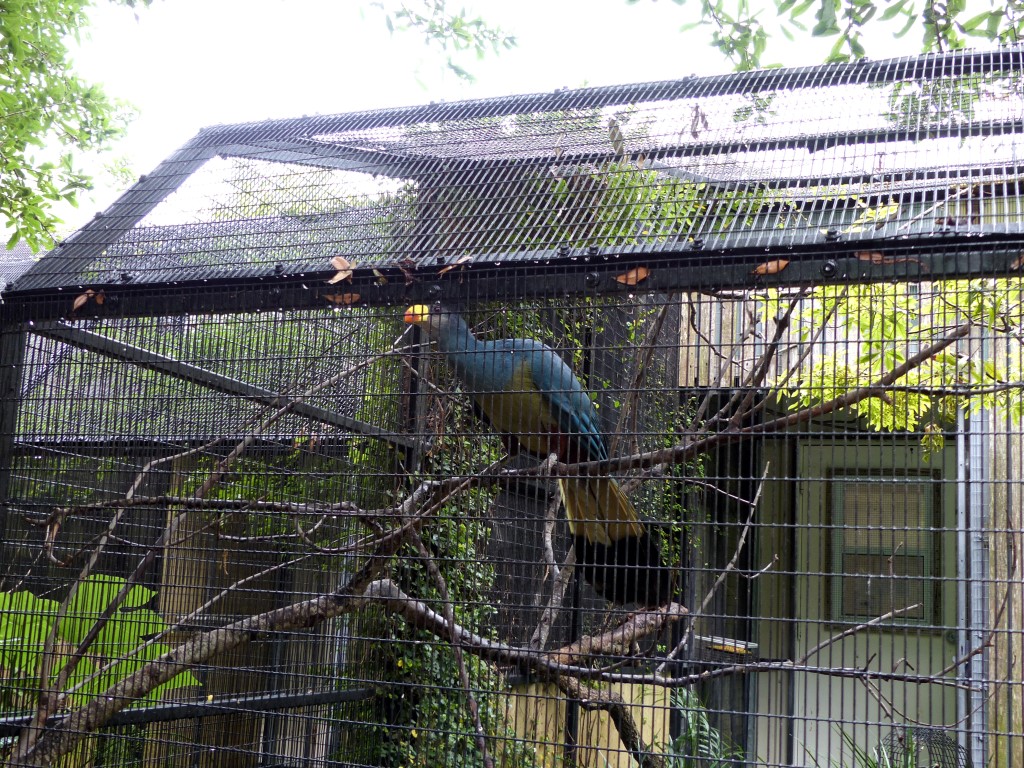
You were shown the Blue-chinned Macaws and five different Turacos in Houston Zoo – Vacation – Part 2. Now to show you some more of the neat birds from the Lord’s Creative Hand.
The next set of birds were outside and most were still damp from the rain.
Grey-winged Trumpeter and Racquet-tailed Rollers Exhibit
*
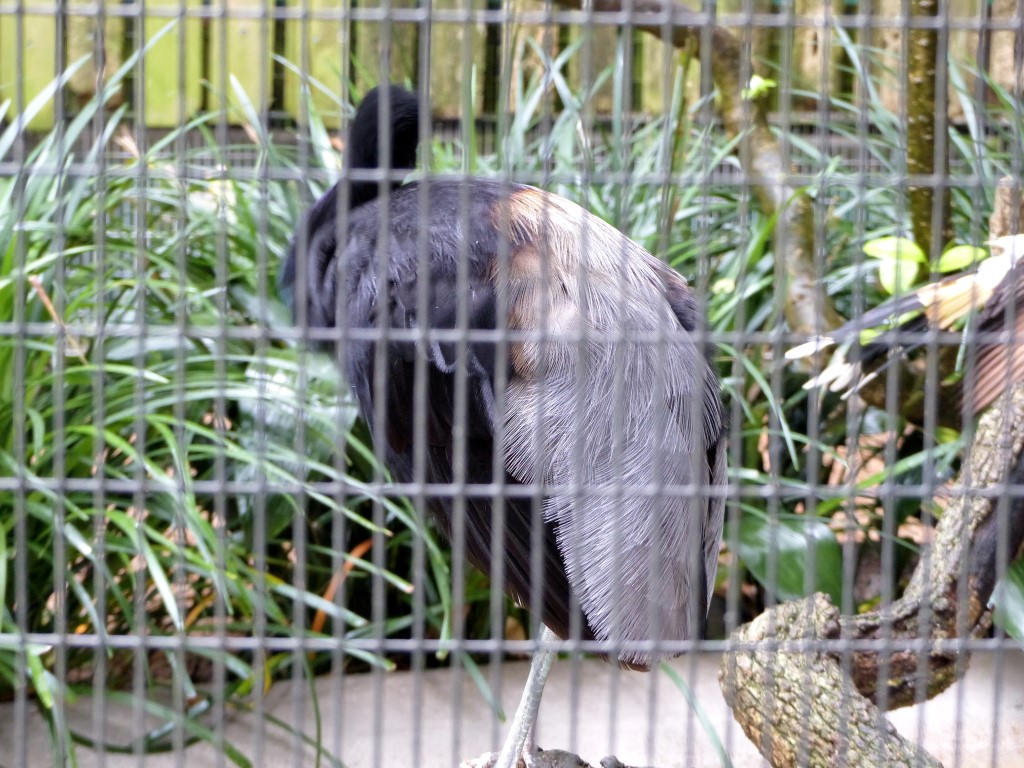
Grey-winged Trumpeter’s Beautiful Feathers Houston Zoo by Lee
*
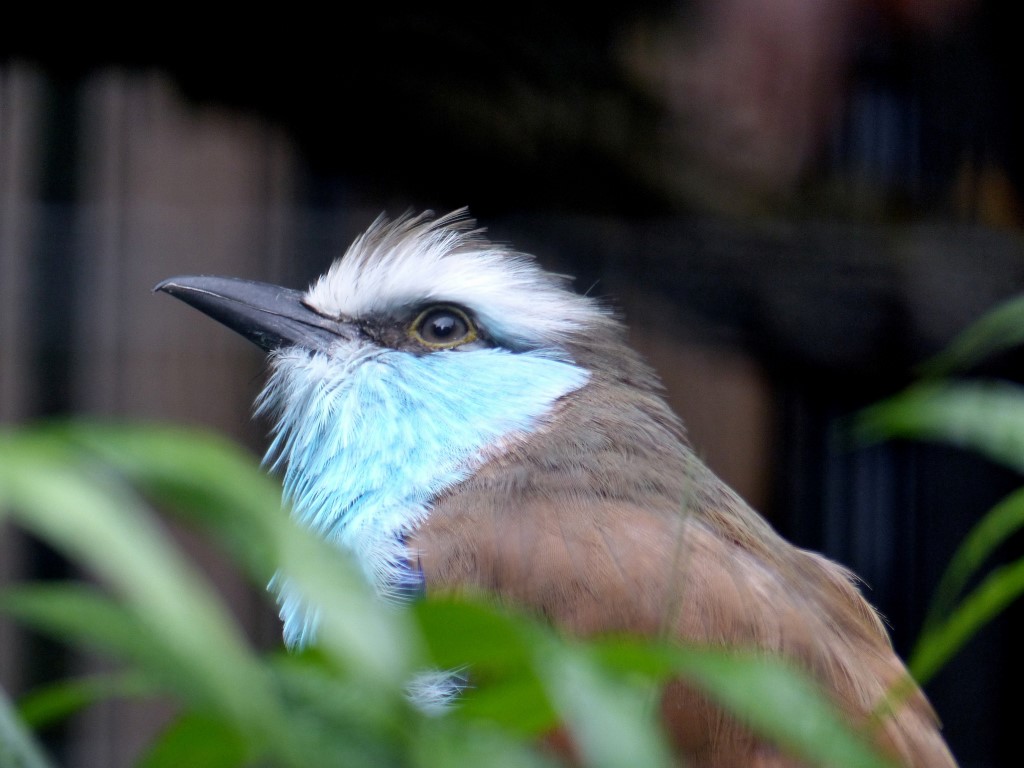
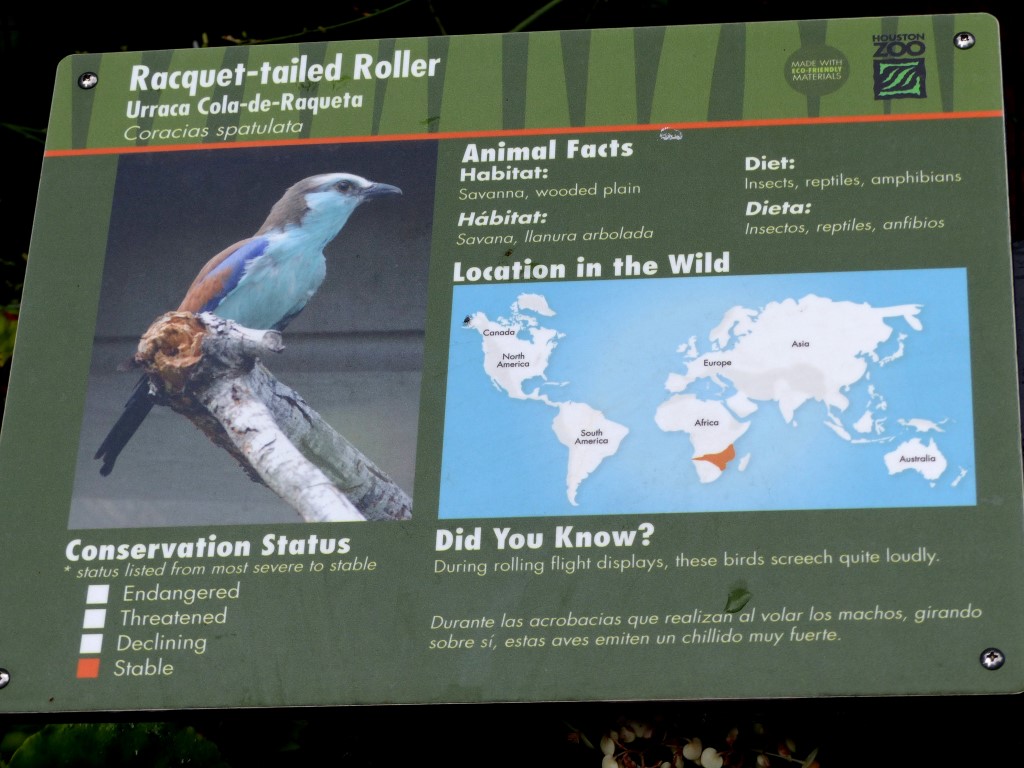
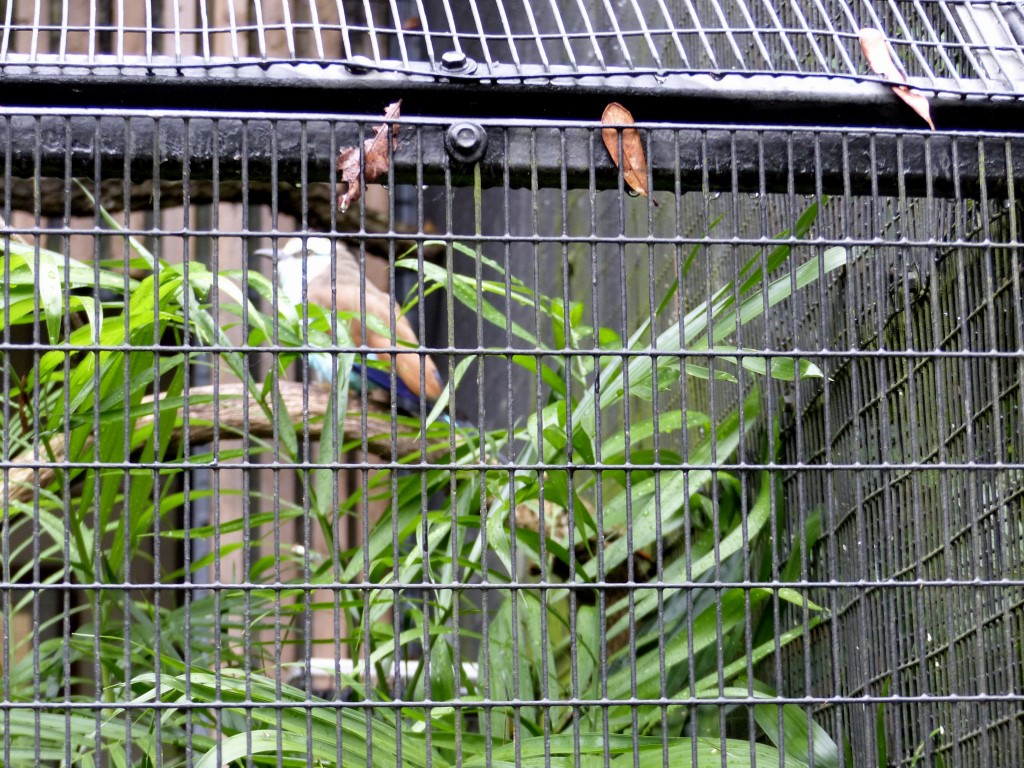
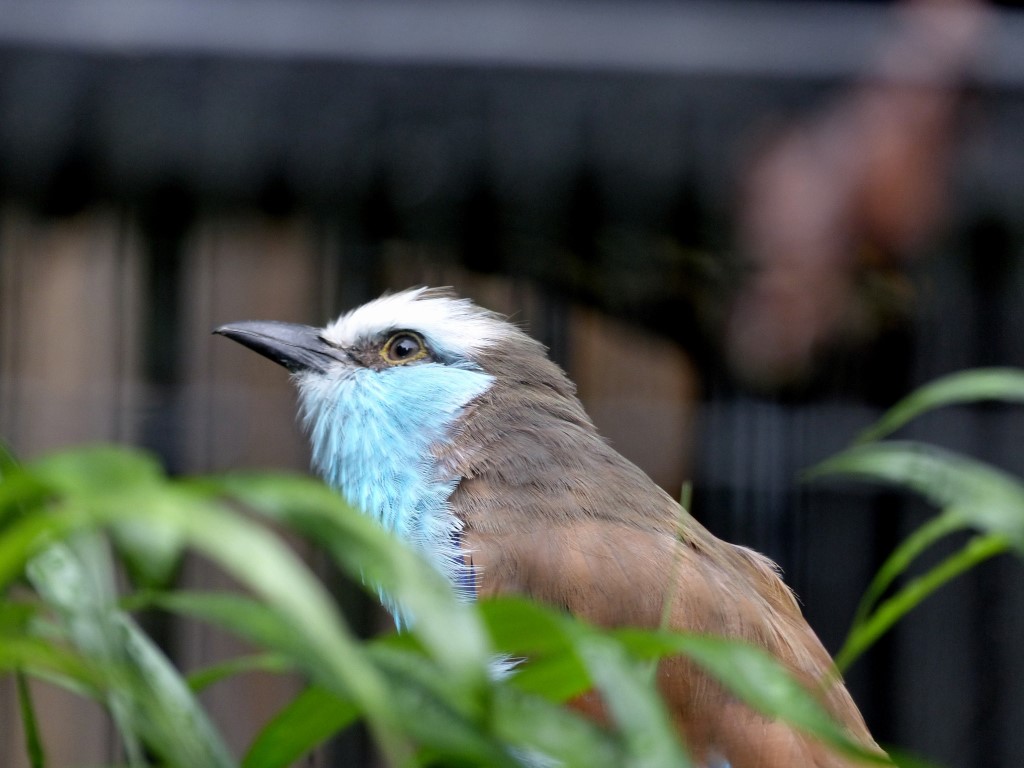
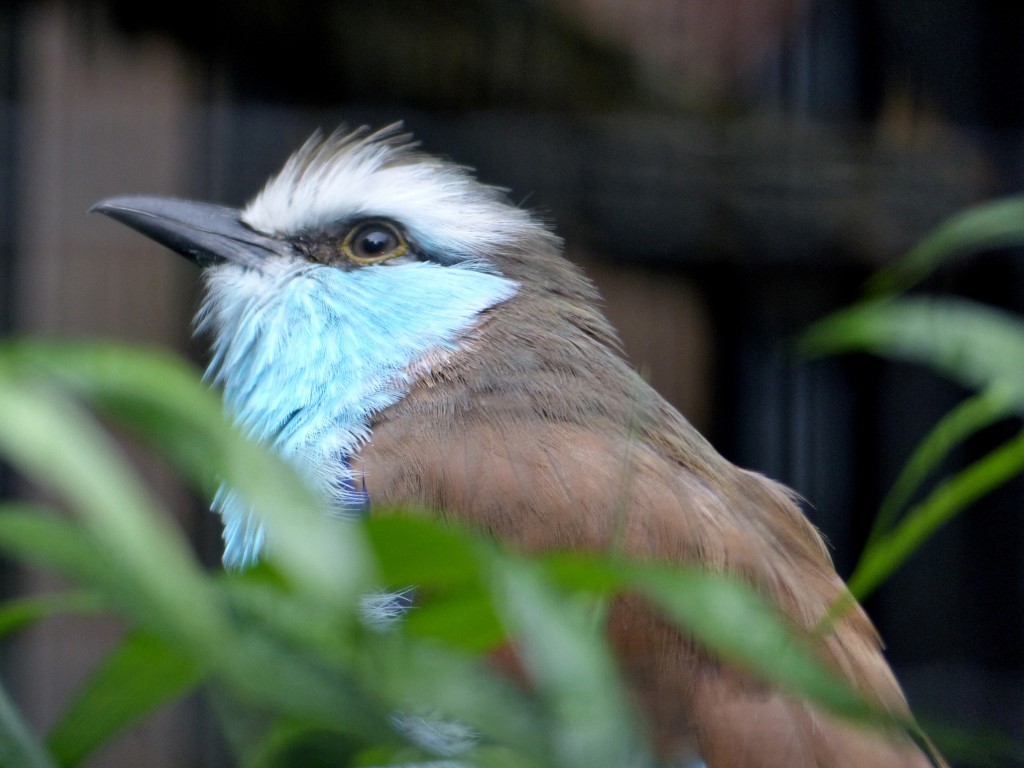
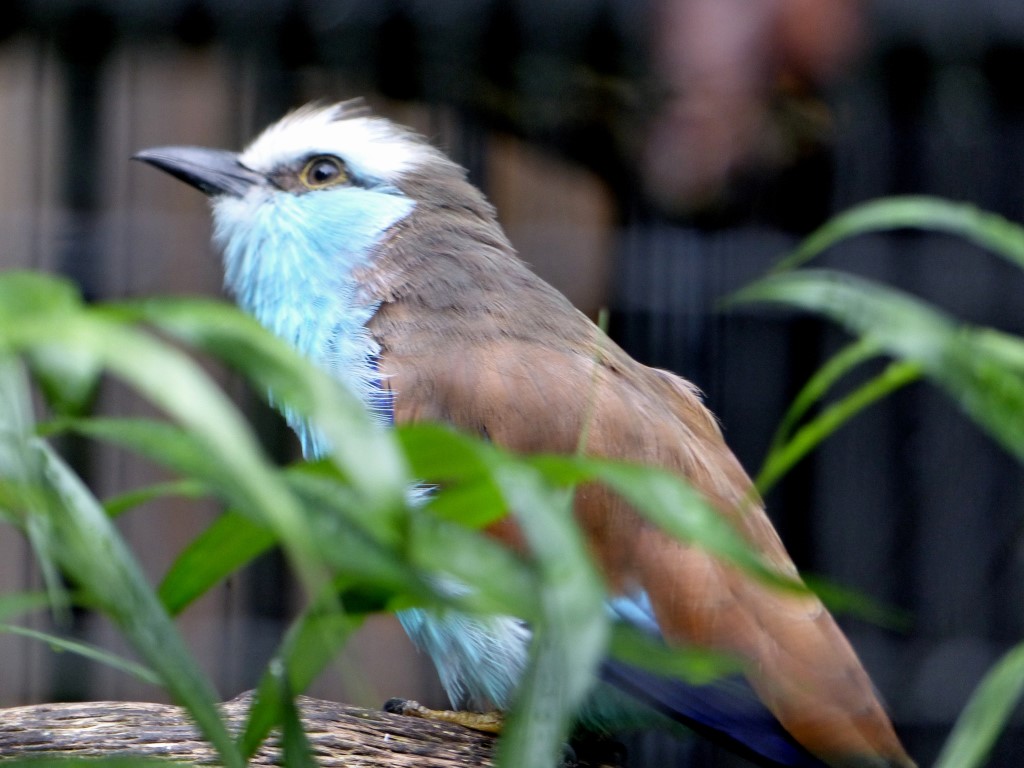
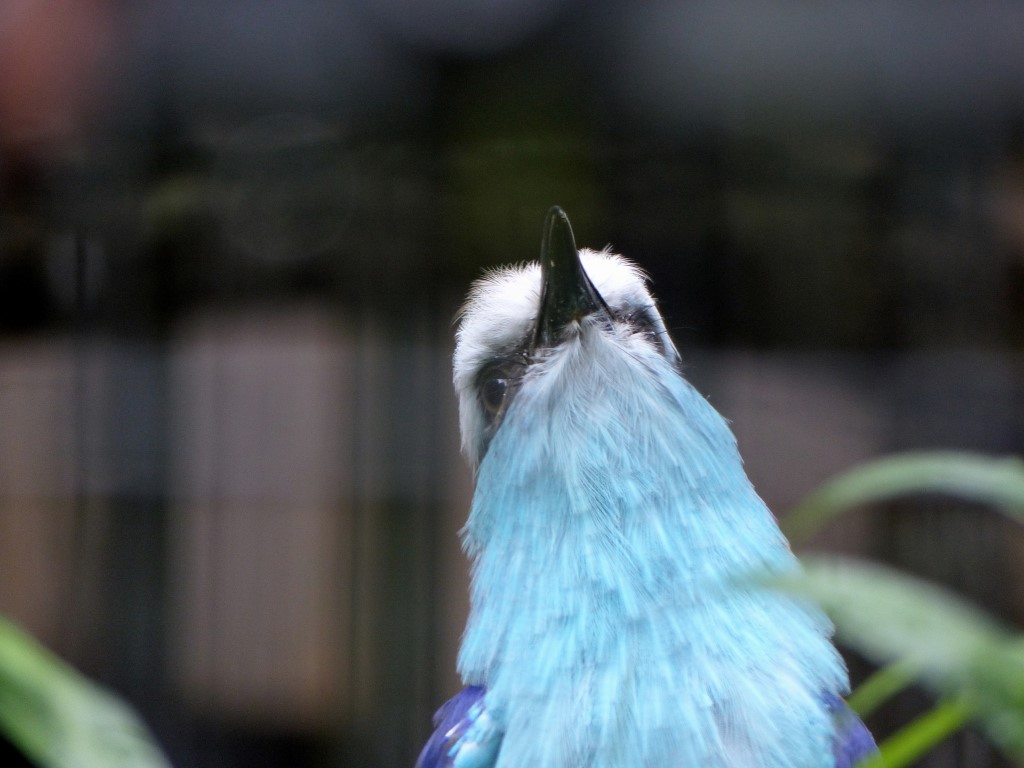
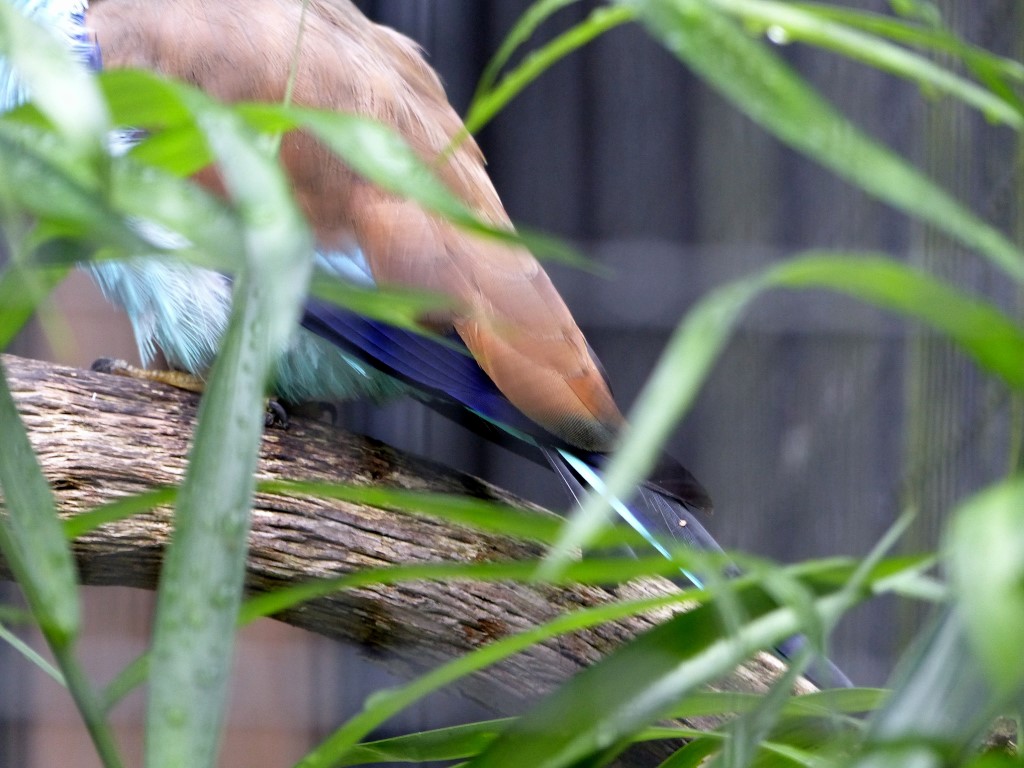
Racket-tailed Roller (Coracias spatulatus) Houston Zoo by Lee
*
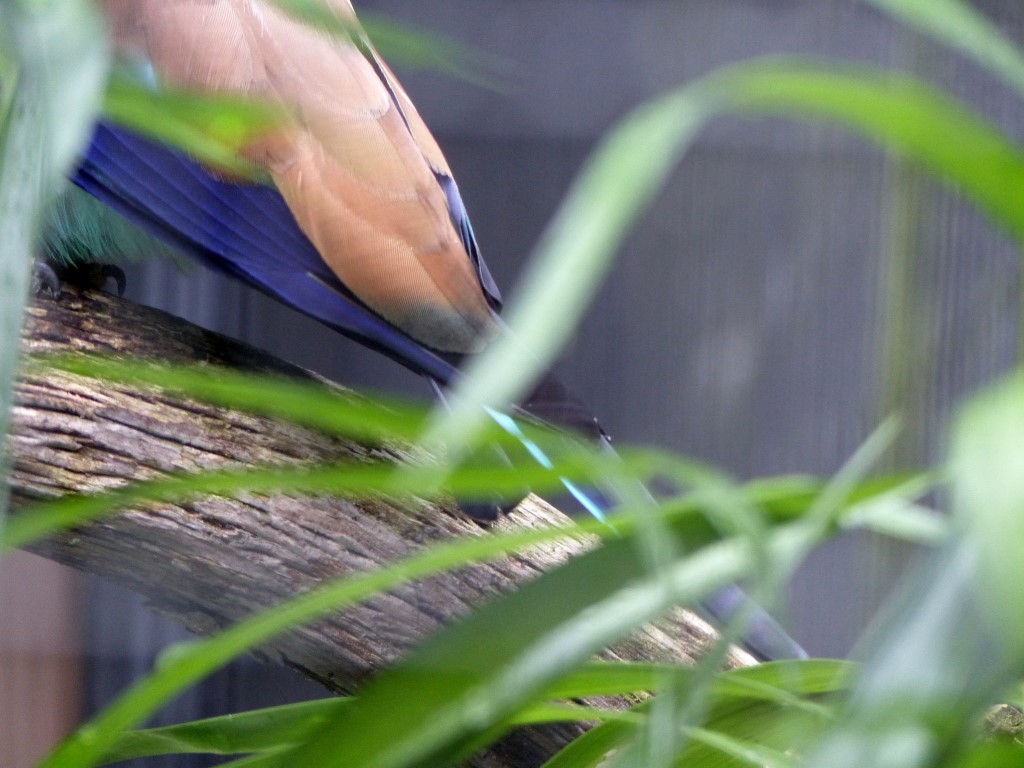
I kept trying to get a photo of the “racket-tail”, but he never really got in the right position. This was a new species to see for me.
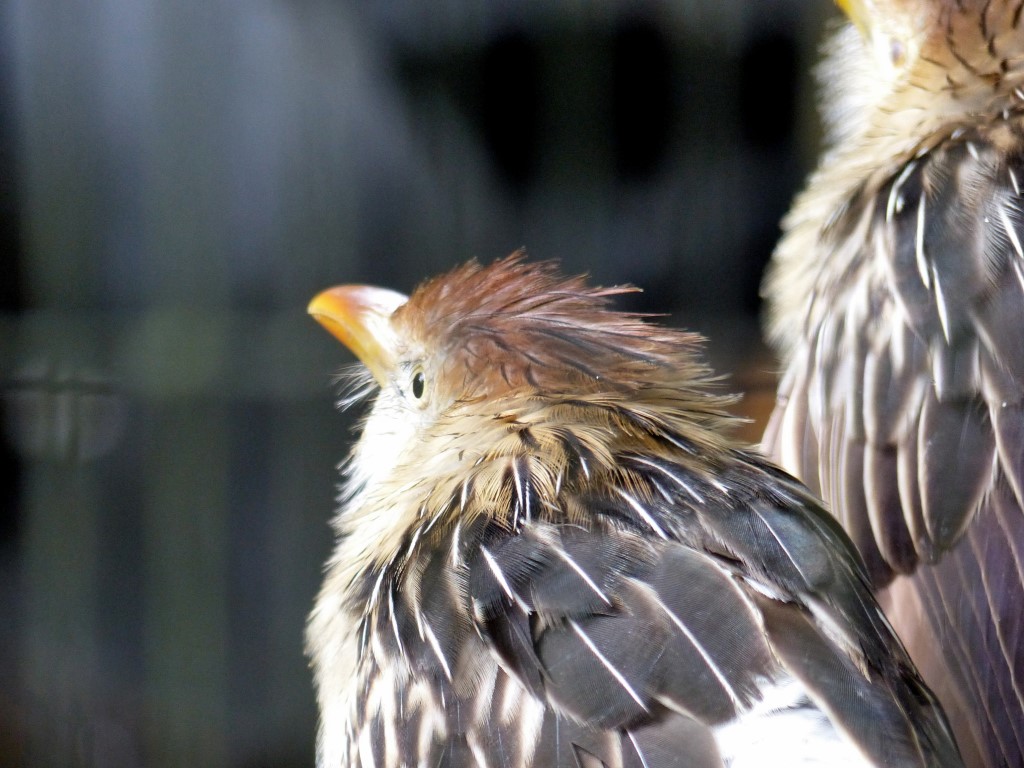
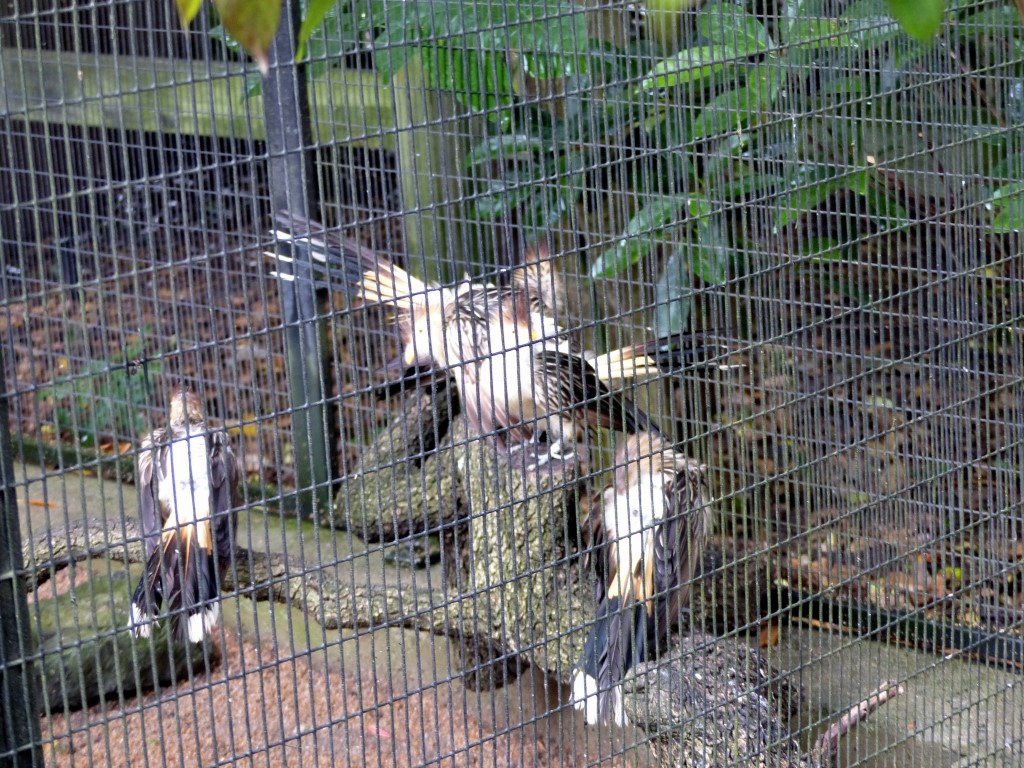
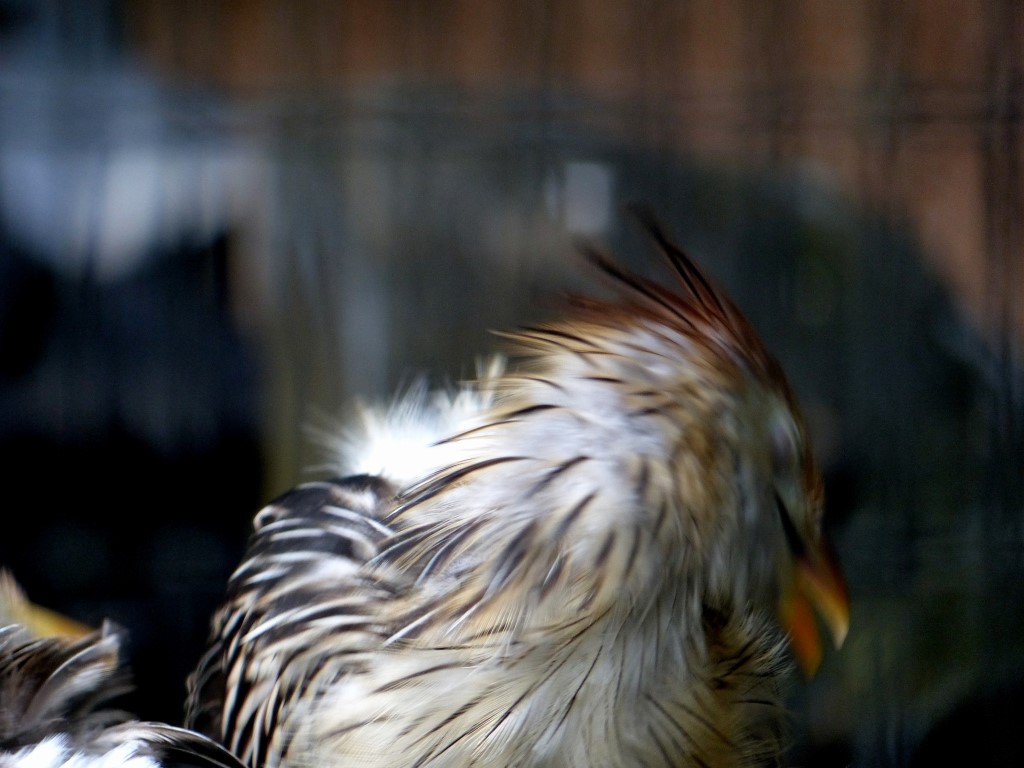
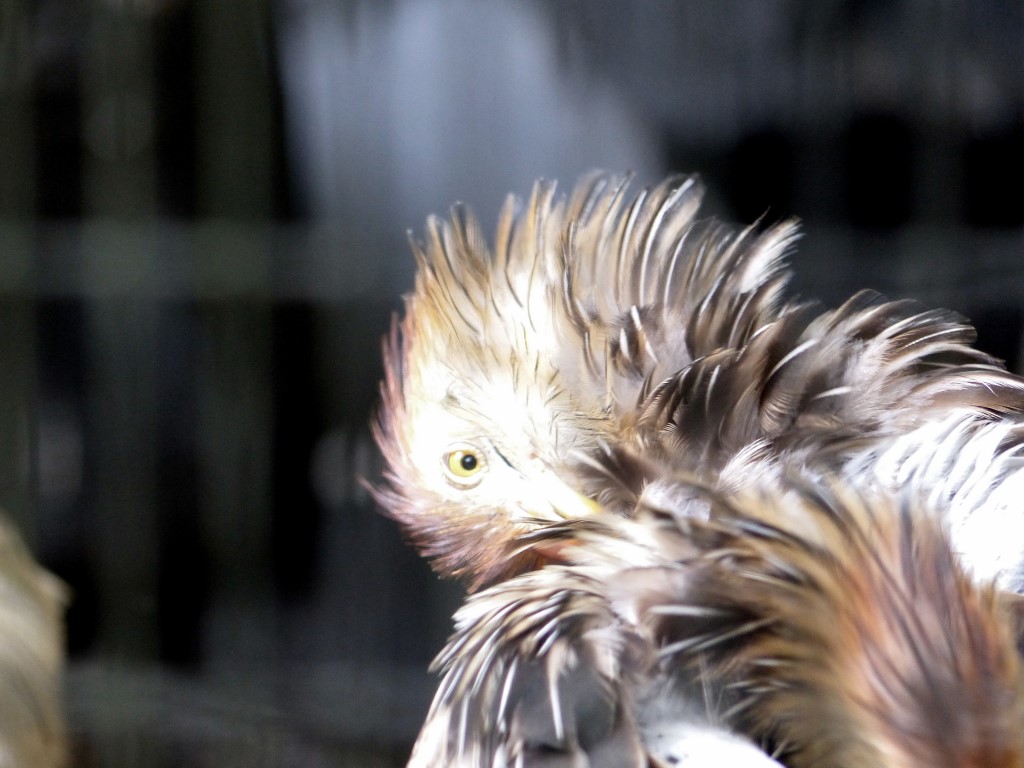
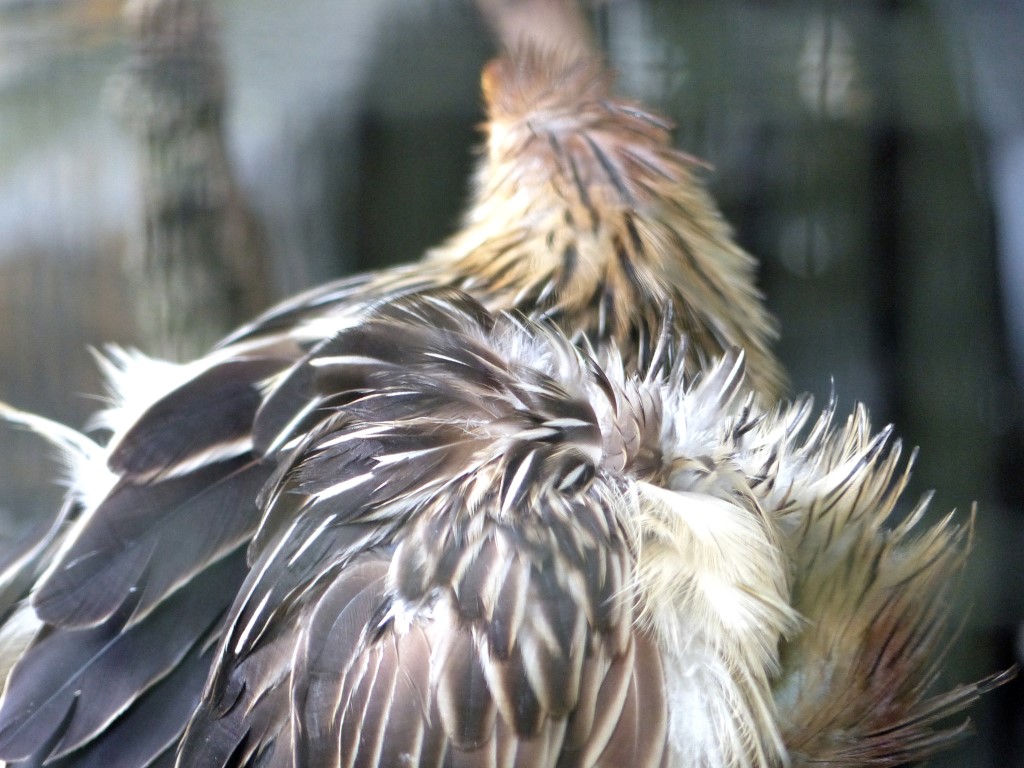
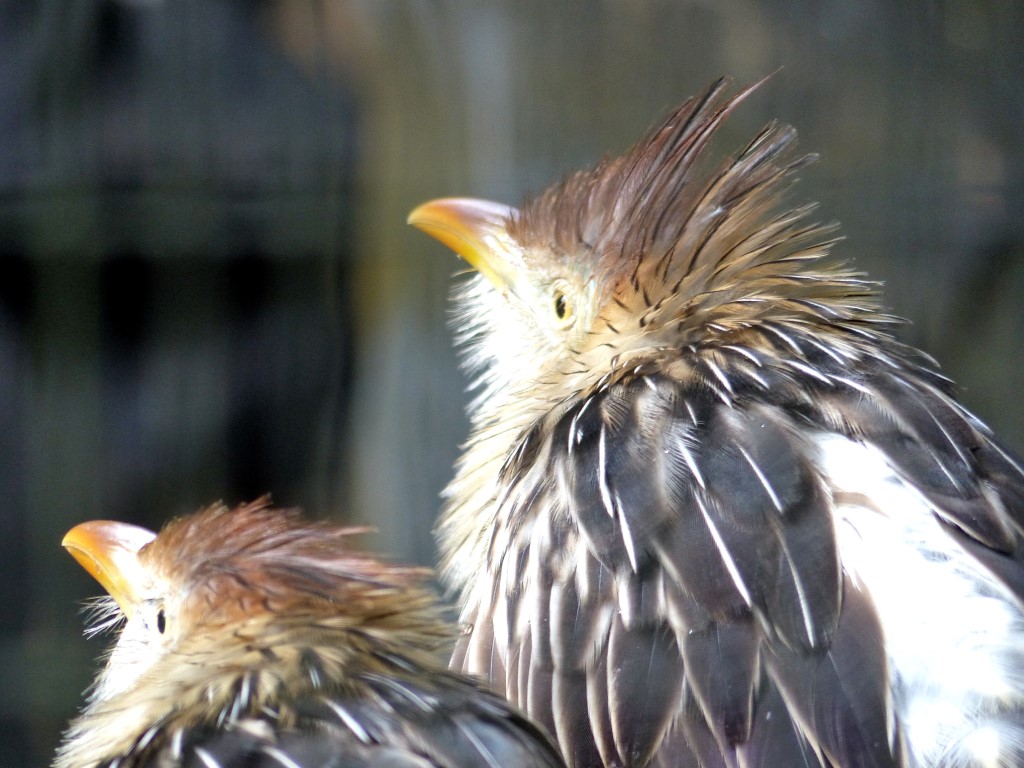
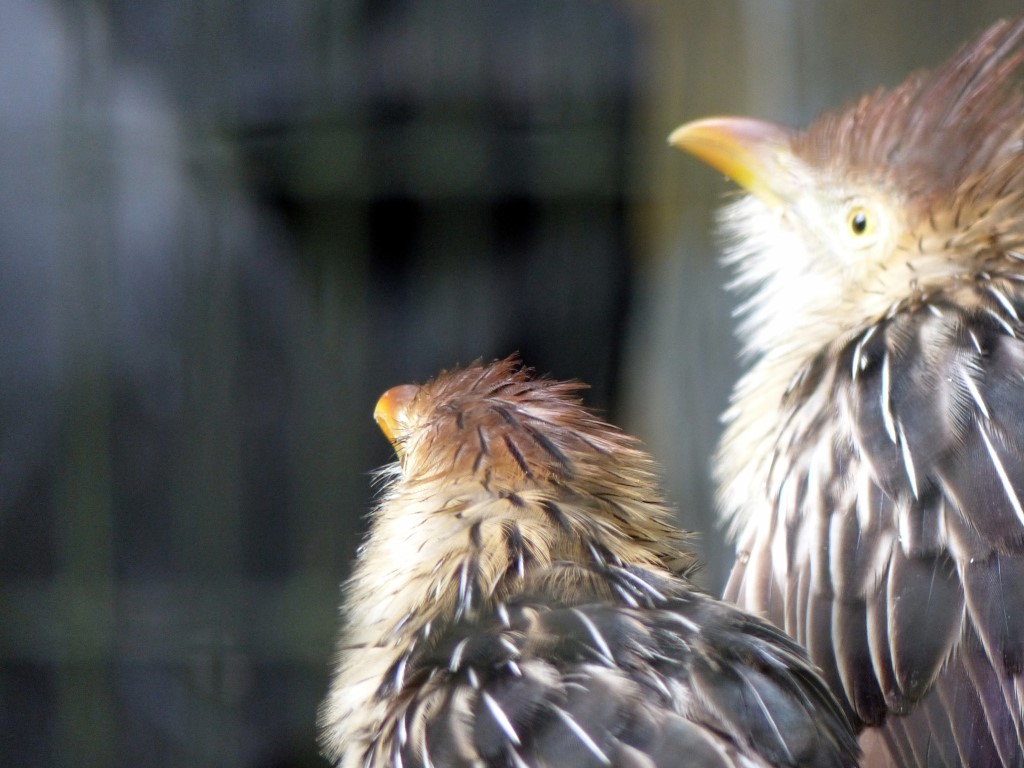
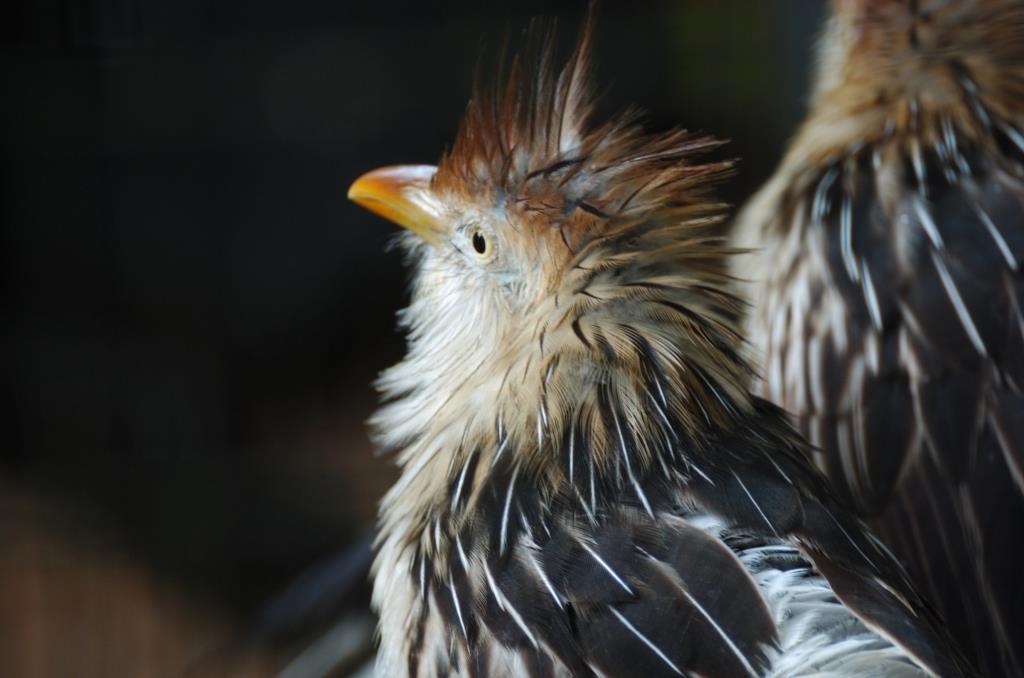
Guira Cuckoo (Guira guira) Houston Zoo 5-6-15 by Lee
*
Chestnut-breasted Malkoha (Phaenicophaeus curvirostris) Houston Zoo 5-6-15 by Lee
We have seen both the Cuckoos and the Malkohas before, but the Cuckoos were closer to us this time.
*
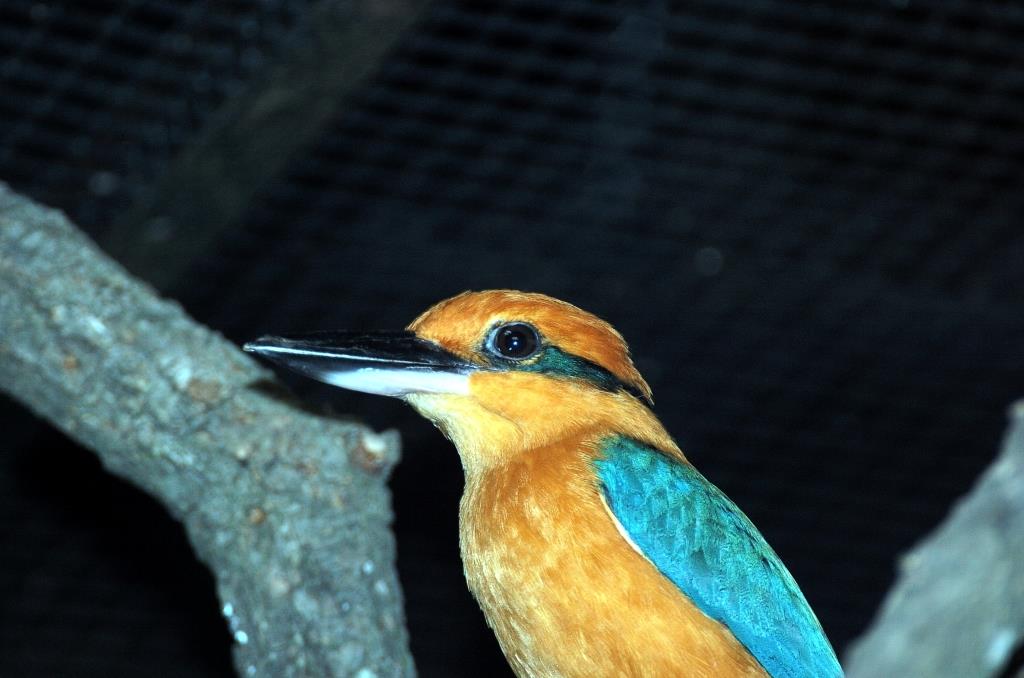
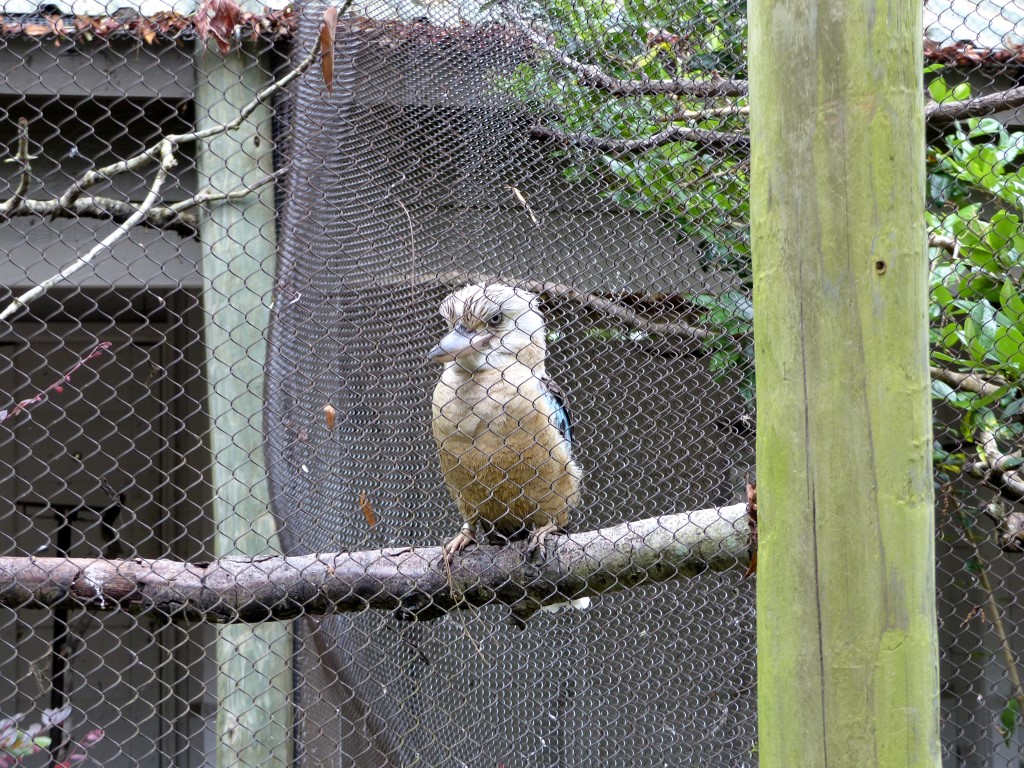
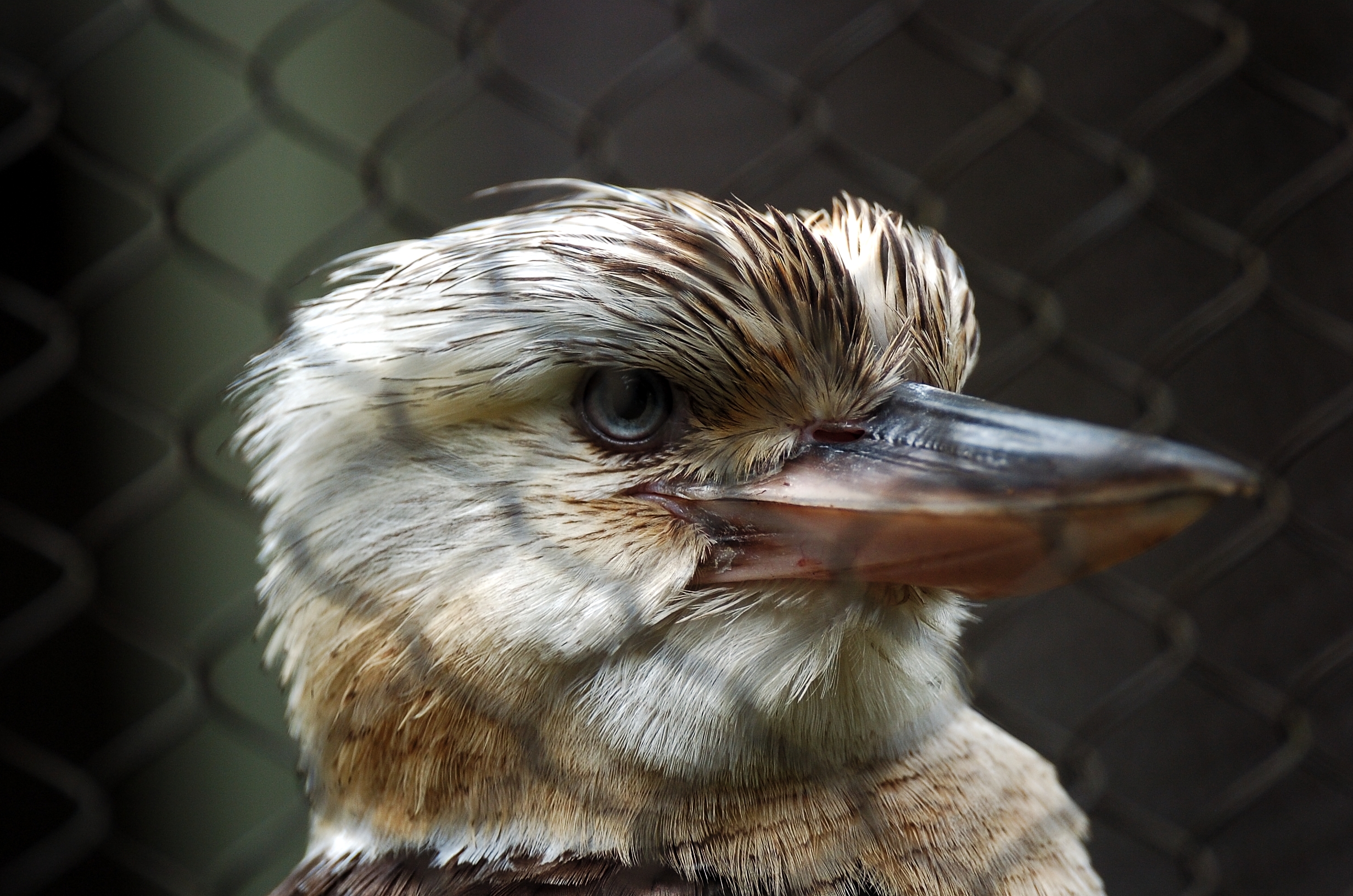
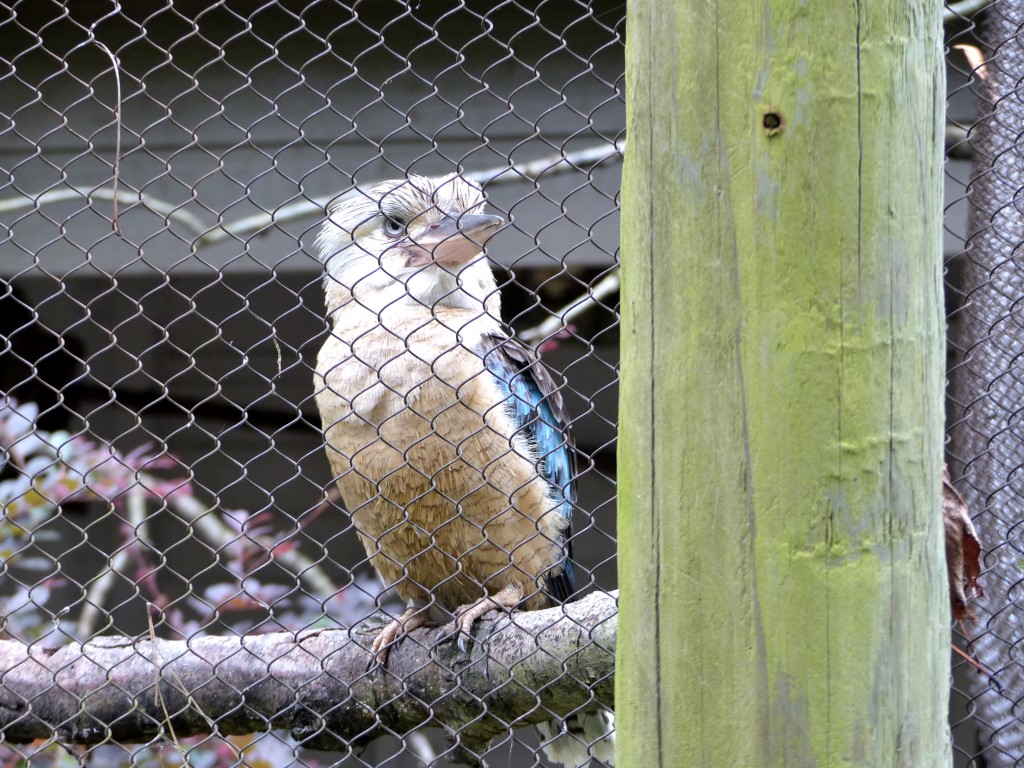
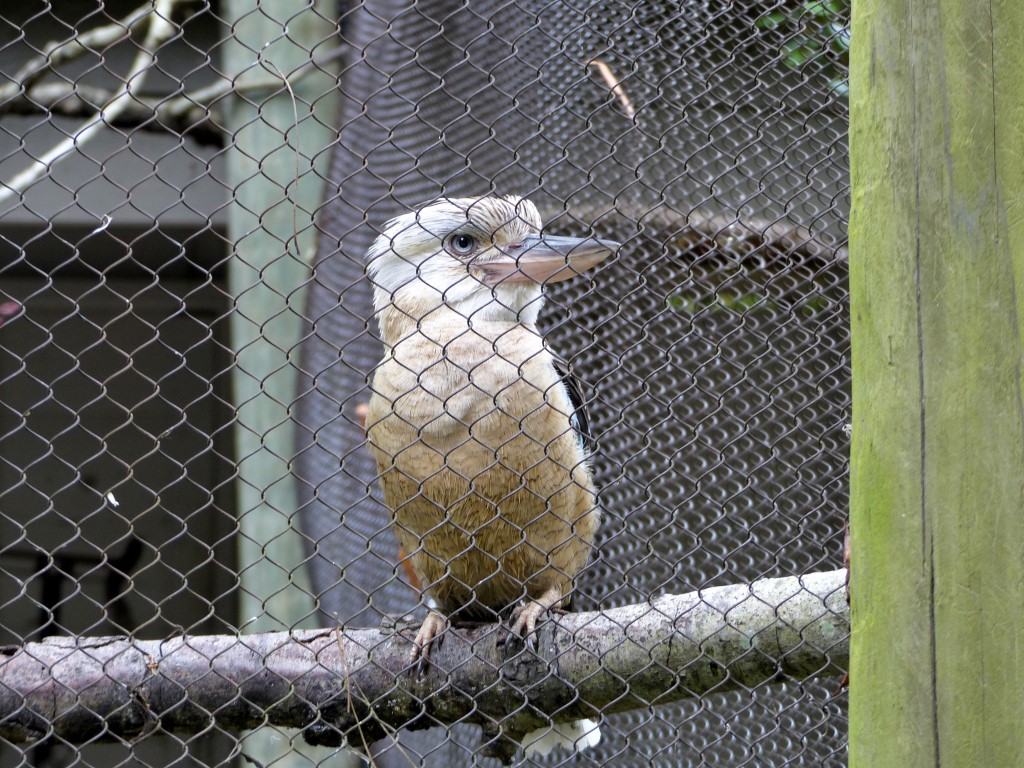
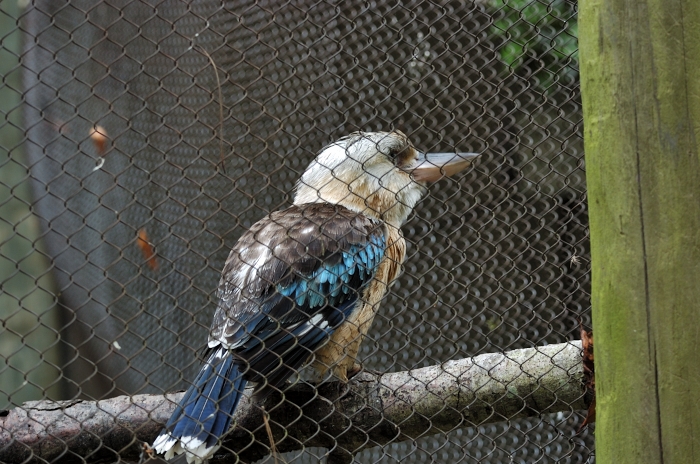
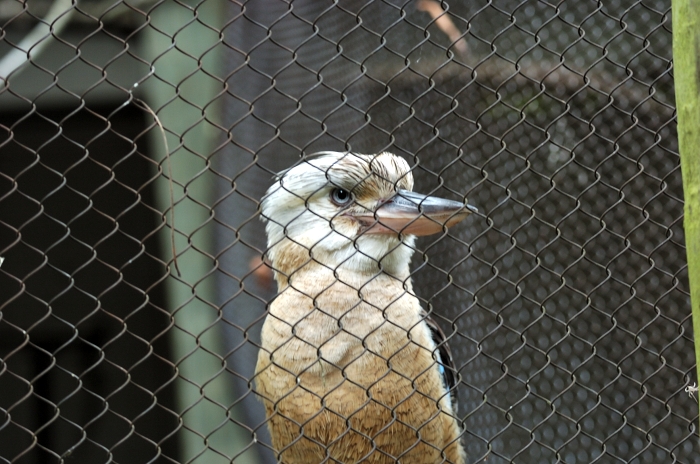
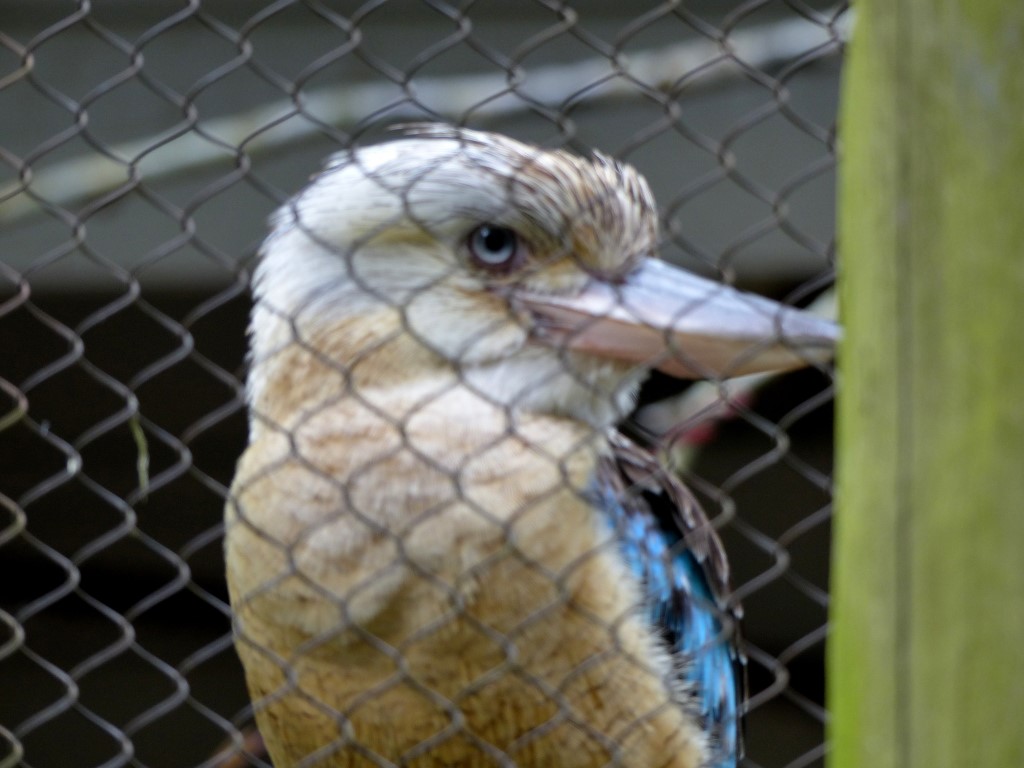
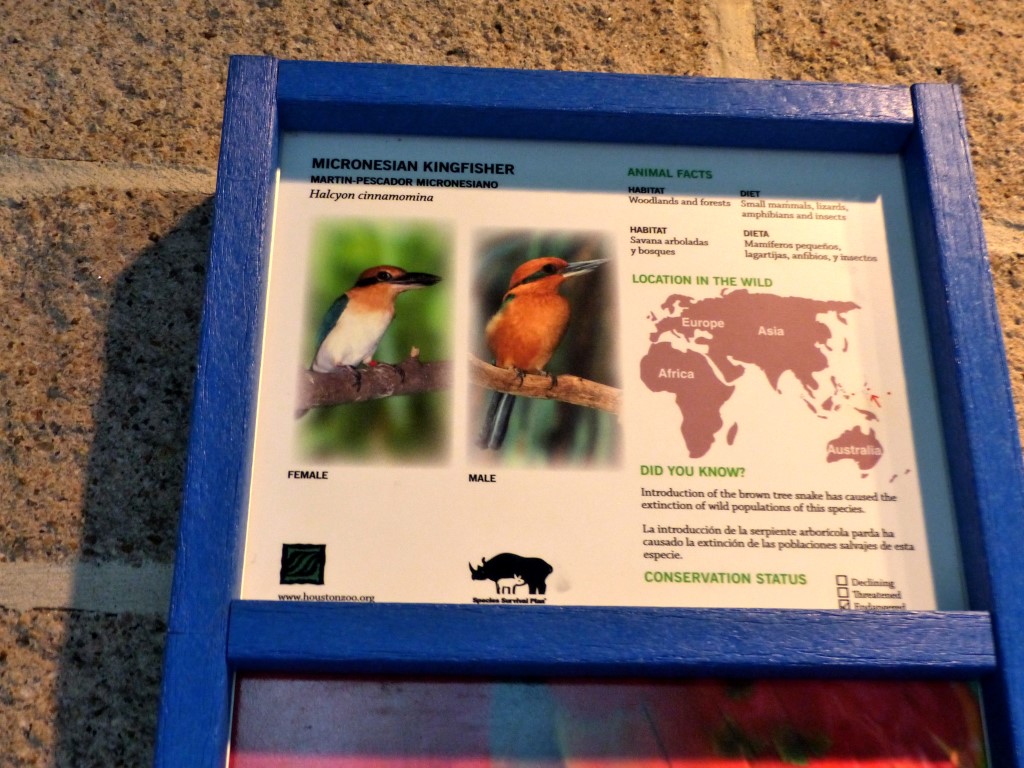
Then a couple of favorites, the Kookabura, except this time it was a Blue-winged Kookabura, and a Micronesian Kingfisher.
Micronesian Kingfisher by Dan
*
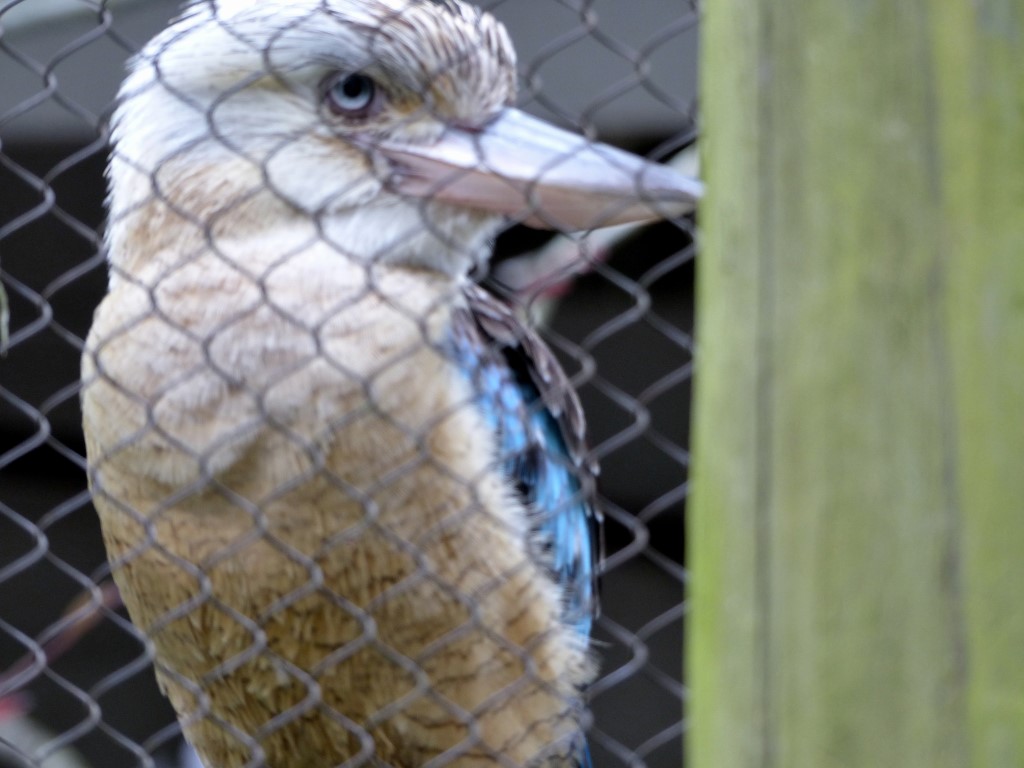
Blue-winged Kookaburra – What you looking at? by Lee
Blue-winged Kookaburra (Dacelo leachii) Houston Zoo 5-6-15 by Dan
*
Grey-winged Trumpeter (Psophia crepitans) Houston Zoo 5-6-15 by Lee
Grey-winged Trumpeter and Racquet-tailed
Grey-winged Trumpeter (Psophia crepitans) Houston Zoo 5-6-15 by Lee
Grey-winged Trumpeter (Psophia crepitans) Houston Zoo 5-6-15 by Lee
Grey-winged Trumpeter (Psophia crepitans) Houston Zoo 5-6-15 by Lee
Racket-tailed Roller (Coracias spatulatus) Houston Zoo 5-6-15 by Lee
Racket-tailed Roller (Coracias spatulatus) Houston Zoo 5-6-15 by Lee
Racket-tailed Roller (Coracias spatulatus) Houston Zoo 5-6-15 by Lee
Racket-tailed Roller (Coracias spatulatus) Houston Zoo 5-6-15 by Lee
Racket-tailed Roller (Coracias spatulatus) Houston Zoo 5-6-15 by Lee
Racket-tailed Roller (Coracias spatulatus) Houston Zoo 5-6-15 by Lee
Racket-tailed Roller (Coracias spatulatus) Houston Zoo 5-6-15 by Lee
Racket-tailed Roller (Coracias spatulatus) Houston Zoo 5-6-15 by Lee
Racket-tailed Roller (Coracias spatulatus) Houston Zoo 5-6-15 by Lee
Blue-winged Kookaburra (Dacelo leachii) Houston Zoo 5-6-15 by Lee
Blue-winged Kookaburra (Dacelo leachii) Houston Zoo by Lee
Blue-winged Kookaburra (Dacelo leachii) Houston Zoo 5-6-15 by Lee
Blue-winged Kookaburra (Dacelo leachii) Houston Zoo 5-6-15 by Lee
Blue-Winged Kookabura Edited by Lee
Blue-Winged Kookabura Edited by Lee
Blue-winged Kookaburra (Dacelo leachii) Houston Zoo 5-6-15 by Lee
Blue-winged Kookaburra (Dacelo leachii) Houston Zoo 5-6-15 by Dan
Micronesian Kingfisher (Todiramphus cinnamominus) Houston Zoo 5-6-15 by Lee
Micronesian Kingfisher (Todiramphus cinnamominus) Houston Zoo 5-6-15 by Lee
Micronesian Kingfisher (Todiramphus cinnamominus) Houston Zoo 5-6-15 by Lee
Micronesian Kingfisher by Dan
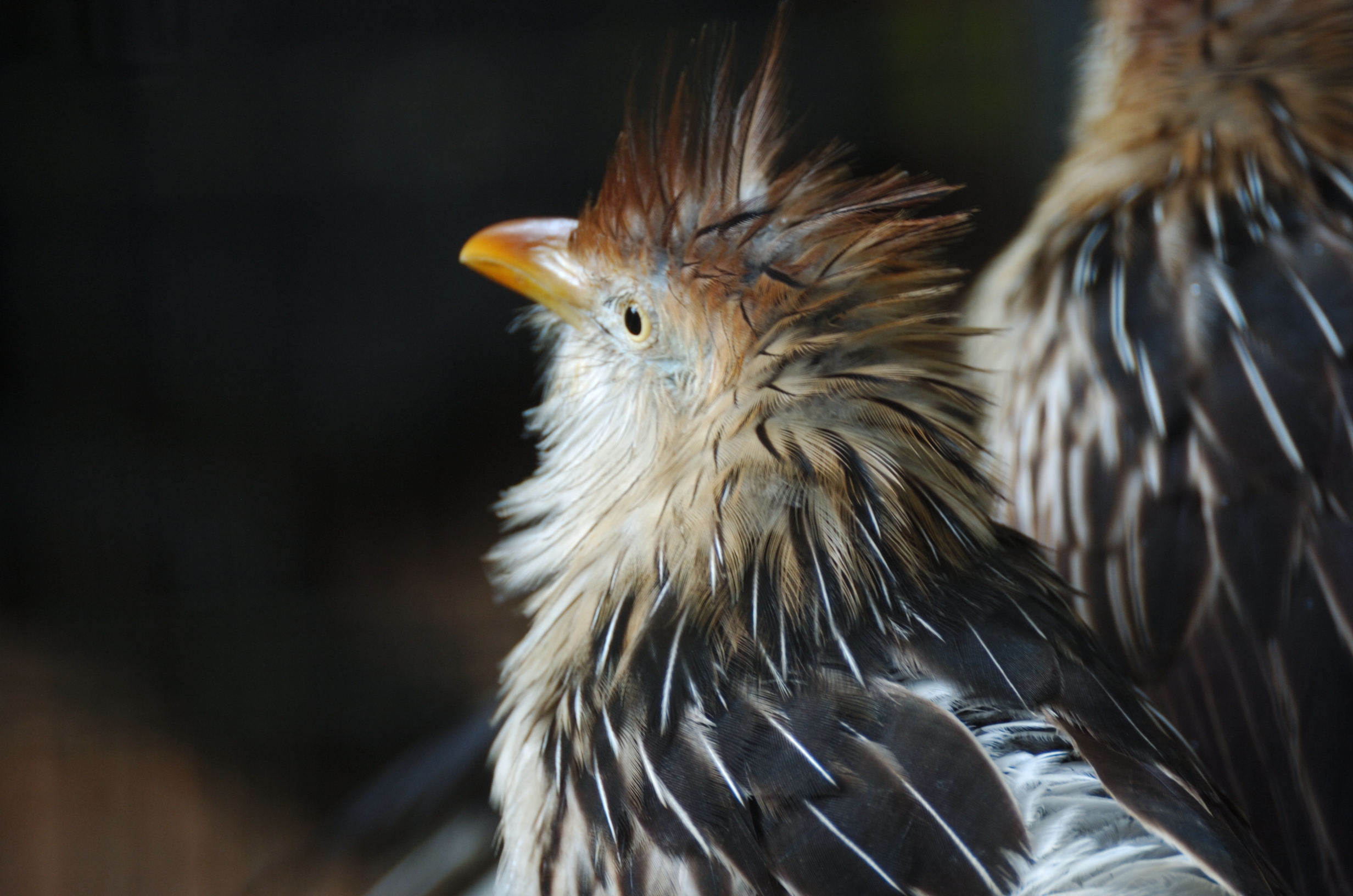
Guira Cuckoo (Guira guira) Houston Zoo 5-6-15 by Lee
Guira Cuckoo (Guira guira) Houston Zoo 5-6-15 by Lee
Guira Cuckoo (Guira guira) Houston Zoo 5-6-15 by Lee
Guira Cuckoo (Guira guira) Houston Zoo 5-6-15 by Lee
Guira Cuckoo (Guira guira) Houston Zoo 5-6-15 by Lee
Guira Cuckoo (Guira guira) Houston Zoo 5-6-15 by Lee
Guira Cuckoo (Guira guira) Houston Zoo 5-6-15 by Lee
Guira Cuckoo (Guira guira) Houston Zoo 5-6-15 by Lee
Guira Cuckoo by Dan
Chestnut-breasted Malkoha (Phaenicophaeus curvirostris) Houston Zoo 5-6-15 by Lee
Chestnut-breasted Malkoha (Phaenicophaeus curvirostris) Houston Zoo 5-6-15 by Lee
Chestnut-breasted Malkoha (Phaenicophaeus curvirostris) Houston Zoo 5-6-15 by Lee
Blue-winged Kookaburra (Dacelo leachii) Houston Zoo 5-6-15 by Lee
From the last post, Birdwatching Along The Way – Vacation – Part 1, you know we arrived in Houston on Tuesday, the 5th. On Wednesday, we headed over to see their Houston Zoo. The weather was starting to turn “yukkie” and it was overcast. This made for making photos a challenge, at least for the outside exhibits. More about that weather later.
Houston Zoo 5-6-15 by Lee
The Houston Zoo is a very nice zoo with lots of the Creator’s Avian Friends to check out along with the other Critters from the Lord. Not sure where to begin, so, let’s start with the entrance. As you can tell, it had been raining, but stopped in time for us to visit.
Houston Zoo 5-6-15 by Lee
That fact, overcast skies, was the beginning of some of the challenges ahead. I have previously told of challenges with the fencing and cage material between us and the critters. Most of them are fine, but with birds, the bars or mesh can really get to be a challenge. Houston Zoo was loaded with those obstacles to keep me from getting any “perfect shots.” You photographers know exactly what I am referring to. Dan just gave me his “finished” photos that I can use and he was frustrated with how many didn’t turn out. Maybe I should just put all his up here and spare you the agony of seeing mine. :)
I informed him that many of the ones he isn’t going to let me use are better than most of mine. (He is a bit of a perfectionist.) Oh, the joys of a birdwatcher and a photographer marriage. Sure makes for some interesting discussions. Back to the Zoo.
Blue-throated Macaw (Ara glaucogularis) Sign Houston Zoo by Lee
When you enter the zoo, the first birds we saw were the Blue-throated Macaw (Ara glaucogularis). We have seen Blue and Gold Macaws, but these are not seen as often in zoos. The challenge began.
Blue-throated Macaw (Ara glaucogularis) Houston Zoo by Lee
When I tried to zoom in the fence was still in the way.
Blue-throated Macaw (Ara glaucogularis) Houston Zoo by Lee
Never say never. Not the best, but you can tell that they are Blue-throated Macaws. Yeah!
Blue-throated Macaw (Ara glaucogularis) Houston Zoo by Lee
Blue-throated Macaw (Ara glaucogularis) Houston Zoo by Lee
Don’t worry, I’m not going to do that for every bird I tried to get photos of. If I did, this would be a loooonnngggg post. I took over 800 photos just at this zoo. Many of those are the signs like up above. I do that so I can try to put the right name on the right bird. I used to try to write them down, but it is much easier to take a photo. plus the signs are usually near the bird and time taken.
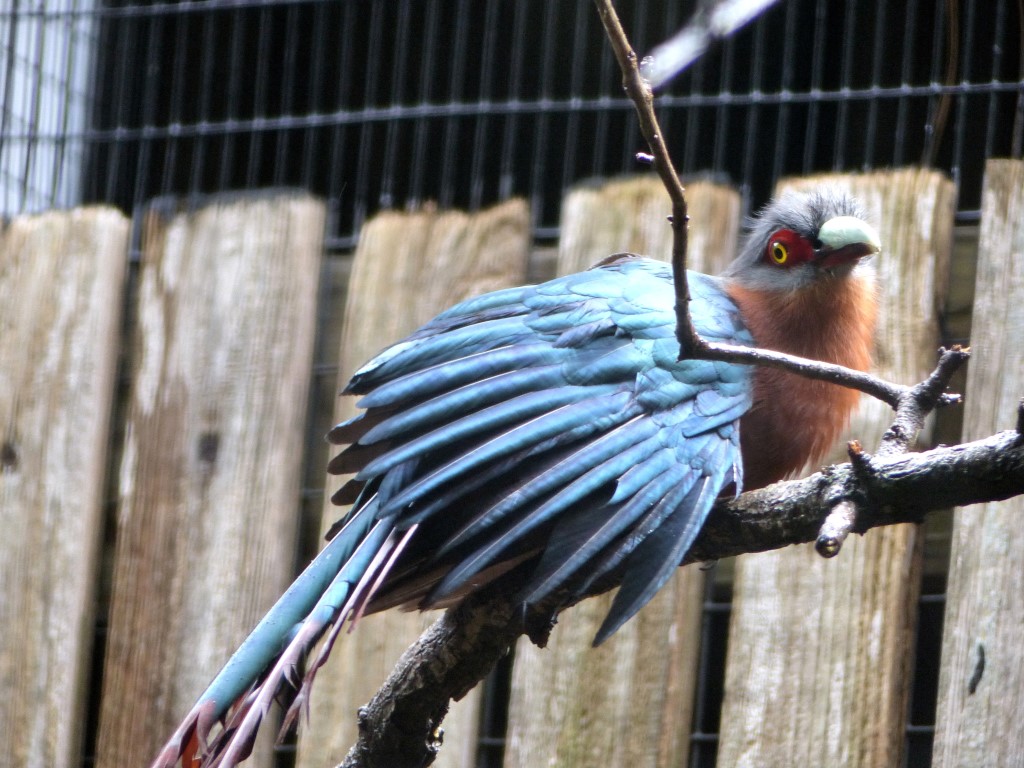
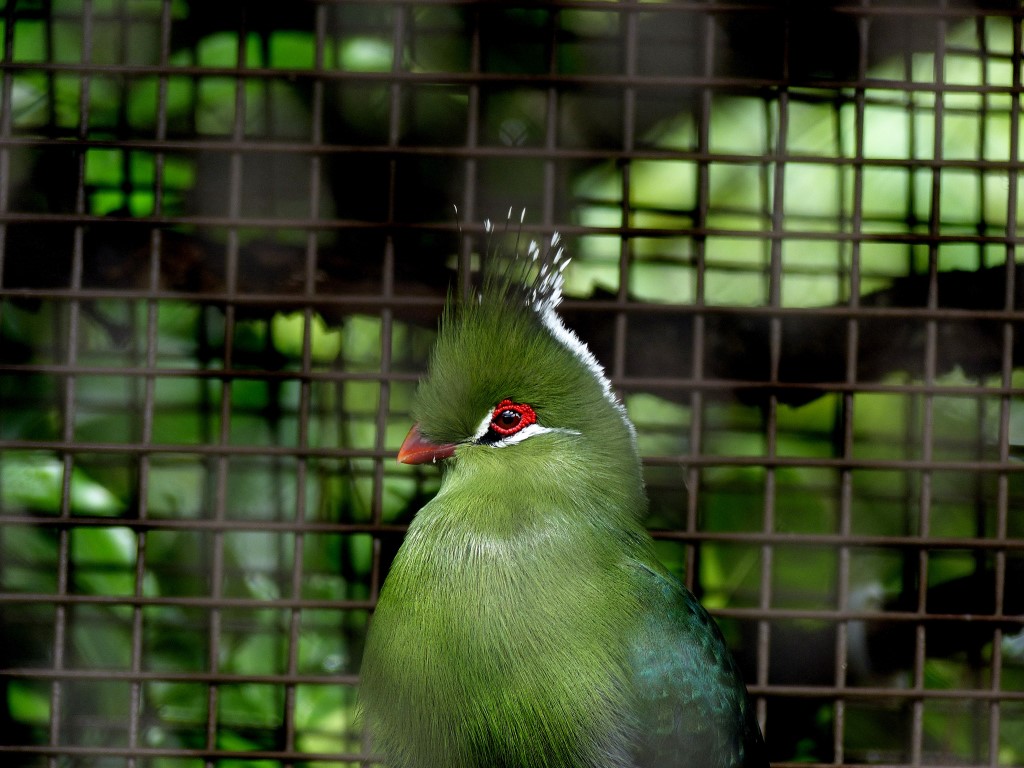
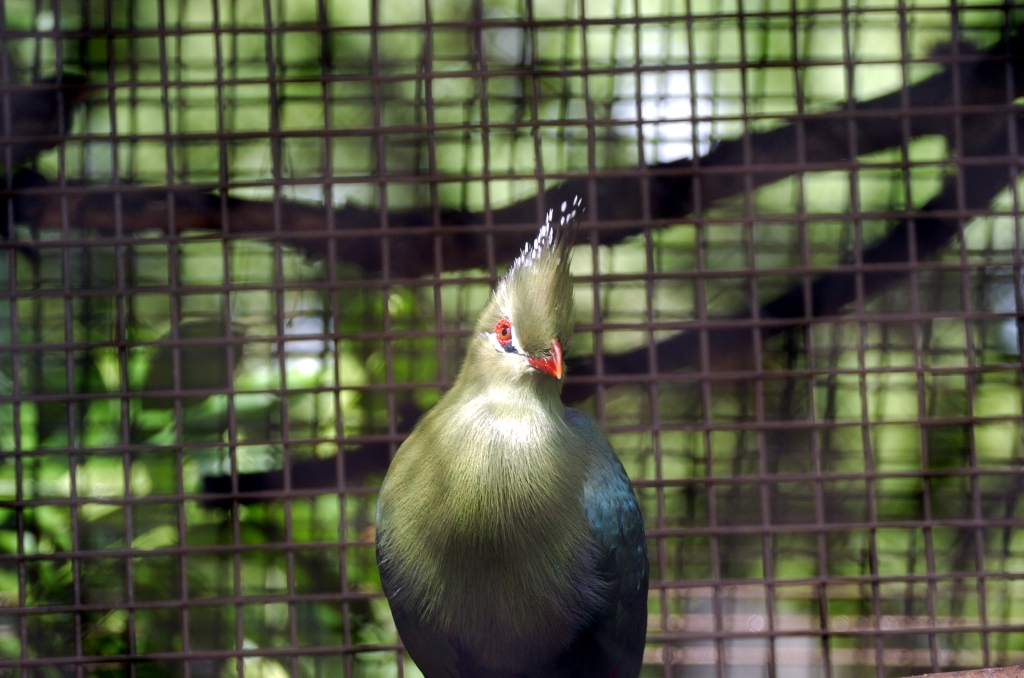
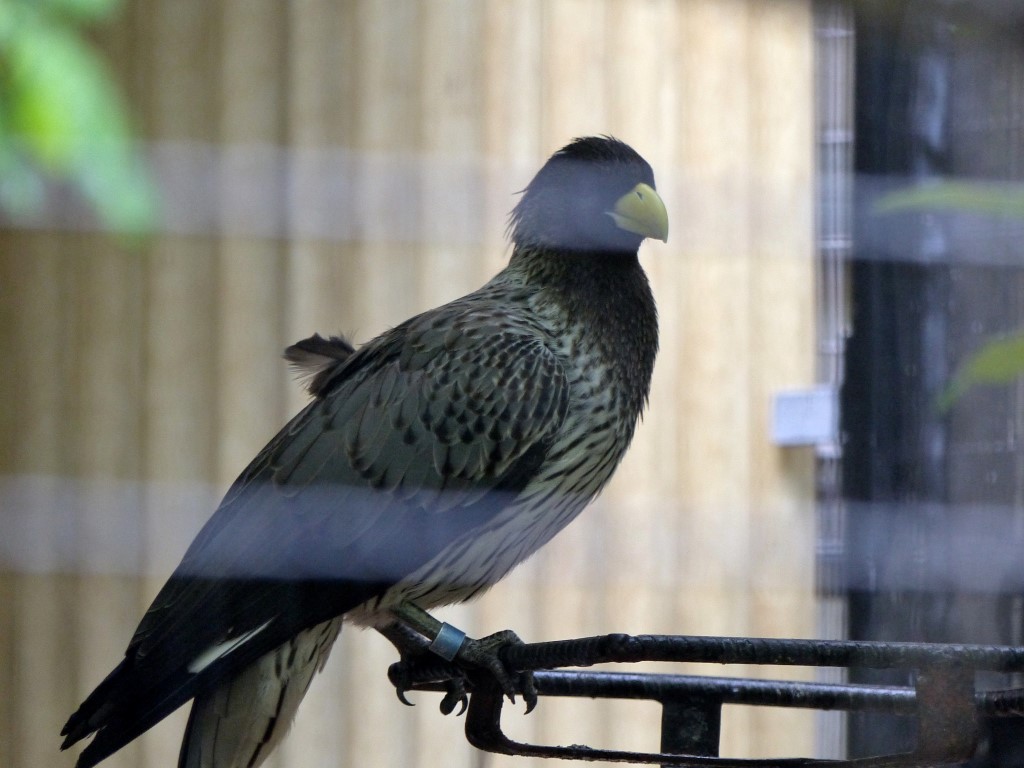
Livingstone’s Turaco (Tauraco livingstonii) Houston Zoo 5-6-15 by Lee
Mine (can see the bars on it’s chest):
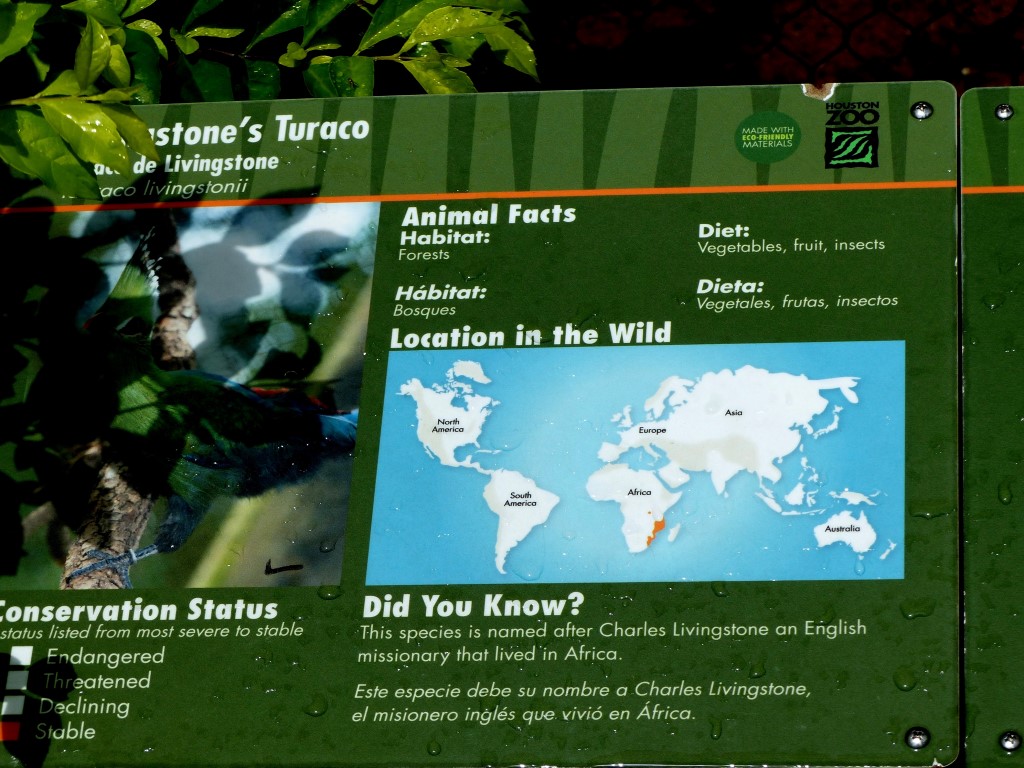
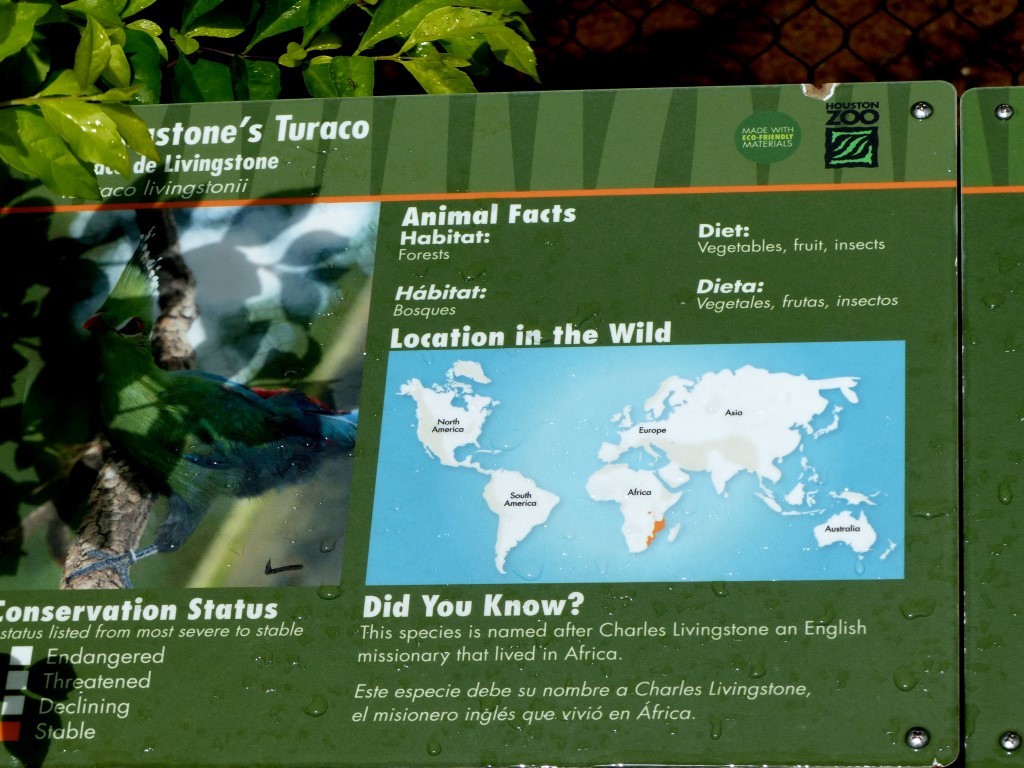
Livingstone’s Turaco (Tauraco livingstonii) Sign Houston Zoo 5-6-15 by Lee
Now a good one by Dan:
Livingstone’s Turaco (Tauraco livingstonii) Houston Zoo 5-6-15 by Dan
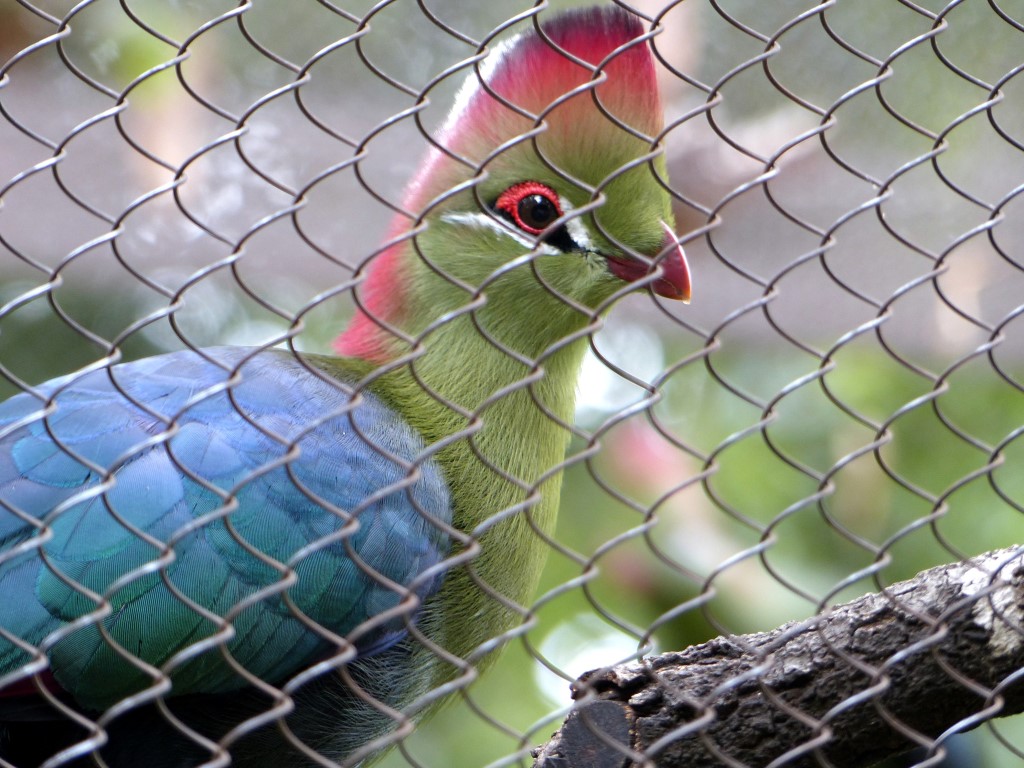
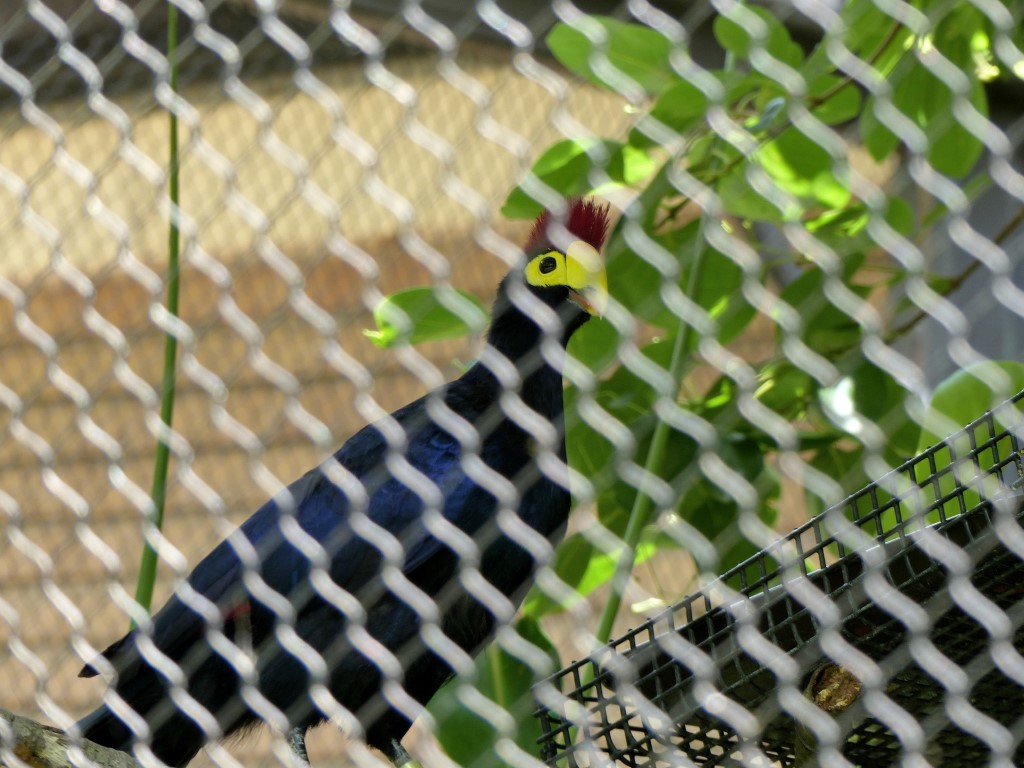
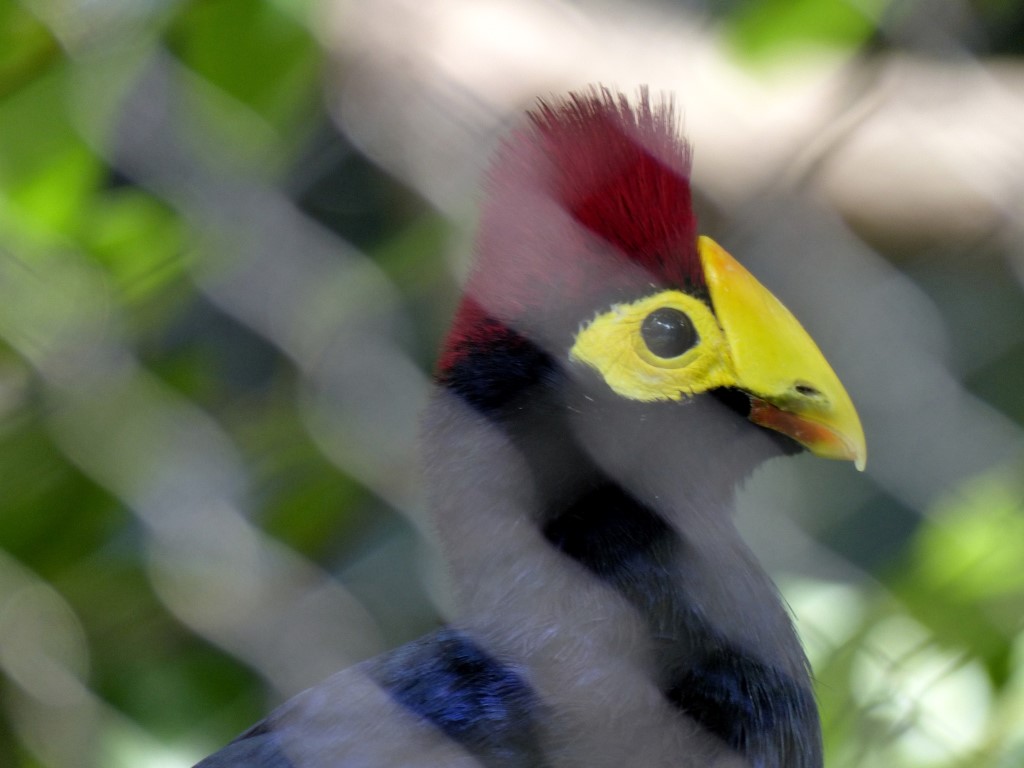
The Livingstone’s Turaco “is named after Charles Livingstone an English missionary that lived in Africa.” The Turaco Family has 23 species and the Houston Zoo has at least 5 species. In fact, I added at least four new birds to my Life List of All The Birds We Have Seen in this family:
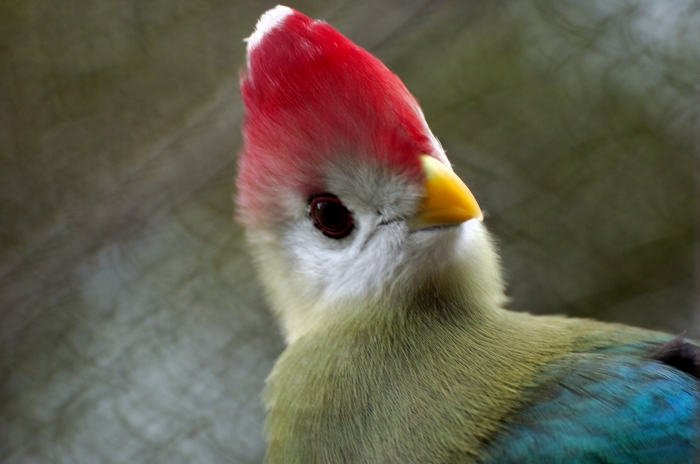
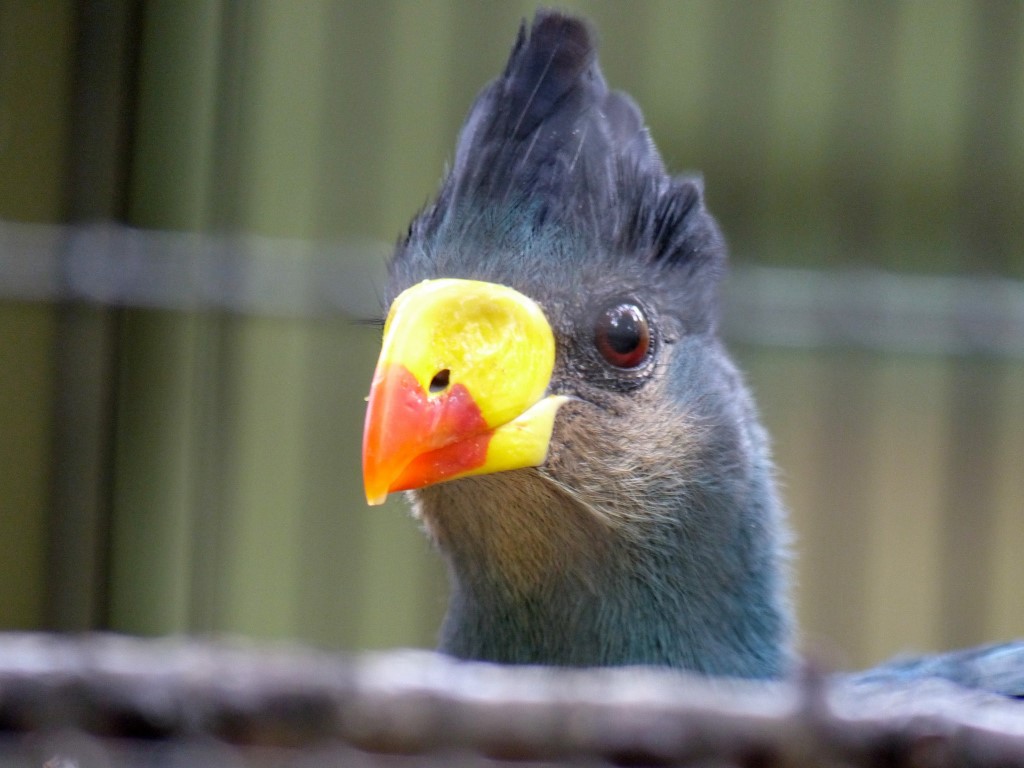
Fischer’s Turaco (Tauraco fischeri) HZ, Great Blue Turaco (Corythaeola cristata) HZ, Livingstone’s Turaco (Tauraco livingstonii) HZ, Western Plantain-eater (Crinifer piscator) HZ, Red-crested Turaco (Tauraco erythrolophus) and the White-bellied Go-away-bird (Corythaixoides leucogaster) which we had seen at the National Aviary. (Will see some of these again later in the trip).
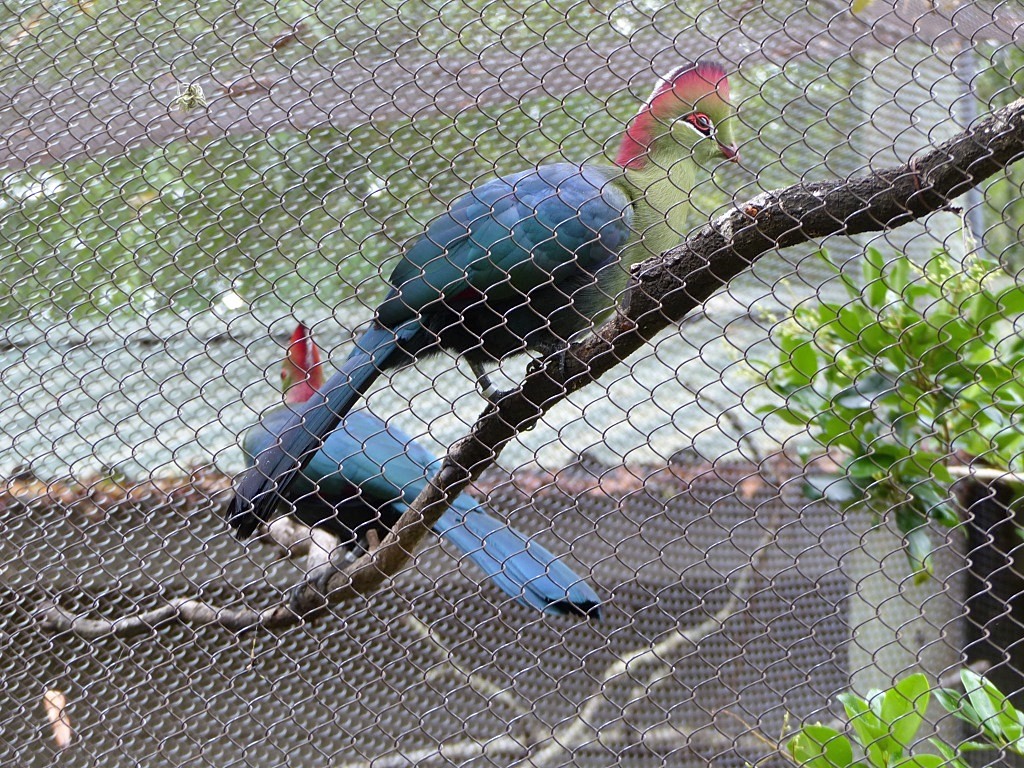
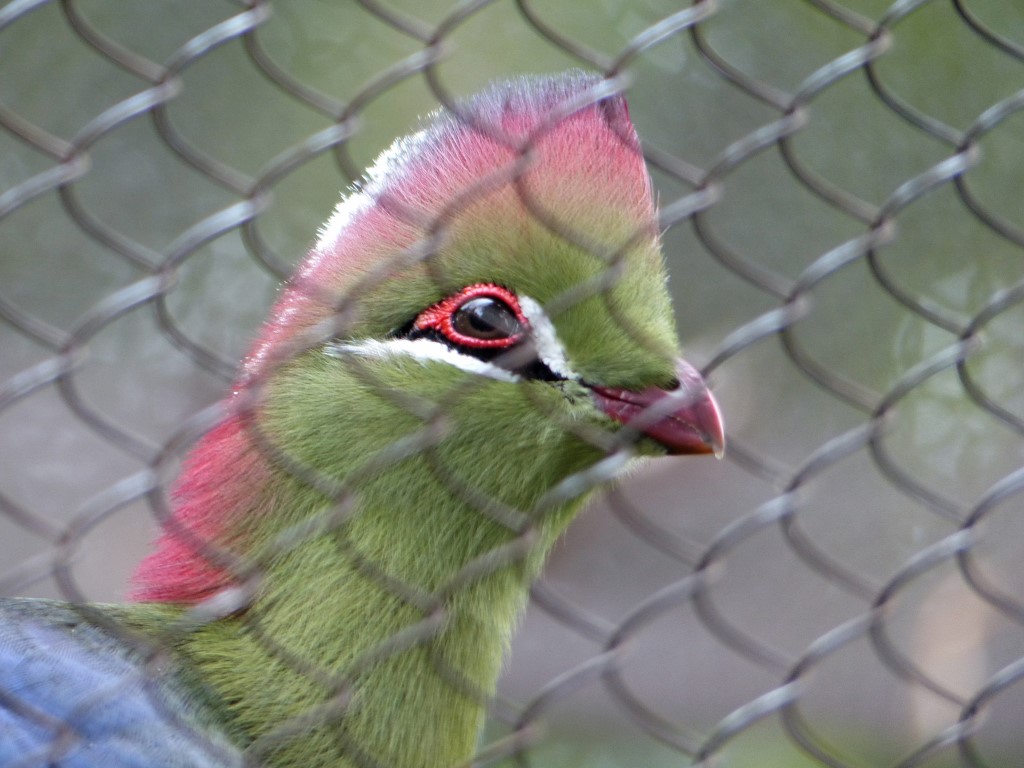
Fischer’s Turaco (Tauraco fischeri) Houston Zoo by Lee
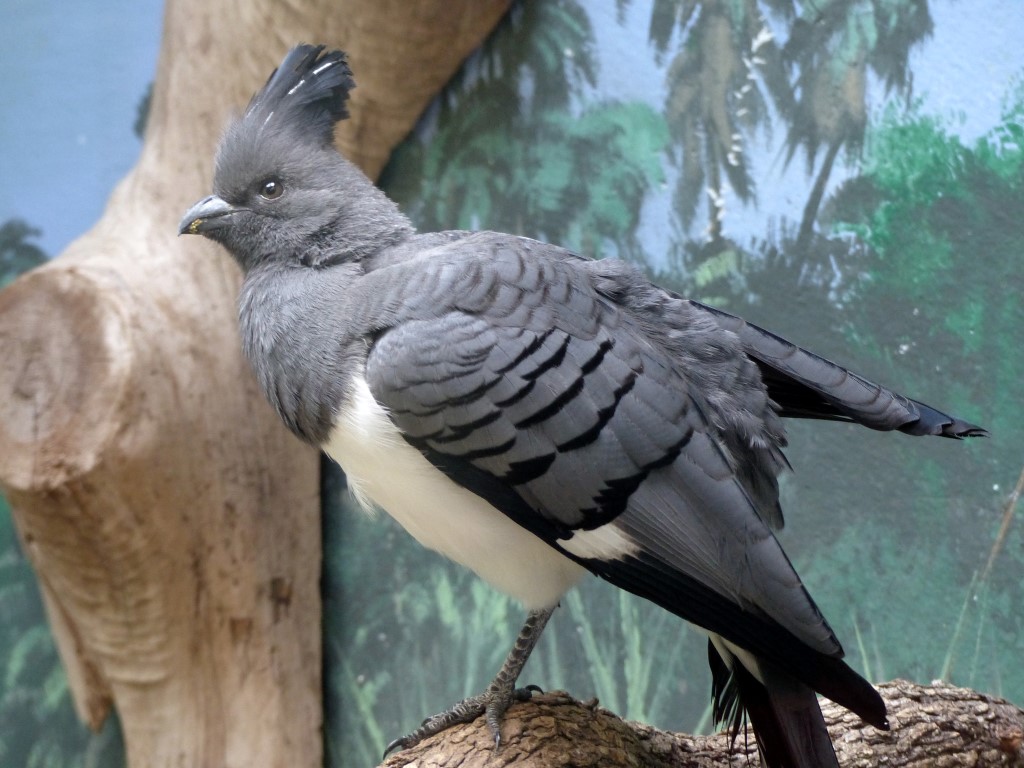
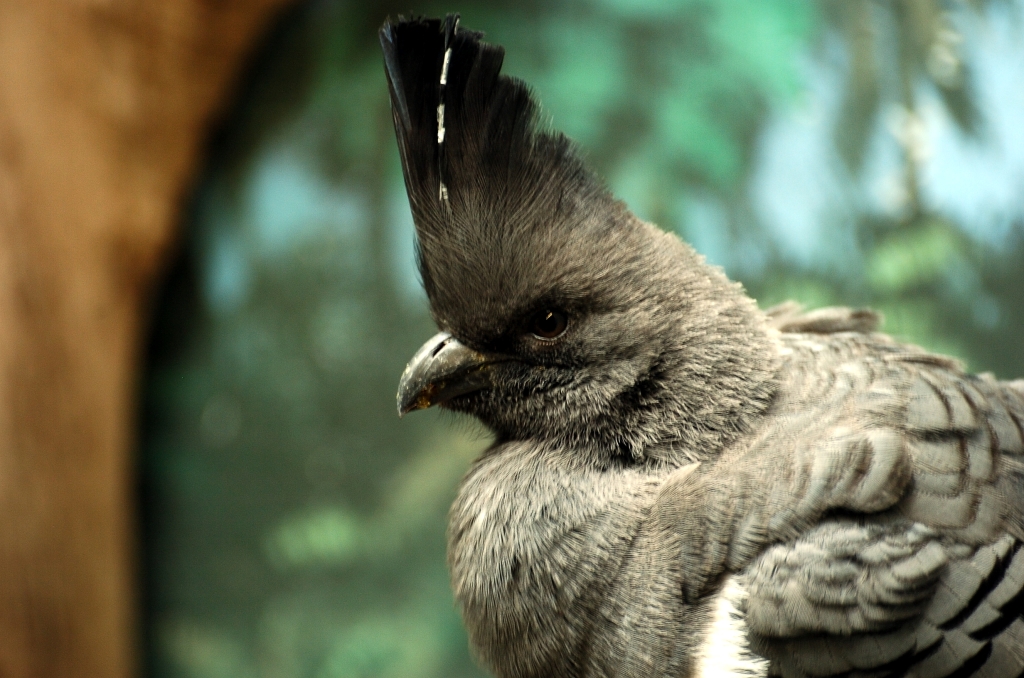
White-bellied Go-away-bird (Corythaixoides leucogaster) Houston Zooby Lee
The Go-away-bird reminds me of a verse:
But Jesus said to them, “They do not need to go away. You give them something to eat.” (Matthew 14:16 NKJV)
Western Plantain-eater (Crinifer piscator) Houston Zoo
Ross’s Turaco (Musophaga rossae) Houston Zoo by Lee
Red-crested Turaco (Tauraco erythrolophus) by Dan
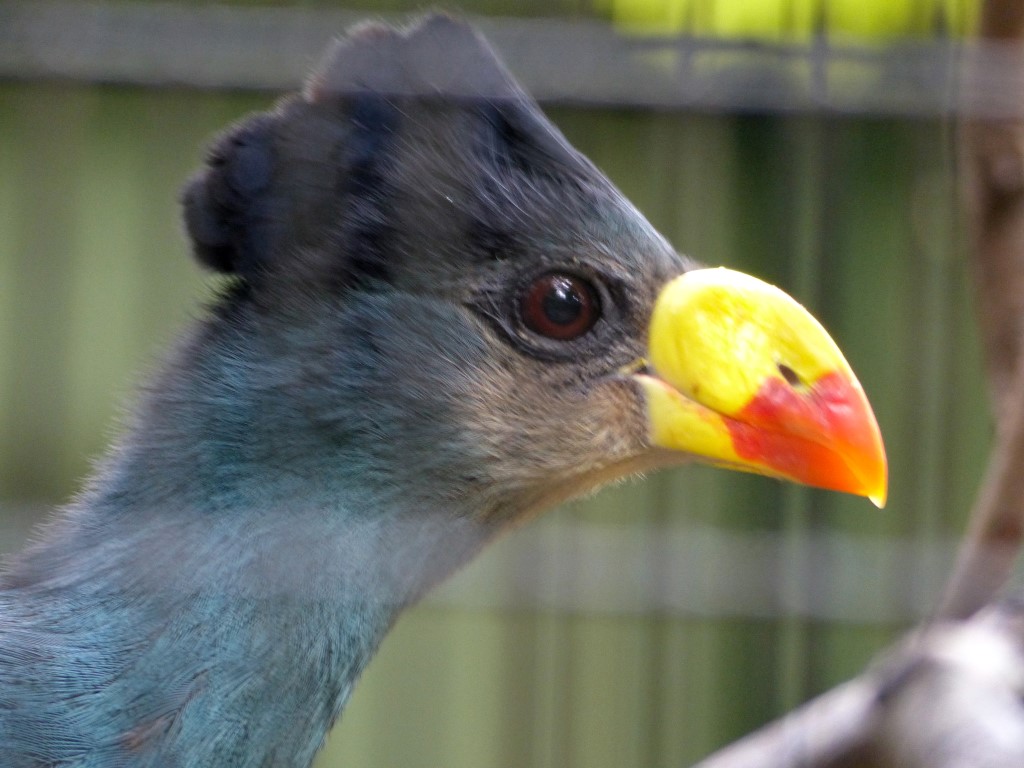
Great Blue Turaco (Corythaeola cristata) Houston Zoo
Houston Zoo 5-6-15 by Lee
Houston Zoo 5-6-15 by Lee
Blue-throated Macaw (Ara glaucogularis) Sign Houston Zoo by Lee
Blue-throated Macaw (Ara glaucogularis) Houston Zoo by Lee
Blue-throated Macaw (Ara glaucogularis) Houston Zoo by Lee
Blue-throated Macaw (Ara glaucogularis) Houston Zoo by Lee
Blue-throated Macaw (Ara glaucogularis) Houston Zoo by Lee
Livingstone’s Turaco (Tauraco livingstonii) Houston Zoo by Lee
Livingstone’s Turaco (Tauraco livingstonii) Houston Zoo by Lee
Livingstone’s Turaco (Tauraco livingstonii) Houston Zoo 5-6-15 by Dan
Livingstone’s Turaco (Tauraco livingstonii) Houston Zoo by Lee
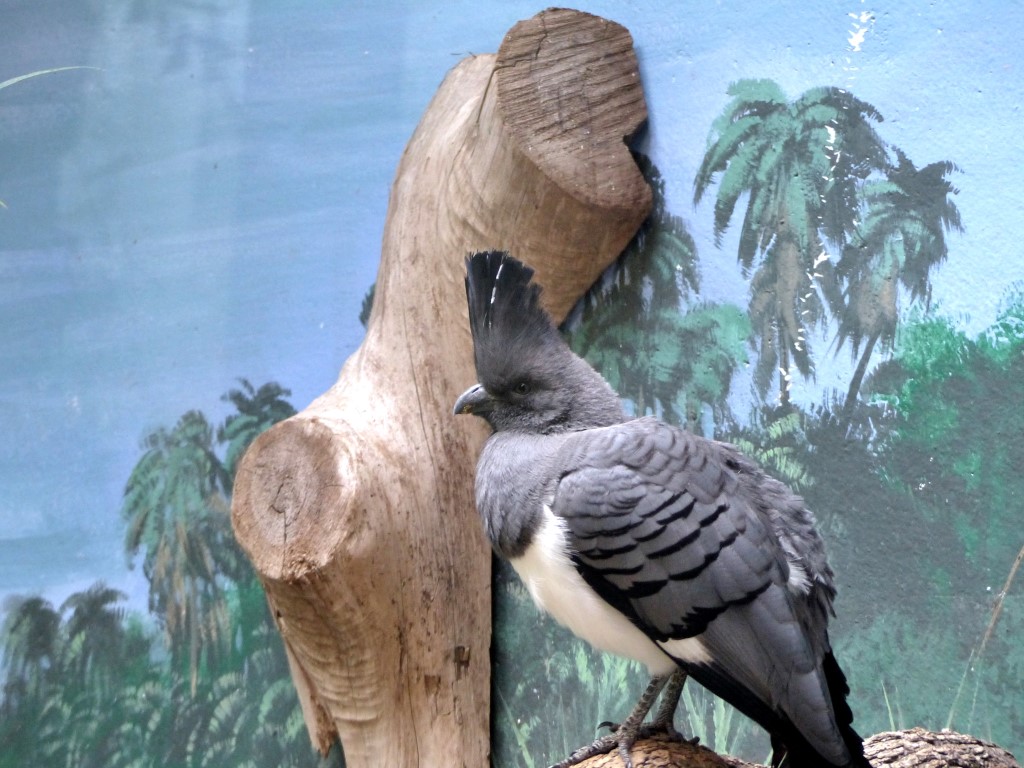
White-bellied Go-away-bird (Corythaixoides leucogaster) Houston Zoo by Lee
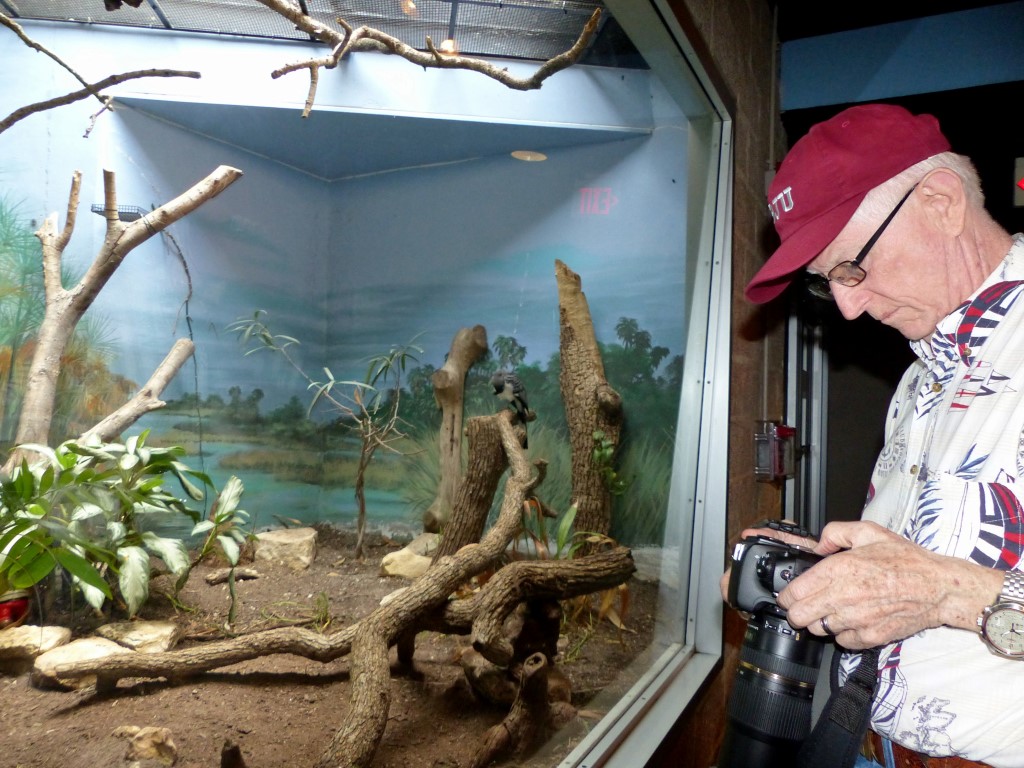
White-bellied Go-away-bird Glass Front Enclosure with Dan adjusting camera
by Lee
White-bellied Go-away-bird Houston Zoo by Dan
White-bellied Go-away-bird (Corythaixoides leucogaster) Houston Zooby Lee
White-bellied Go-away-bird (Corythaixoides leucogaster) Houston Zooby Lee
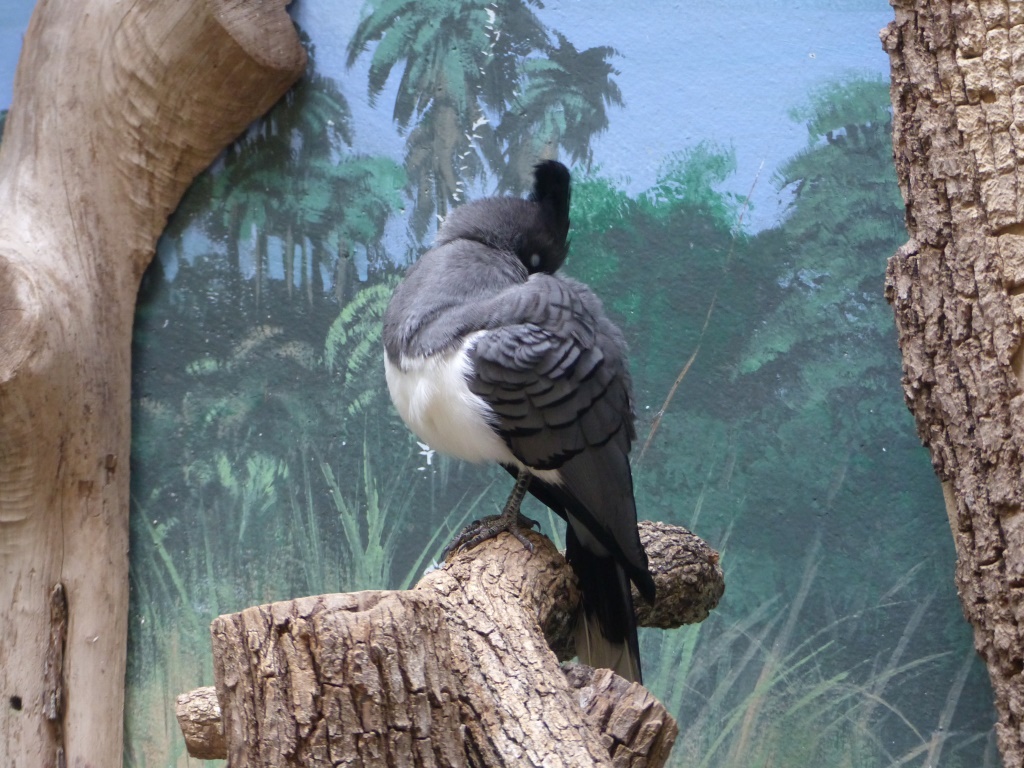
White-bellied Go-away-bird (Corythaixoides leucogaster) Houston Zooby Lee
White-bellied Go-away-bird (Corythaixoides leucogaster) Houston Zoo by Lee
White-bellied Go-away-bird (Corythaixoides leucogaster) Houston Zoo by Lee
White-bellied Go-away-bird (Corythaixoides leucogaster) Houston Zoo by Lee
Western Plantain-eater (Crinifer piscator) Houston Zoo
Western Plantain-eater (Crinifer piscator)
Western Plantain-eater (Crinifer piscator) Houston Zoo
Western Plantain-eater (Crinifer piscator) Houston Zoo
Western Plantain-eater (Crinifer piscator) Houston Zoo
Western Plantain-eater (Crinifer piscator) Houston Zoo
Ross’s Turaco (Musophaga rossae) by Lee
Ross’s Turaco (Musophaga rossae) Houston Zoo by Lee
Ross’s Turaco (Musophaga rossae) Houston Zoo by Lee
Ross’s Turaco (Musophaga rossae) Houston Zoo by Lee
Ross’s Turaco (Musophaga rossae) Houston Zoo by Lee
Ross’s Turaco (Musophaga rossae) Houston Zoo by Lee
Great Blue Turaco (Corythaeola cristata) Houston Zoo
Great Blue Turaco (Corythaeola cristata) Houston Zoo
Great Blue Turaco (Corythaeola cristata) Houston Zoo
Great Blue Turaco (Corythaeola cristata) Houston Zoo
Fischer’s Turaco (Tauraco fischeri) Houston Zoo by Lee
Fischer’s Turaco (Tauraco fischeri) Houston Zoo by Lee
Fischer’s Turaco (Tauraco fischeri) Houston Zoo by Lee
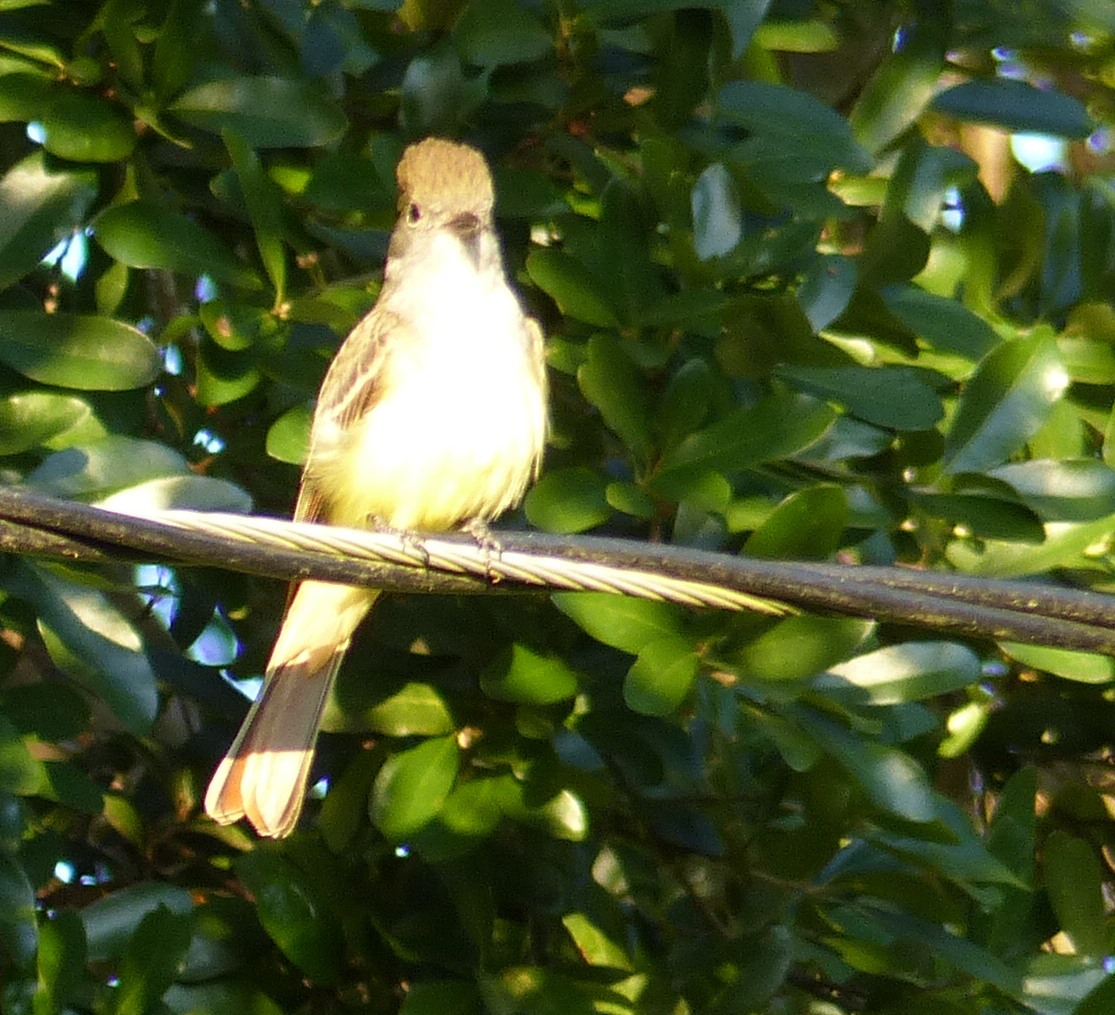
Great Crested Flycatcher outside motel in Tallahassee
We left home on Sunday afternoon, May 3rd and drove to Tallahassee, Florida. As I normally do, I kept a list of birds as were riding and I turned these into eBird. While traveling 70 mph, I usually don’t see anything except the larger birds, so the numbers are not spectacular.
Here is a summary of that day:
White Ibis 6, Black Vulture 2, Turkey Vulture 4, Red-tailed Hawk 2, Sandhill Crane 1, American Crow 4, Common Grackle 1, Boat-tailed Grackle 2. When we stopped for the night, we spotted a Northern Mockingbird, Northern Cardinal, a Brown Thrasher and Great Crested Flycatcher which I was able to get a photo of. (12 species)
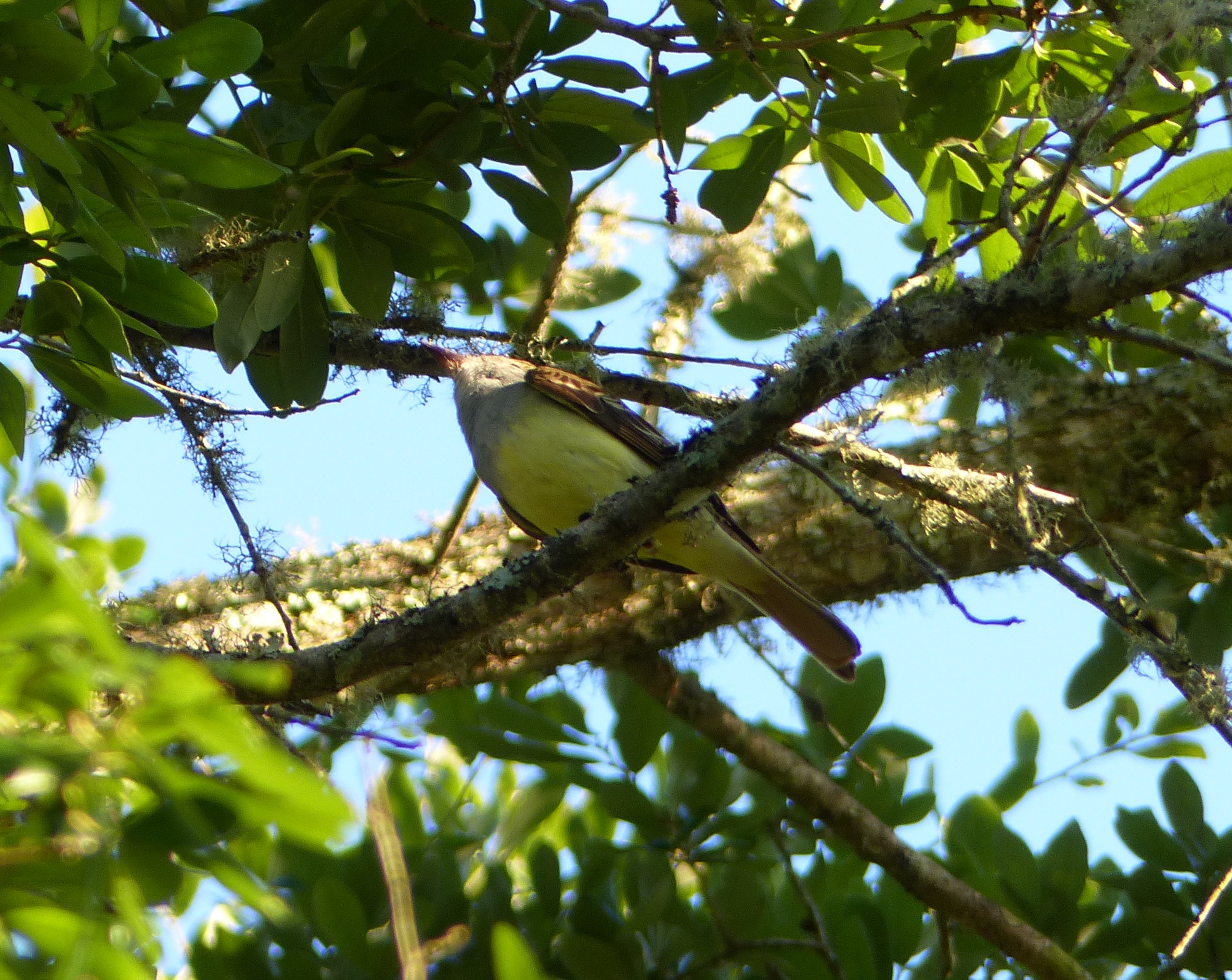
Great Crested Flycatcher outside motel in Tallahassee
It took the second photo to finally put the ID together. Flycatchers can be a challenge (to me), but the underside helped me ID this bird.
Not bad for a first day. The second day, we drove to Baton Rouge, Louisiana, which was one of our longest driving days. Our first goal of the vacation was to be in Houston, Texas by Tuesday, May 5th, which is 1,000 miles from home.
I listed these birds with eBird for the 2nd day, May 4th. A total of 14 species – Great Blue Heron 1, Great Egret 1, Cattle Egret 2,Turkey Vulture 6, Osprey 1, Bald Eagle 1, Great Crested Flycatcher 1, American Crow 2, Fish Crow 1, Tree Swallow 1, Barn Swallow 1, Brown Thrasher 1, Common Grackle 2 and 2 Boat-tailed Grackles. Not much for 500 miles of riding. Most of the interesting birds that day were the ones at the Welcome Center which I wrote about.
On Tuesday, we had an easier day and decided to stop by the Battleship Texas. It is located in the San Jacinto Battleground State Historic Site. Dan was in the Navy and if there is a Ship Museum we usually visit it. While we were looking around it, as normal for me, if there is a bird nearby, my attention gets diverted. “Birdwatching Adventure” kicks in and I’m off to capture the birds with the camera. The ship will still be there, but birds have a way of moving on.
Here is a list of the birds seen while visiting the Battleship Texas on May 5th. (eBird report): Neotropic Cormorant 2, Brown Pelican 1, Great Egret 1, Black Vulture, Bonaparte’s Gull 1, Laughing Gull 2, Rock Pigeon (Feral Pigeon) 3, Cliff Swallow 10, Northern Mockingbird 1, European Starling 4, House Sparrow 2.
Here are some of those photos of the ship and the birds I tried to photograph.
This slideshow requires JavaScript.
We were close to Houston and arrived safely at my niece’s house later that day. Vacation Goal #1 – Met.
I will both lie down in peace, and sleep; For You alone, O LORD, make me dwell in safety. (Psalms 4:8 NKJV)
*
Some of the other articles that mention our vacation:
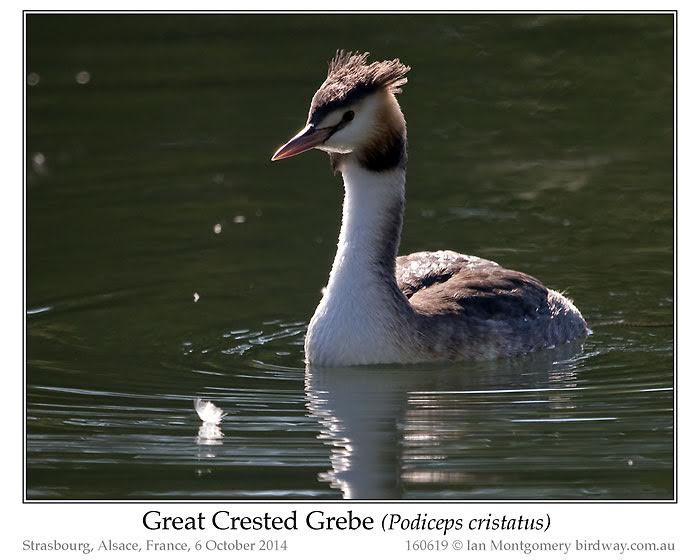
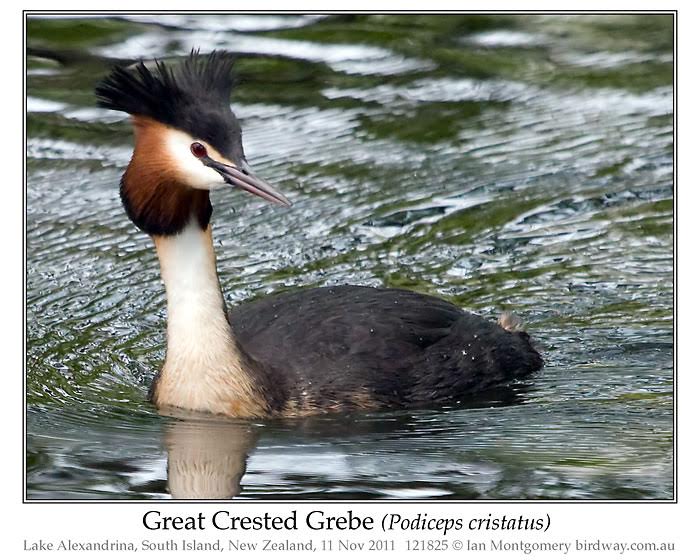
Ian’s Bird of the Week – Great Crested Grebe ~ by Ian Montgomery
Newsletter ~ 6/20/15
I’m going to weave a tangled web of French connections around this bird of the week, but the first and most important is that in honour of Loïc, my great nephew and first child of my niece Jeannine and her husband Carlos who live in Strasbourg in Alsace. He was due today, but arrived safe and well four days early.
Clearly, a bird photographed in France was required but the choice was very limited: Carrion Crow, Common Coot or Great Crested Grebe. The latter was bird of the week in July 2007, so I toyed with the idea of Coot but, given that in the British Isles people say ‘you silly coot’ in the same tone that Australian say ‘you silly galah’ I decided that coot was better saved for a non-dedicated bird of the week.
So here is an elegant grebe in non-breeding plumage in a park near where my niece lives in Strasbourg last October. She took my sister Gillian and I there to look for some White Storks that had been nesting there, but they had already left for the winter so the grebes and coots attracted my attention instead. If my sums are correct in working back from today’s date, little Loïc would have been with us too, though probably not much older than the egg in the nest in the second photo. This egg was probably freshly laid, as Great Crested Grebes usually lay 3 or 4 eggs. Maybe it arrived early too, as the parent is busy adding nesting material to the structure.
This nest was on Lake Alexandrina on the South Island of New Zealand, so it’s apparent that this species has a huge range extending from Ireland in the West and all the way through Eurasia to Australasia and in northern and southern Africa. It is however absent from the tropical regions of Africa and various tropical areas of Asia such as Indonesia.
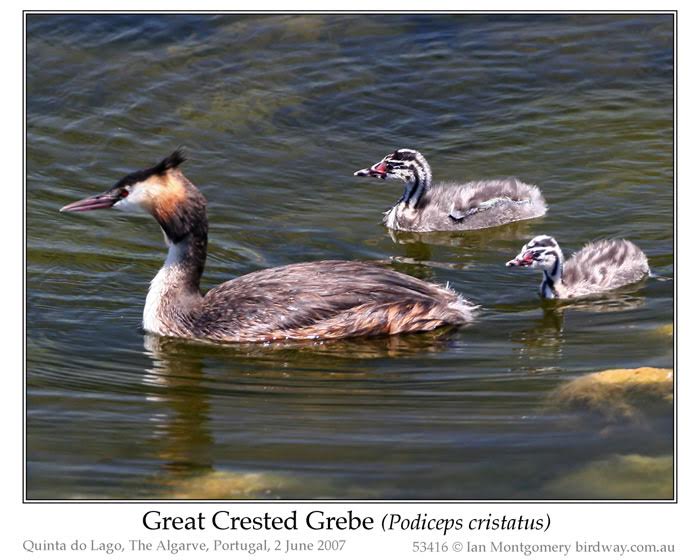
The third photo shows one of the New Zealand birds in full breeding plumage with the elongated crest and head plumes that give it scientific (cristatus), English and French name Grèbe Huppé. I’ll come back to huppé later. The 2007 bird of the week photos were of some breeding birds in Portugal and here is another one from that series: proud parent with two gorgeous striped youngsters. As this posting is celebrating a new family, I’d like to think that the photo is prophetic and that Loïc can look forward to a lovely sibling in due course.
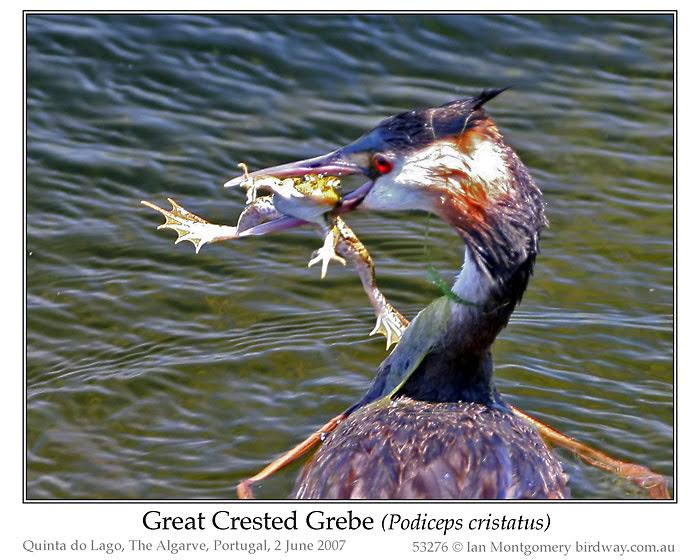
Great Crested Grebes mostly feed on fish, quite large ones at that, but this one Portugese one, fifth photo, has seized this hapless frog, whose expression seems a rather sad combination of pleading for help and accepting its fate.
Another French connection is that I’m on a flight to New Caledonia and had thought that I would be on French territory when Loïc arrived, but he decided not to wait but I will try and skype the happy trio from Noumea.
I mentioned a few weeks ago, that our primary target is the very special Kagu, a rare, crested pigeon-sized terrestrial species endemic to New Caledonia. It’s taxonomically special too, being the only member of its family (Rhynchochetidae) and belong to an order that has only one distant relative, the Sunbittern of South America (according to Birdlife International).
The Kagu is crested too, so it’s French name is – you’ve guessed it, go to the top of the class – Kagou huppé. Huppé is slang in French for upper crust, smart, posh which seems highly appropriate. So, as usual I’m relying on your spiritual and moral support to produce au autre oiseau huppé for the next bird of the week. Joy and I have booked a guide at Rivière Bleue National Park next Tuesday, its main breeding locality and pride and joy of the park.
Forty one minutes to go before we reach Noumea.
Greetings
Ian
**************************************************
Ian Montgomery, Birdway Pty Ltd,
454 Forestry Road, Bluewater, Qld 4818
Tel 0411 602 737 ian@birdway.com.au
Check the latest website updates: http://www.birdway.com.au/#updates
Lee’s Addition:
Look at the birds of the air, for they neither sow nor reap nor gather into barns; yet your heavenly Father feeds them. Are you not of more value than they? (Matthew 6:26 NKJV)
That frog is in total shock. Yiiikess! He is thinking! What a great capture of all them, Ian. Thanks again for sharing these weekly birds of the week.















































 Lee's Birdwatching Adventures Plus
