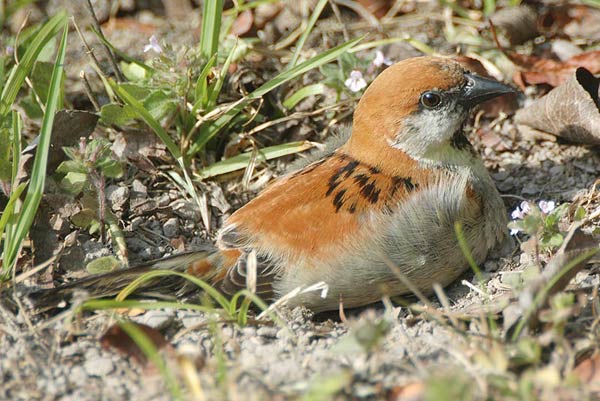
Russet Sparrow (Passer rutilans) by Nikhil Devasar
Keep and guard me as the pupil of Your eye; hide me in the shadow of Your wings (Psalms 17:8 AMP)
His Eye Is On The Sparrow
Why should I feel discouraged, why should the shadows come,
Why should my heart be lonely, and long for heaven and home,
When Jesus is my portion? My constant friend is He:
His eye is on the sparrow, and I know He watches me;
His eye is on the sparrow, and I know He watches me.
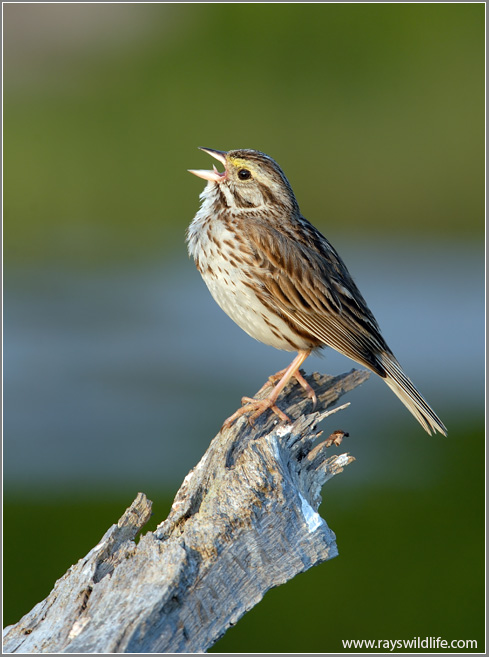
Savannah Sparrow singing by Ray
I sing because I’m happy,
I sing because I’m free,
For His eye is on the sparrow,
And I know He watches me.
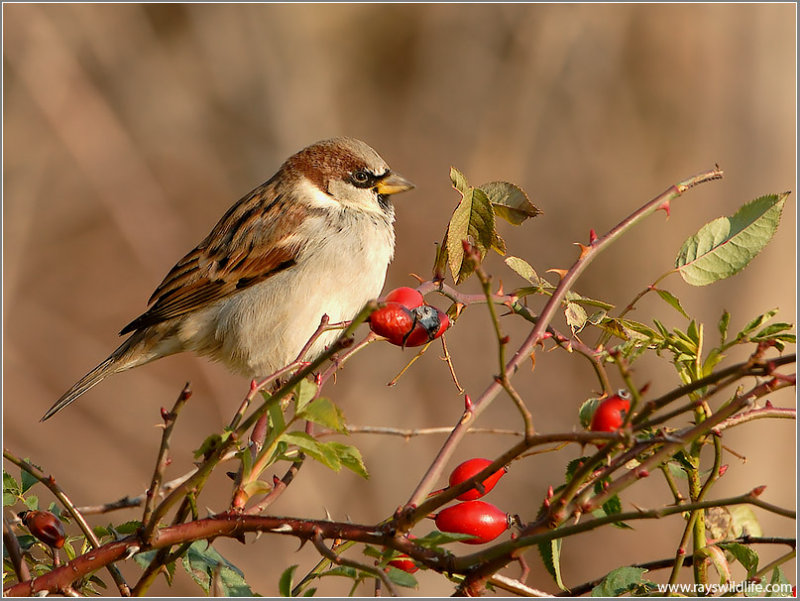
House Sparrow by Ray
“Let not your heart be troubled,” His tender word I hear,
And resting on His goodness, I lose my doubts and fears;
Though by the path He leadeth, but one step I may see;
His eye is on the sparrow, and I know He watches me;
His eye is on the sparrow, and I know He watches me.
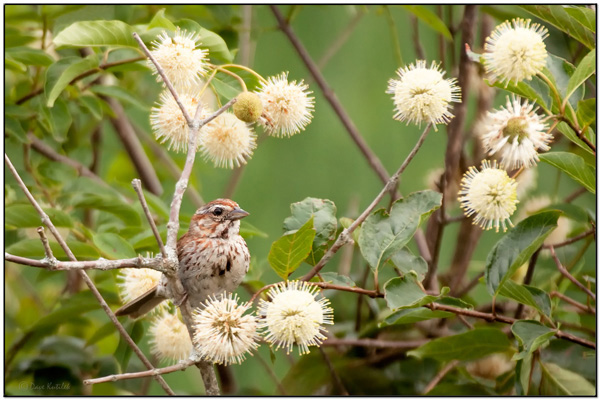
Song Sparrow in white flowers by Daves BirdingPix
I sing because I’m happy,
I sing because I’m free,
For His eye is on the sparrow,
And I know He watches me.
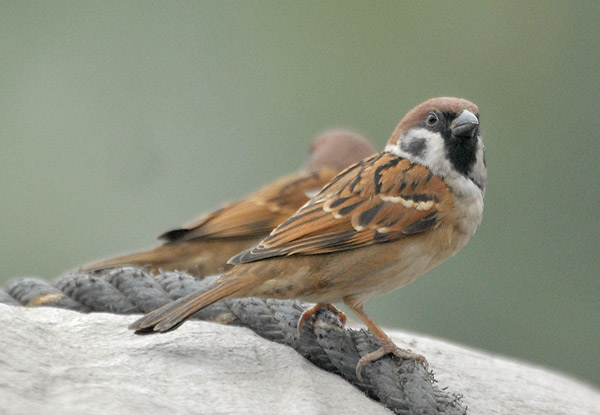
Eurasian Tree Sparrow (Passer montanus) by Nikhil
Whenever I am tempted, whenever clouds arise,
When songs give place to sighing, when hope within me dies,
I draw the closer to Him, from care He sets me free;
His eye is on the sparrow, and I know He watches me;
His eye is on the sparrow, and I know He watches me.
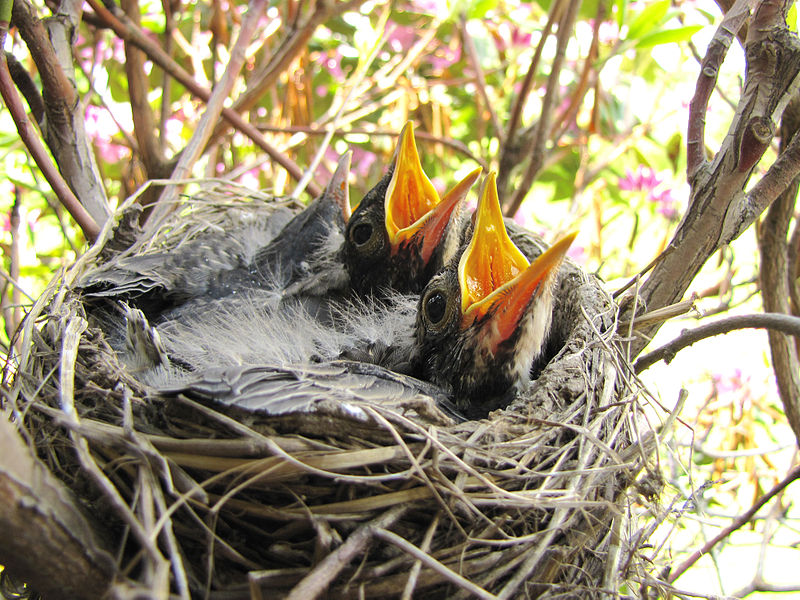
American Robin (Turdus migratorius) with young in nest
If a bird’s nest should chance to be before you in the way, in any tree or on the ground, with young ones or eggs, and the mother bird is sitting on the young or on the eggs, you shall not take the mother bird with the young. You shall surely let the mother bird go, and take only the young, that it may be well with you and that you may prolong your days. (Deuteronomy 22:6-7 AMP)
If a bird’s nest chance to be before thee in the way, in any tree or on the ground, with young ones or eggs, and the dam sitting upon the young, or upon the eggs, thou shalt not take the dam with the young: thou shalt in any wise let the dam go, but the young thou mayest take to thyself; that it may be well with thee, and that thou mayest prolong thy days.—Deu_22:6-7.
You think of the children of Israel, don’t you, as having lived far back in the dark ages? But here is one of the commandments which God gave to them—a little one about a bird’s nest—and the words of it make us feel that those wanderers were just big boys and girls with the same inclinations as we ourselves have today.
We learn from the words that the birds that flew about the Israelites as they journeyed were, in many cases, birds such as those we have now. The people must have been robbing their nests too, else we should not have had this verse at all. Naturally enough, in their wanderings they often came upon a nest by the wayside.
Northern Lapwing (Vanellus vanellus) by Nikhil Devasar
It may be that the Israelitish boys knew the little bird nests which are found in a hollow by the side of a marsh. Perhaps they thoughtlessly scattered the eggs, or perhaps Mr. Lapwing—artful little bird that he is!—lured them away from it with the wonderful antics with which he and his ancestors, generation after generation, have protected their nests. For Mr. Lapwing is the real defender of his nest. The mother bird is generally so frightened that she flies away. But when an enemy approaches the male lapwing practices the tricks his father taught him. Gradually moving farther and farther away from where the precious eggs are, he turns a number of somersaults, or he does other equally extraordinary things. The onlooker becomes so interested that the nest is forgotten.
Mourning Dove (Zenaida macroura) by Reinier Munguia
You remember Noah’s clever scout bird, the dove? She, too, would be known to the Israelites. The dove has a very mournful note. No wonder! Her family has ancient legends of how large numbers of them used to be trapped and taken captive to Jerusalem and then killed. Sacrifice had no meaning to them. It was all a mystery, and they just mourned.
What made me think of the text this morning? Why, just the fact that it is May! And May is the great month for birds’ nests. It is the birds’ busy time.
In trees, in bushes, on house-tops, or on the ground, they have built their little homes. What wonderful architects many of them are. One bird has woven twigs together into a building like an old Gothic church; another has built his house in the shape of a bottle; while one we all love lives in a dear little house made of mud. They were very patient while they gathered their building materials; and when they selected a site for their nest, by some strange instinct they chose it as far out of the reach of boys and girls as possible. But in spite of all their wonderful wisdom, somehow—and I feel ashamed to say it—there are always boys ready to climb up and destroy the little houses on which so much thoughtful care has been bestowed.
Common Starling (Sturnus vulgaris) at Nest by Anthony747
Now I am to give you three reasons why I want you not to disturb a bird’s nest while it’s being used.
1. Because it is cruel and cowardly.—What would you think if anyone were to break open the door of your home and run away with your bed? Think of your mother going out one day and coming home to find that someone had been there and stolen you away! Yet, how often does the poor mother bird come home to find all her children taken from her? If you rob a nest, it is a case of the strong taking advantage of the weak —a cowardly action under any circumstances—you know it is.
2. Because the birds have rights.—Any creature that suffers has rights. Theodore Parker, the great American preacher, when a lad, saw a turtle on a log, and, with stone in hand, he crept up and was about to throw it, when he heard a voice within which made him desist. He asked his mother about it. She told him that it was the protest of the doctrine of rights— the voice of God. Killing an animal for food or clothing is a part of life. But killing an animal for “fun” or “sport” is wrong.
3. Because we ought to love the birds, and love never willfully hurts what it loves. Love was Christ’s great commandment—love in little as well as in big things. God is great, yet He cares for the birds. “Are not two sparrows sold for a farthing? and one of them shall not fall on the ground without your Father.”
What has the song of birds’ not done for many a man and woman? It has cheered them, it has inspired them, it has given them new courage. It has even led them to God.
Savannah Sparrow Fifty Point-Canada by Ray Barlow
Here are some beautiful verses, by the poet George Macdonald, which tell what the song of a bird did for the heart of a man.
A brown bird sang on a blossomy tree,
Sang in the moonshine, merrily,
Three little songs, one, two, and three,
A song for his wife, for himself, and me.
He sang for his wife, sang low, sang high,
Filling the moonlight that filled the sky;
“Thee, thee, I love thee, heart alive!
Thee, thee, thee, and thy round eggs five!”
He sang to himself, “What shall I do
With this life that thrills me through and through!
Glad is so glad that it turns to ache!
Out with it, song, or my heart will break!”
He sang to me, “Man, do not fear
Though the moon goes down and the dark is near
Listen my song and rest thine eyes;
Let the moon go down that the sun may rise!”
I folded me up in the heart of his tune,
And fell asleep with the sinking moon;
I woke with the day’s first golden gleam,
And, lo, I had dreamed a precious dream!
(I normally do a Birds of the Bible here and adapt it for the Birds of the Bible For Kids website. This time I am sharing one I posted on their site first.)
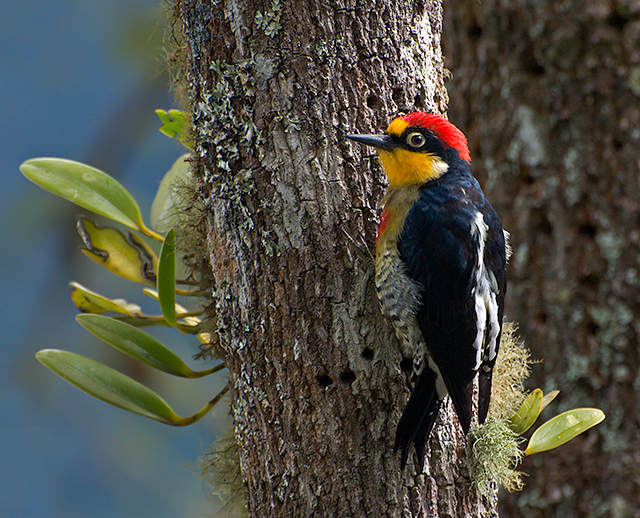
Yellow-fronted Woodpecker (Melanerpes flavifrons) by Dario Sanches
She (Wisdom) is a tree of life to those who lay hold on her; and happy (blessed, fortunate, to be envied) is everyone who holds her fast. The Lord by skillful and godly Wisdom has founded the earth; by understanding He has established the heavens. [Col. 1:16.] (Proverbs 3:18-19 AMP)
Be anxious for nothing, but in everything by prayer and supplication, with thanksgiving, let your requests be made known to God; and the peace of God, which surpasses all understanding, will guard your hearts and minds through Christ Jesus. (Philippians 4:6-7 NKJV)
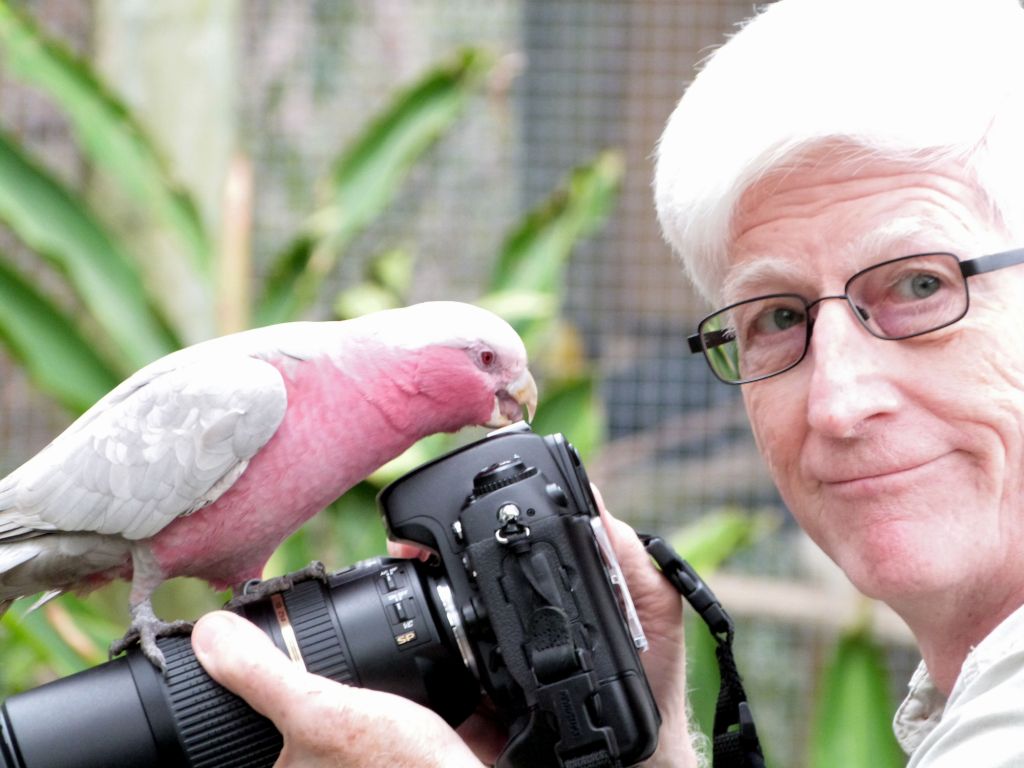
Galah (Eolophus roseicapilla) and Dan
How blessed are the people who are so situated; How blessed are the people whose God is the LORD! (Psalms 144:15 NASB)
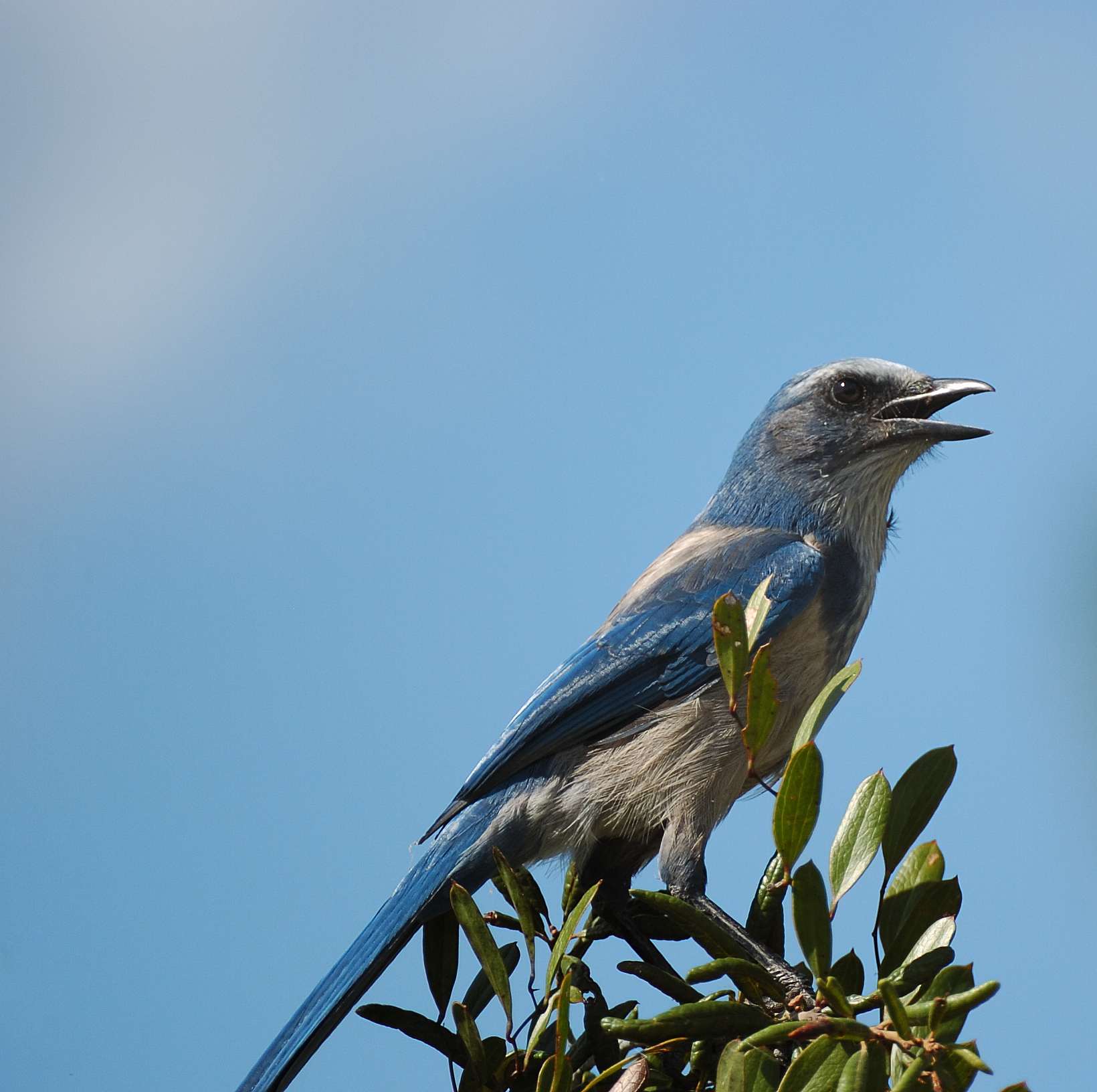
Florida Scrub Jay (Aphelocoma coerulescens) by Dan
Praise the LORD, for the LORD is good; Sing praises to His name, for it is lovely. (Psalms 135:3 NASB)
Look at the birds of the air: they neither sow nor reap nor gather into barns, and yet your heavenly Father feeds them. Are you not of more value than they? (Matthew 6:26 ESV)
I alway enjoy seeing the Grebes swimming around and diving. Waiting for them to come up is always an adventure. You never know where to look. You watch an area and next thing you know, up they pop nowhere near where they dove.
As for a young one, like the photo, that is an site that has evaded us. It is “cute.”
The Pied-billed Grebe (Podilymbus podiceps) is a species of the grebe family of water birds. That is the Podicipedidae – Grebes FamilyThe Pied-billed Grebe is primarily found in ponds throughout the Americas. Other names of this grebe include American dabchick, dabchick, Carolina grebe, devil-diver, dive-dapper, dipper, pied-billed dabchick, thick-billed grebe, and other names.
Pied-billed Grebes are small, stocky, and short-necked. They are 12–15 in (31–38 centimeters) in length, with a wingspan of 18–24 in (45–62 cm) and weigh 8.9–20.0 oz (253–568 grams). They are mainly brown, with a darker crown and back. Their brown color serves as camouflage in the marshes they live in. They do not have white under their wings when flying, like other grebes. Their undertail is white and they have a short, blunt chicken-like bill that is a light grey color, which in summer is encircled by a broad black band (hence the name). In the summer, its throat is black. Juveniles have black and white stripes and look more like winter adults. This grebe does not have webbed feet. Its toes have lobes that come out of the side of each toe. These lobes allow for easy paddling. When flying, the feet appear behind the body due to the feet’s placement in the far back of the body.
Its call is unique, loud and sounds like a “whooping kuk-kuk-cow-cow-cow-cowp-cowp.” Its call is similar to the Yellow-billed Cuckoo.
Pied-billed Grebes rarely fly. They make a slow dive frequently, especially when in danger, diving to about 20 feet or less. They dive for about 30 seconds and may move to a more secluded area of the water, allowing only the head to be visible to watch the danger dissipate.
Pied-billed Grebes feed mainly on aquatic invertebrates, and also on small fish and amphibians (frogs, tadpoles). They dive to obtain food. Their bills allow them to crush crustaceans, like crawfish. They may also eat plants. They have been shown to eat their own feathers, like other grebes, to aid in digestion (prevent injury from small bones). They will also feed their feathers to their young. (Wikipedia with editing)
I have been young, and now am old, yet I have not seen the righteous forsaken or his children begging for bread. (Psalms 37:25 ESV)
This photo, even though the young one is not really begging, and the parent is only doing what it is supposed to do, reminds me of that promise.
Be thou exalted, LORD, in thine own strength: so will we sing and praise thy power. (Psalms 21:13 KJV)
Had a very productive hour and 40 minute trip to Circle B Bar Reserve Saturday afternoon enjoying the Lord’s creation. The birds are definitely heading back down. After a sparse summer, things are starting to get interesting once more.
Limpkin (Aramus guarauna) by Lee at Circle B
We haven’t been out there for a while and was a little disappointed in the viewing. It rained considerably this summer and the plants have really grown up making it hard to see the water birds. Even with that, to see 34 species in just under 2 hours is not bad.
Alligator about 8 ft by Lee at Circle B
We were greeted with the sounds of the Blue Jays, Carolina Wrens and an Eastern Phoebe. Also, an Armadillo was walking right along the path to the marsh. Later, I spotted about an 8 foot alligator. Those and the normal squirrels were the only, non-birds I saw.
One of the highlights was seeing five Bald Eagles flying over. Two in one group and three in the other. We had just seen an Eagle on Friday down in Lake Wales. I love seeing Eagles.
American White Ibis (Eudocimus albus) by Lee at Circle B
In God we boast all the day long, and praise thy name for ever. Selah. (Psalms 44:8 KJV)
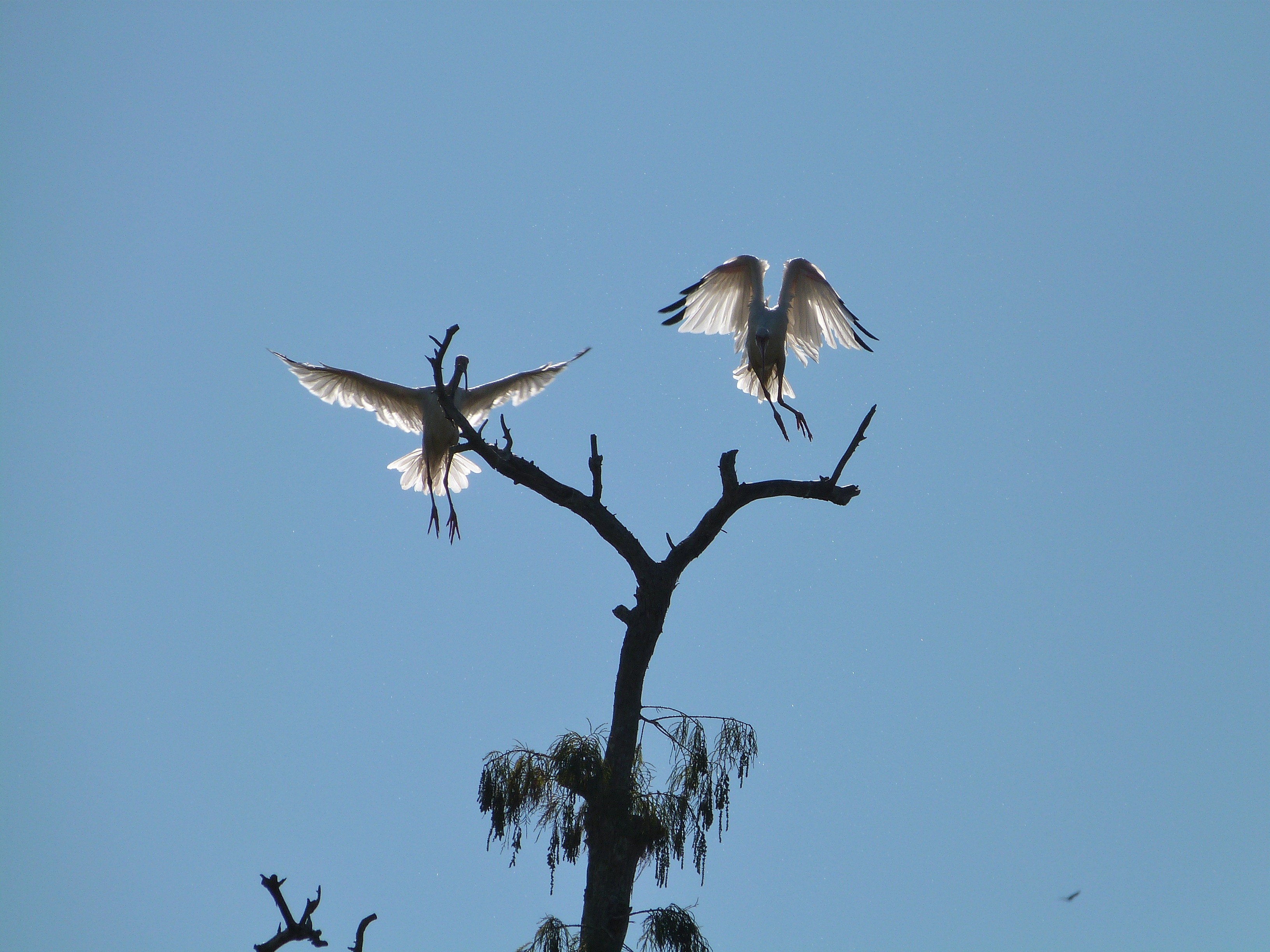
Two White Ibises landed in one of the trees when we first arrived. With the sun behind them, they remind you of Angel’s Wings. As you can see by the second photo the tree was being loaded up for the night when we passed it on the way out. That is one of the favorite “roosting” places at Circle B.
American White Ibis (Eudocimus albus) and friends
I am including a slideshow to give you an idea of how it was out there. The photography is not the best, but you can tell what the birds are at least. Dan doesn’t have his photos ready.
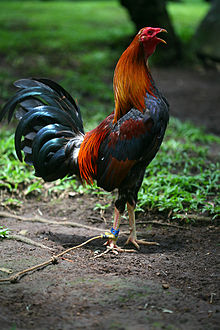
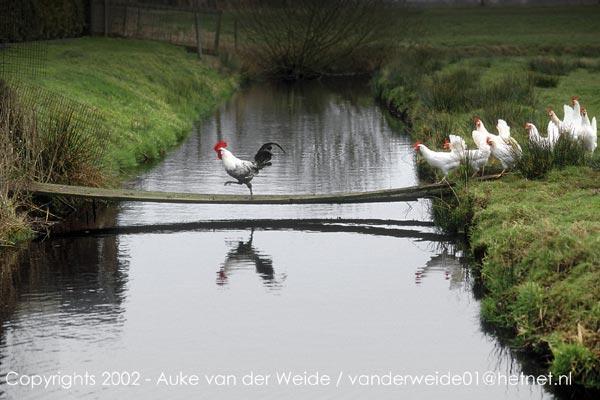
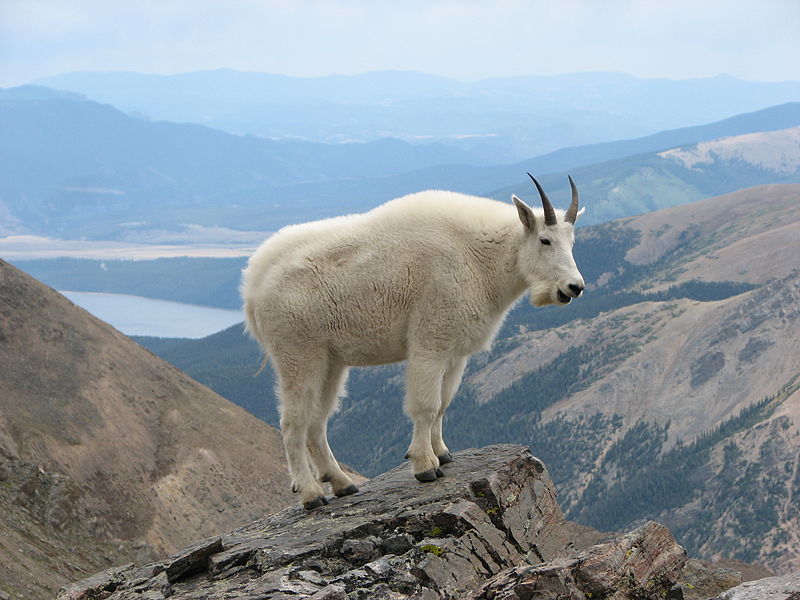
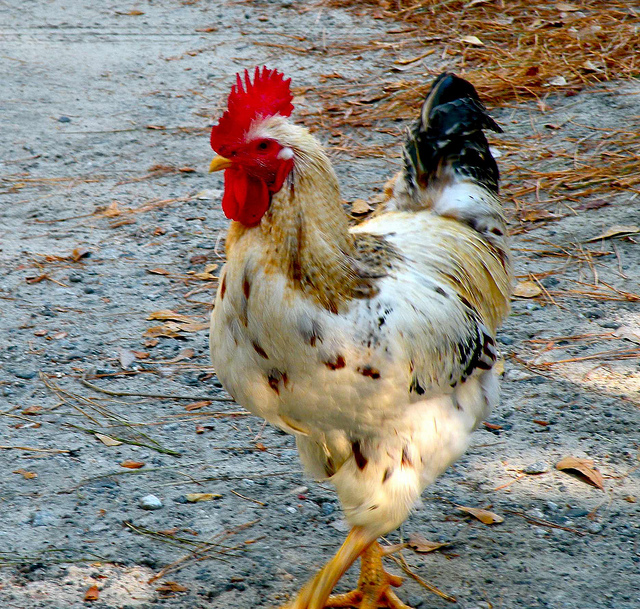
There are three things which are stately in their march, Even four which are stately when they walk: The lion which is mighty among beasts And does not retreat before any, The strutting rooster, the male goat also, And a king when his army is with him. (Proverbs 30:29-31 NASB)
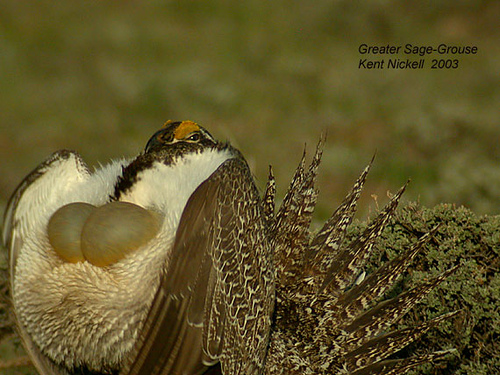
The Roosters referred to in this article are from the Phasianidae – Pheasants, Fowl & Allies Family. The term “rooster” can used other in ways. The Pheasants and Fowls are known to strut or display to try to win the eye of the female. The male is called a “rooster,” especially within the Domesticated Fowls.
Sage Grouse (Centrocercus urophasianus) by Kent Nickel in Phasianidae Family
Have you ever seen a parade with the King or a Captain marching in front of his troops? He sure doesn’t slouch or just walk nonchalantly. No, especially if a band is playing, they almost “strut.”
The Lion and a Goat can also be known to walk stately, or “strut.” These verses are not referring to a false pride, but something that is good. There are times to present a stately presence, David was rejoicing when he brought the Ark back to Jerusalem.
I like what Harry Ironside wrote in his Notes on Selected Books:
“30:29-31
It is quite proper to speak of the first three creatures as excelling in their movement, though it would hardly apply to a king. Majestic and glorious, he moves with stately bearing and therefore comes under the second head.
The lion is characterized by unflinching boldness; it represents that holy courage which should mark the Christian soldier as he contends earnestly for the faith once delivered to the saints. In his faith, he is to have virtue, true courage, to withstand in the evil day and remain true to his course. It is not mere dogged determination that is contemplated, but “the irresistible might of weakness” that leans on God; this is what led Paul to write, “when I am weak, then am I strong” (2 Corinthians 12:10).
The second in this series has been variously translated as “a greyhound,” “a girded horse,” “a zebra,” and “a strutting rooster.” The latter is preferred in the Septuagint, Syriac, Vulgate, and Chaldee versions. But according to the best authorities the word simply means girded as to the loins. It may therefore be applied to any slender creature characterized by swiftness. The translators of the King James version preferred “greyhound” as most fully expressing the idea of an animal adapted to running. It matters little what beast is signified. The lesson for us is clear enough. As a girded animal does not rest until it reaches its prey or the goal to which it is running, so the saint is to press swiftly on, refusing to be turned aside by the attractions of this world. He is viewed as a racer in Philippians 3:13-14:
Brethren, I count not myself to have apprehended: but this one thing I do, forgetting those things which are behind, and reaching forth unto those things which are before, I press toward the mark for the prize of the high calling of God in Christ Jesus.
This should always be the Christian’s attitude. Having no city here, he does not halt to dally with the insignificant things of earth. With girded loins and eyes fixed on Christ, he hastens on to the judgment seat where the prize is to be awarded.
Wherefore seeing we also are compassed about with so great a cloud of witnesses, let us lay aside every weight, and the sin which doth so easily beset us, and let us run with patience the race that is set before us, Looking unto Jesus the author and finisher of our faith; who for the joy that was set before him endured the cross, despising the shame, and is set down at the right hand of the throne of God (Hebrews 12:1-2).
Christ was the great pattern-pilgrim, passing through this world as a stranger; He found only sorrow and grief here, but His joy is now full in glory!
The male goat is the climber. Refusing the low and often un-healthful valleys, he mounts up higher and higher to the rocky hills and the peaks of the mountains. (See Psalm 104:18). Breathing the exhilarating air of the top of the rocks, he finds both pleasure and safety in his retreat. The lesson is simple. The Christian must walk on the high places; then like Habakkuk, he will be able to rejoice in the day of trouble and joy in the God of his salvation when everything of earth seems to fail (Habakkuk 3:17-19). From the soul of the climbing saint there will ever be melody.
A heavenly-minded soul is lifted above all the mists of this poor world and enabled to view all from God’s standpoint.
If ye then be risen with Christ, seek those things which are above, where Christ sitteth on the right hand of God. Set your affection on things above, not on things on the earth. For ye are dead, and your life is hid with Christ in God (Colossians 3:1-3).
This is the lesson of the male goat. Would that every believer could enter into it!
The last in the list of these pleasant things is the king going forth in undisputed, majestic strength. It is the overcomer, the man of faith, made a king unto God; his dignity is never greater than when he walks in lowliness and meekness through this world, drawing his supplies from above not from below. Great is the honor conferred on all who have been redeemed. No longer children of the night, but of the day, they are called to overcome the world in the power of the truth revealed to them by faith. Abraham was such a “king” as he went from Melchizedek’s presence to meet Sodom’s fawning monarch. He vanquished this ruler in a different way from that in which he had defeated the confederacy headed by Chedorlaomer (Genesis 14). God would have every Christian defeat his enemy in stately majesty, joining forces with Him, and counting the richest treasures of earth as dung and dross. “This is the victory that overcometh the world, even our faith” (1 John 5:4). Strong in faith, the man of God views his present situation in the light of his future reward. Then, even though accounted as sheep for the slaughter, he can exclaim, “Nay, in all these things we are more than conquerors through him that loved us” (Romans 8:37).”
Oh, give thanks to the LORD, for He is good! For His mercy endures forever. (1 Chronicles 16:34 NKJV)
Thank you!
Thank you!!
–
THANK YOU!!!
I thank my God upon every remembrance of you, (Philippians 1:3 NKJV)
Wow!
Just had the 1 Millionth page view on this blog.
Without the Lord’s leading, His help and your visits to this blog, this would not have happened. I am so appreciative for every one of you who have visited throughout the years and also put up with my good and not-so-good articles. The blog started in February of 2008, but was moved here to WordPress in July of 2008. That is when this count started. Here are the dates of milestones that are in the Sidebar.
My special thanks goes to Stephen, our assistant to the Pastor at my church (Faith Baptist of Winter Haven) for suggesting that I write about the Birds of the Bible on the church’s Blog – The Fountain. That was on Blogspot. I started a blog of my own, to learn how to lay it out. That is when Lee’s Birdwatching Adventures Plus was started. We both moved our blogs off of Blogspot over the years.
Also, a big thanks to all my regular and guest writers.
Thanks to Visitors
Moved to WordPress 00,000 – July 05, 2008
50,000 – Oct 10, 2009
100,000 – Apr 5, 2010
150,000 – Sep 6, 2010
200,000 – Dec 30, 2010
250,000 – Apr 9, 2011
300,000 – June 29, 2011
350,000 – Sep 19, 2011
400,000 – Nov 18, 2011
450,000 – Jan 21, 2012
500,000 – Mar 1, 2012
600,000 – May 24, 2012
700,000 – Sep 2, 2012
800,000 – Dec 16, 2012
900,000 – Ap 13, 2013
1,000,000 – Oct 20, 2013
1st 500+ Day (568) Oct 29, 2009
1st 600+ Day (637) Sep 28, 2010
1st 700+ Day (722) Apr 4, 2011
1st 800+ Day (810) May 18, 2011
1st 900+ Day (955) Oct 2, 2011
1st 1000+ Day (1,016) Oct 20, 2011
1st 2,000+ Day (2,220) Feb 10, 2012
1st 3,000+ Day (3896) Feb 21, 2013
Links to the very first few articles on Lee’s Birdwatching Adventures original site copied over here:
Looking back at them, I trust you like the ones being produced now much better. Hey, it was a learning curve back then. These are the first seven articles on Lee’s Birdwatching Adventures Plus when it first started up here:
Thank You again for all your visits, likes, comments, and encouragements.
Lee
*
P.S. I really have no way of knowing who the 1,000,000th visitor was, but we were at lunch with friends and kept watching the count. Saw 1,000,002 at around 1:20pm EST. Checking the Sitemeter after arriving home, someone from Brazil came in about 1:18, looked at 14 pages. Also at 1:20 an unknown came in, and at 1:22 a visitor arrived from Chicopee, Massachusetts. (This is just for trivia.)
African Fish Eagle (Haliaeetus vocifer) by Africaddict
Wilt thou set thine eyes upon that which is not? for riches certainly make themselves wings; they fly away as an eagle toward heaven. (Proverbs 23:5)
Using e-Sword’s search for just the word “fly,” there are 15 verses in the AMP, 16 in the ESV, and 25 in the KJV. They can’t all refer to a bird flying around, so let’s see how many actually refer to the birds.
Here are the verses from the KJV:
And God said, Let the waters bring forth abundantly the moving creature that hath life, and fowl that may fly above the earth in the open firmament of heaven. (Gen_1:20)
Wherefore then didst thou not obey the voice of the LORD, but didst fly upon the spoil, and didst evil in the sight of the LORD? (1Sa_15:19)
And he rode upon a cherub, and did fly: and he was seen upon the wings of the wind. (2Sa_22:11)
Yet man is born unto trouble, as the sparks fly upward. (Job_5:7)
He shall fly away as a dream, and shall not be found: yea, he shall be chased away as a vision of the night. (Job_20:8)
Doth the hawk fly by thy wisdom, and stretch her wings toward the south? (Job_39:26)
And he rode upon a cherub, and did fly: yea, he did fly upon the wings of the wind. (Psa_18:10)
And I said, Oh that I had wings like a dove! for then would I fly away, and be at rest. (Psa_55:6)
The days of our years are threescore years and ten; and if by reason of strength they be fourscore years, yet is their strength labour and sorrow; for it is soon cut off, and we fly away. (Psa_90:10)
Wilt thou set thine eyes upon that which is not? for riches certainly make themselves wings; they fly away as an eagle toward heaven. (Pro_23:5)
Above it stood the seraphims: each one had six wings; with twain he covered his face, and with twain he covered his feet, and with twain he did fly. (Isa_6:2)
And it shall come to pass in that day, that the LORD shall hiss for the fly that is in the uttermost part of the rivers of Egypt, and for the bee that is in the land of Assyria. (Isa_7:18)
But they shall fly upon the shoulders of the Philistines toward the west; they shall spoil them of the east together: they shall lay their hand upon Edom and Moab; and the children of Ammon shall obey them. (Isa_11:14)
Who are these that fly as a cloud, and as the doves to their windows? (Isa_60:8)
For thus saith the LORD; Behold, he shall fly as an eagle, and shall spread his wings over Moab. (Jer_48:40)
Behold, he shall come up and fly as the eagle, and spread his wings over Bozrah: and at that day shall the heart of the mighty men of Edom be as the heart of a woman in her pangs. (Jer_49:22)
Wherefore thus saith the Lord GOD; Behold, I am against your pillows, wherewith ye there hunt the souls to make them fly, and I will tear them from your arms, and will let the souls go, even the souls that ye hunt to make them fly. (Eze_13:20)
Yea, whiles I was speaking in prayer, even the man Gabriel, whom I had seen in the vision at the beginning, being caused to fly swiftly, touched me about the time of the evening oblation. (Dan_9:21)
As for Ephraim, their glory shall fly away like a bird, from the birth, and from the womb, and from the conception. (Hos_9:11)
Their horses also are swifter than the leopards, and are more fierce than the evening wolves: and their horsemen shall spread themselves, and their horsemen shall come from far; they shall fly as the eagle that hasteth to eat. (Hab_1:8)
And to the woman were given two wings of a great eagle, that she might fly into the wilderness, into her place, where she is nourished for a time, and times, and half a time, from the face of the serpent. (Rev_12:14)
And I saw another angel fly in the midst of heaven, having the everlasting gospel to preach unto them that dwell on the earth, and to every nation, and kindred, and tongue, and people, (Rev_14:6)
And I saw an angel standing in the sun; and he cried with a loud voice, saying to all the fowls that fly in the midst of heaven, Come and gather yourselves together unto the supper of the great God; (Rev_19:17)
How many do you think directly relate to birds? Some refer to their speed of flying. How many birds were actually named?
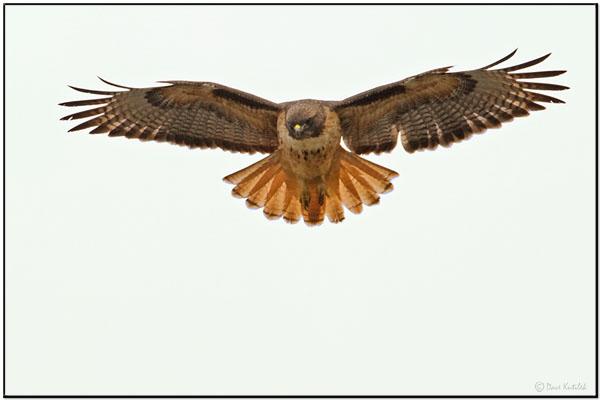
Red-tailed Hawk (Buteo jamaicensis) by Daves BirdingPix
I trust you enjoy digging into God’s Word more than just reading it. If you have a program like e-Sword (free) or something similiar or a good concordance, you can do these type of searches.
Back to the questions – which verses have birds mentioned?
fowlthat may fly above the earth (Gen_1:20)
hawk fly (Job_39:26)
dove! for then would I fly away, and be at rest. (Psa_55:6)
fly away as an eagletoward heaven. (Pro_23:5)
fly as a cloud, and as the doves to their windows? (Isa_60:8)
shall fly as an eagle, and shall spread his wings over Moab. (Jer_48:40)
fly as the eagle, and spread his wings over Bozrah (Jer_49:22)
their glory shall fly away like a bird, (Hos_9:11)
fly as the eaglethat hasteth to eat. (Hab_1:8)
two wings of a great eagle, that she might fly into the wilderness (Rev_12:14)
all the fowls that fly in the midst of heaven (Rev_19:17)
The Bible tells us:
But now ask the beasts, and they will teach you; And the birds of the air, and they will tell you; (Job 12:7 NKJV)
If you had never watched a bird fly, would any of those verses above make sense to you? The Lord not only has given all the numerous birds for us to enjoy, but also to teach us lessons.
Would you understand “…for riches certainly make themselves wings; they fly away as an eagle toward heaven. (Proverbs 23:5) if you had not seen how fast an eagle flies? How fast can we waste our riches?
Thinking about how birds fly, reread the verses above, even the ones that do not mention birds and see if that doesn’t help explain parts of the verse.
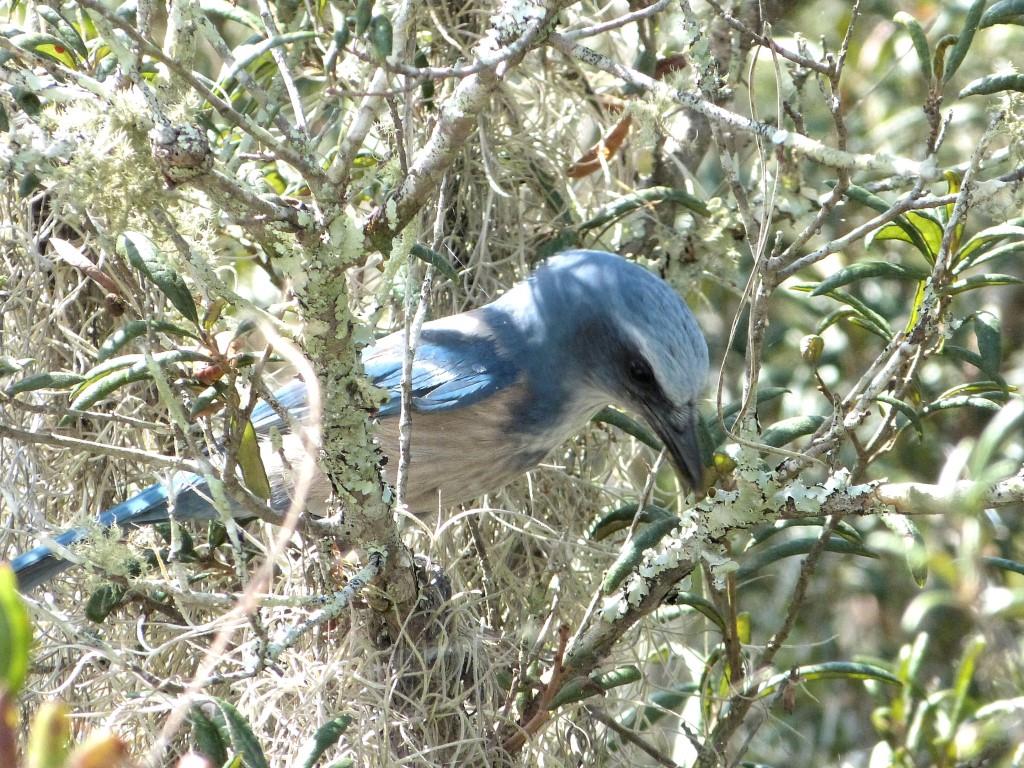
Florida Scrub Jay (Aphelocoma coerulescens) by Dan
Then God said, “Let the waters abound with an abundance of living creatures, and let birds fly above the earth across the face of the firmament of the heavens.” (Genesis 1:20 NKJV)
Now for the good photos from our visit to see the Florida Scrub Jays. Dan shared these that he took.
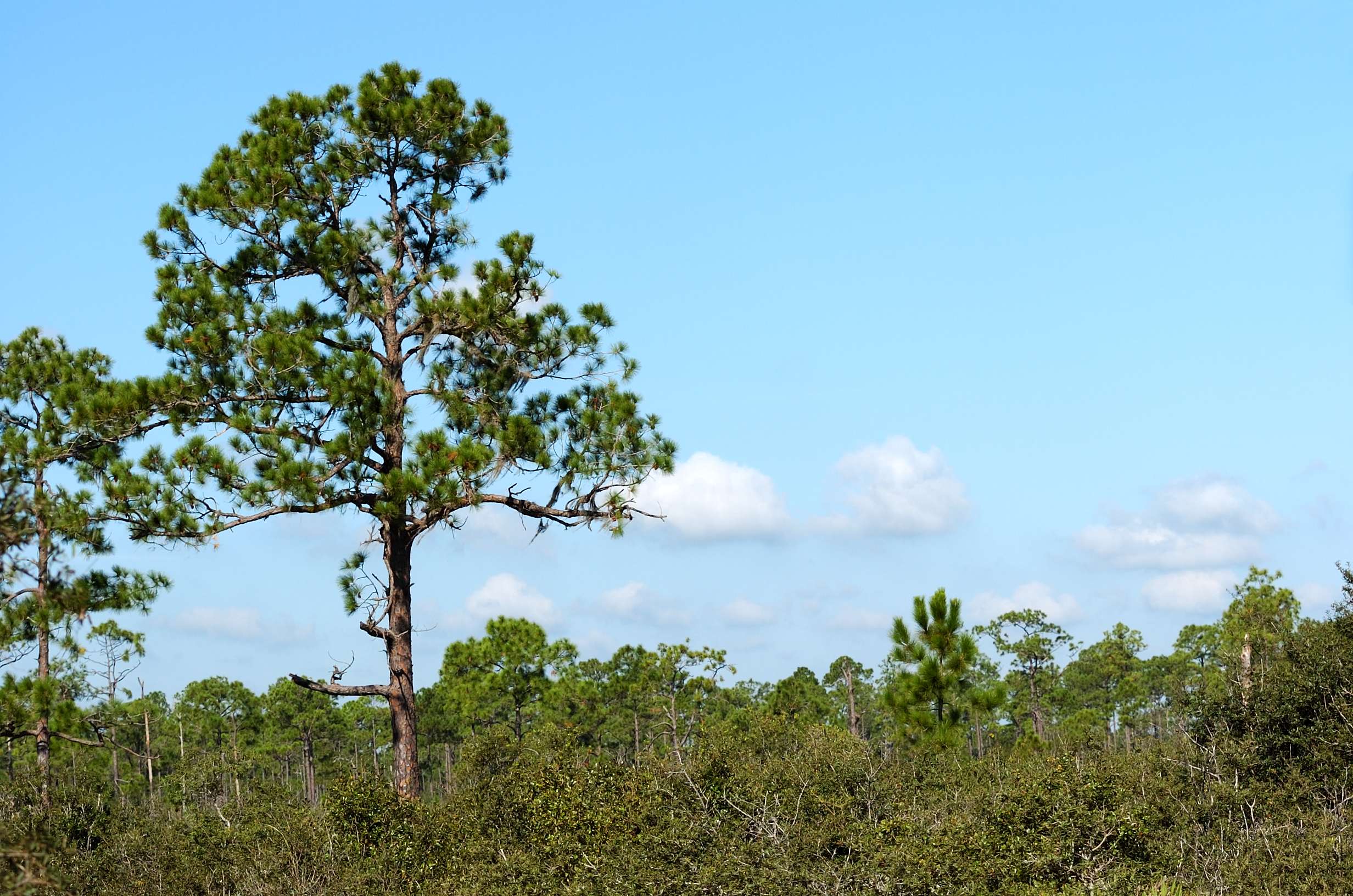
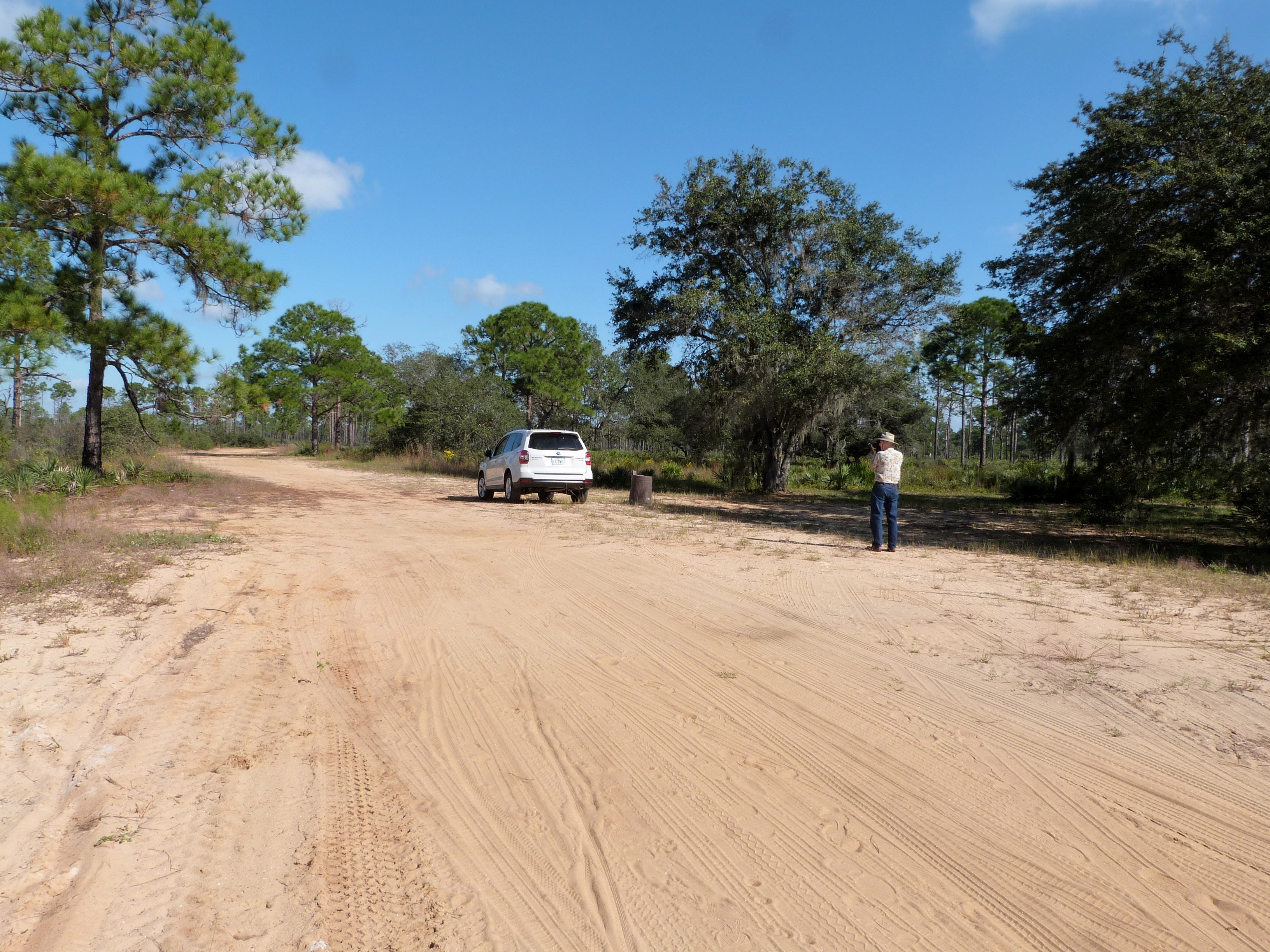
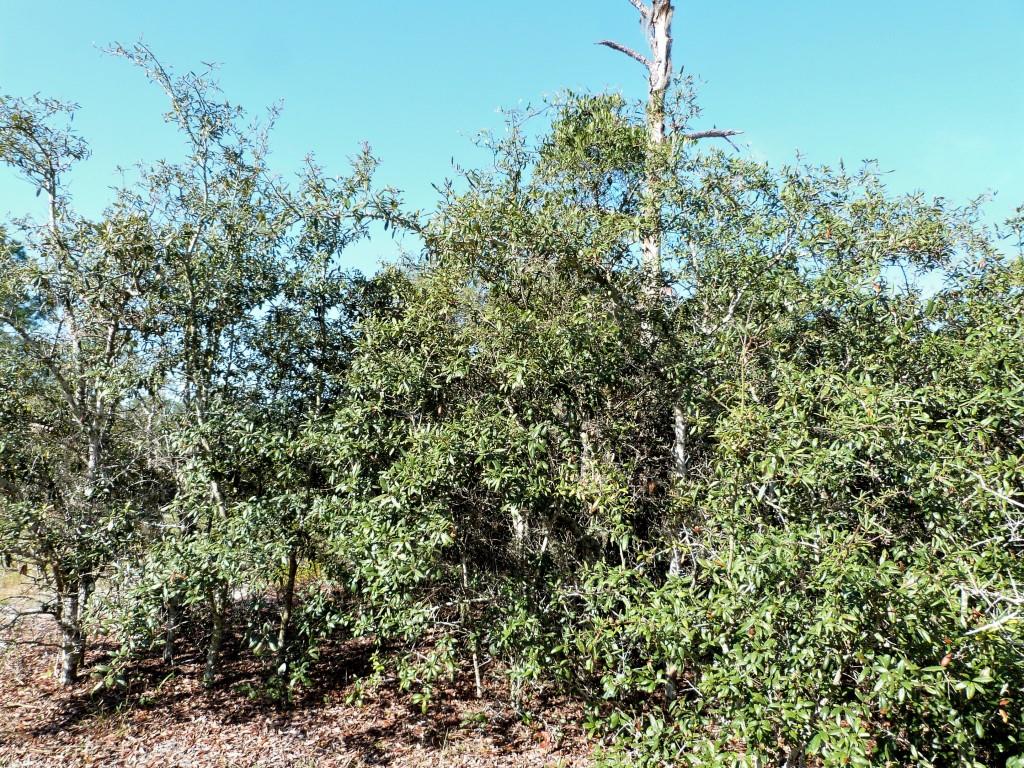
Here is an idea of the “scrub” habitat that the Florida Scrub Jays prefer. They do not like too many trees where Hawks, Eagles or other Birds of Prey can attack them.
Scrub Habitat at Lake June-in-Winter SP by Dan
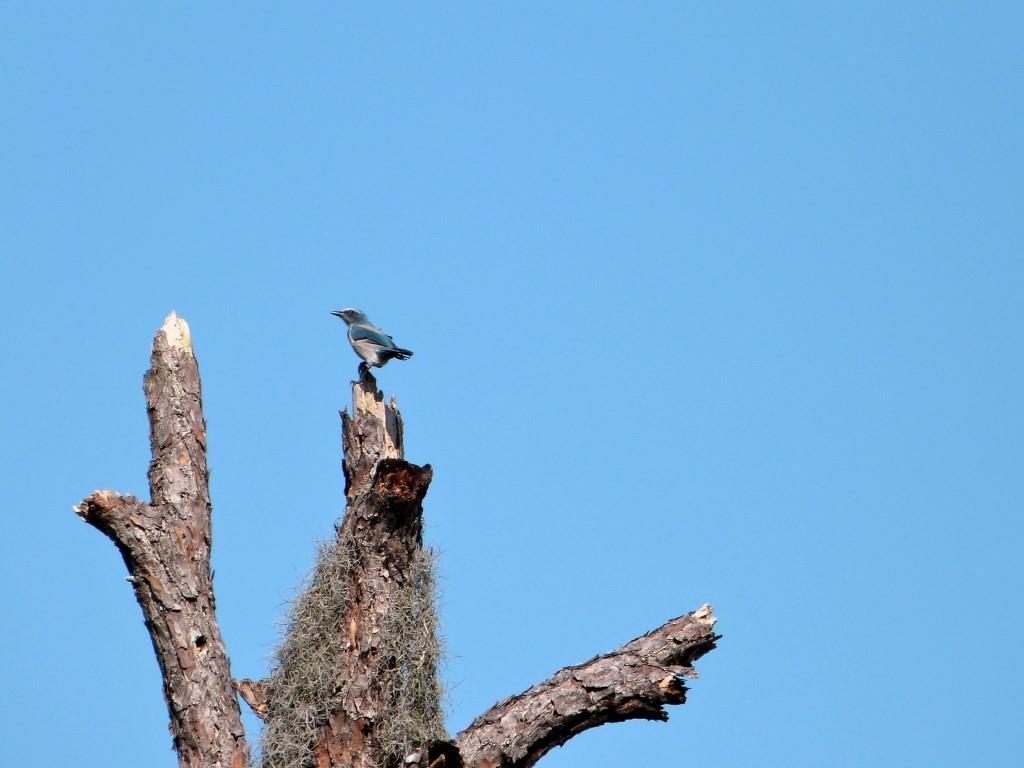
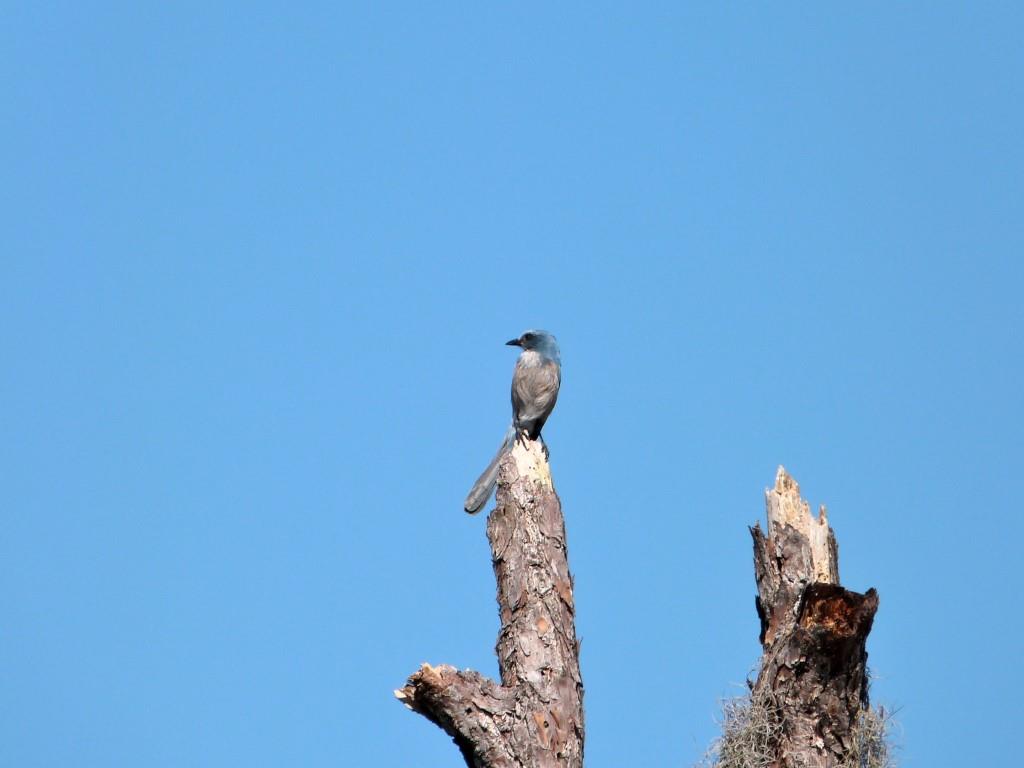
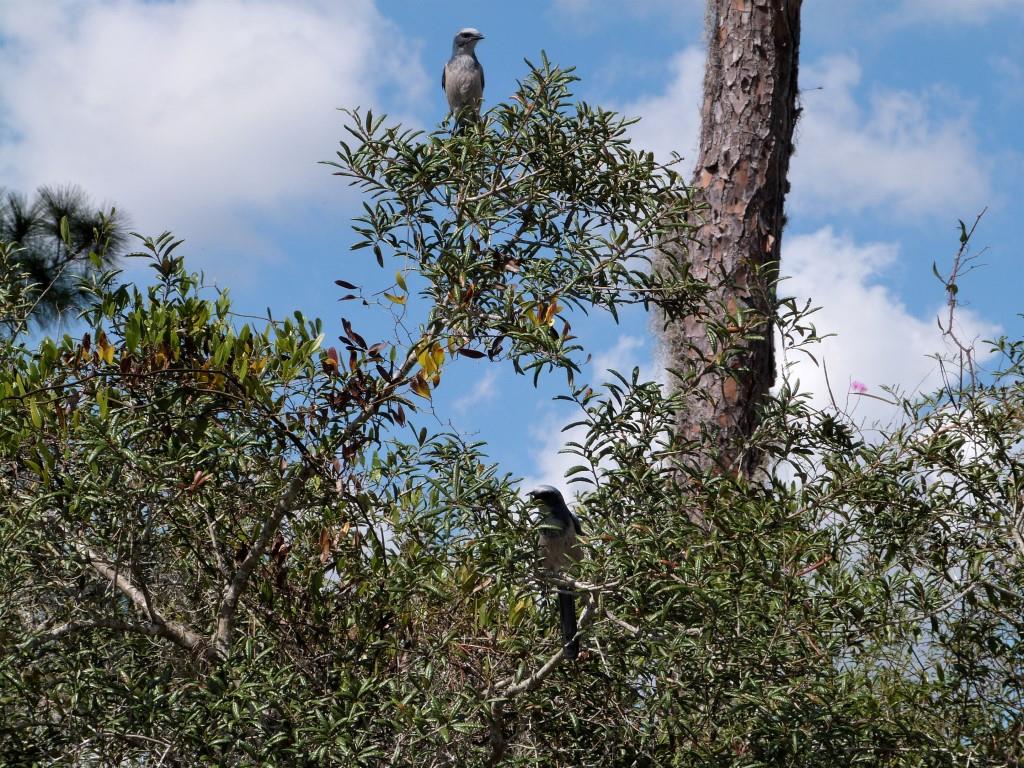
They greeted us from a distance at first.
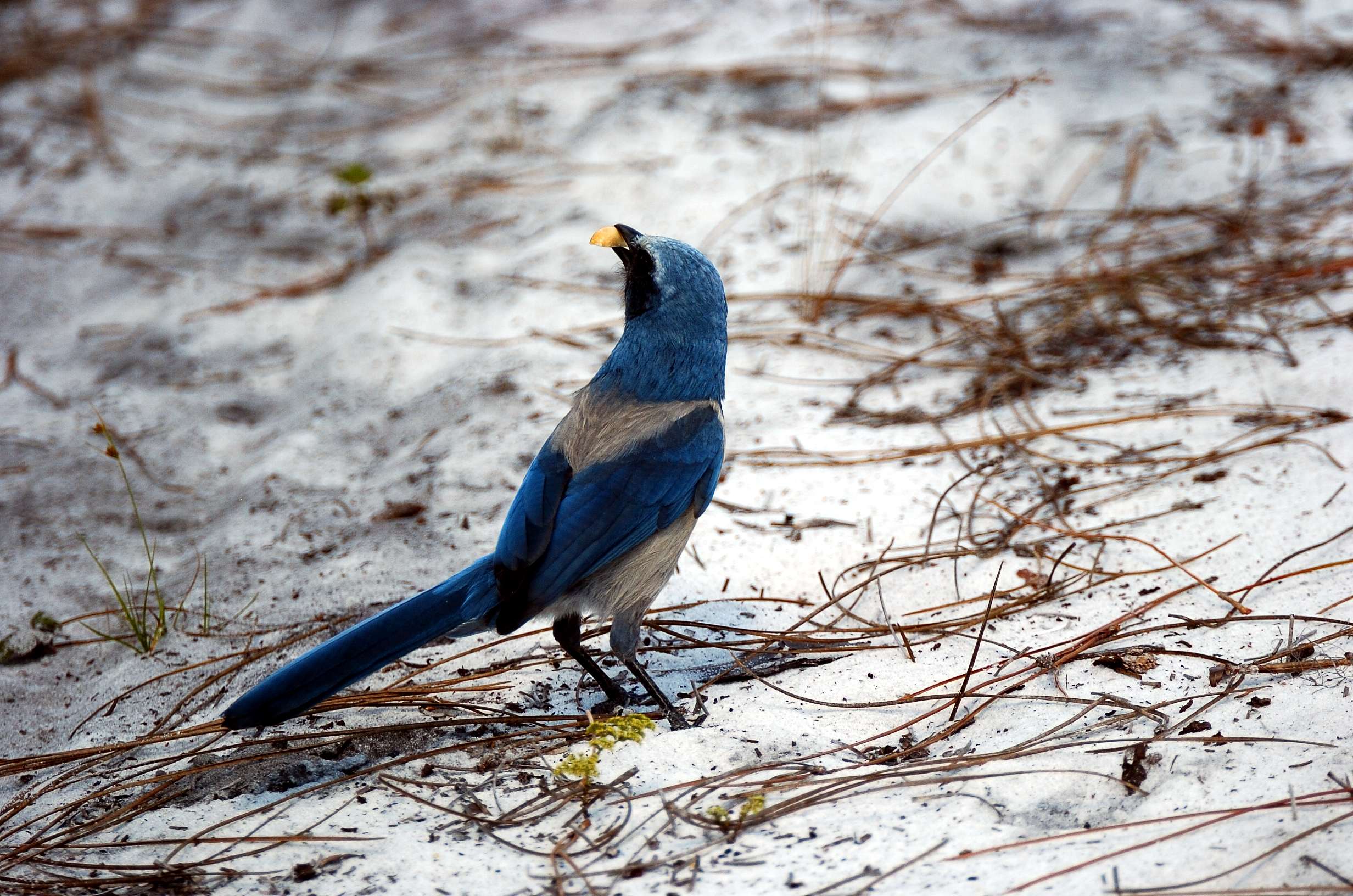
Florida Scrub Jay (Aphelocoma coerulescens) by Dan
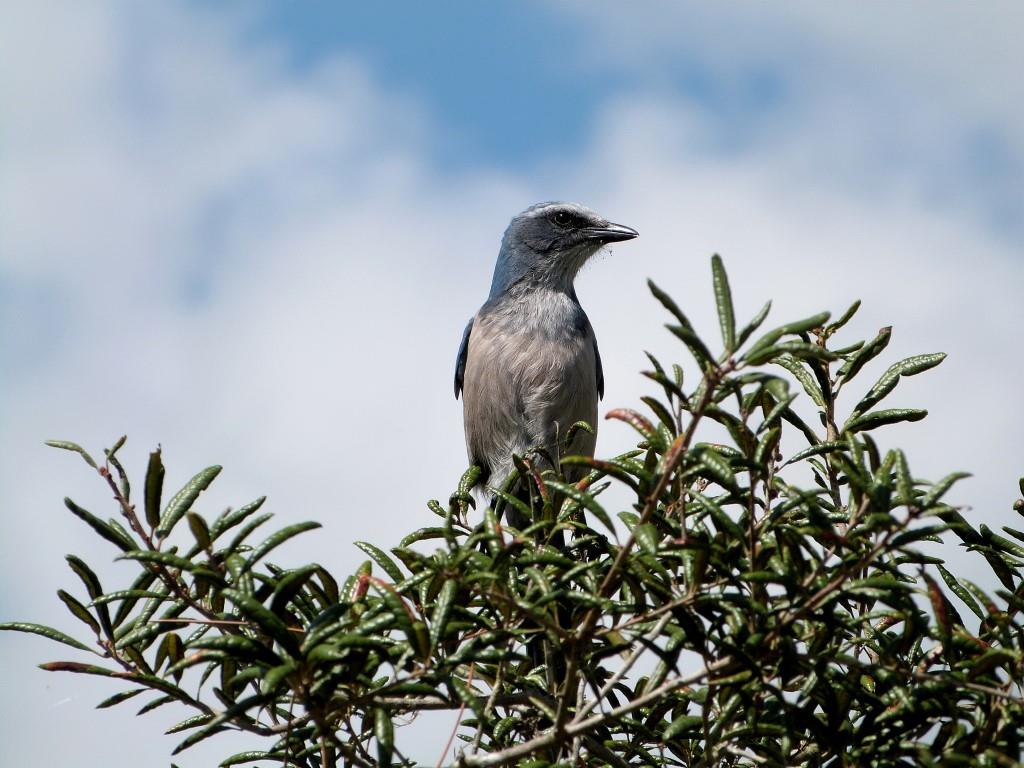
Then they were more friendly when enticed.
Florida Scrub Jay (Aphelocoma coerulescens) by Dan
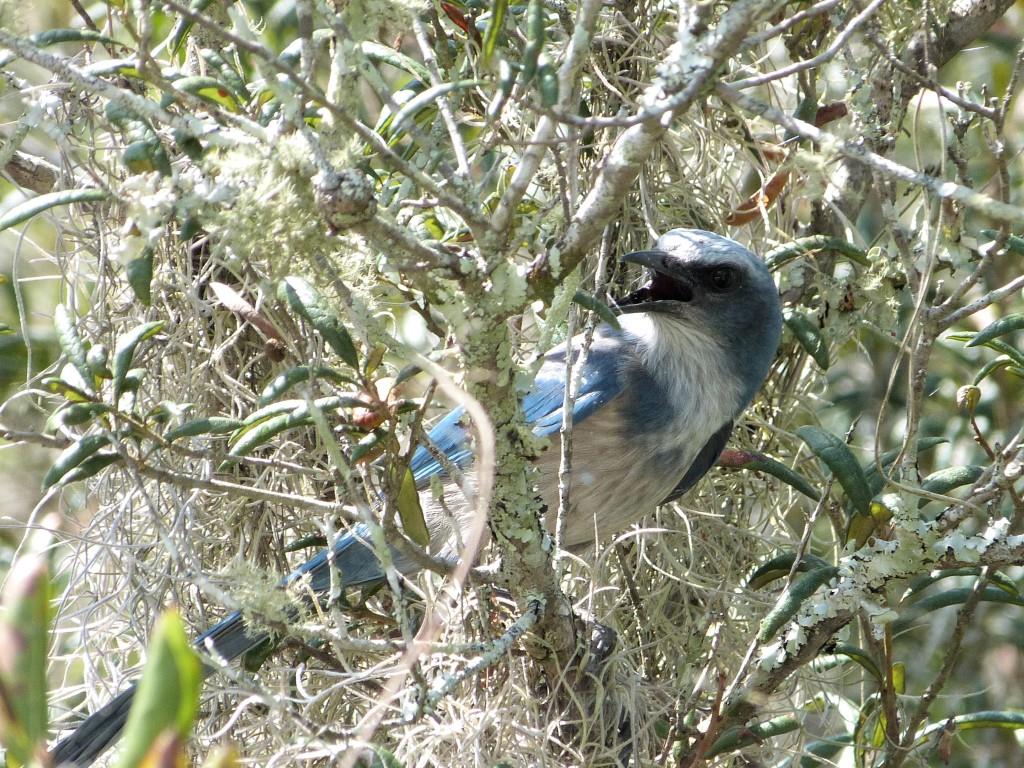
They are such pretty birds. I sure am glad the Lord has given us so many varieties of avian friends to enjoy.
Florida Scrub Jay (Aphelocoma coerulescens) by Dan
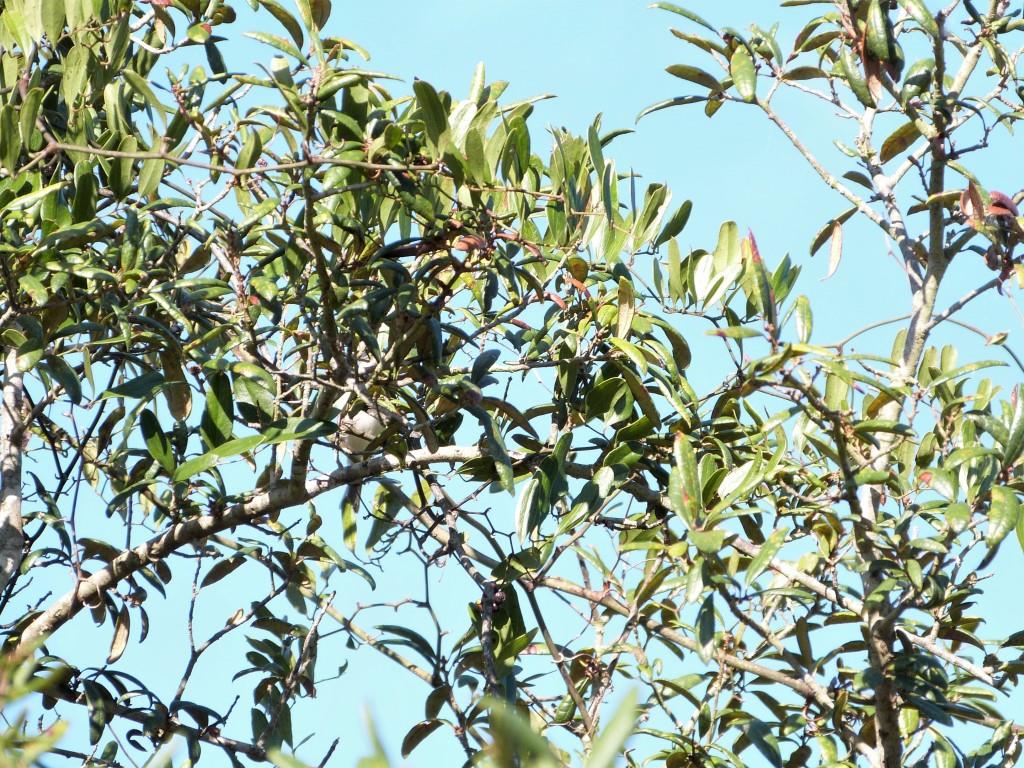
Here is another photo from the state parks habitat:
Habitat at State Park by Dan
These two last photos were his that he photographed through the open window of the Red-Shouldered Hawk at Highlands Hammock State Park. Remember, mine was through plastic.
Red-shouldered Hawk (Buteo lineatus) Highlands Hammock SPk by Dan
“Does the hawk fly by your wisdom, And spread its wings toward the south? (Job 39:26 NKJV)
Red-shouldered Hawk (Buteo lineatus) Highlands Hammock SPk by Dan
Trust you have enjoyed seeing these fantastic birds.
Florida Scrub Jay (Aphelocoma coerulescens) Highlands Hammock S Pk
Look at the birds of the air, for they neither sow nor reap nor gather into barns; yet your heavenly Father feeds them. Are you not of more value than they? (Matthew 6:26 NKJV)
The main reason we went to Highlands Hammock State Park yesterday was to find some Florida Scrub Jays. The ranger told us where to find theirs and also where more could be found in another park.
Florida Scrub Jay (Aphelocoma coerulescens) Highlands Hammock SPk 10-14-13
Went on the drive where the Wilderness Camping Area is located. Florida Scrub Jays prefer the scrub areas. The ranger told us that they had recently had a controlled burn and this family moved in right after that. From the pictures, you will see the kind of habitat they like.
This is the area where we found the Scrub Jays at Highlands Hammock S P.
We found the Florida Scrub Jays, but they never got very close. We were also initiating our new “birding mobile”, as I have named it. Off the subject, but here is a photo of a Red-shouldered Hawk I shot through the “moonroof.” My first attempt at that. Next time, when we are not right under a hawk, it will be opened.
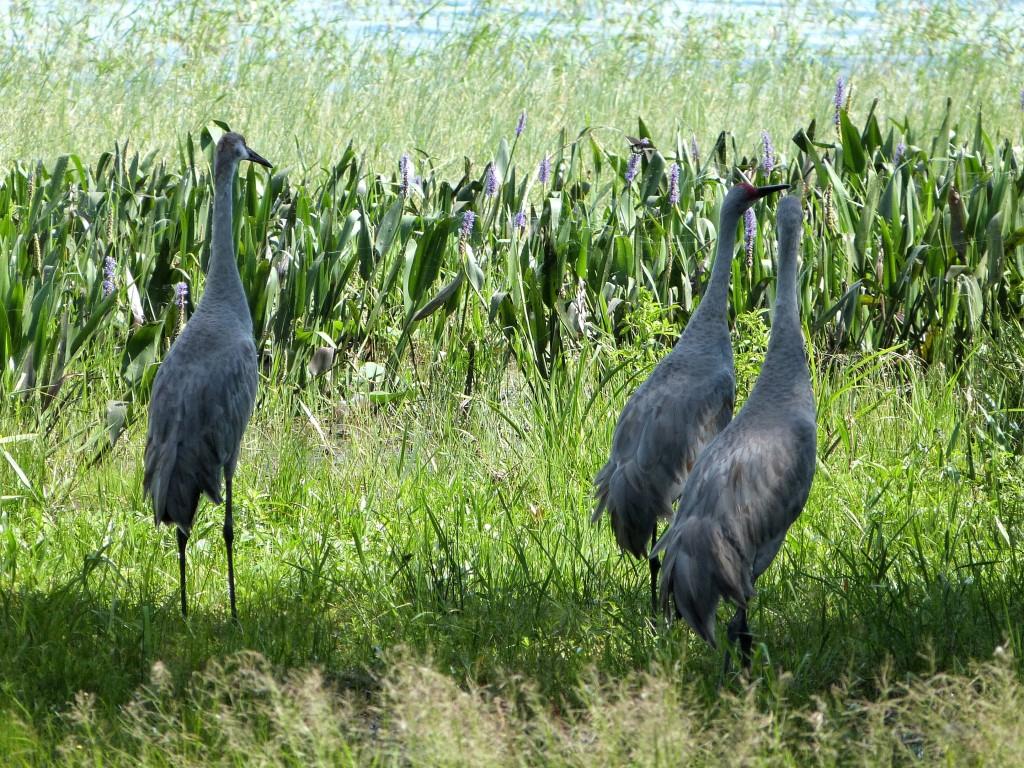
After driving through the rest of that park, we headed for the Lake June-in-Winter State Park. Never heard of it before. It is very tiny and we were the only ones there. Well, the birds of course were there, especially the Scrub Jays. We were able to get quite a few photos of them and they were quite friendly. There were also three Sandhill Cranes plus sounds of birds I do not recognize. The photos will be intermingled with some information about the jays from Wikipedia.
Florida Scrub Jay (Aphelocoma coerulescens) Lake June-in-Winter SPk
The Florida Scrub Jay (Aphelocoma coerulescens) is one of the species of scrub jay native to North America. It is the only species of bird endemic to the U.S. state of Florida and one of only 15 species endemic to the United States. Because of this, it is heavily sought by birders who travel from across the country to observe this unique species. It is possibly derived from the ancestors of Woodhouse’s Scrub Jay, the inland forms of the Western Scrub-jay. They belong to the Corvidae – Crows, Jays, Ravens Family.
Florida Scrub Jay (Aphelocoma coerulescens) Lake June-in-Winter SPk
It measures 9.1 to 11 in (23 to 28 cm) in length, and weighs from 2.3 to 3.2 oz (66 to 92 g), with an average 2.83 oz (80.2 g). The wingspan of the jay is 13–14 in (33–36 cm). It has a strong black bill, blue head and nape without a crest, a whitish forehead and supercilium, blue bib, blue wings, grayish underparts, gray back, long blue tail, black legs and feet.
Florida Scrub Jay (Aphelocoma coerulescens) Lake June-in-Winter SPk
The Florida Scrub Jay is found only in Florida scrub habitat, an ecosystem that exists only in central Florida and is characterized by nutrient-poor soil, occasional drought, and frequent wildfires. Because of its somewhat harsh weather pattern, this habitat is host to a small assortment of very specific plants, including Sand Pine, Sand Live Oak, Myrtle Oak, Chapman’s Oak, Sandhill Oak, Florida Rosemary[11] and various other hardy plants such as Eastern prickly pear.
Florida Scrub Jay (Aphelocoma coerulescens) Lake June-in-Winter SPk
Florida Scrub Jays are omnivorous and eat a wide variety of acorns, seeds, peanuts, insects, tree frogs, turtles, snakes, lizards, and young mice. Florida Scrub Jays have also been occasionally observed to eat other birds’ eggs or nestlings, but this occurs rarely. They routinely cache thousands of acorns a year, burying them just beneath the surface. The acorns are typically buried in the fall and consumed during the winter and spring. Acorns that are forgotten or missed may germinate, making the Florida Scrub-Jay an effective agent for the dispersal of a variety of oak trees.
Florida Scrub Jay (Aphelocoma coerulescens) Lake June-in-Winter SPk
Scrub jays may also take silverware and other shiny objects in a manner similar to the American Crow.
Sandhill Crane (Grus canadensis) Lake June-in-Winter SPk
Here are some more of the photos from this “birdwatching adventure.”
Western Kingbird (Tyrannus verticalis) Highlands Hammock S Pk by Lee
I know all the birds of the mountains, And the wild beasts of the field are Mine. (Psalms 50:11 NKJV)
We have been off on several birdwatching adventures the last few days. We were out enjoying the Lord’s creation, especially His birds. Still sorting through the photos, but wanted to share two birds we saw today. They were at Highlands Hammock State Park in Sebring, FL. Both are birds that I have seen, but only when another birder pointed them out. That always gives a joy when you find and can figure out what a bird is.
The first one, I was only able to get one decent photo because it moved on quickly. Here is the bird cropped. (I trust this is the correct ID)
Western Kingbird (Tyrannus verticalis) Highlands Hammock SP by Lee
Kingbirds are members of the Tyrannidae – Tyrant Flycatchers Family. Adults are grey-olive on the upperparts with a grey head and a dark line through the eyes; the underparts are light becoming light orange-yellow on the lower breast and belly. They have a long black tail with white outer feathers. Western kingbirds also have a reddish crown that they only display during courtship and confrontations with other species.
These birds migrate in flocks to Florida and the Pacific coast of southern Mexico and Central America. (Lucky for us.)
They wait on an open perch and fly out to catch insects in flight, sometimes hovering and then dropping to catch food on the ground. They also eat berries.
The song is a squeaky chatter, sometimes compared to a dog’s squeaky toy. The call is a sharp loud whit. Occasionally sings before sunrise.
I have only seen this bird maybe three or four times before, so it was a nice find.
Highlands Hammock State Park
My next challenge started out in the trees and bushes above. This bird was all over the place and wouldn’t stay still as I tried to catch a photo of it. (Which is typical for those small birds.)
Here are some of my attempts to catch this bird. I do not use the “rule of thirds” because when I get home, finding the bird is easier if it’s centered. I figured out that it had a white breast by this photo. Let me zoom in.
That white eye is what nailed the ID on this bird. This is the first time that I’ve photographed one. When trying to figure these birds out, a good field guide and the internet sure come in handy.
My first ID in the field was wrong on both of these birds. I thought the Kingbird was some sort of Flycatcher and that this Vireo was a Warbler. Even though I only shoot in Program mode, and I do not claim to be a photographer, it does help to take proof or ID photos to help figure out what you really are seeing. It is more fun to just enjoy the birds while you are watching them and figure what it was later.
White-eyed Vireo (Vireo griseus) Highlands Hammock SP by Lee
They belong to the Vireonidae – Vireos, Greenlets Family. The White-eyed Vireo (Vireo griseus) is a small songbird. It breeds in the southeastern USA from New Jersey west to northern Missouri and south to Texas and Florida, and also in eastern Mexico, northern Central America, Cuba and the Bahamas.
Populations on the US Gulf coast and further south are resident, but most North American birds migrate south in winter.The White-eyed Vireo (Vireo griseus) is a small songbird. It breeds in the southeastern USA from New Jersey west to northern Missouri and south to Texas and Florida, and also in eastern Mexico, northern Central America, Cuba and the Bahamas.
Populations on the US Gulf coast and further south are resident, but most North American birds migrate south in winter.
More of these trips will be shared. Saw lots of Wood Ducks and Florida Scrub Jays that I will “Show and Tell” later.
Thank all of you up North who have finally been sending your birds down for the coming winter. The birdwatching was getting a little boring.
Out of the ground the LORD God formed every beast of the field and every bird of the air, and brought them to Adam to see what he would call them. And whatever Adam called each living creature, that was its name. (Genesis 2:19 NKJV)
The newest update for the I.O.C. Version 3.5 came out September 30th. Lee’s Birdwatching Adventures Birds of the World has the latest changes. There are now “10,507 extant species and 150 extinct species classified in 40 Orders, 232 Families (plus 5 Incertae Sedis) and 2284 Genera. The list also includes 20,967 subspecies.”
After making changes to around 300 pages, you should be able to find one of those 10,507 avian friends with out too much difficulty. What did they change?
They (I.O.C.) added 22 new species, deleted 2 that they turned back to just a subspecies, changed the names or spelling of 47 birds (37 of those changed the name Madagascar to Madagascan), plus they made 30 taxonomy changes.
In those taxonomy changes, they took the Paridae – Tits, Chickadees family and threw it up in the air and let it fall totally different. At least, that is my description of it. Actually, because of DNA studies, they found that the birds are related differently in the family than they thought. They also shuffled the Aratinga species of Parakeets around.
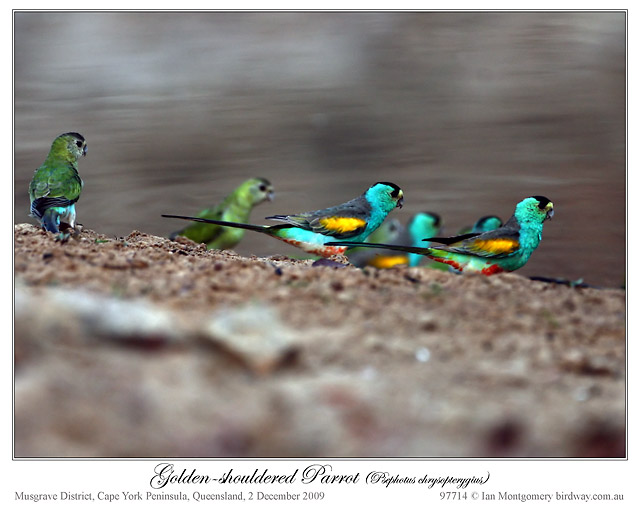
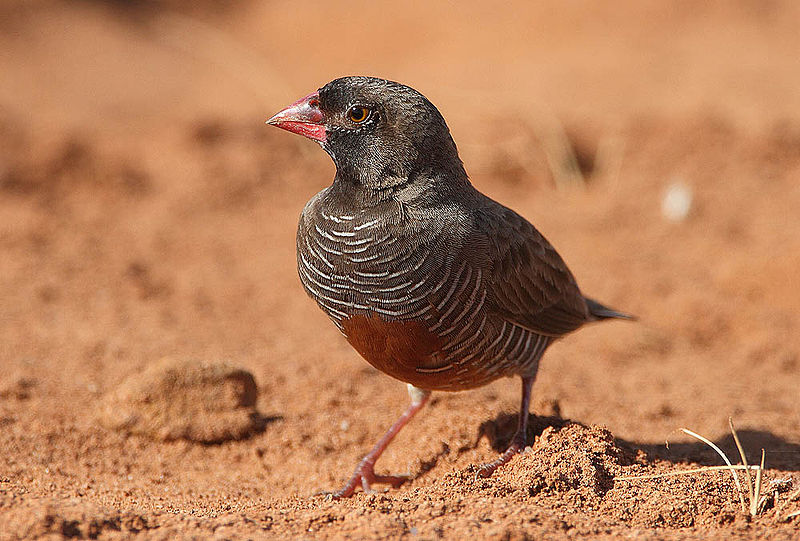
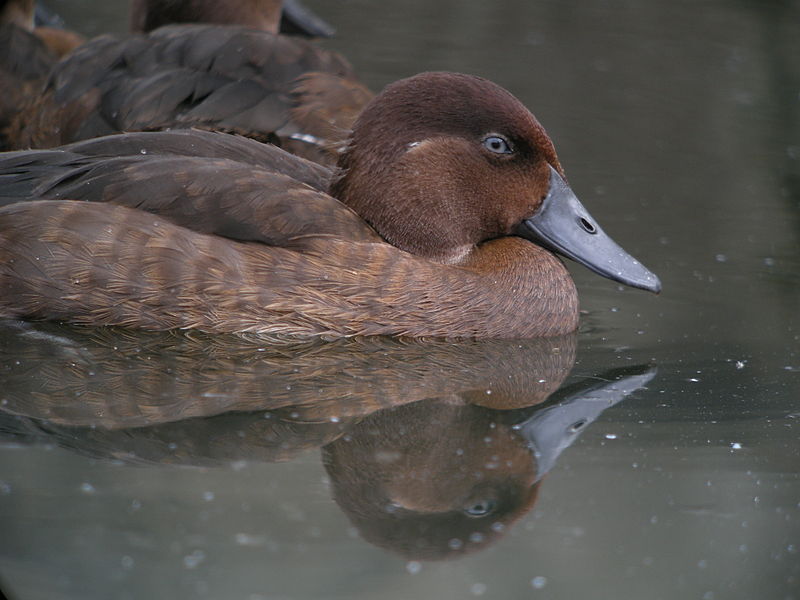
These are the two they deleted. They went back to being supspecies of the Black-faced Quailfinch, which is now only called a Quailfinch (Ortygospiza atricollis).

















 Lee's Birdwatching Adventures Plus