Birds Vol 1 #6 – Bird Song 1

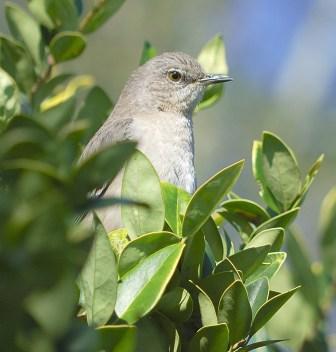
Northern Mockingbird (Mimus polyglottos) by Dan

Northern Mockingbird (Mimus polyglottos) by Dan

Birds Illustrated by Color Photography – Revisited

Vol 1. June, 1897 No. 6

*

BIRD SONG

“I cannot love the man who doth not love,
As men love light, the song of happy birds.”

imgi

T is indeed fitting that the great poets have ever been the best interpreters of the songs of birds. In many of the plays of Shakespeare, especially where the scene is laid in the primeval forest, his most delicious bits of fancy are inspired by the flitting throng. Wordsworth and Tennyson, and many of the minor English poets, are pervaded with bird notes, and Shelley’s masterpiece, The Skylark, will long survive his greater and more ambitious poems. Our own poet, Cranch, has left one immortal stanza, and Bryant, and Longfellow, and Lowell, and Whittier, and Emerson have written enough of poetic melody, the direct inspiration of the feathered inhabitants of the woods, to fill a good-sized volume. In prose, no one has said finer things than Thoreau, who probed nature with a deeper ken than any of his contemporaries. He is to be read, and read, and read.

But just what meaning should be attached to a bird’s notes—some of which are “the least disagreeable of noises”—will probably never be discovered. They do seem to express almost every feeling of which the human heart is capable. We wonder if the Mocking Bird understands what all these notes mean. He is so fine an imitator that it is hard to believe he is not doing more than mimicking the notes of other birds, but rather that he really does mock them with a sort of defiant sarcasm. He banters them less, perhaps, than the Cat Bird, but one would naturally expect all other birds to fly at him with vengeful purpose. But perhaps the birds are not so sensitive as their human brothers, who do not always look upon imitation as the highest flattery.

A gentleman who kept a note-book, describes one of the matinee performances of the Mocker, which he attended by creeping under a tent curtain. He sat at the foot of a tree on the top of which the bird was perched unconscious of his presence. The Mocker gave one of the notes of the Guinea-hen, a fine imitation of the Cardinal, or Red Bird, an exact reproduction of the note of the Phoebe, and some of the difficult notes of the Yellow-breasted Chat. “Now I hear a young chicken peeping. Now the Carolina Wren sings, ‘cheerily, cheerily, cheerily.’ Now a small bird is shrilling with a fine insect tone. A Flicker, a Wood-pewee, and a Phoebe follow in quick succession. Then a Tufted Titmouse squeals. To display his versatility, he gives a dull performance which couples the ‘go-back’ of the Guinea fowl with the plaint of the Wood-pewee, two widely diverse vocal sounds. With all the performance there is such perfect self-reliance and consciousness of superior ability that one feels that the singer has but to choose what bird he will imitate next.”

Nor does the plaintive, melancholy note of the Robin, that “pious” bird, altogether express his character. He has so many lovely traits, according to his biographers, that we accept him unhesitatingly as a truly good bird. Didn’t he once upon a time tenderly cover with leaves certain poor little wanderers? Isn’t he called “The Bird of the Morning?” And evening as well, for you can hear his sad voice long after the sun has himself retired.

The poet Coleridge claims the credit of first using the Owl’s cry in poetry, and his musical note Tu-whit, tu-who! has made him a favorite with the poets. Tennyson has fancifully played upon it in his little “Songs to the Owl,” the last stanza of which runs:

“I would mock thy chant anew;
But I cannot mimic it,
Not a whit of thy tuhoo,
Thee to woo to thy tuwhit,
Thee to woo to thy tuwhit.

With a lengthen’d loud halloo,
Tuwhoo, tuwhit, tuwhit, tuhoo-o-o.”

But Coleridge was not correct in his claim to precedence in the use of the Owl’s cry, for Shakespeare preceded him, and Tennyson’s “First Song to the Owl” is modeled after that at the end of “Love’s Labor Lost:”

“When roasted crabs hiss in the bowl,
Then nightly sings the staring Owl,
Tu-who;
Tu-whit, tu-who, a merry note.”

In references to birds, Tennyson is the most felicitous of all poets and the exquisite swallow-song in “The Princess” is especially recommended to the reader’s perusal.

Birds undoubtedly sing for the same reasons that inspire to utterance all the animated creatures in the universe. Insects sing and bees, crickets, locusts, and mosquitos. Frogs sing, and mice, monkeys, and woodchucks. We have recently heard even an English Sparrow do something better than chipper; some very pretty notes escaped him, perchance, because his heart was overflowing with love-thoughts, and he was very merry, knowing that his affection was reciprocated. The elevated railway stations, about whose eaves the ugly, hastily built nests protrude everywhere, furnish ample explanation of his reasons for singing.

Birds are more musical at certain times of the day as well as at certain seasons of the year. During the hour between dawn and sunrise occurs the grand concert of the feathered folk. There are no concerts during the day—only individual songs. After sunset there seems to be an effort to renew the chorus, but it cannot be compared to the morning concert when they are practically undisturbed by man.

Birds sing because they are happy. Bradford Torrey has given with much felicity his opinion on the subject, as follows:

“I recall a Cardinal Grosbeak, whom I heard several years ago, on the bank of the Potomac river. An old soldier had taken me to visit the Great Falls, and as we were clambering over the rocks this Grosbeak began to sing; and soon, without any hint from me, and without knowing who the invisible musician was, my companion remarked upon the uncommon beauty of the song. The Cardinal is always a great singer, having a voice which, as European writers say, is almost equal to the Nightingale’s; but in this case the more stirring, martial quality of the strain had given place to an exquisite mellowness, as if it were, what I have no doubt it was,

A Song of Love.”
—C. C. Marble.
[to be continued.]
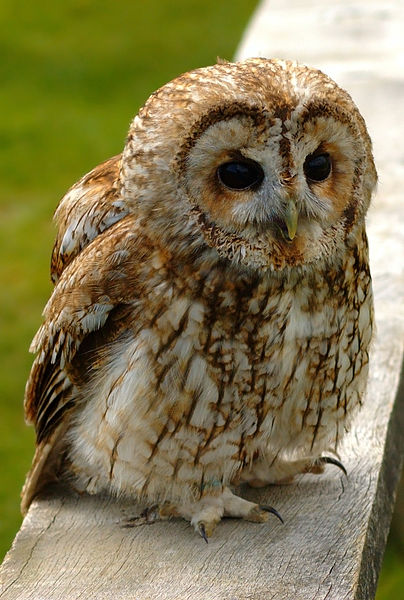

Tawny Owl (Strix aluco) ©WikiC

Tawny Owl (Strix aluco) ©WikiC

Lee’s Addition:

By them shall the fowls of the heaven have their habitation, which sing among the branches. (Psalms 104:12 KJV)

and the doors on the street are shut as the sound of the grinding mill is low, and one will arise at the sound of the bird, and all the daughters of song will sing softly. (Ecclesiastes 12:4 NASB)

What a delightful article about the birds singing. I suppose I can supplement  this by adding some sounds of these birds. I use xeno-canto.org because they are available and have many to choose from.

Northern Mockingbird ( imitating Ash-throated Flycatcher, Juniper Titmouse, Western Scrub-Jay, and probably more)

Grey Catbird (meaw)

difficult notes of the Yellow-breasted Chat (whistles, grunts and rattles)

Carolina Wren sings, ‘cheerily, cheerily, cheerily.’

A Flicker, (kleeeyer or wik-wik-wik)

a Wood-pewee, (pee-a-weee and pee-yer)

Eastern Phoebe follow in quick succession. (fee-beee (last syllable raspy)

Then a Tufted Titmouse squeals. (peter peter peter)

English Sparrow

Tawny Owl (Best I can find out who is the “Tu-whit, tu-who”)

*
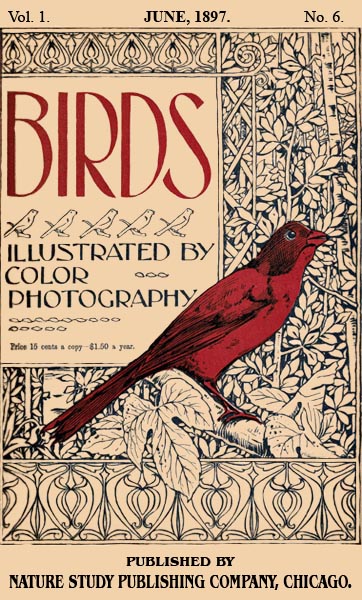
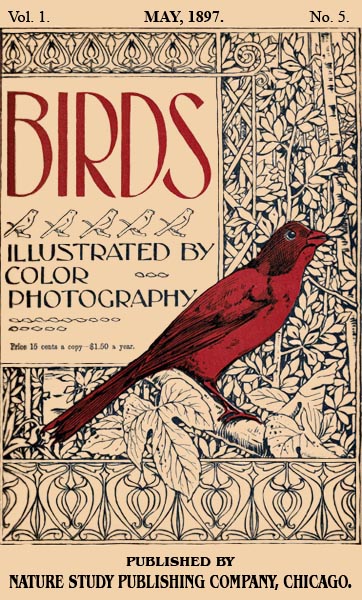
Birds Illustrated by Color Photograhy Vol 1 June, 1897 No 6 - Cover

Birds Illustrated by Color Photograhy Vol 1 June, 1897 No 6 – Cover

Birds Illustrated by Color Photography – Revisited – Introduction

The above article is the first article in the monthly serial that was started in January 1897 “designed to promote Knowledge of Bird-Live.” These include Color Photography, as they call them, today they are drawings. There are at least three Volumes that have been digitized by Project Gutenberg.

To see the whole series of – Birds Illustrated by Color Photography – Revisited

*
(Information from Wikipedia and other internet sources)

Next Article – The Yellow-throated Vireo

Previous Article – The American Catbird

ABC’s Of The Gospel

Links:

Flights of Fancy – Tawny Owl

Mnemonic Bird Songs

*
Ian’s Bird of the Week – Royal Albatross

Southern Royal Albatross (Diomedea epomophora) by Ian 1

Southern Royal Albatross (Diomedea epomophora) by Ian 1

Ian’s Bird of the Week – Royal Albatross ~ by Ian Montgomery

Newsletter ~ 6-3-12

It seems only fitting to celebrate the Diamond Jubilee of Queen Elizabeth with something appropriate, so here is the Royal Albatross, or Royal Albatrosses if you accept, as most now do, the split into Northern and Southern species. Apart from just the Royal title, these birds are also very long lived (up to 60 years) and travel huge distances, routinely circumnavigating Antarctica. It has been estimated that a 50 year old Albatross has travelled 2.8 million miles which compares quite well with the Queen’s 261 official overseas visits and 96 state visits to 116 countries.

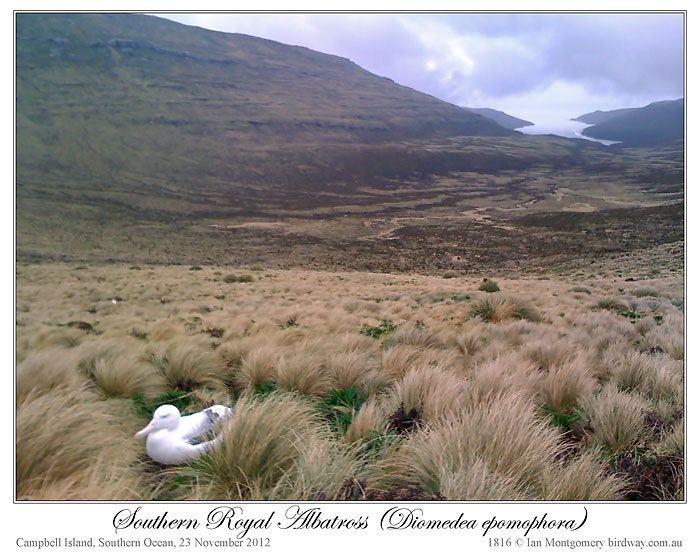
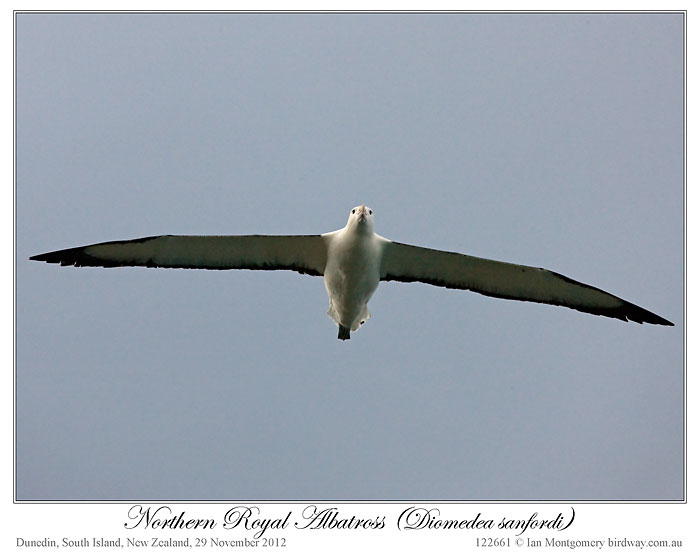
On the Sub-Antarctic trip last November, Royal Albatrosses, mainly Southern like the one in the first photo, were regular and very welcome companions in the Southern Ocean. It was always a thrill to see these huge birds completely at home in the wildest weather that the Ocean could throw at them and soaring apparently effortlessly in gale-force winds. If you look carefully at the first photo, you can see the dark (bluish) line along the upper mandible which distinguishes it from the similar Wandering Albatrosses. The other feature of note is the white leading edge to the dorsal surface of the wing. As Southern Royal Albatrosses age, the amount of leading white increases and this distinguishes it from both the Wandering Albatrosses, where the amount of white increases along the centre of the wing, and the Northern Royal Albatross where the wings remain black, as shown in the second photo.

Northern Royal Albatross (Diomedea sanfordi) by Ian2

Northern Royal Albatross (Diomedea sanfordi) by Ian 2

With a little practice, it wasn’t too difficult to distinguish between Northern and Southern birds. What helped was the fact that Royal Albatrosses do not have a confusing array of juvenile plumages, unlike their cousins the Wandering Albatrosses. The juveniles have black tips to the tale and blackish scalloping on the back (the mantle) between the wings but are otherwise similar to the adults.

Southern Royal Albatross (Diomedea epomophora) by Ian 3

Southern Royal Albatross (Diomedea epomophora) by Ian 3

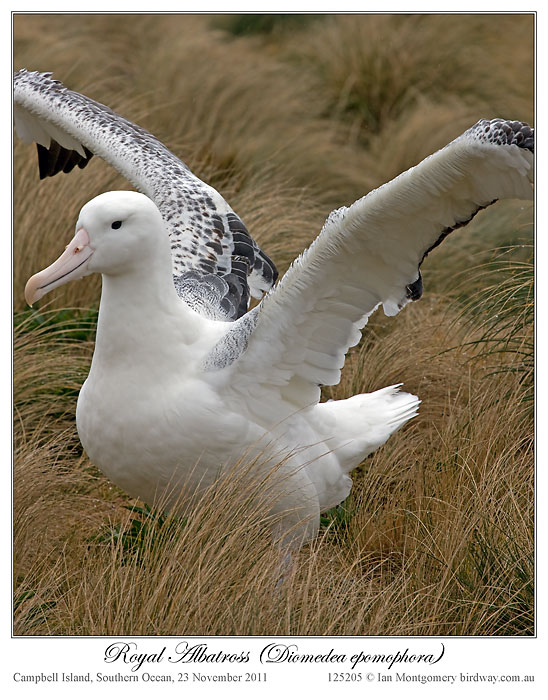
On Campbell Island, we had the opportunity to hike up path to a Southern Royal Albatross colony on a bleak, tussocky moorland. As you can see in the the third photo, things were fairly quiet when we got up there in the morning. They got busier in the afternoon when more birds arrived and some people saw greeting ceremonies, but by then, rather wet and cold, I had returned to the ship for a comforting coffee. There were strict rules about where we could leave the designated path and how close we could approach wildlife, but the albatross in the fourth photo stretching its wings flouted the rules and wandered, or blundered – they’re ungainly on land – right past me.

Southern Royal Albatross (Diomedea epomophora) by Ian 4

Southern Royal Albatross (Diomedea epomophora) by Ian 4

Albatrosses have deceptively gull-like proportions so it is a shock to realise, up-close, just how huge they are. The size record goes to the exulans race/species of the Wandering Albatross, but the Royals are not far behind and an apt comparison is with swans rather than other seabirds, ignoring length where swans have an unfair neck advantage. Southern Royal Albatrosses weight between 6.5 and 10.3kg/14.3 and 22.7lb while the heaviest flying bird, the Mute Swan, ranges between 9kg and 12kg/20 and 33lb. However Royal Albatrosses have a maximum wingspan of up to 3.5m/138in while Mute Swans range up to a mere 2.4m/94in. Just enormous in other words. The contrasting delicacy of the lacy pattern on the back is striking, and the fifth photo shows the tubular nostrils and the dark line along the mandible.

Southern Royal Albatross (Diomedea epomophora) by Ian 5

Southern Royal Albatross (Diomedea epomophora) by Ian 5

Happily, you don’t have to go Campbell Island to see these wonderful birds. Taiaroa Head, a mere 30km from the centre of Dunedin on the South Island of New Zealand, has the only mainland colony of albatrosses in the world. These are Northern Royal Albatrosses and, although I got there too late in the day to gain entry to the Royal Albatross Centre – I gave the local Yellow-eyed Penguins a higher priority – the one in the last photo flew right over me as I stood in the car park.

Northern Royal Albatross (Diomedea sanfordi) by Ian 6

Northern Royal Albatross (Diomedea sanfordi) by Ian 6

Enjoy the Jubilee!

Ian

**************************************************
Ian Montgomery, Birdway Pty Ltd,
454 Forestry Road, Bluewater, Qld 4818
Tel 0411 602 737 ian@birdway.com.au
Check the latest website updates:
http://www.birdway.com.au/#updates
**************************************************


Lee’s Addition:

Wow! Did you read the wingspan on those Albatrosses? 138 inches is 11 1/2 feet. That is amazing! I still just sit back in awe when I hear about these wonderfully created birds.

Check out Ian’s Albatrosses on his site and then check the whole family – Diomedeidae – Albatrosses

Keep me as the apple of Your eye; Hide me under the shadow of Your wings, (Psalms 17:8 NKJV)

Because You have been my help, Therefore in the shadow of Your wings I will rejoice. (Psalms 63:7 NKJV)

*

Oops! Forgot a Few!

Rainbow Lorikeet at Lowry Pk Zoo by Dan

Rainbow Lorikeet at Lowry Pk Zoo by Dan

Oops! Forgot a Few! (follow-up to Updated Birds of the World to I.O.C. 3.1 – Subspecies Definitions)

Guess I was too big a hurry to say I was finished. Realized that I forgot all 40 Order pages and the main Introductory Index pages. After updating almost 50 more pages, “I think” I am finished with the I.O.C. 3.1 Version update.

There was more that needed to be said, so, will do that now.

Now that the names are up to date for now, I am going to go back through each Family page and try to work on them more slowly. Hope to find more photographs for the species that are missing. Now that the “subspecies” are listed, photos for those need to be found. If you are a photographer of birds or know of any that would be willing to let their photos be used here, please contact me at: Lee@Leesbird.com. A link will be provided to your photo site or theirs in the sidebar under Photography and at the bottom of each Family page that uses a photo of yours. Or other arrangements could be made. Photography sites that list the bird’s names are the most useful. (Otherwise I have no clue as to what the bird is, especially ones from around the world.)

Also, there will other items added to the Family pages. Some general facts about the overall family will be added. Our Life List of All Birds Seen (*LLABS*) will be indicated by individual birds that we have seen. Will try to find a photo we took, besides the good ones from photographers that we use (see above).

I remember the days of old; I meditate on all Your works; I muse on the work of Your hands. (Psalms 143:5 NKJV)

Aren’t we thankful that when the LORD created the world and all that is in them, that he didn’t say, “Oops! I forgot…..?” We may make mistakes and miss a few items, but God is Perfect and nothing He does is ever a MISTAKE.

*

Updated Birds of the World to I.O.C. 3.1 – Subspecies Definitions

Well, I just updated the site to the newest version of the I.O.C. World Bird List – Version 3.1. It has been out for about a month, but I was busy and now finally have it finished. I have spent the last week updating almost 300 pages here. I am only one person and don’t have a staff (don’t I wish). All pages and indexes are up-to-date.

The IOC made a major update with this Version and I decided to make some changes also. I was trying to anticipate the changes coming with the Version 3, but still missed it. They added 145 extinct species of birds. There are also 20,989 subspecies added (had that right) to go with the 10,451 living species of birds in the world. They are in 40 Orders, 228 Families (plus 6 Incertae sedis), with 2257 Genera. (Now in June they are going to make more adjustments)

Have you ever questioned yourself why you do things? Working on these pages made me wonder, but I think it is still worth all the work.

Why? When I started this blog, I wanted to write about the Birds of the Bible and have been doing that since day one over four years ago. As time has progressed, this site has grown way beyond what I ever dreamed about. The Lord has given me ideas for articles, pages, references, etc. Fantastic photographers have given permission to use their photos and the whole world of birds has opened up to me. Ian let’s me use his newsletters (Bird of the Week) and he travels the world. Also ajmithra in India writes about birds there and other places. Most of all when the Lord created the birds way back in Genesis chapter 1

Then God said, “Let the waters abound with an abundance of living creatures, and let birds fly above the earth across the face of the firmament of the heavens.” So God created great sea creatures and every living thing that moves, with which the waters abounded, according to their kind, and every winged bird according to its kind. And God saw that it was good. And God blessed them, saying, “Be fruitful and multiply, and fill the waters in the seas, and let birds multiply on the earth.” So the evening and the morning were the fifth day. (Genesis 1:20-23 NKJV)

they did what He commanded them to do and now they are all over the world driving the people at IOC and other listing groups of ornithologists crazy trying to keep up with their names. Me? I am enjoying trying to find out about them and see  them or pictures of them to go along with those name.

If you, my readers, never benefit from my efforts, I still am gaining knowledge of birds that I will never see in person but are so designed and created with such care that finding out about them increases my faith. While I am doing these pages and articles, my best is what I want to give my Savior.

Birds of the World

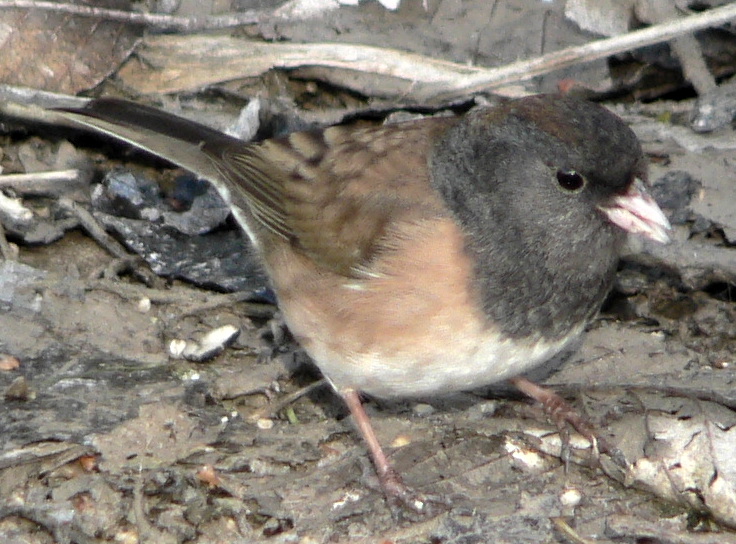
Dark-eyed Junco (Junco hyemalis) by Ian

Dark-eyed Junco (Junco hyemalis) by Ian

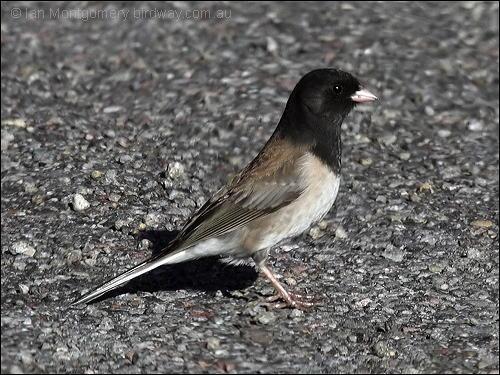
That said, now that they are adding all these subspecies, here are some definitions of “subspecies.” They use terms like species, subspecies, monotypic, morph, etc.

From About.com Birding/Wild Birds

Definition:

(noun) A bird that is notably different from the expected characteristics of its species, but not sufficiently different to be independently classified as a unique species. Subspecies are often geographically determined, and differences such as size variations or plumage colorations are a common basis for subspecies distinctions.

Not all bird species have distinct subspecies, and over time the classifications of different birds can change to alter subspecies into a lesser or greater number of divisions, or even to grant a subspecies distinction as a new bird species. Examples of common subspecies include the different geographic plumage variations of the dark-eyed junco, such as the eastern “slate-colored” junco and the western “Oregon” junco, as well as the southwestern subspecies of the lesser goldfinch, the “black-backed” lesser goldfinch.

While a subspecies can be noted on a birder’s life list, it does not count as an additional bird for a life list total unless the bird is reclassified as a distinct species. Many birders enjoy the extra challenge of seeing different subspecies, and comprehensive field guides will list common subspecies. These details also make a field guide more useful over time as bird classifications may change.

Dark-eyed Junco (Junco hyemalis oreganus) (one of the Oregon Juncos) ©WikiC

Dark-eyed Junco (Junco hyemalis oreganus) (one of the Oregon Juncos) ©WikiC

Definition: Monotypic

(adjective) Describes a species with only a single genetic or physical type and no officially recognized subspecies. While monotypic birds may still have subtle plumage or size variations, these differences are not sufficient to be distinguished as subspecies. Monotypic birds may still crossbreed with other species, though the hybrids are not independently recognized as a unique species or subspecies.

*****

From TheFreeDictionary

n. pl. subspecies

A taxonomic subdivision of a species consisting of an interbreeding, usually geographically isolated population of organisms.

subspecies

A subdivision of a species of organisms, usually based on geographic distribution. The subspecies name is written in lowercase italics following the species name. For example, Gorilla gorilla gorilla is the western lowland gorilla, and Gorilla gorilla graueri is the eastern lowland gorilla.
 ******
Species:A single distinct class of living creatures sharing specific DNA and physical features that differentiate them from other species. Species are uniform in appearance (unless other factors, described later, apply) and produce offspring with the same characteristics, appearance and DNA structure. An example of a species would be a Gouldian Finch.

Subspecies:A division within a species usually created by geographic isolation from the main (nominate) species. A population within a population (usually) sharing most of the same physical characteristics and DNA structure. A physically distinct sub-unit within an otherwise identical group of birds or animals. A subspecies can be though of as a “race” within a species. Most subspecies distinctions are visible. An example would be a (Southern race, smaller) European vs. a (larger, Northern race) Siberian Goldfinch. Other than the size, they are the same bird.

Read more:http://www.softbillsforsale.com/articles/definition-of-terms.asp#ixzz1wXB1i2HY

Birds Vol 1 #5 – The American Catbird

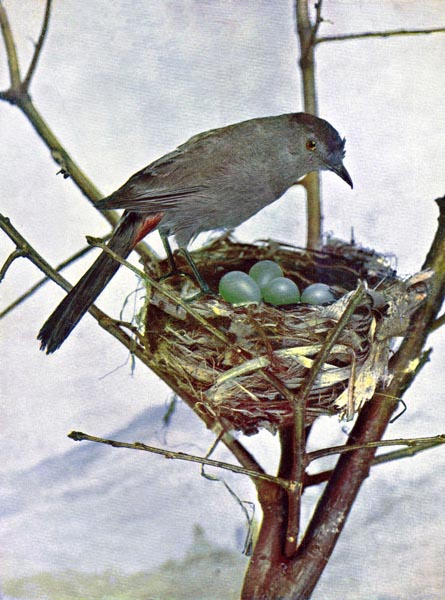
American Catbird for Birds Illustrated by Color Photography, 1897

American Catbird for Birds Illustrated by Color Photography, 1897

Birds Illustrated by Color Photography – Revisited

Vol 1. May, 1897 No. 5

*

THE AMERICAN CATBIRD.

imgt

HE CATBIRD derives his name from a fancied resemblance of some of his notes to the mew of the domestic cat. He is a native of America, and is one of the most familiarly known of our famous songsters. He is a true thrush, and is one of the most affectionate of our birds. Wilson has well described his nature, as follows:

“In passing through the woods in summer I have sometimes amused myself with imitating the violent chirping or clucking of young birds, in order to observe what different species were round me; for such sounds at such a season in the woods are no less alarming to the feathered tenants of the bushes than the cry of fire or murder in the street is to the inhabitants of a large city. On such occasion of alarm and consternation, the Catbird is first to make his appearance, not single but sometimes half a dozen at a time, flying from different quarters to the spot. At this time those who are disposed to play on his feelings may almost throw him into a fit, his emotion and agitation are so great at what he supposes to be the distressful cries of his young. He hurries backward and forward, with hanging wings, open mouth, calling out louder and faster, and actually screaming with distress, until he appears hoarse with his exertions. He attempts no offensive means, but he wails, he implores, in the most pathetic terms with which nature has supplied him, and with an agony of feeling which is truly affecting. At any other season the most perfect imitations have no effect whatever on him.”

The Catbird is a courageous little creature, and in defense of its young it is so bold that it will contrive to drive away any snake that may approach its nest, snakes being its special aversion. His voice is mellow and rich, and is a compound of many of the gentle trills and sweet undulations of our various woodland choristers, delivered with apparent caution, and with all the attention and softness necessary to enable the performer to please the ear of his mate. Each cadence passes on without faltering and you are sure to recognize the song he so sweetly imitates. While they are are all good singers, occasionally there is one which excels all his neighbors, as is frequently the case among canaries.

The Catbird builds in syringa bushes, and other shrubs. In New England he is best known as a garden bird. Mabel Osgood Wright, in “Birdcraft,” says: “I have found it nesting in all sorts of places, from an alder bush, overhanging a lonely brook, to a scrub apple in an open field, never in deep woods, and it is only in its garden home, and in the hedging bushes of an adjoining field, that it develops its best qualities—‘lets itself out,’ so to speak. The Catbirds in the garden are so tame that they will frequently perch on the edge of the hammock in which I am sitting, and when I move they only hop away a few feet with a little flutter. The male is undoubtedly a mocker, when he so desires, but he has an individual and most delightful song, filled with unexpected turns and buoyant melody.”


THE CATBIRD.

What do you think of this nest of eggs? What do you suppose Mrs. Catbird’s thoughts are as she looks at them so tenderly? Don’t you think she was very kind to let me take the nest out of the hedge where I found it, so you could see the pretty greenish blue eggs? I shall place it back where I got it. Catbirds usually build their nests in hedges, briars, or bushes, so they are never very high from the ground.

Did you ever hear the Catbird sing? He is one of the sweetest singers and his song is something like his cousin’s, the Brown Thrush, only not so loud.

He can imitate the songs of other birds and the sounds of many animals. He can mew like a cat, and it is for this reason that he is called “Catbird.” His sweetest song, though, is soft and mellow and is sung at just such times as this—when thinking of the nest, the eggs, or the young.

The Catbird is a good neighbor among birds. If any other bird is in trouble of any sort, he will do all he can to relieve it. He will even feed and care for little birds whose parents have left them. Don’t you think he ought to have a prettier name? Now remember, the Catbird is a Thrush. I want you to keep track of all the Thrushes as they appear in “Birds.” I shall try to show you a Thrush each month.

Next month you shall see the sweetest singer of American birds. He, too, is a Thrush. I wonder if you know what bird I mean. Ask your mamma to buy you a book called “Bird Ways.” It was written by a lady who spent years watching and studying birds. She tells so many cute things about the Catbird.

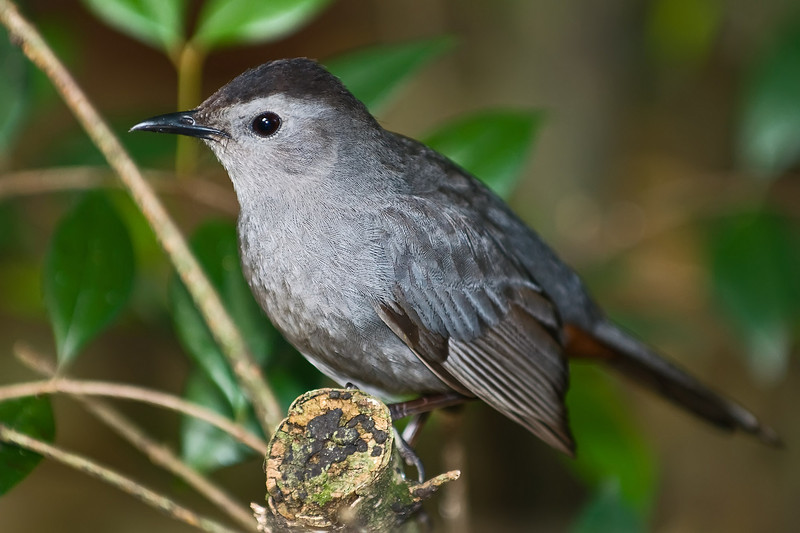
Grey Catbird (Dumetella carolinensis) by Africaddict

Grey Catbird (Dumetella carolinensis) by Africaddict


Lee’s Addition:

He sends the springs into the valleys; They flow among the hills. They give drink to every beast of the field; The wild donkeys quench their thirst. By them the birds of the heavens have their home; They sing among the branches. (Psalms 104:10-12 NKJV)

The Grey Catbird (Dumetella carolinensis) is in the Mockingbirds, Thrashers – Mimidae Family. We have managed to see them occasionally, but most times you are more apt to hear them than to see them.

Scolding call and a song of a Catbird, both from xeno-canto.org

Sound of its song.

The Gray Catbird (Dumetella carolinensis), also spelled Grey Catbird, is a medium-sized northern American perching bird of the mimid family. It is the only member of the “catbird” genus Dumetella. Like the Black Catbird (Melanoptila glabrirostris), it is among the basal lineages of the Mimidae, probably a closer relative of the Caribbean thrasher and trembler assemblage than of the mockingbirds and Toxostoma thrashers. In some areas it is known as the Slate-colored Mockingbird.

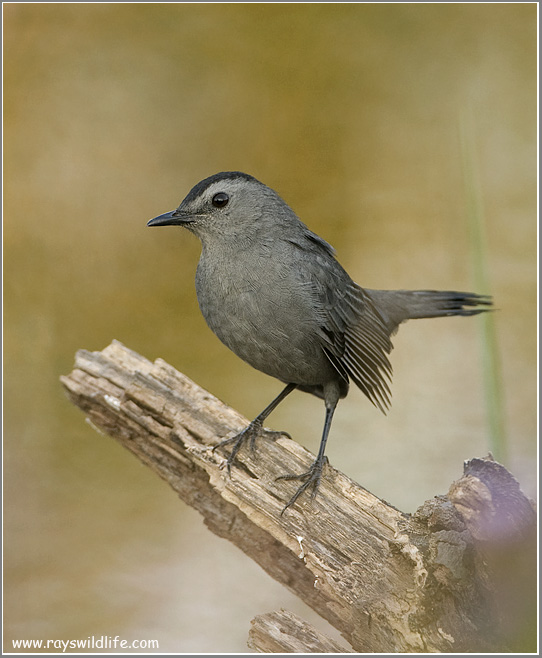
Grey Catbird (Dumetella carolinensis) by Raymond Barlow

Grey Catbird (Dumetella carolinensis) by Raymond Barlow

Adults weigh around 35–40 g (1.2–1.4 oz) and are plain lead gray almost all over. The top of the head is darker. The undertail coverts are rust-colored and the remiges and rectrices are black, some with white borders. The slim bill, the eyes, and the legs and feet are also blackish. Males and females cannot be distinguished by their looks; different behaviours in the breeding season is usually the only clue to the observer. Juveniles are even plainer in coloration, with buffy undertail coverts.

Birds Illustrated by Color Photograhy Vol 1 May, 1897 No 5 - Cover

Birds Illustrated by Color Photograhy Vol 1 May, 1897 No 5 – Cover

Birds Illustrated by Color Photography – Revisited – Introduction

The above article is the first article in the monthly serial that was started in January 1897 “designed to promote Knowledge of Bird-Live.” These include Color Photography, as they call them, today they are drawings. There are at least three Volumes that have been digitized by Project Gutenberg.

To see the whole series of – Birds Illustrated by Color Photography – Revisited

*

(Information from Wikipedia and other internet sources)

Next Article – Bird Song

Previous Article – The Wood Thrush

ABC’s Of The Gospel

Links:

Gray Catbird – All About Birds – Cornell Lab of Ornithology

Gray Catbird – Dumetella carolinensis – USGS Patuxent Bird Identification InfoCenter

Gray Catbird Information and Photos – South Dakota Birds and Birding

Gray or Grey Catbird – Wikipedia

Mockingbirds, Thrashers – Mimidae Family

*

Ad for Birds Illustrated by Color Photography 1897

Ad for Birds Illustrated by Color Photography 1897

Start Birdwatching Today – Questions

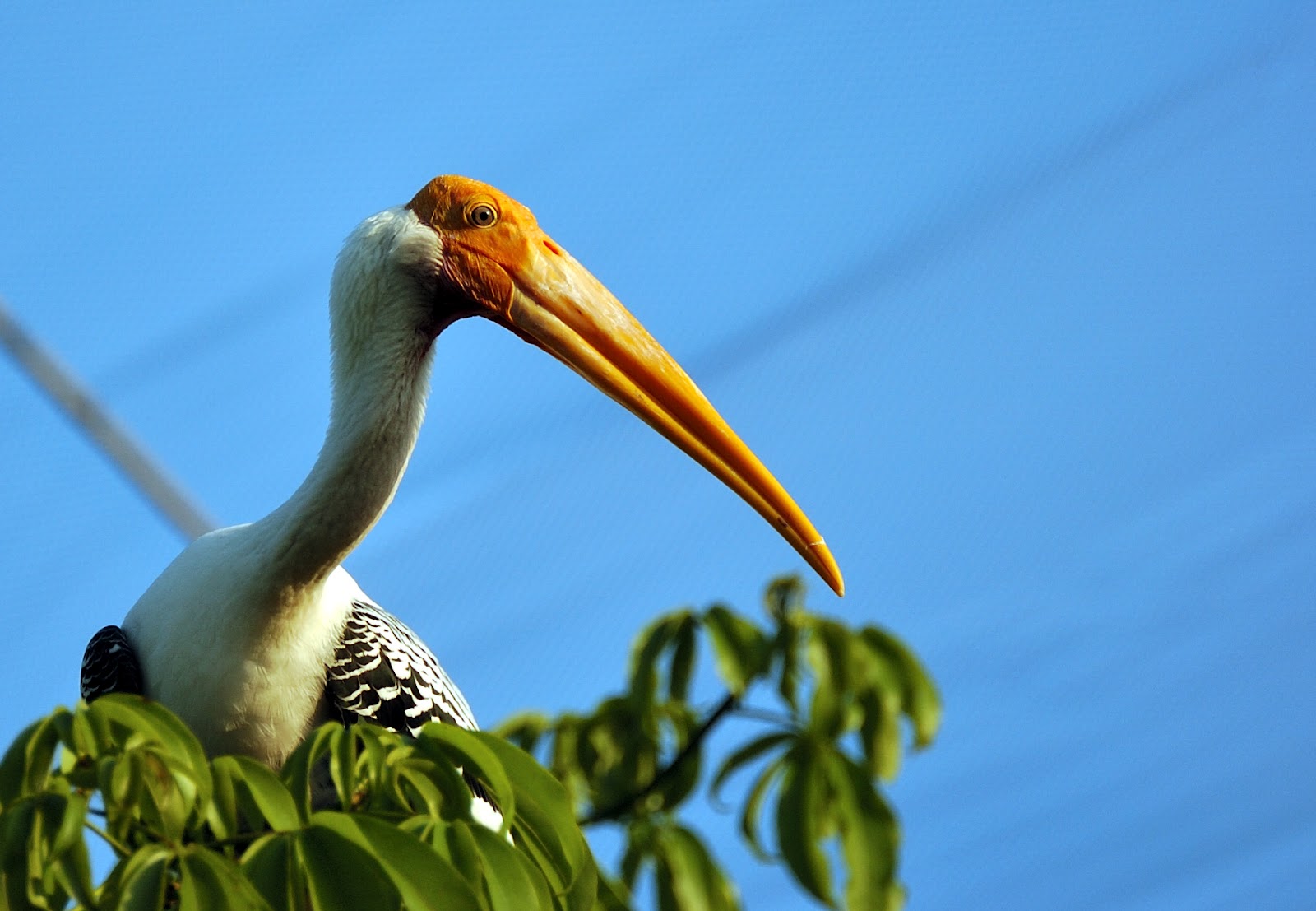
(Painted Stork by Dan’s Pix)

(Stephen, our Assistant to the Pastor, asked me to do this series about birdwatching. He came up with the titles and I have been writing the articles. Now he has given me these 13 questions to answer, so here goes.)

We hope that you have been enjoying Lee’s series, Start Birdwatching Today.  She has been attempting to show us that birding is something that anybody can do.  Whether you only look at the birds while you are driving or if you spend hours wandering through Circle B, you can enjoy the creativity of our great God.

As I have read through Lee’s posts I have had a few questions that have come to my mind.  I thought I would ask them to Lee through a post so that you all can read her answers.

  1. When did you first start birding?

    I think I always enjoyed critters, but when we lived in Tamarac, FL there was a small park nearby that had a lake, trail and a naturalist that gave bird talks. Living in the Fort Lauderdale area, there were lots of birds to view.

  2. Did anyone teach you how to go birding?

    The naturalist became my friend and also became my mentor. She taught me about birdwatching from a one on one basis.

  3. Do you run across people who see the diversity in the birds and still deny that an intelligent creator is behind it all? If so, what are their common arguments?

    Go to any birding club (Audubon) or a Birding Festival (Titusville) and you will hear all about natural selection and millions of years. You hear about how birds evolved from dinosaurs. Given enough time, they figure it all came about.

  4. What is your favorite bird? You can only pick one :)

    That’s hard! It used to be the Painted Bunting, and I suppose it still is, but now I have seen so many, I love them all.

  5. Share with us two things you have learned about God through birdwatching.

    The Lord has such Omniscience that I am amazed when I see how He has provided specific beaks, for instance, for each bird to be able to eat what it likes. How He has created their shapes to live in the environment they do, Penguins versus Hummingbirds. Every bird was so provided for by the Lord when they were being designed. God’s Love is so great to the birds and His care about them overwhelms me. If He knows when a sparrow falls, then He knows not only the number of hairs on my head, but every need, desire, problems, etc. and still Loves Me!

  6. Recently, Swans have been in the news. In Lakeland, someone has been stealing swan eggs from Lake Morton. Why are Swan eggs so valuable?

    I saw that article and had heard about it a few weeks earlier. Apparently there must be a trade for them somewhere. There are “poachers” all around the world that illegally take birds for collectors and some for their feathers or to eat. They just found out he took them to eat them.

    http://articles.orlandosentinel.com/2012-05-18/news/os-swan-eggs-stolen-scrambled-eaten-20120518_1_eggs-lakeland-report-states

  7. When I think of birding, I am often overwhelmed. I hear you talk about 185 species that have been seen at Circle B and of the thousands of species worldwide. I can name maybe 10 or 15 different species of birds. What would you say to someone who feels birding is too overwhelming?

    Who says you have to name all the birds? If you can name 3 and enjoy the rest, why worry? (Do you know every name of the folks that come here to church? Does that stop you from coming or cause you to be overwhelmed?)

  8. Tell us about the best birdwatching trip you have ever been on.

    Wow! They are all great, but as for in the wild, we won a birdwatching trip by Reinier Munguia (professional photographer) and he introduced us to Circle B (46 species seen), Lakes Morton (10 species) and Parker. He gave us birding tips and photography tips for Dan. We ended up feeding Florida Scrub Jays and Purple Gallinules at parks in Lakeland. We saw a total of 56 species that day.Best Zoo trip was to the National Aviary in Pittsburg, PA about 2 years ago. We were taken by staff all over the place and behind the scenes.

  9. How many different birds are on your life list?

    My official Life List has 234 species, but that does not count the birds that I have seen in Zoos, which you can’t count by some, but I still saw the birds. My Unofficial Life List is around 400. I have also seen many more birds that I could not name.

  10. Is there any other animal that you know of that has the wide variety and diversity of birds? Why do you think this is?

    I can’t think of any animals, maybe insects. I think birds are so varied because each one has a role to fill whether it is pollinating flowers by Hummingbirds and others, or picking bugs off of animals like an Oxpecker, or cleaning up garbage like Vultures and Buzzards. The list goes on and on. They can fly so they have spread around the world and they are obeying the Lord’s command to reproduce and fill the earth.

  11. What do you hope is the result of this series of posts?

    I hope that this series has motivated an interest and an awareness of the birds and that they will take opportunities to watch the Lord’s fantastically created birds. And maybe, we might have some more to go out birdwatching with us. I am not an expert, but I am willing to share what I have learned from others and Dan is willing to share photography tips.

  12. Do you ever take people along with you on your birdwatching trips and teach them the tricks of the trade?

    I have taken a few and am thinking that we need to plan a “Start Birding Today” trip soon. We could meet and start simple and go from there.

  13. How can someone contact you if they have questions about birding?

    Call us, number in church directory or e-mail me at Lee@leesbird.com.

Painted Bunting (Passerina ciris) ©WikiC

Painted Bunting (Passerina ciris) ©WikiC

*

That article will be on our church blog, The Fountain, soon. I have been putting the articles here about 1 week ahead. Not sure if there will be more articles. If Stephen comes up with more titles, or if someone here leaves an idea for an article, then there may be more. Leave a comment.

*

Birds Vol 1 #5 – The Wood Thrush

Wood Thrush for Birds Illustrated by Color Photography, 1897

Wood Thrush for Birds Illustrated by Color Photography, 1897

Birds Illustrated by Color Photography – Revisited

Vol 1. May, 1897 No. 5

*

THE WOOD THRUSH.

“With what a clear
And ravishing sweetness sang the plaintive Thrush;
I love to hear his delicate rich voice,
Chanting through all the gloomy day, when loud
Amid the trees is dropping the big rain,
And gray mists wrap the hill; foraye the sweeter
His song is when the day is sad and dark.”

imgs

O many common names has the Wood Thrush that he would seem to be quite well known to every one. Some call him the Bell Thrush, others Bell Bird, others again Wood Robin, and the French Canadians, who love his delicious song, Greve des Bois and Merle Taune. In spite of all this, however, and although a common species throughout the temperate portions of eastern North America, the Wood Thrush can hardly be said to be a well-known bird in the same sense as the Robin, the Catbird, or other more familiar species; “but to every inhabitant of rural districts his song, at least, is known, since it is of such a character that no one with the slightest appreciation of harmony can fail to be impressed by it.”

Some writers maintain that the Wood Thrush has a song of a richer and more melodious tone than that of any other American bird; and that, did it possess continuity, would be incomparable.

Damp woodlands and shaded dells are favorite haunts of this Thrush, but on some occasions he will take up his residence in parks within large cities. He is not a shy bird, yet it is not often that he ventures far from the wild wood of his preference.

The nest is commonly built upon a horizontal branch of a low tree, from six to ten—rarely much more—feet from the ground. The eggs are from three to five in number, of a uniform greenish color; thus, like the nest, resembling those of the Robin, except that they are smaller.

In spite of the fact that his name indicates his preference for the woods, we have seen this Thrush, in parks and gardens, his brown back and spotted breast making him unmistakable as he hops over the grass for a few yards, and pauses to detect the movement of a worm, seizing it vigorously a moment after.

He eats ripening fruits, especially strawberries and gooseberries, but no bird can or does destroy so many snails, and he is much less an enemy than a friend of the gardener. It would be well if our park commissioners would plant an occasional fruit tree—cherry, apple, and the like—in the public parks, protecting them from the ravages of every one except the birds, for whose sole benefit they should be set aside. The trees would also serve a double purpose of ornament and use, and the youth who grow up in the city, and rarely ever see an orchard, would become familiar with the appearance of fruit trees. The birds would annually increase in numbers, as they would not only be attracted to the parks thereby, but they would build their nests and rear their young under far more favorable conditions than now exist. The criticism that birds are too largely destroyed by hunters should be supplemented by the complaint that they are also allowed to perish for want of food, especially in seasons of unusual scarcity or severity. Food should be scattered through the parks at proper times, nesting boxes provided—not a few, but many—and then

The happy mother of every brood
Will twitter notes of gratitude.


THE WOOD THRUSH.

The Bird of Solitude.

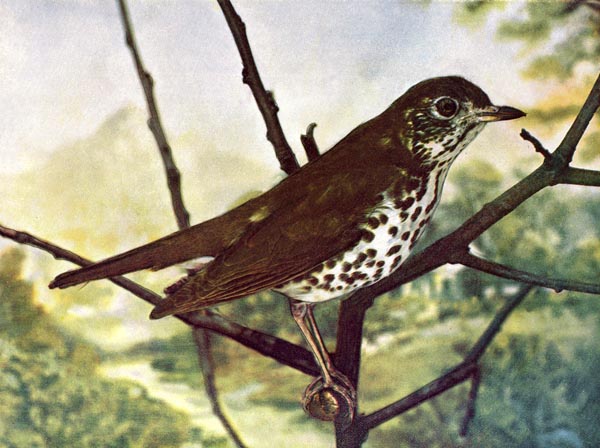
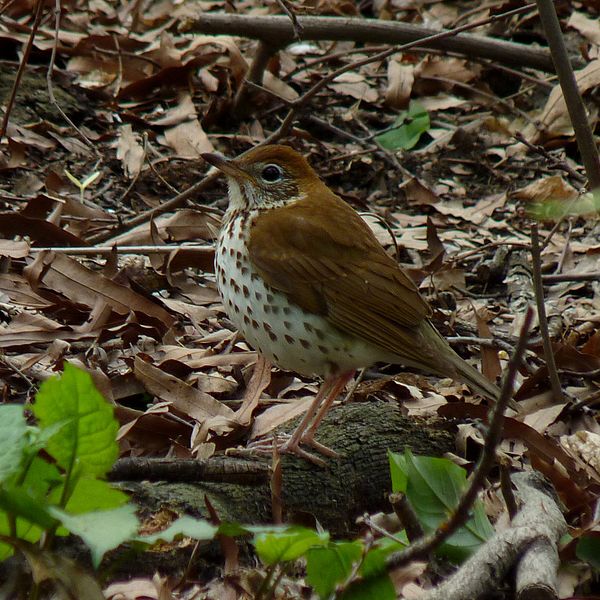
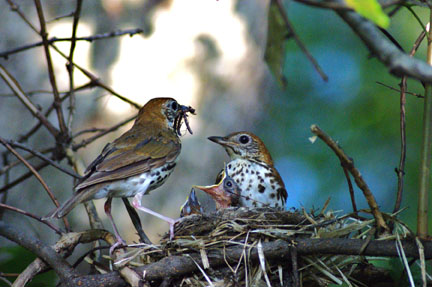
Of all the Thrushes this one is probably the most beautiful. I think the picture shows it. Look at his mottled neck and breast. Notice his large bright eye. Those who have studied birds think he is the most intelligent of them all.

He is the largest of the Thrushes and has more color in his plumage. All who have heard him agree that he is one of the sweetest singers among birds.

Unlike the Robin, Catbird, or Brown Thrush, he enjoys being heard and not seen.

His sweetest song may be heard in the cool of the morning or evening. It is then that his rich notes, sounding like a flute, are heard from the deep wood. The weather does not affect his song. Rain or shine, wet or dry, he sings, and sings, and sings.

During the light of day the Wood Thrush likes to stay in the cool shade of the woods.

Along toward evening, after sunset, when other birds are settling themselves for the night, out of the wood you will hear his evening song.

It begins with a strain that sounds like, “Come with me,” and by the time he finishes you are in love with his song.

The Wood Thrush is very quiet in his habits. So different from the noisy, restless Catbird.

The only time that he is noisy is when his young are in danger. Then he is as active as any of them.

A Wood Thrush’s nest is very much like a Robin’s. It is made of leaves, rootlets and fine twigs woven together with an inner wall of mud, and lined with fine rootlets.

The eggs, three to five, are much like the Robin’s.

Compare the picture of the Wood Thrush with that of the Robin or Brown Thrush and see which you think is the prettiest.


Wood Thrush (Hylocichla mustelina) by Daves BirdingPix

Wood Thrush (Hylocichla mustelina) by Daves BirdingPix

Lee’s Addition:

Thrushes are a Bird of the Bible, depending on which translation you use. See:

Bible Birds – Thrushes

Even the stork in the sky Knows her seasons; And the turtledove and the swift and the thrush Observe the time of their migration; But My people do not know The ordinance of the LORD. (Jeremiah 8:7 NASB)

Since they mentioned the song so much, here is a sample of its song from Xeno-canto – Wood Thrush song by Chris Parrish]

The Wood Thrush has been reported to have one of the most beautiful songs of North American birds. American naturalist Henry David Thoreau wrote:

Whenever a man hears it he is young, and Nature is in her spring; wherever he hears it, it is a new world and a free country, and the gates of Heaven are not shut against him.

While the female is not known to sing, the male has a unique song that has three parts. The first subsong component is often inaudible unless the listener is close, and consists of two to six short, low-pitched notes such as bup, bup, bup. The middle part is a loud phrase often written ee-oh-lay, and the third part is a ventriloquial, trill-like phrase of non-harmonic pairs of notes given rapidly and simultaneously.

The male is able to sing two notes at once, which gives its song an ethereal, flute-like quality. Each individual bird has its own repertoire based on combinations of variations of the three parts. Songs are often repeated in order. The bup, bup, bup phrase is also sometimes used as a call, which is louder and at a greater frequency when the bird is agitated. The Wood Thrush also use a tut, tut to signal agitation. The nocturnal flight call is an emphatic buzzing heeh.

Wood Thrush (Hylocichla mustelina) ©WikiC

Wood Thrush (Hylocichla mustelina) ©WikiC

The Wood Thrush, Hylocichla mustelina, is a North American passerine bird. It is closely related to other thrushes such as the American Robin and is widely distributed across North America, wintering in Central America and southern Mexico. The Wood Thrush is the official bird of the District of Columbia.

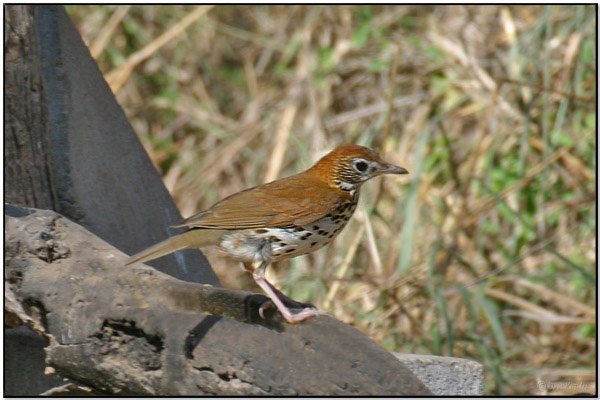
The adult Wood Thrush is 19–21 cm (7½-8¼ in) long, and weighs 40-50 g, with a wingspan of 30–40 cm (12–16 in). The longest known lifespan for a Wood Thrush in the wild is 8 years, 11 months. The crown, nape, and upper back are cinnamon-brown, while the back wings, and tail are a slightly duller brown. The breast and belly are white with large dark brown spots on the breast, sides, and flanks. It has white eye rings and pink legs. Other brownish thrushes have finer spotting on the breast. The juvenile looks similar to adults, but has additional spots on the back, neck, and wing coverts. The male and female are similar in size and plumage.

Wood Thrush (Hylocichla mustelina) ©WikiC

Wood Thrush (Hylocichla mustelina) ©WikiC

The Wood Thrush is a member of the Turdidae – Thrush family. There are 185 species, including Rufous Thrushes, Whistling Thrushes, Ground Thrushes, our Bluebirds, Solitaires, Nightingale-Thrushes, Cochoas, Shortwings, and our American Robin.

Birds Illustrated by Color Photograhy Vol 1 May, 1897 No 5 - Cover

Birds Illustrated by Color Photograhy Vol 1 May, 1897 No 5 – Cover

Birds Illustrated by Color Photography – Revisited – Introduction

The above article is the first article in the monthly serial that was started in January 1897 “designed to promote Knowledge of Bird-Live.” These include Color Photography, as they call them, today they are drawings. There are at least three Volumes that have been digitized by Project Gutenberg.

To see the whole series of – Birds Illustrated by Color Photography – Revisited

*

(Information from Wikipedia and other internet sources)

Next Article –The American Catbird

Previous Article –The Night Hawk

ABC’s Of The Gospel

Links:

Wood Thrush – Wikipedia

Wood Thrush – All About Birds

Thrush – Wikipedia

Turdidae – Thrush family

*


Birds Vol 1 #5 – The Night Hawk

Night Hawk for Birds Illustrated by Color Photography, 1897

Night Hawk for Birds Illustrated by Color Photography, 1897

Birds Illustrated by Color Photography – Revisited

Vol 1. May, 1897 No. 5

*

THE NIGHT HAWK

imgt

HE range of the Night Hawk, also known as “Bull-bat,” “Mosquito Hawk,” “Will o’ the Wisp,” “Pisk,” “Piramidig,” and sometimes erroneously as “Whip-poor-will,” being frequently mistaken for that bird, is an extensive one. It is only a summer visitor throughout the United States and Canada, generally arriving from its winter haunts in the Bahamas, or Central and South America in the latter part of April, reaching the more northern parts about a month later, and leaving the latter again in large straggling flocks about the end of August, moving leisurely southward and disappearing gradually along our southern border about the latter part of October. Major Bendire says its migrations are very extended and cover the greater part of the American continent.

The Night Hawk, in making its home, prefers a well timbered country. Its common name is somewhat of a misnomer, as it is not nocturnal in its habits. It is not an uncommon sight to see numbers of these birds on the wing on bright sunny days, but it does most of its hunting in cloudy weather, and in the early morning and evening, returning to rest soon after dark. On bright moonlight nights it flies later, and its calls are sometimes heard as late as eleven o’clock.

“This species is one of the most graceful birds on the wing, and its aerial evolutions are truly wonderful; one moment it may be seen soaring through space without any apparent movement of its pinions, and again its swift flight is accompanied by a good deal of rapid flapping of the wings, like that of Falcons, and this is more or less varied by numerous twistings and turnings. While constantly darting here and there in pursuit of its prey,” says a traveler, “I have seen one of these birds shoot almost perpendicularly upward after an insect, with the swiftness of an arrow. The Night Hawk’s tail appears to assist it greatly in these sudden zigzag changes, being partly expanded during most of its complicated movements.”

Night Hawks are sociable birds, especially on the wing, and seem to enjoy each other’s company. Their squeaking call note, sounding like “Speek-speek,” is repeated at intervals. These aerial evolutions are principally confined to the mating season. On the ground the movements of this Hawk are slow, unsteady, and more or less laborious. Its food consists mainly of insects, such as flies and mosquitos, small beetles, grasshoppers, and the small night-flying moths, all of which are caught on the wing. A useful bird, it deserves the fullest protection.

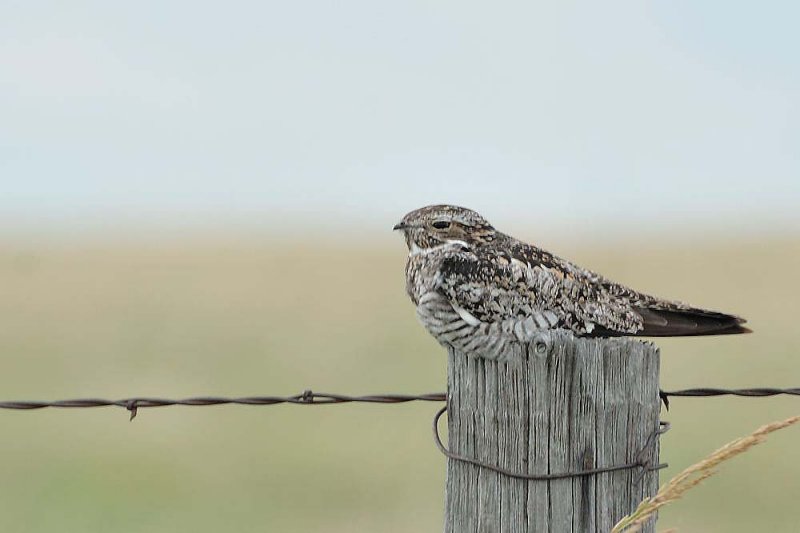
The favorite haunts of the Night Hawk are the edges of forests and clearings, burnt tracts, meadow lands along river bottoms, and cultivated fields, as well as the flat mansard roofs in many of our larger cities, to which it is attracted by the large amount of food found there, especially about electric lights. During the heat of the day the Night Hawk may be seen resting on limbs of trees, fence rails, the flat surface of lichen-covered rock, on stone walls, old logs, chimney tops, and on railroad tracks. It is very rare to find it on the ground.

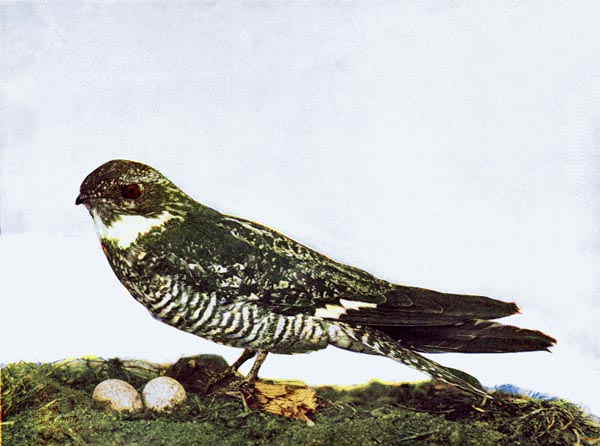
The nesting-time is June and July. No nest is made, but two eggs are deposited on the bare ground, frequently in very exposed situations, or in slight depressions on flat rocks, between rows of corn, and the like. Only one brood is raised. The birds sit alternately for about sixteen days. There is endless variation in the marking of the eggs, and it is considered one of the most difficult to describe satisfactorily.


THE NIGHT HAWK.

As you will see from my name, I am a bird of the night. Daytime is not at all pleasing to me because of its brightness and noise.

I like the cool, dark evenings when the insects fly around the house-tops. They are my food and it needs a quick bird to catch them. If you will notice my flight, you will see it is swift and graceful. When hunting insects we go in a crowd. It is seldom that people see us because of the darkness. Often we stay near a stream of water, for the fog which rises in the night hides us from the insects on which we feed.

None of us sing well—we have only a few doleful notes which frighten people who do not understand our habits.

In the daytime we seek the darkest part of the woods, and perch lengthwise on the branches of trees, just as our cousins the Whippoorwills do. We could perch crosswise just as well. Can you think why we do not? If there be no woods near, we just roost upon the ground.

Our plumage is a mottled brown—the same color of the bark on which we rest. Our eggs are laid on the ground, for we do not care to build nests. There are only two of them, dull white with grayish brown marks on them.

Sometimes we lay our eggs on flat roofs in cities, and stay there during the day, but we prefer the country where there is good pasture land. I think my cousin Whippoorwill is to talk to you next month. People think we are very much alike. You can judge for yourself when you see his picture.


Photographed through cage wires.

Common Nighthawk (Chordeiles minor) at National Aviary by Lee

Lee’s Addition:

Nighthawks are in our list of birds that are “unclean.” Both verses are identical in the KJV.

And the owl, and the night hawk, and the cuckoo, and the hawk after his kind, (Lev 11:16)
And the owl, and the night hawk, and the cuckoo, and the hawk after his kind, (Deu 14:15)

The Nighthawk is part of the Caprimulgidae – Nightjars Family which has 93 species and is one of our Birds of the Bible. The Nighthawks family is part of the Caprimulgiformes Order which has Frogmouths, Oilbird and the Potoos families.

The Common Nighthawk (Chordeiles minor) is a medium-sized crepuscular or nocturnal bird, whose presence and identity are best revealed by its vocalization. Typically dark (grey, black and brown), displaying cryptic colouration and intricate patterns, this bird becomes invisible by day. Once aerial, with its buoyant but erratic flight, this bird is most conspicuous. The most remarkable feature of this aerial insectivore is its small beak belies the massiveness of its mouth. Some claim appearance similarities to owls. With its horizontal stance and short legs, the Common Nighthawk does not travel frequently on the ground, instead preferring to perch horizontally, parallel to branches, on posts, on the ground or on a roof. The males of this species may roost together but the bird is primarily solitary. The Common Nighthawk shows variability in territory size.

This caprimulguid has a large, flattened head with large eyes; facially it lacks rictal bristles. The Common Nighthawk has long slender wings that at rest extend beyond a notched tail. There is noticeable barring on the sides and abdomen, also white wing-patches.

Common Nighthawk by Neal Addy

Common Nighthawk by Neal Addy

The Common Nighthawk measures 8.7-9.4 in/22-25 cm in length, displays a wing span of 21-24 in/54–61 cm, weighs 2.3-3.5 oz/65-98 g, and has a life span of 4–5 years.

Within family Caprimulgidae, subfamily Chordeilinae (Nighthawks) are limited to the New World and are distinguished from the subfamily Caprimulginae, by the lack of rictal bristles.

The most conspicuous vocalization is a nasal peent or beernt during even flight. Peak vocalizations are reported 30–45 minutes after sunset. Croaking auk auk auk vocalized by males while in the presence of a female during courtship. Another courtship sound, thought to be made solely by the males, is the boom, created by air rushing through the primaries after a quick down flex of the wings during a daytime dive.

Sometimes call the “Bull-Bat – due to its perceived “bat-like” flight, and the “bull-like” boom made by its wings as it pulls from a dive.”

Birds Illustrated by Color Photograhy Vol 1 May, 1897 No 5 - Cover

Birds Illustrated by Color Photograhy Vol 1 May, 1897 No 5 – Cover

Birds Illustrated by Color Photography – Revisited – Introduction

The above article is the first article in the monthly serial that was started in January 1897 “designed to promote Knowledge of Bird-Live.” These include Color Photography, as they call them, today they are drawings. There are at least three Volumes that have been digitized by Project Gutenberg.

To see the whole series of – Birds Illustrated by Color Photography – Revisited

*

(Information from Wikipedia and other internet sources)

Next Article – The Wood Thrush

Previous Article – The Indigo Bunting

Story of the Wordless Book

Links:

Bible Birds – Night Hawks

Birds of the Bible – Nighthawks and Nightjars

Birds of the Bible – NighthawkandNighthawks II

Caprimulgidae – Night Hawks

Common Nighthawk – All About Birds

Common Nighthawk – Wikipedia

Nightjar Wikipedia

*


Birds Vol 1 #5 – The Indigo Bunting

Indigo Bunting by Birds Illustrated by Color Photography, 1897

Indigo Bunting by Birds Illustrated by Color Photography, 1897

Birds Illustrated by Color Photography – Revisited

Vol 1. May, 1897 No. 5

*

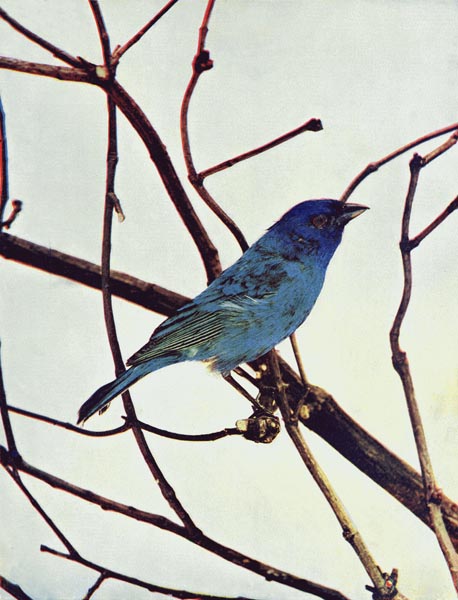
THE INDIGO BUNTING.

imgt

HE Indigo Bunting’s arrival at its summer home is usually in the early part of May, where it remains until about the middle of September. It is numerous in the eastern and middle states, inhabiting the continent and seacoast islands from Mexico, where they winter, to Nova Scotia. It is one of the very smallest of our birds, and also one of the most attractive. Its favorite haunts are gardens, fields of deep clover, the borders of woods, and roadsides, where, like the Woodpecker, it is frequently seen perched on the fences.

It is extremely active and neat in its manners and an untiring singer, morning, noon, and night his rapid chanting being heard, sometimes loud and sometimes hardly audible, as if he were becoming quite exhausted by his musical efforts. He mounts the highest tops of a large tree and sings for half an hour together. The song is not one uninterrupted strain, but a repetition of short notes, “commencing loud, and rapid, and full, and by almost imperceptible gradations for six or eight seconds until they seem hardly articulated, as if the little minstrel were unable to stop, and, after a short pause, beginning again as before.” Baskett says that in cases of serenade and wooing he may mount the tip sprays of tall trees as he sings and abandon all else to melody till the engrossing business is over.

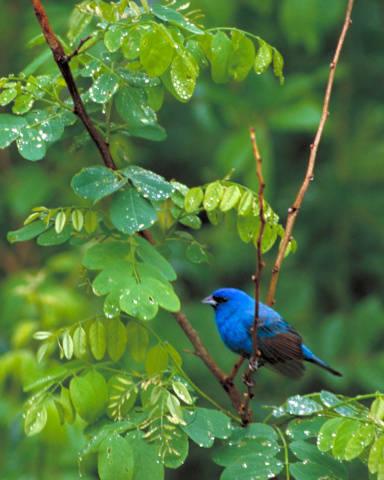
The Indigo Bird sings with equal animation whether it be May or August, the vertical sun of the dog days having no diminishing effect upon his enthusiasm. It is well known that in certain lights his plumage appears of a rich sky blue, varying to a tint of vivid verdigris green, so that the bird, flitting from one place to another, appears to undergo an entire change of color.

The Indigo Bunting fixes his nest in a low bush, long rank grass, grain, or clover, suspended by two twigs, flax being the material used, lined with fine dry grass. It had been known, however, to build in the hollow of an apple tree. The eggs, generally five, are bluish or pure white. The same nest is often occupied season after season. One which had been used for five successive summers, was repaired each year with the same material, matting that the birds had evidently taken from the covering of grape vines. The nest was very neatly and thoroughly lined with hair.

The Indigo feeds upon the ground, his food consisting mainly of the seed of small grasses and herbs. The male while moulting assumes very nearly the color of the female, a dull brown, the rich plumage not returning for two or three months. Mrs. Osgood Wright says of this tiny creature: “Like all the bright-hued birds he is beset by enemies both of earth and sky, but his sparrow instinct, which has a love for mother earth, bids him build near the ground. The dangers of the nesting-time fall mostly to his share, for his dull brown mate is easily overlooked as an insignificant sparrow. Nature always gives a plain coat to the wives of these gayly dressed cavaliers, for her primal thought is the safety of the home and its young life.”

Indigo Bunting female at fountain in yard through window

Indigo Bunting female at fountain in yard through window


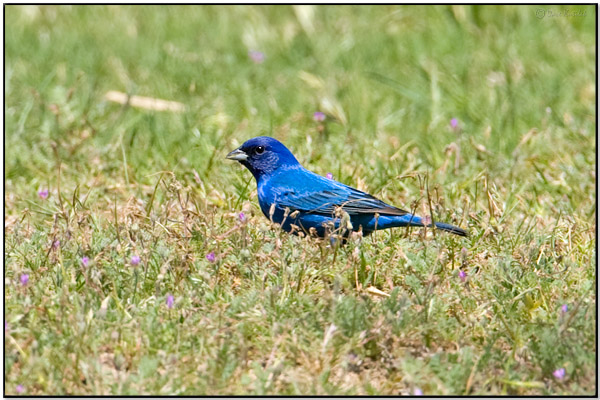
Indigo Bunting (Passerina cyanea) by Daves BirdingPix

Indigo Bunting (Passerina cyanea) by Daves BirdingPix

Lee’s Addition:

Indigo Buntings are in the Grosbeaks, Saltators & Allies – Cardinalidae Family. What a difference between the two as the article said. The Lord gives protection to the female by her coloration so she can sit on the nest and not be noticed. Praise the Lord for His care for the critters and us.

Do not fear therefore; you are of more value than many sparrows (or Buntings). (Matthew 10:31 NKJV)

They are small seed-eating bird. It is migratory, ranging from southern Canada to northern Florida during the breeding season, and from southern Florida to northern South America during the winter. It often migrates by night, using the stars to navigate. Its habitat is farmland, brush areas, and open woodland. The Indigo Bunting is closely related to the Lazuli Bunting, and interbreeds with the latter species where their ranges overlap. (Not sure how the female ended up in our yard, but must have had to land for a drink. Glad it did.)

Indigo Bunting (Passerina cyanea) ©USFWS

The Indigo Bunting communicates through vocalizations and visual cues. A sharp chip! call is used by both sexes, and is used as an alarm call if a nest or chick is threatened. A high-pitched, buzzed zeeep is used as a contact call when the Indigo Bunting is in flight. The song of the male bird is a high-pitched buzzed sweet-sweet chew-chew sweet-sweet, lasting two to four seconds, sung to mark his territory to other males and to attract females. Each male has a single complex song, which he sings while perched on elevated objects, such as posts, wires, and bush-tops. In areas where the ranges of the Lazuli Bunting and the Indigo Bunting overlap, the males defend territories from each another. Migration takes place in April and May and then again in September and October. The Indigo Bunting often migrates during the night, using the stars to direct itself. In captivity, since it cannot migrate, it experiences disorientation in April and May and in September and October if it cannot see the stars from its enclosure.

From xeno-canto.org by Doug Knapp

These birds are generally monogamous but not always faithful to their partner. In the western part of their range, they often hybridize with the Lazuli Bunting. Nesting sites are located in dense shrub or a low tree, generally 0.3–1 m (1–3 ft) above the ground, but rarely up to 9 m (30 ft). The nest itself is constructed of leaves, coarse grasses, stems, and strips of bark, lined with soft grass or deer hair and is bound with spider web. It is constructed by the female, who cares for the eggs alone. The clutch consists of one to four eggs, but usually contains three to four. The eggs are white and usually unmarked, though some may be marked with brownish spots, averaging 18.7 × 13.7 mm (0.7 × 0.5 in) in size. The eggs are incubated for 12 to 13 days and the chicks are altricial at hatching. Chicks fledge 10 to 12 days after hatching. Most pairs raise two broods per year, and the male may feed newly fledged young while the females incubate the next clutch of eggs.

The Brown-headed Cowbird may parasitize this species. Indigo Buntings abandon their nest if a cowbird egg appears before they lay any of their own eggs, but accept the egg after that point. Pairs with parasitized nests have less reproductive success. The bunting chicks hatch, but have lower survival rates as they must compete with the cowbird chick for food.

Birds Illustrated by Color Photograhy Vol 1 May, 1897 No 5 - Cover

Birds Illustrated by Color Photograhy Vol 1 May, 1897 No 5 – Cover

Birds Illustrated by Color Photography – Revisited – Introduction

The above article is the first article in the monthly serial that was started in January 1897 “designed to promote Knowledge of Bird-Live.” These include Color Photography, as they call them, today they are drawings. There are at least three Volumes that have been digitized by Project Gutenberg.

To see the whole series of – Birds Illustrated by Color Photography – Revisited

*

(Information from Wikipedia and other internet sources)

Next Article – The Night Hawk

Previous Article –The Prothonotary Yellow Warblers

Wordless Birds – Toucan

Links:

Indigo Bunting – Wikipedia

Sounds of Indigo Bunting – xeno-canto.org

Grosbeaks, Saltators & Allies – Cardinalidae Family


Start Birdwatching Today: Enjoy The Lord’s Paintbrush – Zoos

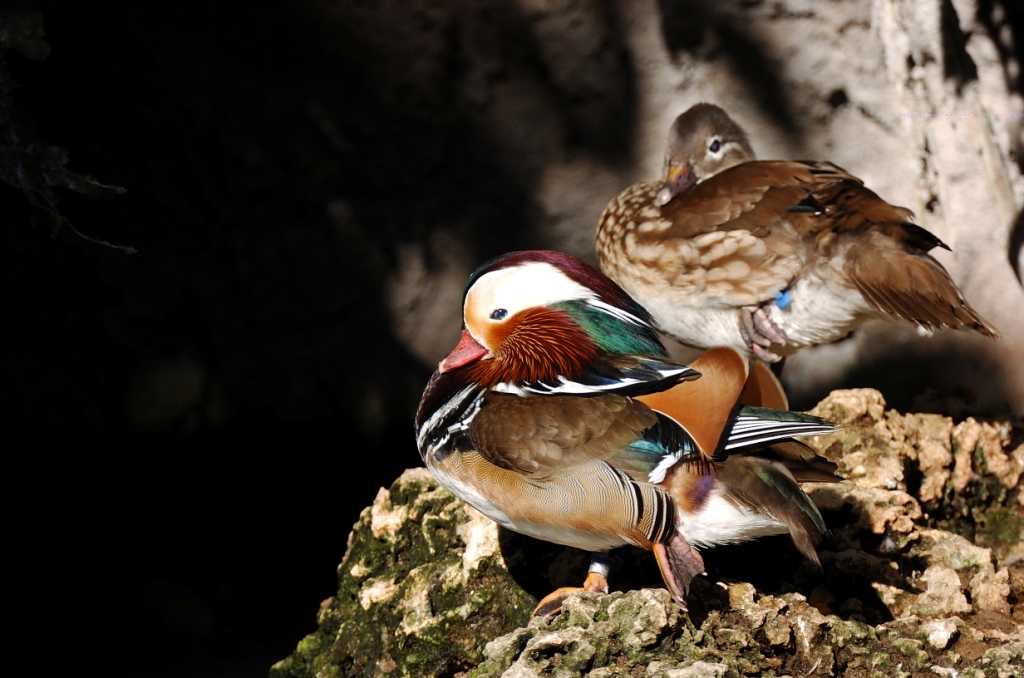
Mandarin Duck (Aix galericulata) by Dan at Zoo Miami

Mandarin Duck (Aix galericulata) by Dan at Zoo Miami

I trust you are enjoying our “Start Birdwatching Today!” series. We have been trying to motivate you to go out and observe the many birds around you. This is the second article about “Enjoying The Lord’s Paintbrush” Click for first one.

Seeing as our subtitle is “Birdwatching from a Christian Perspective,” I want to do a few articles that you won’t see in most birding books. We believe that the world and all that its critters were created by the Lord and not evolved.

For thus says the Lord–Who created the heavens, God Himself, Who formed the earth and made it, Who established it and did not create it to be a worthless waste; He formed it to be inhabited–I am the Lord, and there is no one else. (Isaiah 45:18 AMP) O LORD, how manifold are Your works! In wisdom You have made them all. The earth is full of Your possessions— (Psalms 104:24 NKJV) Have you not known? Have you not heard? The everlasting God, the LORD, The Creator of the ends of the earth, Neither faints nor is weary. His understanding is unsearchable. (Isaiah 40:28 NKJV)

While creating the birds, the Lord has used a fantastic array of colors and designs. I can imagine Him using a fine brush when some of my favorite birds here in America were being dressed for “His pleasure.” Zoos are a fantastic place to see birds that you would have to travel to other countries to see. It is more economical to travel to a Zoo nearby.

The birds at zoos are well cared for and many are being bred to preserve their species. Some birds are so endangered by loss of habitat and other causes, that the only birds left are the ones in the zoos or preserves. We are fortunate to have some very super zoos right here within a day’s drive and our country has many others that are first class also. The birds seen here in this article are some of the fantastically painted birds created by the Lord that Dan and I have seen in Zoos.

Look at the Mandarin Duck at the top. He is related to the Wood Duck up there last week. Another beautiful bird that likes to hide and make it difficult to get a good photo of him. The male is the colorful one and the female is a plain brownish to protect her while on the nest. She is in the background and you can see her painted eyelines.

Now if you have an ugly vulture and want to pretty it up, look at this design on the head of a King Vulture.

King Vulture (Sarcoramphus papa) by Lee at Brevard Zoo

King Vulture (Sarcoramphus papa) by Lee at Brevard Zoo

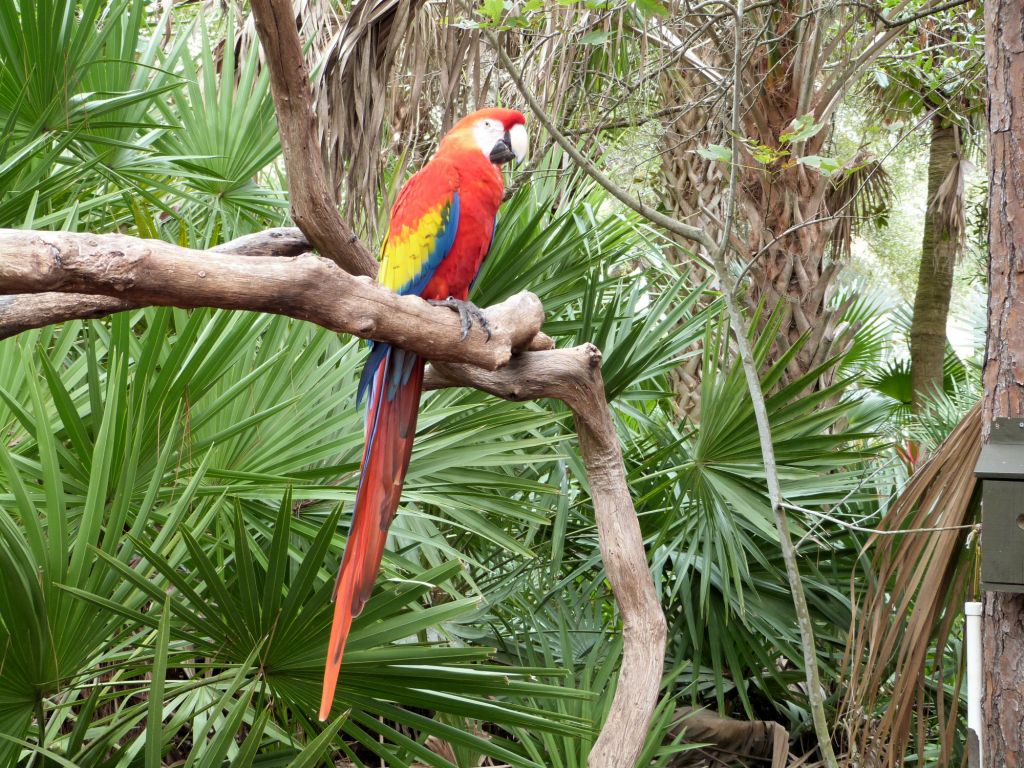
Here are a few more beauties by their Creator: How about these feathers on the Scarlet Macaw?

Scarlet Macaw (Ara macao) Feathers - Brevard Zoo

Scarlet Macaw (Ara macao) Feathers – Brevard Zoo

Scarlet Macaw (Ara macao) by Lee Brevard Zoo

Scarlet Macaw (Ara macao) by Lee Brevard Zoo

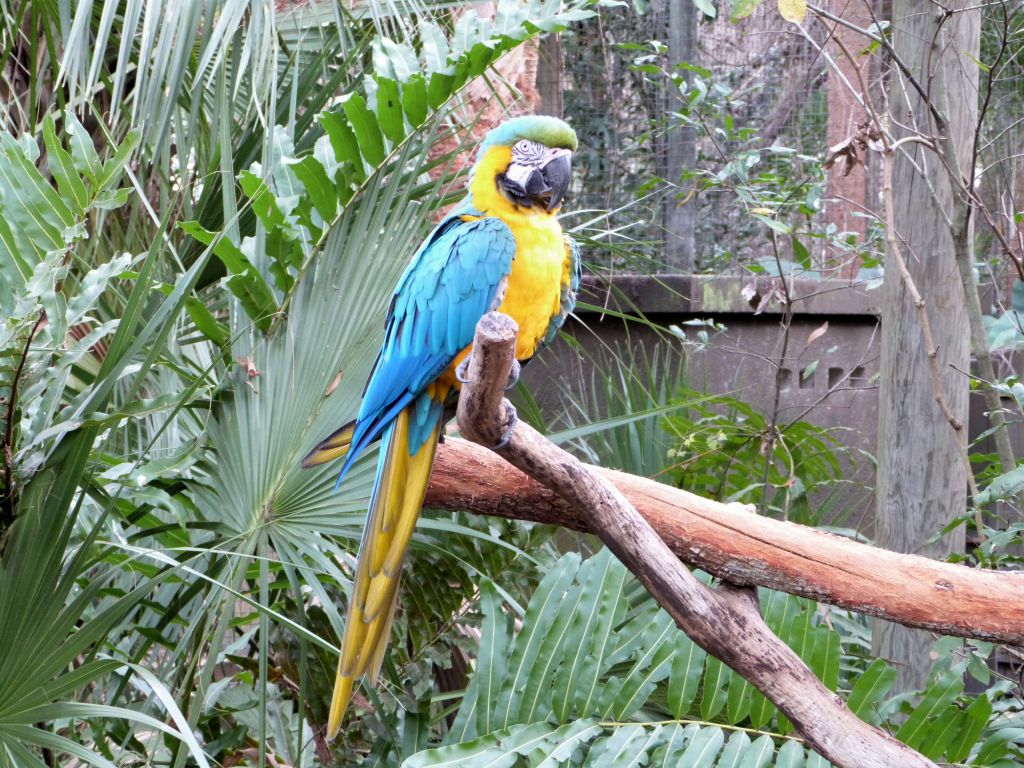
Or the gorgeous Blue-and-yellow Macaw?

Blue-and-yellow Macaw (Ara ararauna) at Brevard Zoo

Blue-and-yellow Macaw (Ara ararauna) at Brevard Zoo

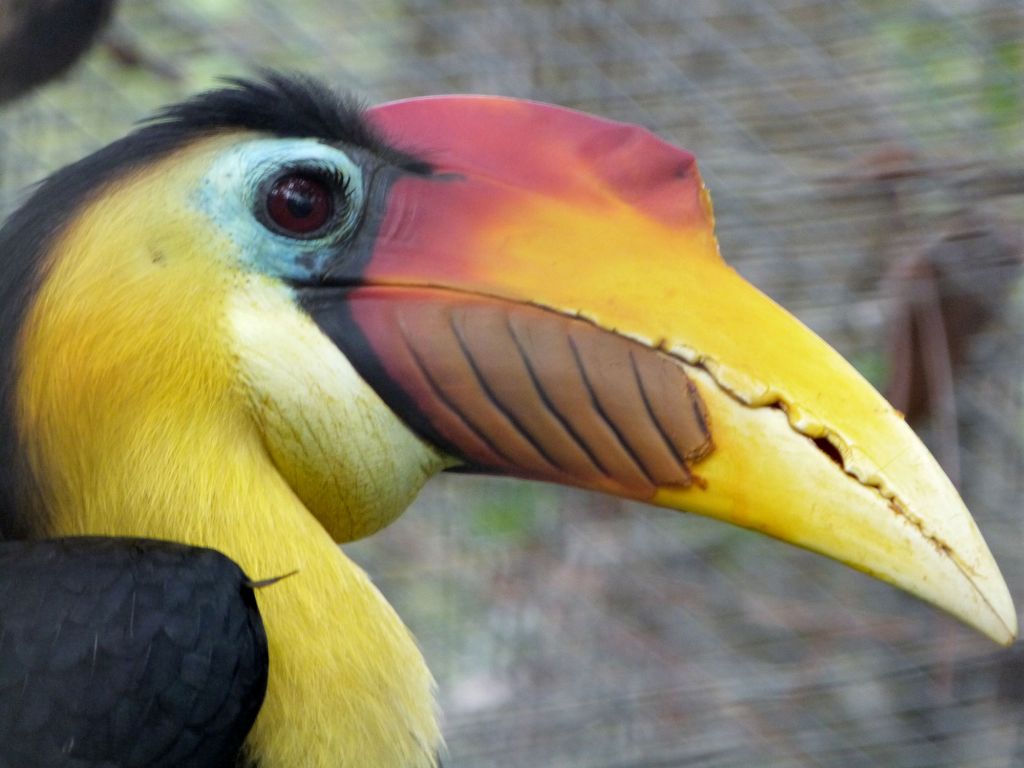
My favorite “painted” bird at the Brevard Zoo was this one:

Wrinkled Hornbill (Aceros corrugatus) Brevard Zoo by Lee

Wrinkled Hornbill (Aceros corrugatus) Brevard Zoo by Lee

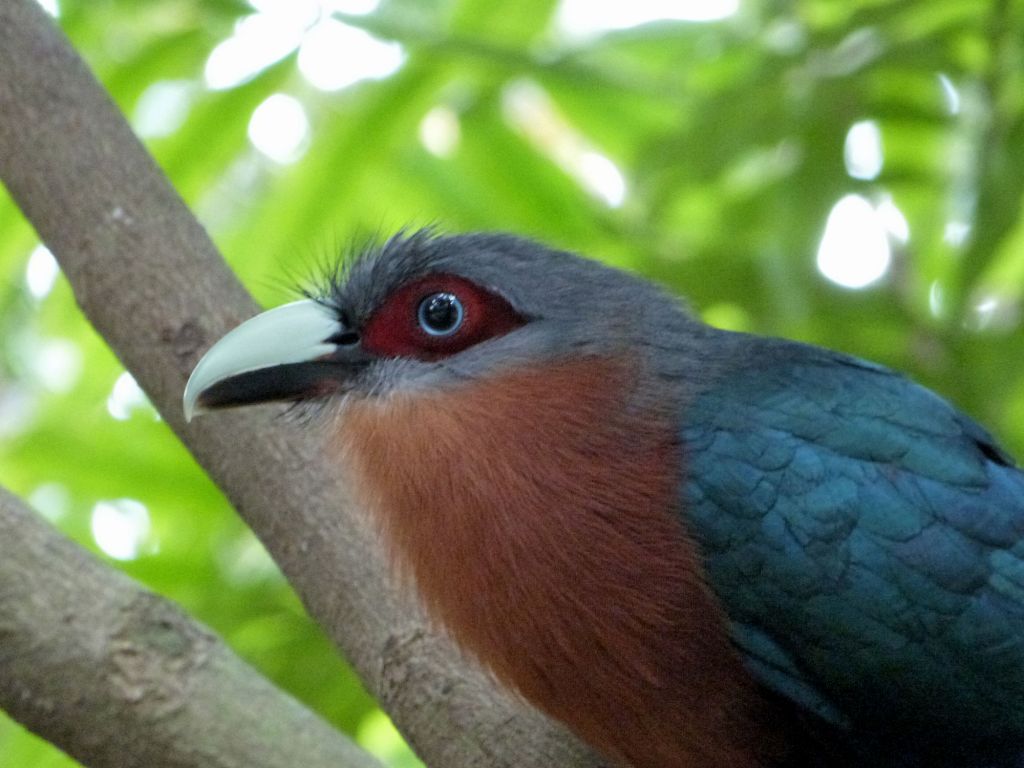
Wow!!! Down in Miami at the Wings of Asia aviary at Zoo Miami we were able to see these beautiful birds: The Chestnut-breasted Cuckoo

Chestnut-breasted Cuckoo (Cacomantis castaneiventris) Wings of Asia

Chestnut-breasted Cuckoo (Cacomantis castaneiventris) Wings of Asia

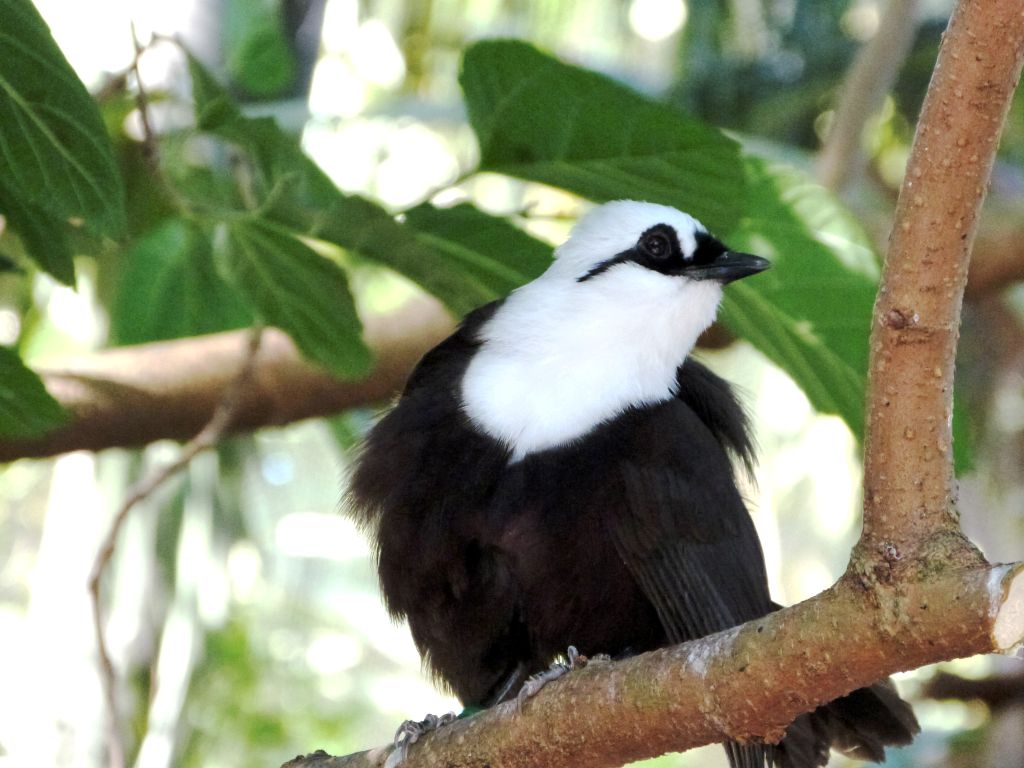
Or this cool bird which I call “Joe Cool.” Looks like the Lord painted sunglasses on it.

(Black and White) Sumatran Laughingthrush (Garrulax bicolor) by Lee

(Black and White) Sumatran Laughingthrush (Garrulax bicolor) by Lee

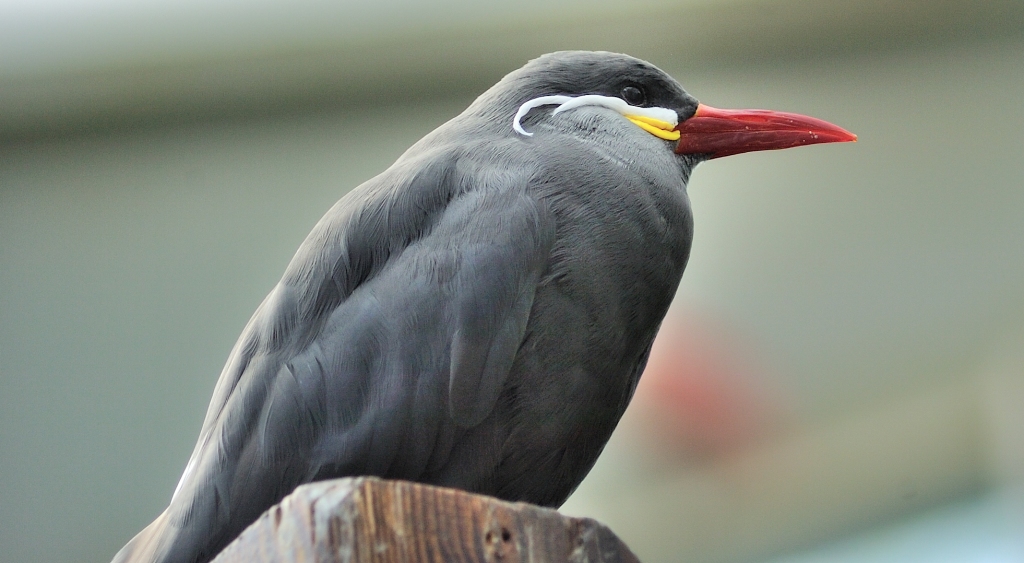
An Inca Tern seen at the National Aviary in Pittsburgh, PA:

Inca Tern by Dan at National Aviary

Inca Tern by Dan at National Aviary

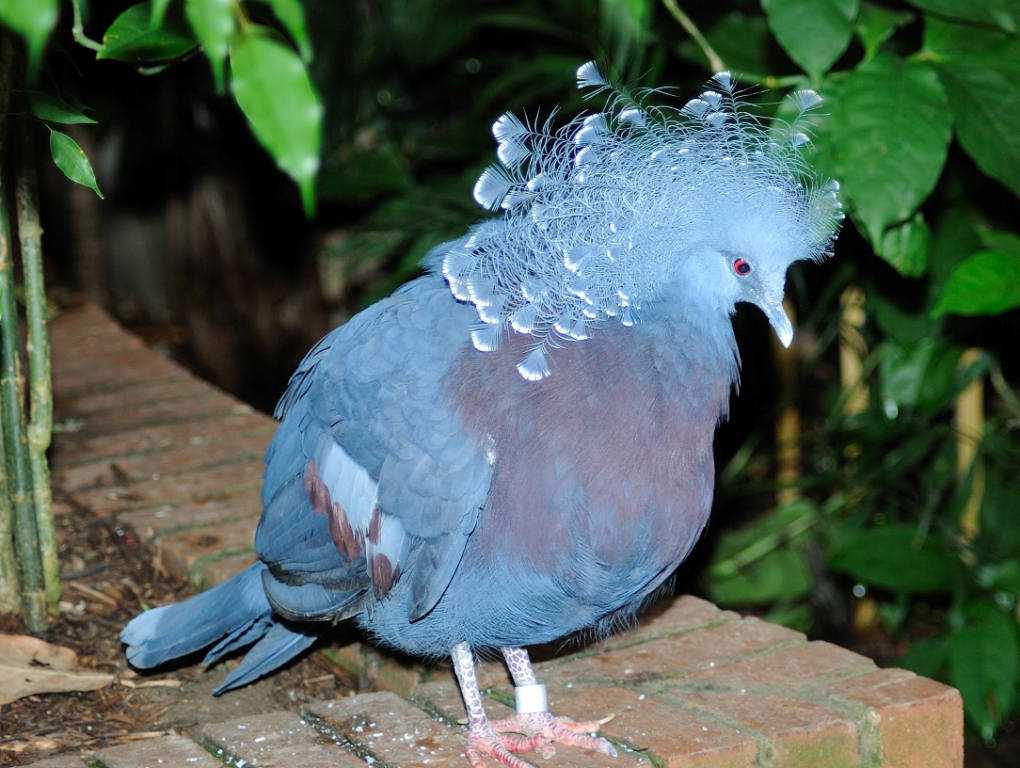
This Victorian-crowned Pigeon is at most of the zoos we have visited. They look like lace was placed on its head.

Victoria Crowned Pigeon by Dan at National Aviary

Victoria Crowned Pigeon by Dan at National Aviary

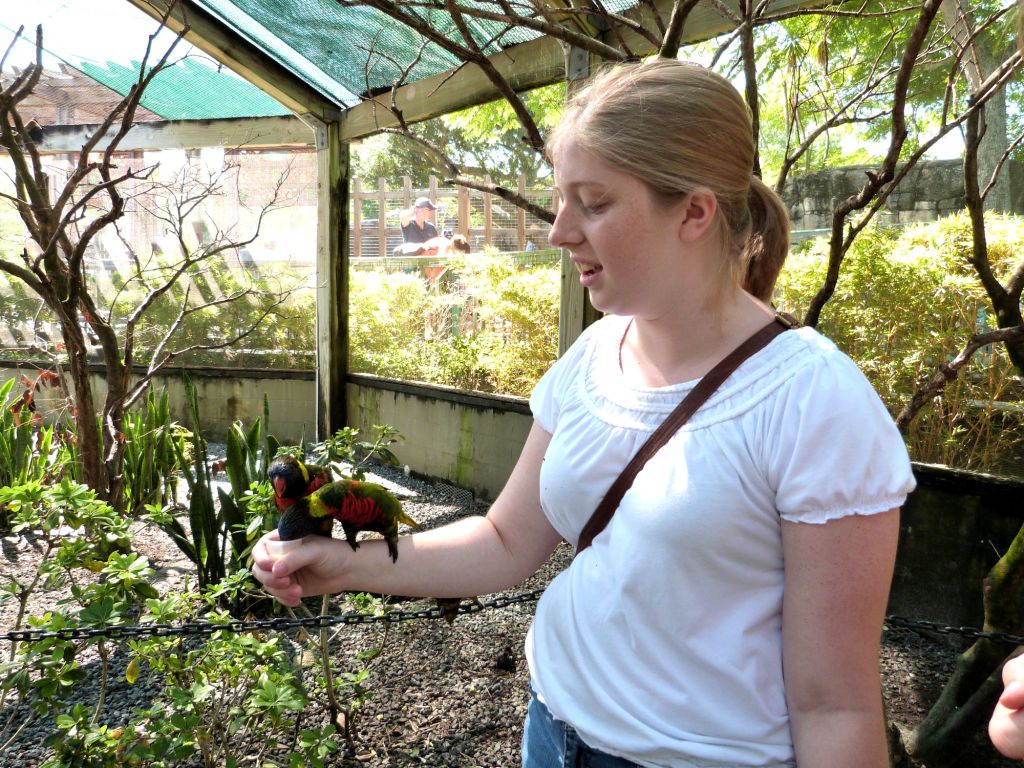
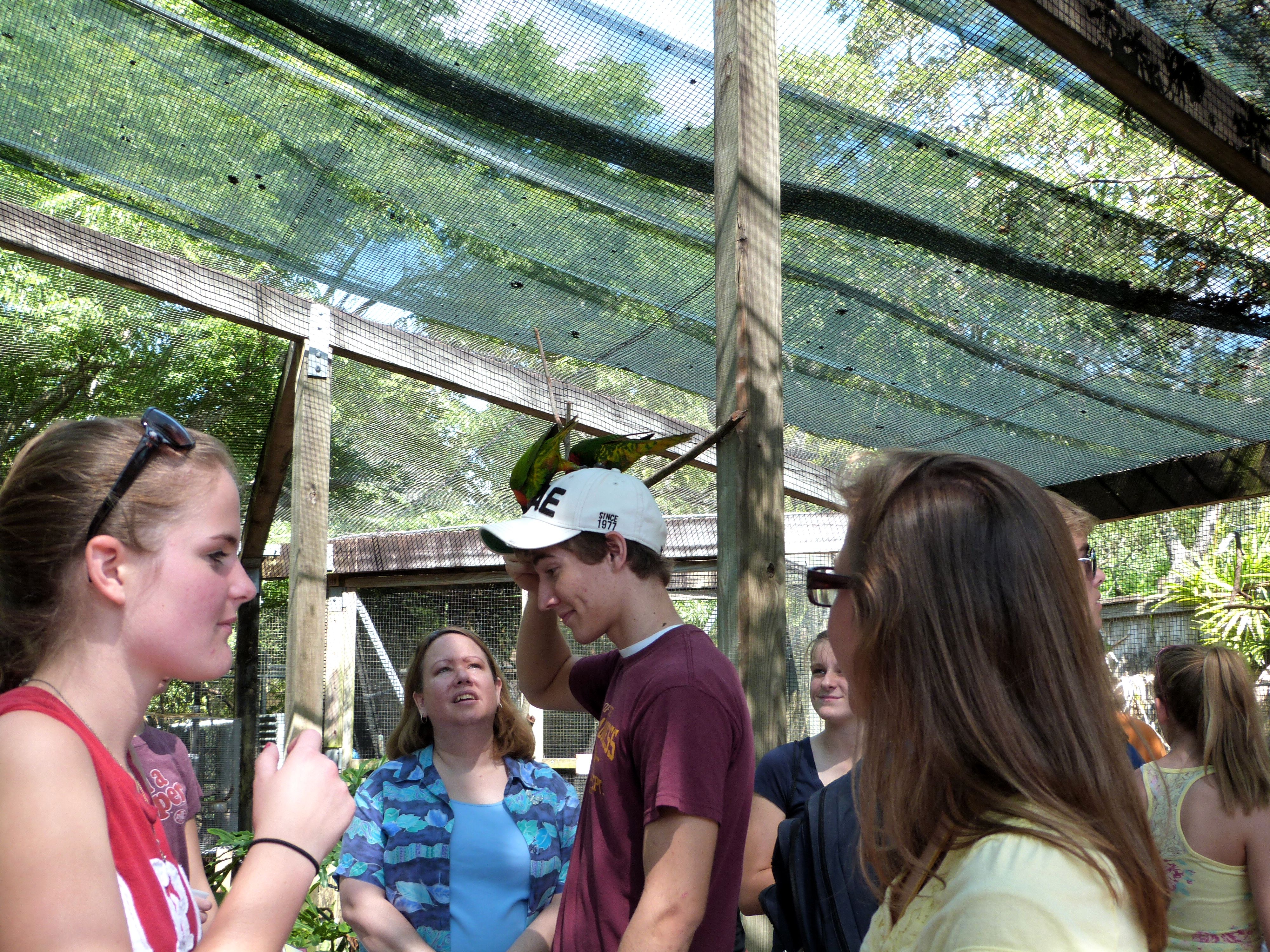
Back here locally to the Lowry Park Zoo in Tampa, there are many birds to enjoy. We met a group of our Homeschoolers over there on Friday and had the pleasure of introducing them to my avian friends there. They enjoyed all of them, but had the most fun feeding the beautiful Lorikeets.

Rainbow Lorikeets at Lowry Park Zoo

Rainbow Lorikeets at Lowry Park Zoo

Homeschoolers at Lowry Park Zoo

Homeschoolers at Lowry Park Zoo

Homeschoolers at Lowry Park Zoo

Homeschoolers at Lowry Park Zoo

Rainbow Lorikeet at Lowry Pk Zoo by Dan

Rainbow Lorikeet at Lowry Pk Zoo by Dan

There are many more that could be shown, but if you”Start Birdwatching Today” with a trip to a zoo or somewhere similiar, you might just be surprised by the beauty and magnificence of the birds. Then thank the Lord for His many blessings to us.

Oh, the depth of the riches both of the wisdom and knowledge of God! How unsearchable are His judgments and His ways past finding out! (Romans 11:33 NKJV)

See the whole “Start Birdwatching Today” series *

Birds Vol 1 #5 – The Prothonotary Yellow Warblers

Prothonotary Yellow Warblers Birds by Illustrated by Color Photography, 1897

Prothonotary Yellow Warblers Birds by Illustrated by Color Photography, 1897

Birds Illustrated by Color Photography – Revisited

Vol 1. May, 1897 No. 5

*

PROTHONOTARY YELLOW WARBLERS.

Quite a long name for such small birds—don’t you think so? You will have to get your teacher to repeat it several times, I fear, before you learn it.

These little yellow warblers are just as happy as the pair of wrens I showed you in April “Birds.” In fact, I suspect they are even happier, for their nest has been made and the eggs laid. What do you think of their house? Sometimes they find an old hole in a stump, one that a woodpecker has left, perhaps, and there build a nest. This year they have found a very pretty place to begin their housekeeping. What kind of tree is it? I thought I would show only the part of the tree that makes their home. I just believe some boy or girl who loves birds made those holes for them. Don’t you think so? They have an upstairs and a down stairs, it seems.

Like the Wrens I wrote about last month, they prefer to live in swampy land and along rivers. They nearly always find a hole in a decayed willow tree for their nest—low down. This isn’t a willow tree, though.

Whenever I show you a pair of birds, always pick out the father and the mother bird. You will usually find that one has more color than the other. Which one is it? Maybe you know why this is. If you don’t I am sure your teacher can tell you. Don’t you remember in the Bobolink family how differently Mr. and Mrs. Bobolink were dressed?

I think most of you will agree with me when I say this is one of the prettiest pictures you ever saw.

Prothonotary Warbler (Protonotaria citrea) ©WikiC

Prothonotary Warbler (Protonotaria citrea) ©WikiC

THE PROTHONOTARY, OR GOLDEN SWAMP WARBLER.

imgt

HE Golden Swamp Warbler is one of the very handsomest of American birds, being noted for the pureness and mellowness of its plumage. Baird notes that the habits of this beautiful and interesting warbler were formerly little known, its geographical distribution being somewhat irregular and over a narrow range. It is found in the West Indies and Central America as a migrant, and in the southern region of the United States. Further west the range widens, and it appears as far north as Kansas, Central Illinois, and Missouri.

Its favorite resorts are creeks and lagoons overshadowed by large trees, as well as the borders of sheets of water and the interiors of forests. It returns early in March to the Southern states, but to Kentucky not before the last of April, leaving in October. A single brood only is raised in a season.

A very pretty nest is sometimes built within a Woodpecker’s hole in a stump of a tree, not more than three feet high. Where this occurs the nest is not shaped round, but is made to conform to the irregular cavity of the stump. This cavity is deepest at one end, and the nest is closely packed with dried leaves, broken bits of grasses, stems, mosses, decayed wood, and other material, the upper part interwoven with fine roots, varying in size, but all strong, wiry, and slender, and lined with hair.

Other nests have been discovered which were circular in shape. In one instance the nest was built in a brace hole in a mill, where the birds could be watched closely as they carried in the materials. They were not alarmed by the presence of the observer but seemed quite tame.

So far from being noisy and vociferous, Mr. Ridgway describes it as one of the most silent of all the warblers, while Mr. W. Brewster maintains that in restlessness few birds equal this species. Not a nook or corner of his domain but is repeatedly visited during the day. “Now he sings a few times from the top of some tall willow that leans out over the stream, sitting motionless among the marsh foliage, fully aware, perhaps, of the protection afforded by his harmonizing tints. The next moment he descends to the cool shadows beneath, where dark, coffee-colored waters, the overflow of a pond or river, stretch back among the trees. Here he loves to hop about the floating drift-wood, wet by the lapping of pulsating wavelets, now following up some long, inclining, half submerged log, peeping into every crevice and occasionally dragging forth from its concealment a spider or small beetle, turning alternately its bright yellow breast and olive back towards the light; now jetting his beautiful tail, or quivering his wings tremulously, he darts off into some thicket in response to a call from his mate; or, flying to a neighboring tree trunk, clings for a moment against the mossy hole to pipe his little strain, or look up the exact whereabouts of some suspected insect prize.”


Lee’s Addition:

Prothonotary Warbler (Protonotaria citrea) Neal Addy Gallery

Prothonotary Warbler (Protonotaria citrea) Neal Addy Gallery

By them the birds of the heavens have their home; They sing among the branches. (Psalms 104:12 NKJV)

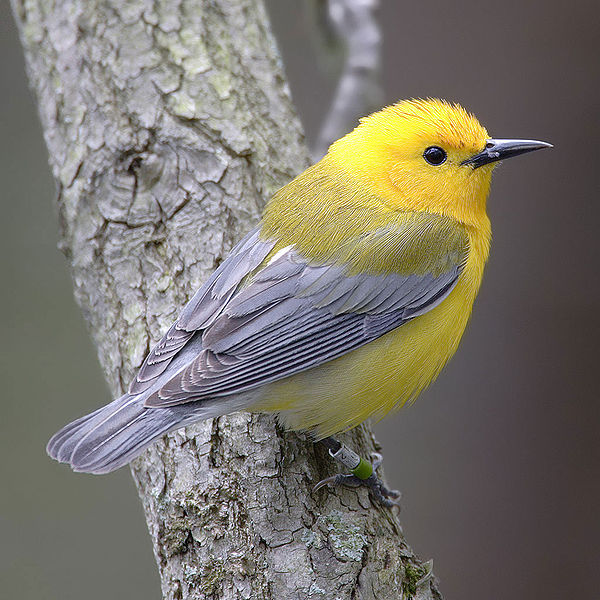
Another one of the Lord’s neat little birds, the Prothonotary Warbler is a member of the Parulidae Family. The Prothonotary Warbler (Protonotaria citrea) is a small songbird of the New World warbler family. It is the only member of the genus Protonotaria. This bird was named after officials in the Roman Catholic Church known as the “protonotarii”, who wore golden robes. It was once known as the Golden Swamp Warbler.

The Prothonotary Warbler is 5.1 in/13 cm long and weighs 0.44 oz/12.5 g. It has an olive back with blue-grey wings and tail, yellow underparts, a relatively long pointed bill and black legs. The adult male has a bright orange-yellow head; females and immature birds are duller and have a yellow head. In flight from below, the short, wide tail has a distinctive two-toned pattern that is white at the base and dark at the tip.

Prothonotary Warbler (Protonotaria citrea) ©USFWS

Prothonotary Warbler (Protonotaria citrea) ©USFWS

The preferred foraging habitat is dense, woody streams, where the Prothonotary Warbler forages actively in low foliage, mainly for Insects and snails. There are only two Warblers that make nest in tree cavities, this one and the Lucy’s Warbler. They like to use abandoned Woodpecker holes in or near water. They usually lay 3-7 eggs and only one clutch per year.

The song of this bird is a simple, loud, ringing sweet-sweet-sweet-sweet-sweet. The call is a loud, dry chip, like that of a Hooded Warbler. Its flight call is a loud seeep.

Sound of Pronthonotary Warbler song by xeno-canto.org

Birds Illustrated by Color Photograhy Vol 1 May, 1897 No 5 - Cover

Birds Illustrated by Color Photograhy Vol 1 May, 1897 No 5 – Cover

Birds Illustrated by Color Photography – Revisited – Introduction

The above article is the first article in the monthly serial that was started in January 1897 “designed to promote Knowledge of Bird-Live.” These include Color Photography, as they call them, today they are drawings. There are at least three Volumes that have been digitized by Project Gutenberg.

To see the whole series of – Birds Illustrated by Color Photography – Revisited

*

(Information from Wikipedia and other internet sources)

Next Article – The Indigo Bunting

Previous Article – The Scissor-Tailed Flycatcher

Links:

Prothonotary Warbler – All About Birds

Prothonotary Warbler – Wikipedia

The Parulidae Family

*


True Duck Story – From an e-Mail

I received this from a friend and it was too good not to share.
*****

This is a really neat story.

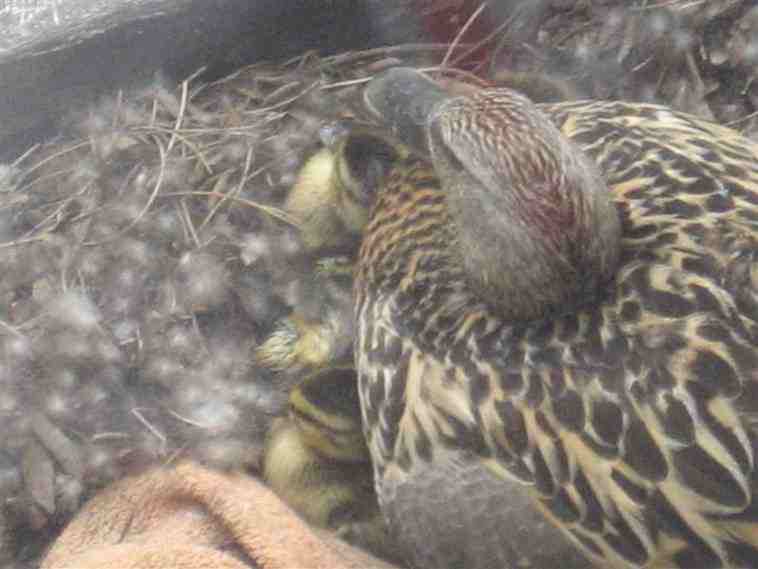
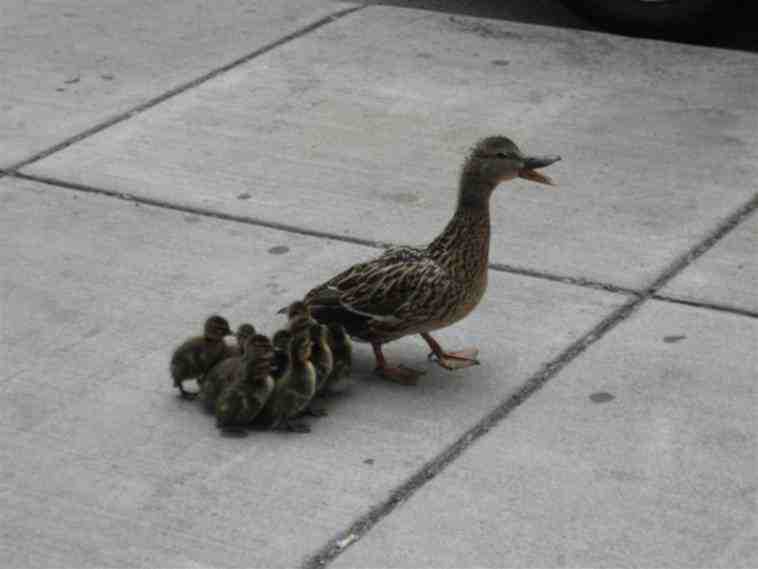
True duck story – San Antonio , Texas – Bravo something really cute happened this week. Michael R. Is an accounting clerk at Frost Bank and works there in a second story office. Several weeks ago, he watched a mother duck choose the concrete awning outside his window as the unlikely place to build a nest above the sidewalk. The mallard laid ten eggs in a nest in the corner of the planter that is perched over 10 feet in the air. She dutifully kept the eggs warm for weeks, and Monday afternoon all of her ten ducklings hatched.

Duck Story 1

Michael worried all night how the momma duck was going to get those babies safely off their perch in a busy, downtown, urban environment to take to water, which typically happens in the first 48 hours of a duck hatching. Tuesday morning, Michael watched the mother duck encourage her babies to the edge of the perch with the intent to show them how to jump off. Office work came to a standstill as everyone gathered to watch.

The mother flew down below and started quacking to her babies above. In disbelief Michael watched as the first fuzzy newborn trustingly toddled to the edge and astonishingly leapt into thin air, crashing onto the cement below. Michael couldn’t stand to watch this risky effort nine more times! He dashed out of his office and ran down the stairs to the sidewalk where the first obedient duckling, near its mother, was resting in a stupor after the near-fatal fall. Michael stood out of sight under the awning-planter, ready to help.

As the second one took the plunge, Michael jumped forward and caught it with his bare hands before it hit the concrete. Safe and sound, he set it down it by its momma and the other stunned sibling, still recovering from that painful leap. (The momma must have sensed that Michael was trying to help her babies.)

One by one the babies continued to jump.. Each time Michael hid under the awning just to reach out in the nick of time as the duckling made its free fall. At the scene the busy downtown sidewalk traffic came to a standstill. Time after time, Michael was able to catch the remaining eight and set them by their approving mother.

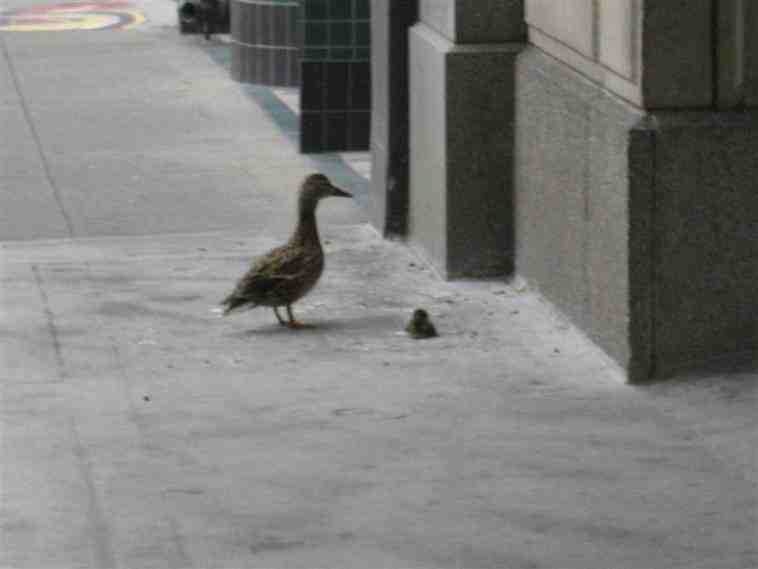
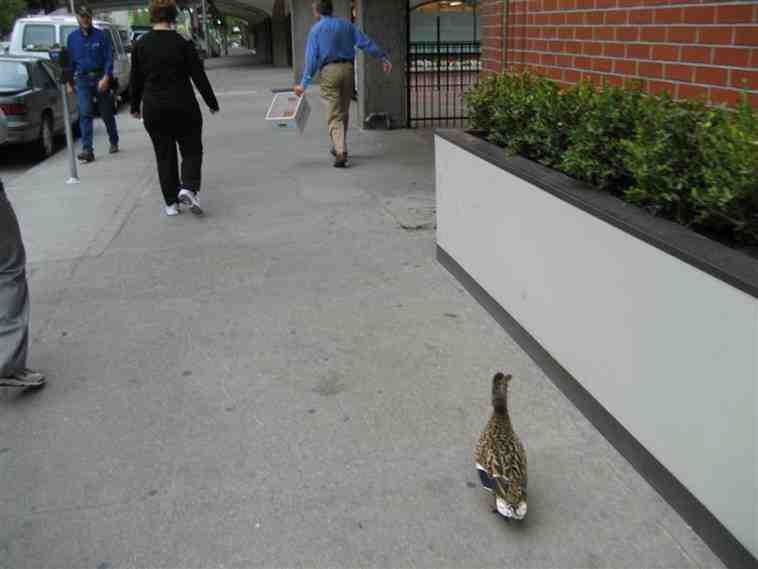
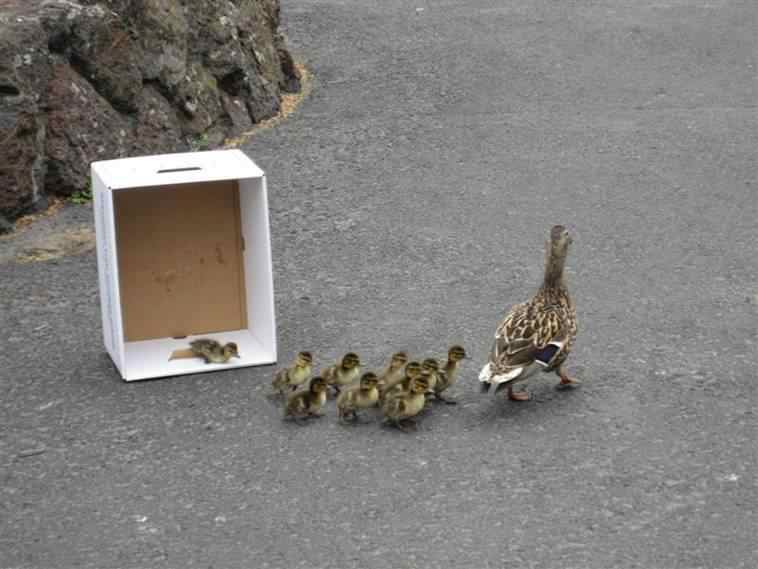
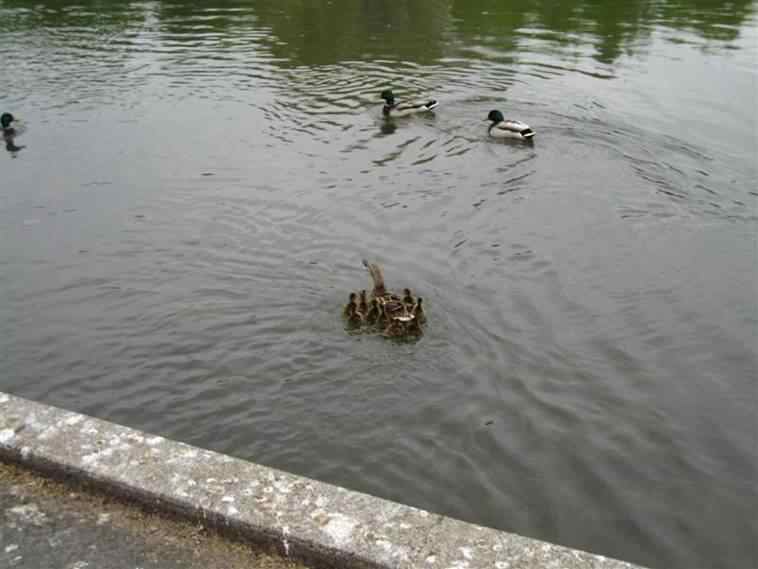
At this point Michael realized the duck family had only made part of its dangerous journey. They had two full blocks to walk across traffic, crosswalks, curbs and past pedestrians to get to the closest open water, the San Antonio River , site of the famed “River Walk.” The onlooking office secretaries and several San Antonio police officers joined in. An empty copy-paper box was brought to collect the babies. They carefully corralled them, with the mother’s approval, and loaded them in the container.. Michael held the box low enough for the mom to see her Brood. He then slowly navigated through the downtown streets toward the San Antonio River . The mother waddled behind and kept her babies in sight, all the way.

As they reached the river, the mother took over and passed him, jumping in the river and quacking loudly. At the water’s edge, Michael tipped the box and helped shepherd the babies toward the water and to the waiting mother after their adventurous ride.

All ten darling ducklings safely made it into the water and paddled up snugly to momma. Michael said the mom swam in circles, looking back toward the beaming bank bookkeeper, and proudly quacking.

At last, all present and accounted for: “We’re all together again. We’re here! We’re here!”

And here’s a family portrait before they head outward to further adventures….

Like all of us in the big times of our life, they never could have made it alone without lots of helping hands. I think it gives the name of San Antonio ‘s famous “River Walk” a whole new meaning! Maybe you will want to share this story with others. It’s too good to lose! Live honestly, Love generously, Care deeply, Speak kindly & Leave the rest to God.