In the last blog the “Fall” of Adam and Eve was mentioned and because of that, the “Curse” is now on them and all of God’s creation. Death comes on the scene, mankind now has sinned and now each person is born as a sinner. The ground is cursed and thorns and thistle now appear.
By Genesis Chapter 6, God has had it with the sins of man.
And GOD saw that the wickedness of man was great in the earth, and that every imagination of the thoughts of his heart was only evil continually. And it repented the LORD that he had made man on the earth, and it grieved him at his heart. And the LORD said, I will destroy man whom I have created from the face of the earth; both man, and beast, and the creeping thing, and the fowls of the air; for it repenteth me that I have made them. (Genesis 6:5-7 KJV)
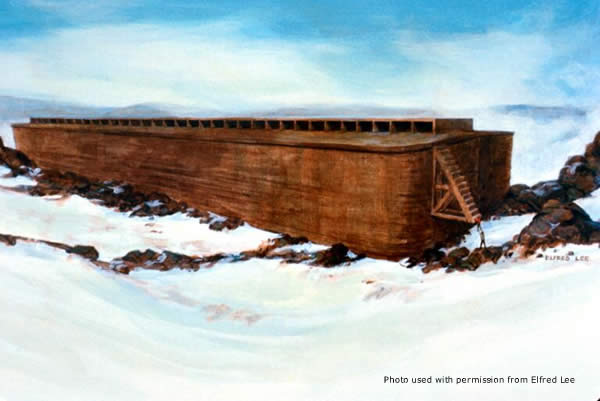
The Ark by Elfred Lee
All is not lost because, “But Noah found grace in the eyes of the LORD.” (Genesis 6:8 KJV) Because of the grace found by Noah, the LORD gives him instructions about how to build an ark including the size, materials to use, who and what will be on board, and why the ark will be needed. God makes a covenant with Noah and tells him to come in with his wife and his sons and his son’s wives.
And of every living thing of all flesh, two of every sort shalt thou bring into the ark, to keep them alive with thee; they shall be male and female. Of fowls after their kind, and of cattle after their kind, of every creeping thing of the earth after his kind, two of every sort shall come unto thee, to keep them alive. (Genesis 6:19-20 KJV)
He was also to provide food for all of them. And Noah obeyed all that he was told. Noah spent over 100 years preparing the ark and trying to warn others of the coming judgment. There was plenty of room on the ark for more than the 8 people who boarded the ark. The others refused to repent.
When we get to Chapter 7, the boarding of the ark takes place and the rain and flood begins. “And the LORD said unto Noah, Come thou and all thy house into the ark; for thee have I seen righteous before me in this generation. Of every clean beast thou shalt take to thee by sevens, the male and his female: and of beasts that are not clean by two, the male and his female. Of fowls also of the air by sevens, the male and the female; to keep seed alive upon the face of all the earth. For yet seven days, and I will cause it to rain upon the earth forty days and forty nights; and every living substance that I have made will I destroy from off the face of the earth. And Noah did according unto all that the LORD commanded him.” (Genesis 7:1-5)
Noah did not have to round up the animals, they came to him. Because not every animal we see today came on board but the main kinds (for instance the “bird kinds” may have had a “warbler kind” but not have black and white warblers, yellow-rumped warblers, hooded warbler, etc.), which ever ones they were, there was plenty of room for them. I have an idea that because the LORD sent the animals, birds, and critters, that their DNA’s were of the highest quality. (That is my opinion)
Doves in Israel
If you read the rest of Genesis 7, you will see that the global flood came and covered everything and only those who were in the ark survived, plus some of those that live in the water.
And all flesh died that moved upon the earth, both of fowl, and of cattle, and of beast, and of every creeping thing that creepeth upon the earth, and every man: All in whose nostrils was the breath of life, of all that was in the dry land, died. And every living substance was destroyed which was upon the face of the ground, both man, and cattle, and the creeping things, and the fowl of the heaven; and they were destroyed from the earth: and Noah only remained alive, and they that were with him in the ark. (Genesis 7:21-23)
In Foundation #4 we will find out about what the birds go through as they come off the ark and after.
Ian’s Bird of the Week – Princess Parrot ~ by Ian Montgomery
Newsletter ~ 10/1/15
Lee’s Update: Not sure what happened because I was seeing it okay on PC and smartphone. Anyway, it is now back to the way I normally add the photos back in.
A late bird of the week I regret, but I’ve been planning and designing a major overhaul to the website to the exclusion of almost everything else. The website is showing its age as I designed it in a pre-smart phone and pre-tablet era – seems like a long time ago now – for fixed, landscape screens. About 30% of the birdway website traffic comes from such devices now, so it’s an issue I can no longer ignore. Anyway, I’ll say a bit more about that later and provide an example of the new layout.
The other revision taking place is that until now I’ve only included my own photos, so Birdway has been synonymous with Ian Montgomery. The rationale was that it was a showcase for my work – some would say a monument to my ego, smile. Maybe I’m satisfied at having reached 1500 species globally and 700 Australian ones so it’s time to change. Birdway will now aim to provide the best range of publishable quality bird photos. Initially the emphasis will be on Australian ones, but later I may extend this to Australasian one. For manageability, I’m starting by invitation only but feel free to register your interest by email ian@birdway.com.au.
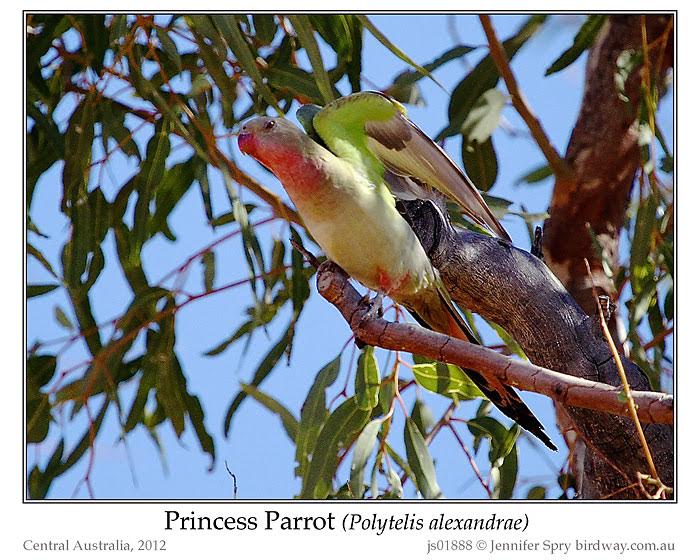
So, here is a landmark bird of the week: these lovely photos of the gorgeous and elusive Princess Parrot were taken by my friend Jenny Spry, a birder and photographer well-known in Australian birding circles. She leaves no stone unturned and no bush or remote island unchecked in a passionate search for the unusual and has one of the longest Australian life lists (aiming for 800!). The Princess Parrot is elusive for at least two reason. The first is that it’s a bird of very remote parts of arid Australia accessible only with considerable difficulty, e.g. the Canning Stock Route. The other is that its population and range varies greatly with rainfall. In poor seasons it is almost impossible to find, but in good season the population irrupts and it can appear in more accessible locations, perhaps I should say slightly less inaccessible ones, in inland eastern Western Australia, the southwestern Northern Territory and northwestern South Australia. The core breeding range is thought to be around Tobin Lake and in the Great Victoria Desert, both in eastern Western Australia.
It is one of three beautiful, long-tailed, medium sized (length 34-46cm/13-18in) parrots belonging to the endemic Australian genus. Polytelis. The others are the Superb Parrot of New South Wales and northern Victoria and the Regent Parrot which occurs in two separate populations, one in southwestern New South Wales, northeastern Victoria and eastern South Australia and the other in southern Western Australia. All three species are uncommon: the Princess is classed as Near-Threatenedand the Superb as Vulnerable, while the Regent is uncommon in the east and declining in the west. Male Princess Parrots, first two photos, have longer tails and brighter colours than females (third photo).
Returning to the subject of website design in a mobile world, I’ve used the Princess Parrot as the first species in the new design and it was posted to the birdway website this morning. The changes will be more obvious on smart phones and tablets, but on computers you’ll notice that the thumbnails have moved from a vertical column on the left to a horizontal row on the bottom and the information about the photo has moved from left to right. You’ll also see a button at top right which reveals – and hides – the main navigation menu as vertical column which slides the rest of the page to the right. Previous, this menu didn’t appear on the pages of individual species, only – as a row of horizontal buttons at the top – on the family pages and the ten main topic pages to which these button link. The fourth and fifth images are screen shots from my iPhone. The fourth shows a page in landscape orientation. The image shrinks to fit the screen width and you can see the rest of the page by scrolling up and down. Note that the photo information is still on the left. The fifth, shows the page in vertical orientation with the navigation menu showing as a grey column on the left. The photo information has dropped below the image and both the menu column and the main window are scrollable independently.
These pages are, of course, still prototypes and there will be more changes before I apply it more generally. I’ve tested it only using the Apple browser Safari on a Mac, an iPad and an iPhone. I’d be very grateful if you could try it out on different platforms (Windows and Android particularly) and in different browsers (Safari, Windows Explorer, Chrome, Opera, Firefox and Mozilla are the most important) and report back to me with any problems: http://birdway.com.au/psittacidae/princess_parrot/index.htm.
–
I’ve needed to use JavaScript to show and hide the side menu, so you won’t be able to see if yet if JavaScript isn’t available. If it isn’t you’ll get a message in orange instead of the script generated ian@birdway.com.au email address to tell you that and to write to ‘ian’ (at symbol) ‘birdway.com.au’ instead. I will be adding code so that the side menu is permanently visible if JavaScript isn’t enabled, but it is something of an internet standard these day and I want to be able to hide it to make more space available on small screens.
–
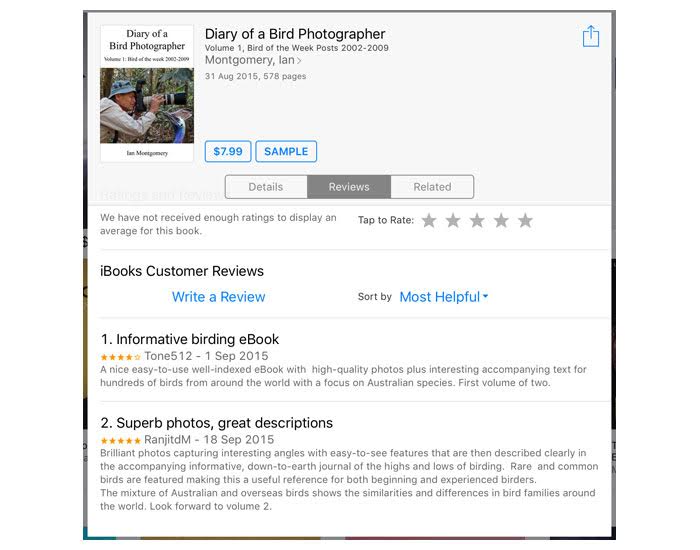
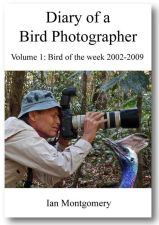
On the subject of books, the Diary of a Bird Photographer has sold about 50 copies in the first month, and review are beginning to appear (below on the Apple store) I’m hugely grateful to those who have done reviews and would love it if some of you would. I think there were problems posting review to the Apple store, but these seem to have been fixed. If that is your experience let me know ian@birdway.com.au and if your very patient, try again. Thank you.
These images should link to the relevant pages on the Birdway site.
Ian’s Book
Greetings
Ian
**************************************************
Ian Montgomery, Birdway Pty Ltd,
454 Forestry Road, Bluewater, Qld 4818
Tel 0411 602 737 ian@birdway.com.au
Bird Photos http://www.birdway.com.au/
Where to Find Birds in Northern Queensland: iTunes; Google Play Kobo Books
Recorder Society http://www.nqrs.org.au
*******************************
Lee’s Addition:
And he said unto them, Come ye yourselves apart into a desert place, and rest a while: for there were many coming and going, and they had no leisure so much as to eat. (Mark 6:31 KJV)
Very interesting Parrot and apparently quite a change to Ian’s Site at Birdway. I’ll be checking on permission for further usage of his guest photographer. For now, I trust using this latest newsletter of his is under his permission to use.
What a beauty this parrot reveals. Subtle in colors, but very attractive.
But they that wait upon the LORD shall renew their strength; they shall mount up with wings as eagles; they shall run, and not be weary; and they shall walk, and not faint. (Isaiah 40:31 KJV)
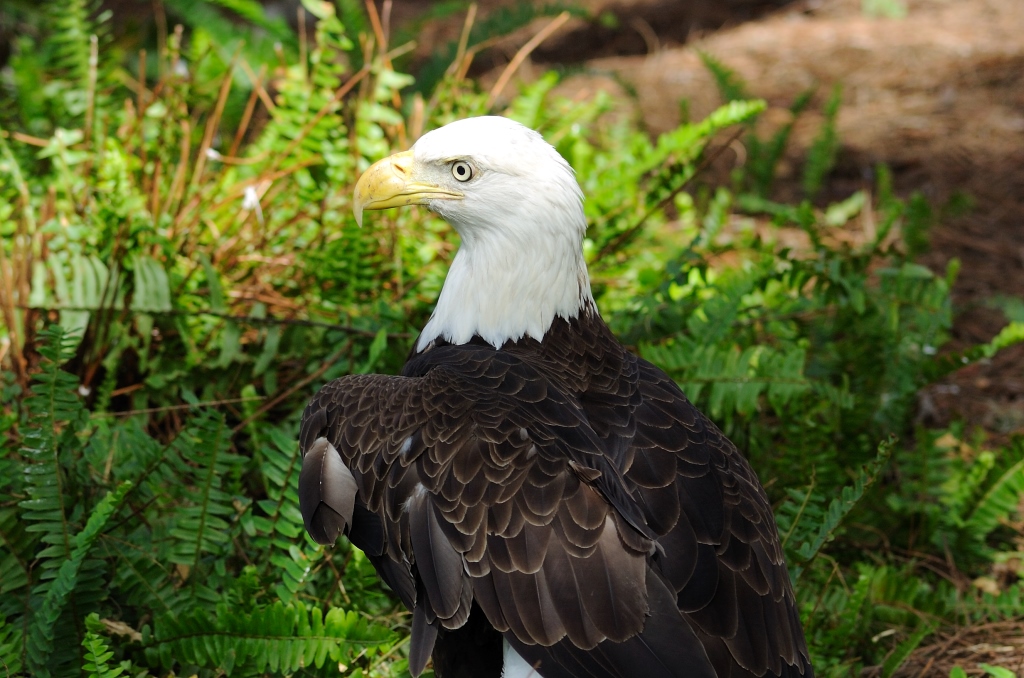
Today we were blessed with the sightings of four mature Bald Eagles. Each had their beautiful white heads and their white tails visible. And I wasn’t even out birdwatching. I therefore had no camera with me.
Because I am still under the weather fighting a bad cold and my slipped disc, we have not gone “birdwatching.” So this morning on the way home from therapy, we spotted a Bald Eagle on one of the power poles. A few days ago we had seen one nearby on another street, so this may have been the same one.
I love this time of the year because the eagles start migrating back down to spend the winter with us. Polk County, Florida, where we live, has one of the highest concentrations (in the lower 48) from now through the winter.
Osprey Road by Dan – (Old Bartow Road)
This evening, we drove to Bartow on the Old Bartow Road, which I have renamed “Osprey” road. I call it that because of all the Ospreys that make nest on the flat platforms that are on the power poles. They were placed there when the Osprey were becoming endangered. Now they are recovering right well. Anyway, most of the Ospreys left within the last month, except for one or two, which we saw this evening. (They come down in late January or early February, make babies, and then leave July to August.)
On the way back, we spotted one Bald Eagle sitting in one of the nest and then up about this end, where the picture was taken, there were two more standing in a nest. So much for traipsing through the woods to find an eagle, they were just right there in plain view.
So, even though I didn’t get to go birdwatching lately, the Lord brought the birdwatching to us. What a Blessing. Thank you Lord for allowing us to see them.
Bald Eagle (Haliaeetus leucocephalus) by Lee at National Aviary
I have seen other birds while we were riding around, but Bald Eagles are very special to me. As that top verse says, I am to be reminded that my strength will be renewed, not be weary or faint. Not so sure about the running though. :)
“I don’t believe it,” muttered Johnny Chuck out loud. “I don’t believe Jenny Wren knows what she’s talking about.”
“What is it Jenny Wren has said that you don’t believe?” demanded Skimmer the Tree Swallow, as he once more settled himself in his doorway.
“She said that Hummer the Hummingbird is a sort of second cousin to Sooty the Chimney Swift,” replied Johnny Chuck.
“Well, it’s so, if you don’t believe it,” declared Skimmer. “I don’t see that that is any harder to believe than that you are cousin to Striped Chipmunk and Nappy Jack the Gray Squirrel. To look at you no one would ever think you are a member of the Squirrel family, but you must admit that you are.”
Johnny Chuck nodded his head thoughtfully. “Yes,” said he, “I am, even if I don’t look it. This is a funny world, isn’t it? You can’t always tell by a person’s looks who he may be related to. Now that I’ve found out that Sooty isn’t related to you and is related to Hummer, I’ll never dare guess again about anybody’s relatives. I always supposed Twitter the Martin to be a relative of yours, but now that I’ve learned that Sooty isn’t, I suspect that Twitter isn’t either.”
“Oh, yes, he is,” replied Skimmer promptly. “He’s the largest of the Swallow family, and we all feel very proud of him. Everybody loves him.”
“Is he as black as he looks, flying round up in the air?” asked Johnny Chuck. “He never comes down here as you do where a fellow can get a good look at him.”
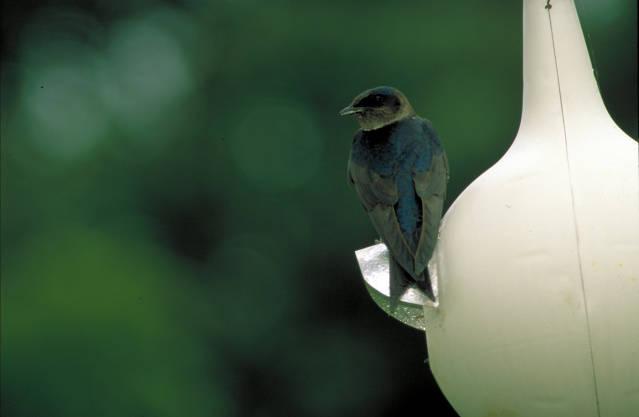
“Yes,” replied Skimmer, “he dresses all in black, but it is a beautiful blue-black, and when the sun shines on his back it seems to be almost purple. That is why some folks call him the Purple Martin. He is one of the most social fellows I know of. I like a home by myself, such as I’ve got here, but Twitter loves company. He likes to live in an apartment house with a lot of his own kind. That is why he always looks for one of those houses with a lot of rooms in it, such as Farmer Brown’s boy has put up on the top of that tall pole out in his back yard. He pays for all the trouble Farmer Brown’s boy took to put that house up. If there is anybody who catches more flies and winged insects than Twitter, I don’t know who it is.”
Barn Swallow in Cades Cove by Dan
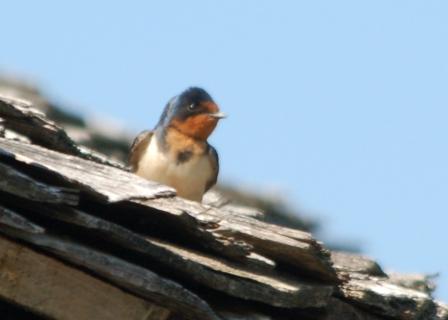
“How about me?” demanded a new voice, as a graceful form skimmed over Johnny Chuck’s head, and turning like a flash, came back. It was Forktail the Barn Swallow, the handsomest and one of the most graceful of all the Swallow family. He passed so close to Johnny that the latter had a splendid chance to see and admire his glistening steel-blue back and the beautiful chestnut-brown of his forehead and throat with its narrow black collar, and the brown to buff color of his under parts. But the thing that was most striking about him was his tail, which was so deeply forked as to seem almost like two tails.
“I would know him as far as I could see him just by his tail alone,” exclaimed Johnny. “I don’t know of any other tail at all like it.”
“There isn’t any other like it,” declared Skimmer. “If Twitter the Martin is the largest of our family, Forktail is the handsomest.”
“How about my usefulness?” demanded Forktail, as he came skimming past again. “Cousin Twitter certainly does catch a lot of flies and insects but I’m willing to go against him any day to see who can catch the most.”
With this he darted away. Watching him they saw him alight on the top of Farmer Brown’s barn. “It’s funny,” remarked Johnny Chuck, “but as long as I’ve known Forktail, and I’ve known him ever since I was big enough to know anybody, I’ve never found out how he builds his nest. I’ve seen him skimming over the Green Meadows times without number, and often he comes here to the Old Orchard as he did just now, but I’ve never seen him stop anywhere except over on that barn.”
“That’s where he nests,” chuckled Skimmer.
“What?” cried Johnny Chuck. “Do you mean to say he nests on Farmer Brown’s barn?”
“No,” replied Skimmer. “He nests in it. That’s why he is called the Barn Swallow, and why you never have seen his nest. If you’ll just go over to Farmer Brown’s barn and look up in the roof, you’ll see Forktail’s nest there somewhere.”
“Me go over to Farmer Brown’s barn!” exclaimed Johnny Chuck. “Do you think I’m crazy?”
Skimmer chuckled. “Forktail isn’t crazy,” said he, “and he goes in and out of that barn all day long. I must say I wouldn’t care to build in such a place myself, but he seems to like it. There’s one thing about it, his home is warm and dry and comfortable, no matter what the weather is. I wouldn’t trade with him, though. No, sir, I wouldn’t trade with him for anything. Give me a hollow in a tree well lined with feathers to a nest made of mud and straw, even if it is feather-lined.”
“Do you mean that such a neat-looking, handsome fellow as Forktail uses mud in his nest?” cried Johnny.
Skimmer bobbed his head. “He does just that,” said he. “He’s something like Welcome Robin in this respect. I—”
But Johnny Chuck never knew what Skimmer was going to say next, for Skimmer happened at that instant to glance up. For an instant he sat motionless with horror, then with a shriek he darted out into the air. At the sound of that shriek Mrs. Skimmer, who all the time had been sitting on her eggs inside the hollow of the tree, darted out of her doorway, also shrieking. For a moment Johnny Chuck couldn’t imagine what could be the trouble. Then a slight rustling drew his eyes to a crotch in the tree a little above the doorway of Skimmer’s home. There, partly coiled around a branch, with head swaying to and fro, eyes glittering and forked tongue darting out and in, as he tried to look down into Skimmer’s nest, was Mr. Blacksnake.
Barn Swallow (Hirundo rustica) WikiC
It seemed to Johnny as if in a minute every bird in the Old Orchard had arrived on the scene. Such a shrieking and screaming as there was! First one and then another would dart at Mr. Blacksnake, only to lose courage at the last second and turn aside. Poor Skimmer and his little wife were frantic. They did their utmost to distract Mr. Blacksnake’s attention, darting almost into his very face and then away again before he could strike. But Mr. Blacksnake knew that they were powerless to hurt him, and he knew that there were eggs in that nest. There is nothing he loves better than eggs unless it is a meal of baby birds. Beyond hissing angrily two or three times he paid no attention to Skimmer or his friends, but continued to creep nearer the entrance to that nest.
At last he reached a position where he could put his head in the doorway. As he did so, Skimmer and Mrs. Skimmer each gave a little cry of hopelessness and despair. But no sooner had his head disappeared in the hole in the old apple-tree than Scrapper the Kingbird struck him savagely. Instantly Mr. Blacksnake withdrew his head, hissing fiercely, and struck savagely at the birds nearest him. Several times the same thing happened. No sooner would his head disappear in that hole than Scrapper or one or the other of Skimmer’s friends, braver than the rest, would dart in and peck at him viciously, and all the time all the birds were screaming as only excited feathered folk can. Johnny Chuck was quite as excited as his feathered friends, and so intent watching the hated black robber that he had eyes for nothing else. Suddenly he heard a step just behind him. He turned his head and then frantically dived head first down into his hole. He had looked right up into the eyes of Farmer Brown’s boy!
“Ha, ha!” cried Farmer Brown’s boy, “I thought as much!” And with a long switch he struck Mr. Blacksnake just as the latter had put his head in that doorway, resolved to get those eggs this time. But when he felt that switch and heard the voice of Farmer Brown’s boy he changed his mind in a flash. He simply let go his hold on that tree and dropped. The instant he touched the ground he was off like a shot for the safety of the old stone wall, Farmer Brown’s boy after him. Farmer Brown’s boy didn’t intend to kill Mr. Blacksnake, but he did want to give him such a fright that he wouldn’t visit the Old Orchard again in a hurry, and this he quite succeeded in doing.
No sooner had Mr. Blacksnake disappeared than all the birds set up such a rejoicing that you would have thought they, and not Farmer Brown’s boy, had saved the eggs of Mr. and Mrs. Skimmer. Listening to them, Johnny Chuck just had to smile.
Listen to the story read.
Barn Swallow at the New Mexico Welcome Center by Lee
Yea, the sparrow hath found an house, and the swallow a nest for herself, where she may lay her young, even thine altars, O LORD of hosts, my King, and my God. (Psalms 84:3 KJV)
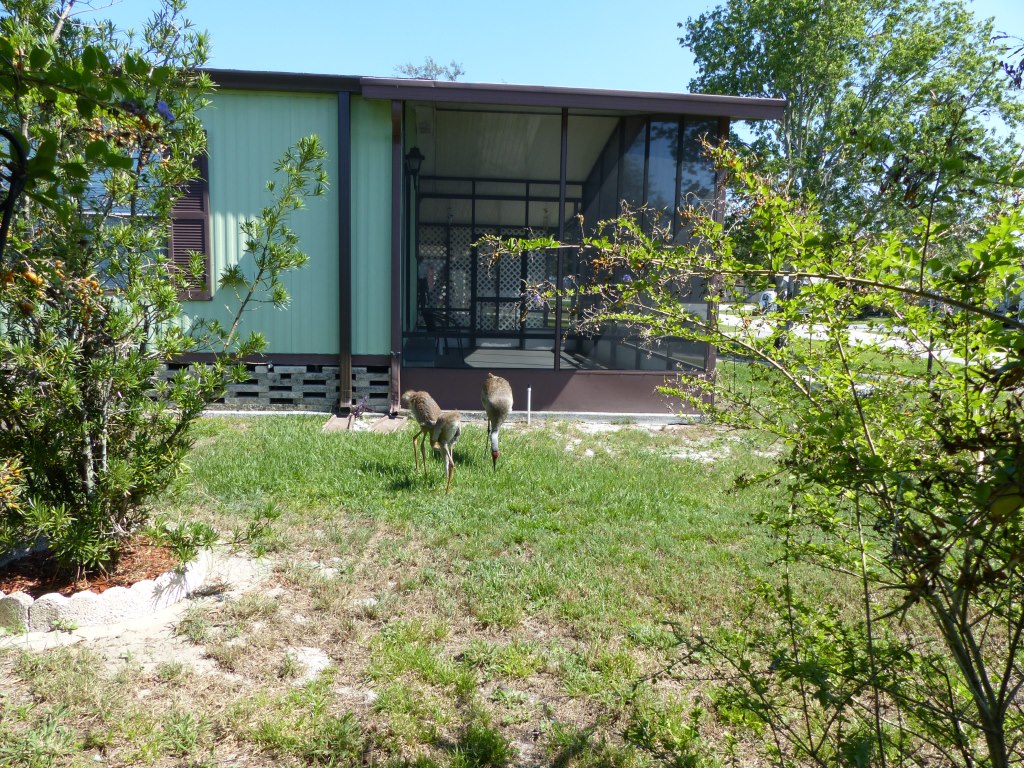
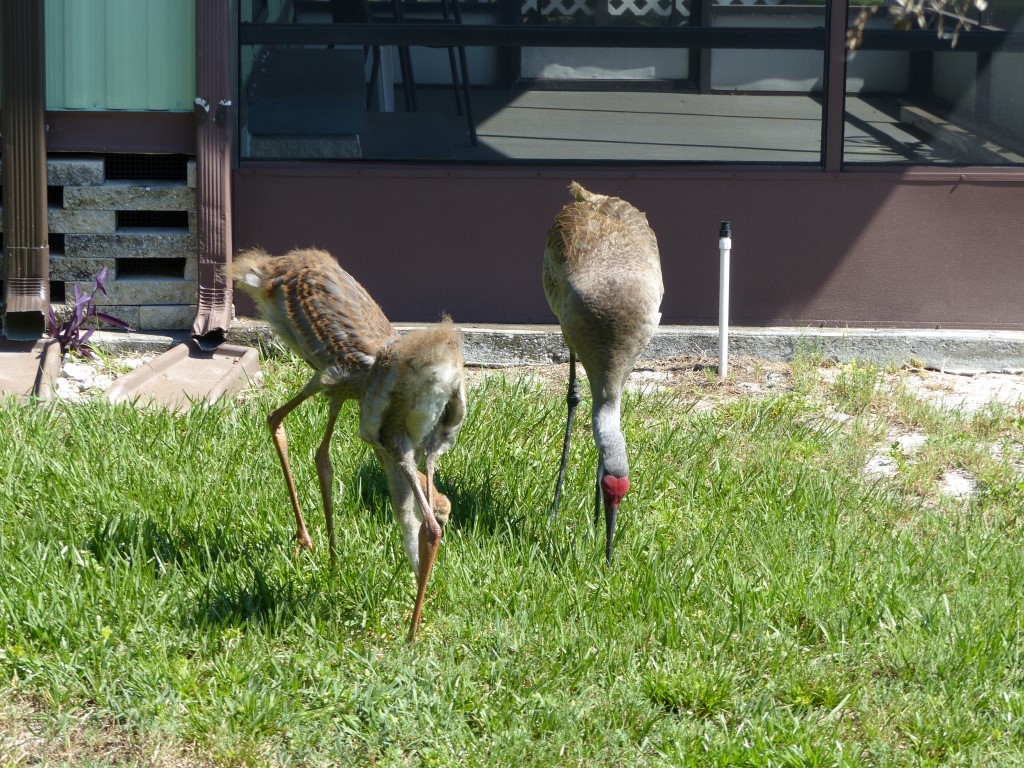
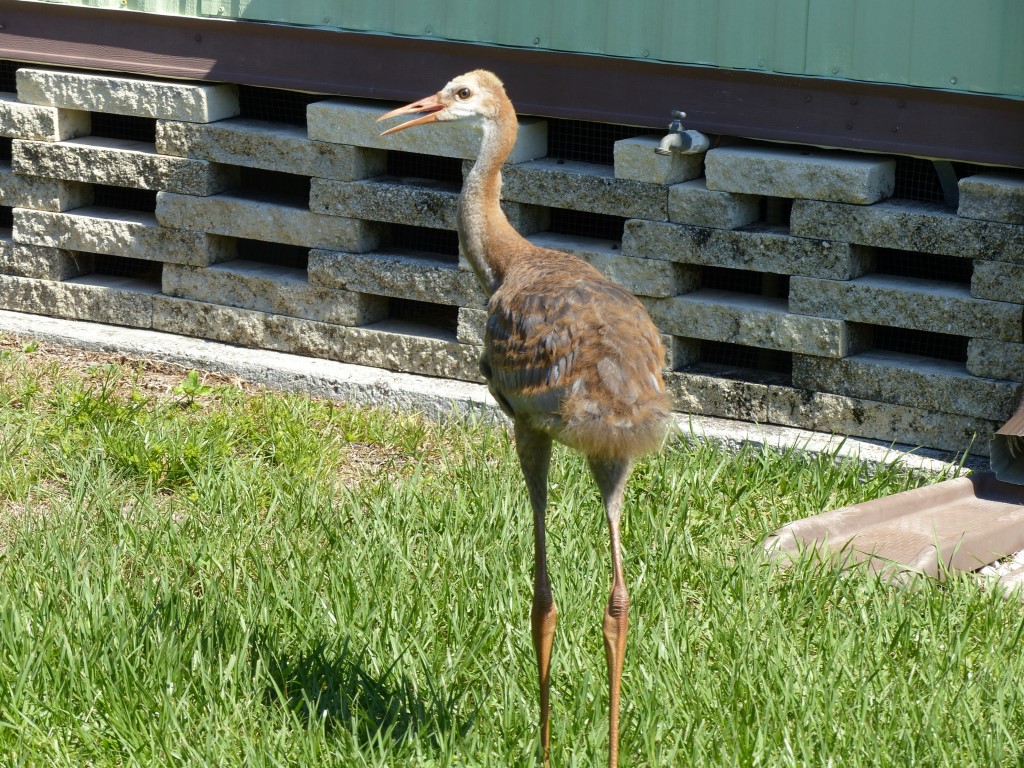
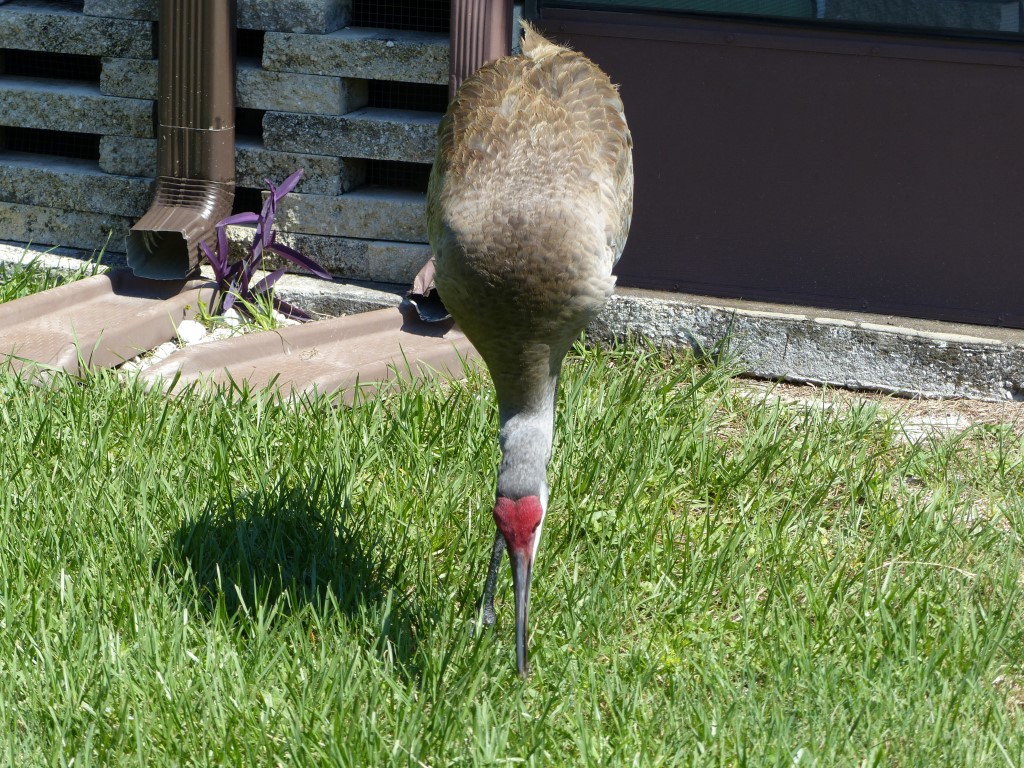
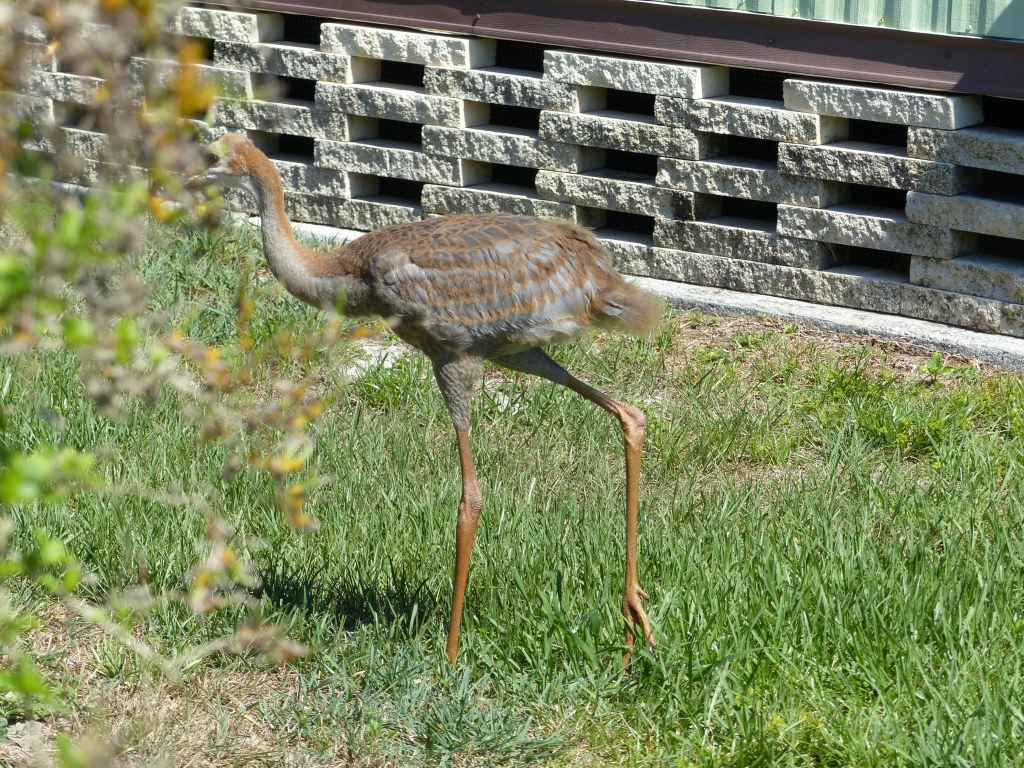
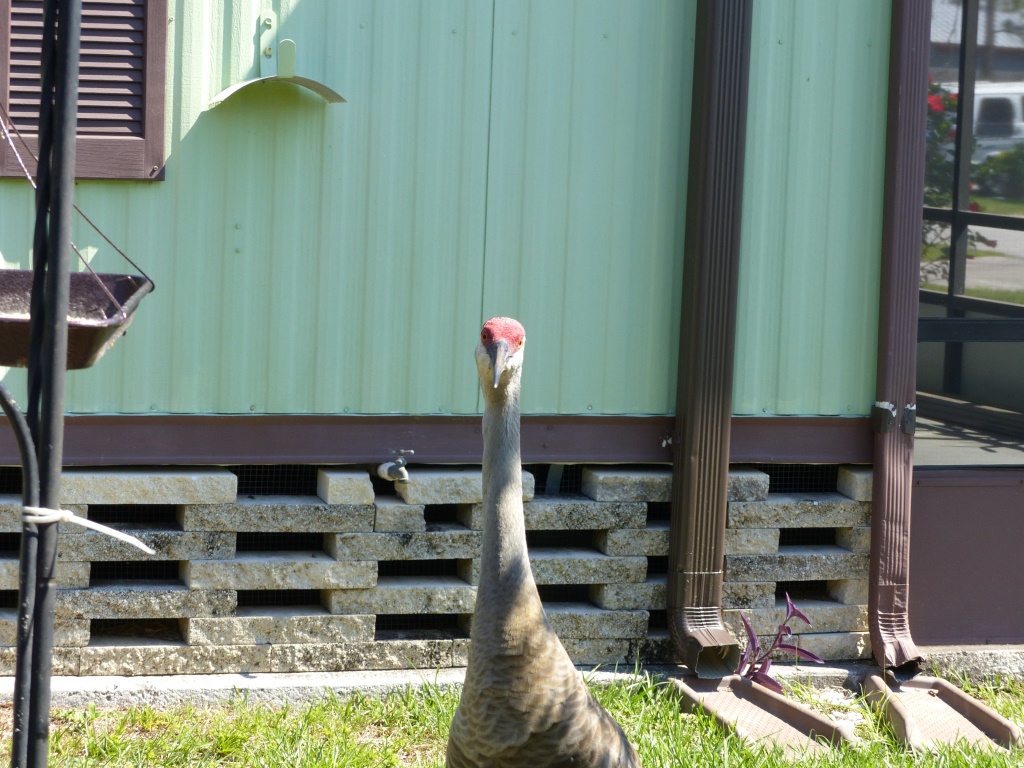
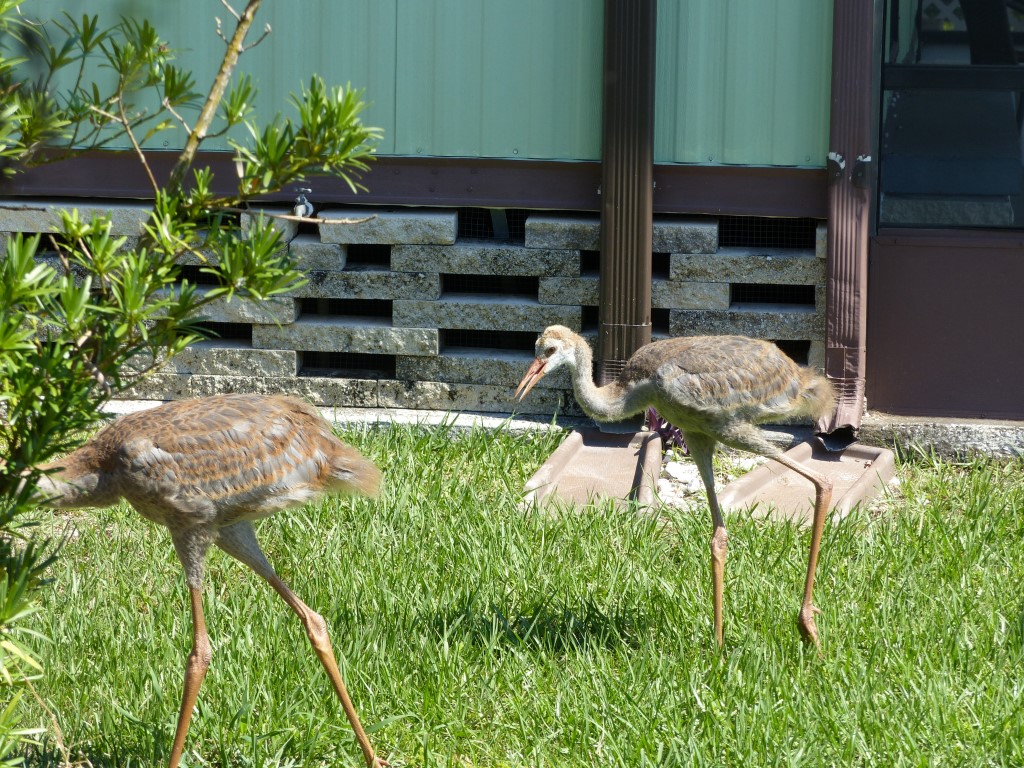
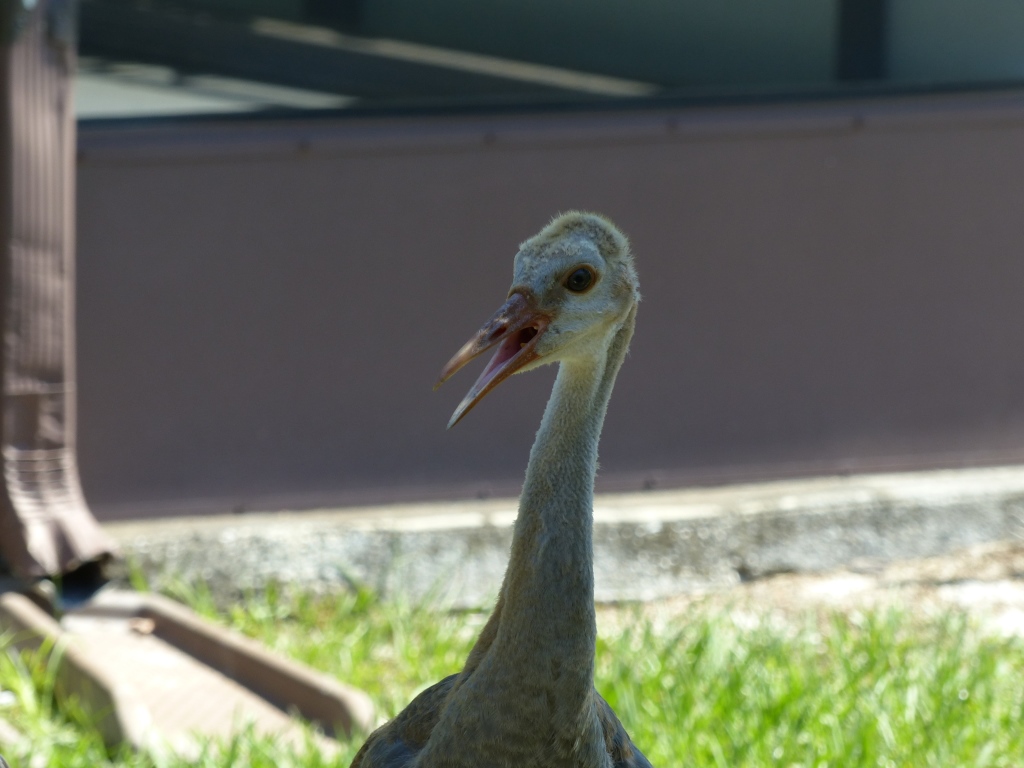
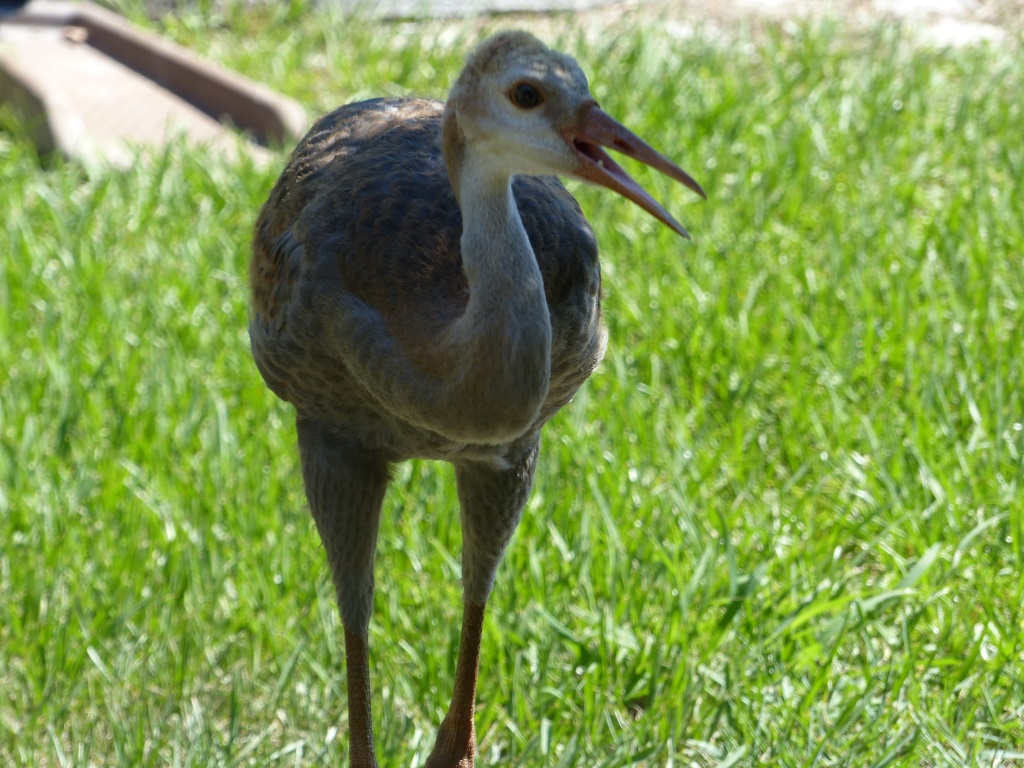
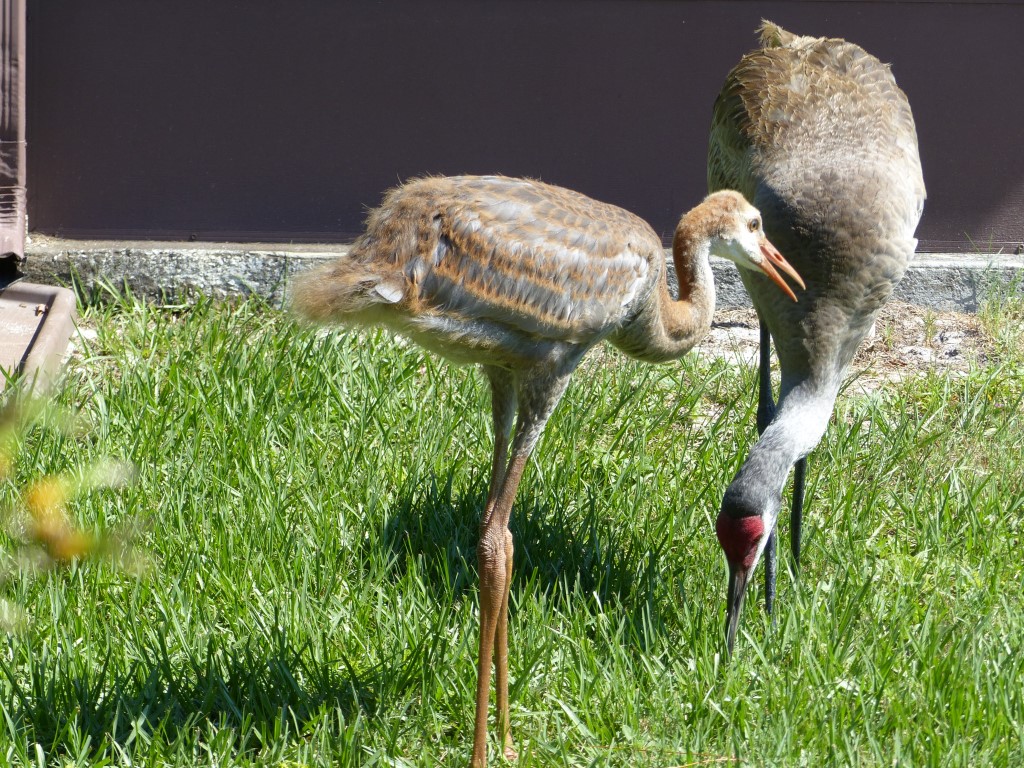
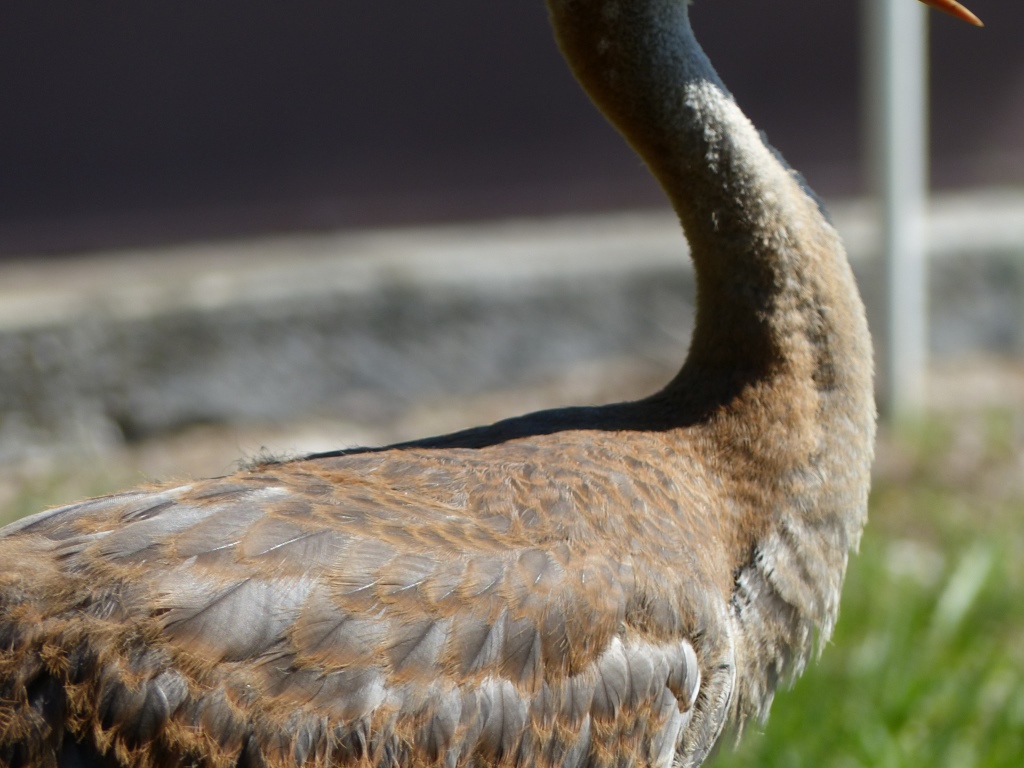
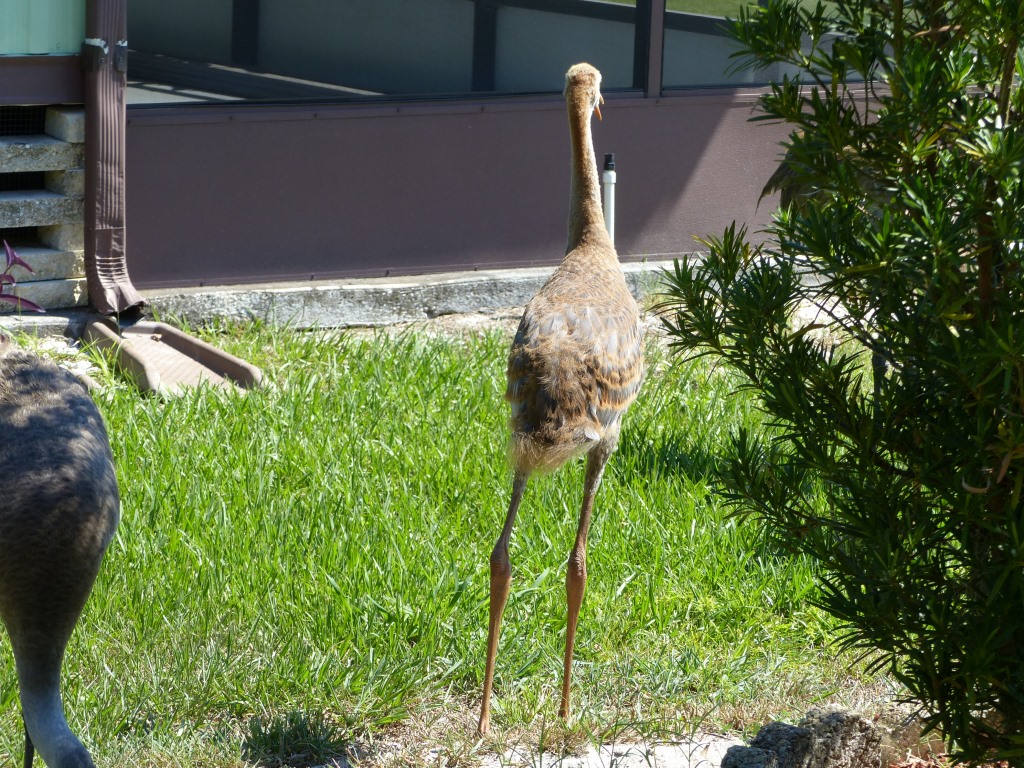
A few days ago while I was filling up my feeders, I looked up and here came Mom and Pop Sandhill Crane with their two latest youngsters. (The 2015 family) Needless to say I stopped and watched them for a while and then remembered to go get my camera. Here are some of those images. I shared a little seed with them. Not suppose to feed cranes, but even if I put seed in that hanging tray for the other birds, they have been known to eat from it. ( I felt sorry for the little ones. :) )
Sandhill Cranes in Sideyard 5-1-15 by Lee
Leaving
It looks like the little Sandhills need to grow into their knees.
Leaving
I always enjoy when the Sandhill Crane parents bring their little ones by to check them out. When you get to watch the Lord’s created critters up close and see how really look and act is enjoyable. The Cranes are mentioned in Scripture and so they are some of our Birds of the Bible.
Like a crane or a swallow, so did I chatter: I did mourn as a dove: mine eyes fail with looking upward: O LORD, I am oppressed; undertake for me. (Isaiah 38:14 KJV)
The parents made some chatter when I got too close to the little ones, but didn’t get it on video. Here is video of them in the yard (The noise is Dan edging the driveway):
*
You can tell by how many articles that I’ve written about that the cranes, that I like them and they visit often:
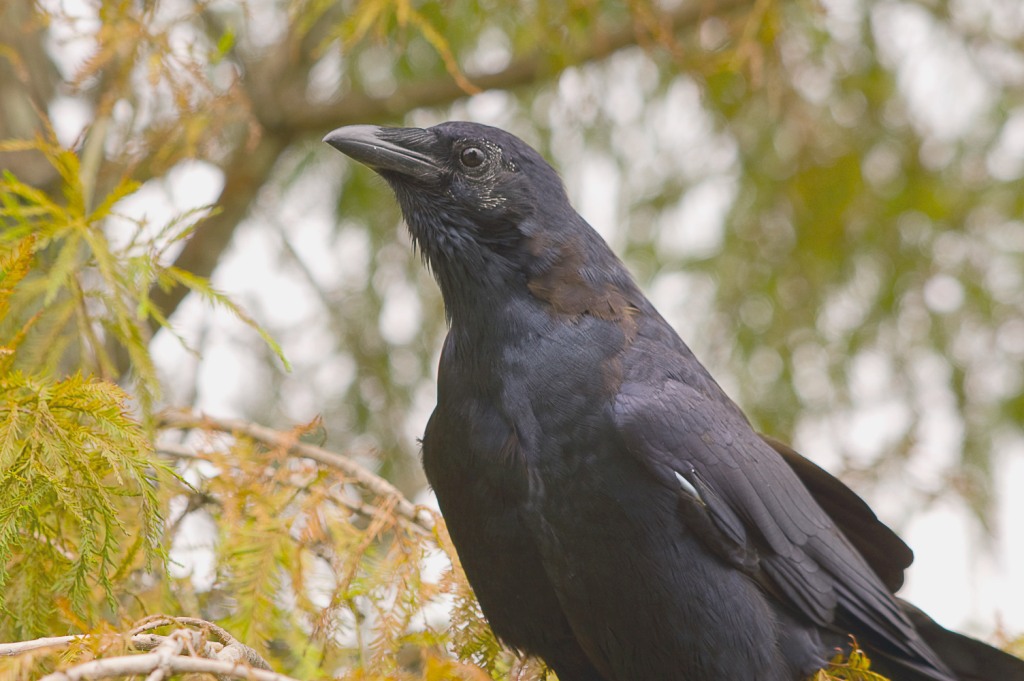
Fish Crow (Corvus ossifragus) at Lake Morton By Dan’sPix
Birds of the Bible articles have been written about Raven’s before. James J S Johnson sent a link to a news story in the BBC News Magazine about Crows that is similar to the Ravens in the Bible.
First the story. A young girl, Gabi Mann, feeds Crows and they bring her “gifts.” (nutshell version). See The girl who gets gifts from birds.
It started when she got out of the car and dropped food from her lap. The Crows grabbed it and each time she came home, they watched for her. It went from that to Gabi and her mother feeding them on a regular basis. Then, the crows started leaving various items, that could fit in their mouths, as “gifts.” Here are some of those items.
Things brought by the crows
*
Things brought by the crows
Does the story bring to mind a similar situation, but with Ravens bringing something to someone?
In I Kings 17, we read about the prophet Elijah who was told by the LORD to get away and hide by the Brook Cherith.
And it will be that you shall drink from the brook, and I have commanded the ravens to feed you there.” So he went and did according to the word of the LORD, for he went and stayed by the Brook Cherith, which flows into the Jordan. The ravens brought him bread and meat in the morning, and bread and meat in the evening; and he drank from the brook. (1 Kings 17:4-6 NKJV)
Ravens and Crows are both in the same family, Corvidae – Crows, Jays, Ravens, which has 130 species presently. “They are considered the most intelligent of the birds, and among the most intelligent of all animals” (Corvidae-Wikipedia).
In the Bible, our passage in I Kings says that the ravens brought him food. Checking the different translations, all the translations, except two, call them Ravens. Those two call them Crows. The ABP+ uses G2876, which Strong says:
G2876
κόραξ korax kor’-ax
Perhaps from G2880; a crow (from its voracity): – raven.
Total KJV occurrences: 1
The other, ISV, says, “Crows would bring him bread and meat both in the morning and in the evening, and he would drink from the brook.”
Either way, the point is, the LORD used birds from a very intelligent avian family, that He Created, to feed his prophet. Critics like to find everything they can to disprove the Bible. Yet, the Lord gives us all kinds of reasons to believe his Word, if we just open our eyes.
Those birds could have brought bits of food as well as “trinkets.”
Because that which may be known of God is manifest in them; for God hath shewed it unto them. For the invisible things of him from the creation of the world are clearly seen, being understood by the things that are made, even his eternal power and Godhead; so that they are without excuse: (Romans 1:19-20 KJV)
The WordPress.com stats helper monkeys prepared a 2014 annual report for this blog.
Here’s an excerpt:
The Louvre Museum has 8.5 million visitors per year. This blog was viewed about 220,000 times in 2014. If it were an exhibit at the Louvre Museum, it would take about 9 days for that many people to see it.
Thank you for all your visits to this blog during 2014. This is encouraging and keeps us motivated to “keep on keeping on.” May we all have a great 2015!
“That I may publish with the voice of thanksgiving, and tell of all thy wondrous works. (Psalms 26:7 KJV)
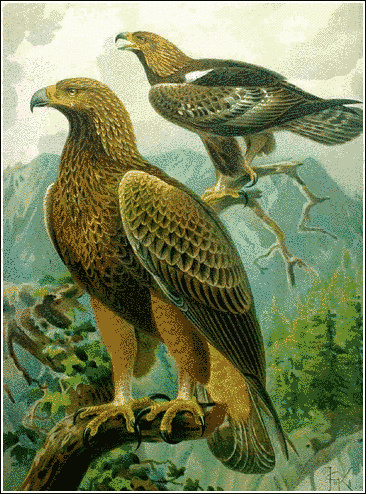
Boys and girls of all ages this is GOLDEN EAGLE circling in for a landing on this beautiful world that Jesus Christ created. To learn anything, to understand anything, we must have an open Bible! The other day, I heard of a 24 year-old lady that had never read the Word of God. She had no idea that the rainbow had any meaning whatsoever. Do you know the meaning behind the rainbow? Get your Bible out and open it to Genesis chapter 9. There you will find the meaning to the rainbow.
You humans should thank God that you can read and appreciate beauty. Although I write these things once in a while, you do know that birds cannot really write and read. However, God created you to do those things and so much more.
“Blessed (happy) is the man…his delight is in the law of the Lord; and in his law doth he meditate day and night. And he shall be like a tree planted by the rivers of water. that bringeth forth his fruit in his season; his leaf also shall not wither; and whatsoever he doeth shall prosper” Psalm 1:1-3
The Word of God will bring you true success. It is no accident that you are presently reading this article. I have chosen to write this and you have chosen to read it. However, even though we both have a free will and can do what we want to do, Jesus Christ is in control of every single thing that happens in the entire Universe. He is in control of everything that you and I do, say, and think! Why even a sparrow doesn’t fall out of a tree without the Heavenly Father.
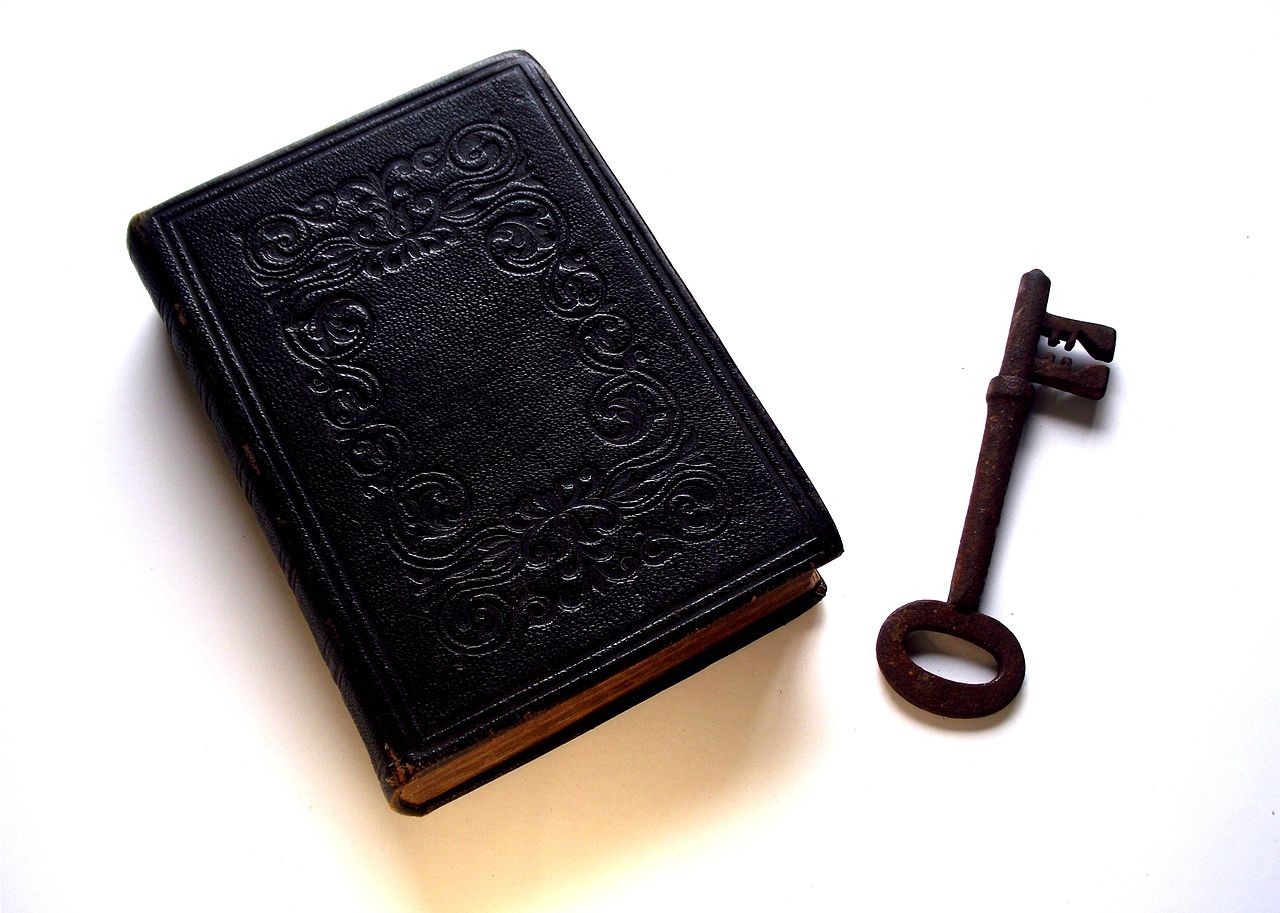
The Key to True Knowledge
The question for you to answer is this: ARE YOU SAVED? You are either saved or lost. This has nothing to do with are you good or bad because the Bible says that “all have sinned, and come short of the glory of God.” (Romans 3:23) You’re made in the “image of God” and you will live forever somewhere according to the Bible. You can go to Heaven if you trust Jesus Christ as your personal Saviour. When Jesus died on the cross, He shed His blood and paid for your sins as your substitute. He stood in our place and took the punishment from God the Father so that you could be forgiven! You must personally accept Jesus by faith. You know, no one can eat your breakfast for you. You individually eat your breakfast and then your body makes use of the food to give you energy for the day. You must personally receive Jesus into your life!
“But as many as received him, to them gave he power to become the sons of God, even to them that believe on his name…” (John 1:12)
Golden Eagle has learned a few things as I have soared over this planet. You must study things with an open Bible. The Bible tells us where the first humans came from! You know that scientist have landed a washing machine size robot on a comet the other day. That thing has been flying around for 10 years and just arrived at its destination! That shows us how big this universe is. The comet is over 300 million miles away from Earth. The people who sent that robot to the comet are trying to find out the answer to the question: WHERE DID WE COME FROM. And that is a great question. But, they will never find the answer until they open their Bibles and begin to read the first few chapters in the book of Genesis. God created Adam on the sixth day of Creation week. He took the elements in the earth, the dust of the earth and “breathed into his nostrils the breath of life; and man became a living soul.” (Genesis 2:7)
When you study Science or History or God or whatever, you need to open your Bible and see what God has to say!
The Earth rotates around the sun. We should rotate around Jesus Christ, the Son of God. The sun gives light to the earth and Jesus is the Light of the world. Tonight, you will fall asleep and in the morning you will wake up. That is God’s way of trying to teach us that sleep is like death, but you wake up in the morning and that is like the resurrection day!
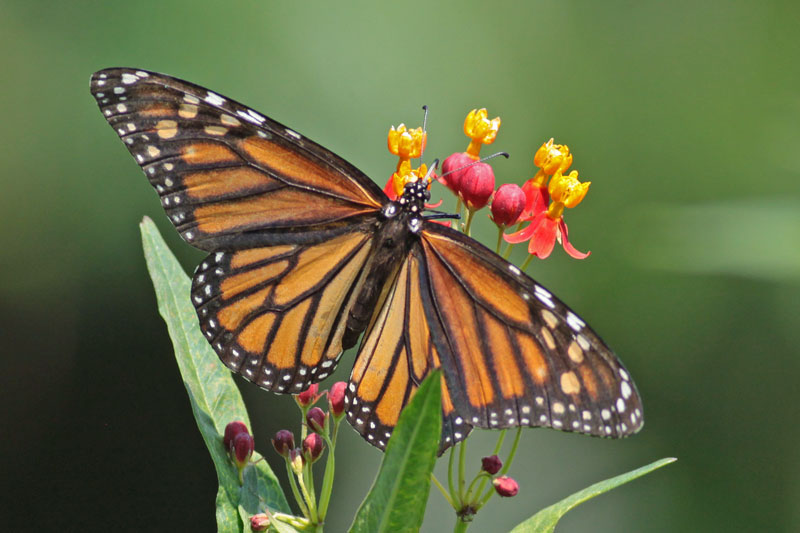
Monarch Butterfly by Margaret Sloan
A worm goes into a cocoon and comes out a beautiful butterfly! Metamorphosis, a change teaches us that Jesus Christ will give us a new body in the future if we are saved! Humans sweat because of Adam’s sin in the Garden of Eden! The Earth is covered with water because of Noah’s flood. In fact, four-fifths of the Earth is covered with water if you count the oceans, the seas, the rivers, the streams, and the lakes!
Every snowflake is different, every blade of grass is different, every bird is different! And each one of you are unique and different. That is how God has made you! We could talk about this forever! In fact, God’s people in Heaven will talk about this and learn about God and His Universe forever. You will have a real body and be in a real Heaven with real GOLDEN STREETS!
“AND THE BUILDING OF THE WALL OF IT WAS OF JASPER: AND THE CITY WAS PURE GOLD, LIKE UNTO CLEAR GLASS…AND THE STREET OF THE CITY WAS PURE GOLD, AS IT WERE TRANSPARENT GLASS. (Revelation 21)
The question you need to ask yourself is this: will you be in Heaven with Jesus Christ in that day? And remember we are only one heartbeat away from eternity. Why not ask Jesus to save you this very moment? “For whosoever shall call upon the name of the LORD shall be saved.” (Romans 10:13)
Thanks for flying with me. And thanks for having an open Bible! Read some of God’s Word today! I would love to fly to the comet later today, but I know I will not be able to get beyond the atmosphere, so I might just head back to my roost for the night and gaze into the starry heavens. You never know what you might see! Have a great one…
“And the swan, and the pelican, and the gier eagle,” (Leviticus 11:18 KJV)
“The little owl, and the great owl, and the swan,” (Deuteronomy 14:16 KJV)
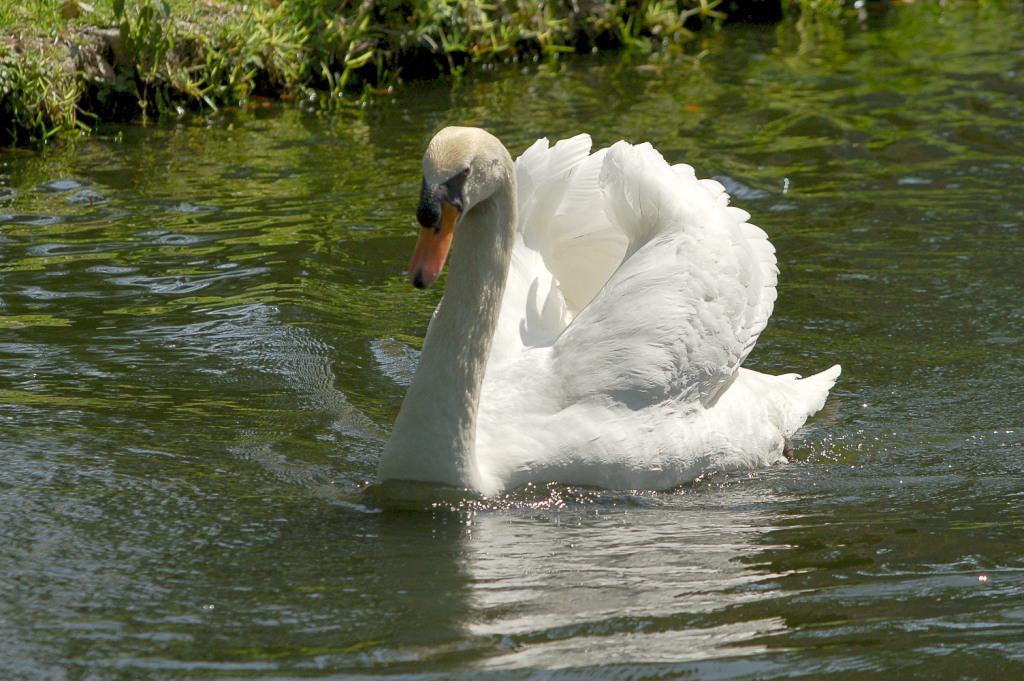
Swans are mentioned in these two verses in the KJV Bible. Some other versions list it as another bird. For now, let us learn about the beautiful Swans that the Lord created.
Both of the Swan verses above are found in the “do not eat” list that the Lord gave to the “children of the LORD your God.” Who would want to eat such great looking birds?
Swans are in the Anatidae Family which includes Ducks, Geese and Swans. There are seven species which include these:
The Trumpeter Swan has the most contour feathers of any bird. (25,216) That doesn’t count the downy feathers.
Swans can fly as fast as 60 miles per hour!
A male swan is called a cob, and a female swan is called a pen.
A baby swan is called a cygnet.
The largest species, including the mute swan, trumpeter swan, and whooper swan, can reach length of over 1.5 m (60 inches) and weigh over 15 kg (33 pounds). Their wingspans can be almost 3 m (10 ft).
And these you shall regard as an abomination among the birds; they shall not be eaten, they are an abomination: the eagle, the vulture, the buzzard, (Leviticus 11:13 NKJV)
Christian Standard Bible (CSB) “but these are the ones you may not eat: eagles, bearded vultures, black vultures,
Complete Jewish Bible (CJB) “but these you are not to eat: eagles, vultures, ospreys,
Easy-to-Read Version (ERV) “But don’t eat any of these birds: eagles, vultures, buzzards,
English Standard Version (ESV) “But these are the ones that you shall not eat: the eagle, the bearded vulture, the black vulture,
Expanded Bible (EXB) “But do not eat these birds: eagles, vultures, black vultures, 13 red kites, falcons, any kind of kite,
GOD’S WORD Translation (GW) “But here are the birds that you should never eat: eagles, bearded vultures, black vultures,
International Children’s Bible (ICB) “But do not eat these birds: eagles, vultures, black vultures,
International Standard Version (ISV) “You may eat all clean birds, 12 but you must not eat any of these: the eagle, vulture, osprey, 13 buzzard, any kind of kite,
Names of God Bible (NOG) “But here are the birds that you should never eat: eagles, bearded vultures, black vultures,
New English Translation (NET) “But do not eat these birds: eagles, vultures, black vultures,
New International Reader’s Version (NIRV) “But there are many birds you can’t eat. They include eagles, vultures, and black vultures.
Leviticus 11:18 and Deuteronomy 14:17 (NKJV) mention a carrion vulture. Jeremiah 12:9 mentions a speckled vulture.
All of these verses give us several different kinds of vultures.
I am sure if I checked all of the translation available in BibleGateway, I would find some other type of Vulture. That might be a project you could do.
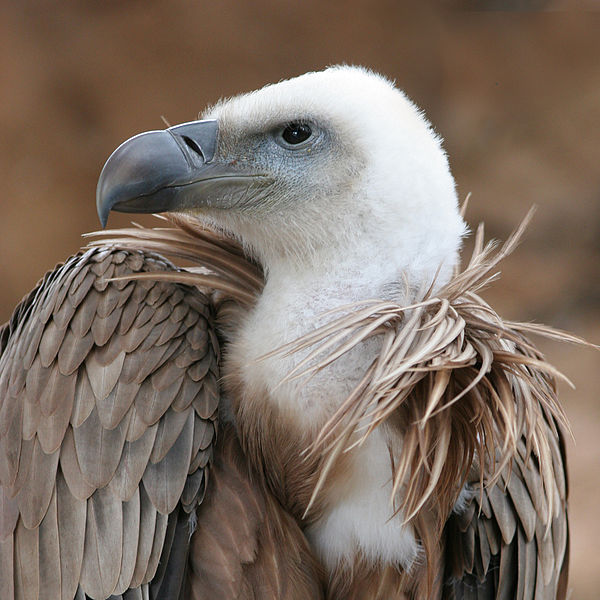
“A vulture is a scavenging bird of prey. The two types of vultures are the New World vultures, including the Californian and Andean condors, and the Old World vultures, including the birds that are seen scavenging on carcasses of dead animals on African plains. Some traditional Old World vultures (including the bearded vulture) are not closely related to the others, which is why the vultures are to be subdivided into three taxa rather than two. New World vultures are found in North and South America; Old World vultures are found in Europe, Africa, and Asia, meaning that between the two groups, vultures are found on every continent except Australia and Antarctica.”
From that description, again, you can see why those birds aren’t eaten. Eating something they just killed would be bad enough, but to eat things that had already died. That is not the kind of bird you would want to eat at Thanksgiving.
Here are some of the Vultures from around the world:
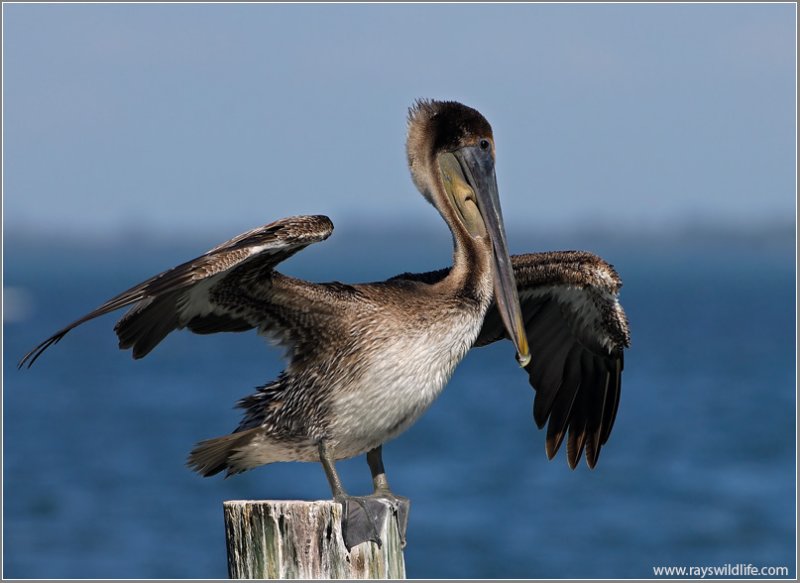
I am like a pelican of the wilderness; I am like an owl of the desert. (Psalms 102:6 NKJV)
They are mentioned 3 times in Scripture. Isaiah 34:11 and Zephaniah 2:14 and the previous verse.
*
*
“Abandoned by his flock, Bigbird the pelican stumbled ashore after a storm and was taken in by the staff of Greystoke Mahale in Tanzania. Watch as Bigbird learns to fly for the first time.”


















 Lee's Birdwatching Adventures Plus