“So God created great sea creatures and every living thing that moves, with which the waters abounded, according to their kind, and every winged bird according to its kind. And God saw that it was good. And God blessed them, saying, “Be fruitful and multiply, and fill the waters in the seas, and let birds multiply on the earth.” So the evening and the morning were the fifth day.” (Genesis 1:21-23 NKJV)
You have got to check out this interesting article from Birds & Blooms!!
Still haven’t been doing much birdwatching lately, except through my back door. So, I trust you will enjoy these great photos. We have had some nice photos of hummingbirds here over the years, but these are all right together.
While working on updating the indexes to the Birds of the Bible-Sparrows, I came across an interesting question. How many Sparrows are mentioned in the Bible? I discovered a previous search I had started from the Bible Gateway website.
The Young’s Literal Translation found 6 verses mentioning Sparrows.
Psalm 84:3 – “a sparrow”
Hosea 11:11- “a sparrow”
Matthew 10:29 – “two sparrows”
Matthew 10:31 – “many sparrows”
Luke 12:6 – “five sparrows”
Luke 12:7 – “many sparrows”
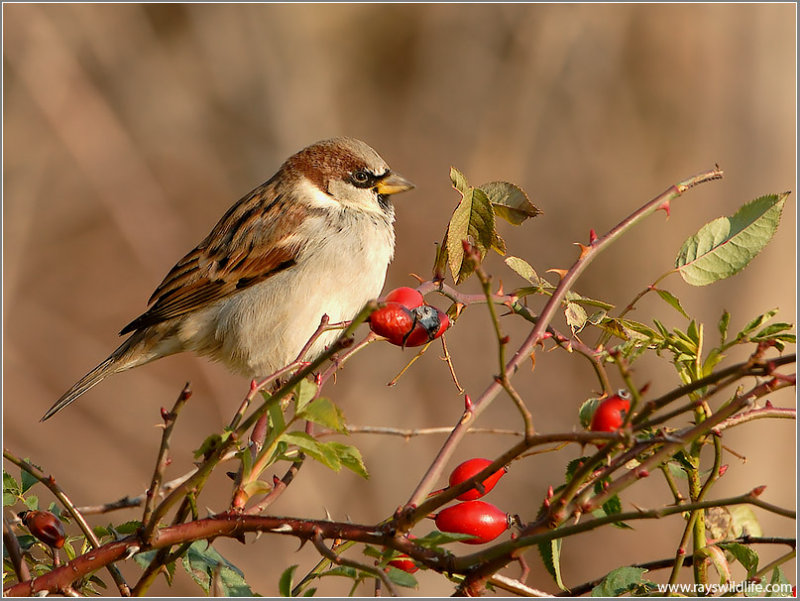
House Sparrows visiting NA Parrot Show Outside by Lee
Okay, so what, you might ask? One, it challenges you to actually study what’s in the Word of God. It is also nice to see what the Bible actually says about the Sparrows and how that impacts us. Try using a website like e-sword.net or Biblegateway.com, and do a little investigation of these questions:
In Psalm 84:3, where was the sparrow and what was she doing?
Hosea 11:22, why was the sparrow trembling?
Matthew 10:29 and 31, what assurance can we get from that verse?
Luke 12:6, who remembers the sparrows?
Luke 12:7, what has been numbered? What about fear?
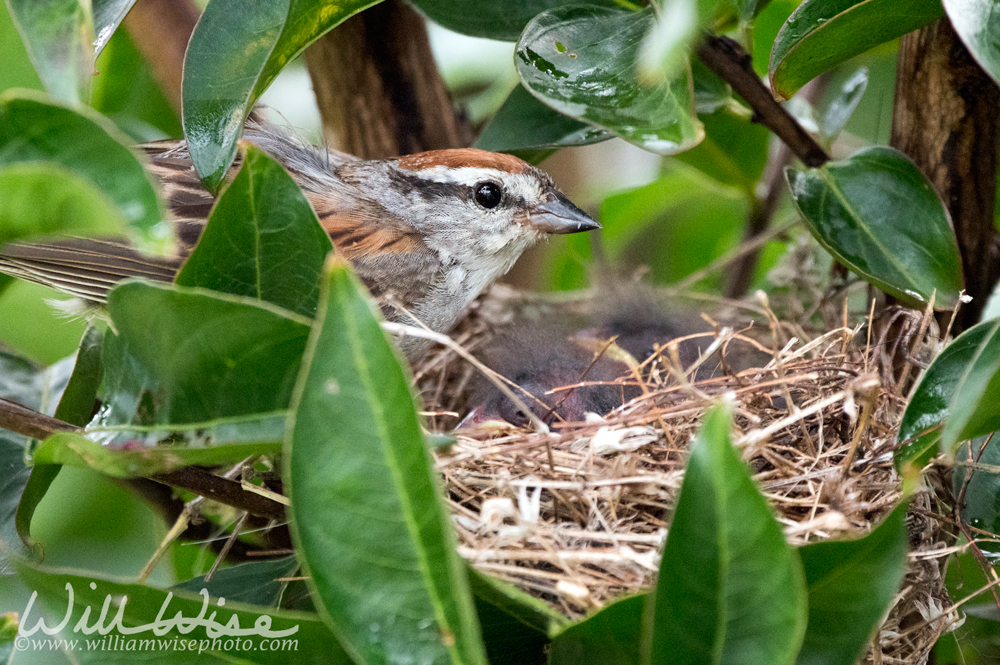
Female Chipping Sparrow bird feeding three baby Chipping Sparrow nestlings, Athens, Clarke County, GA. by William Wise
These are just some of the previous posts about these little Avian Wonders:
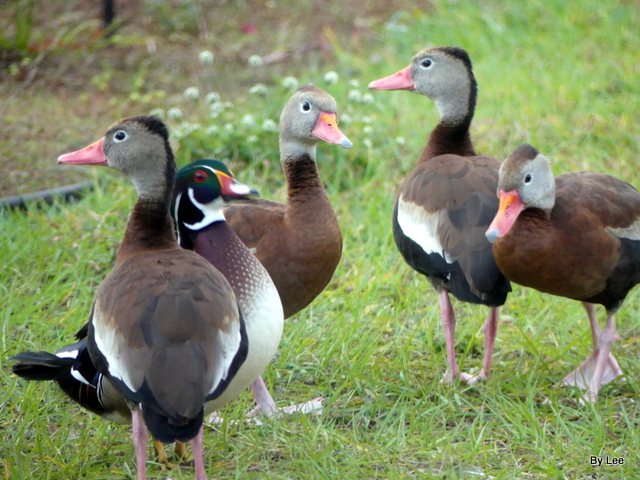
Wood Duck among Black-bellied Whistling Ducks by Lee
Yesterday we added a new bird to our backyard list. He tried to hide, but with a look like that, it’s hard to do. So finally, he came out of hiding. Some of those Whistling Ducks don’t seem to be too happy with him being there. [I was very happy! :) ]
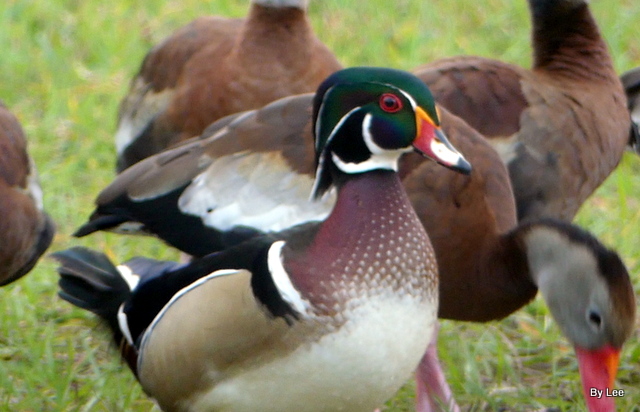
Wood Duck in our yard. 1-17-22
We’ve written about this beautiful bird before, but usually, we have seen them over in Lakeland on their lakes. So, this was a treat to be able to have him visit us.
When I see this duck, I think about how the Lord when he created these Avian Wonders must have had a delight in decorating this Wood Duck. What clear lines!
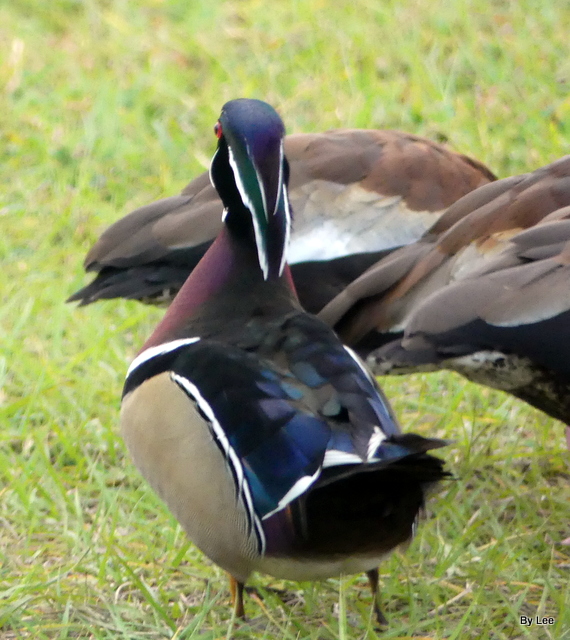
Wood Duck’s Crested Head and Back
I have to admit that the Duck had a bit of an attitude. While he was strutting around, ever so often he would throw his head like he was trying to flip that long “bonnet” of his. [my term] I tried to capture it on video, but I was only able to capture it once.
Several verses came to mind about this encounter with our beautiful duck:
The first photo, where he was sort of hidden behind the others.
“Ye are the light of the world. A city that is set on an hill cannot be hid. Neither do men light a candle, and put it under a bushel, but on a candlestick; and it giveth light unto all that are in the house. Let your light so shine before men, that they may see your good works, and glorify your Father which is in heaven.” (Matthew 5:14-16 KJV)
We should not be afraid to let our Christianity be seen. Also, the look on the faces reminds me of how some people react to us when we do accept the Lord as our Savior.
“The flowers appear on the earth; the time of the singing of birds is come,…” (Song of Solomon 2:12 KJV)
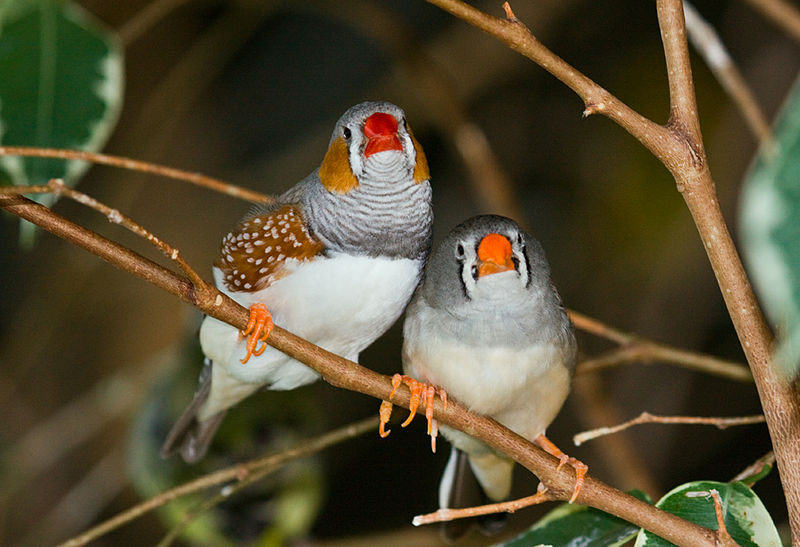
What an interesting and informative article about the creation of Zebra Finches and their singing duets. Bryian Thomas, PH.D. from the Institute For Creation Research wrote “Finch Duets Open Surprising Window on Bird Origins”
The Zebra Finches appears to have a pattern of singing that goes against what evolutionists suppose is to be the normal behavior of Finches.
“A male finch sings to females while courting, but then quiets down after finding his mate. According to evolution, finches have no reason to continue to communicate at that point, since they’ve already ensured that their genes will be passed on to a new generation. Thus, researchers were surprised to find that wild zebra finches sing to each other only after becoming a couple.”
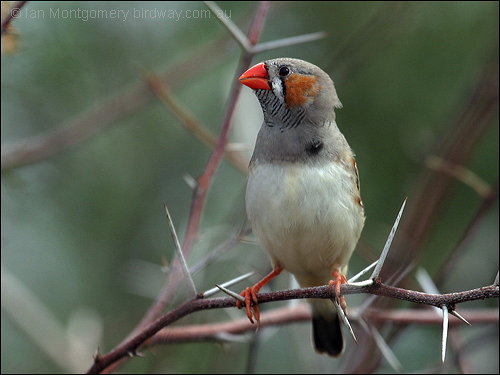
Zebra Finch (Taeniopygia guttata) by Ian
He also discusses how these songs are thought to have happened through natural selection, but….
“For male finches to sing their songs, they have to have a fully-formed system of pulmonary tubing, valves, musculature, and integrated skeletal structures. Then, the larynx (many birds have two) has to be located near the mouth and properly “wired” to the correct areas of the brain. All of that would still be useless, however, without the instinctive knowledge required to compose a song, or without the females’ ears being tuned to their specific tones. To consider this seamless array of parts as a product of just nature is imaginative–not scientific.”
“Zebra finches are active and colorful birds from Australia, and they choose a mate for life.” Thankfully, Ian has provided us with great photos of the unique Avian Wonders.
Wow! Looking over the previous articles that have been written through the years on our blog, I thought it would be nice to read through some of our many posts.
To build a house, you need a foundation. To build a blog, you need a foundation. So, our foundation from the beginning for Lee’s Birdwatching Adventures Plus, has always been this:
“For no other foundation can anyone lay than that which is laid, which is Jesus Christ.” (1 Corinthians 3:11 NKJV)
He created our world, universe, us, and all His Avian Wonders, which we like to write about. We love to write about His birds and how we can learn from them. We’ve done our best, with a few stumbles here and there, but we have tried to honor Him through it all. He has been gracious to send me extra writers, photographers, and friends along this journey.
My thanks to Him, these extra hands to assist, my husband, and all of you who have visited us along the way.
Now, what has been written about the Foundations? Let’s take a look:
In Genesis Chapter 2, the birds and animals were named, but what happened in Chapter 3 caused the birds to be cursed and death now became a reality to them and others. But there is hope.
This post presents many of the “theories” about where birds came from, versus how the creationist view where and how the Avian Wonders of this world came into being.
We trust you will enjoy reading (or re-reading_ through these Foundation of the Birds of the Bible posts.
Goal: To encourage your understanding and help you form a mental picture of the fowls or birds of the air found in scripture.
God has created the fowls and birds and they are mentioned throughout the Bible. When you read the name of a bird, does a mental picture come to view or do you just keep reading without a thought to what you just read? Sure, you know some of them, like the Eagle or a Sparrow, but how about a Bittern, Ossifrage, Hoopoe, or Lapwing? Not just their names are important, but how about the illustrations that use birds to teach lessons? God’s care, strength, provision and other lessons are taught with birds as the examples.
“But now ask the beasts, and they will teach you; And the birds of the air, and they will tell you;” Job 12:7
So, let’s get started with:
The Birds of the Bible
“Then God said, ‘Let the waters abound with an abundance of living creatures, and let birds fly above the earth across the face of the firmament of the heavens.’ So God created great sea creatures and every living thing that moves, with which the waters abounded, according to their kind, and every winged bird according to its kind. And God saw that it was good. And God blessed them, saying, ‘Be fruitful and multiply, and fill the waters in the seas, and let birds multiply on the earth.’ So the evening and the morning were the fifth day.” Gen 1: 20-23
Here we see that God created the birds on day five of creation and that “it was good.”
“Out of the ground the LORD God formed every beast of the field and every bird of the air, and brought them to Adam to see what he would call them. And whatever Adam called each living creature, that was its name.” Gen 2:19-20a
Adam was given the privilege of giving all the “critters” their names. Were there as many varieties of birds then as now? There have been changes within the species (kinds), but not evolution (changing from one kind to another kind).
Depending on which copy of the Bible you use, here are some of the names of birds mentioned in the Bible. These will be introduced in following blogs. Not necessarily in the following order. Bittern; Chicken; Cormorant; Crane; Cuckoo; Dove; Eagle; Falcon; Glede; Hawk; Hen; Heron; Hoopoe; Kite; Lapwing; Night Hawk; Osprey; Ossifrage; Ostrich; Owl; Partridge; Peacock; Pelican; Pigeon; Quail; Raven; Sparrow; Stork; Swallow; Swan; Vulture
House Sparrows visiting NA Parrot Show Outside
“Look at the birds of the air, for they neither sow nor reap nor gather into barns; yet your heavenly Father feeds them. Are you not of more value than they?” (Matthew 6:26 NKJV)
Now it is 2022, and time to revisit these wonderful Birds of the Bible. Because of the Covid situation, we haven’t really been birdwatching much in almost two years. Yet, that doesn’t mean it’s time the “throw in the towel”, or the blog, in this case. So, we plan on writing more Birds of the Bible articles about the different Avian Wonders found in the Bible. Trying to bring in fresh material as we review the previous birds that we have written about. We will even ask some of our current writers like Dr. J. J. S. Johnson (Dr. Jim) and William Wise to join in. Will also try to update the all the links to these articles.
“Even the youths shall faint and be weary, and the young men shall utterly fall: but they that wait upon the LORD shall renew their strength; they shall mount up with wings as eagles; they shall run, and not be weary; and they shall walk, and not faint.”
As I sit in my backyard, enjoying some springtime sunshine while writing this script, my eyes are drawn to a pair of shapes, silhouetted against a bright sky, circling over the Cowlitz River. They look dark from where I am sitting, but I know that if they landed, they would not be so dark, and they would have white heads. They are eagles. A pair of them have been around this area since we moved here about three years ago.
I love the way that eagles seem to fly as if they are not flying. They catch the air currents, and their large outstretched wings enjoy a lift force which is not from their own muscles, but from those air currents. To maintain that height for so long by their own muscle power would be too tiring for such large, flying birds.
The way that these eagles soar is used in the Bible as a beautiful illustration of God’s grace. In Isaiah 40:31 we read:
“They who wait for the LORD shall renew their strength; they shall mount up with wings like eagles; they shall run and not be weary; they shall walk and not faint.”
One can imagine that getting into the air, and flying high would cause the eagle to lose energy. But then it can rest and renew its strength. The Lord reminds us, through the things that He has created, that we should wait upon Him and rely on His strength.
Prayer: Help us, Father God, to wait for You, and to renew our strength through the grace that You give us. Amen.
Author: Paul F. Taylor
Ref: With Wings Like Eagles , accessed 4/24/2020. Image: David R. Tribble, CC BY-SA 4.0 International.
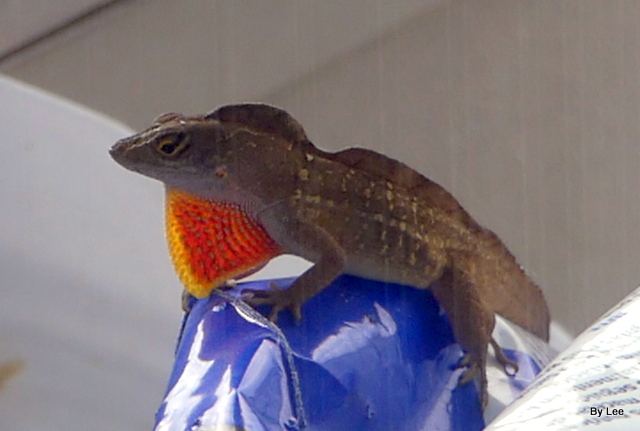
Most mornings while we are eating and watching out our back door, we not only see the various birds, but, being in Florida, there are always Anoles around. Many call the green anoles Chameleons, but our brown one are just Anoles. I have been trying to get a good photo of them showing their dewlap, which is a fold of skin. But this video does a better job.
While reading our devotional of Zechariah 8 this morning, the Gecko was mentioned. The anoles and geckos both have this characteristic.
“Geckos have some of the stickiest feet in nature. They can hang their entire body weight off one toe, and climb up nearly any wall, no matter how slick or polished.
Biologists and engineers looking to duplicate the gecko’s abilities in synthetic glues have recently uncovered its secret. It uses million of tiny foot hair ends to adhere to surfaces through weak molecular attractive forces. Each foot hair ends in about a thousand even tinier pads at its tip. These pads are arranged in precise geometric sizes and shapes and determine the level of stickiness. The total adhesive power of an average gecko would support 280 pounds!”
“As sticky as geckos’ feet are, Gods faithfulness is even “stickier.” He never lets us go, and His promises endure forever…..” (From Today in the Word, 2003)
Anole with dewlap showing just outside door – Lee
Church Signs:
What does God have in common with an object in the car mirror? Both are closer than they appear.
Spring forward with the Lord so you won’t fall back into sin.
We are each a masterpiece, a piece of the master.
Truths To Consider:
“A man that hath friends must shew himself friendly: and there is a friend that sticketh closer than a brother.”
(Proverbs 18:24 KJV)
“Thy faithfulness is unto all generations: thou hast established the earth, and it abideth.” (Psalms 119:90 KJV)
All flesh is not the same flesh; but there is one kind of flesh of men [ανθρωπων], another flesh of beasts [κτηνων], another of fishes [ιχθυων], and another of birds [τηνων]. (1st Corinthians 15:39)
Q: Are today’s birds genealogical ‘cousins’ to reptiles, due to shared (evolutionary) ancestry?
A:No. (Not even close!) However, today’s birds and reptiles do share the same Creator, the Lord Jesus Christ, Who created them (and their ancestors) to share the same earth, with us.
According to the evolutionary sequence of [imagined] events, birds are supposed to have evolved from reptiles.3
If that had occurred in the past, which it did not, it would mean that today’s birds—such as robins and roadrunners—would be distant ‘cousins’ of reptiles—such as cobras and crocodiles.
The Darwinian tale portrays today’s birds as winged dinosaurs who supposedly survived a global ‘extinction event’ that supposedly occurred about 66,000,000 years ago.1,2
Is there any eyewitness report supporting this magical scenario, or even evidence of any such timeframe? No and no.4,5
Although there are myriads of errors in this sensational speculation, only a few of which are mentioned here.
In particular, this pseudoscience scenario requires swallowing at least three invalid and drastic premises:
(1) the assumption that reptiles are not fundamentally different from birds;3 and
(2) the assumption that a secret agent (oxymoronically named “Natural Selection”, as if “its” naturalistic outcomes were intended) can accidently invent—and then successfully secure(i.e., genetically “lock down”)—such traumatic transitional transmogrifications;5 and
(3) the assumption that any such transitions’ biochemical and genetic details, in defiance of entropy’s universal destructiveness, repeatedly escaped thermodynamic reality.5
For starters, just imagine the first-listed problem, i.e., the complicated anatomical and physiological differences between birds and reptiles:
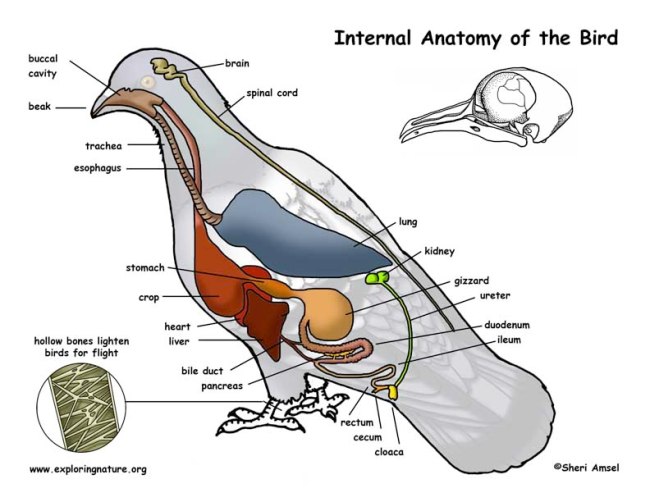
birds have hollow bones; reptiles, except for marrow cavities, have solid bones;
birds use air sacs for non-stop unidirectional (one-way) airflow through their lungs; most reptiles have two-way breathing systems;
birds are endothermic (warm-blooded), actively controlling their body “thermostats”; reptiles are mostly ectothermic (cold-blooded);
birds have muscle-controlled feathers; reptiles have dry skins or scales;
birds have four-chambered hearts; reptiles usually have three-chambered hearts;
most birds have major muscles anchored to their front, attached to a keeled sternum (breastbone), facilitating perching; reptiles’ main muscles anchor to their vertebral column (backbone), attached in arrangements conducive for standing, walking, and running.2
Don’t expect reptiles to accidentally change their genes to produce birds as descendants. As Fiona Smith says:
In other words, you don’t just put feathers on a reptile and then it can fly. There are a multitude of [essential] attributes, all working together, that make a bird fly.2
There is much more proof—to borrow Dr. Frank Sherwin’s observations—that birds have always (and only) been birds, and that reptiles have always (and only) been reptiles.
God created each bird, and each reptile, to be whatever He chose that creature to be–and it’s our privilege to see God’s magnificent creation and to learn about His magnificent majesty in the process (Revelation 4:11)!
References
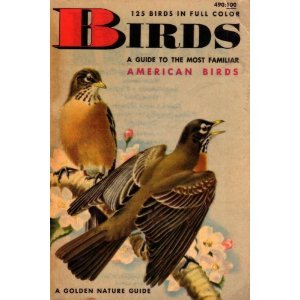
1 For centuries evolutionists have proposed the notion that birds somehow evolved from reptiles, imagining “feathered dinosaurs” or dinosaur-like flying reptiles (like pterodactyls) as speculative ‘transitional’ animals. See, accord, R. Will Burnett, Harvey L. Fisher, & Herbert S. Zim, Zoology: An Introduction to the Animal Kingdom (New York, NY: Simon and Schuster, 1958), pages 5-7, 13-17, 72-75; Herbert S. Zim & Ira N. Gabrielson, Birds: A Guide to the Most Familiar American Birds (New York, NY: Golden Press, 1964), pages 12-13.
2 “Birds are incredible flying (and occasionally non-flying) machines. The Creator has designed these creatures with specialized flight apparatus, an amazing respiratory system, not to mention unbelievable migration and navigation abilities.” Sherwin, Frank J., “A ‘One-Hundred-Million-Year-Old Bird’ Is Still a Bird”, Creation Science Update (posted June 20, 2006). See also James J. S. Johnson, “Wandering Albatross: Wide Wings on the Winds”, Creation Science Update (July 2, 2020), citing Job 39:26-27 as illustrating God’s bioengineering that enables heavy birds to efficiently use wind current for launching their heavier-than-air bodies into the sky.
3 Smith, Fiona. 2015. Evidence for Creation: A Tour through Some East-Australian Zoos (Fremantle, Western Australia: Vivid Publishing), pages 164-165 (quotation), 251. The late Fiona Smith (now in Heaven with her Redeemer, the Lord Jesus Christ), an Australian professional geoscientist and science educator, graduated ICR’s School of Biblical Apologetics, during 2015 with a Master of Christian Education degree (joint major in Biblical Education & Apologetics).
4 Regarding the need for reliable eyewitnesses, to learn the real truth about unique events of the no-longer-observable past, see James J. S. Johnson, “There’s Nothing Like an Eyewitness”, Acts & Facts, 45(12):20 (December 2016).
5 Regarding the ubiquitous and inescapable destructiveness of biochemical entropy, see James J. S. Johnson, “Infinite Time Won’t Rescue Evolution”, Acts & Facts. 47(6):21 (June 2018). The phrase “natural selectin” is a misleading bait-and-switch term, because the action of “selection” necessarily requires a selector who can think (i.e., utilize information while exercising intelligence), prefer/favor one outcome as more valuable than another (i.e., make value judgments), and make/implement action-oriented decisions (i.e., make volitional choices). Regarding the mystical-animistic role that Darwinian selectionists imagine inanimate “nature” as playing, in order to “favor” or “select” a series of genetic mutations for producing phenotypically survivability-“fit” outcomes, see Randy J. Guliuzza, “Darwin’s Sacred Imposter: The Illusion that Natural Selection Operates on Organisms”, Acts & Facts, 40(9):121-15 (September 2011).
ABOUT THE AUTHOR: Dr. Jim Johnson (“JJSJ”), shown here with a Roger Tory Peterson bird-book (in St. Petersburg, Florida, birdwatching in the backyard of Chaplain Bob & Marcia Webel), was first taught this post’s main facts by Mrs. Thelma Bumgardner, his 2nd grade teacher (a true creation science educator), at Damascus Elementary School in Maryland. During the half-century thereafter Jim has enjoyed learning about birds–and, more importantly, about the Lord Jesus Christ (the Creator or birds and everything else, including us!)–and have acquired some relevant formal education (including college degrees with concentrations on the ecology and zoology of birds)–and a lot of birding adventures (including one that almost cost him his life). Due to the kind patience, WordPress-savvy knowledge/skills and accomplishments, and ever-ready technical expertise of Professor Lee Dusing (who owns, operates, and prolifically posts on Leesbird.com, as she indefatigably role-models what Christian ornithologists should be like), Jim has been able to occasionally post articles, for the past few years, on this Christian birdwatching blog. To God be the glory!
While we were eating breakfast, I was making a list of the birds that were out our back door. You have seen many of the photos, and posts about these Breakfast Blessings. Yet, like Tuesday, we were just eating and watching the antics of our Avian Wonders. There is always a squabble or two going on over something, one standing watch guard, as the rest are eating, seeing a new injury, or a bird that hasn’t stopped or flown by lately. What a delight!
Also, in our reading of Scripture, there is always a passage, or verse that catches your attention. Plus, I have a daily calander this year that has sayings from Church Signs. Humm! What if I tie all three of these into a series for the blog? So, after thinking along that trail, here is the first attempt at writing a new series.
Birdingwatching and Blessings – 6/1/21
We were blessed with having a parade of birds come into view while having our breakfast this morning. A couple of Mourning Doves landed first, and then two Loggerhead Shrikes landed on the feeder hook. First time we have spotted two of them. The Black-Bellied Whistling Duck couple showed up next to check out the ground feeders. They are becoming quite regular visitors. Mornings and in the evening. Three Boat-tailed Grackles landed across the water, and flew over to harrass the Whistling Ducks.
The neighborhood Muscovy ducks waddled and strutted around, while a Green Heron landed by the water. He looked around a minute or two, and then flew off. I walked outside to put some more seed in the feeders, when I heard and saw a Killdeer fly by. Had it not been calling, I would have missed seeing it. As I was walking back in the house, when I turned to close the door, a Tricolored Heron landed by the water. Not bad for a span of about 30 minutes!! [No photos for any of this.]
Church Signs:
Here are two to start us off:
Fix another person’s crown without telling the world it was crooked.
Failure and success are on the same road. Success is just further down that road.
Truths To Consider:
God’s Steadfast Love and Compassion
“Who is a God like You, Pardoning iniquity And passing over the transgression of the remnant of His heritage? He does not retain His anger forever, Because He delights in mercy. He will again have compassion on us, And will subdue our iniquities. You will cast all our sins Into the depths of the sea. (Micah 7:18-19)
What a great promise!
Stay tuned as this series is developed. Lord’s Blessing on you.
[P.S. It’s dated two days ago because that is when these birds were spotted and the series idea began to grow.]
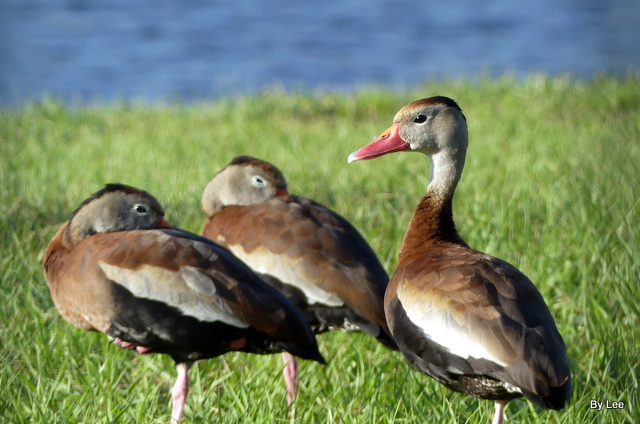
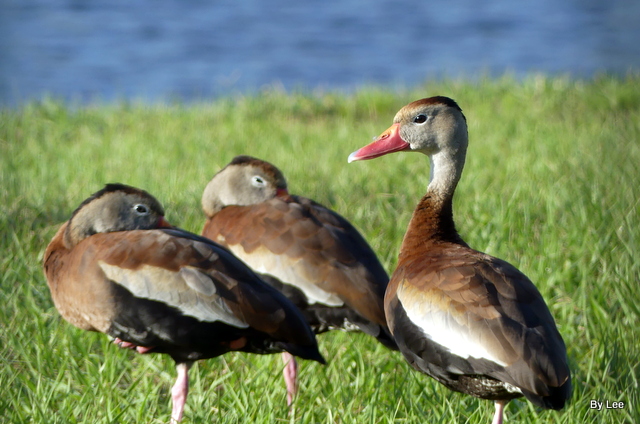
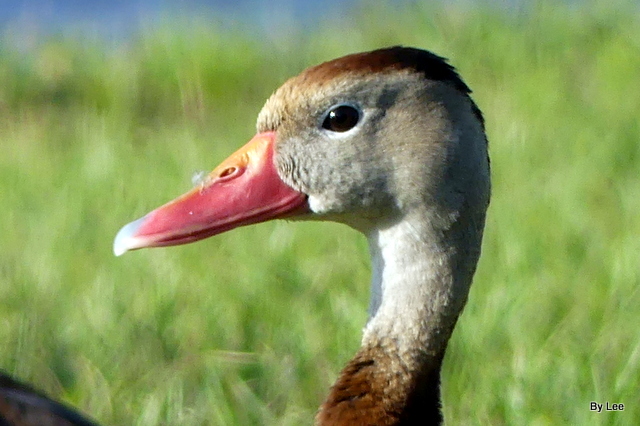
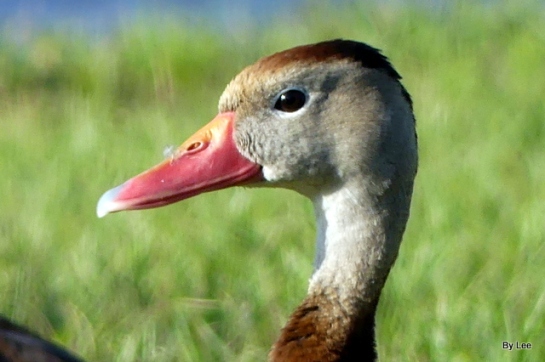
Over the last few weeks, we have had constant visiting Black-bellied Whistling Ducks in our back yard. After taking many pictures of them and their antics, I realized that they will make another great bird for our Wordless Bird posts.
The Wordless Book Colors are:
Black (or Dark) – Wings and Eyes
Gold – Lore
Red – Beak
White – Wings, Neck and Head
Green – Grass
Sometimes we need visual items to help us remember God’s Truths. He created these beautiful Whistling Ducks, so why not learn from them.
Our hearts areblack or darkwith sin. People like dark of night to do evil deeds many times.
Goldare how the streets of heaven are made.
Christ gave His blood on the cross to pay for our sins.
When we accept the Lord into our hearts, they become clean or white.
We are supposed to grow as a Christian, as the greengrass.
This is a simple version of our Wordless Birds, but the truth is still the same.
“For God so loved the world, that he gave his only begotten Son, that whosoever believeth in him should not perish, but have everlasting life. For God sent not his Son into the world to condemn the world; but that the world through him might be saved.”
Click Here to Listen Psalm 50:11
“I know all the fowls of the mountains: and the wild beasts of the field are mine.”
Geese are large birds from the family Anatidae. This family – which includes geese, ducks, and swans – is presumed by creation researchers to be a baramin. Therefore, Noah took two anatidae on the Ark rather than two ducks, two geese, etc., and all the species of geese, ducks, and swans have developed since the end of the Flood.
In the Pacific Northwest, flocks of geese flying overhead are huge and noisy. I find them fascinating, particularly as they embark on or return from their migrations.
Canada geese migrate considerable distances. Geese identified by rings have traversed the Atlantic, ending up in Europe, having been ringed in North America.
Generally speaking, when a goose has found a mate, the pair stays together for life. Goslings hatch after about a month, and they are immediately able to walk, swim, and find their own food. It is delightful to see a pair of geese with a line of goslings waddling to the water, and then swimming away.
The ancient Celtic Christians used to use the wild goose as a symbol of the Holy Spirit. In the Bible, the Spirit is described as being “like a dove”, and doves in the Middle East are wild and untamable. However, in the West, doves often appear tame and peaceful. Geese, on the other hand, exhibit the same wildness in properties as the biblical dove. Thus, the use of the Wild Goose as a symbol of the Holy Spirit seems appropriate.
Prayer: We pray, Lord God, that You will guide us by Your Spirit, that in all the things we do, we may please You and glorify Your Name. Amen.









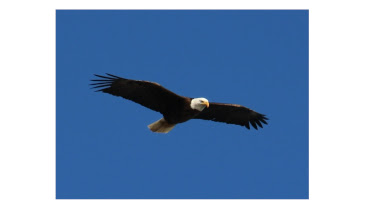 As I sit in my backyard, enjoying some springtime sunshine while writing this script, my eyes are drawn to a pair of shapes, silhouetted against a bright sky, circling over the Cowlitz River. They look dark from where I am sitting, but I know that if they landed, they would not be so dark, and they would have white heads. They are eagles. A pair of them have been around this area since we moved here about three years ago.