Birds of the Bible – Snowy Owl in Florida

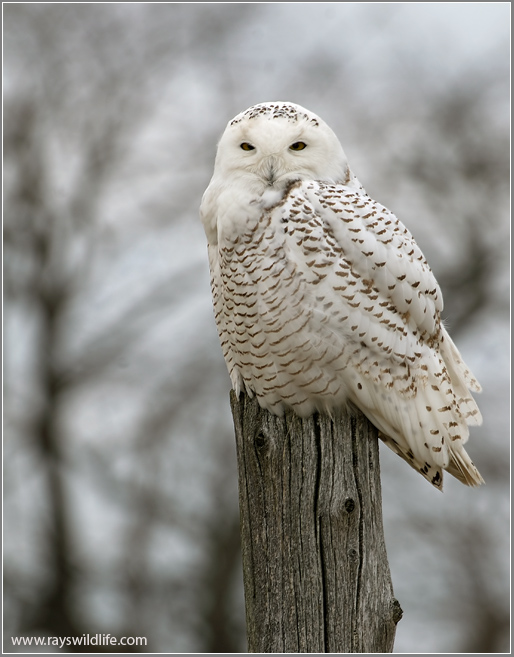
Snowy Owl (Bubo scandiacus) by Raymond Barlow

Snowy Owl (Bubo scandiacus) by Raymond Barlow (Not the one being seen)

the ostrich, the short-eared owl, the sea gull, and the hawk after its kind; the little owl, the fisher owl, and the screech owl; the white owl, the jackdaw, and the carrion vulture;
(Leviticus 11:16-18 NKJV)

And the owl, and the night hawk, and the cuckow, and the hawk after his kind, And the little owl, and the cormorant, and the great owl, (Leviticus 11:16-17 KJV)

Florida birdwatchers are pleased to have an odd appearance of a Snowy Owl. She is a young owl, but she has quite a following down here. What makes this so unusual is that she is way out of the normal winter grounds for these birds. This is only the third observation of the Snowy Owl in Florida. We are known for our “Snowbirds,” but the Snowy Owl definitely qualifies as a “Snowbird.”

This bird has made a temporary home at the Little Talbot Island State Park. Not sure how the bird has any privacy. Birdwatchers from all around are making trips to Duval County, where Jacksonville is located. She was still there as of yesterday, Jan 5, 2014.
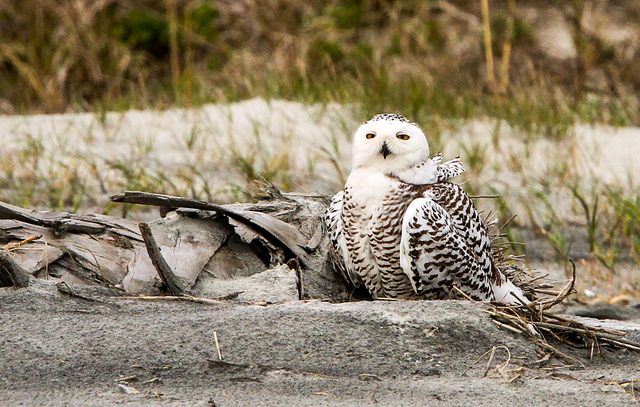
Snowy Owl (Bubo scandiacus) Female in Florida 2013-2014 ©©minds-eye

Snowy Owl (Bubo scandiacus) Female in Florida 2013-2014 ©©minds-eye

Snowy Owl (bubo scandiacus) are members of the Strigidae – Owl Family. They are the largest North American Owl. Owls are a Bird of the Bible and depending on which version you use, Owls are mentioned in 14 verses in the KJV, but a “Snowy Owl” is not mentioned, but the “great” and “white” owls are mentioned. What a lovely creation from our Lord.

This yellow-eyed, black-beaked white bird is easily recognizable. It is 52–71 cm (20–28 in) long, with a 125–150 cm (49–59 in) wingspan. Also, these birds can weigh anywhere from 1.6 to 3 kg (3.5 to 6.6 lb).[3] It is one of the largest species of owl and, in North America, is on average the heaviest owl species. The adult male is virtually pure white, but females and young birds have some dark scalloping; the young are heavily barred, and dark spotting may even predominate. Its thick plumage, heavily feathered taloned feet, and colouration render the Snowy Owl well-adapted for life north of the Arctic Circle.

Snowy Owl calls are varied, but the alarm call is a barking, almost quacking krek-krek; the female also has a softer mewling pyee-pyee or prek-prek. The song is a deep repeated gahw. They may also clap their beak in response to threats or annoyances. While called clapping, it is believed this sound may actually be a clicking of the tongue, not the beak.

This powerful bird relies primarily on lemmings and other small rodents for food during the breeding season, but at times of low prey density, or during the ptarmigan nesting period, they may switch to favoring juvenile ptarmigan. They are opportunistic hunters and prey species may vary considerably, especially in winter. They feed on a wide variety of small mammals such as meadow voles and deer mice, but will take advantage of larger prey, frequently following traplines to find food. Some of the larger mammal prey includes hares, muskrats, marmots, squirrels, rabbits, raccoons, prairie dogs, rats, moles, smaller birds, entrapped furbearers. Birds preyed upon include ptarmigan, other ducks, geese, shorebirds, pheasants, grouse, coots, grebes, gulls, songbirds, and even other raptors, including other owl species. Most of the owls’ hunting is done in the “sit and wait” style; prey may be captured on the ground or in the air, or fish may be snatched off the surface of bodies of water using their sharp talons. Each bird must capture roughly 7 to 12 mice per day to meet its food requirement and can eat more than 1,600 lemmings per year.

Snowy Owls, like many other birds, swallow their small prey whole. Strong stomach juices digest the flesh, while the indigestible bones, teeth, fur, and feathers are compacted into oval pellets that the bird regurgitates 18 to 24 hours after feeding. Regurgitation often takes place at regular perches, where dozens of pellets may be found. Biologists frequently examine these pellets to determine the quantity and types of prey the birds have eaten. When large prey are eaten in small pieces, pellets will not be produced. (Wikipedia)

Here are some of the links to articles:

*
2013 in Review – Lee’s Birdwatching Adventures Plus

The WordPress.com stats helper monkeys prepared a 2013 annual report for this blog.

Here’s an excerpt:

The Louvre Museum has 8.5 million visitors per year. This blog was viewed about 220,000 times in 2013. If it were an exhibit at the Louvre Museum, it would take about 9 days for that many people to see it.

Click here to see the complete report.

*

Lee at Lake Morton by Dan

Lee at Lake Morton by Dan

We give thanks to God always for you all, making mention of you in our prayers; (1 Thessalonians 1:2 KJV)

Thank you all for visiting this site during 2013. I trust you have learned many things about the birds and other things of creation and have also been blessed. Also, thank you for making it possible to have the 1 Millionth visitor arrive on October 20, 2013. WOW!

Will do the best we can to make 2014 even better.

Happy New Year!

Lord Bless,

Lee and all the contributing writers and photographers.

*

Top Posts for 365 days ending 2013-12-31 (Summarized)

2012-12-31 to Today

Title Views
Home page / Archives More stats 26,590
Birds of the Bible – Eagle’s Renewal More stats 11,313
Interesting Things – Dragonflies More stats 8,435
Weaver Birds More stats 4,711
South Lake Howard Nature Park More stats 2,612
Birds of the Bible More stats 2,497
Trochilidae – Hummingbirds More stats 2,180
Hymns More stats 1,819
Columbidae – Pigeons, Doves More stats 1,728
Eagle Photos More stats 1,713
Anatidae – Ducks, Geese & Swans More stats 1,622
Interesting Things – The Egyptian “Crocodile Bird” Plover More stats 1,616
Strigidae – Owls More stats 1,548
Estrildidae – Waxbills, Munias & Allies More stats 1,464
When I Consider! – Elephant Ears and Scarab Beetles More stats 1,442
Phasianidae – Pheasants, Fowl & Allies More stats 1,369
Accipitridae – Kites, Hawks and Eagles More stats 1,332
Psittacidae – Parrots More stats 1,321
Alcedinidae – Kingfishers More stats 1,282
Fringillidae – Finches More stats 1,189
Muscicapidae – Chats, Old World Flycatchers More stats 1,114
Thraupidae – Tanagers and Allies More stats 1,062
Birds of the Bible – Clean vs. Unclean More stats 1,011
Birds of the Bible – Partridge II More stats 954
Rallidae – Rails, Crakes & Coots More stats 951
Nectariniidae – Sunbirds More stats 902
Birds of the Bible – Dove’s Eyes and Voice More stats 895
Corvidae – Crows, Jays More stats 870
Sturnidae – Starlings More stats 852
Birds of the Bible – Sparrows I More stats 825
Life List of All Birds We Have Seen More stats 816
Turdidae – Thrushes More stats 787
Picidae – Woodpeckers More stats 780
Falconidae – Caracaras, Falcons More stats 771
Birds of the Bible – Ossifrage More stats 740
Leopard More stats 721
Paradisaeidae – Birds-of-paradise More stats 708
Leiothrichidae – Laughingthrushes More stats 673
Pycnonotidae – Bulbuls More stats 673
Furnariidae – Ovenbirds More stats 671
Apodidae – Swifts More stats 631
Icteridae – Oropendolas, Orioles & Blackbirds More stats 622
Zosteropidae – White-eyes More stats 616
Birds in Songs – On Eagle’s Wings More stats 615
Ploceidae – Weavers, Widowbirds More stats 613
Birds of the Bible – Swallows More stats 605
Birds Vol 1 #3 – The Brown Thrush (Thrasher) More stats 605
Emberizidae – Buntings, New World Sparrows & Allies More stats 603
Tinamidae – Tinamous More stats 596
Photos More stats 589
Monarchidae – Monarchs More stats 586
Doves and Pigeons More stats 584
Ardeidae- Herons, Bitterns More stats 580
Birds of the Bible – Names of Birds More stats 577
The Eagle – The Loyal Mate.. More stats 573
Meliphagidae – Honeyeaters More stats 569
Cuculidae – Cuckoos More stats 561
Birds – Hymns More stats 548
Birds of the Bible – Descending Like A Dove More stats 545
Eagles More stats 536
Birds of the Bible – Osprey II More stats 504
Birds – World More stats 500
Birdwatching More stats 498
Birds of the Bible – Hawk Migration More stats 489
Cardinalidae – Grosbeaks, Saltators & Allies More stats 486
Procellariidae – Petrels, Shearwaters More stats 478
Campephagidae – Cuckooshrikes More stats 470
Scolopacidae – Sandpipers, Snipes More stats 468
Birds of the Bible – Sea Gulls More stats 446
Cisticolidae – Cisticolas and allies More stats 441
Tyrannidae – Tyrant Flycatchers More stats 436
Bucerotidae – Hornbills More stats 426
Ostrich More stats 423
Thamnophilidae – Antbirds More stats 420
Chicken, Hens, and Roosters More stats 411
Scripture Alphabet of Animals: The Ass (Donkey) More stats 411
Birds Vol 1 #2 – The American Red Bird More stats 410
Interesting Things – Grand Canyon and Squirrels More stats 402
Laridae – Gulls, Terns and Skimmers More stats 396
Troglodytidae – Wrens More stats 393
Some Very Unusual Birds More stats 393
Rhinocryptidae – Tapaculos More stats 392
Birds of the Bible – Review More stats 390
Birds of the Bible – How Many Are There? Part I More stats 386
Birds Illustrated by Color Photography – Revisited More stats 385
Birds of the Bible – Singing Birds More stats 383
Scripture Alphabet of Animals: The Camel More stats 380
Hirundinidae – Swallows, Martins More stats 380
Sharing the Gospel and Pointing Someone to Christ in the Scripture More stats 380
Bird – Week More stats 377
Birds of the Bible – Under His Wing More stats 376
Acanthizidae – Australasian Warblers More stats 369
About More stats 368
Sparrows More stats 365
Parulidae – New World Warblers More stats 360
Scripture Alphabet of Animals: The Vulture More stats 359
When I Consider! – Couch’s Spadefoot Toad More stats 356
Phylloscopidae – Leaf warblers and allies More stats 356
Ramphastidae – Toucans More stats 347
Birds of the Bible – Dove’s Dung More stats 341
Pellorneidae – Fulvettas, Ground Babblers More stats 337
Motacillidae – Wagtails, Pipits More stats 334
Caprimulgidae – Nightjars More stats 331
Passeridae – Old World Sparrows, Snowfinches More stats 328
Megapodiidae – Megapodes More stats 325
Birds of the Bible – Owls More stats 323
Peacocks More stats 320
The Futuristic Whip-poor-wills…. More stats 320
Birds of the Bible – Turtle Doves More stats 318
Birds of the Bible – Dove and Turtle-Dove More stats 318
Herons More stats 316
Birds of the Bible – Vulture More stats 314
Acrocephalidae – Reed warblers and allies More stats 314
Lybiidae – African Barbets More stats 313
Birds of the Bible – Quail More stats 308
Interesting Things – The Weaver Bird More stats 302
Birds of the Bible – Swift More stats 302

*

Birds of the Bible – Wood Storks

Wood Stork (Mycteria americana) by Lee

Wood Stork (Mycteria americana) by Lee

While we were on the same birdwatching trip to Circle B (American Bittern), we encountered a Wood Stork. There are five verses in the Bible that mention the Stork:

And the stork, the heron after her kind, and the lapwing, and the bat. (Leviticus 11:19 KJV)

And the stork, and the heron after her kind, and the lapwing, and the bat. (Deuteronomy 14:18 KJV)

Where the birds make their nests: as for the stork, the fir trees are her house. (Psalms 104:17 KJV)

Yea, the stork in the heaven knoweth her appointed times; and the turtle and the crane and the swallow observe the time of their coming; but my people know not the judgment of the LORD. (Jeremiah 8:7 KJV)

Then lifted I up mine eyes, and looked, and, behold, there came out two women, and the wind was in their wings; for they had wings like the wings of a stork: and they lifted up the ephah between the earth and the heaven. (Zechariah 5:9 KJV)

Wood Stork (Mycteria americana) by Lee Landing

Wood Stork (Mycteria americana) by Lee Landing

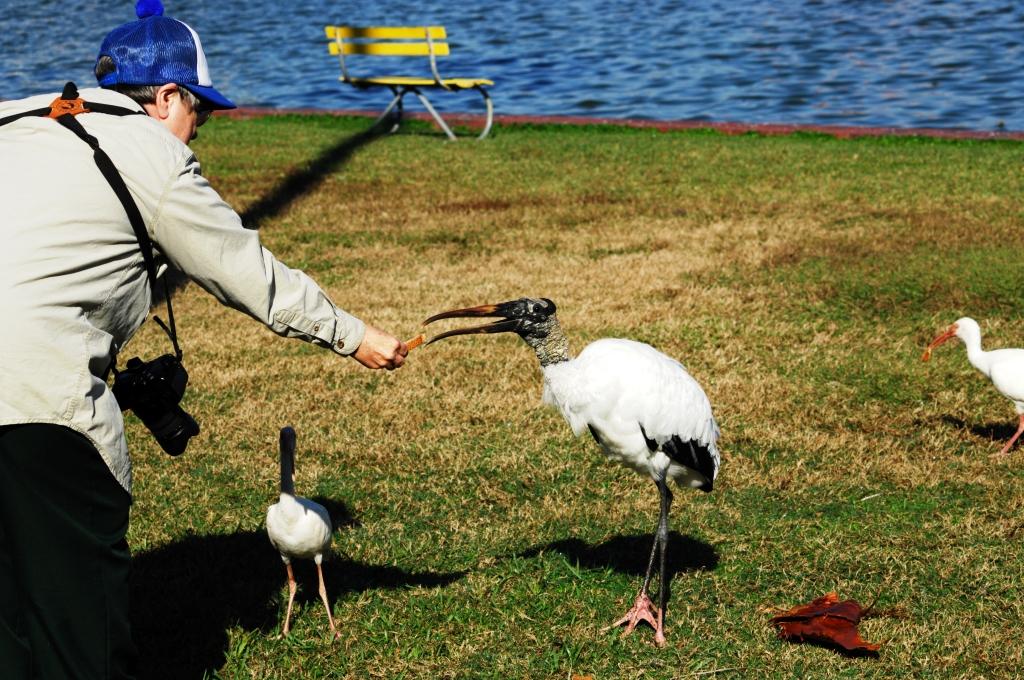
While we were birdwatching at Circle B just before Christmas, a Wood Stork flew over and landed in a tree a good way from us. Thanks to the zoom on my camera, I was able to capture its picture. They amaze me that they are “ugly” up close, but when they fly, they are so beautiful and graceful to watch. We see them quite often here and I have been known to feed them at Lake Morton. They also fly over our house and land in our community pond.

Lee feeding Wood Stork at Lake Morton by Dan

Lee feeding Wood Stork at Lake Morton by Dan 2011

As mentioned above, Storks are birds in the Bible and are members of the Ciconiidae – Storks Family. Currently there are 19 Storks in this family. The Bible does not tell which one is being mentioned, but most like one of the Storks that lived in Israel.

Our Wood Stork here is a broad-winged soaring bird that flies with its neck outstretched and legs extended. It forages usually where lowering water levels concentrate fish in open wetlands; it also frequents paddy fields. Walking slowly and steadily in shallow water up to its belly, it seeks prey, which, like that of most of its relatives, consists of fish, frogs and large insects. It catches fish by holding its bill open in the water until a fish is detected. (Wikipedia)

“Tall and long-legged, the wood stork is the largest wading bird native to America. It is white with black flight feathers, distinctive because of its dark, featherless head (down to the upper neck) and thick, down-curved bill. Wood storks fly with neck and legs extended, interrupting strong wing beats with brief glides; their wingspan is 5 1/2 feet.” (FL FWCC) Their length is 33.5–45.3 in (85–115 cm) and weigh between72.3 to 93.1 oz (2050–2640 g). (NatGeo)

*

This slideshow requires JavaScript.

*

*

Birds of the Bible – American Bittern

American Bittern (Botaurus lentiginosus) by Lee

American Bittern (Botaurus lentiginosus) by Lee

The Bittern is found in the KJV in three verses of Scripture. Some versions translate it differently. But for the sake of this article, here are those verses:

I will also make it a possession for the bittern, and pools of water: and I will sweep it with the besom of destruction, saith the LORD of hosts. (Isaiah 14:23 KJV)

But the cormorant and the bittern shall possess it; the owl also and the raven shall dwell in it: and he shall stretch out upon it the line of confusion, and the stones of emptiness. (Isaiah 34:11 KJV)

And flocks shall lie down in the midst of her, all the beasts of the nations: both the cormorant and the bittern shall lodge in the upper lintels of it; their voice shall sing in the windows; desolation shall be in the thresholds: for he shall uncover the cedar work. (Zephaniah 2:14 KJV)

We were out at Circle B Bar Reserve just before Christmas and spotted an American Bittern. They are quite evasive and not spotted often, at least by me. That protection reminds me of several verses:

Keep me as the apple of the eye, hide me under the shadow of thy wings, (Psalms 17:8 KJV)

Deliver me, O LORD, from mine enemies: I flee unto thee to hide me. (Psalms 143:9 KJV)


This slideshow requires JavaScript.

Bitterns are members of the Ardeidae – Herons, Bitterns Family. “Although common in much of its range, the American Bittern is usually well-hidden in bogs, marshes and wet meadows. Usually solitary, it walks stealthily among cattails or bulrushes. If it senses that it has been seen, the American Bittern becomes motionless, with its bill pointed upward, causing it to blend into the reeds. It is most active at dusk. More often heard than seen, this bittern has a call that resembles a congested pump.

Like other members of the heron family, the American Bittern feeds in marshes and shallow ponds, dining on amphibians, fish, insects and reptiles.

This bittern winters in the southern United States and Central America. It summers throughout Canada and much of the United States. As a long-distance migrant, it is a very rare vagrant in Europe, including Great Britain and Ireland. This bird nests in isolated places with the female building the nest and the male guarding it. Two or three eggs are incubated by the female for 29 days, and the chicks leave after 6–7 weeks.” (From Wikipedia)

Identification Tips: (USGS)

  • Length: 23 inches Wingspan: 45 inches
  • Medium-sized wading bird
  • Dark brown upperparts
  • Underparts streaked brown and white
  • Black malar streak
  • Yellow bill with dark culmen
  • Black primaries and secondaries
  • Sometimes “freezes” with neck held upwards
  • Immatures similar to adults but lack the malar streak

American Bittern sounds from Cornell

*

*

Birds of the Bible – Woodpecker & Friend’s Storehouse

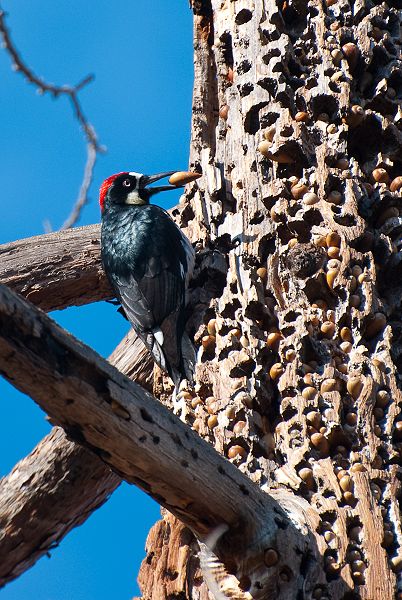
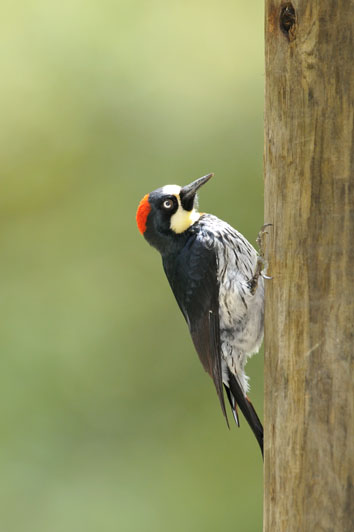
Acorn Woodpecker (Melanerpes formicivorus) by Raymond Barlow

Acorn Woodpecker (Melanerpes formicivorus) by Raymond Barlow

While working on the El Carpintero – The Woodpeckers article, many Bible verses about “gathering” and “storing” things were found. Following are some of those verses with photos. There is also a video of an Acorn Woodpecker gathering his supply.

We have used the verse about birds teaching us, so let’s see what can be learned this time about gathering and storing. (Job 12:7)

Acorn Woodpecker (Melanerpes formicivorus) with Hoard or Grainary WikiC

Acorn Woodpecker (Melanerpes formicivorus) with Hoard or Grainary WikiC

He who gathers in summer is a wise son; He who sleeps in harvest is a son who causes shame. (Proverbs 10:5 NKJV)

PIC-Pici Acorn Woodpecker Granary Tree holes ©Flickr Ornitholoco

Provides her supplies in the summer, And gathers her food in the harvest. (Proverbs 6:8 NKJV) (the ant)

Acorn Woodpecker (Melanerpes formicivorus) by Reinier Munguia

Acorn Woodpecker (Melanerpes formicivorus) by Reinier Munguia

Wealth gained hastily will dwindle, but whoever gathers little by little will increase it. (Proverbs 13:11 ESV)

Acorn Woodpecker (Melanerpes formicivorus) by Ian

Acorn Woodpecker (Melanerpes formicivorus) by Ian

Wise people store up knowledge, But the mouth of the foolish is near destruction. The rich man’s wealth is his strong city; The destruction of the poor is their poverty. The labor of the righteous leads to life, The wages of the wicked to sin. (Proverbs 10:14-16 NKJV)

Tufted Titmouse (Baeolophus bicolor) by Ray - They will store food for later use.

Tufted Titmouse (Baeolophus bicolor) by Ray – They will store food for later use.

He stores up sound wisdom for the upright; He is a shield to those who walk uprightly; (Proverbs 2:7 NKJV)

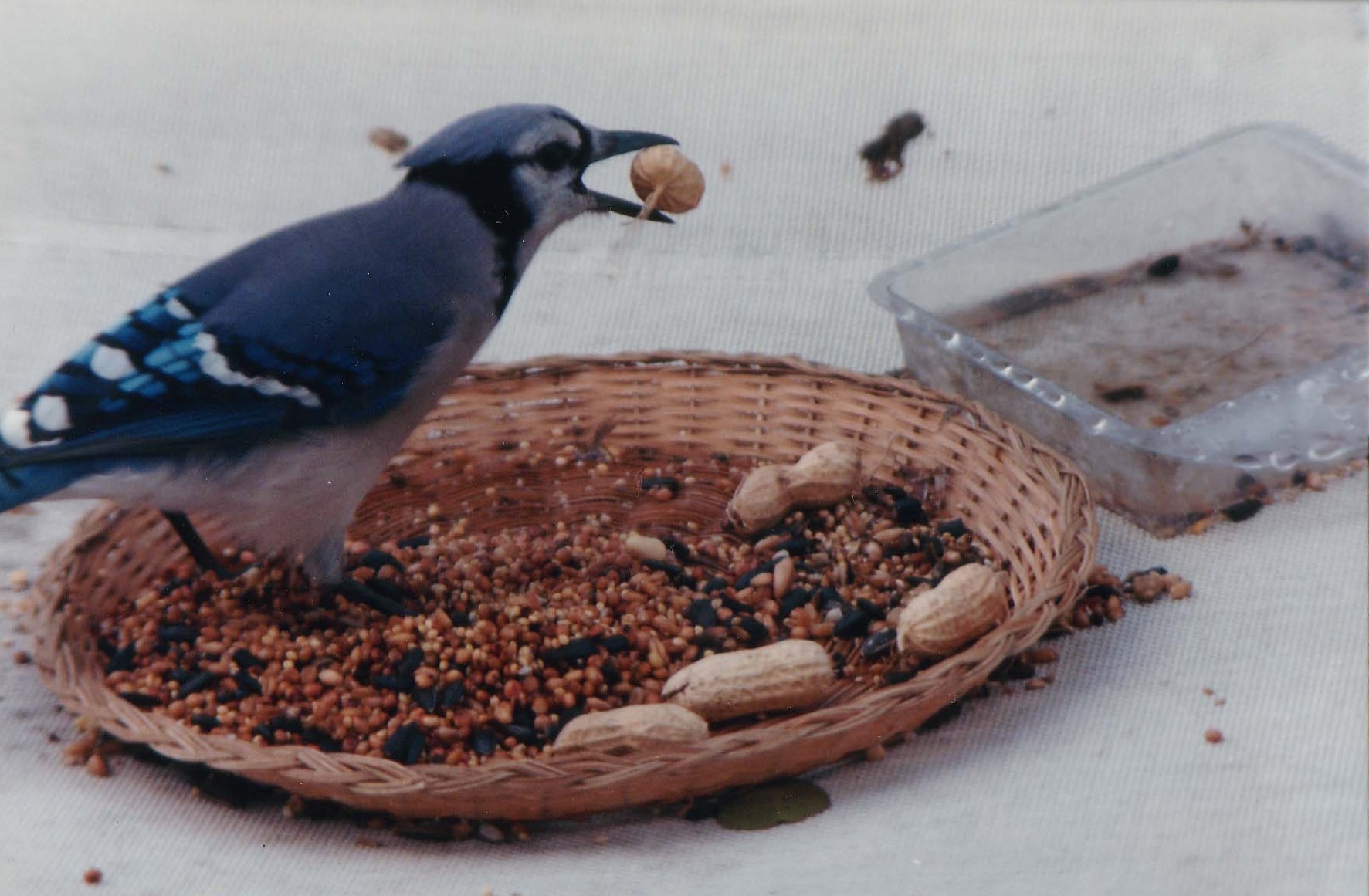
Blue Jay (Cyanocitta cristata) Collecting for Cache

Blue Jay (Cyanocitta cristata) Collecting for Cache

For they do not know to do right,’ Says the LORD, ‘Who store up violence and robbery in their palaces.’ ” (Amos 3:10 NKJV)

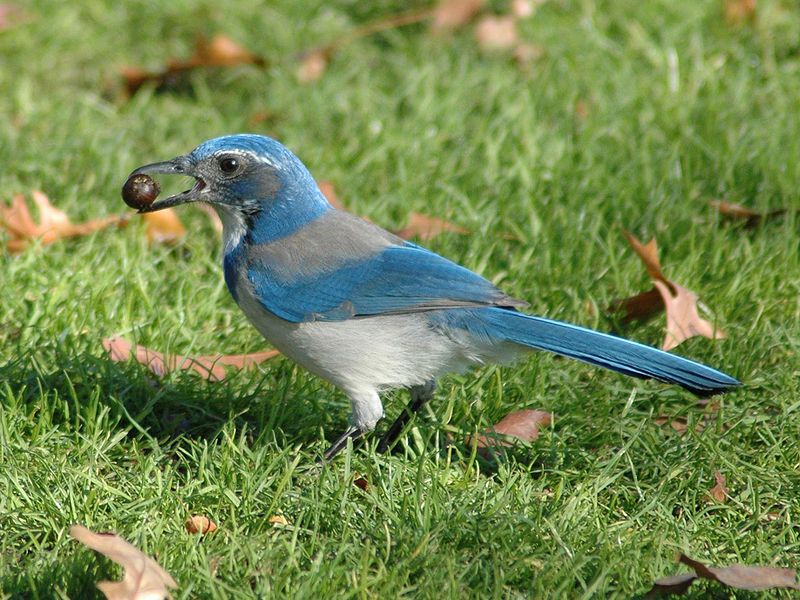
Western Scrub Jay (Aphelocoma californica) Holding an Acorn ©WikiC

Western Scrub Jay (Aphelocoma californica) Holding an Acorn ©WikiC

storing up for themselves a good foundation for the time to come, that they may lay hold on eternal life. (1 Timothy 6:19 NKJV)

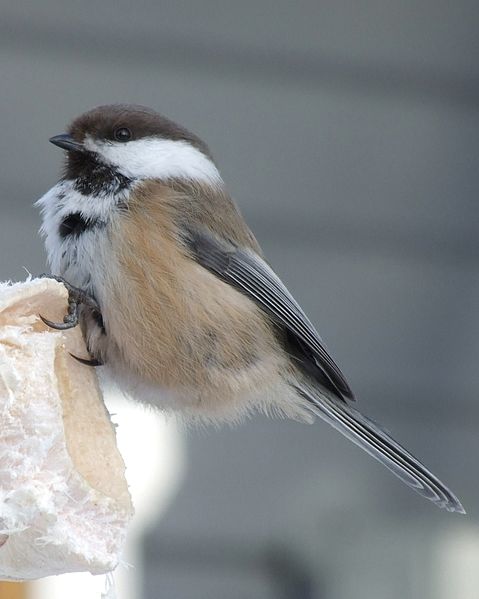
Grey-headed Chickadee (Poecile cinctus) ©WikiC

Grey-headed Chickadee or Siberian Tit (Poecile cinctus, formerly Parus cinctus) May store upto 500,000 items per year ©WikiC

*

*

*

Birds of the Bible – Dove With Gold Feathers

Golden Fruit Dove (Ptilinopus luteovirens) ©WikiC

Golden Fruit Dove (Ptilinopus luteovirens) ©WikiC

Though you lie down among the sheepfolds, You will be like the wings of a dove covered with silver, And her feathers with yellow gold.” (Psalms 68:13 NKJV)

That is an interesting verse which describes a Dove with feathers that are the color of yellowish-gold. Are there Doves like that today that we can find a photo of? Let’s see. The first photo found was the one at the top of a Golden Fruit Dove (Ptilinopus luteovirens). I see yellowish-gold, but no silver. Let me keep checking.

Wompoo Fruit Dove (Ptilinopus magnificus) by Ian

Wompoo Fruit Dove (Ptilinopus magnificus) by Ian

How about this one? What do you think? The head looks silver and I see yellowish-gold. Let’s take a few more looks at this Wompoo Fruit Dove.

 Wompoo Fruit Dove (Ptilinopus magnificus) ©WikiC

Wompoo Fruit Dove (Ptilinopus magnificus) ©WikiC

We actually saw this bird at the National Aviary in Pittsburg, PA. Here is a photo that Dan took.

Wompoo Fruit Dove (Ptilinopus magnificus) by Dan at National Aviary

Wompoo Fruit Dove (Ptilinopus magnificus) by Dan at National Aviary

What do others in their commentaries say about this verse?

Poole – As the wings of a dove covered with silver, and her feathers with yellow gold; beautiful and glorious, like the feathers of a dove, which according to the variety of its postures, and of the light shining upon it, look like silver or gold.

McGee – In this psalm it seems to have the same meaning—Israel was undecided and inactive. “Yet shall ye be as the wings of a dove”—the dove was a sacrificial bird and is a type of Christ. What a picture this gives us. Though they be negligent, though they are not moved by enthusiasm, yet the sacrifice of Christ will cover them. This psalm could actually be called the psalm of the Ascension since we have a verse that is quoted in Eph_4:8: “… When he ascended up on high, he led captivity captive, and gave gifts unto men.”

MHCC – Psalms 68:7-14 – Fresh mercies should put us in mind of former mercies. If God bring his people into a wilderness, he will be sure to go before them in it, and to bring them out of it. … Israel in Egypt among the kilns appeared wretched, but possessed of Canaan, during the reigns of David and Solomon, appeared glorious. Thus the slaves of Satan, when converted to Christ, when justified and sanctified by him, look honourable. When they reach heaven, all remains of their sinful state disappear, they shall be as the wings of the dove, covered with silver, and her feathers as gold. Full salvation will render those white as snow, who were vile and loathsome through the guilt and defilement of sin.

Treasury of David – Psa_68:13 “Though ye have lien among the pots.” Does he mean that the women at home, who had been meanly clad as they performed their household work, would be so gorgeously arrayed in the spoil, that they would be like doves, of silver wing and golden plumage?

Or, would he say that Israel, which had been begrimed in the brick-kilns of Egypt, should come forth lustrous and happy in triumph and liberty?

Or, did the song signify that the ark should be brought from its poor abode with Obed-edom into a fairer dwelling-place?

It is a hard passage, a nut for the learned to crack. … but the sense seems to be, that from the lowest condition the Lord would lift Up his people into joy, liberty, wealth, and beauty. Their enemies may have called them squatters among the pots – in allusion to their Egyptian slavery; they may have jested at them as scullions of Pharaoh’s kitchen; but the Lord would avenge them and give them beauty ‘for blackness, glory for grime. “Yet shall ye be as the wings of a dove covered with silver, and her feathers with yellow gold.” The dove’s wing flashes light like silver, and anon gleams with the radiance of “the pale, pure gold.” The lovely, changeable colours of the dove might well image the mild, lustrous beauty of the nation, when arrayed in white holiday-attire, bedecked with their gems, jewels, and ornaments of gold. God’s saints have been in worse places than among the pots, but now they soar aloft into the heavenly places in Christ Jesus.

TSK Treasury of Scripture Knowledge – Psalms 68:13 Though: That is, probably, “Though ye have laboured and lain down between the brick-kilns in Egypt – a poor, enslaved, and oppressed people, yet ye shall gradually rise to dignity, prosperity, and splendour; as a dove, which has been defiled with dirt, disordered, and dejected, by washing herself in a running stream, and trimming her plumage, gradually recovers the serenity of her disposition, the purity of colour, and the richness and varied elegance of her appearance.”

Wesley – Ye – Ye Israelites. Ye are – Tho’ you have formerly been exposed to great reproach and misery, yet God hath changed your condition. Gold – Beautiful and glorious, like the feathers of a dove, which according to the variety of its postures, and of the light shining upon it, look like silver and gold.

***

These writers are all are telling of someone who was dull from sin or slavery. The Lord reaches down and brings them out of that condition, cleans them up, and they shine like a dove with silver and gold.

Before we accept the Lord Jesus Christ as our Saviour, we are in sin, our hearts are dark. If we accept His free gift of salvation, confessing that we are sinners and believing that only He can save us, He will save us and clean us up. We will shine like the Dove. You will shine like “the wings of a dove covered with silver, And her feathers with yellow gold.”

As I have been writing this, another dove has come to mind. The Nicobar Pigeon is a bird that when it is in the shadows or shade, looks rather dull. When it gets out in the sunshine, it shines. Its feathers are iridescent.

Nicobar Pigeon in the shade by Lee at LPZ

Nicobar Pigeon in the shade by Lee at LPZ

Now let’s bring a Nicobar out into the light:

Nicobar Imperial Pigeon (Ducula nicobarica) ©Steve Wilson

Nicobar Imperial Pigeon (Ducula nicobarica) ©Steve Wilson

Nicobar Imperial Pigeon (Ducula nicobarica) Feather ©©Global Dictator

Nicobar Imperial Pigeon (Ducula nicobarica) Feather ©©Global Dictator

*

See:

*

Birds of the Bible – Peacocks II

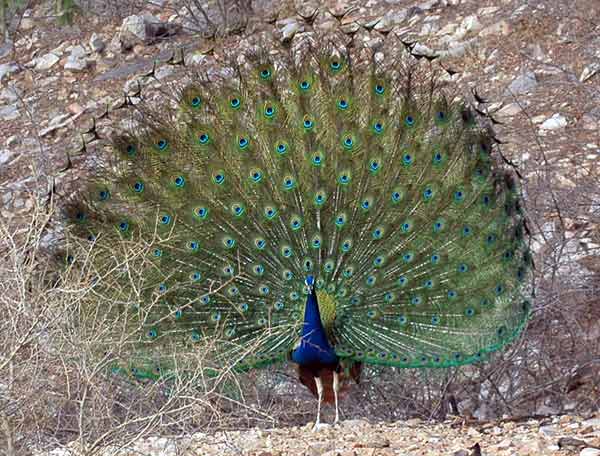
Indian Peafowl (Pavo cristatus) by Nikhil Devasar

Indian Peafowl (Pavo cristatus) by Nikhil Devasar

For the king had at sea a navy of Tharshish with the navy of Hiram: once in three years came the navy of Tharshish, bringing gold, and silver, ivory, and apes, and peacocks. (1 Kings 10:22 KJV)

For the king’s ships went to Tarshish with the servants of Huram: every three years once came the ships of Tarshish bringing gold, and silver, ivory, and apes, and peacocks. (2 Chronicles 9:21 KJV)

In my reading today in I Kings 10, I came to the peacocks arriving to Israel via the Navy of Tharshish or Tarshish. We have written about them in Birds of the Bible – Peacocks (2008) and Birds of the Bible – Pied Peacock and Allies (2011). It’s time to see what else can be discovered about these beautifully created birds by the Lord.

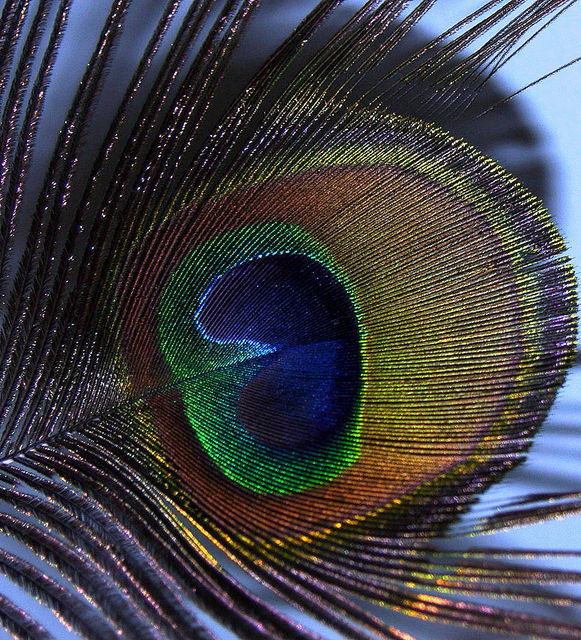
Peacock Feather

Peacock Feather

We know He, The LORD, questioned Job about the Peacocks “goodly wings” in Job 39.

Gavest thou the goodly wings unto the peacocks? or wings and feathers unto the ostrich? (Job 39:13 KJV)

Now, in I Kings and II Chronicles, the Peacocks are arriving in ships by the Navy of Tharshish. It appears that every three years those ships arrived with its precious cargos. Where had the ships gone to collect these items. There is speculation by some writers that the ships went west to Spain and other think in another way toward India and areas in that direction. The Bible does not say, so, we really don’t know.

Does that make you curious? It make me wonder where they found those peacocks.

Checking the history of Peacocks from CreationWiki and Wikipedia, they say that there are two species of Peafowl from Asia and one species from Africa. Is that were they got these Peacocks mentioned here in Scripture? When you are reading the Bible, do questions like this every give you an urge to dig a little deeper?

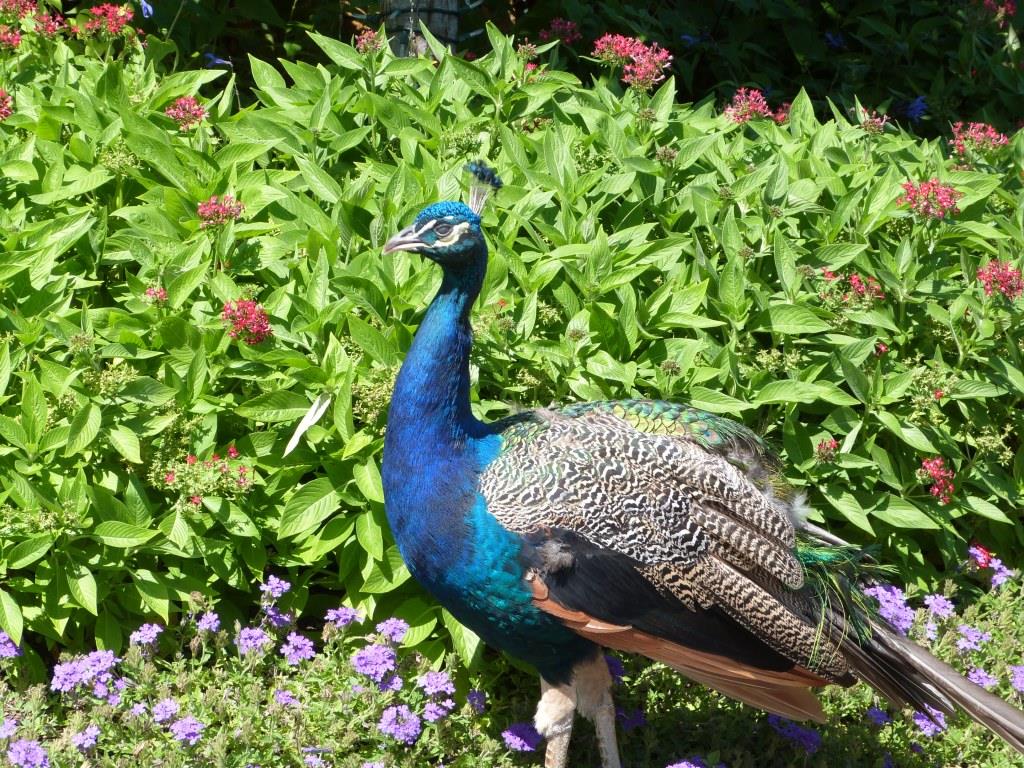
First, the “Peacocks” are the males. The females are called “Peafowl” and their chicks are called “Peachicks.”  Collectively the birds are called Peafowl. They all belong to the Phasianidae – Pheasants, Fowl & Allies Family.

The two species from India-Asia are the Indian Peafowl (Pavo cristatus)

Indian Peafowl (Pavo cristatus) by Nikhil Devasar

Indian Peafowl (Pavo cristatus) by Nikhil Devasar

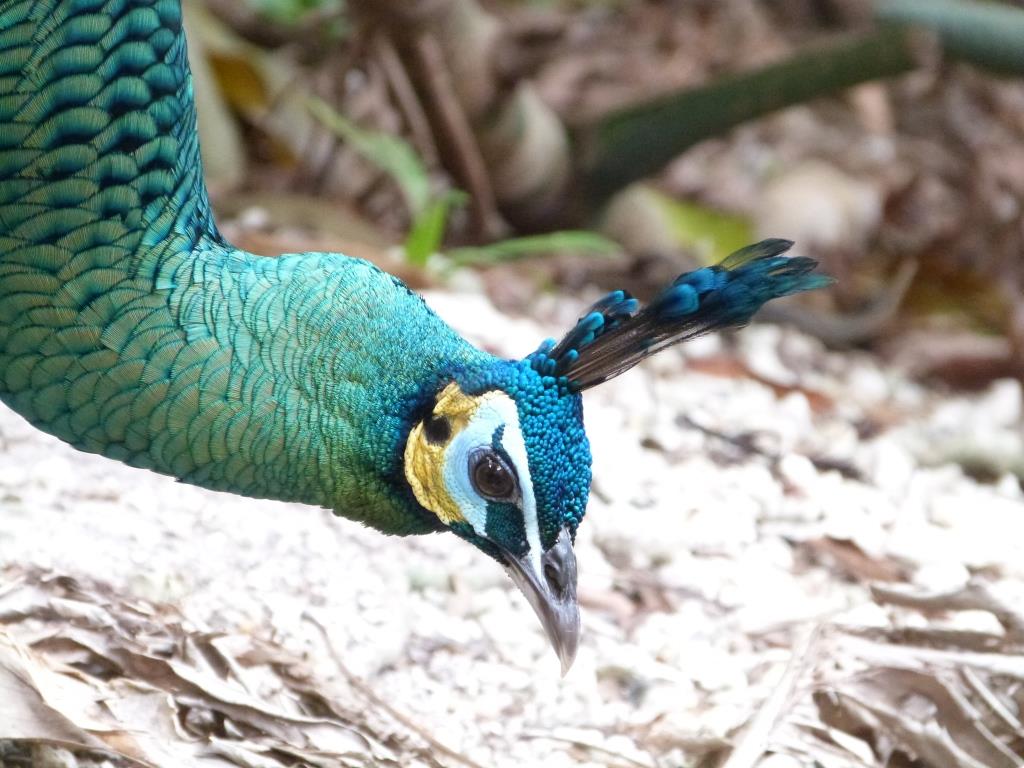
and the Green Peafowl (Pavo muticus).

Green Peafowl (Pavo muticus) by Ian

Green Peafowl (Pavo muticus) by Ian

The African member of the family is the Congo Peacock (Afropavo congensis).

Congo Peacock (Afropavo congensis) M F ©WikiC

Congo Peacock (Afropavo congensis) M F ©WikiC

Here are some of the thought of various commentaries:

JFB – once in three years — that is, every third year. Without the mariner’s compass they had to coast along the shore. The ivory, apes, and peacocks might have been purchased, on the outward or homeward voyage, on the north coast of Africa, where the animals were to be found. They were particularized, probably as being the rarest articles on board.

Geneva – By Tharshish is meant Cilicia, which was abundant in the variety of precious things.

Darby – 1 Kings 10:1-29 – The king of Tyre also was dependent on the king of Israel; and the queen of Sheba comes from the far south to delight herself in the wisdom of the head of God’s people, and to be filled with wonder at the sight of his glory, and to praise Jehovah who had raised him so high, and who had blessed the people in giving him to be their king. She also came with gifts; for the king’s renown had spread into distant lands. Nevertheless, although it was a true report that she had heard, the sight of his glory went far beyond all that had been said of it.

Constable – God forbade Israel’s kings from multiplying chariots (1Ki_10:26), the most effective and dreaded military machines of their day (Deu_17:16). God wanted His people to depend on Him primarily for their protection. Material prosperity and security often lead people to conclude that they have no needs when really our need for God never diminishes. Solomon fell into this trap. Wealth is not sinful in itself, but it does bring temptations with it (cf. Jam_5:1-6).

Though Solomon experienced great blessings from his faithful God, he fell prey to the sins these blessings make easier, as the writer explained in the next chapter.

Barnes – This is given as the reason of the great bountifulness of silver in the time of Solomon. The “navy of Tharshish” (not the same as the navy of Ophir, 1Ki_9:26) must therefore have imported very large quantities of that metal. Tharshish, or Tartessus, in Spain, had the richest silver mines known in the ancient world, and had a good deal of gold also; apes and ivory were produced by the opposite coast of Africa; and, if north Africa did not produce “peacocks,” which is uncertain, she may have produced the birds called here “tukkiyim,” which some translate “parrots,” others “guinea-fowl” – the latter being a purely African bird. The etymology of the Hebrew words here rendered “ivory,” “apes,” and “peacocks,” is uncertain; but even if of Indian origin, the Jews may have derived their first knowledge of ivory, apes, and peacocks, through nations which traded with India, and may thus have got the words into their language long before the time of Solomon. The names once fixed would be retained, whatever the quarter from where the things were procured afterward.

Indian Peafowl (Pavo cristatus) at Cincinnati Zoo by Lee

Indian Peafowl (Pavo cristatus) at Cincinnati Zoo by Lee

We have no clear idea of where they came from, and it really does not matter other than we are told they came by ship. We know that Solomon was the wisest and wealthiest king because God promised him back when he prayed for wisdom.

And now, O LORD my God, thou hast made thy servant king instead of David my father: and I am but a little child: I know not how to go out or come in….. Give therefore thy servant an understanding heart to judge thy people, that I may discern between good and bad: for who is able to judge this thy so great a people? And the speech pleased the Lord, that Solomon had asked this thing. And God said unto him, Because thou hast asked this thing, and hast not asked for thyself long life; neither hast asked riches for thyself, nor hast asked the life of thine enemies; but hast asked for thyself understanding to discern judgment; Behold, I have done according to thy words: lo, I have given thee a wise and an understanding heart; so that there was none like thee before thee, neither after thee shall any arise like unto thee. And I have also given thee that which thou hast not asked, both riches, and honour: so that there shall not be any among the kings like unto thee all thy days. And if thou wilt walk in my ways, to keep my statutes and my commandments, as thy father David did walk, then I will lengthen thy days. (1 Kings 3:7-14 KJV)

(Javan) Green Peafowl (Pavo muticus muticus) by Lee at Zoo Miami

(Javan) Green Peafowl (Pavo muticus muticus) by Lee at Zoo Miami

Wow! Is that not true of those of us who know the Lord? The Lord answers our prayers many times by giving us much more than we ever asked for. As long as our prayers are in line with His Word.

That Christ may dwell in your hearts by faith; that ye, being rooted and grounded in love, May be able to comprehend with all saints what is the breadth, and length, and depth, and height; And to know the love of Christ, which passeth knowledge, that ye might be filled with all the fulness of God. Now unto him that is able to do exceeding abundantly above all that we ask or think, according to the power that worketh in us, (Ephesians 3:17-20 KJV)

*

*

Birds of the Bible – Solomon’s Wisdom About Birds I

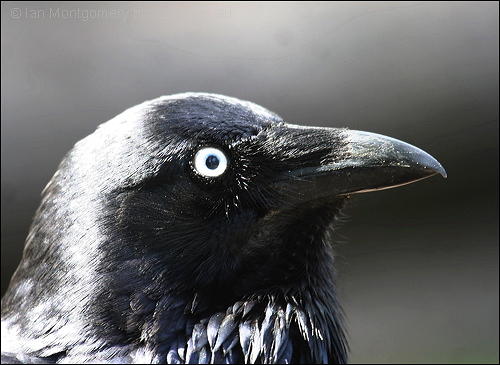
Australian Raven (Corvus coronoides) by Ian

Australian Raven (Corvus coronoides) by Ian

Also he spoke of trees, from the cedar tree of Lebanon even to the hyssop that springs out of the wall; he spoke also of animals, of birds, of creeping things, and of fish. (1 Kings 4:33 NKJV)

In my daily reading from Scripture recently, I came across I Kings 4:33 again. The article Birds of the Bible – Solomon’s Birds, discusses how some of the lessons Solomon had learned were applied. Now let’s look at how Solomon might have attained those illustrations and how we can apply them.

More questions come to my mind, in no set order, like:

  • What kind of birds did he have to observe?
  • What did he learn about the birds?
  • Did he write any of his bird observations out?
  • The Lord gave him the wisdom, so how did he apply it?
  • What can we learn from Solomon about birds?

We know from the Bible that Solomon asked for wisdom to be able to know right and wrong and how to rule the people. God granted Solomon his request and gave him more besides. See I Kings 3.

Checking with my e-Sword commentaries and helps, here are some interesting thoughts. (Italics are mine)

Oriental Bay Owl (Phodilus badius) by Peter Ericisson

Oriental Bay Owl (Phodilus badius) by Peter Ericisson

Matthew Henry’s Concise Commentary

Solomon’s wisdom was more his glory than his wealth. He had what is here called largeness of heart, for the heart is often put for the powers of the mind. He had the gift of utterance, as well as wisdom. It is very desirable, that those who have large gifts of any kind, should have large hearts to use them for the good of others. What treasures of wisdom and knowledge are lost! But every sort of knowledge that is needful for salvation is to be found in the holy Scriptures. There came persons from all parts, who were more eager after knowledge than their neighbours, to hear the wisdom of Solomon. Solomon was herein a type of Christ, in whom are hid all treasures of wisdom and knowledge; and hid for us, for he is made of God to us, wisdom. Christ’s fame shall spread through all the earth, and men of all nations shall come to him, learn of him, and take upon them his easy yoke, and find rest for their souls.

Indian Peafowl (Pavo cristatus) by Nikhil Devasar

Indian Peafowl (Pavo cristatus) by Nikhil Devasar

Gill

he spake also of beasts, and of fowls, and of creeping things, and of fishes; he understood the nature of all sorts of animals in the earth, air, and sea, and discoursed of their names, kinds, qualities, and use, with the greatest ease and perspicuity; the Jews fancy that Aristotle’s History of Animals is his, which that philosopher came upon, and published it in his own name. …

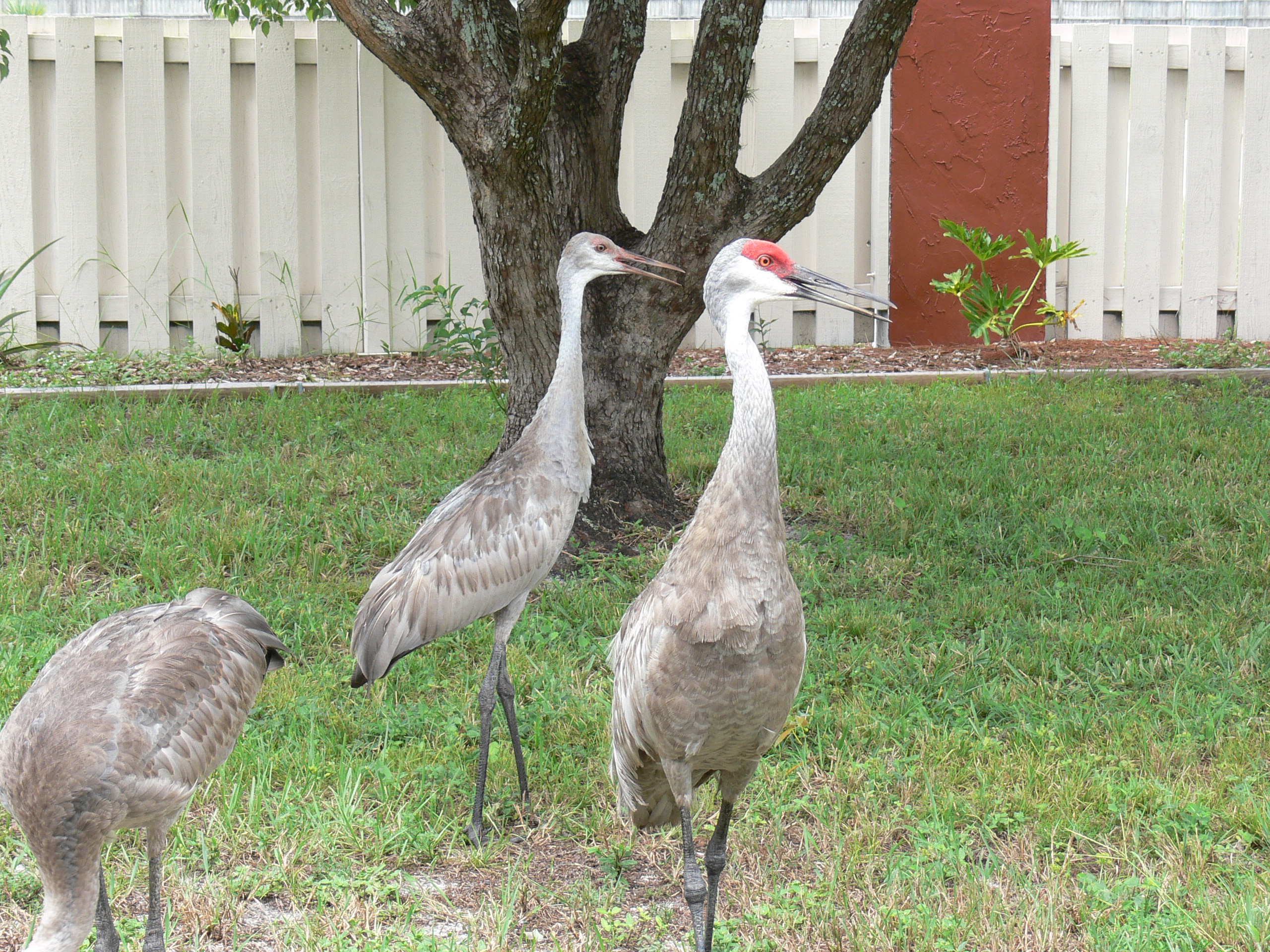
Sandhill Cranes - Adult and Juvenile in yard 8/27/10

Sandhill Cranes – Adult and Juvenile in yard 8/27/10

MacLaren

But the main thing to notice is that in Solomon we see exemplified the normal relation between religion and intellectual power and learning. Judge, artist, scientist, and all other thinkers and students, draw their power from God, and should use it for Him. And, on the other hand, Solomon’s example is a rebuke to those …Christians who look askance at men of learning, letters, or science, as well as to those … who think that science and religion must be sworn foes. If our religion is what it should be, it will widen our understanding all round.
‘Let knowledge grow from more to more, But more of reverence in us dwell.’

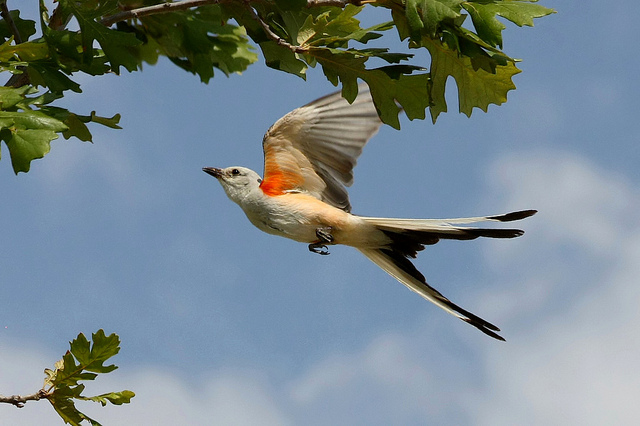
Scissor-tailed Flycatcher (Tyrannus forficatus) ©TexasEagle

Scissor-tailed Flycatcher (Tyrannus forficatus) ©TexasEagle

Barnes

Of beasts, and of fowls, and of creeping things, and of fishes – This is the usual Biblical division of the animal kingdom Gen_1:26; Gen_9:2; Psa_148:10.

Believer’s Bible Commentary

Verse 33 means that his wide knowledge of many sciences enabled him to use object lessons from nature in expounding his wisdom. People traveled from afar to hear him.

Blue-winged Mountain Tanager (Anisognathus somptuosus) by Ian

Blue-winged Mountain Tanager (Anisognathus somptuosus) by Ian

Bible Knowledge Commentary

1 Kings 4:32-34

Several hundred of Solomon’s 3,000 proverbs have been preserved in the Book of Proverbs as well as a few in Ecclesiastes. One of his 1,005 songs is the Song of Songs. Solomon’s literary output was extremely prolific. He became an authority in botany and zoology too. … He was recognized as the wisest man of his day as God had promised he would be.

Under His Wings - (Dove - photographer unknown)

Under His Wings – (Dove – photographer unknown)

Biblical Illustrator

The study of Nature
It is said of Wordsworth that a stranger having on one occasion asked to see his study, the maid said, “This is master’s room, but he studies in the fields.” In doing so the poet followed a venerable example. We read that Isaac went out to meditate in the field at eventide, where in the margin “to pray” is put for “to meditate.” Nor could there be a better place either for prayer or for study than the fields. The Word of God is written very clearly for His seers in the green book of Nature. Wordsworth’s study is one that we can all use, however small our house may be. (Quiver.)

The world is worth seeing
Men must not live under a bushel. A gentleman once met a French priest on board an Atlantic liner. They entered into conversation, and the priest said that months ago he had a dream. He dreamt that he was dead, and that God asked him how much of the world he had seem His answer was that he had seen only a very little of it, for he had been so long in preparing for death, and in helping other people to die, that he had no time to see the world. He saw that God was displeased, and on awakening he resolved to see as much of this beautiful world as he could. It was a wise resolve. The earth is the Lord’s and not the devil’s, and we have no right to ignore it. Nature is a temple of God, and we must ever walk through it in a sacramental mood. (Sunday Circle.).

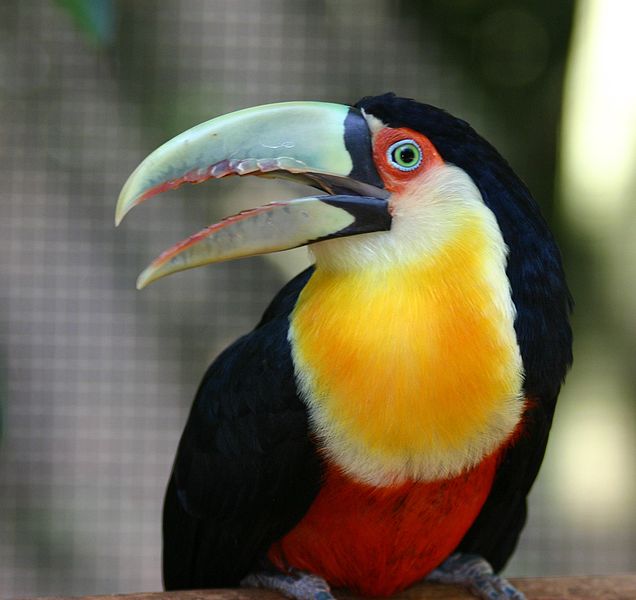
Green-billed Toucan (Ramphastos dicolorus) ©WikiC

Green-billed Toucan (Ramphastos dicolorus) ©WikiC

K & D

“And of beasts and birds, of creeping things and fishes;” the four principal classes into which the Hebrews divided the animal kingdom. Speaking of plants and animals presupposes observations and researches in natural science, or botanical and zoological studies.

Kingfisher Feeding Young by Phil Kwong

Kingfisher Feeding Young by Phil Kwong

McGee

We are told that Solomon spoke three thousand proverbs. We have only a few hundred recorded in the Bible. His songs were a thousand and five. Believe me, he was a song writer. We have only one of his songs, The Song of Solomon. Solomon was a dendrologist—”He spake of trees, from the cedar tree that is in Lebanon even unto the hyssop that springeth out of the wall.” The hyssop is a humble little plant that grows on rocks. Solomon was also a zoologist—”he spake also of beasts”—and an ornithologist since he spoke of birds. He was an entomologist: he spoke of creeping things, or insects. He was an ichthyologist: he spoke of fishes. He spoke of these things because he had studied them and was an authority in these particular realms. This, apparently, is the beginning of the sciences. Solomon was interested in these things.

Some Answers

I have another Commentary to share thoughts from, but will save it for Part II. For now, let’s see if any of the first questions were answered.

The first two questions are unanswered for now. We will dig into that later. The next three seem to have some answers.

  • What kind of birds did he have to observe?
  • What did he learn about the birds?
  • Did he write any of his bird observations out?
  • The Lord gave him the wisdom, so how did he apply it?
  • What can we learn from Solomon about birds?

Solomon observed the birds and seems to have learned lessons and applications from them which are seen in Proverbs, Song of Solomon and some Psalms. So he recorded his findings. He gained his knowledge from the Lord, but he used his senses and observational skills to gain more knowledge. That is something we can do also with the Lord’s help. If we don’t apply ourselves to a topic, the knowledge is not going to just “pop” into our heads.

See:

*

Birds of the Bible – Bird-Nesting (Hastings)

American Robin (Turdus migratorius) with young in nest

American Robin (Turdus migratorius) with young in nest

If a bird’s nest should chance to be before you in the way, in any tree or on the ground, with young ones or eggs, and the mother bird is sitting on the young or on the eggs, you shall not take the mother bird with the young. You shall surely let the mother bird go, and take only the young, that it may be well with you and that you may prolong your days. (Deuteronomy 22:6-7 AMP)

Bird-Nesting

(Just found this interesting Commentary for Children – Children’s Great Texts of the Bible by James Hastings for my e-Sword.)

If a bird’s nest chance to be before thee in the way, in any tree or on the ground, with young ones or eggs, and the dam sitting upon the young, or upon the eggs, thou shalt not take the dam with the young: thou shalt in any wise let the dam go, but the young thou mayest take to thyself; that it may be well with thee, and that thou mayest prolong thy days.—Deu_22:6-7.

You think of the children of Israel, don’t you, as having lived far back in the dark ages? But here is one of the commandments which God gave to them—a little one about a bird’s nest—and the words of it make us feel that those wanderers were just big boys and girls with the same inclinations as we ourselves have today.

We learn from the words that the birds that flew about the Israelites as they journeyed were, in many cases, birds such as those we have now. The people must have been robbing their nests too, else we should not have had this verse at all. Naturally enough, in their wanderings they often came upon a nest by the wayside.

Northern Lapwing (Vanellus vanellus) by Nikhil Devasar

Northern Lapwing (Vanellus vanellus) by Nikhil Devasar

It may be that the Israelitish boys knew the little bird nests which are found in a hollow by the side of a marsh. Perhaps they thoughtlessly scattered the eggs, or perhaps Mr. Lapwing—artful little bird that he is!—lured them away from it with the wonderful antics with which he and his ancestors, generation after generation, have protected their nests. For Mr. Lapwing is the real defender of his nest. The mother bird is generally so frightened that she flies away. But when an enemy approaches the male lapwing practices the tricks his father taught him. Gradually moving farther and farther away from where the precious eggs are, he turns a number of somersaults, or he does other equally extraordinary things. The onlooker becomes so interested that the nest is forgotten.

Mourning Dove (Zenaida macroura) by Reinier Munguia

Mourning Dove (Zenaida macroura) by Reinier Munguia

You remember Noah’s clever scout bird, the dove? She, too, would be known to the Israelites. The dove has a very mournful note. No wonder! Her family has ancient legends of how large numbers of them used to be trapped and taken captive to Jerusalem and then killed. Sacrifice had no meaning to them. It was all a mystery, and they just mourned.

What made me think of the text this morning? Why, just the fact that it is May! And May is the great month for birds’ nests. It is the birds’ busy time.
In trees, in bushes, on house-tops, or on the ground, they have built their little homes. What wonderful architects many of them are. One bird has woven twigs together into a building like an old Gothic church; another has built his house in the shape of a bottle; while one we all love lives in a dear little house made of mud. They were very patient while they gathered their building materials; and when they selected a site for their nest, by some strange instinct they chose it as far out of the reach of boys and girls as possible. But in spite of all their wonderful wisdom, somehow—and I feel ashamed to say it—there are always boys ready to climb up and destroy the little houses on which so much thoughtful care has been bestowed.

Common Starling (Sturnus vulgaris) at Nest  by Anthony747

Common Starling (Sturnus vulgaris) at Nest by Anthony747

Now I am to give you three reasons why I want you not to disturb a bird’s nest while it’s being used.

1. Because it is cruel and cowardly.—What would you think if anyone were to break open the door of your home and run away with your bed? Think of your mother going out one day and coming home to find that someone had been there and stolen you away! Yet, how often does the poor mother bird come home to find all her children taken from her? If you rob a nest, it is a case of the strong taking advantage of the weak —a cowardly action under any circumstances—you know it is.

2. Because the birds have rights.—Any creature that suffers has rights. Theodore Parker, the great American preacher, when a lad, saw a turtle on a log, and, with stone in hand, he crept up and was about to throw it, when he heard a voice within which made him desist. He asked his mother about it. She told him that it was the protest of the doctrine of rights— the voice of God. Killing an animal for food or clothing is a part of life. But killing an animal for “fun” or “sport” is wrong.

3. Because we ought to love the birds, and love never willfully hurts what it loves. Love was Christ’s great commandment—love in little as well as in big things. God is great, yet He cares for the birds. “Are not two sparrows sold for a farthing? and one of them shall not fall on the ground without your Father.”
What has the song of birds’ not done for many a man and woman? It has cheered them, it has inspired them, it has given them new courage. It has even led them to God.

Savannah Sparrow Fifty Point-Canada by Ray Barlow

Savannah Sparrow Fifty Point-Canada by Ray Barlow

Here are some beautiful verses, by the poet George Macdonald, which tell what the song of a bird did for the heart of a man.

A brown bird sang on a blossomy tree,
Sang in the moonshine, merrily,
Three little songs, one, two, and three,
A song for his wife, for himself, and me.

He sang for his wife, sang low, sang high,
Filling the moonlight that filled the sky;
“Thee, thee, I love thee, heart alive!
Thee, thee, thee, and thy round eggs five!”

He sang to himself, “What shall I do
With this life that thrills me through and through!
Glad is so glad that it turns to ache!
Out with it, song, or my heart will break!”

He sang to me, “Man, do not fear
Though the moon goes down and the dark is near
Listen my song and rest thine eyes;
Let the moon go down that the sun may rise!”

I folded me up in the heart of his tune,
And fell asleep with the sinking moon;
I woke with the day’s first golden gleam,
And, lo, I had dreamed a precious dream!

*

By James Hastings’ Children’s Great Texts of the Bible

(I normally do a Birds of the Bible here and adapt it for the Birds of the Bible For Kids website. This time I am sharing one I posted on their site first.)

Birds of the Bible – Here

*

Birds of the Bible – Strutting Rooster

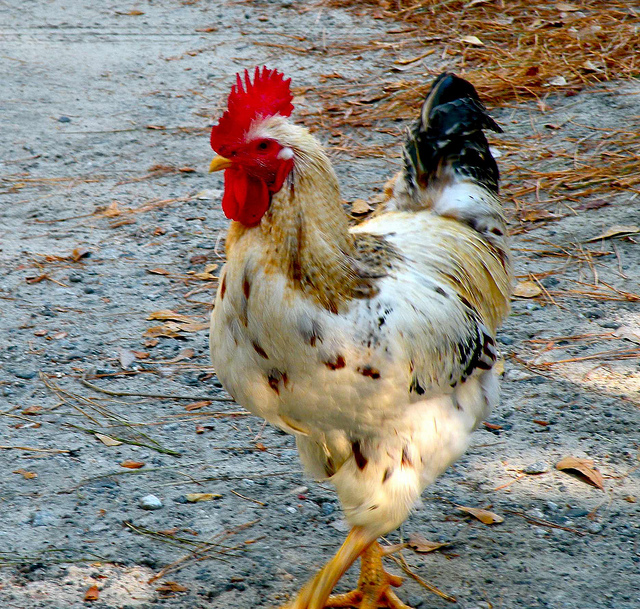
Rooster Portrait ©WikiC

Rooster Portrait ©WikiC

While working on a future Birds of the Bible article, I came across these verses and decided to share them.

the strutting rooster, the he-goat, and a king whose army is with him. (Proverbs 30:31 ESV)

The strutting rooster, the male goat also, And a king when his army is with him. (Proverbs 30:31 NASB)

a strutting rooster, a male goat, and a king with his army around him. (Proverbs 30:31 NET)

the strutting rooster, the he-goat, and a king striding before his people. (Proverbs 30:31 NRSV)

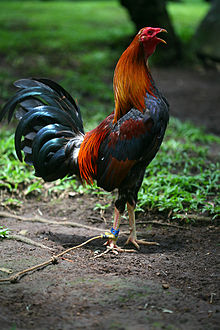
Rooster from the Philippines ©WikiC

Rooster from the Philippines ©WikiC

There are three things which are stately in their march, Even four which are stately when they walk: The lion which is mighty among beasts And does not retreat before any, The strutting rooster, the male goat also, And a king when his army is with him. (Proverbs 30:29-31 NASB)

The Roosters referred to in this article are from the Phasianidae – Pheasants, Fowl & Allies Family. The term “rooster” can used other in ways. The Pheasants and Fowls are known to strut or display to try to win the eye of the female. The male is called a “rooster,” especially within the Domesticated Fowls.

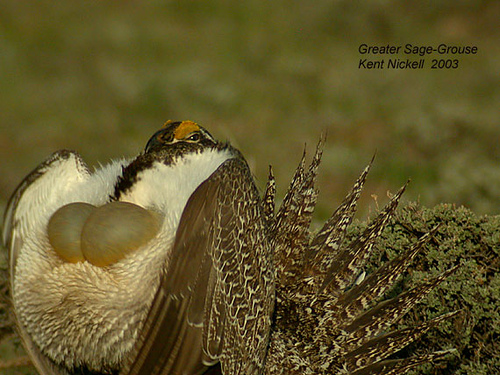
Sage Grouse (Centrocercus urophasianus) by Kent Nickel

Sage Grouse (Centrocercus urophasianus) by Kent Nickel in Phasianidae Family

Have you ever seen a parade with the King or a Captain marching in front of his troops? He sure doesn’t slouch or just walk nonchalantly. No, especially if a band is playing, they almost “strut.”

The Lion and a Goat can also be known to walk stately, or “strut.” These verses are not referring to a false pride, but something that is good. There are times to present a stately presence, David was rejoicing when he brought the Ark back to Jerusalem.

I like what Harry Ironside wrote in his Notes on Selected Books:

“30:29-31

It is quite proper to speak of the first three creatures as excelling in their movement, though it would hardly apply to a king. Majestic and glorious, he moves with stately bearing and therefore comes under the second head.

The lion is characterized by unflinching boldness; it represents that holy courage which should mark the Christian soldier as he contends earnestly for the faith once delivered to the saints. In his faith, he is to have virtue, true courage, to withstand in the evil day and remain true to his course. It is not mere dogged determination that is contemplated, but “the irresistible might of weakness” that leans on God; this is what led Paul to write, “when I am weak, then am I strong” (2 Corinthians 12:10).

Rooster by ©Flickr-one woman's hands

Rooster by ©Flickr-one woman’s hands

The second in this series has been variously translated as “a greyhound,” “a girded horse,” “a zebra,” and “a strutting rooster.” The latter is preferred in the Septuagint, Syriac, Vulgate, and Chaldee versions. But according to the best authorities the word simply means girded as to the loins. It may therefore be applied to any slender creature characterized by swiftness. The translators of the King James version preferred “greyhound” as most fully expressing the idea of an animal adapted to running. It matters little what beast is signified. The lesson for us is clear enough. As a girded animal does not rest until it reaches its prey or the goal to which it is running, so the saint is to press swiftly on, refusing to be turned aside by the attractions of this world. He is viewed as a racer in Philippians 3:13-14:

Brethren, I count not myself to have apprehended: but this one thing I do, forgetting those things which are behind, and reaching forth unto those things which are before, I press toward the mark for the prize of the high calling of God in Christ Jesus.

This should always be the Christian’s attitude. Having no city here, he does not halt to dally with the insignificant things of earth. With girded loins and eyes fixed on Christ, he hastens on to the judgment seat where the prize is to be awarded.

Wherefore seeing we also are compassed about with so great a cloud of witnesses, let us lay aside every weight, and the sin which doth so easily beset us, and let us run with patience the race that is set before us, Looking unto Jesus the author and finisher of our faith; who for the joy that was set before him endured the cross, despising the shame, and is set down at the right hand of the throne of God (Hebrews 12:1-2).

Christ was the great pattern-pilgrim, passing through this world as a stranger; He found only sorrow and grief here, but His joy is now full in glory!

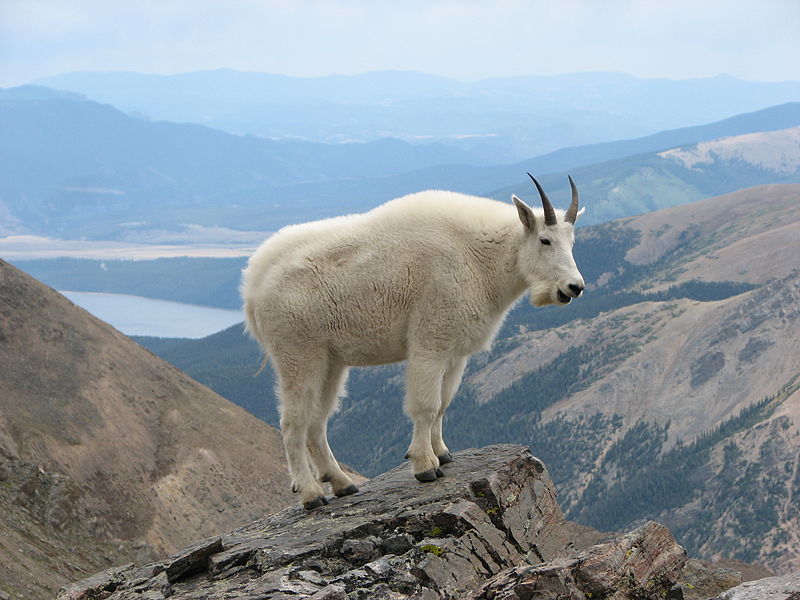
Mountain Goat at Mount Massive ©WikiC

Mountain Goat at Mount Massive ©WikiC

The male goat is the climber. Refusing the low and often un-healthful valleys, he mounts up higher and higher to the rocky hills and the peaks of the mountains. (See Psalm 104:18). Breathing the exhilarating air of the top of the rocks, he finds both pleasure and safety in his retreat. The lesson is simple. The Christian must walk on the high places; then like Habakkuk, he will be able to rejoice in the day of trouble and joy in the God of his salvation when everything of earth seems to fail (Habakkuk 3:17-19). From the soul of the climbing saint there will ever be melody.

A heavenly-minded soul is lifted above all the mists of this poor world and enabled to view all from God’s standpoint.

If ye then be risen with Christ, seek those things which are above, where Christ sitteth on the right hand of God. Set your affection on things above, not on things on the earth. For ye are dead, and your life is hid with Christ in God (Colossians 3:1-3).

This is the lesson of the male goat. Would that every believer could enter into it!

The last in the list of these pleasant things is the king going forth in undisputed, majestic strength. It is the overcomer, the man of faith, made a king unto God; his dignity is never greater than when he walks in lowliness and meekness through this world, drawing his supplies from above not from below. Great is the honor conferred on all who have been redeemed. No longer children of the night, but of the day, they are called to overcome the world in the power of the truth revealed to them by faith. Abraham was such a “king” as he went from Melchizedek’s presence to meet Sodom’s fawning monarch. He vanquished this ruler in a different way from that in which he had defeated the confederacy headed by Chedorlaomer (Genesis 14). God would have every Christian defeat his enemy in stately majesty, joining forces with Him, and counting the richest treasures of earth as dung and dross. “This is the victory that overcometh the world, even our faith” (1 John 5:4). Strong in faith, the man of God views his present situation in the light of his future reward. Then, even though accounted as sheep for the slaughter, he can exclaim, “Nay, in all these things we are more than conquerors through him that loved us” (Romans 8:37).”

Rooster by ©Flickr GypsyStepf

Rooster by ©Flickr GypsyStepf

See:

*

Thank You – One Million And Counting!

Oh, give thanks to the LORD, for He is good! For His mercy endures forever. (1 Chronicles 16:34 NKJV)

Thank you!

Thank you!!

THANK YOU!!!

I thank my God upon every remembrance of you, (Philippians 1:3 NKJV)

Wow!

Just had the 1 Millionth page view on this blog. 

Without the Lord’s leading, His help and your visits to this blog, this would not have happened.  I am so appreciative for every one of you who have visited throughout the years and also put up with my good and not-so-good articles. The blog started in February of 2008, but was moved here to WordPress in July of 2008. That is when this count started. Here are the dates of milestones that are in the Sidebar.

My special thanks goes to Stephen, our assistant to the Pastor at my church (Faith Baptist of Winter Haven) for suggesting that I write about the Birds of the Bible on the church’s Blog – The Fountain. That was on Blogspot. I started a blog of my own, to learn how to lay it out. That is when Lee’s Birdwatching Adventures Plus was started. We both moved our blogs off of Blogspot over the years.

Also, a big thanks to all my regular and guest writers.

  • Thanks to Visitors

    Moved to WordPress 00,000 – July 05, 2008
  • 50,000 – Oct 10, 2009
  • 100,000 – Apr 5, 2010
  • 150,000 – Sep 6, 2010
  • 200,000 – Dec 30, 2010
  • 250,000 – Apr 9, 2011
  • 300,000 – June 29, 2011
  • 350,000 – Sep 19, 2011
  • 400,000 – Nov 18, 2011
  • 450,000 – Jan 21, 2012
  • 500,000 – Mar 1, 2012
  • 600,000 – May 24, 2012
  • 700,000 – Sep 2, 2012
  • 800,000 – Dec 16, 2012
  • 900,000 – Ap 13, 2013
  • 1,000,000 – Oct 20, 2013
  • 1st 500+ Day (568) Oct 29, 2009
  • 1st 600+ Day (637) Sep 28, 2010
  • 1st 700+ Day (722) Apr 4, 2011
  • 1st 800+ Day (810) May 18, 2011
  • 1st 900+ Day (955) Oct 2, 2011
  • 1st 1000+ Day (1,016) Oct 20, 2011
  • 1st 2,000+ Day (2,220) Feb 10, 2012
  • 1st 3,000+ Day (3896) Feb 21, 2013

Links to the very first few articles on Lee’s Birdwatching Adventures original site copied over here:

  1. Introduction to Birds of the Bible
  2. Birdwatching Tips #1
  3. The Birds of the Bible – Eagles
  4. Video of Bird “Displaying”
  5. Trip to Fort DeSoto Park 2-20-08
  6. Roseate Spoonbills

Looking back at them, I trust you like the ones being produced now much better. Hey, it was a learning curve back then. These are the first seven articles on Lee’s Birdwatching Adventures Plus when it first started up here:

  1. Birds of the Bible – Ossifrage
  2. Interesting Things – Communication
  3. Video of Bird “Displaying” II
  4. Birds of the Bible – Herons
  5. Interesting Things – Bird Evolution
  6. Birds of the Bible – Pelicans
  7. Birdwatching Trip – J. N. “Ding” Darling NWR – July 15, 2008

*

Thank You again for all your visits, likes, comments, and encouragements.

Lee

*

P.S. I really have no way of knowing who the 1,000,000th visitor was, but we were at lunch with friends and kept watching the count. Saw 1,000,002 at around 1:20pm EST. Checking the Sitemeter after arriving home, someone from Brazil came in about 1:18, looked at 14 pages. Also at 1:20 an unknown came in, and at 1:22 a visitor arrived from Chicopee, Massachusetts. (This is just for trivia.)

*

Birds of the Bible – Flying

African Fish Eagle (Haliaeetus vocifer) by Africaddict

African Fish Eagle (Haliaeetus vocifer) by Africaddict

Wilt thou set thine eyes upon that which is not? for riches certainly make themselves wings; they fly away as an eagle toward heaven. (Proverbs 23:5)

Using e-Sword’s search for just the word “fly,” there are 15 verses in the AMP, 16 in the ESV, and 25 in the KJV. They can’t all refer to a bird flying around, so let’s see how many actually refer to the birds.

Here are the verses from the KJV:

And God said, Let the waters bring forth abundantly the moving creature that hath life, and fowl that may fly above the earth in the open firmament of heaven. (Gen_1:20)

Wherefore then didst thou not obey the voice of the LORD, but didst fly upon the spoil, and didst evil in the sight of the LORD? (1Sa_15:19)

And he rode upon a cherub, and did fly: and he was seen upon the wings of the wind. (2Sa_22:11)

Yet man is born unto trouble, as the sparks fly upward. (Job_5:7)

He shall fly away as a dream, and shall not be found: yea, he shall be chased away as a vision of the night. (Job_20:8)

Doth the hawk fly by thy wisdom, and stretch her wings toward the south? (Job_39:26)

And he rode upon a cherub, and did fly: yea, he did fly upon the wings of the wind. (Psa_18:10)

And I said, Oh that I had wings like a dove! for then would I fly away, and be at rest. (Psa_55:6)

The days of our years are threescore years and ten; and if by reason of strength they be fourscore years, yet is their strength labour and sorrow; for it is soon cut off, and we fly away. (Psa_90:10)

Wilt thou set thine eyes upon that which is not? for riches certainly make themselves wings; they fly away as an eagle toward heaven. (Pro_23:5)

Above it stood the seraphims: each one had six wings; with twain he covered his face, and with twain he covered his feet, and with twain he did fly. (Isa_6:2)

And it shall come to pass in that day, that the LORD shall hiss for the fly that is in the uttermost part of the rivers of Egypt, and for the bee that is in the land of Assyria. (Isa_7:18)

But they shall fly upon the shoulders of the Philistines toward the west; they shall spoil them of the east together: they shall lay their hand upon Edom and Moab; and the children of Ammon shall obey them. (Isa_11:14)

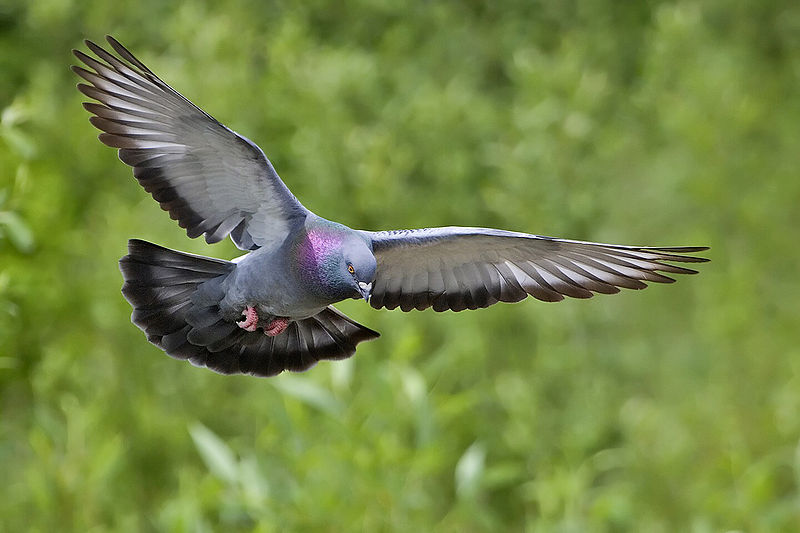
Rock Dove (Columba livia) ©WikiC

Rock Dove (Columba livia) ©WikiC

Who are these that fly as a cloud, and as the doves to their windows? (Isa_60:8)

For thus saith the LORD; Behold, he shall fly as an eagle, and shall spread his wings over Moab. (Jer_48:40)

Behold, he shall come up and fly as the eagle, and spread his wings over Bozrah: and at that day shall the heart of the mighty men of Edom be as the heart of a woman in her pangs. (Jer_49:22)

Wherefore thus saith the Lord GOD; Behold, I am against your pillows, wherewith ye there hunt the souls to make them fly, and I will tear them from your arms, and will let the souls go, even the souls that ye hunt to make them fly. (Eze_13:20)

Yea, whiles I was speaking in prayer, even the man Gabriel, whom I had seen in the vision at the beginning, being caused to fly swiftly, touched me about the time of the evening oblation. (Dan_9:21)

As for Ephraim, their glory shall fly away like a bird, from the birth, and from the womb, and from the conception. (Hos_9:11)

Their horses also are swifter than the leopards, and are more fierce than the evening wolves: and their horsemen shall spread themselves, and their horsemen shall come from far; they shall fly as the eagle that hasteth to eat. (Hab_1:8)

And to the woman were given two wings of a great eagle, that she might fly into the wilderness, into her place, where she is nourished for a time, and times, and half a time, from the face of the serpent. (Rev_12:14)

And I saw another angel fly in the midst of heaven, having the everlasting gospel to preach unto them that dwell on the earth, and to every nation, and kindred, and tongue, and people, (Rev_14:6)

And I saw an angel standing in the sun; and he cried with a loud voice, saying to all the fowls that fly in the midst of heaven, Come and gather yourselves together unto the supper of the great God; (Rev_19:17)

How many do you think directly relate to birds? Some refer to their speed of flying. How many birds were actually named?

Red-tailed Hawk (Buteo jamaicensis) by Daves BirdingPix

Red-tailed Hawk (Buteo jamaicensis) by Daves BirdingPix

I trust you enjoy digging into God’s Word more than just reading it. If you have a program like e-Sword (free) or something similiar or a good concordance, you can do these type of searches.

Back to the questions – which verses have birds mentioned?

fowl that may fly above the earth (Gen_1:20)

hawk fly (Job_39:26)

dove! for then would I fly away, and be at rest. (Psa_55:6)

fly away as an eagle toward heaven. (Pro_23:5)

fly as a cloud, and as the doves to their windows? (Isa_60:8)

shall fly as an eagle, and shall spread his wings over Moab. (Jer_48:40)

fly as the eagle, and spread his wings over Bozrah (Jer_49:22)

their glory shall fly away like a bird, (Hos_9:11)

fly as the eagle that hasteth to eat. (Hab_1:8)

two wings of a great eagle, that she might fly into the wilderness (Rev_12:14)

all the fowls that fly in the midst of heaven (Rev_19:17)

The Bible tells us:

But now ask the beasts, and they will teach you; And the birds of the air, and they will tell you; (Job 12:7 NKJV)

If you had never watched a bird fly, would any of those verses above make sense to you? The Lord not only has given all the numerous birds for us to enjoy, but also to teach us lessons.

Would you understand “…for riches certainly make themselves wings; they fly away as an eagle toward heaven. (Proverbs 23:5) if you had not seen how fast an eagle flies? How fast can we waste our riches?

Thinking about how birds fly, reread the verses above, even the ones that do not mention birds and see if that doesn’t help explain parts of the verse.

See:

*

One of my favorite videos.

*