Looking Back 100 Years, at the Migratory Bird Treaty: A Bird’s-eye View of How It was Hatched

????????????????????????????????????

                 Migratory  Bird  Treaty  Centennial     (USF&WS)

Yea, the stork in the heaven knoweth her appointed times; and the turtle and the crane and the swallow observe the time of their coming; but my people know not the judgment of the Lord.   (Jeremiah 8:7)

Dr. James J. S. Johnson

Bird migrations are marvelous — only God could preprogram and orchestrate such magnificent maneuverings!  Did you know that this year (AD2016) marks the 100th anniversary of the Migratory Bird Treaty?  Just how was that avian conservation treaty “hatched”, and why, 100 years ago?

There are several remarkable aspects of that historic Canadian-American treaty, looking back a century, at events during AD1916. Before looking at its impact today, however, a quick bird’s-eye-view “fly-over” of the historical background is appropriate.

AD1885: The U.S. Department of Agriculture was directed by Congress to have a “Division of Economic Ornithology and Mammalogy”, leading to studies about how birds can positively check the harm caused by “pests”; this part of the USDA was later modified to become the “Division of Biological Survey”, and that in turn was modified to become the present “Fish and Wildlife Service” (which merged with the U.S. Bureau of Fisheries as part of being transferred to the Department of the Interior).

us-fishwildlifeservice-logo

AD1894: Charles Almanzo Babcock, school superintendent of Oil City (Pennsylvania), spearheaded “Bird Day”, to be celebrated as a special day for appreciating and celebrating the value of birds. Babcock’s holiday is celebrated on May 4th. Similar holidays have been established by others, e.g., Americans also use January 5th as “National Bird Day”. “International Migratory Bird Day” is celebrated in America and Canada on the second Saturday in May. However, in Mexico (and in several other Latin American countries) “International Migratory Bird Day” is celebrated on the second Saturday in October.
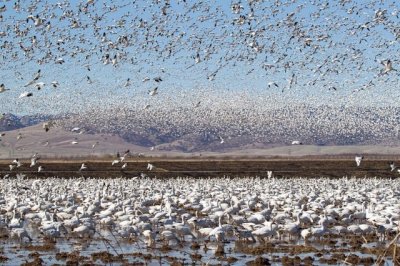
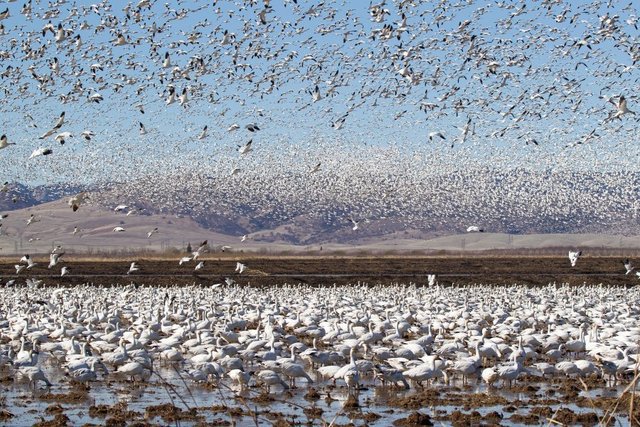
snowgeees-migrating-huge-flock-california

    Snow  Geese  during  migration      (Colusa  County,  California)

AD1896: The U.S. Supreme Court decided a case regarding governmental regulation of wild game: Geer v. Connecticut, 161 U.S. 519 (1896). In that case — which resolved a controversy over transporting wild birds across state lines — the federal high court assumed that wild animals are subject to state government jurisdiction (and thus also state government regulation), as opposed to being subject to management under federal statutes passed by Congress. This ruling was interpreted by many to mean that Congress had no direct control over wildlife, because wild animals were deemed to be the collective property of whatever state they were in. (However, there was no “preemption” problem, then, because Congress had not yet passed any federal acts to regulate interstate commerce of wild game animals or their product.) If only state governments cold validly regulate interstate hunting and fishing, as many understood the Geer ruling, the consequence would be that Congress had no legal authority to pass an enforceable wildlife protection law that could bind each of the states (and their citizenry). Could Congress do nothing to protect wasteful overhunting of interstate-migrating birds? Did the U.S. Constitution have any provision that could be harnessed to circumvent the Geer ruling? Was Congress’s power to regulate “interstate commerce” enough to exercise valid jurisdiction over how migratory birds are treated, either dead or alive, so long as state lines were crossed? These legal question would soon be answered. First, the “interstate commerce” power of Congress was used to assert federal regulatory power to regulate the sale (and commercial transportation) of birds in one state if the acquisition of that bird (dead or alive) was accomplished by violating the law of another state. In effect, this approach would use a piggyback strategy, using federal “interstate commerce” powers to enforce state laws.
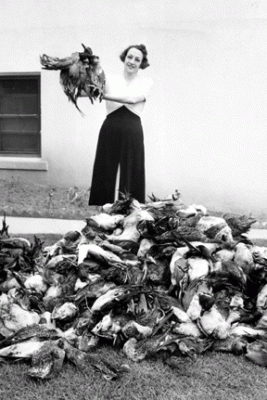
laceyact-banned-wasteful-bird-hunting-publicdomain-photo

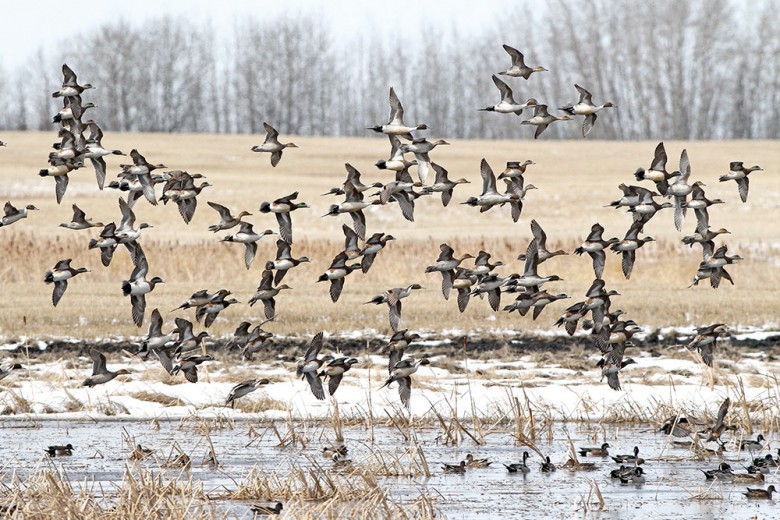
AD1900: Congress passed the “Lacey Act” of AD1900, declaring commercial transportation or sale of hunted birds (or products derived from their dead bodies) illegal, if crossing state lines was involved (i.e., if “interstate commerce” was involved), but only if the birds (dead or alive) were obtained in a way that violated the state laws of another state. This law was needed to ban the wholesale (and routinely wasteful) destruction of birds, for commercial purposes, primarily to provide flamboyant feathers for fancy ladies’ hats.  To do this, the Lacey Act (as a federal law) prohibited using “interstate commerce” activity (i.e., crossing state lines as part of a commercial enterprise) to “get away with” violating any wildlife laws of states where birds were obtained. (The Lacey Act has been legislatively expanded since, by Congress, so that it now incorporates and enforces a treaty that bans trafficking in illegal wildlife, the “CITES treaty” [Convention on International Trade in Endangered Species of Wild Fauna and Flora] — which is an enforcement task assigned, nowadays, to the Office of Law Enforcement within the U.S. Fish & Wildlife Service.) Of course, the Lacey Act only equipped Congress with “piggyback” powers to regulate interstate commerce that facilitated illegal trafficking in wildlife, subject to the hunting laws passed according to the differing preferences of the various state legislatures. If migratory birds traverse 10 states (as they migrate seasonally from north to south, or vice versa), the migrating birds may be protected in only 9 of those 10 states, under applicable state laws, only to be legally shot out of the sky (or while resting in a stopover) while flying in the one state where they may be legally shot by hunter.
wigeons-and-pintails-saskatchewan-canada-conservator

Wigeons and Pintails (Saskatchewan, Canada)©Conservator

AD1913-AD1914: Congress passed the Weeks-McLean Act of 1913, to ban bird-hunting in the spring (i.e., the vulnerable and “critical” timeframe when birds typically reproduce and nurture their hatchlings in the direction of successful fledging), and marketing of illegally hunted birds (and bird products, such as fancy bird feathers that were consumed by the fashion industry in what was called “millinery murder”). This Congress-issued law empowered the Secretary of Agriculture to promulgate bird-hunting seasons nationwide. However, judicial review of this federal statute — in the form of federal court rulings, styled United States v. Shauver, 214 Fed. 154 (E.D. Ark. 1914), and United States v. McCullagh, 221 Fed. 288 (D. Kan. 1915) — resulted in the Weeks-McLean Act being declared invalid (i.e., unauthorized), as an unconstitutional overreach regarding natural resources that jurisdictionally were subject to the police powers of state governments (and their state laws), not federal. It is noteworthy that the federal government, in the Shauver ruling, based their argument on the federal government’s rights under the Property Clause of the U.S. Constitution (in Article IV, section 3, subsection 2), not under the Constitution’s Commerce Clause (in Article I, section 8). However, in the McCullagh ruling, the federal government unsuccessfully argued that the Weeks-McLean Act was legitimate as a constitutional exercise of powers to protect the “general welfare” (Article IV, section, 3, subsection 2) and/or powers to regulate interstate commerce (Article I, section 8). It thus appeared to Congress that the federal courts were reluctant to enforce any kind of nationwide law that restricts hunting, transporting, and/or sale of migratory birds – even if the activities were provably part of “interstate commerce”.

AD1916-AD1920:  The time was now ripe, in the knock-down wake of what had been the Weeks-McLean Act, for Congress to try a different approach to constitutionally constructing an enforceable law to protect migratory birds. The Weeks-McLean Act had 3 strikes against it, constitutionally speaking: it could not be validated by the Property Clause, nor by the General Welfare Clause, nor even by the Interstate Commerce Clause. What was left? What about using the Treaty Clause in the U.S. Constitution’s Article II, section 2, subsection 2) — which authorizes the U.S. president to use “power, by and with the advice and consent of the Senate, to make Treaties, provided two thirds of the Senators present concur”. The first step in this strategic process would be negotiating and ratifying a treaty, to protect migratory birds with migratory ranges that overlap Canada and America, followed by a Congressional statute to implement such a treaty. Canada was not sufficient independent (i.e., “sovereign”) to negotiate on its own behalf, so the United Kingdom (a/k/a Great Britain) represented Canada in the treaty (which is reprinted below, as an APPENDIX) —- the Convention Between the United States and Great Britain for the Protection of Migratory Birds (of 1916) — was successfully negotiated and approved by the U.S. Senate and president (in this case, Woodrow Wilson, ironically an evolutionist, whose Darwinian worldview logically clashed with the conservation ethic embodied by the treaty). This treaty was soon (i.e., “soon”, relatively speaking) endorsed for implementation purposes (including Congressional funding mechanisms) by the Migratory Bird Treaty Act of 1918. Immediately that Congressional act was challenged in the federal courts, by plaintiffs who claimed that it too was Congressional (i.e., federal) power-grab not authorized by the U.S. Constitution. In short, the U.S. Supreme Court was impressed by the strategic treaty-based/implementing statute — the U.S. Supreme Court validated the Migratory Bird Treaty Act (and, by necessary implication, the treaty itself) via its ruling in the case styled Missouri v. Holland (so named because the U.S. Game Warden involved was surnamed Holland). Specifically, Missouri v. Holland, 252 U.S. 416, 40 S.Ct. 382 (1920), vindicated Congress’ right to implement the Migratory Bird Treaty’s provisions, as a “federal preëmption” of all state laws notwithstanding, based on the constitutional logic that enforcing a proper federal treaty trumps whatever state-legislated wildlife regulation laws may exist to the contrary. The juristic rationale for this result was the Supremacy Clause of the U.S. Constitution (in Article VI, section 2).

Retroactively speaking, therefore, the Supreme Court ruling in AD1920 (i.e., in Missouri v. Holland) validated the Congressional statute (i.e., the Migratory Bird Treaty Act) enacted in AD1918, which itself endorsed, for implementation purposes, the actual Migratory Bird Treaty of AD1916. (With that history in mind, you can better appreciate the official text of the treaty, which is fairly succinct yet specific, reprinted as an APPENDIX at the foot of this article.)
migratorybirdtreaty-pptslide-publicdomain

So that is the bird’s-eye-view “fly-by” of how Americans (and, indirectly, Canadians too) the Migratory Bird Treaty was “hatched”, 100 years ago!

Yea, the stork in the heaven knoweth her appointed times; and the turtle and the crane and the swallow observe the time of their coming; but my people know not the judgment of the Lord.   (Jeremiah 8:7)

Bird migrations are marvelous — only God could preprogram and orchestrate such magnificent maneuverings!  Surely bird migrations, which seasonally display God’s bioengineering genius and care, deserve some respect and admiration from us too, as we watch such winged wonders.
Centennial logo


ABOUT THE AUTHOR:  James J. S. Johnson, in addition to continuously teaching at various Christian colleges in Texas, since AD1991 (including courses on ecology, birds life and avian conservation, environmental laws and treaties), and teaching now for ICR-SOBA (including course that analyze bird life from a Biblical creation perspective), is an attorney licensed to practice law in the State of Texas, in the State of Colorado, and in several federal courts and administrative tribunals (including the U.S. Supreme Court). No stranger to environmental laws and conservation programs, he formerly provided monitoring research data to the Trinity River Authority of Texas (during the mid-AD1990s) in his capacity (then) as a Certified Water Quality Monitor (credentialed as such by what was then the Texas Natural Resource Conservation Commission). Jim’s love for bird life, however, began much earlier in life, as is documented briefly at Attracted To Genesis By Magnets and a Bird Book (and more fully at Appreciating Baltimore Orioles and My First Bird Book ).


Selected Bibliography:

U.S. Fish & Wildlife Service, “Migratory Bird Treaty Centennial 1916-2016” (accessed 9-16-AD2016)

Geer v. Connecticut, 161 U.S. 519, 16 S.Ct. 600 (1896).

Missouri v. Holland, 252 U.S. 416, 40 S.Ct. 382 (1920).

United States v. Shauver, 214 Fed. 154 (E.D. Ark. 1914).

United States v. McCullagh, 221 Fed. 288 (D. Kan. 1915).

The Lacey Act of 1900, now codified as amended at 16 U.S.C. sections 3371-3378.

Migratory Bird Treaty (of 1916), formally titled Convention Between the United States and Great Britain for the Protection of Migratory Birds, USA-Great Britain, 39 Stat. 1702.

Migratory Bird Treaty Act of 1918, 40 Stat. 755, codified at 16 U.S.C. sections 703-712.

Weeks-McLean Act of 1913, 37 Stat. 828, 847-848 (1913).

CITES, formally titled Convention on International Trade in Endangered Species of Wild Fauna and Flora, 27 U.S.T. 1087, T.I.A.S. 8249 (entered into force, applicable to USA, in 1975).

Edward T. Swaine, “Putting Missouri v. Holland on the Map, 72 Missouri Law Review 1007 (fall 2008).

Paul Schmidt, “The Migratory Bird Treaty Centennial: For 100 Years, This Landmark Agreement has been the Cornerstone of Migratory Bird Management Across North America”, posted by DUCKS UNLIMITED.

Mallard drake photo credit: Legallabrador.org/ .

Migrating Snow Geese / Colusa County (California)  <=  click for photo credit

Migrating Wigeons & Pintails / Saskatchewan (Canada) photo credit:  www.conservator/ca/ .

B&W photograph of lady with decorative bird-hat, next to pile of slaughtered birds (public domain), showing need for The Lacey Act of 1900


APPENDIX:   official text of the Migratory Bird Treaty of AD1916

CONVENTION BETWEEN THE UNITED STATES AND GREAT BRITAIN FOR THE PROTECTION OF MIGRATORY BIRDS.

[U. S. Treaty Series, No. 628] Signed at Washington, August 16, 1916; ratifications exchanged December 7, 1916.

WHEREAS, Many species of birds in the course of their annual migrations traverse certain parts of the United States and the Dominion of Canada; and Whereas, Many of these species are of great value as a source of food or in destroying insects which are injurious to forests and forage plants on the public domain, as well as to agricultural crops, in both the United States and Canada, but are nevertheless in danger of extermination through lack of adequate protection during the nesting season or while on their way to and from their breeding grounds; The United States of America and His Majesty the King of the United Kingdom of Great Britain and Ireland and of the British Dominions beyond the Seas, Emperor of India, being desirous of saving from indiscriminate slaughter and of insuring the preservation of such migratory birds as are either useful to man or are harmless, have resolved to adopt some uniform system of protection which shall effectively accomplish such objects and to the end of concluding a convention for this purpose have appointed as their respective plenipotentiaries: The President of the United States of America, Robert Lansing, Secretary of State of the United States; and His Britannic Majesty, the Right Honorable Sir Cecil Arthur Spring Rice, G. C. V. O., K. C. M. G., etc., His Majesty’s Ambassador Extraordinary and Plenipotentiary at Washington; Who after having communicated to each other their respective full powers which were found to be in due and proper form, have agreed to and adopted the following articles:

ARTICLE I

The high contracting powers declare that the migratory birds included in the terms of this convention shall be as follows:
1. Migratory Game Birds:
(a) Anatidae or waterfowl, including brant, wild ducks, geese, and swans.
(b) Gruidae or cranes, including little brown, sandhill, and whooping cranes.
(c) Rallidae or rails, including coots, gallinules and sora and other rails.
(d) Limicolae or shorebirds, including avocets, curlew, dowitchers, godwits, knots, oyster catchers, phalaropes, plovers, sand- pipers, snipe, stilts, surf birds, turnstones, willet, woodcock and yellowlegs.
(e) Columbidae or pigeons, including doves and wild pigeons.
2. Migratory Insectivorous Birds: Bobolinks, catbirds, chickadees, cuckoos, flickers, flycatchers, grosbeaks, humming birds, kinglets, martins, meadowlarks, nighthawks, or bull bats, nut-hatches, orioles, robins, shrikes, swallows, swifts, tanagers, titmice, thrushes, vireos, warblers, wax-wings, whippoorwills, woodpeckers, and wrens, and all other perching birds which feed entirely or chiefly on insects.
3. Other Migratory Nongame Birds: Auks, auklets, bitterns, fulmars, gannets, grebes, guillemots, gulls, herons, jaegers, loons, murres, petrels, puffins, shear- waters, and terns.

ARTICLE II

The high contracting Powers agree that, as an effective means of preserving migratory birds, there shall be established the following close seasons during which no hunting shall be done except for scientific or propagating purposes under permits issued by proper authorities.
1. The close season on migratory game birds shall be between March 10 and September 1, except that the close season on the limicolae or shorebirds in the Maritime Provinces of Canada and in those States of the United States bordering on the Atlantic Ocean which are situated wholly or in part north of Chesapeake Bay shall be between February 1 and August 15, and that Indians may take at any time scoters for food but not for sale. The season for hunting shall be further restricted to such period not exceeding three and one-half months as the high contracting Powers may severally deem appropriate and define by law or regulation.
2. The close season on migratory insectivorous birds shall continue throughout the year. 3. The close season on other migratory nongame birds shall continue throughout the year, except that Eskimos and Indians may take at any season auks, auklets, guillemots, murres and puffins, and their eggs, for food and their skins for clothing, but the birds and eggs so taken shall not be sold or offered for sale.

ARTICLE III

The high contracting Powers agree that during the period of ten years next following the going into effect of this convention, there shall be a continuous close season on the following migratory game birds, to wit:- Band-tailed pigeons, little brown, sandhill and whooping cranes, swans, curlew and all shorebirds (except the black-breasted and golden plover, Wilson or jack snipe, woodcock, and the greater and lesser yellowlegs); provided that during such ten years the close seasons on cranes, swans and curlew in the Province of British Columbia shall be made by the proper authorities of that Province within the general dates and limitations elsewhere prescribed in this convention for the respective groups to which these birds belong.

ARTICLE IV

The high contracting Powers agree that special protection shall be given the wood duck and the eider duck either (1) by a close season extending over a period of at least five years, or (2) by the establishment of refuges, or (3) by such other regulations as may be deemed appropriate.

ARTICLE V

The taking of nests or eggs of migratory game or insectivorous or nongame birds shall be prohibited, except for scientific or propagating purposes under such laws or regulations as the high contracting Powers may severally deem appropriate.

ARTICLE VI
The high contracting Powers agree that the shipment or export of migratory birds or their eggs from any State or Province, during the continuance of the close season in such State or Province, shall be prohibited except for scientific or propagating purposes, and the international traffic in any birds or eggs at such time captured, killed, taken, or shipped at any time contrary to the laws of the State or Province in which the same were captured, killed, taken, or shipped shall be likewise prohibited. Every package containing migratory birds or any parts thereof or any eggs of migratory birds transported, or offered for transportation from the United States into the Dominion of Canada or from the Dominion of Canada into the United States, shall have the name and address of the shipper and an accurate statement of the contents clearly marked on the outside of such package.

ARTICLE VII

Permits to kill any of the above-named birds which, under extraordinary conditions, may become seriously injurious to the agricultural or other interests in any particular community, may be issued by the proper authorities of the high contracting Powers under suitable regulations prescribed therefor by them respectively, but such permits shall lapse, or may be cancelled, at any time when, in the opinion of said authorities, the particular exigency has passed, and no birds killed under this article shall be shipped, sold or offered for sale.

ARTICLE VIII

The high contracting Powers agree themselves to take, or propose to their respective appropriate law-making bodies, the necessary measures for insuring the execution of the present convention.

ARTICLE IX

The present convention shall be ratified by the President of the United States of America, by and with the advice and consent of the Senate thereof, and by His Brittanic Majesty. The ratifications shall be exchanged at Washington as soon as possible and the convention shall take effect on the date of the exchange of the ratifications. It shall remain in force for fifteen years and in the event of neither of the high contracting Powers having given notification, twelve months before the expiration of said period of fifteen years, of its intention of terminating its operation, the convention shall continue to remain in force for one year and so on from year to year. In faith whereof, the respective plenipotentiaries have signed the present convention in duplicate and have hereunto affixed their seals. Done at Washington this sixteenth day of August, one thousand nine hundred and sixteen.

[SEAL] ROBERT LANSING.    [SEAL] CECIL SPRING RICE.

“Convention Between the United States and Great Britain for the Protection of Migratory Birds”, reprinted in The American Journal of International Law, Volume 11, No. 2, Supplement: Official Documents (April, 1917), pages 62-66 (published online by The American Society of International Law)

internatlmigratorybirdday-2016-poster

Sunday Inspiration – Passeriformes Review II

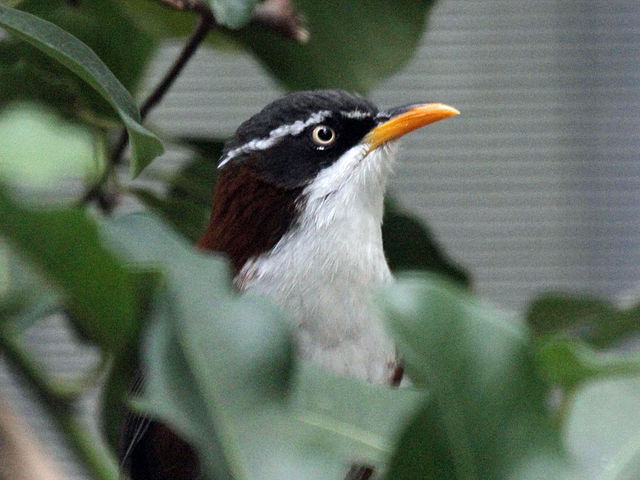
Bay-backed Shrike (Lanius vittatus) by Nikhil Devasar

Bay-backed Shrike (Lanius vittatus) by Nikhil Devasar

Remember that thou magnify his work, which men behold. (Job 36:24)

This is the second part of our review of the Passeriformes – Songbird families, which were all presented weekly. The slide show will show one or two photos from each family. These are in taxonomic order. Part I of the Review covered the New Zealand Wrens to Mottled Berry Hunters. This week we will review the Ioras to the Babblers.

Also, the links to these families will be listed and the article associated with them. There will be one more review (III). There are 131 families. All total, there are over 6,000 birds in these families and thankfully, most of them we were able to show. Some photos are protected by copyright and it was not possible to find a photo. Yet, there were more show than we would ever be able to see individually, in person.

Aegithinidae – Ioras
Campephagidae – Cuckooshrikes
Mohouidae – Whiteheads
Neosittidae – Sittellas
Eulacestomidae – Ploughbill
Oreoicidae – Australo-Papuan Bellbirds
Pachycephalidae – Whistlers and allies
Laniidae – Shrikes
Vireonidae – Vireos, Greenlets
Oriolidae – Figbirds, Orioles
Dicruridae – Drongos
Rhipiduridae – Fantails
Monarchidae – Monarchs
Corvidae – Crows, Jays
Corcoracidae – Australian Mudnesters
Melampittidae – Melampittas
Ifritidae – Ifrita
Paradisaeidae – Birds-of-paradise
Petroicidae – Australasian Robins
Picathartidae – Rockfowl
Chaetopidae – Rockjumpers
Eupetidae – Rail-babbler
Bombycillidae – Waxwings
Ptiliogonatidae – Silky-flycatchers
Hypocoliidae – Hypocolius
Dulidae – Palmchat
Mohoidae – Oos
Hylocitreidae – Hylocitrea
Stenostiridae – Fairy Flycatchers
Paridae – Tits, Chickadees
Remizidae – Penduline Tits
Nicatoridae – Nicators
Panuridae – Bearded Reedling
Alaudidae – Larks
Pycnonotidae – Bulbuls
Hirundinidae – Swallows, Martins
Pnoepygidae – Wren-babblers
Macrosphenidae – Crombecs, African Warblers
Cettiidae – Cettia Bush Warblers and allies
Scotocercidae – Streaked Scrub Warbler
Erythrocercidae – Yellow Flycatchers
Incertae-Sedis– Family Uncertain-Warbler, Hylia
Aegithalidae – Bushtits
Phylloscopidae – Leaf Warblers and allies
Acrocephalidae – Reed Warblers and allies
Locustellidae – Grassbirds and allies
Donacobiidae – Black-capped Donacobius
Bernieridae – Malagasy Warblers
Cisticolidae – Cisticolas and allies
Timaliidae – Babblers
Pellorneidae – Fulvettas, Ground Babblers

Chestnut-backed Scimitar Babbler (Pomatorhinus montanus) ©WikiC

Chestnut-backed Scimitar Babbler (Pomatorhinus montanus) ©WikiC

Here are the Sunday Inspiration articles that were written about these families.

Cuckooshrikes ~ “There’s Something About That Name” ©The Hyssongs

Whistlers and Avian Friends ~ “”The Love of God” ~ Dr. Richard Gregory

Shrikes and Vireos ~ “El Shaddai” – by Nell Reese

Figbirds, Orioles and Drongos ~ “He Touched Me” -~ ©The Hyssongs

Fantails ~ “So Send I You” – Men’s Quartet – Faith Baptist

Monarchs ~ “He’s Looking on You” ~ by Dr. Richard Gregory

Crows and Jays ~ “Peace Medley” ~ by Faith Baptist Choir

Independence Day ~ “Military Medley” ~ Faith Baptist Orchestra

From Mud to Beauty ~ “I Heard The Voice of Jesus” ~ By Sean Fielder

Australian Robin and Friends ~ “Hiding in the Shadow of the Rock” ~ © Dr. Richard Gregory

Deep Love of Jesus ~ “Oh The Deep, Deep, Love of Jesus” ~ Megan Fee and Jill Foster

Tits, Chickadees and Penduline Tits ~ “Just a Little Talk With Jesus Makes It Right” ~ Vegter Quartet (together for Vi’s 90th Birthday)

Larks ~ “His Eye Is On The Sparrow ” – by Kathy Lisby, Faith Baptist Church

Bulbuls ~ “How Deep The Father’s Love For Us” ~ played by Megan Fee and Jill Foster

Swallows and Martins ~ “If I Don’t Have Love” ~ by Jessie Padgett – Special at Faith Baptist

Wren-babblers – Crombecs and Bush Warblers – “Bow The Knee” ~ Sheila Vegter and Jacob (her son who is playing the piano and singing)

Little Beauties From The Lord ~ “Beautiful Saviour (Fairest Lord Jesus)”) ~ by Kid’s Choir at Faith Baptist

Reed Warblers ~ “When I Survey The Wondrous Cross” ~ by Miss Anna Pletcher (12 years old) on piano

Grassbirds and Allies ~ “The Church’s One Foundation” – Megan Fee, Cody Hancock & Dakota Hancock ~ at Faith Baptist

Worthy The Lamb ~ “Worthy The Lamb” ~ Choir at Faith Baptist Church

Cisticolas and Singing ~ “How Can I Keep From Singing?” ~  by the Trio + 1 (Pastor Jerry, Reagan Osborne, Caleb & Jessie Padgett) Faith Baptist

Fulvettas, Ground Babblers ~ “Everything’s Fine” ~ ©Hyssongs

*

This slideshow requires JavaScript.


I will remember the works of the LORD: surely I will remember thy wonders of old. (Psa 77:11)

“Were You There, When They Crucified My Lord” – Communion Music – Organ & Piano

*

Sunday Inspiration – Passeriformes Review I

More Sunday Inspirations

Gideon

*

Liarbird or Lyrebird – AussieBirder’s Neat Blog

My friend from Australia, whom I’ve met through blogging, has a really interesting post. It is about the Lyrebird which we have written about before. He has a segment about a young lyrebird practicing his mating dance. I love it. There are other birds mentioned also. Aussiebirder always has neat articles. Enjoy!

Lyrebird or Liarbird – A Rainforest Treasure

IMG_4552

As we leave an unusually wet winter and enter the beautiful early spring, with wildflowers blooming, I took off early one morning into the Southern Highlands to Barren Grounds National Park for another attempt at finding the elusive and endangered Eastern Ground Parrot.

IMG_4488

Above photo is taken from the sign in the park of the two endangered species of birds in Australia which live in the scrubby heathlands of the highlands. One reason why these birds have become endangered is that both these birds are predominately ground dwellers, and seldom fly.  This makes them very vulnerable to predators, especially humans, ferule cats and foxes.

………….To read the rest of the article and see his video and recordings  CLICK HERE:

Thanks, AussieBirder, for such an interesting article.

See Also:

Ian’s Bird of the Week – Displaying Superb Lyrebird

Birds Displaying

*

Sunday Inspiration – Passeriformes Review I

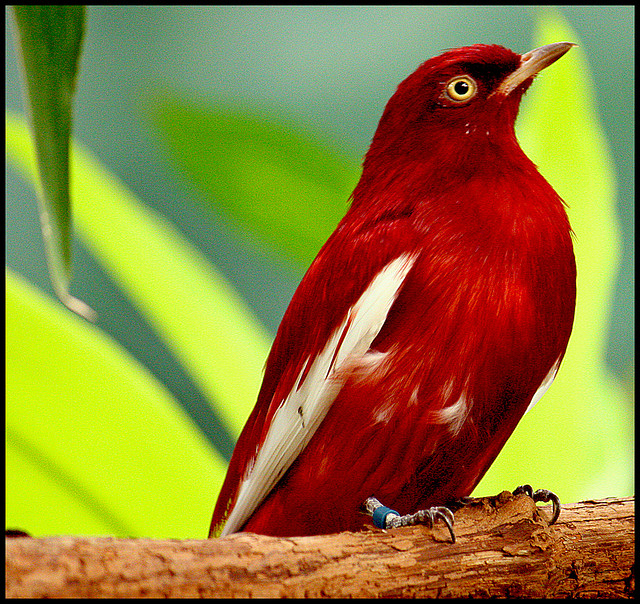
Pompadour Cotinga (Xipholena punicea) ©©holyknight33 Flickr

Pompadour Cotinga (Xipholena punicea) ©©holyknight33 Flickr

“Remember his marvellous works that he hath done, his wonders, and the judgments of his mouth;” (1Ch 16:12)

Now that the Passeriformes – Songbird families were all presented weekly, let’s review these families. The slide show will show one photo from each family. These will be in taxonomic order.

Also, the links to these families will be listed and the article associated with them. This will be a several week review. There are 131 families. All total, there are over 6,000 birds in these families and thankfully, most of them we were able to show. Some photos are protected by copyright and it was not possible to find a photo. Yet, there were more show than we would ever be able to see individually, in person.

Acanthisittidae – New Zealand Wrens
Eurylaimidae – Broadbills
Pittidae – Pittas
Furnariidae – Ovenbirds
Thamnophilidae – Antbirds
Formicariidae – Antthrushes
Grallariidae – Antpittas
Conopophagidae – Gnateaters
Rhinocryptidae – Tapaculos
Melanopareiidae – Crescentchests
Tyrannidae – Tyrant Flycatchers
Cotingidae – Cotingas
Pipridae – Manakins
Tityridae – Tityras, Becards
Menuridae – Lyrebirds
Atrichornithidae – Scrubbirds
Ptilonorhynchidae – Bowerbirds
Climacteridae – Australasian Treecreepers
Maluridae – Australasian Wrens
Meliphagidae – Honeyeaters
Dasyornithidae – Bristlebirds
Pardalotidae – Pardalotes
Acanthizidae – Australasian Warblers
Pomatostomidae – Australasian Babblers
Orthonychidae – Logrunners
Cnemophilidae – Satinbirds
Melanocharitidae – Berrypeckers, Longbills
Paramythiidae – Painted Berrypeckers
Callaeidae – New Zealand Wattlebirds
Notiomystidae – Stitchbird
Psophodidae – Whipbirds, Jewel-babblers and Quail-thrushes
Platysteiridae – Wattle-eyes, Batises
Tephrodornithidae – Woodshrikes and allies
Prionopidae – Helmetshrikes
Malaconotidae – Bushshrikes
Machaerirhynchidae – Boatbills
Vangidae – Vangas
Pityriaseidae – Bristlehead
Artamidae – Woodswallows,butcherbirds and allies
Rhagologidae – Mottled Berryhunter

Black-necked Wattle-eye (Platysteira chalybea) ©TimBoucher

Black-necked Wattle-eye (Platysteira chalybea) ©TimBoucher

“I remember the days of old; I meditate on all thy works; I muse on the work of thy hands.” (Psa 143:5)

Beginning of Passeriformes Order (Songbirds) For The Sunday Inspiration

More Amazing Birds ~ “Jesus What A Might Name” – Pastor Jerry w/Choir and Orchestra

Ant Birds ~ “He Looked Beyond My Fault” ~ ©The Hyssongs

Everlasting God ~”Everlasting God” – Pastor Jerry, Reagan Osborne, Caleb & Jessie Padgett

Flycatchers ~ “Amazing Grace” – Orchestra and “I Love You, Written in Red” – Choir (Faith Baptist Church)

Give Thanks ~ “Give Thanks” ~ sung by Mark Quijano, his YouTube Channel

There is a Redeemer ~ “There is a Redeemer,” played by Nell Reese at Faith Baptist Church

Australian Birds ~ “How Can I Keep From Singing” – Pastor Jerry Smith, Jessie and Caleb Padgett and Reagan Osborne

Honeyeaters ~ “Blood of Jesus Medley” ~ Faith Baptist Church Choir

Worthy ~ “Worthy” ~ Faith Baptist Choir and Orchestra

Variety II ~ “Just A Little Talk With Jesus” – Vegter Six

Whipbirds, Wattle-eyes and Allies – ” Be Thou My Vision and Battle Hymn of the Republic” ~ played by Sean Fielder

Woodshrikes and Helmetshrikes ~ ” I’ve Got Joy” ~ by the Faith Baptist Orchestra

Bushshrikes and Boatbills ~ “We Shall See Jesus” ~ Margaret Hiebert, Pastor and Jill Osborne and Pastor Jerry Smith

Vangas and Friends ~ “I Still Believe” – ©The Hyssongs

*


This slideshow requires JavaScript.

“Bless the LORD, O my soul. O LORD my God, thou art very great; thou art clothed with honour and majesty.” (Psa 104:1)

“To Win My Soul” – Sung by Jessie Padgett”

Sunday Inspirations

Passeriformes

Sharing The Gospel

*

Sunday Inspiration – Cardinalidae Wrap-up

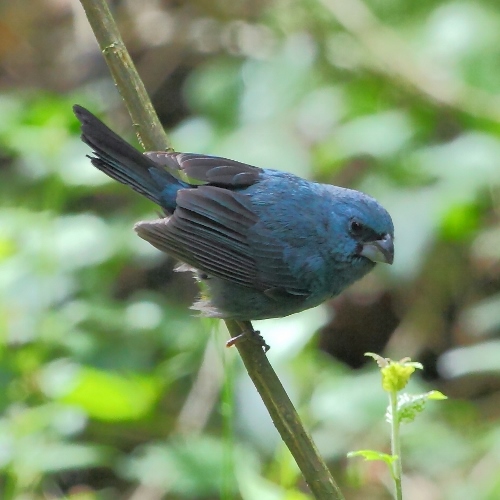
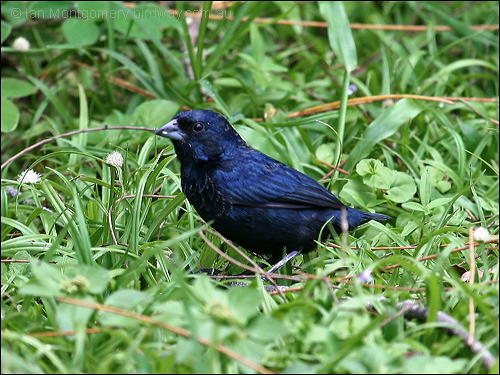
Blackish-blue Seedeater (Amaurospiza moesta) ©WikiC

Blackish-blue Seedeater (Amaurospiza moesta) ©WikiC

And when he sowed, some seeds fell by the way side, and the fowls came and devoured them up: (Matthew 13:4 KJV)

Last week, the first half of the Cardinalidae was presented, and now here is the rest of this beautiful family. Today we have Grosbeaks, Seedeaters, Saltators, a Dickcissel, and Buntings. You will see another display of the Lord’s Handiwork as you watch the slideshow.

The beginning genera have only a few species, the latter ones have more species per genus. Enjoy!

Black-headed Saltator (Saltator atriceps) ©WikiC

Black-headed Saltator (Saltator atriceps) ©WikiC

“Saltator is a genus of songbirds of the Americas. They are traditionally placed in the cardinal family (Cardinalidae) but now seem to be closer to tanagers (Thraupidae). Their English name is also saltator, except for two dark species known by the more general grosbeak.

Saltator is Latin for “leaper” or “dancer”. Louis Vieillot applied it to this genus because of the heavy way the birds hop on the ground.” (Wikipedia)

PAS-Card Dickcissel (Spiza americana) ©WikiC
Dickcissels have a large pale bill, a yellow line over the eye, brownish upperparts with black streaks on the back, dark wings, a rust patch on the shoulder and light underparts. Adult males have a black throat patch, a yellow breast and grey cheeks and crown. This head and breast pattern is especially brilliant in the breeding plumage, making it resemble an eastern meadowlark. Females and juveniles are brownish on the cheeks and crown and are somewhat similar in appearance to house sparrows; they have streaked flanks.

Glaucous-blue Grosbeak (Cyanoloxia glaucocaerulea) ©WikiC

Glaucous-blue Grosbeak (Cyanoloxia glaucocaerulea) ©WikiC

The Glaucous-blue Grosbeak (Cyanoloxia glaucocaerulea), also known as the indigo grosbeak, is a species of bird in the Cardinalidae family. It is the only member of the genus Cyanoloxia. It is found in Argentina, Brazil, and Uruguay. Its natural habitats are subtropical or tropical moist lowland forests, subtropical or tropical moist shrubland, and heavily degraded former forest.

Painted Bunting Subspecies (Passerina ciris ciris) ©WikiC

Painted Bunting Subspecies (Passerina ciris ciris) ©WikiC

The genus Passerina is a group of birds in the cardinal family (Cardinalidae). Although not directly related to buntings in the family Emberizidae, they are sometimes known as the North American buntings (the North American Emberizidae are colloquially called “sparrows” although they are also not related to these birds).

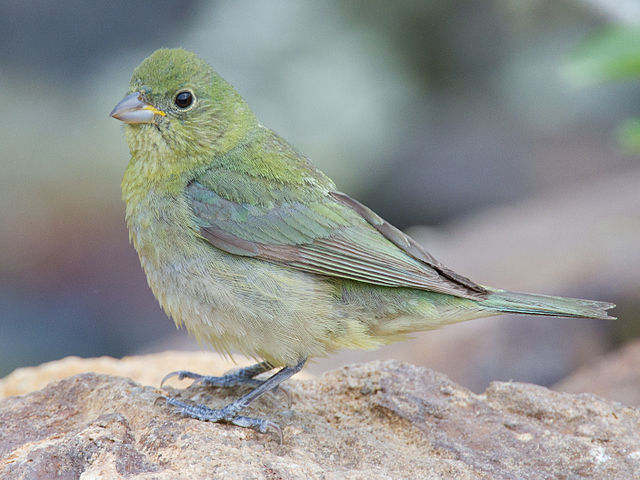
Painted Bunting (Passerina ciris) Female ©WikiC Dan_Pancamo

Painted Bunting (Passerina ciris) Female ©WikiC Dan_Pancamo

The males show vivid colors in the breeding season; the plumage of females and immature birds is duller. These birds go through two molts in a year; the males are generally less colorful in winter. They have short tails and short slim legs. They have smaller bills than other Cardinalidae; they mainly eat seeds in winter and insects in summer. (Wikipedia)

With this last group, we have now completed the PASSERIFORMES – Passerines Order. As mentioned last week, there are 131 families of song birds that you have been viewing since February of this year.

This slideshow requires JavaScript.

And he said unto me, It is done. I am Alpha and Omega, the beginning and the end. I will give unto him that is athirst of the fountain of the water of life freely. (Revelation 21:6 KJV)

“Come Thou Fount of Every Blessing” ~ Choir and Orchestra

*

More Sunday Inspirations

Sunday Inspiration – Cardinalidae – Family of Cardinals Plus

Cardinalidae – Cardinals, Grosbeaks and allies

PASSERIFORMES – Passerines

Wordless Birds

*

Birds of the Bible – Murmurations?

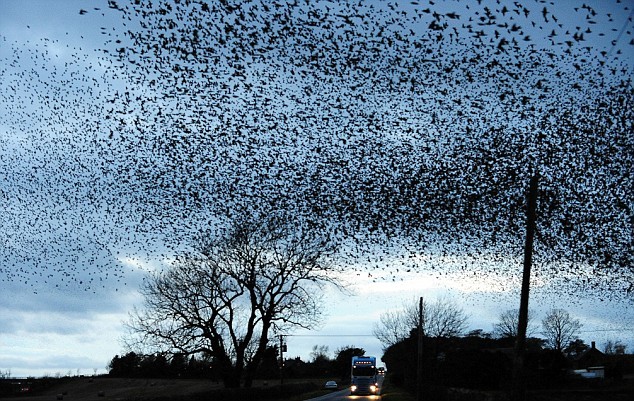
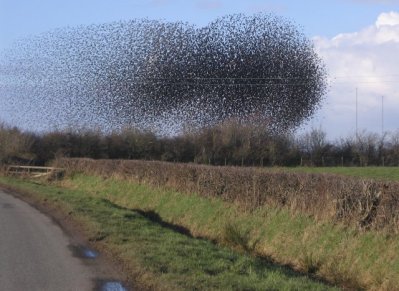
Murmuration by Dailymail

Murmuration by Dailymail

“Who are these that fly as a cloud, and as the doves to their windows?” (Isaiah 60:8 KJV)

While working on one of my on-line courses, Birds in Biblical Perspective, I just watched an amazing DVD – Flight: The Genius of Birds. One of the segments mentioned the murmurations of Starlings. I have watched videos of these before and we have mentioned murmurations on this site twice before: Sunday Inspiration – Starlings, Mynas and Rhabdornis by me and Choreographed Choir on the Wing: Birds of a Feather Flock Together by James J. S. Johnson.

While looking for some verses for my assignment, I found the verse quoted above from Isaiah. I have used that verse in reference to the “doves,” but did you notice the first part of the verse? Had I not just watched that video, it would have been missed again. “Who are these that fly as a cloud” Should I add a new Bird of the Bible, the Starlings?

Starling Murmuration ©Flickr Donald Macauley

Starling Murmuration ©Flickr Donald Macauley

Who gave those birds the knowledge to fly like that? Are Starlings the only birds that fly in murmurations like that? How do they keep from running into each other? Questions, questions, questions. Let’s see what we can find out about this phenomenon.

“Surprising as it may be, flocks of birds are never led by a single individual. Even in the case of flocks of geese, which appear to have a leader, the movement of the flock is actually governed collectively by all of the flock members. But the remarkable thing about starling flocks is their fluidity of motion. As the researchers put it, “the group respond[s] as one” and “cannot be divided into independent subparts.” (How Do Starling Flocks Create Those Mesmerizing Murmurations?-All About Birds)

Another quote from this article tells of a recent study, “on starling flocks appeared in the journal PLOS Computational Biology. The researchers, led by George Young at Princeton, did their own analysis of murmuration images to see how the birds adjust to their flockmates. They determined that starlings in large flocks consistently coordinate their movements with their seven nearest neighbors. They also found that the shape of the flock, rather than the size, has the largest effect on this number; seven seems optimal for the tightly connected flocks that starlings are known for.”

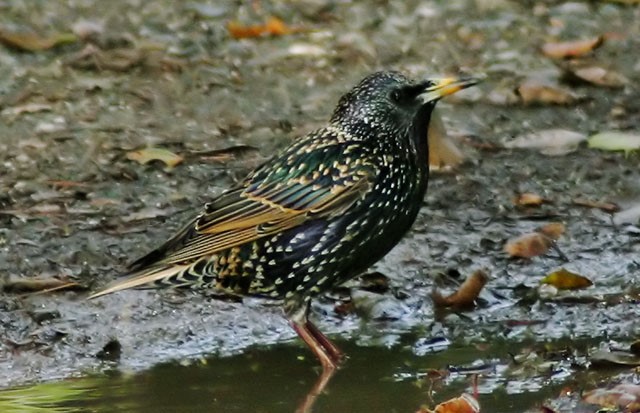
 European Starling

European Starling ©WikiC

“Recent studies of starling flocks have shown that each bird modifies its position, relative to the six or seven animals directly surrounding it, no matter how close or how far away those animals are.” (Wikipedia, emphasis mine)

Some of the Commentators had this to say about the verse:

Notes of Dr. Constable – “Isaiah 60:8 The prophet further saw people coming from the west as thick as clouds into the Promised Land. They reminded him of doves flying to their dovecotes. Who are these, he asked?”

CBNotes – “Who are these . . . ? Referring probably to the ships whose sails are compared to wings, developed in next verse.”

Flock of Starlings Acting As A Swarm ©WikiC

Flock of Starlings Acting As A Swarm ©WikiC

Geneva Bible Translation Notes – “Isaiah 60:8 Who [are] these (i) [that] fly as a cloud, and as doves to their windows? (i) Showing what great number will come to the Church, and with what great diligence and zeal.”

John Gill – “Isaiah 60:8 Who are these that fly as a cloud,…. Referring to the vast number of converts before mentioned, who are compared to a “cloud” for the number of them, covering Judea as the clouds do the heavens; and for their elevation and situation, being raised from an earthly to a heavenly state; called with a high calling, and made partakers of an heavenly one; and for their being filled with the grace of God, as clouds with water; and for their unanimity, their coming together in a body, making as it were one cloud, and that openly and publicly, professing Christ, and joining themselves to his church, in the face of the world; and so the Targum,”

“who are these that come publicly as the swift clouds?”

and chiefly are they compared to a cloud for their swiftness in motion to Christ and his church; sinners; sensible of danger from the avenging justice of God, from his law, and from his wrath and displeasure, and eternal death, and being apprized of salvation and safety in Christ, make haste and flee to him as swiftly as a cloud driven by the winds;”

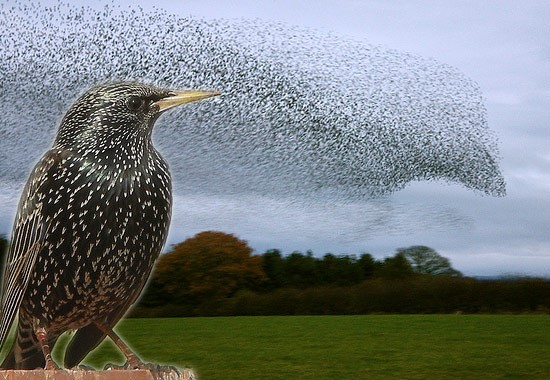
Starling and Murmeration (Fair Use credit  -    Allaboutbirds.Net

Starling and Murmeration (Fair Use credit – Allaboutbirds.Net

Guzik – “a. Your sons shall come from afar: Through this passage, one of the great themes is regathering. We may suppose that in the Millennial Kingdom of Jesus, every Jewish person remaining on the earth will be gathered into the land of Israel from every nation on earth. The present day regathering of Israel is a precious preview of this ultimate and complete regathering.”

Hawker – “Isaiah 60:8-9 – Reader! pause, I pray you over these sweet verses. Can there be a more delightful thought, than that of souls flying to Christ, as doves, who by instinct take shelter in their houses? Mark what Jesus said, Joh_12:32; and do not overlook how the glory of Jehovah in covenant, as God, is folded up in the blessed relation. Yes! Christ’s glory is his Father’s honour; and it is the most blessed of all thoughts that God the Father is glorified in his dear Son, in the instance of every individual soul redeemed; Joh_13:31-32.”

Oh, that all Christians would blend that well together. “Behold, how good and how pleasant it is for brethren to dwell together in unity!” (Psalm 133:1)

Haydock – Isaiah 60:8 – “Clouds. They are thy children, accompanied by strangers.”

Matthew Henry – “2. What multitudes shall come to the church. Great numbers shall come, Gentiles (or nations) of those that are saved, as it is expressed with allusion to this, Rev_21:24. Nations shall be discipled (Mat_28:19), and even kings, men of figure, power, and influence, shall be added to the church. They come from all parts (Isa_60:4): Lift up thy eyes round about, and see them coming, devout men out of every nation under heaven, Act_2:5. See how white the fields are already to the harvest, Joh_4:35. See them coming in a body, as one man, and with one consent: They gather themselves together, that they may strengthen one another’s hands, and encourage one another. Come, and let us go, Isa_2:3. “They come from the remotest parts: They come to thee from far, having heard the report of thee, as the queen of Sheba, or seen thy star in the east, as the wise men, and they will not be discouraged by the length of the journey from coming to thee. There shall come some of both sexes. Sons and daughters shall come in the most dutiful manner, as thy sons and thy daughters, resolved to be of thy family, to submit to the laws of thy family and put themselves under the tuition of it. They shall come to be nursed at thy side, to have their education with thee from their cradle.” The church’s children must be nursed at her side, not sent out to be nursed among strangers; there, where alone the unadulterated milk of the word is to be had, must the church’s new-born babes be nursed, that they may grow thereby, 1Pe_2:1, 1Pe_2:2. Those that would enjoy the dignities and privileges of Christ’s family must submit to the discipline of it.”

MHCC – It predicts the purity and enlargement of the church. The conversion of souls is here described. They fly to Christ, to the church, to the word and ordinances, as doves to their own home; thither they fly for refuge and shelter, thither they fly for rest. What a pleasant sight to see poor souls hastening to Christ!

Amazing to watch these. What a beautiful show of our Creators love and concern for the avian wonders as they settle in for the night. “I will both lay me down in peace, and sleep: for thou, LORD, only makest me dwell in safety.” (Psalms 4:8 KJV)

JFB – “Isaiah 60:8 The prophet, seeing in vision new hosts approaching quickly like a cloud of doves,”

Pulpit – “Who are these, etc.? The prophet beholds the waters of the Mediterranean Sea covered with numerous ships, whose sails remind him of white clouds moving across the blue expanse of heaven, and again of doves wending their way homewards to their accustomed dove-cotes. The “windows” of the dove-cotes are the openings through which the birds pass into the towers where they breed.”

Wesley – “Isaiah 60:8 A cloud – These metaphors import the number as well as speed, of those that should be begotten by the apostles doctrine.”

Defender’s Study Bible – “fly as a cloud. In context, the peoples of the world are seen coming from all parts of the world, by various means. In Isaiah’s vision, he apparently sees some even coming by air.”

Young’s Analytical Concordance has this to say about Isaiah 60:8: “A thickness, thick cloud,  עָב ‛âb”  Strongs adds this to the definition – “awb  Masculine and feminine; from H5743; properly an envelope, that is, darkness (or density, 2Ch_4:17); specifically a (scud) cloud; also a copse: – clay, (thick) cloud, X thick, thicket. Compare H5672” It appears that both of these concordances agree that the word used is for a cloud, and a dark or thick one.

These are just some of the comments. As you can tell, their ideas are all over the place as to what this cloud is. Yet, most of them seem to agree that it is also a future prophesy of when the gathering of believers at the end time. They will be coming from afar, yet they will all blend together as one. Just like these starlings gather together and move as a unit.

In the future, if the Lord allows me the privilege of seeing one of these Starling Murmurations, it will definitely bring Isaiah 60:8 to remembrance. To me, they will be one of the Birds of the Bible, if it only by a visual picture of what a flying cloud would look like. For now, I am not going to add the Starlings to the list of Birds of the Bible, even though it would have almost been possible.

One more video to enjoy. After watching this one, there is a good possibility that there could be a Murmurations Chapter II.

Who are these that fly as a cloud” (Isaiah 60:8a KJV)

*

Birds of the Bible

Sunday Inspiration – Starlings, Mynas and Rhabdornis by Lee

Choreographed Choir on the Wing: Birds of a Feather Flock Together by James J. S. Johnson

Unbelievable Migrations from Creation Moments

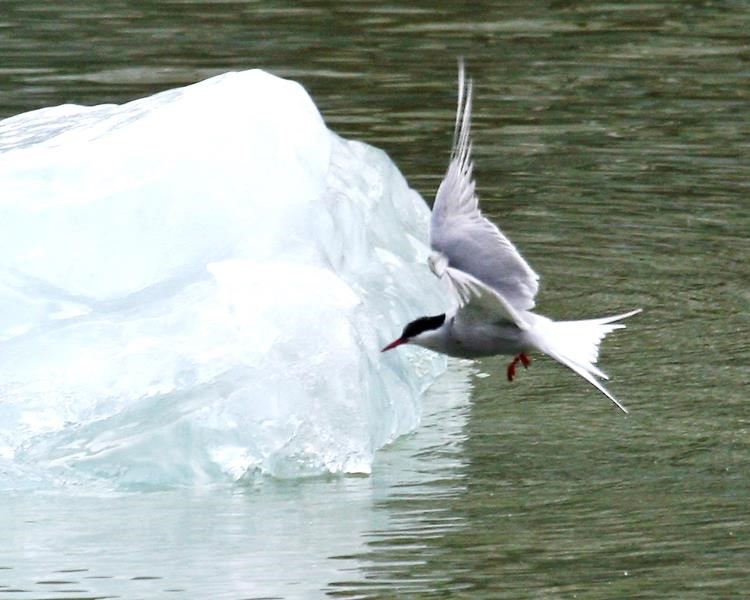
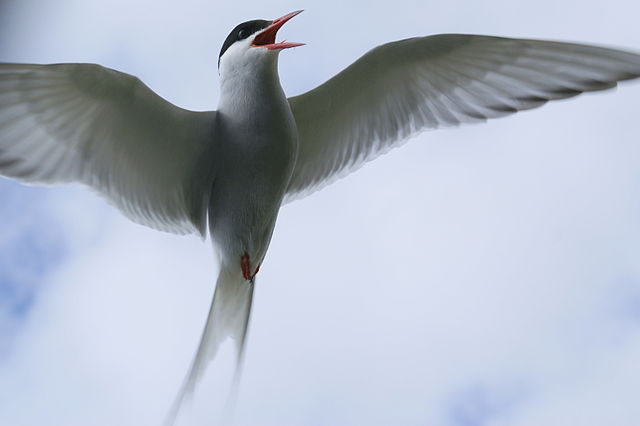
Artic Tern near Iceberg

Arctic Tern near Iceberg

Unbelievable Migrations from Creation Moments

“For the Son of man is as a man taking a far journey, who left his house, and gave authority to his servants, and to every man his work, and commanded the porter to watch.” Mark 13:34

If you have ever traveled to a distant city on vacation, you know how much planning you have to do before you leave. And, of course, you need to know where you are going and the route you must follow to get there. But the creatures we’ll be talking about today know exactly how to get where they are going. In fact, they were born with an internal GPS system to show them the way.

In his book, Billions of Missing Links, Dr. Geoffrey Simmons devotes an entire chapter to the topic of migration. He begins by telling how baby loggerhead turtles migrate 8,000 miles across the Atlantic Ocean. But that’s a short trip compared to the staggering 25,000 miles that arctic terns fly each year. That’s like flying completely around the Earth at the equator!

Arctic Tern (Sterna paradisaea) ©WikiC

Arctic Tern (Sterna paradisaea) ©WikiC

As Dr. Simmons points out, “Every species seems to know how to prepare for the arduous trip far in advance, but no one knows how they acquire the capability.” After describing all the preparations migrating birds must take care of, he writes: “One would think all these preparations had to have come as a whole package. There is way too much purposeful change for random mutations.”

How true! And even though Dr. Simmons is not a creationist, we have come to the exact same conclusion – namely, that animal migrations could not have come about slowly by trial and error, as Darwinian theory would have us believe.

Prayer:
Oh Lord, though I may get lost while going on a long trip, Your creatures never seem to lose their way. You have boggled my mind once again! Amen.

Notes:
Geoffrey Simmons, M.D., Billions of Missing Links, pp. 165-169 (Harvest House Publishers, 2007).

©Creation Moments, 2016

***

Previous articles about the Arctic Tern:

*

Surprised to See So Many Glossy Ibises – Migrating?

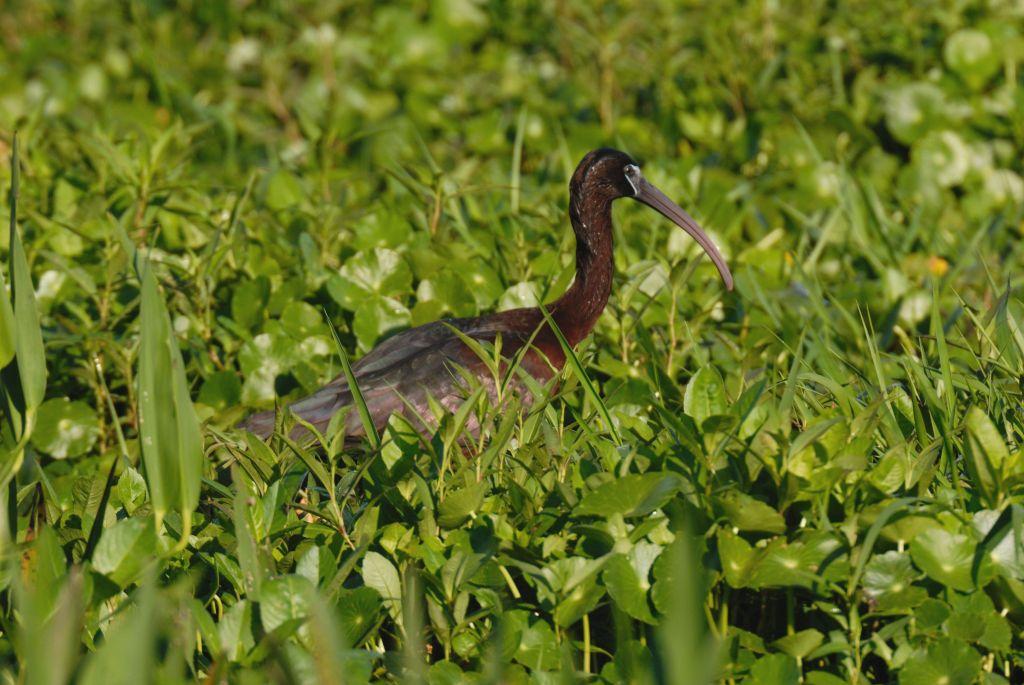
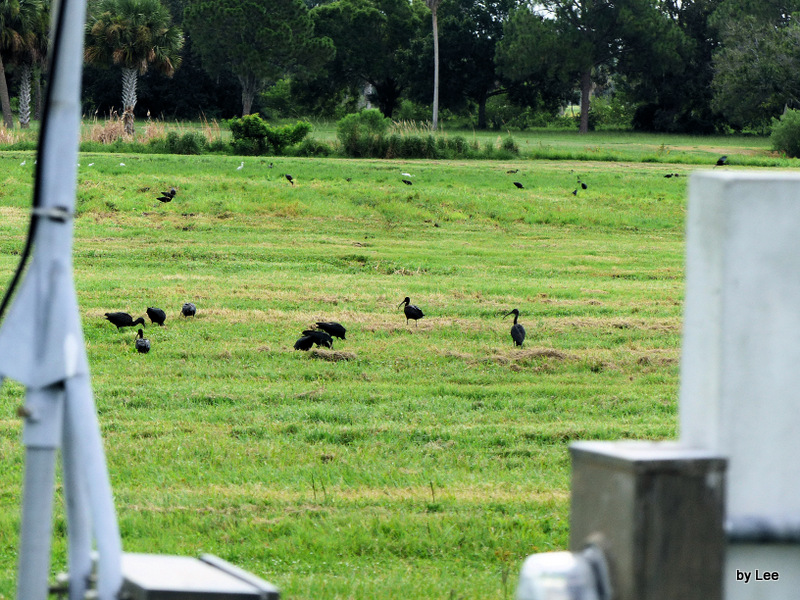
About 60 in this group of Glossy Ibis(Plegadis falcinellus) at MacDill 7-29-16 by Lee

“and for a long time birds and hedgehogs, and ibises and ravens shall dwell in it: and the measuring line of desolation shall be cast over it, and satyrs shall dwell in it.” (Isaiah 34:11 Brenton)

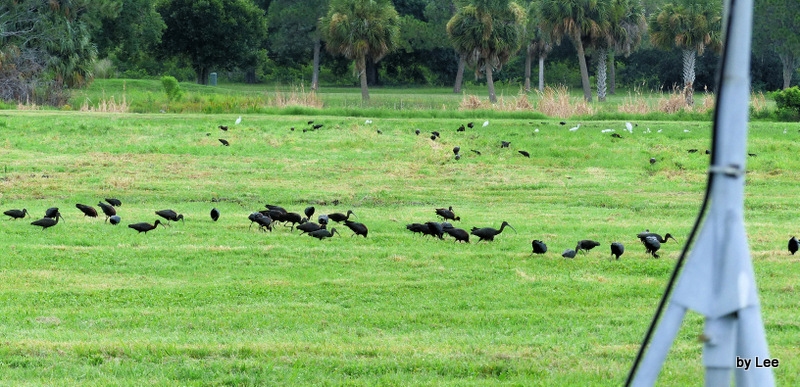
A week or so ago, while in Tampa, we spotted a huge flock of Glossy Ibises. One or two, three maybe, but well over 90? That was a total SURPRISE!

Glossy Ibis - about 60 in this batch

Glossy Ibis – about 60 in this batch

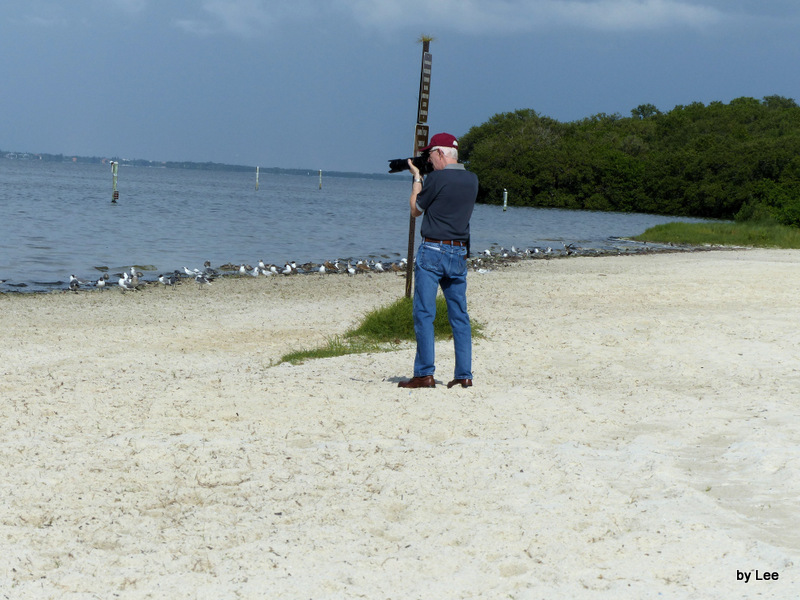
That is one of the joys of going birdwatching. You never know what may appear to when you think it will just be like last time. We go over to MacDill AFB every couple of months and half the time we take our cameras. They have a beach on the tip of the peninsula it sits on, and there usually is some avian wonders down there to observe. [As I’ve mentioned previously, my back has been acting up and we haven’t done much birding.] We can park just a few yards from the beach, which doesn’t require a lot of walking for me. This time of the year, there is usually not a lot of activity.

A little that a righteous man hath is better than the riches of many wicked. (Psalms 37:16 KJV)

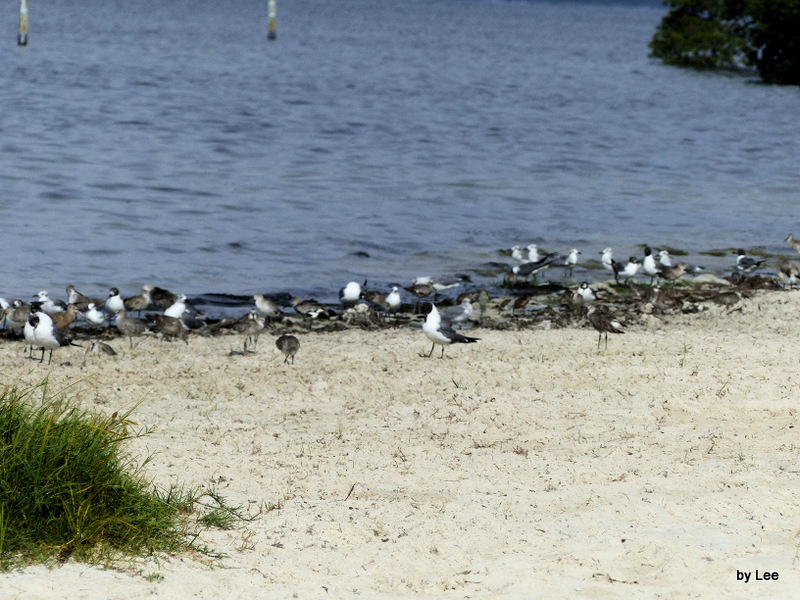
Birds at the Shore at MacDill

Birds at the Shore at MacDill

I did catch Dan who had walked over to where most of the birds were. I only concentrated on a small shore bird near me.

09-MacDill AFB 7-29-2016 (14)

Western Sandpiper, I Think.

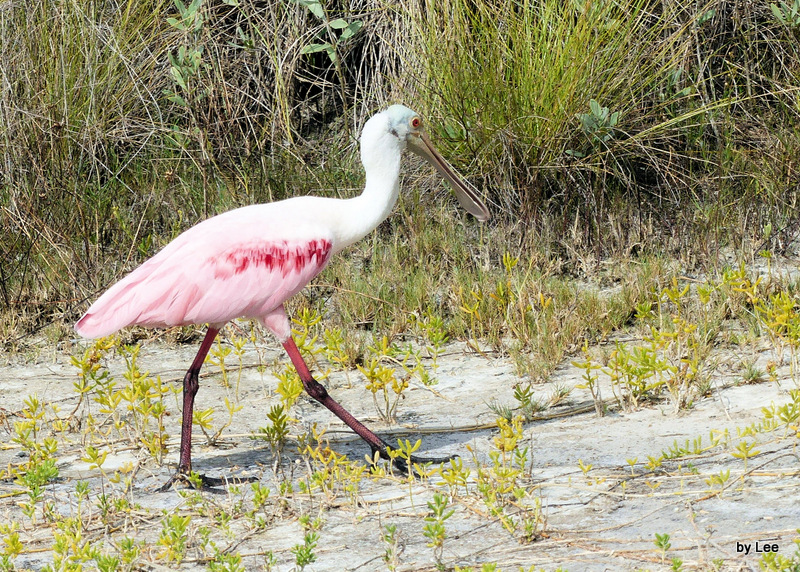
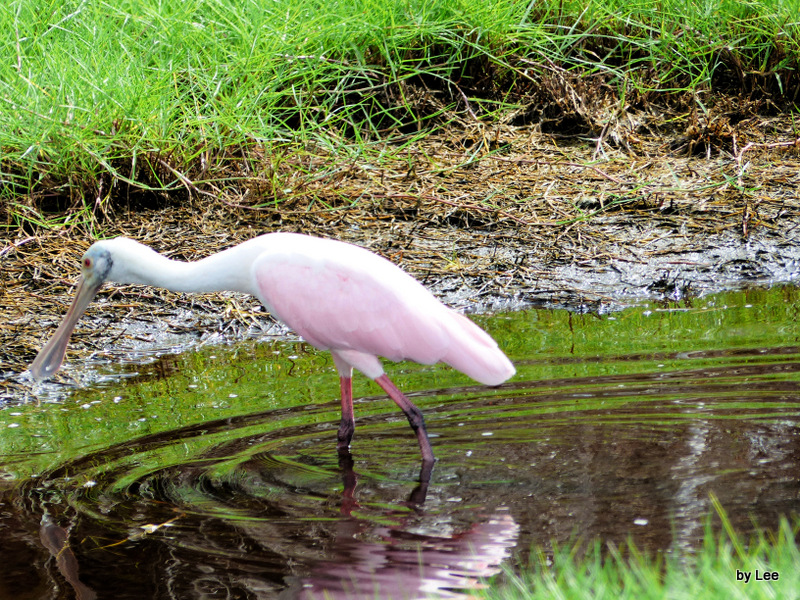
We had spotted all the Glossy Ibises in the field along the road to the beach and were hoping that they were still there when we returned from the beach. We were almost back to them when we were delighted to spot two Roseate Spoonbills.

Roseate Spoonbill

Roseate Spoonbill

Not far past them, we arrived where the Ibises had been and sure enough, they were waiting for us. My thinking is that they were on their way somewhere, in migration, and had landed to rest and feed. Possible to avoid a coming storm. Right after these photos were taken, we got soaked by a rainstorm as we were entering the commissary (Grocery).

Wikipedia has this to say about the “glossy ibis (Plegadis falcinellus) is a wading bird in the ibis family Threskiornithidae. The scientific name derives from Ancient Greek plegados and Latin, falcis, both meaning “sickle” and referring to the distinctive shape of the bill.”

Glossy Ibis (Plegadis falcinellus) (1) by Dan's Pix

Glossy Ibis (Plegadis falcinellus) in breeding plumage taken previously by Dan’s Pix

But still, why so many? Here is an answer, again from Wikipedia, “Populations in temperate regions breed during the local spring, while tropical populations nest to coincide with the rainy season. Nesting is often in mixed-species colonies. When not nesting, flocks of over 100 individuals may occur on migration, and during the winter or dry seasons the species is usually found foraging in small flocks. Glossy ibises often roost communally at night in large flocks, with other species, occasionally in trees which can be some distance from wetland feeding areas.” (bolding mine)

I’ve included a gallery of photos so you can see them better. If you look in the background, you will see many more of them. Also mixed in is another Roseate Spoonbill, Great Egrets, White Ibises and at least one Snowy Egret. When I zoomed in, the photos aren’t all that clear, but you can see the species.

Birds of the World – Threskiornithidae – Ibises, Spoonbills

Birds of the Bible – Ibises

Birds of the Bible – Isaiah 34:11

Glossy Ibis – Wikipedia

Glossy Ibis – All About Birds

Glossy Ibis – Audubon

Glossy Ibis – WhatBird

*

Sunday Inspiration – Thraupidae – Tanagers and Allies VIII

Saffron Finch (Sicalis flaveola) by Dan at National Aviary

Saffron Finch (Sicalis flaveola) by Dan at National Aviary

But God, who is rich in mercy, for his great love wherewith he loved us, Even when we were dead in sins, hath quickened us together with Christ, (by grace ye are saved;) (Ephesians 2:4-5 KJV)

Below the slideshow Angel Long is singing my most favorite hymn. “And Can It Be” How could the Lord Jesus Christ Love us so much that He died for us? Enjoy listening to her sing my favorite as Sean Fielder accompanies. Both are members of our church, Faith Baptist.

Sicalis. sometimes classified in the bunting and American sparrow family Emberizidae, more recent studies have shown it to belong in the Thraupidae.

The Sicalis genus is composed of 11 Yellow Finches, the Saffron Finch and the Sulphur-throated Finch. Sometimes classified in the bunting and American sparrow family Emberizidae, more recent studies have shown it to belong in the Thraupidae.

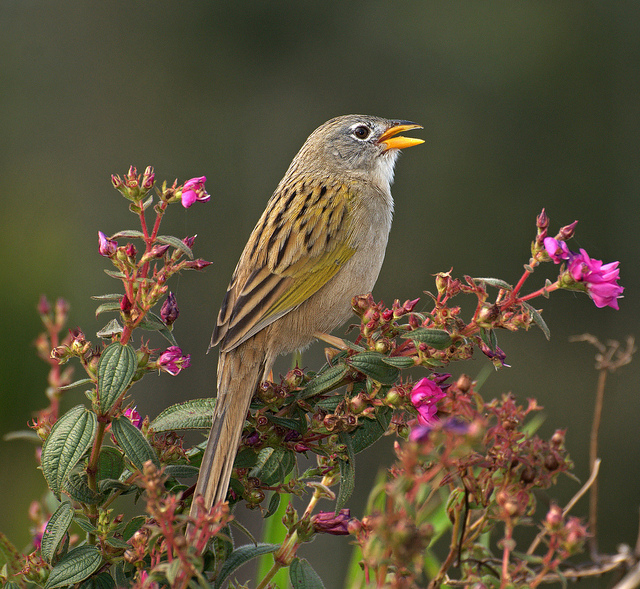
Wedge-tailed Grass Finch (Emberizoides herbicola) by Dario Sanches

Wedge-tailed Grass Finch (Emberizoides herbicola) by Dario Sanches

The Emberizoides and Embermagra have 5 species. Emberizoides is a small genus of finch-like tanagers found in grassy areas in Central and South America.

Blue-black Grassquit (Volatinia jacarina) by Ian

Blue-black Grassquit (Volatinia jacarina) by Ian

A single member Volatinia genus has the Blue-black Grassquit. It breeds from southern Mexico through Central America, and South America as far as northern Chile, Argentina and Paraguay, and on Trinidad and Tobago.

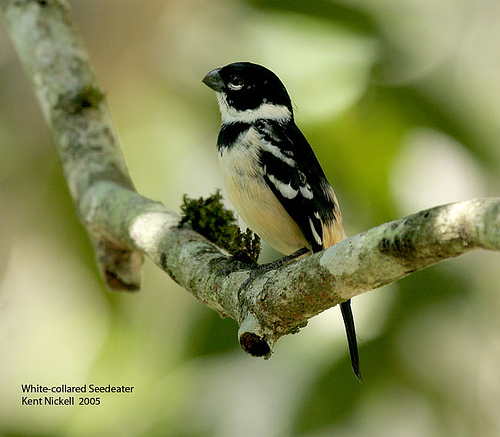
White-collared Seedeater (Sporophila torqueola) male by Kent Nickell

White-collared Seedeater (Sporophila torqueola) male by Kent Nickell

The Sporophila is a large genus that has 33 avian wonders. They are relatively small with stubby, conical bills adapted for feeding on seeds and alike. Most species are strongly sexually dimorphic, and while “typical” adult males often are distinctive, female and immatures of both sexes can be very difficult (in some species virtually impossible) to identify to exact species. Females of at least some of these species have different ultraviolet colours, which can be seen by birds, but not humans.

Chestnut-bellied Seed Finch (Oryzoborus angolensis) ©WikiC

Chestnut-bellied Seed Finch (Oryzoborus angolensis) ©WikiC

Next we have the Oryzoborus Seed Finches that are 6 strong. These are all Seed Finches. Their beaks have the cone shape that allows them to break open seeds easily. Another of their Creator’s forethought to provide for them. (Information on species from Wikipedia)

With these, we will leave the last group of birds from this large Thraudidae Family until next Sunday. That will wrap up this long series of this family of beautiful avian wonders. Until next week, Lord willing when we finish, His blessings.

This slideshow requires JavaScript.

*

Greater love hath no man than this, that a man lay down his life for his friends. (John 15:13 KJV)

“And Can It Be” – Sung by Angel Long and acc. Sean Fielder*

*

More Sunday Inspirations

Thraudidae Family – Tanagers, Finches and Allies

Sunday Inspiration – Thraupidae – Tanagers and Allies I

Sunday Inspiration – Thraupidae – Tanagers and Allies II

Sunday Inspiration – Thraupidae – Tanagers and Allies III

Sunday Inspiration – Thraupidae – Tanagers and Allies IV

Sunday Inspiration – Thraupidae – Dacnis, Honeycreepers, Conebills

Sunday Inspiration – Thraupidae – Flowerpiercer, Sierra Finches, Plus

Sunday Inspiration – Inca, Warbling and Various Finches

Wordless Toucan

*

I. O. C. Version 6.3 Finished Updating

Emperor Goose (Anser canagicus) head ©USFWS

Emperor Goose (Anser canagicus) head ©USFWS

“I know that, whatsoever God doeth, it shall be for ever: nothing can be put to it, nor any thing taken from it: and God doeth it, that men should fear before him.” (Ecclesiastes 3:14 KJV)

All the pages and links (as far as I know) are correctly updated to the newest version of world bird names. A few of the changes were mentioned in Update to the Birds of the World,6.3. Here are some more of those changes and additions.

The Snow Goose, Ross’s Goose and the Emperor Goose had their genus changed from Chen to Anser. The Emperor Goose also had a gender name change from canagica to canagicus. There were several other birds that had those kind of changes:

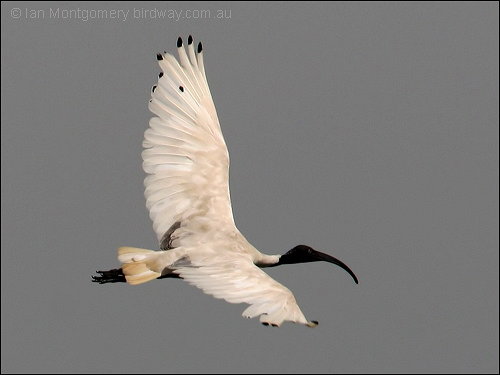
Australian White Ibis (Threskiornis moluccus to Threskiornis molucca)
Purple Gallinule (Porphyrio martinicus to Porphyrio martinica)
Brazilian Tanager (Ramphocelus bresilius to Ramphocelus bresilia)
Black Sunbird (Leptocoma sericea to Leptocoma aspasia)

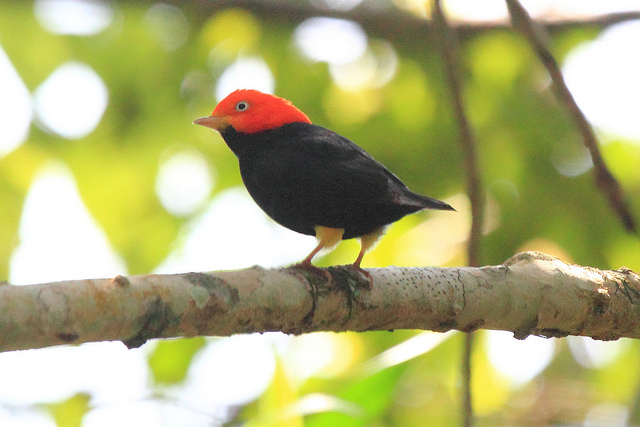
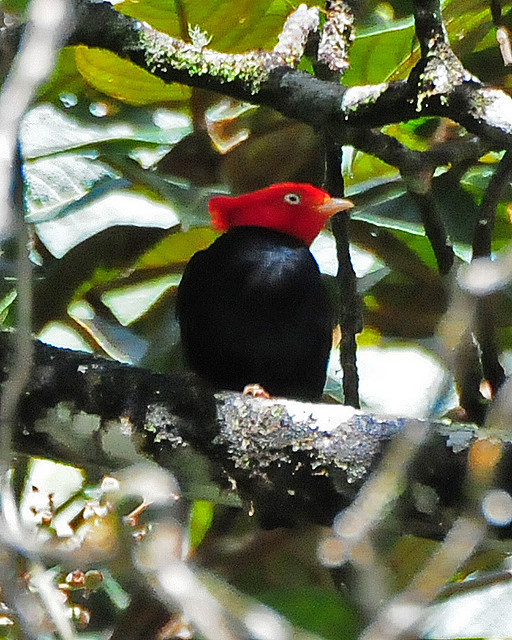
Red-capped Manakin (Ceratopipra mentalis) ©Flickr Dominic Sherony

Red-capped Manakin (Ceratopipra mentalis) ©Flickr Dominic Sherony

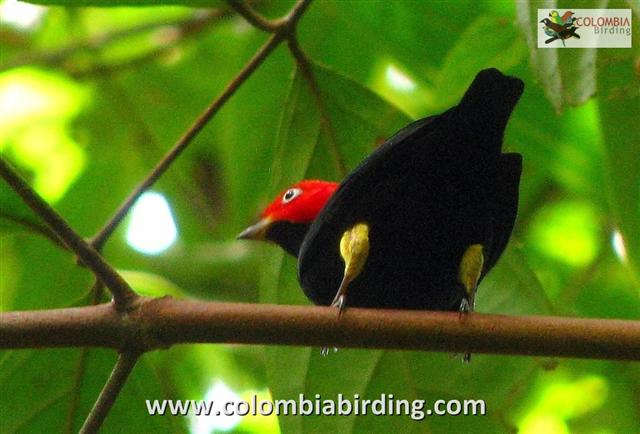
The Manakins had a huge change. Not only did they change the genera, but they also reshuffled the Pipridae – Manakins Family around. Here are those genera changes:

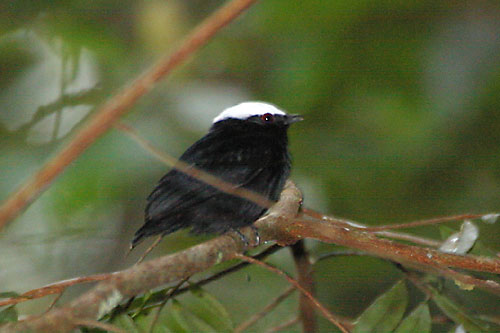
White-crowned Manakin (Dixiphia to Pseudopipra)
Scarlet-horned ManakinRed-capped Manakin, Round-tailed Manakin, Golden-headed Manakin, Red-headed Manakin (Dixiphia to Ceratopipra)
Green Manakin (Xenopipo to Cryptopipo)
Yellow-headed Manakin, and Jet Manakin (Xenopipo to Chloropipo)

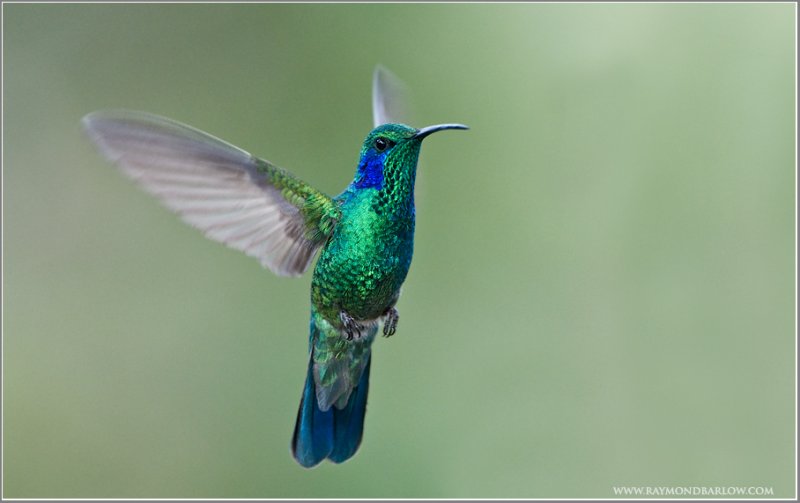
Mexican Violetear (Colibri thalassinus) by Raymond Barlow

Mexican Violetear (Colibri thalassinus) by Raymond Barlow

They made 12 English Name changes:
Snow Mountains Quail (Anurophasis monorthonyx) to Snow Mountain Quail
Auckland Merganser (Mergus australis) to New Zealand Merganser
White-bellied Wood Rail (Aramides albiventer) to Rufous-naped Wood Rail
Pomarine Skua (Stercorarius pomarinus) to Pomarine Jaeger
Green Violetear (Colibri thalassinus) to Mexican Violetear
Blue-diademed Motmot (Momotus lessonii) to Lesson’s Motmot
Stephens Island Wren (Traversia (Xenicus) lyalli) to Lyall’s Wren
Red-bellied Pitta (Erythropitta erythrogaster) to Philippine Pitta
Plain Wren (Cantorchilus modestus) to Cabanis’s Wren
Plain-backed Thrush (Zoothera mollissima) to Alpine Thrush
Blue Chaffinch (Fringilla teydea) to Tenerife Blue Chaffinch

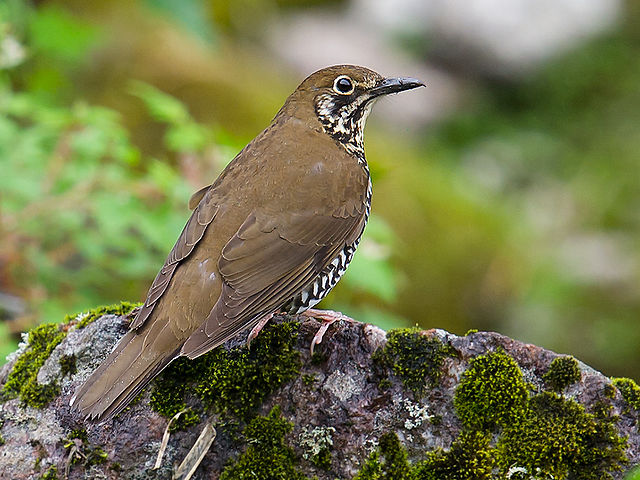
Himalayan Thrush (Zoothera salimalii) ©WikiC

Himalayan Thrush (Zoothera salimalii) ©WikiC

They added these new species and deleted the Coot with this update:

Grey-faced Petrel (Pterodroma gouldi)
Townsend’s Storm Petrel (Oceanodroma socorroensis)
Ainley’s Storm Petrel (Oceanodroma cheimomnestes)
Caribbean Coot (Fulica caribaea) Deleted (Now American Coot)
Cyprus Scops Owl (Otus cyprius)
Lesser Violetear (Colibri cyanotus)
Red-backed Flameback (Dinopium psarodes)
Puerto Rican Parakeet (Psittacara maugei)
Sula Pitta (Erythropitta dohertyi)
Sulawesi Pitta (Erythropitta celebensis)
Siao Pitta (Erythropitta palliceps)
Sangihe Pitta (Erythropitta caeruleitorques)
South Moluccan Pitta (Erythropitta rubrinucha)
North Moluccan Pitta (Erythropitta rufiventris)
Louisiade Pitta (Erythropitta meeki)
Bismarck Pitta (Erythropitta novaehibernicae)
Papuan Pitta (Erythropitta macklotii)
Ayacucho Thistletail (Asthenes ayacuchensis)
Aceh Bulbul (Pycnonotus snouckaerti)
Canebrake Wren (Cantorchilus zeledoni)
Isthmian Wren (Cantorchilus elutus)
Santa Marta Wood Wren (Henicorhina anachoreta)
Sichuan Thrush (Zoothera griseiceps)
Gran Canaria Blue Chaffinch (Fringilla polatzeki)

*

“For I am the LORD, I change not;” (Malachi 3:6a KJV)

Birds of the World contain Lee’s Birds of the World, based on the IOC World Bird List 6.3 contains 10,659 extant species (and 155 extinct species)  classified in 40 Orders,  238 Families (plus 2 Incertae Sedis) and 2292 Genera and 20,413 Subspecies.  All the ORDERs and the Families are listed. Please enjoy looking around at the references to the numerous birds that the Lord has created.

Update to the Birds of the World,6.3

Wordless Toucan

*

Update To The Birds of the World, 6.3

Recently they, the I. O. C., released version 6.3 and changes are being made to this site to reflect those updates.

There are now 10,659 species, up 22 since version 6.2. They actually added 23, but they merged one. The Caribbean Coot is now considered an American Coot (Fulica americana).

GRU-Rall American Coot (Fulica americana) (previous Caribbean ©WikiC

They have added another species to the Extinct species. Now there are 155 that have become extinct since the early 1500’s. The latest avian added to this list is the Puerto Rican Parakeet. It was also known as the Puerto Rican Conure and was a subspecies of the Hispaniolan Parakeet. (There is a nice turnaround video on that page)

Puerto Rican conure (Aratinga chloroptera maugei) ©Drawing WikiC

Puerto Rican Conure (Aratinga chloroptera maugei) ©Drawing WikiC

The eye of him who sees me will see me no more; While your eyes are upon me, I shall no longer be. (Job 7:8 NKJV)

Another big change this version, is the removal of a Bird Family, the Pelecanoididae – Diving Petrel Family was consolidated into the Procellariidae – Petrels, Shearwaters family.

Peruvian Diving Petrel (Pelecanoides garnotii) ©WikiC – Video
Magellanic Diving Petrel (Pelecanoides magellani) by DavesBP – Video
South Georgia Diving Petrel (Pelecanoides georgicus)Video
Common Diving Petrel (Pelecanoides urinatrix) by Daves BirdingPix

So now there are 40 Orders, 238 Families (plus 2 Incertae sedis). I’ll share more later as I update more. Stay Tuned!

Avian Kinds on the Ark – Birds Embarking

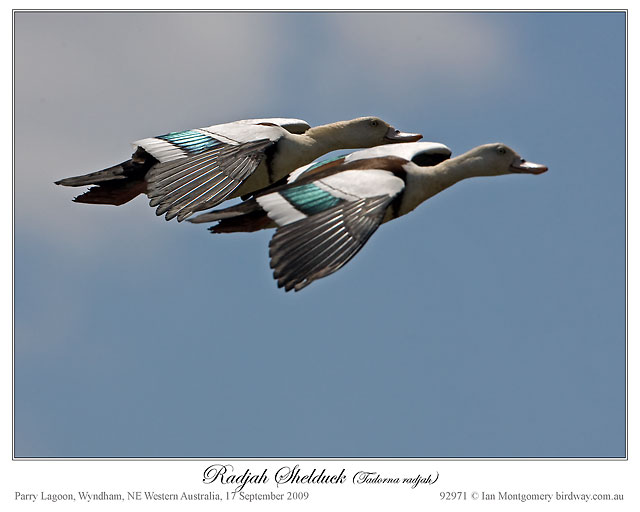
Pair of Raja Shelduck by Ian

In this second article in this series, Avian Kinds on the Ark – What is a Kind?, I am introducing you to some of the studies by Dr. Jean Lightner. She and others are trying to figure out how many “kinds” of birds would have enter the ark.  This study is worthwhile as a stand-alone research project — yet its importance is now accented by the “Ark Encounter”, a full-sized replica of the Noah’s Ark (produced and hosted by ANSWERS IN GENESIS ministry in Kentucky). The Ark Encounter team are trying to be as close to the Bible as possible in filling the ark with critters and especially avian kinds.

Since that article, I have found some more interesting data and quotes that I’d like to share. First, I made this quote in that article.

“In Birds of the Bible – Foundation #3 Updated, ” I made this remark “Noah did not have to round up the animals, they came to him. Because not every animal we see today came on board but the main kinds (for instance the “bird kinds” may have had a “warbler kind” but not have black and white warblers, yellow-rumped warblers, hooded warbler, etc.), which ever ones they were, there was plenty of room for them. I have an idea that because the LORD sent the animals, birds, and critters, that their DNAs [i.e., their specific genes  — DNA-based genotypes) were of the highest quality. (That is my opinion)”

I want to expand on that this time. I have thinking about the birds that came to Noah. Did they come to Noah?  —  or did Noah have to go round them up? No, Noah did not have to go searching for the animals. After re-reading Genesis 7-9, it seems clear that they came to Noah. God sent them, by pairs of seven for each “kind” of birds. Dr. Lightner basically places the kinds equal with families in most cases.

Of every clean beast thou shalt take to thee by sevens, the male and his female: and of beasts that are not clean by two, the male and his female. Of fowls also of the air by sevens, the male and the female [notice!  —  of the bird kinds, the “sevens” exception was applied, regardless of whether the bird kinds were “clean” or “unclean”]; to keep seed alive upon the face of all the earth. (Genesis 7:2-3 KJV)

Great Frigatebird (Fregata minor) pair ©Flickr Len Blumin

Great Frigatebird (Fregata minor) pair ©Flickr Len Blumin

And Noah went in, and his sons, and his wife, and his sons’ wives with him, into the Ark, because of the waters of the flood. Of clean beasts, and of beasts that are not clean, and of fowls, and of every thing that creepeth upon the earth, There went in two and two unto Noah into the ark, the male and the female, as God had commanded Noah. And it came to pass after seven days, that the waters of the flood were upon the earth. (Genesis 7:7-10 KJV)

In the selfsame day entered Noah, and Shem, and Ham, and Japheth, the sons of Noah, and Noah’s wife, and the three wives of his sons with them, into the ark; They, and every beast after his kind, and all the cattle after their kind, and every creeping thing that creepeth upon the earth after his kind, and every fowl after his kind, every bird of every sort. And they went in unto Noah into the ark, two and two of all flesh, wherein is the breath of life. (Genesis 7:13-15 KJV)

Bring forth with thee every living thing that is with thee, of all flesh, both of fowl, and of cattle, and of every creeping thing that creepeth upon the earth; that they may breed abundantly in the earth, and be fruitful, and multiply upon the earth. (Genesis 8:17 KJV)

Every beast, every creeping thing, and every fowl, and whatsoever creepeth upon the earth, after their kinds, went forth out of the ark. And Noah builded an altar unto the LORD; and took of every clean beast, and of every clean fowl, and offered burnt offerings on the altar. (Genesis 8:19-20 KJV)

Green-winged Teal (Anas carolinensis) Pair ©WikiC

Green-winged Teal (Anas carolinensis) Pair ©WikiC

That is quite a bit of Scripture, and the bolding is to help with some points to I would like to make. First, notice that all the cattle or land animals are coming in pairs. The male and his female  — that pair is deemed as “one” animal unit, because that is how God planned and made these animals in the first place. Critters that are not birds (i.e., land beasts like cattle, elephants, horses, etc.) are coming in by seven pairs if their kind is deemed “clean”, or by one pair if “unclean”.  Yet the birds (fowls) are not coming in by clean or unclean. They are all coming in by seven pairs, according to their kind.  [Notice how this shows a special favoritism that God has for birds!  In a sense, therefore, it is a godly trait to regard birds as favorite animals! :) ]

Also notice that Noah and his family entered the Ark first, then the critters came in. “There went in two and two unto Noah into the ark” (7:9), and “in the selfsame day entered Noah” (7:13), then,  “they went in unto Noah into the ark” (7:15).  If I am reading the Word correctly, Noah was in the Ark when the land animals, birds and creeping things came in. Personally, I think that the Lord rounded up the critters that He wanted to be in the Ark to be preserved. If the Lord can make ravens to feed Elijah, ” I have commanded the ravens to feed thee there ” (1 Kings 17:4), can He not command the exact critters to come to Noah? Their DNA must have been the near perfect for their kinds, especially for conserving and transmitting the biodiversity that God Himself wanted to be provided to the post-Flood world. Just as all the diverse humans in the world (today) come from the eight humans on board the Ark, their DNA was and is diverse enough to produce all the different physical characteristics (skin colors, hair types, body sizes, etc.) that we see today.  [In a sense, God preserved and transmitted all the molecular biology “hardware” and DNA/RNA “software” needed for all the phenotype “applications” we have today.]

Another point about the quoted verses. In Genesis 8 we see that it didn’t rain until seven days later. Could that be to give Noah and his family time to place all the animals in their stalls, pens, cages, or whatever containers were used for the long voyage ahead? What do you put “creeping things” in? :)

When they came off the Ark, after the Flood was over, not a single animal has perished because they came off in pairs,: one pair of unclean land animals (and “creeping things”), seven pairs of clean land animals, and seven pair of every “kind” of genetically defined bird category. Noah gives an offering to the Lord and uses one pair from the clean critters. Now we have six pairs of clean animals with which to breed abundantly in the earth, and be fruitful, and multiply upon the earth.

Northern Pintail (Anas acuta) pair by Ray

Northern Pintail (Anas acuta) pair by Ray

As was said before, the avian taxonomy of the birds (which is ultimately a mix of common sense, careful observations, plus some arbitrariness) is in flux. As Dr. Jean Lightner indicated there is much shuffling going on trying to figure out which bird belongs “where” [i.e., belongs to this group or that group, based ultimately on genetic compatibility — which is demonstrated by breedability). Here are a few quotes I thought interesting about this situation. Of course, these are from those who believe in evolution, but they are shaking their heads trying to figure which family and genus birds belong to.

Here is a quote from DNA Reveals New Bird Species by Current Results. “Examining the differences in the genetic bar code among birds leads scientists to suspect that 15 unidentified species of birds breed on the North American continent. At the same time, analysis of 643 bird species finds that 42 of these should actually be lumped as 17 species.” [Seems they keep narrowing down the species toward the kinds.]  Here’s more interesting quotes from the same article.

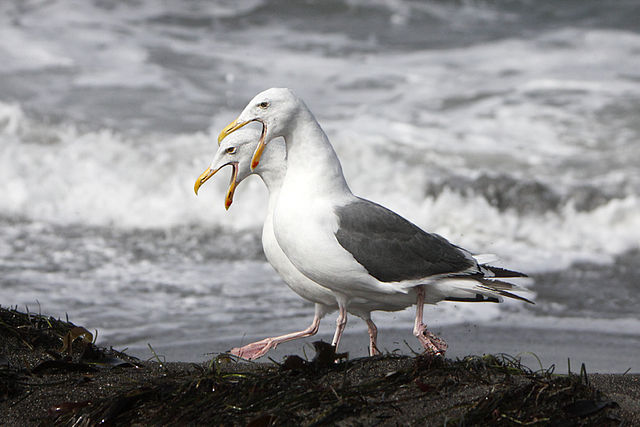
Western Gull (Larus occidentalis) Pair ©WikiC

Western Gull (Larus occidentalis) Pair ©WikiC

“Can’t tell apart all those large, white-headed gulls lingering along the west coast seashore? Well apparently neither does the mitrochondiral DNA for eight species such as glaucous and herring gulls. Other birds that mitrochondrial DNA cannot distinguish are American from northwestern crows and red-naped from red-breasted sapsuckers. Most of these species with overlapping DNA are known to hybridize [i.e., they can successfully breed together].”

“Figuring out who is truly related to whom in modern bird families has been an ongoing problem, says Shannon Hackett. A biologist at the Field Museum in Chicago, she did not work on the new study. Part of the problem, she explains, is that at some point in the distant past, there was an explosion in the number of bird species. This rapid increase has made it difficult for scientists to decode the history of birds from fossils.” [Could that be when they were created?]

“In 2008, Hackett’s team studied 19 different segments of DNA from 169 bird species. Their tree of life suggested that falcons and hawks, and grebes and ducks, were only distantly related. Those surprises were confirmed by the new study.” [No surprise to Bible-believing creationists! Must be different kinds, maybe?]

African Hawk-Eagle (Aquila spilogaster) Pair ©WikiC

African Hawk-Eagle (Aquila spilogaster) Pair ©WikiC

Answers In Genesis has many articles on this subject, but again, I want to share a few quotes. These are from Bird Speciation From the Flood to the Present by Dr. David W Boyd, Jr.  In answer to how all those birds fit on the ark, he said, “Does that mean that Noah had two (or seven) of all 10,380 extant bird species (more if you count extinct species)? If a biblical kind and a species were equivalent, then yes. But they are not the same; many species are categorized under each biblical kind.”

“To help answer that question, we are aware that evolutionary scientists have recently compiled genetic and fossil evidence to suggest that flying birds originated from a group of dinosaurs in South America about 95 million years ago.6 Using their data, the scientists suggested that flying birds began radiating and diversifying over the world after a huge meteor struck near the Yucatan Peninsula 66 million years ago. The subsequent disaster of that meteor has been suggested as the main cause for the extinction of dinosaurs. Using this model, evolutionary scientists attempt to demonstrate that all birds in existence today descended from one common ancestor of the dinosaur lineage.”

“Scientists who accept the biblical account of creation and the worldwide Flood compile evidence from Scripture, genetics, the fossil record, hybridization data, and morphological characteristics to suggest that God created many kinds of birds that began radiating and diversifying over the world after the worldwide Flood destroyed the earth about 4,500 years ago. These birds included both flying and non-flying birds. The two answers given by evolutionary scientists and creation scientists are so far apart from one another that it seems almost impossible to think that they are looking at the same data.”

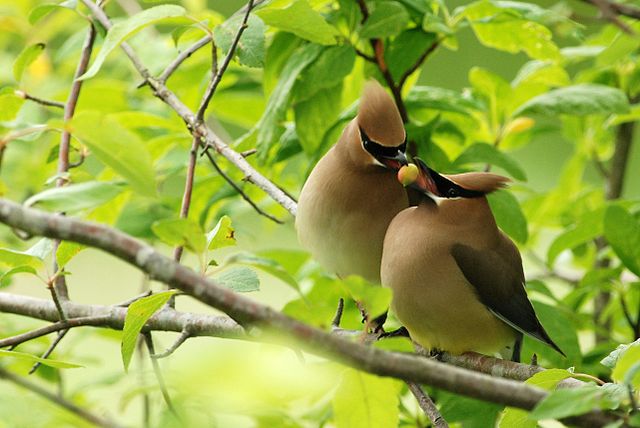
Cedar Waxwing (Bombycilla cedrorum) Passing Berries ©WikiC

Cedar Waxwing (Bombycilla cedrorum) Passing Berries ©WikiC

“A scientist with a biblical worldview has to account for the different species of birds found today in each created bird kind from the Flood to the present. Models of speciation and radiation for those events would only need thousands of years.”

Here is my most favorite quote from his article: “Dr. Jean Lightner has conservatively estimated that birds are comprised of about 196 created kinds.7 If we round that up to 200 bird kinds, we could account for all 10,380 extant species by each species diverging into two species just once every 750 yearsjust six times (200 to 400 to 800 to 1,600 to 3,200 to 6,400 to 12,800). That would even give us 2,420 more bird species to account for some extinction events. That is a very simplistic view and does not account for many variables, but it does provide us with a quick way to estimate if simple speciation (doubling) could account for all the birds we have today.

Here is a link to a very interesting chart I found on Pantasthumb. It shows the different birds grouped, by genera, within each family, in a tree format. Very interesting to look at. It might help make some of this article make a little more sense. Of course this is from an evolutionary perspective, but the evidence is shares by both sides.  TO SEE CHART The article this chart came from is “Update on the Tree of Birds“.

That is enough to think about for now. More later in another Avian Kinds on the Ark. Actually, this series is a sub-series for Birds of the Bible.

*

Avian Kinds on the Ark – Introduction

Avian Kinds on the Ark – What is a Kind?

DNA Reveals New Bird Species by Current Results.

Bird Speciation From the Flood to the Present by Dr. David W Boyd, Jr

Birds of the Bible – Foundation – The Ark

Birds of the Bible – Foundation #3 Updated

An Initial Estimate of Avian Ark Kinds,

Birds of the Bible – Seven By Seven

*