Puffin Live Cam You Might Enjoy Watching.

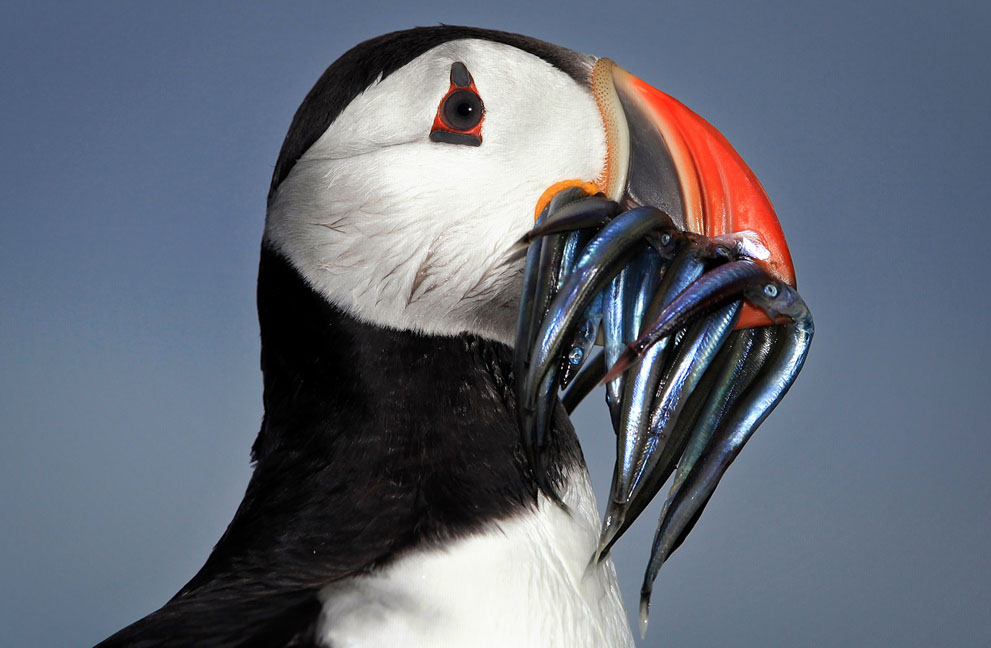
Atlantic Puffin (Fratercula arctica) by Michael Woodruff

Atlantic Puffin (Fratercula arctica) by Michael Woodruff

With him is wisdom and strength, he hath counsel and understanding. (Job 12:13 KJV)

If you click the following link, you can watch a live camera set up in a Puffin burrow. This is from Audubon’s Explore. [From Time to Time they make go blank, but will come back. Also, they might leave to go catch a fish, but they will be back.]

CLICK HERE TO WATCH PUFFIN LIVE CAMERA

Love those Puffins!

Puffin with Sand Eels

Puffin with Sand Eels

On the page you will see other Live Cams available to watch.

Enjoy!

Here is an excerpt from a previous viewing.

Puffin Family – Alcidae – Auks

Sad Clowns of the Sea

Lee’s Four Word Thursday – 3/10/16

*

The LORD by wisdom hath founded the earth; by understanding hath he established the heavens. By his knowledge the depths are broken up, and the clouds drop down the dew. (Proverbs 3:19-20 KJV)

*

Ian’s Bird of the Week – Southern Lapwing

Ian’s Bird of the Week – Southern Lapwing ~ by Ian Montgomery

Newsletter – 5/24/16

It is, I regret more than a month since last bird of the “week” so you have probably given me up for lost or worse, unless of course you’ve been so busy too that you haven’t noticed. Anyway, I’m now at Brisbane airport waiting for a flight, so you have my undivided attention for at least half an hour.

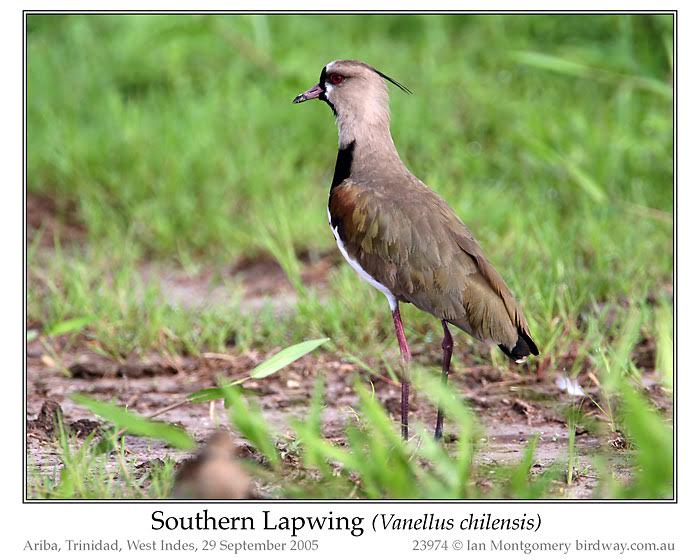
Southern Lapwing (Vanellus chilensis) by Ian

I’m continuing the series of global Lapwings, with a South American one, the Southern Lapwing. It’s crest gives it a superficial resemblance to the Northern Lapwing of Eurasia, but it’s not a very close relative and used to be in its own monotypic (single species) genus.

Southern Lapwing (Vanellus chilensis) by Ian

It has a wide distribution from the tip of Tierra del Fuego in the south to Nicaragua in Central America. Interestingly, there are two Lapwing species in South America (the other is the Andean Lapwing) but none in North America, odd given the almost global distribution of Lapwing species so one would wonder how their ancestors got around.

Southern Lapwing (Vanellus chilensis) by Ian

The Southern Lapwing lacks the gentle manners of its Northern counterpart and is noisy and aggressive like the Masked Lapwing of Australia. In fact, in Brazil and Chile it is often kept with wings clipped as a guard ‘dog’. Maybe I should get one to get my own back on my neighbour’s Great Dane who often wakes me in the middle of the night.

Another reason why I’ve been slack about the bird of the week is that I haven’t been doing much bird photography. That I hope is about to change. I’m on my way to Vienna at the moment with the intention of spending a week birding with my sister Gillian in Slovakia en route to my nephew’s wedding in Ireland (her son Ian), so I hope I’ll have some interesting photos for you soon.

Greetings
Ian


Lee’s Addition:

And the stork, the heron after her kind, and the lapwing, and the bat. (Lev 11:19 KJV)

I was beginning to wonder where Ian had traveled to, because, like he said, no newsletter had been sent. Glad he is busy, but miss his newsletter adventures. What a beautiful Lapwing.

Like Ian, we haven’t done much birdwatching either. Now that our wintering birds have flown north, except for our locals, birdwatching has slowed down. There are plenty of tales to tell from previous unpublished adventures. So, stay tuned!

*

*

Sunday Inspiration – Icteridae Family III

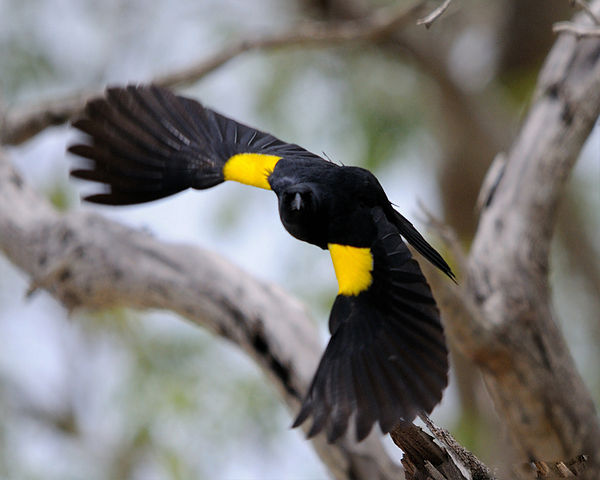
Yellow-shouldered Blackbird (Agelaius xanthomus) ©WikiC

Yellow-shouldered Blackbird (Agelaius xanthomus) ©WikiC

All flesh is not the same flesh: but there is one kind of flesh of men, another flesh of beasts, another of fishes, and another of birds. (1 Corinthians 15:39 KJV)

Today we finish up the Icteridae Family of New World blackbirds, New World orioles, the Bobolink, Meadowlarks, Grackles, Cowbirds, Oropendolas and Caciques, plus. Trust you enjoyed seeing the first two parts of the family. (Part I, Part II)

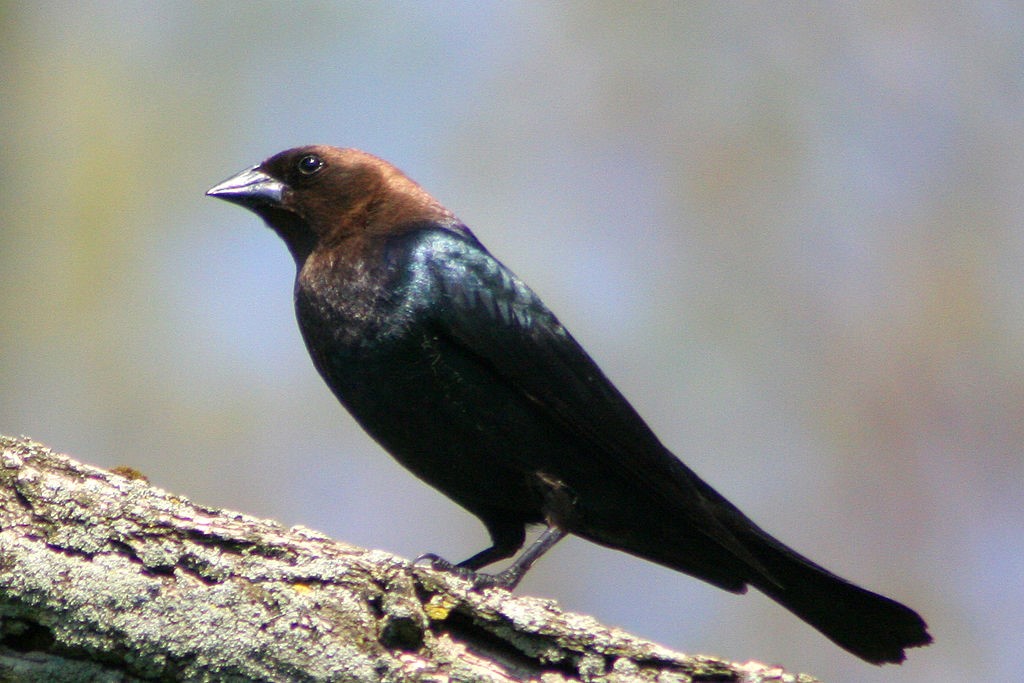
Brown-headed Cowbird (Molothrus ater) ©WikiC

Brown-headed Cowbird (Molothrus ater) ©WikiC

“All flesh is not the same flesh: but there is one kind of flesh of men, another flesh of beasts, another of fishes, and another of birds.” (1 Corinthians 15:39 KJV)

The last 64 members of the family come from numerous Genus; the Nesopsar, Agelaius, Molothrus, Dives,Ptiloxena, Euphagus, Quiscalus, Hypopyrrhus, Lampropsar, Gymnomystax, Macroagelaius, Macroagelaius, Curaeus, Amblyramphus, Anumara, Gnorimopsar, Oreopsar, Agelaioides, Chrysomus, Xanthopsar and the Pseudoleistes. Some have only one species per genus. For many of you, the genus names mean little, but, if we mention Cowbirds, Grackles, Blackbirds, Baywings and Marshbirds, then you would recognize them that way.

This slideshow requires JavaScript.

Blessed be the LORD, who hath not given us as a prey to their teeth. Our soul is escaped as a bird out of the snare of the fowlers: the snare is broken, and we are escaped. Our help is in the name of the LORD, who made heaven and earth. (Psalms 124:6-8 KJV)

“Stay Close To Me” ~ ©Hyssongs

*

Sunday Inspiration

Sunday Inspiration –  Icteridae Family I

Sunday Inspiration –  Icteridae Family II

Icteridae – Oropendolas, Orioles & Blackbirds Family

Icterid – Wikipedia

Falling Plates

*

I.O.C. Version 6.2 Update Complete

Hairy Woodpecker (Picoides villosus) by Daves BirdingPix

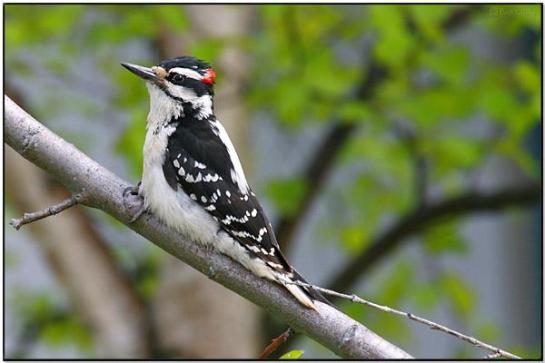
Hairy Woodpecker (Picoides villosus – now Leuconotopicus villosus) by Daves BirdingPix

“And Adam gave names to all cattle, and to the fowl of the air, and to every beast of the field;” (Genesis 2:20a KJV)

Since I.O.C. Version 6.2 Has Come Out, the rest of the changes are all now complete. I finished all the “First Name-Last Name” indexes. Now you can find your bird by either part of its name. Since the English alphabet has 26 letters, that is 51 pages that had to be changed. There aren’t any birds, whose last name begins with “Z.” There are also 9 other Index pages to change. Then the Family page for the individual bird has to be updated. And, I am just a website. Those that do the actual work at I.O.C. are to be commended for the weeks of work that they do.

From the top of the main indexes:

These pages contain Lee’s Birds of the World, based on the IOC World Bird List 6.2 contains 10,637 extant species (and 154 extinct species)  classified in 40 Orders,  239 Families (plus 2 Incertae Sedis) and 2289 Genera and 20,490 Subspecies.  All the ORDERs and the Families are listed. Please enjoy looking around at the references to the numerous birds that the Lord has created.

(All the Indexes are now up to date and it makes it easier to find them with theTaxonomic List of the Birds. (The use of your “Search” or “Find” on your browser is very useful on long lists. “Control + F” is the shortcut for Find. I use it quite frequently.)

So, what did they do this time? They added 22 new species, changed the names of 9 birds, changed 4 genus names and the hardest to update was the Woodpecker-Picidae family. (Never thought I would get that one straight.)

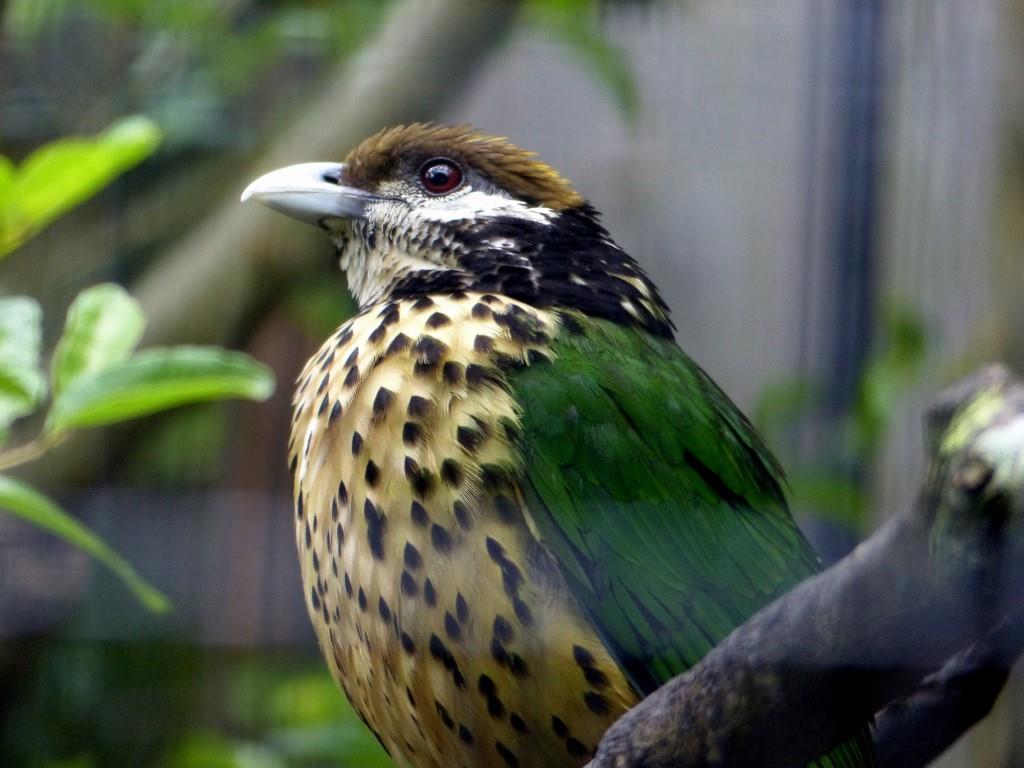
White-eared Catbird (Ailuroedus buccoides) Houston Zoo by Lee

White-eared Catbird (Ailuroedus buccoides) Houston Zoo by Lee

The new Species added are many times subspecies moving up to full genus status. The family with the most new additions is the Bowerbirds – Ptilonorhynchidae family. There were 3 Catbirds; the White-eared, Green, and Spotted Catbirds. Now, there are 10 Catbirds.

Ochre-breasted Catbird (Ailuroedus stonii) – NEW
White-eared Catbird (Ailuroedus buccoides) NA
Tan-capped Catbird (Ailuroedus geislerorum) – NEW
Green Catbird (Ailuroedus crassirostris) NA
Spotted Catbird (Ailuroedus maculosus) – NEW
Huon Catbird (Ailuroedus astigmaticus) – NEW
Black-capped Catbird (Ailuroedus melanocephalus)
Northern Catbird (Ailuroedus jobiensis) – NEW
Arfak Catbird (Ailuroedus arfakianus) – NEW
Black-eared Catbird (Ailuroedus melanotis) – this was a name change. It was the Spotted Catbird (Ailuroedus melanotis)

Slender-billed Cuckoo-Dove now the Amboyna Cuckoo-Dove (Macropygia amboinensis) ©WikiC

Slender-billed Cuckoo-Dove now the Amboyna Cuckoo-Dove (Macropygia amboinensis) ©WikiC

The Pigeons, Doves – Columbidae Family also had 8 new additions added. Before doing that, they changed the names of  four more birds.
Amboyna Cuckoo-Dove (Macropygia amboinensis) – was Slender-billed Cuckoo-Dove
Sultan’s Cuckoo-Dove (Macropygia doreya) – NEW
Ruddy Cuckoo-Dove (Macropygia emiliana) NA
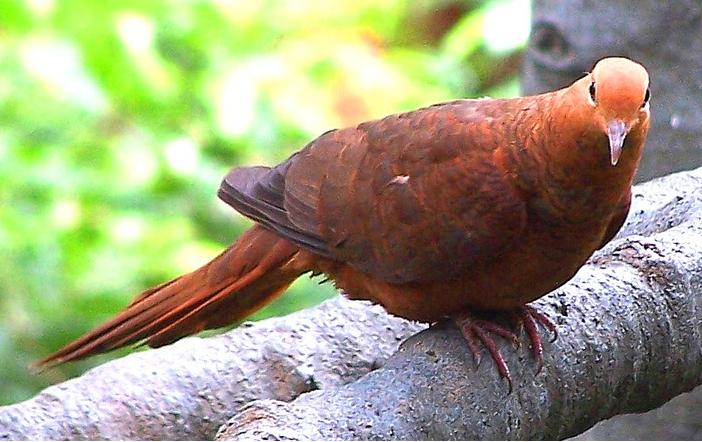
Enggano Cuckoo-Dove (Macropygia cinnamomea) – NEW
Barusan Cuckoo-Dove (Macropygia modiglianii) – NEW
Timor Cuckoo-Dove (Macropygia magna) – was Bar-necked Cuckoo-Dove
Tanimbar Cuckoo-Dove (Macropygia timorlaoensis) – NEW
Flores Sea Cuckoo-Dove (Macropygia macassariensis) – NEW
Philippine Cuckoo-Dove (Macropygia tenuirostris) NA
Brown Cuckoo-Dove (Macropygia phasianella) NA
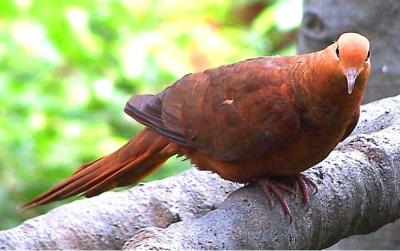
Ruddy Cuckoo-Dove (Macropygia emiliana) ©WikiC

Ruddy Cuckoo-Dove (Macropygia emiliana) ©WikiC

White-faced Cuckoo-Dove (Turacoena manadensis) – was the White-faced Dove
Sula Cuckoo-Dove (Turacoena sulaensis) – NEW
Black Cuckoo-Dove (Turacoena modesta) – was the Black Dove

They also added:
Sula Fruit Dove (Ptilinopus mangoliensis) – NEW
Kosrae Fruit Dove (Ptilinopus hernsheimi) – NEW

As for the Woodpecker family, it was a change of genus names and resuffling that was mostly involved. More on those later. I still want to double check that they are right on the page.

There were other changes, but enough for now. Those are the biggest changes. For once there were not deletions.

For those who are photographers, these changes can affect how the bird names are filed and given. Which means, names of photos have to be updated also. No one in the bird hobby or profession has ever “arrived.” There is always something to do, after the “shoot”.

*

Wordless Birds
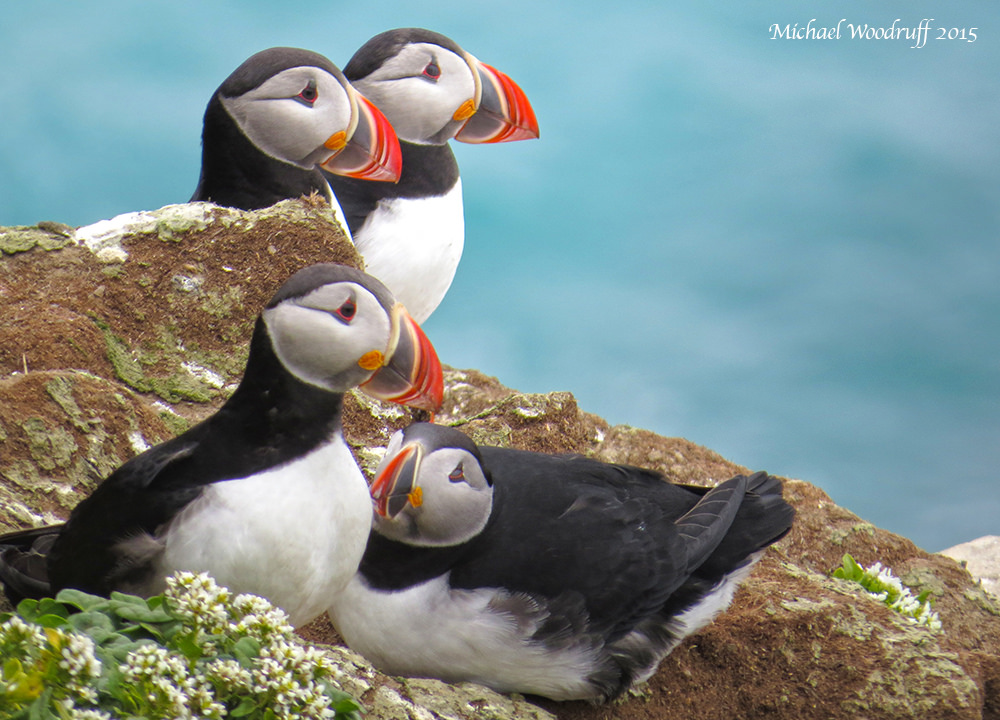
I.O.C. Version 6.2 Has Come Out

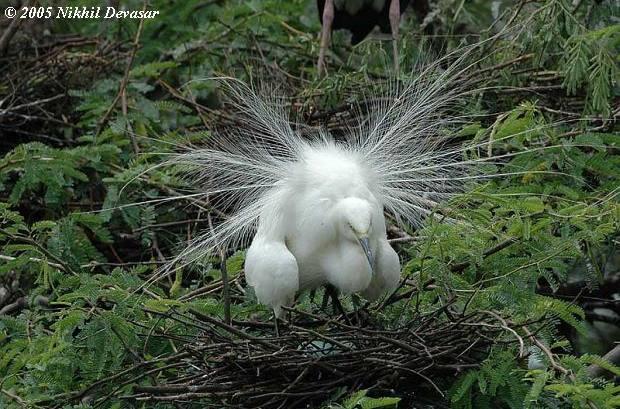
Intermediate Egret (Egretta intermedia)

Intermediate Egret (Egretta intermedia) is now (Ardea intermedia) 6.2 Taxonomy Change

“For I am the LORD, I change not;…” (Malachi 3:6 KJV)

The I.O.C. released their latest version, and I have started updated the blog to reflect those changes. It takes time, but I have the “Last, First” name’s lists up and running. In the I. O. C. 6.1 Updated post, I mentioned that I would catch on the next version. It is the hardest one to get ready, so, I decided to do it first.

Streak-chested (Spectacled) Antpitta (Hylopezus perspicillatus) by Ian

Streak-chested (Spectacled) Antpitta (Hylopezus perspicillatus) by Ian

As the name implies, the birds are listed as “Sparrow, House” or “Duck, Wood”.  These lists are especially handy when trying to find birds that have the same last name, but are not in the same bird family. An example would be Antpitta. Almost all of them are in the Grallariidae family, yet two of them are over in the Gnateater-Conopophagidae family. The Streak-chested is in with most of the Antpittas in the Grallarridae and this Black-crowned and the Rufous-crowned Antpitta are down in the next family of Gnateaters.

Black-crowned Antpitta (Pittasoma michleri) ©WikiC

Black-crowned Antpitta (Pittasoma michleri) ©WikiC

That is just one example. There are many other uses for the links. Lord willing, I plan on having the normal “First Name-Last Name” list up later this evening. Then I will make the actual species updates.

The IOC World Bird List 6.2 contains 10,637 extant species (and 154 extinct species)  classified in 40 Orders,  239 Families (plus 2 Incertae Sedis) and 2289 Genera and 20,601 Subspecies. They added 22 new species, changed the names of 8 species and made 4 taxonomy changes. Those will be updated as soon as the indexes are changed. Stay Tuned!

Links to the Indexes:

Birds of the World – Species Index

Last Name of Bird

*

I. O. C. 6.1 Updated

Grallarridae-Gnatcatchers Family

Gnateater-Conopophagidae Family

*

Blue Manakins – Displaying or Lekking

Blue Manakin (Chiroxiphia caudata) by ©AGrosset

Blue Manakin (Chiroxiphia caudata) by ©AGrosset

And God created great whales, and every living creature that moveth, which the waters brought forth abundantly, after their kind, and every winged fowl after his kind: and God saw that it was good. And God blessed them, saying, Be fruitful, and multiply, and fill the waters in the seas, and let fowl multiply in the earth. (Genesis 1:21-22 KJV)

I came across a couple of videos of Blue Manakins doing what they were commanded to do by the Lord, by multiplying. Well, to do this, they have to attract the females. There are many birds that use the method of the displaying at a lek. The noun, “lek“, is “a traditional place where males assemble during the mating season and available engage in competitive displays that attract females.” The verb, “lekked, lekking” is defined as, “a male to assemble in a lek and engage in competitive displays.” (definitions from Dictionary.com)

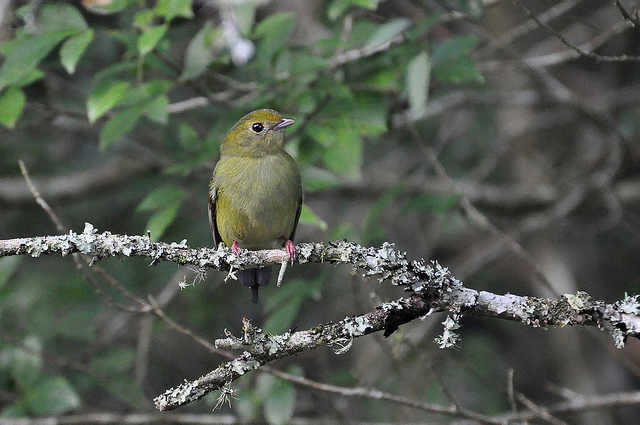
Blue Manakin (Chiroxiphia caudata) Female ©CTimm

Blue Manakin (Chiroxiphia caudata) Female ©CTimm

Bring forth with thee every living thing that is with thee, of all flesh, both of fowl, and of cattle, and of every creeping thing that creepeth upon the earth; that they may breed abundantly in the earth, and be fruitful, and multiply upon the earth. (Genesis 8:17 KJV)

The Blue Manakins (Chiroxphia caudata) are members of the Manakins – Pipridae Family. They were previously called the Swallow-tailed Manakin. They are found “in north-eastern Argentina, southern and south-eastern Brazil, and Paraguay. Its typical habitat is wet lowland or montane forest and heavily degraded former forest. Males have a bright blue body, black head wings and tail and a red crown. Females and juveniles are olive-green. At breeding time, males are involved in lekking behaviour when they sing and dance to impress females.” (Wikipedia)

Not the clearest, but it is difficult in a jungle to video:

From another lek:

Now for the clearest  of all:

*

Wikipedia Video of Lekking

*

Funny Bird Videos

A time to weep, and a time to laugh; a time to mourn, and a time to dance; (Ecclesiastes 3:4 KJV)

Thought you might enjoy these. I really like the American kestrel whose head stays still.

Story of the Wordless Book

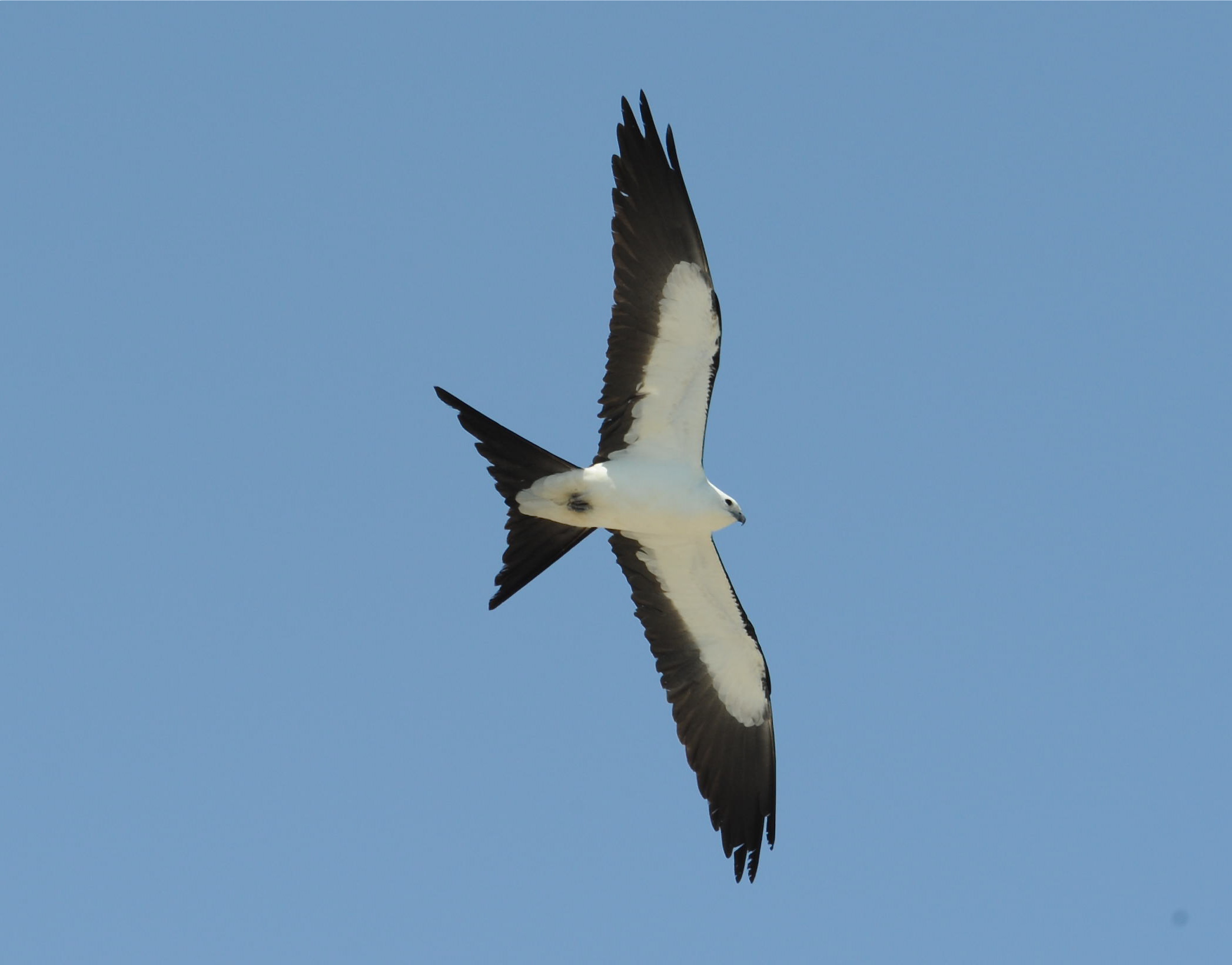
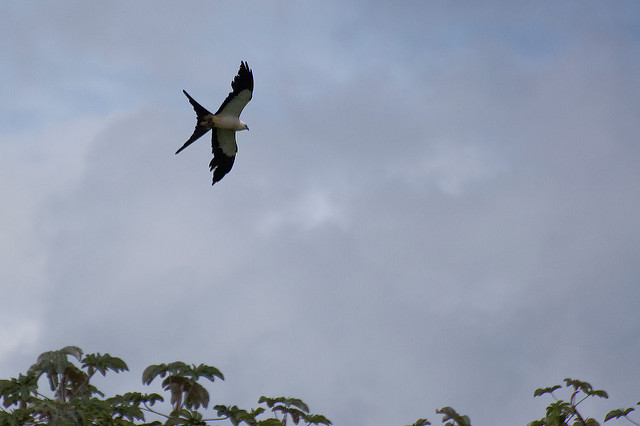
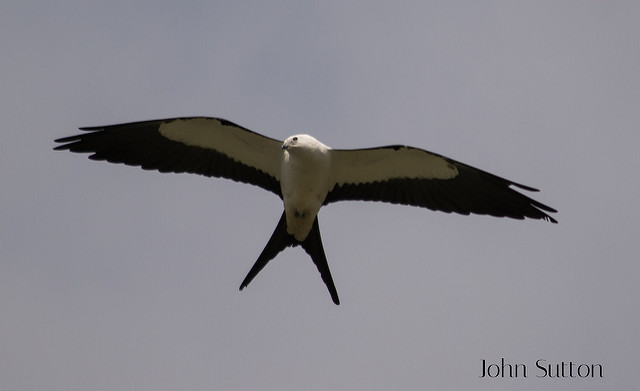
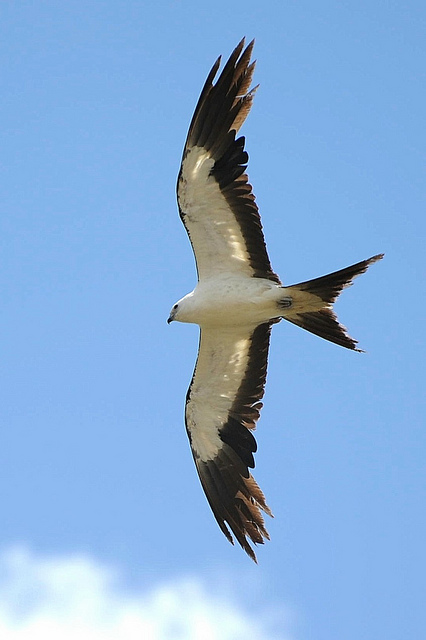
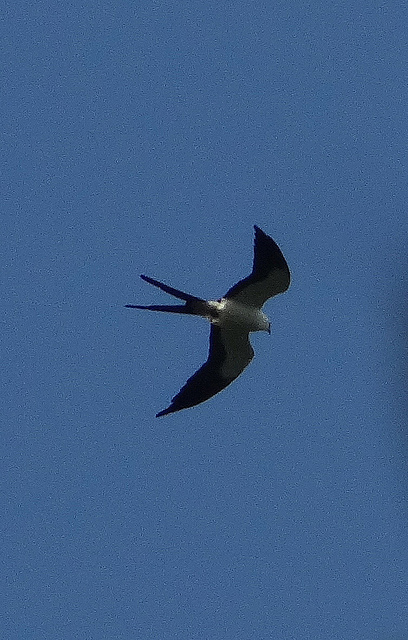
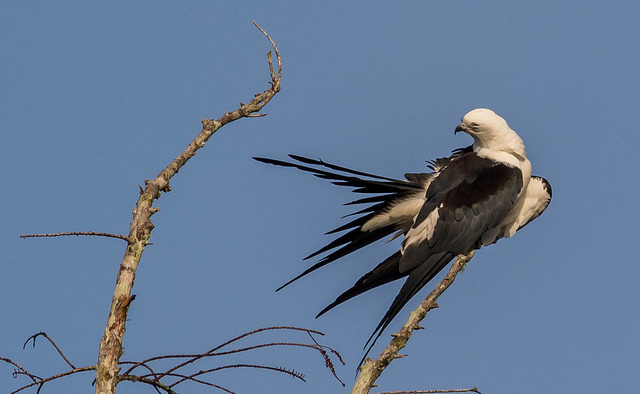
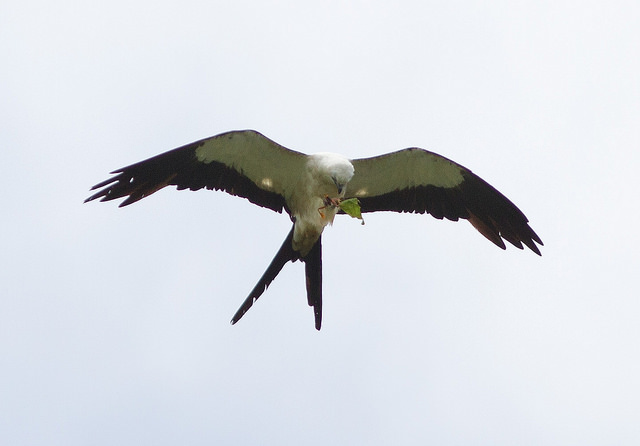
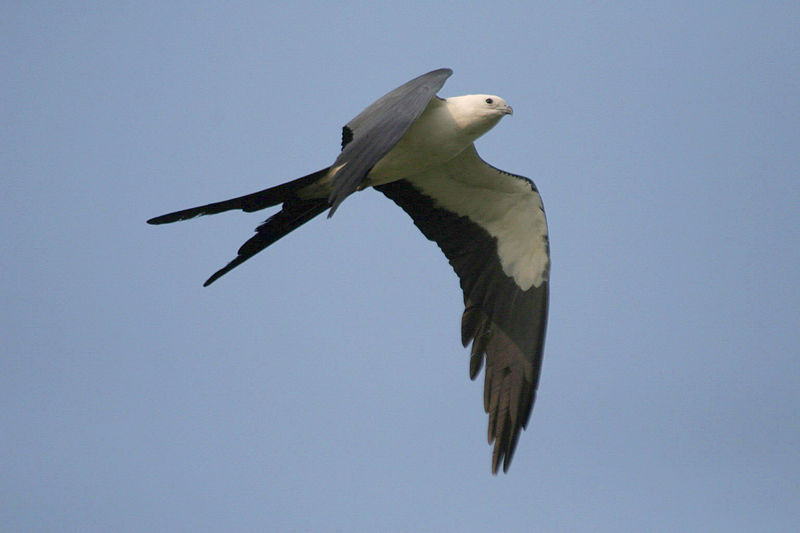
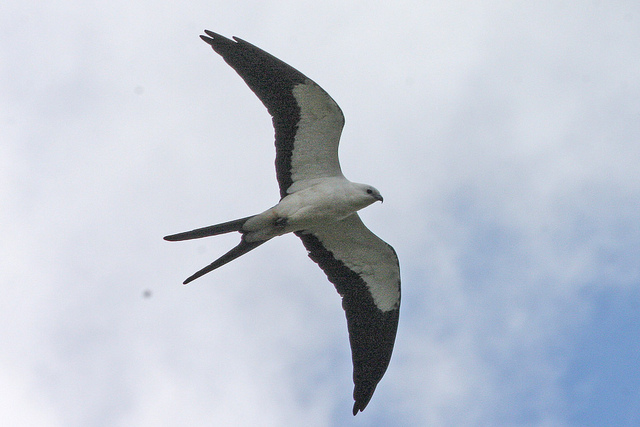
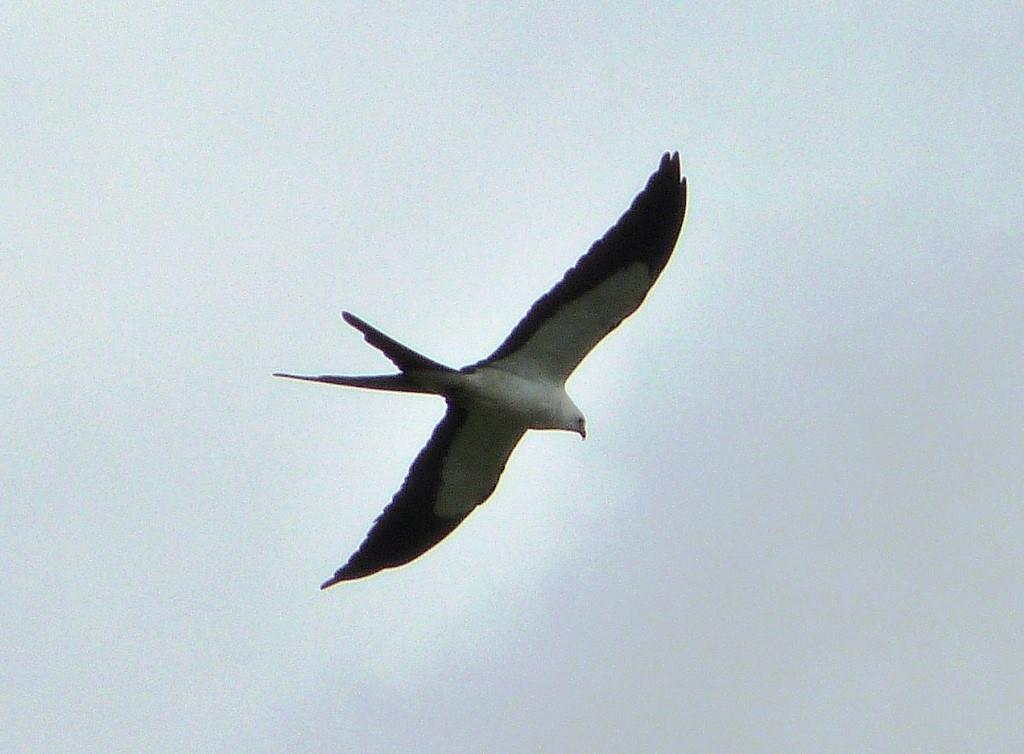
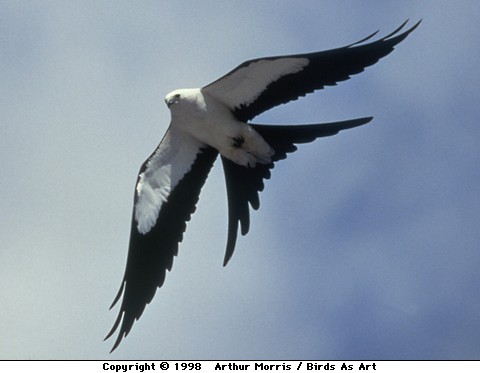
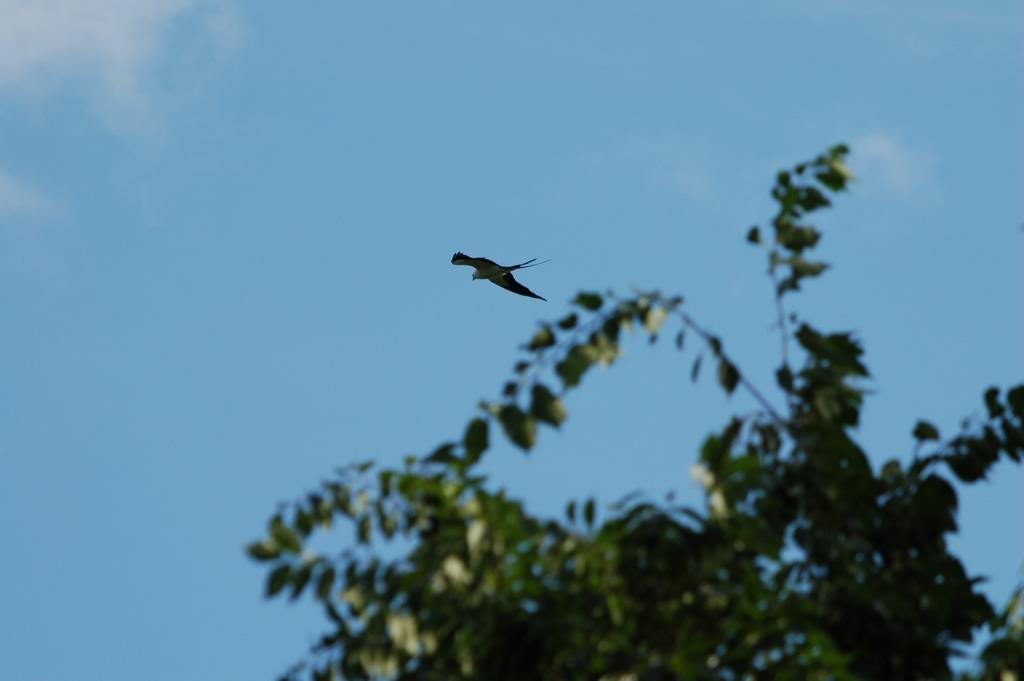
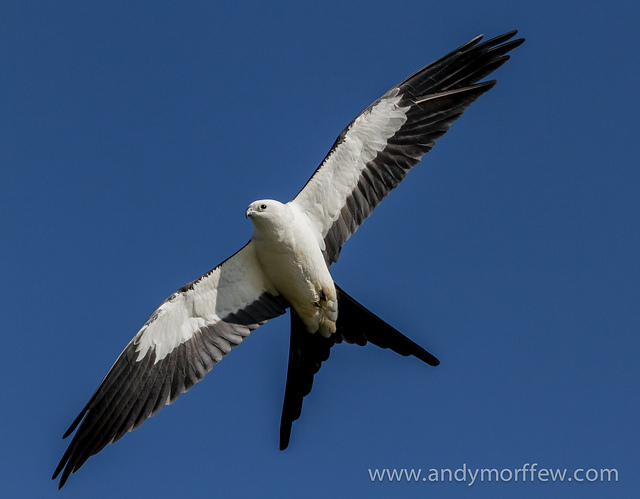
Swallow-tailed Kites In The Area Again

Swallow-tailed Kite (Elanoides forficatus) ©Flickr Lawrence Crovo

Swallow-tailed Kite (Elanoides forficatus) ©Flickr Lawrence Crovo

And God created great whales, and every living creature that moveth, which the waters brought forth abundantly, after their kind, and every winged fowl after his kind: and God saw that it was good. And God blessed them, saying, Be fruitful, and multiply, and fill the waters in the seas, and let fowl multiply in the earth. (Genesis 1:21-22 KJV)

But these are they of which ye shall not eat: the eagle, and the ossifrage, and the ospray, And the glede, and the kite, and the vulture after his kind, (Deuteronomy 14:12-13 KJV)

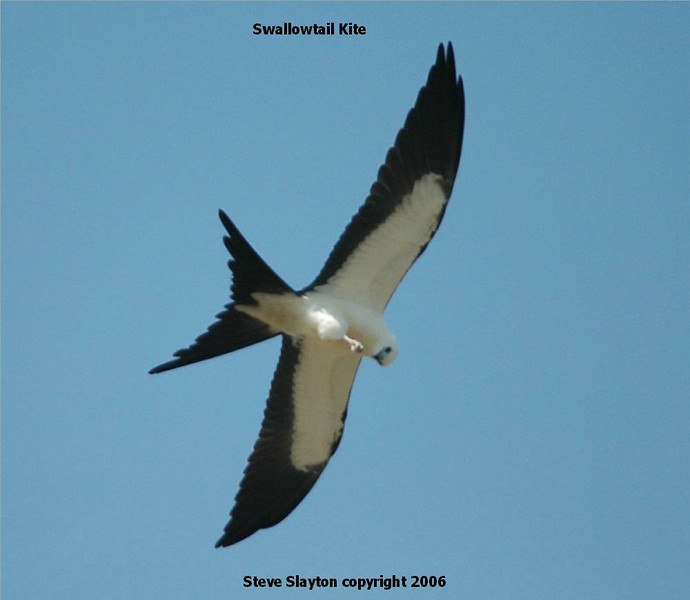
Our Swallow-tailed Kite has been written about several times, but they are just so pretty to watch. Again, today, we had one fly out over us and make a turn which showed the split in the tail. We have very few photos of them, because they are almost a “now you see them, now you don’t” kind of bird. They just come out of no where, there they are, and then they are gone. But, OH!, when they come out, they are so neat to behold.

Our Lord, when He created this bird, within its kind, sure put some beauty and gracefulness within this Kite. These birds belong to the Accipitridae Family of Kites, Hawks, and Eagles. Basically, they are one of the Birds of Prey. They are more dangerous to flying “large insects, such as grasshoppers, crickets; small birds and eggs; and small mammals including bats. It has been observed to regularly consume fruit in Central America. It drinks by skimming the surface and collecting water in its beak.” (Wikipedia)
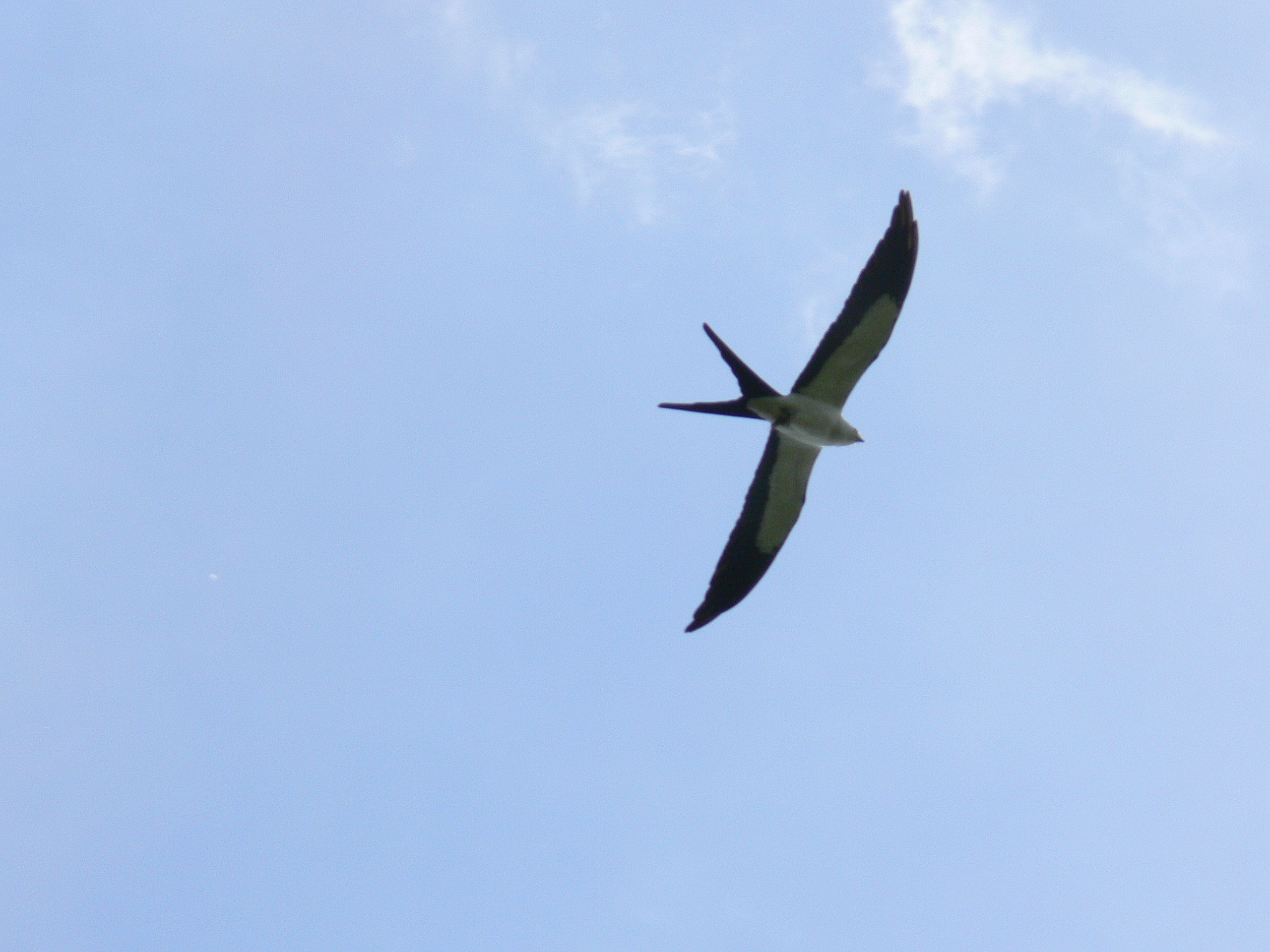
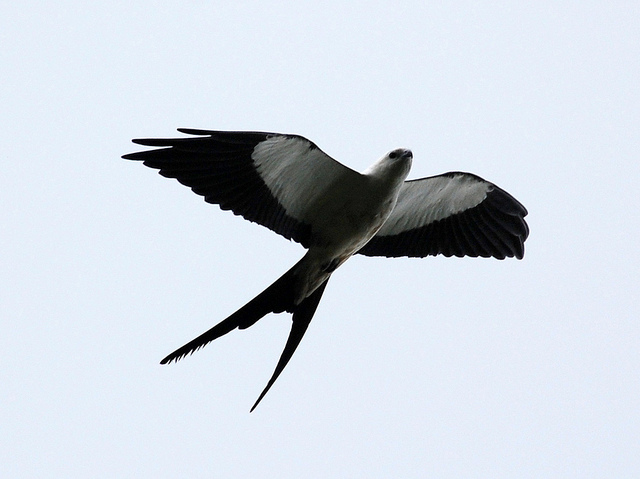
Swallow-tailed Kite (Elanoides forficatus) ©WikiC

Swallow-tailed Kite (Elanoides forficatus) ©WikiC

Let them praise the name of the LORD: for he commanded, and they were created. (Psalms 148:5 KJV)

Here is how All About Birds describe them: “The lilting Swallow-tailed Kite has been called “the coolest bird on the planet.” With its deeply forked tail and bold black-and-white plumage, it is unmistakable in the summer skies above swamps of the Southeast. Flying with barely a wingbeat and maneuvering with twists of its incredible tail, it chases dragonflies or plucks frogs, lizards, snakes, and nestling birds from tree branches. After rearing its young in a treetop nest, the kite migrates to wintering grounds in South America.” (emphasis mine)
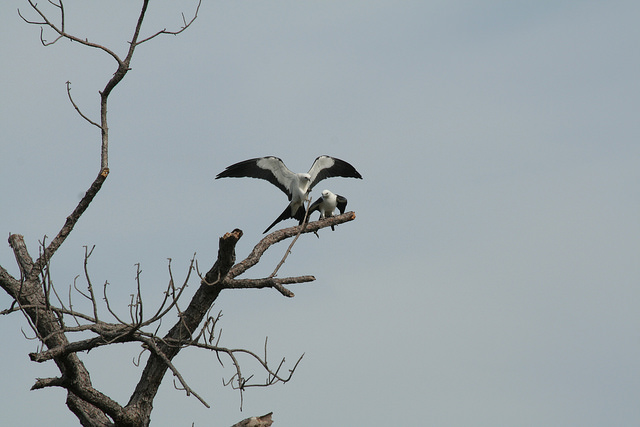
Swallow-tailed Kite (Elanoides forficatus) ©WikiC

Swallow-tailed Kite (Elanoides forficatus) ©WikiC

For by him were all things created, that are in heaven, and that are in earth, visible and invisible, whether they be thrones, or dominions, or principalities, or powers: all things were created by him, and for him: And he is before all things, and by him all things consist. (Colossians 1:16-17 KJV)

Just wanted to show them again so friends here in Florida and other southern states might keep their eyes to the sky. They are back, for a few months and then they will feel the call of South America and elsewhere south of here. The Lord put within the desire to migrate. So, enjoy them while you can.

now you see them, now you don’t

Here is a small slideshow of Swallow-tailed Kites:

*

Previous articles:

*

Sunday Inspiration – Wagtails and Pipits

Rosy Pipit (Anthus roseatus) by Nikhil Devasar

Rosy Pipit (Anthus roseatus) by Nikhil Devasar

“He hath made his wonderful works to be remembered: the LORD is gracious and full of compassion.” (Psalms 111:4 KJV)

The Motacillidae are a family of small passerine birds with medium to long tails. There are around 66 species in 6 genera and they include the wagtails, longclaws and pipits. The longclaws are entirely restricted to the Afrotropics, and the wagtails are predominantly found in Europe, Africa and Asia, with two species migrating and breeding in Alaska. The pipits have the most cosmopolitan distribution, being found across mostly in the Old World but occurring also in the Americas and oceanic islands such as New Zealand and the Falklands. Two African species, the Yellow-breasted Pipit and Sharpe’s Longclaw are sometimes placed in a separate seventh genus, Hemimacronyx, which is closely related to the longclaws.

Yellow-throated Longclaw (Macronyx croceus) ©WikiC

Yellow-throated Longclaw (Macronyx croceus) ©WikiC

Wagtails, pipits, and longclaws are slender, small to medium sized passerines, ranging from 14 to 17 centimetres in length, with short necks and long tails. They have long, pale legs with long toes and claws, particularly the hind toe which can be up to 4 cm in length in some longclaws. Overall the robust longclaws are larger than the pipits and wagtails. Longclaws can weigh as much as 64 g, whereas the weight range for pipits and wagtails is 15–31 g. The plumage of most pipits is dull brown and reminiscent of the larks, although some species have brighter plumages, particularly the Golden Pipit of north-east Africa. The adult male longclaws have brightly coloured undersides.

Citrine Wagtail (Motacilla citreola) by Nikhil Devasar

Citrine Wagtail (Motacilla citreola) by Nikhil Devasar

The wagtails often have striking plumage, including grey, black, white, and yellow. (Wikipedia with editing)
*

This slideshow requires JavaScript.

“And they that passed by reviled him, wagging their heads, And saying, Thou that destroyest the temple, and buildest it in three days, save thyself. If thou be the Son of God, come down from the cross.” (Matthew 27:39-40 KJV)

“Glorious Love” ~ Choir, Orchestra, Solo by Pastor Jerry

*

More Sunday Inspirations

Motacillidae – Wagtails, Pipits Family

Sharing The Gospel

*

I. O. C. 6.1 Updated

White-rimmed Brushfinch ©Dusan M Brinkhuizen

White-rimmed Brushfinch ©Dusan M Brinkhuizen

Jesus Christ is the same yesterday, today, and forever. (Hebrews 13:8 NKJV)

Well, they released a new I.O.C. version of World Bird Names. This version is 6.1 and I have been working on updating the site to reflect the new changes. It was not a really huge change, thankfully. In fact, they only added five new species and deleted one.

The IOC World Bird List 6.1 contains 10,615 extant species (and 154 extinct species)  classified in 40 Orders,  239 Families (plus 2 Incertae Sedis) and 2283 Genera and 20,601 Subspecies.

The new species are:

  • ‘Tschui’s’ Nightjar (Systellura decussata)
  • ‘Western’ [Striolated] Puffbird (Nystalus obamai)
  • Sedge Wren (Cistothorus stellaris)
  • Bundok Flycatcher (Ficedula luzoniensis)
  • Merida Brushfinch (Atlapetes meridae)

The Roosevelt Stipple-throated Antwren (Epinecrophylla dentei) was deleted.

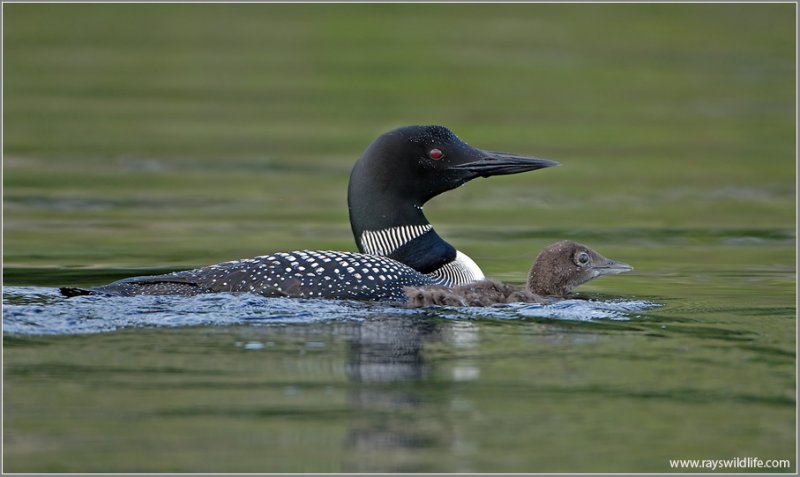
Common Loon (Gavia immer) with young by Raymond Barlow

Common Loon (Gavia immer) with young by Raymond Barlow

There were some name changes, the biggest one was the forty (40) Brush Finch being renamed Brushfinch.

Here are the other name changes:

  • Great Northern Loon (Gavia immer) back to Common Loon  – Revert to established (North American) name
  • Crowned Solitary Eagle (Buteogallus coronatus) to Chaco Eagle
  • Montane Solitary Eagle (Buteogallus solitarius) to Solitary Eagle
  • Andean Snipe (Gallinago jamesoni) to Jameson’s Snipe
  • Scaly-throated Earthcreeper (Upucerthia dumetaria) to Scale-throated Earthcreeper
  • Macgregor’s Bowerbird (Amblyornis macgregoriae) to MacGregor’s Bowerbird
  • Macgregor’s Honeyeater (Macgregoria pulchra) to MacGregor’s Honeyeater
  • Sedge Wren (Cistothorus platensis) to Grass Wren
  • Hood Mockingbird (Mimus macdonaldi) to Espanola Mockingbird
Yellow-shouldered Grosbeak (Parkerthraustes humeralis) Drawing ©WikiC

Yellow-shouldered Grosbeak (Parkerthraustes humeralis) Drawing ©WikiC

Then in the Taxonomy changes; here are those changes:

The biggest change here was moving the Yellow-shouldered ((Parkerthraustes humeralis) out of the Card family and placing it in the Thraupidae Family because it is actually a Tanager.

  • Lesser Moorhen (Paragallinula angulata)
  • Spot-flanked Gallinule (Porphyriops melanops)
  • Mascarene Parrot (Mascarinus mascarinus)
  • Chapada Flycatcher (Suiriri affinis)
  • Dickcissel (Spiza americana)  Resequence Spiza as sister to blue cardinals (Cyanocompsa)

All the indexes are up to date except the Last Name – First Name listings. Because it was such a small amount of changes, they will be updated on the next update. The First Name – Last Name indexes are all corrected to the 6.1 Version. (That is the one most people search.)

*

Birds of the World

Birds of the World Families

First Name – Last Name

Last Name – First Name

*

Winter Is Coming/Here

Eurasian Blue Tit (Cyanistes caeruleus) by Robert Scanlon

Eurasian Blue Tit (Cyanistes caeruleus) by Robert Scanlon

And the LORD smelled a sweet savour; and the LORD said in his heart, I will not again curse the ground any more for man’s sake; for the imagination of man’s heart is evil from his youth; neither will I again smite any more every thing living, as I have done. While the earth remaineth, seedtime and harvest, and cold and heat, and summer and winter, and day and night shall not cease. (Genesis 8:21-22 KJV)

Another great video was sent to me. Time to share another one. It’s titled, “Wild December”

The birds appear to be European as far as I can tell. Enjoy!

Thou hast set all the borders of the earth: thou hast made summer and winter. (Psalms 74:17 KJV)


2015 in review

The WordPress.com stats helper monkeys prepared a 2015 annual report for this blog.

Here’s an excerpt:

The Louvre Museum has 8.5 million visitors per year. This blog was viewed about 220,000 times in 2015. If it were an exhibit at the Louvre Museum, it would take about 9 days for that many people to see it.

Click here to see the complete report.

Thanks again for all of you who have made 2015 such a great blogging year by dropping in to reading our posts. We here at the blog are trusting the Lord that He will give us another great year in 2016, giving credit and praising the Creator of all these neat birds in the world.

Happy New Year and Lord’s Greatest Blessings to you all.