Lord’s Avian Wonders – Juvenile Scarlet Ibis

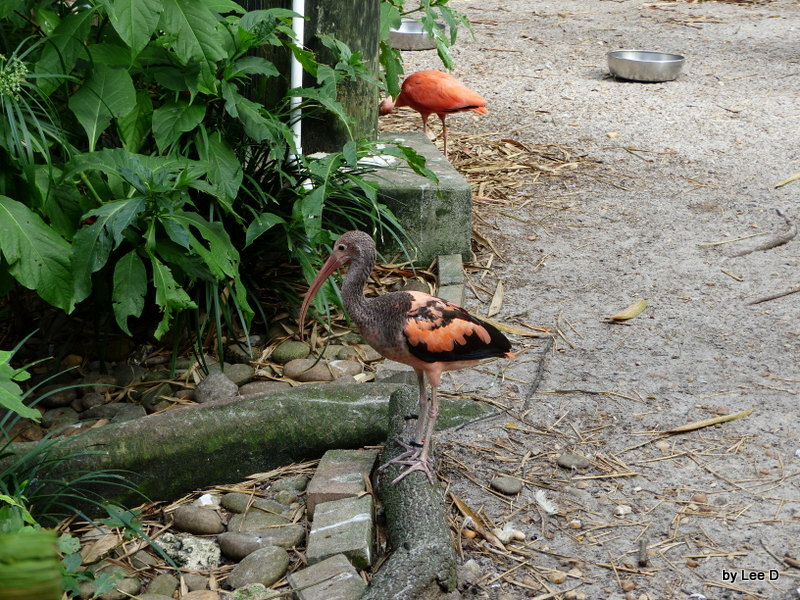
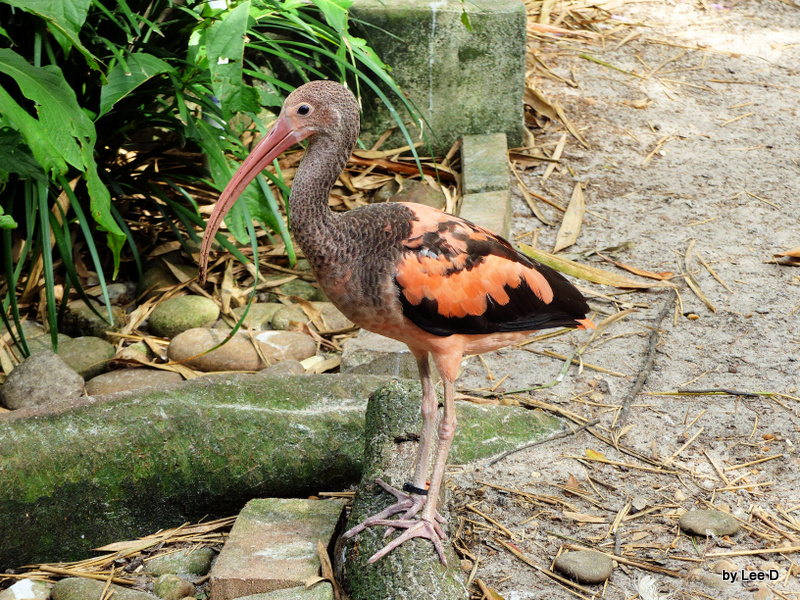
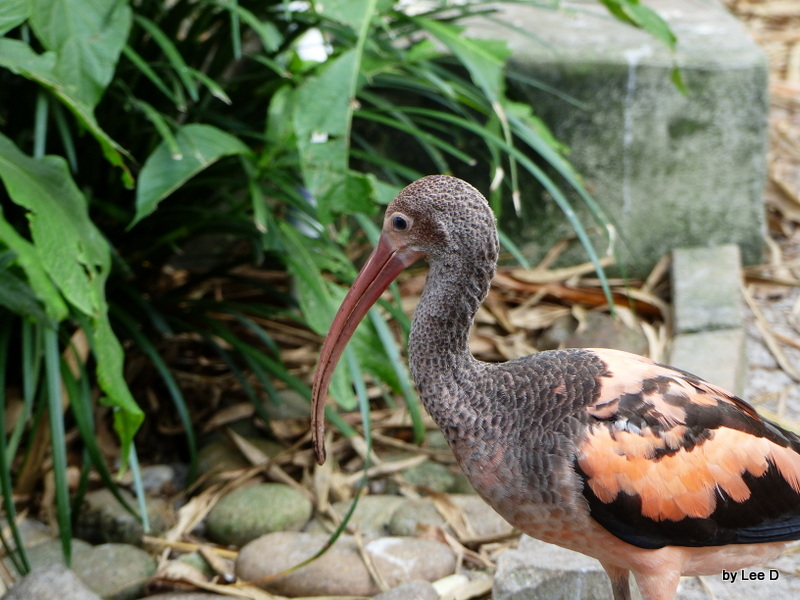
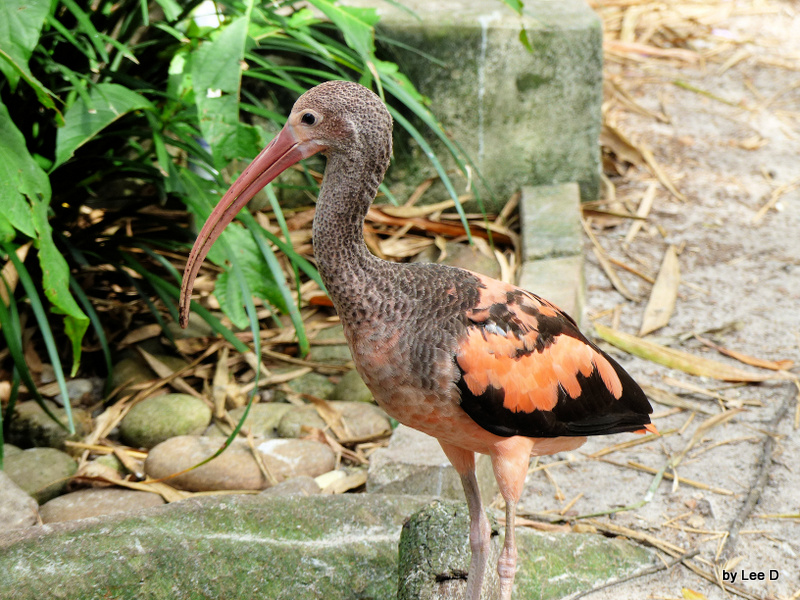
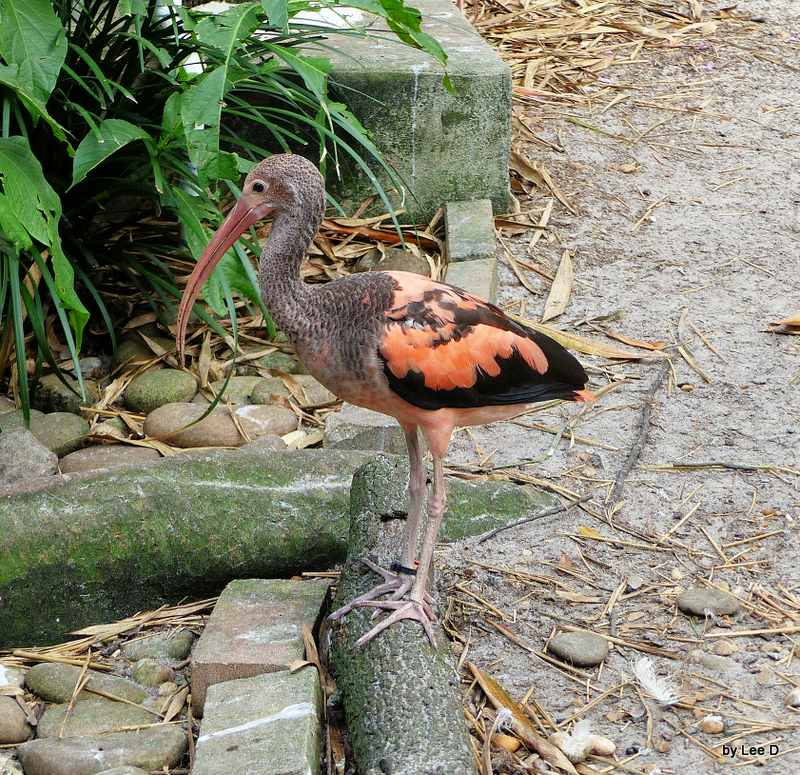
Scarlet Ibis (Eudocimus ruber) Juvenile Lowry Park Zoo

Scarlet Ibis (Eudocimus ruber) Juvenile Lowry Park Zoo

Behold, I tell you a mystery: We shall not all sleep, but we shall all be changed—in a moment, in the twinkling of an eye, at the last trumpet. For the trumpet will sound, and the dead will be raised incorruptible, and we shall be changed. For this corruptible must put on incorruption, and this mortal must put on immortality. (1 Corinthians 15:51-53 NKJV) (emphasis mine)

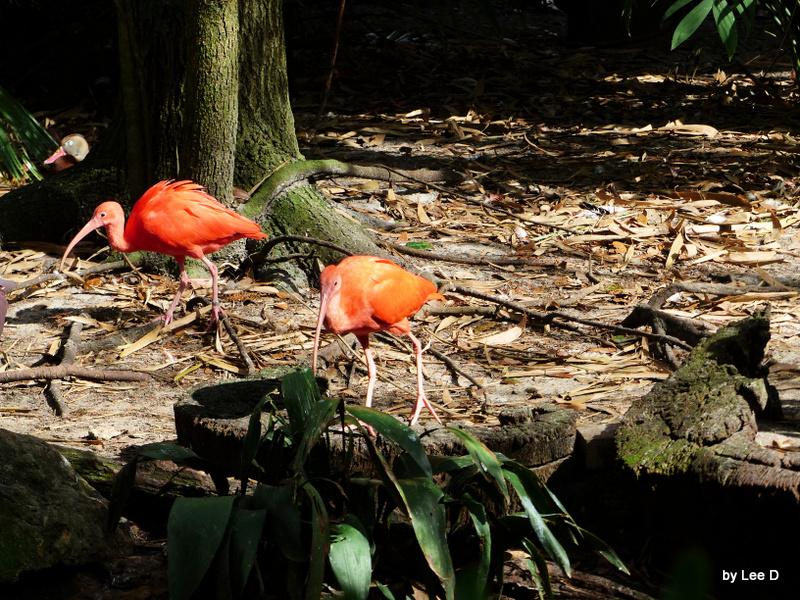
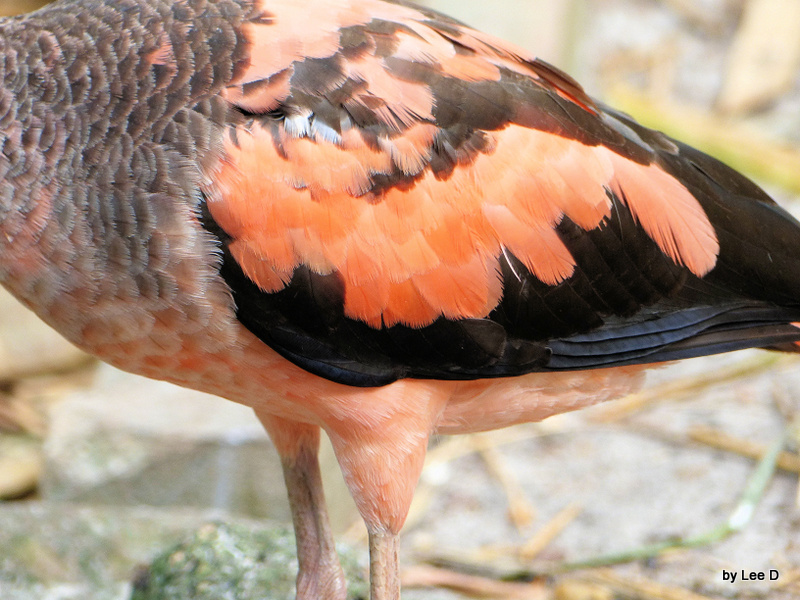
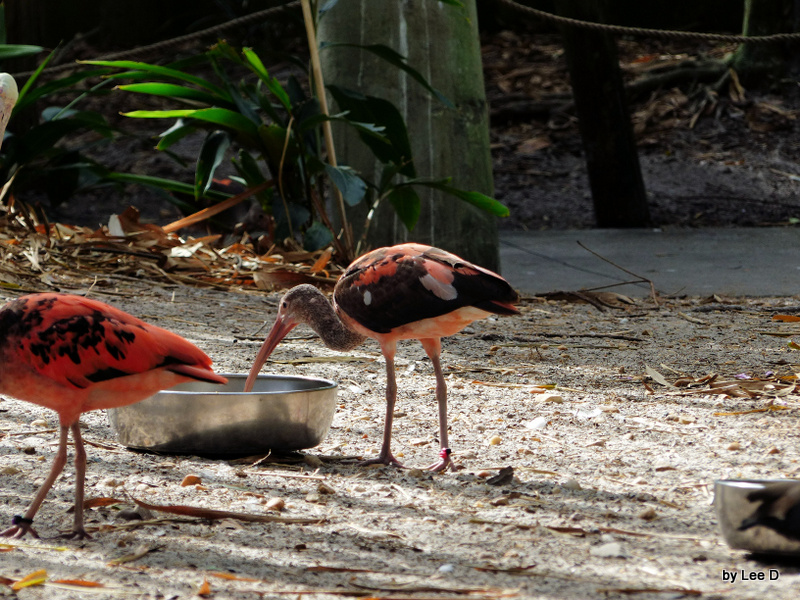
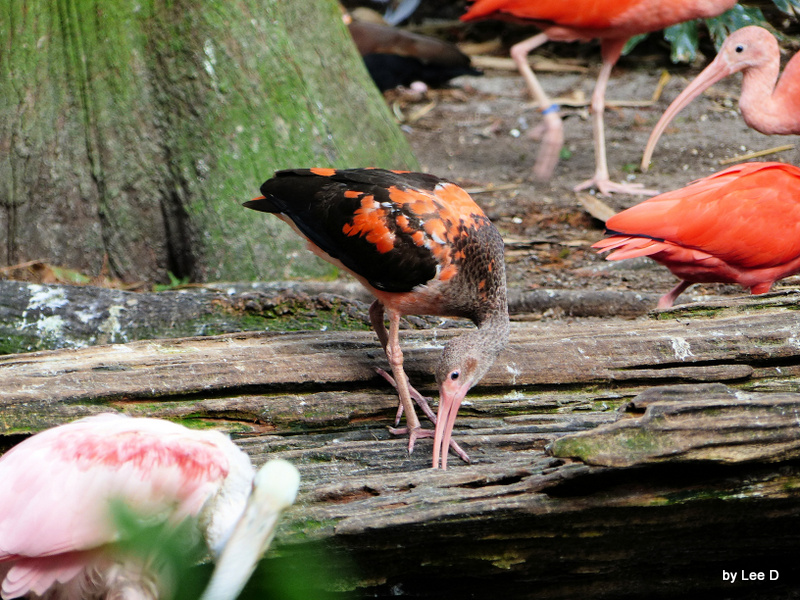
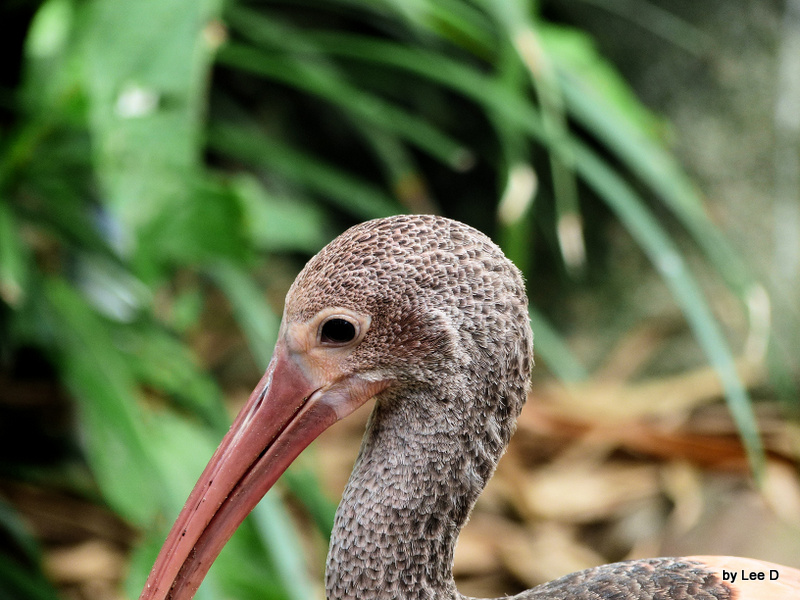
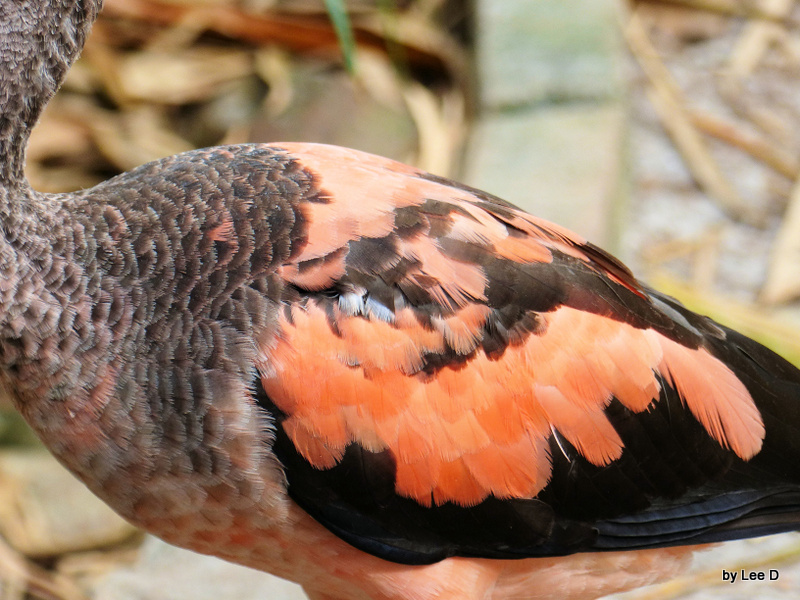
While in the Aviary at Lowry Park last week, this little avian wonder caught my attention. Our Scarlet Ibis juvenile is in the process of becoming a beautiful adult, but at present he is still in transition. The Lord’s Creative Hand gave these ibises protection while growing up, but now that change to a full-grown Scarlet Ibis is becoming very evident.

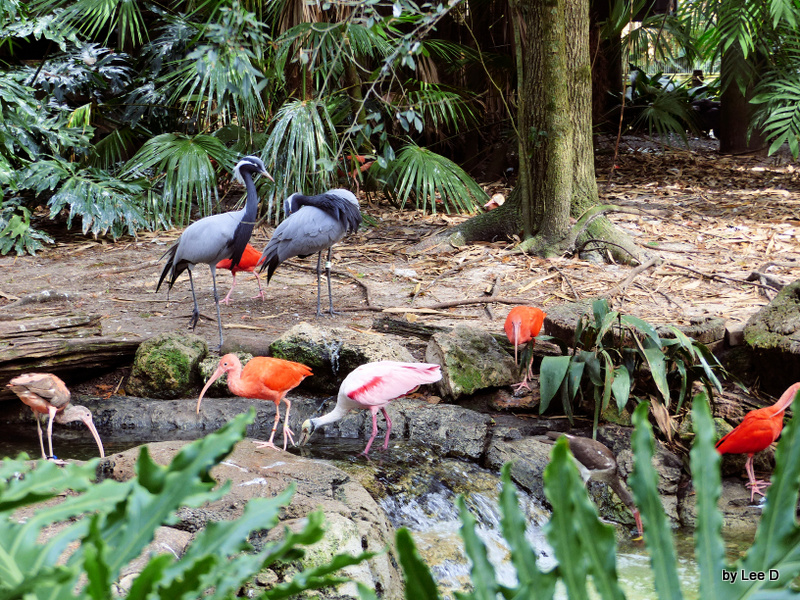
Scarlet Ibis adults in the Aviary

Scarlet Ibis adults in the Aviary

Adult plumage is virtually all scarlet. The feathers may show various tints and shades, but only the tips of their wings deviate from their namesake color. A small but reliable marking, these wingtips are a rich inky black (or occasionally dark blue) and are found only on the longest primaries – otherwise the birds’ coloration is “a vivid orange-red, almost luminous in quality.” Scarlet ibises have red bills and feet however the bill is sometimes blackish, especially toward the end. They have a long, narrow, decurved bill. Their legs and neck are long and extended in flight.

Scarlet Ibis (Eudocimus ruber) Juvenile Lowry Park Zoo

A juvenile scarlet ibis is a mix of grey, brown, and white. As it grows, a heavy diet of red crustaceans produces the scarlet coloration. The color change begins with the juvenile’s second moult, around the time it begins to fly: the change starts on the back and spreads gradually across the body while increasing in intensity over a period of about two years. The scarlet ibis is the only shorebird with red coloration in the world.

As newborn babes, desire the sincere milk of the word, that ye may grow thereby: If so be ye have tasted that the Lord is gracious. (1 Peter 2:2-3 KJV) (emphasis mine)

As these young Scarlet Ibises are growing into beautifully colored adults, you can see how they have grown from the baby to where they are now.

So, we as Christians, should be growing and changing as we grow in the Lord. How do we grow? Reading God’s Word, attending a good Bible preaching church, praying, studying, and doing whatever the Lord may lead you to do to help out. These juveniles are starting to change and so will you as grow in the Lord. Sooner or later you will bloom into a mature Christian able and willing to serve Our Lord wherever or however He chooses.

You therefore, beloved, knowing this beforehand, be on your guard so that you are not carried away by the error of unprincipled men and fall from your own steadfastness, but grow in the grace and knowledge of our Lord and Savior Jesus Christ. To Him be the glory, both now and to the day of eternity. Amen. (2 Peter 3:17-18 NASB)

For since the creation of the world His invisible attributes are clearly seen, being understood by the things that are made, even His eternal power and Godhead, so that they are without excuse, because, although they knew God, they did not glorify Him as God, nor were thankful, but became futile in their thoughts, and their foolish hearts were darkened. Professing to be wise, they became fools, and changed the glory of the incorruptible God into an image made like corruptible man—and birds and four-footed animals and creeping things. (Romans 1:20-23 NKJV) (emphasis mine)

Scarlet Ibis – Threskiornithidae – Ibises, Spoonbills

Orni-Theology

Lowry Park Zoo Articles

Sharing The Gospel

*


Birdwatching Trip – Zoo 12-31-15

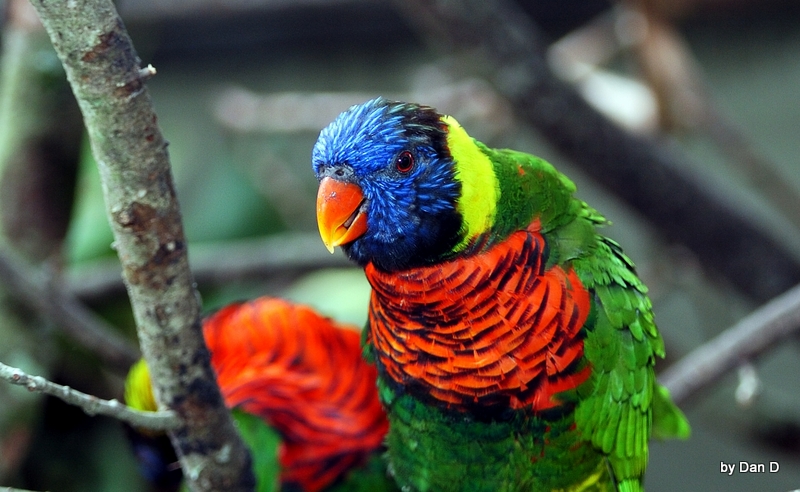
Rainbow Lorikeet by Dan

Rainbow Lorikeet by Dan

So God created great sea creatures and every living thing that moves, with which the waters abounded, according to their kind, and every winged bird according to its kind. And God saw that it was good. (Genesis 1:21 NKJV)

Off we went on the last day of 2015 to try to pick up our updated Lowry Park Zoo passes. They still weren’t ready to issue all of the new ones, so, all was not lost. Never head to a zoo without a camera.

The place was sort of crowded because they were throwing a “Noon Days Eve” party for the young folks. At noon they had a count-down to Noon “10-9-8-7-6-5-4-3-2-1”. Then they shot off paper confetti and ribbons. They were all having a great time. Most of those kids would never make to 12 midnight anyway. For that matter, neither did Dan or I. :)

This slideshow requires JavaScript.

Over in the Lorikeet feeding aviary, they seemed more colorful than normal and several of them were bouncing around and carrying on. Must have been their way of celebrating the coming New Year AD 2016. Also, like those celebrating, sometimes they get carried away and start becoming destructive.

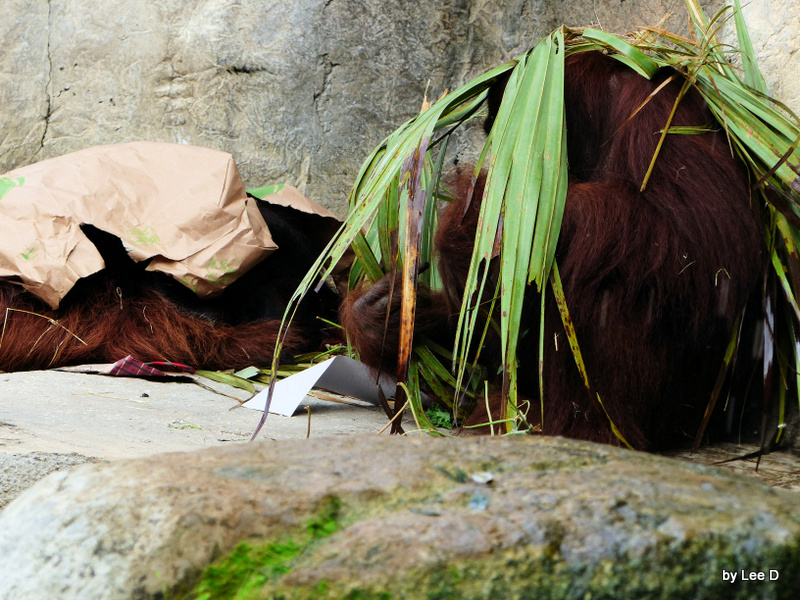
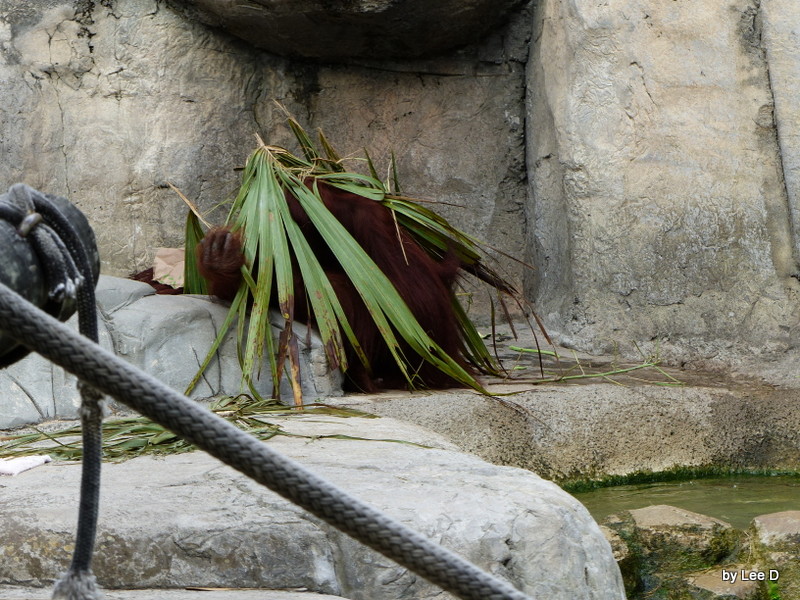
A new Orangutan was born on December 21st and hoped to see the little one, but Momma had different plans. She was laying with the baby between her and her big arm and had a piece of cardboard over her. Her mate was nearby with leaves over his head. (This is normal for these at this zoo.)

Mom and Papa Orangutan

Mom and Papa Orangutan

Mom Orangutan looking out and weary.

Mom Orangutan looking out and weary.

Papa Orangutan blocks the view.

Papa Orangutan blocks the view.

When a crowd came around to look also, he got up and sat right in front of her to block all views. The Lord even gives His critters a sense that they need privacy.

Here is a beautiful creation that takes your breath away. Wow! How did the Lord come up with so many designs in all His critters, not just the birds. I have no idea what the second fish is. He looks happy. If you know, leave a comment.

“But now ask the beasts, and they will teach you; And the birds of the air, and they will tell you; Or speak to the earth, and it will teach you; And the fish of the sea will explain to you. Who among all these does not know That the hand of the LORD has done this, (Job 12:7-9 NKJV)

Off to check out the other birds and see what else was going on. Enjoy the photos. These were our last ones of AD 2015. By the way, the first bird I spotted this year was a Sandhill Crane. (Later the same day, 1st, saw a Belted Kingfisher and a Bald Eagle, plus more normal residents.

This slideshow requires JavaScript.

*

You can see videos of a Masked Lapwing, a Demoiselle Crane and a Blue-faced Honeyeater that I also took by clicking the links.

Birdwatching Trips

Good News

*

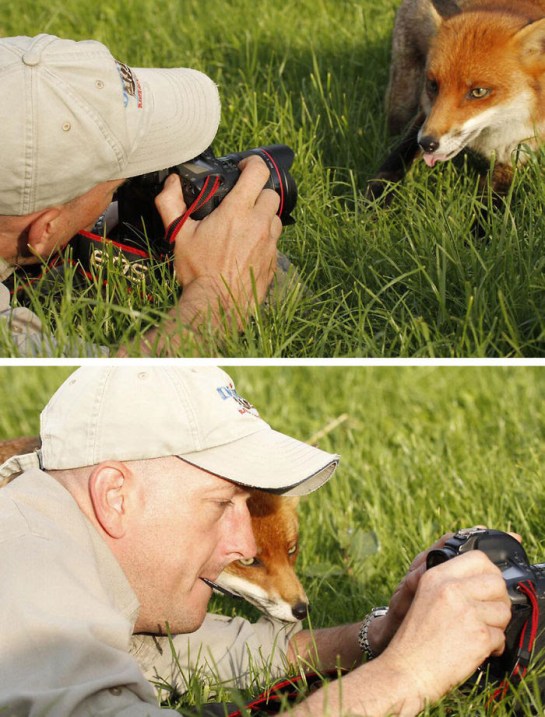
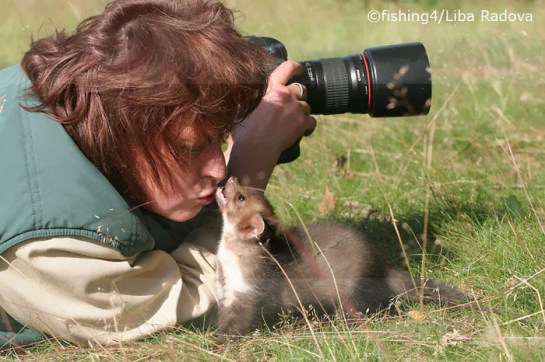
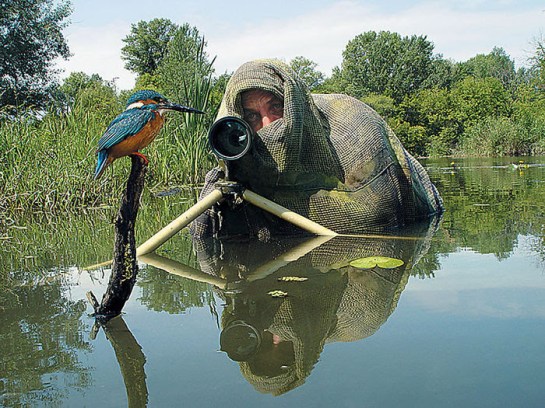
Wild Wildlife Photographers!

These are beyond awesome !  Credit goes to the quickness of the photographer that captured these moments….
A bravery award should go to the  guy that’s being checked out by the two big bears!
Nature Photographer
Photographers with animals 1Photographers with animals 9
Photographers with animals 2Photographers with animals 3Photographers with animals 4Photographers with animals 5Photographers with animals 6Photographers with animals 7Photographers with animals 8Photographers with animals 9Photographers with animals 10Photographers with animals 11Photographers with animals 12Photographers with animals 13Photographers with animals 14Photographers with animals 15Photographers with animals 16Photographers with animals 18Photographers with animals 19Photographers with animals 20Photographers with animals 21

Hear me, O LORD; for thy lovingkindness is good: turn unto me according to the multitude of thy tender mercies. And hide not thy face from thy servant; for I am in trouble: hear me speedily. (Psalms 69:16-17 KJV)

*
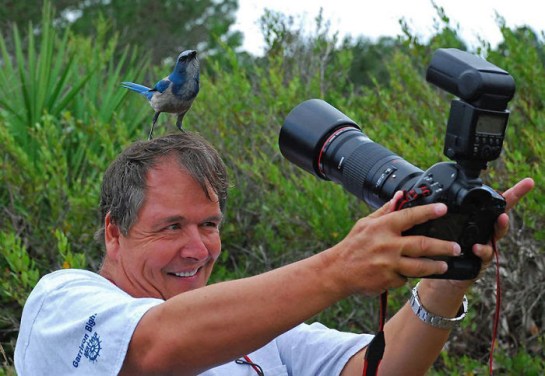
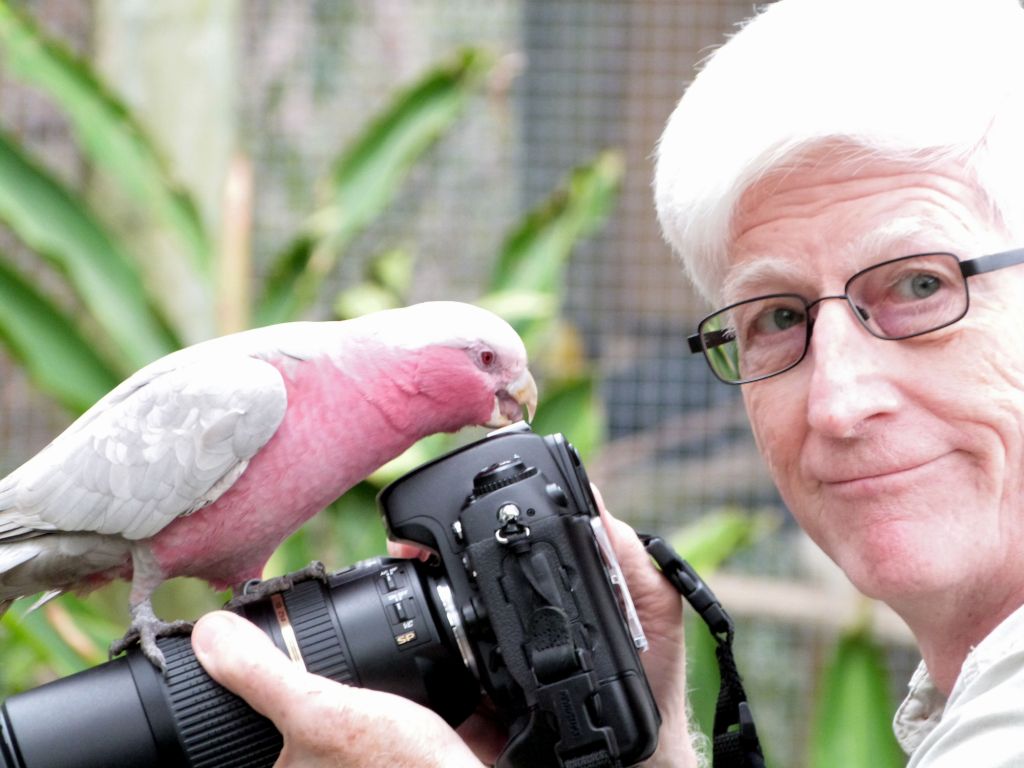
These photos are straight from an e-mail. They are about as crazy as the one I took of Dan when he was surprised.

*

Galah (Eolophus roseicapilla) and Dan

Galah (Eolophus roseicapilla) and Dan

*
Good News

*

Teach Your Children The Right Passwords!

Teach  your  children  the  right  passwords!

~ by James J. S. Johnson
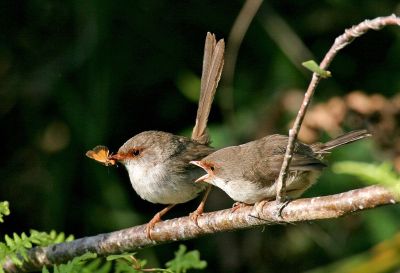
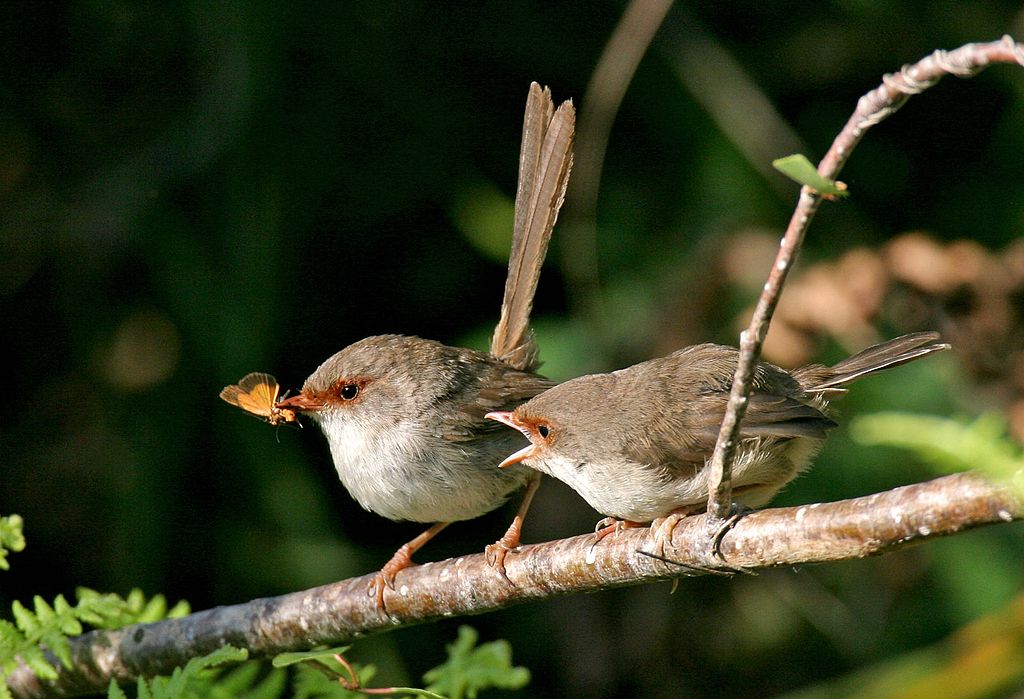
Superb Fairywren (Malurus cyaneus) Juvenile and Female ©WikiC

We will not hide them [“them” refers to God’s prophetic words – see verses 1-3] from their children, shewing to the generation to come the praises of the Lord, and His strength, and his wonderful works that He hath done.  For He established a testimony in Jacob, and appointed a law in Israel, which He commanded our [fore]fathers, that they should make them known to their children,  that the generation to come might know them, even the children which should be born [יִוָּלֵ֑דוּ — niphâl imperfect form of the verb yâlad], who should arise and declare [וִֽיסַפְּר֥וּ — piêl imperfect form of the verb sâphar] them to their children, that they might set their hope in God, and not forget the works of God, but keep His commandments, and [that they] might not be as their [fore]fathers, a stubborn and rebellious generation, a generation that set not their heart aright, and whose spirit was not steadfast with God.   Psalm 78:4-8

Superb Fairywrens teach their children to use passwords, but how?

In this fallen world even bird families have troubles.

One kind of family problem, confronted by many bird parents, is the problem of “brood parasites”, which is really a sneaky kind of “home invasion”.

Brood parasitism” is not a problem of parasitic worms or bugs.  Rather, this is a different kind of parasite – a bold “home invasion” parasite – a “foster child”, from another bird family, who was dropped into a “host” family.  The “host” family is thereafter burdened (unless and until the newcomer is evicted from the nest) with the cost of nurturing the intruding stranger who “moved in” without an invitation.  Worse, the invasive “foster child” often competes with the legitimate nestling birds for food and shelter, sometimes even competing aggressively.
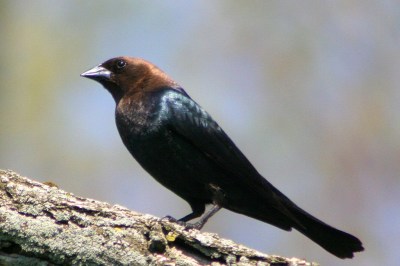
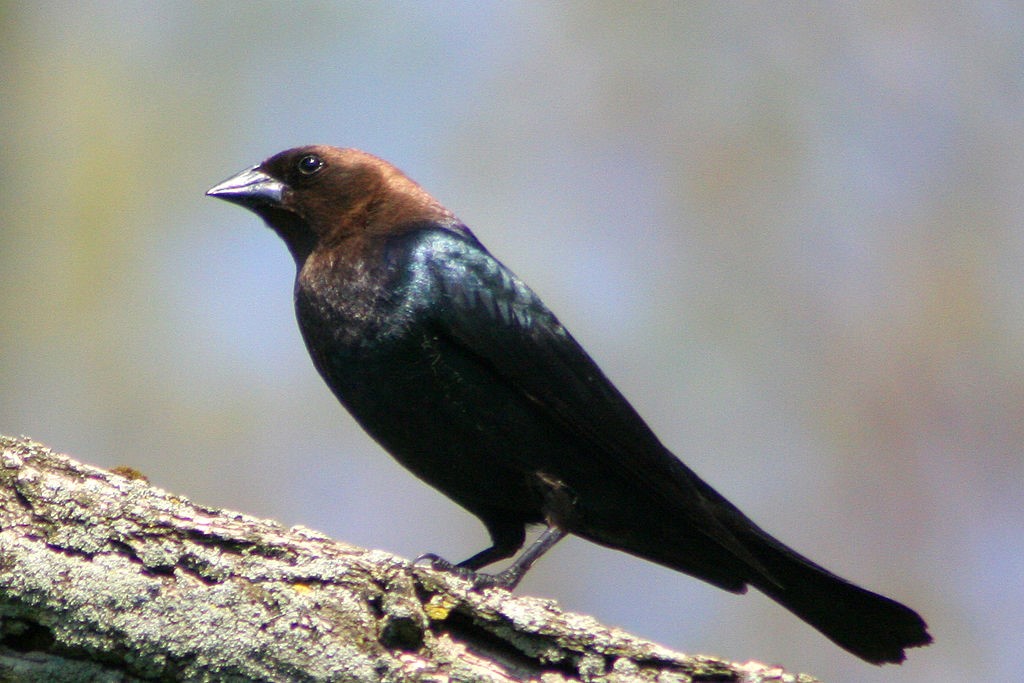
PAS-Icte Brown-headed Cowbird (Molothrus ater) ©WikiC

Male Brown-headed Cowbird  (Molothrus ater) ©WikiC

One of the best-known examples of such “brood parasitism” practices is those of the Brown-headed Cowbird (Molothrus ater), an icterid (i.e., member of the blackbird family) with a head that is distinctively chocolate-brown in color.

“A small, black-bodied [and iridescent-plumed] bird, a bit larger than a House Sparrow, with a brown head and a rather finchlike bill.  Females are nondescript gray [like the hue of female grackles] with a finchlike bill.

A brood parasite, the Cowbird lays its eggs in the nests of other birds.”
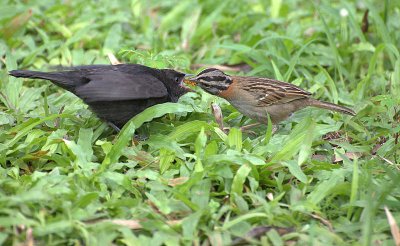
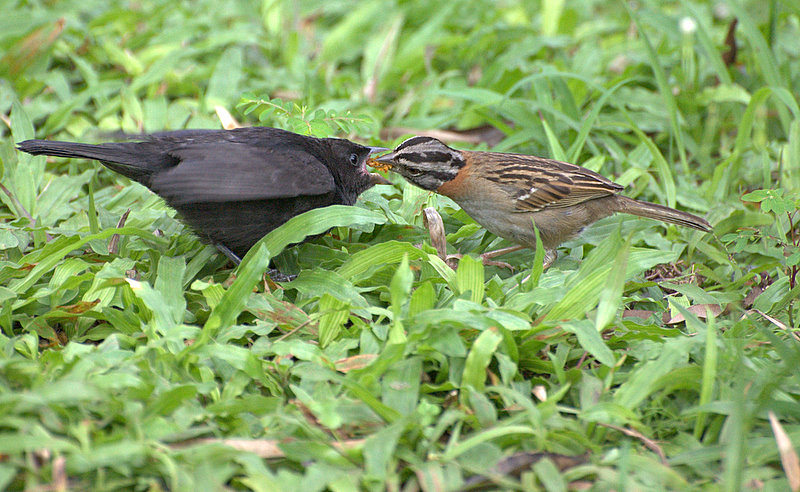
A Shiny Cowbird (Molothrus bonariensis) chick being fed by a Rufous-collared Sparrow (Zonotrichia Capensis)

A Shiny Cowbird (Molothrus bonariensis) chick being fed by a Rufous-collared Sparrow (Zonotrichia Capensis)

[Quoting from Roger Tory Peterson, PETERSON FIRST GUIDE TO BIRDS: A Simplified Field Guide to the Commonest Birds of North America (Houghton Mifflin, 1986), page 102.]

But cowbirds of North America are not the only birds that abuse the (involuntary) charity care of avian “foster parents”;  cuckoos (such as the Common Cuckoo of Eurasia) are known for the same “externalizing” of their parenting costs, producing nestling competitions that result in “changeling” conflicts.

“Once a brood parasite [mother] has managed to slip her egg into a host’s nest, her reproductive role is essentially over.  She leaves each chick to fend for itself, in a [bird] family that did not choose to raise it.

There’s no reason to feel [too] sorry for the uninvited foster chick, however; it is the unwitting adoptive parents that might soon face an unexpected brutality—the ruthless slaying of all their own offspring.

Many brood parasites, such as cuckoos, immediately dispatch of their nest mates [i.e., the children of the caring bird parents who built and maintain the nest that is now compromised] as soon as they hatch by summarily tossing them over the side of the nest.  [So much for refugee gratitude!]
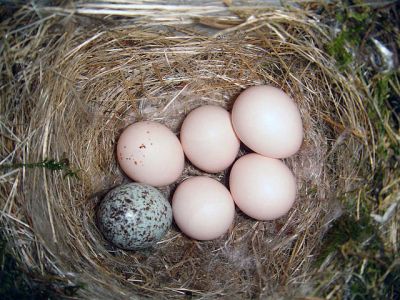
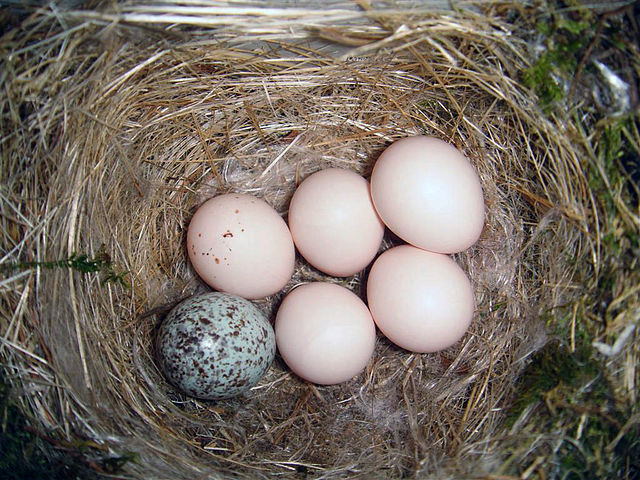
Brown-headed Cowbird (Molothrus ater) Egg in Eastern Phoebe Nest ©WikiC

Brown-headed Cowbird (Molothrus ater) Egg in Eastern Phoebe Nest ©WikiC

African Honeyguides use far deadlier methods to eliminate their [nest] fellows.  Equipped from birth with hooks at the tips of their mandibles, they efficiently wield these needle-sharp barbs against their defenseless nest mates.

Cowbirds do not employ such direct methods, yet they just as effectively eliminate the competition.  Their companions often die of starvation because the larger, more aggressive cowbird grabs all the food [delivered by the nestling-caring parent birds].  It is a wonder that the adults still feed the chick when they realize the disparity in size.  Yet in most cases, the adults accept it [i.e., the cowbird “foster child”], even if it appears double the size of its foster parent and requires twice the care of its [foster] siblings.
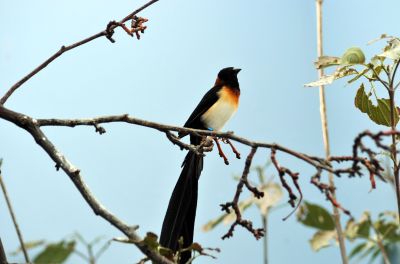
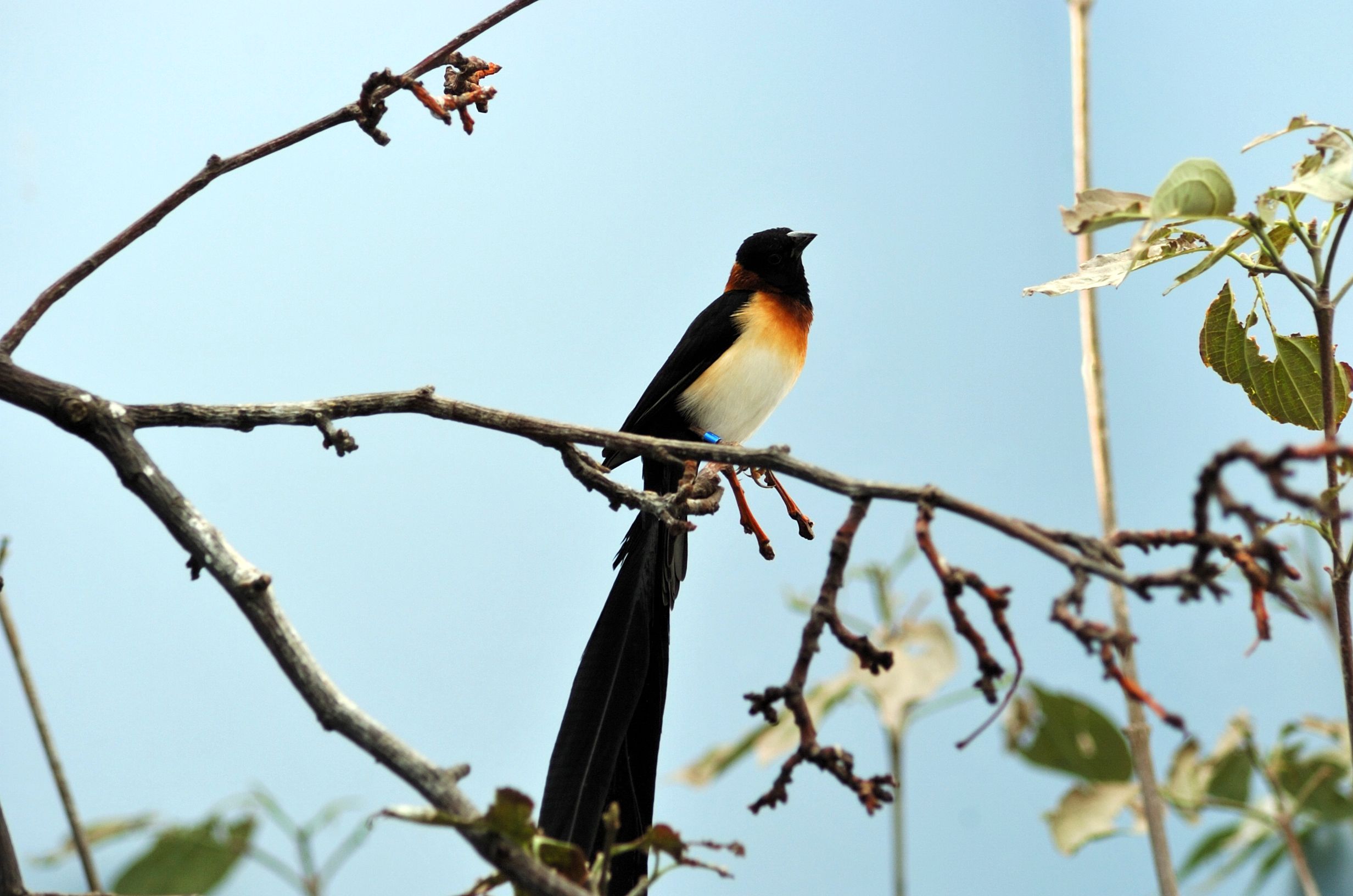
Long-tailed Paradise Whydah by Dan

Long-tailed Paradise Whydah by Dan

Not all brood parasites oust their nest mates.  Parents of the whydah family choose species that closely resemble them, such as waxbills.  Not only do the eggs match in coloration, but the chicks resemble their hosts as well.  They even have the same markings in their gaping mouths which signal hunger to an observing adult.  Whylahs blend in with their adopted families instead of destroying them.”

[Quoting from Sharon A. Cohen, BIRD NESTS (Harper Collins, 1993), page 110.]

So cowbird “parenting” is a short-lived experience, somewhat like clandestinely depositing a newborn on the front steps of an orphanage, trusting that the baby will be nurtured (successfully) by others.  But is this surreptitious forced-fostering habit a guarantee of avian reproductive success, at the populational level?

“At first, you may wonder why more birds are not parasites—after all, parasites don’t need to build a nest [for raising their babies], and once they have laid eggs there is no more to it [i.e., to parenting responsibilities on a daily basis]; but there are hidden costs [and risks] to being a [brood] parasite, mainly that the [child-abandoning] bird gives up control over its eggs and young.

Female cowbirds lay an average of forty eggs per year, but only two or three [on average] mature to adulthood.”

[Quoting from Donald Stokes & Lillian Stokes, A GUIDE TO BIRD BEHAVIOR, VOLUME II (Little Brown & Company, 1983), page 213.]

So what does this have to do with avian parents teaching “passwords” to their natural progeny? 

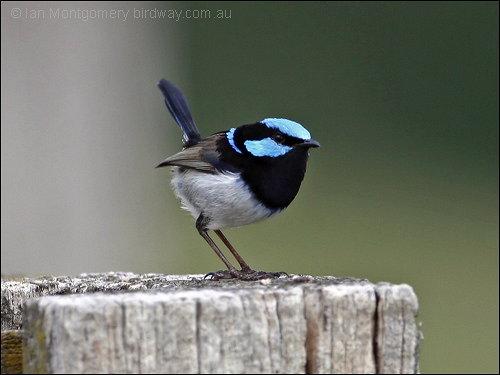
Superb Fairy-wren (Malurus cyaneus) by Ian

Male Superb Fairywren (Malurus cyaneus) by Ian

Consider this amazing news about the Superb Fairywren (Malurus cyaneus) of Australia, which is forced to react to the “child-abandonment” brood parasitism habits of the Horsfield’s Bronze Cuckoo. (Chrysococcyx basalis).

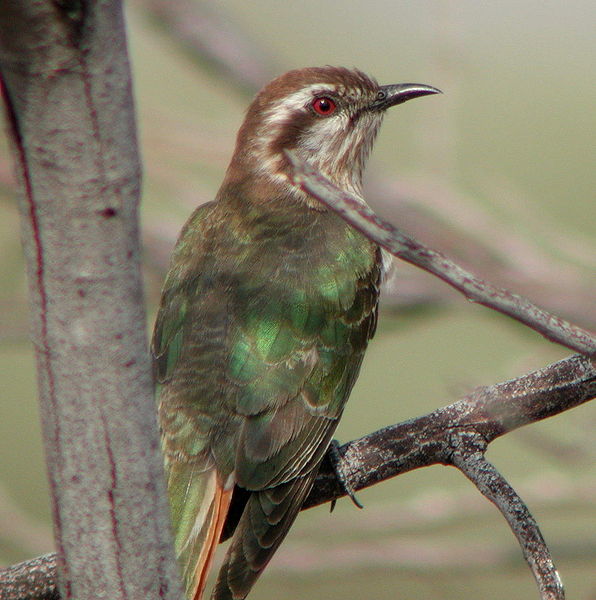
Horsfield's Bronze Cuckoo (Chrysococcyx basalis) by Tom Tarrant

Male Horsfield’s Bronze Cuckoo (Chrysococcyx basalis) by Tom Tarrant

The Horsfield’s Bronze Cuckoo deposits its somewhat elongated pink-white egg, with rust-colored spots, into the nest of a fairywren.  The rust-speckled egg looks like a fairywren egg, confusing the fairywren nest owners of its true biogenetic identity.  (This is an avian version of family “identity fraud!)  The fairywren’s upside-down-dome-shaped nest is often dark inside, so visual confusion about which eggs really belong there is common – hence Horsfield’s bronze cuckoos often get by with their “changeling” deceptions, recruiting fairywren parents into fostering cuckoo eggs that hatch into cuckoo nestlings.

After a dozen days of incubation, in a fairywren nest, a bronze cuckoo chick hatches – 2 days before the hatching of fairywren eggs.  The “older” nestling often ejects the fairywren eggs from the nest, displacing the rightful “heirs”.  (What kind of “refugee gratitude” is that?!)

What can fairywrens do about this parasitic (and quasi-predatory) menace?

Is there a way to avoid the involuntary “home invasion” of such Trojan horses?

Yes, there are a few defensive habits that help to protect the fairywren from such home hijackings, including:

(1) nesting in fairywren colonies – so that teamwork is employed to drive off trespassing cuckoos when cuckoos fly near the fairywrens’ nesting colony;

(2) females attend their nests with vigilance, usually, limiting the opportunities that stealthy cuckoos have to access unattended fairywren nests;

(3) when female fairywren recognize a “changeling” in the nest, prior to laying any fairywren eggs therein, the fairywren female may abandon that (cuckoo) egg and build herself a new nest elsewhere;

(4) female fairywrens “teach” their eggs vocal “passwords” to use, to prompt being fed by their mother.  It is this last habit that demonstrates communication from (fairywren) mother to child, before the chick is hatched from its egg!

A few years ago, Diane Colombelli-Négrel, Sonia Kleindorfer, and colleagues from Flinders University in Australia discovered a remarkable way one bird fights back against brood parasites. Female superb fairywrens teach their embryos a “password” while they’re still in their eggs. Each female’s incubation call contains a unique acoustic element. After they hatch, fairywren chicks incorporate this unique element into their begging calls to ask for food. Colombelli-Négrel, Kleindorfer, and colleagues showed that chicks whose begging calls most resembled their mothers’ incubation calls received more food. But the brood parasites of the fairywren, Horsfield’s bronze-cuckoos, produced begging calls that did not so closely resemble the parental password.

[Quoting  Mary Bates, “To Beat a Parasite, Birds Teach their Young a Secret Password”, posted at http://www.wired.com/2014/06/to-beat-a-parasite-birds-teach-their-young-a-secret-password/ , accessed 11-23-AD2015.]

If fairywrens observe cuckoos in the neighborhood they become more diligent in their efforts to teach the “please-feed-me” passwords to their unhatched progeny, increasing the likelihood that the babies will successfully beg for food (using the vocal “password”) when they soon become hatchling chicks.

In a new study, Colombelli-Négrel, Kleindorfer, and colleagues again looked at the relationship between superb fairywrens and Horsfield’s bronze-cuckoos to see if a greater threat of brood parasitism would cause the fairywren to up its teaching efforts.

First, the researchers recorded calls from 17 fairywren nests in South Australia. They found the similarity between the mother’s password and the chick’s begging call was predicted by the number of incubation calls produced by the mother: If females made many incubation calls, their chicks ended up producing more similar begging calls.

Next, the researchers conducted a playback experiment at 29 nests. They broadcast either the song of Horsfield’s bronze-cuckoo or a neutral bird. After the cuckoo calls, but not after the neutral bird calls, female fairywrens made more incubation calls to their embryos. In other words, female fairywrens that heard a cuckoo near their nest increased their efforts to teach their password to their embryos.  Colombelli-Négrel and Kleindorfer say their results provide a mechanism for how fairywrens could get better at decision-making and lower the probability of committing an acceptance error for a cuckoo chick or a rejection error for one of their own chicks.  ‘When there are cuckoos in the area, you should call more to your eggs so that they have a higher call similarity after hatching and you can decide if the offspring is yours,’ Colombelli-Négrel and Kleindorfer wrote in an email. ‘We show a mechanism that starts in the nest and involves active teaching and sensorimotor learning in embryos.’”  [again quoting Mary Bates, supra]

This is truly amazing!  Anyone who is not amazed at how God programmed parenting skills into Superb Fairywrens is blind to the facts.

Also, by analogy, there may be a lesson for humans:  be careful about vulnerabilities to intrusive “foster children” that are “accepted” without informed consent  —  your own legitimate children may be put unfairly at risk.

Meanwhile, just as fairywrens teach “passwords” to their children, so should we humans.  But it is much more than “please feed me!” that we must teach our children, and our children’s children.

The vital “words of life” that we must teach, repeatedly, as the words of God, the Scriptures without which there is no real life, because mankind cannot live by physical bread alone, but by every Scriptural saying – every word that proceeds from God (Matthew 4:4).

We will not hide them [“them” refers to God’s prophetic words – see verses 1-3] from their children, shewing to the generation to come the praises of the Lord, and His strength, and his wonderful works that He hath done.  For He established a testimony in Jacob, and appointed a law in Israel, which He commanded our [fore]fathers, that they should make them known to their children,  that the generation to come might know them, even the children which should be born [יִוָּלֵ֑דוּ — niphâl imperfect form of the verb yâlad], who should arise and declare [וִֽיסַפְּר֥וּ — piêl imperfect form of the verb sâphar] them to their children, that they might set their hope in God, and not forget the works of God, but keep His commandments, and [that they] might not be as their [fore]fathers, a stubborn and rebellious generation, a generation that set not their heart aright, and whose spirit was not steadfast with God.   Psalm 78:4-8

<> JJSJ

*

Orni-Theology

Maluridae – Australasian Wrens

James J. S. Johnson’s Articles

*
Chats and Old World Flycatchers III

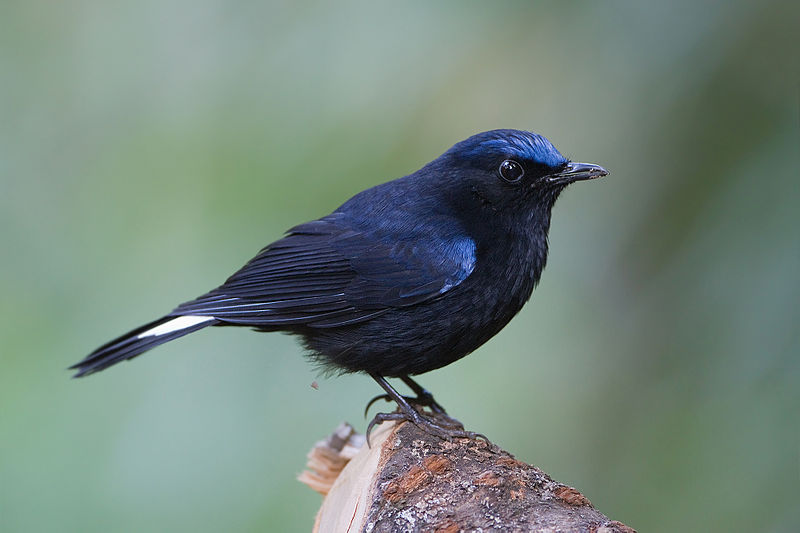
White-tailed Robin (Myiomela leucura) ©WikiC

White-tailed Robin (Myiomela leucura) ©WikiC

This third part of the Muscicapidae – Chats, Old World Flycatchers family starts with the White-tailed Robin (Myiomela leucura). What an amazing group of avian wonders from Our Lord, their Creator.

Part I and Part II of the Sunday Inspiration covered over half of the 321 member Chat and Old World Flycatcher family. This week, we should be able to finish up. Meagan Fee came back for the Christmas break (she was our summer intern at Faith) and played a fantastic violin piece for our offering last Sunday. It is fantastic and long enough, I hope, to cover the slideshow. :0)

Back to the flycatchers. The Genera covered this week are the Myiomela, Tarsiger, Enicurus, Myophonus, Cinclidium, Ficedula, Muscicapella, Phoenicurus, Monticola, Saxicola, Campicoloides, Emarginata, Pinarochroa, Thamnolaea, Myrmecocichla, Oenanthe, Pinarornis, Namibornis and Humblotia.

Old World flycatchers live in almost every environment with a suitable supply of trees, from dense forest to open scrub, and even the montane woodland of the Himalayas. The more northerly species migrate south in winter, ensuring a continuous diet of insects.

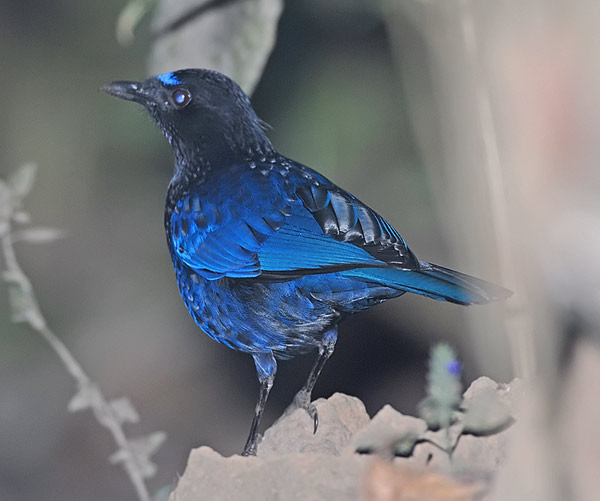
Malabar Whistling Thrush (Myophonus horsfieldii) by Nikhil Devasar

Malabar Whistling Thrush (Myophonus horsfieldii) by Nikhil Devasar

“I will whistle for them to gather them together, For I have redeemed them; And they will be as numerous as they were before. (Zechariah 10:8 NASB)

Whistling thrushes are mostly seen in hilly areas except during winter when they may descend to streams near the plains. They specialize in feeding on snails and their strong hooked bills are used to deal with them. They may choose a particular rock on which they crack the shells.

The whistling of a Malabar Whistling Thrush from xeno-canto by David Farrow.

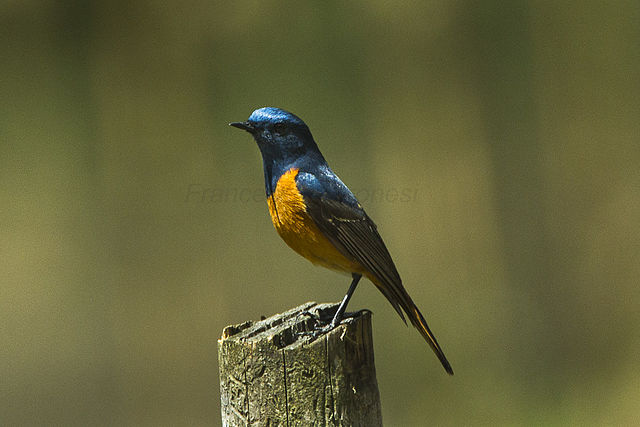
Blue-fronted Robin (Cinclidium frontale) ©WikiC

Blue-fronted Robin (Cinclidium frontale) ©WikiC

The Blue-fronted Robin (Cinclidium frontale) is a species of bird in the family Muscicapidae. It is the only species in the monotypic genus Cinclidium. It is found in Bhutan, China, India, Laos, Thailand, Vietnam, and possibly Nepal. Its natural habitat is temperate forests.

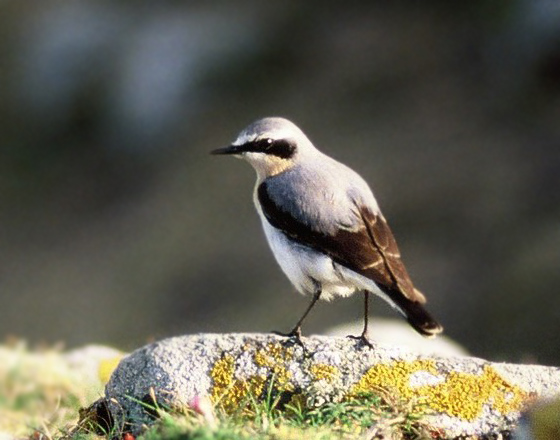
Northern Wheatear (Oenanthe oenanthe) Breeding male ©WikiC

Northern Wheatear (Oenanthe oenanthe) Breeding male ©WikiC

The Wheatears, Oenanthe, have characteristic black and white or red and white markings on their rumps or their long tails. Most species are strongly sexually dimorphic; only the male has the striking plumage patterns characteristic of the genus, though the females share the white or red rump patches.

This slideshow requires JavaScript.

Like a crane or a swallow, so did I chatter: I did mourn as a dove: mine eyes fail with looking upward: O LORD, I am oppressed; undertake for me. (Isaiah 38:14 KJV)

“O Come, O Come Emmanuel”  by Meagan Fee on Violin and Jill Foster accompanying

*

Sunday Inspiration – Chats and Old World Flycatchers I
Sunday Inspiration – Chats and Old World Flycatchers II
Muscicapidae – Chats, Old World Flycatchers

Gideon

*

The Long Christmas Journey

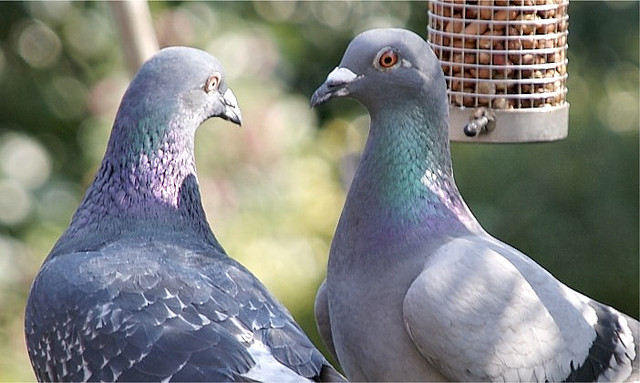
Rock Dove (Columba livia) ©Flickr Oleg Sidorenko

Rock Dove (Columba livia) ©Flickr Oleg Sidorenko

The Long Christmas Journey

~ by Emma Foster

Once there were two birds who lived in Portland, Oregon. Their names were Belinda and Steven and they were pigeons (a.k.a. Rock Doves).

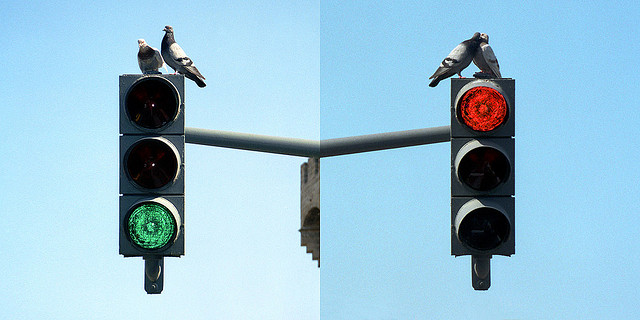
Belinda and Steven lived on top of a stop-and-go light in the middle of a busy street where they had built their nest. They loved the city life so they didn’t mind all of the cars driving by, especially when they honked. They also didn’t mind all of the headlights that lit up the streets at night. Every day, Steven would fly through the city to search for food. And every day lots of cars would drive by.

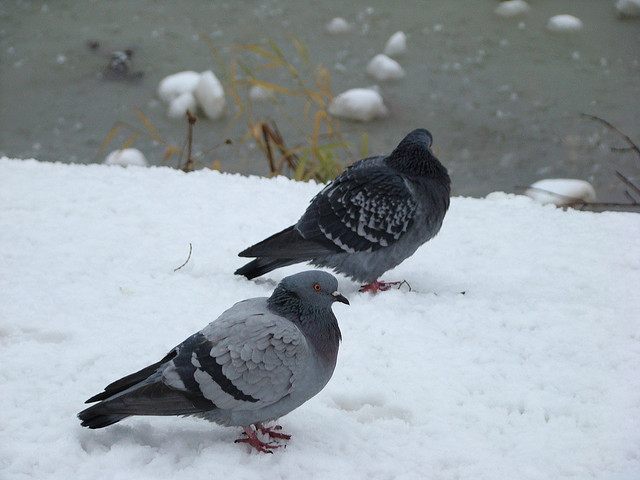
Rock Dove (Columba livia) ©Flickr Edward Townend

Rock Dove (Columba livia) ©Flickr Edward Townend

As December drew near, it started to get colder. Eventually, snow started to fall. The more snow fell, the colder it became.

Belinda and Steven decided it was time for them to fly down south for the winter. They would spend Christmas down there just as they did every year. They both liked spending Christmas down where it was warm.

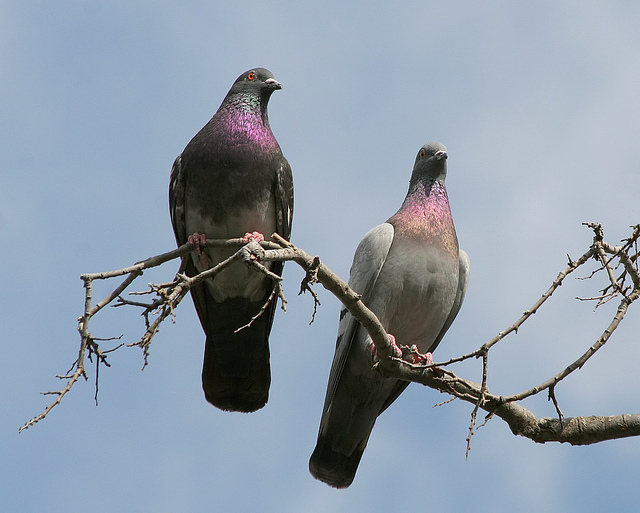
Rock Dove (Columba livia) ©Flickr Andrey

Rock Dove (Columba livia) ©Flickr Andrey

They started flying early the next morning because it was going to be a long journey to fly down south. As Belinda and Steven travelled, they were careful to not fly too high when they flew through the mountains because the tops of the mountains were cold and snowy. They flew past many mountains because Belinda and Steven were flying through the Rocky Mountains.

Rock Dove (Columba livia) ©Flickr Ingrid Taylar

Eventually, after several hours, Belinda and Steven reached Death Valley. It was nice and warm there. But Death Valley was a little too warm for them. Fortunately there was a group of road runners that gave them directions to Arizona. Belinda and Steven were already in eastern California so it wasn’t that long of a flight to get there.

Belinda and Steven were able to fly to Arizona and made it there by Christmas Eve. It was nice and warm and the desert was filled with cactuses. Belinda and Steven decorated a cactus with some Christmas decorations they had brought with them so the cactus looked festive.

Together, Belinda and Steven had a wonderful Christmas, and they didn’t even mind that it would still be a long trip back to Oregon. They would have to come back to Arizona next year.

The End

Rock Dove (Columba livia) ©Flickr Ken Slade

Rock Dove (Columba livia) ©Flickr Ken Slade


Lee’s Addition:

Storks, doves, swallows, and thrushes all know when it’s time to fly away for the winter and when to come back. But you, my people, don’t know what I demand. (Jeremiah 8:7 CEV)

Thanks, Emma, for telling us about your migrating Pigeon friends, Belinda and Steven. Smart birds for escaping the winter cold up there in the Northwest.

Keep up the great stories. We are all enjoying them and you a gaining quite a fan club. We are looking forward to more stories through this New Year. Happy New Year.

*

See more of Emma Foster’s Stories

ABC’s of the Gospel

*


Ian’s Bird of the Week – Temminck’s Stint

Ian’s Bird of the Week – Temminck’s Stint ~by Ian Montgomery
Newsletter – 12/31/15
Surprise, surprise, Facebook can be useful! I was contemplating a suitable species to wish you a Happy New Year, when I discovered from a post by Rohan Clark that Temminck’s Stint is the newest addition to the Australian bird list, one having turned up in Broome, Western Australia about a month. And no, I didn’t rush off there to photograph it: here are a couple of old photos that I took in India twelve years ago. So that satisfies the Old Year/New Year metaphor. You’ll have noticed by now that I’ll use any excuse as a metaphor to nominate a species as Bird of the Week.
This is probably one for the serious birder as small waders in winter plumage not only pose serious problems of identification but also fail to excite people who are into more dramatic plumages. That said, it’s distinguishing features are the down-curved bill, short legs and, in flight, the white sides to the tail. The latter is probably the best field mark, as it’s shared with no other members of the genus and easy to see in flight, even if it doesn’t show when the birds are on the ground. There are four species of Stints (see Typical Waders on Birdway) the Eurasian name for very small waders; comparable species of the same genus in North America are usually named Sandpipers, e.g. the Least Sandpiper  and are collectively, colloquially and somewhat disparagingly called Peeps after their calls.
Temminck’s Stint nest right across northern Eurasia from Norway to eastern Siberia. The short Arctic breeding season is something of a frenzy, as Temminck’s Stints of both sexes are territorial and serially bigamous and sometimes fit in three clutches with different mates. They winter mainly in equatorial Africa and southern and southeastern Asia, with Borneo being the closest regular winter haunt to Australia. It is to be expected that they would sometimes overshoot their destination and there have been several reports of them in Australia in recent years but none has been accepted until now.
Coenraad Temminck was a Dutch ‘aristocrat and zoologist’ born in Amsterdam in 1778. He was director of the National Museum (then the Rijksmuseum) of Natural History in Leiden from 1830 until his death in 1851. He made a huge contribution towards the classification of birds and other vertebrates at a time when the species and type concepts were contentious. He inherited a large collection of bird skins from his father who was treasurer of the Dutch East India Company, so it would be easy to imagine that his specimen of the stint came from Indonesia.
Sixteen bird species still include his name as part of the scientific and/or common name, including the Australian Logrunner (Orthonyx temminckii), which as featured as bird of the week before. He also make a fundamental contribution to biogeography, though his views on the divine aspects of species design and their unchanging nature proved unpopular with other scientists after about 1840.
You nearly got the Eurasian/Winter/Pacific Wrens as bird of the week as today I’ve got as far as the wren family page in the website redesign. I’m switching from BirdLife International to the IOC for classification and the IOC splits the old Winter Wren of the almost the entire Northern Hemisphere into Old World (Eurasian Wren) and New World (Winter and Pacific Wrens , which also suited the Old Year/New Year transition nicely. However, the Eurasian Wren has featured as bird of the week before in the guise of Winter Wren so you ended up with an obscure wader instead.
I send you very best wishes for the New Year and a rewarding 2016 and don’t make your New Year Resolutions too ambitious!
Ian
**************************************************
Ian Montgomery, Birdway Pty Ltd,
454 Forestry Road, Bluewater, Qld 4818
Tel 0411 602 737 ian@birdway.com.au
Bird Photos http://www.birdway.com.au/
Recorder Society http://www.nqrs.org.au

Lee’s Addition:

“If a bird’s nest happens to be before you along the way, in any tree or on the ground, with young ones or eggs, with the mother sitting on the young or on the eggs, you shall not take the mother with the young; (Deuteronomy 22:6 NKJV)

Well, Happy New Years to you also, Ian. We look forward to your newsletters again this new year. Thanks for letting our blog share your very informative articles along with super photos of species. Many of those species we have never heard of, let alone have the opportunity to see. Thanks for sharing.

*

Ian’s Bird of the Week articles

Ian’s Scolopacidae Family

Scolopacidae – Sandpipers, Snipes – Stint Family

Good News

*
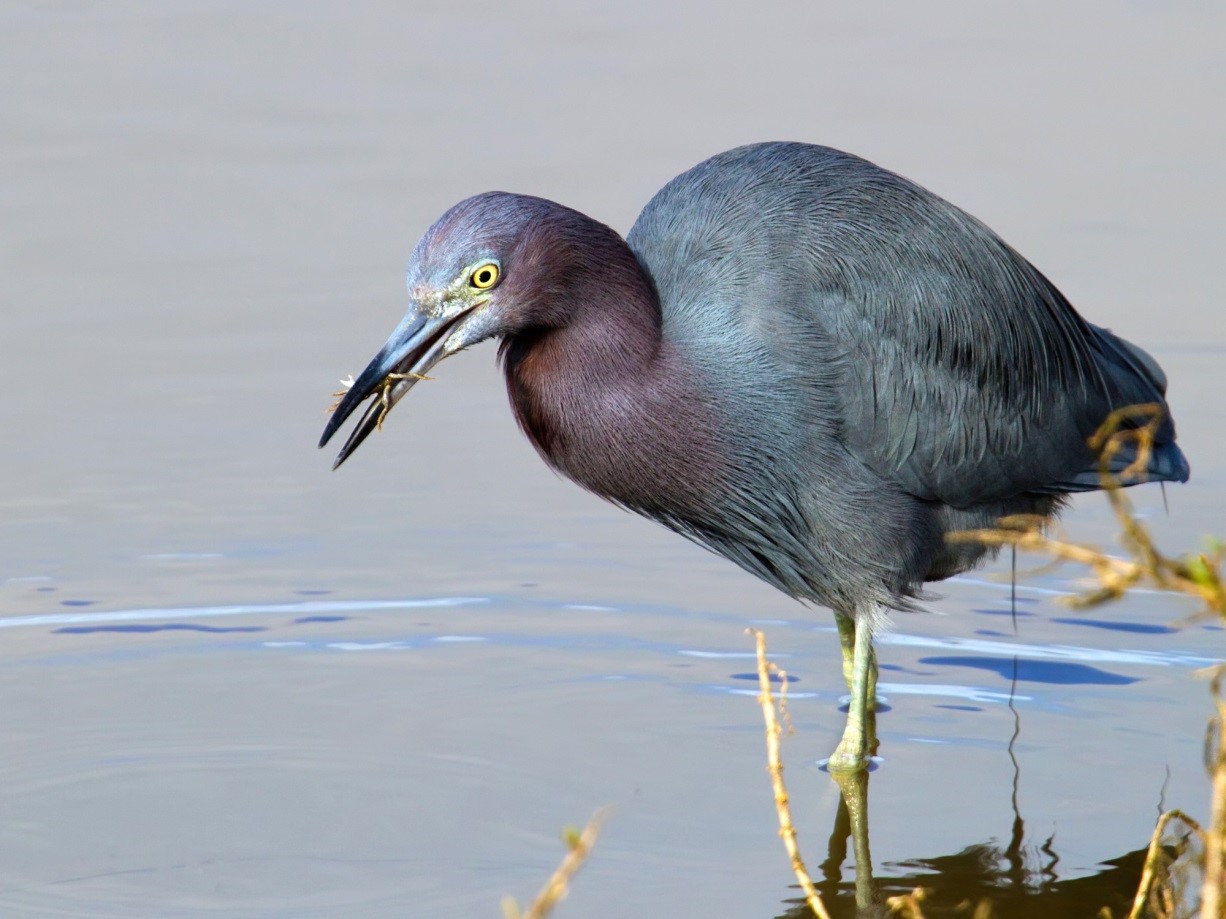
Little Blue Heron at a Rural Pondshore, Seen at a Summer Rekefest

Little Blue Heron at a Rural Pondshore, Seen at a Summer Rekefest

~ by James J. S. Johnson

Reddish Egret in a rural Pondshore at Summer Rekefest

Not that which goeth into the mouth defileth a man; but that which cometh out of the mouth, this defileth a man. … Do not ye yet understand, that whatsoever entereth in at the mouth goeth into the belly, and is cast out into the draught? But those things which proceed out of the mouth come forth from the heart; and they defile the man. For out of the heart proceed evil thoughts, murders, adulteries, fornications, thefts, false witness, blasphemies; these are the things which defile a man, but to eat with unwashen hands defileth not a man. (Matthew 15:11 & 15:17-20)

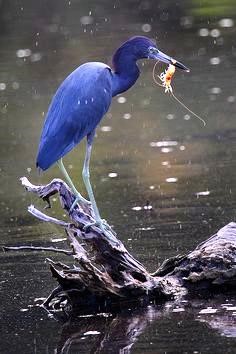
Little Blue with big fish in mouth

When thinking about the eating behavior of long-legged wading birds—such as the Little Blue Heron—I remembered this proverb, spoken by the Lord Jesus Christ (in Matthew 15:11-20 & Mark 7:15-23), that observes that digestion depends upon what is put into an eater’s mouth. Whatever exits out of a mouth (whether it be words or regurgitated food!) had to have been inside, already, before it can exit! On that happy note I now remember seeing a Little Blue Heron, wading in pondshore waters.

On a pleasant Saturday, June 20th of AD2015, in Ferris, Texas – a good day for an outdoor Rekefest (shrimp feast party – more on that later!), graced by a busy host of local birds, including Black-capped Chickadees, House Finches, Cardinals, and a Little Blue Heron.
This report will focus only on the Little Blue Heron, which I then saw, wading in shallow pondshore waters. (For the geographically curious, Ferris is a city about 15 miles south of Dallas, somewhat hilly and forested, covering land in both Dallas and Ellis Counties.)

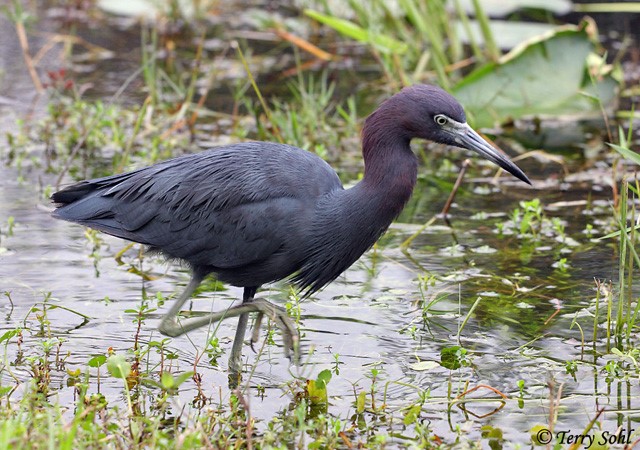
Little Blue walking through water

LITTLE BLUE HERON (Egretta caerulea, a/k/a Florida caerulea)
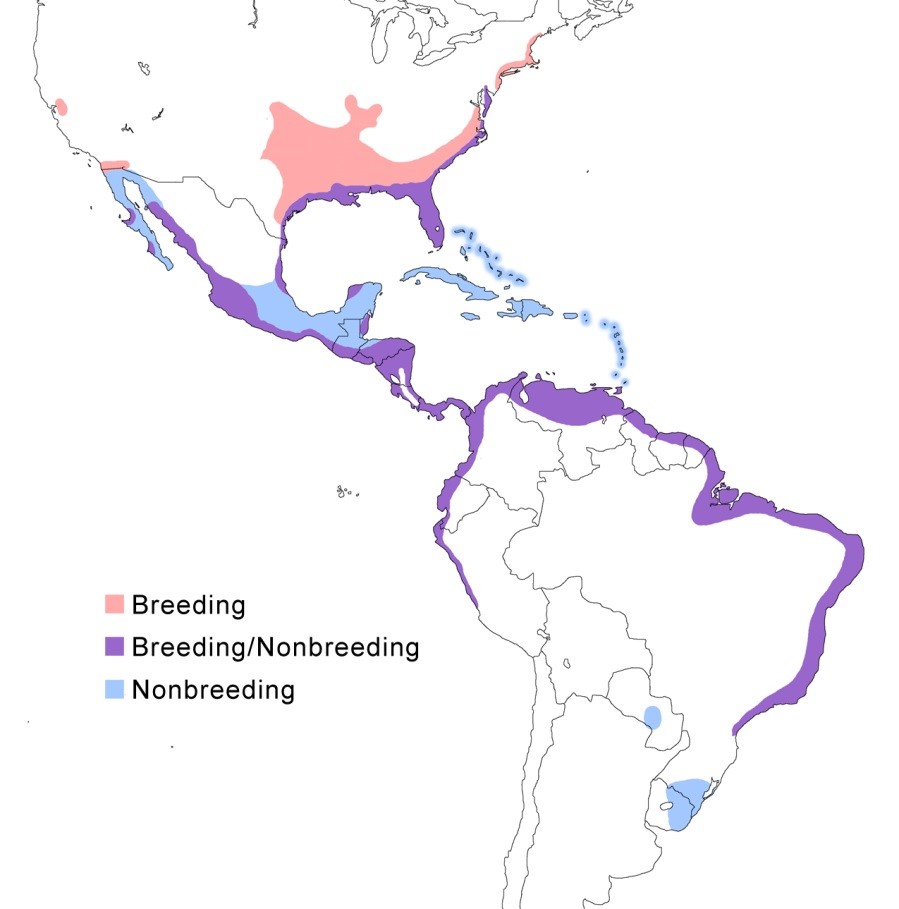
The Little Blue Heron is a long-legged wetland-dwelling wading bird (i.e., shorebird) of the heron/egret family, with a “summer” (March to October) breeding range that includes the eastern half of Texas.

Little Blue Map
For these herons wetland habitats are “home” – whether they be freshwater pondshores, waterlogged meadows, brackish swamps, tidal mudflats, marshlands, estuaries, ricefields, or even slow-moving streams (e.g., where waters slow down and pool at bends in the stream). Little Blue Herons build stick nests, in colonies, like other herons and egrets, in trees and shrubs. [See Roger Tory Peterson, A FIELD GUIDE TO THE BIRDS OF TEXAS AND ADJACENT STATES (Houghton Mifflin, 1988), pages 16 & 28-29.]

Little Blue Heron with cache
Depending on the lighting this bird’s plumage appears mostly as bluish-grey or even a dull purplish-blue (with a maroon head and neck, sometimes with bronze-like highlighting). Their eyes are yellowish, their legs are dull (depending upon lighting, sometimes appearing yellowish-green, sometimes as pale grey-blue), and their dark necks are distinctively maroon or purplish. Unlike the Reddish Egret’s pale-pink bill (with its black tip), the Little Blue Heron has a distinctively light-blue bill (also with a black tip).

Little Blue Herons grow to about 2 feet high, with an outstretched wingspan of about 3 feet! During their juvenile stage (first year) these herons are mostly white, except for darkish wing-tips (and dull green legs). Such juveniles resemble Snowy Egrets and sometimes are permitted to mingle with the snowies.
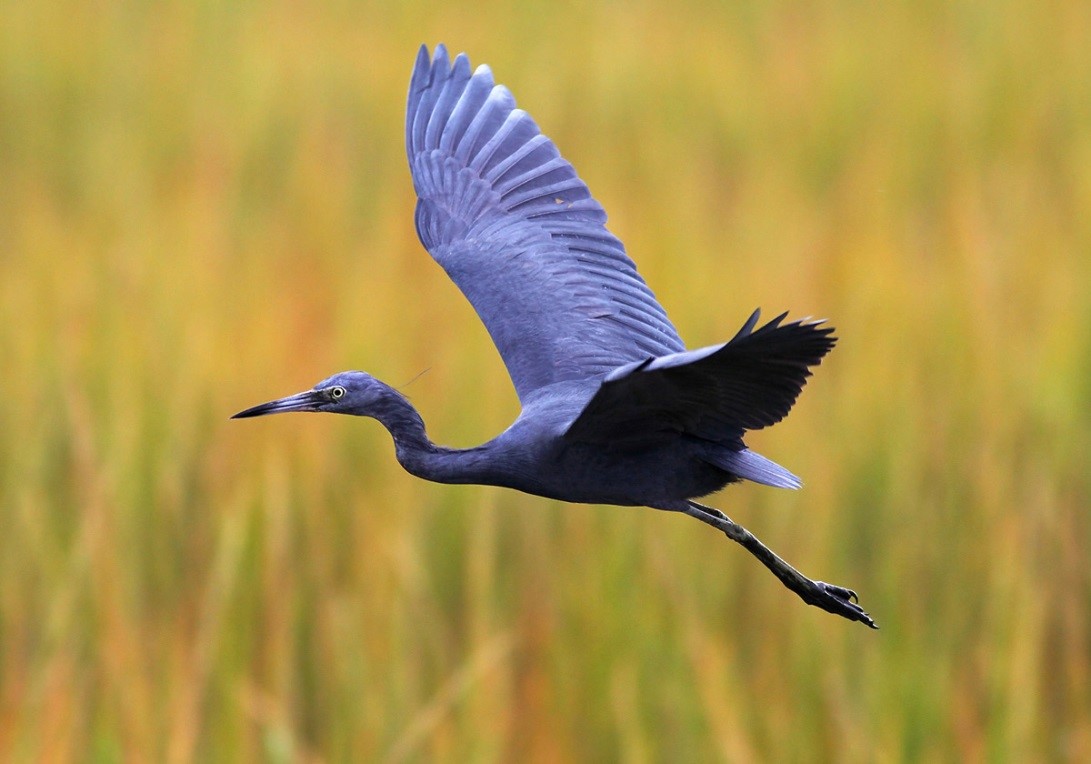
At rest, as well as in flight, Little Blue Herons typically hold their necks in an S-curve position.

Little Blue in Flight
When the evening sun descends toward the horizon, and dusk approaches sunset, Little Blue Herons became active. At dawn, as the morning sun rises, they are likewise active. Wading into the shallow waters of a pond or the lotic pooling of brackish waters, these herons are known to spread their wings like a shady picnic umbrella, obscuring sunlight glare on the water – this enables them to better see and stalk potential prey in the shallow water – such as a frog or snake or fish.

If necessary, to catch evasive fish, these herons may dash about, chasing, in time stabbing their catch with their sharply pointed javelin-like bills. However, most of the time these herons prefer to stand still, like a statue, and wait for their meal to appear at a catchable spot in the shallow water.

Little Blue with medium fish in mouth

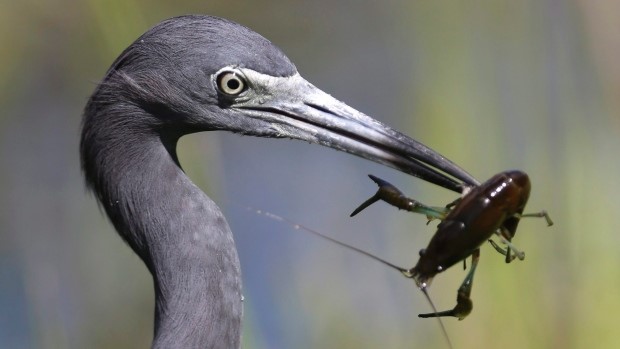
Snatched food is swallowed whole, digested, and indigestible parts (like bones) are expelled by regurgitation. (Fun to watch if you know what you are looking at – imagine watching a Little Blue Heron eat a crayfish, followed by disposal of the indigestible parts!)

Little Blue with a Crayfish

Also, like many other parent birds, these herons use regurgitation as a convenient mode of food transmission from parent to young, depositing partially digested food into the hungry mouths of their dependent chicks.

Back to the Rekefest event – which was the official reason why my wife and I were in Ferris (see photograph below — showing Dave Olson, Wayne Rohne, & others — at a different Rekefest hosted by NST’s Snorre chapter, in Houston), at the hospitable home of John and Mari-Anne Moore, that Saturday — eating Nordic shrimp the traditional (Norwegian) way, along with other members and guests of the Norwegian Society of Texas (Viking Chapter).

Of course I had sufficient table manners to not eat like a Little Blue Heron, so I disposed of the shells of my boiled shrimp (after enjoying each one that entered my own digestive system!) with proper etiquette. (And we bought extra shrimp “to go” before we left.)

Norwegian Society of Texas - Viking Chapter Rekefest event

But the lesson of the “in-and-out” proverb remains: whatever exits from our mouths must have been there, already, before it came out. Words flowing out, from our mouths, originate as thoughts, actively proceeding from our “hearts” – so let us carefully guard our hearts, and our lips, so that what we say is helpful, blessing others!

2 For in many things we offend all. If any man offend not in word, the same is a perfect man, and able also to bridle the whole body. 3 Behold, we put bits in the horses’ mouths, that they may obey us; and we turn about their whole body. 4 Behold also the ships, which though they be so great, and are driven of fierce winds, yet are they turned about with a very small helm, wherever the governor desires. 5 Even so the tongue is a little member, and boasts great things. Behold, how great a matter a little fire kindles! 6 And the tongue is a fire, a world of iniquity: so is the tongue among our members, that it defiles the whole body, and sets on fire the course of nature; and it is set on fire of hell. 7 For every kind of beasts, and of birds, and of serpents, and of things in the sea, is tamed, and hath been tamed of mankind. 8 But the tongue can no man tame; it is an unruly evil, full of deadly poison. 9 Therewith bless we God, even the Father; and therewith curse we men, which are made after the image of God. 10 Out of the same mouth proceedeth blessing and cursing; my brethren, these things ought not so to be! 11 Doth a fountain send forth at the same place sweet water and bitter? 12 Can the fig tree, my brethren, bear olive berries? Or a vine, figs? Likewise can no fountain both yield saltwater and freshwater. 13 Who is a wise man and endued with knowledge among you? Let him show out of a good conversation his works with meekness of wisdom. (James 3:2-13)

*
Fair Use image credit:

Ardeidae – Herons, Bitterns

James J. S. Johnson

Orni-Theology

*
2015 in review

The WordPress.com stats helper monkeys prepared a 2015 annual report for this blog.

Here’s an excerpt:

The Louvre Museum has 8.5 million visitors per year. This blog was viewed about 220,000 times in 2015. If it were an exhibit at the Louvre Museum, it would take about 9 days for that many people to see it.

Click here to see the complete report.

Thanks again for all of you who have made 2015 such a great blogging year by dropping in to reading our posts. We here at the blog are trusting the Lord that He will give us another great year in 2016, giving credit and praising the Creator of all these neat birds in the world.

Happy New Year and Lord’s Greatest Blessings to you all.

Birds of the Bible – Nebuchadnezzar and Birds

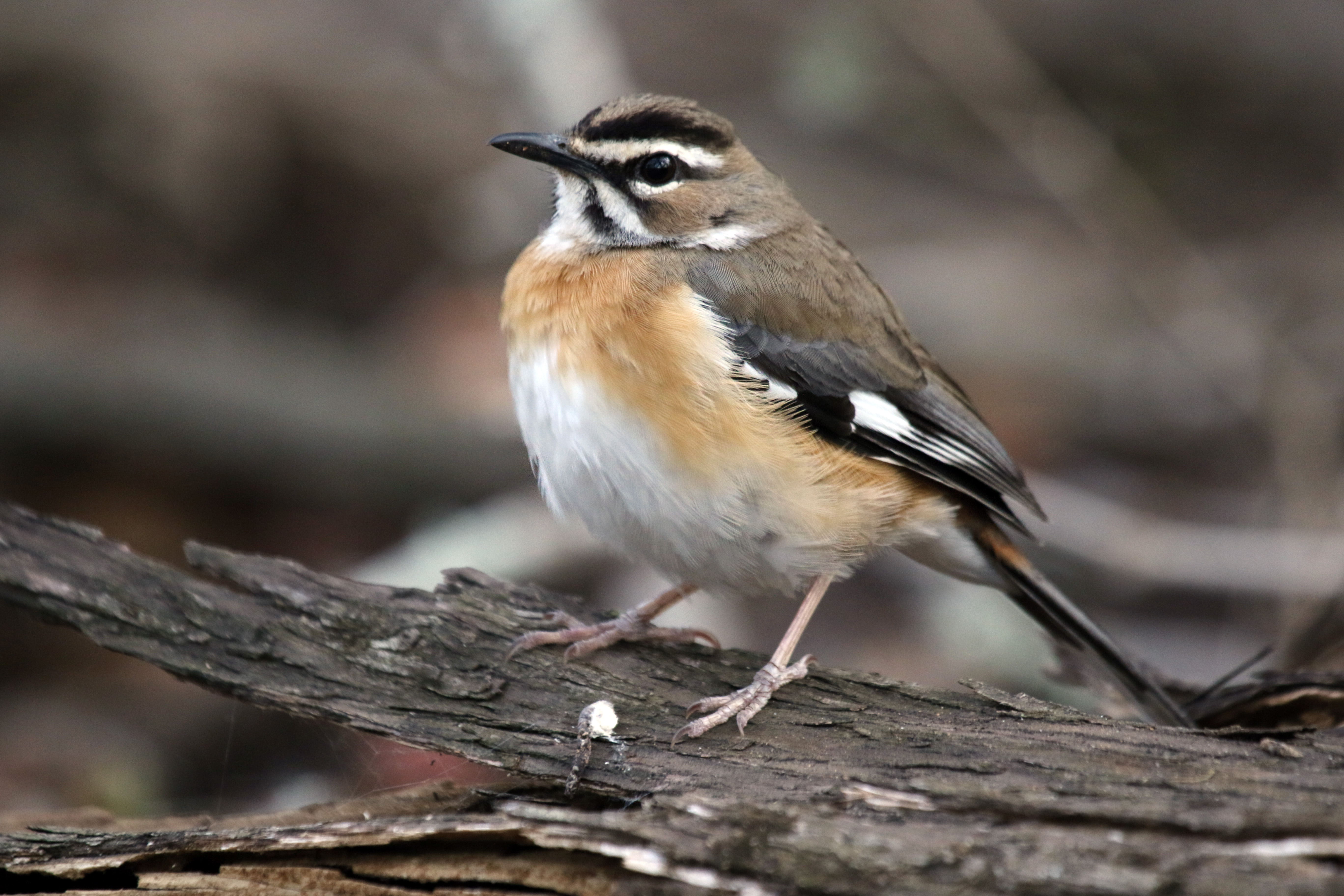
Bearded Scrub Robin (Cercotrichas quadrivirgata) ©WikiC

Bearded Scrub Robin (Cercotrichas quadrivirgata) ©WikiC

While reading Daniel chapter 2 today in the Bible, I was captivated by a passage that mentions birds. Here is that passage:

“This was the dream; now we will tell its interpretation before the king. “You, O king, are the king of kings, to whom the God of heaven has given the kingdom, the power, the strength and the glory; and wherever the sons of men dwell, or the beasts of the field, or the birds of the sky, He has given them into your hand and has caused you to rule over them all. You are the head of gold.” (Daniel 2:36-38 NASB) (emphasis mine)

Wow! Men, I can understand, but the birds being put under Nebuchadnezzar’s hand? This calls for some investigation.

First, if you are familiar with the book of Daniel, especially the first few chapters, you will recall that Daniel had been taken captive to Babylon when Nebuchadnezzer had captured Jerusalem. (Daniel 1) In Babylon, where Daniel was now one of the wise men, he was threatened with death unless the King’s dream could be interpreted. (Daniel 2:1-18) After praying with his three friend, the God of heaven reveals the dream and the interpretation to Daniel. Daniel tells him his dream and then gives the interpretation, where our verses above are found. Daniel 2:19-45)

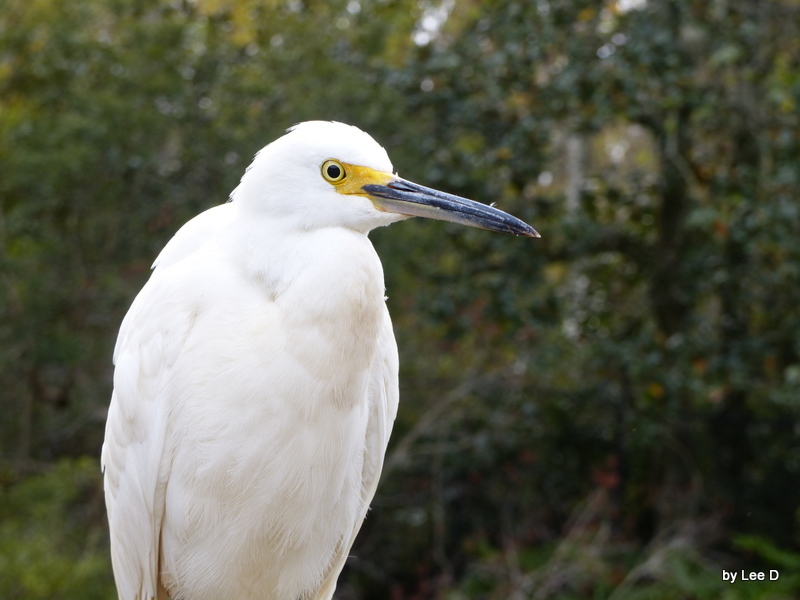
Snowy Egret by Lee

Snowy Egret by Lee

Bible Knowledge Commentary – “Nebuchadnezzar’s rule was viewed as a worldwide empire, in which he ruled over all mankind as well as over beasts and birds. At the time of Creation the right to rule over the earth was given man who was to have dominion over it and all the creatures in it (Gen-1:26). Here Nebuchadnezzar by divine appointment was helping fulfill what God had planned for man.”

Cambridge – “the beasts of the field] i.e. wild animals (cf. in Heb. e.g. Exo 23:11; Exo 23:29). These and the birds are mentioned in order to represent Nebuchadnezzar’s rule as being as absolute as possible; the former are borrowed, no doubt, from Jer 27:6; Jer 28:14.”

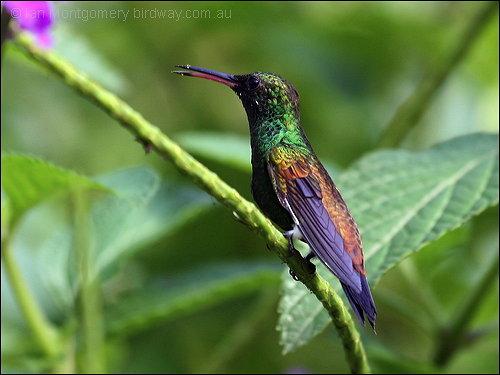
Copper-rumped Hummingbird (Amazilia tobaci) by Ian

Copper-rumped Hummingbird (Amazilia tobaci) by Ian

John Gill – “the beasts of the field, and the fowls of the heaven, hath he given into thine hand; all parks, chases, and forests (so that none might hunt or hawk without his permission), as well as the persons and habitations of men, were at his dispose; showing the despotic power and sovereign sway he had over his subjects:

and hath made thee ruler over all: men, beasts, and fowl: he not only conquered the Egyptians, Tyrians, and Jews, and other nations about them; but, according to Megasthenes (l) he exceeded Hercules in strength, and conquered Lybia and Iberia, and carried colonies of them into Pontus; and, as Strabo (m) says, carried his arms as far as the pillars of Hercules:

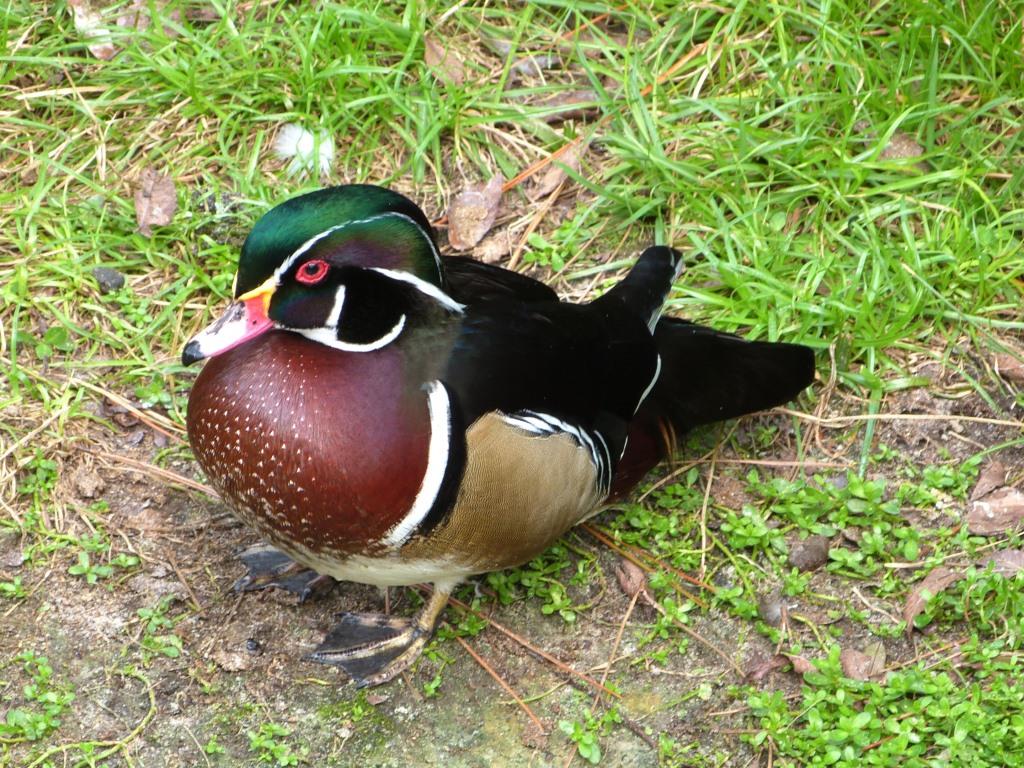
Wood Duck Brevard Zoo

Wood Duck Brevard Zoo by Lee

Henry – “The extent of his dominion is set forth (Dan 2:38), that wheresoever the children of men dwell, in all the nations of that part of the world, he was ruler over them all, over them and all that belonged to them, all their cattle, not only those which they had a property in, but those that were ferae naturae – wild, the beasts of the field and the fowls of the heaven. He was lord of all the woods, forests, and chases, and none were allowed to hunt or fowl without his leave.”

JFB – men … beasts … fowls — the dominion originally designed for man (Gen 1:28; Gen 2:19, Gen 2:20), forfeited by sin; temporarily delegated to Nebuchadnezzar and the world powers; but, as they abuse the trust for self, instead of for God, to be taken from them by the Son of man, who will exercise it for God, restoring in His person to man the lost inheritance (Psa 8:4-6).

Wesley – “Daniel 2:38  “Made thee ruler – He hath given thee absolute dominion of all creatures, men and beasts within the bounds of thy vast kingdom. Thou – He was first in order, as the head is before the other parts, and the vision began in him, and descended downwards to the other three monarchies. He was the head of gold, because of the vast riches wherein this monarchy abounded, and because it stood longest, five hundred years, and was fortunate and flourishing to the last.”

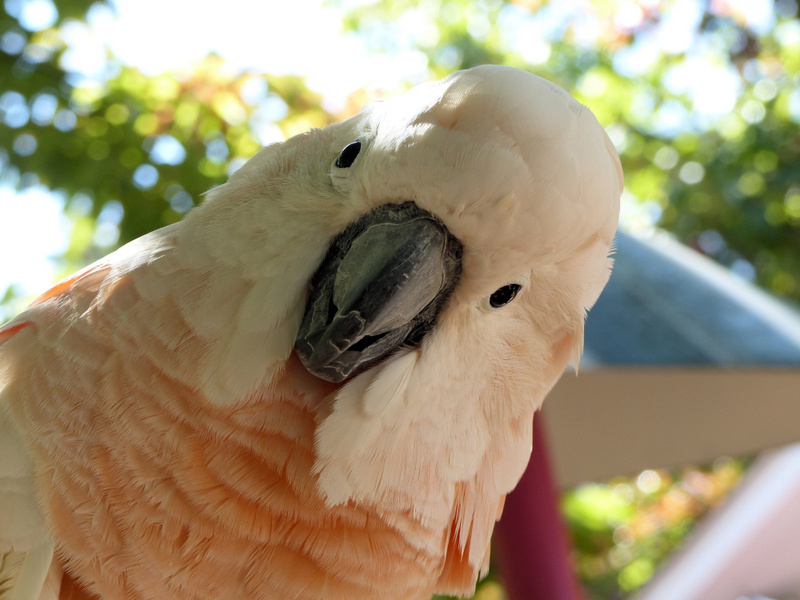
 Salmon-crested Cockatoo (Cacatua moluccensis) at Parrot Mtn by Lee

Salmon-crested Cockatoo (Cacatua moluccensis) at Parrot Mtn by Lee

Reading those commentaries, from my e-Sword, it appears from some that some are saying Nebuchadnezzer had all control of the birds as to when they could be hunted or hawked, etc. Others are saying that he was to be over the original dominion mandate given to man for the beast and birds which had been corrupted by man.

Peregrine Falcon (Falco peregrinus) by Ray

Peregrine Falcon (Falco peregrinus) by Ray

It is an interesting statement and trust you found it informing. I did. For me, I try to respect and help the birds when I can. Many are researching and finding ways to help the birds, even when making preserves to protect their habitat. The Lord created them and we should do what we can to help them. We can even help the birds when some teach they evolved, by countering that lie with the truth of God’s Word.

So God created great sea creatures and every living thing that moves, with which the waters abounded, according to their kind, and every winged bird according to its kind. And God saw that it was good. (Genesis 1:21 NKJV)

*

Birds of the Bible

Who Paints The Leaves?

*

Lord’s Avian Wonders – Gnatcatcher Preening

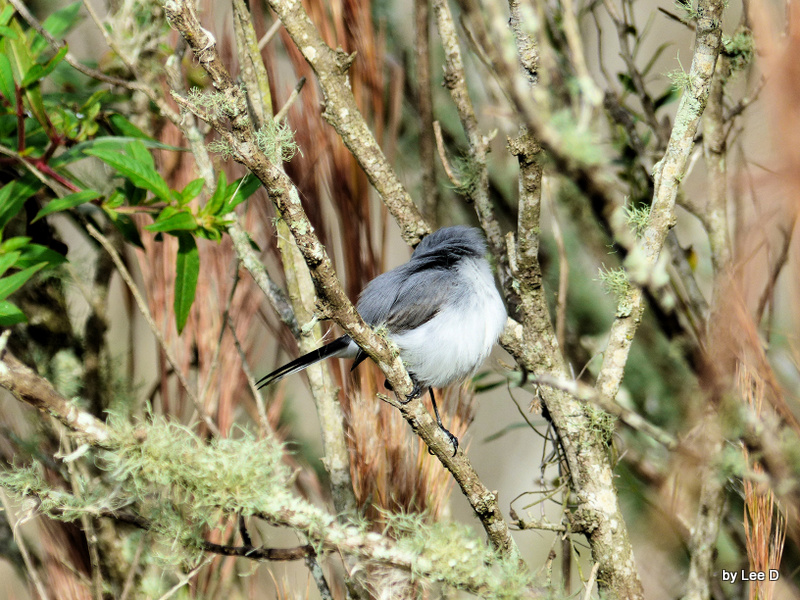
Blue-gray Gnatcatcher preening at Circle B by Lee

Blue-grey Gnatcatcher preening at Circle B by Lee

“Be dressed in readiness, and keep your lamps lit. (Luke 12:35 NASB)

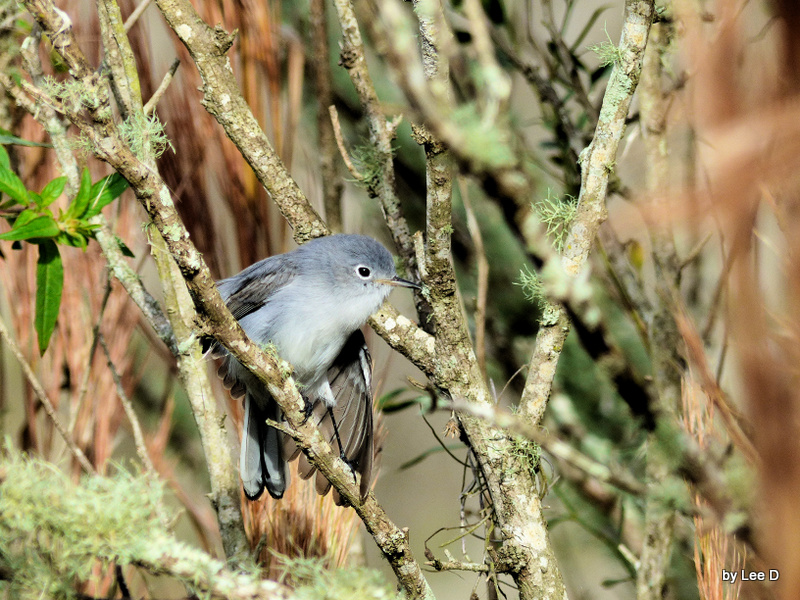
A visit to Circle B Bar Reserve last week provide a great opportunity to watch a Blue-grey Gnatcatcher (Polioptila caerulea) preening. Normally, they are flitting from here to there and never stay put long enough to catch a photo, let along some video.

To preen: personal grooming of a bird’s feathers especially by using its beak. Nice article at About Birding – What is Preening.

They are a very small songbird, 10–13 cm (3.9–5.1 in) in length and weighing only 5–7 g (0.18–0.25 oz). Adult males are blue-grey on the upperparts with white underparts, have a slender dark bill, and a long black tail edged in white. Females are less blue. Both sexes have a white eye ring.

The blue-grey gnatcatcher’s breeding habitat includes open deciduous woods and shrublands in southern Ontario, the eastern and southwestern United States, and Mexico. Though gnatcatcher species are common and increasing in number while expanding to the northeast,[4] it is the only one to breed in Eastern North America. They build a cone-like nest on a horizontal tree branch. The incubation period is 13 days for both sexes. Both parents construct the nest and feed the young; they may raise two broods in a season.

These birds migrate to the southern United States, Mexico, northern Central America – (Belize, Guatemala, and Honduras), Cuba, Bahamas, Turks and Caicos Islands, and the Cayman Islands. Yeah! They come to Circle B in the winter!

Blue-gray Gnatcatcher preening at Circle B by Lee

Blue-grey Gnatcatcher preening at Circle B by Lee

They forage actively in trees or shrubs, mainly eating insects, insect eggs and spiders. They may hover over foliage (gleaning), or fly to catch insects in flight (hawking). The tail is often held upright while defending territory or searching for food.

The songs (and calls) are often heard on breeding grounds, (usually away from nest) and occasionally heard other times of the year. Calls: “zkreee, zkreee, zkreee”, Songs: “szpree zpree spreeeeey spree spre sprzrreeeee”

Your adornment must not be merely external–braiding the hair, and wearing gold jewelry, or putting on dresses; but let it be the hidden person of the heart, with the imperishable quality of a gentle and quiet spirit, which is precious in the sight of God. (1 Peter 3:3-4 NASB)

Birdwatching Trips 

Circle B Bar Reserve, FL

Wordless Birds – with Hummingbirds

*

Sunday Inspiration – Chats and Old World Flycatchers II

Rufous-bellied Niltava (Niltava sundara) by Nikhil Devasar

Rufous-bellied Niltava (Niltava sundara) by Nikhil Devasar

Out of the ground the LORD God formed every beast of the field and every bird of the sky, and brought them to the man to see what he would call them; and whatever the man called a living creature, that was its name. (Genesis 2:19 NASB)

Last week’s Sunday Inspiration – Chats and Old World Flycatchers covered the first part of the Muscicapidae Family. This week, we will show the some more of the Family. There are 321 Members that make up the Muscicapidae Family. What great looking birds from their Creator.

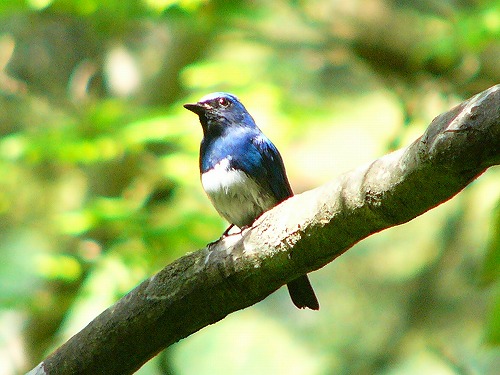
Blue-and-white Flycatcher (Cyanoptila cyanomelana) ©WikiC

Blue-and-white Flycatcher (Cyanoptila cyanomelana) ©WikiC

Chats (formerly sometimes known as “chat-thrushes”) are a group of small Old World insectivorous birds formerly classified as members of the thrush family Turdidae, but now are considered Old World flycatchers. The name is normally applied to the more robust ground-feeding flycatchers found in Europe and Asia and most northern species are strong migrants.

The Old World flycatchers, the Muscicapidae, are small passerine birds mostly restricted to the Old World (Europe, Africa and Asia). These are mainly small arboreal insectivores, many of which, as the name implies, take their prey on the wing.

White-starred Robin (Pogonocichla stellata) WikiC

White-starred Robin (Pogonocichla stellata) ©WikiC

The appearance of these birds is very varied, but they mostly have weak songs and harsh calls. They are small to medium birds, ranging from 9 to 22 cm in length. Many species are dull brown in colour, but the plumage of some can be much brighter, especially in the males. Most have broad, flattened bills suited to catching insects in flight, although the few ground-foraging species typically have finer bills.

Old World flycatchers live in almost every environment with a suitable supply of trees, from dense forest to open scrub, and even the montane woodland of the Himalayas. The more northerly species migrate south in winter, ensuring a continuous diet of insects.

Depending on the species, their nests are either well-constructed cups placed in a tree or cliff ledge, or simply lining in a pre-existing tree hole. The hole-nesting species tend to lay larger clutches, with an average of eight eggs, rather than just two to five.

White-browed Robin-Chat (Cossypha heuglini) by Daves BirdingPix

White-browed Robin-Chat (Cossypha heuglini) by Daves BirdingPix

Because this Muscicapidae family is so large, this week’s Sunday Inspiration and last week’s were divided. The reason for this is so the slideshow will not be too long. This divides them in taxonomic order in to several groups. I was going to divide this family in half, but there are so many photos available that I would have to find a symphony to provide enough music to show them all at once. ☺♪♫☺

Last week, the first 97-98 members were shown from these genera: Alethe, Cercotrichas, Copsychus, Fraseria, Myioparus, Melaenornis, Empidornis, Muscicapa, Anthipes, Cyornis.

This Slideshow of Muscicapidae in taxonomic order – Second Part (includes the genera- Niltava, Cyanoptila, Eumyias, Erithacus, Pseudalethe, Cossyphicula, Cossypha, Swynnertonia, Pogonocichla, Stiphrornis, Sheppardia, Cichladusa, Heinrichia, Leonardina, Heteroxenicus, Brachypteryx , Vauriella, Larvivora, Luscinia, Irania and Calliope.) 75 Species

Start with Niltava 

This slideshow requires JavaScript.

Let this mind be in you which was also in Christ Jesus, who, being in the form of God, did not consider it robbery to be equal with God, but made Himself of no reputation, taking the form of a bondservant, and coming in the likeness of men. And being found in appearance as a man, He humbled Himself and became obedient to the point of death, even the death of the cross. Therefore God also has highly exalted Him and given Him the name which is above every name, that at the name of Jesus every knee should bow, of those in heaven, and of those on earth, and of those under the earth, and that every tongue should confess that Jesus Christ is Lord, to the glory of God the Father. (Philippians 2:5-11 NKJV)

“The Birthday of a King” ~ by Dr. Richard Gregory, now in Glory.

*

Sunday Inspiration – Chats and Old World Flycatchers I

More Sunday Inspirations

Muscicapidae – Chats and Old World Flycatchers

Faith Baptist Church

Gospel Presentation

*