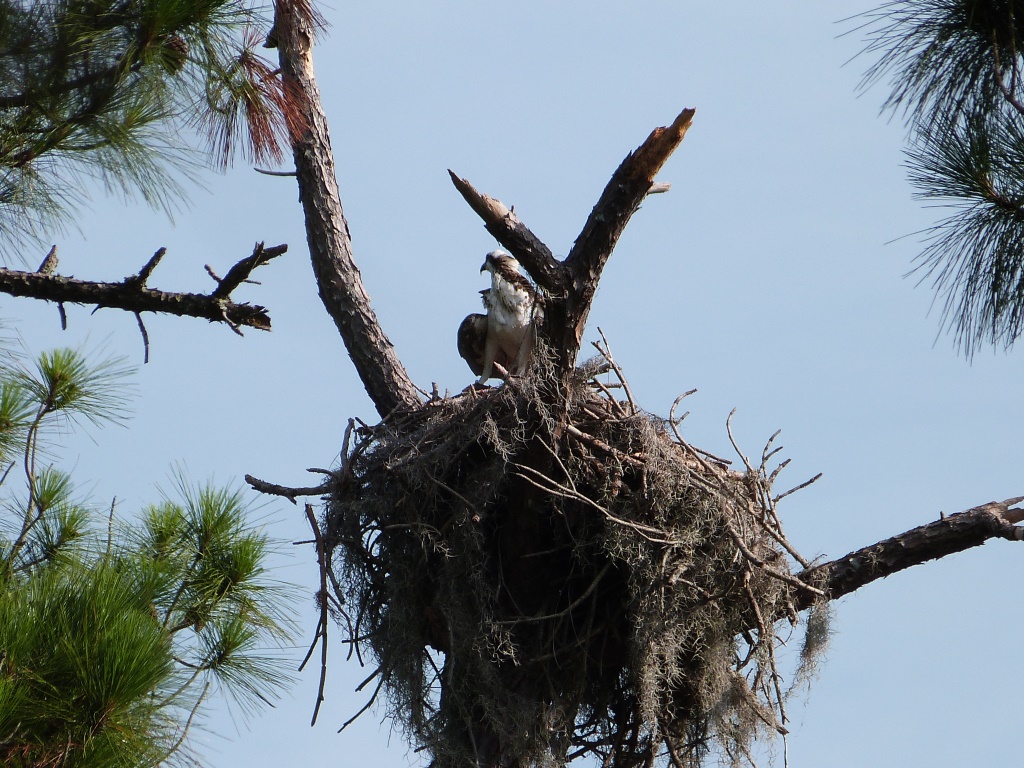
On Seahorse Key in Florida, a very popular nesting spot was vacated en mass in May. Now the avian biologist from U.S. Fish and Wildlife Service and others are trying to find out why and where they went. Here are some of the quotes from different articles, listed below.
Seahorse Key, a 150-acre mangrove-covered dune off Florida’s Gulf Coast, a key that “fell eerily quiet all at once”.
“It’s a dead zone now,” said Vic Doig, a U.S. Fish and Wildlife Service biologist. “This is where the largest bird colony on the Gulf Coast of Florida used to be.”
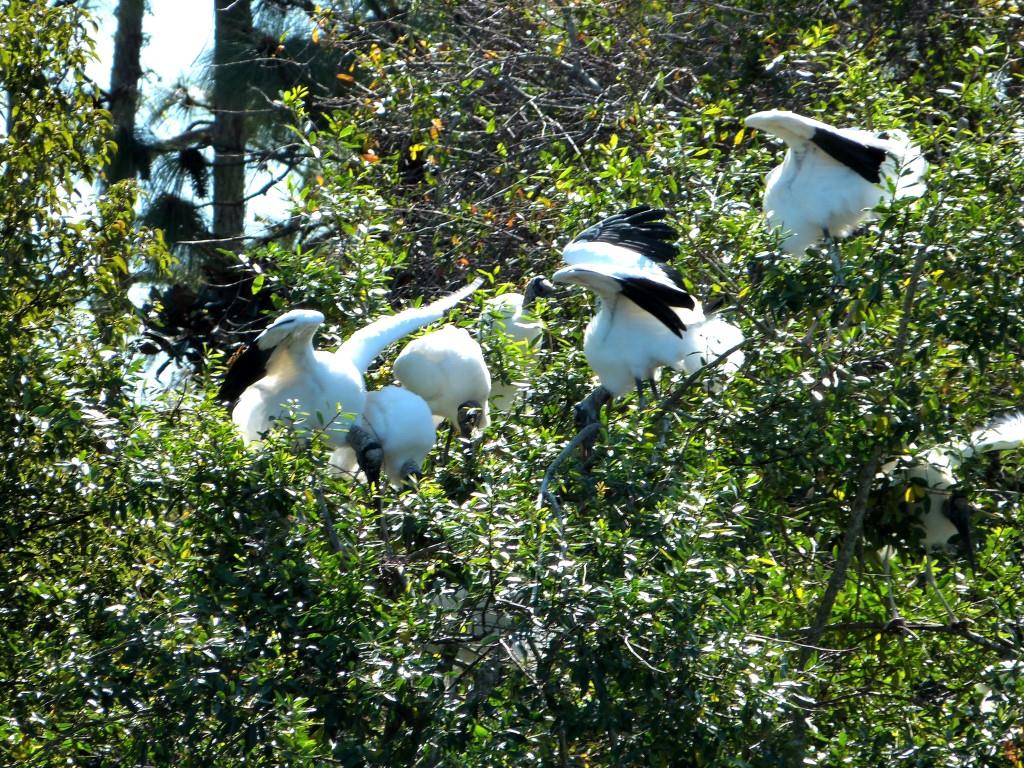
Wood Storks in the Rookery at Gatorland
Another quote, “It’s not uncommon for birds to abandon nests,” said Peter Frederick, a University of Florida wildlife biologist who has studied Florida’s birds for nearly 30 years. “But, in this case, what’s puzzling is that all of the species did it all at once.”
“Any rookery that’s persisted for decades as one of the largest colonies is incredibly important,” said Janell Brush, an avian researcher with the Florida Fish and Wildlife Conservation Commission. “It’s quite a large colony. There had to be some intense event that would drive all these birds away.” “Some of the Seahorse birds seem to have moved to a nearby island, but they’re just a fraction of the tens of thousands of birds that would normally be nesting on the key right now, Doig added.
They have even checked with the military to see if they may have experimented with something. They say that they were not involved.
Whatever scared the birds that much must have been something very unusual. The Lord knows all about it and gave the birds the sense to get out of harms way. It is a shame that so many eggs and little ones were abandoned.
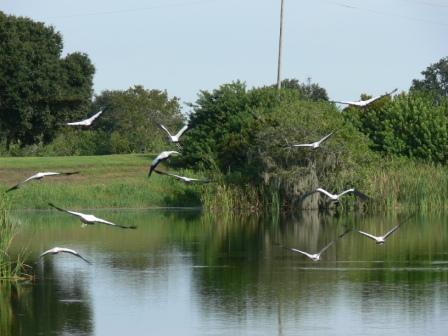
Wood Storks Flying
There is a time in the future when all the birds will flee:
I beheld the mountains, and, lo, they trembled, and all the hills moved lightly. I beheld, and, lo, there was no man, and all the birds of the heavens were fled. (Jeremiah 4:24-25 KJV)
I will take up a weeping and wailing for the mountains, And for the dwelling places of the wilderness a lamentation, Because they are burned up, So that no one can pass through; Nor can men hear the voice of the cattle. Both the birds of the heavens and the beasts have fled; They are gone. (Jeremiah 9:10 NKJV)
One article even questioned whether climate change did it. That one is a little far-fetched. Over time, maybe, over-night, I doubt it.
We can’t ask the birds directly, but as they continue to investigate this mystery, there will be lessons learned. Too bad we can’t ask the birds, but we can observe them.
“But now ask the beasts, and they will teach you; And the birds of the air, and they will tell you; (Job 12:7 NKJV)
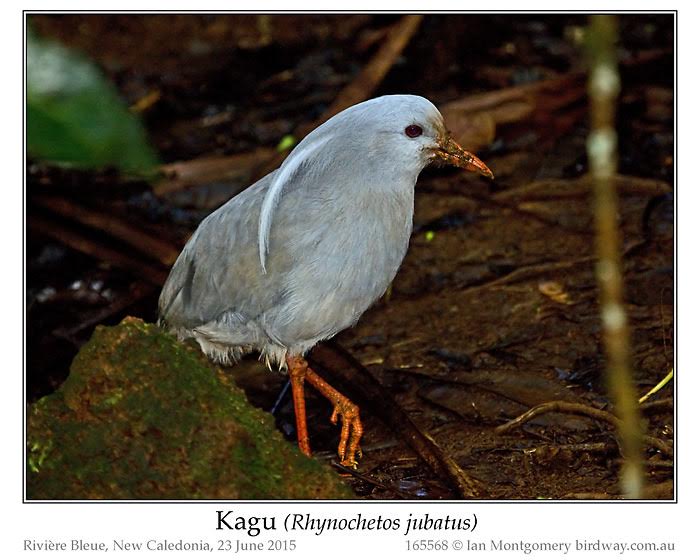
Well mission accomplie thanks to your moral and spiritual support, so here is the iconic Kagu of New Caledonia after a great trip there. We went to Rivière Bleue national park about 90min drive west of the capital Noumea, meeting our excellent guide Jean-Marc Meriot at the park entrance at 7:00am. He took us straight to a Kagu territory where we had a wonderful time with these strange and fascinating birds. They were bigger than I’d expected being 50-55cm/20-22in long.
The first one we saw was a very shy juvenile running away through the forest so Joy and I were a bit afraid that we might have difficulty getting decent photos. We needn’t have worried as we soon encountered a family party only too willing to join in the fun, though poor light in the rainforest was a bit of a problem. It had been very wet on the previous couple of days so it was very wet underfoot, or around beak and face perhaps if you’re a Kagu and probe in the earth for your food.
Adult Kagus have very long crests that droop down their back or over their wings. There’s some disagreement about differences between the sexes in the literature, but Guy Dutson in his Birds of Melanesia says that the females have fine barring on the upper wing. If that’s the case, the bird in the first photo would be a male and the one in the female in the second. Juveniles have barring too, but much more, which confuses the situation slightly.
Kagus are flightless but still have fairly long wings used for balance when rushing around and in threat displays when they show the striking black, grey and white barring on the flight feathers. The best we could get out of them was a throaty hiss when we startled them and brief views of the wings when flapped in motion, but can you see the barring just showing in the bird in the second and third photos (same individual). The one in the third photo has just grabbed an earth worm. These form an important part of the diet when the soil is damp, but they also eat lots of other invertebrates and small vertebrates such as lizards and mice. Apparently they can consume the millipedes without ill effects that other birds avoid because of the noxious substances they exude.
Kagus form strong pair bonds that can last for years and vigorously defend territories of about 20 hectares or 50 acres in extent. They lay a single large egg in a rough nest on the ground and the young birds can stay in the parental territory for a year or two. Both adults share incubation and feeding of the young bird.
This family was so tame that eventually we gave up using our expensive Canon gear – the birds were often too close to focus with a telephoto lens – and resorted to our phones. Joy took the fourth photo of me taking the fifth photo with my iPhone and I was startled to discover that the quality was nearly as good as with the Canon and the iPhone performed better in poor light. Smart phones have come a long way. I even took some videos and I’ll share one with you in due course.
Kagus are rated as endangered, though recent conservation efforts have improved the situation. They suffer from predation by dogs, pigs and rats and Captain Cook started the rot in 1774 when he introduced dogs. They’ve also suffered from logging of rainforest and fragmentation of their habitat by clearing. The population reached a low of perhaps 600-700 birds in 1991 but has increased since and is thought to be about 1500 now as a result of predator control and captive breeding and reintroduction.
Conservation is helped by its iconic status and it is widely used as symbol of New Caledonia. Here it is on the 1000 French Pacific Franc note (about 12 AUD), which of course we called the Kagu. This image shows the threat display that we failed to see properly or photograph.
The bird to its left on the note is one of the Horned Parakeets and I’ll have more to say about them in the near future. In fact one of these nearly upstaged the Kagu as photographic bird of the trip and it was only a very delightful encounter with a Kagu family in a different national park on our last full day that restored the Kagu to #1 status. So I’m going to break with tradition and have the same species as bird of the week twice running so that I can give that final chance meeting due space. The Kagu was, after all, the main reason for our visit and I haven’t had time yet to touch on its very interesting taxonomy.
Keep me as the apple of the eye, hide me under the shadow of thy wings, (Psalms 17:8 KJV)
Great photos as usual, Ian. We’re glad our prayers are helping you see more of the Lord’s great birds.
I had hoped to see a Kagu at either the Houston or San Diego Zoo on this last trip. Both places had their Kagus “off exhibit.” One of them was ill, but not sure why the other one was not being shown. At least Ian was able to find them, in the wild, which is actually better.
Once there was a girl who owned a pet flamingo named Mandy. The girl’s name was Sarah and she lived in a big house with the rest of her family. One day her parents took her to a pet store across town where she saw a flamingo sitting in a bird-cage. Sarah was allowed to pick out one pet and she decided to pick out this flamingo. She named it Mandy. Mandy had one feather on her wing that was black and Sarah thought that was one of the reasons why Mandy was so special.
Today Mandy was sitting on Sarah’s father’s favorite recliner in the middle of the big family room. Mandy always loved sitting there because she had a good view out of one of the big windows. Sarah didn’t have any idea why she was sitting in the chair, but it was funny to see the cleaning lady come in with her duster and faint when she saw Mandy.
On this day the biggest window in the family room was wide open because it was a nice day outside and a small wind was blowing.
Mandy was sitting in Sarah’s father’s favorite recliner watching the sky when she saw birds fly by. Mandy decided to follow them and before Sarah could stop her, Mandy flew out of the window and out of sight. Sarah had never been sadder.
Sarah and her parents put up fliers around town looking for Mandy.
It was a week before Sarah passed by the zoo putting out fliers when she saw the flamingo exhibit. Inside the exhibit was Mandy! Sarah could tell because she had one black feather.
Sarah was happy to see Mandy again, but she noticed that Mandy looked really happy with all the other flamingos. Sarah decided that Mandy should stay at the zoo with her new friends.
So, from then on, Sarah was sure to see Mandy the flamingo every day at the zoo.
The End
Lee’s Addition:
Thanks, Emma, for another bird tale. Mandy sounds like a nice pet, but sure she is enjoying being back with her friends. I could see why the cleaning lady would be shocked. Not many people have Flamingo as pets. But the Bible says:
For every kind of beast and bird, of reptile and creature of the sea, is tamed and has been tamed by mankind. But no man can tame the tongue. It is an unruly evil, full of deadly poison. With it we bless our God and Father, and with it we curse men, who have been made in the similitude of God. Out of the same mouth proceed blessing and cursing. My brethren, these things ought not to be so. (James 3:7-10 NKJV)
The LORD is my chosen portion and my cup; you hold my lot. The lines have fallen for me in pleasant places; indeed, I have a beautiful inheritance. (Psalms 16:5-6 ESV)
Here in the United States, yesterday was celebrated as “Independence Day” or more commonly called the “Forth Of July.” The Lord has blessed the country through the years because the people chose to look to the Lord, the Creator, for guidance. Today is another story, but that is not the point of this article.
We really should be celebrating “Dependence Day” to thank the Lord God for giving us the privilege to be born and/or live here.
So then it depends not on human will or exertion, but on God, who has mercy. (Romans 9:16 ESV)
We are thankful for this country and while the Orchestra plays the “Military Medley” enjoy some of the sights of the Land of the Home and the Brave. These are just photos from some of our recent trips that make me appreciate our country. Many are military, but also museums, scenery from our great land of the free and nostalgia things from the past.
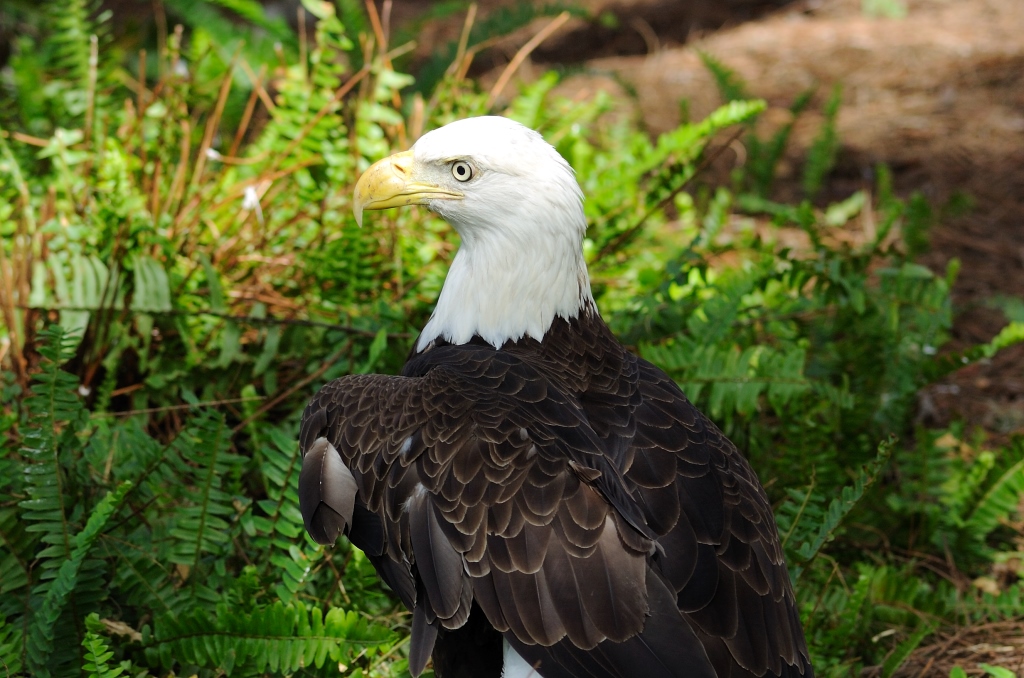
P.S. Other than the Eagles, I gave the birds a rest. :)
And He made from one [common origin, one source, one blood] all nations of men to settle on the face of the earth, having definitely determined [their] allotted periods of time and the fixed boundaries of their habitation (their settlements, lands, and abodes), So that they should seek God, in the hope that they might feel after Him and find Him, although He is not far from each one of us. For in Him we live and move and have our being; (Acts 17:26-28a AMP)
Now the parable is this: The seed is the word of God. (Luke 8:11)
Being born again, not of corruptible seed, but of incorruptible, by the word of God, which liveth and abideth forever. (1st Peter 1:23)
Orni-Theology
God’s Word is like good seed – it transmits God’s very thoughts into new life.
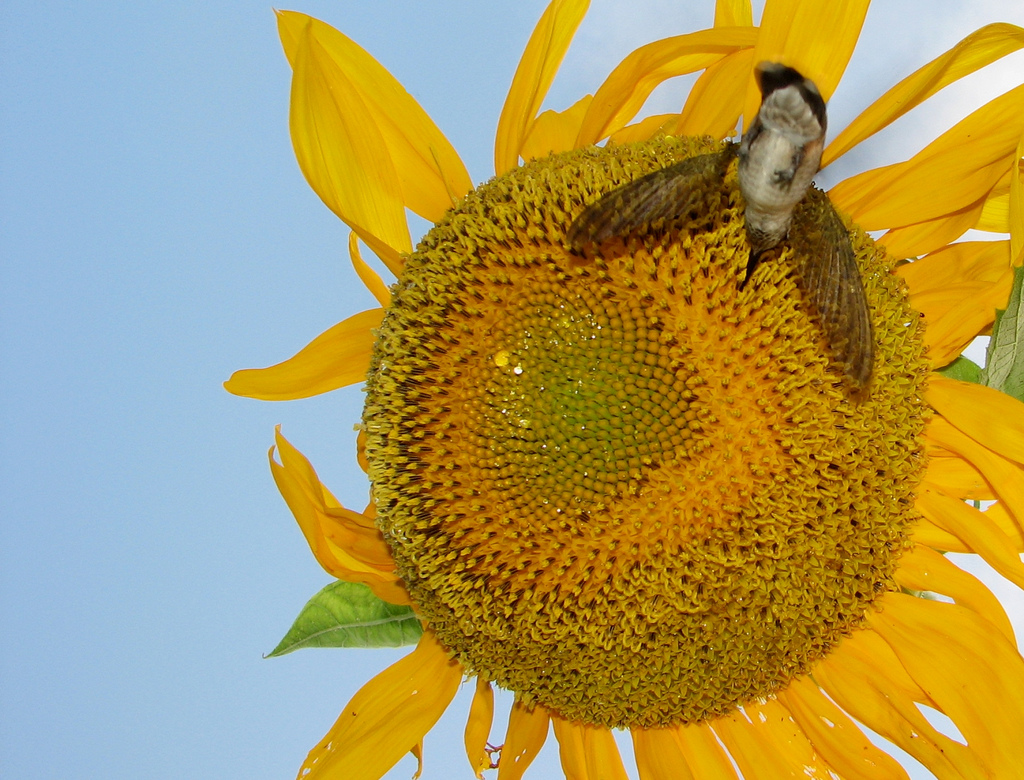
If we have eyes to see it, the whole process of seed germination (in a sunflower, or in a human life) is a providential God-glorifying miracle, every time new life germinates.
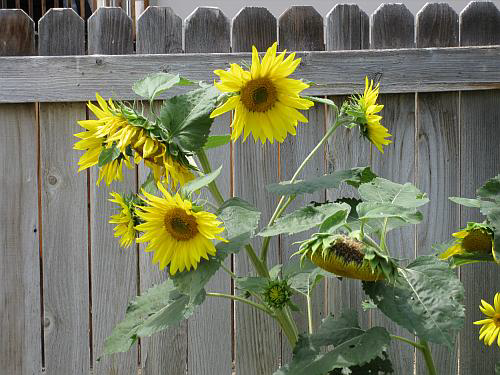
Sunflowers [public domain]
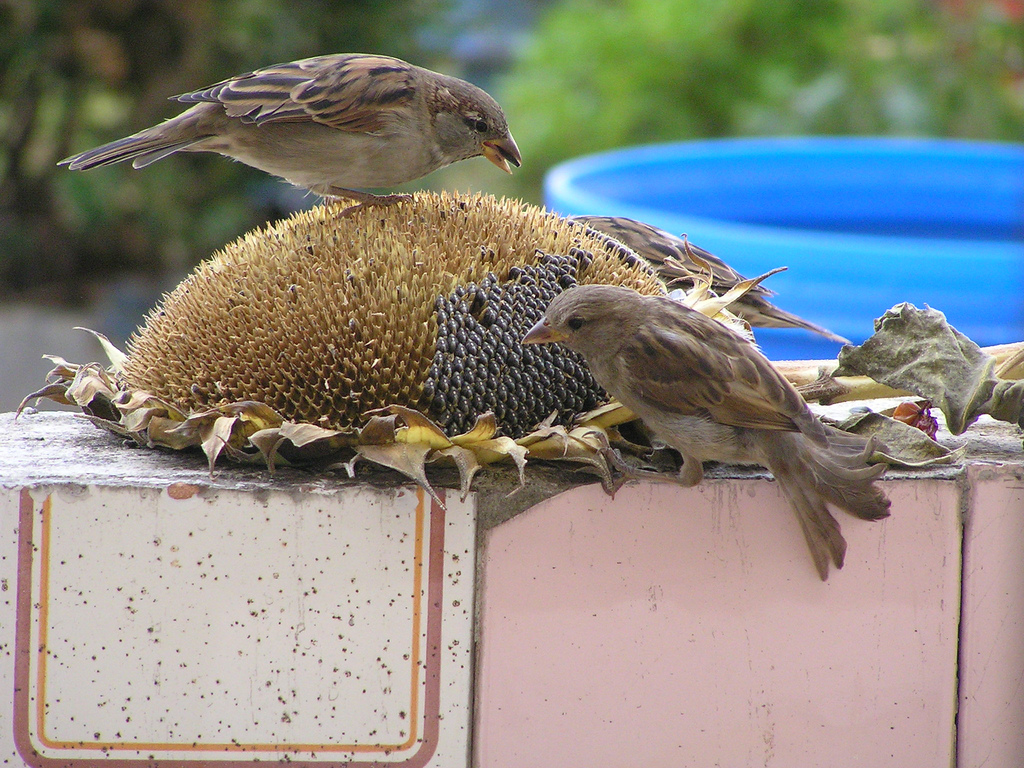
When I see sunflowers growing in farm-fields, or elsewhere, I often recall how God sometimes uses “accidental” plantings, caused by birds who occasionally drop sunflower seeds, thereby planting a new generation of bright yellow sunflowers.
To illustrate, consider this poem, written almost 20 years ago.
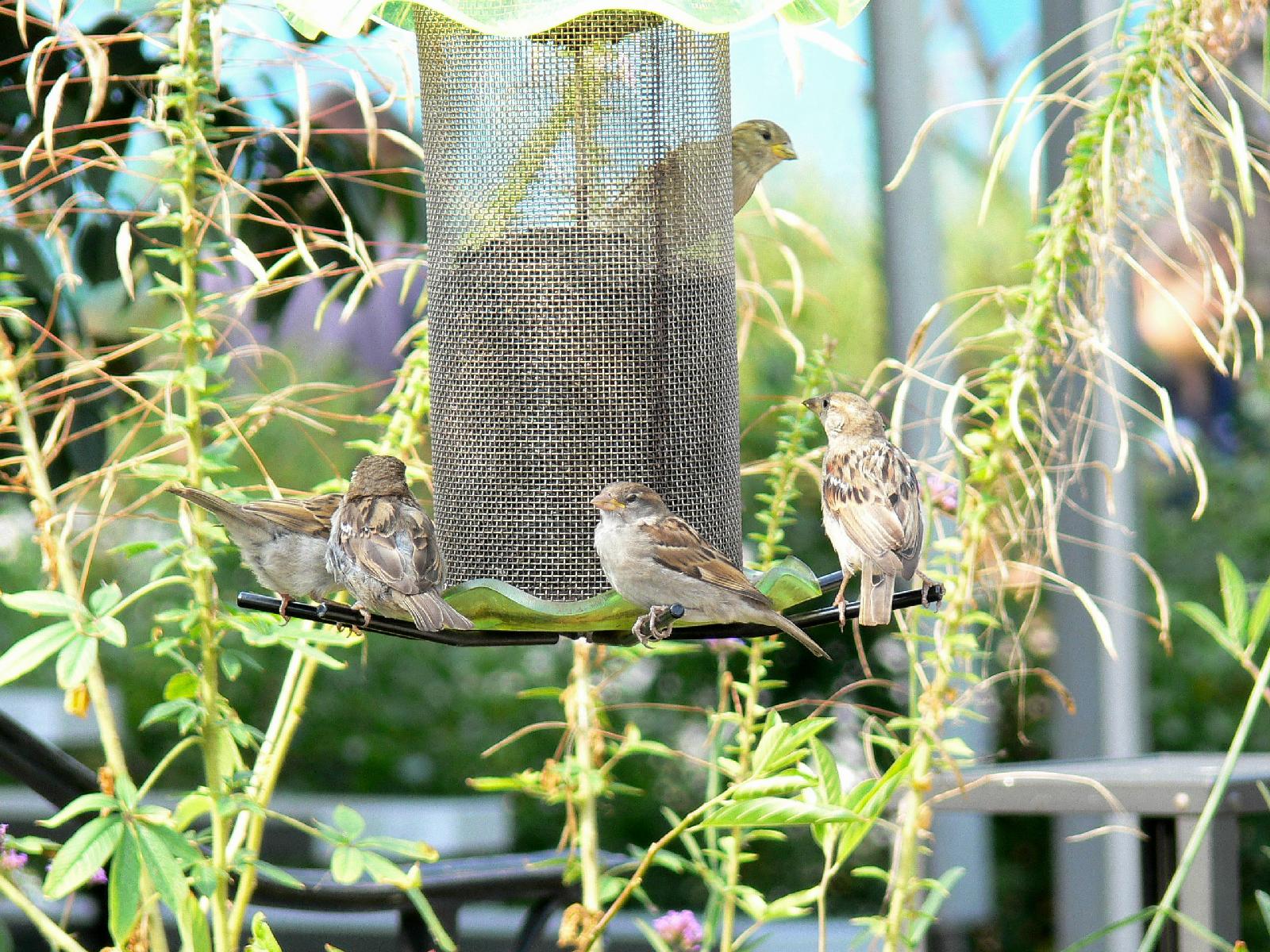
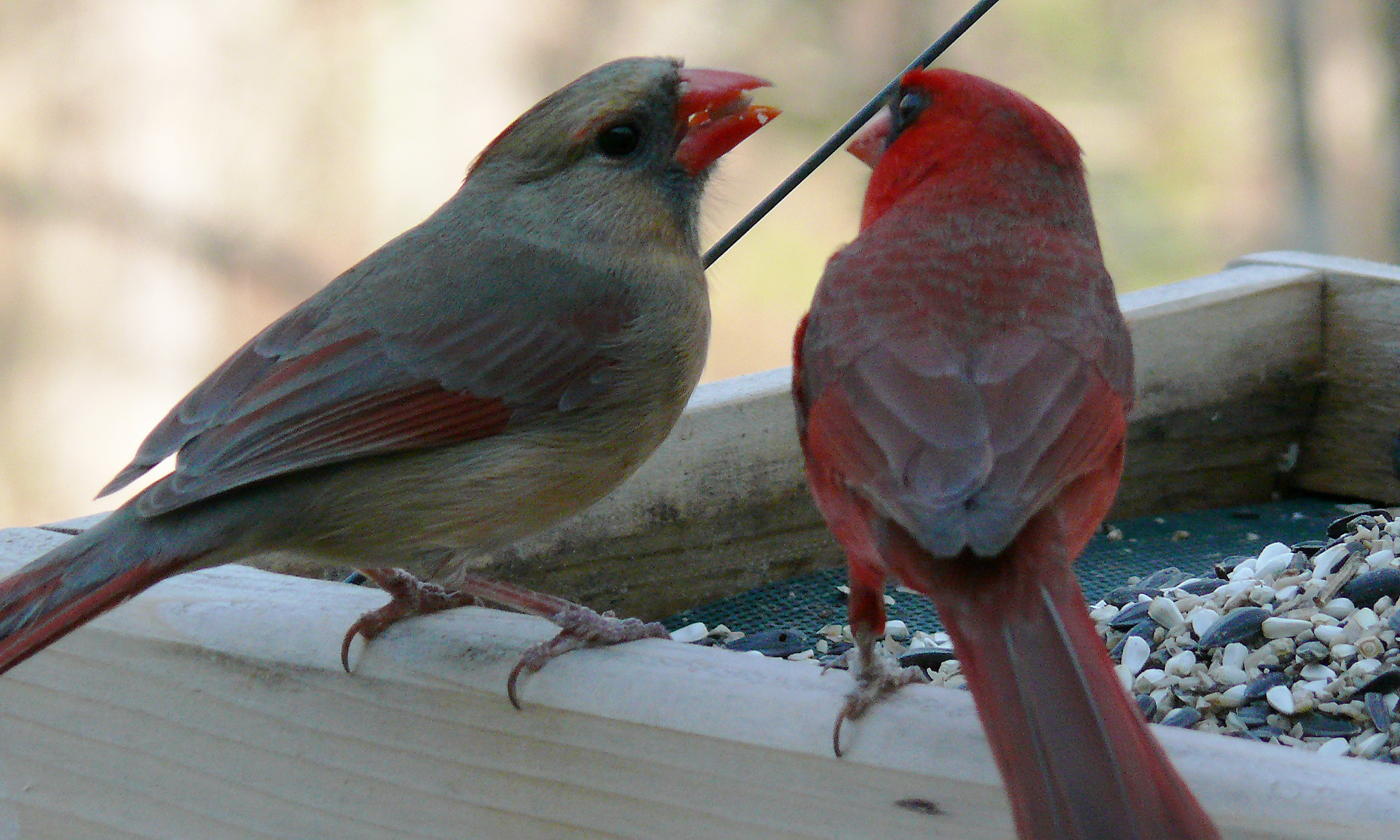
Seeing hungry backyard birds I filled a tray with seeds; Sparrows, juncos dined in “herds”, and jays arrived to feed; Even cardinals, flashing red: they came, they saw, they fed.
Bills gulped! seed-hulls popped! Some seeds spilled! some seeds dropped! Overhead, as some bird flew, sunflower seeds did fall; From green vines, they later grew, seedlings, green and small.
Then out popped golden faces Coloring grassy spaces; Like baby suns of yellow, Grinning — saying “hello”! On green stalks they climb, aiming to greet the sky; Seed-packed in their prime, picked by birds, going by.
Thus reaps my yard what jays did sow, New seeds, from old, sunflowers grow.
Watch I, and think on what God made How He designed such “mutual aid”… In my backyard, I must surmise: The Lord, Who did this, He is wise!
This poem was written when I lived in Carrollton, Texas, where I grew sunflowers by our backyard’s western fence, with the help of blue jay “planters” – but, of course, God gave the increase (1st Corinthians 3:7). (Those were the days, now like a faded dream gone by, when I taught ornithology and avian conservation at Dallas Christian College.)
So, when you see bright-colored sunflowers — and the hungry birds who eat them, just remember this: those same birds, or their parents, may have “accidently” planted the very seeds that germinated into the full-grown sunflowers that the birds now eat from!
Also, remember this also: God shows His wisdom and goodness, everywhere you look, — if you have the eyes to see it.
Furthermore, even more important, of course, is this: that “incorruptible seed” (to use the apostle Peter’s phrase) — that we call the Holy Bible – is the eternal Word of God, and He uses its truth to give us regenerated life in our Lord Jesus Christ (Who is Himself the Messiah, the promised “Seed of Woman”, prophesied of in Genesis3:15)!
Thanks again, Dr. Jim. Enjoyed your poem and the application. In fact, there is a stalk or two of corn growing under my feeder because of the birds. Had a Sunflower or two last summer growing under the feeders.
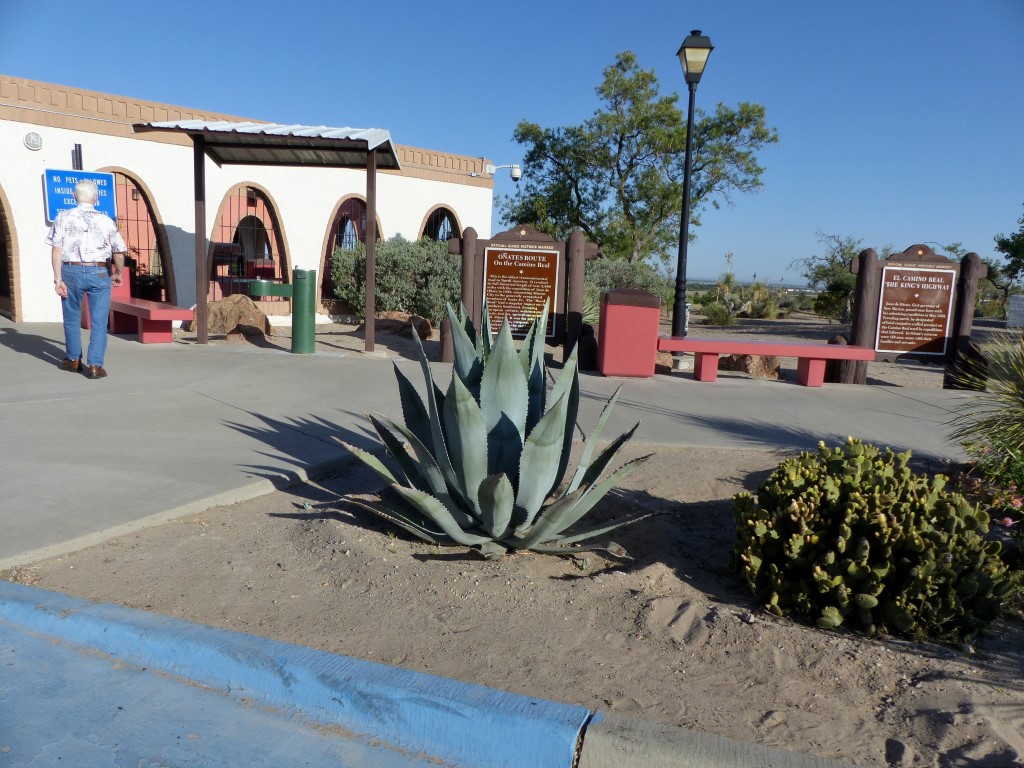
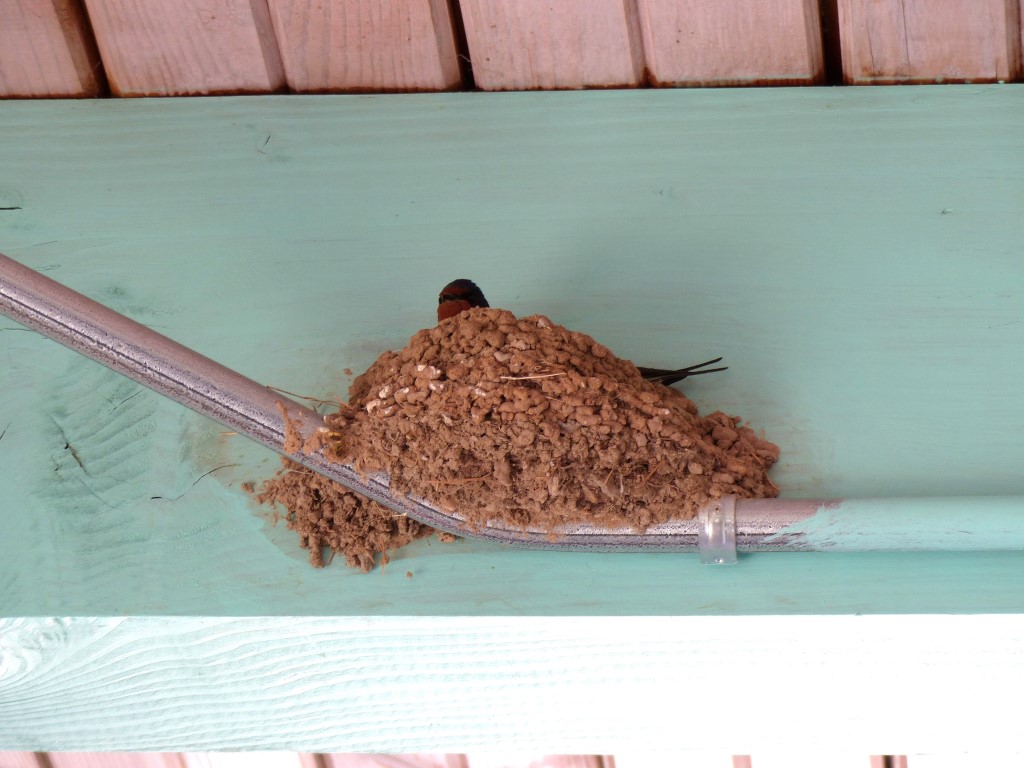
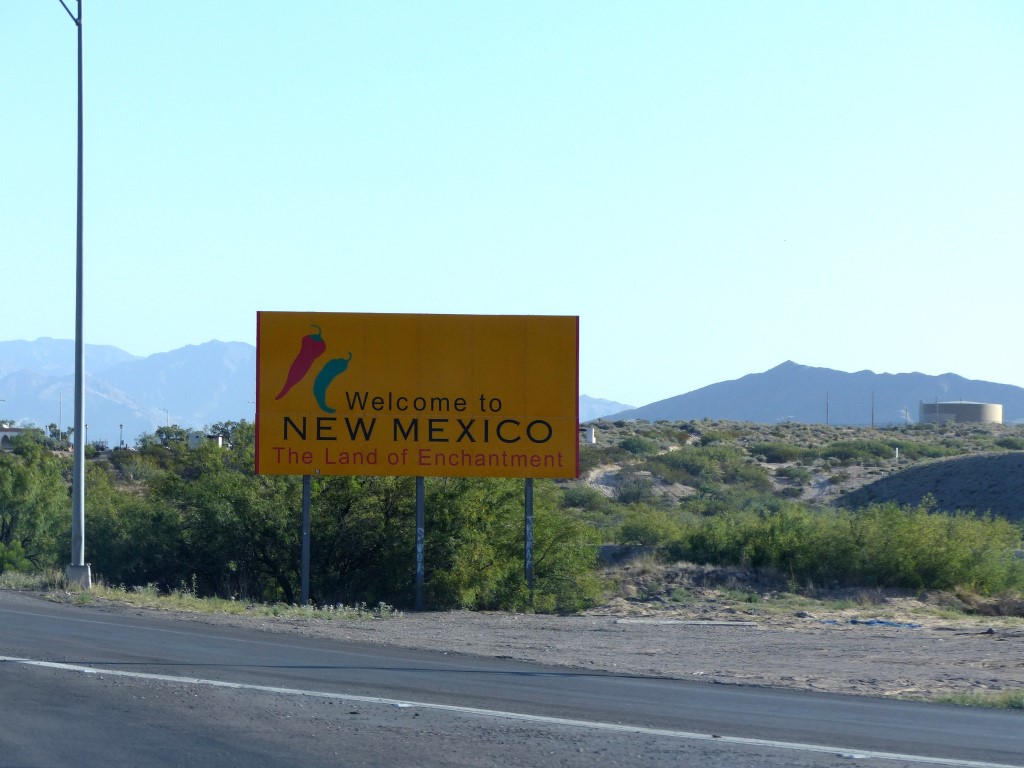
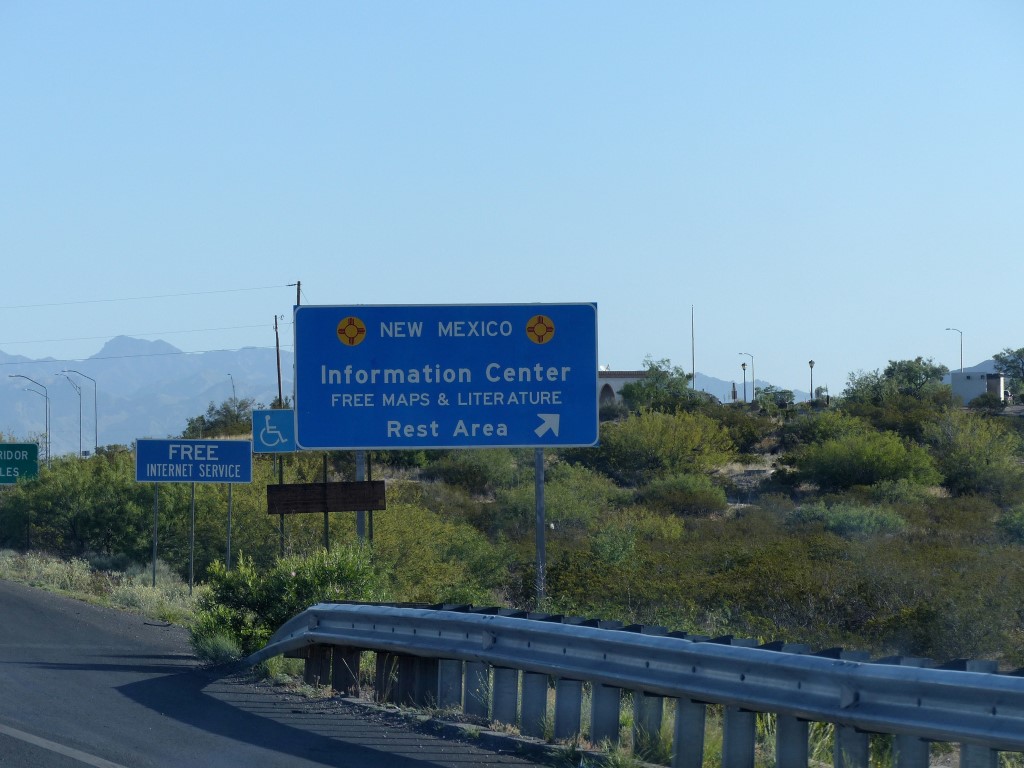
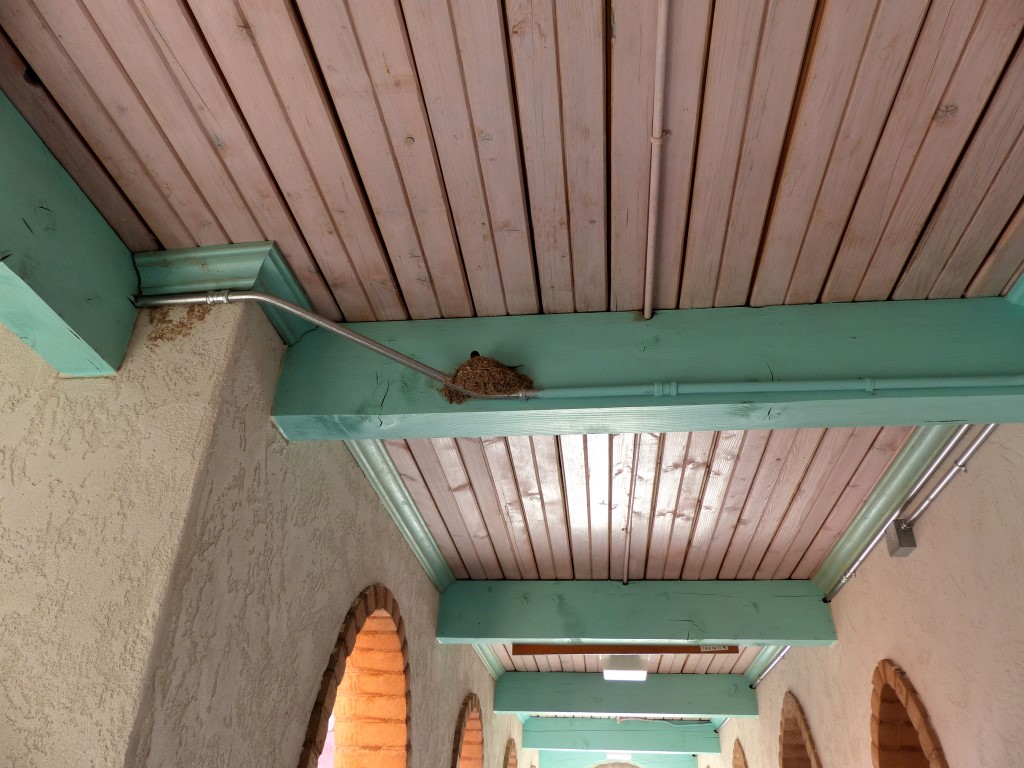
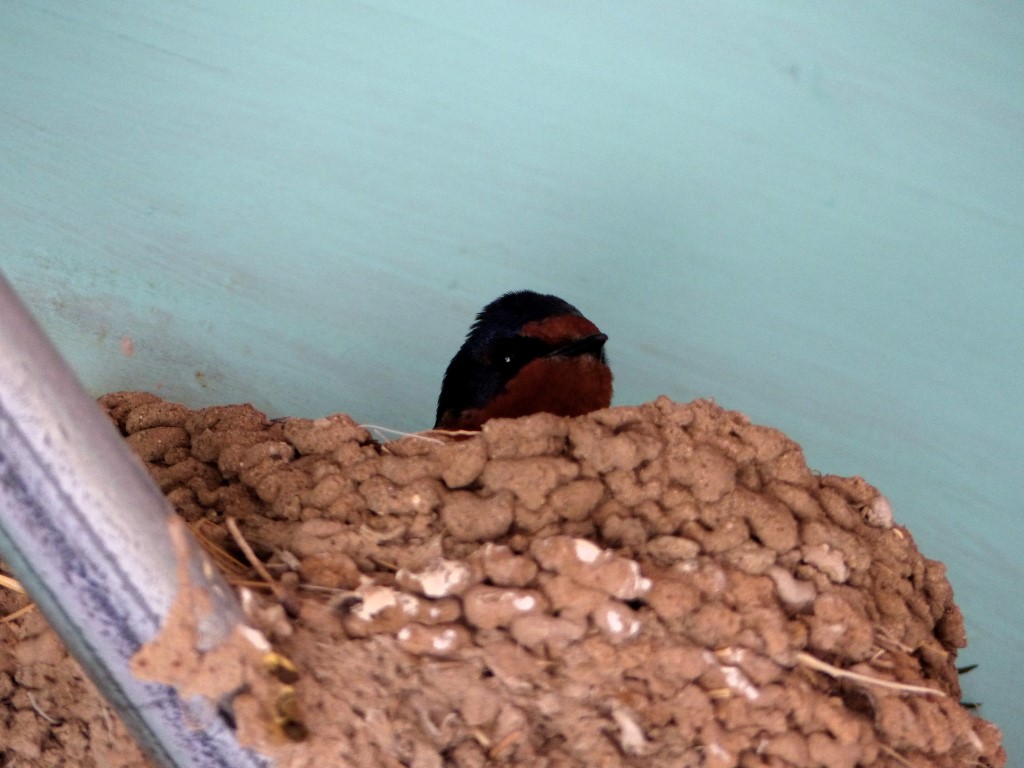
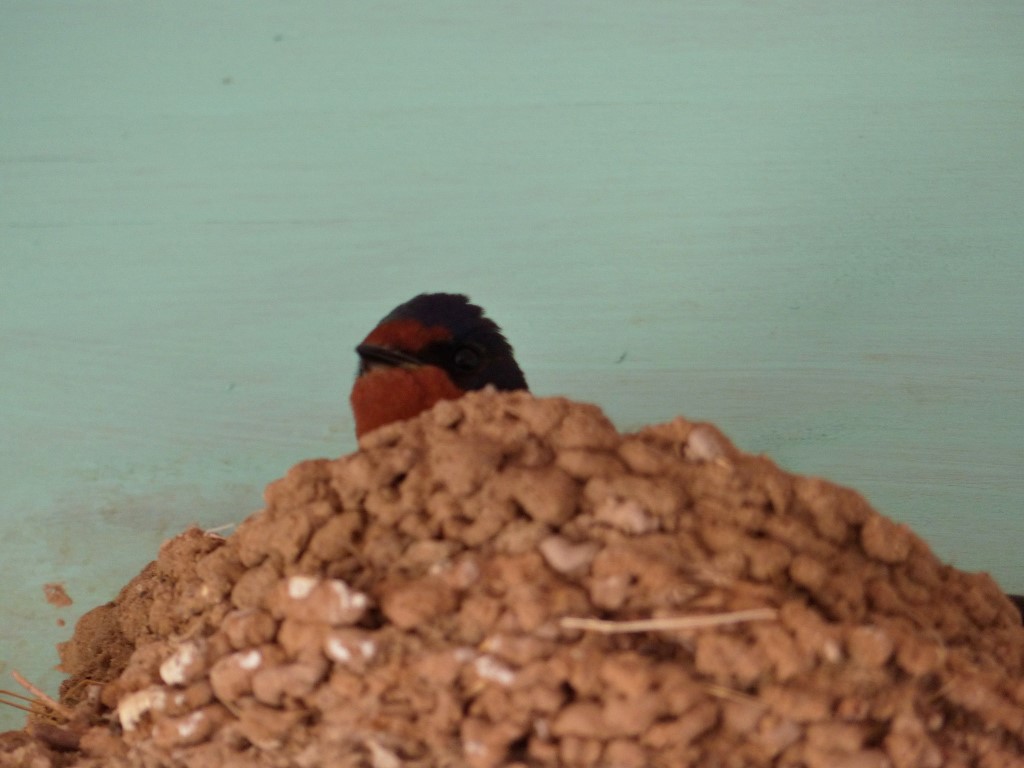
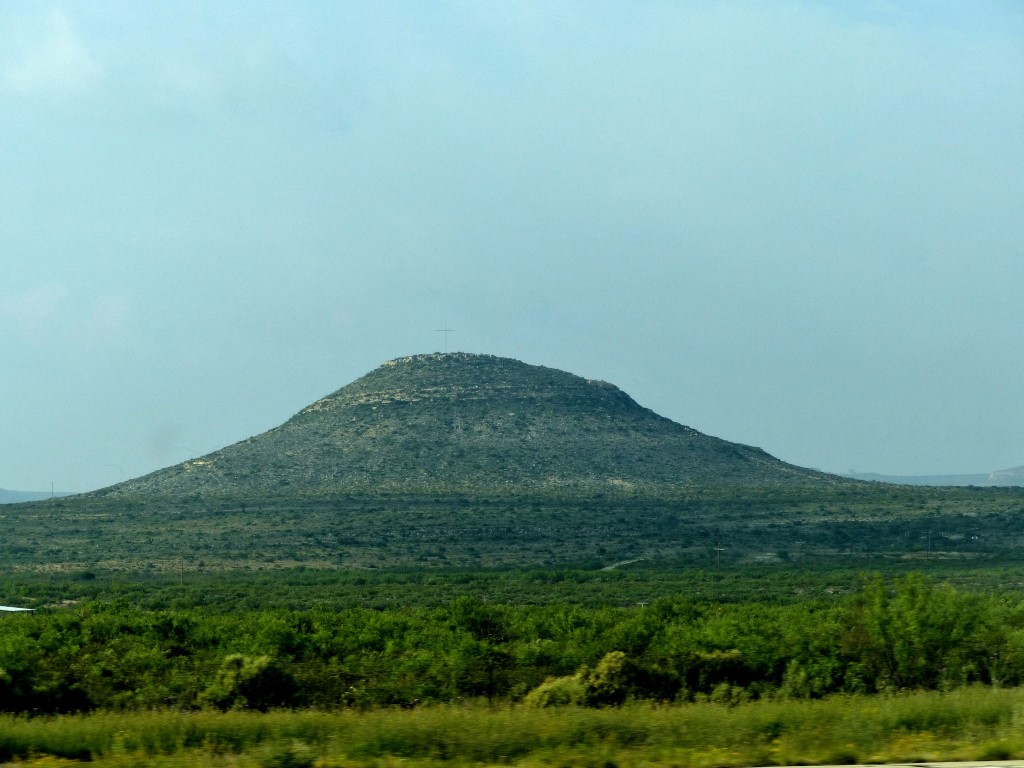
After almost 900 miles traveling through Texas, we zipped through the 164 miles of I-10 through New Mexico. After seeing the Mount Cristo Rey along the way, we were in New Mexico and out before to long. We stopped at the welcome center and picked up the usual maps and brochures. As I was walking back to the car I noticed a nest near the door. Back to the car to get the camera and take a few photos. It was a Barn Swallow. My first New Mexico Barn Swallow and bird photos of its nest.
Barn Swallow (Hirundo rustica) New Mexico Welcome Center by Lee
Like a flitting sparrow, like a flying swallow, So a curse without cause shall not alight. (Proverbs 26:2 NKJV)
We made a stop in Deming, New Mexico to eat at a restaurant we had eaten in fifteen years before. Si Senor’s was great then in 1999 and great in 2015.
New Mexico
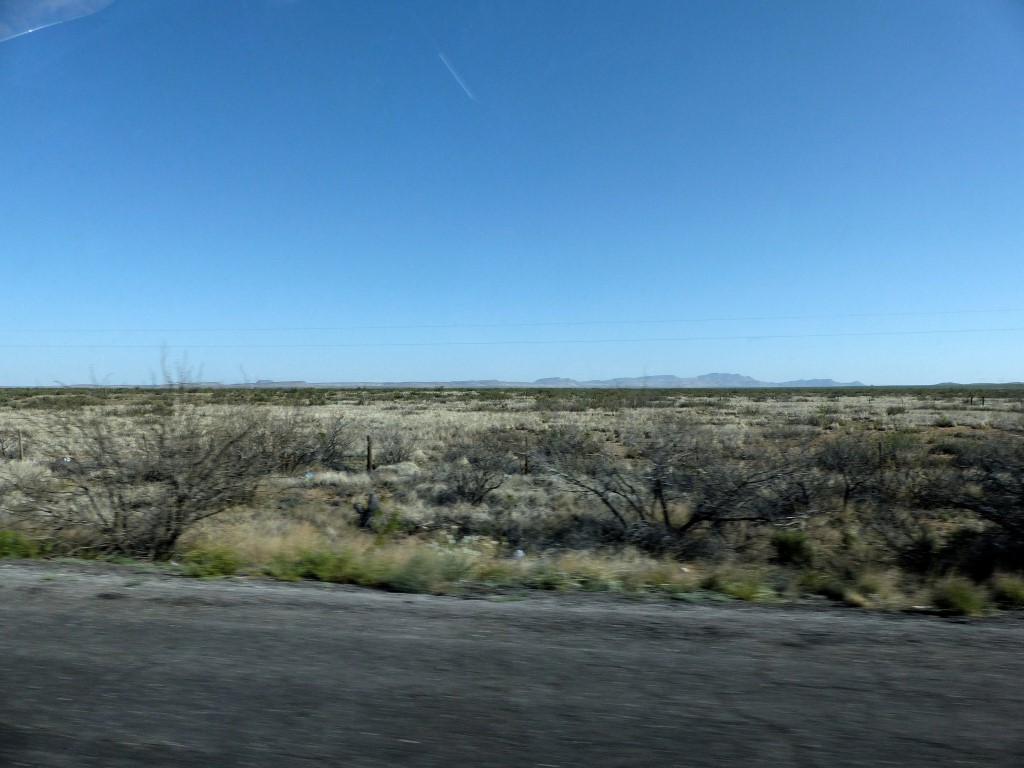
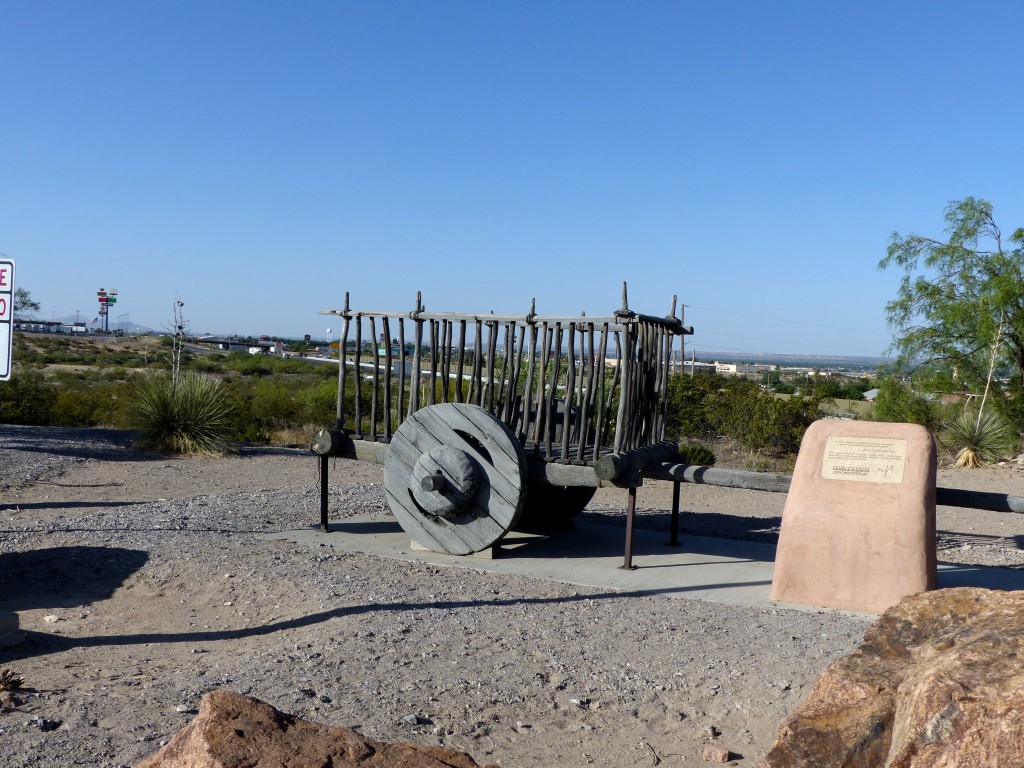
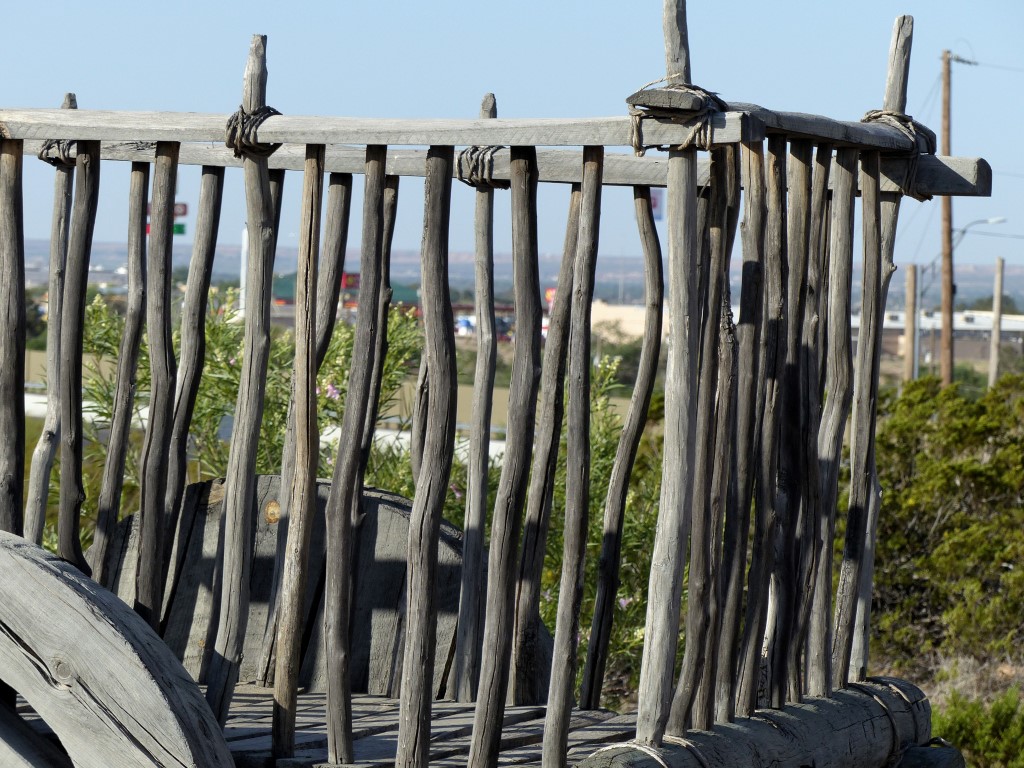
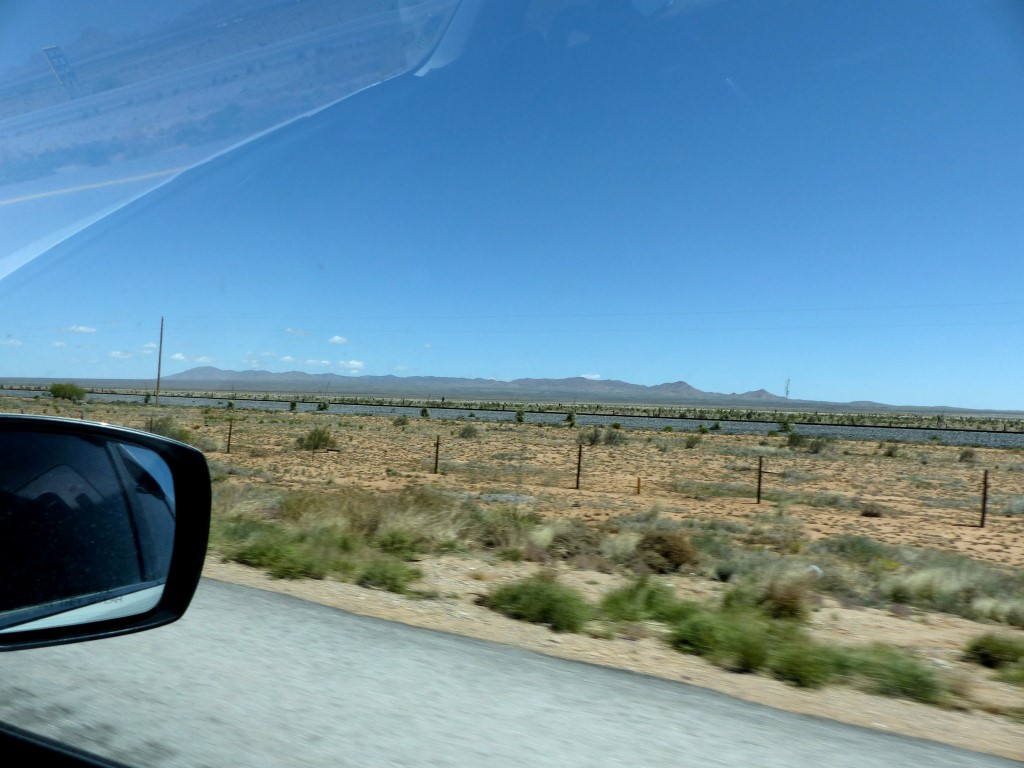
Back on the road again. We saw the wide open spaces and tried to image crossing this area in a wagon train. Yuk! We were riding on an interstate. Yeah!
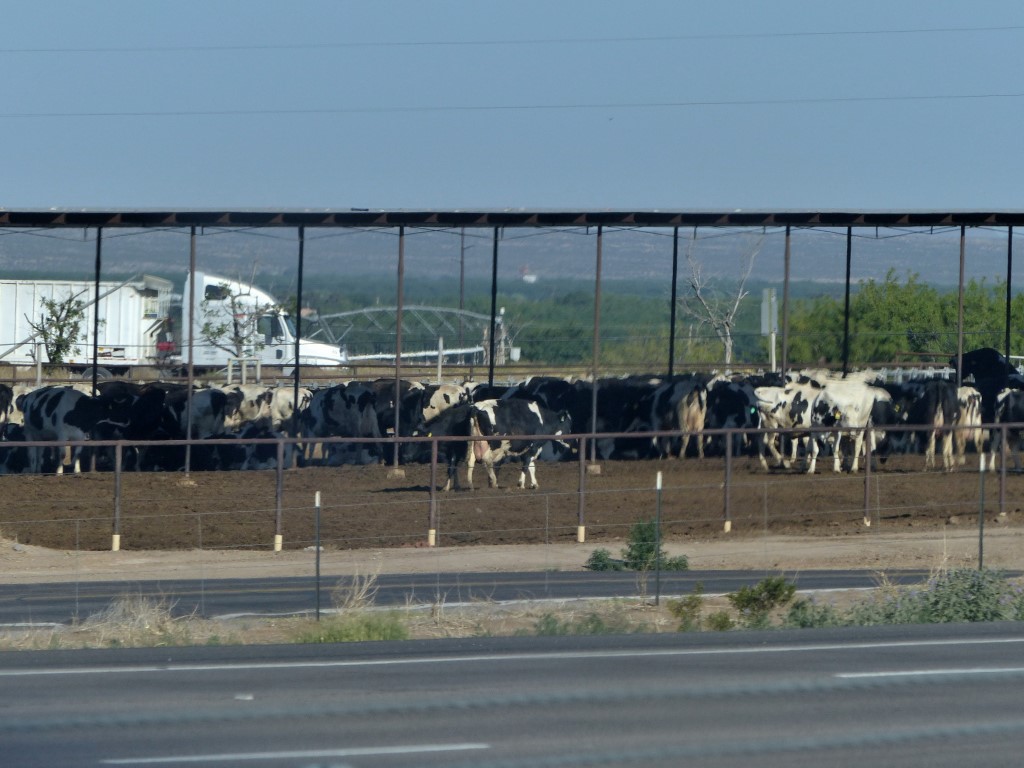
Cattle Feeding places
And God made the beast of the earth according to its kind, cattle according to its kind, and everything that creeps on the earth according to its kind. And God saw that it was good. (Genesis 1:25 NKJV)
For every beast of the forest is Mine, And the cattle on a thousand hills.
(Psalms 50:10 NKJV)
Passed lots and lots of cattle feeding places. Not sure if they were getting them ready to ship out by trains or what.
Truck with Hugh Tires NM
A truck passed us carrying the largest tires I’ve ever seen before.
New Mexico
He putteth forth his hand upon the rock; he overturneth the mountains by the roots. He cutteth out rivers among the rocks; and his eye seeth every precious thing. (Job 28:9-10 KJV)
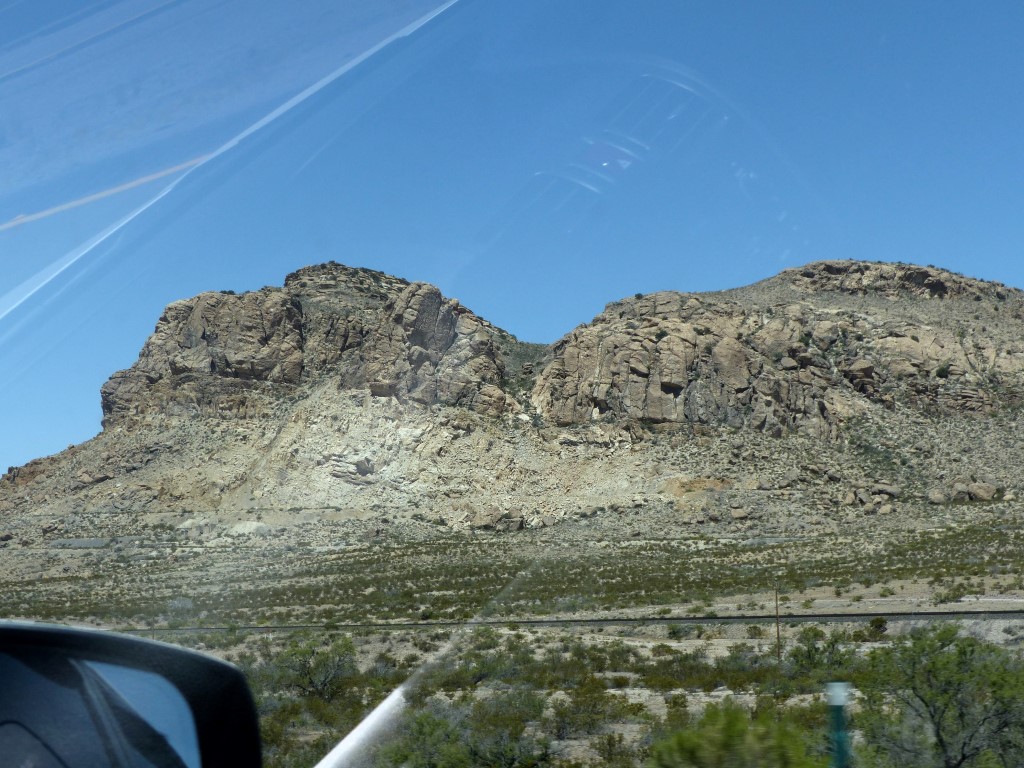
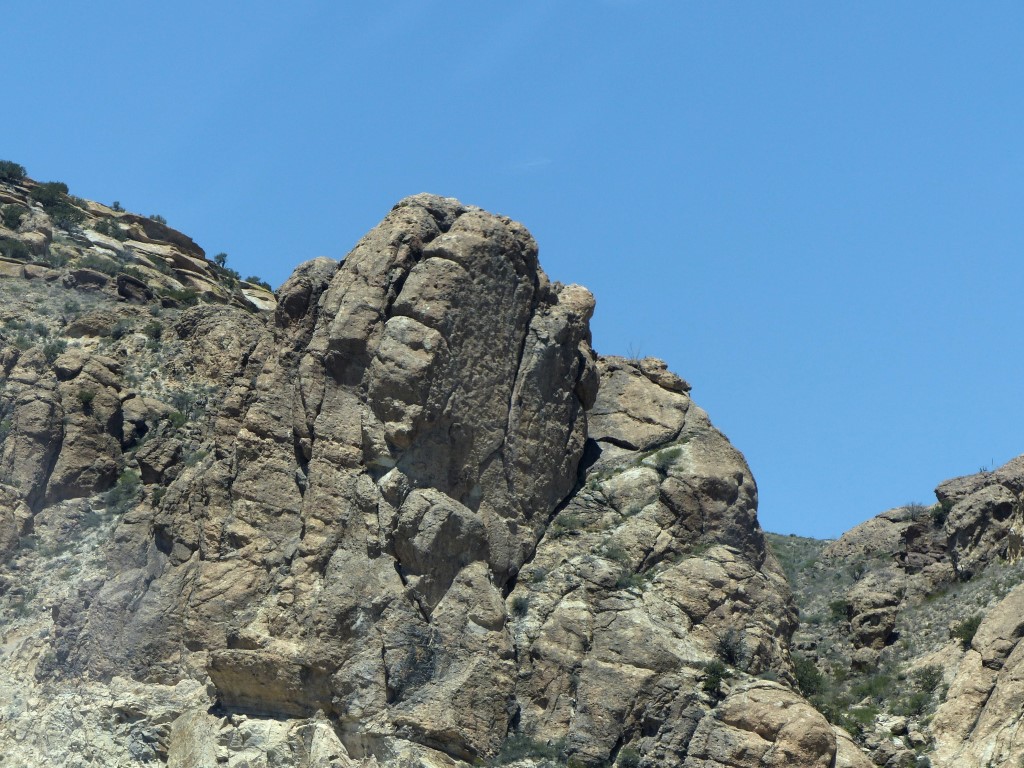
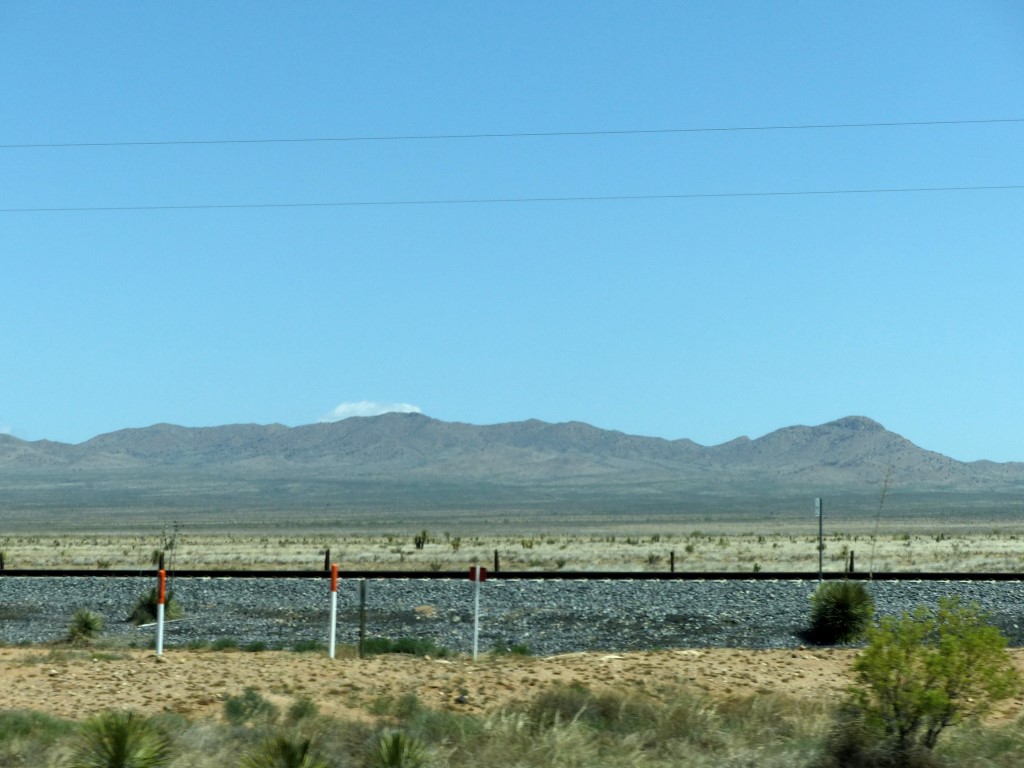
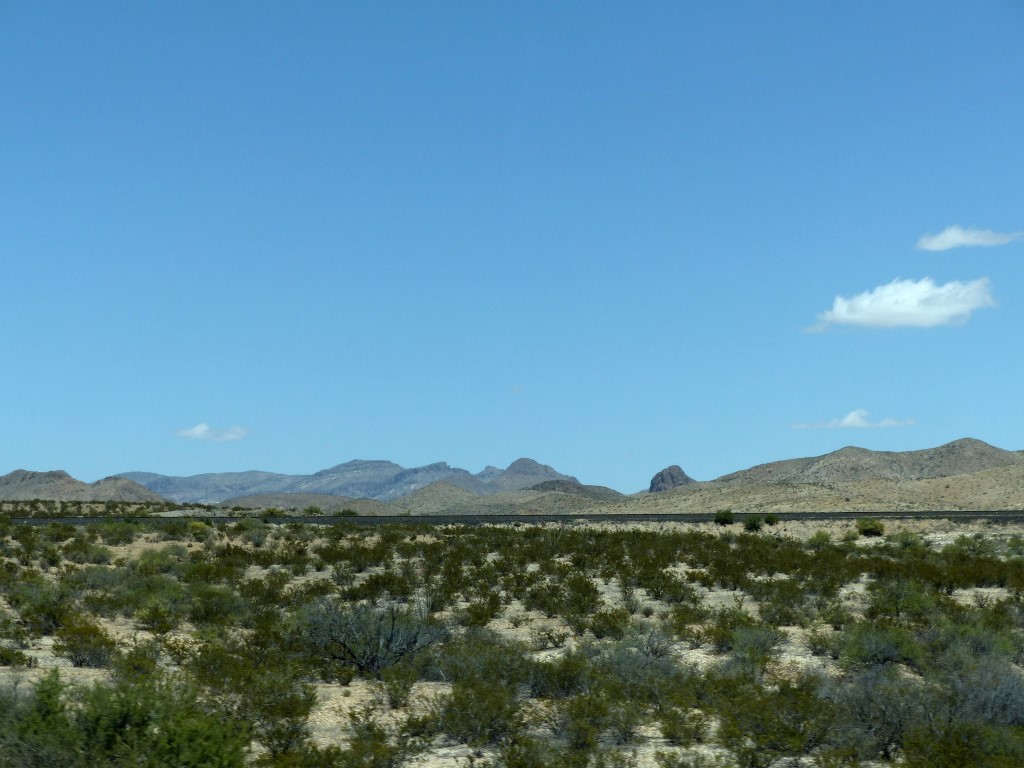
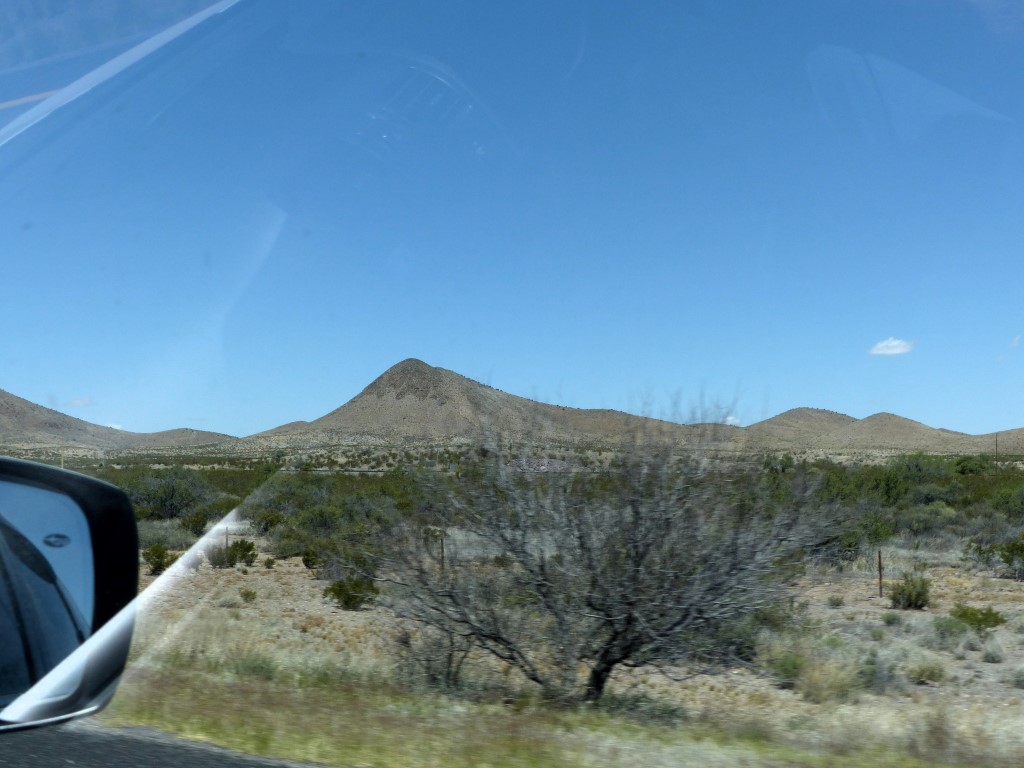
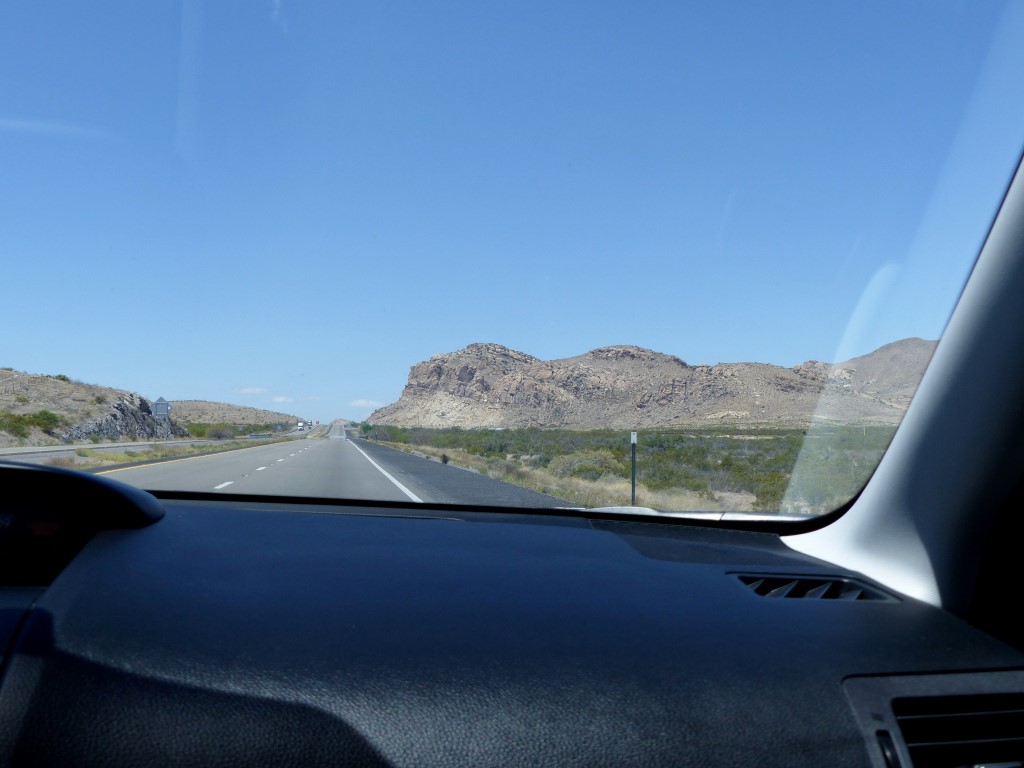
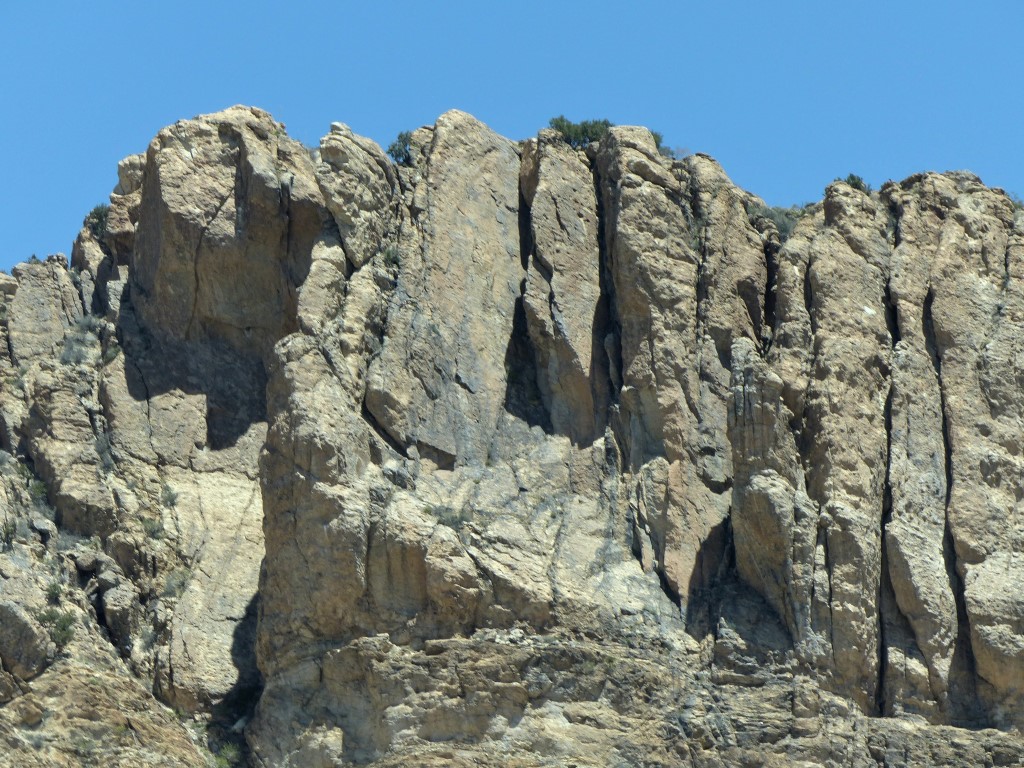
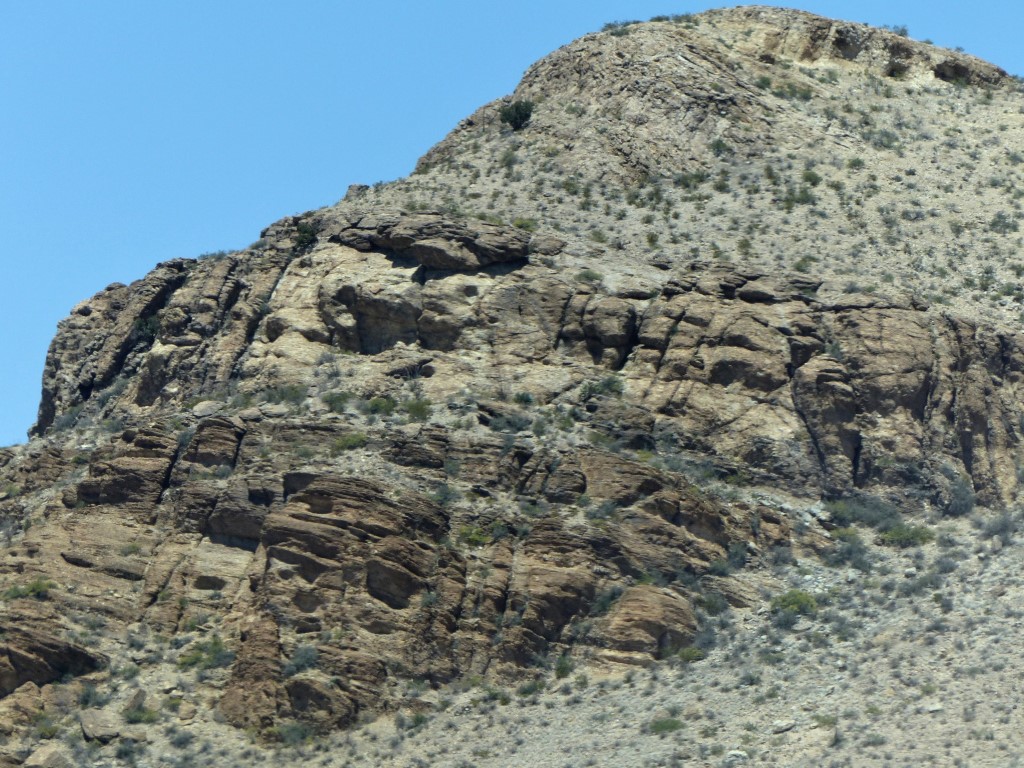
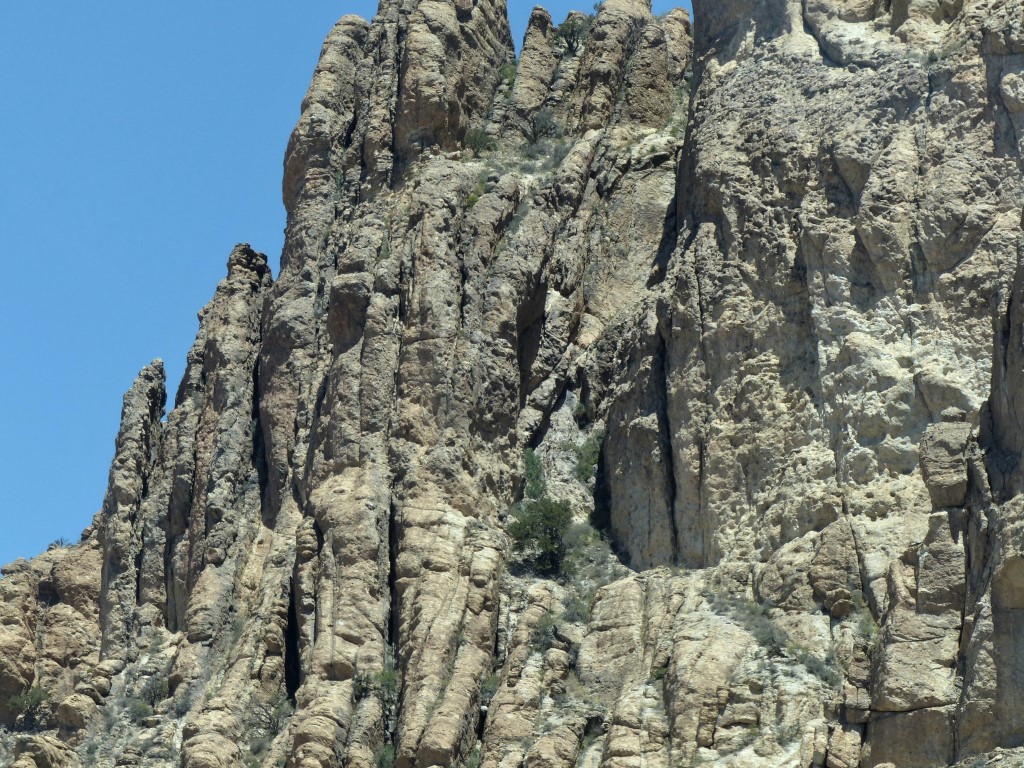
As you can see, there is not much greenery through this part of New Mexico. The rock formations were interesting to see and wonder how these were shaped after the flood?
New Mexico
“But as a mountain falls and crumbles away, And as a rock is moved from its place; As water wears away stones, And as torrents wash away the soil of the earth; So You destroy the hope of man. (Job 14:18-19 NKJV)
So ends New Mexico going west on I-10. “Vacation Goal” None really, so just traveling along to San Diego. Stay tuned! Arizona is next and we saw some very interesting places.
New Mexico greeting
New Mexico Welcome Center
New Mexico Welcome Center
New Mexico Welcome Center
New Mexico Welcome Center
New Mexico Welcome Center
Barn Swallow (Hirundo rustica)
New Mexico Welcome Center by Lee
Barn Swallow (Hirundo rustica)
New Mexico Welcome Center by Lee
Barn Swallow (Hirundo rustica)
New Mexico Welcome Center by Lee
Barn Swallow (Hirundo rustica)
New Mexico Welcome Center by Lee
Barn Swallow (Hirundo rustica)
New Mexico Welcome Center by Lee
Traveling across West Texas – Windy and Sand Blowing
Let a little water, I pray you, be fetched, and wash your feet, and rest yourselves under the tree: (Genesis 18:4 KJV)
Rest in the LORD, and wait patiently for him: fret not thyself because of him who prospereth in his way, because of the man who bringeth wicked devices to pass. Cease from anger, and forsake wrath: fret not thyself in any wise to do evil. (Psalms 37:7-8 KJV)
Traveling across West Texas
Traveling across West Texas
Traveling across West Texas
Texas Scenery while traveling
Texas Scenery while traveling
Texas Scenery while traveling
Texas Scenery while traveling
Texas Scenery while traveling
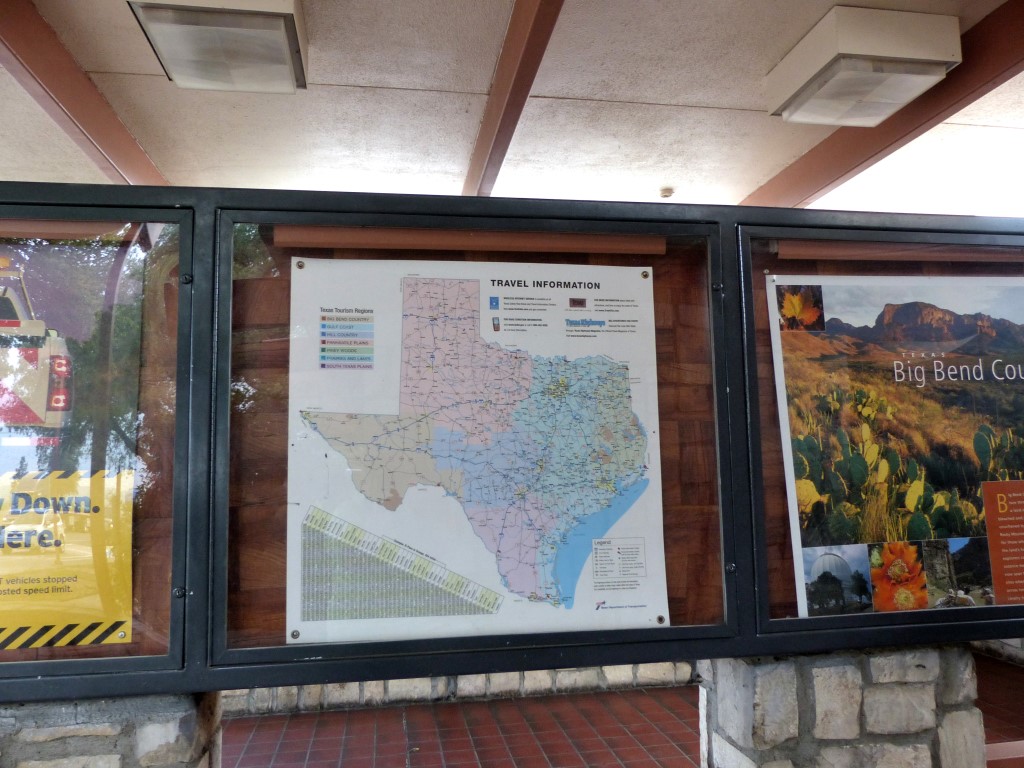
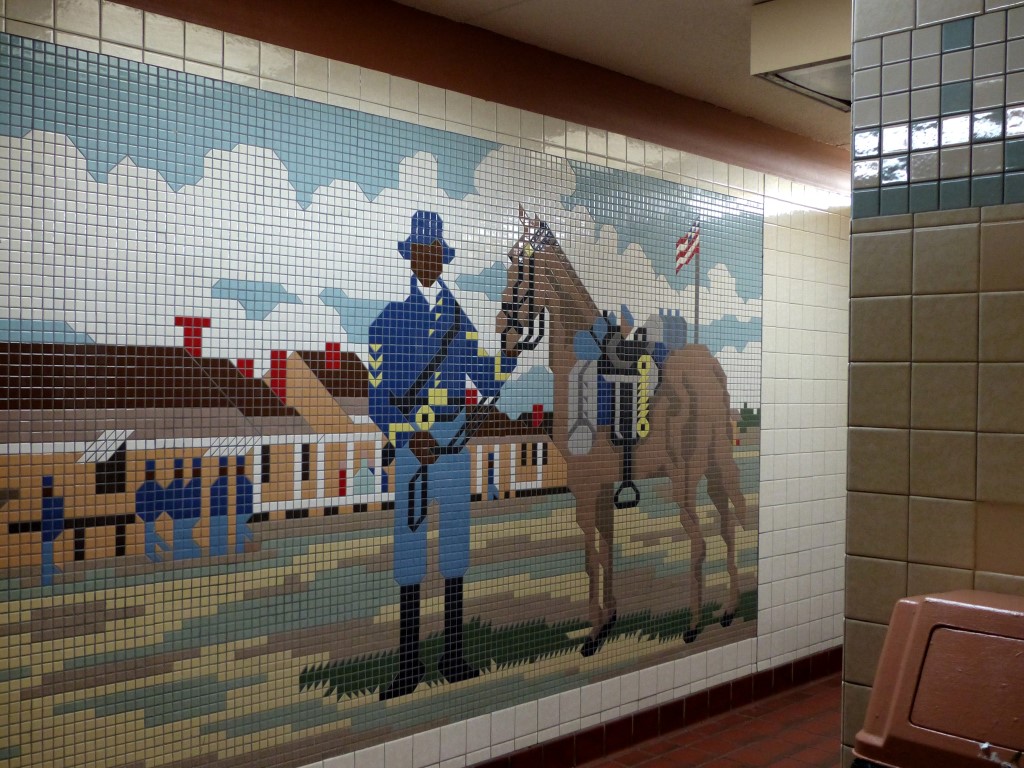
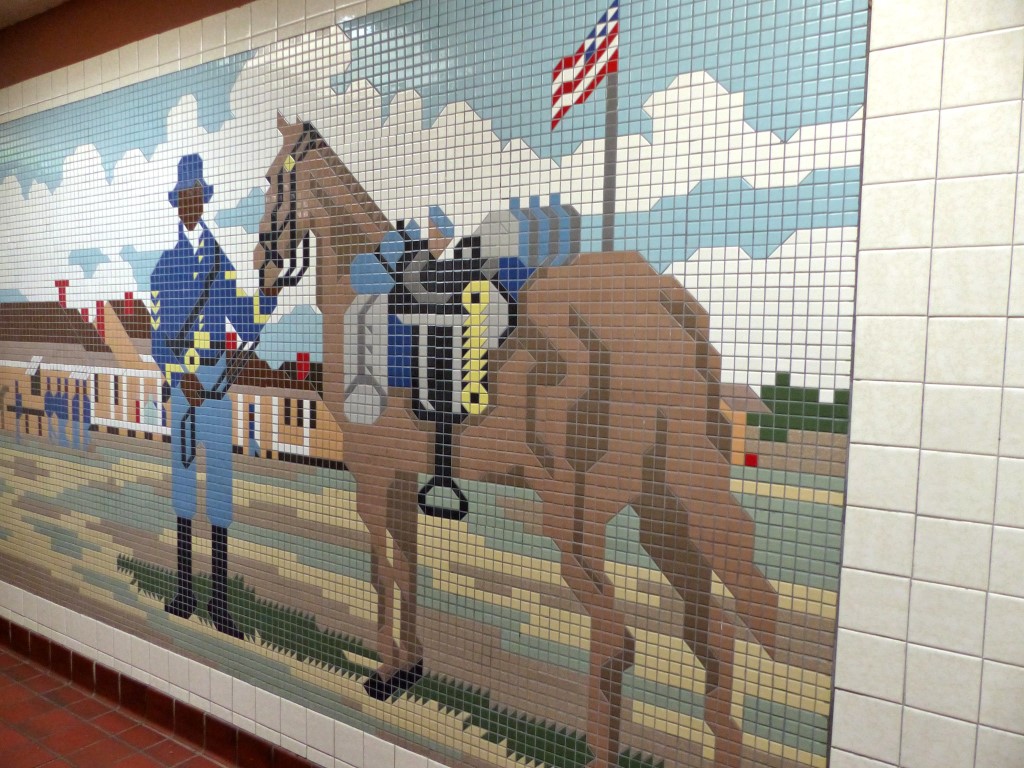
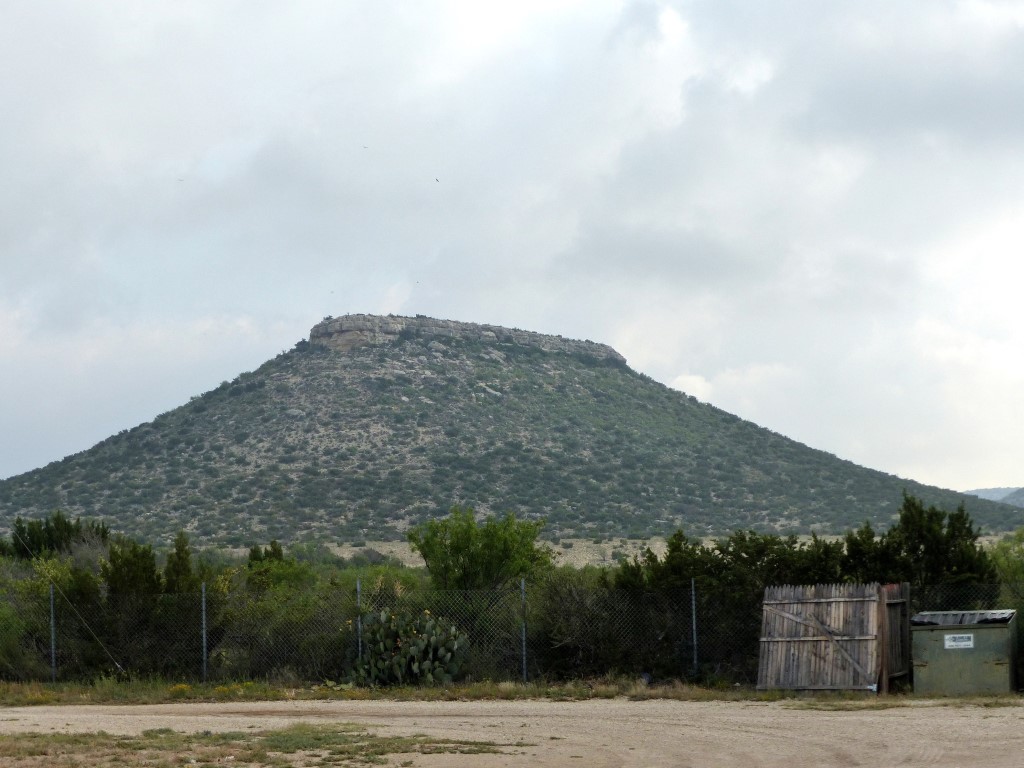
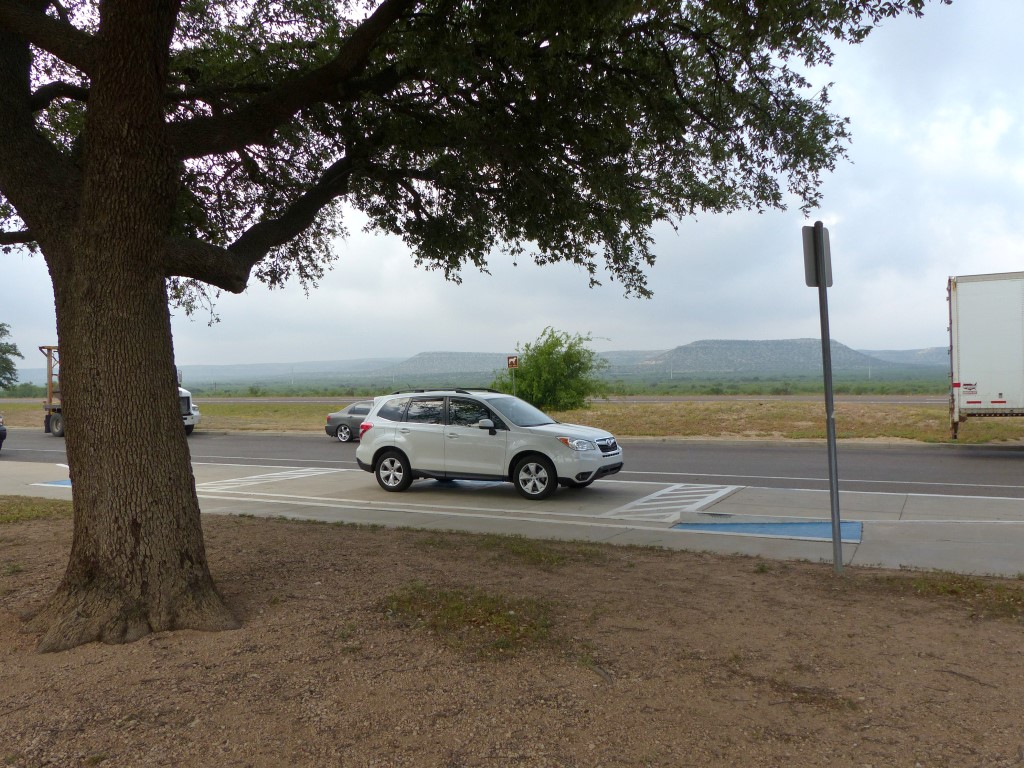
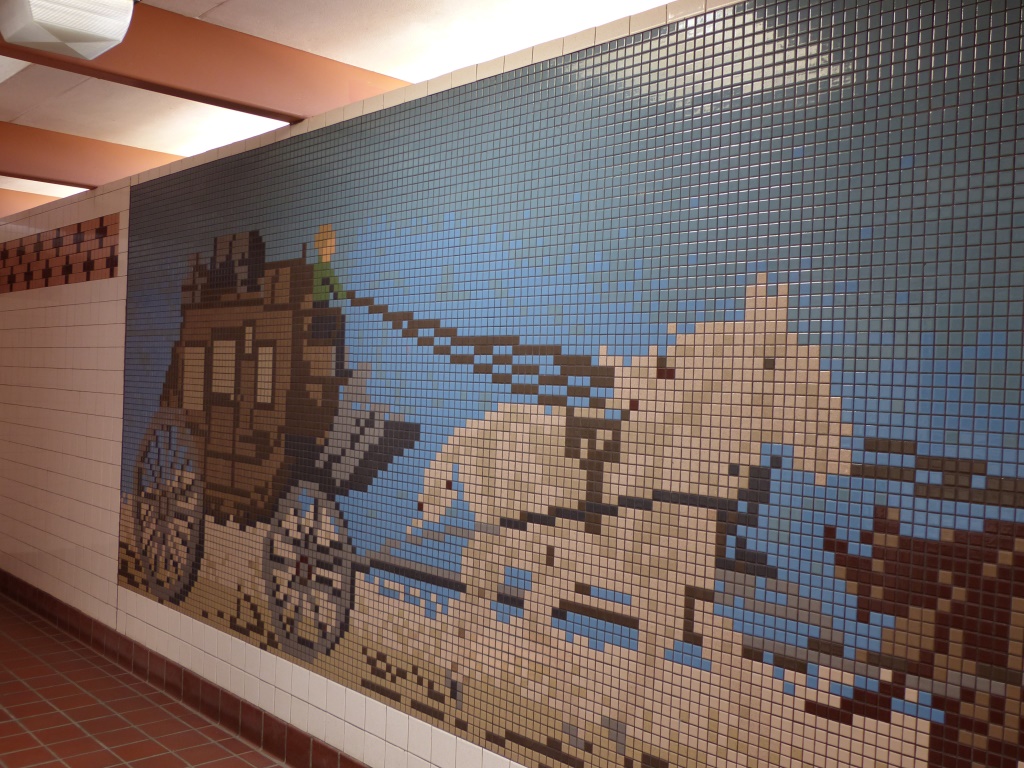
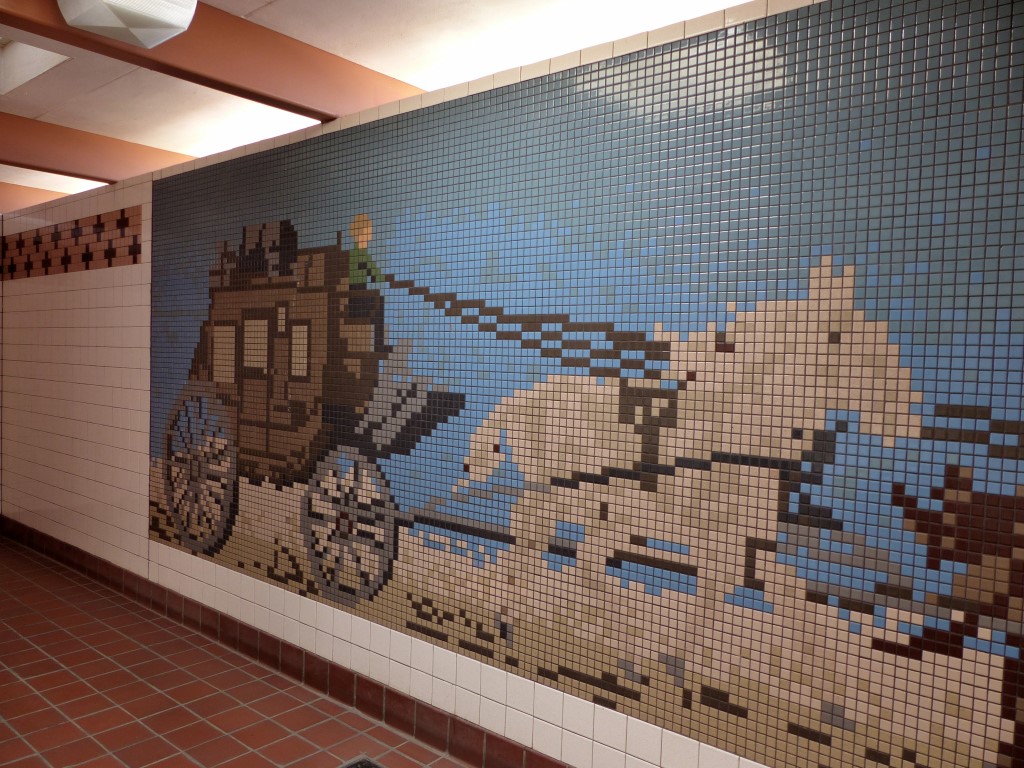
In the last post, Moving On – Vacation – Part 3, I mentioned how far Interstate 10 travels across Texas (878.6 miles). When you travel for miles, you eventually have to stop. When stopped at one of the Rest Areas, I was totally unprepared for what was in the restroom.
I went back to the car and got my camera. From then on, every time we stopped I carried my camera with me. :)
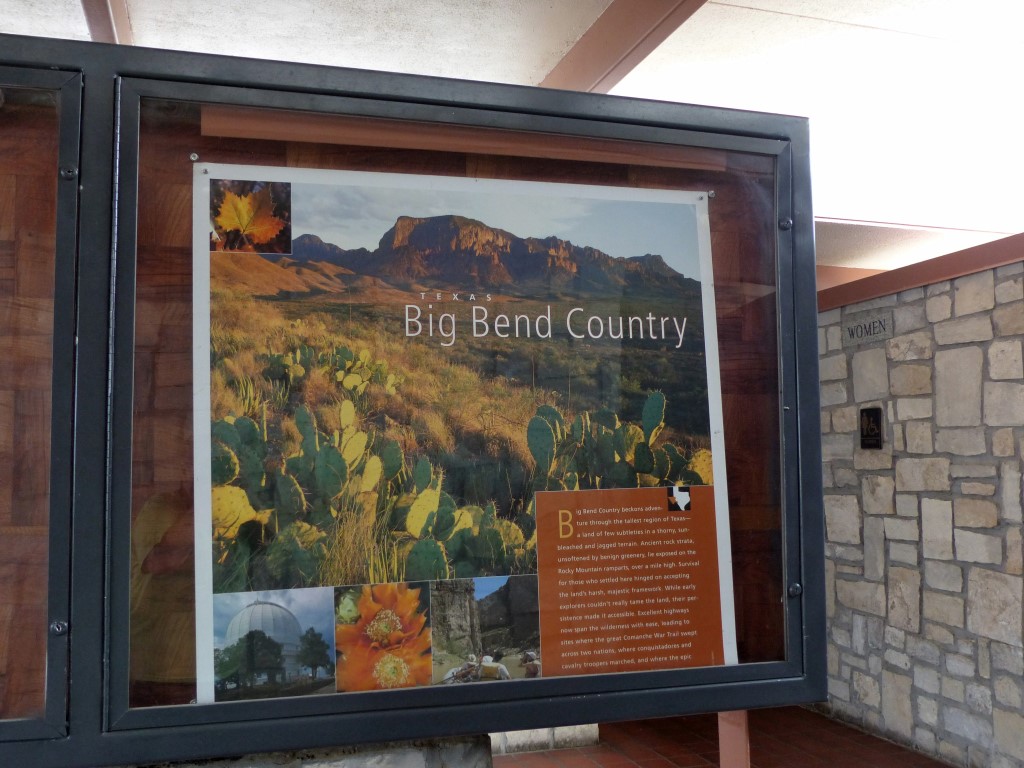
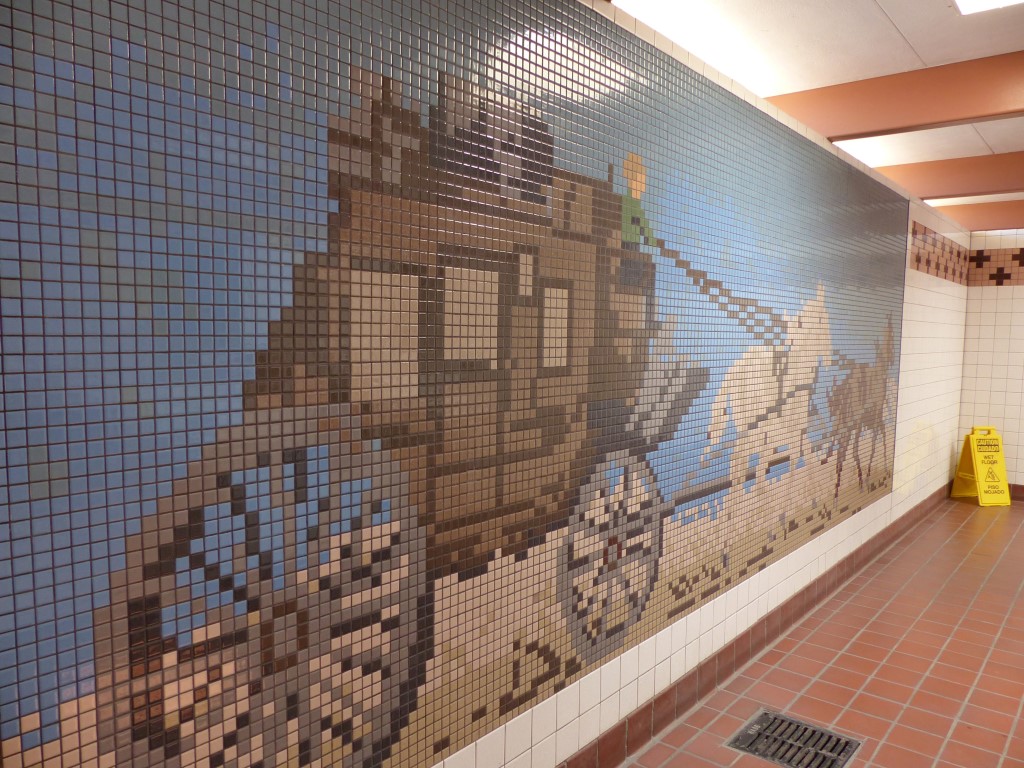
The same mural was in both the male and female restrooms. (reported by Dan seeing my photo). Here are photos from two rest areas while going west, a mural seen while heading back east, and a Welcome Center, with no mural:
At Reststop TX
At Reststop TX
At Reststop TX
At Reststop TX
At Reststop TX
At Reststop TX
At Reststop TX
At Reststop TX
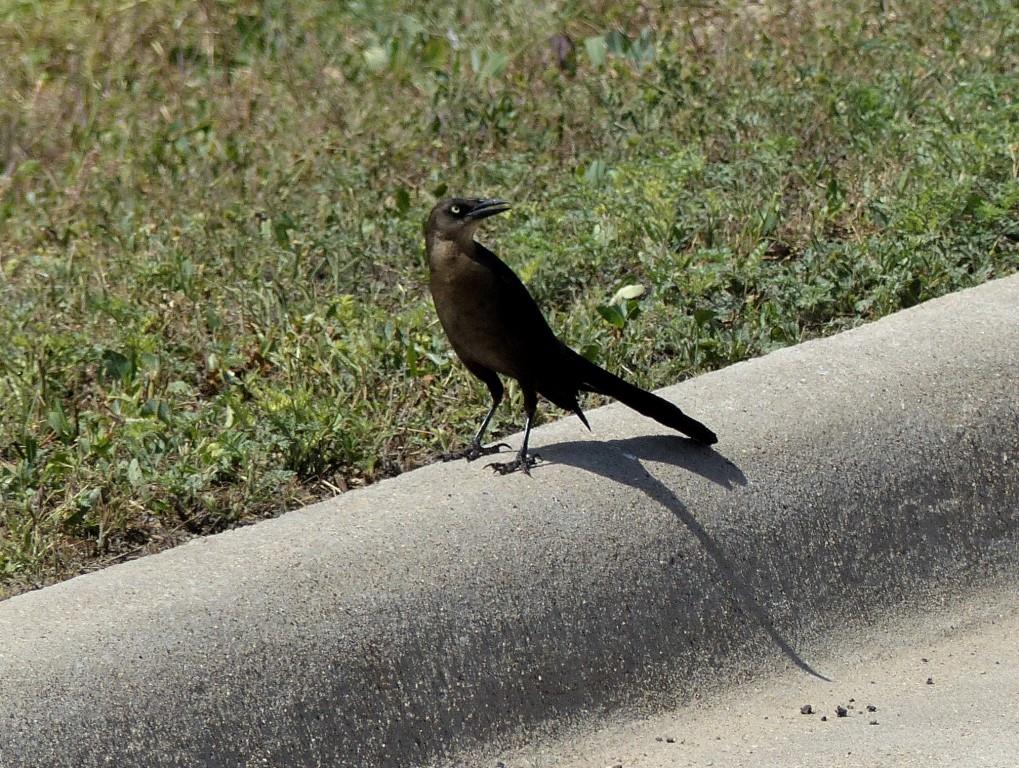
Great-tailed Grackle
At Reststop TX
At Reststop TX
Our Faithful Vehicle At Reststop TX
Black-throated Sparrow at Rest Stop
At Reststop TX
At Reststop TX
At Reststop TX
At Reststop TX
At Reststop TX
At Reststop TX
At Reststop TX
At Reststop TX
At Reststop TX
At Reststop TX
Dog Rest Area
Rest Area headed back east on way back.
Rest Area headed back east on way back.
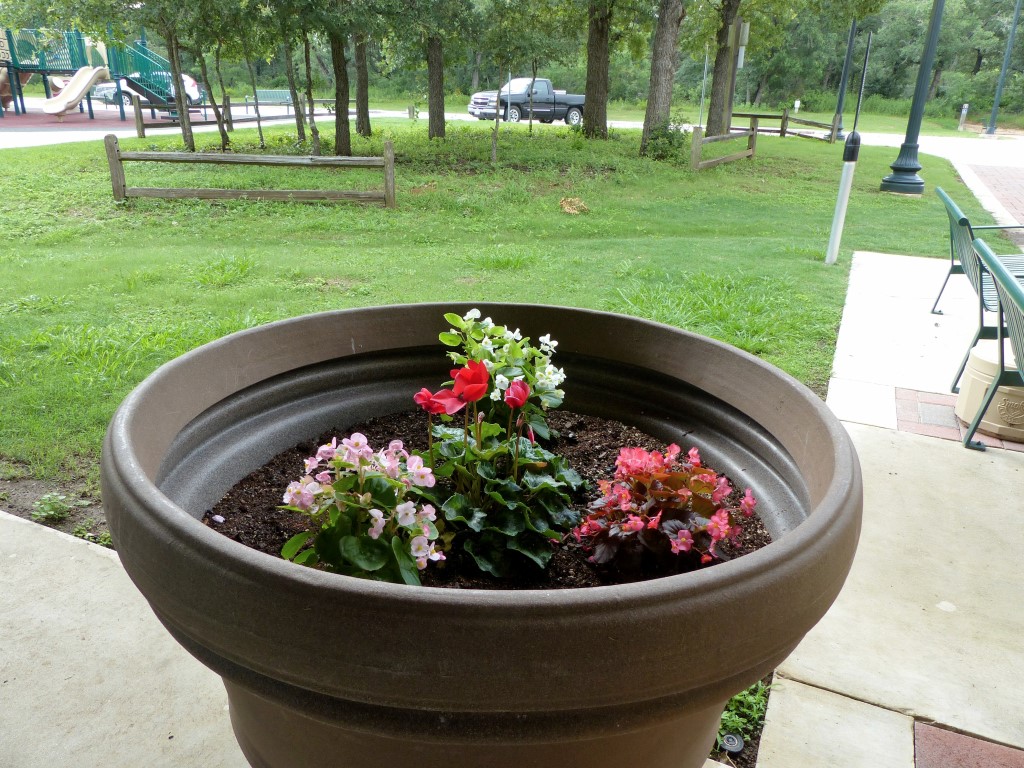
Great Big Pot
Three Little Flowers
Nice Play Area for Children
Dove on Light Post
And I said, Oh that I had wings like a dove! for then would I fly away, and be at rest. (Psalms 55:6 KJV)
If you search Google with “murals texas rest areas” look at the images. Many more than we saw. Quite different. We enjoyed traveling across LONG Texas. Who ever thought I’d write a blog about Rest Areas?
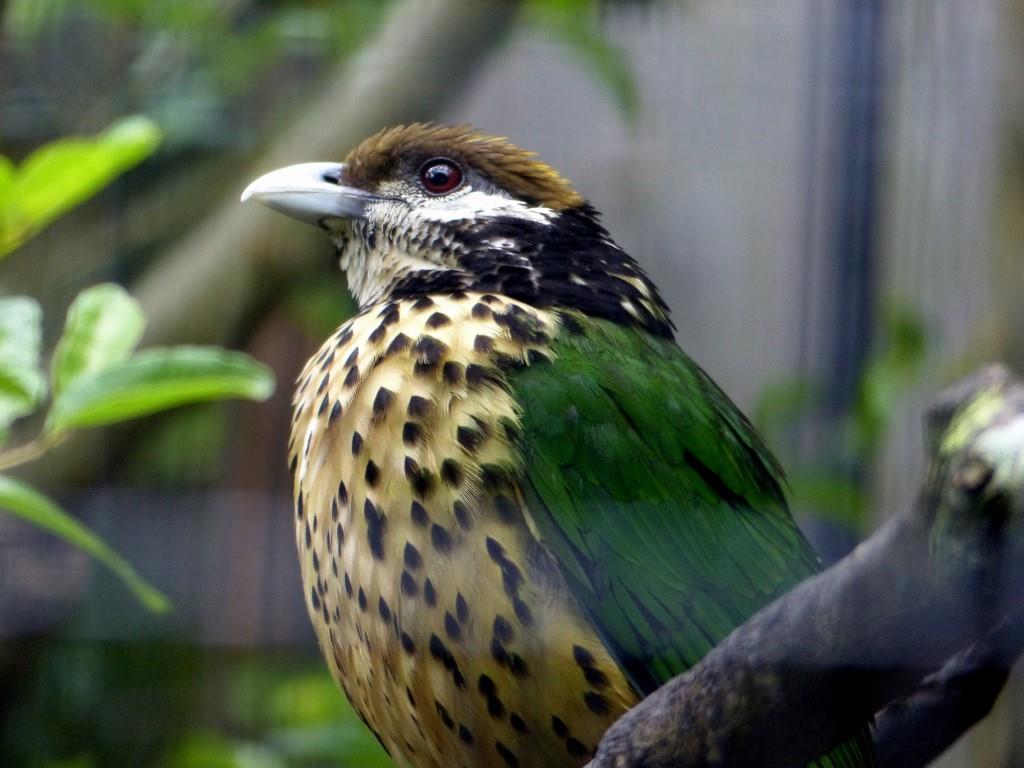
White-eared Catbird (Ailuroedus buccoides) Houston Zoo by Lee
We have many more Houston Zoo photos to share, but for now, let’s move on with our vacation. In Birdwatching Along the Way, the last statement was “Vacation Goal #1 – Met.” We had arrived at Houston and visited with my niece and went to the Houston Zoo.
On Thursday of that week, May 7th, we were suppose to drive up to Dallas. On Friday, we were to visit James J S Johnson, who writes on this blog, at the Institute for Creation Research. Also, I was looking forward to meeting Ernesto E. Carrasco, and seeing his Noah’s Ark Model. (Ernesto and I follow each other’s blog.). This was to be “Vacation Goal #2”.
During the month of May, Dallas had tremendously bad weather. They had tornadoes and flood warnings most of that month. The weather was turning bad even in Houston, so, with a call to Dr. Jim, we all agreed that it would be best to not come up to Dallas, at least at this time. Vacation Goal #2 – NOT Met!
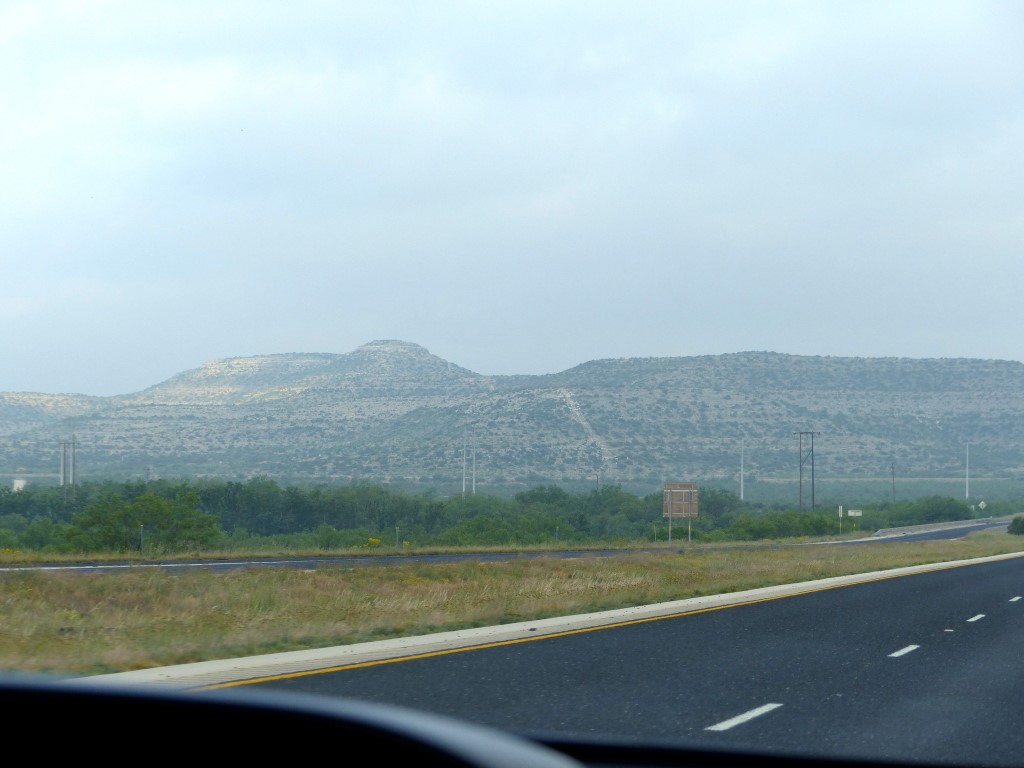
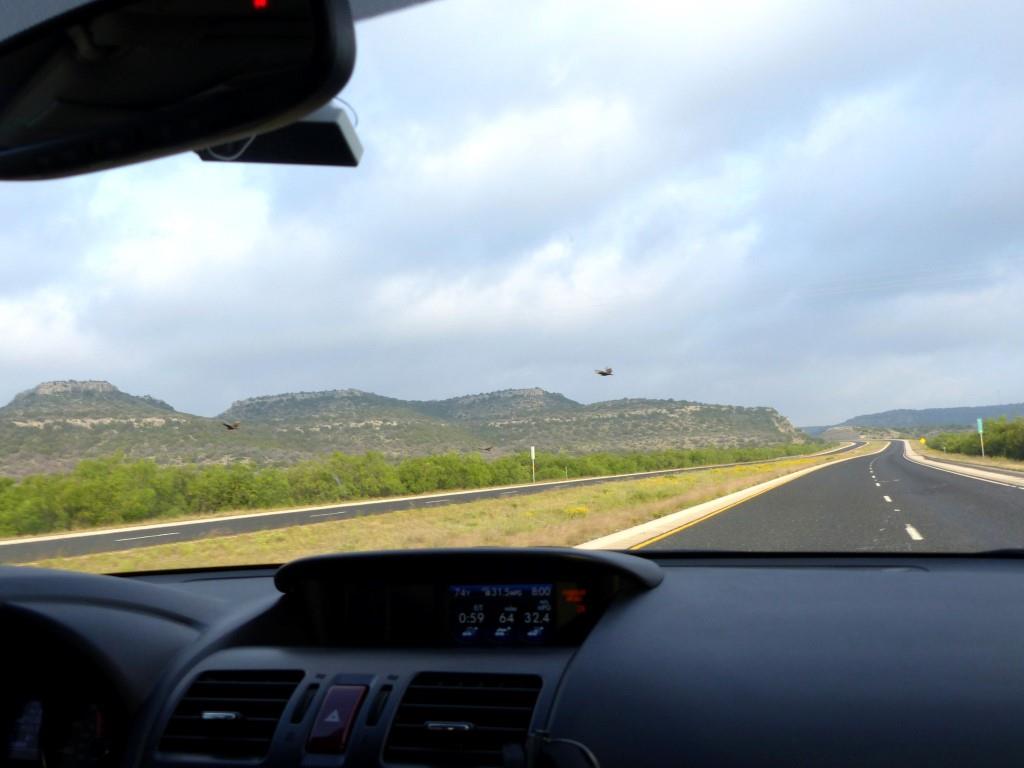
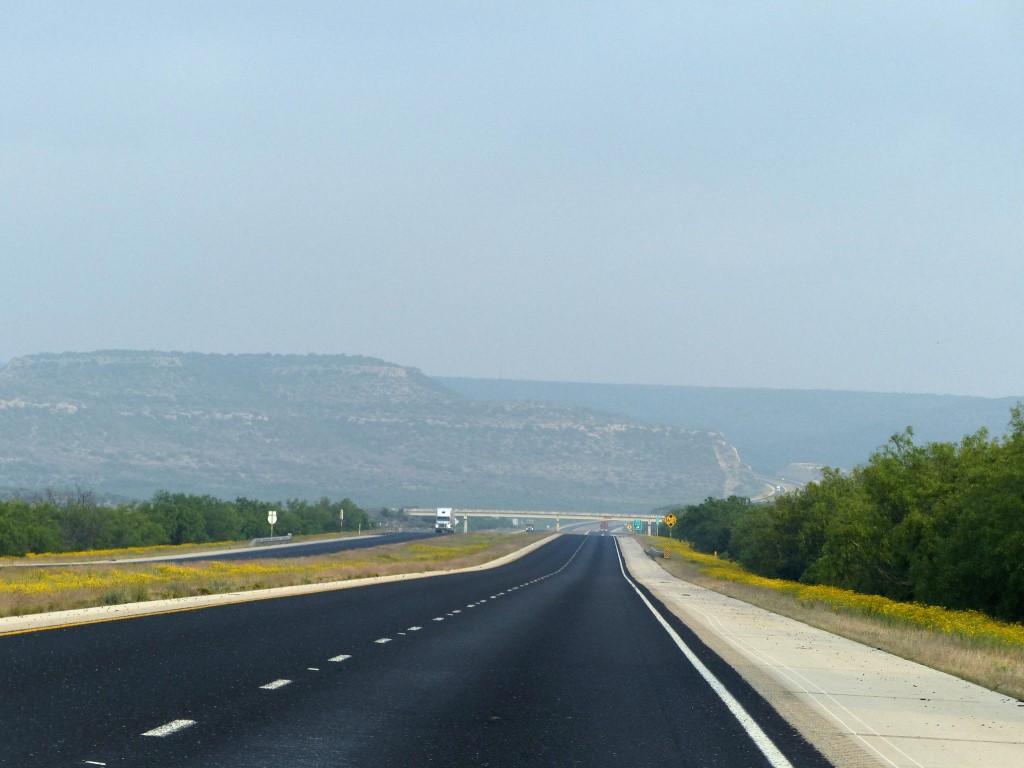
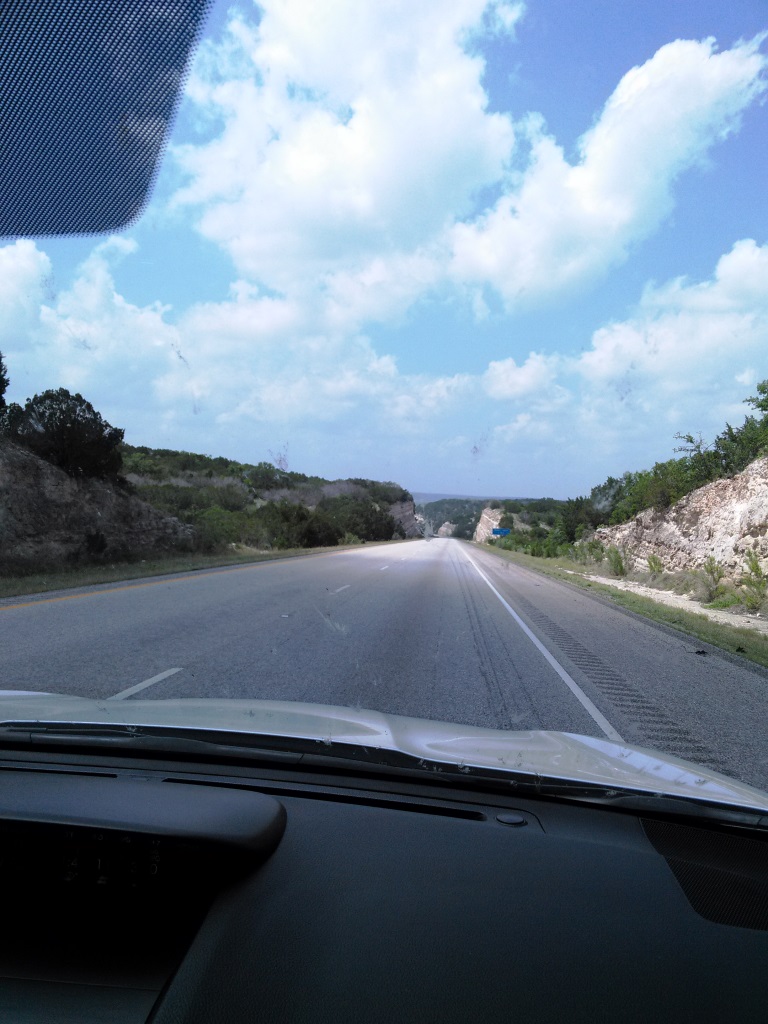
West Texas from phone camera 5-7-15
The mountains shall bring peace to the people, and the little hills, by righteousness. (Psalms 72:3 KJV)
Ye are the light of the world. A city that is set on an hill cannot be hid. (Matthew 5:14 KJV)
Dan and I decided to continue on west, taking the lower Interstate 10 route through west Texas and maybe try to get to Dallas on our return trip. We never did make it to Dallas. We were challenged coming back through lower Texas on our return trip because of the storms and flooding. Whoops! I’m getting ahead of myself. More about that later.
Let me tell you, Texas is one long state! I-10 across Texas, according to Wikipedia is – Length: 878.6 mi (1,414.0 km). You do not scoot across it in one day!
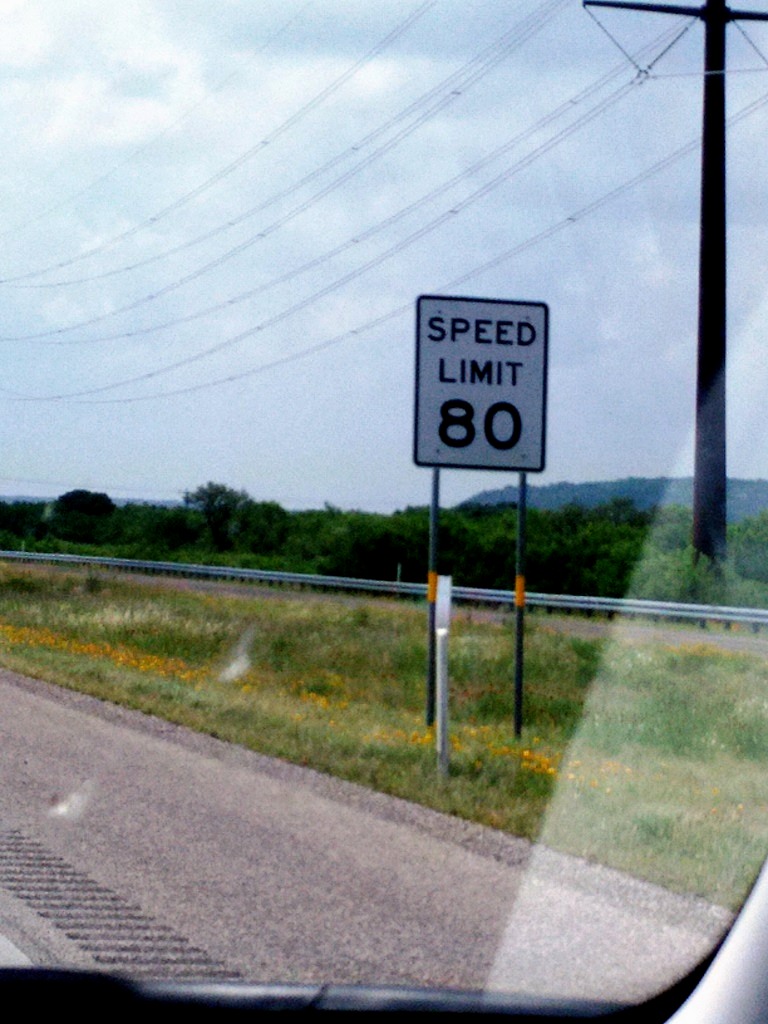
West Texas Speed Limit sign from phone camera 5-7-15
We were surprised to see this speed limit sign at 80 MPH. Never seen one that high. 70 or 75 maybe, but 80, not seen before. Forgot to put the camera up front, but grabbed the phone.
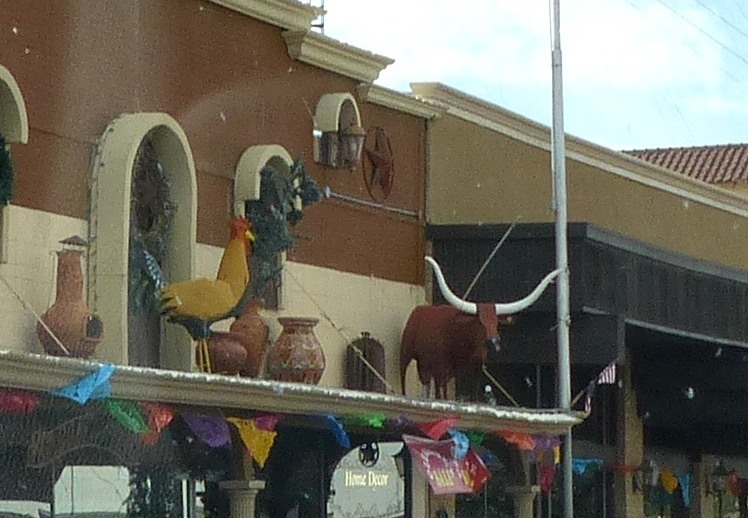
We ran 70, but, considering that there are miles and miles of open area, it is understandable why Texas has it this high out here. We got as far as Sonora, Texas and then on Friday we had some interesting things to investigate.
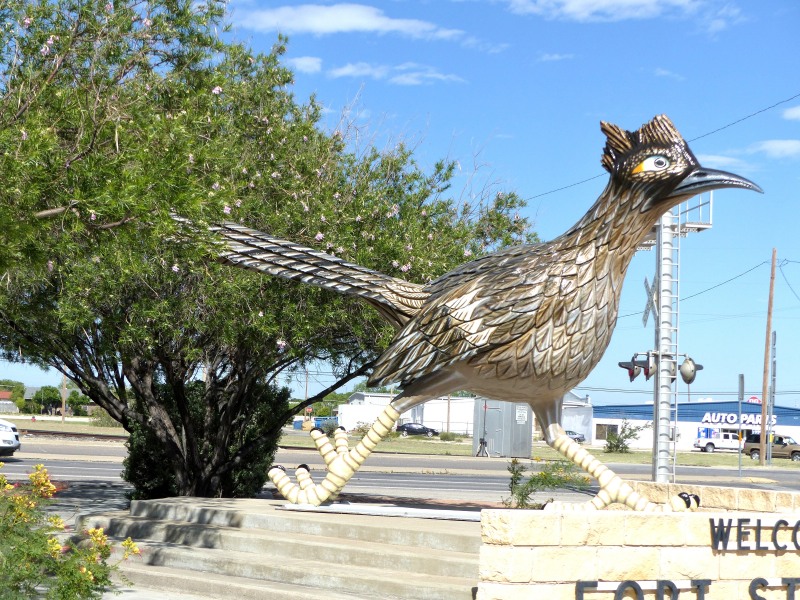
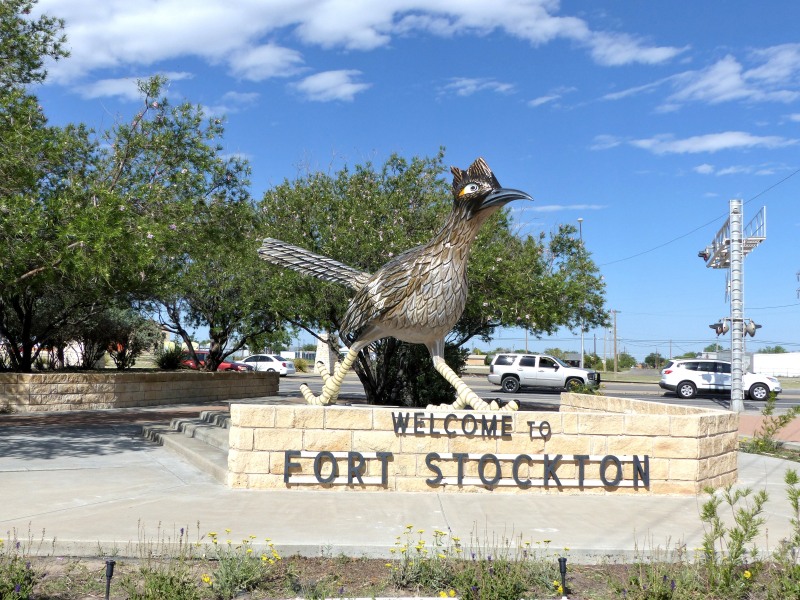
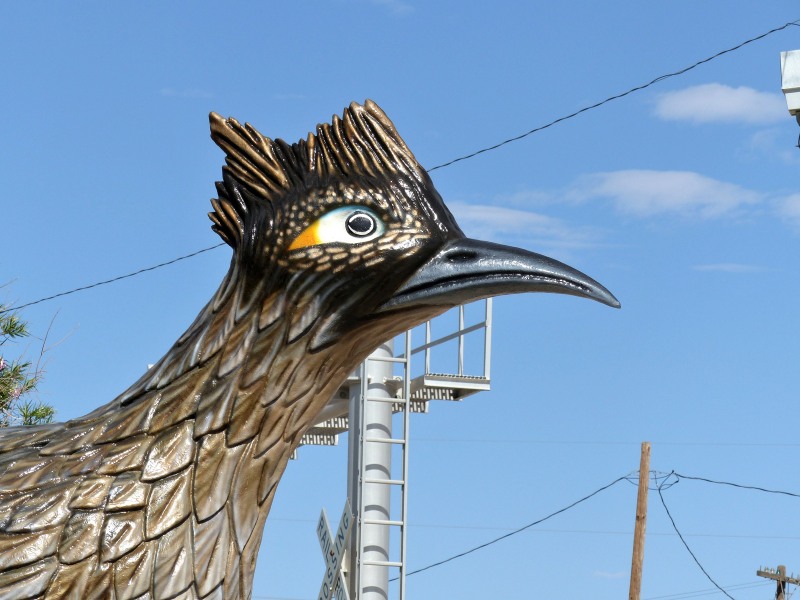
Roadrunner in Ft Stockton TX by Lee
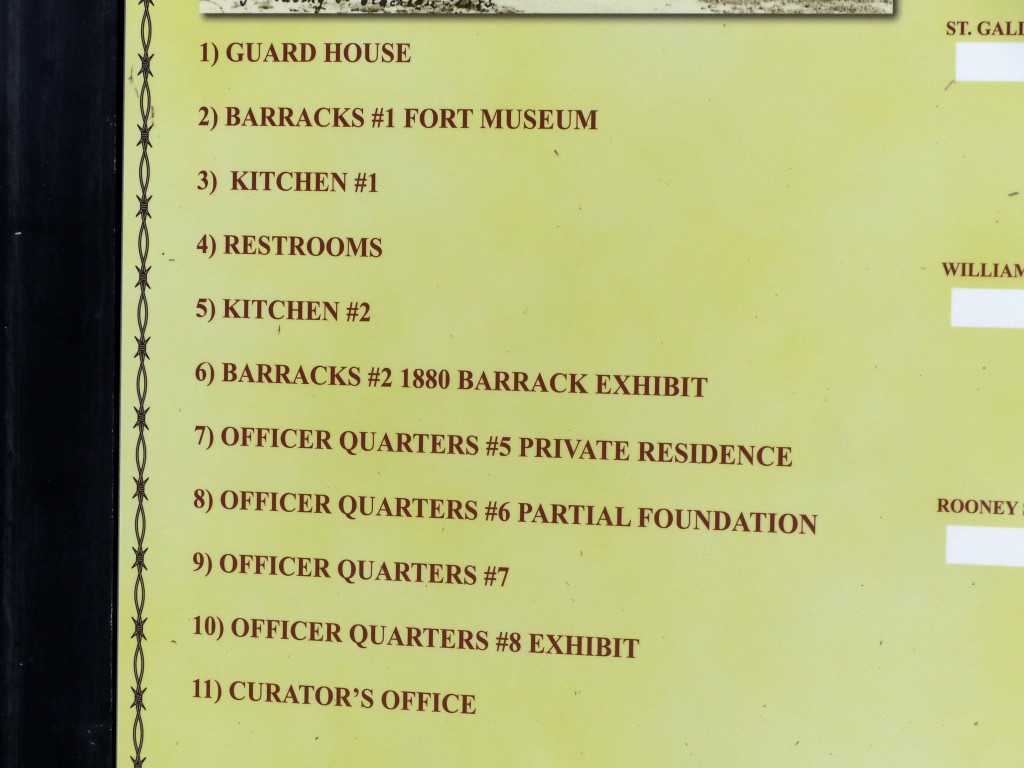
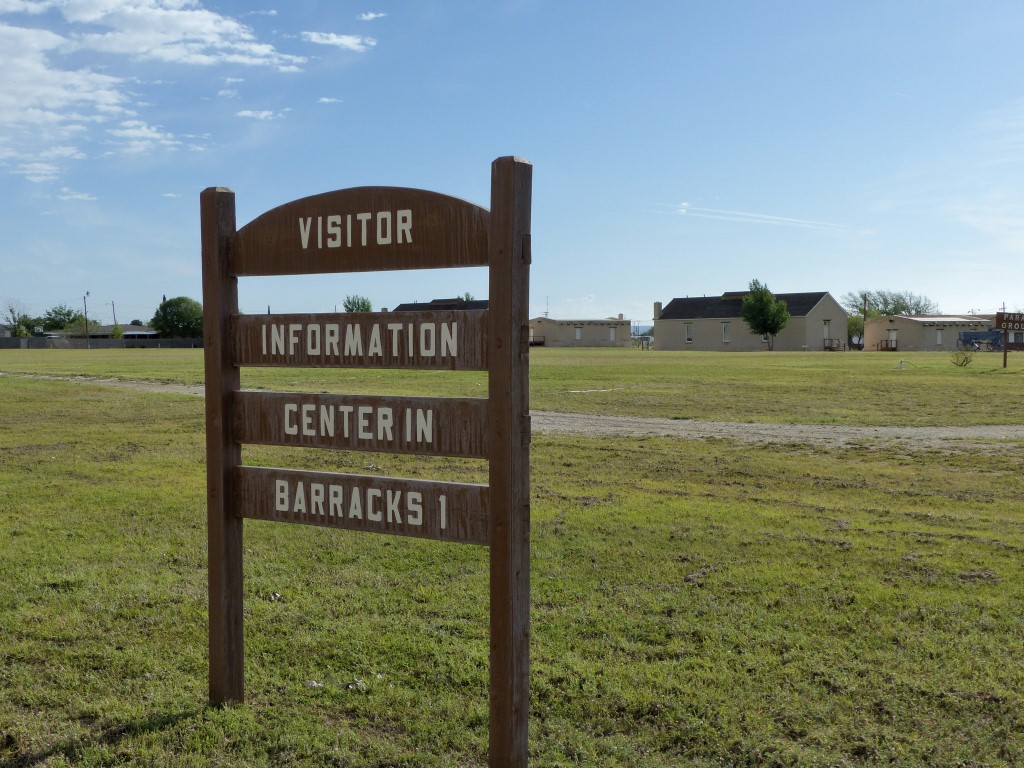
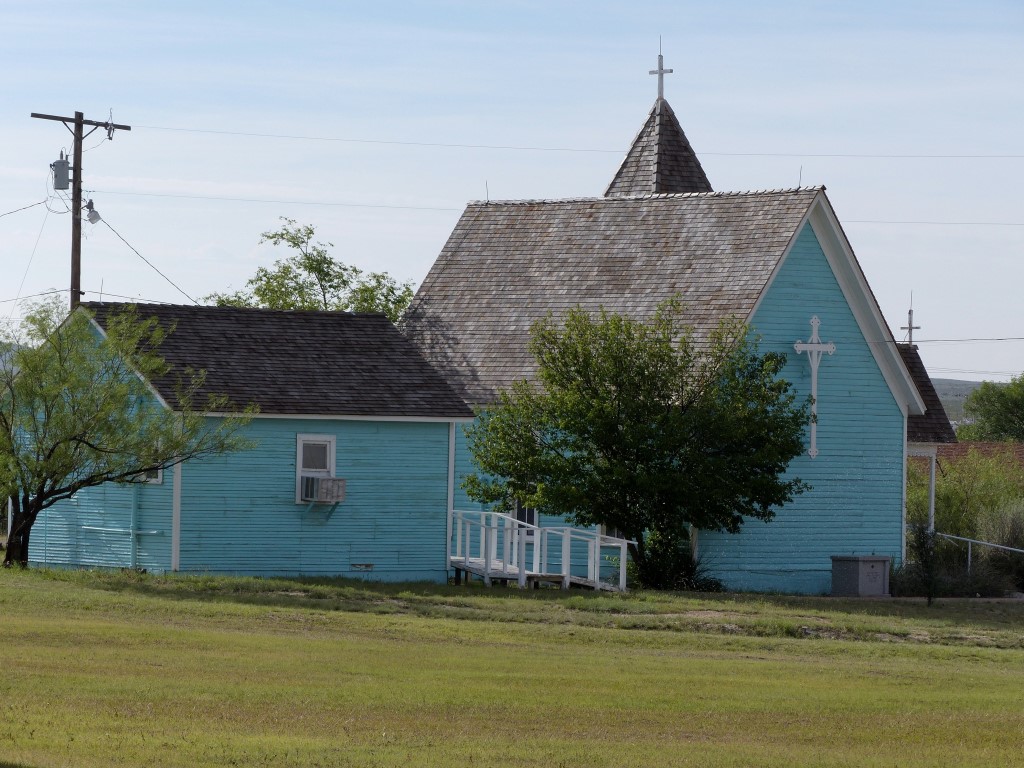
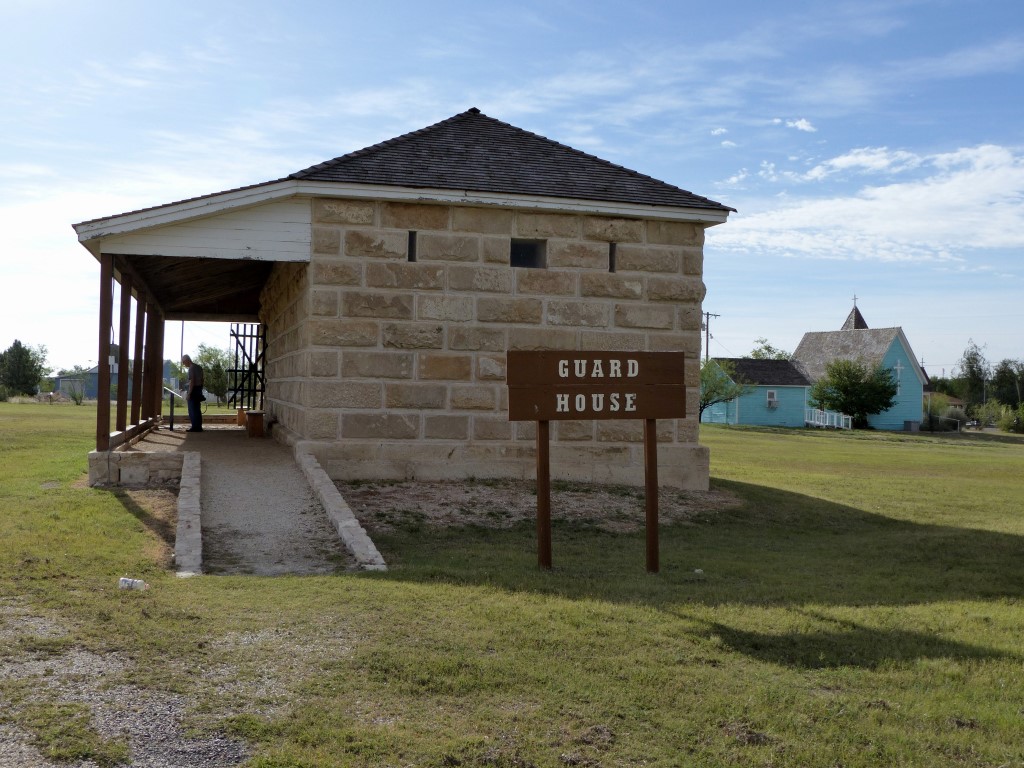
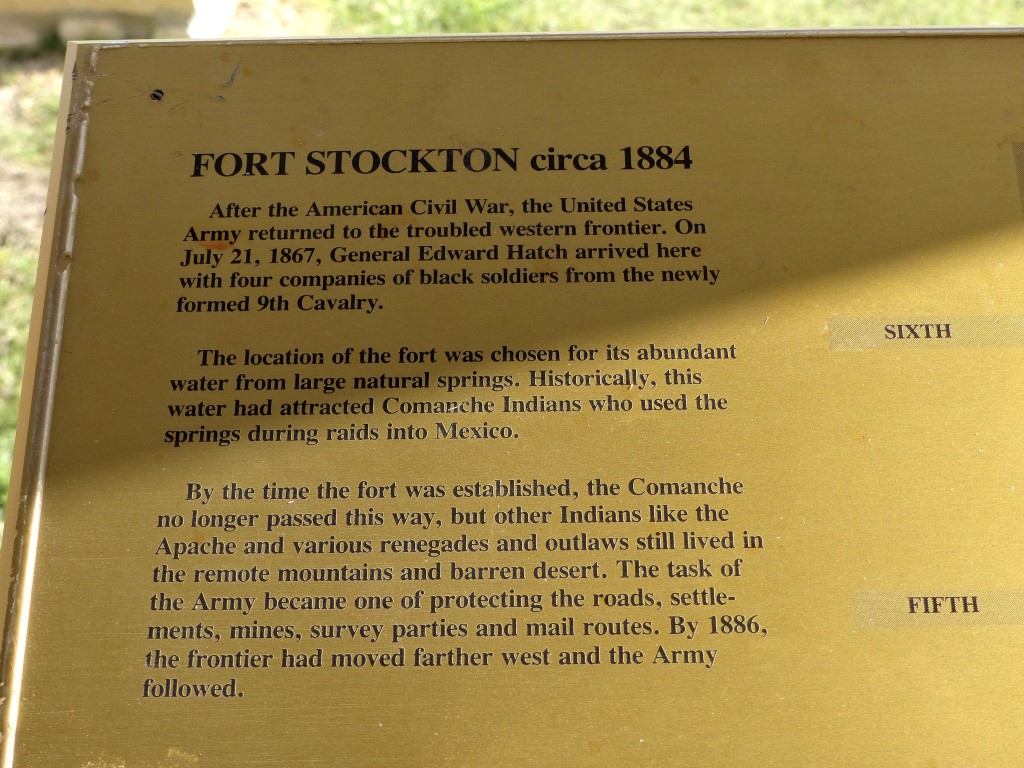
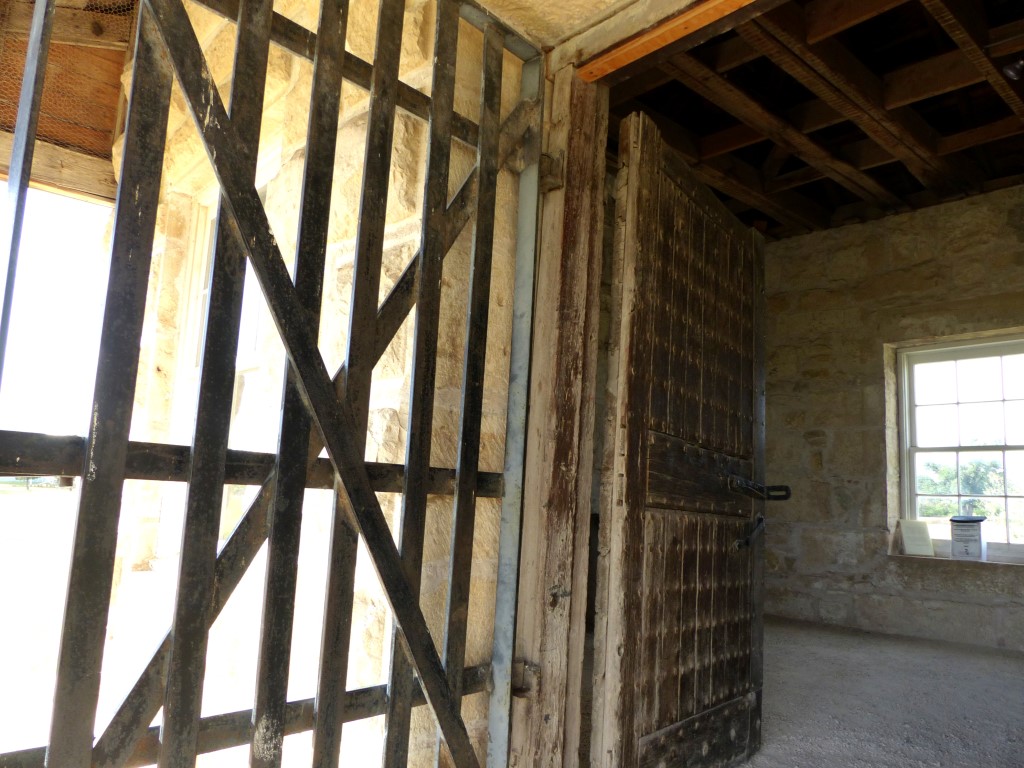
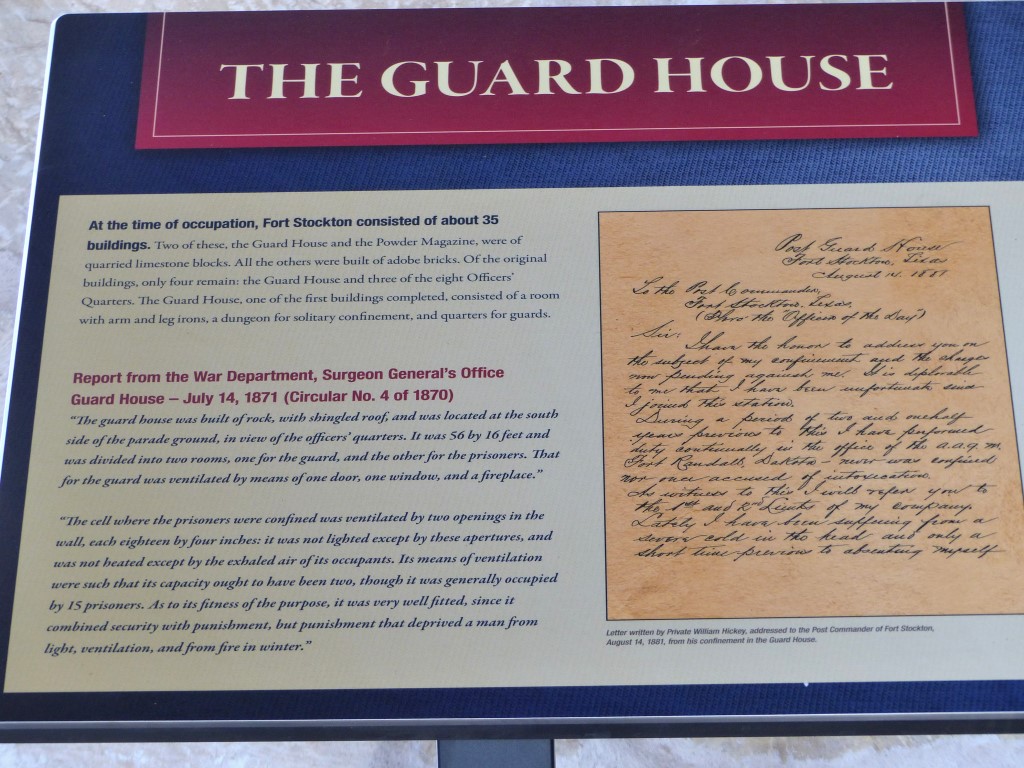
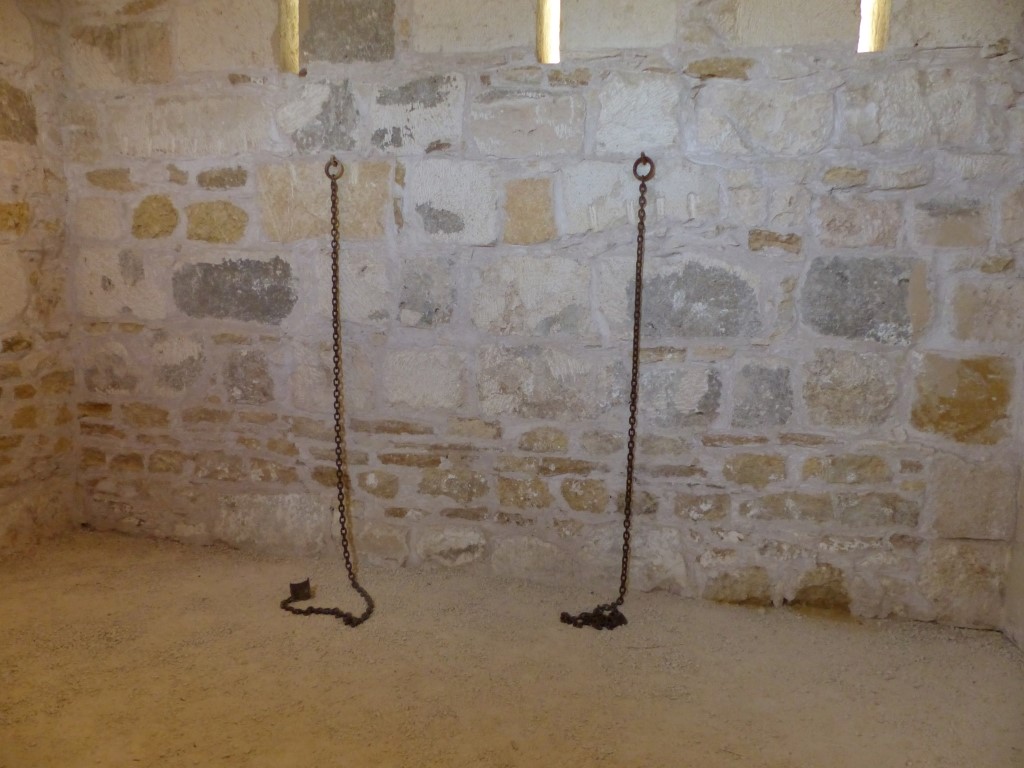
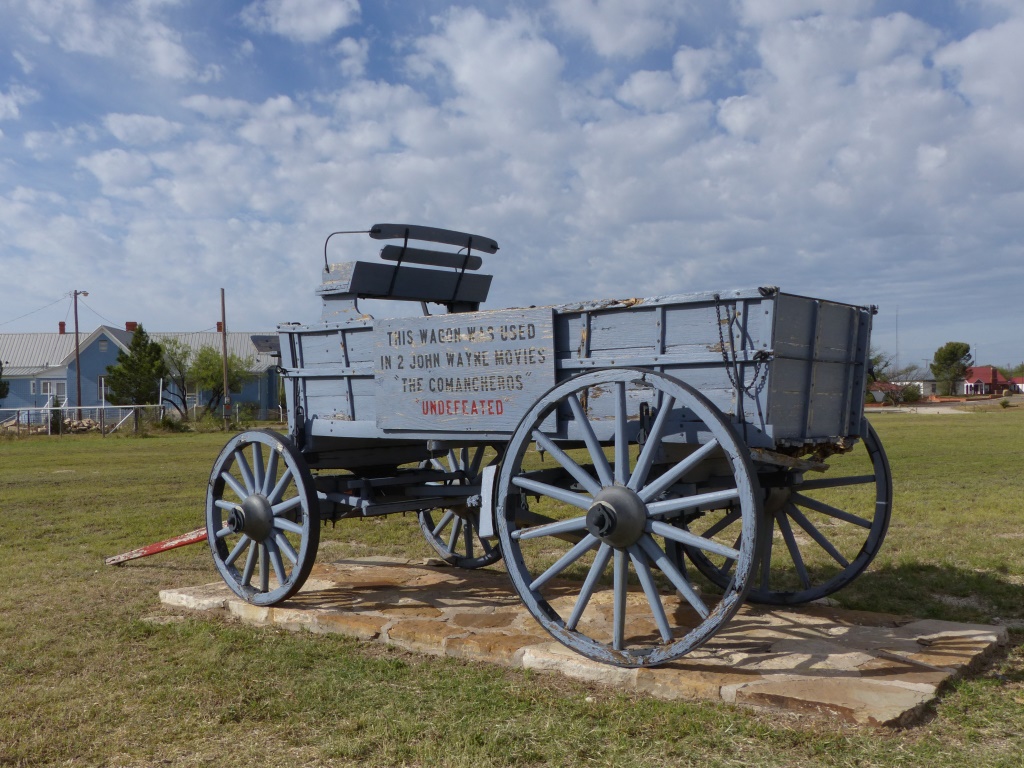
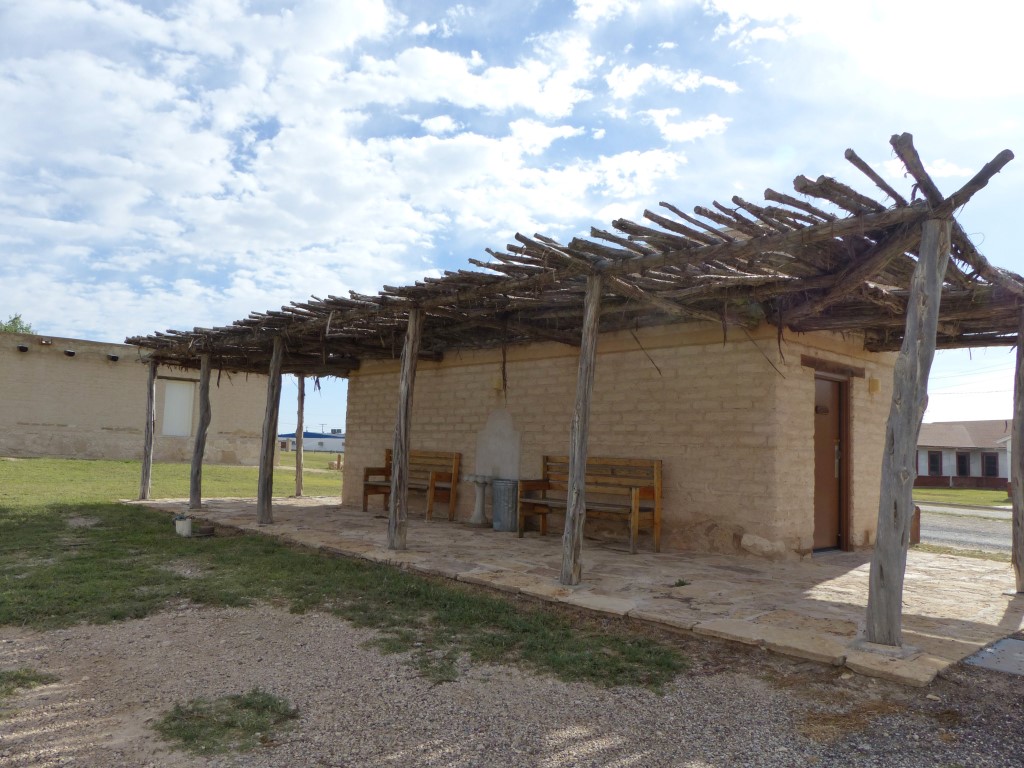
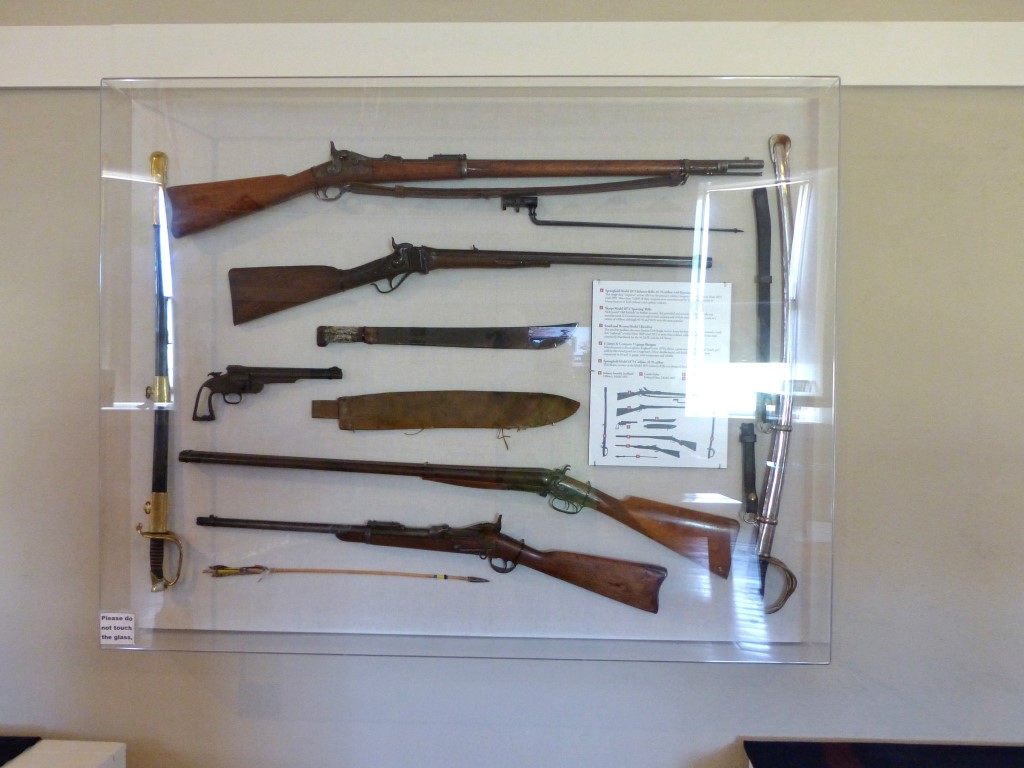
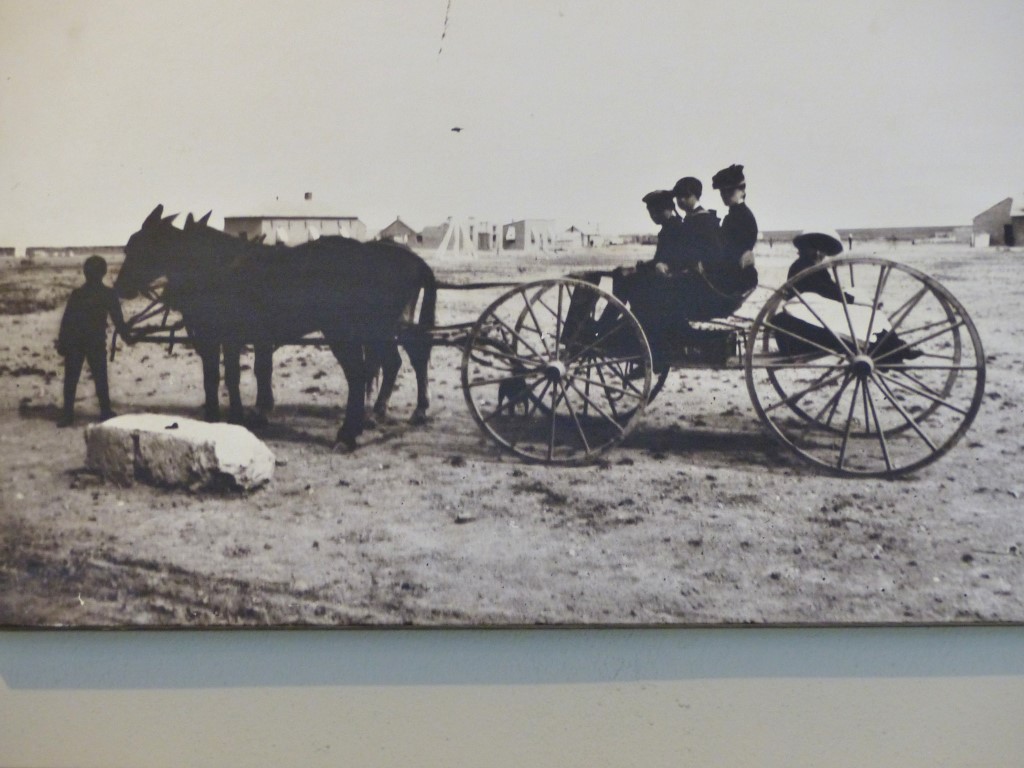
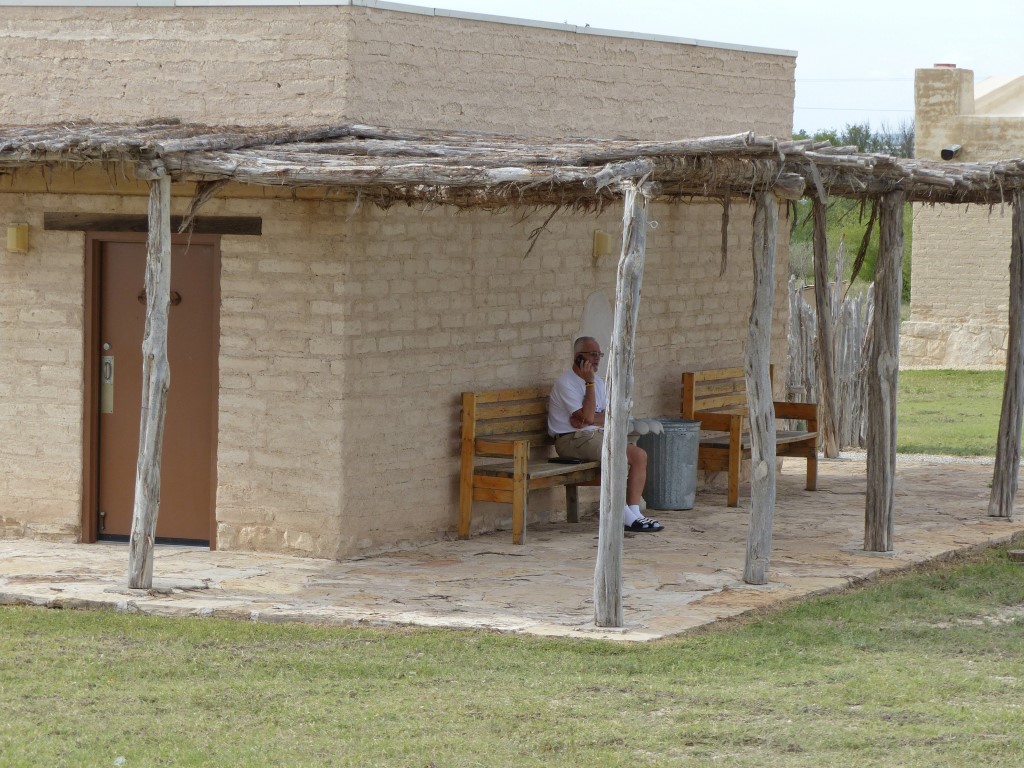
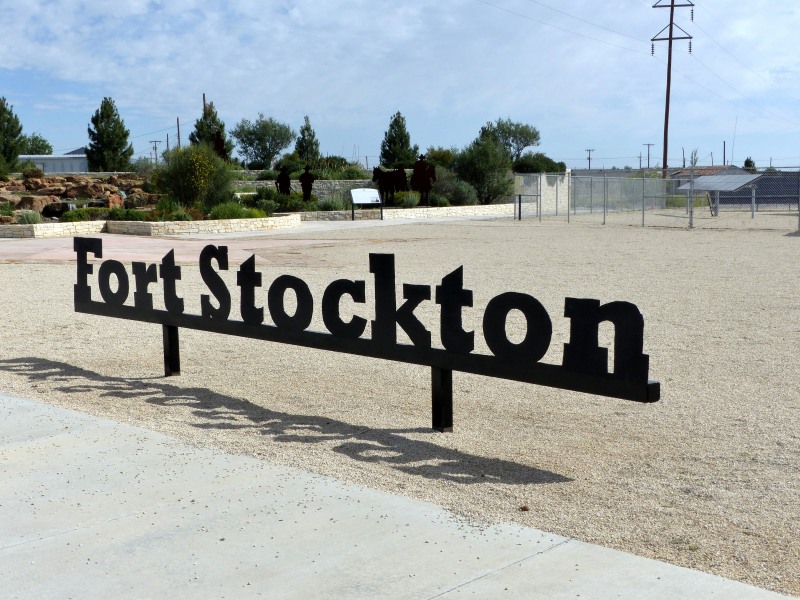
I’ve already written about My Western Greater Roadrunners that we saw in Fort Stockton. That was on Friday, May 8th. At Fort Stockton, there is actually an old fort that was originally called Camp Stockton, now Fort Stockton.
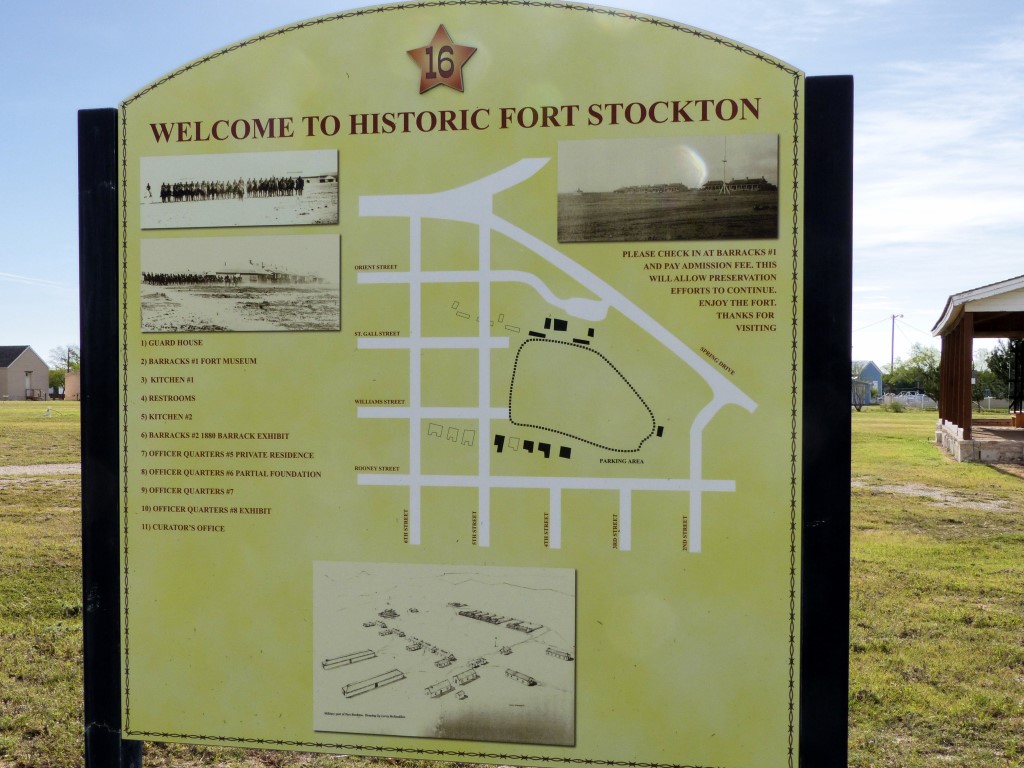
Welcome to Historic Fort Stockton
“Military presence began here with the establishment of Camp Stockton in 1858 by troops of the 1st and 8th Infantry, US Army. It was named for Commodore Robert Field Stockton, a naval officer who distinguished himself during the Mexican War. This first site was southwest of the present location, near the present Courthouse.
The post protected travelers and settlers on the numerous roads and trails that made use of the abundant water supply of Comanche Springs. It was here that these trails crossed the Comanche War Trail.”
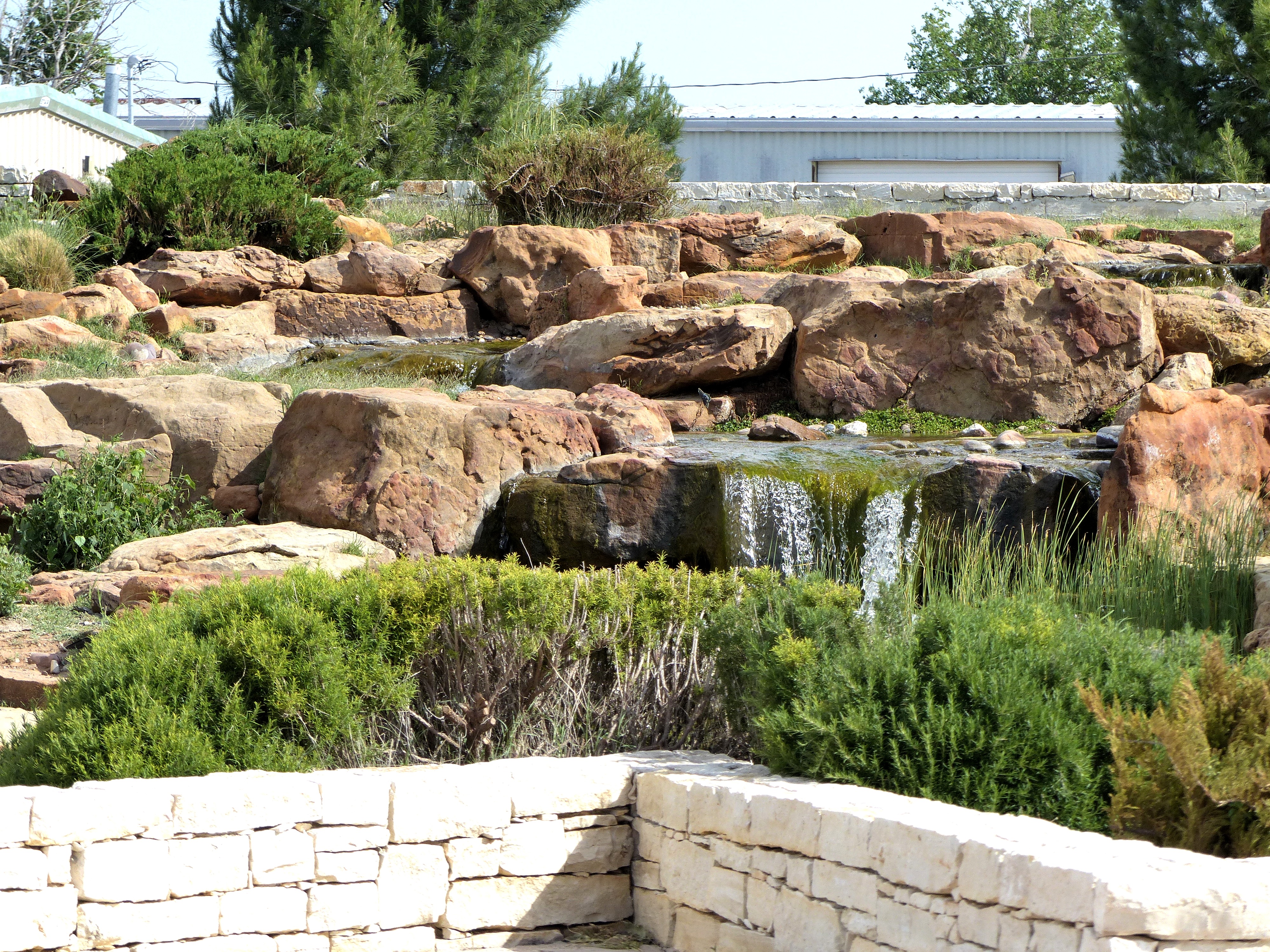
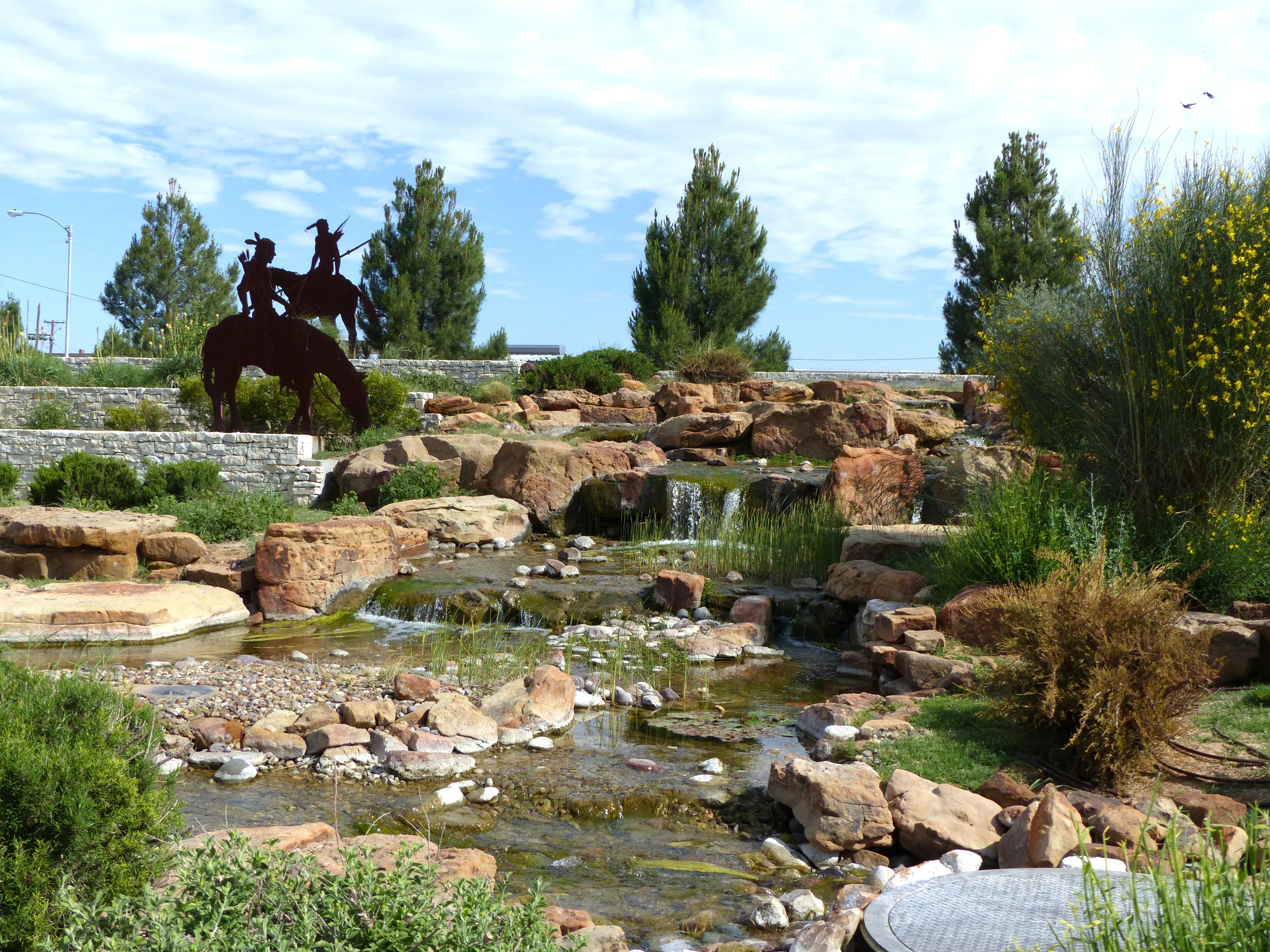
Below are some photos from Sonora and Fort Stockton. More tales to come before we leave Texas headed West. Next “Vacation Goal” – San Diego, California. On the way!
Florida Scrub Jay (Aphelocoma coerulescens) by Dan
The Corvidae Family has 143 species, of which many are known to people around the world. A member of this family, the Raven is a well recognized Bird of the Bible. On our recent vacation, in Arizona we were able to see a wild Common Raven and a Stellar’s Jay for the first time. Was able to add these to my Life List of Birds on eBird.
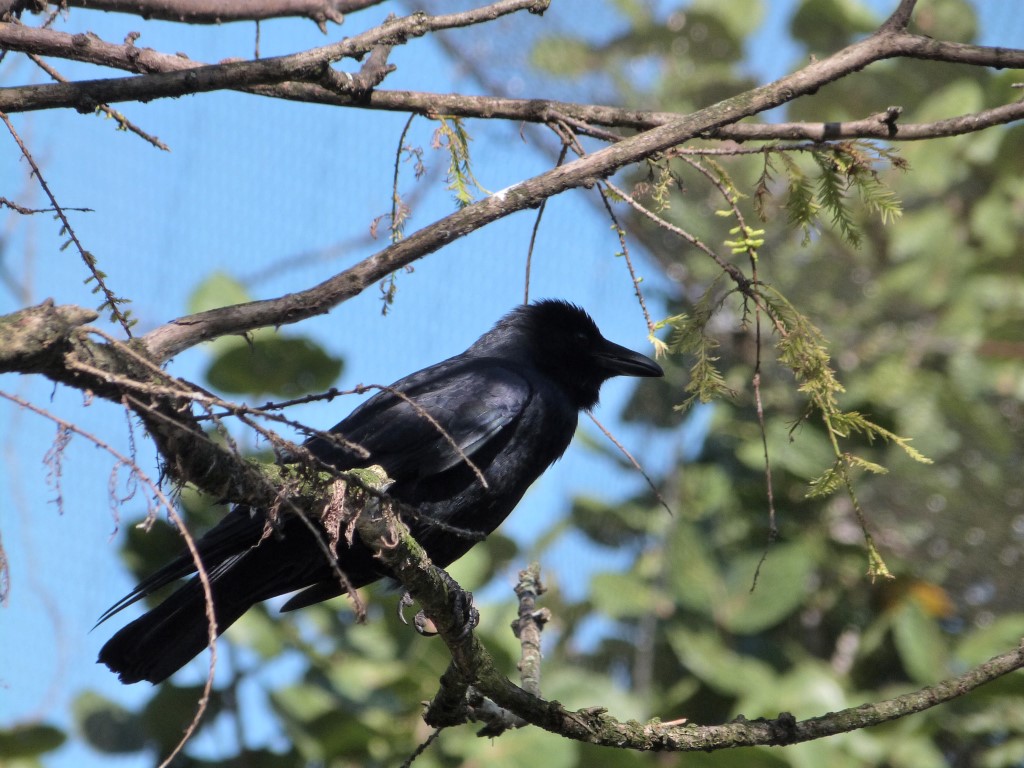
American Crow (Corvus brachyrhynchos) Wild SD Zoo Day by Lee
Steller’s Jay (Cyanocitta stelleri) by Lee at Desert Museum AZ
The Corvidae Family not only has Crows, Ravens, and Jays, but the family also hosts; the Choughs, Treepies, Magpies, Bushcrow, Nutcrackers, Jackdaws, and the Rook.
“They are considered the most intelligent of the birds, and among the most intelligent of all animals, having demonstrated self-awareness in mirror tests (European magpies) and tool-making ability (crows, rooks)—skills until recently regarded as solely the province of humans and a few other higher mammals. Their total brain-to-body mass ratio is equal to that of great apes and cetaceans, and only slightly lower than in humans.
They are medium to large in size, with strong feet and bills, rictal bristles, and a single moult each year (most passerines moult twice). Corvids are found worldwide except for the tip of South America and the polar ice caps. The majority of the species are found in tropical South and Central America, southern Asia and Eurasia, with fewer than 10 species each in Africa and Australasia, and Australia.” (Wikipedia)
Could this intelligent family of created birds from the Creator’s Hand be the reason the Raven was chosen by Noah?
And it came to pass at the end of forty days, that Noah opened the window of the ark which he had made: And he sent forth a raven, which went forth to and fro, until the waters were dried up from off the earth. (Genesis 8:6-7 KJV)
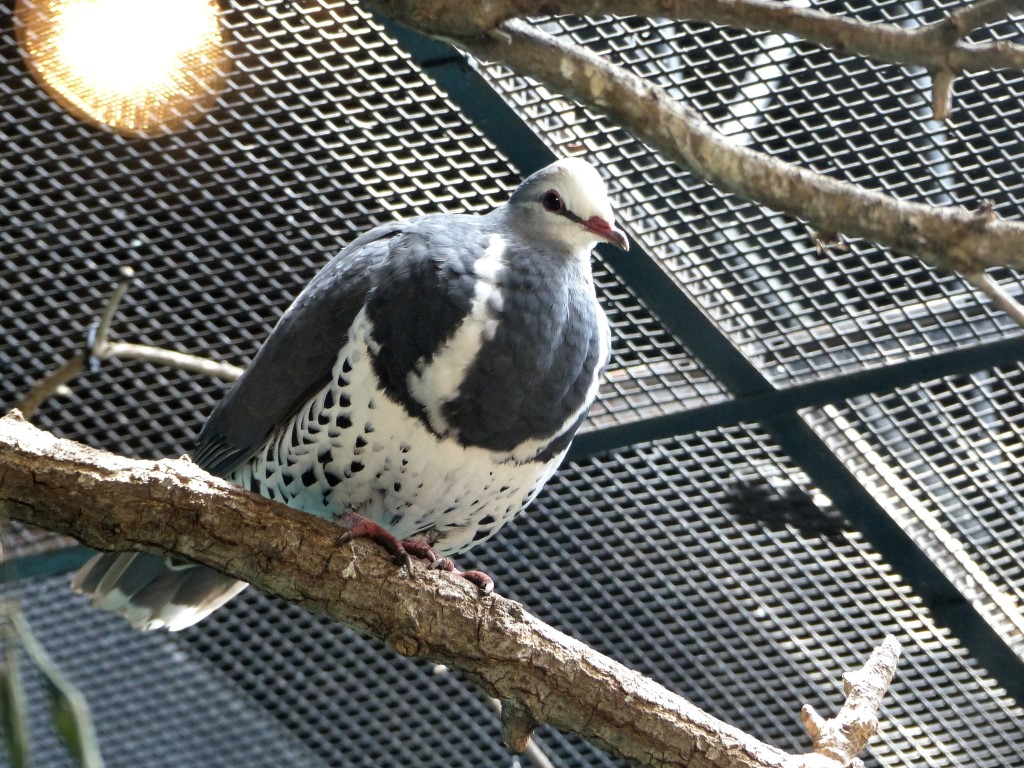
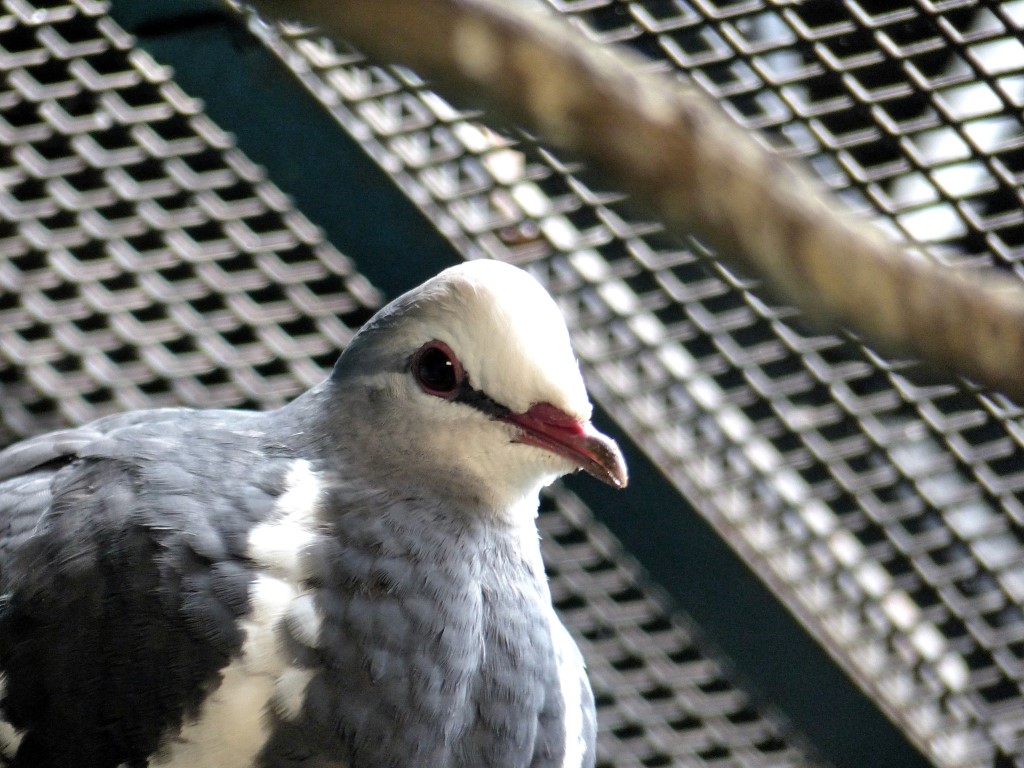
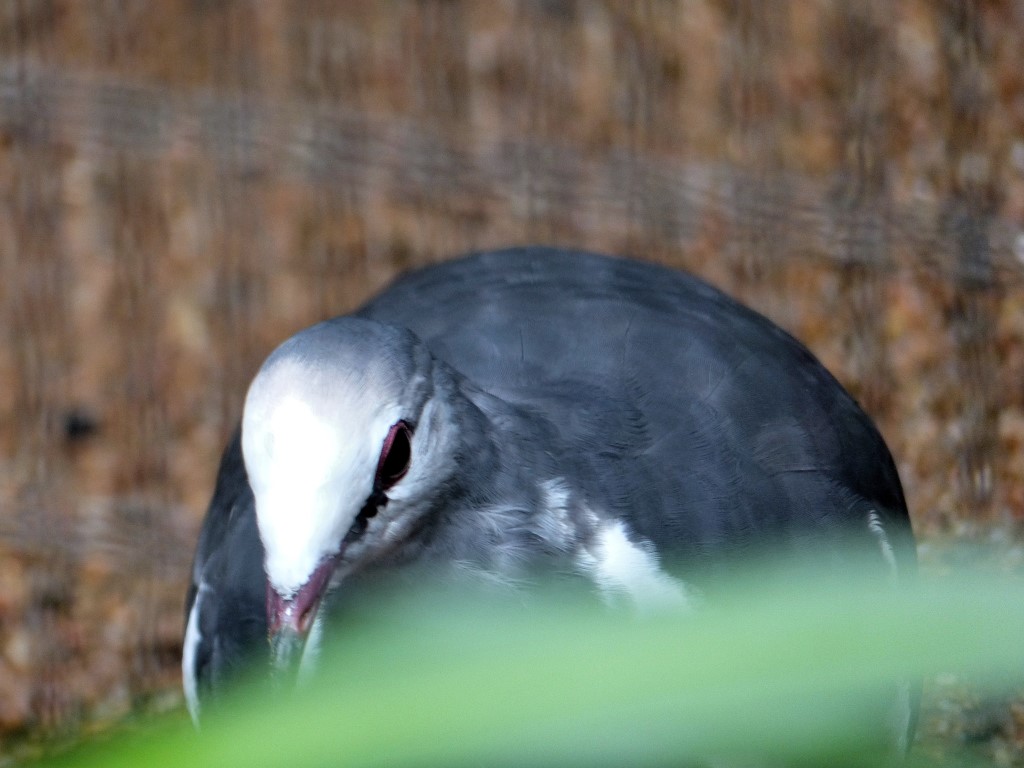
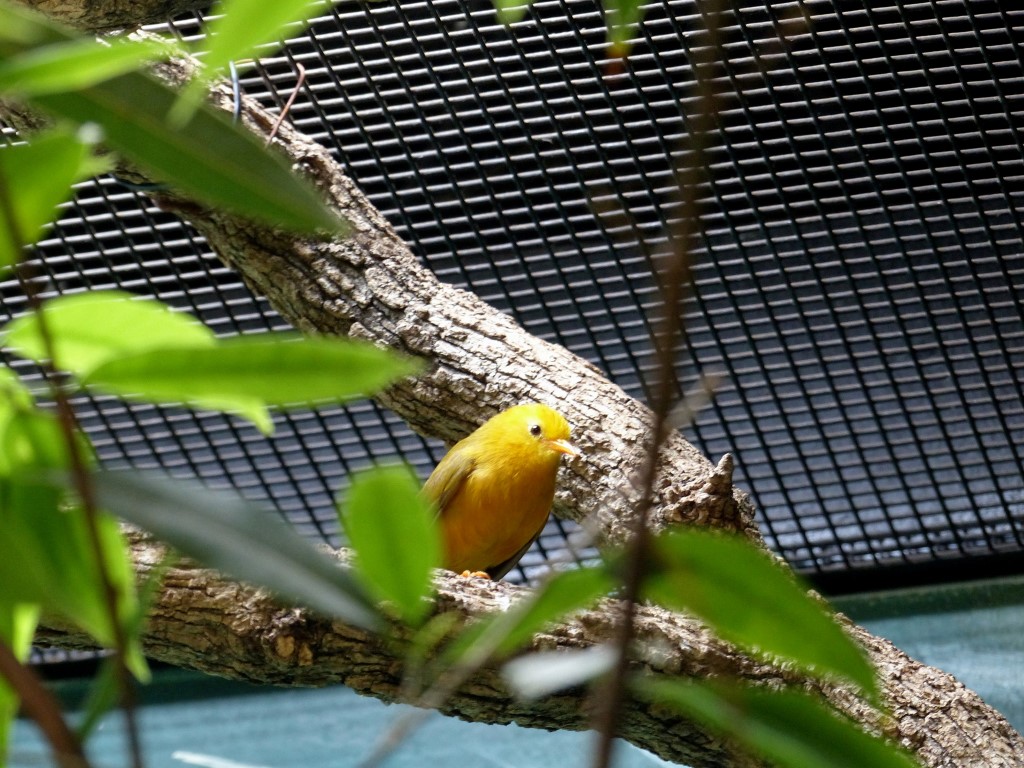
Wonga Pigeon (Leucosarcia melanoleuca) Houston Zoo by Lee
And I said, Oh that I had wings like a dove! for then would I fly away, and be at rest. (Psalms 55:6 KJV)
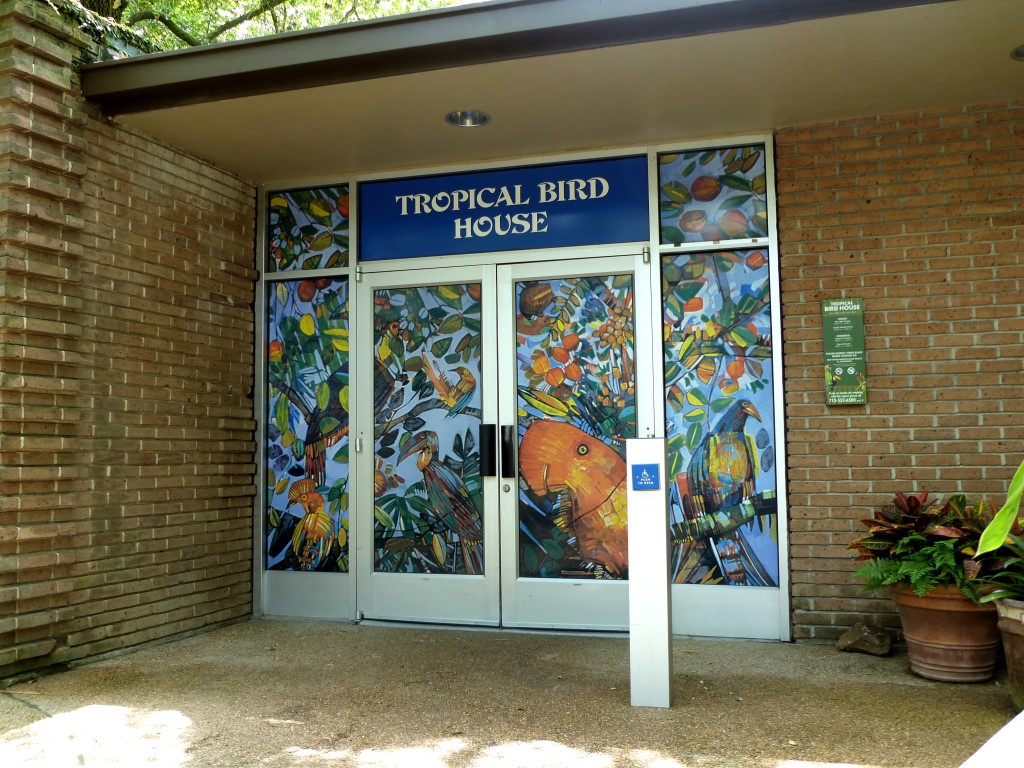
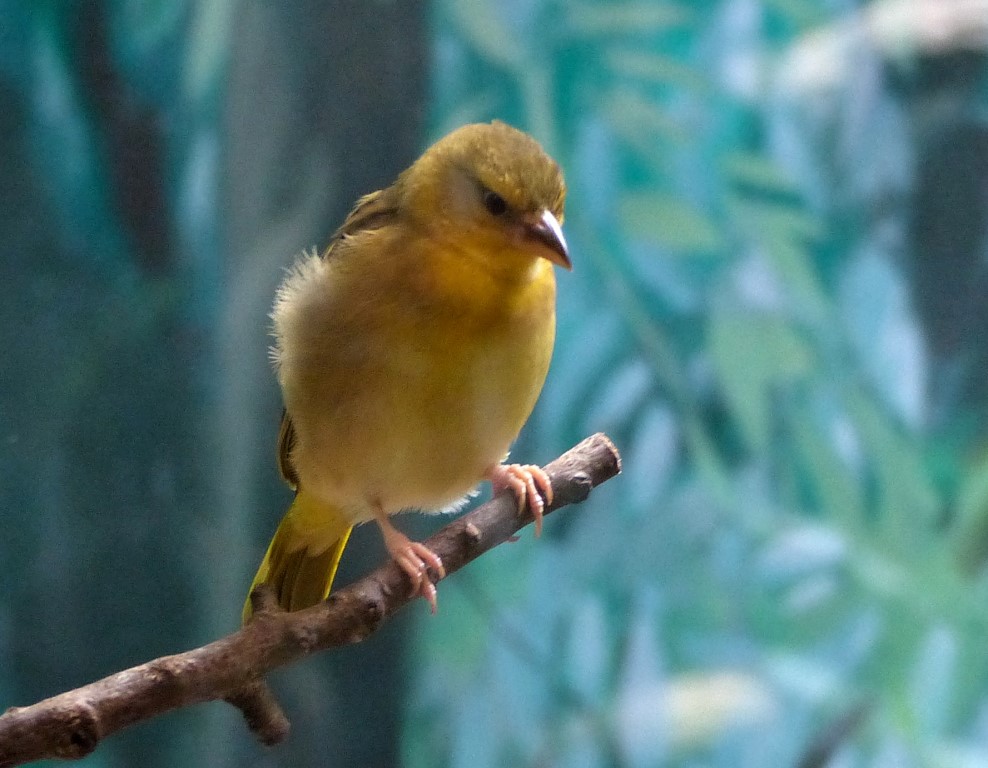
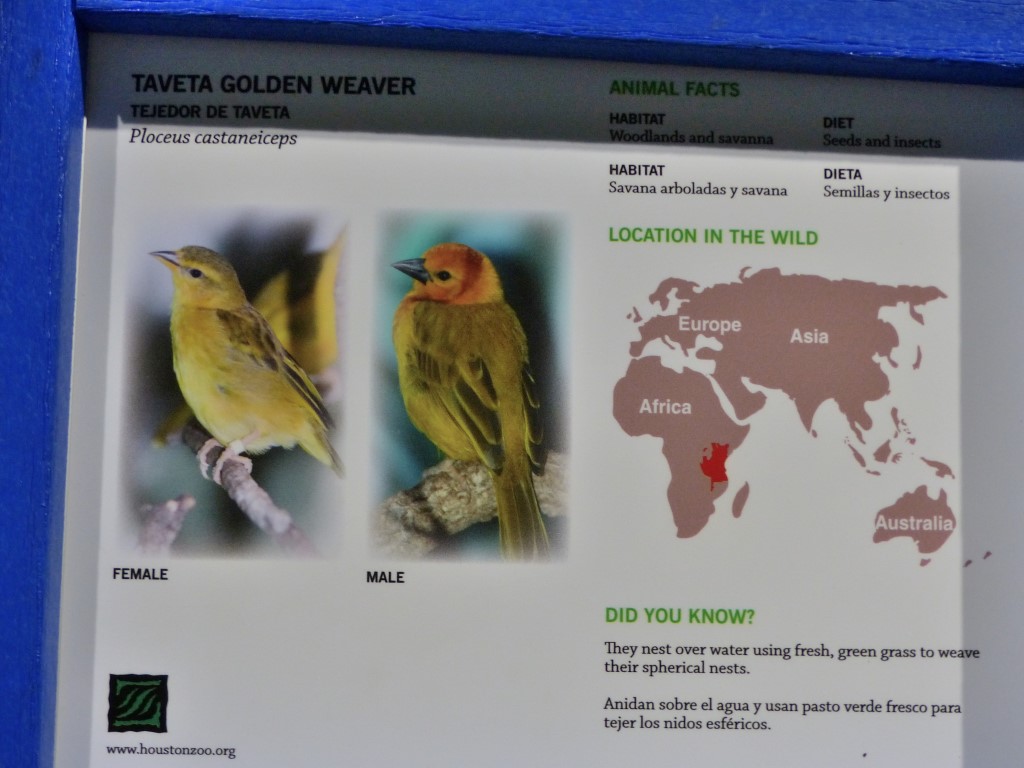
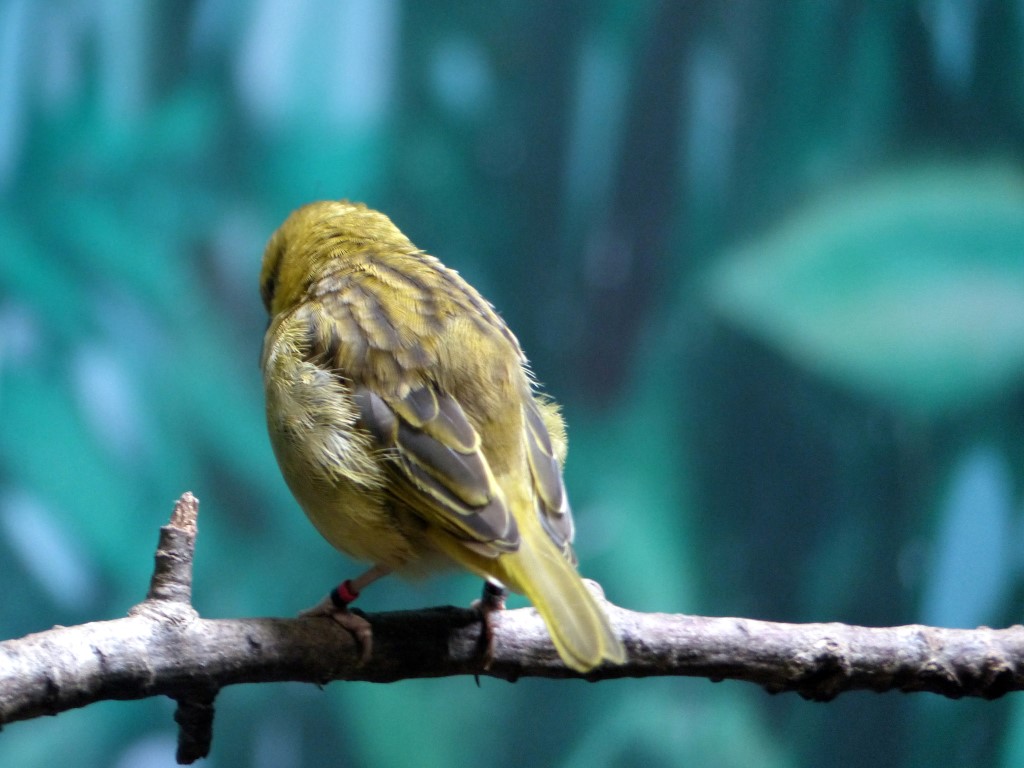
Thought I’d share two videos and some photos of the Wonga Dove and the Taveta Weavers. They were in the Tropical Bird House which had enclosures with a glass in front of them and not a cage (YEAH!)
Tropical Bird House Houston Zoo by Lee
The Wonga Dove was calling and could be heard everywhere in the Bird House. One video is of the dove calling and the weavers next door. You will hear the sound of the dove even while videoing the weavers.
Taveta Weaver (Ploceus castaneiceps) Houston Zoo by Lee
Like a crane or a swallow, so did I chatter: I did mourn as a dove: mine eyes fail with looking upward: O LORD, I am oppressed; undertake for me. (Isaiah 38:14 KJV)
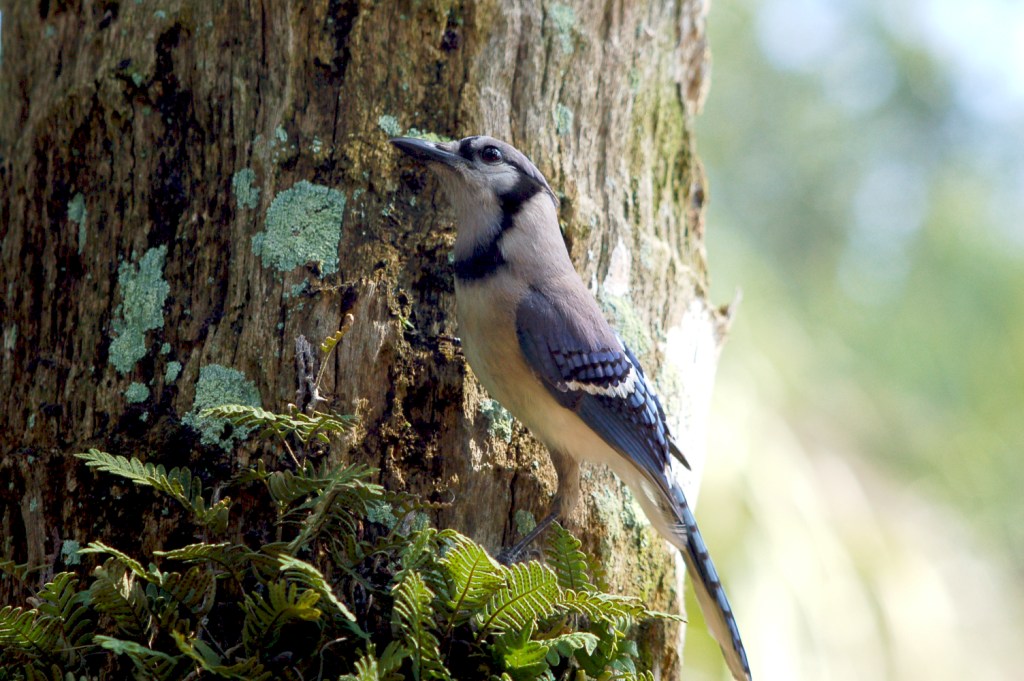
Blue Jay (Cyanocitta cristata) at Bok Tower By Dan’sPix
More Robbers
The Crow and the Blue Jay.
The Burgess Bird Book For Children
*
Listen to the story read.
CHAPTER 17. More Robbers.
By the sounds of rejoicing among the feathered folks of the Old Orchard Johnny Chuck knew that it was quite safe for him to come out. He was eager to tell Skimmer the Tree Swallow how glad he was that Mr. Blacksnake had been driven away before he could get Skimmer’s eggs. As he poked his head out of his doorway he became aware that something was still wrong in the Old Orchard. Into the glad chorus there broke a note of distress and sorrow. Johnny instantly recognized the voices of Welcome Robin and Mrs. Robin. There is not one among his feathered neighbors who can so express worry and sorrow as can the Robins.
Johnny was just in time to see all the birds hurrying over to that part of the Old Orchard where the Robins had built their home. The rejoicing suddenly gave way to cries of indignation and anger, and Johnny caught the words, “Robber! Thief! Wretch!” It appeared that there was just as much excitement over there as there had been when Mr. Blacksnake had been discovered trying to rob Skimmer and Mrs. Skimmer. It couldn’t be Mr. Blacksnake again, because Farmer Brown’s boy had chased him in quite another direction.
“What is it now?” asked Johnny of Skimmer, who was still excitedly discussing with Mrs. Skimmer their recent fright.
“I don’t know, but I’m going to find out,” replied Skimmer and darted away.
Johnny Chuck waited patiently. The excitement among the birds seemed to increase, and the chattering and angry cries grew louder. Only the voices of Welcome and Mrs. Robin were not angry. They were mournful, as if Welcome and Mrs. Robin were heartbroken. Presently Skimmer came back to tell Mrs. Skimmer the news.
“The Robins have lost their eggs!” he cried excitedly. “All four have been broken and eaten. Mrs. Robin left them to come over here to help drive away Mr. Blacksnake, and while she was here some one ate those eggs. Nobody knows who it could have been, because all the birds of the Old Orchard were over here at that time. It might leave been Chatterer the Red Squirrel, or it might have been Sammy Jay, or it might have been Creaker the Grackle, or it might have been Blacky the Crow. Whoever it was just took that chance to sneak over there and rob that nest when there was no one to see him.”
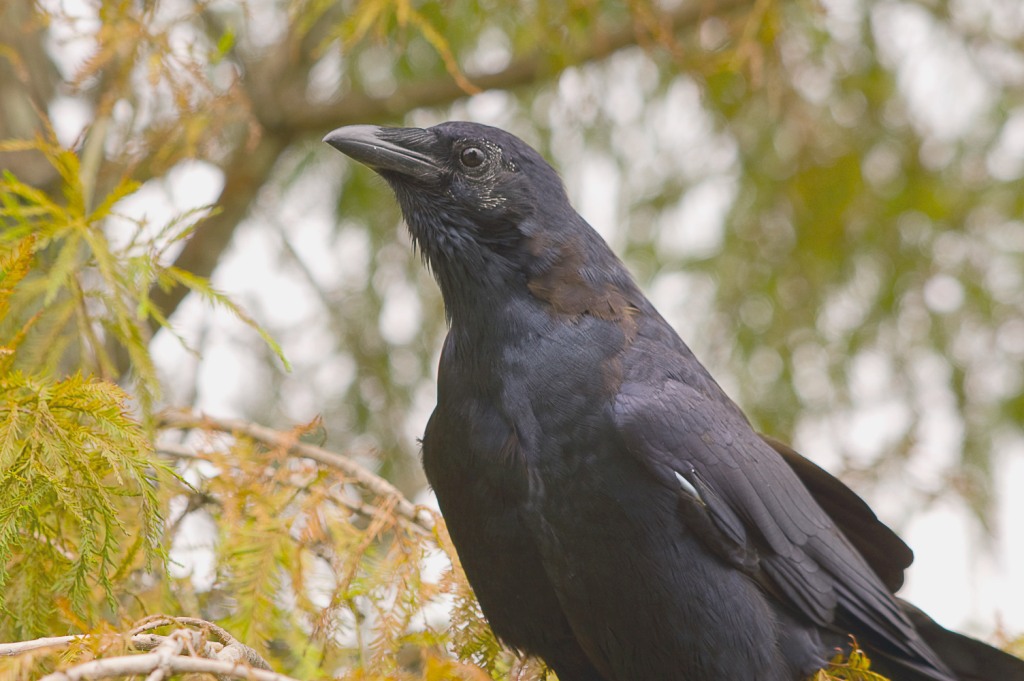
Crow at Flamingo Gardens by Lee
Just then from over towards the Green Forest sounded a mocking “Caw, caw, caw!” Instantly the noise in the Old Orchard ceased for a moment. Then it broke out afresh. There wasn’t a doubt now in any one’s mind. Blacky the Crow was the robber. How those tongues did go! There was nothing too bad to say about Blacky. And such dreadful things as those birds promised to do to Blacky the Crow if ever they should catch him in the Old Orchard.
“Caw, caw, caw!” shouted Blacky from the distance, and his voice sounded very much as if he thought he had done something very smart. It was quite clear that at least he was not sorry for what he had done.
All the birds were so excited and so angry, as they gathered around Welcome and Mrs. Robin trying to comfort them, that it was some time before their indignation meeting broke up and they returned to their own homes and duties. Almost at once there was another cry of distress. Mr. and Mrs. Chebec had been robbed of their eggs! While they had been attending the indignation meeting at the home of the Robins, a thief had taken the chance to steal their eggs and get away.
Of course right away all the birds hurried over to sympathize with the Chebecs and to repeat against the unknown thief all the threats they had made against Blacky the Crow. They knew it couldn’t have been Blacky this time because they had heard Blacky cawing over on the edge of the Green Forest. In the midst of the excited discussion as to who the thief was, Weaver the Orchard Oriole spied a blue and white feather on the ground just below Chebec’s nest.
“It was Sammy Jay! There is no doubt about it, it was Sammy Jay!” he cried.
At the sight of that telltale feather all the birds knew that Weaver was right, and led by Scrapper the Kingbird they began a noisy search of the Old Orchard for the sly robber. But Sammy wasn’t to be found, and they soon gave up the search, none daring to stay longer away from his own home lest something should happen there. Welcome and Mrs. Robin continued to cry mournfully, but little Mr. and Mrs. Chebec bore their trouble almost silently.
“There is one thing about it,” said Mr. Chebec to his sorrowful little wife, “that egg of Sally Sly’s went with the rest, and we won’t have to raise that bothersome orphan.”
“That’s true,” said she. “There is no use crying over what can’t be helped. It is a waste of time to sit around crying. Come on, Chebec, let’s look for a place to build another nest. Next time I won’t leave the eggs unwatched for a minute.”
Meanwhile Jenny Wren’s tongue was fairly flying as she chattered to Peter Rabbit, who had come up in the midst of the excitement and of course had to know all about it.
Fish Crow (Corvus ossifragus) at Lake Morton By Dan’sPix
“Blacky the Crow has a heart as black as his coat, and his cousin Sammy Jay isn’t much better,” declared Jenny. “They belong to a family of robbers.”
“Wait a minute,” cried Peter. “Do you mean to say that Blacky the Crow and Sammy Jay are cousins?”
“For goodness’ sake, Peter!” exclaimed Jenny, “do you mean to say that you don’t know that? Of course they’re cousins. They don’t look much alike, but they belong to the same family. I would expect almost anything bad of any one as black as Blacky the Crow. But how such a handsome fellow as Sammy Jay can do such dreadful things I don’t understand. He isn’t as bad as Blacky, because he does do a lot of good. He destroys a lot of caterpillars and other pests.
“There are no sharper eyes anywhere than those of Sammy Jay, and I’ll have to say this for him, that whenever he discovers any danger he always gives us warning. He has saved the lives of a good many of us feathered folks in this way. If it wasn’t for this habit of stealing our eggs I wouldn’t have a word to say against him, but at that, he isn’t as bad as Blacky the Crow. They say Blacky does some good by destroying white grubs and some other harmful pests, but he’s a regular cannibal, for he is just as fond of young birds as he is of eggs, and the harm he does in this way is more than the good he does in other ways. He’s bold, black, and bad, if you ask me.”
Remembering her household duties, Jenny Wren disappeared inside her house in her usual abrupt fashion. Peter hung around for a while but finding no one who would take the time to talk to him he suddenly decided to go over to the Green Forest to look for some of his friends there. He had gone but a little way in the Green Forest when he caught a glimpse of a blue form stealing away through the trees. He knew it in an instant, for there is no one with such a coat but Sammy Jay. Peter glanced up in the tree from which Sammy had flown and there he saw a nest in a crotch halfway up. “I wonder,” thought Peter, “if Sammy was stealing eggs there, or if that is his own nest.” Then he started after Sammy as fast as he could go, lipperty-lipperty-lip. As he ran he happened to look back and was just in time to see Mrs. Jay slip on to the nest. Then Peter knew that he had discovered Sammy’s home. He chuckled as he ran.
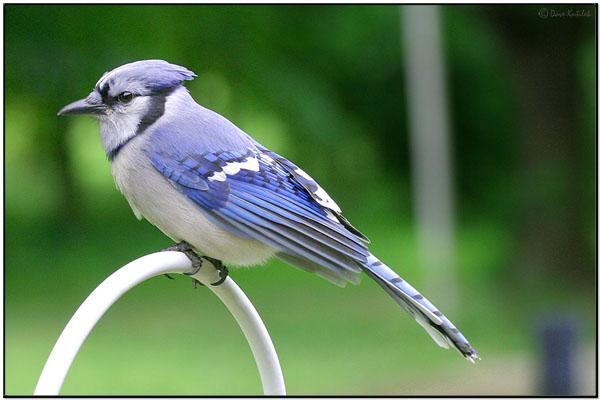
Blue Jay (Cyanocitta cristata) by Daves BirdingPix
“I’ve found out your secret, Sammy Jay!” cried Peter when at last he caught up with Sammy.
“Then I hope you’ll be gentleman enough to keep it,” grumbled Sammy, looking not at all pleased.
“Certainly,” replied Peter with dignity. “I wouldn’t think of telling any one. My, what a handsome fellow you are, Sammy.”
Sammy looked pleased. He is a little bit vain, is Sammy Jay. There is no denying that he is handsome. He is just a bit bigger than Welcome Robin. His back is grayish-blue. His tail is a bright blue crossed with little black bars and edged with white. His wings are blue with white and black bars. His throat and breast are a soft grayish-white, and he wears a collar of black. On his head he wears a pointed cap, a very convenient cap, for at times he draws it down so that it is not pointed at all.
“Why did you steal Mrs. Chebec’s eggs?” demanded Peter abruptly.
Sammy didn’t look the least bit put out. “Because I like eggs,” he replied promptly. “If people will leave their eggs unguarded they must expect to lose them. How did you know I took those eggs?”
“Never mind, Sammy; never mind. A little bird told me,” retorted Peter mischievously.
Sammy opened his mouth for a sharp reply, but instead he uttered a cry of warning. “Run, Peter! Run! Here comes Reddy Fox!” he cried.
Peter dived headlong under a great pile of brush. There he was quite safe. While he waited for Reddy Fox to go away he thought about Sammy Jay. “It’s funny,” he mused, “how so much good and so much bad can be mixed together. Sammy Jay stole Chebec’s eggs, and then he saved my life. I just know he would have done as much for Mr. and Mrs. Chebec, or for any other feathered neighbor. He can only steal eggs for a little while in the spring. I guess on the whole he does more good than harm. I’m going to think so anyway.”
Peter was quite right. Sammy Jay does do more good than harm.
*
When they found the feather, a verse comes to mind:
… and be sure your sin will find you out. (Numbers 32:23b NKJV)
*
Why were Welcome Robin and Mrs. Robin upset?
Which bird was the one who destroyed the eggs?
What did their friends try to do to help the Robins?
Should we do that for our friends also?
Who was the next robber?
How did they know it was him?
Both the Crow and the Blue Jay are cousins. Why?
Why did Peter decide that Sammy Blue Jay was okay?
Can we sin just a little and then do lots of good? Does that make it right?
Therefore comfort each other and edify one another, just as you also are doing. (1 Thessalonians 5:11 NKJV)
You were shown the Blue-chinned Macaws and five different Turacos in Houston Zoo – Vacation – Part 2. Now to show you some more of the neat birds from the Lord’s Creative Hand.
The next set of birds were outside and most were still damp from the rain.
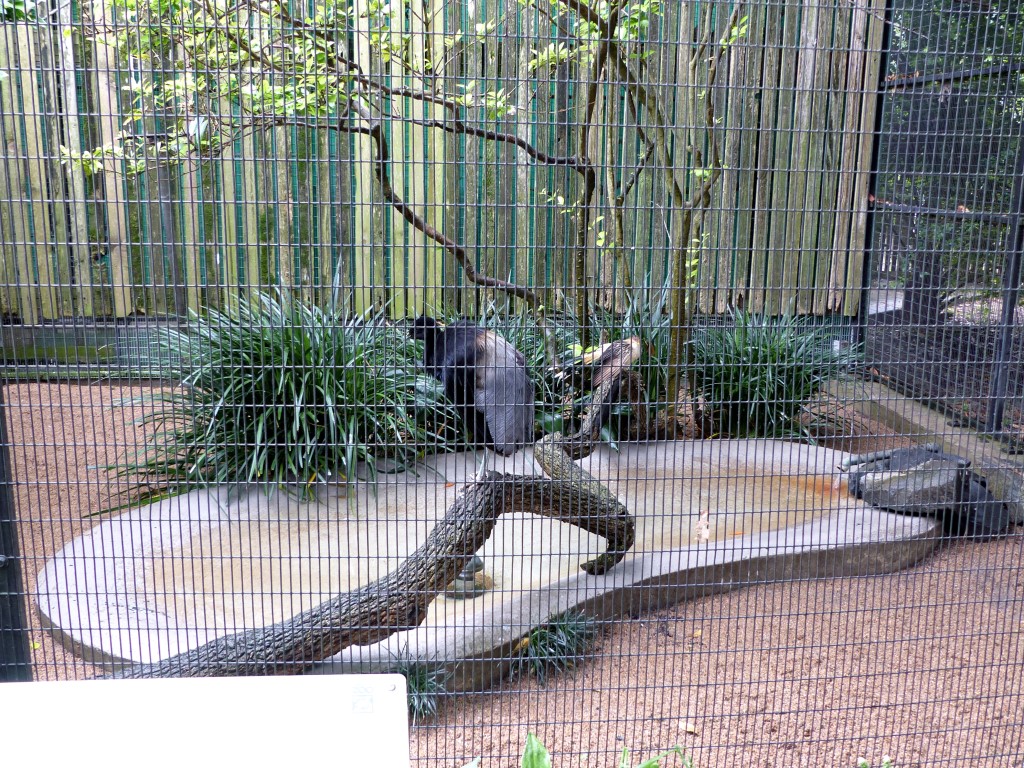
Grey-winged Trumpeter and Racquet-tailed Rollers Exhibit
*
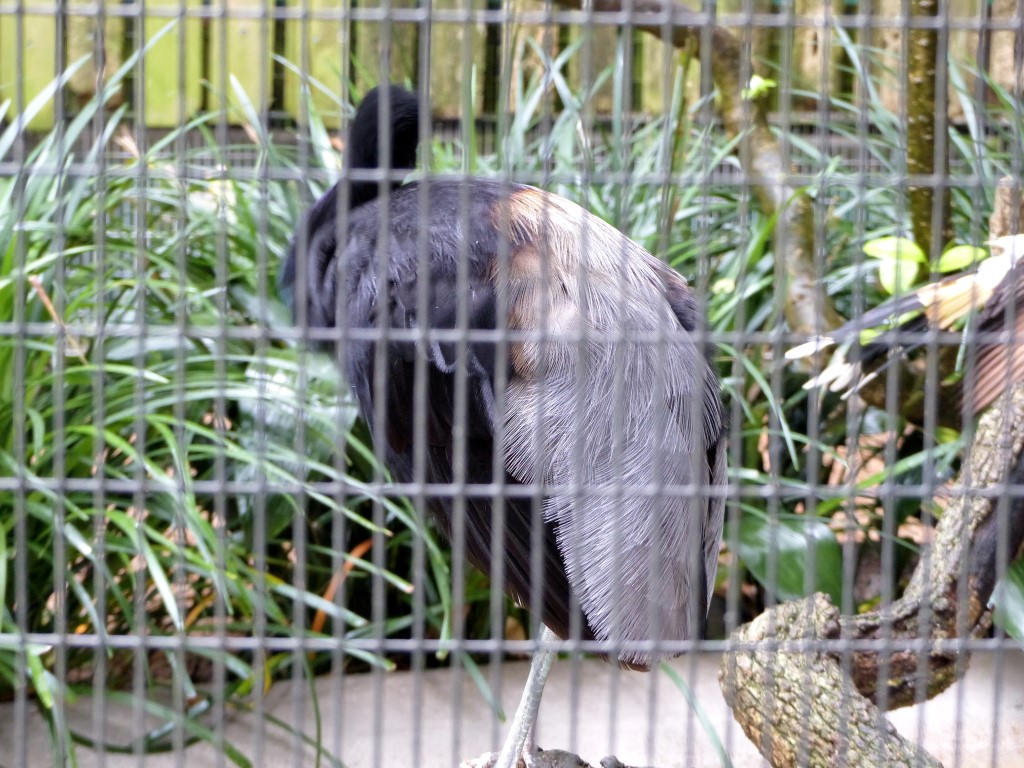
Grey-winged Trumpeter’s Beautiful Feathers Houston Zoo by Lee
*
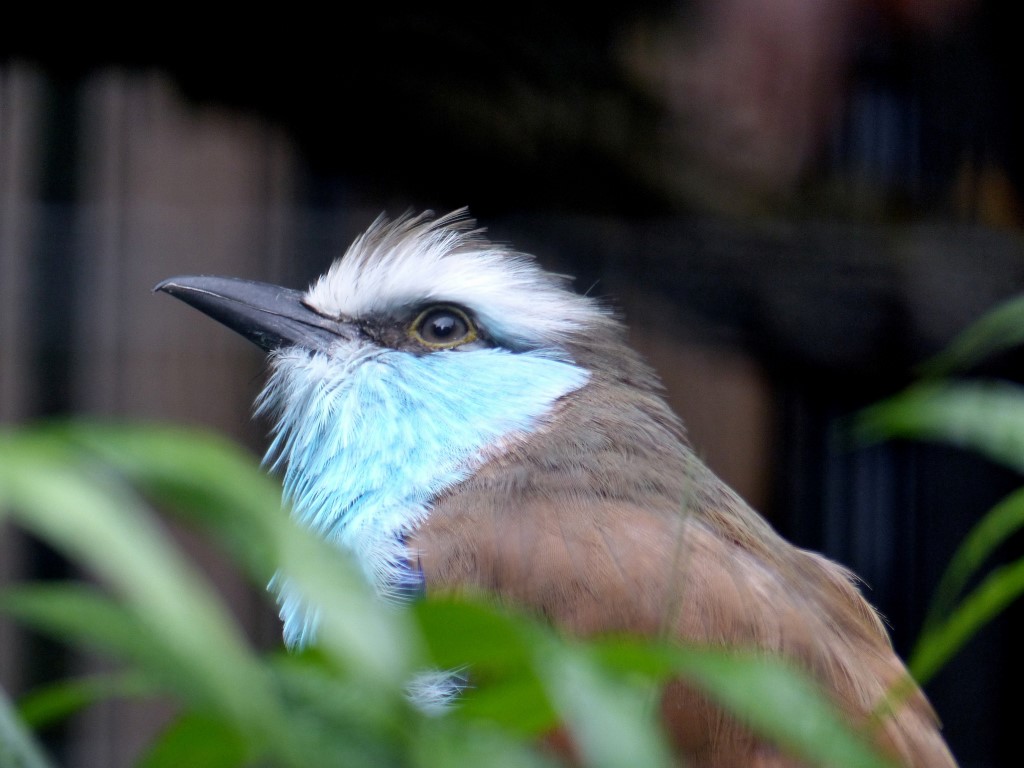
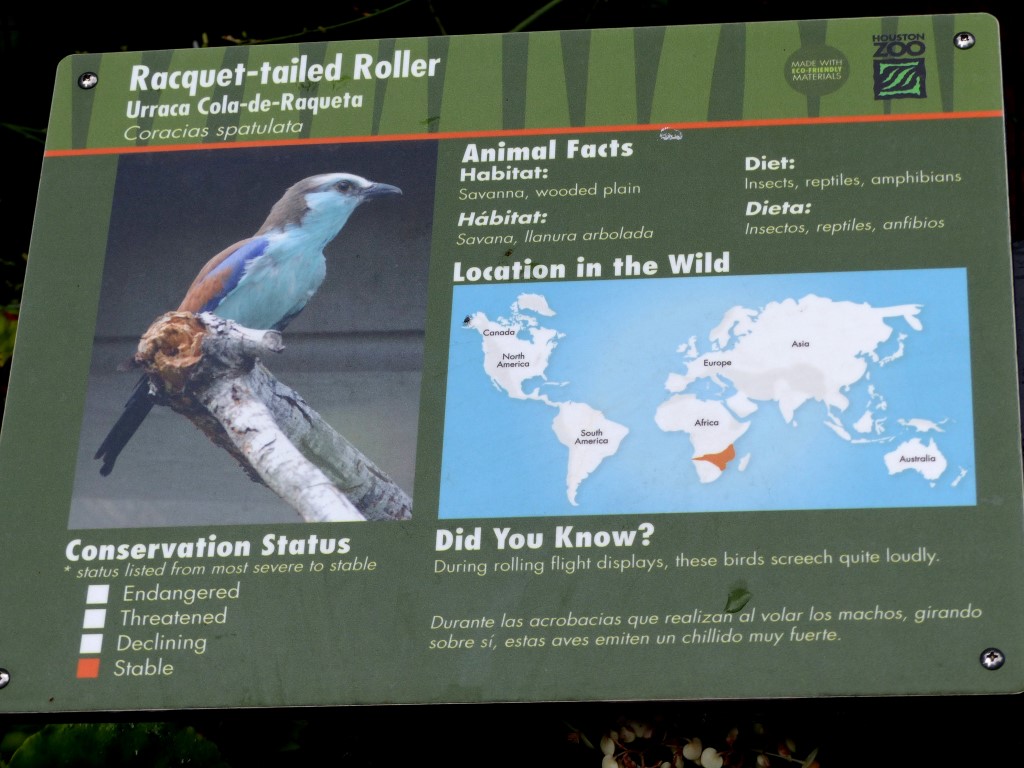
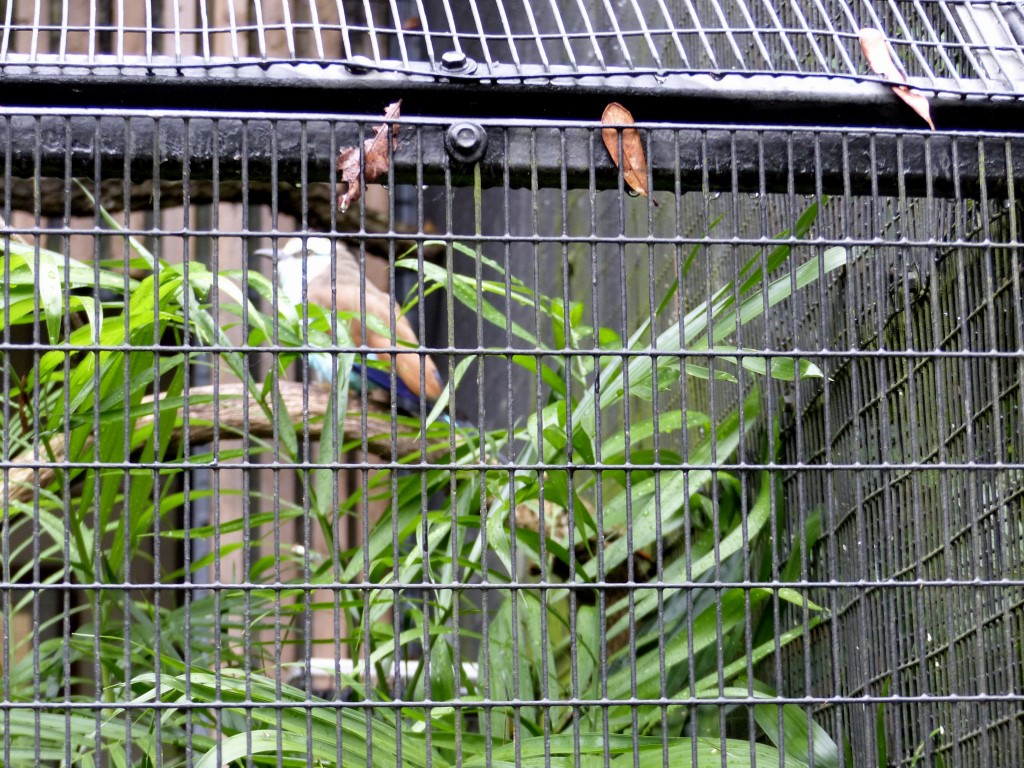
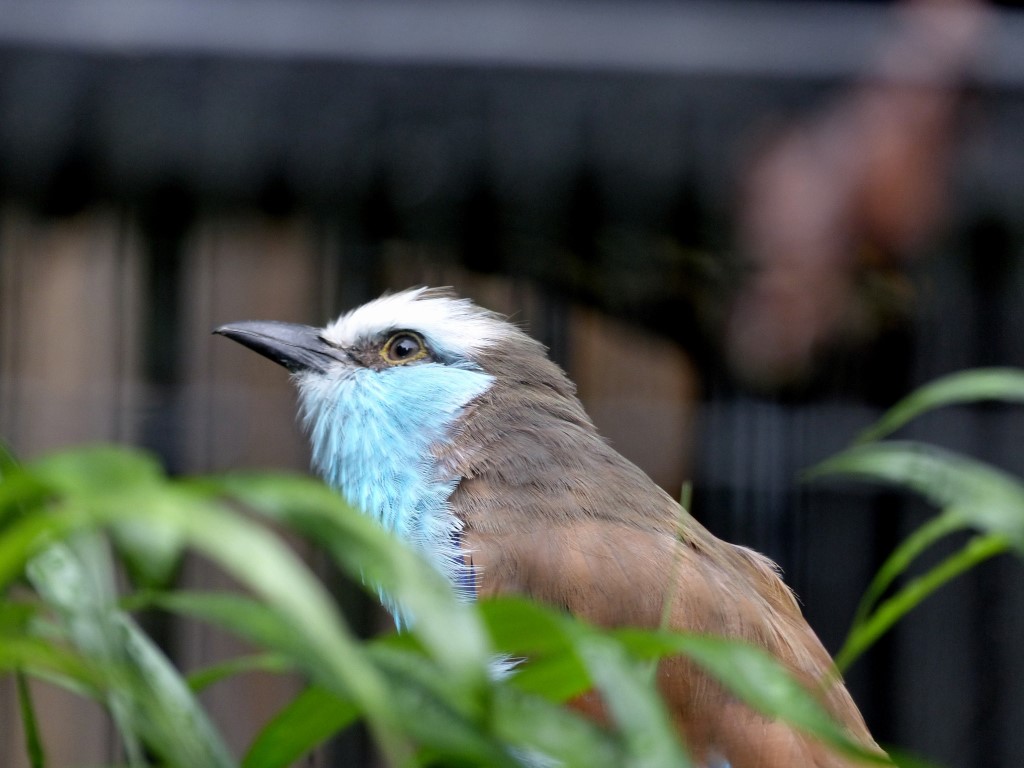
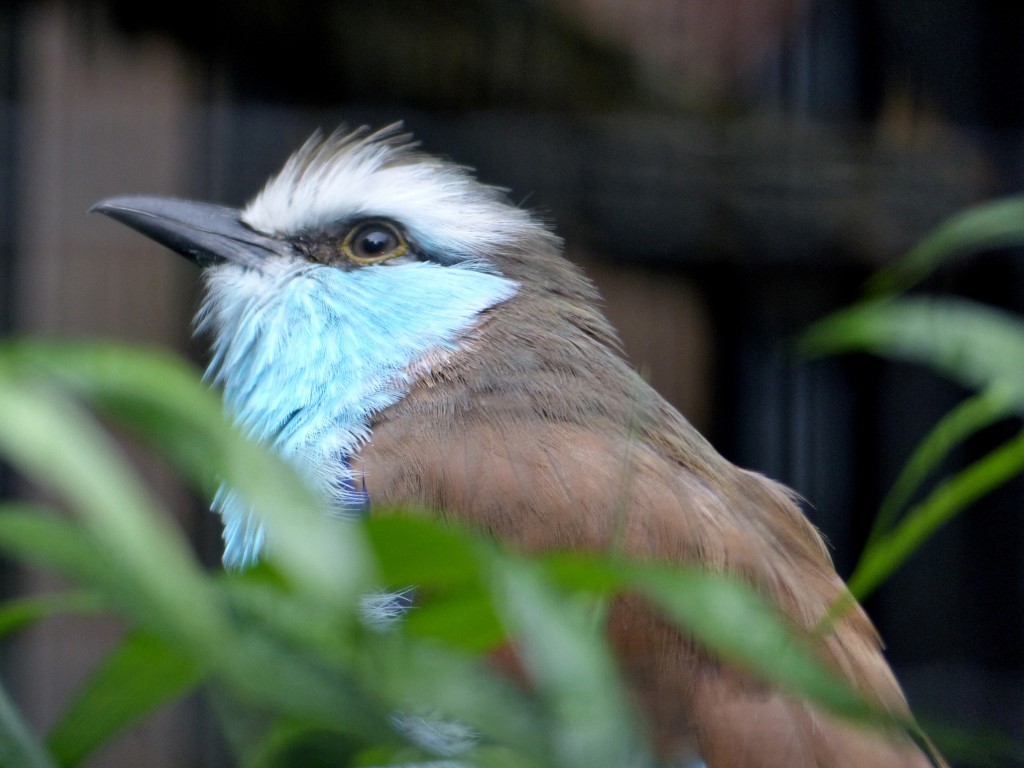
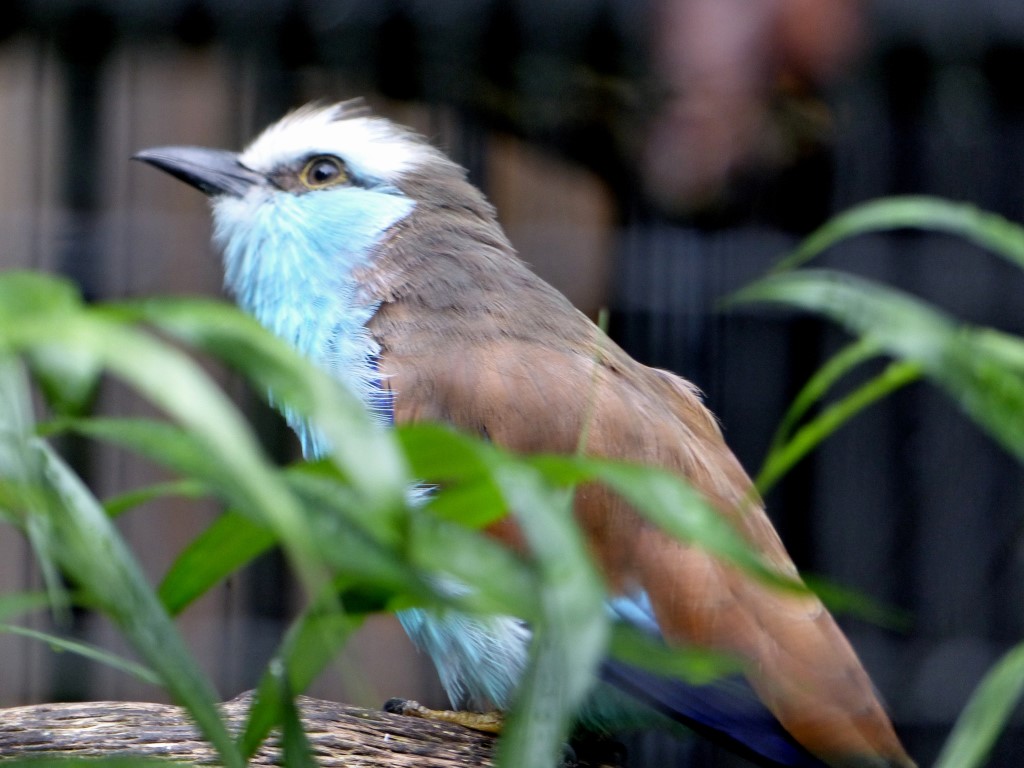
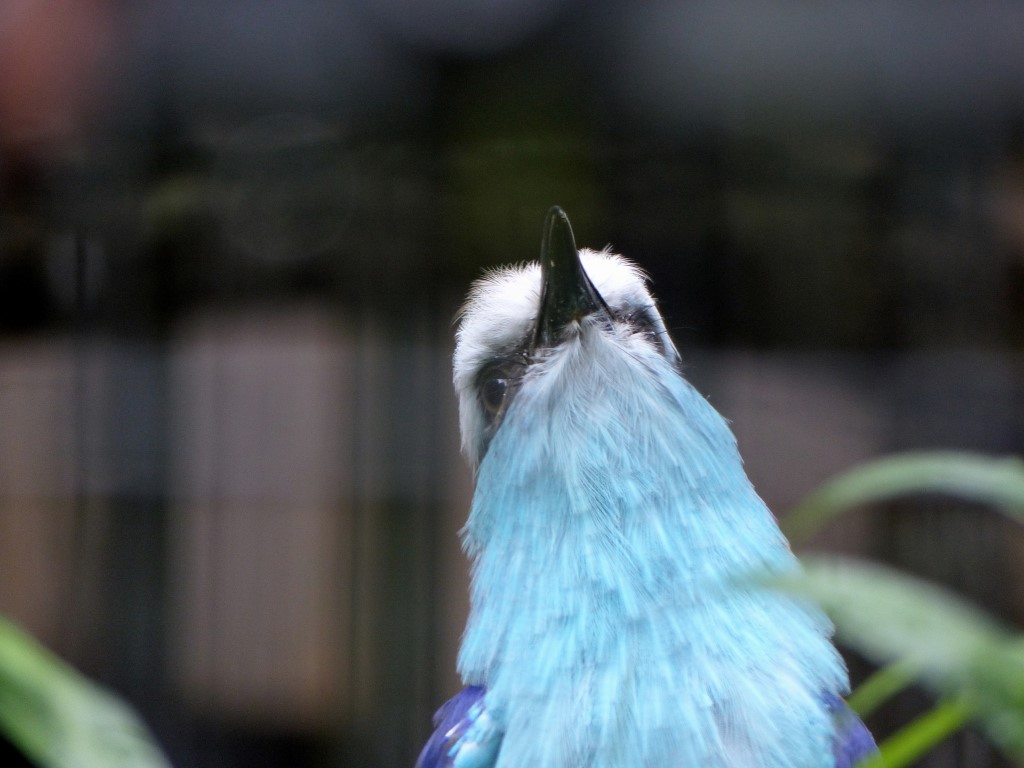
Racket-tailed Roller (Coracias spatulatus) Houston Zoo by Lee
*
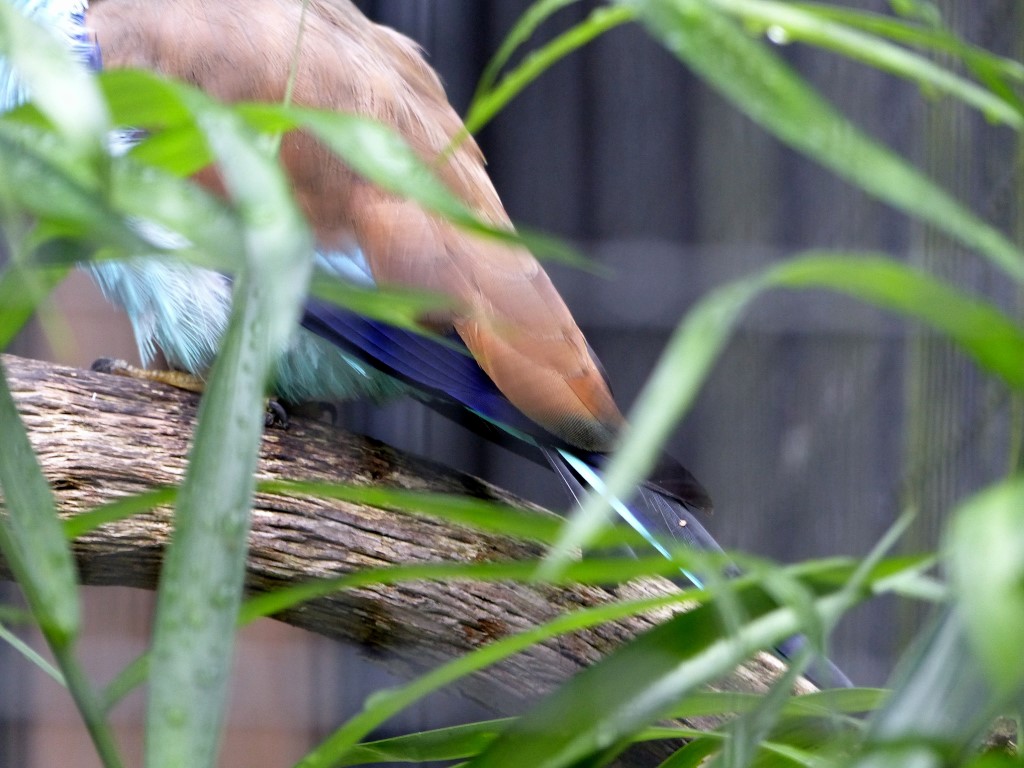
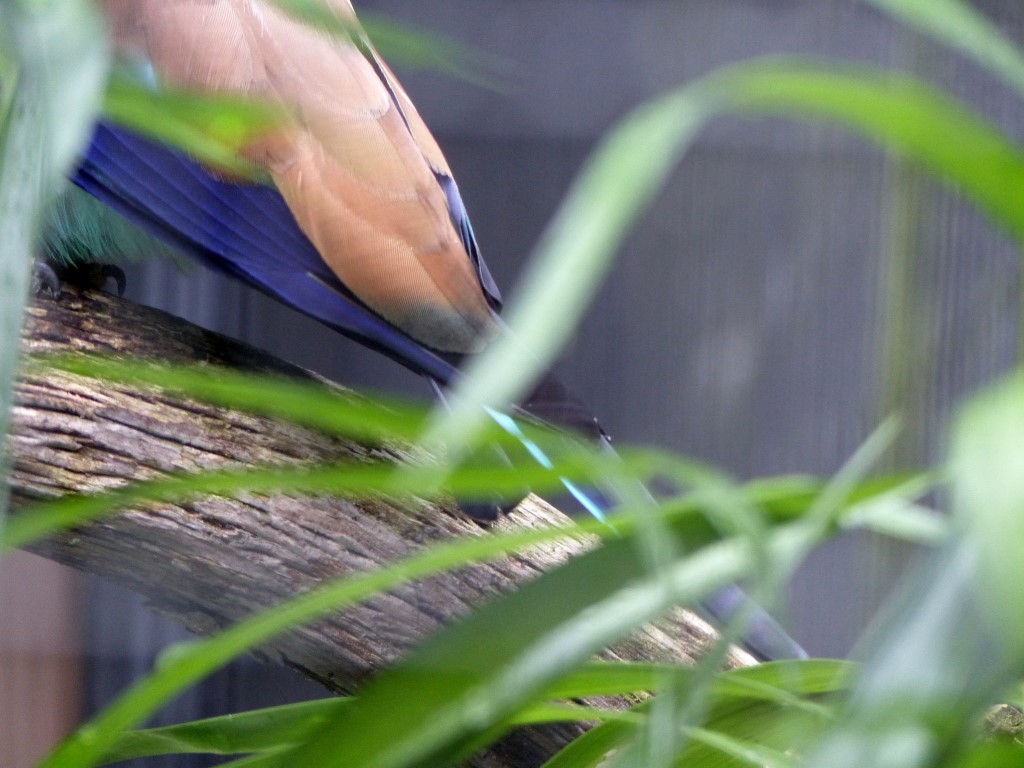
I kept trying to get a photo of the “racket-tail”, but he never really got in the right position. This was a new species to see for me.
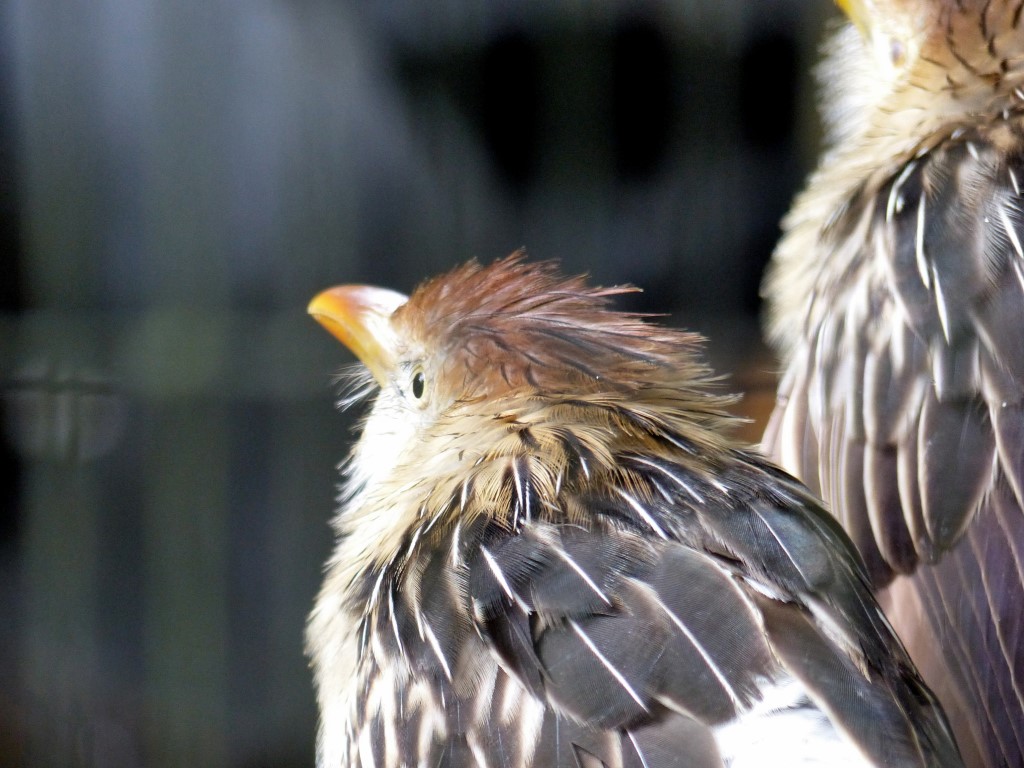
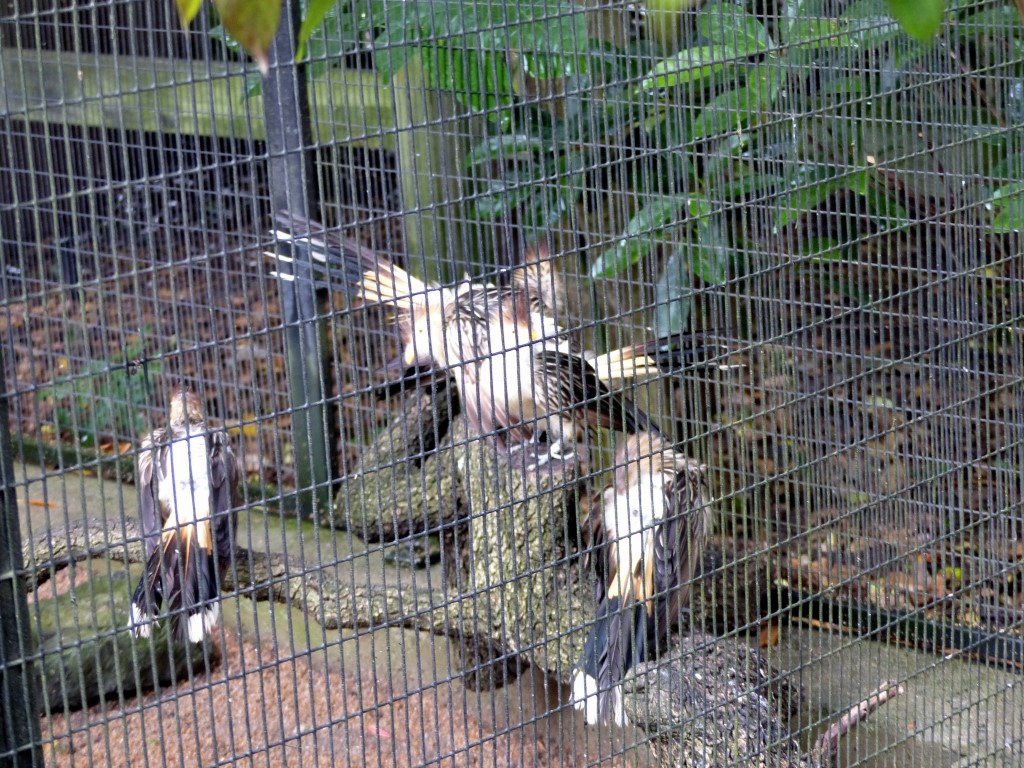
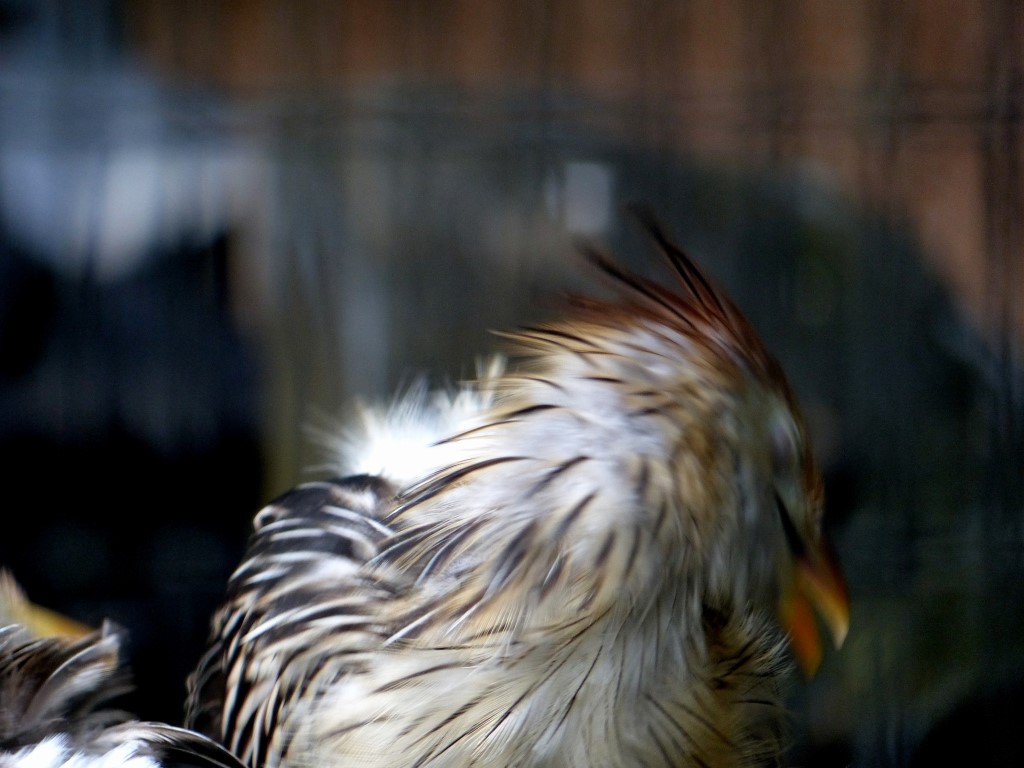
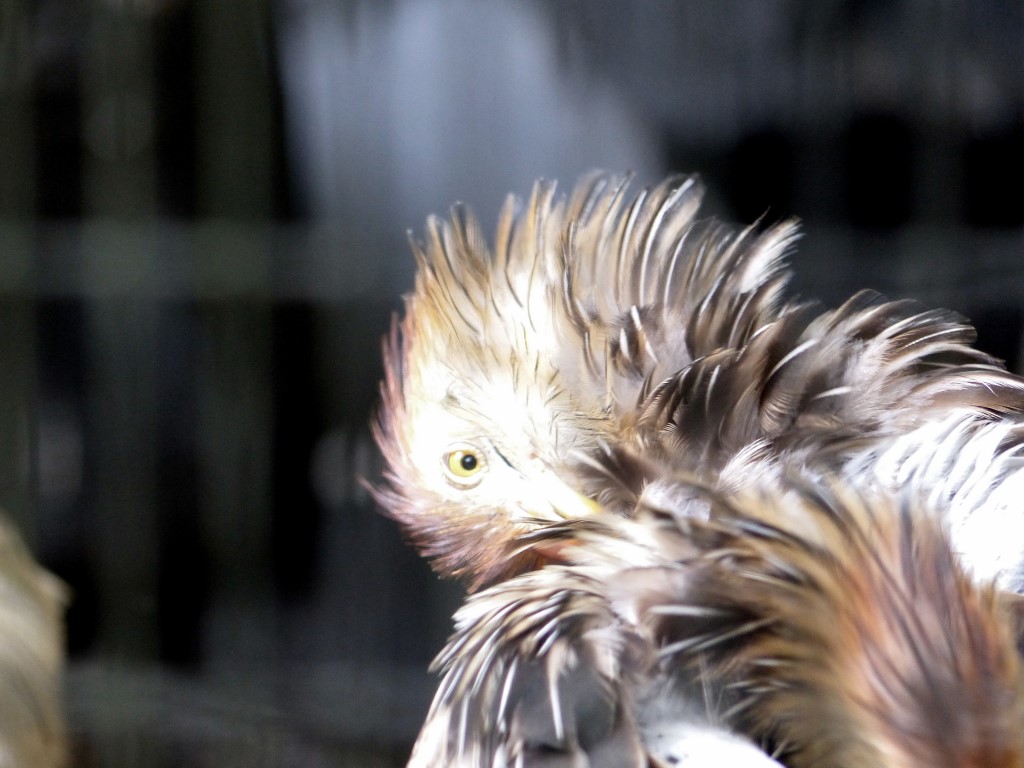
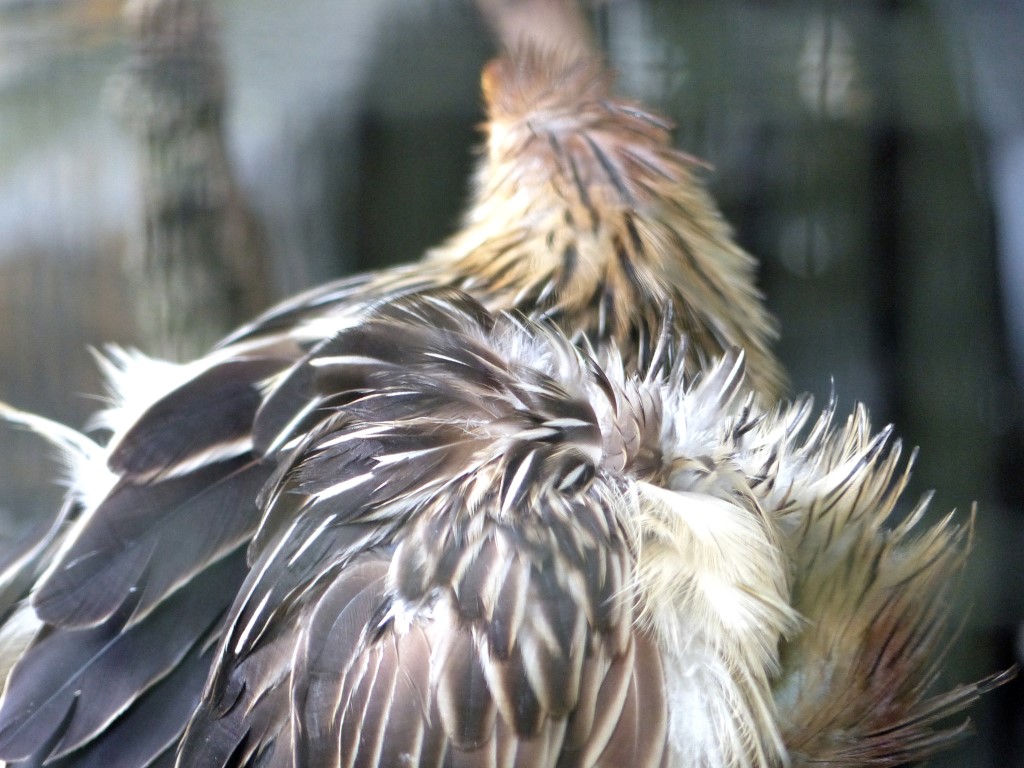
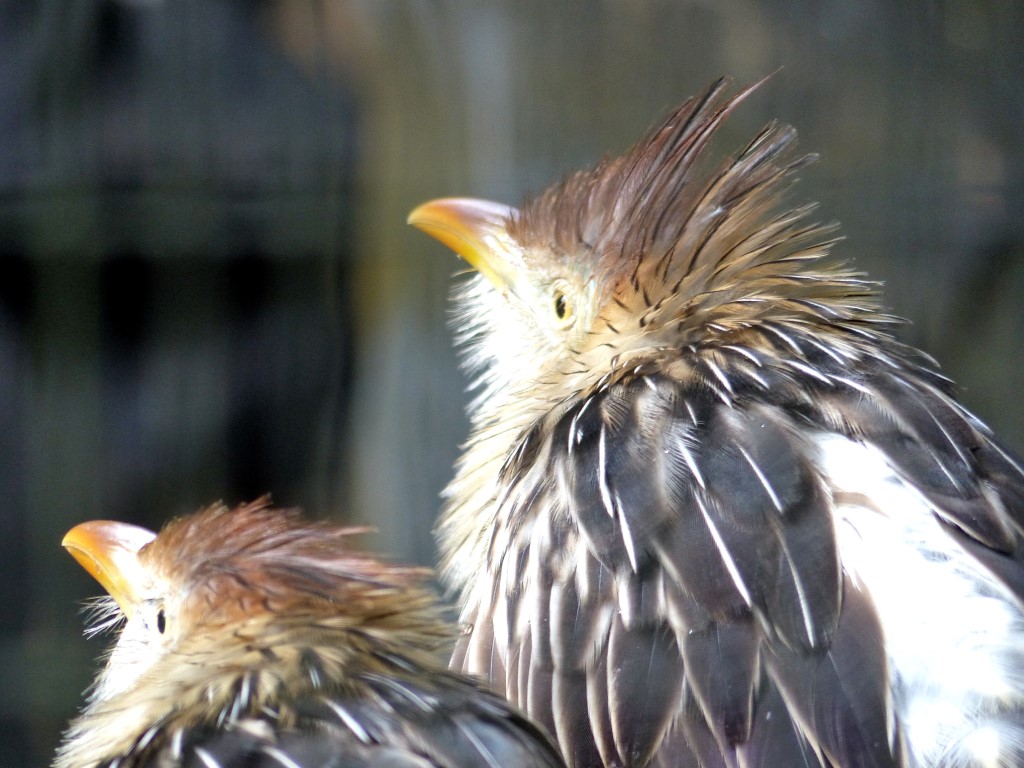
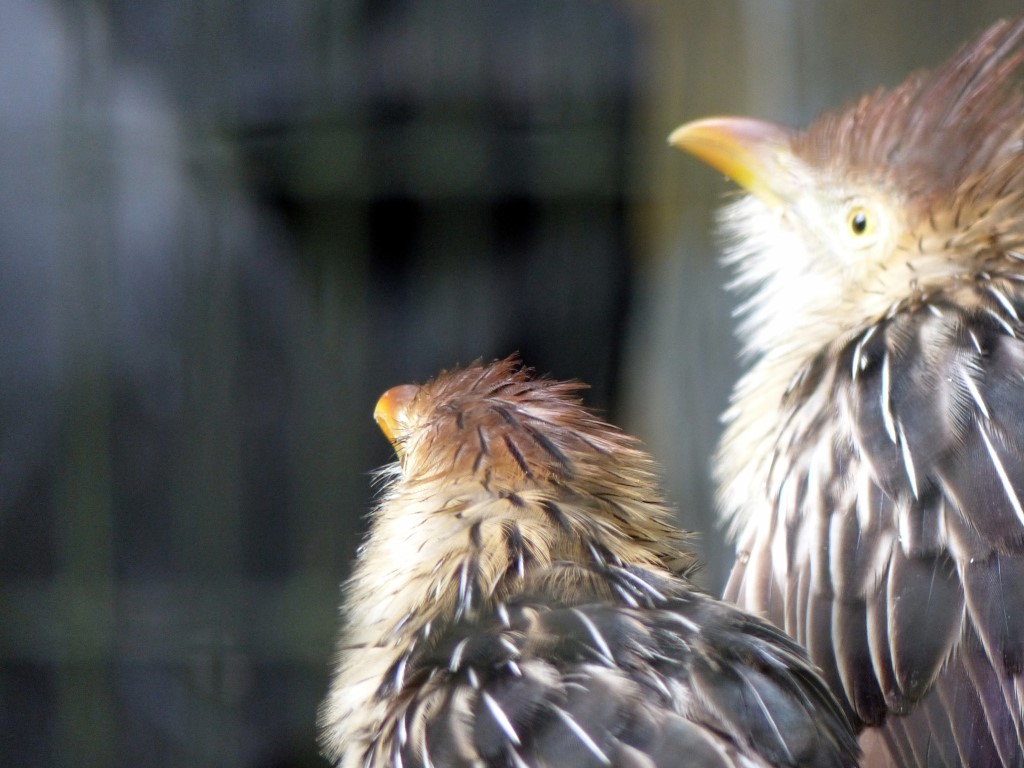
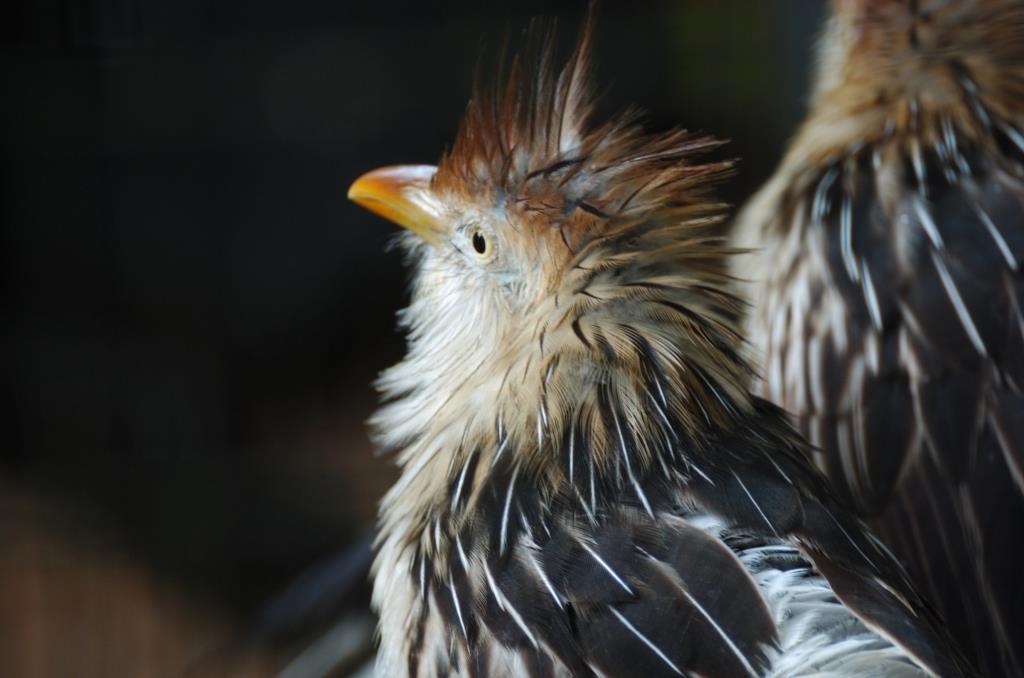
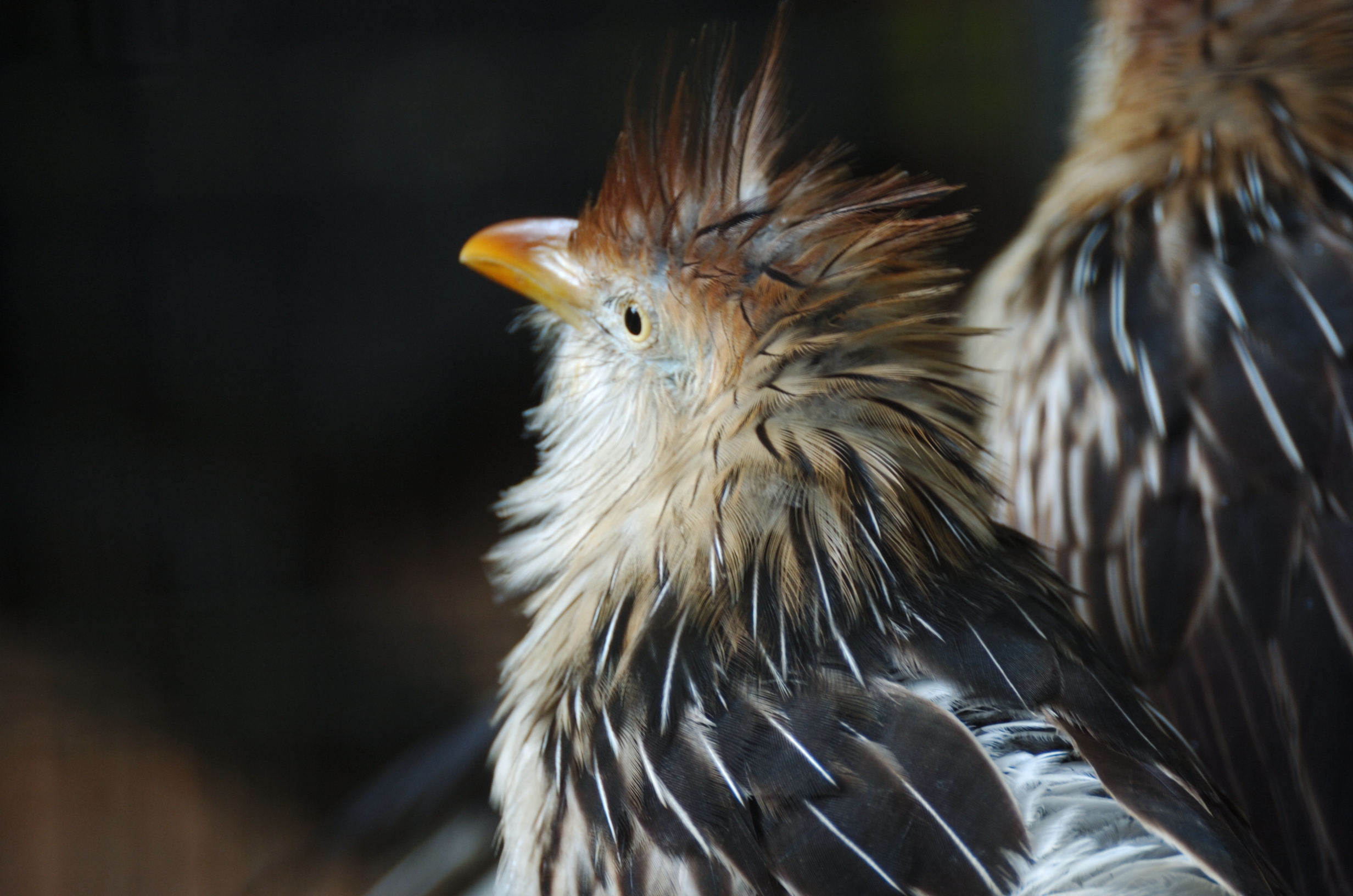
Guira Cuckoo (Guira guira) Houston Zoo 5-6-15 by Lee
*
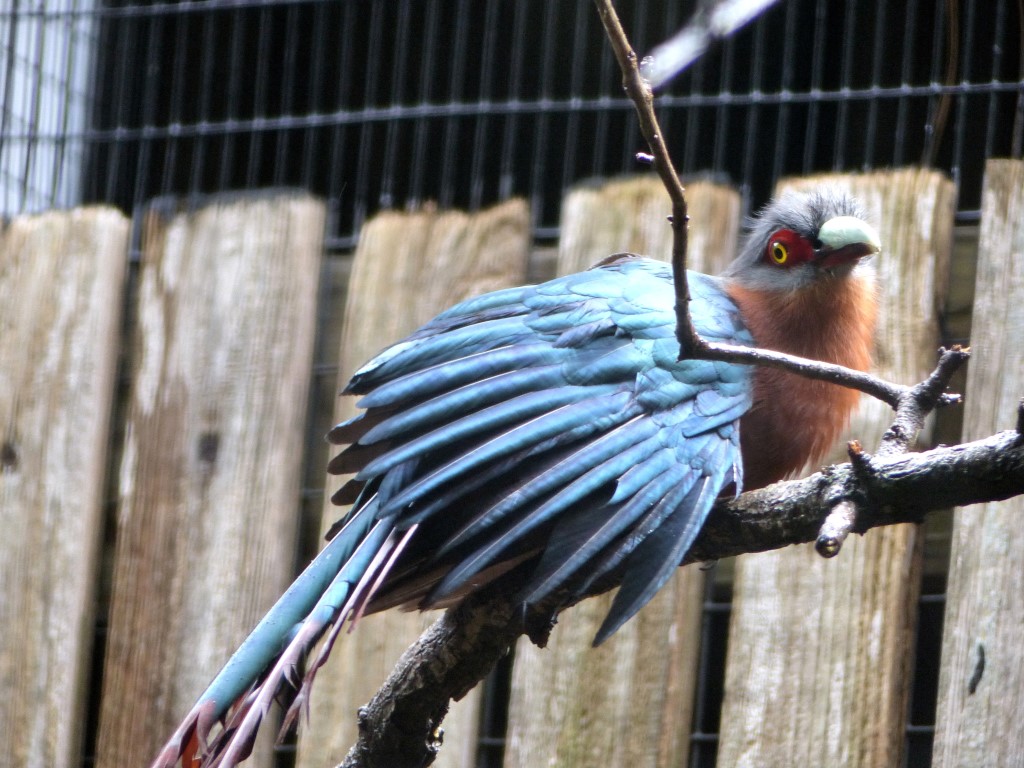
Chestnut-breasted Malkoha (Phaenicophaeus curvirostris) Houston Zoo 5-6-15 by Lee
We have seen both the Cuckoos and the Malkohas before, but the Cuckoos were closer to us this time.
*
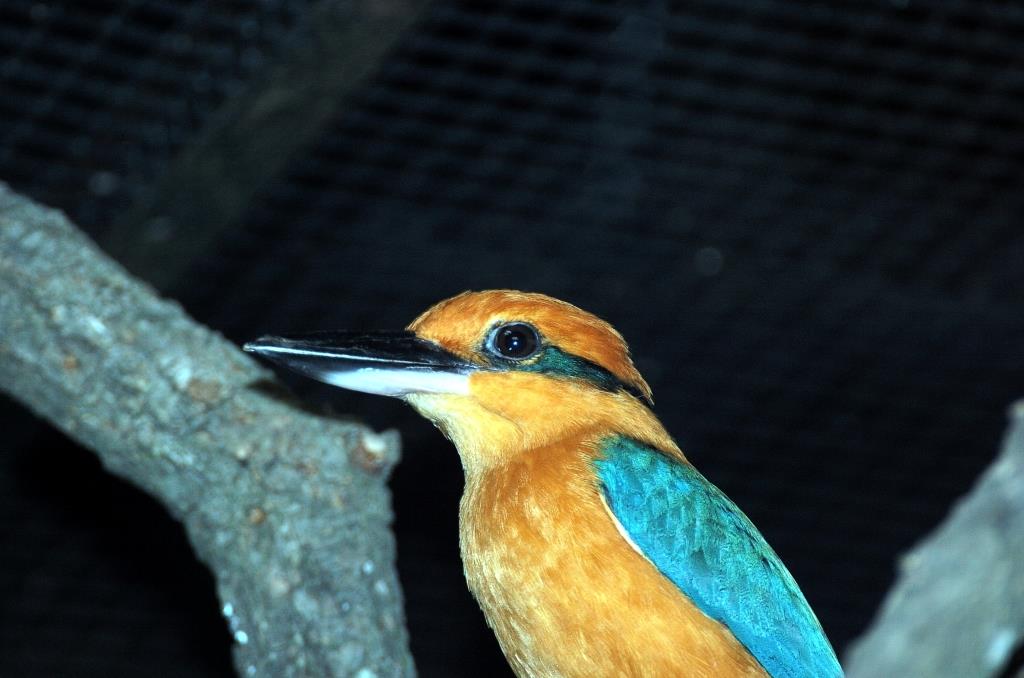
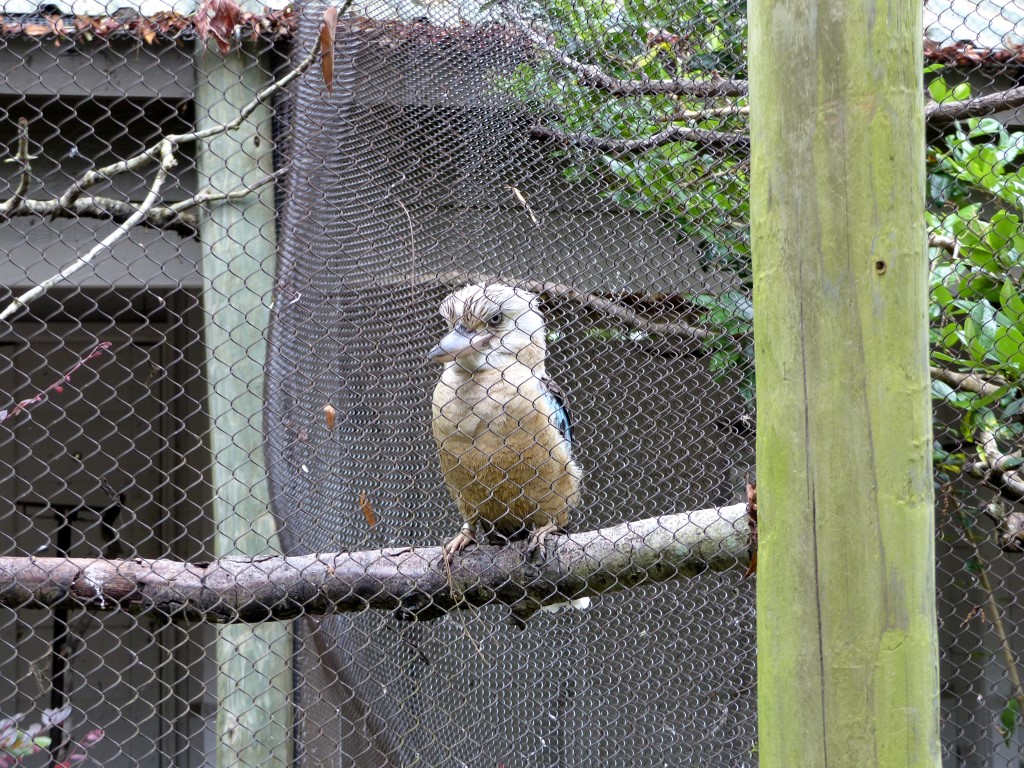
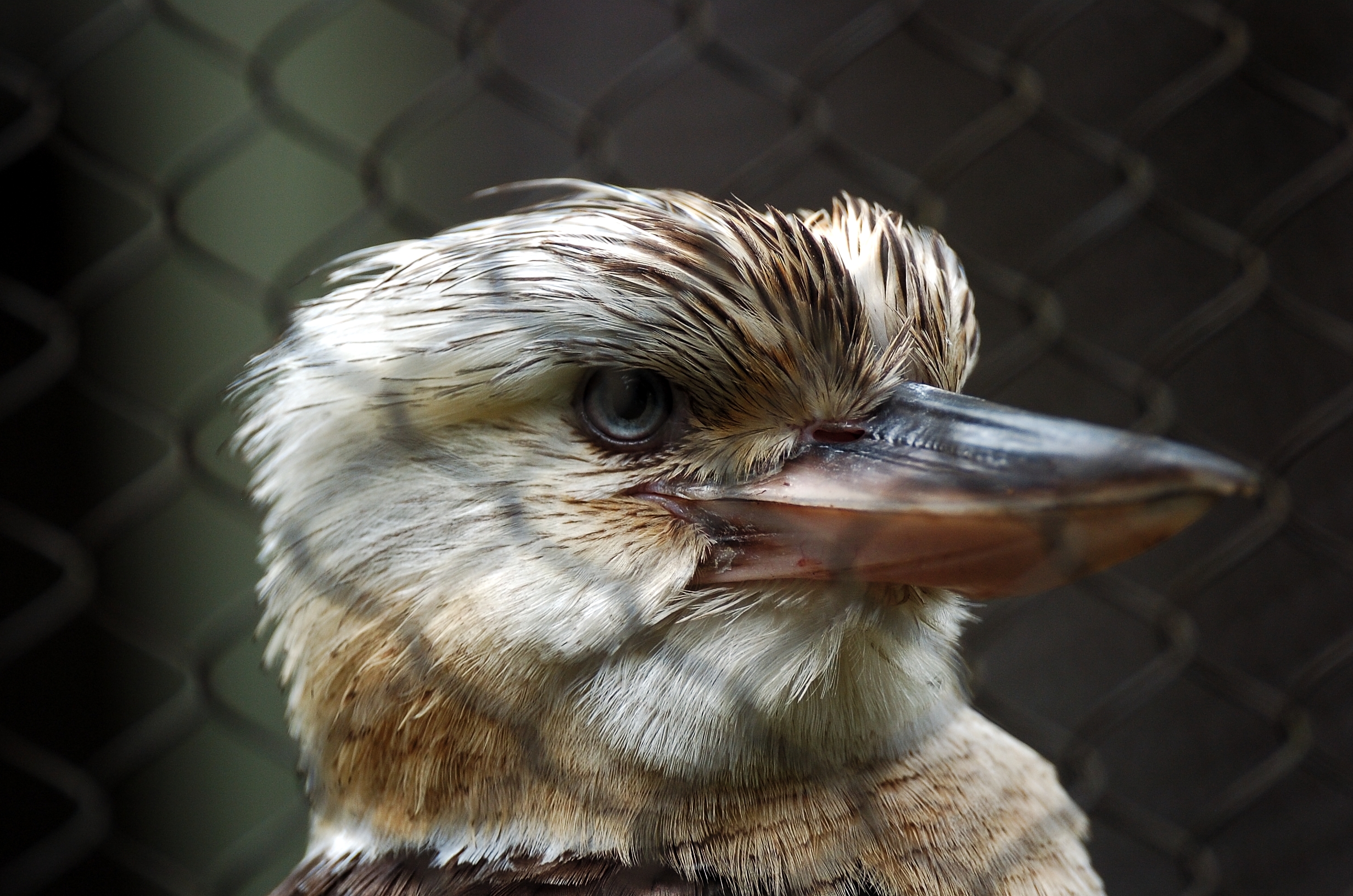
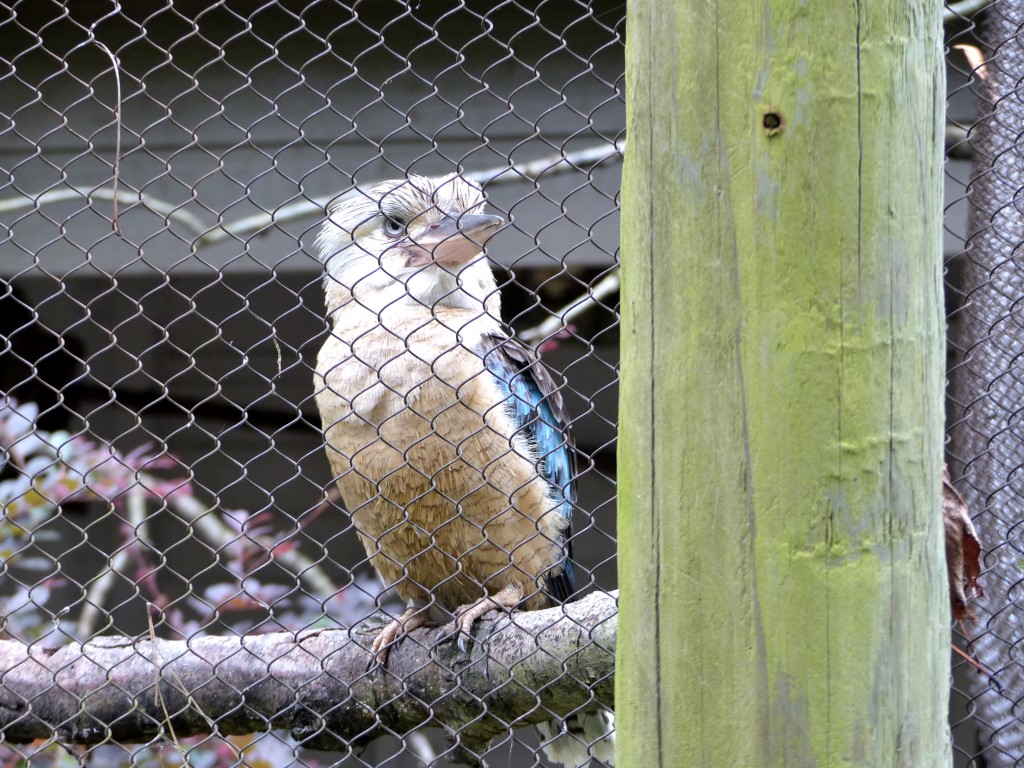
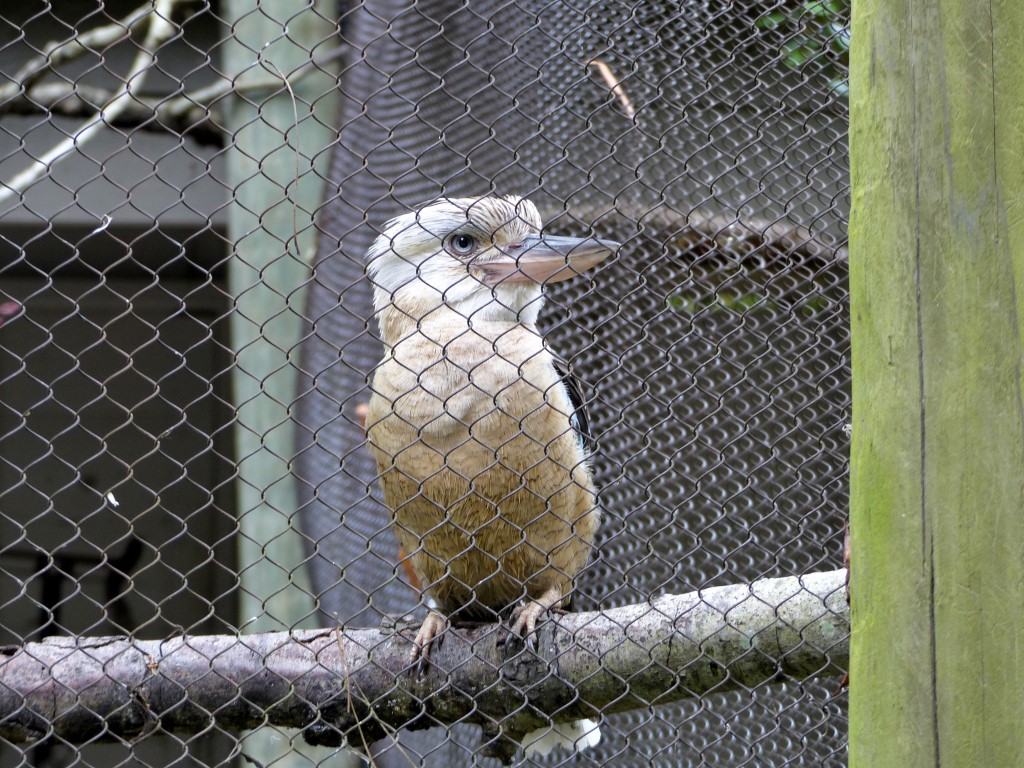
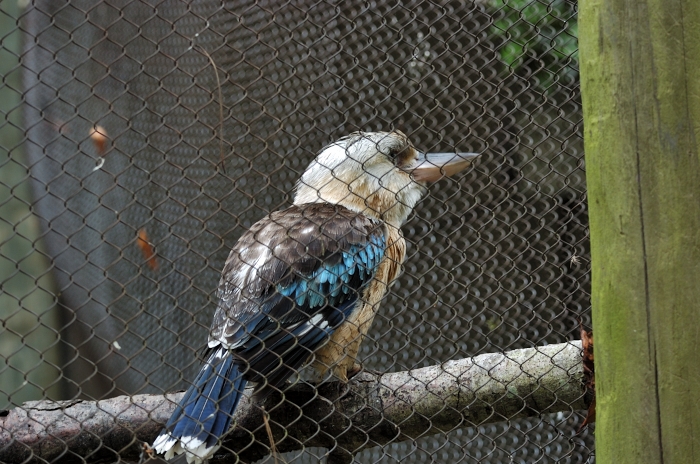
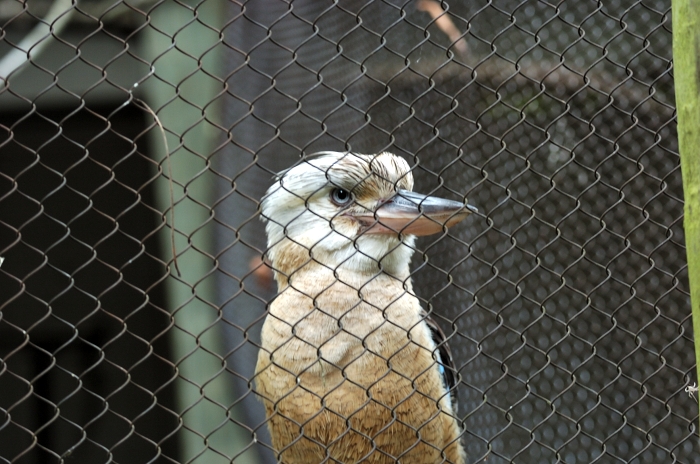
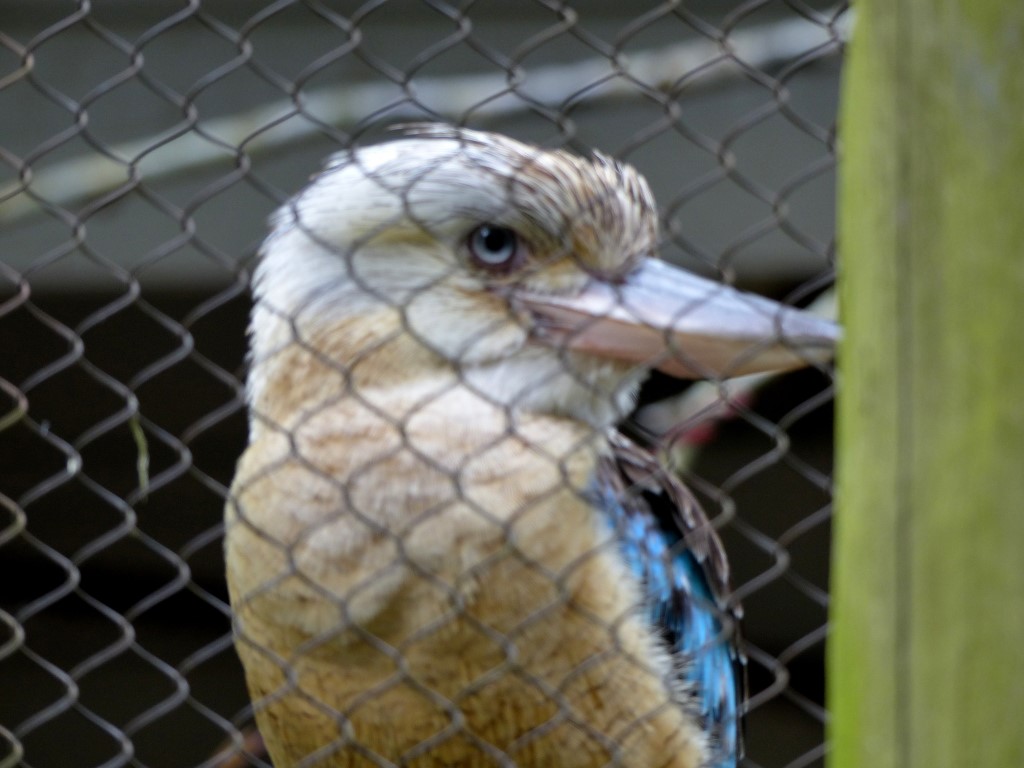
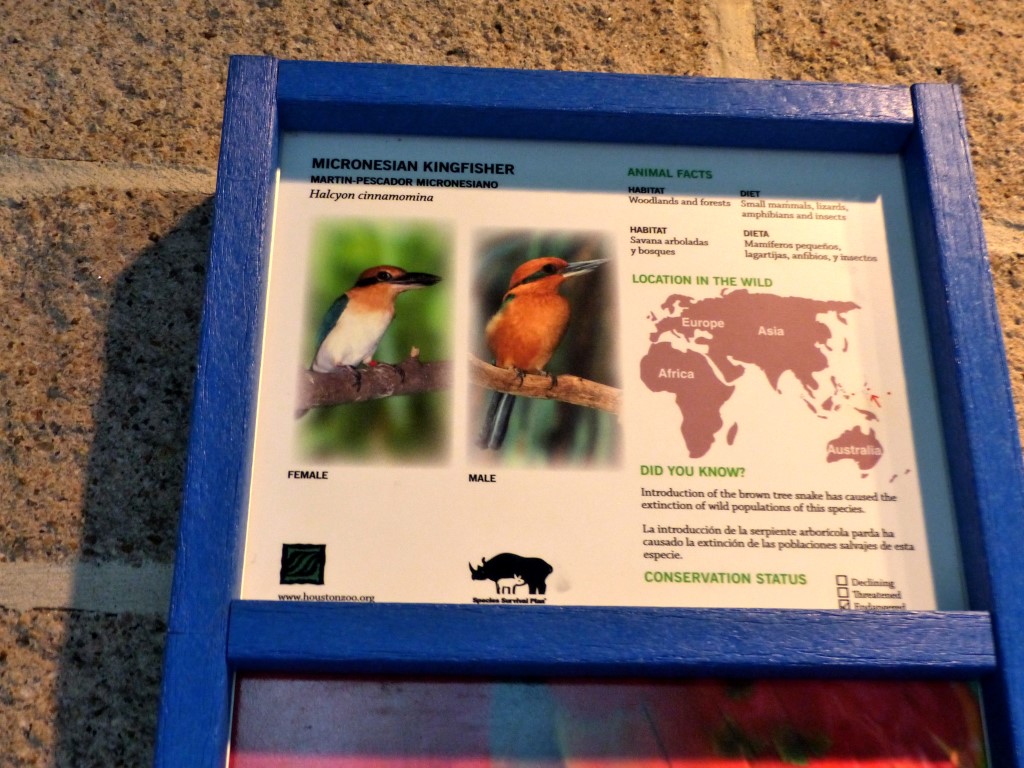
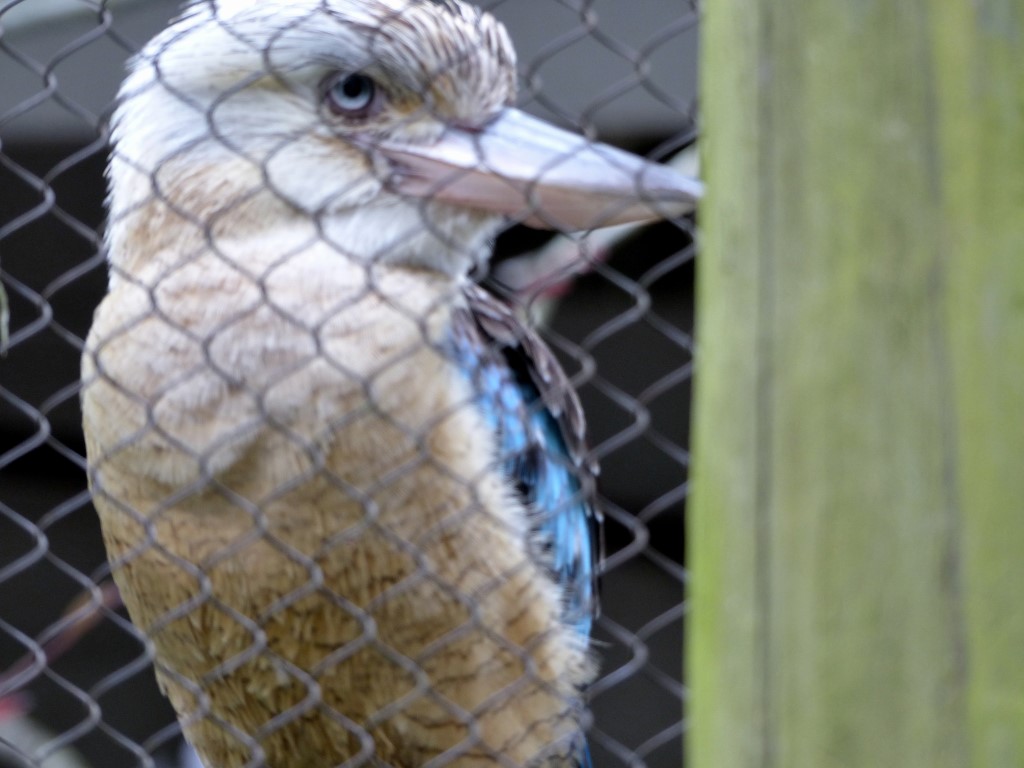
Then a couple of favorites, the Kookabura, except this time it was a Blue-winged Kookabura, and a Micronesian Kingfisher.
Micronesian Kingfisher by Dan
*
Blue-winged Kookaburra – What you looking at? by Lee
Blue-winged Kookaburra (Dacelo leachii) Houston Zoo 5-6-15 by Dan
*
Grey-winged Trumpeter (Psophia crepitans) Houston Zoo 5-6-15 by Lee
Grey-winged Trumpeter and Racquet-tailed
Grey-winged Trumpeter (Psophia crepitans) Houston Zoo 5-6-15 by Lee
Grey-winged Trumpeter (Psophia crepitans) Houston Zoo 5-6-15 by Lee
Grey-winged Trumpeter (Psophia crepitans) Houston Zoo 5-6-15 by Lee
Racket-tailed Roller (Coracias spatulatus) Houston Zoo 5-6-15 by Lee
Racket-tailed Roller (Coracias spatulatus) Houston Zoo 5-6-15 by Lee
Racket-tailed Roller (Coracias spatulatus) Houston Zoo 5-6-15 by Lee
Racket-tailed Roller (Coracias spatulatus) Houston Zoo 5-6-15 by Lee
Racket-tailed Roller (Coracias spatulatus) Houston Zoo 5-6-15 by Lee
Racket-tailed Roller (Coracias spatulatus) Houston Zoo 5-6-15 by Lee
Racket-tailed Roller (Coracias spatulatus) Houston Zoo 5-6-15 by Lee
Racket-tailed Roller (Coracias spatulatus) Houston Zoo 5-6-15 by Lee
Racket-tailed Roller (Coracias spatulatus) Houston Zoo 5-6-15 by Lee
Blue-winged Kookaburra (Dacelo leachii) Houston Zoo 5-6-15 by Lee
Blue-winged Kookaburra (Dacelo leachii) Houston Zoo by Lee
Blue-winged Kookaburra (Dacelo leachii) Houston Zoo 5-6-15 by Lee
Blue-winged Kookaburra (Dacelo leachii) Houston Zoo 5-6-15 by Lee
Blue-Winged Kookabura Edited by Lee
Blue-Winged Kookabura Edited by Lee
Blue-winged Kookaburra (Dacelo leachii) Houston Zoo 5-6-15 by Lee
Blue-winged Kookaburra (Dacelo leachii) Houston Zoo 5-6-15 by Dan
Micronesian Kingfisher (Todiramphus cinnamominus) Houston Zoo 5-6-15 by Lee
Micronesian Kingfisher (Todiramphus cinnamominus) Houston Zoo 5-6-15 by Lee
Micronesian Kingfisher (Todiramphus cinnamominus) Houston Zoo 5-6-15 by Lee
Micronesian Kingfisher by Dan
Guira Cuckoo (Guira guira) Houston Zoo 5-6-15 by Lee
Guira Cuckoo (Guira guira) Houston Zoo 5-6-15 by Lee
Guira Cuckoo (Guira guira) Houston Zoo 5-6-15 by Lee
Guira Cuckoo (Guira guira) Houston Zoo 5-6-15 by Lee
Guira Cuckoo (Guira guira) Houston Zoo 5-6-15 by Lee
Guira Cuckoo (Guira guira) Houston Zoo 5-6-15 by Lee
Guira Cuckoo (Guira guira) Houston Zoo 5-6-15 by Lee
Guira Cuckoo (Guira guira) Houston Zoo 5-6-15 by Lee
Guira Cuckoo by Dan
Chestnut-breasted Malkoha (Phaenicophaeus curvirostris) Houston Zoo 5-6-15 by Lee
Chestnut-breasted Malkoha (Phaenicophaeus curvirostris) Houston Zoo 5-6-15 by Lee
Chestnut-breasted Malkoha (Phaenicophaeus curvirostris) Houston Zoo 5-6-15 by Lee
Blue-winged Kookaburra (Dacelo leachii) Houston Zoo 5-6-15 by Lee