Nuggets Plus – Protection and Providence

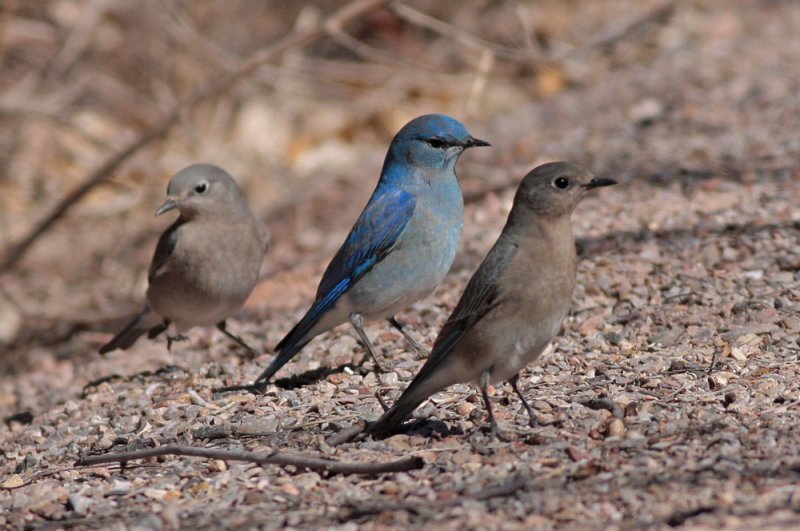
Mountain Bluebird (Sialia currucoides) for ajmithra's article

Mountain Bluebird (Sialia currucoides)

Nuggets Plus – Protection and Providence ~ by a j mithra

Nuggets Plus

Nuggets Plus

Male Mountain Blue Bird
not only brings food to feed
but also protects
while the female builds the nest!
God will not only feed
but also protect us
as we build His Kingdom!

No weapon that is formed against you shall prosper; and every tongue that shall rise against you in judgment you shall condemn. This is the heritage of the servants of the LORD, and their righteousness is of me, says the LORD. (Isaiah 54:17)

*

Regards,
Yours in YESHUA,
a j mithra

Please visit us at:


Mountain Bluebird (Sialia currucoides) by Margaret Sloan

Mountain Bluebird (Sialia currucoides) by Margaret Sloan

Lee’s Addition:

The Mountain Bluebird belongs to the Thrushes – Turdidae Family.
See:

*

How The Woodpecker Courts His Mate – The Woodpeckers

Downy Woodpecker (Picoides pubescens) Brevard Zoo by Dan

Downy Woodpecker (Picoides pubescens) Brevard Zoo by Dan

III

HOW THE WOODPECKER COURTS HIS MATE

Other birds woo their mates with songs, but the woodpecker has no voice for singing. He cannot pour out his soul in melody and tell his love his devotion in music. How do songless birds express their emotions? Some by grotesque actions and oglings, as the horned owl, and some by frantic dances, as the sharp-tailed grouse, woo and win their mates; but the amorous woodpecker, not excepting the flickers, which also woo by gestures, whacks a piece of seasoned timber, and rattles off interminable messages according to the signal code set down for woodpeckers’ love affairs. He is the only instrumental performer among the birds; for the ruffed grouse, though he drums, has no drum.

There is no cheerier spring sound, in our belated Northern season, than the quick, melodious rappings of the sapsucker from some dead ash limb high above the meadow. It is the best performance of its kind: he knows the capabilities of his instrument, and gets out of it all the music there is in it. Most if not all woodpeckers drum occasionally, but drumming is the special accomplishment of the sapsucker. He is easily first. In Maine, where they are abundant, they make the woods in springtime resound with their continual rapping.

Early in April, before the trees are green with leaf, or the willows have lost their silky plumpness, when the early round-leafed yellow violet is cuddling among the brown, dead leaves, I hear the yellow-bellied sapsucker along the borders of the trout stream that winds down between the mountains. The dead branch of an elm-tree is his favorite perch, and there, elevated high above all the lower growth, he sits rolling forth a flood of sound like the tremolo of a great organ. Now he plays staccato,—detached, clear notes; and now, accelerating his time, he dashes through a few bars of impetuous hammerings. The woods re-echo with it; the mountains give it faintly back. Beneath him the ruffed grouse paces back and forth on his favorite mossy log before he raises the palpitating whirr of his drumming. A chickadee digging in a rotten limb pauses to spit out a mouthful of punky wood and the brown Vanessa, edged with yellow, first butterfly of the season, flutters by on rustling wings. So spring arrives in Maine, ushered in by the reveille of the sapsucker.

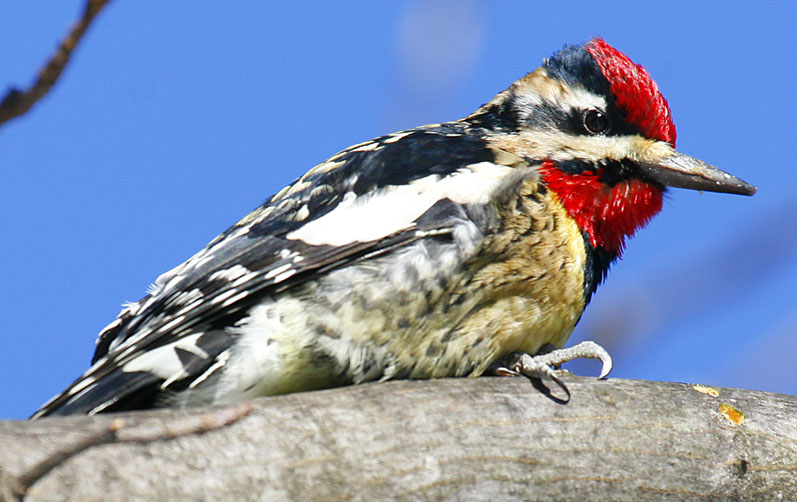
Yellow-bellied Sapsucker (Sphyrapicus varius) ©WikiC

Yellow-bellied Sapsucker (Sphyrapicus varius) ©WikiC

Yellow-bellied Sapsucker Drumming

So ambitious is the sapsucker of the excellence of his performance that no instrument but the best will satisfy him. He is always experimenting, and will change his anvil for another as soon as he discovers one of superior resonance. They say he tries the tin pails of the maple-sugar makers to see if these will not give him a clearer note; that he drums on tin roofs and waterspouts till he loosens the solder and they come tumbling down. But usually he finds nothing so near his liking as a hard-wood branch, dead and barkless, the drier, the harder, the thinner, the finer grained, so much the better for his uses.

Deficient as they are in voice, the woodpeckers do not lack a musical ear. Mr. Burroughs tells us that a downy woodpecker of his acquaintance used to change his key by tapping on a knot an inch or two from his usual drumming place, thereby obtaining a higher note. Alternating between the two places, he gave to his music the charm of greater variety. The woodpeckers very quickly discover the superior conductivity of metals. In parts of the country where woodpeckers are more abundant than good drumming trees, a tin roof proves an almost irresistible attraction. A lightning-rod will sometimes draw them farther than it would an electric bolt; and a telegraph pole, with its tinkling glasses and ringing wires, gives them great satisfaction. If men did not put their singing poles in such public places, their music would be much more popular with the woodpeckers; but even now the birds often venture on the dangerous pastime and hammer you out a concord of sweet sounds from the mellow wood-notes, the clear peal of the glass, and the ringing overtones of the wires.

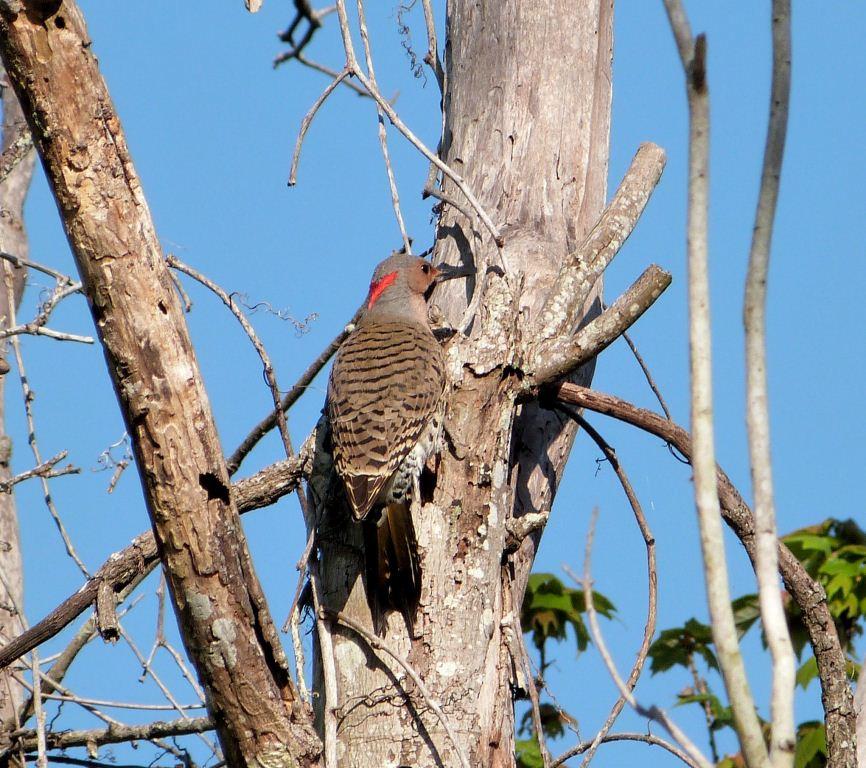
Northern Flicker cropped by Lee at S. Lk Howard Ntr Pk

Northern Flicker by Lee (cropped)

Northern Flicker calling and drumming

The flicker often telegraphs his love by tapping either on a forest tree or on some loose board of a barn or outhouse; but he has other ways of courting his lady. On fine spring mornings, late in April, I have seen them on a horizontal bough, the lady sitting quietly while her lover tried to win her approval by strange antics. Quite often there are two males displaying their charms in open rivalry, but once I saw them when the field was clear.

If fine clothes made a gentleman, this brave wooer would have been first in all the land: for his golden wings and tail showed their glittering under side as he spread them; his scarlet headdress glowed like fire; his rump was radiantly white, not to speak of the jetty black of his other ornaments and the beautiful ground-colors of his body. He danced before his lady, showing her all these beauties, and perhaps boasting a little of his own good looks, though she was no less beautiful. He spread his wings and tail for her inspection; he bowed, to show his red crescent; he bridled, he stepped forward and back and sidewise with deep bows to his mistress, coaxing her with the mellowest and most enticing co-wee-tucks, which no doubt in his language meant “Oh, promise me,” laughing now and then his jovial wick-a-wick-a-wick-a-wick-a, either in glee or nervousness. It was all so very silly—and so very nice! I wonder how it all came out. Did she promise him? Or did she find a livelier suitor?


Lee’s Addition:

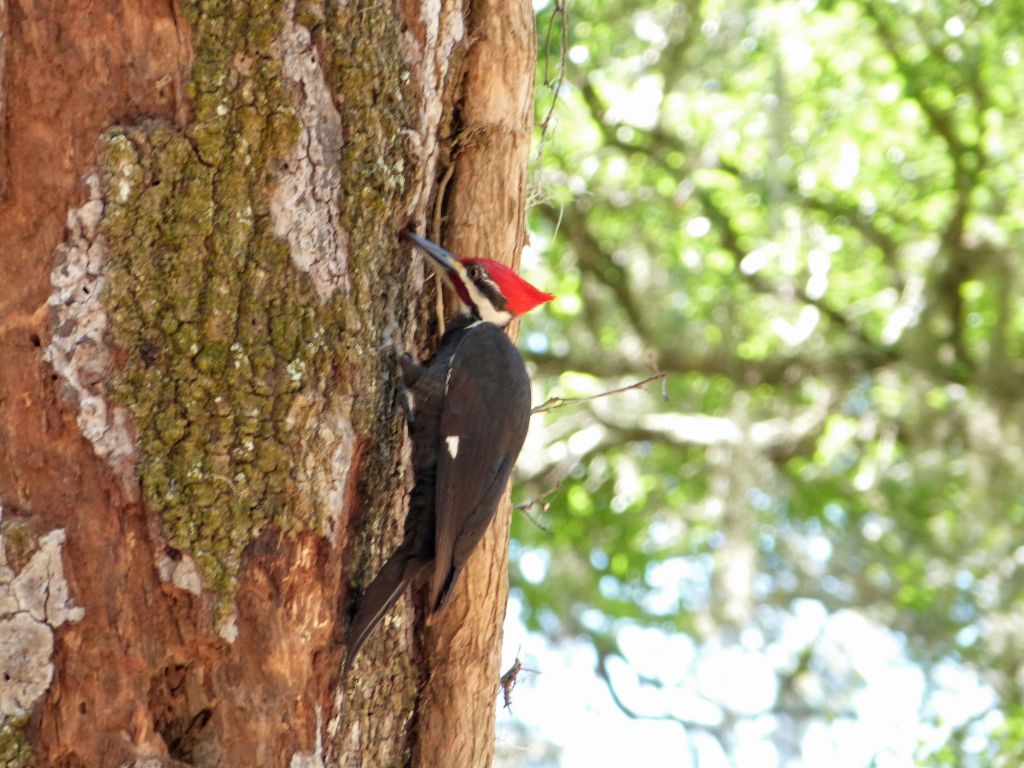
Pileated Woodpecker by Lee at Circle B

Pileated Woodpecker by Lee at Circle B

And God blessed them, saying, “Be fruitful and multiply and fill the waters in the seas, and let birds multiply on the earth.” (Genesis 1:22 ESV)

This is Chapter III from The Woodpeckers book. Our writer, Fannie Hardy Eckstorm, wrote this in 1901. There are 16 chapters, plus the Forward, which are about the Woodpecker Family here in America. All the chapters can be found on The Woodpeckers page. I added photos to help enhance the article. In 1901, photography was not like today.

Woodpeckers belong to the Picidae – Woodpeckers Family.

Members of Picidae are typically monogamous. A pair will work together to help build the nest, incubate the eggs and raise their altricial young. However, in most species the male does most of the nest excavation and takes the night shift while incubating the eggs. A nest will usually consist of 2–5 round white eggs. Since these birds are cavity nesters, their eggs do not need to be camouflaged and the white color helps the parents to see them in dim light. The eggs are incubated for about 11–14 days before the chicks are born. It takes about 18–30 days before the young are ready to leave the nest. (Wikipedia with editing)

See:

Picidae – Woodpeckers Family

The Woodpeckers by Fannie Hardy Eckstorm

Gospel Message

*

How the Woodpecker Catches A Grub – The Woodpeckers

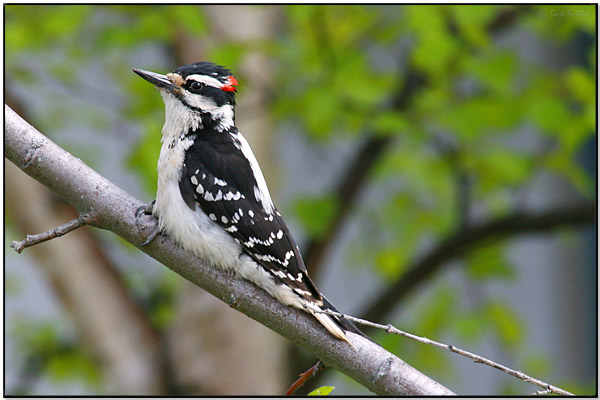
Hairy Woodpecker (Picoides villosus) by Daves BirdingPix

Hairy Woodpecker (Picoides villosus) by Daves BirdingPix

Look at the birds of the air; they neither sow nor reap nor gather into barns, and yet your heavenly Father keeps feeding them. Are you not worth much more than they? (Matthew 6:26 AMP)


Chapter II

HOW THE WOODPECKER CATCHES A GRUB

Did you ever see a hairy woodpecker strolling about a tree for what he could pick up?

There is a whur-r-rp of gay black and white wings and the flash of a scarlet topknot as, with a sharp cry, he dashes past you, strikes the limb solidly with both feet, and instantly sidles behind it, from which safe retreat he keeps a sharp black eye fixed upon your motions. If you make friends with him by keeping quiet, he will presently forgive you for being there and hop to your side of the limb, pursuing his ordinary work in the usual way, turning his head from side to side, inspecting every crevice, and picking up whatever looks appetizing. Any knot or little seam in the bark is twice scanned; in such places moths and beetles lay their eggs. Little cocoons are always dainty morsels, and large cocoons contain a feast. The butterfly-hunter who is hoping to hatch out some fine cecropia moths knows well that a large proportion of all the cocoons he discovers will be empty. The hairy woodpecker has been there before him, and has torn the chrysalis out of its silken cradle. For this the farmer should thank him heartily, even if the butterfly-hunter does not, for the cecropia caterpillar is destructive.

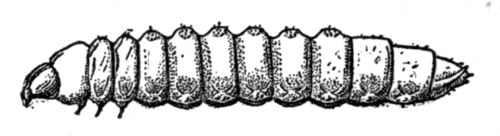
But sometimes, on the fair bark of a smooth limb, the woodpecker stops, listens, taps, and begins to drill. He works with haste and energy, laying open a deep hole. For what? An apple-tree borer was there cutting out the life of the tree. The farmer could see no sign of him; neither could the woodpecker, but he could hear the strong grub down in his little chamber gnawing to make it longer, or, frightened by the heavy footsteps on his roof, scrambling out of the way.

The Woodpeckers - Boring Lava

Boring Lava

Boring larva

It is easy to hear the borer at work in the tree. When a pine forest has been burned and the trees are dead but still standing, there will be such a crunching and grinding of borers eating the dead wood that it can be heard on all sides many yards away. Even a single borer can sometimes be heard distinctly by putting the ear to the tree. Sound travels much farther through solids than it does through air; notice how much farther you can hear a railroad train by the click of the rails than by the noise that comes on the air. Even our dull ears can detect the wood worm, but we cannot locate him. How, then, is the woodpecker to do what we cannot do?

Doubtless experience teaches him much, but one observer suggests that the woodpecker places the grub by the sense of touch. He says he has seen the red-headed woodpecker drop his wings till they trailed along the branch, as if to determine where the vibrations in the wood were strongest, and thus to decide where the grub was boring. But no one else appears to have noticed that woodpeckers are in the habit of trailing their wings as they drill for grubs. It would be a capital study for one to attempt to discover whether the woodpecker locates his grub by feeling, or whether he does it by hearing alone. Only one should be sure he is looking for grubs and not for beetles’ eggs, nor for ants, nor for caterpillars. By the energy with which he drills, and the size of the hole left after he has found his tidbit, one can decide whether he was working for a borer.

But when the borer has been located, he has yet to be captured. There are many kinds of borers. Some channel a groove just beneath the bark and are easily taken; but others tunnel deep into the wood. I measured such a hole the other day, and found it was more than eight inches long and larger than a lead-pencil, bored through solid rock-maple wood. The woodpecker must sink a hole at right angles to this channel and draw the big grub out through his small, rough-sided hole. You would be surprised, if you tried to do the same with a pair of nippers the size of the woodpecker’s bill, to find how strong the borer is, how he can buckle and twist, how he braces himself against the walls of his house. Were your strength no greater than the woodpecker’s, the task would be much harder. Indeed, a large grub would stand a good chance of getting away but for one thing, the woodpecker spears him, and thereby saves many a dinner for himself.

Woodpeckers - Indian Spear

Indian Spear

Indian spear

Here is a primitive Indian fish-spear, such as the Penobscots used. To the end of a long pole two wooden jaws are tied loosely enough to spring apart a little under pressure, and midway between them, firmly driven into the end of the pole, is a point of iron. When a fish was struck, the jaws sprung apart under the force of the blow, guiding the iron through the body of the fish, which was held securely in the hollow above, that just fitted around his sides, and by the point itself.

Solomon Islander's Spear

Solomon Islander’s Spear

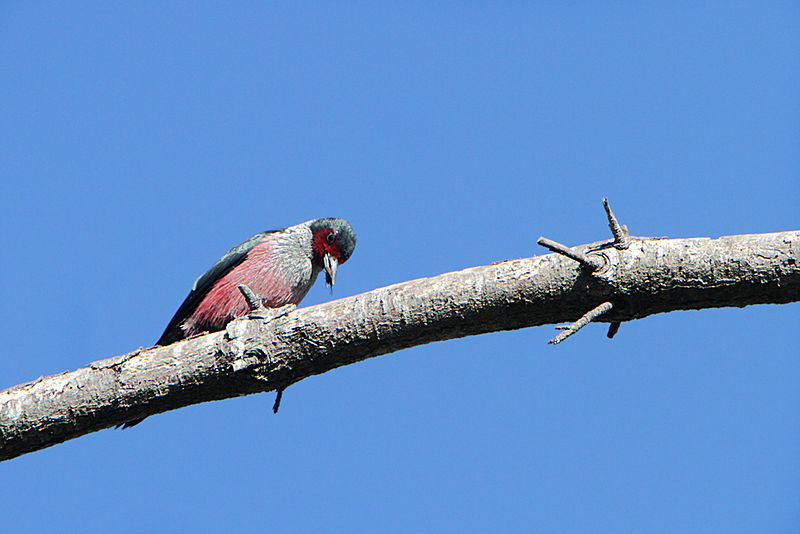
The tool with which the woodpecker fishes for a grub is very much the same. His mandibles correspond to the two movable jaws. They are knife-edged, and the lower fits exactly inside the upper, so that they give a very firm grip. In addition, the upper one is movable. All birds can move the upper mandible, because it is hinged to the skull. (Watch a parrot some day, if you do not believe it.) A medium-sized woodpecker, like the Lewis’s, can elevate his upper mandible at least a quarter of an inch without opening his mouth at all. This enables him to draw his prey through a smaller hole than would be needed if he must open his jaws along their whole length. Between the mandibles is the sharp-pointed tongue, which can be thrust entirely through a grub, holding him impaled. Unlike the Indian’s spear-point, the woodpecker’s tongue is barbed heavily on both sides, and it is extensile. As a tool it resembles the Solomon Islander’s spear. A medium-sized woodpecker can dart his tongue out two inches or more beyond the tip of his bill. A New Bedford boy might tell us, and very correctly, that the woodpecker harpoons his grub, just as a whaleman harpoons a whale. If the grub tries to back off into his burrow, out darts the long, barbed tongue and spears him. Then it drags him along the crooked tunnel and into the narrow shaft picked by the woodpecker, where the strong jaws seize and hold him firmly.


Lee’s Addition:

Lewis's Woodpecker (Melanerpes lewis) With Bug In Its Beak ©WikiC

Lewis’s Woodpecker (Melanerpes lewis) With Bug In Its Beak ©WikiC

I know and am acquainted with all the birds of the mountains, and the wild animals of the field are Mine and are with Me, in My mind. (Psalms 50:11 AMP)

This is Chapter II from The Woodpeckers book. Our writer, Fannie Hardy Eckstorm, wrote this in 1901. There are 16 chapters, plus the Forward, which are about the Woodpecker Family here in America. All the chapters can be found on The Woodpeckers page. I added photos to help enhance the article. In 1901, photography was not like today.

Woodpeckers belong to the Picidae – Woodpeckers Family.

The diet of woodpeckers consists mainly of insects and their grubs taken from living and dead trees, and other arthropods, along with fruit, nuts and sap from live trees. Ecologically, they help to keep trees healthy by keeping them from suffering mass infestations. The family is noted for its ability to acquire wood-boring grubs using their bills for hammering, but overall the family is characterized by its dietary flexibility, with many species being both highly omnivorous and opportunistic. The insect prey most commonly taken are those found inside tree trunks, whether they are alive or rotten, and in crevices in the bark. These include beetles and their grubs, ants, termites, spiders, and caterpillars. These may be obtained either by gleaning or, more famously, by excavating wood. Having hammered a hole into the wood, the prey is excavated by a long barbed tongue.

The ability to excavate allows woodpeckers to obtain tree sap, an important source of food for some species. Most famously, the sapsuckers (genus Sphyrapicus) feed in this fashion, but the technique is not restricted to these and others, such as the Acorn Woodpecker and White-headed Woodpecker, also feed in this way. It was once thought that the technique was restricted to the New World, but Old World species, such as the Arabian Woodpecker and Great Spotted Woodpecker, also feed in this way. (Wikipedia)

The tongue is mentioned on a video on The Woodpeckers page. This video will be referred to again and will be on The Woodpeckers page. It is being introduced here.

See:

Picidae – Woodpeckers Family

The Woodpeckers by Fannie Hardy Eckstorm

Gideon

*

Birdwatching at Circle B Bar Reserve – 10/26/13

Little Blue Heron (Egretta caerulea) by Lee at Circle B

Little Blue Heron (Egretta caerulea)

Be thou exalted, LORD, in thine own strength: so will we sing and praise thy power. (Psalms 21:13 KJV)

Had a very productive hour and 40 minute trip to Circle B Bar Reserve Saturday afternoon enjoying the Lord’s creation. The birds are definitely heading back down. After a sparse summer, things are starting to get interesting once more.

Limpkin (Aramus guarauna) by Lee at Circle B

Limpkin (Aramus guarauna) by Lee at Circle B

We haven’t been out there for a while and was a little disappointed in the viewing. It rained considerably this summer and the plants have really grown up making it hard to see the water birds. Even with that, to see 34 species in just under 2 hours is not bad.

Alligator about 8 ft by Lee at Circle B

Alligator about 8 ft by Lee at Circle B

We were greeted with the sounds of the Blue Jays, Carolina Wrens and an Eastern Phoebe. Also, an Armadillo was walking right along the path to the marsh. Later, I spotted about an 8 foot alligator. Those and the normal squirrels were the only, non-birds I saw.

One of the highlights was seeing five Bald Eagles flying over. Two in one group and three in the other. We had just seen an Eagle on Friday down in Lake Wales. I love seeing Eagles.

American White Ibis (Eudocimus albus) by Lee at Circle B

American White Ibis (Eudocimus albus) by Lee at Circle B

In God we boast all the day long, and praise thy name for ever. Selah. (Psalms 44:8 KJV)

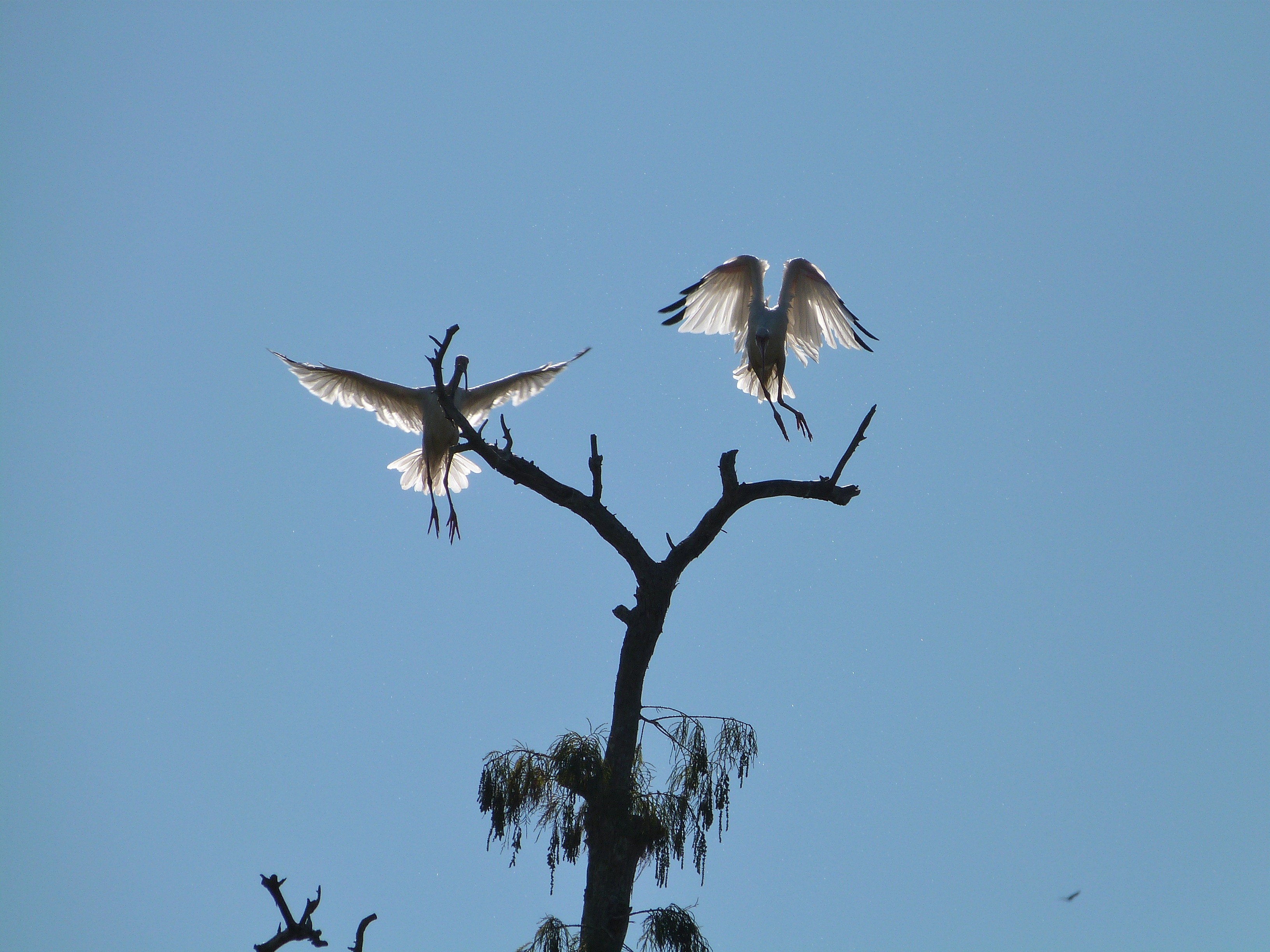
Two White Ibises landed in one of the trees when we first arrived. With the sun behind them, they remind you of Angel’s Wings. As you can see by the second photo the tree was being loaded up for the night when we passed it on the way out. That is one of the favorite “roosting” places at Circle B.

American White Ibis (Eudocimus albus) by Lee at Circle B

American White Ibis (Eudocimus albus) and friends

I am including a slideshow to give you an idea of how it was out there. The photography is not the best, but you can tell what the birds are at least. Dan doesn’t have his photos ready.

This slideshow requires JavaScript.

Here is a list of what I reported to e-Bird:

Circle B Bar Reserve, Polk, US-FL
Oct 26, 2013 3:45 PM – 5:25 PM
Traveling – 2.5 mile(s)
Clear 79 degrees
34 species
Black-bellied Whistling-Duck  15
Pied-billed Grebe  2
Wood Stork  17
Anhinga  5
Great Blue Heron  7
Great Egret  6
Snowy Egret  2
Little Blue Heron  1
Tricolored Heron  1
Cattle Egret  5
White Ibis  88
Glossy Ibis  2
Black Vulture  40
Turkey Vulture  37
Osprey  2
Bald Eagle  5
Purple Gallinule  4
Common Gallinule  6
Limpkin  4
Sandhill Crane  1
Belted Kingfisher  1
Red-bellied Woodpecker  1
Eastern Phoebe  2
Blue Jay  2
Fish Crow  5
House Wren  1
Carolina Wren  2
Blue-gray Gnatcatcher  1
Gray Catbird  1
Palm Warbler  3
Yellow-rumped Warbler  1
Northern Cardinal  1
Red-winged Blackbird  1
Boat-tailed Grackle  10
See:
*

Woodpeckers – Appendix – Explanation of Terms

The Woodpeckers, by Fannie Hardy Eckstorm – Updated

The Woodpeckers by Fannie Hardy Eckstorm - cover


APPENDIX

Explanation of Terms.

Head of a Flicker

Head of a Flicker

Head of a Flicker.

*

Occipital means “on the occiput.”

a. Forehead; b. crown; c. occiput; d. nape; e. chin; f. throat; g. jaw-patch, or mustache.

Nuchal means “on the nape.”

Primaries are the nine or ten wing-quills borne upon the last joint of the wing.

Secondaries are the wing-quills attached to the fore-arm bones.

Tertiaries are the wing-quills springing from the upper arm bones.

Wing coverts are the shorter lines of feathers overlapping these long quills.

Tail coverts are the lengthened feathers that overlap the root of the tail both above and below, called respectively upper and under tail coverts.

Ear coverts are the feathers that over-lie the ear, often specially modified or colored.

Rump, the space between the middle of the back and the root of the tail.

is the sign used to indicate the male sex.

is the sign used to indicate the female sex.

Wing Coverts ©WikiC

Wing Coverts ©WikiC – (Click on photo to see it better)

A subspecies is a geographical race, modified in size, color, or proportions chiefly by the influence of climate. These variations are especially marked in non-migratory birds of wide distribution, subject, therefore, to climatic extremes. The Downy and the Hairy Woodpeckers, for example, are split up into numerous races. It should be remembered that when a species has been separated into races, or subspecies, all the subspecies are of equal rank, even though they are differently designated. The one originally discovered and first described bears the old Latin name which consisted of two words, while the new ones are designated by triple Latin names—the old binomial and a new name in addition. The binomial indicates the form first described. The forms designated by trinomials may be equally well known, abundant, and widely distributed. For example, among the woodpeckers, the northern form of the Hairy Woodpecker was first discovered and bears the name Dryobates villosus; but the first Downy Woodpecker described was a southern bird, and the northern form was not separated until a few years ago, so that the southern bird is the type, and the northern one bears the trinomial, Dryobates pubescens medianus.

North America, by the decision of the American Ornithologists’ Union, is held to include the continent north of the present boundary between Mexico and the United States, with Greenland, the peninsula of Lower California, and the islands adjacent naturally belonging to the same.


Lee’s Addition:

Hairy Woodpecker (Picoides villosus) by Daves BirdingPix

Hairy Woodpecker (Picoides villosus) by Daves BirdingPix

And there are also many other things that Jesus did, which if they were written one by one, I suppose that even the world itself could not contain the books that would be written. Amen. (John 21:25 NKJV)

Picidae – Woodpeckers Family

The Woodpeckers by Fannie Hardy Eckstorm

Gideon

How To Know A Woodpecker – The Woodpeckers

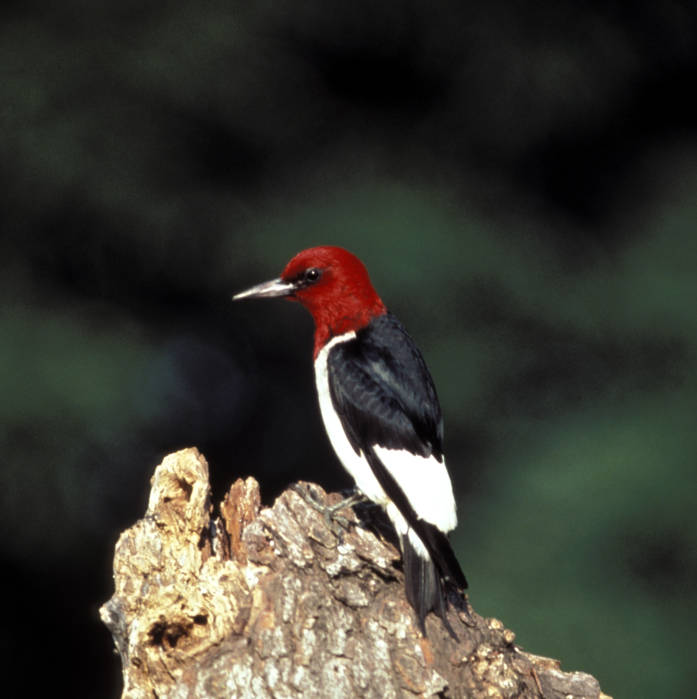
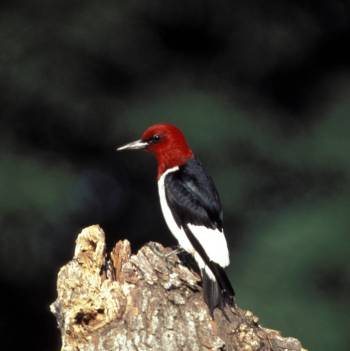
Red-headed Woodpecker (Melanerpes erythrocephalus) ©USFWS

Red-headed Woodpecker (Melanerpes erythrocephalus) ©USFWS


Chapter I

HOW TO KNOW A WOODPECKER

The woodpecker is the easiest of all birds to recognize. Even if entirely new to you, you may readily decide whether a bird is a woodpecker or not.

The woodpecker is always striking and is often gay in color. He is usually noisy, and his note is clear and characteristic. His shape and habits are peculiar, so that whenever you see a bird clinging to the side of a tree “as if he had been thrown at it and stuck,” you may safely call him a woodpecker. Not that all birds which cling to the bark of trees are woodpeckers,—for the chickadees, the crested titmice, the nuthatches, the brown creepers, and a few others like the kinglets and some wrens and wood-warblers more or less habitually climb up and down the tree-trunks; but these do it with a pretty grace wholly unlike the woodpecker’s awkward, cling-fast way of holding on. As the largest of these is smaller than the smallest woodpecker, and as none of them (excepting only the tiny kinglets) ever shows the patch of yellow or scarlet which always marks the head of the male woodpecker, and which sometimes adorns his mate, there is no danger of making mistakes.
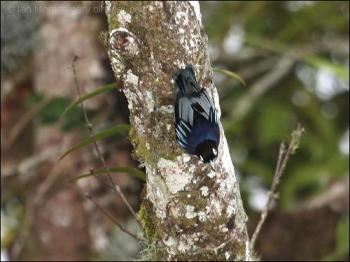
Blue Nuthatch (Sitta azurea) by Ian

Blue Nuthatch (Sitta azurea) by Ian

The nuthatches are the only birds likely to be confused with woodpeckers, and these have the peculiar habit of traveling down a tree-trunk with their heads pointing to the ground. A woodpecker never does this; he may move down the trunk of the tree he is working on, but he will do it by hopping backward. A still surer sign of the woodpecker is the way he sits upon his tail, using it to brace him. No other birds except the chimney swift and the little brown creeper ever do this. A sure mark, also, is his feet, which have two toes turned forward and two turned backward. We find this arrangement in no other North American birds except the cuckoos and our one native parroquet. However, there is one small group of woodpeckers which have but three toes, and these are the only North American land-birds that do not have four well-developed toes.
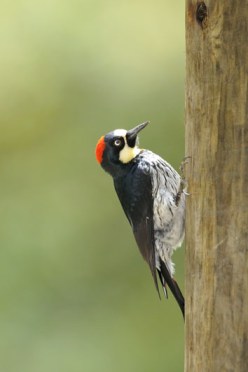
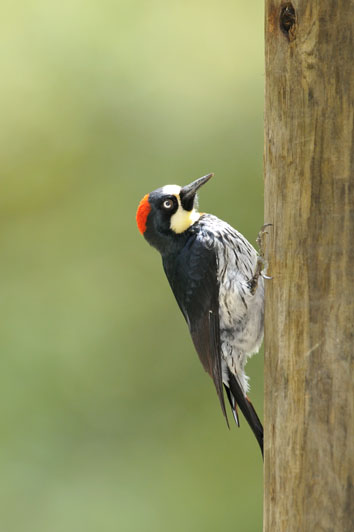
Acorn Woodpecker (Melanerpes formicivorus) by Reinier Munguia

Acorn Woodpecker (Melanerpes formicivorus) by Reinier Munguia

In coloration the woodpeckers show a strong family likeness. Except in some young birds, the color is always brilliant and often is gaudy. Usually it shows much clear black and white, with dashes of scarlet or yellow about the head. Sometimes the colors are “solid,” as in the red-headed woodpecker; sometimes they lie in close bars, as in the red-bellied species; sometimes in spots and stripes, as in the downy and hairy; but there is always a contrast, never any blending of hues. The red or yellow is laid on in well-defined patches—square, oblong, or crescentic—upon the crown, the nape, the jaws, or the throat; or else in stripes or streaks down the sides of the head and neck, as in the logcock, or pileated woodpecker.
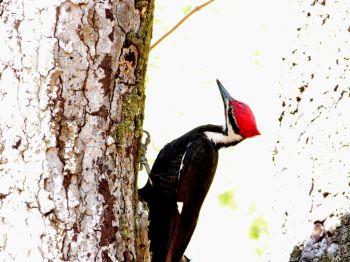
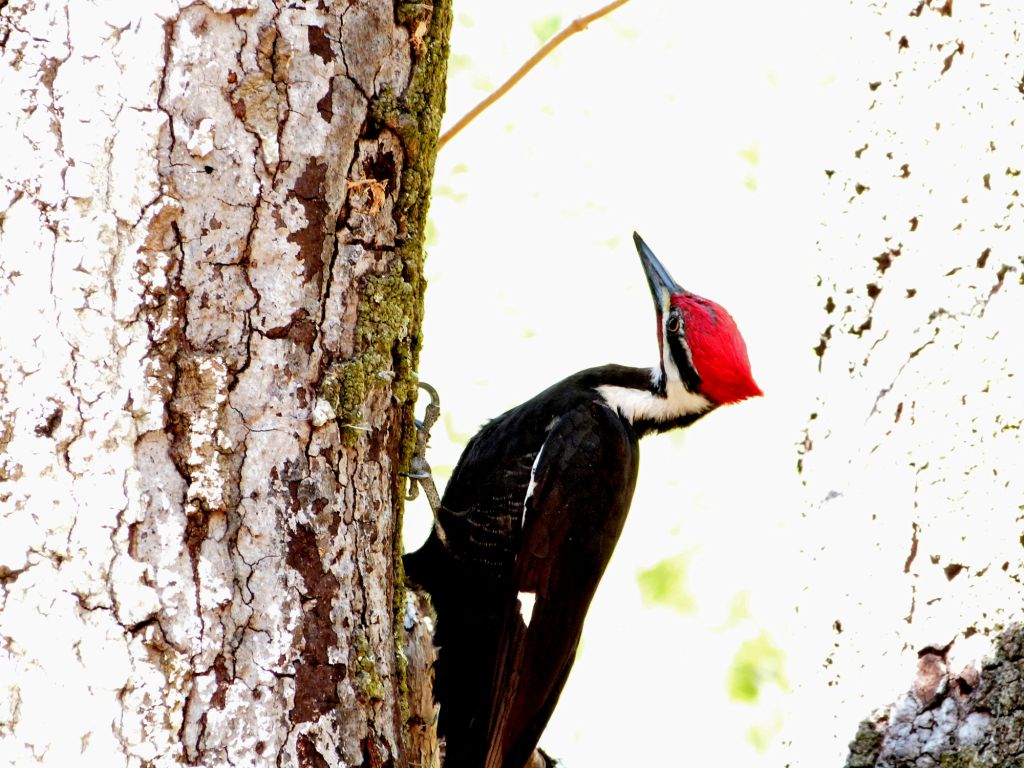
Pileated Woodpecker by Lee

Pileated Woodpecker by Lee

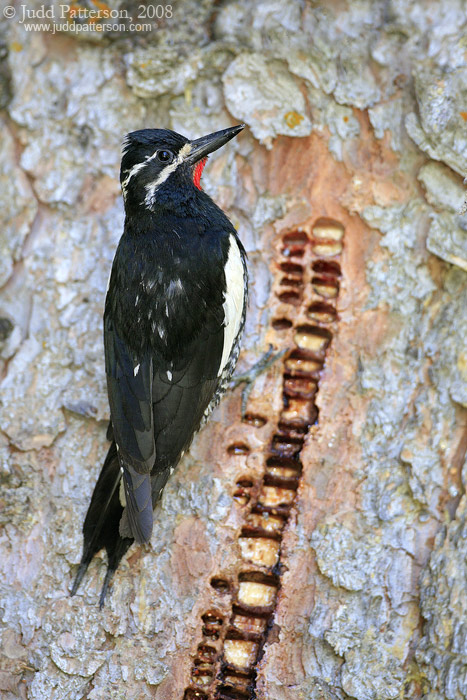
There is no rule about the color markings of the sexes, as in some families of birds. Usually the female lacks all the bright markings of the male; sometimes, as in the logcock, she has them but in more restricted areas; sometimes, as in the flickers, she has all but one of the male’s color patches; and in a few species, as the red-headed and Lewis’s woodpeckers, the two sexes are precisely alike in color. In the black-breasted woodpecker, sometimes called Williamson’s sapsucker, the male and female are so totally different that they were long described and named as different birds. It sometimes happens that a young female will show the color marks of the male, but will retain them only the first year.
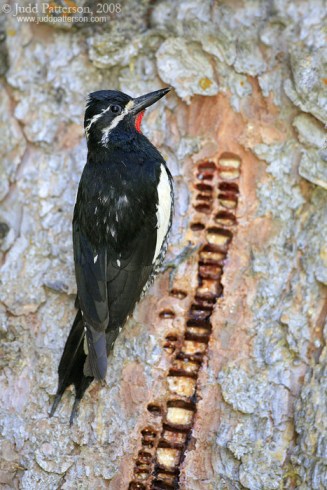
Williamson's Sapsucker (Sphyrapicus thyroideus) by Judd Patterson

Williamson’s Sapsucker (Sphyrapicus thyroideus) by Judd Patterson

Though the woodpeckers cling to the trunks of trees, they are not exclusively climbing birds. Some kinds, like the flickers, are quite as frequently found on the ground, wading in the grass like meadowlarks. Often we may frighten them from the tangled vines of the frost grape and the branches of wild cherry trees, or from clumps of poison-ivy, whither they come to eat the fruit. The red-headed woodpecker is fond of sitting on fence posts and telegraph poles; and both he and the flicker frequently alight on the roofs of barns and houses and go pecking and pattering over the shingles. The sapsuckers and several other kinds will perch on dead limbs, like a flycatcher, on the watch for insects; the flickers, and more rarely other kinds, will sit crosswise of a limb instead of crouching lengthwise of it, as is the custom with woodpeckers.

Northern Flicker (Colaptes auratus) Red-shafted ©WikiC

Northern Flicker (Colaptes auratus) Red-shafted ©WikiC

All these points you will soon learn. You will become familiar with the form, the flight, and the calls of the different woodpeckers; you will learn not only to know them by name, but to understand their characters; they will become your acquaintances, and later on your friends.

This heavy bird, with straight, chisel bill and sharp-pointed tail-feathers; with his short legs and wide, flapping wings, his unmusical but not disagreeable voice, and his heavy, undulating, business-like flight, is distinctly bourgeois, the type of a bird devoted to business and enjoying it. No other bird has so much work to do all the year round, and none performs his task with more energy and sense. The woodpecker makes no aristocratic pretensions, puts on none of the coy graces and affectations of the professional singer; even his gay clothes fit him less jauntily than they would another bird. He is artisan to the backbone,—a plain, hard-working, useful citizen, spending his life in hammering holes in anything that appears to need a hole in it. Yet he is neither morose nor unsocial. There is a vein of humor in him, a large reserve of mirth and jollity. We see little of it except in the spring, and then for a time all the laughter in him bubbles up; he becomes uproarious in his glee, and the melody which he cannot vent in song he works out in the channels of his trade, filling the woodland with loud and harmonious rappings. Above all other birds he is the friend of man, and deserves to have the freedom of the fields.


Lee’s Addition:

Red-bellied Woodpecker (Melanerpes carolinus) by J Fenton

Red-bellied Woodpecker (Melanerpes carolinus) by J Fenton

For by him were all things created, that are in heaven, and that are in earth, visible and invisible, whether they be thrones, or dominions, or principalities, or powers: all things were created by him, and for him: (Colossians 1:16 KJV)

This is Chapter I from The Woodpeckers book. Our writer, Fannie Hardy Eckstorm, wrote this in 1901. There are 16 chapters, plus the Forward, which are about the Woodpecker Family here in America. All the chapters can be found on The Woodpeckers page. I added photos to help enhance the article. In 1901, photography was not like today.

Woodpeckers belong to the Picidae – Woodpeckers Family.

“Most species possess predominantly white, black, brown, green, and red plumage, although many piculets show a certain amount of grey and olive green. In woodpeckers, many species exhibit patches of red and yellow on their heads and bellies, and these bright areas are important in signaling. The dark areas of plumage are often iridescent. Although the sexes of Picidae species tend to look alike, many woodpecker species have more prominent red or yellow head markings in males than in females.”

“Members of the family Picidae have strong bills for drilling and drumming on trees and long sticky tongues for extracting food. Woodpecker bills are typically longer, sharper and stronger than the bills of piculets and wrynecks; however their morphology is very similar. The bill’s chisel-like tip is kept sharp by the pecking action in birds that regularly use it on wood. Species of woodpecker and flicker that use their bills in soil or for probing as opposed to regular hammering tend to have longer and more decurved bills. Due to their smaller bill size, many piculets and wrynecks will forage in decaying wood more often than woodpeckers. The long sticky tongues, which possess bristles, aid these birds in grabbing and extracting insects deep within a hole of a tree. It had been reported that the tongue was used to spear grubs, but more detailed studies published in 2004 have shown that the tongue instead wraps around the prey before being pulled out.”

“Woodpeckers, piculets and wrynecks all possess zygodactyl feet. Zygodactyl feet consist of four toes, the first (hallux) and the fourth facing backward and the second and third facing forward. This foot arrangement is good for grasping the limbs and trunks of trees. Members of this family can walk vertically up a tree trunk, which is beneficial for activities such as foraging for food or nest excavation. In addition to the strong claws and feet, woodpeckers have short strong legs. This is typical of birds that regularly forage on trunks. The tails of all woodpeckers except the piculets and wrynecks are stiffened, and when the bird perches on vertical surfaces, the tail and feet work together to support it.” (Wikipedia)

See:

Picidae – Woodpeckers Family

The Woodpeckers by Fannie Hardy Eckstorm

Falling Plates

*

Riddlers – The Woodpeckers

The Woodpeckers by Fannie Hardy Eckstorm - coverThe Woodpeckers, by Fannie Hardy Eckstorm

A Project Gutenberg EBook

*

THE WOODPECKERS

BY

FANNIE HARDY ECKSTORM

WITH ILLUSTRATIONS

The Woodpeckers by Fannie Hardy Eckstorm

BOSTON AND NEW YORK
HOUGHTON, MIFFLIN AND COMPANY
The Riverside Press, Cambridge
1901

Title: The Woodpeckers

Author: Fannie Hardy Eckstorm

Release Date: January 25, 2011 [EBook #35062]

*** START OF THIS PROJECT GUTENBERG EBOOK THE WOODPECKERS ***

(This eBook is for the use of anyone anywhere at no cost and with almost no restrictions whatsoever. You may copy it, give it away or re-use it under the terms of the Project Gutenberg License included with this eBook or online at www.gutenberg.org)

COPYRIGHT, 1900, BY FANNIE HARDY ECKSTORM

ALL RIGHTS RESERVED

To

MY FATHER
MR. MANLY HARDY
A Lifelong Naturalist


THE WOODPECKERS


FOREWORD: THE RIDDLERS


_
Long ago in Greece, the legend runs, a terrible monster called the Sphinx used to waylay travelers to ask them riddles: whoever could not answer these she killed, but the man who did answer them killed her and made an end of her riddling.

To-day there is no Sphinx to fear, yet the world is full of unguessed riddles. No thoughtful man can go far afield but some bird or flower or stone bars his way with a question demanding an answer; and though many men have been diligently spelling out the answers for many years, and we for the most part must study the answers they have proved, and must reply in their words, yet those shrewd old riddlers, the birds and flowers and bees, are always ready for a new victim, putting their heads together over some new enigma (mystery) to bar the road to knowledge till that, too, shall be answered; so that other men’s learning does not always suffice. So much of a man’s pleasure in life, so much of his power, depends on his ability to silence these persistent questioners, that this little book was written with the hope of making clearer the kind of questions Nature asks, and the way to get correct answers.

This is purposely a little book, dealing only with a single group of birds, treating particularly only some of the commoner species of that group, taking up only a few of the problems that present themselves to the naturalist for solution, and aiming rather to make the reader acquainted with the birds than learned about them.

The woodpeckers were selected in preference to any other family because they are patient under observation, easily identified, resident in all parts of the country both in summer and in winter, and because more than any other birds they leave behind them records of their work which may be studied after the birds have flown.

The book provides ample means for identifying every species and subspecies of woodpecker known in North America, though only five of the commonest and most interesting species have been selected for special study. At least three of these five should be found in almost every part of the country. The Californian woodpecker is never seen in the East, nor the red-headed in the far West, but the downy and the hairy are resident nearly everywhere, and some species of the flickers and sapsuckers, if not always the ones chosen for special notice, are visitors in most localities.

Look for the woodpeckers in orchards and along the edges of thickets, among tangles of wild grapes and in patches of low, wild berries, upon which they often feed, among dead trees and in the track of forest fires. Wherever there are boring larvæ, beetles, ants, grasshoppers, the fruit of poison-ivy, dogwood, june-berry, wild cherry or wild grapes, woodpeckers may be confidently looked for if there are any in the neighborhood.

Be patient, persistent, wide-awake, sure that you see what you think you see, careful to remember what you have seen, studious to compare your observations, and keen to hear the questions propounded you. If you do this seven years and a day, you will earn the name of Naturalist; and if you travel the road of the naturalist with curious patience, you may some day become as famous a riddle-reader as was that OEdipus, the king of Thebes, who slew the Sphinx.


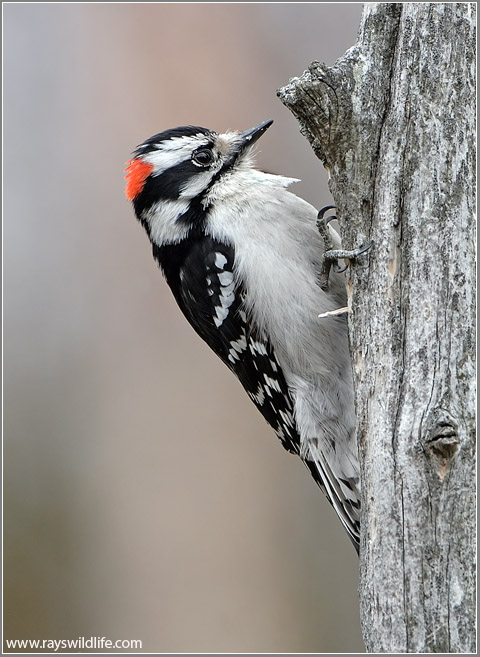
Downy Woodpecker (Picoides pubescens) by Raymond Barlow

Downy Woodpecker (Picoides pubescens) by Raymond Barlow

Lee’s Addition:

This is the beginning of a series from The Woodpeckers book. Our writer, Fannie Hardy Eckstorm, wrote this in 1901. There are 16 chapters, plus this Forward, which are about the Woodpecker Family here in America. All the chapters can be found on The Woodpeckers page.

Woodpeckers belong to the Picidae – Woodpeckers Family.

Here are the upcoming chapter titles:

CHAP. PAGE
 Foreword: the Riddlers  
I.  How to know a Woodpecker  
II.  How the Woodpecker catches a Grub  
III.  How the Woodpecker courts his Mate  
IV.  How the Woodpecker makes a House  
V.  How a Flicker feeds her Young  
VI.  Friend Downy  
VII.  Persona non Grata. (Yellow-bellied Sapsucker)  
VIII.  El Carpintero. (Californian Woodpecker)  
IX.  A Red-headed Cousin. (Red-headed Woodpecker)  
X.  A Study of Acquired Habits  
XI.  The Woodpecker’s Tools: His Bill  
XII.  The Woodpecker’s Tools: His Foot  
XIII.  The Woodpecker’s Tools: His Tail  
XIV.  The Woodpecker’s Tools: His Tongue  
XV.  How each Woodpecker is fitted for his own Kind of Life  
XVI.  The Argument from Design  

APPENDIX

A. Key to the Woodpeckers of North America

B. Descriptions of the Woodpeckers of North America

C. Explanation of Terms

*
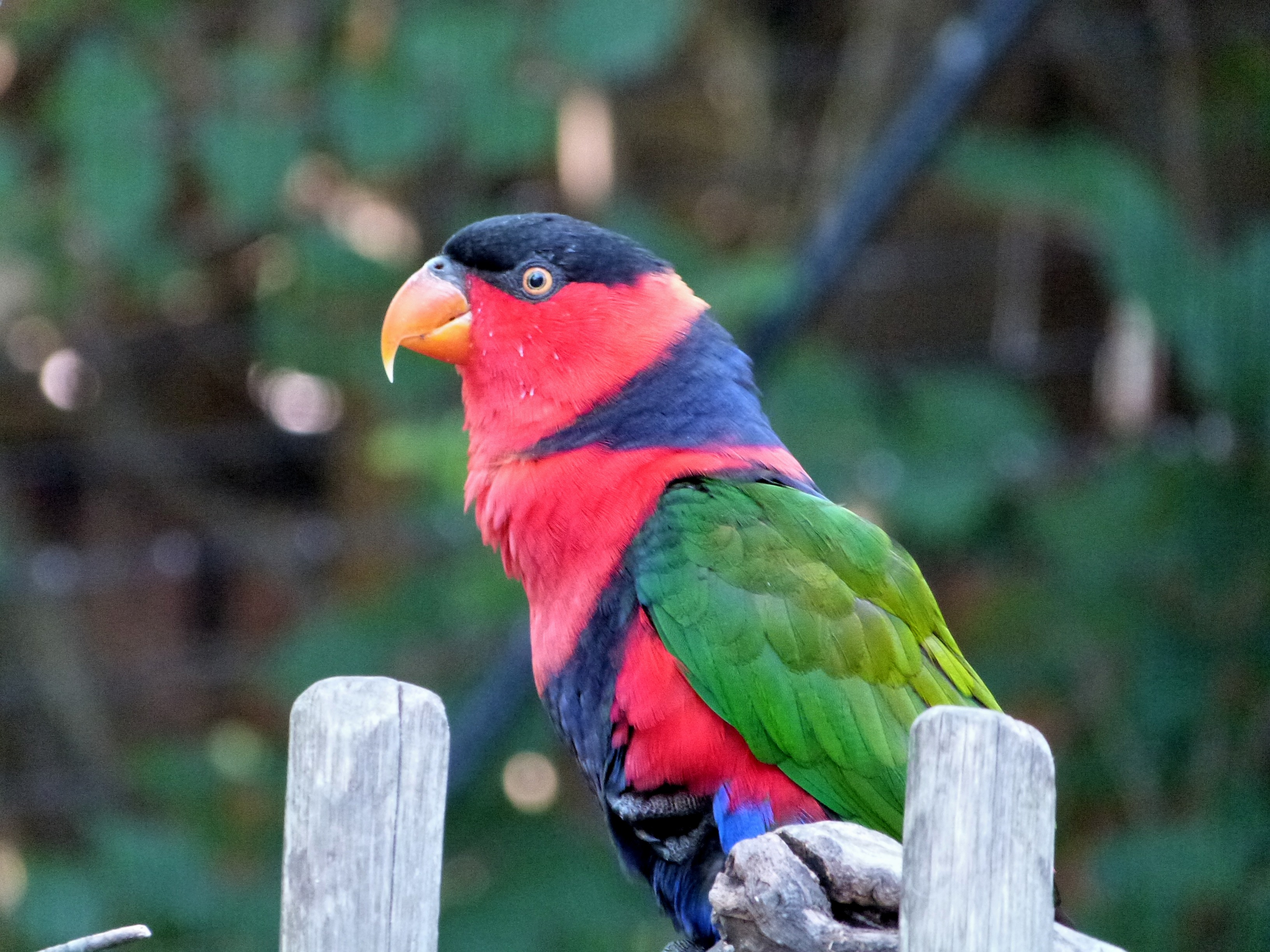
I trust you will enjoy reading about these fantastic birds and how the Lord has created them to be able to carry out their task.

See:

The Woodpeckers by Fannie Hardy Eckstorm

Wordless Birds

*
Thank You – One Million And Counting!

Oh, give thanks to the LORD, for He is good! For His mercy endures forever. (1 Chronicles 16:34 NKJV)

Thank you!

Thank you!!

THANK YOU!!!

I thank my God upon every remembrance of you, (Philippians 1:3 NKJV)

Wow!

Just had the 1 Millionth page view on this blog. 

Without the Lord’s leading, His help and your visits to this blog, this would not have happened.  I am so appreciative for every one of you who have visited throughout the years and also put up with my good and not-so-good articles. The blog started in February of 2008, but was moved here to WordPress in July of 2008. That is when this count started. Here are the dates of milestones that are in the Sidebar.

My special thanks goes to Stephen, our assistant to the Pastor at my church (Faith Baptist of Winter Haven) for suggesting that I write about the Birds of the Bible on the church’s Blog – The Fountain. That was on Blogspot. I started a blog of my own, to learn how to lay it out. That is when Lee’s Birdwatching Adventures Plus was started. We both moved our blogs off of Blogspot over the years.

Also, a big thanks to all my regular and guest writers.

  • Thanks to Visitors

    Moved to WordPress 00,000 – July 05, 2008
  • 50,000 – Oct 10, 2009
  • 100,000 – Apr 5, 2010
  • 150,000 – Sep 6, 2010
  • 200,000 – Dec 30, 2010
  • 250,000 – Apr 9, 2011
  • 300,000 – June 29, 2011
  • 350,000 – Sep 19, 2011
  • 400,000 – Nov 18, 2011
  • 450,000 – Jan 21, 2012
  • 500,000 – Mar 1, 2012
  • 600,000 – May 24, 2012
  • 700,000 – Sep 2, 2012
  • 800,000 – Dec 16, 2012
  • 900,000 – Ap 13, 2013
  • 1,000,000 – Oct 20, 2013
  • 1st 500+ Day (568) Oct 29, 2009
  • 1st 600+ Day (637) Sep 28, 2010
  • 1st 700+ Day (722) Apr 4, 2011
  • 1st 800+ Day (810) May 18, 2011
  • 1st 900+ Day (955) Oct 2, 2011
  • 1st 1000+ Day (1,016) Oct 20, 2011
  • 1st 2,000+ Day (2,220) Feb 10, 2012
  • 1st 3,000+ Day (3896) Feb 21, 2013

Links to the very first few articles on Lee’s Birdwatching Adventures original site copied over here:

  1. Introduction to Birds of the Bible
  2. Birdwatching Tips #1
  3. The Birds of the Bible – Eagles
  4. Video of Bird “Displaying”
  5. Trip to Fort DeSoto Park 2-20-08
  6. Roseate Spoonbills

Looking back at them, I trust you like the ones being produced now much better. Hey, it was a learning curve back then. These are the first seven articles on Lee’s Birdwatching Adventures Plus when it first started up here:

  1. Birds of the Bible – Ossifrage
  2. Interesting Things – Communication
  3. Video of Bird “Displaying” II
  4. Birds of the Bible – Herons
  5. Interesting Things – Bird Evolution
  6. Birds of the Bible – Pelicans
  7. Birdwatching Trip – J. N. “Ding” Darling NWR – July 15, 2008

*
Thank You again for all your visits, likes, comments, and encouragements.

Lee

*

P.S. I really have no way of knowing who the 1,000,000th visitor was, but we were at lunch with friends and kept watching the count. Saw 1,000,002 at around 1:20pm EST. Checking the Sitemeter after arriving home, someone from Brazil came in about 1:18, looked at 14 pages. Also at 1:20 an unknown came in, and at 1:22 a visitor arrived from Chicopee, Massachusetts. (This is just for trivia.)

*

Updated to the I.O.C. Version 3.5

Mountain Chickadee (Poecile gambeli) ©WikiC

Mountain Chickadee (Poecile gambeli) ©WikiC

Out of the ground the LORD God formed every beast of the field and every bird of the air, and brought them to Adam to see what he would call them. And whatever Adam called each living creature, that was its name. (Genesis 2:19 NKJV)

The newest update for the I.O.C. Version 3.5 came out September 30th. Lee’s Birdwatching Adventures Birds of the World has the latest changes.  There are now “10,507 extant species and 150 extinct species classified in 40 Orders, 232 Families (plus 5 Incertae Sedis) and 2284 Genera.  The list also includes 20,967 subspecies.”

After making changes to around 300 pages, you should be able to find one of those 10,507 avian friends with out too much difficulty. What did they change?

They (I.O.C.) added 22 new species, deleted 2 that they turned back to just a subspecies, changed the names or spelling of 47 birds (37 of those changed the name Madagascar to Madagascan), plus they made 30 taxonomy changes.

In those taxonomy changes, they took the Paridae – Tits, Chickadees family and threw it up in the air and let it fall totally different. At least, that is my description of it. Actually, because of DNA studies, they found that the birds are related differently in the family than they thought. They also shuffled the Aratinga species of Parakeets around.

These are the new birds that they added:

Reunion Sheldgoose (Alopochen kervazoi)
Ameline Swiftlet (Aerodramus amelis)
Ochre-backed Woodpecker (Celeus ochraceus)
Iberian Green Woodpecker (Picus sharpe)
Mistletoe Tyrannulet (Zimmerius parvus)
Venezuelan Tyrannulet (Zimmerius petersi)
Coopmans’s Tyrannulet (Zimmerius minimus)
Chico’s Tyrannulet (Zimmerius chicomendesi)
Junin Tapaculo (Scytalopus gettyae)
Delta Amacuro Softtail (Thripophaga amacurensis)
Pale-blue Monarch (Hypothymis puella)
Ua Pou Monarch (Pomarea mira) Extant – based on a recent sighting
Caspian Tit (Poecile hyrcanus)
Sierra Madre Ground Warbler (Robsonius thompsoni)
Cambodian Tailorbird (Orthotomus chaktomuk)
Chinese Wren-babbler (Pnoepyga mutica)
Zappey’s Flycatcher (Cyanoptila cumatilis)
Magnificent Sunbird (Aethopyga magnifica)
Maroon-naped Sunbird (Aethopyga guimarasensis)
Bohol Sunbird (Aethopyga decorosa)
Luzon Sunbird (Aethopyga jefferyi)
Zarudny’s Sparrow (Passer zarudnyi)
Taiwan Rosefinch (Carpodacus formosanus)

*

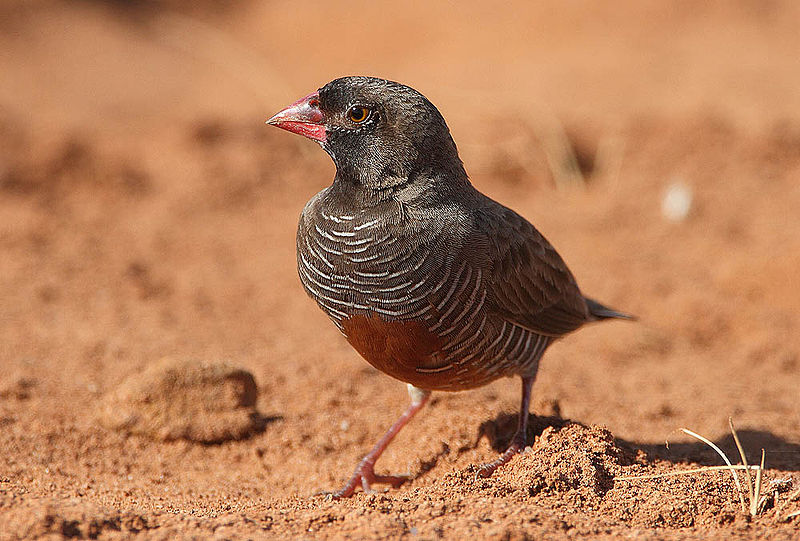
(Black-faced) Quailfinch (Ortygospiza atricollis) ©WikiC

(Black-faced) Quailfinch (Ortygospiza atricollis) ©WikiC Now only called a Quailfinch

These are the two they deleted. They went back to being supspecies of the Black-faced Quailfinch, which is now only called a Quailfinch (Ortygospiza atricollis).

African Quailfinch (Ortygospiza fuscocrissa)
Black-chinned Quailfinch (Ortygospiza gabonensis)

*

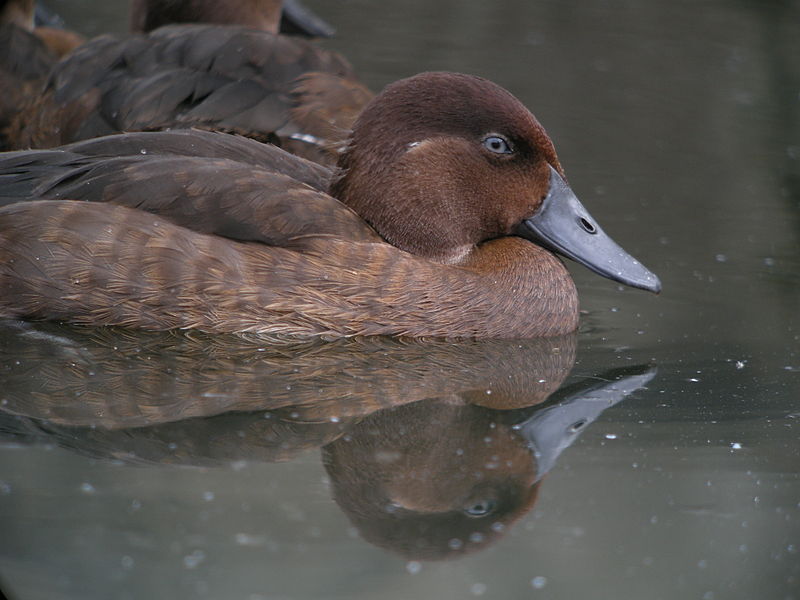
Madagascan Pochard (Aythya innotata) ©WikiC

Madagascan Pochard (Aythya innotata) ©WikiC

Their spelling changes caused me to hunt down 37 Madagascar birds and rename them Madagascan. Here are those changes:

Madagascan Blue Pigeon (Alectroenas madagascariensis)
Madagascan Buttonquail (Turnix nigricollis)
Madagascan Buzzard (Buteo brachypterus)
Madagascan Cisticola (Cisticola cherina)
Madagascan Cuckoo (Cuculus rochii)
Madagascan Cuckoo-Hawk (Aviceda madagascariensis)
Madagascan Cuckooshrike (Coracina cinerea)
Madagascan Fish Eagle (Haliaeetus vociferoides)
Madagascan Flufftail (Sarothrura insularis)
Madagascan Grebe (Tachybaptus pelzelnii)
Madagascan Green Pigeon (Treron australis)
Madagascan Harrier-Hawk (Polyboroides radiatus)
Madagascan Hoopoe (Upupa marginata)
Madagascan Ibis (Lophotibis cristata)
Madagascan Jacana (Actophilornis albinucha)
Madagascan Lark (Mirafra hova)
Madagascan Magpie-Robin (Copsychus albospecularis)
Madagascan Mannikin (Lemuresthes nana)
Madagascan Nightjar (Caprimulgus madagascariensis)
Madagascan Owl (Asio madagascariensis)
Madagascan Partridge (Margaroperdix madagarensis)
Madagascan Plover (Charadrius thoracicus)
Madagascan Pochard (Aythya innotata)
Madagascan Pratincole (Glareola ocularis)
Madagascan Pygmy Kingfisher (Corythornis madagascariensis)
Madagascan Rail (Rallus madagascariensis)
Madagascan Sandgrouse (Pterocles personatus)
Madagascan Serpent Eagle (Eutriorchis astur)
Madagascan Snipe (Gallinago macrodactyla)
Madagascan Sparrowhawk (Accipiter madagascariensis)
Madagascan Spinetail (Zoonavena grandidieri)
Madagascan Starling (Hartlaubius auratus)
Madagascan Stonechat (Saxicola sibilla)
Madagascan Swamp Warbler (Acrocephalus newtoni)
Madagascan Wagtail (Motacilla flaviventris)
Madagascan Wood Rail (Canirallus kioloides)
Madagascan Yellowbrow (Crossleyia xanthophrys)

*

There are other changes and they can be seen at the I.O.C. World Bird List Website:

*

Cincinnati Zoo III

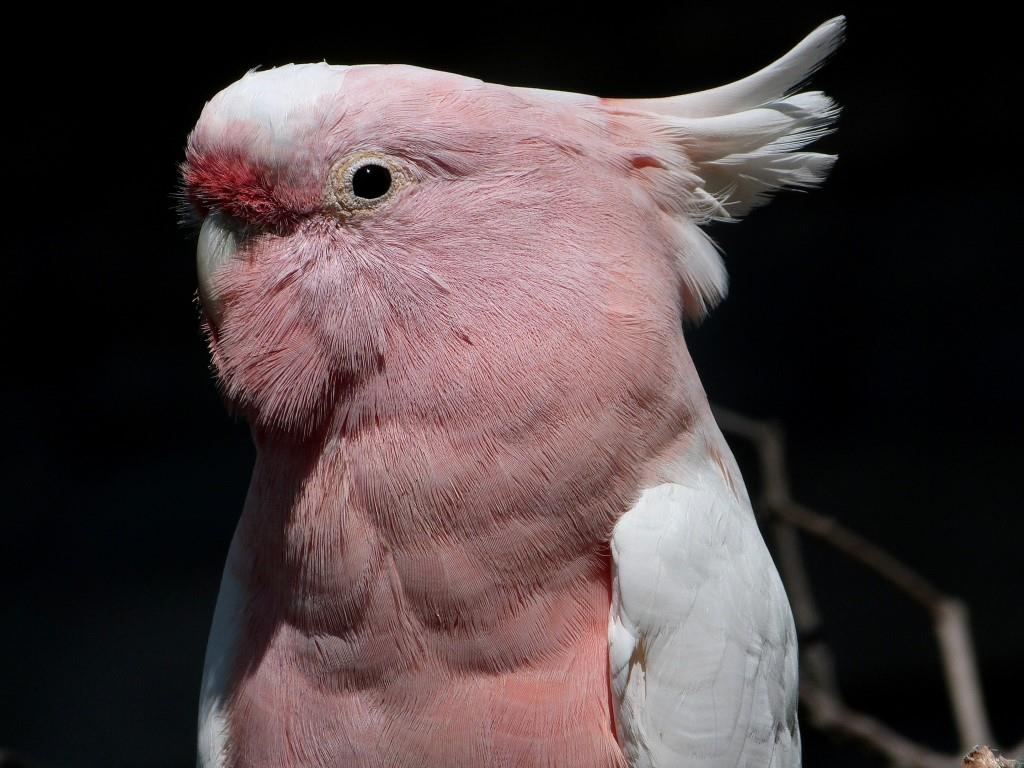
Major Mitchell's Cockatoo (Lophochroa leadbeateri) at Cincinnati Zoo 9-5-13

Major Mitchell’s Cockatoo (Lophochroa leadbeateri) at Cincinnati Zoo by Lee

I know and am acquainted with all the birds of the mountains, and the wild animals of the field are Mine and are with Me, in My mind. (Psalms 50:11 AMP)

Here are more members of the Psittaciformes Order of Parrots and Cockatoos we saw during our trip to the Cincinnati Zoo in Ohio.

They were in various areas of the Zoo. The Major Mitchell’s Cockatoo was outside enjoying himself or herself, whichever it was. The perch was in a nicely landscaped area near the entrance/exit, depending on which way you went through the zoo. For us, it was the last member of its family we saw.

Major Mitchell's Cockatoo (Lophochroa leadbeateri) at Cincinnati Zoo 9-5-13

Major Mitchell’s Cockatoo (Lophochroa leadbeateri) by Lee

These beautiful birds are from Australia and are on the decline. They look very similar to the Galah we photographed at the Brevard Zoo, but have a lighter pink color. Both are members of the Cacatuidae – Cockatoos Family and are closely related, even nesting in the same area. There has been on occasion where the two species have interbred and produced hybridised offspring.

Major Mitchell's Cockatoo (Lophochroa leadbeateri) at Cincinnati Zoo 9-5-13 by Dan

Major Mitchell’s Cockatoo (Lophochroa leadbeateri) by Dan

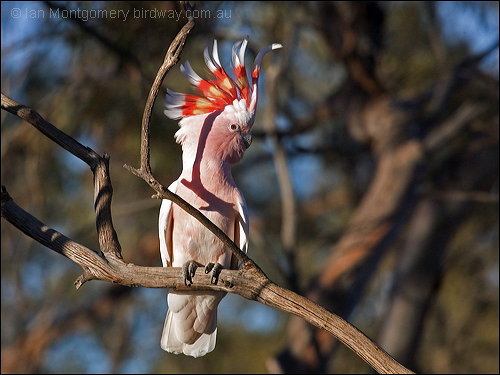
Their biggest difference is the crest that the Major Mitchell likes to pop up. Our bird didn’t show off, but Ian’s photo shows the crest raised.

Major Mitchell's Cockatoo (Lophochroa leadbeateri) By Ian

Major Mitchell’s Cockatoo (Lophochroa leadbeateri) By Ian

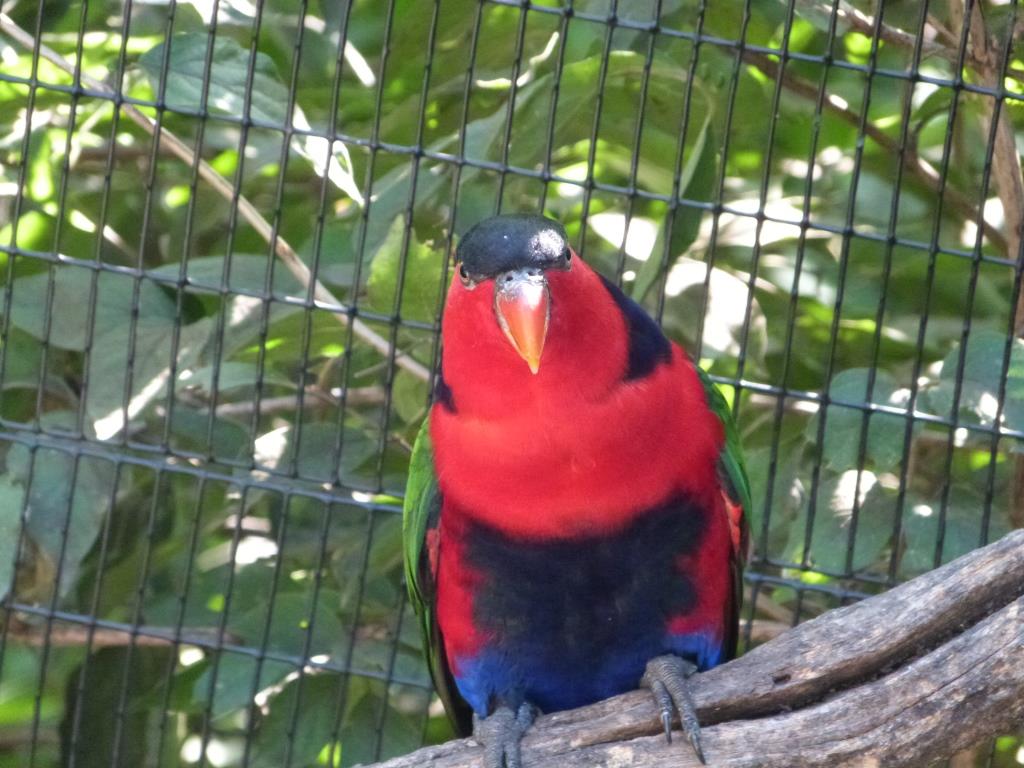
In the Lorikeet Landing area, we encountered the Black-capped Lory (Lorius lory) who also lives near Australia in New Guinea. “It is a colorful and relatively robust lory (31 cm). There are seven subspecies, all with green wings, red heads and body around the wing, a black cap, grey-black cere, yellow underwings, and blue legs and belly. Most also have a blue nape and mantle (area between wings on the back). It remains overall widespread and common

*

Black-capped Lory (Lorius lory) Cincinnati Zoo 9-5-13 by Lee

Black-capped Lory (Lorius lory) by Lee

The Black-capped Lory inhabits the primary forest and forest edges in most lowland areas up to 1000m (sporadically to 1750m), but not monsoon forest or coconut plantations. It is usually found in pairs and occasionally in groups of 10 or more. Their diet includes pollen, nectar, flowers, fruit and insects.

Black-capped Lory Sign

Black-capped Lory Sign

*

Black-capped Lory (Lorius lory) Cincinnati Zoo 9-5-13 by Lee

Black-capped Lory (Lorius lory) by Lee

(Information for Wikipedia and other Internet sources)

See:

** PS – This is a little short, but I had surgery on my neck yesterday. (Removed a cancer cell.)

Nuggets Plus – Watchout

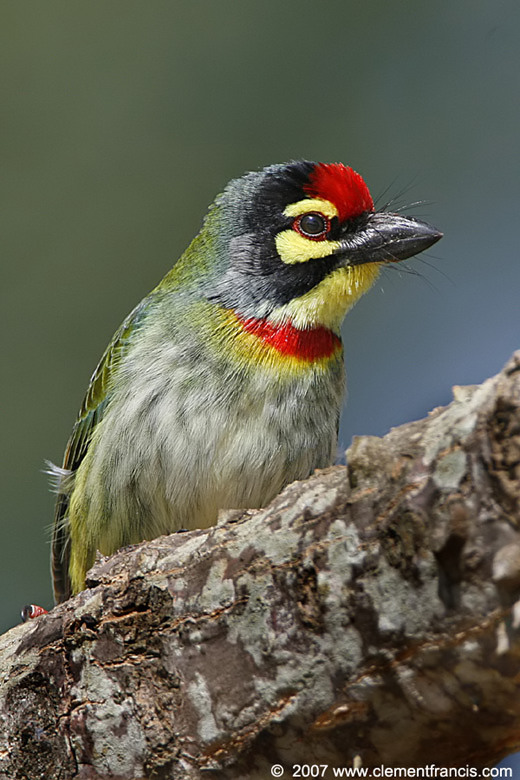
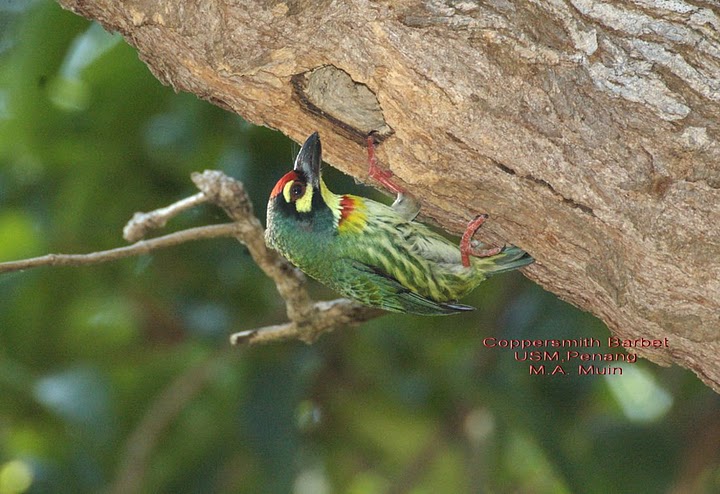
Coppersmith Barbet (Megalaima haemacephala) by Clement Francis

Coppersmith Barbet (Megalaima haemacephala) by Clement Francis

_

If the Coppersmith Barbet chicks
don’t return
to their nest early
their parents will not allow them in!
If we don’t return
in to the kingdom early
would Jesus take us in?

Watch therefore, for ye know neither the day nor the hour wherein the Son of man cometh. Mathew 25:13

Nuggets Plus – Watchout ~ by A J Mithra


Lee’s Addition:

What a beautiful bird, but also what a solemn warning.

The Coppersmith Barbet, Crimson-breasted Barbet or Coppersmith (Megalaima haemacephala), is a bird with crimson forehead and throat which is best known for its metronomic call that has been likened to a coppersmith striking metal with a hammer. It is a resident found in the Indian Subcontinent and parts of Southeast Asia. Like other barbets, they chisel out a hole inside a tree to build their nest. They are mainly fruit-eating but will take sometimes insects, especially winged termites. They belong to the Megalaimidae – Asian Barbets Family.

I found AJ’s remark about the youngster failing to get back to the nest on time interesting and found these remarks on Wikipedia.

Coppersmith Barbet (Megalaima haemacephala) by MAMuin

Coppersmith Barbet (Megalaima haemacephala) by MAMuin

Keeps solitary, pairs, or small groups; larger parties occasionally on abundantly fruiting Ficus trees. Fond of sunning themselves in the morning on bare top branches of tall trees, often flitting about to sit next to each other. The flight is straight, with rapid flaps.

They compete with other cavity nesting birds and frugivores. Megalaima asiatica have been noted to evict them from their nest holes, while Red-vented Bulbuls have been seen to indulge in kleptoparasitism, robbing the male of berries brought to the female at the nest.

The nest holes are also used for roosting and some birds roost alone in cavities and these often roost during part of the day. Immatures will roost with the parents but often return to roost early so as not to be prevented by the parents from entering the roost cavity.

Then the kingdom of heaven will be like ten virgins who took their lamps and went to meet the bridegroom. Five of them were foolish, and five were wise. For when the foolish took their lamps, they took no oil with them, but the wise took flasks of oil with their lamps. As the bridegroom was delayed, they all became drowsy and slept. But at midnight there was a cry, ‘Here is the bridegroom! Come out to meet him.’ Then all those virgins rose and trimmed their lamps. And the foolish said to the wise, ‘Give us some of your oil, for our lamps are going out.’ But the wise answered, saying, ‘Since there will not be enough for us and for you, go rather to the dealers and buy for yourselves.’ And while they were going to buy, the bridegroom came, and those who were ready went in with him to the marriage feast, and the door was shut. Afterward the other virgins came also, saying, ‘Lord, lord, open to us.’ But he answered, ‘Truly, I say to you, I do not know you.’ Watch therefore, for you know neither the day nor the hour. (Matthew 25:1-13 ESV)

See:

Coppersmith Barbet – The Fruit-giver – by ajmithra

A J Mithra’s Other Articles

Birds of the World – Asian and African Barbets

Thankful For The Lord’s Birds

Formed By Him – Copper Birds

Megalaimidae – Asian Barbets Family

*

Birdwatching Term – Nape

Blue-naped Mousebird (Urocolius macrourus) at Cincinnati Zoo)

Blue-naped Mousebird at Cincinnati Zoo)

Nape

My son, listen to your father’s discipline, and do not neglect your mother’s teachings, because discipline and teachings are a graceful garland on your head and a golden chain around your neck. (Proverbs 1:8-9 GW)

Nape – An easy definition is the back of the neck.

 Blue-naped Mousebird - Blue Nape (Back of Neck)

Blue-naped Mousebird – Blue Nape (Back of Neck)

Topography of a Bird - Bluebird - Color Key to NA Birds - Nape

Parts of Bird – Nape in Blue

Notice the Nape is between the Crown and the Back

There are quite a few birds that have colored napes that help identify them, such as Woodpeckers, Grebes, etc. Our Blue-naped Mousebird is one where the color of the “nape” is used in its name. While learning to bird watch, I kept saying (and still do) that the Lord should have placed little signs on them. That way when we look at them through binoculars, scopes, cameras, or our eyes, that we could just read the sign.

That is not the way it is, but there are many clues do that help us ID the birds. The variety of the birds with their colors and shapes keep us busy, but aren’t we thankful that He didn’t make them all alike. How boring that would be.

Here are the “-naped” birds of the world:

Chestnut-naped Francolin (Pternistis castaneicollis)
Red-naped Ibis (Pseudibis papillosa)
White-naped Crane (Grus vipio)
Black-naped Tern (Sterna sumatrana)
White-naped Pigeon (Columba albinucha)
Eastern Bronze-naped Pigeon (Columba delegorguei)
Western Bronze-naped Pigeon (Columba iriditorques)
Island Bronze-naped Pigeon (Columba malherbii)
Scaly-naped Pigeon (Patagioenas squamosa)
Red-naped Fruit Dove (Ptilinopus dohertyi)
Black-naped Fruit Dove (Ptilinopus melanospilus)
Purple-naped Lory (Lorius domicella)
White-naped Lory (Lorius albidinucha)
Blue-naped Parrot (Tanygnathus lucionensis)
Yellow-naped Amazon (Amazona auropalliata)
Scaly-naped Amazon (Amazona mercenarius)
White-naped Swift (Streptoprocne semicollaris)
Red-naped Trogon (Harpactes kasumba)
Golden-naped Barbet (Megalaima pulcherrima)
Golden-naped Woodpecker (Melanerpes chrysauchen)
Red-naped Sapsucker (Sphyrapicus nuchalis)
White-naped Woodpecker (Chrysocolaptes festivus)
Blue-naped Pitta (Hydrornis nipalensis)
Rusty-naped Pitta (Hydrornis oatesi)
Grey-naped Antpitta (Grallaria griseonucha)
Chestnut-naped Antpitta (Grallaria nuchalis)
Ochre-naped Ground Tyrant (Muscisaxicola flavinucha)
Rufous-naped Ground Tyrant (Muscisaxicola rufivertex)
White-naped Xenopsaris (Xenopsaris albinucha)
White-naped Honeyeater (Melithreptus lunatus)
Red-naped Bushshrike (Laniarius ruficeps)
Rufous-naped Whistler (Aleadryas rufinucha)
Rufous-naped Greenlet (Hylophilus semibrunneus)
Black-naped Oriole (Oriolus chinensis)
Black-naped Monarch (Hypothymis azurea)
White-naped Monarch (Carterornis pileatus)
Azure-naped Jay (Cyanocorax heilprini)
White-naped Jay (Cyanocorax cyanopogon)
Rufous-naped Tit (Periparus rufonuchalis)
White-naped Tit (Parus nuchalis)
Rufous-naped Lark (Mirafra africana)
White-naped Yuhina (Yuhina bakeri)
Rufous-naped Wren (Campylorhynchus rufinucha)
Chestnut-naped Forktail (Enicurus ruficapillus)
Purple-naped Sunbird (Hypogramma hypogrammicum)
Golden-naped Weaver (Ploceus aureonucha)
Golden-naped Finch (Pyrrhoplectes epauletta)
Blue-naped Chlorophonia (Chlorophonia cyanea)
White-naped Brush Finch (Atlapetes albinucha)
Pale-naped Brush Finch (Atlapetes pallidinucha)
Rufous-naped Brush Finch (Atlapetes latinuchus)
Golden-naped Tanager (Tangara ruficervix)
Green-naped Tanager (Tangara fucosa)
White-naped Seedeater (Dolospingus fringilloides)

*

This slideshow requires JavaScript.

*

You can see by the photos that the “nape” can be narrow or very broad. Other birds have napes that are different colors, but do not have the word “nape” in their names. Some of the Woodpeckers that have napes were include above.

Nape – All About Birds

More Birdwatching Terms

Wordless Birds

*