Thank You – One Million And Counting!

Oh, give thanks to the LORD, for He is good! For His mercy endures forever. (1 Chronicles 16:34 NKJV)

Thank you!

Thank you!!

THANK YOU!!!

I thank my God upon every remembrance of you, (Philippians 1:3 NKJV)

Wow!

Just had the 1 Millionth page view on this blog. 

Without the Lord’s leading, His help and your visits to this blog, this would not have happened.  I am so appreciative for every one of you who have visited throughout the years and also put up with my good and not-so-good articles. The blog started in February of 2008, but was moved here to WordPress in July of 2008. That is when this count started. Here are the dates of milestones that are in the Sidebar.

My special thanks goes to Stephen, our assistant to the Pastor at my church (Faith Baptist of Winter Haven) for suggesting that I write about the Birds of the Bible on the church’s Blog – The Fountain. That was on Blogspot. I started a blog of my own, to learn how to lay it out. That is when Lee’s Birdwatching Adventures Plus was started. We both moved our blogs off of Blogspot over the years.

Also, a big thanks to all my regular and guest writers.

  • Thanks to Visitors

    Moved to WordPress 00,000 – July 05, 2008
  • 50,000 – Oct 10, 2009
  • 100,000 – Apr 5, 2010
  • 150,000 – Sep 6, 2010
  • 200,000 – Dec 30, 2010
  • 250,000 – Apr 9, 2011
  • 300,000 – June 29, 2011
  • 350,000 – Sep 19, 2011
  • 400,000 – Nov 18, 2011
  • 450,000 – Jan 21, 2012
  • 500,000 – Mar 1, 2012
  • 600,000 – May 24, 2012
  • 700,000 – Sep 2, 2012
  • 800,000 – Dec 16, 2012
  • 900,000 – Ap 13, 2013
  • 1,000,000 – Oct 20, 2013
  • 1st 500+ Day (568) Oct 29, 2009
  • 1st 600+ Day (637) Sep 28, 2010
  • 1st 700+ Day (722) Apr 4, 2011
  • 1st 800+ Day (810) May 18, 2011
  • 1st 900+ Day (955) Oct 2, 2011
  • 1st 1000+ Day (1,016) Oct 20, 2011
  • 1st 2,000+ Day (2,220) Feb 10, 2012
  • 1st 3,000+ Day (3896) Feb 21, 2013

Links to the very first few articles on Lee’s Birdwatching Adventures original site copied over here:

  1. Introduction to Birds of the Bible
  2. Birdwatching Tips #1
  3. The Birds of the Bible – Eagles
  4. Video of Bird “Displaying”
  5. Trip to Fort DeSoto Park 2-20-08
  6. Roseate Spoonbills

Looking back at them, I trust you like the ones being produced now much better. Hey, it was a learning curve back then. These are the first seven articles on Lee’s Birdwatching Adventures Plus when it first started up here:

  1. Birds of the Bible – Ossifrage
  2. Interesting Things – Communication
  3. Video of Bird “Displaying” II
  4. Birds of the Bible – Herons
  5. Interesting Things – Bird Evolution
  6. Birds of the Bible – Pelicans
  7. Birdwatching Trip – J. N. “Ding” Darling NWR – July 15, 2008

*

Thank You again for all your visits, likes, comments, and encouragements.

Lee

*

P.S. I really have no way of knowing who the 1,000,000th visitor was, but we were at lunch with friends and kept watching the count. Saw 1,000,002 at around 1:20pm EST. Checking the Sitemeter after arriving home, someone from Brazil came in about 1:18, looked at 14 pages. Also at 1:20 an unknown came in, and at 1:22 a visitor arrived from Chicopee, Massachusetts. (This is just for trivia.)

*

Updated to the I.O.C. Version 3.5

Mountain Chickadee (Poecile gambeli) ©WikiC

Mountain Chickadee (Poecile gambeli) ©WikiC

Out of the ground the LORD God formed every beast of the field and every bird of the air, and brought them to Adam to see what he would call them. And whatever Adam called each living creature, that was its name. (Genesis 2:19 NKJV)

The newest update for the I.O.C. Version 3.5 came out September 30th. Lee’s Birdwatching Adventures Birds of the World has the latest changes.  There are now “10,507 extant species and 150 extinct species classified in 40 Orders, 232 Families (plus 5 Incertae Sedis) and 2284 Genera.  The list also includes 20,967 subspecies.”

After making changes to around 300 pages, you should be able to find one of those 10,507 avian friends with out too much difficulty. What did they change?

They (I.O.C.) added 22 new species, deleted 2 that they turned back to just a subspecies, changed the names or spelling of 47 birds (37 of those changed the name Madagascar to Madagascan), plus they made 30 taxonomy changes.

In those taxonomy changes, they took the Paridae – Tits, Chickadees family and threw it up in the air and let it fall totally different. At least, that is my description of it. Actually, because of DNA studies, they found that the birds are related differently in the family than they thought. They also shuffled the Aratinga species of Parakeets around.

These are the new birds that they added:

Reunion Sheldgoose (Alopochen kervazoi)
Ameline Swiftlet (Aerodramus amelis)
Ochre-backed Woodpecker (Celeus ochraceus)
Iberian Green Woodpecker (Picus sharpe)
Mistletoe Tyrannulet (Zimmerius parvus)
Venezuelan Tyrannulet (Zimmerius petersi)
Coopmans’s Tyrannulet (Zimmerius minimus)
Chico’s Tyrannulet (Zimmerius chicomendesi)
Junin Tapaculo (Scytalopus gettyae)
Delta Amacuro Softtail (Thripophaga amacurensis)
Pale-blue Monarch (Hypothymis puella)
Ua Pou Monarch (Pomarea mira) Extant – based on a recent sighting
Caspian Tit (Poecile hyrcanus)
Sierra Madre Ground Warbler (Robsonius thompsoni)
Cambodian Tailorbird (Orthotomus chaktomuk)
Chinese Wren-babbler (Pnoepyga mutica)
Zappey’s Flycatcher (Cyanoptila cumatilis)
Magnificent Sunbird (Aethopyga magnifica)
Maroon-naped Sunbird (Aethopyga guimarasensis)
Bohol Sunbird (Aethopyga decorosa)
Luzon Sunbird (Aethopyga jefferyi)
Zarudny’s Sparrow (Passer zarudnyi)
Taiwan Rosefinch (Carpodacus formosanus)

*

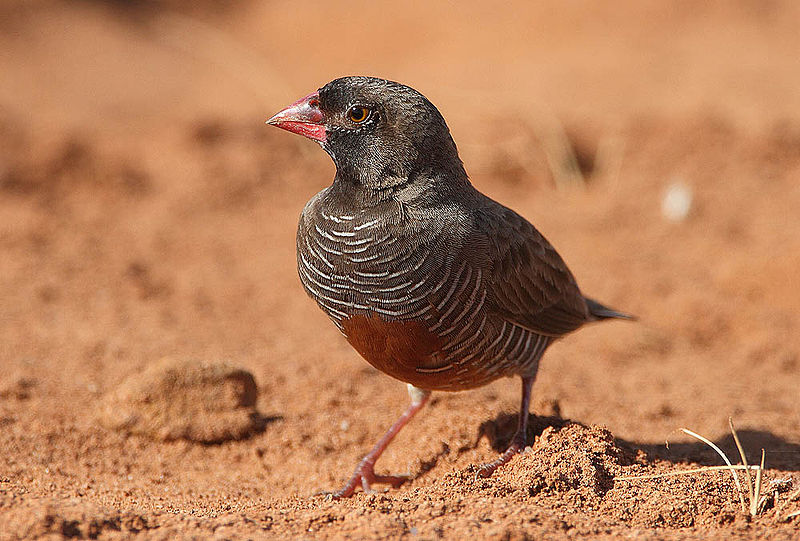
(Black-faced) Quailfinch (Ortygospiza atricollis) ©WikiC

(Black-faced) Quailfinch (Ortygospiza atricollis) ©WikiC Now only called a Quailfinch

These are the two they deleted. They went back to being supspecies of the Black-faced Quailfinch, which is now only called a Quailfinch (Ortygospiza atricollis).

African Quailfinch (Ortygospiza fuscocrissa)
Black-chinned Quailfinch (Ortygospiza gabonensis)

*

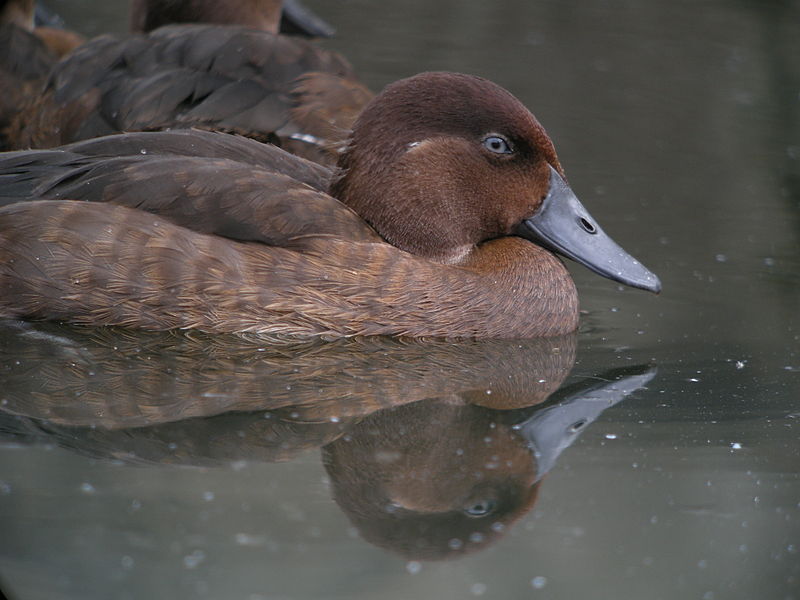
Madagascan Pochard (Aythya innotata) ©WikiC

Madagascan Pochard (Aythya innotata) ©WikiC

Their spelling changes caused me to hunt down 37 Madagascar birds and rename them Madagascan. Here are those changes:

Madagascan Blue Pigeon (Alectroenas madagascariensis)
Madagascan Buttonquail (Turnix nigricollis)
Madagascan Buzzard (Buteo brachypterus)
Madagascan Cisticola (Cisticola cherina)
Madagascan Cuckoo (Cuculus rochii)
Madagascan Cuckoo-Hawk (Aviceda madagascariensis)
Madagascan Cuckooshrike (Coracina cinerea)
Madagascan Fish Eagle (Haliaeetus vociferoides)
Madagascan Flufftail (Sarothrura insularis)
Madagascan Grebe (Tachybaptus pelzelnii)
Madagascan Green Pigeon (Treron australis)
Madagascan Harrier-Hawk (Polyboroides radiatus)
Madagascan Hoopoe (Upupa marginata)
Madagascan Ibis (Lophotibis cristata)
Madagascan Jacana (Actophilornis albinucha)
Madagascan Lark (Mirafra hova)
Madagascan Magpie-Robin (Copsychus albospecularis)
Madagascan Mannikin (Lemuresthes nana)
Madagascan Nightjar (Caprimulgus madagascariensis)
Madagascan Owl (Asio madagascariensis)
Madagascan Partridge (Margaroperdix madagarensis)
Madagascan Plover (Charadrius thoracicus)
Madagascan Pochard (Aythya innotata)
Madagascan Pratincole (Glareola ocularis)
Madagascan Pygmy Kingfisher (Corythornis madagascariensis)
Madagascan Rail (Rallus madagascariensis)
Madagascan Sandgrouse (Pterocles personatus)
Madagascan Serpent Eagle (Eutriorchis astur)
Madagascan Snipe (Gallinago macrodactyla)
Madagascan Sparrowhawk (Accipiter madagascariensis)
Madagascan Spinetail (Zoonavena grandidieri)
Madagascan Starling (Hartlaubius auratus)
Madagascan Stonechat (Saxicola sibilla)
Madagascan Swamp Warbler (Acrocephalus newtoni)
Madagascan Wagtail (Motacilla flaviventris)
Madagascan Wood Rail (Canirallus kioloides)
Madagascan Yellowbrow (Crossleyia xanthophrys)

*

There are other changes and they can be seen at the I.O.C. World Bird List Website:

*

Cincinnati Zoo III

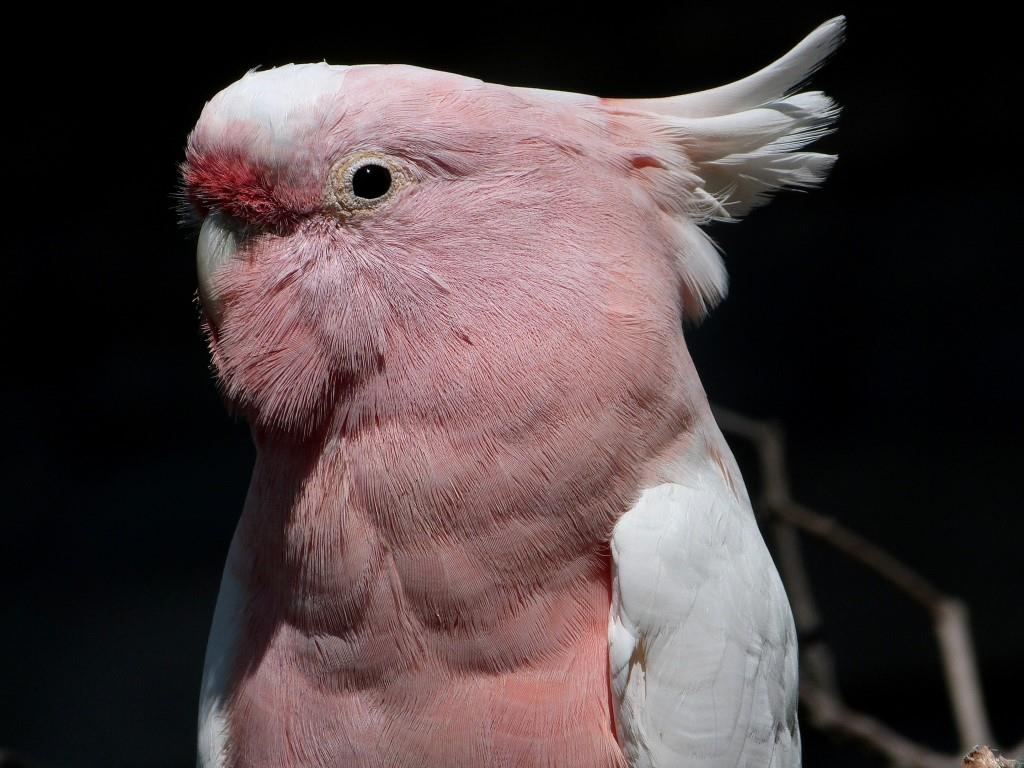
Major Mitchell's Cockatoo (Lophochroa leadbeateri) at Cincinnati Zoo 9-5-13

Major Mitchell’s Cockatoo (Lophochroa leadbeateri) at Cincinnati Zoo by Lee

I know and am acquainted with all the birds of the mountains, and the wild animals of the field are Mine and are with Me, in My mind. (Psalms 50:11 AMP)

Here are more members of the Psittaciformes Order of Parrots and Cockatoos we saw during our trip to the Cincinnati Zoo in Ohio.

They were in various areas of the Zoo. The Major Mitchell’s Cockatoo was outside enjoying himself or herself, whichever it was. The perch was in a nicely landscaped area near the entrance/exit, depending on which way you went through the zoo. For us, it was the last member of its family we saw.

Major Mitchell's Cockatoo (Lophochroa leadbeateri) at Cincinnati Zoo 9-5-13

Major Mitchell’s Cockatoo (Lophochroa leadbeateri) by Lee

These beautiful birds are from Australia and are on the decline. They look very similar to the Galah we photographed at the Brevard Zoo, but have a lighter pink color. Both are members of the Cacatuidae – Cockatoos Family and are closely related, even nesting in the same area. There has been on occasion where the two species have interbred and produced hybridised offspring.

Major Mitchell's Cockatoo (Lophochroa leadbeateri) at Cincinnati Zoo 9-5-13 by Dan

Major Mitchell’s Cockatoo (Lophochroa leadbeateri) by Dan

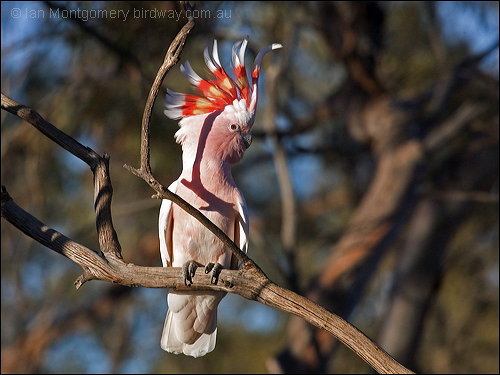
Their biggest difference is the crest that the Major Mitchell likes to pop up. Our bird didn’t show off, but Ian’s photo shows the crest raised.

Major Mitchell's Cockatoo (Lophochroa leadbeateri) By Ian

Major Mitchell’s Cockatoo (Lophochroa leadbeateri) By Ian

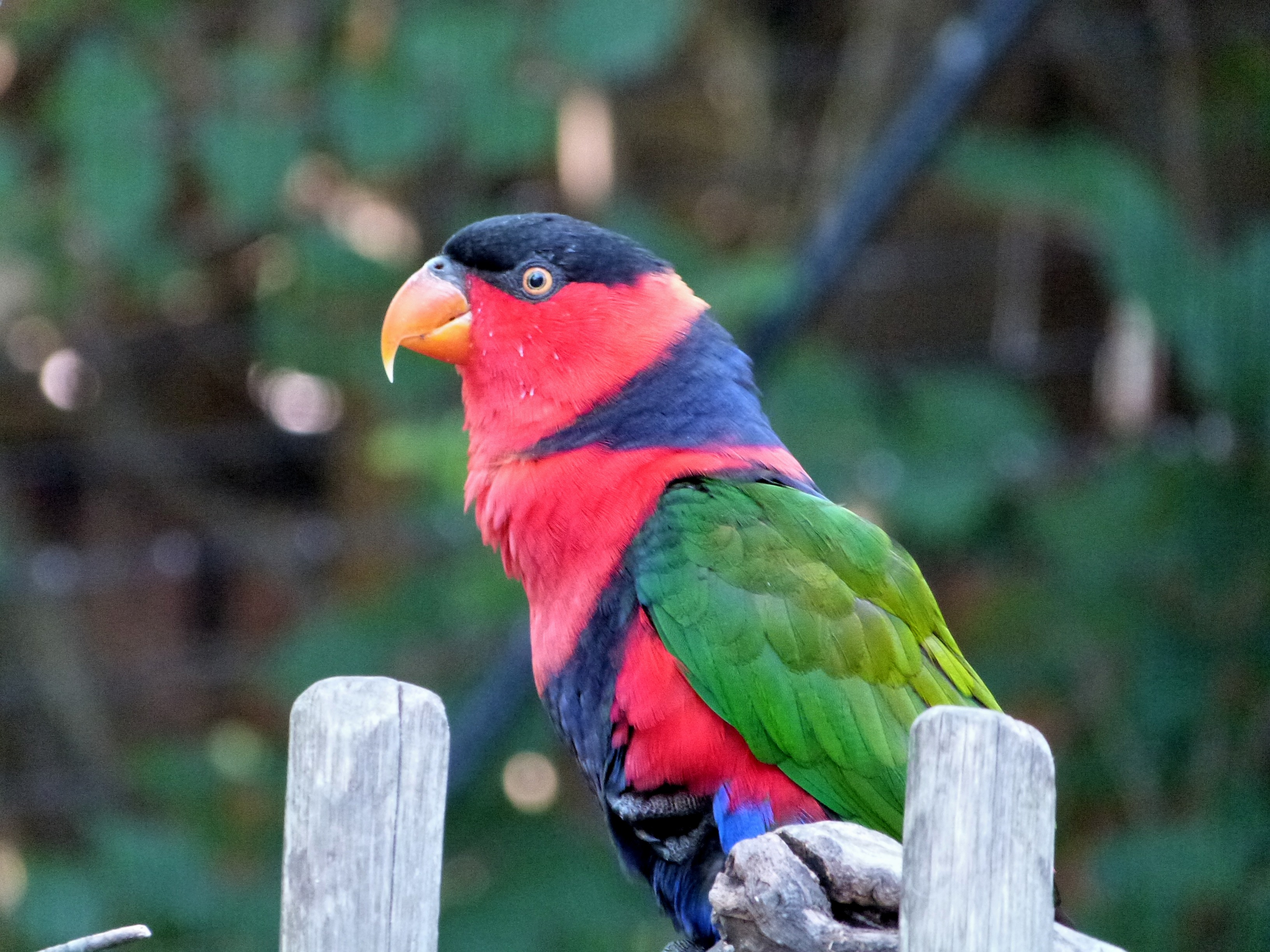
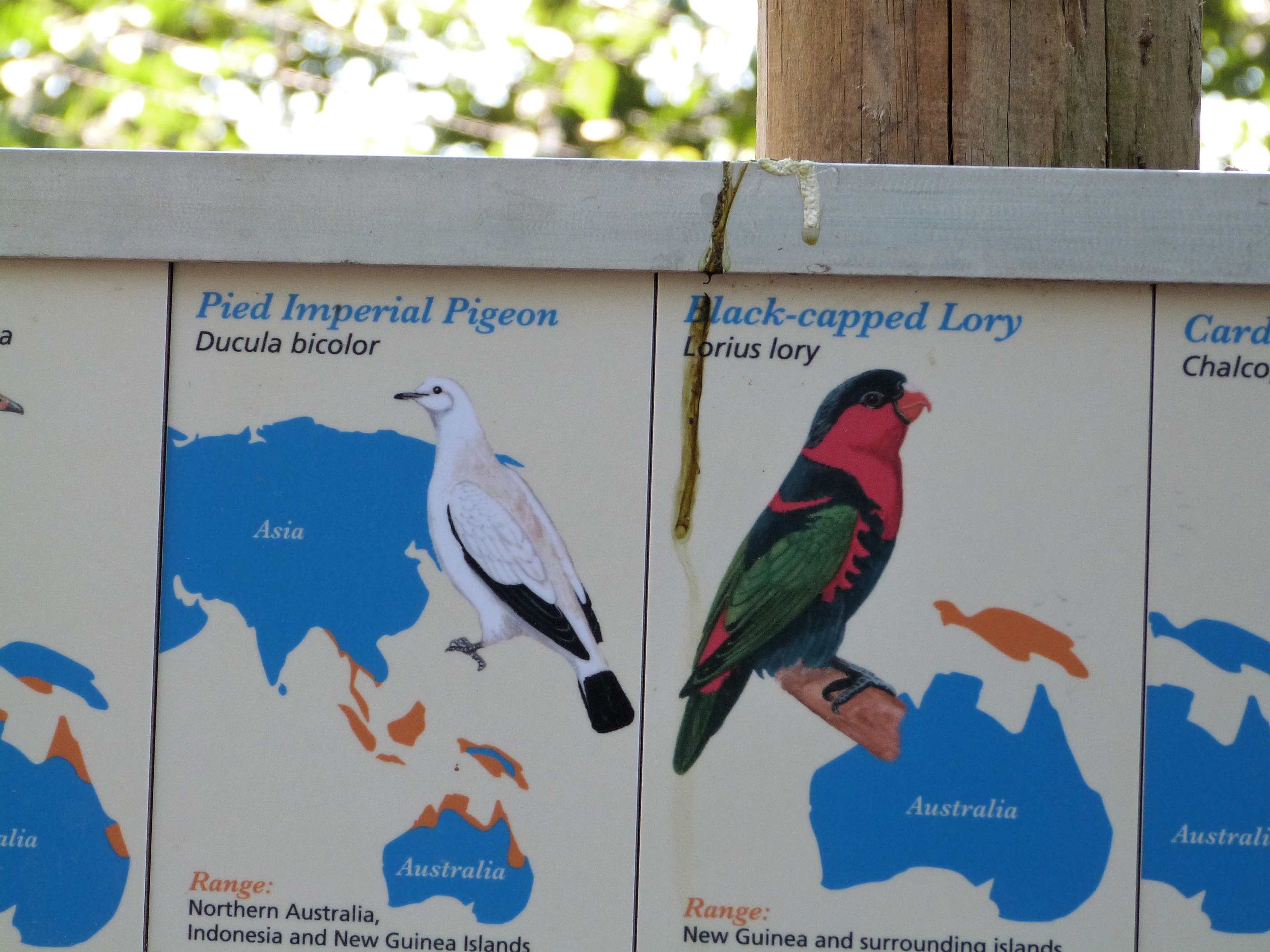
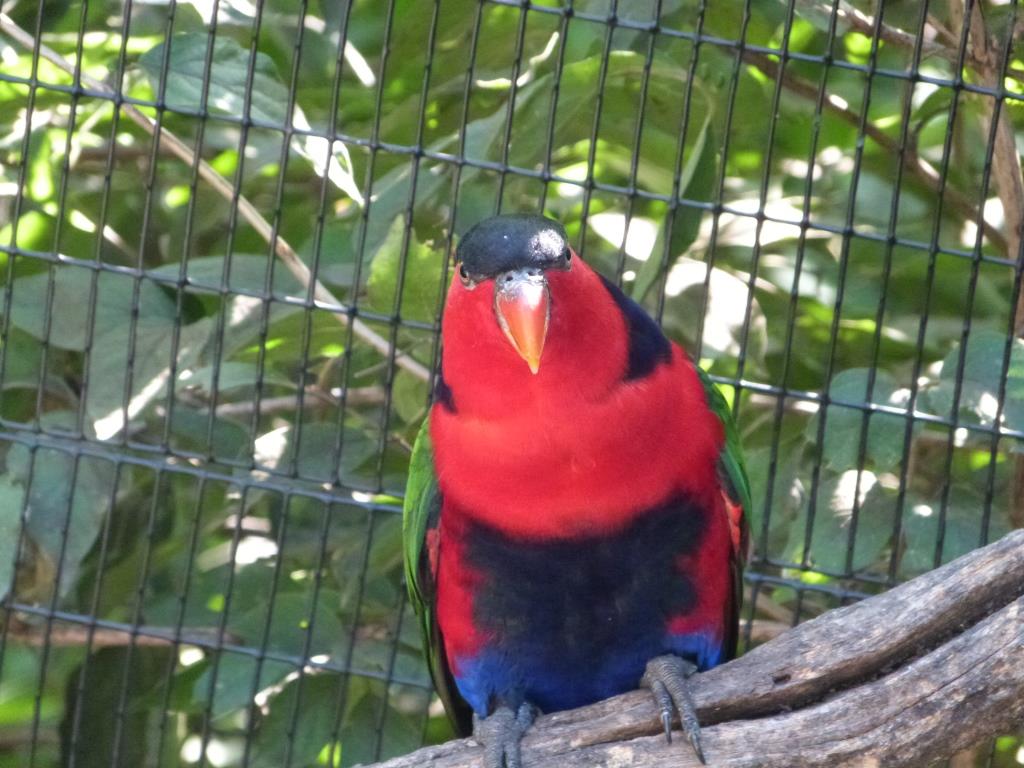
In the Lorikeet Landing area, we encountered the Black-capped Lory (Lorius lory) who also lives near Australia in New Guinea. “It is a colorful and relatively robust lory (31 cm). There are seven subspecies, all with green wings, red heads and body around the wing, a black cap, grey-black cere, yellow underwings, and blue legs and belly. Most also have a blue nape and mantle (area between wings on the back). It remains overall widespread and common

*

Black-capped Lory (Lorius lory) Cincinnati Zoo 9-5-13 by Lee

Black-capped Lory (Lorius lory) by Lee

The Black-capped Lory inhabits the primary forest and forest edges in most lowland areas up to 1000m (sporadically to 1750m), but not monsoon forest or coconut plantations. It is usually found in pairs and occasionally in groups of 10 or more. Their diet includes pollen, nectar, flowers, fruit and insects.

Black-capped Lory Sign

Black-capped Lory Sign

*

Black-capped Lory (Lorius lory) Cincinnati Zoo 9-5-13 by Lee

Black-capped Lory (Lorius lory) by Lee

(Information for Wikipedia and other Internet sources)

See:

** PS – This is a little short, but I had surgery on my neck yesterday. (Removed a cancer cell.)

Nuggets Plus – Watchout

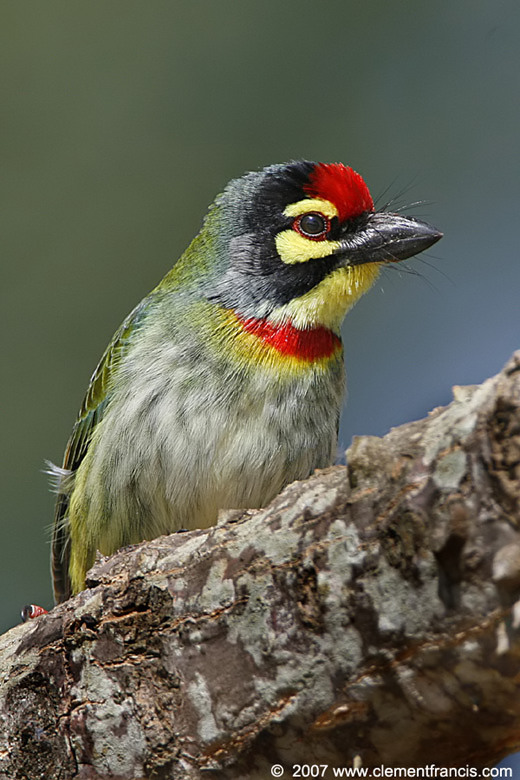
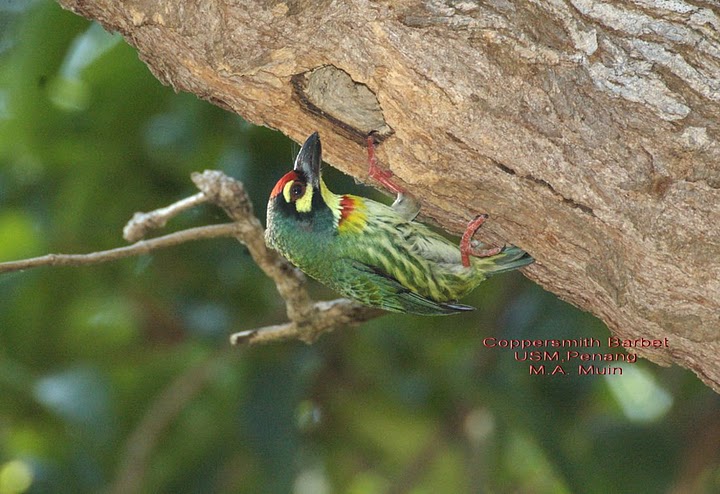
Coppersmith Barbet (Megalaima haemacephala) by Clement Francis

Coppersmith Barbet (Megalaima haemacephala) by Clement Francis

_

If the Coppersmith Barbet chicks
don’t return
to their nest early
their parents will not allow them in!
If we don’t return
in to the kingdom early
would Jesus take us in?

Watch therefore, for ye know neither the day nor the hour wherein the Son of man cometh. Mathew 25:13

Nuggets Plus – Watchout ~ by A J Mithra


Lee’s Addition:

What a beautiful bird, but also what a solemn warning.

The Coppersmith Barbet, Crimson-breasted Barbet or Coppersmith (Megalaima haemacephala), is a bird with crimson forehead and throat which is best known for its metronomic call that has been likened to a coppersmith striking metal with a hammer. It is a resident found in the Indian Subcontinent and parts of Southeast Asia. Like other barbets, they chisel out a hole inside a tree to build their nest. They are mainly fruit-eating but will take sometimes insects, especially winged termites. They belong to the Megalaimidae – Asian Barbets Family.

I found AJ’s remark about the youngster failing to get back to the nest on time interesting and found these remarks on Wikipedia.

Coppersmith Barbet (Megalaima haemacephala) by MAMuin

Coppersmith Barbet (Megalaima haemacephala) by MAMuin

Keeps solitary, pairs, or small groups; larger parties occasionally on abundantly fruiting Ficus trees. Fond of sunning themselves in the morning on bare top branches of tall trees, often flitting about to sit next to each other. The flight is straight, with rapid flaps.

They compete with other cavity nesting birds and frugivores. Megalaima asiatica have been noted to evict them from their nest holes, while Red-vented Bulbuls have been seen to indulge in kleptoparasitism, robbing the male of berries brought to the female at the nest.

The nest holes are also used for roosting and some birds roost alone in cavities and these often roost during part of the day. Immatures will roost with the parents but often return to roost early so as not to be prevented by the parents from entering the roost cavity.

Then the kingdom of heaven will be like ten virgins who took their lamps and went to meet the bridegroom. Five of them were foolish, and five were wise. For when the foolish took their lamps, they took no oil with them, but the wise took flasks of oil with their lamps. As the bridegroom was delayed, they all became drowsy and slept. But at midnight there was a cry, ‘Here is the bridegroom! Come out to meet him.’ Then all those virgins rose and trimmed their lamps. And the foolish said to the wise, ‘Give us some of your oil, for our lamps are going out.’ But the wise answered, saying, ‘Since there will not be enough for us and for you, go rather to the dealers and buy for yourselves.’ And while they were going to buy, the bridegroom came, and those who were ready went in with him to the marriage feast, and the door was shut. Afterward the other virgins came also, saying, ‘Lord, lord, open to us.’ But he answered, ‘Truly, I say to you, I do not know you.’ Watch therefore, for you know neither the day nor the hour. (Matthew 25:1-13 ESV)

See:

Coppersmith Barbet – The Fruit-giver – by ajmithra

A J Mithra’s Other Articles

Birds of the World – Asian and African Barbets

Thankful For The Lord’s Birds

Formed By Him – Copper Birds

Megalaimidae – Asian Barbets Family

*

Birdwatching Term – Nape

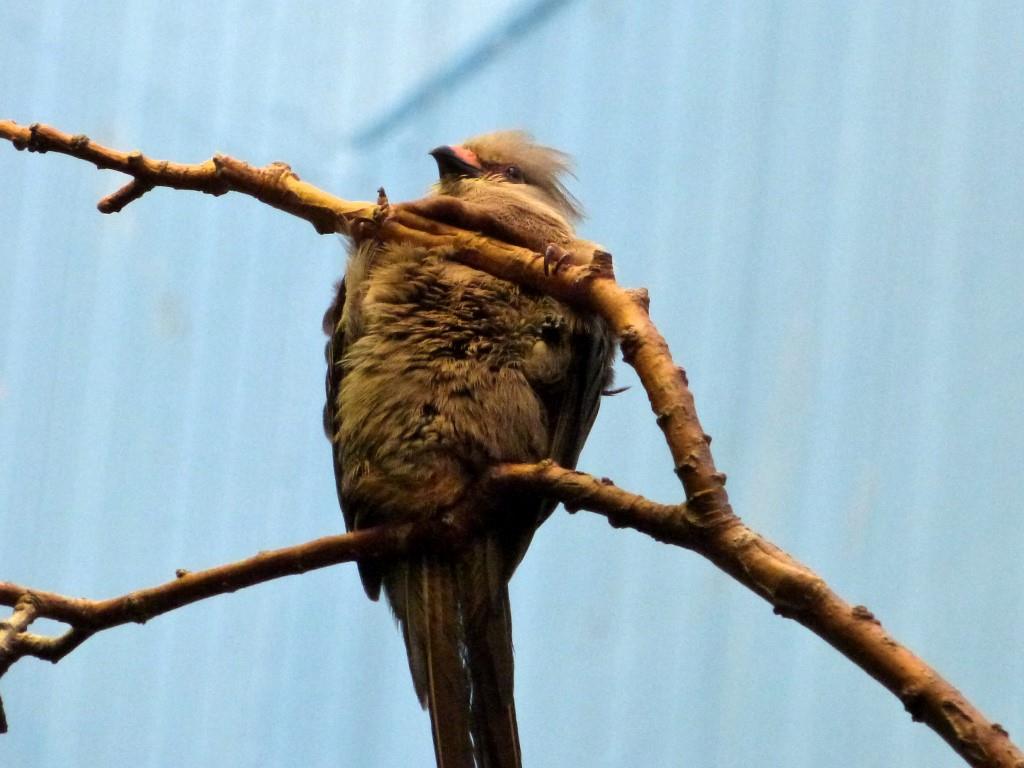
Blue-naped Mousebird (Urocolius macrourus) at Cincinnati Zoo)

Blue-naped Mousebird at Cincinnati Zoo)

Nape

My son, listen to your father’s discipline, and do not neglect your mother’s teachings, because discipline and teachings are a graceful garland on your head and a golden chain around your neck. (Proverbs 1:8-9 GW)

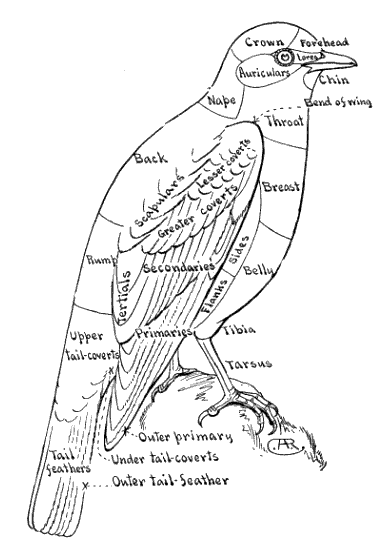
Nape – An easy definition is the back of the neck.

 Blue-naped Mousebird - Blue Nape (Back of Neck)

Blue-naped Mousebird – Blue Nape (Back of Neck)

Topography of a Bird - Bluebird - Color Key to NA Birds - Nape

Parts of Bird – Nape in Blue

Notice the Nape is between the Crown and the Back

There are quite a few birds that have colored napes that help identify them, such as Woodpeckers, Grebes, etc. Our Blue-naped Mousebird is one where the color of the “nape” is used in its name. While learning to bird watch, I kept saying (and still do) that the Lord should have placed little signs on them. That way when we look at them through binoculars, scopes, cameras, or our eyes, that we could just read the sign.

That is not the way it is, but there are many clues do that help us ID the birds. The variety of the birds with their colors and shapes keep us busy, but aren’t we thankful that He didn’t make them all alike. How boring that would be.

Here are the “-naped” birds of the world:

Chestnut-naped Francolin (Pternistis castaneicollis)
Red-naped Ibis (Pseudibis papillosa)
White-naped Crane (Grus vipio)
Black-naped Tern (Sterna sumatrana)
White-naped Pigeon (Columba albinucha)
Eastern Bronze-naped Pigeon (Columba delegorguei)
Western Bronze-naped Pigeon (Columba iriditorques)
Island Bronze-naped Pigeon (Columba malherbii)
Scaly-naped Pigeon (Patagioenas squamosa)
Red-naped Fruit Dove (Ptilinopus dohertyi)
Black-naped Fruit Dove (Ptilinopus melanospilus)
Purple-naped Lory (Lorius domicella)
White-naped Lory (Lorius albidinucha)
Blue-naped Parrot (Tanygnathus lucionensis)
Yellow-naped Amazon (Amazona auropalliata)
Scaly-naped Amazon (Amazona mercenarius)
White-naped Swift (Streptoprocne semicollaris)
Red-naped Trogon (Harpactes kasumba)
Golden-naped Barbet (Megalaima pulcherrima)
Golden-naped Woodpecker (Melanerpes chrysauchen)
Red-naped Sapsucker (Sphyrapicus nuchalis)
White-naped Woodpecker (Chrysocolaptes festivus)
Blue-naped Pitta (Hydrornis nipalensis)
Rusty-naped Pitta (Hydrornis oatesi)
Grey-naped Antpitta (Grallaria griseonucha)
Chestnut-naped Antpitta (Grallaria nuchalis)
Ochre-naped Ground Tyrant (Muscisaxicola flavinucha)
Rufous-naped Ground Tyrant (Muscisaxicola rufivertex)
White-naped Xenopsaris (Xenopsaris albinucha)
White-naped Honeyeater (Melithreptus lunatus)
Red-naped Bushshrike (Laniarius ruficeps)
Rufous-naped Whistler (Aleadryas rufinucha)
Rufous-naped Greenlet (Hylophilus semibrunneus)
Black-naped Oriole (Oriolus chinensis)
Black-naped Monarch (Hypothymis azurea)
White-naped Monarch (Carterornis pileatus)
Azure-naped Jay (Cyanocorax heilprini)
White-naped Jay (Cyanocorax cyanopogon)
Rufous-naped Tit (Periparus rufonuchalis)
White-naped Tit (Parus nuchalis)
Rufous-naped Lark (Mirafra africana)
White-naped Yuhina (Yuhina bakeri)
Rufous-naped Wren (Campylorhynchus rufinucha)
Chestnut-naped Forktail (Enicurus ruficapillus)
Purple-naped Sunbird (Hypogramma hypogrammicum)
Golden-naped Weaver (Ploceus aureonucha)
Golden-naped Finch (Pyrrhoplectes epauletta)
Blue-naped Chlorophonia (Chlorophonia cyanea)
White-naped Brush Finch (Atlapetes albinucha)
Pale-naped Brush Finch (Atlapetes pallidinucha)
Rufous-naped Brush Finch (Atlapetes latinuchus)
Golden-naped Tanager (Tangara ruficervix)
Green-naped Tanager (Tangara fucosa)
White-naped Seedeater (Dolospingus fringilloides)

*

This slideshow requires JavaScript.

*

You can see by the photos that the “nape” can be narrow or very broad. Other birds have napes that are different colors, but do not have the word “nape” in their names. Some of the Woodpeckers that have napes were include above.
Nape – All About Birds

More Birdwatching Terms

Wordless Birds

*

Mousebirds at the Cincinnati Zoo

Blue-naped Mousebird (Urocolius macrourus) at Cincinnati Zoo) by Lee

Blue-naped Mousebird (Urocolius macrourus) at Cincinnati Zoo) by Lee

I know all the birds of the mountains, And the wild beasts of the field are Mine. (Psalms 50:11 NKJV)

I was happy to finally get to see the Mousebirds. Have known and read about them, but had not been able to watch them. They were on my “birds to see” list at the zoo.

Mousebirds belong to the Coliidae – Mousebirds Family which has six (6) members.

Blue-naped Mousebird (Urocolius macrourus) at Cincinnati Zoo) by Lee

Blue-naped Mousebird (Urocolius macrourus) at Cincinnati Zoo) by Lee

They are slender greyish or brown birds with soft, hairlike body feathers. They are typically about 10 cm in body length, with a long, thin tail a further 20–24 cm in length, and weigh 45–55 grams. They are arboreal and scurry through the leaves like rodents, in search of berries, fruit and buds. This habit, and their legs, gives rise to the group’s English name. They are acrobatic, and can feed upside down. All species have strong claws and reversible outer toes (pamprodactyl foot). They also have crests and stubby bills.

Mousebirds are gregarious, again reinforcing the analogy with mice, and are found in bands of about 20 in lightly wooded country. These birds build cup-shaped twig nests in trees, which are lined with grasses. Two to four eggs are typically laid, hatching to give quite precocious young which soon leave the nest and acquire flight.

Blue-naped Mousebird (Urocolius macrourus) at Cincinnati Zoo) by Lee

Blue-naped Mousebird (Urocolius macrourus) at Cincinnati Zoo) by Lee

One Mousebird, supposedly the male, was hopping up and down. This video shows the two of them. One watching and one jumping. The orange bird is ignoring the whole deal. (I had been watching for a while and then decided to video, of course he went behind the branch.)

(Wikipedia with editing)

Bonus:

Nape – An easy definition is the back of the neck.

Topography of a Bird - Bluebird - Color Key to NA Birds

Notice the Nape between the Crown and the Back

There are quite a few birds that have colored napes that help identify them, such as Woodpeckers, Grebes, etc. Our Blue-naped Mousebird is one where the color of the “nape” is used in its name. While learning to bird watch, I kept saying (and still do) that the Lord should have placed little signs on them. That way when we look at them through binoculars, scopes, cameras, or our eyes, that we could just read the sign.

That is not the way it is, but there are many clues do that help us ID the birds. The variety of the birds with their colors and shapes keep us busy, but aren’t we thankful that He didn’t make them all alike. How boring that would be.

Here are the “-naped” birds:

Chestnut-naped Francolin (Pternistis castaneicollis)
Red-naped Ibis (Pseudibis papillosa)
White-naped Crane (Grus vipio)
Black-naped Tern (Sterna sumatrana)
Eastern Bronze-naped Pigeon (Columba delegorguei)
Western Bronze-naped Pigeon (Columba iriditorques)
Island Bronze-naped Pigeon (Columba malherbii)
Scaly-naped Pigeon (Patagioenas squamosa) –*LLABS*
Red-naped Fruit Dove (Ptilinopus dohertyi)
Black-naped Fruit Dove (Ptilinopus melanospilus) *LLABS*
Purple-naped Lory (Lorius domicella)
White-naped Lory (Lorius albidinucha)
Blue-naped Parrot (Tanygnathus lucionensis)
Yellow-naped Amazon (Amazona auropalliata)
Scaly-naped Amazon (Amazona mercenarius)
White-naped Swift (Streptoprocne semicollaris)
Red-naped Trogon (Harpactes kasumba)
Golden-naped Barbet (Megalaima pulcherrima)
Golden-naped Woodpecker (Melanerpes chrysauchen)
Red-naped Sapsucker (Sphyrapicus nuchalis)
White-naped Woodpecker (Chrysocolaptes festivus)
Blue-naped Pitta (Hydrornis nipalensis)
Rusty-naped Pitta (Hydrornis oatesi)
Grey-naped Antpitta (Grallaria griseonucha)
Chestnut-naped Antpitta (Grallaria nuchalis)
Ochre-naped Ground Tyrant (Muscisaxicola flavinucha)
Rufous-naped Ground Tyrant (Muscisaxicola rufivertex)
White-naped Xenopsaris (Xenopsaris albinucha)
White-naped Honeyeater (Melithreptus lunatus)
Red-naped Bushshrike (Laniarius ruficeps)
Rufous-naped Whistler (Aleadryas rufinucha)
Rufous-naped Greenlet (Hylophilus semibrunneus)
Black-naped Oriole (Oriolus chinensis)
Black-naped Monarch (Hypothymis azurea)
White-naped Monarch (Carterornis pileatus)
Azure-naped Jay (Cyanocorax heilprini)
White-naped Jay (Cyanocorax cyanopogon)
Rufous-naped Tit (Periparus rufonuchalis)
White-naped Tit (Parus nuchalis)
Rufous-naped Lark (Mirafra africana)
White-naped Yuhina (Yuhina bakeri)
Rufous-naped Wren (Campylorhynchus rufinucha)
Chestnut-naped Forktail (Enicurus ruficapillus)
Purple-naped Sunbird (Hypogramma hypogrammicum)
Golden-naped Weaver (Ploceus aureonucha)
Golden-naped Finch (Pyrrhoplectes epauletta)
Blue-naped Chlorophonia (Chlorophonia cyanea)
White-naped Brush Finch (Atlapetes albinucha)
Pale-naped Brush Finch (Atlapetes pallidinucha)
Rufous-naped Brush Finch (Atlapetes latinuchus)
Golden-naped Tanager (Tangara ruficervix)
Green-naped Tanager (Tangara fucosa)
White-naped Seedeater (Dolospingus fringilloides)

*

This slideshow requires JavaScript.

You can see by the photos that the “nape” can be narrow or very broad.

See:

Mousebirds – Carolinabirds

Mousebirds – The Online Zoo

Nape – All About Birds

Cincinnati Zoo Visit

*

Strutting Greater Flamingos at the Zoo

Greater Flamingo (Phoenicopterus roseus) at Cincinnati Zoo by Dan First walk

Greater Flamingo (Phoenicopterus roseus) at Cincinnati Zoo by Dan – First walk

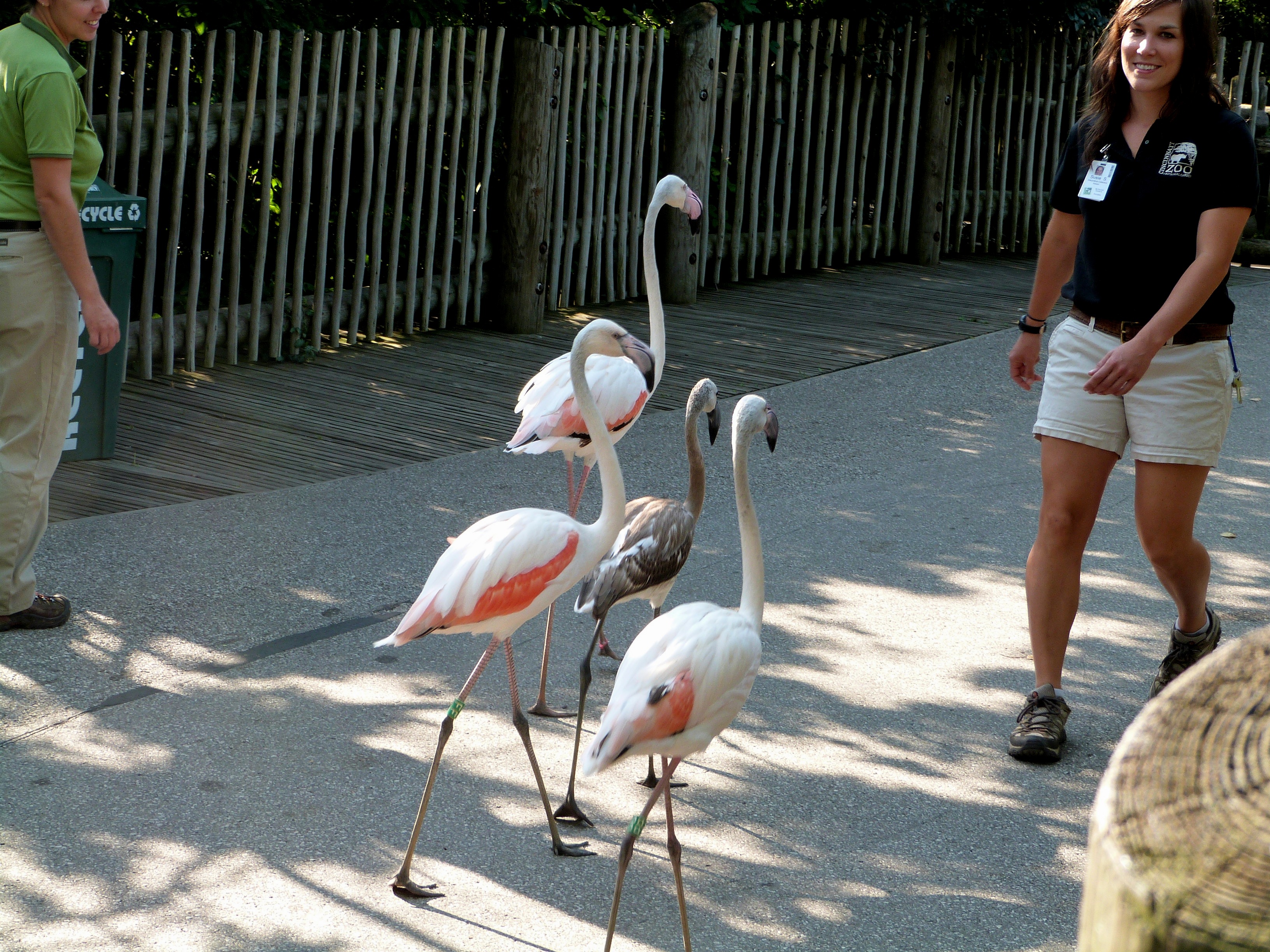
The Cincinnati Zoo has the Greater Flamingo (Phoenicopterus roseus) species, another beautiful creation from God, that they take for a walk. They walked past us twice so close you could touch them, which we didn’t.

It was really neat to watch them just strolling along as if you were walking your dogs or whatever. The Bible says:

For every kind of beast and bird, of reptile and creature of the sea, is tamed and has been tamed by mankind. (James 3:7 NKJV)

Well, the strolls were definitely an indication that these Greater Flamingos were in control of their trainers.

Greater Flamingo (Phoenicopterus roseus) at Cincinnati Zoo by Lee

Greater Flamingo (Phoenicopterus roseus) at Cincinnati Zoo by Lee

The Greater Flamingo (Phoenicopterus roseus) is the most widespread species of the flamingo family. They belong to the Phoenicopteridae – Flamingos Family. It is found in parts of Africa, southern Asia (coastal regions of Pakistan and India), and southern Europe (including Spain, Albania, Turkey, Greece, Cyprus, Portugal, Italy and the Camargue region of France). Some populations are short distance migrants, and sightings north of the breeding range are relatively frequent; however, given the species’ popularity in captivity, whether or not these are truly wild individuals is a matter of some debate.

This is the largest species of flamingo, averaging 43–60 in (110–150 cm) tall and weighing 4.4–8.8 lbs (2–4 kg). The largest male flamingos have been recorded at up to 74 in (187 cm) tall and 10 lbs (4.5 kg).[2] It is closely related to the American Flamingo and Chilean Flamingo.

Greater Flamingo (Phoenicopterus roseus) at Cincinnati Zoo by Lee

Greater Flamingo (Phoenicopterus roseus) at Cincinnati Zoo by Lee

Like all flamingos, this species lays a single chalky-white egg on a mud mound. Most of the plumage is pinkish-white, but the wing coverts are red and the primary and secondary flight feathers are black. The bill is pink with a restricted black tip, and the legs are entirely pink. The call is a goose-like honking. Sub-adult flamingos are whitish-grey and only attain the pink coloration several years into their adult life.

The bird resides in mudflats and shallow coastal lagoons with salt water. Using its feet, the bird stirs up the mud, then sucks water through its bill and filters out small shrimp, seeds, blue-green algae, microscopic organisms and mollusks. The Greater Flamingo feeds with its head down and its upper jaw is movable and not rigidly fixed to its skull.

Greater Flamingo (Phoenicopterus roseus) Juvenile at Cincinnati Zoo by Lee

Greater Flamingo (Phoenicopterus roseus) Juvenile at Cincinnati Zoo by Lee

The average lifespan in captivity, according to Zoo Basel, is over 60 years.

The oldest known Greater Flamingo, a resident of the Adelaide Zoo in Australia, is at least 77 years old. The bird’s exact age is not known; however, he was already a mature adult when he arrived in Adelaide in 1933, and he was still there as of 2011.

Here is a short video of them walking through the Cincinnati Zoo.

(Wikipedia with editing)

This slideshow requires JavaScript.

*

See:

*

Birdwatching at the Cincinnati Zoo II

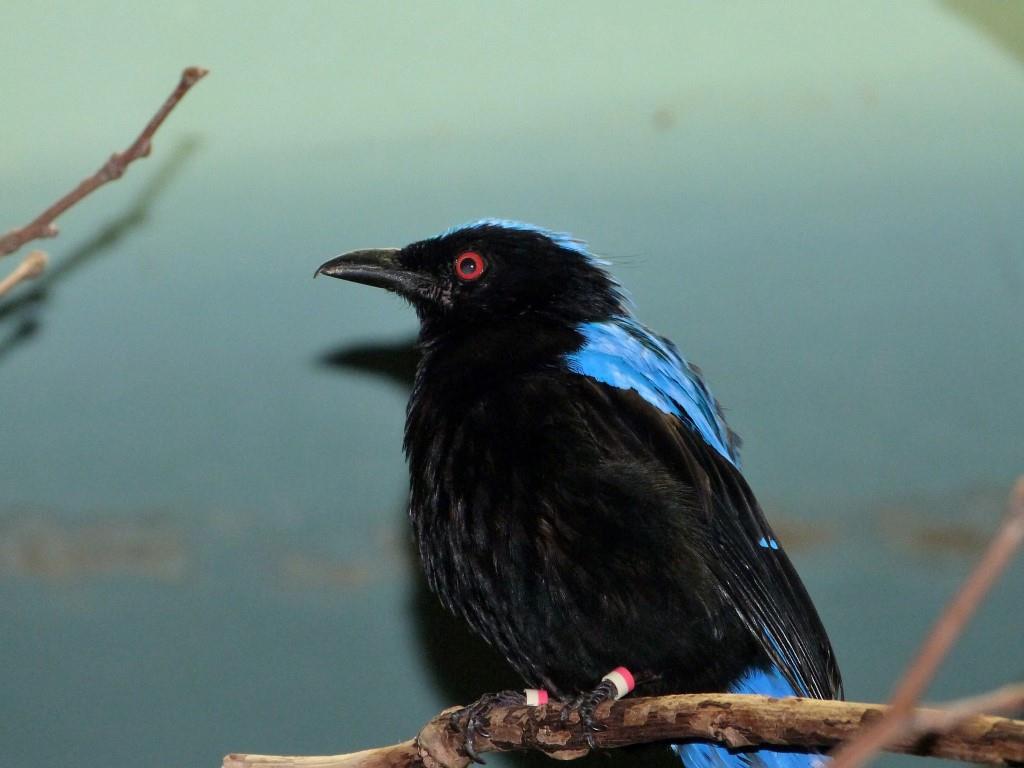
Asian Fairy-bluebird (Irena puella) at Cincinnati Zoo by Lee

Asian Fairy-bluebird (Irena puella) at Cincinnati Zoo by Lee

Declare His glory among the nations, His wonders among all peoples. (Psalms 96:3 NKJV)

In Birdwatching at the Cincinnati Zoo I, you were introduced to the outside of the Wings of the World exhibit where the different birds are presented according to their habitats. Birds of the Bible – The Bat Revisited was about the two species of Bats at the Zoo. Today, I like to introduce two more species that the Lord created. The Asian Fairy-bluebird and the Blue-crowned Laughingthrush which were sharing the same aviary and the same tree.

The Asian Fairy-bluebird (Irena puella) is a medium-sized, arboreal passerine bird. They are members of the Irenidae – Fairy-bluebirds Family.

This fairy-bluebird is found in forests across tropical southern Asia from the Himalayan foothills, India and Sri Lanka east through Indochina, the Greater Sundas and Palawan (Philippines). Two or three eggs are laid in a small cup nest in a tree. The only other member of the genus and family is the Philippine Fairy-bluebird, I. cyanogastra, which replaces the Asian Fairy-bluebird in most of the Philippines.

Asian Fairy-bluebird (Irena puella) at Cincinnati Zoo by Lee

Asian Fairy-bluebird (Irena puella) at Cincinnati Zoo by Lee

The male has glossy, iridescent blue upperparts, and black underparts and flight feathers. The female and first year male are entirely dull blue-green.

The Asian Fairy Bluebird eats fruit, nectar and some insects. Its call is a liquid two note glue-it.

The name of this bird commemorates the French missionary Frédéric Courtois.

*

Blue-crowned Laughingthrush (Garrulax courtoisi) at Cincinnati Zoo by Lee

Blue-crowned Laughingthrush (Garrulax courtoisi) at Cincinnati Zoo by Lee

He will yet fill your mouth with laughter And your lips with shouting. (Job 8:21 NASB)

The other bird keeping him company is a Blue-crowned Laughingthrush. The Blue-crowned Laughingthrush or Courtois’s Laughingbird (Garrulax courtoisi) is a Chinese species of bird in the Leiothrichidae – Laughingthrushes Family. Until recently, this critically endangered species was generally treated as a subspecies of the Yellow-throated Laughingthrush, but that species has a pale grey (not bluish) crown.

It feeds principally on fruit and is generally found on the larger forest-trees.

Blue-crowned Laughingthrush (Garrulax courtoisi) at Cincinnati Zoo by Lee

Blue-crowned Laughingthrush (Garrulax courtoisi) at Cincinnati Zoo by Lee

It breeds from February to April, constructing a shallow cup-shaped nest, sometimes of moss and sometimes of small twigs, in a sapling or small tree. The eggs, which are generally two in number, are greenish white marked with brown.

*

Here are three short videos of them that I took. Sorry for the shakiness.

(Information from Wikipedia and other internet resources)

See Also:

*

Child’s Book of Water Birds ~ The Oyster Catcher

The Oyster Catcher

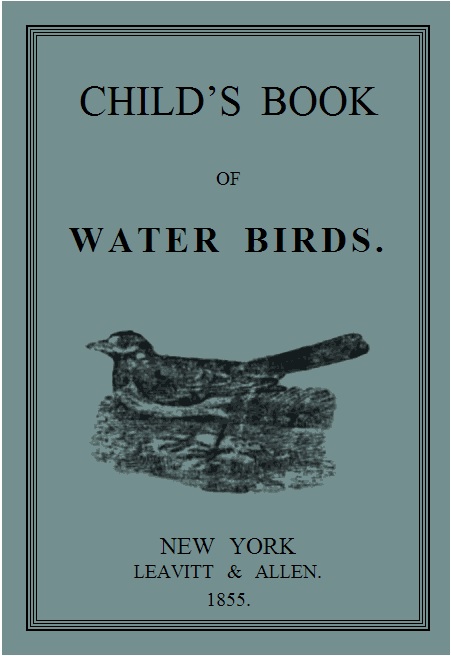
Child's Book of Water Birds - Book Cover

Child’s Book of Water Birds – Book Cover

***

Childs Bk of Water Birds titlebird

NEW YORK

LEAVITT & ALLEN.

1855.

***

Welcome to the Updated Child’s Book of Water Birds, by Anonymous. It was written in 1855 and this is 2013. That is 158 years ago.

*
*
Childs Bk of Water Birds oystercatcher

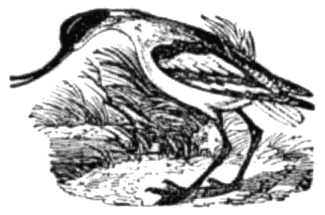
THE OYSTER CATCHER.

The Oyster Catcher feeds generally on shell-fish, oysters, limpets, &c. He detaches them from the rocks to which they are fastened, and opens them with his long, stout bill. The head, neck, and body are black. It lays two olive-brown eggs, spotted with black.

*

American Oystercatcher (Haematopus palliatus) by Robert Scanlon

American Oystercatcher (Haematopus palliatus) by Robert Scanlon

Update:

Just as day was breaking, Jesus stood on the shore; yet the disciples did not know that it was Jesus. (John 21:4 ESV)

American Oystercatchers are sometimes called the American Pied Oystercatcher. They are about 19 inches (42-52 cm) long. They were created with a large thick orange or red beak which helps them pry open their food, like oysters, clams, and mussels. They belong to the Oystercatcher Family which has twelve (12) species. They like the coastal areas and nest on the beaches. In winter, they are found in flocks along the coast from central New Jersey to the Gulf of Mexico (eastern) or along the Pacific coast from northwestern Baja California southward. (western).

Black Oystercatcher (Haematopus bachmani) Family by Beedie Savage

Black Oystercatcher (Haematopus bachmani) Family by Beedie Savage

***

See the other five Child’s Book of Water Birds:

The Swan

The Coot

The Dabchick

The Teal

The Goose

*

Oystercatcher Family

Oystercatcher – Wikipedia

Oystercatcher – All About Birds

Oystercatcher – ARKive


Bible Birds

Wordless Birds

*

Child's Book of Water Birds - Levit and Allen

Back Cover

*** PROJECT GUTENBERG EBOOK CHILD'S BOOK OF WATER BIRDS ***

*

Birds Vol 2 #6 – The Volume II. July to December 1897 – Index

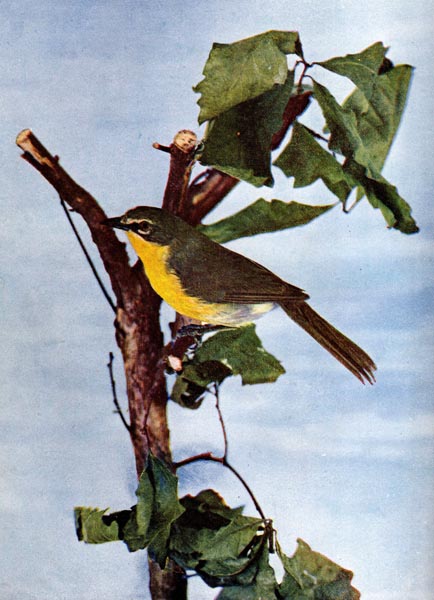
Yellow-Breasted Chat (Icteria virens) by USGS

Yellow-Breasted Chat (Icteria virens) by USGS

*

VOLUME II. JULY TO DECEMBER, 1897.

INDEX.

(RELOCATED – CLICK HERE)

Anhinga, or Snake Bird, Anhinga Anhingapages  Page  26-27
Avocet, American, Recurvirostra Americana 14-15
Audubon, John James 161
Bird Song JulSep
Bird MiscellanyBird Miscellany Plus 195-235
Blue Bird, Mountain, Sialia arctica 203-205
Bunting, Lazuli, Passerina amoena 196-198-199
Chimney Swift, Chætura pelagica 131-133
Captive’s Escape 116
Chat, Yellow-Breasted, Icteria virens 236-238-239
Cuckoo, Yellow-Billed, Coccyzus americanus 94-95
Dove, Mourning, Zenaidura macrura 111-112-113
Duck, Canvas-back, Athya valisneria 18-20
Duck, Mallard, Anas boschas 10-11-13
Duck, Wood, Aix Sponsa 21-23-24
Eagle, Baldheaded, Haliœtus lencocephalus 2-3-5
Flamingo, Phœnicopterus ruber 218-221
Flycatcher, Vermillion, Pyrocephalus rubineus mexicanus 192-193
Gold Finch, American, Spinus tristis 128-129-130
Goose, White-fronted, Anser albifrons gambeli 166-168-169
Grackle, Bronzed, Quiscalus quiscula 228-230-231
Grosbeak, Evening, Cocothraustes vespertina 68-70-71
Grouse, Black, Tetrao tetrix 217-220-223
Heron, Snowy, Ardea candidissima 38-39
How the Birds Secured Their Rights 115
Humming Bird, Allen’s Selasphorus alleni 210-211
Humming Bird, Ruby-Throated, Trochilus colubris 97-100-103
Junco, Slate Colored, Junco hyemalis 153-155
Kingbird, Tyrannus tyrannus 156-158-159
Kingfisher, European, Alcedo ispida 188-190-191
Kinglet, Ruby-crowned, Regulus calendula 108-110
Lark, Horned, Otocoris alpestris 134-135
Lost Mate 126
Merganser, Red-Breasted, Merganser serrator 54-55
Nuthatch, White-Breasted, Sitta carolinensis 118-119
Old Abe 35
Ornithological Congress 201
Osprey, American, Pandion paliœtus carolinenses 42-43-45
Partridge, Gambel’s, Callipepla gambeli 78-79
Phalarope, Wilson’s, Phalaropus tricolor 66-67
Pheasant, Ring-Necked, Phasianus torquatus 232-233
Phœbe, Sayornis phœbe 106-107
Plover, Belted Piping, Aegialitis meloda circumcincta 174-175
Plover, Semipalmated Ring, Aegialitis semi-polmata 6-8-9
Rail, Sora, Porzana Carolina 46-48-49
Sapsucker, Yellow-bellied, Sphyrapicus varius 137-140-143
Scoter, American, Oidemia deglandi 32-33
Skylark, Alauda arvensis 61-63-64
Snake Bird, (Anhinga) Anhinga anhinga 26-27
Snowflake, Plectrophenax nivalis 150-151-152
Sparrow, English, Passer domesticus 206-208-209
Sparrow, Song, Melospiza fasciata 90-91-93
Summaries (See each bird)
Tanager, Summer, Piranga rubra 163-165
Teal, Green winged, Anas carolinensis 213-214-215
The Bird’s Story 224
Thrush, Hermit, Turdus Aonalaschkae 86-88-89
To a Water Fowl 76
Tropic Bird, Yellow-billed, Phaethon flavirostris 184-186-187
Turkey, Wild, Meleagris gallopava 177-180-183
Turnstone, Arenaria interpres 170-171
Verdin, Auriparus flaviceps 226-227
Vireo, Warbling, Vireo gilvus 138-141
Vulture, Turkey, Catharista Atrata 72-73-75
Warbler, Blackburnian, Dendroica blackburnia 123-125
Warbler, Cerulean, Dendrœca caerulea 178-181
Warbler, Kentucky, Geothlypis formosa 50-51-53
Warbler, Yellow, Dendroica æstiva 83-85
Woodcock, American, Philohela minor 28-30-31
Wren, House, Troglodytes ædon 98-101-104
Wood Pewee, Contopus Virens 144-146-147-
Yellow Legs, Totanus flavipes 58-60

*

How precious also are Your thoughts to me, O God! How great is the sum of them! (Psalm 139:17 NKJV)

*

Birds Illustrated by Color Photography – Revisited

The above article is an article in the monthly serial for October 1897 “designed to promote Knowledge of Bird-Live.” These include Color Photography, as they call them, today they are drawings. There are at least three Volumes that have been digitized by Project Gutenberg.

To see the whole series of – Birds Illustrated by Color Photography – Revisited

*

Next Article – TBA

The Previous Article – The Yellow-breasted Chat

Wordless Birds

*

Birdwatching at the Cincinnati Zoo I

Cincinnati Zoo from Phone

Cincinnati Zoo from Phone

“Remember to magnify His work, Of which men have sung. (Job 36:24 NKJV)

Yesterday, we had the pleasure of checking out more birds of the Lord’s creation at the Cincinnati Zoo. The weather and the temperature were great and the birds were quite content to let us watch and photograph them. It has been over 45 years ago since we visited this zoo. Needless to say, it has changed and the most striking was their beautiful landscaping throughout the zoo.

Statue at the entrance to the Wings of the World exhibit.

Statue at the entrance to the Wings of the World exhibit.

When we arrived at the Wings of the World area, We were greeted by several birds and a neat statute of a child holding a bird. This shows how some of the landscaping was used around the zoo.

Statue at Wings of the World exhibit. Close-up

Statue at Wings of the World exhibit. Close-up

Wings of the World Aviary is divided into several different habitats and types of birds.

Wings of the World Aviary - Cincinnati Zoo 9-5-13

Wings of the World Aviary – Cincinnati Zoo

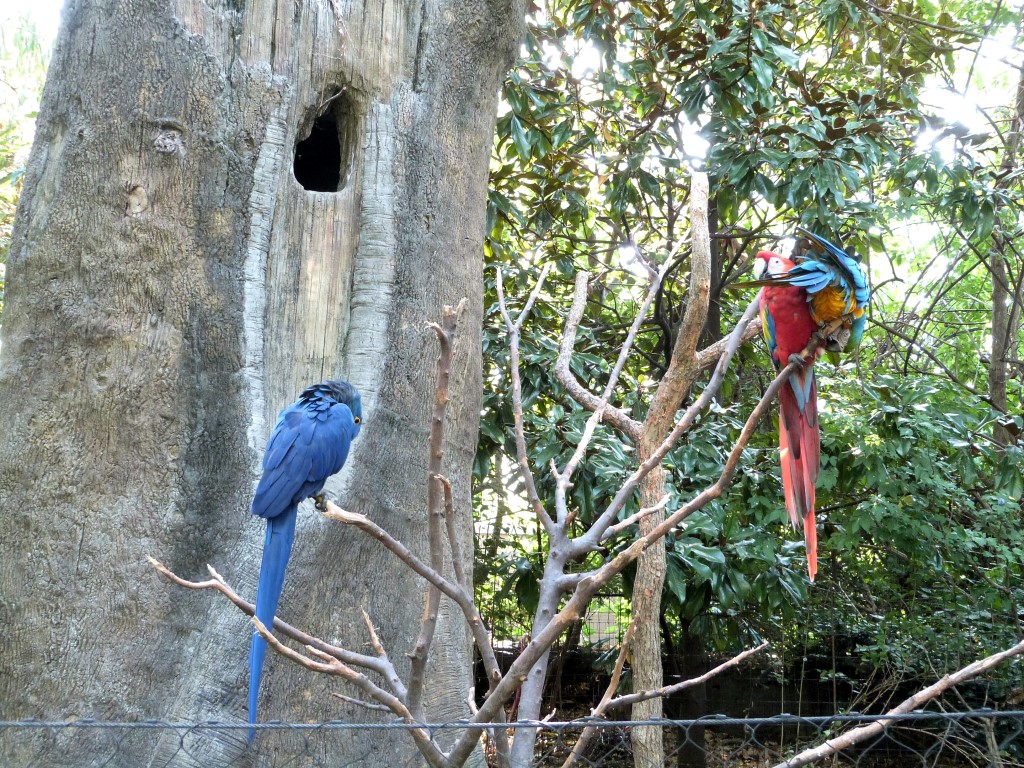
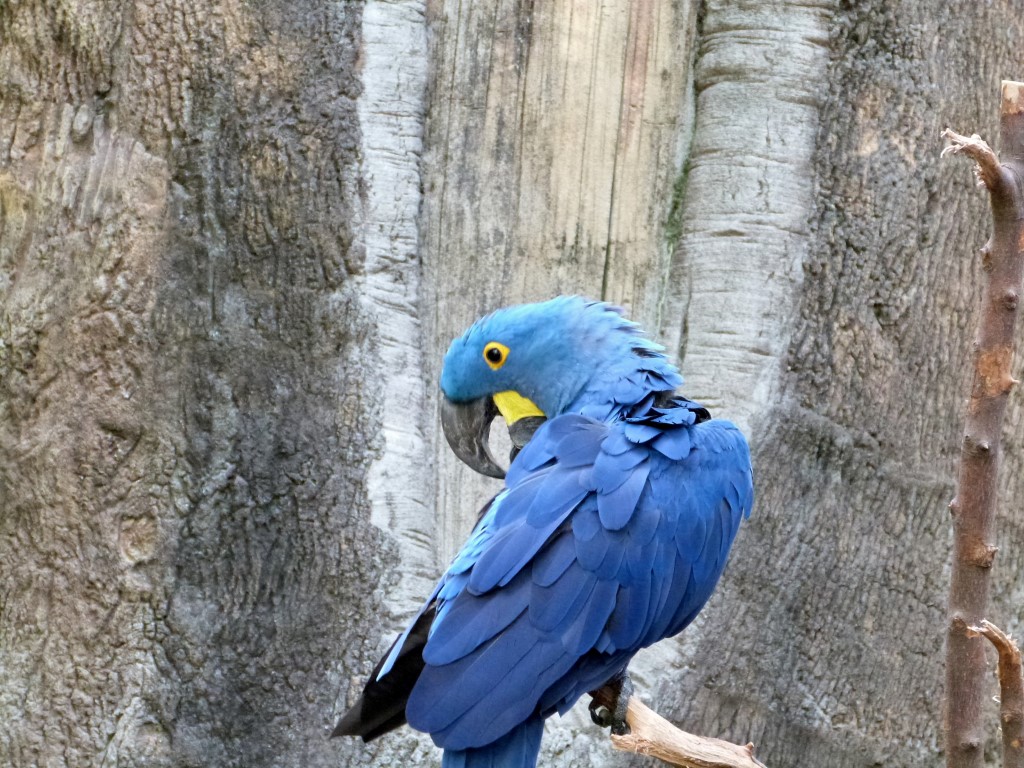
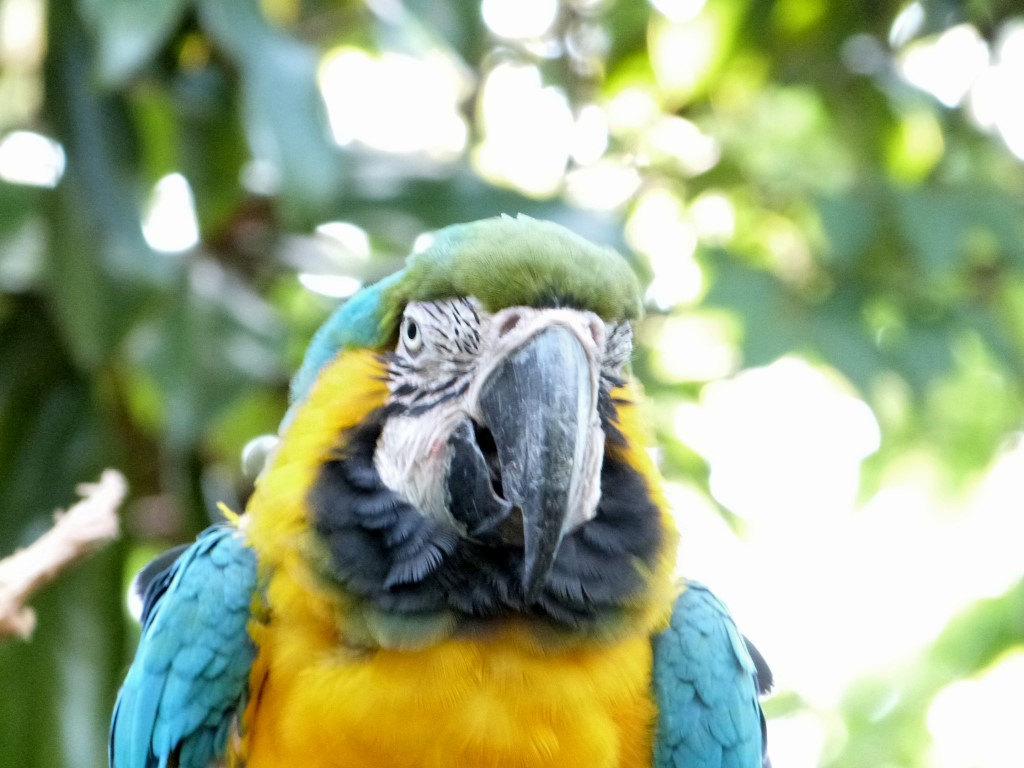
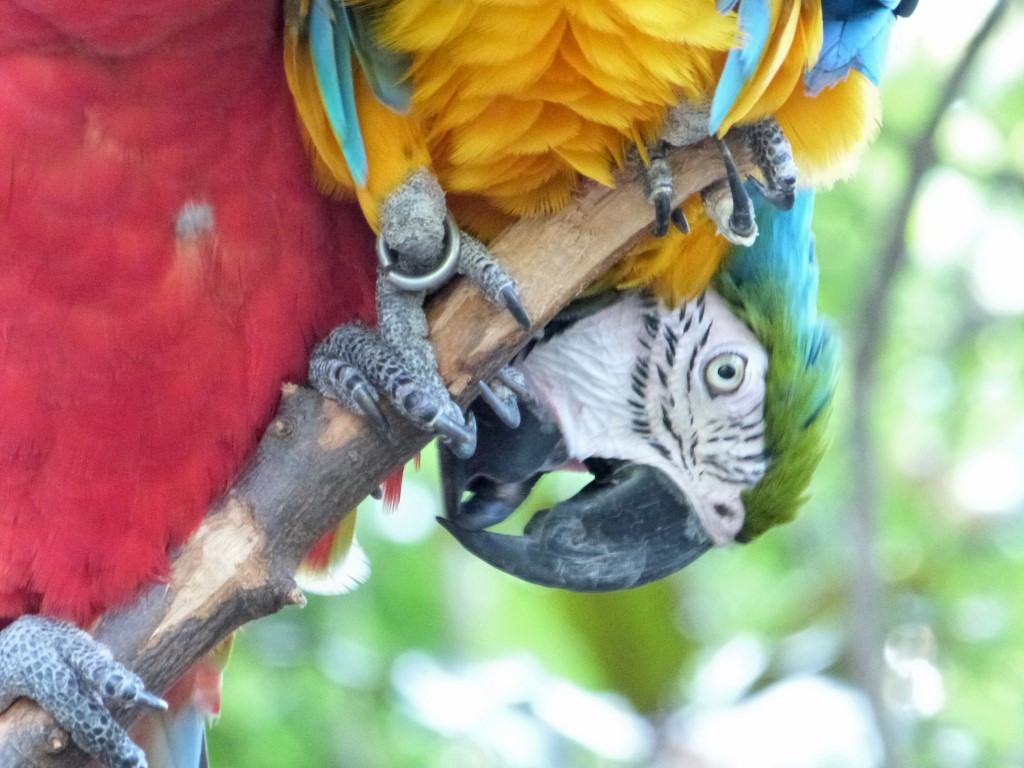
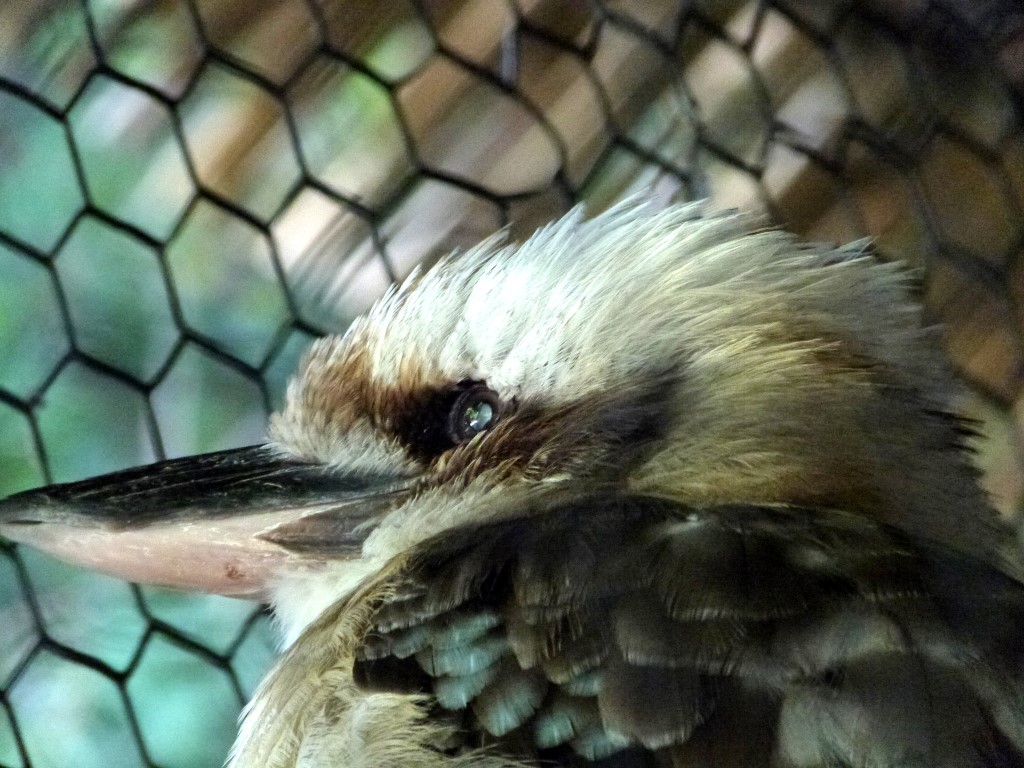
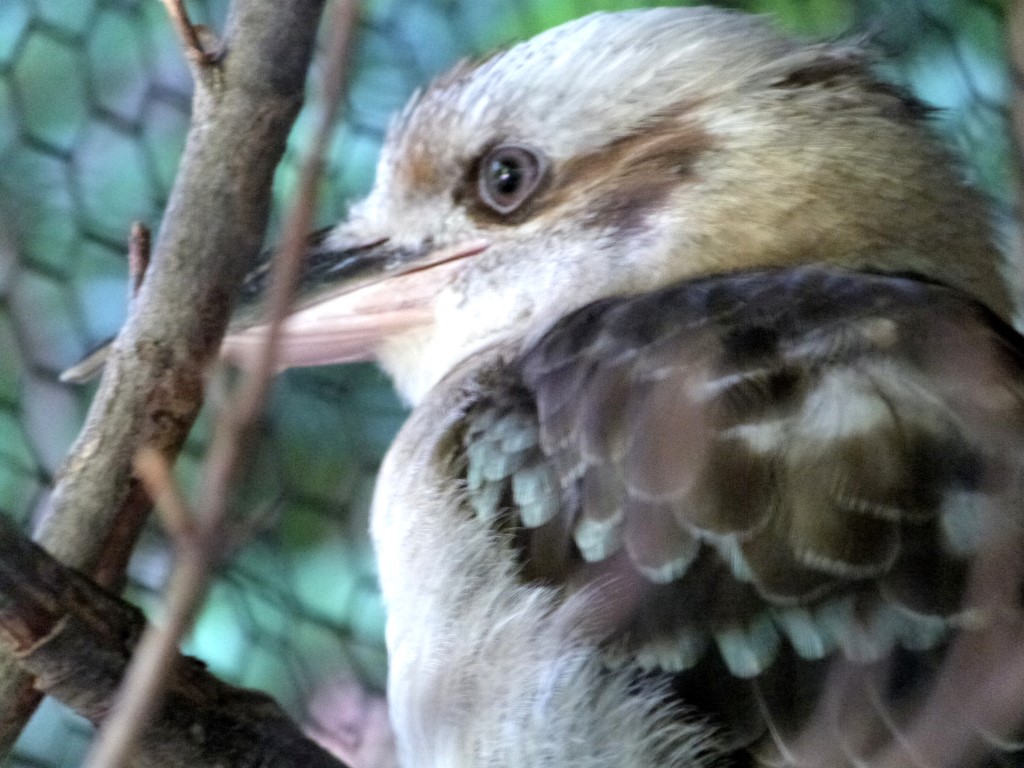
As you enter, you are greeted by Macaws, Screamers and a Laughing Kookaburra.

Southern Screamer

Southern Screamer (Chauna torquata) Cincinnati Zoo 9-5-13 by Lee

Southern Screamer (Chauna torquata) Cincinnati Zoo by Lee

*

Southern Screamer (Chauna torquata) Cincinnati Zoo 9-5-13 by Lee

Southern Screamer (Chauna torquata) by Lee

Macaws

Dan photographing the MaCaws Cincinnati Zoo

Dan photographing the MaCaws Cincinnati Zoo

*

Parrots - McCaws by Lee

Parrots – McCaws by Lee

*

Hyacinth Macaw (Anodorhynchus hyacinthinus) Cincinnati Zoo 9-5-13 by Lee

Hyacinth Macaw (Anodorhynchus hyacinthinus) by Lee

*

Cincinnati Zoo 9-5-13

Blue-and-yellow Macaw (Ara ararauna) Cincinnati Zoo by Lee

*

Scarlet and Blue-and-yellow Macaws by Lee

Scarlet and Blue-and-yellow Macaws by Lee

*

Scarlet and Blue-and-yellow Macaw

Scarlet and Blue-and-yellow Macaw

*

Kookaburra

Laughing Kookaburra (Dacelo novaeguineae)

Laughing Kookaburra (Dacelo novaeguineae)

*

Laughing Kookaburra (Dacelo novaeguineae) by Lee Cincinnati Zoo 9-5-13

Laughing Kookaburra (Dacelo novaeguineae) by Lee

*

Laughing Kookaburra (Dacelo novaeguineae) by Lee Cincinnati Zoo 9-5-13

Laughing Kookaburra (Dacelo novaeguineae) by Lee

This is just the beginning of our visit to the Cincinnati Zoo. Look for more articles about some really neat birds like a Mousebird, Bee-eater, Bishop, Penguins, Murres and more.

Also:
Anhimidae – Screamers Family

Psittacidae – Parrots Family

Alcedinidae – Kingfishers Family

Cincinnati Zoo

*