He shall cover thee with his feathers, and under his wings shalt thou trust: his truth shall be thy shield and buckler. (Psalm 91:4 KJV)
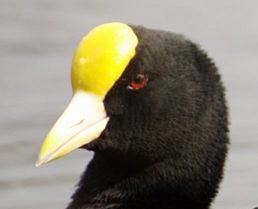
The Coot article mentioned the shield. “Coots have prominent frontal shields or other decoration on the forehead…”
What is a “frontal shield”?
The place above the upper beak (upper mandible) has a platelike area. It is made of a fleshy material. When the Lord created those birds that have the shield, He gave them each a different looking shield. It is neat to see the variety that the shields have. I am sure that the bird uses them to know which are their kind.
Below are some photos of the various Frontal Shields on the birds. There are more birds that have shield, but this just a sample of these unique birds.
This slideshow requires JavaScript.
You have also given me the shield of your salvation: and your right hand has held me up, and your gentleness has made me great.
(Psalms 18:35 AKJV)
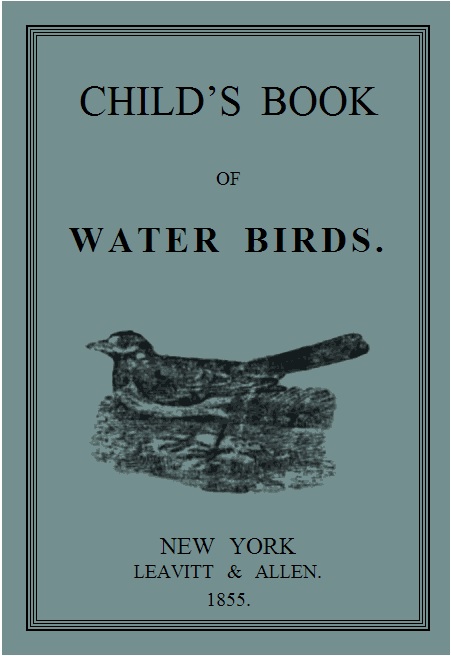
An anonymous writer wrote the Child’s Book of Water Birds in 1855. You can see how Project Gutenberg published it as an e-book. (Public Domain) CLICK HERE
Below are the links to my “Re-visited” versions here. Moved these over from the Birds of the Bible for Kids blog and can be found in the Kid’s Sectionunder Watching Birds.
The six different birds were written to a very young reader. I trust you will enjoy reading them for yourself or to your children or grand-children. They can be used to introduce you/them to birds.
Train up a child in the way he should go: and when he is old, he will not depart from it. (Proverbs 22:6 KJV)
Introducing children to the amazing birds the Lord has created is a tiny step to help with that training. Introducing them to the Lord Jesus Christ, is the major step.
Out of the ground the LORD God formed every beast of the field and every bird of the air, and brought them to Adam to see what he would call them. And whatever Adam called each living creature, that was its name. (Genesis 2:19 NKJV)
Golden Eagle keeps telling you to write in your Journal. So, what is a journal?
A birdwatching journal is where you put down things about the bird you are looking at now or when you are at home. I keep a list of the birds I see every time I go birdwatching. It is a little 3X5 inch Memo Book (for my pocket) and a bigger one when I am at home. Here is what I put down in mine.
Date
Time
Where I am
Weather (sunny, cloudy, raining, windy and sometimes the temperature)
Name of the bird if I know it
How many
If I don’t know the name, I draw the beak or wing or whatever that will help me remember the bird)
When I get home I check my Bird Guide to see if I can find out what the bird is that I didn’t know.
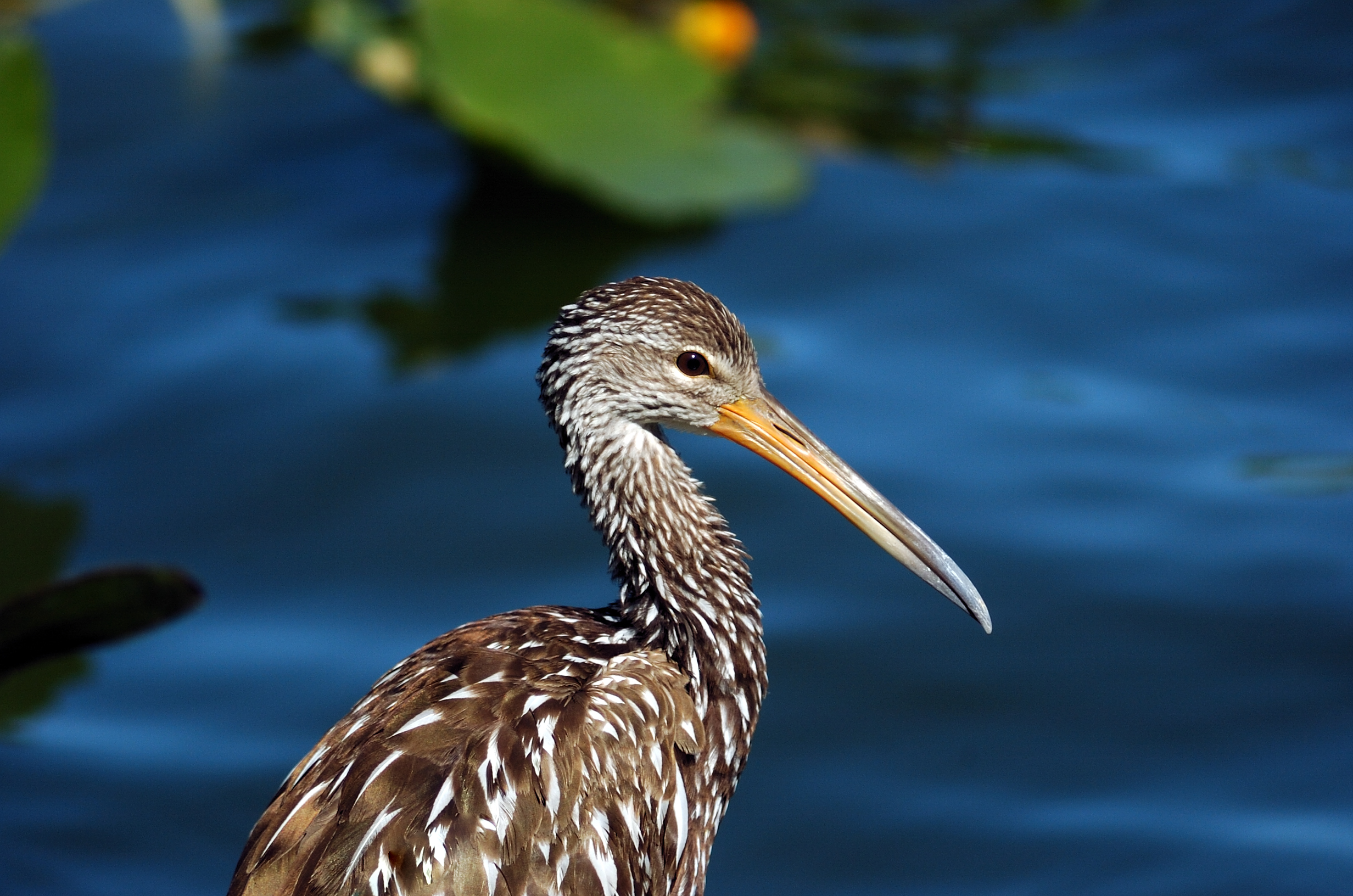
Limpkin (Aramus guarauna) by Dan at Lake Morton
Things to put in your journal:
Many write the item down and sometime draw the bird or something about it.
Outdoor Birds
What kind of bird (if you know)?
How big is it?
What color is it?
Shape? (duck, chicken, heron, sparrow,…)
Wings? (long, short, pointed, rounded,….)
Did it sing or make a noise? What did it sound like?
Date, time, and where you saw the bird
Bible Birds
Did you read the name in your Bible?
What was the name of the bird?
What verse?
What was said about the bird?
You can put other information in your journal. We will be telling you more about each thing. Everyone’s journal is different. Yours does not have to be like mine or Golden Eagles.
Why keep a list or journal?
Birdwatchers like to make lists. They keep some of these lists:
Life List (all the birds ever seen)
Year List (each years birds)
Trip List (a vacation or trip)
Park or Place List (Park, zoo, lake,…)
Whatever List (your list)
Most of us that are older wish we had kept a list of birds when we were young like you. We forget what we saw and then can’t put it on our life list. I have seen more birds than what is on my list, but I didn’t keep a journal when I was younger. Most people tell the truth and only list what they saw. Don’t make up birds you think you saw just so you have a long list. As you get older, your list will grow. The Lord has many birds for you to see and enjoy.
Guira Cuckoo (Guira guira) at NA by Dan at National Aviary
Bible Birds – Cuckoo’s Introduction
The “Cuckoo” or old English”Cuckow” is found in these verses:
and the owl, and the night-hawk, and the cuckoo, and the hawk after its kind, (Leviticus 11:16 YLT)
And the owl, and the night hawk, and the cuckow, and the hawk after his kind, (Deuteronomy 14:15 KJV)
The Old Testament was written in Hebrew and the word used has several meanings and so some Bibles call the bird a Cuckoo or Cuckow, some a Gull. For now, we are introducing you to Cuckoos.
1) a ceremonially unclean bird
1a) cuckow, gull, seagull, sea-mew
1b) maybe an extinct bird, exact meaning unknown
Did you think Cuckoos only live in Clocks?
No, there actually is a bird called a Cuckoo. It belongs to a familyCuculidae – Cuckoos. There are 149 species in the family. Not only Cuckoos, but Coucals, Anis, Couas, and Malkohas are family members.
Here are some descriptions of North American Cuckoos: (from Color Key to NA Birds)
Range.—Northern South America, north through Central America, Mexico and Greater Antilles (except Porto Rico?) to Florida and Louisiana, migrating south in fall.
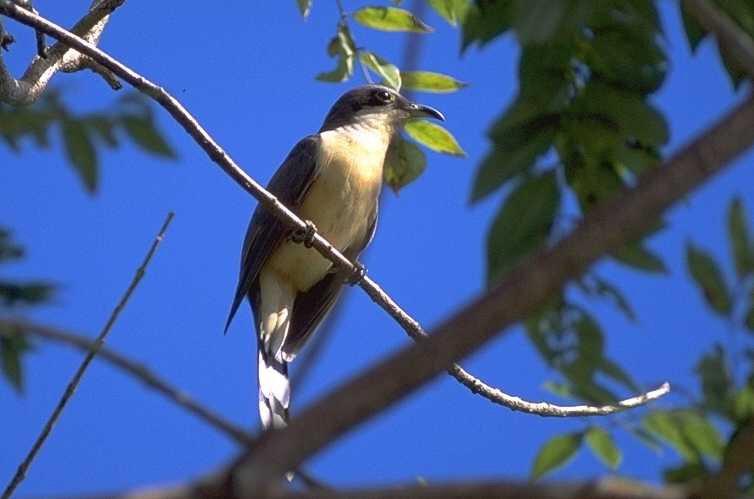
Maynard Cuckoo (C. m. maynardi). Similar to Mangrove Cuckoo, but underparts paler, the throat and forebreast more or less ashy white.
Range.—Bahamas and (eastern?) Florida Keys. (2012 Now Mangrove Cuckoo)
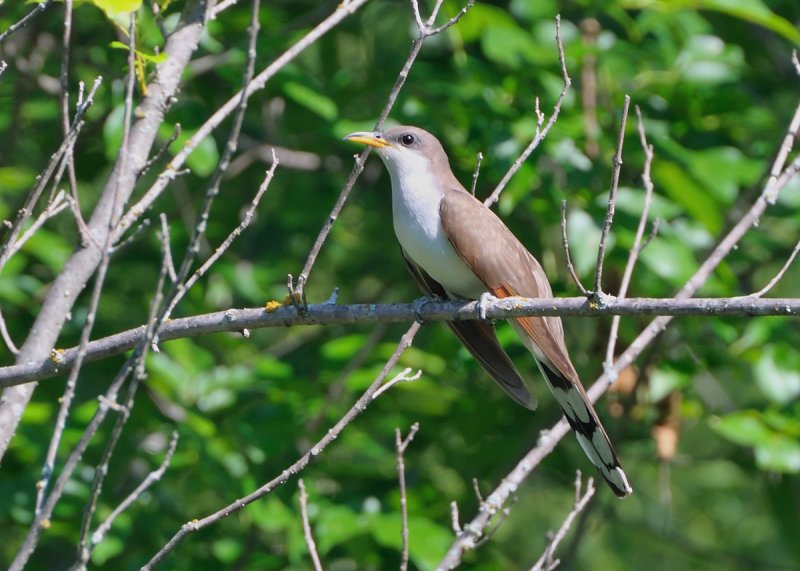
Yellow-billed Cuckoo (Coccyzus americanus). Length 12.2 in. Ads. Below white; lower mandible largely yellow, tail black, outer feathers widely tipped with white. Notes.Tut-tut, tut-tut, tut-tut, tut-tut, cl-uck, cl-uck, cl-uck, cl-uck, cl-uck, cl-uck, cow, cow, cow, cow, cow, cow, usually given in part.
Range.—Eastern North America; breeds from Florida to New Brunswick and Minnesota; winters in Central and South America.
California Cuckoo (C. a. occidentalis). Similar to Yellow-billed Cuckoo but somewhat grayer and larger; the bill slightly longer, 1.05 in.
Range.—Western North America; north to southern British Columbia; east to Western Texas; winters south into Mexico.
Black-billed Cuckoo (Coccyzus erythropthalmus) by Jim Fenton
Black-billed Cuckoo (Coccyzus erythrophthalmus). Length 11.8. Ads. White below; bill black; tail, seen from below, grayish narrowly tipped with white; above, especially on crown, browner than Yellow-billed Cuckoo. Notes. Similar to those of Yellow-billed Cuckoo, but softer, the cow notes connected.
Range.—Eastern North America; west to Rocky Mountains; breeds north to Labrador and Manitoba; winters south of United States to Brazil.
Cuckoo Sound with Pictures (From Poland)
Sort of sounds like the clock doesn’t it?
We will tell you more about the Cuckoo in the next Bible Birds – Cuckoo article.
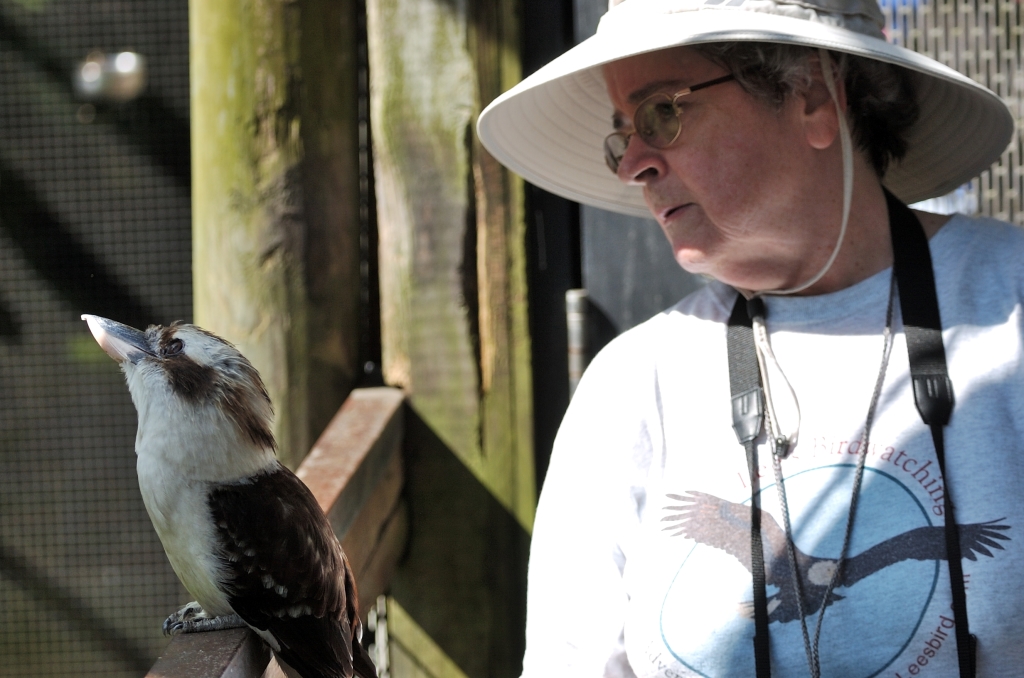
On our vacation several weeks ago we stopped back by the Brevard Zoo in Melbourne, Florida. I had a neat Kookaburra Encounter.
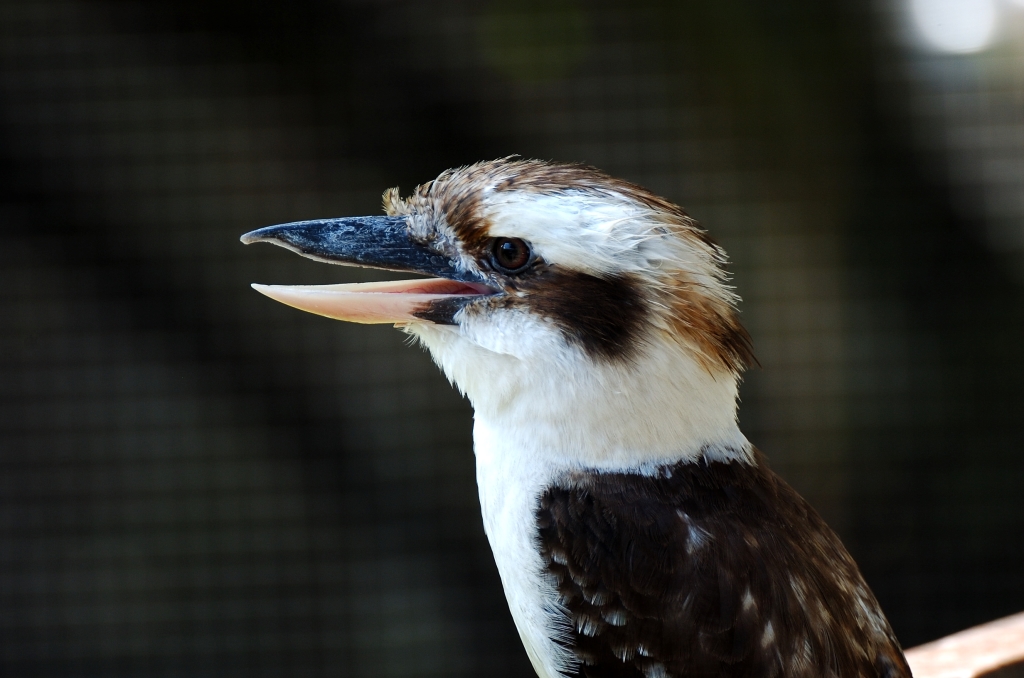
Lee with Laughing Kookabura at Brevard Zoo by Dan
The Laughing Kookaburra is in the aviary where the Lorikeets, Galahs and other birds are kept. When I came through a door, right there on the rail sat a young Laughing Kookaburra. I have seen them before, but never as close as this one. I got within inches of him/or her. I could have touched it, but was afraid of that beak.
So God created great sea creatures and every living thing that moves, with which the waters abounded, according to their kind, and every winged bird according to its kind. And God saw that it was good. (Genesis 1:21 NKJV)
Here are some of the pictures we took.
Lee very close to Kookabura by Dan
I have to admit, I was thrilled. Just looking at one of the Lord’s creations so close. Wow! That one photo Dan took of me and the Kookaburra, my hand was within 5-6 inches from it. May I never lose my AWE at seeing and encountering the Lord’s critters.
Lee very close to Kookabura by Dan
Laughing Kookaburra at Brevard Zoo by Dan with my camera
Laughing Kookabura by Dan
Kookaburra at Brevard Zoo by Dan
Kookaburra at Brevard Zoo by Dan
Kookaburra at Brevard Zoo by Dan
Galah and Lorikeet watching nearby
at Brevard Zoo by Dan
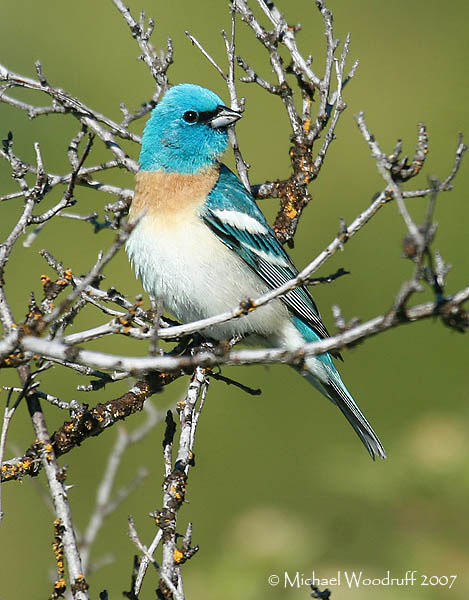
Lazuli Bunting (Passerina amoena) by Michael Woodruff
By them the birds of the heavens have their home; They sing among the branches. He waters the hills from His upper chambers; The earth is satisfied with the fruit of Your works. He causes the grass to grow for the cattle, And vegetation for the service of man, That he may bring forth food from the earth, (Psalms 104:12-14 NKJV)
A passerine is any bird of the order Passeriformes, which includes more than half of all bird species. A notable feature of passerines is the arrangement of their toes (three pointing forward and one back) which facilitates perching. Sometimes known as perching birds or, less accurately, as songbirds, the passerines form one of the most diverse terrestrial vertebrate orders, with over 5,000 identified species. It has roughly twice as many species as the largest of the mammal orders, the Rodentia. It contains more than 110 families, the second-most of any order of tetrapods (after Squamata, the scaled reptiles).
The names “passerines” and “Passeriformes” are derived from Passer domesticus, the scientific name of the eponymous species (the house sparrow) and ultimately from the Latin term passer for Passer sparrows and similar small birds.
This slideshow requires JavaScript.
*
“Sweet Hour of Prayer” by Sean Fielder (Faith Baptist)
Enjoy God’s creation as you watch and listen to Sean play. May we all pray and thank the Lord for all He has given from His Hand.
The LORD will command His lovingkindness in the daytime, And in the night His song shall be with me— A prayer to the God of my life. (Psalms 42:8 NKJV)
Be anxious for nothing, but in everything by prayer and supplication, with thanksgiving, let your requests be made known to God; (Philippians 4:6 NKJV)
Finished updating the missing videos for the Peterson Field Guide videos. The Vodpod company stopped supporting its videos, which was unknown to me. All of these videos were on YouTube and are now working properly again.
They are very interesting and if you haven’t seen them or at least for a while, they are worth checking out. Here are some of the titles:
How-to Videos:
Give instruction to a wise man, and he will be yet wiser: teach a just man, and he will increase in learning. (Proverbs 9:9 KJV)
“Whence then cometh wisdom? and where is the place of understanding? Seeing it is hid from the eyes of all living, and kept close from the fowls of the air.” (Job 28:20-21)
Scripture frequently makes reference to the fact that birds are not very smart compared to human beings. The tropical wetland bird called the jacana shows that you don’t have to be very smart to be deceptive. The jacana is noteworthy for several reasons. It is one of only 20 species of birds in the world where the female Comb-crested jacana, sometimes referred to as Jesus birdsleaves the care of the young to the males. One flock in southern India was made up of about 50 birds. The males staked out their territory on floating vegetation, often getting into violent fights with other males. Then the females, which are about 60 percent larger than the males, fought with each other for exclusive rights to up to four male territories. Once territories were established, the females would visit each of the males in her territory, mating with each.
Once the eggs are laid in each male’s nest, the female shows no more interest in her offspring. The male will care for the eggs and youngsters once they hatch, until the time they are ready to leave home. But the smaller males have their own strategy for dealing with their situation. They yell. Researchers say a yelling male is really blackmailing the larger female into giving him some attention. A yelling male attracts the attention of other nearby females who might want to take him into her own harem, so his mate comes running to pay attention to him. Sometimes males will even fake an emergency which brings his mate in a hurry. God is the source of all wisdom, and He gave each of His creatures enough wisdom to conduct their lives.
Prayer:
Father, I thank You for Your wisdom in Holy Scripture. Grant me understanding as I read Your Word. Amen.
Notes:
S. Milius, Science News, March 6, 1999, v. 155, p. 149. Photo: Comb-crested jacana, sometimes referred to as Jesus birds. Courtesy of John Hill. Licensed under the Creative Commons Attribution-Share Alike 3.0 Unported license.
Comb-crested Jacana (Irediparra gallinacea) by Ian
Lee’s Addition:
Now in the fourth watch of the night Jesus went to them, walking on the sea. And when the disciples saw Him walking on the sea, they were troubled, saying, “It is a ghost!” And they cried out for fear. But immediately Jesus spoke to them, saying, “Be of good cheer! It is I; do not be afraid.” (Matthew 14:25-27 NKJV)
What an interesting behavior from these Jacanas. Never cease to be amazed at how the Lord created His critters and their way of doing things. Did you notice how their feet were designed to support their weight? That habit of “walking on water” is why some call them the “Jesus” Bird.
Ian’s Bird of the Week – Pale-headed Rosella ~ by Ian Montgomery
Newsletter – 8/24/14
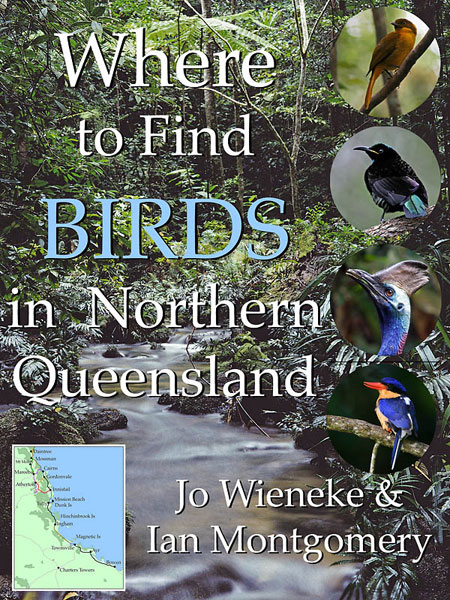
The bird of the week is the Pale-headed Rosella, which I’ll get to in a second, but this is a Special Edition as Where to Find Birds in Northern Queensland is at last being published. That is to say, it has been published on Google Play but not yet on the Apple iBook store. That will take a little longer as there are bureaucratic obstacles to be over come. These involve registering Birdway Pty Ltd with the US Inland Revenue and then Apple confirming the registration with the IRS. The first part was easy but the second seems harder as it takes a while for the registration to soak through and finally emerge in the IRS online databases. Anyway, I’ll let you know, loudly, when that happens. In the meantime, you can find it on Google at https://play.google.com/store/books/details?id=CblRBAAAQBAJ.
Where To Find Birds in Northern Queensland
End of commercial!
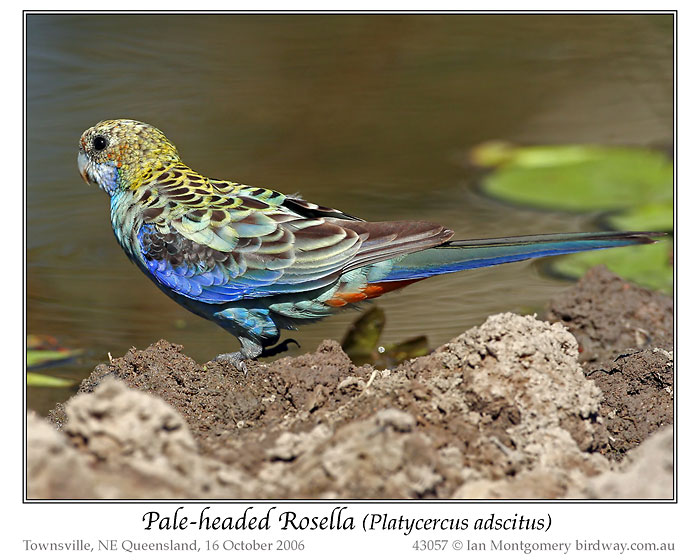
The Pale-headed Rosella, is the widespread and familiar Rosella of Queensland, though it range does extend as far as northern New South Wales. There, and in southeastern Queensland, its range overlaps with the closely related Eastern Rosella and they sometimes interbreed.
The ones in the first two photos were taken outside my house. The first bird is feeding on the seeds of weeds, plenty of those here, and the second is feeding on the fruit of wild passionfruit, another weed, also called stinking passionfruit (Passiflora foetida) as the foliage emits a strong odour when crushed. They’re lovely birds, rather unobtrusive though their soft twittering calls reveal their presence, and I’ll always get pleasure from seeing them. They’re usually in pairs of family parties. The plumage is variable: the bird in the first photo has a much intense blue breast than the second one, but the field guides are tight-lipped about whether the plumage of the sexes differs.
Pale-headed Rosella (Platycercus adscitus) by Ian
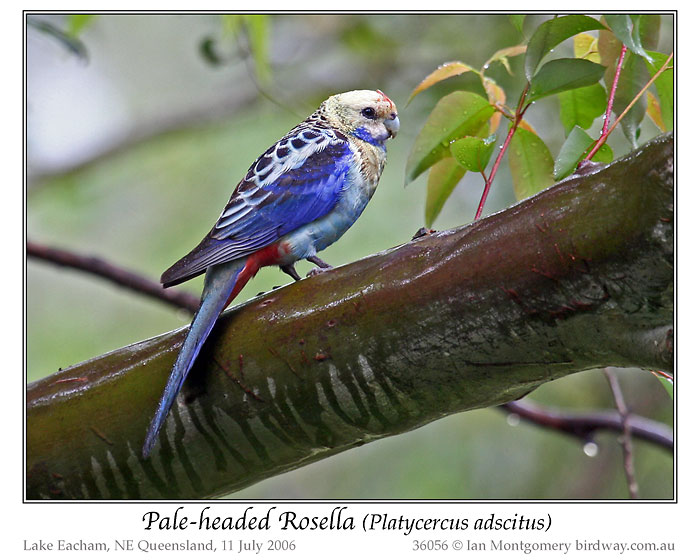
They’re more forthcoming about the plumage of juveniles, as these often show traces of red or darker feathers on the head, like the one coming down for a drink in the third photo.
Pale-headed Rosella (Platycercus adscitus) by Ian
There are two races of the Pale-headed Rosella, a northern paler one on Cape York and south to about Cairns, and a southern darker one south of Townsville with a 300km/200mile band of intergrading between Cairns and Townsville. Originally these were described as two different species, the northern one being the Blue-cheeked Rosella, Platycercus adscitus, the southern one the Pale-headed Rosella, P. palliceps. When they were lumped together, the earlier name adscitus took priority, so the northern race is the nominate one and the southern darker one is race palliceps – unfortunately, given that it is the more intensely coloured. Adscitus means ‘approved’ or ‘accepted’, though exactly what was approved or accepted, I don’t know.
Pale-headed Rosella (Platycercus adscitus) by Ian
The Townsville birds in the first three photos belong to palliceps. The two, photographed together at Lake Eacham southwest of Cairns, are much closer the nominate race. The yellow is much paler overall, particularly on the back and the upper breast is mainly pale yellow, rather than blue, but there is a blue patch on the lower cheek. The bird in the fifth photo has clear traces of red on the forehead and is a juvenile; the one in the fourth photo has pinkish traces and may be a young bird too.
Pale-headed Rosella (Platycercus adscitus) by Ian
The taxonomy of Rosellas in general has been controversial and is still unsettled. Some authorities maintain that the Pale-headed, the Eastern Rosella and the Northern Rosella all belong to a single species even though they look quite different. Whatever, they’re lovely birds, and the good news is that the Pale-headed Rosella has benefitted from European settlement and the clearing of dense forests – they prefer more open areas.
Oh that my words were now written! oh that they were printed in a book! (Job 19:23 KJV)
I have fought a good fight, I have finished my course, I have kept the faith: (2 Timothy 4:7 KJV)
Glad they finally have their book published. I know that Ian has been working on this for some time. It is always a great feeling when a project is completed.
Also, the Pale-headed Rosella is a beautiful bird. Another great creation from their Creator. I especially like that first photo.
Behold, the eye of the LORD is upon them that fear him, upon them that hope in his mercy; (Psalms 33:18 KJV)
Open thou mine eyes, that I may behold wondrous things out of thy law. (Psalms 119:18 KJV)
The eyes of the LORD are in every place, beholding the evil and the good. (Proverbs 15:3 KJV)
Lift up your eyes on high, and behold who hath created these things, that bringeth out their host by number: he calleth them all by names by the greatness of his might, for that he is strong in power; not one faileth. (Isaiah 40:26 KJV)
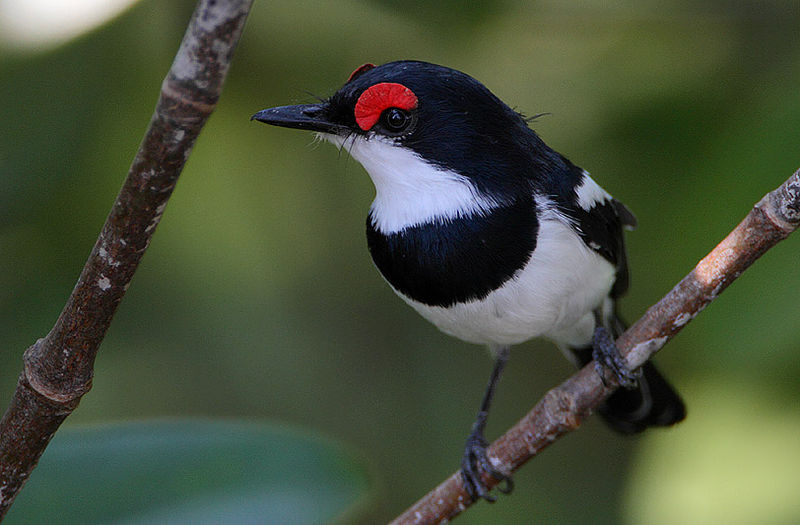
The Platysteiridae Family has these neat little Wattle-eyes and Batis, plus two Shrike-flycatchers and a Shrike. The family has a total of 33 species. I spotted these while working on the update and decided to share them. Their eyes are what draws your attention to them. They are cute little birds that show again the Creator’s variety.
The Platysteiridae are small to medium sized passerines. They have short legs and an upright stance while perched. The tail length is variable, with the Dyaphorophyia wattle-eyes and batises having short tails and the Platysteria wattle-eyes and shrike-flycatchers possessing longish tails. The bill is flat and hooked at the end, and generally wide with well-developed rictal bristles. With the exception of a few batises the plumage of the family is sexually dimorphic. Overall the family has white undersides and dark, speckled upperparts, with many species sporting a band across the chest. A few wattle-eyes depart from this pattern and possess brightly coloured plumage. The plumage on the back of some genera are erectile, giving the family the alternative name of puffback flycatchers. The iris of the batises and the black-and-white shrike-flycatcher is brightly coloured and used in communication, becoming more brightly coloured when the adults are excited. In the wattle-eyes the supra-orbital wattles above the eyes, which give them their name, are used for communication. In addition the family is highly vocal, giving a range of whistles, harsh calls and duets. (Wikipedia)
This slideshow requires JavaScript.
“There Shall Be Showers of Blessing”. Hymn – at Faith Baptist Church
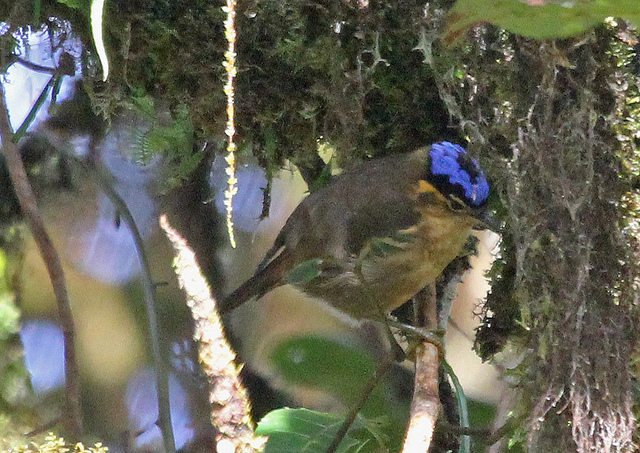
Blue-capped Ifrita (Ifrita kowaldi) cc jerryoldenettle
My son, fear thou the LORD and the king: and meddle not with them that are given to change: (Proverbs 24:21 KJV)
The update to IOC Version 4.3 is now completed. Along with the spelling changes shown in Working On IOC 4.3 Version – Name Changes, here are some more of the changes that were made.
They added 7 new birds, most raised from a Subspecies to a Species and 3 deleted, which were lowered to a Subspecies.
And thou shalt love the Lord thy God with all thy heart, and with all thy soul, and with all thy mind, and with all thy strength: this is the first commandment. And the second is like, namely this, Thou shalt love thy neighbour as thyself. There is none other commandment greater than these. (Mark 12:30-31 KJV)
Wanted to share with you two blogs I follow.
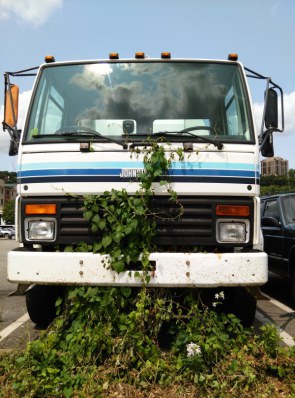
Sandra Conner’s, In Love With Words, had a neat post about a truck that was crying. It is worth reading.
In Love With Words – Crying Truck and Virginia Creeper
Virginia Creeper wasn’t beautiful and was generally considered a nuisance wherever she grew. But she had a kind heart, and when she heard sobbing out by the alley, she crawled over to investigate. She found Barney, the discarded garbage truck, soaking the ground with his tears……..
Also Dusky’s Wonders released a new set of neat bird photos again today. Check those out.
I am still working on the IOC Version 4.3 Update. All the pages are completed and now I am working on the Indexes. Majority of the work is done. Stay tuned.












 Scripture frequently makes reference to the fact that birds are not very smart compared to human beings. The tropical wetland bird called the jacana shows that you don’t have to be very smart to be deceptive. The jacana is noteworthy for several reasons. It is one of only 20 species of birds in the world where the female Comb-crested jacana, sometimes referred to as Jesus birdsleaves the care of the young to the males. One flock in southern India was made up of about 50 birds. The males staked out their territory on floating vegetation, often getting into violent fights with other males. Then the females, which are about 60 percent larger than the males, fought with each other for exclusive rights to up to four male territories. Once territories were established, the females would visit each of the males in her territory, mating with each.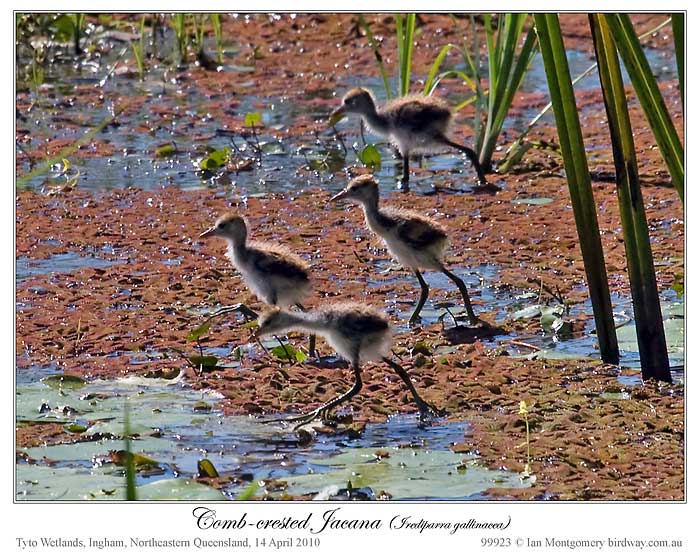







 Lee's Birdwatching Adventures Plus