The Spoonbill family has a unique or uncommon way of feeding. They swing their beak back and forth in the water to find food. The inside of the “spoon” is very sensitive. When they feel a “goodie,” their beak snaps shut. They then swallow their food.
I have been trying to capture this action on video for some time, and finally, watched this African Spoonbill catch his food. This was taken at Zoo Tampa (Lowry Park Zoo) in their aviary.
“For who makes you differ from another? And what do you have that you did not receive? Now if you did indeed receive it, why do you boast as if you had not received it?” (1 Corinthians 4:7 NKJV)
Just as the Spoonbills eat differently from other species of birds, it was the Creator that made them this way. You were created different than anyone else. Enjoy your uniqueness, because God made you the way your are. You were given different talents and abilities than someone else. What are you going to do with what the Lord has given?
African Spoonbill Zoo Tampa by Lee
The Spoonbills are using their uniqueness very well!
Is The Porphyrion On The Do Not Eat List? This is one of the reasons we post a Disclaimer about the different Bible versions. When the Birds of the Bible articles were written several years ago, I used my e-Sword program to search for the names of different species of birds on the “Do Not Eat List.” Now, the BibleGateway Bibles are also available for me to use. Time to check these new resources to see if any other name of bird is in one of their Bible translations.
I started with Leviticus 11:18 and Deuteronomy 14:17 [The beginning of the “Do Not Eat List” of birds] Looking through the list, Porphyrion caught my attention.
When I first started searching this word out on Google, here is what came up: “In Greek mythology, Porphyrion (Ancient Greek: Πορφυρίων) was one of the Gigantes (Giants)…” Whoa! That’s not a bird, but a Greek Mythology character, and not a very nice one. That is the reason for this title.
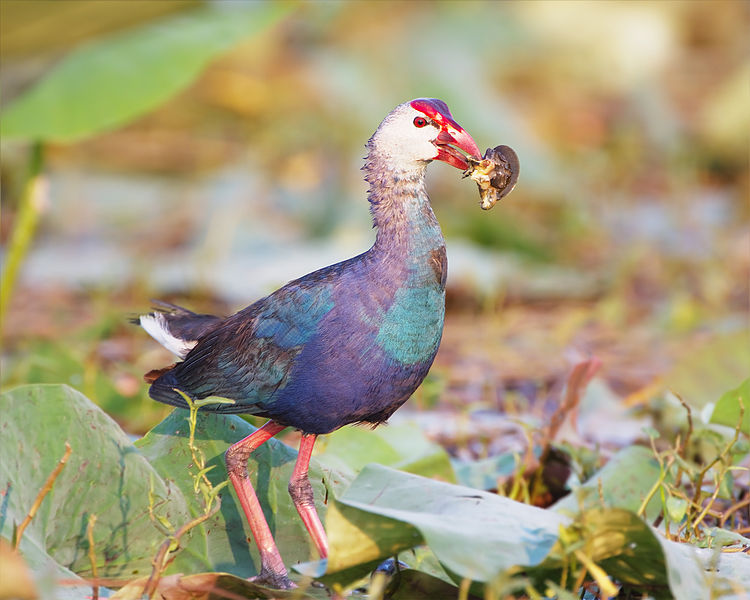
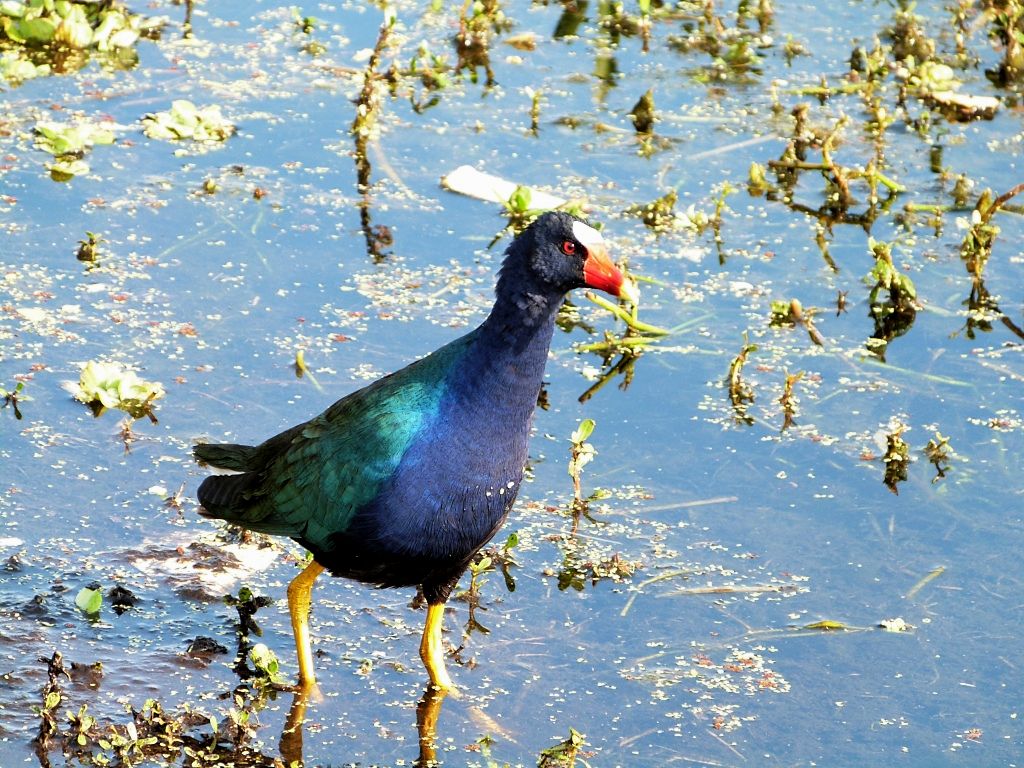
Ah! But further researching found that the Porphyrion is actually another name for the Swamphen. Notice the scientific name in the photo.
Porphyrio porphyrio. That is most likely why the Douay-Rheims 1899 [American edition DRA] translated it that way. They are the only English Bible that translates the bird this way.
They translated the two verses as:
“And the swan, and the bittern, and the porphyrion,” Leviticus 11:18 DRA
“And the cormorant, the porphyrion, and the night crow,” Deuteronomy 14:17 DRA
also
“and a dipper, a porphyrio, and a rearmouse, a cormorant,” WYC [Here’s a verse to check out :) ]
Purple Gallinule at Lake Hollingsworth by Lee
Here is a bit about this Swamphen family:
“Porphyrio is the swamphen or swamp hen bird genus in the rail family. It includes some smaller species which are usually called “purple gallinules”, and which are sometimes separated as genus Porphyrula or united with the gallinules proper (or “moorhens”) in Gallinula. The Porphyrio gallinules are distributed in the warmer regions of the world.
The genus Porphyrio was introduced by the French zoologist Mathurin Jacques Brisson in 1760 with the western swamphen (Porphyrio porphyrio) as the type species. The genus name Porphyrio is the Latin name for “swamphen”, meaning “purple“. [Wikipedia – Swamphen]
Stay tuned for more searches of the Birds of the Bible – Do Not Eat list!
[Yes, I believe in using the main translations of the Bible; like KJV, NKJV, and NASB, but these searches are for just finding different birds to write about. God created all the birds, and I find it interesting to see how these birds are translated.]
For I say, through the grace given to me, to everyone who is among you, not to think of himself more highly than he ought to think, but to think soberly, as God has dealt to each one a measure of faith.” (Romans 12:3 NKJV)
I just published Proud As A Peacock? on the Birds of the Bible for Kids blog and thought I’d share it here also.
In a recent post, Rabbit Chasing Sandhill Crane, I mentioned that Dan and I have been re-reading “Things I Have Learned” by Dr. Bob Jones, Sr. Today, I’d like to tell another short excerpt about the singing of a Mockingbird and the strutting of a Peacock.
The lesson has to do with having a “big head.” The Lord has given every Christian certain abilities or “talents.” How we use them and how we may feel about those gifts. Some believe that those talents were their own and lean toward becoming an “egomaniac”
“The Bible recognized that. God tells you not to think of yourself more highly than you ought to think. You are not so tremendously important.” School might grieve for a few days if you died, but.. “…I have seen many a man die whom nobody knew how to get along without, and yet somehow or other things went right on. The world kept moving.”
Northern Mockingbird (Mimus polyglottos) By Dan
“Young people, I meet many people along life’s way who are failures because they overemphasize their own importance. That is the temptation of talented people. The fact that you have talents does not mean you are brilliant. Some people with much talent have little reasoning ability. Some people have special gifts for which they deserve no credit whatever. The just have gifts.”
“What credit does a mockingbird deserve for singing? He is just made that way. When a mockingbird sings, he is not strutting his stuff.”
“A peacock struts. He has tail feathers, but he didn’t make them. God Almighty bent over heaven and stuck all those feathers in his tail. I know some people who can sing and play and act. That is about all they can do; yet they get to thinking they are wonderful.”
Peacock at Magnolia Plantation by Dan
“What have you on this earth you didn’t get from somebody else? What are you stuck up about? Do you know the cure for the big head is? It is to sit down and realize two things: first, anything you have, you got from God; and you are custodian of that gift –a trustee. Then think of somebody else in the world who has something you don’t have.”
Quotes from, Things I Have Learned, Chapel Talks by Bob Jones Sr , 1992
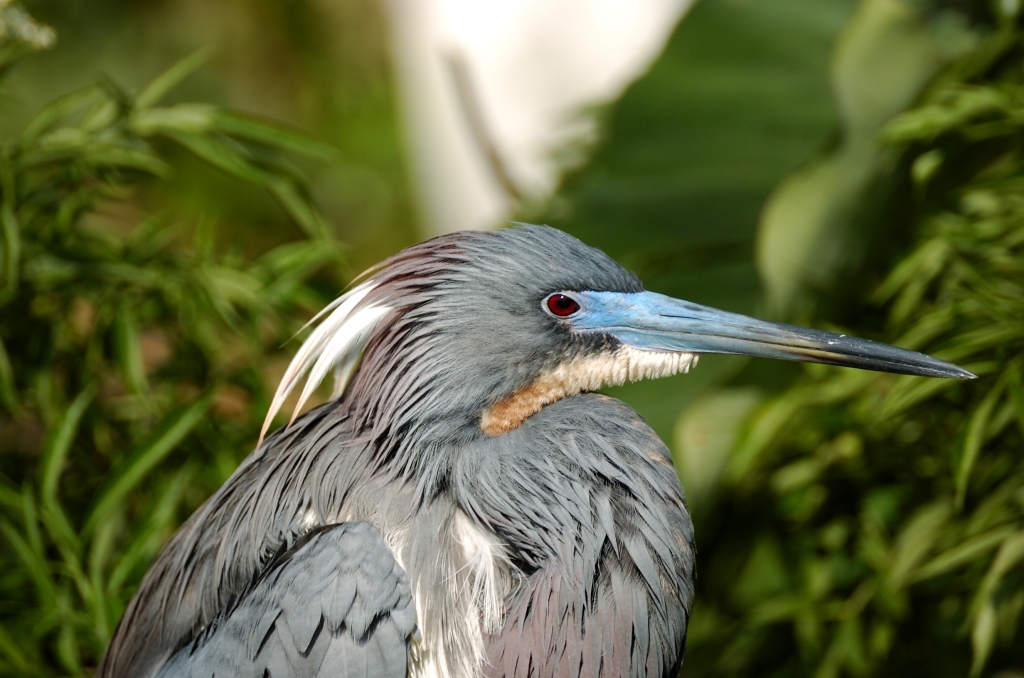
Written by Dr. James J. S. Johnson in the latest Acts And Facts about birds, especially the Tricolored Heron, being affected by the threats of global warming.
“If you love birds, should you fight petroleum production in order to reduce greenhouse gas emissions? How you answer depends on whether you believe man-made global warming is threatening Earth’s climate. That crisis scenario is actually based on evolutionary old-earth assumptions,1 and constant media stories feed the fear.
An amateur naturalist recently sounded the global-warming alarm over tricolored herons expanding their range. He reported that about three-quarters of the population lived in Louisiana in 1976, but now many are relocating northward up the Atlantic coast.2 He had little trouble identifying the culprits:
Isolated islands, prime breeding grounds safe from land-based predators, are being lost everywhere to rising sea levels and devastating storms. The tricolor I was watching was apparently trying to adapt to a rapidly warming planet. It had arrived earlier and farther north than its ancestors ever did [sic].…Birds everywhere are being threatened by the climate crisis. The fossil fuel lobby and its enablers in Washington, DC, are handing tricolors and thousands of other species a life-threatening legacy.2
But wait! Are the fossil fuel lobby and the politically powerful petroleum industry really villains that are forcing the poor tricolored herons to migrate—in temperature-troubled desperation—to a Virginia wildlife refuge “farther north” than their ancestors had ever been? No, because the same writer admitted that earlier heron generations had populated eastern America outside of Louisiana….
“Who provideth for the raven his food? when his young ones cry unto God, they wander for lack of meat.”
The shy bird called Clark’s nutcracker collects food during the growing season and stores it for the cold winter months. In one year, a bird will store between 22,000 and 33,000 seeds in as many as 2,500 locations, which can be more than ten miles apart. But does the little bird remember where he put all those seeds?
Biologists tracked the activity of Clark’s nutcrackers in the San Francisco Peaks in northern Arizona. A small army of researchers tracked the birds’ seed gathering and storing activities. One of the first things they discovered was that the birds quickly figured out that they were being observed. Some refused to store food when researchers were watching them. Others faked storing seeds when they were watched. Back in the lab, researchers studied the storing activity of Eurasian nutcrackers. After the birds stored seeds in a large sand floor, the birds were removed. Then the seeds they stored were dug up. When the birds were allowed to return, they quickly discovered that their seeds had been stolen, so they refused to store any more seeds. In the end, researchers concluded that the nutcrackers recover as many as two-thirds of their stored seeds within 13 months.
Clark’s Nutcracker (Nucifraga columbiana) by Ian
The remarkable memory of these little birds is their gift from God that enables them to be fed all year around.
Prayer: Father, I thank You because You are gracious and generous, not just to the birds, but also to me. Amen.
Ref: Science News, 2/14: 2004, pp. 103-105, Susan Milius, “Where’d I Put That?” Photo: Clark’s nutcracker PD
“And ye shall seek me, and find me, when ye shall search for me with all your heart.” (Jeremiah 29:13)
As many bird watchers are aware, we spend considerable time searching for a bird that we know is near. That can be so frustrating at times. Other times you see a glimpse of the bird, and then when the camera is aimed, it’s not there. Oh, the joys and frustration of looking for God’s Avian Wonders.
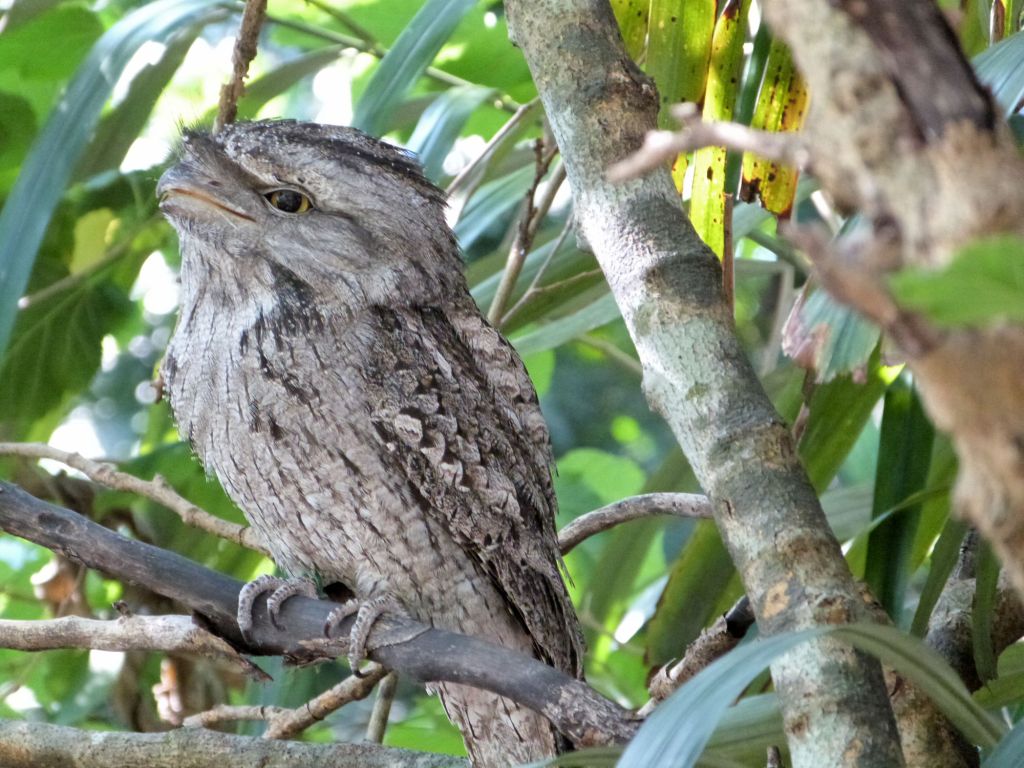
One of the most challenging bird I ever searched for was the Tawny Frogmouth. We were at the Aviary in Zoo Miami and were told he was there. We searched high and low with no luck. When we asked the keeper, he pointed him out to us. We had walked right by the bird. It was in plain sight.
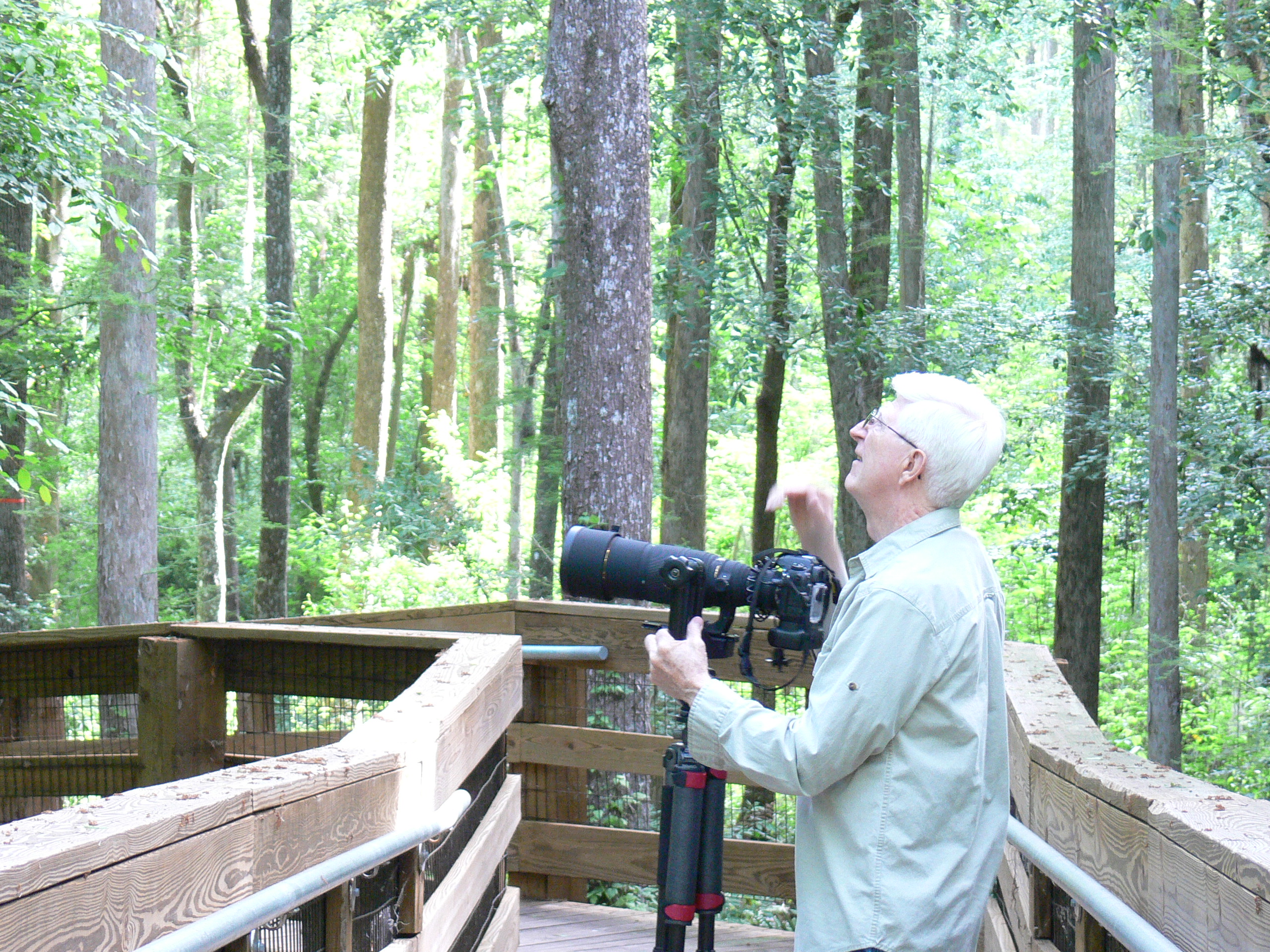
Caught Dan on the Boardwalk trying to find a bird
The Tawny, one of my favorite birds to have to hunt for, is not the only bird that can get away from you. Some of those little jobs are so fast that they are hard to get a photo of also.
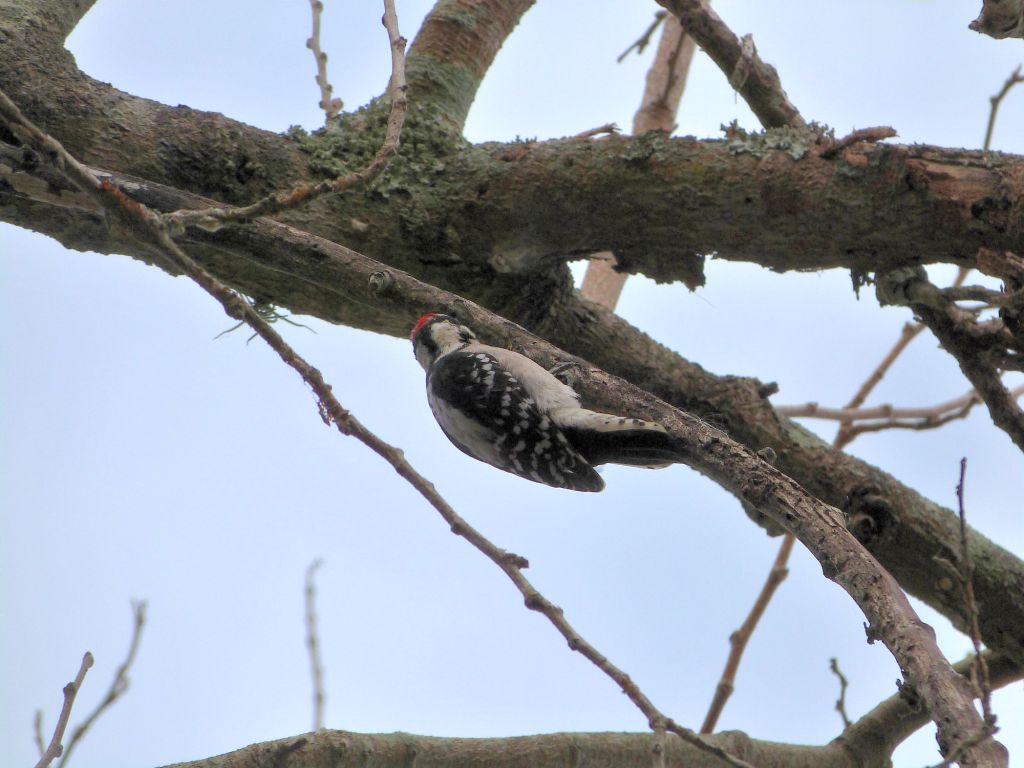
Downy Woodpecker by Lee LPP
The little woodpeckers can move quite speedily while chasing bugs.
Cactus Wren by Dan at Arizona-Sonora Desert Museum
Wrens can also cause you to search and seek. But, I still think these Frogmouths and Potoos were designed by the Creator to blend in with their surroundings. Therefore, giving birdwatchers and photographers a challenge.
Tawny Frogmouth (Podargus strigoides) at Wings of Asia by Lee
With all this searching and finding, there is a good principle here for us to follow. The Lord gave a promise to the Israelites, and that applies to us today.
“For I know the thoughts that I think toward you, saith the Lord, thoughts of peace, and not of evil, to give you an expected end.” “Then shall ye call upon me, and ye shall go and pray unto me, and I will hearken unto you.” “And ye shall seek me, and find me, when ye shall search for me with all your heart.” “And I will be found of you, saith the Lord:...” (Jeremiah 29:11-14a)
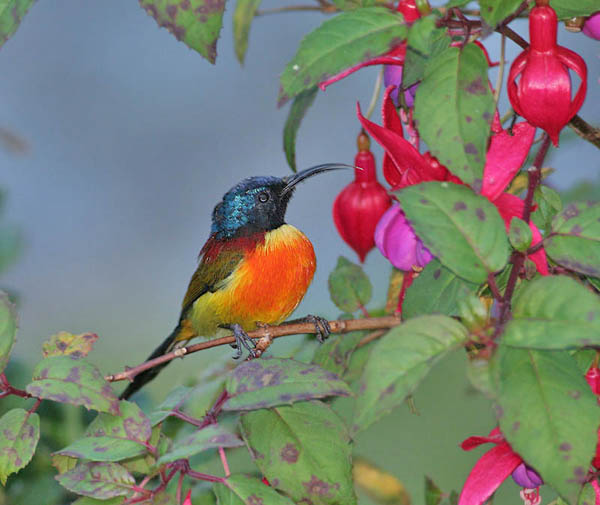
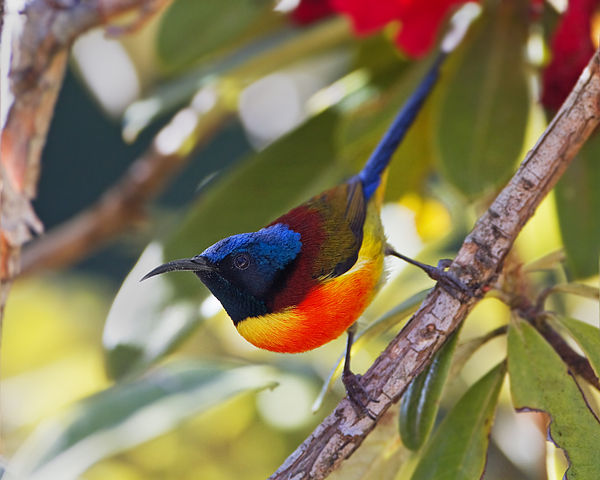
Green-tailed Sunbird (Aethopyga nipalensis) by Peter Ericsson
The green-tailed sunbird (Aethopyga nipalensis) or Nepal yellow-backed sunbird is a species of bird in the family Nectariniidae.
It is found in the northern regions of the Indian subcontinent, stretching eastwards into parts of Southeast Asia.
Its natural habitats are temperate forests and subtropical or tropical moist montane forests. In southeast Szechwan and Yunnan, it lives in open mountain woods with moss-covered trees, from 1825 to 3350 meters elevation.
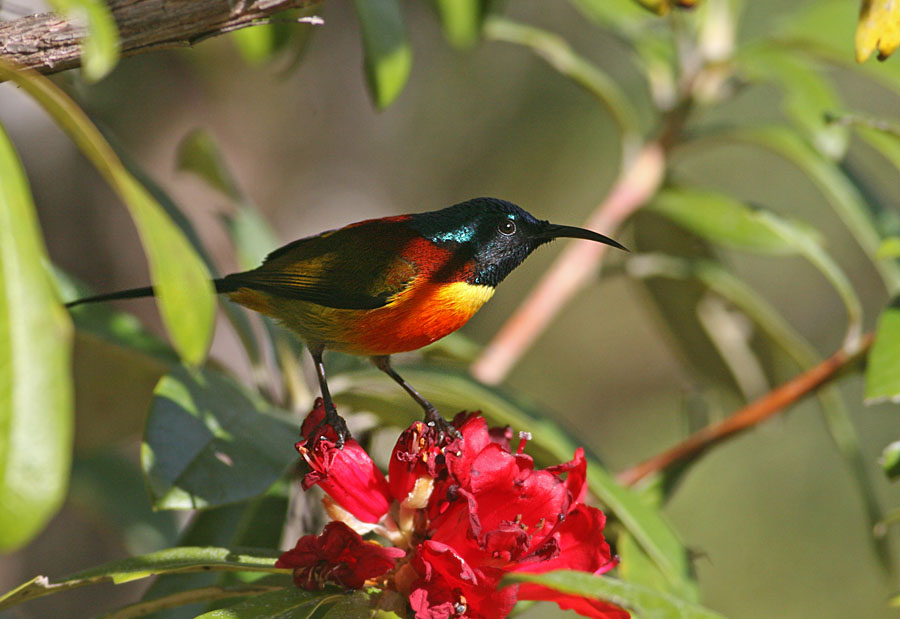
When viewing this bird, the Wordless Book/Wordless Birds came to mind. Let’s see if we can find all the colors need.
There is definitely Gold/yellow on this beautifully created Sunbird from our Creator.
“This GOLD bird reminds us of Heaven. The Bible tells us Heaven has a street of gold! But the best part about Heaven is that God, who created you and me, lives there. The Bible, God’s Word, says: “God so loved the world that He gave His only begotten Son, that whosoever believeth in Him should not perish but have everlasting life.” — John 3:16 Jesus, God the Son, is in Heaven preparing a place for all who put their trust in Him. (John 14:2-3) God is holy and perfect. He cannot allow anything in Heaven that is less than perfect, so there’s one thing that can never be in Heaven. Can you think of what that might be?”
Black/Dark is the next color in the Wordless Book/Birds
It is sin! That is what this DARK bird reminds us of. Sin is anything you think, say, or do that does not please God, like lying, cheating, being selfish, or hurting others. The Bible says: “All have sinned and come short of the glory of God.” — Romans 3:23 That means everyone, big or little, young or old! No matter where you live or who you are, you have sinned. Everyone is born with a “want to” to do wrong. God says that sin must be punished (Romans 6:23), and the punishment for sin is to be separated from God forever in a place of suffering….a place called Hell. But God has a wonderful plan so that you will not have to be punished for your sin!
Red is next which stands for Sin
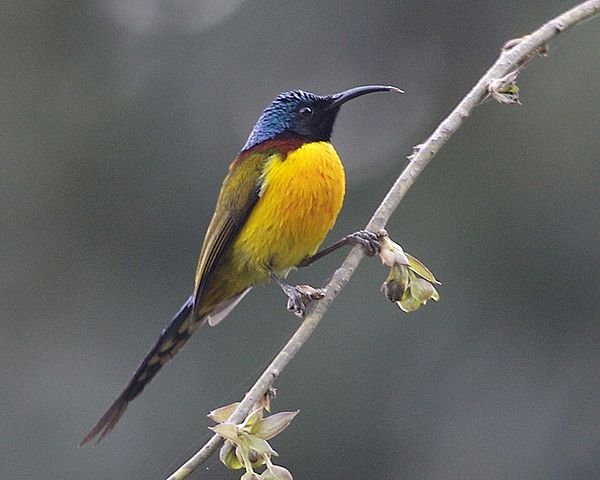
Green-tailed Sunbird (Aethopyga nipalensis) by Peter Ericsson
God sent Jesus Christ, His perfect Son, to be born as a little baby. Jesus lived a perfect life….He never sinned. When He was grown, wicked men nailed Him to a cross. This bird is RED reminding us of Jesus’ blood. The Bible says that without the giving of blood there can be no forgiveness of sin (Hebrews 9:22). So Jesus Christ willingly died to take your sin punishment. “…Christ died for our sins according to the Scriptures; and that He was buried, and that He rose again the third day, according to the Scriptures.“— 1 Corinthians 15:3-4 Now, because of what Jesus has done for you, you can have your sins forgiven. Read on to see how!
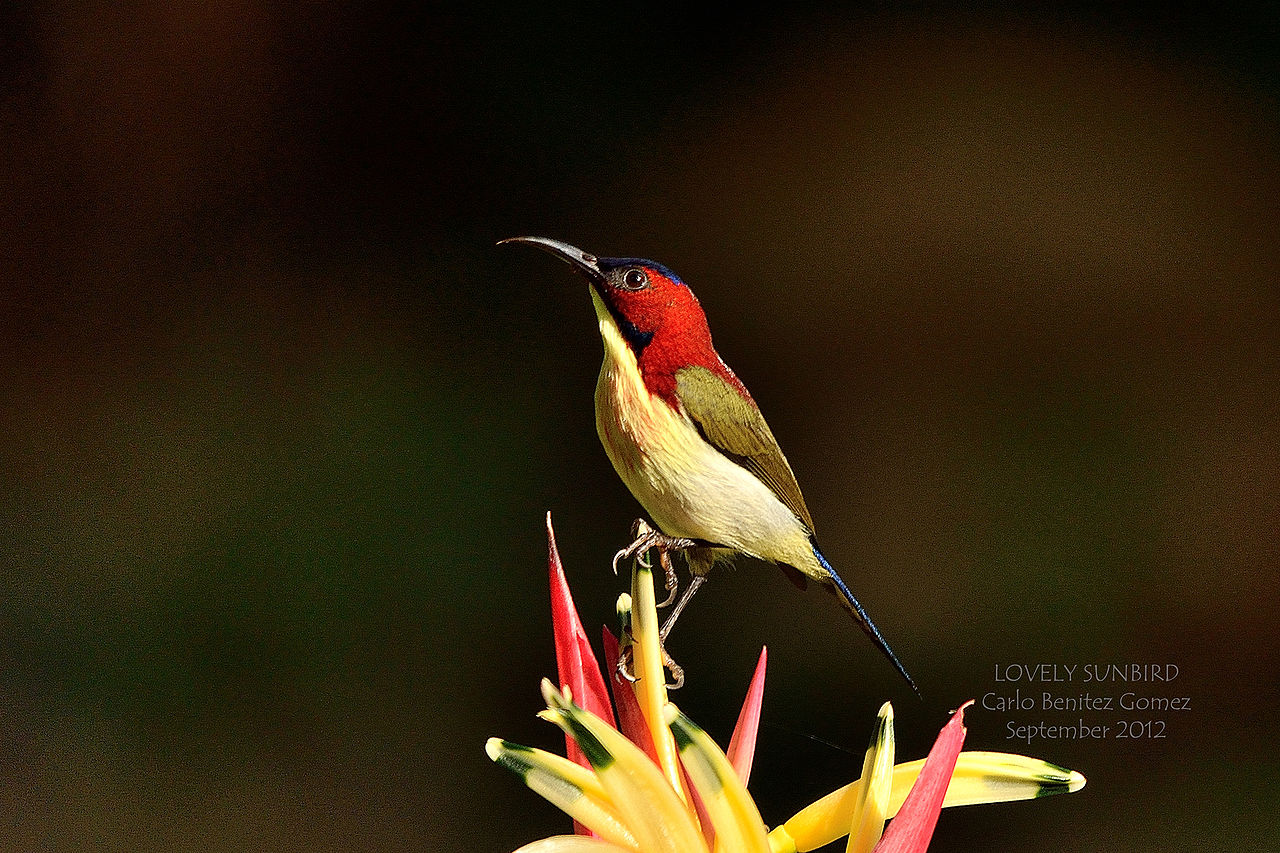
White is a little harder to find on the Green-backed Sunbird, but this Lovely Sunbird has plenty of white. It is in the same family.
The Bible says: “As many as received Him, to them gave He power to become the sons of God, even to them that believed on His name.” — John 1:12 The WHITE bird reminds us of a CLEAN heart. How can you have a clean heart? A = Admit to God you are a sinner and want to turn away from those sins. B = Believe in Jesus Christ, that He is God’s perfect Son who died for your sin, was buried, and rose again. C = Call on Him to save you from your sin. Would you like to do that right now? He has promised to hear, and once you are His child, He will never leave you (Hebrews 13:5). Take a moment and talk to God right now. It will change your life forever. Only one more color! What can it mean?
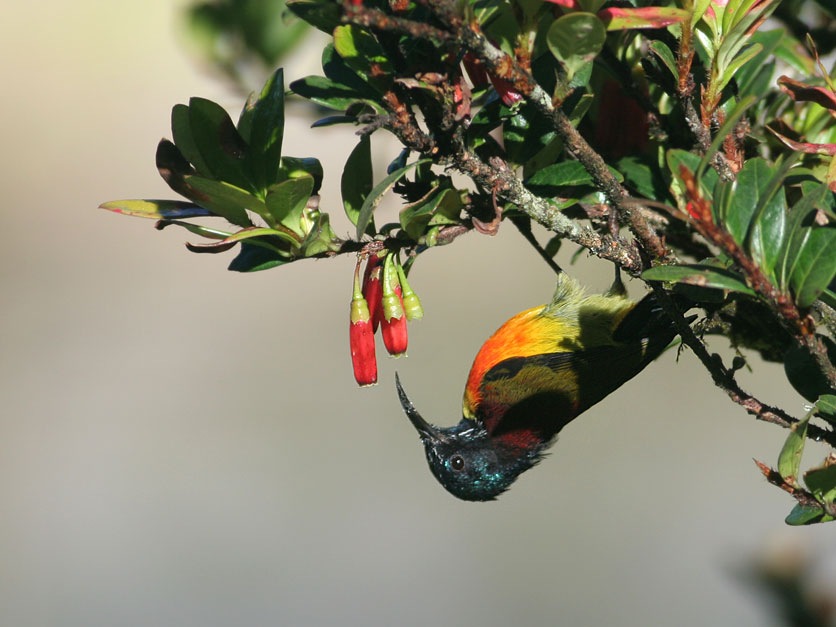
Green is for Growth after you accept the Lord as your personal Savior.
Green-tailed Sunbird (Aethopyga nipalensis) by Peter Ericsson
The GREEN bird stands for things that grow. When you ask God to forgive you and save you, you become His child. God wants you to get to know Him better and to grow to become more like Him. These four things will help you grow:
1. PRAY (talk to God every day)
2. READ & OBEY THE BIBLE (to know what He says, then do it)
3. TELL OTHERS ABOUT JESUS
4. GO TO A BIBLE-BELIEVING CHURCH (where you can learn more about pleasing Him)
As a child of God, if you should sin again, stop and tell Him about it. He promises in His Word… “If we confess our sins, He is faithful and just to forgive us our sins and to cleanse us from all unrighteousness.” — 1 John 1:9 Ask God to help you live a life to please Him! Share the Good News of this story with someone else.
The Wordless Book has been used for many years by CEF (Child Evangelism Fellowship). These words are from CEF.
“So Adam gave names to all cattle, to the birds of the air, and to every beast of the field. …” (Genesis 2:20a NKJV)
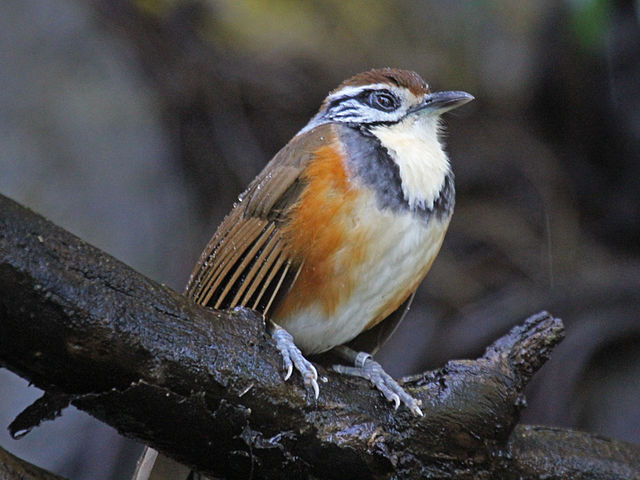
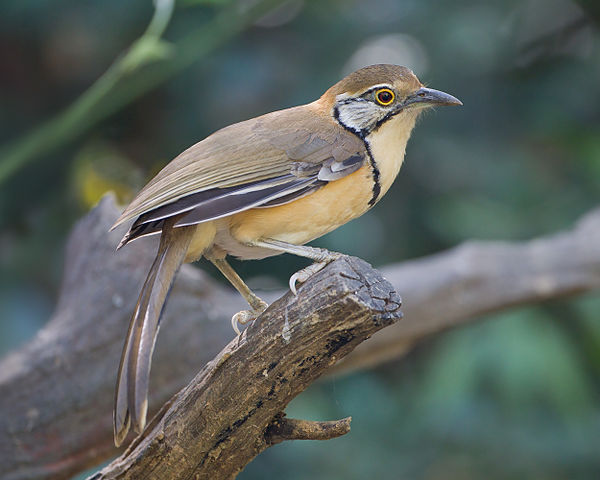
While posting Emma Foster’s latest tale about birds, the Greater Necklaced Laughingthrush (Garrulax pectoralis) was used. I picked this bird because of the “necklaced” part of its name. Where actually do they live and what can we find out about them?
I have always enjoyed the Laughingthrush every since we saw the ones in Zoo Miami’s Aviary.
Red-tailed Laughingthrush by Dan at Wings of Asia Zoo Miami
The Greater Necklaced Laughingthrush doesn’t have much written about it in Wikipedia. Here is their information:
The Greater Necklaced Laughingthrush (Pterorhinus pectoralis) is a species of passerine bird in the family Leiothrichidae. It is found in Bangladesh, Bhutan, China, India, Laos, Myanmar, Nepal, Thailand and Vietnam. It is introduced to the United States. Its natural habitats are subtropical or tropical moist lowland forest and subtropical or tropical moist montane forest.
This species was formerly placed in the genus Garrulax but following the publication of a comprehensive molecular phylogenetic study in 2018, it was moved to the resurrected genus Pterorhinus.
Greater necklaced laughingthrush, Garrulax pectoralis (formerly; Ianthocincla pectoralis ), also known as the necklaced laughingthrush or the black-gorgeted laughingthrush, photographed at Hong Kong, China.
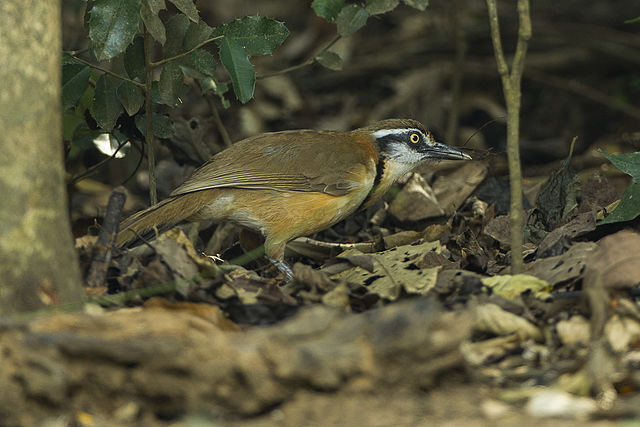
An adult Greater Necklaced Laughingthrush, (Garrulax pectoralis). This species can be identified by the silvery streaked ear coverts encircled by a black band. This distinguishes it from the similarly-appearing Lesser Necklaced Laughingthrush (but that species is pale and has none of the ear covert markings).
The Greater Necklaced Laughingthrush is a member of a large family of passerines known as the the Old World babblers (Timaliidae). This family is quite diverse in size and coloration, but are characterised by soft fluffy plumage — a really lame way to classify them, in my opinion, since there’s a LOT of passerines with “soft fluffy plumage” that are not included in this taxonomic family. Ho-hum.
One weird fact: the American wrentit was recently placed into the Old World babblers but that enigmatic species probably doesn’t belong there.
Another weird fact: there are two groups of birds in the world that are known as “babblers”: the timaliids are one and the other is the (unrelated) Australasian babblers of the family, Pomatostomidae. The pomatostomids are now sometimes known as the pseudo-babblers, because they deceived naturalists, ornithologists and birders for so bloody long.
Okay, so what about these Lesser Necklaced? They look so similar that you really need to look hard to distinguish them. Look real close, and then notice the color of the eyes. Which is which? Lesser has a yellow eye and the greater has a black eye. Oh, and the “necklace” is supposed to be narrower. It is hard to tell that. The “ear covert markings” help, but those eyes are the clincher!
“They came, both men and women, as many as had a willing heart, and brought earrings and nose rings, rings and necklaces, all jewelry of gold, that is, every man who made an offering of gold to the LORD.” (Exodus 35:22 NKJV)
Nora lived in the middle of a sunny wood beside a river that flowed under a small bridge. She spent most of her time building her nest, searching for food, and watching people walk across the bridge. Because Nora lived on a forest preserve, she didn’t have to worry about having to find a new home in case people chopped down her tree. Throughout the day, Nora watched groups of people walk along the many trails that were strewn along the forest preserve.
One day Nora was busy collecting some worms near the river as it rushed by. She looked up at the bridge to see a group of girls walking across and taking pictures of the trees. Nora hopped closer and watched them pass by, but when they left, she spotted something shiny in the bushes near her.
Nora rifled through the bushes and eventually found a small necklace with a heart-shaped locket on the end. Picking it up in her beak, Nora immediately started searching for the group of girls.
Locket
Unfortunately, Nora couldn’t find them anywhere. She followed the path, but it became a fork in the road, and she wasn’t sure which way she should go. It would be difficult to fly ahead because so many trees blocked her view. Nora finally decided to go left, hoping she would eventually find them.
Along the path she found an elderly couple who were biking along the trail and a couple of alligators sleeping in the water, but she didn’t find the girls. Nora decided to cut through the trees and head out to the other path.
After flying for a few minutes with the heavy locket in her beak, Nora rested on a tree in the middle of the woods. A small creek flowed near the tree she sat on. The sun shone down on Nora, making her very hot. Because of the heat and the weight, Nora accidentally dropped the locket into the small creek!
Nora raced after the locket, but the locket tumbled away down the river. Eventually, the bushes surrounding the creek became too thick for her to fly through them. Just as she was about to give up, however, a fish swam upstream with the locket in his mouth, and when Nora told him who the locket was for, he explained that he had seen the girls pass by on the other path. Nora thanked him then flew away with the locket.
When Nora finally caught up with the girls, she placed the locket on the path where they could easily see it. The girl who had lost it was glad to have found it, though she had no idea how it had gotten there. Nora, happy that she had accomplished her mission, flew back to her nest and took a well-deserved nap in the shade of her tree by the river.
“For He will deliver the needy when he cries, The poor also, and him who has no helper.” (Psalms 72:12 NKJV)
“…For your Father knows the things you have need of before you ask Him.” (Matthew 6:8b NKJV)
Lee’s Addition:
Since Emma didn’t indicate what type of bird the story is about, I am using my imagination. Besides, this bird wears a Necklace. :)
This is a change from the normal Avian and Attributes. Normally, it is the attributes of the Lord Jesus Christ and a similar named bird. This time, I found two birds with the names of Stephan’s Emerald and Stephen’s Lorikeet.
Stephen, was a well respected Christian, who was martyred for his faith in the Lord. Acts 6:8 says that Stephen was “full of faith and power, did great wonders and miracles among the people.” (KJV) He was called before the council in Jerusalem for his beliefs.
When he appeared before them,:
“And they stirred up the people, and the elders, and the scribes, and came upon him, and caught him, and brought him to the council, And set up false witnesses, which said, This man ceaseth not to speak blasphemous words against this holy place, and the law: For we have heard him say, that this Jesus of Nazareth shall destroy this place, and shall change the customs which Moses delivered us. And all that sat in the council, looking stedfastly on him, saw his face as it had been the face of an angel.” (Acts 6:12-15 KJV)
Stephen had many good attributes of a Christian. He was teaching about Jesus, and they didn’t like what he was saying. Acts 6 and 7 tell this story. After he showed them how they were wrong about the Lord Jesus Christ being their Messiah, they became incensed and stoned him.
The two birds, I am sure, were not named after Stephen, but you might enjoy getting to meet them.
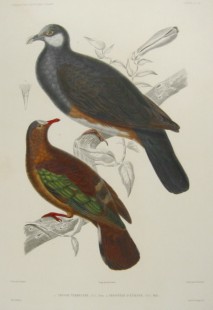
The Stephan’s Emerald Dove (Chalcophaps stephani) is a species of bird in the family Columbidae (Doves). It is found in Sulawesi, New Guinea and the Solomon Islands. It is often called Stephan’s Dove. (Wikipedia) It’s call is like a “woooah” sound. They like “humid evergreen forest interior and dry secondary coastal forest in Sulawesi…” HBA
They seem to be ground feeders and eat fruit that has fallen and also like insects. They also seem to act like nomads.
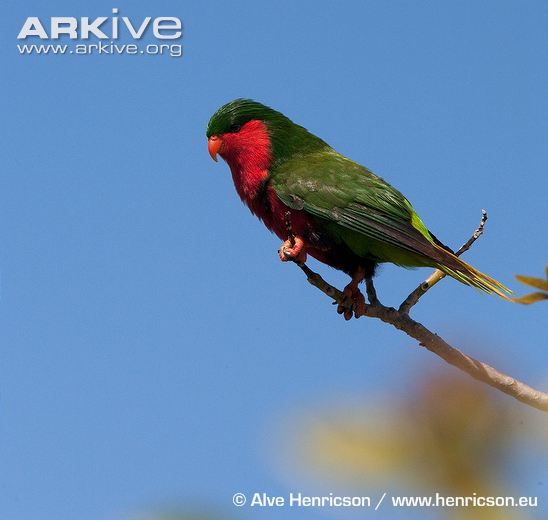
Stephen’s Lorikeet (Vini stepheni)
Stephen’s Lorikeet (Vini stepheni) Drawing WikiC
The Stephen’s Lorikeet (Vini stepheni), also known as the Henderson lorikeet, is a species of parrot in the family Psittaculidae. It is endemic to Henderson Island in the Pitcairn Islands of the South Pacific.
“And God said, Let us make man in our image, after our likeness: and let them have dominion over the fish of the sea, and over the fowl of the air, and over the cattle, and over all the earth, and over every creeping thing that creepeth upon the earth.” Genesis 1:26
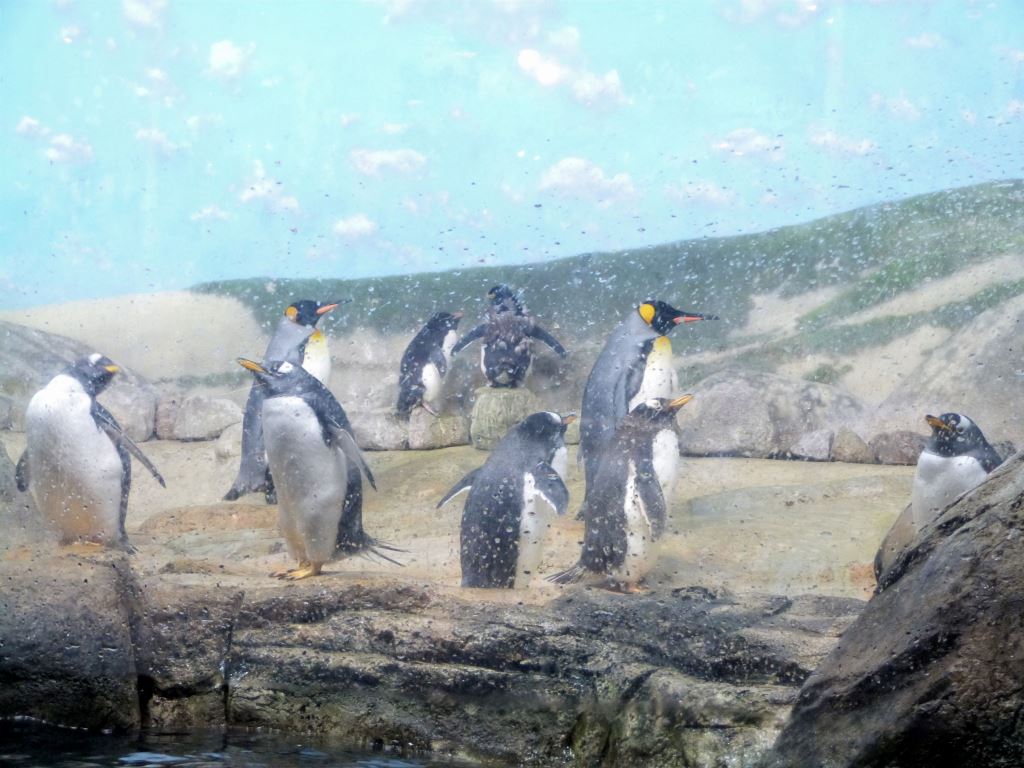
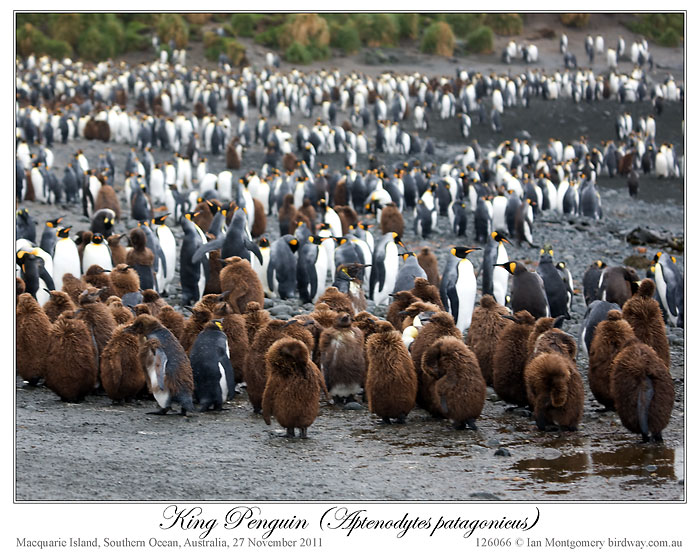
Penguins are disappearing. Don’t worry – it’s not all of them that are disappearing. But the world’s largest colony of king penguins appears to be only 10% the size it was 50 years ago.
The colony, which lives on Île aux Cochons in the southern Indian Ocean, is quite difficult to count. Nevertheless, surveys over the years have shown that it has shrunk dramatically. Reasons given for the decimation include climate change and outbreaks of diseases such as avian cholera.
Penguins are among our favorite animals. Many of us, when we go to the zoo, will make our way quickly to see the penguins. We love to see the endearing, adorable way they walk and then marvel at their grace as they “fly” through the water. Some species of penguins have remarkable habits. One unsubstantiated urban myth about penguins in the Falkland Islands suggests that they watch the overflying planes of the Royal Air Force so intently that they eventually fall over backwards! One comedian complained about the Emperor Penguins, saying that they have the ability to make us feel complete failures as fathers.
Of course, not all penguins are dying out. We are referring to one colony of one species. But does it matter? The answer must be that, yes, we ought to have a concern. We are used to opposing climate change mythology and, therefore, sometimes go to the other extreme, forgetting that God gave us a stewardship to look after this world and protect it.
Prayer: Thank You, Lord, for the stewardship that You gave the human race over creation. We pray for those involved in conservation, that You would raise up those whose work is guided fully by You. Amen.
Ref: CNRS. “Largest king penguin colony has shrunk nearly 90%.” ScienceDaily, 30 July 2018. <www.sciencedaily.com/releases/2018/07/180730120408.htm>. Image: CC BY-SA 3.0.





 The shy bird called Clark’s nutcracker collects food during the growing season and stores it for the cold winter months. In one year, a bird will store between 22,000 and 33,000 seeds in as many as 2,500 locations, which can be more than ten miles apart. But does the little bird remember where he put all those seeds?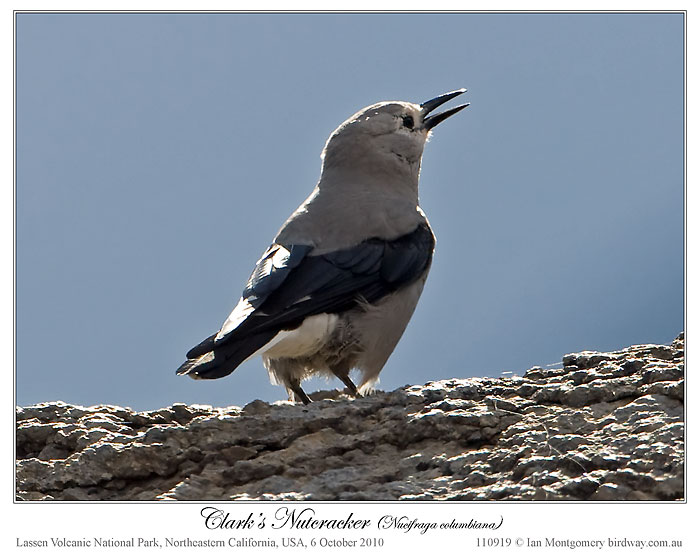











 Penguins are disappearing. Don’t worry – it’s not all of them that are disappearing. But the world’s largest colony of king penguins appears to be only 10% the size it was 50 years ago.