Avian And Attributes – Captain

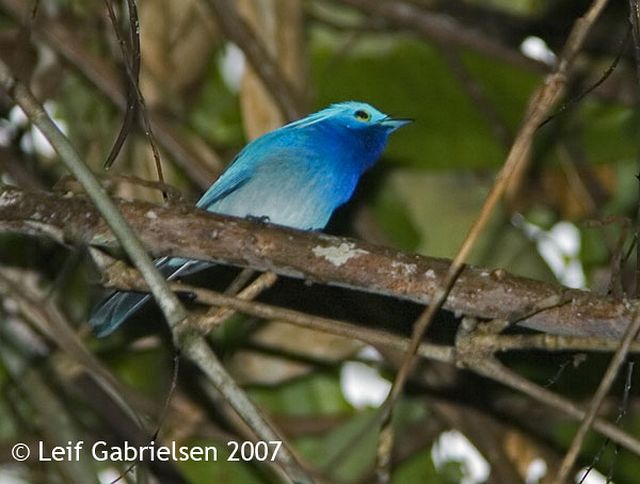
Celestial Monarch (Hypothymis coelestis) ©Leif Gabrielsen

“For it became him, for whom are all things, and by whom are all things, in bringing many sons unto glory, to make the captain of their salvation perfect through sufferings.” (Hebrews 2:10 KJV)

“Neither is there salvation in any other: for there is none other name under heaven given among men, whereby we must be saved.” (Acts 4:12 KJV)


Avian and Attributes – Captain

“We meet this title in one passage of the word of God, and but one, as far as my memory chargeth me, applied to the Lord Jesus Christ; and that is in the second chapter of Hebrews, and the tenth verse. And very sweetly and eminently so, must we consider the name in reference to him. For he it was, most probably, that Joshua saw in vision, long before his incarnation, before the walls of Jericho, as captain of the Lord’s host, and before whom Joshua fell on his face. (Joshua 5:13-15) It is very blessed to see and know the Lord Jesus under this character, and to fight under his banner.” (Poor Man’s Concordance – Robert Hawker)


Celestial Monarch (Hypothymis coelestis)  Male and Female ©Drawing WikiC

Celestial Monarch

The Celestial Monarch (Hypothymis coelestis) is a species of bird in the family Monarchidae, and one of the most attractive of all the monarch flycatchers, with its spectacular blue crest and large yellow eye-ring (neither of which are illustrated in the facing painting). It is endemic to the Philippines. (Wikipedia)

“This striking inhabitant of the forest is unmistakable with its electric-blue plumage. Males are even more arresting in appearance due to the presence of a crest of long, slender feathers on top of the head, which generally droop down and are raised only in excitement. The back, throat and breast are bright cobalt-blue, while the lower back, tail and upperwing are a lighter blue, and the belly is white, washed with light blue . Female celestial monarchs differ slightly in appearance, being generally slightly smaller and slightly duller than males and having a shorter crest. The dark brown eyes are surrounded by a little circle of greenish-yellow skin, and the vivid blue beak is tipped with black (2). Celestial monarchs call with a loud, high-pitched ‘pwee pwee pwee’ ” (ARKive) (Monarchidae – Monarchs Family)


More Avian and Attributes

Birds whose first name starts with “C”

Good News

*
[Definitions from Webster’s Dictionary of American English (1828), unless noted. Bird info from Wikipedia plus.]
What Is The Fate of the Barbuda Warbler?

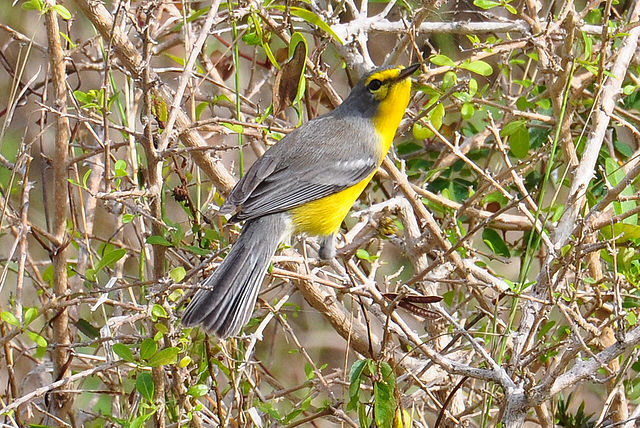
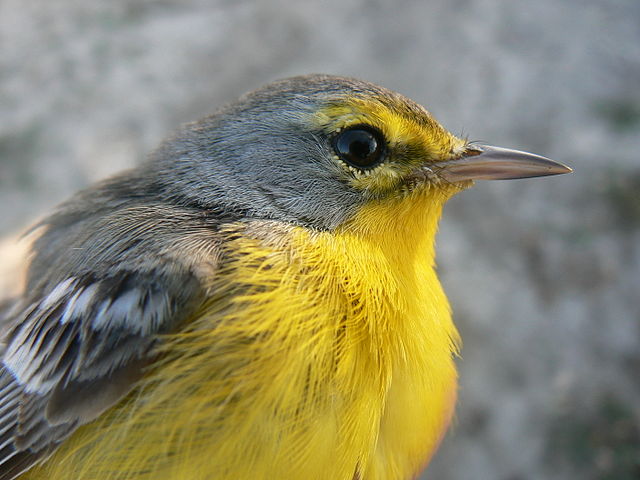
Barbuda Warbler (Setophaga subita) ©WikiC

“The east wind carrieth him away, and he departeth: and as a storm hurleth him out of his place.” (Job 27:21 KJV)

“But the men marvelled, saying, What manner of man is this, that even the winds and the sea obey him!” (Matthew 8:27 KJV)

While working on the last Attributes and Avian article, – Bounty/Bountiful, I was using the “B – First Name of Birds” list to find a bird to use. The Barbuda Warbler (Setophaga subita) caught my attention. Also, one of our readers wrote a comment, wondering what happened to the birds during a hurricane.

The tiny island of Barbuda took a direct hit by Hurricane Irma and basically destroyed at least 95% of all structures. They have now evacuated all residents off of the island. [inhabited for the last 300 years] (BoingBoing article Not One Single Human Left on the Island) “With 95% of the island’s structures completely destroyed, all 1,800 residents have evacuated to nearby Antigua, and now live in shelters or with relatives. The only living creatures left on Barbuda are pets and livestock, which the non-profit group World Animal Protection are trying to feed and rescue.” So, what about the birds?

Barbuda Warbler (Setophaga subita) ©WikiC

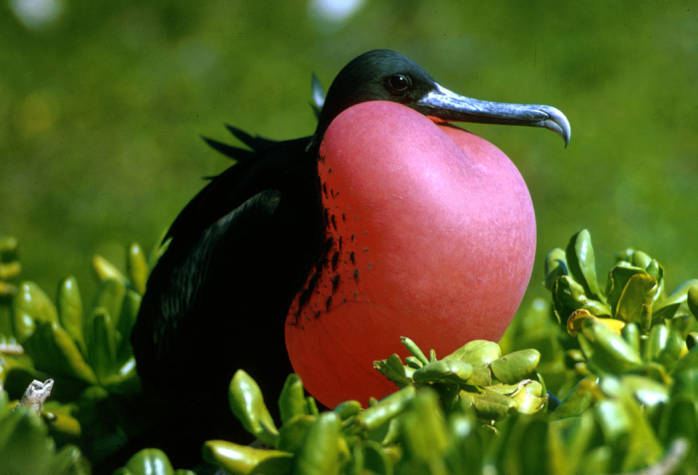
The Barbuda Warbler is endemic to Barbuda. “In addition to the catastrophic impact on Barbuda’s human residents, concern turned to the storm’s effects on the island’s wildlife. The island’s only endemic bird, the near-threatened Barbuda warbler, numbered less than 2,000 individuals prior to the hurricane. It is unknown if the warbler survived the hurricane or its aftermath. Barbuda’s Codrington Lagoon, home to the largest colony of magnificent frigatebirds in the Caribbean, with an estimated 2,500 nesting pairs, was also inundated by the storm surge.” From Hurricane Irma article on Wikipedia. Also, from Wikipedia, “The Barbuda warbler (Setophaga subita) is a species of bird in the Parulidae family. It is endemic to the island of Barbuda in Antigua and Barbuda. Its natural habitat is tropical dry shrubland near wetland areas. It is threatened by habitat loss. It once was considered a subspecies of the Adelaide’s Warbler.”

Magnificent Frigatebird (Fregata magnificens) ©USFWS

Magnificent Frigatebird (Fregata magnificens) ©USFWS

Searching the internet, I couldn’t find out too much about the Barbuda Warbler, but here are a few articles about other bird species that you will find interesting.

Hurricane Irma Disaster Response team assess damage to wildlife populations on Barbuda  – The Bananaquit was found

Hurricane Irma hits Caribbean birds hard, forces closure of Everglades and other parks – BirdWatching – Mentions the Barbuda Warbler

“Irma left the island of Barbuda in ruins; about 95 percent of structures were destroyed or damaged, and nearly all residents were evacuated last week as Hurricane Jose threatened to hit. The fate of Barbuda Warbler, an endemic species that likely numbered less than 2,000 birds before Irma, is unknown.

Jeremy Ross, a scientist with the University of Oklahoma, wonders if Irma was an extinction-level event for the warbler.

Barbuda’s Codrington Lagoon, a RAMSAR-designated wetland and national park, was home to the largest colony of Magnificent Frigatebirds in the region (around 2,500 pairs). According to BirdsCaribbean, the lagoon “was breached during the storm and the sea has flowed in.”

“Thousands of birds must have perished,” said Andrew Dobson, president of BirdsCaribbean, in an article posted on Bernews.com.

Hurricane Irma Rare Bird Round-Up

Dan’s American Flamingo Gardens Photos

One article I wish I hadn’t found, tells about the destruction of so many Flamingo. Translated as “Hundreds of flamingos killed in Cayo Coco by Hurricane Irma

Barbuda Warbler by HBW

Our prayers go out to those who have had to be evacuated from Barbuda, but, also, to all those who have been visited by the Hurricanes this year.

” And I say unto you my friends, Be not afraid of them that kill the body, and after that have no more that they can do. But I will forewarn you whom ye shall fear: Fear him, which after he hath killed hath power to cast into hell; yea, I say unto you, Fear him. Are not five sparrows sold for two farthings, and not one of them is forgotten before God? But even the very hairs of your head are all numbered. Fear not therefore: ye are of more value than many sparrows.” (Luke 12:4-7 KJV)

*


Avian And Attributes – Bountiful/Bountifully

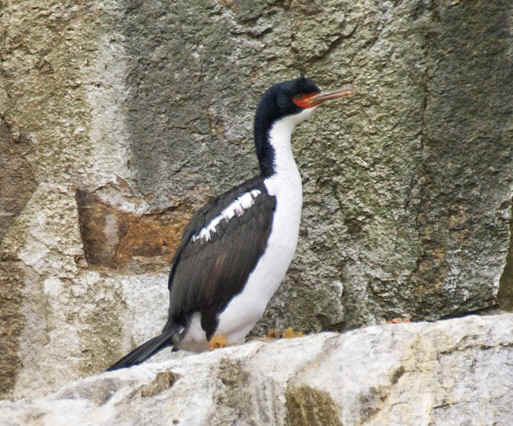
Bounty Shag (Leucocarbo ranfurlyi ) ©WorldBirds

“I will sing unto the LORD, because he hath dealt bountifully with me.” (Psalms 13:6 KJV)

“Return unto thy rest, O my soul; for the LORD hath dealt bountifully with thee.” (Psalms 116:7 KJV)

“GIMEL. Deal bountifully with thy servant, that I may live, and keep thy word.” (Psalms 119:17 KJV)


Avian and Attributes – Bountiful

BOUN’TIFUL, a. [bounty and full.] Free to give; liberal in bestowing gifts and favors; munificent; generous.

God, the bountiful author of our being.

It is followed by of before the thing given, and to before the person receiving.

BOUN’TIFULLY, adv. Liberally; largely; in a bountiful manner.


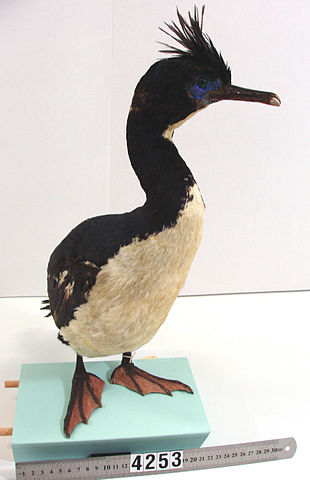
Bounty Shag (Leucocarbo ranfurlyi) Specimen ©WikiC

Bounty Shag

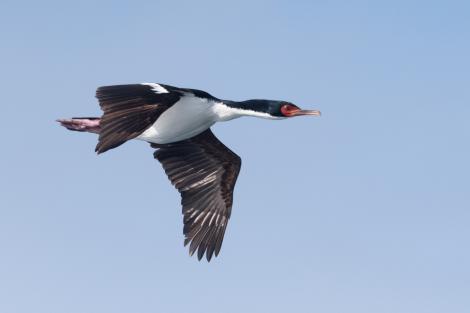
The Bounty Shag (Leucocarbo ranfurlyi), also known as the Bounty Island shag, is a species of cormorant of the Phalacrocoracidae family. They are found only on the tiny and remote Subantarctic Bounty Islands, 670 km south east of New Zealand. Its natural habitats are open seas and rocky shores. In 2005 618 individuals were counted (with roughly 410 mature ones) and the population seems to have remained stable since.

Some taxonomic authorities, including the International Ornithologists’ Union, place this species in the genus Leucocarbo. Others place it in the genus Phalacrocorax.

Size; 71 cm. Large, black-and-white cormorant. Black head, hind neck, lower back, rump, uppertail-coverts, all with metallic blue sheen. White underparts. Pink feet. White patches on wings appear as bar when folded. Caruncles absent. Voice: Male makes call during displays only.

This species as Vulnerable because its very small population and breeding range renders it susceptible to stochastic events and human impacts. The Bounty Islands are a nature reserve and are free of introduced predators. The islands are uninhabited and are seldom visited, so human interference is minimal. (Cormorants, shags – Phalacrocoracidae Family)

Bounty Shag (Leucocarbo ranfurlyi ) ©NZBirdsonline


More Avian and Attributes

Birds whose first name starts with “B “

Good News

*
[Definitions from Webster’s Dictionary of American English (1828), unless noted. Bird info from Wikipedia plus.]
Albert and the Midterm

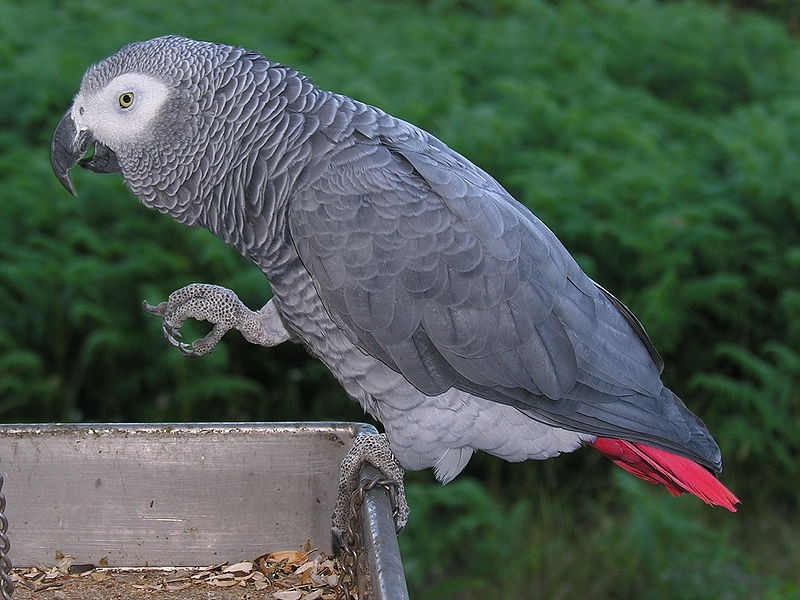
(African) Grey Parrot (Psittacus erithacus lenne) at Parrot Mountain by Lee

Albert and the Midterm by Emma Foster

Once there was a parrot named Albert who lived with a family who had a son called James. James had
just graduated from high school, and summer had just ended. Albert, whose cage was in James’s room,
could tell that every night before he went to bed James was getting more and more nervous.

James left for his first day of classes early Monday morning. Albert waited patiently by his cage all
morning, for James to come home. When James came home, he took the time to tell Albert all about his
day. Because Albert was an African Grey Parrot, Albert understood nearly everything James said and
was able to repeat a lot of his words back to him.

After a week, James came home with his first homework assignment. He was taking psychology, and as
he worked on his homework Albert watched him write down the answers and read through the textbook.
James made sure to highlight the important stuff he needed to know for the test.

After a while, Albert started to learn some important terms in psychology. He would often open up the
book whenever James left his room and read through several sections. Eventually, Albert began
squawking out different words that James had to learn for his upcoming test.

As the first test for James’s class drew closer, he became more and more nervous about it. He started
writing down terms on notecards to memorize and highlighting different sections in the book that he
thought would be on the test. Albert watched intently, following along and moving the flashcards around
with his claws. Every now and then Albert would shout out some of the terms.

Grey Parrot (Psittacus erithacus) WikiC

Grey Parrot (Psittacus erithacus) WikiC

Suddenly James had an idea. He decided that it would be a good idea if Albert quizzed him using the
flashcards. Because Albert was able to say the words, he began squawking out everything James had
written down on the notecards. Albert and James practiced for the entire weekend because James’s test
was on Monday.

Albert waited all Monday morning, wondering if James would do well on his test. Albert had gone over
all of the terms with James so much that he was sure James would do well, but he couldn’t help still
feeling nervous.

James had to wait a few days before he received his test results. When he came home he told Albert he
had gotten at A. In fact, he had received the best grade in the class. He told Albert that his professor had
been very impressed and that he had been surprised when James had told him that Albert had helped him
study. For part of the class period, James’s professor had explained how African Grey Parrots were a very
smart bird because of how many words they could learn, and that they had been studied many times in
psychology. At one point, James’s psychology professor allowed James to bring Albert to class so he
could elaborate on how smart African Grey Parrots were.

From then on Albert helped James study for all of his classes, and James was able to do well in all of
them because of how much he studied. Though sometimes Albert would get carried away by
squawking out the terms in the middle of the night.

Grey Parrot (Psittacus erithacus) by Dan

Grey Parrot (Psittacus erithacus) by Dan


“For he shall deliver the needy when he crieth; …, and him that hath no helper.” (Psalms 72:12 KJV)

“My help cometh from the LORD, which made heaven and earth.” (Psalms 121:2 KJV)


Thanks, Emma for another truly interesting tale. We look forward to each new adventure from your pen ,with great anticipation.

Wikipedia said, “The species is common in captivity and is regularly kept by humans as a companion parrot, prized for its ability to mimic human speech, which makes it one of the most popular avian pets. An escaped pet in Japan was returned to his owner after repeating the owner’s name and address.”

*

Emma’s Stories

*

Avian and Attributes – Zeal

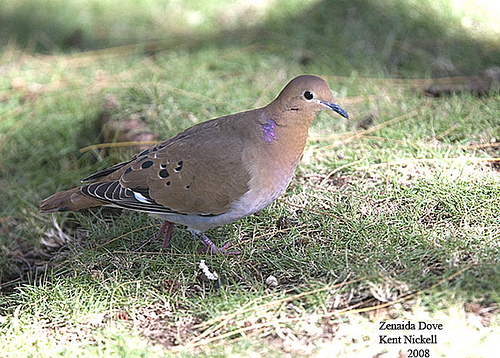
Zenaida Dove (Zenaida aurita) ©WikiC

“For unto us a child is born, unto us a son is given: and the government shall be upon his shoulder: and his name shall be called Wonderful, Counsellor, The mighty God, The everlasting Father, The Prince of Peace. Of the increase of his government and peace there shall be no end, upon the throne of David, and upon his kingdom, to order it, and to establish it with judgment and with justice from henceforth even for ever. The zeal of the LORD of hosts will perform this.” (Isaiah 9:6-7 KJV)

Look down from heaven, and behold from the habitation of thy holiness and of thy glory: where is thy zeal and thy strength, the sounding of thy bowels and of thy mercies toward me? are they restrained?” (Isaiah 63:15 KJV)

“For I bear them record that they have a zeal of God, but not according to knowledge.” (Romans 10:2 KJV)


Avian and Attributes – Zeal

ZEAL, n. [Gr., L.] Passionate ardor in the pursuit of any thing. In general, zeal is an eagerness of desire to accomplish or obtain some object, and it may be manifested either in favor of any person or thing, or in opposition to it, and in a good or bad cause.

They have a zeal of God, but not according to knowledge. Rom 10.

A zeal for liberty is sometimes an eagerness to subvert, with little care what shall be established.Z


Zenaida Dove – [No bird’s last name begins with “Z”]

The Zenaida Dove (Zenaida aurita) is a member of the bird family Columbidae, which includes doves and pigeons. It is the national bird of Anguilla, where it is commonly (but erroneously) referred to as a turtle dove. It lays two white eggs on a flimsy platform built on a tree or shrub. It also nests in rock crevices and on grassy vegetation if no predators are present. It has been recorded that some birds have up to 4 broods per year. Eggs take approximately two weeks to hatch, and the young chicks typically fledge after only two weeks in the nest. Parents feed the young pigeon’s milk, a nutrient rich substance regurgitated from its crop.

The bird is resident and abundant over much of its range. The Zenaida Dove is approximately 28–30 cm (11–12 in) in length. It looks very similar to the mourning dove, but is smaller in size, has a shorter, more rounded tail, and is a bit more darkly colored. It is also distinguished from the mourning dove by showing white on the trailing edge of its wings in while in flight. The mourning dove does not have the white trailing edge. (Columbidae – Pigeons, Doves Family)

*** This ends my challenge to Name an Attribute of God, and also show a bird whose last name began with the first letter of the attribute. I had to make a few adjustment, like this Zenaida Dove and X-Exalted. I have decided to go through more Attributes of God alphabetically. This time, the First name of a bird will be used. *** [Trust you enjoyed the first round.] ***

*** Due to Hurricane Irma, we are going to a shelter to hunker down. I may wait to begin the next part of the series when things settle down. Please keep all us in your prayers. ***


More Avian and Attributes

Birds whose first name start with “Z”

Good News

*
[Definitions from Webster’s Dictionary of American English (1828), unless noted. Bird info from Wikipedia plus.]

Avian and Attributes – Yahweh

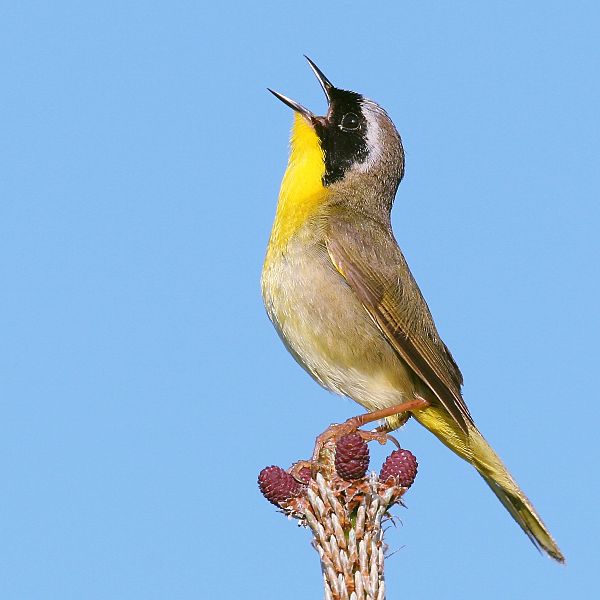
Common Yellowthroat (Geothlypis trichas) ©WikiC

Common Yellowthroat (Geothlypis trichas) ©WikiC

“I appeared to Abraham, to Isaac, and to Jacob as God Almighty [El-Shaddai], but by My name the Lord [Yahweh–the redemptive name of God] I did not make Myself known to them [in acts and great miracles].”[Gen. 17:1.] (Exodus 6:3 AMP)

“And I appeared unto Abraham, unto Isaac, and unto Jacob, by the name of God Almighty, but by my name JEHOVAH was I not known to them.” (Exodus 6:3 KJV)


Avian and Attributes – Yahweh

YAHWEH (YHWH)
Yahweh is the most holy name for God in Old Testament usually translated LORD (iLumina Encyclopedia)

Yahweh, or Jehovah, was the personal name of God by which the Israelites knew him as their God – and their God was the one and only true God (Exo_4:22; 32:27; Deu_6:4; 1Sa_17:45). When they wanted to name a place after some special event where they had seen God at work, they often formed the name by combining God’s name with a suitable Hebrew word (Gen_22:8,14; Exo_17:15; Jdg_6:24; Eze_48:35). They also combined shortened forms of Yahweh (Jehovah) with other words to form names for people (2Ki_11:1-2,4,21).

Usage in Hebrew
The word ‘Jehovah’ probably never existed in the Hebrew language. Originally Hebrew was written with consonants only, the readers supplying the vowels as they read. The word from which ‘Jehovah’ comes consists of the consonants YHWH, and was probably pronounced ‘Yahweh’. Transliterations of the word in other languages support this as the likely pronunciation. (Bridgeway Bible Dictionary)


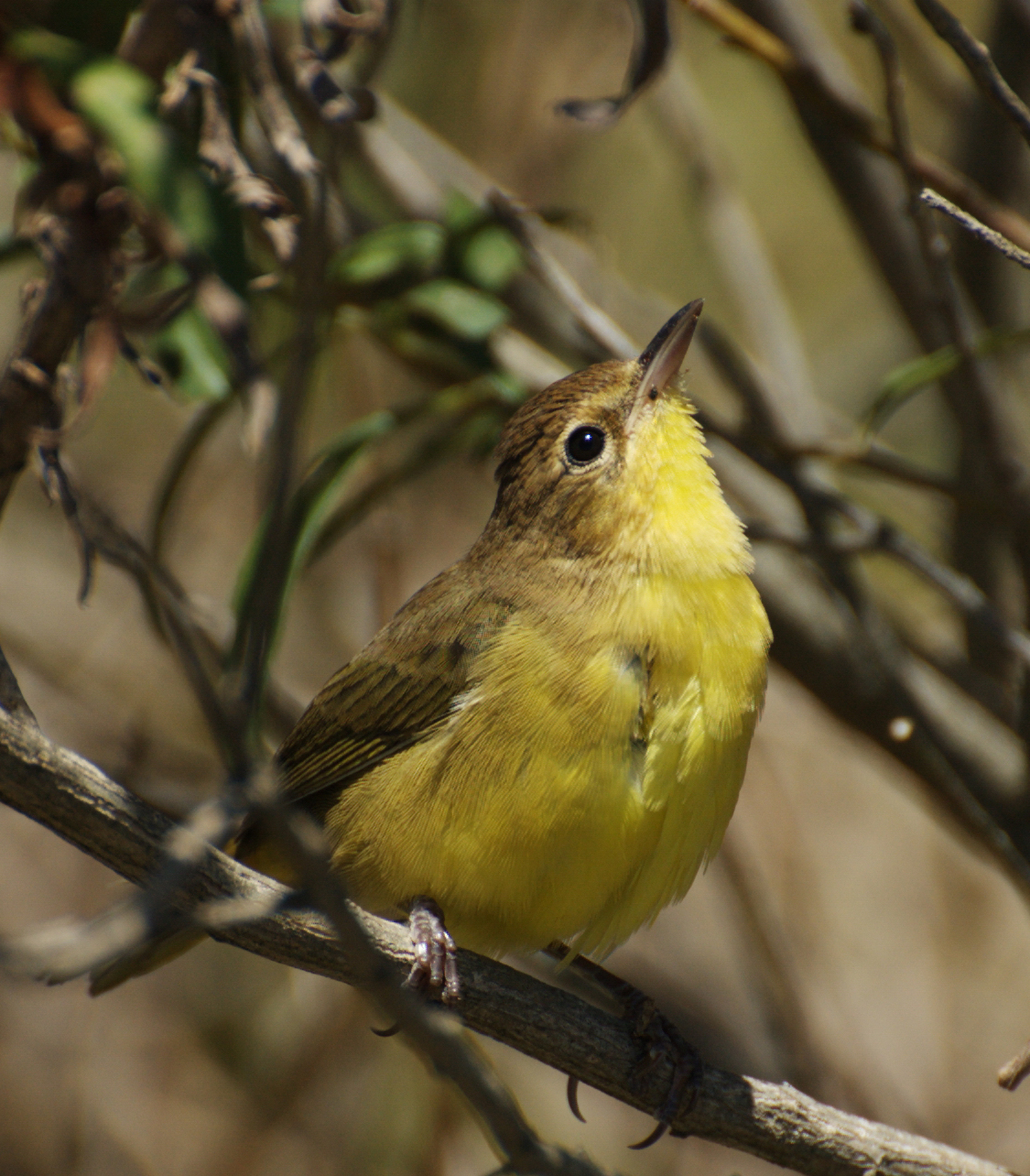
Common Yellowthroat at Circle B by Lee

Common Yellowthroat at Circle B by Lee

Yellowthroats

The Yellowthroats are New World warblers in the genus Geothlypis. Most members of the group have localized ranges in Mexico and Central America, but the masked Yellowthroat has an extensive South American distribution, and common yellowthroat, the only migratory species in the group, breeds over much of North America.

All the yellowthroats have similar plumage, with yellow-green upperparts, yellow breast, and a mainly black bill. The adult male has a black facemask of variable extent, usually bordered above with a grey band. The female is similar, but lacks the black mask, and may be duller in plumage.

Southern Yellowthroat (Geothlypis velata) ©WikiC

The breeding habitat of these warblers is typically marshes and other wet areas with dense low vegetation. The eggs, two in most species, but up to five for common yellowthroat, are laid in a lined cup nest low in grass or rank vegetation. (Parulidae – New World Warblers Family)


More Avian and Attributes

Birds whose last name start with “Y”

Good News

*
[Definitions from Webster’s Dictionary of American English (1828), unless noted. Bird info from Wikipedia plus.]
Hurricane Irma and the Animals at the Zoos

Greater Yellownape (Chrysophlegma flavinucha) female Zoo Miami by Dan

Greater Yellownape (Chrysophlegma flavinucha) female Zoo Miami by Dan

“And there arose a great storm of wind, and the waves beat into the ship, so that it was now full. And he was in the hinder part of the ship, asleep on a pillow: and they awake him, and say unto him, Master, carest thou not that we perish? And he arose, and rebuked the wind, and said unto the sea, Peace, be still. And the wind ceased, and there was a great calm. And he said unto them, Why are ye so fearful? how is it that ye have no faith? And they feared exceedingly, and said one to another, What manner of man is this, that even the wind and the sea obey him?” (Mark 4:37-41 KJV)

We here in Florida are preparing for Hurricane Irma to impact our state in the next few days. Dan and I have put in our supplies, and our just waiting to make a final decision to stay or go to a shelter. When we lived in Fort Lauderdale years ago, we went through the fringe of Hurricane Andrew. As you know, we like to visit zoos, especially Zoo Miami. During Andrew, the then Miami Metro Zoo was devastated. Thankfully, it was rebuilt and renamed Zoo Miami.

Thought I would check to see what is being done around the state at some of our favorite Zoos. What I found was more of what they did in previous hurricanes to protect the animals.

Victoria Crowned Pigeon (Goura victoria) by Lee at Zoo Miami

Zoo Miami is right in the path of a direct hit from Irma. The Wings of Asia aviary was built to new strong hurricane strengths, and we trust it can stand up to this new threat. Here are some links to what preparations are happening.

Animal caretakers prepping for Irma with lessons learned from Andrew

“Zoo Miami’s flamingos won’t be riding out Hurricane Irma in a bathroom like they were 25 years ago when Hurricane Andrew devastated the park.

Instead, the park’s majestic birds will be inside their steel and concrete enclosure—an upgrade from the iconic photo that shows the birds huddled in a hay-filled bathroom.

“It’s one of the things we learned from Andrew,” said Ron Magill a spokesman for Zoo Miami. “They will be safe.” CLICK THE LINK TO READ THE REST.

Here are two clips from the Hurricane Andrew damage.


*

**

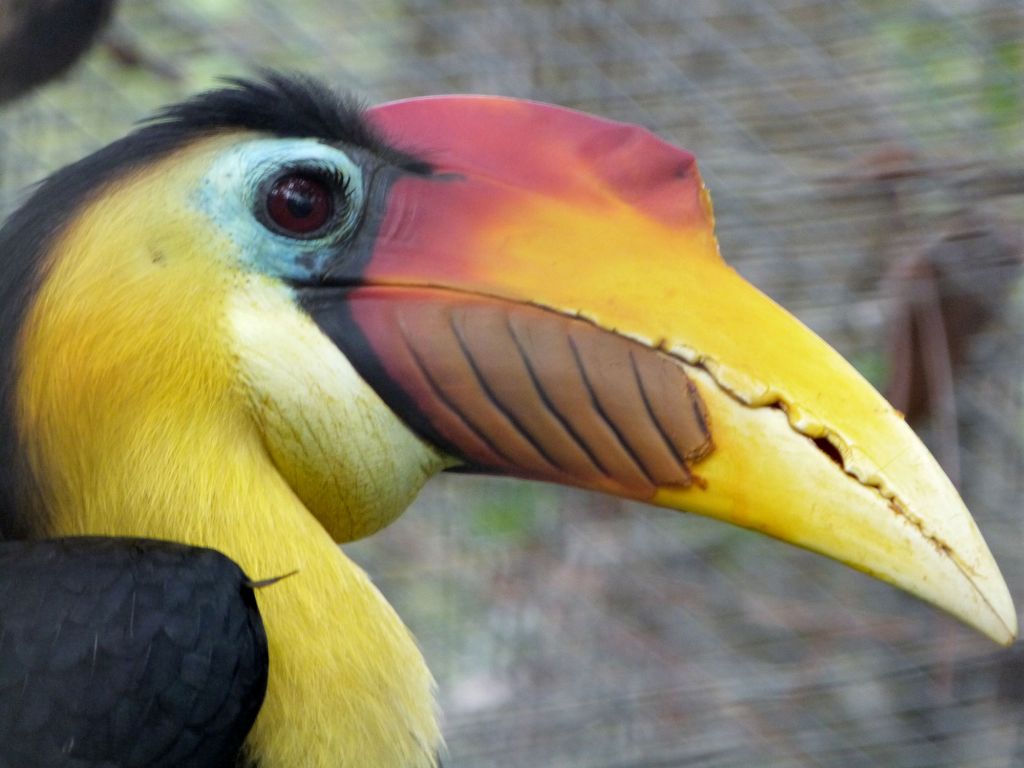
Wrinkled Hornbill (Aceros corrugatus) Brevard Zoo by Lee

Wrinkled Hornbill (Aceros corrugatus) Brevard Zoo by Lee

Brevard Zoo – Viera, Florida [from an article in Florida Today] They are on a “wait and see,”

“VIERA — Officials at Brevard Zoo, like a lot of people, are keeping a careful eye on Hurricane Irma.

But as of now it’s business as usual for the zoo staff and the 800 animals there.

Elliot Zirulnik, the communications manager at the zoo, said the zoo has a hurricane plan in place, which includes two-week stockpiles of food for the animals.

If a hurricane warning is issued for the area, then zoo staff will work on securing the animals.

The 800 animals at the zoo consist of 165 species.

“It’s a lot of work but it’s something our team is prepared for,” Zirulnik said.

The zoo is located in Viera, off Wickham Road, near Interstate 95.”

**

Black-crowned Night Heron (Nycticorax nycticorax) Jax Zoo by Lee

Jacksonville Zoo

Couldn’t find where they have written about the current hurricane approaching, but here is an interesting article about last year when Hurrican Matthew came through.

The Jacksonville Zoo bringing in ‘ride-out’ team to help protect animals, facility from Hurricane Matthew

I did not list Lowry Park Zoo in Tampa because it appears the hurricane is going to go up the east coast of Florida. They will prepare in Tampa, but also “wait and see.”

Inca Tern at Lowry Park Zoo by Lee

The Lord is in control of this storm and already knows where it will go, what and who will be affected by Hurricane Andrew. Your prayers for our residents of Florida; both we humans and the critters.

“The LORD is good, a strong hold in the day of trouble; and he knoweth them that trust in him.” (Nahum 1:7 KJV)

***

Birdwatching at Zoos

Avian and Attributes – X-Exalted

Plain Xenops (Xenops minutus) ©WikiC

Plain Xenops (Xenops minutus) ©WikiC

“Be still, and know that I am God: I will be exalted among the heathen, I will be exalted in the earth.” (Psalms 46:10 KJV)

“For thou, LORD, art high above all the earth: thou art exalted far above all gods.” (Psalms 97:9 KJV)

“Wherefore God also hath highly exalted him, and given him a name which is above every name:
(Philippians 2:9 KJV)”


Avian and Attributes – X – Exalted

EXALT’ED, pp. Raised to a lofty height; elevated; honored with office or rank; extolled; magnified; refined; dignified; sublime.
Time never fails to bring every exalted reputation to a strict scrutiny.


Streaked Xenops (Xenops rutilans) ©WikiC

Xenops is a genus in the bird family Furnariidae, the ovenbirds. They are found in Mexico, Central America and South America and tropical rain forest.

They are small birds with a longish tail, a laterally flattened bill with an upturned tip (except in the Slender-billed Xenops), brown back and buff or rufous wing stripe. They forage for insects on bark, rotting stumps or bare twigs, moving mechanically in all directions on the trunk like a woodcreeper, but without using the tail as a prop. (Furnariidae – Ovenbird Family)


More Avian and Attributes

Birds whose last name start with “X”

Birds of the World – Furnariidae – Ovenbird Family

Good News

*
[Definitions from Webster’s Dictionary of American English (1828), unless noted. Bird info from Wikipedia plus.]
Avian and Attributes – Way

Black-capped White-eye Zosterops atricapilla by Peter Ericsson

Black-capped White-eye Zosterops atricapilla by Peter Ericsson

“Jesus saith unto him, I am the way, the truth, and the life: no man cometh unto the Father, but by me. If ye had known me, ye should have known my Father also: and from henceforth ye know him, and have seen him.” (John 14:6-7 KJV)

“Having therefore, brethren, boldness to enter into the holiest by the blood of Jesus, By a new and living way, which he hath consecrated for us, through the veil, that is to say, his flesh;” (Hebrews 10:19-20 KJV)

“I will instruct thee and teach thee in the way which thou shalt go: I will guide thee with mine eye.” (Psalms 32:8 KJV)

“I have taught thee in the way of wisdom; I have led thee in right paths.” (Proverbs 4:11 KJV)


Avian and Attributes – Way

WAY, n. [G., L.]
1. Literally, a passing; hence, a passage; the place of passing; hence, a road of any kind; a highway; a private road; a lane; a street; any place for the passing of men; cattle or other animals; a word of very comprehensive signification.
2. Length of space; as a great way; a little way.
3. Course; direction of motion or travel. What way did he take? Which way shall I go? Keep in the way of truth and knowledge.

In Scripture, the ways of God, are his providential government, or his works. Rom 11. Job 11.


Reunion Olive White-eye (Zosterops olivaceus) ©WikiC

Reunion Olive White-eye (Zosterops olivaceus) ©WikiC

White Eyes

The white-eyes are small passerine birds native to tropical, subtropical and temperate Sub-Saharan Africa, southern and eastern Asia, and Australasia. White-eyes inhabit most tropical islands in the Indian Ocean, the western Pacific Ocean, and the Gulf of Guinea. Discounting some widespread members of the genus Zosterops, most species are endemic to single islands or archipelagos. The Silvereye, Zosterops lateralis, naturally colonised New Zealand, where it is known as the “Wax-eye” or Tauhau (“stranger”), from 1855. The Silvereye has also been introduced to the Society Islands in French Polynesia, while the Japanese White-eye has been introduced to Hawaii.

Japanese White-eye (Zosterops japonicus) by Margaret Sloan

Japanese White-eye (Zosterops japonicus) by Margaret Sloan

White-eyes are mostly of undistinguished appearance, the plumage being generally greenish olive above, and pale grey below. Some species have a white or bright yellow throat, breast or lower parts, and several have buff flanks. As their common name implies, many species have a conspicuous ring of tiny white feathers around their eyes. The scientific name of the group also reflects this latter feature, being derived from the Ancient Greek for “girdle-eye”. They have rounded wings and strong legs. Like many other nectarivorous birds, they have slender, pointed bills, and brush-tipped tongues. The size ranges up to 15 cm (6 inches) in length. (Zosteropidae – White-eyes Family)


More Avian and Attributes

Birds whose last name start with “W”

White-eyes – Zosteropidae Family

Ian’s Bird of the Week – Canary (Yellow) White-eye

Oriental White-eye – The Grace Seeker..

Ian’s Bird of the Week – Christmas Island White-Eye

Good News

*
[Definitions from Webster’s Dictionary of American English (1828), unless noted. Bird info from Wikipedia plus.]
Avian and Attributes – Vine

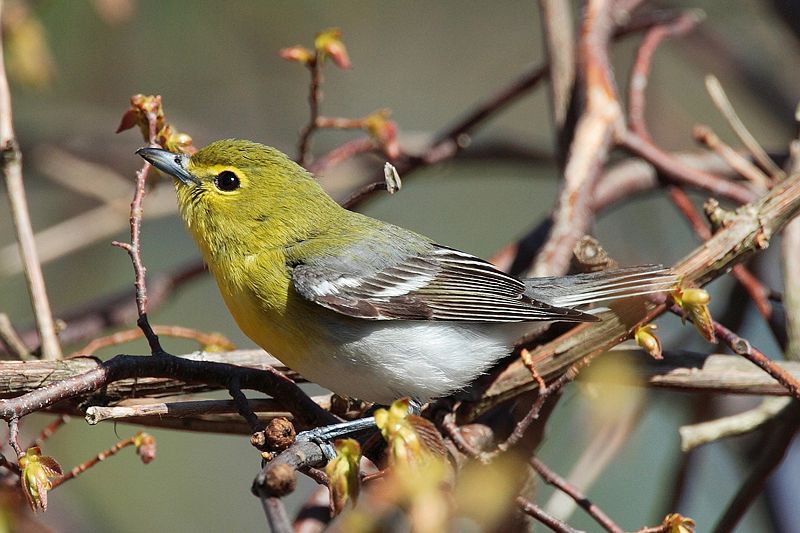
Yellow-throated Vireo (Vireo flavifrons) ©WikiC

Yellow-throated Vireo (Vireo flavifrons) ©WikiC

“I am the true vine, and my Father is the husbandman.” (John 15:1 KJV)

“Abide in me, and I in you. As the branch cannot bear fruit of itself, except it abide in the vine; no more can ye, except ye abide in me. I am the vine, ye are the branches: He that abideth in me, and I in him, the same bringeth forth much fruit: for without me ye can do nothing”…”If ye abide in me, and my words abide in you, ye shall ask what ye will, and it shall be done unto you. Herein is my Father glorified, that ye bear much fruit; so shall ye be my disciples.” (John 15:4-5, 7-8 KJV)


Avian and Attributes – Vine

Christ says of himself, “I am the vine” (John 15:1). In one of his parables also (Matthew 21:33) our Lord compares his Church to a vineyard which “a certain householder planted, and hedged round about,” etc.). [Easton]

John 15:1 (a) In this case the Lord JESUS Himself is the vine. Those who are saved by His grace are the branches. GOD sees the believer as a very part of CHRIST JESUS Himself. The branch bears the likeness of the vine, and has the same living sap flowing through it constantly. It bears the kind of fruit that characterizes the vine. All the fruit on the vine is found on the branches. Let us be bearing fruit for Him. [Wilson’s Dictionary of Bible Types]


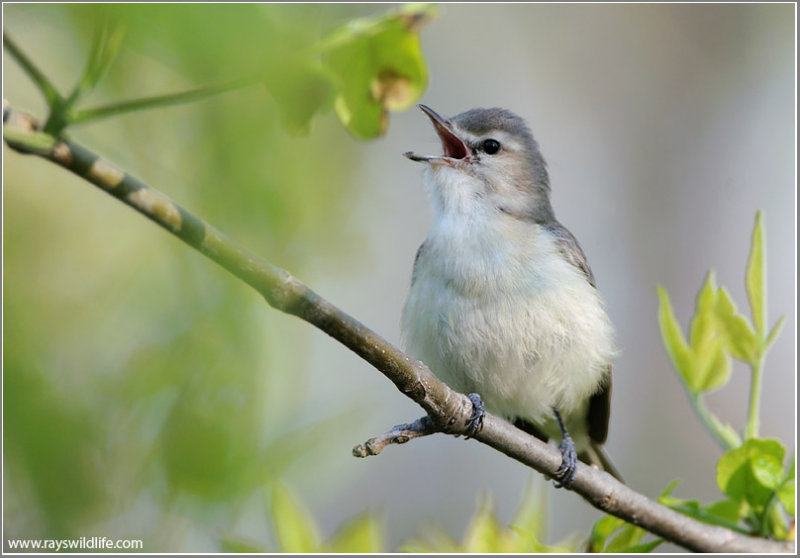
Warbling Vireo (Vireo gilvus) by Raymond Barlow

Warbling Vireo (Vireo gilvus) by Raymond Barlow

Vireos

The vireos /ˈvɪri.z/ make up a family, Vireonidae, of small to medium-sized passerine birds (mostly) restricted to the New World. “Vireo” is a Latin word referring to a green migratory bird, perhaps the female golden oriole, possibly the European greenfinch.

They are typically dull-plumaged and greenish in color, the smaller species resembling wood warblers apart from their heavier bills.

Most species are found in Middle America and northern South America. Thirteen species of true vireos occur farther north, in the United States, Bermuda and Canada; of these all but Hutton’s vireo are migratory. Members of the family seldom fly long distances except in migration.[4] They inhabit forest environments, with different species preferring forest canopies, undergrowth, or mangrove swamps.

Males of most species are persistent singers. Songs are usually rather simple, monotonous in some species of the Caribbean littoral and islands, and most elaborate and pleasant to human ears in the Chocó vireo and the peppershrikes. (Vireonidae – Vireo Family)


More Avian and Attributes

Birds whose last name start with “V”

Birds Vol 1 #6 – The Yellow-throated Vireo

The Red-eyed Vireo – The Persistent Singer… by ajmithra

Good News

*
[Definitions from Webster’s Dictionary of American English (1828), unless noted. Bird info from Wikipedia plus.]

Avian and Attributes – Undefiled

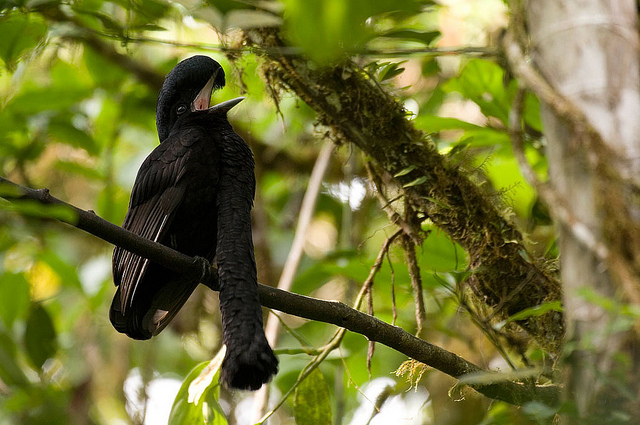
Long-wattled Umbrellabird (Cephalopterus penduliger) ©©Mindoconexion

Long-wattled Umbrellabird (Cephalopterus penduliger) ©©Mindoconexion

“For such an high priest became us, who is holy, harmless, undefiled, separate from sinners, and made higher than the heavens;” (Hebrews 7:26 KJV)

“To an inheritance incorruptible, and undefiled, and that fadeth not away, reserved in heaven for you,” (1 Peter 1:4 KJV)


Avian and Attributes – Undefiled

Undefiled

UNDEFI’LED, a. Not defiled; not polluted; not vitiated. (Webster 1828)

un-dḗ-fı̄ld´: In the Old Testament תּם, tām, “perfect,” presents the positive side. Hence, Psa_119:1 is translated in the Revised Version: “Blessed are they that are perfect in the way.” In the New Testament ἀμίαντος, amı́antos, presents the negative side, “unstained” “unsullied” “without taint.” Used to describe the sinlessness of Christ (Heb_7:26), to declare the marriage act free from all guilt, disgrace or shame (Heb_13:4), to contrast the heavenly inheritance with earthly possessions (1Pe_1:4). (ISBE)


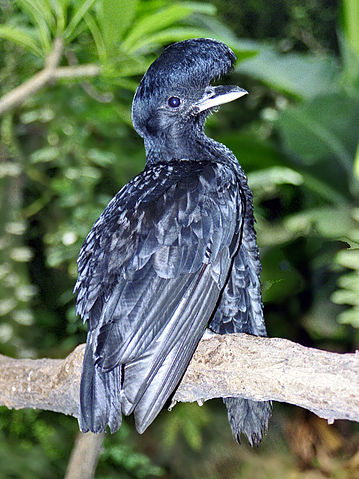
Long-wattled Umbrellabird (Cephalopterus penduliger) ©WikiC

Umbrellabird
Umbrellabirds are birds in the genus Cephalopterus. They are found in rainforests of Central and South America. With a total length of 35–50 cm (14–19.5 in), they are among the largest members of the Cotinga family, and the male Amazonian Umbrellabird is the largest passerine in South America.

They are almost entirely black, and have a conspicuous crest on the top of their head, vaguely resembling an umbrella (hence their common name). All have an inflatable wattle on the neck, which serves to amplify their loud, booming calls. This wattle may reach a length of 35 cm (14 in) in the long-wattled umbrellabird, but it is smaller in the two remaining species, and covered in bare, bright red skin in the bare-necked umbrellabird. Females resemble males, but are noticeably smaller and have a reduced crest and wattle.

They feed on fruits, large insects and occasionally small vertebrates (e.g. lizards). (Cotingadae – Cotinga Family)


More Avian and Attributes

Birds whose last name start with “U”

Sunday Inspiration – There Is A Redeemer

Good News

*
[Definitions from Webster’s Dictionary of American English (1828), unless noted. Bird info from Wikipedia plus.]
Avian and Attributes – Truth

White-winged Triller (Lalage tricolor) by ©Wiki

White-winged Triller (Lalage tricolor) by ©Wiki

“All the paths of the LORD are mercy and truth unto such as keep his covenant and his testimonies.” (Psalms 25:10 KJV)

“For the word of the LORD is right; and all his works are done in truth.” (Psalms 33:4 KJV)

“He is the Rock, his work is perfect: for all his ways are judgment: a God of truth and without iniquity, just and right is he.” (Deuteronomy 32:4 KJV)


Avian and Attributes – Truth

TRUTH, n.
1. Conformity to fact or reality; exact accordance with that which is, or has been, or shall be. The truth of history constitutes its whole value. We rely on the truth of the scriptural prophecies.
Sanctify them through thy truth; thy word is truth. John 17.
2. True state of facts or things. The duty of a court of justice is to discover the truth. Witnesses are sworn to declare the truth, the whole truth, and nothing but the truth.
3. Conformity of words to thoughts, which is called moral truth.
4. Veracity; purity from falsehood; practice of speaking truth; habitual disposition to speak truth; as when we say, a man is a man of truth.
5. Correct opinion.
6. Fidelity; constancy.
7. Honesty; virtue.
8. Exactness; conformity to rule.
9. Real fact of just principle; real state of things. There are innumerable truths with which we are not acquainted.
10. Sincerity.
God is a spirit, and they that worship him must worship in spirit and in truth. John 4.
11. The truth of God, is his veracity and faithfulness. Psa 71.
Or his revealed will.
I have walked in thy truth. Psa 26.
12. Jesus Christ is called the truth. John 14.
To do truth, is to practice what God commands. John 3.


White-winged Triller (Lalage tricolor) Eclipse Male by Ian

White-winged Triller

The White-winged Triller (Lalage tricolor) is one of the smaller members of the cuckooshrike family, Campephagidae. It is found throughout mainland Australia and possibly on the islands to the north, including New Guinea and eastern Indonesia. It is resident or nomadic over the warmer part of its range (inland Australia and points north), and a summer breeding migrant to the cooler southern parts of Australia.

White-winged Trillers are fairly common in woodland, and open scrub through most of their range, and close to riverbeds in the central arid zone. The conspicuous male bird—black above and white below in breeding plumage—trills cheerfully through much of the day during the breeding season (mid-spring to early summer), frequently rising on fluttering wings in song flight.

White-winged Triller (Lalage tricolor) female with disguised young ©WikiC

The female is similarly patterned but in dull fawns and white. In the non-breeding season, male birds appear similar to the female, retaining blackish feathers only on the wings and tail.

Typically 16 to 18 cm long, white-winged trillers eat a variety of insects, which are taken on the ground, from in foliage, or in the air. (Campephagidae – Cuckooshrike Family)


More Avian and Attributes

Birds whose last name start with “T”

Sunday Inspiration – Cuckooshrikes

Good News

*
[Definitions from Webster’s Dictionary of American English (1828), unless noted. Bird info from Wikipedia, plus with editing.]