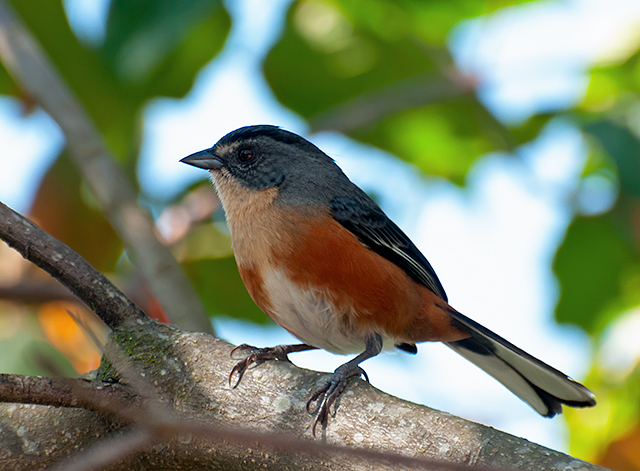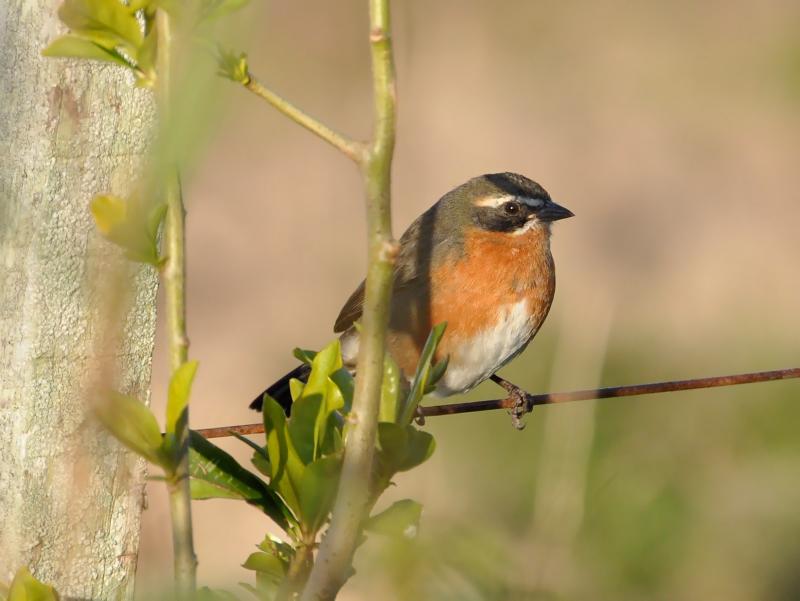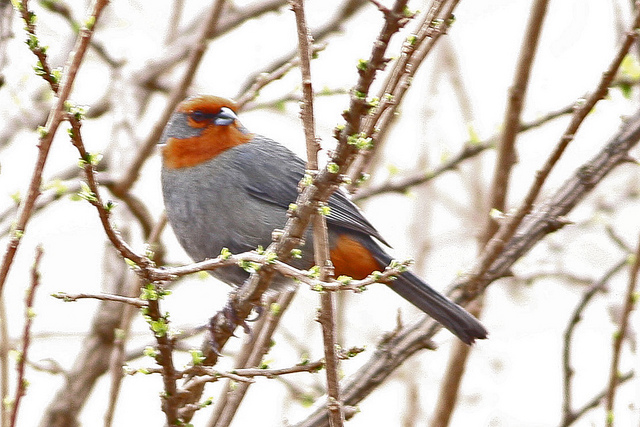
Sunday Inspiration – Anseriformes I ~ Screamer and Magpie Goose

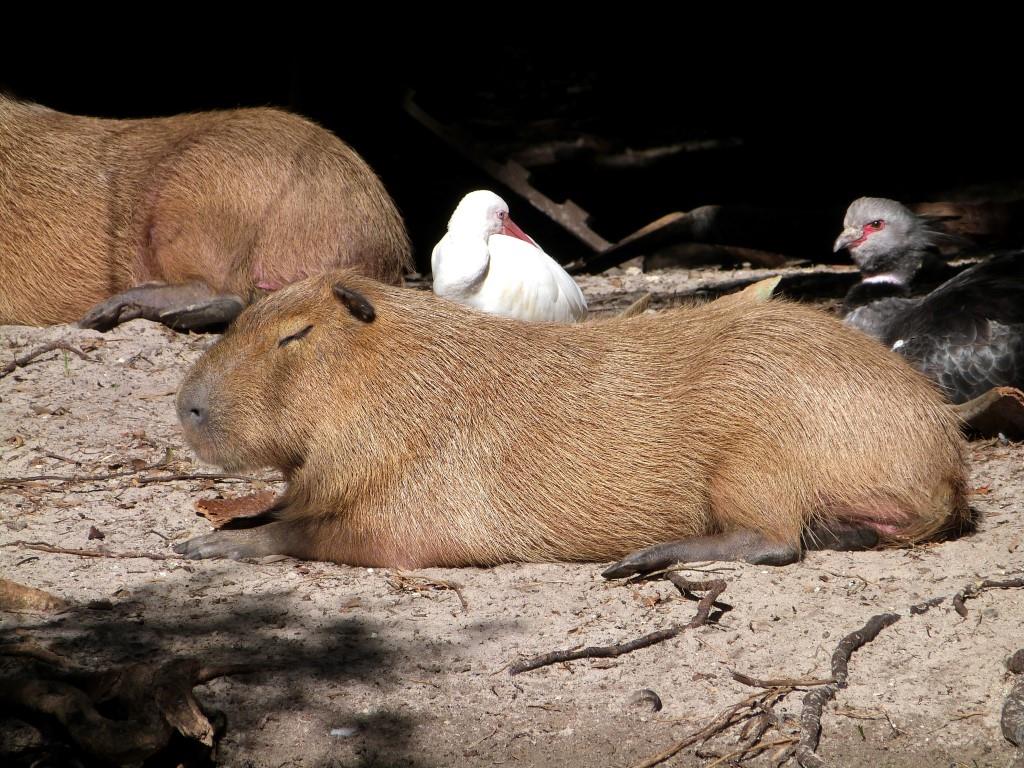
ANS-Anhm Southern Screamer (chauna torquata)with a Capybara by Lee at Palm Beach Zoo

Southern Screamer with a Capybara by Lee at Palm Beach Zoo

“Constantly, night and day, he was screaming among the tombs and in the mountains, and gashing himself with stones. Seeing Jesus from a distance, he ran up and bowed down before Him;” (Mark 5:5-6 NASB)

Our next Order, the Anseriformes has three families. The Anhimidae – Screamers Family has only three members; the Horned, Northern and Southern Screamers. The Anseranatidae – Magpie Goose Family is even smaller. The Magpie Goose is the only member. The third family is huge with 173 species. That is the Anatidae Family which has Ducks, Geese, Swans and other water birds. Today, we will just do the first two families. Dan and I have seen the Southern Screamer at several zoos. Also, this audio, by zeno-canto of s Southern Screamer screaming.

“The screamers are a small clade of birds (Anhimidae). For a long time, they were thought to be most closely related to the Galliformes because of similar bills, but they are instead more closely related to ducks (family Anatidae), most closely to the magpie goose (which some DNA evidence suggests are closer to screamers than to ducks). The clade is exceptional within the living birds in lacking uncinate processes of ribs. The screamers are represented by three species, the horned screamer (Anhima cornuta), the southern screamer or crested screamer (Chauna torquata) and the northern screamer or black-necked screamer (Chauna chavaria). The birds’ skin has a layer about a quarter of an inch thick that is filled with small bubbles of air, which produce a crackling sound when pressed.” (Wikipedia with editing)
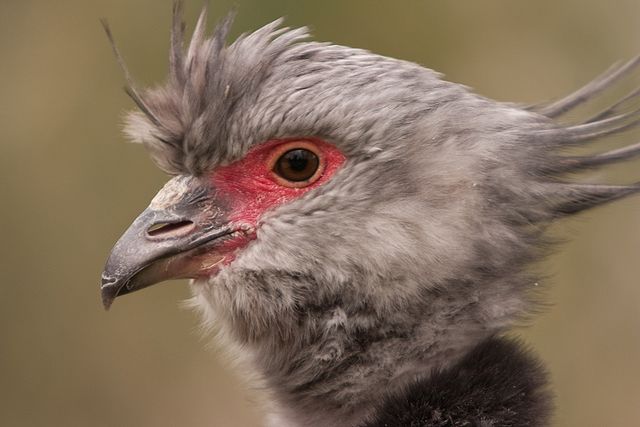
Southern Screamer (Chauna torquata) Closeup of head ©WikiC

Southern Screamer (Chauna torquata) Closeup of head ©WikiC

The three species occur only in South America, ranging from Colombia to northern Argentina. They are large, bulky birds, with a small downy head, long legs and large feet which are only partially webbed. They have large spurs on their wings which are used in fights over mates and territorial disputes; these can break off in the breast of other screamers, and are regularly renewed. Unlike ducks they have a partial molt, and are able to fly throughout the year. They live in open areas and marshes with some grass and feed on water plants. One species, the southern screamer, is considered a pest as it raids crops and competes with farm birds. (Wikipedia)

Horned Screamer (Anhima cornuta) ©©Flickr WMCarlos

Horned Screamer (Anhima cornuta) ©©Flickr WMCarlos

The Horned Screamer is a massive 84–95 cm (33–37.5 in) long, 3.5 kg (7.7 lb) bird, with a small chicken-like bill. The upperparts, head and breast are black, with white speckles on the crown, throat and wing coverts. There is a long spiny structure projecting forward from the crown. This structure is unique among birds and is not derived from a feather but is a cornified structure that is loosely attached to the skull and grows continuously while often breaking at its tip. This gives this species its name. The belly and under wing coverts are white. It has two sharp spurs on its wings, and feet which are only partially webbed.

The horned screamer’s call, as its name suggests, is a very loud U-WHO or honking YOIK-YOK.

The horned screamer is found in lowlands from Colombia, Venezuela, Brazil, Bolivia, Peru, Ecuador, Suriname, French Guiana, and Guyana. It is now extinct in Trinidad and Tobago. Despite having declined locally, it remains widespread and is fairly common overall. Its range in Brazil appears to have expanded in recent years.

It lives in well-vegetated marshes and feeds on water plants. Its nest is a large pile of floating vegetation anchored in shallow water. Three olive-brown eggs are laid, and the young, like those of most Anseriformes, can run as soon as they are hatched.

ANS-Anhm Northern Screamer (Chauna chavaria) ©WikiC

Northern Screamer (Chauna chavaria) ©WikiC

The Northern Screamer (Chauna chavaria), also known as the black-necked screamer, is a large species of bird in the small family Anhimidae, the screamers. It is a resident breeder in northern Colombia, in Chocó, Antioquia, Córdoba, Sucre, Bolívar, Magdalena, Santander, and Cesar Departments and northwestern Venezuela, in Zulia, Mérida, and Trujillo States. On average, they are 88.9 cm (35 in) long and weigh about 3.9 kg (8.6 lb).
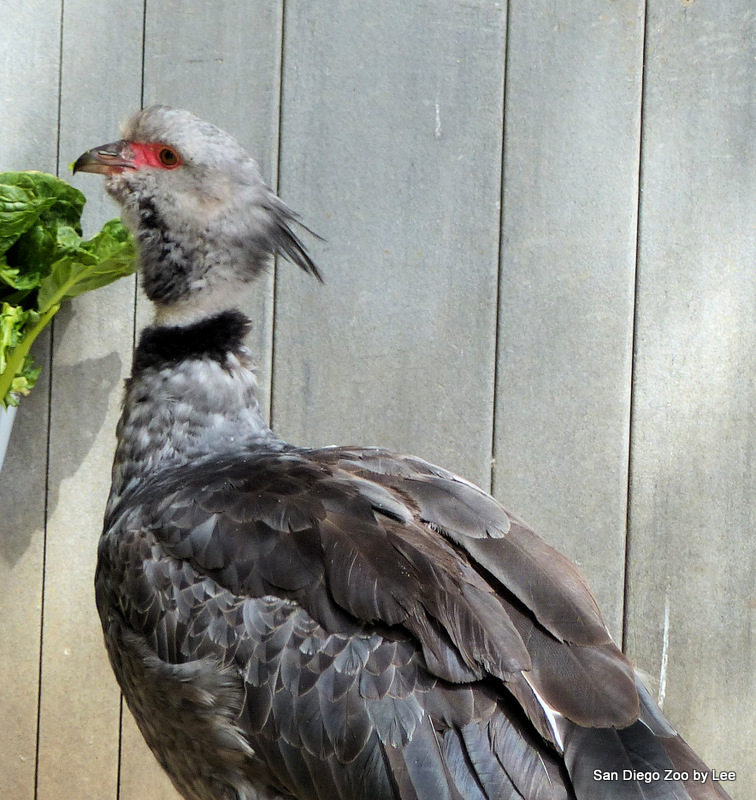
Southern Screamer (Chauna torquata) San Diego Zoo by Lee

Southern Screamer (Chauna torquata) San Diego Zoo by Lee

The southern screamer averages 81–95 cm (32–37 in) long and weighs 3–5 kg (6.6–11.0 lb).[3] They are the heaviest, although not necessarily the longest, of the three screamers.[4] The wingspan is around 170 cm (67 in).[5] Among standard measurements, the wing chord measures 54 cm (21 in), the tail 23.2 cm (9.1 in), the culmen 4.5 cm (1.8 in) and the long tarsus 11 cm (4.3 in).[6] It lives in tropical and sub-tropical swamps, estuaries and watersides.

The southern screamer is a good swimmer, having partially webbed feet, but prefers to move on the ground. The bony spurs on its wings are used for protection against rival screamers and other enemies. Although it is non-migratory, it is an excellent flier. It lives in large flocks, feeding on the ground in grasslands and cultivated fields until nesting season, when birds pair off.

Magpie Goose (Anseranas semipalmata) by Ian

Magpie Goose (Anseranas semipalmata) by Ian

The Magpie Goose (Anseranas semipalmata) is a waterbird species found in coastal northern Australia and savannah in southern New Guinea. It is a unique member of the order Anseriformes, and arranged in a family and genus distinct from all other living waterfowl. The magpie goose is a resident breeder in northern Australia and in southern New Guinea. The species was once also widespread in southern Australia, but disappeared from there largely due to the drainage of the wetlands where the birds once bred.

Magpie geese are unmistakable birds with their black and white plumage and yellowish legs. The feet are only partially webbed, and the magpie goose feeds on vegetable matter in the water, as well as on land. Males are larger than females. Unlike true geese, their molt is gradual, so no flightless period results. Their voice is a loud honking.  [I also think that top-knot would make it distinguishable] (All information Wikipedia with editing)

This slideshow requires JavaScript.

*
“And many of the people believed on him, and said, When Christ cometh, will he do more miracles than these which this man hath done?” (John 7:31 KJV)

“Jesus Wrought A Miracle of Love” ~ Solo by Paul Ebright

*

More Sunday Inspirations

Ansiformes – Waterfowl

Anhimidae – Screamers Family

Anseranatidae – Magpie Goose Family

Gospel Message

*

Sunday Inspiration – Ostrich, Rhea, Cassowary, Emu & Kiwi

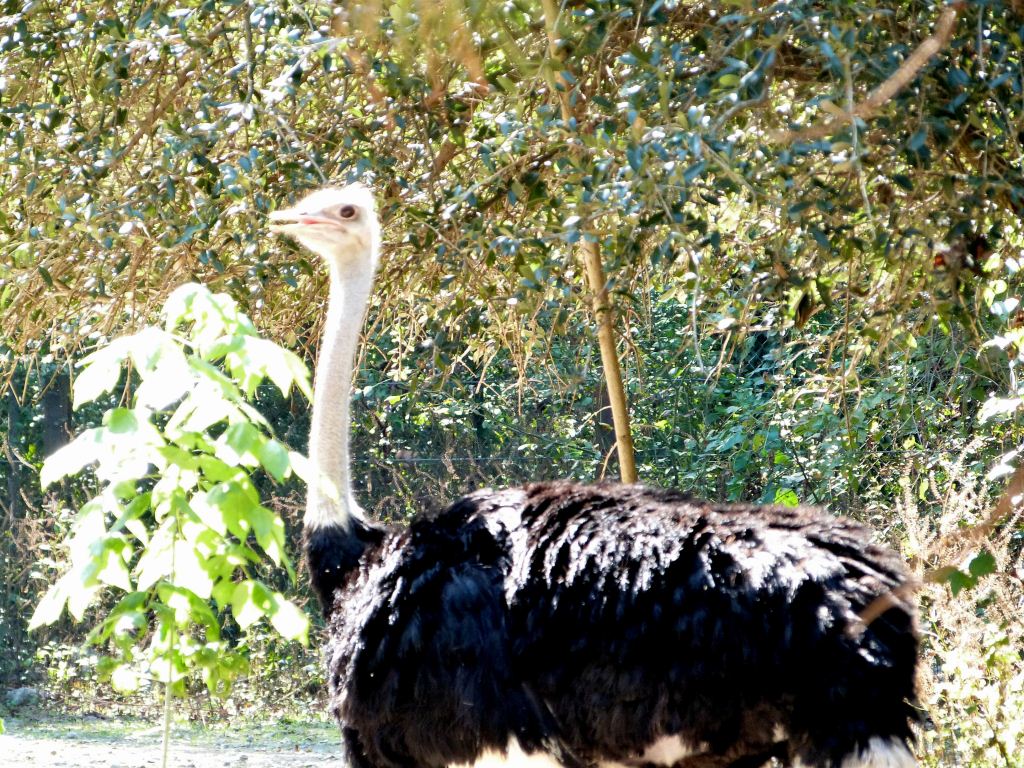
Common Ostrich (Struthio camelus) at Riverbanks Zoo SC by Lee

Common Ostrich (Struthio camelus) at Riverbanks Zoo SC by Lee

“Gavest thou the goodly wings unto the peacocks? or wings and feathers unto the ostrich? Which leaveth her eggs in the earth, and warmeth them in dust, And forgetteth that the foot may crush them, or that the wild beast may break them. She is hardened against her young ones, as though they were not hers: her labor is in vain without fear; Because God hath deprived her of wisdom, neither hath he imparted to her understanding. What time she lifteth up herself on high, she scorneth the horse and his rider.” (Job 39:13-18)

Today we have thirteen (13) birds that are in four (4) Orders with a total of five (5) families. As mentioned before, these will be much easier than the LARGE Passeriformes Order that took months to view. Our Orders are the Struthioniformes, with one (1) family, Struthionidae that has two (2) Ostritches; the Rheiformes has one (1) family, Rheidae, with two (2) Rheas; and then the Casuariiformes Order has two (2) families, Casuariidae with three (3) Cassowaries and the Dromiidae family with a solo Emu; Apterygiformes Order with the Apterygidae family with five (5) Kiwis.

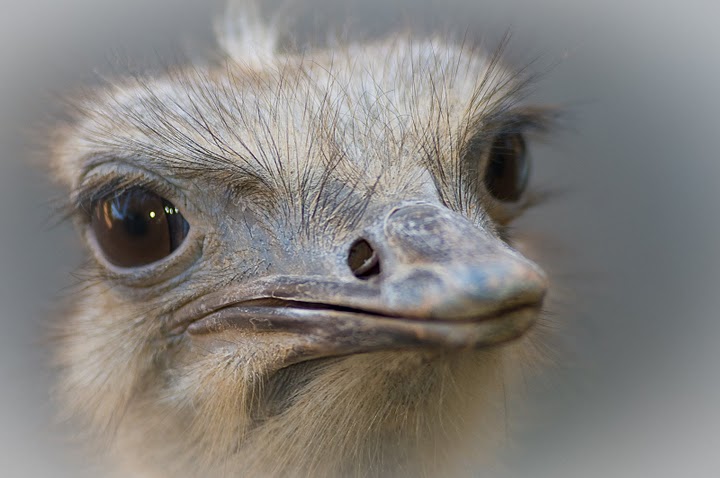
Common Ostrich (Struthio camelus) Closeup by WikiC

Common Ostrich (Struthio camelus) Closeup by ©WikiC

Struthioniformes, with one (1) family, Struthionidae that has two (2) Ostritches – “Ostriches are large, non-flying birds that live in Africa. Besides in their natural environment, ostriches are often breed as farm animals because some people like to eat their meat, eggs or to wear fashion products made of their skin. Although they are killed for commercial purposes, they are not endangered. There are around 2 million ostriches that can be found around the globe.” (SoftSchools)

Greater Rhea (Rhea americana) by ©Wayne Deeker

Greater Rhea (Rhea americana) by ©Wayne Deeker

Rheiformes has one (1) family, Rheidae, with two (2) Rheas – “Rhea is a member of the group of flightless birds. This is the largest bird in the South America. There are two species of rhea: Greater or American Rhea and Lesser or Darwin’s Rhea. They differ in size and in type of habitat they inhabit. Rhea can be found in open grasslands, pampas and woodlands of Argentina, Uruguay, Bolivia, Paraguay, Chile, Peru and Brazil. Rhea is also kept on farms because of its meat, eggs and skin. Number of rhea in the wild is decreased due to habitat loss, but they are still not listed as endangered species.” (SoftSchools with editing)

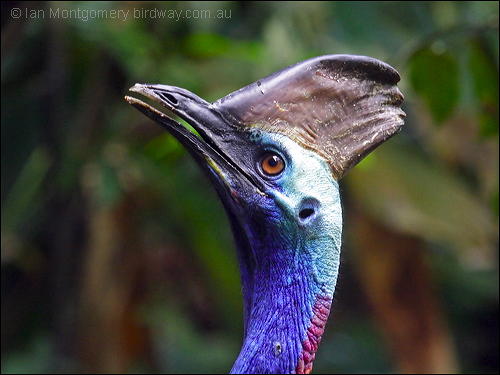
Southern Cassowary (Casuarius casuarius) by Ian

Southern Cassowary (Casuarius casuarius) by Ian

Casuariiformes Order has two (2) families, Casuariidae with three (3) Cassowaries – “The bird order Casuariiformes has four surviving members: the three species of cassowary, and the only remaining species of emu. The emus are classified in the family Dromaiidae, while the cassowaries are all located within the Casuariidae family. All four members of the order are very large flightless birds native to Australia-New Guinea.” (Wikipedia)

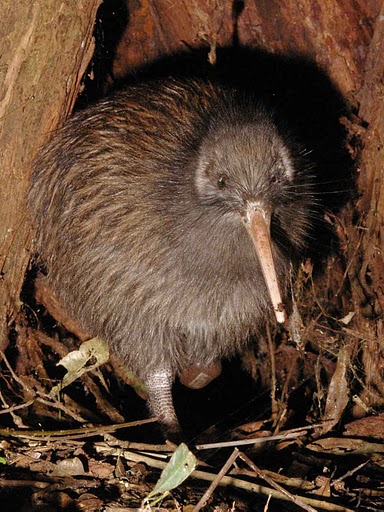
North Island Brown Kiwi (Apteryx mantelli) by Derek©WikiC

North Island Brown Kiwi (Apteryx mantelli) by Derek©WikiC

Apterygiformes Order with the Apterygidae family with five (5) Kiwis – “Kiwi (pronounced /kiːwiː/) or kiwis are flightless birds native to New Zealand, in the genus Apteryx and family Apterygidae. At around the size of a domestic chicken, kiwi are by far the smallest living ratites (which also consist of ostriches, emus, rheas, and cassowaries), and lay the largest egg in relation to their body size of any species of bird in the world. DNA sequence comparisons have yielded the surprising conclusion that kiwi are much more closely related to the extinct Malagasy elephant birds than to the moa with which they shared New Zealand. There are five recognized species. All species have been negatively affected by historic deforestation but currently the remaining large areas of their forest habitat are well protected in reserves and national parks. At present, the greatest threat to their survival is predation by invasive mammalian predators.

Kiwi is the nickname used internationally for people from New Zealand,[1] as well as being a relatively common self-reference. The name derives from the kiwi, a flightless bird, which is native to, and the national symbol of, New Zealand. Unlike many demographic labels, its usage is not considered offensive; it is generally viewed as a symbol of pride and endearment for the people of New Zealand..” (Wikipedia with editing)

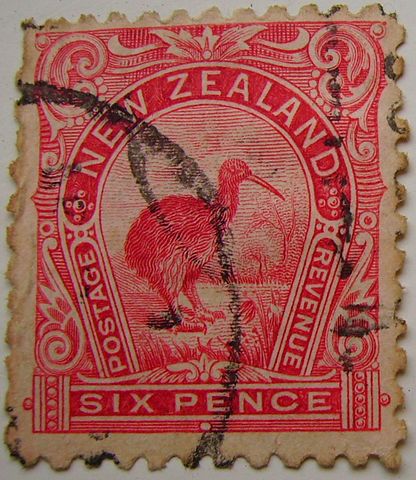
New Zealand Stamp with Kiwi ©WikiC

New Zealand Stamp with Kiwi ©WikiC


This slideshow requires JavaScript.


*

“And we have seen and do testify that the Father sent the Son to be the Saviour of the world. Whosoever shall confess that Jesus is the Son of God, God dwelleth in him, and he in God.”
(1 John 4:14-15 KJV)

“Hosanna, Messiah Has Come” ~ Choir and Solo by Lisa Brock

*
More Sunday Inspirations

Birds of the Bible – Ostrich

Sharing The Gospel

*

Sunday Inspiration – Beginning of the Bird Orders – Tinamiformes

Elegant Crested Tinamou (Eudromia elegans) Cloud Forest at Zoo Miami by Lee

Elegant Crested Tinamou (Eudromia elegans) Cloud Forest at Zoo Miami by Lee

In the beginning God created the heaven and the earth. (Genesis 1:1 KJV)

We have finished up all the Passeriformes and reviewed them here with the Sunday Inspirations. That only took from February 1st of 2015 to September 25th of 2016. Of the forty orders of birds in the world, Passeriformes was the last and largest of the orders taxonomically. Today, we are going to start at the first of the bird orders. Not to panic, there is only one family in this order. We will cover it today.

Dan and I have only seen one member of this order and that was at Zoo Miami, FL

Elegant Crested Tinamou (Eudromia elegans) by Dan at Zoo Miami

Elegant Crested Tinamou (Eudromia elegans) by Dan at Zoo Miami

“Tinamiformes is a taxonomic order of birds that are also known as Tinamou. The order is represented by only one Family Tinamidae, which consists of 47 species in 9 genera. They are short-legged, little-headed and plump-bodied. They prefer to run rather than fly to avoid danger.

The Tinamous are found only in Central and South America. They are related to the ratites (Ostriches and Rheas). Generally ground dwelling, they are found in a range of habitats from woodlands to open grassland. They prefer eating a diet of berries and seeds off the ground. They also consume insects and small animals.” (CreationWiki)

As you will notice the Tinamou are not very colorful and that is mostly because of how they live. They are very well designed by their Creator to sulk along in the underbrush.

“And God created great whales, and every living creature that moveth, which the waters brought forth abundantly, after their kind, and every winged fowl after his kind: and God saw that it was good.” (Genesis 1:21 KJV) Emphasis added

This slideshow requires JavaScript.

Go forth of the ark, thou, and thy wife, and thy sons, and thy sons’ wives with thee. Bring forth with thee every living thing that is with thee, of all flesh, both of fowl, and of cattle, and of every creeping thing that creepeth upon the earth; that they may breed abundantly in the earth, and be fruitful, and multiply upon the earth. (Genesis 8:16-17 KJV)

“Praise Medley” by ©The Hyssongs

*

More Sunday Inspirations

Birds of the World – Tinamidae – Tinamous 

Hooded Tinamou

CreationWiki – Tinamous

TINAMIFORMES – Tinamous

Tinamidae Family – Our Photos

Tinamidae – Tinamous Family

An Initial Estimate of Avian Ark Kinds

Evolution Made Ridiculous Flightless Birds Over and Over – If you want to some actual truth, but you need to read around the evolution part. You can see the Creator at work.

*

Sunday Inspiration – Passeriformes Review III

Painted Bunting Subspecies (Passerina ciris ciris) ©WikiC

Painted Bunting Subspecies (Passerina ciris ciris) ©WikiC

Today we finish the Review of the Passeriformes Order of birds. These are the perching and songbird that are spread around the world for us to enjoy. You can check on the other two reviews with the links at the end of this article. This is the last of the 131 Families currently in this order.

And the lords of the Philistines passed in review by hundreds and by thousands, but David and his men passed in review at the rear with Achish. (1 Samuel 29:2 NKJV)

This verse in I Samuel 29:2 mentions the “lords of the Philistines passed in review by hundreds and by thousands,” That verse has nothing to do with our birds, but we have passed before your eyes for months a review of these beautifully created birds from our Lord. With over 6,000 in the Passerinformes order, they have gone by week after week adding up to hundreds and thousands. I trust you have learned to appreciate the variety and splendor of many of them. Yet, there were some, like the “common, plain” birds that are still there to be enjoyed.

House Sparrow by Ray

House Sparrow by Ray

Just as none of us are “plain” or “common”, God loves us all.

“Are not five sparrows sold for two copper coins? And not one of them is forgotten before God.” (Luke 12:6 NKJV)

Here is the last part of the families in this Order. They continue in the Taxonomic order.

Leiothrichidae – Laughingthrushes
Sylviidae – Sylviid Babblers
Zosteropidae – White-eyes
Arcanatoridae – Dapple-throat and allies
Promeropidae – Sugarbirds
Irenidae – Fairy-bluebirds
Regulidae – Goldcrests, Kinglets
Elachuridae – Elachuras
Hyliotidae – Hyliotas
Troglodytidae – Wrens
Polioptilidae – Gnatcatchers
Sittidae – Nuthatches
Tichodromidae – Wallcreeper
Certhiidae – Treecreepers
Mimidae – Mockingbirds, Thrashers
Sturnidae – Starlings, Rhabdornis
Buphagidae – Oxpeckers
Turdidae – Thrushes
Muscicapidae – Chats, Old World Flycatchers (320)
Cinclidae – Dippers
Chloropseidae – Leafbirds
Dicaeidae – Flowerpeckers
Nectariniidae – Sunbirds
Passeridae – Old World Sparrows, Snowfinches
Ploceidae – Weavers, Widowbirds
Estrildidae – Waxbills, Munias and allies
Viduidae – Indigobirds, Whydahs
Peucedramidae – Olive Warbler
Prunellidae – Accentors
Motacillidae – Wagtails, Pipits
Urocynchramidae – Przevalski’s Finch
Fringillidae – Finches
Parulidae – New World Warblers
Incertae-Sedis2 – Family Uncertain-Wrenthrush and Chat
Icteridae – Oropendolas, Orioles and Blackbirds
Coerebidae – Bananaquit
Emberizidae – Buntings, New World Sparrows and allies
Thraupidae – Tanagers and allies
Calcariidae – Longspurs, Snow Buntings
Cardinalidae – Cardinals, Grosbeaks and allies

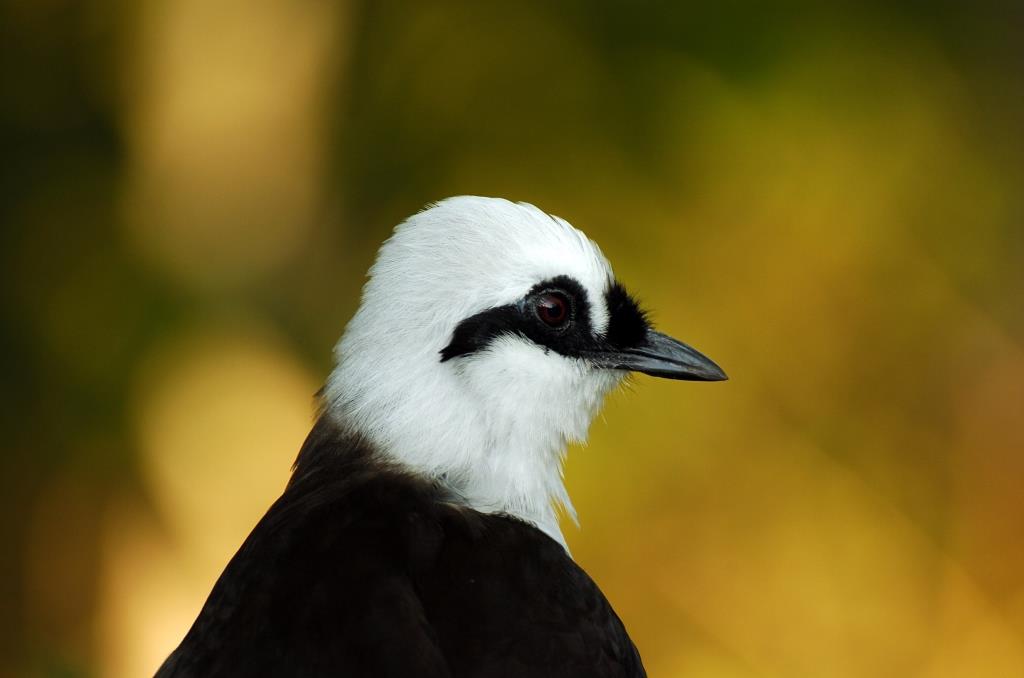
Sumatran Laughingthrush (Garrulax bicolor) by Dan at Wing of Asia Zoo Miami

Sumatran Laughingthrush (Garrulax bicolor) by Dan at Wing of Asia Zoo Miami

A list of the Sunday Inspirations about these families. Mr. Joe Cool, as I call him, is one of my favorite Laughingthrushes.

Laughingthrush – Leiothrichidae Family ~ “Ten Thousand Joys” ~ Choir – Lisa Brock – Jessie Padgett (Faith Baptist)

Sylviid Babblers ~ “I Stand Amazed” ~ Faith Baptist Choir

White Eyes ~ “Come, Look To Jesus” ~ Played by Jill Foster at Faith Baptist (during Communion)

Seven Small Families ~ “All Hail The Power” – Faith Baptist Orchestra

Wrens ~ “He is Everything To Me” – Men’s Ensemble – Faith Baptist

Nuthatches and Creepers ~ “How Deep Is Your Love?” – Played by Jill Foster (Faith Baptist)

Mockingbirds and Thrashers ~ “I Am Loved” ~ Faith Baptist Orchestra

Starlings, Mynas and Rhabdornis ~ “Once Upon A Tree” ~ Choir – and – “Sing To Jesus” ~ Angel Long & Jessie Padgett

Oxpeckers and Thrushes ~ “I Heard The Bells With Peace On Earth” – with Jessie Padgett, Angel Long and the FX Girls

Chats and Old World Flycatchers I ~ “Wise Men Still Seek Him” – Trio and Choir

Chats and Old World Flycatchers II ~ “The Birthday of a King” ~ by Dr. Richard Gregory, now in Glory

Chats and Old World Flycatchers III ~ O Come, O Come Emmanuel”  by Meagan Fee on Violin and Jill Foster accompanying

Dippers, Leafbirds and Flowerpeckers ~ Faith Medley” – Faith Baptist Choir

Sunbirds and Spiderhunters ~ “The Fountain” Harp — 9-year-old Alisa Sadikova – Video

Old World Sparrows ~ “His Eye Is On The Sparrow” – Don Marsh Orchestra

Weavers and Allies ~ “Jesus What A Might Name” – Pastor Jerry w/Choir and Orchestra

Waxwings and Allies I ~ “My Jesus I Love Thee” – by Meagan Fee (didn’t work 1st time-fixed)

Waxwings and Allies II ~ “My Jesus I Love Thee” – by Meagan Fee at Faith Baptist

Some Small Families ~ “Little Prayers” – by the ©The Hyssongs

Wagtails and Pipits ~ “Glorious Love” – Choir, Orchestra, Solo by Pastor Jerry

Finches I ~ “Mercies Anew” ~ by Lisa Brock, accompanied by Jill Foster

Finches II ~ “My Faith Has Found A Resting Place” ~ ©Artisans in Brass (Psalms, Hymns & Spiritual Songs-Album) Used with permission

Finches III ~ “Shout To The North and the South” ~ by Faith Baptist Church Choir

Finches IV ~ “Once Upon A Tree” ~ by Faith Baptist Church Choir

New World Warblers – I ~ “How Can I Keep From Singing?” ~ Pastor Jerry Smith, Reagan, Caleb and Jessie

New World Warblers – II ~ “Heavenly Sunlight” ~ by Artisans in Brass

Three Small Families ~ “I’ll Be a Friend to Jesus” ~ Faith Baptist Quartet

Icteridae Family I ~ I’ll Stand Up and Say So” – by the ©The Hyssongs

Icteridae Family II ~ “It Is Well With My Soul” ~ by Sean Fielder

Icteridae Family III ~ “Stay Close To Me” ~ ©Hyssongs

Emberizidae’s – Buntings ~ “Triumphantly The Church Will Rise” ~ Faith Baptist Men’s Quintet

Emberizidae – Part II ~ “His Eye Is On The Sparrow” ~ by Kathy Lisby at Faith Baptist

Emberizidae Family Allies I ~ “Be Thou My Vision” ~ by Ladies and Girls Choir on Mother’s Day

Emberizidae Family Allies II ~ “Worthy The Lamb” – Faith Baptist Choir and Orchestra

Thraupidae – Tanagers and Allies I – “My Jesus I Love Thee” ~ Faith Baptist Orchestra

Thraupidae – Tanagers and Allies II – “My Faith Still Holds” ~ Faith Baptist Orchestra

Thraupidae – Tanagers and Allies III – “Jesus Paid It All” – Men’s Father’s Day Choir and “While The Ages Roll” –  Men’s Quartet

Thraupidae – Tanagers and Allies IV – “El Shaddai” ~ by Nell Reese

Thraupidae – Dacnis, Honeycreepers, Conebills ~ “Amazing Grace” and “I Love You, Written in Red” – – Orchestra & Choir (Faith Baptist Church)

Thraupidae – Flowerpiercers, Sierra Finches, Plus ~ “Your Grace is Sufficient” ~ Special by Courtney Love – Flute

Inca, Warbling and Various Finches ~ “Quiet Rest” and “Sweet Hour of Prayer” ~  by Kathy Lisby – Nell Reese acc. on piano.

Thraupidae Tanagers and Allies  VIII ~ “And Can It Be” – Sung by Angel Long and acc. Sean Fielder*

Thraupidae Tanagers and Allies Finale ~ “Hallelujah For The Cross” ~ by Jessie Padgett

Calcariidae – Longspurs and Snow Buntings ~ “House on A Rock” ~ by the Summer Kid’s Choir

Cardinalidae Family of Cardinals Plus ~ “Written in Red” – Orchestra & Choir

Cardinalidae Wrap-up ~ “Come Thou Fount of Every Blessing” ~ Choir and Orchestra

This slideshow requires JavaScript.

“And, behold, God himself is with us for our captain,” (2 Chronicles 13:12a KJV)

“Ship Ahoy ~ by Dr. Richard Gregory

*
Sunday Inspiration – Passeriformes Review I

Sunday Inspiration – Passeriformes Review II

More Sunday Inspirations

Sunday Inspiration – Passeriformes Review II

Bay-backed Shrike (Lanius vittatus) by Nikhil Devasar

Bay-backed Shrike (Lanius vittatus) by Nikhil Devasar

Remember that thou magnify his work, which men behold. (Job 36:24)

This is the second part of our review of the Passeriformes – Songbird families, which were all presented weekly. The slide show will show one or two photos from each family. These are in taxonomic order. Part I of the Review covered the New Zealand Wrens to Mottled Berry Hunters. This week we will review the Ioras to the Babblers.

Also, the links to these families will be listed and the article associated with them. There will be one more review (III). There are 131 families. All total, there are over 6,000 birds in these families and thankfully, most of them we were able to show. Some photos are protected by copyright and it was not possible to find a photo. Yet, there were more show than we would ever be able to see individually, in person.

Aegithinidae – Ioras
Campephagidae – Cuckooshrikes
Mohouidae – Whiteheads
Neosittidae – Sittellas
Eulacestomidae – Ploughbill
Oreoicidae – Australo-Papuan Bellbirds
Pachycephalidae – Whistlers and allies
Laniidae – Shrikes
Vireonidae – Vireos, Greenlets
Oriolidae – Figbirds, Orioles
Dicruridae – Drongos
Rhipiduridae – Fantails
Monarchidae – Monarchs
Corvidae – Crows, Jays
Corcoracidae – Australian Mudnesters
Melampittidae – Melampittas
Ifritidae – Ifrita
Paradisaeidae – Birds-of-paradise
Petroicidae – Australasian Robins
Picathartidae – Rockfowl
Chaetopidae – Rockjumpers
Eupetidae – Rail-babbler
Bombycillidae – Waxwings
Ptiliogonatidae – Silky-flycatchers
Hypocoliidae – Hypocolius
Dulidae – Palmchat
Mohoidae – Oos
Hylocitreidae – Hylocitrea
Stenostiridae – Fairy Flycatchers
Paridae – Tits, Chickadees
Remizidae – Penduline Tits
Nicatoridae – Nicators
Panuridae – Bearded Reedling
Alaudidae – Larks
Pycnonotidae – Bulbuls
Hirundinidae – Swallows, Martins
Pnoepygidae – Wren-babblers
Macrosphenidae – Crombecs, African Warblers
Cettiidae – Cettia Bush Warblers and allies
Scotocercidae – Streaked Scrub Warbler
Erythrocercidae – Yellow Flycatchers
Incertae-Sedis– Family Uncertain-Warbler, Hylia
Aegithalidae – Bushtits
Phylloscopidae – Leaf Warblers and allies
Acrocephalidae – Reed Warblers and allies
Locustellidae – Grassbirds and allies
Donacobiidae – Black-capped Donacobius
Bernieridae – Malagasy Warblers
Cisticolidae – Cisticolas and allies
Timaliidae – Babblers
Pellorneidae – Fulvettas, Ground Babblers

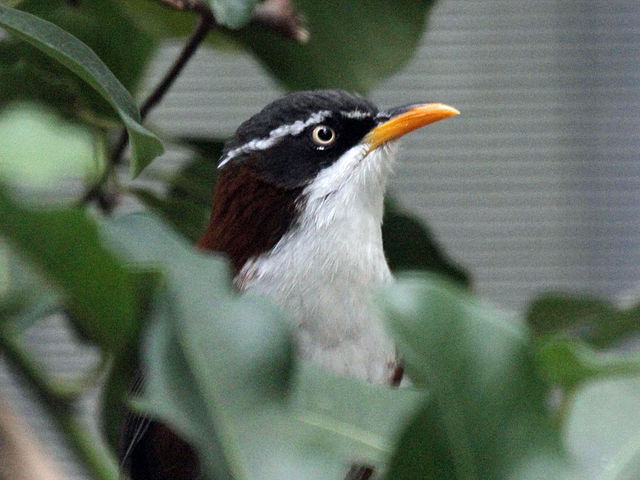
Chestnut-backed Scimitar Babbler (Pomatorhinus montanus) ©WikiC

Chestnut-backed Scimitar Babbler (Pomatorhinus montanus) ©WikiC

Here are the Sunday Inspiration articles that were written about these families.

Cuckooshrikes ~ “There’s Something About That Name” ©The Hyssongs

Whistlers and Avian Friends ~ “”The Love of God” ~ Dr. Richard Gregory

Shrikes and Vireos ~ “El Shaddai” – by Nell Reese

Figbirds, Orioles and Drongos ~ “He Touched Me” -~ ©The Hyssongs

Fantails ~ “So Send I You” – Men’s Quartet – Faith Baptist

Monarchs ~ “He’s Looking on You” ~ by Dr. Richard Gregory

Crows and Jays ~ “Peace Medley” ~ by Faith Baptist Choir

Independence Day ~ “Military Medley” ~ Faith Baptist Orchestra

From Mud to Beauty ~ “I Heard The Voice of Jesus” ~ By Sean Fielder

Australian Robin and Friends ~ “Hiding in the Shadow of the Rock” ~ © Dr. Richard Gregory

Deep Love of Jesus ~ “Oh The Deep, Deep, Love of Jesus” ~ Megan Fee and Jill Foster

Tits, Chickadees and Penduline Tits ~ “Just a Little Talk With Jesus Makes It Right” ~ Vegter Quartet (together for Vi’s 90th Birthday)

Larks ~ “His Eye Is On The Sparrow ” – by Kathy Lisby, Faith Baptist Church

Bulbuls ~ “How Deep The Father’s Love For Us” ~ played by Megan Fee and Jill Foster

Swallows and Martins ~ “If I Don’t Have Love” ~ by Jessie Padgett – Special at Faith Baptist

Wren-babblers – Crombecs and Bush Warblers – “Bow The Knee” ~ Sheila Vegter and Jacob (her son who is playing the piano and singing)

Little Beauties From The Lord ~ “Beautiful Saviour (Fairest Lord Jesus)”) ~ by Kid’s Choir at Faith Baptist

Reed Warblers ~ “When I Survey The Wondrous Cross” ~ by Miss Anna Pletcher (12 years old) on piano

Grassbirds and Allies ~ “The Church’s One Foundation” – Megan Fee, Cody Hancock & Dakota Hancock ~ at Faith Baptist

Worthy The Lamb ~ “Worthy The Lamb” ~ Choir at Faith Baptist Church

Cisticolas and Singing ~ “How Can I Keep From Singing?” ~  by the Trio + 1 (Pastor Jerry, Reagan Osborne, Caleb & Jessie Padgett) Faith Baptist

Fulvettas, Ground Babblers ~ “Everything’s Fine” ~ ©Hyssongs

*

This slideshow requires JavaScript.


I will remember the works of the LORD: surely I will remember thy wonders of old. (Psa 77:11)

“Were You There, When They Crucified My Lord” – Communion Music – Organ & Piano

*
Sunday Inspiration – Passeriformes Review I

More Sunday Inspirations

Gideon

*

Sunday Inspiration – Passeriformes Review I

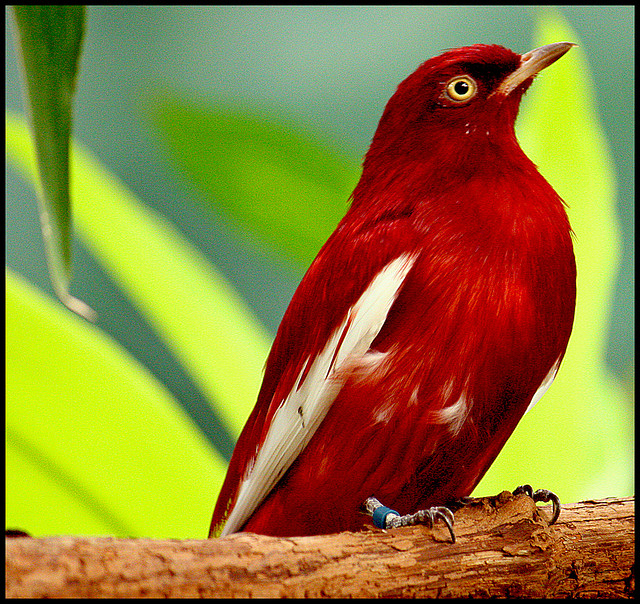
Pompadour Cotinga (Xipholena punicea) ©©holyknight33 Flickr

Pompadour Cotinga (Xipholena punicea) ©©holyknight33 Flickr

“Remember his marvellous works that he hath done, his wonders, and the judgments of his mouth;” (1Ch 16:12)

Now that the Passeriformes – Songbird families were all presented weekly, let’s review these families. The slide show will show one photo from each family. These will be in taxonomic order.

Also, the links to these families will be listed and the article associated with them. This will be a several week review. There are 131 families. All total, there are over 6,000 birds in these families and thankfully, most of them we were able to show. Some photos are protected by copyright and it was not possible to find a photo. Yet, there were more show than we would ever be able to see individually, in person.

Acanthisittidae – New Zealand Wrens
Eurylaimidae – Broadbills
Pittidae – Pittas
Furnariidae – Ovenbirds
Thamnophilidae – Antbirds
Formicariidae – Antthrushes
Grallariidae – Antpittas
Conopophagidae – Gnateaters
Rhinocryptidae – Tapaculos
Melanopareiidae – Crescentchests
Tyrannidae – Tyrant Flycatchers
Cotingidae – Cotingas
Pipridae – Manakins
Tityridae – Tityras, Becards
Menuridae – Lyrebirds
Atrichornithidae – Scrubbirds
Ptilonorhynchidae – Bowerbirds
Climacteridae – Australasian Treecreepers
Maluridae – Australasian Wrens
Meliphagidae – Honeyeaters
Dasyornithidae – Bristlebirds
Pardalotidae – Pardalotes
Acanthizidae – Australasian Warblers
Pomatostomidae – Australasian Babblers
Orthonychidae – Logrunners
Cnemophilidae – Satinbirds
Melanocharitidae – Berrypeckers, Longbills
Paramythiidae – Painted Berrypeckers
Callaeidae – New Zealand Wattlebirds
Notiomystidae – Stitchbird
Psophodidae – Whipbirds, Jewel-babblers and Quail-thrushes
Platysteiridae – Wattle-eyes, Batises
Tephrodornithidae – Woodshrikes and allies
Prionopidae – Helmetshrikes
Malaconotidae – Bushshrikes
Machaerirhynchidae – Boatbills
Vangidae – Vangas
Pityriaseidae – Bristlehead
Artamidae – Woodswallows,butcherbirds and allies
Rhagologidae – Mottled Berryhunter

Black-necked Wattle-eye (Platysteira chalybea) ©TimBoucher

Black-necked Wattle-eye (Platysteira chalybea) ©TimBoucher

“I remember the days of old; I meditate on all thy works; I muse on the work of thy hands.” (Psa 143:5)

Beginning of Passeriformes Order (Songbirds) For The Sunday Inspiration

More Amazing Birds ~ “Jesus What A Might Name” – Pastor Jerry w/Choir and Orchestra

Ant Birds ~ “He Looked Beyond My Fault” ~ ©The Hyssongs

Everlasting God ~”Everlasting God” – Pastor Jerry, Reagan Osborne, Caleb & Jessie Padgett

Flycatchers ~ “Amazing Grace” – Orchestra and “I Love You, Written in Red” – Choir (Faith Baptist Church)

Give Thanks ~ “Give Thanks” ~ sung by Mark Quijano, his YouTube Channel

There is a Redeemer ~ “There is a Redeemer,” played by Nell Reese at Faith Baptist Church

Australian Birds ~ “How Can I Keep From Singing” – Pastor Jerry Smith, Jessie and Caleb Padgett and Reagan Osborne

Honeyeaters ~ “Blood of Jesus Medley” ~ Faith Baptist Church Choir

Worthy ~ “Worthy” ~ Faith Baptist Choir and Orchestra

Variety II ~ “Just A Little Talk With Jesus” – Vegter Six

Whipbirds, Wattle-eyes and Allies – ” Be Thou My Vision and Battle Hymn of the Republic” ~ played by Sean Fielder

Woodshrikes and Helmetshrikes ~ ” I’ve Got Joy” ~ by the Faith Baptist Orchestra

Bushshrikes and Boatbills ~ “We Shall See Jesus” ~ Margaret Hiebert, Pastor and Jill Osborne and Pastor Jerry Smith

Vangas and Friends ~ “I Still Believe” – ©The Hyssongs

*


This slideshow requires JavaScript.

“Bless the LORD, O my soul. O LORD my God, thou art very great; thou art clothed with honour and majesty.” (Psa 104:1)

“To Win My Soul” – Sung by Jessie Padgett”

Sunday Inspirations

Passeriformes

Sharing The Gospel

*

Sunday Inspiration – Cardinalidae Wrap-up

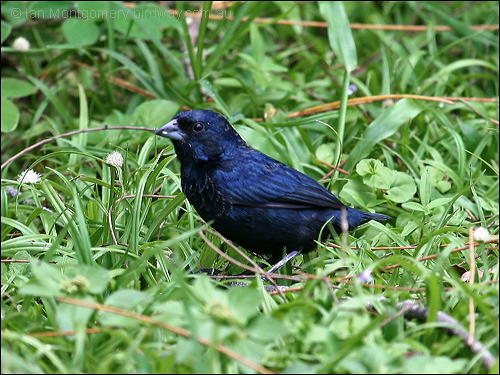
Blackish-blue Seedeater (Amaurospiza moesta) ©WikiC

Blackish-blue Seedeater (Amaurospiza moesta) ©WikiC

And when he sowed, some seeds fell by the way side, and the fowls came and devoured them up: (Matthew 13:4 KJV)

Last week, the first half of the Cardinalidae was presented, and now here is the rest of this beautiful family. Today we have Grosbeaks, Seedeaters, Saltators, a Dickcissel, and Buntings. You will see another display of the Lord’s Handiwork as you watch the slideshow.

The beginning genera have only a few species, the latter ones have more species per genus. Enjoy!

Black-headed Saltator (Saltator atriceps) ©WikiC

Black-headed Saltator (Saltator atriceps) ©WikiC

“Saltator is a genus of songbirds of the Americas. They are traditionally placed in the cardinal family (Cardinalidae) but now seem to be closer to tanagers (Thraupidae). Their English name is also saltator, except for two dark species known by the more general grosbeak.

Saltator is Latin for “leaper” or “dancer”. Louis Vieillot applied it to this genus because of the heavy way the birds hop on the ground.” (Wikipedia)

PAS-Card Dickcissel (Spiza americana) ©WikiC
Dickcissels have a large pale bill, a yellow line over the eye, brownish upperparts with black streaks on the back, dark wings, a rust patch on the shoulder and light underparts. Adult males have a black throat patch, a yellow breast and grey cheeks and crown. This head and breast pattern is especially brilliant in the breeding plumage, making it resemble an eastern meadowlark. Females and juveniles are brownish on the cheeks and crown and are somewhat similar in appearance to house sparrows; they have streaked flanks.

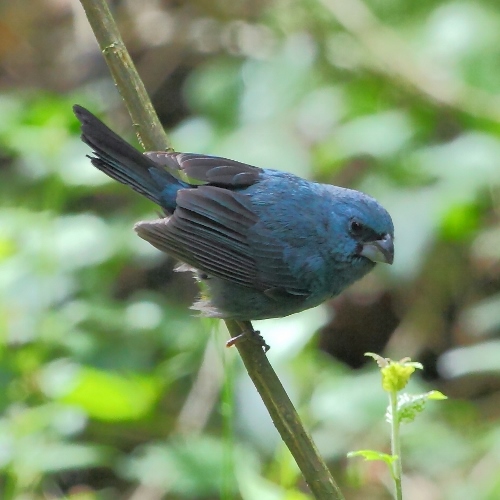
Glaucous-blue Grosbeak (Cyanoloxia glaucocaerulea) ©WikiC

Glaucous-blue Grosbeak (Cyanoloxia glaucocaerulea) ©WikiC

The Glaucous-blue Grosbeak (Cyanoloxia glaucocaerulea), also known as the indigo grosbeak, is a species of bird in the Cardinalidae family. It is the only member of the genus Cyanoloxia. It is found in Argentina, Brazil, and Uruguay. Its natural habitats are subtropical or tropical moist lowland forests, subtropical or tropical moist shrubland, and heavily degraded former forest.

Painted Bunting Subspecies (Passerina ciris ciris) ©WikiC

Painted Bunting Subspecies (Passerina ciris ciris) ©WikiC

The genus Passerina is a group of birds in the cardinal family (Cardinalidae). Although not directly related to buntings in the family Emberizidae, they are sometimes known as the North American buntings (the North American Emberizidae are colloquially called “sparrows” although they are also not related to these birds).

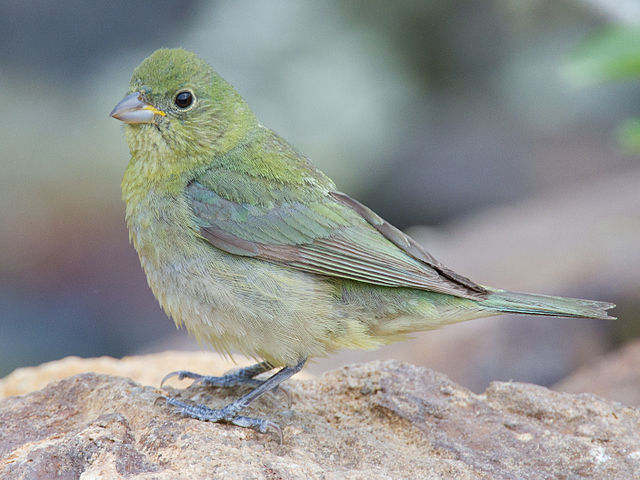
Painted Bunting (Passerina ciris) Female ©WikiC Dan_Pancamo

Painted Bunting (Passerina ciris) Female ©WikiC Dan_Pancamo

The males show vivid colors in the breeding season; the plumage of females and immature birds is duller. These birds go through two molts in a year; the males are generally less colorful in winter. They have short tails and short slim legs. They have smaller bills than other Cardinalidae; they mainly eat seeds in winter and insects in summer. (Wikipedia)

With this last group, we have now completed the PASSERIFORMES – Passerines Order. As mentioned last week, there are 131 families of song birds that you have been viewing since February of this year.

This slideshow requires JavaScript.

And he said unto me, It is done. I am Alpha and Omega, the beginning and the end. I will give unto him that is athirst of the fountain of the water of life freely. (Revelation 21:6 KJV)

“Come Thou Fount of Every Blessing” ~ Choir and Orchestra

*

More Sunday Inspirations

Sunday Inspiration – Cardinalidae – Family of Cardinals Plus

Cardinalidae – Cardinals, Grosbeaks and allies

PASSERIFORMES – Passerines

Wordless Birds

*

Sunday Inspiration – Cardinalidae Family of Cardinals Plus

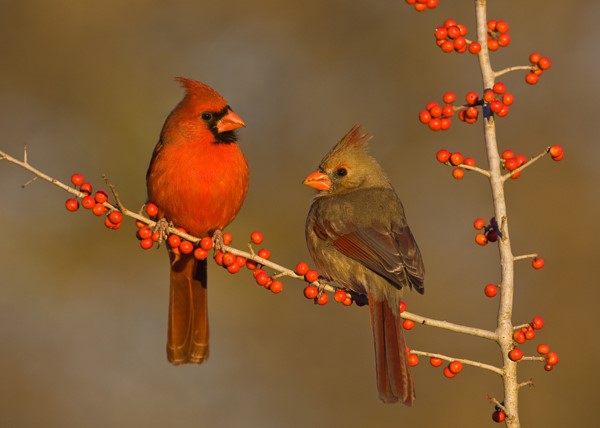
Northern Cardinal M-F ©BackyardBirdLover

Northern Cardinal M-F ©BackyardBirdLover

Wherefore art thou red in thine apparel, and thy garments like him that treadeth in the winefat? (Isaiah 63:2 KJV)

Today, you are being introduced to the Cardinalidae Family, which is the last family, in taxonomy order, of the Passeriformes Order. Since February 1, 2016, we began the journey with the first four families in More Amazing Birds. Now we have arrived at the last of the 131 families of this order. I trust you have enjoyed the journey through these many Sundays. Hopefully you have been blessed by the great variety of Avian Wonders from our Lord, their Creator. The Passeriformes Order contains well over half of all the birds in the world; around 6,000 plus of the 10,659 species on the latest update. (6.3)

The Cardinalidae – Cardinals, Grosbeaks and allies has 69 species in the family. Because of that number, this family will be presented in two segments. Growing up in Indiana, the Northern Cardinal was a favorite of most of us. It is the “State Bird” of Indiana along with six other states. [Illinois, Kentucky, North Carolina, Ohio, Virginia, West Virginia] The family members are found in North and South America. The South America Cardinals of the genus Paroaria are placed in another family, the Thraupidae (previously placed in Emberizidae). Even though the family name is Cardinalidae, there are only two “cardinals” among the members.

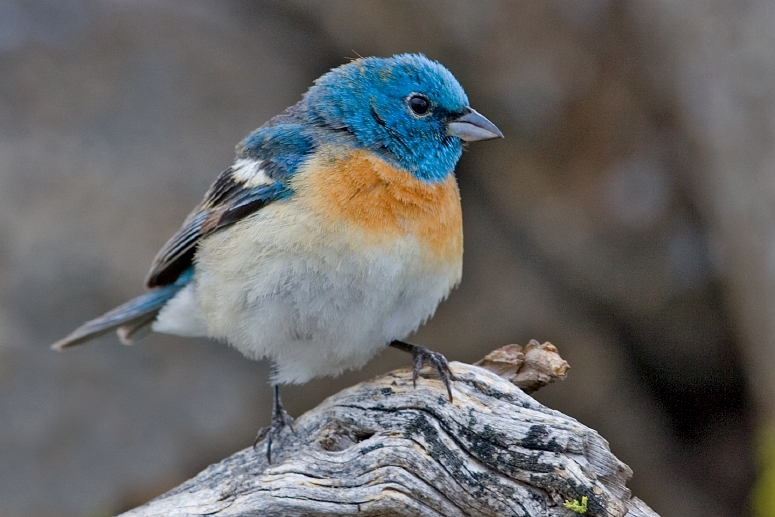
Lazuli Bunting (Passerina amoena) ©WikiC

Lazuli Bunting (Passerina amoena) ©WikiC

Also known as cardinal-grosbeaks and cardinal-buntings, this family’s members “are robust, seed-eating birds with strong bills. The family ranges in size from the 12-cm (4.7-in), 11.5-g (0.40-oz) and up orange-breasted bunting to the 25-cm (9.8-in), 85-g (2.99-oz) black-headed saltator. They are typically associated with open woodland. The sexes usually have distinctive appearances. The northern cardinal type species was named by colonists for the male’s red crest, reminiscent of a Catholic cardinal’s biretta.

The ‘North American buntings’ are known as such to distinguish them from buntings. The name ‘cardinal-grosbeak’ can also apply to this family as a whole.”(Wikipedia)

Scarlet Tanager (Piranga olivacea) by Kent Nickell

Scarlet Tanager (Piranga olivacea) by Kent Nickell

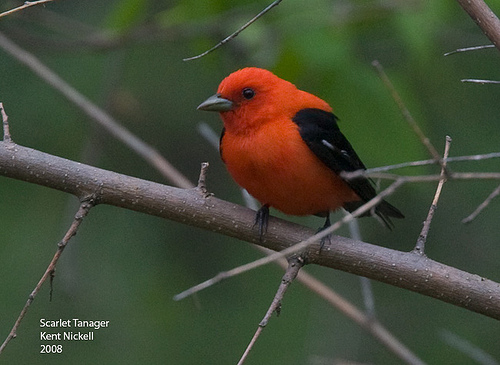
The family starts off with 11 Tanagers in the Piranga genus, which used to be in with the tanagers, but were relocated here recently. “They are essentially red, orange or yellow all over, except the tail and wings and in some species also the back. Such extensive lipochrome coloration (except on the belly) is very rare in true tanagers, but is widespread among the Cardinalidae in the Piranga genus.

These songbirds are found high in tree canopies, and are not very gregarious in their breeding areas. Piranga species pick insects from leaves, or sometimes in flight. They will also take some fruit. Several species are migratory, breeding in North America and wintering in the tropics.”

Red-throated Ant Tanager (Habia fuscicauda) by Michael Woodruff

Red-throated Ant Tanager (Habia fuscicauda) by Michael Woodruff

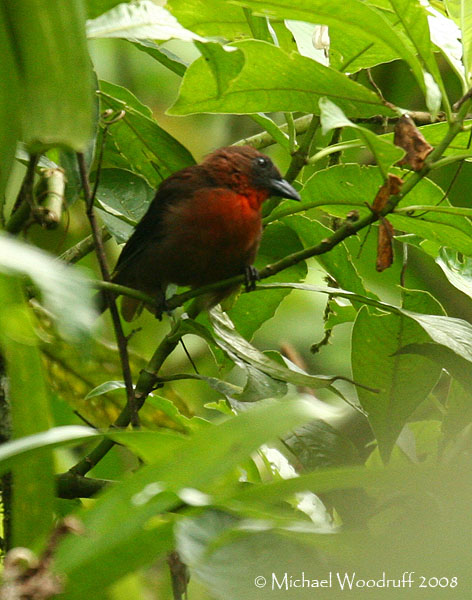
Next are the Ant Tanagers in the Habia genus. “These are long-tailed and strong billed birds. The males have a red crest and plumage containing red, brown or sooty hues. Females may resemble the males or be largely yellowish or brown in colour.” Following these are four more tanagers in the Chlorothraupis genus. These are the last of the tanagers that were moved to this family.

Rose-breasted Grosbeak (Pheucticus ludovicianus) by Rob Fry

Rose-breasted Grosbeak (Pheucticus ludovicianus) by Rob Fry

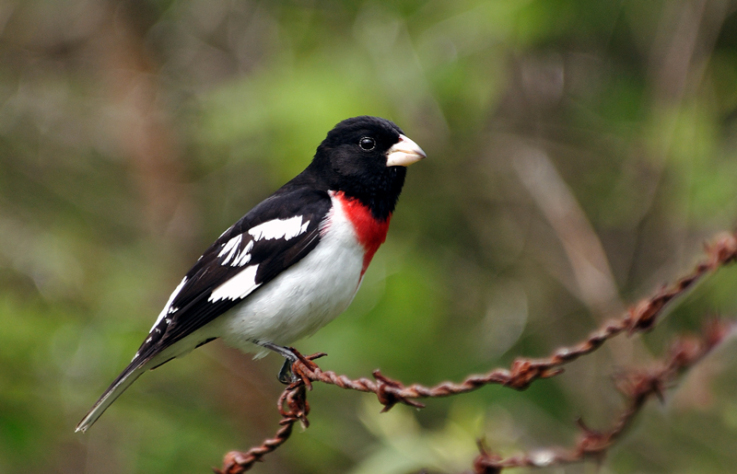
The next genus, Pheucitcus has six Grosbeaks.  Typical of the genus, they lay two to five pale bluish to greenish eggs with heavy brown and gray speckling. The cup nest is built at medium height in a bush or small tree.” (Wikipedia)

Red-breasted Chat (Granatellus venustus) ©WikiC

There are three Chats in the Granatellus genus; Red-breasted Chat, Grey-throated Chat, and the Rose-breasted Chat. They range from North America through Central America into northern South America. Their natural habitat is subtropical or tropical dry forests.

Pyrrhuloxia (Cardinalis sinuatus) ©Flickr Don Faulkner

Pyrrhuloxia (Cardinalis sinuatus) ©Flickr Don Faulkner

We will finish this first half of the family with three of my favorites, the Cardinalis genus. Our Northern and Vermilion Cardinals and the Pyrrholixia (which I saw for the first time last year) are hard to miss with their bright set of feathers the Lord provided for them. These range across North America and into northern South America.

“He answered and said unto them, When it is evening, ye say, It will be fair weather: for the sky is red.” (Matthew 16:2 KJV)

This slideshow requires JavaScript.

“Come now, and let us reason together, saith the LORD: though your sins be as scarlet, they shall be as white as snow; though they be red like crimson, they shall be as wool.” (Isaiah 1:18 KJV)

“Written in Red” – Faith Baptist Choir and Orchestra

For God so loved the world, that he gave his only begotten Son, that whosoever believeth in him should not perish, but have everlasting life. For God sent not his Son into the world to condemn the world; but that the world through him might be saved. He that believeth on him is not condemned: but he that believeth not is condemned already, because he hath not believed in the name of the only begotten Son of God. And this is the condemnation, that light is come into the world, and men loved darkness rather than light, because their deeds were evil. (John 3:16-19 KJV)

*

More Sunday Inspirations

Sunday Inspiration – More Amazing Birds

PASSERIFORMES – Passerines

Cardinalidae – Cardinals, Grosbeaks and allies

*

Sunday Inspiration – Calcariidae – Longspurs and Snow Buntings

McCown's Longspur (Rhynchophanes mccownii) ©Flickr oldbilluk

McCown’s Longspur (Rhynchophanes mccownii) ©Flickr oldbilluk

“Therefore whosoever heareth these sayings of mine, and doeth them, I will liken him unto a wise man, which built his house upon a rock:” (Matthew 7:24)

After the many postings for the Thraupidae Family, nine to be exact, this week’s family only has six species. This is the next to last avian family in the Passeriformes Order. Since there are so few, more information will be given. [Added a video of a small kid’s choir to accompany the slideshow.]

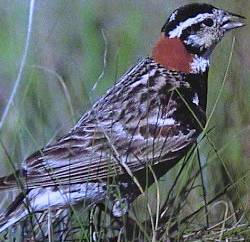
McCown’s Longspur (Rhynchophanes mccownii) is a small ground-feeding bird from the family Calcariidae, which also contains the longspurs and snow buntings. McCown’s was named after Captain John P. McCown, an American army officer.

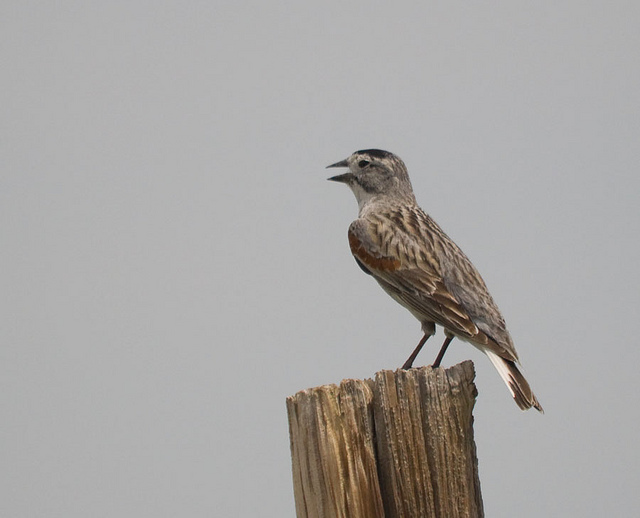
This longspur has a large cone-shaped bill, a streaked back, a rust-coloured shoulder and a white tail with a dark tip. In breeding plumage, the male has a white throat and underparts, a grey face and nape and a black crown. Other birds have pale underparts, a dark crown and may have some black on the breast. The male’s song is a clear warble. The call is a dry rattle.

In winter, they migrate in flocks to prairies and open fields in the southern United States and northern Mexico. They prefer areas with sparser vegetation than those chosen by the Chestnut-collared Longspur. These birds forage on the ground, gathering in flocks outside of the nesting season. They sometimes make short flights in pursuit of flying insects. They mainly eat seeds, also eating insects in summer. Young birds are mainly fed insects. This bird breeds in dry short grass prairies in central Canada, (the Canadian Prairies), and the north central United States. The female lays 3 or 4 eggs in a grass cup nest in a shallow scrape on the ground. The male sings and flies up to defend his territory. Both parents feed the young birds.

Lapland Longspur (Calcarius lapponicus) by Daves BirdingPix

Lapland Longspur (Calcarius lapponicus) by Daves BirdingPix

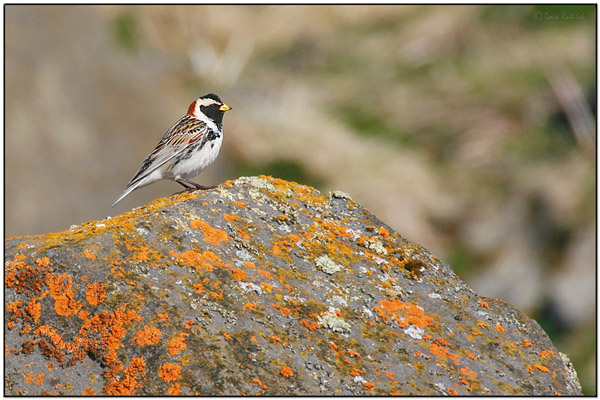
Lapland Longspur (Calcarius lapponicus) is a robust bird, with a thick yellow seed-eater’s bill. The summer male has a black head and throat, white eyestripe, chestnut nape, white underparts, and a heavily streaked black-grey back. Other plumages have a plainer orange-brown head, a browner back and chestnut nape and wing panels.

Lapland Longspur (Calcarius lapponicus) ©WikiC

Lapland Longspur (Calcarius lapponicus) ©WikiC

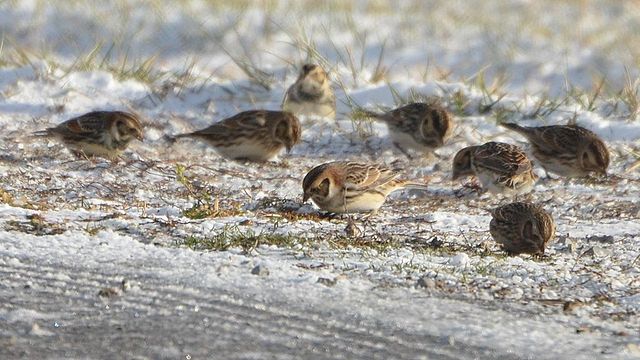
It breeds across Arctic Europe and Asia and in Canada and the northernmost United States. It is migratory, wintering in the Russian steppes, the southern United States, Northern Scandinavian arctic areas and down to coastal Southern Sweden, Denmark and Great Britain. This is the only Eurasian species of the longspur buntings.

The bird is often seen close to the tree line, and likes to feed in mixed-species flocks in winter. They pick them on the ground, rarely feeding directly on plants. Its natural food consists of insects when feeding young, and otherwise seeds. The nest is on the ground. 2–4 eggs are laid. During the breeding season, the birds migrate to the north, where their diet switches to arthropods. Nestlings are only fed arthropods, which also constitute the diet of the parents at that time of the year (June to July). The birds often catch insects in mid-air, but do forage through vegetation when conditions prevent the insects from flying. Longspurs can consume between 3000 and 10,000 prey items (insects or seeds) per day, depending on their energy needs.

Smith's Longspur (Calcarius pictus) USFWS

Smith’s Longspur (Calcarius pictus) USFWS

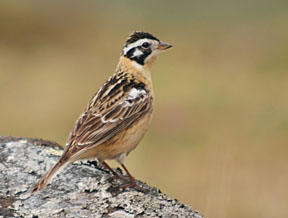
Smith’s Longspur (Calcarius pictus) have short cone-shaped bills, streaked backs, and dark tails with white outer retrices. In breeding state plumage (mostly formed by worn basic plumage), the male has a pumpkin-orange throat, nape, and underparts contrasting with an intricate black-and-white face pattern. The white lesser coverts are quite pronounced on a male in spring and early summer. Females and immatures have lightly streaked buffy underparts, dark crowns, brown wings with less obvious white lesser coverts, and a light-colored face. The tail is identical at all ages. Audubon named this bird after his friend Gideon B. Smith.

 Smith's Longspur (Calcarius pictus) cc rgibbo3

Smith’s Longspur (Calcarius pictus) cc rgibbo3

This bird breeds in open grassy areas near the tree line in northern Canada and Alaska. The female lays three to five eggs in a grass cup nest on the ground. These birds nest in small colonies; males do not defend territory. In winter, they congregate in open fields, including airports, in the south-central United States.

Migration is elliptical, with northbound birds staging in Illinois in the spring and southbound birds flying over the Great Plains in the fall. These birds forage on the ground, gathering in flocks outside of the nesting season. They mainly eat seeds, also eating insects in summer. Young birds are mainly fed insects.

Chestnut-collared Longspur (Calcarius ornatus) WikiC

Chestnut-collared Longspur (Calcarius ornatus) WikiC

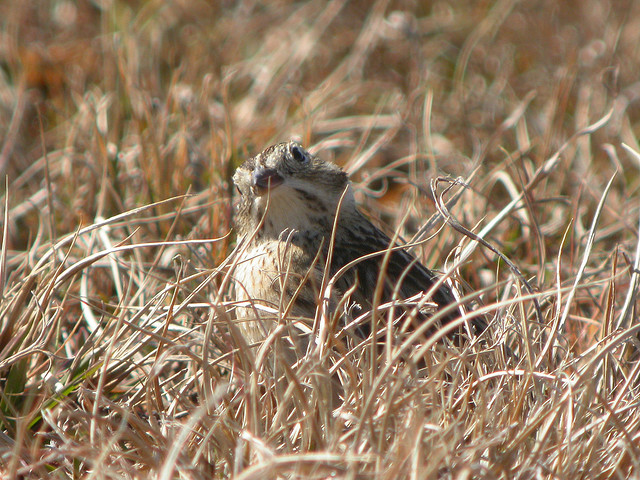
Chestnut-collared Longspur (Calcarius ornatus is a small ground-feeding bird that has a short conical bill, a streaked back and a white tail with a dark tip. In breeding plumage, the male has black underparts, a chestnut nape, a yellow throat and a black crown. Other birds have light brown underparts, a dark crown, brown wings and may have some chestnut on the nape.

This bird breeds in short and mixed grass prairies in central Canada and the north central United States. The female lays 4 or 5 eggs in a grass cup nest in a shallow scrape on the ground. The male sings and flies up to defend his territory. Both parents feed the young birds. In winter, they migrate in flocks to prairies and open fields in the southern United States and Mexico and they forage on the ground, gathering in flocks in winter. They mainly eat seeds, also eating insects in summer. Young birds are mainly fed insects.

Snow Bunting (Plectrophenax nivalis) by Ian

Snow Bunting (Plectrophenax nivalis) by Ian

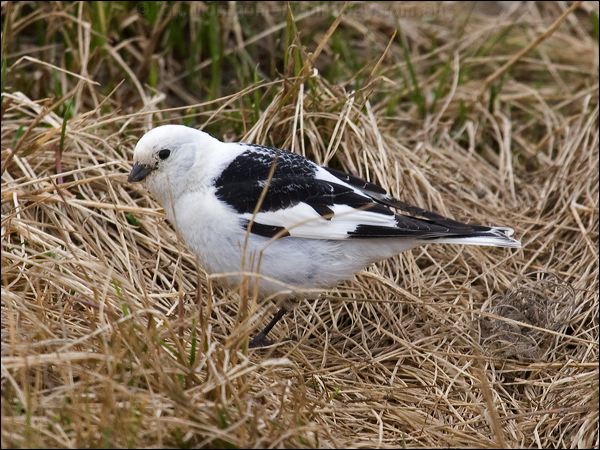
Snow Bunting (Plectrophenax nivalis) is sometimes colloquially called a snowflake, is apasserine bird in the Calcariidae family It is an Arctic specialist, with a circumpolar Arctic breeding range throughout the northern hemisphere. There are small isolated populations on a few high mountain tops south of the Arctic region, including the Cairngorms in central Scotland and the Saint Elias Mountains on the southern Alaska-Yukon border, and also Cape Breton Highlands. The snow bunting is the most northerly recorded passerine in the world.

They are a medium size, ground-dwelling species that walks, runs and could potentially jump if needed. It is fairly large and long-winged for a bunting. The bill is yellow with a black tip, and is all black in summer for males. The plumage is white in the underparts and the wings and back have black and white on them. The female and male have a different plumage. During the mating season: the male is completely black and white with black tips in the wings, while the female will have the same coloration than the male in the wings but will have a red-brownish color in her back. During the winter season they will both have a rufous coloration in the back. In the spring, the buntings will not go through a molt as other passerines birds do, instead the breeding coloration comes with the wearing and abrasion of the feathers. Unlike most passerines, it has feathered tarsi, an adaptation to its harsh environment. No other passerine can winter as far north as this species apart from the common raven.

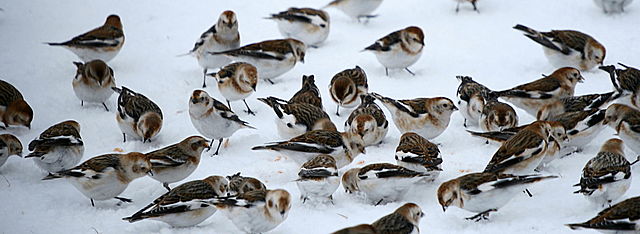
Snow Bunting (Plectrophenax nivalis) Flock ©WikiC

Snow Bunting (Plectrophenax nivalis) Flock ©WikiC

The snow buntings migrate to the Arctic to reproduce and they are the first migrant species that arrives to these territories. They must gain at least 30% of body mass before migration. The males will arrive first at the beginning of April, when temperature could reach -30 degrees Celsius. This early migration could be explained by the fact that this species is highly territorial and the quality of the nesting area is crucial to their reproductive success. Females will arrive four to six weeks later, when the snow starts to melt.

The range of the family is extensive. Of the six species within the family, the snow bunting and Lapland longspur are found both in both North America and Eurasia; the other four species are found only in North America. The snow bunting breeds in northern latitudes in an extensive breeding range which consists of northern Alaska and Canada, the western and southern coasts of Greenland, and northern Scandinavia and Russia. The snow bunting winters throughout southern Canada and the northern United States in North America, and its Eurasian range includes the northern United Kingdom and a large band extending from Germany west through Poland and Ukraine to Mongolia and China.[9][10] Additionally, the snow bunting has been recorded as a vagrant to Algeria and Morocco in North Africa, the Balkans, Greece and Turkey, and Malta. The Lapland longspur’s range is similar to that of the snow bunting, breeding in northern Canada, Scandinavia, and Siberia, and coastal Alaska and Greenland and wintering in the northern United States and Canada, and in a band between approximately 45° and 55° latitude across Russia, Kazakhstan, China, and Mongolia to the Sea of Japan.

McKay's Bunting (Plectrophenax hyperboreus) ©USFWS

McKay’s Bunting (Plectrophenax hyperboreus) ©USFWS

McKay’s bunting (Plectrophenax hyperboreus) is most closely related to the snow bunting (P. nivalis). Hybrids between the two species have been observed, leading some authorities to treat McKay’s as a subspecies of snow bunting. As the Plectrophenax buntings are nested within the Calcarius clade, their closest relatives are the longspurs. McKay’s bunting breeds on two islands in the Bering Sea, St. Matthew and Hall islands, and winters on the western coast of the U.S. state of Alaska. The name honors the American naturalist Charles McKay.

This species closely resembles Snow Bunting in all plumages, but is whiter overall. The breeding plumage of the male is almost purely white, with only small areas of black on the wingtips and tail. The breeding female has a streaked back. Non-breeding birds also have warm brown patches on cheeks, crown, and the sides of the neck. McKay’s bunting is larger on average than the snow bunting. It is 18 cm (7.1 in) long and weighs from 38 to 62 g (1.3 to 2.2 oz), with an average of 54.5 g (1.92 oz). It nests on shingle beaches in hollow drift logs and rock crevices. Winters on coastal marshes, shingle beaches, and agricultural fields. Feeding habits are thought to be similar to snow bunting, which in winter consumes seeds from weeds and grasses, and in summer has a mixed diet of seeds, buds, and insects. (Information taken from Wikipedia with editing.)

This slideshow requires JavaScript.

“He is like a man which built an house, and digged deep, and laid the foundation on a rock: and when the flood arose, the stream beat vehemently upon that house, and could not shake it: for it was founded upon a rock. But he that heareth, and doeth not, is like a man that without a foundation built an house upon the earth; against which the stream did beat vehemently, and immediately it fell; and the ruin of that house was great.” (Luke 6:48-49)

“House on A Rock” ~ by the Summer Kid’s Choir (They are not very loud, so I decided to let you watch them)

A small choir to go with this small family.

More Sunday Inspirations

Calcariidae – Longspurs, Snow Buntings

Story of the Wordless Book

*

Sunday Inspiration – Thraupidae – Tanagers and Allies Finale

Band-tailed Seedeater (Catamenia analis) Male ©WikiC

Band-tailed Seedeater (Catamenia analis) Male ©WikiC

“Jesus saith unto them, My meat is to do the will of him that sent me, and to finish his work.” (John 4:34 KJV)

Cuban Bullfinch (Melopyrrha nigra) ©WikiC

Cuban Bullfinch (Melopyrrha nigra) ©WikiC

We have arrived at the last the Thraupidae family of Tanagers and close family relatives. We begin with the Cuban Bullfinch (Melopyrrha nigra) is a songbird species of the monotypic genus Melopyrrha. Sometimes classified in the bunting and American sparrow family (Emberizidae), more recent studies have shown it to be part of the tanager family (Thraupidae). Therein, it belongs to the lineage of tholospizan “finches”, which also includes the famous Darwin’s finches. They are found in the Cayman Islands, there only on Grand Cayman, and Cuba. Its natural habitats are subtropical or tropical moist lowland forests, subtropical or tropical moist montane forests, and heavily degraded former forest.

Paramo Seedeater (Catamenia homochroa) ©WikiC

Paramo Seedeater (Catamenia homochroa) ©WikiC

The next two genera, Dolospingus, found in Brazil, Colombia, and Venezuela. Its natural habitat is subtropical or tropical dry shrubland, and Catamenia also from South America, are Seedeaters.

Yellow-faced Grassquit (Tiaris olivaceus) by Kent Nickell

Yellow-faced Grassquit (Tiaris olivaceus) by Kent Nickell

Six Grassquits, from Tiaris and Loxipasser genera are from Central and South America. The Yellow-faced Grassquits are interesting because “During courtship, the male vibrates his wings as he sings his subdued song, sitting only 1–2 in (2.5–5.1 cm) away so the female can properly hear him. The roughly globular nest, built by the female, is made of grass and weed stems compacted into a thick mass, and lined with pieces of grass inflorescences and bast fibre. It has a side entrance and is placed usually less than 30 cm (12 in) above the ground, often among grass or weeds on a road or river embankment.” (Wikipedia) Grassquits are known for making covered nests.

Most of the rest of the family are similar in that just a few birds are in each genus. The the Bullfinches, Loxigilla; Ground Finches, Geospiza; Cactus Finches, Geospiza; Tree Finches, Camarhynchus; Warbler-Finches, Certhidea; and then five Tanagers in three genera.

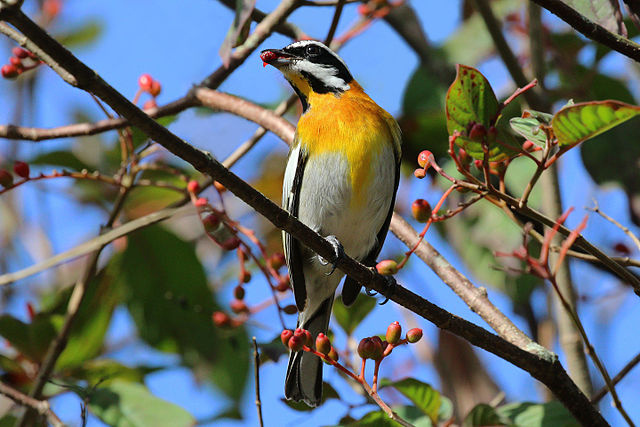
Western Spindalis (Spindalis zena pretrei) Male ©WikiC

Western Spindalis (Spindalis zena pretrei) Male ©WikiC

There are four “Spindalis is a genus consisting of four non-migratory bird species. The genus is considered endemic to the Greater Antilles; a population on Cozumel Island, off the Yucatán Peninsula’s east coast, is part of that island’s West Indian fauna. Spindalis males are characterized by bright plumage while females are duller and have a different coloration. (Wikipedia)  As usual, this helps hide her while sitting on the nest. Also shows the Lord’s concern for all of His Creation.

Plushcap (Catamblyrhynchus diadema) ©WikiC

Plushcap (Catamblyrhynchus diadema) ©WikiC

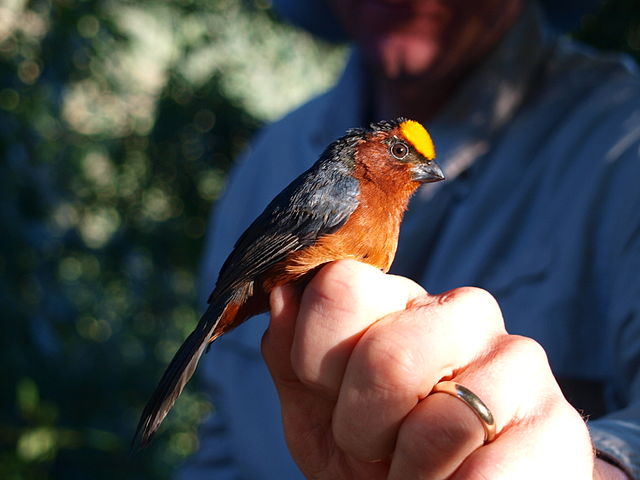
The next to last bird in the Thraupidae Family is an very interesting bird and I’ll let Wikipedia give the details. “The plushcap is one of the most distinctive of all Neotropical passerines in terms of both its appearance and behavior. The plushcap (Catamblyrhynchus diadema) was in its own family until recently when it was grouped with the tanagers. It is very distinct both physically and in terms of behavior. The bill is broad and black. The body is a chestnut color with a bright golden-yellow forecrown. The forecrown is made up of stiff feathers. It has been speculated that these short, dense feathers are less susceptible to feather wear and more resistant to moisture than typical feathers. This may be an adaptation for its specialized feeding mode [sounds like Wisdom from their Creator], in which it probes into dense whorls of bamboo for its prey items (Hilty et al. 1979). Juveniles are just duller versions of their parents. They are found at high elevations from northern Venezuela south to Argentina, including the coastal mountains of Venezuela and the Andes of Colombia, Ecuador, Peru, Bolivia, and extreme northwestern Argentina. They live in montane forests and secondary forests near bamboo. They forage for insects inside the bamboo. They will eat small insects, berries, and small plant matter. The overall length averages 14 cm (5.5 in) and weigh averages 14.1 grams (0.5 oz).”

Plushcap (Catamblyrhynchus diadema) ©WikiC

Plushcap (Catamblyrhynchus diadema) ©WikiC

“The bird is very distinct and is not confused with many other birds. It stands out from the other tanagers, only possibly being confused with the golden-crowned tanager despite the golden-crowned tanager being blue. The species is found in Argentina, Bolivia, Colombia, Ecuador, Peru, and Venezuela. Its natural habitat is humid montane forests and it is always found in close association with Chusquea bamboo. It is typically found at an elevation 1,800 to 3,500 m.”

This slideshow requires JavaScript.

But none of these things move me, neither count I my life dear unto myself, so that I might finish my course with joy, and the ministry, which I have received of the Lord Jesus, to testify the gospel of the grace of God. (Acts 20:24 KJV)

“Hallelujah For The Cross” ~ by Jessie Padgett

*

More Sunday Inspirations

Thraudidae Family – Tanagers, Finches and Allies

Sunday Inspiration – Thraupidae – Tanagers and Allies I

Sunday Inspiration – Thraupidae – Tanagers and Allies II

Sunday Inspiration – Thraupidae – Tanagers and Allies III

Sunday Inspiration – Thraupidae – Tanagers and Allies IV

Sunday Inspiration – Thraupidae – Dacnis, Honeycreepers, Conebills

Sunday Inspiration – Thraupidae – Flowerpiercer, Sierra Finches, Plus

Sunday Inspiration – Inca, Warbling and Various Finches

Sunday Inspiration – Thraupidae Tanagers and Allies  VIII

Gospel Message

*

Sunday Inspiration – Thraupidae – Tanagers and Allies VIII

Saffron Finch (Sicalis flaveola) by Dan at National Aviary

Saffron Finch (Sicalis flaveola) by Dan at National Aviary

But God, who is rich in mercy, for his great love wherewith he loved us, Even when we were dead in sins, hath quickened us together with Christ, (by grace ye are saved;) (Ephesians 2:4-5 KJV)

Below the slideshow Angel Long is singing my most favorite hymn. “And Can It Be” How could the Lord Jesus Christ Love us so much that He died for us? Enjoy listening to her sing my favorite as Sean Fielder accompanies. Both are members of our church, Faith Baptist.

Sicalis. sometimes classified in the bunting and American sparrow family Emberizidae, more recent studies have shown it to belong in the Thraupidae.

The Sicalis genus is composed of 11 Yellow Finches, the Saffron Finch and the Sulphur-throated Finch. Sometimes classified in the bunting and American sparrow family Emberizidae, more recent studies have shown it to belong in the Thraupidae.

Wedge-tailed Grass Finch (Emberizoides herbicola) by Dario Sanches

Wedge-tailed Grass Finch (Emberizoides herbicola) by Dario Sanches

The Emberizoides and Embermagra have 5 species. Emberizoides is a small genus of finch-like tanagers found in grassy areas in Central and South America.

Blue-black Grassquit (Volatinia jacarina) by Ian

Blue-black Grassquit (Volatinia jacarina) by Ian

A single member Volatinia genus has the Blue-black Grassquit. It breeds from southern Mexico through Central America, and South America as far as northern Chile, Argentina and Paraguay, and on Trinidad and Tobago.

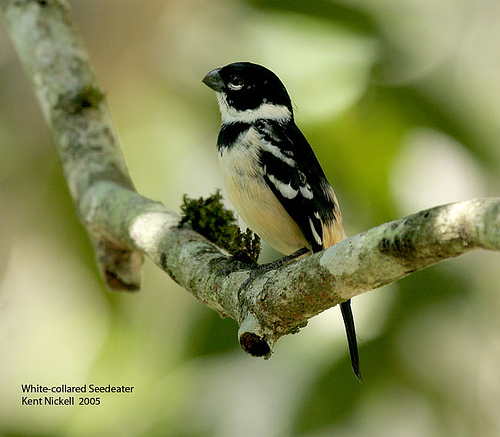
White-collared Seedeater (Sporophila torqueola) male by Kent Nickell

White-collared Seedeater (Sporophila torqueola) male by Kent Nickell

The Sporophila is a large genus that has 33 avian wonders. They are relatively small with stubby, conical bills adapted for feeding on seeds and alike. Most species are strongly sexually dimorphic, and while “typical” adult males often are distinctive, female and immatures of both sexes can be very difficult (in some species virtually impossible) to identify to exact species. Females of at least some of these species have different ultraviolet colours, which can be seen by birds, but not humans.

Chestnut-bellied Seed Finch (Oryzoborus angolensis) ©WikiC

Chestnut-bellied Seed Finch (Oryzoborus angolensis) ©WikiC

Next we have the Oryzoborus Seed Finches that are 6 strong. These are all Seed Finches. Their beaks have the cone shape that allows them to break open seeds easily. Another of their Creator’s forethought to provide for them. (Information on species from Wikipedia)

With these, we will leave the last group of birds from this large Thraudidae Family until next Sunday. That will wrap up this long series of this family of beautiful avian wonders. Until next week, Lord willing when we finish, His blessings.

This slideshow requires JavaScript.

*

Greater love hath no man than this, that a man lay down his life for his friends. (John 15:13 KJV)

“And Can It Be” – Sung by Angel Long and acc. Sean Fielder*

*

More Sunday Inspirations

Thraudidae Family – Tanagers, Finches and Allies

Sunday Inspiration – Thraupidae – Tanagers and Allies I

Sunday Inspiration – Thraupidae – Tanagers and Allies II

Sunday Inspiration – Thraupidae – Tanagers and Allies III

Sunday Inspiration – Thraupidae – Tanagers and Allies IV

Sunday Inspiration – Thraupidae – Dacnis, Honeycreepers, Conebills

Sunday Inspiration – Thraupidae – Flowerpiercer, Sierra Finches, Plus

Sunday Inspiration – Inca, Warbling and Various Finches

Wordless Toucan

*

Sunday Inspiration – Inca, Warbling and Various Finches

Uniform Finch (Haplospiza unicolor) ©WikiC

Uniform Finch (Haplospiza unicolor) ©WikiC

The whole earth is at rest, and is quiet: they break forth into singing. (Isaiah 14:7 KJV)

Trust you are enjoying seeing the avian beauties from this huge Thraupidae-Tanagers and Allies family (375). This is the seventh article from this family and this won’t be the last. Counting today’s group, there are 152 left to show you. It will most likely take this one and two more. The desire, of these Passerine Sunday Inspirations, is to let you SEE these fantastically created birds from the Lord. Unless you want me to play a symphony and put all 150+ birds in one slideshow, we will continue to give you “song sized” slideshows. With photos that allow permission to be used, so far, you’ve seen most of the species in the families.

First is a group of genera with only one or two species each.

Buff-throated Warbling Finch (Poospiza lateralis) ©WikiC

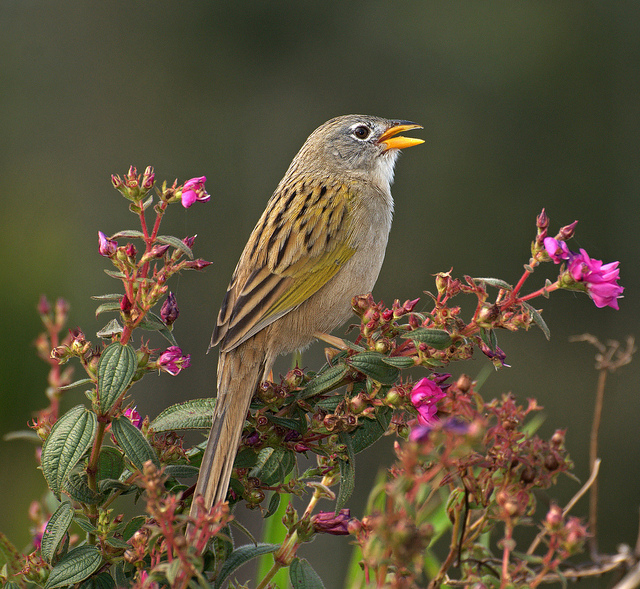
“The Inca finches (Incaspiza) are a genus of finch-like birds traditionally placed in the Emberizidae family, but it may be more closely related to the Thraupidae. Its current family status is incertae sedis. Both their scientific and common name refer to the Incan civilization. They are endemic to arid scrub in central and northern Peru. Buff-bridled, gray-winged and little Inca finches are restricted to the Marañón Valley. The rufous-backed Inca finch occurs either on the west slope of the Andes and both slopes of the Marañón Valley and is restricted to higher elevations, compared to great Inca finch which only occurs on the west slope of the Andes, but generally lower than the rufous-backed Inca finch. They are rather terrestrial, and typically forage within dense plant growth on the ground, but commonly perch higher, for example on the top of a tall cactus or in a small tree, when singing. They are typically seen singly or in pairs, but sometimes in small groups outside the breeding season. They normally do not take part in mixed-species flocks.” The problem is there are very few photos available for the six species in this genus.” (Wikipedia)

Black-and-rufous Warbling Finch (Poospiza nigrorufa) ©BirdPhotos.com

Black-and-rufous Warbling Finch (Poospiza nigrorufa) ©BirdPhotos.com

Poospiza is a genus of finch-like tanagers found in both the South American lowlands and the Andes mountains. Generally they are arboreal feeders in light woodland and scrub. All have extensive grey to their plumage, and have—often bold—white or rufous markings.” (Wikipedia)

Tucuman Mountain Finch (Compsospiza baeri) ©Flickr Ron Knight

Compsospiza is a genus of South American birds known as mountain finches (a name shared with several other species such as Poospiza caesar and Leucosticte). The two species were previously included in the genus Poospiza, but in 2009 the South American Classification Committee unanimously agreed to resurrect Compsospiza based on plumage, ecology, morphology and genetic evidence. They are restricted to shrubby woodland in the Andes of Bolivia and Argentina, and both have a grey and rufous plumage.

This slideshow requires JavaScript.

The whole earth is at rest, and is quiet: they break forth into singing. (Isaiah 14:7 KJV)

“Quiet Rest” and “Sweet Hour of Prayer” ~  by Kathy Lisby – Nell Reese acc. on piano.

*

More Sunday Inspirations

Sunday Inspiration – Thraupidae – Tanagers and Allies I

Sunday Inspiration – Thraupidae – Tanagers and Allies II

Sunday Inspiration – Thraupidae – Tanagers and Allies III

Sunday Inspiration – Thraupidae – Tanagers and Allies IV

Sunday Inspiration – Thraupidae – Dacnis, Honeycreepers, Conebills

Sunday Inspiration – Thraupidae – Flowerpiercer, Sierra Finches, Plus

Traupidae Family – Tanagers and Allies

Falling Plates

*