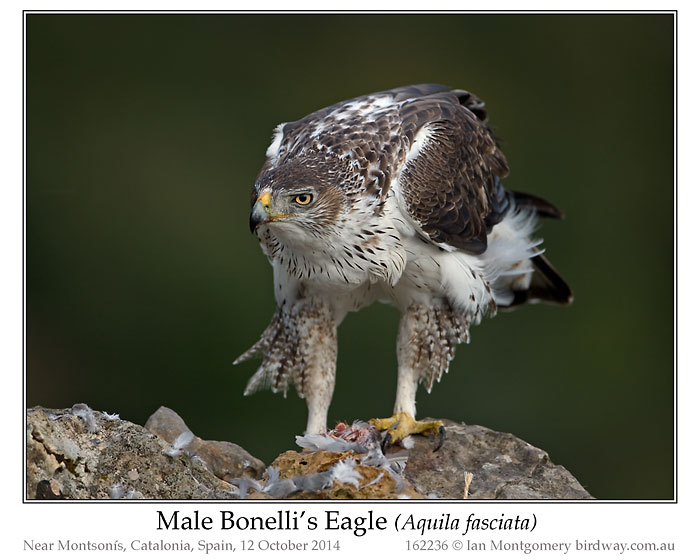
This is the last in this series of raptor photos from the Pyrenees: Bonelli’s Eagle taken at another feeding station managed by Birding in Spain. Like last week’s Northern Goshawk feral pigeons from a local council culling programme are used to attract the eagles. It’s brown and white plumage reminded me rather of the similarly sized Osprey particular that of the male, first photo, which is paler than the female. In size it has a length of up to 73cm/28in, a wingspan to 180cm/71in and weights up to 2.4kg/5.3lbs. That makes it much smaller than most of the other Aquila eagles, such as the Golden and Wedge-tailed but larger than the Little Eagle of Australia.
View From The Hide in Spain by Ian
There the resemblance to ospreys ends, as Bonelli’s Eagle is found in hilly or mountainous country in warm regions and eats mammals and birds – in Spain it eats mainly rabbits and partridges. The second photo shows the view from the hide. The stone wall on the left is where the food is tied in place, as is done with the goshawks to prevent them from carrying the food away. The bird arrived quite promptly after set up: you can see in the first photo that the reflection of the sun in its eye is just above the horizon.
The third photo is another one of the male with the remains of a pigeon. On the back just below the neck a white spot is visible – this is a diagnostic feature of adult Bonelli’s Eagles and fairly conspicuous in flight though the birds arrived and departed so quickly from the rocky ridge in front of the hide that I didn’t get any decent flight shots.
They were fast eaters too. The fourth photo was taken 25 minutes after the third: very little of the pigeon remains and the crop of the bird is quite full. The adult goshawk also took about half an hour to demolish a pigeon, but the immature goshawk took the best part of two hours and remained long after the adult had left. Despatching prey at speed would appear to be a skill that takes raptors a bit of practice. Both these photos show the feathered legs or ‘boots’, characteristic of ‘true’ eagles. They’re not exclusive to eagles though. The goshawks had impressive trousers too as do some falcons such as the Brown Falcon of Australia.
Once fed, the male seemed more aware of what was going on around it and in the fifth photo is peering at the hide, presumably in response to the sound of the camera shutter.
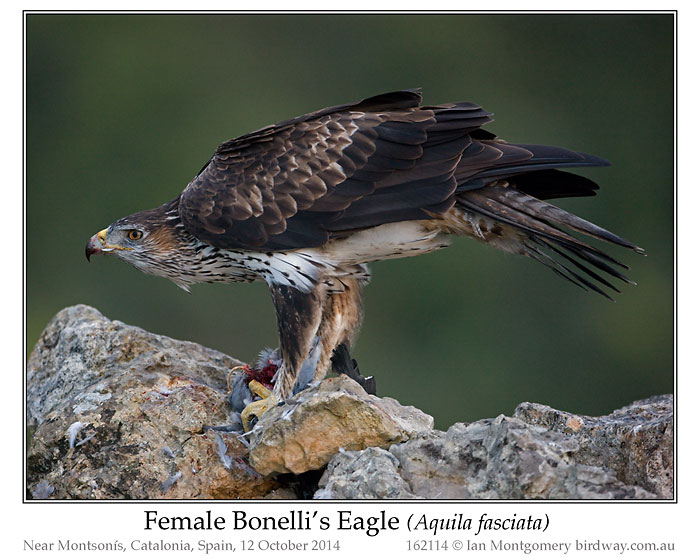
Meanwhile, the female, sixth and seventh photos, was getting stuck into the other pigeon. She was a fine-looking bird too, larger than the male, with hazel eyes and identifiable by much stronger streaks on the breast. The female had much darker trousers, seventh photo, but I don’t know whether that’s generally the case or peculiar to this bird.
Bonelli’s Eagle is widely but sparsely distributed through southern Europe, northern Africa, parts of the Middle East, South and Southeastern Asia as far east as Timor. The European population is about 900 pairs, of which about 700 are in Spain. They are sedentary, keeping to their large home ranges throughout the year. Satellite tracking in Spain has shown an average home range of 200sq km/77sq miles with a core range of about 45sq km/17 sq miles.
The generic name ‘fasciata’ comes from the Latin fascia meaning stripe, band or sash. It’s usually used in birds to refer to horizontal bands or barring but maybe Veillot, the taxonomist responsible, was referring to the barring on the ‘trousers’ rather than the streaks on the breast. Veillot, Jean Pierre that is, was an important French avian taxonomist, 1748-1831, who extended the three-level Linnaean classification of order-genus-species into order-tribe-family-genus-species in his Analyse d’une nouvelle Ornithologie Elémentaire (1816). Franco Andrea Bonelli was, unsurprisingly, an Italian ornithologist 1784-1830 and discovered both this eagle and Bonelli’s Warbler in 1815. He worked at the Natural History Museum in Paris 1810-11 before returning to Italy to take up the position of Professor of Zoology at the University of Turin. Interestingly, he published his main works in French.
They are passed away as the swift ships: as the eagle that hasteth to the prey. (Job 9:26 KJV)
Their horses also are swifter than the leopards, and are more fierce than the evening wolves: and their horsemen shall spread themselves, and their horsemen shall come from far; they shall fly as the eagle that hasteth to eat. (Habakkuk 1:8 KJV)
What an amazing set of photos of this magnificent Eagle. Thanks again, Ian, for sharing these fantastic glimpses of the Bonelli’s Eagle. Pretty fast eaters, it appears.
This Eagle is a member of the Accipitridae – Kites, Hawks and Eagles Family and a Bird of the Bible also. Eagles are mentioned over thirty times in the Bible, plus they are included in the various “birds of prey” verses.
One of my readers of the blog had this in his post. After checking the internet, I found that it was free to use. So, now I am sharing it. I think it is adorable. Not sure who originally put it together, but, thank you.
When I showed it to Dan and ask him what I could write about it, he gave me the following example:
All those birds are from different species, yet they are all heading in the same direction. The Bible tells us:
And He has made from one blood every nation of men to dwell on all the face of the earth, and has determined their preappointed times and the boundaries of their dwellings, (Acts 17:26 NKJV)
Then I saw another angel flying in the midst of heaven, having the everlasting gospel to preach to those who dwell on the earth to every nation, tribe, tongue, and people—saying with a loud voice, “Fear God and give glory to Him, for the hour of His judgment has come; and worship Him who made heaven and earth, the sea and springs of water.” (Revelation 14:6-7 NKJV)
And they sang a new song, saying: “You are worthy to take the scroll, And to open its seals; For You were slain, And have redeemed us to God by Your blood Out of every tribe and tongue and people and nation, (Revelation 5:9 NKJV)
Praise the Lord that it matters not where you are from, the Lord Jesus Christ has made salvation available to “whosoever.”
Gambel’s Partridge by Birds Illustrated by Color Photography
From col. F. M. Woodruff.
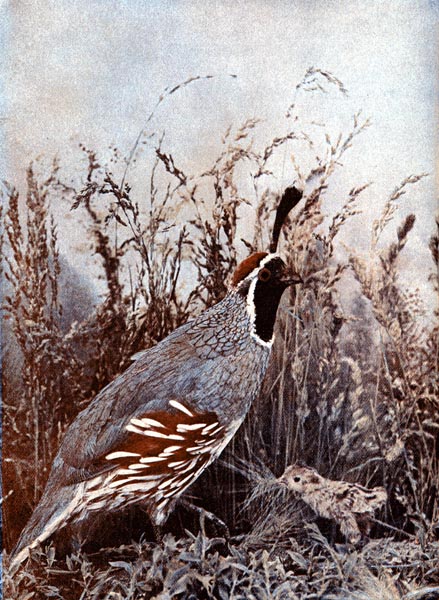
GAMBEL’S PARTRIDGE.
AMBEL’S PARTRIDGE, of which comparatively little is known, is a characteristic game bird of Arizona and New Mexico, of rare beauty, and with habits similar to others of the species of which there are about two hundred. Mr. W. E. D. Scott found the species distributed throughout the entire Catalina region in Arizona below an altitude of 5,000 feet. The bird is also known as the Arizona Quail.
The nest is made in a depression in the ground sometimes without any lining. From eight to sixteen eggs are laid. They are most beautifully marked on a creamy-white ground with scattered spots and blotches of old gold, and sometimes light drab and chestnut red. In some specimens the gold coloring is so pronounced that it strongly suggests to the imagination that this quail feeds upon the grains of the precious metal which characterizes its home, and that the pigment is imparted to the eggs.
After the nesting season these birds commonly gather in “coveys” or bevies, usually composed of the members of but one family. As a rule they are terrestrial, but may take to trees when flushed. They are game birds par excellence, and, says Chapman, trusting to the concealment afforded by their dull colors, attempt to avoid detection by hiding rather than by flying. The flight is rapid and accompanied by a startling whirr, caused by the quick strokes of their small, concave, stiff-feathered wings. They roost on the ground, tail to tail, with heads pointing outward; “a bunch of closely huddled forms—a living bomb whose explosion is scarcely less startling than that of dynamite manufacture.”
The Partridge is on all hands admitted to be wholly harmless, and at times beneficial to the agriculturist. It is an undoubted fact that it thrives with the highest system of cultivation, and the lands that are the most carefully tilled, and bear the greatest quantity of grain and green crops, generally produce the greatest number of Partridges.
Summary:
GAMBEL’S PARTRIDGE.—Callipepla gambeli.
Range—Northwestern Mexico, Arizona, New Mexico, southern Utah, and western Utah and western Texas.
Nest—Placed on the ground, sometimes without any lining.
Eggs—From eight to sixteen.
Gambel’s Quail (Callipepla gambelii) by S Slayton
Lee’s Addition:
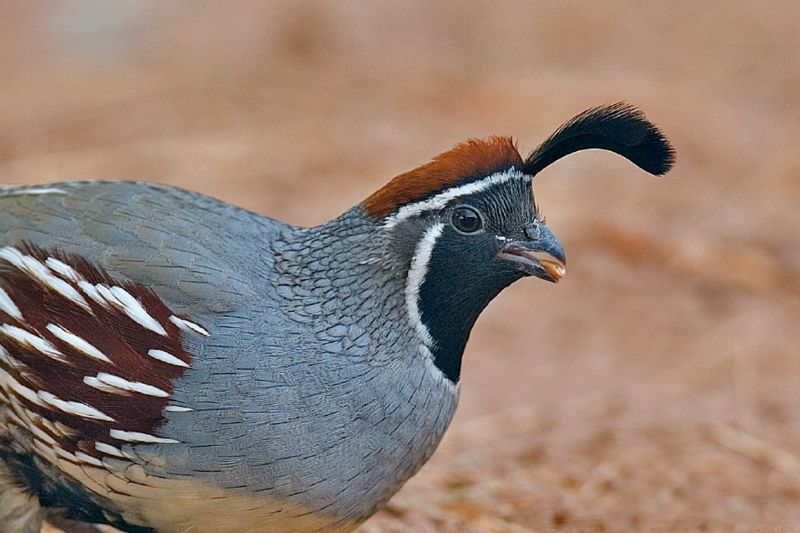
Partridges are mentioned in two verses, thus making it a Bible Bird. Of course, the Gambel’s is not mentioned, only his family. They belong to the Galliformesorder and are now called the Gambel’s Quail. They are in the Odontophoridae – New World Quail Family along with 33 other species (3.1 IOC).
Now therefore, let not my blood fall to the earth away from the presence of the LORD, for the king of Israel has come out to seek a single flea like one who hunts a partridge in the mountains. (1 Samuel 26:20 ESV)
Like the partridge that gathers a brood that she did not hatch, so is he who gets riches but not by justice; in the midst of his days they will leave him, and at his end he will be a fool. (Jeremiah 17:11 ESV)
Since they are now known as Quails, that species also appears in Scripture four times. Exodus 16:13, Numbers 11:31-32, and Psalms 105:40 all mention quail as a provision for His people. We were privileged to see the Gambel’s Quail in California in 1999. They are so neat walking around with that top knot bobbing along.
In the evening quail came up and covered the camp, and in the morning dew lay around the camp. (Exodus 16:13 ESV)
Then a wind from the LORD sprang up, and it brought quail from the sea and let them fall beside the camp, about a day’s journey on this side and a day’s journey on the other side, around the camp, and about two cubits above the ground. And the people rose all that day and all night and all the next day, and gathered the quail. Those who gathered least gathered ten homers. And they spread them out for themselves all around the camp. (Numbers 11:31-32 ESV)
They asked, and he brought quail, and gave them bread from heaven in abundance. (Psalms 105:40 ESV)
“The Gambel’s Quail, Callipepla gambelii, is a small ground-dwelling bird in the New World quail family. It inhabits the desert regions of Arizona, California, Colorado, New Mexico, Nevada, Utah, Texas, and Sonora; also New Mexico-border Chihuahua and the Colorado River region of Baja California. The Gambel’s quail is named in honor of William Gambel, a 19th century naturalist and explorer of the Southwestern United States.” (Wikipedia)
The above article is the first article in the monthly serial that was started in January 1897 “designed to promote Knowledge of Bird-Live.” These include Color Photography, as they call them, today they are drawings. There are at least three Volumes that have been digitized by Project Gutenberg.
Cranes know when it’s time to move south for winter. And robins, warblers, and bluebirds know when it’s time to come back again. But my people? My people know nothing, not the first thing of GOD and his rule. (Jeremiah 8:7 MSG)
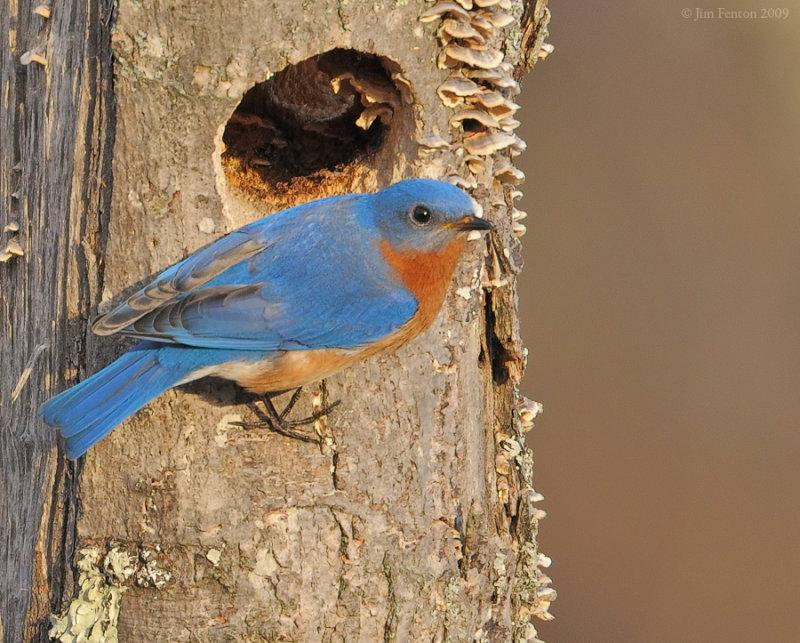
As far as I know, the only Version of the Bible (English) that used the word “bluebirds is the Message. It is not a version I use, but that verse makes for chance to write about the Bluebirds. In many of the other versions, “Thrush” is used. Bluebirds are in the Turdidae – Thrushes Family. There are three species; the Eastern, Western and Mountain Bluebirds. In a completely different family, the Irenidae – Fairy-bluebirds Family you will find the Asian and Philippine Fairy-bluebirds. These are not “thrushes” per se.
This verse has been written about in Birds of the Bible – Thrush and Thrushes II. It mentions that the birds know more about migration than the people know that much about God and His dominion.
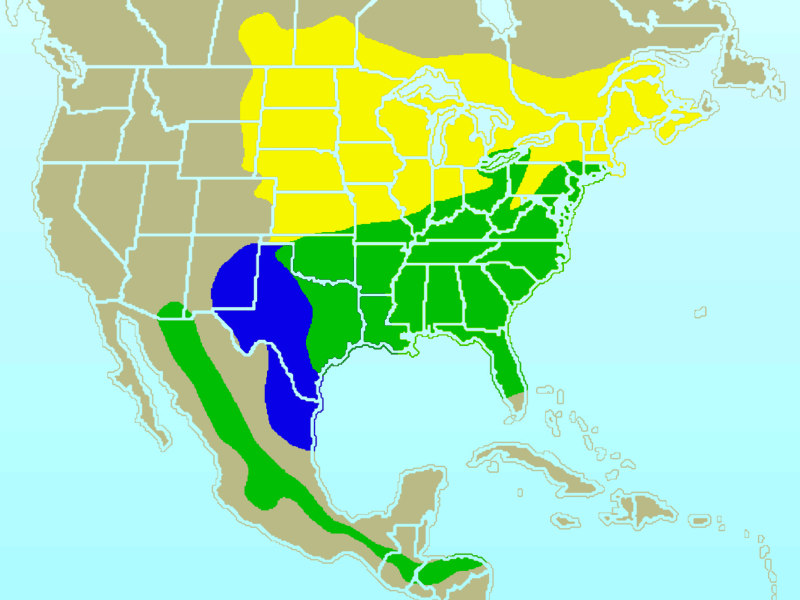
Do the Bluebirds migrate? Only the Eastern Bluebird. Here is their range map. Yellow is summer, blue – winter and green is year round. The summer breeding range extends as far north as the Pacific Northwest, British Columbia, and Montana. The northern Western Bluebirds can migrate to the southern parts of the range; southern birds are often permanent residents. The mountain bluebird is migratory. The Mountain Bluebird range varies from Mexico in the winter to as far north as Alaska, throughout the western U.S. and Canada. Northern birds migrate to the southern parts of the range; southern birds are often permanent residents. Some birds may move to lower elevations in winter.
So, not so sure that was a good choice of birds to use especially since they aren’t even anywhere near the Middle East. Nevertheless they are beautiful birds that the Lord has created for His pleasure and our enjoyment. The majority of their diet is “insects and other invertebrates. The remainder of the bird’s diet is made up of wild fruits. Favored insect foods include grasshoppers, crickets, katydids, and beetles. Other food items include earthworms, spiders, millipedes, centipedes, sow bugs and snails. (Eastern) Bluebirds are very helpful with pest control in the territory surrounding the nest.”
Mountain Bluebird (Sialia currucoides) by Daves BirdingPix
All three of them are cavity dwellers or nest box residents. They are all territorial and “Bluebirds can typically produce between two and four broods during the spring and summer (March through August in the Northeastern United States). Males identify potential nest sites and try to attract prospective female mates to those nesting sites with special behaviors that include singing and flapping wings, and then placing some material in a nesting box or cavity. If the female accepts the male and the nesting site, she alone builds the nest and incubates the eggs.”
“The bluebirds are a group of medium-sized, mostly insectivorous or omnivorous birds in the genus Sialia of the thrush family (Turdidae). Bluebirds are one of the few thrush genera in the Americas. They have blue, or blue and red, plumage. Female birds are less brightly colored than males, although color patterns are similar and there is no noticeable difference in size between sexes.
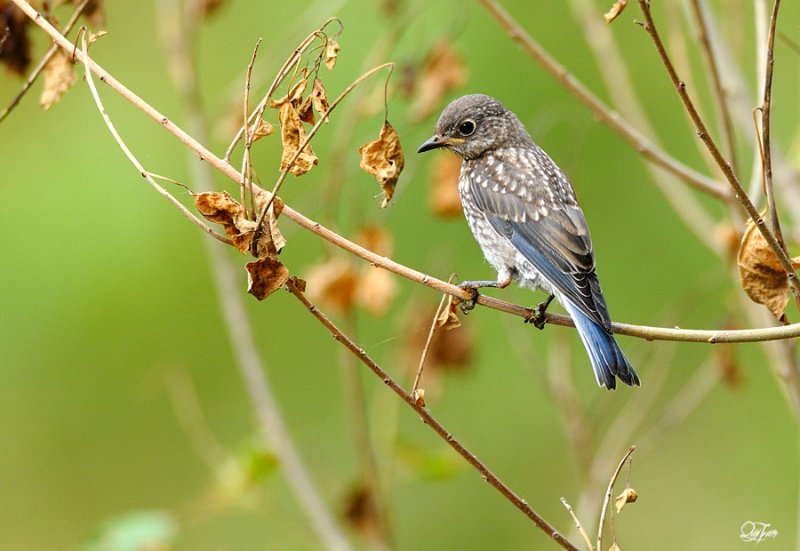
Western Bluebird (Sialia mexicana) juvenile by Quy Tran
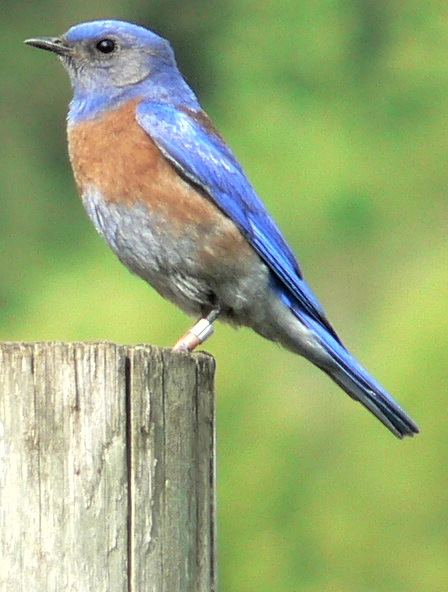
Western Bluebirds are sometimes confused with other bluebirds, however they can be distinguished without difficulty. The Western Bluebird has a blue (male) or gray (female) throat, the Eastern Bluebird has an orange throat, and the Mountain Bluebird lacks orange color anywhere on its body.
And it came to pass at the end of forty days, that Noah opened the window of the ark which he had made: And he sent forth a raven, which went forth to and fro, until the waters were dried up from off the earth.
(Genesis 8:6-7 KJV)
Did you know that is the first bird in the Bible that we are told its name. In Genesis 1 and 2 we are told that the LORD created the birds or fowls, but we don’t know what their names were. Adam gave them names in Genesis 1, but their names are not mentioned.
Ravens are in 11 verses in the Bible (KJV). We will be telling you about them.
The Raven is the largest bird in the Passerine order (Perching and songbirds), able to grow up to 27.1 inches (69 cm) in length. Males are not much different from the females, though the female might be a bit smaller. Both genders are known for their iridescent (shiny) black feathers covering their bodies, with a bluish hint in the light. Ravens are distinguished from other birds in the Corvus Genus (such as the crows) by their wedge-like tail, large beak, hackles (shaggy neck feathers), and their tendency to soar in flight.
Did you know that the Ravens fed a prophet? God told them to feed him and they obeyed. I Kings 17 tells us about it. We tell you about it in another article.
How about Ravens not building barns? Luke 12:24
The Lord used the Ravens to do errands for Him. Do you do the errands your parents ask you to do?
Children, obey your parents in all things, for this is well pleasing to the Lord. (Colossians 3:20 NKJV)
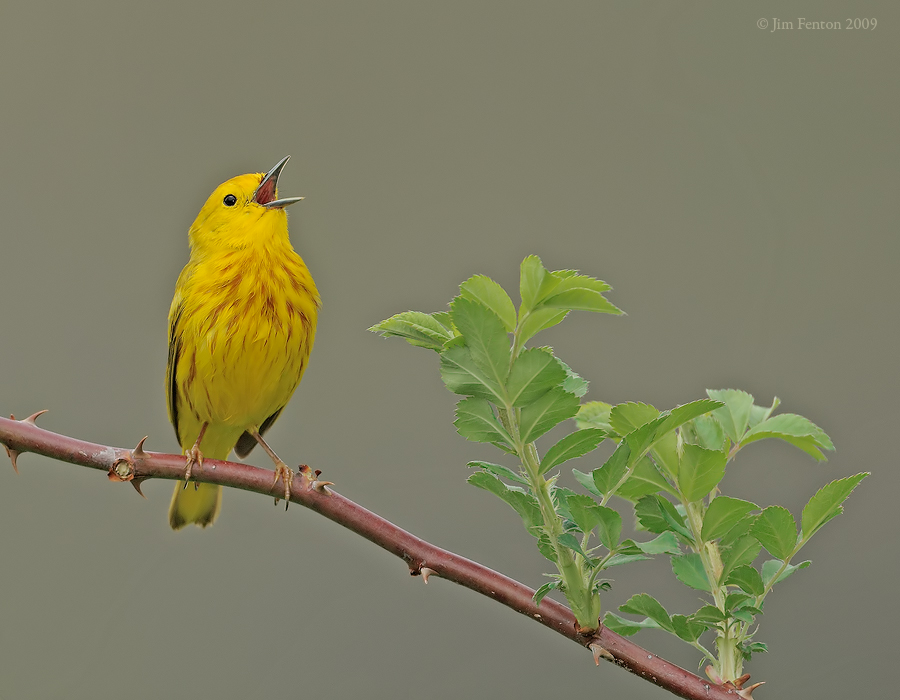
American Yellow Warbler (Dendroica aestiva) singing by J Fenton
We just opened this site up today. It is in the beginning and we will be adding many things about the birds in the Bible and other birds that are not named in the Bible, but the Lord made all the birds.
On Day Five (5) of creation, the birds were created. They didn’t just happen. They were designed by God and each one is different. Each one was given just what it needs to live, eat, and make more birds.
Genesis 1:20-23 NKJV
(20) Then God said, “Let the waters abound with an abundance of living creatures, and let birds fly above the earth across the face of the firmament of the heavens.”
(21) So God created great sea creatures and every living thing that moves, with which the waters abounded, according to their kind, and every winged bird according to its kind. And God saw that it was good.
(22) And God blessed them, saying, “Be fruitful and multiply, and fill the waters in the seas, and let birds multiply on the earth.”
(23) So the evening and the morning were the fifth day.
I know there are some big words in those verses, but the bold letters help find important words.
Did you see the “let birds multiply”? That doesn’t mean they do math. It means that they were to have baby birds, then the baby could grow up and have more baby birds. Then there would be lots of birds.
We will be telling you more soon. Come back and find out about the many birds in the bible.
What you just read is the first Bible Birds article for the Birds of the Bible For Kids blog that I just released just a few minutes ago. I have wanted to have a “Kids” blog since day one of this one, but it just didn’t happen. I even reserved the site for it four years ago when Lee’s Birdwatching Adventures Plus was started here on WordPress. (It is now in the Kid’s Section of the main blog)
As the idea to add the Bible Birds articles grew. I even placed a page there for it, but then pulled it back. The children, kids, or young people need their own site with links for them.
After talking to many of our Sunday School teachers, school teachers, and kids workers (young and retired), I launched this new website. Some of those people have offered suggestions and some are actually going to write some articles for it. Mr. Baron (aka Golden Eagle) has agreed to help. He is a Christian school teacher and teaches the Bible and science. Enjoys teaching about creation and is a enthusiastic beginning birdwatcher. I will introduce more as they write their articles and stories.
All of this has been said so that you will know that the new site will have the same standard as this one does. It is Birdwatching From A Christian Perspective. We trust you will let your children and young people enjoy the new site knowing that we will not present anything contrary to Scripture. We believe God’s Word is the Final Authority in our lives and about our lives. Also, as parents or grand-parents, that you will stop by to find something to share with your “kids” or “grand-kids.”
Thank you to all who have been coming to this site. Your visits are appreciated and hope that we are giving you articles worth your time reading and thinking about. May you enjoy learning about and seeing many of the fantastically created birds that the Lord made.
And God saw every thing that he had made, and, behold, it was very good. And the evening and the morning were the sixth day. (Genesis 1:31 KJV)
Well, I just updated the site to the newest version of the I.O.C. World Bird List – Version 3.1. It has been out for about a month, but I was busy and now finally have it finished. I have spent the last week updating almost 300 pages here. I am only one person and don’t have a staff (don’t I wish). All pages and indexes are up-to-date.
The IOC made a major update with this Version and I decided to make some changes also. I was trying to anticipate the changes coming with the Version 3, but still missed it. They added 145 extinct species of birds. There are also 20,989 subspecies added (had that right) to go with the 10,451 living species of birds in the world. They are in 40 Orders, 228 Families (plus 6 Incertae sedis), with 2257 Genera. (Now in June they are going to make more adjustments)
Have you ever questioned yourself why you do things? Working on these pages made me wonder, but I think it is still worth all the work.
Why? When I started this blog, I wanted to write about the Birds of the Bible and have been doing that since day one over four years ago. As time has progressed, this site has grown way beyond what I ever dreamed about. The Lord has given me ideas for articles, pages, references, etc. Fantastic photographers have given permission to use their photos and the whole world of birds has opened up to me. Ian let’s me use his newsletters (Bird of the Week) and he travels the world. Also ajmithra in India writes about birds there and other places. Most of all when the Lord created the birds way back in Genesis chapter 1
Then God said, “Let the waters abound with an abundance of living creatures, and let birds fly above the earth across the face of the firmament of the heavens.” So God created great sea creatures and every living thing that moves, with which the waters abounded, according to their kind, and every winged bird according to its kind. And God saw that it was good. And God blessed them, saying, “Be fruitful and multiply, and fill the waters in the seas, and let birds multiply on the earth.” So the evening and the morning were the fifth day. (Genesis 1:20-23 NKJV)
they did what He commanded them to do and now they are all over the world driving the people at IOC and other listing groups of ornithologists crazy trying to keep up with their names. Me? I am enjoying trying to find out about them and see them or pictures of them to go along with those name.
If you, my readers, never benefit from my efforts, I still am gaining knowledge of birds that I will never see in person but are so designed and created with such care that finding out about them increases my faith. While I am doing these pages and articles, my best is what I want to give my Savior.
That said, now that they are adding all these subspecies, here are some definitions of “subspecies.” They use terms like species, subspecies, monotypic, morph, etc.
From About.com Birding/Wild Birds
Definition:
(noun) A bird that is notably different from the expected characteristics of its species, but not sufficiently different to be independently classified as a unique species. Subspecies are often geographically determined, and differences such as size variations or plumage colorations are a common basis for subspecies distinctions.
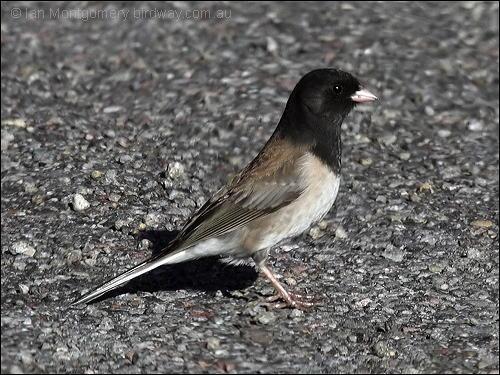
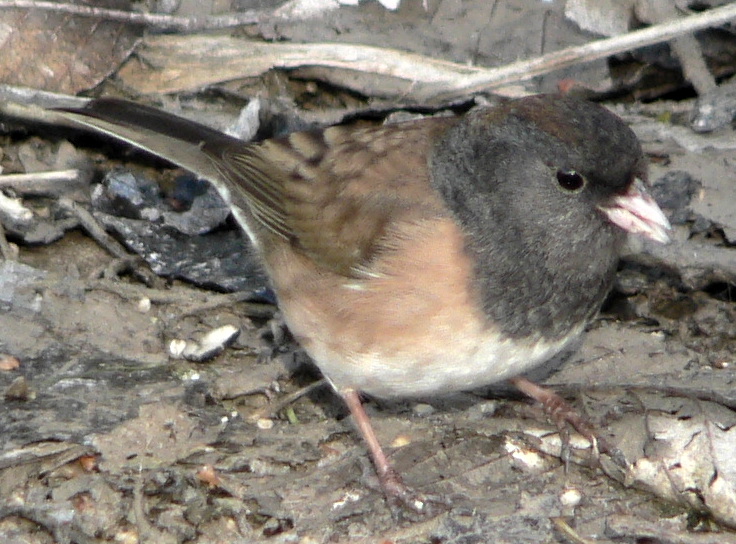
Not all bird species have distinct subspecies, and over time the classifications of different birds can change to alter subspecies into a lesser or greater number of divisions, or even to grant a subspecies distinction as a new bird species. Examples of common subspecies include the different geographic plumage variations of the dark-eyed junco, such as the eastern “slate-colored” junco and the western “Oregon” junco, as well as the southwestern subspecies of the lesser goldfinch, the “black-backed” lesser goldfinch.
While a subspecies can be noted on a birder’s life list, it does not count as an additional bird for a life list total unless the bird is reclassified as a distinct species. Many birders enjoy the extra challenge of seeing different subspecies, and comprehensive field guides will list common subspecies. These details also make a field guide more useful over time as bird classifications may change.
(adjective) Describes a species with only a single genetic or physical type and no officially recognized subspecies. While monotypic birds may still have subtle plumage or size variations, these differences are not sufficient to be distinguished as subspecies. Monotypic birds may still crossbreed with other species, though the hybrids are not independently recognized as a unique species or subspecies.
A taxonomic subdivision of a species consisting of an interbreeding, usually geographically isolated population of organisms.
subspecies
A subdivision of a species of organisms, usually based on geographic distribution. The subspecies name is written in lowercase italics following the species name. For example, Gorilla gorilla gorilla is the western lowland gorilla, and Gorilla gorilla graueri is the eastern lowland gorilla.
Species:A single distinct class of living creatures sharing specific DNA and physical features that differentiate them from other species. Species are uniform in appearance (unless other factors, described later, apply) and produce offspring with the same characteristics, appearance and DNA structure. An example of a species would be a Gouldian Finch.
Subspecies:A division within a species usually created by geographic isolation from the main (nominate) species. A population within a population (usually) sharing most of the same physical characteristics and DNA structure. A physically distinct sub-unit within an otherwise identical group of birds or animals. A subspecies can be though of as a “race” within a species. Most subspecies distinctions are visible. An example would be a (Southern race, smaller) European vs. a (larger, Northern race) Siberian Goldfinch. Other than the size, they are the same bird.
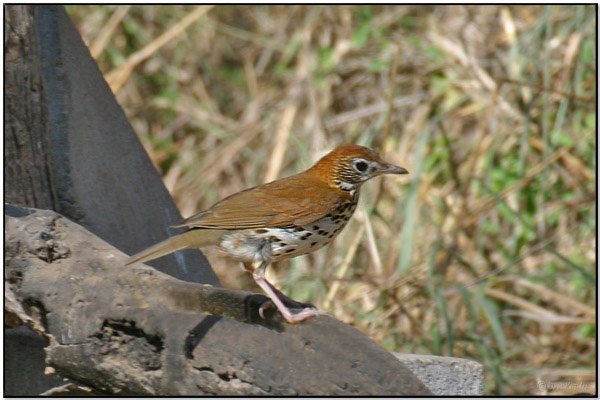
Wood Thrush for Birds Illustrated by Color Photography, 1897
Birds Illustrated by Color Photography – Revisited
Vol 1. May, 1897 No. 5
*
THE WOOD THRUSH.
“With what a clear
And ravishing sweetness sang the plaintive Thrush;
I love to hear his delicate rich voice,
Chanting through all the gloomy day, when loud
Amid the trees is dropping the big rain,
And gray mists wrap the hill; foraye the sweeter
His song is when the day is sad and dark.”
O many common names has the Wood Thrush that he would seem to be quite well known to every one. Some call him the Bell Thrush, others Bell Bird, others again Wood Robin, and the French Canadians, who love his delicious song, Greve des Bois and Merle Taune. In spite of all this, however, and although a common species throughout the temperate portions of eastern North America, the Wood Thrush can hardly be said to be a well-known bird in the same sense as the Robin, the Catbird, or other more familiar species; “but to every inhabitant of rural districts his song, at least, is known, since it is of such a character that no one with the slightest appreciation of harmony can fail to be impressed by it.”
Some writers maintain that the Wood Thrush has a song of a richer and more melodious tone than that of any other American bird; and that, did it possess continuity, would be incomparable.
Damp woodlands and shaded dells are favorite haunts of this Thrush, but on some occasions he will take up his residence in parks within large cities. He is not a shy bird, yet it is not often that he ventures far from the wild wood of his preference.
The nest is commonly built upon a horizontal branch of a low tree, from six to ten—rarely much more—feet from the ground. The eggs are from three to five in number, of a uniform greenish color; thus, like the nest, resembling those of the Robin, except that they are smaller.
In spite of the fact that his name indicates his preference for the woods, we have seen this Thrush, in parks and gardens, his brown back and spotted breast making him unmistakable as he hops over the grass for a few yards, and pauses to detect the movement of a worm, seizing it vigorously a moment after.
He eats ripening fruits, especially strawberries and gooseberries, but no bird can or does destroy so many snails, and he is much less an enemy than a friend of the gardener. It would be well if our park commissioners would plant an occasional fruit tree—cherry, apple, and the like—in the public parks, protecting them from the ravages of every one except the birds, for whose sole benefit they should be set aside. The trees would also serve a double purpose of ornament and use, and the youth who grow up in the city, and rarely ever see an orchard, would become familiar with the appearance of fruit trees. The birds would annually increase in numbers, as they would not only be attracted to the parks thereby, but they would build their nests and rear their young under far more favorable conditions than now exist. The criticism that birds are too largely destroyed by hunters should be supplemented by the complaint that they are also allowed to perish for want of food, especially in seasons of unusual scarcity or severity. Food should be scattered through the parks at proper times, nesting boxes provided—not a few, but many—and then
The happy mother of every brood
Will twitter notes of gratitude.
THE WOOD THRUSH.
The Bird of Solitude.
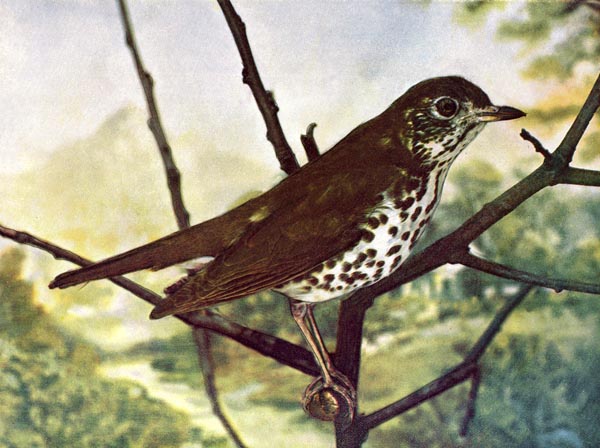
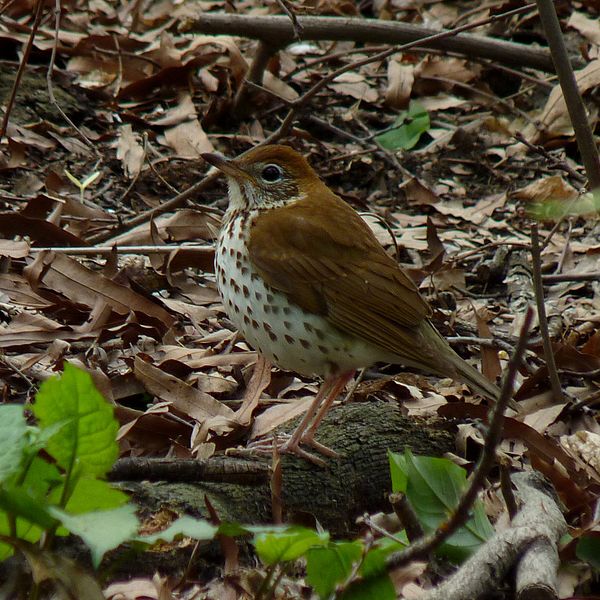
Of all the Thrushes this one is probably the most beautiful. I think the picture shows it. Look at his mottled neck and breast. Notice his large bright eye. Those who have studied birds think he is the most intelligent of them all.
He is the largest of the Thrushes and has more color in his plumage. All who have heard him agree that he is one of the sweetest singers among birds.
Unlike the Robin, Catbird, or Brown Thrush, he enjoys being heard and not seen.
His sweetest song may be heard in the cool of the morning or evening. It is then that his rich notes, sounding like a flute, are heard from the deep wood. The weather does not affect his song. Rain or shine, wet or dry, he sings, and sings, and sings.
During the light of day the Wood Thrush likes to stay in the cool shade of the woods.
Along toward evening, after sunset, when other birds are settling themselves for the night, out of the wood you will hear his evening song.
It begins with a strain that sounds like, “Come with me,” and by the time he finishes you are in love with his song.
The Wood Thrush is very quiet in his habits. So different from the noisy, restless Catbird.
The only time that he is noisy is when his young are in danger. Then he is as active as any of them.
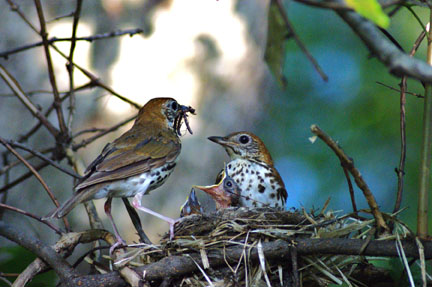
A Wood Thrush’s nest is very much like a Robin’s. It is made of leaves, rootlets and fine twigs woven together with an inner wall of mud, and lined with fine rootlets.
The eggs, three to five, are much like the Robin’s.
Compare the picture of the Wood Thrush with that of the Robin or Brown Thrush and see which you think is the prettiest.
Wood Thrush (Hylocichla mustelina) by Daves BirdingPix
Lee’s Addition:
Thrushes are aBird of the Bible, depending on which translation you use. See:
Even the stork in the sky Knows her seasons; And the turtledove and the swift and the thrush Observe the time of their migration; But My people do not know The ordinance of the LORD. (Jeremiah 8:7 NASB)
Since they mentioned the song so much, here is a sample of its song from Xeno-canto – Wood Thrush song by Chris Parrish]
The Wood Thrush has been reported to have one of the most beautiful songs of North American birds. American naturalist Henry David Thoreauwrote:
Whenever a man hears it he is young, and Nature is in her spring; wherever he hears it, it is a new world and a free country, and the gates of Heaven are not shut against him.
While the female is not known to sing, the male has a unique song that has three parts. The first subsong component is often inaudible unless the listener is close, and consists of two to six short, low-pitched notes such as bup, bup, bup. The middle part is a loud phrase often written ee-oh-lay, and the third part is a ventriloquial, trill-like phrase of non-harmonic pairs of notes given rapidly and simultaneously.
The male is able to sing two notes at once, which gives its song an ethereal, flute-like quality. Each individual bird has its own repertoire based on combinations of variations of the three parts. Songs are often repeated in order. The bup, bup, bup phrase is also sometimes used as a call, which is louder and at a greater frequency when the bird is agitated. The Wood Thrush also use a tut, tut to signal agitation.The nocturnal flight call is an emphatic buzzing heeh.
The Wood Thrush, Hylocichla mustelina, is a North American passerine bird. It is closely related to other thrushes such as the American Robin and is widely distributed across North America, wintering in Central America and southern Mexico. The Wood Thrush is the official bird of the District of Columbia.
The adult Wood Thrush is 19–21 cm (7½-8¼ in) long, and weighs 40-50 g, with a wingspan of 30–40 cm (12–16 in). The longest known lifespan for a Wood Thrush in the wild is 8 years, 11 months. The crown, nape, and upper back are cinnamon-brown, while the back wings, and tail are a slightly duller brown. The breast and belly are white with large dark brown spots on the breast, sides, and flanks. It has white eye rings and pink legs. Other brownish thrushes have finer spotting on the breast. The juvenile looks similar to adults, but has additional spots on the back, neck, and wing coverts. The male and female are similar in size and plumage.
The Wood Thrush is a member of the Turdidae – Thrushfamily. There are 185 species, including Rufous Thrushes, Whistling Thrushes, Ground Thrushes, our Bluebirds, Solitaires, Nightingale-Thrushes, Cochoas, Shortwings, and our American Robin.
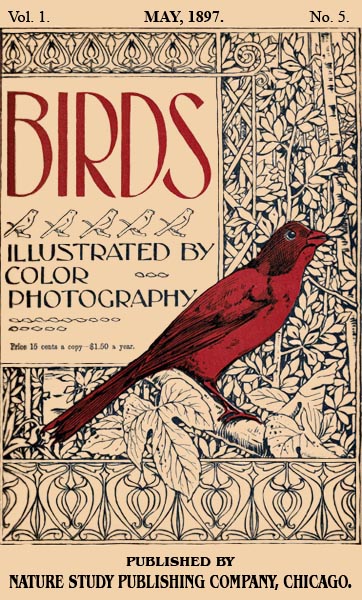
Birds Illustrated by Color Photograhy Vol 1 May, 1897 No 5 – Cover
The above article is the first article in the monthly serial that was started in January 1897 “designed to promote Knowledge of Bird-Live.” These include Color Photography, as they call them, today they are drawings. There are at least three Volumes that have been digitized by Project Gutenberg.
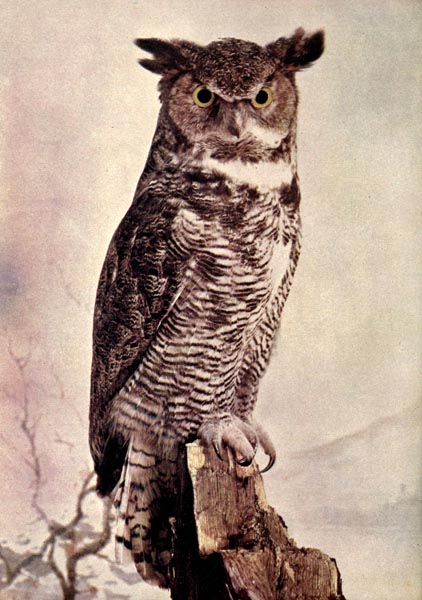
Great Horned Owl – Birds Illustrated by Color Photography
Birds Illustrated by Color Photography – Revisited
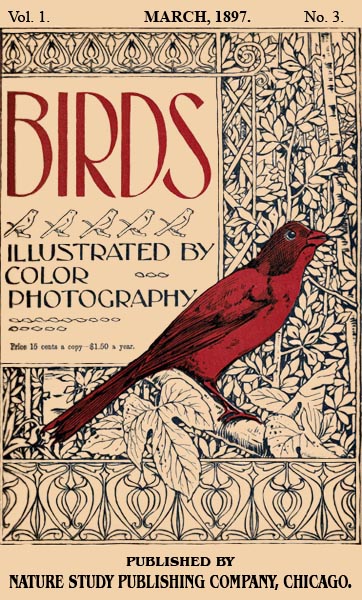
Vol 1. March, 1897 No. 3
*
THE LONG-EARED OWL.
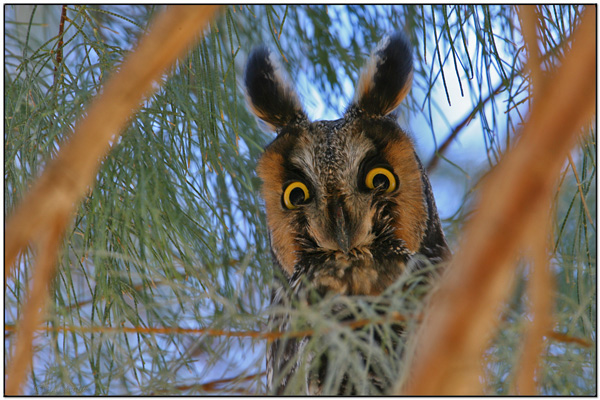
HE name of the Long-Eared Owl is derived from the great length of his “ears” or feather-tufts, which are placed upon the head, and erect themselves whenever the bird is interested or excited. It is the “black sheep” of the owl family, the majority of owls being genuine friends of the agriculturist, catching for his larder so many of the small animals that prey upon his crops. In America he is called the Great Horned Owl—in Europe the Golden Owl. (Today it is the Eurasian Eagle-Owl, I believe.)
Nesting time with the owl begins in February, and continues through March and April. The clown-like antics of both sexes of this bird while under the tender influence of the nesting season tend somewhat to impair their reputation for dignity and wise demeanor. They usually have a simple nest in a hollow tree, but which seems seldom to be built by the bird itself, as it prefers to take the deserted nest of some other bird, and to fit up the premises for its own use. They repair slightly from year to year the same nest. The eggs are white, and generally four or five in number. While the young are still in the nest, the parent birds display a singular diligence in collecting food for them.
If you should happen to know of an owl’s nest, stand near it some evening when the old birds are rearing their young. Keep quiet and motionless, and notice how frequently the old birds feed them. Every ten minutes or so the soft flap, flap of their wings will be heard, the male and female alternately, and you will obtain a brief glimpse of them through the gloom as they enter the nesting place. They remain inside but a short time, sharing the food equally amongst their brood, and then are off again to hunt for more. All night, were you to have the inclination to observe them, you would find they pass to and fro with food, only ceasing their labors at dawn. The young, as soon as they reach maturity, are abandoned by their parents; they quit the nest and seek out haunts elsewhere, while the old birds rear another, and not infrequently two more broods, during the remainder of the season.
The habits of the Long-Eared Owl are nocturnal. He is seldom seen in the light of day, and is greatly disturbed if he chance to issue from his concealment while the sun is above the horizon. The facial disk is very conspicuous in this species. It is said that the use of this circle is to collect the rays of light, and throw them upon the eye. The flight of the owl is softened by means of especially shaped, recurved feather-tips, so that he may noiselessly steal upon his prey, and the ear is also so shaped as to gather sounds from below.
The Long-Eared Owl is hardly tameable. The writer of this paragraph, when a boy, was the possessor, for more than a year, of a very fine specimen. We called him Judge. He was a monster, and of perfect plumage. Although he seemed to have some attachment to the children of the family who fed him, he would not permit himself to be handled by them or by any one in the slightest. Most of his time he spent in his cage, an immense affair, in which he was very comfortable. Occasionally he had a day in the barn with the rats and mice.
The owl is of great usefulness to gardener, agriculturist, and landowner alike, for there is not another bird of prey which is so great a destroyer of the enemies of vegetation.
Great Horned Owl LPZoo by Lee
THE OWL.
We know not alway
Who are kings by day,
But the king of the night is the bold brown owl!
I wonder why the folks put my picture last in the book. It can’t be because they don’t like me, for I’m sure I never bother them. I don’t eat the farmer’s corn like the crow, and no one ever saw me quarrel with other birds.
Maybe it is because I can’t sing. Well, there are lots of good people that can’t sing, and so there are lots of good birds that can’t sing.
Did you ever see any other bird sit up as straight as I do? I couldn’t sit up so straight if I hadn’t such long, sharp claws to hold on with.
My home is in the woods. Here we owls build our nests—most always in hollow trees.
During the day I stay in the nest or sit on a limb. I don’t like day time for the light hurts my eyes, but when it begins to grow dark then I like to stir around. All night long I am wide awake and fly about getting food for my little hungry ones. They sleep most of the day and it keeps me busy nearly all night to find them enough to eat.
I just finished my night’s work when the man came to take my picture. It was getting light and I told him to go to a large stump on the edge of the woods and I would sit for my picture. So here I am. Don’t you think I look wise? How do you like my large eyes? If I could smile at you I would, but my face always looks sober. I have a great many cousins and if you really like my picture, I’ll have some of them talk to you next month. I don’t think any of them have such pretty feathers though. Just see if they have when they come.
Well, I must fly back to my perch in the old elm tree. Good-bye.
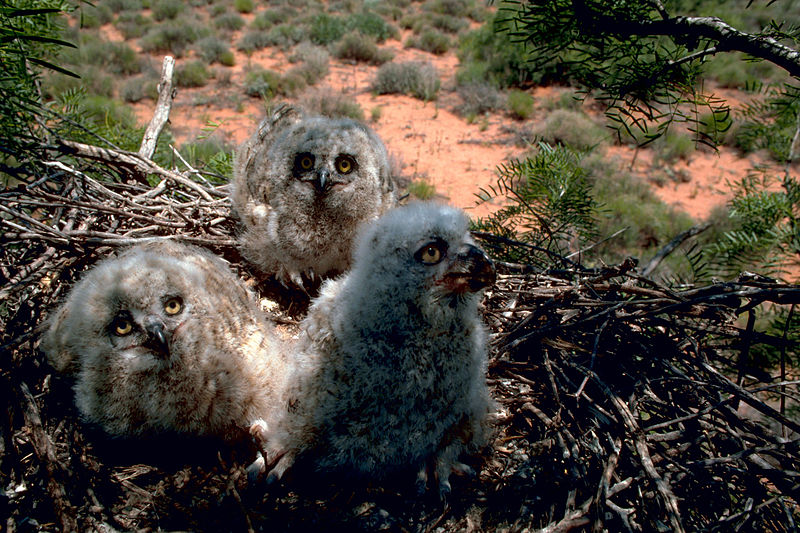
Great Horned Owl (Bubo virginianus) chicks – WikiC
THE OWL.
In the hollow tree, in the old gray tower,
The spectral owl doth dwell;
Dull, hated, despised in the sunshine hour,
But at dusk he’s abroad and well!
Not a bird of the forest e’er mates with him;
All mock him outright by day;
But at night, when the woods grow still and dim,
The boldest will shrink away!
O! when the night falls, and roosts the fowl,
Then, then, is the reign of the Horned Owl!
And the owl hath a bride, who is fond and bold,
And loveth the wood’s deep gloom;
And, with eyes like the shine of the moonstone cold,
She awaiteth her ghastly groom.
Not a feather she moves, not a carol she sings,
As she waits in her tree so still,
But when her heart heareth his flapping wings,
She hoots out her welcome shrill!
O! when the moon shines, and dogs do howl,
Then, then, is the joy of the Horned Owl!
Mourn not for the owl, nor his gloomy plight!
The owl hath his share of good—
If a prisoner he be in the broad daylight,
He is lord in the dark greenwood!
Nor lonely the bird, nor his ghastly mate,
They are each unto each a pride;
Thrice fonder, perhaps, since a strange, dark fate
Hath rent them from all beside!
So, when the night falls, and dogs do howl,
Sing, Ho! for the reign of the Horned Owl!
We know not alway
Who are kings by day,
But the King of the Night is the bold Brown Owl!
Bryan W. Procter
(Barry Cornwall.)
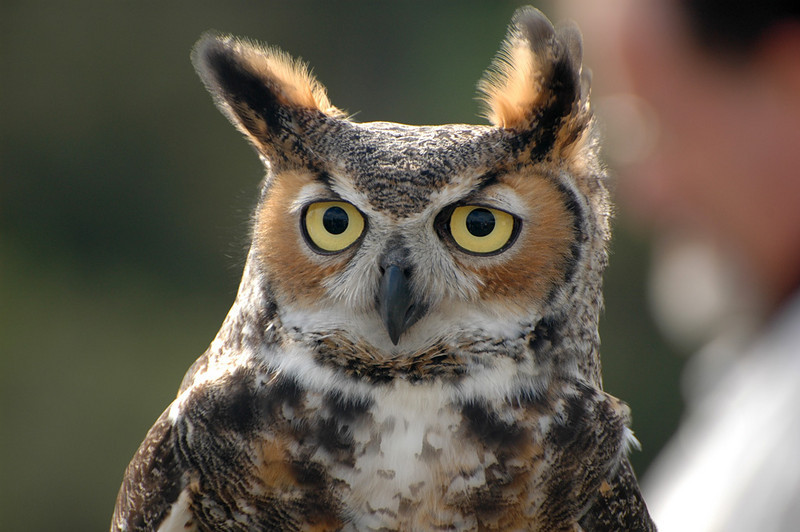
Great Horned Owl (Bubo virginianus) by Bob-Nan
Lee’s Addition:
Our Owl friend is a Bird of the Bible also. Owls are mentioned in 8 to 9 verses in Scripture, depending on which version. The KJV has 8 “owl” and 1 “owls” mentioned. The “horned owl” is mentioned in several versions. They are also one of the Birds of Prey mentioned in the Bible.
The little owl, the great owl, the horned owl, (Deuteronomy 14:16 AMP)
The Great Horned Owls range in length from 18–27 in (46–69 cm) and have a wingspan of 40–60.5 in (101–153 cm); Females are larger than males, an average adult being 22 in (55 cm) long with a 49 in (124 cm) wingspan and weighing about 3.1 lbs (1400 g). Depending on subspecies, Great Horned Owls can weigh from 0.72 to 2.55 kg (1.6 to 5.6 lb). At present there are 14 subspecies.
Adults have large ear tufts, a reddish, brown or gray face and a white patch on the throat. The iris is yellow, except the amber-eyed South American Great Horned Owl (B. V. nacurutu). Its “horns” are neither ears nor horns, simply tufts of feathers. The underparts are light with brown barring; the upper parts are mottled brown. The legs and feet are covered in feathers up to the talons. There are individual and regional variations in color; birds from the sub-Arctic are a washed-out, light-buff color, while those from Central America can be a dark chocolate brown.
Their call is a low-pitched but loud ho-ho-hoo hoo hoo; sometimes it is only four syllables instead of five. The female’s call is higher and rises in pitch at the end of the call. Young owls make hissing or screeching sounds that are often confused with the calls of Barn Owls.
Great Horned Owl call by Jesse Fagan
Owls were given spectacular binocular vision allowing them to pinpoint prey and see in low light. The eyes of Great Horned Owls are nearly as large as those of humans and are immobile within their circular bone sockets. Instead of turning their eyes, they turn their heads. Therefore, their neck must be able to turn a full 270 degrees in order to see in other directions without moving its entire body.
An owl’s hearing is as good as – if not better than – its vision; they have better depth perception[citation needed] and better perception of sound elevation (up-down direction) than humans. This is due to owl ears not being placed in the same position on either side of their head: the right ear is typically set higher in the skull and at a slightly different angle. By tilting or turning its head until the sound is the same in each ear, an owl can pinpoint both the horizontal and vertical direction of a sound.
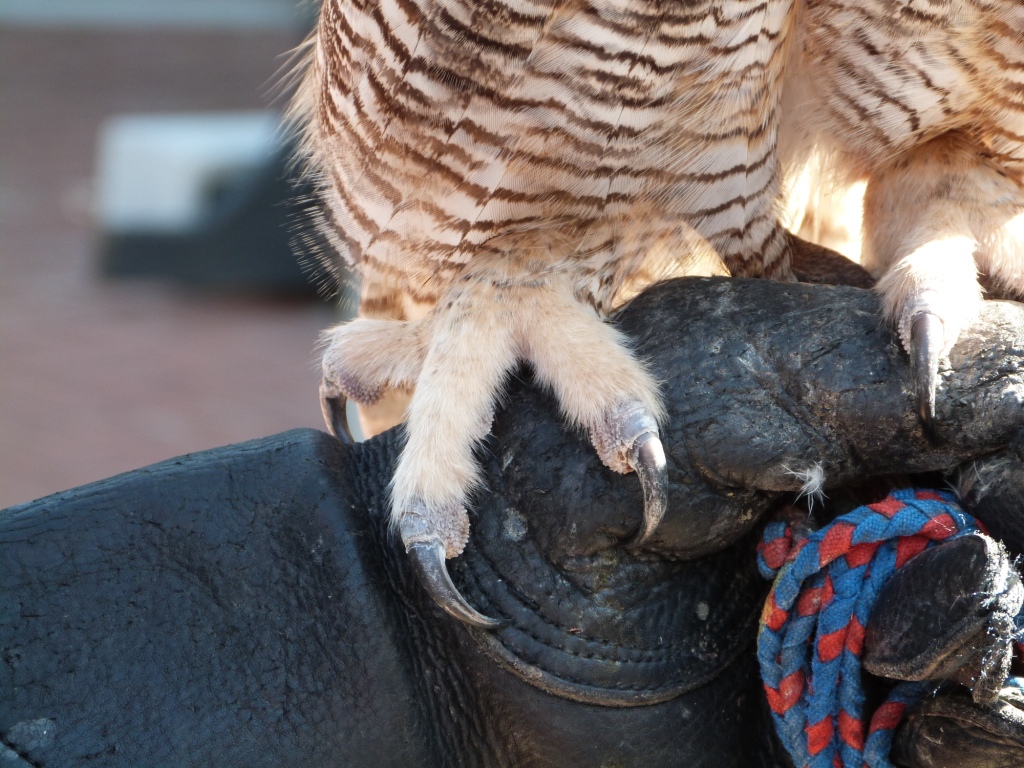
Closeup of Great Horned Owl toes and talons
Great Horned Owl Foot LPZoo by Lee
These birds hunt at night by waiting on a high perch and swooping down on prey. Prey can vary greatly based on opportunity. The predominant prey group are small to medium-sized mammals such as hares, rabbits (statistically the most regular prey, juvenile raccoons, rats, squirrels, mice, moles, voles, shrews, bats, armadillos, muskrats, weasels and gerbils. It is even a natural predator of prey two to three times heavier than itself such as porcupines, marmots and skunks. Birds also comprise a large portion of a Great Horned Owl’s diet, ranging in size from kinglets to Great Blue Herons. Waterbirds, especially coots and ducks, are hunted; even raptors, up to the size of Red-tailed Hawk and Snowy Owls, are sometimes taken. Regular avian prey includes woodpeckers, grouse, crows, pigeons, herons, gulls, quail, turkey and various passerines. Reptiles (to the size of young American alligators, amphibians, fish, crustaceans and even insects are only occasional prey. In addition, the Great Horned Owl will predate on domesticated cats and small or young dogs.
When the Lord has created these birds Hi also gave them 200–300 pounds per square inch of crushing power in their talons. An average adult human male has about 60 pounds per square inch in his hands. In northern regions, where larger prey that cannot be eaten quickly are most prevalent, they may let uneaten food freeze and then thaw it out later using their own body heat. They also tend to eat and regurgitate food in the same locations.
The article is titled the Long-eared Owl. Actually there really is a Long-eared Owl.
The above article is the first article in the monthly serial for February 1897 “designed to promote Knowledge of Bird-Live.” These include Color Photography, as they call them, today they are drawings. There are at least three Volumes that have been digitized by Project Gutenberg.
Birds Illustrated by Color Photography – Revisited
Vol 1. March, 1897 No. 3
*
THE SWALLOW.
“Come, summer visitant, attach
To my reedroof thy nest of clay,
And let my ear thy music catch,
Low twitting underneath the thatch,
At the gray dawn of day.”
URE harbingers of spring are the Swallows. They are very common birds, and frequent, as a rule, the cultivated lands in the neighborhood of water, showing a decided preference for the habitations of man. “How gracefully the swallows fly! See them coursing over the daisy-bespangled grass fields; now they skim just over the blades of grass, and then with a rapid stroke of their long wings mount into the air and come hovering above your head, displaying their rich white and chestnut plumage to perfection. Now they chase each other for very joyfulness, uttering their sharp twittering notes; then they hover with expanded wings like miniature Kestrels, or dart downwards with the velocity of the sparrowhawk; anon they flit rapidly over the neighboring pool, occasionally dipping themselves in its calm and placid waters, and leaving a long train of rings marking their varied course. How easily they turn, or glide over the surrounding hedges, never resting, never weary, and defying the eye to trace them in the infinite turnings and twistings of their rapid shooting flight. You frequently see them glide rapidly near the ground, and then with a sidelong motion mount aloft, to dart downwards like an animated meteor, their plumage glowing in the light with metallic splendor, and the row of white spots on the tail contrasting beautifully with the darker plumage.”
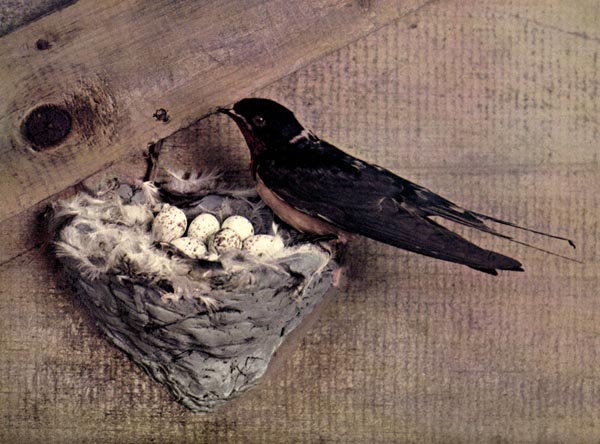
The Swallow is considered a life-paired species, and returns to its nesting site of the previous season, building a new nest close to the old one. His nest is found in barns and outhouses, upon the beams of wood which support the roof, or in any place which assures protection to the young birds. It is cup-shaped and artfully moulded of bits of mud. Grass and feathers are used for the lining. “The nest completed, five or six eggs are deposited. They are of a pure white color, with deep rich brown blotches and spots, notably at the larger end, round which they often form a zone or belt.” The sitting bird is fed by her mate.
The young Swallow is distinguished from the mature birds by the absence of the elongated tail feathers, which are a mark of maturity alone. His food is composed entirely of insects. Swallows are on the wing fully sixteen hours, and the greater part of the time making terrible havoc amongst the millions of insects which infest the air. It is said that when the Swallow is seen flying high in the heavens, it is a never failing indication of fine weather.
A pair of Swallows on arriving at their nesting place of the preceding Summer found their nest occupied by a Sparrow, who kept the poor birds at a distance by pecking at them with his strong beak whenever they attempted to dislodge him. Wearied and hopeless of regaining possession of their property, they at last hit upon a plan which effectually punished the intruder. One morning they appeared with a few more Swallows—their mouths filled with a supply of tempered clay—and, by their joint efforts in a short time actually plastered up the entrance to the hole, thus barring the Sparrow from the home which he had stolen from the Swallows.
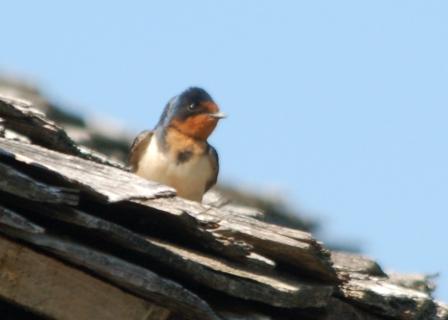
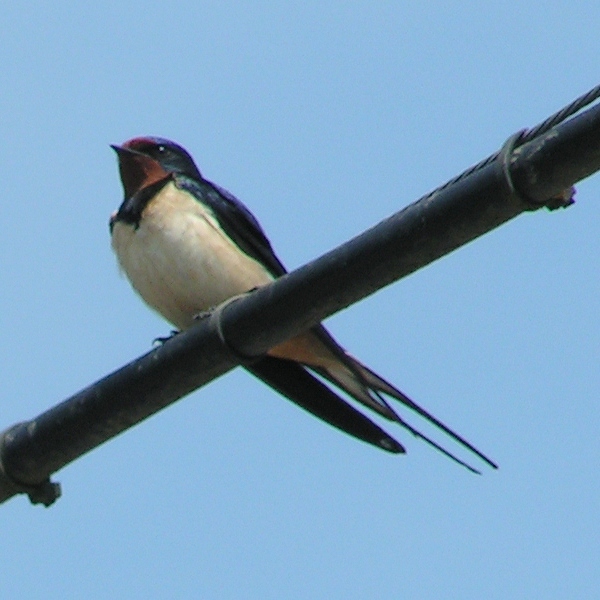
Barn Swallow by Dan
Lee’s Addition:
While visiting Cade’s Cove in the Smokey Mountains of Tennessee, found these Barn Swallows in an old house exhibit. We watched them, but they did not see alarmed by our being there. Having grown up in the city, this was my first experience being up close and personal with swallows.
Barn Swallow in Cades Cove by Dan
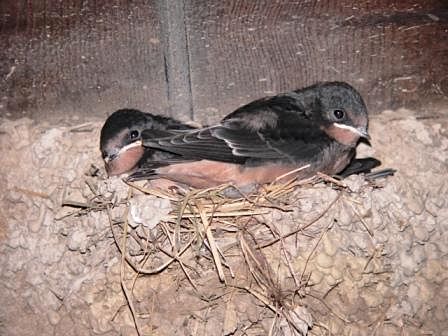
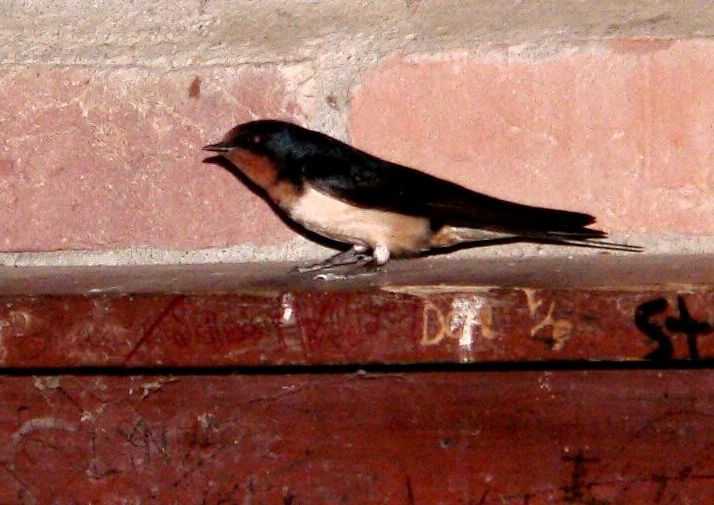
Here are a couple of my attempts to capture the babies and then one of the parents that was sitting on the fireplace mantle keeping an eye on us. Guess they were making sure that we didn’t hurt their offspring.
Smoky-Cades Cove – Swallows in nest by Lee
And the adult (cropped):
Barn Swallow on Fireplace – Smoky-Cades Cove by Lee
Swallows are mentions several times in Scripture and therefore are one of the Birds of the Bible.
Yea, the sparrow hath found an house, and the swallow a nest for herself, where she may lay her young, even thine altars, O LORD of hosts, my King, and my God. (Psalms 84:3 KJV)
As the bird by wandering, as the swallow by flying, so the curse causeless shall not come. (Proverbs 26:2 KJV)
Like a crane or a swallow, so did I chatter: I did mourn as a dove: mine eyes fail with looking upward: O LORD, I am oppressed; undertake for me. (Isaiah 38:14 KJV)
The Barn Swallow (Hirundo rustica) is the most widespread species of swallow in the world.] It is a distinctive passerine bird with blue upperparts, a long, deeply forked tail and curved, pointed wings. It is found in Europe, Asia, Africa and the Americas. In Anglophone Europe it is just called the Swallow; in Northern Europe it is the only common species called a “swallow” rather than a “martin”.
There are six subspecies of Barn Swallow, which breed across the Northern Hemisphere. Four are strongly migratory, and their wintering grounds cover much of the Southern Hemisphere as far south as central Argentina, the Cape Province of South Africa, and northern Australia. Its huge range means that the Barn Swallow is not endangered, although there may be local population declines due to specific threats, such as the construction of an international airport near Durban.
The Barn Swallow is a bird of open country which normally uses man-made structures to breed and consequently has spread with human expansion. It builds a cup nest from mud pellets in barns or similar structures and feeds on insects caught in flight. This species lives in close association with humans, and its insect-eating habits mean that it is tolerated by man; this acceptance was reinforced in the past by superstitions regarding the bird and its nest. There are frequent cultural references to the Barn Swallow in literary and religious works due to both its living in close proximity to humans and its conspicuous annual migration. The Barn Swallow is the national bird of Estonia.
The adult male Barn Swallow of the nominate subspecies H. r. rustica is 17–19 cm (6.7–7.5 in) long including 2–7 cm (0.8–2.8 in) of elongated outer tail feathers. It has a wingspan of 32–34.5 cm (12.6–13.6 in) and weighs 16–22 g (0.56–0.78 oz). It has steel blue upperparts and a rufous forehead, chin and throat, which are separated from the off-white underparts by a broad dark blue breast band. The outer tail feathers are elongated, giving the distinctive deeply forked “swallow tail.” There is a line of white spots across the outer end of the upper tail.
The female is similar in appearance to the male, but the tail streamers are shorter, the blue of the upperparts and breast band is less glossy, and the underparts more pale. The juvenile is browner and has a paler rufous face and whiter underparts. It also lacks the long tail streamers of the adult.
The song of the Barn Swallow is a cheerful warble, often ending with su-seer with the second note higher than the first but falling in pitch. Calls include witt or witt-witt and a loud splee-plink when excited.[5] The alarm calls include a sharp siflitt for predators like cats and a flitt-flitt for birds of prey like the Hobby. This species is fairly quiet on the wintering grounds.
The distinctive combination of a red face and blue breast band render the adult Barn Swallow easy to distinguish from the African Hirundo species and from the Welcome Swallow (Hirundo neoxena) with which its range overlaps in Australasia. In Africa the short tail streamers of the juvenile Barn Swallow invite confusion with juvenile Red-chested Swallow (Hirundo lucida), but the latter has a narrower breast band and more white in the tail. (Wikipedia)
The above article is the first article in the monthly serial for February 1897 “designed to promote Knowledge of Bird-Live.” These include Color Photography, as they call them, today they are drawings. There are at least three Volumes that have been digitized by Project Gutenberg.

















 Lee's Birdwatching Adventures Plus