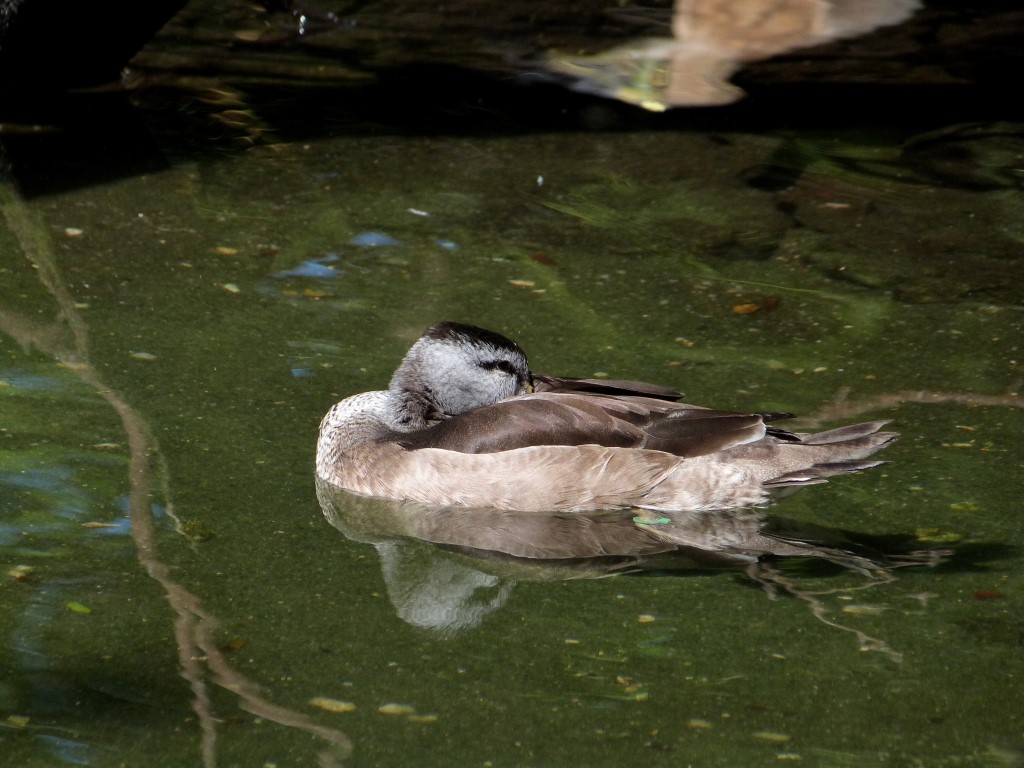
Latest Challenge of Zoo Photography

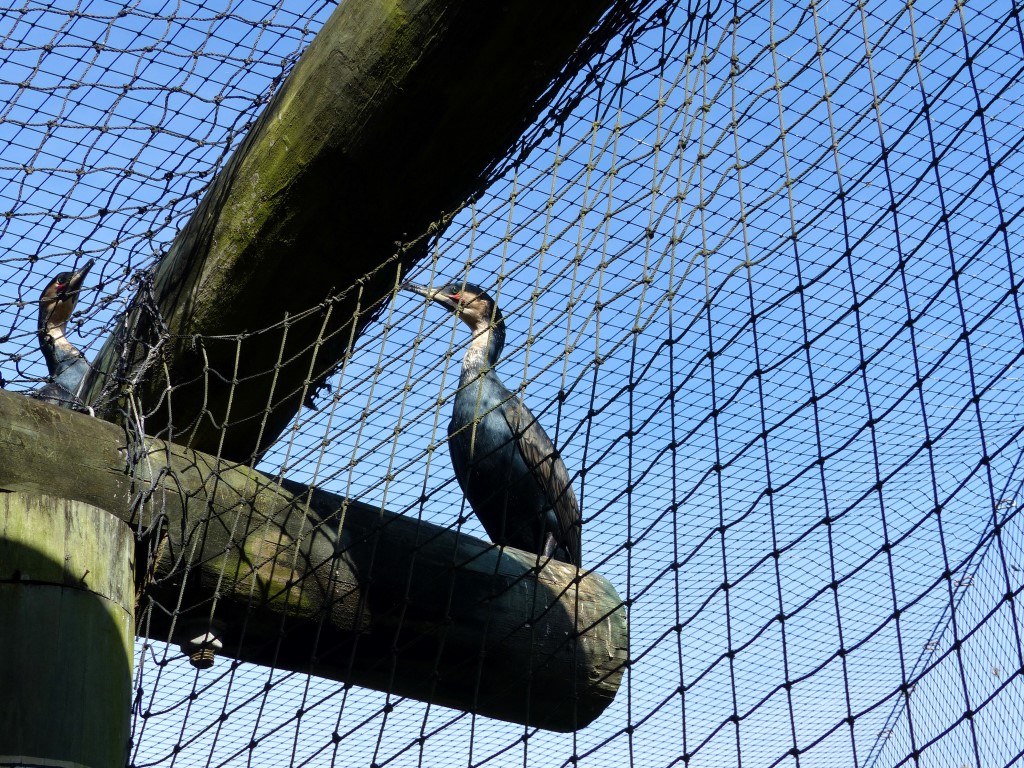
White-breasted Cormorants at Lowry Park Zoo 12-26-14 by Lee

 But the cormorant and the bittern shall possess it; the owl also and the raven shall dwell in it: and he shall stretch out upon it the line of confusion, and the stones of emptiness. (Isaiah 34:11 KJV)

With my new Panasonic Lumix FZ200 camera in hand, off we went to Lowry Park Zoo the day after Christmas. I was itching to try out the 600 zoom compared to my 450 on the FZ47. I was content with the older camera, because as I have said before, I am a birdwatcher, not a photographer. I don’t know an “F-stop” from a “bus stop”. I shoot in Program mode.

That aside, I use the camera often, probably more than binoculars. Why? Maybe I am a little bit of a photographer because I like to see the birds when I get home. Many times I keep my bad shots because they are at least “proof shots” that I really did see the bird or to help ID it later. I leave the real good shots for Dan to take.because he knows what a “F-stop” is.

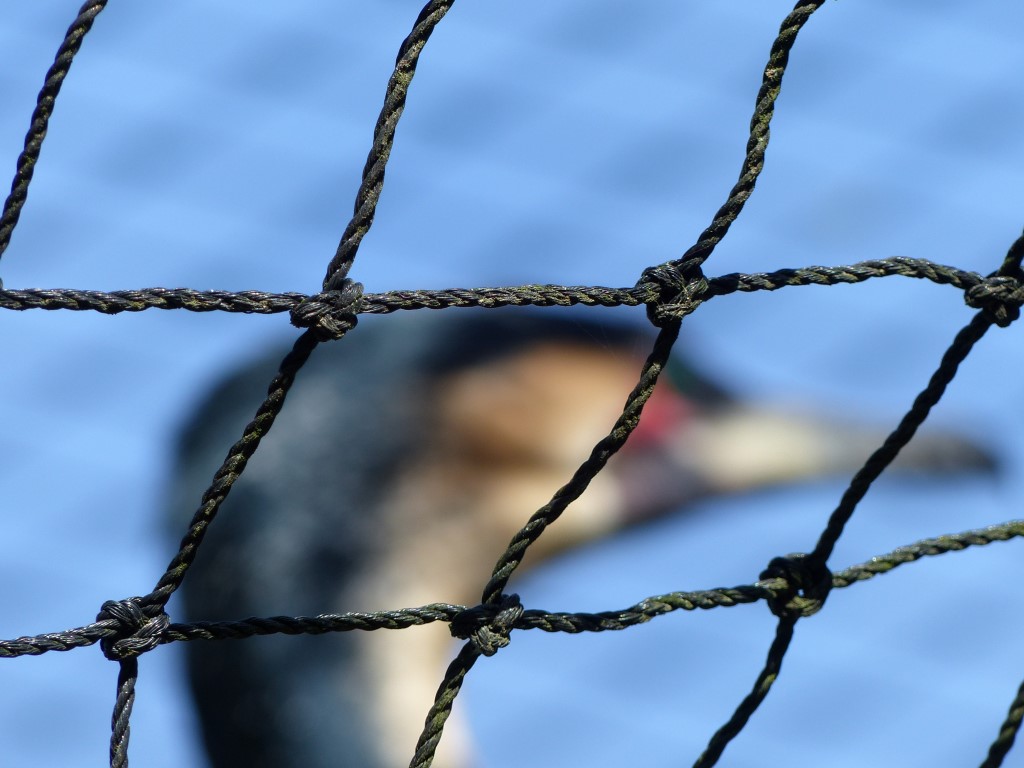
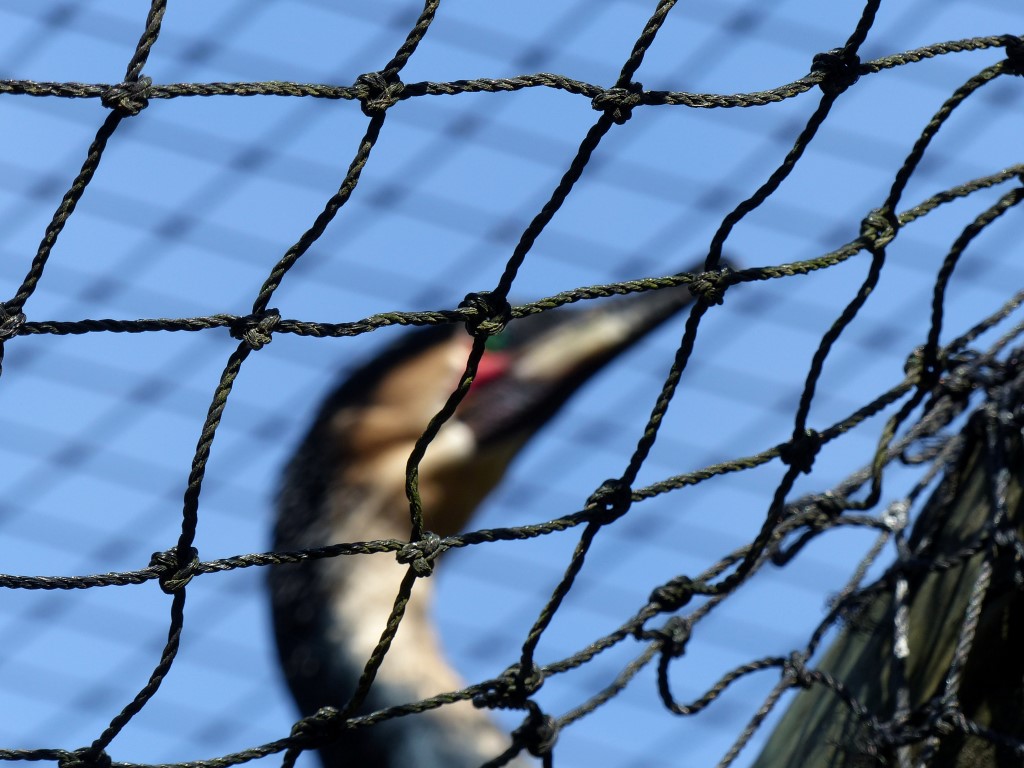
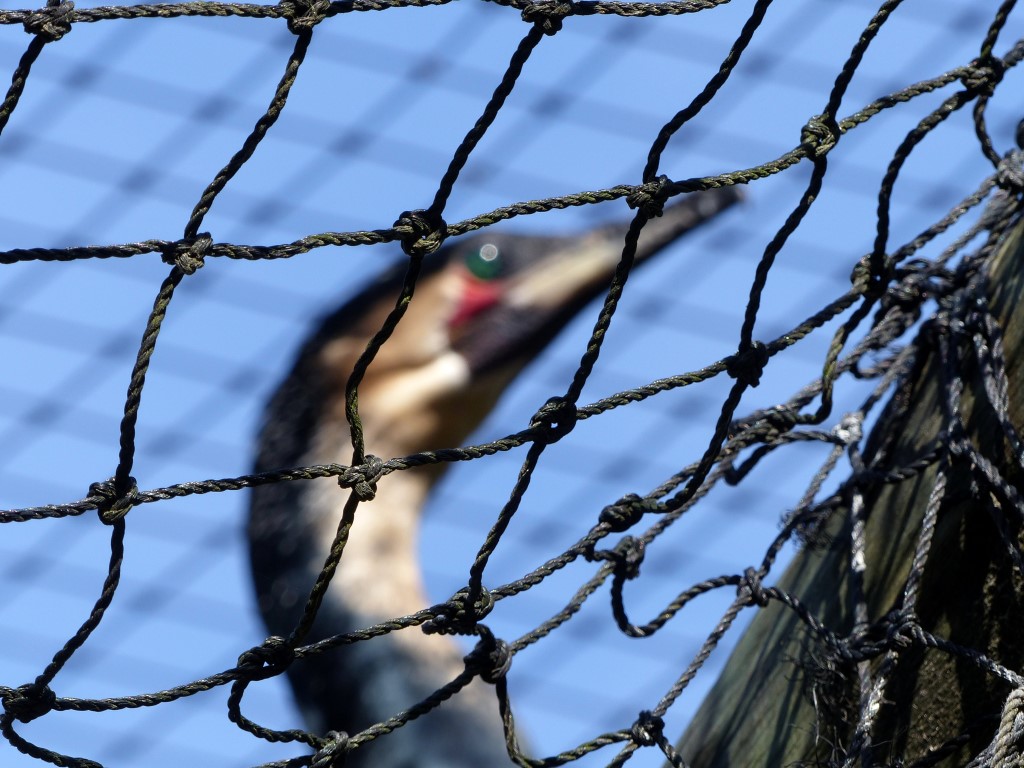
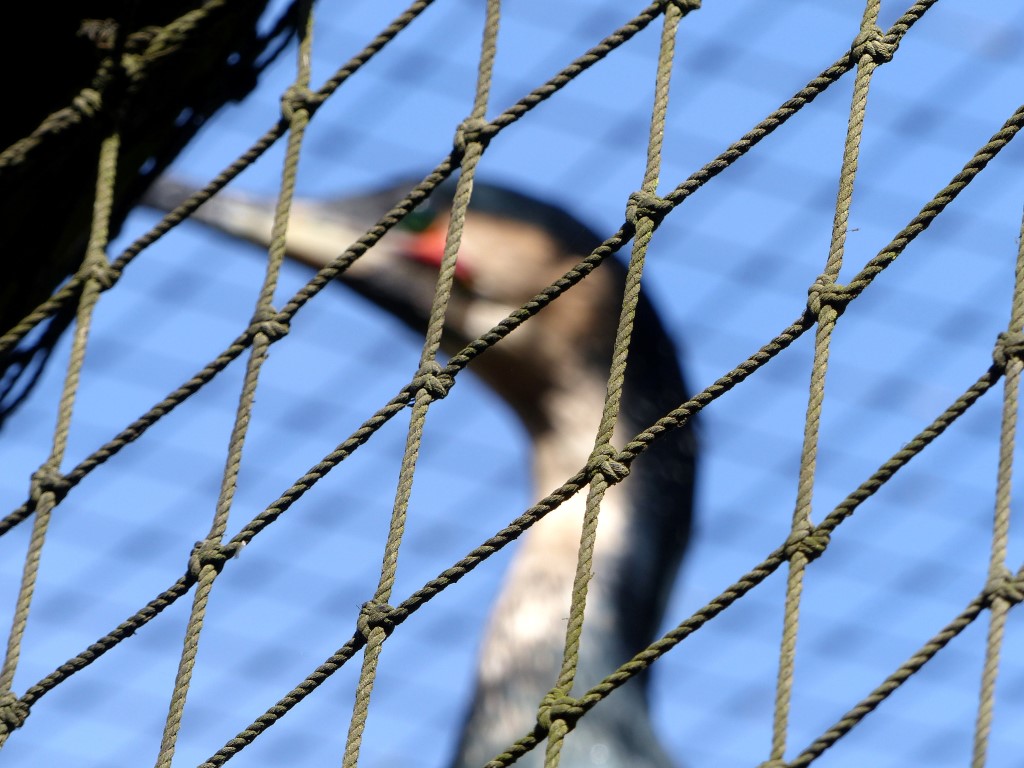
First Attempt - See the neat knots?

First Attempt – See the neat knots?

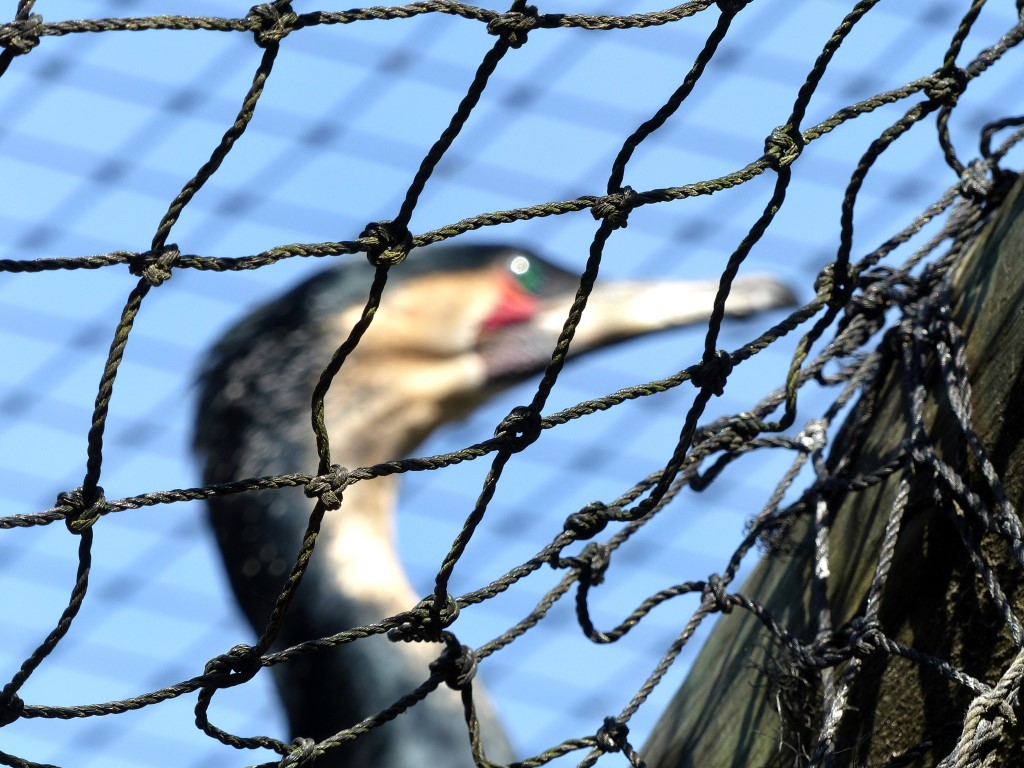
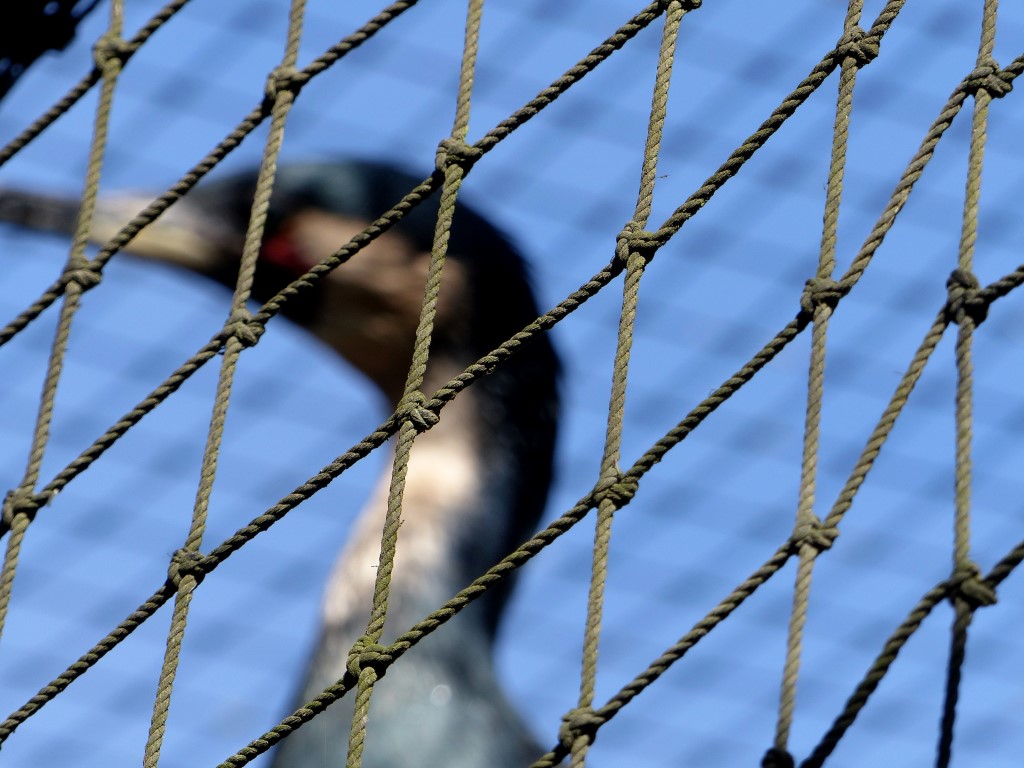
Back to my challenge. Taking photos at a Zoo can be quite challenging to say the least. Especially for “program mode” photographers. For some reason, zoos like to keep something between you and the birds, unless you are in an aviary with them. That “something” is usually a fence, bars, netting, or something to try to shoot through. They seem to like to keep their birds safe. :)

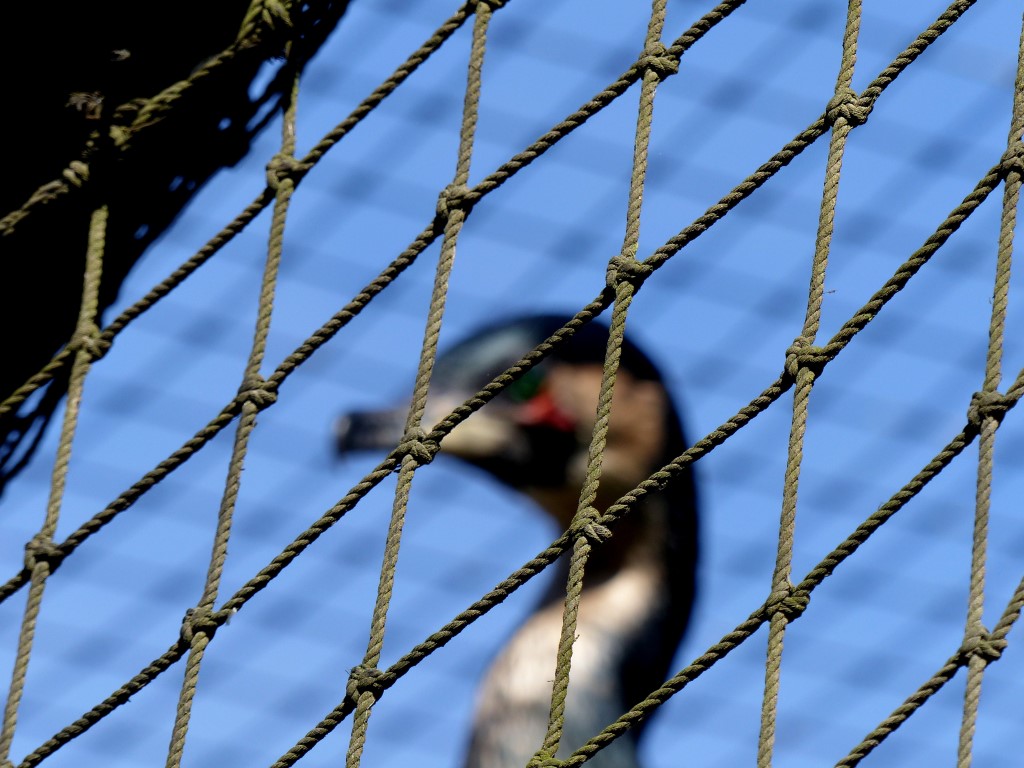
Another Attempt - Nice knots!

Another Attempt – Nice knots!

I tried again,

Nope - Not yet!

Nope – Not yet!

I backed out the zoom and tried to find the other one.

There he is

Different color netting, but same blurry bird photo.

Yuk!

Yuk!

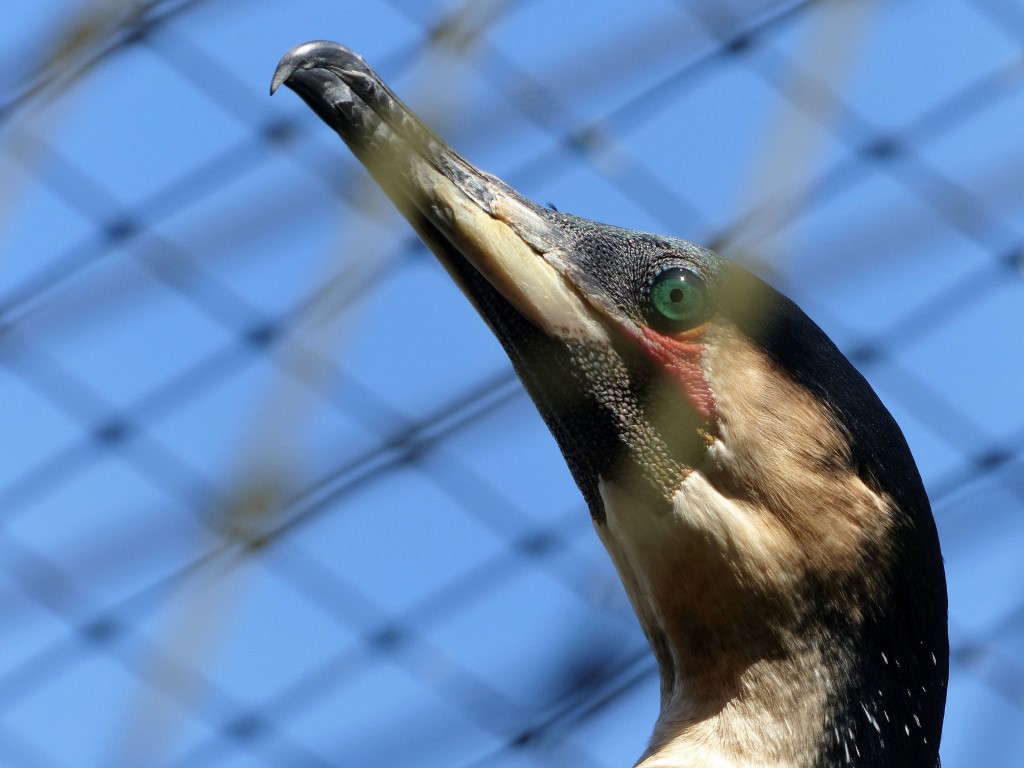
Then, I finally got through the netting enough to see that beautiful bird.

Look at that beauty!

Look at that beauty!

Wow!

I got through the netting.

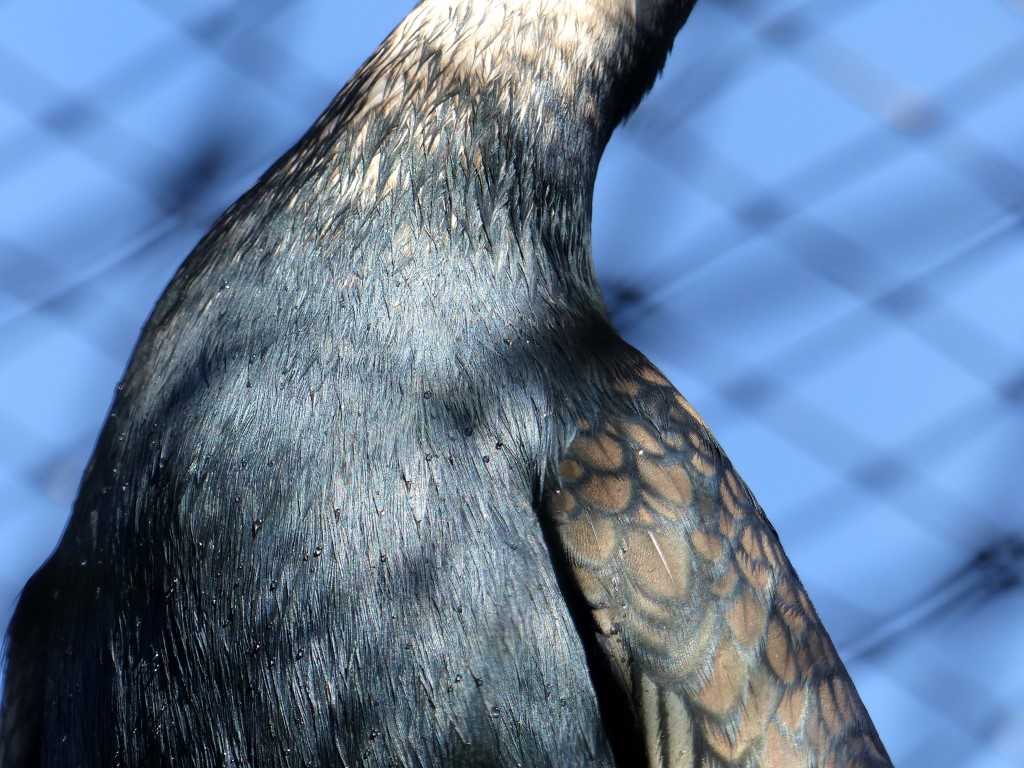
Even got the chest and some feather design.

Yeah! I got through

Yeah! I got through

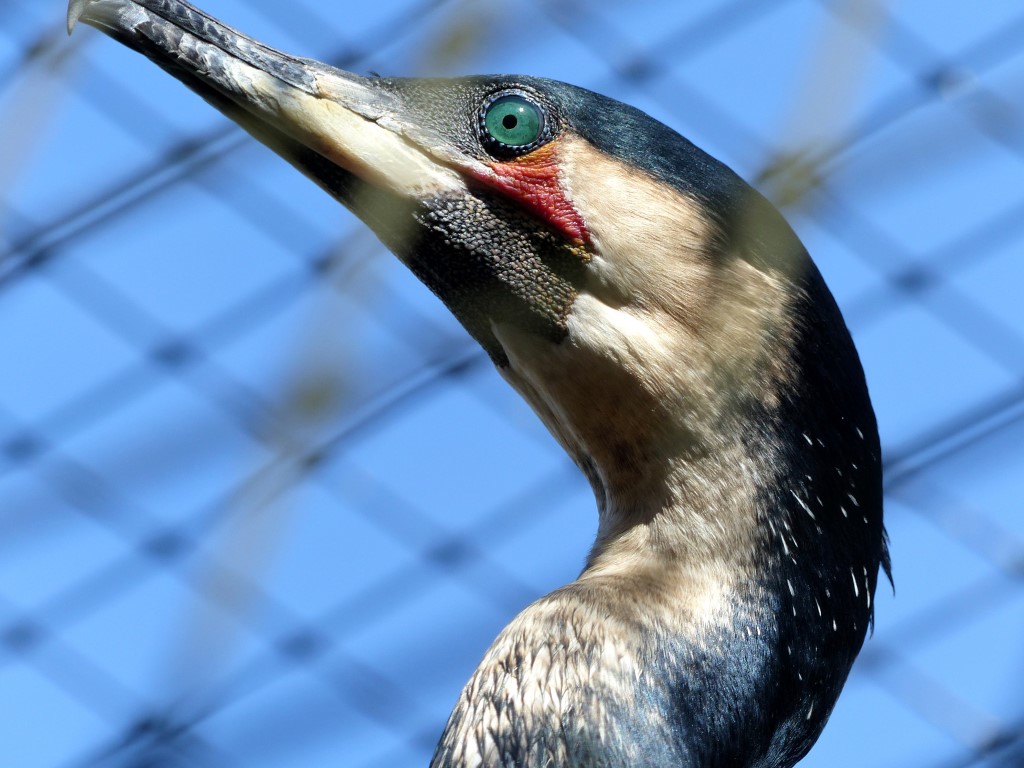
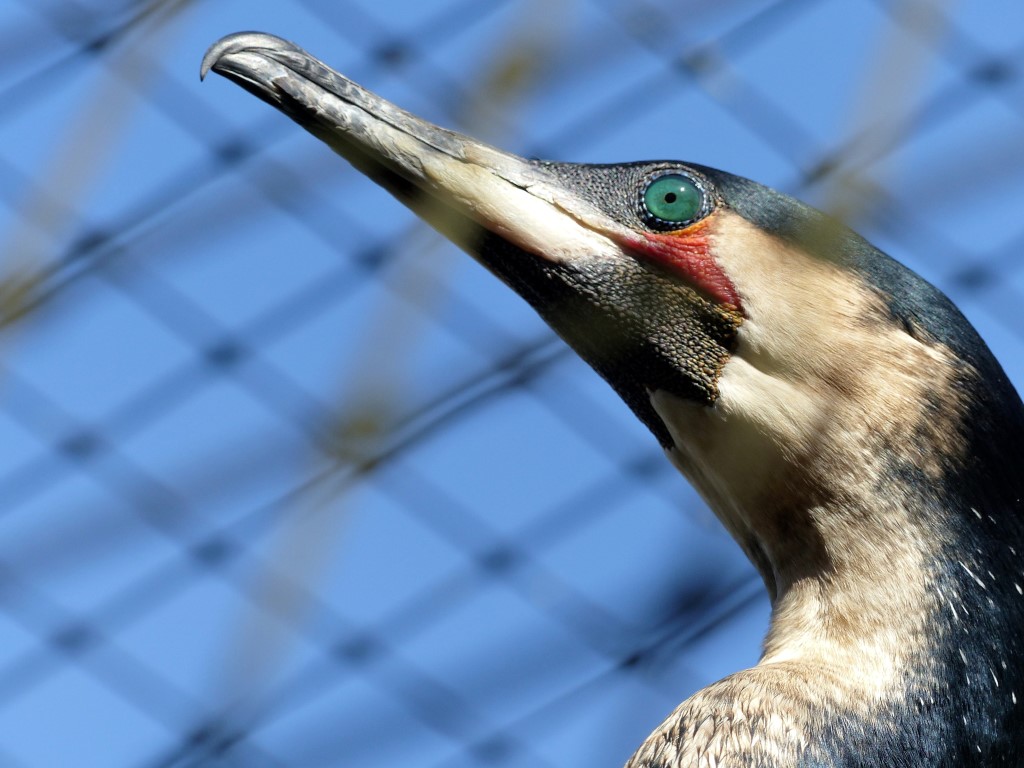
Look at those eyes!

What pretty green eyes

What pretty green eyes

Our Creator gave the White-breasted Cormorants a beautiful eye color and overall neat appearance. Just this one encounter, trying to get a photo takes you through a wide range of emotions; frustration, wanting to give up, then determination and joy when you can finally see the bird clear. Reminds me of what I have been reading in Ecclesiastes.

To everything there is a season, A time for every purpose under heaven: …A time to weep, And a time to laugh; A time to mourn, And a time to dance; A time to cast away stones, And a time to gather stones; …A time to gain, And a time to lose; A time to keep, And a time to throw away (blurry photos); …A time to love, And a time to hate; …What profit has the worker from that in which he labors? I have seen the God-given task with which the sons of men are to be occupied. He has made everything beautiful in its time. Also He has put eternity in their hearts, except that no one can find out the work that God does from beginning to end. I know that nothing is better for them than to rejoice, and to do good in their lives, and also that every man should eat and drink and enjoy the good of all his labor—it is the gift of God. (Ecclesiastes 3:1-13 NKJV)

Enjoy all the photos of the cormorants and even some from a previous trip:

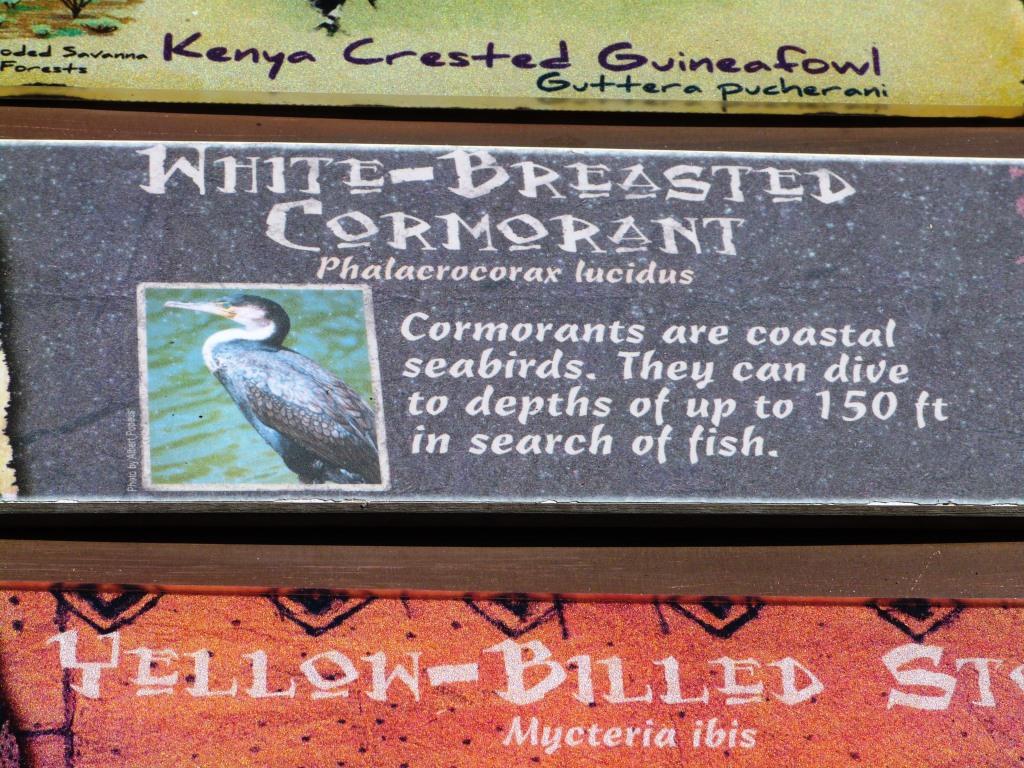
The white-breasted cormorant (Phalacrocorax lucidus) is much like the widespread great cormorant and if not a regional variant of the same species, is at least very closely related. It is distinguished from other forms of the great cormorant by its white breast and by the fact that subpopulations are freshwater birds. Phalacrocorax lucidus is not to be confused with the smaller and very different endemic South Australian black-faced cormorant, which also is sometimes called the white-breasted cormorant.

*

Birdwatching Trips

Lowry Park Zoo

White-breasted Cormorant – Wikipedia

White-breasted Cormorant – Dallas Zoo

Wordless Birds

*

The Watchman of the Old Orchard – Chapter 7

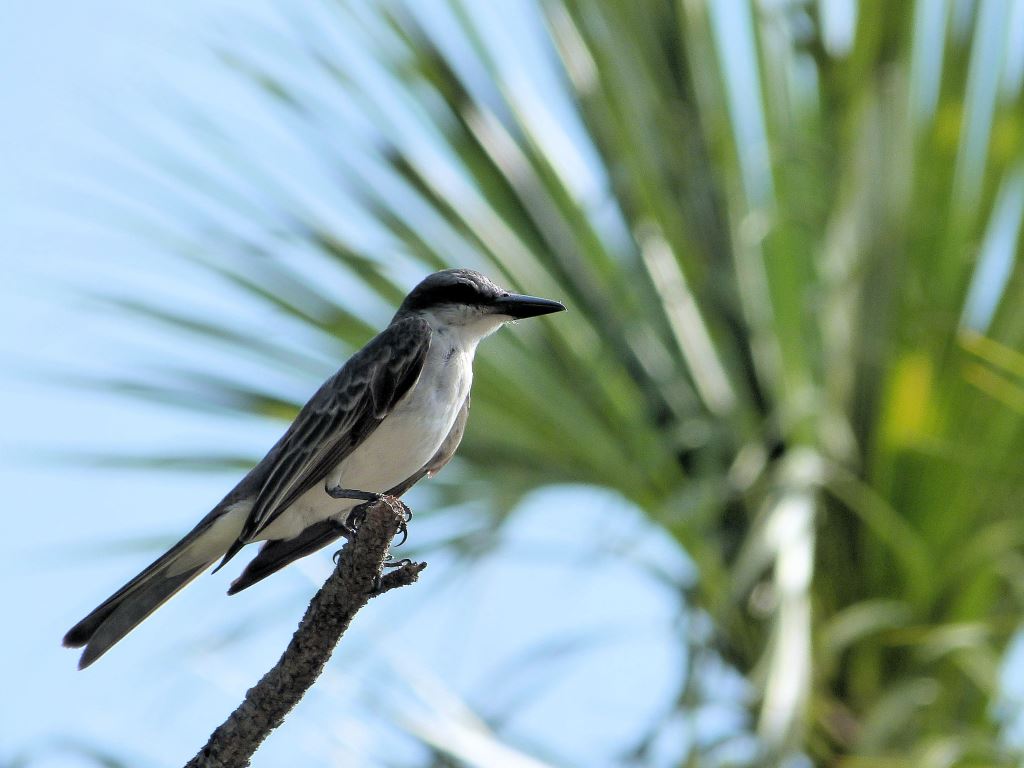
Grey Kingbird (Tyrannus dominicensis) by Lee at Honeymoon Is SP

The Watchman of the Old Orchard

The Kingbird and the Great Crested Flycatcher.

The Burgess Bird Book For Children

*

CHAPTER 7. The Watchman of the Old Orchard.

Listen to the story read.

A few days after Chebec and his wife started building their nest in the Old Orchard Peter dropped around as usual for a very early call. He found Chebec very busy hunting for materials for that nest, because, as he explained to Peter, Mrs. Chebec is very particular indeed about what her nest is made of. But he had time to tell Peter a bit of news.

“My fighting cousin and my handsomest cousin arrived together yesterday, and now our family is very well represented in the Old Orchard,” said Chebec proudly.

Slowly Peter reached over his back with his long left hind foot and thoughtfully scratched his long right ear. He didn’t like to admit that he couldn’t recall those two cousins of Chebec’s. “Did you say your fighting cousin?” he asked in a hesitating way.

“That’s what I said,” replied Chebec. “He is Scrapper the Kingbird, as of course you know. The rest of us always feel safe when he is about.

“Of course I know him,” declared Peter, his face clearing. “Where is he now?”

At that very instant a great racket broke out on the other side of the Old Orchard and in no time at all the feathered folks were hurrying from every direction, screaming at the top of their voices. Of course, Peter couldn’t be left out of anything like that, and he scampered for the scene of trouble as fast as his legs could take him. When he got there he saw Redtail the Hawk flying up and down and this way and that way, as if trying to get away from something or somebody.

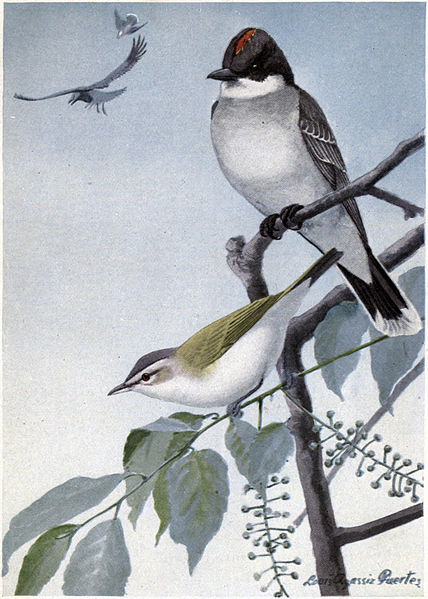
For a minute Peter couldn’t think what was the trouble with Redtail, and then he saw. A white-throated, white-breasted bird, having a black cap and back, and a broad white band across the end of his tail, was darting at Redtail as if he meant to pull out every feather in the latter’s coat.

Scrapper the Kingbird, Redeye the Vireo - Burgess Bird Book ©©

Scrapper the Kingbird, Redeye the Vireo – Burgess Bird Book ©©

He was just a little smaller than Welcome Robin, and in comparison with him Redtail was a perfect giant. But this seemed to make no difference to Scrapper, for that is who it was. He wasn’t afraid, and he intended that everybody should know it, especially Redtail. It is because of his fearlessness that he is called Kingbird. All the time he was screaming at the top of his lungs, calling Redtail a robber and every other bad name he could think of. All the other birds joined him in calling Redtail bad names. But none, not even Bully the English Sparrow, was brave enough to join him in attacking big Redtail.

When he had succeeded in driving Redtail far enough from the Old Orchard to suit him, Scrapper flew back and perched on a dead branch of one of the trees, where he received the congratulations of all his feathered neighbors. He took them quite modestly, assuring them that he had done nothing, nothing at all, but that he didn’t intend to have any of the Hawk family around the Old Orchard while he lived there. Peter couldn’t help but admire Scrapper for his courage.

As Peter looked up at Scrapper he saw that, like all the rest of the flycatchers, there was just the tiniest of hooks on the end of his bill. Scrapper’s slightly raised cap seemed all black, but if Peter could have gotten close enough, he would have found that hidden in it was a patch of orange-red. While Peter sat staring up at him Scrapper suddenly darted out into the air, and his bill snapped in quite the same way Chebec’s did when he caught a fly. But it wasn’t a fly that Scrapper had. It was a bee. Peter saw it very distinctly just as Scrapper snapped it up. It reminded Peter that he had often heard Scrapper called the Bee Martin, and now he understood why.

“Do you live on bees altogether?” asked Peter.

Eastern Kingbird (Tyrannus tyrannus) by Margaret Sloan Eating

Eastern Kingbird (Tyrannus tyrannus) by Margaret Sloan Eating

“Bless your heart, Peter, no,” replied Scrapper with a chuckle. “There wouldn’t be any honey if I did. I like bees. I like them first rate. But they form only a very small part of my food. Those that I do catch are mostly drones, and you know the drones are useless. They do no work at all. It is only by accident that I now and then catch a worker. I eat all kinds of insects that fly and some that don’t. I’m one of Farmer Brown’s best friends, if he did but know it. You can talk all you please about the wonderful eyesight of the members of the Hawk family, but if any one of them has better eyesight than I have, I’d like to know who it is. There’s a fly ‘way over there beyond that old apple-tree; watch me catch it.”

Peter knew better than to waste any effort trying to see that fly. He knew that he couldn’t have seen it had it been only one fourth that distance away. But if he couldn’t see the fly he could hear the sharp click of Scrapper’s bill, and he knew by the way Scrapper kept opening and shutting his mouth after his return that he had caught that fly and it had tasted good.

“Are you going to build in the Old Orchard this year?” asked Peter.

“Of course I am,” declared Scrapper. “I—”

Just then he spied Blacky the Crow and dashed out to meet him. Blacky saw him coming and was wise enough to suddenly appear to have no interest whatever in the Old Orchard, turning away toward the Green Meadows instead.

Peter didn’t wait for Scrapper to return. It was getting high time for him to scamper home to the dear Old Briar-patch and so he started along, lipperty-lipperty-lip. Just as he was leaving the far corner of the Old Orchard some one called him. “Peter! Oh, Peter Rabbit!” called the voice. Peter stopped abruptly, sat up very straight, looked this way, looked that way and looked the other way, every way but the right way.

“Look up over your head,” cried the voice, rather a harsh voice. Peter looked, then all in a flash it came to him who it was Chebec had meant by the handsomest member of his family. It was Cresty the Great Crested Flycatcher. He was a wee bit bigger than Scrapper the Kingbird, yet not quite so big as Welcome Robin, and more slender. His throat and breast were gray, shading into bright yellow underneath. His back and head were of a grayish-brown with a tint of olive-green. A pointed cap was all that was needed to make him quite distinguished looking. He certainly was the handsomest as well as the largest of the Flycatcher family.

Great Crested Flycatcher (Myiarchus crinitus) by Margaret Sloan

Great Crested Flycatcher (Myiarchus crinitus) by Margaret Sloan

“You seem to be in a hurry, so don’t let me detain you, Peter,” said Cresty, before Peter could find his tongue. “I just want to ask one little favor of you.”

“What is it?” asked Peter, who is always glad to do any one a favor.

“If in your roaming about you run across an old cast-off suit of Mr. Black Snake, or of any other member of the Snake family, I wish you would remember me and let me know. Will you, Peter?” said Cresty.

“A—a—a—what?” stammered Peter.

“A cast-off suit of clothes from any member of the Snake family,” replied Cresty somewhat impatiently. “Now don’t forget, Peter. I’ve got to go house hunting, but you’ll find me there or hereabouts, if it happens that you find one of those cast-off Snake suits.”

Before Peter could say another word Cresty had flown away. Peter hesitated, looking first towards the dear Old Briar-patch and then towards Jenny Wren’s house. He just couldn’t understand about those cast-off suits of the Snake family, and he felt sure that Jenny Wren could tell him. Finally curiosity got the best of him, and back he scampered, lipperty-lipperty-lip, to the foot of the tree in which Jenny Wren had her home.

“Jenny!” called Peter. “Jenny Wren! Jenny Wren!” No one answered him. He could hear Mr. Wren singing in another tree, but he couldn’t see him. “Jenny! Jenny Wren! Jenny Wren!” called Peter again. This time Jenny popped her head out, and her little eyes fairly snapped. “Didn’t I tell you the other day, Peter Rabbit, that I’m not to be disturbed? Didn’t I tell you that I’ve got seven eggs in here, and that I can’t spend any time gossiping? Didn’t I, Peter Rabbit? Didn’t I? Didn’t I?”

“You certainly did, Jenny. You certainly did, and I’m sorry to disturb you,” replied Peter meekly. “I wouldn’t have thought of doing such a thing, but I just didn’t know who else to go to.”

“Go to for what?” snapped Jenny Wren. “What is it you’ve come to me for?”

“Snake skins,” replied Peter.

“Snake skins! Snake skins!” shrieked Jenny Wren. “What are you talking about, Peter Rabbit? I never have anything to do with Snake skins and don’t want to. Ugh! It makes me shiver just to think of it.”

“You don’t understand,” cried Peter hurriedly. “What I want to know is, why should Cresty the Flycatcher ask me to please let him know if I found any cast-off suits of the Snake family? He flew away before I could ask him why he wants them, and so I came to you, because I know you know everything, especially everything concerning your neighbors.”

Jenny Wren looked as if she didn’t know whether to feel flattered or provoked. But Peter looked so innocent that she concluded he was trying to say something nice.

*

Like birds flying about, So will the LORD of hosts defend Jerusalem. Defending, He will also deliver it; Passing over, He will preserve it.” (Isaiah 31:5 NKJV)

  • Who are the two birds featured in this tale?
  • Who is the larger of the two?
  • Which one has a yellow throat and which one has a white throat?
  • Why is Scrapper called a Kingbird
  • Does Scrapper only eat bees?
  • What was Cresty looking for? Why?
  • What is another name for Scrapper?
  • What was on the tip of their bills?

*

Out of the ground the LORD God formed every beast of the field and every bird of the air, and brought them to Adam to see what he would call them. And whatever Adam called each living creature, that was its name. (Genesis 2:19 NKJV)

Links:

*

Links:

Wood Pewee of Birds Illustrated by Color Photography, 1897


Next Chapter (Old Clothes and Old Houses)


Burgess-Bird-Book-for-Children


Burgess Bird Book For Children


Savannah Sparrow by Ray   Wordless Birds

*


Dot’s Christmas Tree

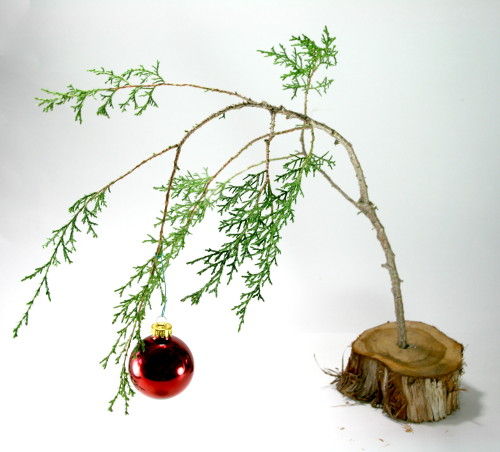
Leaning Tree, but not Dot's ©Internet

Leaning Tree, but not Dot’s
©Internet

Dot’s Christmas Tree ~ by Dorothy (Dot) Malcolm

The schedule says on Friday, December 6th, I’m to get my Christmas tree. In spite of the fact I’m nearly “sick as a dog” (whatever that means), I tell myself it must be done!

There were only a few trees left but I selected one that was supposed to be 6 feet tall. What made it 6 feet, was a single 12 inch needle sticking up at the top. Oh well, onward with the task at hand.

Earlier in the day I had gotten the stand out of the shed and cleaned it up. There were 3 of those things that you turn to help hold the tree in place. Family helped me by putting the tree in the stand and securing the 3 things and putting water in it. I could hardly wait to get back on the couch with a heating pad and fuzzy old blankets.

I spent two days looking at the tree and finally decided I could muster of enough “oomph” to put a couple of strand of lights on it. I had finished 2 strands when I felt the tree going over and I didn’t have the strength to stop it!

Oh yes – water and needles were on the floor! Two big water-soaked bath towels and a little sweeping up with the broom took care of the mess.

I told the tree I didn’t like it because it wasn’t big and full as trees in previous years. From my place on the couch I kept letting it know I didn’t like it!

Pondering about what to do about the imbalance problem, I came up with a great idea! Get some stones and put them around the top of the stand! I did this the next day and “Wow!,” it worked. I was real proud for thinking it up!

In between resting on the couch, and pulling boxes of decorations out of the closet, I managed to place a few decorations. It was days later before the 50-year-old paper houses were put under the tree.

As I slowly recovered, I had fewer negative feelings for the tree. It seems the tree and I have made a truce. I am accepting it for what it is. After all it got stuck with me!

by Dot Malcolm (2014)

Man looking at leaning Christmas tree

Leaning Tree, but not Dot’s
©Internet


Lee’s Addition:

Now the fruit of righteousness is sown in peace by those who make peace. (James 3:18 NKJV)

Therefore let us pursue the things which make for peace and the things by which one may edify another. (Romans 14:19 NKJV)

When Dottie told me about her not liking her tree on Sunday, I suggested that she write it up so I could share it. She gave it to me this evening at our fantastic Christmas Candlelight Service. I trust you enjoy this as much as I do. Dottie is Emma Foster’s grandmother. You can see where Emma may have picked up her creative writing. Dottie has been a Sunday School teacher for many years. Thank you, Dottie (Dot).

*
Other writings by Dot:

*

Guest Writers

*

(Photos added by Lee)

Sunday Inspiration – Humbleness of The Creator

Birth of Christ (from an e-mail-source unknown)

“Let this mind be in you, which was also in Christ Jesus: Who, being in the form of God, thought it not robbery to be equal with God: But made himself of no reputation, and took upon him the form of a servant, and was made in the likeness of men: And being found in fashion as a man, he humbled himself, and became obedient unto death, even the death of the cross. Wherefore God also hath highly exalted him, and given him a name which is above every name: That at the name of Jesus every knee should bow, of things in heaven, and things in earth, and things under the earth; And that every tongue should confess that Jesus Christ is Lord, to the glory of God the Father.”(Philippians 2:5-11 KJV)

The Creator, of all the birds we like to feature here, humbled Himself to come in sinless flesh, to die for us. resurrect Himself, and provide Salvation for us. Don’t let that important point be lost in all the activities of Christmas.

We here, at the blog, trust you have a very Merry Christmas and enjoy seeing some of His Created birds as you listen to the music.

This slideshow requires JavaScript.

*
“Now when Jesus was born in Bethlehem of Judaea in the days of Herod the king, behold, there came wise men from the east to Jerusalem, Saying, Where is he that is born King of the Jews? for we have seen his star in the east, and are come to worship him”. (Matthew 2:1-2 KJV)

“The fear of the LORD is the beginning of wisdom: a good understanding have all they that do his commandments: his praise endureth for ever.” (Psalms 111:10 KJV)

“Wise Men Still Seek Him” – Pastor Jerry, Jessie, Caleb and Choir – FBC

(From our Christmas Program last Sunday night)

*

*
Merry Christmas from Golden Eagle

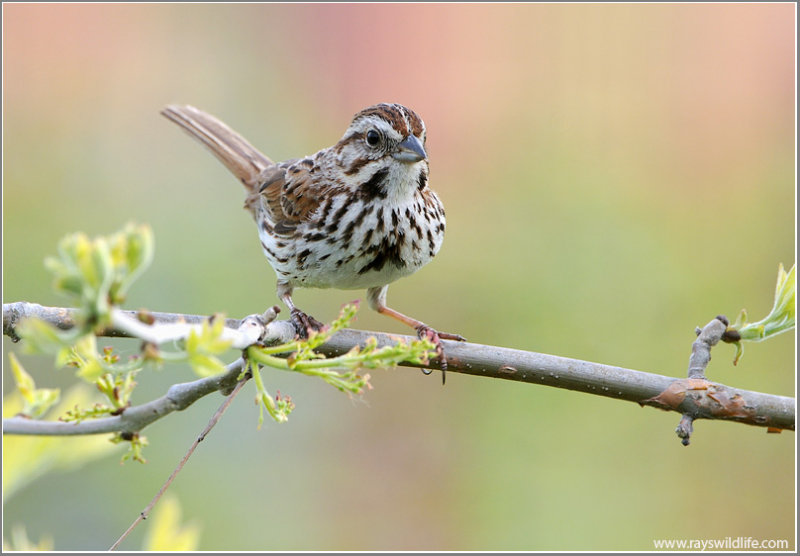
Song Sparrow by Ray

Song Sparrow by Ray

Merry Christmas from Golden Eagle

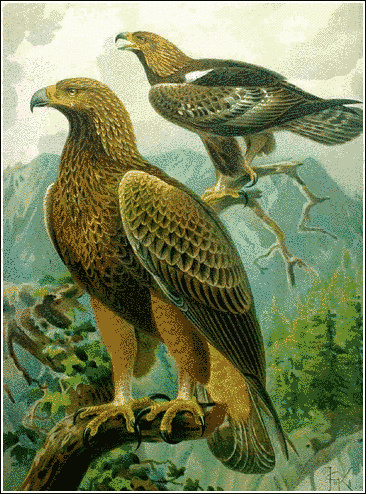
“His EYE is on the sparrow and I know He (Jesus) watches me!” This is the Golden Eagle and I just landed in a muddy pond. My wings are wet, my feathers are ruffled, and my left talon is crushed. What am I to do? Look up to God because He is looking down on me! Boys and girls did you know that we are open books to God? Why He knows everything about us and then some!

Golden Eagle ©PD

Golden Eagle ©PD

The eyes of the Lord are in every place, beholding the evil and the good. (Proverbs 15:3) This is the time of year when that list is pulled out. You know that list of boys and girls, that naughty and nice list? They say that eyes from the North Pole are watching us. Well, I don’t know about that. I have circled the North Pole way up in the atmosphere and all I could see was a bunch of my fellow penguins. I could be wrong; they might live down in Antarctica. The point is Jesus IS watching from His throne in the Heavens!

Royal Penguin (Eudyptes schlegeli) by Ian 6

Royal Penguin (Eudyptes schlegeli) by Ian

FOR PROMOTION COMETH NEITHER FROM THE EAST, NOR FROM THE WEST, NOR FROM THE SOUTH. (Psalm 75:6) Guys, that means it comes from the NORTH! That’s where God’s throne is in Heaven. The New Jerusalem, the golden city with the pearly gates.

Light of Christ ©©

We need to live in the white light of Jesus Christ. We need to live like Abraham Lincoln. Remember, “Honest Abe” from school? Be honest with God and honest with yourself. Read Romans chapter 2. In Romans Paul talks about our consciences. We know when we do something wrong like telling a lie. We know that’s wrong, we do not need someone to tell us that is wrong. Why?

“Which shew the work of the law written in their hearts, their conscience also bearing witness, and their thoughts the mean while accusing or else excusing one another.” (Romans 2:15)

God shines a spot-light into our souls, our hearts, our innermost being. “All the ways of a man are clean in his own eyes; but the Lord weigheth the spirits.” (Proverbs 16:2)

Spotlight ©©

Spotlight ©©

“Jesus did not commit himself unto them…FOR HE KNEW WHAT WAS IN MAN.” Jesus knows each and everything about you. There are no secrets with God. You cannot hide anything from Him, so live your life in His very Presence every day!

The Bible says, “Curse not the king, no not in thy thought; and curse not the rich in thy bedchamber: for a bird of the air shall carry the voice, and that which hath wings shall tell the matter.” (Ecclesiastes 10:20) The expression, “a little birdie told me” probably comes from this Bible verse. The reason a bird can tell things is because God knows everything! He reads our thoughts, He knows our motives, and He is keeping track of everything we say or do!

Bring all your thoughts to Jesus by reading His book, THE BIBLE. Begin to think like God thinks. Turn your eyes on Jesus and experience what God has for you!

And bring “INTO CAPTIVITY EVERY THOUGHT TO THE OBEDIENCE OF CHRIST.” (II Corinthians 10:5)

Reading the Bible

Reading the Bible

Read your Bibles and OBEY them! If you do, you will come out on top. Because God will “bring every work into judgment, with every secret thing, whether it be good, or whether it be evil.” (Ecclesiastes 12:14)

And you know about those gifts? Jesus will share His whole Creation with you in the future and you will have many gracious GIFTS from the Lord Jesus Christ. This Christmas give Jesus the gift of your heart and life by accepting HIS FREE GIFT OF SALVATION AND ETERNAL LIFE!

Merry Christmas from the Golden Eagle!

*
Golden Eagle

Kids, You Are Special

ABC’s Of The Gospel

*
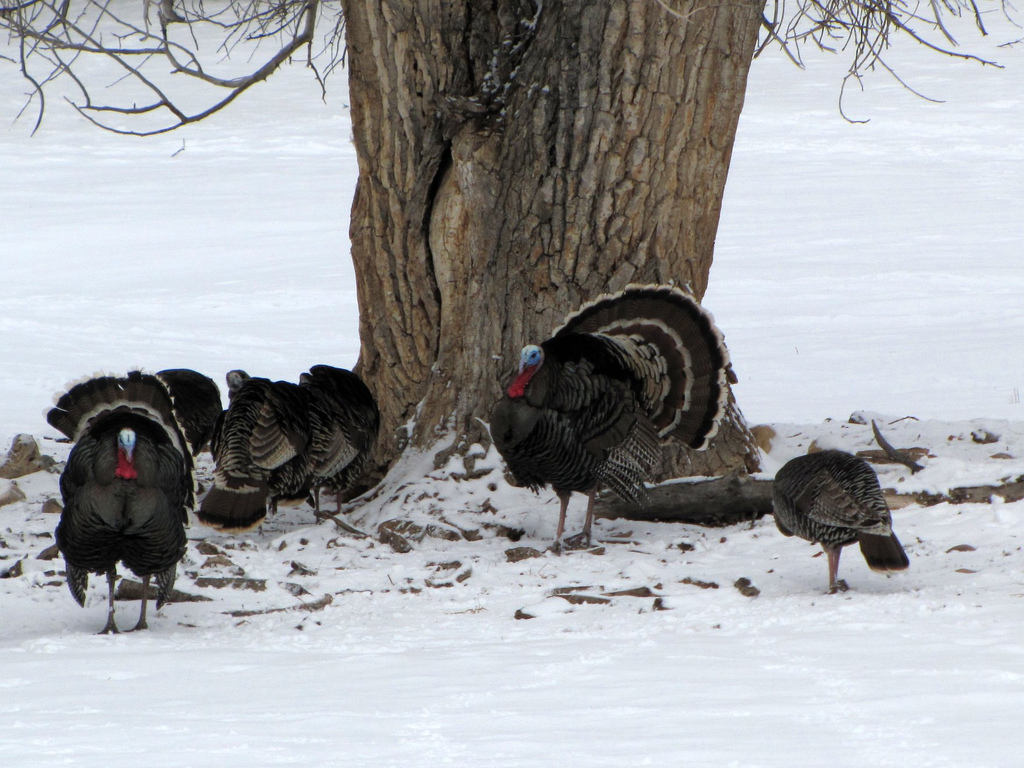
Reginald the Turkey Commander on Christmas

Turkeys in Snow ©Bryant Olsen Flickr

Reginald and a Captain in Snow ©Bryant Olsen Flickr

Reginald the Turkey Commander on Christmas

by Emma Foster

Once again the turkeys were gathering together. They wanted to celebrate Christmas.The hunters were going out into the backwoods to hunt turkeys. The turkeys were going to their secret fortress in the snow. It was a little bit harder getting to the fortress because of the snow. There was a large snowstorm coming so the turkeys had to trudge through the snow and scoop it out of the way with shovels they had to bring with them. Reginald needed help dragging a small Christmas tree to the fortress. All of the turkeys had their Army helmets on in case any hunters were nearby.

Turkeys in Snow ©Bryant Olsen Flickr

Turkeys in Snow ©Bryant Olsen Flickr

Because of the cold, the turkeys brought lots of blankets to keep them warm. The blankets were piled on a sled. The turkeys also wore camouflage coats and mittens.
Since it was so cold, Reginald built a fire and the turkeys roasted marshmallows. Reginald also brought candy canes.

After they ate all the candy canes and marshmallows, the turkeys gathered around the small Christmas tree and sang Silent Night. This was their favorite Christmas song because the hunters were not shooting so it really was a silent night.

Christmas Ham ©WikiC

Christmas Ham ©WikiC

The good thing was it was so cold that the hunters had to stay at home and have ham for Christmas dinner instead of turkey. That meant all the turkeys were safe.

Merry Christmas!
Gobble, Gobble!


I will sing unto the LORD, because he hath dealt bountifully with me. (Psalms 13:6 KJV)

Lee’s Addition:

Thanks again, Emma, for keeping us informed about Reginald and his turkey friends.

I asked Emma if she would give us another tale about Reginald for Christmas and she has produced this fine new tale. Emma is a fine young Christian teenager.

Check out her other writings:

Other Guest Writers

Wordless Birds

*

Sunday Inspiration – Christmas Birds

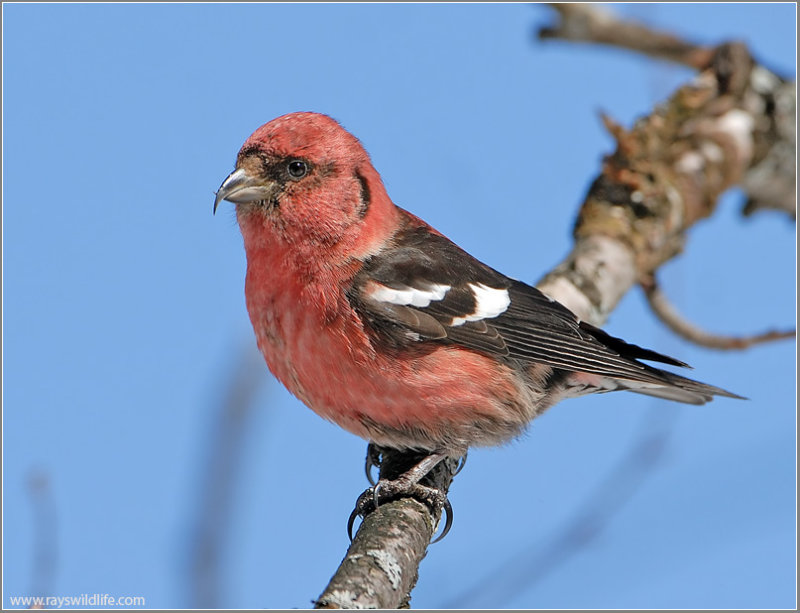
Two-barred Crossbill (Loxia leucoptera)(White-winged) by Raymond Barlow

Two-barred Crossbill (Loxia leucoptera)(White-winged) by Raymond Barlow

Now when Jesus was born in Bethlehem of Judaea in the days of Herod the king, behold, there came wise men from the east to Jerusalem, Saying, Where is he that is born King of the Jews? for we have seen his star in the east, and are come to worship him. (Matthew 2:1-2 KJV)

Today I am doing something a little different. Instead of a song, there is a short Christmas message from my pastor. This was given during the Camel Lot Christmas Musical that we had in 2012. It applies for today, as well. Listen to Pastor Nathan Osborne III as you watch some of the Lord Jesus Christ’s creation among the birds.

The birth of the Jesus, His death on the cross and His resurrection are all a part of Christmas.

This slideshow requires JavaScript.

Our Pastor at the Christmas Camel Lot Musical – 2012

*

(Started adding Christmas colored birds, but then added newer photos from this year.)

Sunday Inspirations

Some Previous Christmas Articles

*

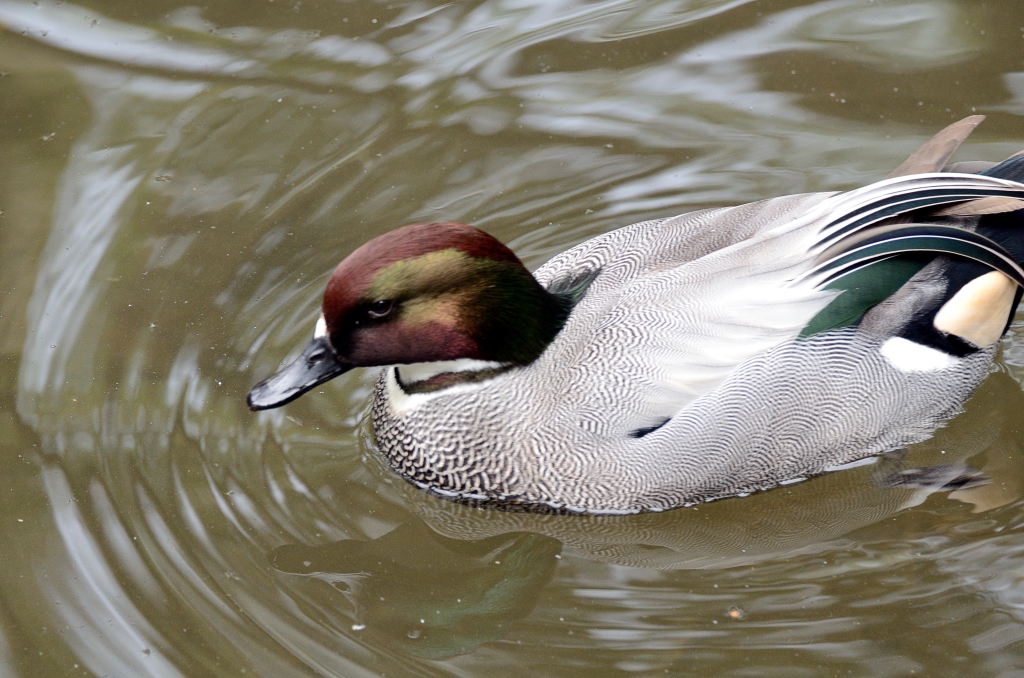
Falcated Duck at Zoo Miami

Falcated Duck (Anas falcata) by Dan at ZM

Falcated Duck (Anas falcata) by Dan at ZM

While we were on our latest visit to the Wings of Asia Aviary at Zoo Miami, the Falcated Duck caught my attention. We have seen it before, because there are photos of them, but for some reason, it was just another duck then. The sun caught its iridescent head and I started looking closer this time. Wings of Asia has one male and one female at this time.

These Falcated Duck (Teal) are just one more example of the variety and beauty the Lord gave His creatures when they were created.

All things were made by him; and without him was not any thing made that was made. (John 1:3 KJV)

Apparently when the male wears his breeding plumage, that green really shines.

Falcated Duck (Anas falcata) ©WikiC

Falcated Duck (Anas falcata) ©WikiC

I tried to get photos of his beautiful feathers at the back, but my photos aren’t the best, but maybe you can catch some of the great beauty that the Lord gave these Falcated Ducks.

Falcated Duck (Anas falcata) at Wings of Asia by Lee

Falcated Duck (Anas falcata) at Wings of Asia by Lee

Falcated Ducks are mainly from Asia and belong to the Anatidae – Ducks, Geese and Swans Family. By the way, “falcate” means “curved or hooked like a sickle.” (Wordsmith)

Males and females have similar lengths at 19-21.5 in (46 to 53 cm.) Their weight can range from 422 to 770 grams, with males weighing more than their female counterparts. Wingspans range from 31-36 in (79 to 91 cm). The breeding male is unmistakable. Most of the body plumage is finely vermiculated grey, with the long sickle-shaped tertials, which give this species its name, hanging off its back. The large head is dark green with a white throat, and a dark green collar and bronzed crown. The vent region is patterned in yellow, black and white.

Falcated Duck (Anas falcata) Female ©WikiC

Falcated Duck (Anas falcata) Female ©WikiC

The female falcated duck is dark brown, with plumage much like a female wigeon. Its long grey bill is an aid to identification. The eclipse male is like the female, but darker on the back and head. In flight both sexes show a pale grey underwing. The blackish speculum is bordered with a white bar on its inner edge. Young birds are buffer than the female and have short tertials. Juveniles have plumage similar to females of the species.

The Anas falcata are known to have very striking and beautiful sickle feathers. This is in comparison with many other birds like swams and geese.

Medium dabbling duck with long black and white tertial feathers extending over black rump. Body white, black, gray in finely-scaled pattern. The crested iridescent head is green and purple-brown. White throat has black ring; black tail and black-green speculum are edged in white.

Breeds and winters in southeastern Asia but strongly migratory. Birds seen in North America beyond Alaska may be escaped captives from private collections or wild birds. Favors wetlands, lakes, ponds, rivers, estuaries, and marshes. Near-threatened in the wild. Most U.S. sightings occur between Pacific and Californian coasts, Baja peninsula, Mexico, India, and Canada. (From internet sources including WhatBird and Wikipedia)

Here’s a short clip I took of him washing his feathers at Zoo Miami.

This slideshow requires JavaScript.

In 2011 a Falcated Duck family showed up at the Colusa Natiional Wildlife Refuge. Rare visitors from their normal range. It brought the photographers to catch the rare glimpse of these beautiful birds. Watch this video to see them in action,

*

Falcated Duck – Audubon

Falcated Duck – WhatBird

Falcated Duck – Wikipedia

Birds of the World – Anatidae – Ducks, Geese and Swans

Wordless Birds

*

Sunday Inspiration – Resting

Caribbean Dove (Leptotila jamaicensis) ©WikiC

Caribbean Dove (Leptotila jamaicensis) ©WikiC

But the dove found no rest for the sole of her foot, and she returned unto him into the ark, for the waters were on the face of the whole earth: then he put forth his hand, and took her, and pulled her in unto him into the ark. (Genesis 8:9 KJV)

And the work of righteousness shall be peace; and the effect of righteousness quietness and assurance for ever. And my people shall dwell in a peaceable habitation, and in sure dwellings, and in quiet resting places; (Isaiah 32:17-18 KJV)

Therefore my heart is glad, and my glory rejoiceth: my flesh also shall rest in hope. (Psalms 16:9 KJV)

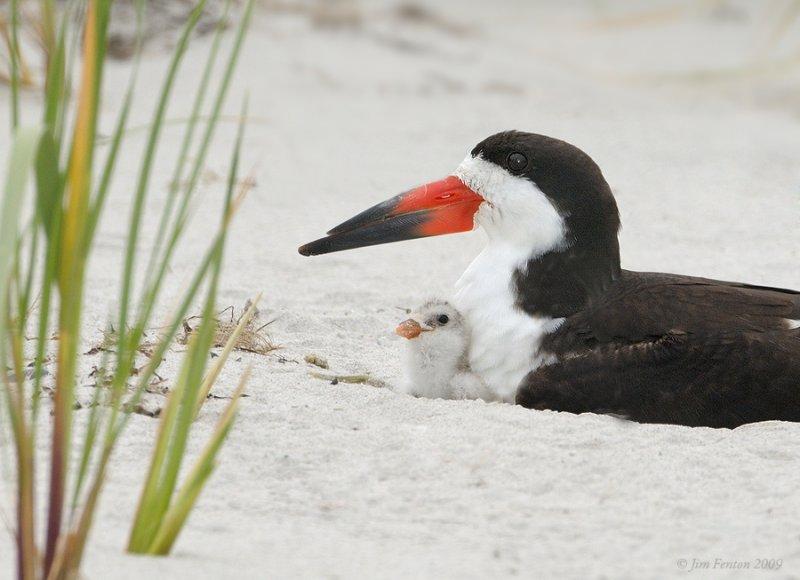
Black Skimmer (Rynchops niger) by J Fenton

Black Skimmer (Rynchops niger) by J Fenton

And I said, Oh that I had wings like a dove! for then would I fly away, and be at rest. (Psalms 55:6 KJV)

Return unto thy rest, O my soul; for the LORD hath dealt bountifully with thee. (Psalms 116:7 KJV)

Come unto me, all ye that labour and are heavy laden, and I will give you rest. Take my yoke upon you, and learn of me; for I am meek and lowly in heart: and ye shall find rest unto your souls. (Matthew 11:28-29 KJV)

Are we resting like we should, knowing that God Is In Control?

*

This slideshow requires JavaScript.

“God’s Still In Control” ~ ©Hyssongs

*

More Sunday Inspirations

Hope for Hard Times

Is There a God?

*

Angels…….. as explained by Children

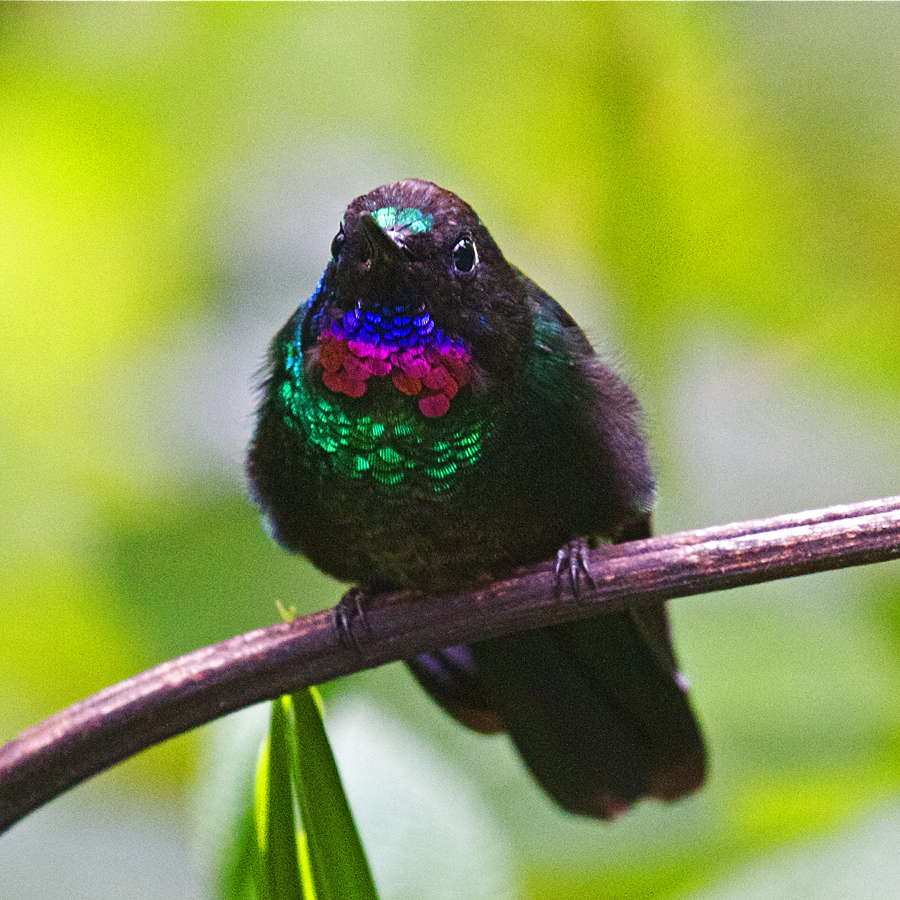
Gorgeted Sunangel (Heliangelus strophianus) by Ian

Gorgeted Sunangel (Heliangelus strophianus) by Ian

Praise ye him, all his angels: praise ye him, all his hosts. (Psalms 148:2 KJV)

Angels…….. as explained by Children.

I only know the names of two angels, Hark and Harold. – Gregory, age 5

Everybody’s got it all wrong. Angels don’t wear halos anymore. I forget why, but scientists are working on it – Olive, age 9

It’s not easy to become an angel! First, you die. Then you go to Heaven, and then there’s still the flight training to go through. And then you got to agree to wear those angel clothes. -Matthew, age 9

Angels work for God and watch over kids when God Has to go do something else. – Mitchell, age 7

My guardian angel helps me with math, but he’s not much good for science. – Henry, age 8

Angels don’t eat, but they drink milk from Holy Cows!!! – Jack, age 6

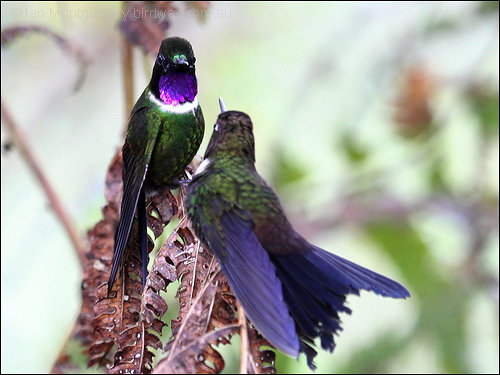
Tourmaline Sunangel (Heliangelus exortis) ©WikiC

Tourmaline Sunangel (Heliangelus exortis) ©WikiC

Take heed that ye despise not one of these little ones; for I say unto you, That in heaven their angels do always behold the face of my Father which is in heaven. (Matthew 18:10 KJV)

Angels talk all the way while they’re flying you up To heaven. The main subject is where you went wrong before you got dead. – Daniel, age 9

When an angel gets mad, he takes a deep breath and counts to ten. And when he lets out his breath again, somewhere there’s a tornado. – Reagan, age 10

Angels have a lot to do and they keep very busy. If you lose a tooth, an angel comes in through your window and leaves money under your pillow. Then when it gets cold, angels go south for the winter. – Sara, age 6

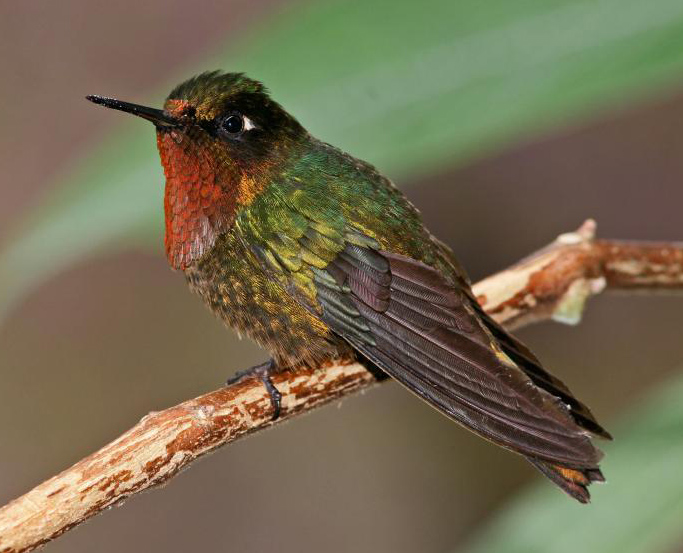
Orange-throated Sunangel ©WikiCl

Orange-throated Sunangel ©WikiCl

Bless the LORD, ye his angels, that excel in strength, that do his commandments, hearkening unto the voice of his word. (Psalms 103:20 KJV)

Angels live in cloud houses made by God and his Son, who’s a very good carpenter. – Jared, age 8

All angels are girls because they gotta wear Dresses and boys didn’t go for it. – Antonio, age 9

My angel is my grandma who died last year. She got A big head start on helping me while she was still down here on earth. – Ashley ~ age 9

Gorgeted Sunangel (Heliangelus strophianus) by Ian

Gorgeted Sunangel (Heliangelus strophianus) by Ian

For he shall give his angels charge over thee, to keep thee in all thy ways. (Psalms 91:11 KJV)

Some of the angels are in charge of helping heal Sick animals and pets. And if They don’t make the animals get better, they help the child get over it. – Vicki , age 8

What I don’t get about angels is why, when someone Is in love, they shoot arrows at them. – Sarah , age 7

How Could I Not Send This To All Of You ….. So Awesome!!!
…. And As they Say ……… No One Says it Better Than A Child

(From an e-mail)

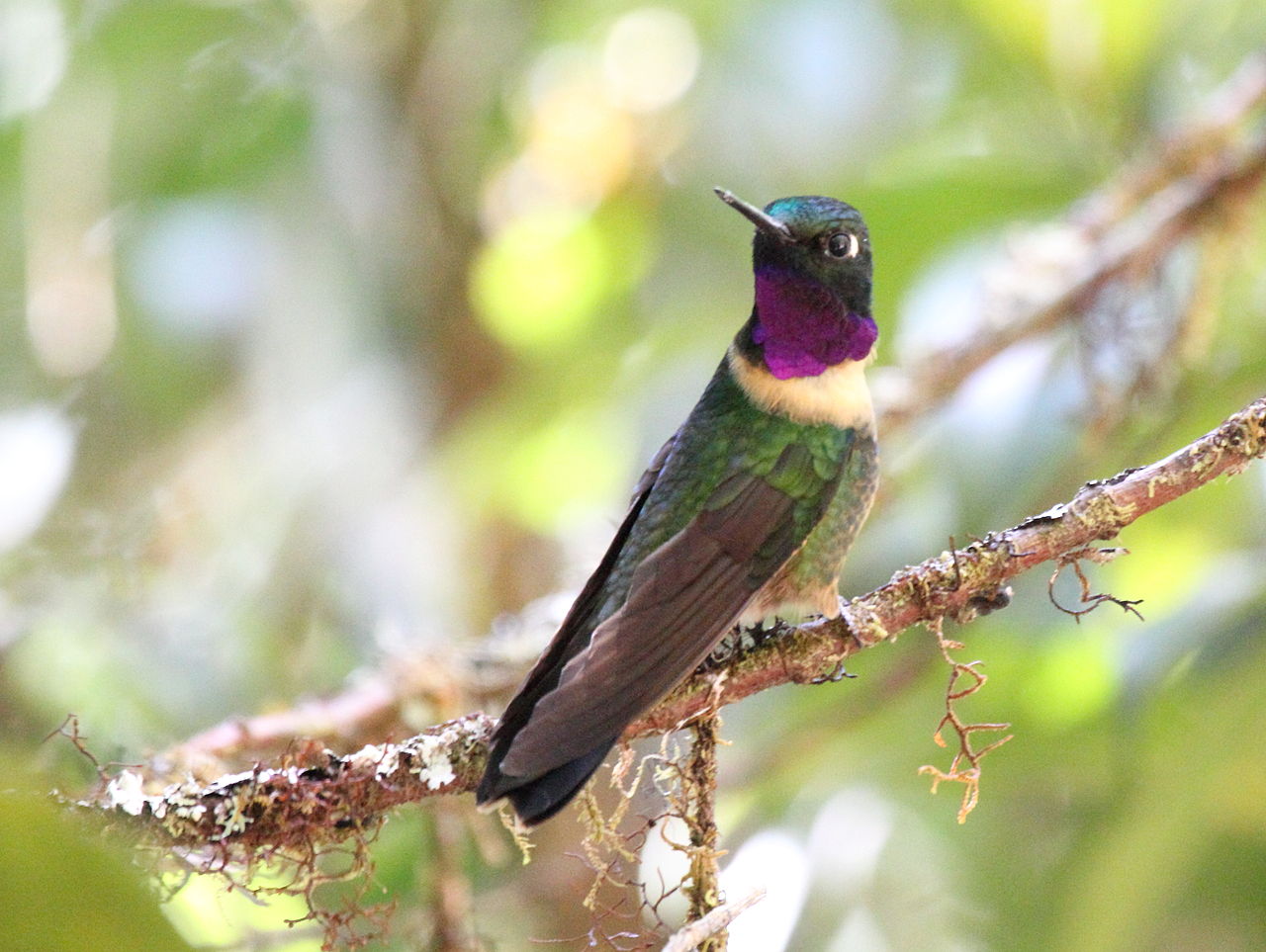
Amethyst-throated Sunangel (Heliangelus_amethysticollis) ©WikiC

Amethyst-throated Sunangel (Heliangelus_amethysticollis) ©WikiC

Likewise, I say unto you, there is joy in the presence of the angels of God over one sinner that repenteth. (Luke 15:10 KJV)

Haliangelus Subfamily of Sunangels 

Wordless Birds

*

Birds of Asia – Cotton Pygmy Goose

Cotton Pygmy Goose (Nettapus coromandelianus) at Wings of Asia by Lee

Cotton Pygmy Goose (Nettapus coromandelianus) at Wings of Asia by Lee

 And he spake of trees, from the cedar tree that is in Lebanon even unto the hyssop that springeth out of the wall: he spake also of beasts, and of fowl, and of creeping things, and of fishes. (1 Kings 4:33 KJV)

Let me introduce you to another interesting avian friend from His Creator’s Hand. This is the Cotton Pygmy Goose or Cotton Teal (Nettapus coromandelianus) which is a small perching duck that breeds in Pakistan, India, Bangladesh, southeast Asia and south to northern Australia.

Small individuals of this species are the smallest waterfowl on earth, at as little as 5.6 oz (160 g) and 10 in (26 cm). White predominates in this bird’s plumage. Bill short, deep at base, and goose-like.

Cotton Pygmy Goose (Nettapus coromandelianus) PB Zoo by Lee

Male in breeding plumage is glossy blackish green crown, with white head, neck, and underparts; a prominent black collar and white wing-bar. Rounded head and short legs. In flight, the wings are green with a white band, making the male conspicuous even amongst the huge flying flocks of the lesser whistling duck, which share the habitat. Female paler, without either black collar and only a narrow or nonexistent strip of white wing-bar. In non-breeding plumage (eclipse) male resembles female except for his white wing-bar. Flocks on water bodies (jheels), etc.

The call is a peculiar clucking, uttered in flight

It is largely resident, apart from dispersion in the wet season, but Chinese birds make long-distance migrations to winter further south. It nests in tree holes, laying 8–15 eggs. The nesting season is July to September (SW. monsoon). Its nest is a natural hollow in a tree-trunk standing in or near water, sometimes lined with grass, rubbish and feathers. The eggs, are ivory white.

Cotton Pygmy Goose (Nettapus coromandelianus) at Wings of Asia by Lee

Cotton Pygmy Goose (Nettapus coromandelianus) at Wings of Asia by Lee

This is an abundant species in Asia, although the slightly larger Australian race appears to be declining in numbers.

Found on all still freshwater lakes (jheels), rain-filled ditches, inundated paddy fields, irrigation tanks, etc. Becomes very tame on village tanks wherever it is unmolested and has become inured to human proximity. Swift on the wing, and can dive creditably on occasion.[citation needed] Found in ponds and lakes in southern Pakistan . However numbers are declining and it is definitely endangered.

Its food is chiefly seeds and vegetable matter, especially water lilies; also insects, crustaceans, etc. (From Wikipedia with editing)

I enjoyed watching this female Pygmy Goose floating and took a short video of her.

I just made a page for  Zoo Miami and the Wings of Asia under the Birdwatching Trips. There are most of the articles that have been written about our visits to the Zoo, but especially to the Wings of Asia Aviary. That is where we spend most of our time. This last trip was our fourth visit down to Miami to see those amazing birds.

*

This slideshow requires JavaScript.

*

Cotton Pygmy Goose – Wikipedia

Cotton Pygmy Goose – Ducks of the World

Birds of the World

Birdwatching Trips

Zoo Miami and the Wings of Asia

Wordless Birds

*

Ruddy and Raja Shelducks at Wings of Asia

Ruddy Shelduck (Tadorna ferruginea) at Wings of Asia by Dan

Ruddy Shelduck (Tadorna ferruginea) at Wings of Asia by Dan

We enjoyed our latest birdwatching adventure to Zoo Miami. Caught video of the Ruddy Shelducks discussing something. So this time we will share the two species of Shelducks at the Wings of Asia aviary. The Ruddy Shelduck (Tadorna ferruginea) and the Raja Shelduck (Tadorna radjah) are members of the duck, goose and swan family Anatidae – Ducks, Geese and Swans. They are in the shelduck subfamily Tadorninae. There are seven species in the Tadorninae subfamily. Wings of Asia has the Ruddy and Raja Shelducks.

Bless the LORD, O my soul. O LORD my God, thou art very great; thou art clothed with honour and majesty. (Psalms 104:1 KJV)

The Lord has provided for the Shelducks, as He does for all His critters. They are designed for the conditions they live in, in this case swimming, feeding and migrating, with beaks, feet, wings, and coloration to help them survive.

Ruddy Shelduck (Tadorna ferruginea) at ZM

Ruddy –  There are very small resident populations of this species in north west Africa and Ethiopia, but the main breeding area of this species is from southeast Europe across central Asia to Southeast Asia. These birds are mostly migratory, wintering in the Indian Subcontinent.

Facts:

  • They are sometimes called Brahminy Ducks.
  • Can be seen in many Zoos in America.
  • In Tibet and Mongolia, Ruddy Shelduck is considered sacred by the Buddhists. It is also a sacred animal in Slavic mythology.

Although becoming quite rare in southeast Europe and southern Spain, the ruddy shelduck is still common across much of its Asian range. It may be this population which gives rise to vagrants as far west as Iceland, Great Britain and Ireland. However, since the European population is declining, it is likely that most occurrences in western Europe in recent decades are escapes or feral birds. Although this bird is observed in the wild from time to time in eastern North America, no evidence of a genuine vagrant has been found.

This is a bird of open country, and it will breed on cliffs, in burrows, tree holes or crevices distant from water, laying 6-16 creamy-white eggs, incubated for 30 days. The both shelduck is usually found in pairs or small groups and rarely forms large flocks. However, moulting and wintering gatherings on chosen lakes or slow rivers can be very large.

The ruddy shelduck is a distinctive species, 22.8-27.5 in (58-70) cm long with a 43-53 in (110–135 cm) wingspan. It has orange-brown body plumage and a paler head. The wings are white with black flight feathers. It swims well, and in flight looks heavy, more like a goose than a duck. The sexes of this striking species are similar, but the male has a black ring at the bottom of the neck in the breeding season summer, and the female often has a white face patch. The call is a loud wild honking.

Not sure what these Ruddy’s were debating about, but it seems the single one lost the discussion and left.


The ruddy shelduck is a common winter visitor in India. This bird is found in large wetlands, rivers with mud flats and shingle banks. Found in large congregation on lakes and reservoirs. It breeds in high altitude lakes and swamps in Jammu & Kashmir. Arrives in north India by October and departs by April. The genus name Tadorna comes from Celtic roots and means “pied waterfowl”, essentially the same as the English “shelduck”.

Raja Shelduck (Tadorna radjah) at Wing of Asia by Dan

Raja Shelduck (Tadorna radjah) at Wing of Asia by Dan

Raja Shelduck – The Radjah Shelduck (Tadorna radjah), is a species of shelduck found mostly in New Guinea and Australia, and also on some of the Moluccas. It is known alternatively as the raja shelduck (IOC Name), black-backed shelduck, or in Australia as the Burdekin duck.

The Raja Shelduck forms long-term pair-bonds, and is usually encountered in lone pairs or small flocks. During the wet season the males commonly become very irritable, and have been observed attacking their mates.

The diet consists mainly of mollusks, insects, sedge materials and algae. Pairs start searching for nesting sites during the months of January and February. They nest close to their primary food source, often in the hollow limbs of trees, which makes habitat destruction a particular issue.

Raja Shelduck (Tadorna radjah) by Dan at Zoo Miami

Raja Shelduck (Tadorna radjah) by Dan at Zoo Miami

The radjah shelduck does not use nesting materials except for some self-supplied down feathers. Egg-laying is usually done by May or June, but depends on the extent of the wet season. The clutches range from 6 to 12 eggs. Incubation time is about 30 days. (Wikipedia edited)

Here are photos of both Shelducks. Some of the photos are from other trips and some from Ian. (PBZ is Palm Beach Zoo)


*