An Old Friend In a New Home – Chapter 6

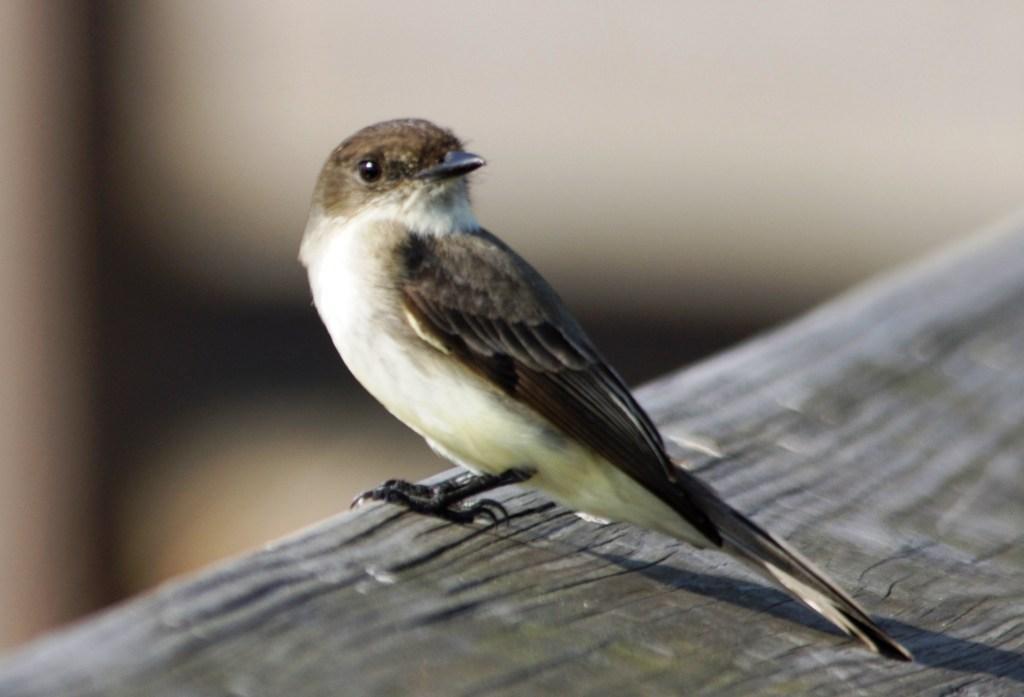
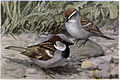
Eastern Phoebe (Sayornis phoebe) by Dan

Eastern Phoebe (Sayornis phoebe) by Dan

An Old Friend In a New Home

The Phoebe and the Least Flycatcher

The Burgess Bird Book For Children

*

CHAPTER 6. An Old Friend In a New Home.

Listen to the story read.

Every day brought newcomers to the Old Orchard, and early in the morning there were so many voices to be heard that perhaps it is no wonder if for some time Peter Rabbit failed to miss that of one of his very good friends. Most unexpectedly he was reminded of this as very early one morning he scampered, lipperty-lipperty-lip, across a little bridge over the Laughing Brook.

“Dear me! Dear me! Dear me!” cried rather a plaintive voice. Peter stopped so suddenly that he all but fell heels over head. Sitting on the top of a tall, dead, mullein stalk was a very soberly dressed but rather trim little fellow, a very little larger than Bully the English Sparrow. Above, his coat was of a dull olive-brown, while underneath he was of a grayish-white, with faint tinges of yellow in places. His head was dark, and his bill black. The feathers on his head were lifted just enough to make the tiniest kind of crest. His wings and tail were dusky, little bars of white showing very faintly on his wings, while the outer edges of his tail were distinctly white. He sat with his tail hanging straight down, as if he hadn’t strength enough to hold it up.

Chebec the Least Flycatcher, Dear Me the Phoebe - Burgess Bird Book ©©

Chebec the Least Flycatcher, Dear Me the Phoebe – Burgess Bird Book ©©

“Hello, Dear Me!” cried Peter joyously. “What are you doing way down here? I haven’t seen you since you first arrived, just after Winsome Bluebird got here.” Peter started to say that he had wondered what had become of Dear Me, but checked himself, for Peter is very honest and he realized now that in the excitement of greeting so many friends he hadn’t missed Dear Me at all.

Dear Me the Phoebe did not reply at once, but darted out into the air, and Peter heard a sharp click of that little black bill. Making a short circle, Dear Me alighted on the mullein stalk again.

“Did you catch a fly then?” asked Peter.

“Dear me! Dear me! Of course I did,” was the prompt reply. And with each word there was a jerk of that long hanging tail. Peter almost wondered if in some way Dear Me’s tongue and tail were connected. “I suppose,” said he, “that it is the habit of catching flies and bugs in the air that has given your family the name of Flycatchers.”

Dear Me nodded and almost at once started into the air again. Once more Peter heard the click of that little black bill, then Dear Me was back on his perch. Peter asked again what he was doing down there.

“Mrs. Phoebe and I are living down here,” replied Dear Me. “We’ve made our home down here and we like it very much.”

Peter looked all around, this way, that way, every way, with the funniest expression on his face. He didn’t see anything of Mrs. Phoebe and he didn’t see any place in which he could imagine Mr. and Mrs. Phoebe building a nest. “What are you looking for?” asked Dear Me.

“For Mrs. Phoebe and your home,” declared Peter quite frankly. “I didn’t suppose you and Mrs. Phoebe ever built a nest on the ground, and I don’t see any other place around here for one.”

Dear Me chuckled. “I wouldn’t tell any one but you, Peter,” said he, “but I’ve known you so long that I’m going to let you into a little secret. Mrs. Phoebe and our home are under the very bridge you are sitting on.”

“I don’t believe it!” cried Peter.

But Dear Me knew from the way Peter said it that he really didn’t mean that. “Look and see for yourself,” said Dear Me.

So Peter lay flat on his stomach and tried to stretch his head over the edge of the bridge so as to see under it. But his neck wasn’t long enough, or else he was afraid to lean over as far as he might have. Finally he gave up and at Mr. Phoebe’s suggestion crept down the bank to the very edge of the Laughing Brook. Dear Me darted out to catch another fly, then flew right in under the bridge and alighted on a little ledge of stone just beneath the floor. There, sure enough, was a nest, and Peter could see Mrs. Phoebe’s bill and the top of her head above the edge of it. It was a nest with a foundation of mud covered with moss and lined with feathers.

Eastern Phoebe (Sayornis phoebe) Nest ©WikiC

Eastern Phoebe (Sayornis phoebe) Nest ©WikiC

“That’s perfectly splendid!” cried Peter, as Dear Me resumed his perch on the old mullein stalk. “How did you ever come to think of such a place? And why did you leave the shed up at Farmer Brown’s where you have build your home for the last two or three years?”

“Oh,” replied Dear Me, “we Phoebes always have been fond of building under bridges. You see a place like this is quite safe. Then, too, we like to be near water. Always there are many insects flying around where there is water, so it is an easy matter to get plenty to eat. I left the shed at Farmer Brown’s because that pesky cat up there discovered our nest last year, and we had a dreadful time keeping our babies out of her clutches. She hasn’t found us down here, and she wouldn’t be able to trouble us if she should find us.”

“I suppose,” said Peter, “that as usual you were the first of your family to arrive.”

“Certainly. Of course,” replied Dear Me. “We always are the first. Mrs. Phoebe and I don’t go as far south in winter as the other members of the family do. They go clear down into the Tropics, but we manage to pick up a pretty good living without going as far as that. So we get back here before the rest of them, and usually have begun housekeeping by the time they arrive. My cousin, Chebec the Least Flycatcher, should be here by this time. Haven’t you heard anything of him up in the Old Orchard?”

“No,” replied Peter, “but to tell the truth I haven’t looked for him. I’m on my way to the Old Orchard now, and I certainly shall keep my ears and eyes open for Chebec. I’ll tell you if I find him. Good-by.”

“Dear me! Dear me! Good-by Peter. Dear me!” replied Mr. Phoebe as Peter started off for the Old Orchard.

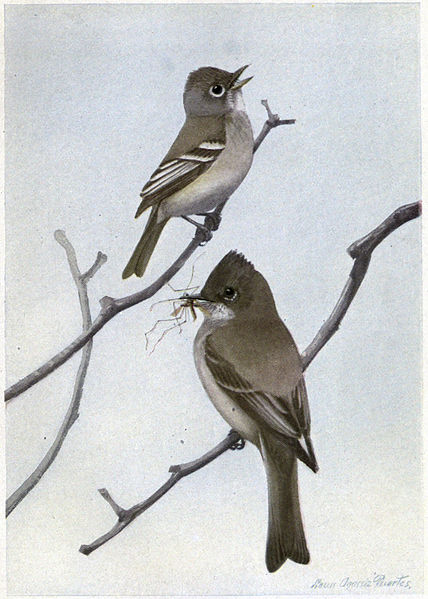
Perhaps it was because Peter was thinking of him that almost the first voice he heard when he reached the Old Orchard was that of Chebec, repeating his own name over and over as if he loved the sound of it. It didn’t take Peter long to find him. He was sitting out on the up of one of the upper branches of an apple-tree where he could watch for flies and other winged insects. He looked so much like Mr. Phoebe, save that he was smaller, that any one would have know they were cousins. “Chebec! Chebec! Chebec!” he repeated over and over, and with every note jerked his tail. Now and then he would dart out into the air and snap up something so small that Peter, looking up from the ground, couldn’t see it at all.

Least Flycatcher (Empidonax minimus) by Raymond Barlow

Least Flycatcher (Empidonax minimus) by Raymond Barlow

“Hello, Chebec!” cried Peter. “I’m glad to see you back again. Are you going to build in the Old Orchard this year?”

“Of course I am,” replied Chebec promptly. “Mrs. Chebec and I have built here for the last two or three years, and we wouldn’t think of going anywhere else. Mrs. Chebec is looking for a place now. I suppose I ought to be helping her, but I learned a long time ago, Peter Rabbit, that in matters of this kind it is just as well not to have any opinion at all. When Mrs. Chebec has picked out just the place she wants, I’ll help her build the nest. It certainly is good to be back here in the Old Orchard and planning a home once more. We’ve made a terribly long journey, and I for one am glad it’s over.”

“I just saw your cousins, Mr. and Mrs. Phoebe, and they already have a nest and eggs,” said Peter.

“The Phoebes are a funny lot,” replied Chebec. “They are the only members of the family that can stand cold weather. What pleasure they get out of it I don’t understand. They are queer anyway, for they never build their nests in trees as the rest of us do.”

“Are you the smallest in the family?” asked Peter, for it had suddenly struck him that Chebec was a very little fellow indeed.

Chebec nodded. “I’m the smallest,” said he. “That’s why they call me Least Flycatcher. I may be least in size, but I can tell you one thing, Peter Rabbit, and that is that I can catch just as many bugs and flies as any of them.” Suiting action to the word, he darted out into the air. His little bill snapped and with a quick turn he was back on his former perch, jerking his tail and uttering his sharp little cry of, “Chebec! Chebec! Chebec!” until Peter began to wonder which he was the most fond of, catching flies, or the sound of his own voice.

Presently they both heard Mrs. Chebec calling from somewhere in the middle of the Old Orchard. “Excuse me, Peter,” said Chebec, “I must go at once. Mrs. Chebec says she has found just the place for our nest, and now we’ve got a busy time ahead of us. We are very particular how we build a nest.”

“Do you start it with mud the way Welcome Robin and your cousins, the Phoebes, do?” asked Peter.

“Mud!” cried Chebec scornfully. “Mud! I should say not! I would have you understand, Peter, that we are very particular about what we use in our nest. We use only the finest of rootlets, strips of soft bark, fibers of plants, the brown cotton that grows on ferns, and perhaps a little hair when we can find it. We make a dainty nest, if I do say it, and we fasten it securely in the fork made by two or three upright little branches. Now I must go because Mrs. Chebec is getting impatient. Come see me when I’m not so busy Peter.”


Lee’s Addition:

The family that the Phoebe and the Least Flycatcher belong to is the Tyrant Flycatchers – Tyrannidae Family. It is a very large family, but most do not live here in North America.

How does the story describe Dear Me the Phoebe?

  • What does he like to eat?
  • Where is his nest?
  • What is the nest made out of?
  • Why did he get back before the others in his family?

The Least Flycatcher is called Chebec. Do you know why?

  • Why did he get back later than Dear Me?
  • How is Chebec’s nest different from Dear Me’s?
  • Chebec is the largest or smallest member of the Flycatcher family?


*

The birds of the air have their resting-places by them (trees), and make their song among the branches. (Psalms 104:12 BBE)

Links:

*

Links:

Bully the English Sparrow, Chippy the Chipping Sparrow - Burgess Bird Book ©©


  Next Chapter (The Watchman of the Old Orchard.)


Burgess-Bird-Book-for-Children


Burgess Bird Book For Children


Savannah Sparrow by Ray


Wordless Birds – With Hummingbirds


*


Sunday Inspiration – Hide Thou Me

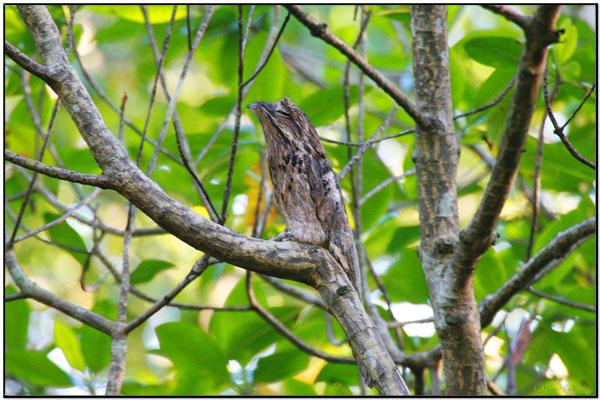
Common Potoo (Nyctibius griseus) by Daves BirdingPix

Common Potoo (Nyctibius griseus) by Daves BirdingPix

“For he will hide me in his shelter in the day of trouble; he will conceal me under the cover of his tent; he will lift me high upon a rock. (Psalms 27:5 ESV)

Considering yesterday’s blog, the song, “Hide Thou Me” came to mind. This song was used before, but it is so appropriate. Today’s Inspiration features the birds in the Frogmouth and Potoo families. You will see how the Lord has provided for them to HIDE through their behavior and coloration He has given them.

Saw this on one of our follower’s blog, Third Eye View:

He who can no longer pause to wonder and stand rapt in awe is as good as dead; his eyes are closed. ~Albert Einstein

*

And God saw every thing that he had made, and, behold, it was very good. And the evening and the morning were the sixth day. (Genesis 1:31 KJV)

We will not hide them from their children, shewing to the generation to come the praises of the LORD, and his strength, and his wonderful works that he hath done. (Psalms 78:4 KJV)

This slideshow requires JavaScript.

*

But the LORD has been my defense, And my God the rock of my refuge. (Psalms 94:22 NKJV)

“Hide Thou Me” – ©Rejoice! by the Hyssongs

Hide thou me
Ohh rock of ages
Hide thou me
Ohh rock of ages

Hide thou me
No other refuge
Can save but thee
Through this old world

*

Sunday Inspirations

Here I Am

Podargidae – Frogmouths Family

Nyctibiidae – Potoos Family

Gospel Message

*

Lizzy and the Penguin Catapult


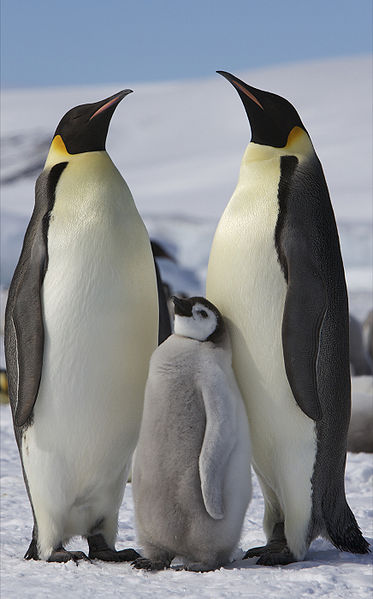
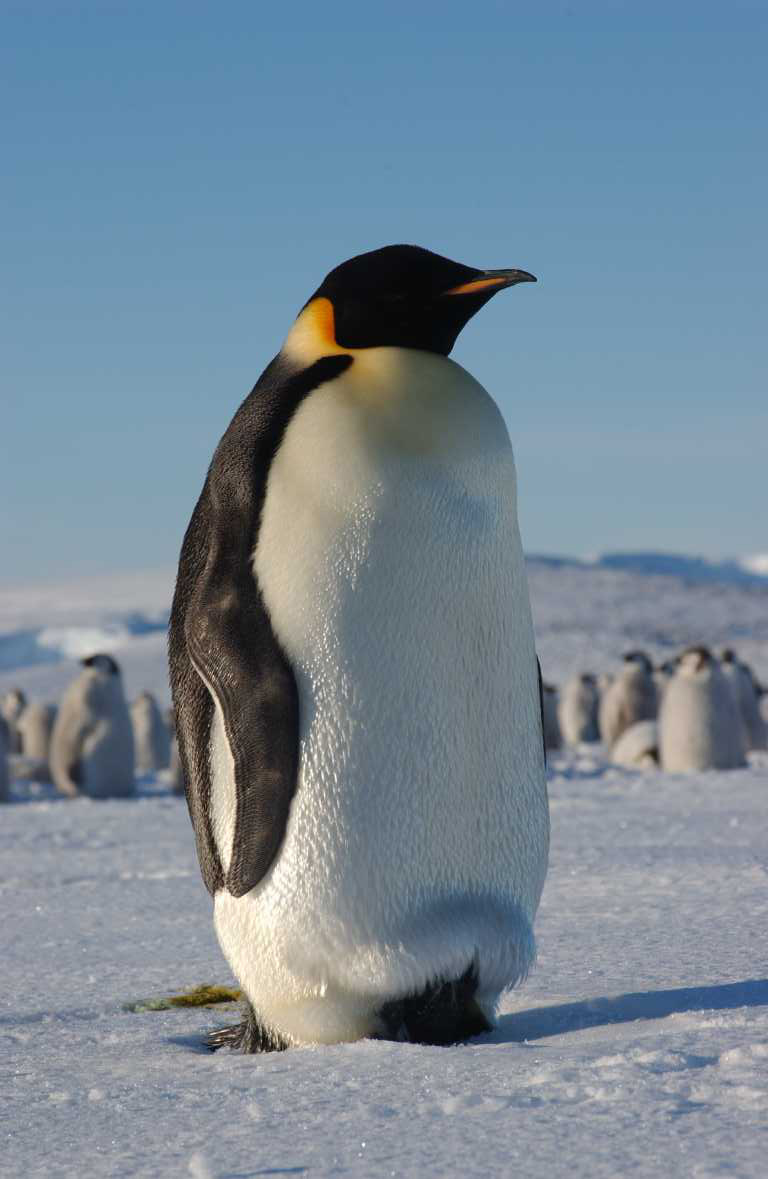
Emperor Penguin (Aptenodytes forsteri) ©WikiC

Emperor Penguin (Aptenodytes forsteri) ©WikiC

Lizzy and the Penguin Catapult ~ by Emma Foster

Once there was a penguin named Lizzy who lived with many other penguins in cold Antarctica.

As the penguins traveled through the winter, Lizzy watched with great interest all the eggs that lay on the penguin dad’s feet. Lizzy was too young to go fishing with all the mother penguins that year, so she was traveling with the father penguins to someplace slightly warmer.

Emperor with egg on feet ©WikiC

Emperor with egg on feet ©WikiC

Eventually all of the penguins came to an enormous, icy lake that was too large to go around. The penguin parents huddled together and decided to build a catapult out of some wood they brought with them to build their homes. The catapult would shoot penguins one at a time over the lake. The penguins decided this because the dad penguins could not cross the lake with eggs; and, if they all traveled across it at once, the ice might break. The penguins decided the eggs would be safe because there was a lot of snow on the other side of the lake which would cushion their landing.

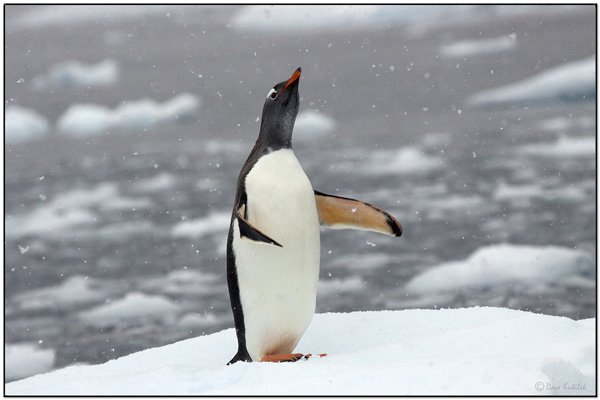
Gentoo Penguin - Paradise Bay

Gentoo Penguin – Paradise Bay

Lizzy helped build the catapult and it wasn’t long before it was finally completed.

The first penguin had to be launched by the catapult, but no penguin was willing to do it. Lizzy was a brave penguin and decided to go first.

The catapult was launched, and Lizzy flew through the air. She was actually flying!

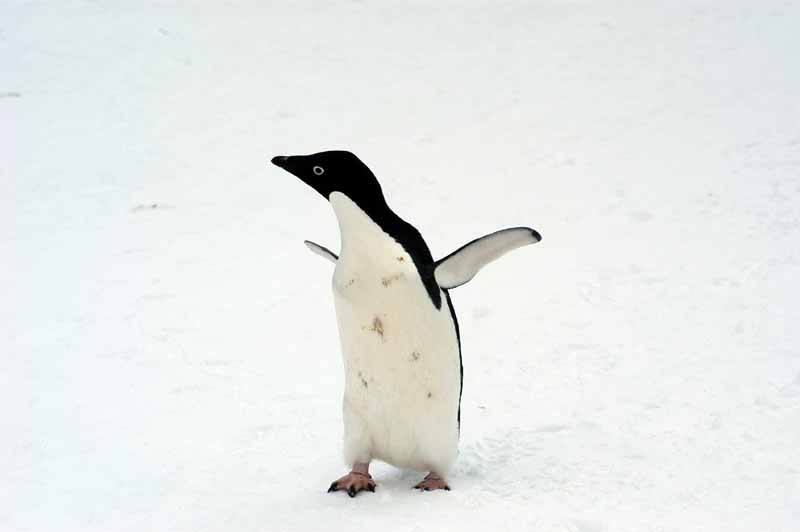
Adelie Penguin (Pygoscelis adeliae) by Bob-Nan

Adelie Penguin (Pygoscelis adeliae) by Bob-Nan

Lizzy landed softly and safely in the snow on the other side of the lake and waved to the other penguins. One by one, the rest of the penguins catapulted over the lake with the eggs. When they were all safely on the other side, they traveled to their new home.

The End


Lee’s Addition:

“Be anxious for nothing, but in everything by prayer and supplication, with thanksgiving, let your requests be made known to God; (Philippians 4:6 NKJV)

Thanks, Emma, for another delightful story. Lizzy is one brave little Penguin and also willing to help out.

I am sure the penguins, even though not humans, were thankful to their Creator for taking care of them.

“But now ask the beasts, and they will teach you; And the birds of the air, and they will tell you; Or speak to the earth, and it will teach you; And the fish of the sea will explain to you. Who among all these does not know That the hand of the LORD has done this, In whose hand is the life of every living thing, And the breath of all mankind? (Job 12:7-10 NKJV)

*

See More of Emma’s Stories

*

ABC’s Of The Gospel

*

Fly With An Open Bible

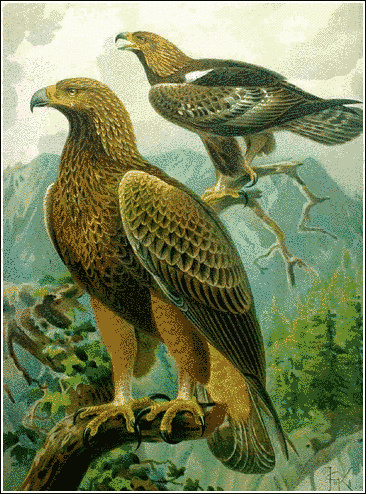
Golden Eagle (Aquila chrysaetos) Flying ©WikiC

Golden Eagle (Aquila chrysaetos) Flying ©WikiC

Fly With An Open Bible by Golden Eagle

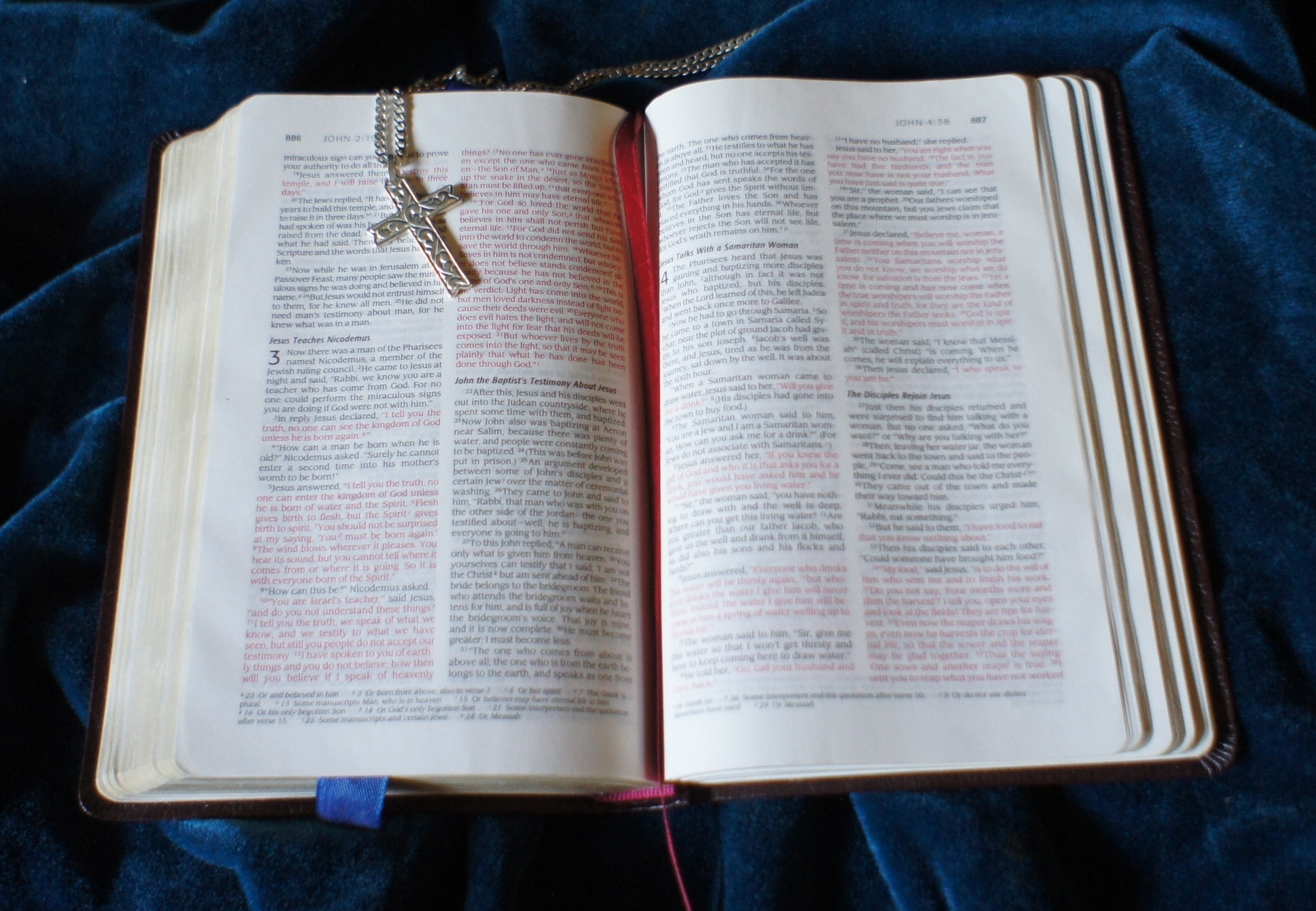
Boys and girls of all ages this is GOLDEN EAGLE circling in for a landing on Golden Eagle ©PDthis beautiful world that Jesus Christ created. To learn anything, to understand anything, we must have an open Bible! The other day, I heard of a 24 year-old lady that had never read the Word of God. She had no idea that the rainbow had any meaning whatsoever. Do you know the meaning behind the rainbow?  Get your Bible out and open it to Genesis chapter 9. There you will find the meaning to the rainbow.

You humans should thank God that you can read and appreciate beauty. Although I write these things once in a while, you do know that birds cannot really write and read. However, God created you to do those things and so much more.

“Blessed (happy) is the man…his delight is in the law of the Lord; and in his law doth he meditate day and night. And he shall be like a tree planted by the rivers of water. that bringeth forth his fruit in his season; his leaf also shall not wither; and whatsoever he doeth shall prosper” Psalm 1:1-3

The Word of God will bring you true success. It is no accident that you are presently reading this article. I have chosen to write this and you have chosen to read it. However, even though we both have a free will and can do what we want to do, Jesus Christ is in control of every single thing that happens in the entire Universe. He is in control of everything that you and I do, say, and think! Why even a sparrow doesn’t fall out of a tree without the Heavenly Father.

The Key to True Knowledge

The Key to True Knowledge

The question for you to answer is this: ARE YOU SAVED? You are either saved or lost. This has nothing to do with are you good or bad because the Bible says that “all have sinned, and come short of the glory of God.” (Romans 3:23) You’re made in the “image of God” and you will live forever somewhere according to the Bible. You can go to Heaven if you trust Jesus Christ as your personal Saviour. When Jesus died on the cross, He shed His blood and paid for your sins as your substitute. He stood in our place and took the punishment from God the Father so that you could be forgiven! You must personally accept Jesus by faith. You know, no one can eat your breakfast for you. You individually eat your breakfast and then your body makes use of the food to give you energy for the day. You must personally receive Jesus into your life!

“But as many as received him, to them gave he power to become the sons of God, even to them that believe on his name…” (John 1:12)

Golden Eagle has learned a few things as I have soared over this planet. You must study things with an open Bible. The Bible tells us where the first humans came from! You know that scientist have landed a washing machine size robot on a comet the other day. That thing has been flying around for 10 years and just arrived at its destination! That shows us how big this universe is. The comet is over 300 million miles away from Earth. The people who sent that robot to the comet are trying to find out the answer to the question: WHERE DID WE COME FROM. And that is a great question. But, they will never find the answer until they open their Bibles and begin to read the first few chapters in the book of Genesis. God created Adam on the sixth day of Creation week. He took the elements in the earth, the dust of the earth and “breathed into his nostrils the breath of life; and man became a living soul.” (Genesis 2:7)

When you study Science or History or God or whatever, you need to open your Bible and see what God has to say!

The Earth rotates around the sun. We should rotate around Jesus Christ, the Son of God. The sun gives light to the earth and Jesus is the Light of the world. Tonight, you will fall asleep and in the morning you will wake up. That is God’s way of trying to teach us that sleep is like death, but you wake up in the morning and that is like the resurrection day!

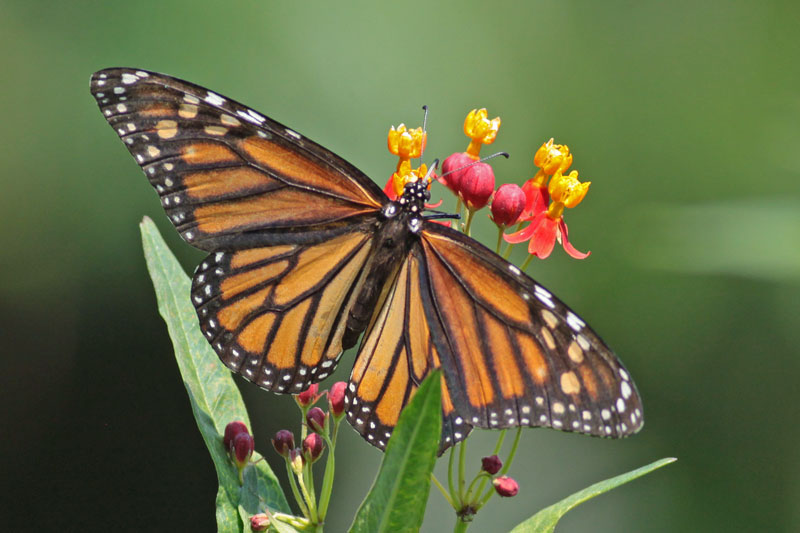
Monarch Butterfly (Danaus plexippus) by Margaret Sloan

Monarch Butterfly by Margaret Sloan

A worm goes into a cocoon and comes out a beautiful butterfly! Metamorphosis, a change teaches us that Jesus Christ will give us a new body in the future if we are saved! Humans sweat because of Adam’s sin in the Garden of Eden! The Earth is covered with water because of Noah’s flood. In fact, four-fifths of the Earth is covered with water if you count the oceans, the seas, the rivers, the streams, and the lakes!

Every snowflake is different, every blade of grass is different, every bird is different! And each one of you are unique and different. That is how God has made you! We could talk about this forever! In fact, God’s people in Heaven will talk about this and learn about God and His Universe forever. You will have a real body and be in a real Heaven with real GOLDEN STREETS!

“AND THE BUILDING OF THE WALL OF IT WAS OF JASPER: AND THE CITY WAS PURE GOLD, LIKE UNTO CLEAR GLASS…AND THE STREET OF THE CITY WAS PURE GOLD, AS IT WERE TRANSPARENT GLASS. (Revelation 21)

The question you need to ask yourself is this: will you be in Heaven with Jesus Christ in that day? And remember we are only one heartbeat away from eternity. Why not ask Jesus to save you this very moment? “For whosoever shall call upon the name of the LORD shall be saved.” (Romans 10:13)

Thanks for flying with me. And thanks for having an open Bible! Read some of God’s Word today! I would love to fly to the comet later today, but I know I will not be able to get beyond the atmosphere, so I might just head back to my roost for the night and gaze into the starry heavens. You never know what you might see! Have a great one…

*

Golden Eagle

Wordless Birds

*

Sunday Inspiration – Variety

The photos this week are from the Pin It (Pinterest) website. Thought sharing some of their great variety of bird photos would be enjoyable to watch. The ones selected do not even begin to show the photos they have in the various topics.

As mentioned in the latest article by Emma Foster, the Lord gives varying gifts, just as the Lord created the birds with such variety. May we use our varied talents to serve our Fantastic Lord and Creator.

“For through the grace given to me I say to everyone among you not to think more highly of himself than he ought to think; but to think so as to have sound judgment, as God has allotted to each a measure of faith. For just as we have many members in one body and all the members do not have the same function, so we, who are many, are one body in Christ, and individually members one of another. Since we have gifts that differ according to the grace given to us, each of us is to exercise them accordingly: if prophecy, according to the proportion of his faith; if service, in his serving; or he who teaches, in his teaching; or he who exhorts, in his exhortation; he who gives, with liberality; he who leads, with diligence; he who shows mercy, with cheerfulness.” (Romans 12:3-8 NASB)

This slideshow requires JavaScript.

“For who makes you differ from another? And what do you have that you did not receive? Now if you did indeed receive it, why do you boast as if you had not received it? (1 Corinthians 4:7 NKJV)

*

“The Love Of God” – ©The Hyssongs

*

Sunday Inspirations

Assurance: The Certainty of Salvation

*

Swallow-tailed and Palkachupa Cotinga

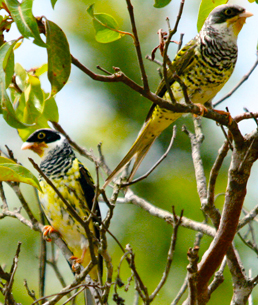
PAS-Coti Swallow-tailed Cotinga (Phibalura flavirostris)  ©WikiC

PAS-Coti Swallow-tailed Cotinga (Phibalura flavirostris)
©WikiC

While working on the latest I.O.C. Version 4.4 update (which is now complete), this bird caught my attention.

Wikipedia has this in their article about this neat bird: “The swallow-tailed cotinga (Phibalura flavirostris) is a species of passerine bird. As suggested by its common name, it has traditionally been considered a member of the cotinga family. Following the recent removal of several members from this family (now placed in Tityridae), the placement of this aberrant species is unclear. It is therefore considered incertae sedis by SACC.”

What this means that in a recent previous update, they took this bird out of the Cotinga family and placed it in an Uncertain Family holding place “Incertae Sedis” by itself. Now with this update, they put this one back in with the Cotingas, but have given it the “Phibalura” genus name. (Okay, so what is so interesting about that?)

Palkachupa Cotinga (Phibalura boliviana) ©©Benjamin-Skolnik_U

Palkachupa Cotinga (Phibalura boliviana) ©©Benjamin-Skolnik_U

Continuing Wikipedia: “Currently, it is monotypic within the genus Phibalura, but it has been suggested that the taxon boliviana should be considered a separate species, the Bolivian swallow-tailed cotinga or Palkachupa cotinga (P. boliviana). The nominate taxon (P. f. flavirostris) is found in Atlantic forest in south-eastern Brazil, eastern Paraguay and Argentina (Misiones only). The taxon boliviana, which only was rediscovered in 2000 (after 98 years without any records), is restricted to the vicinity of Apolo in Bolivia. Both populations are threatened by habitat loss.”

“Eighty percent of the Palkachupa Cotinga’s habitat has been destroyed by clearing and burning forest for firewood and pasture; unfortunately, this destruction is ongoing. Parts of the cotinga’s former range are now completely treeless. Nesting success in remaining habitat is low; predation by jays and severe weather are the biggest causes of breeding failure.” (American Bird Conservancy)

It appears that the sub-species of the Swallow-tailed, the now added Palkachupa disappeared from sight for over 98 years. I find that amazing, but considering where it lives, is understandable. That brings to mind some promises from these bird’s Creator.

1) He promised to provide for them. The Lord takes care of many things without man’s help.

Also, to every beast of the earth, to every bird of the air, and to everything that creeps on the earth, in which there is life, I have given every green herb for food”; and it was so. (Genesis 1:30 NKJV)

And I will send grass in your fields for your livestock, that you may eat and be filled.’ (Deuteronomy 11:15 NKJV)

They give drink to every beast of the field; The wild donkeys quench their thirst. By them the birds of the heavens have their home; They sing among the branches. He waters the hills from His upper chambers; The earth is satisfied with the fruit of Your works. (Psalms 104:11-13 NKJV)

Jesus Christ is the same yesterday, today, and forever. (Hebrews 13:8 NKJV)

2) We can learn from them – to trust their Creator who knows exactly where they are. We or the bird may be out of sight of man, but never from God. The Bible says the Lord will never leave us.

Who teaches us more than the beasts of the earth, And makes us wiser than the birds of heaven?’ (Job 35:11 NKJV)

Let your conversation be without covetousness; and be content with such things as ye have: for he hath said, I will never leave thee, nor forsake thee. (Hebrews 13:5 KJV)

“You are worthy, O Lord, To receive glory and honor and power; For You created all things, And by Your will they exist and were created.”(Revelation 4:11 NKJV)

*

Articles about the Swallow-tailed

Birds of the World

*


Fantastic Week-end

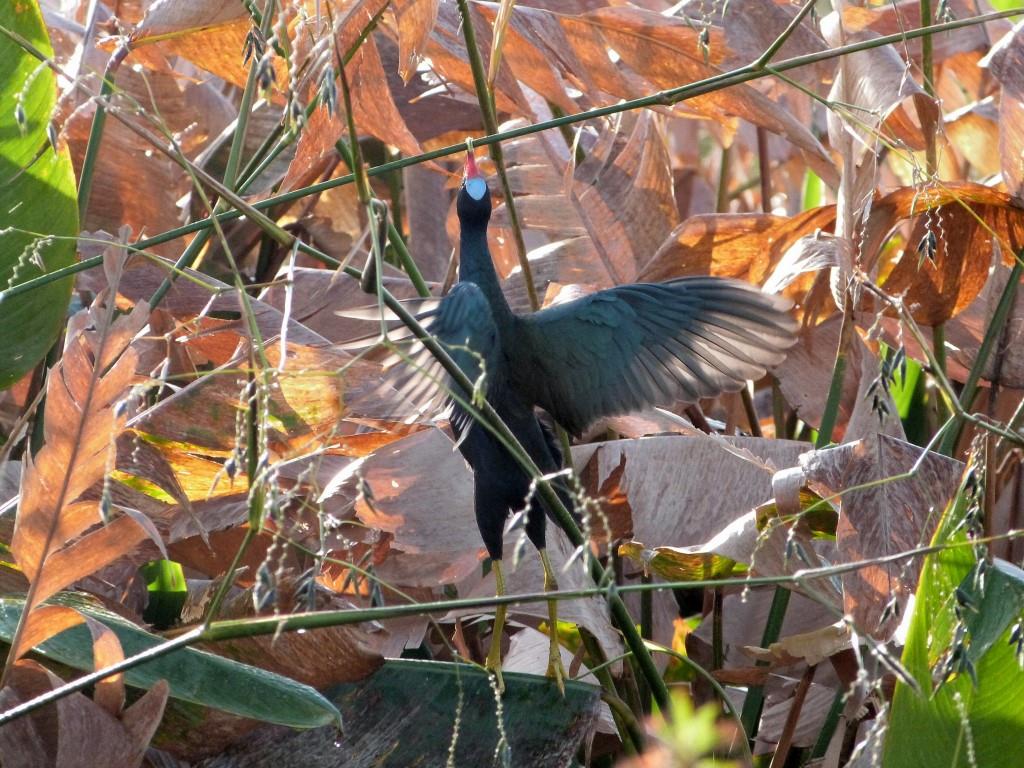
Purple Gallinule Reaching Circle B

Purple Gallinule Reaching Circle B

We greatly enjoyed this past week-end. Dr. James J. S. Johnson, from Institute For Creation Research, who writes for this blog, came to speak at our church. We had not met him personally and so this was a time of getting to know him.

Dan and I, Dr. Jim (my name for him) and Golden Eagle (Baron) went birdwatching on Saturday. We took him to our favorite birding spot here, Circle B Bar Reserve. We saw 31 species, several “life birds” for him and one “life bird” for me, an Orange-crowned Warbler.

The Birders at Circle B Bar Reserve

The Birders at Circle B Bar Reserve

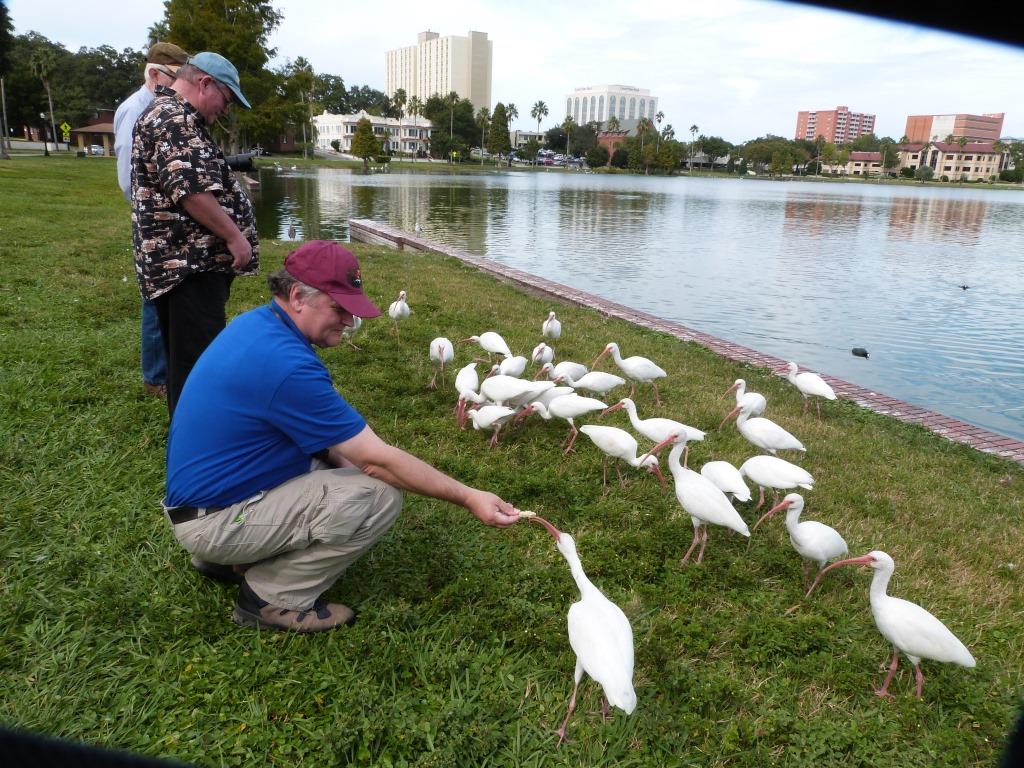
After we left there, we went to Lake Morton. I wanted two things to happen, but it didn’t. Was hoping to let them feed the Wood Stork over there and see a Wood Duck. Not to be. We saw one Wood Stork, but he must have already been fed. We did get to feed some of our other friends there. All total, we saw at least 19 species there. Also, the Lord prepared a great day for us. (Rained good part of Sunday, but Saturday was beautiful.)

Feeding White Ibises at Lake Morton

Dr Jim Feeding White Ibises at Lake Morton

While describing our trip later, I misused the word “boring” which got mistaken. What I meant was that compared other visits to those two places, the number of species were less than normal. Birdwatching adventures are never “boring.” How can they when you are out enjoying the Lord’s great creation? Amazing! Fabulous! Superb! Those are better words.

“But now ask the beasts, and they will teach you; And the birds of the air, and they will tell you; (Job 12:7 NKJV)

“You are worthy, O Lord, To receive glory and honor and power; For You created all things, And by Your will they exist and were created.” (Revelation 4:11 NKJV)

As Dr. James told us in his presentations, the Lord uses so much variety, provision, and design in each of His created beings, humans included. If we just slow down, God’s hand can clearly be seen. (my paraphrase) Just with the birds, the wing structure, specialized beaks, programmed travels, interconnection between bird and plant, and on and on. Oh, Praise the Lord!

Anhinga Lake Morton by Dan

Anhinga Lake Morton by Dan


I am including the list of birds seen at both places. Also, a short video of a Snowy Egret using his foot to stir up something to eat. Wonder how that habit came about? Could it be that the Lord programmed that in it because of promising to provide for them?

“Consider the ravens, for they neither sow nor reap, which have neither storehouse nor barn; and God feeds them. Of how much more value are you than the birds? (Luke 12:24 NKJV)

Also, Dr. Johnson’s talks showed slides with examples of these points. (From an excerpt)

Witnesses for God’s Truth – “This presentation reviews 5 different kinds of witnesses for God’s truth, each of which takes away excuses from anyone who pretends to have no witness of God and His glory:  (1) the physical creation, including our own physical bodies; (2) the uniqueness of humanity; (3) Scripture; (4) Christ’s incarnation; and (5) one more witness that we all are accountable for, and this one is quite scary!”

Lessons from the Zoo –  “Did you know that the animal kingdom, in all of its diversity, reveals God’s creative genius and glory in uncountable ways?  Why does God like and create variety in creation? How do the various animals living today, as well as other animals (like dinosaurs) which lived in earlier times, confirm the Bible’s account of creation – and refute Darwin’s evolutionary “natural selection” idea? This presentation provides a series of examples of big and little animals that display God’s handiwork in amazing ways. Mammals, reptiles, insects, spiders, fish, shellfish, jellyfish, and more!

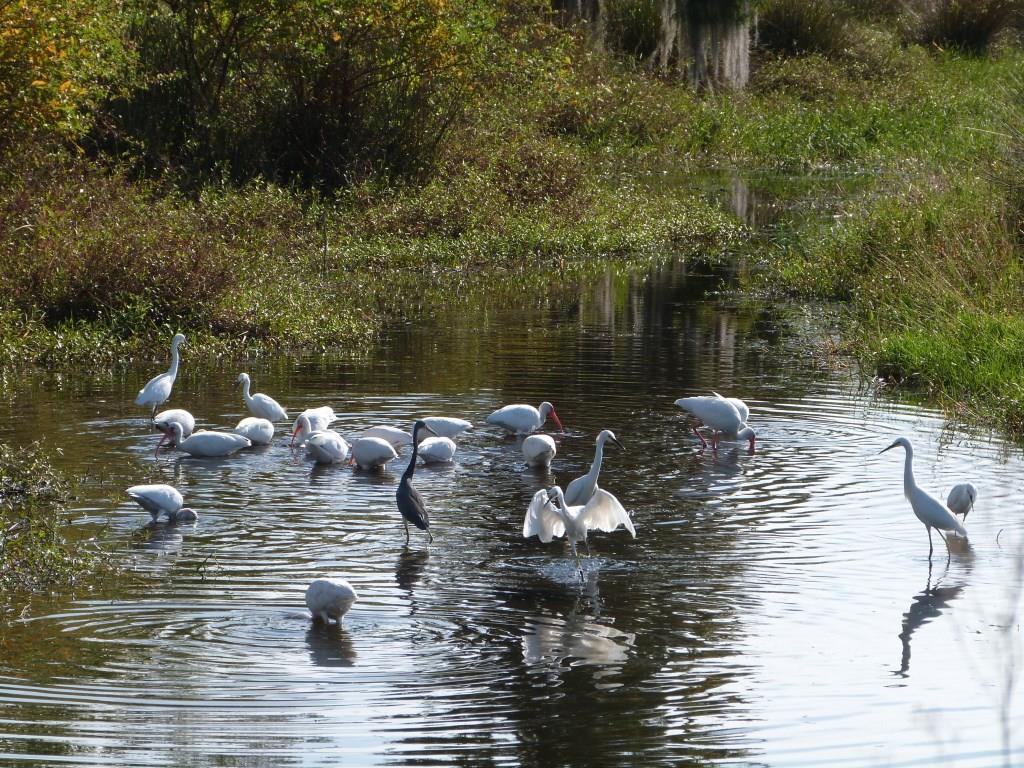
Tricolored-Snowy-Great Egret-White Ibis at Circle B

Tricolored-Snowy-Great Egret-White Ibis at Circle B

Circle B Bar Reserve, Polk, US-FL
Nov 8, 2014 8:00 AM – 10:00 AM
Us, Dr J and Baron – 31 species

Pied-billed Grebe
Double-crested Cormorant
Anhinga
Great Blue Heron
Great Egret
Snowy Egret
Little Blue Heron
Tricolored Heron
White Ibis
Glossy Ibis
Roseate Spoonbill  6
Black Vulture  50
Turkey Vulture  50
Osprey
Bald Eagle
Red-shouldered Hawk
Purple Gallinule
Common Gallinule
Stilt Sandpiper
Red-bellied Woodpecker
Pileated Woodpecker
Eastern Phoebe
Carolina Wren
Blue-gray Gnatcatcher
Gray Catbird
Orange-crowned Warbler
Palm Warbler
Yellow-rumped Warbler
Northern Cardinal
Red-winged Blackbird
Boat-tailed Grackle

Lake Morton, Polk, US-FL
Nov 8, 2014 10:30 AM – 11:15 AM
Us, Dr J. and Baron – 18 species (+1 other taxa)

Mute Swan
Black Swan
Black-necked Swan
Muscovy Duck (Established Feral)
Mallard (Domestic type)
Blue-winged Teal
Ring-necked Duck
Anhinga
Great Blue Heron
Great Egret
Snowy Egret
White Ibis
Common Gallinule
American Coot
Laughing Gull
Rock Pigeon (Feral Pigeon)
Blue Jay
Palm Warbler
Boat-tailed Grackle

*

*

Sunday Inspiration – Veteran’s Day

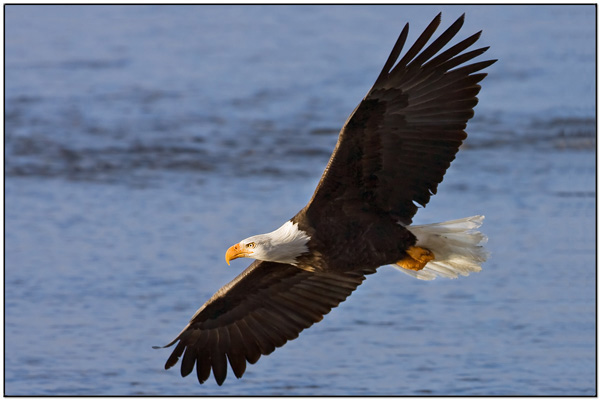
Bald Eagle flying by Dave's BirdingPix

Bald Eagle flying by Dave’s BirdingPix

Remember the days of old, consider the years of many generations: ask thy father, and he will shew thee; thy elders, and they will tell thee. (Deuteronomy 32:7 KJV)

For whatsoever things were written aforetime were written for our learning, that we through patience and comfort of the scriptures might have hope. (Romans 15:4 KJV)

Lord Bless all of you as we remember our the military this Veteran’s Day. Many have served and given their all, others are now serving or have served faithfully. We Honor you and Thank You for your service for our country. Other have served their country’s military also. We should remember them also and I am sure they have a similar day. Our’s just happens to be November 11.

The birds chosen this week have either a military item as part of their name or there has been an airplane named after that type of bird.

Happy Veteran Day! Lord Bless You.


This slideshow requires JavaScript.

“Military Service Medley” – Faith Baptist Orchestra 7-3-11

*

Sunday Inspiration

Military Aircraft of the United States with Bird or Bird-Like Names

Sharing The Gospel

*


Working On The New Update to I.O.C.

Sulawesi Hornbill (Penelopides exarhatus) LPZoo 3-8-12 by Lee

Sulawesi Hornbill (Penelopides exarhatus)LPZoo by Lee

They have come out with the latest Update and I am again working on updating the blog. This time they added only 13 new species, deleted 2, and made 3 changes to names. But, as lately, they threw another family up in the air to rearrange it. This time it was the Hornbill-Bucerotidae family. It was really reshuffled and they changed some of the genus around.

Here are the new additions:

  • Aztec Rail (Rallus tenuirostris) – Was Subspecies of King Rail
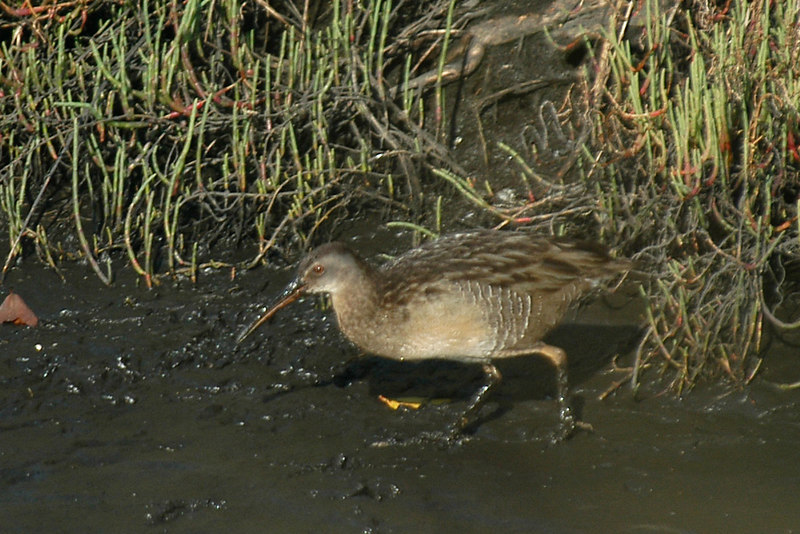
  • Mangrove Rail (Rallus longirostris) – The Old Clapper Rail
  • Clapper Rail (Rallus crepitans) – New Clapper Rail
  • Ridgway’s Rail (Rallus obsoletus) – Formerly California Clapper
  • Sooty Barbet (Caloramphus hayii)- Was Subspecies
  • Blue-eared Barbet (Megalaima duvaucelii) – Removed M. d. australis Subspecies
  • Palkachupa Cotinga (Phibalura boliviana) – Was Subspecies of Swallow-tailed Cotinga
  • Riparian Antbird (Cercomacra fuscicauda)- Was Subspecies
  • Bougainville Whistler (Pachycephala richardsi) – Was Subspecies
  • Black-eared Warbler (Basileuterus melanotis) – Was Subspecies
  • Tacarcuna Warbler (Basileuterus tacarcunae) – Was Subspecies
  • Yungas Warbler (Basileuterus punctipectus)- Was Subspecies
  • Roraiman Warbler (Myiothlypis roraimae)- Was Subspecies
  • Pale Baywing (Agelaioides fringillarius)- Was Subspecies

Deleted:

  • Norfolk Ground Dove
  • White-throated Whistler

Hard to find data yet on these because sites are being updated, just as this one is. Will update when all the 4.4 Version is complete.

Also: Sorry there has not been as many articles lately, but have been dealing with several health issues. The Bronchitis is almost over, now have stitches from skin cancer removal. Physical Therapy is helping. Praise the Lord, it could be a lot worse. It is just that everything came close together. Also, Praise the Lord for the way He created the human body.

I will praise You, for I am fearfully and wonderfully made; Marvelous are Your works, And that my soul knows very well. (Psalms 139:14 NKJV)

Birds of the World

Hornbill-Bucerotidae Family

*

Barn Swallows, a Nostalgic Reminder of Home

Barn Swallow (same)

Barn Swallow (same)

Barn Swallows, a Nostalgic Reminder of Home

by James J. S. Johnson

Whereas ye know not what shall be on the morrow. For what is your life? It is even a vapour, that appeareth for a little time, and then vanisheth away.  For that ye ought to say, If the Lord will, we shall live, and do this, or that.  (James 4:14-15).

Luzon Bleeding-heart by Dan

Orni-Theology

As daylight slid slowly into nighttime darkness, one warm summer evening in Sweden, I thought I recognized the sleek silhouettes of swallows, flitting and zooming here and there, like aerial fighter pilots, catching hapless insects in the air.  It was too dark, and they were too fast, to positively confirm them as Barn Swallows, but surely that’s what they were.  Little hatchlings, waiting hungrily in mud-nests nearby, likewise appreciated the aerial insect-grabbing of their caring parents.  The day would come, in time, when the hungry nestlings would do the same for their progeny.

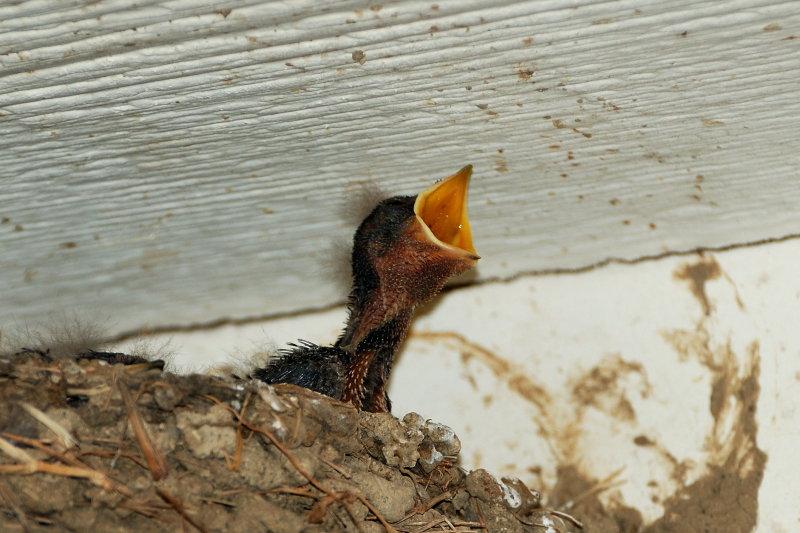
Barn Swallow (Hirundo rustica) baby by Neal Addy Gallery

Barn Swallow (Hirundo rustica) baby by Neal Addy Gallery

In Europe one of the common summer migrants is the Swallow (Hirunda rustica), known in America as the Barn Swallow, due to their habit of nesting colonies near the roofs of barns, stables, and other wooden buildings.  Barn swallows are easily recognized by their long tail streamers, narrow and pointed wings, iridescent blue-black upper feather coat, contrasting with a white underside sporting a rusty orange forehead and chin-throat bib.  (The sexes are similar except that the female has shorter tail streamers.)   Like other swallows, the barn swallow is mostly insectivorous, catching bugs on the fly, as it darts and arcs with graceful flight patterns, powered by deep wing-beats.  [See Jürgen Nicolai, Detlef  Singer, & Konrad Wothe, Birds of Britain and Europe (Harper Collins, AD1994; translated by Ian Dawson), page 170.]

One of the most nostalgic folk songs of Scandinavia (especially Sweden) is Hälsa dem därhemma  (“Greet those at Home” – audio and bilingual lyrics at http://treasures2.weebly.com/haumllsa-dem-daumlrhemma.html ), a song about a young sailor aboard a ship, as night falls, homesick for his family and homeland, who sees a flight of migratory swallows.  In song the homesick sailor asks the little swallows (“lilla svala”) to give greetings to “those at home”, including his father, mother, and little brother – and even the green fields that the sailor left behind.  To those of us who have heard it sung, many times and in many places, the emotional recall of days (and homes) gone by pull at our hearts and memories, as we too can think of loved ones we have left behind, one way or another, as we have traveled our life journeys in this busy world.

If swallows could transmit greetings, from us to loved ones now out of reach, what greetings would that be?  The New Testament epistle of James reminds us that we have no control on the day that unfolds us, much less on the many tomorrows that approach our horizons.  But the future is not “up for grabs” – it belongs to God.  It is good to know that our great God sovereignly rules the world — and us therein.

Whereas ye know not what shall be on the morrow. For what is your life? It is even a vapour, that appeareth for a little time, and then vanisheth away.  For that ye ought to say, If the Lord will, we shall live, and do this, or that.  (James 4:14-15).

Barn Swallow (Hirundo rustica) baby by Neal Addy Gallery

Barn Swallow (Hirundo rustica) baby by Neal Addy Gallery

Life has many changes.  Homes come and go.  People come and go  —  even loved ones.

But God is always there and He changes not (Malachi 3:6).  And He prepares a place for us, as a permanent and perfect Home, for that day appointed for our Earth-leaving, which is the day of our true Home-going/Home-coming.  And yet, we are already Home, now, if we belong to the Lord Jesus Christ, because God Himself is our permanent home.  What a wonderful privilege it is to be created by Him, redeemed by Him, and to belong to Him (and to His loved ones) now and forever.

It’s okay to be homesick,  —  and to appreciate the migratory swallows that go “home” each year,  — but our true home awaits us, in Christ, and there are many mansions there (John 14:2-3).  Heaven is a prepared place for a prepared people.  ><> JJSJ

*

Orni-Theology

Hirundinidae – Swallows, Martins

Birds of the Bible – Swallows

Gospel Message

*

Sunday Inspiration – Broadbills


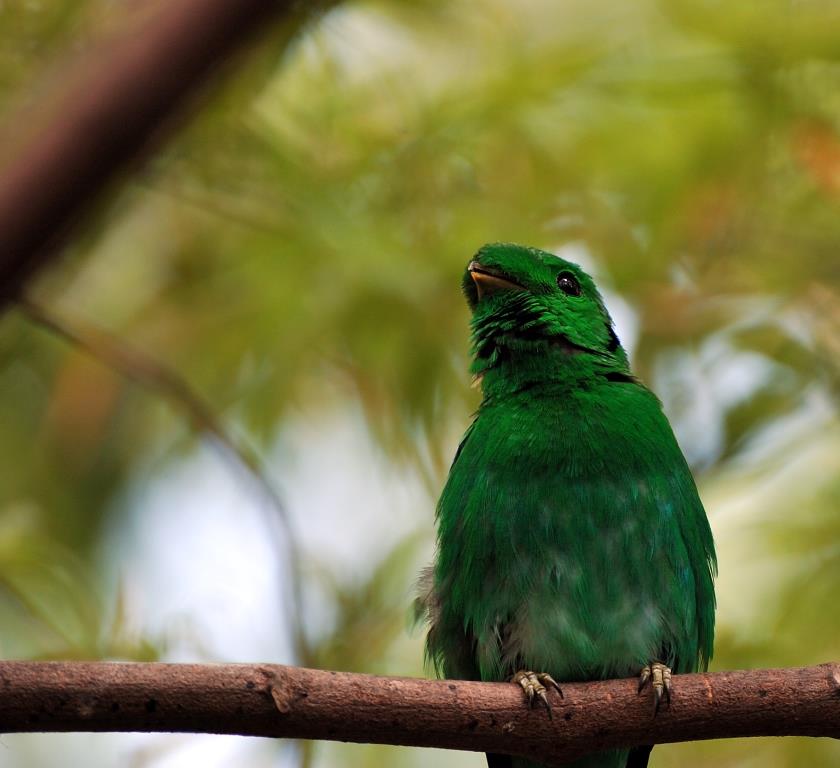
Green Broadbill by Dan at Zoo Miami

Green Broadbill by Dan at Zoo Miami

“He brought me out into a broad place; he rescued me, because he delighted in me. (Psalms 18:19 ESV)

“I will rejoice and be glad in your steadfast love, because you have seen my affliction; you have known the distress of my soul, and you have not delivered me into the hand of the enemy; you have set my feet in a broad place. (Psalms 31:7-8 ESV)

Broadbills are one of my favorite birds. To me, they are adorable. So far, we have only seen the Green Broadbill and the Long-tailed Broadbill. Both have been at zoos.

Notice their eyes. They always look so alert and expressive.

This slideshow requires JavaScript.

“Jesus Loves Me” by Bonnie Standifer

This piece was written and played by Bonnie Standifer. Played at our Orchestra Concert in March of 2013 at Faith Baptist Church. You have never heard it played this way before. Bonnie is a very gifted arranger and pianist. (I’ve used her song before, but it is so fantastic.)

*

Sunday Inspirations

Formed By Him – Broadbills

Eurylaimidae – Broadbills

Broadbill – Wikipedia

Gideon

*

Ian’s Bird of the Week – Griffon Vulture

Boumort National Reserve

Boumort National Reserve

The first photo shows part of Boumort National Reserve in the foothills of the Pyrenees in Catalonia about 40km southwest of Andorra. A reserve since 1991, It has an area of 13,000 hectares and is of special importance as one of the only places in Europe where all four European species of vultures breed. Three occur naturally, while the fourth, the Eurasian Black or Cinereous Vulture has been reintroduced, after becoming extinct in the Pyrenees in recent decades. I made arrangements to visit it through Steve West of Birding in Spain, including getting the necessary permit to photograph these birds, accommodation and transport.

As part of the conservation effort, the vultures are fed three times a week and I was taken to the feeding site by two rangers who had collected carcasses and meat off-cuts from farmers in the vicinity. The site is equipped with a spacious and comfortable hide, complete with toilet, and I was left there alone for the day after they had spread out the meat and carcasses in front of the hide. When we arrived there were already between one and two hundred vultures, almost all Griffons, soaring high above. I had been briefed beforehand that the first arrivals would be Griffons, with Eurasian Blacks arriving later in the morning when the crowds thinned, while the iconic Lammergeier could be expected, probably, in small numbers in the middle of the afternoon. The fourth species, the Egyptian Vulture is a summer visitor and had already departed for Africa.

Griffon Vulture (Gyps fulvus) by Ian

Sure enough, as soon as the rangers left, large numbers of Griffons glided in and squabbled noisily over the food. Griffons feed mainly on muscles and viscera and attacked the carcasses and pieces of meat with great gusto. The bird in the second photo showing its skill at balancing on a rock on one foot and waving the other is an adult, recognisable by its white ruff, horn-coloured bill and pale wing coverts. The one in the third photo is a juvenile, with grey bill, coffee-coloured ruff and darker wings. Juveniles generally had a covering of short plumage on the head and neck, while the adults often had relatively bare necks.

The breeding range of the Griffon Vulture extends from Portugal in the west to northeastern India and southwestern Kazakhstan in the east. Spain is its main stronghold in the west with about 8,000 pairs and the species is not considered under threat.

Griffon Vulture (Gyps fulvus) by Ian

These birds are huge and it was wonderful to observe them up close. The black bird in the fourth photo sneaking a mouthful from under the watchful eye of a Griffon is a Common Raven. This is the largest passerine in the world, with a length of up to 67cm/26in and wingspan of up to 130cm/51in, larger than a Common Buzzard, but completely dwarfed by the vulture. Griffons are up to 110cm/43in in length, with a wingspan of up to 280cm/110in and weighting up to 11kg/24lbs.

Griffon Vulture (Gyps fulvus) by Ian

In the air, they glide effortlessly and powerfully and the enormous wings make the body appear quite small by comparison. They come into land looking like parachutists under square canopies but with the ponderous, unwavering stability of a large aircraft like a B747 or an A380. Look how elegantly and precisely the toes are arranged with all the poise of an Olympic diver, fifth photo.

Griffon Vulture (Gyps fulvus) by Ian

It really was an extraordinary experience watching the spectacle of these amazing birds, even if their table manners left much to be desired. The large amount of food disappeared at a great rate and the crowds started to disperse, leaving the scene, one hoped, for the later, rarer and more picky species. To be continued…

Greetings
Ian


Lee’s Addition:

Another neat adventure for Ian. Not sure I would want to be left all day by myself. Then again, Ian, is quite an adventurous birdwatcher and photographer. Patience is something he definitely has.

Thanks again, Ian, for sharing your adventure. I have a feeling you will soon tell us about some of those other Vultures that came to feed.

“There is a path which no fowl knoweth, and which the vulture’s eye hath not seen: (Job 28:7 KJV)

The Griffon Vulture is a Bird of the Bible as Vultures are mentioned. One version of the Bible lists a Griffon.

“Of birds these are they which you must not eat, and which are to be avoided by you: The eagle, and the griffon, and the osprey.” (Leviticus 11:13 DRB)

*

*