HUMMING BIRD

Firey-throated and Volcano Hummingbird ©Raymond Barlow

HUMMING BIRD

The humming bird flits it’s

wings, poor humming bird

can’t even sing, it flits to

flowers here and there, so

fast it’s flitting everywhere.

~

They are so tiny, so sublime,

you hardly see them there so

fine. I love to see them tweet

the flowers, I could watch

the humming bird for hours.

Jeanie Boyette 10/22/12

Coppery-headed Emerald ©Raymond Barlow

Coppery-headed Emerald ©Raymond Barlow

The grass withereth, the flower fadeth: but the word of our God shall stand for ever. (Isaiah 40:8 KJV)

This poem was written by Jeanie Boyette several years ago. She recently joined our church and found out she likes to write poetry. When I asked if she had ever written about birds, this is the one she showed me. So, in the future maybe we can get her to write some more about our beautifully created avian wonders.

*

Guest Authors

The Amazing Butterfly

*

Sunday Inspiration – Sylviid Babblers

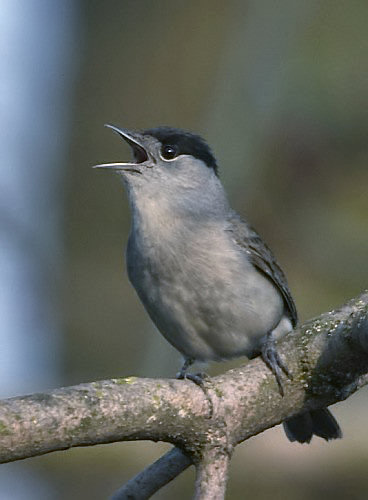
Eurasian Blackcap (Sylvia atricapilla) ©WikiC

Eurasian Blackcap (Sylvia atricapilla) ©WikiC

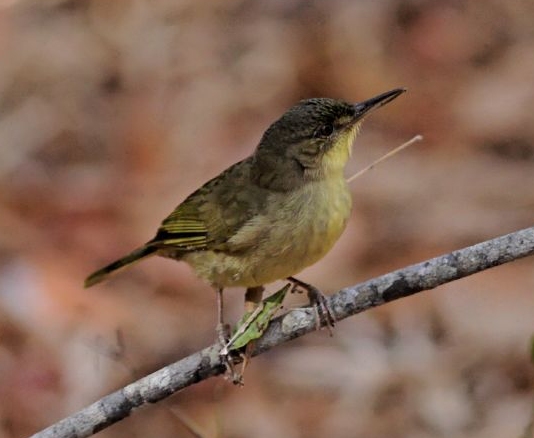
Here is our next avian group taxonomically, the Sylviidae – Sylvid Babblers Family. The Lord created these birds with a song to sing and some that are very colorful. Actually there are very few Babblers in the family. There are Blackcaps, various Warblers, Whitethroats, Fulvettas, Parrotbills plus a Myzornis and a Catbird.

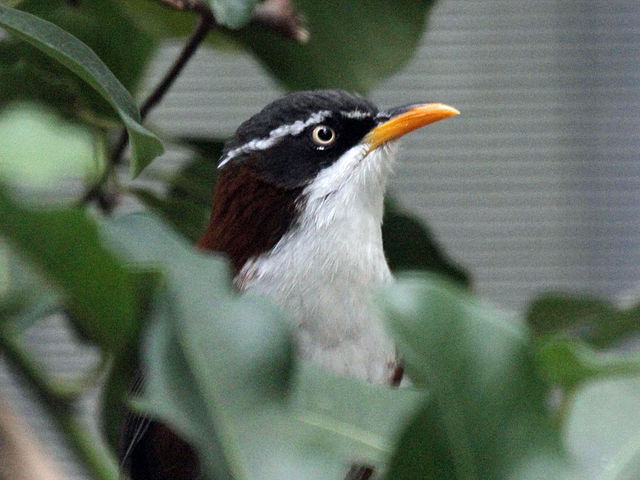
Fire-tailed Myzornis (Myzornis pyrrhoura) ©WikiC

Fire-tailed Myzornis (Myzornis pyrrhoura) ©WikiC

Sylviidae is a family of passerine birds that was part of an assemblage known as the Old World warblers. The family was formerly a wastebin taxon with over 400 species of bird in over 70 genera. The family was poorly defined with many characteristics shared with other families. Advances in classification, particularly helped with molecular data, have led to the splitting out of several new families from within this group. Today the smaller family Sylviidae includes the typical warblers in the genus Sylvia, the parrotbills of Asia (formerly a separate family Paradoxornithidae), a number of babblers formerly placed within the family Timaliidae (which is itself currently being split) and the wrentit, an unusual North American bird that has been a longstanding taxonomic mystery.

Hume's Whitethroat (Sylvia althaea) ©WikiC

Hume’s Whitethroat (Sylvia althaea) ©WikiC

There is now evidence that these Sylvia “warblers” are more closely related to babblers [Timaliidae], and thus these birds are better referred to as Sylvia babblers, or just sylvids.

Vinous-throated Parrotbill (Sinosuthora webbiana) ©WikiC

Vinous-throated Parrotbill (Sinosuthora webbiana) ©WikiC

Sylviids are small to medium-sized birds. The bill is generally thin and pointed with bristles at the base. Sylviids have a slender shape and an inconspicuous and mostly plain plumage. The wings have ten primaries, which are rounded and short in non-migratory species. (Wikipedia)

For thus says the LORD, Who created the heavens, Who is God, Who formed the earth and made it, Who has established it, Who did not create it in vain, Who formed it to be inhabited: “I am the LORD, and there is no other. (Isaiah 45:18 NKJV)

This slideshow requires JavaScript.

Now if God so clothes the grass of the field, which today is, and tomorrow is thrown into the oven, will He not much more clothe you, O you of little faith? (Matthew 6:30 NKJV)

“I Stand Amazed” ~ Faith Baptist Choir

*

More Sunday Inspirations 

Sylviidae – Sylviid Babblers

Sylviidae – Wikipedia

Parrotbill – Wikipedia

Babbler For Who?

*

Are You Missing Something?

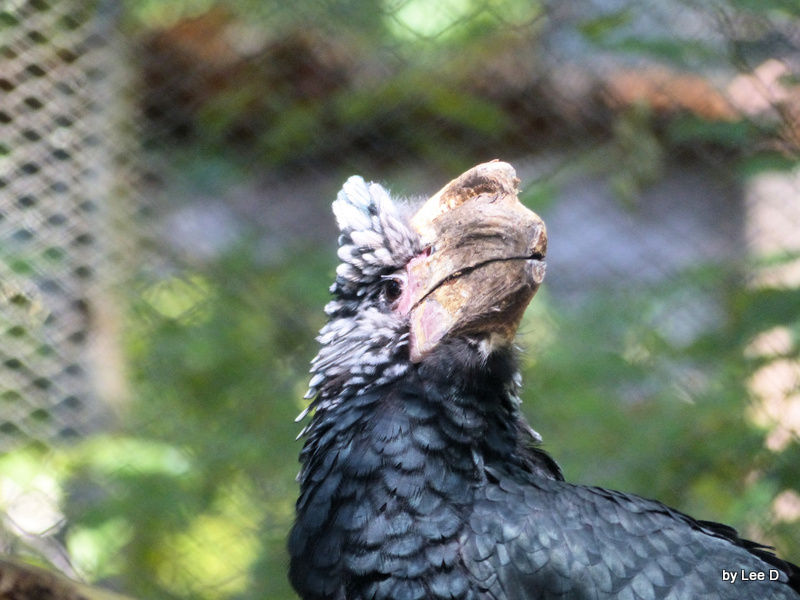
Silvery-cheeked Hornbill (Bycanistes brevis) Parrot Mtn

Silvery-cheeked Hornbill (Bycanistes brevis) Parrot Mtn

Wait on the LORD, And keep His way, And He shall exalt you to inherit the land; When the wicked are cut off, you shall see it. (Psalms 37:34 NKJV)

While at the Parrot Mountain last week, we saw this Silvery-cheeked Hornbill (Bycanistes brevis). As one of my friend said, after seeing these photos, “that is an ugly bird.” Well, almost, but is beauty in the eye of the beholder? I am sure that from the eyes of another Silvery-cheeked Hornbill, it may not be.

Silvery-cheeked Hornbill (Bycanistes brevis) Parrot Mtn

Silvery-cheeked Hornbill (Bycanistes brevis) Parrot Mtn

As the sign says,:

  • The Silvery-cheeked Hornbill can grow up to two and half feet long and weigh two and three quarter pounds.
  • Have an average life span of 50 years.
  • Silvery-cheeked Hornbills eat by plucking a piece of fruit and tipping its head back to swallow it whole. They will eat berries, figs, palmnuts, as well as a variety of insects.
  • The Hornbill is one of the few birds that have eyelashes to shield them from sun and dust.
Silvery-cheeked Hornbill (Bycanistes brevis) Parrot Mtn by Lee

Silvery-cheeked Hornbill (Bycanistes brevis) Parrot Mtn by Lee

Also the Silvery-cheeked Hornbill are residents of the tall evergreen forest of east Africa from Ethiopia to South Africa.

Well, maybe this bird is a little ugly:

Silvery-cheeked Hornbill (Bycanistes brevis) Parrot Mtn

Silvery-cheeked Hornbill (Bycanistes brevis) Parrot Mtn

Yet, in the Lord’s sight, this bird was created special and most likely fits right in with where it lives and what it does. What I haven’t shown you yet is that it is missing the tip of its beak. Most likely, that is why it is in captivity because it may not be able to obtain food in the wild.

Missing the tip of its beak

Missing the tip of its beak

Silvery-cheeked Hornbill with missing tip of beak.

Silvery-cheeked Hornbill with missing tip of beak.

I was surprised by how many verses that mention the words “cut off.” There are 200 verses in the NKJV. Even the verse where Peter cut off the ear of the servant, but Jesus healed him by putting back on. Only the Creator could have done that. Many mention enemies or sinners being cut off. Also, not being cut off if you are righteous and one of His saints.

For the LORD loves justice, And does not forsake His saints; They are preserved forever, But the descendants of the wicked shall be cut off. The righteous shall inherit the land, And dwell in it forever. The mouth of the righteous speaks wisdom, And his tongue talks of justice. The law of his God is in his heart; None of his steps shall slide. The wicked watches the righteous, And seeks to slay him. The LORD will not leave him in his hand, Nor condemn him when he is judged. Wait on the LORD, And keep His way, And He shall exalt you to inherit the land; When the wicked are cut off, you shall see it. (Psalms 37:28-34 NKJV)

Missing heaven and not spending eternity with the Lord Jesus Christ would be a terrible tragedy. I trust you will not be cut off with the wicked and that you know the Lord as your personal Savior. Accepting the Lord Jesus was the best decision I ever made in my life.

The Gospel Message and Gospel Presentation both explain how to not be cut off or missing out on eternity in heaven.

*

*

Peaceful Stream

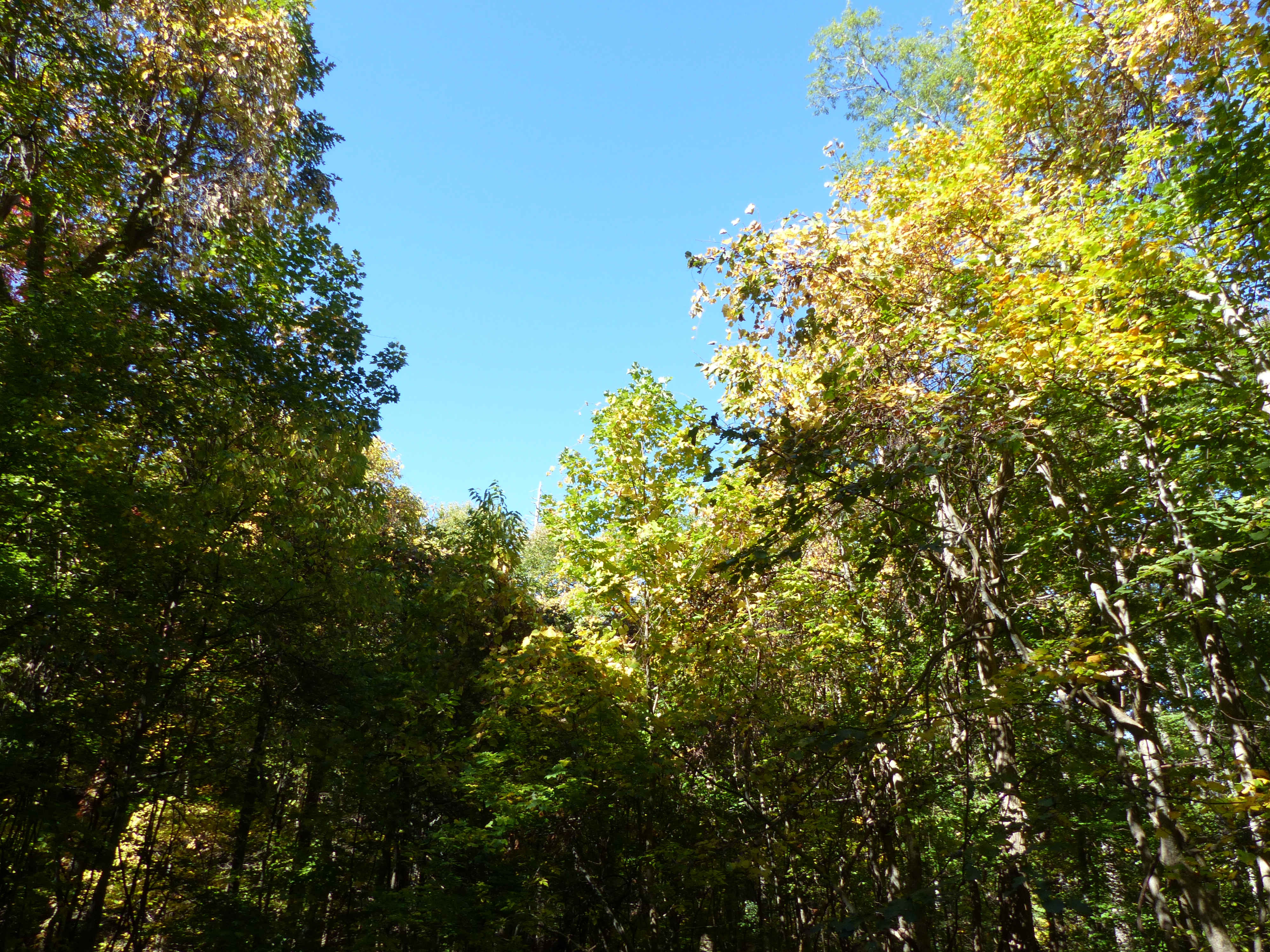
Trees along the Roaring Fork Drive

Trees along the Roaring Fork Drive

The trees have not turned that much yet, but the two videos below are just relaxing to watch. In about two weeks or so the leaves should really be at prime.

He brought streams also out of the rock, and caused waters to run down like rivers. (Psalms 78:16 KJV)

But let judgment run down as waters, and righteousness as a mighty stream. (Amos 5:24 KJV)

Now no chastening seems to be joyful for the present, but painful; nevertheless, afterward it yields the peaceable fruit of righteousness to those who have been trained by it. (Hebrews 12:11 NKJV)

*

Sunday Inspiration – Laughingthrush Leiothrichidae Family

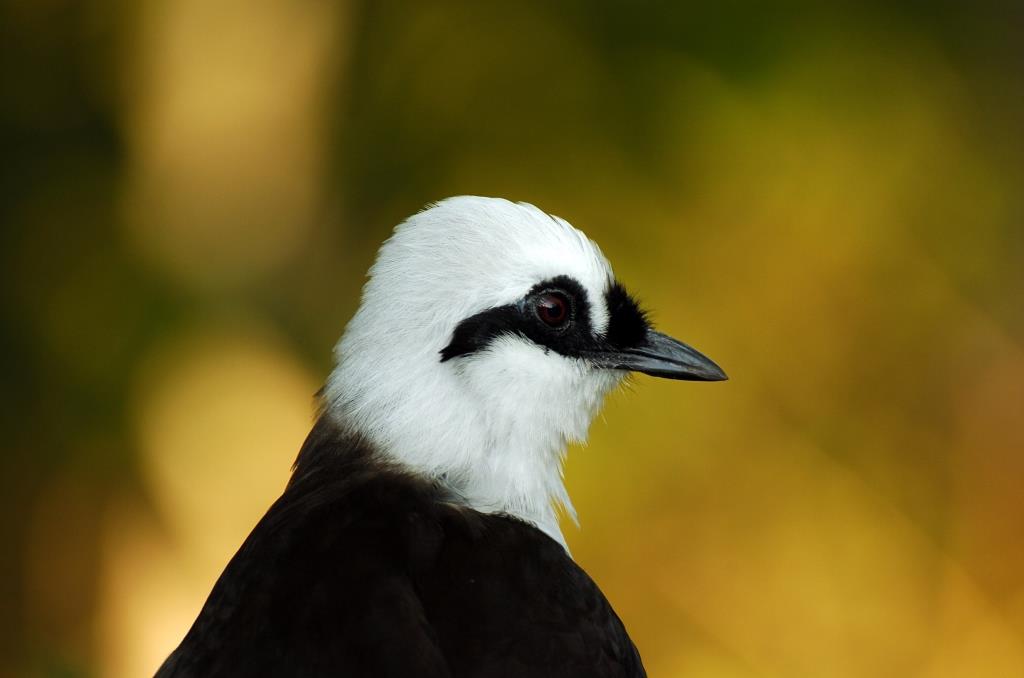
Sumatran Laughingthrush (Garrulax bicolor) by Dan at Wing of Asia ZM

Sumatran Laughingthrush (Garrulax bicolor) by Dan at Wing of Asia ZM

A merry heart does good, like medicine, But a broken spirit dries the bones. (Proverbs 17:22 NKJV)

Every since we saw Laughingthrushes for the first time at Zoo Miami’s Wing of Asia aviary, I fell in love with these birds. The photo above is the one I like to call “Joe Cool.” Their “sunglasses” makes them look rather “Cool” don’t you think? They are fun to watch and most of them like to hop around instead of walking.

Joe Cool

(Black and White) Sumatran Laughingthrush (Garrulax bicolor) by Lee “Joe Cool”

The Laughingthrush Family, called Leiothrichidae, has 133 species and is our next passerine family. Actually there was a Sunday Inspiration about them previously. Sunday Inspiration – Laughingthrush

The Laughingthrushes are the genus Garrulax of the large Old World babbler family of passerine birds. They occur in tropical Asia, with the greatest number of species occurring in the Himalaya and southern China.
These are rangy, medium-sized, floppy-tailed landbirds with soft fluffy plumage. These birds have strong legs and are quite terrestrial. This group is not strongly migratory, and most species have short rounded wings, and a weak flight.

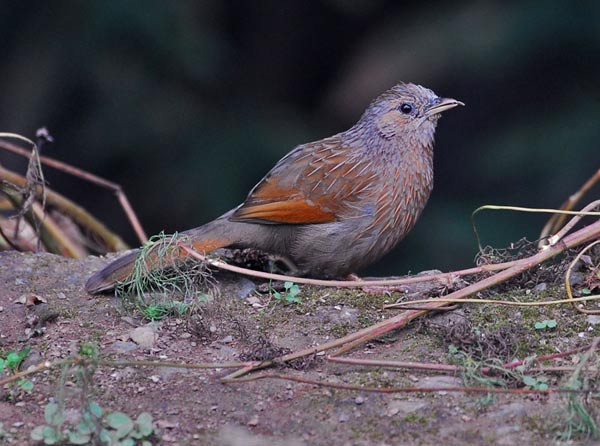
Streaked Laughingthrush (Garrulax lineatus) by Nikhil Devasar

Streaked Laughingthrush (Garrulax lineatus) by Nikhil Devasar

A few, like the Streaked Laughingthrush occur in fairly open habitats, but most are jungle species, difficult to observe in the dense vegetation they prefer.

Like other babblers, these are noisy birds, and the characteristic laughing calls are often the best indication that these birds are present. As with other babbler species, they frequently occur in groups of up to a dozen, and the rainforest species like the Ashy-headed Laughingthrush often occur in the mixed feeding flocks typical of tropical Asian jungle. (Wikipedia)

Red-tailed Laughingthrush at Wings of Asia by Lee

Red-tailed Laughingthrush (Trochalopteron milnei) by Lee

Then our mouth was filled with laughter, And our tongue with singing. Then they said among the nations, “The LORD has done great things for them.” The LORD has done great things for us, And we are glad. Bring back our captivity, O LORD, As the streams in the South. Those who sow in tears Shall reap in joy. He who continually goes forth weeping, Bearing seed for sowing, Shall doubtless come again with rejoicing, Bringing his sheaves with him. (Psalms 126:2-6 NKJV)

This slideshow requires JavaScript.

“Ten Thousand Joys” ~ Choir – Lisa Brock – Jessie Padgett (Faith Baptist)

*

More Sunday Inspirations

Laughingthrush – Leiothrichidae Family

Who Paints The Leaves?

*

Sunday Inspiration – Fulvettas, Ground Babblers

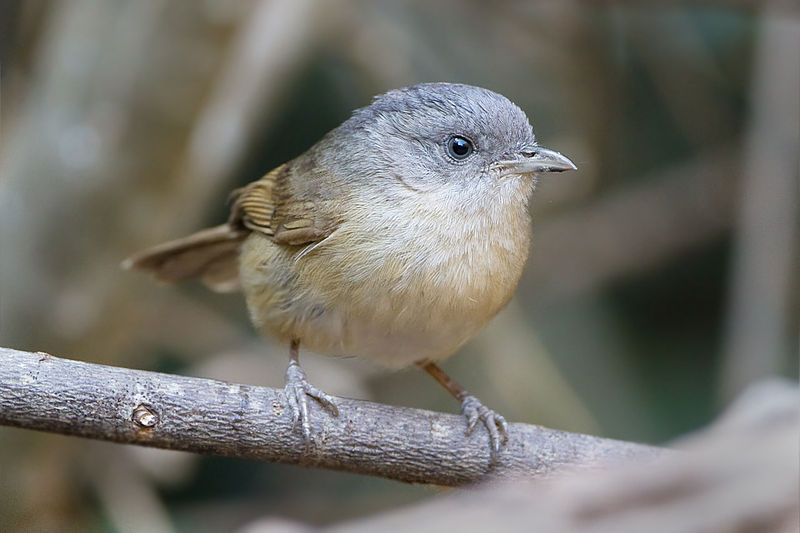
Brown-cheeked Fulvetta (Alcippe poioicephala) ©WikiC

Brown-cheeked Fulvetta (Alcippe poioicephala) ©WikiC

He loves righteousness and justice; The earth is full of the goodness of the LORD. (Psalms 33:5 NKJV)

The Pellorneida is another neatly created family that has 70 members and are a family of mostly Old World passerine birds. They are rather diverse in size and coloration, but are characterised by soft fluffy plumage. These are birds of tropical areas, with the greatest variety in Southeast Asia and the Indian subcontinent. The entire family was previously included in the Timaliidae.

Morphological diversity is rather high; most species resemble “warblers”, jays or thrushes.

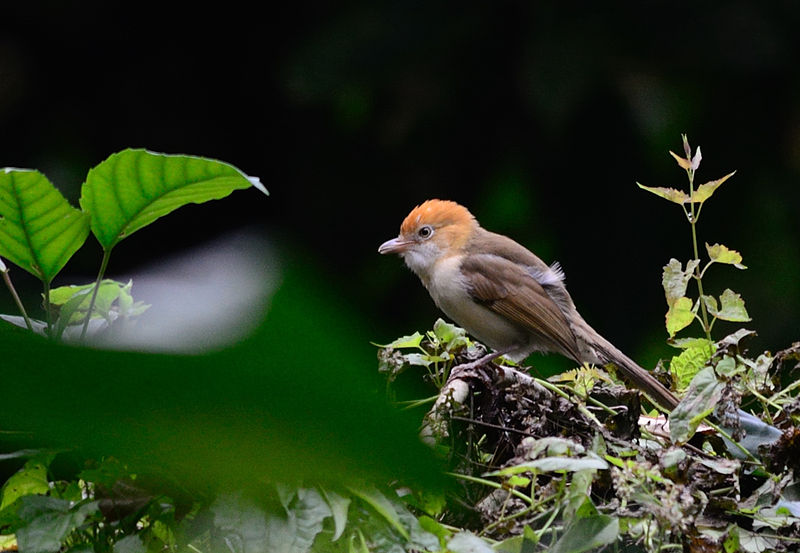
White-hooded Babbler (Gampsorhynchus rufulus) ©WikiC

White-hooded Babbler (Gampsorhynchus rufulus) ©WikiC

They are small to medium-sized birds. They have strong legs, and many are quite terrestrial. They typically have generalised bills, similar to those of a thrush or warbler. Most have predominantly brown plumage, with minimal difference between the sexes, but many more brightly coloured species also exist.

This group is not strongly migratory, and most species have short rounded wings, and a weak flight. They live in lightly wooded or scrubland environments, ranging from swamp to near-desert. They are primarily insectivorous, although many will also take berries, and the larger species will even eat small lizards and other vertebrates.(Wikipedia with editing)

This slideshow requires JavaScript.

A soft answer turneth away wrath: but grievous words stir up anger. (Proverbs 15:1 KJV)

“Everything’s Fine” ~ ©Hyssongs

*
More Sunday Inspiration

Fulvettas, Ground Babblers – Pellorneida

The Amazing Butterfly

*

Sunday Inspiration – Cisticolas and Singing

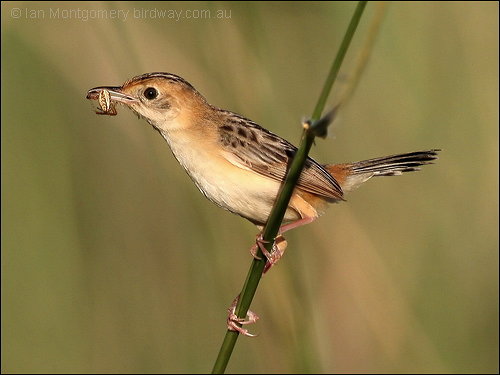
Golden-headed Cisticola (Cisticola exilis) by Ian

Golden-headed Cisticola (Cisticola exilis) by Ian

The flowers appear on the earth; The time of singing has come, And the voice of the turtledove (Cisticola?) Is heard in our land. (Song of Solomon 2:12 NKJV)

The Cisticolidae – Cisticolas and Allies family has 158 species currently. They are  warblers found mainly in warmer southern regions of the Old World. They are often included within the Old World warbler family Sylviidae. Among the Cisticolida, besides the Cisticola, there are; Jery, Prinia, Warblers, a Longtail, Apalis, Camaroptera, Wren-Warblers, Tailorbirds, Forest Warblers, and Eremomelas.

This family probably originated in Africa, which has the majority of species, but there are representatives of the family across tropical Asia into Australasia, and one species, the zitting cisticola, even breeds in Europe.

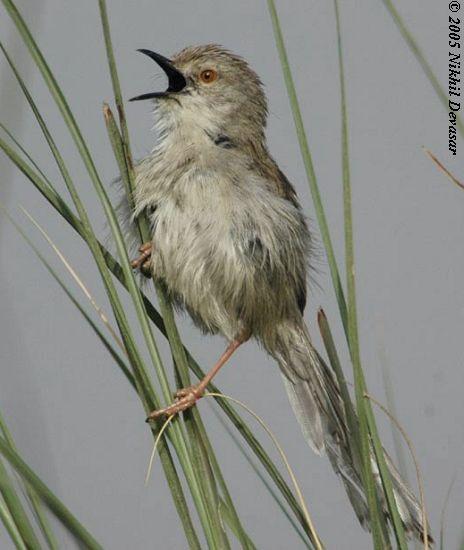
Graceful Prinia (Prinia gracilis) by Nikhil Devasar

These are generally very small birds of drab brown or grey appearance found in open country such as grassland or scrub. They are often difficult to see and many species are similar in appearance, so the song is often the best identification guide.

By them the birds of the heavens have their home; They sing among the branches. (Psalms 104:12 NKJV)

These are insectivorous birds which nest low in vegetation.

This slideshow requires JavaScript.

Serve the LORD with gladness; Come before His presence with singing. (Psalms 100:2 NKJV)

“How Can I Keep From Singing?” ~  by the Trio + 1 (Pastor Jerry, Reagan Osborne, Caleb & Jessie Padgett) Faith Baptist

*

More Sunday Inspirations

Cisticolidae – Cisticolas and allies

In Our Place

*

How Well Do We Reflect?

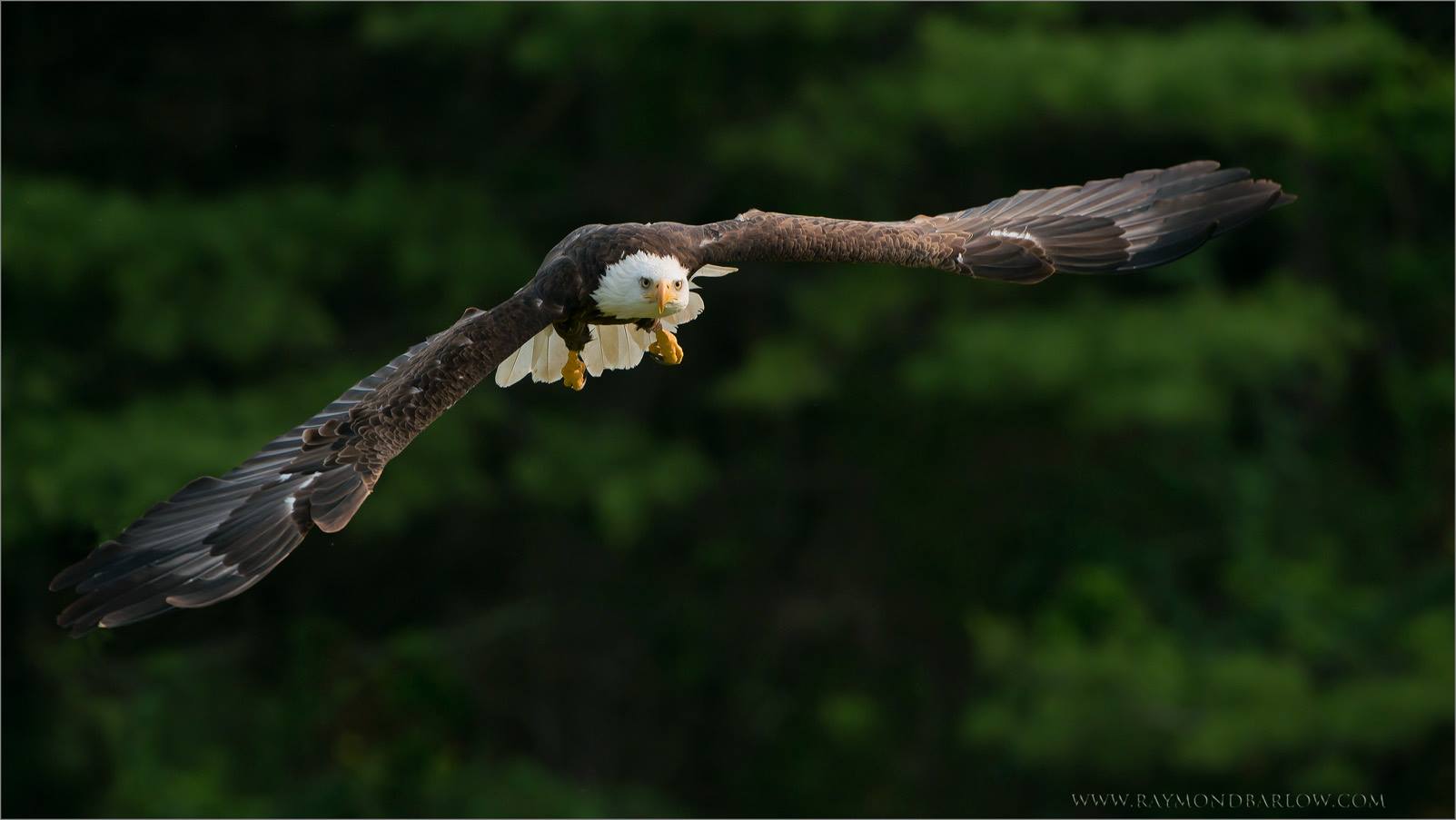
Bald Eagle (Haliaeetus leucocephalus) by Ray Barlow

Bald Eagle (Haliaeetus leucocephalus) by Ray Barlow

These photos by Ray Barlow have just been running around in my mind. It’s about the same as when you hear a song and then for days you hear it and hum the song.

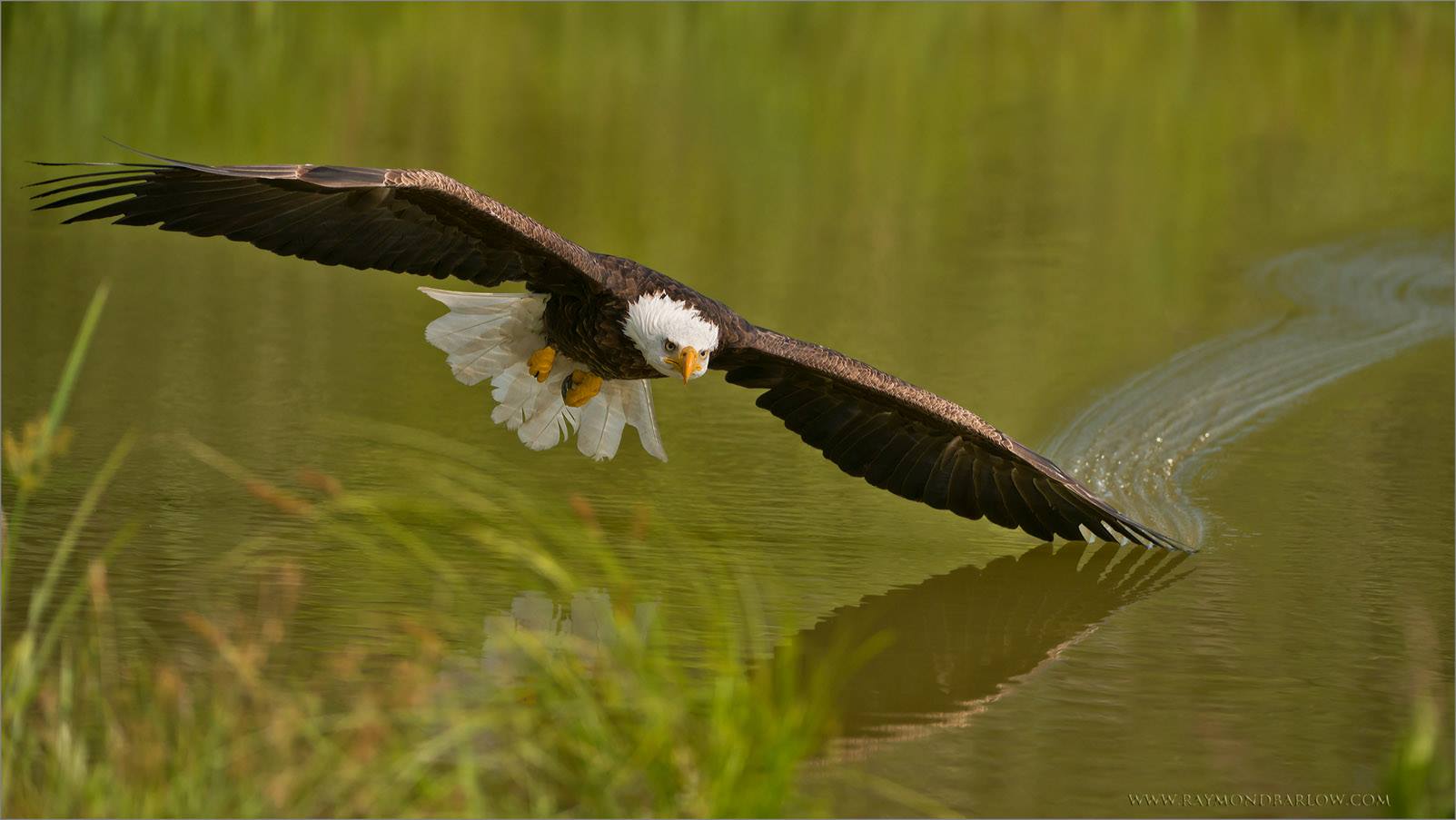
How close are we walking with the Lord Jesus Christ? Are we near and close enough to touch base once in awhile like the photo below?

Bald Eagle (Haliaeetus leucocephalus) by Ray Barlow

Bald Eagle (Haliaeetus leucocephalus) by Ray Barlow

But be doers of the word, and not hearers only, deceiving yourselves. For if anyone is a hearer of the word and not a doer, he is like a man observing his natural face in a mirror; for he observes himself, goes away, and immediately forgets what kind of man he was. But he who looks into the perfect law of liberty and continues in it, and is not a forgetful hearer but a doer of the work, this one will be blessed in what he does. (James 1:22-25 NKJV)

Are we spending more time in reading, praying, attending church, and having fellowship with other believers? Getting closer to the Lord to where we are starting to reflect Him in our lives.

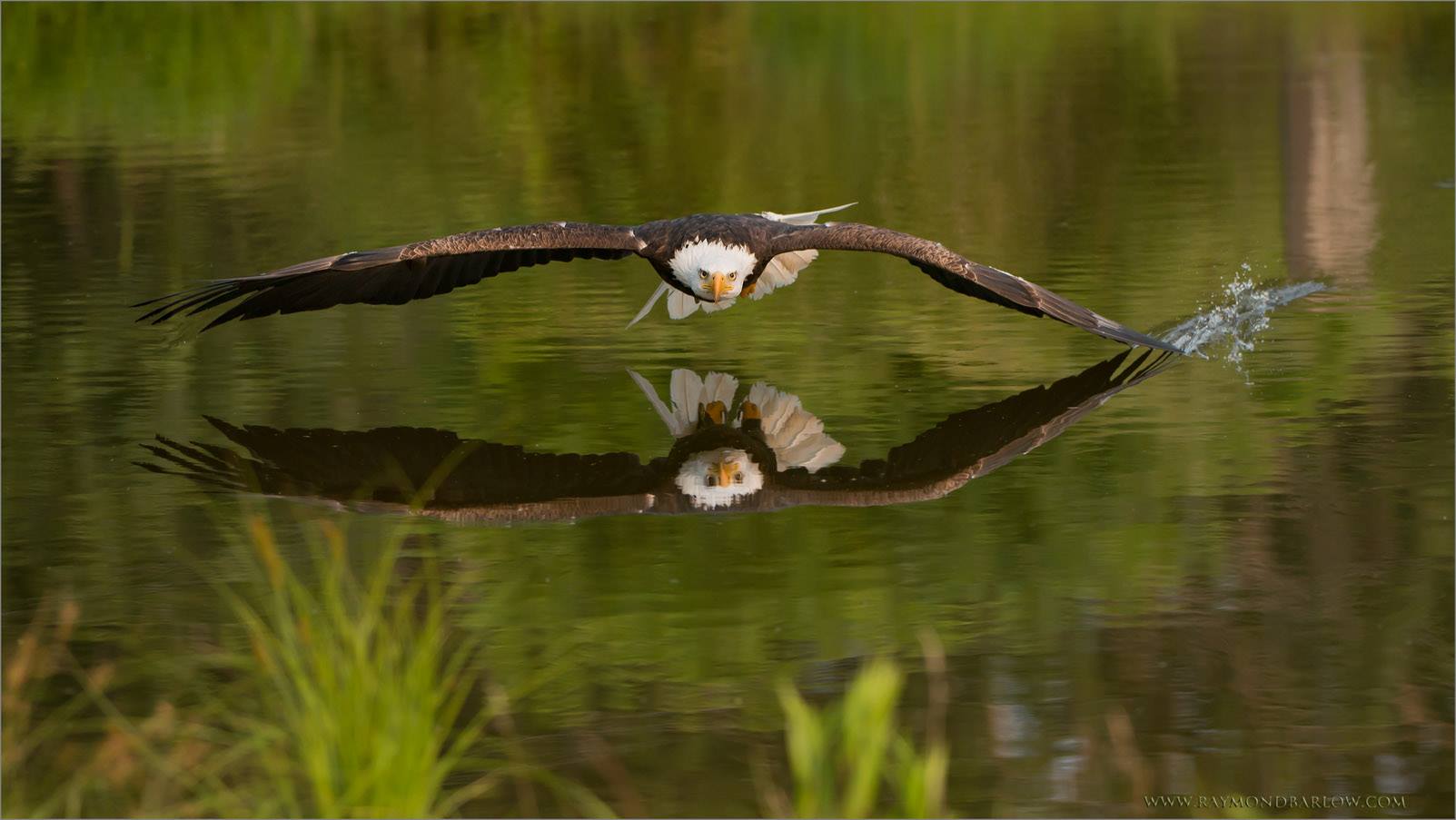
Bald Eagle (Haliaeetus leucocephalus) by Ray Barlow

Bald Eagle (Haliaeetus leucocephalus) by Ray Barlow

As in water face reflects face, So a man’s heart reveals the man. (Proverbs 27:19 NKJV)

Bald Eagle (Haliaeetus leucocephalus) by Ray Barlow

Bald Eagle (Haliaeetus leucocephalus) by Ray Barlow

But we all, with unveiled face, beholding as in a mirror the glory of the Lord, are being transformed into the same image from glory to glory, just as by the Spirit of the Lord. (2 Corinthians 3:18 NKJV)

*

Lord Bless your day as you consider these verses. I trust we all will strive to be more like Jesus and others can see Him in us.

*

Gospel Message
Birds of the Bible – Fly Like An Eagle
Thanks to Raymond Barlow for the permission to use these photos.

*

Sunday Inspiration – Worthy The Lamb

Chestnut-backed Scimitar Babbler (Pomatorhinus montanus) ©WikiC

Chestnut-backed Scimitar Babbler (Pomatorhinus montanus) ©WikiC

Wherefore, holy brethren, partakers of the heavenly calling, consider the Apostle and High Priest of our profession, Christ Jesus; Who was faithful to him that appointed him, as also Moses was faithful in all his house. For this man was counted worthy of more glory than Moses, inasmuch as he who hath builded the house hath more honour than the house. For every house is builded by some man; but he that built all things is God. (Hebrews 3:1-4 KJV)

Looks like this week you’ll be introduced to three families of avian wonders. I am skipping over the Cisticolidae – Cisticolas and allies until next week, because it is quite large. This week the Black-capped Donacobius (Donacobiidae), only bird in family; the Malagasy Warblers (Bernienidae) with 11 species; and the Babblers, Scimitar Barbler’s of the Timaliidae Family of 55 should give us enough birds for a slideshow.

Black-capped Donacobius (Donacobius atricapilla) ©©

Black-capped Donacobius (Donacobius atricapilla) ©©

The Black-capped Donacobius (Donacobius atricapilla) is a conspicuous, vocal South American bird. It is found in tropical swamps and wetlands in Argentina, Bolivia, Brazil, Colombia, Ecuador, French Guiana, Guyana, Paraguay, Peru, Suriname, and Venezuela; also Panama of Central America. They are common in a wide range of Amazonian wetlands, including oxbow lakes, riparian zones, and other areas with tall dense aquatic or semi-aquatic vegetation.

Mating for life, pairs of Black-capped Donacobiuses can be seen frequently and throughout the day atop thickets of dense lakeside or streamside vegetation. They often will engage in antiphonic dueting. Adult offspring will remain with their parents and help raise siblings from subsequent nesting periods in a system of cooperative breeding. (Wikipedia)

Long-billed Bernieria (Bernieria madagascariensis) WikiC

Long-billed Bernieria (Bernieria madagascariensis) WikiC

The Malagasy warblers are a newly validated clade of songbirds. They were formally named Bernieridae in 2010. The family consists of 11 species of small forest birds and is endemic to Madagascar. (Wikipedia)

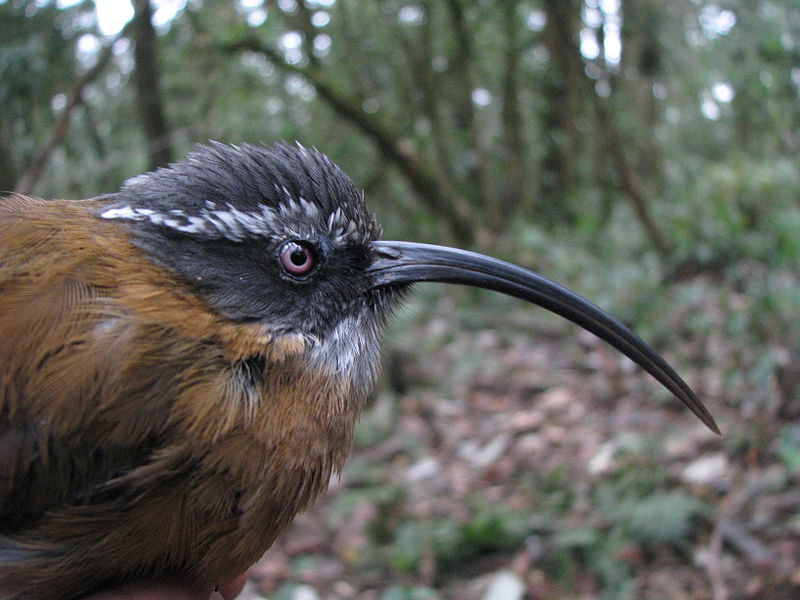
Slender-billed Scimitar Babbler (Pomatorhinus superciliaris) ©WikiC

Slender-billed Scimitar Babbler (Pomatorhinus superciliaris) ©WikiC

Our last family has Scimitar Babblers and some of the various Babblers.

The genus Pomatorhinus of scimitar babblers are jungle birds with long downcurved bills. These are birds of tropical Asia, with the greatest number of species occurring in hills of the Himalayas. They are medium-sized, floppy-tailed landbirds with soft plumage. They are typically long-tailed, dark brown above, and white or orange-brown below. Many have striking head patterns, with a broad black band through the eye, bordered with white above and below.

Spelaeorni genus the typical wren-babblers, is a bird genus in the family Timaliidae. Among this group, the typical wren-babblers are quite closely related to the type species, the chestnut-capped babbler (Timalia pileata). Typical babblers live in communities of around a dozen birds, jointly defending a territory. Many even breed communally, with a dominant pair building a nest, and the remainder helping to defend and rear their young. Young males remain with the group, while females move away to find a new group, and thus avoid inbreeding. They make nests from twigs, and hide them in dense vegetation. (Info from Wikipedia)

This slideshow requires JavaScript.

Saying with a loud voice, Worthy is the Lamb that was slain to receive power, and riches, and wisdom, and strength, and honour, and glory, and blessing. (Revelation 5:12 KJV)

“Worthy The Lamb” ~ Choir at Faith Baptist Church

*

More Sunday Inspirations

Donacobiidae – Black-capped Donacobius

Bernieridae – Malagasy Warblers

Timaliidae – Babblers, Scimitar Babblers

Gospel Presentation

*

STAY UNDER HIS WINGS

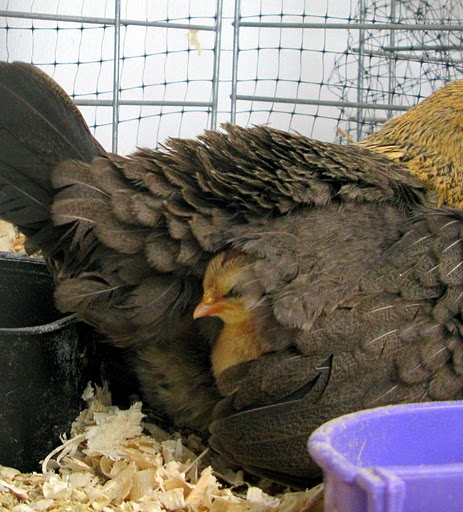
Baby Chick Peeping Out From Under His Mom's Wing - CC

Baby Chick Peeping Out From Under His Mom’s Wing – CC

STAY UNDER HIS WINGS

“Abide in me, and I in you.  As the branch cannot bear fruit of itself, except it abide in the vine; no more can ye, except ye abide in me.  I am the vine, ye are the branches: He that abideth in me, and I in him, the same bringeth forth much fruit: for without me ye can do nothing.” (John 15:4, 5 King James Version)

Pastor William Orcutt Cushing wrote a beautiful hymn “UNDER HIS WINGS”.  I love the words in this hymn.  “Under His wings, what a refuge in sorrow!  How the heart yearningly turns to His rest!  Often when earth has no balm for my healing, There I find comfort, and there I am blessed.”  We have a loving Saviour!

A mother bird will push her baby out of the nest so it will learn to fly.  It is just the opposite with Jesus.  He wants us to stay with Him not only so He can protect us, but also because we can’t do anything without Him.  I can’t even get out of bed without Him.  If I can’t serve Him, there is no reason to live.

Someone said “I can’t wait until I’m old enough to move out and leave home”. When Jesus is our Saviour, we don’t want to leave Him.  Not only is Jesus our Saviour, He is also the dearest Friend we will ever have.  He will never leave us, not even for one minute.  What a Saviour, this Jesus of Nazareth!

For those who are trying to make it in this world without Jesus, it hasn’t worked and it will never work.  We need Jesus every minute of every day.  Stay under His wings and allow Him to protect you, comfort you and encourage you.  Don’t try to make it without Jesus.  You will hurt Him and break His heart.

Joanne Lowe

September 25, 2015

To see more of Joanne’s  devotionals go to her blog at  He Loves You And Died For You.

*

Joanne Lowe is a guest author and I trust you will be blessed by this and her other devotionals.

*

Want a Home in the Mountains? Some Birds Have One!

Want a Home in the Mountains?   Some Northern Flickers Have One!

James J. S. Johnson

I know all the fowls [i.e., birds] of the mountains; and the wild beasts of the field are Mine.    Psalm 50:11

Mountains are wonderful places to see God’s handiwork, including the many birds dwelling in (and around) mountains year-round or seasonally.  Some of my best bird-watching has been done in mountains, usually the Rocky Mountains or Appalachians. (This birding report notes the Rocky Mountains’ Northern Flicker.)

SANGRE2©WikiC

Of specific mountain ranges, one of my all-time favorite mountain ranges is the Sangre de Cristo Range, northern part of the Sangre de Cristo Mountains (themselves a range within the Rocky Mountains) that runs north-to-south in southern Colorado, spilling into northern New Mexico.  Within that range my favorite mountain is Horn Peak, near Horn Creek Christian Family Camp (where Dr. Stan Toussaint occasionally taught the Scriptures) and Sangre de Cristo Seminary, not far outside of Westcliffe, Colorado.  The elevation there ranges about 8500 feet, with Horn Peak peaking at about 14,000 feet!

Sangre de Cristo Range Looking West ©WikiC

Sangre de Cristo Range Looking West ©WikiC

“Sangre de Cristo” is Spanish for “blood of Christ”, perhaps an indication that the range was named when its snow-capped mountains were reflecting a scarlet-hued sunset.  In any case, it’s magnificently beautiful out there.

Sangre de Christo Mountains, Winter Sunset ©WikiC

Sangre de Christo Mountains, Winter Sunset ©WikiC

Much of Colorado’s Sangre de Cristo Range is located within two of America’s national forests:  San Isabel National Forest (containing the range’s northeastern portion), and the Rio Grande National Forest (containing most of the southwestern portion, i.e., the San Luis Valley).   Amazingly, the Sangre de Cristo Mountains border a very unusual inland sand dunes area (the largest in North America), the Great Sand Dunes National Park and Preserve.   By the way, where did all that sand come from?  (Hint: check out Genesis chapters 6-9.)

Dunes great sand ©WikiC

Great Sand Dunes ©WikiC

In the montane forests on the slope of Horn Peak (and Little Horn Peak) there is a Protestant Reformation-based seminary named “Sangre de Cristo Seminary”, founded by Dr. Dwight F. Zeller.  (FYI: its website is http://sdcs76.org/  — which includes a music-enhanced PowerPoint slide show on its homepage.)

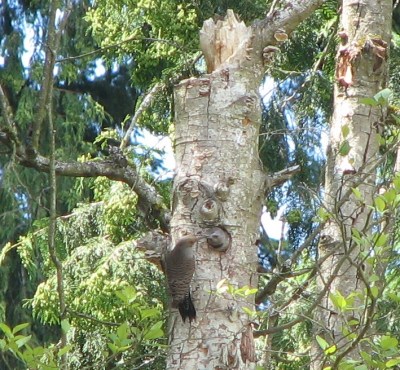
If you drive up to the entrance of the seminary campus, especially in the summer, roll down your car’s windows – and listen.  Actually, park your car and find a “blind” where you can observe the trees around you – if you stay still for a while you are likely to see the varied bird life of those montane evergreen forests.  One bird that you may hear before you see it, the Northern Flicker (Colaptes auratus), because a stone’s throw from the seminary’s mountain road entrance, which is thick with evergreen trees, is (or at least “was” – in the late AD1990s) a tree that served as the home of a Northern Flicker family.  Many summer days, during the mid-to-late AD1990s, I have found a comfortable place to sit, there – hidden — so that I could observe that Northern Flicker tree-home, without being observed by the Northern Flickers that continually went in and out, in and out, therefrom.
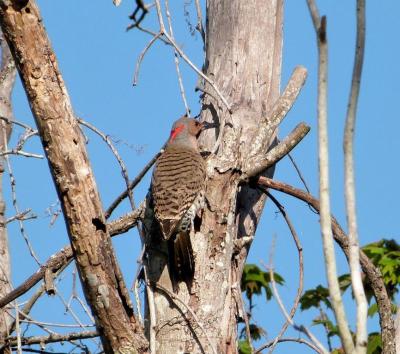
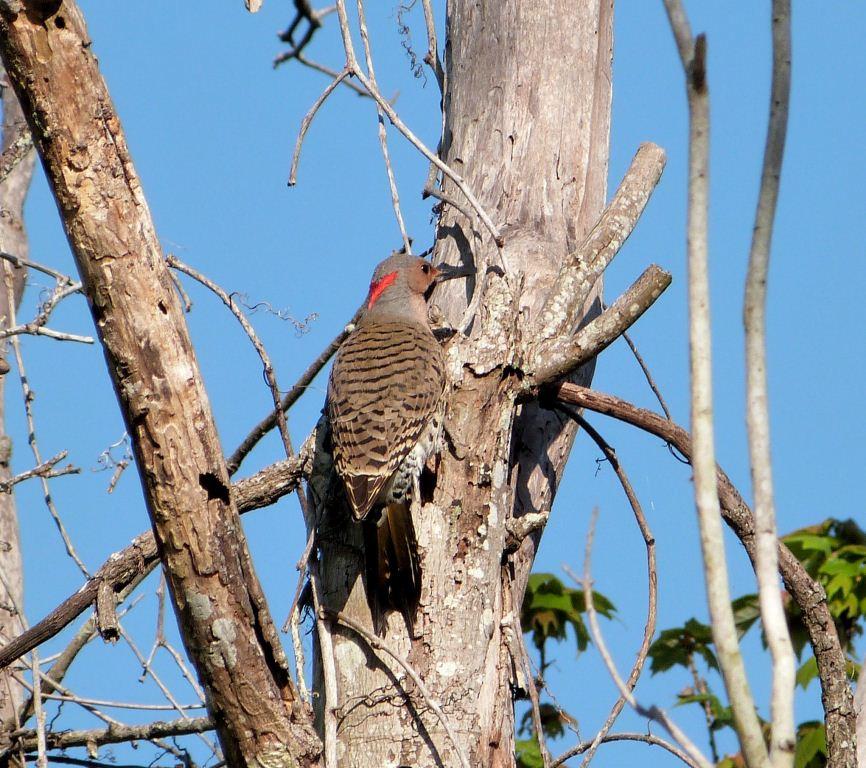
Northern Flicker cropped by Lee at S. Lk Howard Ntr Pk

Northern Flicker cropped by Lee

Flickers routinely convert a tree into a tree-house!
Orni-Theology with Luzan Bleeding-heart by Dan

Orni-Theology

Says ornithologist Mary Taylor Gray, in her book WATCHABLE BIRDS OF THE ROCKY MOUNTAINS (Mountain Press Publishing, 1992), at pages 30, “Flickers nest in holes in trees, fenceposts, telephone poles and the like, excavating the nest hole by pecking.  They are important homebuilders for other cavity-nesting birds who, with bills too weak to make their own holes, use those abandoned by woodpeckers.  Both the male and the female flicker incubate the eggs and care for the young [hatchlings].  When the adults bring food to the nest, they light on the tree, then disappear into the nest cavity.  As the babies get older, they learn to expect the parents, poking their heads out of the nest and squawking to be fed.”  That description of Northern Flicker behavior (with illustrative photographs on page 31), by Mary Taylor Gray, perfectly fits what I have observed (and what my wife observed), summer after summer, at Sangre de Cristo Seminary’s campus.

But what were those woodpeckers eating?

Bugs of all kinds strive in the Sangre de Cristo montane forests, crawling on the ground and in trees and bushes – the bugs are very active there during the summer – and that’s fine for flickers!  Says ornithologist Stan Tekiela, in his book  BIRDS OF COLORADO FIELD GUIDE (Adventure Publications, 2001), on page 147, “The flicker is the only woodpecker to regularly feed on the ground, preferring ants and beetles.  Produces antacid saliva [without the need for Nexium!] to neutralize the acidic defense of ants.”  (Although such a diet would bug me, the flickers seem to enjoy it.)

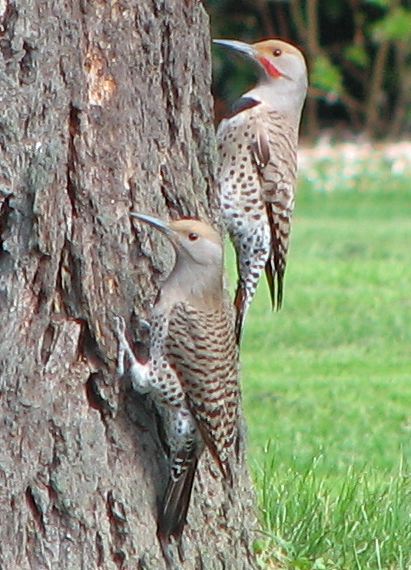
Northern Flicker (Colaptes auratus) red-shafted F-left M-right ©WikiC

Northern Flicker (Colaptes auratus) red-shafted F-left M-right ©WikiC

The two main varieties are the “red-shafted” and “yellow-shafted” forms, though hybridized  versions occur where the ranges overlap, in the western edge of the great plains (where the prairies merge into the Rocky Mountains), and this Northern Flicker looked like such a hybrid.  After my wife and I watched it go into its tree-hole, again and again, we suddenly learned why that tree-hole was the scene of such repeated in-and-out activity:  cautiously baby flickers poked their little heads out, perhaps curious about the outside world, or maybe in hopes that the next airborne meal was soon headed home!

Northern Flicker (Female Yellow-shafted) ©WikiC

Northern Flicker (Female Yellow-shafted) ©WikiC

In recalling those cool summer days, when I watched for birds in the montane forests by Sangre de Cristo Seminary – sometimes with my wife, sometimes alone – I realized that all around me the hungry were being fed.  Baby flickers were being fed by their woodpecker parents.  But also seminary students, instructed by godly teachers, were being fed the Word of God (Deuteronomy 8:3, quoted in Matthew 4:4 & Luke 4:4.)

So, good eating can mean physical food (like bugs for hungry flickers!), or it can mean spiritual food (like the Holy Bible, for hungry Christians).  Bon appetite!
Northern Flicker feeding baby ©WikiC

Northern Flicker feeding baby ©WikiC


Lee’s Addition:

Thanks, James for a very interesting article to share with us. Love those Flickers.

More articles:

Orni-Theology

James J. S. Johnson

Picidae – Woodpeckers

Northern Flicker – All About Birds

Northern Flicker – Wikipedia

*

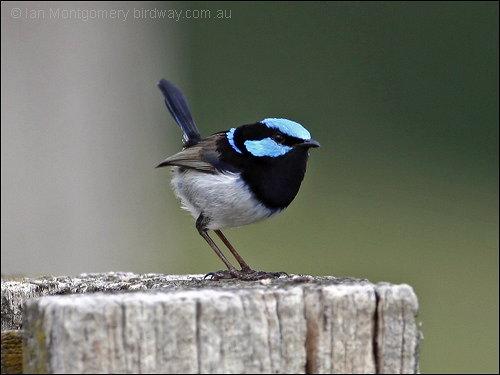
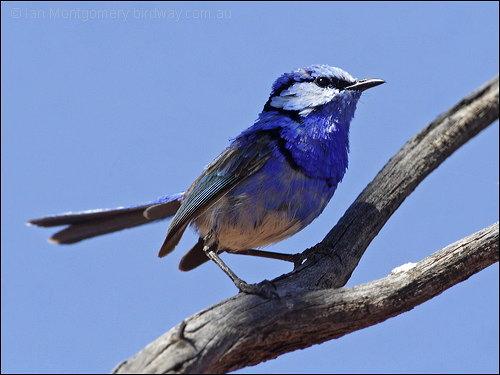
“SUPERB,” “SPLENDID” AND “LOVELY” – Re-post Plus

“SUPERB,” “SPLENDID” AND “LOVELY”

“I know all the fowls of the mountains: and the wild beasts of the field are mine.” Psalm 50:11

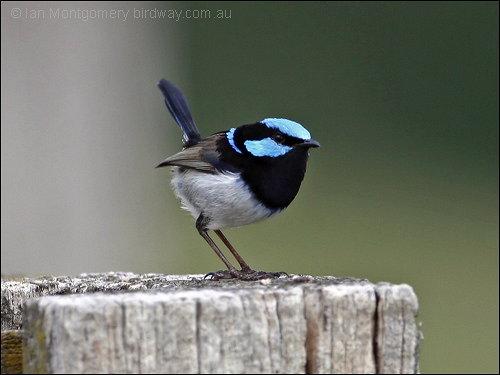
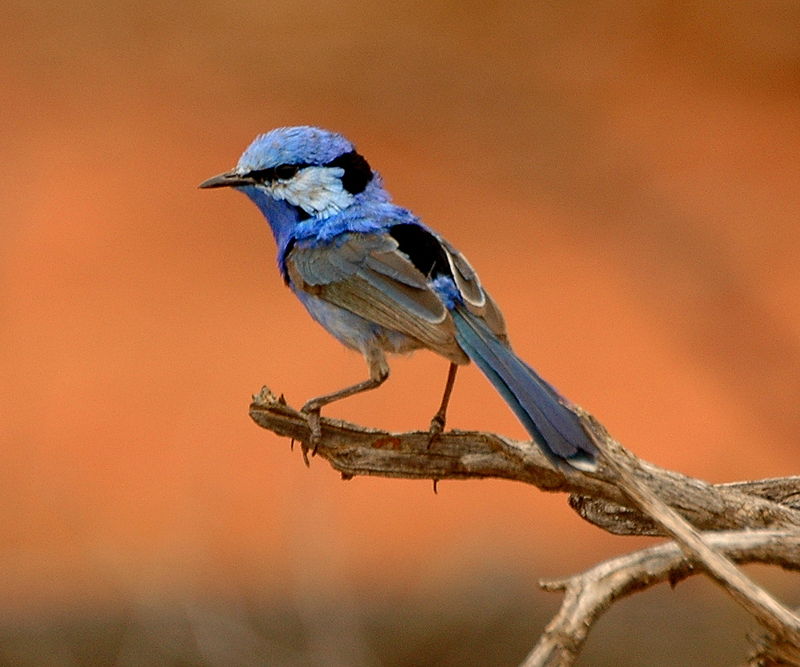
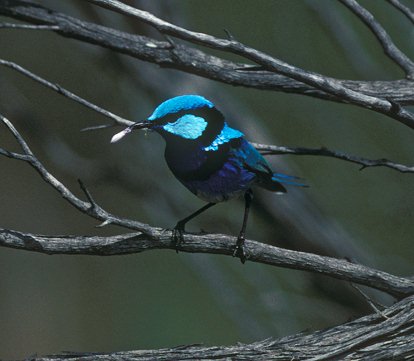
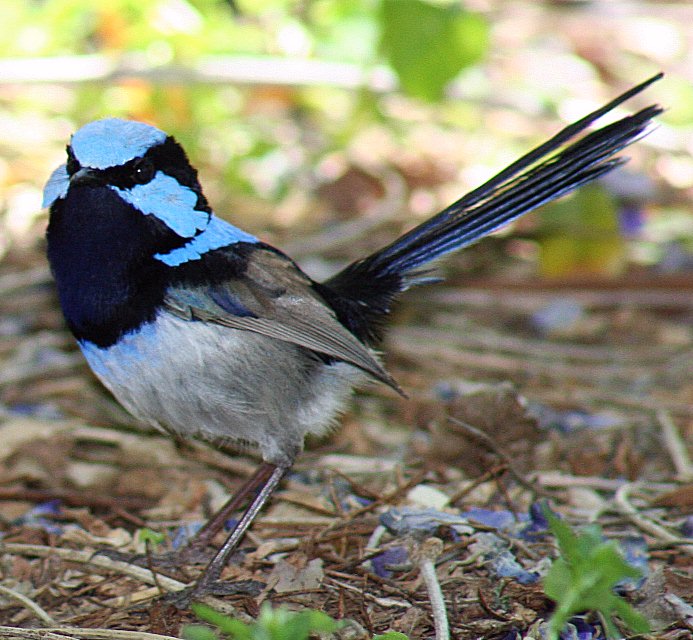
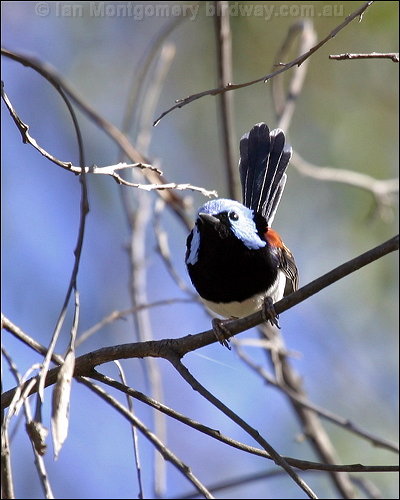
There are 13 species of a brightly plumed little songbird known as the fairy wren. The birds are found in Australia and New Guinea. So colorful are their feathers that the various species go by names like “superb,” “splendid” and “lovely.” However, even more noteworthy is the birds’ unusual behavior.

Superb Fairy-wren (Malurus cyaneus) by Ian

Superb Fairywren (Malurus cyaneus) by Ian

A male courting a female will bring her a flower petal. The petal usually matches his color or is a deeply contrasting color. Normally a perky little bird with an upright tail, when courting he lowers his tail and creeps around close to the ground. As he twists his body back and forth, he puffs out his cheek feathers. If the female accepts his courting, she builds their nest alone, lining it with bright parrot feathers. While they mate for life, they are not known for fidelity to their mates.

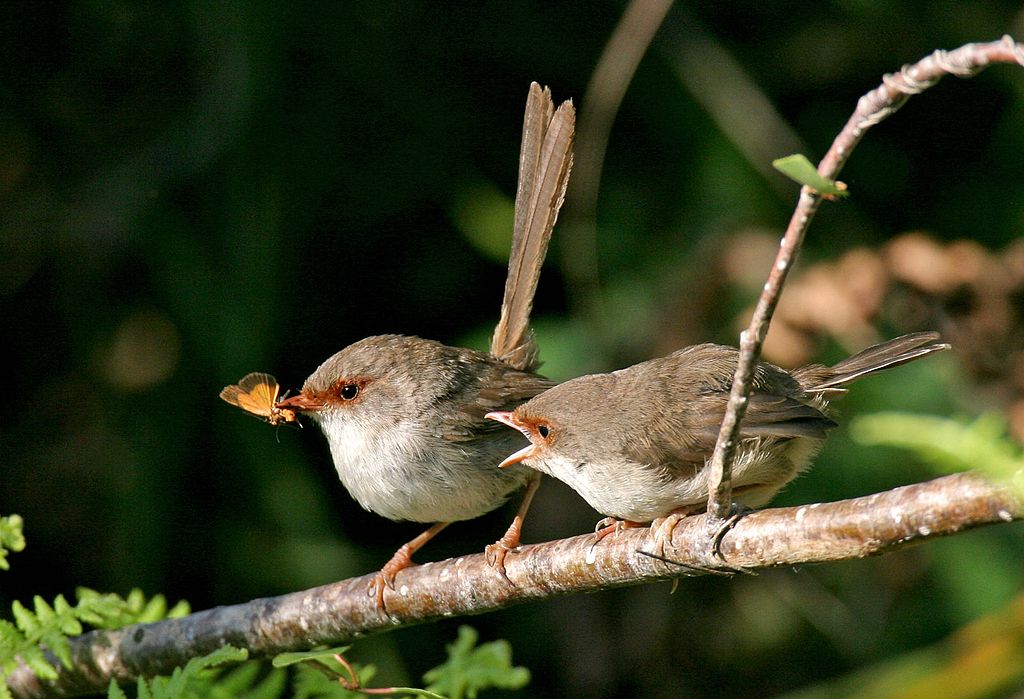
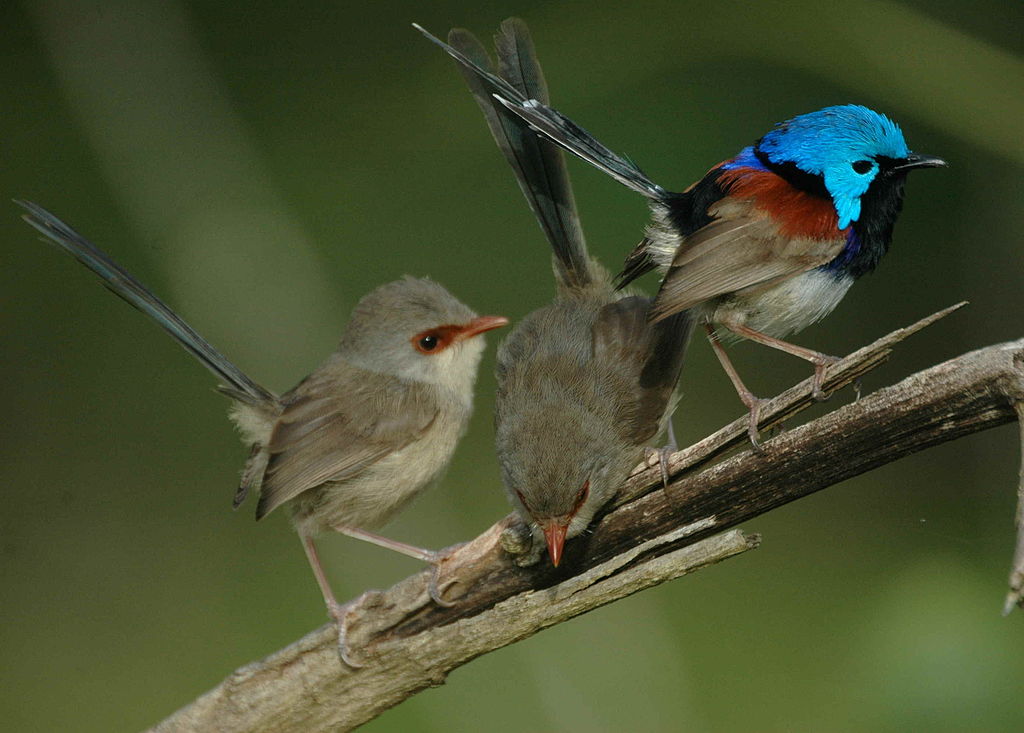
Superb Fairy-wren (Malurus cyaneus) Juvenile and Female ©WikiC

Superb Fairywren (Malurus cyaneus) Juvenile and Female ©WikiC

When mature, females will go off on their own, but males may stay with their parents for a year or more. Their main duty is to guard the family nest. If danger approaches the nest, the guard will puff up his wings, lower his tail and scuttle through dry grass, pretending to be a mouse. The idea is to lure the predator away from the nest.

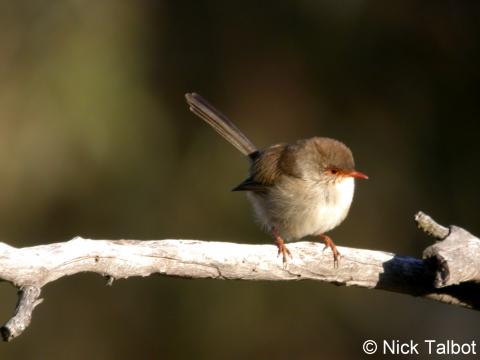
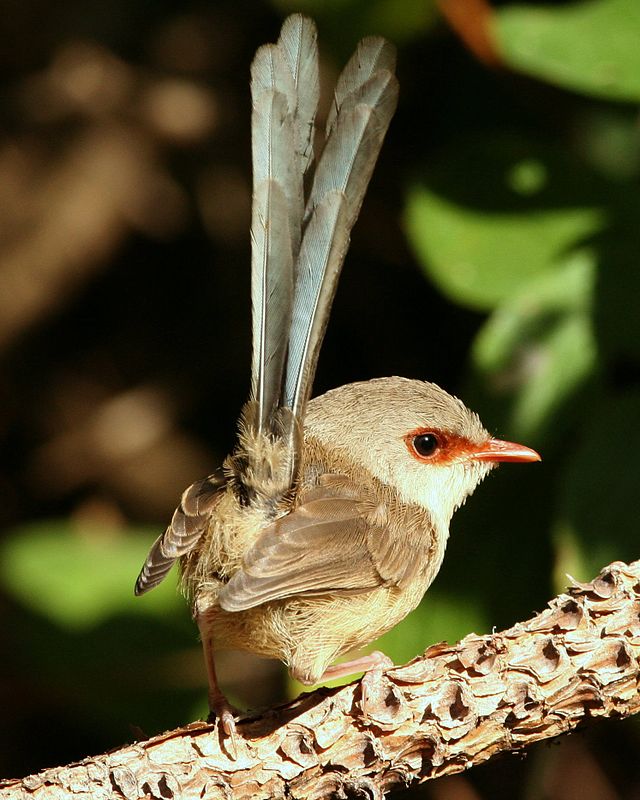
Superb Fairy-wren (Malurus cyaneus) Female by Nick Talbot

Superb Fairywren (Malurus cyaneus) Female by Nick Talbot

The beauty and unusual behavior of these little birds testifies to more than God’s creativity and love for beauty. They remind us of the beauty that was lost to God’s creation when it was tainted by man’s sin. Thankfully, some of that beauty that was lost can return to our lives through the forgiveness of sins that is found in Jesus Christ.

Prayer:
Dear Father, I thank You for the beauty of Your creation and for giving me the forgiveness of sins in Jesus Christ. Amen.

Notes:
Natural History, 11/94, pp. 56 62, “Faithful Philanderers.” Photo: Superb blue fairy-wren. Courtesy of Benjamint444. (CC-BY-SA 3.0)
©Creation Moments 2015 used with Permission


Lee’s Addition:
Here are some more photos of the Fairywrens from their Creator:


*
Creation Moments
“Superb, Splendid and Lovely”
Interesting Things
Fairywren Family
Wordless Birds
*