Avian And Attributes – Reed

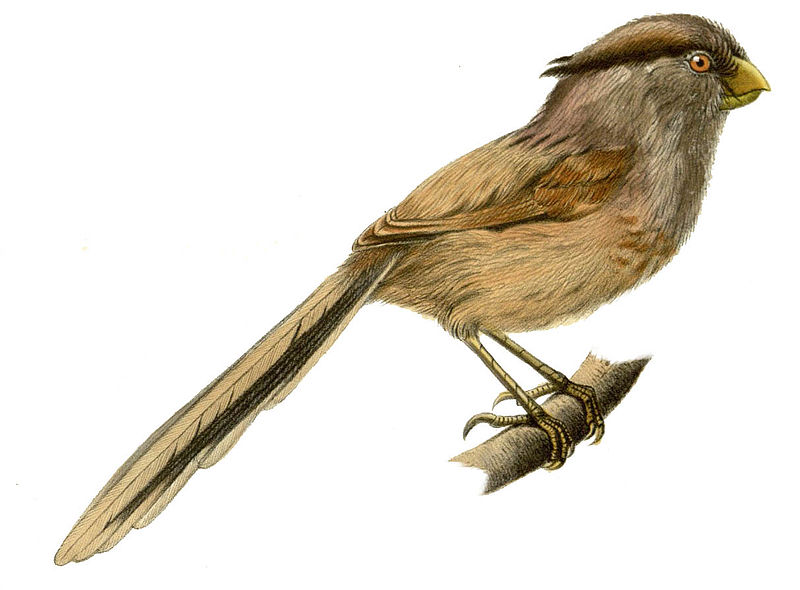
Reed Parrotbill (Paradoxornis heudei) ©Drawing WikiC

“When they had twisted a crown of thorns, they put it on His head, and a reed in His right hand. And they bowed the knee before Him and mocked Him, saying, “Hail, King of the Jews!” Then they spat on Him, and took the reed and struck Him on the head.” (Matthew 27:29-30 NKJV)


Avian and Attributes – Reed

REED, n.
1. The common name of many aquatic plants; most of them large grasses, with hollow jointed stems, such as the common reed of the genus Arundo, the bamboo, &c. The bur-reed is of the genus Sparganium; the Indian Flowering reed of the genus Canna.
2. A musical pipe; reeds being anciently used for instruments of music.
3. A little tube through which a hautboy, bassoon or clarinet is blown.
4. An arrow, as made of a reed headed.
5. Thatch.


Reed Cormorant

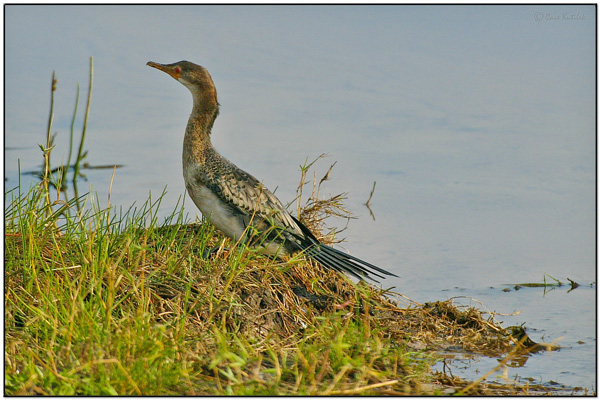
Reed Cormorant (Microcarbo africanus) by Daves BirdingPix

TheReed Cormorant (Microcarbo africanus), also known as the long-tailed cormorant, is a bird in the cormorant family Phalacrocoracidae. It breeds in much of Africa south of the Sahara, and Madagascar. It is resident but undertakes some seasonal movements.

The Reed Cormorant can dive to considerable depths, but usually feeds in shallow water. It frequently brings prey to the surface. It takes a wide variety of fish. It prefers small slow-moving fish, and those with long and tapering shapes, such as mormyrids, catfishes, and cichlids. It will less frequently eat soles (which can be important in its diet locally), frogs, aquatic invertebrates, and small birds.

Two to four eggs are laid in a nest in a tree or on the ground, normally hidden from view by long grass.

Reed Parrotbill

Reed Parrotbill (Paradoxornis heudei) ©Drawing WikiC

The Reed Parrotbill (Paradoxornis heudei) is a species of bird in the Sylviidae family. It is found in Manchuria and eastern China. It is threatened by habitat loss.

The northern subspecies P. h. polivanovi is sometimes regarded as a separate species, the northern parrotbill.

See Parrotbill article Good photos


More Avian and Attributes

Birds whose first name starts with “R”

Good News

*
[Definitions from Webster’s Dictionary of American English (1828), unless noted. Bird info from Wikipedia plus.]
Avian And Attributes – Rainbow

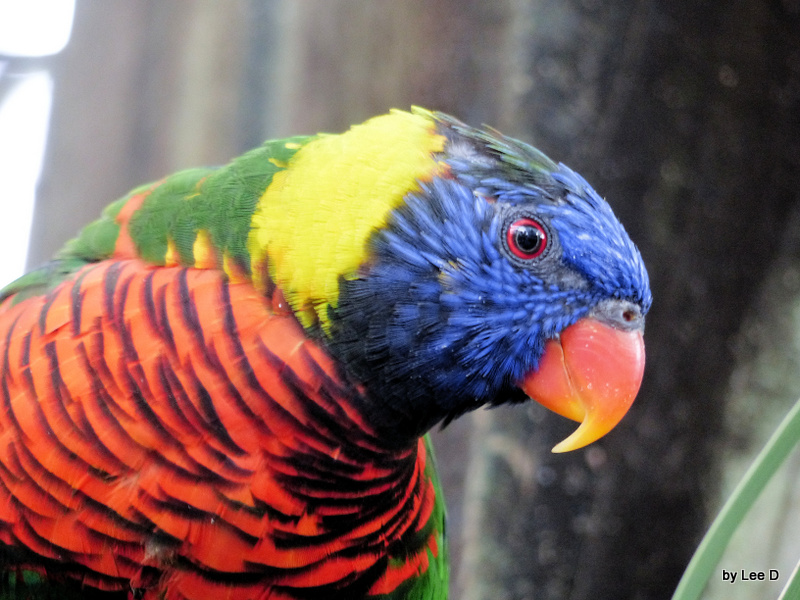
Rainbow Lorikeet Lowry Park Zoo 12-31-15 by Lee

“Like the appearance of a rainbow in a cloud on a rainy day, so was the appearance of the brightness all around it. This was the appearance of the likeness of the glory of the LORD. So when I saw it, I fell on my face, and I heard a voice of One speaking.
(Ezekiel 1:28 NKJV)


Avian and Attributes – Rainbow

RA’INBOW, n. A bow, or an arch of a circle, consisting of all the colors formed by the refraction and reflection of rays of light from drops of rain or vapor, appearing in the part of the hemisphere opposite to the sun. When the sun is at the horizon, the rainbow is a semicircle. The rainbow is called also iris.
The moon sometimes forms a bow or arch of light, more faint than that formed by the sun, and called lunar rainbow. Similar bows at sea are called marine rainbows or sea bows.


Rainbow Bee-eater

Rainbow Bee-eater (Merops ornatus) by Ian

Rainbow Lorikeet

Rainbow Lorikeet by Lee at Zoo Tampa

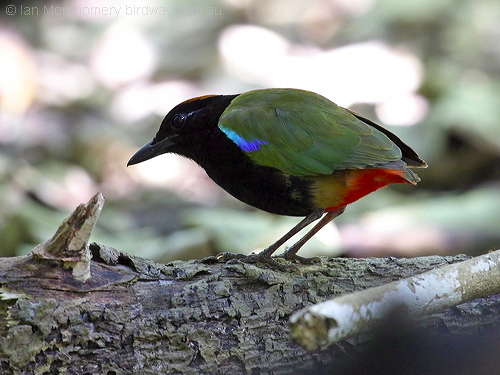
Rainbow Pitta

Rainbow Pitta-Australia-Birdway

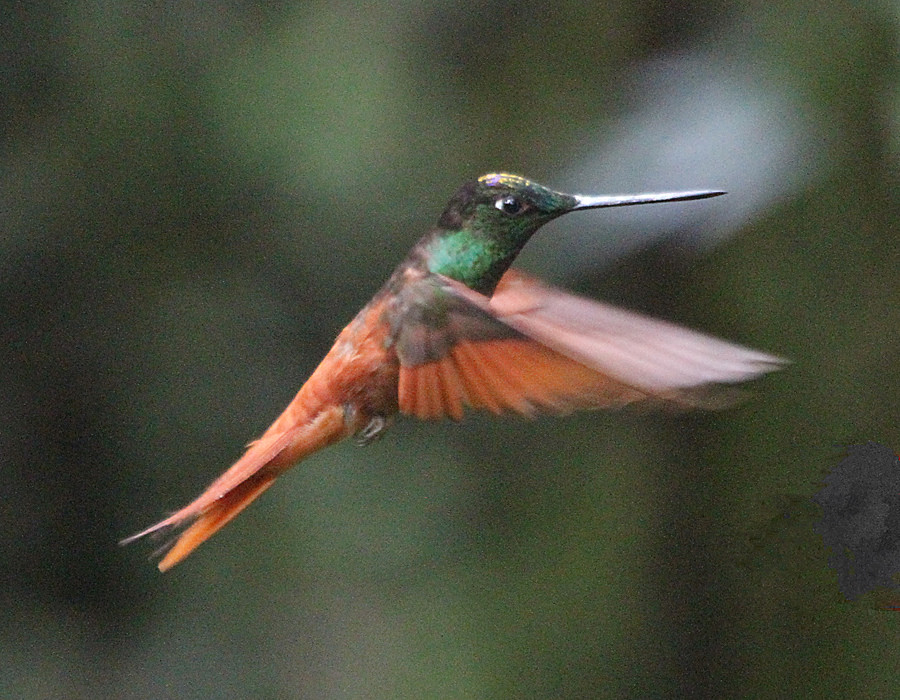
Rainbow Starfrontlet

Rainbow Starfrontlet ©Brendan Ryan Flickr

Rainbow-bearded Thornbill

Rainbow-bearded Thornbill (Chalcostigma herrani) ©Flickr Jei Pov


More Avian and Attributes

Birds whose first or last name starts with “R”

Good News

*
[Definitions from Webster’s Dictionary of American English (1828), unless noted. Bird info from Wikipedia plus.]
Avian And Attributes – Purple

Purple-crowned Fairywren From Pinterest

“And they clothed him with purple, and platted a crown of thorns, and put it about his head, And began to salute him, Hail, King of the Jews! And they smote him on the head with a reed, and did spit upon him, and bowing their knees worshipped him. And when they had mocked him, they took off the purple from him, and put his own clothes on him, and led him out to crucify him.
(Mark 15:17-20 KJV)


Avian and Attributes – Purple

PUR’PLE, a. [L. purpureus; purpura, a shell from which the color was obtained.]
1. Designating a color composed of red and blue blended, much admired, and formerly the roman emperors wore robes of this color.
2. In poetry, red or livid; dyed with blood.
PUR’PLE, n. A purple color or dress; hence, imperial government in the Roman empire, as a purple robe was the distinguishing dress of the emperors.
1. A cardinalate.
PUR’PLE, v.t. [L. purpuro.] To make purple, or to dye of a red color; as hands purpled with blood.


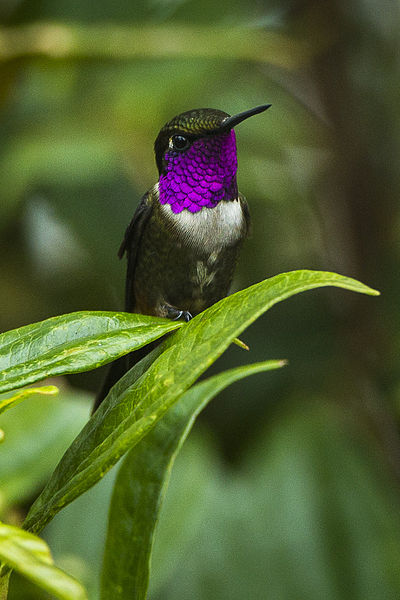
Purple-throated Woodstar (Calliphlox mitchellii) ©WikiC

Purple Birds

There are many birds that have “Purple” as the first word of their names (14). Plus there are 34 “Purple-” birds and 5 “Purplish” birds. So that you can see many of them, below is a slideshow with a good many of them. These are all the real purple birds and not the phoney colored ones seen on Pinterest and other “photoshoped” places. These are shown the way their Creative Creator colored them.

This slideshow requires JavaScript.


More Avian and Attributes

Birds whose first name starts with “P”

Good News

*
[Definitions from Webster’s Dictionary of American English (1828), unless noted. Bird info from Wikipedia plus.]

A Surprise For The Evolutionary Scientist!

EVOLUTIONARY SCIENTISTS FIND A SURPRISE!

“Therefore you also be ready, for the Son of Man is coming at an hour when you do not expect Him.” Matthew 24:44

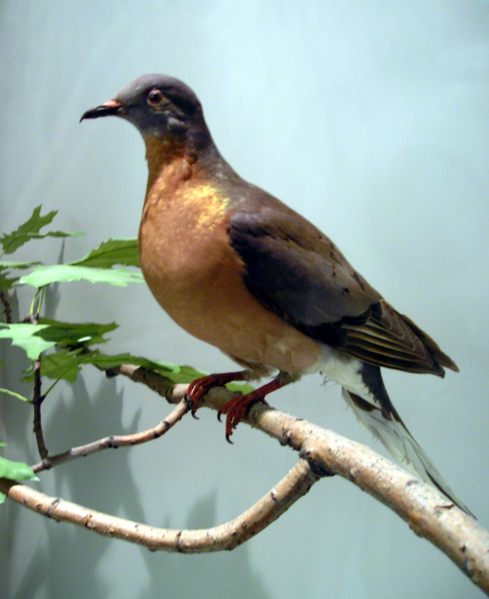
Painting: Passenger PigeonAccording to the Bible’s history, human beings were created perfectly by God about 6,000 years ago. We should note that this means we were not only morally perfect, but genetically perfect as well. According to evolutionists, our ancestors split off from the monkeys millions of years ago. Both viewpoints agree that each generation of human beings adds mutations to the ongoing human gene pool.

How many mutations are added by each human generation? Researchers with the University of Sussex and the University of Edinburgh looked for the answer to this question. They examined DNA from living parents and children, as well as known mutation rates for mammals. They assumed that some mutations would be fatal and thus not added to the overall gene pool. They also assumed that a very few mutations might be helpful, an assumption that has never be demonstrated to be true. They finally calculated that 100 harmful mutations are added to the human gene pool by each generation. Their published conclusion was that, considering the millions of years humans have been evolving, we should have easily accumulated enough mutations to make us extinct a long time ago!

This research is clear evidence for a recent appearance of man, and implies that the Earth was created a relatively short time ago, as portrayed by the Genesis. However, human life on Earth will end when Jesus Christ returns to collect all believers to live in a new heavens and Earth.

Prayer:
Lord, Your Word is true so I eagerly await Your return for me. Amen.
Notes:
Notes: Nature, 1/28/99, “High genomic deleterious mutation rates in hominids,” pp. 344-347. Photo: The passenger pigeon, one of hundreds of species of extinct birds. (PD)
Used with permission of Creation Moments©2018

Passenger Pigeon (Ectopistes † migratorius †) ©WikiC Specimen

Avian And Attributes – Pilot

Pilotbird (Pycnoptilus floccosus) by Ian

“But the centurion was more persuaded by the pilot and the captain of the ship than by what was being said by Paul.” (Acts 27:11 NASB)

“Look at the ships also, though they are so great and are driven by strong winds, are still directed by a very small rudder wherever the inclination of the pilot desires.” (James 3:4 NASB


Avian and Attributes – Pilot

PI’LOT, n.
1. One who steers a ship in a dangerous navigation, or rather one whose office or occupation is to steer ships, particularly along a coast, or into and out of a harbor, bay or river, where navigation is dangerous.
2. A guide; a director of the course of another person. [In colloquial use.]
PI’LOT, v.t. To direct the course of a ship in any place where navigation is dangerous.


Pilotbird (Pycnoptilus floccosus) by AGrosset

Pilotbird (Pycnoptilus floccosus) by AGrosset

Pilotbird

The Pilotbird (Pycnoptilus floccosus) is a species of bird in the family Acanthizidae. It is monotypic within the genus Pycnoptilus. The species is endemic to south-east New South Wales and eastern Victoria in Australia. Its natural habitat is temperate wet sclerophyll forests and occasionally temperate rainforest. There are two subspecies Pycnoptilus floccosus floccosus lives in alpine areas of New South Wales such as the Snowy Mountains and Pycnoptilus floccosus sandfordi lives in lowland forest from Newcastle to Melbourne.

The pilotbird is a large, plump species of acanthizid, measuring around 18 centimetres (7.1 in) in length and weighing 27 grams (0.95 oz). It has a large head and a short bill. The plumage is mostly brown with scalloping on the chest and an orangeish throat. The species is highly terrestrial. The name of the species comes from its supposed habit of following lyrebirds, taking prey that they flush. This habit is well known but seldom observed.

The steps of a good man are ordered by the LORD: and he delighteth in his way.” (Psalms 37:23 KJV)

One of the my favorite songs about being piloted is “I Will Pilot Thee.” Who else should be directing our steps?

Fear thou not for I’ll be with thee
I will still thy Pilot be
Never mind the tossing billows
Take My hand and trust in Me

*** I really stretched it this time. We haven’t been birdwatching much lately. ***


More Avian and Attributes

Birds whose first name starts with “P”

Good News

*
[Definitions from Webster’s Dictionary of American English (1828), unless noted. Bird info from Wikipedia plus.]
Avian And Attributes – Pearl

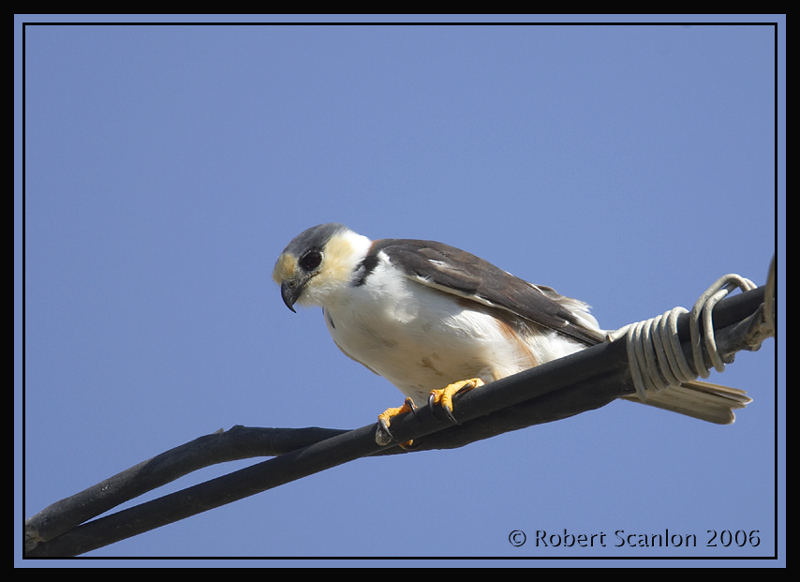
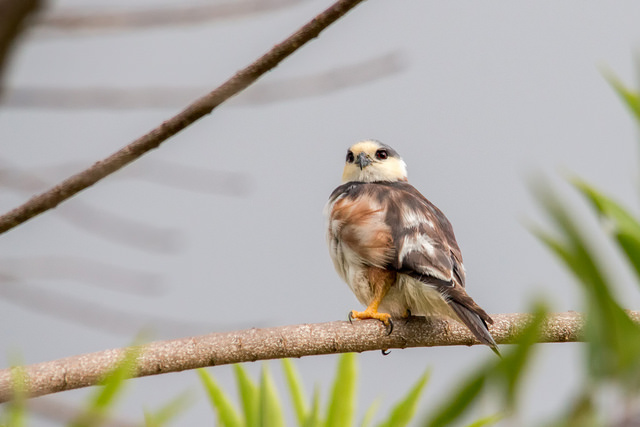
Pearl Kite (Gampsonyx swainsonii) by Robert Scanlon

Pearl Kite (Gampsonyx swainsonii) by Robert Scanlon

“And the twelve gates were twelve pearls; every several gate was of one pearl: and the street of the city was pure gold, as it were transparent glass. And I saw no temple therein: for the Lord God Almighty and the Lamb are the temple of it.” (Revelation 21:21-22 KJV)


Avian and Attributes – Pearl

PEARL, n. perl.
1. A white, hard, smooth, shining body, usually roundish, found in a testaceous fish of the oyster kind. The pearl-shell is called matrix perlarum, mother of pearl, and the pearl is found only in the softer part of the animal. It is found in the Persian seas and in many parts of the ocean which washes the shores of Arabia and the continent and isles of Asia, and is taken by divers. Pearls are of different sizes and colors; the larger ones approach to the figure of a pear; some have been found more than an inch in length. They are valued according to their size, their roundness, and their luster or purity, which appears in a silvery brightness.
2. Poetically, something round and clear, as a drop of water or dew.
3. A white speck of film growing on the eye.
PEARL,v.t. perl. To set or adorn with pearls.
PEARL, v.i. perl. To resemble pearls.

“Again, the kingdom of heaven is like unto a merchant man, seeking goodly pearls: Who, when he had found one pearl of great price, went and sold all that he had, and bought it.” (Matthew 13:45-46 KJV)


Pearl Kite (Gampsonyx swainsonii) by Ian

Pearl Kite

The Pearl Kite (Gampsonyx swainsonii) is a very small raptor found in open savanna habitat adjacent to deciduous woodland. It is the only member of the genus Gampsonyx. The scientific name commemorates the English naturalist William Swainson.

The type specimen was collected from Brazil by English naturalist William Swainson, and described by Nicholas Aylward Vigors in 1825.  Vigors noted the similarity to both hawks and falcons, but placed Gampsonyx within the “Accipitrine subfamily” because it lacks the notched beak of the falcons. He also noted its striking resemblance to the coloration of the falconets.

Later, the pearl kite was classified with the falcons. For example, Peters placed it with the forest falcons in subfamily Polyhieracinae. In the mid-20th century it was found to be related to Elanus based on morphology and its molt schedule.

This tiny kite breeds from Panama, Colombia and Venezuela south to Bolivia and northern Argentina, with an isolated sedentary population in Nicaragua. It is expanding its range and was proved to breed on Trinidad in 1970. It was first reported in Costa Rica in the mid-1990s, and now is fairly common along Pacific slope, to 1000m.

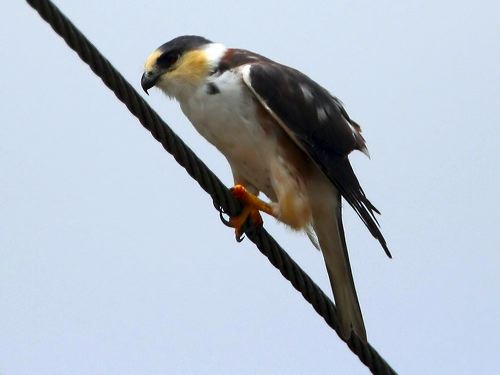
Pearl Kite (Gampsonyx swainsonii) ©Flickr Fernando Flores

The pearl kite is 20.3–23 cm (8.0–9.1 in) in length and weighs 80–95 g (2.8–3.4 oz). It is the smallest raptor in the Americas and one of the two smallest accipitrids in the world (besides the little sparrowhawk). The tiny hawk, another neotropical species, attains a slightly higher weight than the pearl kite. The adult has a black crown, upperparts, wing and tail, a rufous edged white collar, yellow forehead and cheeks, mainly white underparts, and yellow legs. Immature birds are similar to the adults but have white and chestnut tips to the back and wing feathers, a buff collar and some buff on the white underparts. In flight this species looks mainly black above and white below. The northern form G. s. leonae differs from the nominate G. s. swainsonii in that it has rufous flanks.

The nest is a deep cup of sticks built high in a tree. The clutch is 2-4 brown-marked white eggs, incubated mainly by the female for 34–35 days to hatching, with a further 5 weeks to fledging. There may be two broods in a season.

The pearl kite feeds mainly on lizards, especially Anolis, but also takes small birds and insects; it usually sits on a high open perch from which it swoops on its prey. The call is a high musical pip-pip-pip-pip or kitty-kitty-kitty.


More Avian and Attributes

Birds whose first name starts with “P”

What will you do with Jesus?

*
[Definitions from Webster’s Dictionary of American English (1828), unless noted. Bird info from Wikipedia plus.]
Avian And Attributes – Paradise

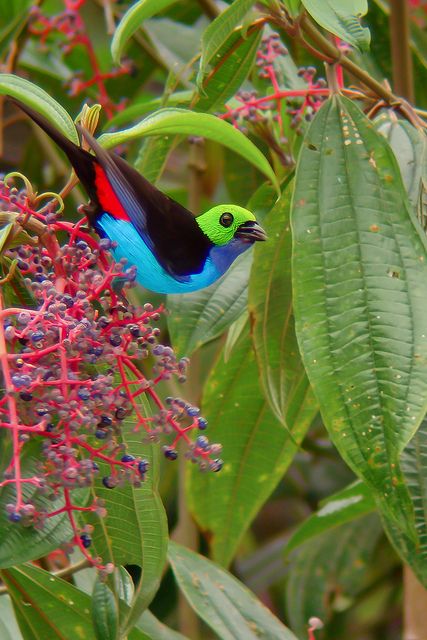
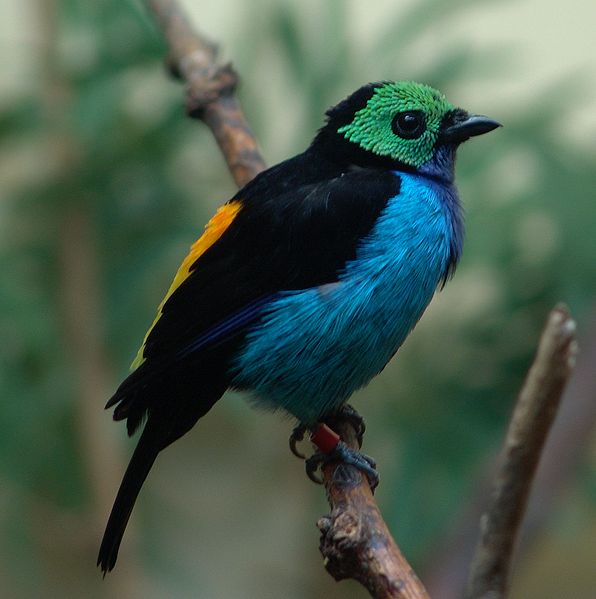
Paradise Tanager (Tangara chilensis) by Juan D Ramirez Rpo on Flickr From Pinterest

“And he said unto Jesus, Lord, remember me when thou comest into thy kingdom. And Jesus said unto him, Verily I say unto thee, To day shalt thou be with me in paradise.” (Luke 23:42-43 KJV)


Avian and Attributes – Paradise

PAR’ADISE, n. [Gr.] The garden of Eden, in which Adam and Eve were placed immediately after their creation.
1. A place of bliss; a region of supreme felicity or delight.
The earth
Shall all be paradise–
2. Heaven, the blissful seat of sanctified souls after death.
This day shalt thou be with me in paradise. Luke 23.
3. Primarily, in Persia, a pleasure-garden with parks and other appendages.

“He that hath an ear, let him hear what the Spirit saith unto the churches; To him that overcometh will I give to eat of the tree of life, which is in the midst of the paradise of God.” (Revelation 2:7 KJV)


Paradise Birds

Paradise Drongo 

Paradise Drongo Photo

The paradise drongo or ribbon-tailed drongo (Dicrurus megarhynchus) is a species of bird in the family Dicruridae. It is endemic to New Ireland in the Bismarck Archipelago, Papua New Guinea.

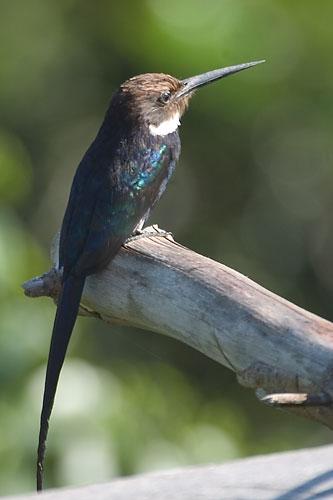
Paradise Jacamar

Paradise Jacamar (Galbula dea) ©Arthur Grosset

The Paradise Jacamar (Galbula dea) distributed throughout tropical rainforests and savanna of Bolivia, Brazil, Colombia, Ecuador, Peru and the Guyanas. Its range encompasses nearly the entire Amazon Basin, except in the northwest basin in parts of Colombia and Venezuela, (the northeast is the three countries of the Guyanas, which drain to the Atlantic-Caribbean). The diet consists mainly of butterflies and other flying insects.

Paradise Riflebird

Paradise Riflebird-Australia-Birdway

Paradise Riflebird (Ptiloris paradiseus) is medium-sized, up to 30 cm long. The male is black with an iridescent greenish blue crown, throat and central tail feathers. It has a black curved bill, black feet, dark brown iris and yellow mouth. The female is an olive brown bird with barred blackish below with a long white brow above her eye. The species is Endemic to eastern Australia, where it occurs in the rainforests of New South Wales and central Queensland.

Paradise Riflebird (Ptiloris paradiseus) Female ©WikiC

Paradise Shelduck

Paradise Shelduck (Tadorna variegata) by Ian 2

Paradise Shelduck (Tadorna variegata) by Ian 2

The Paradise Shelduck (Tadorna variegata) is a large goose-like duck endemic to New Zealand. It is a shelduck, a group of large goose-like birds which are part of the bird family Anatidae. The genus name Tadorna comes from Celtic roots and means “pied waterfowl”. Known to the Māori as pūtangitangi, but now commonly referred to as the “paradise duck”, it is a prized game bird. Both the male and female have striking plumage: the male has a black head and barred black body, the female a white head with a chestnut body. The paradise shelducks usually live as pairs, grazing on grass and weeds, and will raid crops, particularly when molting.

Paradise Tanager

Paradise Tanager (Tangara_chilensis) -DenverZoo-WikiC

Paradise Tanager (Tangara chilensis) -DenverZoo-WikiC

The Paradise Tanager (Tangara chilensis) is a brilliantly multicolored, medium-sized songbird whose length varies between 13.5 and 15 cm. It has a light green head, sky blue underparts and black upper body plumage. Depending on subspecies, the rump is yellow and red or all red. The beak is black and the legs are grey.

Found in humid tropical and subtropical forests in the western and northern Amazon Basin in South America, it occurs in Venezuela, Peru, Colombia, Ecuador, Bolivia, Brazil and the Guianas. Despite its scientific name, it is not found in Chile.

Paradise-crow

Paradise-crow (Lycocorax pyrrhopterus) ©©Flickr

The Paradise-crow (Lycocorax pyrrhopterus) also known as the silky crow, is a medium-sized crow-like bird-of-paradise. One of the few monogamous birds-of-paradise, the paradise-crow is endemic to lowland forests of North Maluku in Indonesia. The diet consists mainly of fruits and arthropods.


More Avian and Attributes

Birds whose first name starts with “P”

Good News

*
[Definitions from Webster’s Dictionary of American English (1828), unless noted. Bird info from Wikipedia plus.]
Avian And Attributes – Palm

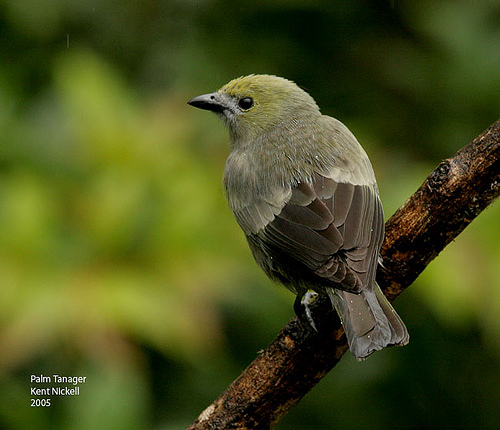
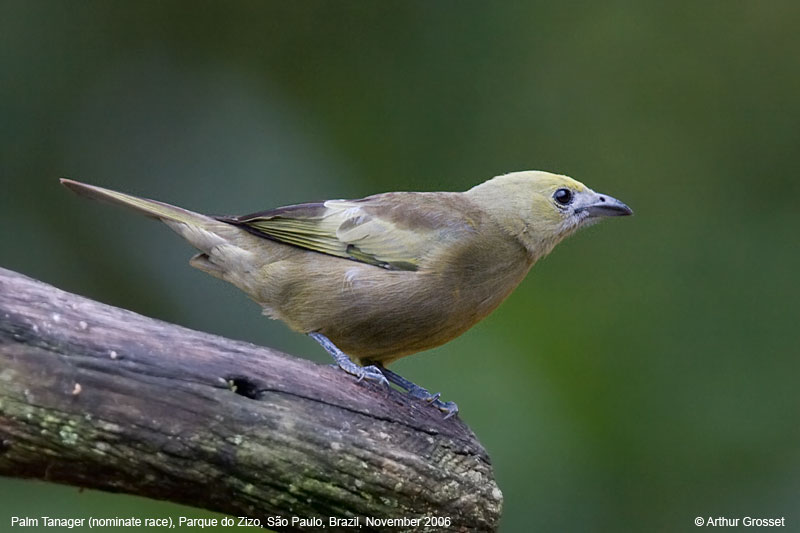
Palm Tanager (Thraupis palmarum) 2 by Kent Nickell

Palm Tanager (Thraupis palmarum) by Kent Nickell

“Then did they spit in his face, and buffeted him; and others smote him with the palms of their hands,” (Matthew 26:67 KJV)

“Took branches of palm trees, and went forth to meet him, and cried, Hosanna: Blessed is the King of Israel that cometh in the name of the Lord.” (John 12:13 KJV)


Avian and Attributes – Palm

PALM, n. p`am.. [L. palma.]
1. The inner part of the hand.
2. A hand or hand’s breadth; a lineal measure of three inches.
4. The name of many species of plants, but particularly of the date-tree or great palm, a native of Asia and Africa.
The palms constitute a natural order of monocotyledonous plants,with a simple cylindric stem, terminating in a crown of leaves or fronds, within which rises a tuft of flowers and fruits; all natives of warm climates. They vary in size from 2 to more than 100 feet in height.
5. Branches of the palm being worn in token of victory, hence the word signifies superiority, victory, triumph. The palm was adopted as an emblem of victory, it is said, because the tree is so elastic as when pressed, to rise and recover its correct position.
Namur subdued is England’s palm alone.

“Took branches of palm trees, and went forth to meet him, and cried, Hosanna: Blessed is the King of Israel that cometh in the name of the Lord.” (John 12:13 KJV)


Palm Cockatoo (Probosciger aterrimus) ©Wikipedia

Palm Birds

Palm Cockatoo (Probosciger aterrimus), also known as the goliath cockatoo or great black cockatoo, is a large smoky-grey or black parrot of the cockatoo family native to New Guinea, Aru Islands, and Cape York Peninsula. It has a very large black beak and prominent red cheek patches.

Palm Lorikeet (Charmosyna palmarum) ©Drawing WikiC

The Palm Lorikeet (Charmosyna palmarum) is a species of parrot in the family Psittaculidae. It is found in Solomon Islands and Vanuatu. Its natural habitats are subtropical or tropical moist lowland forest, subtropical or tropical moist montane forest and plantations.

Palm Tanager (Thraupis palmarum) ©Arthur Grosset

The Palm Tanager (Thraupis palmarum) is a medium-sized passerine bird. This tanager is a resident breeder from Nicaragua south to Bolivia, Paraguay and southern Brazil. It also breeds on Trinidad and, since 1962, on Tobago. In Trinidad and Tobago, it is known by colloquial names such as the “palmiste” and the “green jean”.

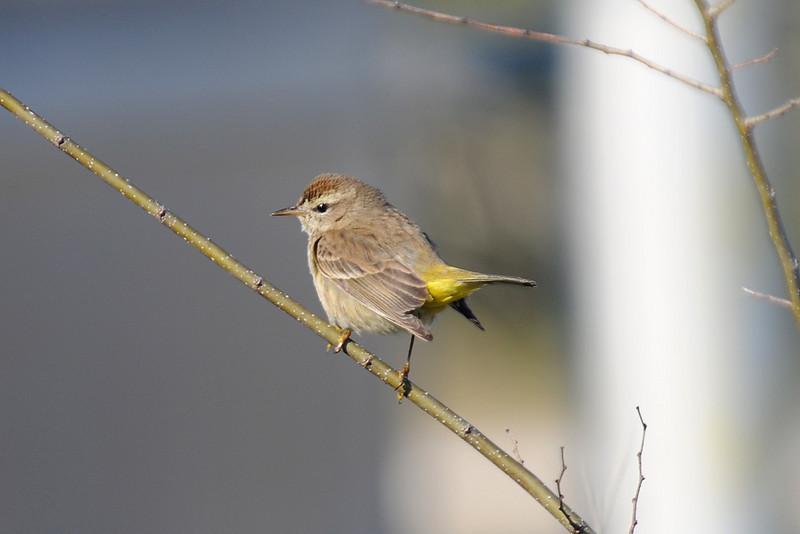
Palm Warbler (Setophaga palmarum) by Bob-Nan

The Palm Warbler (Setophaga palmarum) is a small songbird of the New World warbler family. The species comprises two distinct subspecies that may merit specific status.

“Yellow palm warbler” or “eastern palm warbler” (S. p. hypochrysea) of the eastern third of the breeding range has brownish-olive upper parts and thoroughly yellow underparts with bold rufous breast and flank streaking. It migrates later in the fall than its western counterpart.

“Brown palm warbler” or “western palm warbler” (S. p. palmarum) inhabits the remaining western two-thirds of the breeding range. It has much less yellow below, with less colorful streaking, and cold grayish-brown upper parts.

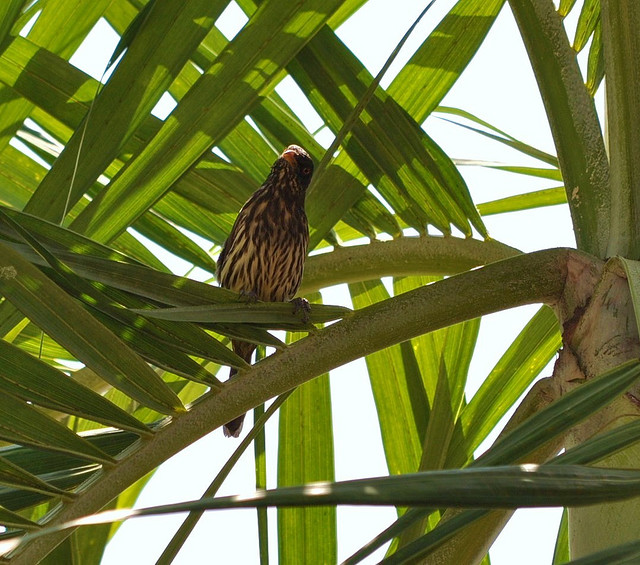
Palmchat (Dulus dominicus) ©SevenSeas of Rhye

Palmchat (Dulus dominicus) ©SevenSeas of Rhye

The Palmchat (Dulus dominicus) is a small, long-tailed passerine bird, the only species in the genus Dulus and the family Dulidae. It is thought to be related to the waxwings, family Bombycillidae, and is sometimes classified with that group. The name reflects its strong association with palms for feeding, roosting and nesting. The palmchat is the national bird of the Dominican Republic.


More Avian and Attributes

Birds whose first name starts with “P”

Gideon

*
[Definitions from Webster’s Dictionary of American English (1828), unless noted. Bird info from Wikipedia plus.]
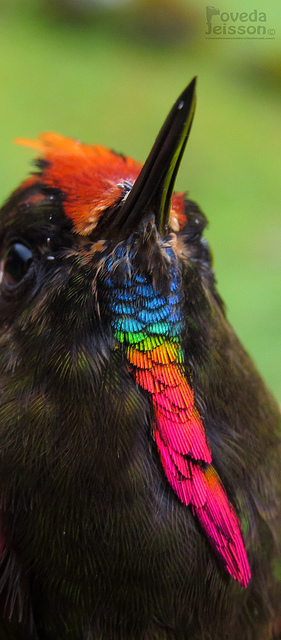
Avian And Attributes – Noble

Noble Snipe (Gallinago nobilis) ©WikiC

“These were more noble than those in Thessalonica, in that they received the word with all readiness of mind, and searched the scriptures daily, whether those things were so.” (Acts 17:11 KJV)


Avian and Attributes – Noble

NO’BLE, a.
1. Great; elevated; dignified; being above every thing that can dishonor reputation; as a nobel mind; a noble courage; noble deeds of valor.
2. Exalted; elevated; sublime.
3. Magnificent; stately; splendid; as a noble parade; a noble edifice.
4. Of an ancient and splendid family; as nobel by descent.
5. Distinguished from commoners by rank and title; as a noble personage.
8. Ingenuous; candid; of an excellent disposition; ready to receive truth. Acts 17.
9. Of the best kind; choice; excellent; as a noble vine. Jer 2.
NO’BLE, n.
1. A person of rank above a commoner; a nobleman; a peer; as a duke, marquis, earl, viscount or baron.
2. In Scripture, a person of honorable family or distinguished by station. Exo 24. Neh 6.


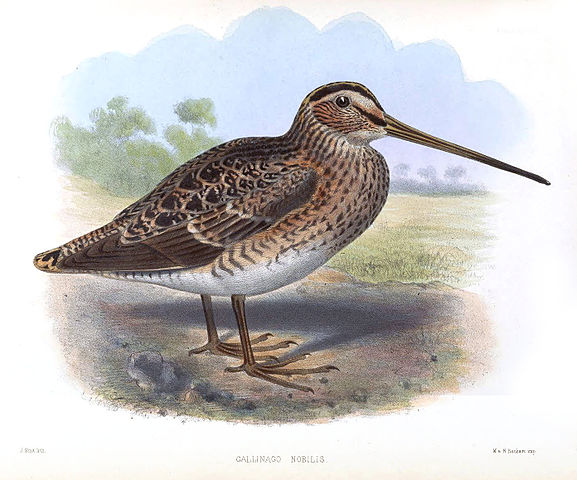
Noble Snipe (Gallinago nobilis) ©Drawing WikiC

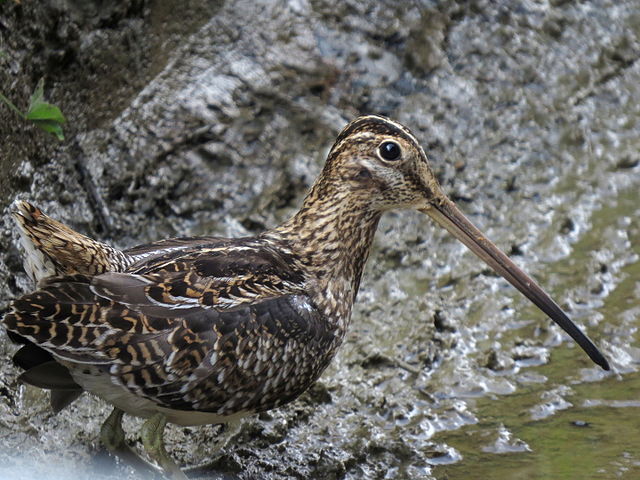
Noble Snipe (Gallinago nobilis) is a small stocky wader. It breeds in the Andes of Colombia, Ecuador, Peru and Venezuela above or just below the treeline. It is entirely sedentary.

This 30–32.5 cm long snipe has a stocky body and relatively short legs for a wader. Its upperparts, head and neck are streaked and patterned with dark brown and buff, and gold edges to the feathers form distinct lines down its back. The belly is white with brown barring on the flanks. The horn-coloured bill is very long and straight. The legs and feet are greyish-green. The sexes are similar, but females are longer billed; immature birds differ only in showing pale fringes on the wing coverts. The noble snipe has a clear melodious call.

The noble snipe is found high altitude wet grassland marshes and swamps from 2,700 – 4,200 m.

Little is known of its biology, but it has an aerial display, which involves flying high in circles, followed by a powerful stoop during which the bird makes a drumming sound, caused by vibrations of modified outer tail feathers, lower pitched than that of common snipe. It breeds from March to July.

The noble snipe is usually alone or in pairs, but is difficult to observe on the ground. It forages by pushing its long bill deep into the mud seeking insects and worms. Its cryptic plumage provides effective camouflage when the bird stands motionless amongst marsh vegetation.


More Avian and Attributes

Birds whose first name starts with “N”

Sharing The Gospel

*
[Definitions from Webster’s Dictionary of American English (1828) edited, unless noted. Bird info from Wikipedia plus.]

Lee’s Six Words – But If You Bite And Devour

Crocodile at Lowry Park Zoo by Lee 3-27-18

Crocodile at Lowry Park Zoo by Lee 3-27-18

“For, brethren, ye have been called unto liberty; only use not liberty for an occasion to the flesh, but by love serve one another. For all the law is fulfilled in one word, even in this; Thou shalt love thy neighbour as thyself. But if ye bite and devour one another, take heed that ye be not consumed one of another.” (Galatians 5:13-15 KJV)

Crocodile at Lowry Park Zoo by Lee 3-27-18

Crocodile at Lowry Park Zoo by Lee 3-27-18

*

[African Gharial or Long Nose crocodile]

Daily Devotionals

*

Birds of the Bible – Yellow-billed Storks at Zoo Tampa

Yellow-billed Stork (Mycteria ibis) ZTLP by Lee 032718

“And the stork, and the heron after her kind, and the lapwing, and the bat.” (Deuteronomy 14:18 KJV)

We were at Lowry Park Zoo, now called Zoo Tampa at Lowry Park, and saw the Yellow-billed Storks in the Sulawesi aviary. This was the first time we have seen them in there. It gave a great opportunity to watch them up-close. Really, up-close! It was great!

Storks are mentioned in the Bible in five verses in the KJV. Leviticus 11:19, Deuteronomy 14:18, Psalm 104:18, Jeremiah 8:7, and Zechariah 5:9. The first two verses have to do with the “Do Not Eat” list, the next two with nesting and migration, and the last with a prophecy.

Yellow-billed Stork (Mycteria ibis) ZTLP by Lee 032718

The Yellow-billed stork (Mycteria ibis), sometimes also called the wood stork or wood ibis, is a large African wading stork species in the family Ciconiidae. It is widespread in regions south of the Sahara and also occurs in Madagascar.

The yellow-billed stork is closely related to 3 other species in the Mycteria genus: the American woodstork (Mycteria americana), the milky stork (Mycteria cinerea) and the painted stork (Mycteria leucocephala). It is classified as belonging to one clade with these 3 other species because they all display remarkable homologies in behavior and morphology. In one analytical study of feeding and courtship behaviours of the wood-stork family, M.P. Kahl attributed the same general ethology to all members of the Mycteria genus, with few species-specific variations. [Probably only one of that genus was onboard the Ark] These four species are collectively referred to as the wood-storks, which should not be confused with one alternative common name (wood-stork) for the yellow-billed stork.

Yellow-billed Stork (Mycteria ibis) ZTLP by Lee

Before it was established that the yellow-billed stork was closely related to the American woodstork, the former was classified as belonging to the genus Ibis, together with the milky stork and painted stork. However, the yellow-billed stork has actually long been recognised as a true stork and along with the other 3 related stork species, it should not strictly be called an ibis.

Yellow-billed Stork (Mycteria ibis) ZTLP by Lee 032718

It is a medium-sized stork standing 90–105 cm (35–41 in) tall. The body is white with a short black tail that is glossed green and purple when freshly moulted. The bill is deep yellow, slightly decurved at the end and has a rounder cross-section than in other stork species outside the Mycteria. Feathers extend onto the head and neck just behind the eyes, with the face and forehead being covered by deep red skin. Both sexes are similar in appearance, but the male is larger and has a slightly longer heavier bill. Males and females weigh approximately 2.3 kg (5.1 lb) and 1.9 kg (4.2 lb) respectively.

Yellow-billed Stork (Mycteria ibis) ZTLP by Lee

Colouration becomes more vivid during the breeding season. In the breeding season, the plumage is coloured pink on the upperwings and back; the ordinarily brown legs also turn bright pink; the bill becomes a deeper yellow and the face becomes a deeper red.

Their diet comprises mainly small, freshwater fish of about 60-100mm length and maximally 150g, which they swallow whole. They also feed on crustaceans, worms, aquatic insects, frogs and occasionally small mammals and birds.

This species appears to rely mainly on sense of touch to detect and capture prey, rather than by vision. They feed patiently by walking through the water with partially open bills and probe the water for prey. Contact of the bill with a prey item is followed by a rapid snap-bill reflex, whereby the bird snaps shut its mandibles, raises its head and swallows the prey whole.[3] The speed of this reflex in the closely related American woodstork (Mycteria americana) has been recorded as 25 milliseconds[15] and although the corresponding reflex in the yellow-billed stork has not been quantitatively measured, the yellow-billed stork’s feeding mechanism appears to be at least qualitatively identical to that of the American woodstork.

Wood Stork at Gatorland Walking Past Me

In addition to the snap-bill reflex, the yellow-billed stork also uses a systematic foot stirring technique to sound out evasive prey. It prods and churns up the bottom of the water as part of a “herding mechanism” to force prey out of the bottom vegetation and into the bird’s bill. The bird does this several times with one foot before bringing it forwards and repeating with the other foot. Although they are normally active predators, they have also been observed to scavenge fish regurgitated by cormorants.

[Information from Wikipedia with editing]

Timmy and the Stork

*

Lee’s Seven Words – Faithful Are The Wounds Of A Friend

***

FAITHFUL ARE THE WOUNDS

OF A FRIEND

***


Faithful are the wounds of a friend, But the kisses of an enemy are deceitful.” (Proverbs 27:6 NKJV)

This video was taken at Gatorland on a cold morning. They were trying to share body heat. Every time they settled down, one decided to move and then the whole pile rearranged themselves again. Not birds, but thought you might enjoy this.

*

More Daily Devotionals

*