White-breasted Cormorants at Lowry Park Zoo 12-26-14 by Lee
But the cormorant and the bittern shall possess it; the owl also and the raven shall dwell in it: and he shall stretch out upon it the line of confusion, and the stones of emptiness. (Isaiah 34:11 KJV)
With my new Panasonic Lumix FZ200 camera in hand, off we went to Lowry Park Zoo the day after Christmas. I was itching to try out the 600 zoom compared to my 450 on the FZ47. I was content with the older camera, because as I have said before, I am a birdwatcher, not a photographer. I don’t know an “F-stop” from a “bus stop”. I shoot in Program mode.
That aside, I use the camera often, probably more than binoculars. Why? Maybe I am a little bit of a photographer because I like to see the birds when I get home. Many times I keep my bad shots because they are at least “proof shots” that I really did see the bird or to help ID it later. I leave the real good shots for Dan to take.because he knows what a “F-stop” is.
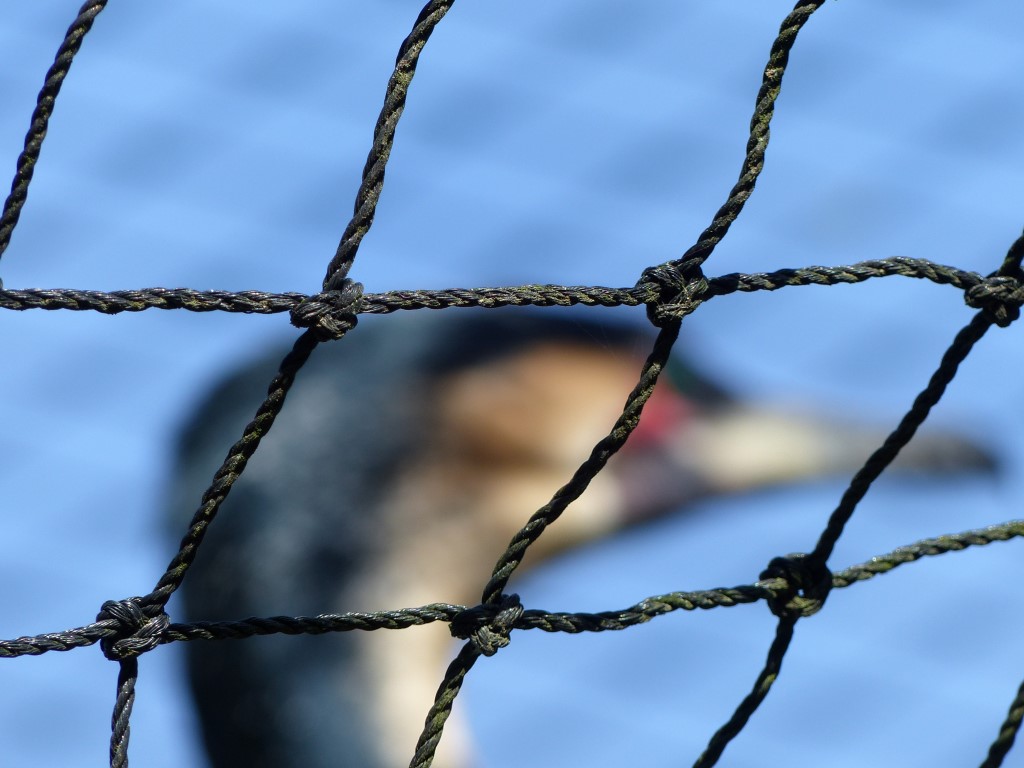
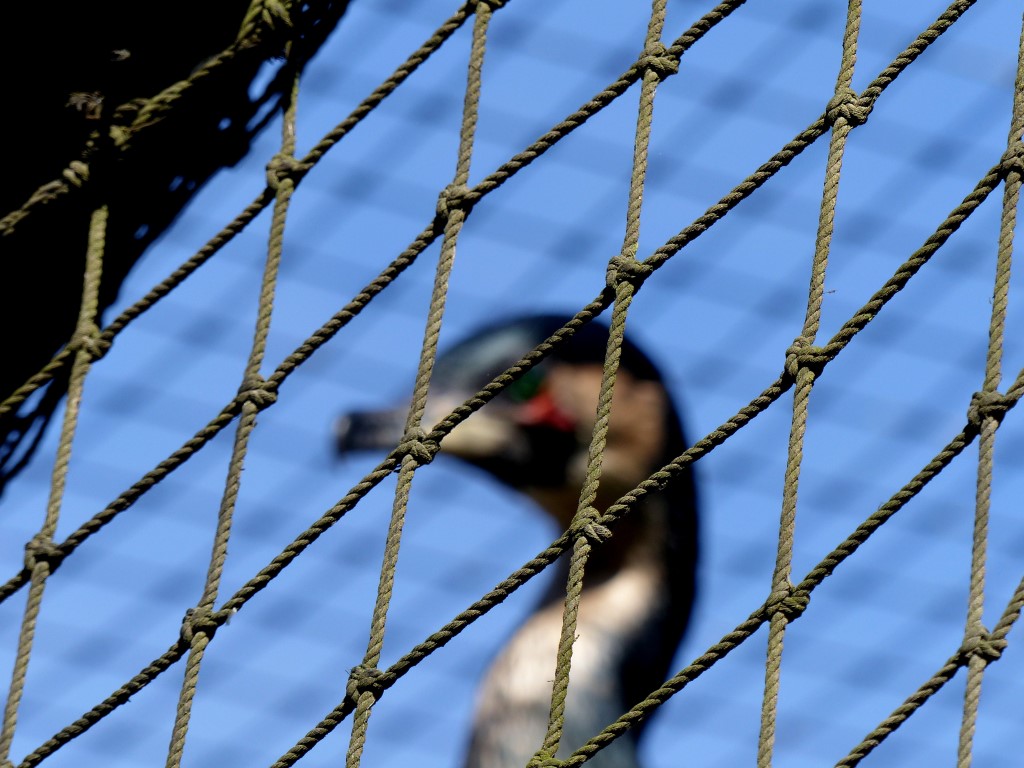
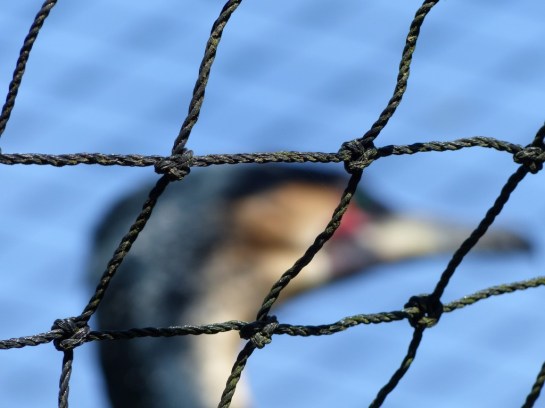
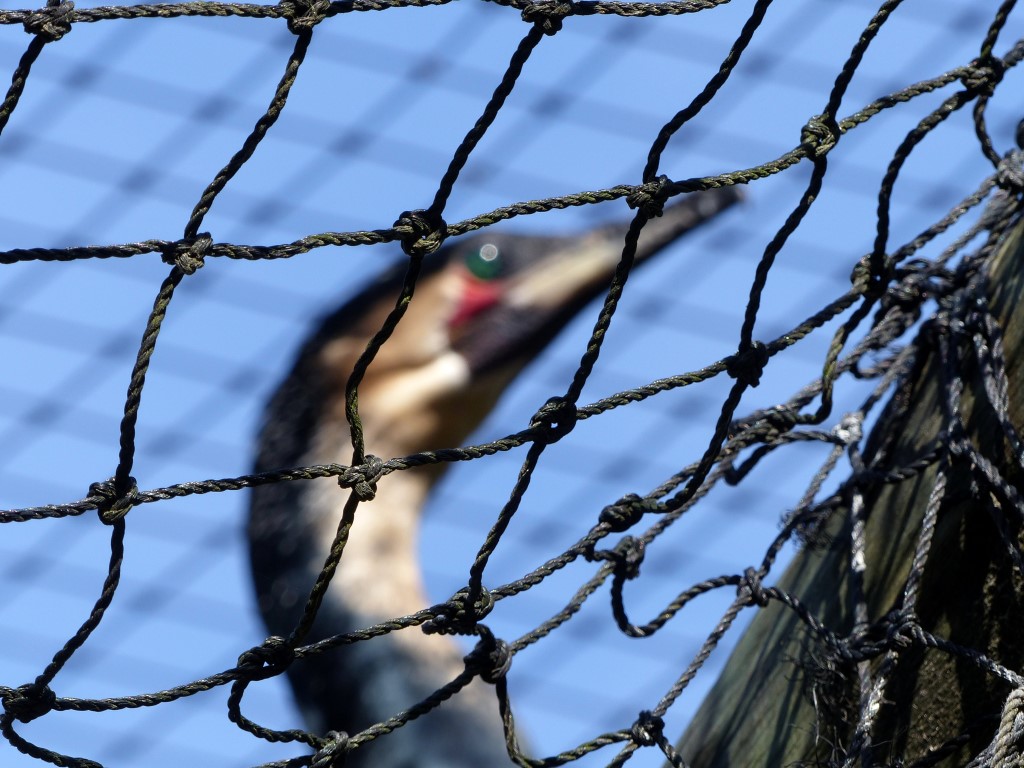
First Attempt – See the neat knots?
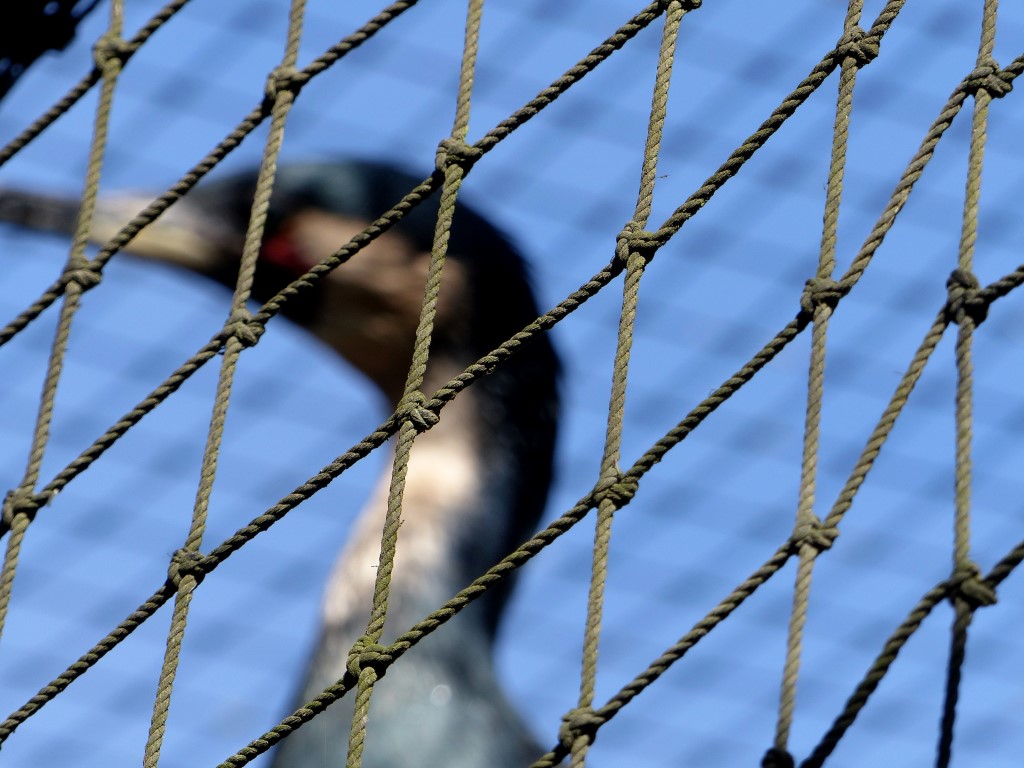
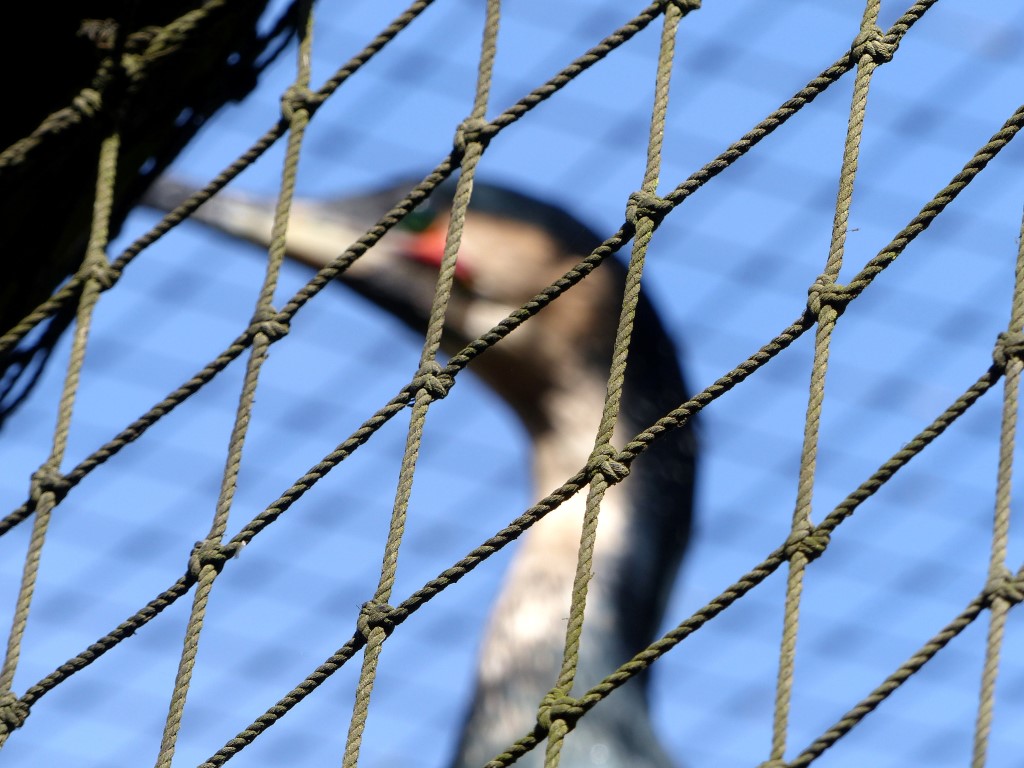
Back to my challenge. Taking photos at a Zoo can be quite challenging to say the least. Especially for “program mode” photographers. For some reason, zoos like to keep something between you and the birds, unless you are in an aviary with them. That “something” is usually a fence, bars, netting, or something to try to shoot through. They seem to like to keep their birds safe. :)
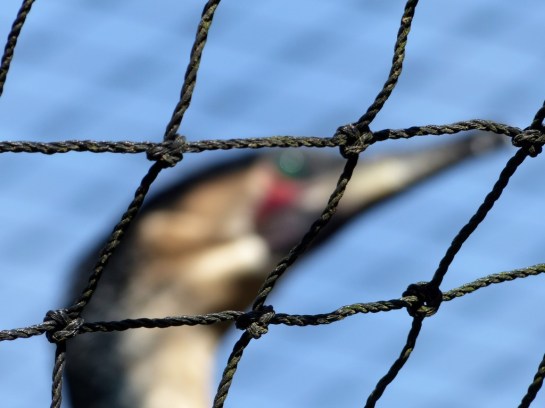
Another Attempt – Nice knots!
I tried again,
Nope – Not yet!
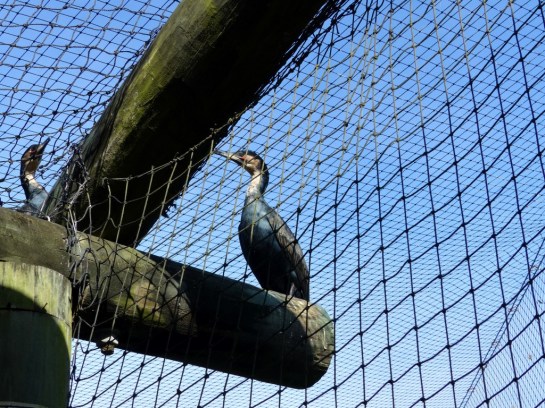
I backed out the zoom and tried to find the other one.
There he is
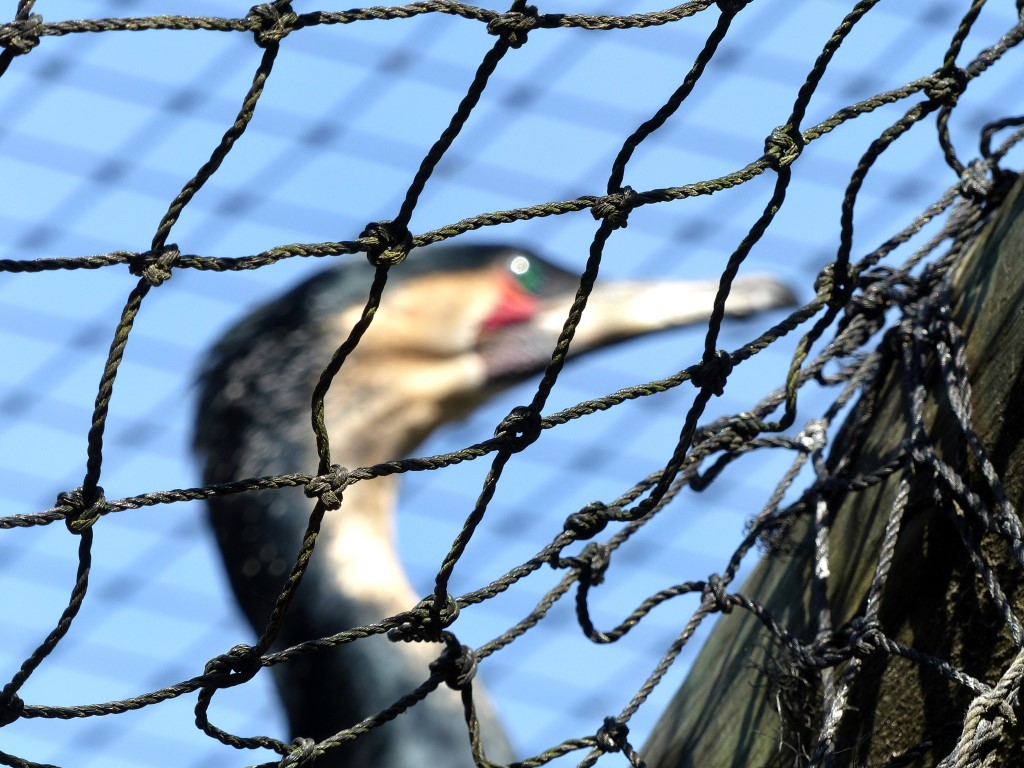
Different color netting, but same blurry bird photo.
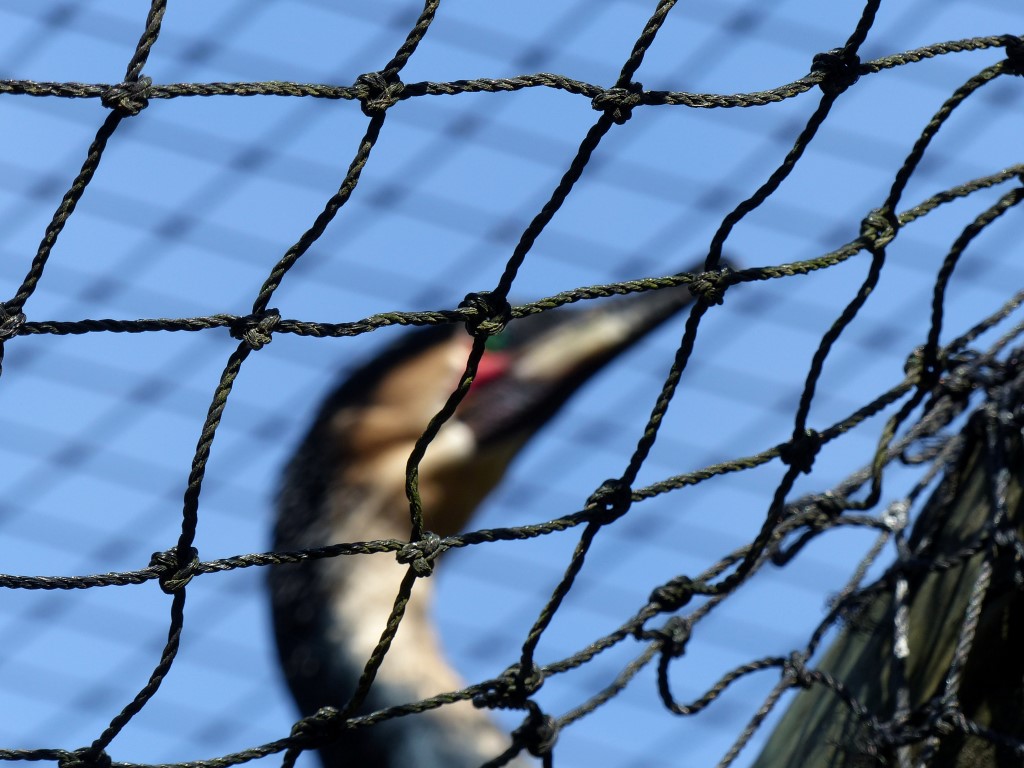
Yuk!
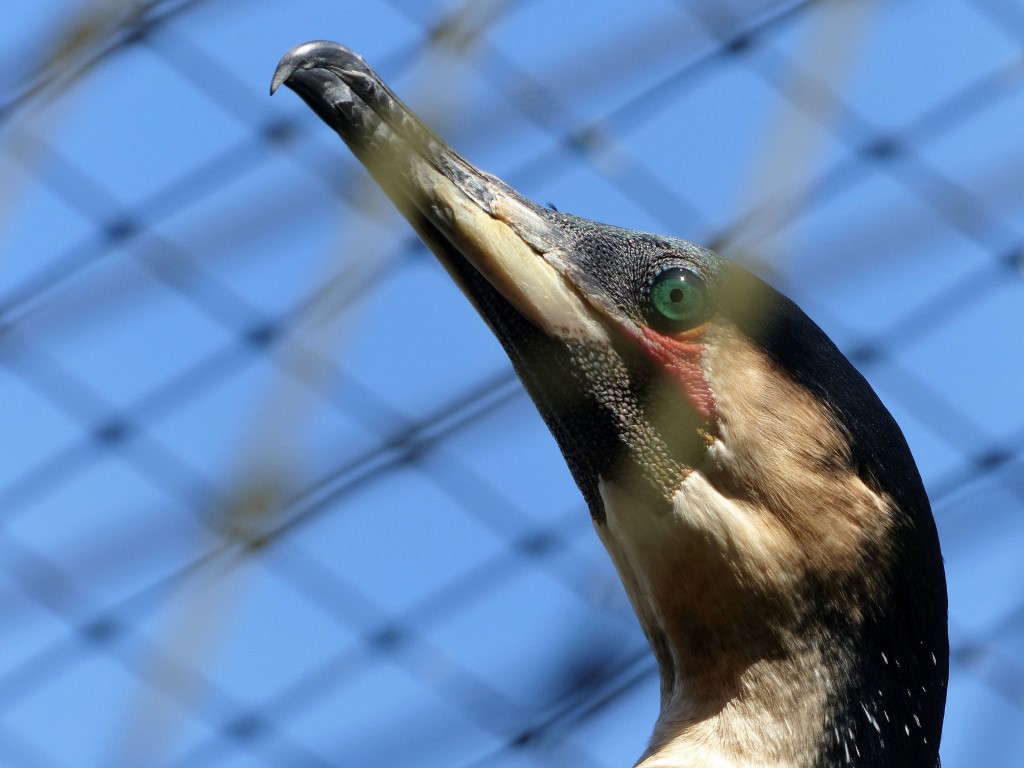
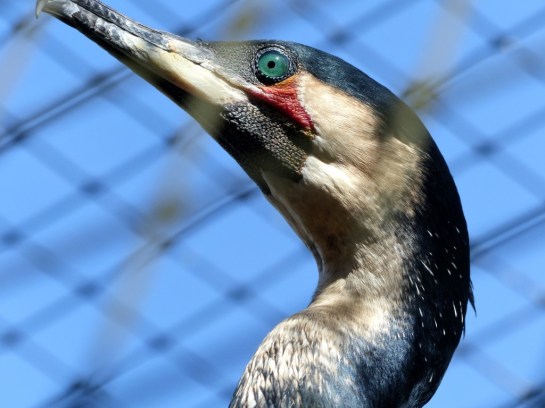
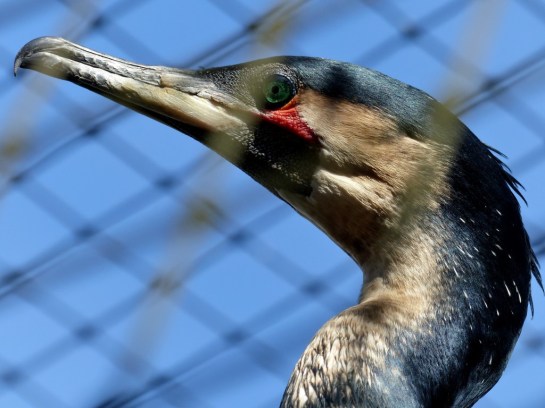
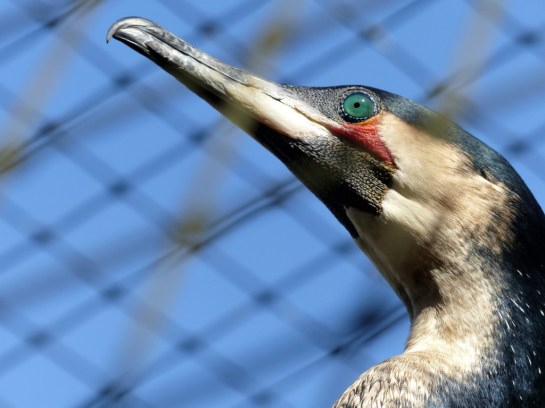
Then, I finally got through the netting enough to see that beautiful bird.
Look at that beauty!
Wow!
I got through the netting.
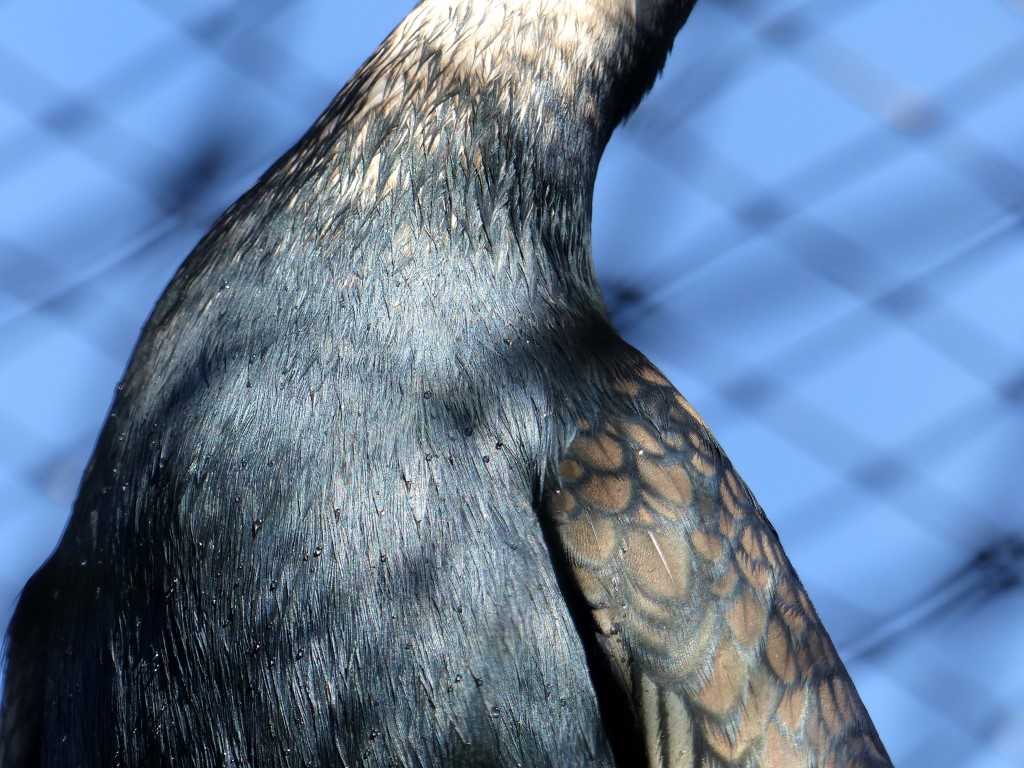
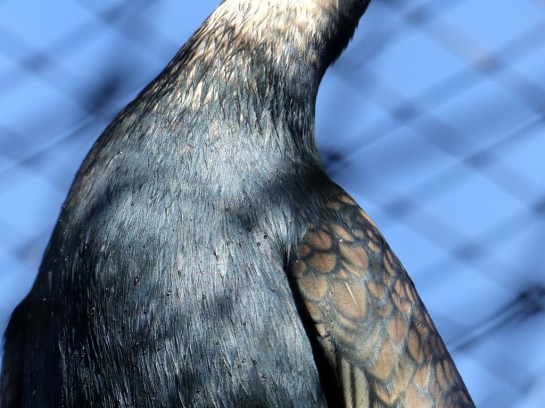
Even got the chest and some feather design.
Yeah! I got through
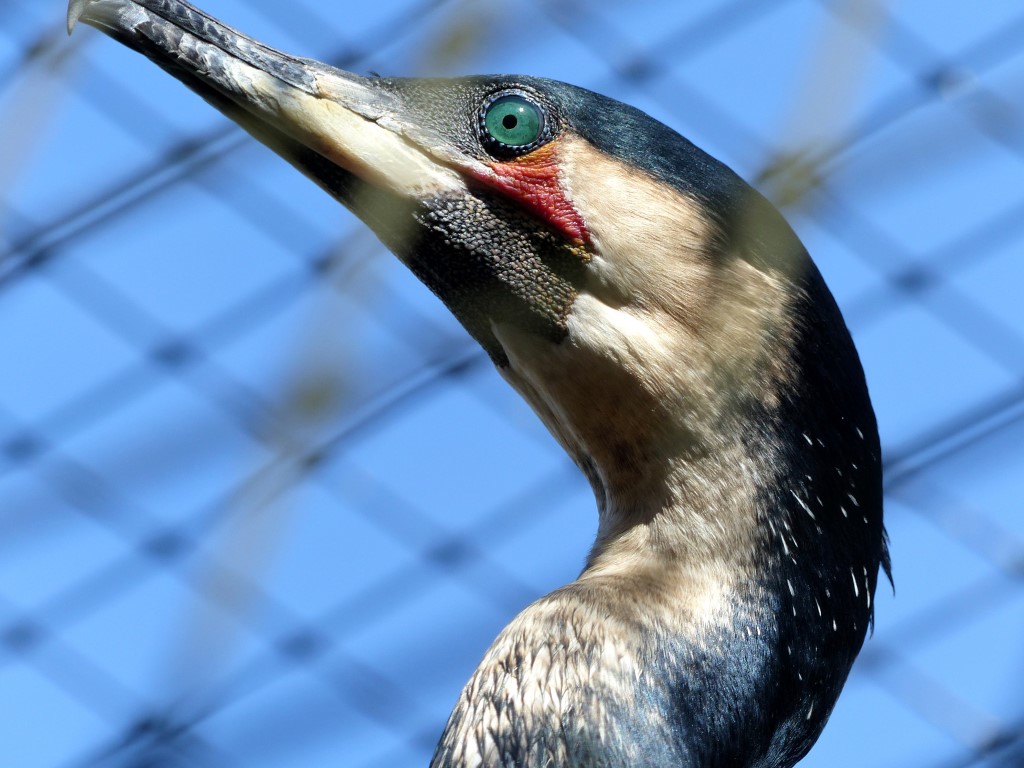
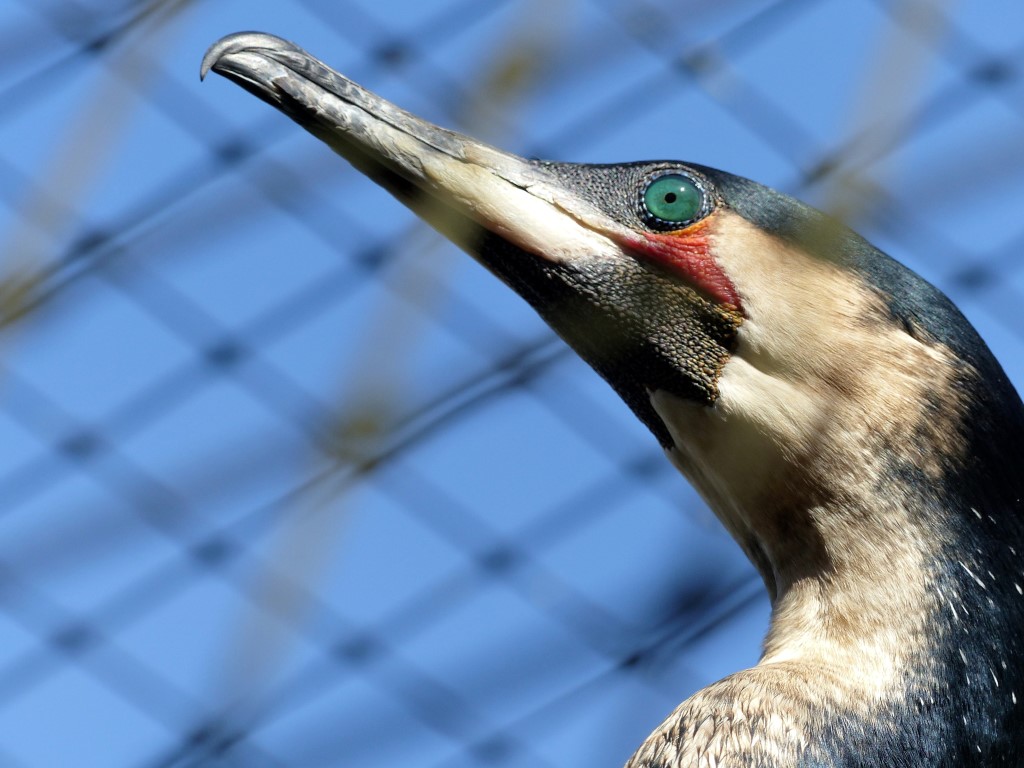
Look at those eyes!
What pretty green eyes
Our Creator gave the White-breasted Cormorants a beautiful eye color and overall neat appearance. Just this one encounter, trying to get a photo takes you through a wide range of emotions; frustration, wanting to give up, then determination and joy when you can finally see the bird clear. Reminds me of what I have been reading in Ecclesiastes.
To everything there is a season, A time for every purpose under heaven: …A time to weep, And a time to laugh; A time to mourn, And a time to dance; A time to cast away stones, And a time to gather stones; …A time to gain, And a time to lose; A time to keep, And a time to throw away (blurry photos); …A time to love, And a time to hate; …What profit has the worker from that in which he labors? I have seen the God-given task with which the sons of men are to be occupied. He has made everything beautiful in its time. Also He has put eternity in their hearts, except that no one can find out the work that God does from beginning to end. I know that nothing is better for them than to rejoice, and to do good in their lives, and also that every man should eat and drink and enjoy the good of all his labor—it is the gift of God. (Ecclesiastes 3:1-13 NKJV)
Enjoy all the photos of the cormorants and even some from a previous trip:
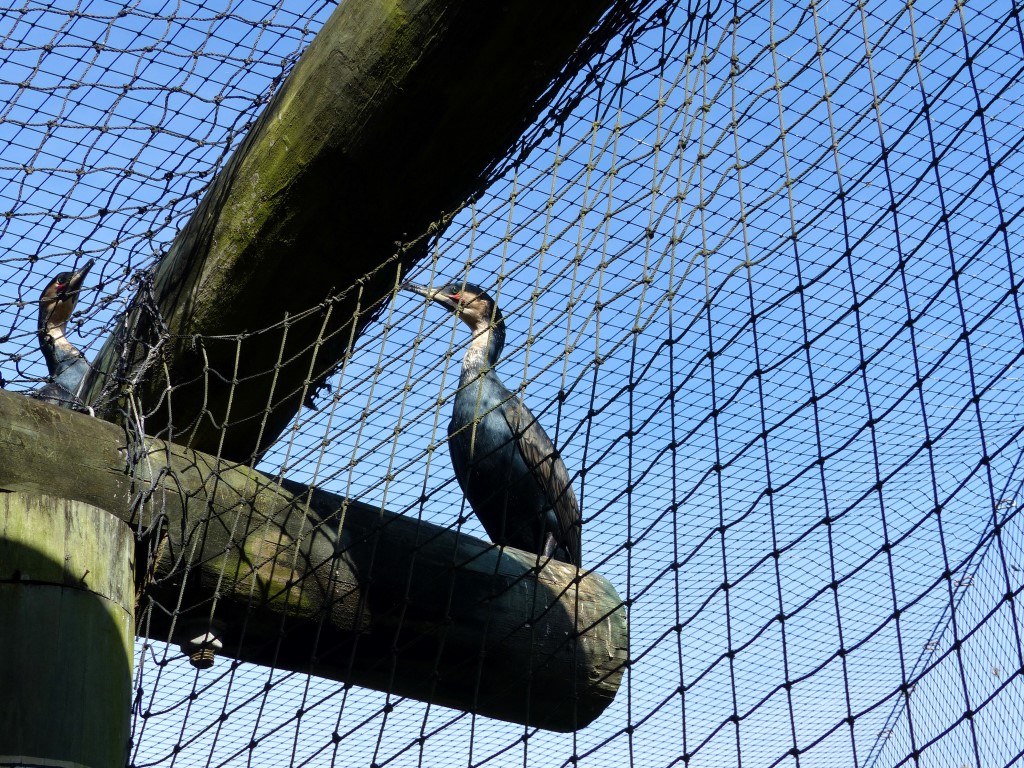
Fine at a distance/
First Attempt – See the neat knots?
Tried again
Nope – Not yet!
Another Attempt – Nice knots!
There he is
First attempt with the other one
Yuk!
Different color than the other side
Nice knots on this side
I got through the netting.
Can see the net, but nice bird!
Yeah! I got through
Look at that beauty!
What pretty green eyes
White-breasted Cormorant at LPZ by Lee Feb 2014
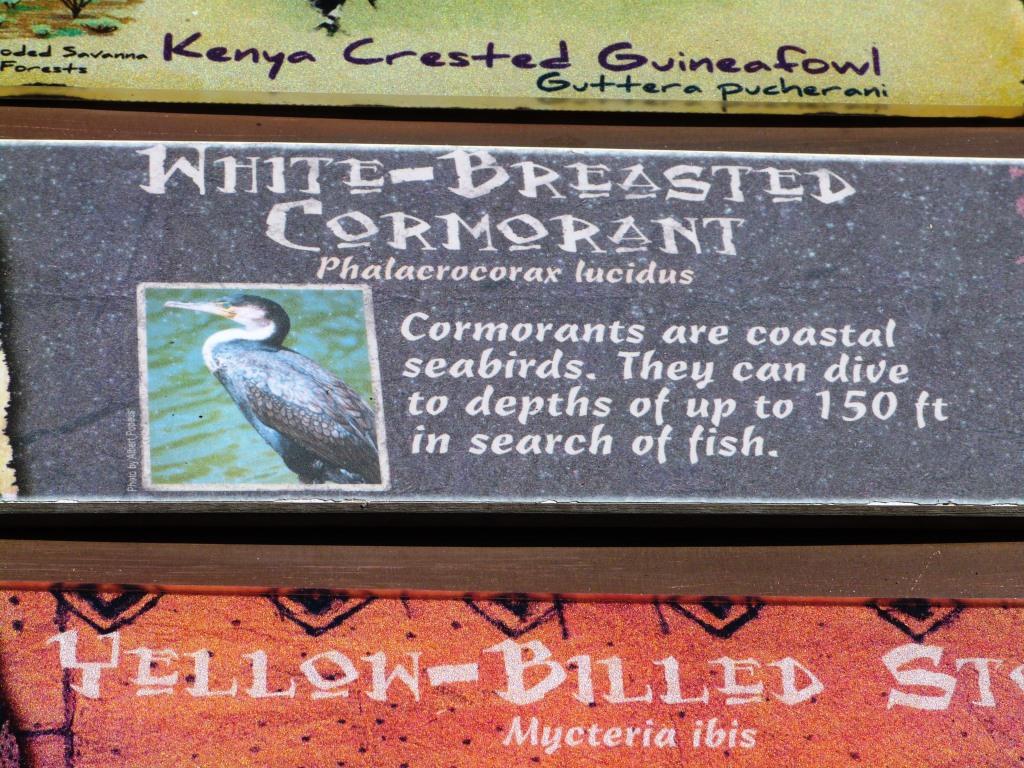
White-breasted Cormorant Sign Feb 2014
The white-breasted cormorant (Phalacrocorax lucidus) is much like the widespread great cormorant and if not a regional variant of the same species, is at least very closely related. It is distinguished from other forms of the great cormorant by its white breast and by the fact that subpopulations are freshwater birds. Phalacrocorax lucidus is not to be confused with the smaller and very different endemic South Australian black-faced cormorant, which also is sometimes called the white-breasted cormorant.
“I, even I, am the LORD; and beside me there is no saviour. (Isaiah 43:11 KJV)
“For unto you is born this day in the city of David a Saviour, which is Christ the Lord. (Luke 2:11 KJV)
“And we have seen and do testify that the Father sent the Son to be the Saviour of the world. (1 John 4:14 KJV)
Trust you will enjoy an excerpt from this year’s Christmas Program at Faith Baptist. A video seems more appropriate than just an audio.
*
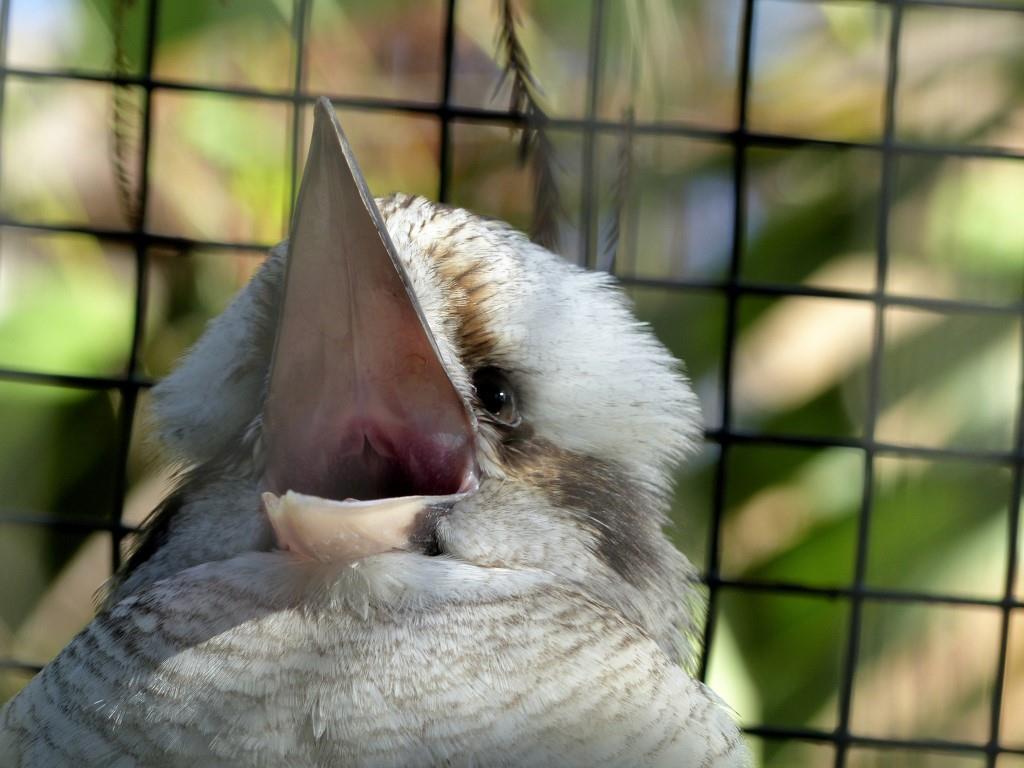
Laughing Kookabura at Lowry Park Zoo by Lee 12-26-14
To think Our Creator, the Creator of all the world and especially the birds we enjoy so much, humbled Himself to come to earth to do the Father’s will. Our Savior!
In the beginning was the Word, and the Word was with God, and the Word was God. The same was in the beginning with God. All things were made by him; and without him was not any thing made that was made. (John 1:1-3 KJV)
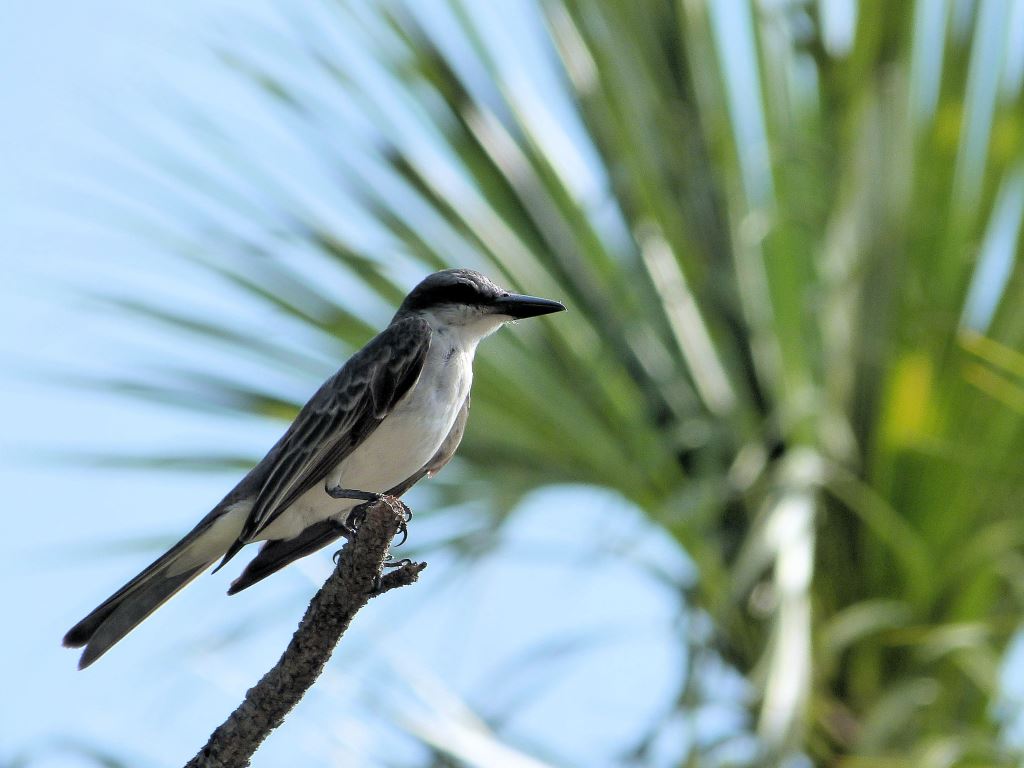
Grey Kingbird (Tyrannus dominicensis) by Lee at Honeymoon Is SP
The Watchman of the Old Orchard
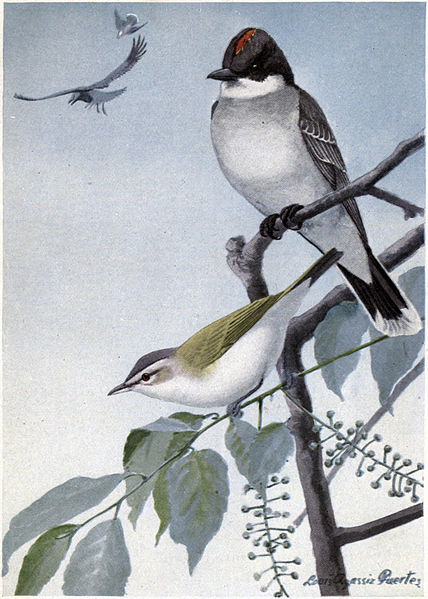
The Kingbird and the Great Crested Flycatcher.
The Burgess Bird Book For Children
*
CHAPTER 7. The Watchman of the Old Orchard.
Listen to the story read.
A few days after Chebec and his wife started building their nest in the Old Orchard Peter dropped around as usual for a very early call. He found Chebec very busy hunting for materials for that nest, because, as he explained to Peter, Mrs. Chebec is very particular indeed about what her nest is made of. But he had time to tell Peter a bit of news.
“My fighting cousin and my handsomest cousin arrived together yesterday, and now our family is very well represented in the Old Orchard,” said Chebec proudly.
Slowly Peter reached over his back with his long left hind foot and thoughtfully scratched his long right ear. He didn’t like to admit that he couldn’t recall those two cousins of Chebec’s. “Did you say your fighting cousin?” he asked in a hesitating way.
“That’s what I said,” replied Chebec. “He is Scrapper the Kingbird, as of course you know. The rest of us always feel safe when he is about.”
“Of course I know him,” declared Peter, his face clearing. “Where is he now?”
At that very instant a great racket broke out on the other side of the Old Orchard and in no time at all the feathered folks were hurrying from every direction, screaming at the top of their voices. Of course, Peter couldn’t be left out of anything like that, and he scampered for the scene of trouble as fast as his legs could take him. When he got there he saw Redtail the Hawk flying up and down and this way and that way, as if trying to get away from something or somebody.
For a minute Peter couldn’t think what was the trouble with Redtail, and then he saw. A white-throated, white-breasted bird, having a black cap and back, and a broad white band across the end of his tail, was darting at Redtail as if he meant to pull out every feather in the latter’s coat.
He was just a little smaller than Welcome Robin, and in comparison with him Redtail was a perfect giant. But this seemed to make no difference to Scrapper, for that is who it was. He wasn’t afraid, and he intended that everybody should know it, especially Redtail. It is because of his fearlessness that he is called Kingbird. All the time he was screaming at the top of his lungs, calling Redtail a robber and every other bad name he could think of. All the other birds joined him in calling Redtail bad names. But none, not even Bully the English Sparrow, was brave enough to join him in attacking big Redtail.
When he had succeeded in driving Redtail far enough from the Old Orchard to suit him, Scrapper flew back and perched on a dead branch of one of the trees, where he received the congratulations of all his feathered neighbors. He took them quite modestly, assuring them that he had done nothing, nothing at all, but that he didn’t intend to have any of the Hawk family around the Old Orchard while he lived there. Peter couldn’t help but admire Scrapper for his courage.
As Peter looked up at Scrapper he saw that, like all the rest of the flycatchers, there was just the tiniest of hooks on the end of his bill. Scrapper’s slightly raised cap seemed all black, but if Peter could have gotten close enough, he would have found that hidden in it was a patch of orange-red. While Peter sat staring up at him Scrapper suddenly darted out into the air, and his bill snapped in quite the same way Chebec’s did when he caught a fly. But it wasn’t a fly that Scrapper had. It was a bee. Peter saw it very distinctly just as Scrapper snapped it up. It reminded Peter that he had often heard Scrapper called the Bee Martin, and now he understood why.
“Do you live on bees altogether?” asked Peter.
Eastern Kingbird (Tyrannus tyrannus) by Margaret Sloan Eating
“Bless your heart, Peter, no,” replied Scrapper with a chuckle. “There wouldn’t be any honey if I did. I like bees. I like them first rate. But they form only a very small part of my food. Those that I do catch are mostly drones, and you know the drones are useless. They do no work at all. It is only by accident that I now and then catch a worker. I eat all kinds of insects that fly and some that don’t. I’m one of Farmer Brown’s best friends, if he did but know it. You can talk all you please about the wonderful eyesight of the members of the Hawk family, but if any one of them has better eyesight than I have, I’d like to know who it is. There’s a fly ‘way over there beyond that old apple-tree; watch me catch it.”
Peter knew better than to waste any effort trying to see that fly. He knew that he couldn’t have seen it had it been only one fourth that distance away. But if he couldn’t see the fly he could hear the sharp click of Scrapper’s bill, and he knew by the way Scrapper kept opening and shutting his mouth after his return that he had caught that fly and it had tasted good.
“Are you going to build in the Old Orchard this year?” asked Peter.
“Of course I am,” declared Scrapper. “I—”
Just then he spied Blacky the Crow and dashed out to meet him. Blacky saw him coming and was wise enough to suddenly appear to have no interest whatever in the Old Orchard, turning away toward the Green Meadows instead.
Peter didn’t wait for Scrapper to return. It was getting high time for him to scamper home to the dear Old Briar-patch and so he started along, lipperty-lipperty-lip. Just as he was leaving the far corner of the Old Orchard some one called him. “Peter! Oh, Peter Rabbit!” called the voice. Peter stopped abruptly, sat up very straight, looked this way, looked that way and looked the other way, every way but the right way.
“Look up over your head,” cried the voice, rather a harsh voice. Peter looked, then all in a flash it came to him who it was Chebec had meant by the handsomest member of his family. It was Cresty the Great Crested Flycatcher. He was a wee bit bigger than Scrapper the Kingbird, yet not quite so big as Welcome Robin, and more slender. His throat and breast were gray, shading into bright yellow underneath. His back and head were of a grayish-brown with a tint of olive-green. A pointed cap was all that was needed to make him quite distinguished looking. He certainly was the handsomest as well as the largest of the Flycatcher family.
Great Crested Flycatcher (Myiarchus crinitus) by Margaret Sloan
“You seem to be in a hurry, so don’t let me detain you, Peter,” said Cresty, before Peter could find his tongue. “I just want to ask one little favor of you.”
“What is it?” asked Peter, who is always glad to do any one a favor.
“If in your roaming about you run across an old cast-off suit of Mr. Black Snake, or of any other member of the Snake family, I wish you would remember me and let me know. Will you, Peter?” said Cresty.
“A—a—a—what?” stammered Peter.
“A cast-off suit of clothes from any member of the Snake family,” replied Cresty somewhat impatiently. “Now don’t forget, Peter. I’ve got to go house hunting, but you’ll find me there or hereabouts, if it happens that you find one of those cast-off Snake suits.”
Before Peter could say another word Cresty had flown away. Peter hesitated, looking first towards the dear Old Briar-patch and then towards Jenny Wren’s house. He just couldn’t understand about those cast-off suits of the Snake family, and he felt sure that Jenny Wren could tell him. Finally curiosity got the best of him, and back he scampered, lipperty-lipperty-lip, to the foot of the tree in which Jenny Wren had her home.
“Jenny!” called Peter. “Jenny Wren! Jenny Wren!” No one answered him. He could hear Mr. Wren singing in another tree, but he couldn’t see him. “Jenny! Jenny Wren! Jenny Wren!” called Peter again. This time Jenny popped her head out, and her little eyes fairly snapped. “Didn’t I tell you the other day, Peter Rabbit, that I’m not to be disturbed? Didn’t I tell you that I’ve got seven eggs in here, and that I can’t spend any time gossiping? Didn’t I, Peter Rabbit? Didn’t I? Didn’t I?”
“You certainly did, Jenny. You certainly did, and I’m sorry to disturb you,” replied Peter meekly. “I wouldn’t have thought of doing such a thing, but I just didn’t know who else to go to.”
“Go to for what?” snapped Jenny Wren. “What is it you’ve come to me for?”
“Snake skins,” replied Peter.
“Snake skins! Snake skins!” shrieked Jenny Wren. “What are you talking about, Peter Rabbit? I never have anything to do with Snake skins and don’t want to. Ugh! It makes me shiver just to think of it.”
“You don’t understand,” cried Peter hurriedly. “What I want to know is, why should Cresty the Flycatcher ask me to please let him know if I found any cast-off suits of the Snake family? He flew away before I could ask him why he wants them, and so I came to you, because I know you know everything, especially everything concerning your neighbors.”
Jenny Wren looked as if she didn’t know whether to feel flattered or provoked. But Peter looked so innocent that she concluded he was trying to say something nice.
*
Like birds flying about, So will the LORD of hosts defend Jerusalem. Defending, He will also deliver it; Passing over, He will preserve it.” (Isaiah 31:5 NKJV)
Who are the two birds featured in this tale?
Who is the larger of the two?
Which one has a yellow throat and which one has a white throat?
Why is Scrapper called a Kingbird
Does Scrapper only eat bees?
What was Cresty looking for? Why?
What is another name for Scrapper?
What was on the tip of their bills?
*
Out of the ground the LORD God formed every beast of the field and every bird of the air, and brought them to Adam to see what he would call them. And whatever Adam called each living creature, that was its name. (Genesis 2:19 NKJV)
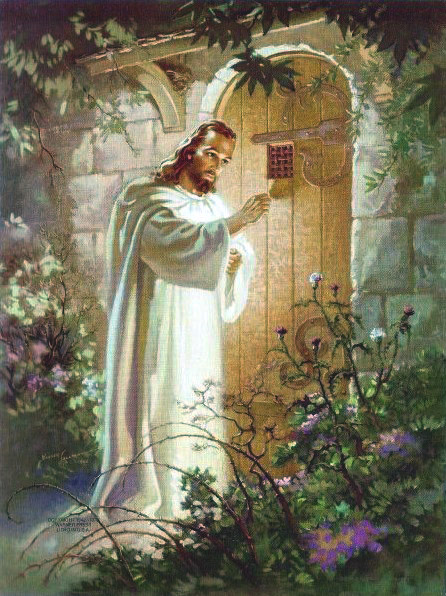
“Behold, I stand at the door, and knock: if any man hear my voice, and open the door, I will come in to him, and will sup with him, and he with me. (Revelation 3:20 KJV)”
Merry Christmas to all our readers, visitors and writers of Lee’s Birdwatching Adventures Plus. I am no longer the only writer and all of us who are involved wish you the best Christmas ever.
My thanks go to Ian, Baron Brown (Golden Eagle), James J. S. Johnson, Emma Foster, Dottie Malcolm, and other guest writers. Also, thanks to Dan, of course, and for all the photographers who have given permission to use their fantastic photos.
The best Christmas present you can ever receive is to accept Jesus Christ as your Savior. Have you put your faith and trust in the Lord and accepted Him?
*
*
Jesus saith unto him, I am the way, the truth, and the life: no man cometh unto the Father, but by me. (John 14:6 KJV)
(This video is narrated by Pastor Nathan Osborne and the music is played by Sean Fielder)
“And it came to pass afterward, that he went throughout every city and village, preaching and shewing the glad tidings of the kingdom of God: … (Luke 8:1 KJV)
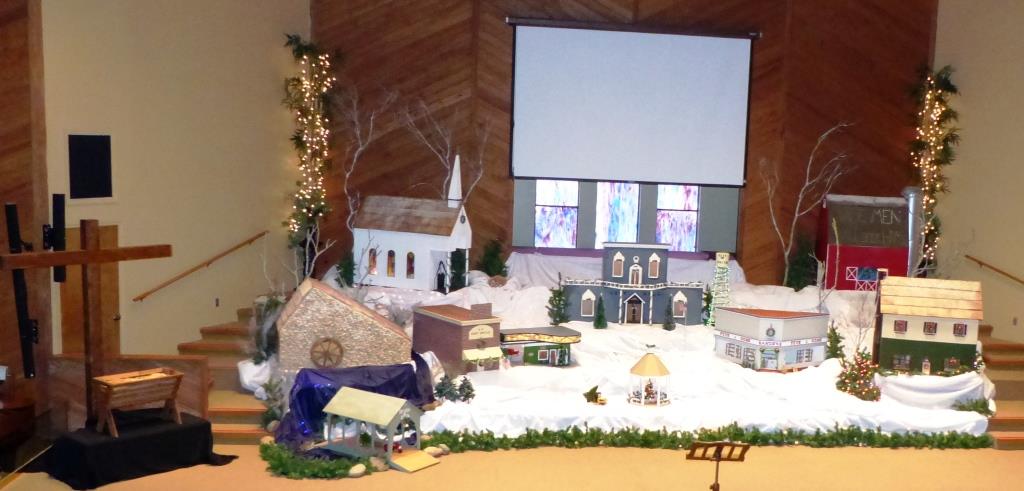
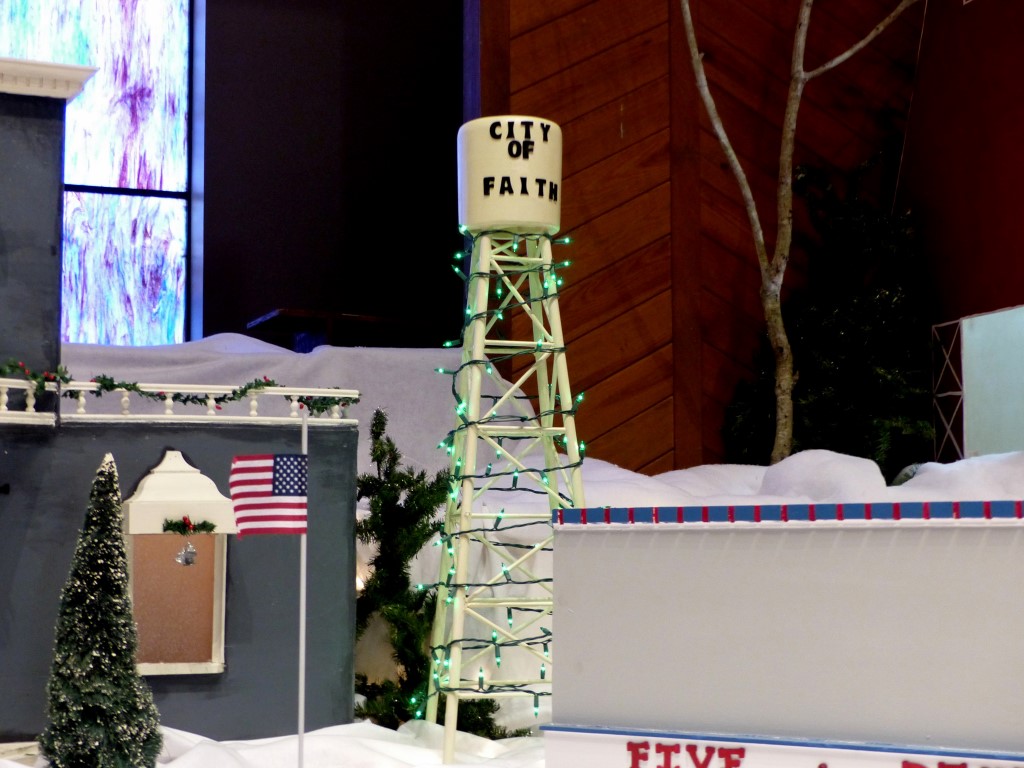
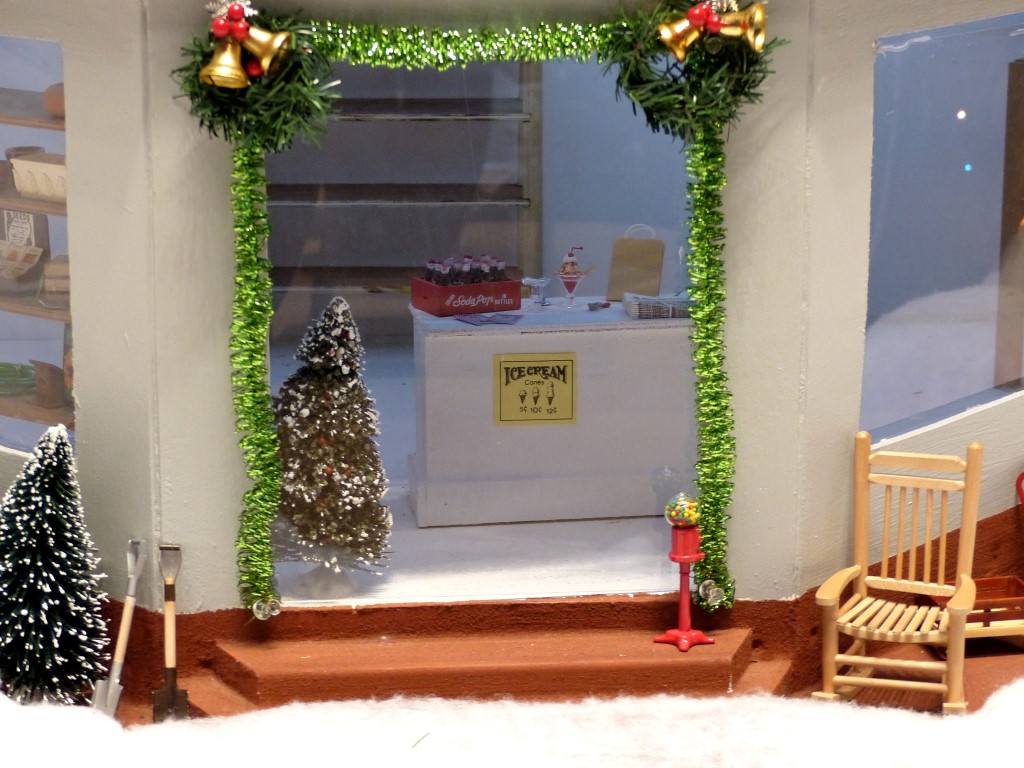
Yesterday I stopped by our church, Faith Baptist Church, and took some photos of the Christmas Village that is set up each year at this time. Our choir gets a few weeks of rest as the Village takes over the choir loft. They were setting up microphones and other things for tonight. The Village will be the background for our Christmas Candlelight service, which is always very special.
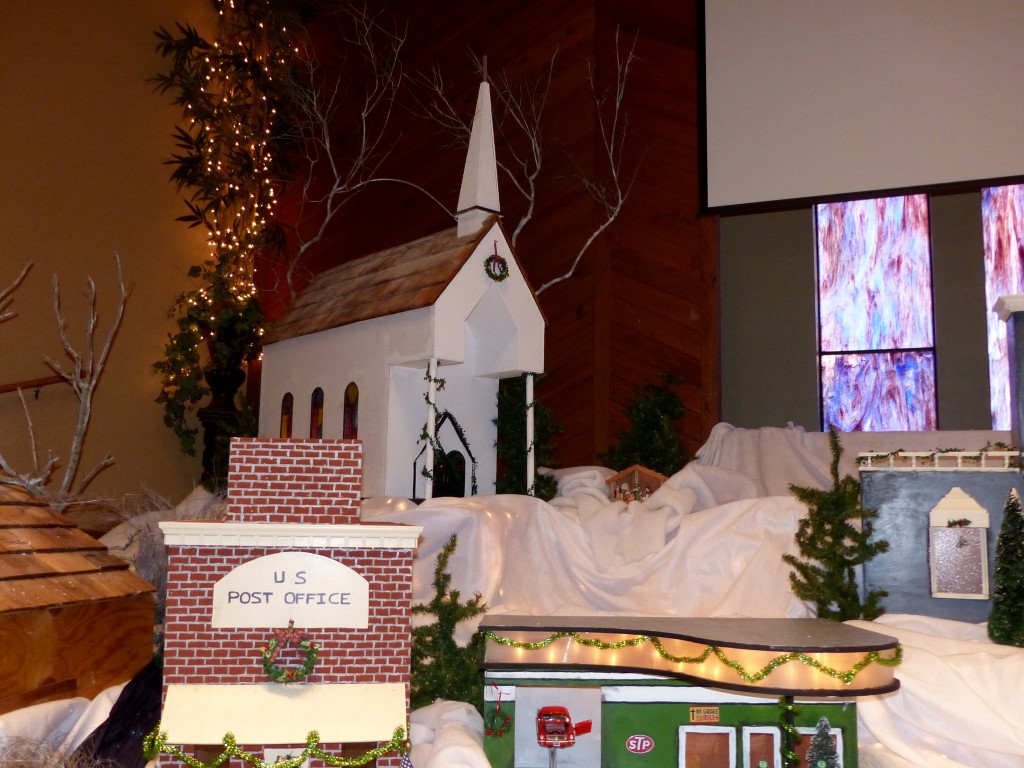
Jared Malcolm made them, starting with the Church and then the House. Each year another building was added. Now we have quite a village! Jared is now a missionary in Brazil, but even this year he made sure something new was added. He added the “City of Faith” Water tower and a Flagpole while he was home for a few weeks this year.
City of Faith Water Tower and Flag Pole
It has always been viewed by me from my pew, but while taking the photos, I saw a lot of details that I had no idea were there.
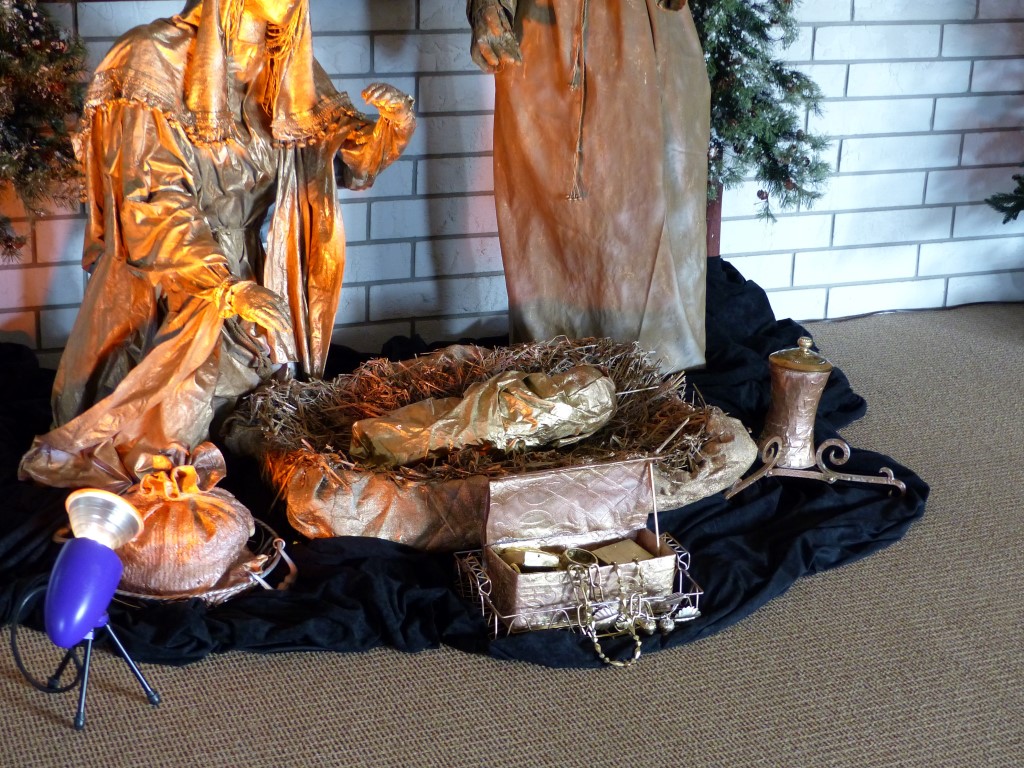
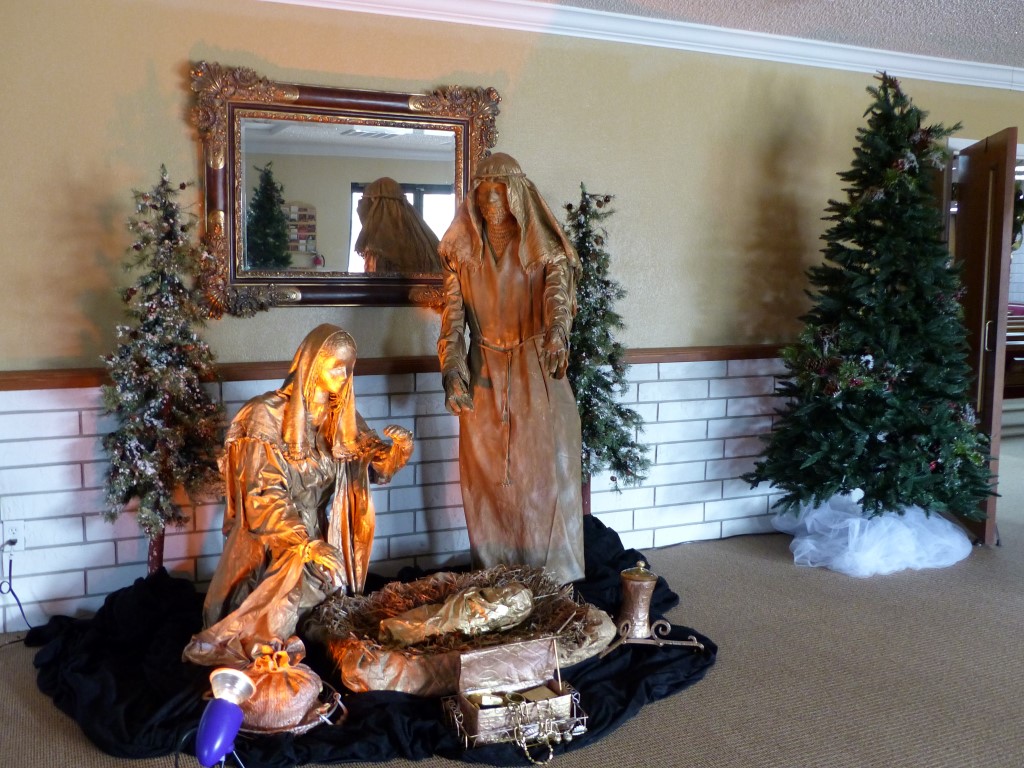
The manger scene of Mary, Joseph, and baby Jesus was made by Margaret Lofton this year for our Christmas float. It is now in the foyer.
So, trust you enjoy the slideshow of the village, church decorations, and the manger scene.
This slideshow requires JavaScript.
P.S. – Thanks to the therapy I have been taking, I actually climbed the stairs to the balcony to take some of the photos. Praise the Lord! That is a great Christmas present.
Lord Bless you as you enjoy this Christmas Eve. May we remember why Jesus came to earth.
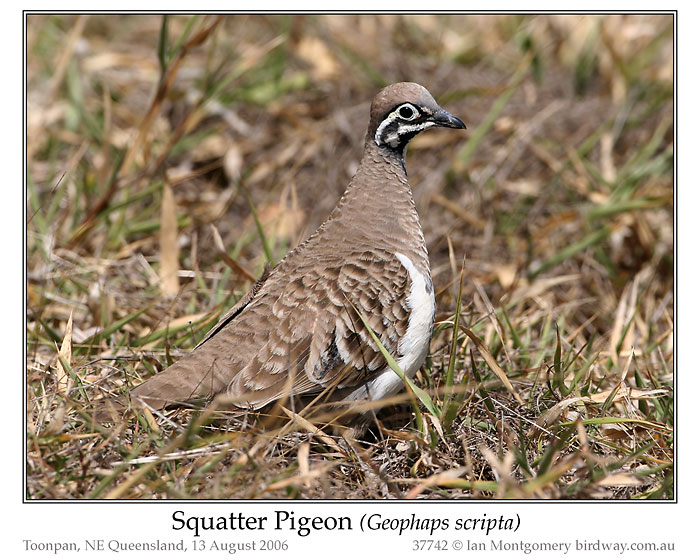
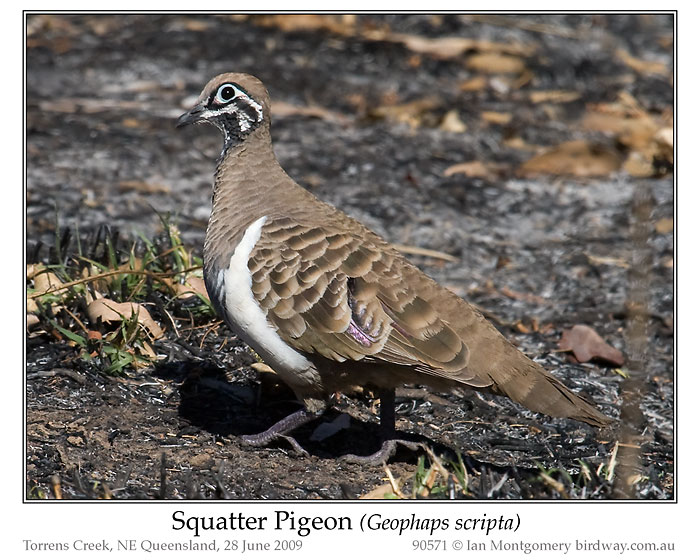
The series of raptors from Europe is perhaps a hard act to follow, so here is something quite different from much closer to (my) home: the Squatter Pigeon,an attractive ground pigeon not uncommon in the drier areas of northern Queensland. Its range used to extend to northern New South Wales, but it is very rare or extinct there and has declined in southern areas of Queensland. The reasons for its decline are not clear but is thought to be due to grazing pressure and perhaps predation by foxes and feral cats.
Toonpan, a short drive south of Townsville on the Flinders Highway is a good spot for this species. When Ross River Dam was built, part of the highway between Toonpan and Townsville was flooded and a new highway was built on higher ground. The old highway still exists and is a quiet roadway through grassland, popular with birders. The habitat in the second photo – taken from the ebook Where to Find Birds in North Queensland – may look uninspiring, but can be very productive often producing other such specialties such as Australian Bustard, various finches including Black-throated and, in winter on powerlines, Red-backed Kingfishers.
It’s not clear where the name Squatter Pigeon came from, presumably either from its habit of crouching and freezing when disturbed or because of its association with the cattle stations, the original occupants of which were called squatters. It was originally named by the Dutch zoologist Temminck in 1821 and he seemed very taken with it. Like Bonelli in the previous Bird of the Week, he published in French, calling it the Colombe marquetée and describing how each patch of white on the face was framed with black, producing an effect like ‘a sort of marquetry. He gave it the scientific name Geophaps scripta, meaning ‘ground pigeon with writing’, ‘phaps’ being the Greek for pigeon. Temminck, incidentally, named many species of animals and various others were named in his honour, such a Temminck’s Stint.
Sometimes you can see the iridescent feathers on the wing, third photo, a display feature shared with other ground pigeons notably the Bronzewings These feathers are usually hidden in Squatter Pigeons except in display and flight. The body shape is broken up by the white stripe between the breast and the wings, and the black and white facial markings disguise the head and make the eye less conspicuous. Squatter Pigeons nest in a scrape on the ground, so camouflage is important and it is easy to appreciate that a motionless bird crouching on the ground would be quite hard to spot.
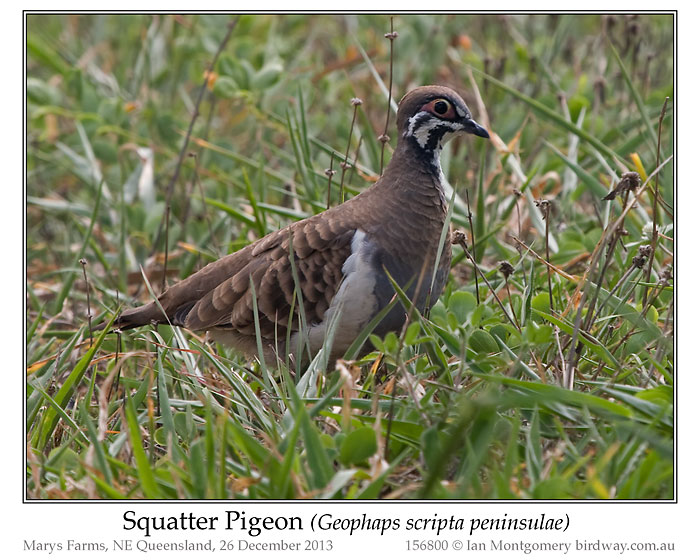
If you look carefully at both bare facial skin of both the Toonpan bird and the one in the third photo taken much farther west along the Flinders Highway, you’ll see the the skin is mainly pale blue around the eye with some pink at the edges in front and behind the eye. Two races of Squatter Pigeon have been described, with the nominate southern race having completely blue facial skin – fourth photo near Carnarvon Gorge – and a Cape York race peninsulae having reddish facial skin. The two races are not geographically well-defined and there is a broad band of intergradation with mixed blue and pink in the Townsville area.
Photos five and six show examples of the Cape York race. Both Marys Farms and the Mitchell River catchment are in the Mount Carbine district south of Cape York proper. The bird in the last photo is perched fairly high in a tree, just to prove that it will sometimes take refuge in trees.
It is the blue-faced southern race that has declined most and is regarded as ‘vulnerable’. The Cape York race and the hybrids in the Townsville district are still reasonably common. The Partridge Pigeon, G. smithii, replaces it in northwestern Australia. It also has races with different coloured faces, red in the Top End of the Northern Territory and yellow in the Kimberley district of northern Western Australia. It has also declined. Although I have seen it in Kakadu National Park I haven’t yet photographed it.
“Behold, I send you forth as sheep in the midst of wolves: be ye therefore wise as serpents, and harmless as doves. (Matthew 10:16 KJV)
I like the markings on their faces. They are interesting, yet, it doesn’t keep them from being camouflaged.
The Squatter Pigeons belong to the Columbidae – Pigeons, Doves Family. (Only bird named Squatter in IOC 4.4 list)
“The Squatter Pigeon (southern) is a medium-sized, ground-dwelling pigeon that measures approximately 30 cm in length and weighs about 190-250 g. The adults are predominantly grey-brown, but have black and white stripes on the face and throat, blue-grey skin around the eyes, dark-brown (and some patches of iridescent green or violet) on the upper surfaces of the wings, blue-grey on the lower breast and belly, white on the lower region, flanks of the belly and extending onto the under surfaces of the wings, and a blackish-brown band along the trailing edge of the tail. They have black bills, dark-brown irises, and dull-purple legs and feet. The sexes are similar in appearance (Higgins & Davies 1996).
Juvenile Squatter Pigeons (southern) can be distinguished from the adults by their duller colouring, the patchy, less distinctive appearance of their black and white facial stripes, and the paler colouring (buff to pale-yellow) of the facial skin (Higgins & Davies 1996).
The southern and northern subspecies of the Squatter Pigeon are virtually identical except the southern subspecies tends to be slightly larger in the body, and the skin around the eyes is predominantly blue-grey compared to yellowy-orange to orange-red in the northern subspecies (Crome 1976b; Ford 1986; Higgins & Davies 1996; Squatter Pigeon Workshop 2011).” (from Australian Government)
“Let this mind be in you, which was also in Christ Jesus: Who, being in the form of God, thought it not robbery to be equal with God: But made himself of no reputation, and took upon him the form of a servant, and was made in the likeness of men: And being found in fashion as a man, he humbled himself, and became obedient unto death, even the death of the cross. Wherefore God also hath highly exalted him, and given him a name which is above every name: That at the name of Jesus every knee should bow, of things in heaven, and things in earth, and things under the earth; And that every tongue should confess that Jesus Christ is Lord, to the glory of God the Father.”(Philippians 2:5-11 KJV)
The Creator, of all the birds we like to feature here, humbled Himself to come in sinless flesh, to die for us. resurrect Himself, and provide Salvation for us. Don’t let that important point be lost in all the activities of Christmas.
We here, at the blog, trust you have a very Merry Christmas and enjoy seeing some of His Created birds as you listen to the music.
This slideshow requires JavaScript.
*
“Now when Jesus was born in Bethlehem of Judaea in the days of Herod the king, behold, there came wise men from the east to Jerusalem, Saying, Where is he that is born King of the Jews? for we have seen his star in the east, and are come to worship him”. (Matthew 2:1-2 KJV)
“The fear of the LORD is the beginning of wisdom: a good understanding have all they that do his commandments: his praise endureth for ever.” (Psalms 111:10 KJV)
“Wise Men Still Seek Him” – Pastor Jerry, Jessie, Caleb and Choir – FBC
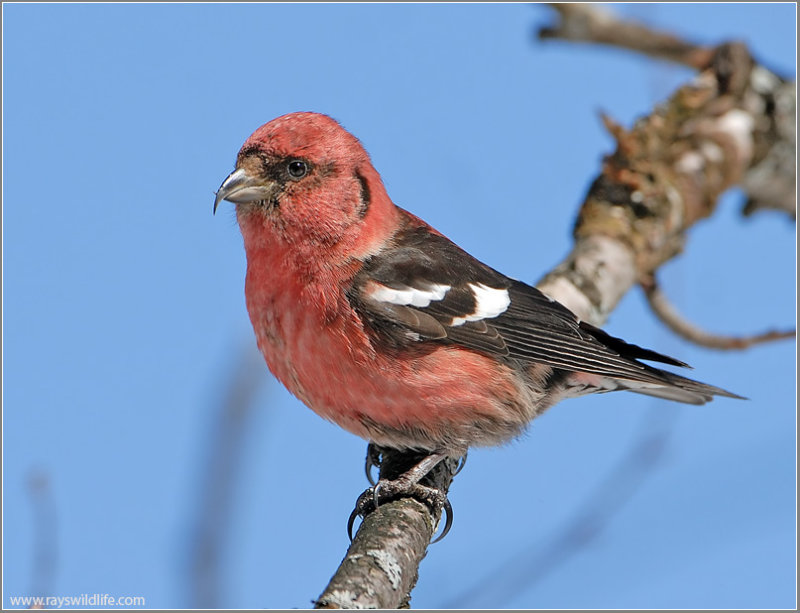
Two-barred Crossbill (Loxia leucoptera)(White-winged) by Raymond Barlow
Now when Jesus was born in Bethlehem of Judaea in the days of Herod the king, behold, there came wise men from the east to Jerusalem, Saying, Where is he that is born King of the Jews? for we have seen his star in the east, and are come to worship him. (Matthew 2:1-2 KJV)
Today I am doing something a little different. Instead of a song, there is a short Christmas message from my pastor. This was given during the Camel Lot Christmas Musical that we had in 2012. It applies for today, as well. Listen to Pastor Nathan Osborne III as you watch some of the Lord Jesus Christ’s creation among the birds.
The birth of the Jesus, His death on the cross and His resurrection are all a part of Christmas.
This slideshow requires JavaScript.
Our Pastor at the Christmas Camel Lot Musical – 2012
*
(Started adding Christmas colored birds, but then added newer photos from this year.)
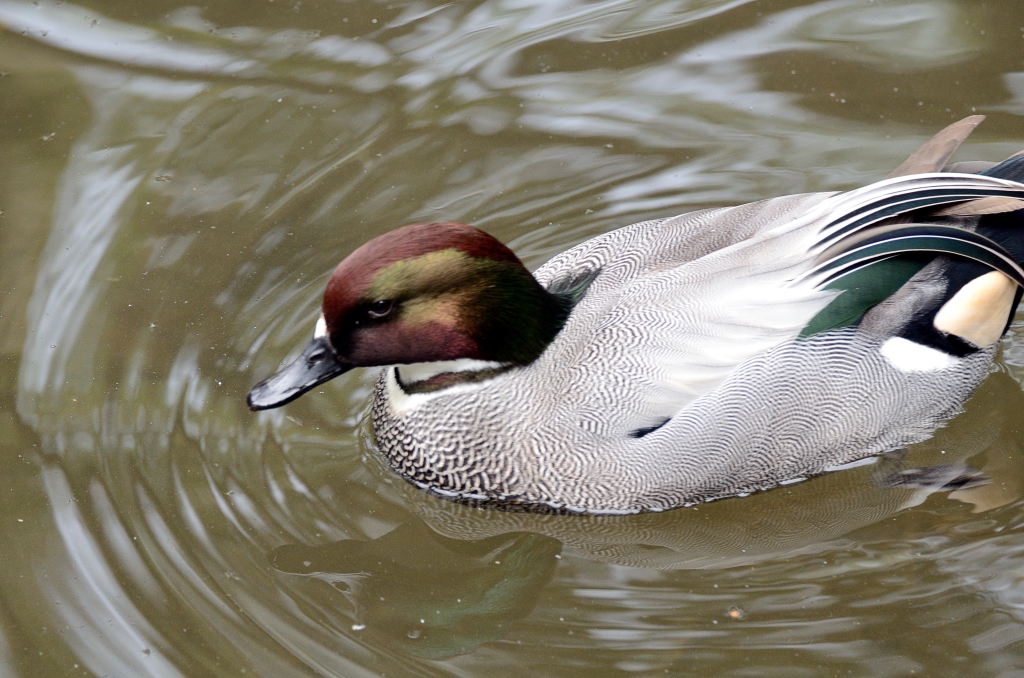
While we were on our latest visit to the Wings of Asia Aviary at Zoo Miami, the Falcated Duck caught my attention. We have seen it before, because there are photos of them, but for some reason, it was just another duck then. The sun caught its iridescent head and I started looking closer this time. Wings of Asia has one male and one female at this time.
These Falcated Duck (Teal) are just one more example of the variety and beauty the Lord gave His creatures when they were created.
All things were made by him; and without him was not any thing made that was made. (John 1:3 KJV)
Apparently when the male wears his breeding plumage, that green really shines.
I tried to get photos of his beautiful feathers at the back, but my photos aren’t the best, but maybe you can catch some of the great beauty that the Lord gave these Falcated Ducks.
Falcated Duck (Anas falcata) at Wings of Asia by Lee
Falcated Ducks are mainly from Asia and belong to the Anatidae – Ducks, Geese and Swans Family. By the way, “falcate” means “curved or hooked like a sickle.” (Wordsmith)
Males and females have similar lengths at 19-21.5 in (46 to 53 cm.) Their weight can range from 422 to 770 grams, with males weighing more than their female counterparts. Wingspans range from 31-36 in (79 to 91 cm). The breeding male is unmistakable. Most of the body plumage is finely vermiculated grey, with the long sickle-shaped tertials, which give this species its name, hanging off its back. The large head is dark green with a white throat, and a dark green collar and bronzed crown. The vent region is patterned in yellow, black and white.
The female falcated duck is dark brown, with plumage much like a female wigeon. Its long grey bill is an aid to identification. The eclipse male is like the female, but darker on the back and head. In flight both sexes show a pale grey underwing. The blackish speculum is bordered with a white bar on its inner edge. Young birds are buffer than the female and have short tertials. Juveniles have plumage similar to females of the species.
The Anas falcata are known to have very striking and beautiful sickle feathers. This is in comparison with many other birds like swams and geese.
Medium dabbling duck with long black and white tertial feathers extending over black rump. Body white, black, gray in finely-scaled pattern. The crested iridescent head is green and purple-brown. White throat has black ring; black tail and black-green speculum are edged in white.
Breeds and winters in southeastern Asia but strongly migratory. Birds seen in North America beyond Alaska may be escaped captives from private collections or wild birds. Favors wetlands, lakes, ponds, rivers, estuaries, and marshes. Near-threatened in the wild. Most U.S. sightings occur between Pacific and Californian coasts, Baja peninsula, Mexico, India, and Canada. (From internet sources including WhatBird and Wikipedia)
Here’s a short clip I took of him washing his feathers at Zoo Miami.
This slideshow requires JavaScript.
In 2011 a Falcated Duck family showed up at the Colusa Natiional Wildlife Refuge. Rare visitors from their normal range. It brought the photographers to catch the rare glimpse of these beautiful birds. Watch this video to see them in action,
But the dove found no rest for the sole of her foot, and she returned unto him into the ark, for the waters were on the face of the whole earth: then he put forth his hand, and took her, and pulled her in unto him into the ark. (Genesis 8:9 KJV)
And the work of righteousness shall be peace; and the effect of righteousness quietness and assurance for ever. And my people shall dwell in a peaceable habitation, and in sure dwellings, and in quiet resting places; (Isaiah 32:17-18 KJV)
Therefore my heart is glad, and my glory rejoiceth: my flesh also shall rest in hope. (Psalms 16:9 KJV)
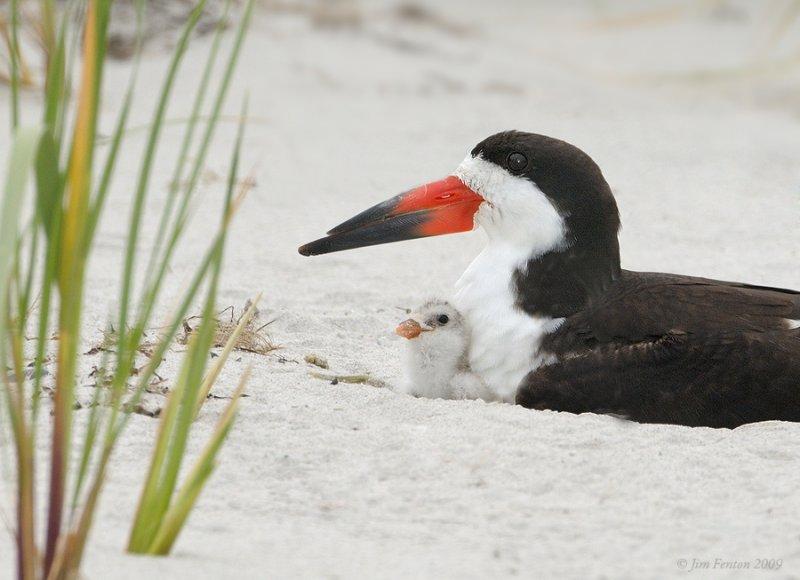
Black Skimmer (Rynchops niger) by J Fenton
And I said, Oh that I had wings like a dove! for then would I fly away, and be at rest. (Psalms 55:6 KJV)
Return unto thy rest, O my soul; for the LORD hath dealt bountifully with thee. (Psalms 116:7 KJV)
Come unto me, all ye that labour and are heavy laden, and I will give you rest. Take my yoke upon you, and learn of me; for I am meek and lowly in heart: and ye shall find rest unto your souls. (Matthew 11:28-29 KJV)
Are we resting like we should, knowing that God Is In Control?
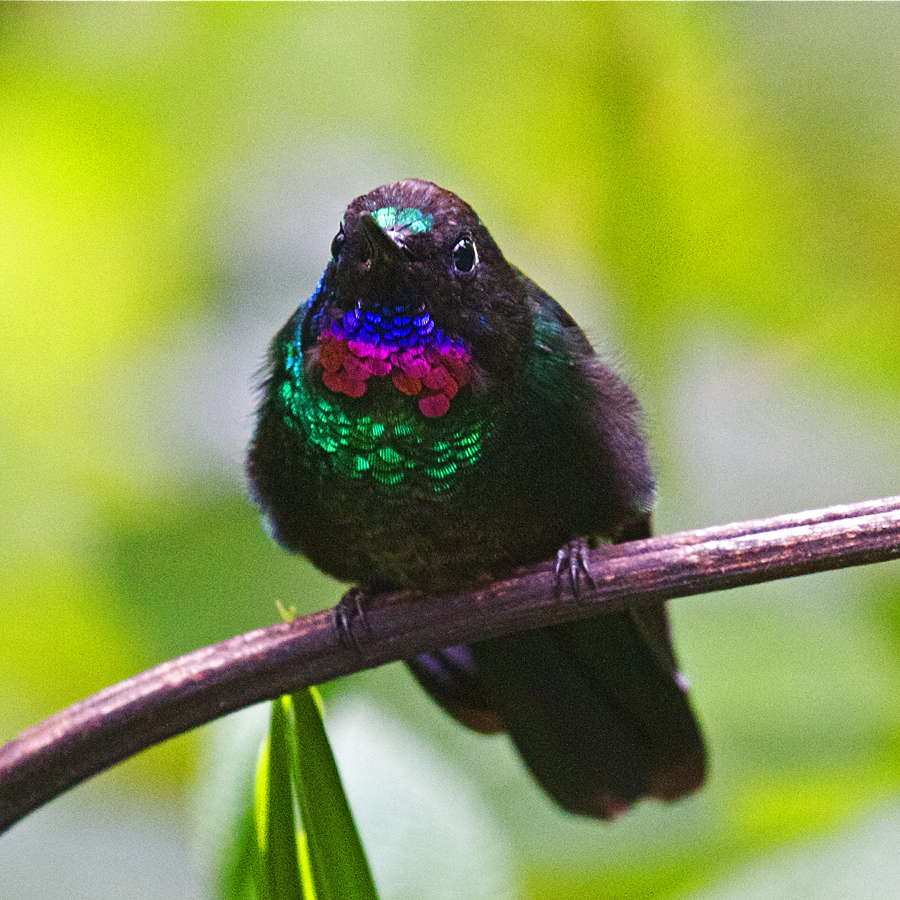
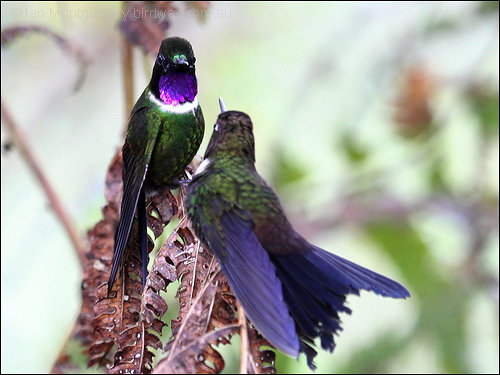
Gorgeted Sunangel (Heliangelus strophianus) by Ian
Praise ye him, all his angels: praise ye him, all his hosts. (Psalms 148:2 KJV)
Angels…….. as explained by Children.
I only know the names of two angels, Hark and Harold. – Gregory, age 5
Everybody’s got it all wrong. Angels don’t wear halos anymore. I forget why, but scientists are working on it – Olive, age 9
It’s not easy to become an angel! First, you die. Then you go to Heaven, and then there’s still the flight training to go through. And then you got to agree to wear those angel clothes. -Matthew, age 9
Angels work for God and watch over kids when God Has to go do something else. – Mitchell, age 7
My guardian angel helps me with math, but he’s not much good for science. – Henry, age 8
Angels don’t eat, but they drink milk from Holy Cows!!! – Jack, age 6
Take heed that ye despise not one of these little ones; for I say unto you, That in heaven their angels do always behold the face of my Father which is in heaven. (Matthew 18:10 KJV)
Angels talk all the way while they’re flying you up To heaven. The main subject is where you went wrong before you got dead. – Daniel, age 9
When an angel gets mad, he takes a deep breath and counts to ten. And when he lets out his breath again, somewhere there’s a tornado. – Reagan, age 10
Angels have a lot to do and they keep very busy. If you lose a tooth, an angel comes in through your window and leaves money under your pillow. Then when it gets cold, angels go south for the winter. – Sara, age 6
Bless the LORD, ye his angels, that excel in strength, that do his commandments, hearkening unto the voice of his word. (Psalms 103:20 KJV)
Angels live in cloud houses made by God and his Son, who’s a very good carpenter. – Jared, age 8
All angels are girls because they gotta wear Dresses and boys didn’t go for it. – Antonio, age 9
My angel is my grandma who died last year. She got A big head start on helping me while she was still down here on earth. – Ashley ~ age 9
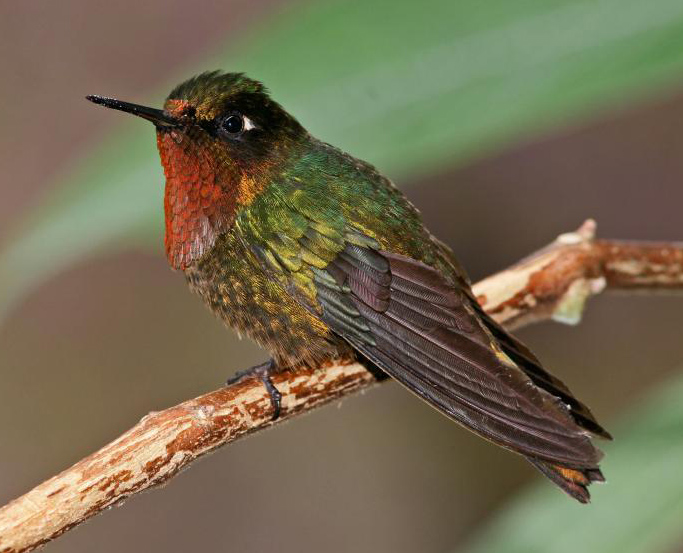
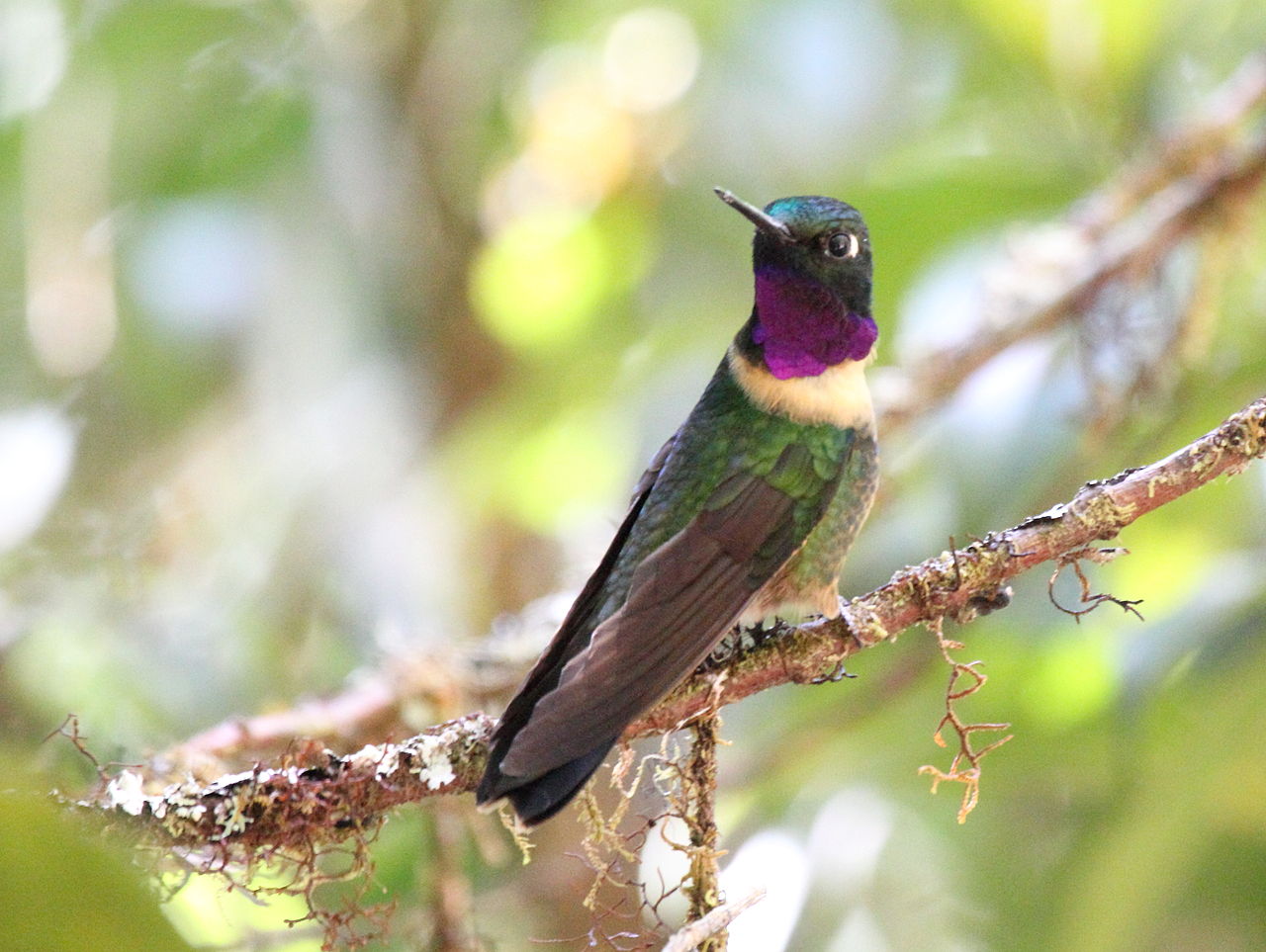
Gorgeted Sunangel (Heliangelus strophianus) by Ian
For he shall give his angels charge over thee, to keep thee in all thy ways. (Psalms 91:11 KJV)
Some of the angels are in charge of helping heal Sick animals and pets. And if They don’t make the animals get better, they help the child get over it. – Vicki , age 8
What I don’t get about angels is why, when someone Is in love, they shoot arrows at them. – Sarah , age 7
How Could I Not Send This To All Of You ….. So Awesome!!!
…. And As they Say ……… No One Says it Better Than A Child



















 Lee's Birdwatching Adventures Plus