Lord’s Avian Wonders – Eastern Rosella

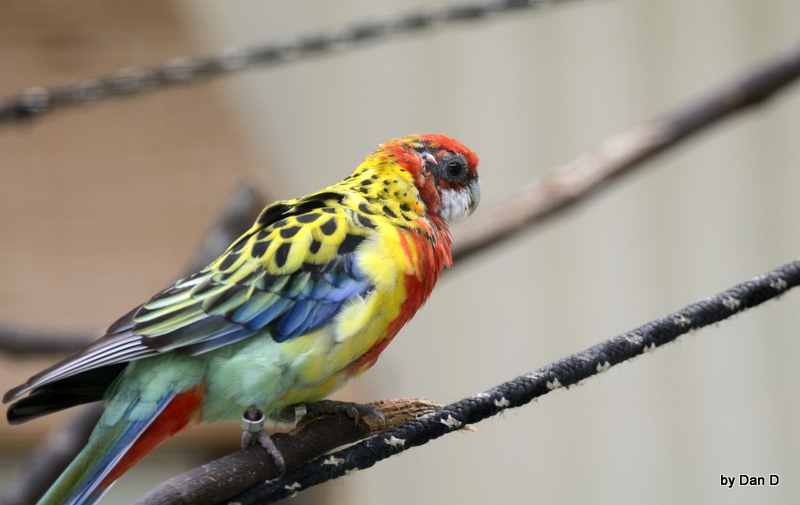
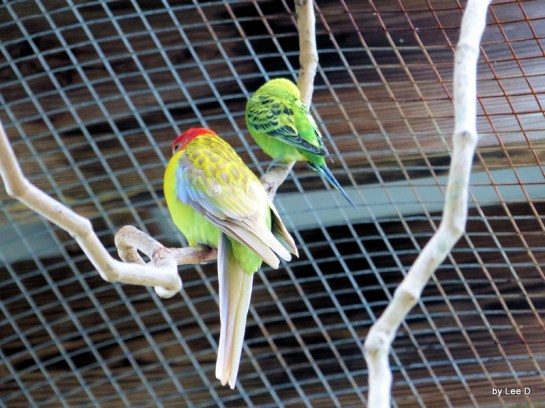
Eastern Rosella Gatorland by Dan

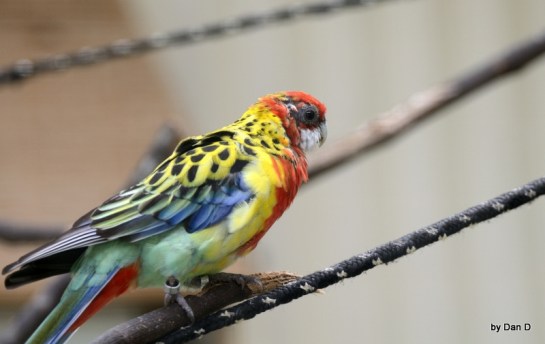
Eastern Rosella Gatorland by Dan

“I set My rainbow in the cloud, and it shall be for the sign of the covenant between Me and the earth.” (Genesis 9:13 NKJV)

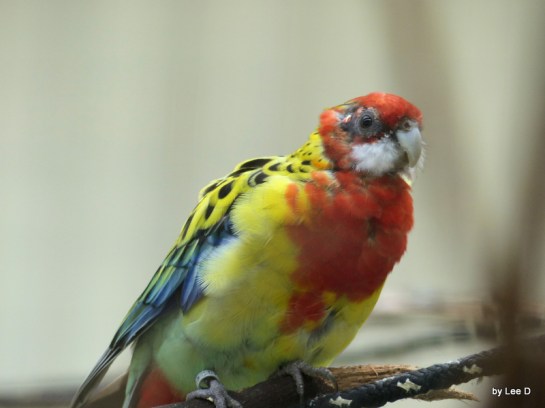
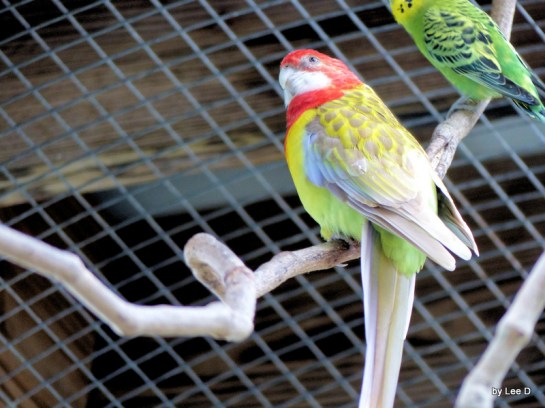
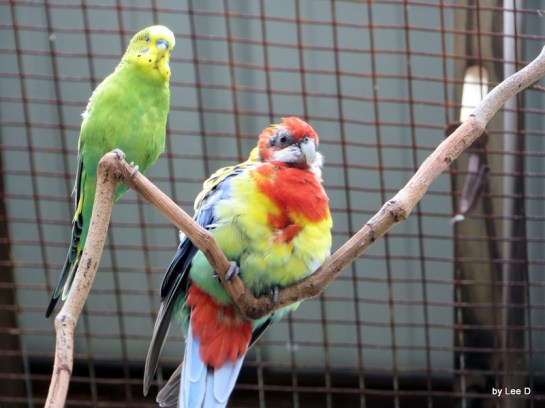
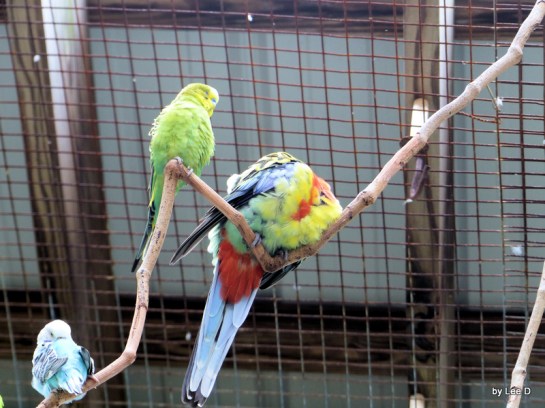
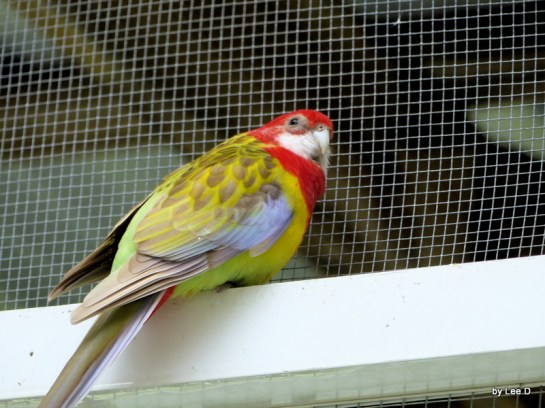
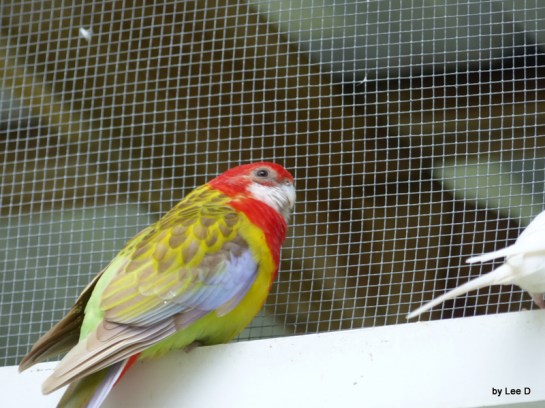
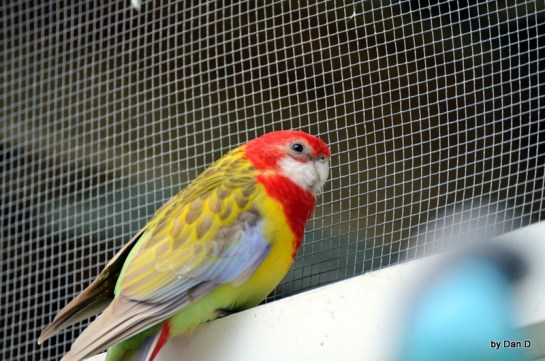
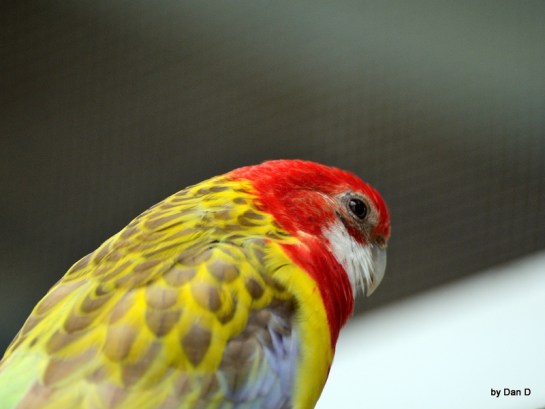
What a delight for me to find two Eastern Rosellas in the little free-flight aviary at Gatorland last week. We have been there two other times, but not when the aviary was open.

Because of Ian’s Bird of the Week articles about the Rosella, these two caught my eye. Never did get a decent photo of them, but never the less, we enjoyed seeing them in person. Dan’s photos were better, of course. They seem quite pale compared to Ian’s photo of one in the wild.

Eastern Rosella (Platycercus eximius) by Ian

Eastern Rosella (Platycercus eximius) by Ian

“The rainbow shall be in the cloud, and I will look on it to remember the everlasting covenant between God and every living creature of all flesh that is on the earth.” (Genesis 9:16 NKJV)

This Rosella reminds me of the colors of a rainbow. Maybe the Lord gave us this beautiful bird to remind us of his promise, even on a non-rainy day.

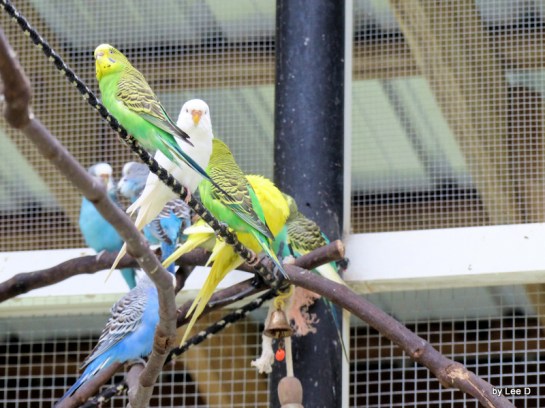
Here are just a few photos from the aviary:

Gatorland, Florida

Ian’s Eastern Rosella photos at Birdway

Psittaculidae – Old World Parrots

Enjoy seeing the really good photos and newsletters from Ian Montgomery:

Who Paints The Leaves?

*

Sunday Inspiration – Starlings, Mynas and Rhabdornis

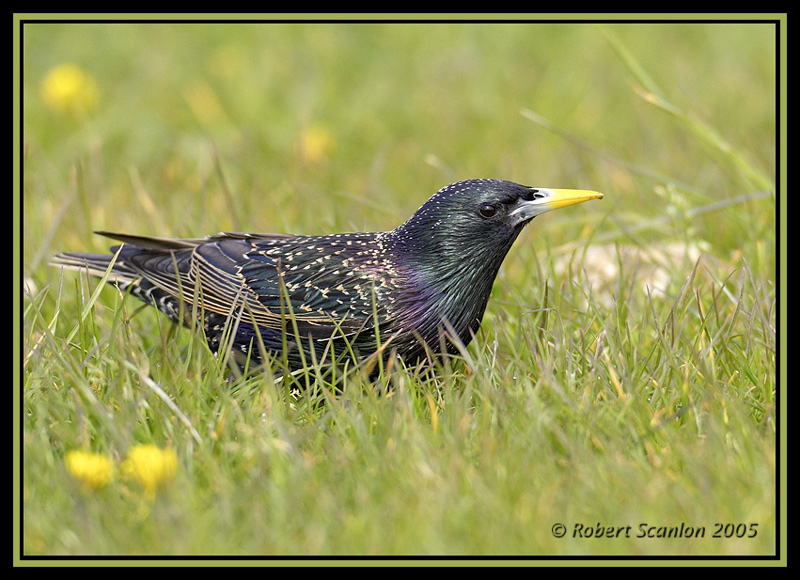
Common Starling (Sturnus vulgaris) by Robert Scanlon

Common Starling (Sturnus vulgaris) by Robert Scanlon

I know all the birds of the mountains, And the wild beasts of the field are Mine. (Psalms 50:11 NKJV)

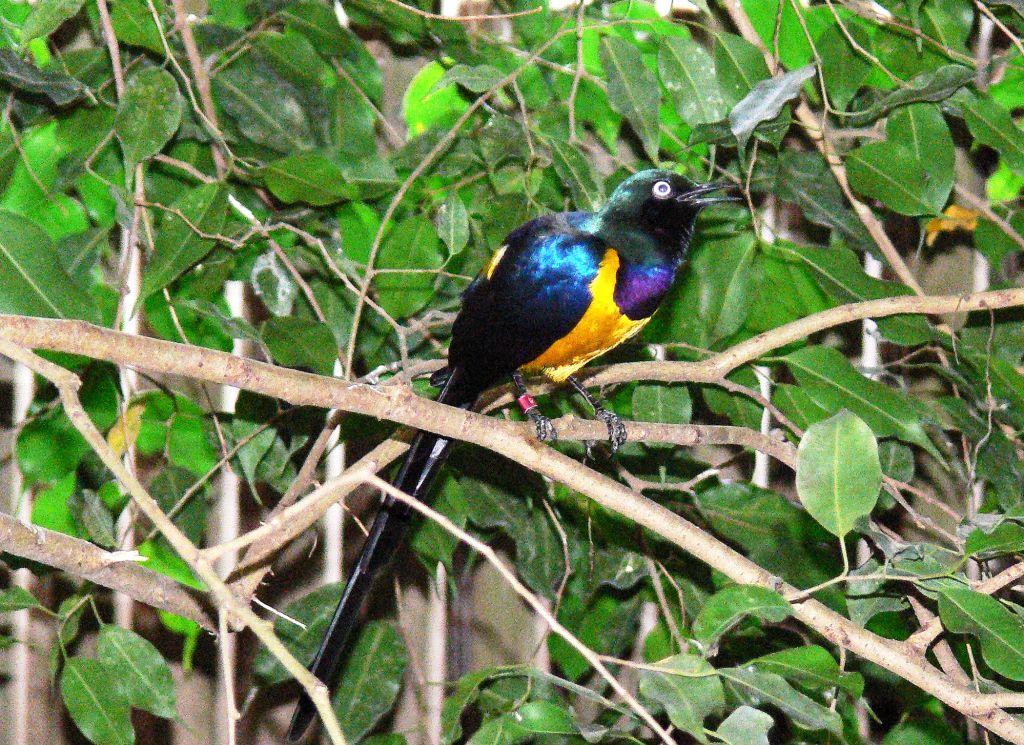
This weeks Sturnidae Family is rather large with 123 species presently. (Twenty-three are Mynas; three are Rhabdornis; one Coleto and the rest are Starlings.) Here in the U. S., when we think of a Starling it is a very the plain Common (European) Starling. Yet other Starlings are very colorful and beautiful creations from our Lord.

Golden-breasted Starling at NA

Golden-breasted Starling at National Aviary by Lee

The name “Sturnidae” comes from the Latin word for starling, sturnus. Many Asian species, particularly the larger ones, are called mynas, and many African species are known as glossy starlings because of their iridescent plumage. Starlings are native to the Old World, from Europe, Asia and Africa, to northern Australia and the islands of the tropical Pacific. Several European and Asian species have been introduced to these areas as well as North America, Hawaii and New Zealand, where they generally compete for habitats with native birds and are considered to be invasive species. The starling species familiar to most people in Europe and North America is the common starling, and throughout much of Asia and the Pacific, the common myna is indeed common.

Bali Myna (Leucopsar rothschildi Palm Beach Zoo by Lee

Bali Myna (Leucopsar rothschildi Palm Beach Zoo by Lee

Starlings have strong feet, their flight is strong and direct, and they are very gregarious. Their preferred habitat is fairly open country, and they eat insects and fruit. Several species live around human habitation and are effectively omnivores. Many species search for prey such as grubs by “open-bill probing”, that is, forcefully opening the bill after inserting it into a crevice, thus expanding the hole and exposing the prey; this behaviour is referred to by the German verb zirkeln (pronounced [ˈtsɪʁkəln]).

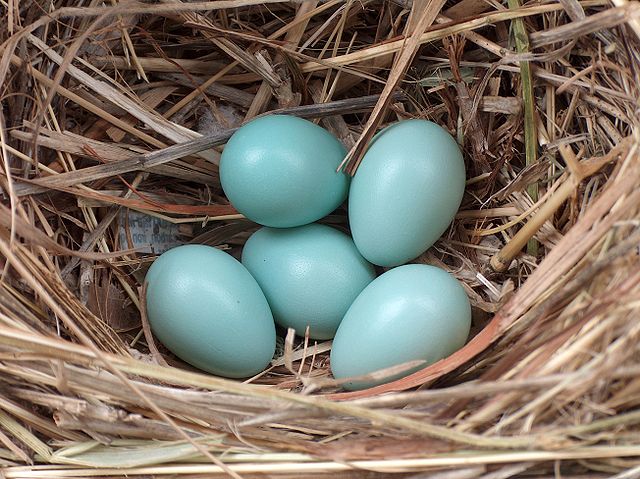
Common Starling (Sturnus vulgaris) Eggs ©WikiC

Common Starling (Sturnus vulgaris) Eggs ©WikiC

Plumage of many species is typically dark with a metallic sheen. Most species nest in holes and lay blue or white eggs.

Metallic Starling (Aplonis metallica) by Ian

Metallic Starling (Aplonis metallica) by Ian

Starlings have diverse and complex vocalizations and have been known to embed sounds from their surroundings into their own calls, including car alarms and human speech patterns. The birds can recognize particular individuals by their calls and are currently the subject of research into the evolution of human language.

Stripe-headed Rhabdornis (Rhabdornis mystacalis) ©©

Stripe-headed Rhabdornis (Rhabdornis mystacalis) ©©

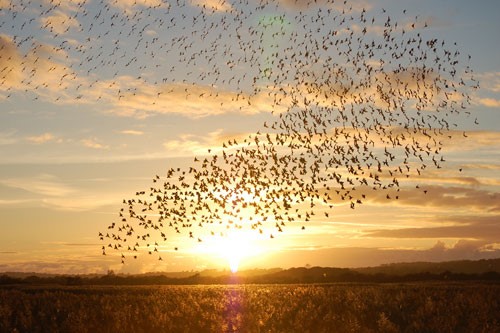
James J. S. Johnson just wrote about the murmuration of the Starlings in Choreographed Choir on the Wing: Birds of a Feather Flock Together. “The starlings are generally a highly social family. Most species associate in flocks of varying sizes throughout the year. A flock of starlings is called a murmuration. These flocks may include other species of starlings and sometimes species from other families. This sociality is particularly evident in their roosting behavior; in the non-breeding season some roosts can number in the thousands of birds.” (Most information from Wikipedia)

Starling Murmuration

Starling Murmuration

*

Many of the family members in random order:

This slideshow requires JavaScript.

*

“Once Upon A Tree” ~ Choir – and – “Sing To Jesus” ~ Angel Long & Jessie Padgett

More Sunday Inspirations

Sturnidae – Starlings, Rhabdornis

Ian’s Bird of the Week – Metallic Starling

Starling – Wikipedia

Wages or a Gift


Lord’s Avian Wonders – Can’t We Talk In Private?

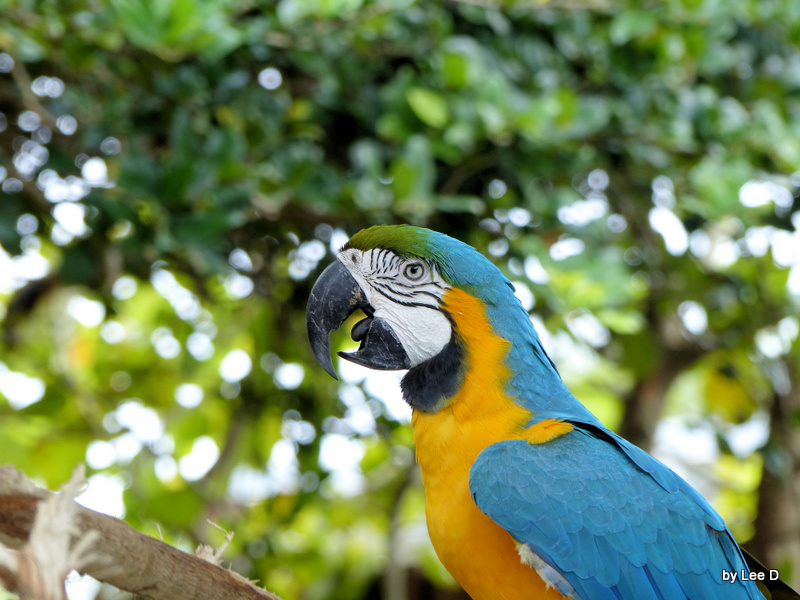
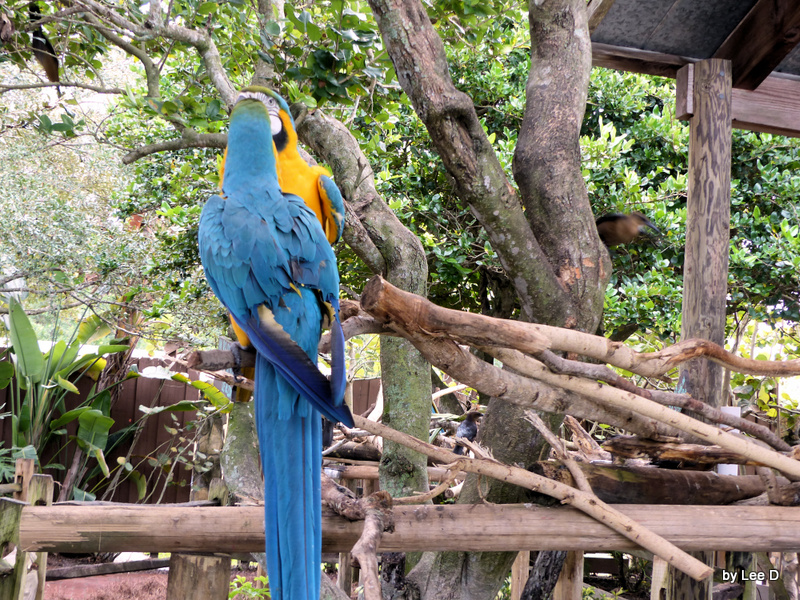
Blue-and-yellow Macaw (Ara ararauna)

Blue-and-yellow Macaw (Ara ararauna) by Lee

Therefore I love thy commandments above gold; yea, above fine gold. (Psalms 119:127 KJV)

On Tuesday, Dan and I took a ride over to Gatorland in Orlando. Just wanted to share a sequence of photos of some Blue-and-yellow Macaws (Ara ararauna) I took. One allowed me to get a nice view of him (or her) and then walked over to its friend. (Click on photos to enlarge)

Blue-and-yellow Macaws are also known as Blue-and-golds.

They are all plain to him that understandeth, and right to them that find knowledge. Receive my instruction, and not silver; and knowledge rather than choice gold. For wisdom is better than rubies; and all the things that may be desired are not to be compared to it. (Proverbs 8:9-11 KJV)

Psittacidae – African and New World Parrots

Who Paints The Leaves?

*

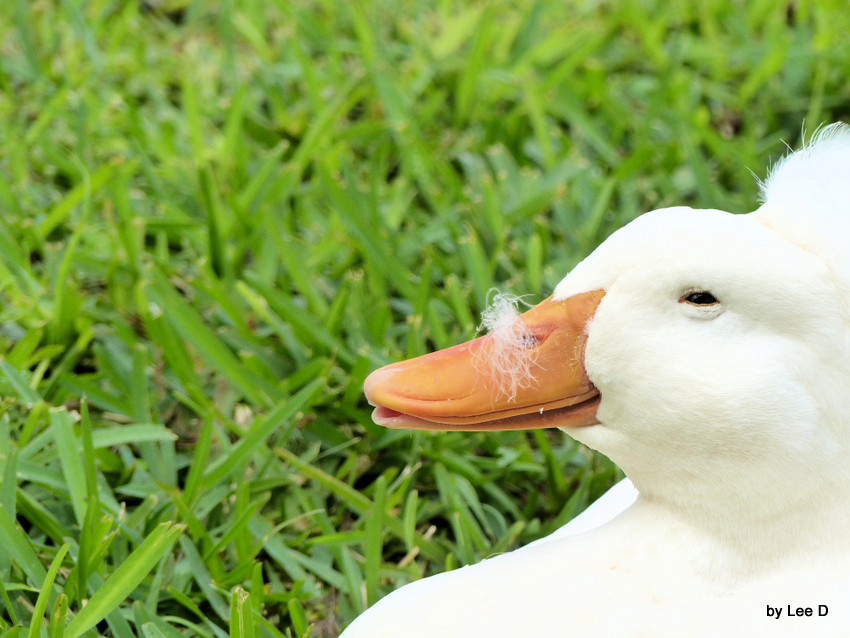
Lord’s Avian Wonders – Bad Feather Day

Bad Feather Day Gatorland by Lee

Bad Feather Day at Gatorland by Lee

He shall cover thee with his feathers, and under his wings shalt thou trust: his truth shall be thy shield and buckler. (Psalms 91:4 KJV)

Bad Feather Day Gatorland by Lee

Bad Feather Day at Gatorland by Lee

For this is thankworthy, if a man for conscience toward God endure grief, suffering wrongfully.(1 Peter 2:19 KJV)

Bad Feather Day Gatorland by Lee

Bad Feather Day at Gatorland by Lee

Now therefore there is utterly a fault among you, because ye go to law one with another. Why do ye not rather take wrong? why do ye not rather suffer yourselves to be defrauded? Nay, ye do wrong, and defraud, and that your brethren. (1 Corinthians 6:7-8 KJV)

Bad Feather Day Gatorland by Dan

Bad Feather Day at Gatorland by Dan

Click on photos to enlarge them.

*

Sometimes there are pictures that I’d like to share, but don’t really have much to say. The photos say it all. This new category is called Lord’s Avian Wonders to just post a picture or pictures. They are all the Lord’s Avian Creations.

So God created great sea creatures and every living thing that moves, with which the waters abounded, according to their kind, and every winged bird according to its kind. And God saw that it was good. And God blessed them, saying, “Be fruitful and multiply, and fill the waters in the seas, and let birds multiply on the earth.” So the evening and the morning were the fifth day.
(Genesis 1:21-23 NKJV)

*

Sparrow Quote from The Life Project

House Sparrows visiting National Aviary Parrot Show by Lee

House Sparrows visiting National Aviary by Lee

The Life Project by Don Merritt is a blog I follow. Here is an interesting quote from Jesus and His relationship with the Disciples:

Jesus wraps up this thought with the example of a sparrow. Who watches out for sparrows? Actually, we could ask something like: Who cares at all about sparrows?

Jesus gives us an answer: His Father in heaven cares about each and every single insignificant sparrow on the planet, and nothing happens to a single little sparrow that He doesn’t know about.

That is a staggering thought…

Read the whole article….

*

Are not two sparrows sold for a farthing? and one of them shall not fall on the ground without your Father. (Matthew 10:29 KJV)

The Life Project

Jesus and His relationship with the Disciples

Birds of the Bible – Sparrows

*

A Vulture Thanksgiving

A Vulture Thanksgiving

 by Emma Foster

Turkey Vulture Tree at Saddle Creek by Lee

Turkey Vulture Tree at Saddle Creek by Lee

Once, in a small town, there lived a dozen or so turkey vultures. Every day, they would all gather on high places like totem poles or electrical wires and look around for food. But it was during Thanksgiving break that all of the vultures that lived in the town gathered together to decide what to do for all of the people who didn’t have anything to eat for Thanksgiving.

They all gathered on top of a church steeple to discuss what they should do; people passing by thought all of the vultures on top of the church steeple were somewhat disturbing, especially since it was a Sunday.

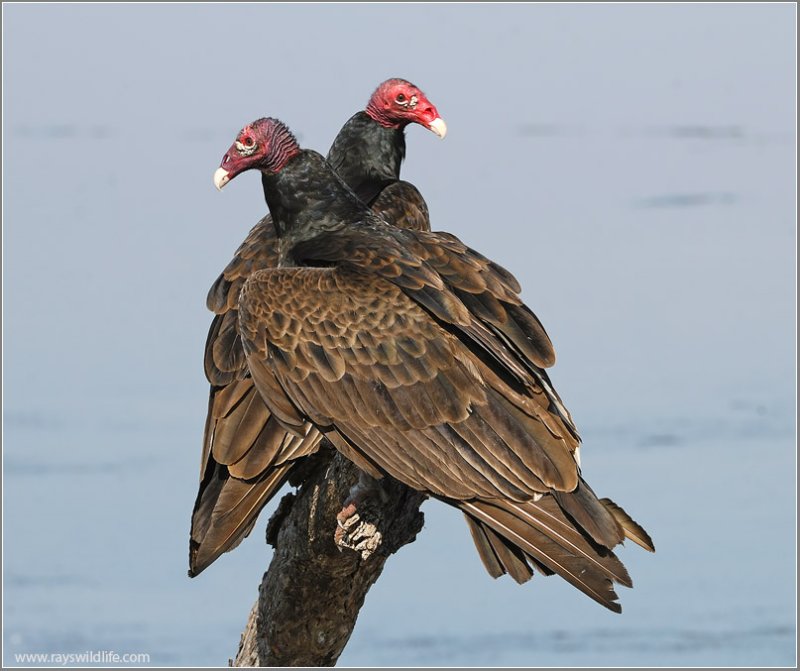
Turkey Vulture (Cathartes aura) by Ray

Turkey Vulture (Cathartes aura) by Ray

Because there was a shortage of turkeys that year in the town (Reginald the Commander Turkey had been doing his job very well), the vultures all decided they would fly to another state to get the turkeys to bring to those who did not have much for Thanksgiving.

On Monday morning, the vultures woke up early and started flying east to Mississippi from Louisiana to another small town.

They all flew to a Wal-Mart in Mississippi and sneaked into the back room by a skylight. Of course, turkey vultures thought that good food was the kind that was dead. Each vulture picked up a turkey from the freezer to take home.

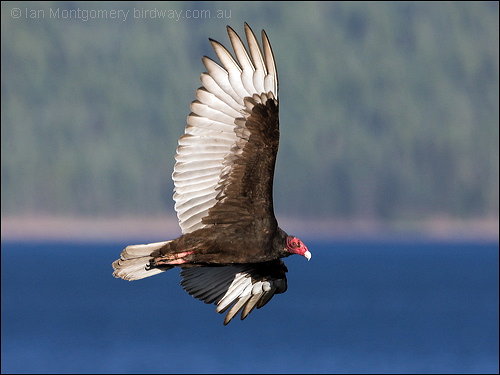
Turkey Vulture by Ian Montgomery

Turkey Vulture by Ian Montgomery

It was a bit difficult to fly home with a giant frozen turkey, but one by one the vultures flew out of Wal-Mart and began to fly back to Louisiana. It took them a long time to fly back from Mississippi, so by the time the vultures returned to Louisiana, it was Thanksgiving Eve.

Each of the vultures flew in different directions to different houses in several neighborhoods. They each set a turkey by the front door of the houses and rang the doorbell. Whenever someone opened the door, they would find a turkey with a little card attached to it that said “Happy Thanksgiving.” from TV.

The End

giving thanks always for all things to God the Father in the name of our Lord Jesus Christ, (Ephesians 5:20 NKJV)

And whatever you do in word or deed, do all in the name of the Lord Jesus, giving thanks to God the Father through Him.
(Colossians 3:17 NKJV)

*

*

Endemic Treasures of the Cook Islands: Atiu Swiftlet and ‘Gospel Day’ Holidays

Endemic Treasures of the Cook Islands: 

Atiu Swiftlet and ‘Gospel Day’ Holidays

James J. S. Johnson

I thank my God upon every remembrance of you, always in every prayer of mine for you all making request with joy, for your fellowship in the Gospel from the first day until now, being confident of this very thing, that He Who has begun a good work in you will perform it until the day of Jesus Christ.  (Philippians 1:3-6)

Fair Use photo credit: https://en.wikipedia.org/wiki/Atiu_swiftlet#/media/File:Kopeka_bird.jpg

Atiu Swiftlet (Aerodramus sawtelli, a/k/a Kopeka) ©WikiC

The Atiu Swiftlet (Aerodramus sawtelli, a/k/a Sawtelli’s Swift), known locally as the “Kopeka”, is a small member of the swift family, only known to dwell on the Pacific island of Atiu, one of the Cook Islands.

Like other swifts it is sooty-brown in color, with its upper side being darker than its lower side.  Those who have studied the Atiu Swiftlet report that it nests in limestone caves, yet ranges over farmed lands and areas dominated by ferns.

Because it appears to only reside in one place, in the wild, it is said to be “endemic”, i.e., endemic to the island of Atiu.  However, some taxonomists think the Atiu Swiftlet is only an inbred variety of swift that is conspecific with  the Polynesian Swiftlet (Aerodramus leucophaeus, a/k/a Tahitian Swiftlet), the White-rumped Swiftlet (Aerodramus spodiopygius), and maybe even the Australian Swiftlet (Aerodramus terraereginae).  Regardless of taxonomic “lumping” or “splitting”, the Atiu Swiftlet is mainly distinguished from  other swifts by its troglodyte nesting habits and its limited range.)  But for now we may assume that the Atiu Swiftlet, as a separate “species” or as an endemic “subspecies”, is unique to the Cook Islands.  Most who read these sentences, before today, had never heard of an “Atiu Swiftlet” – but the Atiu Swiftlets are not worried  about their relative obscurity, because God’s caring providence is what they need (Matthew 5:26), not acclaim or fame from folks around the world.

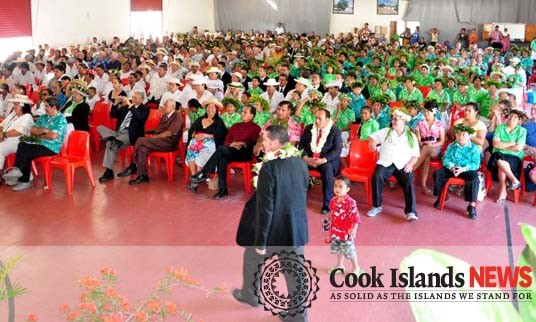
In fact, the Cook Islands host another unusual, not-so-famous, “endemic” treasure – a set of “Gospel Day” holidays, commemorating how God provided the Gospel of Christ (via British missionaries) unto that group of islands in the South Pacific.

Fair Use credit_www.pacificresort.com_national-gospel-day-public-holiday-pacific-resort-rarotonga.jpeg

In particular, the Cook Islands – for many years – have officially celebrated, with pageantry and gratitude to God, the arrival of Bible-based Christianity (in the early AD1800s), with the various component islands having specific days for recognizing “Gospel Day” as a memorial of the British missionary outreach that blessed their respective islands.Cooks Island Map

Here are the days that have been (historically) celebrated as “Gospel Day” in the Cook Islands archipelago:  March 13th (Penrhyn Gospel Day); May 25th (Palmerston Gospel Day); June 15th (Mangaia Gospel Day); July 19th (Atiu Gospel Day, Mitiaro Gospel Day, and Mauke Gospel Day); August 8th (Manihiki Gospel Day), August 15th (Rakahanga Gospel Day); October 26th (Aitutaki Gospel Day); December 6th (Pukapuka Gospel Day); — plus there is a “National Gospel Day” collectively celebrated in the Cook Islands on October 27th.

Wow!  What godly tradition!  What other nations show such respect for Christ?

As part of celebrating Gospel Day, in the Cook Islands, elaborate and expressive “nuku” dramas are acted out, by actors wearing colorful costumes who dramatize mankind’s opportunity to be redeemed, in Christ, from sin (sometimes even enacting New York City’s 9/11 Twin Towers disaster, to illustrate the global war between good and evil).  Hymn singing – and lots of it! – and dancing and music-making dominate much of the day, as well as feasting (coconut, arrowroot, pawpaw fruit, chicken, salt-meat, etc.), prayer, and interactive Bible-based worship activities.

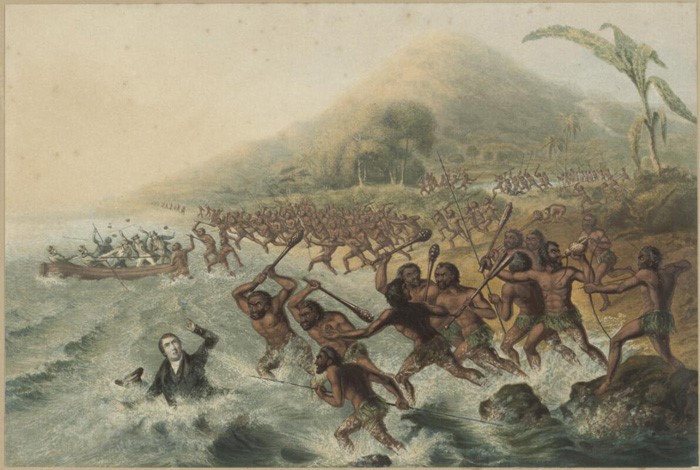
The missionary efforts of John Williams

The missionary efforts of John Williams (“Apostle of the South Seas”, born near London), an English missionary to the Pacific, is recalled with thanksgiving, as well as the historic themes of Christianity.  John Williams (of the London Missionary Society) was murdered (and cannibalized) in AD1839 on the beach at Erromango, in Vanuatu, after a fruitful season of faithful missionary outreach to South Pacific islanders.

gospeldays 2

[For more details on how Gospel Day is celebrated in the Cook Islands, see http://www.cookislands.org.uk/gospelday.html and, especially for diary-like details, see youtube clip:  https://www.youtube.com/watch?v=IN9S9m1pNes .]

gospeldays 3

The tradition continues, although the calendaring aspects of this multi-island tradition have changed, in recent times, due to a governmental effort to standardize the holiday (for the Sunday closest to the original Gospel Day, for each island), and to coordinate with  a new public holiday called “Ra O Te Ui Airki” (on July 6th), according to a news report (dated October 19, 2011) saying:

“From next year, October 26 will be the only public holiday to celebrate Gospel Day as all individual outer island gospel days, including that of Rarotonga, will be celebrated on the closest Sunday to the date of Christianity arriving to the respective islands. The change in the public holiday status of the island Gospel Days is due to a new public holiday on July 6 to be known as the Ra O Te Ui Ariki out of respect for the countrys aronga mana, its ui ariki, ui mataiapo, ui rantagira and taunga [whatever that means!].  Next year churches will have the opportunity once again put their Bible story telling skills on display again when the nuku is organised to commemorate the national Gospel Day.”   [Quoting from http://www.cookislandsnews.com/item/32483-no-nuku-on-gospel-day/32483-no-nuku-on-gospel-day ].

Regardless of whatever day the arrival of the Christian Gospel is celebrated in each of the Cook Islands (as well as the historic day when each one of us, individually, received the Gospel), every day should be a day of appreciating the precious Gospel truth  —  and a time of joy (Luke 10:20) in knowing that God cares to reach and to forgive us, in His Son, the Lord Jesus (Philippians 1:3-6), if we willingly receive Him (John 1:12).   ><>  JJSJ

gospeldays 4

*
Photo Credits:

[ Fair Use photo credit:  https://en.wikipedia.org/wiki/Atiu_swiftlet#/media/File:Kopeka_bird.jpg ]

[Fair Use credit: http://www.pacificresort.com/Images/WhatsOn/national-gospel-day-public-holiday-pacific-resort-rarotonga.jpeg]

[Fair Use image credit: http://www.cookislands.org.uk/image/gospeldays-CORRECTED.jpg]

*

More:

*

Birds of the Bible – Foundation #3 Updated

Mourning Dove (Zenaida macroura) by Quy Tran

Mourning Dove (Zenaida macroura) by Quy Tran

We will continue on with the Birds of the Bible – Foundation series.

If you have not read the previous blogs:
Foundation #1 Updated
Foundation #2 Updated

In the last blog the “Fall” of Adam and Eve was mentioned and because of that, the “Curse” is now on them and all of God’s creation. Death comes on the scene, mankind now has sinned and now each person is born as a sinner. The ground is cursed and thorns and thistle now appear.

By Genesis Chapter 6, God has had it with the sins of man.

And GOD saw that the wickedness of man was great in the earth, and that every imagination of the thoughts of his heart was only evil continually. And it repented the LORD that he had made man on the earth, and it grieved him at his heart. And the LORD said, I will destroy man whom I have created from the face of the earth; both man, and beast, and the creeping thing, and the fowls of the air; for it repenteth me that I have made them. (Genesis 6:5-7 KJV)

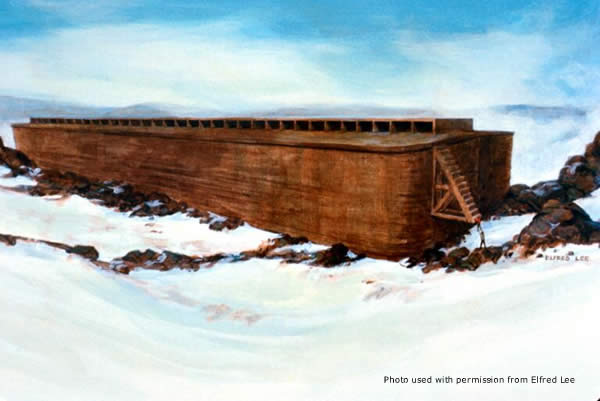
The Ark by Elfred Lee

The Ark by Elfred Lee

All is not lost because, “But Noah found grace in the eyes of the LORD.” (Genesis 6:8 KJV) Because of the grace found by Noah, the LORD gives him instructions about how to build an ark including the size, materials to use, who and what will be on board, and why the ark will be needed. God makes a covenant with Noah and tells him to come in with his wife and his sons and his son’s wives.

And of every living thing of all flesh, two of every sort shalt thou bring into the ark, to keep them alive with thee; they shall be male and female. Of fowls after their kind, and of cattle after their kind, of every creeping thing of the earth after his kind, two of every sort shall come unto thee, to keep them alive. (Genesis 6:19-20 KJV)

He was also to provide food for all of them. And Noah obeyed all that he was told. Noah spent over 100 years preparing the ark and trying to warn others of the coming judgment. There was plenty of room on the ark for more than the 8 people who boarded the ark. The others refused to repent.

Noah's Ark ©©Flickr elmada

Noah’s Ark ©©Flickr elmada

When we get to Chapter 7, the boarding of the ark takes place and the rain and flood begins. “And the LORD said unto Noah, Come thou and all thy house into the ark; for thee have I seen righteous before me in this generation. Of every clean beast thou shalt take to thee by sevens, the male and his female: and of beasts that are not clean by two, the male and his female. Of fowls also of the air by sevens, the male and the female; to keep seed alive upon the face of all the earth. For yet seven days, and I will cause it to rain upon the earth forty days and forty nights; and every living substance that I have made will I destroy from off the face of the earth. And Noah did according unto all that the LORD commanded him.” (Genesis 7:1-5)

Noah did not have to round up the animals, they came to him. Because not every animal we see today came on board but the main kinds (for instance the “bird kinds” may have had a “warbler kind” but not have black and white warblers, yellow-rumped warblers, hooded warbler, etc.), which ever ones they were, there was plenty of room for them. I have an idea that because the LORD sent the animals, birds, and critters, that their DNA’s were of the highest quality. (That is my opinion)

Dove in Israel

Doves in Israel

If you read the rest of Genesis 7, you will see that the global flood came and covered everything and only those who were in the ark survived, plus some of those that live in the water.

And all flesh died that moved upon the earth, both of fowl, and of cattle, and of beast, and of every creeping thing that creepeth upon the earth, and every man: All in whose nostrils was the breath of life, of all that was in the dry land, died. And every living substance was destroyed which was upon the face of the ground, both man, and cattle, and the creeping things, and the fowl of the heaven; and they were destroyed from the earth: and Noah only remained alive, and they that were with him in the ark. (Genesis 7:21-23)

In Foundation #4 we will find out about what the birds go through as they come off the ark and after.

Gospel Presentation

*

Choreographed Choir on the Wing: Birds of a Feather Flock Together

Choreographed Choir on the Wing: 

Birds of a Feather Flock Together

Not forsaking the assembling of ourselves together, as the manner of some is; but exhorting one another, and so much the more, as ye see the day approaching.   (Hebrews 10:25)

James J. S. Johnson

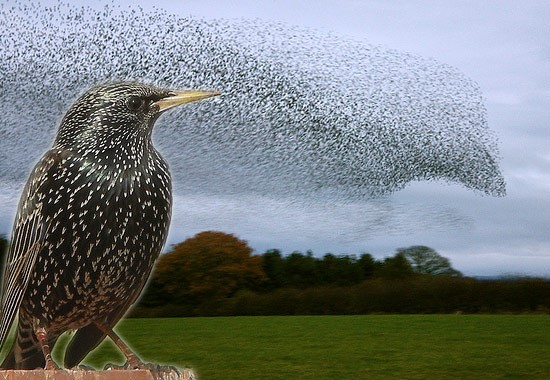
Starling and Murmuration

Starling and Murmeration 

[ Fair Use credit: https://files.allaboutbirds.net/wp-content/uploads/2013/02/starlings.jpg ]

Not only do “birds of a feather flock together”, people who belong together should get together.  And the orderly assembling of both people and birds can give us a preview of coming attractions – when the world that we now know is replaced by one redeemed (Romans 8:18-28), where we gather together in glory, as a harmonious heavenly host.

Accordingly, seeing hundreds (if not thousands) of European starlings, flying like a flexible fluid, in choreographed unison, provides an birdwatching foretaste of (someday) seeing the heavenly host in action.  But there are other notable types of gatherings-in-motion, of kindred spirits “flocking together”.

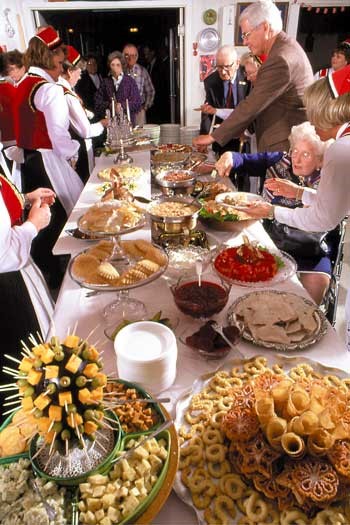
Serving line at Norse smörgåsbord, showing artistic presentation of Nordic cuisine

Serving line at Norse smörgåsbord, showing artistic presentation of Nordic cuisine

[serving line at Norse smörgåsbord, showing artistic presentation of Nordic cuisine  — Fair Use credit:   Smorgasbord.jpg ]

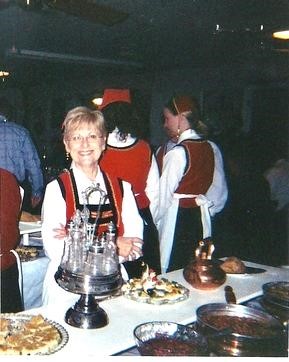
Last Saturday was a special event for my wife and me:  the annual Norwegian smörgåsbord hosted by the Women’s auxiliary of Our Savior’s Lutheran Church of Norse, Texas.  The event is so popular that you must (literally) “win the lottery” to be allowed to purchase tickets to the event!

announcement of 67th annual smörgåsbord hosted by Our Savior’s Lutheran Church of Norse, Texas

Copy of announcement of 67th annual smörgåsbord hosted by Our Savior’s Lutheran Church of Norse, Texas

This delightfully colorful and tasty feast, hosted by a rural Norwegian-immigrant-established rural congregation in the Texas “hill country” of Bosque County (located between Clifton and Cranfills Gap) is a multi-generational tradition of faith, food, fun, and fellowship – and a fundraiser for the more-than-a-century-old church (see http://oursaviorsnorse.org/ ).

hors d’ouvres served at Norse smörgåsbord

hors d’ouvres served at Norse smörgåsbord

[hors d’ouvres served at Norse smörgåsbord  —  Fair Use credit: http://oursaviorsnorse.org/smorgasbord.html ]

Church members dress in bunads (festive Norwegian costume of the AD1800s), as they usher attendees and/or serve attendees.  The feast begins with a Scripture-based devotional with bilingual music and table prayer, in the sanctuary, followed by a short walk to the fellowship hall, where the meal is served.

Serving line at Norse smörgåsbord, showing servers in bunad costumes

[serving line at Norse smörgåsbord, showing servers in bunad costumes  —  Fair Use credit: http://oursaviorsnorse.org/smorgasbord.html ]

The mix of delectable dishes, of Norwegian-American cuisine, is too many for me to mention here  —  however, I will mention just a few that I enjoyed:  pickled herring, salmon mold, Norwegian meatballs, ham, turkey, stuffed eggs (i.e., what many non-Norwegians call “deviled eggs”), several kinds of cheese (including gjetost, brunost, gamalost), lefse (i.e., Norwegian potato bread that looks like a flour tortilla), lingonberry jam, lima beans, beets, various breads (including Swedish rye), potato salad, outstanding coffee, and various cookies (including krumkaker, rosettes, sandbakkels, fattigman).  And more!

Dessert tray served at Norse smörgåsbord

[dessert tray served at Norse smörgåsbord  —  Fair Use credit: http://oursaviorsnorse.org/smorgasbord.html ]

The Lutheran church building itself, which includes modernized modifications of the original structure, is a reverent monument to the glory and worship of God  — the church was established by Norwegian immigrant settlers who came in AD1854.  The church building was begun in AD1875 and originally completed in AD1885.  The church sanctuary pews (and other chancel furniture) are original.

Our Savior’s Lutheran Church of Norse, in Bosque County, Texas

Our Savior’s Lutheran Church of Norse, in Bosque County, Texas

[Our Savior’s Lutheran Church of Norse, in Bosque County, Texas –  Fair Use credit:  NorseTexasOurSaviorsLutheranChurch1003BGibson.jpg ]
Bosque County’s Norwegian pioneers burial site in Norse

Bosque County’s Norwegian pioneers burial site in Norse

[ Bosque County’s Norwegian pioneers burial site in Norse  —  Fair Use credit: Norwegian.settlers.monument.jpg  ]

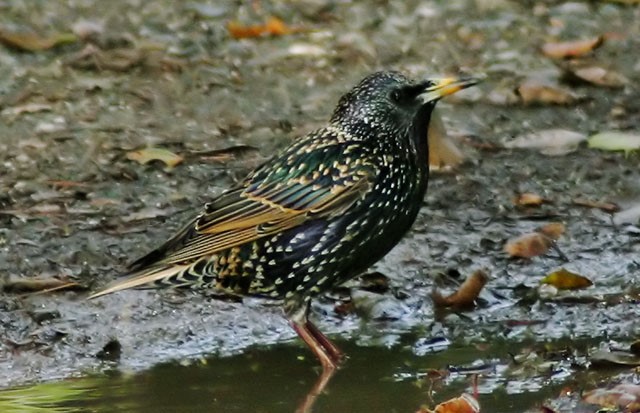
But more than that splendid kindred-spirit event, at the Lutheran Church last Saturday, reminded me of the phrase “birds of feather flock together”.  Why? Because en route to that wonderful event, which was about a 3-hour-drive (one way) for my wife and me, we were slowed down in our southward trek through construction-delayed traffic, along Interstate 35-W.  The construction activities on the west side of highway were reshaping the land surfaces and drainage patterns, enabling recent rainwater to collect in a large mud-puddle, by a large “blanket” of black that somehow quivered with motion.  Why was that black “blanket” moving?  It was a mob of star-spangle-jacketed European starlings (Sturnus vulgaris) congregated there – more than your eyes could count!  The pooled water had attracted a mega-flock of European starlings (which at first glance looked like a black blanket covering the ground), some of which drank water while others waited nearby, for their turns at the “watering hole”.

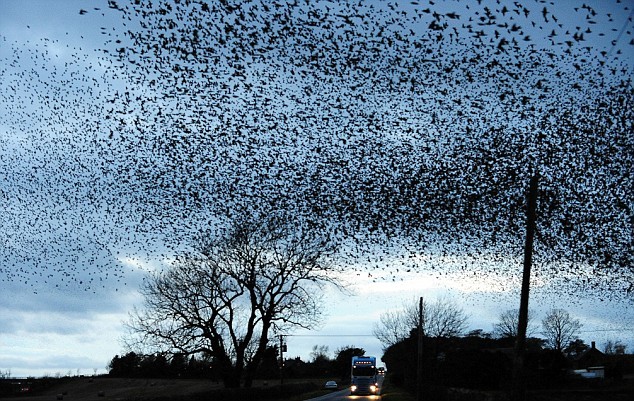
Murmuration by Dailymail

Murmuration by Dailymail

[Fair Use credit: http://i.dailymail.co.uk/i/pix/2008/Murmuration by Dailymail ]

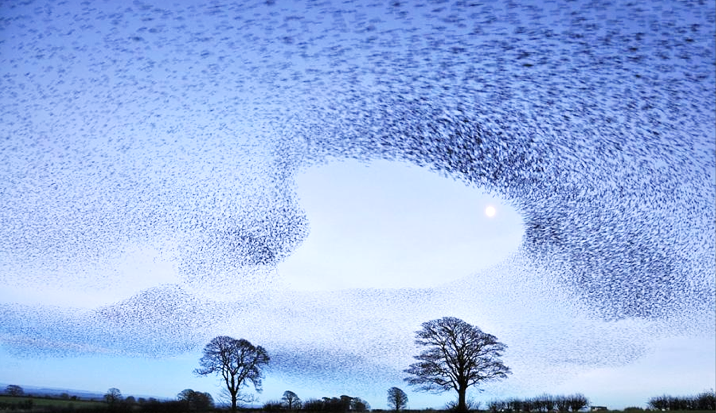
But more spectacular than these earth-bound  starlings (in and at the mud-puddle) were their swarming legions of cousins, swirling, and looping in the air above, — called a “murmuration” of starlings.  This fluid flock of aerial acrobats were graciously swirling, curving, arching, banking, spinning, irrupting, swerving, pouring, turning, dipping, spreading, blending, soaring – in harmony, each one perfectly synched to one another like a living fabric of black-winged wonders, dancing in the wind – a choreographed choir of chattering starlings.

 European Starling


European Starling

[ Fair Use credit: http://animalia-life.com/data_images/european-starling/european-starling2.jpg ]

There is nothing quite like watching a living, flowing, swirling cloud of European starlings, flying as a fluid flock – a harmonious team of airborne navigators – in numbers and motions that prevent spectator quantification.  The starlings’ murmuration is more than “birds of a feather flock together”; this is “birds of a feather fly like a fluid-fabric together!” – truly an amazing display of God’s handiwork in flying feathers.

As we watched in amazement, at the synchronized motions of these little black (and somewhat iridescent) marvels, we thought about the high-speed harmony God has directed these starlings to implement, in their humble little lives.  God-honoring harmony – what a concept!

Of course, if we “forsake the assembling of ourselves together” we cannot achieve any such choreography. And, when we do get together, we do well to focus on our unity in Christ, which means prioritizing and practicing  the truth in love.

Starling Flying Mob

Starling Flying Mob

[ Fair Use credit: http://mudfooted.com/images/murmuration-bird-flock.png]

Behold, how good and how pleasant it is for brethren to dwell together in unity(Psalm 133:1)

Starling Murmuration ©Flickr Donald Macauley

*

More Orni-Theology Articles

More of James J. S. Johnson’s Articles

*

Sunday Inspiration – Mockingbirds and Thrashers

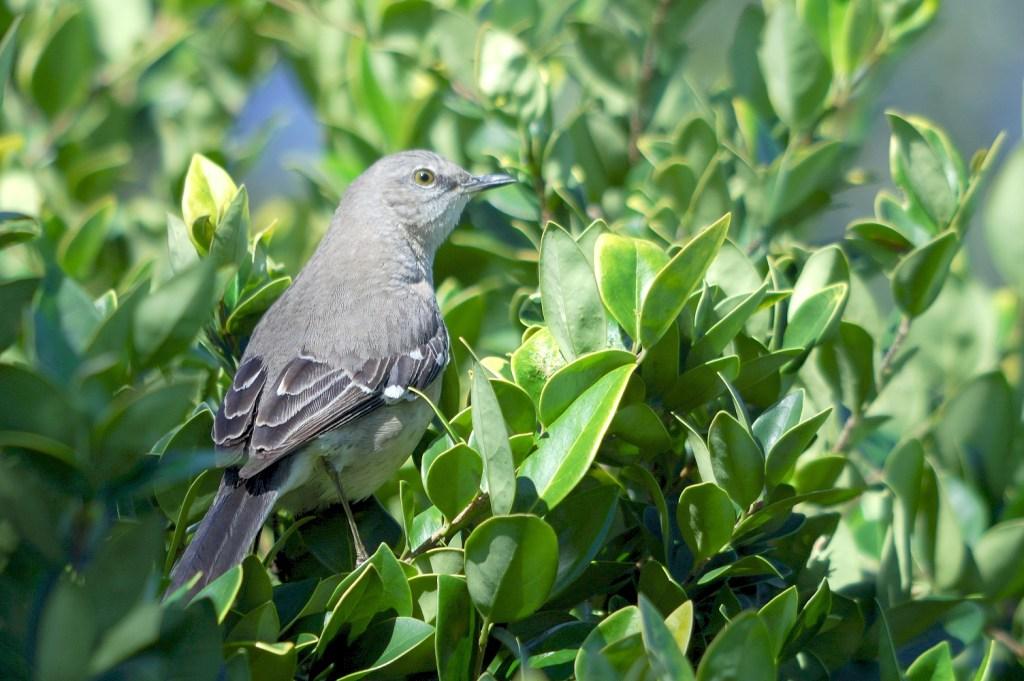
Northern Mockingbird (Mimus polyglottos) By Dan'sPix

Northern Mockingbird (Mimus polyglottos) By Dan (Dan’sPix)

“Do not curse the king, even in your thought; Do not curse the rich, even in your bedroom; For a bird of the air may carry your voice, And a bird in flight may tell the matter.” (Ecclesiastes 10:20 NKJV)

Mockingbirds have been one of my favorite birds. They used to nest in a bush outside our bedroom when we lived in Fort Lauderdale, FL. He used to sing, sing, and sing when they had their young. Only problem was sometimes he sang at 2 or 3 in the morning (outside our bedroom). Those are the times when you wished birds observed “quite hours.”

When the doors are shut in the streets, And the sound of grinding is low; When one rises up at the sound of a bird, And all the daughters of music are brought low. (Ecclesiastes 12:4 NKJV)

Brown Thrasher (Toxostoma rufum) By Dan'sPix

Brown Thrasher (Toxostoma rufum) By Dan’sPix

That said, let’s look at our bird family this week. The Mimidae are the New World family of passerine birds that includes thrashers, mockingbirds, tremblers, and the New World catbirds. As their name (Latin for “mimic”) suggests, these birds are notable for their vocalization, especially some species’ remarkable ability to mimic a wide variety of birds and other sounds heard outdoors.

Brown Trembler (Cinclocerthia ruficauda) ©WikiC

Brown Trembler (Cinclocerthia ruficauda) ©WikiC

There are 34 birds in this family which includes thrashers, mockingbirds, tremblers, and the New World catbirds. They tend towards dull grays and browns in their appearance, though a few are black or blue-gray, and many have red, yellow, or white irises. Many mimids have a rather thrush-like pattern: brown above, pale with dark streaks or spots below. They tend to have longer tails than thrushes (or the bigger wrens, which they also resemble) and longer bills that in many species curve downward.

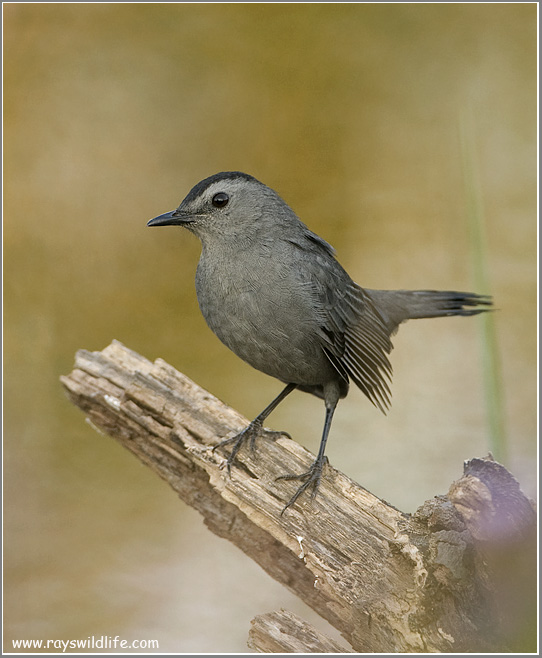
Grey Catbird (Dumetella carolinensis) by Raymond Barlow

Grey Catbird (Dumetella carolinensis) by Raymond Barlow

They have long, strong legs (for passerines) with which many species hop through undergrowth searching for arthropods and fruits to eat. Their habitat varies from forest undergrowth to scrub, high-altitude grasslands, and deserts. The two tremblers live in the atypical habitat of rain forests in the Lesser Antilles, and the Brown Trembler has the particularly atypical behavior of foraging while clinging to tree trunks. (With information from Wikipedia)

This slideshow requires JavaScript.

At that day ye shall know that I am in my Father, and ye in me, and I in you. He that hath my commandments, and keepeth them, he it is that loveth me: and he that loveth me shall be loved of my Father, and I will love him, and will manifest myself to him. (John 14:20-21 KJV)

“I Am Loved” ~ Faith Baptist Orchestra

More Sunday Inspirations

Mimidae – Mockingbirds, Thrashers

Sharing The Gospel

*

Happy Thanksgiving – 2015

Wild Turkey (Meleagris gallopavo) by Daves BirdingPix

Wild Turkey (Meleagris gallopavo) by Daves BirdingPix

Happy Thanksgiving!

Oh, give thanks to the LORD! Call upon His name; Make known His deeds among the peoples! (1 Chronicles 16:8 NKJV)

Today we celebrate Thanksgiving here in America. When I went back to see what had been posted in the past, there is not much more could be said. See the list of many previous posts for Thanksgiving over the years this blog has been going.

Cactus Wren (Campylorhynchus brunneicapillus) by Lee

Cactus Wren (Campylorhynchus brunneicapillus) by Lee

Or is there? 2015 was another great year and I am thankful for all the blessings the Lord has given us through out this last year. Our big trip to the West Coast was the highlight of the year. We are thankful for all the many miles we safely traveled and the many birds and interesting things we saw. Thankful to the Lord for His marvelous creations we saw.

“We give thanks to God always for you all, making mention of you in our prayers, remembering without ceasing your work of faith, labor of love, and patience of hope in our Lord Jesus Christ in the sight of our God and Father,” (1 Thessalonians 1:2-3 NKJV)

I am also thankful for all of you who have stopped by to visit and read the articles. Also, for the many comments you have left over the year, even the negative ones. That is called freedom of speech. Also, I am thankful for the almost 1.5 million visits here. Wow! It is getting close. I am also thankful for the writers who have contributed to help enhance the blog. James J. S. Johnson, Golden Eagle, Ian Montgomery, Emma Foster, Dottie Malcolm, and others have written many fine articles. Happy Thanksgiving to all of them.

“…and to everyone who works and labors with us.” (1 Corinthians 16:16b NKJV)

Most of all, I am thankful for my Savior and the Love and Blessings He has given to Dan and I. Even with hospital time and a slipped disc, He has never left us, nor forsaken us.

“Thanks be to God for His indescribable gift!” (2 Corinthians 9:15 NKJV)

Previous Thanksgiving Posts:

*

Enter Into His Gates With Thanksgiving

Enter into His gates with thanksgiving

James J. S. Johnson

Make a joyful noise unto the Lord, all ye lands.  Serve the Lord with gladness; come before His presence with singing.  Know ye that the Lord He is God; it is He Who hath made us, and not we ourselves; we are His people, and the sheep of His pasture.  Enter into His gates with thanksgiving, and into His courts with praise; be thankful unto Him, and bless His name.  For the Lord is good; His mercy is everlasting; and His truth endureth to all generations.  (Psalm 100)

Sometimes what you expect to find, is not what you find.  This is true of Grenada’s official bird, if you assume it matches Grenada’s official coat of arms.  This is also true if you imagine that the Thanksgiving holiday, as it is celebrated in Grenada, is like the Thanksgiving holiday as it is celebrated in America.
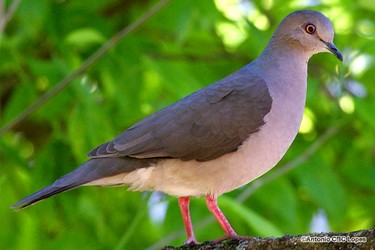
Fair Use credit: http://tolweb.org/tree/ToLimages/217681451_7e4971beab_o.250a.jpg

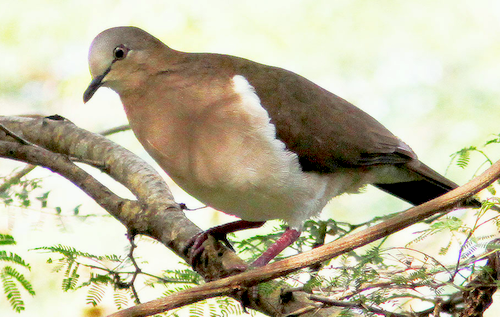
Grenada’s official coat of arms includes an Armadillo and a Grenada Dove (Leptotila wells  —  a/k/a Well’s dove or pea dove), positioned above the motto “Ever conscious of God, we aspire, build, and advance as one people.”   The Grenada Dove is endemic to Grenada – i.e., only on the island of Grenada is the Grenada Dove found in the wild, and even there it is critically “endangered” (i.e., close to extinction).   The dove’s coloring, as depicted on the Grenada coat of arms, however, does not closely match the actual coloring of the real bird.
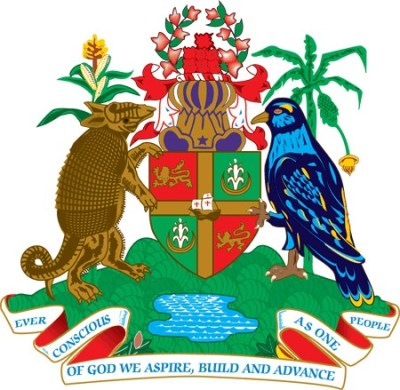
(Grenada coat of arms – public domain)

(Grenada coat of arms – public domain)

The dove’s coloring, as depicted on the Grenada coat of arms, however, does not closely match the actual coloring of the real bird.  The actual Grenada Dove has little blue to it (depending on the lighting used to view it)  –  rather, brown and buff dominate its overall coloring.  One wonders why, therefore, the heraldic depiction shows indigo-blue and azure, with yellow highlighting.  Consider the more realistic depictions before, as shown by photographic and postage images.

Fair use credit:  grenada national archiveshttps://grenadanationalarchives.wordpress.com/tag/leptotila-wellis/ (from the website of the National Archives of Grenada)

(Grenada postage stamp issued in February of AD1974 – public domain)

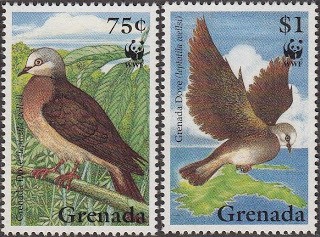
Consider also these special World Wildlife Fund-logo Grenada postage stamps,  showing Grenada Doves.
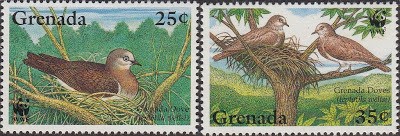
Grenada stamps 1

Grenada stamps 2

(Grenda postage stamps issued in January AD1995 – public domain)

The lesson here, apparently, is that heraldic coat-of-arms depictions of birds can (sometimes) be quite unrealistic – or else the artist might be depicting the wrong bird!

But Grenada’s coat of arms is not the only surprise in its national symbols.

Consider now the holiday we call “Thanksgiving”.

In the United States of America, for a contrasting example, the holiday of “Thanksgiving” (celebrated on the fourth Thursday in November) commemorates the gratitude of Plymouth Pilgrims, as pioneer survivors, who thanked God at harvest time in AD1621, for His providence — see “Strangers and Pilgrims (and the American Turkey)”, posted at https://leesbird.com/2014/11/25/strangers-and-pilgrims/ .  The Pilgrims’ survival and early successes, due to God’s providence, are also celebrated in the Netherlands, in Leiden, to commemorate how the Pilgrims lived in Holland during AD1609-AD1620.  A special Thanksgiving worship service is conducted, there, on the morning of America’s Thanksgiving, in Pieterskerk [“Peter’s church”], a Gothic church that was originally Roman Catholic (from its architectural beginning in AD1390), yet became Protestant during the Dutch Reformation, and became the burial site for John Robinson, pastor of the Pilgrims prior to their migratory journey to America.

Canadians observe a similar holiday, called l’Action de grâce in French, on the second Monday in October.

Norfolk Island, an external territory of Australia, celebrates Thanksgiving on the last Wednesday of November, so that Norfolk Island’s celebration of Thanksgiving occcurs either the day before, or six days after, the day when Americans celebrate Thanksgiving.

Saint Lucia, an island nation on the eastern edge of the Caribbean Sea, celebrates Thanksgiving on the first Monday in October.

Christians in Germany have a similar harvest-thanksgiving holiday, Erntedankfest, in early October, at about the same time that its Bavarians are celebrating Oktoberfest.

Thanksgiving is supposed to be focused on thanking God —  even the name of the holiday suggests as much.  However, although gratitude to God  –-  for harvest blessings  —  was the original reason for most harvest festival-oriented “thanksgiving” holidays, many Thanksgiving traditions have forgotten the historic importance of thanking God for His caring providences, by focusing more on distractive parades (e.g., Macy’s, IKEA’s, McDonald’s), football games, and feasting  —  with such festive celebrations discounted in slang as “Turkey Day”. (British Laird Bill Cooper was quite disappointed to learn of this trivialized secularization of what was originally a holy day/holiday.)

But how is Thanksgiving celebrated in Grenada, and why ?

First, consider where Grenada is located – Grenada is an island nation situated slightly east of South America, north of Venezuela.  Politically speaking, the nation of Grenada actually includes the main island (called “Grenada”) plus a few smaller islands, some but not all of “the Grenadines”, which are situated north of the Martinique Channel – with several of the other Grenadine islands (located south of the Martinique Channel) jurisdictionally belonging to the Caribbean nation called “St. Vincent and the Grenadines”.
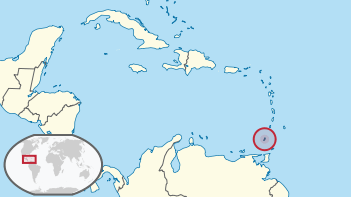
grenada map

In AD1498 the main island of Grenada was visited by Christopher Columbus, who named it “Concepcion”.

Grenada was later visited by Britons, then French; it was eventually settled by French colonists. Later, as part of the Treaty of Paris (in AD1763), Grenada became a British colony.  Grenada shed its colonial status, however, in AD1974, as it then became officially independent of the United Kingdom, although it remained an affiliate of the British Commonwealth.

So far so good, it seemed, until AD1983, when a Communist military takeover occurred on the island, led by General Hudson Austin (who was politically backed by Cuba, and aided by Cuban soldiers), actually seized control from a prior Communist takeover (i.e., one Communist regime killed off the leadership of a prior Communist dictatorship).  American students were put in jeopardy so President Ronald Reagan authorized a military rescue operation, which included defeating the “New Jewel Movement” (i.e., the second Communist dictatorship).

Thus, beginning on October 25th of AD1983, the “New Jewel Movement” Communists, who had seized the country, were soon opposed by a coalition of rescue forces, comprised of the United States and several Caribbean allies (from six Caribbean nations, including Jamaica and Barbados), in a complicated military effort called “Operation Urgent Fury” – which included U.S. Army Rangers, U.S. Marines, Delta Force, 82nd Airborne paratroopers, and U.S. Navy SEALs.  Because the rescue operation was so successful – and peace was restored to Grenada (with the Cuban soldiers being expelled) a holiday of gratitude was established – October 25th became Thanksgiving Day for Grenada.

Operation Urgent Fury photograph

Operation Urgent Fury photograph (public domain, AD1983) M102 howitzers (320th Field Artillery Regiment) firing on Grenada island.
Bottom line:   we all  –  whether Americans or Grenadians or anyone else for whom Christ died  —  have a lot to be thankful for, on whatever day that we celebrate Thanksgiving (and on every other day of the year!).

In accord with Psalm 100 we should, daily, “enter into His gates with thanksgiving, and into His courts with praise; be thankful unto Him, and bless His name”.