Double-crested Cormorant Juvenile at Indian Rocks Beach

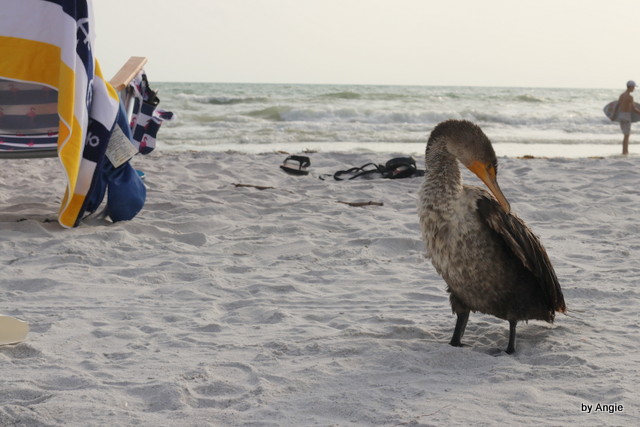
Double-crested Cormorant by Angie at beach 7

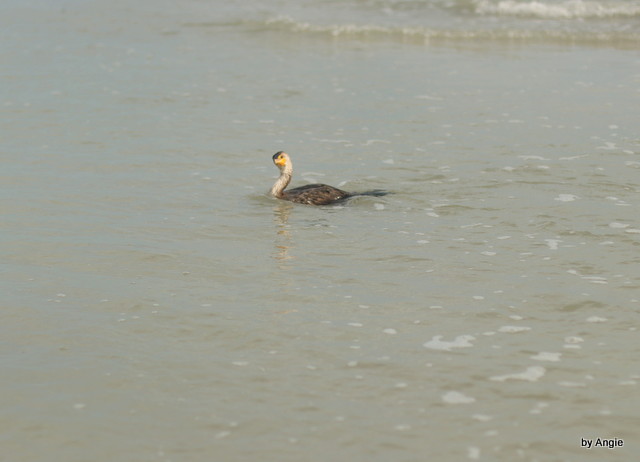
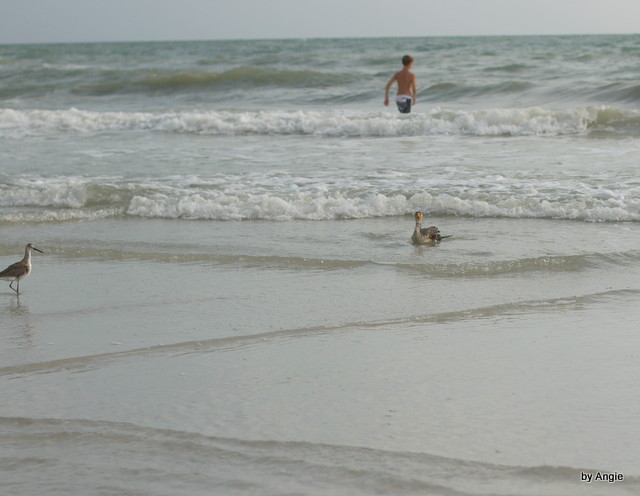
My niece, Angie, sent the above photo of a bird they observed at the Indian Rocks Beach shore in Florida. She asked what kind of a “sea duck” it was. She was close, but the cormorant family is totally separate. I let her know that it was a juvenile Double-crested Cormorant.

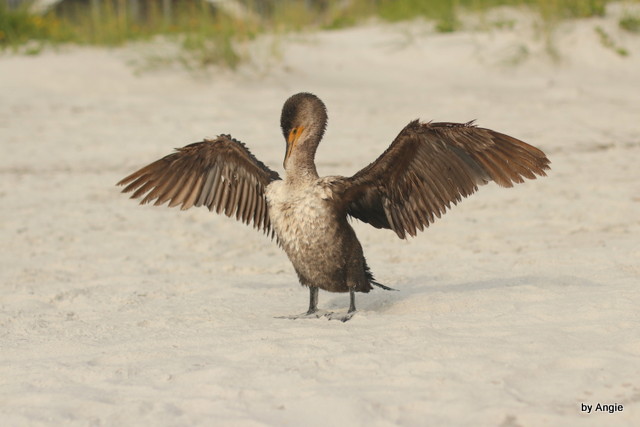
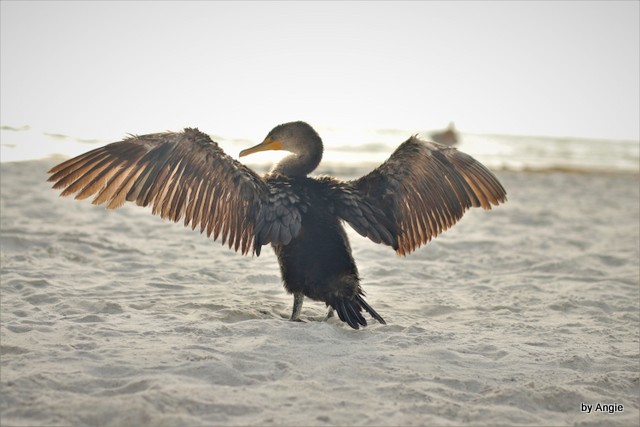
She later told me that it was almost struggling to get out of the water. Angie also provided me with more photos of this youngster. I may be wrong, but, being immature, it may have become too water-logged. I have never experienced seeing one “swimming ashore”. If they were to become too wet, that could happen, I suppose. Whatever the case, enjoy seeing her sequence of another fantastic creation from our Creator. He provides for us and the avian population with provisions to help us when in need.

“Let us therefore come boldly unto the throne of grace, that we may obtain mercy, and find grace to help in time of need.” (Hebrews 4:16 KJV)

The Cormorant is listed in four verses in the Bible, therefore making it a Bird of the Bible. “And the pelican, and the gier eagle, and the cormorant,”
(Deuteronomy 14:17 KJV)

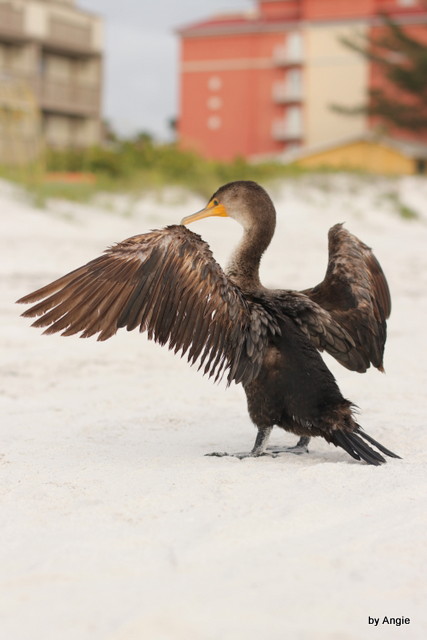
The Double-crested Cormorant (Phalacrocorax auritus) is a member of the cormorant family of seabirds. It occurs along inland waterways as well as in coastal areas, and is widely distributed across North America, from the Aleutian Islands in Alaska down to Florida and Mexico. Measuring 70–90 cm (28–35 in) in length, it is an all-black bird which gains a small double crest of black and white feathers in breeding season. It has a bare patch of orange-yellow facial skin. Five subspecies are recognized.

Double-crested Cormorant by Angie at beach 1

Double-crested Cormorant by Angie at beach 2

Double-crested Cormorant by Angie at beach 3

After fishing, cormorants go ashore, and are frequently seen holding their wings out in the sun. All cormorants have preen gland secretions that are used ostensibly to keep the feathers waterproof. Some sources state that cormorants have waterproof feathers while others say that they have water permeable feathers. Still others suggest that the outer plumage absorbs water but does not permit it to penetrate the layer of air next to the skin. The wing drying action is seen even in the flightless cormorant but commonly in the Antarctic shags and red-legged cormorants. Alternate functions suggested for the spread-wing posture include that it aids thermoregulation, digestion, balances the bird or indicates presence of fish. A detailed study of the great cormorant concludes that it is without doubt to dry the plumage.

Double-crested Cormorant by Angie at beach 4

Double-crested Cormorant by Angie at beach 5

Double-crested Cormorant by Angie at beach 6

The Double-crested Cormorant (Phalacrocorax auritus) is a member of the cormorant family of seabirds. It occurs along inland waterways as well as in coastal areas, and is widely distributed across North America, from the Aleutian Islands in Alaska down to Florida and Mexico. Measuring 70–90 cm (28–35 in) in length, it is an all-black bird which gains a small double crest of black and white feathers in breeding season. It has a bare patch of orange-yellow facial skin. Five subspecies are recognized.

The double-crested cormorant is found near rivers and lakes and along the coastline. It mainly eats fish and hunts by swimming and diving. Its feathers, like those of all cormorants, are not waterproof and it must spend time drying them out after spending time in the water.

[Info from Cormorant] and Double-Crested Cormorant from Wikipedia]

Avian And Attributes – Sapphire

Sapphire Flycatcher (Ficedula sapphira) ©WikiC

“And the foundations of the wall of the city were garnished with all manner of precious stones. The first foundation was jasper; the second, sapphire; the third, a chalcedony; the fourth, an emerald;” (Revelation 21:19 KJV)


Avian and Attributes – Sapphire

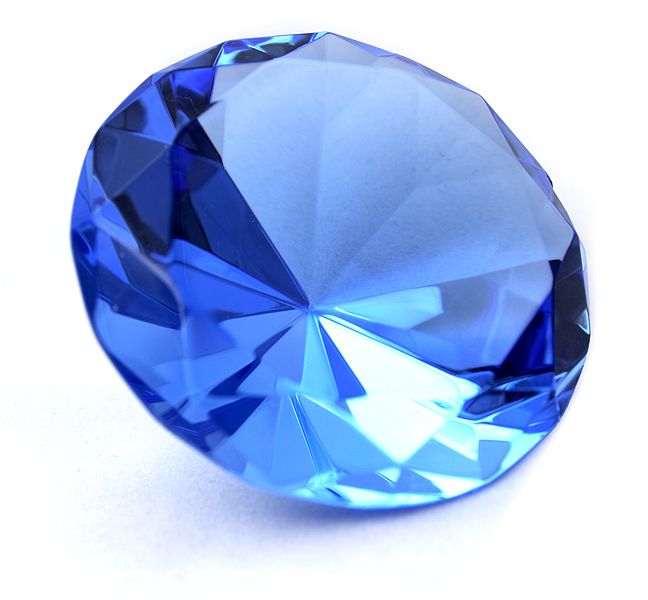
Sapphire Gem ©WikiC

SAP’PHIRE, n. [L. sapphirus; Gr. to scrape, to shine, to be fair, open, beautiful.]

A species of silicious gems or minerals, of several varieties. In hardness it is inferior to the diamond only. Its colors are blue, red, violet, yellow, green, white, or limpid, and one variety is chatoyant, and another asteriated or radiated.

Sapphire is a subspecies of rhomboidal corundum.

The oriental ruby and topaz are sapphires.

Sapphire is employed in jewelry and the arts.


Sapphire Birds

Sapphire Flycatcher

Sapphire Flycatcher (Ficedula sapphira) ©WikiC

Sapphire Quail-Dove

Sapphire Quail-Dove (Geotrygon saphirina) ©Drawing WikiC

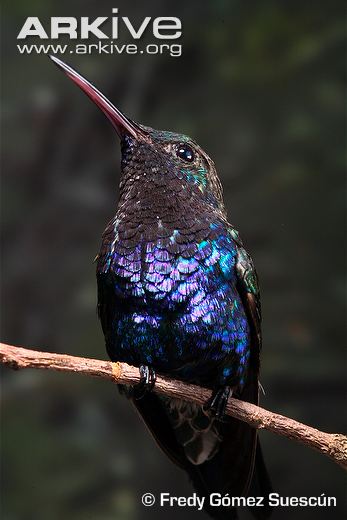
Sapphire-bellied Hummingbird

Sapphire-bellied-hummingbird-perched-on-branch ©ARKive

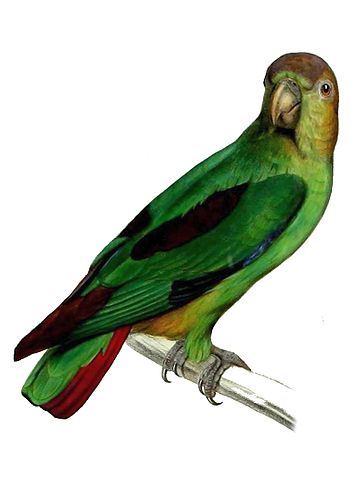
Sapphire-rumped Parrotlet

Sapphire-rumped Parrotlet ©Drawing WikiC

Sapphire-spangled Emerald

Sapphire-spangled Emerald (Amazilia lactea) by Dario Sanches

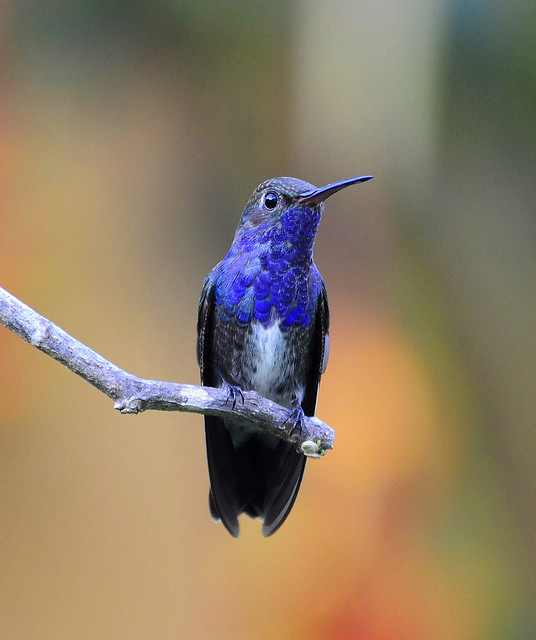
Sapphire-throated Hummingbird

Sapphire-throated Hummingbird (Lepidopyga coeruleogularis) ©WikiC

Sapphire-vented Puffleg

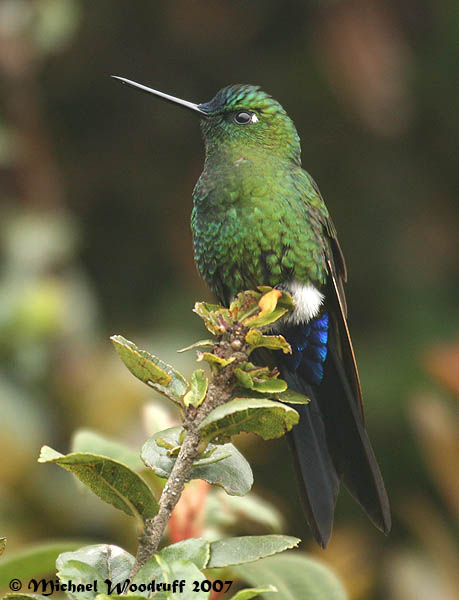
Sapphire-vented Puffleg (Eriocnemis luciani) by Michael Woodruff


More Avian and Attributes

Birds whose first name starts with “S”

Good News

*
[Definitions from Webster’s Dictionary of American English (1828), unless noted. Bird info from Wikipedia plus.]

The Raven and the Old Woman’s Garden – by Emma Foster

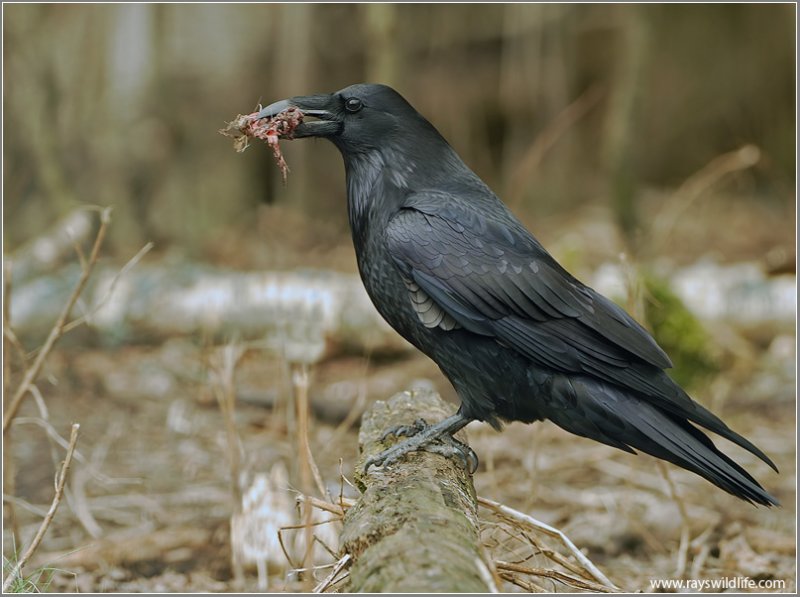
Northern Raven (Corvus corax) by Ray

The Raven and the Old Woman’s Garden by Emma Foster

And be kind to one another, tenderhearted, forgiving one another, even as God in Christ forgave you.” (Ephesians 4:32 NKJV)

Once there was a small raven that lived in a tree that stood in the middle of a large garden a woman had planted years ago. The woman had grown old now and spent most of the time in her small brick house. She did come out to devoutly water her plants so that her garden would be kept beautiful, but it was very difficult for her to pull out the weeds in the flower beds.

The raven would often watch the old woman from her nest in the tree as she watered her flowers. The raven enjoyed the garden the old woman had planted because so many of the flowers were different colors. During the day the raven would often fly through the flowers, and every day it seemed that there was a new and different flower for her to look at.

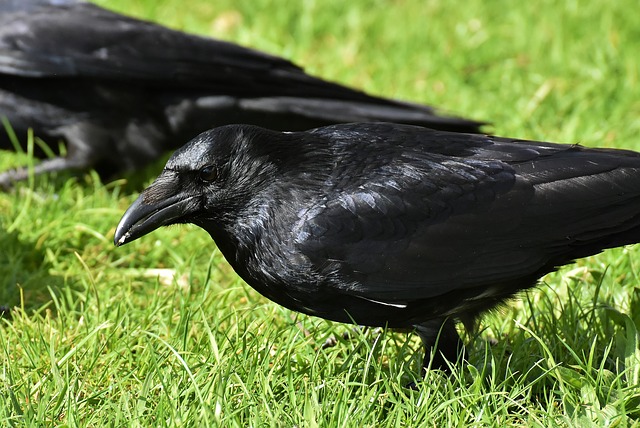
PAS-Corv Raven ©Pixabay

But one day the old woman didn’t come out of her house. The raven waited for her to come and water her flowers, but the old woman had become ill and couldn’t get out of her bed. Eventually, the raven saw from her nest a bright red and white vehicle with flashing lights come up the driveway. The raven watched some people in uniforms come into the house and take the old woman out on a bed and drive away.

A few days went by and the old woman did not come home. The raven began to worry because there was no one to water the flowers to keep the old woman’s garden looking beautiful. Several weeds had sprung up in the flower beds as well.

The raven suddenly had the idea to begin pulling out some of the weeds while the old woman was gone. She started in the flower bed closest to her nest and began pulling weeds out from the beds. While she was pulling out some of the weeds, the raven found a few seeds that the old woman hadn’t planted yet. The raven promptly decided to dig up a small place off to the side with her beak in order to plant them.

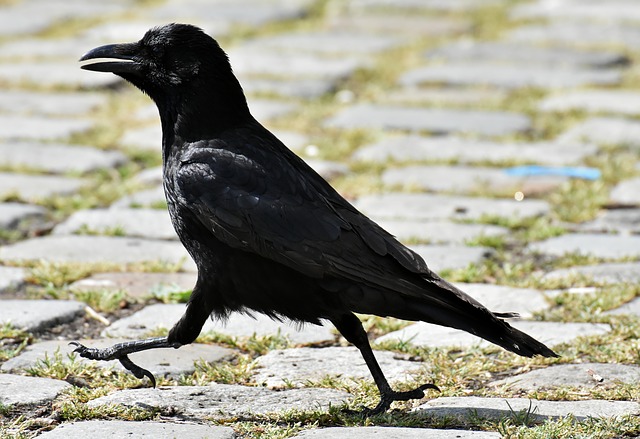
PAS-Corv Raven ©Pixabay

The raven continued to pull out more weeds for the rest of the day. Fortunately, because it wasn’t terribly hot outside the work was a little easier. Toward the end of the day, rain began to fall. The raven quickly retreated to her nest and watched from the protection of the tree as the rain watered the flowers to keep them from dying.

The rain stopped the next morning but continued occurring every now and then for the next couple of days. One morning the raven woke to see tiny buds had appeared out of the ground where she had planted the seeds. This made the raven very happy, but she became even happier when a car drove up into the driveway. The old woman had come back from the hospital but had to be taken into her house on a bed. The raven stayed in her nest, hoping that the old woman would be able to see the new flowers and her well-kept garden through her bedroom window.

Fortunately, the old woman was able to see her garden very clearly, but she was no longer able to come outside. The raven decided she would keep pulling out the weeds for her. It continued to rain nearly every day, which was good because the flowers had to be watered. But one day another loud flashing vehicle came back up to the house and took the old woman away, and the raven knew that she wasn’t coming back.

PAS-Corv Raven ©Pixabay

Eventually, several people came to the house and moved out all of the old woman’s things leaving the house bare and empty. To honor the old woman the raven kept pulling out weeds, hoping that she could keep the old woman’s garden as long as possible. But eventually it stopped raining and the flowers began to wilt. The raven began to fear that all of the old woman’s flowers would eventually die, until one day the raven woke up in her nest to see a family moving into the old woman’s house. The wife, who moved into the house with her husband and children, decided that she should continue tending the garden, which made the raven very happy. After a few weeks the garden and was healthy and beautiful again, and the flowers the raven had planted grew incredible large and tall.

My help comes from the LORD, Who made heaven and earth.” (Psalms 121:2 NKJV)


Lee’s Addition:

Another very entertaining and delightful story from Emma. Emma picks the birds in her tales and I supply the photos and scriptures. She may not be aware that the Ravens are very intelligent and can do some might surprising tasks. So, maybe this story is not really so “far-fetched”!

Enjoy her other tales at Emma’s Stories.

GREAT BLUE HERON COUPLES, CONTENTED WITH STEREOTYPICAL DOMESTIC ROLES

GREAT  BLUE  HERON  COUPLES,   CONTENTED  WITH  STEREOTYPICAL  DOMESTIC  ROLES

Dr. James J. S. Johnson

Likewise, ye husbands, dwell with them according to knowledge, giving honor unto the wife, as unto the weaker vessel, and as being heirs together of the grace  of  life,  that  your  prayers  be  not  hindered.  (1st Peter 3:7)

GreatBlueHerons.AmericanExpedition

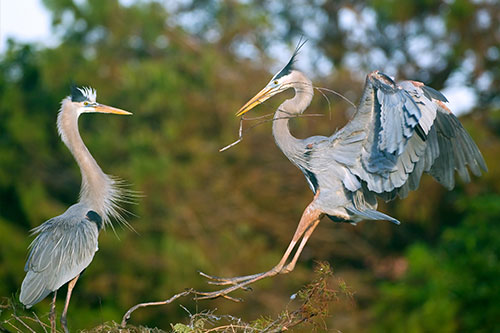
GREAT BLUE HERONS, nest-building together   (photo credit: American Expedition)

Great Blue Heronwhat a big, beautiful bird! These are the largest-sized and heaviest of North America’s herons – standing about 4 feet tall and weighing over 5 pounds (about 2½ kilograms). Because both sexes look alike, generally speaking, it is difficult to discern which is a male (versus a female).  However, when a pair is seen, expect the male have a slighter larger bill than his female.  (That’s a nice way of saying that males have noticeably bigger mouths than their females.)

GreatBlueHerons.CarolinaBirdClub

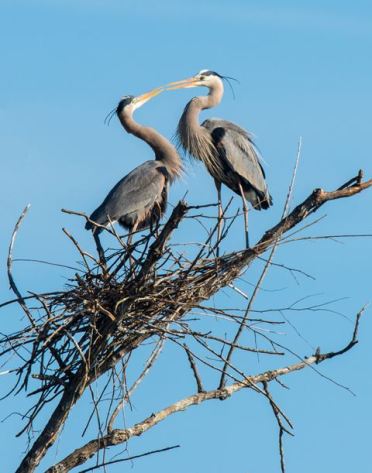
GREAT BLUE HERON couple, on nest   (photo credit: The Carolina Bird Club)

Previous blogposts have mentioned this wading bird’s bold usage of alligator “taxis” [see Lee Dusing’s “Gatorland’s Taxi Service”, posted at https://leesbird.com/tag/great-blue-heron/ ], as well as its opportunistic dietary preferences (e.g., fish, frogs, rodents, small birds, bugs, etc.), so those facts are not repeated here [See “Great Blue Heron:  Patient, Prompt, and (Rarely) Pugnacious”, posted at https://leesbird.com/2014/06/30/great-blue-heron-patient-prompt-and-rarely-pugnacious/ ].

However, it is worth mentioning that the Great Blue Heron is unafraid of stereotypical male/female courtship and domestic roles  —  something that some “modern” folks get nervous about:

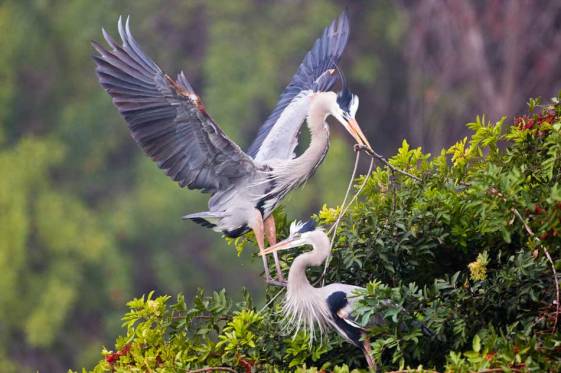
GREAT BLUE HERONS.  From exchanging twigs to flying in circles, great blue herons participate in a wide range of behaviors during courtship.  To construct the big, bulky nest, the male does most of the gathering of materials, picking up sticks from the ground … [or from other places in its “territory”].  The female does most of the work of putting the nest material in place [i.e., she takes care of the home’s interior decorating].  Pairs often reuse old nests [and have been doing this long before “recycling” became a fad], but if they build a new one, it can take three days to two weeks [although it probably takes longer if they are government contractors].

[Quoting, with editorial inserts, from Kaitlin Stainbrook, “Love at First Flight”, BIRDS & BLOOMS, February-March 2018 issue, page 34.]

GreatBlueHeron-nest.NaturallyCurious-MaryHolland

GREAT BLUE HERON nest    (photo credit: Naturally Curious with Mary Holland)

Where do they build nests? Inside trees and bushes, yes, but also in tall marshy weeds, or even on the ground.  Great Blue Herons are known to collect tree twigs from nearby trees, including some branch fragments that are too long to be useful as part of a nest, so many sticks are likely to fall to the ground before a pair of great blues get their nest built “just right”.  Other nest-building materials include a “lining” of pine needles, moss, grasses, cattail reeds, and/or leaf material.

In other words, these herons are as eclectic in nest-building as they are in sourcing their food.

GreatBlueHerons-nestbuilding.GBH-RV-rentals

GREAT BLUE HERONS, nest-building
(photo credit: Great Blue Heron RV Rentals & Sales Inc.)

A quick limerick follows.

       GREAT BLUE HERON NEST-BUILDERS KNOW THE DIFFERENCE

What’s right oft gets lost, in the throng

       As fads drop what’s right, for what’s wrong;

                        As home tasks come and go

                        Their right roles herons know;

       May that difference forev’r live long !

So Great Blue Herons know the difference between male and female roles.

What a Biblical concept! As the French would say:  vive la difference!


Shoreline Action: Birds, Turtles, and a Gator

Shoreline Action: Birds, Turtles, and a Gator

Dr. James J. S. Johnson

Again He turneth the wilderness into pools of water, and the dry land into water springs.   (Psalm 107:35, Geneva Bible)

Water is a universal magnet for birds and other animals, so “pools” (or “ponds” or “lakes”) attract wildlife.  So having a pond (or a “lake”) in one’s backyard is good for birdwatching — as well as for watching other kinds of wildlife.

Birds-Zim.Golden-Guides-series-1956

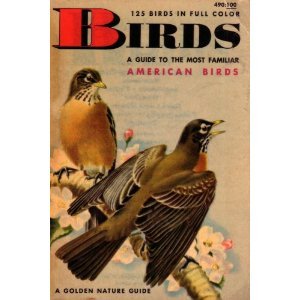
JJSJ’s first bird-book (from 2nd grade)

During the latter part of this month, for a couple days (May 20th through 22nd), I once again had the memorable privilege of birdwatching in St. Petersburg, at the hospitable home of Chaplain Bob and Marcia Webel.    [Regarding this favorite backyard birdwatching site, see “Appreciating White Ibises (and Other Birds in Florida)”, posted at https://leesbird.com/2016/12/06/appreciating-white-ibises-as-well-as-dozens-of-other-birds-in-florida/ .]   On Monday (May 21st), on or near that lacustrine shoreline, in addition to feeding some large turtles and a hungry alligator  (about 4 feet long! — who stayed on the other side of a metal fence), we saw a lot of birds  – osprey (a/k/a “fish hawk”), great blue heron, Louisiana heron (a/k/a “tri-colored heron”), white ibis, wood stork, mallard, Muscovy duck, snowy egret , great white egret, boat-tailed grackles, anhinga (a/k/a “snake-bird”), etc.  –  and we heard the eerie calls of limpkins (a/k/a “crying bird”). Onshore we also saw birds in the trees, including blue jay and some variety of sparrows, as well as frenetic grey squirrels.    [Regarding Florida’s shellfish-snacking limpkins, see Lee Dusing’s “The Disappearing Limpkin”, posted at https://leesbird.com/2017/11/04/the-disappearing-limpkin/ .]

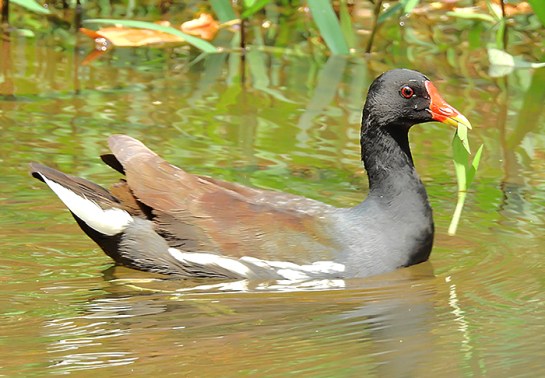
CommonMoorhen-wikipedia-ShantanuKuveskar

COMMON MOORHEN (a/k/a Florida Gallinule, a/k/a Marsh Hen) — photo credit: Shantanu Kuveskar / Wikipedia

In error, then, I thought I saw a Purple Gallinules family, but Bob correctly identified these candy-corn-billed rail-fowl as Common Moorhen (a/k/a “marsh hen” and “Florida gallinule”), and Bob’s bird-book confirmed Bob’s identification.  Meanwhile, at one point, amidst a lot of tossing pieces of bread unto the birds and turtles (and alligator), Marcia tossed some less-than-fresh tuna fish salad upon the shore  –  and the tuna was quickly gobbled up by a Louisiana Heron! (Louisiana herons are birds that I don’t often see – I first saw one at Aransas Bay, in Aransas National Wildlife Refuge, on March 11th of AD1996, and I have rarely seen any since then.)  It rained quite a bit, later (on Monday and Tuesday), so I was very glad that we did our backyard birdwatching when we did  — here is a limerick to remember that time by!

Remembering Time (and Critters) at the Shore

Ducks afloat, hawks in the sky

Herons ashore, jays fly by;

Turtles near, some beyond

Gobble bread in the pond;

Busy critters catch my eye!


Happy birdwatching!

Mistaken Identity – Birds and Ancestors

Brown Thrasher (Toxostoma rufum) by Judd Patterson

Brown Thrasher (Toxostoma rufum) by Judd Patterson

Here is an interesting email notice:

SK?????@?.com via listserv.usf.edu
3:13 PM (4 minutes ago) to BRDBRAIN

Mental error, Brown Thrasher not Brown Creeper. S???? Tampa, Fl

To subscribe, unsubscribe or view archives of the brdbrain listserv list, please visit us on the web at:
http://listserv.usf.edu/archives/brdbrain.html

Brown Creeper (Certhia americana) ©USFWS

I belong to the BRDBRAIN reports that come out about bird sitings here in Florida. The University of Florida has several “listserv list.” Birds being one of them. When someone spots especially a bird that is uncommon to the area, they report it. Then, as true birders, especially those trying to build their “Life List” of birds, they scurry off to see it and add it to their Lists. Most of you know what I am referring to.

So, in this case, S???? had reported the wrong bird and was correcting his error. We have all had to “eat crow” over something we have said. At least I have.

In the last article, Where are you from? – Correction, one of my blogging friends made a reply and I answered them. Aussiebirder has a great blog and you should drop by there to see it. I answered them but would like to use this blog to further explain how things happen with bird lists and ancestry lists.

Their remark: “From my findings some of these genealogy companies, especially the ones using DNA typings do not contribute any practical links to a specific family with any accuracy or even traceable evidence.” and here is my reply, “It was not really ancestry’s fault as much as those who blindly connect people to their trees without much research. My problem came before I received my DNA results. This might just be a good topic for a post. I am finding quite a bit from my results. Humm. A post topic. Hope the “only birders” won’t mind. :)”

I just now bolded, the part I would like to address. Just as the person above misidentified the wrong bird, those doing their genealogy, do the same thing. Ancestry and other like services [My Heritage, Family Tree, Geni, etc.], provide “Hints” for a possible fact to be applied to the Family tree they are working on.

We, birders and genealogist, are so eager to add another “notch” to our list, that we overlook some of the other facts. Did the bird have red or black eyes, stripes or streaks, etc? Did the person that you are trying to add live long enough to produce offspring? [That is a favorite mistake that I see. They are like 7 years old when their child is born. WHOA!!

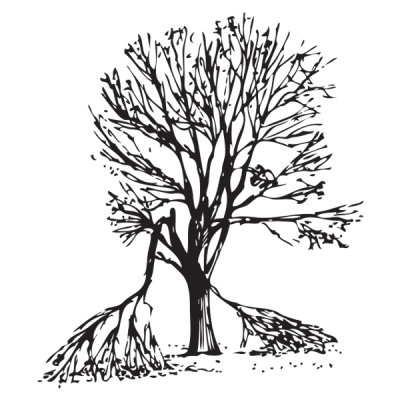
Broken Limb/Branch off of Tree

I had to “chop that branch” off my tree because I had mistakenly not checked all the facts. My new DNA results are actually helping me find some of my great nieces and nephews from parts of our family that we had lost track of. [By the way, I am trying to see if that tree might produce another limb, just as interesting as the other.

Brown Booby (Sula leucogaster) ©WikiC [At least it’s brown! :) ]

As you study the birds more and more and have practical experience in the field, you are less apt to make mistakes. Are you ever going to be right 100% of the time? Dream on!

Am I ever going to remove another limb from my tree, or at least a “twig”? Most likely.

What we do is keep doing our best and do not be afraid to admit that a mistake was made. Not admitting a mistake is worse than making a mistake and not admitting it. Especially, not trying to correct our mistakes.

*

Our paster is always telling us to, “tell the truth, tell the truth, tell the truth.”

Therefore, confess your sins to one another, and pray for one another so that you may be healed. The effective prayer of a righteous man can accomplish much. (James 5:16 NASB)

Where Are You From? II – Correction

Where Are You From? – II

Where Are You From? – I

Where Are You From? Part II – Correction

Broken Limb/Branch off of Tree

For I am not ashamed of the gospel of Christ, for it is the power of God to salvation for everyone who believes, for the Jew first and also for the Greek. For in it the righteousness of God is revealed from faith to faith; as it is written, “THE JUST SHALL LIVE BY FAITH.” (Romans 1:16-17 NKJV)

In Where Are You From? Part II, I have found there was a mistake in my genealogy to Mercy Howland. When I applied to the Howland Society for membership, I had to produce the descendant lines. Apparently, Mercy Howland has been mistreated by Ancestry.com and has caused family trees of members to be misled. Mine included. In other words, I was told that we were related when we weren’t.

Jean, at the Society, was very nice and did try to find out about it, but as you can see from the two emails from her, apparently, I am not related to the Howlands off the Mayflower.

“My problem at the moment is that I have an email in to the Mayflower Society as I see that John and Mary (LEE) Howland did have a child Mercy in Plymouth but she did not live.  Also, all their children were born in Plymouth or Barnstable.  But I do have an email in to the Mayflower as to the status of “Mercy” Howland. because lines are opening up everyday!!!!” More later, Jean”

“Just got word [from Mayflower Society] that there is no additional proofs to indicate that Mercy lived.  Lots of mismanaged “Trees” on Ancestry that indicate otherwise.  But it is not true.  Sorry.”

All of this was said to say, that apparently I am not related to John Howland that fell overboard and hung on to the rope. At least, unless someone can prove that Mercy Howland did have descendants. So for now, I have chopped that limb off of my ancestral tree. Still the Lord, in His sovereignty spared his life for the 2 million descendants of his [John Howlands]
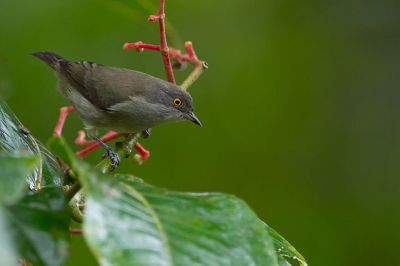
Black-faced Dacnis (Dacnis lineata) Female ©WikiC

All of this still reminds me of the uncertainty and flux in the avian world. They are still reshuffling birds around. The Aves – A Taxonomy in Flux site will give you an idea of how the birds keep changing because of DNA and other studies.

Aves – A Taxonomy in Flux

Just May 19th and 20th this year:

May 20

Chaetura Swifts: Continuing the Ridgely splits (Ridgely and Greenfield, 2001), I’ve split Tumbes Swift, Chaetura ocypetes, from Short-tailed Swift, Chaetura brachyura.
[Apodidae, Apodiformes, 3.09]

Cardinalidae: Another IOC/Ridgely and Greenfield (2001) split is Olive Tanager, Habia frenata, from Carmiol’s Tanager, Habia carmioli.
[Cardinalidae, Core Passeroidea V, 3.05]

Thraupidae: Still following IOC and Ridgely and Greenfield (2001), Yellow-tufted Dacnis, Dacnis egregia (inc. aequatorialis) has been split from Black-faced Dacnis, Dacnis lineata.

Also, the Black-and-chestnut Warbling-Finch, Poospiza whitii, has been split from the Black-and-rufous Warbling-Finch, Poospiza nigrorufa based on Jordan et al. (2017), Shultz and Burns (2013), and SACC Proposal 753.
[Thraupidae, Core Passeroidea V, 3.05]
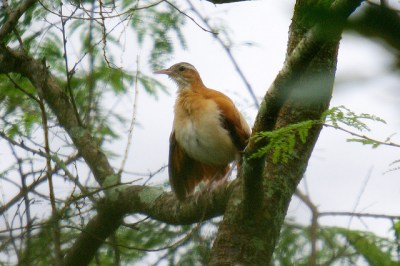
Caribbean Hornero (Furnarius longirostris) ©©Flickr DaveCurtis

Caribbean Hornero (Furnarius longirostris) ©©Flickr DaveCurtis

May 19

Elaenias: Based on Tang et al. (2018), I have rearranged Elaenia and returned Chilean Elaenia, Elaenia chilensis, to Sierran Elaenia, Elaenia pallatangae.
[Tyrannidae, Tyrannida II, 3.06]

Furnariinae: I have accepted several splits from IOC and Ridgely/Tudor (2009). Subspecies are allocated as in IOC.

  1. Pacific Tuftedcheek, Pseudocolaptes johnsoni, is split from Buffy Tuftedcheek, Pseudocolaptes lawrencii.
  2. Pacific Hornero, Furnarius cinnamomeus, and Caribbean Hornero, Furnarius longirostris, are split from Pale-legged Hornero, Furnarius leucopus.
  3. Striped Woodhaunter, Automolus subulatus, is split into Western Woodhaunter, Automolus virgatus and Eastern Woodhaunter, Automolus subulatus.
  4. Plain Thornbird, Phacellodomus inornatus is split from Rufous-fronted Thornbird, Phacellodomus rufifrons
  5. Creamy-breasted Canastero, Asthenes dorbignyi is split into Pale-tailed Canastero, Asthenes huancavelicae, Rusty-vented Canastero, Asthenes dorbignyi, and Dark-winged Canastero, Asthenes arequipae.

Baron’s Spinetail, Cranioleuca baroni, has been lumped into Line-cheeked Spinetail, Cranioleuca antisiensis. See Seeholzer and Brumfield (2018) and SACC Proposal 762.
[Furnariidae, Furnariida II, 3.05]

From that same page:

2018 Additions and Subtractions

Based on scientific names.

2018 Splits (34)
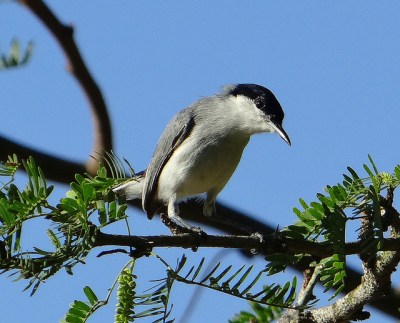
Tropical Gnatcatcher (Polioptila plumbea) ©Flickr barloventomagico

  1. Tumbes Swift, Chaetura ocypetes
  2. Striolated Manakin / Western Striped-Manakin, Machaeropterus striolatus
  3. Painted Manakin / Peruvian Striped-Manakin, Machaeropterus eckelberryi
  4. Vermilion Flycatcher, Pyrocephalus obscurus
  5. Darwin’s Flycatcher, Pyrocephalus nanus
  6. San Cristobal Flycatcher, Pyrocephalus dubius
  7. Blackish Chat-Tyrant, Ochthoeca nigrita
  8. Maroon-belted Chat-Tyrant, Ochthoeca thoracica
  9. Pacific Tuftedcheek, Pseudocolaptes johnsoni
  10. Pacific Hornero, Furnarius cinnamomeus
  11. Caribbean Hornero, Furnarius longirostris
  12. Western Woodhaunter, Automolus virgatus
  13. Plain Thornbird, Phacellodomus inornatus
  14. Pale-tailed Canastero, Asthenes huancavelicae
  15. Dark-winged Canastero, Asthenes arequipae.
  16. Eastern Tropical Gnatcatcher, Polioptila atricapilla
  17. Western Tropical Gnatcatcher, Polioptila parvirostris
  18. Maranon Gnatcatcher Polioptila maior
  19. Northwestern Tropical Gnatcatcher Polioptila plumbiceps
  20. Yucatan Gnatcatcher, Polioptila albiventris
  21. White-browed Gnatcatcher, Polioptila bilineata
  22. Himalayan Shortwing, Brachypteryx cruralis
  23. Chinese Shortwing, Brachypteryx sinensis
  24. Taiwan Shortwing, Brachypteryx goodfellowi
  25. Sumatran Shortwing, Brachypteryx saturata
  26. Flores Shortwing, Brachypteryx floris
  27. Bornean Shortwing, Brachypteryx erythrogyna
  28. Philippine Shortwing, Brachypteryx poliogyna
  29. Mt. Apo Shortwing, Brachypteryx mindanensis
  30. Peruvian Pipit, Anthus peruvianus
  31. Puna Pipit, Anthus brevirostris
  32. Olive Tanager, Habia frenata
  33. Yellow-tufted Dacnis, Dacnis egregia
  34. Black-and-chestnut Warbling-Finch, Poospiza whitii

2018 Lumps (4)

  1. Chaco Nothura, Nothura chacoensis
  2. Chilean Elaenia, Elaenia chilensis
  3. Baron’s Spinetail, Cranioleuca baroni
  4. South Georgia Pipit, Anthus antarcticus

“the eyes of your understanding being enlightened; that you may know what is the hope of His calling, what are the riches of the glory of His inheritance in the saints,” (Ephesians 1:18 NKJV)

Am disappointed about not being related to John Howland? A little, but I still have a great family and heritage. My Christian family is even larger and I do not have any way to trace their roots. Yet, when we all get to heaven, OH! What a reunion that will be! All my spiritual family and many of my own genetic family there.

What a reunion day!

to Him be glory in the church by Christ Jesus to all generations, forever and ever. Amen.” (Ephesians 3:21 NKJV)

“For I am not ashamed of the gospel of Christ, for it is the power of God to salvation for everyone who believes, for the Jew first and also for the Greek. For in it the righteousness of God is revealed from faith to faith; as it is written, “THE JUST SHALL LIVE BY FAITH.” (Romans 1:16-17 NKJV)

Where Are You From I

Where Are You From II
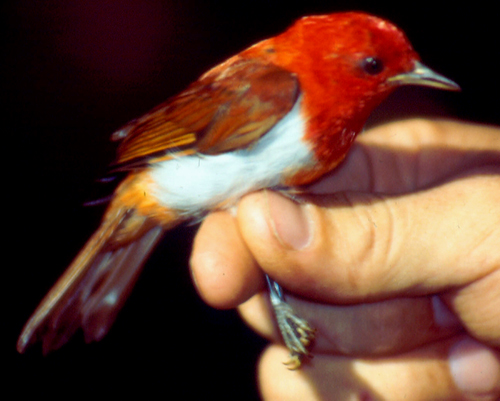
Avian And Attributes – Sand

Sand Partridge (Ammoperdix heyi) ©WikiC

How precious also are thy thoughts unto me, O God! how great is the sum of them! If I should count them, they are more in number than the sand: when I awake, I am still with thee.” (Psalms 139:17-18 KJV)

He rained flesh also upon them as dust, and feathered fowls like as the sand of the sea:” (Psalms 78:27 KJV)


Avian and Attributes – Sand

SAND, n.
1. Any mass or collection of fine particles of stone, particularly of fine particles of silicious stone, but not strictly reduced to powder or dust.
That finer matter called sand, is no other than very small pebbles.
2. Sands, in the plural, tracts of land consisting of sand, like the deserts of Arabia and Africa; as the Lybian sands.
SAND, v.t.
1. To sprinkle with sand. It is customary among the common people in America, to sand their floors with white sand.
2. To drive upon the sand.


Sandhill Crane (Grus canadensis)and young (4) by Dan's Pix

Sandhill Crane (Grus canadensis)and young by Dan’s Pix

Sand Birds

Sand Lark

Sand Lark (Calandrella raytal) by Nikhil Devasar

Sand Martin

Sand Martin (Riparia riparia) ©WikiC

Sand Partridge

Sand Partridge (Ammoperdix heyi) ©WikiC

Sand-colored Nighthawk

Sand-colored Nighthawk (Chordeiles rupestris) by ©AGrosset

Sanderling

Sanderling (Calidris alba) by Robert Scanlon

Sandhill Crane

Sandhill Youngster in Yard 3-26-16

Therefore whosoever heareth these sayings of mine, and doeth them, I will liken him unto a wise man, which built his house upon a rock: And the rain descended, and the floods came, and the winds blew, and beat upon that house; and it fell not: for it was founded upon a rock. And every one that heareth these sayings of mine, and doeth them not, shall be likened unto a foolish man, which built his house upon the sand: And the rain descended, and the floods came, and the winds blew, and beat upon that house; and it fell: and great was the fall of it.” (Matthew 7:24-27 KJV)


More Avian and Attributes

Birds whose first name starts with “S”

Good News

*
[Definitions from Webster’s Dictionary of American English (1828), unless noted. Bird info from Wikipedia plus.]

Where Are You From? Part II
Replica of Mayflower in Plymouth, Massachusetts ©WikiC

In Where Are You From? [Part I], the birds and my ancestry were both mentioned. Since we have not done much birdwatching lately other than through my window, my time has been spent looking for my ancestors.

Of course, since Creation is how God created the birds and humans, there are no birds in my Ancestorial Tree!! That is a given. I do have a Buzzard [Catherine] listed in Dan’s tree. A Hawk [Susannah] in my tree, and that is about it. The rest are normal human names.

Rough-legged Buzzard (Buteo lagopus) chicks ©USFWS

What is so amazing is how many people [my ancestors] that it took for me to come into existence. If anyone of them had died before they had the child that would be my ancestor was born, I wouldn’t be writing this article. That thought is awesome. God is so merciful and sovereign in His dealings with us. What Grace!

Today I found another ancestor who was on the Mayflower. This one really came close to not making it. This article explains how he fell overboard on the voyage to America: Meet John Howland, a lucky Pilgrim who populated America with 2 million descendants. Here is another interesting article about him on Wikipedia.

“But God, who is rich in mercy, because of His great love with which He loved us,” (Ephesians 2:4 NKJV)

The birds we watch today also come from their ancestors. Had one group died out, as they have, then that branch of birds is extinct. As beautiful as the birds are today, what would they be like had those not become extinct? Interesting thought.

Dodo (Raphus cucullatus) Extinct by Wikipedia

Dodo (Raphus cucullatus) Extinct by Wikipedia

The children today who are prevented from being born would have had many descendants in the future. A quote from the article above:

“Howland and his eventual wife, fellow Mayflower passenger Elizabeth Tilley, had 10 children and more than 80 grandchildren. Now, an estimated 2 million Americans can trace their roots to him.

Howland’s direct descendants include three presidents — Franklin Roosevelt, George H.W. Bush and George W. Bush — as well as former vice-presidential candidate Sarah Palin; poets Ralph Waldo Emerson and Henry Wadsworth Longfellow; actors Alec Baldwin, Humphrey Bogart, and Christopher Lloyd; Mormon church founder Joseph Smith; and child care guru Dr Benjamin Spock.

“The idea that the existence of all these people hinged on that one guy grabbing a rope in the ocean and holding on tight totally caught my imagination,”

The rope with the

The rope with the “Chatterbox” aboard. [Great nephew]

“I thank my God always concerning you for the grace of God which was given to you by Christ Jesus,” (1 Corinthians 1:4 NKJV)

**Updated**

See Where Are You From? II – Corrected
Avian And Attributes – Sad

Sad Flycatcher (Myiarchus barbirostris) ©WikiC

“And it came to pass, that, while they communed together and reasoned, Jesus himself drew near, and went with them. But their eyes were holden that they should not know him. And he said unto them, What manner of communications are these that ye have one to another, as ye walk, and are sad? And the one of them, whose name was Cleopas, answering said unto him, Art thou only a stranger in Jerusalem, and hast not known the things which are come to pass there in these days? And he said unto them, What things? And they said unto him, Concerning Jesus of Nazareth, which was a prophet mighty in deed and word before God and all the people: And how the chief priests and our rulers delivered him to be condemned to death, and have crucified him. But we trusted that it had been he which should have redeemed Israel: and beside all this, to day is the third day since these things were done. Yea, and certain women also of our company made us astonished, which were early at the sepulchre; And when they found not his body, they came, saying, that they had also seen a vision of angels, which said that he was alive. And certain of them which were with us went to the sepulchre, and found it even so as the women had said: but him they saw not.

Then he said unto them, O fools, and slow of heart to believe all that the prophets have spoken: Ought not Christ to have suffered these things, and to enter into his glory? And beginning at Moses and all the prophets, he expounded unto them in all the scriptures the things concerning himself.
(Luke 24:15-27 KJV)


Avian and Attributes – Sad

SAD, a. [It is probable this word is from the root of set. I have not found the word is from the root of set. I have not found the word in the English sense, in any other language.]
1. Sorrowful; affected with grief; cast down with affliction.
Th’ angelic guards ascended, mute and sad.
Sad for their loss, but joyful of our life.
2. Habitually melancholy; gloomy; not gay or cheerful.
3. Downcast; gloomy; having the external appearance of sorrow; as a sad countenance. Mat 6.
4. Serious; grave; not gay, light or volatile.
5. Afflictive; calamitous; causing sorrow; as a sad accident; a sad misfortune.
8. Heavy; weighty; ponderous.


Sad Flycatcher (Myiarchus barbirostris) ©WikiC

“The Sad Flycatcher (Myiarchus barbirostris) is a species of bird in the family Tyrannidae. It is endemic to Jamaica. Its natural habitats are subtropical or tropical moist lowland forests, subtropical or tropical moist montane forests, and heavily degraded former forest.” [Wikipedia]

“The Sad Flycatcher is endemic to the island of Jamaica, where it is known colloquially as the Little Tom Fool, but it is apparently most closely related to the very widely distributed Dusky-capped Flycatcher (Myiarchus tuberculifer).” [Neotropical Birds]

These things I have spoken unto you, that in me ye might have peace. In the world ye shall have tribulation: but be of good cheer; I have overcome the world.” (John 16:33 KJV)


More Avian and Attributes

Birds whose first name starts with “S”

Good News

*
[Definitions from Webster’s Dictionary of American English (1828), unless noted. Bird info from Wikipedia plus.]

Avian And Attributes – Sacred

Sacred Kingfisher (Todiramphus sanctus) by Ian

“Consecrate a fast, Call a sacred assembly; Gather the elders And all the inhabitants of the land Into the house of the LORD your God, And cry out to the LORD.” (Joel 1:14 NKJV)


Avian and Attributes – Sacred

SA’CRED, a. [L. sacer, sacred, holy, cursed, damnable. We here see the connection between sacredness and secrecy. The sense is removed or separated from that which is common, vulgar, polluted, or open, public; and accursed is separated from society or the privileges of citizens, rejected, banished.]
1. Holy; pertaining to God or to his worship; separated from common secular uses and consecrated to God and his service; as a sacred place; a sacred day; a sacred feast; sacred service; sacred orders.
2. Proceeding from God and containing religious precepts; as the sacred books of the Old and New Testament.
3. Narrating or writing facts respecting God and holy things; as a sacred historian.
4. Relating to religion or the worship of God; used for religious purposes; as sacred songs; sacred music; sacred history.
5. Consecrated; dedicated; devoted; with to.
A temple sacred to the queen of love.
6. Entitled to reverence; venerable.
Poet and saint to thee alone were given, the two most sacred names of earth and heav’n.
7. Inviolable, as if appropriated to a superior being; as sacred honor or promise.
Secrets of marriage still are sacred held.
Sacred majesty. In this title, sacred has no definite meaning, or it is blasphemy.
Sacred place, in the civil law, is that where a deceased person is buried.

“and that from childhood you have known the sacred writings which are able to give you the wisdom that leads to salvation through faith which is in Christ Jesus. All Scripture is inspired by God and profitable for teaching, for reproof, for correction, for training in righteousness; so that the man of God may be adequate, equipped for every good work.” (2 Timothy 3:15-17 NASB)


Sacred Kingfisher (Todiramphus sanctus) ©WikiC

The Sacred Kingfisher (Todiramphus sanctus) is a medium-sized woodland kingfisher that occurs in mangroves, woodlands, forests, and river valleys in Australia, New Zealand, and other parts of the western Pacific. In New Zealand the species is also known by its Māori name kōtare.

The sacred kingfisher is a medium-sized kingfisher. They are mostly turquoise, with white underparts and collar feathers. Both sexes are similar, but females are usually more dull-colored. Juveniles have rusty-brown edges on the collar and underparts.

It is called “sacred” for it was said to be a holy bird for Polynesians, who believed it to have control over the waves. Likewise, the local subspecies of collared kingfisher and other kingfishers in the southwestern Pacific were ascribed venerable power over the ocean.

Sacred Kingfisher (Todiramphus sanctus) by Ian


More Avian and Attributes

Birds whose first name starts with “S”

Sharing The Gospel

*
[Definitions from Webster’s Dictionary of American English (1828), unless noted. Bird info from Wikipedia plus.]

Bible Birds – Ibis Introduction

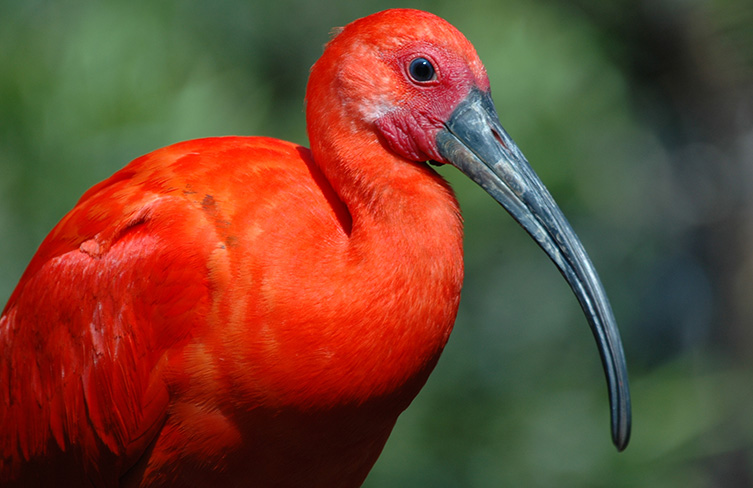
Scarlet Ibis (Eudocimus ruber) Brevard Zoo by Lee

“and for a long time birds and hedgehogs, and ibises and ravens shall dwell in it: and the measuring line of desolation shall be cast over it, and satyrs shall dwell in it.” (Isaiah 34:11 Brenton)

Many of the birds in the Bible are listed differently in some versions. The Ibises is only listed in this verse in the Brenton, DRB, and the ABP versions. Most of the different versions list Pelicans, Cormorants, Bitterns, Heron, and Storks. The Pelicans, Cormorants, Bitterns, and Heron are all found in thePELECANIFORMES Order of birds. The Storks are in the close CICONIIFORMES Order.

White-faced Ibis (Plegadis chihi) ©USFWS

All of these birds enjoy similar surroundings and the Ibises and Spoonbills make up the Threskiornithidae Family.
The ibises (collective plural ibis; classical plurals ibides and ibes) are a group of long-legged wading birds, that inhabit wetlands, forests and plains. “Ibis” derives from the Latin and Ancient Greek word for this group of birds. It also occurs in the scientific name of the cattle egret, (Bubulcus ibis), mistakenly identified in 1757 as being the sacred ibis.

American White Ibis (Eudocimus albus) 1st Birds of 2014 by Lee cropped

Ibises all have long, down-curved bills, and usually feed as a group, probing mud for food items, usually crustaceans. They are monogamous and highly territorial while nesting and feeding. Most nest in trees, often with spoonbills or herons. The word ibis comes from Latin ibis from Greek ἶβις ibis from Egyptian hb, hīb.

Bible Birds – Ibis

Bible Birds

Birds of the Bible – Ibises

Threskiornithidae Family