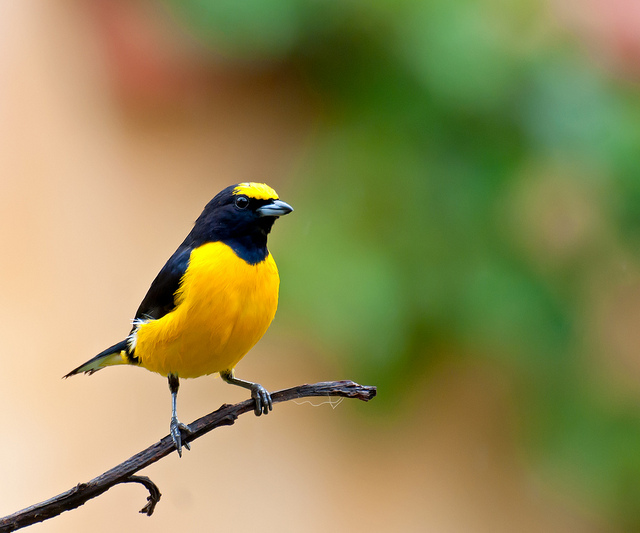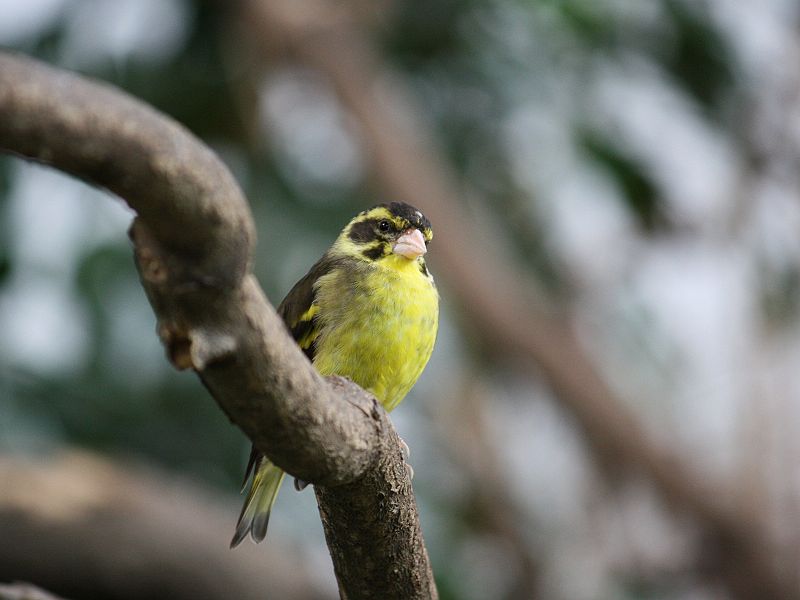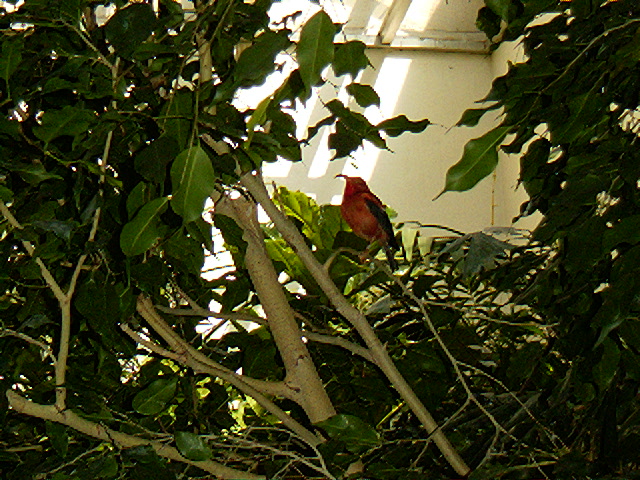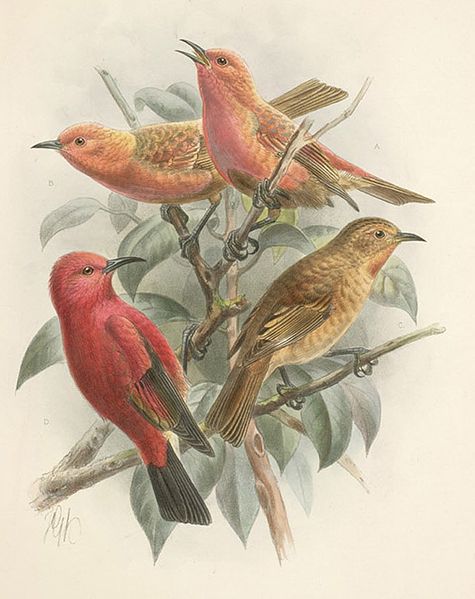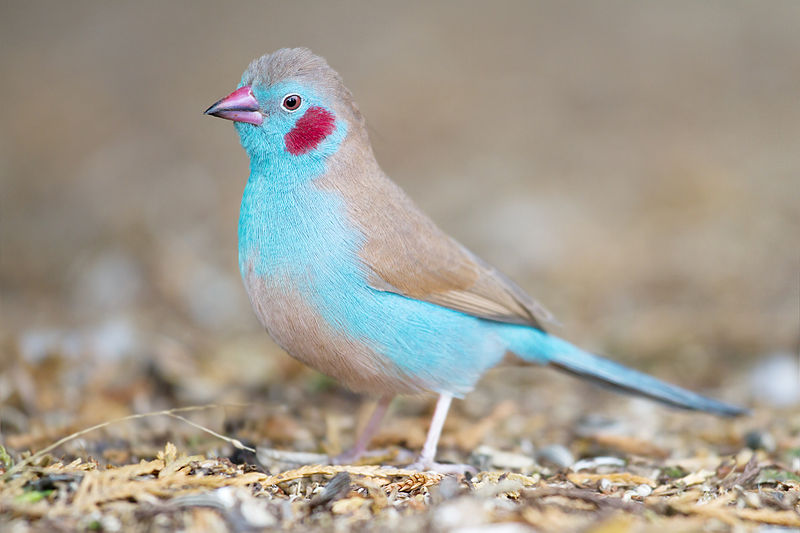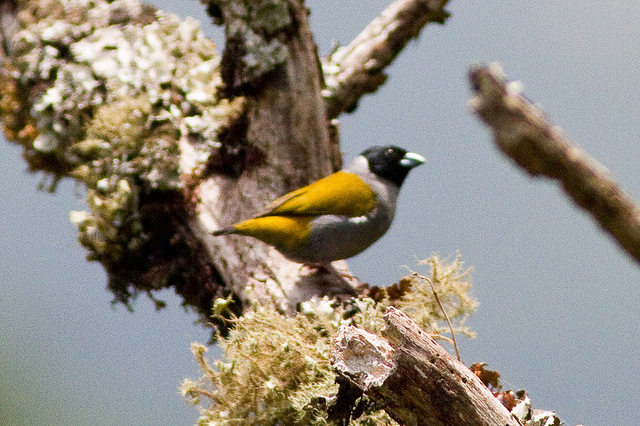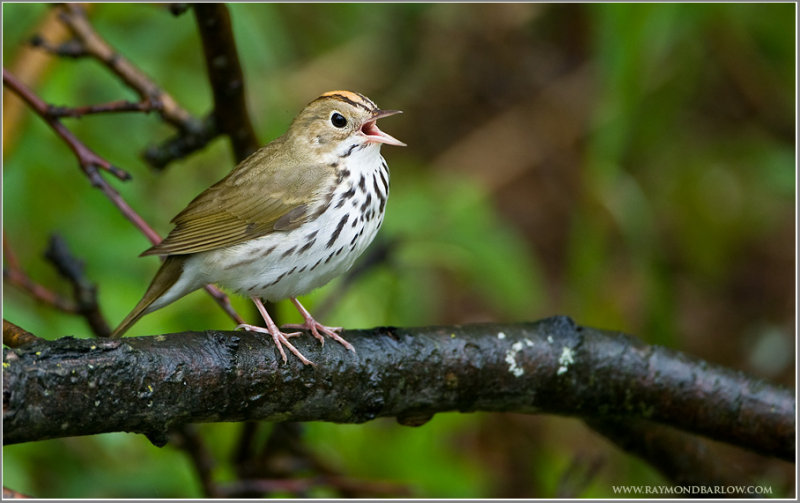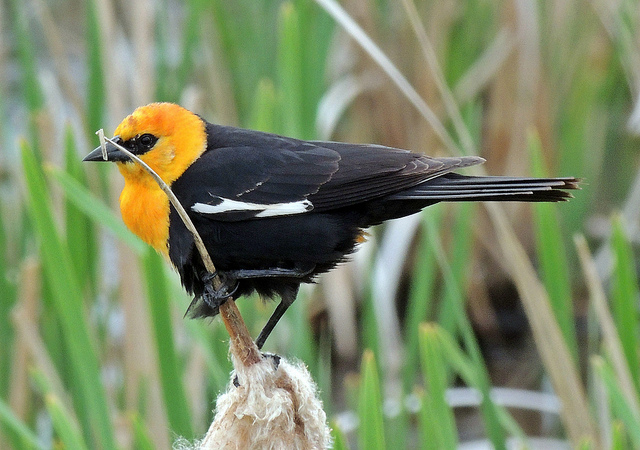
His head is like the finest gold; His locks are wavy, And black as a raven. (Song of Solomon 5:11 NKJV)
Most casual birdwatchers do not now the name of Icteridae, but if I were to mention Blackbirds, Bobolink, Meadowlarks, Cacique, Orpendendolas, Orioles, Toupials, Grackles, Cowbirds, Baywings, and Marshbirds, you would have heard of them. Many in this Icteridae Family are very commonly seen. That is, if you live in the “New World” or Western Hemisphere, specifically the Americas (including nearby islands such as those of the Caribbean and Bermuda).
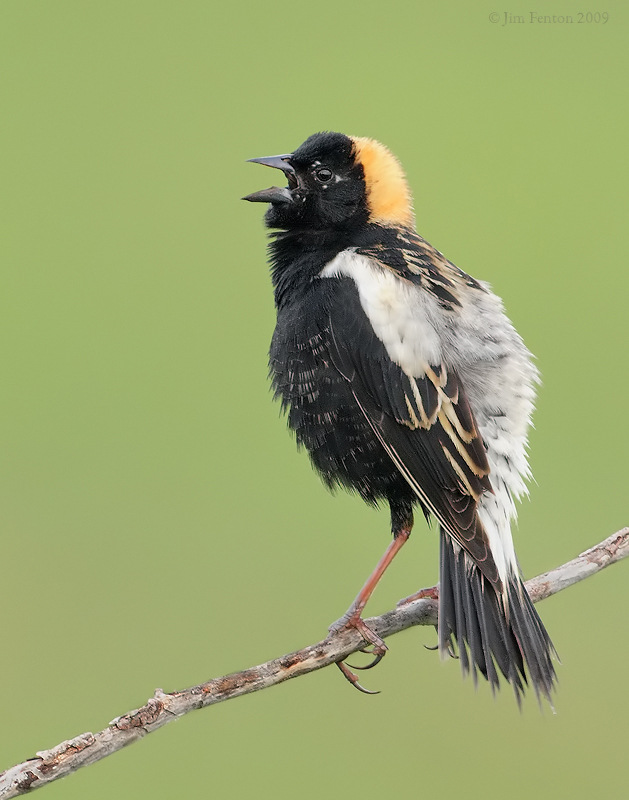
Bobolink (Dolichonyx oryzivorus) by J Fenton
This family has 109 members presently (6.1 Version of I.O.C). Wikipedia says, “Icterids make up a family (Icteridae) of small to medium-sized, often colorful passerine birds restricted to the New World. Most species have black as a predominant plumage color, often enlivened by yellow, orange or red. The family is extremely varied in size, shape, behavior and coloration. The name, meaning “jaundiced ones” (from the prominent yellow feathers of many species) comes from the Ancient Greek ikteros, through the Latin ictericus.”
“Despite the similar names, the first groups are only distantly related to the Old World common blackbird (a thrush) or the Old World orioles.”
“Icterids have adapted to taking a wide range of foods. Oropendolas and caciques use their gaping motion to open the skins of fruit to obtain the soft insides, and have long bills adapted to the process. Others such as cowbirds and the bobolink have shorter stubbier bills for crushing seeds. The Jamaican blackbird uses its bill to pry amongst tree bark and epiphytes. Orioles will drink nectar.” (Wikipedia, with editing)
This slideshow requires JavaScript.
For from you the word of the Lord has sounded forth, not only in Macedonia and Achaia, but also in every place. Your faith toward God has gone out, so that we do not need to say anything. (1 Thessalonians 1:8 NKJV)
I know all the birds of the mountains, And the wild beasts of the field are Mine. (Psalms 50:11 NKJV)
After all these months of doing the Sunday Inspirations that have featured the Passerformes Order of birds, we are getting near the end of the list. Known as Passerines or Song Birds, there has been 125 families to tell about and show their pictures. There are seven families left, of which, three of them are small in number, so they are being grouped together in this Sunday Inspiration.
First we have group of birds in an Incertae Sedis or Uncertain Family. “Incertae sedis (Latin for ‘of uncertain placement’) is a term used for a taxonomic group where its broader relationships are unknown or undefined.” (Wikipedia) That means they don’t know into which families to place these birds.
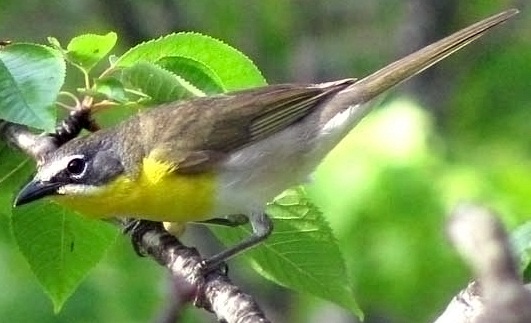
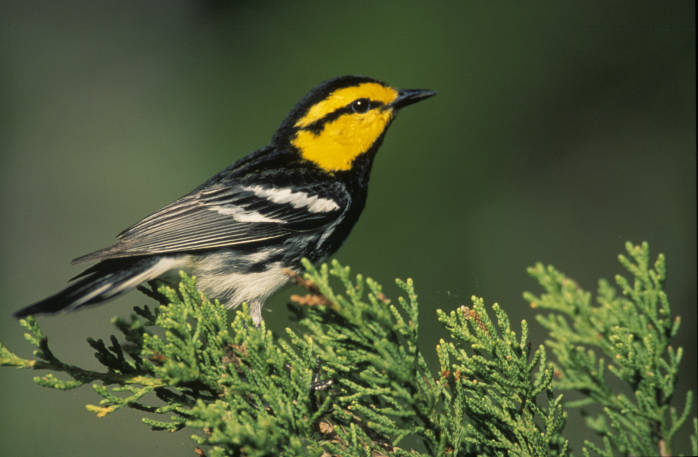
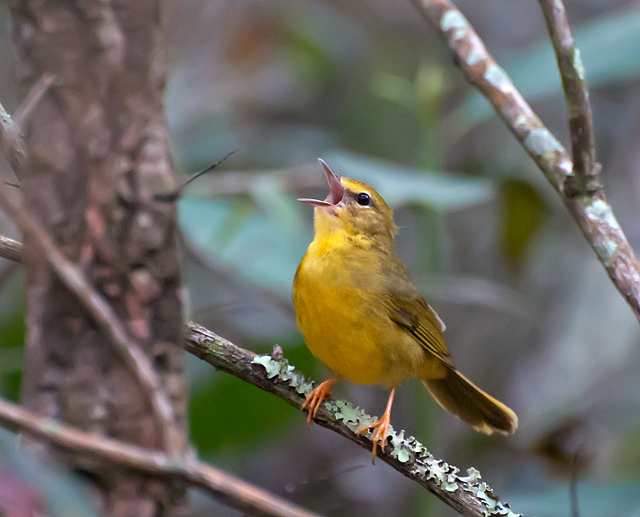
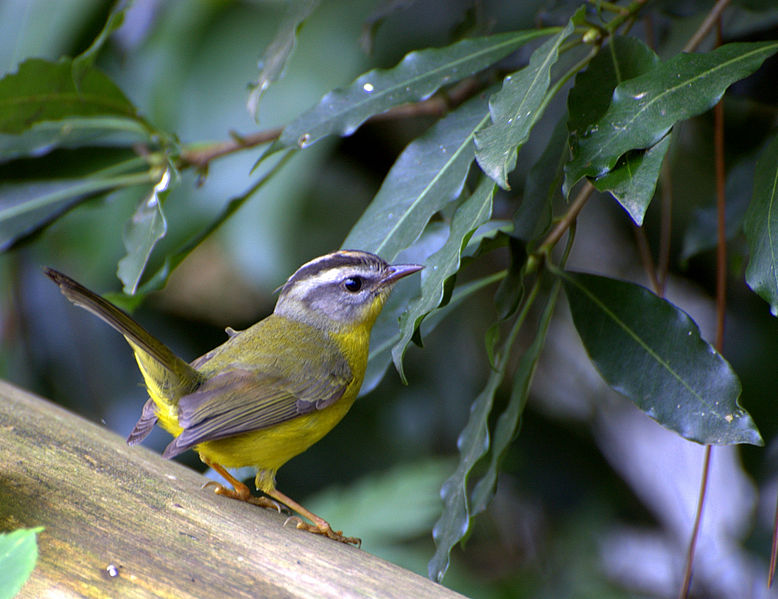
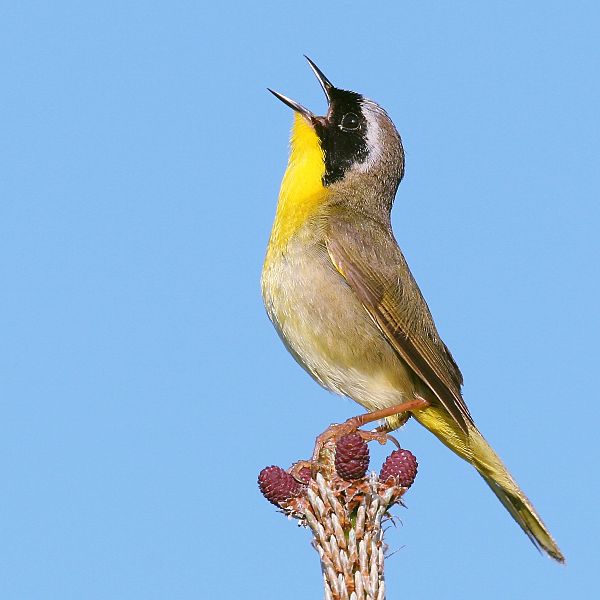
The six birds in this family currently are the Green-tailed Warbler, Yellow-headed Warbler, Oriente Warbler, Wrenthrush, Yellow-breasted Chat, and the White-winged Warbler.
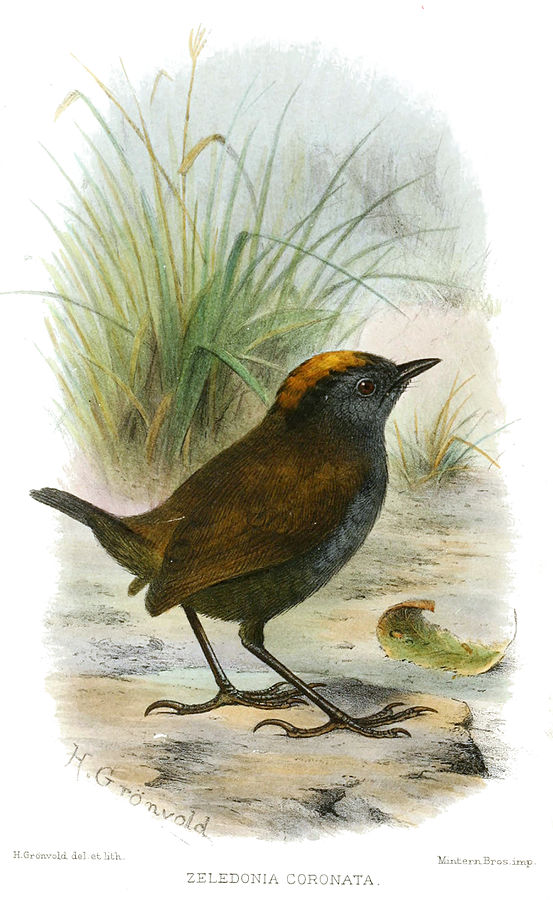
For instance the Wrenthrush (Zeledonia coronata) is neither a wren or a thrush (and unrelated to both). No copyright free photos are available to use other than this drawing. You can see a few photos here.
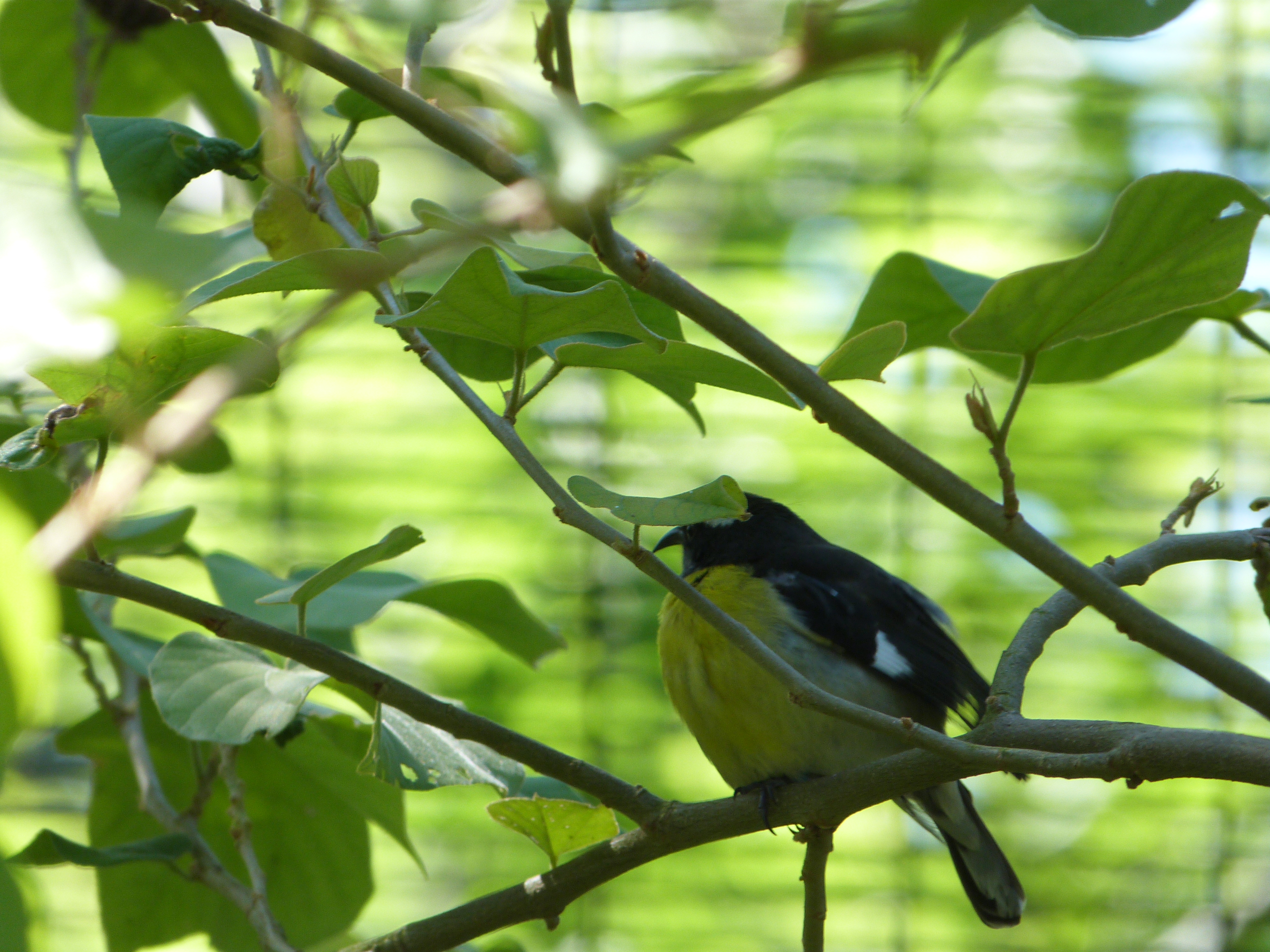
Bananaquit (Coereba flaveola) Cloud Forest by Lee
The Bananaquit belongs to the Coerebidae family. It is the only member, but there are numerous subspecies. I suspect one day they will split some of them off into separate species in the family. In fact they are suggesting three species already. We saw one down at Zoo Miami’s Cloud Forest.
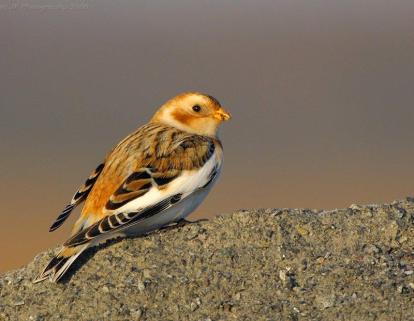
Snow Bunting (Plectrophenax nivalis) by J Fenton
Our last small family this week is the Calcariidae. There are six members here also. The four Longspurs; Mccown’s, Lapland, Smith’s and Chestnut-collared; and two Buntings, the Snow and McKay’s Bunting.
These are chunky ground-feeding birds with long wings which are usually seen in open areas. Males declare ownership of a territory by singing during short flights over it. The male’s breeding plumage is much brighter than his winter plumage. These birds gather in large flocks in winter. The longspurs are all found in North America; the Lapland Longspur, or Lapland Bunting, is also found in Europe and Asia. (Wikipedia)
This slideshow requires JavaScript.
And the scripture was fulfilled which saith, Abraham believed God, and it was imputed unto him for righteousness: and he was called the Friend of God.” (James 2:23 KJV)
“I’ll Be A Friend To Jesus” – Faith Baptist Quartet
“But He knows the way that I take; When He has tested me, I shall come forth as gold.” (Job 23:10 NKJV)
Now for the last half of the New World Warbler Family. See the first half at Sunday Inspiration – New World Warblers I. The Parulidae family has 119 members presently. The Setophage genus is numerous with 37 species which are seen by many of here in the United States. Many of these had their genus changed from Dendroica to Setophage and some may still refer to them with the older genus name. Sibleyguides has a nice chart showing how they rearranged the taxonomy.
Flavescent Warbler (Myiothlypis flaveolus) by Dario Sanches
The next genus is the Myiothlopis group. The 14 here are best represented in Central and South America. This is one of only two warbler genera that are well represented in the latter continent. All of these species were formerly placed in the genus Basileuterus.
Collared Whitestart (Myioborus torquatus) by Reinier Munguia
The Basileuterus genus still has nine species. Again, they are mainly in the Central and South America areas. These are mainly robust warblers with a stout bill. The majority of species have olive or grey upperparts and yellow underparts. The head is often strikingly marked with a long broad supercilium, a coloured crown or crown stripes, and often other striking head markings.
Many species are not well-studied, but those for which the breeding habits are known all build a domed nest on a bank or on the ground, so this is presumably typical of the genus as a whole.
The Cardellina and the Myioborus (Whitestarts) round out the rest of the family. They have 5 and 12 species respectively. The 12 whitestarts are New World warblers in the genus Myioborus. The English name refers to the white outer tail feathers which are a prominent feature of the members of this genus (“start” is an archaic word for “tail”). They are from mainly northern South America and are spreading north to Central America and the USA. The five Cardellina are from South America. (Info from Wikipedia)
This slideshow requires JavaScript.
A word fitly spoken is like apples of gold In settings of silver. (Proverbs 25:11 NKJV)
Sing unto the LORD, all the earth; shew forth from day to day his salvation. Declare his glory among the heathen; his marvellous works among all nations. For great is the LORD, and greatly to be praised: he also is to be feared above all gods. (1 Chronicles 16:23-25 KJV)
This week we will start checking out the New World Warbler family, the Parulidae. At present there are 119 species listed and we will divide them up into two weeks.
The New World warblers or wood-warblers are a group of small, often colorful, passerine birds which make up the family Parulidae and are restricted to the New World. They are closely related to neither the Old World warblers nor the Australian warblers. Most are arboreal, but some, like the Ovenbird and the two waterthrushes, are more terrestrial. Most members of this family are insectivores.
Tennessee Warbler (Leiothlypis peregrina) by Raymond Barlow
All the warblers are fairly small. The smallest species is the Lucy’s Warbler (Oreothlypis luciae), at about 6.5 grams and 10.6 cm (4.2 in). The largest species depends upon the true taxonomy of the family. Traditionally, it was listed as Yellow-breasted Chat, at 18.2 cm (7.2 in). Since this may not be parulid, the Parkesia waterthrushes, the Ovenbird, the Russet-crowned Warbler and Semper’s Warbler, all of which can exceed 15 cm (6 in) and 21 grams, could be considered the largest.
We will view the Ovenbird (Seiurus aurocapilla) down through the Setophaga genus. That is about 60 species and then cover the last of the family next week.
This slideshow requires JavaScript.
Sing unto him, sing psalms unto him, talk ye of all his wondrous works. (1 Chronicles 16:9 KJV)
“How Can I Keep From Singing?” ~ Pastor Jerry Smith, Reagan, Caleb and Jessie
(I know this song has been used before, but these birds are so beautiful and love to sing, and it makes my heart want to sing with Praise to Our Creator Savior)
American Goldfinch (Spinus tristis) on Thistle by Fenton
So God created great sea creatures and every living thing that moves, with which the waters abounded, according to their kind, and every winged bird according to its kind. And God saw that it was good. And God blessed them, saying, “Be fruitful and multiply, and fill the waters in the seas, and let birds multiply on the earth.” So the evening and the morning were the fifth day. (Genesis 1:21-23 NKJV)
Today, we finish up the Finch Family. I trust you have enjoyed getting to see so many of the finches, “after their kind.” Our Lord, their Creator, gave them some mighty nice colors and markings. There are missing ones, not shown, that are available, but we don’t have permission to use them. So, if you check the internet and books, they can be found.
Spinus is a genus of passerine birds in the finch family. It contains the North and South American siskins and goldfinches.
Purple-throated Euphonia (Euphonia chlorotica) by Dario Sanches
Most Euphoniasare dark metallic blue above and bright yellow below. Many have contrasting pale foreheads and white undertails. Some have light blue patches on the head and/or orangish underparts. They range in overall length from 9 to 11 cm (3.5 to 4.3 in). They eat small fruit and berries particularly mistletoe (Loranthaceae). Some species may also eat some insects.
This slideshow requires JavaScript.
“But the angel answered and said to the women, “Do not be afraid, for I know that you seek Jesus who was crucified. He is not here; for He is risen, as He said. Come, see the place where the Lord lay.” (Matthew 28:5-6 NKJV)
“Once Upon A Tree” ~ by Faith Baptist Church Choir
“Crown Him Lord of All” ~ Faith Baptist Orchestra
Because of Resurrection Sunday – Easter last week, there was no Sunday Inspiration.
Also he spoke of trees, from the cedar tree of Lebanon even to the hyssop that springs out of the wall; he spoke also of animals, of birds, of creeping things, and of fish. (1 Kings 4:33 NKJV)
Well, we are still working our way through the large Fringillidae – Finches family. Today, Part III, we will begin with the genus Haemorhous (various shades of red are characteristic plumage colors of this group) which is more familiar to us in the U.S. Those are our Purple, Cassin’s, and House Finches.
After them the Greenfinches of the Chloris genus and the lone Desert Finch (Rhodospiza obsoleta), three Golden-winged Grosbeak (Rhynchostus) and an Oriole Finch (Linurgus olivaceus)
The next genus – Crithagra has 37 species which include Seedeaters, Citril, Canary, Serin, Siskin, and Grosbeak-Canary. With those, will end Finches III and save the rest of the family for Finches IV. Maybe with the DNA testing going on, some of this family may be split off to other families in the future and won’t be so large.
By them the birds of the heavens have their home; They sing among the branches. He waters the hills from His upper chambers; The earth is satisfied with the fruit of Your works. (Psalms 104:12-13 NKJV)
“Shout To The North and the South” ~ by Faith Baptist Church Choir
Thou visitest the earth, and waterest it: thou greatly enrichest it with the river of God, which is full of water: thou preparest them corn, when thou hast so provided for it. (Psalms 65:9 KJV)
Last week, you were introduced to the Finch – Fringillidae Family part I. This week we will continue working our way through the 225 beautiful species of the family. I ended with the Carpodacus genus, because this weeks group has many Hawaiian birds with around fifteen of them now extinct.
The Poo-uli, Kakawahie,Lesser Koa Finch, Greater Koa Finch, Kona Grosbeak, Ou, Lanai Hookbill, Hawaii Mamo, Black Mamo, Ula-ai-hawane, Laysan Honeycreeper, Greater Amakihi, Lesser Akialoa, Oahu Akialoa, Kauai Akialoa, Maui-nui Akialoa, Oahu Nukupuu and Oahu Akepa are all listed as extinct. From that group only the Iiwi (Drepanis coccinea), Akohekohe (Palmeria dolei) and Apapane (Himatione sanguinea) are still living.
Finches II is only featuring these thirty-nine birds, mainly from Hawaii, with fifteen extinct. Why are they becoming extinct, let’s see if we can find out. Wikipedia has this to say, “Some 20 species (that number includes early extinctions not counted today) of Hawaiian honeycreeper have become extinct in the recent past, and many more in earlier times, between the arrival of the Polynesians who introduced the first rats, chickens, pigs, and dogs, and hunted and converted habitat for agriculture.
This whole group is referred to as Hawaiian honeycreepers are small, passerine birds endemic to Hawaiʻi. They are closely related to the rosefinches in the genus Carpodacus. Their great morphological diversity is the result of adaptive radiation in an insular environment. “Adaptive radiation is a rapid phenomenon because the variation is fully observable in many wild populations. Since macroevolutionary hypotheses of simple-to-complex evolutionary progress require vast eons, alterations produced by adaptive radiation occur quickly by comparison.” (by Brian Thomas, M.S. – ICR article)
The male Hawaiian honeycreepers are more brightly colored than the females in the Psittirostrini, but in the Hemignathini, they often look very similar. The flowers of the native ʻōhiʻa lehua (Metrosideros polymorpha) are favored by a number of nectarivorous honeycreepers. Many species of this subfamily have been noted to have a plumage odor that has been termed the “Drepanidine odor”, and is suspected to have a role in making the bird distasteful to predators. (Wikipedia with editing)
The wide range of bills in this group, from thick, finch-like bills to slender, downcurved bills for probing flowers have arisen through adaptive radiation. (Wikipedia with editing) The Lord graciously allowed these birds with beaks to meet their needs.
Which doeth great things past finding out; yea, and wonders without number. (Job 9:10 KJV)
The LORD is good to all: and his tender mercies are over all his works. All thy works shall praise thee, O LORD; and thy saints shall bless thee. (Psalms 145:9-10 KJV)
The Fringillidae – Finches are another large family. With 225 species, the Sunday Inspiration will again have to be divided. This first group includes the Fringilla, Mycerobas, Hesperiphona, Coccothraustes, Eophona, Pinicola, Pyrrhulla, Leucosticte and Carpodacus genus. That is a total of 61 beautiful creations for Our Lord to check out. So, let’s see who they are.
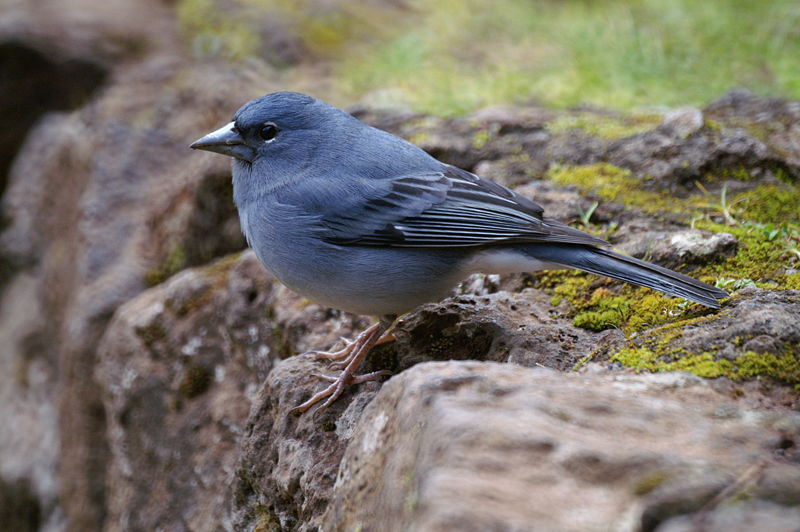
The first three are from the Fringilla genus. Common Chaffinch, Blue Chaffinch and Brambling. The Chaffinch and Brambling breed in much of Europe, across Asia to Siberia and in northwest Africa. It prefers open woodland and often forages on the ground.
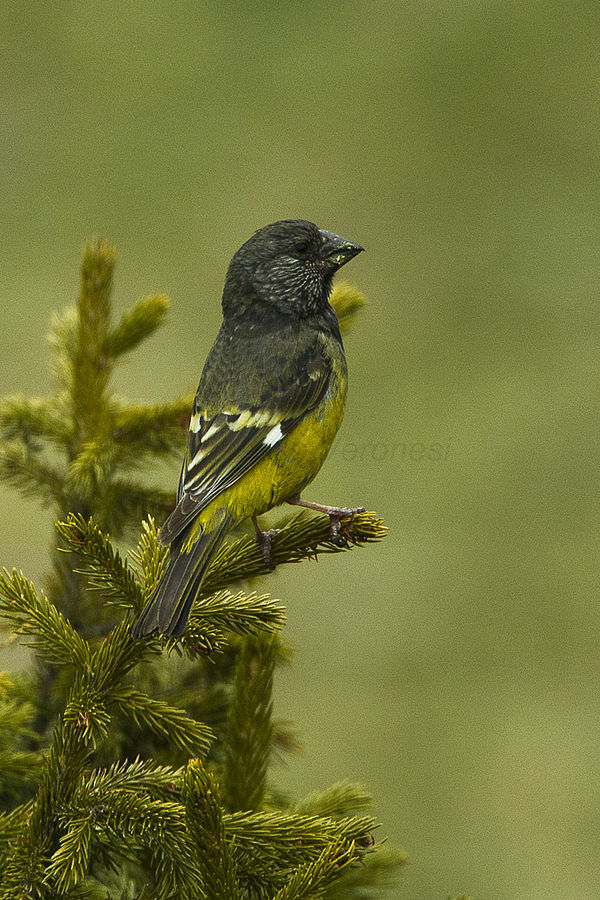
The Mycerobas grosbeaks are a genus of finch in the Fringillidae family. They are colorful finches and are at 20–23 cm the largest species in the family. They are found in the southern Himalayas and across into China.
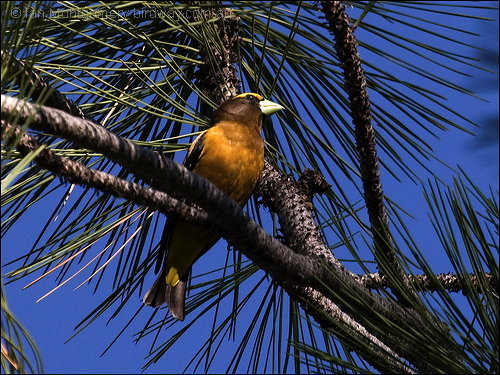
Evening Grosbeak (Hesperiphona vespertinus) by Ian
Hesperiphona is a genus of grosbeaks in the family Fringillidae (the true finches). This genus is native to the New World.
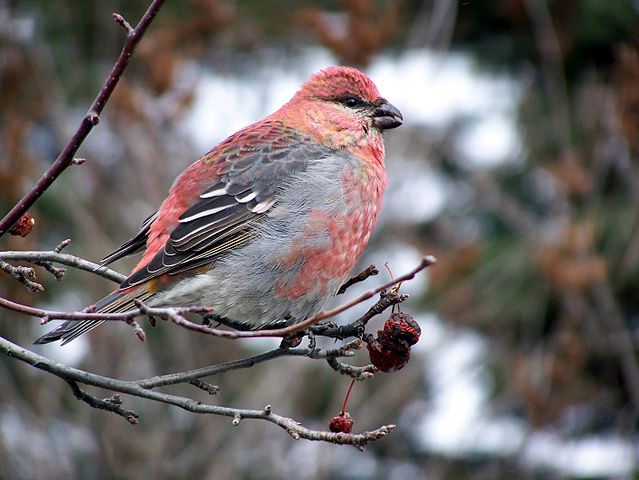
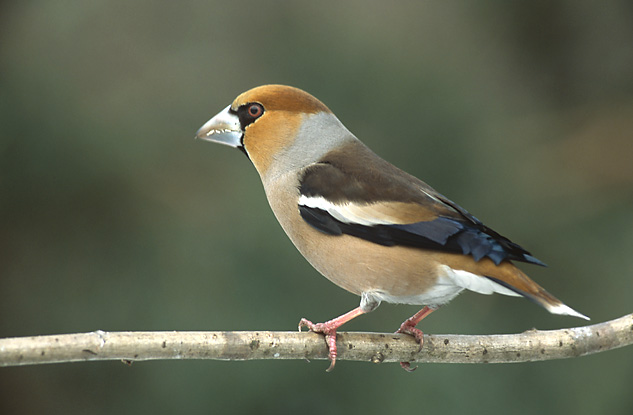
The Hawfinch, along with the Chinese and Japanese Grosbeaks, and Pine Grosbeak are more of the closely related Grosbeak group.
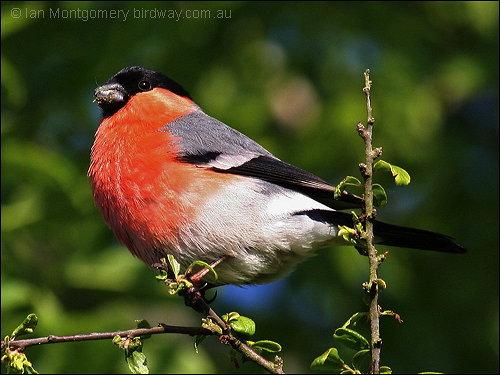
Eurasian Bullfinch (Pyrrhula) by Ian
The seven Bullfinches (Pyrrhula) have glossy black wings and tail feathers. They show a white rump. The legs and feet are fleshy brown. Their short, swollen bill is adapted to eat buds, and is black except for the brown bullfinch, which has a grey or greenish-grey bill. The males can be distinguished by their orange or red breast. Some species have a black cap. All species occur in Asia.
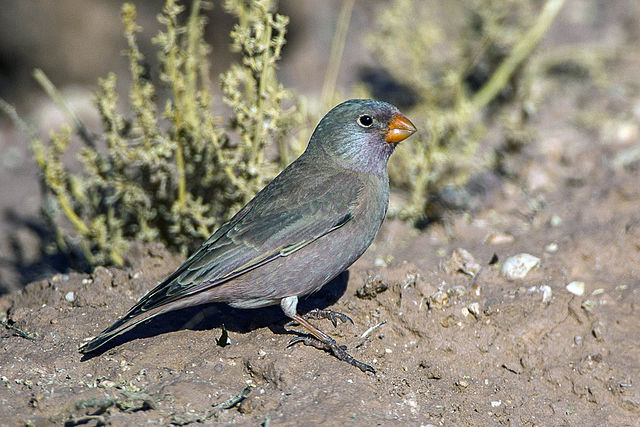
These next five genus only have six birds; Bucanetes, Agraphospiza, Callacanthis, Pyrrhoplectes, Procarduelis.
Grey-crowned Rosy Finch (Leucosticte tephrocotis) by Ian
The mountain finches are birds in the genus Leucosticte from the true finch family, Fringillidae. This genus also includes the rosy finches, named from their pinkish plumage.
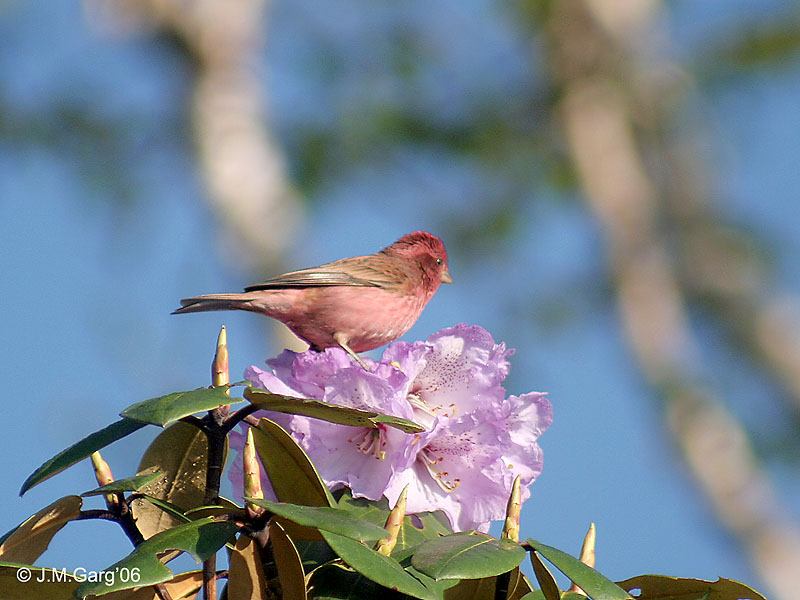
The rosefinches are a genus, Carpodacus, of passerine birds in the finch family Fringillidae. Most are called “rosefinches” and as the word implies, have various shades of red in their plumage. The common rosefinch is frequently called the “rosefinch”.
The Carpodacus rosefinches occur throughout Eurasia, but the greatest diversity is found in the Sino-Himalayas suggesting that the species originated in this region.
This slideshow requires JavaScript.
*
“Surely goodness and mercy shall follow me all the days of my life: and I will dwell in the house of the LORD for ever.” (Psalms 23:6 KJV)
“But I will sing of thy power; yea, I will sing aloud of thy mercy in the morning:” (Psalms 59:16a KJV)
“Mercies Anew” ~ by Lisa Brock, accompanied by Jill Foster
“He hath made his wonderful works to be remembered: the LORD is gracious and full of compassion.” (Psalms 111:4 KJV)
The Motacillidae are a family of small passerine birds with medium to long tails. There are around 66 species in 6 genera and they include the wagtails, longclaws and pipits. The longclaws are entirely restricted to the Afrotropics, and the wagtails are predominantly found in Europe, Africa and Asia, with two species migrating and breeding in Alaska. The pipits have the most cosmopolitan distribution, being found across mostly in the Old World but occurring also in the Americas and oceanic islands such as New Zealand and the Falklands. Two African species, the Yellow-breasted Pipit and Sharpe’s Longclaw are sometimes placed in a separate seventh genus, Hemimacronyx, which is closely related to the longclaws.
Wagtails, pipits, and longclaws are slender, small to medium sized passerines, ranging from 14 to 17 centimetres in length, with short necks and long tails. They have long, pale legs with long toes and claws, particularly the hind toe which can be up to 4 cm in length in some longclaws. Overall the robust longclaws are larger than the pipits and wagtails. Longclaws can weigh as much as 64 g, whereas the weight range for pipits and wagtails is 15–31 g. The plumage of most pipits is dull brown and reminiscent of the larks, although some species have brighter plumages, particularly the Golden Pipit of north-east Africa. The adult male longclaws have brightly coloured undersides.
Citrine Wagtail (Motacilla citreola) by Nikhil Devasar
The wagtails often have striking plumage, including grey, black, white, and yellow. (Wikipedia with editing)
*
This slideshow requires JavaScript.
“And they that passed by reviled him, wagging their heads, And saying, Thou that destroyest the temple, and buildest it in three days, save thyself. If thou be the Son of God, come down from the cross.” (Matthew 27:39-40 KJV)
“Glorious Love” ~ Choir, Orchestra, Solo by Pastor Jerry
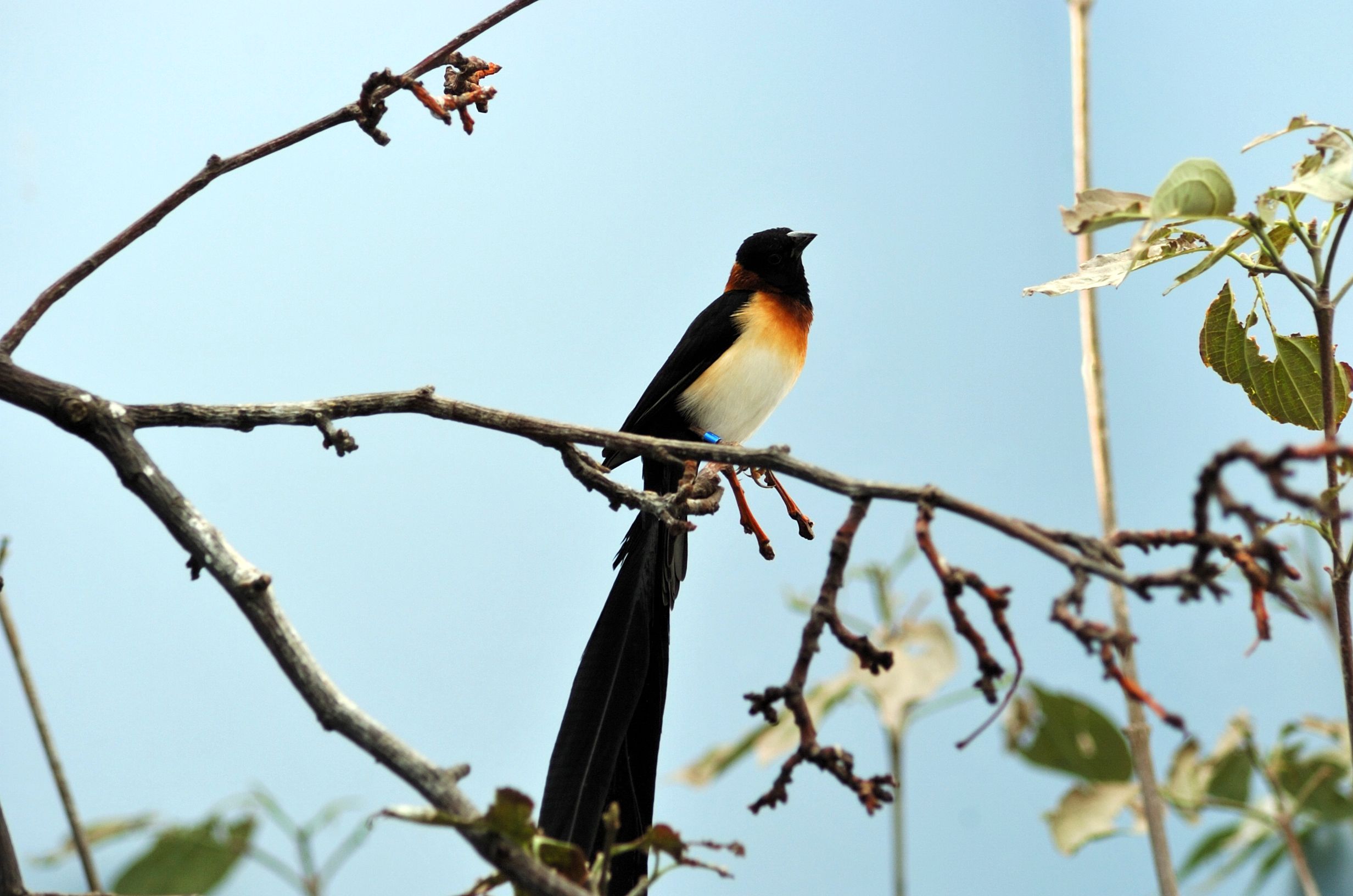
Long-tailed Paradise Whydah by Dan at the National Aviary
Better is little with the fear of the LORD than great treasure and trouble therewith. (Proverbs 15:16 KJV)
Our next families in our Passeriformes Order are small families. Because they are small in number does not mean they are small in beauty. I love the song, “Little Is Much When God Is In It.” Maybe because I am short. :) Sometimes these small groups are a result of the ornithologists not being sure which family to include them. As they (ornithologists) keep doing DNA studies, more shuffling in families will occur.
Our largest family, Viduidae, today has twenty species of Indigobirds, Whydahs, and a Cuckoo-finch. We saw our first Whydah at the National Aviary in Pittsburg, PA. It is appropriately called a Long-tailed Paradise Whydah. You can see its long tail, worn by males, in the photo. These are finch-like birds which usually have black or indigo predominating in their plumage.
All are brood parasites, which lay their eggs in the nests of estrildid finch species; most indigobirds use fire-finches as hosts, whereas the paradise whydahs chose pytilias. Unlike the cuckoo, the indigobirds and whydahs do not destroy the host’s eggs.
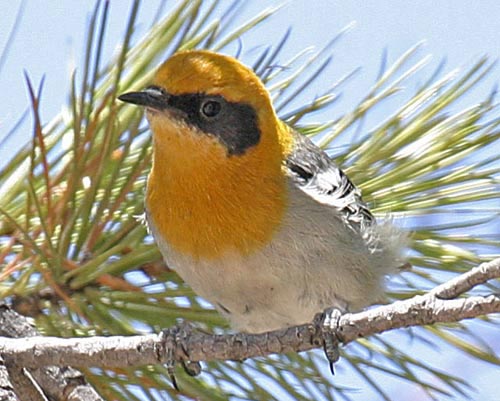
The Olive Warbler is the solo member of his family, (Peucedramidae), but there are several sub-species. This species breeds from southern Arizona and New Mexico, USA, south through Mexico to Nicaragua. It is the only bird family endemic to North America (including Central America).
It is an insectivorous species of coniferous forests. Though it is often said to be non-migratory,[3] most New Mexican birds leave the state from November to late February. It lays 3–4 eggs in a tree nest”. (Wikipedia)
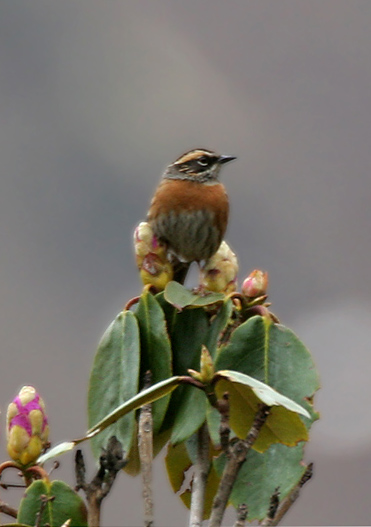
The Prunellidae – Accentors Family has thirteen members named Accentors and one Dunnock, of the genus, Prunella. All but the Dunnock and the Japanese Accentor are inhabitants of the mountainous regions of Europe and Asia; these two also occur in lowland areas, as does the Siberian Accentor in the far north of Siberia. This genus is not strongly migratory, but they will leave the coldest parts of their range in winter, and make altitudinal movements.
Their typical habitat is mountainous regions in an area far above the tree-line, but below the snow-line. The Himalayan accentor can be found as high as 17,000 ft above sea level when breeding, however, most accentors breed in scrub vegetation at lower levels. Most species migrate downwards to spend the winter, with only some being hardy enough to remain. Accentors spend the majority of their time in the undergrowth and even when flushed, stay low to the ground until reaching cover. (Wikipedia)
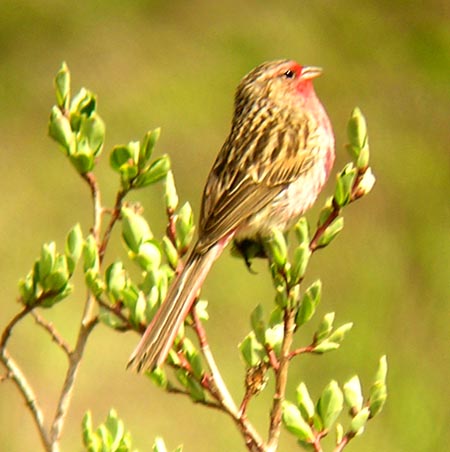
Skipping over the Wagtails and Pipits (covered next week), our last bird, the Przevalski’s Finch (Urocynchramus pylzowi), is again in a family by itself.
The Przevalski’s Finch or Przewalski’s Finch (Urocynchramus pylzowi) is an unusual passerine bird from the mountains of central-west China. The species is named for Nikolai Przhevalsky, the Russian explorer who described it. Its taxonomic affinities were unclear for a long time, giving rise to other common names, the Pink-tailed Bunting and the Przewalski’s Rosefinch. In 2000 it was proposed that it should in fact be regarded neither as a finch nor a bunting, but as the only member of the family Urocynchramidae,
Przewalski’s Finch is a small bird similar in appearance to the Long-tailed Rosefinch. The tail is long and – quite unlike in typical finches – graduated, with the outer feathers much shorter than the central ones. The sexes are sexually dimorphic, with the males having bright pink on the throat, breast and belly. Both sexes have brown streaked plumage on the back and wings. The bill is thinner than those of the rosefinches. (Wikipedia)
This slideshow requires JavaScript.
But Jesus said, Suffer little children, and forbid them not, to come unto me: for of such is the kingdom of heaven. (Matthew 19:14 KJV)
Last Sunday the first half of the Waxbills and allies were shown. This week we will finish up the large family of 141 species. You will see birds with these names; Finch, Firetail, Parrotfinch, Silverbill, Mannikin, Munia, and Sparrows.
“Parrotfinches are small, colorful passerine birds belonging to the genus Erythrura in the family Estrildidae, the estrildid finches. They occur from South-east Asia to New Guinea, northern Australia and many Pacific Islands. They inhabit forest, bamboo thickets and grassland and some can be found in man-made habitats such as farmland, parks and gardens. Several species are commonly kept as cagebirds.
The plumage is usually mainly green. Most species have blue or red markings on the head and a red rump and tail. The tail is pointed and often fairly long. Seeds, especially those of grasses, comprise the bulk of the diet. Some parrotfinches also feed on fruit and small insects. Many species forage in flocks, keeping in contact with high-pitched calls.” (Wikipedia with editing)
“Lonchura is a genus of the estrildid finch family, and includes munias (or minias), mannikins, and silverbills. They are resident breeding birds in Africa and in South Asia from India and Sri Lanka east to Indonesia and the Philippines. The name mannikin is from Middle Dutch mannekijn ‘little man’ (also the source of the different bird name manakin).
They are small gregarious birds which feed mainly on seeds, usually in relatively open habitats, preferring to feed on the ground or on reeds of grasses. Several species have been noted to feed on algae such as Spirogyra.
The nest is a large domed grass structure into which four to ten white eggs are laid. Some species also build communal roosting nests for overnight rest.
The species in this genus are similar in size and structure, with stubby bills, stocky bodies and long tails. Most are 10–12 cm in length. Plumage is usually a combination of browns, black and white, with the sexes similar, but duller and less contrasted for immature birds.” (Wikipedia with editing)
Also, last week, some how I didn’t get Meagan’s song posted right and it didn’t play. It has been corrected now, but I am going to use it again because it is so well done.
This slideshow requires JavaScript.
Jesus said to them, “If God were your Father, you would love Me, for I proceeded forth and came from God; nor have I come of Myself, but He sent Me. (John 8:42 NKJV)
“My Jesus I Love Thee” ~ by Meagan Fee at Faith Baptist
The works of the LORD are great, sought out of all them that have pleasure therein. (Psalms 111:2 KJV)
This Sunday, the Lord has created some very beautiful birds after their kind. The Lord’s Creative Hand and Colors is very obvious. This is the Estrildidae Family which includes 141 species. Their names are numerous; they are the Antpecker, Nigrita, Oliveback, Pytillia, Finch, Twinspot, Crimsonwing, Seedcracker, Bluebill, Firefinch, Waxbill, Cordon-bleu, Grenadier, Avadavat and Quailfinch. I started to do them all, but there were too many photos. The last 70+ birds in the family will be in Part II.
The estrildid finches are small passerine birds of the Old World tropics and Australasia. They can be classified as the family Estrildidae (weaver-finch), or as a subfamily within the family Passeridae, which strictly defined comprises the Old World sparrows. Most are sensitive to cold and require warm, usually tropical, habitats, although a few have adapted to the cooler climates of southern Australia.
They are gregarious and often colonial seed-eaters with short, thick, but pointed bills. They are all similar in structure and habits, but vary widely in plumage colours and patterns.
All the estrildids build large, domed nests and lay 5–10 white eggs. Many species build roost nests. Some of the fire-finches and pytilias are hosts to the brood-parasitic indigobirds and whydahs, respectively.
The smallest species of the family is the Shelley’s Oliveback (Nesocharis shelleyi) at a mere 3.3 in (8.3 centimetres), although the lightest species is the Black-rumped Waxbill (Estrilda troglodytes) at 0.21 oz (6 g). The largest species is the Java Sparrow (Padda oryzivora), at 6.7 in (17 cm) and 0.88 oz (25 g). (Wikipedia with editing)
This slideshow requires JavaScript.
“Declare His glory among the nations, His marvelous works among all the peoples.” (Psalms 96:3 AMP)
*
“My Jesus I Love Thee” ~ by Meagan Fee at Faith Baptist