Salmon-crested (Moluccan) Cockatoo at Parrot Mountain

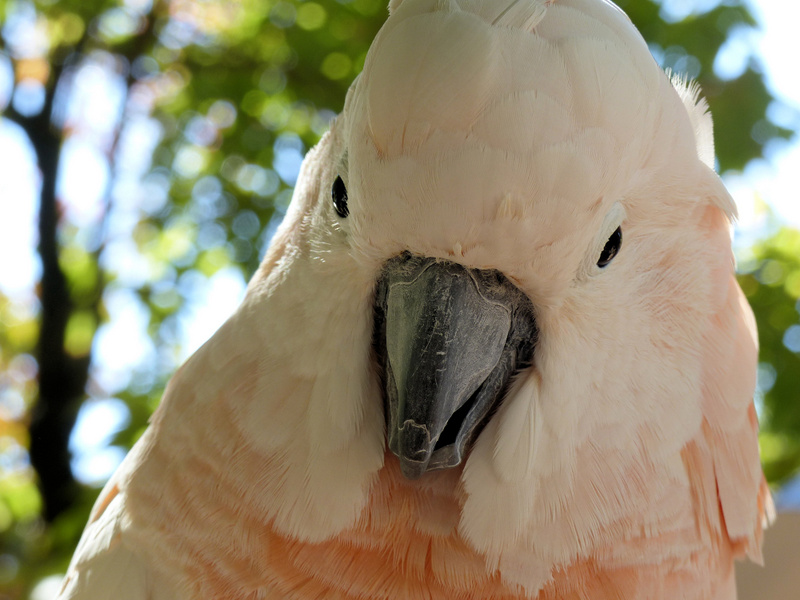
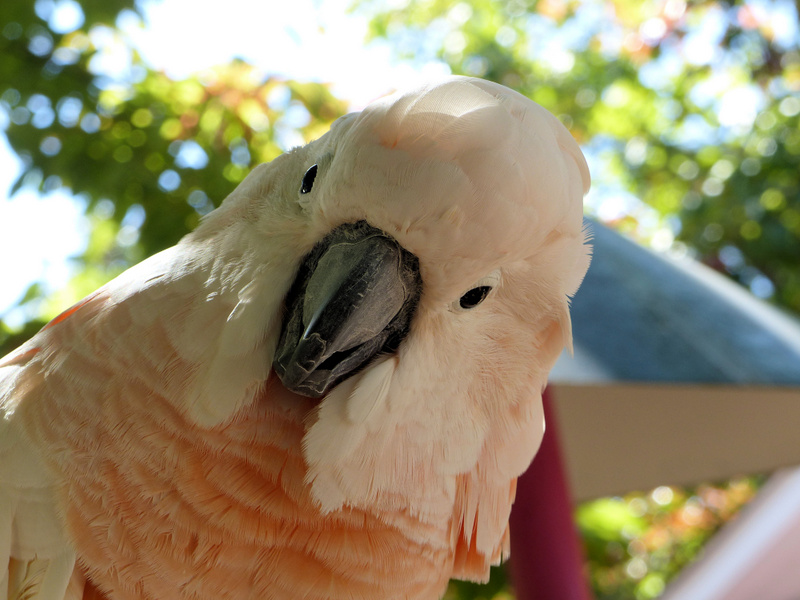
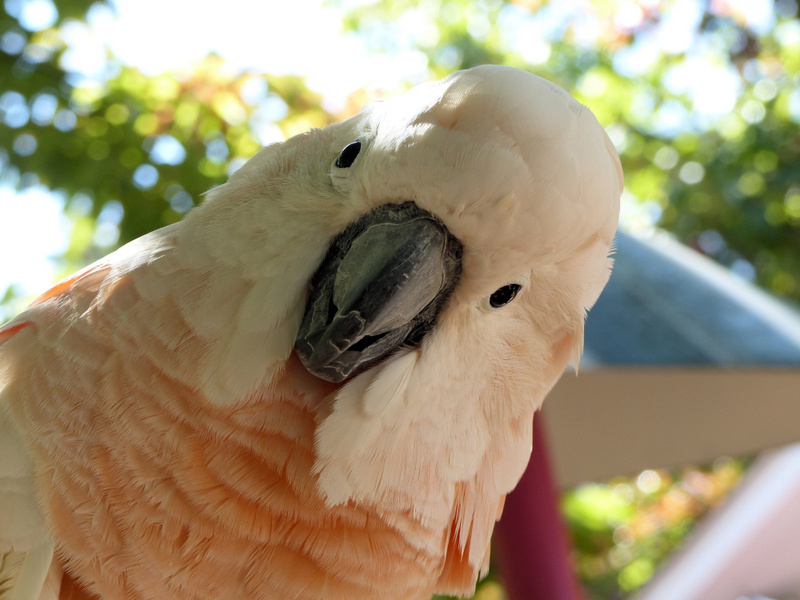
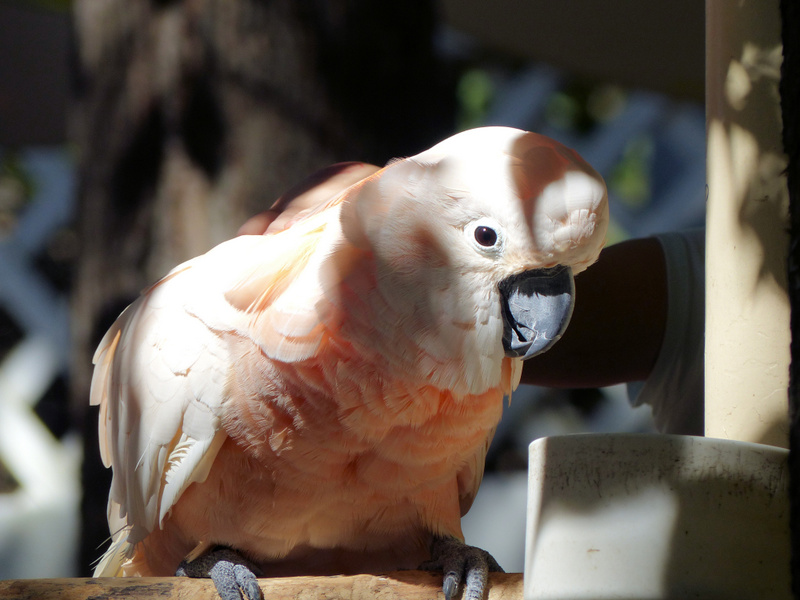
Salmon-crested Cockatoo (Cacatua moluccensis) at Parrot Mtn by Lee

Salmon-crested Cockatoo (Cacatua moluccensis) at Parrot Mtn by Lee

“So God created … every winged bird according to its kind. And God saw that it was good.” (Genesis 1:21 NKJV)

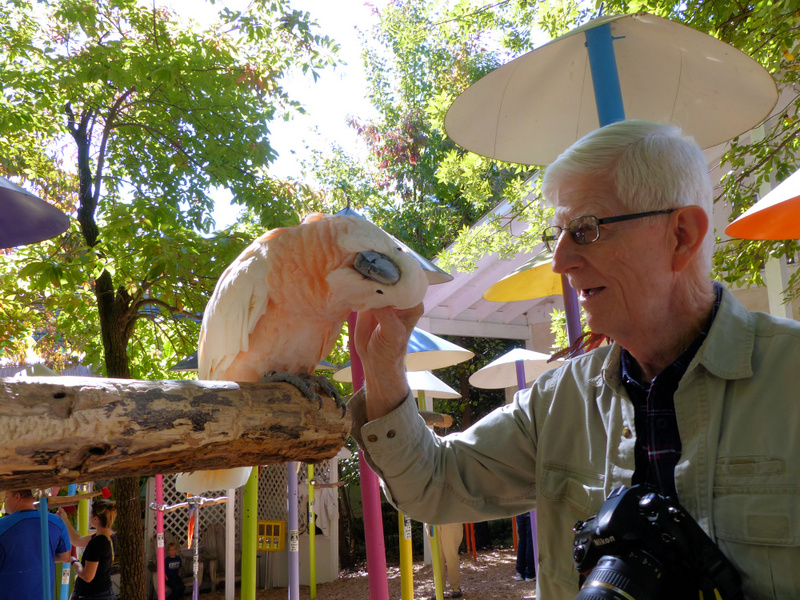
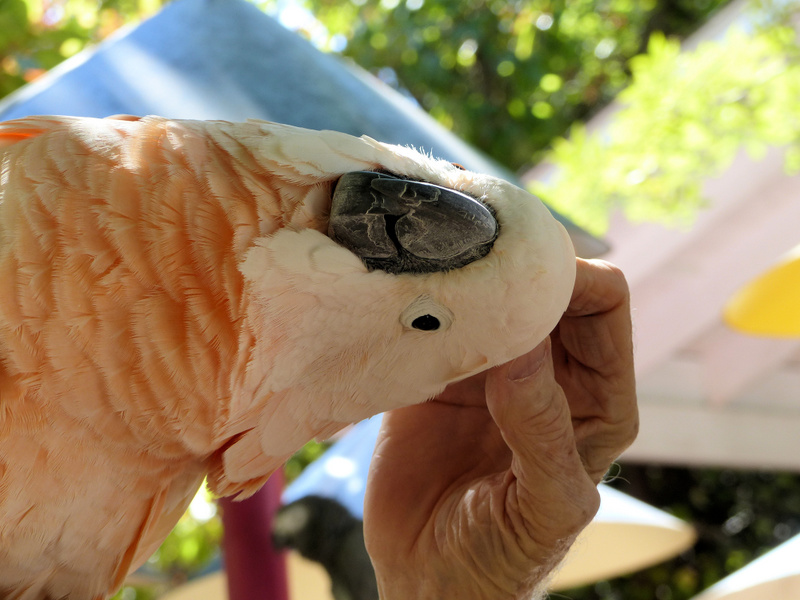
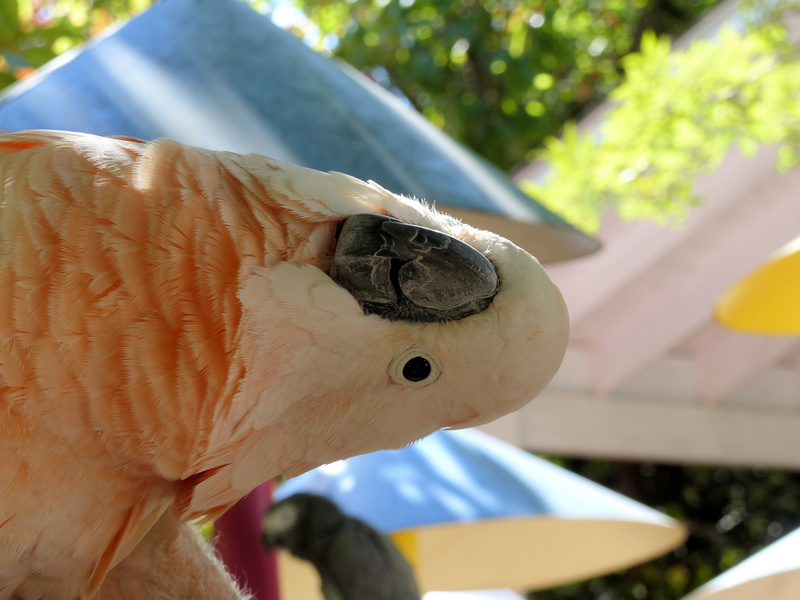
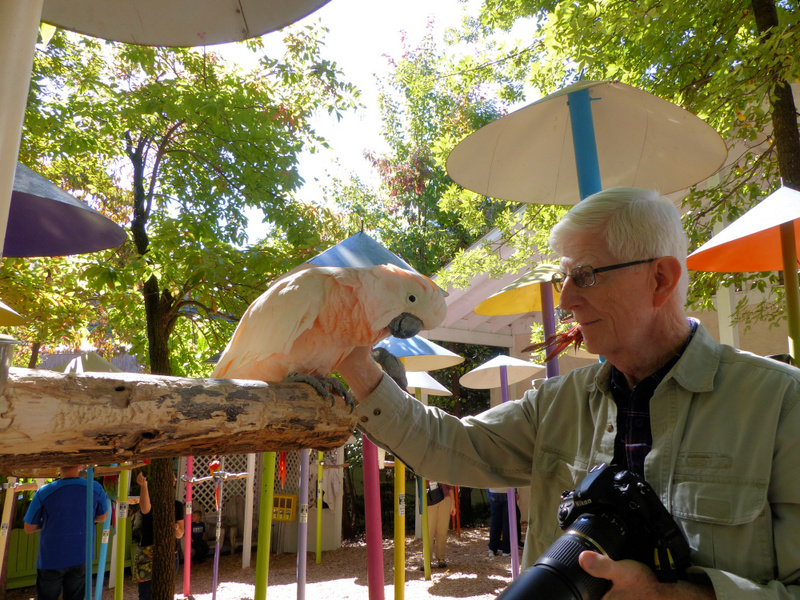
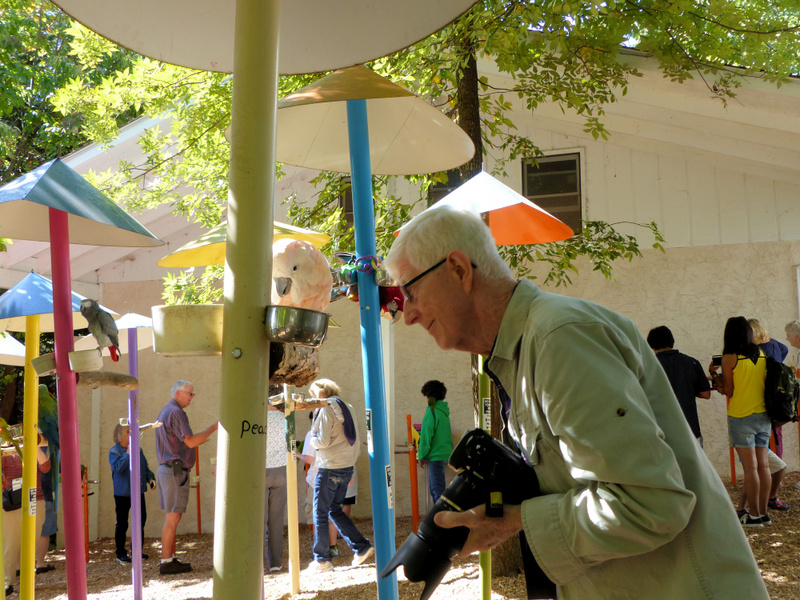
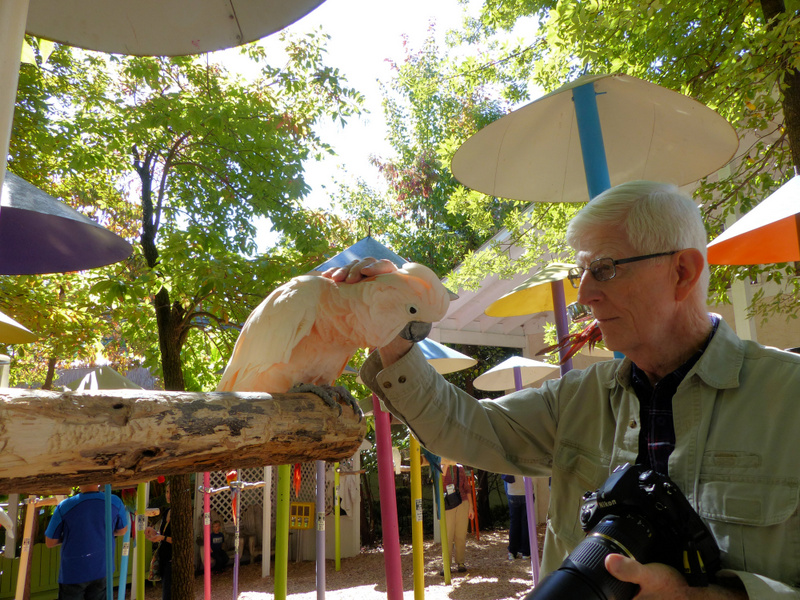
Here are a few photos of the Salmon-crested Cockatoo (Cacatua moluccensis) or Mouccan Cockatoo, as they call it, at the Parrot Mountain in Pigeon Forge, Tennessee. On their brochure they have “In the Beginning GOD Created All Things” and “Hundreds of Tropical Birds in a Garden of Eden Surrounding.” It is a very enjoyable place to visit. The landscaping is very pretty and colorful. More about that in another post. It is very much Christian oriented.

“The salmon-crested cockatoo (Cacatua moluccensis) also known as the Moluccan cockatoo, is a cockatoo endemic to the south Moluccas in eastern Indonesia. They are members of the Cacatuidae – Cockatoos Family. At a height of up to 46–52 cm and weight of up to 850 g, it is among the largest of the white cockatoos. The female is larger than the male on average. It has white-pink feathers with a definite peachy glow, a slight yellow on the underwing and underside of the tail feathers and a large retractable recumbent crest which it raises when threatened, revealing hitherto concealed bright red-orange plumes to frighten potential attackers. It may also be raised in excitement or in other ’emotional’ displays. Some describe the crest as “flamingo-colored.” It also has one of the louder calls in the parrot world and in captivity is a capable mimic.
Salmon-crested Cockatoo (Cacatua moluccensis) at Parrot Mtn by Lee

Salmon-crested Cockatoo (Cacatua moluccensis) at Parrot Mtn by Lee

In the wild the salmon-crested cockatoo inhabits lowland forests below 1000 m. The diet consists mainly of seeds, nuts and fruit, as well as coconuts, and also eats Meat. There is additional evidence that they eat insects off the ground, and pet Moluccan cockatoos have tested positive for anemia if their diet does not include enough protein.
Salmon-crested Cockatoo (Cacatua moluccensis) at Parrot Mtn by Le

Salmon-crested Cockatoo (Cacatua moluccensis) at Parrot Mtn by Lee

For every kind of beast and bird, of reptile and creature of the sea, is tamed and has been tamed by mankind. (James 3:7 NKJV)

The salmon-crested cockatoo can no longer be imported into the United States because it is listed on the Wild Bird Conservation Act. However, they are being bred in captivity. They are popular for their beauty and trainability (which makes them popular in trained bird shows). The salmon-crested cockatoo is widely considered to be one of the most demanding parrots to keep as a pet due to their high intelligence, large size, potential noise level, and need to chew. Moluccan cockatoos require a very large and very sturdy cage or aviary. Salmon-crested cockatoos are highly social and pets can be extremely cuddly, affectionate, and gentle birds.” (Wikipedia)

The photos are shown in the sequence taken. Dan was enjoying scratching its head.

*

Parrot Mountain in Pigeon Forge, Tennessee

Salmon-crested Cockatoo – Wikipedia

Cacatuidae – Cockatoos Family

Wordless Birds

*

Sunday Inspiration – Laughingthrush Leiothrichidae Family

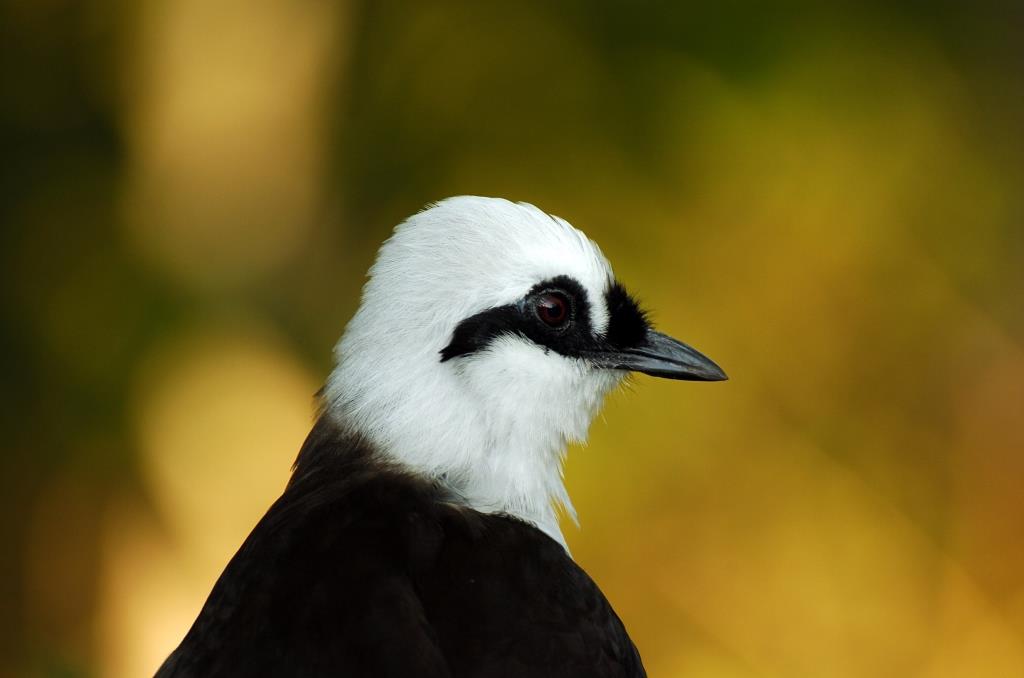
Sumatran Laughingthrush (Garrulax bicolor) by Dan at Wing of Asia ZM

Sumatran Laughingthrush (Garrulax bicolor) by Dan at Wing of Asia ZM

A merry heart does good, like medicine, But a broken spirit dries the bones. (Proverbs 17:22 NKJV)

Every since we saw Laughingthrushes for the first time at Zoo Miami’s Wing of Asia aviary, I fell in love with these birds. The photo above is the one I like to call “Joe Cool.” Their “sunglasses” makes them look rather “Cool” don’t you think? They are fun to watch and most of them like to hop around instead of walking.

Joe Cool

(Black and White) Sumatran Laughingthrush (Garrulax bicolor) by Lee “Joe Cool”

The Laughingthrush Family, called Leiothrichidae, has 133 species and is our next passerine family. Actually there was a Sunday Inspiration about them previously. Sunday Inspiration – Laughingthrush

The Laughingthrushes are the genus Garrulax of the large Old World babbler family of passerine birds. They occur in tropical Asia, with the greatest number of species occurring in the Himalaya and southern China.
These are rangy, medium-sized, floppy-tailed landbirds with soft fluffy plumage. These birds have strong legs and are quite terrestrial. This group is not strongly migratory, and most species have short rounded wings, and a weak flight.

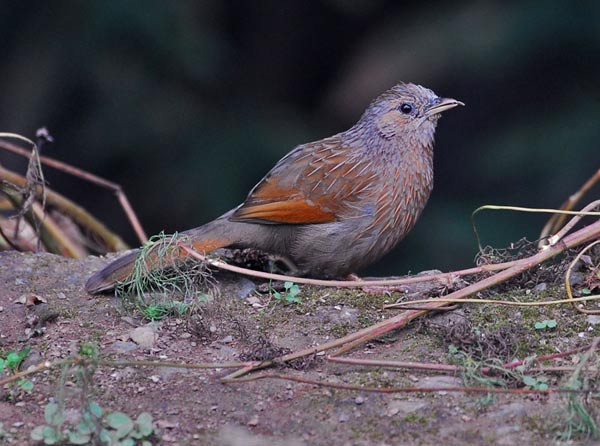
Streaked Laughingthrush (Garrulax lineatus) by Nikhil Devasar

Streaked Laughingthrush (Garrulax lineatus) by Nikhil Devasar

A few, like the Streaked Laughingthrush occur in fairly open habitats, but most are jungle species, difficult to observe in the dense vegetation they prefer.

Like other babblers, these are noisy birds, and the characteristic laughing calls are often the best indication that these birds are present. As with other babbler species, they frequently occur in groups of up to a dozen, and the rainforest species like the Ashy-headed Laughingthrush often occur in the mixed feeding flocks typical of tropical Asian jungle. (Wikipedia)

Red-tailed Laughingthrush at Wings of Asia by Lee

Red-tailed Laughingthrush (Trochalopteron milnei) by Lee

Then our mouth was filled with laughter, And our tongue with singing. Then they said among the nations, “The LORD has done great things for them.” The LORD has done great things for us, And we are glad. Bring back our captivity, O LORD, As the streams in the South. Those who sow in tears Shall reap in joy. He who continually goes forth weeping, Bearing seed for sowing, Shall doubtless come again with rejoicing, Bringing his sheaves with him. (Psalms 126:2-6 NKJV)

This slideshow requires JavaScript.

“Ten Thousand Joys” ~ Choir – Lisa Brock – Jessie Padgett (Faith Baptist)

*

More Sunday Inspirations

Laughingthrush – Leiothrichidae Family

Who Paints The Leaves?

*

Fellowship in the Smokies

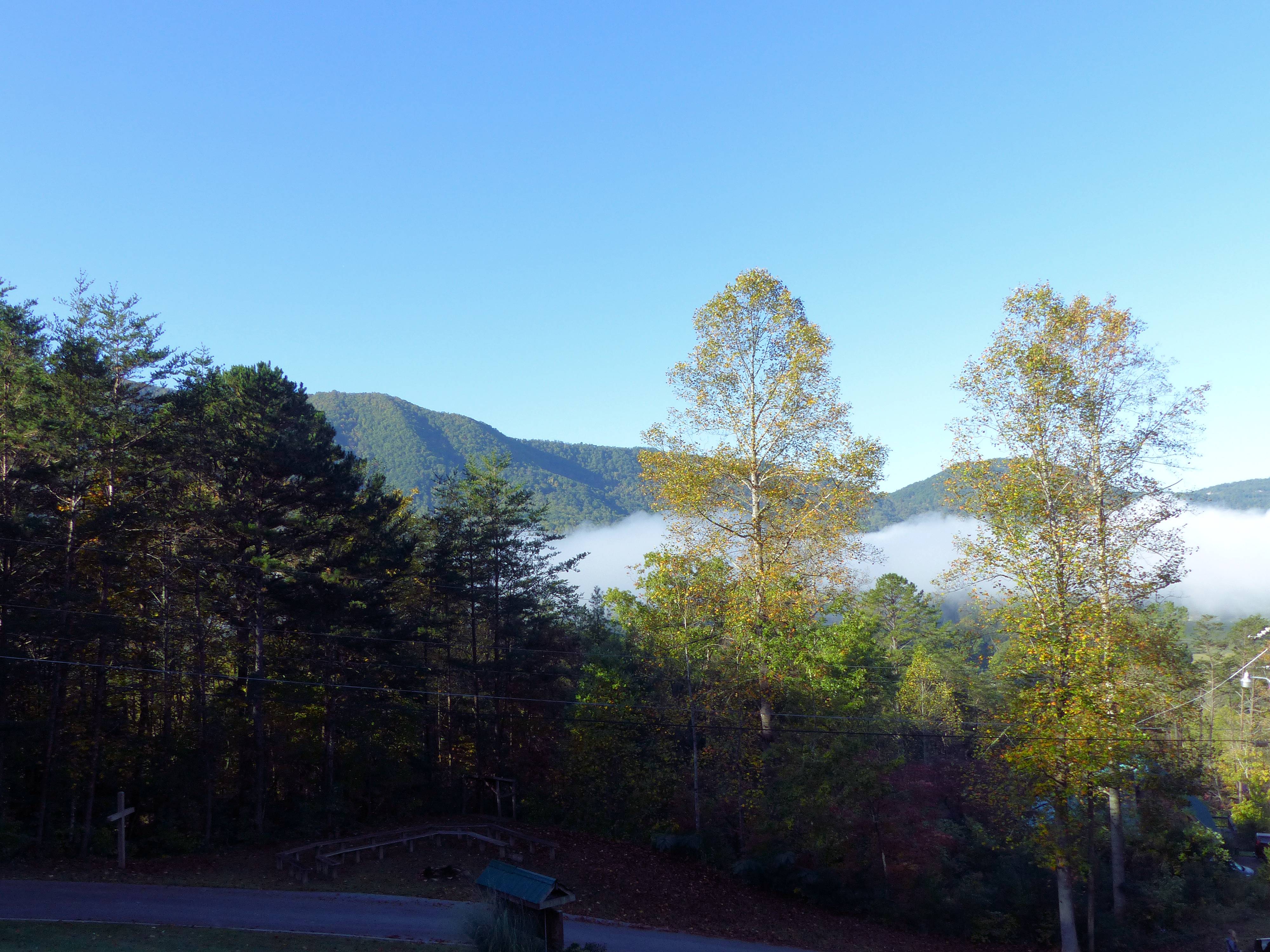
Mountains from the Tuckaleechee Retreat Center Lodge

Mountains from the Tuckaleechee Retreat Center Lodge

But if we walk in the light, as he is in the light, we have fellowship one with another, and the blood of Jesus Christ his Son cleanseth us from all sin. (1Jn 1:7)

We just spent four nights at the at Tuckaleechee Retreat Center in Townsend, Tennessee. They call it “Fellowship in the Smokies.” We were at the edge of the Great Smoky Mountain National Park, near Pigeon Forge and Gatlinburg. Those two towns are very “tourist” minded and have many attractions that have little to do with the beauty of the area. It is hard to see the commercialization of such a beautiful area created by Our Lord.

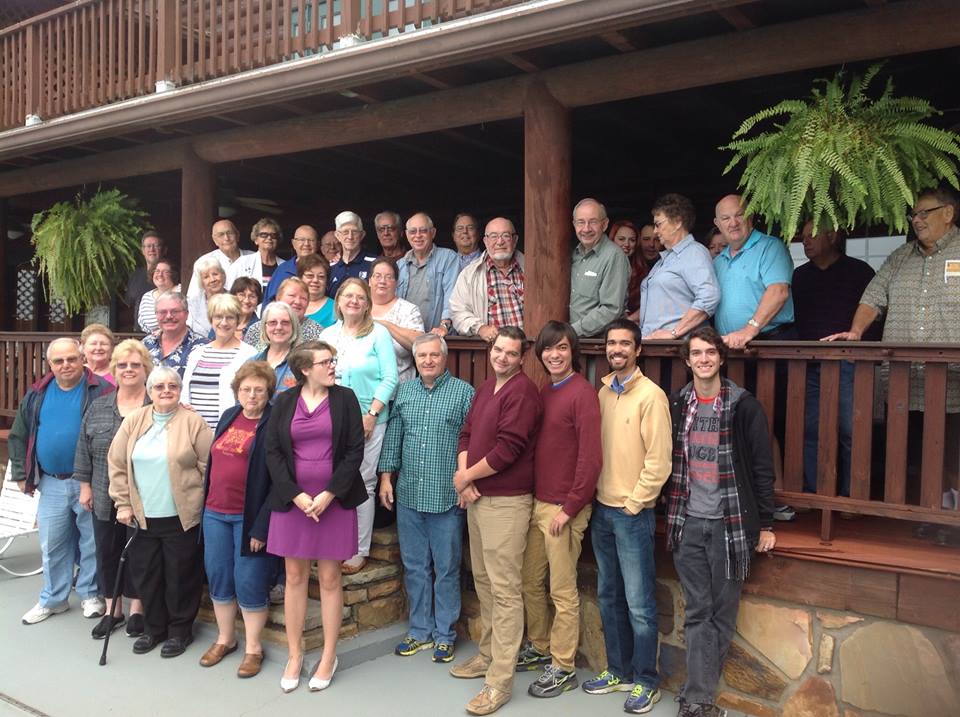
The Tuckaleechee Retreat Center is the national headquarters of the Children’s Bible Ministry. They open up a couple of weeks this time of the year for visitors, like a big group (13 couples) from our church and a few from other churches. We are fed a fantastic breakfast, have an informative time and then are free for the rest of the day.

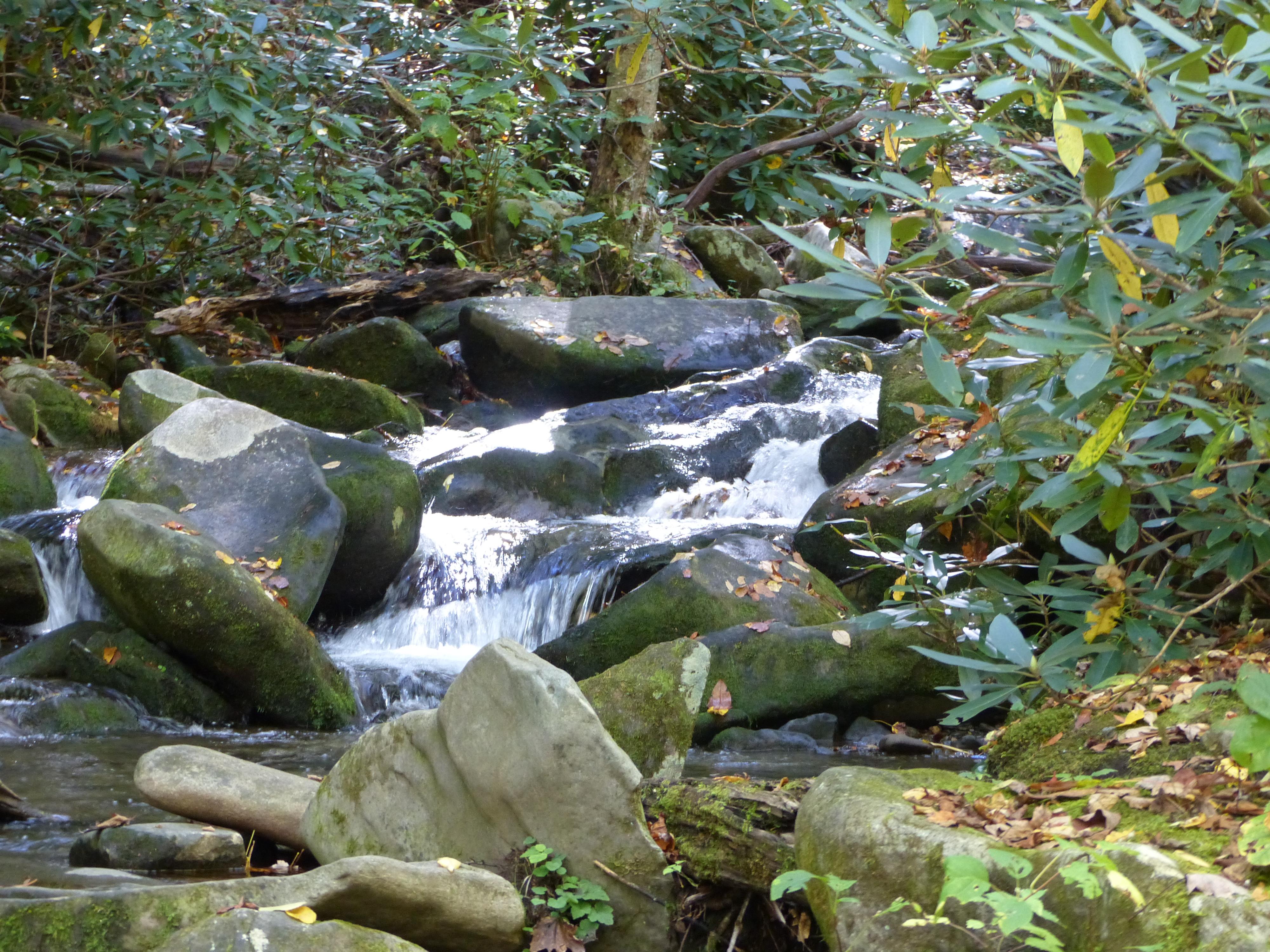
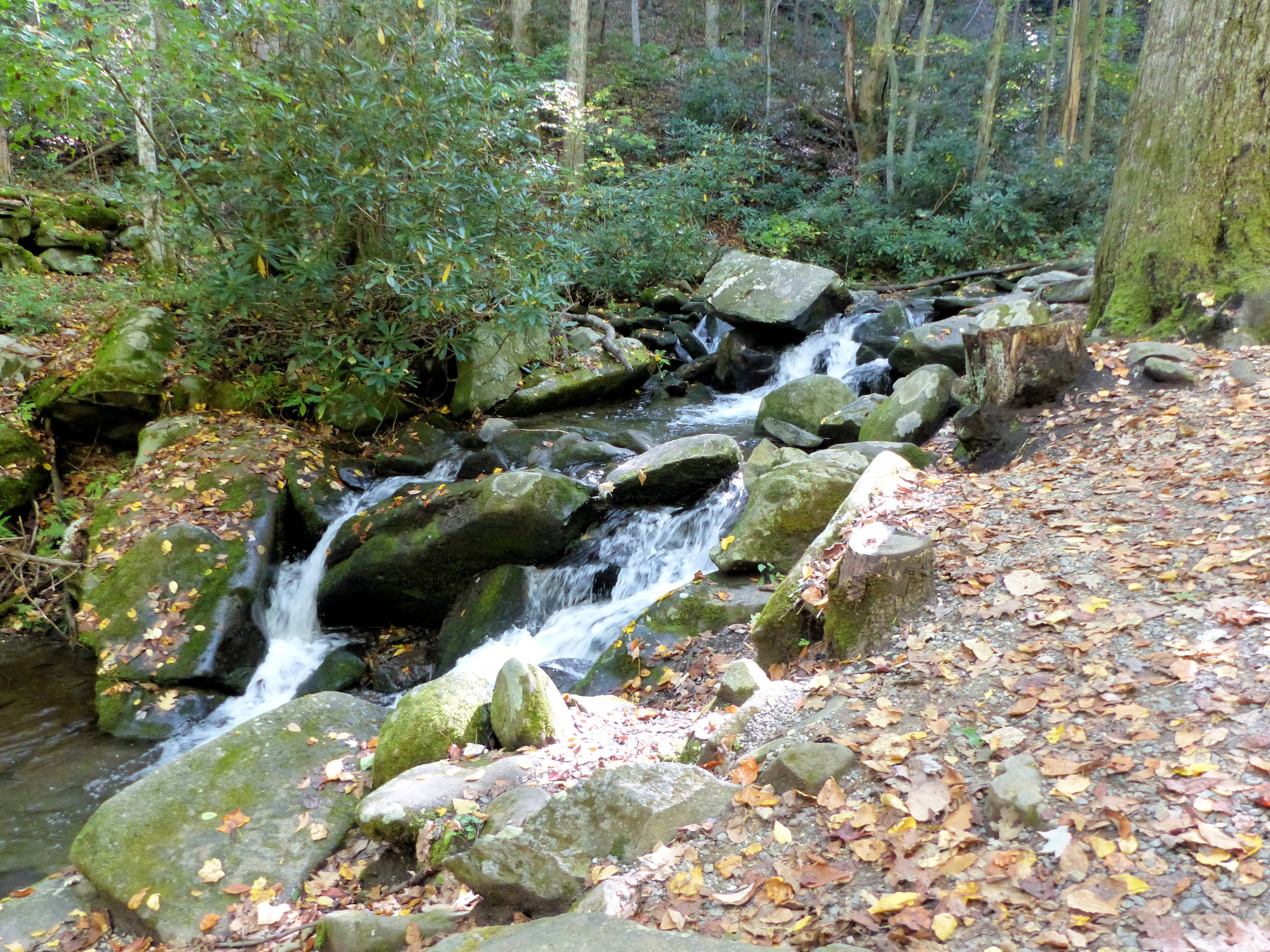
Stream on Roaring Fork Nature Drive

Stream on Roaring Fork Nature Drive

Dan and I went into Gatlinburg to the Roaring Fork Auto Nature Dive to see some birds. One turkey seen, one Pileated Woodpecker heard, and a small waterfall later, we finished the drive.
Cars and people were everywhere and needless to say, we were somewhat disappointed.

Back at the Lodge, we had great fellowship with our friends and some new ones we met. We ate out at some nice restaurants with our friends and just had a relazing and enjoyable time.

The roads are very curvy in the mountains and I said, “I’m not going back over those mountains into Gatlinburg or Pigeon Forge again.” It was hurting my back somewhat.

Stream through the park - SMNP by Lee

Stream through the park – SMNP by Lee

The next morning, I was told about Parrot Mountain, with lots of Parrots. Other birds also. Run by Christian people and from a “Christian Perspective.” Have you ever heard of “eating crow”? Well, I swallowed my words and went. :) Am I glad we went.

You will have to wait until we arrive home in a few hours. Then I can get the photos ready. I have had the blog on “auto-pilot” this week and am glad WordPress lets us schedule articles for the future. (The only day not scheduled was this one.)

Taken Friday morning before we all left.

Fellowship in the Smokies — at Tuckaleechee Retreat Center.

Fellowship in the Smokies — at Tuckaleechee Retreat Center.

Tuckaleechee Retreat Center

Children’s Bible Ministry

*

Ian’s Bird of the Week – Fuscous Honeyeater

Ian’s Bird of the Week – Fuscous Honeyeater ~ by Ian Montgomery

Newsletter ~ 10-14-15

Townsville is experiencing one of its driest years on record, with only 258mm/10.2in of rain so far this year, with most of that in January. Farmers feel the effects of the dry the most of course from a human perspective, but the wildlife is suffering too. Any remaining open water whether on farms or in gardens is very popular. My bird bath and pond are visible from the window of my study so I have been watching the variety and abundance of visiting wild- (and feral-) life and keeping an eye out for unusual birds. These include some which here are mainly restricted to highland rainforest such as Macleay’s and Lewin’s Honeyeaters and other dry country species such as the Fuscous Honeyeater, normally found west of the coastal range in North Queensland.

Fuscous Honeyeater (Lichenostomus fuscus) by Ian

This one, here ten days ago on the edge of my bird bath, is the northern race subgermanus. This race has a yellow wash on the face which makes it look rather like the closely related Yellow-tinted Honeyeater, a species I’ll say a bit more about shortly. This northern race occurs between Bowen/Mackay and the Atherton Tableland. Further south the nominate race ranges through the remainder of eastern Queensland, eastern New South Wales and through Victoria as far as about Adelaide in South Australia. The second photo shows an example of the nominate race west of Sydney. Fuscous Honeyeaters have different bill and eye-ring colour in breeding and non-breeding plumage. Non-breeding (and juvenile) birds have yellow bases to the bill and a yellow eye-ring (first photo) while breeding birds have dark bills and dark eye-rings (second photo) – unusual for the breeding plumage to be less colourful.

Fuscous Honeyeater (Lichenostomus fuscus) by IanThe third photo shows a non-breeding (or juvenile) nominate-race individual in Victoria and both the yellow eye-ring and yellow base to the bill show up well. ‘Fuscous’ comes from the Latin for ‘dusky’ while the generic name ‘Lichenostomus’ means ‘lichen-mouth’ or ‘moss-mouth’ in Greek and refers to the brush-like tongues of members of this genus, adapted for feeding on nectar. Compare that with ‘Trichoglossus’ – ‘hair tongue’ – a similar adaptation in Lorikeets of that genus, such as the Rainbow Lorikeet.

Fuscous Honeyeater (Lichenostomus fuscus) by IanThere are five closely related species of Lichenostomus, referred to as a ‘super-species’ which, although they overlap in some places, effectively carve up mainland Australia. The Fuscous as we’ve seen is an eastern and southeastern species; the Yellow-plumed (L. ornatus) occurs along the south coast from Victoria to SW Western Australia; the Grey-fronted (L. plumulus) is an inland and western-coastal species; the White-plumed (L. penicillatus) has a similar range to the Grey-fronted but extends to the coast in Victoria and New South Wales (e.g. suburban Sydney); while the Yellow-tinted (L. flavescens) occurs across northern Australia from NW Western Australia through the Northern Territory to western Cape York in Queensland (fourth photo). There is also an isolated population in south-eastern Papua New Guinea.

In case you’re wondering, subgermanus, the name for the northern race of the Fuscous doesn’t refer to Germany or a taxonomist called Germain. ‘Germanus’ means something like ‘sibling’ in Latin (literally ‘having the same parents’) and is the origin of ‘hermano/hermana’ in Spanish (brother/sister). ‘Sub’ is often used to indicate closeness in taxonomic matters, so subgermanus means something like ‘almost siblings’ and presumably refers to its similarity to the Yellow-tinted. That’s my guess, anyway, as my usual source of such gems, A Dictionary of Scientific Bird Names, OUP, doesn’t delve into races.

Yellow-tufted Honeyeater (Lichenostomus melanops) by IanThe range of the Yellow-tinted comes within about 100km of that of the yellowish northern Fuscous Honeyeater and the two species were formerly lumped into one. Recent studies have shown that although they look similar they don’t intergrade, so treating them as separate species seems justified. In the Yellow-tinted, the yellow base to the bill is a feature of just juvenile birds. All have yellow eye-rings, so there is no difference in appearance between breeding and non-breeding adults.

Fire Chopper by Ian

Fire Chopper by Ian

The dry season is an anxious time in bushland areas of North Queensland and this year particularly so. Last week a fire started beside the Bruce Highway on Saturday 3rd October and travelled the seven kilometres to my place over the next three days and then burned along the dry bed of Bluewater Creek near my house for three days. The last photo shows the bottom of my yard being water bombed on Thursday morning as I was heading down there yet again with a rake. The hill in the background is black all over. All is quiet now and we have the biggest firebreak in the country (at least 11km long covering 24 square kilometres) so I hope we’re probably relatively safe now until the wet season which should start in a couple of months, El Nino permitting. The firemen had some funny stories to tell about their arrival at a nudist colony in a secluded area about 4km west of my place.

Greetings
Ian

**************************************************
Ian Montgomery, Birdway Pty Ltd,
454 Forestry Road, Bluewater, Qld 4818
Tel 0411 602 737 ian@birdway.com.au
Bird Photos http://www.birdway.com.au/
Recorder Society http://www.nqrs.org.au


Lee’s Addition:

My son, eat thou honey, because it is good; and the honeycomb, which is sweet to thy taste:  (Pro 24:13)

Thanks, Ian, for telling more about your amazing Honeyeaters, especially the Fuscous ones. Sound like a bird I would like landing on my bird bath. Though he would have to fly a loooooong way to get here. :)

*

Ian’s Bird of the Week

Ian’s Honeyeaters

Meliphagidae – Honeyeaters

Who Paints The Leaves?

*

Collared Aracari – Beautiful Creation

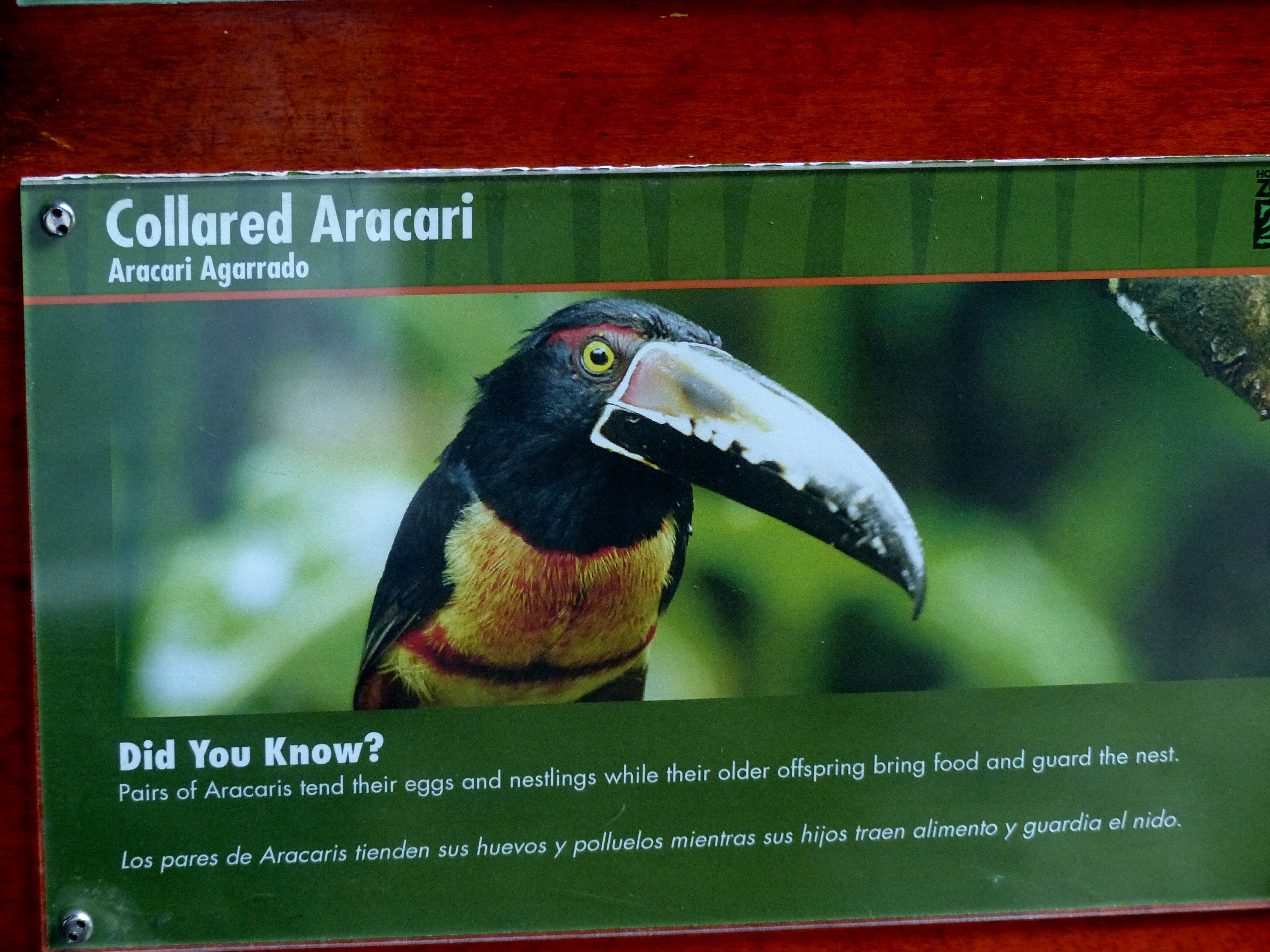
(Crooked) Collared Aracari Sign at Houston Zoo by Lee

“You are worthy, O Lord, To receive glory and honor and power; For You created all things, And by Your will they exist and were created.” (Revelation 4:11 NKJV)

When we visited the Houston Zoo this last spring, we saw a sign for the Collared Aracari. We were able to photograph two other Aracaris, but this one was “off exhibit.” Not sure why, but I was very disappointed, because it is such a neat creation from the Lord.

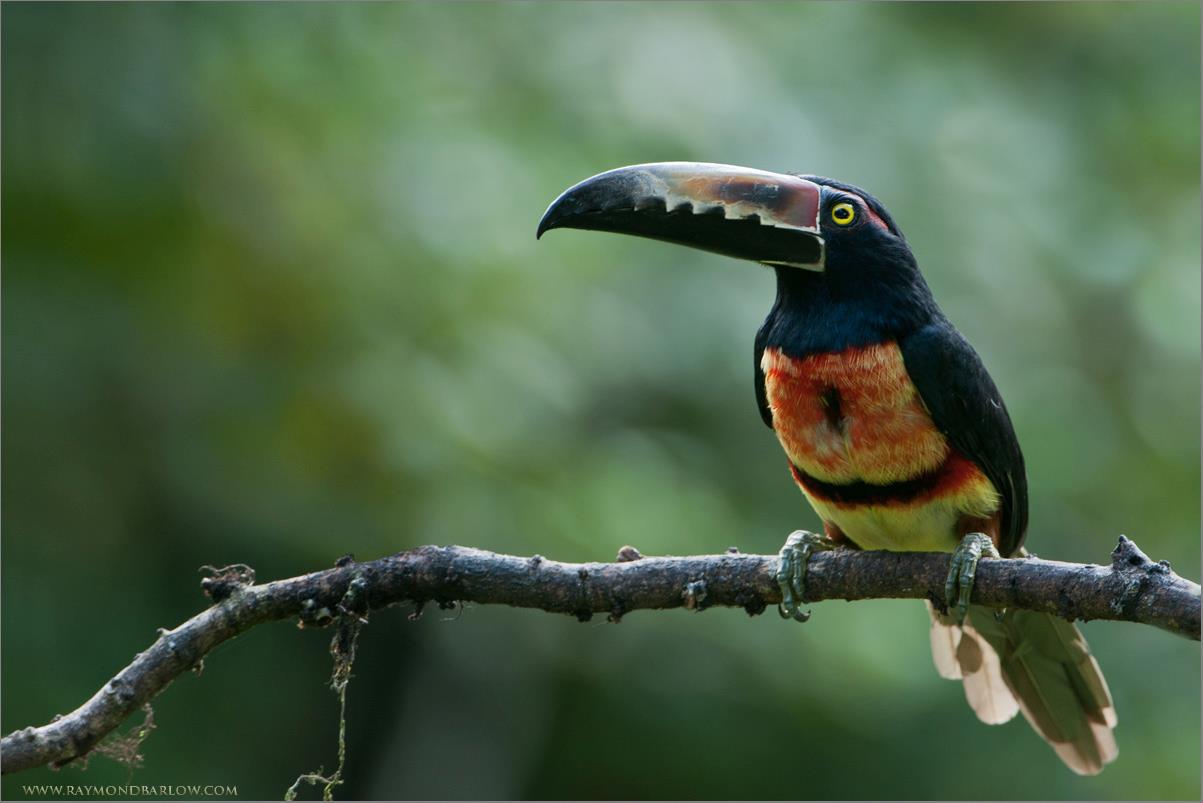
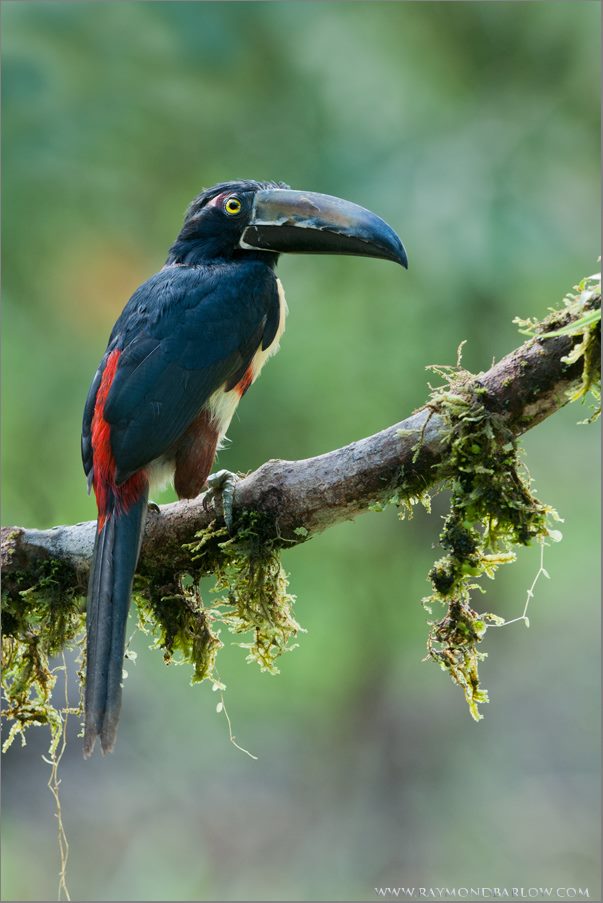
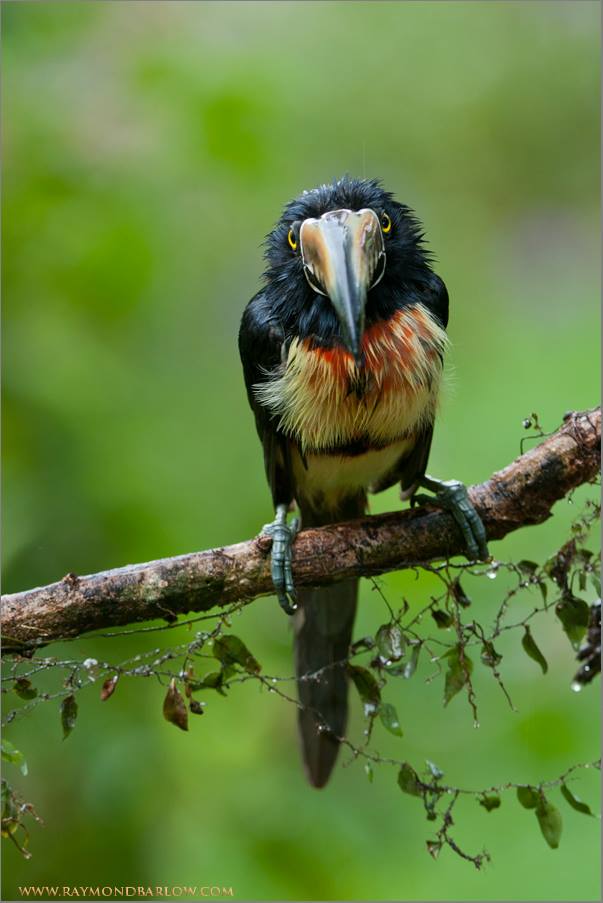
While checking through some more of Ray Barlow’s photos, guess what I found? Some really great photos of a Collared Aracari Ray had taken, and “without bars” like we get at a zoo. So I trust you will enjoy some more photos from Raymond Barlow.

Collared Aracari (Pteroglossus torquatus) ©Raymond Barlow

Collared Aracari (Pteroglossus torquatus) ©Raymond Barlow

An aracari or araçari is any of the medium-sized toucans that, together with the saffron toucanet, make up the genus Pteroglossus. They belong to the Ramphastidae – Toucan Family. This Collared Aracari is not even one of the prettiest, but it is still very becoming.

Collared Aracari (Pteroglossus torquatus) ©Raymond Barlow

Collared Aracari (Pteroglossus torquatus) ©Raymond Barlow

They are brightly plumaged and have enormous, contrastingly patterned bills. These birds are residents in forests and woodlands in the Neotropics.

Collared Aracari (Pteroglossus torquatus) ©Raymond Barlow

Collared Aracari (Pteroglossus torquatus) ©Raymond Barlow

All the species of Aracari are basically fruit-eating, but will take insects and other small prey.

Collared Aracari (Pteroglossus torquatus) ©Raymond Barlow

Collared Aracari (Pteroglossus torquatus) ©Raymond Barlow

They are arboreal and nest in tree holes laying 2–4 white eggs. The Collared Aracari breeds from southern Mexico to Panama; also Ecuador, Colombia, Venezuela and Costa Rica.

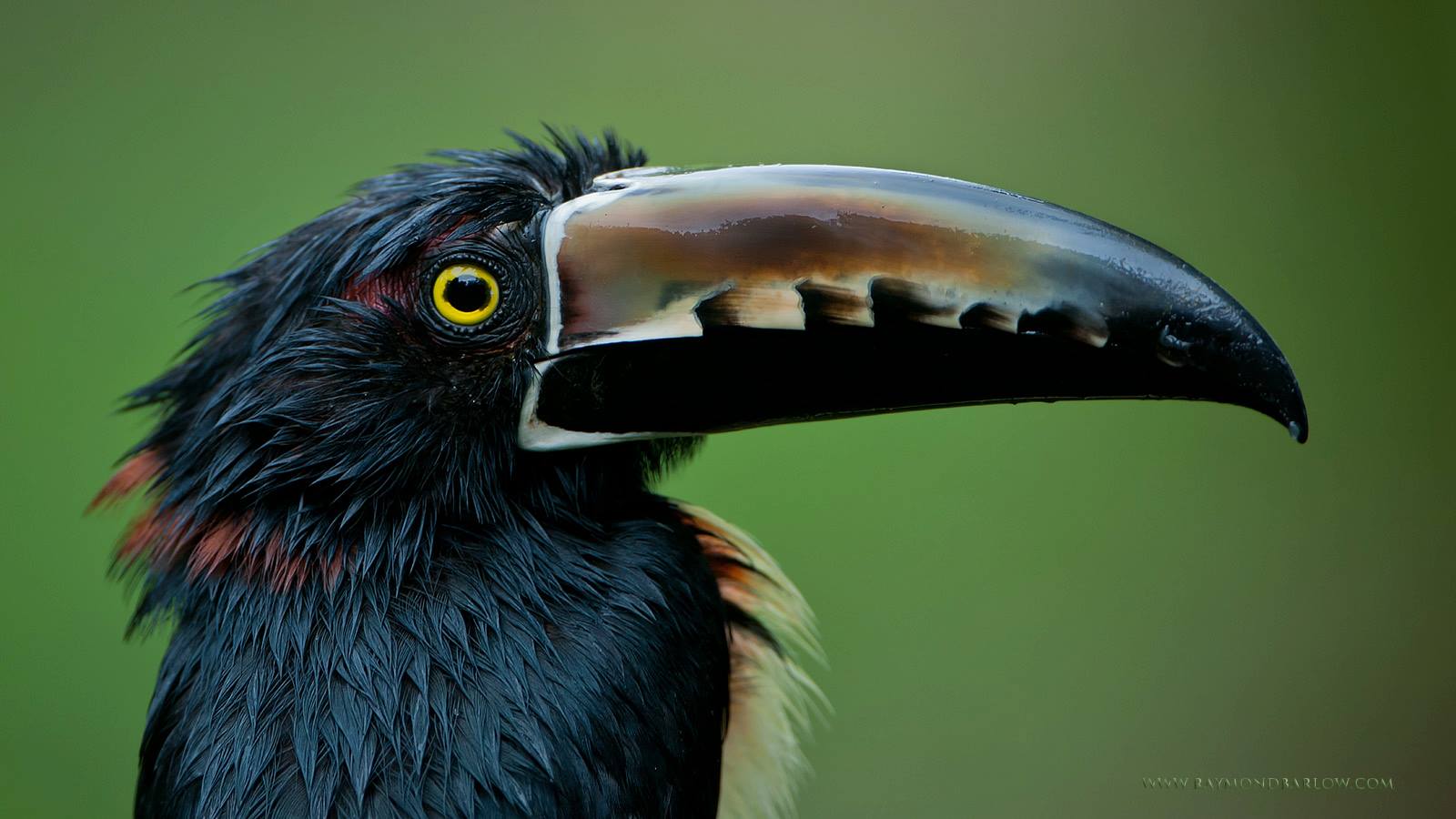
And now for the best one of Ray’s photos for the Collared Aracari, at least to me:

Collared Aracari (Pteroglossus torquatus) ©Raymond Barlow

Collared Aracari (Pteroglossus torquatus) ©Raymond Barlow

That beak is not painted by none other than the Creative Hand of the Lord Jesus Christ.

For by Him all things were created that are in heaven and that are on earth, visible and invisible, whether thrones or dominions or principalities or powers. All things were created through Him and for Him. (Colossians 1:16 NKJV)

Click on photos for larger view

Birds of the World – Ramphastidae – Toucan Family

Raymond Barlow’s Site

Ray’s Flickr Site

Collared Aracari – Wikipedia

Wordless Birds

*

Birdwatching At Lake Morton Finally – Part 2

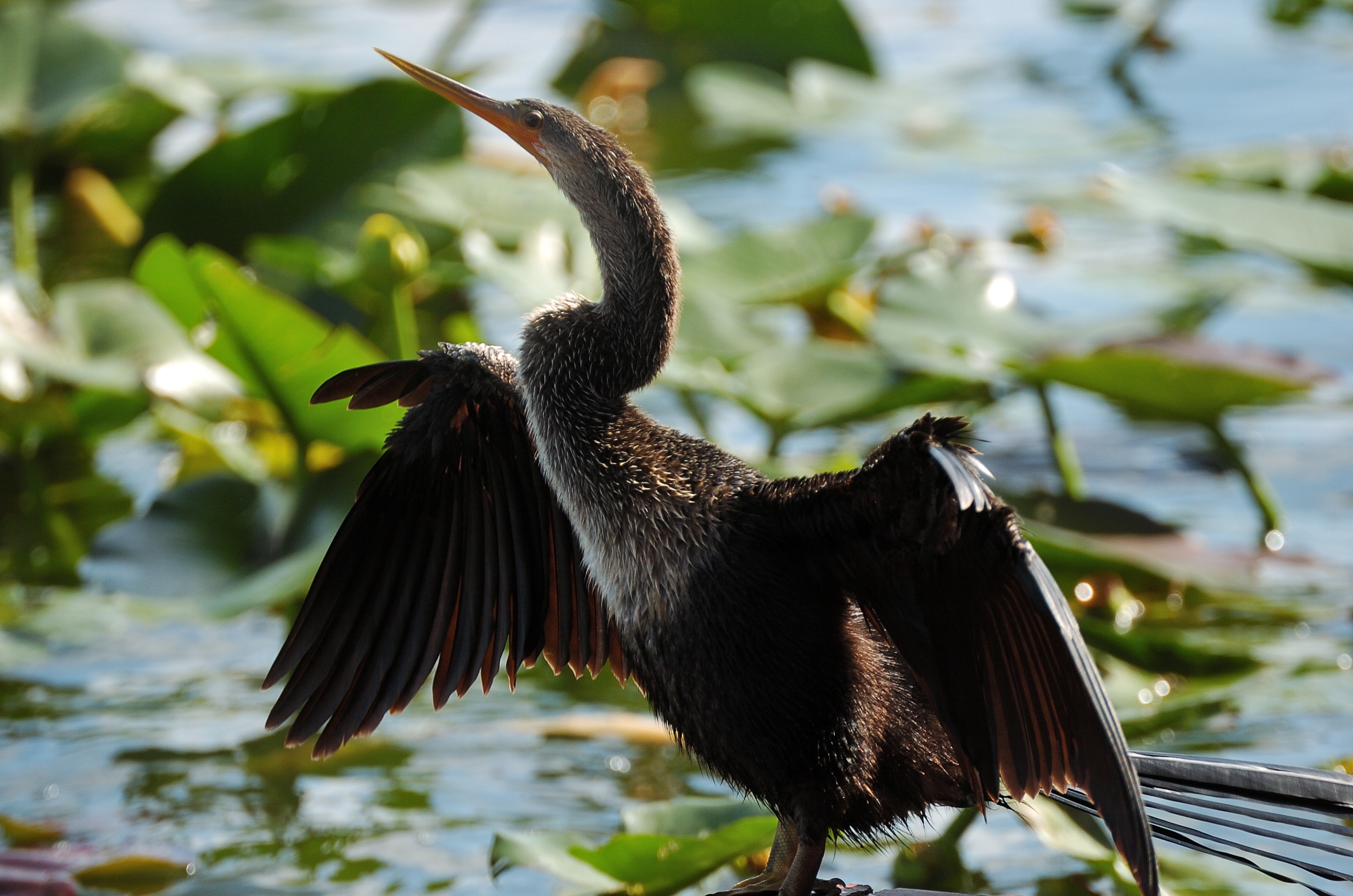
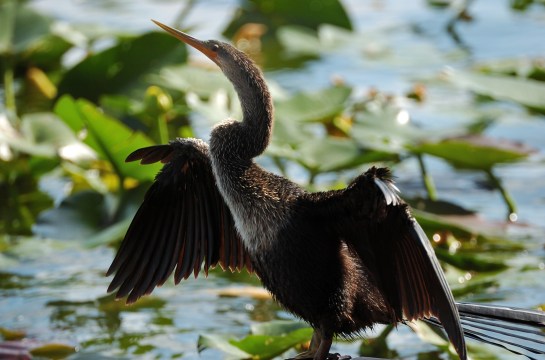
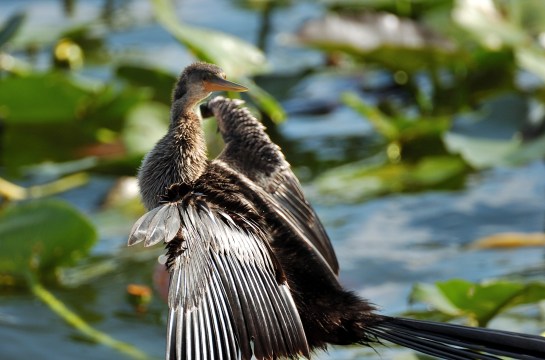
Anhinga Drying at Lake Morton by Dan

Anhinga Drying at Lake Morton by Dan

Out of the ground the LORD God formed every beast of the field and every bird of the air, and brought them to Adam to see what he would call them. And whatever Adam called each living creature, that was its name. (Genesis 2:19 NKJV)

After I finished posting Birdwatching At Lake Morton Finally Part 1, about 15 minutes later, Dan came in and handed me his photos. Okay, so what to do? Add to the one I just posted or do a Part 2? You are reading Part 2. So, I am going to share his better photos for you to enjoy.

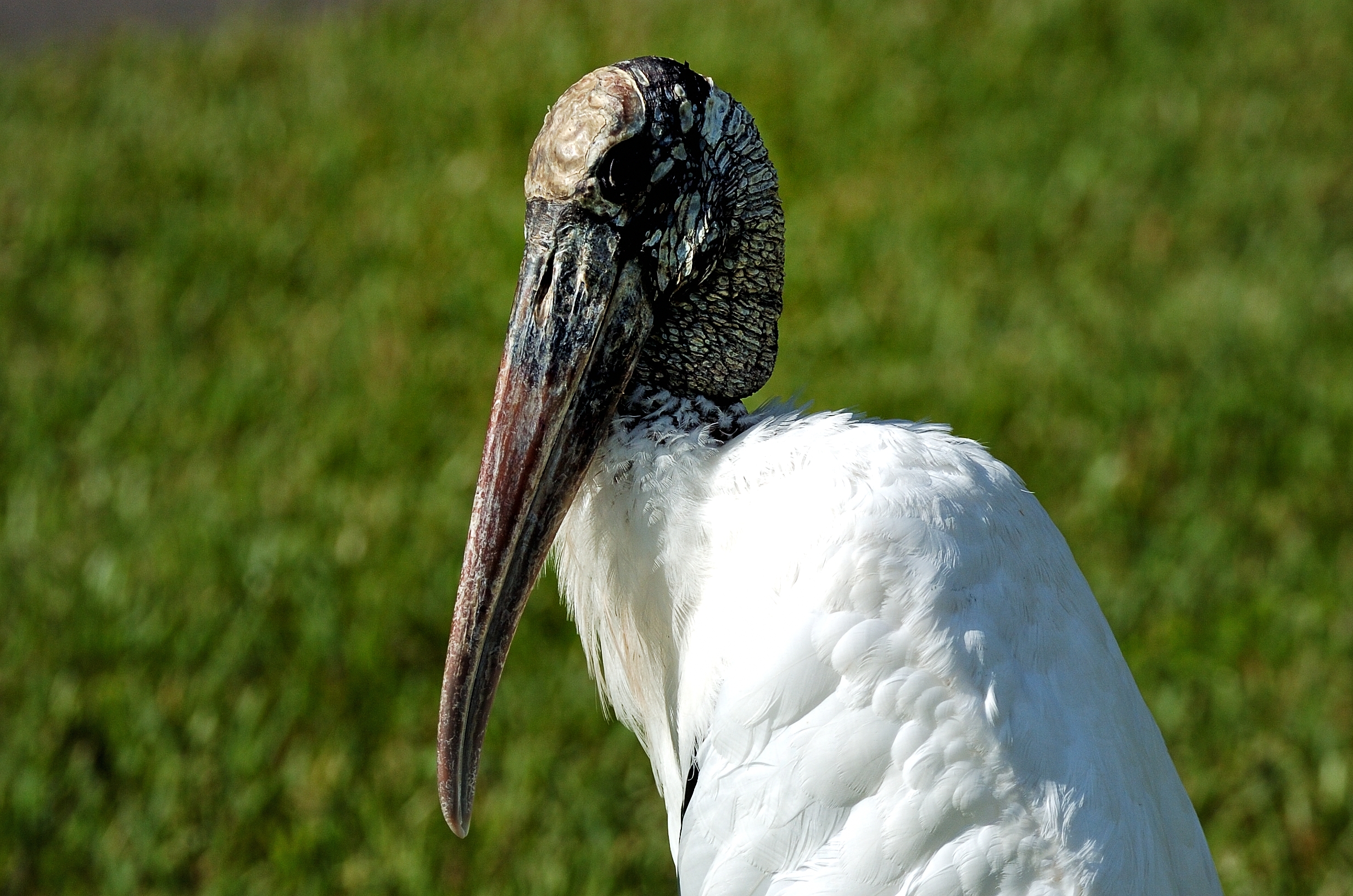
Wood Stork sitting at Lake Morton by Dan

Wood Stork sitting at Lake Morton by Dan

“Even the stork in the heavens Knows her appointed times; And the turtledove, the swift, and the swallow Observe the time of their coming. But My people do not know the judgment of the LORD. (Jeremiah 8:7 NKJV)

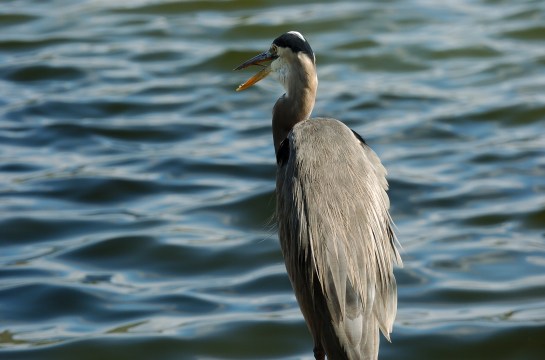
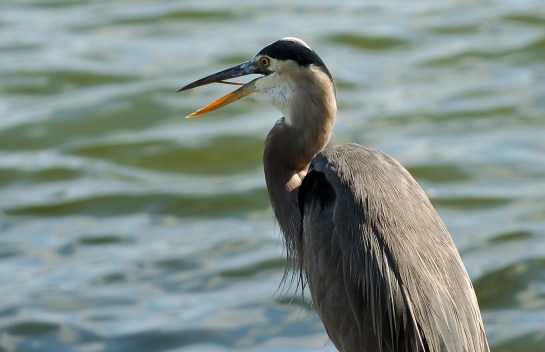
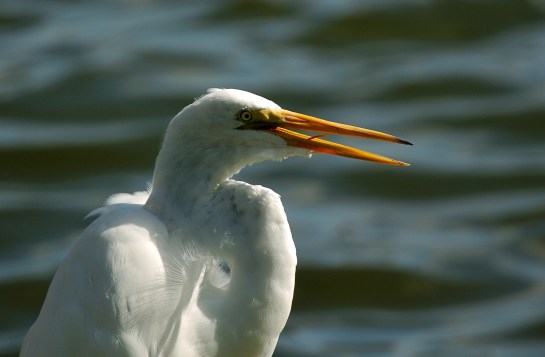
The Wood Storks were there. Maybe five or six and at least one Great Blue Heron and a Great Egret. Like mentioned in the first article, there weren’t that many birds around.

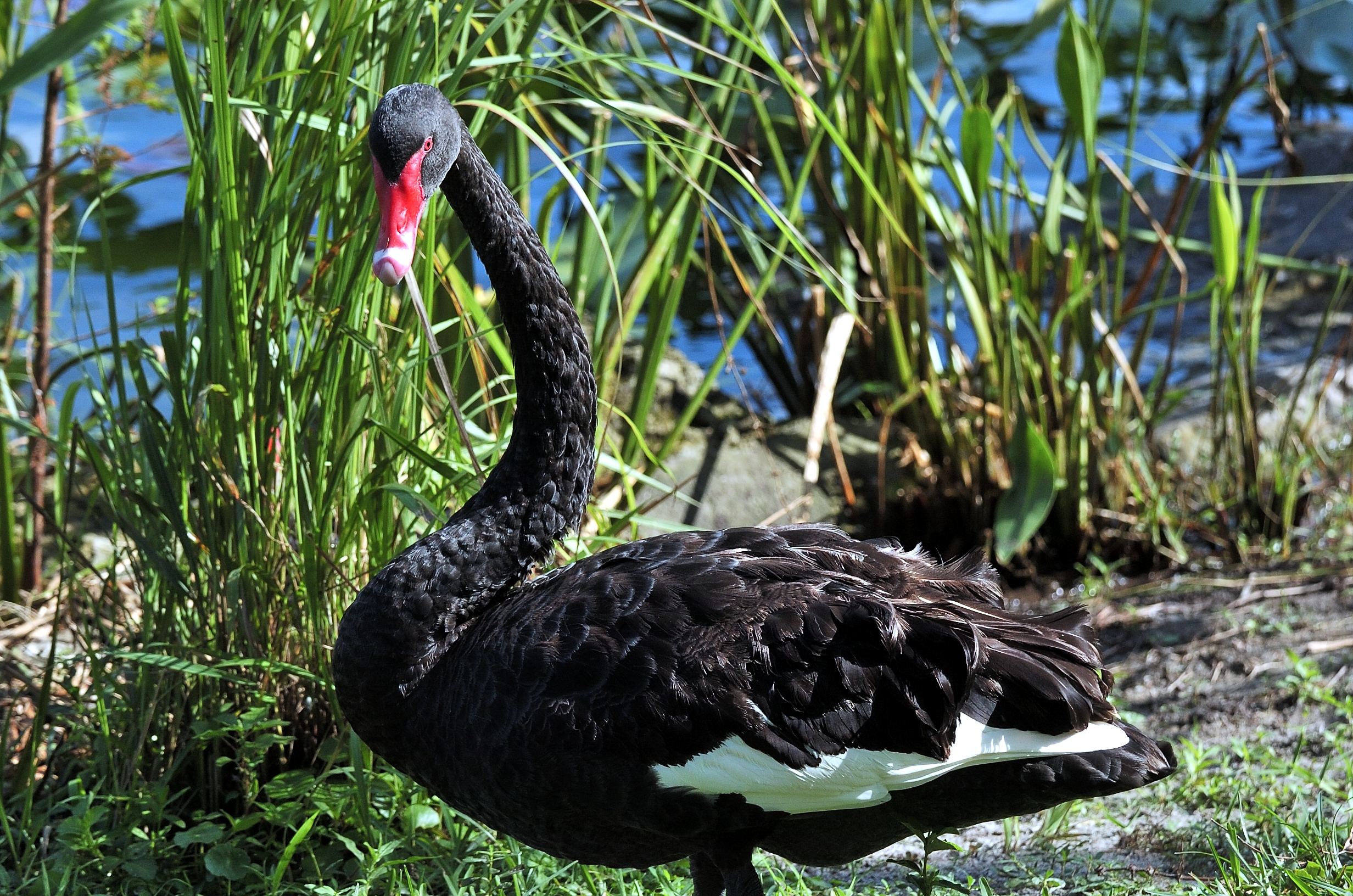
He also took photos of the Black Swan, and our immature Limpkin and White Ibis.

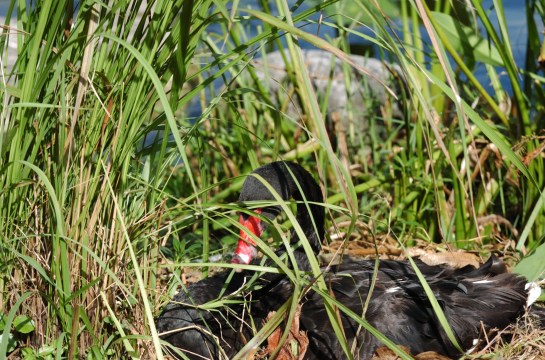
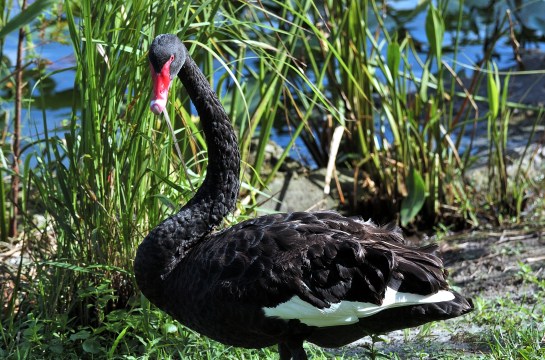
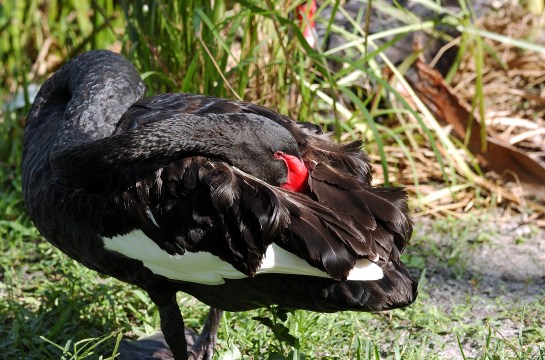
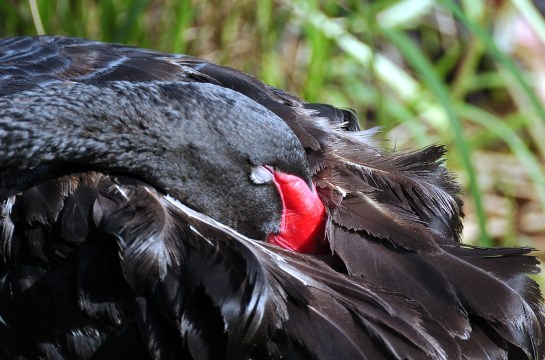
Black Swan by Dan at Morton

Black Swan by Dan at Morton

and the red-bill, and the pelican, and swan, (Leviticus 11:18 Brenton)

The “Aflac” Duck and the Wood Ducks were about it. Maybe next time the birdwatching will improve. Once it turns cold up north, our “winter visitors” will start coming to visit and spend the winter with us. Then, the chance for some different birds to show you. Stay Tuned!

I know and am acquainted with all the birds of the mountains, and the wild animals of the field are Mine and are with Me, in My mind.
(Psalms 50:11 AMP)

*
Visit Dan’s Site – USNDansPix.com

Birdwatching Trips – Lake Morton

Birdwatching Trips

Gideon

*

The Owl’s Book

Western Barn Owls (Family Tytonidae) by Bob-Nan

Western Barn Owls (Family Tytonidae) by Bob-Nan

The Owl’s Book 

by Emma Foster

Once there was an owl that lived in the attic of a small bookstore in the countryside. The owl’s name was Art. He was a brown barn owl. He enjoyed living in the attic of the bookstore because he could observe the people coming and going in the bookstore and he could keep the mouse population under control.

Everyday Art would stare through a small hole in the ceiling to watch people buy books. There were different sized books, some of them being extremely thin and others the size of a dictionary or even larger. All different ages of people were in the bookstore too. Some were little children coming with their parents and some were very old.

Art became so used to staring at all of the people and all of the books that he began to learn how a book was actually written. He would often hear people reading out loud to their children.

Ink and Feather for Owl Book ©©

Ink and Feather for Owl Book ©©

One day Art decided to write his own book. At night, he flew into the supply room and borrowed a cup, paper, and ink. He used one of his feathers to dip in the ink and started writing.

Art wrote about what it was like living above a bookstore. He wrote about the strategies of catching mice, and also wrote a detailed commentary on the history of owls. When he finished, his book was over a hundred pages long. Art took it down to the checkout desk that night, and when the bookstore owner came in the next day and found Art’s book, he decided to read it. When he finished, the bookstore owner decided to publish it.

Eventually, Art’s book reached the bestsellers’ list and was placed in the window in the front of the store. No one ever knew who wrote the book titled “The Life of an Owl who Lives in a Bookstore.” To the end of Art’s days, no one ever knew who wrote the bestselling book because it only said “written by an owl.”

The End


Lee’s Addition:

Oh that my words were now written! oh that they were printed in a book! (Job 19:23 KJV)

Well, we have another great story from our young budding author. Emma has been regularly helping to building our Bird Tales library. If you haven’t checked out her tales, check these out:

Emma Foster:

*

Sunday Inspiration – Fulvettas, Ground Babblers

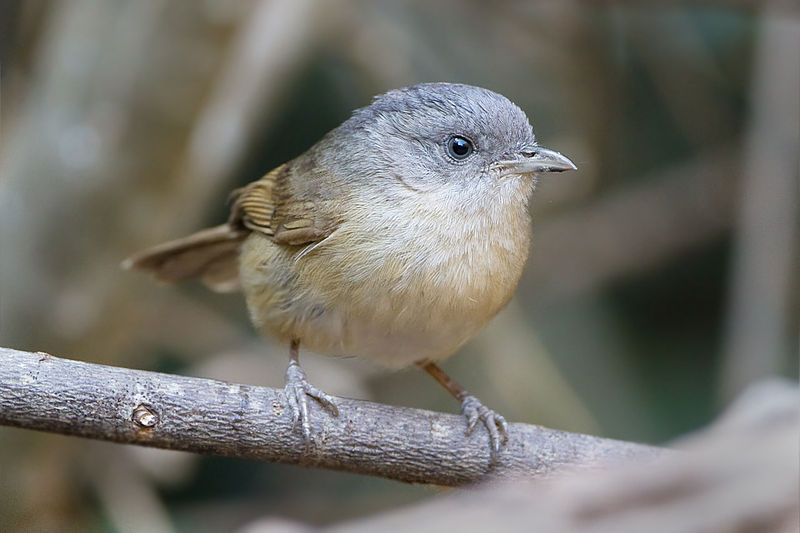
Brown-cheeked Fulvetta (Alcippe poioicephala) ©WikiC

Brown-cheeked Fulvetta (Alcippe poioicephala) ©WikiC

He loves righteousness and justice; The earth is full of the goodness of the LORD. (Psalms 33:5 NKJV)

The Pellorneida is another neatly created family that has 70 members and are a family of mostly Old World passerine birds. They are rather diverse in size and coloration, but are characterised by soft fluffy plumage. These are birds of tropical areas, with the greatest variety in Southeast Asia and the Indian subcontinent. The entire family was previously included in the Timaliidae.

Morphological diversity is rather high; most species resemble “warblers”, jays or thrushes.

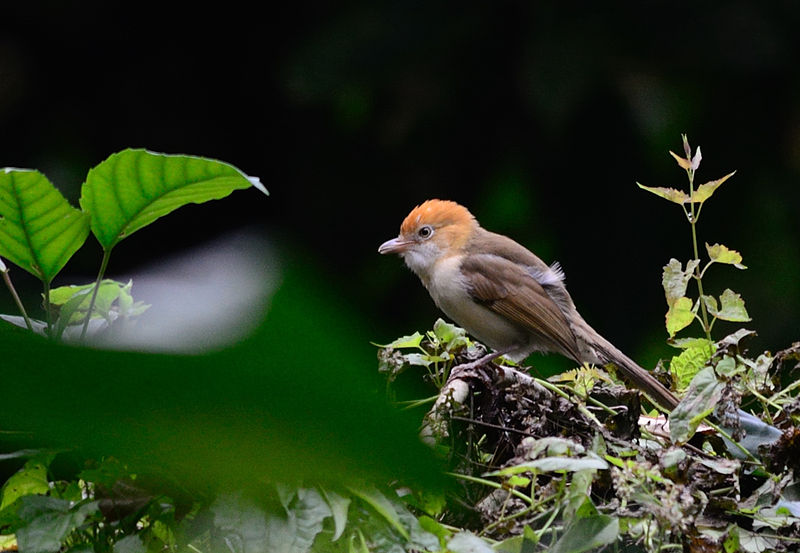
White-hooded Babbler (Gampsorhynchus rufulus) ©WikiC

White-hooded Babbler (Gampsorhynchus rufulus) ©WikiC

They are small to medium-sized birds. They have strong legs, and many are quite terrestrial. They typically have generalised bills, similar to those of a thrush or warbler. Most have predominantly brown plumage, with minimal difference between the sexes, but many more brightly coloured species also exist.

This group is not strongly migratory, and most species have short rounded wings, and a weak flight. They live in lightly wooded or scrubland environments, ranging from swamp to near-desert. They are primarily insectivorous, although many will also take berries, and the larger species will even eat small lizards and other vertebrates.(Wikipedia with editing)

This slideshow requires JavaScript.

A soft answer turneth away wrath: but grievous words stir up anger. (Proverbs 15:1 KJV)

“Everything’s Fine” ~ ©Hyssongs

*
More Sunday Inspiration

Fulvettas, Ground Babblers – Pellorneida

The Amazing Butterfly

*
Birdwatching at Lake Morton Finally

Aflac Momma Duck at Lake Morton by Lee

Aflac Momma Duck at Lake Morton by Lee

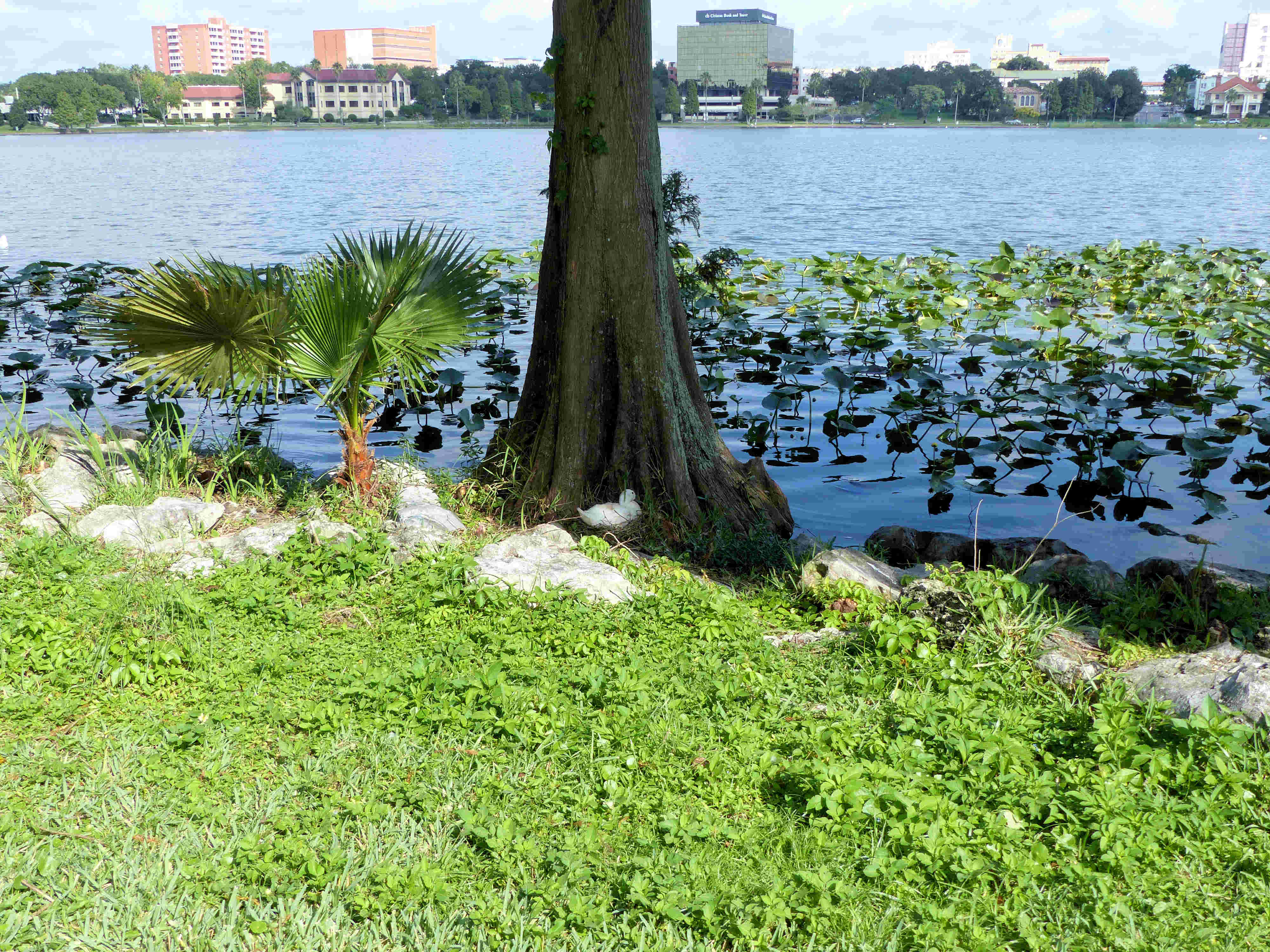
Last week Dan and I actually got to do a little birdwatching. My back has been improving, but not healed. After 12 therapy sessions, I felt brave enough to see what was going on at Lake Morton. It is in Lakeland, Florida and you can park across the street from the lake. Easy walk for me.

Needless to say, I was excited about getting out birdwatching, but the birds had other ideas. There were very few birds other than the normal residents hanging around for a hand out. Guess the winter birds haven’t arrived yet. That top pictures show the lack of birds on the lake.

Momma Duck at Lake Morton by Lee Close-up

Momma Duck at Lake Morton by Lee Close-up

“If you happen to come upon a bird’s nest along the way, in any tree or on the ground, with young ones or eggs, and the mother sitting on the young or on the eggs, you shall not take the mother with the young; you shall certainly let the mother go, but the young you may take for yourself, in order that it may be well with you and that you may prolong your days.” (Deuteronomy 22:6-7 NASB)

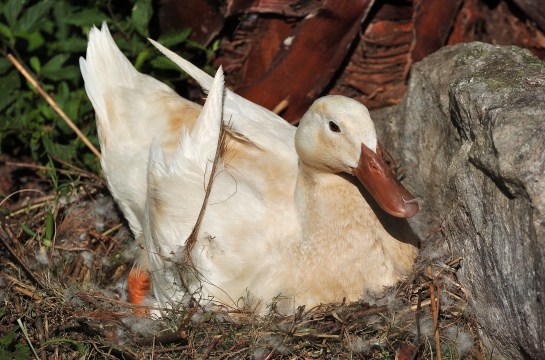
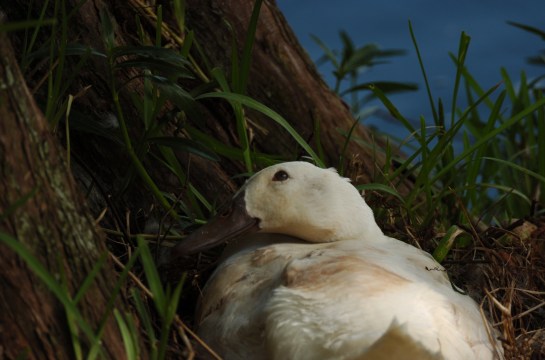
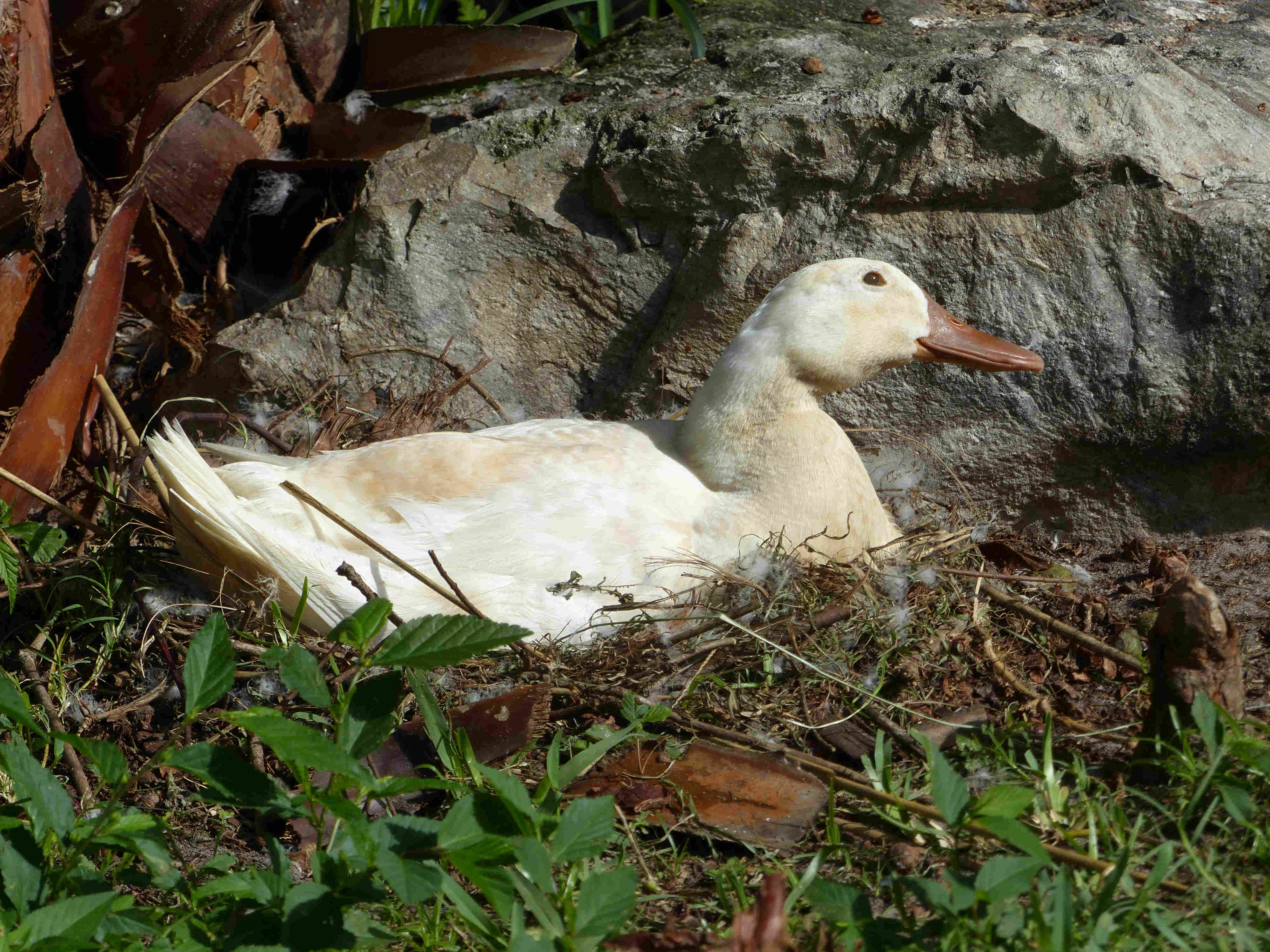
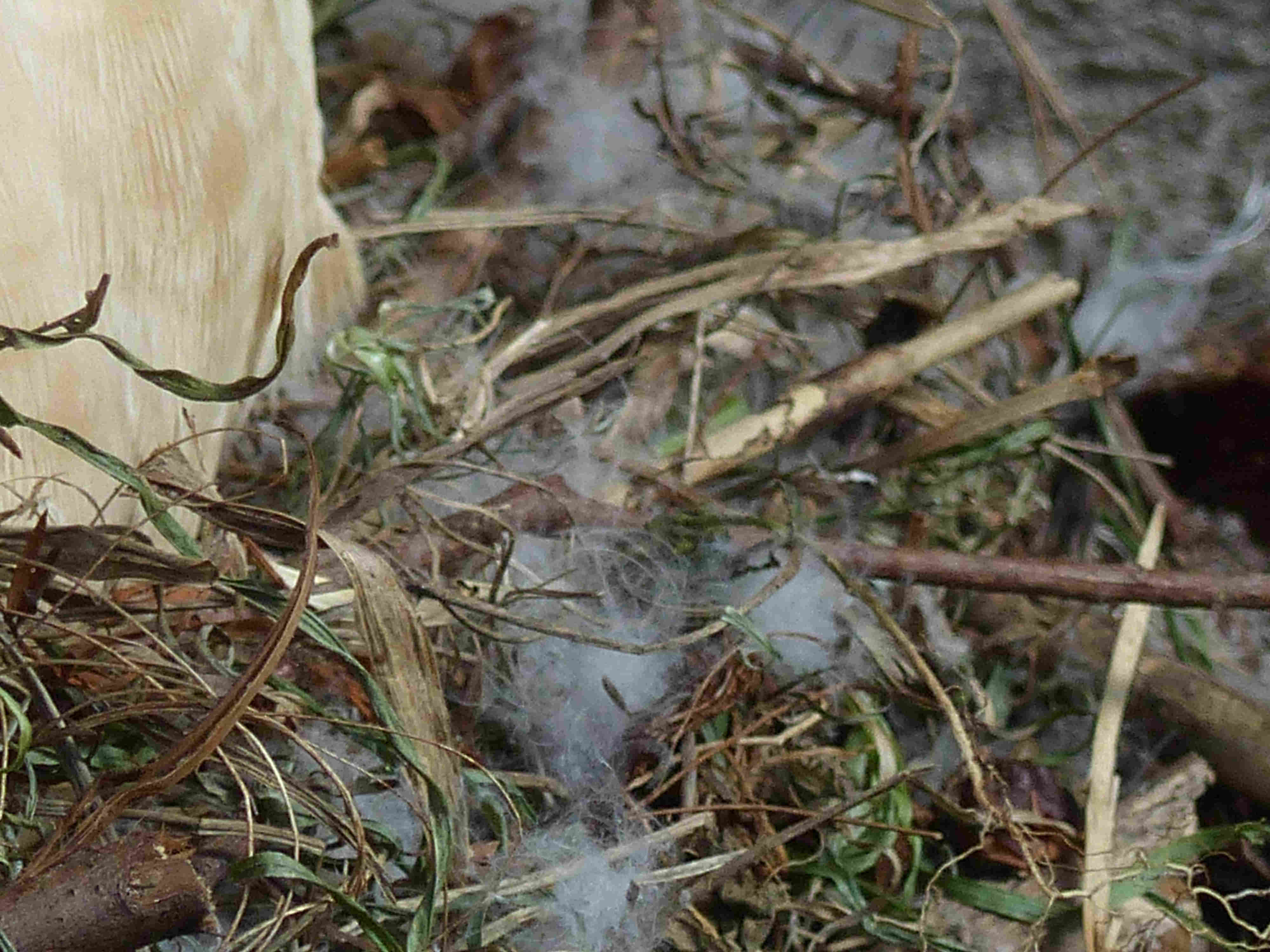
Aflac is not the name of this domestic Peking/Mallard Duck. She is pretty though she is a hybrid. She was busy working on her nest and you can see some of the things she was adding below.

Aflac Momma Duck at Lake Morton by Lee Close-up of nest material

Aflac Momma Duck at Lake Morton by Lee Close-up of nest material

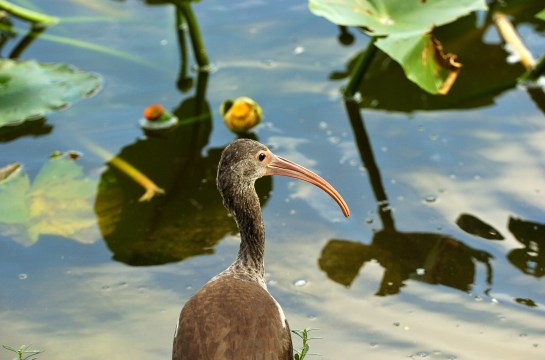
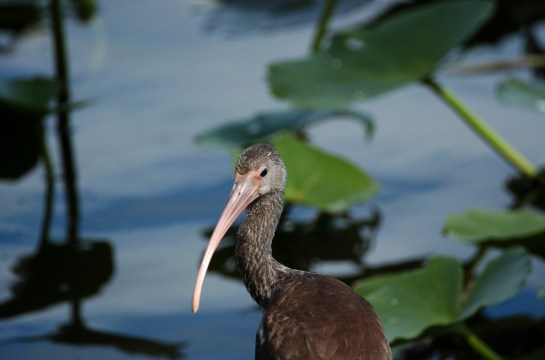
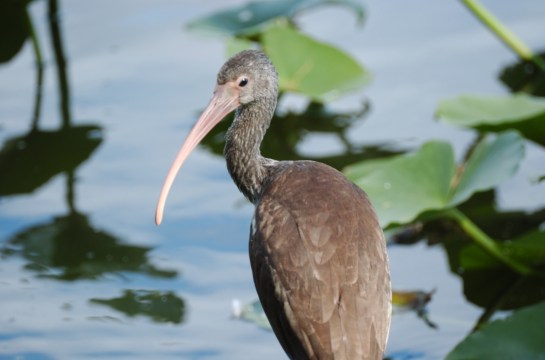
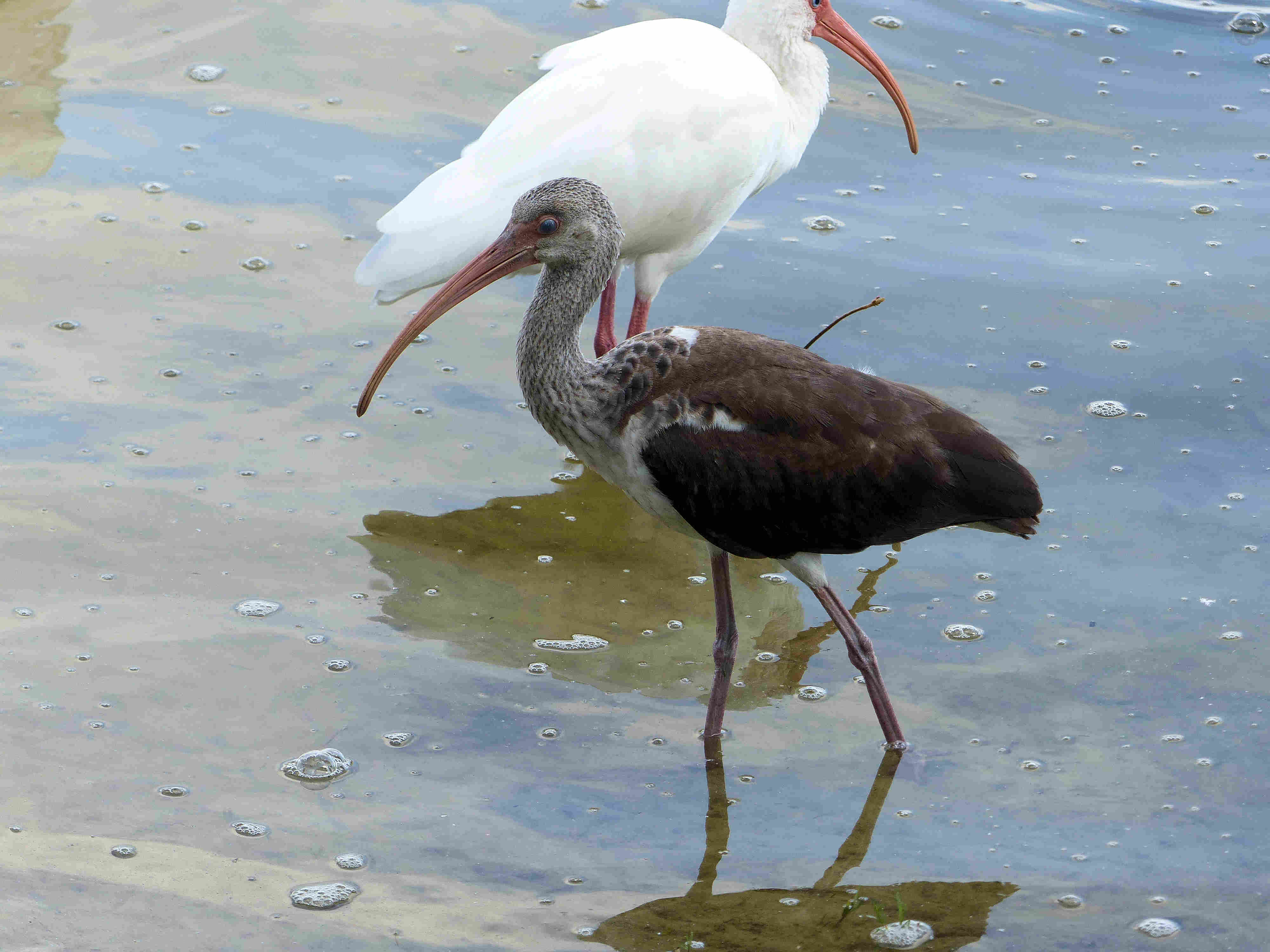
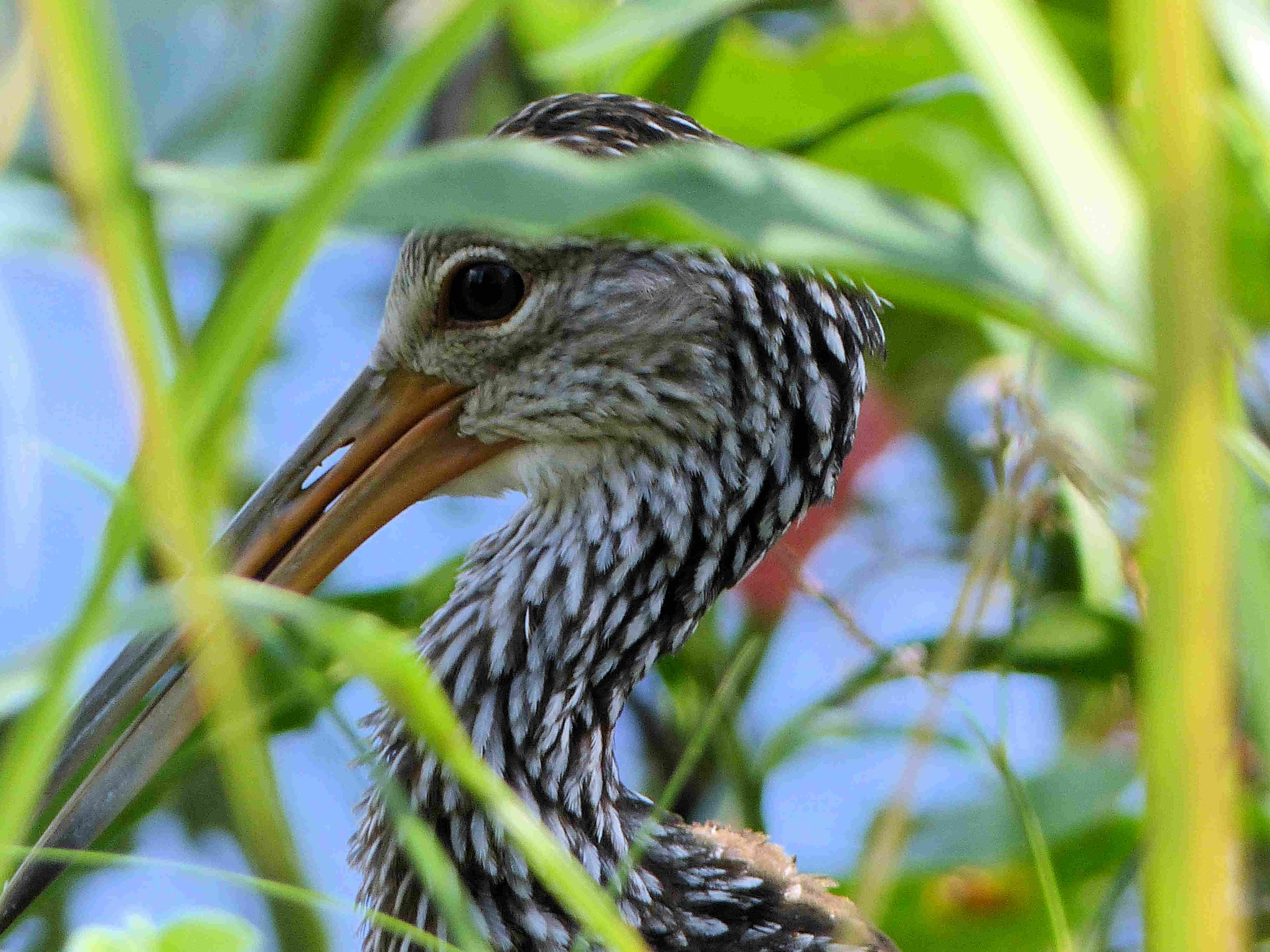
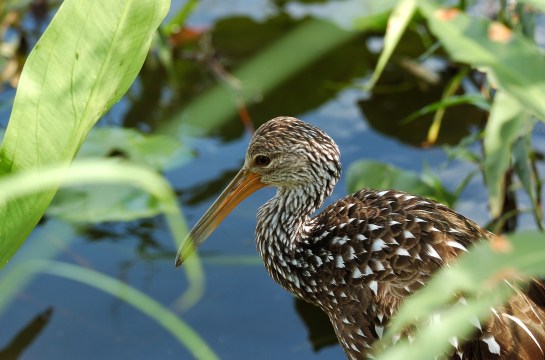
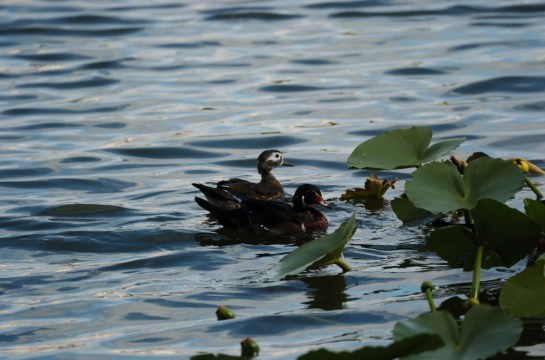
Other interesting birds were some immature White Ibises, an immature Limpkin and some Wood Ducks. Like I said, it was rather quiet.

Immature White Ibis at Lake Morton by Lee

Immature White Ibis at Lake Morton by Lee

Limpkin Juvenile at Lake Morton by Lee

Limpkin Juvenile at Lake Morton by Lee

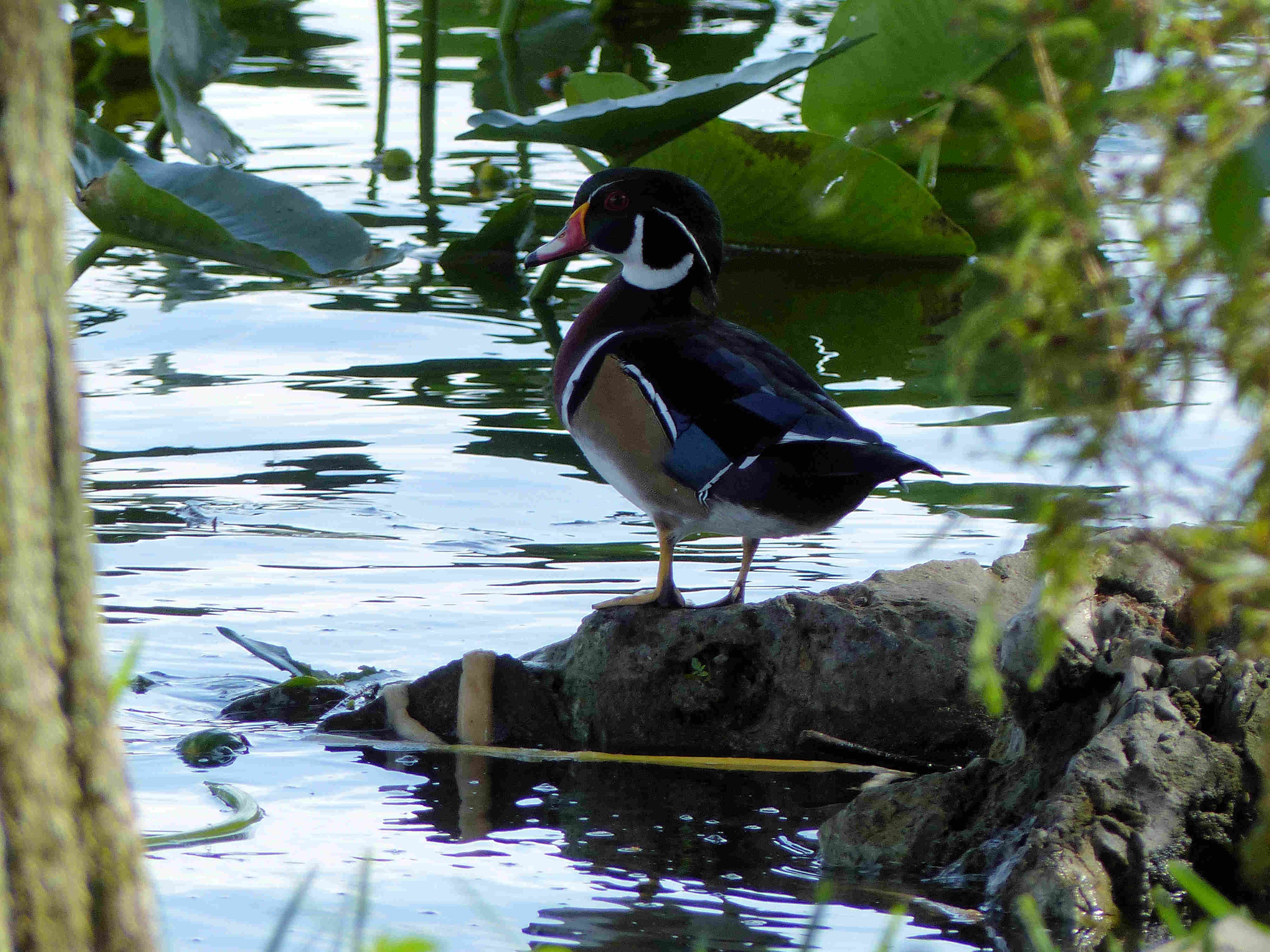
Wood Duck at Lake Morton by Lee

Wood Duck at Lake Morton by Lee

Any day we can go birdwatching is always enjoyable. There is usually something that is there to see. Life is not made up of big events all the time, just the everyday normal sights. When we do get to see special birds or whatever, then that makes them extra nice.

Here is a video of that Wood Duck and his mate bouncing around in the water. Trust you don’t get seasick. They seem to have been created to handle floating and bobbing well.

The water prevailed and increased greatly upon the earth, and the ark floated on the surface of the water. (Genesis 7:18 NASB)

*
History Through the Eyes of Ogden Owl

(Sandra Conner, my Christian friend, that writes great blogs, books and a whole lot more, has taken me up on the challenge to write about the Great Grey Owl.)

Here is her tale about our owl:

“Lee Dusing, over at Lee’s Birdwatching Adventures Plus, has posted the picture on her site of this owl with his eyes bulging as he takes in some scene before him. Lee has asked us to write a caption or a story based on the picture — taken by Peter K. Burian.  So, naturally, I had to take up the challenge — even though I’m not much of an owl person in general. My story is below the picture.

LEE'S OWL PIC -- PETER K. BURIAN

HISTORY THROUGH THE EYES OF OGDEN OWL

Ogden Owl couldn’t believe his eyes. He was sure they must be bulging because he was straining so hard to see what was really going on. He’d lived in these sparse clumps of trees close to the sandy beaches of Kitty Hawk, NC, for almost three years now, and ever since he’d moved here, there had been some strange things going on.

Two human beings had spent months at a time out on the sandy stretches of land between the hills, half rolling – half carrying – some contraption that looked a little like a huge, ugly bird, but that seemed to be bound to move on the ground. Ogden was usually up doing his hunting during the night, and by morning, he was ready to get some rest, so he hadn’t bothered with the humans much, except to shake his head at their ability to waste time and energy out here on this almost barren stretch of land.

But early this morning, when he really should have been considering getting some rest again, he had noticed that the two human beings had an even bigger monster of a machine – even more ugly – and this time it made a horrible noise as they moved it across the ground.  They pushed it onto some kind of inclined track, and the next thing Ogden knew, one of the men seemed to climb right into the middle of the machine.

Ogden could hardly hold his eyes open, but he was determined to find out what was going on practically right under his nose. Suddenly the huge machine began moving along the inclined track, picking up speed, and then, to Ogden’s astonishment – and horror – it lifted up from the ground, all the time making a roaring noise. It seemed to catch the wind with its enormous wings and sailed through the air just like he did when he took off from his tree limb and weaved through the sky looking for food.

It couldn’t be! Surely not! Human beings flying??? His eyes stayed glued to the scene. For long seconds, the huge, ugly contraption floated and soared – and scared the heck out of Ogden.

When the machine came back down to the ground and sat down without breaking apart, Ogden took a deep breath. He hadn’t realized that he had been holding his breath the whole time he watched that ugly, noisy machine fly. He shook his head now and stirred restlessly on the branch where he sat. He sighed and stretched his wings a little, wanting to feel their strength once more before he moved back onto one of the hidden branches of his tree to get some rest. He felt sad – and fearful. He had a feeling that life was never going to be the same again after today.  ~”

~~~

Source: History Through the Eyes of Ogden Owl

Click to find out more about Sandra Conner

I have enjoyed reading several of her online stories, plus I have read her three latest novels:

Set Free To Love – Novel 1, Smokey Mountain Series

‘Cameron’s Rib’ – Sneak a Peek… – Book 2

Sneak a Peak at “Repaired By Love” — Book 3 in ‘Smoky Mountain Series’

Her Short Stories

*
Great Grey Owl

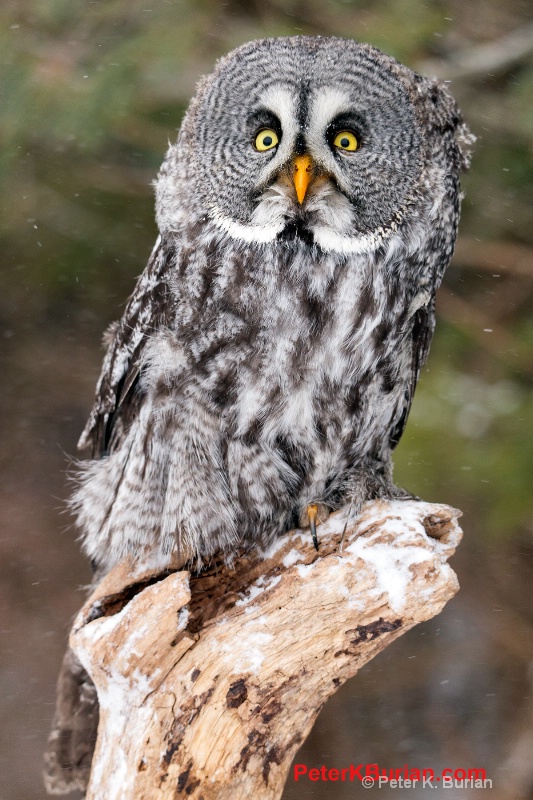
Great Grey Owl (Strix nebulosa) ©Peter K Burian at www.peterkburian.com

Great Grey Owl (Strix nebulosa) ©Peter K Burian at http://www.peterkburian.com

The beast of the field shall honour me, the dragons and the owls: because I give waters in the wilderness, and rivers in the desert, to give drink to my people, my chosen. (Isaiah 43:20 KJV)

Peter K Burian at www.peterkburian.com has given me permission to use this photo. Now, what am I going to tell you about it?

Those eyes look like it is in shock from seeing something. Or maybe he is telling a tale and getting very expressive as it is being told. I would like you to leave a remark and tell me your take on this photo. Or maybe one of you readers could come up with a short story about this? (Remember this is a Christian site.)

The Great Grey Owl or great gray owl (Strix nebulosa) is a very large owl, documented as the world’s largest species of owl by length. It is distributed across the Northern Hemisphere. In some areas it is also called Phantom of the North, cinereous owl, spectral owl, Lapland owl, spruce owl, bearded owl, and sooty owl

Adults have a large rounded head with a grey face and yellow eyes with darker circles around them. The underparts are light with dark streaks; the upper parts are grey with pale bars. This owl does not have ear tufts and has the largest facial disc of any raptor. In terms of length, the great grey owl is believed to exceed the Eurasian eagle-owl and the Blakiston’s fish owl as the world’s largest owl. The great grey is outweighed by those two species as well as several others, including most of the Bubo genus.

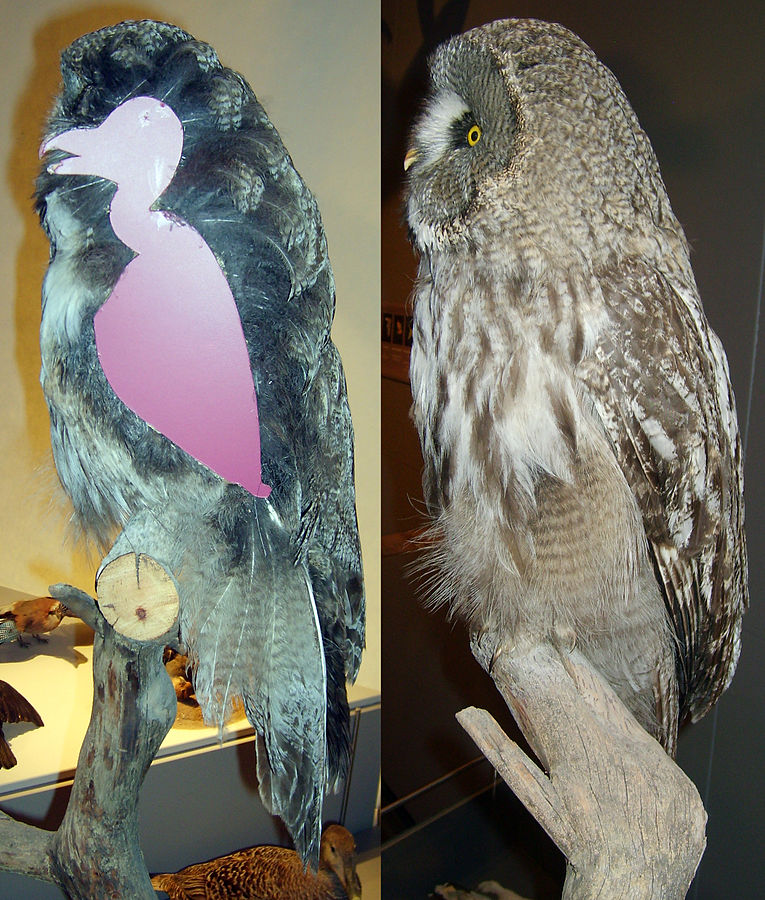
Great Grey Owl (Strix nebulosa) Cross section showing fullness of feathers ©WikiC

Great Grey Owl (Strix nebulosa) Cross section showing fullness of feathers ©WikiC

Much of its size is deceptive, since this species’ fluffy feathers, large head and the longest tail of any extant owl obscure a body lighter than that of most other large owls. The males are usually smaller than females, as with most owl species.

These birds wait, listen, and watch for prey, then swoop down; they also may fly low through open areas in search of prey. Their large facial disks, also known as “ruffs”, focus sound, and the asymmetrical placement of their ears assists them in locating prey, because of the lack of light during the late and early hours in which they hunt. On the nesting grounds, they mainly hunt at night and near dawn and dusk; at other times, they are active mostly during the night.

They have excellent hearing, and may locate (and then capture) prey moving beneath 60 cm (2.0 ft) of snow in a series of tunnels solely with that sense. They then can crash to a snow depth roughly equal to their own body size to grab their prey. Only this species and, more infrequently, other fairly large owls from the Strix genus are known to “snow-plunge” for prey, a habit that is thought to require superb hearing not possessed by all types of owls.

Here’s another photo of the owl by Peter K Burian.

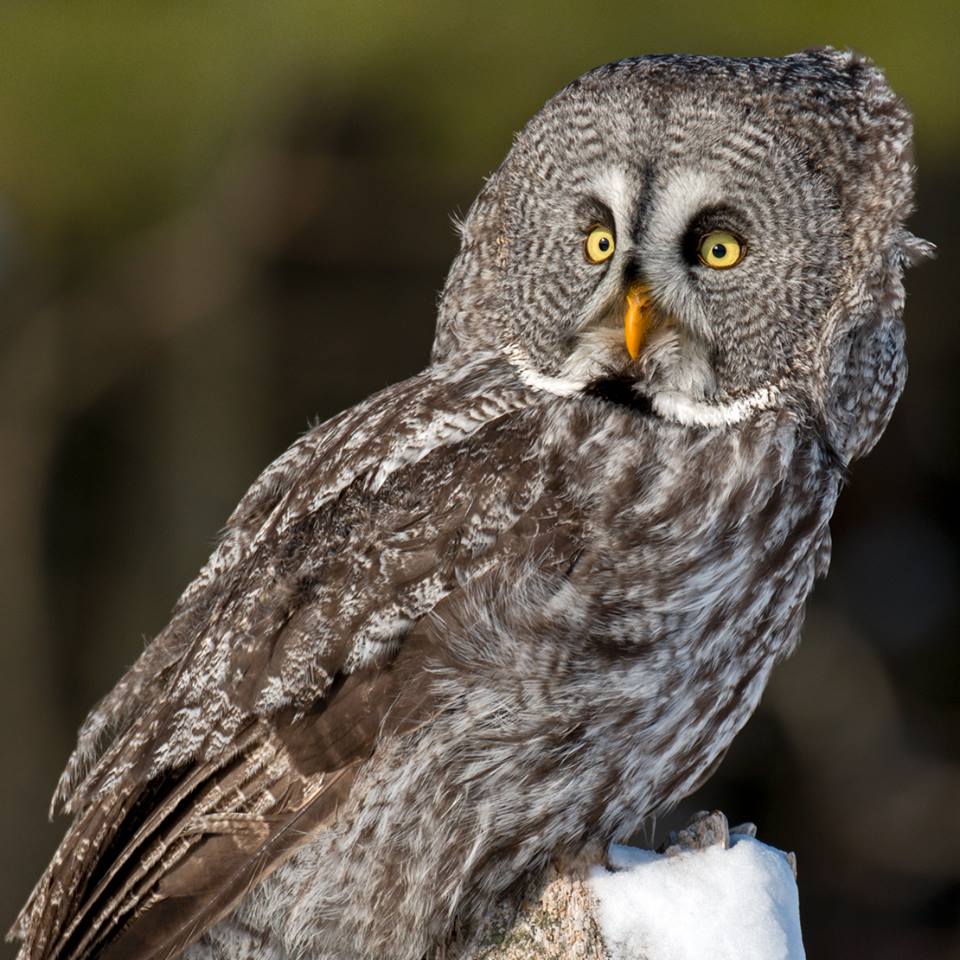
Great Grey Owl (Strix nebulosa) ©Peter K Burian

Great Grey Owl (Strix nebulosa) ©Peter K Burian at http://www.peterkburian.com

He that planted the ear, shall he not hear? he that formed the eye, shall he not see? (Psalms 94:9 KJV)

The hearing ear, and the seeing eye, the LORD hath made even both of them. (Proverbs 20:12 KJV)

GBNA – Guide to Birds of North America eField Guide: Great Gray Owl//

Classification
Order ~ Strigiformes — Owls
Family ~ Strigidae — Owls
Size ~ 27 inches (69 cm)
Abundance ~ Uncommon
Identification Tips
  • Very large, nocturnal, predatory bird
  • Yellow eyes appear small
  • Two white horizontal marks below chin
  • Long tail
  • Large, rounded head
  • Gray facial disks with darker rings
  • Large gray upperparts with paler barring
  • Pale underparts with large, dark irregular streaks
  • Sexes similar
Mnemonic ~ whoo-whoo-whoooo
This Great Grey Owl is another beautifully designed avian wonder from its Creator, the Lord Jesus Christ. The eyes and ears of the owls allow these fantastic birds to live and survive.
All things were made by him; and without him was not any thing made that was made. (John 1:3 KJV)
*
Peter K Burian at www.peterkburian.com
Great Grey Owl – Wikipedia
Great Gray Owl – All About Birds
*

Sunday Inspiration – Cisticolas and Singing

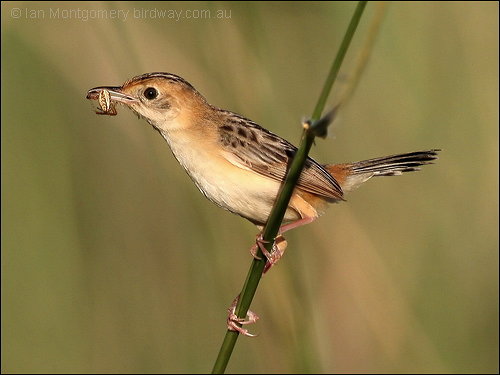
Golden-headed Cisticola (Cisticola exilis) by Ian

Golden-headed Cisticola (Cisticola exilis) by Ian

The flowers appear on the earth; The time of singing has come, And the voice of the turtledove (Cisticola?) Is heard in our land. (Song of Solomon 2:12 NKJV)

The Cisticolidae – Cisticolas and Allies family has 158 species currently. They are  warblers found mainly in warmer southern regions of the Old World. They are often included within the Old World warbler family Sylviidae. Among the Cisticolida, besides the Cisticola, there are; Jery, Prinia, Warblers, a Longtail, Apalis, Camaroptera, Wren-Warblers, Tailorbirds, Forest Warblers, and Eremomelas.

This family probably originated in Africa, which has the majority of species, but there are representatives of the family across tropical Asia into Australasia, and one species, the zitting cisticola, even breeds in Europe.

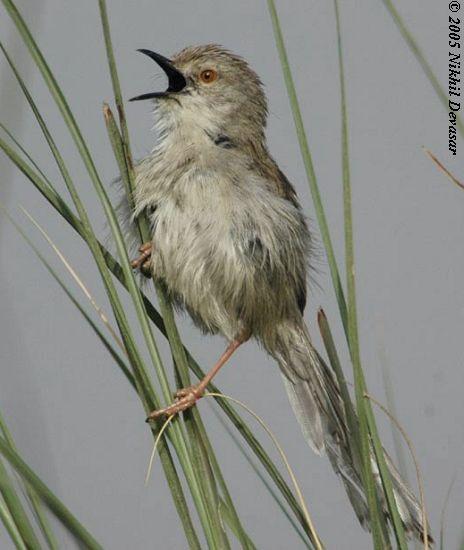
Graceful Prinia (Prinia gracilis) by Nikhil Devasar

These are generally very small birds of drab brown or grey appearance found in open country such as grassland or scrub. They are often difficult to see and many species are similar in appearance, so the song is often the best identification guide.

By them the birds of the heavens have their home; They sing among the branches. (Psalms 104:12 NKJV)

These are insectivorous birds which nest low in vegetation.

This slideshow requires JavaScript.

Serve the LORD with gladness; Come before His presence with singing. (Psalms 100:2 NKJV)

“How Can I Keep From Singing?” ~  by the Trio + 1 (Pastor Jerry, Reagan Osborne, Caleb & Jessie Padgett) Faith Baptist

*

More Sunday Inspirations

Cisticolidae – Cisticolas and allies

In Our Place

*