Gatorland Roseate Spoonbills

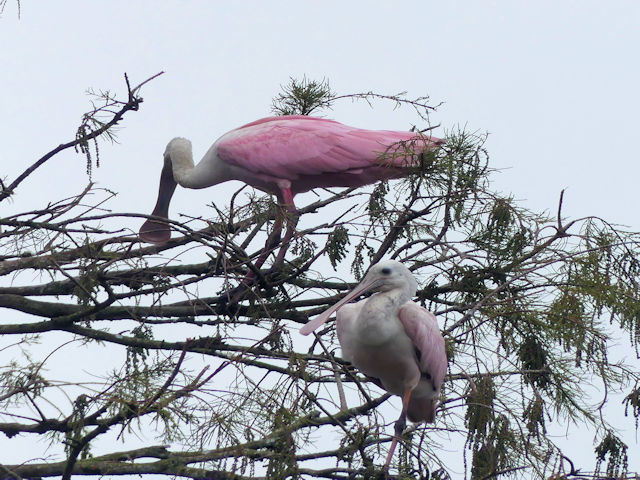
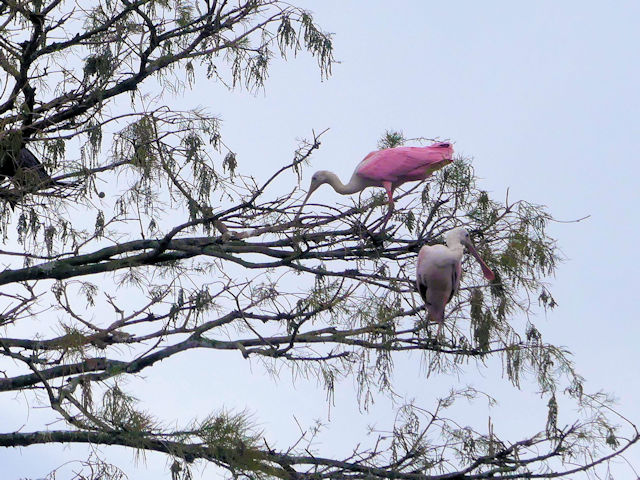
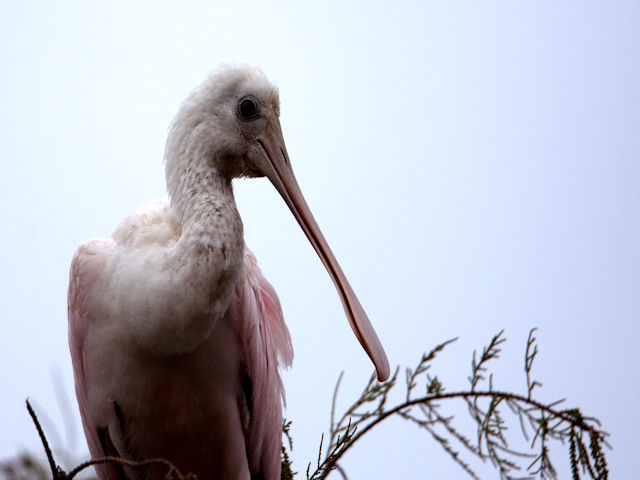
Roseate Spoonbill landing at Gatorland by Lee 11-21-17

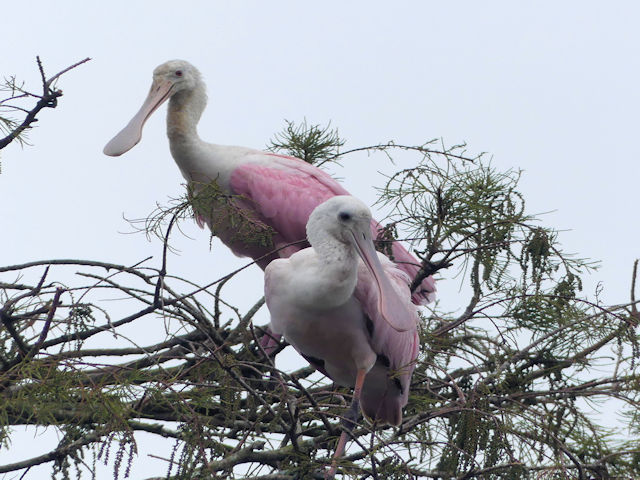
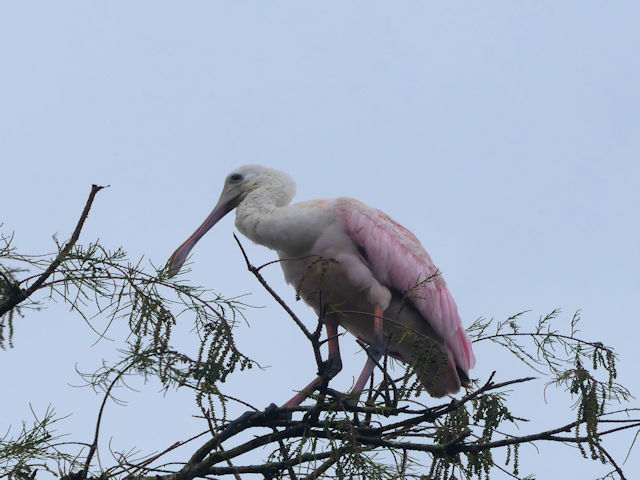
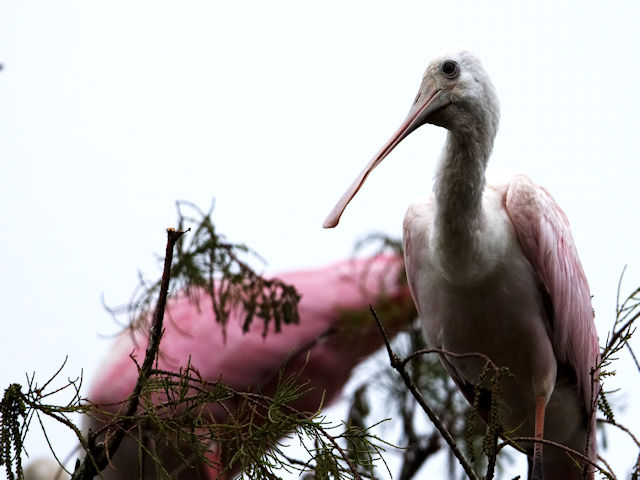
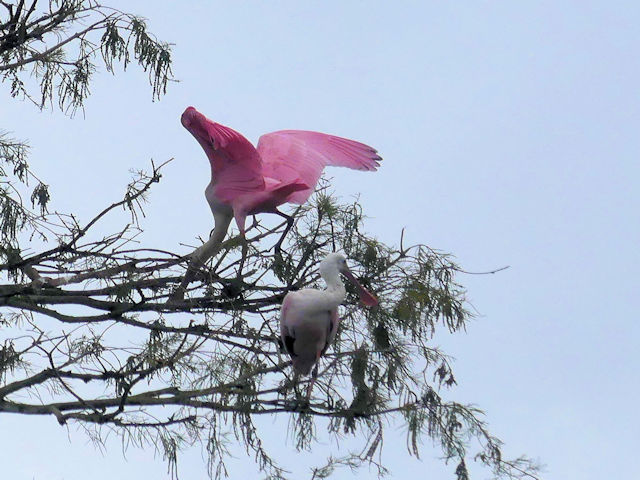
Yesterday, I shared the Boat-tailed Grackle female. Today, here are a few photos of two Roseate Spoonbills that landed on one of the trees at Gatorland. [Plus a bonus at the end]

Didn’t realize that she was already there.

The Roseate Spoonbill (Platalea ajaja) is a gregarious wading bird of the ibis and spoonbill family, Threskiornithidae. It is a resident breeder in South America mostly east of the Andes, and in coastal regions of the Caribbean, Central America, Mexico, the Gulf Coast of the United States, and on central Florida’s Atlantic coast at Merritt Island National Wildlife Refuge, adjoined with NASA Kennedy Space Center. They are also found here in Central Florida. These were at Gatorland in Orlando on 11/21/17.

Zoomed in even on this photo. The first ones were also cropped.

The roseate spoonbill is 71–86 cm (28–34 in) long, with a 120–133 cm (47–52 in) wingspan. The tarsus measures 9.7–12.4 cm (3.8–4.9 in), the culmen measures 14.5–18 cm (5.7–7.1 in) and the wing measures 32.3–37.5 cm (12.7–14.8 in) and thus the legs, bill, neck and spatulate bill all appear elongated. Adults have a bare greenish head (“golden buff” when breeding) and a white neck, back and breast (with a tuft of pink feathers in the center when breeding), and are otherwise a deep pink. The bill is grey.

Roseate Spoonbilsl landing at Gatorland by Lee 11-21-17

Roseate Spoonbills at Gatorland by Dan – Zoomed & Cropped

Roseate Spoonbills at Gatorland by Dan – Zoomed & Cropped

Like the American flamingo, their pink color is diet-derived, consisting of the carotenoid pigment canthaxanthin. Another carotenoid, astaxanthin, can also be found deposited in flight and body feathers. The colors can range from pale pink to bright magenta, depending on age, whether breeding or not, and location. Unlike herons, spoonbills fly with their necks outstretched. They alternate groups of stiff, shallow wingbeats with glides.

Roseate Spoonbills at Gatorland by Dan – Zoomed & Cropped

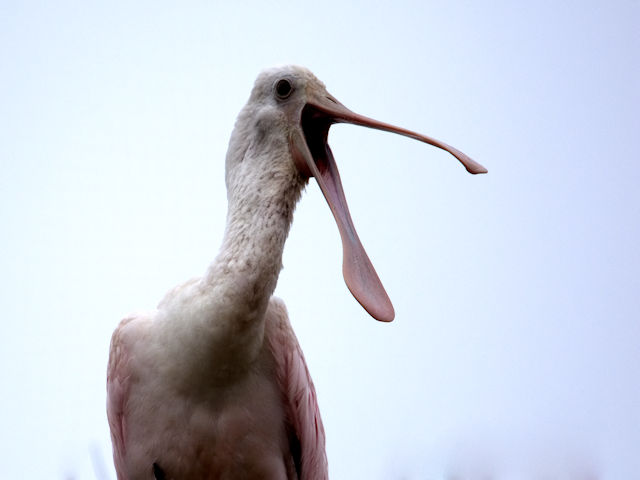
Roseate Spoonbills at Gatorland by Dan – Yawning

This species feeds in shallow fresh or coastal waters by swinging its bill from side to side as it steadily walks through the water, often in groups. The spoon-shaped bill allows it to sift easily through mud. It feeds on crustaceans, aquatic insects, frogs, newts and very small fish ignored by larger waders. In the United States, a popular place to observe roseate spoonbills is “Ding” Darling National Wildlife Refuge in Florida. Roseate spoonbills must compete for food with snowy egrets, great egrets, tricolored herons and American white pelicans. [Wikipedia, with editing]
Threskiornithidae – Ibises, Spoonbills Family
***

“Out of the ground the LORD God formed every beast of the field and every bird of the air, and brought them to Adam to see what he would call them. And whatever Adam called each living creature, that was its name.” (Genesis 2:19 NKJV)

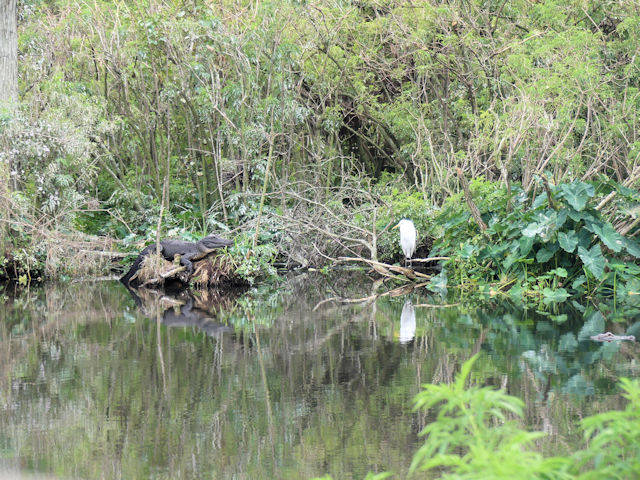
Bonus:
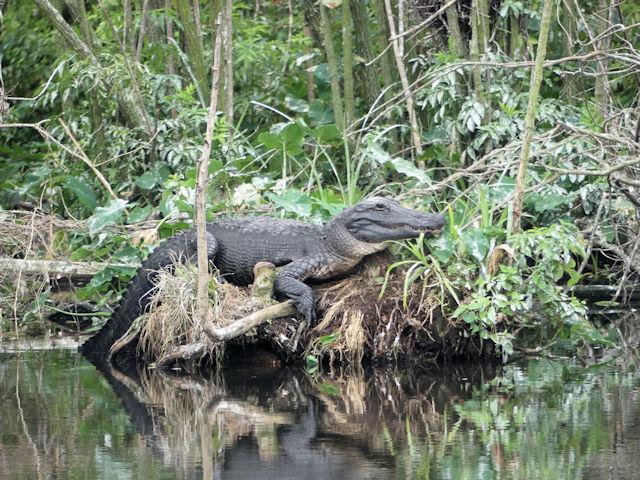
I found this Great Egret along the edge and an alligator nearby with quite a look on its face. They really weren’t that close, but thought you would enjoy this series of photos. [Click to enlarge]

More Gatorland Adventures

Gatorland in Orlando, Florida

Gatorland Grackle

Boat-tailed Grackle at Gatorland by Lee

“To the end that my glory may sing praise to thee, and not be silent. O LORD my God, I will give thanks unto thee for ever.” (Psalms 30:12 KJV)

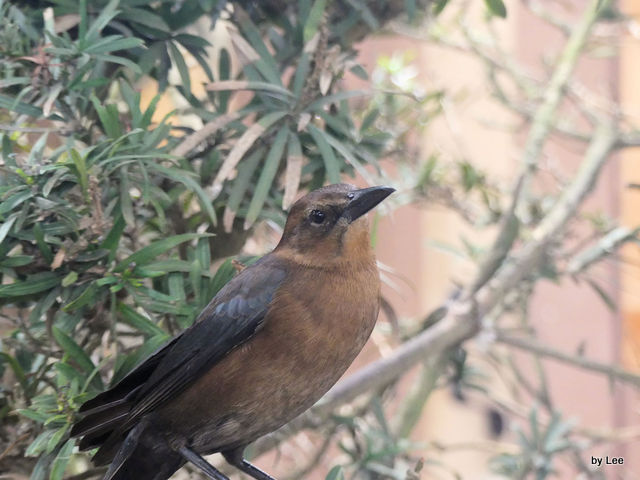
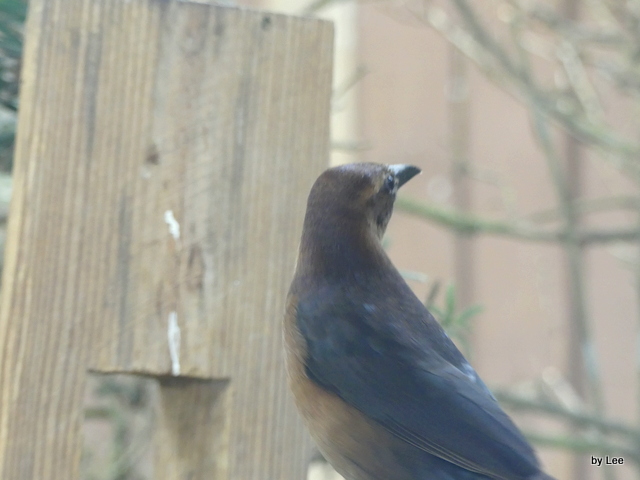
We drove over to Gatorland today to get in a bit of birdwatching. Those adventures have been rare lately, and today was not the best for photos. It was overcast and it began to rain less than an hour after arriving. Today, a female caught my attention and I was able to get a few fairly decent photos of her. I am always thankful for any bird that poses for me.

Were we discouraged? No way! We love watching birds and “trying” to take their photo, no matter what the weather. The Lord should give us pleasure in seeing His Creation, whether it is raining or not. Right?

“Giving thanks always for all things unto God and the Father in the name of our Lord Jesus Christ;” (Ephesians 5:20 KJV)

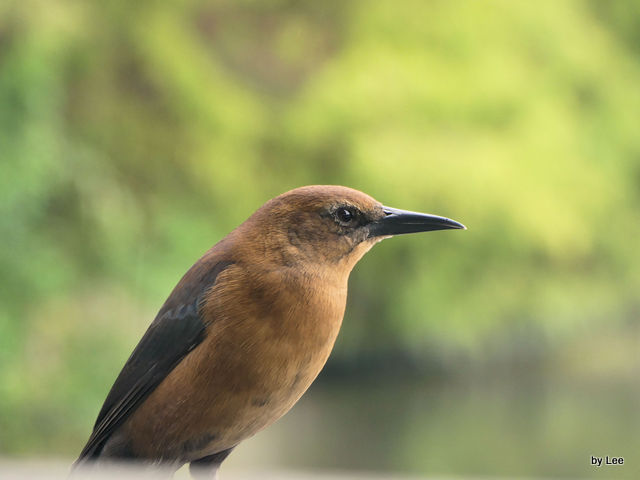
Boat-tailed Grackle Female at Gatorland

The Boat-tailed Grackle (Quiscalus major) is a passerine bird of the family Icteridae found as a permanent resident on the coasts of the southeastern United States. It is found in coastal saltwater marshes, and, in Florida, also on inland waters. The nest is a well-concealed cup in trees or shrubs near water; three to five eggs are laid.

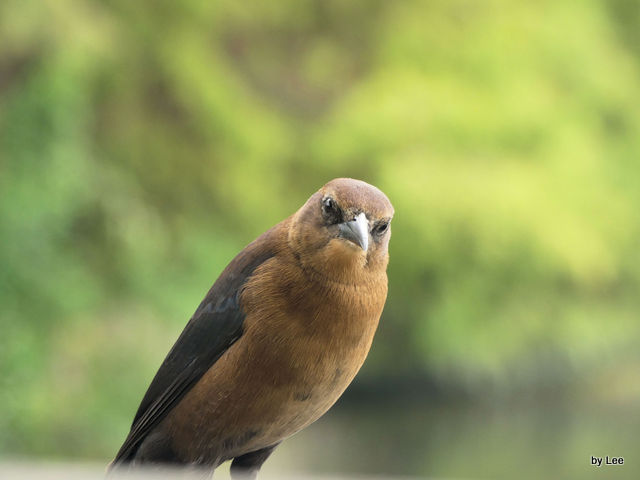
Boat-tailed Grackle Female at Gatorland

The male boat-tailed grackle is 37–43 cm (15–17 in) long and weighs 165–250 g (5.8–8.8 oz). Adult males have entirely iridescent black plumage, a long dark bill, a pale yellowish or brown iris and a long keel-shaped tail. The adult female is much smaller at 26–33 cm (10–13 in) long and a weight of 90–115 g (3.2–4.1 oz). She is also distinguished by her shorter tail and tawny-brown coloration, which covers the body apart from the darker wings and tail. The wingspan in adult birds is 39–50 cm (15–20 in).

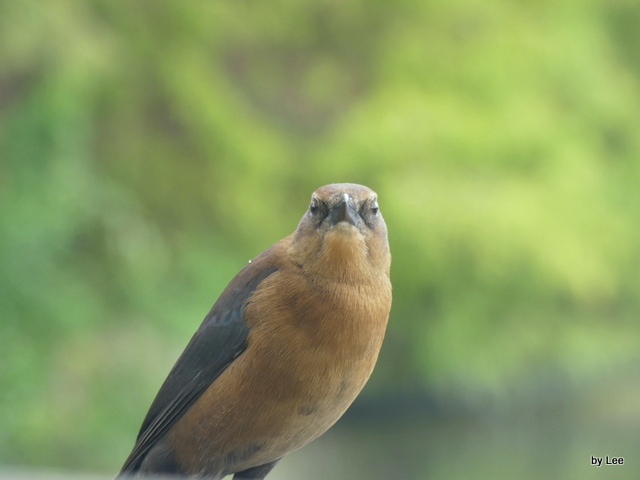
Boat-tailed Grackle Female at Gatorland near the Parrots

These birds forage on the ground, in shallow water, or in shrubs; they will steal food from other birds. They are omnivorous, eating insects, minnows, frogs, eggs, berries, seeds, and grain, even small birds. Boat-tailed grackles have established significant populations in several United States Gulf Coast cities and towns where they can be found foraging in trash bins, dumpsters, and parking lots. They also mooch off the food thrown to the gators and other critters that the visitors feed.

Boat-tailed Grackle Female at Gatorland near the Parrots

This bird’s song is a harsh jeeb, and it has a variety of typically grackle-like chatters and squeaks.
***
Bonus Yesterday:

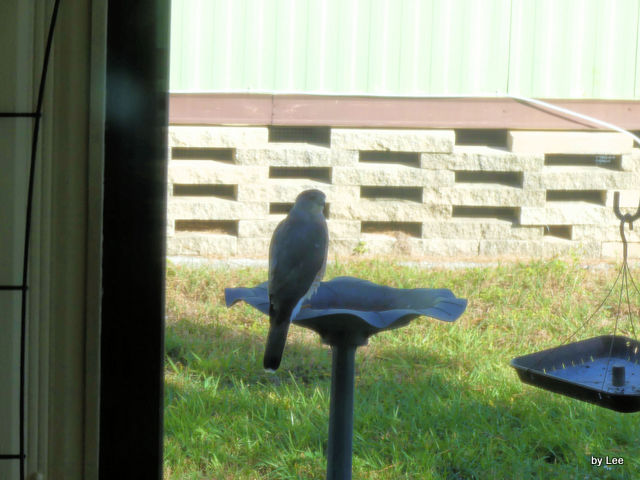
Coopers Hawk at Bird Bath 112017 by Lee

I glanced out the kitchen window yesterday and this Cooper’s Hawk was sitting on the bird bath. I hurried to get the camera before he flew off. This is through the window and the screen. The day before that, this Hawk was sitting in our carport on the water hose winder. We have feeders and the bird was probably waiting for lunch. No camera then. This is a life bird for our yard. Yeah!

Stay tuned! There are more photos to work on from this latest adventure. We always enjoy our trips over to Orlando to visit Gatorland.

More adventures from:

Reginald The Turkey Commander: The Great Snowstorm

Reginald the Turkey Commander: the Great Snowstorm, by Emma Foster

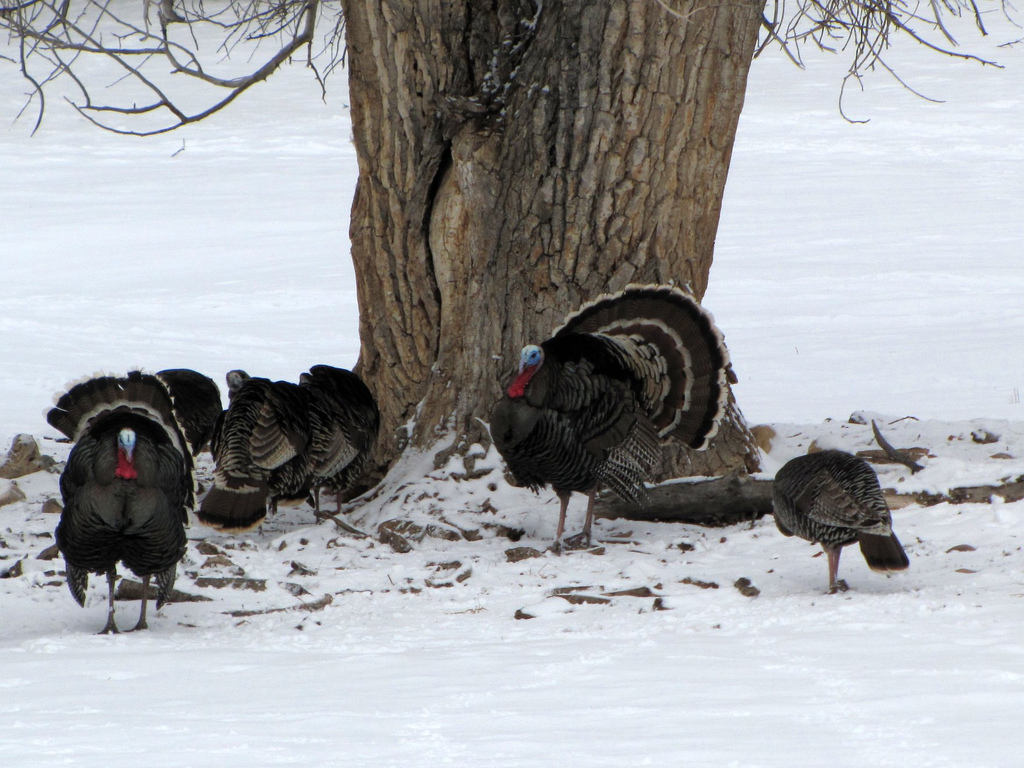
Turkeys in Snow ©Bryant Olsen Flickr

Turkeys in Snow ©Bryant Olsen Flickr

Thanksgiving was beginning to draw near and Reginald knew it was time for the turkeys to trek through the forest to their fortress, which they had built years before to keep safe from hunters. The turkeys were hoping to travel in a few days, but something about the weather began to concern Reginald. He decided it was best to check to see what the weather would be like when they would be travelling.

Reginald had to walk to a nearby farmer’s house to see the weather because the farmer that lived there always had the weather on the television early every morning because he was always concerned about the weather. Sometimes Reginald would leave the turkeys and go watch the weather so he would know if bad weather was headed to the forest. Reluctantly, Reginald let Oliver come along so that Oliver wouldn’t get into any mischief.

Wild Turkeys ©Pixabay

Reginald and Oliver hurried through the forest and across a field to where a lonely house stood. Reginald warned Oliver to be as quiet as he could when they reached the farm because there was a chance the farmer wouldn’t mind having them for Thanksgiving dinner like the other hunters. Oliver cautiously followed Reginald to a chicken coop, which stood near the window of the living room. Reginald climbed into the coop through the chicken wire by cutting part of the wire with a sharp piece of wood he had brought and was pulling it back to make a hole. Oliver attempted to crawl through, but some of his feathers got caught. Reginald told him to calm down and to stop gobbling so the farmer wouldn’t hear him. After pulling him out, Reginald quickly blended in with the chickens, hurried to the window, then peered inside to see what the weather was like. The television was on, and the weather report stated that a record amount of heavy snowfall would be coming before Thanksgiving.

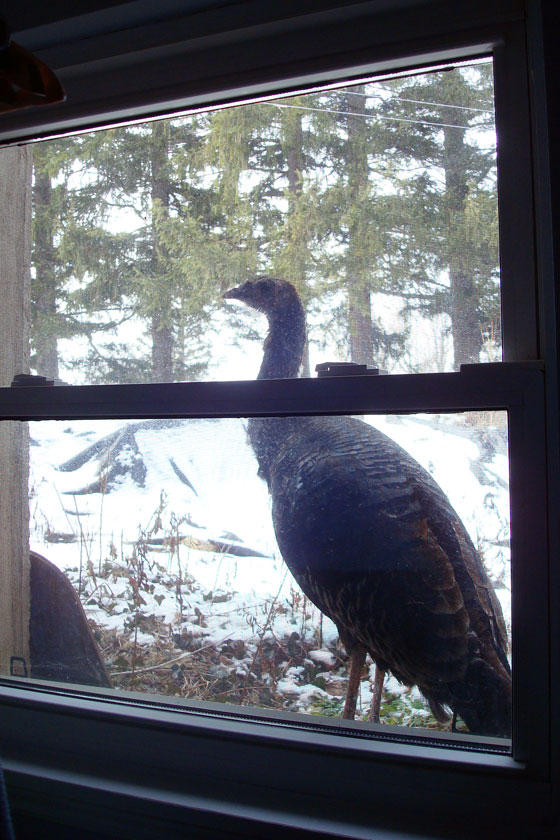
Turkey looking in window. ©Julia@Home on 129Acres

Reginald knew they would have to hurry to make it to the fortress so he turned around to tell Oliver to run back and warn the turkeys. When he looked back Oliver had gotten his head stuck in the chicken coop and the chickens had gathered around him and had started clucking while Oliver’s army helmet (worn to protect them from hunters) clanged against the walls of the coop. Reginald shook his head and dragged him out, telling him to tell the turkeys about the snowfall and that they needed to build sleds out of pieces of wood from trees that they could pull with roots to their fortress.

Oliver raced back to the turkeys while Reginald stayed behind to watch the weather. Eventually, the farmer turned the news off and Reginald had to hurry back to the turkeys. When he got back, the turkeys had already begun building their sleds, which would be used to carry the elderly and baby turkeys through the snow that was already falling. All of the turkeys were present except Oliver.

Turkey looking in window. ©Pinterest

When Reginald asked about Oliver, the turkeys said he had gone back for him. Reginald shook his head and impatiently walked all the way back through the snow to the farmhouse. Oliver was standing by the window, watching a gameshow on the television. Reginald shook his head again and told Oliver to come back with him to the turkeys.

The turkeys had finished building the sleds when Reginald and Oliver returned, and lots of snow was now on the ground. Using the sleds, the turkeys were able to arrive at their fortress before the snowbanks grew too high and the winds were too strong. They were able to spend their Thanksgiving nice and warm underground, while yet again the hunters had to hunt for turkeys in other woods.


“…but that the members should have the same care one for another. And whether one member suffer, all the members suffer with it; or one member be honoured, all the members rejoice with it.” (1 Corinthians 12:25b-26 KJV)

Looks like Reginald and Oliver have returned in time for another Thanksgiving adventure. Thanks again, Emma, for providing an entertaining tale, for a favorite holiday.

Emma’s Stories

Especially:


Don’t Feed the Birds or They’ll Evolve – Re-post from AIG

Eurasian Bullfinch (Pyrrhula pyrrhula) Male and Female ©WikiC

Don’t Feed the Birds or They’ll Evolve – Re-post from Answers In Genesis

by Avery Foley on November 13, 2017

Each year thousands of people fill bird feeders with seeds, corn, and nuts to encourage feathery friends to make a stop in their backyard. Bird feeding is especially popular in the United Kingdom where Britons spend nearly double that of other Europeans on bird feeders and birdseed, and half of homes with a backyard boast bird feeders. According to researchers, this seedy proffering is driving the rapid evolution of bird species.

Bird Feeders and Beak Size
This new research, part of a long-term study conducted by the University of Oxford’s Department of Zoology, focused on several populations of great tits (Parus major), a small bird species. One population was found in Wytham Woods, in the UK, the others in Oosterhout and Veluwe, in the Netherlands….

The Same Old Story

Of course, this isn’t the first time bird beaks have been used as examples of evolution. The so-called “Darwin’s finches” have famously been used to support the idea of molecules-to-man evolution….

…. Continue Reading There are some very nice photos in the article.

American Goldfinch at Feeder by Lee

The evolutionist just cannot figure it out that God is their Creator and the bird’s also. Enjoy reading about the latest reason not to feed the birds. As for me, my feeders are still out for the avian wonders of the Lord to enjoy eating from.

“For by him were all things created, that are in heaven, and that are in earth, visible and invisible, whether they be thrones, or dominions, or principalities, or powers: all things were created by him, and for him: And he is before all things, and by him all things consist.” (Colossians 1:16-17 KJV)

Harriet, The Osprey

Osprey Harriet’s transmitter is safely attached ©Craig Koppie USFWS

James J. S. Johnson, [Dr. Jim, to me] sent a very interesting article to share with you all. It is about an Osprey, named Harriet, who lives up in the Baltimore, Maryland [USA] area. Recently they, the U.S. Fish and Wildlife Service, mounted a satellite tracker on her. Wait, here is the article:

“…On July 10, Harriet was captured and fitted with a satellite transmitter to track her movements. The transmitter, which has a visible antenna, was comfortably and securely attached by a harness onto Harriet’s back.

Like so many other birds we see around the Chesapeake in spring and summer, ospreys begin to migrate to South America in September for the winter. Most of our Chesapeake osprey spend the colder months there, ranging from Venezuela, to as far south as Paraguay and even Argentina.”

Continue to the article, Hurricanes no match for Baltimore’s Harriet the Osprey on her fall trek, by CLICKING HERE

Harriot’s trip so far – Satelite ©USFWS


“Doth the hawk fly by thy wisdom, and stretch her wings toward the south? Doth the eagle mount up at thy command, and make her nest on high?” (Job 39:26-27 KJV)

We have also written articles along this line about tracking our migrating avian wonders from the Lord:

Rounded Up Some Bluebirds

Vol. 2 – 6 The Mountain Bluebird, which is from the Kid’s Section, had some Bluebirds skip out and break their links. They were too pretty to let them get away.

The Birds Illustrated by Color Photography – Revisited has some very interesting information about birds, but written from a young reader’s level. Here is the Mountain Bluebird reblogged with some added information and the Bluebirds back on their posts.

This was written back in 2013. Trust you enjoy this article and links to other Bluebird articles.

***
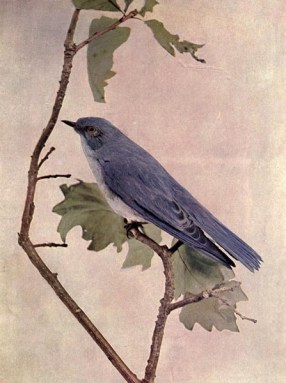
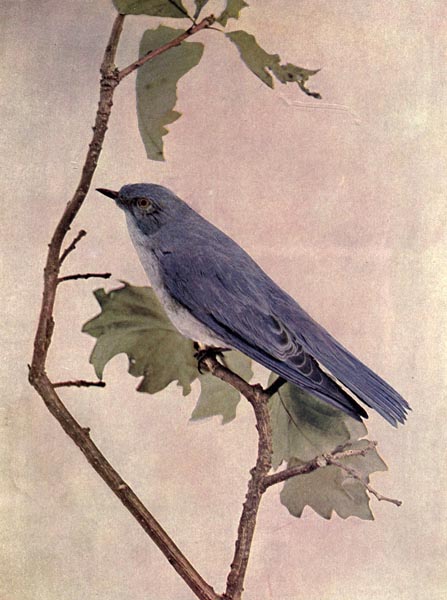
Mountain Bluebird (Sialia currucoides) for Birds Illustrated

Mountain Bluebird (Sialia currucoides) for Birds Illustrated

From col. Chi. Acad. Sciences. Copyrighted by
Nature Study Pub. Co., 1897, Chicago.

THE MOUNTAIN BLUEBIRD.

imgi

N an early number of Birds we presented a picture of the common Bluebird, which has been much admired. The mountain Bluebird, whose beauty is thought to excel that of his cousin, is probably known to few of our readers who live east of the Rocky Mountain region, though he is a common winter sojourner in the western part of Kansas, beginning to arrive there the last of September, and leaving in March and April. The habits of these birds of the central regions are very similar to those of the eastern, but more wary and silent. Even their love song is said to be less loud and musical. It is a rather feeble, plaintive, monotonous warble, and their chirp and twittering notes are weak. They subsist upon the cedar berries, seeds of plants, grasshoppers, beetles, and the like, which they pick up largely upon the ground, and occasionally scratch for among the leaves. During the fall and winter they visit the plains and valleys, and are usually met with in small flocks, until the mating season.

Nests of the Mountain Bluebird have been found in New Mexico and Colorado, from the foothills to near timber line, usually in deserted Woodpecker holes, natural cavities in trees, fissures in the sides of steep rocky cliffs, and, in the settlements, in suitable locations about and in the adobe buildings. In settled portions of the west it nests in the cornice of buildings, under the eaves of porches, in the nooks and corners of barns and outhouses, and in boxes provided for its occupation. Prof. Ridgway found the Rocky Mountain Bluebird nesting in Virginia City, Nevada, in June. The nests were composed almost entirely of dry grass. In some sections, however, the inner bark of the cedar enters largely into their composition. The eggs are usually five, of a pale greenish-blue.

The females of this species are distinguished by a greener blue color and longer wings, and this bird is often called the Arctic Bluebird. It is emphatically a bird of the mountains, its visits to the lower portions of the country being mainly during winter.

Heaped in the hollows of the grove, the autumn leaves lie dead;
They rustle to the eddying gust, and to the rabbits’ tread.
The Robin and the Wren are flown, and from the shrubs the Jay,
And from the wood-top calls the Crow all through the gloomy day.
—Bryant.

Summary:

MOUNTAIN BLUEBIRD.Sialia arctica. Other names: “Rocky Mountain” and “Arctic Bluebird.”

Range—Rocky Mountain region, north to Great Slave Lake, south to Mexico, west to the higher mountain ranges along the Pacific.

Nest—Placed in deserted Woodpecker holes, natural cavities of trees, nooks and corners of barns and outhouses; composed of dry grass.

Eggs—Commonly five, of pale, plain greenish blue.
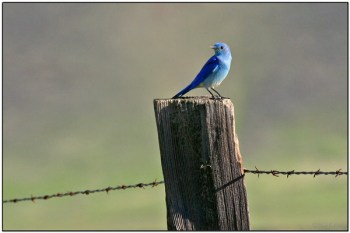

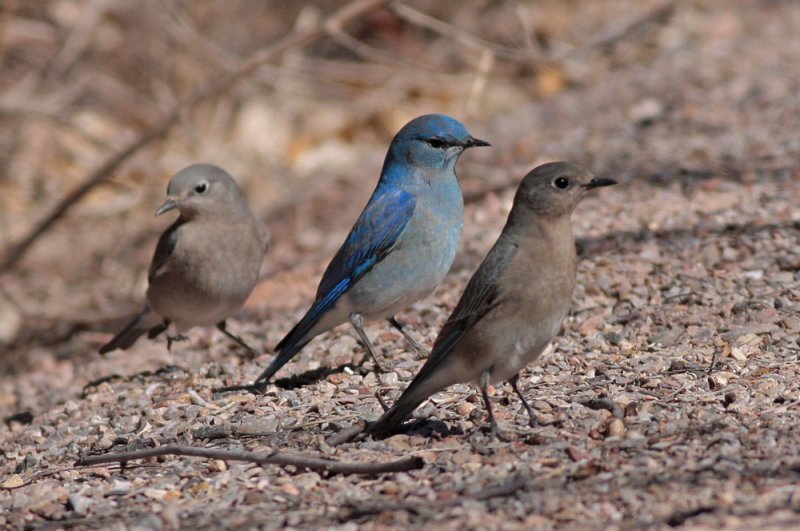
Mountain Bluebird (Sialia currucoides) by Daves BirdingPix

Mountain Bluebird (Sialia currucoides) by Daves BirdingPix

Lee’s Addition:

…In the LORD put I my trust: how say ye to my soul, Flee as a bird to your mountain? … If the foundations be destroyed, what can the righteous do? The LORD is in his holy temple, the LORD’S throne is in heaven: his eyes behold, his eyelids try, the children of men. … For the righteous LORD loveth righteousness; his countenance doth behold the upright.
(Psalms 11:1,3,4,7 KJV)

The Mountain Bluebird belongs to the Turdidae – Thrushes Family and as such have Thrush characteristics. Since blue is my favorite color, the bluebirds are some of my favorites. The Lord has used such variety in His coloration, that I am happy that blue was one of them. We have also the Eastern and Western Bluebirds plus the Asian and Philippine Fairy-bluebirds.

The Mountain Bluebird (Sialia currucoides) is a medium-sized bird weighing about 1.1 ounces (30 g) with a length from 6.3–7.9 in (16–20 cm). They have light underbellies and black eyes. Adult males have thin bills that are bright turquoise-blue and somewhat lighter beneath. Adult females have duller blue wings and tail, grey breast, grey crown, throat and back. In fresh fall plumage, the female’s throat and breast are tinged with red-orange; brownish near the flank contrasting with white tail underparts. Call is a thin few; Song is warbled high chur chur.

The mountain bluebird is migratory. Their range varies from Mexico in the winter to as far north as Alaska, throughout the western U.S. and Canada. Northern birds migrate to the southern parts of the range; southern birds are often permanent residents. Some birds may move to lower elevations in winter. They inhabit open rangelands, meadows, generally at elevations above 5,000 feet. Contrary to popular belief, mountain bluebirds are not a species of concern in the United States. The turn around in mountain bluebird numbers is due to the overwhelming efforts of landowners in the West to provide nest boxes for these birds. At one time, mountain bluebird numbers were threatened because of increased agricultural activities destroying habitats.

These birds hover over the ground and fly down to catch insects, also flying from a perch to catch them. They mainly eat insects, over 90%, and berries. They may forage in flocks in winter, when they mainly eat grasshoppers. Mountain bluebirds will come to a platform feeder with live meal worms, berries, or peanuts.
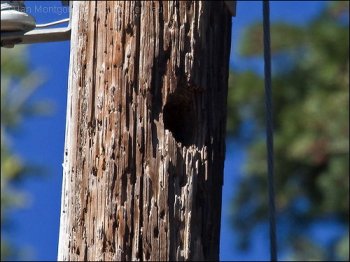
Mountain Bluebird (Sialia currucoides) by Ian Montgomery nest

Mountain Bluebird (Sialia currucoides) by Ian Montgomery nest

Their breeding habitat is open country across western North America, including mountain areas, as far north as Alaska. They nest in pre-existing cavities or in nest boxes. In remote areas, these birds are less affected by competition for natural nesting locations than other bluebirds. Mountain bluebirds are a monogamous breed. The male can be seen singing from bare branches. The singing takes place right at dawn, just when the sun rises. Females usually build the nests themselves. Eggs: pale blue and unmarked, sometimes white. Clutch Size: 4-5 eggs. Young are naked and helpless at hatching and may have some down. Incubation normally last 14 days and the young will take about 21 days before they leave the nest. Both males and females fiercely protect the nest.

It is the state bird of Idaho and Nevada.

Mountain bluebirds are cavity nesters and can become very partial to a nest box, especially if they have successfully raised a clutch. They may even re-use the same nest, though not always. Providing nest boxes is a great way to observe these beautiful birds. Mountain bluebirds will not abandon a nest if human activity is detected close by or at the nest. Because of this, mountain bluebirds can be easily banded while they are still in the nest.
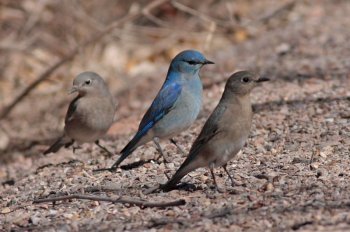
Mountain Bluebird (Sialia currucoides) by Margaret Sloan

Mountain Bluebird (Sialia currucoides) by Margaret Sloan

*
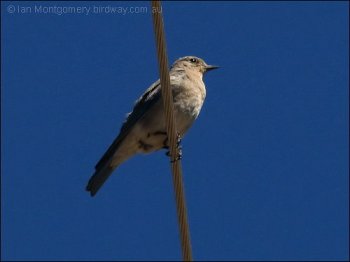
Mountain Bluebird (Sialia currucoides) by Ian Montgomery

Mountain Bluebird (Sialia currucoides) by Ian Montgomery

Birds Illustrated by Color Photography – Revisited

The above article is an article in the monthly serial for October 1897 “designed to promote Knowledge of Bird-Live.” These include Color Photography, as they call them, today they are drawings. There are at least three Volumes that have been digitized by Project Gutenberg.

To see the whole series of – Birds Illustrated by Color Photography – Revisited

*

(Information from Wikipedia and other internet sources, with editing)

Next Article – The English Sparrow

The Previous Article – The Ornithological Congress

Gospel Presentation

Links:

*
What is that Sound?

American Yellow Warbler (Setophaga aestiva) singing by J Fenton

American Yellow Warbler (Setophaga aestiva) singing by J Fenton

“LORD, thou hast heard the desire of the humble: thou wilt prepare their heart, thou wilt cause thine ear to hear:” (Psalms 10:17 KJV)

I am still in the process of fixing broken links, missing bird photos, etc. I am actually enjoying digging around in the older post. Had forgotten all about this series, and thought you might enjoy a challenge to your birdwatching.

In May of 2007, Start Birdwatching Today: What is that Sound? was published. Thought you might enjoy re-visiting this page. [After fixing a broken link on it.]

Birds are very vocal at times and they give us a great clue as to what bird it is. Eventually, as you become better in your birdwatching adventures, it will help to learn some of their sounds and noises.

As you are observing birds that are singing or calling, you can learn to associate that sound to that bird. That is the beginning and it is almost automatic. When you hear a bird, but do not see it, then you will either recall one you have seen and be able to ID it, or you can start studying the sounds so the next time you can know what the unseen bird is.

There are several methods that birders use. Audio CDs and computer programs have Bird sounds along with photos of the bird to assist your learning.

The Internet has places like the WhatBird, All About Birds, Birding by Ear Basics,

Here is an interesting video about blind people birding by ear. Very interesting.

Here are some of the birds you may already know. These are local birds here, but also seen around other parts of the country. Also a very nice verse to remember while “birding by sound.” I used this verse when taking my General Amateur License test that was all Morse Code. It helped calm my heart even though it refers to the Lord hearing us, but it helped me to hear those dots and dashes. (Only 8 of 115 of us passed the test that day.)

LORD, thou hast heard the desire of the humble: thou wilt prepare their heart, thou wilt cause thine ear to hear: (Psalms 10:17 KJV)

All of these sounds are coming from the Xeno-canto.org website.

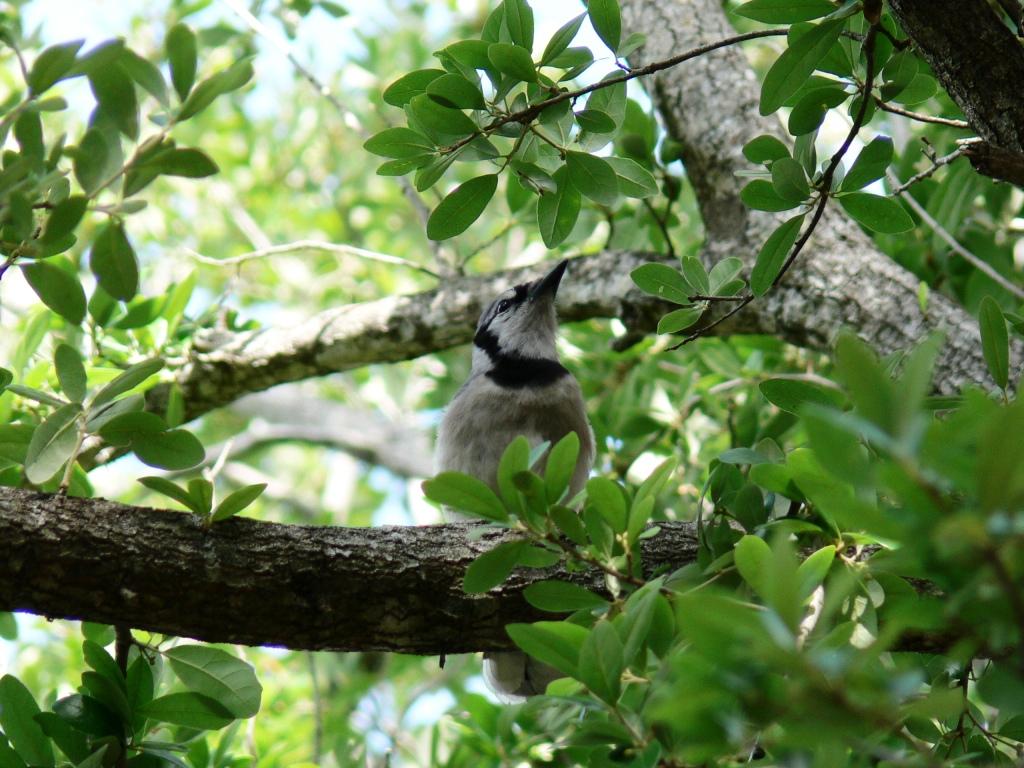
Blue Jay in tree at Hampton Pines

Blue Jay in tree at Hampton Pines

Blue Jay

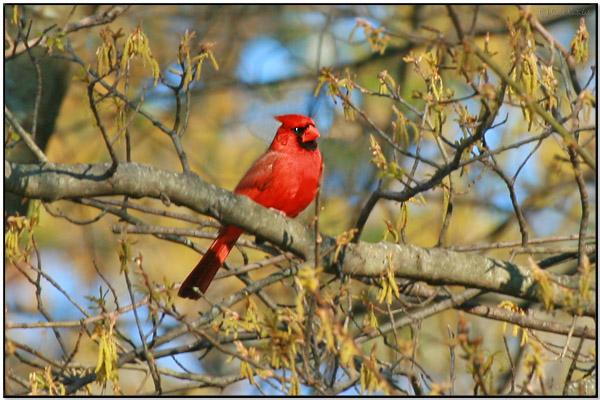
Northern Cardinal (Cardinalis cardinalis) by Daves BirdingPix

Northern Cardinal

Boat-tailed Grackle (Quiscalus major) at Lake Howard, Winter Haven, Florida By Dan’sPix

Boat-tailed Grackle

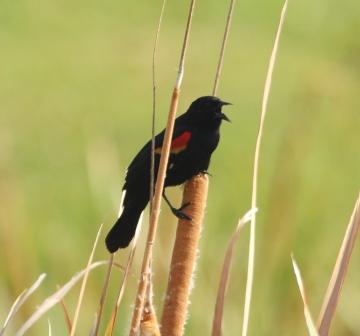
Red-winged Blackbird at Bok Sanctuary

Red-winged Blackbird at Bok Sanctuary

Red-winged Blackbird

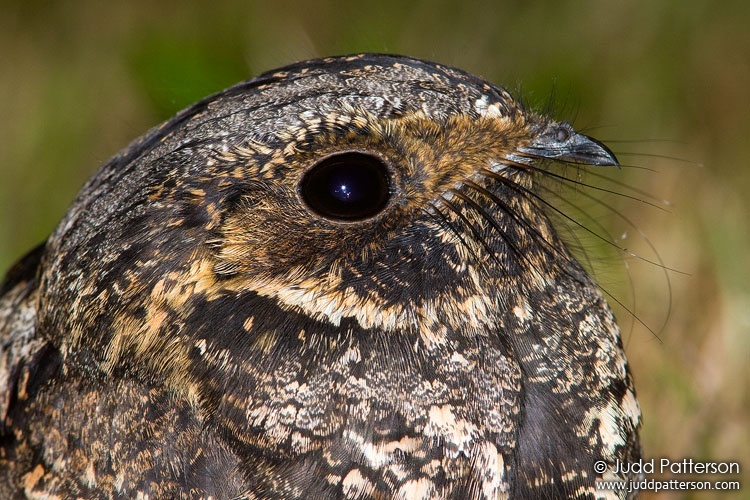
Whip-poor-will (Caprimulgus vociferus) by BirdsInFocus

Whip-poor-will (Caprimulgus vociferus) by BirdsInFocus

Eastern Whip-poor-will

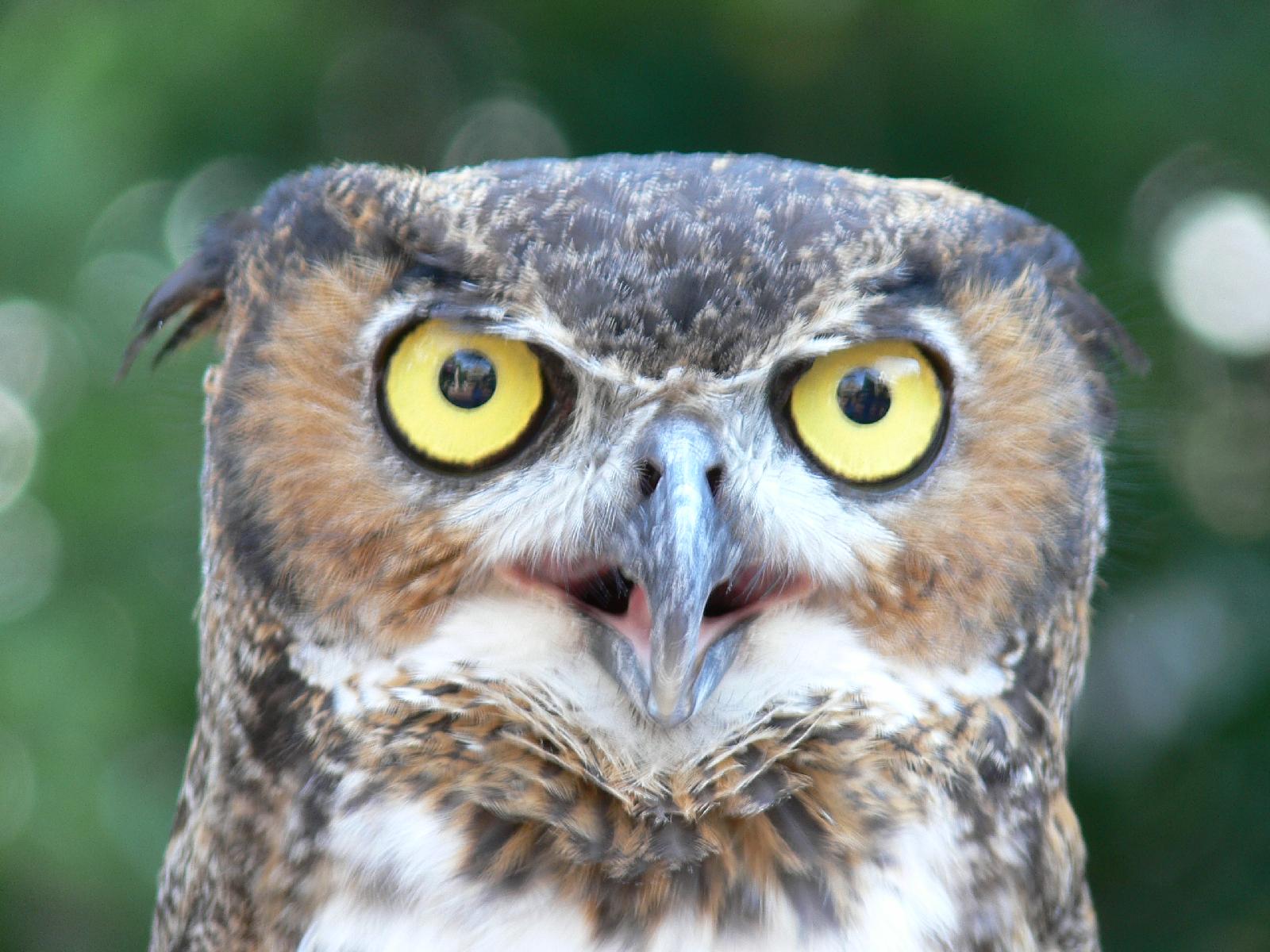
Great Horned Owl – Lowry Pk Zoo by Lee

Great Horned Owl

How many did you all ready know?
**
Some like to put words to their sounds like these from Birding By Ear — Bird Song Identification
Listen here to a few bird songs and calls that have good mnemonic phrases:
Eastern Towhee — “Drink your tea-ea-ea”

Whip-poor-will — The name says it all.

Black-capped chickadee — Some music and talk first, then the “Chick-a-dee-dee-dee”

White-throated sparrow — “Poor Sam Peabody, Peabody, Peabody

Black-throated green warbler — “Zee zee zee zoo zee”

Barred Owl — “Who cooks for you, who cooks for you all

Links:
WhatBird
All About Birds
Birding by Ear Basics
*
Start Birdwatching Today Series

*
Avian And Attributes – Busy

Buzzing Flowerpecker (Dicaeum hypoleucum) ©Drawing WikiC

“My help cometh from the LORD, which made heaven and earth. He will not suffer thy foot to be moved: he that keepeth thee will not slumber. Behold, he that keepeth Israel shall neither slumber nor sleep.” (Psalms 121:2-4 KJV)

“But I am poor and needy; yet the Lord thinketh upon me: thou art my help and my deliverer; make no tarrying, O my God.” (Psalms 40:17 KJV)

“For he shall deliver the needy when he crieth; the poor also, and him that hath no helper.” (Psalms 72:12 KJV)


Avian and Attributes – Busy

BUSY, a. biz’zy.
1. Employed with constant attention; engaged about something that renders interruption inconvenient; as, a man is busy in posting his books.
My mistress is busy and cannot come.
2. Actively employed; occupied without cessation; constantly in motion; as a busy bee.
4. Much occupied with employment; as a busy day.
BUSY, v.t. biz’zy. To employ with constant attention; to keep engaged; to make or keep busy;


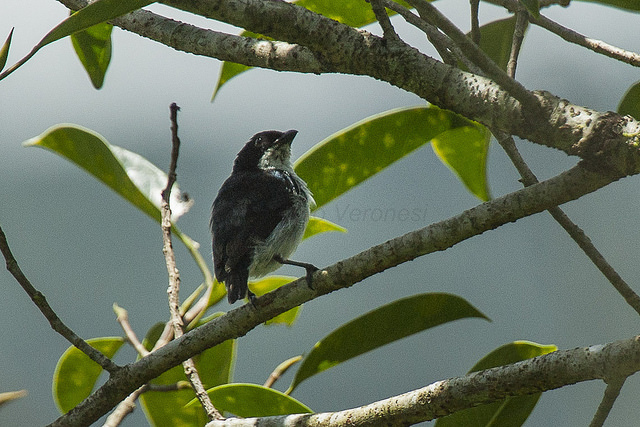
Buzzing Flowerpecker (Dicaeum hypoleucum) by ©Flickr Francesco Veronesi

Buzzing Flowerpecker

The Buzzing Flowerpecker (Dicaeum hypoleucum) or white-bellied flowerpecker is a species of bird in the Dicaeidae – Flowerpeckers family. It is endemic to the Philippines. Its natural habitats are subtropical or tropical moist lowland forests and subtropical or tropical moist montane forests.

[I chose this bird because “Buzzing” could also mean “Busy” as in our Lord God always watching out for our souls.]


More Avian and Attributes

Birds whose first name start with “B”

Good News

*
[Definitions from Webster’s Dictionary of American English (1828), unless noted. Bird info from Wikipedia plus.]

Avian And Attributes – Bush (Hosted God)

Avian And Attributes – Bush (Hosted God)

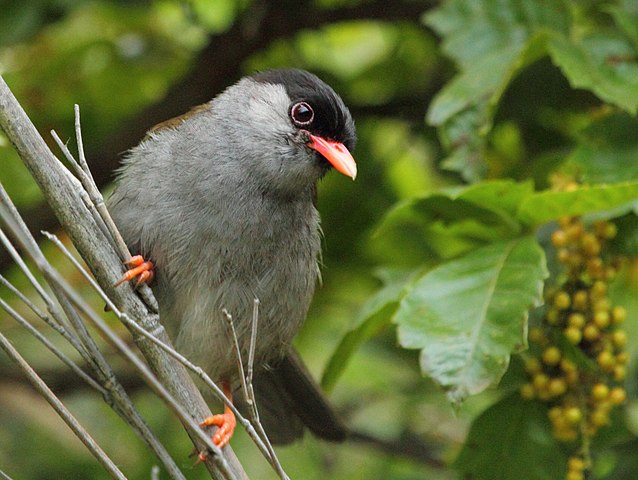
Bush Blackcap (Lioptilus nigricapillus) ©WikiC

“And the angel of the LORD appeared unto him in a flame of fire out of the midst of a bush: and he looked, and, behold, the bush burned with fire, and the bush was not consumed. And Moses said, I will now turn aside, and see this great sight, why the bush is not burnt. And when the LORD saw that he turned aside to see, God called unto him out of the midst of the bush, and said, Moses, Moses. And he said, Here am I.” (Exodus 3:2-4 KJV)


Avian and Attributes – Bush (Hosted God)

Bush

Bush. The Hebrew word, seneh, occurs only in those passages which refer to Jehovah’s appearance to Moses, “in the flame of fire in the bush.” Exo_3:2-4; Exo_33:16. It is quite impossible to say what kind of thorn bush is intended; but it was probably the acacia, a small variety of the shittim tree, found in the Sinai region. (Smith Bible Dictionary)

“And for the precious things of the earth and fulness thereof, and for the good will of him that dwelt in the bush: let the blessing come upon the head of Joseph, and upon the top of the head of him that was separated from his brethren.” (Deuteronomy 33:16 KJV)


Bush Blackcap (Lioptilus nigricapillus) immature ©WikiC

Bush Blackcap (Lioptilus nigricapillus)

The Bush Blackcap (Lioptilus nigricapillus) is a species of bird in the family Sylviidae. It is monotypic within the genus Lioptilus.[2] It is found in South Africa and Swaziland. Its natural habitats are subtropical or tropical moist montane forests and subtropical or tropical high-altitude shrubland. It is threatened by habitat loss. (Bush Blackcap – Wikipedia) (Sylviidae – Sylviid Babblers Family)

Bush Blackcap (Lioptilus nigricapillus) ©WikiC


More Avian and Attributes

Birds whose [first or last] name start with “B”

Good News

*
[Definitions from Webster’s Dictionary of American English (1828), unless noted. Bird info from Wikipedia plus.]

Avian and Attributes – Blood

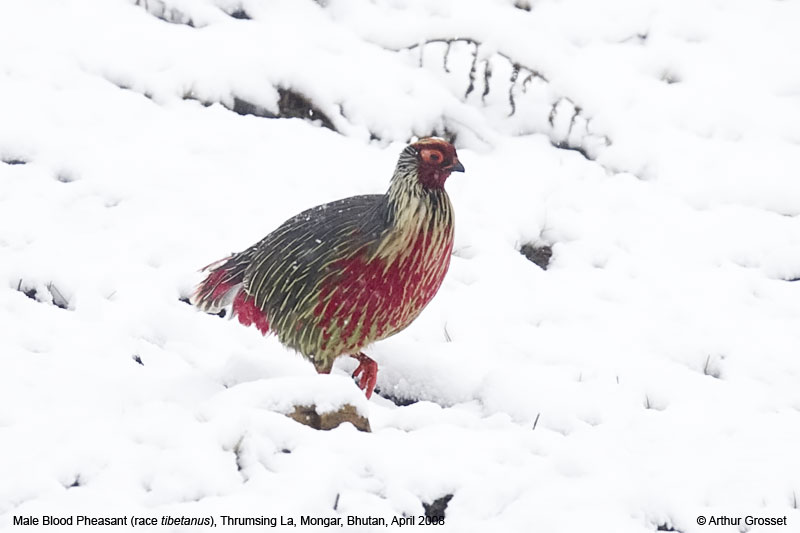
Blood Pheasant (Ithaginis cruentus) ©Arthur Grosset

Blood Pheasant (Ithaginis cruentus) ©Arthur Grosset

“And he said unto them, This is my blood of the new testament, which is shed for many.” (Mark 14:24 KJV)

“Take heed therefore unto yourselves, and to all the flock, over the which the Holy Ghost hath made you overseers, to feed the church of God, which he hath purchased with his own blood.” (Acts 20:28 KJV)


Avian and Attributes – Blood

BLOOD, n.
1. The fluid which circulates through the arteries and veins of the human body, and of other animals, which is essential to the preservation of life. This fluid is generally red. If the blood of an animal is not red, such animal is called exsanguious, or white-blooded; the blood being white, or white tinged with blue.

2. Kindred; relation by natural descent from a common ancestor; consanguinity.
God hath made of one blood, all nations of the earth. Acts 17.

3. Royal lineage; blood royal; as a prince of the blood.

5. Life.

10. A sacramental symbol of the blood of Christ.
For this is my blood of the new testament, which is shed for many for the remission of sins.” (Matthew 26:28 KJV)

11. The death and sufferings of Christ.
“Much more then, being now justified by his blood, we shall be saved from wrath through him.” (Romans 5:9 KJV)


Blood Pheasant (Ithaginis cruentus) ©WikiC

The Blood Pheasant (Ithaginis cruentus) is the only species in genus Ithaginis of the pheasant family. This relatively small, short-tailed pheasant is widespread and fairly common in eastern Himalayas, ranging across India, Nepal, Bhutan and China.

Blood pheasants have the size of a small fowl, about 17 in (43 cm) in length with a short convex, very strong black bill, feathered between bill and eye, and a small crest of various coloured feathers. The colour of the plumage above is dark ash, with white shafts, the coverts of the wings various tinged with green, with broad strokes of white through the length of each feather, the feathers of the chin deep crimson; on the breast, belly and sides feathers are lance-shaped, of various length, the tips green with crimson margins, collectively resembling dashes of blood scattered on the breast and belly. The tail consists of twelve sub-equal feathers, shafts white, rounded, the ends whitish, the coverts a rich crimson red.

Both males and females have red feet and a distinct ring of bare skin around the eye that typically is crimson colored, but is orange in a few subspecies. Member of the Phasianidae – Pheasants, Fowl & Allies Family

Blood-breasted Flowerpecker (Dicaeum sanguinolentum) ©WikiC

Blood-breasted Flowerpecker (Dicaeum sanguinolentum) ©WikiC

Here are links to all the “Blood” avian wonders:

Blond-crested Woodpecker (Celeus flavescens)
Blood Pheasant (Ithaginis cruentus)
Blood-breasted Flowerpecker (Dicaeum sanguinolentum)
Blood-colored Woodpecker (Veniliornis sanguineus)
Blood-eared Parakeet (Pyrrhura hoematotis)


More Avian and Attributes Articles

Birds whose first name start with “A”

Good News

*
[Definitions from Webster’s Dictionary of American English (1828), unless noted. Bird info from Wikipedia plus.]


Avian And Attributes – Bishop

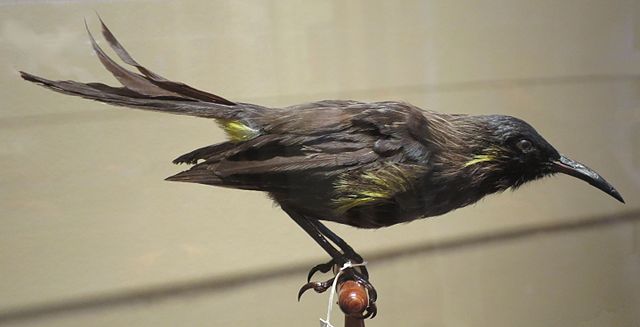
Bishop's Oo (Moho bishopi) WikiC

Bishop’s Oo (Moho bishopi) WikiC

“For ye were as sheep going astray; but are now returned unto the Shepherd and Bishop of your souls.” (1 Peter 2:25 KJV)


Avian and Attributes – Bishop

BISH’OP, n. [L. episcopus; Gr. of, over, and inspector, or visitor; to view, or inspect; whence, to visit; also, to view. This Greek and Latin word accompanied the introduction of christianity into the west and north of Europe.]

1. An overseer; a spiritual superintendent, ruler or director; applied to Christ.
Ye were as sheep going astray, but are now returned to the shepherd and bishop of your souls. 1. Pet.2.

2. In the primitive church, a spiritual overseer; an elder or presbyter; one who had the pastoral care of a church.


Bishop’s Oo (Moho bishopi) Specimen ©WikiC

Bishop’s Oo

The Bishop’s ‘ō‘ō or Molokai ‘ō‘ō (Moho bishopi) is a member of the extinct genus of the ‘ō‘ōs (Moho) within the extinct family Mohoidae. It was previously regarded as member of the Australo-Pacific honeyeaters (Meliphagidae). Lionel Walter Rothschild named it after Charles Reed Bishop, the founder of the Bishop Museum.

It was discovered in 1892 by Henry C. Palmer, a bird collector for Lord Rothschild. Its length was about 29 centimeters. The tail had reached a length of 10 centimeters. The plumage was general glossy black with yellow feather tufts on the maxillaries, beneath the wings and the undertail coverts. Their songs were simple two notes, took-took, which could be heard for miles.

Member of the Mohoidae – Oos Family


More Avian and Attributes

Birds whose first name start with “B”

Good News

*
[Definitions from Webster’s Dictionary of American English (1828), unless noted. Bird info from Wikipedia plus.]

Avian and Attributes – Apostle’s Teacher

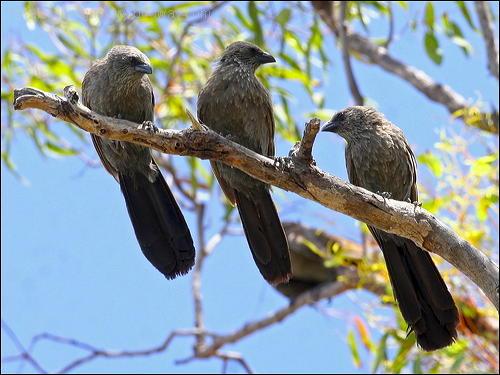
Apostlebird (Struthidea cinerea) by Ian

“And the apostles said unto the Lord, Increase our faith. And the Lord said, If ye had faith as a grain of mustard seed, ye might say unto this sycamine tree, Be thou plucked up by the root, and be thou planted in the sea; and it should obey you.” (Luke 17:5-6 KJV)


Avian and Attributes – Apostle’s Teacher

APOS’TLE, n. [L. apostalus; Gr. to send away, to sent.]

A person deputed to execute some important business; but appropriately, a disciple of Christ commissioned to preach the gospel. Twelve persons were selected by Christ for this purpose; and Judas, one of the number, proving an apostate, his place was supplied by Matthias. Acts 1.

The title of apostle is applied to Christ himself, Heb 3. In the primitive ages of the church, other ministers were called apostles, Rom 16; as were persons sent to carry alms from one church to another, Phil 2. This title was also given to persons who first planted the Christian faith. Thus Dionysius of Corinth is called the apostle of France; and the Jesuit Missionaries are called apostles.

“Wherefore, holy brethren, partakers of the heavenly calling, consider the Apostle and High Priest of our profession, Christ Jesus;” (Hebrews 3:1 KJV)


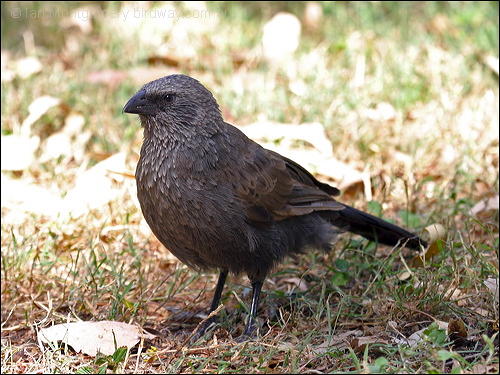
Apostlebird (Struthidea cinerea) by Ian

Apostlebird (Struthidea cinerea) by Ian

Apostlebird

The Apostlebird (Struthidea cinerea), also known as the grey jumperlousy jack or cwa bird is a quick-moving, gray or black bird about 13 inches (33 centimetres) long. It is a native to Australia where it roams woodlands, eating insects and seeds at, or near, ground level. Apostlebirds often travel in groups of about 12; for this reason they were named after the Biblical apostles, the twelve chief followers of Jesus Christ.

Measuring around 33 cm (13 in) in length, the apostlebird is a predominantly dark grey bird with a long black tail tinted greenish in sunlight. The grey feathers on the head, neck and breast are brushed with paler grey-white and the wings are brownish. The legs and bill are black and the eyes brown or white. They are members of the Corcoracidae – Australian Mudnesters Family.

“Until the day in which he was taken up, after that he through the Holy Ghost had given commandments unto the apostles whom he had chosen: To whom also he shewed himself alive after his passion by many infallible proofs, being seen of them forty days, and speaking of the things pertaining to the kingdom of God: And, being assembled together with them, commanded them that they should not depart from Jerusalem, but wait for the promise of the Father, which, saith he, ye have heard of me.” (Acts 1:2-4 KJV)


More Avian and Attributes

Birds whose first name start with “A”

Good News

*
[Definitions from Webster’s Dictionary of American English (1828), unless noted. Bird info from Wikipedia plus.]