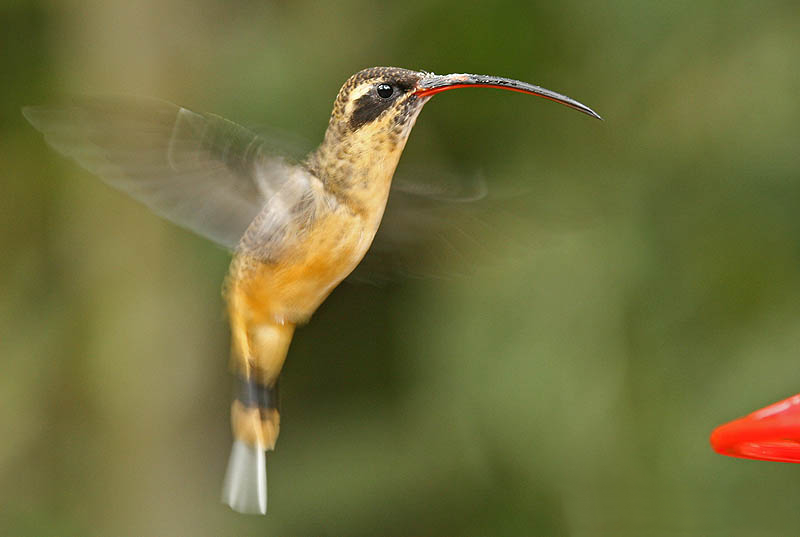
Tawny-bellied Hermit (Phaethornis syrmatophorus) by Michael Woodruff
This GOLD bird reminds us of Heaven. The Bible tells us Heaven has a street of gold! But the best part about Heaven is that God, who created you and me, lives there. The Bible, God’s Word, says: “God so loved the world that He gave His only begotten Son, that whosoever believeth in Him should not perish but have everlasting life.” — John 3:16 Jesus, God the Son, is in Heaven preparing a place for all who put their trust in Him. (John 14:2-3) God is holy and perfect. He cannot allow anything in Heaven that is less than perfect, so there’s one thing that can never be in Heaven. Can you think of what that might be?
It is sin! That is what this DARK bird reminds us of. Sin is anything you think, say, or do that does not please God, like lying, cheating, being selfish, or hurting others. The Bible says: “All have sinned and come short of the glory of God.” — Romans 3:23 That means everyone, big or little, young or old! No matter where you live or who you are, you have sinned. Everyone is born with a “want to” to do wrong. God says that sin must be punished (Romans 6:23), and the punishment for sin is to be separated from God forever in a place of suffering….a place called Hell. But God has a wonderful plan so that you will not have to be punished for your sin!
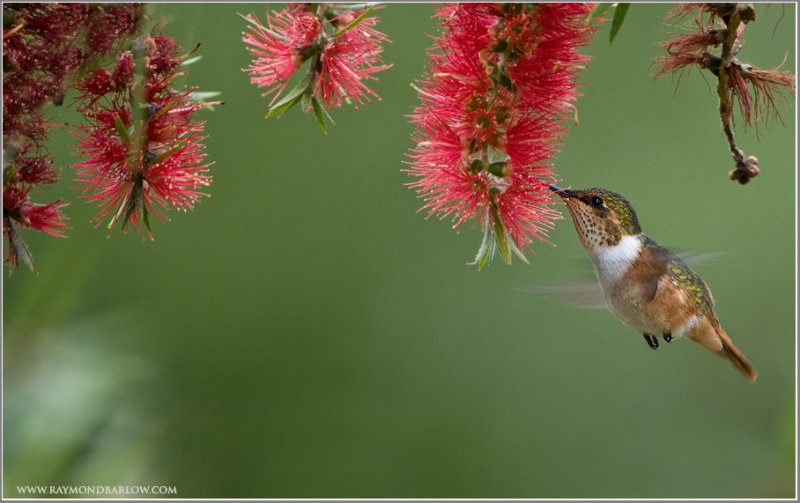
Scintillant Hummingbird (Selasphorus scintilla) in Flight by Raymond Barlow
God sent Jesus Christ, His perfect Son, to be born as a little baby. Jesus lived a perfect life….He never sinned. When He was grown, wicked men nailed Him to a cross. This bird is RED reminding us of Jesus’ blood. The Bible says that without the giving of blood there can be no forgiveness of sin (Hebrews 9:22). So Jesus Christ willingly died to take your sin punishment. “…Christ died for our sins according to the Scriptures; and that He was buried, and that He rose again the third day, according to the Scriptures.“— 1 Corinthians 15:3-4 Now, because of what Jesus has done for you, you can have your sins forgiven. Read on to see how!
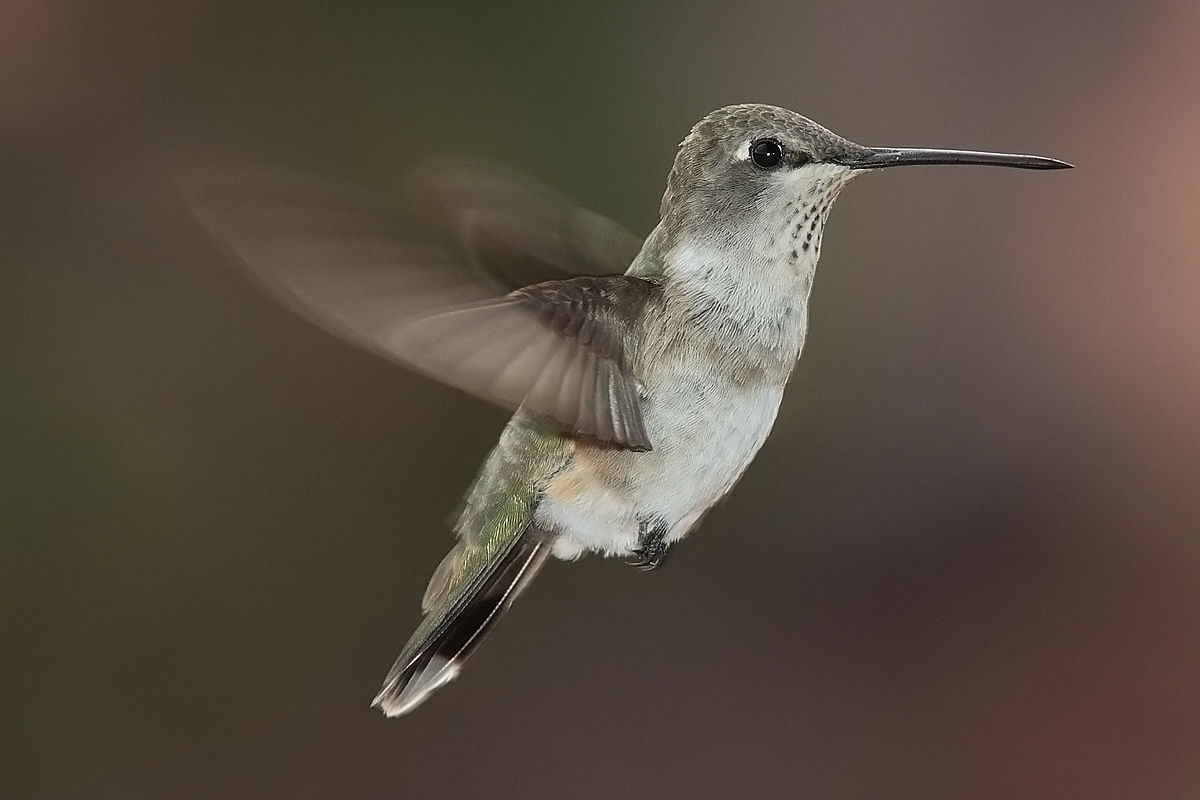
The Bible says: “As many as received Him, to them gave He power to become the sons of God, even to them that believed on His name.” — John 1:12 The WHITE bird reminds us of a CLEAN heart. How can you have a clean heart? A = Admit to God you are a sinner and want to turn away from those sins. B = Believe in Jesus Christ, that He is God’s perfect Son who died for your sin, was buried, and rose again. C = Call on Him to save you from your sin. Would you like to do that right now? He has promised to hear, and once you are His child, He will never leave you (Hebrews 13:5). Take a moment and talk to God right now. It will change your life forever. Only one more color! What can it mean?
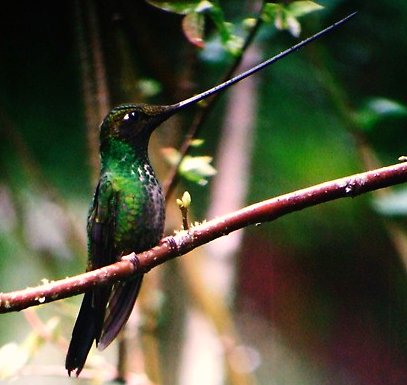
The GREEN bird stands for things that grow. When you ask God to forgive you and save you, you become His child. God wants you to get to know Him better and to grow to become more like Him. These four things will help you grow:
1. PRAY (talk to God every day)
2. READ & OBEY THE BIBLE (to know what He says, then do it)
3. TELL OTHERS ABOUT JESUS
4. GO TO A BIBLE-BELIEVING CHURCH (where you can learn more about pleasing Him)
As a child of God, if you should sin again, stop and tell Him about it. He promises in His Word… “If we confess our sins, He is faithful and just to forgive us our sins and to cleanse us from all unrighteousness.” — 1 John 1:9 Ask God to help you live a life to please Him! Share the Good News of this story with someone else.
The Wordless Book has been used for many years by CEF (Child Evangelism Fellowship). These words are from CEF.
Once you receive Jesus as your Savior, then you have joy and peace in your heart.
Whom having not seen, ye love; in whom, though now ye see him not, yet believing, ye rejoice with joy unspeakable and full of glory: Receiving the end of your faith, even the salvation of your souls. (1 Peter 1:8-9 KJV)
This bird’s singing reminds us of the joy a Christian has in their heart after salvation and it spills out in a song and hopeful in telling others of what Christ did in their hearts.
Once there was a girl who owned a pet flamingo named Mandy. The girl’s name was Sarah and she lived in a big house with the rest of her family. One day her parents took her to a pet store across town where she saw a flamingo sitting in a bird-cage. Sarah was allowed to pick out one pet and she decided to pick out this flamingo. She named it Mandy. Mandy had one feather on her wing that was black and Sarah thought that was one of the reasons why Mandy was so special.
Today Mandy was sitting on Sarah’s father’s favorite recliner in the middle of the big family room. Mandy always loved sitting there because she had a good view out of one of the big windows. Sarah didn’t have any idea why she was sitting in the chair, but it was funny to see the cleaning lady come in with her duster and faint when she saw Mandy.
On this day the biggest window in the family room was wide open because it was a nice day outside and a small wind was blowing.
Mandy was sitting in Sarah’s father’s favorite recliner watching the sky when she saw birds fly by. Mandy decided to follow them and before Sarah could stop her, Mandy flew out of the window and out of sight. Sarah had never been sadder.
Sarah and her parents put up fliers around town looking for Mandy.
It was a week before Sarah passed by the zoo putting out fliers when she saw the flamingo exhibit. Inside the exhibit was Mandy! Sarah could tell because she had one black feather.
Sarah was happy to see Mandy again, but she noticed that Mandy looked really happy with all the other flamingos. Sarah decided that Mandy should stay at the zoo with her new friends.
So, from then on, Sarah was sure to see Mandy the flamingo every day at the zoo.
The End
Lee’s Addition:
Thanks, Emma, for another bird tale. Mandy sounds like a nice pet, but sure she is enjoying being back with her friends. I could see why the cleaning lady would be shocked. Not many people have Flamingo as pets. But the Bible says:
For every kind of beast and bird, of reptile and creature of the sea, is tamed and has been tamed by mankind. But no man can tame the tongue. It is an unruly evil, full of deadly poison. With it we bless our God and Father, and with it we curse men, who have been made in the similitude of God. Out of the same mouth proceed blessing and cursing. My brethren, these things ought not to be so. (James 3:7-10 NKJV)
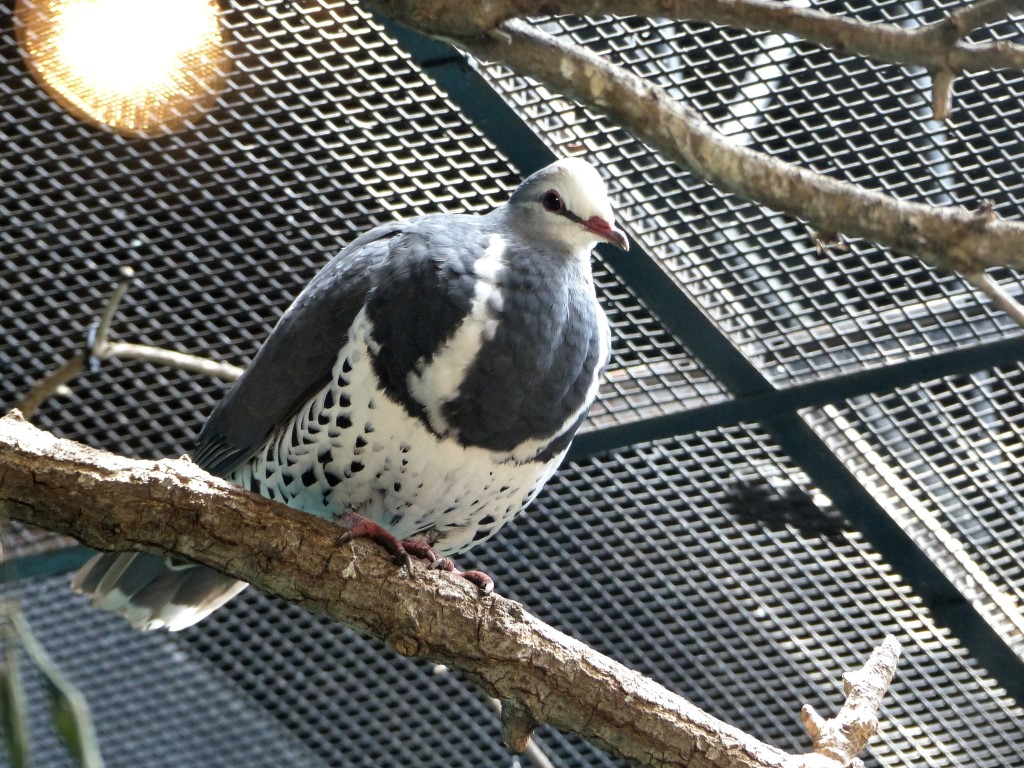
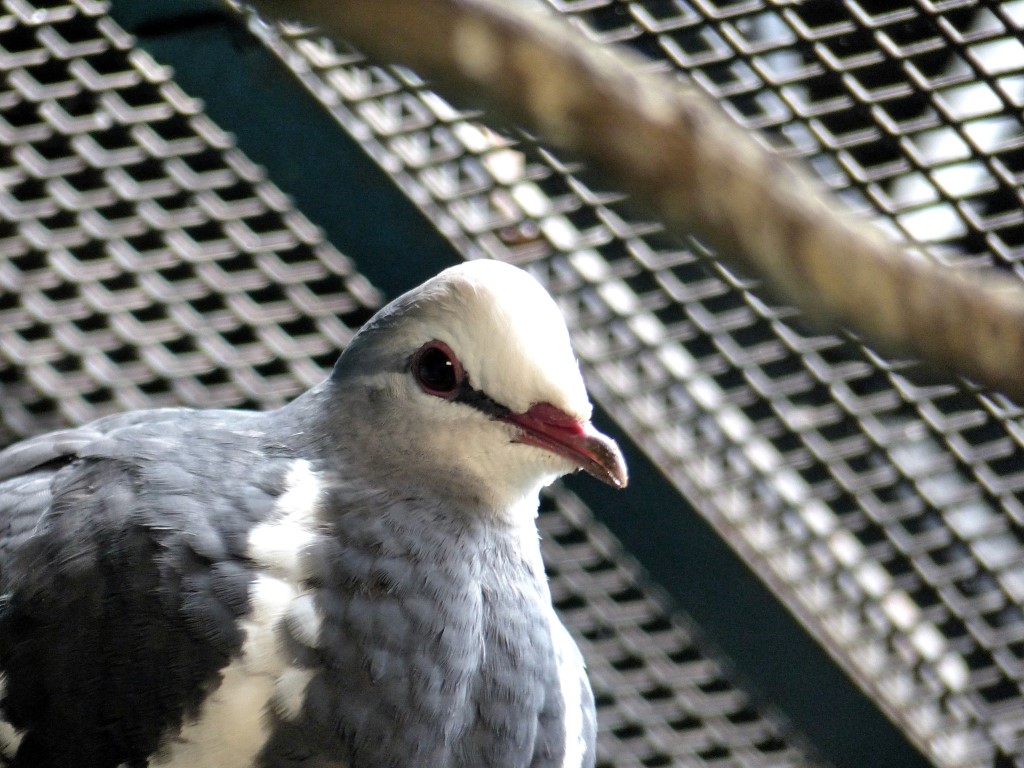
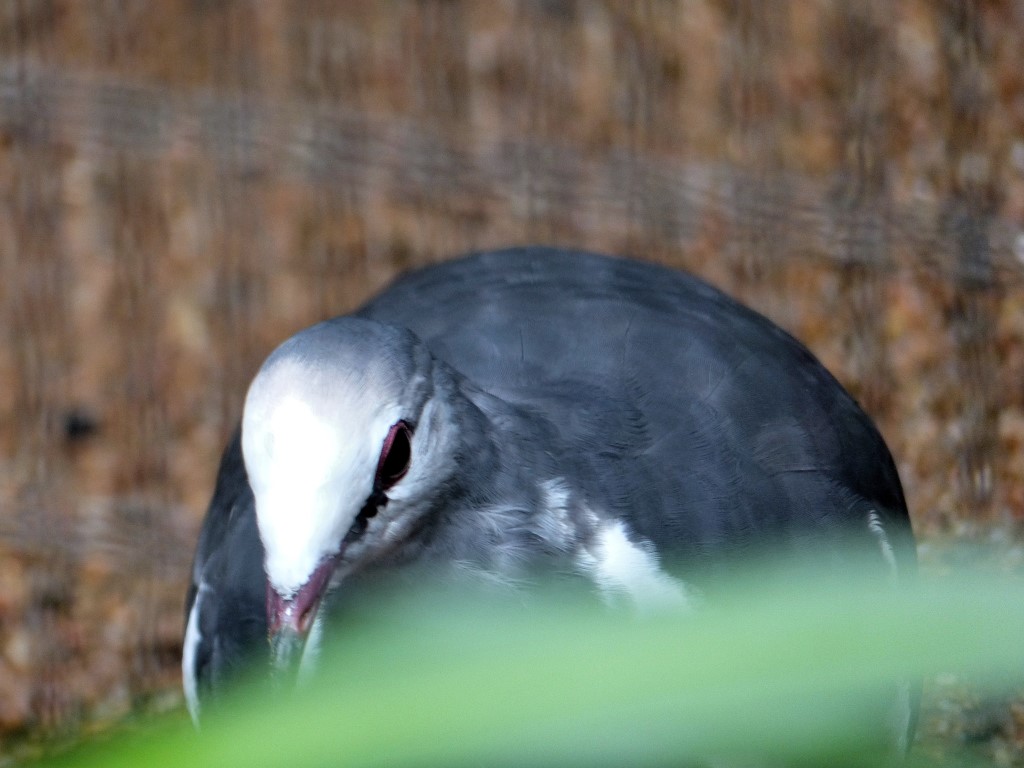
Wonga Pigeon (Leucosarcia melanoleuca) Houston Zoo by Lee
And I said, Oh that I had wings like a dove! for then would I fly away, and be at rest. (Psalms 55:6 KJV)
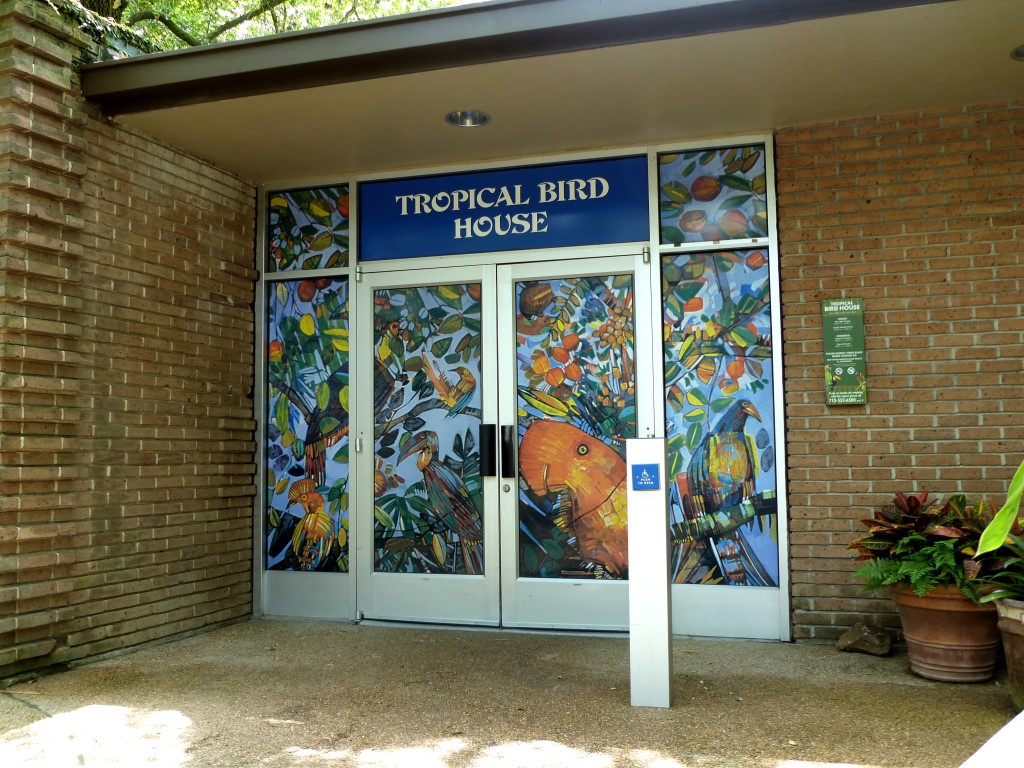
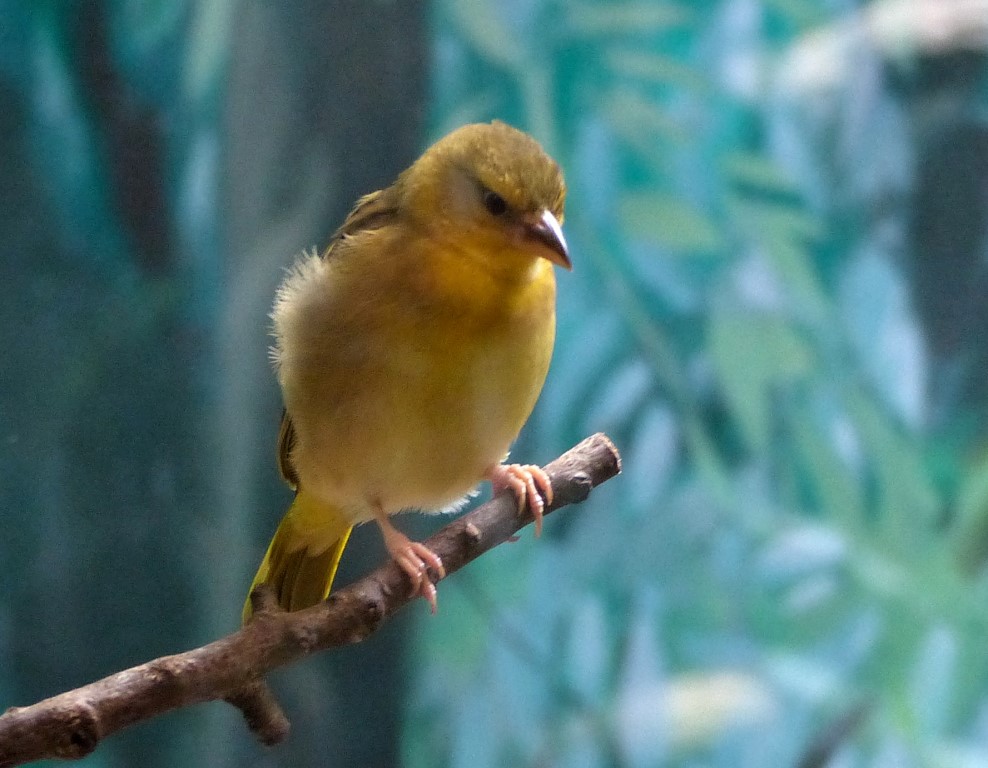
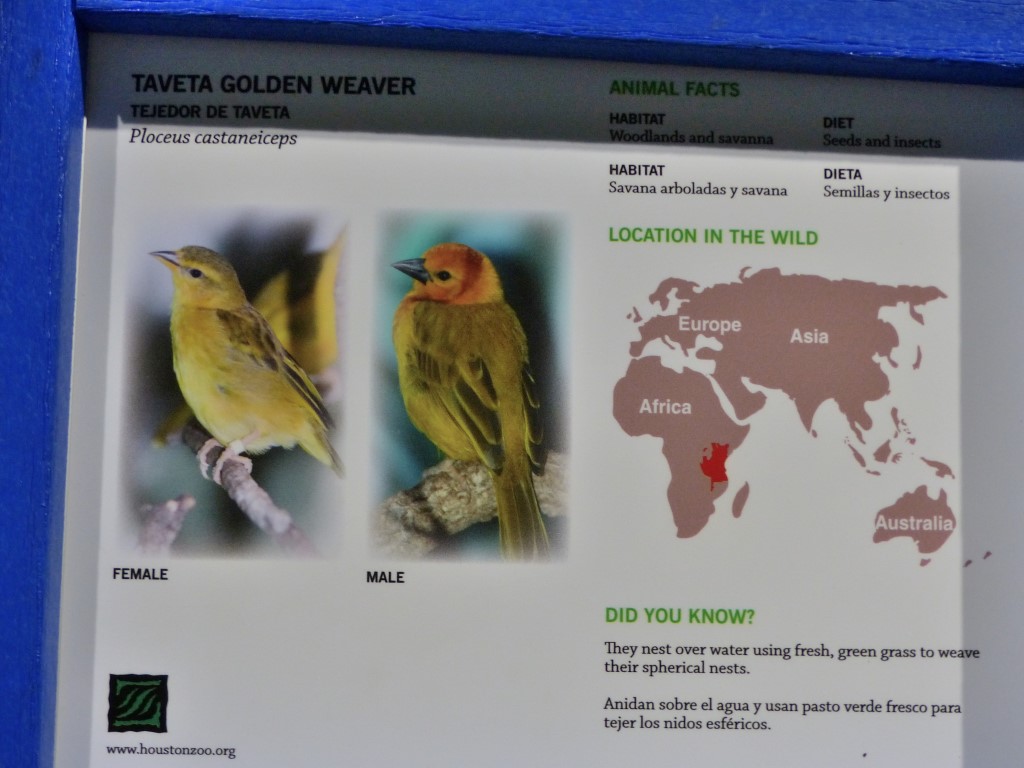
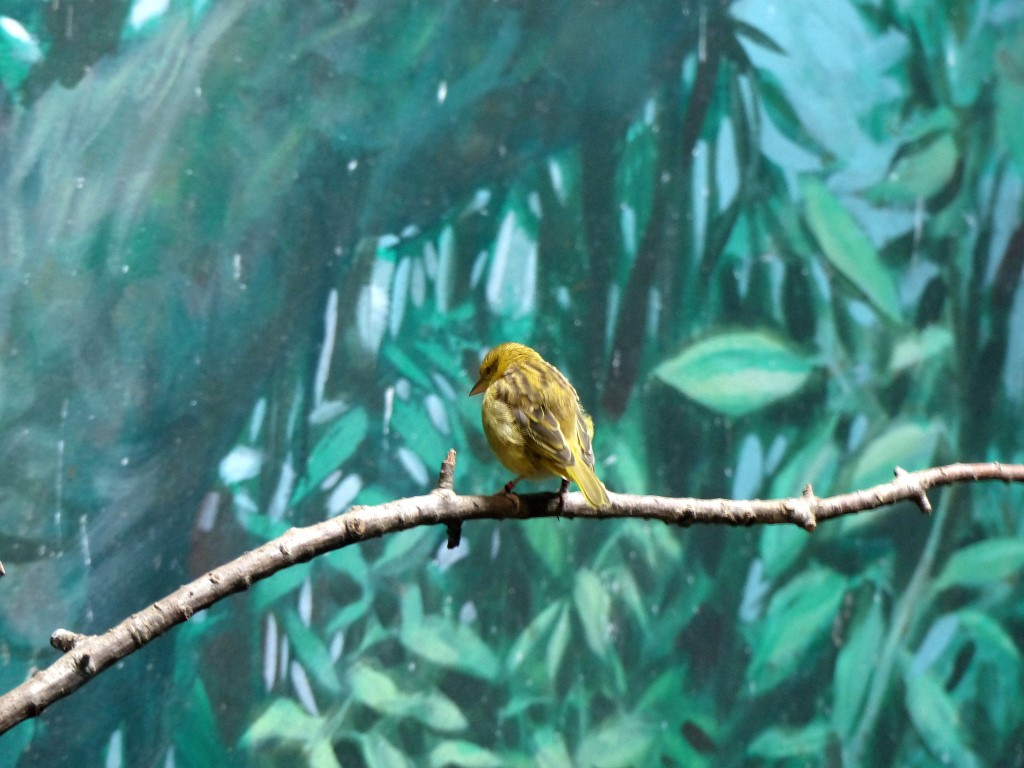
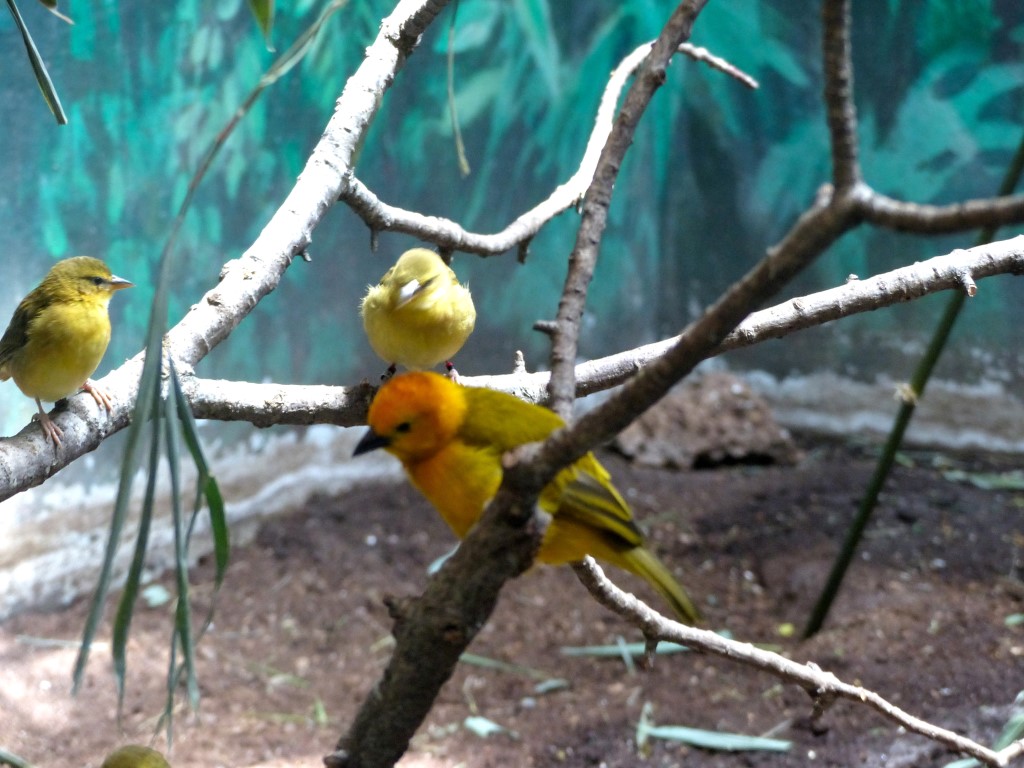
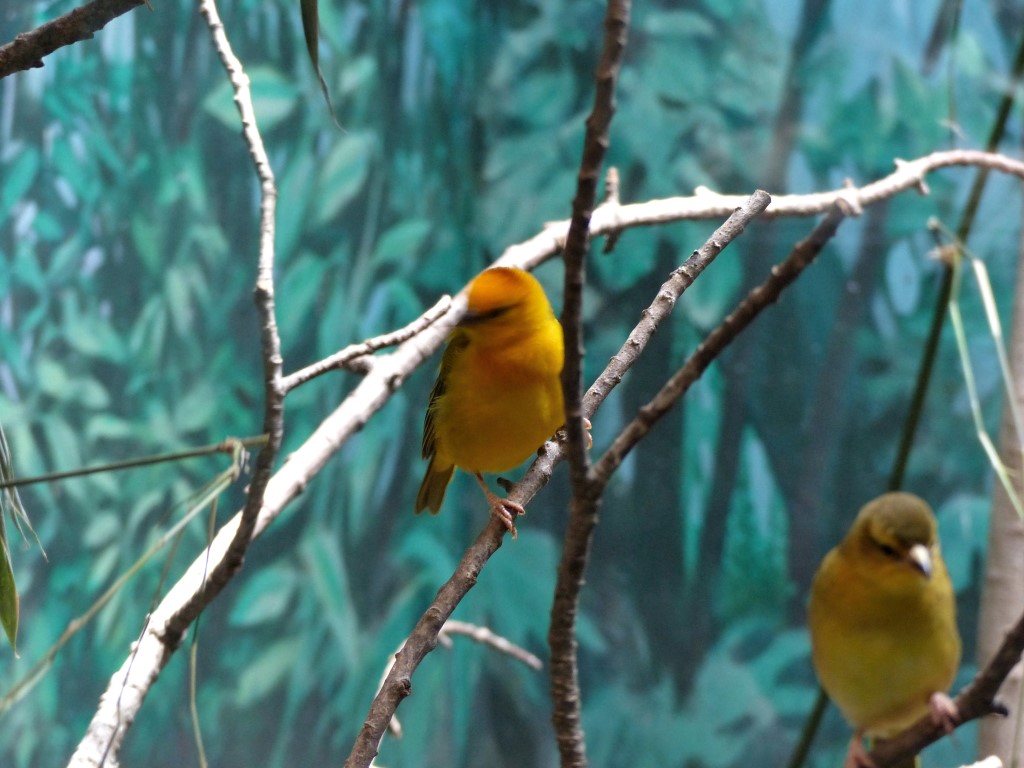
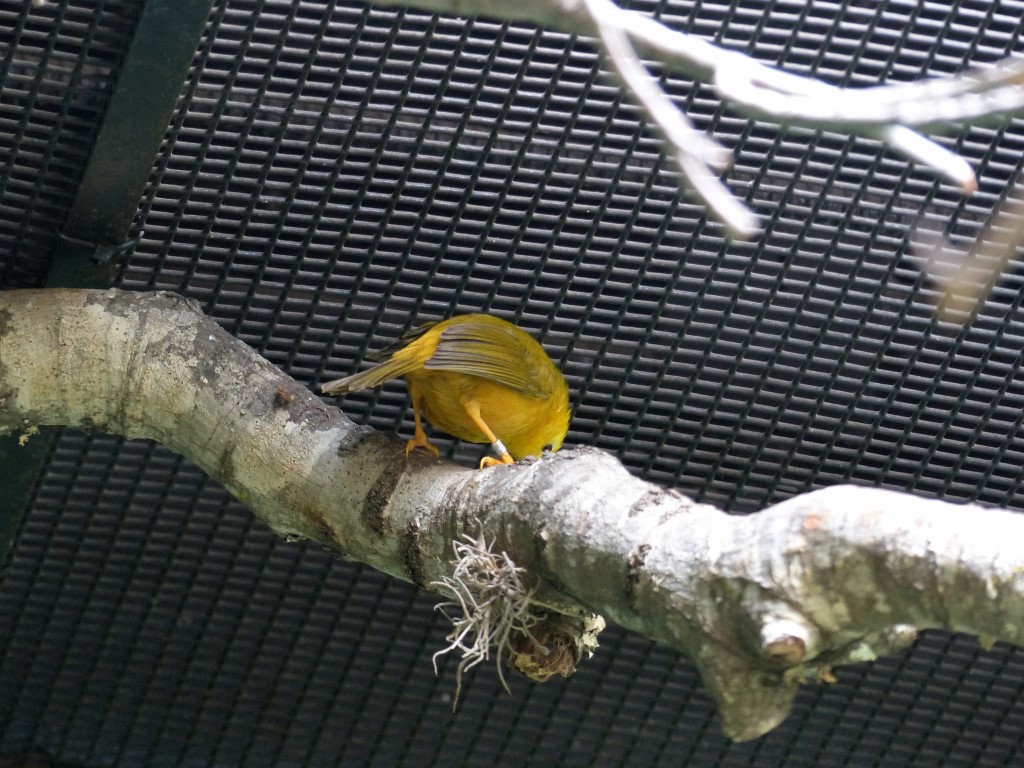
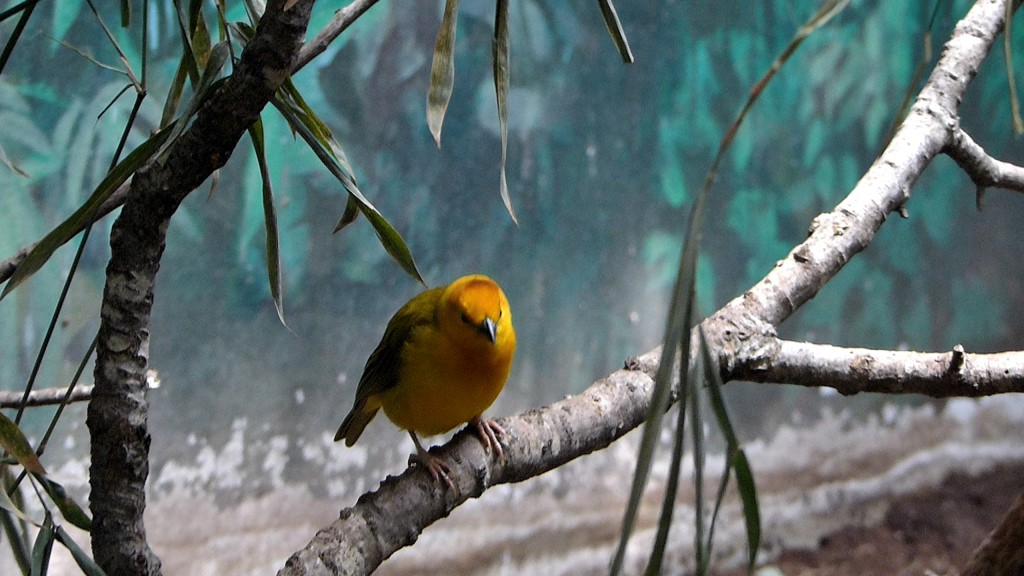
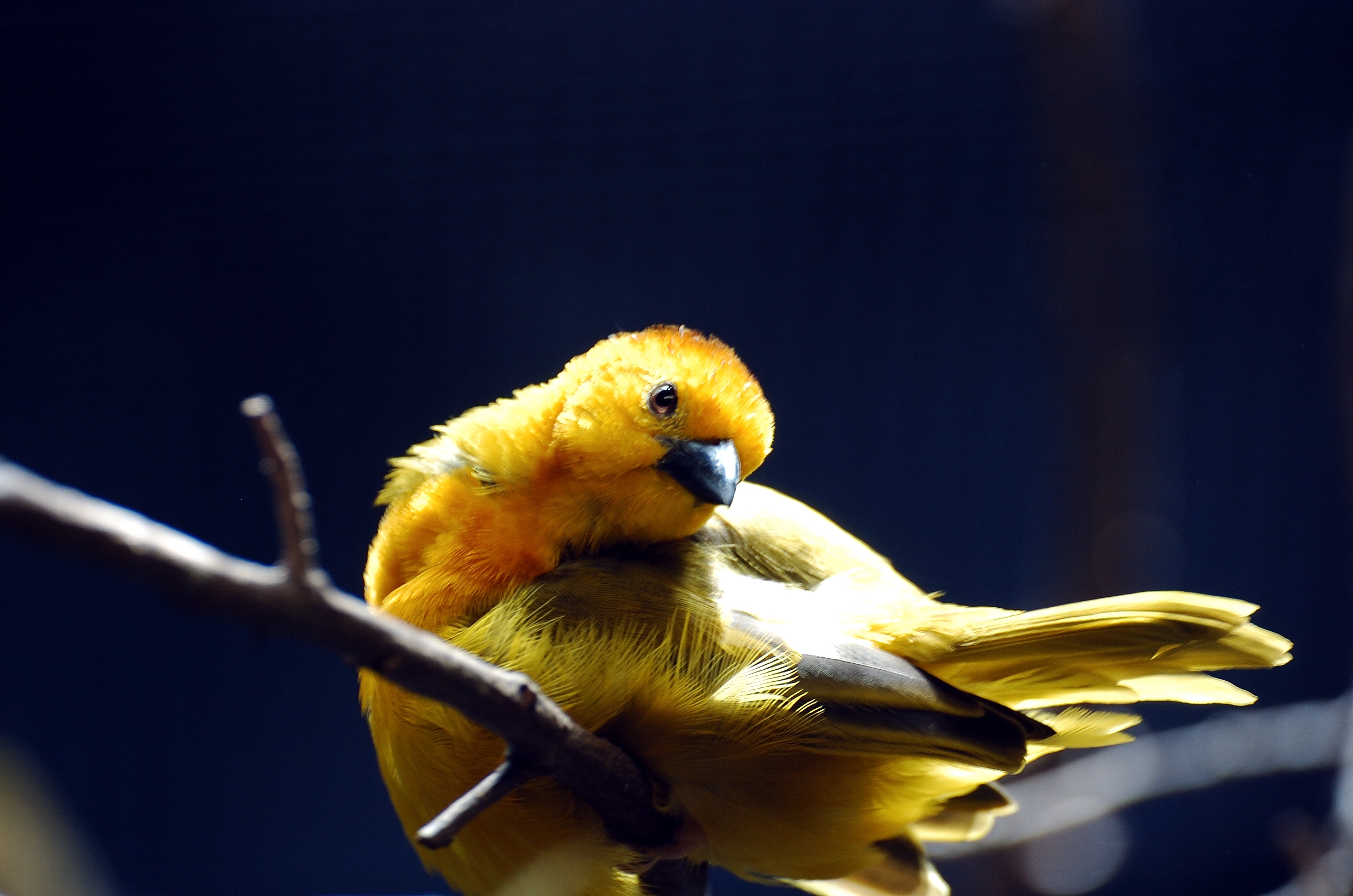
Thought I’d share two videos and some photos of the Wonga Dove and the Taveta Weavers. They were in the Tropical Bird House which had enclosures with a glass in front of them and not a cage (YEAH!)
Tropical Bird House Houston Zoo by Lee
The Wonga Dove was calling and could be heard everywhere in the Bird House. One video is of the dove calling and the weavers next door. You will hear the sound of the dove even while videoing the weavers.
Taveta Weaver (Ploceus castaneiceps) Houston Zoo by Lee
Like a crane or a swallow, so did I chatter: I did mourn as a dove: mine eyes fail with looking upward: O LORD, I am oppressed; undertake for me. (Isaiah 38:14 KJV)
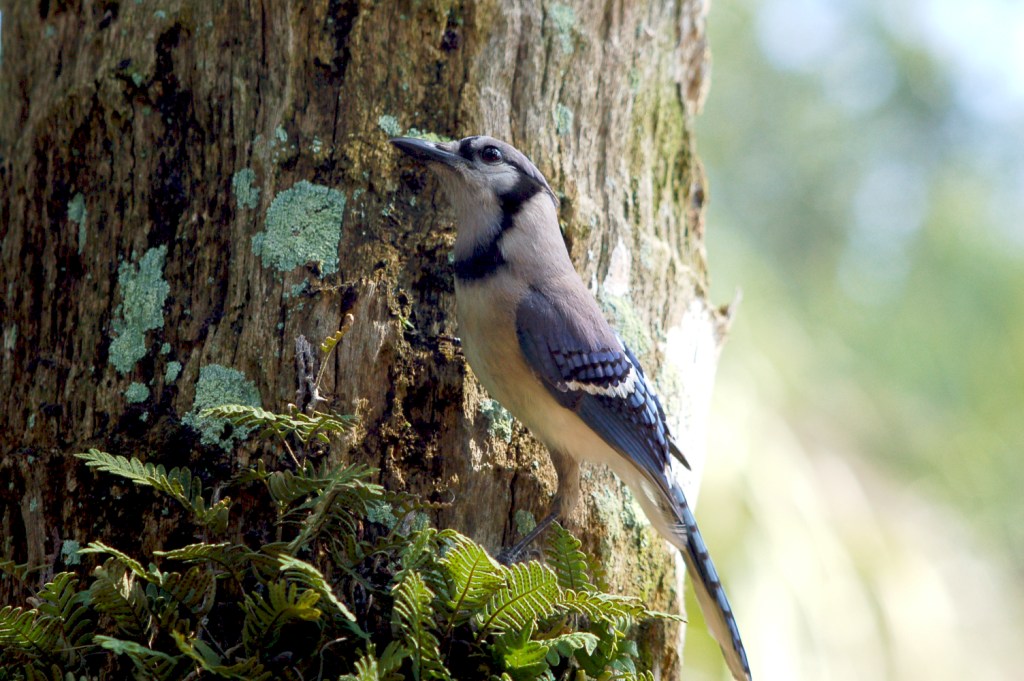
Blue Jay (Cyanocitta cristata) at Bok Tower By Dan’sPix
More Robbers
The Crow and the Blue Jay.
The Burgess Bird Book For Children
*
Listen to the story read.
CHAPTER 17. More Robbers.
By the sounds of rejoicing among the feathered folks of the Old Orchard Johnny Chuck knew that it was quite safe for him to come out. He was eager to tell Skimmer the Tree Swallow how glad he was that Mr. Blacksnake had been driven away before he could get Skimmer’s eggs. As he poked his head out of his doorway he became aware that something was still wrong in the Old Orchard. Into the glad chorus there broke a note of distress and sorrow. Johnny instantly recognized the voices of Welcome Robin and Mrs. Robin. There is not one among his feathered neighbors who can so express worry and sorrow as can the Robins.
Johnny was just in time to see all the birds hurrying over to that part of the Old Orchard where the Robins had built their home. The rejoicing suddenly gave way to cries of indignation and anger, and Johnny caught the words, “Robber! Thief! Wretch!” It appeared that there was just as much excitement over there as there had been when Mr. Blacksnake had been discovered trying to rob Skimmer and Mrs. Skimmer. It couldn’t be Mr. Blacksnake again, because Farmer Brown’s boy had chased him in quite another direction.
“What is it now?” asked Johnny of Skimmer, who was still excitedly discussing with Mrs. Skimmer their recent fright.
“I don’t know, but I’m going to find out,” replied Skimmer and darted away.
Johnny Chuck waited patiently. The excitement among the birds seemed to increase, and the chattering and angry cries grew louder. Only the voices of Welcome and Mrs. Robin were not angry. They were mournful, as if Welcome and Mrs. Robin were heartbroken. Presently Skimmer came back to tell Mrs. Skimmer the news.
“The Robins have lost their eggs!” he cried excitedly. “All four have been broken and eaten. Mrs. Robin left them to come over here to help drive away Mr. Blacksnake, and while she was here some one ate those eggs. Nobody knows who it could have been, because all the birds of the Old Orchard were over here at that time. It might leave been Chatterer the Red Squirrel, or it might have been Sammy Jay, or it might have been Creaker the Grackle, or it might have been Blacky the Crow. Whoever it was just took that chance to sneak over there and rob that nest when there was no one to see him.”
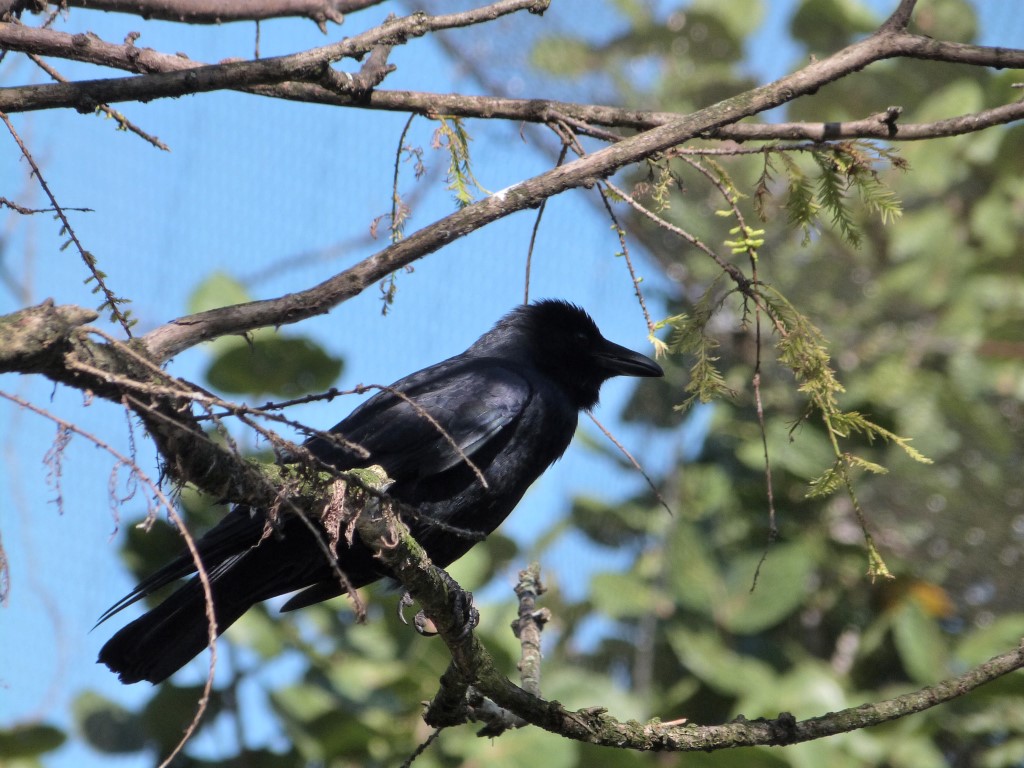
Crow at Flamingo Gardens by Lee
Just then from over towards the Green Forest sounded a mocking “Caw, caw, caw!” Instantly the noise in the Old Orchard ceased for a moment. Then it broke out afresh. There wasn’t a doubt now in any one’s mind. Blacky the Crow was the robber. How those tongues did go! There was nothing too bad to say about Blacky. And such dreadful things as those birds promised to do to Blacky the Crow if ever they should catch him in the Old Orchard.
“Caw, caw, caw!” shouted Blacky from the distance, and his voice sounded very much as if he thought he had done something very smart. It was quite clear that at least he was not sorry for what he had done.
All the birds were so excited and so angry, as they gathered around Welcome and Mrs. Robin trying to comfort them, that it was some time before their indignation meeting broke up and they returned to their own homes and duties. Almost at once there was another cry of distress. Mr. and Mrs. Chebec had been robbed of their eggs! While they had been attending the indignation meeting at the home of the Robins, a thief had taken the chance to steal their eggs and get away.
Of course right away all the birds hurried over to sympathize with the Chebecs and to repeat against the unknown thief all the threats they had made against Blacky the Crow. They knew it couldn’t have been Blacky this time because they had heard Blacky cawing over on the edge of the Green Forest. In the midst of the excited discussion as to who the thief was, Weaver the Orchard Oriole spied a blue and white feather on the ground just below Chebec’s nest.
“It was Sammy Jay! There is no doubt about it, it was Sammy Jay!” he cried.
At the sight of that telltale feather all the birds knew that Weaver was right, and led by Scrapper the Kingbird they began a noisy search of the Old Orchard for the sly robber. But Sammy wasn’t to be found, and they soon gave up the search, none daring to stay longer away from his own home lest something should happen there. Welcome and Mrs. Robin continued to cry mournfully, but little Mr. and Mrs. Chebec bore their trouble almost silently.
“There is one thing about it,” said Mr. Chebec to his sorrowful little wife, “that egg of Sally Sly’s went with the rest, and we won’t have to raise that bothersome orphan.”
“That’s true,” said she. “There is no use crying over what can’t be helped. It is a waste of time to sit around crying. Come on, Chebec, let’s look for a place to build another nest. Next time I won’t leave the eggs unwatched for a minute.”
Meanwhile Jenny Wren’s tongue was fairly flying as she chattered to Peter Rabbit, who had come up in the midst of the excitement and of course had to know all about it.
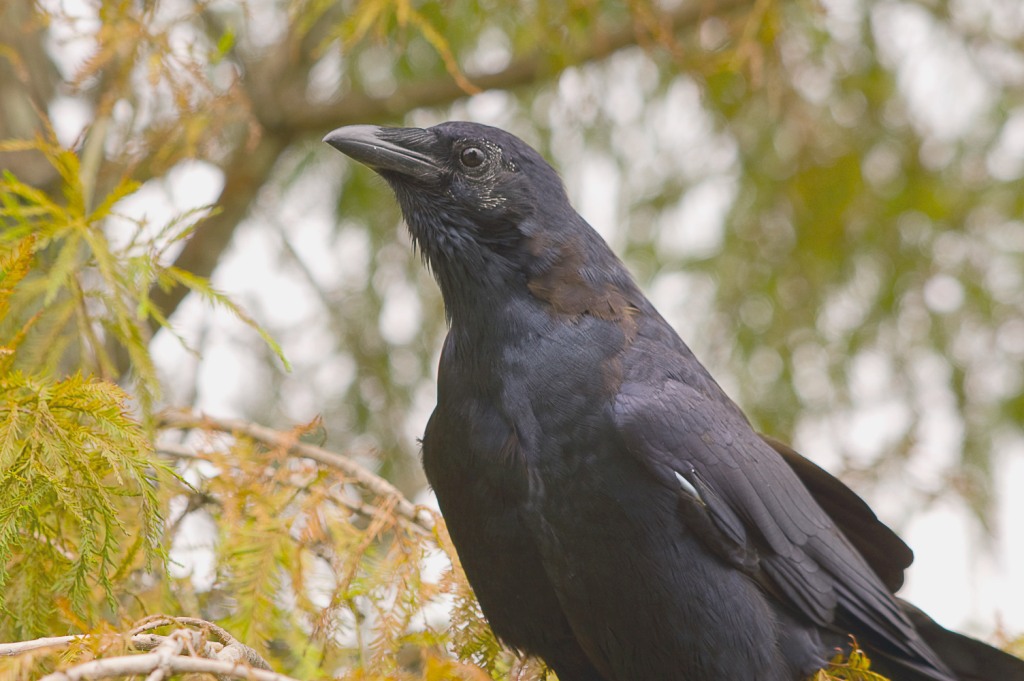
Fish Crow (Corvus ossifragus) at Lake Morton By Dan’sPix
“Blacky the Crow has a heart as black as his coat, and his cousin Sammy Jay isn’t much better,” declared Jenny. “They belong to a family of robbers.”
“Wait a minute,” cried Peter. “Do you mean to say that Blacky the Crow and Sammy Jay are cousins?”
“For goodness’ sake, Peter!” exclaimed Jenny, “do you mean to say that you don’t know that? Of course they’re cousins. They don’t look much alike, but they belong to the same family. I would expect almost anything bad of any one as black as Blacky the Crow. But how such a handsome fellow as Sammy Jay can do such dreadful things I don’t understand. He isn’t as bad as Blacky, because he does do a lot of good. He destroys a lot of caterpillars and other pests.
“There are no sharper eyes anywhere than those of Sammy Jay, and I’ll have to say this for him, that whenever he discovers any danger he always gives us warning. He has saved the lives of a good many of us feathered folks in this way. If it wasn’t for this habit of stealing our eggs I wouldn’t have a word to say against him, but at that, he isn’t as bad as Blacky the Crow. They say Blacky does some good by destroying white grubs and some other harmful pests, but he’s a regular cannibal, for he is just as fond of young birds as he is of eggs, and the harm he does in this way is more than the good he does in other ways. He’s bold, black, and bad, if you ask me.”
Remembering her household duties, Jenny Wren disappeared inside her house in her usual abrupt fashion. Peter hung around for a while but finding no one who would take the time to talk to him he suddenly decided to go over to the Green Forest to look for some of his friends there. He had gone but a little way in the Green Forest when he caught a glimpse of a blue form stealing away through the trees. He knew it in an instant, for there is no one with such a coat but Sammy Jay. Peter glanced up in the tree from which Sammy had flown and there he saw a nest in a crotch halfway up. “I wonder,” thought Peter, “if Sammy was stealing eggs there, or if that is his own nest.” Then he started after Sammy as fast as he could go, lipperty-lipperty-lip. As he ran he happened to look back and was just in time to see Mrs. Jay slip on to the nest. Then Peter knew that he had discovered Sammy’s home. He chuckled as he ran.
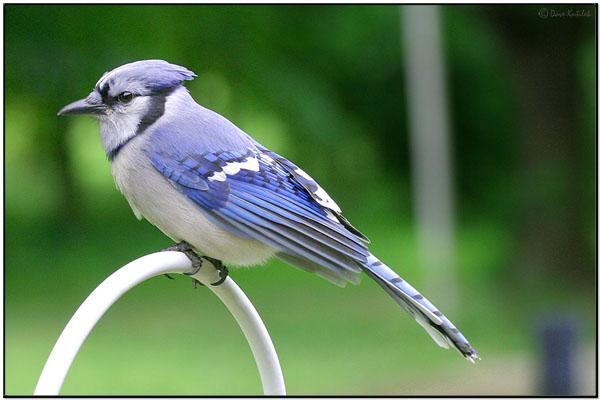
Blue Jay (Cyanocitta cristata) by Daves BirdingPix
“I’ve found out your secret, Sammy Jay!” cried Peter when at last he caught up with Sammy.
“Then I hope you’ll be gentleman enough to keep it,” grumbled Sammy, looking not at all pleased.
“Certainly,” replied Peter with dignity. “I wouldn’t think of telling any one. My, what a handsome fellow you are, Sammy.”
Sammy looked pleased. He is a little bit vain, is Sammy Jay. There is no denying that he is handsome. He is just a bit bigger than Welcome Robin. His back is grayish-blue. His tail is a bright blue crossed with little black bars and edged with white. His wings are blue with white and black bars. His throat and breast are a soft grayish-white, and he wears a collar of black. On his head he wears a pointed cap, a very convenient cap, for at times he draws it down so that it is not pointed at all.
“Why did you steal Mrs. Chebec’s eggs?” demanded Peter abruptly.
Sammy didn’t look the least bit put out. “Because I like eggs,” he replied promptly. “If people will leave their eggs unguarded they must expect to lose them. How did you know I took those eggs?”
“Never mind, Sammy; never mind. A little bird told me,” retorted Peter mischievously.
Sammy opened his mouth for a sharp reply, but instead he uttered a cry of warning. “Run, Peter! Run! Here comes Reddy Fox!” he cried.
Peter dived headlong under a great pile of brush. There he was quite safe. While he waited for Reddy Fox to go away he thought about Sammy Jay. “It’s funny,” he mused, “how so much good and so much bad can be mixed together. Sammy Jay stole Chebec’s eggs, and then he saved my life. I just know he would have done as much for Mr. and Mrs. Chebec, or for any other feathered neighbor. He can only steal eggs for a little while in the spring. I guess on the whole he does more good than harm. I’m going to think so anyway.”
Peter was quite right. Sammy Jay does do more good than harm.
*
When they found the feather, a verse comes to mind:
… and be sure your sin will find you out. (Numbers 32:23b NKJV)
*
Why were Welcome Robin and Mrs. Robin upset?
Which bird was the one who destroyed the eggs?
What did their friends try to do to help the Robins?
Should we do that for our friends also?
Who was the next robber?
How did they know it was him?
Both the Crow and the Blue Jay are cousins. Why?
Why did Peter decide that Sammy Blue Jay was okay?
Can we sin just a little and then do lots of good? Does that make it right?
Therefore comfort each other and edify one another, just as you also are doing. (1 Thessalonians 5:11 NKJV)
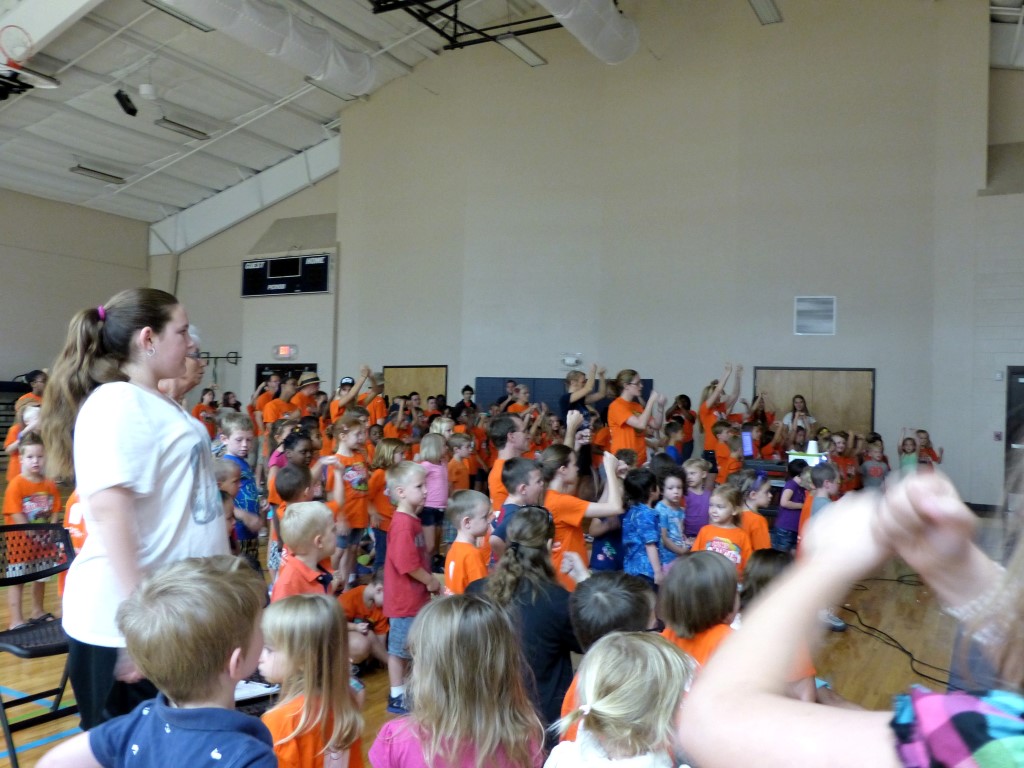
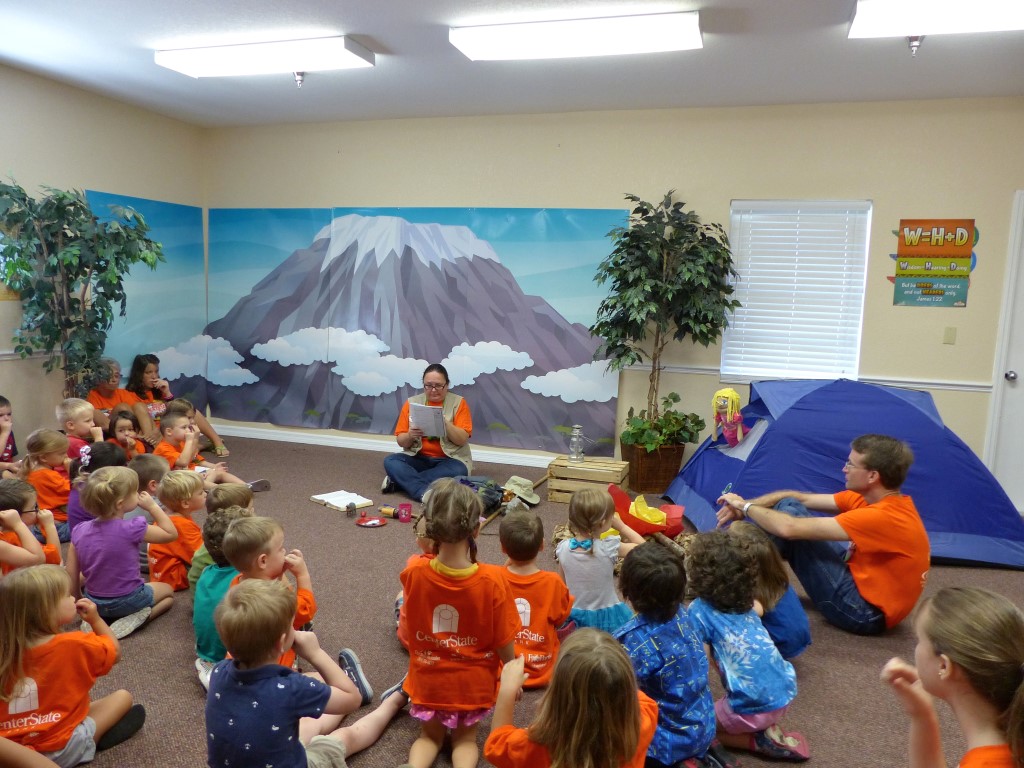
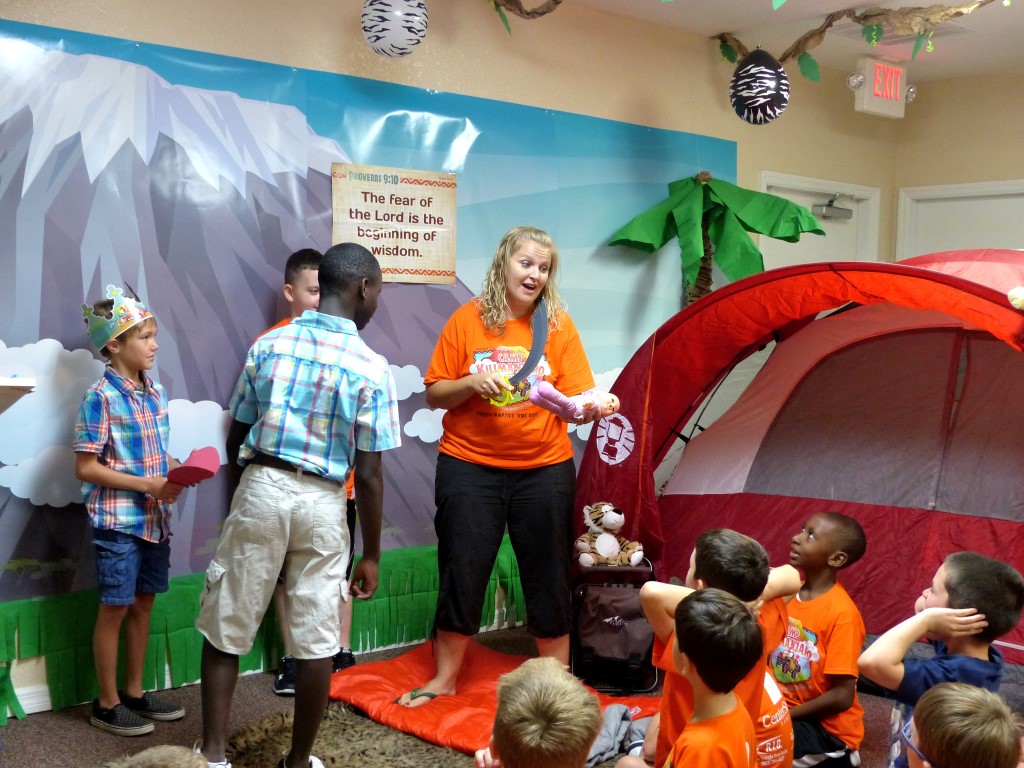
This year we are using Answers in Genesis’ Camp Kilimanjaro material for our Vacation Bible School. With over 200+ children signed up, we are staying busy. The theme is great and the lessons have been interesting so far.
A Lesson for the younger ones.
*
Threatning to divide a baby – Solomon’s Wisdom
This year, as I have for several years, many of the photos posted to our VBS 2015 section of Facebook, were taken by me. This means that I have been busy this week. The photos posted to the site are just the tip of the iceberg. It takes time to sort through them and clean them up a tad.
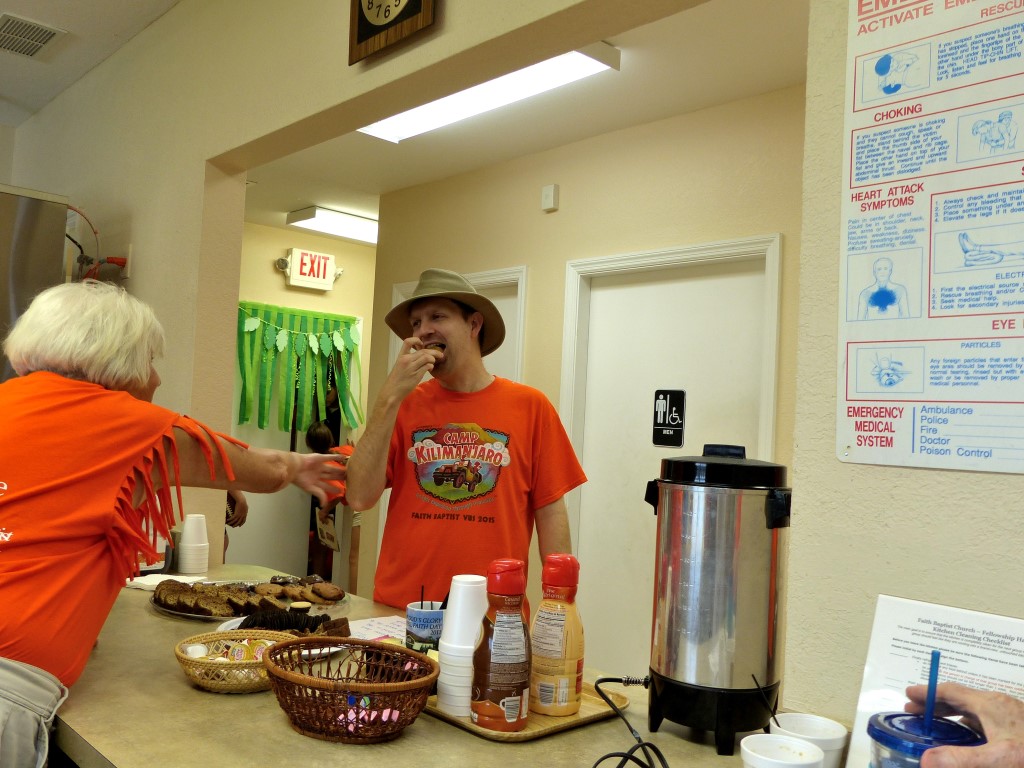
Stephen stopping by for a cookie.
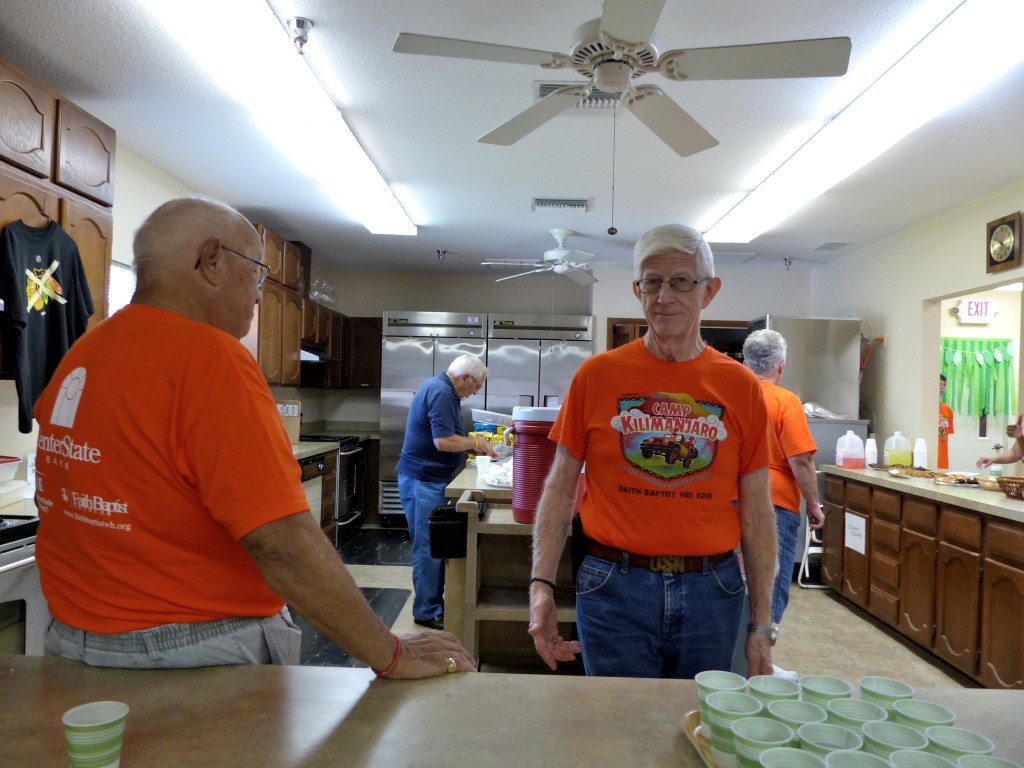
Dan decided not to do photos this year and has become part of the Kitchen Crew. I call them the Cookie Monster Crew. It takes a lot of cookies (2 apiece) to feed 200+ for 5 days. Plus, we have 85 workers stopping by to get their cookies and snacks. (I’d rather walk around and take photos.)
Dan in the Kitchen
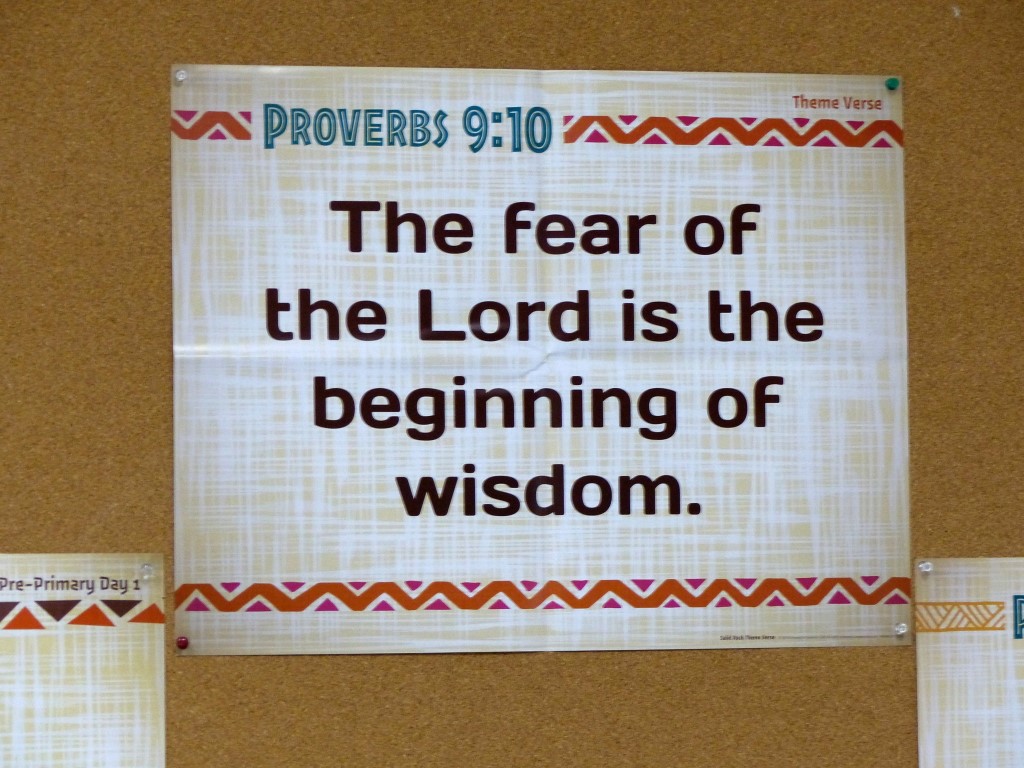
All of this said, no work is being done on all the photos from our vacation this week. I did find a bird in one of the posters today. Think I’ll keep it to use on the blog from time to time.
Beware of Wild Animals
That Cardinal doesn’t seem too dangerous.
Thanks for stopping by to see what sort of adventure is going on this week. Pray for us as we do the various task we all have to do and especially for those doing the teaching of the lessons. Pray that the children will see the truth in God’s Word and that some may come to know the Lord as their personal saviour.
(Stephen and the Lord are the ones responsible for the beginning of Lee’s Birdwatching Adventures coming into existence. Fifth Blog Anniversary)
“I don’t believe it,” muttered Johnny Chuck out loud. “I don’t believe Jenny Wren knows what she’s talking about.”
“What is it Jenny Wren has said that you don’t believe?” demanded Skimmer the Tree Swallow, as he once more settled himself in his doorway.
“She said that Hummer the Hummingbird is a sort of second cousin to Sooty the Chimney Swift,” replied Johnny Chuck.
“Well, it’s so, if you don’t believe it,” declared Skimmer. “I don’t see that that is any harder to believe than that you are cousin to Striped Chipmunk and Nappy Jack the Gray Squirrel. To look at you no one would ever think you are a member of the Squirrel family, but you must admit that you are.”
Johnny Chuck nodded his head thoughtfully. “Yes,” said he, “I am, even if I don’t look it. This is a funny world, isn’t it? You can’t always tell by a person’s looks who he may be related to. Now that I’ve found out that Sooty isn’t related to you and is related to Hummer, I’ll never dare guess again about anybody’s relatives. I always supposed Twitter the Martin to be a relative of yours, but now that I’ve learned that Sooty isn’t, I suspect that Twitter isn’t either.”
“Oh, yes, he is,” replied Skimmer promptly. “He’s the largest of the Swallow family, and we all feel very proud of him. Everybody loves him.”
“Is he as black as he looks, flying round up in the air?” asked Johnny Chuck. “He never comes down here as you do where a fellow can get a good look at him.”
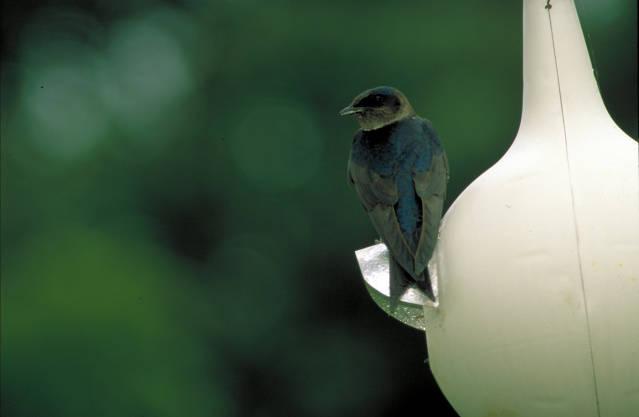
“Yes,” replied Skimmer, “he dresses all in black, but it is a beautiful blue-black, and when the sun shines on his back it seems to be almost purple. That is why some folks call him the Purple Martin. He is one of the most social fellows I know of. I like a home by myself, such as I’ve got here, but Twitter loves company. He likes to live in an apartment house with a lot of his own kind. That is why he always looks for one of those houses with a lot of rooms in it, such as Farmer Brown’s boy has put up on the top of that tall pole out in his back yard. He pays for all the trouble Farmer Brown’s boy took to put that house up. If there is anybody who catches more flies and winged insects than Twitter, I don’t know who it is.”
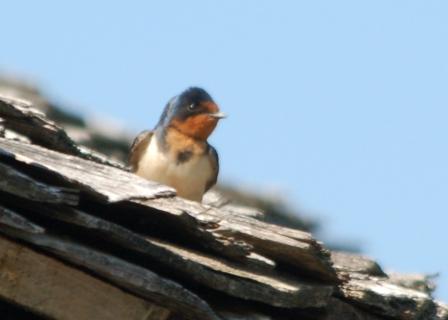
Barn Swallow in Cades Cove by Dan
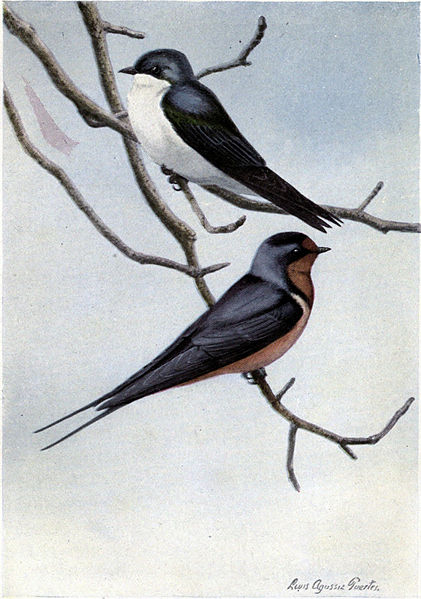
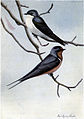
“How about me?” demanded a new voice, as a graceful form skimmed over Johnny Chuck’s head, and turning like a flash, came back. It was Forktail the Barn Swallow, the handsomest and one of the most graceful of all the Swallow family. He passed so close to Johnny that the latter had a splendid chance to see and admire his glistening steel-blue back and the beautiful chestnut-brown of his forehead and throat with its narrow black collar, and the brown to buff color of his under parts. But the thing that was most striking about him was his tail, which was so deeply forked as to seem almost like two tails.
“I would know him as far as I could see him just by his tail alone,” exclaimed Johnny. “I don’t know of any other tail at all like it.”
“There isn’t any other like it,” declared Skimmer. “If Twitter the Martin is the largest of our family, Forktail is the handsomest.”
“How about my usefulness?” demanded Forktail, as he came skimming past again. “Cousin Twitter certainly does catch a lot of flies and insects but I’m willing to go against him any day to see who can catch the most.”
With this he darted away. Watching him they saw him alight on the top of Farmer Brown’s barn. “It’s funny,” remarked Johnny Chuck, “but as long as I’ve known Forktail, and I’ve known him ever since I was big enough to know anybody, I’ve never found out how he builds his nest. I’ve seen him skimming over the Green Meadows times without number, and often he comes here to the Old Orchard as he did just now, but I’ve never seen him stop anywhere except over on that barn.”
“That’s where he nests,” chuckled Skimmer.
“What?” cried Johnny Chuck. “Do you mean to say he nests on Farmer Brown’s barn?”
“No,” replied Skimmer. “He nests in it. That’s why he is called the Barn Swallow, and why you never have seen his nest. If you’ll just go over to Farmer Brown’s barn and look up in the roof, you’ll see Forktail’s nest there somewhere.”
“Me go over to Farmer Brown’s barn!” exclaimed Johnny Chuck. “Do you think I’m crazy?”
Skimmer chuckled. “Forktail isn’t crazy,” said he, “and he goes in and out of that barn all day long. I must say I wouldn’t care to build in such a place myself, but he seems to like it. There’s one thing about it, his home is warm and dry and comfortable, no matter what the weather is. I wouldn’t trade with him, though. No, sir, I wouldn’t trade with him for anything. Give me a hollow in a tree well lined with feathers to a nest made of mud and straw, even if it is feather-lined.”
“Do you mean that such a neat-looking, handsome fellow as Forktail uses mud in his nest?” cried Johnny.
Skimmer bobbed his head. “He does just that,” said he. “He’s something like Welcome Robin in this respect. I—”
But Johnny Chuck never knew what Skimmer was going to say next, for Skimmer happened at that instant to glance up. For an instant he sat motionless with horror, then with a shriek he darted out into the air. At the sound of that shriek Mrs. Skimmer, who all the time had been sitting on her eggs inside the hollow of the tree, darted out of her doorway, also shrieking. For a moment Johnny Chuck couldn’t imagine what could be the trouble. Then a slight rustling drew his eyes to a crotch in the tree a little above the doorway of Skimmer’s home. There, partly coiled around a branch, with head swaying to and fro, eyes glittering and forked tongue darting out and in, as he tried to look down into Skimmer’s nest, was Mr. Blacksnake.
Barn Swallow (Hirundo rustica) WikiC
It seemed to Johnny as if in a minute every bird in the Old Orchard had arrived on the scene. Such a shrieking and screaming as there was! First one and then another would dart at Mr. Blacksnake, only to lose courage at the last second and turn aside. Poor Skimmer and his little wife were frantic. They did their utmost to distract Mr. Blacksnake’s attention, darting almost into his very face and then away again before he could strike. But Mr. Blacksnake knew that they were powerless to hurt him, and he knew that there were eggs in that nest. There is nothing he loves better than eggs unless it is a meal of baby birds. Beyond hissing angrily two or three times he paid no attention to Skimmer or his friends, but continued to creep nearer the entrance to that nest.
At last he reached a position where he could put his head in the doorway. As he did so, Skimmer and Mrs. Skimmer each gave a little cry of hopelessness and despair. But no sooner had his head disappeared in the hole in the old apple-tree than Scrapper the Kingbird struck him savagely. Instantly Mr. Blacksnake withdrew his head, hissing fiercely, and struck savagely at the birds nearest him. Several times the same thing happened. No sooner would his head disappear in that hole than Scrapper or one or the other of Skimmer’s friends, braver than the rest, would dart in and peck at him viciously, and all the time all the birds were screaming as only excited feathered folk can. Johnny Chuck was quite as excited as his feathered friends, and so intent watching the hated black robber that he had eyes for nothing else. Suddenly he heard a step just behind him. He turned his head and then frantically dived head first down into his hole. He had looked right up into the eyes of Farmer Brown’s boy!
“Ha, ha!” cried Farmer Brown’s boy, “I thought as much!” And with a long switch he struck Mr. Blacksnake just as the latter had put his head in that doorway, resolved to get those eggs this time. But when he felt that switch and heard the voice of Farmer Brown’s boy he changed his mind in a flash. He simply let go his hold on that tree and dropped. The instant he touched the ground he was off like a shot for the safety of the old stone wall, Farmer Brown’s boy after him. Farmer Brown’s boy didn’t intend to kill Mr. Blacksnake, but he did want to give him such a fright that he wouldn’t visit the Old Orchard again in a hurry, and this he quite succeeded in doing.
No sooner had Mr. Blacksnake disappeared than all the birds set up such a rejoicing that you would have thought they, and not Farmer Brown’s boy, had saved the eggs of Mr. and Mrs. Skimmer. Listening to them, Johnny Chuck just had to smile.
Listen to the story read.
Barn Swallow at the New Mexico Welcome Center by Lee
Yea, the sparrow hath found an house, and the swallow a nest for herself, where she may lay her young, even thine altars, O LORD of hosts, my King, and my God. (Psalms 84:3 KJV)
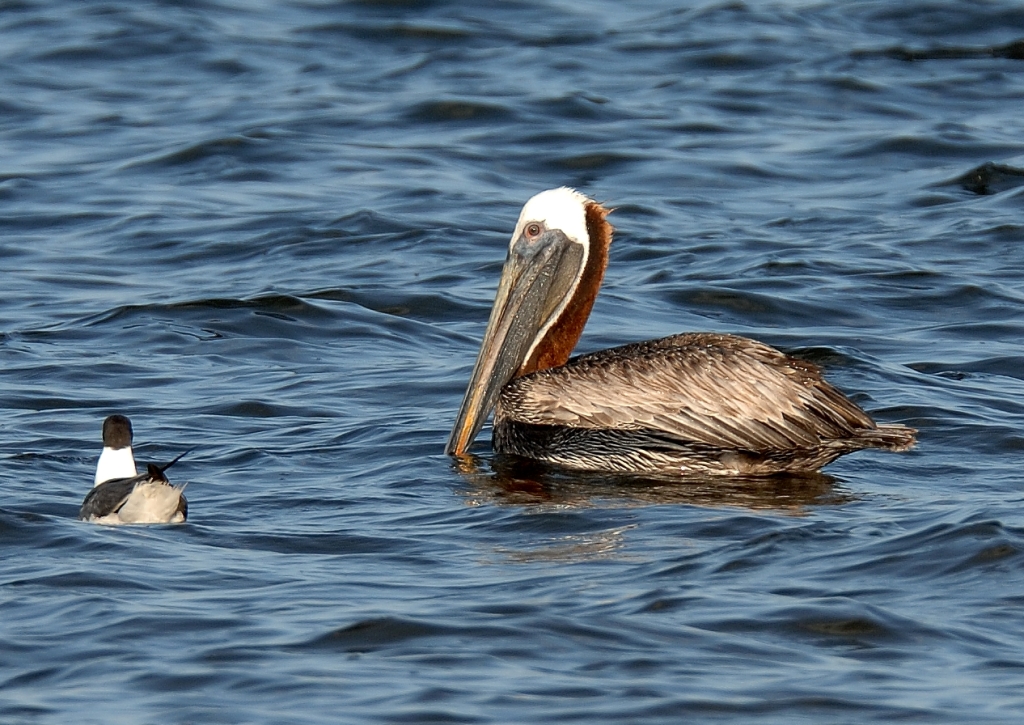
Brown Pelican and Laughing Gull by Dan MacDill Shore 2014
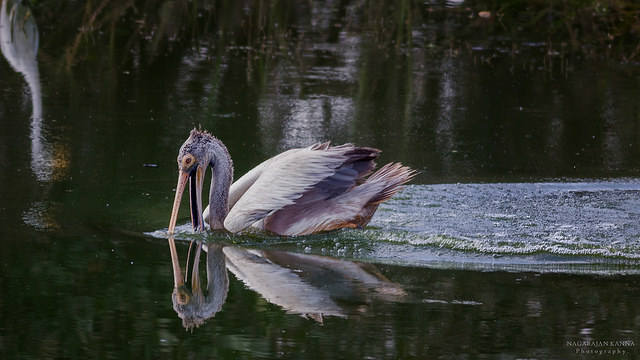
Alexander and the Fishing Contest ~ by Emma Foster
Once there was a pelican named Alexander who lived near the beach. Every day, he would go fishing and he would always bring his favorite fishing pole. One day, as he was flying to the shore, he landed on a huge rock and noticed a sign on the beach. Alexander read the sign. The sign said in big, red letters:
FISHING CONTEST TODAY,
FREE ADMISSION FOR ALL AGES.
FIRST PRIZE FOR THE BIGGEST FISH IS A NEW BOAT.
Alexander decided he would join the fishing contest to see if he could catch the biggest fish. All day he practiced his fishing Every now and then Alexander would catch a fish, but he knew there was a bigger fish somewhere in the water. At noon, it was time for the fishing contest to start and many people had entered. There were people sitting on the beach fishing as far as Alexander could see. A referee blew a whistle and the contest began. Eventually fish started biting and Alexander caught a few, but he knew there was a bigger fish somewhere in the ocean.
Pelican Reaching in water – Flickr Nagarajan Kanna
And then, something started tugging on Alexander’s line. He had to pull so hard Alexander almost fell off the rock he was fishing on. Eventually, Alexander had to dive down and scoop part of the fish up in his beak and pull the fish out of the water and drag it onto the shore. The referee blew his whistle again to signal that the contest was over. The judges came over to look at Alexander’s fish and immediately agreed that his fish was the winner. Alexander’s fish was almost twelve feet long! From then on, whenever Alexander went fishing, he brought his favorite fishing pole and his new boat The End
Lee’s Addition:
Simon Peter went up and dragged the net to land, full of large fish, one hundred and fifty-three; and although there were so many, the net was not broken. (Joh 21:11)
Well our young writer, Emma, has really come up with a “fish story” this time. She has such a great creative mind and even though the story is a little far-fetched, I like it very much. I wonder if Peter’s net contained any fish as large as Alexander’s? Humm? *
Johnny and Polly Chuck had made their home between the roots of an old apple-tree in the far corner of the Old Orchard. You know they have their bedroom way down in the ground, and it is reached by a long hall. They had dug their home between the roots of that old apple-tree because they had discovered that there was just room enough between those spreading roots for them to pass in and out, and there wasn’t room to dig the entrance any larger. So they felt quite safe from Reddy Fox; and Bowser the Hound, either of whom would have delighted to dig them out but for those roots.
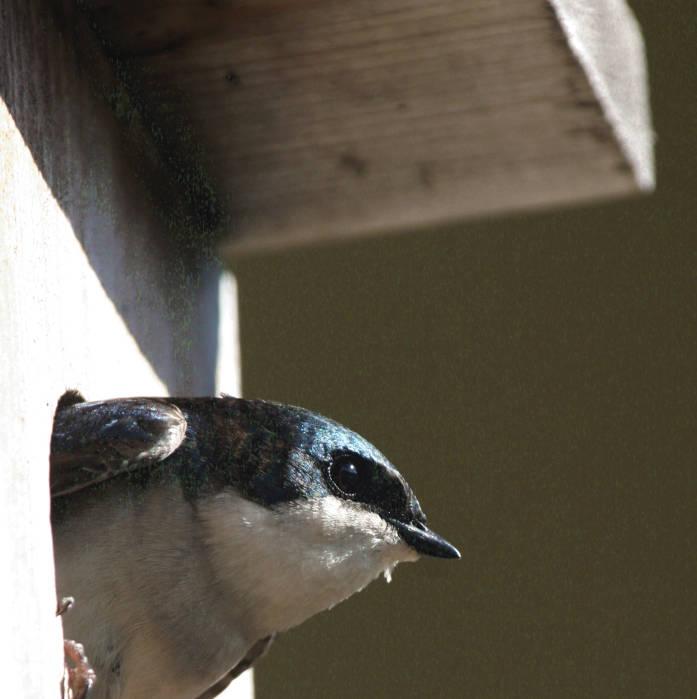
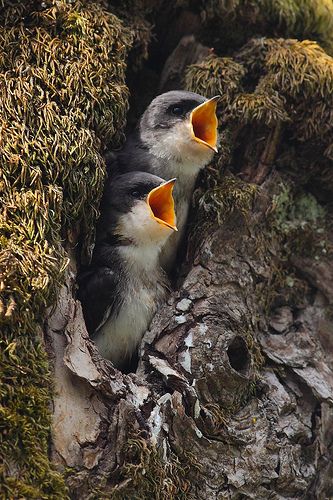
Right in front of their doorway was a very nice doorstep of shining sand where Johnny Chuck delighted to sit when he had a full stomach and nothing else to do. Johnny’s nearest neighbors had made their home only about five feet above Johnny’s head when he sat up on his doorstep. They were Skimmer the Tree Swallow and his trim little wife, and the doorway of their home was a little round hole in the trunk of that apple-tree, a hole which had been cut some years before by one of the Woodpeckers.
Johnny and Skimmer were the best of friends. Johnny used to delight in watching Skimmer dart out from beneath the branches of the trees and wheel and turn and glide, now sometimes high in the blue, blue sky, and again just skimming the tops of the grass, on wings which seemed never to tire. But he liked still better the bits of gossip when Skimmer would sit in his doorway and chat about his neighbors of the Old Orchard and his adventures out in the Great World during his long journeys to and from the far-away South.
To Johnny Chuck’s way of thinking, there was no one quite so trim and neat appearing as Skimmer with his snowy white breast and blue-green back and wings. Two things Johnny always used to wonder at, Skimmer’s small bill and short legs. Finally he ventured to ask Skimmer about them.
“Gracious, Johnny!” exclaimed Skimmer. “I wouldn’t have a big bill for anything. I wouldn’t know what to do with it; it would be in the way. You see, I get nearly all my food in the air when I am flying, mosquitoes and flies and all sorts of small insects with wings. I don’t have to pick them off trees and bushes or from the ground and so I don’t need any more of a bill than I have. It’s the same way with my legs. Have you ever seen me walking on the ground?”
Johnny thought a moment. “No,” said he, “now you speak of it, I never have.”
“And have you ever seen me hopping about in the branches of a tree?” persisted Skimmer.
Again Johnny Chuck admitted that he never had.
“The only use I have for feet,” continued Skimmer, “is for perching while I rest. I don’t need long legs for walking or hopping about, so Mother Nature has made my legs very short. You see I spend most of my time in the air.”
Skimmer The Tree Swallow and Forktail The Barn Swallow
“I suppose it’s the same with your cousin; Sooty the Chimney Swallow,” said Johnny.
“That shows just how much some people know!” twittered Skimmer indignantly. “The idea of calling Sooty a Swallow! The very idea! I’d leave you to know, Johnny Chuck, that Sooty isn’t even related to me. He’s a Swift, and not a Swallow.”
“He looks like a Swallow,” protested Johnny Chuck.
“He doesn’t either. You just think he does because he happens to spend most of his time in the air the way we Swallows do,” sputtered Skimmer. “The Swallow family never would admit such a homely looking fellow as he is as a member.
“Tut, tut, tut, tut! I do believe Skimmer is jealous,” cried Jenny Wren, who had happened along just in time to hear Skimmer’s last remarks.
“Nothing of the sort,” declared Skimmer, growing still more indignant. “I’d like to know what there is about Sooty the Chimney Swift that could possibly make a Swallow jealous.”
Jenny Wren cocked her tail up in that saucy way of hers and winked at Johnny Chuck. “The way he can fly,” said she softly.
“The way he can fly!” sputtered Skimmer, “The way he can fly! Why, there never was a day in his life that he could fly like a Swallow. There isn’t any one more graceful on the wing than I am, if I do say so. And there isn’t any one more ungraceful than Sooty.”
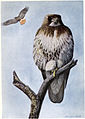
Chimney Swift of Birds Illustrated by Color Photography, 1897
Just then there was a shrill chatter overhead and all looked up to see Sooty the Chimney Swift racing through the sky as if having the very best time in the world. His wings would beat furiously and then he would glide very much as you or I would on skates. It was quite true that he wasn’t graceful. But he could twist and turn and cut up all sorts of antics, such as Skimmer never dreamed of doing.
“He can use first one wing and then the other, while you have to use both wings at once,” persisted Jenny Wren. “You couldn’t, to save your life, go straight down into a chimney, and you know it, Skimmer. He can do things with his wings which you can’t do, nor any other bird.”
“That may be true, but just the same I’m not the least teeny-weeny bit jealous of him,” said Skimmer, and darted away to get beyond the reach of Jenny’s sharp tongue.
“Is it really true that he and Sooty are not related?” asked Johnny Chuck, as they watched Skimmer cutting airy circles high up in the slay.
Jenny nodded. “It’s quite true, Johnny,” said site. “Sooty belongs to another family altogether. He’s a funny fellow. Did you ever in your life see such narrow wings? And his tail is hardly worth calling a tail.”
Johnny Chuck laughed. “Way up there in the air he looks almost alike at both ends,” said he. “Is he all black?”
“He isn’t black at all,” declared Jenny. “He is sooty-brown, rather grayish on the throat and breast. Speaking of that tail of his, the feathers end in little, sharp, stiff points. He uses them in the same way that Downy the Woodpecker uses his tail feathers when he braces himself with them on the trunk of a tree.”
“But I’ve never seen Sooty on the trunk of a tree,” protested Johnny Chuck. “In fact, I’ve never seen him anywhere but in the air.”
“And you never will,” snapped Jenny. “The only place he ever alights is inside a chimney or inside a hollow tree. There he clings to the side just as Downy the Woodpecker clings to the trunk of a tree.”
Johnny looked as if he didn’t quite believe this. “If that’s the case where does he nest?” he demanded. “And where does he sleep?”
“In a chimney, stupid. In a chimney, of course,” retorted Jenny Wren. “He fastens his nest right to the inside of a chimney. He makes a regular little basket of twigs and fastens it to the side of the chimney.”
“Are you trying to stuff me with nonsense?” asked Johnny Chuck indignantly. “How can he fasten his nest to the side of a chimney unless there’s a little shelf to put it on? And if he never alights, how does he get the little sticks to make a nest of? I’d just like to know how you expect me to believe any such story as that.”
Tree Swallows Ridgefield National Wildlife Refuge by jeremyjonkman on Flickr From Pinterest
Jenny Wren’s sharp little eyes snapped. “If you half used your eyes you wouldn’t have to ask me how he gets those little sticks,” she sputtered. “If you had watched him when he was flying close to the tree tops you would have seen him clutch little dead twigs in his claws and snap them off without stopping. That’s the way he gets his little sticks, Mr. Smarty, He fastens them together with a sticky substance he has in his mouth, and he fastens the nest to the side of the chimney in the same way. You can believe it or not, but it’s so.”
“I believe it, Jenny, I believe it,” replied Johnny Chuck very humbly. “If you please, Jenny, does Sooty get all his food in the air too?”
“Of course,” replied Jenny tartly. “He eats nothing but insects, and he catches them flying. Now I must get back to my duties at home.”
“Just tell me one more thing,” cried Johnny Chuck hastily. “Hasn’t Sooty any near relatives as most birds have?”
“He hasn’t any one nearer than some sort of second cousins, Boomer the Nighthawk, Whippoorwill, and Hummer the Hummingbird.”
“What?” cried Johnny Chuck, quite as if he couldn’t believe he had heard aright. “Did you say Hummer the Hummingbird?” But he got no reply, for Jenny Wren was already beyond hearing.
*
Even the stork in the sky Knows her seasons; And the turtledove and the swift and the thrush Observe the time of their migration; But My people do not know The ordinance of the LORD. (Jeremiah 8:7 NASB)
Like a sparrow in its flitting, like a swallow in its flying, a curse that is causeless does not alight. (Proverbs 26:2 ESV)
A man’s pride will bring him low, But the humble in spirit will retain honor. (Proverbs 29:23 NKJV)
Both of these birds belong to avian families that are mentioned in the Bible
Questions to think about:
Can you describe Skimmer the Swift?
What color is his breast, back and wings?
What is common about the legs of both Skimmer and Sooty?
How do both these birds catch their food?
Why was Skimmer showing a little pride?
Should we be prideful?
Can you describe Sooty the Swallow?
Where and how do Chimney Swallows they make their nest?
“He hath made his wonderful works to be remembered: the LORD is gracious and full of compassion.” (Psalm 111:4)
Birds and insects that take nectar from a flower without picking up any pollen are known as nectar robbers. Now, you’d probably think that nectar robbers would be harmful to plants and trees, but the desert teak tree couldn’t survive without a nectar robber – the purple sunbird.
In order to reproduce, this tree needs birds to pollinate its flowers. But since a tree cannot reproduce with its own pollen, it needs birds to fly from flower to flower and from one tree to another. Anything that encourages the pollinating birds to fly farther away helps out the teak trees.
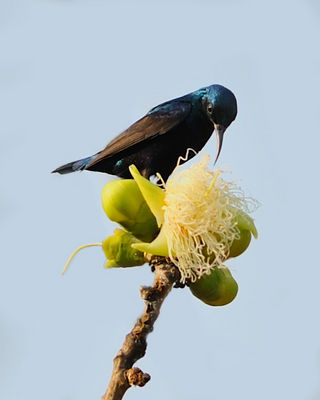
That’s where the purple thief comes in. Researchers at the University of Delhi discovered that the sunbird visits the flowers one hour before the pollinating birds arrive. The purple sunbird has a long, sharp beak that pierces the base of the flower to feed, so it doesn’t pick up any pollen. It does, however, empty the flower of about 60 percent of its nectar, leaving relatively little for the pollinators. This means that the pollinators will have to travel to more flowers and trees to get enough food, spreading pollen wherever they stop for a meal.
The researchers noted that “the robber plays a constructive and crucial role in the reproductive performance of [a] threatened tree species.” How right they are. And this unusual but crucial dining arrangement shows once again what an ingenious God we serve!
Prayer:
Lord, only You could come up with such an ingenious way to help the desert teak tree to reproduce! Surely such an arrangement could not have come about through blind chance! Amen.
Notes:
“These trees don’t mind getting robbed”, Science News, 7-25-14. Photo: Purple sunbird. Courtesy of J.M.Garg. licensed under the Creative Commons AttributionShare Alike 3.0 Unported license.
Lee’s Addition:
Purple Sunbird (Cinnyris asiaticus) by TAJA
Sunbirds belong to the Nectariniidae – Sunbirds Family which currently has 143 species. They are amazing colored by their Creator and well designed for the plants they pull the nectar from.
From Sunday Inspiration – Sunbirds, “These are very small passerine birds. Most sunbirds feed largely on nectar, but also take insects and spiders, especially when feeding young. Flower tubes that bar access to nectar because of their shape, are simply punctured at the base near the nectaries. Fruit is also part of the diet of some species. Their flight is fast and direct on their short wings.
The family is distributed throughout Africa, the Indian Subcontinent, Southeast Asia and just reaches northern Australia.
“Bob—Bob White! Bob—Bob White! Bob—Bob White!” clear and sweet, that call floated over to the dear Old Briar-patch until Peter could stand it no longer. He felt that he just had to go over and pay an early morning call on one of his very best friends, who at this season of the year delights in whistling his own name—Bob White.
“I suppose,” muttered Peter, “that Bob White has got a nest. I wish he would show it to me. He’s terribly secretive about it. Last year I hunted for his nest until my feet were sore, but it wasn’t the least bit of use. Then one morning I met Mrs. Bob White with fifteen babies out for a walk. How she could hide a nest with fifteen eggs in it is more than I can understand.”
Peter left the Old Briar-patch and started off over the Green Meadows towards the Old Pasture. As he drew near the fence between the Green Meadows and the Old Pasture he saw Bob White sitting on one of the posts, whistling with all his might. On another post near him sat another bird very near the size of Welcome Robin. He also was telling all the world of his happiness. It was Carol the Meadow Lark.
Peter was so intent watching these two friends of his that he took no heed to his footsteps. Suddenly there was a whirr from almost under his very nose and he stopped short, so startled that he almost squealed right out. In a second he recognized Mrs. Meadow Lark. He watched her fly over to where Carol was singing. Her stout little wings moved swiftly for a moment or two, then she sailed on without moving them at all. Then they fluttered rapidly again until she was flying fast enough to once more sail on them outstretched. The white outer feathers of her tail showed clearly and reminded Peter of the tail of Sweetvoice the Vesper Sparrow, only of course it was ever so much bigger.
Peter sat still until Mrs. Meadow Lark had alighted on the fence near Carol. Then he prepared to hurry on, for he was anxious for a bit of gossip with these good friends of his. But just before he did this he just happened to glance down and there, almost at his very feet, he caught sight of something that made him squeal right out. It was a nest with four of the prettiest eggs Peter ever had seen. They were white with brown spots all over them. Had it not been for the eggs he never would have seen that nest, never in the world. It was made of dry, brown grass and was cunningly hidden is a little clump of dead grass which fell over it so as to almost completely hide it. But the thing that surprised Peter most was the clever way in which the approach to it was hidden. It was by means of a regular little tunnel of grass.
“Oh!” cried Peter, and his eyes sparkled with pleasure. “This must be the nest of Mrs. Meadow Lark. No wonder I have never been able to find it, when I have looked for it. It is just luck and nothing else that I have found it this time. I think it is perfectly wonderful that Mrs. Meadow Lark can hide her home in such a way. I do hope Jimmy Skunk isn’t anywhere around.”
Peter sat up straight and anxiously looked this way and that way. Jimmy Skunk was nowhere to be seen and Peter gave a little sigh of relief. Very carefully he walked around that nest and its little tunnel, then hurried over toward the fence as fast as he could go.
“It’s perfectly beautiful, Carol!” he cried, just as soon as he was near enough. “And I won’t tell a single soul!”
“I hope not. I certainly hope not,” cried Mrs. Meadow Lark in an anxious tone. “I never would have another single easy minute if I thought you would tell a living soul about my nest. Promise that you won’t, Peter. Cross your heart and promise that you won’t.”
Peter promptly crossed his heart and promised that he wouldn’t tell a single soul. Mrs. Meadow Lark seemed to feel better. Right away she flew back and Peter turned to watch her. He saw her disappear in the grass, but it wasn’t where he had found the nest. Peter waited a few minutes, thinking that he would see her rise into the air again and fly over to the nest. But he waited in vain. Then with a puzzled look on his face, he turned to look up at Carol.
Carol’s eyes twinkled. “I know what you’re thinking, Peter,” he chuckled. “You are thinking that it is funny Mrs. Meadow Lark didn’t go straight hack to our nest when she seemed so anxious about it. I would have you to know that she is too clever to do anything so foolish as that. She knows well enough that somebody might see her and so find our secret. She has walked there from the place where you saw her disappear in the grass. That is the way we always do when we go to our nest. One never can be too careful these days.”
Then Carol began to pour out his happiness once more, quite as if nothing had interrupted his song.
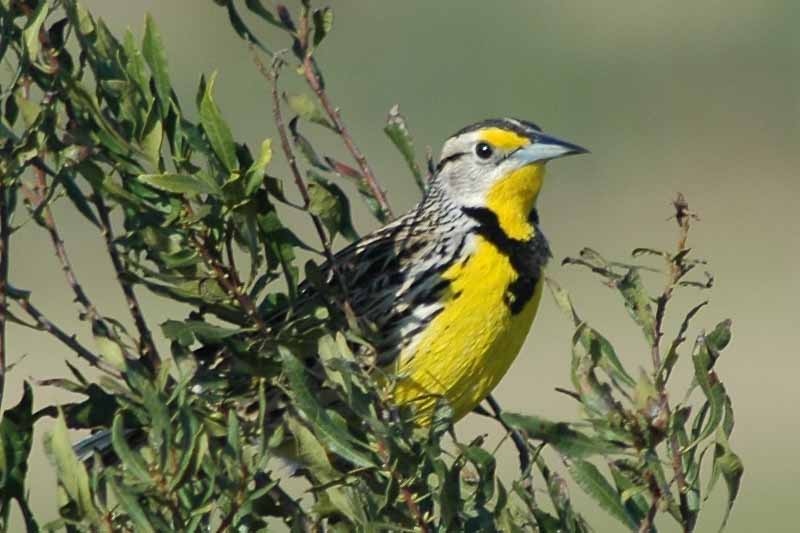
Somehow Peter never before had realized how handsome Carol the Meadow Lark was. As he faced Peter, the latter saw a beautiful yellow throat and waistcoat, with a broad black crescent on his breast. There was a yellow line above each eye. His back was of brown with black markings. His sides were whitish, with spats and streaks of black. The outer edges of his tail were white. Altogether he was really handsome, far handsomer than one would suspect, seeing him at a distance.
Having found out Carol’s secret, Peter was doubly anxious to find Bob White’s home, so he hurried over to the post where Bob was whistling with all his might. “Bob!” cried Peter. “I’ve just found Carol’s nest and I’ve promised to keep it a secret. Won’t you show me your nest, too, if I’ll promise to keep THAT a secret?”
Rob threw back his head and laughed joyously. “You ought to know, Peter, by this time,” said he, “that there are secrets never to be told to anybody. My nest is one of these. If you find it, all right; but I wouldn’t show it to my very best friend, and I guess I haven’t any better friend than you, Peter.” Then from sheer happiness he whistled, “—Bob White! Bob—Bob White!” with all his might.
Peter was disappointed and a little put out. “I guess,” said he, “I could find it if I wanted to. I guess it isn’t any better hidden than Mrs. Meadow Lark’s, and I found that. Some folks aren’t as smart as they think they are.”
Bob White, who is sometimes called Quail and sometimes called Partridge, and who is neither, chuckled heartily. “Go ahead, old Mr. Curiosity, go ahead and hunt all you please,” said he. “It’s funny to me how some folks think themselves smart when the truth is they simply have been lucky. You know well enough that you just happened to find Carol’s nest. If you happen to find mine, I won’t have a word to say.”
Bob White took a long breath, tipped his head back until his bill was pointing right up in the blue, blue sky, and with all his might whistled his name, “Bob—Bob White! Bob—Bob White!”
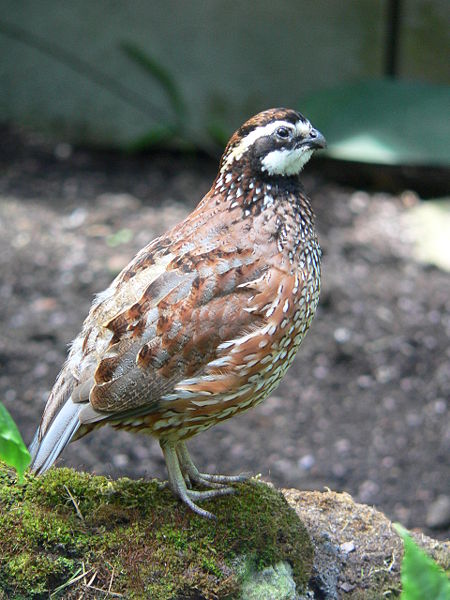
Northern Bobwhite
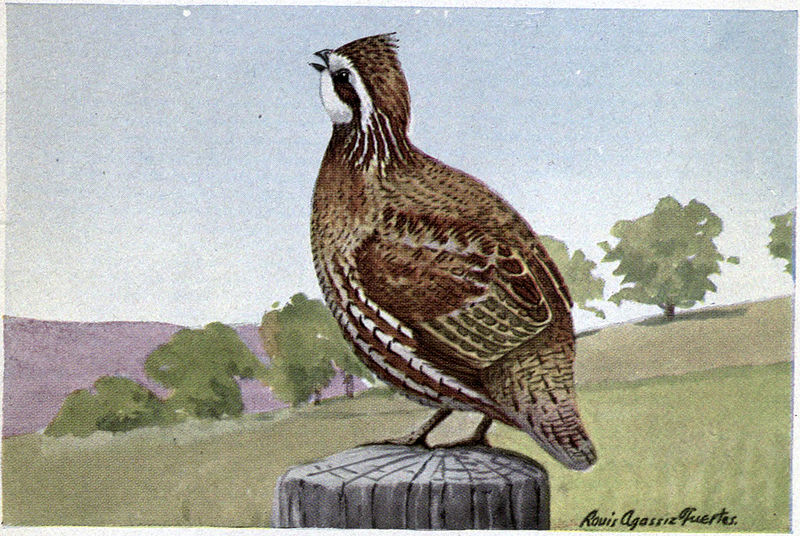
As Peter looked at him it came over him that Bob White was the plumpest bird of his acquaintance. He was so plump that his body seemed almost round. The shortness of his tail added to this effect, for Bob has a very short tail. The upper part of his coat was a handsome reddish-brown with dark streaks and light edgings. His sides and the upper part of his breast were of the same handsome reddish-brown, while underneath he was whitish with little bars of black. His throat was white, and above each eye was a broad white stripe. His white throat was bordered with black, and a band ofblack divided the throat from the white line above each eye. The top of his head was mixed black and brown. Altogether he was a handsome little fellow in a modest way.
Suddenly Bob White stopped whistling and looked down at Peter with a twinkle in his eye. “Why don’t you go hunt for that nest, Peter?” said he.
“I’m going,” replied Peter rather shortly, for he knew that Bob knew that he hadn’t the least idea where to look. It might be somewhere on the Green Meadows or it might be in the Old Pasture; Bob hadn’t given the least hint. Peter had a feeling that the nest wasn’t far away and that it was on the Green Meadows, so he began to hunt, running aimlessly this way and that way, all the time feeling very foolish, for of course he knew that Bob White was watching him and chuckling down inside.
It was very warm down there on the Green Meadows, and Peter grew hot and tired. He decided to run up in the Old Pasture in the shade of an old bramble-tangle there. Just the other side of the fence was a path made by the cows and often used by Farmer Brown’s boy and Reddy Fox and others who visited the Old Pasture. Along this Peter scampered, lipperty-lipperty-lip, on his way to the bramble-tangle. He didn’t look either to right or left. It didn’t occur to him that there would be any use at all, for of course no one would build a nest near a path where people passed to and fro every day.
And so it was that in his happy-go-lucky way Peter scampered right past a clump of tall weeds close beside the path without the least suspicion that cleverly hidden in it was the very thing he was looking for. With laughter in her eyes, shrewd little Mrs. Bob White, with sixteen white eggs under her, watched him pass. She had chosen that very place for her nest because she knew that it was the last place anyone would expect to find it. The very fact that it seemed the most dangerous place she could have chosen made it the safest.
… and do not reveal another’s secret, (Proverbs 25:9b ESV)
Can anyone hide himself in secret places, So I shall not see him?” says the LORD; “Do I not fill heaven and earth?” says the LORD. (Jeremiah 23:24 NKJV)
Questions:
Which bird whistles his own name?
How many little ones did they have?
Did Peter ever find their nest?
Who’s nest did Peter find?
What did he promise not to tell?
Can you describe the Meadow Lark?
What does the Bob White look like?
How does the Meadow Lark fly?
How do the birds keep people and animals from finding their nest?
“As birds flying, so will the LORD of hosts defend Jerusalem; defending also he will deliver it; and passing over he will preserve it.” Isaiah 31:5
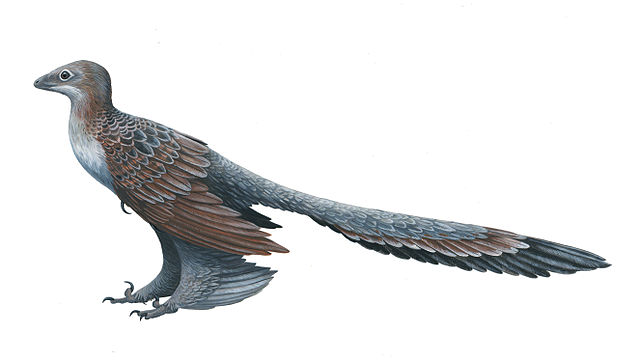
A new species of dinosaur has been found. Scientists are calling Changyuraptor yangi the biggest feathered dinosaur ever discovered. Here at Creation Moments, however, we’re calling it a feathered bird. Dinosaur-to-bird evolution is nothing more than a flight of fancy.
Naturally, USA Today, BBC News and many other news outlets are calling it a four-winged dinosaur. Changyuraptor yangi, they say, is a new species of dinosaur that offers “clues to the origin of flight – and the transition from feathered dinosaurs to birds.” Research scientists also say that “the new fossil possesses the longest known feathers for any non-avian dinosaur.”
Non-avian? No, we’re still calling them birds, and here’s why. For one thing, dinosaurs and other reptiles have scales, which are folds in their skin. Birds, on the other hand, have feathers which grow out of follicles. Scales and feathers are completely different. No known fossils, in fact, provide evidence of a transition from scales to feathers.
Furthermore, for a dinosaur to evolve into a bird, it would need to develop hollow bones, and it would need to gain powerful flight muscles and develop a new heart with four chambers rather than three.
So, too, do we need a new heart to understand the things of God. We don’t evolve our old heart into a new one. Our new heart comes to us through the work of the Holy Spirit.
Prayer: Thank You, Father, for sending the Holy Spirit so we can have a close and enduring relationship with You! Amen.
Actually, there are several verses in Scripture that mention a creature with four wings. Ezekiel 1:6&8: 10:21 and this verse in Daniel 7:6 says:
“After this I looked, and there was another, like a leopard, which had on its back four wings of a bird. The beast also had four heads, and dominion was given to it. (Daniel 7:6 NKJV)
Flying with four wings seems to be possible.
Now for some other rebuttal articles from Christian Creation sources:
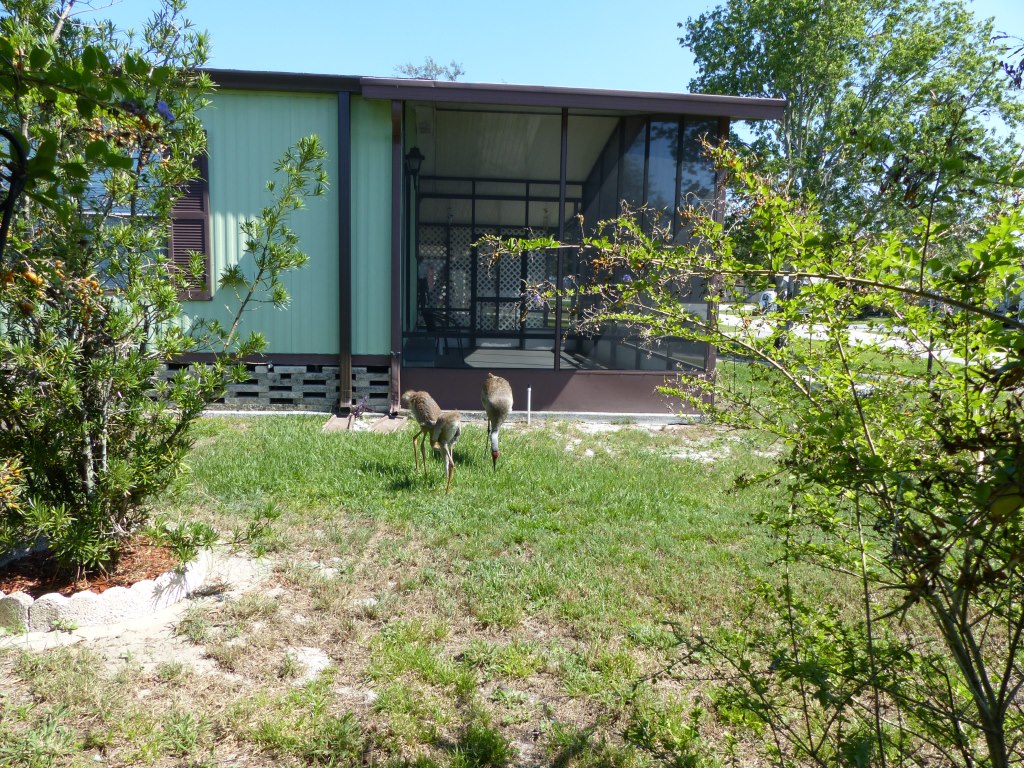
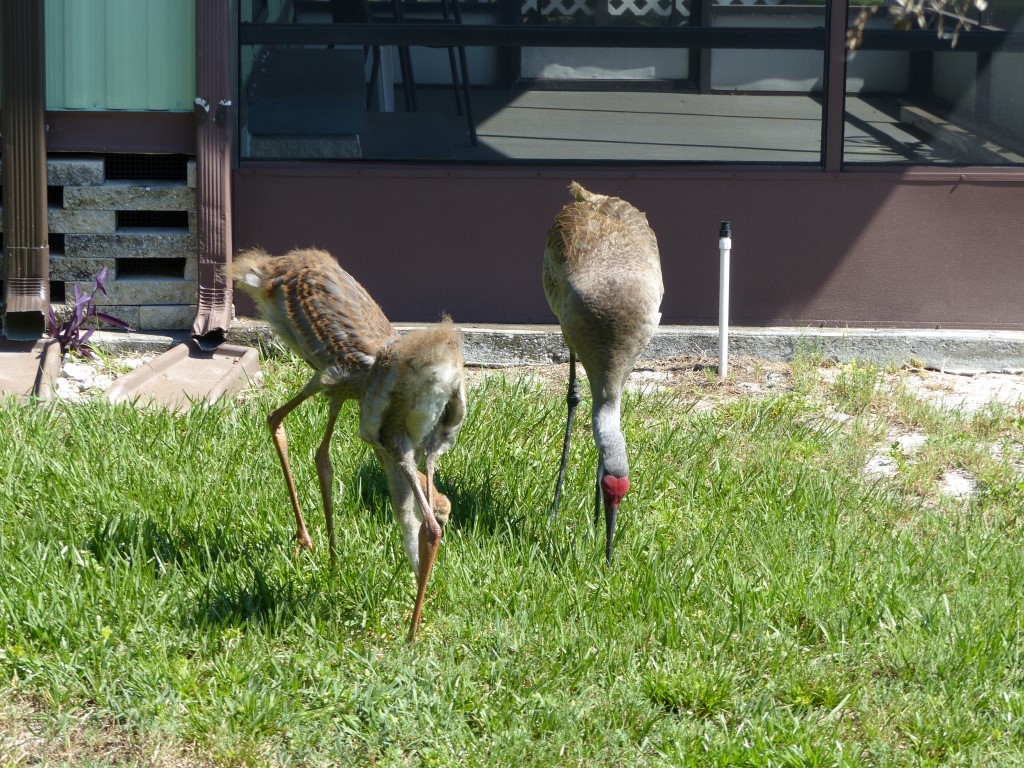
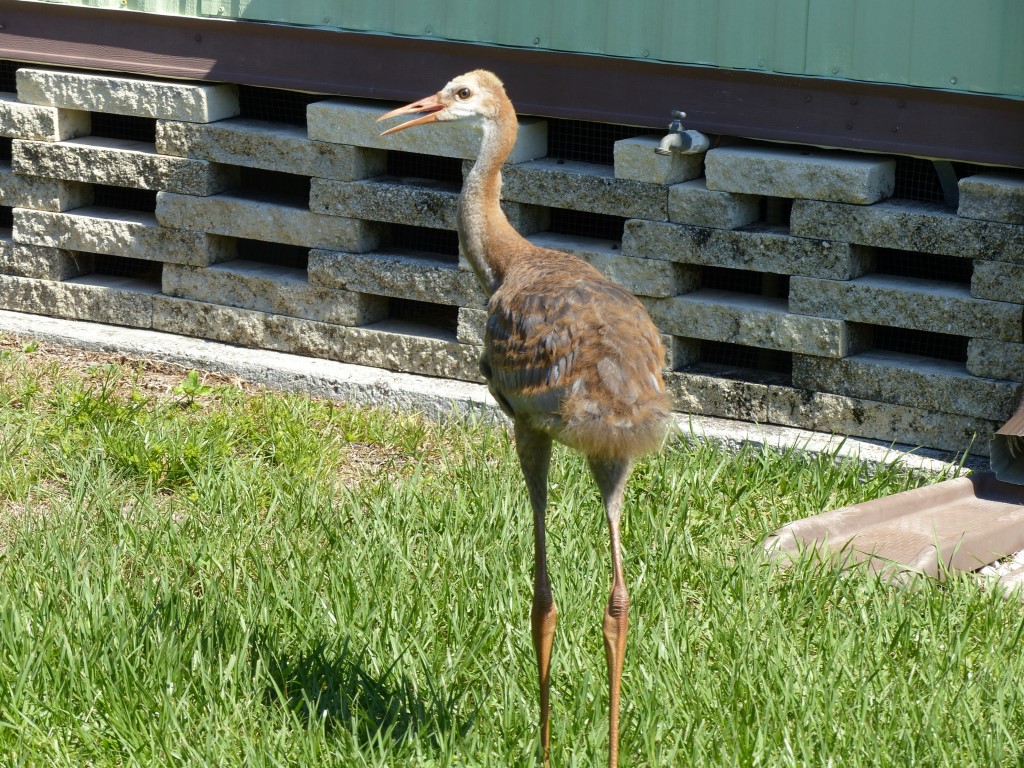
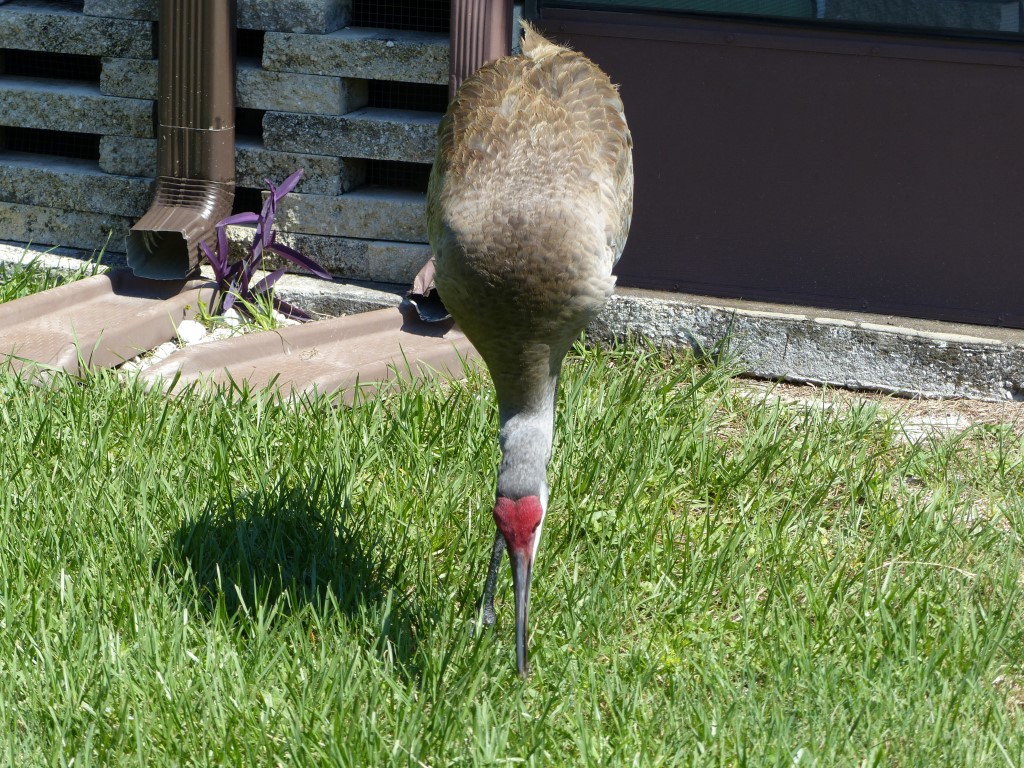
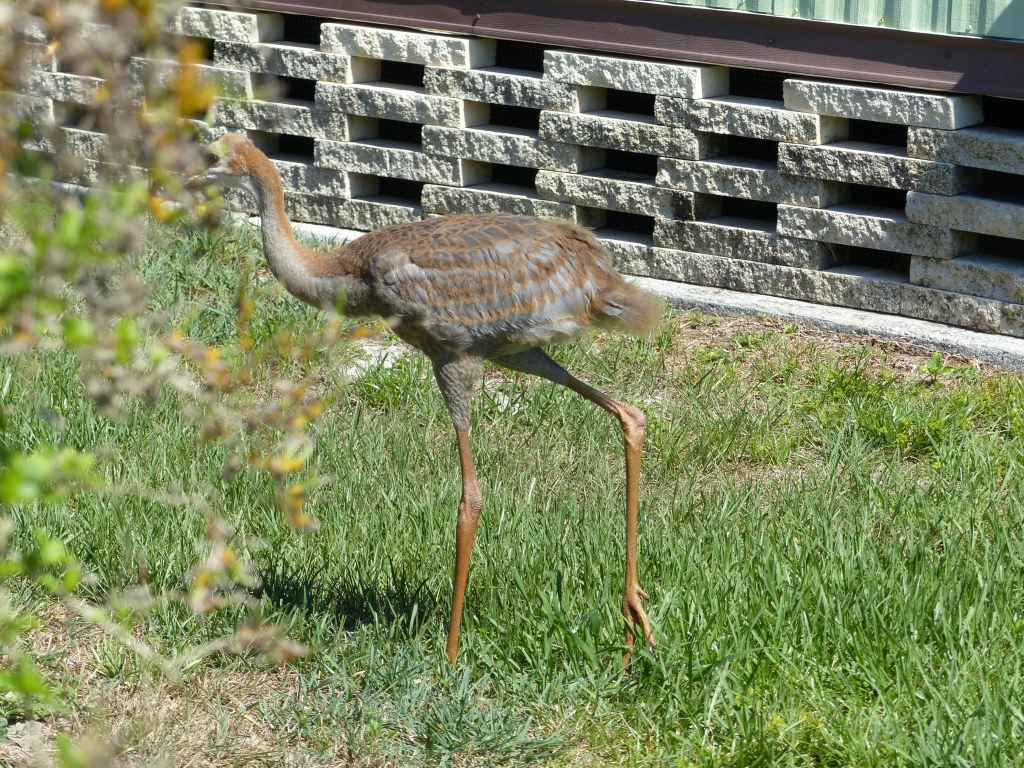
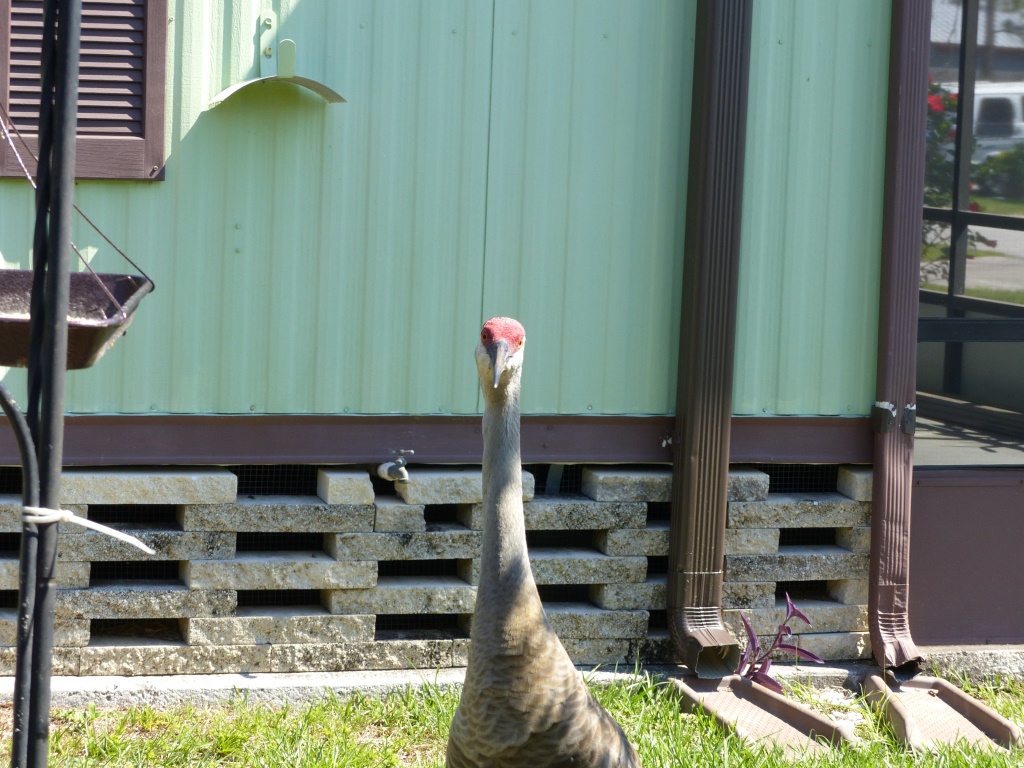
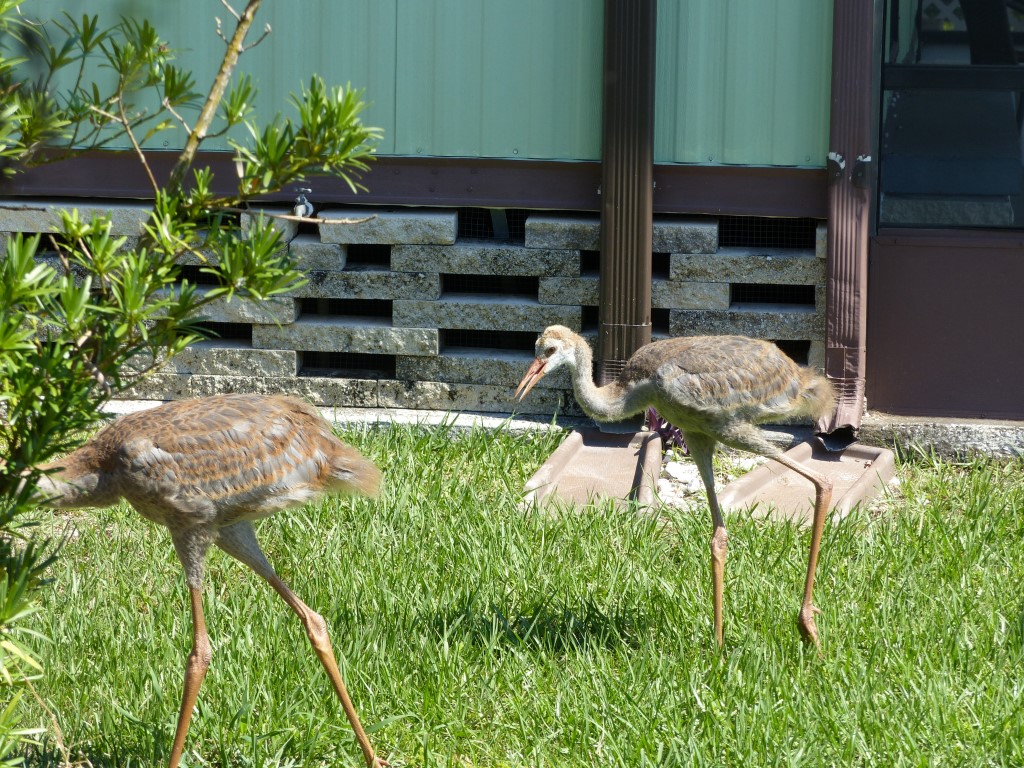
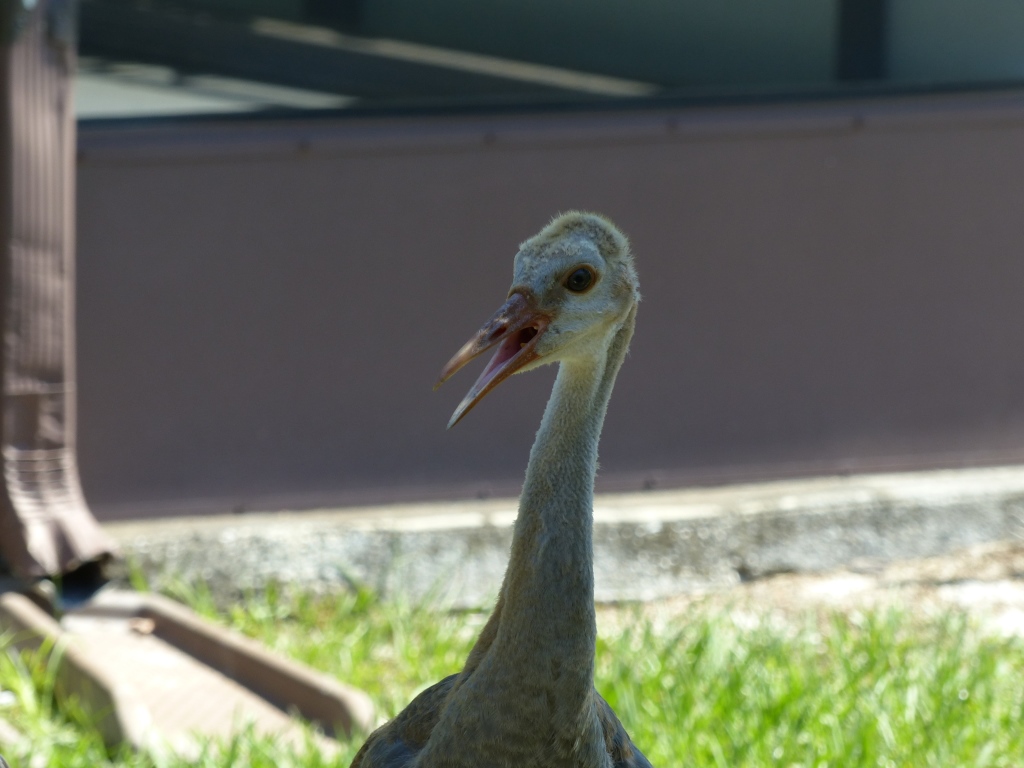
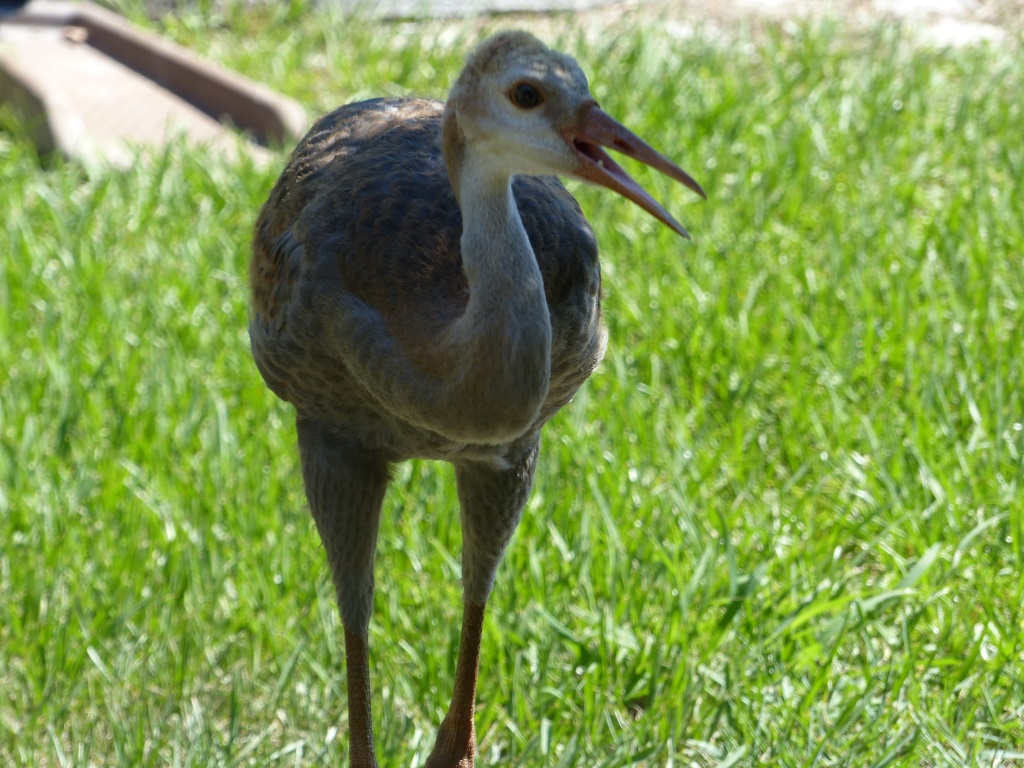
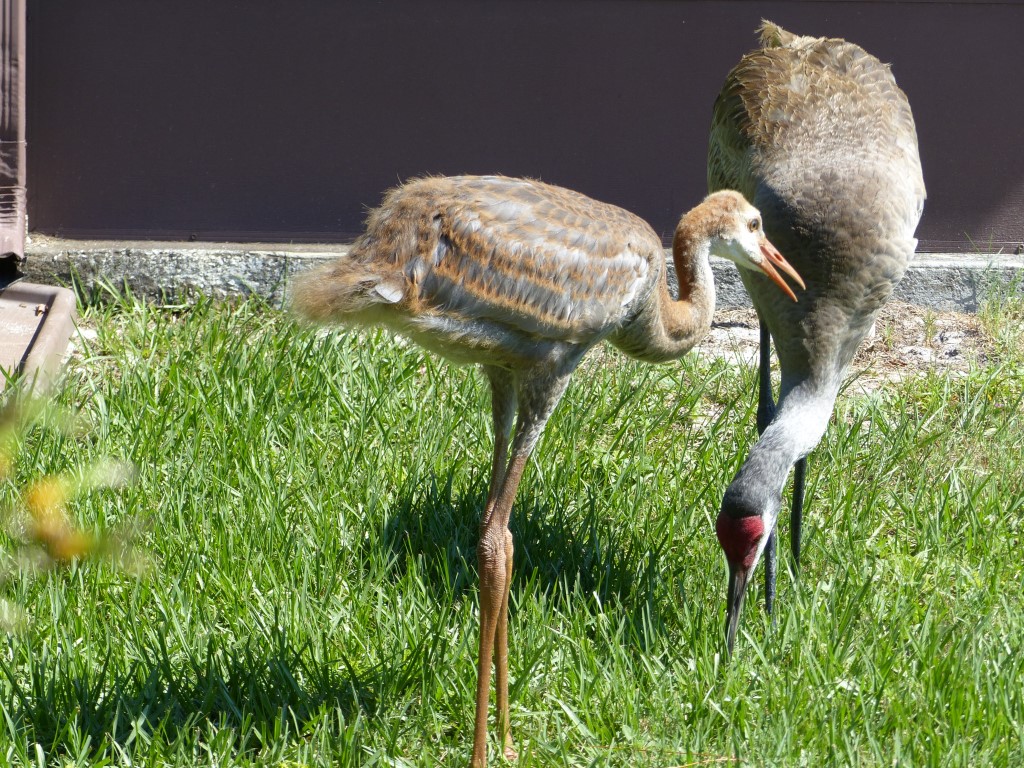
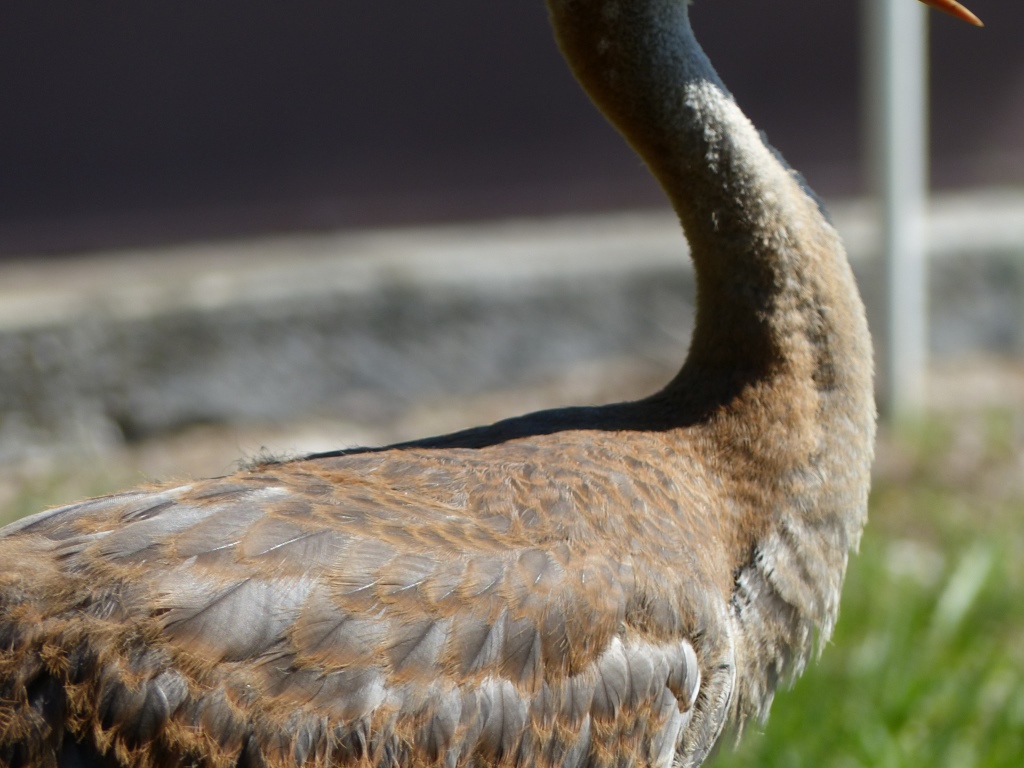
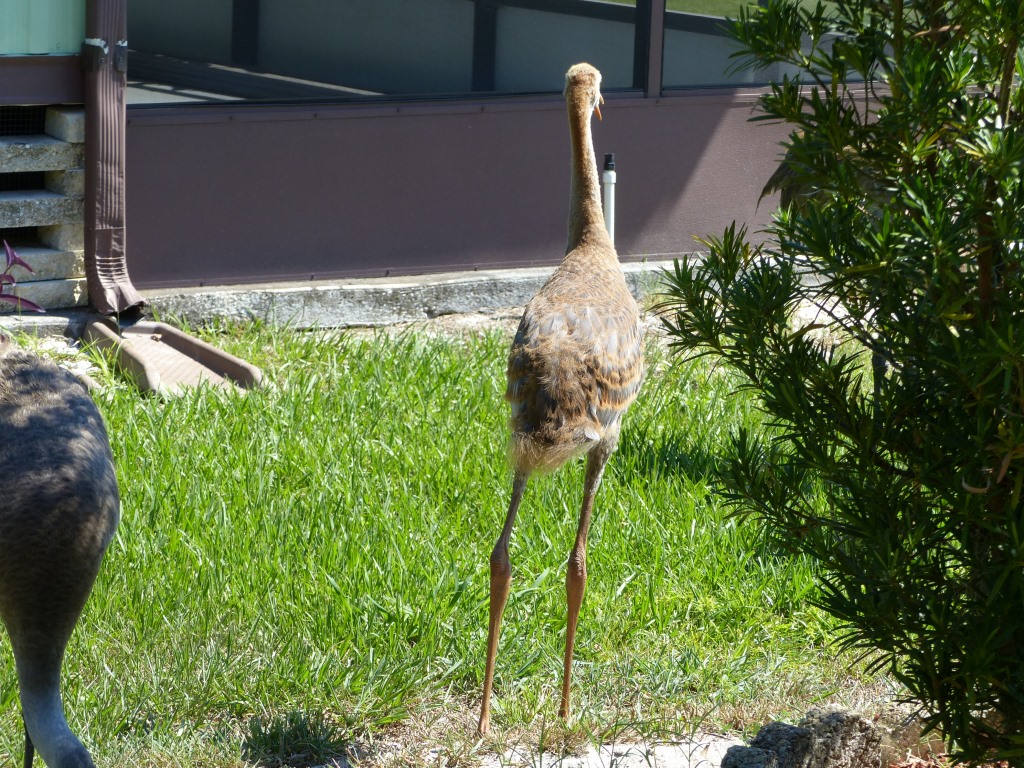
A few days ago while I was filling up my feeders, I looked up and here came Mom and Pop Sandhill Crane with their two latest youngsters. (The 2015 family) Needless to say I stopped and watched them for a while and then remembered to go get my camera. Here are some of those images. I shared a little seed with them. Not suppose to feed cranes, but even if I put seed in that hanging tray for the other birds, they have been known to eat from it. ( I felt sorry for the little ones. :) )
Sandhill Cranes in Sideyard 5-1-15 by Lee
Leaving
It looks like the little Sandhills need to grow into their knees.
Leaving
I always enjoy when the Sandhill Crane parents bring their little ones by to check them out. When you get to watch the Lord’s created critters up close and see how really look and act is enjoyable. The Cranes are mentioned in Scripture and so they are some of our Birds of the Bible.
Like a crane or a swallow, so did I chatter: I did mourn as a dove: mine eyes fail with looking upward: O LORD, I am oppressed; undertake for me. (Isaiah 38:14 KJV)
The parents made some chatter when I got too close to the little ones, but didn’t get it on video. Here is video of them in the yard (The noise is Dan edging the driveway):
*
You can tell by how many articles that I’ve written about that the cranes, that I like them and they visit often:
![Green Hermit (Phaethornis guy) ©WikiC 09 May 2012, taken at the restaurant at the entry to Catarata del Toro, Costa Rica. (Waterfall of the Bull) a 330 foot high waterfall 30 minutes from our lodge Bosque de Paz) Costa Rica Eco-Lodge, Hotel, Rain Forest, Cloud Forest, Costa Rica ... www.bosquedepaz.com/ near the villages of Palmira and Pueblo Nuevo, near Bajos del Toro, and the Volcan Poas National Park, and the Juan Castro Blanco National Park. http://en.wikipedia.org/wiki/Green_Hermit says “The Green Hermit (Phaethornis guy) is a large hummingbird that is a resident breeder from southern Central America (Costa Rica and Panama) south to northwestern South America (northeastern Venezuela and Trinidad and the northern Andes to eastern Peru)... It is 5.3 in (13.5 cm) long and weighs 0.22 oz (6.3 g). The male Green Hermit is mainly dark green with a blue-green rump. It has a dark mask through the eye, with buff stripes above and below this, and down the centre of the throat. The central feathers of the tapered tail are long and white-tipped, and are wiggled in display at the communal leks. The reddish bill is long and decurved. The female is duller and sootier grey below, with an even longer bill and tail. The call of this species is a loud zurk, and the males' lekking "song" is a repeated swark.” Photo © 2012 “Mike” Michael L. Baird, mike {at] mikebaird d o t com, flickr.bairdphotos.com, Canon 5D Mark III, with Canon EF 100-400mm f4.5-5.6L IS USM Telephoto Zoom Lens, with no circular polarizer, medium ball-head on a lightweight Gitzo travel tripod, IS off on, RAW. Proprietary muiti-flash setup by Greg Basco. See EXIF for more settings.
To use this photo, see access, attribution, and commenting recommendations at www.flickr.com/people/mikebaird/#credit - Please add comments/notes/tags/names to add to or correct information, identification, etc. Please, no comments or invites with badges, unrelated images, flash](https://leesbird.com/wp-content/uploads/2015/07/apo-troc-green-hermit-phaethornis-guy-c2a9wikic-2.jpg)



















 Lee's Birdwatching Adventures Plus