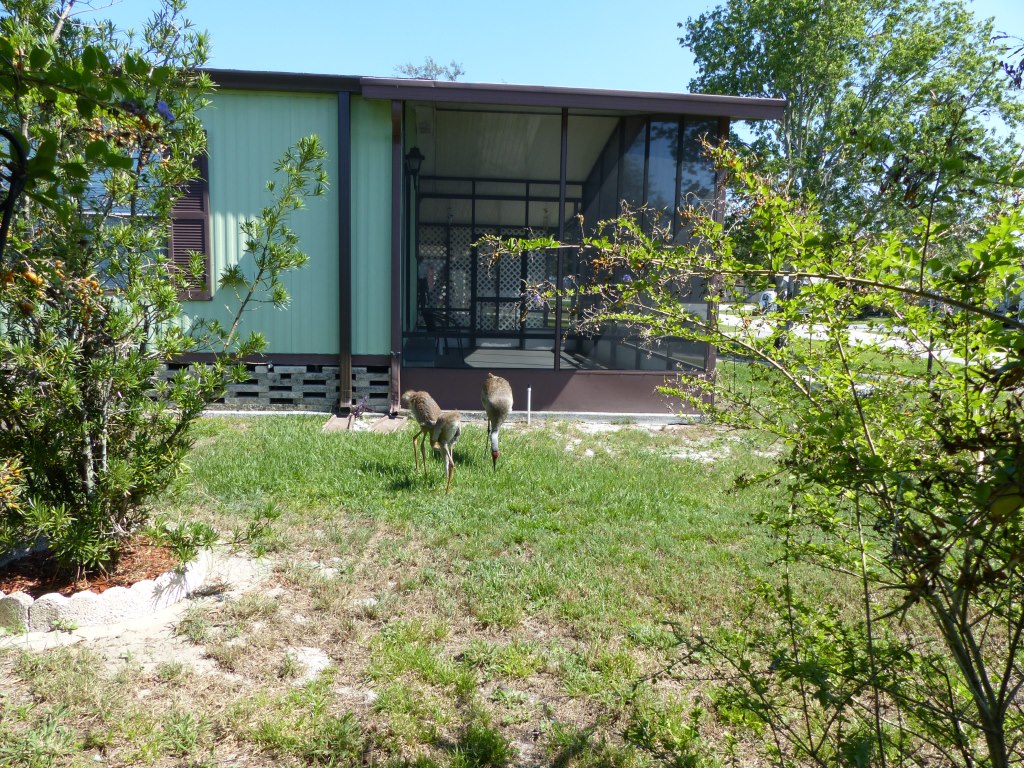
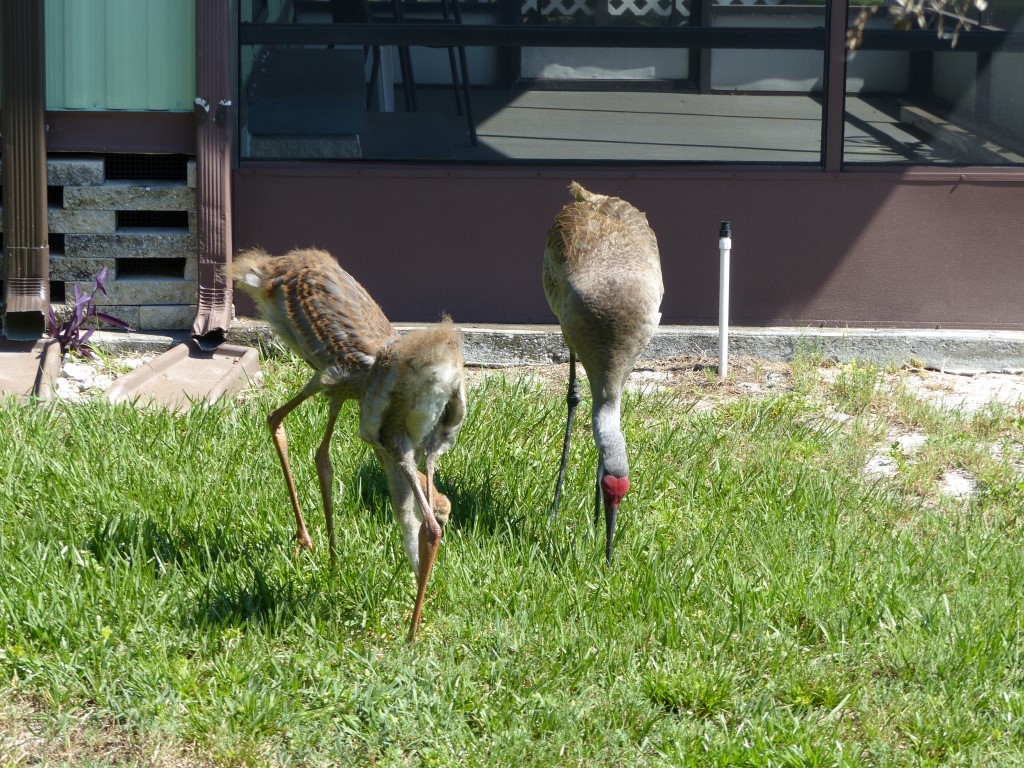
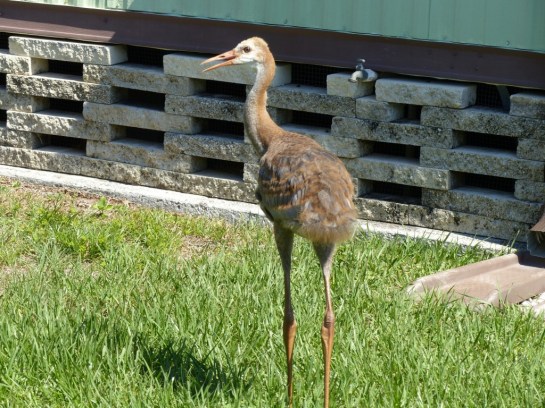
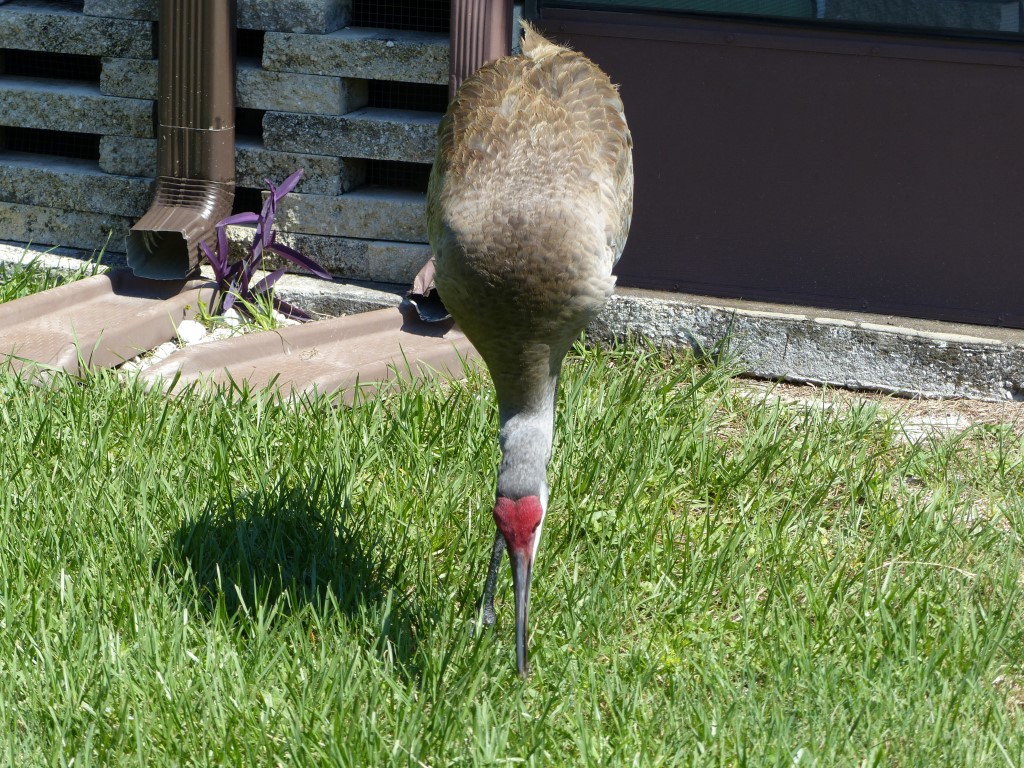
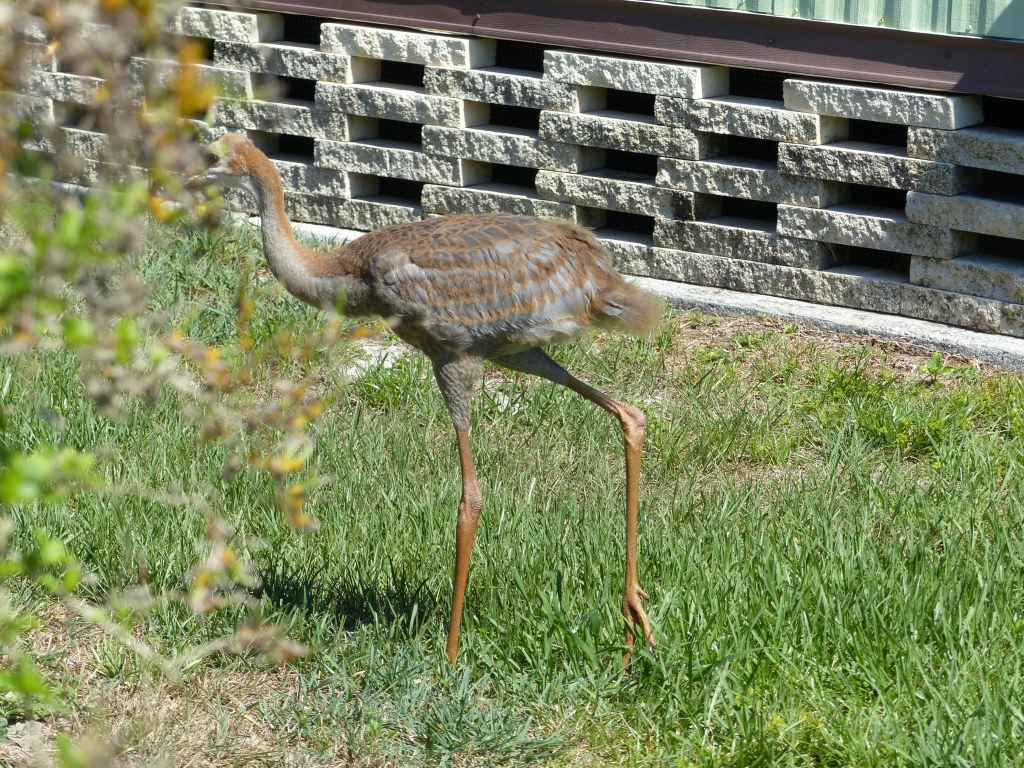
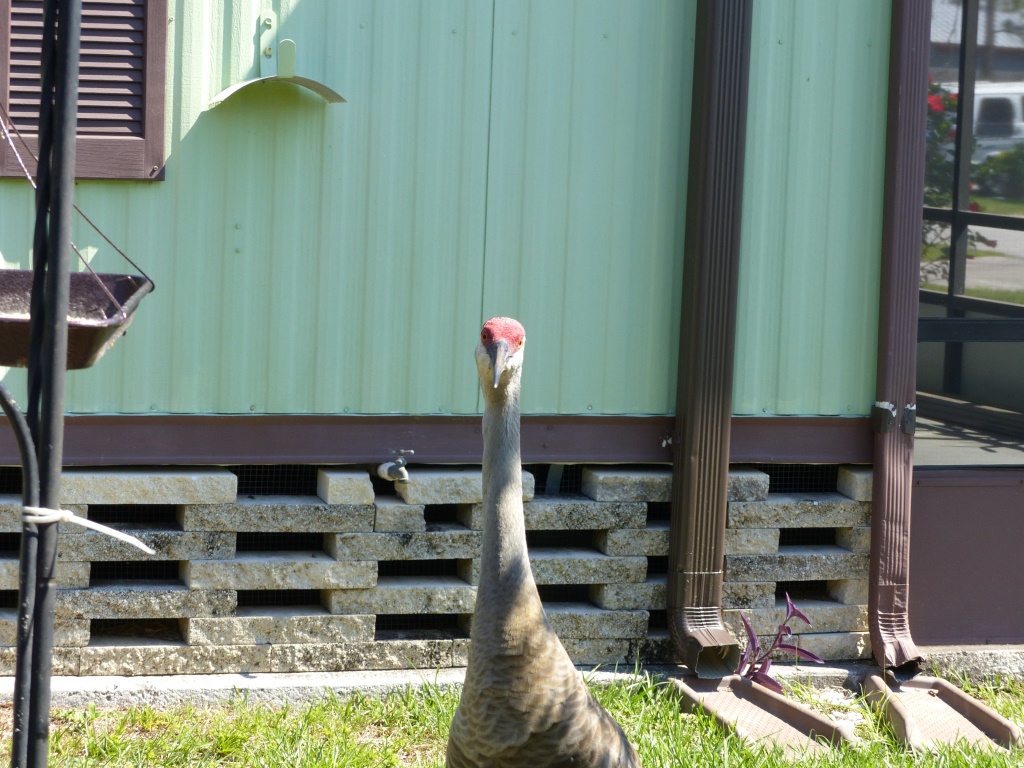
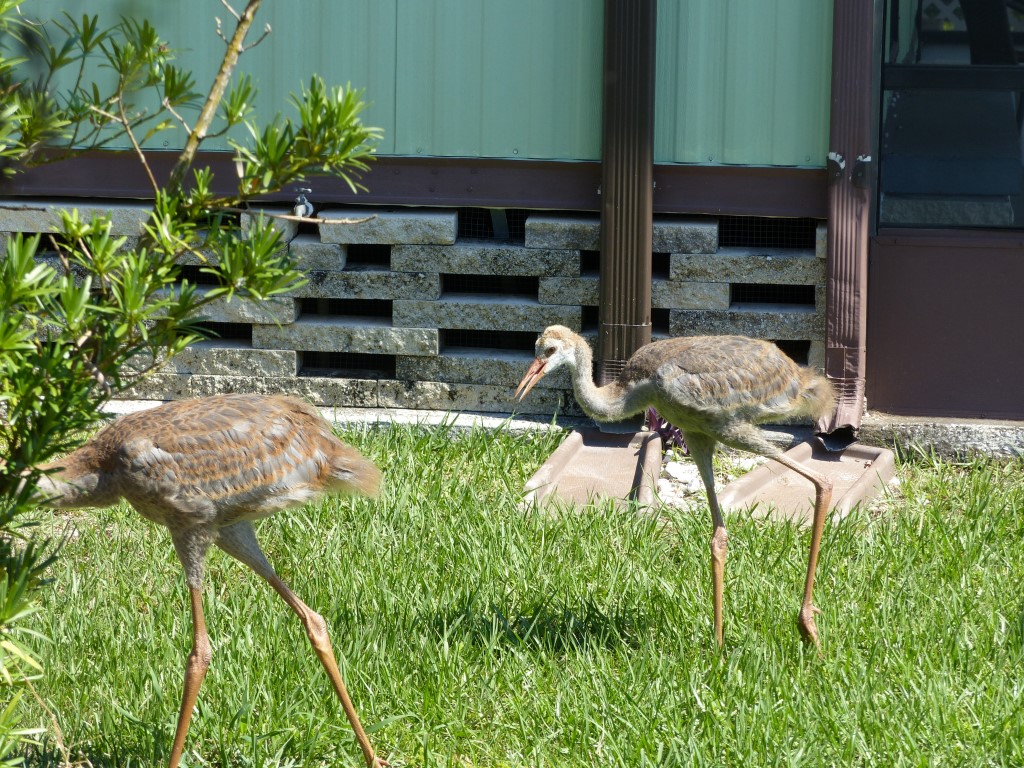
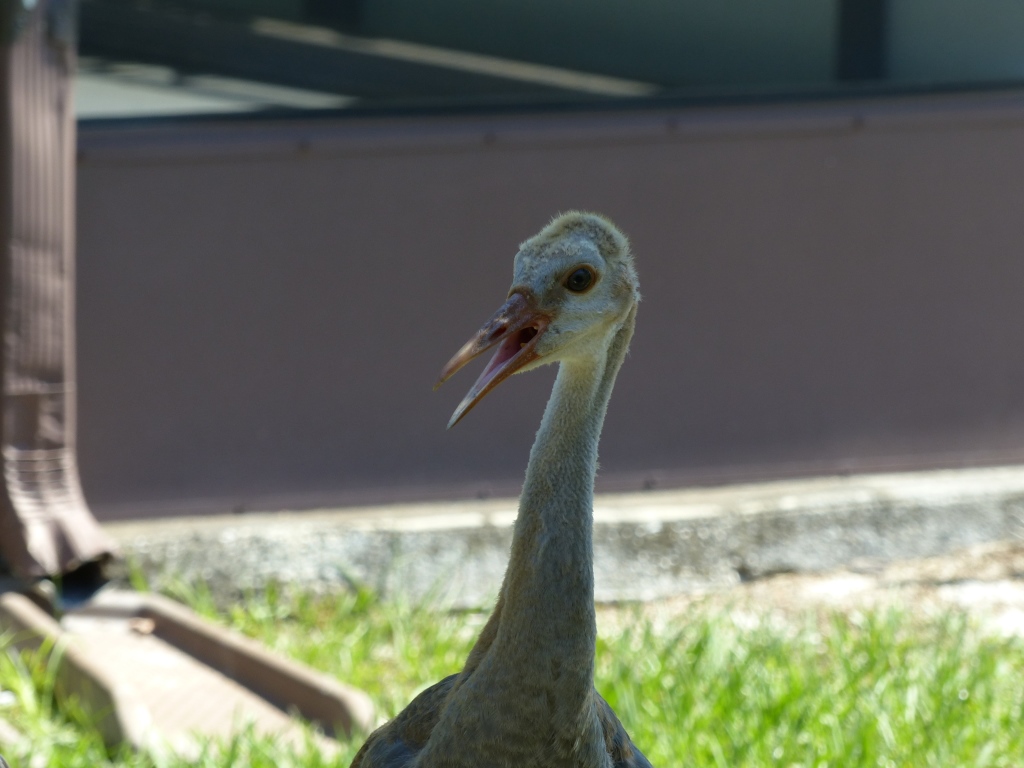
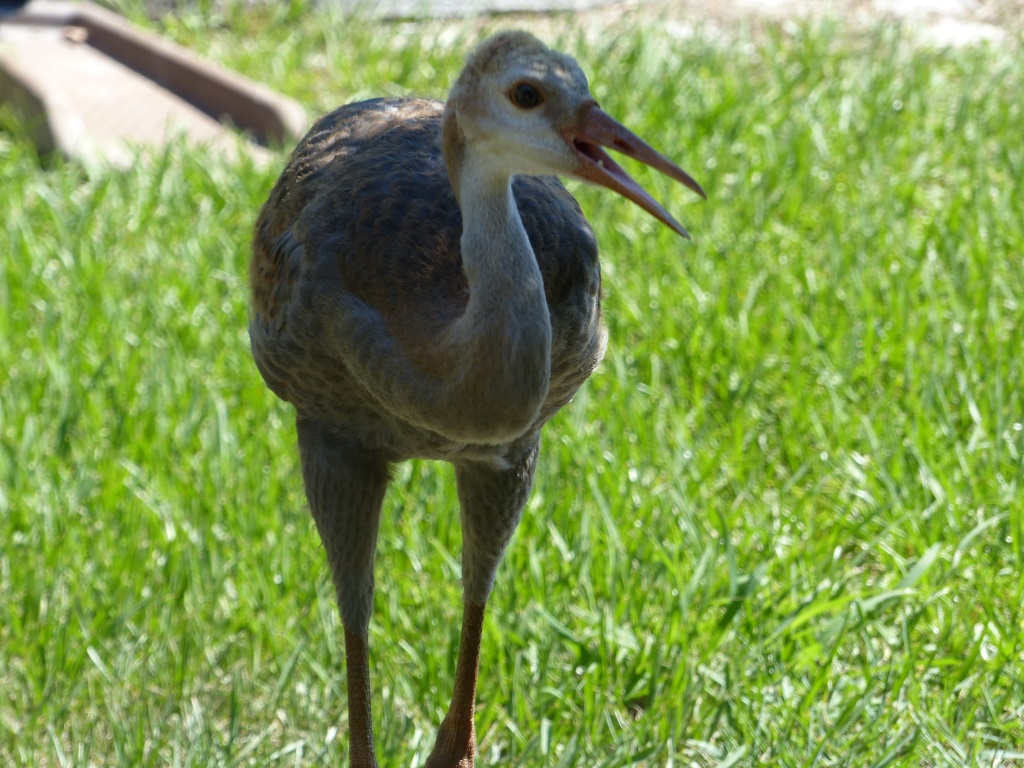
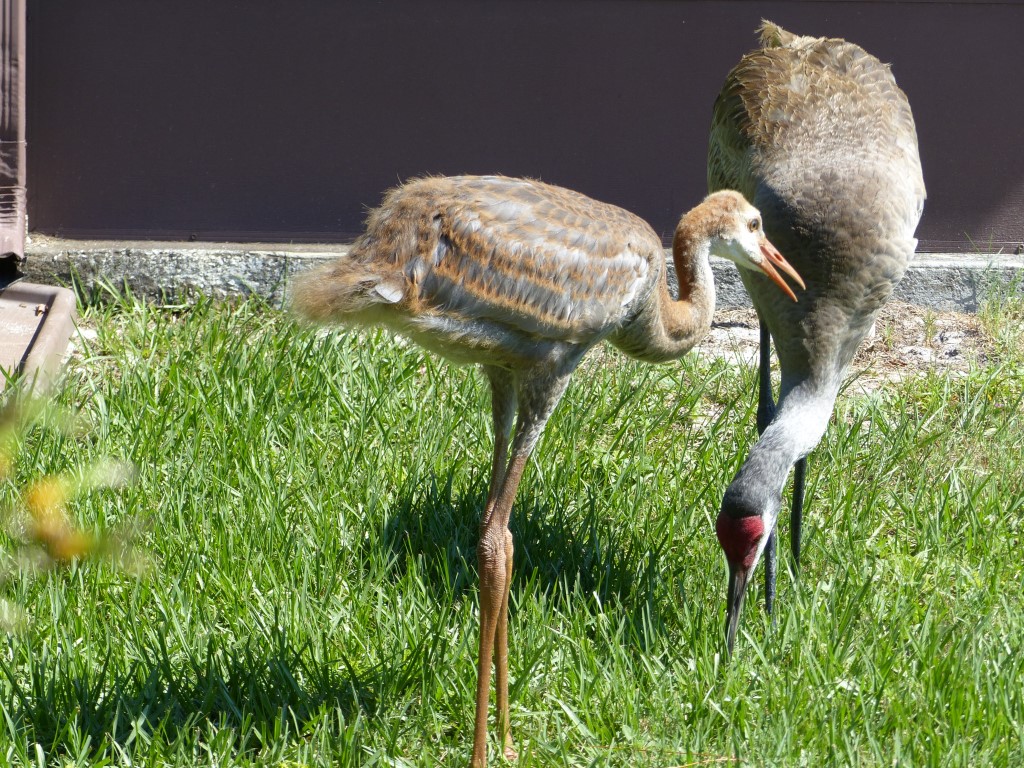
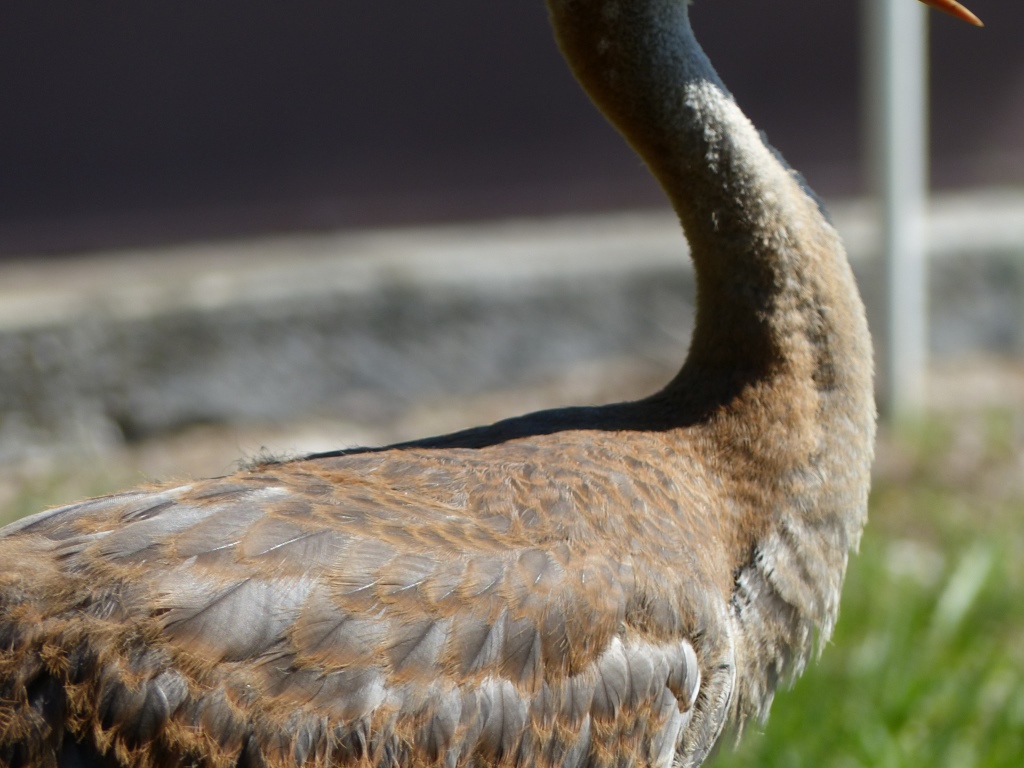
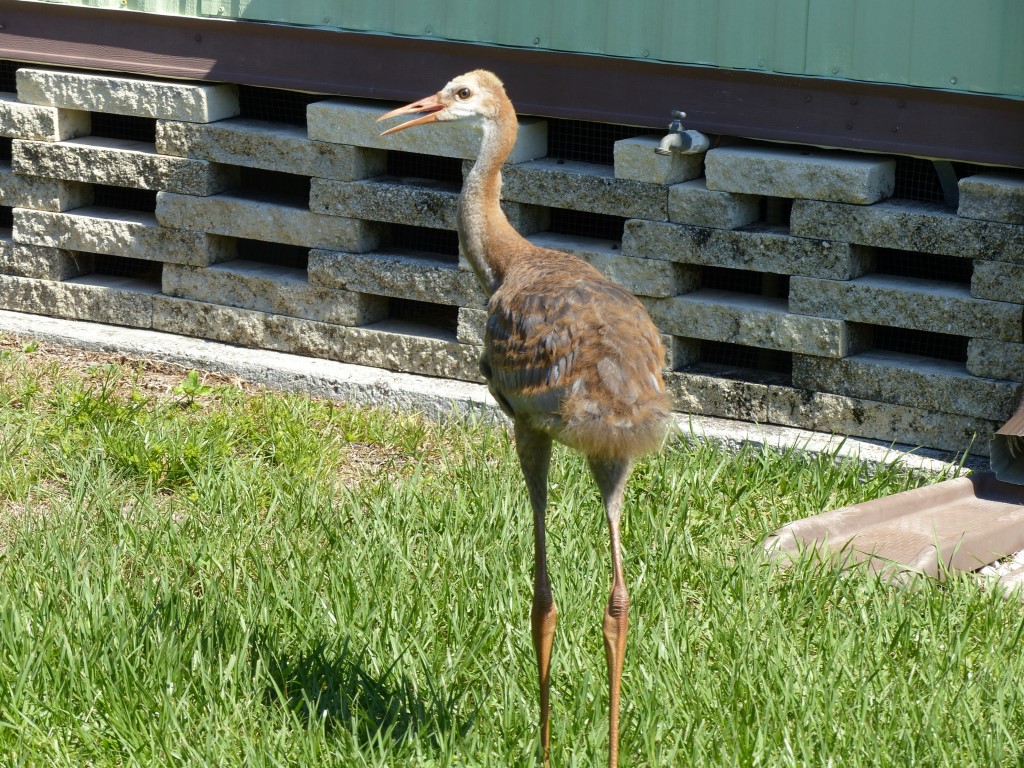
A few days ago while I was filling up my feeders, I looked up and here came Mom and Pop Sandhill Crane with their two latest youngsters. (The 2015 family) Needless to say I stopped and watched them for a while and then remembered to go get my camera. Here are some of those images. I shared a little seed with them. Not suppose to feed cranes, but even if I put seed in that hanging tray for the other birds, they have been known to eat from it. ( I felt sorry for the little ones. :) )
Sandhill Cranes in Sideyard 5-1-15 by Lee
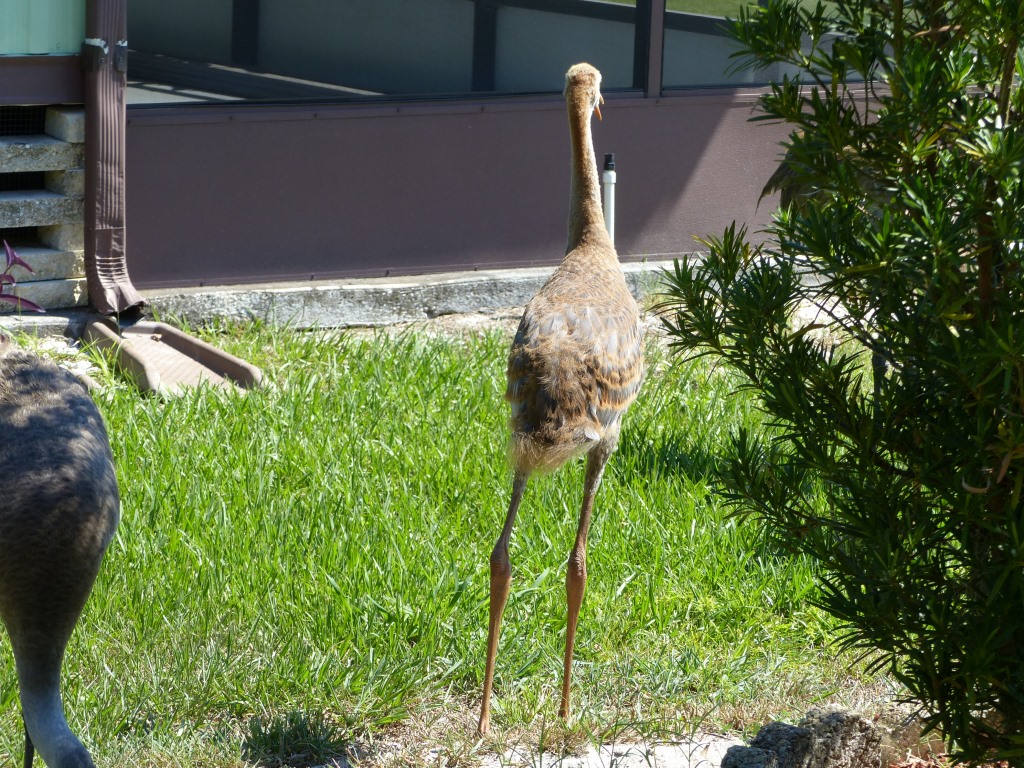
Leaving
It looks like the little Sandhills need to grow into their knees.
Leaving
I always enjoy when the Sandhill Crane parents bring their little ones by to check them out. When you get to watch the Lord’s created critters up close and see how really look and act is enjoyable. The Cranes are mentioned in Scripture and so they are some of our Birds of the Bible.
Like a crane or a swallow, so did I chatter: I did mourn as a dove: mine eyes fail with looking upward: O LORD, I am oppressed; undertake for me. (Isaiah 38:14 KJV)
The parents made some chatter when I got too close to the little ones, but didn’t get it on video. Here is video of them in the yard (The noise is Dan edging the driveway):
*
You can tell by how many articles that I’ve written about that the cranes, that I like them and they visit often:
And the angel of the LORD appeared unto him in a flame of fire out of the midst of a bush: and he looked, and, behold, the bush burned with fire, and the bush was not consumed. And Moses said, I will now turn aside, and see this great sight, why the bush is not burnt. (Exodus 3:2-3 KJV)
The Bushshrikes are smallish passerine bird species. They were formerly classed with the true shrikes in the family Laniidae, but are now considered sufficiently distinctive to be separated from that group as the family Malaconotidae.
This is an African group of species which are found in scrub or open woodland. They are similar in habits to shrikes, hunting insects and other small prey from a perch on a bush. Although similar in build to the shrikes, these tend to be either colorful species or largely black; some species are quite secretive.
Some bushshrikes have flamboyant displays. The male puffbacks puff out the loose feathers on their rump and lower back, to look almost ball-like.
These are mainly insectivorous forest or scrub birds. Up to four eggs are laid in a cup nest in a tree.
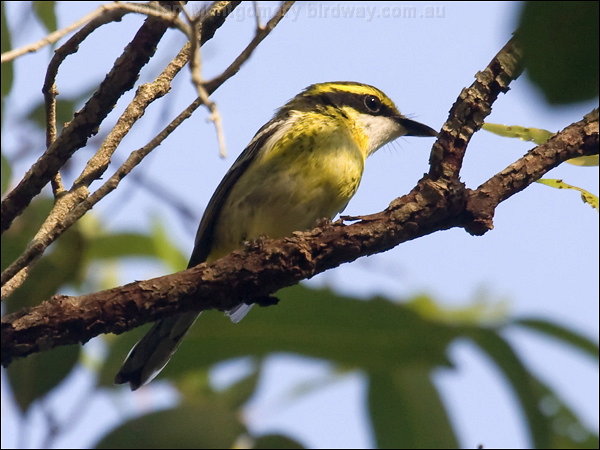
Yellow-breasted Boatbill (Machaerirhynchus flaviventer) by Ian
Boatbills or the Machaerirhynchus is a genus of passerine birds with affinities to woodswallows and butcherbirds. The two species are known as boatbills. The genus is distributed across New Guinea and northern Queensland. (Info from Wikipedia)
This slideshow requires JavaScript.
Listen to a quartet sing as you watch these two beautifully created families of birds:
“We Shall See Jesus” ~ Margaret Hiebert, Pastor and Jill Osborne and Pastor Jerry Smith
Now here is an interesting and “ugly” fish. This was shared by Creation Moments.
For in six days the LORD made heaven and earth, the sea, and all that in them is, and rested the seventh day: wherefore the LORD blessed the sabbath day, and hallowed it. (Exodus 20:11 KJV)
When this fish is taken out of the water, its face almost looks like a very sad person. In 2013 it was voted the “World’s Ugliest Animal”. What is this creature that was adopted as the mascot of the Ugly Animal Preservation Society? It’s the appropriately named blobfish.
Photos of the ugly blobfish have been making the rounds on the Internet. And yet, even the blobfish has beauty when you consider that it was designed to function perfectly in its environment.
Blobfish inhabit the deep waters off the coasts of Australia, Tasmania and New Zealand. If you wanted to see one in its natural habitat, you would have to dive to a depth of between 2,000 and 3,900 feet where the pressure is several dozen times higher than at sea level. The pressure is no problem for the blobfish, though. Its jelly-like body is slightly less dense than water, allowing it to float effortlessly just above the sea floor.
Blobfish don’t have much muscle for swimming, but they don’t need it. They simply swallow edible matter that floats into their mouth. Sadly, they are an endangered species because of fishing trawlers dragging their nets on the seafloor.
Yes, the blobfish is far from attractive. But it serves as a reminder that sinful human beings are unattractive in the sight of God. And yet, while we were still sinners, God sent His Son to die for us and to exchange His righteousness for our sins, making us acceptable in God’s sight. What a Savior!
Prayer:
Father, thank You for sending Your Holy Spirit to reveal the ugliness brought about by sin. Thank You also for sending Your Son to remove my sin and make me righteous in Your sight. Amen.
And take the helmet of salvation, and the sword of the Spirit, which is the word of God: (Ephesians 6:17 KJV)
The two families this week are the Woodshrikes from tropical Asia and the Helmetshrikes are birds of Africa. Both are from the PASSERIFORMES – Passerines Order, which are Songbirds. The Lord has given them all a song to sing. Trust you will enjoy seeing them and listening to our orchestra play about ‘Joy.”
Tephrodornithidae – Woodshrikes and allies – 8 Species – is a family of birds that includes the genera Hemipus, Tephrodornis and Philentoma. The family was proposed in 2006 on the basis of a molecular phylogenetic study by Moyle which showed a close relation between Hemipus and Tephrodornis. Some taxonomists argue for a broader treatment of the genera under the Vangidae
Prionopidae – Helmetshrikes – 8 Species –This is an African and south Asian group of species which are found in scrub or open woodland. They are similar in feeding habits to shrikes, hunting insects and other small prey from a perch on a bush or tree. Although similar in build to the shrikes, these tend to be colourful species with the distinctive crests or other head ornaments, such as wattles, from which they get their name.
Helmetshrikes are noisy and sociable birds, some of which breed in loose colonies. They lay 2-4 eggs in neat, well-hidden nests.
This slideshow requires JavaScript.
But let us who are of the day be sober, putting on the breastplate of faith and love, and as a helmet the hope of salvation. For God did not appoint us to wrath, but to obtain salvation through our Lord Jesus Christ, (1 Thessalonians 5:8-9 NKJV)
But the fruit of the Spirit is love, joy, peace, longsuffering, gentleness, goodness, faith, (Galatians 5:22 KJV)
Make me to hear joy and gladness; that the bones which thou hast broken may rejoice. (Psalms 51:8 KJV)
Listen to the Faith Baptist Orchestra play as you watch these two beautifully created families of birds:
For the last few days I have been updating to the new I.O.C. Version 5.2. This update wasn’t too bad.
“The IOC World Bird List 5.2 contains 10,567 extant species (and 149 extinct species) classified in 40 Orders, 238 Families (plus 2 Incertae Sedis) and 2277 Genera. The list also includes 20,803 subspecies.” I don’t list the subspecies here.
As far as I know, all Family pages and all the Indexes have been changed. The Update is so new that photos are difficult to locate at this time. Many of the “new species” are subspecies raised to specie level. I am sure the Lord knows all about how many birds He Created and where they all are.
My son, fear thou the LORD and the king: and meddle not with them that are given to change: (Proverbs 24:21 KJV)
For I am the LORD, I change not; (Malachi 3:6a KJV)
Jesus Christ the same yesterday, and to day, and for ever. (Hebrews 13:8 KJV)
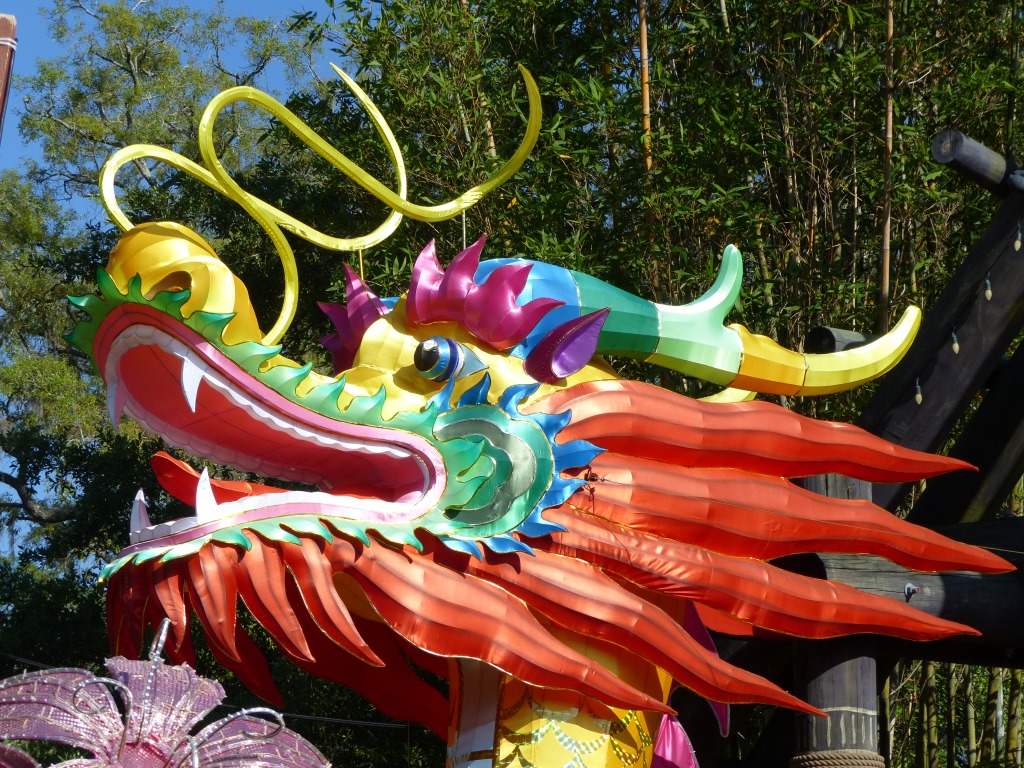
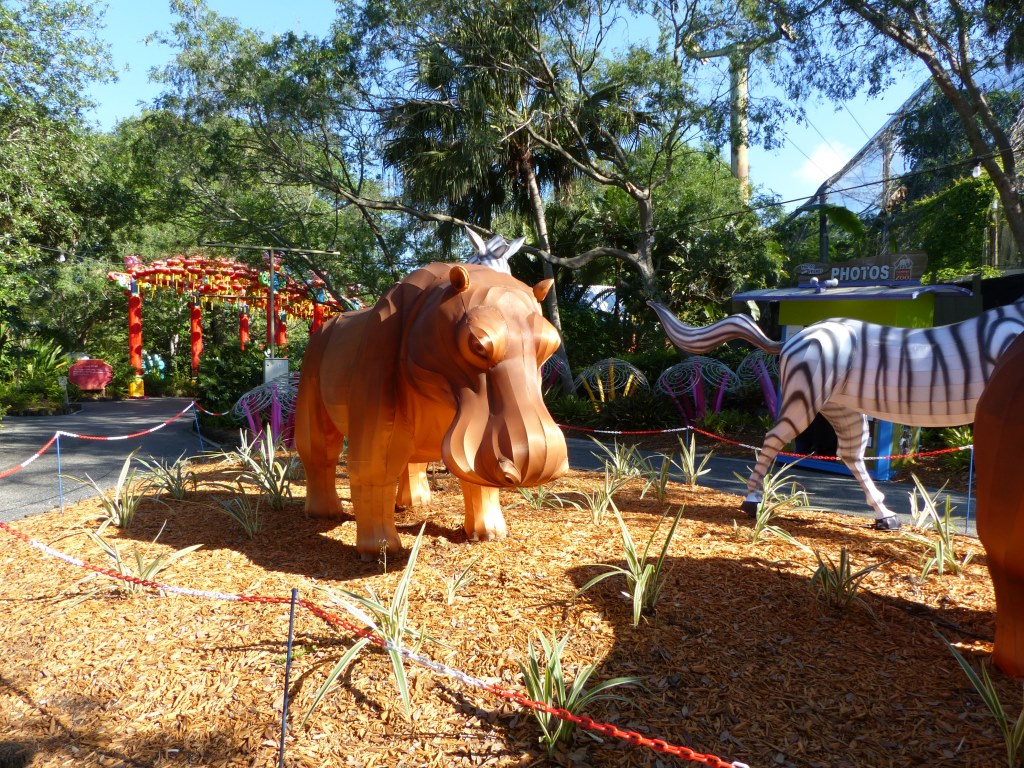
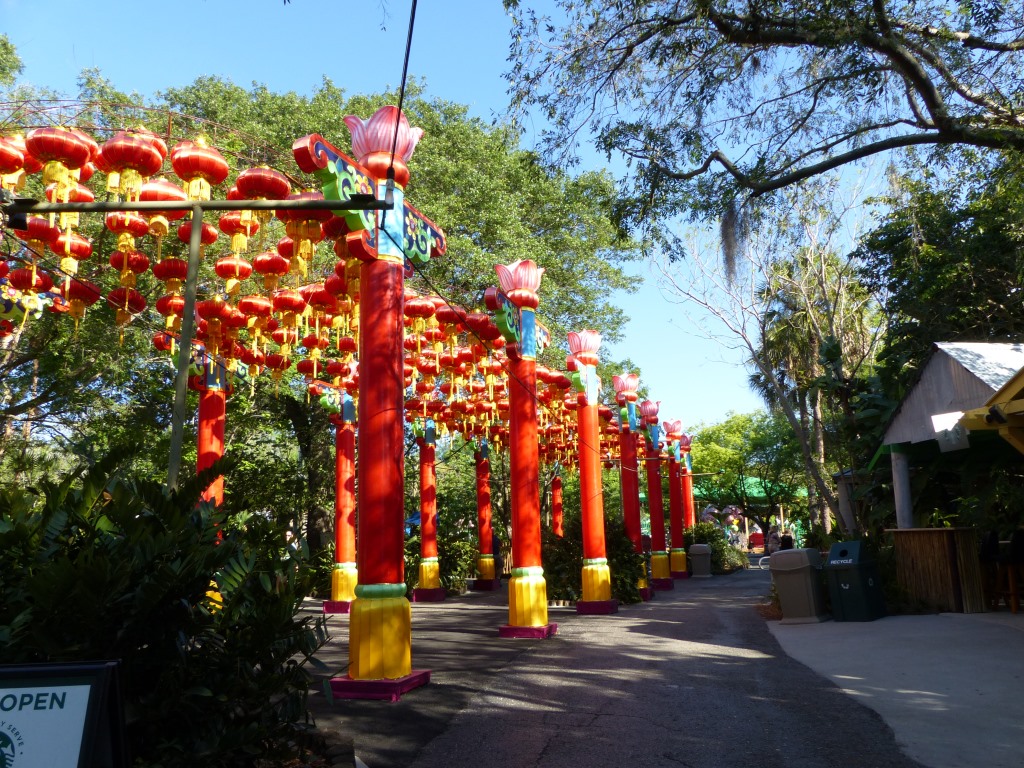
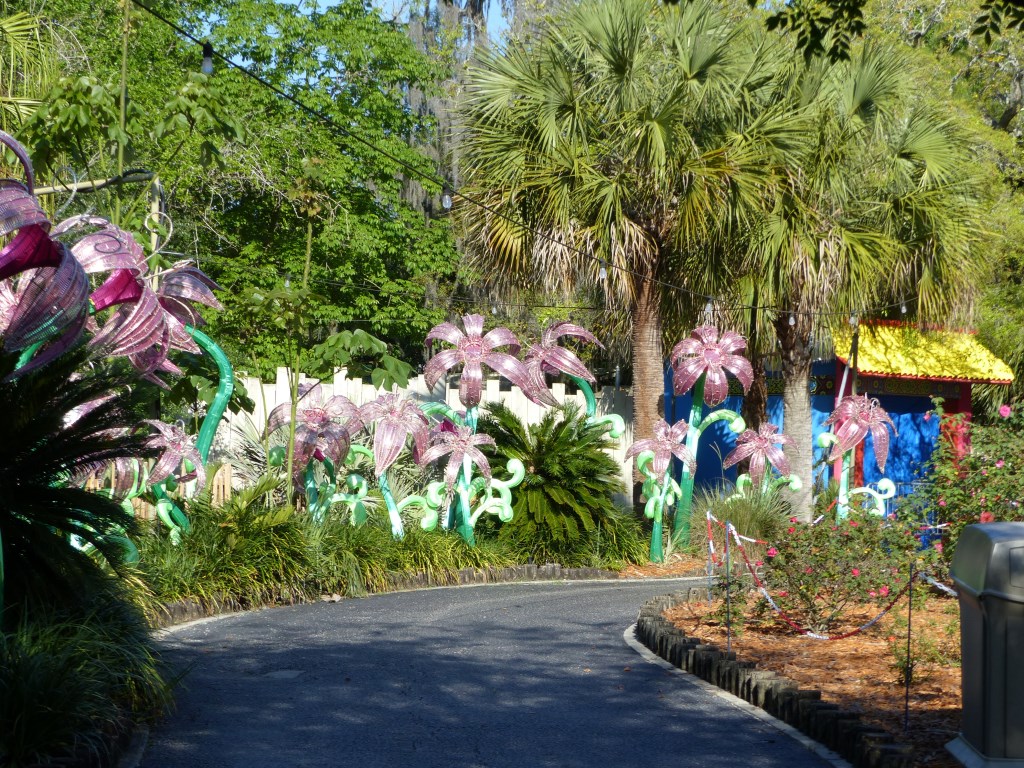
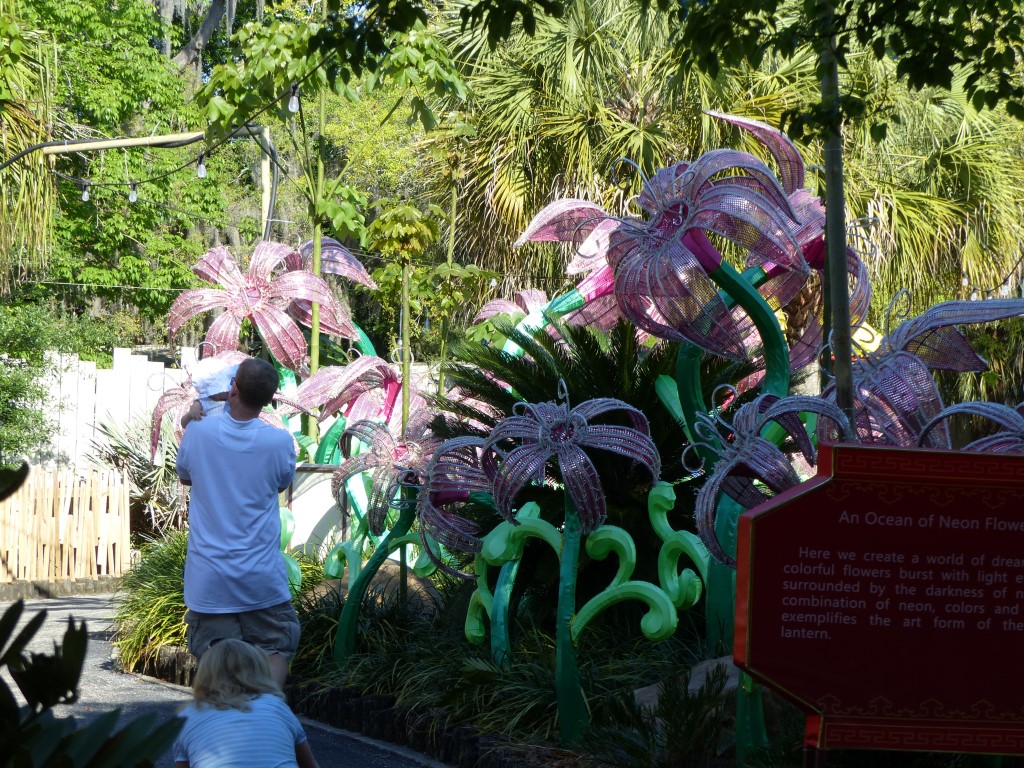
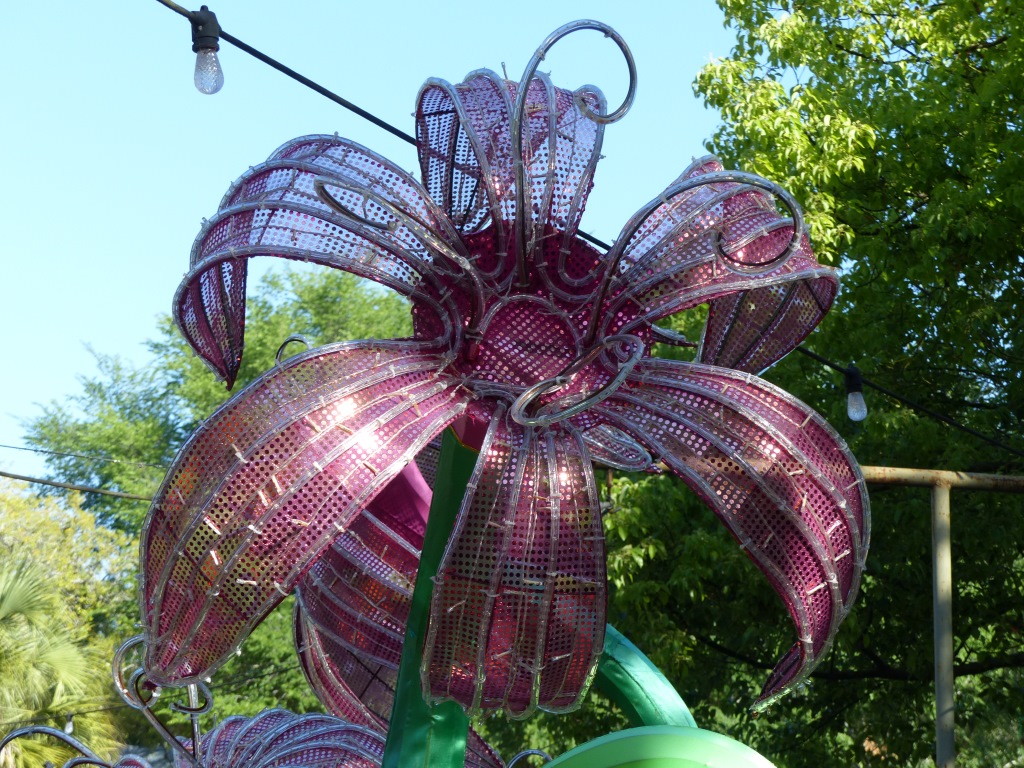
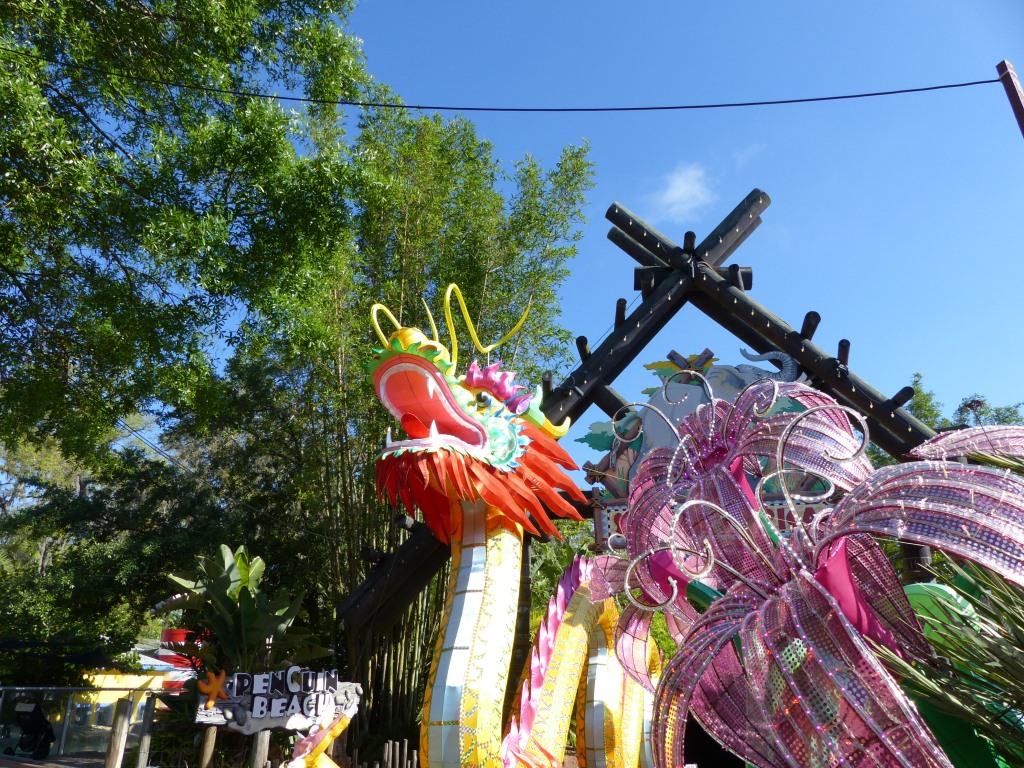
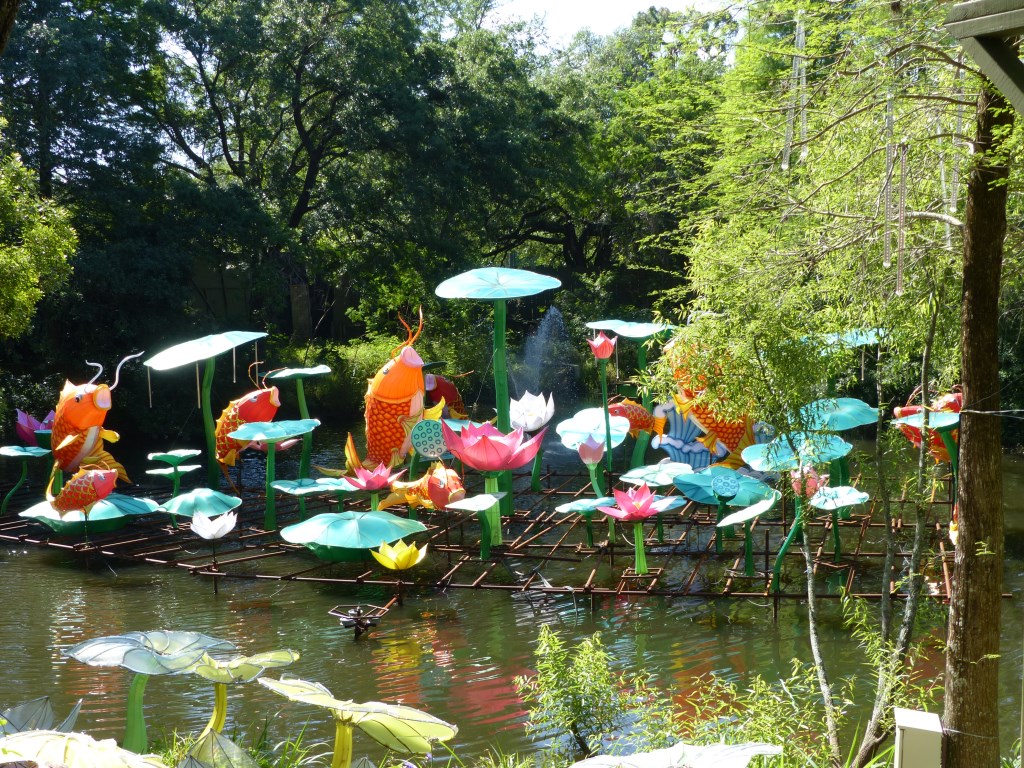
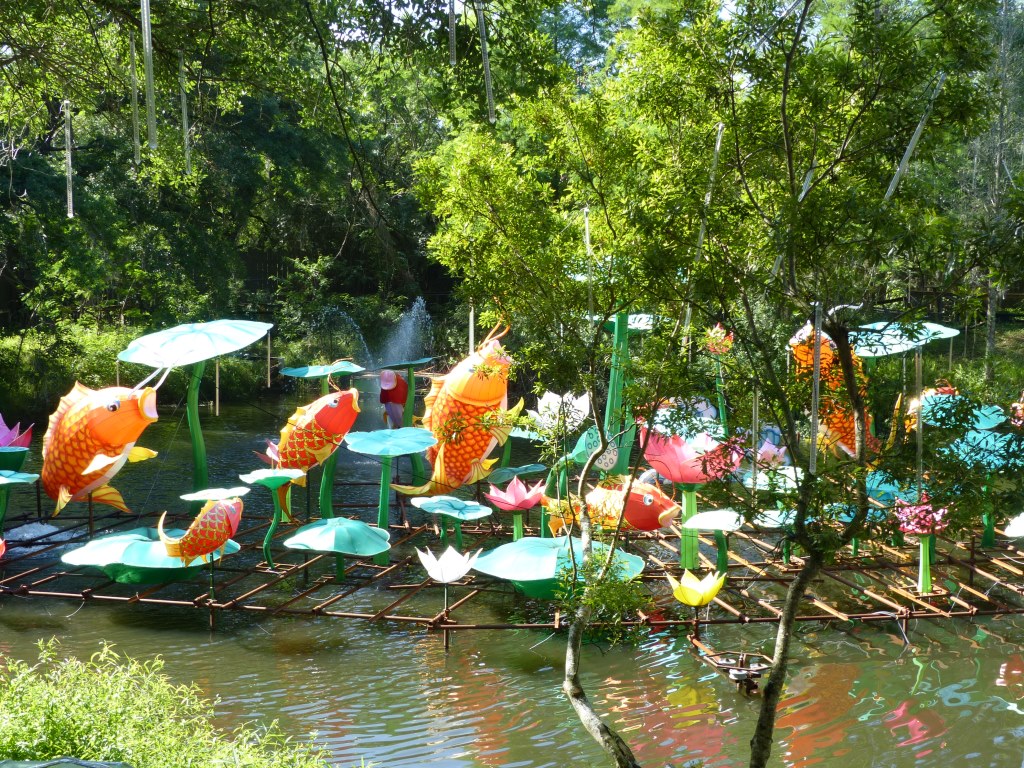
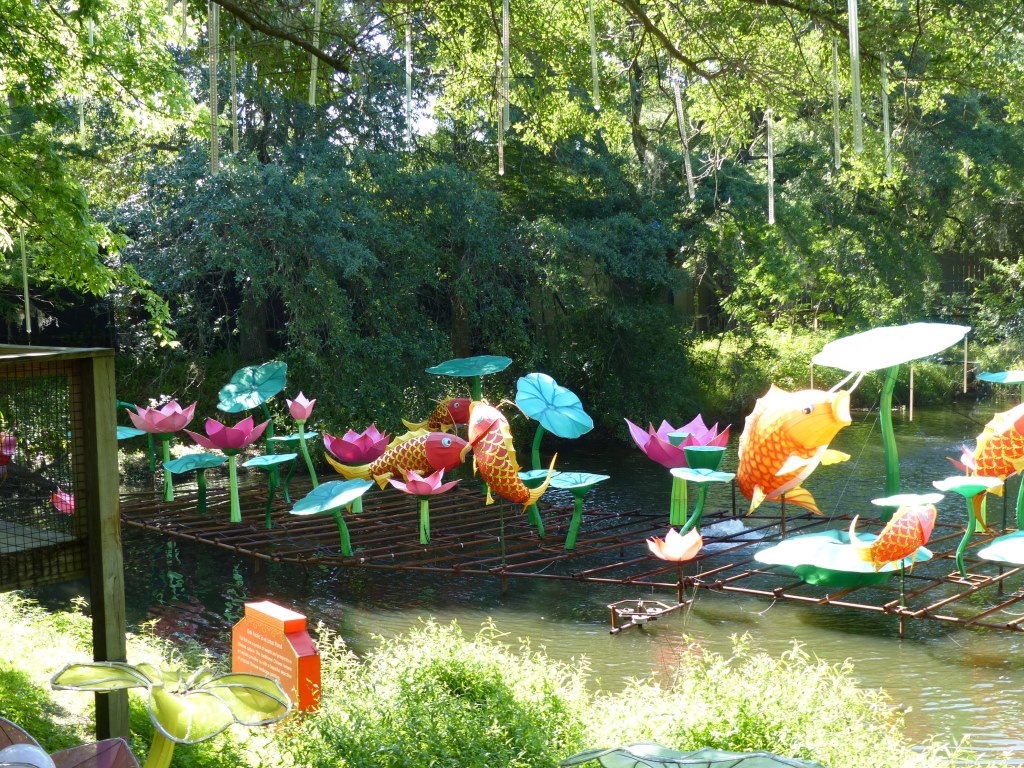
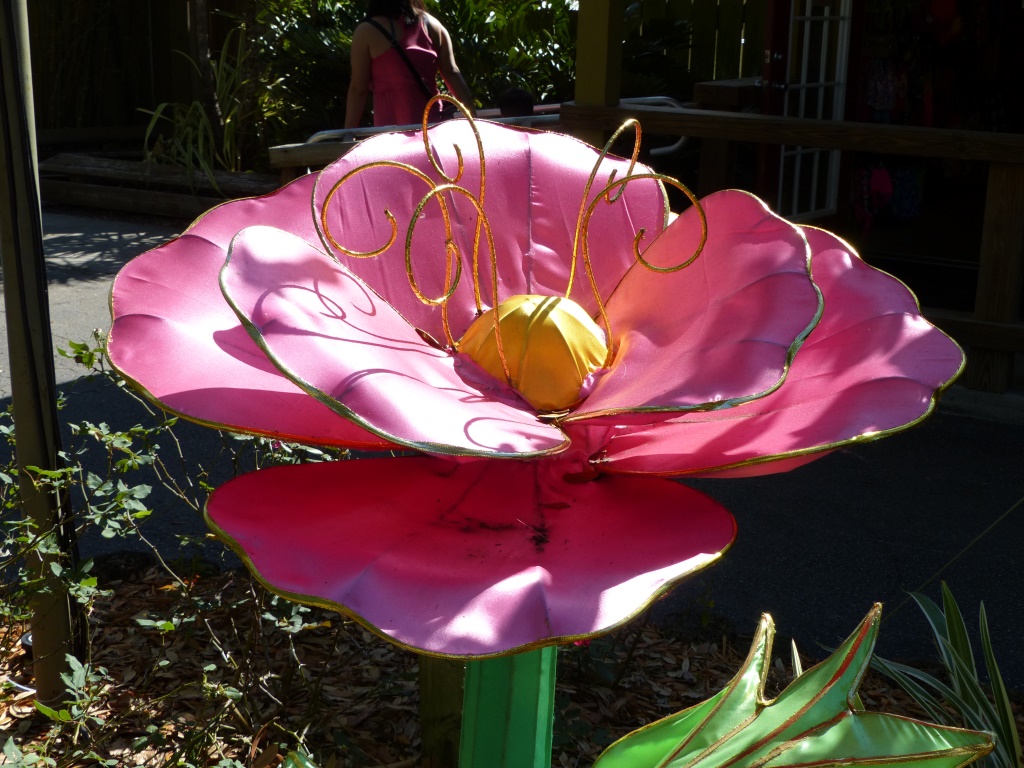
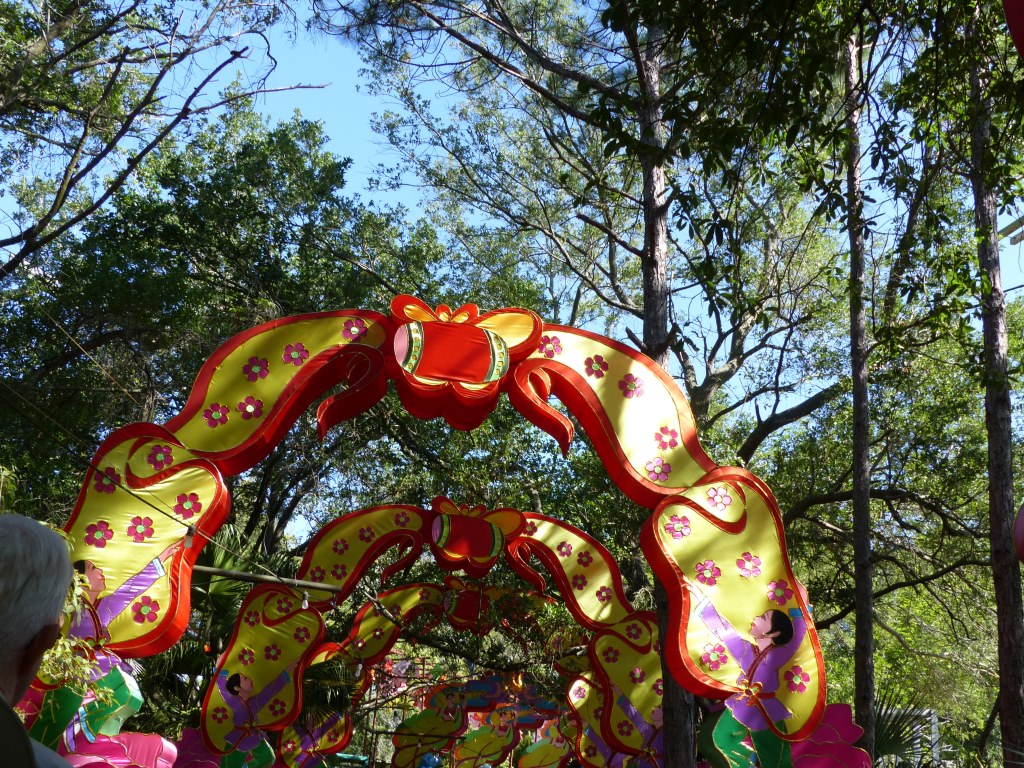
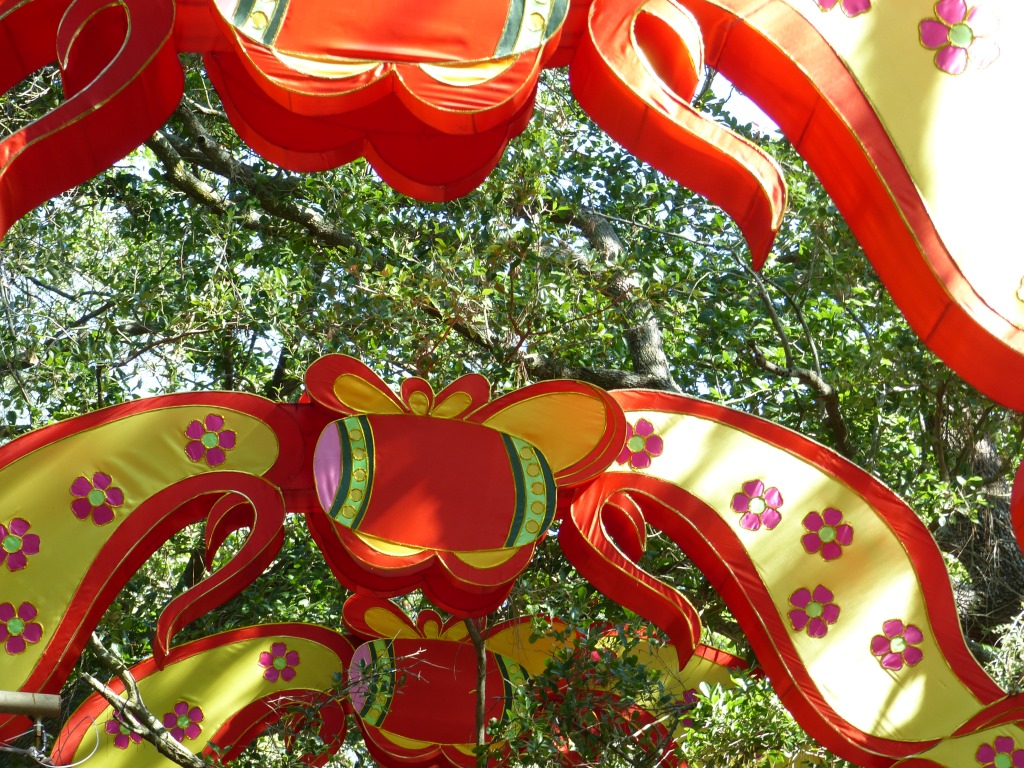
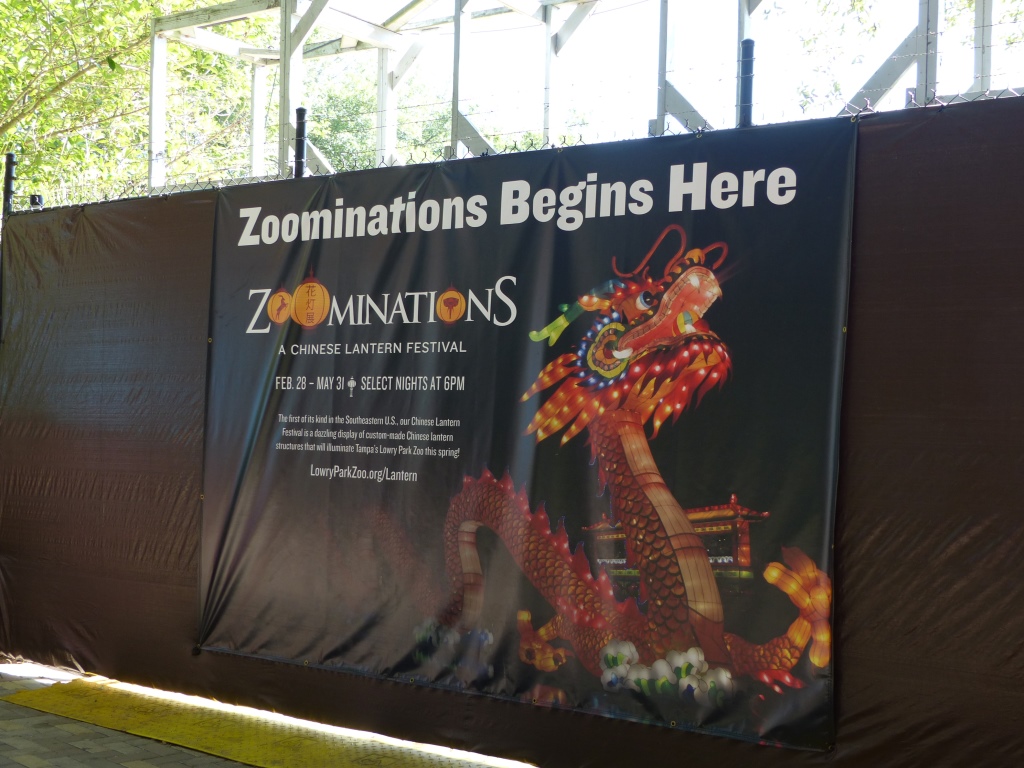
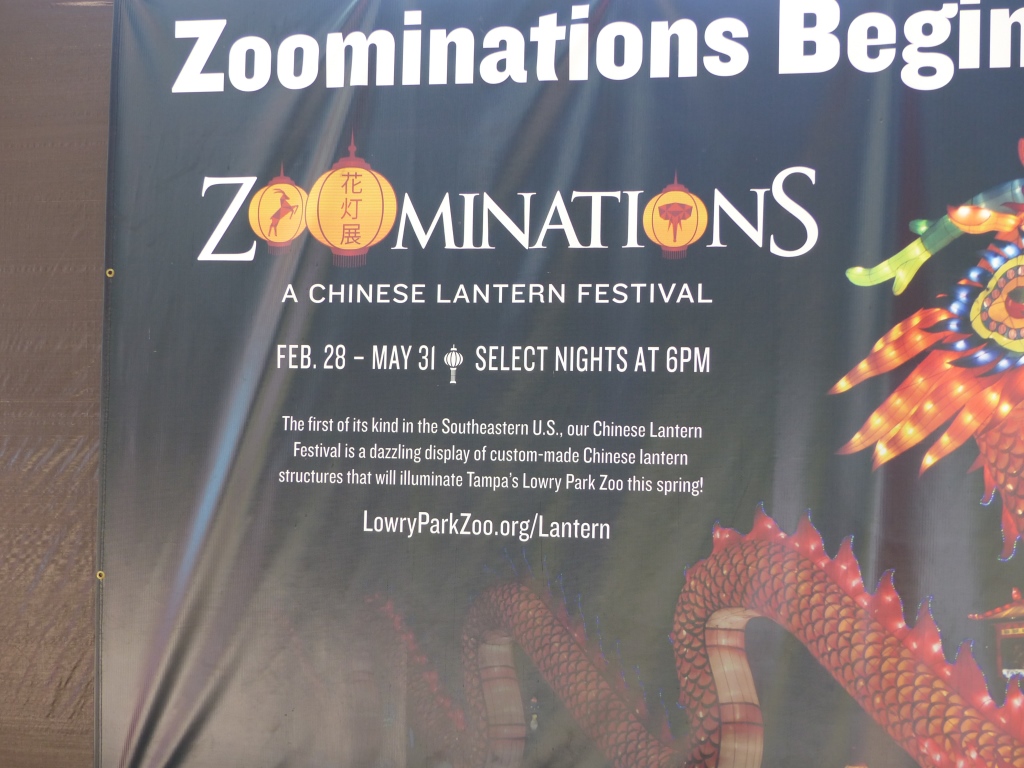
On that last visit to Lowry Park Zoo a few weeks ago, we took photos of their Zoominations celebration decorations. It is a Chinese Lantern Festival. We only saw these fantastic festival luminations without the lights. I have included our photos and links to the LPZ Zoominations.
Peacock – ZooMinations at Lowry Park Zoo
The animals and critters are silk and other materials stretched over wire sculptures. I touched one, before I knew about how they were made, and could tell it was material. They are so gorgeous.
My favorites were the Pandas, Peacock and the Dragon.
Dragon – ZooMinations at Lowry Park Zoo
Every good gift and every perfect gift is from above, and cometh down from the Father of lights, with whom is no variableness, neither shadow of turning. (James 1:17 KJV)
For by him were all things created, that are in heaven, and that are in earth, visible and invisible, whether they be thrones, or dominions, or principalities, or powers: all things were created by him, and for him: And he is before all things, and by him all things consist. (Colossians 1:16-17 KJV)
While reading an article from Sage Brush’s “The Vine Vigil” he included this video from exploration films:
To find out more about this relationship between bees and the vanilla bean plus other videos, go to:
God’s Creation – Vanilla Beans and Melipona Bees
Let them praise the name of the LORD: for he commanded, and they were created. (Psalms 148:5 KJV)
*
Just realized this little jewel has been written about before, but Sage Brush’s article is very interesting.
…God has made me to laugh; all who hear will laugh with me. (Genesis 21:6 AMP – emphasis by me)
He will yet fill your mouth with laughter [Job] and your lips with joyful shouting. (Job 8:21 AMP)
While at the Lowry Park Zoo, we were able to hear and video the Laughing Kookaburras. They will put a smile on your face and a tickle in your heart. We have featured them before, but thought they should be featured again.
For You, O Lord, have made me glad by Your works; at the deeds of Your hands I joyfully sing. (Psalms 92:4 AMP)
Make a joyful noise to the Lord, all the earth; break forth and sing for joy, yes, sing praises! (Psalms 98:4 AMP)
and
Then were our mouths filled with laughter, and our tongues with singing. Then they said among the nations, The Lord has done great things for them. The Lord has done great things for us! We are glad! (Psalms 126:2-3 AMP)
Unless, I change my mind or someone sends me a link to some birds in a “Tickle Me” action, this will probably be the last one for now. While trying to find some videos to use or photos, I became frustrated while searching for appropriate items for this blog. Either evolution, cuss words, or innuendos were used, that I choose not to share. Call me “old-fashioned” or whatever, but we try to honor the Lord on this site.
Here are the Tickle Me Tuesday that were produced. This post will become a link on the menu under PLUS, so all of them can be found again, if you choose. Typing “Tickle Me” in the search will also bring them all back up.
As you have been viewing the Sunday Inspirations lately, we have been going through the Passerines or Passerfiormes Order in taxonomic order. So far, I have shown you 30 families, which makes us almost a forth of the way through the 125 Passerine families.
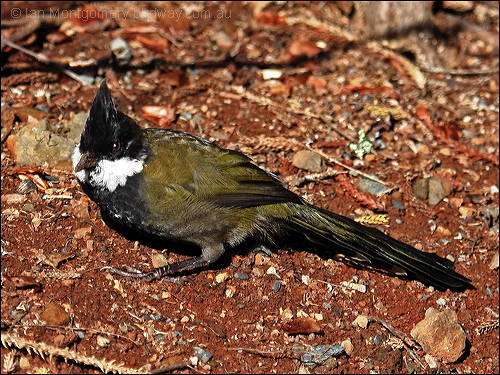
Whipbirds, Jewel-babblers, Quail-thrushes that make up the Psophodidae family are native to Australia and nearby areas. They occur in forest, generally replacing each other at different altitudes. The painted quail-thrush is also found in the forests of New Guinea.The other quail-thrushes are restricted to Australia where they are found in drier habitats, occurring in open forest, scrub and on stony ground.[8] None of the species are thought to be threatened but one subspecies of the spotted quail-thrush is possibly extinct.
The whipbirds and wedgebills are all found in Australia, occurring in a range of habitats from rainforest to arid scrub. The western whipbird is considered to be near-threatened because of habitat loss and fires while the Papuan whipbird is classed as data deficient..
They are terrestrial birds which fly fairly weakly and prefer to squat or run when disturbed. They forage on the ground feeding mainly on insects and other invertebrates.[9] In the desert, quail-thrushes also eat some seeds. They build a cup-shaped nest among shrubs or on the ground. Two or three eggs are laid.
Eastern Whipbird (Psophodes olivaceus) by Ian
Here is the song of the Eastern Whipbird. It sounds like someone snapping a whip.
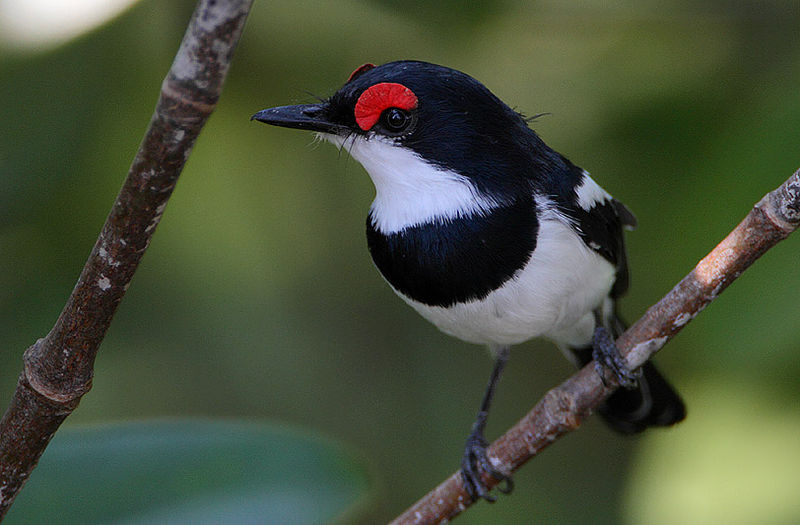
The Platysteiridae – Wattle-eyes, Batises Family are a favorite of mine because of their eyes. They are a family of small stout birds living in trees, primarily of the woodlands and forests of sub-Saharan Africa. The family contains the wattle-eyes, batises and shrike-flycatchers. They were previously classed as a subfamily of the Old World flycatcher family Muscicapidae.
These insect-eating birds are found in usually open forests or bush. They hunt by flycatching, or by taking prey from the ground like a shrike. The nest is a small neat cup low in a tree or bush. The most important component of the diet of all species is insects, although spiders, millipedes and scorpions are also taken, and there are even records of small lizards being consumed.
This slideshow requires JavaScript.
For the ways of man are before the eyes of the LORD, And He ponders all his paths. (Proverbs 5:21 NKJV)
My son, give me your heart, And let your eyes observe my ways. (Proverbs 23:26 NKJV)
The humble shall see this and be glad; And you who seek God, your hearts shall live. (Psalms 69:32 NKJV)
Listen to Sean play as you watch these two beautifully created families of birds:
” Be Thou My Vision and Battle Hymn of the Republic” ~ played by Sean Fielder
Trust in Him. is from Picture My Thoughts by Myra Johnson’s blog that I follow. She always has a photo with scripture. Thanks, Myra, for encouraging us daily.
Peter Rabbit was dozing. Yes, sir, Peter was dozing. He didn’t mean to doze, but whenever Peter sits still for a long time and tries to think, he is pretty sure to go to sleep. By and by he wakened with a start. At first he didn’t know what had wakened him, but as he sat there blinking his eyes, he heard a few rich notes from the top of the nearest apple-tree. “It’s Goldy the Oriole,” thought Peter, and peeped out to see.
But though he looked and looked he couldn’t see Goldy anywhere, but he did see a stranger. It was some one of about Goldy’s size and shape. In fact he was so like Goldy, but for the color of his suit, that at first Peter almost thought Goldy had somehow changed his clothes. Of course he knew that this couldn’t be, but it seemed as if it must be, for the song the stranger was singing was something like that of Goldy. The stranger’s head and throat and back were black, just like Goldy’s, and his wings were trimmed with white in just the same way. But the rest of his suit, instead of being the beautiful orange of which Goldy is so proud, was a beautiful chestnut color.
Peter blinked and stared very hard. “Now who can this be?” said he, speaking aloud without thinking.
“Don’t you know him?” asked a sharp voice so close to Peter that it made him jump. Peter whirled around. There sat Striped Chipmunk grinning at him from the top of the old stone wall. “That’s Weaver the Orchard Oriole,” Striped Chipmunk rattled on. “If you don’t know him you ought to, because he is one of the very nicest persons in the Old Orchard. I just love to hear him sing.”
“Is—is—he related to Goldy?” asked Peter somewhat doubtfully.
“Of course,” retorted Striped Chipmunk. “I shouldn’t think you would have to look at him more than once to know that. He’s first cousin to Goldy. There comes Mrs. Weaver. I do hope they’ve decided to build in the Old Orchard this year.”
“I’m glad you told me who she is because I never would have guessed it,” confessed Peter as he studied the newcomer. She did not look at all like Weaver. She was dressed in olive-green and dull yellow, with white markings on her wings.
Peter couldn’t help thinking how much easier it must be for her than for her handsome husband to hide among the green leaves.
As he watched she flew down to the ground and picked up a long piece of grass. “They are building here, as sure as you live!” cried Striped Chipmunk. “I’m glad of that. Did you ever see their nest, Peter? Of course you haven’t, because you said you had never seen them before. Their nest is a wonder, Peter. It really is. It is made almost wholly of fine grass and they weave it together in the most wonderful way.”
“Do they have a hanging nest like Goldy’s?” asked Peter a bit timidly.
“Not such a deep one,” replied Striped Chipmunk. “They hang it between the twigs near the end of a branch, but they bind it more closely to the branch and it isn’t deep enough to swing as Goldy’s does.”
Peter had just opened his mouth to ask another question when there was a loud sniffing sound farther up along the old stone wall. He didn’t wait to hear it again. He knew that Bowser the Hound was coming.
“Good-by, Striped Chipmunk! This is no place for me,” whispered Peter and started for the dear Old Briar-patch. He was in such a hurry to get there that on his way across the Green Meadows he almost ran into Jimmy Skunk before he saw him.
“What’s your hurry, Peter?” demanded Jimmy
“Bowser the Hound almost found me up in the Old Orchard,” panted Peter. “It’s a wonder he hasn’t found my tracks. I expect he will any minute. I’m glad to see you, Jimmy, but I guess I’d better be moving along.”
“Don’t be in such a hurry, Peter. Don’t be in such a hurry,” replied Jimmy, who himself never hurries. “Stop and talk a bit. That old nuisance won’t bother you as long as you are with me.”
Peter hesitated. He wanted to gossip, but he still felt nervous about Bowser the Hound. However, as he heard nothing of Bowser’s great voice, telling all the world that he had found Peter’s tracks, he decided to stop a few minutes. “What are you doing down here on the Green Meadows?” he demanded.
Jimmy grinned. “I’m looking for grasshoppers and grubs, if you must know,” said he. “And I’ve just got a notion I may find some fresh eggs. I don’t often eat them, but once in a while one tastes good.”
“If you ask me, it’s a funny place to be looking for eggs down here on the Green Meadows,” replied Peter. “When I want a thing; I look for it where it is likely to be found.”
“Just so, Peter; just so,” retorted Jimmy Skunk, nodding his head with approval. “That’s why I am here.”
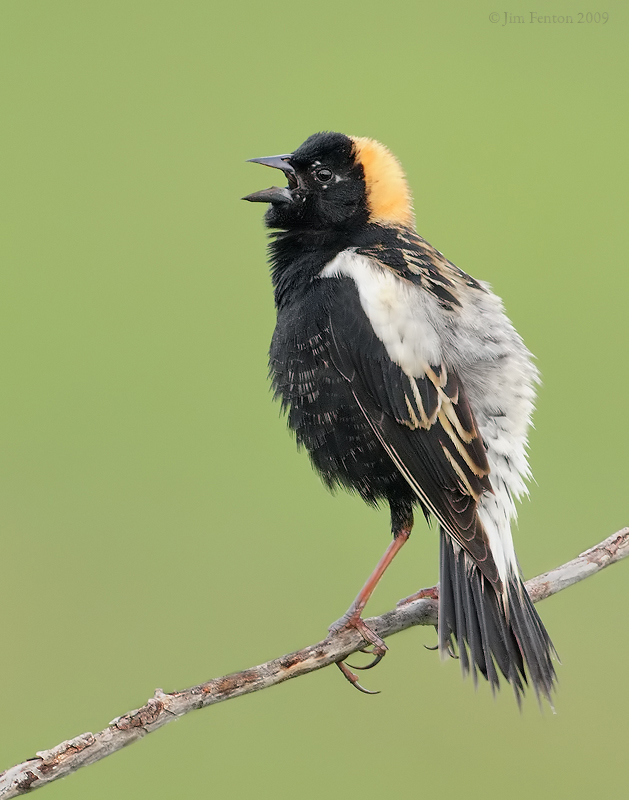
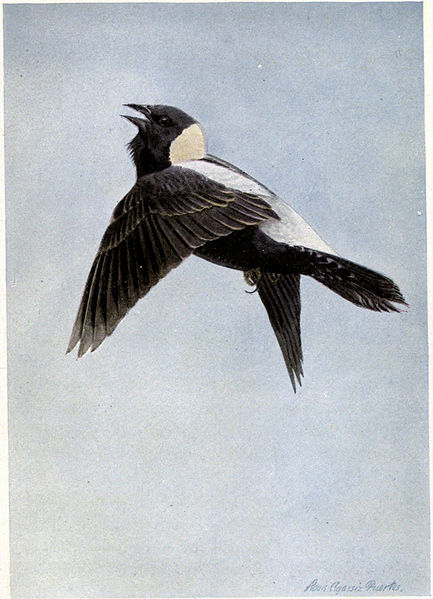
Peter looked puzzled. He was puzzled. But before he could ask another question a rollicking song caused both of them to look up. There on quivering wings in mid-air was the singer. He was dressed very much like Jimmy Skunk himself, in black and white, save that in places the white had a tinge of yellow, especially on the back of his neck. It was Bubbling Bob the Bobolink. And how he did sing! It seemed as if the notes fairly tumbled over each other.
Jimmy Skunk raised himself on his hind-legs a little to see just where Bubbling Bob dropped down in the grass. Then Jimmy began to move in that direction. Suddenly Peter understood. He remembered that Bubbling Bob’s nest is always on the ground. It was his eggs that Jimmy Skunk was looking for.
“You don’t happen to have seen Mrs. Bob anywhere around here, do you, Peter?” asked Jimmy, trying to speak carelessly.
“No,” replied Peter. “If I had I wouldn’t tell you where. You ought to be ashamed, Jimmy Skunk, to think of robbing such a beautiful singer as Bubbling Bob.”
“Pooh!” retorted Jimmy. “What’s the harm? If I find those eggs he and Mrs. Bob could simply build another nest and lay some more. They won’t be any the worse off, and I will have had a good breakfast.”
“But think of all the work they would have to do to build another nest,” replied Peter.
“I should worry,” retorted Jimmy Skunk. “Any one who can spend so much time singing can afford to do a little extra work.”
“You’re horrid, Jimmy Skunk. You’re just horrid,” said Peter. “I hope you won’t find a single egg, so there!”
Bobolink (Dolichonyx oryzivorus) by J Fenton
With this, Peter once more headed for the dear Old Briar-patch, while Jimmy Skunk continued toward the place where Bubbling Bob had disappeared in the long grass. Peter went only a short distance and then sat up to watch Jimmy Skunk. Just before Jimmy reached the place where Bubbling Bob had disappeared, the latter mounted into the air again, pouring out his rollicking song as if there were no room in his heart for anything but happiness. Then he saw Jimmy Shrunk and became very much excited. He flew down in the grass a little farther on and then up again, and began to scold.
It looked very much as if he had gone down in the grass to warn Mrs. Bob. Evidently Jimmy thought so, for he at once headed that way. When Bubbling Bob did the same thing all over again. Peter grew anxious. He knew just how patient Jimmy Skunk could be, and he very much feared that Jimmy would find that nest. Presently he grew tired of watching and started on for the dear Old Briar-patch. Just before he reached it a brown bird, who reminded him somewhat of Mrs. Redwing and Sally Sly the Cowbird, though she was smaller, ran across the path in front of him and then flew up to the top of a last year’s mullein stalk. It was Mrs. Bobolink. Peter knew her well, for he and she were very good friends.
“Oh!” cried Peter. “What are you doing here? Don’t you know that Jimmy Skunk, is hunting for your nest over there? Aren’t you worried to death? I would be if I were in your place.”
Mrs. Bob chuckled. “Isn’t he a dear? And isn’t he smart?” said she, meaning Bubbling Bob, of course, and not Jimmy Skunk. “Just see him lead that black-and-white robber away.”
Peter stared at her for a full minute. “Do you mean to say,” said he “that your nest isn’t over there at all?”
Mrs. Bob chuckled harder than ever. “Of course it isn’t over there,” said she.
“Then where is it?” demanded Peter.
“That’s telling,” replied Mrs. Bob. “It isn’t over there, and it isn’t anywhere near there. But where it is is Bob’s secret and mine, and we mean to keep it. Now I must go get something to eat,” and with a hasty farewell Mrs. Bobolink flew over to the other side of the dear Old Briar-patch.
Peter remembered that he had seen Mrs. Bob running along the ground before she flew up to the old mullein stalk. He went back to the spot where he had first seen her and hunted all around in the grass, but without success. You see, Mrs. Bobolink had been quite as clever in fooling Peter as Bubbling Bob had been in fooling Jimmy Skunk.
He who dwells in the secret place of the Most High Shall abide under the shadow of the Almighty. I will say of the LORD, “He is my refuge and my fortress; My God, in Him I will trust.” (Psalms 91:1-2 NKJV)
He who goes about as a talebearer reveals secrets; therefore associate not with him who talks too freely. [Rom. 16:17, 18.] (Proverbs 20:19 AMP)
*
What was Peter Rabbit doing when he heard singing?
Can you tell what the Orchard Oriole looks like?
What does their nest look like?
Who was Peter afraid my find him?
Who told Peter not to worry as long as he was with him? Why?
For every beast of the forest is Mine, and the cattle upon a thousand hills or upon the mountains where thousands are. I know and am acquainted with all the birds of the mountains, and the wild animals of the field are Mine and are with Me, in My mind. (Psalms 50:10-11 AMP)
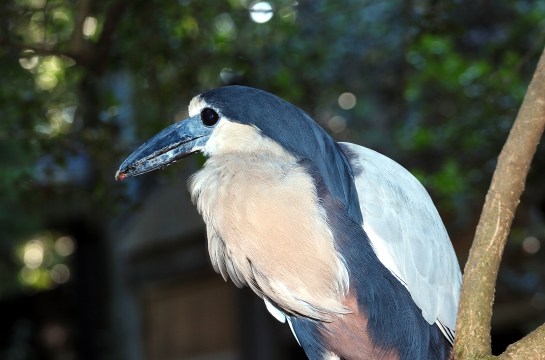
We went to Lowry Park Zoo recently because they opened up early for a special event for the kids. We headed to the aviary to get there while they were feeding the birds. Usually, that happens before the zoo opens. Besides that, most people were at the event and we had the aviary to us and the birds. Yeah!
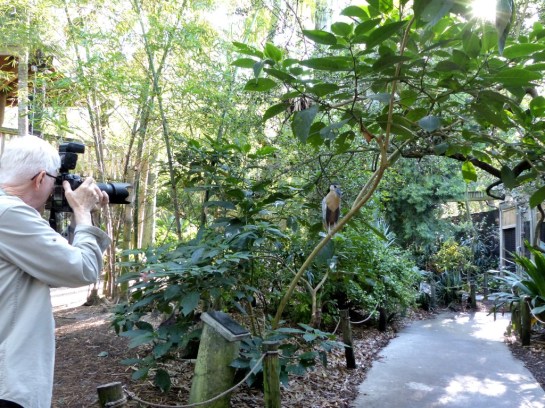
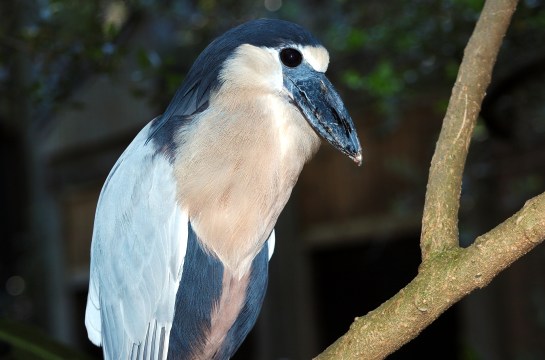
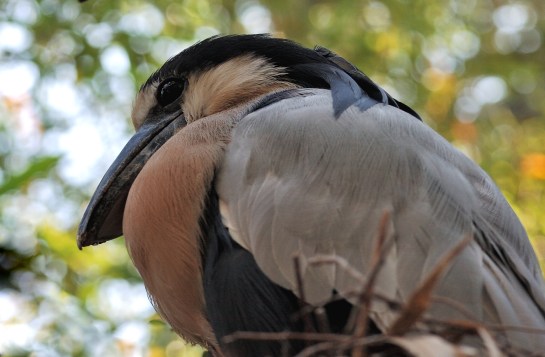
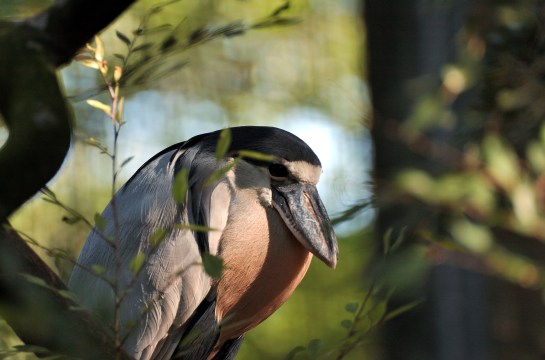
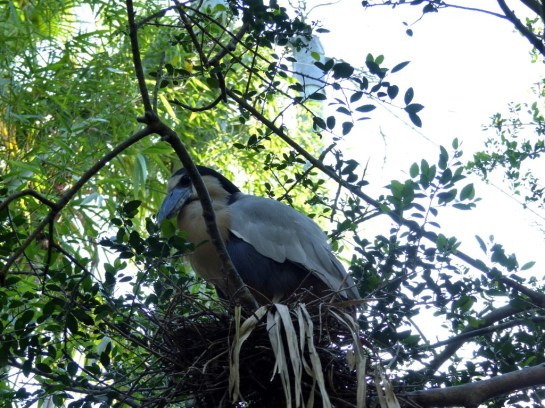
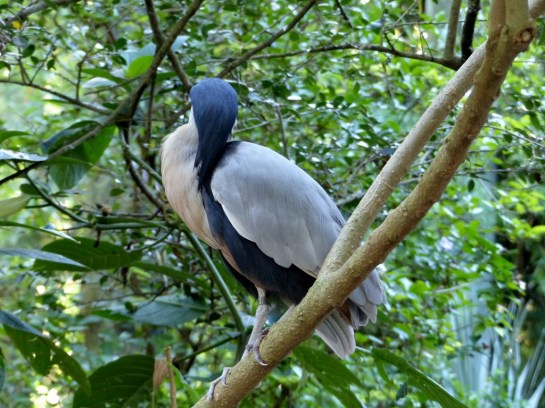
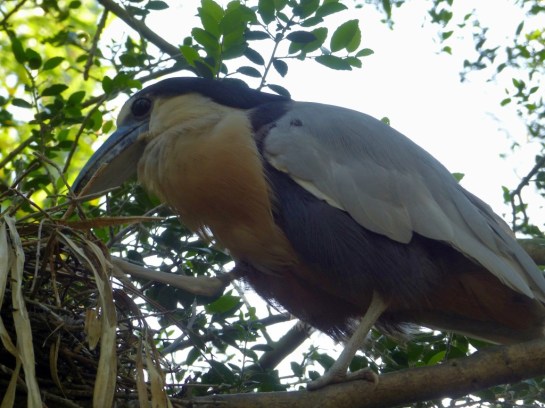
One of my favorite birds in there is the Boat-billed Heron. I think they are just cute. Two of them like to sit just above or to the side of the walkway. (In fact, one of them managed to plaster Dan and his camera on a previous visit. Yuk!) This time they behaved and was able to shoot a video right up under one of my avian friends. They are adorable, to me.
Boat-billed Heron by Lee at LPZ
Boat-billed Heron over Dan’s Shoulder by Lee at LPZ
Boat-billed Heron Lowry Park Zoo by Dan 4-5-15
Boat-billed Heron Lowry Park Zoo by Dan
Boat-billed Heron Lowry Park Zoo by Dan
Boat-billed Heron Lowry Park Zoo by Dan
Boat-billed Heron Lowry Park Zoo by Dan
Boat-billed Heron by Lee at LPZ
Boat-billed Heron by Lee at LPZ
Back of the head shot.
Boat-billed Heron by Lee at LPZ
Boat-billed Heron by Lee at LPZ
Boat-billed Heron by Lee at LPZ
Boat-billed Heron by Lee at LPZ
Here is the video I took of our friendly Boat-bill Heron (of course my mouth was running in amazement) :
We have had other articles on this bird, but just had to share this latest Birdwatching Adventure.










































 Lee's Birdwatching Adventures Plus