Sunday Inspiration – Eagles

But they that wait upon the LORD shall renew their strength; they shall mount up with wings as eagles; they shall run, and not be weary; and they shall walk, and not faint. (Isaiah 40:31 KJV)

*

This slideshow requires JavaScript.

Listen to music as the slideshow presents some of the Lord’s beautifully created birds.

*

Don’t Give Up © by The Hyssongs (Used With Permission of the Hyssongs)

(Music and photos are used by permission. If copied, you must obtain permission also.)

*

Eagles are members of the Accipitridae – Kites, Hawks and Eagles Family.

*

*

More Sunday Inspiration

*

Bird of the World – Blue-Cheeked Bee-eater

What a neat video of the Blue-cheeked Bee-eater. I have seen photos of them, but seeing birds in action is always special. There are some birds that just hit my fancy as I admire the Lord’s Handiwork. The Bee-eaters are one of those.

By Igor Byshnev

Matthew 6:25-34 NKJV
(25) “Therefore I say to you, do not worry about your life, what you will eat or what you will drink; nor about your body, what you will put on. Is not life more than food and the body more than clothing?
(26) Look at the birds of the air, for they neither sow nor reap nor gather into barns; yet your heavenly Father feeds them. Are you not of more value than they?
(27) Which of you by worrying can add one cubit to his stature?
(28) “So why do you worry about clothing? Consider the lilies of the field, how they grow: they neither toil nor spin;
(29) and yet I say to you that even Solomon in all his glory was not arrayed like one of these.
(30) Now if God so clothes the grass of the field, which today is, and tomorrow is thrown into the oven, will He not much more clothe you, O you of little faith?
(31) “Therefore do not worry, saying, ‘What shall we eat?’ or ‘What shall we drink?’ or ‘What shall we wear?’
(32) For after all these things the Gentiles seek. For your heavenly Father knows that you need all these things.
(33) But seek first the kingdom of God and His righteousness, and all these things shall be added to you.
(34) Therefore do not worry about tomorrow, for tomorrow will worry about its own things. Sufficient for the day is its own trouble.

Bee-eaters belong to the Meropidae – Bee-eaters Family which has 27 species.

As the name suggests, bee-eaters predominantly eat flying insects, especially bees and wasps, which are caught in the air by sallies from an open perch. While they pursue any type of flying insect, honey bees predominate in their diet. Hymenoptera (ants, bees and wasps) comprise from 20% to 96% of all insects eaten, with honey bees comprising approximately one-third of the Hymenoptera. (Wikipedia with editing)

Articles Mentioning Birds From This Family:

Other Websites that have photos of this Family:

Gideon

*

Birds of the World – Blue-cheeked Bee-eater

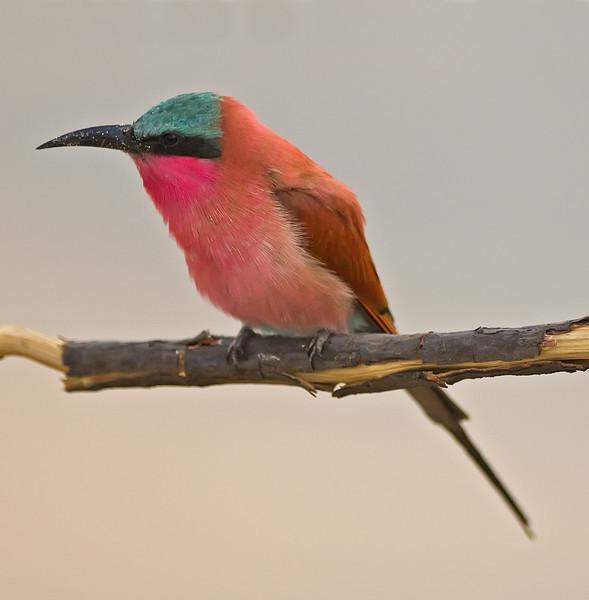
Southern Carmine Bee-eater (Merops nubicus) by Marc at Africaddict

Southern Carmine Bee-eater (Merops nubicus) by Marc at Africaddict

What a neat video of the Blue-cheeked Bee-eater. I have seen photos of them, but seeing birds in action is always special. There are some birds that just hit my fancy as I admire the Lord’s Handiwork. The Bee-eaters are one of those.

By Igor Byshnev

Matthew 6:25-34 NKJV
(25) “Therefore I say to you, do not worry about your life, what you will eat or what you will drink; nor about your body, what you will put on. Is not life more than food and the body more than clothing?
(26) Look at the birds of the air, for they neither sow nor reap nor gather into barns; yet your heavenly Father feeds them. Are you not of more value than they?
(27) Which of you by worrying can add one cubit to his stature?
(28) “So why do you worry about clothing? Consider the lilies of the field, how they grow: they neither toil nor spin;
(29) and yet I say to you that even Solomon in all his glory was not arrayed like one of these.
(30) Now if God so clothes the grass of the field, which today is, and tomorrow is thrown into the oven, will He not much more clothe you, O you of little faith?
(31) “Therefore do not worry, saying, ‘What shall we eat?’ or ‘What shall we drink?’ or ‘What shall we wear?’
(32) For after all these things the Gentiles seek. For your heavenly Father knows that you need all these things.
(33) But seek first the kingdom of God and His righteousness, and all these things shall be added to you.
(34) Therefore do not worry about tomorrow, for tomorrow will worry about its own things. Sufficient for the day is its own trouble.

Bee-eaters belong to the Meropidae – Bee-eaters Family which has 27 species.

As the name suggests, bee-eaters predominantly eat flying insects, especially bees and wasps, which are caught in the air by sallies from an open perch. While they pursue any type of flying insect, honey bees predominate in their diet. Hymenoptera (ants, bees and wasps) comprise from 20% to 96% of all insects eaten, with honey bees comprising approximately one-third of the Hymenoptera. (Wikipedia with editing)

Articles Mentioning Birds From This Family:

Other Websites that have photos of this Family:

Wordless Birds

*

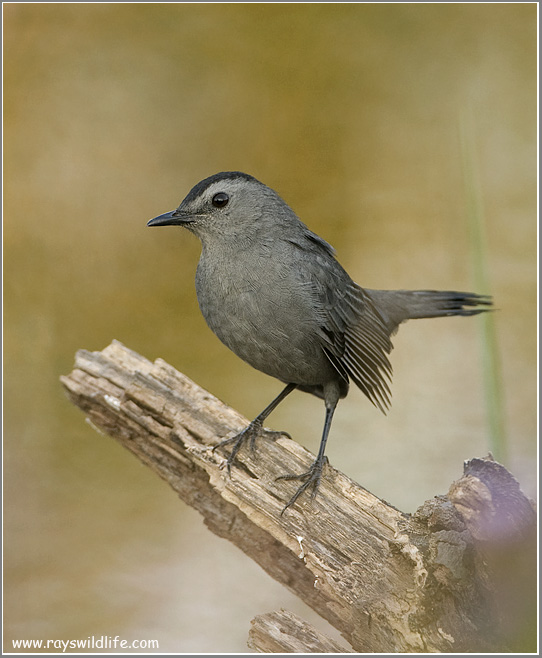
Grey (or Gray) Catbird Mimicry

Grey Catbird (Dumetella carolinensis) by Africaddict

Grey Catbird (Dumetella carolinensis) by Africaddict

I came across a very interesting YouTube from the LabofOrnithology. It tells about how the Grey (Gray) Catbird mimics so many bird species (and a frog also). Listen as Greg Budney, audio curator at the Macaulay Library, dissects the recording and notes each snippet of mimicked song. (IOC uses the name Grey Catbird and some others still use the Gray spelling.)

*

*

Isn’t that amazing? He produced it very well by showing the bird and then the Catbird mimicking it. I have always enjoyed finding our Grey Catbirds in this area. (When you can find them!)

Catbirds get their name because they belong to several unrelated groups of songbirds because their wailing calls, which resemble a cat’s meowing. The genus name Ailuroedus likewise is from the Greek for “cat-singer” or “cat-voiced”.

Australasian catbirds are the genera Ailuroedus and the monotypic Scenopooetes. They belong to the bowerbird family (Ptilonorhynchidae) of the basal songbirds:

  • White-eared Catbird (Ailuroedus buccoides) *LLABS
  • Green Catbird (Ailuroedus crassirostris)
  • Spotted Catbird (Ailuroedus melanotis)

New World catbirds are two monotypic genera from the mimid family (Mimidae) of the passeridan superfamily Muscicapoidea. Among the Mimidae, they represent independent basal lineages probably closer to the Caribbean thrasher and trembler assemblage than to the mockingbirds and Toxostoma thrashers:

  • Grey Catbird (Dumetella carolinensis)*LLABS*
  • Black Catbird (Melanoptila glabrirostris)

A monotypic genus from Africa. It is tentatively placed in the Sylviidae – Sylviid Babblers of the passeridan superfamily Sylvioidea, but possibly closer to the typical warblers of the Sylviidae.

  • Abyssinian Catbird (Parophasma galinieri)
Grey Catbird (Dumetella carolinensis) by Raymond Barlow

Grey Catbird (Dumetella carolinensis) by Raymond Barlow

Woe to the world for such temptations to sin and influences to do wrong!… (Matthew 18:7 AMP)

And Samuel heard all the words of the people, and he repeated them in the hearing of the LORD. (1 Samuel 8:21 NKJV)

He who covers and forgives an offense seeks love, but he who repeats or harps on a matter separates even close friends. (Proverbs 17:9 AMP)

By the blessing of the influence of the upright and God’s favor [because of them] the city is exalted, but it is overthrown by the mouth of the wicked. He who belittles and despises his neighbor lacks sense, but a man of understanding keeps silent. He who goes about as a talebearer reveals secrets, but he who is trustworthy and faithful in spirit keeps the matter hidden. (Proverbs 11:11-13 AMP)

As I was watching the video some verses came to mind. What are we mimicking? I’ve written about the birds that repeat what we say in, Birds of the Bible – Repeating Birds. When we watch TV, listen to music, listen to speeches, read the newspaper, etc. We are being influenced. There are times when we “mimic” what we have seen or heard. It can go either way.

We can hear and mimic (copy) the good OR we can hear and mimic (copy) the bad. I trust we are following the Lord and His teachings.

If we mimic, let us mimic the Lord.

See:

*

Interesting Things – Dragonfly

Thinking

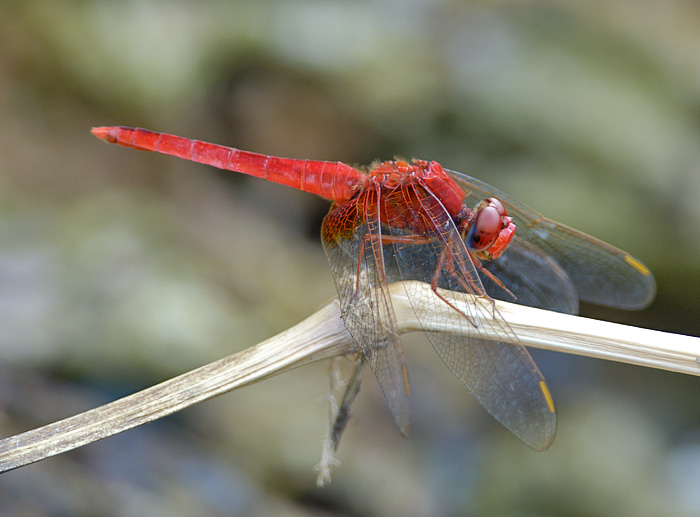
Here is an interesting video fromYouTube.com – Exploration Films about the Dragonflies. It is very interesting.

Dragonfly by Phil Kwong

Dragonfly by Phil Kwong

Learning from the Dragonfly by Creation Moments

“Scientists studying the dragonfly are learning even more secrets of flight. Our best high-performance aircraft can barely lift themselves off the ground. However, the dragonfly can lift 15 times his own weight into the air.”

The Amazing Mosquito Hawk by Creation Moments

But ask now the beasts, and they shall teach thee; and the fowls of the air, and they shall tell thee: Or speak to the earth, and it shall teach thee: and the fishes of the sea shall declare unto thee. Who knoweth not in all these that the hand of the LORD hath wrought this?
(Job 12:7-9 KJV)

More articles from Creation Moments:

100 Foot Ferns “dragonflies had wingspans of six feet”

The Pre-Flood Atmosphere “dragonflies were the size of hawks”

From Creation Ministries International:

“Dragonflies

Dragonflies are probably the most beautiful of the flying insects. There are about 4,500 different varieties. They begin their life in water, where eggs hatch into rather ugly brown nymphs. The time spent living in water varies from a few weeks to several years, but for all the varieties the day comes when the nymph suddenly has the urge to climb out of the water. It sits for a while at the top of a piece of grass until its skin splits open and out comes a dragonfly! After waiting for its wings to become firm and dry, the dragonfly flies away, its lovely colours glinting in the sunshine.

Although they are very small, dragonflies are wonderfully designed for flying. Their two pairs of wings are very light, but strengthened by a network of tiny veins, which not only carry blood fluid to keep the wings stiff, but also nerves and oxygen. Some dragonflies beat their wings 40 times in one second! Dragonflies are like tiny helicopters—they can even fly backwards! In fact, Igor Sikorsky, who first designed helicopters, for the idea from watching dragonflies.

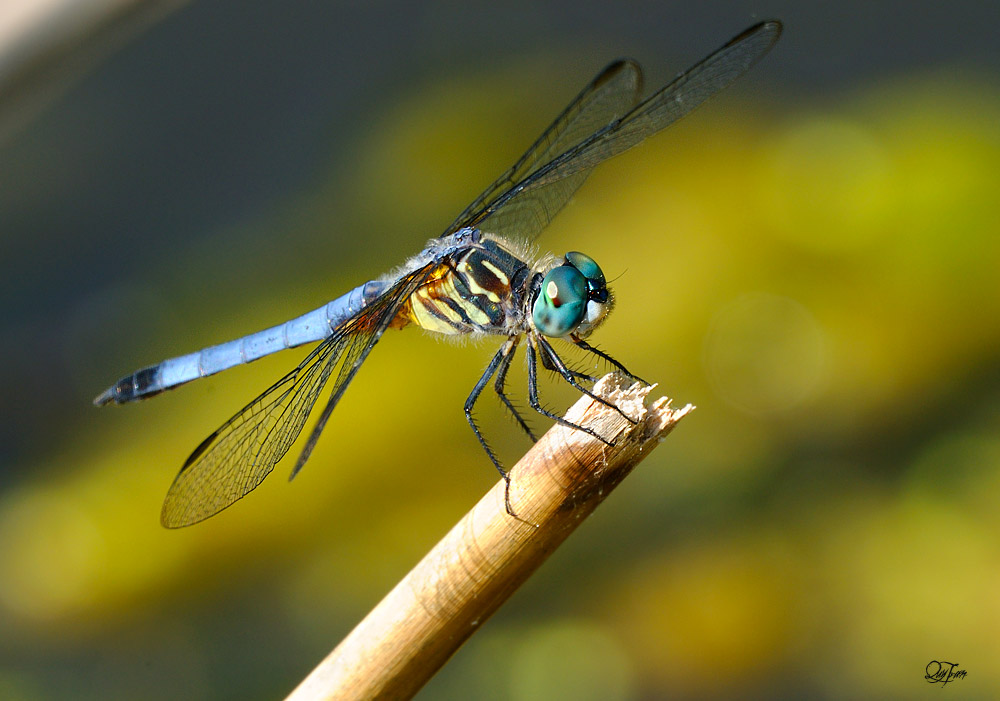
Dragonfly by QuyTran

Dragonfly by QuyTran

Another wonderful thing about dragonflies is their eyes. Each pair of eyes is actually made up of as many as 30,000 separate eyes, each with its own lens! This enables the insect to see what is happening over a wide area, and spot every tiny movement without moving its head.

The supposedly oldest fossil dragonflies are just like dragonflies are now, except that they were much larger—75 centimeters (2.5 feet) from wing-tip to wing-tip! So there is no evidence that they evolved from ancestors without wings. And surely those amazing eyes did not evolve? Dragonflies are another of the many wonders of God’s creation!” From Our World (Answers for Kids.)

Astonishing acrobatics – dragonflies – by Johathan Sarfati

(Updated 4/29/09)

Dragonflies and fighter pilots – what can we learn? by Ken Ham

*

Originally posted in 2009 – this is a duplicate.

More Interesting Things:

Interesting Things – Dragonflies II

*

*

Birds of the Bible – Snowy Owl in Florida

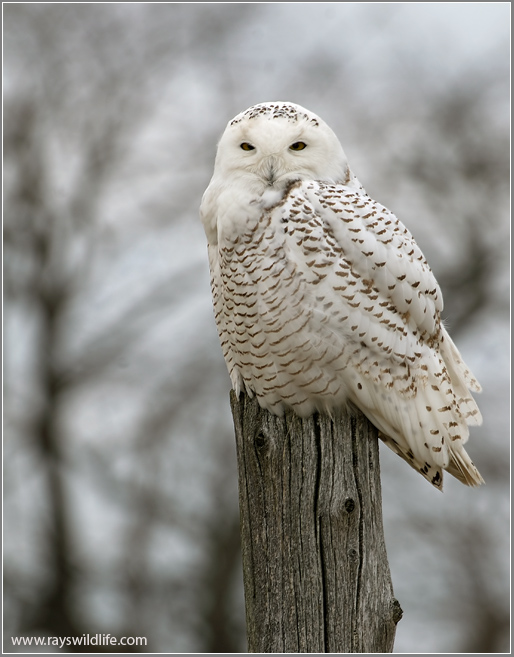
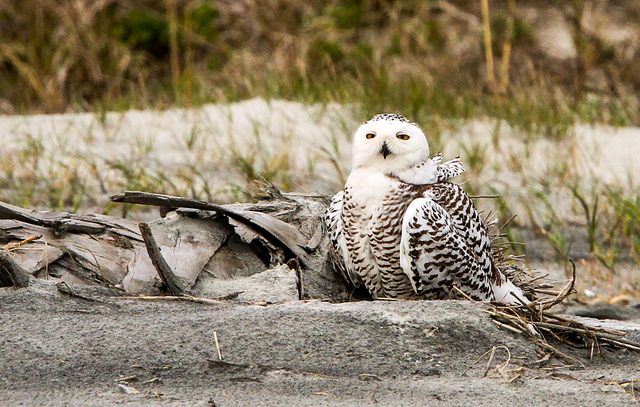
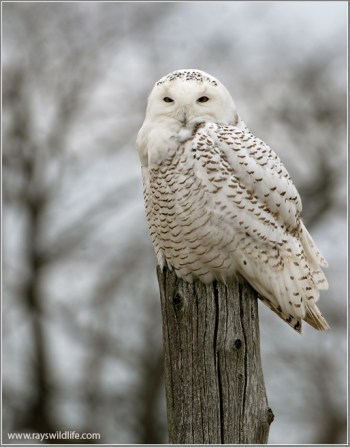
Snowy Owl (Bubo scandiacus) by Raymond Barlow

Snowy Owl (Bubo scandiacus) by Raymond Barlow (Not the one being seen)

the ostrich, the short-eared owl, the sea gull, and the hawk after its kind; the little owl, the fisher owl, and the screech owl; the white owl, the jackdaw, and the carrion vulture;
(Leviticus 11:16-18 NKJV)

And the owl, and the night hawk, and the cuckow, and the hawk after his kind, And the little owl, and the cormorant, and the great owl, (Leviticus 11:16-17 KJV)

Florida birdwatchers are pleased to have an odd appearance of a Snowy Owl. She is a young owl, but she has quite a following down here. What makes this so unusual is that she is way out of the normal winter grounds for these birds. This is only the third observation of the Snowy Owl in Florida. We are known for our “Snowbirds,” but the Snowy Owl definitely qualifies as a “Snowbird.”

This bird has made a temporary home at the Little Talbot Island State Park. Not sure how the bird has any privacy. Birdwatchers from all around are making trips to Duval County, where Jacksonville is located. She was still there as of yesterday, Jan 5, 2014.
Snowy Owl (Bubo scandiacus) Female in Florida 2013-2014 ©©minds-eye

Snowy Owl (Bubo scandiacus) Female in Florida 2013-2014 ©©minds-eye

Snowy Owl (bubo scandiacus) are members of the Strigidae – Owl Family. They are the largest North American Owl. Owls are a Bird of the Bible and depending on which version you use, Owls are mentioned in 14 verses in the KJV, but a “Snowy Owl” is not mentioned, but the “great” and “white” owls are mentioned. What a lovely creation from our Lord.

This yellow-eyed, black-beaked white bird is easily recognizable. It is 52–71 cm (20–28 in) long, with a 125–150 cm (49–59 in) wingspan. Also, these birds can weigh anywhere from 1.6 to 3 kg (3.5 to 6.6 lb).[3] It is one of the largest species of owl and, in North America, is on average the heaviest owl species. The adult male is virtually pure white, but females and young birds have some dark scalloping; the young are heavily barred, and dark spotting may even predominate. Its thick plumage, heavily feathered taloned feet, and colouration render the Snowy Owl well-adapted for life north of the Arctic Circle.

Snowy Owl calls are varied, but the alarm call is a barking, almost quacking krek-krek; the female also has a softer mewling pyee-pyee or prek-prek. The song is a deep repeated gahw. They may also clap their beak in response to threats or annoyances. While called clapping, it is believed this sound may actually be a clicking of the tongue, not the beak.

This powerful bird relies primarily on lemmings and other small rodents for food during the breeding season, but at times of low prey density, or during the ptarmigan nesting period, they may switch to favoring juvenile ptarmigan. They are opportunistic hunters and prey species may vary considerably, especially in winter. They feed on a wide variety of small mammals such as meadow voles and deer mice, but will take advantage of larger prey, frequently following traplines to find food. Some of the larger mammal prey includes hares, muskrats, marmots, squirrels, rabbits, raccoons, prairie dogs, rats, moles, smaller birds, entrapped furbearers. Birds preyed upon include ptarmigan, other ducks, geese, shorebirds, pheasants, grouse, coots, grebes, gulls, songbirds, and even other raptors, including other owl species. Most of the owls’ hunting is done in the “sit and wait” style; prey may be captured on the ground or in the air, or fish may be snatched off the surface of bodies of water using their sharp talons. Each bird must capture roughly 7 to 12 mice per day to meet its food requirement and can eat more than 1,600 lemmings per year.

Snowy Owls, like many other birds, swallow their small prey whole. Strong stomach juices digest the flesh, while the indigestible bones, teeth, fur, and feathers are compacted into oval pellets that the bird regurgitates 18 to 24 hours after feeding. Regurgitation often takes place at regular perches, where dozens of pellets may be found. Biologists frequently examine these pellets to determine the quantity and types of prey the birds have eaten. When large prey are eaten in small pieces, pellets will not be produced. (Wikipedia)

Here are some of the links to articles:

*
Bible Birds – Crane’s Introduction

Crane’s Introduction

Sandhill Cranes and Babies in yard by Lee

Sandhill Cranes and Babies in yard

Even the stork in the heavens knows her times, and the turtledove, swallow, and crane keep the time of their coming, but my people know not the rules of the LORD. (Jeremiah 8:7 ESV)

Cranes are in the Gruidae Family of the Gruiformes Order. At present there are 15 species or members of that family. All of them are called Cranes, except for one member. That is the Brolga which is found in New Guinea and Australia. Cranes are another of the Lord’s creation that I enjoy watching. We are fortunate to be able to see Sandhill Cranes almost daily. Just spotted 18 today across from my backyard and will post an article about it soon.

Brolga(Grusrubicunda) by Ian

Brolga(Grusrubicunda) by Ian

Cranes bear a general resemblance to Herons in that they are long-legged, long-necked birds, but when on the wing, they carry the neck fully extended, a habit which will readily distinguish them from the curved neck Herons. Cranes are less aquatic than Herons and are often found feeding on the prairies or pine-barrens where worms, grasshoppers, lizards, roots, etc., form their fare. They nest on the ground laying two buffy eggs thickly marked with brown. The young, unlike the nearly naked, helpless young of Herons, are born covered with down and can soon follow their parents. The Cranes have loud sonorous voices; the Herons raucous croaks.

Sandhill Crane from Color Key to North American Birds, by Frank M. Chapman

Sandhill Crane from Color Key to North American Birds, by Frank M. Chapman

They have the hind-toe elevated, that is, leaving the foot at a higher level than the front toes; tail short; legs usually long. All fly with the neck extended, a fact by which Cranes in flight may be known from Herons. (Color Key to North American Birds, by Frank M. Chapman)

Cranes are a Bible Bird and appear in two verses, the one above (Jeremiah 8:7) and in the following verse:

Like a crane or a swallow, so did I chatter: I did mourn as a dove: mine eyes fail with looking upward: O LORD, I am oppressed; undertake for me. (Isaiah 38:14 KJV)

A Sandhill Crane call. Does it sound like a chatter?

(From xeno.canto)

Cranes construct platform nests in shallow water, and typically lay two eggs at a time. Both parents help to rear the young, which remain with them until the next breeding season.

Cranes migrate (travel to a warmer climate in winter) as mention in Jeremiah 8:7. Here is a photo of Common Cranes in Israel gathered together.

Common Cranes in Israel. Many species of crane gather in large groups during migration and on their wintering grounds ©WikiC

Common Cranes in Israel. Many species of crane gather in large groups during migration and on their wintering grounds ©WikiC

Cranes are one of the tallest flying birds, but more on that in another Bible Birds article.

See:

*
Wordless Birds
*

Just Because – If It Fits, I Sits Supercut Video

Owl in Drain - If It Fits-I Sits

Owl in Drain – If It Fits-I Sits

Here is the  – If It Fits, I Sits Supercut Video

If they obey and serve Him, they shall spend their days in prosperity and their years in pleasantness and joy. (Job 36:11 AMP)

I couldn’t resist. I received an email with a lot of photos and then found this video. Enjoy!

*

*

Additional Photos

*

The First Birds of 2014

American White Ibis (Eudocimus albus) 1st Birds of 2014 by Lee

American White Ibis (Eudocimus albus) 1st Birds of 2014 by Lee

About 8:30 am I was sitting at our table and caught a glimpse of some white birds landing in the front yard. Looking out, I saw 22 American White Ibises. Yeah! My first birds sighted in 2014. I went back in and after a while decided to get my camera. Three had left, but 19 were left. Here are some photos and a video I made of them.

Oh, sing to the LORD a new song! Sing to the LORD, all the earth. (Psalms 96:1 NKJV)

For the Athenians, all of them, and the foreign residents and visitors among them spent all their leisure time in nothing except telling or hearing something newer than the last– (Acts 17:21 AMP)

American White Ibis (Eudocimus albus) 1st Birds of 2014 by Lee

American White Ibis (Eudocimus albus) 1st Birds of 2014 by Lee

The photos are blurred around their heads, but when you watch the video, you will see why. Their heads are bobbing constantly as they probe for goodies out of my neighbor’s and my yard. They had originally landed in our yard on the right. By the time I got the camera, they had worked their way next door. I figured that I would do good to get a photo. But! They turned around and worked their way back to our yard.

As you can tell it was drab and drizzling rain. It was also cool and I was standing out in my bare feet and my pajamas. What we won’t do to get that 1st sighting and photo of a bird in a new year.

Boat-tailed Grackle (Quiscalus major) 2nd Bird of 2014 by Lee

Boat-tailed Grackle (Quiscalus major) 2nd Bird of 2014 by Lee

I kept hearing a Boat-tailed Grackle in the tree, so decided to get his photo. So he was #2 and as I looked through the lens, there was #3 behind him. That is an Eurasian Collared Dove. Not to be left out, #4 landed on that tree. A male Red-bellied Woodpecker.

Eurasian Collared Dove (Streptopelia decaocto) Red-bellied Woodpecker (Melanerpes carolinus) 3rd and 4th Birds of 2014 by Lee

Eurasian Collared Dove and Red-bellied Woodpecker 3rd and 4th Birds of 2014 by Lee

There you have my first birds of 2014
1. American White Ibis (Eudocimus albus)
2. Boat-tailed Grackle (Quiscalus major)
3. Eurasian Collared Dove (Streptopelia decaocto)
4. Red-bellied Woodpecker (Melanerpes carolinus)

How about you? 

Also, if there are any photographers that would like to share photos with the blog on a regular basis, contact me at Lee@Leesbird.com. I am always eager to have photos available for showing the birds as we write about them. A link and credit are given to you.

This slideshow requires JavaScript.

*

*

2014′s First Bird Seen

*

Dubai’s New Year’s Celebration – Did You See It?

Have You Seen These? Dubai’s New Year’s Celebration had 500,000 explosions. Guinness was there for a record event. The worlds tallest building is where most of these are going off from.

Here are two different versions. Enjoy

*

*

*

2014’s First Bird Seen

Sandhill Crane (Grus canadensis) Lake June-in-Winter S Pk

Sandhill Crane (Grus canadensis) Lake June-in-Winter S Pk

Happy New Year!

What was the first bird you saw in 2014? I am taking a survey and will publish the results in a few days.

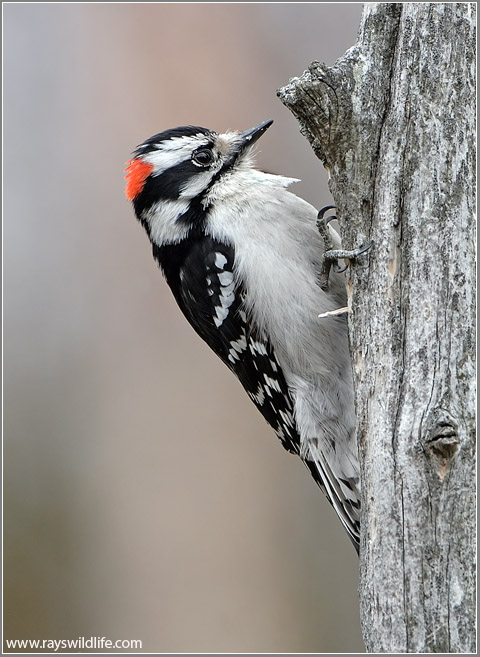
My last birds seen in 2013 were 10 Sandhill Cranes and then just before dark I saw a Downy Woodpecker. It is still 2013 as this is being posted. I will add my first bird in the morning.

Downy Woodpecker (Picoides pubescens) by Raymond Barlow

Downy Woodpecker (Picoides pubescens) by Raymond Barlow

*

*

ON THE first day of the seventh month [on New Year’s Day of the civil year], you shall have a holy [summoned] assembly; you shall do no servile work. It is a day of blowing of trumpets for you [everyone blowing who wishes, proclaiming that the glad New Year has come and that the great Day of Atonement and the Feast of Tabernacles are now approaching]. (Numbers 29:1 AMP)

*

You might want to leave a comment just in case the survey doesn’t work. It’s a new attempt on my part. Leave bird and country.

*

2013 in Review – Lee’s Birdwatching Adventures Plus

The WordPress.com stats helper monkeys prepared a 2013 annual report for this blog.

Here’s an excerpt:

The Louvre Museum has 8.5 million visitors per year. This blog was viewed about 220,000 times in 2013. If it were an exhibit at the Louvre Museum, it would take about 9 days for that many people to see it.

Click here to see the complete report.

*

Lee at Lake Morton by Dan

Lee at Lake Morton by Dan

We give thanks to God always for you all, making mention of you in our prayers; (1 Thessalonians 1:2 KJV)

Thank you all for visiting this site during 2013. I trust you have learned many things about the birds and other things of creation and have also been blessed. Also, thank you for making it possible to have the 1 Millionth visitor arrive on October 20, 2013. WOW!

Will do the best we can to make 2014 even better.

Happy New Year!

Lord Bless,

Lee and all the contributing writers and photographers.

*

Top Posts for 365 days ending 2013-12-31 (Summarized)

2012-12-31 to Today

Title Views
Home page / Archives More stats 26,590
Birds of the Bible – Eagle’s Renewal More stats 11,313
Interesting Things – Dragonflies More stats 8,435
Weaver Birds More stats 4,711
South Lake Howard Nature Park More stats 2,612
Birds of the Bible More stats 2,497
Trochilidae – Hummingbirds More stats 2,180
Hymns More stats 1,819
Columbidae – Pigeons, Doves More stats 1,728
Eagle Photos More stats 1,713
Anatidae – Ducks, Geese & Swans More stats 1,622
Interesting Things – The Egyptian “Crocodile Bird” Plover More stats 1,616
Strigidae – Owls More stats 1,548
Estrildidae – Waxbills, Munias & Allies More stats 1,464
When I Consider! – Elephant Ears and Scarab Beetles More stats 1,442
Phasianidae – Pheasants, Fowl & Allies More stats 1,369
Accipitridae – Kites, Hawks and Eagles More stats 1,332
Psittacidae – Parrots More stats 1,321
Alcedinidae – Kingfishers More stats 1,282
Fringillidae – Finches More stats 1,189
Muscicapidae – Chats, Old World Flycatchers More stats 1,114
Thraupidae – Tanagers and Allies More stats 1,062
Birds of the Bible – Clean vs. Unclean More stats 1,011
Birds of the Bible – Partridge II More stats 954
Rallidae – Rails, Crakes & Coots More stats 951
Nectariniidae – Sunbirds More stats 902
Birds of the Bible – Dove’s Eyes and Voice More stats 895
Corvidae – Crows, Jays More stats 870
Sturnidae – Starlings More stats 852
Birds of the Bible – Sparrows I More stats 825
Life List of All Birds We Have Seen More stats 816
Turdidae – Thrushes More stats 787
Picidae – Woodpeckers More stats 780
Falconidae – Caracaras, Falcons More stats 771
Birds of the Bible – Ossifrage More stats 740
Leopard More stats 721
Paradisaeidae – Birds-of-paradise More stats 708
Leiothrichidae – Laughingthrushes More stats 673
Pycnonotidae – Bulbuls More stats 673
Furnariidae – Ovenbirds More stats 671
Apodidae – Swifts More stats 631
Icteridae – Oropendolas, Orioles & Blackbirds More stats 622
Zosteropidae – White-eyes More stats 616
Birds in Songs – On Eagle’s Wings More stats 615
Ploceidae – Weavers, Widowbirds More stats 613
Birds of the Bible – Swallows More stats 605
Birds Vol 1 #3 – The Brown Thrush (Thrasher) More stats 605
Emberizidae – Buntings, New World Sparrows & Allies More stats 603
Tinamidae – Tinamous More stats 596
Photos More stats 589
Monarchidae – Monarchs More stats 586
Doves and Pigeons More stats 584
Ardeidae- Herons, Bitterns More stats 580
Birds of the Bible – Names of Birds More stats 577
The Eagle – The Loyal Mate.. More stats 573
Meliphagidae – Honeyeaters More stats 569
Cuculidae – Cuckoos More stats 561
Birds – Hymns More stats 548
Birds of the Bible – Descending Like A Dove More stats 545
Eagles More stats 536
Birds of the Bible – Osprey II More stats 504
Birds – World More stats 500
Birdwatching More stats 498
Birds of the Bible – Hawk Migration More stats 489
Cardinalidae – Grosbeaks, Saltators & Allies More stats 486
Procellariidae – Petrels, Shearwaters More stats 478
Campephagidae – Cuckooshrikes More stats 470
Scolopacidae – Sandpipers, Snipes More stats 468
Birds of the Bible – Sea Gulls More stats 446
Cisticolidae – Cisticolas and allies More stats 441
Tyrannidae – Tyrant Flycatchers More stats 436
Bucerotidae – Hornbills More stats 426
Ostrich More stats 423
Thamnophilidae – Antbirds More stats 420
Chicken, Hens, and Roosters More stats 411
Scripture Alphabet of Animals: The Ass (Donkey) More stats 411
Birds Vol 1 #2 – The American Red Bird More stats 410
Interesting Things – Grand Canyon and Squirrels More stats 402
Laridae – Gulls, Terns and Skimmers More stats 396
Troglodytidae – Wrens More stats 393
Some Very Unusual Birds More stats 393
Rhinocryptidae – Tapaculos More stats 392
Birds of the Bible – Review More stats 390
Birds of the Bible – How Many Are There? Part I More stats 386
Birds Illustrated by Color Photography – Revisited More stats 385
Birds of the Bible – Singing Birds More stats 383
Scripture Alphabet of Animals: The Camel More stats 380
Hirundinidae – Swallows, Martins More stats 380
Sharing the Gospel and Pointing Someone to Christ in the Scripture More stats 380
Bird – Week More stats 377
Birds of the Bible – Under His Wing More stats 376
Acanthizidae – Australasian Warblers More stats 369
About More stats 368
Sparrows More stats 365
Parulidae – New World Warblers More stats 360
Scripture Alphabet of Animals: The Vulture More stats 359
When I Consider! – Couch’s Spadefoot Toad More stats 356
Phylloscopidae – Leaf warblers and allies More stats 356
Ramphastidae – Toucans More stats 347
Birds of the Bible – Dove’s Dung More stats 341
Pellorneidae – Fulvettas, Ground Babblers More stats 337
Motacillidae – Wagtails, Pipits More stats 334
Caprimulgidae – Nightjars More stats 331
Passeridae – Old World Sparrows, Snowfinches More stats 328
Megapodiidae – Megapodes More stats 325
Birds of the Bible – Owls More stats 323
Peacocks More stats 320
The Futuristic Whip-poor-wills…. More stats 320
Birds of the Bible – Turtle Doves More stats 318
Birds of the Bible – Dove and Turtle-Dove More stats 318
Herons More stats 316
Birds of the Bible – Vulture More stats 314
Acrocephalidae – Reed warblers and allies More stats 314
Lybiidae – African Barbets More stats 313
Birds of the Bible – Quail More stats 308
Interesting Things – The Weaver Bird More stats 302
Birds of the Bible – Swift More stats 302

*