Birds Vol 2 #1 – The Semi-Palmated Ring Plover

Ring Plover - Birds Illustrated by Color Photography, 1897

Ring Plover – Birds Illustrated by Color Photography, 1897

Birds Illustrated by Color Photography – Revisited

Vol 2. July, 1897 No. 1

*

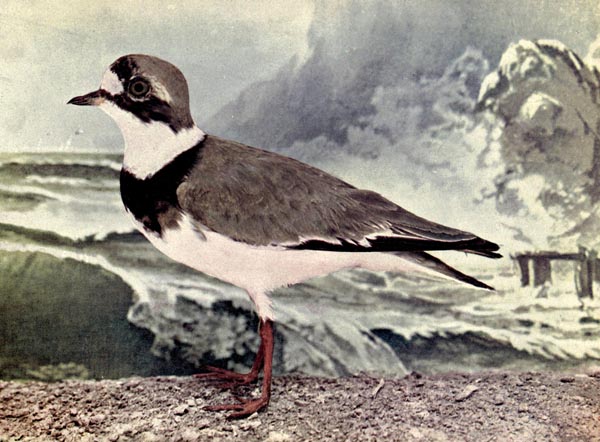
THE SEMI-PALMATED RING PLOVER.

imgi

N THEIR habits the Plovers are usually active; they run and fly with equal facility, and though they rarely attempt to swim, are not altogether unsuccessful in that particular.

The Semi-palmated Ring Plover utters a plaintive whistle, and during the nesting season can produce a few connected pleasing notes. The three or four pear-shaped, variagated eggs are deposited in a slight hollow in the ground, in which a few blades of grass are occasionally placed. Both parents assist in rearing the young. Worms, small quadrupeds, and insects constitute their food. Their flesh is regarded as a delicacy, and they are therefore objects of great attraction to the sportsman, although they often render themselves extremely troublesome by uttering their shrill cry and thus warning their feathered companions of the approach of danger. From this habit they have received the name of “tell-tales.” Dr. Livingstone said of the African species: “A most plaguey sort of public spirited individual follows you everywhere, flying overhead, and is most persevering in his attempts to give fair warning to all animals within hearing to flee from the approach of danger.”

The American Ring Plover nests as far north as Labrador, and is common on our shores from August to October, after which it migrates southward. Some are stationary in the southern states. It is often called the Ring Plover, and has been supposed to be identical with the European Ringed Plover.

It is one of the commonest of shore birds. It is found along the beaches and easily identified by the complete neck ring, white upon dark and dark upon light. Like the Sandpipers the Plovers dance along the shore in rhythm with the wavelets, leaving sharp half-webbed footprints on the wet sand. Though usually found along the seashore, Samuels says that on their arrival in spring, small flocks follow the courses of large rivers, like the Connecticut. He also found a single pair building on Muskeget, the famous haunt of Gulls, off the shore of Massachusetts. It has been found near Chicago, Illinois, in July.


THE RING PLOVER.

Plovers belong to a class of birds called Waders.

They spend the winters down south, and early in the spring begin their journey north. By the beginning of summer they are in the cold north, where they lay their eggs and hatch their young. Here they remain until about the month of August, when they begin to journey southward. It is on their way back that we see most of them.

While on their way north, they are in a hurry to reach their nesting places, so only stop here and there for food and rest.

Coming back with their families, we often see them in ploughed fields. Here they find insects and seeds to eat.

The Ring Plover is so called from the white ring around its neck.

These birds are not particular about their nests. They do not build comfortable nests as most birds do. They find a place that is sheltered from the north winds, and where the sun will reach them. Here they make a rude nest of the mosses lying around.

The eggs are somewhat pointed, and placed in the nest with the points toward the center. In this way the bird can more easily cover the eggs.

We find, among most birds, that after the nest is made, the mother bird thinks it her duty to hatch the young.

The father bird usually feeds her while she sits on the eggs. In some of the bird stories, you have read how the father and mother birds take turns in building the nest, sitting on the nest, and feeding the young.

Some father birds do all the work in building the nest, and take care of the birds when hatched.

Among plovers, the father bird usually hatches the young, and lets the wife do as she pleases.

After the young are hatched they help each other take care of them.

Plovers have long wings, and can fly very swiftly.

The distance between their summer and winter homes is sometimes very great.

Summary

SEMI-PALMATED PLOVER.Ægialitis semi-palmata. Other names: “American Ring Plover,” “Ring Neck,” “Beach Bird.” Front, throat, ring around neck, and entire under parts white; band of deep black across the breast; upper parts ashy brown. Toes connected at base.

Range—North America in general, breeding in the Arctic and sub-arctic districts, winters from the Gulf States to Brazil.

Nest—Depression in the ground, with lining of dry grass.

Eggs—Three or four; buffy white, spotted with chocolate.


Semipalmated Plover (Charadrius semipalmatus) by S Slayton

Semipalmated Plover (Charadrius semipalmatus) by S Slayton


Call from xeno-canto.org

Lee’s Addition:

When I consider Your heavens, the work of Your fingers, The moon and the stars, which You have ordained, What is man that You are mindful of him, And the son of man that You visit him? For You have made him a little lower than the angels, And You have crowned him with glory and honor. You have made him to have dominion over the works of Your hands; You have put all things under his feet, All sheep and oxen— Even the beasts of the field, The birds of the air, And the fish of the sea That pass through the paths of the seas. O LORD, our Lord, How excellent is Your name in all the earth! (Psalms 8:3-9 NKJV)

The Semipalmated Plover (Charadrius semipalmatus) is a small plover. We see them here at our shores. Florida has lots of shoreline.
This species weighs  0.78–2.2 oz (22–63 g) and measures 5.5–7.9 in (14–20 cm) in length and 14–22 in (35–56 cm) across the wings. Adults have a grey-brown back and wings, a white belly, and a white breast with one black neckband. They have a brown cap, a white forehead, a black mask around the eyes and a short orange and black bill.

Their breeding habitat is open ground on beaches or flats across northern Canada and Alaska. They nest on the ground in an open area with little or no plant growth.
They are migratory and winter in coastal areas ranging from the United States to Patagonia. They are extremely rare vagrants to western Europe, although their true status may be obscured by the difficulty in identifying them from the very similar Ringed Plover of Eurasia, of which it was formerly considered a subspecies.
These birds forage for food on beaches, tidal flats and fields, usually by sight. They eat insects, crustaceans and worms.

Broken wing” display

This bird resembles the Killdeer but is much smaller and has only one band. The term “semipalmated” refers to its partly webbed feet. Like the Killdeer and since its nest is on the ground, it uses a “broken-wing” display to lure intruders away from the nest. (Wikipedia)

If a bird’s nest happens to be before you along the way, in any tree or on the ground, with young ones or eggs, with the mother sitting on the young or on the eggs, you shall not take the mother with the young; (Deuteronomy 22:6 NKJV)

Semipalmated Plovers belong to the Charadriidae – Plovers Family. There are 67 species that “are small to medium-sized birds with compact bodies, short, thick necks and long, usually pointed, wings, but most species of lapwing may have more rounded wings. Their bill are usually straight (except for the Wrybill) and short, their toes are short, hind toe could be reduced or absent, depending on species. Most Charadriidae also have relatively short tails, the Killdeer is the exception. In most genera, the sexes are similar, very little sexual dimorphism occurs between sexes. They range in size from the Collared Plover, at 26 grams and 14 cm (5.5 inches), to the Masked Lapwing, at 368 grams (13 oz) and 35 cm (14 inches)
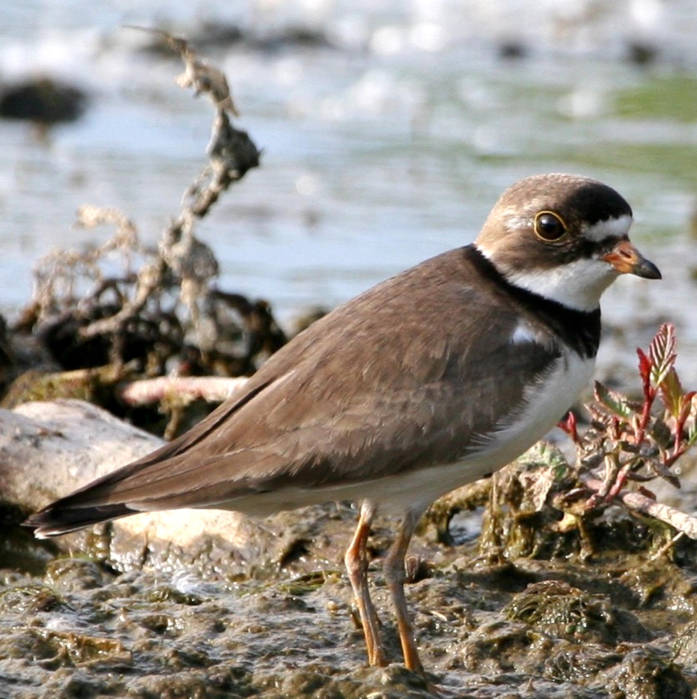
Semipalmated Plover (Charadrius semipalmatus) ©USFWS

Semipalmated Plover (Charadrius semipalmatus) ©USFWS

Birds Illustrated by Color Photography – Revisited – Introduction

The above article is the first article in the monthly serial that was started in January 1897 “designed to promote Knowledge of Bird-Live.” These include Color Photography, as they call them, today they are drawings. There are at least three Volumes that have been digitized by Project Gutenberg.

To see the whole series of – Birds Illustrated by Color Photography – Revisited

*

(Information from Wikipedia and other internet sources)

Next Article – The Mallard Duck

Previous Article – The Bald-Headed Eagle

ABC’s Of The Gospel

Links:

Charadriidae – Plovers Family

Order – CHARADRIIFORMES

Semipalmated Plover – Wikipedia

Semipalmated Plover – All About Birds

*
Baby Golden Eagle Survives the Utah Wildfire

Here is an amazing video from YouTube about a Baby Golden Eagle that survived the Utah Wildfire this year.

As the fire burns the woods, And as the flame sets the mountains on fire, (Psalms 83:14 NKJV)

From YouTube

Published on Jul 8, 2012 by OptimizeSite

BigNewsStory.com – Baby Golden Eagle Survives Utah Wildfire

A baby golden eagle is recovering at a wildlife rehabilitation facility after officials say it miraculously survived a Utah wildfire last month.

Kent Keller told The Salt Lake Tribune (http://bit.ly/NKy8WO ) he feared the worst when he returned to the nest site west of Utah Lake to retrieve a leg band he had attached to the male eaglet June 1.

But the veteran Utah Division of Wildlife Resources volunteer found the burned bird alive on June 28 behind a charred tree, about 25 feet below the nest that was burned to a crisp in the 5,500-acre Dump Fire near Saratoga Springs.

“I thought there was no chance he would be alive. I was stunned when I saw him standing there,” Keller said. “I thought maybe I could rebuild the nest a little bit, but I took a good look at him and realized that was not going to happen.”

The 70-day-old eaglet had suffered burns on his talons, beak, head and wings. His flight feathers were melted down to within an inch or two of his wing and tail. He’s very underweight at just over five pounds.

Keller realized the eagle would not fly for at least a year and that the parents eventually would stop providing food. Not a stick from the nest was left after the fire sparked by target shooters swept through

“I’ve seen nests burn before, but this is the first year I have seen one burn with young in it,” he told the Tribune. “They are usually long gone and flying when fire season starts.”

After permission was secured from state and federal wildlife agencies, the Wildlife Rehabilitation Center of Northern Utah in Ogden assumed care of the eaglet this week.

“I wasn’t sure he was going to make it,” said DaLyn Erickson, executive director of the center. “He kind of had that look like he may have given up.”

But the eagle named Phoenix has since taken to eating beef heart and venison. He’s treated several times a day for his burns and seems to be gaining strength.

“He looks good now,” said Amber Hansen, a member of the center’s board of directors. “But we think if he had been there (at the nest site) another day, he probably would not have survived.”

What seems to have saved his life during the fire was the insulation offered by his down feathers and once-thick body, according to the wildlife rehabilitation center.

Officials hope the bird can be released back into the wild next year, but say it’s too early to tell about its future. Volunteers will work to keep him as wild as possible.

“It depends on how much follicle damage there is to his wings,” Hansen said. “If they are not too burned, he should be able to molt into new feathers next year and hopefully be able to fly.”

-usnews.com

Birdwatcher or Bird Collector?

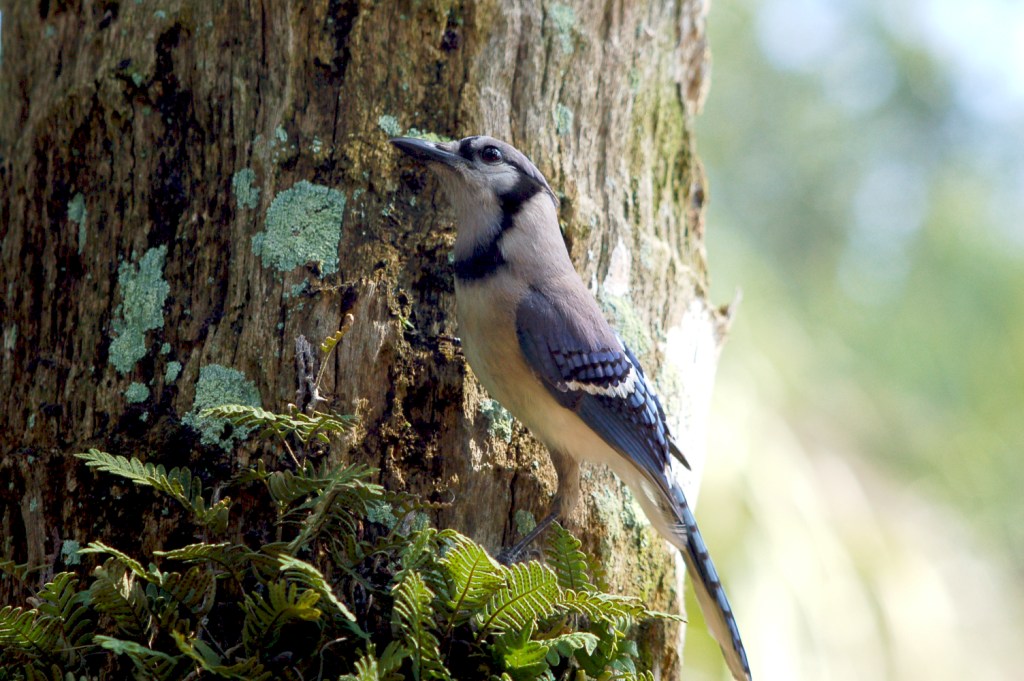
Blue Jay (Cyanocitta cristata) at Bok Tower By Dan'sPix

Blue Jay (Cyanocitta cristata) at Bok Tower By Dan’sPix

I just finished reading an article in the August 2012 issue of “BirdWatching” Magazine by Maeve Kim. It is called “Born-Again Bird-Watcher.” The title caught my interest since I am a “Born-again Christian.” The article, of course, had nothing to do with religion but was about watching birds.

She, Maeve, had progressed from being a birdwatcher that just loved to watch birds and make notes in a field notebook.

“My old field notebooks are full of exclamation points and underlinings and capital letters. “GREEN HERON at beaver pond! Glowing chestnut throat and neck! Gorgeous!”
I described everything I saw about a bird’s physical appearance, behavior, and song. Often, my notebook entries ended with questions that I hoped might be answered if I watched more birds.”

Progression went from lots of information to just a “checklist” were just seeing the bird and checking it off became the main goal. This is called a “Bird Getter” and not a bird watcher. Long interesting story short, Maeve has now gone back to “watching” the birds even common ones. It is a very good article.

Wood Duck male – Lake Morton 6-28-12 by Lee

As I have “progressed” in my own birdwatching I also have learned about “journals,” “notebooks” and “lists.” I enjoy seeing my “Life List of Birds” grow, but I try not to just want to “check them off” so the list will grow. As a Christian believing that the Lord created the birds, I enjoy watching them, their behaviors, their sounds, how they fly and eat and writing about them. I am amazed at His design and paintbrush used. How each bird was given just the right beak, feet, song, flight pattern, etc. is awesome.

She said, “True Bird-Watchers enjoy every single minute that they’re out birding. They don’t come home feeling cheated because they didn’t get a rare Dovekie. Instead, they celebrate every time they see a Black Guillemot’s (her common) red feet flashing under cold water.”

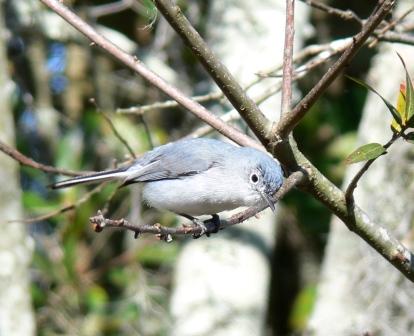
Blue-Gray Gnatcatcher at Circle B Reserve by Lee

Blue-Gray Gnatcatcher at Circle B Reserve by Lee

Every time we go to our local parks, I still enjoy watching the antics of our local common birds. May we never tire or grow weary of “only ” seeing a bird that we have seen many times before.

But now ask the beasts, and let them teach you; And the birds of the heavens, and let them tell you. “Who among all these does not know That the hand of the LORD has done this, (Job 12:7,9 NASB)

How can we learn from the birds if we don’t watch them?

See

Birdwatching

Birdwatching Tips

*

Birds Vol 2 #1 – The Bald-headed Eagle

The Bald-headed Eagle (Bald Eagle) - Birds Illustrated by Color Photography, 1897

The Bald-headed Eagle (Bald Eagle) – Birds Illustrated by Color Photography, 1897

Birds Illustrated by Color Photography – Revisited

Vol 2. July, 1897 No. 1

THE BALD-HEADED EAGLE.

Dear Boys and Girls:

I had hoped to show you the picture of the eagle that went through the war with the soldiers. They called him “Old Abe.” You will find on page 35 a long story written about him. Ask some one to read it to you.

I could not get “Old Abe,” or you should now be looking at his picture. He is at present in Wisconsin, and his owner would not allow him to be taken from home.

I did the next best thing, and found one that was very much like him. They are as near alike as two children of a family. Old Abe’s feathers are not quite so smooth, though. Do you wonder, after having been through the war? He is a veteran, isn’t he?

The picture is that of a Bald-headed Eagle. He is known, also, by other names, such as White-headed Eagle, Bird of Washington, Sea Eagle.

You can easily see by the picture that he is not bald-headed. The name White-headed would seem a better name. It is because at a distance his head and neck appear as though they were covered with a white skin.

He is called “Sea Eagle” because his food is mostly fish. He takes the fish that are thrown upon the shores by the waves, and sometimes he robs the Fish Hawk of his food. (Not today – there is a Sea Eagle which is a different Eagle.)

This mighty bird usually places his large nest in some tall tree. He uses sticks three to five feet long, large pieces of sod, weeds, moss, and whatever he can find.

The nest is sometimes five or six feet through. Eagles use the same nest for years, adding to it each year.

Young eagles are queer looking birds. When hatched, they are covered with a soft down that looks like cotton.

Their parents feed them, and do not allow them to leave the nest until they are old enough to fly. When they are old enough, the mother bird pushes them out of the nest. She must be sure that they can fly, or she would not dare do this. Don’t you think so?

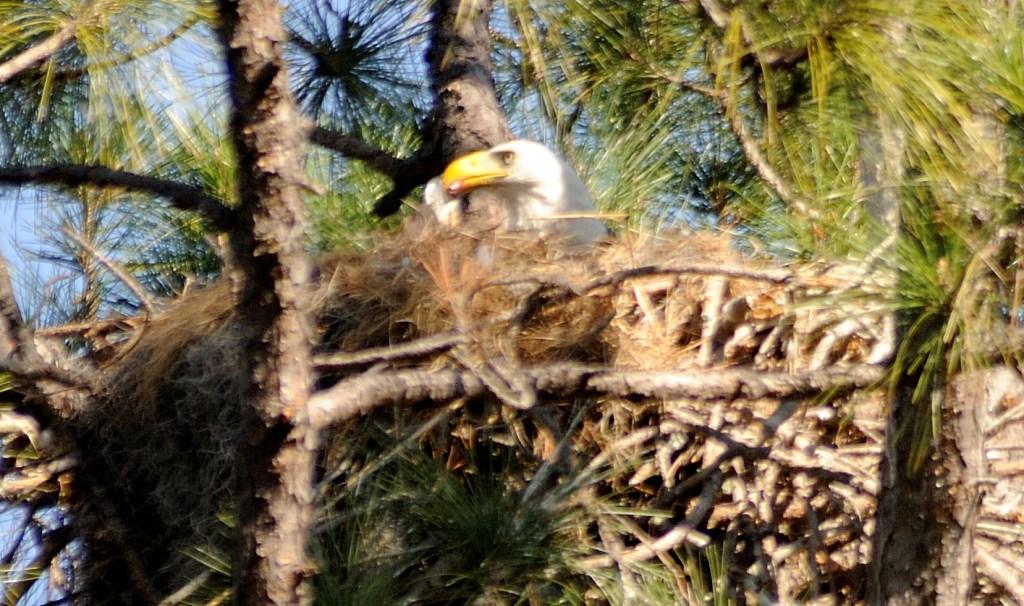
Eagle in nest feeding eaglets by Dan

Eagle in nest feeding eaglets-zoomed in by Dan

THE BALD-HEADED EAGLE.

THIS mighty bird of lofty flight is a native of the whole of North America, and may be seen haunting the greater portions of the sea coasts, as well as the mouths of large rivers. He is sometimes called the White-headed Eagle, the American Sea Eagle, the Bird of Washington, the Washington Eagle, and the Sea Eagle. On account of the snowy white of his head and neck, the name Bald Eagle has been applied to him more generally than any other.

Sea-faring men are partial to young Eagles as pets, there being a well established superstition among them that the ship that carries the “King of Birds” can never go down. The old Romans, in selecting the Eagle as an emblem for their imperial standard, showed this superstitious belief, regarding him as the favorite messenger of Jupiter, holding communion with heaven. The Orientals, too, believed that the feathers of the Eagle’s tail rendered their arrows invincible. The Indian mountain tribes east of Tennessee venerated the Eagle as their bird of war, and placed a high value on his feathers, which they used for headdresses and to decorate their pipes of peace.

The United States seems to have an abiding faith in the great bird, as our minted dollars show.

The nest of the Bald Eagle is usually placed upon the top of a giant tree, standing far up on the side of a mountain, among myriads of twining vines, or on the summit of a high inaccessible rock. The nest in the course of years, becomes of great size as the Eagle lays her eggs year after year in the same nest, and at each nesting season adds new material to the old nest. It is strongly and comfortably built with large sticks and branches, nearly flat, and bound together with twining vines. The spacious interior is lined with hair and moss, so minutely woven together as to exclude the wind. The female lays two eggs of a brownish red color, with many dots and spots, the long end of the egg tapering to a point. The parents are affectionate, attend to their young as long as they are helpless and unfledged, and will not forsake them even though the tree on which they rest be enveloped in flames. When the Eaglets are ready to fly, however, the parents push them from the perch and trust them to the high atmospheric currents. They turn them out, so to speak, to shift for themselves.

The Bald Eagle has an accommodating appetite, eating almost anything that has ever had life. He is fond of fish, without being a great fisher, preferring to rob the Fish-hawk of the fruits of his skillful labor. Sitting upon the side of a mountain his keen vision surveys the plain or valley, and detects a sheep, a young goat, a fat turkey or rooster, a pig, a rabbit or a large bird, and almost within an eye-twinkle he descends upon his victim. A mighty grasp, a twist of his talons, and the quarry is dead long before the Eagle lays it down for a repast. The impetuosity and skill with which he pursues, overtakes and robs the Fish-hawk, and the swiftness with which the Bald Eagle darts down upon and seizes the booty, which the Hawk has been compelled to let go, is not the least wonderful part of this striking performance.

The longevity of the Eagle is very great, from 80 to 160 years.

Summary

BALD EAGLE.Haliæetus leucocephalus. Other names: “White-headed Eagle,” “Bird of Washington,” “Gray Eagle,” “Sea Eagle.” Dark brown. Head, tail, and tail coverts white. Tarsus, naked. Young with little or no white.

Range—North America, breeding throughout its range.

Nest—Generally in tall trees.

Eggs—Two or three, dull white.

*


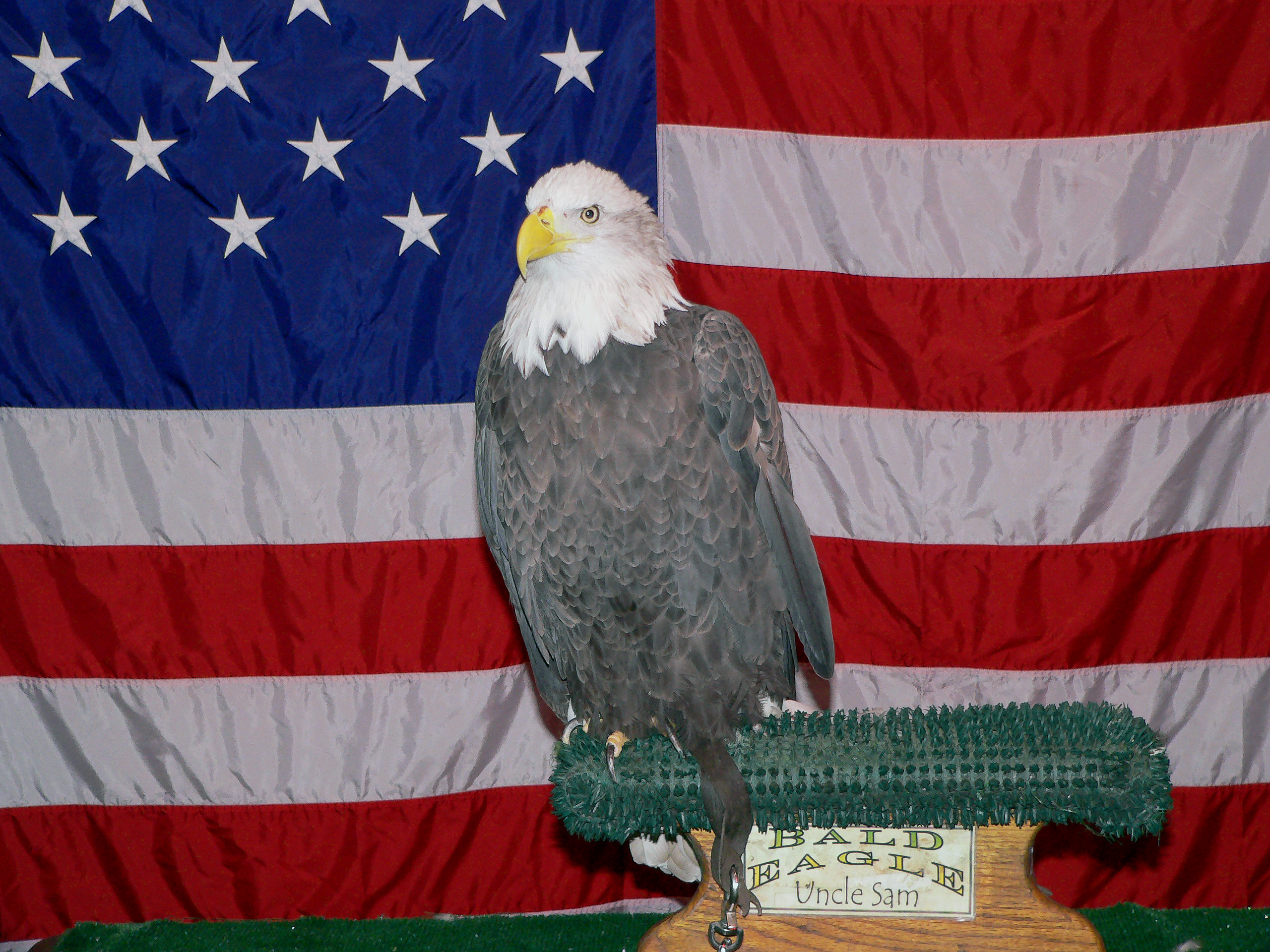
Uncle Sam – Bald Eagle taken at Titusville Birding Festival

Lee’s Addition:

Today the Bald-headed Eagle is just the Bald Eagle. The Sea Eagle is a different Eagle, much larger than the Bald. Also, not so sure about 160 year life span. Will have to check that out.

We are fortunate here in Polk County and in Central Florida. We get to see Bald Eagles quite often in the winter. That picture of the nest was taken at South Lake Howard Nature Park where the Eagles return to have young each year. At Circle B Bar Reserve, which we write about, they have several active Bald Eagle nests. Right by our Publix supermarket, the eagles sit on the high electrical posts and scan the area for dinner. I used to have to travel far to see them, but now, we live right where they hang out.

I have to admit that when I see a Bald Eagle fly by or just sitting, I stop in my tracks. There is something about the Bald Eagle’s appearance that appeals to me. Also, the Eagle is a Bible Birds and is mentioned in 34 times in the King James Version, 32 in NKJV, 31 in NASB and 29 times in ESV. It varies in the other versions also. Still it is mentioned about 30 times or so. Most are great verses that tell of their strenght and mighty wings. What a magnificent creation.

Ye have seen what I did unto the Egyptians, and how I bare you on eagles’ wings, and brought you unto myself. (Exodus 19:4 KJV)

Doth the eagle mount up at thy command, and make her nest on high? (Job 39:27 KJV)

But they that wait upon the LORD shall renew their strength; they shall mount up with wings as eagles; they shall run, and not be weary; and they shall walk, and not faint. (Isaiah 40:31 KJV)

Make thee bald, and poll thee for thy delicate children; enlarge thy baldness as the eagle; for they are gone into captivity from thee. (Micah 1:16 KJV)


Birds Illustrated by Color Photography – Revisited – Introduction

The above article is the first article in the monthly serial that was started in January 1897 “designed to promote Knowledge of Bird-Live.” These include Color Photography, as they call them, today they are drawings. There are at least three Volumes that have been digitized by Project Gutenberg.

To see the whole series of – Birds Illustrated by Color Photography – Revisited

*

(Information from Wikipedia and other internet sources)

Next Article – The Semi-Palmated Ring Plover

Previous Article – Birds Vol 1 #6 – The Volume 1. – Index

Sharing The Gospel

Links:

Bible Birds – Eagles

Birds of the Bible – Eagles

Accipitridae – Family (Kites, Hawks & Eagles)

Amazing Free-Flying Bald Eagle “Challenger”

Bald Eagle – WhatBird

*

Birds Illustrated By Color Photography – Volume II Indroduction

BIRDS

A MONTHLY SERIAL

ILLUSTRATED BY COLOR PHOTOGRAPHY

DESIGNED TO PROMOTE

KNOWLEDGE OF BIRD-LIFE


VOLUME II.


CHICAGO  Nature Study Publishing Company


copyright, 1897 by

Nature Study Publishing Co.

chicago.


INTRODUCTION.

This is the second volume of a series intended to present, in accurate colored portraiture, and in popular and juvenile biographical text, a very considerable portion of the common birds of North America, and many of the more interesting and attractive specimens of other countries, in many respects superior to all other publications which have attempted the representation of birds, and at infinitely less expense. The appreciative reception by the public of Vol. I deserves our grateful acknowledgement. Appearing in monthly parts, it has been read and admired by thousands of people, who, through the life-like pictures presented, have made the acquaintance of many birds, and have since become enthusiastic observers of them. It has been introduced into the public schools, and is now in use as a text book by hundreds of teachers, who have expressed enthusiastic approval of the work and of its general extension. The faithfulness to nature of the pictures, in color and pose, have been commended by such ornithologists and authors as Dr. Elliott Coues, Mr. John Burroughs, Mr. J. W. Allen, editor of The Auk, Mr. Frank M. Chapman, Mr. J. W. Baskett, and others.

The general text of Birds—the biographies—has been conscientiously prepared from the best authorities by a careful observer of the feather-growing denizens of the field, the forest, and the shore, while the juvenile autobiographies have received the approval of the highest ornithological authority.

The publishers take pleasure in the announcement that the general excellence of Birds will be maintained in subsequent volumes. The subjects selected for the third and fourth volumes—many of them—will be of the rare beauty in which the great Audubon, the limner par excellence of birds, would have found “the joy of imitation.”

Nature Study Publishing Company.


BIRDS.

Illustrated by COLOR PHOTOGRAPHY.

Vol. II.   No. 1.   JULY, 1897.


Bald Eagle (Haliaeetus leucocephalus) by Lee

Bald Eagle (Haliaeetus leucocephalus) by Lee

Lee’s Addition:

This second volume does not have a cover photo for each month like Volume I did. They apparently changed their format. Also, there are no old time advertisements. These were reproduced through Gutenberg Project.

Will be posting the different birds soon. See Birds Illustrated by Color Photography – Revisted.

*

Birdwatching at Lake Morton and S. Lake Howard

With all that has been going on lately, we have not had much time or chance to go visit the birds. When Tropical Storm Debby came by, she dropped quite a bit of rain in the area. Some “true” birdwatchers were out and about seeing some really neat birds that were blown off course. We played the “fair weather” birders and stayed indoor where it was dry. Some areas had 12-15 inches, but we had about 6 inches of rain here at the house.

On the 28th we stopped by Lake Morton, in Lakeland, on the way to an errand. We took the cameras and knew the local birds would be there. Not too many surprises other than I counted over 30 Mute Swans. This is even with all the eggs that were stolen from the nests. Also, I found several Wood Ducks swimming around, an immature Wood Stork, and three “Aflac” Mallard Ducks sitting in the shade of a park bench.

On the 2nd, last evening, we took our cameras with us and spent a few minutes taking photos of the flooding at South Lake Howard Nature Park. The water has receded some from earlier. At one point last week, the “island” was under water completely. We saw it then, but didn’t have a camera with us as we drove by.

Decided to share some of the photos of the two visits. We saw – Mute and Black Swans, Wood Ducks and Wood Storks, Mallards, Ospreys, Laughing Gulls, Great Egret, Anhingas, Red-winged and Boat-tailed Blackbirds, Mourning Doves, Rock Pigeons, White Ibises, Great Blue Heron, Limpkins, Muscovy Ducks, Common Gallinules, and heard Monk Parakeets and a Red-bellied Woodpecker. Not bad for about 30 minutes at Morton and 10 minutes at the Nature Park. Some of the photos are just of the water. Trees are standing in water that normally are on dry ground.

He is like a man which built an house, and digged deep, and laid the foundation on a rock: and when the flood arose, the stream beat vehemently upon that house, and could not shake it: for it was founded upon a rock. (Luke 6:48 KJV)

*

All photos are by me. Dan hasn’t showed me his yet. Bummer, his are always better. If you know what kind of Gull that is, leave a comment, please. I think they are young and I am not the best at IDing them.

This slideshow requires JavaScript.

*

Wow! More Awards! Thank You

Wow! I just received another award today and I haven’t even written up my latest one before that yet. Been busy gearing up a new blog with will launch soon. Oops! That is still a “secret” for a few more days.

These are the Awards that have been given to me and links to their websites and some information about those blogs:

Creationscience4kids has just nominated me for the Reader Appreciation Award. That is a very neat site that:
“This is a site to celebrate the amazing world God made.  This site is for all of you who love to learn new things about nature and science without a bunch of big words.  This site is also to help us all understand the differences between evolutionary thinking and young earth creationist thinking.  This site believes that God spoke everything into existence in six 24 hour days as stated in Genesis 1 and that the wold that then was perished in the global flood of Noah’s day as II Peter 3:6 says.

Seasonsgirl nominated me for the Inspiring Blog Award. She is a “I am a Christian, working wife, and puppy mom living with my husband, dogs, chickens, and disabled father in Virginia. We have a dream to someday own our own small ranch with horses, cows, goats, chickens, and dogs to boot. Right now we are working to start our family.” She has been visiting my blog, and I have been to her’s where she has some really neat photos and recipes. I am not a cook, but the photos are super.

Faithrises nominated me for the Beautiful Blogger Award. “Faithrises is a place for readers to be encouraged and motivated, through stories, quotes, and biblical examples.  My name is Faith, and I hope that you will be uplifted and inspired here, as you rise above personal difficulties and challenging circumstances.”

Sandra Conner nominated me for the Genuine Blogger Award. Sandra has this to say about her three blogs in her About section; “So here I am, Sandra Conner, beginning the “About Me” article on my third blog site, My first blog “Hangin’ Out With God,” is a site devoted exclusively to things about the Lord Jesus Christ and ministry. My second, “Happy Patriot,” is a blog on which I feel free to comment on any number of subjects, but mostly on patriotic and political issues. And today, I embark on number three, Sandra Conner…By The Book.

Previous to those, two nominated this blog for the Versatile Blogger Award.

Beauty and Brains nominated me back in April for this Award. Her site, “Beauty & Brains” is a blog geared for anyone and everyone. The “beauty” posts concern themselves with makeup/fragrance reviews and tutorials. Please note I am not paid to review products. All products were purchased by me for me. The “brains” posts consist of reviews of books, music, films, or any other item of conversation.”

and Dou Dou also nominated me for the Versatile Blogger Award. She makes “Handmade Art Birds and Animal Sculptures” and is very good at them. They appear to be right small, but nice details. She also write about other topics also.

We are suppose to tell 7 random things about ourselves and then pass them on to 7-15 other worthy bloggers. Personally, I would like to nominate all those who come to this blog and my Birds of the Bible blog for an Award. I appreciate all of you who stop by and read the articles. Many of you are following the blogs and leave likes and comments. There are more than 15 who do so. So how do you choose just a few?

Not sure what I would call it, maybe something like Thank You Award, or Thanks for Stopping By Award, Thanks For Your Support Award, or Thanks for putting up with my mistakes Award, or something like that. What ever it would be, you would all be nominated for it.

The Best Award any of us could hope to get is the “Well Done the good and faithful servant” Award from Our Lord Jesus Christ.

  1. Love you all and I do pray for all the visitors that stop by.
  2. I Love the Lord and He is my personal Savior (1960)
  3. Married almost 49 years (July 1963)
  4. Love birds and watching them and learning about them
  5. Graduated College after taking 16 years to do so (1977)
  6. I am thankful for all my family and friends
  7. Don’t have a bucket list – maybe I should

Now for the nominations. (This will be hard)

For the Reader Appreciation

All who are followers of this blog, you are nominated because you are appreciated. Not sure who started that award, but I think it needs to include more readers, which I just did.

If you chose to accept it, you are suppose to tell 7 random things about yourself, link back to this page, and then nominate who you think deserve the Reader Appreciation Award, then leave a comment on their blog or send an email with a link to the page that you nominated them.

For the Inspiring Blog Award

These sites come to mind as Inspiring:

The Fountain which is from my home church and has lots of inspiring articles on it.

Hearing His Voice – Learning to hear and recognize God’s voice

Hanging’  Out With God – A site devoted to getting up close and personal with God, through knowing and believing His Word.

The Birding Bunch – Amateur ornithologists with a Christian worldview.

Postcards from Colorado –  the joy of seeing, capturing, and sharing the images of our daily surroundings

Forest Forward – The Northeast’s Wildlife Photo Blog

The Sovereign – Living holy lives in light of prophecy and the return of Christ.

*

The Other Awards were written up previously.

*

Birds Vol 1 #6 – The Volume 1. January to June 1897 – Index

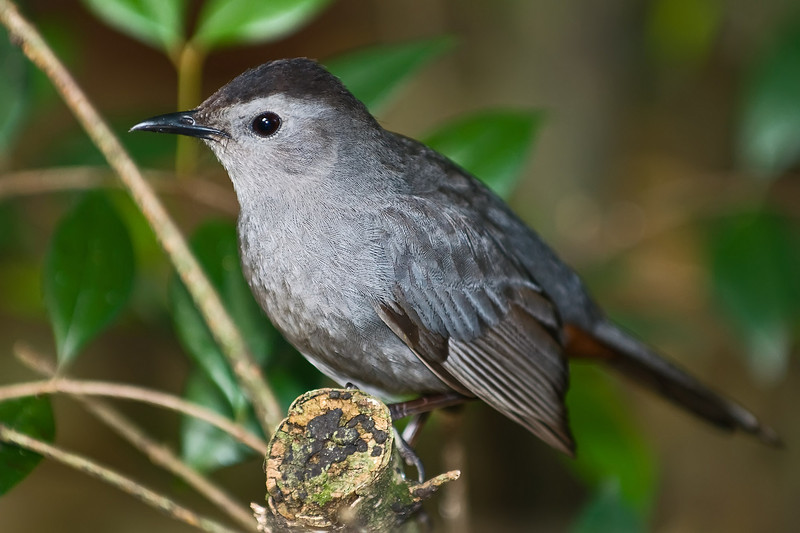
Grey Catbird (Dumetella carolinensis) by Africaddict

Grey Catbird (Dumetella carolinensis) by Africaddict

VOLUME 1. JANUARY TO JUNE, 1897.

INDEX.

Birds, The Return of the pages 101
Bird Song 1 187-8
Bird Day in the Schools 129-138
Birds and Farmers – June 213
Black Bird, Red-winged, Agelaeus Phœniceus 64-68-70-71
Blue Bird, Sialia Sialis 75-76-78
Bobolink, Dolichonyx Gryzivorus 92-3-4
Bunting, Indigo, Passerina Cyanea 172-3
Catbird, Galeoscoptes Carolinensis 183-4-6
Chickadee, Black-capped, Parus Atricopillus 164-5-7
Cock of the Rock 19-21
Crossbill, American, Loxia Curvirostra 126-7
Crow, American, Corvus Americanus 97-8-100
Duck, Mandarin, A. Galericulata 8-9-11
Flicker, Colaptes Auratus 89-90
Fly-catcher, Scissor-tailed, Milvulus Forficatus 161-3
Gallinule, Purple, Ionoruis Martinica 120-1
Grebe, Pied-billed, Podilymbus Podiceps 134-5-7
Grosbeak, Rose-breasted, Habia Ludoviciana 113-115
Grouse, Ruffed, Bonasa Umbellus 218-220-221
Gull, Ring-billed, Larus Delawarensis 198-199
Halo, The, (National Council of Women) 150
Hawk, Marsh, Circus Hudsonius 158-159
Hawk, Night, Chordeiles Virginianus 175-6-8
Heron, Black-crowned, Nycticorax Nycticorax Naevius 196-7
Jay, American Blue, Cyanocitta Cristata 39-41
Jay, Arizona Green, Xanthoura Luxuosa 146-148
Jay, Canada, Perisoreus Canadensis 116-17-19
Kingfisher, American, Ceryle Alcyon 60-61-63
Lark, Meadow, Sturnella Magna 105-7-8
Longspur, Smith’s, Calcarius PictusLongspur, Smith’s, Calcarius Pictus 123-5
Lory, Blue Mountain 66-67
Mocking Bird, American, Mimus Polyglottos 192-193-201
Mot Mot, Mexican 49-57
Nesting Time 149-150
Nonpareil, Passerina Ciris 1-3-15
Oriole, Baltimore, Icterus Galbula 205-6-7
Oriole, Golden, Icterus Icterus 34-36
Oriole, Orchard, Icterus Spurius 154-5
Owl, Long-eared, Asio Wilsonianus 109-111-112
Owl, Screech, Megascops Asio 151-3-7
Owl, Snowy, Nyctea Nivea 209-210-211
Paradise, Red Bird of, Paradisea Rubra 22-23-25
Parrakeet, Australian 16-18
Parrot, King 50-51
Pheasant, Golden, P. Pictus 12-13
Pheasant, Japan 86-88
Red Bird, American, Cardinalis Cardinalis 72-74
Robin, American, Merula Migratoria 53-4-5-9
Roller, Swallow-tailed, Indian 42-43
Shrike, Loggerhead, Lanius Ludovicianus 202-203
Swallow, Barn, Chelidon Erythrogaster 79-80
Tanager, Red-rumped, Tanagridæ 30-31-33
Tanager, Scarlet, Piranga Erythromelas 214-216-217
Tern, Black, Hydrochelidon Ingra Surinamensis 103-104
Thrush, Brown, Harporhynchus Rufus 82-83-84
Thrush, Wood, Turdus Mustelinus 179-180-183
Toucan, Yellow-throated, Ramphastos 26-27-29
Trogon, Resplendent, Trogonidæ 4-7
Vireo, Yellow-throated, Vireo Flavifrons 189-191
Warbler, Black-and-white Creeping, Mniotilta Varia 222-224
Warbler, Prothonotary, Protonotaria Citrea 168-169-171
Wax Wing, Bohemian, Ampelis Garrulus 140-141
Woodpecker, California, Melanerpes Formicivorus Bairdi 130-131-133
Woodpecker, Red-headed, Melanerpes Erythrocephalus 45-46-47
Wren, Long-billed Marsh, Cistothorus Palustris 142-144-145

Img 3-6 - Birds Illustrated by Color Photographyelkhart lake.

Summer Excursion Tickets to the resorts of Wisconsin, Minnesota, Michigan, Colorado, California, Montana, Washington, Oregon, and British Columbia; also to Alaska, Japan, China, and all Trans-Pacific Points, are now on sale by the CHICAGO, MILWAUKEE & ST. PAUL RAILWAY. Full and reliable information can be had by applying to Mr. C. N. SOUTHER, Ticket Agent, 95 Adams Street, Chicago.

Please mention “BIRDS” when you write to advertisers.


Img 1-6 - Birds Illustrated by Color Photography

Please mention “BIRDS” when you write to advertisers.


Img 2-6 - Birds Illustrated by Color Photography

This wheel is made especially for the Nature Study Publishing Co., to be used as a premium. It is unique in design, of material the best, of workmanship unexcelled. No other wheel on the market can compare favorably with it for less than $100.00.

SPECIFICATIONS FOR 1897 “BIRD” BICYCLE.

Frame.—Diamond pattern; cold-drawn seamless steel tubing; 1 1/8 inch tubing in the quadrangle with the exception of the head, which is 1 1/4 inch. Height, 23, 24, 25 and 26 inches. Rear triangle 3/4 inch tubing in the lower and upright bars. Frame Parts.—Steel drop forgings, strongly reinforced connections. Forks.—Seamless steel fork sides, gracefully curved and mechanically reinforced. Steering Head.—9, 11 and 13 inches long, 1 1/4 inches diameter. Handle Bar.—Cold-drawn, weldless steel tubing, 7/8 inch in diameter, ram’s horn, upright or reversible, adapted to two positions. Handles.—Cork or corkaline; black, maroon or bright tips. Wheels.—28 inch, front and rear. Wheel Base.—43 inches. Rims.—Olds or Plymouth. Tires.—Morgan & Wright, Vim, or Hartford. Spokes.—Swaged, Excelsior Needle Co.’s best quality; 28 in front and 32 in rear wheel. Cranks.—Special steel, round and tapered; 6 1/2 inch throw. Pedals.—Brandenburg; others on order. Chain.-1/4 inch, solid link, with hardened rivet steel centers. Saddle.—Black, attractive and comfortable; our own make. Saddle Post.—Adjustable, style “T.”Tread. —4 7/8 inches. Sprocket Wheels.—Steel drop forgings, hardened. Gear.—68 regular; other gears furnished if so desired. Bearings.—Made of the best selected high-grade tool steel, carefully ground to a finish after tempering, and thoroughly dust-proof. All cups are screwed into hubs and crank hangers. Hubs.—Large tubular hubs, made from a solid bar of steel. Furnishing.—Tool-bag, wrench, oiler, pump and repair kit. Tool Bags.—In black or tan leather, as may be preferred. Handle bar, hubs, sprocket wheels, cranks, pedals, seat post, spokes, screws, nuts and washers, nickel plated over copper; remainder enameled. Weight.—22 and 24 pounds.

Send for Specifications for Diamond Frame.

NATURE STUDY PUBLISHING CO.

Agents Wanted in every Town and City to represent “BIRDS.” CHICAGO.

Please mention “BIRDS” when you write to advertisers.


We give below a list of publications, especially fine, to be read in connection with our new magazine, and shall be glad to supply them at the price indicated, or as premiums for subscriptions for “Birds.”

“Birds Through an Opera Glass” 75c. or 2 subscriptions.
“Bird Ways” 60c. 2
“In Nesting Time” $1.25 3
“A Bird Lover of the West” 1.25 3
“Upon the Tree Tops” 1.25 3
“Wake Robin” 1.00 3
“Birds in the Bush” 1.25 3
“A-Birding on a Bronco” 1.25 3
“Land Birds and Game Birds of New England” 3.50 8
“Birds and Poets” 1.25 3
“Bird Craft” 3.00 7
“The Story of the Birds” .65 2
“Hand Book of Birds of Eastern North America” 3.00 7

See our notice on another page concerning Bicycles. Our “Bird” Wheel is one of the best on the market—as neat and attractive as “Birds.”

We shall be glad to quote a special price for teachers or clubs.

We can furnish any article or book as premium for subscriptions for “Birds.”

Address,

Nature Study Publishing Co. Chicago, Ill.


Nature Study Publishing Company.

imgt

HE Nature Study Publishing Company is a corporation of educators and business men organized to furnish correct reproductions of the colors and forms of nature to families, schools, and scientists. Having secured the services of artists who have succeeded in photographing and reproducing objects in their natural colors, by a process whose principles are well known but in which many of the details are held secret, we obtained a charter from the Secretary of State in November, 1896, and began at once the preparation of photographic color plates for a series of pictures of birds.

The first product was the January number of “BIRDS,” a monthly magazine, containing ten plates with descriptions in popular language, avoiding as far as possible scientific and technical terms. Knowing the interest children have in our work, we have included in each number a few pages of easy text pertaining to the illustrations. These are usually set facing the plates to heighten the pleasure of the little folks as they read.

Casually noticed, the magazine may appear to be a children’s publication because of the placing of this juvenile text. But such is not the case. Those scientists who cherish with delight the famous handiwork of Audubon are no less enthusiastic over these beautiful pictures which are painted by the delicate and scientifically accurate fingers of Light itself. These reproductions are true. There is no imagination in them nor conventionalism. In the presence of their absolute truth any written description or work of human hands shrinks into insignificance. The scientific value of these photographs can not be estimated.

To establish a great magazine with a world-wide circulation is no light undertaking. We have been steadily and successfully working towards that end. Delays have been unavoidable. What was effective for the production of a limited number of copies was inadequate as our orders increased. The very success of the enterprise has sometimes impeded our progress. Ten hundred teachers in Chicago paid subscriptions in ten days. Boards of Education are subscribing in hundred lots. Improvements in the process have been made in almost every number, and we are now assured of a brilliant and useful future.

When “BIRDS” has won its proper place in public favor we shall be prepared to issue a similar serial on other natural objects, and look for an equally cordial reception for it.

PREMIUMS.

To teachers we give duplicates of all the pictures on separate sheets for use in teaching or for decoration.
To other subscribers we give a color photograph of one of the most gorgeous birds, the Golden Pheasant.
Subscriptions, $1.50 a year including one premium. Those wishing both premiums may receive them and a year’s subscription for $2.00.
We have just completed an edition of 50,000 back numbers to accommodate those who wish their subscriptions to date back to January, 1897, the first number.
We will furnish the first volume, January to June inclusive, well bound in cloth, postage paid, for $1.25. In Morocco, $2.25.

AGENTS.

10,000 agents are wanted to travel or solicit at home.

We have prepared a fine list of desirable premiums for clubs which any popular adult or child can easily form. Your friends will thank you for showing them the magazine and offering to send their money. The work of getting subscribers among acquaintances is easy and delightful. Agents can do well selling the bound volume. Vol. 1 is the best possible present for a young person or for anyone specially interested in nature.

Teachers and others meeting them at institutes do well as our agents. The magazine sells to teachers better than any other publication because they can use the extra plates for decoration, language work, nature study, and individual occupation.

NATURE STUDY PUBLISHING COMPANY,
277 Dearborn Street, Chicago.


**

How precious also are Your thoughts to me, O God! How great is the sum of them! (Psalms 139:17 NKJV)

This is the sum of the birds done in this series.

I trust you have enjoyed Vol 1 of this The Birds, Illustrated by Color Photography.

*

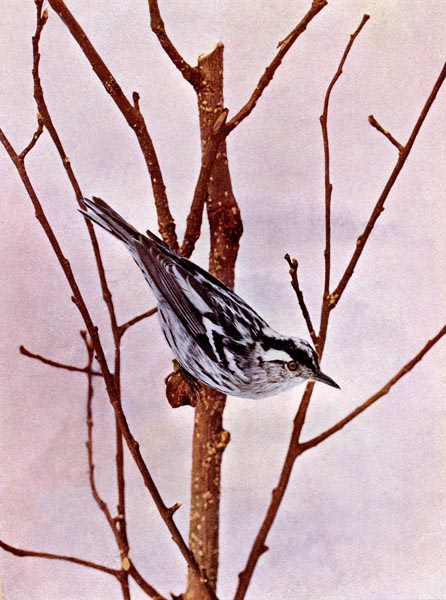
Birds Vol 1 #6 – The Black and White Creeping Warbler

Black and white Creeping Warbler for Birds Illustrated by Color Photography, 1897

Black and white Creeping Warbler for Birds Illustrated by Color Photography, 1897

Birds Illustrated by Color Photography – Revisited

Vol 1. June, 1897 No. 6

*

THE BLACK AND WHITE CREEPING WARBLER.

HIS sprightly little bird is met with in various sections of the country. It occurs in all parts of New England and New York, and has been found in the interior as far north as Fort Simpson. It is common in the Bahamas and most of the West India Islands, generally as a migrant; in Texas, in the Indian Territory, in Mexico, and throughout eastern America.

Dr. Coues states that this warbler is a very common summer resident near Washington, the greater number going farther north to breed. They arrive there during the first week in April and are exceedingly numerous until May.

In its habits this bird seems to be more of a creeper than a Warbler. It is an expert and nimble climber, and rarely, if ever, perches on the branch of a tree or shrub. In the manner of the smaller Woodpecker, the Creepers, Nuthatches, and Titmice, it moves rapidly around the trunks and larger limbs of the trees of the forest in search of small insects and their larvae. It is graceful and rapid in movement, and is often so intent upon its hunt as to be unmindful of the near presence of man.

It is found chiefly in thickets, where its food is most easily obtained, and has been known to breed in the immediate vicinity of a dwelling.

The song of this Warbler is sweet and pleasing. It begins to sing from its first appearance in May and continues to repeat its brief refrain at intervals almost until its departure in August and September. At first it is a monotonous ditty, says Nuttall, uttered in a strong but shrill and filing tone. These notes, as the season advances, become more mellow and warbling.

The Warbler’s movements in search of food are very interesting to the observer. Keeping the feet together they move in a succession of short, rapid hops up the trunks of trees and along the limbs, passing again to the bottom by longer flights than in the ascent. They make but short flight from tree to tree, but are capable of flying far when they choose.

They build on the ground. One nest containing young about a week old was found on the surface of shelving rock. It was made of coarse strips of bark, soft decayed leaves, and dry grasses, and lined with a thin layer of black hair. The parents fed their young in the presence of the observer with affectionate attention, and showed no uneasiness, creeping head downward about the trunks of the neighboring trees, and carrying large smooth caterpillars to their young.

They search the crevices in the bark of the tree trunks and branches, look among the undergrowth, and hunt along the fences for bunches of eggs, the buried larvae of the insects, which when undisturbed, hatch out millions of creeping, crawling, and flying things that devastate garden and orchard and every crop of the field.


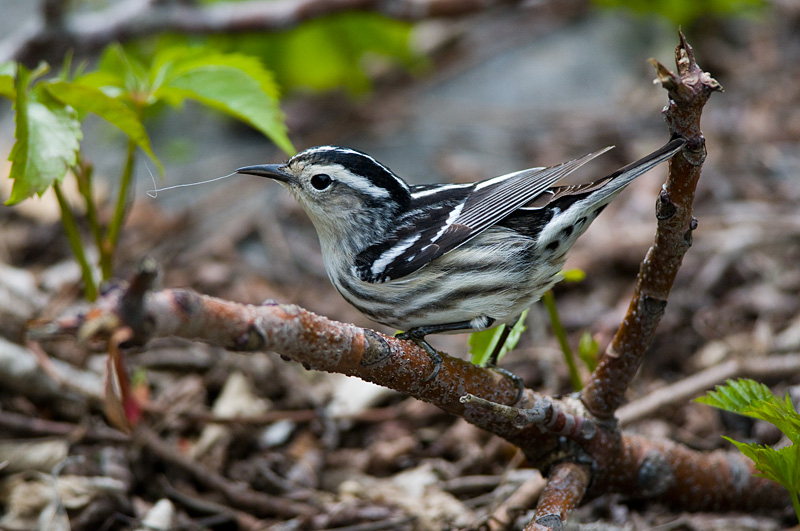
Black-and-white Warbler (Mniotilta varia) by Anthony 747

Black-and-white Warbler (Mniotilta varia) by Anthony 747

Lee’s Addition:

Look at the birds of the air, for they neither sow nor reap nor gather into barns; yet your heavenly Father feeds them. Are you not of more value than they? (Matthew 6:26 NKJV)

Today this birds is called the Black-and-white Warbler. But it still likes to climb around on the trees. It has a longer toe on the back of it foot that helps it cling to the tree as it checks for its meal. This bird feeds on insects and spiders, and unlike other warblers, forages like a nuthatch, moving up and down tree trunks and along branches.

Their measurements are: Length – 4.3–5.1 in (11–13 cm). Wingspan – 7.1–8.7 in (18–22 cm), Weight – 0.3–0.5 oz  (8–15 g).

The Black-and-white Warbler (Mniotilta varia) is a species of New World warbler, the only member of its genus, Mniotilta.[2] It breeds in northern and eastern North America from the Northwest Territory and Newfoundland and Labrador, Canada to Florida. This species is migratory, wintering in Florida, Central America and the West Indies down to Peru. This species is a very rare vagrant to western Europe.

Its song is a high see wee-see wee-see wee-see wee-see wee-see or weesa weesa weetee weetee weetee weet weet weet. It has two calls, a hard tick, and a soft, thin fsss.

The breeding habitat is broadleaved or mixed woodland, preferably in wetter areas. Black-and-white Warblers nest on the ground, laying 4–5 eggs in a cup nest.

The noise of a whip And the noise of rattling wheels, Of galloping horses, Of clattering chariots! (Nahum 3:2 NKJV)

Better yet, here is a youtube of a Black-and-white Warbler singing.

*

*

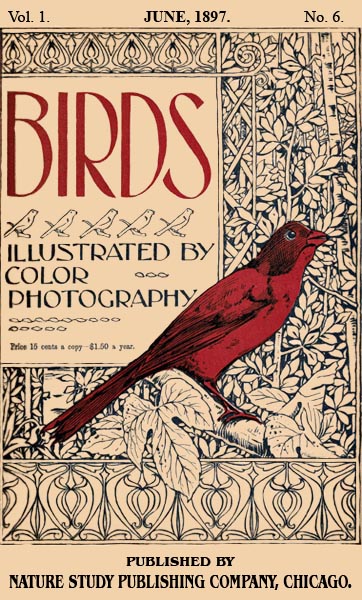
Birds Illustrated by Color Photograhy Vol 1 June, 1897 No 6 - Cover

Birds Illustrated by Color Photograhy Vol 1 June, 1897 No 6 – Cover

Birds Illustrated by Color Photography – Revisited – Introduction

The above article is the first article in the monthly serial that was started in January 1897 “designed to promote Knowledge of Bird-Live.” These include Color Photography, as they call them, today they are drawings. There are at least three Volumes that have been digitized by Project Gutenberg.

To see the whole series of – Birds Illustrated by Color Photography – Revisited

*

(Information from Wikipedia and other internet sources)

Next Article – VOLUME 1. JANUARY TO JUNE, 1897 – INDEX.

Previous Article – The Ruffed Grouse

Wordless Birds

Links:

Black and White Creeping Warbler – Audubon

*

Birds Vol 1 #6 – The Ruffed Grouse

Ruffed Grous for Birds Illustrated by Color Photography, 1897

Ruffed Grous for Birds Illustrated by Color Photography, 1897, From col. F. M. Woodruff

Birds Illustrated by Color Photography – Revisited

Vol 1. June, 1897 No. 6

*

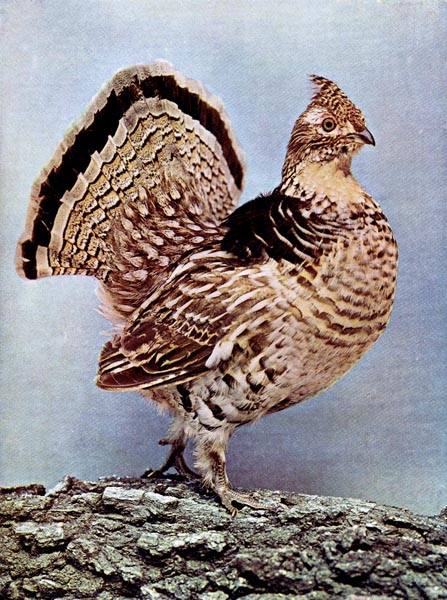
THE RUFFED GROUSE.

imgt

HE Ruffed Grouse, which is called Partridge in New England and Pheasant in the Middle and Southern States, is the true Grouse, while Bob White is the real Partridge. It is unfortunate that they continue to be confounded. The fine picture of his grouseship, however, which we here present should go far to make clear the difference between them.

The range of the Ruffed Grouse is eastern United States, south to North Carolina, Georgia, Mississippi, and Arkansas. They hatch in April, the young immediately leaving the nest with the mother. When they hear the mother’s warning note the little ones dive under leaves and bushes, while she leads the pursuer off in an opposite direction. Building the nest and sitting upon the eggs constitute the duties of the female, the males during this interesting season keeping separate, not rejoining their mates until the young are hatched, when they begin to roam as a family.

Like the Turkey, the Ruffed Grouse has a habit of pluming and strutting, and also makes the drumming noise which has caused so much discussion. This noise “is a hollow vibrating sound, beginning softly and increasing as if a small rubber ball were dropped slowly and then rapidly bounced on a drum.” While drumming the bird contrives to make himself invisible, and if seen it is difficult to get the slightest clue to the manner in which the sound is produced. And observers say that it beats with its wings on a log, that it raises its wings and strikes their edges above its back, that it claps them against its sides like a crowing rooster, and that it beats the air. The writer has seen a grouse drum, appearing to strike its wings together over its back. But there is much difference of opinion on the subject, and young observers may settle the question for themselves. When preparing to drum he seems fidgety and nervous and his sides are inflated. Letting his wings droop, he flaps them so fast that they make one continuous humming sound. In this peculiar way he calls his mate, and while he is still drumming, the hen bird may appear, coming slyly from the leaves.

The nest is on the ground, made by the female of dry leaves and a few feathers plucked from her own breast. In this slight structure she lays ten or twelve cream-colored eggs, specked with brown.

The eyes of the Grouse are of great depth and softness, with deep expanding pupils and golden brown iris.

Coming suddenly upon a young brood squatted with their mother near a roadside in the woods, an observer first knew of their presence by the old bird flying directly in his face, and then tumbling about at his feet with frantic signs of distress and lameness. In the meantime the little ones scattered in every direction and were not to be found. As soon as the parent was satisfied of their safety, she flew a short distance and he soon heard her clucking call to them to come to her again. It was surprising how quickly they reached her side, seeming to pop up as from holes in the ground.

THE RUFFED GROUSE.

At first sight most of you will think this is a turkey. Well, it does look very much like one. He spreads his tail feathers, puffs himself up, and struts about like a turkey. You know by this time what his name is and I think you can easily see why he is called Ruffed.

This proud bird and his mate live with us during the whole year. They are found usually in grassy lands and in woods.

Here they build their rude nest of dried grass, weeds and the like. You will generally find it at the foot of a tree, or along side of an old stump in or near swampy lands.

The Ruffed Grouse has a queer way of calling his mate. He stands on a log or stump, puffed up like a turkey—just as you see him in the picture. Then he struts about for a time just as you have seen a turkey gobbler do. Soon he begins to work his wings—slowly at first, but faster and faster, until it sounds like the beating of a drum.

His mate usually answers his call by coming. They set up housekeeping and build their rude nest which holds from eight to fourteen eggs. As soon as the young are hatched they can run about and find their own food. So you see they are not much bother to their parents. When they are a week old they can fly. The young usually stay with their parents until next Spring. Then they start out and find mates for themselves.

I said at the first that the Ruffed Grouse stay with us all the year. In the winter, when it is very cold, they burrow into a snowdrift to pass the night. During the summer they always roost all night.


Ruffed Grouse (Bonasa umbellus) by Kent Nickel

Ruffed Grouse (Bonasa umbellus) by Kent Nickel

Lee’s Addition:

If a bird’s nest happens to be before you along the way, in any tree or on the ground, with young ones or eggs, with the mother sitting on the young or on the eggs, you shall not take the mother with the young; you shall surely let the mother go, and take the young for yourself, that it may be well with you and that you may prolong your days. (Deuteronomy 22:6-7 NKJV)

Here is another one of God’s neat birds. The Ruffed Grouse (Bonasa umbellus) is a medium-sized grouse occurring in forests from the Appalachian Mountains across Canada to Alaska. It is non-migratory. The Ruffed Grouse is frequently referred to as a “partridge”. This is technically wrong—partridges are unrelated phasianids, and in hunting may lead to confusion with the Grey Partridge, it is a bird of woodlands, not open areas. It is a very popular game bird.

The Ruffed Grouse is also the state bird of Pennsylvania.

Ruffed Grouse (Bonasa umbellus) by Raymond Barlow

Ruffed Grouse (Bonasa umbellus) by Raymond Barlow

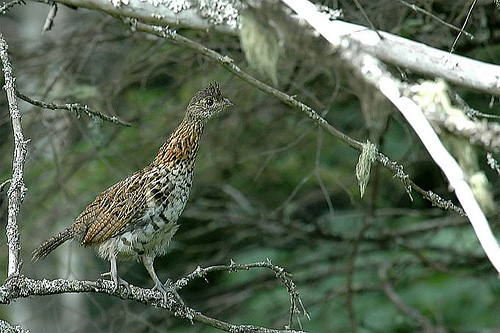
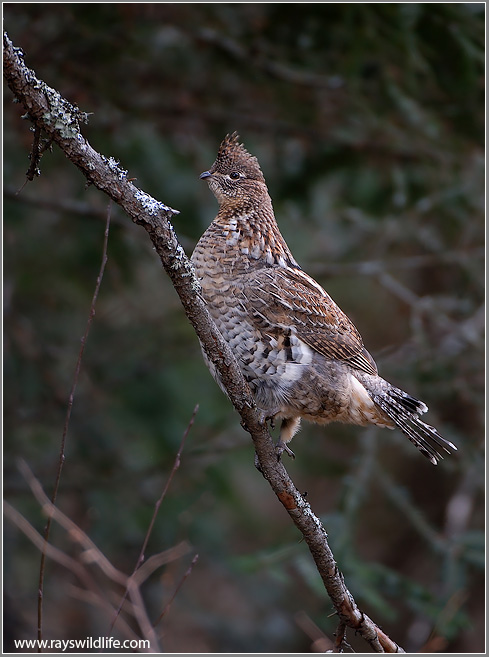
Ruffed Grouse look like chickens in appearance. They are medium to large with a thick body with a small crest on their head. When they fly their wings are rounded. Their coloration works very well to blend them with their habitat. The Lord has provided that protection for them. “One of the interesting ruffed grouse facts is that during winter, these birds develop a web-like structure that joins their toes, so that they can walk easily on snow.” Buzzle.com

The Ruffed Grouse is one of 182 members of the Phasianidae – Pheasants, Fowls and Allies Family. Other birds that are similar are found in the Galliformes Order.

Here is a video of a Ruffed Grouse drumming from YouTube from TheMusicofNature

*

Birds Illustrated by Color Photograhy Vol 1 June, 1897 No 6 - Cover

Birds Illustrated by Color Photograhy Vol 1 June, 1897 No 6 – Cover

Birds Illustrated by Color Photography – Revisited – Introduction

The above article is the first article in the monthly serial that was started in January 1897 “designed to promote Knowledge of Bird-Live.” These include Color Photography, as they call them, today they are drawings. There are at least three Volumes that have been digitized by Project Gutenberg.

To see the whole series of – Birds Illustrated by Color Photography – Revisited

*

(Information from Wikipedia and other internet sources)

Next Article – The Black And White Creeping Warbler

Previous Article – The Scarlet Tanager

ABC’s Of The Gospel

Links:

Ruffed Grouse – All About Birds

Ruffed Grouse – Wikipedia

Grouse Facts

*


Vacation Bible School – 2012

In the beginning God created the heavens and the earth. (Genesis 1:1 NKJV)

The Fountain: Through the Eyes of the Volunteer (by Alona Hradec…:

Vacation Bible School are three words that I have not used, since I attended only once in the second grade.  But this past week has pro…

A very interesting article was placed on our church blog, The Fountain. Alona is an intern this summer and is learning many neat things and tasks. She described our VBS very well. Dan and I took photos throughout the week and thought I would share some of them here.

Thursday was “Bird day” and of course I got involved. I made a Powerpoint presentation about Beaks and Feet that worked in with their lesson. It was shown to two groups of the kids and then to the mothers in our MUMs class for the moms of children attending VBS.

I thought the material they used from Answers in Genesis was one of their best so far.

Here are a few of my photos

*

This slideshow requires JavaScript.

*

Birds Vol 1 #6 – The Scarlet Tanager

Scarlet Tanager for Birds Illustrated by Color Photography, 1897

Scarlet Tanager for Birds Illustrated by Color Photography, 1897, From col. F. M. Woodruff

Birds Illustrated by Color Photography – Revisited

Vol 1. June, 1897 No. 6

*

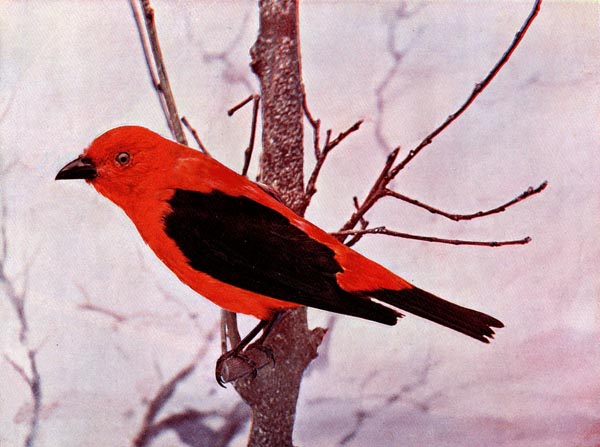
THE SCARLET TANAGER.

imgo

NE of the most brilliant and striking of all American birds is the Scarlet Tanager. From its black wings resembling pockets, it is frequently called the “Pocket Bird.” The French call it the “Cardinal.” The female is plain olive-green, and when seen together the pair present a curious example of the prodigality with which mother nature pours out her favors of beauty in the adornment of some of her creatures and seems niggardly in her treatment of others. Still it is only by contrast that we are enabled to appreciate the quality of beauty, which in this case is of the rarest sort. In the January number of Birds we presented the Red Rumped Tanager, a Costa Rica bird, which, however, is inferior in brilliancy to the Scarlet, whose range extends from eastern United States, north to southern Canada, west to the great plains, and south in winter to northern South America. It inhabits woodlands and swampy places. The nesting season begins in the latter part of May, the nest being built in low thick woods or on the skirting of tangled thickets; very often also, in an orchard, on the horizontal limb of a low tree or sapling. It is very flat and loosely made of twigs and fine bark strips and lined with rootlets and fibers of inner bark.

The eggs are from three to five in number, and of a greenish blue, speckled and blotted with brown, chiefly at the larger end.

The disposition of the Scarlet Tanager is retiring, in which respect he differs greatly from the Summer Tanager, which frequents open groves, and often visits towns and cities. A few may be seen in our parks, and now and then children have picked up the bright dead form from the green grass, and wondered what might be its name. Compare it with the Redbird, with which it is often confounded, and the contrast will be striking.

His call is a warble, broken by a pensive call note, sounding like the syllables chip-churr, and he is regarded as a superior musician.

From xeno-canto.org – Scarlet Tanager song:

“Passing through an orchard, and seeing one of these young birds that had but lately left the nest, I carried it with me for about half a mile to show it to a friend, and having procured a cage,” says Wilson, “hung it upon one of the large pine trees in the Botanic Garden, within a few feet of the nest of an Orchard Oriole, which also contained young, hoping that the charity and kindness of the Orioles would induce them to supply the cravings of the stranger. But charity with them as with too many of the human race, began and ended at home. The poor orphan was altogether neglected, and as it refused to be fed by me, I was about to return it to the place where I had found it, when, toward the afternoon, a Scarlet Tanager, no doubt its own parent, was seen fluttering around the cage, endeavoring to get in. Finding he could not, he flew off, and soon returned with food in his bill, and continued to feed it until after sunset, taking up his lodgings on the higher branches of the same tree. In the morning, as soon as day broke, he was again seen most actively engaged in the same manner, and, notwithstanding the insolence of the Orioles, he continued his benevolent offices the whole day, roosting at night as before. On the third or fourth day he seemed extremely solicitous for the liberation of his charge, using every expression of distressful anxiety, and every call and invitation that nature had put in his power, for him to come out. This was too much for the feelings of my friend. He procured a ladder, and mounting to the spot where the bird was suspended, opened the cage, took out his prisoner, and restored him to liberty and to his parent, who, with notes of great exultation, accompanied his flight to the woods.”


THE SCARLET TANAGER.

What could be more beautiful to see than this bird among the green leaves of a tree? It almost seems as though he would kindle the dry limb upon which he perches. This is his holiday dress. He wears it during the nesting season. After the young are reared and the summer months gone, he changes his coat. We then find him dressed in a dull yellowish green—the color of his mate the whole year.

Do you remember another bird family in which the father bird changes his dress each spring and autumn?

The Scarlet Tanager is a solitary bird. He likes the deep woods, and seeks the topmost branches. He likes, too, the thick evergreens. Here he sings through the summer days. We often pass him by for he is hidden by the green leaves above us.

He is sometimes called our “Bird of Paradise.”

Tanagers feed upon winged insects, caterpillars, seeds, and berries. To get these they do not need to be on the ground. For this reason it is seldom we see them there.

Both birds work in building the nest, and both share in caring for the little ones. The nest is not a very pretty one—not pretty enough for so beautiful a bird, I think. It is woven so loosely that if you were standing under it, you could see light through it.

Notice his strong, short beak. Now turn to the picture of the Rose-Breasted Grosbeaks in April Birds. Do you see how much alike they are? They are near relatives.

I hope that you may all have a chance to see a Scarlet Tanager dressed in his richest scarlet and most jetty black.


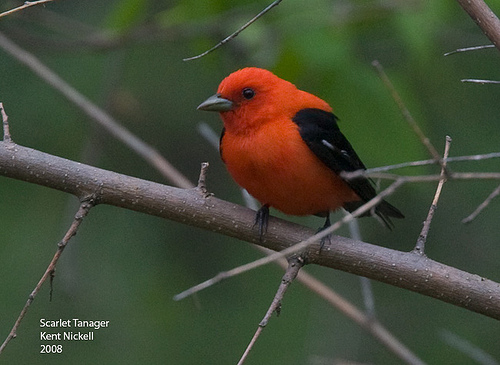
Scarlet Tanager (Piranga olivacea) by Kent Nickell

Scarlet Tanager (Piranga olivacea) by Kent Nickell

Lee’s Addition:

‘Come now, and let us reason together,” Says the LORD, “Though your sins are like scarlet, They shall be as white as snow; Though they are red like crimson, They shall be as wool. (Isaiah 1:18 NKJV)

Scarlet Tanagers (Piranga olivacea) find themselves assigned to the Cardinalidae – Grosbeaks, Saltators & Allies Family and not in the Thraupidae – Tanagers and Allies where I would have thought they might be.

The tanagers comprise the bird family Thraupidae, in the order Passeriformes. The family has an American distribution (Cardinalidae). Tanagers are small to medium-sized birds.

There were traditionally about 240 species of tanagers, but the taxonomic treatment of this family’s members is currently in a state of flux. As more of these birds are studied using modern molecular techniques it is expected that some genera may be relocated elsewhere. Already species in the genera Euphonia and Chlorophonia, which were once considered part of the tanager family, are now treated as members of Fringillidae, in their own subfamily (Euphoniinae). Likewise the genera Piranga (which includes the Scarlet Tanager, Summer Tanager, and Western Tanager), Chlorothraupis, and Habia appear to be members of the Cardinal family, and have been reassigned to that family by the AOU.

The Scarlet Tanager (Piranga olivacea) is a medium-sized American songbird. It and other members of its genus are now classified in the cardinal family (Cardinalidae). The specie’s plumage and vocalizations are similar to other members of the cardinal family.

Adults have pale stout smooth bills. Adult males are bright red with black wings and tail; females are yellowish on the underparts and olive on top, with olive-brown wings and tail. The adult male’s winter plumage is similar to the female’s, but the wings and tail remain darker. Young males briefly show a more complex variegated plumage intermediate between adult males and females. It apparently was such a specimen that was first scientifically described. Hence the older though somewhat confusing specific epithet olivacea (“the olive-colored one”) is used rather than erythromelas (“the red-and-black one”), as had been common throughout the 19th century.

Their breeding habitat is large forested areas, especially with oaks, across eastern North America. Scarlet Tanagers migrate to northwestern South America, passing through Central America around April, and again around October.

They begin arriving on the breeding grounds in numbers by about May and already start to move south again in mid-summer; by early October they are all on their way south.[3] The bird is an extremely rare vagrant to western Europe.
Scarlet Tanagers are often out of sight, foraging high in trees, sometimes flying out to catch insects in flight. They eat mainly insects and fruit.

These birds do best in the forest interior, where they are less exposed to predators and brood parasitism by the Brown-headed Cowbird. Their nests are typically built on horizontal tree branches. Specifically their numbers are declining in some areas due to habitat fragmentation, but on a global scale tanagers are a plentiful species.

*

Birds Illustrated by Color Photograhy Vol 1 June, 1897 No 6 - Cover

Birds Illustrated by Color Photograhy Vol 1 June, 1897 No 6 – Cover

Birds Illustrated by Color Photography – Revisited – Introduction

The above article is the first article in the monthly serial that was started in January 1897 “designed to promote Knowledge of Bird-Live.” These include Color Photography, as they call them, today they are drawings. There are at least three Volumes that have been digitized by Project Gutenberg.

To see the whole series of – Birds Illustrated by Color Photography – Revisited

*

(Information from Wikipedia and other internet sources)

Next Article – The Ruffed Grouse

Previous Article – June and the Birds and Farmers

Wordless Birds – With Hummingbirds

Links:

Scarlet Tanager – Wikipedia

Tanager – Wikipedia

Learning From The Birds – Overwhelmed

*