2011 in review

The WordPress.com stats helper monkeys prepared a 2011 annual report for this blog.

Here’s an excerpt:

The Louvre Museum has 8.5 million visitors per year. This blog was viewed about 210,000 times in 2011. If it were an exhibit at the Louvre Museum, it would take about 9 days for that many people to see it.

Click here to see the complete report.

That report was produced by WordPress and is a great reminder for us to keep up the good work on our blog.

Most of all, thank you for taking the time to view Lee’s Birdwatching Adventures. Without you, these numbers would not be possible.

Thank You and Happy New Year!

And God said, Let there be lights in the firmament of the heaven to divide the day from the night; and let them be for signs, and for seasons, and for days, and years: (Genesis 1:14 KJV)

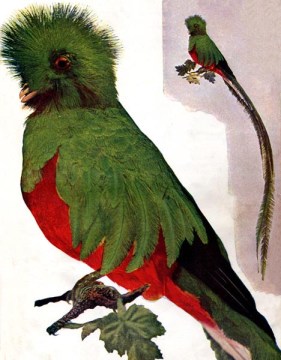
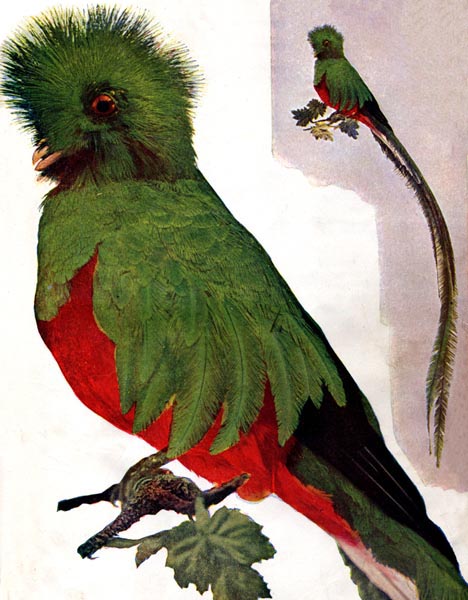
Birds Vol 1 #1 – The Resplendent Trogon (Quetzal)

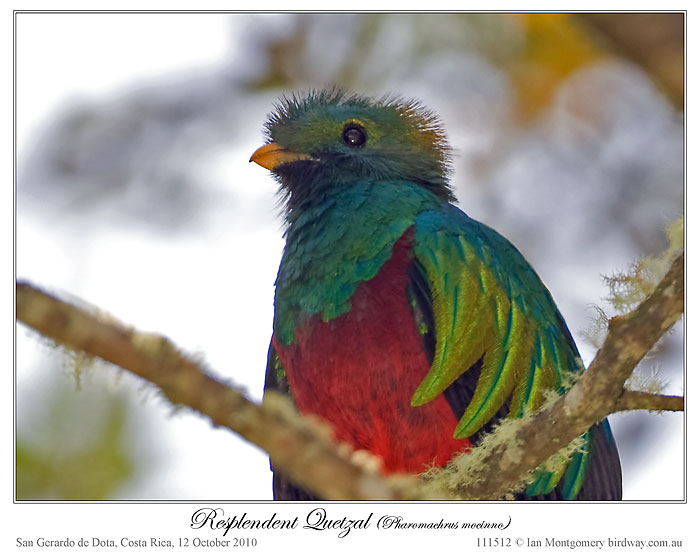
Resplendent (Trogon) Quetzal (Pharomachrus mocinno)

Resplendent (Trogon) Quetzal (Pharomachrus mocinno)

Birds Illustrated by Color Photography – Revisited

Vol 1. January, 1897 No. 1

*

THE RESPLENDENT TROGON

A Letter to Little Boys and Girls of the United States.

Is it cold where you live, little boys and girls? It is not where I live. Don’t you think my feathers grew in the bright sunshine?

My home is way down where the big oceans almost meet. The sun is almost straight overhead every noon.

I live in the woods, way back where the trees are tall and thick. I don’t fly around much, but sit on a limb of a tree way up high.

Don’t you think my red breast looks pretty among the green leaves?

When I see a fly or a berry I dart down after it. My long tail streams out behind like four ribbons. I wish you could see me. My tail never gets in the way.

Wouldn’t you like to have me sit on your shoulder, little boy? You see my tail would reach almost to the ground.

If you went out into the street with me on your shoulder, I would call whe-oowhe-oo, the way I do in the woods.

All the little boys and girls playing near would look around and say, “What is that noise?” Then they would see you and me and run up fast and say, “Where did you get that bird?”

The little girls would want to pull out my tail feathers to put around their hats. You would not let them, would you?

I have a mate. I think she is very nice. Her tail is not so long as mine. Would you like to see her too? She lays eggs every year, and sits on them till little birds hatch out. They are just like us, but they have to grow and get dressed in the pretty feathers like ours. They look like little dumplings when they come out of the eggs.

But they are all right. They get very hungry and we carry them lots of things to eat, so they can grow fast.

Your friend,
R. T.

Resplendent Quetzal (Pharomachrus mocinno) Reinier Munguia

Resplendent Quetzal (Pharomachrus mocinno) Reinier Munguia

THE RESPLENDENT TROGON

imgrESPLENDENT Trogons (Quetzals) are natives of Central America. There are fifty kinds, and this is the largest. A systematic account of the superb tribe has been given by Mr. Gould, the only naturalist who has made himself fully acquainted with them.

Of all birds there are few which excite so much admiration as the Resplendent Trogon.

The skin is so singularly thin that it has been not inaptly compared to wet blotting paper, and the plumage has so light a hold upon the skin that when the bird is shot the feathers are plentifully struck from their sockets by its fall and the blows which it receives from the branches as it comes to the ground.

Its eggs, of a pale bluish-green, were first procured by Mr. Robert Owen. Its chief home is in the mountains near Coban in Vera Paz, but it also inhabits forests in other parts of Guatemala at an elevation of from 6,000 to 9,000 feet.

From Mr. Salvin’s account of his shooting in Vera Paz we extract the following hunting story:

“My companions are ahead and Filipe comes back to say that they have heard a quesal (Resplendent Trogon). Of course, being anxious to watch as well as to shoot one of these birds myself, I immediately hurry to the spot. I have not to wait long. A distant clattering noise indicates that the bird is on the wing. He settles—a splendid male—on the bough of a tree not seventy yards from where we are hidden. It sits almost motionless on its perch, the body remaining in the same position, the head only moving from side to side. The tail does not hang quite perpendicularly, the angle between the true tail and the vertical being perhaps as much as fifteen or twenty degrees. The tail is occasionally jerked open and closed again, and now and then slightly raised, causing the long tail coverts to vibrate gracefully. I have not seen all. A ripe fruit catches the quesal’s eye and he darts from his perch, plucks the berry, and returns to his former position. This is done with a degree of elegance that defies description. A low whistle from Capriano calls the bird near, and a moment afterward it is in my hand—the first quesal I have seen (…).”

The above anecdote is very beautiful and graphic, but we read the last sentence with pain. We wish to go on record with this our first number as being unreconciled to the ruthless killing of the birds. He who said, not a sparrow “shall fall on the ground without your Father,” did not intend such birds to be killed, but to beautify the earth.

The cries of the quesal are various. They consist principally of a low note, whe-oowhe-oo, which the bird repeats, whistling it softly at first, then gradually swelling it into a loud and not unmelodious cry. This is often succeeded by a long note, which begins low and after swelling dies away as it began. Other cries are harsh and discordant. The flight of the Trogon is rapid and straight. The long tail feathers, which never seem to be in the way, stream after him. The bird is never found except in forests of the loftiest trees, the lower branches of which, being high above the ground, seem to be its favorite resort. Its food consists principally of fruit, but occasionally a caterpillar is found in its stomach.
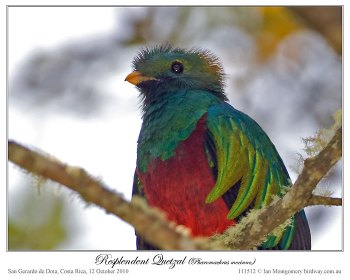
Resplendent Quetzal (Pharomachrus mocinno) by Ian

Resplendent Quetzal (Pharomachrus mocinno) by Ian


Lee’s Addition:

The Resplendent is in the Trogan Family, but today it is called the Resplendent Quetzal (Pharomachrus mocinno). Along with the writer, needless killing of birds is uncalled for, but back in 1897 the ladies liked feathers in their hats. Thankfully, that practice has been stopped for the most part, but how many birds have become extinct or near extinct because of it? What a fantastic bird the Lord created with these long tails.

For man also does not know his time: Like fish taken in a cruel net, Like birds caught in a snare, So the sons of men are snared in an evil time, When it falls suddenly upon them. (Ecclesiastes 9:12 NKJV)
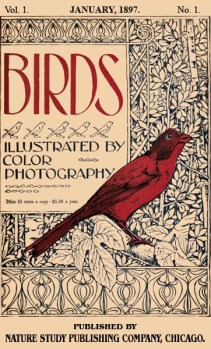
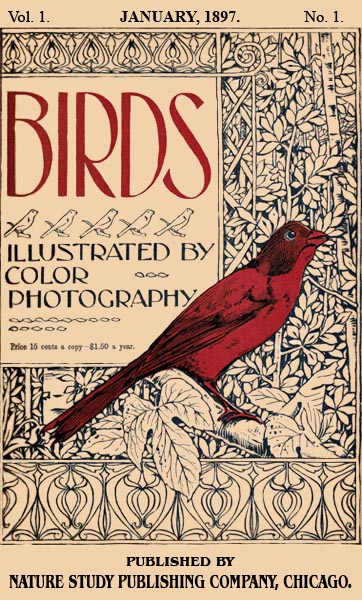
Birds Illustrated by Color Photograhy Vol 1 January 1897 No 1 - Cover

Birds Illustrated by Color Photograhy Vol 1 January 1897 No 1 – Cover

Birds Illustrated by Color Photography – Revisited – Introduction

The above article is the second article in the monthly serial that was started in January 1897 “designed to promote Knowledge of Bird-Live.” These include Color Photography, as they call them, today they are drawings. There are at least three Volumes that have been digitized by Project Gutenberg.

To see the whole series of – Birds Illustrated by Color Photography – Revisited

*

The Resplendent Quetzal is one of 43 species in the Trogonidae – Trogons Family in the Trogoniformes Order. Of the 7 Genus, only two have Quetzals and the other five have Trogons.

The word “trogon” is Greek for “nibbling” and refers to the fact that these birds gnaw holes in trees to make their nests.

The Resplendent Quetzal, Pharomachrus mocinno, is a bird in the trogon family. It is found from southern Mexico to western Panama (unlike the other quetzals of the genus Pharomachrus, which are found in South America and eastern Panama). It is well known for its colorful plumage. There are two subspecies, P. m. mocinno and P. m. costaricensis.

This species is 36–40 cm (14–16 in) long, plus up to 65 cm (26 in) of tail streamer for the male, and weighs about 210 g (7 oz). It is the largest representative of the trogon order. The subspecies costaricensis is slightly smaller than the nominate race and has shorter narrower tail plumes.

This quetzal plays an important role in Mesoamerican mythologies. The Resplendent Quetzal is Guatemala’s national bird, and an image of it is on the flag and coat of arms of Guatemala. It is also the name of the local currency (abbreviation GTQ).

1989 Half Quetzal

1989 Half Quetzal

Trogons are residents of tropical forests worldwide, with the greatest diversity in the Neotropics. The genus Apaloderma contains the three African species, Harpactes and Apalharpactes are Asian, and the remaining four genera are found in Central and South America.

They feed on insects and fruit, and their broad bills and weak legs reflect their diet and arboreal habits. Although their flight is fast, they are reluctant to fly any distance. Trogons are generally not migratory, although some species undertake partial local movements.

Trogons have soft, often colourful, feathers with distinctive male and female plumage. They are the only type of animal with a heterodactyl toe arrangement.

The trogons are insectivorous, usually hunting from a perch. They nest in holes dug into trees or termite nests, laying 2-4 white or pastel-coloured eggs.

The majority of trogons are birds of tropical and subtropical forests. They have a cosmopolitan distribution in the worlds wet tropics, being found in the Americas, Africa and Asia. A few species are distributed into the temperate zone, with one species, the Elegant Trogon, reaching the south of the United States specifically southern Arizona and the surrounding area. Some species, particularly the quetzals, are adapted to cooler montane forest.

The trogons as a family are fairly uniform in appearance, they have compact bodies with long tails (very long in the case of the quetzals), and short necks. Trogons range in size from the 23 cm, 40 gram Scarlet-rumped Trogon to the 40 cm, 210 gram Resplendent Quetzal (not including the male quetzal’s 3-foot-long (0.91 m) tail streamers). Their legs and feet are weak and short, and trogons are essentially unable to walk beyond a very occasional shuffle along a branch. They are even incapable of turning around on a branch without using their wings. The ratio of leg muscle to body weight in trogons is only 3 percent, the lowest known ratio of any bird.

(Information from Wikipedia and other internet sources)

Next Article – The Mandarin Duck

Previous Article – The Nonpareil – Painted Bunting

Wordless Birds

Links:

Ian’s Bird of the Week – Resplendent Quetzal
Ian’s Bird of the Week – Violaceous Trogon
Trogons & Quetzel Photos – Ian’s Birdway
Resplendent Quetzal Photos on Aves – Wikipedia
Resplendent Quetzal Wikipedia
Trogon Family – Wikipedia
Birds of the World – Trogonidae

*
Birds Illustrated by Color Photography – Revisited – Introduction

While searching for e-books for my reader, I came across the Birds Illustrated by Color Photograpy. It was a monthly serial started in 1897 “Designed to Promote Knowledge of Bird-Life.”  There are at least 3 volumes that have been digitized by the Project Gutenberg and these are all in the Public Domain.

The Drawings, “Photography,” are very good and the stories and details about the different birds are interesting. So, starting today, those pages from the past will be “Revisited” with updates to current names and more information about the birds. They will be released as they are completed.

Below is a copy of the Birds Illustrated by Color Photography – Revisited page.


Under Construction

Vol. 1. No. 1. JANUARY, 1897. PRICE 15 CENTS: $1.50 A YEAR.

ONCE A MONTH.

Birds Illustrated by Color Photograhy Vol 1 January 1897 No 1 - Cover

Birds Illustrated by Color Photograhy Vol 1 January 1897 No 1 – Cover

Nature Study Publishing Company OFFICE: FISHER BUILDING CHICAGO

 BIRDS

ILLUSTRATED BY COLOR PHOTOGRAPHY

A MONTHLY SERIAL

DESIGNED TO PROMOTE

KNOWLEDGE OF BIRD-LIFE


“With cheerful hop from perch to spray, They sport along the meads; In social bliss together stray, Where love or fancy leads.

Through spring’s gay scenes each happy pair Their fluttering joys pursue; Its various charms and produce share, Forever kind and true.”


CHICAGO, U. S. A. Nature Study Publishing Company, Publishers 1896

PREFACE.

It has become a universal custom to obtain and preserve the likenesses of one’s friends. Photographs are the most popular form of these likenesses, as they give the true exterior outlines and appearance, (except coloring) of the subjects. But how much more popular and useful does photography become, when it can be used as a means of securing plates from which to print photographs in a regular printing press, and, what is more astonishing and delightful, to produce the real colors of nature as shown in the subject, no matter how brilliant or varied.

We quote from the December number of the Ladies’ Home Journal: “An excellent suggestion was recently made by the Department of Agriculture at Washington that the public schools of the country shall have a new holiday, to be known as Bird Day. Three cities have already adopted the suggestion, and it is likely that others will quickly follow. Of course, Bird Day will differ from its successful predecessor, Arbor Day. We can plant trees but not birds. It is suggested that Bird Day take the form of bird exhibitions, of bird exercises, of bird studies—any form of entertainment, in fact, which will bring children closer to their little brethren of the air, and in more intelligent sympathy with their life and ways. There is a wonderful story in bird life, and but few of our children know it. Few of our elders do, for that matter. A whole day of a year can well and profitably be given over to the birds. Than such study, nothing can be more interesting. The cultivation of an intimate acquaintanceship with our feathered friends is a source of genuine pleasure. We are under greater obligations to the birds than we dream of. Without them the world would be more barren than we imagine. Consequently, we have some duties which we owe them. What these duties are only a few of us know or have ever taken the trouble to find out. Our children should not be allowed to grow to maturity without this knowledge. The more they know of the birds the better men and women they will be. We can hardly encourage such studies too much.” Of all animated nature, birds are the most beautiful in coloring, most graceful in form and action, swiftest in motion and most perfect emblems of freedom. They are withal, very intelligent and have many remarkable traits, so that their habits and characteristics make a delightful study for all lovers of nature. In view of the facts, we feel that we are doing a useful work for the young, and one that will be appreciated by progressive parents, in placing within the easy possession of children in the homes these beautiful photographs of birds. The text is prepared with the view of giving the children as clear an idea as possible, of haunts, habits, characteristics and such other information as will lead them to love the birds and delight in their study and acquaintance. NATURE STUDY PUBLISHING CO.

Copyrighted, 1896.

Lee’s Addition:

Above is the Cover Photo and Preface to a monthly magazine written about Birds. The different birds are illustrated with a lovely Colorful Illustration and then details about the individual bird. Some of the birds have poems and stories also included. The Birds, Illustrated by Color Photography was begun in January of 1897 and went until at least February 1898. Why produce these pages? For one, they are very interesting and as birdwatchers, reading about the various birds that were so beautifully created, is enjoyable. The writers back in 1897 and 1898 spent many hours preparing this magazine, so why not re-visit their work. Just because time moves on does not mean everything from the past should be forgotten.

Remove not the ancient landmark, which thy fathers have set. (Proverbs 22:28 KJV)

Yea, whereto might the strength of their hands profit me, in whom old age was perished? (Job 30:2 KJV)

I remember the days of old; I meditate on all thy works; I muse on the work of thy hands. (Psalms 143:5 KJV)

These will be produced with updates to today and current photos also. Some of the names have been changed since then and that will be shown. Also, current links to more information will be provided, like our Birds of the Bible and Birds of the World, plus others. Some editing will happen, as I have already found one incident to remove because it was offensive to a people group. This book was digitized by the great people at the Project Gutenberg and this is in the Public Domain, including the Illustrations.

Most articles have two parts. The first is geared to the reading level for children and the other part for more mature readers. I trust you enjoy reading and learning about the birds.

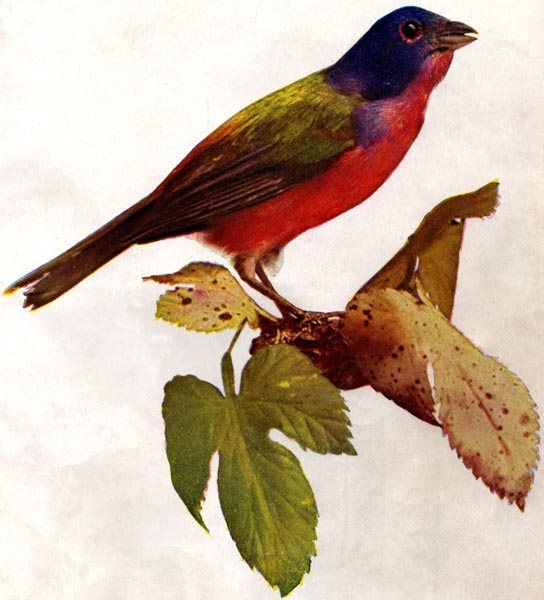
Painted Bunting (Passerina ciris) - Drawing

Nonpareil – Painted Bunting (Passerina ciris) – Drawing

Volume 1, Number 1, January 1987 (Articles will be activated as they are published here.)

The Nonpareil – Painted Bunting
The Resplendent Trogon
The Mandarin Duck
The Golden Pheasant
The Australian Grass Parrakeet
The Cock-Of-The-Rock
The Red Bird Of Paradise
The Yellow Throated Toucan
The Red-Rumped Tanager
The Golden Oriole

Volume 1, Number 2, February 1897

The Blue Jay
The Swallow-Tailed Indian Roller
The Red Headed Woodpecker and The Drummer Bird
Mexican Mot Mot
King Parrot Or King Lory
The American Robin – The Bird Of The Morning
The Kingfisher – The Lone Fisherman
The Red Wing Black Bird – The Bird Of Society
Blue Mountain Lory
The American Red Bird

Volume 1, Number 3, March 1897

Little Boy Blue – The Blue Bird
The Swallow
The Brown Thrush
The Japan Pheasant
The Flicker
The Bobolink
The Crow and The Common Crow
The Return Of The Birds
The Black Tern
The Meadow Lark
The Long-Eared Owl (Great Horned)

Volume 1, Number 4, April 1897

The Rose-Breasted Grosbeak
The Canada Jay
The Purple Gallinule
Smith’s Painted Longspur
The American Cross Bill and The Legend 
Bird Day In The Schools
The California Woodpecker
The Piedbill Grebe
The Bohemian Wax-Wing
The Marsh Wren
The Arizona Green Jay
Amateur Photography

Volume 1, Number 5, May 1897.

Nesting Time
National Council of Women
The Screech Owl
The Orchard Oriole
The Marsh Hawk
The Black-Capped Chickadee
The Scissor-Tailed Flycatcher
The Prothonotary Yellow Warblers
The Indigo Bunting
The Night Hawk
The Wood Thrush
The American Catbird

Volume 1, Number 6, June 1897

Bird Song
The Yellow-Throated Vireo
The Mocking Bird
The Mocking Bird
June
The Black-Crowned Night Heron
The Ring-Billed Gull
The Loggerhead Shrike
The Baltimore Oriole
The Snowy Owl
Birds And Farmers
The Scarlet Tanager
The Ruffed Grouse
The Black And White Creeping Warbler

Volume 2, Number 1, July 1897

Bird Song
The Bald-Headed Eagle
The Semi-Palmated Ring Plover
The Mallard Duck
The American Avocet
The Canvas-Back Duck
The Wood Duck
The Anhinga Or Snake Bird
The American Woodcock
The American Scoter
Old Abe
The Snowy Heron

Volume 2, Number 2, August 1897

Bird Song
The American Osprey
The Sora Rail
The Kentucky Warbler
The Red Breasted Merganser
The Yellow Legs
The Skylark
Wilson’s Phalarope
The Evening Grosbeak
The Turkey Vulture
To A Water-Fowl
Gambel’s Partridge

Volume 2, Number 3, September 1897

Bird Song
The Yellow Warbler
The Hermit Thrush
The Song Sparrow
The Cuckoo
The Ruby-Throated Humming Bird
The House Wren
The Phoebe
The Ruby-Crowned Kinglet
The Mourning Dove
How The Birds Secured Their Rights
The Captive’s Escape
The White-Breasted Nuthatch

Volume 2, Number 4, October 1897

Birds In Captivity
The Blackburnian Warbler
The Lost Mate
The American Goldfinch
The Chimney Swift
Shore Lark
The Yellow-Bellied Sapsucker
The Warbling Vireo
The Sapsucker
The Wood Pewee
The Snowflake
The Slate-Colored Junco
The Kingbird

Volume 2, Number 5, November 1897

John James Audubon
The Summer Tanager
The American White-Fronted Goose
The Turnstone
Snowbirds
Birds Of Passage
The Belted Piping Plover
The Wild Turkey
The Cerulean Warbler
The Yellow-Billed Tropic Bird
The European Kingfisher
The Vermilion Fly-Catcher
Bird Miscellany
The Lazuli Bunting

Volume 2, Number 6, December 1897

The Ornithological Congress
The Mountain Bluebird
The English Sparrow
Allen’s Humming Bird
The Green-Winged Teal
The Black Grouse
The American Flamingo
The Birds Of Bethlehem
The Bird’s Story
The Verdin
The Bronzed Grackle
The Ring-Necked Pheasant
Bird Miscellany
The Yellow-Breasted Chat

*

Wordless Birds

*

Birds Vol 1 #1 – Nonpareil – Painted Bunting

Painted Bunting (Passerina ciris) - Drawing

Painted Bunting (Passerina ciris) – Drawing

Birds Illustrated by Color Photography – Revisited

Vol 1. January, 1897 No. 1

*

THE NONPAREIL

I am called the Nonpareil because there is no other bird equal to me.

I have many names. Some call me the “Painted Finch” or “Painted Bunting.” Others call me “The Pope,” because I wear a purple hood.

I live in a cage, eat seeds, and am very fond of flies and spiders.

Sometimes they let me out of the cage and I fly about the room and catch flies. I like to catch them while they are flying.

When I am tired I stop and sing. There is a vase of flowers in front of the mirror.

I fly to this vase where I can see myself in the glass. Then I sing as loud as I can. They like to hear me sing.

I take a bath every day and how I do make the water fly!

I used to live in the woods where there were many birds like me. We built our nests in bushes, hedges, and low trees. How happy we were.

My cage is pretty but I wish I could go back to my home in the woods.

*

“Sweet warblers of the sunny hours,
Forever on the wing,
I love thee as I love the flowers,
The sunlight and the spring.

They come like pleasant memories
In summer’s joyous time,
And sing their gushing melodies,
As I would sing a rhyme.

In the green and quiet places,
Where the golden sunlight falls,
We sit with smiling faces
To list their silver calls.

And when their holy anthems
Come pealing through the air,
Our hearts leap forth to meet them
With a blessing and a prayer.

Amid the morning’s fragrant dew,
Amid the mists of even,
They warble on as if they drew
Their music down from heaven.

How sweetly sounds each mellow note
Beneath the moon’s pale ray,
When dying zephyrs rise and float
Like lovers’ sighs away!”

Painted Bunting (Passerina ciris) ©©Flickr

Painted Bunting (Passerina ciris) ©©Flickr

*

THE NONPAREIL.

So full of fight is this little bird, that the bird trappers take advantage of his disposition to make him a prisoner. They place a decoy bird on a cage trap in the attitude of defense, and when it is discovered by the bird an attack at once follows, and the fighter soon finds himself caught.

They are a great favorite for the cage, being preferred by many to the Canary. Whatever he may lack as a songster he more than makes up by his wonderful beauty. These birds are very easily tamed, the female, even in the wild state, being so gentle that she allows herself to be lifted from the nest. They are also called the “Painted Finch” or “Painted Bunting”. They are found in our Southern States and Mexico. They are very numerous in the State of Louisiana and especially about the City of New Orleans, where they are greatly admired by the French inhabitants, who, true to their native instincts, admire anything with gay colors. As the first name indicates, he has no equal, perhaps, among the songsters for beauty of dress. On account of this purple hood, he is called by the French “Le Pape”, meaning The Pope.

The bird makes its appearance in the Southern States the last of April and, during the breeding season, which lasts until July, two broods are raised. The nests are made of fine grass and rest in the crotches of twigs of the low bushes and hedges. The eggs have a dull or pearly-white ground and are marked with blotches and dots of purplish and reddish brown.

It is very pleasing to watch the numerous changes which the feathers undergo before the male bird attains his full beauty of color. The young birds of both sexes during the first season are of a fine olive green color on the upper parts and a pale yellow below. The female undergoes no material change in color except becoming darker as she grows older. The male, on the contrary, is three seasons in obtaining his full variety of colors. In the second season the blue begins to show on his head and the red also makes its appearance in spots on the breast. The third year he attains his full beauty.

Their favorite resorts are small thickets of low trees and bushes, and when singing they select the highest branches of the bush. They are passionately fond of flies and insects and also eat seeds and rice.

Thousands of these birds are trapped for the cage, and sold annually to our northern people and also in Europe. They are comparatively cheap, even in our northern bird markets, as most of them are exchanged for our Canaries and imported birds that cannot be sent directly to the south on account of climatic conditions.

Many a northern lady, while visiting the orange groves of Florida, becomes enchanted with the Nonpareil in his wild state.

imgsWEET warblers of the sunny hours,

Forever on the wing,
I love thee as I love the flowers,
The sunlight and the spring.

They come like pleasant memories
In summer’s joyous time,
And sing their gushing melodies,
As I would sing a rhyme.

In the green and quiet places,
Where the golden sunlight falls,
We sit with smiling faces
To list their silver calls.

And when their holy anthems
Come pealing through the air,
Our hearts leap forth to meet them
With a blessing and a prayer.

Amid the morning’s fragrant dew,
Amid the mists of even,
They warble on as if they drew
Their music down from heaven.

How sweetly sounds each mellow note
Beneath the moon’s pale ray,
When dying zephyrs rise and float
Like lovers’ sighs away!”

Painted Bunting (Passerina ciris) ©WikiC

Painted Bunting (Passerina ciris) ©WikiC


Lee’s Addition:

The Painted Bunting (Passerina ciris), as it is called today, is in the Cardinalidae – Grosbeaks, Saltators & Allies Family of the Passeriformes or Songbirds Order. My first encounter with one was while I was sitting at my computer and looking out the window and a male Painted Bunting was on my feeder. I did a double-take. I have loved this bird every since. It is one of my favorites. Their colors remind me of our promise of the rainbow.

I set My rainbow in the cloud, and it shall be for the sign of the covenant between Me and the earth. It shall be, when I bring a cloud over the earth, that the rainbow shall be seen in the cloud; and I will remember My covenant which is between Me and you and every living creature of all flesh; the waters shall never again become a flood to destroy all flesh. The rainbow shall be in the cloud, and I will look on it to remember the everlasting covenant between God and every living creature of all flesh that is on the earth.” (Genesis 9:13-16 NKJV)

*

Birds Illustrated by Color Photograhy Vol 1 January 1897 No 1 - Cover

Birds Illustrated by Color Photograhy Vol 1 January 1897 No 1 – Cover

Birds Illustrated by Color Photography – Revisited – Introduction

The above article is the first article in the monthly serial that was started in January 1897 “designed to promote Knowledge of Bird-Live.” These include Color Photography, as they call them, today they are drawings. There are at least three Volumes that have been digitized by Project Gutenberg.

To see the whole series of – Birds Illustrated by Color Photography – Revisited

An index of all the birds and the links will become active as the articles are “Revisited” here.

Next article – The Resplendent Trogon (Quetzel)

Wordless Birds

Links

Painted Bunting Species Account – Cornell Lab of Ornithology
Painted Bunting – Passerina ciris – USGS Patuxent Bird Identification InfoCenter
Painted Bunting – Wikipedia
Painted Bunting Information – South Dakota Birds and Birding

Ian’s Bird of the Week – King Penguin

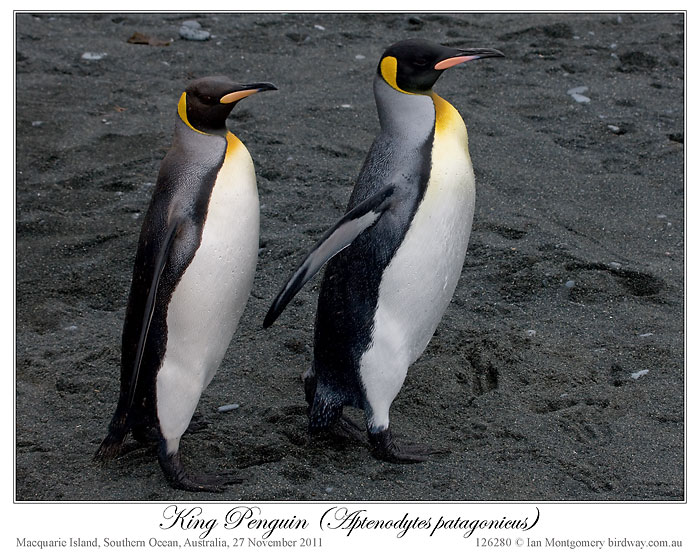
King Penguin (Aptenodytes patagonicus) 1 by Ian

King Penguin (Aptenodytes patagonicus) 1 by Ian

Ian’s Bird of the Week – King Penguin ~ by Ian Montgomery

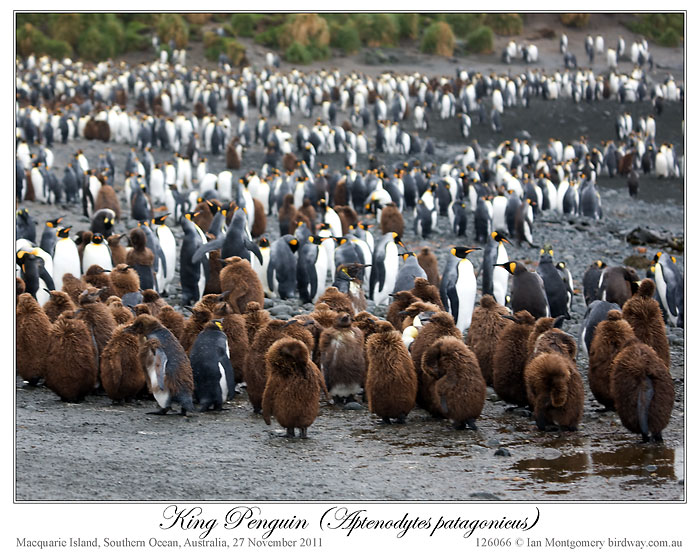
The Royal Penguins may have won the bird of the trip award on the basis of character, but the sartorial crown went to the King Penguin also very common on the beach at Macquarie Island. We’ll see later that they also won the Worst Dressed Award. The adult King Penguins were magnificently turned out, and strode importantly around, very erect with chests puffed out as in the first photo. (If their suits hadn’t been pure silk, they might, however, be considered slight spivvy.)

They alway seemed to have some consequential to do, such as this one calling at intervals trumpet-like and being listened to deferentially by its followers and being answered in a similar vein by another leader at some distance.
King Penguin (Aptenodytes patagonicus) 2 by Ian

King Penguin (Aptenodytes patagonicus) 2 by Ian

If you sat quietly on the beach, they would, like the Royals come over to inspect you, but they didn’t seem to approve of what they found.
King Penguin (Aptenodytes patagonicus) 3 by Ian

King Penguin (Aptenodytes patagonicus) 3 by Ian

When called upon to do something undignified like feeding an unrelenting chick, they did so with an expression that suggested that this should really be done by a wet nurse, and the neighbours would turn avert their gaze disdainfully.
King Penguin (Aptenodytes patagonicus) 4 by Ian

King Penguin (Aptenodytes patagonicus) 4 by Ian

The chicks, of course, won the Worst Dressed Award and the adults, whenever possible, disowned them so that were forced to huddle in a creche at the unfashionable end of the beach.
King Penguin (Aptenodytes patagonicus) 5 by Ian

King Penguin (Aptenodytes patagonicus) 5 by Ian

The chicks look as if they’re preening, but they are really trying to rip off their awful yeti outfits. You can see that some of them have nearly succeeded. This is a transformation to rival any emerging butterfly, and if Hans Christian Andersen had known about King Penguin chicks he would have chosen them rather than cygnets for his Ugly Duckling fairy tale.
King Penguin (Aptenodytes patagonicus) 6 by Ian

King Penguin (Aptenodytes patagonicus) 6 by Ian

Meanwhile, at the other end of the beach, the King Penguins stride officiously towards an Elephant Seal lumbering out of the water. I couldn’t resist converting this into a comic-strip cartoon using an iPhone app called Halftone http://www.juicybitssoftware.com/halftone/ .
King Penguin (Aptenodytes patagonicus) 7 by Ian

King Penguin (Aptenodytes patagonicus) 7 by Ian

As you can imagine, it was a special day on Macquarie Island.
I’m continuing to put photos from the trip on the website and there are now 650 Australian bird species there. You can check the latest updates here: http://www.birdway.com.au/#updates .
Best wishes
Ian


Ian Montgomery, Birdway Pty Ltd,
454 Forestry Road, Bluewater, Qld 4818
Phone: 0411 602 737 +61-411 602 737
Preferred Email: ian@birdway.com.au
Website: http://birdway.com.au


Lee’s Addition:

Now Ian has gone to making cartoons. Ian, that must have been an exciting special day. From your writing, your pleasure shines through. Thanks for sharing your great photos with us again. Stay tuned for Ian’s next adventure. Can’t wait to see some more of his photos from that trip.

Penguines are in the Spheniscidae – Penguin Family of the Sphenisciformes Order. Penguins are the only family in the Order. Check out Ian’s Penguin photos at his Birdway.com site. He has photos for 9 of the 18 species of Penguins.

The king’s heart is in the hand of the LORD, as the rivers of water: he turneth it whithersoever he will. (Proverbs 21:1 KJV)

*

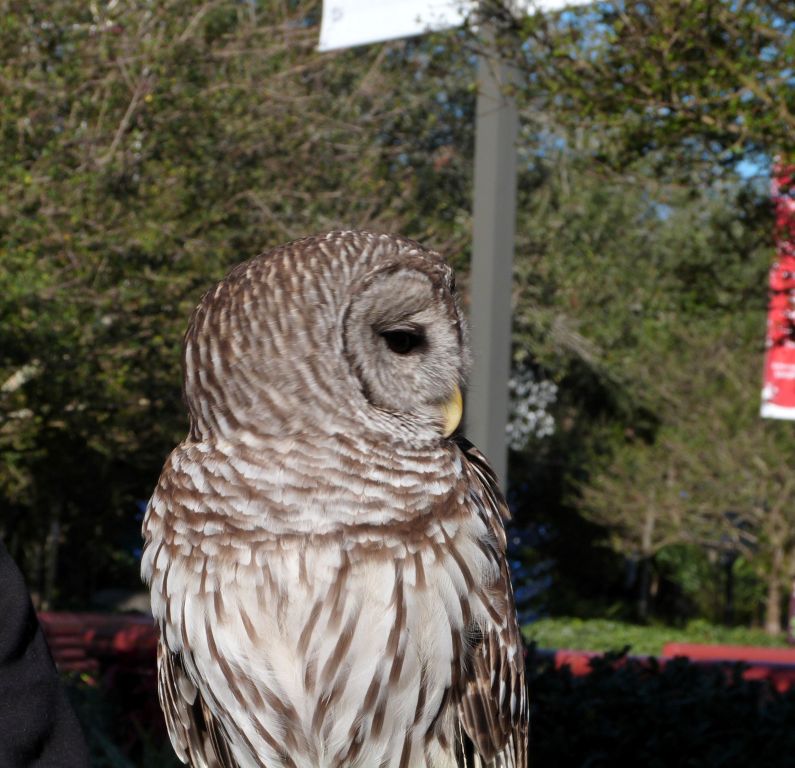
Barred Owl at Lowry Park Zoo Today

Northern Barred Owl (Strix varia) LPZ by Dan 2014

Northern Barred Owl (Strix varia) LPZ by Dan 2014

Northern Barred Owl (Strix varia) LPZ by Lee

Northern Barred Owl (Strix varia) LPZ by Lee

And thorns shall come up in her palaces, nettles and brambles in the fortresses thereof: and it shall be an habitation of dragons, and a court for owls. (Isaiah 34:13 KJV)

Dan and I went over to the Lowry Park Zoo/Zoo Tampa in Tampa again today. I was wanting to check out my Christmas present of a new camera. Enjoying learning to use it and retaking a lot of photos of birds to compare the old ones with the new ones on this camera. (It is still a point-and-shoot, but it has an improved “program mode.” Dan is our good photographer.)

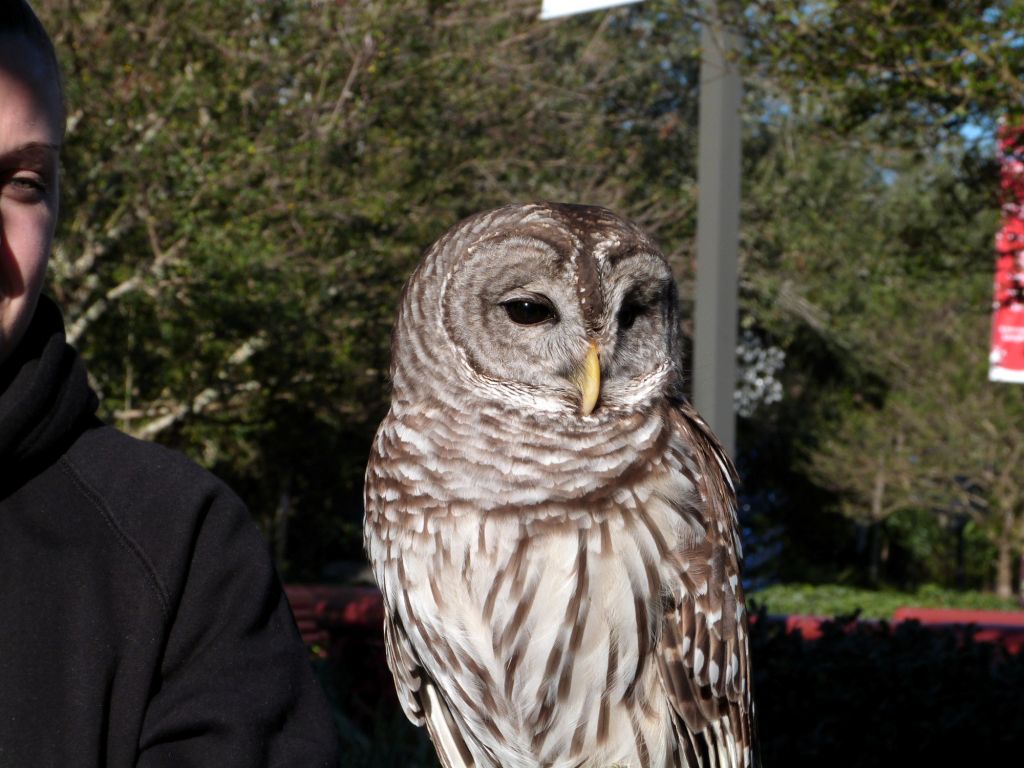
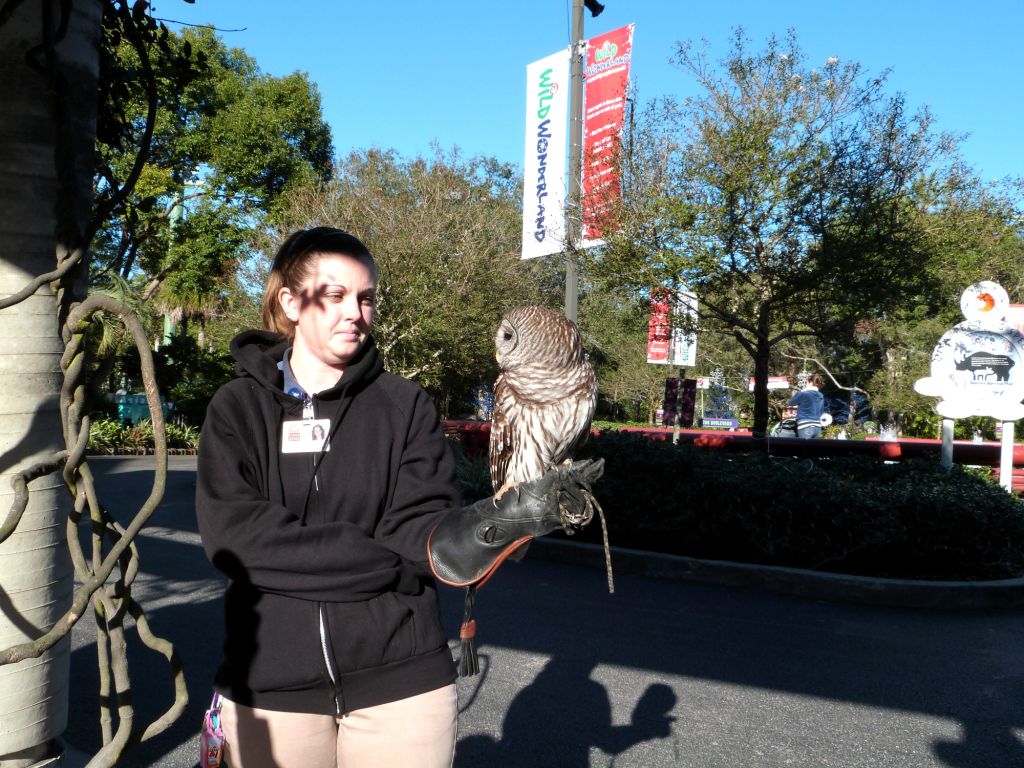
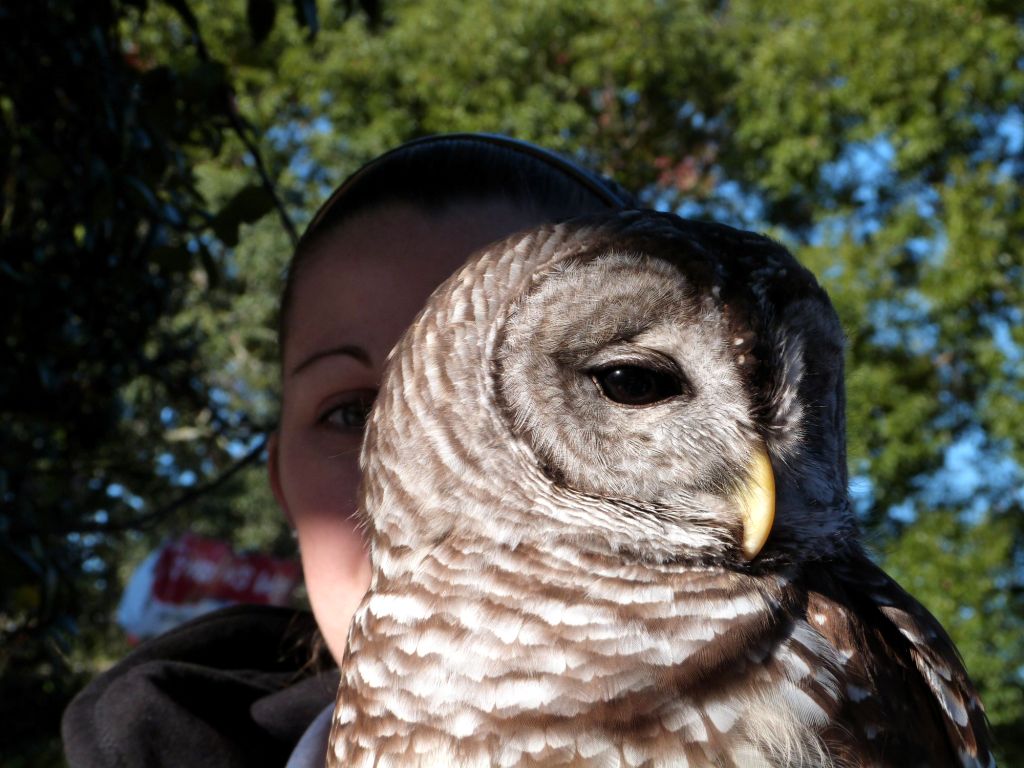
But when we entered the zoo, we were met by one of the zookeepers holding a beautiful Barred Owl. We had not encountered this Owl in our previous trips. While sharing some of the photos, I thought you might like to learn a little about them.

Northern Barred Owl (Strix varia) LPZ by Lee

Northern Barred Owl (Strix varia) LPZ by Lee

Facts from the U.S. Geological Service

Identification Tips:

  • Length: 17 inches Wingspan: 44 inches
  • Sexes similar
  • Rather large owl
  • Dark eyes and yellow bill
  • Back brown, mottled with pale spots and dark bars
  • Underparts pale with long, brown streaks
  • Chest pale with brown barring
  • Face pale with dark concentric rings surrounding eye

Similar species:

The Spotted Owl is most similar, but can be separated with attention to its barred, not streaked, underpart coloration. Short-eared Owl is similar in size, but is not barred on the chest nor is as heavily streaked below, does not share the concentric rings in the facial disks, has yellow eyes and a dark bill, and is found in quite different habitat. Great Gray Owl is superficially similar, but much larger, gray rather than brown below, and has differently patterned underparts.”

Northern Barred Owl (Strix varia) LPZ by Lee

Northern Barred Owl (Strix varia) LPZ by Lee

“The Barred Owl (Strix varia) is a large typical owl native to North America. It goes by many other names, including Eight HooterRain OwlWood Owl, and Striped Owl, but is probably best known as the Hoot Owl based on its call.

The usual call is a series of eight accented hoots ending in oo-aw, with a downward pitch at the end. The most common mnemonic device for remembering the call is “Who cooks for you, who cooks for you all.” It is noisy in most seasons. When agitated, this species will make a buzzy, rasping hiss. While calls are most common at night, the birds do call during the day as well.” (Wikipedia)

(From xeno-canto.org)

Northern Barred Owl (Strix varia) LPZ by Lee

Northern Barred Owl (Strix varia) LPZoo by Lee

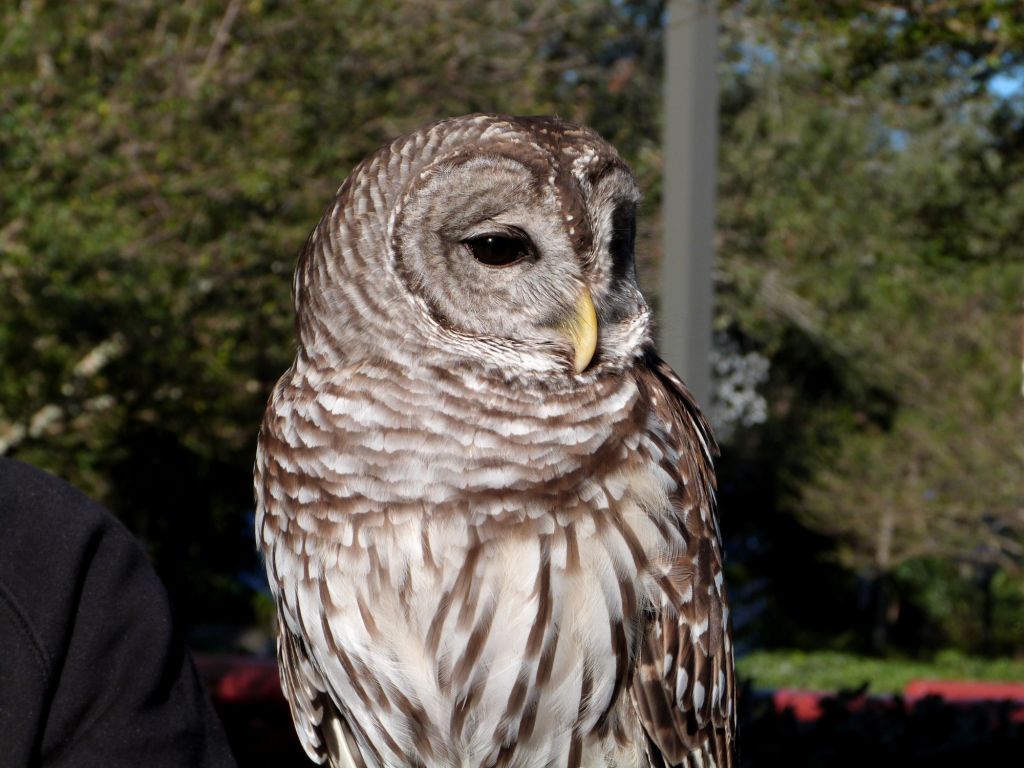
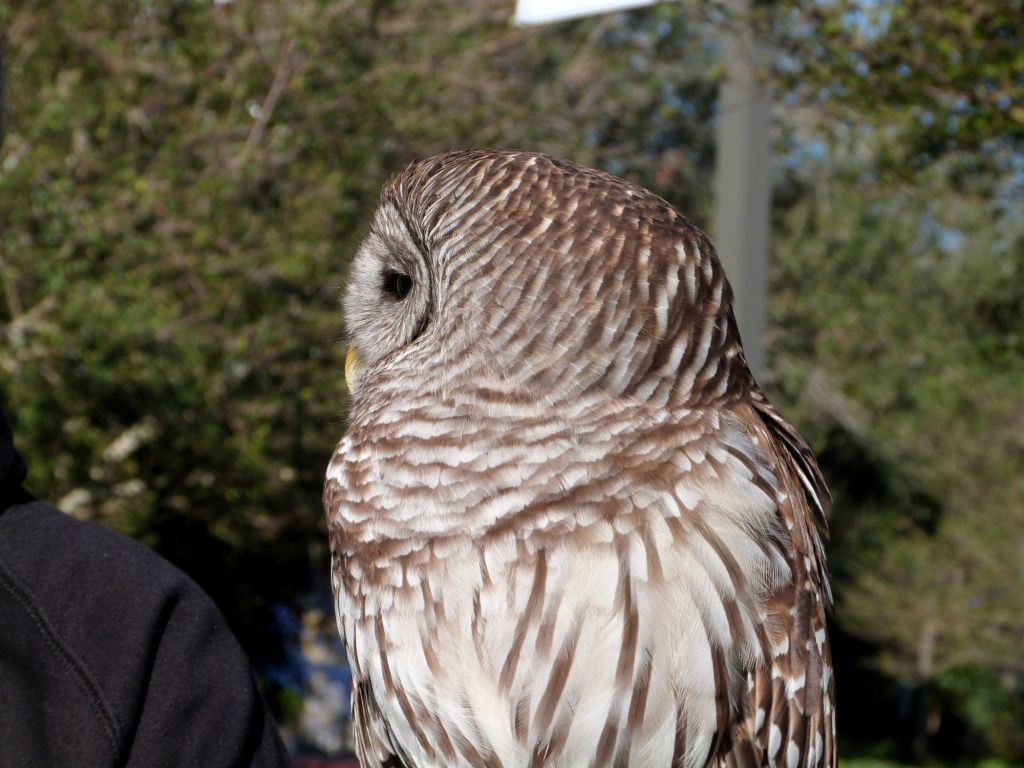
Looking the other way. No, they cannot turn their heads all the way around. Notice also that this owl does not have ear tufts like some owls.

Northern Barred Owl (Strix varia) LPZ by Lee - Side of head

Northern Barred Owl (Strix varia) LPZ by Lee – Side of head

“Breeding habitats are dense woods across Canada, the eastern United States, and south to Mexico; in recent years it has spread to the western United States. Recent studies show suburban neighborhoods can be ideal habitat for barred owls. Using transmitters, scientists found that populations increased faster in the suburban settings than in old growth forest. The main danger to owls in suburban settings is from cars. The increased offspring offset the death rate due to impacts from cars and disease.”

The Barred Owl’s nest is often in a tree cavity, often ones created by pileated woodpeckers; it may also take over an old nesting site made previously by a red-shouldered hawk, cooper’s hawk, crow, or squirrel. It is a permanent resident, but may wander after the nesting season. If a nest site has proved suitable in the past they will often reuse it as the birds are non-migratory. In the United States, eggs are laid from early-January in southern Florida to mid-April in northern Maine, and consist of 2 to 4 eggs per clutch. Eggs are brooded by the female with hatching taking place approximately 4 weeks later. Young owls fledge four to five weeks after hatching. These owls have few predators, but young, unwary owls may be taken by cats. The most significant predator of Barred Owls is the Great Horned Owl. The Barred Owl has been known to live up to 10 years in the wild and 23 years in captivity.” (Wikipedia)

Northern Barred Owl (Strix varia) LPZ by Lee

Northern Barred Owl (Strix varia) LPZ by Lee

“Owl” is mentioned 8 times in the King James Bible and “Owls” is mentioned 6 times. So that makes our friend here a “Bird of the Bible” and of course a “Bird of the World.” Owls are another of the Lord’s great creations.

It was a great birdwatching day at the Zoo. Cool, but the sun was bright and no clouds. I had some other great finds today, but will save them for later.

References to check out:

*

Birds of the World – Icteridae Family – Oropendolas, Orioles & Blackbirds

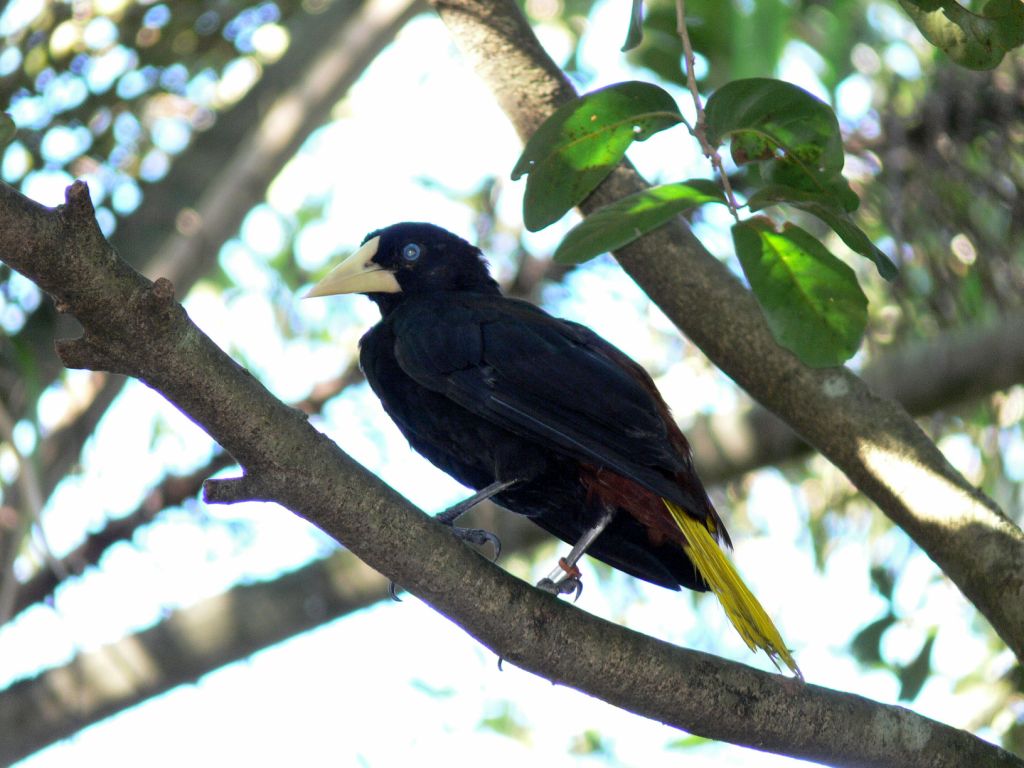
Crested Oropendola (Psarocolius decumanus) at LPZ

Crested Oropendola (Psarocolius decumanus) at LPZ by Lee

Then God said, “Let the waters abound with an abundance of living creatures, and let birds fly above the earth across the face of the firmament of the heavens.” (Genesis 1:20 NKJV)

I have been working on finding photos for the Icteridae Family – Oropendolas, Orioles & Blackbirds. I have managed to get all by three of the species. Tried to find as many of the subspecies while working on the page.

There are 108 members in 27 Genera. They start off, taxonomic order, with the Oropendolas. We have enjoyed seeing the Crested Oropendola at the Lowry Park Zoo and the National Aviary. They make their hanging nest even there. Of the 11, I cannot find any photo of the Band-tailed Oropendola (Ocyalus latirostris). They have 3 Genus.

The Caciques are next with 12 members in two Genus; Cacicus and Amblycercus.

Then there are 3 Troupials in the Icterus Genus with Orioles; the Venezuelan, Orange-backed and Campo Troupials.

Then the Orioles appear next in the list. Those are some very pretty birds. There are 30 members in the Genus Icterus. Here in North America (US) we get to enjoy the Orchard, Hooded, Streak-backed, Spot-breasted, Altamira, Bullock’s, Baltimore, Scott’s and Audubon Orioles. (order by Stokes Guide). There is a Oriole Blackbird, but is not quite considered an Oriole. The Bahama Oriole (Icterus northropi) is Critically Endangered and again I couldn’t find a photo, but did find a Bahamian Stamp with a picture of it.

Brown-and-yellow Marshbird (Pseudoleistes virescens) ©©CDTimm

Brown-and-yellow Marshbird (Pseudoleistes virescens) ©©CDTimm

Next the list alternates back and forth with Blackbirds and Grackles. Most are black with some colors. After 11 Genus of those, then 2 Marshbird are in the Pseudoleistes Genus.

A bird species that lands in my yard, the Brown–headed Cowbird is one of six Cowbirds. I have had as many as 50 Brown-headeds land in my yard and empty my feeders in no time flat. They are the Molothrus Genus. The Bronze-brown Cowbird (Molothrus armenti) escapes most photographers because no photos were found to use.

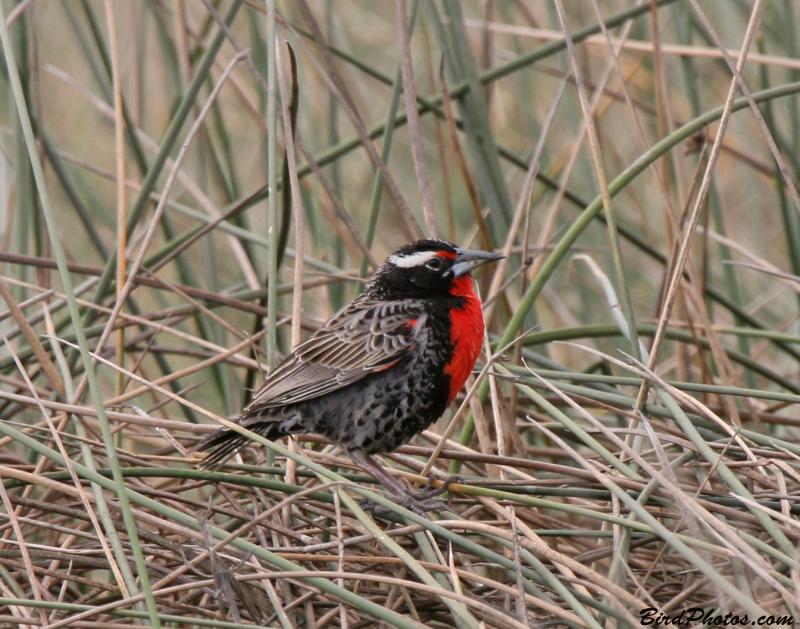
Peruvian Meadowlark (Sturnella bellicosa) By BirdPhotos.Com

Peruvian Meadowlark (Sturnella bellicosa) By BirdPhotos.Com

Going on down the list through more Blackbirds and Grackles, almost to the bottom, you find the Sturnella Genus which has the five Meadowlarks; Peruvian, Pampas, Long-tailed, Eastern and Western Meadowlarks.

After a Yellow-headed Blackbird, you end up with the Bobolink, which we just had an article about a few days ago. (That is why I worked on the page.) See The Christmas Bird? and an earlier one, Bobolink – Extraordinary Migrant.. Both are by ajmithra.

Photos missing for this family are listed below. If you have one you would allow us permission to use or let us link to your photo, please leave a comment. Thanks.

  • Band-tailed Oropendola (Ocyalus latirostris)
  • Bahama Oriole (Icterus northropi) Critically Endangered
  • Bronze-brown Cowbird (Molothrus armenti)
  • Need subspecies

*

Birds in Christmas Hymns – Joyful, Joyful, We Adore Thee

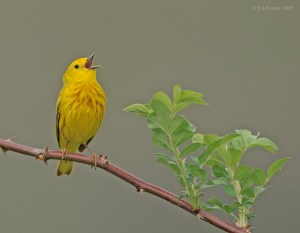
American Yellow Warbler (Dendroica aestiva) singing by J Fenton

American Yellow Warbler (Dendroica aestiva) singing by J Fenton

My lips shall greatly rejoice when I sing unto thee; and my soul, which thou hast redeemed. (Psalms 71:23 KJV)

Birds in Christmas Hymns

Birds in Christmas Hymns

Words by Hen­ry J. van Dyke, 1907. Van Dyke wrote this hymn while stay­ing at the home of Har­ry A. Gar­field at Wil­liams Col­lege, Mass­a­chu­setts. It was first pub­lished in the Pres­by­ter­i­an Hymn­al in 1911. It al­so ap­peared in the Po­ems of Hen­ry van Dyke, 1911. Van Dyke wrote:

“These vers­es are sim­ple ex­press­ions of com­mon Christ­ian feel­ings and de­sires in this pre­sent time—hymns of to­day that may be sung to­ge­ther by peo­ple who know the thought of the age, and are not afraid that any truth of sci­ence will de­stroy re­li­gion, or any re­vo­lu­tion on earth over­throw the king­dom of hea­ven. There­fore this is a hymn of trust and joy and hope.”

Music: Hymn to Joy, from the 9th Sym­pho­ny of Lud­wig van Beet­ho­ven; adapt­ed by Ed­ward Hodg­es, 1824

Joyful, Joyful, We Adore Thee

Joyful, joyful, we adore Thee, God of glory, Lord of love;
Hearts unfold like flowers before Thee, opening to the sun above.
Melt the clouds of sin and sadness; drive the dark of doubt away;
Giver of immortal gladness, fill us with the light of day!

All Thy works with joy surround Thee, earth and heaven reflect Thy rays,
Stars and angels sing around Thee, center of unbroken praise.
Field and forest, vale and mountain, flowery meadow, flashing sea,
Singing bird and flowing fountain call us to rejoice in Thee.

Thou art giving and forgiving, ever blessing, ever blessed,
Wellspring of the joy of living, ocean depth of happy rest!
Thou our Father, Christ our brother, all who live in love are Thine;
Teach us how to love each other, lift us to the joy divine.

Mortals, join the happy chorus, which the morning stars began;
Father love is reigning o’er us, brother love binds man to man.
Ever singing, march we onward, victors in the midst of strife,
Joyful music leads us sunward in the triumph song of life.

*

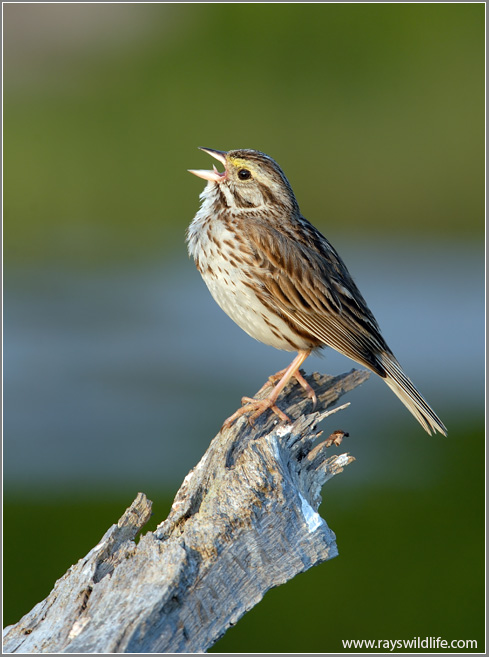
Savannah Sparrow singing by Ray

Savannah Sparrow singing by Ray

More Birds in Hymns

See ~ Christmas Gospel Presentation

Most information from The Cyber Hymnal – Joyful, Joyful, We Adore Thee

*
The Christmas Bird?

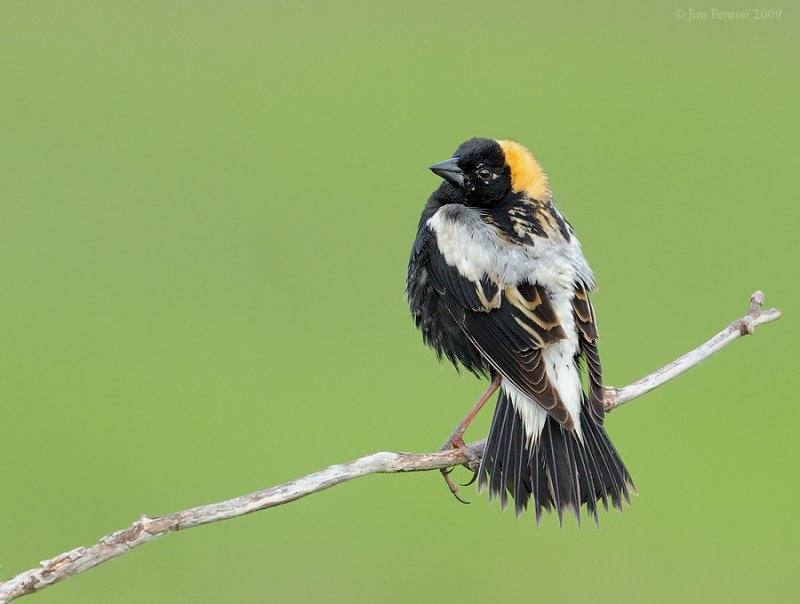
Bobolink (Dolichonyx oryzivorus) by J Fenton

Bobolink (Dolichonyx oryzivorus) by J Fenton

The Christmas Bird?

The other day as I was reading an article on Bobolinks,
My thoughts immediately flew to the manger
where our Lord lay among the haystack.
This bird too loves to live and nest among the hay fields.
  • Are we satisfied with the place which God has given us?
  • Or do we grumble about where God has placed us?
  • Or are we trying to live or outlive like others?
God lowered Himself to the manger..
We all want to be like Jesus,
  • but, are we willing to humble ourselves like Him?
Take my yoke upon you, and learn of me; for I am meek and lowly in heart: and ye shall find rest unto your souls.  (Mathew11:29)
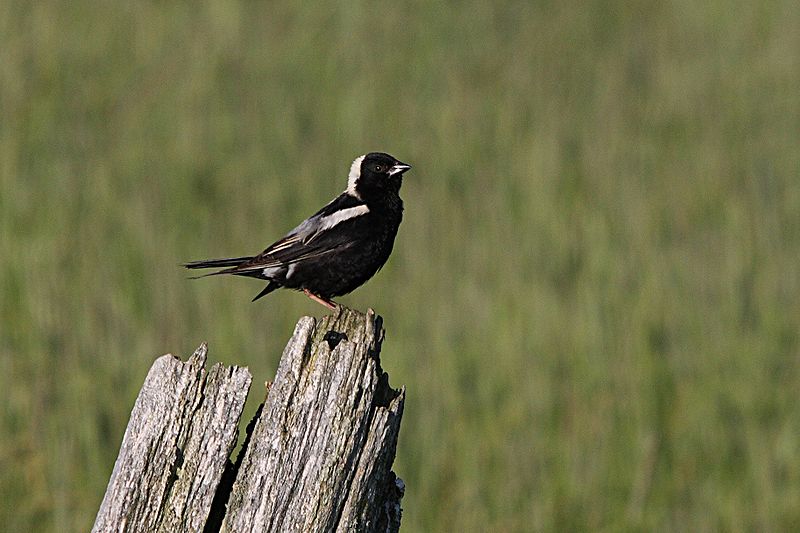
Bobolink (Dolichonyx oryzivorus) ©WikiC

Bobolink (Dolichonyx oryzivorus) ©WikiC

These birds are seen feeding during the night too…

This reminded me of the shepherds
who went in search of the Heavenly Manna during the night…
Each one of us would like to be called as being righteous, but,
  • do we meditate His words, every day and every night?
“But his delight is in the law of the LORD; and in his law doth he meditate day and night.” Psalm 1:2
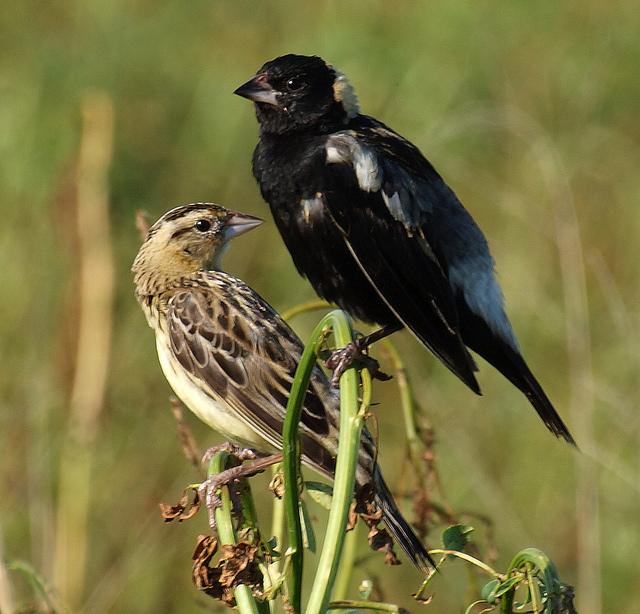
Bobolink (Dolichonyx oryzivorus) CC Pair ramendan

Bobolink (Dolichonyx oryzivorus) CC Pair ramendan

These birds though very small in size,

are extraordinary migrants,
making a trip of about 20,000 kilometers in one season
using the earth’s magnetic field as compass
and the location of stars as its map.
This reminded me of the star
that showed the way to the wise men
who came in search of
Jesus, the Brightest Morning Star…
I am the root and the offspring of David, and the bright and morning star. (Revelation 22:16)
When Jesus becomes our Bright and morning star,
We would never loose our way like the wise men
even in our darkest hour..
Can we call Bobolink as the “Christmas Bird?”
Wish you all a very blessed and a meaningful Christmas..
With love and prayers,

Yours in YESHUA,

a j mithra

Please visit us at:

ajmithra21/


Bobolinks are part of the Icteridae – Oropendolas, Orioles & Blackbirds Family.

Bobolink – Extraordinary Migrant…

*

Birds In Christmas Hymns – Thou Didst Leave Thy Throne

Red-eyed Vireo (Vireo olivaceus) ©WikiC in nest

Red-eyed Vireo (Vireo olivaceus) ©WikiC in nest

Who, being in the form of God, thought it not robbery to be equal with God: But made himself of no reputation, and took upon him the form of a servant, and was made in the likeness of men: (Philippians 2:6-7 KJV)

Words by Em­i­ly E. El­li­ott, 1864. This hymn was first used at St. Mark’s Church in Bright­on, Eng­land, where El­li­ott’s fa­ther was rec­tor. In 1870, it was pub­lished in the Church Mis­sion­a­ry Ju­ve­nile In­struct­or, which El­li­ott ed­it­ed.

Music: Margaret, Tim­o­thy R. Mat­thews, 1876

Birds in Christmas Hymns

Birds in Christmas Hymns

Thou Didst Leave Thy Throne

Thou didst leave Thy throne and Thy kingly crown,
When Thou camest to earth for me;
But in Bethlehem’s home was there found no room
For Thy holy nativity.

Refrain

O come to my heart, Lord Jesus,
There is room in my heart for Thee.

Heaven’s arches rang when the angels sang,
Proclaiming Thy royal degree;
But of lowly birth didst Thou come to earth,
And in great humility.

Refrain

O come to my heart, Lord Jesus,
There is room in my heart for Thee.

The foxes found rest, and the birds their nest
In the shade of the forest tree;
But Thy couch was the sod, O Thou Son of God,
In the deserts of Galilee.

Refrain

O come to my heart, Lord Jesus,
There is room in my heart for Thee.

Thou camest, O Lord, with the living Word,
That should set Thy people free;
But with mocking scorn and with crown of thorn,
They bore Thee to Calvary.

Refrain

O come to my heart, Lord Jesus,
There is room in my heart for Thee.

When the heavens shall ring, and the angels sing,
At Thy coming to victory,
Let Thy voice call me home,
Saying Yet there is room,
There is room at My side for thee.

My heart shall rejoice, Lord Jesus,
When Thou comest and callest for me.

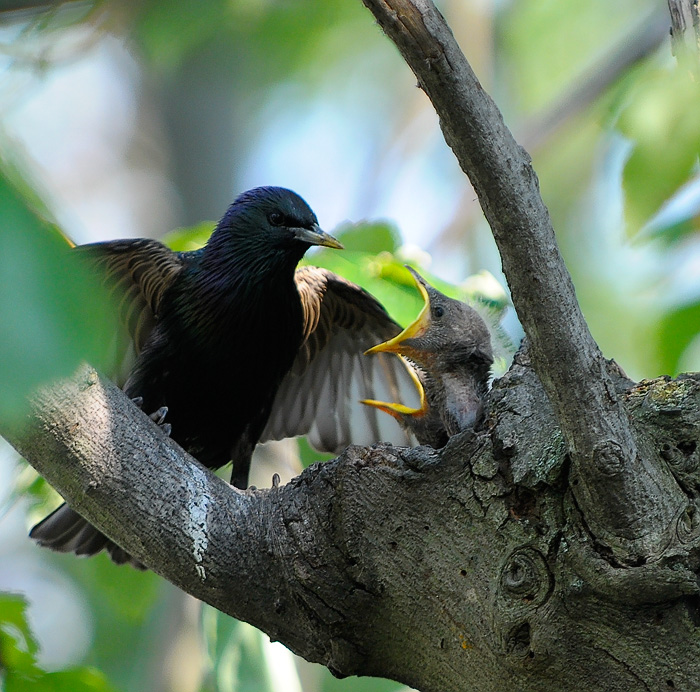
Starling feeding chicks

Protection and feeding at the nest by Anthony

Em­i­ly E. El­li­ott (1836-1897) – Emily’s fa­ther was Ed­ward Bi­shop El­li­ott, Rec­tor of St. Mark’s Church in Bright­on, and her aunt was hymn­ist Char­lotte El­li­ott. For six years, Em­i­ly served as ed­it­or of The Church Mis­sion­a­ry Ju­ve­nile In­struct­or.

Tim­o­thy R. Mat­thews (1826-1910) – Son of the rec­tor of Colm­worth, Matt­hews at­tend­ed the Bed­ford Gram­mar School and Gon­ville and Cai­us Coll­ege, Cam­bridge (MusB 1853). Or­dained the same year, he be­came pri­vate tu­tor to the fam­i­ly of Rev. Lord Wri­oth­es­ley Rus­sell, a can­on of St. George’s Cha­pel, Wind­sor Cast­le, where he stu­died un­der the or­gan­ist, George El­vey, sub­se­quent­ly a life­long friend.

Matthews served as Cur­ate (1853-1859) and Cur­ate-in-Charge (1859-1869) of St. Ma­ry’s Church, Not­ting­ham. Dur­ing this time he found­ed Not­ting­ham’s Work­ing Men’s In­sti­tute. In 1869, he be­came Rec­tor at North Coates, Lin­coln­shire. He re­tired in 1907 to live with his eld­est son at Tet­ney vi­car­age.

Matthews ed­it­ed the North Coates Sup­ple­ment­al Tune Book and The Vil­lage Or­gan­ist. He com­posed Morn­ing and Ev­en­ing Serv­ices, chants and re­sponses, and earned a rep­u­ta­tion for sim­ple but ef­fect­ive hymn tunes, writ­ing over 100. William How­ard re­quest­ed six tunes from him for a child­ren’s hym­nal, and Mat­thews com­plet­ed them with­in a day. Mat­thews al­so com­posed a Christ­mas car­ol and a few songs. His sons Nor­ton and Ar­thur Per­cy were al­so known as hymn tune com­pos­ers.

*
More Birds in Hymns

See ~ Wordless Birds

Most information from The Cyber HymnalThou Didst Leave Thy Throne

*

Birds of the Bible – Eagles and Riches

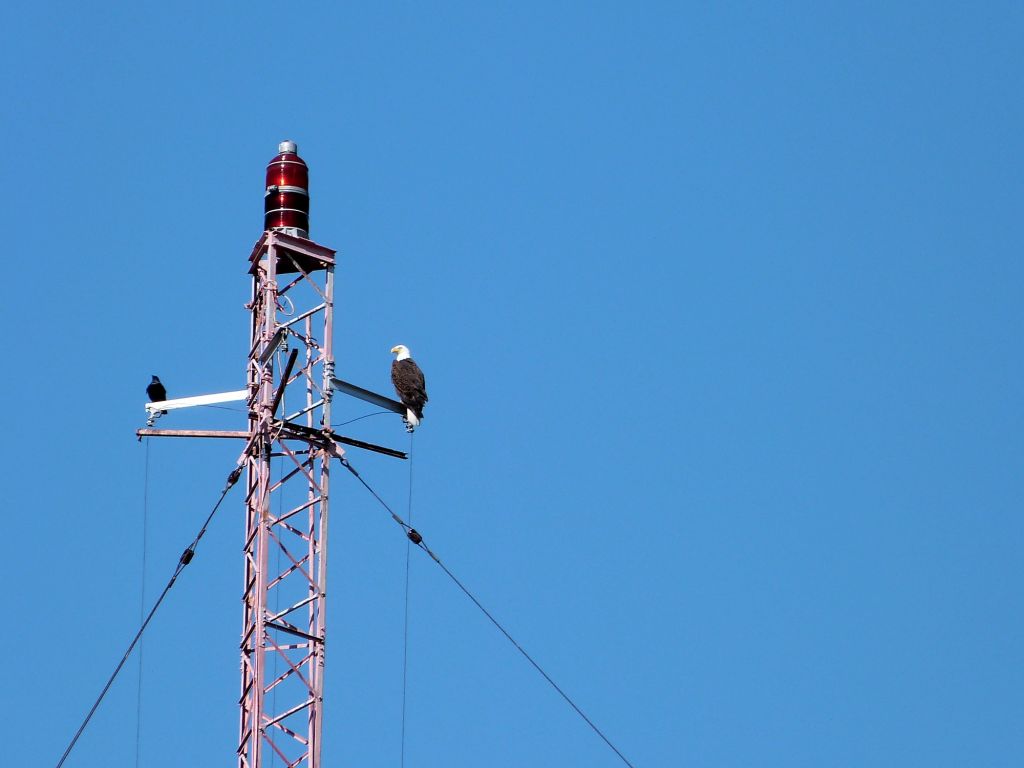
Bald Eagle on tower at S Lake Howard NPk 1 by Lee

Bald Eagle on tower at S Lake Howard NPk 1 by Lee

Labour not to be rich: cease from thine own wisdom. Wilt thou set thine eyes upon that which is not? for riches certainly make themselves wings; they fly away as an eagle toward heaven. (Proverbs 23:4-5 KJV)

While reading in Proverbs today, I came across this interesting verse in Chapter 23. As I have been reading through Proverbs, the terms “wisdom,” “fear” and “knowledge” are mentioned quite often. Verses like “The fear of the LORD is the beginning of knowledge: but fools despise wisdom and instruction. (Proverbs 1:7); For that they hated knowledge, and did not choose the fear of the LORD: (Proverbs 1:29); The fear of the LORD is the beginning of wisdom: and the knowledge of the holy is understanding. (Proverbs 9:10); By humility and the fear of the LORD are riches, and honour, and life.” (Proverbs 22:4 ); Receive my instruction, and not silver; and knowledge rather than choice gold. (Proverbs 8:10); For wisdom is better than rubies; and all the things that may be desired are not to be compared to it. (Proverbs 8:11) and many others.

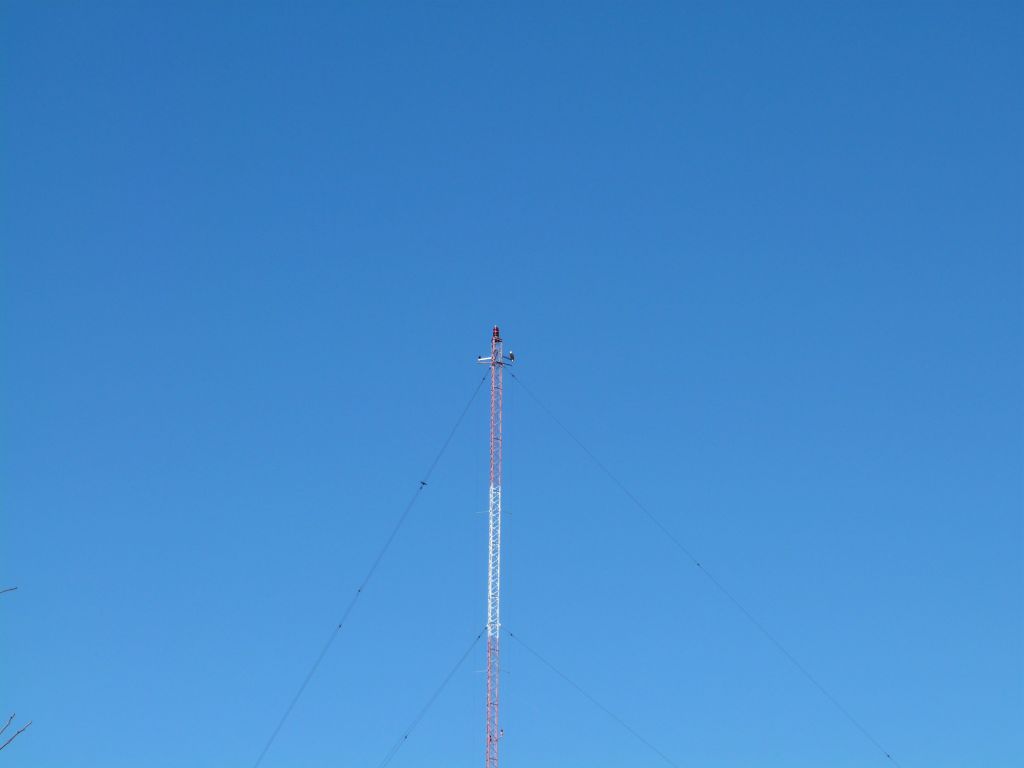
Bald Eagle on tower at S Lake Howard NPk 2 by Lee

Bald Eagle on tower at S Lake Howard NPk 2 by Lee (See him?)

So when I came across this verse and the Eagle was mentioned, I decided to see what I could find out about it and share it here. Plus, we were out birdwatching a little this week as I checked out my new Christmas gift of a camera. Captured the Bald Eagle sitting on the tower at South Lake Howard Nature Park. He was a long way away, but you can tell it is an Eagle. Also, it appears for this verse that is exactly what happens to riches when they are not received properly and with the right attitude. They end up like that Eagle, way out of reach. There is nothing wrong with being rich, if it is obtained in the proper manner. If the Lord chooses to let your wealth increase, Praise the Lord, if not, be content with the blessings He gives you.

Bald Eagle on tower at S Lake Howard NPk 3 by Lee

Bald Eagle on tower at S Lake Howard NPk 3 by Lee (How about now?)

Here are some of the comments from various commentaries:

Bible Knowledge Commentary – “The 7th saying. These verses warn against overwork for the sake of gaining riches. This speaks not against being industrious but against consuming oneself for money. Wise restraint in this area (as well as in what one eats at a banquet, Pro_23:1-2) is needed, especially in the present day when materialism drives many people to excessive work loads in order to accumulate more money. The reason for this advice is that riches are temporary and unstable (cf. Pro_27:24). The first part of Pro_23:5 is literally, “If you cause your eyes to fly after it” (i.e., wealth). Ironically, flying after wealth results in wealth flying away like an eagle.”

Matthew Poole’s Commentary – “They fly away as an eagle, swiftly, strongly, and irrevocably. We quickly lose the sight and possession of them. Their flying away from us is elegantly opposed to our eyes being set, or, as it is in the Hebrew, flying upon them, in the beginning of the verse.”

Believer’s Bible Commentary – “23:4, 5 The ceaseless struggle to be rich is a form of “wisdom” to be avoided. It means that you are spending your life pursuing false values and putting your trust in what doesn’t last. Riches have a way of sprouting wings and flying away like an eagle.”

John Gill’s Exposition– “for riches certainly make themselves wings; or, “it in making makes itself wings” (x); even that which is not, on which men cause their eyes to fly; no sooner are their eyes upon that, but that flies away from them like a bird with wings; see Hos_9:11. Either men are taken from that, or that from them, and sometimes very swiftly and suddenly;

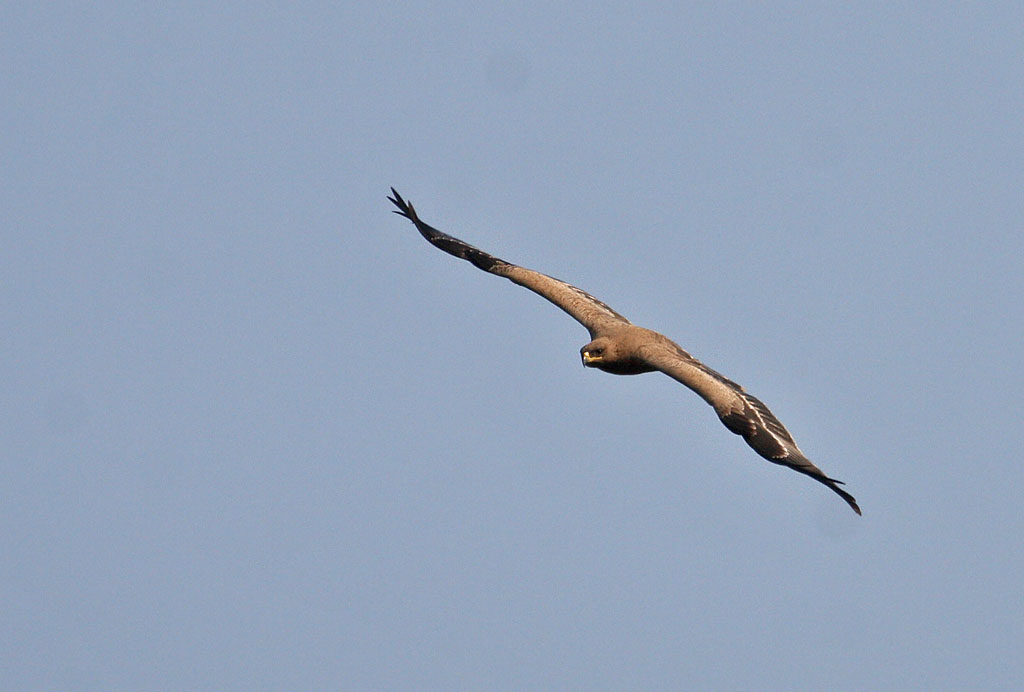
Steppe Eagle (Aquila nipalensis) by Peter Ericsson

Steppe Eagle (Aquila nipalensis) by Peter Ericsson

they fly away as an eagle towards heaven; the eagle flies very swiftly, none more swiftly; it flies towards heaven, out of sight, and out of reach, and out of call; so riches flee away to God, the original giver of them, from whence they came, and who is the sole disposer of them; they own him as the proprietor and distributor of them; and they flee to heaven as it were for fresh orders where they should be, and into whose hands they should come next; they flee away, so as not to be seen any more, and be recovered by those who have formerly enjoyed them.”

Through the Bible with J Vernon McGee – Proverbs 23:4-5 – “You have probably noticed that the United States dollar has an eagle on it. Believe me, that eagle will fly away if you’re not careful with it. I find that the eagles on my dollars take off all the time. We cannot depend on riches.
The whole thought here is this: There is nothing wrong in being rich. There is nothing wrong in working to be rich. However, don’t make that the goal in life. Wealth should not be the very object of our hearts. Some men have a lust, a thirst, a covetousness to make the almighty dollar, and the dollar becomes their god. A child of God is not to do that.
A wealthy man told me, “I do not make money for the sake of money. I make money for what it can do. At first I made money for what it could do for me. Now I make money for what it can do for God.” There is nothing wrong in a man becoming wealthy. The wrong comes when there is the overweening desire of the heart for money. That is covetousness; actually it is modern idolatry.
In the United States we do not find people bowing down to worship idols. However, we do find people busily engaging their whole lives in the worship of the almighty dollar. When I pastored a church in the downtown financial district of Los Angeles, I found that men, even including some Christian men, were far more zealous in coming down early on a Monday morning to watch the stock market open than they were on Sunday morning to attend church service. I met such a man rushing to the stock market display at the brokerage on a Monday morning. He met me, greeted me cordially, and told me what he was going to do. I mentioned to him that we had been missing him at church. He said, “Well, you know, I haven’t been feeling very well.” That is interesting. He didn’t feel well enough to come to church, but he was well enough to worship his god very early on a Monday morning. That’s covetousness, and that is what the proverb is talking about. That is a false god, and that false god is an eagle that will fly away at any moment.”

P.S. I really like my new camera and the 24X zoom. I had no idea that Dan was getting me a camera for Christmas. Thanks, Dan! (He is still the photographer, I still use a point-and-shoot on program mode.) All photos can be clicked on to enlarge them. I kept zooming in so you could see how far away the Eagle really was.

*

Birds in Christmas Hymns – The Day The Christ-Child’s Tender Eyes

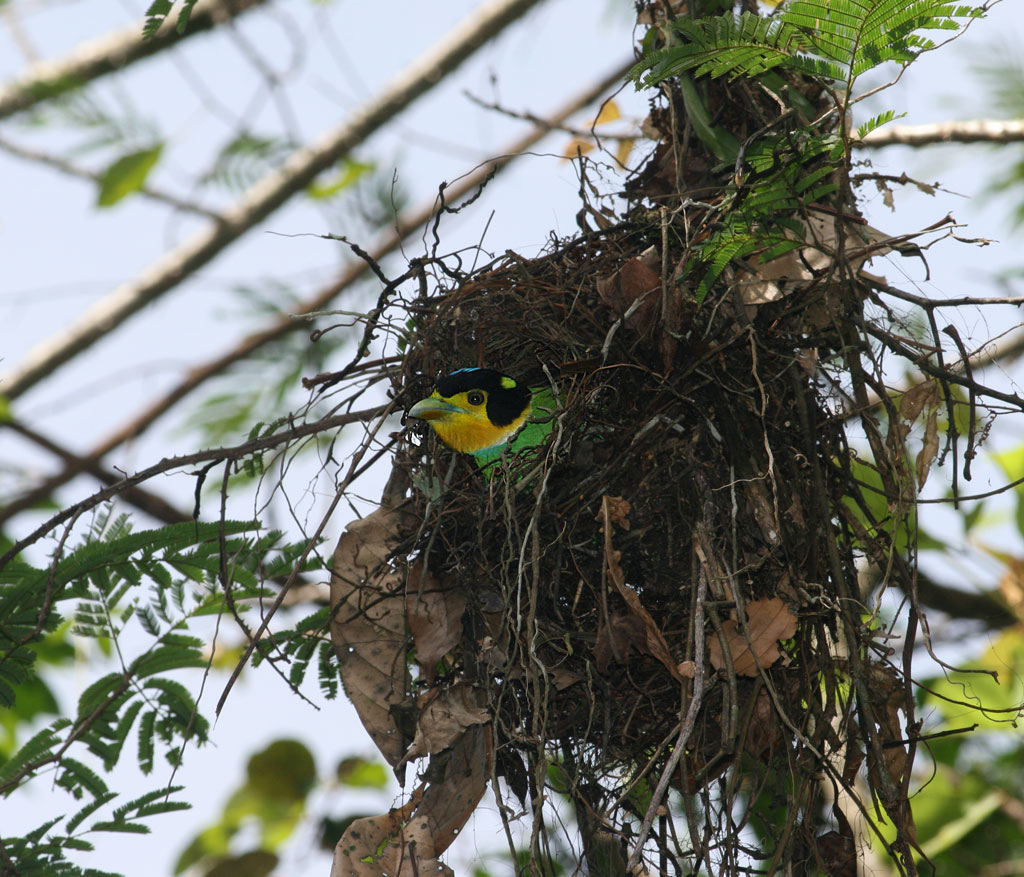
Long-tailed Broadbill (Psarisomus dalhousiae) in nest by Peter Ericsson

Long-tailed Broadbill (Psarisomus dalhousiae) in nest by Peter Ericsson

And when they were come into the house, they saw the young child with Mary his mother, and fell down, and worshipped him: and when they had opened their treasures, they presented unto him gifts; gold, and frankincense, and myrrh. (Matthew 2:11 KJV)

Words by May R. Smith (1842-1927).

Music: St. Pe­ters­burg, at­trib­ut­ed to Dmi­tri S. Bort­ni­an­sky (1751-1825), 1825

Birds in Christmas Hymns

Birds in Christmas Hymns

The Day The Christ-Child’s Tender Eyes

The day the Christ-child’s tender eyes
Unveiled their beauty on the earth,
God lit a new star in the skies
To flash the message of His birth;
And wise men read the glowing sign,
And came to greet the Child divine.

Low kneeling in the stable’s gloom,
Their precious treasures they unrolled;
The place was rich with sweet perfume;
Upon the floor lay gifts of gold.
And thus adoring they did bring
To Christ the earliest offering.

I think no nimbus wreathed the head
Of the young King so rudely throned;
The quilt of hay beneath Him spread
The sleepy kine beside Him owned;
And here and there in the torn thatch
The sky thrust in a starry patch.

Oh, when was new-born monarch shrined
Within such canopy as this?
The birds have cradles feather lined;
And for their new babes princesses
Have sheets of lace without a flaw,
His pillow was a wisp of straw!

He chose this way, it may have been,
That those poor mothers, everywhere,
Whose babies in the world’s great inn
Find scanty cradle-room and fare,
As did the Babe of Bethlehem,
May find somewhat to comfort them.

Mute Swan on Nest at Lake Morton

Mute Swan on Nest at Lake Morton by Dan

May Riley Smith (1842-1927) – Smith at­tend­ed the Tra­cey Fe­male In­sti­tute in Ro­ches­ter, and the Col­le­gi­ate In­sti­tute in Brock­port, New York. She mar­ried Al­bert Smith of Spring­field, Il­li­nois, in 1869; they were liv­ing in New York state in 1910. Her works in­clude:

The Gift of Gen­ti­ans, 1882
The Inn of Rest, 1888
Sometime and Other Po­ems, 1892

Dmi­tri S. Bort­ni­an­sky (1751-1825) – Bortniansky’s mu­sic­al ca­reer be­gan in the church choir. As a young man, he stu­died with Bal­das­sare Ga­lup­pi (il Bur­a­nel­lo) in St. Pe­ters­burg. In 1769, Bort­ni­an­sky fol­lowed Ga­lup­pi to Ita­ly (with the help of a sti­pend from Rus­sian Emp­ress Ca­ther­ine) to work in op­era. His pro­duct­ions in­clud­ed Cre­on­te (1776), Al­cide (1778), and Quin­to Fa­bio (1778). Af­ter re­turn­ing to Rus­sia, he be­came mas­ter of the court choir in St. Pe­ters­burg. In 1796, he was ap­point­ed di­rect­or of the czar’s court cha­pel and a coun­cilor of state. In ad­di­tion to his other du­ties, he com­posed li­tur­gi­cal mu­sic, and wrote op­er­as with French texts: La fête du seign­eur (1786), Le fau­con (1786), and Le fils-ri­val (1787). Af­ter his death, his work spread to Prus­sia, where his mu­sic ap­peared in Alt­preuß­ische Agen­de (Old Prus­sian Agen­da) in 1829. His tune St. Pe­ters­burg/Wells is a tra­di­tion­al clos­ing piece for the Groß­er Zap­fen­streich (cer­e­mon­i­al tat­too) in Ger­man mil­i­tary mu­sic.

*

More Birds in Hymns

See ~ Wordless Birds

Most information from The Cyber Hymnal – The Day The Christ-Child’s Tender Eyes

*